EP3467636B1 - Procédé pour compléter une pile de feuilles dans un support de sortie d'un système d'impression - Google Patents
Procédé pour compléter une pile de feuilles dans un support de sortie d'un système d'impression Download PDFInfo
- Publication number
- EP3467636B1 EP3467636B1 EP18196086.5A EP18196086A EP3467636B1 EP 3467636 B1 EP3467636 B1 EP 3467636B1 EP 18196086 A EP18196086 A EP 18196086A EP 3467636 B1 EP3467636 B1 EP 3467636B1
- Authority
- EP
- European Patent Office
- Prior art keywords
- stack
- print job
- completion
- printing
- Prior art date
- Legal status (The legal status is an assumption and is not a legal conclusion. Google has not performed a legal analysis and makes no representation as to the accuracy of the status listed.)
- Active
Links
Images






Classifications
-
- G—PHYSICS
- G06—COMPUTING OR CALCULATING; COUNTING
- G06F—ELECTRIC DIGITAL DATA PROCESSING
- G06F3/00—Input arrangements for transferring data to be processed into a form capable of being handled by the computer; Output arrangements for transferring data from processing unit to output unit, e.g. interface arrangements
- G06F3/12—Digital output to print unit, e.g. line printer, chain printer
- G06F3/1201—Dedicated interfaces to print systems
- G06F3/1223—Dedicated interfaces to print systems specifically adapted to use a particular technique
- G06F3/1237—Print job management
- G06F3/126—Job scheduling, e.g. queuing, determine appropriate device
- G06F3/1262—Job scheduling, e.g. queuing, determine appropriate device by grouping or ganging jobs
-
- G—PHYSICS
- G06—COMPUTING OR CALCULATING; COUNTING
- G06F—ELECTRIC DIGITAL DATA PROCESSING
- G06F3/00—Input arrangements for transferring data to be processed into a form capable of being handled by the computer; Output arrangements for transferring data from processing unit to output unit, e.g. interface arrangements
- G06F3/12—Digital output to print unit, e.g. line printer, chain printer
- G06F3/1201—Dedicated interfaces to print systems
- G06F3/1202—Dedicated interfaces to print systems specifically adapted to achieve a particular effect
- G06F3/1203—Improving or facilitating administration, e.g. print management
-
- G—PHYSICS
- G06—COMPUTING OR CALCULATING; COUNTING
- G06F—ELECTRIC DIGITAL DATA PROCESSING
- G06F3/00—Input arrangements for transferring data to be processed into a form capable of being handled by the computer; Output arrangements for transferring data from processing unit to output unit, e.g. interface arrangements
- G06F3/12—Digital output to print unit, e.g. line printer, chain printer
- G06F3/1201—Dedicated interfaces to print systems
- G06F3/1202—Dedicated interfaces to print systems specifically adapted to achieve a particular effect
- G06F3/1218—Reducing or saving of used resources, e.g. avoiding waste of consumables or improving usage of hardware resources
- G06F3/1219—Reducing or saving of used resources, e.g. avoiding waste of consumables or improving usage of hardware resources with regard to consumables, e.g. ink, toner, paper
-
- G—PHYSICS
- G06—COMPUTING OR CALCULATING; COUNTING
- G06F—ELECTRIC DIGITAL DATA PROCESSING
- G06F3/00—Input arrangements for transferring data to be processed into a form capable of being handled by the computer; Output arrangements for transferring data from processing unit to output unit, e.g. interface arrangements
- G06F3/12—Digital output to print unit, e.g. line printer, chain printer
- G06F3/1201—Dedicated interfaces to print systems
- G06F3/1223—Dedicated interfaces to print systems specifically adapted to use a particular technique
- G06F3/1237—Print job management
- G06F3/1273—Print job history, e.g. logging, accounting, tracking
-
- G—PHYSICS
- G06—COMPUTING OR CALCULATING; COUNTING
- G06F—ELECTRIC DIGITAL DATA PROCESSING
- G06F3/00—Input arrangements for transferring data to be processed into a form capable of being handled by the computer; Output arrangements for transferring data from processing unit to output unit, e.g. interface arrangements
- G06F3/12—Digital output to print unit, e.g. line printer, chain printer
- G06F3/1201—Dedicated interfaces to print systems
- G06F3/1278—Dedicated interfaces to print systems specifically adapted to adopt a particular infrastructure
- G06F3/1282—High volume printer device
Definitions
- the present invention relates to method for completing a stack of sheets in an output holder attached to a printing device, the output holder configured to hold a stack of sheets printed upon by the printing device according to a plurality of print jobs submitted to the printing device, the printing device comprising a print controller for controlling the receiving of the plurality of print jobs in a print job queue and the printing of the plurality of print jobs according to the print job queue, the method comprising the step of the print controller receiving a trigger comprising information for a completion of the stack.
- the present invention further relates to a printing system which is configured to apply the method according to the present invention.
- Print jobs are printed consecutively by means of a printing device. After printing upon sheets by the printing device the sheets are transported to an output holder attached to the printing device.
- the output holder may be part of the printing device or coupled to an outlet of the printing device.
- the output holder has a maximum allowed capacity expressed in a maximum number of sheets in the output holder - mostly media dependent - , expressed in a maximum weight of the amount of sheets in the output holder, and/or expressed in a maximum stack height of the sheets in the output holder.
- the sheets form a stack of sheets in the output holder. Sheets or sets of sheets may be finished by means of finishing equipment being part of the printing system.
- the printing system has a logging system which registers consecutive print jobs and also registers a stack completion of the output holder.
- the stack of sheets may be ejected from inside the output holder towards outside the output holder by transporting means. After the stack ejection the empty output holder is ready for receiving the next sheets from the printing device.
- the printing device receives print jobs and schedules the received printing jobs in a print job schedule. After a trigger for example via an eject button, the stack of sheets of already printed print jobs is ejected from the output holder.
- a trigger for completion of the stack is received by the print controller without an ejection of the stack from the output holder.
- the printing device or more specifically the output holder comprises a detecting means for detecting that the stack of sheets reaches the maximum allowed capacity and a completion of the stack is to be performed. This may be a stop of printing sheets to the output holder and, if possible, moving next printed sheets to another output holder.
- the method comprises the stack completion is intended to be performed immediately or before the start of the printing of a next print job residing in the print job queue or after the currently being printed print job has been completely printed or during the printing of the currently being printed print job or at a planned moment in the future.
- the moment in the future may for example be planned by means of the print job queue.
- the method comprises the step of, after printing the summary job on the at least one stack trailer sheet on top of the stack, ejecting the stack from the output holder, the stack including the at least one stack trailer sheet.
- the method comprises the step of providing a confirmation window on a user interface of the printing engine in order to allow the user to confirm the printing of at least one stack trailer sheets before completion of the stack.
- the stack summary comprises information about of at least one out of identifiers of print jobs in the stack at the intended moment of completion, an amount of sheets in the stack at the intended moment in time of completion of the stack, a height of the stack at the intended moment in time of completion of the stack, a number of print jobs in the stack at the intended moment in time of completion of the stack, a number of sets, records or pages of a partial print job in the stack at the intended moment in time of completion of the stack, a weight of the stack at the intended moment in time of ejection of the stack, a customer name property among the print jobs in the stack at the intended moment in time of completion of the stack, and a maximum sheet size of the stack at the intended moment in time of completion of the stack.
- the information may be coded as a bar code or as a QR code, for example to enable an easier automatic post-processing.
- a print job list of print job identifiers like job names of print jobs printed in the stack may be part of the summary. In a glance the operator is able to see which print jobs are part of the stack. In case of a very large print job the summary indicates that the print job is printed over multiple stacks and indicates a number which of the different stacks is the current stack, e.g. "3 rd stack for job NNN", or even "3 rd stack of 10 for job NNN". The summary may also indicate that the stack contains only a part of the last printed job on the stack.
- a user interface for the printing device is configured to display the print job queue and the method comprises the steps of displaying the print job queue on the user interface, and receiving the trigger from an action applied to the print job queue displayed on the user interface.
- the action may be a user action or an action automatically generated by the print controller of the printing device.
- the method comprises the step of automatically detecting that the output holder is full by means of sensing devices residing in the printing device, and receiving the trigger due to the detection.
- the method comprises the step of automatically and timely receiving the trigger from a rule based system comprising completion rules derived from properties of the print jobs printed in the stack.
- the step of ejecting the stack comprises the step of transferring the stack from an internal output holder of the printing device to an external output holder of the printing device.
- the method comprises the step of temporarily stopping ejection of sheets of print jobs to the stack in the internal output holder as to enable a purposively emptying of the external output holder. This is advantageous since printing to the internal output holder may be continued hereafter.
- the invention also relates to a printing system according to claim 12.
- the invention also relates to a non-transitory recording medium according to claim 13.
- FIG. 1 shows schematically a printing system 1 in which the method according to the present invention is applicable.
- the printing system 1 for purposes of explanation, is divided into an output section 5, a print engine and control section 3, a local user interface 7 and an input section 4. While a specific printing system is shown and described, the disclosed embodiments may be used with other types of printing systems such as ink jet print systems, electrographic print systems, etc.
- the output section 5 comprises at least one output holder 52 for holding a stack of printed image receiving material.
- the printed image receiving material is transported from the print engine and control section 3 via an inlet 53 to the output section 5.
- the print controller 37 retrieves a stack summary of print jobs contained in the printed stack 55 from memory of the printing system 1.
- the memory may be residing inside the print controller 37 or from a network location connected to the printing system 1 via a digital network N.
- a summary job is created which comprises the stack summary.
- the summary job is printed by a print head or print assembly 31 on at least one stack trailer sheet 56 on top of the stack 55.
- guiding means 54 are activated in order to eject the stack 55 including the at least one stack trailer sheet 56 on the output holder 52 outwards to an external output holder 51.
- the operator can take the completed stack 55 from the external output holder 51 for further processing the outputted documents in the stack 55.
- the output section 5 may also comprises finishing equipment for finishing a sheet or a set of sheets, like stapling, punching, perforating, binding, gluing, etc. Finishing equipment may be added to or replace the external holder 51 for further finishing the completed stack 55.
- the internal output holder 52 may not be reachable by an operator. In the latter case the operator cannot take the stack 55 from the internal output holder 52 for further processing, but he can only take the stack 55 from the external output holder 51 for further processing.
- the task for the stack completion comprises a temporary stop of ejecting sheets of print jobs to an external output holder in the print job queue in order to enable a purposively emptying of the output holder according to the present invention. While the ejection of the sheets has stopped, the operator is able to empty the output holder at the intended moment of stack ejection. The emptying action is manually done by the operator or may be done by robotic means. The printing by the printing device may be stopped while the operator is emptying the output holder.
- a printing system having a large internal buffer for holding sheets does not have to stop printing, but can just stop the transfer of sheets from the large internal buffer to the output holder.
- the printing system comprises a first output holder and a second output holder and sheets are automatically transferred to the second output holder when the first output holder is full and the stack in the first output holder is completed according to the invention. In this case the printing system does not have to stop printing either.
- the output section 5 is digitally connected by means of a cable 60 to the print engine and control section 3 for bi-directional data signal transfer.
- the print engine and control section 3 comprises a print engine and the print controller 37 for controlling the printing process.
- the print controller 37 is a computer or server or a workstation, connected to the print engine and connected to the digital environment of the printing system, for example a network N for transmitting a submitted print job to the printing system.
- the print controller 37 is positioned inside the print engine and control section 3, but the print controller 37 may also be positioned outside the print engine and control section 3 in connection with the network N.
- the print engine comprises a print head or print assembly 31 for ejecting and/or fixing marking material to image receiving material and a paper path 34, 32, 35 for transporting the image receiving material from an entry point 36 of the print engine and control section 3 to the inlet 53 of the output section 5.
- the print head or print assembly 31 is positioned near the paper path section 34.
- the print head or print assembly 31 may be an inkjet print head, a direct imaging toner assembly or an indirect imaging toner assembly. While an image receiving material is transported along the paper path section 34, the image receiving material receives the marking material from the print head or print assembly 31.
- a next paper path section 32 is a flip unit for selecting a different subsequent paper path for simplex or duplex printing of the image receiving material. When the image receiving material has been printed upon, the image receiving material is transported to the inlet 53 of the output section 5.
- the input section 4 may comprise at least one input holder 44, 45, 46 for holding the image receiving material before transporting the sheets of image receiving material to the print engine and control section 3.
- Sheets of image receiving material are guided from the input holders 44, 45, 46 by guiding means 42, 43, 47 to an outlet 36 for entrance in the print engine and control section 3.
- the local user interface is suitable for displaying user interface windows for controlling the print job queue residing in the print controller 37.
- a computer in the network N has a user interface for displaying and controlling the print job queue of the printing system 1.
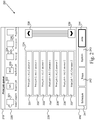
- FIG. 2 shows a user interface window 200 of the printing system 1 according to the present invention.
- part of the functionality - like buttons - of this user interface window is designed as hardware buttons near the user interface window 200.
- the user interface window 200 is opened at the local user interface 7 in FIG. 1 and shows a representation of the print job queue residing in the print controller 37 in FIG. 1 .
- the user interface window 200 comprises a title section 210, a user action section 220, a print job queue section 230 and a navigation section 240.
- the user action section 220 comprises image items 221 - 226 to be selected for executing actions on the print job queue 23A in the print job queue section 230.
- a first image item 221 represents a stack completion action according to the present invention.
- the stack completion action may start immediately after activating the first image item 221 which leads to a stack completion action command to the print controller 37 of the printing system 1.
- the stack completion action may also start after a selected print job in the print job queue 23A and thus may be made visual in the print job queue 23A.
- the user action section comprises a first stack completion image item representing a stack completion action after a selected print job from the print job queue 23A and a second stack completion image item representing a stack completion action before a selected print job from the print job queue 23A.
- the stack completion action command leads to the retrieval of the stack summary report by the print controller 37, the creation of the stack summary print job, and to the printing of the stack summary report by the print head or print assembly 31 on top of the stack to be completed.
- a sensor may be present in the output holder 52 for detecting timely that the output holder is full or nearly full. Detection should be timely so that the stack summary still fits to the stack to be completed. A sensor signal from the sensor may lead to an immediate stack completion command for the print controller 37.
- the navigation section 240 comprises a first image item 241 for navigating to a schedule with a timeline and media needed for the print jobs, a second image item 242 for navigating to an overview of the input trays and the content of the input trays, a third image item 243 for navigating to the system settings and a fourth image item 244 for navigating to the print jobs in the print job queue 23A.
- the fourth image item 244 is selected.
- a system setting for enabling or disabling the printing of the stack summary may be part of the system settings of the printing system 1.
- the system setting for enabling or disabling the stack summary report is checked. When said system setting is disabled no stack summary report will be printed on top of the stack to be completed.
- the stack summary report will be printed on top of the stack to be completed.
- the system setting is defined per output holder.
- the print job queue section 230 comprises a representation of the print job queue 23A.
- the print job queue 23A comprises at least one print job.
- FIG. 2 shows a plurality of print jobs 231 - 237 in the print job queue 23A in a sequence order from top to bottom.
- a first print job 231 will be printed really soon after the print job that is currently printed by the printing device is ready.
- a last print job 237 will be printed if the preceding print jobs 231 -236 are ready.
- Each print job 231 - 237 in the print job queue 23A is selectable by a mouse or by a finger or stylus in case of a touch screen.
- a sequence order of the print jobs 231 - 237 in the print job queue 23A may be changed by selecting a print job in the print job queue 23A and then activating the fourth image item 224 or the fifth image item 225 in order to move the selected print job one position up or down respectively in the print job queue 23A.
- a position of a print job 231 - 237 in the print job queue 23A may be changed by dragging and dropping the appropriate print job to another position in the print queue.
- the print job queue 23A is scrollable by activating an upward scrolling button 238 or a downward scrolling button 239.
- Each print job 231 - 237 in the print job queue 23A may be displayed with a number of properties of the print job, such as an identifying name of the print job ("Print job 1"), a size of the image receiving material to be used for the print job ("A3"), a customer name corresponding to the customer where the print job has to be delivered "Customer 1", etc.
- a small relevant number of properties for each print job 231 - 237 is displayed in the print job queue 23A.
- the properties of the print job may be all or selectively used for and/or printed in the stack summary report according to the invention.
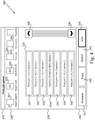
- FIG. 3 shows in a window 300 a task image item 234A for a stack completion of a first output holder ("Stacker 1") of the printing system according to the present invention.
- the task image item 234A is positioned in the representation of the print job queue 23A between the fourth print job 234 and the fifth print job 235.
- the user interface is configured to provide an optional request window to the operator to enter a customer message for the stack summary.
- the sixth image item 226 is used for retrieving and changing of properties of a selected print job in the print job queue 23A and is also used for retrieving and changing of properties of a selected stack completion, e.g. the properties of the task image item 234A.
- a property of the task image item 234A may be the identification of the output holder. This is in particular advantageous in case of more than one output holder.
- the planned stack completion may be changed from a stack completion of the first output holder "Stacker 1" into a stack completion from a second output holder - for example "Stacker 2" - by means of the activation of the sixth image item 226 after selection of the task image item 234A.
- proof print jobs are delivered to a top output holder of the printing system 1 and a stack completion may be planned after a proof print job has been printed.
- the planned stack completion is changed to a stack completion of the stacker of a last completed print job.
- the properties of an item 231 - 236, 234A in the print job queue 23A are displayed after double clicking or double tapping on the item.
- the task image item 234A - when displayed in the print job queue 23A - may be selected by a mouse of by a touch on the task image item 234A.
- the selected task image item 234A may be moved along the print job queue 23A by a mouse movement, by a drag-and-drop action in case of a touch screen or by means of the fourth image item 224 ("move up") and/or the fifth image item 225 ("move down") in order to change the moment of stack completion with respect to the print jobs 231 - 237 in the print job queue 23A.
- the task image item 234A is displayed in the form of a bar.
- Other shapes may be envisioned like a flag icon before a print job item 231 - 236, a flag icon after a print job item 231 - 236, a modified print job item 231 - 236 with an upper corner provided with an icon to represent a stack completion before the print job corresponding to the print job item, a modified print job item 231 - 236 with an lower corner provided with an icon to represent a stack completion after the print job corresponding to the print job item, etc.
- the operator has noticed that the first three print jobs 231 - 233 have a size property, "A3", “A4", "A5", respectively which sizes are in a decreasing order.
- the stack of the first three print jobs 231 - 233 will therefore form a kind of pyramidal stack since the later print job will end up on top of the previous print job. Print jobs in such a pyramidal stack are easy visible and easy to process.
- the size of the media used for the stack summary report may be independent from or the same as the size of the last printed sheet of a print job on the stack to be completed.
- the fourth job 234 has a size property of "A4", which is larger than the size "A5" of the preceding print job 233. Therefore the operator may want to have a completion of the stack after the third print job 233 and before the fourth print job 234.
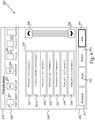
- the operator selects the third print job 233 and activates the first image item 221. The result of this action is shown in FIG. 4 .
- FIG. 4 shows in a window 400 a task image item 233A for a stack completion of a first output holder ("Stacker 1") of the printing system according to the present invention.
- the task image item 233A is positioned in the representation of the print job queue 23A between the third print job 233 and the fourth print job 234.
- a stack completion according to the present invention may also be inserted after the fifth print job 235 and before the sixth print job 236.
- the first example and the second example may be combined.
- the first example and the second example show stack ejections 234A, 233A respectively planned by the operator and based on the properties of the print jobs 231 - 237 in the print job queue 23A.
- the criteria employed by the operator may be encoded in software for a rule base system comprising rules for a stack completion based on the properties of the print jobs in the print job queue of the printing system.
- the rule based system may be part of the print controller 37 of the printing system 1 according to the present invention.
- the application of the rules in the rule based system leads to an automatic stack completion without intervention of the operator via one of the windows 200, 300, 400 shown in FIG. 2 , FIG. 3 and FIG. 4 respectively.
- FIG. 5 shows a window 500 of a job submitter for submitting print jobs to the printing device.
- the job submitter may be part of a pre-processing application or a printer driver.
- the pre-processing application may comprise a hot folder mechanism for receiving document files in a hot folder - or another mechanism like a JDF/JMF submission - and automatically retrieving the document files subsequently from the hot folder in order to transmit the document files subsequently to the printing device.
- FIG. 5 shows a window 500 comprised in a printer driver application. From three tabs "Advanced”, “Job", "Printer”, the second tab "Job" is selected. A number of copies may be selected in a first entry field 530. A job name may be entered in a second entry field 540.
- a plurality of settings may be set for a layout of the print job and media of the print job.
- Image parameters and finishing parameters may be set.
- the finishing parameters are selected and expanded. Finishing parameters concern a page order, a collate option, a banner page option and an output option.
- one of the finishing parameters is a stack completion option 510 for defining a completion of the stack before or after the print job.
- an option "After job” is selected, meaning that after this print job has been printed a stack completion will take place.
- Another option is "Before job” (not shown), meaning that before this print job is started to be printed a stack completion will take place or before printed sheets of this print job arrive at the output holder.
- Another option is "Before job and after job” (not shown), meaning that before this print job is started to be printed a stack completion will take place and after this print job has been printed a stack ejection will take place. Another option is “No stack completion” (not shown), meaning that before as well as after this print job no stack completion will take place. Another option is “Based on system rules” (not shown), meaning that no stack completion is specified according to the stack completion option 510 in the window 500, but the print controller 37 of the printing device determines a moment of stack completion via a rule based system or the operator determines a moment of stack completion via the user interface displaying the print job queue (See FIG. 2 ).
- the stack completion option of "No stack completion” may be interpreted by the print controller as no stack completion despite any existing stack completion rule in the rule based system which rule relates to the same moment before or after the print job, i.e. a stack completion is prohibited before and after the print job.
- Another option is "Add custom stack summary message” (not shown) with an entry field for providing the custom stack summary message.
- Another option is "Print stack summary” with the radio buttons “yes", “no” and "system default”.
- the stack completion option 510 is displayed in the form of a selection drop-down box.
- Other forms of the stack completion option may be envisioned, for example a set of radio buttons.
- the selected print job in the second entry field 540 has a job name "print job 1".
- the print job named "print job 1" may be submitted to the printing device by means of the submit button 550.
- five other print jobs named “print job 2" up to “print job 6” are also submitted, each of these five other print jobs having the stack completion option "No stack ejection", the print job queue will contain at least six print jobs and one stack completion task as shown in FIG. 6 .
- a task 231A for a completion of the stack is scheduled in the print job queue 23A.
- the other five print jobs 232 - 236 are scheduled in the print job queue 23A.
- FIG. 7 shows a window 700 of the job submission application after the print job named "print job 1" has been submitted by means of the submit button 550. After the submission a first feedback window 560 is displayed. The first feedback window 560 shows first feedback regarding the intended moment in time of the completion of the stack after the print job named "print job 1" has been printed.
- the provided first feedback may comprise the same information as in the stack summary report, namely a list of print job identifiers of print jobs residing in the stack at the intended moment in time of completion of the stack, a predetermined number of sheets in the stack at the intended moment in time of completion of the stack, a predetermined height of the stack at the intended moment in time of completion of the stack, a predetermined number of print jobs in the stack at the intended moment in time of completion of the stack, a predetermined number of sets of a print job in the stack at the intended moment in time of completion of the stack, a predetermined weight of the stack at the intended moment in time of completion of the stack, a change of a customer name property among the print jobs in the stack at the intended moment of completion of the stack, or a maximum size of the sheets in the stack.
- the first feedback window 560 shows what properties the stack could have when the print jobs being currently part of the print job queue 23A before and including the selected print job 540 are printed to form the stack.
- the first feedback window 560 mentions the number of sheets in the stack (50), a height of the stack (3 cm), a number of sets of a print job in the stack (10), a weight of the stack (250 g), a customer name change "no change".
- the number of sheets in the stack and the maximum size of the sheets in the stack may be of interest for further finishing of the stack.
- the height of the stack may be of interest for further packaging the stack, for example in a box which has a predetermined height.
- the weight of the stack may be of interest for further shipping cost of the stack and/or of interest for working conditions of the operator.
- the first feedback is generated by retrieving from the print controller 37 information about planned print jobs and planned stack completions in the print job queue.
- the submitted print job may invoke an information request for the print controller 37 to gather this information and send it back to the job submitter application.
- the first feedback window 560 may already pop up before the submission of the print job named "print job 1" when a stack completion option in the selection box 520 is changed. Such a change of the stack completion option may result in sending the information request as mentioned hereinbefore from the job submitter to the print controller of the printing device.
- the operator has noticed that the output holder is not yet full and wants to change the moment of stack completion from a moment of stack completion after the first print job 231 in FIG. 6 into a moment of stack completion after the second print job 232 in FIG. 6 . Therefore the operator moves the stack completion task item 231A by means of drag-and-drop or by means of mouse dragging or by means of selection and the move down image item 225 to a position after the second print job 232 and before the third print job 233. The result of the movement is shown in FIG. 8 .
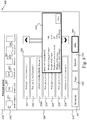
- FIG. 8 shows the stack completion task item 232A as a result of the movement of the moment of stack completion in FIG. 6 , after the second print job 232.
- the method of the invention provides second feedback regarding the changing of the intended moment in time of the completion of the stack.
- the second feedback is displayed in FIG. 8 in a second feedback window 810 near the stack completion task item 232A.
- the information of the stack completion feedback in the second feedback window 810 is accordance with the moment of the planned stack completion after the second print job 232.
- the second feedback may comprise the same information as in the stack summary report, namely at least one out of a list of print job identifiers of print jobs residing in the stack at the intended moment in time of completion of the stack, a predetermined number of sheets in the stack at the intended moment in time of completion of the stack, a predetermined height of the stack at the intended moment in time of completion of the stack, a predetermined number of print jobs in the stack at the intended moment in time of completion of the stack, a predetermined number of sets of a print job in the stack at the intended moment in time of completion of the stack, a predetermined weight of the stack at the intended moment in time of completion of the stack, a change of a customer name property among the print jobs in the stack at the intended moment of completion of the stack, and a maximum size of the sheets in the stack at the intended moment of completion of the stack.
- a movement of the stack completion task item 232A to another print job lower in the print job queue 23A may imply that a stack completion will occur before the stack completion task item 232
- FIG. 9 shows a flow diagram of an embodiment of the method according to the present invention.
- a starting point A leads to the first step S1.
- a trigger is received by the print controller of the printing device.
- the trigger comprises information for a completion of the stack.
- the trigger may be originated from a sensor in the output holder of the printing system in case the output folder is full or nearly full.
- the trigger may be originated from the use of a stack completion button on the user interface of the printing system or from the use of a stack completion button on the output holder itself.
- the trigger may be originated from the use of a stack completion image item on a user interface screen displaying the print job queue.
- a completion of the stack means that adding of new printed sheets to the already formed stack has to be stopped immediately, after the current print job, after a planned print job in the future, etc.
- the stack is then completed after the steps S2, S3 and S4 have been performed.
- the print jobs in the print job queue are printed according to the sequence order of the print jobs in the print job queue until the stack of sheets is completed at a moment in time in accordance with the planning of the stack completion in the future.
- a stack summary of print jobs contained in the printed stack is retrieved from memory of the printing system.
- the memory may be inside the print controller of the printing system or residing in a network location in a network connected to the printing system.
- a summary job is created comprising the stack summary.
- the summary job is submitted to the print engine at the appropriate moment in time.
- a fourth step S4 the summary job is printed on at least one stack trailer sheet on top of the stack.
- the completed stack may be manually removed from the output holder by an operator.
- the summary job may also comprise further actions to be performed on the completed stack, for example further finishing action or logistic actions.
- the at least one stack trailer sheet may be obtained from an arbitrary input holder. By doing so, the at least one stack trailer sheet may have other media properties like size, weight, colour, than the printed sheets of the print jobs in the completed stack. By having these other media properties the stack trailer pages on top of the completed stack are easily discernible from the sheets of the print jobs in the completed stack.
- the completed stack is automatically removed or ejected from the output holder for further actions to be applied to the completed stack.
- the method ends in an end point B.
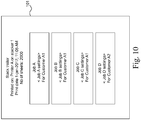
- FIG. 10 shows a first example of a stack trailer sheet 101.
- the sheets in the stack are printed on printer A to an output holder "stacker 1".
- the print date and time and the number of sheets in the stack are mentioned on the stack trailer 101.
- the stack contains 4 jobs, e.g. job A, job B, job C and job D visualised by rectangles. Print job settings of the print jobs are mentioned in the rectangles. Also the customer who has ordered the print job is mentioned in the corresponding rectangle for the print job.
- FIG. 11 shows a second example of a stack trailer sheet 111.
- the sheets in the stack are printed on printer A to an output holder "stacker 1".
- the print date and time and the number of sheets in the stack are mentioned on the stack trailer 111.
- the stack contains 4 jobs, e.g. job A, job B, job C and job D visualised by rectangles.
- the rectangles are about one about off set as how the sheets are actually staggered in the stack.
- Print job settings of the print jobs are mentioned in the rectangles. Only a part of job A, namely the set 1 to X of a number of total sets M, is contained in the stack. Also only a part of job D, namely the set Y to N of a number of total sets N, is contained in the stack.
- stack trailer sheets 101, 111 in FIG. 10 and FIG. 11 respectively are merely examples of stack trailer sheets in the light of the invention. Other examples may be envisioned in the scope of the claims of the invention.
Landscapes
- Engineering & Computer Science (AREA)
- Theoretical Computer Science (AREA)
- Human Computer Interaction (AREA)
- Physics & Mathematics (AREA)
- General Engineering & Computer Science (AREA)
- General Physics & Mathematics (AREA)
- Accessory Devices And Overall Control Thereof (AREA)
Claims (13)
- Procédé pour compléter une pile (55) de feuilles dans un support de sortie (52) fixé à un dispositif d'impression (3), le support de sortie (52) étant configuré pour supporter la pile (55) de feuilles imprimées par le dispositif d'impression (3) en fonction d'une pluralité de tâches d'impression (231 à 237) soumises au dispositif d'impression (3), le dispositif d'impression (3) comprenant une interface utilisateur (7) et un dispositif de commande d'impression (37) pour commander la réception de la pluralité de tâches d'impression dans une file d'attente de tâches d'impression (23A) et l'impression de la pluralité de tâches d'impression (231 à 237) en fonction de la file d'attente de tâches d'impression (23A), le procédé comprenant les étapes consistant :- à recevoir, au moyen du dispositif de commande d'impression (37), un événement déclencheur comportant des informations pour un achèvement de la pile,- à récupérer un résumé de pile de tâches d'impression contenu dans la pile imprimée à partir d'une mémoire du dispositif d'impression,- à créer une tâche de résumé comprenant le résumé de pile, et- à imprimer la tâche de résumé sur au moins une feuille de fin de pile (56, 101, 111) au sommet de la pile,caractérisé en ce que le procédé comprend l'étape consistant
dans le cas où la pile destinée à être complétée comprend une partie d'une tâche d'impression spécifique, à indiquer dans le résumé quelle partie de la tâche d'impression spécifique est présente dans la pile prévue pour être complétée, et
soit l'étape de réception de l'événement déclencheur consiste à recevoir l'événement déclencheur en provenance d'une interface utilisateur locale qui fait partie du support de sortie, soit l'interface utilisateur est configurée pour afficher un élément pouvant être actionné par l'utilisateur pour compléter la pile à partir du support de sortie et l'étape de récupération de l'événement déclencheur comprend la sous- étape d'activation de l'élément pouvant être actionné par l'utilisateur. - Procédé selon la revendication 1, dans lequel l'achèvement de la pile est destiné à être réalisé immédiatement ou avant le début de l'impression d'une prochaine tâche d'impression se trouvant dans la file d'attente de tâches d'impression ou après que la tâche d'impression qui est à présent imprimée, a été complètement imprimée ou pendant l'impression de la tâche d'impression qui est à présent imprimée ou à un moment planifié dans le futur.
- Procédé selon la revendication 1 ou 2, dans lequel le procédé comprend l'étape consistant, après l'impression de la tâche de résumé sur la ou les feuilles de fin de pile au sommet de la pile, à éjecter la pile du support de sortie, la pile comprenant la ou les feuilles de fin de pile.
- Procédé selon l'une quelconque des revendications précédentes, dans lequel le procédé comprend l'étape de fourniture d'une fenêtre de confirmation sur une interface utilisateur du moteur d'impression afin de permettre à l'utilisateur de confirmer l'impression de la ou des feuilles de fin de pile avant l'achèvement de la pile.
- Procédé selon l'une quelconque des revendications précédentes, dans lequel le résumé de pile comporte des informations concernant des identifiants de tâches d'impression dans la pile au moment voulu dans le temps de l'achèvement de la pile et/ou une hauteur de la pile au moment voulu dans le temps de l'achèvement de la pile et/ou un nombre de tâches d'impression dans la pile au moment voulu dans le temps de l'achèvement de la pile et/ou un nombre d'ensembles, d'enregistrement ou de pages d'une tâche d'impression partielle dans la pile au moment voulu dans le temps de l'achèvement de la pile et/ou un poids de la pile au moment voulu dans le temps de l'éjection de la pile et/ou une propriété de nom de client parmi les tâches d'impression dans la pile au moment voulu dans le temps de l'achèvement de la pile et/ou une taille de feuille maximale au moment voulu dans le temps de l'achèvement de la pile.
- Procédé selon l'une quelconque des revendications précédentes, dans lequel une interface utilisateur pour le dispositif d'impression est configurée pour afficher la file d'attente de tâches d'impression et le procédé comprend les étapes consistant- à afficher la file d'attente de tâches d'impression sur l'interface utilisateur, et- à recevoir l'événement déclencheur à partir d'une action appliquée à la file d'attente de tâches d'impression affichée sur l'interface utilisateur.
- Procédé selon la revendication 6, dans lequel l'action est une action de l'utilisateur.
- Procédé selon l'une quelconque des revendications précédentes, dans lequel le procédé comprend l'étape consistant à détecter automatiquement que le support de sortie est plein au moyen de dispositifs de détection se trouvant dans le dispositif d'impression et à recevoir l'événement déclencheur grâce à la détection.
- Procédé selon l'une quelconque des revendications précédentes, dans lequel le procédé comprend l'étape consistant à recevoir automatiquement et en temps utile l'événement déclencheur en provenance d'un système à base de règles comprenant des règles d'achèvement dérivées de propriétés des tâches d'impression imprimées dans la pile.
- Procédé selon la revendication 3, dans lequel l'étape d'éjection de la pile comprend l'étape de transfert de la pile d'un support de sortie interne du dispositif d'impression à un support de sortie externe du dispositif d'impression.
- Procédé selon la revendication 10, dans lequel le procédé comprend l'étape consistant à arrêter temporairement l'éjection de feuilles de tâches d'impression vers la pile dans le support de sortie interne de sorte à permettre un vidage délibéré du support de sortie externe.
- Système d'impression (1) pour imprimer des tâches d'impression (231 à 237) sur des feuilles, le système d'impression (1) comprenant- un dispositif d'impression (3),- une interface utilisateur (7),- un support de sortie (52) fixé au dispositif d'impression (3) configuré pour supporter une pile (55) de feuilles imprimées par le dispositif d'impression (3),- un dispositif de réception de tâche d'impression numérique pour recevoir les tâches d'impression (231 à 237) qui doivent être imprimées par le dispositif d'impression (3),- un dispositif de commande d'impression (37) pour commander l'impression des tâches d'impression (231 à 237) vers le support de sortie (52),
dans lequel le dispositif de commande d'impression (37) est configuré- pour recevoir un événement déclencheur comportant des informations pour un achèvement de la pile (55), l'achèvement de la pile (55) devant être réalisé immédiatement ou avant le début de l'impression d'une prochaine tâche d'impression se trouvant dans la file d'attente de tâches d'impression (23A) ou pendant que la tâche d'impression qui est à présent imprimée, a été complètement imprimée,- pour récupérer un résumé de pile de tâches d'impression contenu dans la pile imprimée (55) à partir d'une mémoire du dispositif d'impression (3),- pour créer une tâche de résumé comprenant le résumé de pile, et
le dispositif d'impression (3) est configuré- pour imprimer la tâche de résumé sur au moins une feuille de fin de pile (56, 101, 111) au sommet de la pile (55) lors de la réception de l'événement déclencheur,caractérisé en ce que le dispositif de commande d'impression (37) est configuré, dans le cas où la pile destinée à être complétée comprend une partie d'une tâche d'impression spécifique, pour indiquer dans le résumé quelle partie de la tâche d'impression spécifique est présente dans la pile prévue pour être complétée, et
soit l'événement déclencheur est reçu d'une interface utilisateur locale qui fait partie du support de sortie, soit l'interface utilisateur (7) est configurée pour afficher un élément pouvant être actionné par l'utilisateur pour compléter la pile à partir du support de sortie et le dispositif de commande d'impression (37) est configuré pour recevoir l'événement déclencheur en activant l'élément pouvant être actionné par l'utilisateur. - Support d'enregistrement non transitoire comprenant un code de programme pouvant être exécuté par un ordinateur, configuré pour donner comme instruction à un ordinateur de réaliser le procédé selon l'une quelconque des revendications 1 à 11.
Applications Claiming Priority (1)
| Application Number | Priority Date | Filing Date | Title |
|---|---|---|---|
| EP17194628 | 2017-10-03 |
Publications (2)
| Publication Number | Publication Date |
|---|---|
| EP3467636A1 EP3467636A1 (fr) | 2019-04-10 |
| EP3467636B1 true EP3467636B1 (fr) | 2020-06-10 |
Family
ID=60043011
Family Applications (1)
| Application Number | Title | Priority Date | Filing Date |
|---|---|---|---|
| EP18196086.5A Active EP3467636B1 (fr) | 2017-10-03 | 2018-09-21 | Procédé pour compléter une pile de feuilles dans un support de sortie d'un système d'impression |
Country Status (1)
| Country | Link |
|---|---|
| EP (1) | EP3467636B1 (fr) |
Family Cites Families (4)
| Publication number | Priority date | Publication date | Assignee | Title |
|---|---|---|---|---|
| US6657741B1 (en) * | 1995-08-07 | 2003-12-02 | Tr Systems, Inc. | Multiple print engine system with selectively distributed ripped pages |
| US8599405B2 (en) * | 2008-10-10 | 2013-12-03 | Xerox Corporation | System and method for printing queued print jobs |
| JP5371549B2 (ja) * | 2009-05-28 | 2013-12-18 | キヤノン株式会社 | 印刷制御装置、印刷制御方法、コンピュータプログラム |
| US10310792B2 (en) * | 2011-01-25 | 2019-06-04 | Ricoh Company, Ltd. | Mechanism for generating index separator pages |
-
2018
- 2018-09-21 EP EP18196086.5A patent/EP3467636B1/fr active Active
Non-Patent Citations (1)
| Title |
|---|
| None * |
Also Published As
| Publication number | Publication date |
|---|---|
| EP3467636A1 (fr) | 2019-04-10 |
Similar Documents
| Publication | Publication Date | Title |
|---|---|---|
| US9030690B2 (en) | Image forming apparatus capable of changing execution order of jobs, method of controlling image forming apparatus, and storage medium | |
| US8908196B2 (en) | Print control device, print control method, and program thereof | |
| US10061546B2 (en) | Printing system comprising a proof print repository | |
| EP2166498A1 (fr) | Système de gestion de documents | |
| JP6553946B2 (ja) | 印刷制御システム、印刷制御装置、印刷制御方法、及びプログラム | |
| EP3039526B1 (fr) | Procédé de suivi de produits intermédiaires dans un système d'impression | |
| JP2008186148A (ja) | 情報処理装置及び情報処理方法 | |
| US9658807B2 (en) | Printing system and method for proof printing on said printing system | |
| JP2012181775A (ja) | 印刷管理プログラム、印刷管理装置、印刷管理方法及び印刷システム | |
| US10077162B2 (en) | Method for ejecting sheets from an output holder of a printing device | |
| EP3467636B1 (fr) | Procédé pour compléter une pile de feuilles dans un support de sortie d'un système d'impression | |
| US9858020B2 (en) | Printing system supporting unattended printing and a method of unattended printing by a printing system | |
| US9513850B2 (en) | Method for mixing paper orientations | |
| US10168965B2 (en) | Printing system for printing a plurality of images on a web and a method thereof | |
| EP3015411A1 (fr) | Procede permettant de limiter la hauteur d'une pile de feuilles dans un dispositif d'impression | |
| EP3654168B1 (fr) | Système d'impression et procédé permettant de déterminer un surplus de supports dans le dispositif | |
| US10377165B2 (en) | Image forming apparatus, method for controlling image forming apparatus, and non-transitory computer-readable storage medium in which program is recorded | |
| US8284437B2 (en) | Modifying a fold program to satisfy configuration conditions and displaying the modified fold program | |
| EP3575093A1 (fr) | Interface utilisateur pour vérifier la cohérence dans des piles de feuilles interrompues | |
| JP2007156901A (ja) | 印刷制御装置及び印刷制御方法並びにプログラム |
Legal Events
| Date | Code | Title | Description |
|---|---|---|---|
| PUAI | Public reference made under article 153(3) epc to a published international application that has entered the european phase |
Free format text: ORIGINAL CODE: 0009012 |
|
| STAA | Information on the status of an ep patent application or granted ep patent |
Free format text: STATUS: THE APPLICATION HAS BEEN PUBLISHED |
|
| AK | Designated contracting states |
Kind code of ref document: A1 Designated state(s): AL AT BE BG CH CY CZ DE DK EE ES FI FR GB GR HR HU IE IS IT LI LT LU LV MC MK MT NL NO PL PT RO RS SE SI SK SM TR |
|
| AX | Request for extension of the european patent |
Extension state: BA ME |
|
| STAA | Information on the status of an ep patent application or granted ep patent |
Free format text: STATUS: REQUEST FOR EXAMINATION WAS MADE |
|
| 17P | Request for examination filed |
Effective date: 20191010 |
|
| RBV | Designated contracting states (corrected) |
Designated state(s): AL AT BE BG CH CY CZ DE DK EE ES FI FR GB GR HR HU IE IS IT LI LT LU LV MC MK MT NL NO PL PT RO RS SE SI SK SM TR |
|
| GRAP | Despatch of communication of intention to grant a patent |
Free format text: ORIGINAL CODE: EPIDOSNIGR1 |
|
| STAA | Information on the status of an ep patent application or granted ep patent |
Free format text: STATUS: GRANT OF PATENT IS INTENDED |
|
| RIC1 | Information provided on ipc code assigned before grant |
Ipc: G06F 3/12 20060101AFI20191210BHEP |
|
| INTG | Intention to grant announced |
Effective date: 20200114 |
|
| RAP1 | Party data changed (applicant data changed or rights of an application transferred) |
Owner name: CANON PRODUCTION PRINTING HOLDING B.V. |
|
| GRAS | Grant fee paid |
Free format text: ORIGINAL CODE: EPIDOSNIGR3 |
|
| GRAA | (expected) grant |
Free format text: ORIGINAL CODE: 0009210 |
|
| STAA | Information on the status of an ep patent application or granted ep patent |
Free format text: STATUS: THE PATENT HAS BEEN GRANTED |
|
| AK | Designated contracting states |
Kind code of ref document: B1 Designated state(s): AL AT BE BG CH CY CZ DE DK EE ES FI FR GB GR HR HU IE IS IT LI LT LU LV MC MK MT NL NO PL PT RO RS SE SI SK SM TR |
|
| REG | Reference to a national code |
Ref country code: GB Ref legal event code: FG4D |
|
| REG | Reference to a national code |
Ref country code: AT Ref legal event code: REF Ref document number: 1279722 Country of ref document: AT Kind code of ref document: T Effective date: 20200615 Ref country code: CH Ref legal event code: EP |
|
| REG | Reference to a national code |
Ref country code: DE Ref legal event code: R096 Ref document number: 602018005186 Country of ref document: DE |
|
| REG | Reference to a national code |
Ref country code: IE Ref legal event code: FG4D |
|
| REG | Reference to a national code |
Ref country code: NL Ref legal event code: FP |
|
| REG | Reference to a national code |
Ref country code: LT Ref legal event code: MG4D |
|
| PG25 | Lapsed in a contracting state [announced via postgrant information from national office to epo] |
Ref country code: LT Free format text: LAPSE BECAUSE OF FAILURE TO SUBMIT A TRANSLATION OF THE DESCRIPTION OR TO PAY THE FEE WITHIN THE PRESCRIBED TIME-LIMIT Effective date: 20200610 Ref country code: GR Free format text: LAPSE BECAUSE OF FAILURE TO SUBMIT A TRANSLATION OF THE DESCRIPTION OR TO PAY THE FEE WITHIN THE PRESCRIBED TIME-LIMIT Effective date: 20200911 Ref country code: NO Free format text: LAPSE BECAUSE OF FAILURE TO SUBMIT A TRANSLATION OF THE DESCRIPTION OR TO PAY THE FEE WITHIN THE PRESCRIBED TIME-LIMIT Effective date: 20200910 Ref country code: FI Free format text: LAPSE BECAUSE OF FAILURE TO SUBMIT A TRANSLATION OF THE DESCRIPTION OR TO PAY THE FEE WITHIN THE PRESCRIBED TIME-LIMIT Effective date: 20200610 Ref country code: SE Free format text: LAPSE BECAUSE OF FAILURE TO SUBMIT A TRANSLATION OF THE DESCRIPTION OR TO PAY THE FEE WITHIN THE PRESCRIBED TIME-LIMIT Effective date: 20200610 |
|
| RAP2 | Party data changed (patent owner data changed or rights of a patent transferred) |
Owner name: CANON PRODUCTION PRINTING HOLDING B.V. |
|
| PG25 | Lapsed in a contracting state [announced via postgrant information from national office to epo] |
Ref country code: HR Free format text: LAPSE BECAUSE OF FAILURE TO SUBMIT A TRANSLATION OF THE DESCRIPTION OR TO PAY THE FEE WITHIN THE PRESCRIBED TIME-LIMIT Effective date: 20200610 Ref country code: BG Free format text: LAPSE BECAUSE OF FAILURE TO SUBMIT A TRANSLATION OF THE DESCRIPTION OR TO PAY THE FEE WITHIN THE PRESCRIBED TIME-LIMIT Effective date: 20200910 Ref country code: RS Free format text: LAPSE BECAUSE OF FAILURE TO SUBMIT A TRANSLATION OF THE DESCRIPTION OR TO PAY THE FEE WITHIN THE PRESCRIBED TIME-LIMIT Effective date: 20200610 Ref country code: LV Free format text: LAPSE BECAUSE OF FAILURE TO SUBMIT A TRANSLATION OF THE DESCRIPTION OR TO PAY THE FEE WITHIN THE PRESCRIBED TIME-LIMIT Effective date: 20200610 |
|
| REG | Reference to a national code |
Ref country code: AT Ref legal event code: MK05 Ref document number: 1279722 Country of ref document: AT Kind code of ref document: T Effective date: 20200610 |
|
| PG25 | Lapsed in a contracting state [announced via postgrant information from national office to epo] |
Ref country code: AL Free format text: LAPSE BECAUSE OF FAILURE TO SUBMIT A TRANSLATION OF THE DESCRIPTION OR TO PAY THE FEE WITHIN THE PRESCRIBED TIME-LIMIT Effective date: 20200610 |
|
| PG25 | Lapsed in a contracting state [announced via postgrant information from national office to epo] |
Ref country code: ES Free format text: LAPSE BECAUSE OF FAILURE TO SUBMIT A TRANSLATION OF THE DESCRIPTION OR TO PAY THE FEE WITHIN THE PRESCRIBED TIME-LIMIT Effective date: 20200610 Ref country code: PT Free format text: LAPSE BECAUSE OF FAILURE TO SUBMIT A TRANSLATION OF THE DESCRIPTION OR TO PAY THE FEE WITHIN THE PRESCRIBED TIME-LIMIT Effective date: 20201012 Ref country code: AT Free format text: LAPSE BECAUSE OF FAILURE TO SUBMIT A TRANSLATION OF THE DESCRIPTION OR TO PAY THE FEE WITHIN THE PRESCRIBED TIME-LIMIT Effective date: 20200610 Ref country code: EE Free format text: LAPSE BECAUSE OF FAILURE TO SUBMIT A TRANSLATION OF THE DESCRIPTION OR TO PAY THE FEE WITHIN THE PRESCRIBED TIME-LIMIT Effective date: 20200610 Ref country code: SM Free format text: LAPSE BECAUSE OF FAILURE TO SUBMIT A TRANSLATION OF THE DESCRIPTION OR TO PAY THE FEE WITHIN THE PRESCRIBED TIME-LIMIT Effective date: 20200610 Ref country code: CZ Free format text: LAPSE BECAUSE OF FAILURE TO SUBMIT A TRANSLATION OF THE DESCRIPTION OR TO PAY THE FEE WITHIN THE PRESCRIBED TIME-LIMIT Effective date: 20200610 Ref country code: IT Free format text: LAPSE BECAUSE OF FAILURE TO SUBMIT A TRANSLATION OF THE DESCRIPTION OR TO PAY THE FEE WITHIN THE PRESCRIBED TIME-LIMIT Effective date: 20200610 Ref country code: RO Free format text: LAPSE BECAUSE OF FAILURE TO SUBMIT A TRANSLATION OF THE DESCRIPTION OR TO PAY THE FEE WITHIN THE PRESCRIBED TIME-LIMIT Effective date: 20200610 |
|
| PG25 | Lapsed in a contracting state [announced via postgrant information from national office to epo] |
Ref country code: IS Free format text: LAPSE BECAUSE OF FAILURE TO SUBMIT A TRANSLATION OF THE DESCRIPTION OR TO PAY THE FEE WITHIN THE PRESCRIBED TIME-LIMIT Effective date: 20201010 Ref country code: PL Free format text: LAPSE BECAUSE OF FAILURE TO SUBMIT A TRANSLATION OF THE DESCRIPTION OR TO PAY THE FEE WITHIN THE PRESCRIBED TIME-LIMIT Effective date: 20200610 Ref country code: SK Free format text: LAPSE BECAUSE OF FAILURE TO SUBMIT A TRANSLATION OF THE DESCRIPTION OR TO PAY THE FEE WITHIN THE PRESCRIBED TIME-LIMIT Effective date: 20200610 |
|
| REG | Reference to a national code |
Ref country code: DE Ref legal event code: R097 Ref document number: 602018005186 Country of ref document: DE |
|
| PLBE | No opposition filed within time limit |
Free format text: ORIGINAL CODE: 0009261 |
|
| STAA | Information on the status of an ep patent application or granted ep patent |
Free format text: STATUS: NO OPPOSITION FILED WITHIN TIME LIMIT |
|
| PG25 | Lapsed in a contracting state [announced via postgrant information from national office to epo] |
Ref country code: DK Free format text: LAPSE BECAUSE OF FAILURE TO SUBMIT A TRANSLATION OF THE DESCRIPTION OR TO PAY THE FEE WITHIN THE PRESCRIBED TIME-LIMIT Effective date: 20200610 |
|
| 26N | No opposition filed |
Effective date: 20210311 |
|
| PG25 | Lapsed in a contracting state [announced via postgrant information from national office to epo] |
Ref country code: SI Free format text: LAPSE BECAUSE OF FAILURE TO SUBMIT A TRANSLATION OF THE DESCRIPTION OR TO PAY THE FEE WITHIN THE PRESCRIBED TIME-LIMIT Effective date: 20200610 |
|
| REG | Reference to a national code |
Ref country code: BE Ref legal event code: MM Effective date: 20200930 |
|
| PG25 | Lapsed in a contracting state [announced via postgrant information from national office to epo] |
Ref country code: LU Free format text: LAPSE BECAUSE OF NON-PAYMENT OF DUE FEES Effective date: 20200921 |
|
| PG25 | Lapsed in a contracting state [announced via postgrant information from national office to epo] |
Ref country code: IE Free format text: LAPSE BECAUSE OF NON-PAYMENT OF DUE FEES Effective date: 20200921 Ref country code: BE Free format text: LAPSE BECAUSE OF NON-PAYMENT OF DUE FEES Effective date: 20200930 |
|
| REG | Reference to a national code |
Ref country code: CH Ref legal event code: PL |
|
| PG25 | Lapsed in a contracting state [announced via postgrant information from national office to epo] |
Ref country code: TR Free format text: LAPSE BECAUSE OF FAILURE TO SUBMIT A TRANSLATION OF THE DESCRIPTION OR TO PAY THE FEE WITHIN THE PRESCRIBED TIME-LIMIT Effective date: 20200610 Ref country code: MT Free format text: LAPSE BECAUSE OF FAILURE TO SUBMIT A TRANSLATION OF THE DESCRIPTION OR TO PAY THE FEE WITHIN THE PRESCRIBED TIME-LIMIT Effective date: 20200610 Ref country code: CY Free format text: LAPSE BECAUSE OF FAILURE TO SUBMIT A TRANSLATION OF THE DESCRIPTION OR TO PAY THE FEE WITHIN THE PRESCRIBED TIME-LIMIT Effective date: 20200610 |
|
| PG25 | Lapsed in a contracting state [announced via postgrant information from national office to epo] |
Ref country code: MK Free format text: LAPSE BECAUSE OF FAILURE TO SUBMIT A TRANSLATION OF THE DESCRIPTION OR TO PAY THE FEE WITHIN THE PRESCRIBED TIME-LIMIT Effective date: 20200610 Ref country code: MC Free format text: LAPSE BECAUSE OF FAILURE TO SUBMIT A TRANSLATION OF THE DESCRIPTION OR TO PAY THE FEE WITHIN THE PRESCRIBED TIME-LIMIT Effective date: 20200610 |
|
| PG25 | Lapsed in a contracting state [announced via postgrant information from national office to epo] |
Ref country code: LI Free format text: LAPSE BECAUSE OF NON-PAYMENT OF DUE FEES Effective date: 20210930 Ref country code: CH Free format text: LAPSE BECAUSE OF NON-PAYMENT OF DUE FEES Effective date: 20210930 |
|
| PGFP | Annual fee paid to national office [announced via postgrant information from national office to epo] |
Ref country code: NL Payment date: 20250813 Year of fee payment: 8 |
|
| PGFP | Annual fee paid to national office [announced via postgrant information from national office to epo] |
Ref country code: DE Payment date: 20250919 Year of fee payment: 8 |
|
| PGFP | Annual fee paid to national office [announced via postgrant information from national office to epo] |
Ref country code: GB Payment date: 20250919 Year of fee payment: 8 |
|
| PGFP | Annual fee paid to national office [announced via postgrant information from national office to epo] |
Ref country code: FR Payment date: 20250922 Year of fee payment: 8 |