EP3467729A1 - Systèmes et procédés pour fournir en continu des données d'efficacité opérationnelle en temps réel à bord d'un aéronef - Google Patents
Systèmes et procédés pour fournir en continu des données d'efficacité opérationnelle en temps réel à bord d'un aéronef Download PDFInfo
- Publication number
- EP3467729A1 EP3467729A1 EP18198522.7A EP18198522A EP3467729A1 EP 3467729 A1 EP3467729 A1 EP 3467729A1 EP 18198522 A EP18198522 A EP 18198522A EP 3467729 A1 EP3467729 A1 EP 3467729A1
- Authority
- EP
- European Patent Office
- Prior art keywords
- flight
- data
- operational
- kpi
- efficiency
- Prior art date
- Legal status (The legal status is an assumption and is not a legal conclusion. Google has not performed a legal analysis and makes no representation as to the accuracy of the status listed.)
- Withdrawn
Links
Images


Classifications
-
- G—PHYSICS
- G06—COMPUTING OR CALCULATING; COUNTING
- G06Q—INFORMATION AND COMMUNICATION TECHNOLOGY [ICT] SPECIALLY ADAPTED FOR ADMINISTRATIVE, COMMERCIAL, FINANCIAL, MANAGERIAL OR SUPERVISORY PURPOSES; SYSTEMS OR METHODS SPECIALLY ADAPTED FOR ADMINISTRATIVE, COMMERCIAL, FINANCIAL, MANAGERIAL OR SUPERVISORY PURPOSES, NOT OTHERWISE PROVIDED FOR
- G06Q10/00—Administration; Management
- G06Q10/06—Resources, workflows, human or project management; Enterprise or organisation planning; Enterprise or organisation modelling
- G06Q10/063—Operations research, analysis or management
- G06Q10/0631—Resource planning, allocation, distributing or scheduling for enterprises or organisations
- G06Q10/06312—Adjustment or analysis of established resource schedule, e.g. resource or task levelling, or dynamic rescheduling
-
- G—PHYSICS
- G05—CONTROLLING; REGULATING
- G05D—SYSTEMS FOR CONTROLLING OR REGULATING NON-ELECTRIC VARIABLES
- G05D1/00—Control of position, course, altitude or attitude of land, water, air or space vehicles, e.g. using automatic pilots
- G05D1/0005—Control of position, course, altitude or attitude of land, water, air or space vehicles, e.g. using automatic pilots with arrangements to save energy
-
- G—PHYSICS
- G06—COMPUTING OR CALCULATING; COUNTING
- G06Q—INFORMATION AND COMMUNICATION TECHNOLOGY [ICT] SPECIALLY ADAPTED FOR ADMINISTRATIVE, COMMERCIAL, FINANCIAL, MANAGERIAL OR SUPERVISORY PURPOSES; SYSTEMS OR METHODS SPECIALLY ADAPTED FOR ADMINISTRATIVE, COMMERCIAL, FINANCIAL, MANAGERIAL OR SUPERVISORY PURPOSES, NOT OTHERWISE PROVIDED FOR
- G06Q10/00—Administration; Management
- G06Q10/04—Forecasting or optimisation specially adapted for administrative or management purposes, e.g. linear programming or "cutting stock problem"
- G06Q10/047—Optimisation of routes or paths, e.g. travelling salesman problem
-
- G—PHYSICS
- G06—COMPUTING OR CALCULATING; COUNTING
- G06Q—INFORMATION AND COMMUNICATION TECHNOLOGY [ICT] SPECIALLY ADAPTED FOR ADMINISTRATIVE, COMMERCIAL, FINANCIAL, MANAGERIAL OR SUPERVISORY PURPOSES; SYSTEMS OR METHODS SPECIALLY ADAPTED FOR ADMINISTRATIVE, COMMERCIAL, FINANCIAL, MANAGERIAL OR SUPERVISORY PURPOSES, NOT OTHERWISE PROVIDED FOR
- G06Q10/00—Administration; Management
- G06Q10/06—Resources, workflows, human or project management; Enterprise or organisation planning; Enterprise or organisation modelling
- G06Q10/063—Operations research, analysis or management
- G06Q10/0639—Performance analysis of employees; Performance analysis of enterprise or organisation operations
- G06Q10/06393—Score-carding, benchmarking or key performance indicator [KPI] analysis
-
- G—PHYSICS
- G08—SIGNALLING
- G08G—TRAFFIC CONTROL SYSTEMS
- G08G5/00—Traffic control systems for aircraft
- G08G5/30—Flight plan management
- G08G5/32—Flight plan management for flight plan preparation
-
- G—PHYSICS
- G08—SIGNALLING
- G08G—TRAFFIC CONTROL SYSTEMS
- G08G5/00—Traffic control systems for aircraft
- G08G5/30—Flight plan management
- G08G5/34—Flight plan management for flight plan modification
-
- G—PHYSICS
- G08—SIGNALLING
- G08G—TRAFFIC CONTROL SYSTEMS
- G08G5/00—Traffic control systems for aircraft
- G08G5/50—Navigation or guidance aids
- G08G5/53—Navigation or guidance aids for cruising
-
- G—PHYSICS
- G08—SIGNALLING
- G08G—TRAFFIC CONTROL SYSTEMS
- G08G5/00—Traffic control systems for aircraft
- G08G5/50—Navigation or guidance aids
- G08G5/55—Navigation or guidance aids for a single aircraft
-
- G—PHYSICS
- G08—SIGNALLING
- G08G—TRAFFIC CONTROL SYSTEMS
- G08G5/00—Traffic control systems for aircraft
Definitions
- Embodiments of the subject matter described herein relate generally to providing operational-efficiency data, continuously and in real-time, during flight onboard an aircraft. More particularly, embodiments of the subject matter relate to providing operational-efficiency data associated with Key Performance Indicators (KPI) onboard the aircraft.
- KPI Key Performance Indicators
- Operational costs for an aircraft may include fuel costs, aircraft maintenance costs, costs due to flight delays, and the like. Typically, such operational costs may be reduced by analyzing operational trends, historical data, fuel usage data, fuel cost data, and past flight data, and determining causes of excess operational cost for previous flights. However, the analysis of past information associated with previous flights provides insight which is available for, and may be applied to, future flights.
- Some embodiments of the present disclosure provide a method for providing operational-efficiency data onboard an aircraft associated with a current flight plan.
- the method Prior to flight of the aircraft using the current flight plan, the method obtains and presents pre-flight briefing data, flight advisories, and stored alerts associated with the current flight plan, by a processor of a computing device onboard the aircraft, wherein the pre-flight briefing data comprises at least an operational-efficiency Key Performance Indicator (KPI) associated with the current flight plan, wherein the operational-efficiency KPI provides recommended action items for a flight crew to improve operational-efficiency for the current flight plan, and wherein the operational-efficiency includes at least fuel-efficiency, reducing aircraft maintenance, reducing gate delays, and reducing carbon dioxide emissions.
- KPI Key Performance Indicator
- the method determines applicability of the operational-efficiency KPI to the current flight plan, based on the pre-flight briefing data, flight plan data, weather data, Notice to Airmen (NOTAM) data, and Air Traffic Control (ATC) communication data.
- the method computes and presents fuel savings associated with adherence to the operational-efficiency KPI during the flight; and configures and presents alerts associated with adherence to the operational-efficiency KPI during the flight.
- Some embodiments of the present disclosure provide a computing device onboard an aircraft associated with a current flight plan.
- the computing device includes: a system memory element configured to store a database of operational-efficiency Key Performance Indicators (KPIs) received from existing fuel-efficiency software; a display device configured to present text and graphical elements for user viewing; and at least one processor, communicatively coupled to the system memory element and the display device.
- KPIs Key Performance Indicators
- the at least one processor Prior to flight of the aircraft using the current flight plan, is configured to: obtain and present pre-flight briefing data, flight advisories, and stored alerts associated with the current flight plan, wherein the pre-flight briefing data comprises at least an operational-efficiency Key Performance Indicator (KPI) associated with the current flight plan, wherein the operational-efficiency KPI provides recommended action items for a flight crew to improve operational-efficiency for the current flight plan, and wherein the operational-efficiency includes at least fuel-efficiency, reducing aircraft maintenance, reducing gate delays, and reducing carbon dioxide emissions; and determine applicability of the operational-efficiency KPI to the current flight plan, based on the pre-flight briefing data, flight plan data, weather data, Notice to Airmen (NOTAM) data, and Air Traffic Control (ATC) communication data.
- KPI Key Performance Indicator
- the at least one processor is further configured to compute and present fuel savings associated with adherence to the operational-efficiency KPI during the flight; and configure and present alerts associated with adherence to the operational-efficiency KPI during the flight.
- Some embodiments of the present disclosure provide a non-transitory, computer-readable medium containing instructions thereon, which, when executed by a processor, perform a method for providing operational-efficiency data onboard an aircraft associated with a current flight plan.
- the method Prior to flight of the aircraft using the current flight plan, the method obtains and presents pre-flight briefing data comprising at least an operational-efficiency Key Performance Indicator (KPI), flight advisories, and stored alerts associated with the current flight plan, by a processor of a computing device onboard the aircraft, by: obtaining candidate operational-efficiency KPIs that are potentially associated with the current flight plan, by the processor, wherein the operational-efficiency KPIs provide recommended action items for a flight crew to improve operational-efficiency for the flight plan, and wherein the operational-efficiency includes at least fuel-efficiency, reducing aircraft maintenance, reducing gate delays, and reducing carbon dioxide emissions; and evaluating the candidate operational-efficiency KPIs to identify the operational-efficiency KPI applicable to the current flight plan, by the processor, wherein applicability to the current
- the method determines applicability of the operational-efficiency KPI to the current flight plan, based on the pre-flight briefing data, flight plan data, weather data, Notice to Airmen (NOTAM) data, and Air Traffic Control (ATC) communication data.
- the method computes and presents fuel savings associated with adherence to the operational-efficiency KPI during the flight; and configures and presents alerts associated with adherence to the operational-efficiency KPI during the flight.
- KPI Key Performance Indicator
- Contemplated herein is a mechanism to provide real-time, context-specific cues for the flight crew, with respect to the operational-efficiency KPIs. More specifically, the subject matter presented herein relates to the analysis of KPIs, as the KPIs relate to a current flight plan and data associated with the current flight plan (e.g., weather data, NOTAM data, route data), aircraft parameters and aircraft data (e.g., aircraft position, altitude, speed), and pre-flight briefing data, to determine the applicability of particular KPIs to the current flight.
- the fuel-efficiency data e.g., fuel savings
- alerts are configured and set, based on adherence to the applicable KPI.
- an aircraft onboard system (or computer system communicatively coupled to aircraft onboard systems) effectively manages operational-efficiency KPIs throughout a flight.
- the aircraft onboard system presents the operational-efficiency KPIs, receives flight crew input configurations of the KPIs and alerts associated with the KPIs, and analyzes historical flight data associated with the KPIs and KPI compliance.
- An operational-efficiency Key Performance Indicator provides recommended action items for a flight crew to improve operational-efficiency for the current flight plan.
- Operational-efficiency indicates an increased level of effectiveness for KPI parameters, which may include at least increased fuel-efficiency (e.g., lower fuel requirements resulting in reduced fuel costs), reduced aircraft maintenance requirements, reduced gate delays, and reduced carbon dioxide emissions.
- fuel-efficiency e.g., lower fuel requirements resulting in reduced fuel costs
- reduced aircraft maintenance requirements e.g., lower fuel requirements resulting in reduced fuel costs
- reduced gate delays e.g., reduced carbon dioxide emissions.
- Examples of operational-efficiency KPIs may include, without limitation: delayed engine start; reduced engine taxi (i.e., engine out or single engine); optimum Standard Instrument Departure (SID); reduced flaps takeoff; optimum point for clean configuration after takeoff; acceleration altitude reduction; early/delayed landing gear retraction; change of cruise altitude; direct request and utilization; optimum Standard Arrival (STAR); reduced flap landing; optimum point for landing configuration; and idle reverse.
- SID Standard Instrument Departure
- STAR Standard Arrival
- STAR Standard Arrival
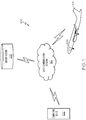
- FIG. 1 is a diagram of a system 100 for providing operational-efficiency data onboard an aircraft 104, in accordance with the disclosed embodiments.
- the system 100 operates to (i) detect applicability of particular Key Performance Indicators (KPIs) to a current flight plan prior to flight, during the flight, and after the flight, (ii) compute fuel savings and other operational-efficiency parameters when a particular KPI is applicable to the current flight plan, and (iii) configure alerts onboard the aircraft when the particular KPI is applicable to the current flight plan.
- KPIs Key Performance Indicators
- the system 100 may include, without limitation, a computing device 102 that communicates with one or more avionics systems 106 onboard the aircraft 104 and at least one server system 108, via a data communication network 110.
- certain embodiments of the system 100 may include additional or alternative elements and components, as desired for the particular application.
- the computing device 102 may be implemented by any computing device that includes at least one processor, some form of memory hardware, a user interface, and communication hardware.
- the computing device 102 may be implemented using a personal computing device, such as a tablet computer, a laptop computer, a personal digital assistant (PDA), a smartphone, or the like.
- the computing device 102 is capable of storing, maintaining, and executing an Electronic Flight Bag (EFB) application configured to identify applicable KPIs for a current flight plan, to compute and present fuel savings associated with the applicable KPI, and to configure alerts associated with the applicable KPI.
- EFB Electronic Flight Bag
- the computing device 102 may be implemented using a computer system onboard the aircraft 104, which is configured to identify the applicable KPIs, compute fuel savings, and configure alerts for applicable KPIs.
- the aircraft 104 may be any aviation vehicle for which KPIs are relevant and applicable during completion of a current flight plan.
- the aircraft 104 may be implemented as an airplane, helicopter, spacecraft, hovercraft, or the like.
- the one or more avionics systems 106 may include a Flight Management System (FMS), Automatic Dependent Surveillance - Broadcast (ADS-B) devices, Air Traffic Control (ATC) communication interface devices, navigation devices, weather radar, or the like.
- Data obtained from the one or more avionics systems 106 may include, without limitation: flight plan data, weather data, aircraft position data, aircraft altitude data, aircraft speed data, Notices to Airmen (NOTAM) data, aircraft performance data, or the like.
- FMS Flight Management System
- ADS-B Automatic Dependent Surveillance - Broadcast
- ATC Air Traffic Control
- Data obtained from the one or more avionics systems 106 may include, without limitation: flight plan data, weather data, aircraft position data, aircraft altitude data, aircraft speed data, Notices to
- the server system 108 may include any number of application servers, and each server may be implemented using any suitable computer. In some embodiments, the server system 108 includes one or more dedicated computers. In some embodiments, the server system 108 includes one or more computers carrying out other functionality in addition to server operations.
- the server system 108 may store and provide any type of data used to identify KPIs applicable to a current flight plan, to calculate fuel savings associated with applicable KPIs, and to configure or set alerts associated with applicable KPIs. Such data may include, without limitation: flight plan data, Key Performance Indicator (KPI) data, weather data, aircraft parameter data for a particular type of aircraft, fuel cost data, aircraft maintenance data, airport gate delay data, aircraft emissions data, and other data compatible with the computing device 102.
- KPI Key Performance Indicator
- the computing device 102 is usually located onboard the aircraft 104, and the computing device 102 communicates with the one or more avionics systems 106 via wired and/or wireless communication connection.
- the computing device 102 and the server system 108 are generally disparately located, and the computing device 102 communicates with the server system 108 via the data communication network 110 and/or via communication mechanisms onboard the aircraft 104.
- the data communication network 110 may be any digital or other communications network capable of transmitting messages or data between devices, systems, or components.
- the data communication network 110 includes a packet switched network that facilitates packet-based data communication, addressing, and data routing.
- the packet switched network could be, for example, a wide area network, the Internet, or the like.
- the data communication network 110 includes any number of public or private data connections, links or network connections supporting any number of communications protocols.
- the data communication network 110 may include the Internet, for example, or any other network based upon TCP/IP or other conventional protocols.
- the data communication network 110 could also incorporate a wireless and/or wired telephone network, such as a cellular communications network for communicating with mobile phones, personal digital assistants, and/or the like.
- the data communication network 110 may also incorporate any sort of wireless or wired local and/or personal area networks, such as one or more IEEE 802.3, IEEE 802.16, and/or IEEE 802.11 networks, and/or networks that implement a short range (e.g., Bluetooth) protocol.
- IEEE 802.3 IEEE 802.3
- IEEE 802.16, and/or IEEE 802.11 networks and/or networks that implement a short range (e.g., Bluetooth) protocol.
- Bluetooth short range
- the computing device 102 obtains relevant data associated with the aircraft 104, a current flight plan, and potentially applicable KPIs. The computing device 102 then uses the obtained data to identify applicable KPIs, to compute potential fuel savings when the aircraft 104 adheres to the recommendations provided by applicable KPIs, and to set alerts for the recommendations provided by the applicable KPIs. The computing device 102 also presents the computed fuel savings and KPI alerts such that a user (e.g., a flight crew member) may make flight decisions based on the presented recommendations.
- a user e.g., a flight crew member
- the computing device 102 is further configured to perform KPI analysis to identify applicable KPIs (and potential fuel savings based on the applicable KPIs), and to set the KPI alerts, (i) prior to flight (i.e., pre-flight), and (ii) continuously and dynamically during flight.
- KPI analysis to identify applicable KPIs (and potential fuel savings based on the applicable KPIs), and to set the KPI alerts, (i) prior to flight (i.e., pre-flight), and (ii) continuously and dynamically during flight.
- Such dynamic, real-time calculation of applicable KPIs and fuel savings considers updated, real-time data which may alter previously-computed applicable KPIs, effects of adherence to the applicable KPIs, and fuel savings associated with adherence to applicable KPIs.
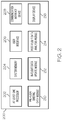
- FIG. 2 is a functional block diagram of a computing device, in accordance with the disclosed embodiments. It should be noted that the computing device 200 can be implemented with the computing device 102 depicted in FIG. 1 . In this regard, the computing device 200 shows certain elements and components of the computing device 200 in more detail.
- the computing device 200 generally includes, without limitation: at least one processor 202; system memory 204; a user interface 206; a communication interface device 208; a pre-flight briefing data module 210; an in-flight data update module 212; a post-flight data analysis module 214; and a display device 216.
- These elements and features of the computing device 200 may be operatively associated with one another, coupled to one another, or otherwise configured to cooperate with one another as needed to support the desired functionality - in particular, obtaining and identifying Key Performance Indicators (KPIs) applicable to a particular flight plan, and providing data to the flight crew that is based on the applicable KPIs (e.g., potential fuel savings and KPI alerts), as described herein.
- KPIs Key Performance Indicators
- FIG. 2 only depicts certain elements that relate to the techniques described in more detail below.
- the at least one processor 202 may be implemented or performed with one or more general purpose processors, a content addressable memory, a digital signal processor, an application specific integrated circuit, a field programmable gate array, any suitable programmable logic device, discrete gate or transistor logic, discrete hardware components, or any combination designed to perform the functions described here.
- the at least one processor 202 may be realized as one or more microprocessors, controllers, microcontrollers, or state machines.
- the at least one processor 202 may be implemented as a combination of computing devices, e.g., a combination of digital signal processors and microprocessors, a plurality of microprocessors, one or more microprocessors in conjunction with a digital signal processor core, or any other such configuration.
- the at least one processor 202 is communicatively coupled to the system memory 204.
- the system memory 204 is configured to store any obtained or generated data associated with operational-efficiency Key Performance Indicators (KPIs), potential fuel savings calculations, configuration and setting of KPI alerts, and graphical elements associated with the KPI analysis and data system.
- KPIs Key Performance Indicators
- the system memory 204 may be realized using any number of devices, components, or modules, as appropriate to the embodiment.
- the computing device 200 could include system memory 204 integrated therein and/or a system memory 204 operatively coupled thereto, as appropriate to the particular embodiment.
- system memory 204 could be realized as RAM memory, flash memory, EPROM memory, EEPROM memory, registers, a hard disk, a removable disk, or any other form of storage medium known in the art.
- the system memory 204 includes a hard disk, which may also be used to support functions of the computing device 200.
- the system memory 204 can be coupled to the at least one processor 202 such that the at least one processor 202 can read information from, and write information to, the system memory 204.
- the system memory 204 may be integral to the at least one processor 202.
- the at least one processor 202 and the system memory 204 may reside in a suitably designed application-specific integrated circuit (ASIC).
- ASIC application-specific integrated circuit
- the user interface 206 may include or cooperate with various features to allow a user to interact with the computing device 200. Accordingly, the user interface 206 may include various human-to-machine interfaces, e.g., a keypad, keys, a keyboard, buttons, switches, knobs, a touchpad, a joystick, a pointing device, a virtual writing tablet, a touch screen, a microphone, or any device, component, or function that enables the user to select options, input information, or otherwise control the operation of the computing device 200.
- various human-to-machine interfaces e.g., a keypad, keys, a keyboard, buttons, switches, knobs, a touchpad, a joystick, a pointing device, a virtual writing tablet, a touch screen, a microphone, or any device, component, or function that enables the user to select options, input information, or otherwise control the operation of the computing device 200.
- the user interface 206 could be manipulated by an operator to provide user selections to enable or disable particular KPIs, or to request KPI information applicable to a current flight plan and/or dynamically updated fuel savings or KPI applicability data during flight, as described herein.
- the user interface 206 may include or cooperate with various features to allow a user to interact with the computing device 200 via graphical elements rendered on a display element (e.g., the display device 216). Accordingly, the user interface 206 may initiate the creation, maintenance, and presentation of a graphical user interface (GUI).
- GUI graphical user interface
- the display device 216 implements touch-sensitive technology for purposes of interacting with the GUI. Thus, a user can manipulate the GUI by moving a cursor symbol rendered on the display device 216, or by physically interacting with the display device 216 itself for recognition and interpretation, via the user interface 206.
- the communication interface device 208 is suitably configured to communicate data between the computing device 200 and one or more remote servers and one or more avionics systems onboard an aircraft.
- the communication interface device 208 may transmit and receive communications over a wireless local area network (WLAN), the Internet, a satellite uplink/downlink, a cellular network, a broadband network, a wide area network, or the like.
- data received by the communication interface device 208 may include, without limitation: flight plan data, Key Performance Indicator (KPI) data, weather data, aircraft parameter data for a particular type of aircraft, fuel cost data, aircraft maintenance data, airport gate delay data, aircraft emissions data, and other data compatible with the computing device 200.
- Data provided by the communication interface device 208 may include, without limitation, requests for data associated with KPI analysis, operational-efficiency analysis (e.g., fuel savings, aircraft maintenance, gate delays, aircraft emissions), aircraft onboard alerts associated with KPI analysis, and the like.
- the pre-flight briefing data module 210 is configured to provide operational-efficiency data onboard the aircraft prior to flight of the aircraft.
- Operational-efficiency data may include fuel savings data and other operational-efficiency parameter data (e.g., emissions data, aircraft maintenance data, gate delay data) associated with Key Performance Indicator (KPI) applicability.
- KPI Key Performance Indicator
- the pre-flight briefing data module 210 is configured to determine applicability of KPIs to a current flight plan, based on obtained pre-flight briefing data that is associated with the current flight plan, flight plan data, weather data, Notice to Airmen (NOTAM) data, and Air Traffic Control (ATC) communication data.
- NOTAM Notice to Airmen
- ATC Air Traffic Control
- the pre-flight data also includes various dashboards from historical data associated with the city pair (i.e., airport pair) being flown during execution of the current flight plan.
- Such historical dashboard data may include, without limitation: departure and arrival profiles, taxi and/or trip fuel information, time of departure, time of arrival, or the like.
- the flight crew is provided with options to filter the historical dashboard data, based on one or more categories (e.g., the weight of the aircraft, the time of day, and season of the flight), wherein the filtering is used to configure the dashboard to the conditions closest to the current flight.
- the pre-flight briefing data module 210 is configured to calculate fuel savings associated with adherence to the particular KPI and to set alerts associated with adherence to the particular KPI. Thus, the pre-flight briefing data module 210 determines KPI applicability and determines operational-efficiency (e.g., fuel-efficiency) associated with applicable KPI compliance.
- operational-efficiency e.g., fuel-efficiency
- the in-flight data update module 212 is configured to provide operational-efficiency data onboard the aircraft during the flight of the aircraft.
- the in-flight data update module 212 dynamically updates KPI analysis throughout the flight, by (1) determining applicability of one or more KPIs, (2) calculating fuel savings associated with adherence to the particular KPI, and (3) setting alerts associated with adherence to the particular KPI.
- the in-flight data update module 212 continuously monitors avionics data, aircraft parameter data, aircraft state data (e.g., position, altitude, speed), ATC communication data, weather data, NOTAM data, and flight plan data to continuously and dynamically determine the applicability of particular KPIs during flight.
- the post-flight data analysis module 214 is configured to provide operational-efficiency data onboard the aircraft after the flight of the aircraft. Such post-flight, operational-efficiency data may be in the form of historical KPI compliance data, current KPI compliance data, and identified trends, discrepancies, and other comparison data obtained by comparing the current KPI compliance data with the historical KPI compliance data.
- the post-flight data analysis module 214 performs a historical analysis of post-flight, KPI compliance data generated and stored during a flight that has already been completed (i.e., a completed flight plan) by comparing the KPI compliance data to a set of historical KPI compliance data obtained from a plurality of past flights.
- the pre-flight briefing data module 210, the in-flight data update module 212, and/or the post-flight data analysis module 214 may be implemented with (or cooperate with) the at least one processor 202 to perform at least some of the functions and operations described in more detail herein.
- the pre-flight briefing data module 210, the in-flight data update module 212, and/or the post-flight data analysis module 214 may be realized as suitably written processing logic, application program code, or the like.
- the display device 216 is configured to display various icons, text, and/or graphical elements associated with operational-efficiency Key Performance Indicator (KPI) analysis.
- KPI Key Performance Indicator
- the display device 216 and the user interface 206 are communicatively coupled to the at least one processor 202.
- the at least one processor 202, the user interface 206, and the display device 216 are cooperatively configured to display, render, or otherwise convey one or more graphical representations or images associated with KPI analysis and KPI-associated alerts on the display device 216, as described in greater detail below.
- the display device 216 is realized as an electronic display configured to graphically display KPI analysis data and KPI-associated alerts, as described herein.
- the computing device 200 is an integrated computer system onboard an aircraft, and the display device 216 is located within a cockpit of the aircraft, and is thus implemented as an aircraft display.
- the display device 216 is implemented as a display screen of a standalone, personal computing device (e.g., laptop computer, tablet computer). It will be appreciated that although the display device 216 may be implemented using a single display, certain embodiments may use additional displays (i.e., a plurality of displays) to accomplish the functionality of the display device 216 described herein.
- FIGS. 3-5 are flow charts describing processes for providing operational-efficiency data onboard an aircraft in three differing scenarios: (1) prior to flight of the aircraft; (2) during flight of the aircraft; and (3) after flight of the aircraft. It should be appreciated that operational-efficiency data may include any data associated with improvements to fuel-efficiency of the aircraft, and reductions in aircraft maintenance, delays, and carbon dioxide emissions.
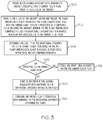
- FIG. 3 is a flow chart that illustrates an embodiment of a process 300 for providing operational-efficiency data onboard an aircraft associated with a current flight plan prior to the flight of the aircraft.
- the process 300 obtains and presents pre-flight briefing data, flight advisories, and stored alerts associated with the current flight plan, by a processor of a computing device onboard the aircraft (step 302).
- a processor of a computing device onboard the aircraft.
- One suitable methodology for obtaining and presenting pre-flight briefing data, flight advisories, and stored alerts associated with the current flight plan is described below with reference to FIG. 6 .
- Pre-flight briefing data may include any data presented to, and used by, the flight crew for formulating an action plan to complete a current flight plan.
- the pre-flight briefing data comprises at least one operational-efficiency Key Performance Indicator (KPI) associated with the current flight plan.
- KPI Key Performance Indicator
- the pre-flight data also includes various dashboards from historical data associated with the city pair (i.e., airport pair) being flown during execution of the current flight plan.
- Such historical dashboard data may include, without limitation: departure and arrival profiles, taxi and/or trip fuel information, time of departure, time of arrival, or the like.
- the flight crew is provided with options to filter the historical dashboard data, based on one or more categories (e.g., the weight of the aircraft, the time of day, and season of the flight), wherein the filtering is used to configure the dashboard to the conditions closest to the current flight.
- categories e.g., the weight of the aircraft, the time of day, and season of the flight
- a KPI provides recommended action items for a flight crew to improve operational-efficiency for the current flight plan.
- Operational-efficiency indicates an increased level of effectiveness (above a baseline typical level of effectiveness) for KPI parameters, which may include at least increased fuel-efficiency (e.g., lower fuel requirements resulting in reduced fuel costs), reduced aircraft maintenance requirements, reduced gate delays, and reduced carbon dioxide emissions.
- fuel-efficiency e.g., lower fuel requirements resulting in reduced fuel costs
- reduced aircraft maintenance requirements e.g., reduced aircraft maintenance requirements
- reduced gate delays e.g., reduced carbon dioxide emissions
- Examples of operational-efficiency KPIs may include, without limitation: delayed engine start; reduced engine taxi (i.e., engine out or single engine); optimum Standard Instrument Departure (SID); reduced flaps takeoff; optimum point for clean configuration after takeoff; acceleration altitude reduction; early/delayed landing gear retraction; change of cruise altitude; direct request and utilization; optimum Standard Arrival (STAR); reduced flap landing; optimum point for landing configuration; and idle reverse.
- SID Standard Instrument Departure
- STAR Standard Arrival
- STAR Standard Arrival
- the process 300 determines applicability of the operational-efficiency KPI to the current flight plan, based on the pre-flight briefing data, flight plan data, weather data, Notices to Airmen (NOTAM) data, and Air Traffic Control (ATC) communication data (step 304).
- the process 300 determines applicability of the KPI to the current flight plan by determining whether the KPI is valid, pertinent, appropriate, and/or useful to the current circumstances of the flight.
- the process 300 determines applicability dynamically, in real-time, and continuously throughout the flight (i.e., throughout completion of the flight plan). Thus, a KPI that is deemed applicable to the current flight plan when the KPI still applies to the flight plan and has not been rendered irrelevant or invalid by changing flight conditions and circumstances.
- the process 300 disables the operational-efficiency KPI for the current flight plan (step 312). In some embodiments, the process 300 disables the KPI automatically, after determining that the KPI is not applicable to the current flight plan. In other embodiments, however, the process 300 receives a user input selection to disable the KPI (based on an evaluation and decision input by a flight crew member), and disables the user-selected KPI in response to the user input selection.
- the process 300 presents a list of KPIs and a graphical element (e.g., a button, a checkbox, a user-selectable radio button) associated with each of the KPIs to enable and/or disable one particular KPI.
- a graphical element e.g., a button, a checkbox, a user-selectable radio button
- the KPI is not monitored for compliance and associated alerts are not provided to the crew.
- the process 300 receives user input disabling a particular KPI, the process 300 requests user-provided reasons for the disabling.
- the process 300 may provide a pre-set list of reasons associated to the KPI.
- the process 300 provides a data entry form configured to receive user input text associated with the manual disabling of the KPI.
- Post flight a disabled KPI is disregarded from a compliance report for the current flight plan. A list of disabled KPIs, and associated reasons for disabling the KPIs, is provided in a separate report for analysis and refinement of the KPIs.
- the process 300 computes and presents fuel savings associated with adherence to the operational-efficiency KPI during the flight (step 308).
- the process 300 determines: (1) a first fuel cost associated with continuing the flight with no change to the KPI action items or recommendations, and (2) a second fuel cost associated with completing the action items and recommendations provided by the KPI.
- the process 300 computes the difference between the first fuel cost and the second fuel cost, and presents the difference as the fuel savings associated with adherence to the operational-efficiency KPI.
- the process 300 also configures and presents alerts associated with adherence to the operational-efficiency KPI during the flight (step 310).
- the process 300 presents alerts to notify the flight crew at times when recommended action items provided by the operational-efficiency KPI should be completed by the flight crew.
- Configured and presented alerts may include, without limitation, audio alerts (e.g., alarms, audio tones or chimes, voice alerts that include spoken words or phrases), visual alerts (e.g., flashing lights, text and graphical elements presented by a computer display), or a combination of audio alerts and visual alerts.
- the operational-efficiency KPI may be a Single Engine Out Taxi Out KPI.
- the process 300 may configure and present the following alerts, without limitation: (1) engine number to be started, by the flight crew, for Taxi Out operation; (2) a time when the engine should be started by the flight crew; (3) a time when the other engine should be started during taxi, by the flight crew; and (4) a time when the auxiliary power unit (APU) should be deactivated by the flight crew.
- APU auxiliary power unit
- the recommended action items for the KPIs are defined during runtime of the process 300, based on various aircraft parameter data, planned flight profile, airport configuration, runway configuration, wind conditions, weather conditions, air traffic information, and the like. Once defined, the process 300 identifies and configures alerts for the recommended action items such that the flight crew is notified of each recommended action item at an appropriate time for completion or execution of the recommended action item.
- FIG. 4 is a flow chart that illustrates an embodiment of a process 400 for providing operational-efficiency data onboard an aircraft associated with a current flight plan during the flight of the aircraft.
- the process 400 monitors aircraft parameter data and flight data for changed conditions during the flight, by the processor (step 402).
- Aircraft parameter data may include, without limitation: aircraft position, aircraft speed, aircraft altitude, or the like.
- Aircraft parameter data may also include the pre-flight briefing data, flight plan data, weather data, Notices to Airmen (NOTAM) data, and Air Traffic Control (ATC) communication data.
- the process 400 monitors the aircraft-specific information (e.g., position, speed, altitude) and flight plan-specific information (e.g., pre-flight briefing data, the current flight plan, weather data associated with flight plan, NOTAMs associated with flight plan, and messages received from ATC) to identify changed conditions.
- aircraft-specific information e.g., position, speed, altitude
- flight plan-specific information e.g., pre-flight briefing data, the current flight plan, weather data associated with flight plan, NOTAMs associated with flight plan, and messages received from ATC
- weather data in a particular location or waypoint along the current flight plan may change during the flight.
- NOTAM data may change during the flight.
- the flight plan may be changed during the flight, and the changes to the flight plan may be transmitted to the flight crew onboard the aircraft via ATC communications.
- the process 400 determines whether the operational-efficiency KPI is applicable to the current flight plan, based on the changed conditions during the flight (step 404).
- the process 400 compares the changed conditions to the recommended action items provided by the operational-efficiency KPI, and determines whether the changed conditions render the operational-efficiency KPI inapplicable to the current flight plan.
- the current flight plan may recommend flying at a particular altitude when the aircraft is physically located at a particular location (e.g., Location X).
- Location X may be removed from the current flight plan, or in other words, the condition including Location X as part of the current flight plan may be changed.
- the aircraft is unable to fly at the designated altitude recommended by the KPI.
- the KPI is no longer applicable to the current flight plan, based on the changed conditions.
- the process 400 disables the operational-efficiency KPI for the current flight plan (step 412). As described previously with regard to FIG. 3 , the process 400 may disable the KPI automatically, after determining that the KPI is not applicable to the current flight plan, or the process 400 may disable the KPI in response to a user input selection.
- the process 400 computes and presents fuel savings associated with adherence to the operational-efficiency KPI during the flight (step 408).
- the process 400 identifies applicable KPIs and then determines how the applicable KPIs will affect fuel-efficiency (and operational-efficiency) during completion of the flight according to the current flight plan.
- the flight crew completes action items related to the recommendations provided by the KPI, the aircraft completes the flight in a more fuel-efficient and operationally-efficient manner.
- the process 400 determines: (1) a first fuel cost associated with continuing the flight with no change to the KPI action items or recommendations, and (2) a second fuel cost associated with completing the action items and recommendations provided by the KPI.
- the process 400 computes the difference between the first fuel cost and the second fuel cost, and presents the difference as the fuel savings associated with adherence to the operational-efficiency KPI.
- the process 400 configures and presents alerts associated with adherence to the operational-efficiency KPI during the flight (step 410).
- the process 400 configures and presents alerts in a similar manner to that described previously with regard to FIG. 3 .
- the process 400 presents alerts to notify the flight crew at times when recommended action items provided by the operational-efficiency KPI should be completed by the flight crew.
- Configured and presented alerts may include, without limitation, audio alerts (e.g., alarms, audio tones or chimes, voice alerts that include spoken words or phrases), visual alerts (e.g., flashing lights, text and graphical elements presented by a computer display), or a combination of audio alerts and visual alerts.
- FIG. 5 is a flow chart that illustrates an embodiment of a process 500 for providing operational-efficiency data onboard an aircraft associated with a current flight plan after the flight of the aircraft.
- the process 500 presents historical analysis and reports associated with the current flight plan and actual conditions of the flight, by a display device communicatively coupled to the processor (step 502).
- KPI Key Performance Indicator
- the process 500 provides reports associated with operational-efficiency Key Performance Indicator (KPI) applicability to the current flight plan and flight crew compliance with the applicable operational-efficiency KPIs for the current flight plan.
- KPI Key Performance Indicator
- Historical analysis and reports are presented to provide insight regarding operational-efficiency of the aircraft during completion of the current flight plan, such as fuel-efficiency, aircraft maintenance data, aircraft emissions, and other operational-efficiency parameters affected by KPI compliance during the course of the flight.
- FIG. 6 is a flow chart that illustrates an embodiment of a process 600 for obtaining and presenting pre-flight briefing data, flight advisories, and alerts associated with a current flight plan, prior to the flight of the aircraft. It should be appreciated that the process 600 described in FIG. 6 represents one embodiment of step 302 described above in the discussion of FIG. 3 , including additional detail.
- the process 600 obtains avionics systems data and aircraft parameter data, by a communication interface device communicatively coupled to the processor (step 602).
- the avionics systems data and the aircraft parameter data comprise at least aircraft position, altitude, and speed.
- the process 600 then filters a set of stored pre-flight briefing data, using the avionics systems data and the aircraft parameter data, by the processor, to generate filtered pre-flight briefing data (step 604).
- the filtered pre-flight briefing data is associated with a current flight plan, and is filtered from a database of pre-flight briefing data that is applicable to a larger superset of pre-flight briefing data associated with a plurality of flight plans.
- the process 600 also presents the filtered pre-flight briefing data by the display device, wherein the pre-flight briefing data comprises the filtered pre-flight briefing data (step 606).
- the process 600 also obtains candidate operational-efficiency Key Performance Indicators (KPIs) that are potentially associated with the current flight plan, by the processor (step 608).
- KPIs Key Performance Indicators
- the operational-efficiency KPIs provide recommended action items for a flight crew to complete to improve operational-efficiency of the current flight plan.
- improving the operational-efficiency may include improving aircraft fuel-efficiency, reducing aircraft maintenance, reducing gate delays, and reducing carbon dioxide emissions of the aircraft.
- the pre-flight briefing data generally includes a plurality of obtained KPIs that may or may not be applicable to the current flight plan. Applicability to the current flight plan depends on flight plan data and avionics systems data and aircraft parameter data obtained in step 602.
- the process 600 then evaluates the candidate operational-efficiency KPIs to identify a subset of the candidate operational-efficiency KPIs applicable to the current flight plan, by the processor (step 610). Applicability to the current flight plan is indicated by a comparison of KPI conditions associated with each of the candidate operational-efficiency KPIs to a current aircraft state, a current route for the current flight plan, and current environmental conditions and thresholds.
- FIG. 7 is a flow chart that illustrates an embodiment of a process 700 for presenting historical analysis and reports associated with the current flight plan, after the flight of the aircraft. It should be appreciated that the process 700 described in FIG. 7 represents one embodiment of step 502 described above in the discussion of FIG. 5 , including additional detail.
- KPI compliance data is generally collected and stored, onboard the aircraft, during completion of the current flight plan.
- KPI compliance data describes KPIs that are applicable to the current flight plan, and KPI adherence data for the current flight plan (i.e., whether or not the flight crew completed the recommended action items provided by the applicable KPIs).
- KPI compliance data may include all KPI compliance data for the current flight plan, or may be a subset of the total KPI compliance data for the current flight plan. The subset of the total KPI compliance data may include KPIs related to particular aircraft parameters, or one particular KPI.
- Historical KPI compliance data may include any KPI compliance data associated with any completed flight plan, and generally includes KPI compliance data associated with a plurality of completed flight plans.
- the process 700 compares the KPI compliance data (which may include a full set of KPI compliance data for the current flight plan, or a partial set of KPI compliance data for the current flight plan) to the set of historical KPI compliance data (which generally includes KPI compliance data for a plurality of flights) to identify discrepancies, trends, and other comparison data.
- the process 700 then creates one or more reports that include the KPI compliance data and the set of historical KPI compliance data, by the processor (step 706).
- the one or more reports may include the comparison data (e.g., the identified discrepancies and trends) and/or visual representations of the comparison data (e.g., charts, graphs).
- processes 300-700 may be performed by software, hardware, firmware, or any combination thereof.
- the preceding descriptions of processes 300-700 may refer to elements mentioned above in connection with FIGS. 1-2 .
- portions of processes 300-700 may be performed by different elements of the described system.
- processes 300-700 may include any number of additional or alternative tasks, the tasks shown in FIGS. 3-7 need not be performed in the illustrated order, and processes 300-700 may be incorporated into a more comprehensive procedure or process having additional functionality not described in detail herein.
- one or more of the tasks shown in FIGS. 3-7 could be omitted from embodiments of the processes 300-700 as long as the intended overall functionality remains intact.
- an embodiment of a system or a component may employ various integrated circuit components, e.g., memory elements, digital signal processing elements, logic elements, look-up tables, or the like, which may carry out a variety of functions under the control of one or more microprocessors or other control devices.
- integrated circuit components e.g., memory elements, digital signal processing elements, logic elements, look-up tables, or the like, which may carry out a variety of functions under the control of one or more microprocessors or other control devices.
- various elements of the systems described herein are essentially the code segments or instructions that perform the various tasks.
- the program or code segments can be stored in a processor-readable medium or transmitted by a computer data signal embodied in a carrier wave over a transmission medium or communication path.
- the "computer-readable medium”, “processor-readable medium”, or “machine-readable medium” may include any medium that can store or transfer information. Examples of the processor-readable medium include an electronic circuit, a semiconductor memory device, a ROM, a flash memory, an erasable ROM (EROM), a floppy diskette, a CD-ROM, an optical disk, a hard disk, a fiber optic medium, a radio frequency (RF) link, or the like.
- RF radio frequency
- the computer data signal may include any signal that can propagate over a transmission medium such as electronic network channels, optical fibers, air, electromagnetic paths, or RF links.
- the code segments may be downloaded via computer networks such as the Internet, an intranet, a LAN, or the like.
- Coupled means that one element/node/feature is directly or indirectly joined to (or directly or indirectly communicates with) another element/node/feature, and not necessarily mechanically.
- connected means that one element/node/feature is directly joined to (or directly communicates with) another element/node/feature, and not necessarily mechanically.
- modules Some of the functional units described in this specification have been referred to as "modules" in order to more particularly emphasize their implementation independence.
- functionality referred to herein as a module may be implemented wholly, or partially, as a hardware circuit comprising custom VLSI circuits or gate arrays, off-the-shelf semiconductors such as logic chips, transistors, or other discrete components.
- a module may also be implemented in programmable hardware devices such as field programmable gate arrays, programmable array logic, programmable logic devices, or the like. Modules may also be implemented in software for execution by various types of processors.
- An identified module of executable code may, for instance, comprise one or more physical or logical modules of computer instructions that may, for instance, be organized as an object, procedure, or function.
- the executables of an identified module need not be physically located together, but may comprise disparate instructions stored in different locations that, when joined logically together, comprise the module and achieve the stated purpose for the module.
- a module of executable code may be a single instruction, or many instructions, and may even be distributed over several different code segments, among different programs, and across several memory devices.
- operational data may be embodied in any suitable form and organized within any suitable type of data structure. The operational data may be collected as a single data set, or may be distributed over different locations including over different storage devices, and may exist, at least partially, merely as electronic signals on a system or network.
Landscapes
- Business, Economics & Management (AREA)
- Engineering & Computer Science (AREA)
- Human Resources & Organizations (AREA)
- General Physics & Mathematics (AREA)
- Physics & Mathematics (AREA)
- Economics (AREA)
- Strategic Management (AREA)
- Entrepreneurship & Innovation (AREA)
- Development Economics (AREA)
- Aviation & Aerospace Engineering (AREA)
- Educational Administration (AREA)
- Tourism & Hospitality (AREA)
- Game Theory and Decision Science (AREA)
- Marketing (AREA)
- Operations Research (AREA)
- Quality & Reliability (AREA)
- General Business, Economics & Management (AREA)
- Theoretical Computer Science (AREA)
- Radar, Positioning & Navigation (AREA)
- Remote Sensing (AREA)
- Automation & Control Theory (AREA)
- Traffic Control Systems (AREA)
Applications Claiming Priority (1)
| Application Number | Priority Date | Filing Date | Title |
|---|---|---|---|
| US15/726,783 US20190108466A1 (en) | 2017-10-06 | 2017-10-06 | Systems and methods for continuously providing operational-efficiency data in real-time onboard an aircraft |
Publications (1)
| Publication Number | Publication Date |
|---|---|
| EP3467729A1 true EP3467729A1 (fr) | 2019-04-10 |
Family
ID=63762329
Family Applications (1)
| Application Number | Title | Priority Date | Filing Date |
|---|---|---|---|
| EP18198522.7A Withdrawn EP3467729A1 (fr) | 2017-10-06 | 2018-10-03 | Systèmes et procédés pour fournir en continu des données d'efficacité opérationnelle en temps réel à bord d'un aéronef |
Country Status (2)
| Country | Link |
|---|---|
| US (1) | US20190108466A1 (fr) |
| EP (1) | EP3467729A1 (fr) |
Cited By (2)
| Publication number | Priority date | Publication date | Assignee | Title |
|---|---|---|---|---|
| CN111598451A (zh) * | 2020-05-15 | 2020-08-28 | 中国兵器工业计算机应用技术研究所 | 基于任务执行能力的操控工效分析方法、设备及系统 |
| EP3866080A1 (fr) * | 2020-02-14 | 2021-08-18 | Honeywell International Inc. | Opérations de planification de vol à l'aide de données connectées |
Families Citing this family (10)
| Publication number | Priority date | Publication date | Assignee | Title |
|---|---|---|---|---|
| US20190164433A1 (en) * | 2017-11-28 | 2019-05-30 | Honeywell International Inc. | System for distributed flight management capability |
| US11900281B2 (en) * | 2019-10-03 | 2024-02-13 | The Boeing Company | Systems and methods for optimizing energy loading in airline operations |
| CN113268368B (zh) * | 2021-04-26 | 2023-07-14 | 北京控制工程研究所 | 基于飞行任务剖面的组合体航天器安全关键数据维护方法 |
| US12461539B2 (en) | 2021-05-27 | 2025-11-04 | Honeywell International Inc. | System and method for providing enhanced services |
| CN113435706B (zh) * | 2021-06-02 | 2022-06-21 | 中国南方航空股份有限公司 | 一种一级航行通告溢报处理方法 |
| US12125393B2 (en) * | 2022-01-05 | 2024-10-22 | Honeywell International Inc. | Systems and methods to corroborate an externally recommended flight plan change with flight management system |
| US11932412B2 (en) | 2022-01-05 | 2024-03-19 | Honeywell International Inc. | Systems and methods for providing reduced flaps takeoff and landing advice |
| US20240370805A1 (en) * | 2022-07-18 | 2024-11-07 | The Boeing Company | Methods for graphically displaying aviation emissions information |
| US12293671B2 (en) * | 2022-11-21 | 2025-05-06 | Rockwell Collins, Inc. | Flight plan rules based conformity check |
| US20240265818A1 (en) * | 2023-02-02 | 2024-08-08 | The Boeing Company | System and method for reduced-engine taxiing operation |
Citations (3)
| Publication number | Priority date | Publication date | Assignee | Title |
|---|---|---|---|---|
| US20130080043A1 (en) * | 2011-09-28 | 2013-03-28 | U.S.A As Represented By The Administrator Of The National Aeronautics And Space Administration | Method and Apparatus for Generating Flight-Optimizing Trajectories |
| EP3007153A2 (fr) * | 2014-09-30 | 2016-04-13 | The Boeing Company | Système de communication avec un objet en vol |
| EP3154047A1 (fr) * | 2015-09-30 | 2017-04-12 | Airbus Group India Private Limited | Optimisation de trajectoire de vol en vol |
Family Cites Families (4)
| Publication number | Priority date | Publication date | Assignee | Title |
|---|---|---|---|---|
| US8554457B2 (en) * | 2010-07-15 | 2013-10-08 | Passur Aerospace, Inc. | System and method for airport surface management |
| US8918280B1 (en) * | 2011-05-17 | 2014-12-23 | Rockwell Collins, Inc. | Constraint processing as an alternative to flight management systems |
| US8676399B2 (en) * | 2011-11-21 | 2014-03-18 | Honeywell International Inc. | System and method for generating and displaying an electric taxi index |
| US10121384B2 (en) * | 2014-09-30 | 2018-11-06 | The Boeing Company | Aircraft performance predictions |
-
2017
- 2017-10-06 US US15/726,783 patent/US20190108466A1/en not_active Abandoned
-
2018
- 2018-10-03 EP EP18198522.7A patent/EP3467729A1/fr not_active Withdrawn
Patent Citations (3)
| Publication number | Priority date | Publication date | Assignee | Title |
|---|---|---|---|---|
| US20130080043A1 (en) * | 2011-09-28 | 2013-03-28 | U.S.A As Represented By The Administrator Of The National Aeronautics And Space Administration | Method and Apparatus for Generating Flight-Optimizing Trajectories |
| EP3007153A2 (fr) * | 2014-09-30 | 2016-04-13 | The Boeing Company | Système de communication avec un objet en vol |
| EP3154047A1 (fr) * | 2015-09-30 | 2017-04-12 | Airbus Group India Private Limited | Optimisation de trajectoire de vol en vol |
Cited By (4)
| Publication number | Priority date | Publication date | Assignee | Title |
|---|---|---|---|---|
| EP3866080A1 (fr) * | 2020-02-14 | 2021-08-18 | Honeywell International Inc. | Opérations de planification de vol à l'aide de données connectées |
| US11605303B2 (en) | 2020-02-14 | 2023-03-14 | Honeywell International Inc. | Flight planning operations using connected data |
| CN111598451A (zh) * | 2020-05-15 | 2020-08-28 | 中国兵器工业计算机应用技术研究所 | 基于任务执行能力的操控工效分析方法、设备及系统 |
| CN111598451B (zh) * | 2020-05-15 | 2021-10-08 | 中国兵器工业计算机应用技术研究所 | 基于任务执行能力的操控工效分析方法、设备及系统 |
Also Published As
| Publication number | Publication date |
|---|---|
| US20190108466A1 (en) | 2019-04-11 |
Similar Documents
| Publication | Publication Date | Title |
|---|---|---|
| EP3467729A1 (fr) | Systèmes et procédés pour fournir en continu des données d'efficacité opérationnelle en temps réel à bord d'un aéronef | |
| CN109559564B (zh) | 用于经由航空电子主飞行显示器(pfd)呈现直观时间线可视化的系统和方法 | |
| US11270593B2 (en) | Advisory method and system for flight trajectory optimization | |
| US8838294B2 (en) | Methods and systems for briefing aircraft procedures | |
| US10088998B2 (en) | Methods and apparatus for dynamically updating drop zone data during flight | |
| EP3657472B1 (fr) | Systèmes et procédés pour créer et utiliser un modèle contextuel applicable à la prédiction des conditions d'avertissement d'aéronefs et à l'analyse des performances d'aéronefs | |
| US11620688B2 (en) | Methods and systems for dynamically determining and adapting to cost impact during a flight | |
| US8682580B2 (en) | Data driven route strip | |
| US20200175628A1 (en) | Systems and methods for predicting weather impact on an aircraft | |
| US11955012B2 (en) | Transcription systems and message fusion methods | |
| US11655047B2 (en) | System and method for monitoring an electronic checklist and supporting sensors | |
| EP3677515B1 (fr) | Systèmes et procédés pour optimiser le fonctionnement de feux d'atterrissage à bord d'un aéronef | |
| EP3370218A1 (fr) | Procédés et systèmes de détection automatique, d'assistance et d'achèvement de rapports de pilotes (pireps) à bord d'un aéronef | |
| US20210253268A1 (en) | Systems and methods that optimize speed brake operations | |
| EP4120222B1 (fr) | Systèmes de transcription et procédés de fusion de messages | |
| US12033515B2 (en) | System and method for transmitting reports from autoland activated aircraft | |
| US12412479B2 (en) | Method and system to uniquely represent certified and uncertified applications data for an aircraft | |
| EP4290500A1 (fr) | Système et procédé de transmission de rapports à partir d'aéronefs activés par auto-atterrissage | |
| US20240308692A1 (en) | Service issue forecasting that adapts to aircraft operations | |
| US20260112275A1 (en) | Method and system of flight operation assessment using pilot feedback | |
| EP3989141A1 (fr) | Système et procédé de surveillance d'une liste de contrôle électronique et de capteurs de support |
Legal Events
| Date | Code | Title | Description |
|---|---|---|---|
| PUAI | Public reference made under article 153(3) epc to a published international application that has entered the european phase |
Free format text: ORIGINAL CODE: 0009012 |
|
| STAA | Information on the status of an ep patent application or granted ep patent |
Free format text: STATUS: REQUEST FOR EXAMINATION WAS MADE |
|
| 17P | Request for examination filed |
Effective date: 20181003 |
|
| AK | Designated contracting states |
Kind code of ref document: A1 Designated state(s): AL AT BE BG CH CY CZ DE DK EE ES FI FR GB GR HR HU IE IS IT LI LT LU LV MC MK MT NL NO PL PT RO RS SE SI SK SM TR |
|
| AX | Request for extension of the european patent |
Extension state: BA ME |
|
| STAA | Information on the status of an ep patent application or granted ep patent |
Free format text: STATUS: EXAMINATION IS IN PROGRESS |
|
| 17Q | First examination report despatched |
Effective date: 20210511 |
|
| STAA | Information on the status of an ep patent application or granted ep patent |
Free format text: STATUS: THE APPLICATION IS DEEMED TO BE WITHDRAWN |
|
| 18D | Application deemed to be withdrawn |
Effective date: 20210922 |