EP3468152B1 - Verfahren und system für bidirektionales transparentes proxying - Google Patents
Verfahren und system für bidirektionales transparentes proxying Download PDFInfo
- Publication number
- EP3468152B1 EP3468152B1 EP17879650.4A EP17879650A EP3468152B1 EP 3468152 B1 EP3468152 B1 EP 3468152B1 EP 17879650 A EP17879650 A EP 17879650A EP 3468152 B1 EP3468152 B1 EP 3468152B1
- Authority
- EP
- European Patent Office
- Prior art keywords
- requesting
- proxy
- packet
- protocol type
- requested packet
- Prior art date
- Legal status (The legal status is an assumption and is not a legal conclusion. Google has not performed a legal analysis and makes no representation as to the accuracy of the status listed.)
- Active
Links
- 238000000034 method Methods 0.000 title claims description 19
- 230000002457 bidirectional effect Effects 0.000 claims description 24
- 238000013507 mapping Methods 0.000 description 16
- 238000013459 approach Methods 0.000 description 4
- 238000012545 processing Methods 0.000 description 4
- 238000001914 filtration Methods 0.000 description 3
- 238000005516 engineering process Methods 0.000 description 2
- 238000012546 transfer Methods 0.000 description 2
- 230000006399 behavior Effects 0.000 description 1
- 230000009286 beneficial effect Effects 0.000 description 1
- 230000005540 biological transmission Effects 0.000 description 1
- 238000004891 communication Methods 0.000 description 1
- 230000003287 optical effect Effects 0.000 description 1
- 230000004044 response Effects 0.000 description 1
Images

Classifications
-
- H—ELECTRICITY
- H04—ELECTRIC COMMUNICATION TECHNIQUE
- H04L—TRANSMISSION OF DIGITAL INFORMATION, e.g. TELEGRAPHIC COMMUNICATION
- H04L67/00—Network arrangements or protocols for supporting network services or applications
- H04L67/50—Network services
- H04L67/56—Provisioning of proxy services
- H04L67/563—Data redirection of data network streams
-
- H—ELECTRICITY
- H04—ELECTRIC COMMUNICATION TECHNIQUE
- H04L—TRANSMISSION OF DIGITAL INFORMATION, e.g. TELEGRAPHIC COMMUNICATION
- H04L63/00—Network architectures or network communication protocols for network security
- H04L63/02—Network architectures or network communication protocols for network security for separating internal from external traffic, e.g. firewalls
- H04L63/0281—Proxies
-
- H—ELECTRICITY
- H04—ELECTRIC COMMUNICATION TECHNIQUE
- H04L—TRANSMISSION OF DIGITAL INFORMATION, e.g. TELEGRAPHIC COMMUNICATION
- H04L61/00—Network arrangements, protocols or services for addressing or naming
- H04L61/50—Address allocation
- H04L61/5007—Internet protocol [IP] addresses
-
- H—ELECTRICITY
- H04—ELECTRIC COMMUNICATION TECHNIQUE
- H04L—TRANSMISSION OF DIGITAL INFORMATION, e.g. TELEGRAPHIC COMMUNICATION
- H04L63/00—Network architectures or network communication protocols for network security
- H04L63/02—Network architectures or network communication protocols for network security for separating internal from external traffic, e.g. firewalls
- H04L63/0227—Filtering policies
- H04L63/0236—Filtering by address, protocol, port number or service, e.g. IP-address or URL
-
- H—ELECTRICITY
- H04—ELECTRIC COMMUNICATION TECHNIQUE
- H04L—TRANSMISSION OF DIGITAL INFORMATION, e.g. TELEGRAPHIC COMMUNICATION
- H04L63/00—Network architectures or network communication protocols for network security
- H04L63/02—Network architectures or network communication protocols for network security for separating internal from external traffic, e.g. firewalls
- H04L63/0227—Filtering policies
- H04L63/0263—Rule management
-
- H—ELECTRICITY
- H04—ELECTRIC COMMUNICATION TECHNIQUE
- H04L—TRANSMISSION OF DIGITAL INFORMATION, e.g. TELEGRAPHIC COMMUNICATION
- H04L67/00—Network arrangements or protocols for supporting network services or applications
- H04L67/50—Network services
- H04L67/56—Provisioning of proxy services
Definitions
- the present disclosure relates to the technical field of computer communication and, more particularly, relates to a method and a system for bidirectional transparent proxying.
- proxies In certain network scenarios, a user often needs to use a proxy to visit network or some special service websites normally. Therefore, various types of proxies with different purposes emerge, such as HTTP (HyperText Transfer Protocol) proxy, FTP (File Transfer Protocol) proxy, SSL (Secure Sockets Layer) proxy, and some web proxies.
- HTTP HyperText Transfer Protocol
- FTP File Transfer Protocol
- SSL Secure Sockets Layer
- web proxies all serve particular application protocols, and the user has to specify the service address and service port of the proxy, and also specify the application protocols that correspond to designated accessing behaviors.
- the user needs to perform complicated deployment and configuration to realize proxying. That is, the proxy is not transparent to the user.
- the conventional solution allows a requesting end to establish a TCP (Transmission Control Protocol) connection with a proxy server by hijacking the TCP_SYN request packet of the user, and further uses the proxy server to establish a connection with the server, such that proxying is realized. Accordingly, the user no longer needs to pay close attention to information such as the service port of the application protocol and the service port of the proxy server to achieve the goal of making the proxy transparent to the user.
- TCP Transmission Control Protocol
- some of current socks proxies can implement proxying of most ip packets, but they are only transparent to the server but not to the user.
- the user needs to install some requesting ends and perform certain configuration to realize proxying.
- the conventional proxying method has the issue of not being applicable to full ip protocols, as well as the one-way transparent issue of being only transparent to the user or being only transparent to the server under full ip protocol or specialized network.
- US 7,954,144 B1 discloses methods for using proxy servers to transparently forward messages between clients and origin servers.
- the document by Daniel Kiracofe entitled “Transparent Proxy with Linux and Squidmini-HOWTO” discloses the configuration of iptables in transparent proxies.
- embodiments of the present disclosure provide a method and a system for bidirectional transparent proxying.
- the technical solutions are as follows.
- a method for bidirectional transparent proxying including: configuring, by a first proxy end, iptables rules based on the protocol type of a requesting-end-requested packet, and receiving, by the first proxy end, the requesting-end-requested packet that is guided based on the iptables rules;
- the protocol type of the requesting-end-requested packet may be a connection-oriented protocol type
- steps of configuring, by a first proxy end, iptables rules based on the protocol type of a requesting-end-requested packet, and receiving, by the first proxy end, the requesting-end-requested packet that is guided based on the iptables rules specifically includes: configuring, by the first proxy end, the iptables rules based on the connection-oriented protocol type, and utilizing, by the first proxy end, a redirect mechanism of NetFilter to redirect the requesting-end-requested packet to the first proxy end, thereby establishing a connection-oriented connection relationship between the first proxy end and the requesting end.
- the protocol type of the requesting-end-requested packet may be a connectionless protocol type
- steps of configuring, by a first proxy end, iptables rules based on the protocol type of the requesting-end-requested packet, and receiving, by the first proxy end, the requesting-end-requested packet that is guided based on the iptables rules specifically includes: configuring, by the first proxy end, the iptables rules based on the connectionless protocol type, utilizing, by the first proxy end, a mark mechanism of the NetFilter to mark the requesting-end-requested packet, and configuring, by the first proxy end, routing rules to guide the marked requesting-end-requested packet to the first proxy end.
- steps of configuring, by a first proxy end, iptables rules based on the protocol type of the requesting-end-requested packet, and receiving, by the first proxy end, the requesting-end-requested packet that is guided based on the iptables rules may also include: when the connectionless protocol type is a UDP protocol type, utilizing, by the first proxy end, a tproxy mechanism of the NetFilter to redirect the requesting-end-requested packet, marking, by the first proxy end, the redirected requesting-end-requested packet, and configuring, by the first proxy end, routing rules to guide the marked requesting-end-requested packet to the first proxy end.
- steps of, based on the requesting-end-requested packet and the protocol type of the requesting-end-requested packet, sending, by the second proxy end, the requesting-end-requested packet to an acknowledging end, where a requesting-end ip address and a requesting-end port in the requesting-end-requested packet are used as a source ip address and a source port specifically includes:
- steps of sending, by the first proxy end, the received acknowledging-end-responded packet to the requesting end specifically includes: through the connection relationship between the first proxy end and the requesting end, sending, by the first proxy end, the received acknowledging-end-responded packet to the requesting end.
- steps of sending, by the first proxy end, the received acknowledging-end-responded packet to the requesting end specifically includes: through raw socket, sending, by the first proxy end, the received acknowledging-end-responded packet to the requesting end.
- a system for bidirectional transparent proxying including: a first proxy end and a second proxy end.
- the first proxy end includes a first configuration module and a second configuration module
- the second proxy end includes a third configuration module and a fourth configuration module.
- the first configuration module is configured for configuring iptables rules based on the protocol type of a requesting-end-requested packet and receiving the requesting-end-requested packet that is guided based on the iptables rules.
- the second configuration module is configured for sending the requesting-end-requested packet and the protocol type of the requesting-end-requested packet to the second proxy end.
- the third configuration module is configured for, based on the requesting-end-requested packet and the protocol type of the requesting-end-requested packet, sending the requesting-end-requested packet to an acknowledging end, where a requesting-end ip address and a requesting-end port in the requesting-end-requested packet are used as a source ip address and a source port.
- the fourth configuration module is configured for guiding and receiving an acknowledging-end-responded packet by configuring ospf service, iptables rules and routing rules, and sending the acknowledging-end-responded packet to the first proxy end.
- the first configuration module is further configured for sending the acknowledging-end-responded packet to the requesting end, wherein the requesting-end-requested packet refers to a packet requested by the requesting end, and the acknowledging-end-responded packet refers to a packet responded by the acknowledging end.
- the first configuration module is further configured for configuring the iptables rules based on the connection-oriented protocol type, and utilizing a redirect mechanism of NetFilter to redirect the requesting-end-requested packet to the first proxy end, thereby establishing a connection-oriented connection relationship between the first proxy end and the requesting end.
- the first configuration module is further configured for configuring the iptables rules based on the connectionless protocol type, utilizing a mark mechanism of the NetFilter to mark the requesting-end-requested packet, and configuring routing rules to guide the marked requesting-end-requested packet to the first proxy end.
- the first configuration module is further configured for utilizing a tproxy mechanism of the NetFilter to redirect the requesting-end-requested packet, marking the redirected requesting-end-requested packet, and configuring routing rules to guide the marked requesting-end-requested packet to the first proxy end.
- the third configuration module is further configured for, based on the connection-oriented protocol type, utilizing an ip_transparent option of the socket to establish a connection-oriented connection relationship with the acknowledging end, where the requesting-end ip address and the requesting-end port in the requesting-end-requested packet are used as the source ip address and the source port; and sending the requesting-end-requested packet to the acknowledging end.
- the third configuration module is further configured for, based on the connectionless protocol type, utilizing the ip transparent option of the socket to directly send the requesting-end-requested packet to the acknowledging end, where the requesting-end ip address and the requesting-end port in the requesting-end-requested packet are used as the source ip address and the source port.
- the first configuration module is further configured for, through the connection relationship between the first proxy end and the requesting end, sending the received acknowledging-end-responded packet to the requesting end.
- the first configuration module is further configured for, through raw socket, sending the received acknowledging-end-responded packet to the requesting end.
- connection protocol types By differentiating different connection protocol types and adopting packet-processing approaches corresponding to the connection protocols, the present disclosure achieves the objective of making the proxy to be transparent to both the client and server under the full ip protocol formed by the connection-oriented protocol and connectionless protocol.
- the proxy By using the requesting-end ip address and the requesting-end port in the requesting-end-requested packet as the source ip address and the source port, the proxy enables the acknowledging end to believe that the access request is from the requesting end, thereby achieving the objective of making the proxy to be transparent to the server in specified network.
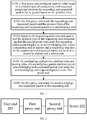
- the present disclosure provides a method for bidirectional transparent proxying. Referring to FIG. 1 , the method includes following steps.
- a first proxy end configures iptables rules based on the protocol type of a requesting-end-requested packet and receives the requesting-end-requested packet that is guided based on the iptables rules (the requesting-end-requested packet may refer to a packet requested by a requesting end).
- the protocol type includes a connection-oriented protocol type (e.g., TCP type), a connectionless protocol (e.g., User Datagram Protocol, UDP) type, and an ICMP (Internet Control Message Protocol) type.
- a connection-oriented protocol type e.g., TCP type
- a connectionless protocol e.g., User Datagram Protocol, UDP
- ICMP Internet Control Message Protocol
- the first proxy end configures iptables rules based on the connection-oriented protocol type, and utilizes a redirect mechanism of NetFilter to redirect the requesting-end-requested packet to the first proxy end, thereby establishing a connection-oriented connection relationship between the first proxy end and the requesting end.
- iptables is an ip information packet filtering system integrated with Linux kernel, and such system facilitates the Linux system to better control the ip information packet filtering and the firewall configuration.
- the iptables works in the kernel, and is configured to set, maintain, and check the ip packet filtering rules of the Linux kernel, and to form the rules into a list, thereby realizing a specific access-control function.
- the rules defined by the iptables may be read by the NetFilter (network filter) in the kernel space.
- the first proxy end may configure the iptables rules based on the connection-oriented protocol type, and use the redirect mechanism of the NetFilter to redirect the client-requested packet to a listening port of the first proxy end through redir ports, thereby establishing a connection-oriented connection relationship of first proxy end - requesting end between the first proxy end and the requesting end.
- the connection-oriented protocol type is the TCP type
- the first proxy end automatically completes the three-way handshake with the requesting end.
- the connection-tracking information of the connection relationship of first proxy end - requesting end also needs to be established, thereby facilitating subsequent receiving of the acknowledging-end-responded packet (the acknowledging-end-responded packet may refer to a packet responded by an acknowledging end).
- the first proxy end configures iptables rules based on the connectionless protocol type, utilizes a mark mechanism of the NetFilter to mark the requesting-end-requested packet, and configures routing rules to guide the marked requesting-end-requested packet to the first proxy end.
- the first proxy end configures the iptables rules based on the connectionless protocol type and uses the mark mechanism of the NetFilter to mark the requesting-end-requested packet.
- the first proxy end further configures the routing rules to allow the marked packet to use a designated routing table for routing. Further, the routing rules are added to the designated routing table, such that the marked packet is guided to the first proxy end.
- the connection-tracking information of the first proxy end and the requesting end is also established, which facilitates the subsequent receiving of the acknowledging-end-responded packet.
- the first proxy end before marking the requesting-end-requested packet, the first proxy end further redirects the requesting-end-requested packet through the tproxy mechanism of the NetFilter. Further, the first proxy end marks the redirected requesting-end-requested packet and configures the routing rules to allow the marked packet to use the designated routing table for routing. The routing rules are further added to the designated routing table, and the marked requesting-end-requested packet is guided to the first proxy end.
- connection protocol types By differentiating different connection protocol types and adopting packet-processing approaches corresponding to the connection protocols, the present disclosure achieves the objective of making the proxy to be transparent to the user and server under the full ip protocol formed by the connection-oriented protocol and connectionless protocol.
- the first proxy end sends the requesting-end-requested packet and the protocol type of the requesting-end-requested packet to a second proxy end.
- the first proxy end needs to establish a connection relationship with the second proxy end, and through the connection relationship, sends the requesting-end-requested packet and the protocol type of the requesting-end-requested packet to the second proxy end. Further, connection-tracking information of such connection relationship needs to be established, and a mapping relationship between such connection relationship and the aforementioned connection-tracking information of the first proxy end and the requesting end needs to be established and saved. Accordingly, the subsequent receiving of the acknowledging-end-responded packet may become easier.
- the second proxy end sends the requesting-end-requested packet to an acknowledging end, where a requesting-end ip address and a requesting-end port in the requesting-end-requested packet are used as a source ip address and a source port.
- the requesting-end-requested packet includes requesting-end ip address, requesting-end port, acknowledging end ip address, and acknowledging end port.
- the proxy needs to use the requesting-end ip address and the requesting-end port in the requesting-end-requested packet as the source ip address and the source port.
- the acknowledging end ip address and the acknowledging end port remain unchanged to allow the proxy end to establish a connection relationship with the acknowledging end, such that the acknowledging end believes that the access request is from the requesting end. Accordingly, the proxy may become transparent to the server under full ip protocol and specified network.
- the second proxy end receives the requesting-end-requested packet and the protocol type of the requesting-end-requested packet.
- the second proxy end uses the requesting-end ip address and the requesting-end port in the requesting-end-requested packet as the source ip address and the source port, the second proxy end sends the requesting-end-requested packet to the acknowledging end.
- the connection-tracking information between the second proxy end and the acknowledging end also needs to be established, and the connection-tracking information between the second proxy end and the acknowledging end needs to establish a mapping relationship with the aforementioned connection-tracking information between the first proxy end and the second proxy end. Such mapping relationship may need to be saved for facilitating subsequent receiving of the acknowledging-end-responded packet.
- the second proxy end when the protocol type is the connection-oriented protocol type, at Step S103: based on the connection-oriented protocol type, the second proxy end utilizes an ip_transparent option of the socket to establish a connection-oriented connection relationship with the acknowledging end, where the requesting-end ip address and the requesting-end port in the requesting-end-requested packet are used as the source ip address and the source port; the second proxy end further establishes connection-tracking information of the connection-oriented connection relationship between the second proxy end and the acknowledging end, and establishes and saves a mapping relationship between the connection-tracking information of the connection relationship between the second proxy end and the acknowledging end and the aforementioned connection-tracking information between the first proxy end and the second proxy end.
- the second proxy end utilizes the ip_transparent option of the socket to directly send the requesting-end-requested packet to the acknowledging end based on the connectionless protocol type, where the requesting-end ip address and the requesting-end port in the requesting-end-requested packet are used as the source ip address and the source port; and the second proxy end further establishes connection-tracking information between the second proxy end and the acknowledging end, and establishes and saves a mapping relationship between the connection-tracking information between the second proxy end and the acknowledging end and the aforementioned connection-tracking information between the first proxy end and the second proxy end.
- the second proxy guides and receives an acknowledging-end-responded packet, and sends the acknowledging-end-responded packet to the first proxy end.
- the ospf service runs at the second proxy end and at a switch of a corresponding acknowledging end, and the iptables rules and the routing rules are configured, thereby directing the acknowledgement packet responded by the acknowledging end to the requesting end to the second proxy end.
- the second proxy end obtains the connection relationship between the first proxy end and the second proxy end based on the mapping relationship that includes the connection-tracking information between the second proxy end and the acknowledging end, and sends the acknowledging-end-responded packet to the first proxy end through the connection relationship between the first proxy end and the second proxy end.
- the first proxy end sends the acknowledging-end-responded packet to the requesting end.
- the first proxy end acquires the connection-tracking information between the first proxy end and the requesting end based on the mapping relationship that includes the connection-tracking information between the first proxy end and the second proxy end, and sends the acknowledging-end-responded packet to the requesting end through the connection-tracking information between the first proxy end and the requesting end.
- the first proxy end acquires the connection relationship between the first proxy end and the requesting end based on the mapping relationship that includes the connection-tracking information between the first proxy end and the second proxy end. Further, the first proxy end sends the received acknowledging-end-responded packet to the requesting end through the connection relationship between the first proxy end and the requesting end.
- the first proxy end acquires the connection-tracking information between the first proxy end and the requesting end based on the mapping relationship that includes the connection-tracking information between the first proxy end and the second proxy end. Further, based on such connection-tracking information between the first proxy end and the requesting end, the first proxy end sends the received acknowledging-end-responded packet to the requesting end through the raw packet.
- the aforementioned requesting end may be a user-end (e.g., client), or may be a server (e.g., source server).
- a user-end e.g., client
- a server e.g., source server
- the aforementioned acknowledging end is a server 202 that responds to user-end-requests. For example, if the user end 201 access video resources at the server 202, the user end 201 is then the access-requesting end and the server 202 is the acknowledging end that responds to the access request.
- the aforementioned acknowledging end is then a user end 302 that responds to requests from the server 301.
- the server 301 pushes pop-up window information to the user end 302
- the server 301 is then the pushing requesting end and the user end 302 is the acknowledging end that responds to the pushing request.
- first proxy end and second proxy end may possess functions of each other.
- bidirectional transparent proxying may be realized by enabling and disabling corresponding proxying functions of the first proxy end and second proxy end. Accordingly, the configuration can be easier and more convenient.
- connection protocol types By differentiating different connection protocol types and adopting packet-processing approaches corresponding to the connection protocols, the present disclosure achieves the objective of making the proxy to be transparent to the user and server under the full ip protocol formed by the connection-oriented protocol and connectionless protocol.
- the proxy By using the requesting-end ip address and the requesting-end port in the requesting-end-requested packet as the source ip address and the source port, the proxy enables the acknowledging end to believe that the access request is from the requesting end, thereby achieving the objective of making the proxy to be transparent to the server in specified network.
- the present disclosure provides a system for bidirectional transparent proxying, which is able to execute the method for bidirectional transparent proxying provided in Embodiment 1.
- the disclosed system includes a first proxy end 41 and a second proxy end 42.
- the first proxy end 41 includes a first configuration module 411 and a second configuration module 412
- the second proxy end 42 includes a third configuration module 421 and a fourth configuration module 422.
- the first configuration module 411 is configured for configuring iptables rules based on the protocol type of a requesting-end-requested packet and receiving the requesting-end-requested packet that is guided based on the iptables rules.
- the second configuration module 412 is configured for sending the requesting-end-requested packet and the protocol type of the requesting-end-requested packet to the second proxy end 42.
- the third configuration module 421 is configured for, based on the requesting-end-requested packet and the protocol type of the requesting-end-requested packet, sending the requesting-end-requested packet to an acknowledging end, where a requesting-end ip address and a requesting-end port in the requesting-end-requested packet are used as a source ip address and a source port.
- the fourth configuration module 422 is configured for guiding and receiving an acknowledging-end-responded packet by configuring ospf service, iptables rules and routing rules, and sending the acknowledging-end-responded packet to the first proxy end 41.
- the first configuration module 411 is further configured for sending the acknowledging-end-responded packet to the requesting end.
- the first configuration module 411 is further configured for configuring iptables rules based on the connection-oriented protocol type, and utilizing a redirect mechanism of NetFilter to redirect the requesting-end-requested packet to the first proxy end 41, thereby establishing a connection-oriented connection relationship of first proxy end - requesting end.
- the first configuration module 411 may configure the iptables rules based on the connection-oriented protocol type, and uses the redirect mechanism of the NetFilter to redirect the client-requested packet to a listening port of the first proxy end 41 through redir ports, thereby establishing a connection-oriented connection relationship of first proxy end - requesting end between the first proxy end 41 and the requesting end.
- the connection-oriented protocol type is the TCP type
- the three-way handshake with the requesting end may be completed automatically.
- the connection-tracking information of the connection relationship of first proxy end - requesting end needs to be established, thereby facilitating subsequent receiving of the acknowledging-end-responded packet.
- the first configuration module 411 is further configured for configuring iptables rules based on the connectionless protocol type, utilizing a mark mechanism of the NetFilter to mark the requesting-end-requested packet, and configuring routing rules to guide the marked requesting-end-requested packet to the first proxy end 41.
- the first configuration module 411 configures the iptables rules based on the connectionless protocol type, and uses the mark mechanism of the NetFilter to mark the requesting-end-requested packet.
- the first configuration module 411 further configures the routing rules to allow the marked packet to use a designated routing table for routing. Further, the routing rules are added to the designated routing table, such that the marked packet is guided to the first proxy end 41.
- the connection-tracking information between the first proxy end 41 and the requesting end is also established, which facilitates the subsequent receiving of the acknowledging-end-responded packet.
- the first configuration module 411 is further configured for utilizing a tproxy mechanism of the NetFilter to redirect the requesting-end-requested packet, marking the redirected requesting-end-requested packet, and configuring routing rules to guide the marked requesting-end-requested packet to the first proxy end 41.
- the second proxy end further needs to establish a connection relationship between the first proxy end 41 and the second proxy end 42, and through the connection relationship between the first proxy end 41 and the second proxy end 42, sends the requesting-end-requested packet and the protocol type of the requesting-end-requested packet to the second proxy end 42.
- connection-tracking information of the connection relationship between the first proxy end 41 and the second proxy end 42 needs to be established, and a mapping relationship between the connection-tracking information of the connection relationship between the first proxy end 41 and the second proxy end 42 and the aforementioned connection-tracking information between the first proxy end 41 and the requesting end needs to be established and saved. Accordingly, the subsequent receiving of the acknowledging-end-responded packet may become easier.
- the third configuration module 421 is further configured for, based on the connection-oriented protocol type, utilizing an ip transparent option of the socket to establish a connection-oriented connection relationship with the acknowledging end, where the requesting-end ip address and the requesting-end port in the requesting-end-requested packet are used as the source ip address and the source port.
- the third configuration module 421 is further configured for sending the requesting-end-requested packet to the acknowledging end.
- the third configuration module 421 is further configured for, based on the connectionless protocol type, utilizing the ip_transparent option of the socket to directly send the requesting-end-requested packet to the acknowledging end, where the requesting-end ip address and the requesting-end port in the requesting-end-requested packet are used as the source ip address and the source port.
- the third configuration module 421 receives the requesting-end-requested packet and the protocol type of the requesting-end-requested packet. Using the requesting-end ip address and the requesting-end port in the requesting-end-requested packet as the source ip address and the source port, the third configuration module 421 sends the requesting-end-requested packet to the acknowledging end. Further, the connection-tracking information between the second proxy end 42 and the acknowledging end also needs to be established, and the connection-tracking information between the second proxy end 42 and the acknowledging end needs to establish a mapping relationship with the aforementioned connection-tracking information between the first proxy end 41 and the second proxy end 42. Such mapping relationship may need to be saved for facilitating subsequent receiving of the acknowledging-end-responded packet.
- the fourth configuration module 422 configures ospf service at the second proxy end 42 and at a switch of a corresponding acknowledging end.
- the fourth configuration module 422 further configures the iptables rules and the routing rules to guide the acknowledgement packet responded by the acknowledging end to the requesting end to the second proxy end 42.
- the fourth configuration module 422 obtains the connection relationship between the first proxy end 41 and the second proxy end 42 based on the mapping relationship that includes the connection-tracking information between the second proxy end 42 and the acknowledging end. Through the connection relationship between the first proxy end 41 and the second proxy end 42, the fourth configuration module 422 sends the acknowledging-end-responded packet to the first proxy end 41.
- the first configuration module 411 further acquires the connection-tracking information between the first proxy end 41 and the requesting end based on the mapping relationship that includes the connection-tracking information between the first proxy end 41 and the second proxy end 42. Through the connection-tracking information between the first proxy end 41 and the requesting end, the first configuration module 411 sends the acknowledging-end-responded packet to the requesting end.
- the first configuration module 411 is further configured to acquire the connection relationship of first proxy end - requesting end based on the mapping relationship that includes the connection-tracking information between the first proxy end 41 and the second proxy end 42. Further, the first configuration module 411 sends the received acknowledging-end-responded packet to the requesting end through the connection relationship of first proxy end - requesting end.
- the first configuration module 411 is further configured to acquire the connection-tracking information between the first proxy end 41 and the requesting end based on the mapping relationship that includes the connection-tracking information between the first proxy end 41 and the second proxy end 42. Further, based on such connection-tracking information between the first proxy end 41 and the requesting end, the first configuration module 411 sends the received acknowledging-end-responded packet to the requesting end through the raw socket.
- connection protocol types By differentiating different connection protocol types and adopting packet-processing approaches corresponding to the connection protocols, the present disclosure achieves the objective of making the proxy to be transparent to the user and server under the full ip protocol formed by the connection-oriented protocol and connectionless protocol.
- the proxy By using the requesting-end ip address and the requesting-end port in the requesting-end-requested packet as the source ip address and the source port, the proxy enables the acknowledging end to believe that the access request is from the requesting end, thereby achieving the objective of making the proxy to be transparent to the server in specified network.
- the present disclosure may be implemented by software plus a necessary universal hardware platform, and certainly may also be implemented by hardware, but in many cases, the software implementation is preferred.
- the technical solutions of the present disclosure or the part that makes contributions to the existing technology may be substantially embodied in the form of a software product.
- the software product may be stored in a computer-readable storage medium, such as ROM/RAM, magnetic disk, or optical disc, and includes a plurality of commands to instruct a computer device (which may be a personal computer, a server, or a network device) to perform the method according to each or some portions of embodiments of the present disclosure.
Landscapes
- Engineering & Computer Science (AREA)
- Computer Networks & Wireless Communication (AREA)
- Signal Processing (AREA)
- Computer Hardware Design (AREA)
- Computer Security & Cryptography (AREA)
- Computing Systems (AREA)
- General Engineering & Computer Science (AREA)
- Business, Economics & Management (AREA)
- General Business, Economics & Management (AREA)
- Data Exchanges In Wide-Area Networks (AREA)
- Computer And Data Communications (AREA)
Claims (14)
- Verfahren für bidirektionales transparentes Proxying, wobei das Verfahren umfasst:Konfigurieren (S101), durch ein erstes Proxy-Ende (41), von iptables-Regeln auf Grundlage eines Protokolltyps eines am anfordernden Ende angeforderten Pakets und Empfangen, durch das erste Proxy-Ende (41), des am anfordernden Ende angeforderten Pakets, das auf Grundlage der iptables-Regeln geleitet wird;Senden (S102), durch das erste Proxy-Ende (41), des am anfordernden Ende angeforderten Pakets und des Protokolltyps des am anfordernden Ende angeforderten Pakets an ein zweites Proxy-Ende;auf Grundlage des am anfordernden Ende angeforderten Pakets und des Protokolltyps des anfordernden Ende angeforderten Pakets, Senden (S103), durch das zweite Proxy-Ende, des am anfordernden Ende angeforderten Pakets an ein Bestätigungsende, wobei eine IP-Adresse des anfordernden Endes und ein Anschluss am anfordernden Ende im am anfordernden Ende angeforderten Paket als eine Quellen-IP-Adresse und ein Quellenanschluss verwendet werden;durch Konfigurieren eines ospf-Diensts (S104), von iptables-Regeln und Routingregeln, Leiten und Empfangen, durch das zweite Proxy-Ende, eines Antwortpakets am Bestätigungsende und Senden, durch das zweite Proxy-Ende, des Antwortpakets am Bestätigungsende an das erste Proxy-Ende (41);Senden (S105), durch das erste Proxy-Ende (41), des Antwortpakets am Bestätigungsende an das anfordernde Ende, wobei das am anfordernden Ende angeforderte Paket ein vom anfordernden Ende angefordertes Paket bezeichnet und das Antwortpaket am Bestätigungsende ein vom Bestätigungsende geantwortetes Paket bezeichnet.
- Verfahren für bidirektionales transparentes Proxying nach Anspruch 1, dadurch gekennzeichnet, dass der Protokolltyp des am anfordernden Ende angeforderten Pakets ein verbindungsorientierter Protokolltyp ist und die Schritte zum Konfigurieren, durch ein erstes Proxy-Ende, von iptables-Regeln auf Grundlage eines Protokolltyps eines am anfordernden Ende angeforderten Pakets und zum Empfangen, durch das erste Proxy-Ende, des am anfordernden Ende angeforderten Pakets, das auf Grundlage der iptables-Regeln geleitet wird, ferner umfassen:
Konfigurieren, durch das erste Proxy-Ende, der iptables-Regeln auf Grundlage des verbindungsorientierten Protokolltyps und Nutzen, durch das erste Proxy-Ende, eines Umleitungsmechanismus von NetFilter, um das am anfordernden Ende angeforderte Paket an das erste Proxy-Ende umzuleiten, wodurch eine verbindungsorientierte Verbindungsbeziehung zwischen dem ersten Proxy-Ende und dem anfordernden Ende eingerichtet wird. - Verfahren für bidirektionales transparentes Proxying nach Anspruch 1, dadurch gekennzeichnet, dass der Protokolltyp des am anfordernden Ende angeforderten Pakets ein verbindungsloser Protokolltyp ist und die Schritte zum Konfigurieren, durch ein erstes Proxy-Ende, von iptables-Regeln auf Grundlage des Protokolltyps eines am anfordernden Ende angeforderten Pakets und zum Empfangen, durch das erste Proxy-Ende, des am anfordernden Ende angeforderten Pakets, das auf Grundlage der iptables-Regeln geleitet wird, ferner umfassen:
Konfigurieren, durch das erste Proxy-Ende, der iptables-Regeln auf Grundlage des verbindungslosen Protokolltyps, Nutzen, durch das erste Proxy-Ende, eines Markierungsmechanismus des NetFilter, um das am anfordernden Ende angeforderte Paket zu markieren, und Konfigurieren, durch das erste Proxy-Ende, von Routingregeln, um das markierte am anfordernden Ende angeforderte Paket zum ersten Proxy-Ende zu leiten. - Verfahren für bidirektionales transparentes Proxying nach Anspruch 3, dadurch gekennzeichnet, dass, wenn der Protokolltyp des am anfordernden Ende angeforderten Pakets der verbindungslose Protokolltyp ist, die Schritte zum Konfigurieren, durch das erste Proxy-Ende, von iptables-Regeln auf Grundlage des Protokolltyps des am anfordernden Ende angeforderten Pakets und zum Empfangen, durch das erste Proxy-Ende, des am anfordernden Ende angeforderten Pakets, das auf Grundlage der iptables-Regeln geleitet wird, ferner umfassen:
wenn der verbindungslose Protokolltyp ein UDP-Protokolltyp ist, Nutzen, durch das erste Proxy-Ende, eines tproxy-Mechanismus des NetFilter, um das am anfordernden Ende angeforderte Paket umzuleiten, Markieren, durch das erste Proxy-Ende, des umgeleiteten, am anfordernden Ende angeforderten Pakets und Konfigurieren, durch das erste Proxy-Ende, von Routingregeln, um das markierte, am anfordernden Ende angeforderte Paket zum ersten Proxy-Ende zu leiten. - Verfahren für bidirektionales transparentes Proxying nach Anspruch 1, dadurch gekennzeichnet, dass die Schritte zum Senden auf Grundlage des am anfordernden Ende angeforderten Pakets und des Protokolltyps des anfordernden Ende angeforderten Pakets, durch das zweite Proxy-Ende, des am anfordernden Ende angeforderten Pakets an ein Bestätigungsende, wobei die IP-Adresse des anfordernden Endes und der Anschluss am anfordernden Ende im am anfordernden Ende angeforderten Paket als die Quellen-IP-Adresse und der Quellenanschluss verwendet werden, ferner umfassen:wenn der Protokolltyp des am anfordernden Ende angeforderten Pakets ein verbindungsorientierter Protokolltyp ist, Nutzen, auf Grundlage des verbindungsorientierten Protokolltyps, durch das zweite Proxy-Ende, einer ip_transparent-Socketoption, um eine verbindungsorientierte Verbindungsbeziehung mit dem Bestätigungsende einzurichten, wobei die IP-Adresse des anfordernden Endes und der Anschluss am anfordernden Ende im am anfordernden Ende angeforderten Paket als die Quellen-IP-Adresse und der Quellenanschluss verwendet werden; und Senden, durch das zweite Proxy-Ende, des am anfordernden Ende angeforderten Pakets an das Bestätigungsende; oderwenn der Protokolltyp des am anfordernden Ende angeforderten Pakets ein verbindungsloser Protokolltyp ist, Nutzen, auf Grundlage des verbindungslosen Protokolltyps, durch das zweite Proxy-Ende, der ip_transparent-Socketoption, um das am anfordernden Ende angeforderte Paket direkt an das Bestätigungsende zu senden, wobei die IP-Adresse des anfordernden Endes und der Anschluss am anfordernden Ende im am anfordernden Ende angeforderten Paket als die Quellen-IP-Adresse und der Quellenanschluss verwendet werden.
- Verfahren für bidirektionales transparentes Proxying nach Anspruch 2, dadurch gekennzeichnet, dass, wenn der Protokolltyp des Antwortpakets am Bestätigungsende ein verbindungsorientierter Protokolltyp ist, die Schritte zum Senden, durch das erste Proxy-Ende, des empfangenen Antwortpakets am Bestätigungsende an das anfordernde Ende ferner umfassen:
Senden über die Verbindungsbeziehung zwischen dem ersten Proxy-Ende und dem anfordernden Ende, durch das erste Proxy-Ende, des empfangenen Antwortpakets am Bestätigungsende an das anfordernde Ende. - Verfahren für bidirektionales transparentes Proxying nach Anspruch 3 oder 4, dadurch gekennzeichnet, dass, wenn der Protokolltyp des Antwortpakets am Bestätigungsende ein verbindungsloser Protokolltyp ist, die Schritte zum Senden, durch das erste Proxy-Ende, des empfangenen Antwortpakets am Bestätigungsende an das anfordernde Ende ferner umfassen:
Senden, durch das erste Proxy-Ende, des empfangenen Antwortpakets am Bestätigungsende an das anfordernde Ende über einen Raw Socket. - System für bidirektionales transparentes Proxying, umfassend ein erstes Proxy-Ende (41) und ein zweites Proxy-Ende (42), wobei das erste Proxy-Ende (41) ein erstes Konfigurationsmodul (411) und ein zweites Konfigurationsmodul (412) enthält und das zweite Proxy-Ende (42) ein drittes Konfigurationsmodul (421) und ein viertes Konfigurationsmodul (422) enthält;
das erste Konfigurationsmodul (411) zum Konfigurieren von iptables-Regeln auf Grundlage des Protokolltyps eines am anfordernden Ende angeforderten Pakets und zum Empfangen des am anfordernden Ende angeforderten Pakets, das auf Grundlage der iptables-Regeln geleitet wird, ausgelegt ist;
das zweite Konfigurationsmodul (412) zum Senden des am anfordernden Ende angeforderten Pakets und des Protokolltyps des am anfordernden Ende angeforderten Pakets an das zweite Proxy-Ende (42) ausgelegt ist;
das dritte Konfigurationsmodul (421) zum Senden, auf Grundlage des am anfordernden Ende angeforderten Pakets und des Protokolltyps des am anfordernden Ende angeforderten Pakets, des am anfordernden Ende angeforderten Pakets an ein Bestätigungsende ausgelegt ist, wobei eine IP-Adresse des anfordernden Endes und ein Anschluss am anfordernden Ende im am anfordernden Ende angeforderten Paket als eine Quellen-IP-Adresse und ein Quellenanschluss verwendet werden;
das vierte Konfigurationsmodul (422) zum Leiten und Empfangen eines Antwortpakets am Bestätigungsende durch Konfigurieren eines ospf-Diensts, von iptables-Regeln und Routingregeln und zum Senden des Antwortpakets am Bestätigungsende an das erste Proxy-Ende (41) ausgelegt ist;
das erste Konfigurationsmodul ferner zum Senden des empfangenen Antwortpakets am Bestätigungsende an das anfordernde Ende ausgelegt ist,
wobei das am anfordernden Ende angeforderten Paket ein vom anfordernden Ende angefordertes Paket bezeichnet und das Antwortpaket am Bestätigungsende ein vom Bestätigungsende geantwortetes Paket bezeichnet. - System für bidirektionales transparentes Proxying nach Anspruch 8, dadurch gekennzeichnet, dass, wenn der Protokolltyp des am anfordernden Ende angeforderten Pakets ein verbindungsorientierter Protokolltyp ist, das erste Konfigurationsmodul ferner zum Konfigurieren von iptables-Regeln auf Grundlage des verbindungsorientierten Protokolltyps und zum Nutzen eines Umleitungsmechanismus von NetFilter zum Umleiten des am anfordernden Ende angeforderten Pakets an das erste Proxy-Ende ausgelegt ist, wodurch eine verbindungsorientierte Verbindungsbeziehung zwischen dem ersten Proxy-Ende und dem anfordernden Ende eingerichtet wird.
- System für bidirektionales transparentes Proxying nach Anspruch 8, dadurch gekennzeichnet, dass, wenn der Protokolltyp des am anfordernden Ende angeforderten Pakets ein verbindungsloser Protokolltyp ist, das erste Konfigurationsmodul ferner zum Konfigurieren von iptables-Regeln auf Grundlage des verbindungslosen Protokolltyps, Nutzen eines Markierungsmechanismus von NetFilter zum Markieren des am anfordernden Ende angeforderten Pakets und zum Konfigurieren von Routingregeln zum Leiten des markierten, am anfordernden Ende angeforderten Pakets an das erste Proxy-Ende ausgelegt ist.
- System für bidirektionales transparentes Proxying nach Anspruch 10, dadurch gekennzeichnet, dass, wenn der verbindungslose Protokolltyp ein UDP-Protokolltyp ist, das erste Konfigurationsmodul ferner zum Nutzen eines tproxy-Mechanismus des NetFilter zum Umleiten des am anfordernden Ende angeforderten Pakets, zum Markieren des am anfordernden Ende angeforderten Pakets und zum Konfigurieren von Routingregeln zum Leiten des markierten, am anfordernden Ende angeforderten Pakets an das erste Proxy-Ende ausgelegt ist.
- System für bidirektionales transparentes Proxying nach Anspruch 8, dadurch gekennzeichnet, dass:
wenn der Protokolltyp des am anfordernden Ende angeforderten Pakets ein verbindungsorientierter Protokolltyp ist, das dritte Konfigurationsmodul ferner zum Nutzen, auf Grundlage des verbindungsorientierten Protokolltyps, einer ip_transparent-Socketoption ausgelegt ist, um eine verbindungsorientierte Verbindungsbeziehung mit dem Bestätigungsende einzurichten, wobei eine IP-Adresse des anfordernden Endes und ein Anschluss am anfordernden Ende im am anfordernden Ende angeforderten Paket als die Quellen-IP-Adresse und der Quellenanschluss verwendet werden; und zum Senden des am anfordernden Ende angeforderten Pakets an das Bestätigungsende ausgelegt ist; wenn der Protokolltyp des am anfordernden Ende angeforderten Pakets ein verbindungsloser Protokolltyp ist, das dritte Konfigurationsmodul ferner zum Nutzen der ip_transparent-Socketoption ausgelegt ist, um das am anfordernden Ende angeforderte Paket auf Grundlage des verbindungslosen Protokolltyps direkt an das Bestätigungsende zu senden, wobei die IP-Adresse des anfordernden Endes und der Anschluss am anfordernden Ende im am anfordernden Ende angeforderten Paket als die Quellen-IP-Adresse und der Quellenanschluss verwendet werden. - System für bidirektionales transparentes Proxying nach Anspruch 9, dadurch gekennzeichnet, dass, wenn der Protokolltyp des Antwortpakets am Bestätigungsende der verbindungsorientierte Protokolltyp ist, das erste Konfigurationsmodul ferner zum Senden, über die Verbindungsbeziehung zwischen dem ersten Proxy-Ende und dem anfordernden Ende, des empfangenen Antwortpakets an das anfordernde Ende ausgelegt ist.
- System für bidirektionales transparentes Proxying nach Anspruch 10 oder 11, dadurch gekennzeichnet, dass, wenn der Protokolltyp des Antwortpakets am Bestätigungsende der verbindungslose Protokolltyp ist, das erste Konfigurationsmodul ferner zum Senden, über einen Raw Socket, des empfangenen Antwortpakets an das anfordernde Ende ausgelegt ist.
Applications Claiming Priority (2)
| Application Number | Priority Date | Filing Date | Title |
|---|---|---|---|
| CN201710726370.7A CN107483593B (zh) | 2017-08-22 | 2017-08-22 | 双向透明代理方法及系统 |
| PCT/CN2017/099155 WO2019037120A1 (zh) | 2017-08-22 | 2017-08-25 | 双向透明代理方法及系统 |
Publications (3)
| Publication Number | Publication Date |
|---|---|
| EP3468152A1 EP3468152A1 (de) | 2019-04-10 |
| EP3468152A4 EP3468152A4 (de) | 2019-04-10 |
| EP3468152B1 true EP3468152B1 (de) | 2019-10-23 |
Family
ID=60601308
Family Applications (1)
| Application Number | Title | Priority Date | Filing Date |
|---|---|---|---|
| EP17879650.4A Active EP3468152B1 (de) | 2017-08-22 | 2017-08-25 | Verfahren und system für bidirektionales transparentes proxying |
Country Status (4)
| Country | Link |
|---|---|
| US (1) | US10791094B2 (de) |
| EP (1) | EP3468152B1 (de) |
| CN (1) | CN107483593B (de) |
| WO (1) | WO2019037120A1 (de) |
Families Citing this family (4)
| Publication number | Priority date | Publication date | Assignee | Title |
|---|---|---|---|---|
| CN105391813A (zh) * | 2015-10-13 | 2016-03-09 | 北京极科极客科技有限公司 | 一种socks透明代理的方法及装置 |
| EP3934192A1 (de) * | 2020-06-29 | 2022-01-05 | Siemens Aktiengesellschaft | Verfahren zum aufbau einer verbindung zwischen einem kommunikationsgerät und einem server und proxy |
| CN111885046B (zh) * | 2020-07-21 | 2021-04-30 | 广州锦行网络科技有限公司 | 一种基于Linux的透明内网访问方法及装置 |
| CN114064206A (zh) * | 2021-11-05 | 2022-02-18 | 郑州云海信息技术有限公司 | 一种访问边缘节点的pod方法、系统、设备及存储介质 |
Family Cites Families (14)
| Publication number | Priority date | Publication date | Assignee | Title |
|---|---|---|---|---|
| US7954144B1 (en) * | 2000-01-18 | 2011-05-31 | Novell, Inc. | Brokering state information and identity among user agents, origin servers, and proxies |
| KR100405113B1 (ko) * | 2001-06-22 | 2003-11-10 | 주식회사 엑스큐어넷 | 네트워크상에서의 투명한 게이트웨이 또는 투명한 프록시구현 방법 |
| US8769127B2 (en) * | 2006-02-10 | 2014-07-01 | Northrop Grumman Systems Corporation | Cross-domain solution (CDS) collaborate-access-browse (CAB) and assured file transfer (AFT) |
| WO2007134082A2 (en) | 2006-05-08 | 2007-11-22 | Intelligent Compression Technologies, Inc. | Security-preserving proxy tunnel |
| CN102710765A (zh) * | 2012-05-28 | 2012-10-03 | 蓝汛网络科技(北京)有限公司 | 一种cdn服务器实现透明代理的方法、装置及系统 |
| CN105284092B (zh) * | 2013-06-13 | 2018-09-14 | 瑞典爱立信有限公司 | 通信系统中的业务优化 |
| US20150207846A1 (en) | 2014-01-17 | 2015-07-23 | Koninklijke Kpn N.V. | Routing Proxy For Adaptive Streaming |
| US9516063B2 (en) * | 2015-03-10 | 2016-12-06 | Raytheon Company | System, method, and computer-readable medium for performing automated security validation on a virtual machine |
| CN107026795A (zh) | 2016-02-02 | 2017-08-08 | 上海格尔软件股份有限公司 | 一种基于iptables和策略路由的回包至来源网口的方法 |
| CN106533974B (zh) * | 2016-10-10 | 2020-04-07 | 网宿科技股份有限公司 | 应用程序的流量管理方法、系统及具有该系统的终端设备 |
| CN106656980A (zh) * | 2016-10-21 | 2017-05-10 | 郑州云海信息技术有限公司 | 一种自动化配置Docker容器访问控制的方法 |
| CN106534396A (zh) | 2016-11-08 | 2017-03-22 | 安徽马钢自动化信息技术有限公司 | 一种多转发服务器域名解析方法及解析系统 |
| CN106911778A (zh) * | 2017-02-27 | 2017-06-30 | 网宿科技股份有限公司 | 一种流量引导方法和系统 |
| CN106899604B (zh) * | 2017-03-14 | 2020-06-05 | 东软集团股份有限公司 | 数据包过滤规则的处理方法及装置 |
-
2017
- 2017-08-22 CN CN201710726370.7A patent/CN107483593B/zh not_active Expired - Fee Related
- 2017-08-25 US US15/774,046 patent/US10791094B2/en not_active Expired - Fee Related
- 2017-08-25 EP EP17879650.4A patent/EP3468152B1/de active Active
- 2017-08-25 WO PCT/CN2017/099155 patent/WO2019037120A1/zh not_active Ceased
Non-Patent Citations (1)
| Title |
|---|
| None * |
Also Published As
| Publication number | Publication date |
|---|---|
| EP3468152A1 (de) | 2019-04-10 |
| EP3468152A4 (de) | 2019-04-10 |
| US10791094B2 (en) | 2020-09-29 |
| CN107483593A (zh) | 2017-12-15 |
| US20190379641A1 (en) | 2019-12-12 |
| WO2019037120A1 (zh) | 2019-02-28 |
| CN107483593B (zh) | 2019-12-31 |
Similar Documents
| Publication | Publication Date | Title |
|---|---|---|
| US8923310B2 (en) | Protocol and system for firewall and NAT traversal for TCP connections | |
| US7822970B2 (en) | Method and apparatus for regulating access to a computer via a computer network | |
| EP1891784B1 (de) | System und verfahren für sichere netzwerkkommunikation | |
| US9258362B2 (en) | System and method for establishing peer to peer connections between PCS and smart phones using networks with obstacles | |
| US8032641B2 (en) | Assymmetric traffic flow detection | |
| EP3468152B1 (de) | Verfahren und system für bidirektionales transparentes proxying | |
| US10819761B2 (en) | Electronic device and method for controlling electronic device | |
| US10666773B2 (en) | Method and device for establishing multipath network connections | |
| US20180337886A1 (en) | Upgrading to direct connection for servers behind a network address translation device | |
| US20170054631A1 (en) | Remote Access to a Residential Multipath Entity | |
| US10958625B1 (en) | Methods for secure access to services behind a firewall and devices thereof | |
| US20230269308A1 (en) | Communication system, communication method, relay server and program | |
| US10708188B2 (en) | Application service virtual circuit |
Legal Events
| Date | Code | Title | Description |
|---|---|---|---|
| STAA | Information on the status of an ep patent application or granted ep patent |
Free format text: STATUS: UNKNOWN |
|
| STAA | Information on the status of an ep patent application or granted ep patent |
Free format text: STATUS: THE INTERNATIONAL PUBLICATION HAS BEEN MADE |
|
| PUAI | Public reference made under article 153(3) epc to a published international application that has entered the european phase |
Free format text: ORIGINAL CODE: 0009012 |
|
| STAA | Information on the status of an ep patent application or granted ep patent |
Free format text: STATUS: REQUEST FOR EXAMINATION WAS MADE |
|
| 17P | Request for examination filed |
Effective date: 20180619 |
|
| A4 | Supplementary search report drawn up and despatched |
Effective date: 20181106 |
|
| AK | Designated contracting states |
Kind code of ref document: A1 Designated state(s): AL AT BE BG CH CY CZ DE DK EE ES FI FR GB GR HR HU IE IS IT LI LT LU LV MC MK MT NL NO PL PT RO RS SE SI SK SM TR |
|
| AX | Request for extension of the european patent |
Extension state: BA ME |
|
| RIN1 | Information on inventor provided before grant (corrected) |
Inventor name: LIN, PENG Inventor name: LU, ZHAOXIN Inventor name: CHEN, XUN |
|
| GRAP | Despatch of communication of intention to grant a patent |
Free format text: ORIGINAL CODE: EPIDOSNIGR1 |
|
| STAA | Information on the status of an ep patent application or granted ep patent |
Free format text: STATUS: GRANT OF PATENT IS INTENDED |
|
| INTG | Intention to grant announced |
Effective date: 20190809 |
|
| GRAS | Grant fee paid |
Free format text: ORIGINAL CODE: EPIDOSNIGR3 |
|
| GRAA | (expected) grant |
Free format text: ORIGINAL CODE: 0009210 |
|
| STAA | Information on the status of an ep patent application or granted ep patent |
Free format text: STATUS: THE PATENT HAS BEEN GRANTED |
|
| AK | Designated contracting states |
Kind code of ref document: B1 Designated state(s): AL AT BE BG CH CY CZ DE DK EE ES FI FR GB GR HR HU IE IS IT LI LT LU LV MC MK MT NL NO PL PT RO RS SE SI SK SM TR |
|
| DAV | Request for validation of the european patent (deleted) | ||
| DAX | Request for extension of the european patent (deleted) | ||
| REG | Reference to a national code |
Ref country code: GB Ref legal event code: FG4D |
|
| REG | Reference to a national code |
Ref country code: CH Ref legal event code: EP |
|
| REG | Reference to a national code |
Ref country code: IE Ref legal event code: FG4D |
|
| REG | Reference to a national code |
Ref country code: DE Ref legal event code: R096 Ref document number: 602017008107 Country of ref document: DE |
|
| REG | Reference to a national code |
Ref country code: AT Ref legal event code: REF Ref document number: 1194969 Country of ref document: AT Kind code of ref document: T Effective date: 20191115 |
|
| REG | Reference to a national code |
Ref country code: NL Ref legal event code: MP Effective date: 20191023 |
|
| REG | Reference to a national code |
Ref country code: LT Ref legal event code: MG4D |
|
| PG25 | Lapsed in a contracting state [announced via postgrant information from national office to epo] |
Ref country code: GR Free format text: LAPSE BECAUSE OF FAILURE TO SUBMIT A TRANSLATION OF THE DESCRIPTION OR TO PAY THE FEE WITHIN THE PRESCRIBED TIME-LIMIT Effective date: 20200124 Ref country code: LT Free format text: LAPSE BECAUSE OF FAILURE TO SUBMIT A TRANSLATION OF THE DESCRIPTION OR TO PAY THE FEE WITHIN THE PRESCRIBED TIME-LIMIT Effective date: 20191023 Ref country code: BG Free format text: LAPSE BECAUSE OF FAILURE TO SUBMIT A TRANSLATION OF THE DESCRIPTION OR TO PAY THE FEE WITHIN THE PRESCRIBED TIME-LIMIT Effective date: 20200123 Ref country code: NO Free format text: LAPSE BECAUSE OF FAILURE TO SUBMIT A TRANSLATION OF THE DESCRIPTION OR TO PAY THE FEE WITHIN THE PRESCRIBED TIME-LIMIT Effective date: 20200123 Ref country code: PL Free format text: LAPSE BECAUSE OF FAILURE TO SUBMIT A TRANSLATION OF THE DESCRIPTION OR TO PAY THE FEE WITHIN THE PRESCRIBED TIME-LIMIT Effective date: 20191023 Ref country code: LV Free format text: LAPSE BECAUSE OF FAILURE TO SUBMIT A TRANSLATION OF THE DESCRIPTION OR TO PAY THE FEE WITHIN THE PRESCRIBED TIME-LIMIT Effective date: 20191023 Ref country code: PT Free format text: LAPSE BECAUSE OF FAILURE TO SUBMIT A TRANSLATION OF THE DESCRIPTION OR TO PAY THE FEE WITHIN THE PRESCRIBED TIME-LIMIT Effective date: 20200224 Ref country code: FI Free format text: LAPSE BECAUSE OF FAILURE TO SUBMIT A TRANSLATION OF THE DESCRIPTION OR TO PAY THE FEE WITHIN THE PRESCRIBED TIME-LIMIT Effective date: 20191023 Ref country code: SE Free format text: LAPSE BECAUSE OF FAILURE TO SUBMIT A TRANSLATION OF THE DESCRIPTION OR TO PAY THE FEE WITHIN THE PRESCRIBED TIME-LIMIT Effective date: 20191023 Ref country code: NL Free format text: LAPSE BECAUSE OF FAILURE TO SUBMIT A TRANSLATION OF THE DESCRIPTION OR TO PAY THE FEE WITHIN THE PRESCRIBED TIME-LIMIT Effective date: 20191023 |
|
| PG25 | Lapsed in a contracting state [announced via postgrant information from national office to epo] |
Ref country code: HR Free format text: LAPSE BECAUSE OF FAILURE TO SUBMIT A TRANSLATION OF THE DESCRIPTION OR TO PAY THE FEE WITHIN THE PRESCRIBED TIME-LIMIT Effective date: 20191023 Ref country code: IS Free format text: LAPSE BECAUSE OF FAILURE TO SUBMIT A TRANSLATION OF THE DESCRIPTION OR TO PAY THE FEE WITHIN THE PRESCRIBED TIME-LIMIT Effective date: 20200224 Ref country code: RS Free format text: LAPSE BECAUSE OF FAILURE TO SUBMIT A TRANSLATION OF THE DESCRIPTION OR TO PAY THE FEE WITHIN THE PRESCRIBED TIME-LIMIT Effective date: 20191023 |
|
| PG25 | Lapsed in a contracting state [announced via postgrant information from national office to epo] |
Ref country code: AL Free format text: LAPSE BECAUSE OF FAILURE TO SUBMIT A TRANSLATION OF THE DESCRIPTION OR TO PAY THE FEE WITHIN THE PRESCRIBED TIME-LIMIT Effective date: 20191023 |
|
| REG | Reference to a national code |
Ref country code: DE Ref legal event code: R097 Ref document number: 602017008107 Country of ref document: DE |
|
| PG2D | Information on lapse in contracting state deleted |
Ref country code: IS |
|
| PG25 | Lapsed in a contracting state [announced via postgrant information from national office to epo] |
Ref country code: ES Free format text: LAPSE BECAUSE OF FAILURE TO SUBMIT A TRANSLATION OF THE DESCRIPTION OR TO PAY THE FEE WITHIN THE PRESCRIBED TIME-LIMIT Effective date: 20191023 Ref country code: DK Free format text: LAPSE BECAUSE OF FAILURE TO SUBMIT A TRANSLATION OF THE DESCRIPTION OR TO PAY THE FEE WITHIN THE PRESCRIBED TIME-LIMIT Effective date: 20191023 Ref country code: CZ Free format text: LAPSE BECAUSE OF FAILURE TO SUBMIT A TRANSLATION OF THE DESCRIPTION OR TO PAY THE FEE WITHIN THE PRESCRIBED TIME-LIMIT Effective date: 20191023 Ref country code: RO Free format text: LAPSE BECAUSE OF FAILURE TO SUBMIT A TRANSLATION OF THE DESCRIPTION OR TO PAY THE FEE WITHIN THE PRESCRIBED TIME-LIMIT Effective date: 20191023 Ref country code: EE Free format text: LAPSE BECAUSE OF FAILURE TO SUBMIT A TRANSLATION OF THE DESCRIPTION OR TO PAY THE FEE WITHIN THE PRESCRIBED TIME-LIMIT Effective date: 20191023 Ref country code: IS Free format text: LAPSE BECAUSE OF FAILURE TO SUBMIT A TRANSLATION OF THE DESCRIPTION OR TO PAY THE FEE WITHIN THE PRESCRIBED TIME-LIMIT Effective date: 20200223 |
|
| REG | Reference to a national code |
Ref country code: AT Ref legal event code: MK05 Ref document number: 1194969 Country of ref document: AT Kind code of ref document: T Effective date: 20191023 |
|
| PLBE | No opposition filed within time limit |
Free format text: ORIGINAL CODE: 0009261 |
|
| STAA | Information on the status of an ep patent application or granted ep patent |
Free format text: STATUS: NO OPPOSITION FILED WITHIN TIME LIMIT |
|
| PG25 | Lapsed in a contracting state [announced via postgrant information from national office to epo] |
Ref country code: IT Free format text: LAPSE BECAUSE OF FAILURE TO SUBMIT A TRANSLATION OF THE DESCRIPTION OR TO PAY THE FEE WITHIN THE PRESCRIBED TIME-LIMIT Effective date: 20191023 Ref country code: SM Free format text: LAPSE BECAUSE OF FAILURE TO SUBMIT A TRANSLATION OF THE DESCRIPTION OR TO PAY THE FEE WITHIN THE PRESCRIBED TIME-LIMIT Effective date: 20191023 Ref country code: SK Free format text: LAPSE BECAUSE OF FAILURE TO SUBMIT A TRANSLATION OF THE DESCRIPTION OR TO PAY THE FEE WITHIN THE PRESCRIBED TIME-LIMIT Effective date: 20191023 |
|
| 26N | No opposition filed |
Effective date: 20200724 |
|
| PG25 | Lapsed in a contracting state [announced via postgrant information from national office to epo] |
Ref country code: AT Free format text: LAPSE BECAUSE OF FAILURE TO SUBMIT A TRANSLATION OF THE DESCRIPTION OR TO PAY THE FEE WITHIN THE PRESCRIBED TIME-LIMIT Effective date: 20191023 |
|
| PG25 | Lapsed in a contracting state [announced via postgrant information from national office to epo] |
Ref country code: SI Free format text: LAPSE BECAUSE OF FAILURE TO SUBMIT A TRANSLATION OF THE DESCRIPTION OR TO PAY THE FEE WITHIN THE PRESCRIBED TIME-LIMIT Effective date: 20191023 |
|
| PG25 | Lapsed in a contracting state [announced via postgrant information from national office to epo] |
Ref country code: MC Free format text: LAPSE BECAUSE OF FAILURE TO SUBMIT A TRANSLATION OF THE DESCRIPTION OR TO PAY THE FEE WITHIN THE PRESCRIBED TIME-LIMIT Effective date: 20191023 |
|
| REG | Reference to a national code |
Ref country code: CH Ref legal event code: PL |
|
| PG25 | Lapsed in a contracting state [announced via postgrant information from national office to epo] |
Ref country code: CH Free format text: LAPSE BECAUSE OF NON-PAYMENT OF DUE FEES Effective date: 20200831 Ref country code: LU Free format text: LAPSE BECAUSE OF NON-PAYMENT OF DUE FEES Effective date: 20200825 Ref country code: LI Free format text: LAPSE BECAUSE OF NON-PAYMENT OF DUE FEES Effective date: 20200831 |
|
| REG | Reference to a national code |
Ref country code: BE Ref legal event code: MM Effective date: 20200831 |
|
| PG25 | Lapsed in a contracting state [announced via postgrant information from national office to epo] |
Ref country code: BE Free format text: LAPSE BECAUSE OF NON-PAYMENT OF DUE FEES Effective date: 20200831 Ref country code: IE Free format text: LAPSE BECAUSE OF NON-PAYMENT OF DUE FEES Effective date: 20200825 |
|
| PGFP | Annual fee paid to national office [announced via postgrant information from national office to epo] |
Ref country code: FR Payment date: 20210831 Year of fee payment: 5 |
|
| REG | Reference to a national code |
Ref country code: DE Ref legal event code: R079 Ref document number: 602017008107 Country of ref document: DE Free format text: PREVIOUS MAIN CLASS: H04L0029080000 Ipc: H04L0065000000 |
|
| PGFP | Annual fee paid to national office [announced via postgrant information from national office to epo] |
Ref country code: DE Payment date: 20210811 Year of fee payment: 5 Ref country code: GB Payment date: 20210819 Year of fee payment: 5 |
|
| PG25 | Lapsed in a contracting state [announced via postgrant information from national office to epo] |
Ref country code: TR Free format text: LAPSE BECAUSE OF FAILURE TO SUBMIT A TRANSLATION OF THE DESCRIPTION OR TO PAY THE FEE WITHIN THE PRESCRIBED TIME-LIMIT Effective date: 20191023 Ref country code: MT Free format text: LAPSE BECAUSE OF FAILURE TO SUBMIT A TRANSLATION OF THE DESCRIPTION OR TO PAY THE FEE WITHIN THE PRESCRIBED TIME-LIMIT Effective date: 20191023 Ref country code: CY Free format text: LAPSE BECAUSE OF FAILURE TO SUBMIT A TRANSLATION OF THE DESCRIPTION OR TO PAY THE FEE WITHIN THE PRESCRIBED TIME-LIMIT Effective date: 20191023 |
|
| PG25 | Lapsed in a contracting state [announced via postgrant information from national office to epo] |
Ref country code: MK Free format text: LAPSE BECAUSE OF FAILURE TO SUBMIT A TRANSLATION OF THE DESCRIPTION OR TO PAY THE FEE WITHIN THE PRESCRIBED TIME-LIMIT Effective date: 20191023 |
|
| REG | Reference to a national code |
Ref country code: DE Ref legal event code: R119 Ref document number: 602017008107 Country of ref document: DE |
|
| GBPC | Gb: european patent ceased through non-payment of renewal fee |
Effective date: 20220825 |
|
| PG25 | Lapsed in a contracting state [announced via postgrant information from national office to epo] |
Ref country code: FR Free format text: LAPSE BECAUSE OF NON-PAYMENT OF DUE FEES Effective date: 20220831 Ref country code: DE Free format text: LAPSE BECAUSE OF NON-PAYMENT OF DUE FEES Effective date: 20230301 |
|
| PG25 | Lapsed in a contracting state [announced via postgrant information from national office to epo] |
Ref country code: GB Free format text: LAPSE BECAUSE OF NON-PAYMENT OF DUE FEES Effective date: 20220825 |