EP3470449A1 - Epoxidverbindung, härtbare zusammensetzung damit und gehärtetes produkt aus der zusammensetzung - Google Patents
Epoxidverbindung, härtbare zusammensetzung damit und gehärtetes produkt aus der zusammensetzung Download PDFInfo
- Publication number
- EP3470449A1 EP3470449A1 EP17810378.4A EP17810378A EP3470449A1 EP 3470449 A1 EP3470449 A1 EP 3470449A1 EP 17810378 A EP17810378 A EP 17810378A EP 3470449 A1 EP3470449 A1 EP 3470449A1
- Authority
- EP
- European Patent Office
- Prior art keywords
- curable composition
- composition according
- epoxy compound
- formula
- compound
- Prior art date
- Legal status (The legal status is an assumption and is not a legal conclusion. Google has not performed a legal analysis and makes no representation as to the accuracy of the status listed.)
- Withdrawn
Links
Images



Classifications
-
- C—CHEMISTRY; METALLURGY
- C07—ORGANIC CHEMISTRY
- C07D—HETEROCYCLIC COMPOUNDS
- C07D493/00—Heterocyclic compounds containing oxygen atoms as the only ring hetero atoms in the condensed system
- C07D493/02—Heterocyclic compounds containing oxygen atoms as the only ring hetero atoms in the condensed system in which the condensed system contains two hetero rings
- C07D493/04—Ortho-condensed systems
-
- C—CHEMISTRY; METALLURGY
- C07—ORGANIC CHEMISTRY
- C07D—HETEROCYCLIC COMPOUNDS
- C07D301/00—Preparation of oxiranes
- C07D301/02—Synthesis of the oxirane ring
- C07D301/03—Synthesis of the oxirane ring by oxidation of unsaturated compounds, or of mixtures of unsaturated and saturated compounds
- C07D301/14—Synthesis of the oxirane ring by oxidation of unsaturated compounds, or of mixtures of unsaturated and saturated compounds with organic peracids, or salts, anhydrides or esters thereof
-
- C—CHEMISTRY; METALLURGY
- C07—ORGANIC CHEMISTRY
- C07D—HETEROCYCLIC COMPOUNDS
- C07D493/00—Heterocyclic compounds containing oxygen atoms as the only ring hetero atoms in the condensed system
- C07D493/02—Heterocyclic compounds containing oxygen atoms as the only ring hetero atoms in the condensed system in which the condensed system contains two hetero rings
- C07D493/08—Bridged systems
-
- C—CHEMISTRY; METALLURGY
- C08—ORGANIC MACROMOLECULAR COMPOUNDS; THEIR PREPARATION OR CHEMICAL WORKING-UP; COMPOSITIONS BASED THEREON
- C08G—MACROMOLECULAR COMPOUNDS OBTAINED OTHERWISE THAN BY REACTIONS ONLY INVOLVING UNSATURATED CARBON-TO-CARBON BONDS
- C08G59/00—Polycondensates containing more than one epoxy group per molecule; Macromolecules obtained by polymerising compounds containing more than one epoxy group per molecule using curing agents or catalysts which react with the epoxy groups
- C08G59/18—Macromolecules obtained by polymerising compounds containing more than one epoxy group per molecule using curing agents or catalysts which react with the epoxy groups ; e.g. general methods of curing
- C08G59/20—Macromolecules obtained by polymerising compounds containing more than one epoxy group per molecule using curing agents or catalysts which react with the epoxy groups ; e.g. general methods of curing characterised by the epoxy compounds used
- C08G59/22—Di-epoxy compounds
- C08G59/24—Di-epoxy compounds carbocyclic
-
- C—CHEMISTRY; METALLURGY
- C08—ORGANIC MACROMOLECULAR COMPOUNDS; THEIR PREPARATION OR CHEMICAL WORKING-UP; COMPOSITIONS BASED THEREON
- C08G—MACROMOLECULAR COMPOUNDS OBTAINED OTHERWISE THAN BY REACTIONS ONLY INVOLVING UNSATURATED CARBON-TO-CARBON BONDS
- C08G59/00—Polycondensates containing more than one epoxy group per molecule; Macromolecules obtained by polymerising compounds containing more than one epoxy group per molecule using curing agents or catalysts which react with the epoxy groups
- C08G59/18—Macromolecules obtained by polymerising compounds containing more than one epoxy group per molecule using curing agents or catalysts which react with the epoxy groups ; e.g. general methods of curing
- C08G59/40—Macromolecules obtained by polymerising compounds containing more than one epoxy group per molecule using curing agents or catalysts which react with the epoxy groups ; e.g. general methods of curing characterised by the curing agents used
- C08G59/50—Amines
- C08G59/5046—Amines heterocyclic
- C08G59/5053—Amines heterocyclic containing only nitrogen as a heteroatom
- C08G59/5073—Amines heterocyclic containing only nitrogen as a heteroatom having two nitrogen atoms in the ring
-
- C—CHEMISTRY; METALLURGY
- C08—ORGANIC MACROMOLECULAR COMPOUNDS; THEIR PREPARATION OR CHEMICAL WORKING-UP; COMPOSITIONS BASED THEREON
- C08G—MACROMOLECULAR COMPOUNDS OBTAINED OTHERWISE THAN BY REACTIONS ONLY INVOLVING UNSATURATED CARBON-TO-CARBON BONDS
- C08G59/00—Polycondensates containing more than one epoxy group per molecule; Macromolecules obtained by polymerising compounds containing more than one epoxy group per molecule using curing agents or catalysts which react with the epoxy groups
- C08G59/18—Macromolecules obtained by polymerising compounds containing more than one epoxy group per molecule using curing agents or catalysts which react with the epoxy groups ; e.g. general methods of curing
- C08G59/68—Macromolecules obtained by polymerising compounds containing more than one epoxy group per molecule using curing agents or catalysts which react with the epoxy groups ; e.g. general methods of curing characterised by the catalysts used
- C08G59/687—Macromolecules obtained by polymerising compounds containing more than one epoxy group per molecule using curing agents or catalysts which react with the epoxy groups ; e.g. general methods of curing characterised by the catalysts used containing sulfur
-
- C—CHEMISTRY; METALLURGY
- C08—ORGANIC MACROMOLECULAR COMPOUNDS; THEIR PREPARATION OR CHEMICAL WORKING-UP; COMPOSITIONS BASED THEREON
- C08G—MACROMOLECULAR COMPOUNDS OBTAINED OTHERWISE THAN BY REACTIONS ONLY INVOLVING UNSATURATED CARBON-TO-CARBON BONDS
- C08G65/00—Macromolecular compounds obtained by reactions forming an ether link in the main chain of the macromolecule
- C08G65/02—Macromolecular compounds obtained by reactions forming an ether link in the main chain of the macromolecule from cyclic ethers by opening of the heterocyclic ring
- C08G65/04—Macromolecular compounds obtained by reactions forming an ether link in the main chain of the macromolecule from cyclic ethers by opening of the heterocyclic ring from cyclic ethers only
- C08G65/06—Cyclic ethers having no atoms other than carbon and hydrogen outside the ring
- C08G65/16—Cyclic ethers having four or more ring atoms
- C08G65/18—Oxetanes
-
- C—CHEMISTRY; METALLURGY
- C08—ORGANIC MACROMOLECULAR COMPOUNDS; THEIR PREPARATION OR CHEMICAL WORKING-UP; COMPOSITIONS BASED THEREON
- C08K—Use of inorganic or non-macromolecular organic substances as compounding ingredients
- C08K5/00—Use of organic ingredients
- C08K5/0008—Organic ingredients according to more than one of the "one dot" groups of C08K5/01 - C08K5/59
- C08K5/0025—Crosslinking or vulcanising agents; including accelerators
-
- C—CHEMISTRY; METALLURGY
- C08—ORGANIC MACROMOLECULAR COMPOUNDS; THEIR PREPARATION OR CHEMICAL WORKING-UP; COMPOSITIONS BASED THEREON
- C08L—COMPOSITIONS OF MACROMOLECULAR COMPOUNDS
- C08L29/00—Compositions of homopolymers or copolymers of compounds having one or more unsaturated aliphatic radicals, each having only one carbon-to-carbon double bond, and at least one being terminated by an alcohol, ether, aldehydo, ketonic, acetal or ketal radical; Compositions of hydrolysed polymers of esters of unsaturated alcohols with saturated carboxylic acids; Compositions of derivatives of such polymers
- C08L29/10—Homopolymers or copolymers of unsaturated ethers
-
- C—CHEMISTRY; METALLURGY
- C07—ORGANIC CHEMISTRY
- C07B—GENERAL METHODS OF ORGANIC CHEMISTRY; APPARATUS THEREFOR
- C07B2200/00—Indexing scheme relating to specific properties of organic compounds
- C07B2200/07—Optical isomers
-
- G—PHYSICS
- G01—MEASURING; TESTING
- G01N—INVESTIGATING OR ANALYSING MATERIALS BY DETERMINING THEIR CHEMICAL OR PHYSICAL PROPERTIES
- G01N30/00—Investigating or analysing materials by separation into components using adsorption, absorption or similar phenomena or using ion-exchange, e.g. chromatography or field flow fractionation
- G01N30/02—Column chromatography
- G01N2030/022—Column chromatography characterised by the kind of separation mechanism
- G01N2030/025—Gas chromatography
-
- G—PHYSICS
- G01—MEASURING; TESTING
- G01N—INVESTIGATING OR ANALYSING MATERIALS BY DETERMINING THEIR CHEMICAL OR PHYSICAL PROPERTIES
- G01N30/00—Investigating or analysing materials by separation into components using adsorption, absorption or similar phenomena or using ion-exchange, e.g. chromatography or field flow fractionation
- G01N30/02—Column chromatography
Definitions
- the present invention relates to an epoxy compound, a curable composition containing the same, and a cured product obtained from curing the curable composition.
- Curable compositions containing epoxy compounds are used as materials for surface protective films for semiconductor devices and organic thin film elements (such as organic electro-luminescent elements and organic thin film solar cell elements), interlayer insulators, protective insulating films for printed alignment substrates, and fiber-reinforced composite materials and the like.
- organic thin film elements such as organic electro-luminescent elements and organic thin film solar cell elements
- interlayer insulators such as organic electro-luminescent elements and organic thin film solar cell elements
- protective insulating films for printed alignment substrates such as organic electro-luminescent elements and organic thin film solar cell elements
- fiber-reinforced composite materials and the like are used as materials for surface protective films for semiconductor devices and organic thin film elements (such as organic electro-luminescent elements and organic thin film solar cell elements), interlayer insulators, protective insulating films for printed alignment substrates, and fiber-reinforced composite materials and the like.
- epoxy compounds containing an aromatic ring have been used as compounds which allow for the production of cured products having an excellent heat resistance and the like
- epoxy compounds having an alicyclic skeleton are known as compounds which allow for the production of cured products having an excellent heat resistance and the like.
- Patent Document 1 discloses an epoxy compound which has an alicyclic skeleton with a specific structure and which allows for the production of a resin having an excellent heat resistance and the like.
- Patent Document 2 discloses a curable composition containing dicyclopentadiene diepoxide or tricyclopentadiene diepoxide.
- Patent Document 3 discloses a curable composition containing a diepoxybicyclohexyl compound.
- the epoxy compounds having alicyclic skeletons which are proposed in Patent Documents 2 and 3 have room for a further improvement, from the viewpoint of improving the heat resistance of the resulting cured products and avoiding decreasing the weight reduction upon curing.
- the present inventors have found out that, in a composition of an epoxy compound comprising one or more stereoisomers having a specific structure, it is possible to dramatically improve the heat resistance of a cured product obtained by curing a curable composition containing the above described composition, by adjusting the ratio of the area of the maximum peak with respect to the total area of peaks derived from the stereoisomers to 90% or more.
- the present inventors have clarified the specific steric structure of the stereoisomer corresponding to the maximum peak.
- the present invention has been made based on the above findings, and an object of the invention is to provide a composition, or an epoxy compound having the specific steric structure, which allows for producing a cured product having a markedly improved heat resistance.
- the present invention encompasses the following inventions.
- the present invention provides a composition or an epoxy compound which allows for the production of a cured product having a high heat resistance.
- epoxy equivalent is defined by the mass of an epoxy compound containing one equivalent of epoxy groups.
- Epoxy equivalent of epoxy compound n The epoxy equivalent of an epoxy compound can be measured in accordance with JIS K7236.
- the composition according to the present invention is a composition comprising at least one or more stereoisomers of a compound represented by the following Formula (1), wherein, in a gas chromatogram obtained by analyzing the composition by gas chromatography under the following analysis conditions, the ratio of the area of the maximum peak with respect to the total area of peaks derived from the stereoisomers is 90% or more.
- composition according to the present invention is a composition comprising at least one or more stereoisomers of a compound represented by the following Formula (1), wherein, in a gas chromatogram obtained by analyzing the composition by gas chromatography under the following analysis conditions, the ratio of the area of the maximum peak within the range of retention time of from 29.0 to 32.0 minutes with respect to the total area of peaks within the above mentioned range is 90% or more.
- R 1 to R 18 are each independently selected from the group consisting of a hydrogen atom, an alkyl group and an alkoxy group.
- composition according to the present invention comprises at least one or more stereoisomers of a compound represented by the Formula (1).
- the epoxy compound according to the present invention is characterized in that it is represented by the following Formula (3): (wherein R 1 to R 18 are each independently selected from the group consisting of a hydrogen atom, an alkyl group and an alkoxy group).
- R 1 to R 18 in the above described Formula (1) or the above described Formula (3) are each independently selected from the group consisting of a hydrogen atom, an alkyl group and an alkoxy group.
- R 1 to R 18 are particularly preferably hydrogen atoms.
- the alkyl group preferably has from 1 to 10 carbon atoms, and more preferably from 1 to 5 carbon atoms. Further, the alkyl group may be a linear alkyl group or a branched alkyl group.
- the alkoxy group preferably has from 1 to 10 carbon atoms, and more preferably from 1 to 5 carbon atoms. It is particularly preferred that R 1 to R 18 be all hydrogen atoms.
- the composition according to the present invention or the epoxy compound according to the present invention contained in the curable composition preferably has an epoxy equivalent of from 85 to 600 g/eq, more preferably from 90 to 600 g/eq, still more preferably from 85 to 300 g/eq, still more preferably from 90 to 300 g/eq, and yet still more preferably from 90 to 200 g/eq.
- the curable composition according to the present invention may further contain any of other compounds to be described later.
- the content of the composition according to the present invention or the epoxy compound according to the present invention contained in the curable composition according to the present invention is preferably from 10 to 99% by mass, more preferably from 10 to 80% by mass, still more preferably from 15 to 99% by mass, and yet still more preferably from 15 to 60% by mass, from the viewpoint of improving heat resistance of the resulting cured product and/or preventing a reduction in weight upon curing.
- the composition according to the present invention or the epoxy compound according to the present invention contained in the curable composition preferably has an epoxy equivalent of from 85 to 600 g/eq, more preferably from 85 to 300 g/eq, and still more preferably from 85 to 200 g/eq.
- the curable composition according to the present invention may further contain any of other compounds to be described later.
- the content of the composition according to the present invention or the epoxy compound according to the present invention contained in the curable composition according to the present invention is preferably from 1 to 50% by mass, and more preferably from 5 to 40% by mass, from the viewpoint of improving the heat resistance the resulting cured product.
- the ratio of the area of the maximum peak with respect to the total area of peaks derived from the stereoisomers of the compound represented by the above described Formula (1) which are contained in the composition is 90% or more.
- the ratio is preferably 91% or more, 95% or more, 97% or more, or 99% or more.
- the maximum peak is preferably derived from a stereoisomer of the compound represented by the Formula (1) contained in the composition, which stereoisomer has a retention time of from 30.3 to 30.9 minutes; and the maximum peak is preferably derived from a stereoisomer of the compound represented by the Formula (1) contained in the composition, which stereoisomer has a retention time of from 30.5 to 30.8 minutes.
- the ratio of the area of the maximum peak within the range of retention time of from 29.0 to 32.0 minutes with respect to the total area of peaks within the above mentioned range is 90% or more.
- the ratio is preferably 91% or more, 95% or more, 97% or more, or 99% or more.
- the maximum peak is preferably a peak present within the range of retention time of from 30.3 to 30.9 minutes, and is preferably a peak present within the range of retention time of from 30.5 to 30.8 minutes.
- the stereoisomer corresponding to the maximum peak is preferably represented by the following Formula (3): (wherein R 1 to R 18 are each independently selected from the group consisting of a hydrogen atom, an alkyl group and an alkoxy group).
- R 1 to R 18 in the Formula (3) are the same as defined in the above described Formula (1).
- the column to be used in a chromatography analysis may be, for example, Agilent 19091Z-436E, manufactured by Agilent Technologies Inc., or the like.
- the maximum peak in the composition according to the present invention is preferably the first peak appearing after a retention time of 30.5 minutes, among the peaks derived from all the stereoisomers contained in the epoxy compound.
- the maximum peak in the composition according to the present invention is preferably the first peak appearing after a retention time of 30.5 minutes, among the peaks within the range of retention time of from 29.0 to 32.0 minutes.
- R 1 to R 18 in the above described Formula (1) be all hydrogen atoms, and the maximum peak be a peak present within the range of retention time of from 30.3 to 30.9 minutes.
- the compound represented by the above described Formula (1) is preferably a reaction product of a compound represented by the following Formula (2): (wherein R 1 to R 18 are each independently selected from the group consisting of a hydrogen atom, an alkyl group and an alkoxy group) with a peracid.
- R 1 to R 18 in the Formula (2) are the same as defined in the above described Formula (1).
- the compound represented by the Formula (1) can be synthesized by allowing the compound represented by the Formula (2) to react with a peracid, such as hydrogen peroxide, peracetic acid or perbenzoic acid.
- a peracid such as hydrogen peroxide, peracetic acid or perbenzoic acid.
- the compound satisfying the Formula (2) can be synthesized by the Diels-Alder reaction of cyclopentadiene and dicyclopentadiene.
- composition according to the present invention it is possible to increase the ratio of the area of the maximum peak among the peaks derived from the stereoisomers contained in the composition, by further carrying out purification by crystallization.
- composition according to the present invention it is possible to increase the ratio of the area of the maximum peak within the range of retention time of from 29.0 to 32.0 minutes by further carrying out purification by crystallization, in the gas chromatogram obtained by analyzing the composition by gas chromatography under the above described analysis conditions.
- the curable composition according to the present invention is characterized in that it comprises: the composition according to the present invention or the epoxy compound according to the present invention; and one selected from the group consisting of: a thermal cationic polymerization initiator, an acid anhydride-based curing agent and a curing accelerator, and a photo-cationic polymerization initiator.
- cationic polymerization initiators which can be contained in the curable composition according to the present invention include thermal cationic polymerization initiators (initiators capable of generating cationic active species by the application of thermal energy thereto) and photo-cationic polymerization initiators (initiators capable of generating cationic active species by the irradiation of light or an electron beam thereto).
- thermal cationic polymerization initiators initiators capable of generating cationic active species by the application of thermal energy thereto
- photo-cationic polymerization initiators initiators capable of generating cationic active species by the irradiation of light or an electron beam thereto.
- the thermal cationic polymerization initiator may be, for example: (i) an aromatic sulfonium salt-based thermal cationic polymerization initiator; (ii) a phosphonium salt-based thermal cationic polymerization initiator; (iii) a quaternary ammonium salt-based thermal cationic polymerization initiator; (iv) an aluminum complex-based thermal cationic polymerization initiator; (v) an aromatic iodonium salt-based thermal cationic polymerization initiator; (vi) an aromatic diazonium salt-based thermal cationic polymerization initiator; or (vii) a pyridinium-based thermal cationic polymerization initiator.
- aromatic sulfonium salt-based thermal cationic polymerization initiator examples include: hexafluoroantimonate salts such as
- Examples of (ii) the phosphonium salt-based thermal cationic polymerization initiator include ethyltriphenylphosphonium hexafluoroantimonate, and tetrabutylphosphonium hexafluoroantimonate.
- Examples of (iv) the aluminum complex-based thermal cationic polymerization initiator include aluminum carboxylates; aluminum alkoxide, aluminium chloride, aluminum (alkoxide) acetoacetic acid chelate, acetoacetonato aluminum, and ethylacetoacetato aluminum.
- Examples of (v) the aromatic iodonium salt-based thermal cationic polymerization initiator include phenyliodonium hexafluorophosphate, diphenyliodonium hexafluoroantimonate, diphenyliodonium tetrafluoroborate, diphenyliodonium tetrakis(pentafluorophenyl)borate, diphenyliodonium hexafluorophosphate, diphenyliodonium trifluoromethanesulfonate, bis(dodecylphenyl)iodonium hexafluorophosphate, bis(dodecylphenyl)iodonium hexafluoroantimonate, bis(dodecylphenyl)iodonium tetrafluoroborate, bis(dodecylphenyl)iodonium tetrakis(pentafluoropheny
- the aromatic diazonium salt-based thermal cationic polymerization initiator examples include phenyldiazonium hexafluorophosphate, phenyldiazonium hexafluoroantimonate, phenyldiazonium tetrafluoroborate and phenyldiazonium tetrakis(pentafluorophenyl)borate.
- Examples of (vii) the pyridinium-based thermal cationic polymerization initiator include 1-benzyl-2-cyanopyridinium hexafluorophosphate, 1-benzyl-2-cyanopyridinium hexafluoroantimonate, 1-benzyl-2-cyanopyridinium tetrafluoroborate, 1-benzyl-2-cyanopyridinium tetrakis(pentafluorophenyl)borate, 1-(naphthylmethyl)-2-cyanopyridinium hexafluorophosphate, 1-(naphthylmethyl)-2-cyanopyridinium hexafluoroantimonate, 1-(naphthylmethyl)-2-cyanopyridinium tetrafluoroborate, and 1-(naphthylmethyl)-2-cyanopyridinium tetrakis(pentafluorophenyl)borate.
- thermal cationic polymerization initiators may be used alone, or as a mixture of two or more kinds thereof.
- an aromatic sulfonium salt-based thermal cationic polymerization initiator is more preferred, and a monoaryl-based thermal cationic polymerization initiator, such as 4-acetoxyphenyldimethylsulfonium hexafluoroantimonate, is particularly preferred.
- a monoaryl-based thermal cationic polymerization initiator such as 4-acetoxyphenyldimethylsulfonium hexafluoroantimonate.
- the content of the thermal cationic polymerization initiator in the curable composition is preferably from 0.1 to 15 parts by mass, and more preferably from 0.3 to 7 parts by mass with respect to 100 parts by mass of the composition according to the present invention or the epoxy compound according to the present invention contained in the curable composition.
- the content of the thermal cationic polymerization initiator in the curable composition is preferably from 0.1 to 15 parts by mass, and more preferably from 0.3 to 7 parts by mass with respect to 100 parts by mass of the total amount of the composition according to the present invention or the epoxy compound according to the present invention, the epoxy compound other than the compound represented by the Formula (1), the oxetane compound and the vinyl ether, which are contained in the curable composition.
- the content of the thermal cationic polymerization initiator is adjusted within the above described numerical range, the heat resistance of the resulting cured product can be improved to an even higher level. Further, the weight reduction of the cured product upon curing can further be decreased. In addition, the transparency of the cured product can be further improved.
- the thermal cationic polymerization initiator to be contained in the curable composition according to the present invention is more preferably selected from the group consisting of aromatic sulfonium salt-based thermal cationic polymerization initiators, aromatic iodonium salt-based thermal cationic polymerization initiators and aluminum complex-based thermal cationic polymerization initiators. Further, the thermal cationic polymerization initiator to be contained in the curable composition according to the present invention is still more preferably an aromatic sulfonium salt-based thermal cationic polymerization initiator.
- Examples of the acid anhydride-based curing agent to be contained in the curable composition according to the present invention include hexahydrophthalic anhydride, methylhexahydrophthalic anhydride, tetrahydrophthalic anhydride, methyltetrahydrophthalic anhydride, endomethylenetetrahydrophthalic anhydride, methylnadic anhydride, methylbutenyltetrahydrophthalic anhydride, hydrogenated methylnadic anhydride, trialkyltetrahydrophthalic anhydride, cyclohexanetricarboxylic anhydride, methylcyclohexenedicarboxylic anhydride, methylcyclohexanetetracarboxylic acid dianhydride, maleic anhydride, phthalic anhydride, succinic anhydride, dodecenylsuccinic anhydride, octenylsuccinic anhydride, pyromellitic anhydride, trimelli
- hexahydrophthalic anhydride and methylhexahydrophthalic anhydride are preferred, because the combined use of any of these with the composition according to the present invention or the epoxy compound according to the present invention allows for improving the heat resistance and the transparency of the resulting cured product to an even higher level.
- the curable composition according to the present invention can contain one kind, or two or more kinds of the acid anhydride-based curing agents described above.
- the content of the acid anhydride-based curing agent in the curable composition according to the present invention is preferably from 0.5 to 1.5 equivalents, more preferably from 0.6 to 1.2 equivalents, and still more preferably from 0.8 to 1.2 equivalents with respect to one epoxy equivalent of the composition according to the present invention or the epoxy compound according to the present invention contained in the curable composition.
- the content of the acid anhydride-based curing agent in the curable composition is preferably from 0.5 to 1.5 equivalents, more preferably from 0.6 to 1.2 equivalents, and still more preferably from 0.8 to 1.2 equivalents with respect to one epoxy equivalent of a mixture of epoxy compounds composed of the composition according to the present invention or the epoxy compound according to the present invention and the epoxy compound other than the compound represented by the Formula (1), which are contained in the curable composition.
- Examples of the curing agent which can be contained in the curable composition according to the present invention include, in addition to the acid anhydride-based curing agents, amine-based curing agents, phenol-based curing agents and latent curing agents.
- amine-based curing agent examples include polyoxyethylene diamine, polyoxypropylene diamine, polyoxybutylene diamine, polyoxypentylene diamine, polyoxyethylene triamine, polyoxypropylene triamine, polyoxybutylene triamine, polyoxypentylene triamine, diethylene triamine, triethylene tetramine, tetraethylene pentamine, m-xylene diamine, trimethylhexamethylene diamine, 2-methylpentamethylene diamine, diethylaminopropylamine, isophorone diamine, 1,3-bisaminomethylcyclohexane, bis(4-aminocyclohexyl)methane, norbornane diamine, 1,2-diaminocyclohexane, diaminodiphenylmethane, metaphenylene diamine, diaminodiphenyl sulfone, and N-aminoethylpiperazine.
- phenol-based curing agent examples include xylylene skeleton-containing phenol novolac resins, dicyclopentadiene skeleton-containing phenol novolac resins, biphenyl skeleton-containing phenol novolac resins, fluorene skeleton-containing phenol novolac resins, terpene skeleton-containing phenol novolac resins, bisphenol A novolac, bisphenol F novolac, bisphenol S novolac, bisphenol AP novolac, bisphenol C novolac, bisphenol E novolac, bisphenol Z novolac, biphenol novolac, tetramethyl bisphenol A novolac, dimethyl bisphenol A novolac, tetramethyl bisphenol F novolac, dimethyl bisphenol F novolac, tetramethyl bisphenol S novolac, dimethyl bisphenol S novolac, tetramethyl-4,4'-biphenol novolac, trishydroxyphenylmethane novolac, resorcinol
- latent curing agent examples include dicyandiamide, adipic acid dihydrazide, sebacic acid dihydrazide, dodecanedioic acid dihydrazide, isophthalic acid dihydrazide, ketimines, imidazole compounds, dihydrazide compounds, amine adduct-based latent curing agents.
- the curable composition according to the present invention may contain one kind, or two or more kinds of the curing agents as described above.
- the curing agent is one or more curing agents selected from the group consisting of acid anhydride-based curing agents, amine-based curing agents, phenol-based curing agents and latent curing agents.
- Examples of the curing accelerator to be contained in the curable composition according to the present invention include: phosphines and quaternary salts thereof, such as triphenylphosphine, triphenylbenzylphosphonium tetraphenylborate, tetrabutylphosphonium diethylphosphorodithioate, tetraphenylphosphonium bromide, tetrabutylphosphonium acetate, tetra-n-butylphosphonium bromide, tetra-n-butylphosphonium benzotriazolate, tetra-n-butylphosphonium tetrafluoroborate, tetra-n-butylphosphonium tetraphenylborate, methyltriphenylphosphonium bromide, ethyltriphenylphosphonium bromide, ethyltriphenylphosphonium iodide, ethyltriphenylphospho
- an imidazole-based curing accelerator is particularly preferred, because the combined use thereof with the composition according to the present invention or the epoxy compound according to the present invention allows for improving the heat resistance of the resulting cured product to an even higher level.
- the curable composition according to the present invention may contain one kind, or two or more kinds of the curing accelerators as described above.
- the content of the curing accelerator in the curable composition according to the present invention is preferably from 0.1 to 10 parts by mass, more preferably from 0.2 to 8 parts by mass, and still more preferably from 0.5 to 6 parts by mass with respect to 100 parts by mass of the composition according to the present invention or the epoxy compound according to the present invention contained in the curable composition.
- the content of the curing accelerator in the curable composition is preferably from 0.1 to 10 parts by mass, more preferably from 0.2 to 8 parts by mass, and still more preferably from 0.5 to 6 parts by mass with respect to 100 parts by mass of the total amount of the composition according to the present invention or the epoxy compound according to the present invention and the epoxy compound other than the compound represented by the Formula (1), which are contained in the curable composition.
- the photo-cationic polymerization initiator to be contained in the curable composition according to the present invention is one which generates cationic species or Lewis acid when irradiated with an active energy ray such as a visible ray, UV light, an X ray or an electron beam, thereby initiating a polymerization reaction of a cationically polymerizable compound.
- an active energy ray such as a visible ray, UV light, an X ray or an electron beam
- onium salt examples include aromatic sulfonium salts, aromatic iodonium salts, aromatic diazonium salts, aromatic phosphonium salts and aromatic selenium salts.
- anions such as CF 3 SO 3 - , BF 4 - , PF 6 - , AsF 6 - , and SbF 6 - are used.
- an aromatic sulfonium salt-based photo-cationic polymerization initiator since it exhibits an excellent curing performance due to having UV absorption properties even in the wavelength range of 300 nm or more, and allows for providing a cured product having a good mechanical strength and adhesion strength.
- the curable composition according to the present invention may contain two or more kinds of the photo-cationic polymerization initiators.
- aromatic sulfonium salt examples include
- aromatic iodonium salt examples include diphenyliodonium tetrakis(pentafluorophenyl)borate, diphenyliodonium hexafluorophosphate, diphenyliodonium hexafluoroantimonate, di(4-nonylphenyl)iodonium hexafluorophosphate, (4-methoxyphenyl)phenyliodonium hexafluoroantimonate, and bis(4-t-butylphenyl)iodonium hexafluorophosphate.
- aromatic diazonium salt examples include benzenediazonium hexafluoroantimonate, benzenediazonium hexafluorophosphate, benzenediazonium tetrafluoroborate, and 4-chlorobenzenediazonium hexafluorophosphate.
- aromatic phosphonium salt examples include benzyltriphenylphosphonium hexafluoroantimonate.
- aromatic selenium salt examples include triphenylselenium hexafluorophosphate.
- iron-allene complex examples include xylene-cyclopentadienyl iron (II) hexafluoroantimonate, cumene-cyclopentadienyl iron (II) hexafluorophosphate, and xylene -cyclopentadienyl iron (II) tris(trifluoromethylsulfonyl)methanide.
- the content of the photo-cationic polymerization initiator in the curable composition is preferably from 0.1 to 20 parts by mass, and more preferably from 0.3 to 15 parts by mass with respect to 100 parts by mass of the composition according to the present invention or the epoxy compound according to the present invention contained in the curable composition.
- the content of the photo-cationic polymerization initiator in the curable composition is preferably from 0.1 to 20 parts by mass, and more preferably from 0.3 to 15 parts by mass with respect to 100 parts by mass of the total amount of the composition according to the present invention or the epoxy compound according to the present invention, the epoxy compound other than the compound represented by the Formula (1), the oxetane compound and the vinyl ether, which are contained in the curable composition.
- the content of the photo-cationic polymerization initiator is adjusted within the above described numerical range, the heat resistance of the resulting cured product can be improved to an even higher level. In addition, the transparency of the cured product can further be improved.
- the curable composition according to the present invention may contain an epoxy compound other than the compound represented by the Formula (1) (in the present specification, sometimes also referred to as "the other epoxy compound”), depending on the application.
- the epoxy compound other than the compound represented by the Formula (1) include glycidyl ether-type epoxides, glycidyl ester-type epoxides, glycidyl amine-type epoxides and alicyclic epoxides; as well as oligomers and polymers thereof.
- glycidyl ether-type epoxide examples include: glycidyl ethers of divalent phenols such as bisphenol A diglycidyl ether, bisphenol F diglycidyl ether, bisphenol S diglycidyl ether, tetramethyl biphenol diglycidyl ether, hydrogenated bisphenol A diglycidyl ether, and brominated bisphenol A diglycidyl ether; glycidyl ethers of polyvalent phenols such as dihydroxynaphthyl cresol triglycidyl ether, tris(hydroxyphenyl)methane triglycidyl ether, tetrakis(hydroxyphenyl)ethane tetraglycidyl ether, dinaphthyltriol triglycidyl ether, phenol novolac glycidyl ether, cresol novolac glycidyl ether, xylylene skeleton-containing
- glycidyl ester-type epoxide examples include: glycidyl esters of carboxylic acids such as glycidyl methacrylate, phthalic acid diglycidyl ester, isophthalic acid diglycidyl ester, terephthalic acid diglycidyl ester, cyclohexanedicarboxylic acid diglycidyl ester, and trimellitic acid triglycidyl ester; and glycidyl ester-type polyepoxides.
- carboxylic acids such as glycidyl methacrylate, phthalic acid diglycidyl ester, isophthalic acid diglycidyl ester, terephthalic acid diglycidyl ester, cyclohexanedicarboxylic acid diglycidyl ester, and trimellitic acid triglycidyl ester
- trimellitic acid triglycidyl ester examples include: glycidyl
- glycidyl amine-type epoxide examples include: glycidyl aromatic amines such as N,N-diglycidylaniline, N,N-diglycidyltoluidine, N,N,N',N'-tetraglycidyldiaminodiphenylmethane, N,N,N',N'-tetraglycidyldiaminodiphenylsulfone, and N,N,N',N'-tetraglycidyldiethyldiphenylmethane; and glycidyl heterocyclic amines such as bis(N,N-diglycidylaminocyclohexyl)methane (hydride of N,N,N',N'-tetraglycidyldiaminodiphenylmethane), N,N,N',N'-tetraglycidyl-1,3-(bisaminomethyl)cyclohexane
- Examples of the alicyclic epoxide include vinyl cyclohexene dioxide, limonene dioxide, dicyclopentadiene dioxide, bis(2,3-epoxycyclopentyl) ether, ethylene glycol bisepoxy dicyclopentyl ether, 3,4-epoxy -6-methylcyclohexylmethyl 3',4'-epoxy -6'-methylcyclohexane carboxylate, 3,4-epoxycyclohexylmethyl 3,4-epoxycyclohexane carboxylate, 3,4-epoxy-1-methylcyclohexyl 3,4-epoxy-1-methylhexane carboxylate, 3,4-epoxy-3-methylcyclohexylmethyl 3,4-epoxy -3-methylhexane carboxylate, 3,4-epoxy -5-methylcyclohexylmethyl 3,4-epoxy -5-methylcyclohexane carboxylate, 2-(3,4-epoxy
- the content of the above described epoxy compound other than the compound represented by the Formula (1) is preferably from 1 to 90% by mass, and more preferably from 5 to 85% by mass with respect to the amount of curable composition, from the viewpoint of improving the heat resistance of the resulting cured product.
- the epoxy compound other than the compound represented by the Formula (1), which is contained in the curable composition according to the present invention is selected from the group consisting of glycidyl ether-type epoxides, glycidyl ester-type epoxides and alicyclic epoxides.
- the curable composition according to the present invention may further contain a reactive diluent in order to reduce the viscosity.
- a reactive diluent examples include a monoepoxy compound produced by the method described in Preparation Example 5, butyl glycidyl ether, 2-ethylhexyl glycidyl ether, glycidyl ether of a mixture of C12 and C13 alcohols, and 1,2-epoxy-4-vinylcyclohexane.
- the curable composition may contain one kind, or two or more kinds of the reactive diluents as described above. The mixing ratio of the reactive diluent may be adjusted as appropriate such that the curable composition containing the reactive diluent has a desired viscosity.
- the curable composition according to the present invention may contain an oxetane compound.
- the oxetane compound include 1,4-bis[(3-ethyl-3-oxetanylmethoxy)methyl]benzene, 3-ethyl-3-hydroxymethyloxetane, 3-ethyl-3-(phenoxymethyl)oxetane, di[(3-ethyl-3-oxetanyl)methyl] ether, 3-ethyl-3-(2-ethylhexyloxymethyl)oxetane, 3-ethyl-3-(cyclohexyloxymethyl)oxetane, phenol novolac oxetane, 1,3-bis[(3-ethyloxetan-3-yl)]methoxybenzene, oxetanyl silsesquioxane, oxetanyl silicate, bis[1-ethyl(3-oxet
- the content of the oxetane compound in the curable composition according to the present invention is preferably from 1 to 90% by mass, and more preferably from 5 to 85% by mass, from the viewpoint of improving the heat resistance of the resulting cured product.
- the curable composition according to the present invention may contain a vinyl ether compound.
- the vinyl ether compound include: monofunctional vinyl ethers such as methyl vinyl ether, ethyl vinyl ether, propyl vinyl ether, and butyl vinyl ether; polyfunctional vinyl ethers such as ethylene glycol divinyl ether, butanediol divinyl ether, cyclohexanedimethanol divinyl ether, cyclohexanediol divinyl ether, trimethylolpropane trivinyl ether, pentaerythritol tetravinyl ether, glycerol trivinyl ether, triethylene glycol divinyl ether, and diethylene glycol divinyl ether; vinyl ether compounds containing a hydroxyl group such as hydroxyethyl vinyl ether, hydroxybutyl vinyl ether, cyclohexanedimethanol monovinyl ether, cyclohexanedi
- the content of the vinyl ether compound in the curable composition according to the present invention is preferably from 1 to 90% by mass, and more preferably from 5 to 85% by mass, from the viewpoint of improving the heat resistance of the resulting cured product.
- the curable composition according to the present invention may further contain a compound containing a hydroxyl group. Incorporation of a compound containing a hydroxyl group into the curable composition allows a moderate curing reaction to proceed.
- the compound containing a hydroxyl group include ethylene glycol, diethylene glycol, and glycerin.
- the curable composition according to the present invention may contain one kind, or two or more kinds of the compounds containing a hydroxyl group, such as those described above.
- the content of the compound containing a hydroxyl group in the curable composition according to the present invention is preferably from 0.1 to 10% by mass, and more preferably from 0.2 to 8% by mass, from the viewpoint of improving the heat resistance of the resulting cured product.
- the curable composition according to the present invention may further contain a solvent.
- the solvent include methyl ethyl ketone, ethyl acetate, toluene, methanol, and ethanol.
- the curable composition according to the present invention may contain various types of additives to the extent that the properties of the composition are not impaired.
- the additives include fillers, silane coupling agents, mold release agents, coloring agents, flame retardants, antioxidants, photostabilizers and plasticizers, antifoaming agents, photostabilizers, coloring agents such as pigments and dyes, plasticizers, pH adjusting agents, coloration inhibitors, matting agents, deodorants, weather resistant agents, antistatic agents, yarn friction reducing agents, slip agents, and ion exchangers.
- the curable composition according to the present invention can be produced in accordance with technical common knowledge widely known to those skilled in the art, and the method of producing the curable composition and the components to be further included in the curable composition can be selected as appropriate.
- the cured product according to the present invention is obtained by curing the above described curable composition according to the present invention.
- the method of curing the curable composition is not particularly limited, and the composition can be cured by heating or irradiation of light, as appropriate.
- the heating of the curable composition is preferably carried out in multiple stages, taking into consideration the degree of reactivity of the epoxy compound. This allows for a sufficient curing reaction to proceed.
- the curing reaction can be carried out by performing a first heating at a temperature of from 100 to 130°C for 10 to 150 minutes, a second heating at 140 to 160°C for 10 to 150 minutes, a third heating at 170 to 200°C for 60 to 180 minutes, and a fourth heating at 210 to 250°C for 10 to 150 minutes.
- the curing reaction can also be carried out, for example, by performing a first heating at a temperature of from 100 to 130°C for 10 to 150 minutes, a second heating at 140 to 200°C for 10 to 150 minutes, and a third heating at 210 to 250°C for 10 to 150 minutes.
- the curing reaction can also be carried out, for example, by performing a first heating at a temperature of from 80 to 100°C for 10 to 150 minutes, a second heating at 110 to 120°C for 10 to 150 minutes, a third heating at 130 to 140°C for 60 to 180 minutes, a fourth heating at 150 to 170°C for 10 to 150 minutes, a fifth heating at 180 to 200°C for 60 to 180 minutes and a sixth heating at 210 to 230°C for 60 to 240 minutes.
- the curing reaction can be carried out, for example, by performing a first heating at a temperature of from 100 to 110°C for 10 to 150 minutes, a second heating at 120 to 150°C for 10 to 150 minutes, a third heating at 160 to 220°C for 10 to 150 minutes, and a fourth heating at 230 to 250°C for 10 to 150 minutes.
- the heating conditions are not limited to those described above, and the heating is preferably carried out varying the conditions as appropriate, in view of the content of the epoxy compound and the properties of other compounds and the like contained in the curable composition.
- the type of the active energy ray used and the conditions for irradiation are preferably selected as appropriate, depending on the composition of the curable composition.
- the irradiation of UV light be carried out such that the accumulated amount of light, which is represented as the product of the irradiation intensity and the irradiation time, is adjusted within the range of from 10 to 5,000 mJ/cm 2 .
- Specific examples of the application of the curable composition according to the present invention and the cured product obtained therefrom include: coating materials for coating on substrates such as metals, resin films, glass, paper and wood, surface protective films for semiconductor devices and organic thin film elements (for example, organic electroluminescent elements and organic thin film solar cell elements), hard coating agents, anti-fouling films and antireflection films; adhesive agents, tacky materials; various types of optical members such as lenses, prisms, filters, image display materials, lens arrays, sealing materials and reflector materials for optical semiconductor devices, sealing materials for semiconductor devices, optical waveguides, light guide plates, light diffusion plates, diffraction elements and optical adhesive agents; and materials such as casting materials, interlayer insulators, insulating films for printed alignment substrates and fiber-reinforced composite materials.
- substrates such as metals, resin films, glass, paper and wood, surface protective films for semiconductor devices and organic thin film elements (for example, organic electroluminescent elements and organic thin film solar cell elements), hard coating agents, anti-fouling films and antire
- a quantity of 600 g of the resulting crude product was dissolved in isopropyl alcohol at 38°C, cooled to -12°C to allow crystallization to occur, and then filtered.
- the solids collected by filtration were washed with isopropyl alcohol, followed by drying, to obtain 342 g of a composition (A-1) containing the stereoisomers of the compound satisfying the Formula (1). Further, the weight of the mother liquor concentrate obtained when collecting the solids by filtration was 257 g.
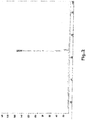
- FIG. 1 shows a gas chromatograph of the composition (A-1).
- peaks derived from the stereoisomers of the compound represented by Formula (1) were observed within the range of retention time of from 29.0 to 32.0 minutes.
- the maximum peak appeared within the range of retention time of from 30.5 to 30.8 minutes, and the ratio of the area of the maximum peak with respect to the total area of peaks within the range of retention time of from 29.0 to 32.0 minutes was 95%.
- a quantity of 6.11 g of the mother liquor concentrate which had been obtained upon purification by crystallization of the composition (A-1) was purified by silica gel column chromatography, to obtain 3.48 g of a composition (A-2).
- FIG. 2 shows a gas chromatograph of the composition (A-2).
- peaks derived from the stereoisomers of the compound represented by Formula (1) were observed within the range of retention time of from 29.0 to 32.0 minutes.
- the maximum peak appeared within the range of retention time of from 30.5 to 30.8 minutes, and the ratio of the area of the maximum peak with respect to the total area of peaks within the range of retention time of from 29.0 to 32.0 minutes was 87%.
- composition (A-1) and 1.73 g of the composition (A-2) were mixed, to obtain 3.46 g of a composition (A-3).
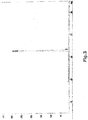
- FIG. 3 shows a gas chromatograph of the composition (A-3).
- peaks derived from the stereoisomers of the compound represented by Formula (1) were observed within the range of retention time of from 29.0 to 32.0 minutes.
- the maximum peak appeared within the range of retention time of from 30.5 to 30.8 minutes, and the ratio of the area of the maximum peak with respect to the total area of peaks within the range of retention time of from 29.0 to 32.0 minutes was 91%.
- composition (A-1) obtained by the method described in the above mentioned Preparation Example 1, the other epoxy compound (B-1) and a thermal cationic polymerization initiator were mixed to achieve the following composition, to obtain a curable composition.
- a curable composition was obtained in the same manner as in Example 1-1, except that the composition (A-3) (the composition obtained by the method described in the Preparation Example 3) was used instead of the composition (A-1).
- a curable composition was obtained in the same manner as in Example 1-1, except that the composition (A-2) (the composition obtained by the method described in the Preparation Example 2) was used instead of the composition (A-1).
- the curable compositions obtained in the Examples and Reference Example were heated in a hot air circulating oven at 130°C for one hour, at 150°C for one hour, at 190°C for two hours, and then at 240°C for one hour, to obtain cured products.
- the glass transition temperature of each of the thus obtained cured products was measured by increasing the temperature from 30 to 300°C at a rate of 10°C/min, using a differential scanning calorimeter, DSC7020, manufactured by SII NanoTechnology Inc., and the thus measured value was taken as the heat resistance of the cured product.
- the glass transition temperature as used herein refers to a value measured in accordance with JIS K7121, based on "Midpoint Glass Transition Temperature: T mg " described in the section of "Method for Measuring Transition Temperature of Plastics". The measurement results are summarized in Table 1.
- Example 1-1 Example 1-2 Reference Example 1-1 Composition of curable resin composition (parts by mass) Composition (A-1) 50 Composition (A-3) 50 Composition (A-2) 50 The other epoxy compound (B-1) 50 50 50 50 50 50 50 Thermal cationic polymerization initiator 2 2 2 Heat resistance (°C) 263 260 256
- the organic layer was further washed with 41.6 kg of a 1N aqueous solution of sodium hydroxide four times, followed by washing with 48.0 kg of saturated saline. After drying the organic layer with magnesium sulfate, the magnesium sulfate was removed by filtration to concentrate the filtrate, thereby obtaining 5.1 kg of a crude product.
- a quantity of 3.5 kg of toluene was added to the crude product, to dissolve the crude product at room temperature.
- 13.7 kg of heptane was added dropwise to allow crystallization to occur.
- the resultant was matured at 5°C for one hour.
- the resulting crystallization product was filtered, and washed with heptane.
- the resultant was dried under reduced pressure at 35°C for 12 hours, to obtain 2.8 kg of a composition (A-4) containing the stereoisomers of the compound satisfying the Formula (1), as white solids.
- FIG. 4 shows a gas chromatograph of the composition (A-4).
- peaks derived from the stereoisomers of the compound represented by Formula (1) were observed within the range of retention time of from 29.0 to 32.0 minutes.
- the maximum peak appeared within the range of retention time of from 30.5 to 30.8 minutes, and the ratio of the area of the maximum peak with respect to the total area of peaks within the range of retention time of from 29.0 to 32.0 minutes was 99%.
- the stereoisomeric structure of the resulting composition (A-4) was identified by 1 H-NMR and 13 C-NMR.
- FIG. 5 A chart showing 1 H NMR peaks of the composition (A-4) is shown in FIG. 5
- a chart showing 13 C NMR peaks of the composition (A-4) is shown in FIG. 6 .
- composition (A-4) obtained by the method described in the Preparation Example 4 an acid anhydride-based curing agent, a curing accelerator and a compound containing a hydroxyl group were mixed to achieve the following composition, to obtain a curable composition.
- a curable composition was obtained in the same manner as in Example 2-1, except that the composition (A-2) (the composition produced by the method described in the Preparation Example 2) was used instead of the composition (A-4).
- the curable compositions obtained in the Examples and Reference Example were heated in a hot air circulating oven at 100°C for one hour, at 110°C for one hour, at 120°C for two hours, at 190°C for one hour, and then at 240°C for two hours to obtain cured products.
- Example 2-1 Reference Example 2-1 Composition of curable resin composition (parts by mass) Composition (A-4) 100 Composition (A-2) 100 Acid anhydride-based curing agent 131 131 Curing accelerator 2 2 Compound containing a hydroxyl group 5 5 Heat resistance (°C) 253 224
Landscapes
- Chemical & Material Sciences (AREA)
- Organic Chemistry (AREA)
- Health & Medical Sciences (AREA)
- Chemical Kinetics & Catalysis (AREA)
- Medicinal Chemistry (AREA)
- Polymers & Plastics (AREA)
- Epoxy Resins (AREA)
- Epoxy Compounds (AREA)
Applications Claiming Priority (3)
| Application Number | Priority Date | Filing Date | Title |
|---|---|---|---|
| JP2016116585 | 2016-06-10 | ||
| JP2016206394 | 2016-10-20 | ||
| PCT/JP2017/021245 WO2017213205A1 (ja) | 2016-06-10 | 2017-06-08 | エポキシ化合物、これを含む硬化性組成物および硬化性組成物を硬化させた硬化物 |
Publications (2)
| Publication Number | Publication Date |
|---|---|
| EP3470449A1 true EP3470449A1 (de) | 2019-04-17 |
| EP3470449A4 EP3470449A4 (de) | 2019-12-11 |
Family
ID=60577823
Family Applications (1)
| Application Number | Title | Priority Date | Filing Date |
|---|---|---|---|
| EP17810378.4A Withdrawn EP3470449A4 (de) | 2016-06-10 | 2017-06-08 | Epoxidverbindung, härtbare zusammensetzung damit und gehärtetes produkt aus der zusammensetzung |
Country Status (7)
| Country | Link |
|---|---|
| US (1) | US11104686B2 (de) |
| EP (1) | EP3470449A4 (de) |
| JP (1) | JP6954898B2 (de) |
| KR (1) | KR102304633B1 (de) |
| CN (1) | CN109312056B (de) |
| TW (1) | TWI723175B (de) |
| WO (1) | WO2017213205A1 (de) |
Cited By (1)
| Publication number | Priority date | Publication date | Assignee | Title |
|---|---|---|---|---|
| EP4321553A4 (de) * | 2021-04-09 | 2025-05-21 | Shin-Etsu Chemical Co., Ltd. | Lichtempfindliche harzzusammensetzung, lichtempfindlicher harzfilm, lichtempfindlicher trockenfilm und strukturbildungsverfahren |
Families Citing this family (2)
| Publication number | Priority date | Publication date | Assignee | Title |
|---|---|---|---|---|
| JP2021073352A (ja) * | 2021-01-29 | 2021-05-13 | Eneos株式会社 | 硬化性組成物およびその硬化物 |
| JP2022154842A (ja) * | 2021-03-30 | 2022-10-13 | 日鉄ケミカル&マテリアル株式会社 | 熱硬化性組成物、これを硬化してなる硬化膜および当該硬化膜を含む表示装置 |
Family Cites Families (10)
| Publication number | Priority date | Publication date | Assignee | Title |
|---|---|---|---|---|
| JPS49126658A (de) * | 1973-04-13 | 1974-12-04 | ||
| JP4301785B2 (ja) * | 2002-09-04 | 2009-07-22 | 丸善石油化学株式会社 | トリシクロペンタジエンジエポキシド |
| JP2004143362A (ja) * | 2002-10-28 | 2004-05-20 | Maruzen Petrochem Co Ltd | 低粘度エポキシ樹脂組成物 |
| EP1909346A4 (de) | 2005-07-21 | 2010-01-27 | Sumitomo Chemical Co | Positiv-elektrodenaktivmaterial für eine sekundärbatterie mit wasserfreiem elektrolyt |
| JP2007079481A (ja) * | 2005-09-16 | 2007-03-29 | Tokyo Ohka Kogyo Co Ltd | ネガ型レジスト組成物およびレジストパターン形成方法 |
| JP5354868B2 (ja) | 2006-07-06 | 2013-11-27 | 株式会社ダイセル | 脂環式ジエポキシ化合物の製造方法、エポキシ樹脂組成物の製造方法、及び硬化物の製造方法 |
| TWI491596B (zh) * | 2008-10-10 | 2015-07-11 | Sumitomo Bakelite Co | 脂環二環氧化物之製備技術 |
| KR101850169B1 (ko) | 2010-12-06 | 2018-04-18 | 제이에스알 가부시끼가이샤 | 환상 올레핀 개환 중합체, 그의 수소화체 및 상기 수소화체 조성물, 및 트리시클로펜타디엔 |
| JP5664220B2 (ja) | 2010-12-24 | 2015-02-04 | 日本ゼオン株式会社 | 半導体封止材料及び半導体装置 |
| KR102291286B1 (ko) * | 2016-03-23 | 2021-08-18 | 에네오스 가부시키가이샤 | 경화성 조성물 및 이것을 경화시킨 경화물 |
-
2017
- 2017-06-08 CN CN201780034834.6A patent/CN109312056B/zh not_active Expired - Fee Related
- 2017-06-08 TW TW106119112A patent/TWI723175B/zh not_active IP Right Cessation
- 2017-06-08 WO PCT/JP2017/021245 patent/WO2017213205A1/ja not_active Ceased
- 2017-06-08 JP JP2018521766A patent/JP6954898B2/ja active Active
- 2017-06-08 KR KR1020187034830A patent/KR102304633B1/ko not_active Expired - Fee Related
- 2017-06-08 US US16/308,025 patent/US11104686B2/en not_active Expired - Fee Related
- 2017-06-08 EP EP17810378.4A patent/EP3470449A4/de not_active Withdrawn
Cited By (1)
| Publication number | Priority date | Publication date | Assignee | Title |
|---|---|---|---|---|
| EP4321553A4 (de) * | 2021-04-09 | 2025-05-21 | Shin-Etsu Chemical Co., Ltd. | Lichtempfindliche harzzusammensetzung, lichtempfindlicher harzfilm, lichtempfindlicher trockenfilm und strukturbildungsverfahren |
Also Published As
| Publication number | Publication date |
|---|---|
| KR102304633B1 (ko) | 2021-09-23 |
| CN109312056A (zh) | 2019-02-05 |
| CN109312056B (zh) | 2021-10-01 |
| US11104686B2 (en) | 2021-08-31 |
| US20200308186A1 (en) | 2020-10-01 |
| EP3470449A4 (de) | 2019-12-11 |
| WO2017213205A1 (ja) | 2017-12-14 |
| JP6954898B2 (ja) | 2021-10-27 |
| TWI723175B (zh) | 2021-04-01 |
| JPWO2017213205A1 (ja) | 2019-04-04 |
| TW201802177A (zh) | 2018-01-16 |
| KR20190016496A (ko) | 2019-02-18 |
Similar Documents
| Publication | Publication Date | Title |
|---|---|---|
| EP3476849B1 (de) | Epoxidverbindung, härtbare zusammensetzung damit und gehärtetes produkt aus der härtbaren zusammensetzung | |
| US20210206916A1 (en) | Curable composition and cured product obtained by curing the same | |
| KR102344209B1 (ko) | 에폭시 화합물, 경화성 조성물, 경화물, 에폭시 화합물의 제조 방법 및 반응성 희석제 | |
| EP3431470B1 (de) | Epoxidverbindung, härtbare zusammensetzung, gehärtetes produkt, verfahren zur herstellung von epoxidverbindung und reaktives verdünnungsmittel | |
| US11104686B2 (en) | Epoxy compound, curable composition containing the same, and cured product obtained by curing curable composition | |
| JP6644659B2 (ja) | エポキシ化合物、硬化性組成物、硬化物、エポキシ化合物の製造方法および反応性希釈剤 | |
| EP4071182A1 (de) | Alicyclische acrylatverbindung, alicyclische epoxyacrylatverbindung, härtbare zusammensetzung und gehärteter gegenstand | |
| US20230151138A1 (en) | Stereoisomer of epoxy compound, curable composition containing the same, and cured product obtained by curing curable composition | |
| JP6921627B2 (ja) | エポキシ化合物、これを含む硬化性組成物および硬化性組成物を硬化させた硬化物 | |
| JP2020180295A (ja) | エポキシ化合物、これを含む硬化性組成物および硬化性組成物を硬化させた硬化物 | |
| JP2020083954A (ja) | ジエポキシ化合物、これを含む硬化性組成物および硬化性組成物を硬化させた硬化物 |
Legal Events
| Date | Code | Title | Description |
|---|---|---|---|
| STAA | Information on the status of an ep patent application or granted ep patent |
Free format text: STATUS: THE INTERNATIONAL PUBLICATION HAS BEEN MADE |
|
| PUAI | Public reference made under article 153(3) epc to a published international application that has entered the european phase |
Free format text: ORIGINAL CODE: 0009012 |
|
| STAA | Information on the status of an ep patent application or granted ep patent |
Free format text: STATUS: REQUEST FOR EXAMINATION WAS MADE |
|
| 17P | Request for examination filed |
Effective date: 20190110 |
|
| AK | Designated contracting states |
Kind code of ref document: A1 Designated state(s): AL AT BE BG CH CY CZ DE DK EE ES FI FR GB GR HR HU IE IS IT LI LT LU LV MC MK MT NL NO PL PT RO RS SE SI SK SM TR |
|
| AX | Request for extension of the european patent |
Extension state: BA ME |
|
| DAV | Request for validation of the european patent (deleted) | ||
| DAX | Request for extension of the european patent (deleted) | ||
| A4 | Supplementary search report drawn up and despatched |
Effective date: 20191108 |
|
| RIC1 | Information provided on ipc code assigned before grant |
Ipc: C07D 493/04 20060101ALI20191104BHEP Ipc: C08G 59/24 20060101AFI20191104BHEP |
|
| STAA | Information on the status of an ep patent application or granted ep patent |
Free format text: STATUS: EXAMINATION IS IN PROGRESS |
|
| 17Q | First examination report despatched |
Effective date: 20220525 |
|
| STAA | Information on the status of an ep patent application or granted ep patent |
Free format text: STATUS: THE APPLICATION HAS BEEN WITHDRAWN |
|
| 18W | Application withdrawn |
Effective date: 20220915 |