EP3470543A1 - Beschichtetes bauteil und verfahren zur herstellung eines beschichteten bauteils - Google Patents
Beschichtetes bauteil und verfahren zur herstellung eines beschichteten bauteils Download PDFInfo
- Publication number
- EP3470543A1 EP3470543A1 EP18198444.4A EP18198444A EP3470543A1 EP 3470543 A1 EP3470543 A1 EP 3470543A1 EP 18198444 A EP18198444 A EP 18198444A EP 3470543 A1 EP3470543 A1 EP 3470543A1
- Authority
- EP
- European Patent Office
- Prior art keywords
- coating
- diffusion barrier
- corrosion
- substrate
- barrier coating
- Prior art date
- Legal status (The legal status is an assumption and is not a legal conclusion. Google has not performed a legal analysis and makes no representation as to the accuracy of the status listed.)
- Pending
Links
Images

Classifications
-
- C—CHEMISTRY; METALLURGY
- C23—COATING METALLIC MATERIAL; COATING MATERIAL WITH METALLIC MATERIAL; CHEMICAL SURFACE TREATMENT; DIFFUSION TREATMENT OF METALLIC MATERIAL; COATING BY VACUUM EVAPORATION, BY SPUTTERING, BY ION IMPLANTATION OR BY CHEMICAL VAPOUR DEPOSITION, IN GENERAL; INHIBITING CORROSION OF METALLIC MATERIAL OR INCRUSTATION IN GENERAL
- C23C—COATING METALLIC MATERIAL; COATING MATERIAL WITH METALLIC MATERIAL; SURFACE TREATMENT OF METALLIC MATERIAL BY DIFFUSION INTO THE SURFACE, BY CHEMICAL CONVERSION OR SUBSTITUTION; COATING BY VACUUM EVAPORATION, BY SPUTTERING, BY ION IMPLANTATION OR BY CHEMICAL VAPOUR DEPOSITION, IN GENERAL
- C23C4/00—Coating by spraying the coating material in the molten state, e.g. by flame, plasma or electric discharge
- C23C4/02—Pretreatment of the material to be coated, e.g. for coating on selected surface areas
-
- C—CHEMISTRY; METALLURGY
- C23—COATING METALLIC MATERIAL; COATING MATERIAL WITH METALLIC MATERIAL; CHEMICAL SURFACE TREATMENT; DIFFUSION TREATMENT OF METALLIC MATERIAL; COATING BY VACUUM EVAPORATION, BY SPUTTERING, BY ION IMPLANTATION OR BY CHEMICAL VAPOUR DEPOSITION, IN GENERAL; INHIBITING CORROSION OF METALLIC MATERIAL OR INCRUSTATION IN GENERAL
- C23C—COATING METALLIC MATERIAL; COATING MATERIAL WITH METALLIC MATERIAL; SURFACE TREATMENT OF METALLIC MATERIAL BY DIFFUSION INTO THE SURFACE, BY CHEMICAL CONVERSION OR SUBSTITUTION; COATING BY VACUUM EVAPORATION, BY SPUTTERING, BY ION IMPLANTATION OR BY CHEMICAL VAPOUR DEPOSITION, IN GENERAL
- C23C10/00—Solid state diffusion of only metal elements or silicon into metallic material surfaces
- C23C10/02—Pretreatment of the material to be coated
-
- C—CHEMISTRY; METALLURGY
- C23—COATING METALLIC MATERIAL; COATING MATERIAL WITH METALLIC MATERIAL; CHEMICAL SURFACE TREATMENT; DIFFUSION TREATMENT OF METALLIC MATERIAL; COATING BY VACUUM EVAPORATION, BY SPUTTERING, BY ION IMPLANTATION OR BY CHEMICAL VAPOUR DEPOSITION, IN GENERAL; INHIBITING CORROSION OF METALLIC MATERIAL OR INCRUSTATION IN GENERAL
- C23C—COATING METALLIC MATERIAL; COATING MATERIAL WITH METALLIC MATERIAL; SURFACE TREATMENT OF METALLIC MATERIAL BY DIFFUSION INTO THE SURFACE, BY CHEMICAL CONVERSION OR SUBSTITUTION; COATING BY VACUUM EVAPORATION, BY SPUTTERING, BY ION IMPLANTATION OR BY CHEMICAL VAPOUR DEPOSITION, IN GENERAL
- C23C10/00—Solid state diffusion of only metal elements or silicon into metallic material surfaces
- C23C10/18—Solid state diffusion of only metal elements or silicon into metallic material surfaces using liquids, e.g. salt baths, liquid suspensions
- C23C10/20—Solid state diffusion of only metal elements or silicon into metallic material surfaces using liquids, e.g. salt baths, liquid suspensions only one element being diffused
-
- C—CHEMISTRY; METALLURGY
- C23—COATING METALLIC MATERIAL; COATING MATERIAL WITH METALLIC MATERIAL; CHEMICAL SURFACE TREATMENT; DIFFUSION TREATMENT OF METALLIC MATERIAL; COATING BY VACUUM EVAPORATION, BY SPUTTERING, BY ION IMPLANTATION OR BY CHEMICAL VAPOUR DEPOSITION, IN GENERAL; INHIBITING CORROSION OF METALLIC MATERIAL OR INCRUSTATION IN GENERAL
- C23C—COATING METALLIC MATERIAL; COATING MATERIAL WITH METALLIC MATERIAL; SURFACE TREATMENT OF METALLIC MATERIAL BY DIFFUSION INTO THE SURFACE, BY CHEMICAL CONVERSION OR SUBSTITUTION; COATING BY VACUUM EVAPORATION, BY SPUTTERING, BY ION IMPLANTATION OR BY CHEMICAL VAPOUR DEPOSITION, IN GENERAL
- C23C10/00—Solid state diffusion of only metal elements or silicon into metallic material surfaces
- C23C10/18—Solid state diffusion of only metal elements or silicon into metallic material surfaces using liquids, e.g. salt baths, liquid suspensions
- C23C10/26—Solid state diffusion of only metal elements or silicon into metallic material surfaces using liquids, e.g. salt baths, liquid suspensions more than one element being diffused
-
- C—CHEMISTRY; METALLURGY
- C23—COATING METALLIC MATERIAL; COATING MATERIAL WITH METALLIC MATERIAL; CHEMICAL SURFACE TREATMENT; DIFFUSION TREATMENT OF METALLIC MATERIAL; COATING BY VACUUM EVAPORATION, BY SPUTTERING, BY ION IMPLANTATION OR BY CHEMICAL VAPOUR DEPOSITION, IN GENERAL; INHIBITING CORROSION OF METALLIC MATERIAL OR INCRUSTATION IN GENERAL
- C23C—COATING METALLIC MATERIAL; COATING MATERIAL WITH METALLIC MATERIAL; SURFACE TREATMENT OF METALLIC MATERIAL BY DIFFUSION INTO THE SURFACE, BY CHEMICAL CONVERSION OR SUBSTITUTION; COATING BY VACUUM EVAPORATION, BY SPUTTERING, BY ION IMPLANTATION OR BY CHEMICAL VAPOUR DEPOSITION, IN GENERAL
- C23C10/00—Solid state diffusion of only metal elements or silicon into metallic material surfaces
- C23C10/60—After-treatment
-
- C—CHEMISTRY; METALLURGY
- C23—COATING METALLIC MATERIAL; COATING MATERIAL WITH METALLIC MATERIAL; CHEMICAL SURFACE TREATMENT; DIFFUSION TREATMENT OF METALLIC MATERIAL; COATING BY VACUUM EVAPORATION, BY SPUTTERING, BY ION IMPLANTATION OR BY CHEMICAL VAPOUR DEPOSITION, IN GENERAL; INHIBITING CORROSION OF METALLIC MATERIAL OR INCRUSTATION IN GENERAL
- C23C—COATING METALLIC MATERIAL; COATING MATERIAL WITH METALLIC MATERIAL; SURFACE TREATMENT OF METALLIC MATERIAL BY DIFFUSION INTO THE SURFACE, BY CHEMICAL CONVERSION OR SUBSTITUTION; COATING BY VACUUM EVAPORATION, BY SPUTTERING, BY ION IMPLANTATION OR BY CHEMICAL VAPOUR DEPOSITION, IN GENERAL
- C23C28/00—Coating for obtaining at least two superposed coatings either by methods not provided for in a single one of groups C23C2/00 - C23C26/00 or by combinations of methods provided for in subclasses C23C and C25C or C25D
- C23C28/02—Coating for obtaining at least two superposed coatings either by methods not provided for in a single one of groups C23C2/00 - C23C26/00 or by combinations of methods provided for in subclasses C23C and C25C or C25D only coatings only including layers of metallic material
-
- C—CHEMISTRY; METALLURGY
- C23—COATING METALLIC MATERIAL; COATING MATERIAL WITH METALLIC MATERIAL; CHEMICAL SURFACE TREATMENT; DIFFUSION TREATMENT OF METALLIC MATERIAL; COATING BY VACUUM EVAPORATION, BY SPUTTERING, BY ION IMPLANTATION OR BY CHEMICAL VAPOUR DEPOSITION, IN GENERAL; INHIBITING CORROSION OF METALLIC MATERIAL OR INCRUSTATION IN GENERAL
- C23C—COATING METALLIC MATERIAL; COATING MATERIAL WITH METALLIC MATERIAL; SURFACE TREATMENT OF METALLIC MATERIAL BY DIFFUSION INTO THE SURFACE, BY CHEMICAL CONVERSION OR SUBSTITUTION; COATING BY VACUUM EVAPORATION, BY SPUTTERING, BY ION IMPLANTATION OR BY CHEMICAL VAPOUR DEPOSITION, IN GENERAL
- C23C28/00—Coating for obtaining at least two superposed coatings either by methods not provided for in a single one of groups C23C2/00 - C23C26/00 or by combinations of methods provided for in subclasses C23C and C25C or C25D
- C23C28/02—Coating for obtaining at least two superposed coatings either by methods not provided for in a single one of groups C23C2/00 - C23C26/00 or by combinations of methods provided for in subclasses C23C and C25C or C25D only coatings only including layers of metallic material
- C23C28/021—Coating for obtaining at least two superposed coatings either by methods not provided for in a single one of groups C23C2/00 - C23C26/00 or by combinations of methods provided for in subclasses C23C and C25C or C25D only coatings only including layers of metallic material including at least one metal alloy layer
-
- C—CHEMISTRY; METALLURGY
- C23—COATING METALLIC MATERIAL; COATING MATERIAL WITH METALLIC MATERIAL; CHEMICAL SURFACE TREATMENT; DIFFUSION TREATMENT OF METALLIC MATERIAL; COATING BY VACUUM EVAPORATION, BY SPUTTERING, BY ION IMPLANTATION OR BY CHEMICAL VAPOUR DEPOSITION, IN GENERAL; INHIBITING CORROSION OF METALLIC MATERIAL OR INCRUSTATION IN GENERAL
- C23C—COATING METALLIC MATERIAL; COATING MATERIAL WITH METALLIC MATERIAL; SURFACE TREATMENT OF METALLIC MATERIAL BY DIFFUSION INTO THE SURFACE, BY CHEMICAL CONVERSION OR SUBSTITUTION; COATING BY VACUUM EVAPORATION, BY SPUTTERING, BY ION IMPLANTATION OR BY CHEMICAL VAPOUR DEPOSITION, IN GENERAL
- C23C28/00—Coating for obtaining at least two superposed coatings either by methods not provided for in a single one of groups C23C2/00 - C23C26/00 or by combinations of methods provided for in subclasses C23C and C25C or C25D
- C23C28/02—Coating for obtaining at least two superposed coatings either by methods not provided for in a single one of groups C23C2/00 - C23C26/00 or by combinations of methods provided for in subclasses C23C and C25C or C25D only coatings only including layers of metallic material
- C23C28/021—Coating for obtaining at least two superposed coatings either by methods not provided for in a single one of groups C23C2/00 - C23C26/00 or by combinations of methods provided for in subclasses C23C and C25C or C25D only coatings only including layers of metallic material including at least one metal alloy layer
- C23C28/022—Coating for obtaining at least two superposed coatings either by methods not provided for in a single one of groups C23C2/00 - C23C26/00 or by combinations of methods provided for in subclasses C23C and C25C or C25D only coatings only including layers of metallic material including at least one metal alloy layer with at least one MCrAlX layer
-
- C—CHEMISTRY; METALLURGY
- C23—COATING METALLIC MATERIAL; COATING MATERIAL WITH METALLIC MATERIAL; CHEMICAL SURFACE TREATMENT; DIFFUSION TREATMENT OF METALLIC MATERIAL; COATING BY VACUUM EVAPORATION, BY SPUTTERING, BY ION IMPLANTATION OR BY CHEMICAL VAPOUR DEPOSITION, IN GENERAL; INHIBITING CORROSION OF METALLIC MATERIAL OR INCRUSTATION IN GENERAL
- C23C—COATING METALLIC MATERIAL; COATING MATERIAL WITH METALLIC MATERIAL; SURFACE TREATMENT OF METALLIC MATERIAL BY DIFFUSION INTO THE SURFACE, BY CHEMICAL CONVERSION OR SUBSTITUTION; COATING BY VACUUM EVAPORATION, BY SPUTTERING, BY ION IMPLANTATION OR BY CHEMICAL VAPOUR DEPOSITION, IN GENERAL
- C23C28/00—Coating for obtaining at least two superposed coatings either by methods not provided for in a single one of groups C23C2/00 - C23C26/00 or by combinations of methods provided for in subclasses C23C and C25C or C25D
- C23C28/02—Coating for obtaining at least two superposed coatings either by methods not provided for in a single one of groups C23C2/00 - C23C26/00 or by combinations of methods provided for in subclasses C23C and C25C or C25D only coatings only including layers of metallic material
- C23C28/023—Coating for obtaining at least two superposed coatings either by methods not provided for in a single one of groups C23C2/00 - C23C26/00 or by combinations of methods provided for in subclasses C23C and C25C or C25D only coatings only including layers of metallic material only coatings of metal elements only
-
- C—CHEMISTRY; METALLURGY
- C23—COATING METALLIC MATERIAL; COATING MATERIAL WITH METALLIC MATERIAL; CHEMICAL SURFACE TREATMENT; DIFFUSION TREATMENT OF METALLIC MATERIAL; COATING BY VACUUM EVAPORATION, BY SPUTTERING, BY ION IMPLANTATION OR BY CHEMICAL VAPOUR DEPOSITION, IN GENERAL; INHIBITING CORROSION OF METALLIC MATERIAL OR INCRUSTATION IN GENERAL
- C23C—COATING METALLIC MATERIAL; COATING MATERIAL WITH METALLIC MATERIAL; SURFACE TREATMENT OF METALLIC MATERIAL BY DIFFUSION INTO THE SURFACE, BY CHEMICAL CONVERSION OR SUBSTITUTION; COATING BY VACUUM EVAPORATION, BY SPUTTERING, BY ION IMPLANTATION OR BY CHEMICAL VAPOUR DEPOSITION, IN GENERAL
- C23C28/00—Coating for obtaining at least two superposed coatings either by methods not provided for in a single one of groups C23C2/00 - C23C26/00 or by combinations of methods provided for in subclasses C23C and C25C or C25D
- C23C28/02—Coating for obtaining at least two superposed coatings either by methods not provided for in a single one of groups C23C2/00 - C23C26/00 or by combinations of methods provided for in subclasses C23C and C25C or C25D only coatings only including layers of metallic material
- C23C28/028—Including graded layers in composition or in physical properties, e.g. density, porosity, grain size
-
- C—CHEMISTRY; METALLURGY
- C23—COATING METALLIC MATERIAL; COATING MATERIAL WITH METALLIC MATERIAL; CHEMICAL SURFACE TREATMENT; DIFFUSION TREATMENT OF METALLIC MATERIAL; COATING BY VACUUM EVAPORATION, BY SPUTTERING, BY ION IMPLANTATION OR BY CHEMICAL VAPOUR DEPOSITION, IN GENERAL; INHIBITING CORROSION OF METALLIC MATERIAL OR INCRUSTATION IN GENERAL
- C23C—COATING METALLIC MATERIAL; COATING MATERIAL WITH METALLIC MATERIAL; SURFACE TREATMENT OF METALLIC MATERIAL BY DIFFUSION INTO THE SURFACE, BY CHEMICAL CONVERSION OR SUBSTITUTION; COATING BY VACUUM EVAPORATION, BY SPUTTERING, BY ION IMPLANTATION OR BY CHEMICAL VAPOUR DEPOSITION, IN GENERAL
- C23C4/00—Coating by spraying the coating material in the molten state, e.g. by flame, plasma or electric discharge
- C23C4/04—Coating by spraying the coating material in the molten state, e.g. by flame, plasma or electric discharge characterised by the coating material
- C23C4/06—Metallic material
- C23C4/073—Metallic material containing MCrAl or MCrAlY alloys, where M is nickel, cobalt or iron, with or without non-metal elements
-
- C—CHEMISTRY; METALLURGY
- C23—COATING METALLIC MATERIAL; COATING MATERIAL WITH METALLIC MATERIAL; CHEMICAL SURFACE TREATMENT; DIFFUSION TREATMENT OF METALLIC MATERIAL; COATING BY VACUUM EVAPORATION, BY SPUTTERING, BY ION IMPLANTATION OR BY CHEMICAL VAPOUR DEPOSITION, IN GENERAL; INHIBITING CORROSION OF METALLIC MATERIAL OR INCRUSTATION IN GENERAL
- C23C—COATING METALLIC MATERIAL; COATING MATERIAL WITH METALLIC MATERIAL; SURFACE TREATMENT OF METALLIC MATERIAL BY DIFFUSION INTO THE SURFACE, BY CHEMICAL CONVERSION OR SUBSTITUTION; COATING BY VACUUM EVAPORATION, BY SPUTTERING, BY ION IMPLANTATION OR BY CHEMICAL VAPOUR DEPOSITION, IN GENERAL
- C23C4/00—Coating by spraying the coating material in the molten state, e.g. by flame, plasma or electric discharge
- C23C4/04—Coating by spraying the coating material in the molten state, e.g. by flame, plasma or electric discharge characterised by the coating material
- C23C4/06—Metallic material
- C23C4/08—Metallic material containing only metal elements
-
- C—CHEMISTRY; METALLURGY
- C23—COATING METALLIC MATERIAL; COATING MATERIAL WITH METALLIC MATERIAL; CHEMICAL SURFACE TREATMENT; DIFFUSION TREATMENT OF METALLIC MATERIAL; COATING BY VACUUM EVAPORATION, BY SPUTTERING, BY ION IMPLANTATION OR BY CHEMICAL VAPOUR DEPOSITION, IN GENERAL; INHIBITING CORROSION OF METALLIC MATERIAL OR INCRUSTATION IN GENERAL
- C23C—COATING METALLIC MATERIAL; COATING MATERIAL WITH METALLIC MATERIAL; SURFACE TREATMENT OF METALLIC MATERIAL BY DIFFUSION INTO THE SURFACE, BY CHEMICAL CONVERSION OR SUBSTITUTION; COATING BY VACUUM EVAPORATION, BY SPUTTERING, BY ION IMPLANTATION OR BY CHEMICAL VAPOUR DEPOSITION, IN GENERAL
- C23C4/00—Coating by spraying the coating material in the molten state, e.g. by flame, plasma or electric discharge
- C23C4/18—After-treatment
Definitions
- the present disclosure is generally directed to a coated component and a method of preparing a coated component. More specifically, the present disclosure is generally directed to a coated alloy component and a method of preparing a coated alloy component.
- Gas turbines for power generation systems must satisfy the highest demands with respect to reliability, power, efficiency, economy, and operating service life.
- Modern high-efficiency combustion turbines have firing temperatures that exceed about 2,300 °F (1,260 °C), and firing temperatures continue to increase as demand for more efficient engines continues.
- Many components that form the combustor and "hot gas path" turbine sections are directly exposed to aggressive hot combustion gases.
- the use of coatings on turbine components, such as combustors, combustion liners, combustion transition pieces, combustion hardware, blades (buckets), vanes (nozzles) and shrouds, is important in commercial gas turbine engines.
- a coated component comprises a substrate and a dual layer coating system overlying the substrate.
- the dual layer coating system comprises a diffusion barrier coating and a corrosion-resistant coating.
- the corrosion-resistant coating comprises a greater concentration of silicon and aluminum than the diffusion barrier coating, and the dual layer coating system includes an aluminide interdiffusion zone.
- a method of preparing a coated component includes providing a substrate; and applying a dual coating system to the substrate.
- the applying of the dual coating system includes applying a diffusion barrier coating; and applying a corrosion-resistant coating.
- the corrosion-resistant coating comprises a greater concentration of silicon and aluminum than the diffusion barrier coating.
- an exemplary coated component and a method of preparing a coated component are provided.
- Embodiments of the present disclosure in comparison to components and method not utilizing one or more features disclosed herein, enable the formation of a durable, gradient dual layer coating system resistant to hot corrosion as well as oxidation, thereby extending the service life of the coated component without affecting functionality. Without the dual layer coating system, the components are limited in their operating temperatures and have increased service and/or repair requirements.
- At least one means one or more and thus includes individual components as well as mixtures/combinations.
- essentially devoid of means containing less than 2 percent by weight of, preferably less than 1 percent by weight of, more preferably less than 0.1 percent any weight of, more preferably less than 0.01 percent by weight of, and even more preferably free of.
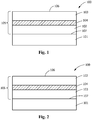
- Coated component 100 comprises a substrate 101 and a dual layer coating system 105 overlying substrate 101.
- Dual layer coating system 105 comprises a diffusion barrier coating 102 and a corrosion-resistant coating 103.
- diffusion barrier coating 102 is adjacent substrate 101.
- Corrosion-resistant coating 103 comprises a greater concentration of silicon and aluminum than diffusion barrier coating 102, and dual layer coating system 105 includes an aluminide interdiffusion zone 104.
- substrate 101 comprises an alloy including, but not limited to, cobalt-based alloy, iron-based alloy, nickel-based alloy or combinations thereof. In another embodiment, substrate 101 is cobalt-based alloy. In another embodiment, substrate 101 is essentially devoid of aluminum. In another embodiment, substrate 101 is devoid of aluminum. In another embodiment, substrate 101 is cobalt-based alloy devoid of aluminum.
- substrate 101 is formed from a CoCrMo alloy.
- substrate 101 is formed from an alloy having a composition, by weight, of: about 10% nickel, about 29% chromium, about 7% tungsten, about 1% iron, about 0.25% carbon, about 0.01% boron, and balance cobalt (e.g., FSX414); about 3.5 to about 4.1% tungsten, about 9 to about 10% cobalt, about 13.7 to about 14.3% chromium, about 2.8 to about 3.2% aluminum, about 2.4 to about 3.1% of tantalum, about 4.7 to about 5.1% titanium, about 1.4 to about 1.7% molybdenum, about 0.35% of iron, about 0.005 to about 0.02% of boron, about 0.08 to about 0.12% of carbon and a balance of nickel (e.g., GTD 111); between about 22.2 and about 22.8% Cr, between about 18.5 and about 19.5% Co, about 2.3% Ti, between about 1.8 and about 2.2% W, about 1.2%
- nickel e
- substrate 101 is formed from an alloy having a composition, by weight, of: about 7.5% cobalt, about 7.0% chromium, about 6.5% tantalum, about 6.2% aluminum, about 5.0% tungsten, about 3.0% rhenium, about 1.5% molybdenum, about 0.15% hafnium, and a balance of nickel (e.g., René N5); about 9.3% and about 9.7% W, between about 9.0% and about 9.5% Co, between about 8.0% and about 8.5% Cr, between about 5.4% and about 5.7% Al, up to about 0.25% Si, up to about 0.1% Mn, between about 0.06% and about 0.09% C, incidental impurities, and a balance of Ni (e.g., MarM247); about 9.3% and about 9.7% W, between about 9.0% and about 9.5% Co, between about 8.0% and about 8.5% Cr, between about 5.4% and about 5.7% Al, up to about 0.25% Si, up to about 0.1% Mn, between about 0.06% and about 0.09% C, incidental im
- Particularly suitable substrates includes CoCrMo alloys that have been formed by direct metal laser melting (DMLM), alloys having a composition, by weight, of: about 10% nickel, about 29% chromium, about 7% tungsten, about 1% iron, about 0.25% carbon, about 0.01% boron, and balance cobalt (e.g., FSX414) that have been deposited by DMLM or direct metal laser sintering (DMLS) including ⁇ - ⁇ 'cobalt alloys that contain Al.
- DMLM direct metal laser melting
- DMLS direct metal laser sintering
- the concentration of aluminum in the alloy is less than about 1.0 wt% or less than about 0.8 wt% or less than about 0.5 wt% or less than about 0.1 wt% or less than about 0.05 wt% or less than about 0.01 wt%.
- René N5 is substantially a single crystal.
- Mar-M-247LC, IN738 and IN738LC are both equiaxed and directionally solidified (DS).
- substrate 101 comprises the combination of aforementioned materials.
- corrosion-resistant coating 103 is an aluminum and/or silicon rich corrosion-resistant coating.
- the corrosion-resistant coating comprises a greater concentration of silicon and aluminum than the diffusion barrier coating.
- corrosion-resistant coating 103 comprises 15 to 50% of aluminum and 2 to 15% of silicon based on the total weight of the corrosion-resistant coating.
- Dual layer coating system 105 comprises a concentration gradient in silicon and aluminum increasing from a boundary 107 between substrate 101 and diffusion barrier coating 102 to an outer surface 106 of corrosion-resistant coating 103.
- coated component 100 is a hot gas path component.
- coated component 100 is a turbine component including, but not limited to, blades (buckets), vanes (nozzles), shrouds, combustors, transition ducts, compressor blades, or combinations thereof.
- coated component 100 is a gas turbine component.
- Coated component 100 comprises a substrate 101 and a dual layer coating system 105 overlying substrate 101.
- Dual layer coating system 105 comprises a diffusion barrier coating 102 and a corrosion-resistant coating 103.
- corrosion-resistant coating 103 is adjacent substrate 101.
- Corrosion-resistant coating 103 comprises a greater concentration of silicon and aluminum than diffusion barrier coating 102
- dual layer coating system 105 includes an aluminide interdiffusion zone 104.
- dual layer coating system 105 comprises a concentration gradient in silicon and aluminum decreasing from a boundary 107 between substrate 101 and corrosion-resistant coating 103 to an outer surface 106 of diffusion barrier coating 102.
- a method 300 of preparing a coated component comprises providing a substrate (step 301). The method further includes applying a diffusion barrier coating 102 to the substrate 101 (step 302)
- the diffusion barrier coating 102 applied to the substrate 101 or the corrosion-resistant coating 103 is a MCrAlY bond coating alloy, where M is nickel, cobalt, iron, alloys thereof, or combinations thereof.
- the diffusion barrier coating 102 is applied by one or more thermal spraying techniques.
- the thermal spraying technique is high-velocity oxygen fuel (HVOF) spraying, vacuum plasma spraying (VPS), high-velocity air-fuel (HVAF) spraying, wire arc spraying, flame/combustion spraying, or any combinations thereof.
- the thermal spraying technique preferably heats the overlay material to a temperature of at least 1900 °C (3450 °F), alternatively to at least 2000 °C (3650 °F).
- the HVOF spraying technique heats the overlay material to the range of about 2750 °C to about 3600 °C (5000-6500 °F), alternatively about 2750 °C to about 3300 °C (5000-6000 °F), alternatively about 2750 °C to about 3050 °C (5000-5500 °F), alternatively about 3050 °C to about 3300°C (5500-6000 °F), alternatively about 3300 °C to about 3600 °C (6000-6500 °F), or any suitable combination, sub-combination, range, or sub-range thereof.
- the HVAF spraying technique heats the overlay material to the range of about 1900 °C to about 2000 °C (3450-3550 °F), alternatively about 1900 °C to about 1950 °C (3450-3550 °F), alternatively about 1950 °C to about 2000 °C (3550-3650 °F), or any suitable combination, sub-combination, range, or sub-range thereof.
- the diffusion barrier coating 102 is an aluminide.
- the diffusion barrier coating may be a slurry, a gel, or any other suitable material capable of application to the substrate 101 or the corrosion-resistant coating 103, such as vapor phase deposition.
- the aluminide in the diffusion barrier coating is preferably NiAl or Ni 2 Al 3 .
- the diffusion barrier coating includes aluminum at a concentration, by weight, of about 8% to about 35%, alternatively about 12% to about 32%, alternatively about 15% to about 25%, alternatively about 15% to about 20%, alternatively about 20% to about 25%, alternatively about 20% to about 30%, alternatively about 25% to about 30%, alternatively about 15%, alternatively about 20%, alternatively about 25%, alternatively about 30%, or any suitable combination, sub-combination, range, or sub-range thereof.
- the diffusion barrier coating 102 may be soaked or dipped in the slurry, gel, or other suitable material. Alternatively, the diffusion barrier coating forming material may be poured, sprayed, or brushed onto the substrate 101, and/or applied by any other application process capable of applying the diffusion barrier coating forming material. In some embodiments, the diffusion barrier coating 102 diffuses into the substrate 101, for example, by a diffusion depth.
- the diffusion depth may be at least about 25 microns (1 mil), alternatively at least about 38 microns (1.5 mils), alternatively at least about 50 microns (2 mils), alternatively about 25 microns (1 mil), alternatively about 38 microns (1.5 mils), alternatively about 50 microns (2 mils), alternatively within a range of about 25 microns (1 mil) to about 50 microns (2 mils), alternatively within a range of about 25 microns (1 mil) to about 38 microns (1.5 mils), alternatively within a range of about 38 microns (1.5 mils) to about 50 microns (2 mils), or any suitable combination, sub-combination, range, or sub-range thereof.
- the applying of the diffusion barrier coating 102 is followed by or done while heating the diffusion barrier coating 102 and/or the component 100.
- the substrate 101 is positioned in an atmospheric furnace and the heating is performed, for example, in an inert atmosphere, such as with argon gas and/or with low oxygen content.
- the heating is performed under a reduced pressure or a vacuum.
- the method further includes applying a corrosion-resistant coating 103 to the diffusion barrier coating (step 303).
- the corrosion-resistant coating comprises a greater concentration of silicon and aluminum than the diffusion barrier coating.
- the corrosion-resistant coating 103 is formed from application of a slurry including a donor powder, a binder, and a carrier, the donor powder including a metallic aluminum alloy.
- the donor material includes aluminum and silicon.
- the donor material includes at least 35 wt% aluminum or at least about 40 wt% or from about 40 wt% to about 45 wt% aluminum or from about 42 wt% to about 44 wt% aluminum or up to about 50 wt% aluminum.
- Suitable donor materials include, but are not limited to, aluminum alloys, aluminum containing compounds and other aluminum donor materials.
- the donor material may include additive components. Suitable additive components for the donor material may include, but are not limited to, powder in elemental form selected from at least one of the group consisting of silicon, chromium, titanium, tantalum or boron.
- the binder is a heat curable binder and may include any suitable binder material, such as inorganic salts.
- the binder material includes at least 10 wt% inorganic salt or at least about 20 wt% or from about 10 wt% to about 50 wt% inorganic salt or from about 15 wt% to about 30 wt% inorganic salt or from about 20 wt% to about 25 wt% inorganic salt.
- suitable binder materials include, but are not limited to, chromate compounds, phosphate compounds, molybdate compounds, tungstate compounds, and combinations thereof. Examples of binder components include phosphoric acid, chromic acid, and combinations thereof.
- the carrier may include inorganic or organic carriers. Suitable carriers include, but are not limited to, water, toluene, acetone, and combinations thereof. In one embodiment, the carrier is free of gel material. In one embodiment, the slurry is free of inert fillers and inorganic carriers. The absence of inert fillers and inorganic carriers prevents such materials from sintering and becoming entrapped in the substrate 102.
- Suitable slurry compositions for use with the present disclosure include a composition comprising less than about 20 wt% phosphoric acid, less than about 1 wt% chromic acid, less than or equal to 50 wt% aluminum powder and less than about 6 wt% silicon powder, and a balance water as carrier.
- Another suitable slurry composition includes about 35% aluminum powder, about 6% silicon powder, about 12% phosphate-chromate binder (binder salts), with a balance water as carrier.
- the slurry is applied to the substrate 101 and heated to dry and cure the slurry on the diffusion barrier coating 101 and to leave a dried coating material.
- the slurry includes, by weight, about 35 to about 65% of the donor powder, about 1 to about 25% of the binder, and balance essentially carrier.
- the applied slurry composition may include a non-uniform thickness with a minimum thickness of about 0.05 mm and a maximum thickness of about 1 mm or more, and the aluminide coating system 100 has a thickness which varies by about 0.01 mm or less, and is therefore essentially independent of the thickness of the slurry coating.
- the slurry coating may include a maximum thickness of about 1 mm.
- the slurry is applied to the surface of the substrate by any suitable technique. Suitable application techniques include spraying, rolling, dipping or brushing.
- the drying step is preferably accomplished by heating the coating slurry to a drying temperature of from about 125° F to about 300° F (about 52 °C to about 149 °C) in air, for a time of from about 1 to about 4 hours.
- the coating is cured prior to diffusion treatment into a green-body by heating to a temperature from about 572° F to about 752° F (about 300 °C to about 400 °C) for a time of from about 1 to about 4 hours.
- the applying, drying steps and curing steps may be repeated two times, three times, four times or more to provide a thicker dried coating.
- the slurry coating that has been applied to the diffusion barrier coating 102 which may have been dried or not, is heated to form the dual coating system 105.
- the coating chamber is evacuated, and may be backfilled with an inert or reducing atmosphere (such as argon or hydrogen, respectively).
- the slurry may be heated on the substrate to a temperature within a range of about 800 °C to about 900 °C or 825 °C to about 875 °C or 840 °C to about 860 °C.
- the temperature within the coating chamber is raised to a temperature sufficient to volatilize the slurry components, and aluminum is deposited on and into the substrate 102.
- the component 100 may be maintained at the diffusion temperature, for example, for a suitable duration, depending on the final thickness desired for the diffusion barrier coating 102 and the interdiffusion zone 104.
- the heat treatment may include any suitable duration, including, but not limited to, a duration from about 1 to 8 hours, alternatively from about 2 hours to about 7 hours, alternatively from about 3 hours to about 6 hours, or alternatively from about 4 to about 5 hours or alternatively from about 1 to about 3 hours or alternatively from about 1.5 to about 2.5 hours.
- the heat treatment of the slurry may form a residue.
- the residue may be removed by any suitable technique, including, but not limited to, directing forced gas flow at the aluminide coating system 100, grit blasting the aluminide coating system 100, or a combination thereof.
- the substrate 101 comprises an alloy including, but not limited to, cobalt-based alloy, iron-based alloy, nickel-based alloy or combinations thereof. In another embodiment, substrate 101 is cobalt-based alloy. In another embodiment, substrate 101 is essentially devoid of aluminum. In another embodiment, substrate 101 is devoid of aluminum. In one embodiment, substrate 101 is of FSX414, GTD 111, GTD 222, GTD 241, HASTELLOY X, Nimonic 263, HAYNES® 188, MarM509, MarM918, IN625, René N5, IN738, IN738LC, MarM247, MarM247LC or combinations thereof.
- the diffusion barrier coating 102 includes MCrAlY, gel aluminide or combinations thereof. In another embodiment, the diffusion barrier coating 102 is essentially devoid of silicon. In another embodiment, the diffusion barrier coating 102 is devoid of silicon. In one embodiment, diffusion barrier coating 102 is more ductile and oxidation-protective than corrosion-resistant coating 103.
- the step of applying a diffusion barrier coating to the substrate comprises slurry, gel aluminide, any suitable diffusion aluminide, diffusion, EBPVD, plasma jet, air jet, air plasma jet, or combinations thereof.
- the dual layer coating system 105 comprises a concentration gradient in silicon and aluminum increasing from a boundary 107 between the substrate 101 and the diffusion barrier coating 102 to an outer surface 106 of the corrosion-resistant coating 103.
- method 300 further comprises a step of heating-treating the component to form an interdiffusion zone between the diffusion barrier coating and the corrosion-resistant coating.
- the heat treatment optimization creates more dispersed and continuous aluminide interdiffusion zone (IDZ).
- the method 300 further comprises a step of post-heat treating the component.
- the post-heat treating may include, for example, heating with a furnace to bring up the temperature of the gas turbine component.
- the post-heat treatment preferably alters the material of the dual coating system 105 and/or substrate 101 to allow the material from the diffusion zone to flow between the coating layers and between the coating layers and substrate 101 and to further bond the dual layer system 105 to the substrate 101.
- a suitable post-heat treatment includes suitable temperatures, for example, temperatures of about 870 °C to about 1200 °C (1600 °F to 2200 °F), alternatively about 1040 °C to about 1180 °C (1900 °F to 2150 °F), alternatively about 1070 °C to about 1150 °C (1950 °F to 2100 °F), alternatively at about 1080 °C (1975 °F), alternatively at about 1090 °C (2000 °F), alternatively at about 1120 °C (2050 °F), or any suitable combination, sub-combination, range, or sub-range thereof.
- heat treating is at a temperature capable of forming a ductile intermetallic material, such as a ductile aluminide, for example, having a strain range of about 4% and/or permitting the component 100 to be devoid or substantially devoid of cracking formed by application of a brittle aluminide.
- a ductile intermetallic material such as a ductile aluminide, for example, having a strain range of about 4% and/or permitting the component 100 to be devoid or substantially devoid of cracking formed by application of a brittle aluminide.
- the coated component is a hot gas path component.
- the coated component is a turbine component including, but not limited to, blades (buckets), vanes (nozzles), shrouds, combustors, transition ducts, or combinations thereof.
- the coated component is a gas turbine component.
- a method 400 of preparing a coated component comprises providing a substrate (step 401).
- the method further includes applying a corrosion-resistant coating 103 to the substrate 101 (step 402).
- the method further includes applying a diffusion barrier coating 102 to the corrosion-resistant coating 103 (step 403).
- Each step can be implemented by the aforementioned corresponding methods described above with respect to FIG. 3 .
- the dual layer coating system 105 comprises a concentration gradient in silicon and aluminum increasing from a boundary 107 between the substrate 101 and the corrosion-resistant coating 103 to an outer surface 106 of the diffusion barrier coating 102.
Landscapes
- Chemical & Material Sciences (AREA)
- Engineering & Computer Science (AREA)
- Chemical Kinetics & Catalysis (AREA)
- Materials Engineering (AREA)
- Mechanical Engineering (AREA)
- Metallurgy (AREA)
- Organic Chemistry (AREA)
- Physics & Mathematics (AREA)
- Plasma & Fusion (AREA)
- Turbine Rotor Nozzle Sealing (AREA)
- Other Surface Treatments For Metallic Materials (AREA)
Applications Claiming Priority (1)
| Application Number | Priority Date | Filing Date | Title |
|---|---|---|---|
| IN201741036271 | 2017-10-12 |
Publications (1)
| Publication Number | Publication Date |
|---|---|
| EP3470543A1 true EP3470543A1 (de) | 2019-04-17 |
Family
ID=63914800
Family Applications (1)
| Application Number | Title | Priority Date | Filing Date |
|---|---|---|---|
| EP18198444.4A Pending EP3470543A1 (de) | 2017-10-12 | 2018-10-03 | Beschichtetes bauteil und verfahren zur herstellung eines beschichteten bauteils |
Country Status (1)
| Country | Link |
|---|---|
| EP (1) | EP3470543A1 (de) |
Cited By (2)
| Publication number | Priority date | Publication date | Assignee | Title |
|---|---|---|---|---|
| CN114990465A (zh) * | 2022-06-10 | 2022-09-02 | 中国地质大学(北京) | 一种耐磨损叶片及其制备方法和应用 |
| CN115190916A (zh) * | 2019-12-30 | 2022-10-14 | C4激光技术有限公司 | 具有抗磨损性和防腐蚀性的制动盘及其生产方法 |
Citations (6)
| Publication number | Priority date | Publication date | Assignee | Title |
|---|---|---|---|---|
| US4933239A (en) * | 1989-03-06 | 1990-06-12 | United Technologies Corporation | Aluminide coating for superalloys |
| GB2322382A (en) * | 1997-02-22 | 1998-08-26 | Rolls Royce Plc | A coated superalloy article |
| WO2001094664A2 (en) * | 2000-06-08 | 2001-12-13 | Surface Engineered Products Corporation | Coating system for high temperature stainless steel |
| US20040048090A1 (en) * | 2002-09-11 | 2004-03-11 | Creech George Edward | Corrosion-resistant layered coatings |
| EP1840238A2 (de) * | 2006-03-27 | 2007-10-03 | Mitsubishi Heavy Industries, Ltd. | Oxidationsbeständige Beschichtung und Herstellungsverfahren dafür, Wärmesperrbeschichtung, wärmebeständiges Element und Gasturbine |
| EP2743369A1 (de) * | 2012-12-11 | 2014-06-18 | Siemens Aktiengesellschaft | Beschichtungssystem, Verfahren zum Beschichten eines Substrats und Gasturbinenkomponente |
-
2018
- 2018-10-03 EP EP18198444.4A patent/EP3470543A1/de active Pending
Patent Citations (6)
| Publication number | Priority date | Publication date | Assignee | Title |
|---|---|---|---|---|
| US4933239A (en) * | 1989-03-06 | 1990-06-12 | United Technologies Corporation | Aluminide coating for superalloys |
| GB2322382A (en) * | 1997-02-22 | 1998-08-26 | Rolls Royce Plc | A coated superalloy article |
| WO2001094664A2 (en) * | 2000-06-08 | 2001-12-13 | Surface Engineered Products Corporation | Coating system for high temperature stainless steel |
| US20040048090A1 (en) * | 2002-09-11 | 2004-03-11 | Creech George Edward | Corrosion-resistant layered coatings |
| EP1840238A2 (de) * | 2006-03-27 | 2007-10-03 | Mitsubishi Heavy Industries, Ltd. | Oxidationsbeständige Beschichtung und Herstellungsverfahren dafür, Wärmesperrbeschichtung, wärmebeständiges Element und Gasturbine |
| EP2743369A1 (de) * | 2012-12-11 | 2014-06-18 | Siemens Aktiengesellschaft | Beschichtungssystem, Verfahren zum Beschichten eines Substrats und Gasturbinenkomponente |
Cited By (5)
| Publication number | Priority date | Publication date | Assignee | Title |
|---|---|---|---|---|
| CN115190916A (zh) * | 2019-12-30 | 2022-10-14 | C4激光技术有限公司 | 具有抗磨损性和防腐蚀性的制动盘及其生产方法 |
| CN115190916B (zh) * | 2019-12-30 | 2024-04-09 | C4激光技术有限公司 | 具有抗磨损性和防腐蚀性的制动盘及其生产方法 |
| CN114990465A (zh) * | 2022-06-10 | 2022-09-02 | 中国地质大学(北京) | 一种耐磨损叶片及其制备方法和应用 |
| CN114990465B (zh) * | 2022-06-10 | 2023-02-28 | 中国地质大学(北京) | 一种耐磨损叶片及其制备方法和应用 |
| WO2023236728A1 (zh) * | 2022-06-10 | 2023-12-14 | 中国地质大学(北京) | 一种耐磨损叶片及其制备方法和应用 |
Similar Documents
| Publication | Publication Date | Title |
|---|---|---|
| EP1079073B1 (de) | Diffusionsbeschichtung aus modifiziertem Aluminid für die Innenfläche von Gasturbinenbauteilen | |
| US8673397B2 (en) | Methods of fabricating and coating a component | |
| US6440496B1 (en) | Method of forming a diffusion aluminide coating | |
| EP2435595B1 (de) | Schichtförmig aufgebautes beschichtungssystem mit einer mcralx-schicht und einer chromreichen schicht und herstellungsverfahren dafür | |
| JP2007231422A (ja) | コーティング方法、およびコーティングされた物品 | |
| JP2013127117A (ja) | ニッケル−コバルト基合金及びボンドコート並びに該合金を含むボンドコート物品 | |
| EP2449151A1 (de) | Verfahren zur bereitstellung einer dehnbaren beschichtung zum schutz vor umgebungseinflüssen mit ermüdungs- und korrosionsbeständigkeit | |
| EP1806433A2 (de) | Diffusionsschicht und Verfahren zum Herstellen | |
| US11092019B2 (en) | Coated component and method of preparing a coated component | |
| EP2093307B1 (de) | Kathodenbogenbeschichtungen für Turbinenmotorbestandteile | |
| US20040185182A1 (en) | Method for protecting articles, and related compositions | |
| EP3351653A1 (de) | Aluminid-diffusionsbeschichtungssystem und verfahren zur dessen herstellung | |
| EP3470543A1 (de) | Beschichtetes bauteil und verfahren zur herstellung eines beschichteten bauteils | |
| EP2449150A1 (de) | Dehnbare beschichtung zum schutz vor umgebungseinflüssen und beschichteter artikel mit ermüdungs- und korrosionsbeständigkeit | |
| EP1391533B1 (de) | Verfahren zum Schutz von Artikeln, und entsprechende Zusammensetzungen | |
| EP2781561B2 (de) | Hitzebehandelter beschichteter Artikel und Verfahren zur Behandlung eines beschichteten Artikels | |
| JP2014198902A (ja) | ボンドコート系及び被覆部品 | |
| EP1790825B1 (de) | Verfahren zum Auftragen einer Haftbeschichtung und einer Wärmedämmschicht auf einer aluminisierten Oberfläche | |
| US20140137408A1 (en) | Methods of fabricating and coating turbine components | |
| EP3192885B1 (de) | Innengekühltes bauteil aus einer superlegierung auf ni-basis mit spallationsbeständigem tbc-system | |
| US20140190834A1 (en) | Plating process | |
| Rani | Analysis of different types of coating of gas turbine blade |
Legal Events
| Date | Code | Title | Description |
|---|---|---|---|
| PUAI | Public reference made under article 153(3) epc to a published international application that has entered the european phase |
Free format text: ORIGINAL CODE: 0009012 |
|
| STAA | Information on the status of an ep patent application or granted ep patent |
Free format text: STATUS: THE APPLICATION HAS BEEN PUBLISHED |
|
| AK | Designated contracting states |
Kind code of ref document: A1 Designated state(s): AL AT BE BG CH CY CZ DE DK EE ES FI FR GB GR HR HU IE IS IT LI LT LU LV MC MK MT NL NO PL PT RO RS SE SI SK SM TR |
|
| AX | Request for extension of the european patent |
Extension state: BA ME |
|
| STAA | Information on the status of an ep patent application or granted ep patent |
Free format text: STATUS: REQUEST FOR EXAMINATION WAS MADE |
|
| 17P | Request for examination filed |
Effective date: 20191017 |
|
| RBV | Designated contracting states (corrected) |
Designated state(s): AL AT BE BG CH CY CZ DE DK EE ES FI FR GB GR HR HU IE IS IT LI LT LU LV MC MK MT NL NO PL PT RO RS SE SI SK SM TR |
|
| STAA | Information on the status of an ep patent application or granted ep patent |
Free format text: STATUS: EXAMINATION IS IN PROGRESS |
|
| 17Q | First examination report despatched |
Effective date: 20200319 |
|
| RAP1 | Party data changed (applicant data changed or rights of an application transferred) |
Owner name: GENERAL ELECTRIC TECHNOLOGY GMBH |
|
| RAP3 | Party data changed (applicant data changed or rights of an application transferred) |
Owner name: GE VERNOVA TECHNOLOGY GMBH |