EP3473181A1 - Procédé de fonctionnement d'un dispositif d'acquisition d'images médicales, dispositif d'acquisition d'images, programme informatique et support d'informations lisible électroniquement - Google Patents
Procédé de fonctionnement d'un dispositif d'acquisition d'images médicales, dispositif d'acquisition d'images, programme informatique et support d'informations lisible électroniquement Download PDFInfo
- Publication number
- EP3473181A1 EP3473181A1 EP17197523.8A EP17197523A EP3473181A1 EP 3473181 A1 EP3473181 A1 EP 3473181A1 EP 17197523 A EP17197523 A EP 17197523A EP 3473181 A1 EP3473181 A1 EP 3473181A1
- Authority
- EP
- European Patent Office
- Prior art keywords
- patient
- image recording
- operator
- speech
- recording device
- Prior art date
- Legal status (The legal status is an assumption and is not a legal conclusion. Google has not performed a legal analysis and makes no representation as to the accuracy of the status listed.)
- Granted
Links
Images


Classifications
-
- A—HUMAN NECESSITIES
- A61—MEDICAL OR VETERINARY SCIENCE; HYGIENE
- A61B—DIAGNOSIS; SURGERY; IDENTIFICATION
- A61B6/00—Apparatus or devices for radiation diagnosis; Apparatus or devices for radiation diagnosis combined with radiation therapy equipment
- A61B6/46—Arrangements for interfacing with the operator or the patient
-
- G—PHYSICS
- G16—INFORMATION AND COMMUNICATION TECHNOLOGY [ICT] SPECIALLY ADAPTED FOR SPECIFIC APPLICATION FIELDS
- G16H—HEALTHCARE INFORMATICS, i.e. INFORMATION AND COMMUNICATION TECHNOLOGY [ICT] SPECIALLY ADAPTED FOR THE HANDLING OR PROCESSING OF MEDICAL OR HEALTHCARE DATA
- G16H30/00—ICT specially adapted for the handling or processing of medical images
- G16H30/20—ICT specially adapted for the handling or processing of medical images for handling medical images, e.g. DICOM, HL7 or PACS
-
- G—PHYSICS
- G10—MUSICAL INSTRUMENTS; ACOUSTICS
- G10L—SPEECH ANALYSIS TECHNIQUES OR SPEECH SYNTHESIS; SPEECH RECOGNITION; SPEECH OR VOICE PROCESSING TECHNIQUES; SPEECH OR AUDIO CODING OR DECODING
- G10L15/00—Speech recognition
- G10L15/22—Procedures used during a speech recognition process, e.g. man-machine dialogue
-
- G—PHYSICS
- G10—MUSICAL INSTRUMENTS; ACOUSTICS
- G10L—SPEECH ANALYSIS TECHNIQUES OR SPEECH SYNTHESIS; SPEECH RECOGNITION; SPEECH OR VOICE PROCESSING TECHNIQUES; SPEECH OR AUDIO CODING OR DECODING
- G10L15/00—Speech recognition
- G10L15/26—Speech to text systems
-
- G—PHYSICS
- G16—INFORMATION AND COMMUNICATION TECHNOLOGY [ICT] SPECIALLY ADAPTED FOR SPECIFIC APPLICATION FIELDS
- G16H—HEALTHCARE INFORMATICS, i.e. INFORMATION AND COMMUNICATION TECHNOLOGY [ICT] SPECIALLY ADAPTED FOR THE HANDLING OR PROCESSING OF MEDICAL OR HEALTHCARE DATA
- G16H80/00—ICT specially adapted for facilitating communication between medical practitioners or patients, e.g. for collaborative diagnosis, therapy or health monitoring
-
- G—PHYSICS
- G01—MEASURING; TESTING
- G01R—MEASURING ELECTRIC VARIABLES; MEASURING MAGNETIC VARIABLES
- G01R33/00—Arrangements or instruments for measuring magnetic variables
- G01R33/20—Arrangements or instruments for measuring magnetic variables involving magnetic resonance
- G01R33/28—Details of apparatus provided for in groups G01R33/44 - G01R33/64
- G01R33/283—Intercom or optical viewing arrangements, structurally associated with NMR apparatus
-
- G—PHYSICS
- G10—MUSICAL INSTRUMENTS; ACOUSTICS
- G10L—SPEECH ANALYSIS TECHNIQUES OR SPEECH SYNTHESIS; SPEECH RECOGNITION; SPEECH OR VOICE PROCESSING TECHNIQUES; SPEECH OR AUDIO CODING OR DECODING
- G10L15/00—Speech recognition
- G10L15/22—Procedures used during a speech recognition process, e.g. man-machine dialogue
- G10L2015/223—Execution procedure of a spoken command
-
- G—PHYSICS
- G10—MUSICAL INSTRUMENTS; ACOUSTICS
- G10L—SPEECH ANALYSIS TECHNIQUES OR SPEECH SYNTHESIS; SPEECH RECOGNITION; SPEECH OR VOICE PROCESSING TECHNIQUES; SPEECH OR AUDIO CODING OR DECODING
- G10L25/00—Speech or voice analysis techniques not restricted to a single one of groups G10L15/00 - G10L21/00
- G10L25/48—Speech or voice analysis techniques not restricted to a single one of groups G10L15/00 - G10L21/00 specially adapted for particular use
- G10L25/51—Speech or voice analysis techniques not restricted to a single one of groups G10L15/00 - G10L21/00 specially adapted for particular use for comparison or discrimination
- G10L25/66—Speech or voice analysis techniques not restricted to a single one of groups G10L15/00 - G10L21/00 specially adapted for particular use for comparison or discrimination for extracting parameters related to health condition
Definitions
- the invention relates to a method for operating a medical image recording device as part of an examination of a patient positioned with a patient positioning means.
- the invention relates to a medical image recording device, a computer program and an electronically readable data carrier.
- patients are still left to their own devices over certain time periods during medical imaging. This applies in particular to the time of the actual examination / image acquisition in order to protect operators from arising radiation or from arising noise. Patients may also be left to their own devices in the examination room if, in the case of the image recording device, for example a magnetic resonance device, the preparation of the examination (protocol settings and the like) takes place outside the examination room.
- the image recording device for example a magnetic resonance device
- An imaging examination already represents a situation of great uncertainty for a patient anyway. This sub-confidence is further increased if the operator leaves it after positioning in the image recording device in order to carry out the examination settings and wait for the end of the examination, for example in a control room. Although it is basically provided that the operator remains in the immediate impact and especially the hearing of the patient, but this is not possible in all medical facilities, such as clinics. For example, if only a small workforce is present, distractions from other patients, colleagues, queries from the registration, emergencies and / or doctors (radiologists) may cause comments or other sounds of the patient waiting alone in the image recording device to be ignored ,
- a patient asks questions, for example regarding the examination, the target state to be assumed and the like.
- the range of queries can be wide-ranging here. If such questions of the patient remain unanswered, for example, the uncertainty of the patient may increase, which may lead to higher respiratory and / or heart rate, consequently to image data of potentially poorer quality with correspondingly moved examination objects.
- Another consequence of unanswered questions may be that the patient, for example, feeling alone or believing that the exam is already over, gets up too early and thus leaves the positioning carefully prepared for the exam.
- Critical situations can also occur when a patient has health problems, such as contrast media incompatibility or claustrophobia. If a corresponding verbal utterance is not perceived by the operator, this can lead to health problems for the patient.
- an emergency operating device such as an emergency stop button to provide, but when the patient is cognitively or physically unable to operate the emergency control, overhearing of the patient can also have unfavorable consequences.
- intercom a pair of microphone and loudspeaker, which may also be referred to as medical image recording devices, at least for large devices.
- intercom allows the patient to contact the operator and vice versa. After that the intercom also in both Directions can be silenced, the risk of overhearing the patient in turn is increased.
- Another known aid is the already mentioned emergency control element, for example as an emergency stop button, which the patient holds during the examination in his hand and with which he can stop the examination in the event of physical or mental problems.
- an emergency operating element acts binary in the sense that the examination is aborted when the tolerance threshold of the patient is exceeded after actuation of the emergency control element. A good persuasion, for example, by an operator to cope with the situation is then no longer possible.
- the invention is therefore based on the object of specifying an improved possibility for interacting with a patient, in order to avoid examination abortions and / or poor image qualities improved.
- a virtual conversation partner as is already known from various everyday applications, for example from mobile telephones or multimedia systems, such a virtual conversation partner as voice interaction system having to be tailored to the special requirements of medical image recording devices, in particular large devices .
- the speech interaction system can help to mitigate or prevent negative consequences from the termination of the examination to the patient's injury, or at least to improve the examination quality experienced by the patient.
- the virtual interlocutor recognizes and analyzes sounds of the patient, in particular the language of the patient, and can thus interact with him and thus become a helpful assistant to an operator.
- Such a voice recognition and communication assistant combining voice recognition system can be referred to, for example, as "LIA" (Learning and Interacting Assistant).
- microphones and / or loudspeakers already installed in the medical image recording device can also be used for the voice interaction system in order to "hear" the patient.
- microphones and speakers provided for an intercom can also be used in addition for the voice interaction system.
- the present invention is particularly advantageously applicable to large medical devices, such as magnetic resonance devices, computed tomography devices, SPECT devices and PET devices as image recording devices.
- a patient positioning means is often used in such imaging devices, but also in other medical imaging devices, a patient bed.
- a request class is determined as patient information, with the request classes being or will be assigned an output information defining the speech output. Since patients can make inquiries in different ways, but still intend to receive the same information or in different ways by other vocalizations state a state, it is useful in the context of speech recognition, these different types of communication, but with a comparable response can be answered to summarize query classes.
- a request class for non-interpretable sounds can be provided, to which, of course, a corresponding reaction of the virtual interlocutor can be made, for example, a demand, whether it can be helped or whether a statement can be repeated.
- speech recognition in the prior art already known speech recognition algorithms can be used, which can in particular also be based on artificial intelligence.
- speech recognition algorithms that can be used by the speech recognition unit, words spoken by the patient, for example, can be interpreted and examined, for example, for keywords or key expressions in order to find an associated request class.
- At least one query class describing a patient's answerable patient question is used.
- certain key words or key phrases may be analyzed as a result of a speech recognition algorithm to identify the patient's specific information need.
- query classes corresponding to patient questions can be used to request an examination procedure, in particular to a start of the examination and / or an examination period and / or to a current or subsequent examination step.
- Typical questions from patients include, for example, "When does the examination begin?", "How long is the examination?" or "What happens next?”.
- a particularly advantageous development provides that in the case of an answer information item which is present in a control device of the image recording device and can be assigned to the patient question, the output information is formed by recording the response information.
- a further development of the invention provides that in the case of a patient request expressing a contact request with a human operator, a presence request is sent to a communication device of at least one operator and a waiting message is output as speech output to the patient, in particular containing the name of the contacted operator.
- a presence request is sent to a communication device of at least one operator and a waiting message is output as speech output to the patient, in particular containing the name of the contacted operator.
- simple requests detected with the speech recognition unit such as "hello?" or "Where are you?”
- the voice interaction system responds with a voice prompt such as "one moment - I connect to [name of the operator]" and automatically alert the operator to the request of the patient, in particular by sending a presence request to at least one communication device associated with the at least one operator.
- the communication device may in particular also be a mobile telephone and / or DECT telephone. The operator then sees the need of the patient and can return to it.
- a request class can be provided for different degrees of malaise. For example, phrases such as "When can I get out of here?", "My arm hurts! or "I'm scared!.
- a malaise of the patient-describing request class the virtual conversation partner can reassure benevolent to the patient and meanwhile, in particular as a silent alarm, send an emergency message to the at least one communication device of at least one operator.
- different measures can be assigned to the different request classes, which can describe different types of malaise, so that, for example, a medico-technical radiology assistant (CLA) can be caused in the case of claustrophobia, if necessary also immediately if there is evidence of a previously unknown contrast medium incompatibility Emergency physician as operator.
- CLA medico-technical radiology assistant
- a particularly advantageous embodiment is given when, especially in a child as a patient, a playful dialogue engaging the patient is conducted, in particular by an algorithm of artificial intelligence.
- artificial intelligence algorithms for virtual conversation partners are generally already suitable for occupying patients, in children with such a virtual conversation partner can be additionally achieved by the accompaniment by an operator or by a companion who tries the child during the Keeping investigation quiet may possibly be waived.
- Especially children have a lot of fun interacting with virtual conversation partners.
- Such a playful interaction can be used to engage the child in a conversation, distracting them in the preparation of the exam, and then, when the exam begins, playfully bring it to a halting breath or just to lie quietly.
- At least one speech output in particular a dialogue section of the dialogue, serves to establish a target state of the patient as a function of an examination protocol.
- speech output from the speech interaction system can be used to advantage in providing patients with clues as to the optimal target state during the examination, for example, if the speech interaction system could guide a patient to position themselves, it would be particularly useful for pediatric patients playful to improve patient cooperation to move, in particular, a kind of training can be performed until the patient can maintain the corresponding target state, for example, for a predetermined period of time.
- the target state may include breath holding and / or silence for a predetermined period of time, wherein establishing the target state is used as a trigger signal for a scan control controlling device of the image capture device.
- the speech output in particular in the context of the mentioned dialogue, for example, be used to playfully bring the patient to hold his breath or just to lie quietly.
- a voice output of the type "I bet you can not hold your breath for 10 seconds, take a breath, I'll count with you.” respectively.
- This may optionally be repeated as a kind of "respiratory coaching" until eventually the actual image capture of the examination is controlled with the patient depending on the conversation history of the speech interaction system.
- not a time trigger will trigger an audible, automated breath hold command, but the voice interaction system will automatically generate a trigger signal as soon as it is detected that the patient is actually holding the breath (or pausing).
- a child could have a voice response to hold a target position "Just as I know you, you can not stay calm for 10 seconds.” contain.
- the production of the target state by the evaluation of Sensor data is checked at least one of the patient monitoring patient sensor.
- patient sensors which are often provided anyway in medical image recording devices, may comprise, for example, cameras and / or distance sensors.
- the sensor data of corresponding sensors make it possible to determine whether the corresponding target state has actually been established.
- the voice interaction system can respond accordingly. For example, a well-meaning speech output may be provided that encourages the patient to remain still for a while until the examination begins. For example, if children are not cooperative in maintaining breath or staying still, especially in the context of such "coaching” or "training", then a friendly rebuke of the kind "Ha! I've seen it - you did not make it 10 seconds! You can not do it! " respectively. For example, if the child answers with "Can I do it!, The voice interaction system can say "Do not believe me, you have to prove that to me! continue.
- An embodiment of the present invention provides in this context that for the calibration of the speech recognition unit to a patient predetermined words spoken by the patient are recorded and analyzed for calibration. Concretely, it can be provided here that when the predetermined words are interweaved into a dialog of the patient with an operator and / or request of the predetermined words by the operator by means of an input device, a calibration signal indicative of the speech of the predetermined words after a corresponding actuation of a control element by the operator is generated and sent to the speech recognition unit.
- the virtual Interlocutor can be used, for example, the usually performed conversation of an operator with the patient during positioning and enlightenment of the patient.
- this conversation can be accommodated either for the patient not recognizable concrete keywords, with the help of the speech recognition unit learns to recognize the voice of the patient.
- the patient may also be asked directly to speak the predetermined words, especially as initialization sentences.
- the operator can tell the voice interaction system when the corresponding words are spoken, so that a targeted evaluation and adjustment can be made to the respective patient.
- a tablet PC as has already been proposed for use in such operations, can be used for this purpose.
- the input device in particular the mentioned tablet PC, itself has at least one microphone that receives the predetermined words in addition to the microphone of the speech interaction system, wherein the respective recordings are evaluated together for calibration.
- integrated microphones can thus be used in the input device, in particular a tablet, in order to improve the recording quality during calibration (initialization).
- a preferred embodiment of the invention provides that, in the evaluation of the noise, additional image data of an optical patient sensor directed at the patient are taken into account, in particular when a request class describing a malaise of the patient is used.
- optical patient sensors can be used to determine whether an intervention by the voice interaction system makes sense or a silent alarm must be triggered as described. This embodiment is preferably used in addition to the monitoring of target states, as described, based on patient sensors.
- the patient sensors in general, so in particular optical sensors (cameras) and / or distance sensors, in addition to a common evaluation with recorded via the at least one microphone sounds can also be considered independently, for example, to moments in which a patient is actually unmoved or stops breathing to take care of the image capture.
- the triggering of image captures can be carried out completely by the image recording device with the voice interaction system, in particular in the case of trigger signals which can also be generated by the voice interaction system, as explained above.
- trigger signals which can also be generated by the voice interaction system, as explained above.
- the image recording device can ultimately decide for itself when image data can be recorded with as little movement artifacts as possible.
- the patient sensor system can then be replaced by an ECG signal or breathing signal, in particular paired with respiratory and / or stand-still coaching by the virtual conversation partner.
- a display device may be used to display an avatar of the speech interaction system synchronized with speech output via the loudspeaker.
- This effect can be alleviated, in particular in cultural circles in which a virtual conversation partner in a research area is more sterile and / or inhuman, if the virtual voice of the virtual conversation partner is also provided with a virtual avatar for presentation.
- the avatar is projected onto the interior of a patient admission and / or gantry and / or on at least one display as a display device is pictured.
- a particularly advantageous embodiment are, for example, also already proposed for magnetic resonance devices and the like linings of the patient recording / gantry with OLEDs as a display device.
- Another possible embodiment of the display device is a holography device. This makes it possible to render the avatar as a hologram, to which a futuristic-looking representation of the virtual conversation partner stands, which can be made in particular with a greater number of degrees of freedom in the room, from which a greater realism can result.
- an augmented reality glasses or a virtual reality glasses which the patient wears, are used as the display device.
- Such aids that expand or replace the perception are already known in principle in the prior art, for example in the case of augmented reality glasses as the "HoloLens" from Microsoft.
- Such glasses AR or VR
- the use of such a display device also opens up further, advantageous options.
- the augmented reality glasses or virtual reality glasses are used to display a calming effect on the patient's alternative environment, wherein in particular in an examination room in which the examination takes place, existing objects, in particular by a brilliant side Sensors, detected and replaced by objects of the alternative environment.
- This therefore makes it possible to replace at least part of the sterile, possibly unfriendly environment of the examination room with an alternative environment with calming properties in which the avatar is also integrated is.
- beach landscapes and / or mountain landscapes and / or forest landscapes can be used, if necessary, as desired by the patient. Through these landscapes, for example, white hospital walls and / or accessory cabinets can be covered.
- the overlapping with virtual objects which is made possible by the augmented reality glasses or the virtual reality glasses, in particular in the latter case to completely replace the environment, can cause the patient, for example, during movements in the examination room, collision objects can overlook and / or the interaction with objects, such as the patient bed as a patient positioning means, can be problematic, it is expediently to locate such objects and replace them within the alternative environment by matching virtual objects for collision avoidance and / or interaction.
- it may be provided to detect collision objects by means of sensor technology of the spectacles themselves and / or to obtain position information of a patient bed and / or other components of the image recording device therefrom.
- Possible collision objects are also replaced by objects that are to be bypassed in the alternative environment, such as trees in the case of a forest landscape.
- the patient positioning means may be presented as an inviting bed within the alternative environment.
- the avatar can be added to the corresponding virtual object, for example with the request to sit down.
- the fear of the examination can thus be taken away from the patient, with the avatar of the speech interaction system in particular acting as a guide within an alternative environment.
- the willingness of the patient to carry out the examination despite his own fears is further increased.
- the invention also relates to an image recording device comprising a speech interaction system designed to carry out the method according to the invention.
- the image recording device thus also has a voice interaction system with at least one microphone of the patient receiving the microphone and at least one loudspeaker to the patient.
- the control device of the voice interaction system is preferably integrated with a control device of the image recording device, which also controls the image recording operation, to form a common control device.
- Such a control device of the speech interaction system may, in addition to the speech recognition unit, also have an analysis unit which selects and controls the speech output via the loudspeaker as a function of the patient information.
- a patient positioning means may preferably be provided a patient bed.
- the image recording device can be designed as a magnetic resonance device and / or a computed tomography device and / or a SPECT device and / or a PET device.
- the image recording device and / or the speech interaction system also comprises at least one patient sensor used as described above. All statements relating to the method according to the invention can be analogously transferred to the image recording device according to the invention, with which therefore also the already mentioned advantages can be obtained.
- a computer program according to the invention is for example loadable directly into a memory of a control device of an image recording device and has program means for carrying out the steps of a method described herein when the computer program is executed in the control device of the image recording device.
- the computer program can be stored on an electronically readable data carrier according to the invention, which thus contains electronically readable control information stored thereon, which comprise at least one named computer program and are configured in such a way that they are in use when the data carrier is used in a control device of an image recording device perform a method described herein.
- the electronically readable data carrier is preferably a non-transient data carrier, for example a CD-ROM.
- Fig. 1 shows a flowchart of an embodiment of the method according to the invention.
- a speech interaction system for a medical image recording device is realized, for example for a computer tomography device and / or a magnetic resonance device.
- the voice interaction system has at least one microphone in an examination room, with which sounds of a patient to be examined there can be recorded.
- the voice interaction system comprises a loudspeaker in the examination room, a display device for an avatar of the virtual conversation partner realized by it, and patient sensors comprising optical sensors, in particular at least one camera and distance measuring sensors.
- the control device of the voice interaction system is integrated in the exemplary embodiment described here into a control device for the entire image recording device.
- the voice interaction system further comprises a voice recognition unit and an analysis unit.
- a speech recognition unit a speech recognition algorithm is used in which artificial intelligence can already be used.
- an algorithm of artificial intelligence so that dialogues with patients, such as playful dialogues with children, can be performed.
- the speech interaction system is calibrated to a patient currently being examined, so that the speech recognition algorithm can derive words from its noises.
- This calibration on the current patient occurs during positioning of the patient on a patient positioning means, in particular a patient couch, with the assistance of an operator, for example a medical-technical radiology assistant (MTRA).
- MTRA medical-technical radiology assistant
- Embedded in a conversation with the patient are predetermined words, wherein the operator can also explicitly ask the patient to speak the predetermined words comprehensive InitialmaschinesA.
- an operating element which can be realized, for example, in a user interface of a tablet already used by the operator for the workflow or another input device, the operator of the speech recognition unit can announce that the predetermined words are being spoken. These are recorded by means of the microphone and used in a generally known manner for initialization to the respective patient, thus for calibration.
- the speech recognition unit is thus able to extract speech of the patient and to recognize words.
- a microphone of the input device in particular of the tablet, can be used as an additional data source for recording the predetermined words.
- step S2 in particular when the operator has left the examination room, noises of the patient are recorded by means of the microphones. simultaneously however, additional sensor data collected by the patient sensors is also collected. The analysis of the sounds by means of the speech recognition unit and possibly additionally the sensor data takes place in a step S3.
- a request class is determined as the patient information as a result of the evaluation of the sounds, each of which is assigned or can be assigned an output information defining a speech output.
- request classes are used in the context of this embodiment.
- a fallback request class is provided if the sounds or the language contained therein can not be interpreted, and therefore can not be assigned with sufficient certainty to a request class.
- a corresponding speech output of the speech interaction system can be made in a step S4, which asks the patient to repeat an unrecognized speech, and / or, in particular for uninterpretable noises, asks whether it is possible to help.
- Another request class used in step S3 concerns at least one answerable patient question of the patient.
- requests for an examination procedure are used as patient questions of corresponding request classes.
- a patient may ask when an examination begins, how long the examination still lasts, which examination step is being performed or which examination procedure is still to follow, and the like.
- Other questions may relate to the examination procedure, for example, a request from the patient, whether he may move again and the like.
- suitable answer information may already be available in the control device of the image recording device. Therefore, it is possible for the speech interaction system to form an output information containing the corresponding answer information, so that, therefore, patient questions even without the presence of an operator automated in S4 can be answered by appropriate voice output.
- the patient may be informed of a remaining examination period in accordance with an examination protocol stored in the control device.
- step S3 If, according to the analysis in step S3, the patient question can not be answered on the basis of a response information available in the control device of the image recording device or if it specifically addresses a contact request with a human operator, a measure is added to step S4 in step S4 in addition to a response contained in a response Contacting at least one operator seized.
- a presence request is sent to a communication device of the operator, in the example a mobile telephone and / or a DECT telephone, in order to inform the latter that it is required by the patient in the examination room.
- a malaise of the patient can be understood as an implicit request and can follow from the sensor data of the patient sensors as well as from the evaluation of the sounds in the speech recognition unit. Consequently, at least one request class describing a malaise of the patient is used as the further request class. In this case, it is expedient to provide a plurality of corresponding request classes describing a malaise of the patient, which may relate to various types and degrees of malaise. The corresponding request classes relating to a malaise can then be assigned different measures.
- a speech output that is tailored in particular to the type of discomfort with a benevolent, calming voice
- it is expedient for example in the case of patient claustrophobia, to send an emergency message to the at least one operator associated with the communication device in step S5, in particular a corresponding silent alarm.
- the corresponding emergency message can additionally and / or alternatively to a doctor, thus a communication device associated with this, are sent, again preferably as a silent alarm.
- classification into corresponding request classes can also result from an evaluation of the sensor data of the patient sensors alone, in particular thus image data and / or distance data.
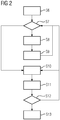
- step S3 it is also monitored in step S3 whether a patient's target state required for the current examination step, in particular acquisition step, for example a specific positioning that was established at the beginning of the examination and / or maintaining breath is maintained.
- the sensor data of the patient sensors are mainly used. If an imminent or ongoing departure from the target state of the patient is detected, the patient can be stimulated by a corresponding speech output in step S4 to maintain or retake the target state, while as another measure in step S5, for example, the image acquisition can be interrupted until the patient the target state has resumed, after which the image acquisition can start again or can be continued. The information of an operator is again possible.
- step S4 Parallel to any speech output in step S4, a corresponding animation of an avatar of the virtual conversation partner, which is basically displayed on a display device, is played out, wherein the avatar can, for example, be projected onto an interior trim of a gantry and / or patient reception.
- a step S6 If it is determined there in a step S6 that the examination includes a specific breath-holding phase and / or stand-still phase, it is checked in a step S7 whether there is already sufficient coaching and / or whether it results from patient data that appropriate coaching is not required. If the patient is, for example, a child or a person who is probably not cooperative for other reasons, however, a coaching is carried out, for which purpose in a step S8 initially a voice output takes place, which can be playful. For example, the virtual conversation partner can make a statement like, "I bet you can not hold your breath for ten seconds.”
- step S9 data from the patient sensors are used to check whether the correspondingly requested target state (standstill / stop breathing / ...) results. If this is the case for a predetermined period of time, the coaching can be judged as successful, otherwise as failed.
- step S7 different criteria can be defined and checked as to whether the coaching was successful, for example a certain number of successful maintenance of the target state for the predetermined period of time and the like.
- step S10 where again a voice output of the virtual conversation partner takes place, with the possibly playfully formulated request to take the target state and maintain for the predetermined period of time.
- step S11 corresponding sensor data are again recorded with the sensors, by means of which it can be checked whether the target state has actually been assumed. If it is determined in step S12 that this is not the case, then either back to coaching in step S7 can be branched back, or the request can be repeated accordingly, and then branched back to step S10. In this case, the patient can be granted a certain time interval to take the target state and already to hold it. If the target state is assumed, a trigger signal for the corresponding actual image acquisition within the control device of the image recording device is generated in step S13, which can be sent to a corresponding image acquisition unit.
- Fig. 1 has been explained, of course, also be monitored in the taking place in step S13 image capture, whether the target state is maintained, with appropriate measures can be taken when leaving the target state again.
- Fig. 3 finally shows a schematic diagram of a medical image recording device 1 according to the invention, in this case a computed tomography device.
- a medical image recording device 1 in this case a computed tomography device.
- This has, as is well known, a gantry 2, in which a patient by means of a patient positioning means 3, here a patient couch 4, can be retracted.
- the operation of the image recording device is controlled by means of a control device 5, which in the present case also serves as a control device of the voice interaction system.
- this includes the speech recognition unit 8 and the analysis unit 9 as part of the control device 5.
- Patient sensors 10 are also associated with the speech interaction system, in the present case a camera 11 as an optical patient sensor 10 and at least one distance sensor 12. It goes without saying that further patient sensors 10, microphones 6 and / or loudspeakers 7 can be used.
- the voice interaction system further comprises a display device 13, in the present case a projection unit, via which an avatar 14 of the virtual conversation partner can be projected onto an inner lining of the gantry 2. Also, the use of a holography device is conceivable, the avatar 14 is then formed as a hologram.
- the display device 13 may also be augmented reality glasses or virtual reality glasses which preferably project the avatar 14 into a virtual alternative environment instead of the examination room, for example a forest landscape. Localized objects of the examination room can be superimposed to avoid collisions as objects to be bypassed the alternative environment, such as trees, interaction objects, such as the patient couch 4, as corresponding (in particular by means of the avatar 14) for virtual objects inviting interaction, for example as a cozy bed in Case of patient couch 4.
- augmented reality glasses or virtual reality glasses which preferably project the avatar 14 into a virtual alternative environment instead of the examination room, for example a forest landscape.
- Localized objects of the examination room can be superimposed to avoid collisions as objects to be bypassed the alternative environment, such as trees, interaction objects, such as the patient couch 4, as corresponding (in particular by means of the avatar 14) for virtual objects inviting interaction, for example as a cozy bed in Case of patient couch 4.
- Assigned to the image recording device 1 is also an input device 15 for an operator, a tablet PC 16 on which a total of software for workflow management can be provided.
- the control device 5 is a total for performing the respect to the Fig. 1 and 2 formed embodiment of the method according to the invention.
Landscapes
- Engineering & Computer Science (AREA)
- Health & Medical Sciences (AREA)
- Medical Informatics (AREA)
- Physics & Mathematics (AREA)
- Human Computer Interaction (AREA)
- Life Sciences & Earth Sciences (AREA)
- Multimedia (AREA)
- Acoustics & Sound (AREA)
- General Health & Medical Sciences (AREA)
- Public Health (AREA)
- Computational Linguistics (AREA)
- Audiology, Speech & Language Pathology (AREA)
- Primary Health Care (AREA)
- Pathology (AREA)
- Radiology & Medical Imaging (AREA)
- Nuclear Medicine, Radiotherapy & Molecular Imaging (AREA)
- Epidemiology (AREA)
- Biomedical Technology (AREA)
- Biophysics (AREA)
- Optics & Photonics (AREA)
- High Energy & Nuclear Physics (AREA)
- Heart & Thoracic Surgery (AREA)
- Molecular Biology (AREA)
- Surgery (AREA)
- Animal Behavior & Ethology (AREA)
- Veterinary Medicine (AREA)
- Magnetic Resonance Imaging Apparatus (AREA)
- Measuring And Recording Apparatus For Diagnosis (AREA)
Priority Applications (2)
| Application Number | Priority Date | Filing Date | Title |
|---|---|---|---|
| EP17197523.8A EP3473181B1 (fr) | 2017-10-20 | 2017-10-20 | Procédé de fonctionnement d'un dispositif d'acquisition d'images médicales, dispositif d'acquisition d'images, programme informatique et support d'informations lisible électroniquement |
| CN201811231651.6A CN109698021B (zh) | 2017-10-20 | 2018-10-22 | 用于运行医学图像采集设备的方法和图像采集设备 |
Applications Claiming Priority (1)
| Application Number | Priority Date | Filing Date | Title |
|---|---|---|---|
| EP17197523.8A EP3473181B1 (fr) | 2017-10-20 | 2017-10-20 | Procédé de fonctionnement d'un dispositif d'acquisition d'images médicales, dispositif d'acquisition d'images, programme informatique et support d'informations lisible électroniquement |
Publications (2)
| Publication Number | Publication Date |
|---|---|
| EP3473181A1 true EP3473181A1 (fr) | 2019-04-24 |
| EP3473181B1 EP3473181B1 (fr) | 2020-02-19 |
Family
ID=60201322
Family Applications (1)
| Application Number | Title | Priority Date | Filing Date |
|---|---|---|---|
| EP17197523.8A Active EP3473181B1 (fr) | 2017-10-20 | 2017-10-20 | Procédé de fonctionnement d'un dispositif d'acquisition d'images médicales, dispositif d'acquisition d'images, programme informatique et support d'informations lisible électroniquement |
Country Status (2)
| Country | Link |
|---|---|
| EP (1) | EP3473181B1 (fr) |
| CN (1) | CN109698021B (fr) |
Cited By (2)
| Publication number | Priority date | Publication date | Assignee | Title |
|---|---|---|---|---|
| CN113782224A (zh) * | 2021-09-13 | 2021-12-10 | 上海联影医疗科技股份有限公司 | 交互装置、核磁共振系统和控制方法 |
| WO2022101232A1 (fr) | 2020-11-12 | 2022-05-19 | Koninklijke Philips N.V. | Procédé et système de génération de dialogue dépendant de signaux de capteur pendant un processus d'imagerie médicale |
Families Citing this family (3)
| Publication number | Priority date | Publication date | Assignee | Title |
|---|---|---|---|---|
| CN112331193B (zh) * | 2019-07-17 | 2024-08-09 | 华为技术有限公司 | 语音交互方法及相关装置 |
| JP2022000094A (ja) * | 2020-06-19 | 2022-01-04 | キヤノンメディカルシステムズ株式会社 | 医用画像診断システム、医用画像診断方法、入力装置、及び表示装置 |
| DE102020215064A1 (de) * | 2020-11-30 | 2022-06-02 | Siemens Healthcare Gmbh | Verfahren und Magnetresonanzvorrichtung zur automatischen Interaktion mit einem Patienten |
Citations (3)
| Publication number | Priority date | Publication date | Assignee | Title |
|---|---|---|---|---|
| US20150237222A1 (en) * | 2014-02-18 | 2015-08-20 | Siemens Aktiengesellschaft | Imaging modality and method for operating an imaging modality |
| US20160104293A1 (en) * | 2014-10-03 | 2016-04-14 | David Thomas Gering | System and method of voice activated image segmentation |
| DE102014226467A1 (de) * | 2014-12-18 | 2016-06-23 | Siemens Healthcare Gmbh | Medizinische Bildgebungsvorrichtung mit einem Rahmenelement zur Anordnung einer Komponente |
Family Cites Families (2)
| Publication number | Priority date | Publication date | Assignee | Title |
|---|---|---|---|---|
| CN104298722B (zh) * | 2014-09-24 | 2018-01-19 | 张鸿勋 | 多媒体交互系统及其方法 |
| CN106296511A (zh) * | 2016-08-19 | 2017-01-04 | 上海梅斯医药科技有限公司 | 一种虚拟诊疗系统 |
-
2017
- 2017-10-20 EP EP17197523.8A patent/EP3473181B1/fr active Active
-
2018
- 2018-10-22 CN CN201811231651.6A patent/CN109698021B/zh active Active
Patent Citations (3)
| Publication number | Priority date | Publication date | Assignee | Title |
|---|---|---|---|---|
| US20150237222A1 (en) * | 2014-02-18 | 2015-08-20 | Siemens Aktiengesellschaft | Imaging modality and method for operating an imaging modality |
| US20160104293A1 (en) * | 2014-10-03 | 2016-04-14 | David Thomas Gering | System and method of voice activated image segmentation |
| DE102014226467A1 (de) * | 2014-12-18 | 2016-06-23 | Siemens Healthcare Gmbh | Medizinische Bildgebungsvorrichtung mit einem Rahmenelement zur Anordnung einer Komponente |
Cited By (5)
| Publication number | Priority date | Publication date | Assignee | Title |
|---|---|---|---|---|
| WO2022101232A1 (fr) | 2020-11-12 | 2022-05-19 | Koninklijke Philips N.V. | Procédé et système de génération de dialogue dépendant de signaux de capteur pendant un processus d'imagerie médicale |
| EP4000520A1 (fr) | 2020-11-12 | 2022-05-25 | Koninklijke Philips N.V. | Méthode et système pour la génération d'un dialogue dépendant des signaux du capteur pendant un processus d'imagerie médicale |
| CN116568204A (zh) * | 2020-11-12 | 2023-08-08 | 皇家飞利浦有限公司 | 用于在医学成像过程期间进行依赖于传感器信号的对话生成的方法和系统 |
| US12605097B2 (en) | 2020-11-12 | 2026-04-21 | Koninklijke Philips N.V. | Method and system for sensor signals dependent dialog generation during a medical imaging process |
| CN113782224A (zh) * | 2021-09-13 | 2021-12-10 | 上海联影医疗科技股份有限公司 | 交互装置、核磁共振系统和控制方法 |
Also Published As
| Publication number | Publication date |
|---|---|
| CN109698021A (zh) | 2019-04-30 |
| CN109698021B (zh) | 2020-12-29 |
| EP3473181B1 (fr) | 2020-02-19 |
Similar Documents
| Publication | Publication Date | Title |
|---|---|---|
| EP3473181B1 (fr) | Procédé de fonctionnement d'un dispositif d'acquisition d'images médicales, dispositif d'acquisition d'images, programme informatique et support d'informations lisible électroniquement | |
| DE102008064919B4 (de) | Tragbarer Defibrillator | |
| DE102015121763A1 (de) | Vorrichtung zur neuro-vaskulären Stimulation | |
| JP7382760B2 (ja) | 医療支援装置及びプログラム | |
| DE4430164C2 (de) | Verwendung eines interaktiven Informationssystems | |
| EP3441977A1 (fr) | Procédé et système d'aide au personnel médical | |
| DE102021128908A1 (de) | Automatisiertes triageschwestersystem in einem fahrzeug | |
| DE102019220224B4 (de) | Überwachungssystem zur Überwachung eines Patienten und Verfahren zum Betrieb des Überwachungssystems | |
| Crammer | Subjective experience of a confusional state | |
| EP3611734A1 (fr) | Unité de commande et procédé de commande destinés à commander une unité de sortie d'informations dans le cadre du diagnostic et du traitement médicaux | |
| Jerger et al. | Effect of hearing loss on semantic access by auditory and audiovisual speech in children | |
| WO2020143871A1 (fr) | Système d'audio-vidéoconférence pour la télémédecine | |
| DE102016219157A1 (de) | Assistenzvorrichtung für Patienten und Verfahren zum Betrieb einer Assistenzvorrichtung | |
| DE102020125344B4 (de) | Robotersystem | |
| DE102007011844B4 (de) | Vorrichtung zur Fernsteuerung und/oder Kommunikation | |
| EP3561814A1 (fr) | Augmentation d'adhésion dans des études cliniques | |
| US20230268069A1 (en) | Method for monitoring a medical intervention, monitoring system and complete system | |
| DE102020215064A1 (de) | Verfahren und Magnetresonanzvorrichtung zur automatischen Interaktion mit einem Patienten | |
| DE102004001801A1 (de) | Dialogsystem insbesondere zur Unterstützung der Patientenbetreuung | |
| DE202019105341U1 (de) | Expositionssystem und Verwendung eines Expositionssystems | |
| Groopman | Silent minds | |
| DE102014112098B4 (de) | Vorrichtung und Verfahren zur Prüfung und/oder Anpassung eines Hörgerätes | |
| DE102023114373A1 (de) | Unterstützungssystem | |
| EP2811906B1 (fr) | Procédé et système pour la reconstruction d'activités prévues à partir de signaux neuronaux | |
| DE102023211026A1 (de) | Verfahren zum Betreiben eines Hörsystems |
Legal Events
| Date | Code | Title | Description |
|---|---|---|---|
| PUAI | Public reference made under article 153(3) epc to a published international application that has entered the european phase |
Free format text: ORIGINAL CODE: 0009012 |
|
| STAA | Information on the status of an ep patent application or granted ep patent |
Free format text: STATUS: REQUEST FOR EXAMINATION WAS MADE |
|
| 17P | Request for examination filed |
Effective date: 20180605 |
|
| AK | Designated contracting states |
Kind code of ref document: A1 Designated state(s): AL AT BE BG CH CY CZ DE DK EE ES FI FR GB GR HR HU IE IS IT LI LT LU LV MC MK MT NL NO PL PT RO RS SE SI SK SM TR |
|
| AX | Request for extension of the european patent |
Extension state: BA ME |
|
| RIC1 | Information provided on ipc code assigned before grant |
Ipc: G10L 15/22 20060101ALI20190813BHEP Ipc: A61B 6/00 20060101AFI20190813BHEP Ipc: G06F 3/16 20060101ALI20190813BHEP Ipc: G01R 33/54 20060101ALI20190813BHEP |
|
| GRAP | Despatch of communication of intention to grant a patent |
Free format text: ORIGINAL CODE: EPIDOSNIGR1 |
|
| STAA | Information on the status of an ep patent application or granted ep patent |
Free format text: STATUS: GRANT OF PATENT IS INTENDED |
|
| INTG | Intention to grant announced |
Effective date: 20190927 |
|
| GRAS | Grant fee paid |
Free format text: ORIGINAL CODE: EPIDOSNIGR3 |
|
| GRAA | (expected) grant |
Free format text: ORIGINAL CODE: 0009210 |
|
| STAA | Information on the status of an ep patent application or granted ep patent |
Free format text: STATUS: THE PATENT HAS BEEN GRANTED |
|
| AK | Designated contracting states |
Kind code of ref document: B1 Designated state(s): AL AT BE BG CH CY CZ DE DK EE ES FI FR GB GR HR HU IE IS IT LI LT LU LV MC MK MT NL NO PL PT RO RS SE SI SK SM TR |
|
| REG | Reference to a national code |
Ref country code: CH Ref legal event code: EP |
|
| REG | Reference to a national code |
Ref country code: DE Ref legal event code: R096 Ref document number: 502017003848 Country of ref document: DE |
|
| REG | Reference to a national code |
Ref country code: AT Ref legal event code: REF Ref document number: 1234014 Country of ref document: AT Kind code of ref document: T Effective date: 20200315 |
|
| REG | Reference to a national code |
Ref country code: IE Ref legal event code: FG4D Free format text: LANGUAGE OF EP DOCUMENT: GERMAN |
|
| REG | Reference to a national code |
Ref country code: NL Ref legal event code: MP Effective date: 20200219 |
|
| PG25 | Lapsed in a contracting state [announced via postgrant information from national office to epo] |
Ref country code: NO Free format text: LAPSE BECAUSE OF FAILURE TO SUBMIT A TRANSLATION OF THE DESCRIPTION OR TO PAY THE FEE WITHIN THE PRESCRIBED TIME-LIMIT Effective date: 20200519 Ref country code: RS Free format text: LAPSE BECAUSE OF FAILURE TO SUBMIT A TRANSLATION OF THE DESCRIPTION OR TO PAY THE FEE WITHIN THE PRESCRIBED TIME-LIMIT Effective date: 20200219 Ref country code: FI Free format text: LAPSE BECAUSE OF FAILURE TO SUBMIT A TRANSLATION OF THE DESCRIPTION OR TO PAY THE FEE WITHIN THE PRESCRIBED TIME-LIMIT Effective date: 20200219 |
|
| REG | Reference to a national code |
Ref country code: LT Ref legal event code: MG4D |
|
| PG25 | Lapsed in a contracting state [announced via postgrant information from national office to epo] |
Ref country code: HR Free format text: LAPSE BECAUSE OF FAILURE TO SUBMIT A TRANSLATION OF THE DESCRIPTION OR TO PAY THE FEE WITHIN THE PRESCRIBED TIME-LIMIT Effective date: 20200219 Ref country code: SE Free format text: LAPSE BECAUSE OF FAILURE TO SUBMIT A TRANSLATION OF THE DESCRIPTION OR TO PAY THE FEE WITHIN THE PRESCRIBED TIME-LIMIT Effective date: 20200219 Ref country code: BG Free format text: LAPSE BECAUSE OF FAILURE TO SUBMIT A TRANSLATION OF THE DESCRIPTION OR TO PAY THE FEE WITHIN THE PRESCRIBED TIME-LIMIT Effective date: 20200519 Ref country code: IS Free format text: LAPSE BECAUSE OF FAILURE TO SUBMIT A TRANSLATION OF THE DESCRIPTION OR TO PAY THE FEE WITHIN THE PRESCRIBED TIME-LIMIT Effective date: 20200619 Ref country code: LV Free format text: LAPSE BECAUSE OF FAILURE TO SUBMIT A TRANSLATION OF THE DESCRIPTION OR TO PAY THE FEE WITHIN THE PRESCRIBED TIME-LIMIT Effective date: 20200219 Ref country code: GR Free format text: LAPSE BECAUSE OF FAILURE TO SUBMIT A TRANSLATION OF THE DESCRIPTION OR TO PAY THE FEE WITHIN THE PRESCRIBED TIME-LIMIT Effective date: 20200520 |
|
| PG25 | Lapsed in a contracting state [announced via postgrant information from national office to epo] |
Ref country code: NL Free format text: LAPSE BECAUSE OF FAILURE TO SUBMIT A TRANSLATION OF THE DESCRIPTION OR TO PAY THE FEE WITHIN THE PRESCRIBED TIME-LIMIT Effective date: 20200219 |
|
| PG25 | Lapsed in a contracting state [announced via postgrant information from national office to epo] |
Ref country code: CZ Free format text: LAPSE BECAUSE OF FAILURE TO SUBMIT A TRANSLATION OF THE DESCRIPTION OR TO PAY THE FEE WITHIN THE PRESCRIBED TIME-LIMIT Effective date: 20200219 Ref country code: RO Free format text: LAPSE BECAUSE OF FAILURE TO SUBMIT A TRANSLATION OF THE DESCRIPTION OR TO PAY THE FEE WITHIN THE PRESCRIBED TIME-LIMIT Effective date: 20200219 Ref country code: PT Free format text: LAPSE BECAUSE OF FAILURE TO SUBMIT A TRANSLATION OF THE DESCRIPTION OR TO PAY THE FEE WITHIN THE PRESCRIBED TIME-LIMIT Effective date: 20200712 Ref country code: ES Free format text: LAPSE BECAUSE OF FAILURE TO SUBMIT A TRANSLATION OF THE DESCRIPTION OR TO PAY THE FEE WITHIN THE PRESCRIBED TIME-LIMIT Effective date: 20200219 Ref country code: SK Free format text: LAPSE BECAUSE OF FAILURE TO SUBMIT A TRANSLATION OF THE DESCRIPTION OR TO PAY THE FEE WITHIN THE PRESCRIBED TIME-LIMIT Effective date: 20200219 Ref country code: DK Free format text: LAPSE BECAUSE OF FAILURE TO SUBMIT A TRANSLATION OF THE DESCRIPTION OR TO PAY THE FEE WITHIN THE PRESCRIBED TIME-LIMIT Effective date: 20200219 Ref country code: LT Free format text: LAPSE BECAUSE OF FAILURE TO SUBMIT A TRANSLATION OF THE DESCRIPTION OR TO PAY THE FEE WITHIN THE PRESCRIBED TIME-LIMIT Effective date: 20200219 Ref country code: SM Free format text: LAPSE BECAUSE OF FAILURE TO SUBMIT A TRANSLATION OF THE DESCRIPTION OR TO PAY THE FEE WITHIN THE PRESCRIBED TIME-LIMIT Effective date: 20200219 Ref country code: EE Free format text: LAPSE BECAUSE OF FAILURE TO SUBMIT A TRANSLATION OF THE DESCRIPTION OR TO PAY THE FEE WITHIN THE PRESCRIBED TIME-LIMIT Effective date: 20200219 |
|
| REG | Reference to a national code |
Ref country code: DE Ref legal event code: R097 Ref document number: 502017003848 Country of ref document: DE |
|
| PLBE | No opposition filed within time limit |
Free format text: ORIGINAL CODE: 0009261 |
|
| STAA | Information on the status of an ep patent application or granted ep patent |
Free format text: STATUS: NO OPPOSITION FILED WITHIN TIME LIMIT |
|
| 26N | No opposition filed |
Effective date: 20201120 |
|
| PG25 | Lapsed in a contracting state [announced via postgrant information from national office to epo] |
Ref country code: IT Free format text: LAPSE BECAUSE OF FAILURE TO SUBMIT A TRANSLATION OF THE DESCRIPTION OR TO PAY THE FEE WITHIN THE PRESCRIBED TIME-LIMIT Effective date: 20200219 |
|
| PG25 | Lapsed in a contracting state [announced via postgrant information from national office to epo] |
Ref country code: PL Free format text: LAPSE BECAUSE OF FAILURE TO SUBMIT A TRANSLATION OF THE DESCRIPTION OR TO PAY THE FEE WITHIN THE PRESCRIBED TIME-LIMIT Effective date: 20200219 Ref country code: SI Free format text: LAPSE BECAUSE OF FAILURE TO SUBMIT A TRANSLATION OF THE DESCRIPTION OR TO PAY THE FEE WITHIN THE PRESCRIBED TIME-LIMIT Effective date: 20200219 |
|
| REG | Reference to a national code |
Ref country code: CH Ref legal event code: NV Representative=s name: SIEMENS SCHWEIZ AG, CH |
|
| REG | Reference to a national code |
Ref country code: CH Ref legal event code: PL |
|
| PG25 | Lapsed in a contracting state [announced via postgrant information from national office to epo] |
Ref country code: LU Free format text: LAPSE BECAUSE OF NON-PAYMENT OF DUE FEES Effective date: 20201020 Ref country code: MC Free format text: LAPSE BECAUSE OF FAILURE TO SUBMIT A TRANSLATION OF THE DESCRIPTION OR TO PAY THE FEE WITHIN THE PRESCRIBED TIME-LIMIT Effective date: 20200219 |
|
| REG | Reference to a national code |
Ref country code: BE Ref legal event code: MM Effective date: 20201031 |
|
| PG25 | Lapsed in a contracting state [announced via postgrant information from national office to epo] |
Ref country code: CH Free format text: LAPSE BECAUSE OF NON-PAYMENT OF DUE FEES Effective date: 20201031 Ref country code: BE Free format text: LAPSE BECAUSE OF NON-PAYMENT OF DUE FEES Effective date: 20201031 Ref country code: LI Free format text: LAPSE BECAUSE OF NON-PAYMENT OF DUE FEES Effective date: 20201031 |
|
| PG25 | Lapsed in a contracting state [announced via postgrant information from national office to epo] |
Ref country code: IE Free format text: LAPSE BECAUSE OF NON-PAYMENT OF DUE FEES Effective date: 20201020 |
|
| PG25 | Lapsed in a contracting state [announced via postgrant information from national office to epo] |
Ref country code: TR Free format text: LAPSE BECAUSE OF FAILURE TO SUBMIT A TRANSLATION OF THE DESCRIPTION OR TO PAY THE FEE WITHIN THE PRESCRIBED TIME-LIMIT Effective date: 20200219 Ref country code: MT Free format text: LAPSE BECAUSE OF FAILURE TO SUBMIT A TRANSLATION OF THE DESCRIPTION OR TO PAY THE FEE WITHIN THE PRESCRIBED TIME-LIMIT Effective date: 20200219 Ref country code: CY Free format text: LAPSE BECAUSE OF FAILURE TO SUBMIT A TRANSLATION OF THE DESCRIPTION OR TO PAY THE FEE WITHIN THE PRESCRIBED TIME-LIMIT Effective date: 20200219 |
|
| PG25 | Lapsed in a contracting state [announced via postgrant information from national office to epo] |
Ref country code: MK Free format text: LAPSE BECAUSE OF FAILURE TO SUBMIT A TRANSLATION OF THE DESCRIPTION OR TO PAY THE FEE WITHIN THE PRESCRIBED TIME-LIMIT Effective date: 20200219 Ref country code: AL Free format text: LAPSE BECAUSE OF FAILURE TO SUBMIT A TRANSLATION OF THE DESCRIPTION OR TO PAY THE FEE WITHIN THE PRESCRIBED TIME-LIMIT Effective date: 20200219 |
|
| REG | Reference to a national code |
Ref country code: AT Ref legal event code: MM01 Ref document number: 1234014 Country of ref document: AT Kind code of ref document: T Effective date: 20221020 |
|
| PG25 | Lapsed in a contracting state [announced via postgrant information from national office to epo] |
Ref country code: AT Free format text: LAPSE BECAUSE OF NON-PAYMENT OF DUE FEES Effective date: 20221020 |
|
| REG | Reference to a national code |
Ref country code: DE Ref legal event code: R081 Ref document number: 502017003848 Country of ref document: DE Owner name: SIEMENS HEALTHINEERS AG, DE Free format text: FORMER OWNER: SIEMENS HEALTHCARE GMBH, MUENCHEN, DE |
|
| PGFP | Annual fee paid to national office [announced via postgrant information from national office to epo] |
Ref country code: GB Payment date: 20251111 Year of fee payment: 9 |
|
| PGFP | Annual fee paid to national office [announced via postgrant information from national office to epo] |
Ref country code: FR Payment date: 20251020 Year of fee payment: 9 |
|
| PGFP | Annual fee paid to national office [announced via postgrant information from national office to epo] |
Ref country code: DE Payment date: 20251219 Year of fee payment: 9 |