EP3473182B1 - Three-dimensional imaging method and system - Google Patents
Three-dimensional imaging method and system Download PDFInfo
- Publication number
- EP3473182B1 EP3473182B1 EP17812639.7A EP17812639A EP3473182B1 EP 3473182 B1 EP3473182 B1 EP 3473182B1 EP 17812639 A EP17812639 A EP 17812639A EP 3473182 B1 EP3473182 B1 EP 3473182B1
- Authority
- EP
- European Patent Office
- Prior art keywords
- dimensional
- scanning
- scanning target
- target
- initial
- Prior art date
- Legal status (The legal status is an assumption and is not a legal conclusion. Google has not performed a legal analysis and makes no representation as to the accuracy of the status listed.)
- Active
Links
Images




Classifications
-
- A—HUMAN NECESSITIES
- A61—MEDICAL OR VETERINARY SCIENCE; HYGIENE
- A61B—DIAGNOSIS; SURGERY; IDENTIFICATION
- A61B6/00—Apparatus or devices for radiation diagnosis; Apparatus or devices for radiation diagnosis combined with radiation therapy equipment
- A61B6/52—Devices using data or image processing specially adapted for radiation diagnosis
- A61B6/5205—Devices using data or image processing specially adapted for radiation diagnosis involving processing of raw data to produce diagnostic data
-
- A—HUMAN NECESSITIES
- A61—MEDICAL OR VETERINARY SCIENCE; HYGIENE
- A61B—DIAGNOSIS; SURGERY; IDENTIFICATION
- A61B6/00—Apparatus or devices for radiation diagnosis; Apparatus or devices for radiation diagnosis combined with radiation therapy equipment
- A61B6/52—Devices using data or image processing specially adapted for radiation diagnosis
- A61B6/5211—Devices using data or image processing specially adapted for radiation diagnosis involving processing of medical diagnostic data
- A61B6/5229—Devices using data or image processing specially adapted for radiation diagnosis involving processing of medical diagnostic data combining image data of a patient, e.g. combining a functional image with an anatomical image
- A61B6/5235—Devices using data or image processing specially adapted for radiation diagnosis involving processing of medical diagnostic data combining image data of a patient, e.g. combining a functional image with an anatomical image combining images from the same or different ionising radiation imaging techniques, e.g. PET and CT
-
- A—HUMAN NECESSITIES
- A61—MEDICAL OR VETERINARY SCIENCE; HYGIENE
- A61B—DIAGNOSIS; SURGERY; IDENTIFICATION
- A61B5/00—Measuring for diagnostic purposes; Identification of persons
- A61B5/0033—Features or image-related aspects of imaging apparatus, e.g. for MRI, optical tomography or impedance tomography apparatus; Arrangements of imaging apparatus in a room
-
- A—HUMAN NECESSITIES
- A61—MEDICAL OR VETERINARY SCIENCE; HYGIENE
- A61B—DIAGNOSIS; SURGERY; IDENTIFICATION
- A61B6/00—Apparatus or devices for radiation diagnosis; Apparatus or devices for radiation diagnosis combined with radiation therapy equipment
-
- A—HUMAN NECESSITIES
- A61—MEDICAL OR VETERINARY SCIENCE; HYGIENE
- A61B—DIAGNOSIS; SURGERY; IDENTIFICATION
- A61B6/00—Apparatus or devices for radiation diagnosis; Apparatus or devices for radiation diagnosis combined with radiation therapy equipment
- A61B6/02—Arrangements for diagnosis sequentially in different planes; Stereoscopic radiation diagnosis
- A61B6/03—Computed tomography [CT]
-
- A—HUMAN NECESSITIES
- A61—MEDICAL OR VETERINARY SCIENCE; HYGIENE
- A61B—DIAGNOSIS; SURGERY; IDENTIFICATION
- A61B6/00—Apparatus or devices for radiation diagnosis; Apparatus or devices for radiation diagnosis combined with radiation therapy equipment
- A61B6/46—Arrangements for interfacing with the operator or the patient
- A61B6/461—Displaying means of special interest
- A61B6/466—Displaying means of special interest adapted to display 3D data
-
- A—HUMAN NECESSITIES
- A61—MEDICAL OR VETERINARY SCIENCE; HYGIENE
- A61B—DIAGNOSIS; SURGERY; IDENTIFICATION
- A61B6/00—Apparatus or devices for radiation diagnosis; Apparatus or devices for radiation diagnosis combined with radiation therapy equipment
- A61B6/52—Devices using data or image processing specially adapted for radiation diagnosis
- A61B6/5211—Devices using data or image processing specially adapted for radiation diagnosis involving processing of medical diagnostic data
- A61B6/5229—Devices using data or image processing specially adapted for radiation diagnosis involving processing of medical diagnostic data combining image data of a patient, e.g. combining a functional image with an anatomical image
- A61B6/5247—Devices using data or image processing specially adapted for radiation diagnosis involving processing of medical diagnostic data combining image data of a patient, e.g. combining a functional image with an anatomical image combining images from an ionising-radiation diagnostic technique and a non-ionising radiation diagnostic technique, e.g. X-ray and ultrasound
-
- A—HUMAN NECESSITIES
- A61—MEDICAL OR VETERINARY SCIENCE; HYGIENE
- A61B—DIAGNOSIS; SURGERY; IDENTIFICATION
- A61B8/00—Diagnosis using ultrasonic, sonic or infrasonic waves
- A61B8/52—Devices using data or image processing specially adapted for diagnosis using ultrasonic, sonic or infrasonic waves
- A61B8/5215—Devices using data or image processing specially adapted for diagnosis using ultrasonic, sonic or infrasonic waves involving processing of medical diagnostic data
- A61B8/5238—Devices using data or image processing specially adapted for diagnosis using ultrasonic, sonic or infrasonic waves involving processing of medical diagnostic data for combining image data of patient, e.g. merging several images from different acquisition modes into one image
-
- G—PHYSICS
- G06—COMPUTING OR CALCULATING; COUNTING
- G06T—IMAGE DATA PROCESSING OR GENERATION, IN GENERAL
- G06T15/00—Three-dimensional [3D] image rendering
-
- A—HUMAN NECESSITIES
- A61—MEDICAL OR VETERINARY SCIENCE; HYGIENE
- A61B—DIAGNOSIS; SURGERY; IDENTIFICATION
- A61B5/00—Measuring for diagnostic purposes; Identification of persons
- A61B5/0033—Features or image-related aspects of imaging apparatus, e.g. for MRI, optical tomography or impedance tomography apparatus; Arrangements of imaging apparatus in a room
- A61B5/0035—Features or image-related aspects of imaging apparatus, e.g. for MRI, optical tomography or impedance tomography apparatus; Arrangements of imaging apparatus in a room adapted for acquisition of images from more than one imaging mode, e.g. combining MRI and optical tomography
-
- A—HUMAN NECESSITIES
- A61—MEDICAL OR VETERINARY SCIENCE; HYGIENE
- A61B—DIAGNOSIS; SURGERY; IDENTIFICATION
- A61B6/00—Apparatus or devices for radiation diagnosis; Apparatus or devices for radiation diagnosis combined with radiation therapy equipment
- A61B6/02—Arrangements for diagnosis sequentially in different planes; Stereoscopic radiation diagnosis
- A61B6/022—Stereoscopic imaging
-
- A—HUMAN NECESSITIES
- A61—MEDICAL OR VETERINARY SCIENCE; HYGIENE
- A61B—DIAGNOSIS; SURGERY; IDENTIFICATION
- A61B6/00—Apparatus or devices for radiation diagnosis; Apparatus or devices for radiation diagnosis combined with radiation therapy equipment
- A61B6/46—Arrangements for interfacing with the operator or the patient
- A61B6/461—Displaying means of special interest
- A61B6/463—Displaying means of special interest characterised by displaying multiple images or images and diagnostic data on one display
-
- A—HUMAN NECESSITIES
- A61—MEDICAL OR VETERINARY SCIENCE; HYGIENE
- A61B—DIAGNOSIS; SURGERY; IDENTIFICATION
- A61B6/00—Apparatus or devices for radiation diagnosis; Apparatus or devices for radiation diagnosis combined with radiation therapy equipment
- A61B6/50—Apparatus or devices for radiation diagnosis; Apparatus or devices for radiation diagnosis combined with radiation therapy equipment specially adapted for specific body parts; specially adapted for specific clinical applications
- A61B6/505—Apparatus or devices for radiation diagnosis; Apparatus or devices for radiation diagnosis combined with radiation therapy equipment specially adapted for specific body parts; specially adapted for specific clinical applications for diagnosis of bone
-
- G—PHYSICS
- G16—INFORMATION AND COMMUNICATION TECHNOLOGY [ICT] SPECIALLY ADAPTED FOR SPECIFIC APPLICATION FIELDS
- G16H—HEALTHCARE INFORMATICS, i.e. INFORMATION AND COMMUNICATION TECHNOLOGY [ICT] SPECIALLY ADAPTED FOR THE HANDLING OR PROCESSING OF MEDICAL OR HEALTHCARE DATA
- G16H30/00—ICT specially adapted for the handling or processing of medical images
- G16H30/40—ICT specially adapted for the handling or processing of medical images for processing medical images, e.g. editing
Definitions
- the present application relates to the field of three-dimensional imaging of the biological objects, and more particularly, relates to a target-oriented three-dimensional imaging method and system.
- Three-dimensional imaging of biological objects is widely used in medicine, including CT, magnetic resonance imaging and the like. Recently, the use of ultrasound imaging to achieve three-dimensional imaging has also been used more and more. For example, three-dimensional imaging of the fetus and heart has come into the practical use. Ultrasound imaging of bone structures is also evolving. Compared to the heart and fetus, the human bone surface strongly reflects the ultrasound, making it difficult to image the structure below the bone surface, while the bones of the fetus are not calcified, so the ultrasound can penetrate. Therefore, ultrasound, optical tomography, photoacoustic imaging, and other similar methods of imaging an object with a skeletal structure all face this problem.
- a three-dimensional ultrasound scan from the back can only obtain images of the surface of the spinous process bone and the transverse bone but not images of the entire spine bone, because the vertebral body is on the other side, thereby greatly limiting the effect of three-dimensional imaging.
- other methods such as CT and MRI can also obtain the basic three-dimensional structure of the spine.
- US 2003/0199748 A1 discloses a method for three-dimensional presentation of an examination region of a patient as a 3D reconstruction image. All the 2D ultrasound images are obtained and then mixed with the preoperative 3D image dataset. Accordingly, the scanning steps are performed before the mixing step to obtain all the 2D ultrasound images which are needed in the mixing step. Then after all the 2D ultrasound images are obtained, the mixing step is performed for obtaining the updated 3D image dataset. Accordingly, the adjustment step in US 2003/0199748 A1 is a one-off thing, which cannot adjust the 3D reconstruction image continuously and in real-time.
- US 2011/0268333 A1 has disclosed an imaging method for enhancing a visualization of blood vessels in an examination region of a patient, comprising: generating a 3D reconstruction image of the examination region using a preoperatively recorded 3D image dataset of the examination region; recording at least one current 2D image of the examination region by an image recording device; identifying the blood vessels from the 2D image; registering the 3D image dataset with image dataset of the 2D image based on the identification; overlaying the 3D reconstruction image and the 2D image; and playing back the overlaid image. Accordingly, in US 2011/0268333 A1 the recording of the at least one current 2D image of the examination region is kept at the same location, and no 3D scanning in different angles is implemented. The information of the current 2D image is limited.
- a three-dimensional imaging of a biological object is proposed, which can utilize the basic three-dimensional structure of the biological object on the one hand and utilize such as the ultrasound technology to perform two-dimensional scanning imaging on biological objects on the other hand.
- the three-dimensional imaging can be assisted by using known approximate three-dimensional structures of the scanning target and the adjustment of the two-dimensional images.
- the method of the present application can also be applied to other similar imaging methods, such as optical tomography, photoacoustic imaging, terahertz imaging, and the like. Since the three-dimensional imaging of the present application adopts target orientation, only some initial information of the imaging target should be needed. For example, when the imaging target is a certain bone of the human body, its approximate original shape can be known, but its specific size, position and detail cannot be got.
- the method of the present application by means of continuously scanning the position of the target though the two-dimensional imaging, and adjusting the original shape of the target; the specific size, position and detail of the target are obtained, and an overall three-dimensional image of the target is formed.
- the operator can continuously see the progress of the scanning through the display device, including the portions that have been scanned, the portions that have not been scanned and the quality of the images, so that useful feedback information can be obtained to guide further scanning.
- the target-oriented three-dimensional imaging method provided by the present application includes the following steps.
- Step 101) determining, on a scanning object, a portion comprising a scanning target using three-dimensional scanning
- a scanning range 202 may be given according to the estimated scanning target position 201.
- 201 is the estimated scanning target position
- 202 is the given scanning range
- 203 is an area including the scanning target.
- the position to be scanned can be first estimated based on experience.
- a scanning range 202 can be given on the human body or other living organisms, which can cover the position 201 of the estimated scanning target
- the area 203 is an area including the scanning target, as shown in FIG.2 .
- Step 102 on the basis of the determined portion of the scanning object, forming an existing initial three-dimensional structure of the scanning target from a database
- a three-dimensional structure is extracted from the database pre-storing the three-dimensional structure of the scanning target as the initial three-dimensional structure 300 of the scanning target.
- the initial three-dimensional structure image 300 of the scanning target is put.
- the initial three-dimensional structure of the scanning target corresponding to the three-dimensional structure image 300 can be a known representative three-dimensional anatomical structure of a certain portion of human body which is pre-acquired and stored in a database.
- It also can be representative three-dimensional anatomical structures corresponding to human bodies of different ages and genders which are pre-acquired and stored in a database, or further can a be three-dimensional anatomical structure pre-obtained by other means and stored in a database.
- the other means include performing a CT or MRI scan on the scanning target of human body.
- the three-dimensional structure of different sources should have a data structure with uniform standards.
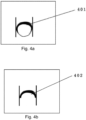
- Figure 4 (a) is a cross-sectional view showing the three-dimensional structure image of the initial form of the scanning target read from the database in the present embodiment.
- Step 103 through ultrasound imaging technology, scanning the portion comprising the scanning target to form a series of two-dimensional images with different spatial location and/or orientation information Since the two-dimensional imaging can be performed within a given scan range from various angles, the most characteristic information about the scanning target can be obtained, as although some characteristic information may not be clearly imaged from one direction, however it may be clearer when imaging from another direction.
- Step 103 indicates that the two-dimensional imaging obtains as much information as possible by giving different directions and positions.
- Step 104) referring to image information related to the scanning target or a local portion of the scanning target within an image, adjusting the initial three-dimensional structure of the scanning target or the local portion of the scanning target
- the image information for controlling the adjustment comprises a characteristic point, a characteristic line, a characteristic face, a characteristic body of the scanning target or the local portion of the scanning target, or a combination thereof.
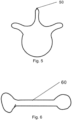
- the point on the scanning target as shown in FIG. 5 may be some characteristic points on the scanning target, such as characteristic points formed on the image by human bones.
- Figure 5 shows the spinous process apex 50 of the spine bone (scanning target) as a characteristic point of the spine bone.
- the line on the scanning target as shown in FIG. 6 may be some characteristic lines on the scanning target, for example, a straight line 60 formed on the image by the human bone. As shown in FIG. 6 , the characteristic line may be a straight line or a curved line.
- the surface on the scanning target shown in FIG. 7 may be some characteristic surfaces 70 on the scanning target.
- the characteristic surface may be a plane or a curved surface.
- the characteristic surface 70 shown in FIG. 7 is a curved characteristic surface.
- the body on the scanning target as shown in FIG. 8 may have some characteristic body 80.
- the adjustments including global or local translation, rotation, scaling, and or a combination thereof can be performed on the scanning target, for example, simultaneously panning and zooming.
- Step 105) repeating steps S3) and S4) until the initial three-dimensional structure of the scanning target has been adjusted based on the obtained images
- the adjustment of the image here can be done off-line and completed after all the images are collected, reducing the time spent on the scanning target during scanning.
- Step 106 displaying a final three-dimensional structure image of the scanning target after adjustment on a display device
- the final three-dimensional structure image of the scanning target further comprises a characteristic label used by the adjustment.
- the adjustment on the image in the steps 205-207) can be done off-line once after all the images are collected, which can reduce the scanning time.
- the adjustment in step 205 is a deformable adjustment, that is, the scanning of the target starts from the initial three-dimensional result, and each portion can be individually adjusted according to the information obtained in the image scanning, so that the various portions of the adjusted scanning target are not simply scaled.
- Deformable scaling is particularly useful for spinal bone distortion.
- a step may be added in which the three-dimensional structure of the adjusted scanning target is displayed in the display device each time. The operator can continuously see the progress of the scan, including the portion that has been scanned and the portion that has not been scanned, and the quality of the image, so that useful feedback information can be obtained to guide the further scanning.
- the final three-dimensional structure image of the scanning target in the step S6) further comprises a characteristic label used by the adjustment to facilitate the adjustment operation.
- an imaging device 91 for acquiring two-dimensional images of a scanning target on a determined portion in this embodiment, this imaging device can be an ultrasound scan imaging device; 2) a space locating device 92 for acquiring spatial location and angle of each two-dimensional image from the imaging device; when the imaging device performs continuous scanning imaging on the determined portion, the space locating device 92 records the corresponding two-dimensional images formed by the scanning imaging as a basis for adjusting the initial three-dimensional structure; 3) a database 93 for providing an initial three-dimensional structure of the scanning target; here, all kinds of the initial three-dimensional structure database of the scanning target are pre-stored in the database; 4) a feature extraction unit 94 for extracting characteristic information in the two-dimensional images or three-dimensional images formed by the two-dimensional images; the characteristic information here can be a point, a line, a face or a body; 5) an adjustment unit 95 for adjusting the initial three
- the display device 96 When obtaining the initial three-dimensional structure from the database, the display device 96 displays the three-dimensional structure image; while when obtaining the two-dimensional images from the imaging device 91, the display device 96 displays the two-dimensional images. When obtaining the three-dimensional structure adjusted by the adjustment unit 95, the display device 96 displays the three-dimensional structure image adjusted with the characteristic information.
- the target-oriented three-dimensional imaging method and system of the present application utilizes an existing initial three-dimensional structure and readily available two-dimensional images having different spatial locations and orientations to adjust the initial three-dimensional structure to obtain three-dimensional imaging of the scanning target.
- the implementation process of this kind of three-dimensional imaging has no harm to the human body, and the adjustment of the three-dimensional structure can be processed in the background by quickly completing the imaging of the two-dimensional image, which reduces the time for detecting the scanning, and can present richer details of the three-dimensional images.
Landscapes
- Health & Medical Sciences (AREA)
- Life Sciences & Earth Sciences (AREA)
- Engineering & Computer Science (AREA)
- Medical Informatics (AREA)
- Physics & Mathematics (AREA)
- Nuclear Medicine, Radiotherapy & Molecular Imaging (AREA)
- Surgery (AREA)
- Veterinary Medicine (AREA)
- Biophysics (AREA)
- Public Health (AREA)
- General Health & Medical Sciences (AREA)
- Animal Behavior & Ethology (AREA)
- Molecular Biology (AREA)
- Pathology (AREA)
- Radiology & Medical Imaging (AREA)
- Biomedical Technology (AREA)
- Heart & Thoracic Surgery (AREA)
- Optics & Photonics (AREA)
- High Energy & Nuclear Physics (AREA)
- Computer Vision & Pattern Recognition (AREA)
- Human Computer Interaction (AREA)
- Computer Graphics (AREA)
- General Physics & Mathematics (AREA)
- Theoretical Computer Science (AREA)
- Ultra Sonic Daignosis Equipment (AREA)
- Apparatus For Radiation Diagnosis (AREA)
- Magnetic Resonance Imaging Apparatus (AREA)
Description
- The present application relates to the field of three-dimensional imaging of the biological objects, and more particularly, relates to a target-oriented three-dimensional imaging method and system.
- Three-dimensional imaging of biological objects is widely used in medicine, including CT, magnetic resonance imaging and the like. Recently, the use of ultrasound imaging to achieve three-dimensional imaging has also been used more and more. For example, three-dimensional imaging of the fetus and heart has come into the practical use. Ultrasound imaging of bone structures is also evolving. Compared to the heart and fetus, the human bone surface strongly reflects the ultrasound, making it difficult to image the structure below the bone surface, while the bones of the fetus are not calcified, so the ultrasound can penetrate. Therefore, ultrasound, optical tomography, photoacoustic imaging, and other similar methods of imaging an object with a skeletal structure all face this problem. For example, when scanning a human spine bone, a three-dimensional ultrasound scan from the back can only obtain images of the surface of the spinous process bone and the transverse bone but not images of the entire spine bone, because the vertebral body is on the other side, thereby greatly limiting the effect of three-dimensional imaging. On the other hand, we know the approximate shape of each section of spine. In addition, other methods such as CT and MRI can also obtain the basic three-dimensional structure of the spine.
-
US 2003/0199748 A1 discloses a method for three-dimensional presentation of an examination region of a patient as a 3D reconstruction image. All the 2D ultrasound images are obtained and then mixed with the preoperative 3D image dataset. Accordingly, the scanning steps are performed before the mixing step to obtain all the 2D ultrasound images which are needed in the mixing step. Then after all the 2D ultrasound images are obtained, the mixing step is performed for obtaining the updated 3D image dataset. Accordingly, the adjustment step inUS 2003/0199748 A1 is a one-off thing, which cannot adjust the 3D reconstruction image continuously and in real-time. -
US 2011/0268333 A1 has disclosed an imaging method for enhancing a visualization of blood vessels in an examination region of a patient, comprising: generating a 3D reconstruction image of the examination region using a preoperatively recorded 3D image dataset of the examination region; recording at least one current 2D image of the examination region by an image recording device; identifying the blood vessels from the 2D image; registering the 3D image dataset with image dataset of the 2D image based on the identification; overlaying the 3D reconstruction image and the 2D image; and playing back the overlaid image. Accordingly, inUS 2011/0268333 A1 the recording of the at least one current 2D image of the examination region is kept at the same location, and no 3D scanning in different angles is implemented. The information of the current 2D image is limited. - Aiming at the problems of ultrasonic three-dimensional imaging existing in the prior art, a three-dimensional imaging of a biological object is proposed, which can utilize the basic three-dimensional structure of the biological object on the one hand and utilize such as the ultrasound technology to perform two-dimensional scanning imaging on biological objects on the other hand.
- It is the object of this invention to provide a three-dimensional imaging method for biological objects, which can reduce the scanning operation required for imaging and the use of radiation imaging methods on organisms thus reducing damage to living organisms.
- This object is achieved by the subject matter of independent claim 1.
- Preferred embodiments of the invention are the subject matter of the dependent claims.
- By implementing the target-oriented three-dimensional imaging method and system provided by the present application, the three-dimensional imaging can be assisted by using known approximate three-dimensional structures of the scanning target and the adjustment of the two-dimensional images. The method of the present application can also be applied to other similar imaging methods, such as optical tomography, photoacoustic imaging, terahertz imaging, and the like. Since the three-dimensional imaging of the present application adopts target orientation, only some initial information of the imaging target should be needed. For example, when the imaging target is a certain bone of the human body, its approximate original shape can be known, but its specific size, position and detail cannot be got. Using the method of the present application, by means of continuously scanning the position of the target though the two-dimensional imaging, and adjusting the original shape of the target; the specific size, position and detail of the target are obtained, and an overall three-dimensional image of the target is formed. During the scanning process, the operator can continuously see the progress of the scanning through the display device, including the portions that have been scanned, the portions that have not been scanned and the quality of the images, so that useful feedback information can be obtained to guide further scanning.
-
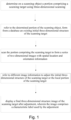
Figure 1 is a schematic flow chart of a three-dimensional imaging method of a first embodiment of the present application. -
Figure 2 is a schematic diagram showing a relationship between a scanning target and a scanning range in an embodiment of the method of the present application. -
Figure 3 is a three-dimensional structure image illustrating placement of a scanning target at a position of the scanning target in an embodiment of the method of the present application. -
Figure 4 is a cross-sectional view (a) of a three-dimensional structure image and an image (b) obtained by a two-dimensional ultrasonic method at the same position in the present embodiment. -
Figure 5 is a schematic view showing a point on a scanning target in an embodiment of the method of the present application. -
Figure 6 is a schematic view showing a line on a scanning target in an embodiment of the method of the present application. -
Figure 7 is a schematic view showing a face on a scanning target in an embodiment of the method of the present application. -
Figure 8 is a schematic view showing the body on a scanning target in the embodiment of the method of the present application. -
Figure 9 is a schematic diagram illustrating a three-dimensional imaging system in accordance with an embodiment the present application. - In the first embodiment of the method of the present application, as shown in
FIG. 1 , the target-oriented three-dimensional imaging method provided by the present application includes the following steps. - Step 101) determining, on a scanning object, a portion comprising a scanning target using three-dimensional scanning
When performing the three-dimensional imaging of a specific patient scanning target, ascanning range 202 may be given according to the estimatedscanning target position 201. As shown inFigure 2 , 201 is the estimated scanning target position, 202 is the given scanning range, and 203 is an area including the scanning target. In other words, for objects requiring three-dimensional imaging, the position to be scanned can be first estimated based on experience. For this, ascanning range 202 can be given on the human body or other living organisms, which can cover theposition 201 of the estimated scanning target, and thearea 203 is an area including the scanning target, as shown inFIG.2 . - Step 102) on the basis of the determined portion of the scanning object, forming an existing initial three-dimensional structure of the scanning target from a database
On the basis of the scanning range given in the step 101, a three-dimensional structure is extracted from the database pre-storing the three-dimensional structure of the scanning target as the initial three-dimensional structure 300 of the scanning target. As shown inFigure 3 , in the givenscanning range 202, the initial three-dimensional structure image 300 of the scanning target is put. Wherein, the initial three-dimensional structure of the scanning target corresponding to the three-dimensional structure image 300 can be a known representative three-dimensional anatomical structure of a certain portion of human body which is pre-acquired and stored in a database. It also can be representative three-dimensional anatomical structures corresponding to human bodies of different ages and genders which are pre-acquired and stored in a database, or further can a be three-dimensional anatomical structure pre-obtained by other means and stored in a database. The other means include performing a CT or MRI scan on the scanning target of human body. Among them, the three-dimensional structure of different sources should have a data structure with uniform standards. -
Figure 4 (a) is a cross-sectional view showing the three-dimensional structure image of the initial form of the scanning target read from the database in the present embodiment. - Step 103) through ultrasound imaging technology, scanning the portion comprising the scanning target to form a series of two-dimensional images with different spatial location and/or orientation information
Since the two-dimensional imaging can be performed within a given scan range from various angles, the most characteristic information about the scanning target can be obtained, as although some characteristic information may not be clearly imaged from one direction, however it may be clearer when imaging from another direction. Step 103 indicates that the two-dimensional imaging obtains as much information as possible by giving different directions and positions. -
Figure 4 (b) is an image obtained by two-dimensional ultrasound imaging at the same position ofFigure 4 (a) . As the high-frequency ultrasound cannot penetrate the bone, the lower portion of the bone structure cannot be imaged. When comparing the two images, the structure of the scanning target can be globally or locally adjusted according to the curve ratios obtained from the corresponding positions. - Step 104) referring to image information related to the scanning target or a local portion of the scanning target within an image, adjusting the initial three-dimensional structure of the scanning target or the local portion of the scanning target
In step 104), the image information for controlling the adjustment comprises a characteristic point, a characteristic line, a characteristic face, a characteristic body of the scanning target or the local portion of the scanning target, or a combination thereof. - The point on the scanning target as shown in
FIG. 5 may be some characteristic points on the scanning target, such as characteristic points formed on the image by human bones.Figure 5 shows thespinous process apex 50 of the spine bone (scanning target) as a characteristic point of the spine bone. - The line on the scanning target as shown in
FIG. 6 may be some characteristic lines on the scanning target, for example, astraight line 60 formed on the image by the human bone. As shown inFIG. 6 , the characteristic line may be a straight line or a curved line. - The surface on the scanning target shown in
FIG. 7 may be somecharacteristic surfaces 70 on the scanning target. The characteristic surface may be a plane or a curved surface. Thecharacteristic surface 70 shown inFIG. 7 is a curved characteristic surface. - The body on the scanning target as shown in
FIG. 8 may have somecharacteristic body 80. - Based on the characteristic points, lines, faces, and bodies of the scanning target, the adjustments including global or local translation, rotation, scaling, and or a combination thereof can be performed on the scanning target, for example, simultaneously panning and zooming.
- Step 105) repeating steps S3) and S4) until the initial three-dimensional structure of the scanning target has been adjusted based on the obtained images
The adjustment of the image here can be done off-line and completed after all the images are collected, reducing the time spent on the scanning target during scanning. - Step 106) displaying a final three-dimensional structure image of the scanning target after adjustment on a display device
The final three-dimensional structure image of the scanning target further comprises a characteristic label used by the adjustment. - The second embodiment comprises following steps:
- Step 201) based on the scanning target, determining the scanning portion of the scanning object;
- Step 202) forming an initial three-dimensional structure of a scanning target from a database;
- Step 203) on the display device, displaying the initial three-dimensional structure and the structure information to be adjusted comprising a characteristic point, a characteristic line, a characteristic face, a characteristic body;
- Step 204) changing the spatial location of the scanning probe by translation or (and) changing the orientation of the scanning probe by rotation, scanning the determined scanning portions and acquiring a series of two-dimensional images with different spatial location and orientation information of the scanning target; displaying the two-dimensional images obtained by scanning on the display device;
- Step 205) referring to image information related to the scanning target or a local portion of the scanning target within an image, adjusting the initial three-dimensional structure; wherein the adjustment comprises one or more of spatial location, angle, size, and relative proportion;
- Step 206) determining whether the two-dimensional images obtained in the step 204) have covered the initial three-dimensional structure of the scanning target and the three-dimensional structure of the known target has been adjusted, if so the process goes to Step 207, or else repeating the step 204 and the step 206;
- Step 207) displaying a final three-dimensional structure image of the scanning target after adjustment on a display device.
- The adjustment on the image in the steps 205-207) can be done off-line once after all the images are collected, which can reduce the scanning time.
- In another embodiment, which is different from the second embodiment described above in that the adjustment in step 205 is a deformable adjustment, that is, the scanning of the target starts from the initial three-dimensional result, and each portion can be individually adjusted according to the information obtained in the image scanning, so that the various portions of the adjusted scanning target are not simply scaled. Deformable scaling is particularly useful for spinal bone distortion.
- In another embodiment, which is different from the second embodiment described above in that after the three-dimensional structure is adjusted in step 205, a step may be added in which the three-dimensional structure of the adjusted scanning target is displayed in the display device each time. The operator can continuously see the progress of the scan, including the portion that has been scanned and the portion that has not been scanned, and the quality of the image, so that useful feedback information can be obtained to guide the further scanning.
- In another embodiment, which is different from the second embodiment described above in that the final three-dimensional structure image of the scanning target in the step S6) further comprises a characteristic label used by the adjustment to facilitate the adjustment operation.
- In the embodiment of a three-dimensional imaging system of the present application illustrated in
FIG. 9 , the following components are comprised: 1) an imaging device 91 for acquiring two-dimensional images of a scanning target on a determined portion, in this embodiment, this imaging device can be an ultrasound scan imaging device; 2) a space locating device 92 for acquiring spatial location and angle of each two-dimensional image from the imaging device; when the imaging device performs continuous scanning imaging on the determined portion, the space locating device 92 records the corresponding two-dimensional images formed by the scanning imaging as a basis for adjusting the initial three-dimensional structure; 3) a database 93 for providing an initial three-dimensional structure of the scanning target; here, all kinds of the initial three-dimensional structure database of the scanning target are pre-stored in the database; 4) a feature extraction unit 94 for extracting characteristic information in the two-dimensional images or three-dimensional images formed by the two-dimensional images; the characteristic information here can be a point, a line, a face or a body; 5) an adjustment unit 95 for adjusting the initial three-dimensional structure of the scanning target using the characteristic information; the adjustment here comprises one or more of the spatial location, orientation, size, and relative proportion; 6) a display device 96 for displaying the two-dimensional images and a three-dimensional structure of the scanning target. When obtaining the initial three-dimensional structure from the database, thedisplay device 96 displays the three-dimensional structure image; while when obtaining the two-dimensional images from theimaging device 91, thedisplay device 96 displays the two-dimensional images. When obtaining the three-dimensional structure adjusted by the adjustment unit 95, thedisplay device 96 displays the three-dimensional structure image adjusted with the characteristic information. - The target-oriented three-dimensional imaging method and system of the present application utilizes an existing initial three-dimensional structure and readily available two-dimensional images having different spatial locations and orientations to adjust the initial three-dimensional structure to obtain three-dimensional imaging of the scanning target. The implementation process of this kind of three-dimensional imaging has no harm to the human body, and the adjustment of the three-dimensional structure can be processed in the background by quickly completing the imaging of the two-dimensional image, which reduces the time for detecting the scanning, and can present richer details of the three-dimensional images.
Claims (9)
- A three-dimensional imaging method, comprising the following steps:S1) determining, on a scanning object, a scanning range covering a portion comprising a scanning target for a three-dimensional scanning;S2) on a basis of the scanning range of the scanning object, extracting an existing initial three-dimensional structure (300) of the scanning target from a database;S3) scanning the portion comprising the scanning target within the given scanning range from various angles to form a series of two-dimensional images with different spatial location and orientation information;S4) according to image information related to the scanning target or a local portion of the scanning target within the series of two-dimensional images, adjusting the initial three-dimensional structure (300) of the scanning target or the local portion of the scanning target;S5) repeating steps S3) and S4) until the whole initial three-dimensional structure (300) of the scanning target has been scanned over and is adjusted, based on the obtained two-dimensional images, and an overall three-dimensional structure image of the target is formedS6) continuously displaying the initial three-dimensional structure (300) of the scanning target and the adjusted three-dimensional structure image during the two-dimensional scanning imaging process on a display device (96);S7) displaying the final three-dimensional structure image of the scanning target after the adjustments.
- The three-dimensional imaging method according to claim 1, wherein the initial three-dimensional structure (300) of the scanning target refers to a known representative three-dimensional anatomical structure of a certain portion of a human body, and the representative three-dimensional anatomical structure is pre-stored in the database (93).
- The three-dimensional imaging method according to claim 1, wherein the initial three-dimensional structure (300) of the scanning target refers to a representative three-dimensional anatomical structure corresponding to human bodies of different ages and genders, and the representative three-dimensional anatomical structure of different ages and genders is pre-stored in the database (93).
- The three-dimensional imaging method according to claim 1, wherein the initial three-dimensional structure (300) of the scanning target is obtained by other means implemented on the scanning target, and the other means include performing a CT or MRI scan on the scanning target of human body and storing it in the database (93) in advance.
- The three-dimensional imaging method according to claim 1, wherein the adjustment of the initial three-dimensional structure (300) of the scanning target or the local portion of the scanning target comprises a spatial location, an orientation, a size, and a relative proportion.
- The three-dimensional imaging method according to claim 1 wherein the adjustment of the initial three-dimensional structure (300) of the scanning target or the local portion of the scanning target is a deformable or non-deformable adjustment.
- The three-dimensional imaging method according to claim 1, wherein the image information for controlling the adjustment in the step S4) comprises a characteristic point (50), a characteristic line (60), a characteristic face (70), a characteristic body (80) of the scanning target or the local portion of the scanning target, or a combination thereof.
- The three-dimensional imaging method according to claim 1, wherein the final three-dimensional structure image of the scanning target in the step S6) further comprises a characteristic label used by the adjustment.
- A three-dimensional imaging system configured to perform the method according to any of claims 1 - 8, the system comprising:an imaging device for acquiring a series of two-dimensional images of a scanning target on a determined portion from various angles;a space locating device for acquiring spatial location and orientation of each two-dimensional image from the imaging device;a database for providing an initial three-dimensional structure of the scanning target;a feature extraction unit for extracting characteristic information in the two-dimensional images or three-dimensional images formed by the two-dimensional images;an adjustment unit for adjusting the initial three-dimensional structure of the scanning target using the characteristic information;a display device for displaying the two-dimensional images and for displaying the initial three-dimensional structure of the scanning target and the adjusted three-dimensional structure image.
Applications Claiming Priority (2)
| Application Number | Priority Date | Filing Date | Title |
|---|---|---|---|
| CN201610427021.0A CN107510466B (en) | 2016-06-15 | 2016-06-15 | Three-dimensional imaging method and system |
| PCT/CN2017/087764 WO2017215528A1 (en) | 2016-06-15 | 2017-06-09 | Three-dimensional imaging method and system |
Publications (3)
| Publication Number | Publication Date |
|---|---|
| EP3473182A1 EP3473182A1 (en) | 2019-04-24 |
| EP3473182A4 EP3473182A4 (en) | 2020-01-01 |
| EP3473182B1 true EP3473182B1 (en) | 2025-07-02 |
Family
ID=60663920
Family Applications (1)
| Application Number | Title | Priority Date | Filing Date |
|---|---|---|---|
| EP17812639.7A Active EP3473182B1 (en) | 2016-06-15 | 2017-06-09 | Three-dimensional imaging method and system |
Country Status (7)
| Country | Link |
|---|---|
| US (1) | US10945693B2 (en) |
| EP (1) | EP3473182B1 (en) |
| JP (1) | JP2019517879A (en) |
| CN (1) | CN107510466B (en) |
| AU (1) | AU2017285943B2 (en) |
| CA (1) | CA3027455C (en) |
| WO (1) | WO2017215528A1 (en) |
Families Citing this family (4)
| Publication number | Priority date | Publication date | Assignee | Title |
|---|---|---|---|---|
| CN108694381A (en) * | 2018-05-11 | 2018-10-23 | 星络科技有限公司 | Object positioning method and object trajectory method for tracing |
| CN110672549B (en) * | 2019-10-09 | 2022-08-09 | 深圳市重投华讯太赫兹科技有限公司 | Imaging method and device |
| US11712224B2 (en) * | 2019-10-11 | 2023-08-01 | GE Precision Healthcare LLC | Method and systems for context awareness enabled ultrasound scanning |
| DE102019131693A1 (en) * | 2019-11-22 | 2021-05-27 | Carl Zeiss Microscopy Gmbh | MEASURING DEVICE FOR EXAMINATION OF A SAMPLE AND METHOD OF DETERMINING AN ALTITUDE MAP OF A SAMPLE |
Family Cites Families (19)
| Publication number | Priority date | Publication date | Assignee | Title |
|---|---|---|---|---|
| US6978166B2 (en) * | 1994-10-07 | 2005-12-20 | Saint Louis University | System for use in displaying images of a body part |
| DE10210650B4 (en) * | 2002-03-11 | 2005-04-28 | Siemens Ag | Method for the three-dimensional representation of a study area of a patient in the form of a 3D reconstruction image and medical examination and / or treatment facility |
| US20050078861A1 (en) * | 2003-10-10 | 2005-04-14 | Usikov Daniel A. | Tomographic system and method for iteratively processing two-dimensional image data for reconstructing three-dimensional image data |
| DE102005005087B4 (en) * | 2005-02-03 | 2012-09-27 | Siemens Ag | Method for correcting non-reproducible geometry errors of an X-ray C-arm machine |
| CN100469321C (en) * | 2005-11-28 | 2009-03-18 | 香港理工大学 | Three-dimensional ultrasonic detection method |
| DE102006003126A1 (en) * | 2006-01-23 | 2007-08-02 | Siemens Ag | Method and device for visualizing 3D objects |
| US20090123046A1 (en) * | 2006-05-11 | 2009-05-14 | Koninklijke Philips Electronics N.V. | System and method for generating intraoperative 3-dimensional images using non-contrast image data |
| EP2111604A2 (en) * | 2006-12-22 | 2009-10-28 | Koninklijke Philips Electronics N.V. | Imaging system and imaging method for imaging an object |
| WO2009136461A1 (en) * | 2008-05-07 | 2009-11-12 | 株式会社日立製作所 | Ultrasonograph |
| US8444564B2 (en) * | 2009-02-02 | 2013-05-21 | Jointvue, Llc | Noninvasive diagnostic system |
| CN102106741B (en) * | 2009-12-25 | 2013-06-05 | 东软飞利浦医疗设备系统有限责任公司 | Three-dimensional reconstruction method for two-dimensional ultrasonic image |
| DE102010018872A1 (en) * | 2010-04-30 | 2011-11-03 | Siemens Aktiengesellschaft | An imaging method for highlighting vessels in an examination area of a patient and a medical system for performing the method |
| JP5525355B2 (en) * | 2010-07-12 | 2014-06-18 | 国立大学法人 東京大学 | Ultrasonic diagnostic equipment |
| US20120022366A1 (en) * | 2010-07-21 | 2012-01-26 | Marcus Pfister | Registration of aorta to patient via two 2d images for placement of a stent |
| EP3524159B1 (en) * | 2010-12-08 | 2021-01-20 | Bayer Healthcare LLC | Generating a suitable model for estimating patient radiation dose resulting from medical imaging scans |
| KR101805619B1 (en) * | 2011-01-25 | 2017-12-07 | 삼성전자주식회사 | Apparatus and method for creating optimal 2-dimensional medical image automatically from 3-dimensional medical image |
| US8818065B2 (en) * | 2011-07-01 | 2014-08-26 | Carestream Health, Inc. | Methods and apparatus for scatter correction for CBCT system and cone-beam image reconstruction |
| US8879815B2 (en) * | 2011-08-23 | 2014-11-04 | Siemens Aktiengesellschaft | Automatic initialization for 2D/3D registration |
| CN103417243B (en) * | 2012-05-24 | 2015-05-27 | 中慧医学成像有限公司 | A three-dimensional ultrasonic imaging device, system and method |
-
2016
- 2016-06-15 CN CN201610427021.0A patent/CN107510466B/en active Active
-
2017
- 2017-06-09 US US16/309,107 patent/US10945693B2/en active Active
- 2017-06-09 EP EP17812639.7A patent/EP3473182B1/en active Active
- 2017-06-09 WO PCT/CN2017/087764 patent/WO2017215528A1/en not_active Ceased
- 2017-06-09 CA CA3027455A patent/CA3027455C/en active Active
- 2017-06-09 JP JP2018564882A patent/JP2019517879A/en active Pending
- 2017-06-09 AU AU2017285943A patent/AU2017285943B2/en active Active
Also Published As
| Publication number | Publication date |
|---|---|
| CN107510466A (en) | 2017-12-26 |
| US10945693B2 (en) | 2021-03-16 |
| CA3027455A1 (en) | 2017-12-21 |
| WO2017215528A1 (en) | 2017-12-21 |
| EP3473182A4 (en) | 2020-01-01 |
| EP3473182A1 (en) | 2019-04-24 |
| US20190307409A1 (en) | 2019-10-10 |
| CA3027455C (en) | 2022-01-11 |
| CN107510466B (en) | 2022-04-12 |
| AU2017285943A1 (en) | 2019-01-17 |
| AU2017285943B2 (en) | 2020-05-07 |
| JP2019517879A (en) | 2019-06-27 |
Similar Documents
| Publication | Publication Date | Title |
|---|---|---|
| EP1623674B1 (en) | Reference image display method for ultrasonography and ultrasonograph | |
| JP7649382B2 (en) | Computer-implemented method for augmented reality spinal rod planning and bending for navigation spine surgery | |
| JP7162793B2 (en) | Spine Imaging System Based on Ultrasound Rubbing Technology and Navigation/Localization System for Spine Surgery | |
| US7774045B2 (en) | Medical guiding system, medical guiding program, and medical guiding method | |
| EP3473182B1 (en) | Three-dimensional imaging method and system | |
| US10667786B2 (en) | Ultrasound imaging apparatus and method for segmenting anatomical objects | |
| WO2009136461A1 (en) | Ultrasonograph | |
| KR102278893B1 (en) | Medical image processing apparatus and medical image registration method using the same | |
| JP5128140B2 (en) | Medical diagnostic imaging equipment | |
| WO2013145727A1 (en) | Surgery assistance device and surgery assistance program | |
| JP2008272370A (en) | Medical guide system | |
| Li et al. | Real-time volumetric free-hand ultrasound imaging for large-sized organs: a study of imaging the whole spine | |
| Purnama et al. | Imaging the Whole Spine using a Freehand 3D Ultrasound System |
Legal Events
| Date | Code | Title | Description |
|---|---|---|---|
| STAA | Information on the status of an ep patent application or granted ep patent |
Free format text: STATUS: THE INTERNATIONAL PUBLICATION HAS BEEN MADE |
|
| PUAI | Public reference made under article 153(3) epc to a published international application that has entered the european phase |
Free format text: ORIGINAL CODE: 0009012 |
|
| STAA | Information on the status of an ep patent application or granted ep patent |
Free format text: STATUS: REQUEST FOR EXAMINATION WAS MADE |
|
| 17P | Request for examination filed |
Effective date: 20190109 |
|
| AK | Designated contracting states |
Kind code of ref document: A1 Designated state(s): AL AT BE BG CH CY CZ DE DK EE ES FI FR GB GR HR HU IE IS IT LI LT LU LV MC MK MT NL NO PL PT RO RS SE SI SK SM TR |
|
| AX | Request for extension of the european patent |
Extension state: BA ME |
|
| DAV | Request for validation of the european patent (deleted) | ||
| DAX | Request for extension of the european patent (deleted) | ||
| A4 | Supplementary search report drawn up and despatched |
Effective date: 20191128 |
|
| RIC1 | Information provided on ipc code assigned before grant |
Ipc: A61B 8/08 20060101ALI20191122BHEP Ipc: A61B 6/00 20060101AFI20191122BHEP Ipc: G06T 17/00 20060101ALI20191122BHEP Ipc: A61B 5/00 20060101ALN20191122BHEP Ipc: A61B 6/03 20060101ALI20191122BHEP Ipc: A61B 8/13 20060101ALI20191122BHEP |
|
| STAA | Information on the status of an ep patent application or granted ep patent |
Free format text: STATUS: EXAMINATION IS IN PROGRESS |
|
| 17Q | First examination report despatched |
Effective date: 20220927 |
|
| GRAP | Despatch of communication of intention to grant a patent |
Free format text: ORIGINAL CODE: EPIDOSNIGR1 |
|
| STAA | Information on the status of an ep patent application or granted ep patent |
Free format text: STATUS: GRANT OF PATENT IS INTENDED |
|
| INTG | Intention to grant announced |
Effective date: 20240913 |
|
| GRAJ | Information related to disapproval of communication of intention to grant by the applicant or resumption of examination proceedings by the epo deleted |
Free format text: ORIGINAL CODE: EPIDOSDIGR1 |
|
| STAA | Information on the status of an ep patent application or granted ep patent |
Free format text: STATUS: EXAMINATION IS IN PROGRESS |
|
| GRAP | Despatch of communication of intention to grant a patent |
Free format text: ORIGINAL CODE: EPIDOSNIGR1 |
|
| STAA | Information on the status of an ep patent application or granted ep patent |
Free format text: STATUS: GRANT OF PATENT IS INTENDED |
|
| INTC | Intention to grant announced (deleted) | ||
| INTG | Intention to grant announced |
Effective date: 20250127 |
|
| GRAS | Grant fee paid |
Free format text: ORIGINAL CODE: EPIDOSNIGR3 |
|
| GRAA | (expected) grant |
Free format text: ORIGINAL CODE: 0009210 |
|
| STAA | Information on the status of an ep patent application or granted ep patent |
Free format text: STATUS: THE PATENT HAS BEEN GRANTED |
|
| AK | Designated contracting states |
Kind code of ref document: B1 Designated state(s): AL AT BE BG CH CY CZ DE DK EE ES FI FR GB GR HR HU IE IS IT LI LT LU LV MC MK MT NL NO PL PT RO RS SE SI SK SM TR |
|
| REG | Reference to a national code |
Ref country code: GB Ref legal event code: FG4D |
|
| REG | Reference to a national code |
Ref country code: CH Ref legal event code: EP |
|
| REG | Reference to a national code |
Ref country code: DE Ref legal event code: R096 Ref document number: 602017090328 Country of ref document: DE |
|
| REG | Reference to a national code |
Ref country code: IE Ref legal event code: FG4D |
|
| REG | Reference to a national code |
Ref country code: NL Ref legal event code: MP Effective date: 20250702 |
|
| PG25 | Lapsed in a contracting state [announced via postgrant information from national office to epo] |
Ref country code: PT Free format text: LAPSE BECAUSE OF FAILURE TO SUBMIT A TRANSLATION OF THE DESCRIPTION OR TO PAY THE FEE WITHIN THE PRESCRIBED TIME-LIMIT Effective date: 20251103 |
|
| PG25 | Lapsed in a contracting state [announced via postgrant information from national office to epo] |
Ref country code: NL Free format text: LAPSE BECAUSE OF FAILURE TO SUBMIT A TRANSLATION OF THE DESCRIPTION OR TO PAY THE FEE WITHIN THE PRESCRIBED TIME-LIMIT Effective date: 20250702 |
|
| REG | Reference to a national code |
Ref country code: AT Ref legal event code: MK05 Ref document number: 1808308 Country of ref document: AT Kind code of ref document: T Effective date: 20250702 |
|
| PG25 | Lapsed in a contracting state [announced via postgrant information from national office to epo] |
Ref country code: IS Free format text: LAPSE BECAUSE OF FAILURE TO SUBMIT A TRANSLATION OF THE DESCRIPTION OR TO PAY THE FEE WITHIN THE PRESCRIBED TIME-LIMIT Effective date: 20251102 |
|
| PG25 | Lapsed in a contracting state [announced via postgrant information from national office to epo] |
Ref country code: NO Free format text: LAPSE BECAUSE OF FAILURE TO SUBMIT A TRANSLATION OF THE DESCRIPTION OR TO PAY THE FEE WITHIN THE PRESCRIBED TIME-LIMIT Effective date: 20251002 |
|
| REG | Reference to a national code |
Ref country code: LT Ref legal event code: MG9D |
|
| PG25 | Lapsed in a contracting state [announced via postgrant information from national office to epo] |
Ref country code: AT Free format text: LAPSE BECAUSE OF FAILURE TO SUBMIT A TRANSLATION OF THE DESCRIPTION OR TO PAY THE FEE WITHIN THE PRESCRIBED TIME-LIMIT Effective date: 20250702 |
|
| PG25 | Lapsed in a contracting state [announced via postgrant information from national office to epo] |
Ref country code: FI Free format text: LAPSE BECAUSE OF FAILURE TO SUBMIT A TRANSLATION OF THE DESCRIPTION OR TO PAY THE FEE WITHIN THE PRESCRIBED TIME-LIMIT Effective date: 20250702 |
|
| PG25 | Lapsed in a contracting state [announced via postgrant information from national office to epo] |
Ref country code: HR Free format text: LAPSE BECAUSE OF FAILURE TO SUBMIT A TRANSLATION OF THE DESCRIPTION OR TO PAY THE FEE WITHIN THE PRESCRIBED TIME-LIMIT Effective date: 20250702 |
|
| PG25 | Lapsed in a contracting state [announced via postgrant information from national office to epo] |
Ref country code: GR Free format text: LAPSE BECAUSE OF FAILURE TO SUBMIT A TRANSLATION OF THE DESCRIPTION OR TO PAY THE FEE WITHIN THE PRESCRIBED TIME-LIMIT Effective date: 20251003 |
|
| PG25 | Lapsed in a contracting state [announced via postgrant information from national office to epo] |
Ref country code: SE Free format text: LAPSE BECAUSE OF FAILURE TO SUBMIT A TRANSLATION OF THE DESCRIPTION OR TO PAY THE FEE WITHIN THE PRESCRIBED TIME-LIMIT Effective date: 20250702 Ref country code: CZ Free format text: LAPSE BECAUSE OF FAILURE TO SUBMIT A TRANSLATION OF THE DESCRIPTION OR TO PAY THE FEE WITHIN THE PRESCRIBED TIME-LIMIT Effective date: 20250702 |
|
| PG25 | Lapsed in a contracting state [announced via postgrant information from national office to epo] |
Ref country code: LV Free format text: LAPSE BECAUSE OF FAILURE TO SUBMIT A TRANSLATION OF THE DESCRIPTION OR TO PAY THE FEE WITHIN THE PRESCRIBED TIME-LIMIT Effective date: 20250702 |
|
| PG25 | Lapsed in a contracting state [announced via postgrant information from national office to epo] |
Ref country code: PL Free format text: LAPSE BECAUSE OF FAILURE TO SUBMIT A TRANSLATION OF THE DESCRIPTION OR TO PAY THE FEE WITHIN THE PRESCRIBED TIME-LIMIT Effective date: 20250702 Ref country code: BG Free format text: LAPSE BECAUSE OF FAILURE TO SUBMIT A TRANSLATION OF THE DESCRIPTION OR TO PAY THE FEE WITHIN THE PRESCRIBED TIME-LIMIT Effective date: 20250702 |
|
| PG25 | Lapsed in a contracting state [announced via postgrant information from national office to epo] |
Ref country code: RS Free format text: LAPSE BECAUSE OF FAILURE TO SUBMIT A TRANSLATION OF THE DESCRIPTION OR TO PAY THE FEE WITHIN THE PRESCRIBED TIME-LIMIT Effective date: 20251002 |
|
| PG25 | Lapsed in a contracting state [announced via postgrant information from national office to epo] |
Ref country code: ES Free format text: LAPSE BECAUSE OF FAILURE TO SUBMIT A TRANSLATION OF THE DESCRIPTION OR TO PAY THE FEE WITHIN THE PRESCRIBED TIME-LIMIT Effective date: 20250702 |
|
| PG25 | Lapsed in a contracting state [announced via postgrant information from national office to epo] |
Ref country code: SM Free format text: LAPSE BECAUSE OF FAILURE TO SUBMIT A TRANSLATION OF THE DESCRIPTION OR TO PAY THE FEE WITHIN THE PRESCRIBED TIME-LIMIT Effective date: 20250702 |
|
| PG25 | Lapsed in a contracting state [announced via postgrant information from national office to epo] |
Ref country code: DK Free format text: LAPSE BECAUSE OF FAILURE TO SUBMIT A TRANSLATION OF THE DESCRIPTION OR TO PAY THE FEE WITHIN THE PRESCRIBED TIME-LIMIT Effective date: 20250702 |
|
| PG25 | Lapsed in a contracting state [announced via postgrant information from national office to epo] |
Ref country code: IT Free format text: LAPSE BECAUSE OF FAILURE TO SUBMIT A TRANSLATION OF THE DESCRIPTION OR TO PAY THE FEE WITHIN THE PRESCRIBED TIME-LIMIT Effective date: 20250702 |
|
| PG25 | Lapsed in a contracting state [announced via postgrant information from national office to epo] |
Ref country code: SK Free format text: LAPSE BECAUSE OF FAILURE TO SUBMIT A TRANSLATION OF THE DESCRIPTION OR TO PAY THE FEE WITHIN THE PRESCRIBED TIME-LIMIT Effective date: 20250702 Ref country code: EE Free format text: LAPSE BECAUSE OF FAILURE TO SUBMIT A TRANSLATION OF THE DESCRIPTION OR TO PAY THE FEE WITHIN THE PRESCRIBED TIME-LIMIT Effective date: 20250702 |