EP3473235A1 - Zusammensetzung von materialien zur zahnremineralisierung - Google Patents
Zusammensetzung von materialien zur zahnremineralisierung Download PDFInfo
- Publication number
- EP3473235A1 EP3473235A1 EP17740040.5A EP17740040A EP3473235A1 EP 3473235 A1 EP3473235 A1 EP 3473235A1 EP 17740040 A EP17740040 A EP 17740040A EP 3473235 A1 EP3473235 A1 EP 3473235A1
- Authority
- EP
- European Patent Office
- Prior art keywords
- mineralization
- calcium
- mineralizing
- tooth
- mass
- Prior art date
- Legal status (The legal status is an assumption and is not a legal conclusion. Google has not performed a legal analysis and makes no representation as to the accuracy of the status listed.)
- Withdrawn
Links
- 239000000463 material Substances 0.000 title claims abstract description 165
- 239000000203 mixture Substances 0.000 title claims description 35
- 239000001506 calcium phosphate Substances 0.000 claims abstract description 103
- QORWJWZARLRLPR-UHFFFAOYSA-H tricalcium bis(phosphate) Chemical class [Ca+2].[Ca+2].[Ca+2].[O-]P([O-])([O-])=O.[O-]P([O-])([O-])=O QORWJWZARLRLPR-UHFFFAOYSA-H 0.000 claims abstract description 95
- 235000011010 calcium phosphates Nutrition 0.000 claims abstract description 83
- 239000011575 calcium Substances 0.000 claims abstract description 68
- VYPSYNLAJGMNEJ-UHFFFAOYSA-N Silicium dioxide Chemical compound O=[Si]=O VYPSYNLAJGMNEJ-UHFFFAOYSA-N 0.000 claims abstract description 49
- 229910052588 hydroxylapatite Inorganic materials 0.000 claims abstract description 47
- XYJRXVWERLGGKC-UHFFFAOYSA-D pentacalcium;hydroxide;triphosphate Chemical compound [OH-].[Ca+2].[Ca+2].[Ca+2].[Ca+2].[Ca+2].[O-]P([O-])([O-])=O.[O-]P([O-])([O-])=O.[O-]P([O-])([O-])=O XYJRXVWERLGGKC-UHFFFAOYSA-D 0.000 claims abstract description 39
- 229910019142 PO4 Inorganic materials 0.000 claims abstract description 36
- 150000003377 silicon compounds Chemical class 0.000 claims abstract description 33
- RBLGLDWTCZMLRW-UHFFFAOYSA-K dicalcium;phosphate;dihydrate Chemical compound O.O.[Ca+2].[Ca+2].[O-]P([O-])([O-])=O RBLGLDWTCZMLRW-UHFFFAOYSA-K 0.000 claims abstract description 31
- 229910000389 calcium phosphate Inorganic materials 0.000 claims abstract description 28
- 210000005239 tubule Anatomy 0.000 claims abstract description 25
- 235000019739 Dicalciumphosphate Nutrition 0.000 claims abstract description 19
- NEFBYIFKOOEVPA-UHFFFAOYSA-K dicalcium phosphate Chemical compound [Ca+2].[Ca+2].[O-]P([O-])([O-])=O NEFBYIFKOOEVPA-UHFFFAOYSA-K 0.000 claims abstract description 19
- 150000001455 metallic ions Chemical class 0.000 claims abstract description 19
- 229910000390 dicalcium phosphate Inorganic materials 0.000 claims abstract description 18
- 229940038472 dicalcium phosphate Drugs 0.000 claims abstract description 18
- 239000000741 silica gel Substances 0.000 claims abstract description 15
- 229910002027 silica gel Inorganic materials 0.000 claims abstract description 15
- RMAQACBXLXPBSY-UHFFFAOYSA-N silicic acid Chemical compound O[Si](O)(O)O RMAQACBXLXPBSY-UHFFFAOYSA-N 0.000 claims abstract description 12
- 238000011282 treatment Methods 0.000 claims abstract description 12
- 235000012239 silicon dioxide Nutrition 0.000 claims abstract description 6
- 239000011701 zinc Substances 0.000 claims description 53
- 210000004268 dentin Anatomy 0.000 claims description 33
- 239000000551 dentifrice Substances 0.000 claims description 28
- 239000002245 particle Substances 0.000 claims description 25
- 235000012241 calcium silicate Nutrition 0.000 claims description 19
- 229910052814 silicon oxide Inorganic materials 0.000 claims description 19
- XLYOFNOQVPJJNP-ZSJDYOACSA-N heavy water Substances [2H]O[2H] XLYOFNOQVPJJNP-ZSJDYOACSA-N 0.000 claims description 17
- FUFJGUQYACFECW-UHFFFAOYSA-L calcium hydrogenphosphate Chemical compound [Ca+2].OP([O-])([O-])=O FUFJGUQYACFECW-UHFFFAOYSA-L 0.000 claims description 16
- 229910052918 calcium silicate Inorganic materials 0.000 claims description 16
- OYACROKNLOSFPA-UHFFFAOYSA-N calcium;dioxido(oxo)silane Chemical compound [Ca+2].[O-][Si]([O-])=O OYACROKNLOSFPA-UHFFFAOYSA-N 0.000 claims description 14
- 229910052882 wollastonite Inorganic materials 0.000 claims description 14
- XAAHAAMILDNBPS-UHFFFAOYSA-L calcium hydrogenphosphate dihydrate Chemical compound O.O.[Ca+2].OP([O-])([O-])=O XAAHAAMILDNBPS-UHFFFAOYSA-L 0.000 claims description 12
- 210000003298 dental enamel Anatomy 0.000 claims description 12
- 239000002253 acid Substances 0.000 claims description 10
- 208000002925 dental caries Diseases 0.000 claims description 9
- 201000002170 dentin sensitivity Diseases 0.000 claims description 5
- 239000007787 solid Substances 0.000 claims description 5
- 229940095079 dicalcium phosphate anhydrous Drugs 0.000 claims description 4
- 230000002265 prevention Effects 0.000 claims description 4
- 229910003641 H2SiO3 Inorganic materials 0.000 claims description 3
- 238000004519 manufacturing process Methods 0.000 claims description 3
- 239000012736 aqueous medium Substances 0.000 claims 1
- 239000002537 cosmetic Substances 0.000 claims 1
- 239000008194 pharmaceutical composition Substances 0.000 claims 1
- JBQYATWDVHIOAR-UHFFFAOYSA-N tellanylidenegermanium Chemical compound [Te]=[Ge] JBQYATWDVHIOAR-UHFFFAOYSA-N 0.000 claims 1
- 238000006467 substitution reaction Methods 0.000 abstract description 21
- 229910052791 calcium Inorganic materials 0.000 abstract description 8
- OYPRJOBELJOOCE-UHFFFAOYSA-N Calcium Chemical compound [Ca] OYPRJOBELJOOCE-UHFFFAOYSA-N 0.000 abstract description 7
- 235000021317 phosphate Nutrition 0.000 abstract description 6
- 239000000377 silicon dioxide Substances 0.000 abstract description 6
- XDFCIPNJCBUZJN-UHFFFAOYSA-N barium(2+) Chemical compound [Ba+2] XDFCIPNJCBUZJN-UHFFFAOYSA-N 0.000 abstract description 2
- IJKVHSBPTUYDLN-UHFFFAOYSA-N dihydroxy(oxo)silane Chemical compound O[Si](O)=O IJKVHSBPTUYDLN-UHFFFAOYSA-N 0.000 abstract description 2
- PWYYWQHXAPXYMF-UHFFFAOYSA-N strontium(2+) Chemical compound [Sr+2] PWYYWQHXAPXYMF-UHFFFAOYSA-N 0.000 abstract description 2
- 150000003013 phosphoric acid derivatives Chemical class 0.000 abstract 1
- 239000000606 toothpaste Substances 0.000 description 18
- 230000001680 brushing effect Effects 0.000 description 16
- 238000009472 formulation Methods 0.000 description 13
- 239000005313 bioactive glass Substances 0.000 description 12
- 238000006243 chemical reaction Methods 0.000 description 12
- 229910000391 tricalcium phosphate Inorganic materials 0.000 description 11
- 229910014497 Ca10(PO4)6(OH)2 Inorganic materials 0.000 description 10
- 239000003795 chemical substances by application Substances 0.000 description 9
- VSIIXMUUUJUKCM-UHFFFAOYSA-D pentacalcium;fluoride;triphosphate Chemical compound [F-].[Ca+2].[Ca+2].[Ca+2].[Ca+2].[Ca+2].[O-]P([O-])([O-])=O.[O-]P([O-])([O-])=O.[O-]P([O-])([O-])=O VSIIXMUUUJUKCM-UHFFFAOYSA-D 0.000 description 9
- XLYOFNOQVPJJNP-UHFFFAOYSA-N water Substances O XLYOFNOQVPJJNP-UHFFFAOYSA-N 0.000 description 9
- 239000013078 crystal Substances 0.000 description 8
- 238000004090 dissolution Methods 0.000 description 8
- 229940034610 toothpaste Drugs 0.000 description 8
- ODINCKMPIJJUCX-UHFFFAOYSA-N Calcium oxide Chemical compound [Ca]=O ODINCKMPIJJUCX-UHFFFAOYSA-N 0.000 description 7
- 229910052586 apatite Inorganic materials 0.000 description 7
- 239000005312 bioglass Substances 0.000 description 7
- 238000000034 method Methods 0.000 description 7
- 210000000214 mouth Anatomy 0.000 description 7
- 230000008569 process Effects 0.000 description 7
- PEDCQBHIVMGVHV-UHFFFAOYSA-N Glycerine Chemical compound OCC(O)CO PEDCQBHIVMGVHV-UHFFFAOYSA-N 0.000 description 6
- 230000015572 biosynthetic process Effects 0.000 description 6
- 238000010348 incorporation Methods 0.000 description 6
- DLYUQMMRRRQYAE-UHFFFAOYSA-N tetraphosphorus decaoxide Chemical compound O1P(O2)(=O)OP3(=O)OP1(=O)OP2(=O)O3 DLYUQMMRRRQYAE-UHFFFAOYSA-N 0.000 description 6
- 239000006072 paste Substances 0.000 description 5
- NBIIXXVUZAFLBC-UHFFFAOYSA-K phosphate Chemical compound [O-]P([O-])([O-])=O NBIIXXVUZAFLBC-UHFFFAOYSA-K 0.000 description 5
- 239000010452 phosphate Substances 0.000 description 5
- 230000008439 repair process Effects 0.000 description 5
- KRHYYFGTRYWZRS-UHFFFAOYSA-M Fluoride anion Chemical compound [F-] KRHYYFGTRYWZRS-UHFFFAOYSA-M 0.000 description 4
- 206010020751 Hypersensitivity Diseases 0.000 description 4
- KKCBUQHMOMHUOY-UHFFFAOYSA-N Na2O Inorganic materials [O-2].[Na+].[Na+] KKCBUQHMOMHUOY-UHFFFAOYSA-N 0.000 description 4
- 239000002202 Polyethylene glycol Substances 0.000 description 4
- HCHKCACWOHOZIP-UHFFFAOYSA-N Zinc Chemical compound [Zn] HCHKCACWOHOZIP-UHFFFAOYSA-N 0.000 description 4
- 210000000988 bone and bone Anatomy 0.000 description 4
- 230000010478 bone regeneration Effects 0.000 description 4
- 239000000292 calcium oxide Substances 0.000 description 4
- 229940091249 fluoride supplement Drugs 0.000 description 4
- 239000011521 glass Substances 0.000 description 4
- 229920001223 polyethylene glycol Polymers 0.000 description 4
- 239000000843 powder Substances 0.000 description 4
- 239000000047 product Substances 0.000 description 4
- 230000009467 reduction Effects 0.000 description 4
- 210000003296 saliva Anatomy 0.000 description 4
- 229910052725 zinc Inorganic materials 0.000 description 4
- 239000000120 Artificial Saliva Substances 0.000 description 3
- HEMHJVSKTPXQMS-UHFFFAOYSA-M Sodium hydroxide Chemical compound [OH-].[Na+] HEMHJVSKTPXQMS-UHFFFAOYSA-M 0.000 description 3
- 239000003082 abrasive agent Substances 0.000 description 3
- 238000010306 acid treatment Methods 0.000 description 3
- 208000026935 allergic disease Diseases 0.000 description 3
- 230000001580 bacterial effect Effects 0.000 description 3
- 229940043430 calcium compound Drugs 0.000 description 3
- 150000001674 calcium compounds Chemical class 0.000 description 3
- 239000000378 calcium silicate Substances 0.000 description 3
- 230000006378 damage Effects 0.000 description 3
- 230000009610 hypersensitivity Effects 0.000 description 3
- 229910052500 inorganic mineral Inorganic materials 0.000 description 3
- XEEYBQQBJWHFJM-UHFFFAOYSA-N iron Substances [Fe] XEEYBQQBJWHFJM-UHFFFAOYSA-N 0.000 description 3
- 239000007788 liquid Substances 0.000 description 3
- 239000011707 mineral Substances 0.000 description 3
- 235000010755 mineral Nutrition 0.000 description 3
- 239000002687 nonaqueous vehicle Substances 0.000 description 3
- 239000000376 reactant Substances 0.000 description 3
- 239000008301 sensodyne Substances 0.000 description 3
- 229940077012 sensodyne Drugs 0.000 description 3
- 239000000243 solution Substances 0.000 description 3
- 239000002562 thickening agent Substances 0.000 description 3
- 210000001519 tissue Anatomy 0.000 description 3
- CURLTUGMZLYLDI-UHFFFAOYSA-N Carbon dioxide Chemical compound O=C=O CURLTUGMZLYLDI-UHFFFAOYSA-N 0.000 description 2
- BVKZGUZCCUSVTD-UHFFFAOYSA-L Carbonate Chemical compound [O-]C([O-])=O BVKZGUZCCUSVTD-UHFFFAOYSA-L 0.000 description 2
- DHMQDGOQFOQNFH-UHFFFAOYSA-N Glycine Chemical compound NCC(O)=O DHMQDGOQFOQNFH-UHFFFAOYSA-N 0.000 description 2
- 239000007983 Tris buffer Substances 0.000 description 2
- 238000002441 X-ray diffraction Methods 0.000 description 2
- 238000002835 absorbance Methods 0.000 description 2
- 239000000654 additive Substances 0.000 description 2
- 238000013459 approach Methods 0.000 description 2
- 230000008901 benefit Effects 0.000 description 2
- 230000000975 bioactive effect Effects 0.000 description 2
- 239000005317 bioglass 45S5 Substances 0.000 description 2
- 239000012620 biological material Substances 0.000 description 2
- 230000033558 biomineral tissue development Effects 0.000 description 2
- WUKWITHWXAAZEY-UHFFFAOYSA-L calcium difluoride Chemical compound [F-].[F-].[Ca+2] WUKWITHWXAAZEY-UHFFFAOYSA-L 0.000 description 2
- 229910001634 calcium fluoride Inorganic materials 0.000 description 2
- KBQXDPRNSDVNLB-UHFFFAOYSA-L calcium;carbonic acid;hydrogen phosphate Chemical compound [Ca+2].OC(O)=O.OP([O-])([O-])=O KBQXDPRNSDVNLB-UHFFFAOYSA-L 0.000 description 2
- MFLAROGHONQVRM-UHFFFAOYSA-L calcium;dihydrogen phosphate;fluoride Chemical compound [F-].[Ca+2].OP(O)([O-])=O MFLAROGHONQVRM-UHFFFAOYSA-L 0.000 description 2
- 230000000052 comparative effect Effects 0.000 description 2
- 235000005911 diet Nutrition 0.000 description 2
- 239000012153 distilled water Substances 0.000 description 2
- 230000000694 effects Effects 0.000 description 2
- 238000011156 evaluation Methods 0.000 description 2
- 229910052587 fluorapatite Inorganic materials 0.000 description 2
- 229940077441 fluorapatite Drugs 0.000 description 2
- 239000003906 humectant Substances 0.000 description 2
- 238000007654 immersion Methods 0.000 description 2
- 230000006872 improvement Effects 0.000 description 2
- 238000007373 indentation Methods 0.000 description 2
- 150000002500 ions Chemical group 0.000 description 2
- JVTAAEKCZFNVCJ-UHFFFAOYSA-N lactic acid Chemical compound CC(O)C(O)=O JVTAAEKCZFNVCJ-UHFFFAOYSA-N 0.000 description 2
- 239000011777 magnesium Substances 0.000 description 2
- 229910052749 magnesium Inorganic materials 0.000 description 2
- 230000007935 neutral effect Effects 0.000 description 2
- 210000000963 osteoblast Anatomy 0.000 description 2
- LWIHDJKSTIGBAC-UHFFFAOYSA-K potassium phosphate Substances [K+].[K+].[K+].[O-]P([O-])([O-])=O LWIHDJKSTIGBAC-UHFFFAOYSA-K 0.000 description 2
- 238000001556 precipitation Methods 0.000 description 2
- 238000002360 preparation method Methods 0.000 description 2
- 230000002035 prolonged effect Effects 0.000 description 2
- 238000001226 reprecipitation Methods 0.000 description 2
- 238000004626 scanning electron microscopy Methods 0.000 description 2
- 150000004760 silicates Chemical class 0.000 description 2
- 229910052708 sodium Inorganic materials 0.000 description 2
- PUZPDOWCWNUUKD-UHFFFAOYSA-M sodium fluoride Chemical compound [F-].[Na+] PUZPDOWCWNUUKD-UHFFFAOYSA-M 0.000 description 2
- 239000007858 starting material Substances 0.000 description 2
- 238000003860 storage Methods 0.000 description 2
- 239000000126 substance Substances 0.000 description 2
- 235000019731 tricalcium phosphate Nutrition 0.000 description 2
- 229940078499 tricalcium phosphate Drugs 0.000 description 2
- 229910021534 tricalcium silicate Inorganic materials 0.000 description 2
- LENZDBCJOHFCAS-UHFFFAOYSA-N tris Chemical compound OCC(N)(CO)CO LENZDBCJOHFCAS-UHFFFAOYSA-N 0.000 description 2
- 239000010456 wollastonite Substances 0.000 description 2
- XGRSAFKZAGGXJV-UHFFFAOYSA-N 3-azaniumyl-3-cyclohexylpropanoate Chemical compound OC(=O)CC(N)C1CCCCC1 XGRSAFKZAGGXJV-UHFFFAOYSA-N 0.000 description 1
- 208000004434 Calcinosis Diseases 0.000 description 1
- 102000008186 Collagen Human genes 0.000 description 1
- 108010035532 Collagen Proteins 0.000 description 1
- KCXVZYZYPLLWCC-UHFFFAOYSA-N EDTA Chemical compound OC(=O)CN(CC(O)=O)CCN(CC(O)=O)CC(O)=O KCXVZYZYPLLWCC-UHFFFAOYSA-N 0.000 description 1
- WHUUTDBJXJRKMK-UHFFFAOYSA-N Glutamic acid Natural products OC(=O)C(N)CCC(O)=O WHUUTDBJXJRKMK-UHFFFAOYSA-N 0.000 description 1
- 239000004471 Glycine Substances 0.000 description 1
- DGAQECJNVWCQMB-PUAWFVPOSA-M Ilexoside XXIX Chemical compound C[C@@H]1CC[C@@]2(CC[C@@]3(C(=CC[C@H]4[C@]3(CC[C@@H]5[C@@]4(CC[C@@H](C5(C)C)OS(=O)(=O)[O-])C)C)[C@@H]2[C@]1(C)O)C)C(=O)O[C@H]6[C@@H]([C@H]([C@@H]([C@H](O6)CO)O)O)O.[Na+] DGAQECJNVWCQMB-PUAWFVPOSA-M 0.000 description 1
- CKLJMWTZIZZHCS-REOHCLBHSA-N L-aspartic acid Chemical compound OC(=O)[C@@H](N)CC(O)=O CKLJMWTZIZZHCS-REOHCLBHSA-N 0.000 description 1
- WHUUTDBJXJRKMK-VKHMYHEASA-N L-glutamic acid Chemical compound OC(=O)[C@@H](N)CCC(O)=O WHUUTDBJXJRKMK-VKHMYHEASA-N 0.000 description 1
- FYYHWMGAXLPEAU-UHFFFAOYSA-N Magnesium Chemical compound [Mg] FYYHWMGAXLPEAU-UHFFFAOYSA-N 0.000 description 1
- RCEAADKTGXTDOA-UHFFFAOYSA-N OS(O)(=O)=O.CCCCCCCCCCCC[Na] Chemical compound OS(O)(=O)=O.CCCCCCCCCCCC[Na] RCEAADKTGXTDOA-UHFFFAOYSA-N 0.000 description 1
- 238000001069 Raman spectroscopy Methods 0.000 description 1
- 241000405961 Scomberomorus regalis Species 0.000 description 1
- XUIMIQQOPSSXEZ-UHFFFAOYSA-N Silicon Chemical compound [Si] XUIMIQQOPSSXEZ-UHFFFAOYSA-N 0.000 description 1
- 229920002125 Sokalan® Polymers 0.000 description 1
- ATJFFYVFTNAWJD-UHFFFAOYSA-N Tin Chemical compound [Sn] ATJFFYVFTNAWJD-UHFFFAOYSA-N 0.000 description 1
- CANRESZKMUPMAE-UHFFFAOYSA-L Zinc lactate Chemical compound [Zn+2].CC(O)C([O-])=O.CC(O)C([O-])=O CANRESZKMUPMAE-UHFFFAOYSA-L 0.000 description 1
- 238000005299 abrasion Methods 0.000 description 1
- 238000009825 accumulation Methods 0.000 description 1
- 238000010669 acid-base reaction Methods 0.000 description 1
- 230000002378 acidificating effect Effects 0.000 description 1
- 230000009471 action Effects 0.000 description 1
- 230000004075 alteration Effects 0.000 description 1
- 229910052782 aluminium Inorganic materials 0.000 description 1
- 230000003466 anti-cipated effect Effects 0.000 description 1
- 239000013011 aqueous formulation Substances 0.000 description 1
- 235000003704 aspartic acid Nutrition 0.000 description 1
- 238000000594 atomic force spectroscopy Methods 0.000 description 1
- 229910052788 barium Inorganic materials 0.000 description 1
- DSAJWYNOEDNPEQ-UHFFFAOYSA-N barium atom Chemical compound [Ba] DSAJWYNOEDNPEQ-UHFFFAOYSA-N 0.000 description 1
- OQFSQFPPLPISGP-UHFFFAOYSA-N beta-carboxyaspartic acid Natural products OC(=O)C(N)C(C(O)=O)C(O)=O OQFSQFPPLPISGP-UHFFFAOYSA-N 0.000 description 1
- 230000031018 biological processes and functions Effects 0.000 description 1
- 230000010072 bone remodeling Effects 0.000 description 1
- 229910052796 boron Inorganic materials 0.000 description 1
- JUNWLZAGQLJVLR-UHFFFAOYSA-J calcium diphosphate Chemical compound [Ca+2].[Ca+2].[O-]P([O-])(=O)OP([O-])([O-])=O JUNWLZAGQLJVLR-UHFFFAOYSA-J 0.000 description 1
- BRPQOXSCLDDYGP-UHFFFAOYSA-N calcium oxide Chemical compound [O-2].[Ca+2] BRPQOXSCLDDYGP-UHFFFAOYSA-N 0.000 description 1
- JHLNERQLKQQLRZ-UHFFFAOYSA-N calcium silicate Chemical compound [Ca+2].[Ca+2].[O-][Si]([O-])([O-])[O-] JHLNERQLKQQLRZ-UHFFFAOYSA-N 0.000 description 1
- RZGYKJLLLHOTLC-UHFFFAOYSA-L calcium;carbonic acid;dihydrogen phosphate;fluoride Chemical compound [F-].[Ca+2].OC(O)=O.OP(O)([O-])=O RZGYKJLLLHOTLC-UHFFFAOYSA-L 0.000 description 1
- 239000001569 carbon dioxide Substances 0.000 description 1
- 229910002092 carbon dioxide Inorganic materials 0.000 description 1
- 210000004027 cell Anatomy 0.000 description 1
- 239000004568 cement Substances 0.000 description 1
- 230000008859 change Effects 0.000 description 1
- 239000007795 chemical reaction product Substances 0.000 description 1
- 229920001436 collagen Polymers 0.000 description 1
- 150000001875 compounds Chemical class 0.000 description 1
- 230000007547 defect Effects 0.000 description 1
- 230000008021 deposition Effects 0.000 description 1
- BCAARMUWIRURQS-UHFFFAOYSA-N dicalcium;oxocalcium;silicate Chemical compound [Ca+2].[Ca+2].[Ca]=O.[O-][Si]([O-])([O-])[O-] BCAARMUWIRURQS-UHFFFAOYSA-N 0.000 description 1
- 230000037213 diet Effects 0.000 description 1
- 230000000378 dietary effect Effects 0.000 description 1
- IRXRGVFLQOSHOH-UHFFFAOYSA-L dipotassium;oxalate Chemical compound [K+].[K+].[O-]C(=O)C([O-])=O IRXRGVFLQOSHOH-UHFFFAOYSA-L 0.000 description 1
- BNIILDVGGAEEIG-UHFFFAOYSA-L disodium hydrogen phosphate Chemical compound [Na+].[Na+].OP([O-])([O-])=O BNIILDVGGAEEIG-UHFFFAOYSA-L 0.000 description 1
- 229910000397 disodium phosphate Inorganic materials 0.000 description 1
- 230000008030 elimination Effects 0.000 description 1
- 238000003379 elimination reaction Methods 0.000 description 1
- 238000000855 fermentation Methods 0.000 description 1
- 230000004151 fermentation Effects 0.000 description 1
- -1 flavorings Substances 0.000 description 1
- 235000003599 food sweetener Nutrition 0.000 description 1
- 239000000499 gel Substances 0.000 description 1
- 235000013922 glutamic acid Nutrition 0.000 description 1
- 239000004220 glutamic acid Substances 0.000 description 1
- 238000000227 grinding Methods 0.000 description 1
- 230000012010 growth Effects 0.000 description 1
- 238000000338 in vitro Methods 0.000 description 1
- 238000010874 in vitro model Methods 0.000 description 1
- 229910052742 iron Inorganic materials 0.000 description 1
- 230000007794 irritation Effects 0.000 description 1
- 239000004310 lactic acid Substances 0.000 description 1
- 235000014655 lactic acid Nutrition 0.000 description 1
- 230000014759 maintenance of location Effects 0.000 description 1
- 238000005259 measurement Methods 0.000 description 1
- 229910021645 metal ion Inorganic materials 0.000 description 1
- 238000002156 mixing Methods 0.000 description 1
- 239000004570 mortar (masonry) Substances 0.000 description 1
- 229910052757 nitrogen Inorganic materials 0.000 description 1
- 230000006911 nucleation Effects 0.000 description 1
- 238000010899 nucleation Methods 0.000 description 1
- 150000007524 organic acids Chemical class 0.000 description 1
- 235000005985 organic acids Nutrition 0.000 description 1
- 210000002997 osteoclast Anatomy 0.000 description 1
- 230000003239 periodontal effect Effects 0.000 description 1
- 229910052698 phosphorus Inorganic materials 0.000 description 1
- 229910001392 phosphorus oxide Inorganic materials 0.000 description 1
- 229910052700 potassium Inorganic materials 0.000 description 1
- 235000011009 potassium phosphates Nutrition 0.000 description 1
- 239000002244 precipitate Substances 0.000 description 1
- 230000001737 promoting effect Effects 0.000 description 1
- 230000001681 protective effect Effects 0.000 description 1
- 238000012552 review Methods 0.000 description 1
- 229910052710 silicon Inorganic materials 0.000 description 1
- 239000010703 silicon Substances 0.000 description 1
- 239000002210 silicon-based material Substances 0.000 description 1
- 239000011734 sodium Substances 0.000 description 1
- 239000011775 sodium fluoride Substances 0.000 description 1
- 235000013024 sodium fluoride Nutrition 0.000 description 1
- 229960000414 sodium fluoride Drugs 0.000 description 1
- 229960004711 sodium monofluorophosphate Drugs 0.000 description 1
- 229910001948 sodium oxide Inorganic materials 0.000 description 1
- 239000001488 sodium phosphate Substances 0.000 description 1
- 235000011008 sodium phosphates Nutrition 0.000 description 1
- 210000004872 soft tissue Anatomy 0.000 description 1
- 239000011343 solid material Substances 0.000 description 1
- 239000008247 solid mixture Substances 0.000 description 1
- ANOBYBYXJXCGBS-UHFFFAOYSA-L stannous fluoride Chemical compound F[Sn]F ANOBYBYXJXCGBS-UHFFFAOYSA-L 0.000 description 1
- 229960002799 stannous fluoride Drugs 0.000 description 1
- 229910052712 strontium Inorganic materials 0.000 description 1
- CIOAGBVUUVVLOB-UHFFFAOYSA-N strontium atom Chemical compound [Sr] CIOAGBVUUVVLOB-UHFFFAOYSA-N 0.000 description 1
- 235000000346 sugar Nutrition 0.000 description 1
- 150000008163 sugars Chemical class 0.000 description 1
- 239000003765 sweetening agent Substances 0.000 description 1
- 238000012360 testing method Methods 0.000 description 1
- VSAISIQCTGDGPU-UHFFFAOYSA-N tetraphosphorus hexaoxide Chemical compound O1P(O2)OP3OP1OP2O3 VSAISIQCTGDGPU-UHFFFAOYSA-N 0.000 description 1
- 229910052718 tin Inorganic materials 0.000 description 1
- 229910052719 titanium Inorganic materials 0.000 description 1
- 230000036347 tooth sensitivity Effects 0.000 description 1
- 230000009466 transformation Effects 0.000 description 1
- 235000019976 tricalcium silicate Nutrition 0.000 description 1
- WGIWBXUNRXCYRA-UHFFFAOYSA-H trizinc;2-hydroxypropane-1,2,3-tricarboxylate Chemical compound [Zn+2].[Zn+2].[Zn+2].[O-]C(=O)CC(O)(CC([O-])=O)C([O-])=O.[O-]C(=O)CC(O)(CC([O-])=O)C([O-])=O WGIWBXUNRXCYRA-UHFFFAOYSA-H 0.000 description 1
- 239000003981 vehicle Substances 0.000 description 1
- 239000011746 zinc citrate Substances 0.000 description 1
- 235000006076 zinc citrate Nutrition 0.000 description 1
- 229940068475 zinc citrate Drugs 0.000 description 1
- 239000011576 zinc lactate Substances 0.000 description 1
- 235000000193 zinc lactate Nutrition 0.000 description 1
- 229940050168 zinc lactate Drugs 0.000 description 1
Images



Classifications
-
- A—HUMAN NECESSITIES
- A61—MEDICAL OR VETERINARY SCIENCE; HYGIENE
- A61K—PREPARATIONS FOR MEDICAL, DENTAL OR TOILETRY PURPOSES
- A61K8/00—Cosmetics or similar toiletry preparations
- A61K8/18—Cosmetics or similar toiletry preparations characterised by the composition
- A61K8/19—Cosmetics or similar toiletry preparations characterised by the composition containing inorganic ingredients
- A61K8/24—Phosphorous; Compounds thereof
-
- A—HUMAN NECESSITIES
- A61—MEDICAL OR VETERINARY SCIENCE; HYGIENE
- A61K—PREPARATIONS FOR MEDICAL, DENTAL OR TOILETRY PURPOSES
- A61K8/00—Cosmetics or similar toiletry preparations
- A61K8/18—Cosmetics or similar toiletry preparations characterised by the composition
- A61K8/19—Cosmetics or similar toiletry preparations characterised by the composition containing inorganic ingredients
- A61K8/25—Silicon; Compounds thereof
-
- A—HUMAN NECESSITIES
- A61—MEDICAL OR VETERINARY SCIENCE; HYGIENE
- A61Q—SPECIFIC USE OF COSMETICS OR SIMILAR TOILETRY PREPARATIONS
- A61Q11/00—Preparations for care of the teeth, of the oral cavity or of dentures; Dentifrices, e.g. toothpastes; Mouth rinses
-
- A—HUMAN NECESSITIES
- A61—MEDICAL OR VETERINARY SCIENCE; HYGIENE
- A61K—PREPARATIONS FOR MEDICAL, DENTAL OR TOILETRY PURPOSES
- A61K2800/00—Properties of cosmetic compositions or active ingredients thereof or formulation aids used therein and process related aspects
- A61K2800/20—Chemical, physico-chemical or functional or structural properties of the composition as a whole
- A61K2800/30—Characterized by the absence of a particular group of ingredients
-
- A—HUMAN NECESSITIES
- A61—MEDICAL OR VETERINARY SCIENCE; HYGIENE
- A61K—PREPARATIONS FOR MEDICAL, DENTAL OR TOILETRY PURPOSES
- A61K2800/00—Properties of cosmetic compositions or active ingredients thereof or formulation aids used therein and process related aspects
- A61K2800/40—Chemical, physico-chemical or functional or structural properties of particular ingredients
- A61K2800/41—Particular ingredients further characterized by their size
- A61K2800/412—Microsized, i.e. having sizes between 0.1 and 100 microns
-
- A—HUMAN NECESSITIES
- A61—MEDICAL OR VETERINARY SCIENCE; HYGIENE
- A61K—PREPARATIONS FOR MEDICAL, DENTAL OR TOILETRY PURPOSES
- A61K2800/00—Properties of cosmetic compositions or active ingredients thereof or formulation aids used therein and process related aspects
- A61K2800/40—Chemical, physico-chemical or functional or structural properties of particular ingredients
- A61K2800/59—Mixtures
- A61K2800/592—Mixtures of compounds complementing their respective functions
- A61K2800/5922—At least two compounds being classified in the same subclass of A61K8/18
Definitions
- Present invention relates to materials with the capacity to re-mineralize teeth comprising calcium phosphates and calcium-free silicon compounds and their application in the formulation of dentifrice formulations.
- Teeth have an internal dentin layer and an outer hard enamel layer composed of tightly packed aligned hydroxyapatite crystals.
- enamel varies in thickness over the surface of the tooth, often thickest at the cusp, up to 2.5 mm, and thinnest at its border with the cementum at the cement-enamel junction.
- the formation and destruction of enamel hydroxyapatite on the tooth surface is under a continuous dynamic process in which hydroxyapatite dissolves and re-precipitates on surface of teeth.
- tooth de-mineralization processes may occur as a result of the alteration of this balance favored by an acid environment in which hydroxyapatite is more soluble.
- This acid environment may result directly from diet or indirectly by lactic acid produced by bacterial fermentation of dietary sugars.
- fluoride in dental products has proved to be an effective measure to reduce tooth caries as it incorporates into apatite to produce fluorapatite that is more resistant to exposure to acid environments.
- Loss of tooth enamel, dental cementum and soft tissue surrounding a teeth result in exposure of dentin that is thereafter subject to further physical and chemical challenges that lead to further loss of dental tissue.
- Exposed dentinal tubules result in dentin hypersensitivity and increased exposure to further bacterial attack.
- Desensitizing dentifrices with potassium oxalate have been found to provide temporary tubule occlusion however, treatment of de-mineralized teeth and exposed dentin should aim at prolonged occlusion and re-mineralization of tubules and inter-tubular dentin.
- 5,437,857 also discloses use of amorphous calcium compounds such as amorphous calcium phosphate (ACP), amorphous calcium phosphate fluoride (ACPF), amorphous calcium carbonate phosphate (ACCP), amorphous calcium carbonate phosphate fluoride (ACCPF), and amorphous calcium fluoride (ACF) for use in re-mineralizing and fluoridating teeth.
- ACP amorphous calcium phosphate
- ACPF amorphous calcium phosphate fluoride
- ACCP amorphous calcium carbonate phosphate
- ACCPF amorphous calcium carbonate phosphate fluoride
- ACF amorphous calcium fluoride
- U.S. Pat. No. 5,427,768 describe calcium phosphate solutions that are supersaturated with respect to calcium phosphate solids and carbon dioxide. Patent claims that these solutions deposit calcium phosphate compounds with or without fluoride on and in the tooth weaknesses such as dental caries, exposed root, or dentin
- Patent EP2626058 describes a kit comprising a combination of poorly soluble calcium phosphate particles with phosphate-free calcium compounds that when mixed together with water react to form hydroxyapatite according to the cementing reactions described in U.S. Pat. No. 5,782,971 .
- This prior art has the main disadvantage that product needs to be premixed with water by the user for the cementing reaction to occur.
- Another example in the approach to re-mineralize dentin is provided by the use of bioactive amorphous glasses, composed of SiO 2 , Na 2 O, CaO and P 2 O 5 and obtained by high temperature treatments, commonly named as 45S5.
- U.S. Patents No. 6,086,374 and No. 5,735,942 disclose the use for prevention and treatment of tooth decay, re-mineralizing enamel, dentin hypersensitivity and occluding dentinal tubules, of bioactive glasses with the following composition SiO 2 40-60%, CaO 10-30 %, Na 2 O 10-35%, P 2 O 5 2-8%, CaF2 0-25% , B 2 O 3 0-10%, K 2 O 0-8% and MgO 0-5%.
- Bioactive glasses are normally used as particles less than 90 ⁇ m with a an effective re-mineralizing amount of particles less than about 10 ⁇ m.
- dentifrice compositions that contain calcium sources such as hydroxyapatite, amorphous calcium phosphate or calcium silicates in combination with organic acids such as glutamic acid, aspartic acid and glycine and sodium and potassium phosphates as phosphate sources.
- calcium sources such as hydroxyapatite, amorphous calcium phosphate or calcium silicates in combination with organic acids such as glutamic acid, aspartic acid and glycine and sodium and potassium phosphates as phosphate sources.
- bone regeneration also makes use of synthetic biomaterials based on calcium phosphates and silicates to promote the restoration of bone defects.
- Many alternative formulations have been proposed for bone regeneration although hydroxyapatite and tricalcium phosphate are the most frequently used in the clinic.
- international patent publication WO 2010/094813 describes bone regeneration materials based on combinations of monetite with other bioactive calcium and silicon compounds.
- bone repair is a biological process that is fundamentally different to the physicochemical processes that occur during teeth re-mineralization. Bone repair involves active participation of cells involved in bone remodeling, osteoblasts and osteoclasts and takes place over many months during which osteoblasts lay down new self-bone.
- Present invention provides with an improved materials for prevention and treatment of tooth decay, re-mineralizing dentin and enamel, occluding dentinal tubules, and treatment of dentin hypersensitivity, which results from combining calcium phosphates with calcium-free silicon compounds.
- Present invention takes advantage of established in vitro models to demonstrate significant improvement of the present materials over established re-mineralizing materials such as 45S5 bioactive glass claimed in Novamin®.
- Present invention also relates to the incorporation of these materials in dentifrices and their use for re-mineralization of teeth, prevention of caries, re-mineralization of dentin and enamel, occlusion of dentinal tubules and treatment of tooth hypersensitivity.
- Teeth are mineralized tissues continuously exposed to chemical and physical damage. A main process of tooth damage is by de-mineralization resulting from dissolution of the hydroxyapatite that forms tooth enamel and cement. Comparative re-mineralization studies carried out in explanted teeth treated to remove enamel and expose dentin have resulted in the identification of combination materials of the present invention containing calcium phosphates and calcium-free silicon compounds that are efficacious in re-mineralizing teeth.
- materials for tooth re-mineralization referred to also as re-mineralizing materials, comprising between 50% and 95% in mass of a calcium phosphate and between 1% and 40% in mass of a calcium-free silicon compound.
- Daily tooth brushing with dentifrices that contain the re-mineralizing materials of the present invention result in the occlusion of dentinal tubules, tooth re-mineralization and reduction of dentinal hypersensitivity.
- Comparative studies incorporated as Examples in the present invention demonstrate that the re-mineralizing materials of the present invention provide with improved re-mineralization of teeth when compared to Bioglass 45S5 (Novamin®).
- Materials of the present invention have been found to have an excellent capacity to obstruct exposed dentinal tubules, re-mineralize dentin, and form apatite on the surface of teeth by exposure during normal daily tooth brushing.
- dentin re-mineralized with the materials of the present invention have been found to be more resistant to a subsequent acid attack that simulates conditions normally encountered by teeth in the oral cavity.
- Preferred materials include combinations of calcium-free silicon compounds with calcium phosphates are selected from: anhydrous dicalcium phosphate [monetite, CaHPO 4 ], dicalcium phosphate dihydrate [brushite, CaHPO 4 ⁇ 2H 2 O], hydroxyapatite [Ca 10 (PO 4 ) 6 (OH) 2 ], amorphous calcium phosphate [Ca 3 (PO 4 ) 2 ⁇ nH 2 O], and combinations thereof.
- materials for tooth re-mineralization comprising between 1% and 40% in mass of a calcium-free silicon compound and between 50% and 95% in mass of a calcium phosphate selected from: anhydrous dicalcium phosphate [monetite, CaHPO 4 ], dicalcium phosphate dihydrate [brushite, CaHPO 4 ⁇ 2H 2 O], hydroxyapatite [Ca 10 (PO 4 ) 6 (OH) 2 ], amorphous calcium phosphate [Ca 3 (PO 4 ) 2 ⁇ nH 2 O], and combinations thereof.
- a calcium phosphate selected from: anhydrous dicalcium phosphate [monetite, CaHPO 4 ], dicalcium phosphate dihydrate [brushite, CaHPO 4 ⁇ 2H 2 O], hydroxyapatite [Ca 10 (PO 4 ) 6 (OH) 2 ], amorphous calcium phosphate [Ca 3 (PO 4 ) 2 ⁇ nH 2 O], and combinations thereof.
- materials of the present invention have, in most cases, a morphology that is predominantly crystalline and solubility profiles that contribute to the effective re-mineralization of teeth, occlusion of exposed dentinal tubules and consequently a reduction of dentinal hypersensitivity.
- Incorporation of divalent metallic ions (M) such as Mg ++ , Zn ++ , Ba ++ , Fe ++ , Sn ++ and Sr ++ , as partial substitutions of Ca ++ in the calcium phosphates provides the means for effective release of these metallic ions that have also been found to contribute to tooth re-mineralization and reduction in the accumulation of bacterial plaque.
- the different components of the re-mineralization materials of the present invention can have partial substitutions of Ca ++ by different metallic divalent ions (M) and it should be interpreted that the "x" hereby defines de substitution for each particular component and can therefore be different for the different components of a particular re-mineralization material.
- Preferred divalent metallic ions (M) are magnesium, strontium, barium, iron, tin and/or zinc.
- the calcium phosphates incorporating divalent metallic ions as partial substitutions of Ca ++ are present in at least 20% in total mass of the re-mineralizing material.
- These calcium phosphates incorporating divalent metallic ions (M) as partial substitutions of Ca ++ can therefore be in combination with other calcium phosphates to add up to between 50% and 95% in total mass of calcium phosphates in the re-mineralizing materials of the present invention.
- materials for tooth re-mineralization comprising between 1% and 40% in mass of calcium-free silicon compounds and between 50% and 95% in mass of calcium phosphates, and where at least 20% in total mass of the material is composed of calcium phosphates that incorporate divalent metallic ions (M) as partial substitutions of Ca ++ selected from: anhydrous dicalcium phosphate [monetite, Ca 1-x M x HPO 4 ], dicalcium phosphate dihydrate [brushite, Ca 1-x M x HPO 4 ⁇ 2H 2 O], hydroxyapatite [Ca 10-x M x (PO 4 ) 6 (OH) 2 ], amorphous calcium phosphate [Ca 3-x M x (PO 4 )2 ⁇ nH 2 O], and combinations thereof, where 0 ⁇ x ⁇ 0.1 and may be different for the different components of the re-mineralizing material, and where M is any divalent metallic ion that is not necessarily same for the different components of the re-
- the re-mineralization materials comprises between 1% and 40% in mass calcium-free silicon compounds and between 50% and 95% in mass of calcium phosphates, and of these calcium phosphates hydroxyapatite where Ca++ is partially substituted by a divalent metallic ion (M) [Ca 10-x M x (PO 4 ) 6 (OH) 2 ], where 0 ⁇ x ⁇ 0.1, makes up at least 20% in total mass of the re-mineralizing material.
- M divalent metallic ion
- a preferred embodiment incorporates the combination of calcium phosphates that do not have partial substitutions of Ca ++ selected from hydroxyapatite [Ca 10 (PO 4 ) 6 (OH) 2 ] and/or amorphous calcium phosphate [Ca 3 (PO 4 ) 2 ⁇ nH 2 O] in combination with calcium phosphates incorporating divalent metallic ions (M) as partial substitutions of Ca ++ that represent at least 20% of the total weight of the re-mineralization material and are selected from anhydrous dicalcium phosphate [monetite, Ca 1-x M x HPO 4 ], dicalcium phosphate dihydrate [brushite, Ca 1-x M x HPO 4 ⁇ 2H 2 O] where 0 ⁇ x ⁇ 0.1, and may be different for the different components of the re-mineralizing material, and where M is a divalent metallic ion that is not necessarily same for the different components of the re-mineralizing material.
- M divalent metallic ions
- Examples incorporated as part of the present invention demonstrate the capacity of the materials of the present invention to occlude dentinal tubules and re-mineralize dentin, and the effectiveness of zinc in the re-mineralization and improvement of mechanical properties of treated tooth surface. Therefore, in a particular realization of the present invention, the divalent metallic ion (M) incorporated as a partial substitution of Ca ++ in the calcium phosphates is zinc.
- materials for tooth re-mineralization comprising between 1% and 40% in mass of a calcium-free silicon compound and between 50% and 95% in mass of a calcium phosphates, and were at least 20% in total mass of the material is composed by calcium phosphates that incorporate Zn ++ as partial substitutions of Ca ++ and that are selected from: anhydrous dicalcium phosphate where Ca ++ is partially substituted by Zn ++ [Zn-monetite, Ca 1-x Zn x HPO 4 ], dicalcium phosphate dihydrate where Ca ++ is partially substituted by Zn ++ [Zn-brushite Ca 1-x Zn x HPO 4 ⁇ 2H 2 O], amorphous calcium phosphate where Ca ++ is partially substituted by Zn ++ [Ca 3-x Zn x (PO 4 ) 2 ⁇ nH 2 O], hydroxyapatite where Ca ++ is partially substituted by Zn [Ca 10-x Zn x (PO 4 )
- the re-mineralization materials comprises between 1% and 40% in mass calcium-free silicion compounds and between 50% and 95% in mass of calcium phosphates, and of these calcium phosphates hydroxyapatite where Ca++ is partially substituted by Zn ++ [Ca 10-x Zn x (PO 4 ) 6 (OH) 2 ],, where 0 ⁇ x ⁇ 0.1, makes up at least 20% in total mass of the re-mineralizing material.
- a preferred realization incorporates the combination of calcium phosphates that do not have partial substitutions of Ca ++ , selected from hydroxyapatite [Ca 10 (PO 4 ) 6 (OH) 2 ] and/or amorphous calcium phosphate [Ca 3 (PO 4 ) 2 ⁇ nH 2 O] in combination with calcium phosphates that incorporate Zn ++ as partial substitutions of Ca ++ , representing at least 20% of the total weight of the re-mineralization material, selected from anhydrous dicalcium phosphate where Ca ++ is partially substituted by Zn ++ [Zn-monetite, Ca 1-x Zn x HPO 4 ], dicalcium phosphate dihydrate where Ca ++ is partially substituted by Zn ++ [Zn-brushite Ca 1-x Zn x HPO 4 ⁇ 2H 2 O], and/or hydroxyapatite where Ca ++ is partially substituted by Zn [Ca 10-x Zn x (PO 4 ) 6 (OH) 2 ], where
- incorporación of the calcium-free silicon compounds in the materials of the present invention contributes to the release of silicon and improved capacity to occlude dentinal tubules and re-mineralize teeth.
- Preferred calcium-free silicon compounds are silicon oxide [SiO 2 ], silica gel [SiO 2 ⁇ nH 2 O], methasilicic acid [H 2 SiO 3 ], orthosilicic acid [H 4 SiO 4 ], silicic acid [H 6 SiO 5 ], and combinations thereof. Therefore, according to an embodiment of the present invention there is provided materials for tooth re-mineralization comprising,
- Silica gel [SiO 2 ⁇ nH 2 O] is readily soluble and is a preferred calcium-free silicon compound to be combined with calcium phosphates.
- dicalcium phosphates, monetite and brushite, and hydroxyapatite are preferred calcium phosphates to be combined with silica gel [SiO 2 ⁇ nH 2 O].
- Zn ++ is a preferred partial substitution of Ca ++ in the calcium phosphates. Therefore, in an embodiment, of the present invention there is provided materials for tooth re-mineralization comprising,
- Calcium phosphates and calcium-free silicon compounds of the present invention have a greater tooth re-mineralizing capacity when used in combination than when used separately. Calcium phosphates and calcium-fee silicon compounds may be combined in different amounts to obtain solid materials capable of tooth re-mineralization. Calcium-free silicon compounds may account between 1% and 40% of the total mass of the re-mineralizing material. In a preferred realization, calcium-free silicon compounds account for between 5% and 35% in mass of the re-mineralizing material.
- the re-mineralizing materials of the present invention may contain other components in addition to calcium phosphates and calcium-free silicon compounds.
- These additional materials include up to 20% of calcium silicates such as calcium metasilicate [CaSiO 3 ], dicalcium silicate [Ca 2 SiO 4 ], tricalcium silicate [Ca 3 SiO 5 ] and/or calcium silicate hydrate [C-S-H, with a 0.5 ⁇ Ca:P ratio ⁇ 2].
- calcium silicates such as calcium metasilicate [CaSiO 3 ], dicalcium silicate [Ca 2 SiO 4 ], tricalcium silicate [Ca 3 SiO 5 ] and/or calcium silicate hydrate [C-S-H, with a 0.5 ⁇ Ca:P ratio ⁇ 2].
- the re-mineralizing material of between 1% and 20% in mass of calcium metasilicate [CaSiO 3 ].
- the material composition includes between 1% and 15% of calcium metasilicate [CaSi
- calcium metasilicate is wollastonite [CaSiO 3 ] and/or pseudo-wollastonite [CaSiO 3 ].
- the calcium-free silicon compound is silica gel
- the preferred calcium phosphate is anhydrous dicalcium phosphate where Ca ++ is partially substituted by Zn [Zn-monetite, Ca 1-x Zn x HPO 4 ] where 0 ⁇ x ⁇ 0.1
- the calcium silicate is calcium metasilicate [CaSiO 3 ].
- the calcium-free silicon compound is silica gel
- the preferred calcium phosphate is hydroxyapatite where Ca ++ is partially substituted by Zn [Zn-hydroxyapatite, Ca 10-x Zn x (PO 4 ) 6 (OH) 2 ] and where 0 ⁇ x ⁇ 0.1
- the calcium silicate is calcium metasilicate [CaSiO 3 ].
- material may also comprise other calcium phosphates such as tricalcium phosphate [Ca 3 (PO 4 ) 2 ], or silicon containing compounds such as bioactive glasses that that may further contribute to the capacity to re-mineralize exposed dentin.
- calcium phosphates such as tricalcium phosphate [Ca 3 (PO 4 ) 2 ]
- silicon containing compounds such as bioactive glasses that that may further contribute to the capacity to re-mineralize exposed dentin.
- Re-mineralizing materials of the present invention generally produced by hydraulic acid-base cementing reactions.
- the end-product of these acid-base chemical reactions is obtained from a rapid dissolution of calcium phosphates and silicates and re-precipitation to form a solid mixture formed by a combination of small crystals and an amorphous component.
- the amount of water is adjusted to permit continuous mixing of the reactants at the early stages of the reaction.
- This combination of amorphous and crystalline elements in the obtained materials provides with a great specific surface area and re-mineralizing activity on teeth. Therefore, in a realization, over 35% in mass of the re-mineralizing material is crystalline. In a preferred realization over 40% in mass of the re-mineralization material is crystalline. Yet in a preferred realization over 50% in mass of the re-mineralization material of the present invention is crystalline.
- the reactants and conditions of the hydraulic acid-base cementing reactions can determine the preferential formation of anhydrous dicalcium phosphate [monetite, CaHPO 4 ], hydrated dicalcium phosphate [brushite, CaHPO 4 ⁇ 2H 2 O], hydroxyapatite [Ca 10 (PO 4 ) 6 (OH) 2 ] and/or amorphous calcium phosphate [Ca 3 (PO 4 ) 2 ⁇ nH 2 O] and their equivalents incorporating different divalent metallic ions (M) as partial substitutions of Ca ++ .
- the stoichiometry of the reactants and the stage of completeness of the hydraulic acid-base cementing reaction may be adjusted to obtain re-mineralizing materials with a basic, neutral or slightly acid pH.
- the resulting material may be washed to obtain a neutral pH although an acid pH may be preferred to obtain re-mineralizing materials that are more soluble in the oral cavity.
- Products of the hydraulic acid-base reaction may also be subsequently exposed to a basic environment, such as with NaOH or Na 2 HPO 4 , to favor the conversion of acidic calcium phosphates to basic calcium phosphates such as for example hydroxyapatite [Ca 10 (PO 4 ) 6 (OH) 2 ] or Zn-hydroxyapatite [Ca 10-x Zn x (PO 4 ) 6 (OH) 2 ] where 0 ⁇ x ⁇ 0.1.
- a basic environment such as with NaOH or Na 2 HPO 4
- Tooth re-mineralizing materials of the present invention obtained by hydraulic acid-base cementing reactions are solids formed by aggregates of small crystals and amorphous material.
- Re-mineralizing materials of the present invention are particularly easy to obtain with particle sizes appropriate for the formulation of re-mineralizing dentifrices.
- vitreous materials such as Novamin® have the disadvantage of requiring very high temperatures in the manufacture and have a hardness that makes them difficult to obtain the small particle sizes required for effective tooth re-mineralizing.
- Dentinal tubules have a diameter of 2-3 ⁇ m so particles with sizes bellow 2 ⁇ m are more effective in their occlusion.
- the tooth re-mineralizing materials are in the form of solid particles with a size below about 20 ⁇ m, preferably less than about 10 ⁇ m, even more preferably less than about 5 ⁇ m. Ideally, the percentage of particles smaller than 2 ⁇ m is over 10%, preferably over 15%. Smaller particles have higher surface areas and solubility, and are more susceptible to dissolution and re-precipitation processes that contribute to effective re-mineralization of teeth.
- Envisaged mode of action of the re-mineralizing materials of the present inventions is by physical obstruction of the dentinal tubules during brushing and by dissolution and precipitation of re-mineralizing material components as mineral, most likely apatite, on the tooth surface and interior of dentinal tubules.
- Particles of the re-mineralizing material of the present invention provide with the added advantage that during brushing particles penetrate deep into the dentinal tubules and other crevices, contributing to efficacious occlusion of dentinal tubules and tooth re-mineralization.
- Particles of the re-mineralizing materials of the present invention solubilize partially when exposed to aqueous environment such as that found in the oral cavity, liberating phosphate, silicate, calcium and, optionally, divalent metallic ions. These products of solubility contribute to the re-mineralization process through the formation of apatite on the surface of the re-mineralizing material and tooth surface.
- the tooth re-mineralizing materials of the present invention typically have a solubility between 5% and 25% in mass in the first hour of exposure to an aqueous environment.
- re-mineralizing materials of the present invention are particularly suited for the formulation of re-mineralizing dentifrices for daily use as they are less hard and abrasive when compared to other re-mineralizing agents such as Novamin® bioglass. This allows for more frequent use and increased proportion of the re-mineralizing agent in the dentifrice.
- Dentifrices incorporating the re-mineralizing materials of the present invention an be in the form of pastes, gels, powders, liquids, gums or other preparations for use in dental hygiene.
- the dentifrice is in the form of a powder mainly composed, that is in more than 90%, by the re-mineralizing materials of the present invention.
- the dentifrice incorporating the re-mineralizing materials of the present invention is in the form of a toothpaste for daily use with toothbrushes.
- Preferred toothpastes are those that are mostly devoid of water and avoid dissolution of the re-mineralizing materials and undesirable pH changes that may occur in aqueous formulations.
- Non-aqueous compositions useful in the present invention preferably include a vehicle comprising an anhydrous humectant such as glycerol and polyethylene glycol. The amount of re-mineralizing material in the toothpaste may vary considerably.
- tooth-pastes for regular use such as GSK Sensodyne® Repair & Protect contain about 5% of a re-mineralizing agent such as Bioglass® 45S5 (Novamin®) and concentrations of about 20% of silica that serves as an abrasive and thickening agent.
- a re-mineralizing agent such as Bioglass® 45S5 (Novamin®)
- concentrations of about 20% of silica that serves as an abrasive and thickening agent.
- the re-mineralizing agents and additives used as abrasives and thickening agents may be substituted partially or totally by the re-mineralizing materials of the present invention.
- toothpastes may be formulated in which the tooth re-mineralization agents completely or partially substitute the re-mineralizing agents such as Novamin® or were the tooth re-mineralizing materials of the present invention substitute the re-mineralizing agent and other additives such as silica. More so, the incorporation of divalent metal ions such as Zn in the re-mineralizing agents of the present invention also allow them to be used as a source of zinc instead of zinc citrate or zinc lactate present in about 2% in weight in some commercial tooth pastes such as Colgate® Sensitive Multi Protection and Oral-B Pro Expert.
- the amount of re-mineralizing material of the present invention is between 0.25% and 40% in weight of a non-aqueous paste composition.
- the amount of re-mineralizing material of the present invention is between 1% and 30% in weight.
- the amount re-mineralizing material in the dentifrice is between 5% and 25% in weight. Therefore, according to a realization of the present invention there is provided dentifrices that comprise:
- dentifrices that comprise:
- dentifrices that comprise:
- Dentifrice compositions containing the re-mineralization material of the present invention can incorporate other commonly used components such as abrasives, thickening agents, flavorings, sweetening agents and freshening agents.
- abrasives such as sodium fluoride, sodium monofluorophosphate or stannous fluoride.
- Re-mineralizing materials of the present invention have the capacity to re-mineralize teeth upon exposure in the oral cavity for a period of less than 5 minutes.
- particles of the present invention have the capacity to re-mineralize teeth upon exposure in the oral cavity for a period of less than 3 minutes.
- Re-mineralization of teeth is a commonly used term broadly defined, but not bound, as the capacity to form an apatite on teeth. This apatite contributes to the occlusion of dentinal tubules, re-mineralization of dentin, re-mineralization of enamel and reduction of incidence of tooth sensitivity and caries.
- the term "material for tooth re-mineralization”, “re-mineralizing material” and “material for re-mineralization” are used indistinctively in their broadest sense referred to materials with the capacity to contribute to the mineralization of different structures in teeth.
- dentrifice includes any preparation intended for use in treatment or cleansing teeth, gums, periodontal regions, tooth pulp or root.
- Example 1 Composition, crystallinity and dissolution of different re-mineralization materials combining calcium phosphates and calcium-free silicon compounds.
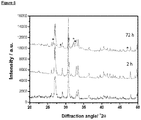
- composition of the crystalline phases identified with an "*" were determined by quantitative X ray analysis. Composition estimates should be interpreted with an approximate ⁇ 5% error margin. Re-mineralization materials were crushed, sieved at 45 micron and their dissolution profile in artificial saliva compared to 45S5 bioglass. Re-mineralization materials of the present invention showed solubility ranging between 5% and 25% approximately compared to the solubility of 15% obtained for bioglass 45S5.
- Example 2 Dentin re-mineralization capacity of different re-mineralization materials combining calcium phosphates and calcium-free silicon compounds
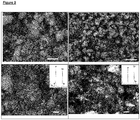
- the different re-mineralizing materials evaluated were mixed with water in a ratio between 2 and 5 ml/gr to obtain a paste that was applied to discs by brushing for one minute and then rinsed with water before immersion in artificial saliva solution at pH 7.2 and storage at 37oC. The process was repeated twice a day for one week. After discs were exposed to an acid medium to simulate acidifying conditions in the oral cavity.
- Example 3 Formulation of toothpaste containing re-mineralizing materials comprising calcium phosphates and calcium-free silicon compounds of the present invention.
- Re-mineralizing materials with the following estimated compositions "F + ", G + “ and “H” shown in the following Table were synthesized for the formulation of the toothpastes.
- Re-mineralization materials used in formulation of toothpastes Material #: "F + " "G + “ “H” Zn-Monetite [Ca 1-0,03 Zn 0,03 HPO 4 ] 57% 29% - Hydroxyapatite [Ca 10 (PO 4 ) 6 (OH) 2 ] 16% 12% - Zn-Hydroxyapatite [Ca 9.7 Zn 0.3 (PO 4 ) 6 (OH) 2 ] - - 40% Calcium Metasilicate [CaSiO 3 ] - 10% 33% Amorphous calcium phosphate [Ca 3 (PO 4 ) 2 ⁇ nH 2 O] 20% 17% 15% Silica Gel [SiO 2 ⁇ nH 2 O] 7% 32% 12%
- the percentage of particles with a particle size below 2 micron in the toothpastes formulated with these materials is considerably higher than that found in the commercial toothpaste Sensodyne® Repair & Protect (Glaxo Smithkline, UK) known to have 5% of Novamin and about 20% of silica. This was found in the formulated toothpastes and in the saliva after normal tooth brushing. Very similar values found for toothpastes formulated with "F + ", "G + " or "H”. Presence of greater number of particles with a particle size below 2 micron contributes to the efficacious occlusion of the dentinal tubules known to have a diameter of 2 to 3 microns ( ⁇ m).
Landscapes
- Health & Medical Sciences (AREA)
- Life Sciences & Earth Sciences (AREA)
- Animal Behavior & Ethology (AREA)
- General Health & Medical Sciences (AREA)
- Public Health (AREA)
- Veterinary Medicine (AREA)
- Chemical & Material Sciences (AREA)
- Inorganic Chemistry (AREA)
- Birds (AREA)
- Epidemiology (AREA)
- Oral & Maxillofacial Surgery (AREA)
- Cosmetics (AREA)
Applications Claiming Priority (2)
| Application Number | Priority Date | Filing Date | Title |
|---|---|---|---|
| ES201630835 | 2016-06-20 | ||
| PCT/ES2017/070444 WO2017220835A1 (es) | 2016-06-20 | 2017-06-19 | Composicion de materiales para la re-mineralizacion de dientes |
Publications (1)
| Publication Number | Publication Date |
|---|---|
| EP3473235A1 true EP3473235A1 (de) | 2019-04-24 |
Family
ID=59350974
Family Applications (1)
| Application Number | Title | Priority Date | Filing Date |
|---|---|---|---|
| EP17740040.5A Withdrawn EP3473235A1 (de) | 2016-06-20 | 2017-06-19 | Zusammensetzung von materialien zur zahnremineralisierung |
Country Status (3)
| Country | Link |
|---|---|
| US (1) | US20190365615A1 (de) |
| EP (1) | EP3473235A1 (de) |
| WO (1) | WO2017220835A1 (de) |
Families Citing this family (4)
| Publication number | Priority date | Publication date | Assignee | Title |
|---|---|---|---|---|
| IT201800005561A1 (it) * | 2018-05-21 | 2019-11-21 | Metodo per la pulizia dei denti mediante una composizione in polvere a base di idrossiapatite. | |
| CN114348981B (zh) * | 2021-12-07 | 2023-04-18 | 南方医科大学口腔医院 | 一种仿生生物矿化的三斜钙磷石的制备方法和应用 |
| CN114533611B (zh) * | 2022-02-16 | 2023-08-29 | 重庆登康口腔护理用品股份有限公司 | 一种可增强生物活性材料抗牙本质敏感效果的组合物及其制备方法与应用 |
| US12350353B2 (en) | 2022-11-16 | 2025-07-08 | Trustees Of Boston University | Synthetic enamel and uses thereof |
Family Cites Families (13)
| Publication number | Priority date | Publication date | Assignee | Title |
|---|---|---|---|---|
| FI104881B (fi) | 1994-10-06 | 2000-04-28 | Bioxid Oy | Uusien bioaktiivista piipitoista lasia sisältävien koostumusten valmistusmenetelmä |
| HUP9901760A3 (en) | 1996-01-29 | 1999-11-29 | Usbiomaterials Corp Alachua | Bioactive glass compositions and methods of treatment using bioactive glass |
| AU723659B2 (en) | 1996-01-29 | 2000-08-31 | Novamin Technology, Inc. | Bioactive glass compositions and methods of treatment using bioactive glass |
| US5735942A (en) | 1996-02-07 | 1998-04-07 | Usbiomaterials Corporation | Compositions containing bioactive glass and their use in treating tooth hypersensitivity |
| IN191261B (de) | 1997-09-18 | 2003-10-18 | Univ Maryland | |
| WO2004041229A1 (ja) * | 2002-11-07 | 2004-05-21 | Nippon Zettoc Co.,Ltd. | 口腔用組成物用基剤及び口腔用組成物 |
| US20070264291A1 (en) | 2003-12-19 | 2007-11-15 | Greenspan David C | Compositions and Methods for Preventing or Reducing Plaque and/or Gingivitis Using a Bioactive Glass Containing Dentefrice |
| GB0612028D0 (en) * | 2006-06-16 | 2006-07-26 | Imp Innovations Ltd | Bioactive glass |
| WO2010094813A1 (es) * | 2009-02-10 | 2010-08-26 | Azurebio, S. L. | Material de regeneración ósea a partir de combinaciones de monetita con otros compuestos de calcio bioactivos |
| EP2626058B1 (de) | 2010-10-06 | 2019-05-01 | Kuraray Noritake Dental Inc. | Mittel zur versiegelung der zahn-canaliculi und verfahren zu seiner herstellung |
| CN103764102B (zh) | 2011-09-08 | 2018-05-29 | 荷兰联合利华有限公司 | 牙齿再矿化洁牙剂 |
| CN103893024A (zh) * | 2012-12-26 | 2014-07-02 | 郭公甫 | 一种牙膏组合物 |
| US20170319455A1 (en) * | 2016-05-03 | 2017-11-09 | University Of Dammam | Method for occluding dentin tubules and remineralizing teeth |
-
2017
- 2017-06-19 WO PCT/ES2017/070444 patent/WO2017220835A1/es not_active Ceased
- 2017-06-19 EP EP17740040.5A patent/EP3473235A1/de not_active Withdrawn
- 2017-06-19 US US16/319,092 patent/US20190365615A1/en not_active Abandoned
Also Published As
| Publication number | Publication date |
|---|---|
| WO2017220835A1 (es) | 2017-12-28 |
| US20190365615A1 (en) | 2019-12-05 |
Similar Documents
| Publication | Publication Date | Title |
|---|---|---|
| JP5816549B2 (ja) | 生体活性ガラスを用いたフッ化物取り込みを良くするための組成物及び方法 | |
| US9408788B2 (en) | Multicomponent oral care composition | |
| CN101378720B (zh) | 氟化物组合物及用于牙齿矿化的方法 | |
| US9005587B2 (en) | Anti-bacterial and mineralizing calcium phosphate compositions | |
| US20210378923A1 (en) | Novel composition | |
| AU2005270010A1 (en) | Dental compositions with sensitivity relief | |
| US20190365615A1 (en) | Composition of materials for tooth remineralisation | |
| US20260124126A1 (en) | Bioactive glass containing dentifrice formulations | |
| Haider et al. | Fluorides-foundation for healthy teeth: a dental perspectives | |
| Chhabra et al. | Enhanced remineralisation of tooth enamel using casein phosphopeptide-amorphous calcium phosphate complex: A review | |
| EP2713992B1 (de) | Zahnpflegeprodukte mit carbonate-substituierten fluor-hydroxyapatitteilchen | |
| JPH10182393A (ja) | 生体活性結晶化ガラス含有口腔用組成物 | |
| JPH10120540A (ja) | 生体活性ガラス含有口腔用組成物 | |
| JP2010501528A (ja) | ナノ粒子二酸化チタンを含む口腔ケア組成物 | |
| WO2021047900A1 (en) | Oral care composition | |
| Walsh | Evidence that demands a verdict: latest developments in remineralization therapies | |
| EP1392229B1 (de) | Remineralisierende zahnhygieneprodukte | |
| EP4301320B1 (de) | Mundpflegezusammensetzung | |
| WO2021048041A1 (en) | Oral care composition | |
| WO2014124950A1 (en) | Novel composition | |
| WO2021047971A1 (en) | Method for remineralizing and/or reducing sensitivity of teeth | |
| WO2022184875A1 (en) | Oral care composition | |
| AU2012200659A1 (en) | Dental compositions with sensitivity relief | |
| JPH09301839A (ja) | 生体活性結晶化ガラス含有口腔用組成物 |
Legal Events
| Date | Code | Title | Description |
|---|---|---|---|
| STAA | Information on the status of an ep patent application or granted ep patent |
Free format text: STATUS: UNKNOWN |
|
| STAA | Information on the status of an ep patent application or granted ep patent |
Free format text: STATUS: THE INTERNATIONAL PUBLICATION HAS BEEN MADE |
|
| PUAI | Public reference made under article 153(3) epc to a published international application that has entered the european phase |
Free format text: ORIGINAL CODE: 0009012 |
|
| STAA | Information on the status of an ep patent application or granted ep patent |
Free format text: STATUS: REQUEST FOR EXAMINATION WAS MADE |
|
| 17P | Request for examination filed |
Effective date: 20190118 |
|
| AK | Designated contracting states |
Kind code of ref document: A1 Designated state(s): AL AT BE BG CH CY CZ DE DK EE ES FI FR GB GR HR HU IE IS IT LI LT LU LV MC MK MT NL NO PL PT RO RS SE SI SK SM TR |
|
| AX | Request for extension of the european patent |
Extension state: BA ME |
|
| DAV | Request for validation of the european patent (deleted) | ||
| DAX | Request for extension of the european patent (deleted) | ||
| STAA | Information on the status of an ep patent application or granted ep patent |
Free format text: STATUS: EXAMINATION IS IN PROGRESS |
|
| 17Q | First examination report despatched |
Effective date: 20191206 |
|
| STAA | Information on the status of an ep patent application or granted ep patent |
Free format text: STATUS: THE APPLICATION IS DEEMED TO BE WITHDRAWN |
|
| 18D | Application deemed to be withdrawn |
Effective date: 20200625 |