EP3474191A1 - Procédé et dispositif pour construire une table comprenant des informations sur un type de groupement et procédé et dispositif de test utilisant les mêmes - Google Patents
Procédé et dispositif pour construire une table comprenant des informations sur un type de groupement et procédé et dispositif de test utilisant les mêmes Download PDFInfo
- Publication number
- EP3474191A1 EP3474191A1 EP18192810.2A EP18192810A EP3474191A1 EP 3474191 A1 EP3474191 A1 EP 3474191A1 EP 18192810 A EP18192810 A EP 18192810A EP 3474191 A1 EP3474191 A1 EP 3474191A1
- Authority
- EP
- European Patent Office
- Prior art keywords
- constructing
- bounding box
- training
- image
- operations
- Prior art date
- Legal status (The legal status is an assumption and is not a legal conclusion. Google has not performed a legal analysis and makes no representation as to the accuracy of the status listed.)
- Granted
Links
Images


Classifications
-
- G—PHYSICS
- G06—COMPUTING OR CALCULATING; COUNTING
- G06N—COMPUTING ARRANGEMENTS BASED ON SPECIFIC COMPUTATIONAL MODELS
- G06N3/00—Computing arrangements based on biological models
- G06N3/02—Neural networks
- G06N3/04—Architecture, e.g. interconnection topology
- G06N3/045—Combinations of networks
-
- G—PHYSICS
- G06—COMPUTING OR CALCULATING; COUNTING
- G06N—COMPUTING ARRANGEMENTS BASED ON SPECIFIC COMPUTATIONAL MODELS
- G06N3/00—Computing arrangements based on biological models
- G06N3/02—Neural networks
- G06N3/08—Learning methods
- G06N3/084—Backpropagation, e.g. using gradient descent
-
- G—PHYSICS
- G06—COMPUTING OR CALCULATING; COUNTING
- G06F—ELECTRIC DIGITAL DATA PROCESSING
- G06F18/00—Pattern recognition
- G06F18/20—Analysing
- G06F18/24—Classification techniques
- G06F18/241—Classification techniques relating to the classification model, e.g. parametric or non-parametric approaches
- G06F18/2413—Classification techniques relating to the classification model, e.g. parametric or non-parametric approaches based on distances to training or reference patterns
- G06F18/24133—Distances to prototypes
- G06F18/24137—Distances to cluster centroïds
- G06F18/2414—Smoothing the distance, e.g. radial basis function networks [RBFN]
-
- G—PHYSICS
- G06—COMPUTING OR CALCULATING; COUNTING
- G06N—COMPUTING ARRANGEMENTS BASED ON SPECIFIC COMPUTATIONAL MODELS
- G06N3/00—Computing arrangements based on biological models
- G06N3/02—Neural networks
- G06N3/04—Architecture, e.g. interconnection topology
- G06N3/0464—Convolutional networks [CNN, ConvNet]
-
- G—PHYSICS
- G06—COMPUTING OR CALCULATING; COUNTING
- G06N—COMPUTING ARRANGEMENTS BASED ON SPECIFIC COMPUTATIONAL MODELS
- G06N3/00—Computing arrangements based on biological models
- G06N3/02—Neural networks
- G06N3/08—Learning methods
-
- G—PHYSICS
- G06—COMPUTING OR CALCULATING; COUNTING
- G06N—COMPUTING ARRANGEMENTS BASED ON SPECIFIC COMPUTATIONAL MODELS
- G06N3/00—Computing arrangements based on biological models
- G06N3/02—Neural networks
- G06N3/08—Learning methods
- G06N3/09—Supervised learning
-
- G—PHYSICS
- G06—COMPUTING OR CALCULATING; COUNTING
- G06T—IMAGE DATA PROCESSING OR GENERATION, IN GENERAL
- G06T1/00—General purpose image data processing
- G06T1/0007—Image acquisition
-
- G—PHYSICS
- G06—COMPUTING OR CALCULATING; COUNTING
- G06T—IMAGE DATA PROCESSING OR GENERATION, IN GENERAL
- G06T11/00—Two-dimensional [2D] image generation
- G06T11/20—Drawing from basic elements
- G06T11/23—Drawing from basic elements using straight lines or curves
-
- G—PHYSICS
- G06—COMPUTING OR CALCULATING; COUNTING
- G06T—IMAGE DATA PROCESSING OR GENERATION, IN GENERAL
- G06T7/00—Image analysis
- G06T7/10—Segmentation; Edge detection
- G06T7/11—Region-based segmentation
-
- G—PHYSICS
- G06—COMPUTING OR CALCULATING; COUNTING
- G06T—IMAGE DATA PROCESSING OR GENERATION, IN GENERAL
- G06T9/00—Image coding
- G06T9/002—Image coding using neural networks
-
- G—PHYSICS
- G06—COMPUTING OR CALCULATING; COUNTING
- G06V—IMAGE OR VIDEO RECOGNITION OR UNDERSTANDING
- G06V10/00—Arrangements for image or video recognition or understanding
- G06V10/20—Image preprocessing
- G06V10/25—Determination of region of interest [ROI] or a volume of interest [VOI]
-
- G—PHYSICS
- G06—COMPUTING OR CALCULATING; COUNTING
- G06V—IMAGE OR VIDEO RECOGNITION OR UNDERSTANDING
- G06V10/00—Arrangements for image or video recognition or understanding
- G06V10/40—Extraction of image or video features
- G06V10/44—Local feature extraction by analysis of parts of the pattern, e.g. by detecting edges, contours, loops, corners, strokes or intersections; Connectivity analysis, e.g. of connected components
- G06V10/443—Local feature extraction by analysis of parts of the pattern, e.g. by detecting edges, contours, loops, corners, strokes or intersections; Connectivity analysis, e.g. of connected components by matching or filtering
- G06V10/449—Biologically inspired filters, e.g. difference of Gaussians [DoG] or Gabor filters
- G06V10/451—Biologically inspired filters, e.g. difference of Gaussians [DoG] or Gabor filters with interaction between the filter responses, e.g. cortical complex cells
- G06V10/454—Integrating the filters into a hierarchical structure, e.g. convolutional neural networks [CNN]
-
- G—PHYSICS
- G06—COMPUTING OR CALCULATING; COUNTING
- G06V—IMAGE OR VIDEO RECOGNITION OR UNDERSTANDING
- G06V10/00—Arrangements for image or video recognition or understanding
- G06V10/70—Arrangements for image or video recognition or understanding using pattern recognition or machine learning
- G06V10/764—Arrangements for image or video recognition or understanding using pattern recognition or machine learning using classification, e.g. of video objects
-
- G—PHYSICS
- G06—COMPUTING OR CALCULATING; COUNTING
- G06V—IMAGE OR VIDEO RECOGNITION OR UNDERSTANDING
- G06V10/00—Arrangements for image or video recognition or understanding
- G06V10/70—Arrangements for image or video recognition or understanding using pattern recognition or machine learning
- G06V10/82—Arrangements for image or video recognition or understanding using pattern recognition or machine learning using neural networks
-
- G—PHYSICS
- G06—COMPUTING OR CALCULATING; COUNTING
- G06T—IMAGE DATA PROCESSING OR GENERATION, IN GENERAL
- G06T2207/00—Indexing scheme for image analysis or image enhancement
- G06T2207/20—Special algorithmic details
- G06T2207/20021—Dividing image into blocks, subimages or windows
-
- G—PHYSICS
- G06—COMPUTING OR CALCULATING; COUNTING
- G06T—IMAGE DATA PROCESSING OR GENERATION, IN GENERAL
- G06T2207/00—Indexing scheme for image analysis or image enhancement
- G06T2207/20—Special algorithmic details
- G06T2207/20081—Training; Learning
-
- G—PHYSICS
- G06—COMPUTING OR CALCULATING; COUNTING
- G06T—IMAGE DATA PROCESSING OR GENERATION, IN GENERAL
- G06T2207/00—Indexing scheme for image analysis or image enhancement
- G06T2207/20—Special algorithmic details
- G06T2207/20084—Artificial neural networks [ANN]
-
- G—PHYSICS
- G06—COMPUTING OR CALCULATING; COUNTING
- G06T—IMAGE DATA PROCESSING OR GENERATION, IN GENERAL
- G06T2207/00—Indexing scheme for image analysis or image enhancement
- G06T2207/20—Special algorithmic details
- G06T2207/20112—Image segmentation details
- G06T2207/20132—Image cropping
Definitions
- the present invention relates to a method and a device for constructing a table including information on a pooling type and a testing method and a testing device using the same, more particularly, to the method including steps of: (a) a table-constructing device acquiring the image for constructing table including the object as an input for a CNN with adjusted parameters, wherein the adjusted parameters have been acquired by a learning device performing processes of (i) dividing an area in one or more feature maps for training corresponding to a region of interest (ROI) for training into multiple sub-regions if the one or more feature maps for training are generated as a result of applying convolution operations to the training image, and if the region of interest (ROI) for training is acquired from a Region Proposal Network (RPN); (ii) (ii-1) generating a first pooled feature map for training by applying one or more max pooling operations to one or more areas, corresponding to the ROI for training, in the one or more feature maps, wherein each of the max pooling operations selects a pixel with
- CNN convolutional neural network
- ConvNet convolutional neural network
- Fig. 1 is a drawing schematically illustrating a learning process of a conventional CNN according to prior art. Specifically, Fig. 1 shows the process of comparing a predicted bounding box by a learning device with a Ground Truth (GT) bounding box.
- GT Ground Truth
- the losses stand for differences between the predicted bounding box and the GT bounding box, and are denoted as dx c ,dy c ,dw,dh as shown in Fig. 1 .
- the learning device may acquire an RGB image as an input to be fed into a plurality of convolutional layers, i.e., convolutional filters, included in a convolution block.
- a size, e.g., a width and a height, of the RGB image becomes smaller while the number of channels is incremented as the RGB image passes through the plurality of convolutional layers.
- the learning device allows a Region Proposal Network (RPN) to generate proposal boxes from an ultimate feature map outputted by the convolution block and allows a pooling layer, e.g., ROI pooling layer, to resize areas on the feature map corresponding to the proposal boxes to a predetermined size, e.g., a size of 2X2, by applying a max pooling operation (or an average pooling operation) to pixel data of the areas on the feature map corresponding to the proposal boxes.
- a pooled feature map is acquired.
- the pooled feature map may also be referred to as a feature vector.
- the max pooling operation is an operation by which each maximum value in each of sub-regions divided from a subject area on a feature map is selected as each of representative values for the subject area, as shown in the bottom right of Fig. 1 .
- the pooled feature map may be allowed to be fed into a fully connected (FC) layer.
- FC fully connected
- the learning device may allow the FC layer to recognize a category of an object in the RGB image.
- the predicted bounding box in the RGB image may be acquired through the FC layer, and the losses may also be acquired by comparing between the predicted bounding box and the ground truth (GT) bounding box.
- GT bounding box represents a bounding box precisely surrounding the object in the RGB image, which may usually be prepared by a human being.
- the learning device in Fig. 1 may adjust at least one of parameters included in the FC layer, the RPN, or the plurality of convolutional layers by using the losses during a backpropagation process.
- a testing device having the CNN with the adjusted parameters may acquire a bounding box surrounding an object in a test image, later.
- a predetermined pooling operation e.g., either the max pooling operation or the average pooling operation, is provided regardless of a class or a scale of the object in the input image.
- the applicant of the present invention proposes a method and a device for constructing a table including information on an optimal pooling type and a testing method and a testing device using the same to overcome the drawback set forth above.
- a method for constructing a table including information on a pooling type based on ranges of scale of at least one object in at least one image for constructing table including steps of: (a) a table-constructing device acquiring or supporting another device to acquire the image for constructing table including the object as an input for a CNN with adjusted parameters, wherein the adjusted parameters have been acquired by a learning device performing processes of (i) dividing an area in one or more feature maps for training corresponding to a region of interest (ROI) for training into multiple sub-regions if the one or more feature maps for training are generated as a result of applying convolution operations to the training image, and if the region of interest (ROI) for training is acquired from a Region Proposal Network (RPN); (ii)(ii-1) generating a first pooled feature map for training by applying one
- RPN Region Proposal Network
- a method for using a table including information on a pooling type for at least one object for testing in at least one test image by using a testing device including a CNN including steps of: (a) the testing device acquiring or supporting another device to acquire the test image, on the condition that (I) a table-constructing device has acquired at least one image for constructing table including at least one object for constructing table as an input for the CNN with adjusted parameters, wherein the adjusted parameters have been acquired by a learning device performing processes of (i) dividing an area in one or more feature maps for training corresponding to a region of interest (ROI) for training into multiple sub-regions if the one or more feature maps for training are generated as a result of applying convolution operations to the training image, and if the region of interest (ROI) for training is acquired from a Region Proposal Network (RPN); (ii)(ii-1) generating a first pooled feature map for training by applying one or more max pooling operations to one or
- RPN Region Proposal Network
- a table-constructing device for constructing a table including information on a pooling type based on ranges of scale of at least one object in at least one image for constructing table, including: a communication part for acquiring or supporting another device to acquire the image for constructing table including the object as an input for a CNN with adjusted parameters, wherein the adjusted parameters have been acquired by a learning device performing processes of (i) dividing an area in one or more feature maps for training corresponding to a region of interest (ROI) for training into multiple sub-regions if the one or more feature maps for training are generated as a result of applying convolution operations to the training image, and if the region of interest (ROI) for training is acquired from a Region Proposal Network (RPN); (ii)(ii-1) generating a first pooled feature map for training by applying one or more max pooling operations to one or more areas, corresponding to the ROI for training, in the one or more feature maps, wherein each of the max pool
- a testing device for using a table including information on a pooling type for at least one object for testing in at least one test image, including: a communication part for acquiring or supporting another device to acquire the test image, on the condition that (I) a table-constructing device has acquired at least one image for constructing table including at least one object for constructing table as an input for a CNN with adjusted parameters, wherein the adjusted parameters have been acquired by a learning device performing processes of (i) dividing an area in one or more feature maps for training corresponding to a region of interest (ROI) for training into multiple sub-regions if the one or more feature maps for training are generated as a result of applying convolution operations to the training image, and if the region of interest (ROI) for training is acquired from a Region Proposal Network (RPN); (ii)(ii-1) generating a first pooled feature map for training by applying one or more max pooling operations to one or more areas, corresponding to the ROI for
- RPN Region Proposal Network
- Fig. 2 is a block diagram schematically illustrating a table-constructing device 200 in accordance with one example embodiment of the present invention.
- the table-constructing device 200 with a CNN may include a communication part 210 and a processor 220. And, the table-constructing device 200 may further include a database 230 unlike Fig. 2 . As the case may be, the table-constructing device 200 may not include the database 230 like Fig. 2 .
- a learning device After a learning device (not shown) has acquired adjusted parameters of the CNN by performing processes of (i) dividing an area in one or more feature maps for training corresponding to a region of interest (ROI) for training into multiple sub-regions if the one or more feature maps for training are generated as a result of applying convolution operations to the training image, and if the region of interest (ROI) for training is acquired from a Region Proposal Network (RPN); (ii) (ii-1) generating a first pooled feature map for training by applying one or more max pooling operations to one or more areas, corresponding to the ROI for training, in the one or more feature maps and (ii-2) generating a second pooled feature map for training by applying one or more average pooling operations to one or more areas, corresponding to the ROI for training, in the one or more feature maps; and (iii) (iii-1) allowing a first FC layer to acquire information on pixel data of a first candidate bounding box for training by applying regression operations to the
- the processor 220 of the table-constructing device 200 may be configured to construct a table by using information on an optimal pooling type which is determined to be either a max pooling or an average pooling for each of ranges of scale of objects in the input images and/or for each of categories thereof. More details with respect to determining the optimal pooling type will be disclosed and delineated later in the present disclosure.
- the database 230 may be configured to store information used to construct the table and information recorded in the table, e.g., the optimal pooling types for the respective scales and/or respective categories of the objects, and the database 230 may be accessed by the communication part 210 of the table-constructing device 200.
- any digital computing device with at least one processor to perform operations or computations disclosed within the present disclosure may be adopted as the table-constructing device 200.
- Fig. 3 is a drawing schematically illustrating a process of the table-constructing device 200 acquiring respective bounding boxes by respectively applying a max pooling operation or an average pooling operation to an area on a feature map corresponding to a region of interest (ROI) in an input image.
- a configuration of CNN as shown in Fig. 3 may be included in not only the table-constructing device 200 but also the learning device.
- a difference of the configuration of CNN between the table-constructing device 200 and the learning device is that the learning device further includes at least one loss layer to be used for a backpropogation process.
- Fig. 4 is a drawing exemplarily demonstrating the max pooling operation and the average pooling operation performed on the area.
- the learning device (not shown) and the table-constructing device 200 including the CNN with a configuration illustrated in Fig. 3 may contain the convolution block, the Region Proposal Network (RPN), the ROI pooling layer, and at least one fully-connected (FC) layer and so forth.
- RPN Region Proposal Network
- FC fully-connected
- the communication part 210 of the table-constructing device 200 may receive or support another device to receive an input image, e.g., an RGB image, at a step of S305, and then the processor 220 thereof may allow the plurality of convolutional layers to apply the convolution operations to the image at a step of S310 to thereby acquire one or more feature maps at a step of S315, and allow the RPN to perform certain operations on the at least one of feature maps at a step of S320 to thereby acquire an ROI at a step of S325.
- an input image e.g., an RGB image
- the processor 220 thereof may allow the plurality of convolutional layers to apply the convolution operations to the image at a step of S310 to thereby acquire one or more feature maps at a step of S315, and allow the RPN to perform certain operations on the at least one of feature maps at a step of S320 to thereby acquire an ROI at a step of S325.
- the processor 220 of the table-constructing device 200 may be configured to generate (i) a first pooled feature map by applying one or more max pooling operations to one or more areas, corresponding to the ROI, in the at least one of the feature maps, and (ii) a second pooled feature map by applying one or more average pooling operations to one or more areas, also corresponding to the ROI, in the at least one of the feature maps at a step of S330.
- the ROI may be represented as an area 410 of 4 x 4 pixels, i.e., 16 pixels.
- the area 410 corresponding to the ROI for constructing table acquired from the RPN is shown.
- the pixel data in the area 410 are represented as numerical values, but it is not limited thereto.
- the area 410 may be divided into four sub-regions, each of which has a size of 2 x 2 pixels. It is conspicuous for those skilled in the art that number of pixels included in each of the multiple sub-regions along with number of the multiple divided sub-regions is not necessarily limited thereto.
- the first pooled feature map 420 is acquired by applying the max pooling operation to the area 410 whereas the second pooled feature map 430 is obtained by applying the average pooling operation to the same area 410.
- the max pooling operation each pixel with each maximum pixel value among pixels within each of the multiple sub-regions is selected as the first pooled feature map, and according to the average pooling operation, the pixel values included in each of the multiple sub-regions are averaged and then each of the averaged values is determined as the second pooled feature map.
- the processor of the table-constructing device may be configured to allow a first FC layer to acquire information on pixels of a first candidate bounding box at a step of S340 by applying regression operations to the first pooled feature map at a step of S335, and configured to allow a second FC layer to acquire information on pixels of a second candidate bounding box at a step of S350 by applying regression operations to the second pooled feature map at a step of S345.
- the information on the pixels may be pixel coordinates, but it is not necessarily limited thereto.
- the first FC layer and the second FC layer may not be separate layers, as the case may be. However, in case the learning device or the table-constructing device is comprised of multiple computing devices, the first FC layer and the second FC layer may be separately included in the different computing devices.
- the processor 220 of the table-constructing device 200 may be configured to compare (i) a first degree of similarity between the first candidate bounding box and a GT bounding box with (ii) a second degree of similarity between the second candidate bounding box and the GT bounding box, to thereby construct the table so as to include information on respective optimal pooling types by respective ranges of the scale of the object in the GT image or those of the object in the input image.
- the table may be constructed so as to include information on respective optimal pooling types by not only respective ranges of the scale of the object but also respective categories of the object in the GT image or those of the object in the input image.
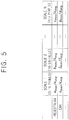
- Fig. 5 is a drawing illustrating the table constructed by respective ranges of scale of objects in input images in accordance with one example embodiment of the present invention.
- the table is constructed to store information on respective optimal pooling types by the respective ranges of the scale of the objects in the GT image and/or the categories thereof, but it is not limited thereto.
- the processor 220 of the table-constructing device 200 may be configured to compare the first candidate bounding box with the GT bounding box to acquire the first degree of similarity therebetween. Likewise, the processor 220 of the table-constructing device 200 may be configured to compare the second candidate bounding box with the GT bounding box to acquire the second degree of similarity therebetween.
- the first degree of similarity (or the second degree of similarity) is calculated as a ratio of (i) an area corresponding to an intersection of a region within the first candidate bounding box (or a region within the second candidate bounding box) and a region within the GT bounding box to (ii) an area corresponding to a union of the region within the first candidate bounding box (or the region within the second candidate bounding box) and the region of the GT bounding box.
- a result of applying the max pooling operations is determined as being closer to the GT bounding box than that of applying the average pooling operations.
- any information that may distinguish a difference between the first candidate bounding box and the GT bounding box or between the second candidate bounding box and the GT bounding box may be used to compute the respective degrees of similarity.
- Such information may be at least one of the following: centric coordinates (or other predetermined coordinates) of the candidate bounding boxes and the GT bounding box, widths thereof or heights thereof.
- the processor 220 of the table-constructing device 200 may be configured to further store information on the respective optimal pooling types, in the table shown in Fig. 5 , by the respective ranges of the scale and/or the respective categories.
- the scales of the respective objects may be determined as applying a square root operation to the number of pixels of the region within the GT bounding boxes (or a region within the first candidate bounding box or that within the second candidate bounding box), but it is not limited thereto.
- other operations may be applied to the region in order to obtain the scale.
- a result of the square root operation may be a real number. In case the result is 14, it falls in the range of "scale 1", which is included in a range of zero to fifteen, in the table shown in Fig. 5 .
- performing the square root operation on the region within the GT bounding box may obtain a value which may fall under one of the ranges of the scale. It is conspicuous for those skilled in the art that the ranges of the scale is determined based on certain criteria and thus it is may not be limited thereto.
- the processor 220 of the table-constructing device 200 may be configured to construct the table by comparing the first degree of similarity with the second degree of similarity multiple times to determine the optimal pooling types for the respective objects.
- the processor 220 of the table-constructing device 200 may be able to determine the optimal pooling types for the respective ranges of the scale of the objects and/or the respective categories thereof.
- the processor 220 of the table-constructing device 200 may determine the optimal pooling type for the scale 2 to be the average pooling.
- the optimal pooling type may be determined for the specific range of the scale of all kinds of the objects to the same one, e.g., the average pooling, regardless of the categories of the respective objects within the specific range of the scale, but it is not limited thereto.
- the optimal pooling types for all the kinds of the objects including the pedestrian may be set to the max pooling even if the optimal pooling type for the pedestrian is the average pooling.
- the processor 220 of the table-constructing device 200 may also store and manage a critical range of the scale for the respective categories of the objects.
- the critical range of the scale for the respective categories of the objects is a range of the scale from which one degree of similarity becomes greater than or equal to the other degree of similarity.
- the average pooling operations are performed on the objects with smaller scales while the max pooling operations are applied to the objects with larger scales.
- the table-constructing device 200 may store and manage the critical range of the scale for each kind of object.
- the table-constructing device 200 if plural number of feature maps are generated from each of the input images by the convolutional layers, the table-constructing device 200 generates the first pooled feature map by applying the max pooling operations to a certain plural number of areas, corresponding to the ROI, in the certain plural number of feature maps, and the second pooled feature map by applying the average pooling operations to the certain plural number of areas, corresponding to the ROI, in the certain plural number of feature maps.
- each of the optimal pooling types includes either of (i) the certain plural number of sub-pooling types corresponding to the certain plural number of the feature maps or (ii) an integrated pooling type determined by referring to the certain plural number of the sub-pooling types.
- the optimal sub-pooling types may be determined by comparing different combinations of the max pooling operations and the average pooling operations with regard to the three feature maps to figure out which one of the combinations may generate a candidate bounding box that is overlapped with the GT bounding box with a highest precision. As the case may be, either a series of the max pooling operations or a series of the average pooling operations may be applied to the three feature maps.
- each of the optimal pooling types includes (ii) an integrated pooling type determined by referring to the certain plural number of the sub-pooling types
- the processor 220 of the table-constructing device 200 may refer to the optimal sub-pooling types for the corresponding feature maps in order to acquire the single optimal pooling type for the multiple feature maps. For example, if the optimal sub-pooling types of the three feature maps are a1 max , a2 avg , a3 max or a1 max , a2 max , a3 avg , then a max may be determined as the single optimal pooling type for the CNN.
- the input images for the table-constructing device 200 may be different from the input images for training, but the input images for the table-constructing device 200 may be identical to the input images for training, as the case may be. Therefore, the GT image for constructing table may be different from or identical to the GT image for training.
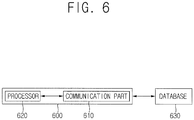
- Fig. 6 is a block diagram schematically illustrating a testing device 600 in accordance with one example embodiment of the present invention.
- the testing device 600 may include a communication part 610 and a processor 620. And, the testing device 600 may further include a database 630 unlike Fig. 6 . As the case may be, the testing device 600 may not include the database 630 as well.
- testing device 600 the table-constructing device 200 and the learning device (not shown) may be the same computing device, but it is conspicuous for those skilled in the art that the aforementioned devices may also be separate computing devices.
- the testing device 600 may use the table including the information on the optimal pooling types for at least one object for testing in at least one test image.
- the table-constructing device 200 has acquired at least one image for constructing table including at least one object for constructing table as an input for the CNN with adjusted parameters, wherein the adjusted parameters have been acquired by the learning device performing processes of (i) dividing an area in one or more feature maps for training corresponding to a region of interest (ROI) for training into multiple sub-regions if the one or more feature maps for training are generated as a result of applying convolution operations to the training image, and if the region of interest (ROI) for training is acquired from the Region Proposal Network (RPN); (ii) (ii-1) generating a first pooled feature map for training by applying one or more max pooling operations to one or more areas, corresponding to the ROI for training, in the one or more feature maps and (ii-2) generating a second pooled feature map for training by applying one or more average pooling operations to one or more areas, corresponding to the ROI for training, in the one or more feature maps; and (iii) (iii-1) allowing
- the testing device 600 may allow the plurality of convolutional layers to apply the convolution operations to the test image to thereby acquire one or more feature maps for testing, and allow the RPN to perform certain operations on the at least one of feature maps for testing to thereby acquire an ROI for testing.
- the testing device 600 may generate a pooled feature map for testing by using a specific optimal pooling type selected among the max pooling type and the average pooling type, wherein the specific optimal pooling type is determined by referring to the table which includes the information corresponding to the range of the scale and/or the category of the object for testing.
- the testing device 600 may acquire a bounding box for testing by applying regression operations to the pooled feature map for testing via the FC layer.
- the present invention has an effect of applying a different pooling scheme according to the scales and/or the categories of the respective objects in the input image.
- the present invention has another effect of combining the max pooling operations with the average pooling operations to acquire the best combination of the pooling operations in order to reduce feature losses.
- the present invention has still another effect of improving accuracy of object detection and feature expressiveness by applying the different pooling scheme on a basis of the scale and/or the category of the object.
- the embodiments of the present invention as explained above can be implemented in a form of executable program command through a variety of computer means recordable to computer readable media.
- the computer readable media may include solely or in combination, program commands, data files, and data structures.
- the program commands recorded to the media may be components specially designed for the present invention or may be usable to a skilled artisan in a pertinent field.
- Computer readable record media include magnetic media such as hard disk, floppy disk, and magnetic tape, optical media such as CD-ROM and DVD, magneto-optical media such as floptical disk and hardware devices such as ROM, RAM, and flash memory specially designed to store and carry out programs.
- Program commands include not only a machine language codes made by a compiler but also a high level codes that can be used by an interpreter etc., which is executed by a computing device.
- the aforementioned hardware device can work as more than a software module to perform the technical features of the present invention and they can do the same in the opposite case.
Landscapes
- Engineering & Computer Science (AREA)
- Theoretical Computer Science (AREA)
- Physics & Mathematics (AREA)
- General Physics & Mathematics (AREA)
- Evolutionary Computation (AREA)
- Artificial Intelligence (AREA)
- General Health & Medical Sciences (AREA)
- Health & Medical Sciences (AREA)
- Software Systems (AREA)
- Computing Systems (AREA)
- Life Sciences & Earth Sciences (AREA)
- Multimedia (AREA)
- Computer Vision & Pattern Recognition (AREA)
- Molecular Biology (AREA)
- Biomedical Technology (AREA)
- Data Mining & Analysis (AREA)
- General Engineering & Computer Science (AREA)
- Computational Linguistics (AREA)
- Biophysics (AREA)
- Mathematical Physics (AREA)
- Medical Informatics (AREA)
- Databases & Information Systems (AREA)
- Biodiversity & Conservation Biology (AREA)
- Bioinformatics & Cheminformatics (AREA)
- Bioinformatics & Computational Biology (AREA)
- Evolutionary Biology (AREA)
- Image Analysis (AREA)
Applications Claiming Priority (1)
| Application Number | Priority Date | Filing Date | Title |
|---|---|---|---|
| US15/786,680 US9953437B1 (en) | 2017-10-18 | 2017-10-18 | Method and device for constructing a table including information on a pooling type and testing method and testing device using the same |
Publications (3)
| Publication Number | Publication Date |
|---|---|
| EP3474191A1 true EP3474191A1 (fr) | 2019-04-24 |
| EP3474191C0 EP3474191C0 (fr) | 2025-11-12 |
| EP3474191B1 EP3474191B1 (fr) | 2025-11-12 |
Family
ID=61952390
Family Applications (1)
| Application Number | Title | Priority Date | Filing Date |
|---|---|---|---|
| EP18192810.2A Active EP3474191B1 (fr) | 2017-10-18 | 2018-09-05 | Procédé et dispositif pour construire une table comprenant des informations sur un type de groupement et procédé et dispositif de test utilisant les mêmes |
Country Status (5)
| Country | Link |
|---|---|
| US (1) | US9953437B1 (fr) |
| EP (1) | EP3474191B1 (fr) |
| JP (1) | JP6707608B2 (fr) |
| KR (1) | KR102114357B1 (fr) |
| CN (1) | CN109685199B (fr) |
Families Citing this family (16)
| Publication number | Priority date | Publication date | Assignee | Title |
|---|---|---|---|---|
| US10706267B2 (en) * | 2018-01-12 | 2020-07-07 | Qualcomm Incorporated | Compact models for object recognition |
| DE102018212049B4 (de) * | 2018-07-19 | 2025-10-02 | Aumovio Autonomous Mobility Germany Gmbh | Verfahren und System zur dreidimensionalen bildlichen Rekonstruktion eines Fahrzeugs sowie Fahrzeug mit dem System |
| US10325179B1 (en) * | 2019-01-23 | 2019-06-18 | StradVision, Inc. | Learning method and learning device for pooling ROI by using masking parameters to be used for mobile devices or compact networks via hardware optimization, and testing method and testing device using the same |
| US10402686B1 (en) * | 2019-01-25 | 2019-09-03 | StradVision, Inc. | Learning method and learning device for object detector to be used for surveillance based on convolutional neural network capable of converting modes according to scales of objects, and testing method and testing device using the same |
| US10445611B1 (en) * | 2019-01-25 | 2019-10-15 | StradVision, Inc. | Method for detecting pseudo-3D bounding box to be used for military purpose, smart phone or virtual driving based-on CNN capable of converting modes according to conditions of objects and device using the same |
| US10650279B1 (en) * | 2019-01-31 | 2020-05-12 | StradVision, Inc. | Learning method and learning device for heterogeneous sensor fusion by using merging network which learns non-maximum suppression |
| US10713815B1 (en) * | 2019-01-31 | 2020-07-14 | StradVision, Inc. | Method and device for supporting administrators to processes of object detectors to provide logical driving |
| US10817777B2 (en) * | 2019-01-31 | 2020-10-27 | StradVision, Inc. | Learning method and learning device for integrating object detection information acquired through V2V communication from other autonomous vehicle with object detection information generated by present autonomous vehicle, and testing method and testing device using the same |
| CN110490813B (zh) * | 2019-07-05 | 2021-12-17 | 特斯联(北京)科技有限公司 | 卷积神经网络的特征图增强方法、装置、设备及介质 |
| CN111127587B (zh) * | 2019-12-16 | 2023-06-23 | 杭州电子科技大学 | 一种基于对抗生成网络的无参考图像质量地图生成方法 |
| CN111339884B (zh) * | 2020-02-19 | 2023-06-06 | 浙江大华技术股份有限公司 | 图像识别方法以及相关设备、装置 |
| US11854239B2 (en) * | 2021-01-07 | 2023-12-26 | Canon Kabushiki Kaisha | Image processing device, imaging device, image processing method, and recording medium |
| CN112991735B (zh) * | 2021-03-05 | 2022-10-14 | 北京百度网讯科技有限公司 | 交通流量监测系统的测试方法、装置及设备 |
| US12266179B2 (en) * | 2021-03-17 | 2025-04-01 | Qualcomm Incorporated | Efficient self-attention for video processing |
| KR102702069B1 (ko) * | 2021-08-06 | 2024-09-03 | 숭실대학교 산학협력단 | 스포츠 활동분류 학습장치의 제어방법, 이를 수행하기 위한 기록매체 및 장치 |
| CN119006930B (zh) * | 2024-10-18 | 2025-02-11 | 安徽大学 | 一种长尾分布细粒度飞机识别方法 |
Citations (2)
| Publication number | Priority date | Publication date | Assignee | Title |
|---|---|---|---|---|
| US20170124415A1 (en) * | 2015-11-04 | 2017-05-04 | Nec Laboratories America, Inc. | Subcategory-aware convolutional neural networks for object detection |
| US20170169315A1 (en) * | 2015-12-15 | 2017-06-15 | Sighthound, Inc. | Deeply learned convolutional neural networks (cnns) for object localization and classification |
Family Cites Families (8)
| Publication number | Priority date | Publication date | Assignee | Title |
|---|---|---|---|---|
| US8467607B1 (en) * | 2011-11-21 | 2013-06-18 | Google Inc. | Segmentation-based feature pooling for object models |
| CN104217208B (zh) * | 2013-06-03 | 2018-01-16 | 株式会社理光 | 目标检测方法和装置 |
| US20150104102A1 (en) * | 2013-10-11 | 2015-04-16 | Universidade De Coimbra | Semantic segmentation method with second-order pooling |
| CN104504743B (zh) * | 2014-12-30 | 2017-10-24 | 深圳先进技术研究院 | 重建内部感兴趣区域图像的方法及系统 |
| CN106156807B (zh) * | 2015-04-02 | 2020-06-02 | 华中科技大学 | 卷积神经网络模型的训练方法及装置 |
| US9286524B1 (en) * | 2015-04-15 | 2016-03-15 | Toyota Motor Engineering & Manufacturing North America, Inc. | Multi-task deep convolutional neural networks for efficient and robust traffic lane detection |
| US20170124409A1 (en) * | 2015-11-04 | 2017-05-04 | Nec Laboratories America, Inc. | Cascaded neural network with scale dependent pooling for object detection |
| CN107229904B (zh) * | 2017-04-24 | 2020-11-24 | 东北大学 | 一种基于深度学习的目标检测与识别方法 |
-
2017
- 2017-10-18 US US15/786,680 patent/US9953437B1/en active Active
-
2018
- 2018-09-05 EP EP18192810.2A patent/EP3474191B1/fr active Active
- 2018-10-10 KR KR1020180120397A patent/KR102114357B1/ko active Active
- 2018-10-16 JP JP2018194937A patent/JP6707608B2/ja active Active
- 2018-10-18 CN CN201811217692.XA patent/CN109685199B/zh active Active
Patent Citations (2)
| Publication number | Priority date | Publication date | Assignee | Title |
|---|---|---|---|---|
| US20170124415A1 (en) * | 2015-11-04 | 2017-05-04 | Nec Laboratories America, Inc. | Subcategory-aware convolutional neural networks for object detection |
| US20170169315A1 (en) * | 2015-12-15 | 2017-06-15 | Sighthound, Inc. | Deeply learned convolutional neural networks (cnns) for object localization and classification |
Non-Patent Citations (1)
| Title |
|---|
| AMAIA SALVADOR ET AL: "Faster R-CNN Features for Instance Search", ARXIV.ORG, CORNELL UNIVERSITY LIBRARY, 201 OLIN LIBRARY CORNELL UNIVERSITY ITHACA, 29 April 2016 (2016-04-29), NY, XP080806044 * |
Also Published As
| Publication number | Publication date |
|---|---|
| EP3474191C0 (fr) | 2025-11-12 |
| JP6707608B2 (ja) | 2020-06-10 |
| US9953437B1 (en) | 2018-04-24 |
| JP2019075122A (ja) | 2019-05-16 |
| EP3474191B1 (fr) | 2025-11-12 |
| CN109685199B (zh) | 2023-07-28 |
| KR20190043468A (ko) | 2019-04-26 |
| KR102114357B1 (ko) | 2020-06-17 |
| CN109685199A (zh) | 2019-04-26 |
Similar Documents
| Publication | Publication Date | Title |
|---|---|---|
| EP3474191A1 (fr) | Procédé et dispositif pour construire une table comprenant des informations sur un type de groupement et procédé et dispositif de test utilisant les mêmes | |
| US9946960B1 (en) | Method for acquiring bounding box corresponding to an object in an image by using convolutional neural network including tracking network and computing device using the same | |
| US10169679B1 (en) | Learning method and learning device for adjusting parameters of CNN by using loss augmentation and testing method and testing device using the same | |
| CN113362329B (zh) | 病灶检测模型的训练方法及识别图像中的病灶的方法 | |
| US10007865B1 (en) | Learning method and learning device for adjusting parameters of CNN by using multi-scale feature maps and testing method and testing device using the same | |
| CN111079602B (zh) | 基于多尺度区域特征约束的车辆细粒度识别方法及装置 | |
| US10304009B1 (en) | Learning method and testing method for object detector based on R-CNN, and learning device and testing device using the same | |
| US8180154B2 (en) | Method and apparatus for region-based segmentation image processing using region mapping | |
| US10438082B1 (en) | Learning method, learning device for detecting ROI on the basis of bottom lines of obstacles and testing method, testing device using the same | |
| US10509987B1 (en) | Learning method and learning device for object detector based on reconfigurable network for optimizing customers' requirements such as key performance index using target object estimating network and target object merging network, and testing method and testing device using the same | |
| CN109858547A (zh) | 一种基于bssd的目标检测方法与装置 | |
| US10303980B1 (en) | Learning method, learning device for detecting obstacles and testing method, testing device using the same | |
| US20040109607A1 (en) | Reshaping freehand drawn lines and shapes in an electronic document | |
| KR20200027888A (ko) | 차선 모델을 이용하여 차선을 검출할 수 있는 학습 방법 및 학습 장치 그리고 이를 이용한 테스트 방법 및 테스트 장치 | |
| US20160012312A1 (en) | Image processing method, image processing apparatus, program, and recording medium | |
| US10235576B2 (en) | Analysis method of lane stripe images, image analysis device, and non-transitory computer readable medium thereof | |
| KR20200047304A (ko) | 근접 장애물의 하단 라인과 상단 라인을 검출하여 객체 존재성을 검출하는 학습 방법 및 학습 장치 그리고 이를 이용한 테스트 방법 및 테스트 장치 | |
| KR20200091324A (ko) | 원거리 검출 또는 군사 목적을 위해, 이미지 컨캐터네이션을 이용한, cnn 기반의 하드웨어 최적화가 가능한 객체 검출기를 학습하는 방법 및 학습 장치, 이를 이용한 테스팅 방법 및 테스팅 장치 | |
| CN120198409A (zh) | 一种基于改进YOLOv8的血细胞检测方法 | |
| US9519060B2 (en) | Methods and systems for vehicle classification from laser scans using global alignment | |
| Fujita et al. | Fine-tuned surface object detection applying pre-trained mask r-cnn models | |
| US20210034810A1 (en) | System and Method for Automatically Annotating a Map | |
| Homoud et al. | Challenges in underwater video data processing | |
| CN111986255A (zh) | 一种图像检测模型的多尺度anchor初始化方法与装置 | |
| JP2025512914A (ja) | オブジェクト検出のためのソフトアテンションベースの顕著性マップ生成のための装置及びその方法 |
Legal Events
| Date | Code | Title | Description |
|---|---|---|---|
| PUAI | Public reference made under article 153(3) epc to a published international application that has entered the european phase |
Free format text: ORIGINAL CODE: 0009012 |
|
| STAA | Information on the status of an ep patent application or granted ep patent |
Free format text: STATUS: REQUEST FOR EXAMINATION WAS MADE |
|
| 17P | Request for examination filed |
Effective date: 20180905 |
|
| AK | Designated contracting states |
Kind code of ref document: A1 Designated state(s): AL AT BE BG CH CY CZ DE DK EE ES FI FR GB GR HR HU IE IS IT LI LT LU LV MC MK MT NL NO PL PT RO RS SE SI SK SM TR |
|
| AX | Request for extension of the european patent |
Extension state: BA ME |
|
| RAP1 | Party data changed (applicant data changed or rights of an application transferred) |
Owner name: STRADVISION, INC. |
|
| RBV | Designated contracting states (corrected) |
Designated state(s): AL AT BE BG CH CY CZ DE DK EE ES FI FR GB GR HR HU IE IS IT LI LT LU LV MC MK MT NL NO PL PT RO RS SE SI SK SM TR |
|
| STAA | Information on the status of an ep patent application or granted ep patent |
Free format text: STATUS: EXAMINATION IS IN PROGRESS |
|
| 17Q | First examination report despatched |
Effective date: 20210224 |
|
| REG | Reference to a national code |
Ref legal event code: R079 Ref country code: DE Ref legal event code: R079 Ref document number: 602018087074 Country of ref document: DE Free format text: PREVIOUS MAIN CLASS: G06K0009620000 Ipc: G06T0007110000 |
|
| GRAP | Despatch of communication of intention to grant a patent |
Free format text: ORIGINAL CODE: EPIDOSNIGR1 |
|
| STAA | Information on the status of an ep patent application or granted ep patent |
Free format text: STATUS: GRANT OF PATENT IS INTENDED |
|
| RIC1 | Information provided on ipc code assigned before grant |
Ipc: G06T 1/00 20060101ALI20250516BHEP Ipc: G06N 3/045 20230101ALI20250516BHEP Ipc: G06V 10/82 20220101ALI20250516BHEP Ipc: G06V 10/764 20220101ALI20250516BHEP Ipc: G06V 10/44 20220101ALI20250516BHEP Ipc: G06V 10/25 20220101ALI20250516BHEP Ipc: G06N 3/084 20230101ALI20250516BHEP Ipc: G06T 7/11 20170101AFI20250516BHEP |
|
| INTG | Intention to grant announced |
Effective date: 20250603 |
|
| GRAS | Grant fee paid |
Free format text: ORIGINAL CODE: EPIDOSNIGR3 |
|
| GRAA | (expected) grant |
Free format text: ORIGINAL CODE: 0009210 |
|
| STAA | Information on the status of an ep patent application or granted ep patent |
Free format text: STATUS: THE PATENT HAS BEEN GRANTED |
|
| AK | Designated contracting states |
Kind code of ref document: B1 Designated state(s): AL AT BE BG CH CY CZ DE DK EE ES FI FR GB GR HR HU IE IS IT LI LT LU LV MC MK MT NL NO PL PT RO RS SE SI SK SM TR |
|
| REG | Reference to a national code |
Ref country code: CH Ref legal event code: F10 Free format text: ST27 STATUS EVENT CODE: U-0-0-F10-F00 (AS PROVIDED BY THE NATIONAL OFFICE) Effective date: 20251112 Ref country code: GB Ref legal event code: FG4D |
|
| REG | Reference to a national code |
Ref country code: IE Ref legal event code: FG4D |
|
| REG | Reference to a national code |
Ref country code: DE Ref legal event code: R096 Ref document number: 602018087074 Country of ref document: DE |
|
| U01 | Request for unitary effect filed |
Effective date: 20251128 |
|
| U07 | Unitary effect registered |
Designated state(s): AT BE BG DE DK EE FI FR IT LT LU LV MT NL PT RO SE SI Effective date: 20251209 |
|
| PG25 | Lapsed in a contracting state [announced via postgrant information from national office to epo] |
Ref country code: ES Free format text: LAPSE BECAUSE OF FAILURE TO SUBMIT A TRANSLATION OF THE DESCRIPTION OR TO PAY THE FEE WITHIN THE PRESCRIBED TIME-LIMIT Effective date: 20251112 |
|
| PG25 | Lapsed in a contracting state [announced via postgrant information from national office to epo] |
Ref country code: NO Free format text: LAPSE BECAUSE OF FAILURE TO SUBMIT A TRANSLATION OF THE DESCRIPTION OR TO PAY THE FEE WITHIN THE PRESCRIBED TIME-LIMIT Effective date: 20260212 |
|
| PG25 | Lapsed in a contracting state [announced via postgrant information from national office to epo] |
Ref country code: HR Free format text: LAPSE BECAUSE OF FAILURE TO SUBMIT A TRANSLATION OF THE DESCRIPTION OR TO PAY THE FEE WITHIN THE PRESCRIBED TIME-LIMIT Effective date: 20251112 |
|
| PG25 | Lapsed in a contracting state [announced via postgrant information from national office to epo] |
Ref country code: RS Free format text: LAPSE BECAUSE OF FAILURE TO SUBMIT A TRANSLATION OF THE DESCRIPTION OR TO PAY THE FEE WITHIN THE PRESCRIBED TIME-LIMIT Effective date: 20260212 |
|
| PG25 | Lapsed in a contracting state [announced via postgrant information from national office to epo] |
Ref country code: IS Free format text: LAPSE BECAUSE OF FAILURE TO SUBMIT A TRANSLATION OF THE DESCRIPTION OR TO PAY THE FEE WITHIN THE PRESCRIBED TIME-LIMIT Effective date: 20260312 |
|
| PG25 | Lapsed in a contracting state [announced via postgrant information from national office to epo] |
Ref country code: PL Free format text: LAPSE BECAUSE OF FAILURE TO SUBMIT A TRANSLATION OF THE DESCRIPTION OR TO PAY THE FEE WITHIN THE PRESCRIBED TIME-LIMIT Effective date: 20251112 |