EP3475465B1 - Verfahren zur schnellschwärzung von chirurgischen nadeln - Google Patents
Verfahren zur schnellschwärzung von chirurgischen nadeln Download PDFInfo
- Publication number
- EP3475465B1 EP3475465B1 EP17734196.3A EP17734196A EP3475465B1 EP 3475465 B1 EP3475465 B1 EP 3475465B1 EP 17734196 A EP17734196 A EP 17734196A EP 3475465 B1 EP3475465 B1 EP 3475465B1
- Authority
- EP
- European Patent Office
- Prior art keywords
- needles
- blackening
- bath
- nitrate
- solution
- Prior art date
- Legal status (The legal status is an assumption and is not a legal conclusion. Google has not performed a legal analysis and makes no representation as to the accuracy of the status listed.)
- Active
Links
Images
Classifications
-
- C—CHEMISTRY; METALLURGY
- C23—COATING METALLIC MATERIAL; COATING MATERIAL WITH METALLIC MATERIAL; CHEMICAL SURFACE TREATMENT; DIFFUSION TREATMENT OF METALLIC MATERIAL; COATING BY VACUUM EVAPORATION, BY SPUTTERING, BY ION IMPLANTATION OR BY CHEMICAL VAPOUR DEPOSITION, IN GENERAL; INHIBITING CORROSION OF METALLIC MATERIAL OR INCRUSTATION IN GENERAL
- C23C—COATING METALLIC MATERIAL; COATING MATERIAL WITH METALLIC MATERIAL; SURFACE TREATMENT OF METALLIC MATERIAL BY DIFFUSION INTO THE SURFACE, BY CHEMICAL CONVERSION OR SUBSTITUTION; COATING BY VACUUM EVAPORATION, BY SPUTTERING, BY ION IMPLANTATION OR BY CHEMICAL VAPOUR DEPOSITION, IN GENERAL
- C23C22/00—Chemical surface treatment of metallic material by reaction of the surface with a reactive liquid, leaving reaction products of surface material in the coating, e.g. conversion coatings, passivation of metals
- C23C22/73—Chemical surface treatment of metallic material by reaction of the surface with a reactive liquid, leaving reaction products of surface material in the coating, e.g. conversion coatings, passivation of metals characterised by the process
-
- A—HUMAN NECESSITIES
- A61—MEDICAL OR VETERINARY SCIENCE; HYGIENE
- A61B—DIAGNOSIS; SURGERY; IDENTIFICATION
- A61B17/00—Surgical instruments, devices or methods
- A61B17/04—Surgical instruments, devices or methods for suturing wounds; Holders or packages for needles or suture materials
- A61B17/06—Needles ; Sutures; Needle-suture combinations; Holders or packages for needles or suture materials
- A61B17/06066—Needles, e.g. needle tip configurations
-
- A—HUMAN NECESSITIES
- A61—MEDICAL OR VETERINARY SCIENCE; HYGIENE
- A61B—DIAGNOSIS; SURGERY; IDENTIFICATION
- A61B17/00—Surgical instruments, devices or methods
- A61B17/34—Trocars; Puncturing needles
- A61B17/3417—Details of tips or shafts, e.g. grooves, expandable, bendable; Multiple coaxial sliding cannulas, e.g. for dilating
-
- C—CHEMISTRY; METALLURGY
- C23—COATING METALLIC MATERIAL; COATING MATERIAL WITH METALLIC MATERIAL; CHEMICAL SURFACE TREATMENT; DIFFUSION TREATMENT OF METALLIC MATERIAL; COATING BY VACUUM EVAPORATION, BY SPUTTERING, BY ION IMPLANTATION OR BY CHEMICAL VAPOUR DEPOSITION, IN GENERAL; INHIBITING CORROSION OF METALLIC MATERIAL OR INCRUSTATION IN GENERAL
- C23C—COATING METALLIC MATERIAL; COATING MATERIAL WITH METALLIC MATERIAL; SURFACE TREATMENT OF METALLIC MATERIAL BY DIFFUSION INTO THE SURFACE, BY CHEMICAL CONVERSION OR SUBSTITUTION; COATING BY VACUUM EVAPORATION, BY SPUTTERING, BY ION IMPLANTATION OR BY CHEMICAL VAPOUR DEPOSITION, IN GENERAL
- C23C22/00—Chemical surface treatment of metallic material by reaction of the surface with a reactive liquid, leaving reaction products of surface material in the coating, e.g. conversion coatings, passivation of metals
- C23C22/05—Chemical surface treatment of metallic material by reaction of the surface with a reactive liquid, leaving reaction products of surface material in the coating, e.g. conversion coatings, passivation of metals using aqueous solutions
- C23C22/06—Chemical surface treatment of metallic material by reaction of the surface with a reactive liquid, leaving reaction products of surface material in the coating, e.g. conversion coatings, passivation of metals using aqueous solutions using aqueous acidic solutions with pH less than 6
- C23C22/48—Chemical surface treatment of metallic material by reaction of the surface with a reactive liquid, leaving reaction products of surface material in the coating, e.g. conversion coatings, passivation of metals using aqueous solutions using aqueous acidic solutions with pH less than 6 not containing phosphates, hexavalent chromium compounds, fluorides or complex fluorides, molybdates, tungstates, vanadates or oxalates
- C23C22/50—Treatment of iron or alloys based thereon
-
- C—CHEMISTRY; METALLURGY
- C23—COATING METALLIC MATERIAL; COATING MATERIAL WITH METALLIC MATERIAL; CHEMICAL SURFACE TREATMENT; DIFFUSION TREATMENT OF METALLIC MATERIAL; COATING BY VACUUM EVAPORATION, BY SPUTTERING, BY ION IMPLANTATION OR BY CHEMICAL VAPOUR DEPOSITION, IN GENERAL; INHIBITING CORROSION OF METALLIC MATERIAL OR INCRUSTATION IN GENERAL
- C23C—COATING METALLIC MATERIAL; COATING MATERIAL WITH METALLIC MATERIAL; SURFACE TREATMENT OF METALLIC MATERIAL BY DIFFUSION INTO THE SURFACE, BY CHEMICAL CONVERSION OR SUBSTITUTION; COATING BY VACUUM EVAPORATION, BY SPUTTERING, BY ION IMPLANTATION OR BY CHEMICAL VAPOUR DEPOSITION, IN GENERAL
- C23C22/00—Chemical surface treatment of metallic material by reaction of the surface with a reactive liquid, leaving reaction products of surface material in the coating, e.g. conversion coatings, passivation of metals
- C23C22/05—Chemical surface treatment of metallic material by reaction of the surface with a reactive liquid, leaving reaction products of surface material in the coating, e.g. conversion coatings, passivation of metals using aqueous solutions
- C23C22/60—Chemical surface treatment of metallic material by reaction of the surface with a reactive liquid, leaving reaction products of surface material in the coating, e.g. conversion coatings, passivation of metals using aqueous solutions using alkaline aqueous solutions with pH greater than 8
- C23C22/62—Treatment of iron or alloys based thereon
-
- C—CHEMISTRY; METALLURGY
- C23—COATING METALLIC MATERIAL; COATING MATERIAL WITH METALLIC MATERIAL; CHEMICAL SURFACE TREATMENT; DIFFUSION TREATMENT OF METALLIC MATERIAL; COATING BY VACUUM EVAPORATION, BY SPUTTERING, BY ION IMPLANTATION OR BY CHEMICAL VAPOUR DEPOSITION, IN GENERAL; INHIBITING CORROSION OF METALLIC MATERIAL OR INCRUSTATION IN GENERAL
- C23C—COATING METALLIC MATERIAL; COATING MATERIAL WITH METALLIC MATERIAL; SURFACE TREATMENT OF METALLIC MATERIAL BY DIFFUSION INTO THE SURFACE, BY CHEMICAL CONVERSION OR SUBSTITUTION; COATING BY VACUUM EVAPORATION, BY SPUTTERING, BY ION IMPLANTATION OR BY CHEMICAL VAPOUR DEPOSITION, IN GENERAL
- C23C22/00—Chemical surface treatment of metallic material by reaction of the surface with a reactive liquid, leaving reaction products of surface material in the coating, e.g. conversion coatings, passivation of metals
- C23C22/05—Chemical surface treatment of metallic material by reaction of the surface with a reactive liquid, leaving reaction products of surface material in the coating, e.g. conversion coatings, passivation of metals using aqueous solutions
- C23C22/68—Chemical surface treatment of metallic material by reaction of the surface with a reactive liquid, leaving reaction products of surface material in the coating, e.g. conversion coatings, passivation of metals using aqueous solutions using aqueous solutions with pH between 6 and 8
-
- C—CHEMISTRY; METALLURGY
- C23—COATING METALLIC MATERIAL; COATING MATERIAL WITH METALLIC MATERIAL; CHEMICAL SURFACE TREATMENT; DIFFUSION TREATMENT OF METALLIC MATERIAL; COATING BY VACUUM EVAPORATION, BY SPUTTERING, BY ION IMPLANTATION OR BY CHEMICAL VAPOUR DEPOSITION, IN GENERAL; INHIBITING CORROSION OF METALLIC MATERIAL OR INCRUSTATION IN GENERAL
- C23C—COATING METALLIC MATERIAL; COATING MATERIAL WITH METALLIC MATERIAL; SURFACE TREATMENT OF METALLIC MATERIAL BY DIFFUSION INTO THE SURFACE, BY CHEMICAL CONVERSION OR SUBSTITUTION; COATING BY VACUUM EVAPORATION, BY SPUTTERING, BY ION IMPLANTATION OR BY CHEMICAL VAPOUR DEPOSITION, IN GENERAL
- C23C22/00—Chemical surface treatment of metallic material by reaction of the surface with a reactive liquid, leaving reaction products of surface material in the coating, e.g. conversion coatings, passivation of metals
- C23C22/78—Pretreatment of the material to be coated
-
- C—CHEMISTRY; METALLURGY
- C23—COATING METALLIC MATERIAL; COATING MATERIAL WITH METALLIC MATERIAL; CHEMICAL SURFACE TREATMENT; DIFFUSION TREATMENT OF METALLIC MATERIAL; COATING BY VACUUM EVAPORATION, BY SPUTTERING, BY ION IMPLANTATION OR BY CHEMICAL VAPOUR DEPOSITION, IN GENERAL; INHIBITING CORROSION OF METALLIC MATERIAL OR INCRUSTATION IN GENERAL
- C23G—CLEANING OR DE-GREASING OF METALLIC MATERIAL BY CHEMICAL METHODS OTHER THAN ELECTROLYSIS
- C23G1/00—Cleaning or pickling metallic material with solutions or molten salts
- C23G1/02—Cleaning or pickling metallic material with solutions or molten salts with acid solutions
- C23G1/08—Iron or steel
-
- C—CHEMISTRY; METALLURGY
- C23—COATING METALLIC MATERIAL; COATING MATERIAL WITH METALLIC MATERIAL; CHEMICAL SURFACE TREATMENT; DIFFUSION TREATMENT OF METALLIC MATERIAL; COATING BY VACUUM EVAPORATION, BY SPUTTERING, BY ION IMPLANTATION OR BY CHEMICAL VAPOUR DEPOSITION, IN GENERAL; INHIBITING CORROSION OF METALLIC MATERIAL OR INCRUSTATION IN GENERAL
- C23G—CLEANING OR DE-GREASING OF METALLIC MATERIAL BY CHEMICAL METHODS OTHER THAN ELECTROLYSIS
- C23G1/00—Cleaning or pickling metallic material with solutions or molten salts
- C23G1/02—Cleaning or pickling metallic material with solutions or molten salts with acid solutions
- C23G1/08—Iron or steel
- C23G1/081—Iron or steel solutions containing H2SO4
-
- C—CHEMISTRY; METALLURGY
- C23—COATING METALLIC MATERIAL; COATING MATERIAL WITH METALLIC MATERIAL; CHEMICAL SURFACE TREATMENT; DIFFUSION TREATMENT OF METALLIC MATERIAL; COATING BY VACUUM EVAPORATION, BY SPUTTERING, BY ION IMPLANTATION OR BY CHEMICAL VAPOUR DEPOSITION, IN GENERAL; INHIBITING CORROSION OF METALLIC MATERIAL OR INCRUSTATION IN GENERAL
- C23G—CLEANING OR DE-GREASING OF METALLIC MATERIAL BY CHEMICAL METHODS OTHER THAN ELECTROLYSIS
- C23G1/00—Cleaning or pickling metallic material with solutions or molten salts
- C23G1/02—Cleaning or pickling metallic material with solutions or molten salts with acid solutions
- C23G1/08—Iron or steel
- C23G1/083—Iron or steel solutions containing H3PO4
-
- C—CHEMISTRY; METALLURGY
- C23—COATING METALLIC MATERIAL; COATING MATERIAL WITH METALLIC MATERIAL; CHEMICAL SURFACE TREATMENT; DIFFUSION TREATMENT OF METALLIC MATERIAL; COATING BY VACUUM EVAPORATION, BY SPUTTERING, BY ION IMPLANTATION OR BY CHEMICAL VAPOUR DEPOSITION, IN GENERAL; INHIBITING CORROSION OF METALLIC MATERIAL OR INCRUSTATION IN GENERAL
- C23G—CLEANING OR DE-GREASING OF METALLIC MATERIAL BY CHEMICAL METHODS OTHER THAN ELECTROLYSIS
- C23G1/00—Cleaning or pickling metallic material with solutions or molten salts
- C23G1/02—Cleaning or pickling metallic material with solutions or molten salts with acid solutions
- C23G1/08—Iron or steel
- C23G1/085—Iron or steel solutions containing HNO3
-
- A—HUMAN NECESSITIES
- A61—MEDICAL OR VETERINARY SCIENCE; HYGIENE
- A61B—DIAGNOSIS; SURGERY; IDENTIFICATION
- A61B17/00—Surgical instruments, devices or methods
- A61B2017/00526—Methods of manufacturing
-
- A—HUMAN NECESSITIES
- A61—MEDICAL OR VETERINARY SCIENCE; HYGIENE
- A61B—DIAGNOSIS; SURGERY; IDENTIFICATION
- A61B17/00—Surgical instruments, devices or methods
- A61B2017/00831—Material properties
Definitions
- the field of art to which this invention pertains is manufacturing processes for surgical needles, more particularly, processes for blackening the surfaces of surgical needles.
- Surgical needles are typically made from conventional metals such as surgical stainless steels and other biocompatible metal alloys.
- the needles desirably have smooth outer surfaces to facilitate the passage through tissue and minimize the adherence of contaminants or foreign substances.
- the needle surfaces are typically polished to provide smooth surfaces that are bright, shiny and reflective.
- Surgical needles are typically coated with silicone coatings to improve the penetration of the needles through multiple passes in tissue.
- Blackening processes for blackening the bright, shiny surfaces of surgical needles are known in this art.
- the processes may include chemical baths, exposure to plasmas, laser energy, oxidizing fumes, etc.
- the objective of the blackening processes is to form an iron oxide (Fe 2 O 4 )-based layer on the surfaces of the stainless steel needles which provides the blackened appearance.
- Chromium (VI)-containing blackening baths include ground water and soil contamination, which leads to the risk of exposure to humans, domestic and farm animals, and wildlife.
- the existing processes are extremely slow, typically requiring process times in excess of 20 hours up to 36 hours in order to achieve sufficiently effective blackening. This necessitates that such blackening processes are batch-type processes in which larger batches of needles are immersed in the blackening baths.
- the conventional processes cannot be used with high speed needle manufacturing processes wherein needles are mounted to strips and moved at a relatively high rate of speed to and from various manufacturing steps.
- the existing processes are not cost effective for a variety of reasons including production efficiency, generation and disposal of hazardous waste, burdensome engineering controls, substantial safety requirements, potential liability, etc.
- US3314812 relates to methods of blackening stainless steels using a solution containing potassium dichromate and/or sodium molybdate heated to a boiling temperature of 104.5°C to 154.5°C (220°F to 310°F).
- EP0405340 relates to the blackening of zinciferous surfaces using a solution containing a complexing component.
- CN104357826 relates to the black chemical oxidation of stainless steel using a solution containing sodium hydroxide, sodium chloride, sodium thiosulfate, sodium thiocyanate, potassium permanganate and ammonium molybdate.
- WO9939024 relates to a process for the manufacture of blackened surgical needles involving an acidic aqueous solution with a chromium (VI) compound.
- US5718745 relates to an electroless plating bath for forming black coatings containing a nickel salt and a reducing agent, as well as a method for forming black coatings by electroless plating and an article having an electrolessly plated black coating formed by the method.
- EP0168833 relates to a sterile surgical needle having a dark, non-reflective and non-flaking surface.
- US4959068 relates to a sterile needle having a dark, non-reflective and non-flaking surface.
- a novel method of blackening the surfaces of surgical needles is disclosed in claim 1.
- at least one surgical needle having an outer surface is placed into a pretreatment bath.
- the pretreatment bath contains 10 wt.% to 20 wt.% of a water soluble chloride salt, 5 wt.% to 15 wt.% of an inorganic acid, and 65 wt.% to 80 wt.% of water.
- the pretreatment bath has a pH of 0.5 to 1.2.
- the surgical needle is then placed into a blackening bath.
- the blackening bath contains 3 wt.% to 20 wt.% of a highly soluble nitric acid salt, 18 wt.% to 38 wt.% of a strong base, 50 wt.% to 75wt.% of water, 0.2 wt.% to 5 wt.% of a transition metal salt of a strong acid, wherein the transition metal salt of a strong acid is selected from nickel nitrate, cobalt nitrate, nickel sulfate, cobalt sulfate, iron nitrate, copper perchlorate, nickel perchlorate, iron perchlorate, and cobalt perchlorate, and 0.2wt.% to 5 wt.% of a sulfur-containing reducer compound.
- the needle is maintained in the bath for a sufficiently effective period of time to provide a blackened coating on the outer surfaces of the needle.
- a novel method of blackening the surfaces of surgical needles is also disclosed but not claimed.
- at least one surgical needle having an outer surface is placed into a pretreatment bath.
- the pretreatment bath contains about 8 wt.% to about 20 wt.% of a water soluble chloride salt, about 5 wt.% to about 15 wt.% of an inorganic acid, and about 60 wt.% to about 90 wt.% of water.
- the pretreatment bath has a pH of about 0.5 to about 1.2.
- the surgical needle is then placed into a blackening bath.
- the blackening bath contains about 3 wt.% to about 20 wt.% of a highly soluble nitric acid salt, about 18 wt.% to about 38 wt.% of a strong base, about 50 wt.% to about 75wt.% of water, about 0.2 wt.% to about 5wt.% of a highly soluble permanganate salt, and about 0.2 wt.% to about 5 wt.% of a thiocyanate salt.
- the needle is maintained in the bath for a sufficiently effective period of time to provide a blackened coating on the outer surfaces of the needle.
- compositions for use as a needle blackening bath which is disclosed in claim 2.
- the composition contains 3 wt.% to 20 wt.% of a highly soluble nitric acid salt, 18 wt.% to 38 wt.% of a strong base, 50 wt.% to 75wt.% of water, 0.2 wt.% to 5 wt.% of a transition metal salt of a strong acid , wherein the transition metal salt of a strong acid is selected from nickel nitrate, cobalt nitrate, nickel sulphate, cobalt sulphate, iron nitrate, copper perchlorate, nickel perchlorate, iron perchlorate, and cobalt perchlorate, and 0.2wt.% to 5 wt.% of a sulfur-containing reducer compound.
- compositions for use as a needle blackening bath contains about 3 wt.% to about 20 wt.% of a highly soluble nitric acid salt, about 18 wt.% to about 38 wt.% of a strong base, about 50 wt.% to about 75wt.% of water, about 0.2 wt.% to about 5wt.% of a highly soluble permanganate salt, and about 0.2 wt.% to about 5 wt.% of a thiocyanate salt.
- the system has a pretreatment bath and a blackening bath.
- the pretreatment bath contains about 8 wt.% to about 20 wt.% of a water soluble chloride salt, about 5 wt.% to about 15 wt.% of an inorganic acid, and about 60 wt.% to about 90 wt.% of water.
- the pretreatment bath has a pH of about 0.5 to about 1.2.
- the blackening bath contains about 3 wt.% to about 15wt.% of a highly soluble nitric acid salt, about 18 wt.% to about 38 wt.% of a strong base, about 50 wt.% to about 75wt.% of water, about 0.2 wt.% to about 5 wt.% of a transition metal salt of a strong acid, and about 0.2wt.% to about 5 wt.% of a sulfur-containing reducer compound.
- the system has a pretreatment bath and a blackening bath.
- the pretreatment bath contains about 8 wt.% to about 20 wt.% of a water soluble chloride salt, about 5 wt.% to about 15 wt.% of an inorganic acid, and about 60 wt.% to about 90 wt.% of water.
- the pretreatment bath has a pH of about 0.5 to about 1.2.
- the blackening bath contains about 3 wt.% to about 20 wt.% of a highly soluble nitric acid salt, about 18 wt.% to about 38 wt.% of a strong base, about 50 wt.% to about 75wt.% of water, about 0.2 wt.% to about 5wt.% of a highly soluble permanganate salt, and about 0.2 wt.% to about 5 wt.% of a thiocyanate salt.
- the surgical needles that can be blackened using the novel process of the present invention will include conventional surgical needles having conventional shapes made from conventional surgical grade stainless steel alloys.
- the stainless steel alloys will include but not be limited to Type 455, Type 316, Type 4310, Type 420, and the like.
- Another type of stainless steel alloy that can be blackened using the processes of the present invention is the proprietary alloy "ETHALLOY” available from Ethicon, Inc., Somerville, NJ 08876 USA.
- the composition of ETHALLOY alloy is described in U.S. Patent No. 5,000,912 .
- the processes, baths and systems disclosed herein can also be used to blacken the surfaces of other types of medical devices, in addition to needles, made from such alloys.
- the processing equipment useful in the practice of the present invention will include conventional processing equipment such open vats, tanks, mixing apparatus, and baskets.
- the equipment may include specially designed and adapted tanks for receiving needles on strips when using high speed needle manufacturing processes.
- the equipment will be made of conventional corrosion resistant materials such as Nylon, glass, PEEK, Teflon, PVDF, and the like.
- the equipment may be made of conventional metals such as aluminum, and stainless steel that have had their contact surfaces coated with conventional corrosion resistant coatings such as ceramic, PTFE, FEP, and the like.
- the baths used in the pretreatment step of the process of the present invention will be aqueous-based compositions.
- the pretreatment baths will have sufficient quantities of the bath ingredients to provide for effective pretreatment.
- the pretreatment baths contain 10 wt.% to 20 wt.% of a water soluble chloride salt, more typically 10 wt.% to about 18 wt.%, and preferably about 15 wt.% to about 17 wt.%.
- the pretreatment baths will also contain 5 wt.% to 15 wt.% of an inorganic acid, more typically about 6 wt.% to about 10 wt.%, and preferably about 7 wt.% to about 8 wt.%.
- the pretreatment baths contain 65 wt.% to 80 wt.% of water, more typically about 70 wt.% to 80 wt.%, and preferably about 75 wt.% to about 78 wt.%.
- the water soluble chloride salts useful in the pretreatment baths include but are not limited to sodium chloride, potassium chloride, lithium chloride and the like.
- the inorganic acids useful in the pretreatment baths include but are not limited to phosphoric acid, sulfuric acid, hydrochloric acid, nitric acid, and the like.
- the pH of the pretreatment baths ranges from 0.5 to 1.2, more typically about 0.3 to about 1, and preferably 0.5 to about 0.8.
- the blackening bath compositions useful in the blackening processes of the present invention will be aqueous-based compositions.
- the blackening baths will have sufficient quantities of the bath ingredients to provide for effective blackening of the surfaces of needles.
- the blackening baths contain 18 wt.% to 38 wt.% of a strong base, more typically about 20 wt.% to about 35 wt.%, and preferably about 26 wt.% to about 30 wt.%.
- the blackening baths of the present invention contain 3 wt.% to 20 wt.% of a highly soluble nitric acid salt, more typically about 5 wt.% to about 15wt.%, and preferably about 11 wt.% to about 13 wt.%. And the blackening baths contain 50 wt.% to 75 wt.% of water, more typically about 55 wt.% to about 70 wt.%, and preferably about 58 wt.% to about 65 wt.%.
- the nitric acid salts useful in the blackening baths of the present invention include but are not limited to sodium nitrate, potassium nitrate, lithium nitrate, and the like.
- the strong bases useful in the blackening baths of the present invention include but are not limited to sodium hydroxide, potassium hydroxide, lithium hydroxide, and the like.
- the blackening baths of the present invention also contain components containing two different precursors to form transition metal sulfides.
- the first precursor is a transition metal salt of a strong acid which is selected from nickel nitrate, cobalt nitrate, nickel sulphate, cobalt sulphate, iron nitrate, copper perchlorate, nickel perchlorate, iron perchlorate, and cobalt perchlorate.
- the second precursor is a sulfur-containing reducer.
- Such second precursors include but are not limited to N,N'-diethylthiourea, sodium thiocyanate, sodium sulfide, and sodium dimethyldithiocarbamate and the like.
- the transition metal sulfide compounds that are formed may include, but are not limited to, NiS, CoS, Ag 2 S, etc.
- the amount of the transition metal salt of a strong acid included in the blackening baths of the present invention is 0.2 wt.% to 5 wt.%, more typically 0.2 wt.% to about 2 wt.%, and preferably about 0.3 wt.% to about 1 wt.%.
- the amount of the sulfur-containing reducer included in the blackening baths of the present invention is 0.2 wt.% to 5 wt.%, more typically 0.2 wt.% to about 2 wt.%, and preferably about 0.3wt.% to about 1 wt.%.
- blackening baths also containing manganese-containing oxidizers, also referred to as highly soluble permanganate salts, including but not limited to potassium permanganate, sodium permanganate, and lithium permanganate, and the like. These baths will also contain a thiocyanate salt.
- the thiocyanate salts useful in these blackening baths include but are not limited to as sodium thiocyanate, potassium thiocyanate, lithium thiocyanate, and the like.
- the amount of the manganese-containing oxidizer (highly soluble permanganate salt) in these blackening baths is typically about 0.1 wt.% to about 5 wt.%, more typically about 0.2 wt.% to about 3 wt.%, and preferably about 0.3 wt.% to about 1 wt.%.
- the amount of the thiocyanate salt included in these blackening baths is typically about 0.1wt.% to about 5 wt.%, more typically about 0.2 wt.% to about 3 wt.%, and preferably about 0.3 wt.% to about 1 wt.%.
- These blackening baths may optionally include several additives to enhance the color of the black oxide layer, and enable the repeat usage of the blackening bath.
- the additives include and are not limited to 1. molybdate salts including ammonium molybdate, sodium molybdate and potassium molybdate; and, 2. sodium chloride.
- molybdate salts including ammonium molybdate, sodium molybdate and potassium molybdate; and, 2. sodium chloride.
- the amount of molybdate salts optionally present will be sufficient to provide effective blackening enhancement and would typically range from 0.1 wt.% to about 3 wt.%.
- the amount of sodium chloride optionally present will be sufficient to provide effective blackening enhancement and would typically range from 0.3 wt.% to about 1 wt.%.
- the pretreatment bath compositions and the blackening bath compositions may be made in a conventional manner using conventional process and mixing equipment.
- the blackening and pretreatment bath compositions may be made in the following manner: mixing all of the components using a mechanical mixer for a sufficiently effective time up to about one hour until all of the solid components are fully dissolved in the aqueous solution.
- the novel methods of the present invention for blackening surgical needles consist of two primary steps.
- the initial step is a pretreatment step that is performed prior to the needle blackening step.
- surface oxides are removed from the surfaces of the needles.
- the second step is the needle blackening step.
- a black oxide coating is formed on the surfaces of the needles.
- the pretreatment step is directed toward the removal of surface oxides.
- Stainless steels are covered with a layer of chromium oxide which makes them corrosion resistant. This oxide layer results in the surface being passivated and resists further chemical treatment.
- the activating solution reacts with chromium oxide and enables the surfaces of the stainless steel needles to be chemically receptive to the various blackening solutions utilized in the second blackening step. Any surface contaminants present on the needles surfaces such as machine oil and grease will also be removed during this step.
- Various acids such as hydrochloric acid, phosphoric acid and sulfuric acid are commonly used at elevated temperature for this purpose. Therefore, the first step is also referred to as a pickling process step which typically lasts about 10 minutes to about one hour.
- the formulation for a pretreatment bath listed below in Table 1 was developed for a 30 second activation process adapted to an in-line process and 3 minutes for a large scale batch process.
- the process temperature for this bath formulation is 80°C, well below the boiling point of the solution to prevent fume formation of hazardous material.
- a pretreatment bath solution as described above and in the Tables and Examples is prepared using conventional mixing equipment and process equipment.
- the solution is transferred to a conventional bath vessel having the desired dimensions and volumetric capacity.
- the pretreatment process step can be conducted as a batch process or a continuous process. It will be appreciated that the bath configuration will also depend on whether the pretreatment process is batch or continuous.
- the needles are typically loaded into a basket and immersed in the bath in the bath solution. The needles are maintained in the bath for a sufficient period of time at a sufficient temperature to effectively pretreat the surfaces of the needles.
- the time will typically range from about 30 seconds to about 1 hour, more typically about 1 minute to about 30 minutes, and preferably about 2 minutes to about 5 minutes, depending upon on the amount of needles in the batch.
- the temperature of the pretreatment bath will typically range from about 60°C to about 100°C, more typically about 70°C to about 90°C, and preferably about 75°C to about 85°C.
- needles are typically mounted to a strip for rapid movement between manufacturing stations in a high speed needle operation.
- the strip mounted needles are moved through the pretreatment bath while mounted to the strip.
- the needles are maintained in the bath for a sufficient period of time at a sufficient temperature to effectively pretreat the surfaces of the needles.
- the time will typically range from about 20 seconds to about 60 seconds, more typically about 25 seconds to about 45 seconds, and preferably about 30 seconds to about 40 seconds.
- the temperature of the pretreatment bath will typically range from about 60°C to about 100°C, more typically about 70°C to about 80°C, and preferably about 75°C to about 85°C.
- the blackening process is performed in a similar manner to the pretreatment process.
- a blackening bath solution as described above is prepared using conventional mixing equipment and process equipment.
- the solution is transferred to a conventional bath vessel having the desired dimensions and volumetric capacity.
- the blackening process step can be conducted as a batch process or a continuous process. It will be appreciated that the bath configuration will also depend on whether the blackening process is batch or continuous. In either case, the bath may be optionally agitated by conventional equipment.
- the needles are typically loaded into a basket and immersed in the bath in the bath solution. The quantity of needles in a batch will vary with the size of the system, and may range for example from less than 10 to more than 10,000 needles.
- the needles are maintained in the bath for a sufficient period of time at a sufficient temperature to effectively treat the surfaces of the needles to obtain blackened surfaces.
- the time will typically range from about 1 minute to about 60 minutes, more typically about 2 minutes to about 30 minutes, and preferably about 2 minutes to about 4 minutes.
- the temperature of the blackening treatment bath will typically range from about 90°C to about 140°C, more typically about 95°C to about 110°C, and preferably about 98°C to about 105°C.
- needles are typically mounted to a strip for rapid movement between manufacturing stations in a high speed needle operation. In such a process, the strip mounted needles are moved through the blackening bath while mounted to the strip.
- the needles are maintained in the bath for a sufficient period of time at a sufficient temperature to effectively blacken the surfaces of the needles.
- the typical number of needles in the treatment bath may range, for example, from 20 or less to 100 or more needles at one time.
- the treatment time will typically range from about 5 seconds to about 40 seconds more typically about 10 seconds to about 30 seconds, and preferably about 15 seconds to about 25 seconds.
- the temperature of the blackening treatment bath will typically range from about 90°C to about 140°C, more typically about 95°C to about 110°C, and preferably about 98°C to about 105°C.
- the novel processes of the present invention are alkali-based processes that provide for and enable the rapid formation of black oxide on the surface of stainless steel surgical needles.
- the activated stainless steel needles are immersed into an aqueous alkaline solution consisting of sodium hydroxide, sodium nitrate and several other minor components (the basic composition of the blackening solution is outlined in Table 2, the weight % of each minor component is typically less than 0.5) at an elevated temperature below its boiling point, which is different from other conventional and commercial blackening processes. This substantially reduces or eliminates toxic fume formation during the blackening process step.
- the minor components in the formulation are the precursors for the second phase ceramic material.
- the present invention includes Type 1 components containing two different precursors to form transition metal sulfide.
- Transition metal sulfides will form on the surface of stainless steel as the result of the blackening process with Type 1 components.
- Type 2 components containing manganese- containing oxidizers such as potassium permanganate, and several additives as previously described to enhance the color of the black oxide layer, and enable the repeated usage of the blackening baths.
- Manganese oxides will form on the surface of stainless steel as a result of the blackening process with Type 2 components.
- a stabilizer may also be used in the blackening bath formulations of the present invention to enable multiple usage and prolong the pot life of the blackening solution.
- An example of stabilizers for incorporation in the blackening bath solution includes and is not limit to sodium chloride, ammonium molybdate, sodium thiocyanate, and sodium cyanate.
- the blackening solution is capable of being used multiple times after the addition of a stabilizer compound. The color of the resulting blackened needles remains consistent between batches after repeat usage of the blackening solution. This provides the advantage of improved production capability and minimizes the amounts of chemical waste generated from the blackening process.
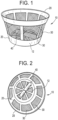
- a novel rotational basket 10 was used for both steps of the needle blackening process.
- the structure of the basket is illustrated in FIGS. 1 and 2 .
- High temperature plastic such as nylon or high density polypropylene (HDPP) was used to construct the frame 20 of the basket 10.
- Nylon mesh 30 was used to cover the entire frame 20 of basket 10 to allow the chemical solutions used in both steps to penetrate through and react with the surface of thousands of needles contained in a batch inside the basket.
- the rotating mechanism consists of a magnetic bar 40 mounted on the bottom 12 of the mesh basket 10 as seen in FIG 1 .
- the mesh basket 10 is able to rotate at a controllable speed on a conventional magnetic stirrer.
- This equipment allows a substantial amount of needles (e.g., over 3,000 larger needles and over 20,000 micro needles) to be blackened in a short period of time (e.g., 5 minutes).
- the full and complete exposure of the entire batch of surgical needles to the blackening solution allows all of the surfaces of each needle to be converted to a black color (homogeneous colorization).
- the gentle rotation provide by this basket prevents point damage that may occur and be caused by needle collisions during agitation.
- a quantity of thirty (30) 22mil type 4310 SH needles (manufactured by Ethicon, Inc.) was immersed in a bath containing the activating solution listed in Table 1at 80°C for 2 minutes. The needles were then rinsed with water and immersed into a bath containing the blackening solution listed in Table 3 at 100°C for 1 minute. The surfaces of the silver needles turned completely black.
- a quantity of thirty (30) 22mil type 4310 SH needles (manufactured by Ethicon, Inc.) was immersed in a bath containing the activating solution listed in Table 1 at 80°C for 2 minutes. The needles were removed and rinsed with water, and then immersed in a bath containing the blackening solution listed in Table 4 at 100°C for 1 minute. The color of the surfaces of the silver needles turned completely black.
- a quantity of thirty (30) 22mil type 4310 SH needles (manufactured by Ethicon, Inc.) was immersed in a bath containing the activating solution listed in Table 1 at 80°C for 2 minutes, and removed and rinsed with water. The needles were then immersed in a bath containing the blackening solution listed in Table 5 at 100°C for 1 minute. The needles were removed from the bath and it was observed that the surfaces of the needles turned black.
- a quantity of twenty (20) 22mil type 4310 SH needles (manufactured by Ethicon, Inc.) was immersed in a bath containing the activating solution listed in Table 1 at 80°C for 2 minutes, and then rinsed with water. The needles were then immersed in a bath containing the blackening solution listed in Table 6 at 100°C for one (1) minute after which they were removed from the bath. The silver needles turned into blackened needles. It was observed that the surfaces of the silver needles were completely blackened.
- a larger batch trial was also conducted using bath solution volumes 8 times the scale of activation and blackening solutions (1kg) for a batch of 750 of 24mil type 4310 MH needles (manufactured by Ethicon, Inc.) in a similar manner with slight variations in the treatment time for each of the steps.
- This large batch of needles was placed in the rotational basket (See FIGS. 1 and 2 ) and dipped in a bath containing the activating solution at 80°C for 2 minutes, removed and rinsed with water, and then immersed in a bath containing the blackening solution at 100°C for 2 minutes. The needles were removed from the bath and it was observed that the surfaces of all of the silver needles in the batch were completely blackened.
- Example 5 is similar to Example 4, with the addition of 0.1g sodium chloride to the blackening solution. This enabled a faster blackening reaction and along with repeat usage of the blackening solution.
- the formulation of this blackening solution is contained in Table 7 Table 7 Formulation of Example 5 Blackening Solution.
- a batch of fifty (50) 22mil type 4310 SH needles (manufactured by Ethicon, Inc.) was immersed in a bath containing the activating solution listed in Table 1 at 80°C for 30 seconds, then removed and rinsed with water. The needles were then immersed in a bath containing the blackening solution listed in Table 7 at 100°C for 10 seconds. The needles were removed from the bath and it was observed that the surfaces of all of the silver needles in the batch were completely blackened.
- a larger batch trial was also conducted using bath solution volumes 8 times the scale activation and blackening solutions (1kg scale) for a batch of 750 24mil type 4310 MH needles (manufactured by Ethicon, Inc.) in a similar manner with a slight variation of treatment times for each of the steps.
- This large batch of needles was placed in the rotational basket ( FIGS. 1 and 2 ) and dipped in the bath containing the activating solution at 80°C for 2 minutes, removed and rinsed with water, and then immersed in a bath containing the blackening solution at 100°C for 2 minutes. The needles were removed from the bath and it was observed that the surfaces of all of the silver needles in the batch were completely blackened.
- the capability of the blackening solution to be used for additional blackening cycles was also investigated and tested. It was observed that by adding additional amounts of sodium thiocyanate and potassium permanganate as needed to maintain the blackening solution to the formulation of Table 7, the blackening solution could be repeatedly re-used to effectively blacken batches of 750 24mil MH needles, using the same activation and blackening parameters. It was observed that the blackening solution in the bath could be reused for at least 10 times with the blackened color of the surfaces of the needles remaining consistent after each usage of the blackening solution.
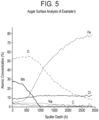
- Example 5 The MH needles of Example 5 were submitted for Auger Electron Spectroscopy analysis (Instrument model: PHI 680 Scanning Auger Microprobe), in order to measure the composition and thickness of the surface coating on this needle.
- a sputter depth profile revealed an oxide layer thickness of ⁇ 1,500 ⁇ , as illustrated in FIG. 5 .
- Manganese was the primary oxide in the outer ⁇ 750 ⁇ of the surface and then a gradual increase in iron concentration was observed.
- the entire batch of blackened 22mil SH and 24mil type 4310 MH needles from Example 5 was immersed in a silicone solution consisting of 50g of Nusil MED 4162 and 450g of heptane, prior to placing them on conventional craft paper and dried in a fume hood at ambient condition for 30 minutes.
- the silicone coated blackened needles were then cured in a conventional oven at 160°C for one hour.
- a batch of regular (the silver needle) 22mil type 4310 SH and 24mil MH needles were also prepared in the same manor and used as control samples for the testing.
- Coating performance for medical devices coated with silicone coating compositions can be tested with a variety of conventional friction or adhesion tests.
- coating performance, durability and integrity are evaluated using a conventional needle penetration testing device.
- a coated surgical needle is held using self-locking tweezers or a similar holding device.
- the coated needle is then passed through a polymeric medium that is selected to be representative of general human tissue. Approximately half of the needle length is passed through the medium and then retracted prior to the next pass.
- the test media may be a type of synthetic rubber (e.g., DuraflexTM, Manufacture by Monmouth Rubber and Plastic Corporation, Monmouth, NJ).
- a typical test includes using multiple needles that are individually passed through the media 20 times each.
- the maximum force is recorded for each pass and used as a measure of the coating performance. Typically the penetration force increases with each successive pass as the coating wears off from the needle. Further detail of the equipment and method can also be found in U.S. Patent No. 5,181,416 .
- ASTM F3014 is one example for a curved needle penetration test protocol.
- Needle Penetration Test Example 6. 24mil 4310 MH Avg. Force (g) 1 st Pass Stdv 1 st Pass Avg. Force(g) 10 th Pass Stdv 10 th Pass Avg. Force(g) 20 th Pass Stdv 20th Pass Example 6 121 14.1 180 14.0 231 16.1 Control (4310 MH needles) 108 12.7 180 11.2 218 12.0
- Example 5 The blackening solution used in Example 5 (Table 7) was used for the sample preparation.
- a quantity of twenty (20) 24mil 420 SH needles (manufactured by Ethicon, Inc.) was immersed in a bath containing the activating solution listed in Table 1 at 80°C for 30 seconds.
- the needles were then rinsed with water and immersed in a bath containing the blackening solution listed in Table 7 at 100°C for 30 seconds.
- the needles were removed from the bath and it was observed that the surfaces of all of the silver needles in the batch were completely blackened.
- Example 5 The blackening solution used in Example 5 (Table 7) was used for the sample preparation in this Example 8A and 8B.
- a strip having a quantity often (10) 24mil ETHALLOY SH needles (manufactured by Ethicon, Inc.) mounted thereto was immersed in a bath containing the activating solution outlined in Table 1 at 80°C for 30 seconds, then rinsed with water, and then immersed in a bath containing the blackening solution of Table 7 at 100°C for 30 seconds.
- the needles were removed from the bath and it was observed that the surfaces of all of the silver needles in the batch were completely blackened.
- a batch of eight hundred sixty (860) 26mil V-7 needles (manufactured by Ethicon, Inc.) was immersed in a bath containing the activating solution listed in Table 1 at 80°C for 3 minutes, then removed and rinsed with water. The needles were then immersed in a bath containing the blackening solution listed in Table 11 at 100°C for 1 hour. The needles were removed from the bath and it was observed that the surfaces of all of the silver needles in the batch were completely blackened.
- the capability of the blackening solution to be used for additional blackening cycles was also investigated and tested. It was observed that by adding additional amounts of sodium thiocyanate and potassium permanganate as needed to maintain the blackening solution to conform to the formulation of Table 7, the blackening solution could be repeatedly re-used to effectively blacken batches of 860 26mil V-7 needles, using the same activation and blackening parameters. It was observed that the blackening solution in the bath could be reused for at least 3 times with the blackened color of the surfaces of the needles remaining consistent after each usage of the blackening solution. It is believed that that blackening solution could be reused a significantly larger number of times by the addition of active components repeatedly as required to maintain the formulation.
- This example is directed to the formation of silicone coated Ethalloy SH needles made from the batch production highlighted in Example 8A, using a batch coating process similar to the one used in conventional Chromium-based blackened needle production.
- the entire batch of blackened 24mil SH needles was immersed in a coating solution consisting of 50g of Nusil MED 4162 and 450g of heptane, prior to placing the needles on a craft paper substrate and then drying in a fume hood at ambient conditions for 30 minutes.
- the silicone coated blackened needles were then cured at 160°C for one hour in a conventional convection oven.
- Penetration testing was then performed, as described above, on a representative sample of the coated needles. The results are from penetration testing done using a sample of 10 individual needles. The coated needles were penetrated 20 times each. The average penetration force for each pass is summarized in Table 12.
- This example is directed to the formation of silicone coated Ethalloy SH needles made from the strip process highlighted in Example 8B, using a strip coating process, in which all of the needles were mounted onto a metal strip and passed the coating solution in a dip tank in a continuous manner.
- the strip of blackened 24mil SH needles was immersed in a bath containing a silicone coating solution consisting of 23.8g of Gelest XG-2385A, 23.8g Gelest XG-2385B and 52.4g of Isopar K.
- the strip with the needles was removed from the bath and placed in a conventional oven at 195°C for 30 seconds.
- the silicone coated blackened needles were further cured at 195°C for 2 hours in a conventional convection oven.
- This example is directed to the formation of dark green manganese containing iron oxide black layer on the surface of surgical needles made from Type 4310 SS alloy, instead of the black oxide layer demonstrated in Example 5.
- the formulation of this blackening solution is listed in Table 14.
- Table 14 Formulation of Comparative Example 1 Solution.
- a quantity or batch of 750, 26mil MH needles (manufactured by Ethicon, Inc.) was immersed in a bath containing the activating solution of Table 1 at 80°C for 3 minutes, then rinsed with water, and then immersed in a bath containing the blackening solution listed in Table 14 at 100°C for 2 minutes. After removal from the bath, the silver needles were observed to have a dark green appearance. Increasing the length of the process time in the bath solution did not change the color of the needles. It was not possible to obtain truly black needles as a result of treatment in the solution of this Table 14.
- a quantity or batch of 750, 26mil MH needles (needle code MH002640P manufactured by Ethicon, Inc.) was immersed in a bath containing the activating solution listed in Table 1 at 80°C for 3 minutes, then rinsed with water, and then immersed in a bath containing the solution listed in Table 15 at 100°C for 2 minutes. After removal from the bath, the needle surfaces were observed to remain shiny and silver. Increasing the length of the process time in the blackening bath solution did not change the color the needle. No blackened needles were obtained as the result of the treatment in the solution of this example.
- a needle blackened by the process as described in Example 5 was compared with a needle treated by a prior art process using chromium VI ( EP1051538 ).
- the composition of the prior art process blackening bath is listed in Table 16.
- Table 16 Formulation of Chromium VI Based Blackening Solution.
- a batch of 24mil type 4310 MH needles similar to the needles blackened by the process of Example 5 was pretreated in a similar manner and immersed in a blackening bath solution having a composition as contained in Table 16.
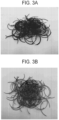
- the needles were immersed in the coating bath of Table 16 for 2 minutes, the same treatment time for the needles of Example 5. It was observed that the needles treated had all of their surfaces completely blackened. It was further observed the needles treated with the prior art process remained shiny and silver color in color, similar to the untreated 24mil type 4310 MH needles. Photographs of the needles are seen in FIGS. 3A and 3B .
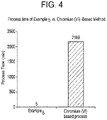
- FIG. 4 is a graph showing the difference in process time between the process described in Example 5 and a conventional Chromium (VI)-based process. It can be seen that the process time described in Example 5 is significantly lower and more time efficient than the Chromium (VI)-based process.
- a quantity or batch of 750, 26mil MH needles (manufactured by Ethicon, Inc.) was immersed in a bath containing the blackening solution listed in Table 3 at 100°C for 2 minutes.
- the needles had not been subjected to the pretreatment step. After removal from the bath, it was observed that virtually no blackening occurred and the needle surfaces were observed to substantially remain shiny and silver. Increasing the length of the process time in the blackening bath solution to 10 minutes did not change the color of the needles. No blackened needles were obtained as a result of the treatment in the blackening solution of this example.
- novel blackening methods and blackening bath compositions of the present invention have many advantages.
- the advantages include significant reduction of process time, absence of toxic carcinogens, improved safety conditions, the elimination of hazardous waste, and the elimination of negative impacts on the environment.
Landscapes
- Chemical & Material Sciences (AREA)
- Engineering & Computer Science (AREA)
- General Chemical & Material Sciences (AREA)
- Chemical Kinetics & Catalysis (AREA)
- Materials Engineering (AREA)
- Mechanical Engineering (AREA)
- Metallurgy (AREA)
- Organic Chemistry (AREA)
- Health & Medical Sciences (AREA)
- Life Sciences & Earth Sciences (AREA)
- Surgery (AREA)
- Biomedical Technology (AREA)
- Nuclear Medicine, Radiotherapy & Molecular Imaging (AREA)
- Heart & Thoracic Surgery (AREA)
- Medical Informatics (AREA)
- Molecular Biology (AREA)
- Animal Behavior & Ethology (AREA)
- General Health & Medical Sciences (AREA)
- Public Health (AREA)
- Veterinary Medicine (AREA)
- Pathology (AREA)
- Chemical Treatment Of Metals (AREA)
- Surgical Instruments (AREA)
- Materials For Medical Uses (AREA)
Claims (7)
- Verfahren zum Schwärzen von chirurgischen Nadeln, das folgende Schritte umfasst:A. Einbringen mindestens einer chirurgischen Nadel mit einer Außenoberfläche in ein Vorbehandlungsbad, wobei das Vorbehandlungsbad Folgendes umfasst: 10 Gew.-% bis 20 Gew.-% wasserlösliches Chloridsalz, 5 Gew.-% bis 15 Gew.-% anorganische Säure, 65 Gew.-% bis 80 Gew.-% Wasser,
wobei das Vorbehandlungsbad einen pH-Wert von 0,5 bis 1,2 aufweist; undB. dann Einbringen der chirurgischen Nadel in ein Schwärzungsbad, wobei das Bad Folgendes umfasst:3 Gew.-% bis 20 Gew.-% eines leicht löslichen Salpetersäuresalzes,18 Gew.-% bis 38 Gew.-% einer starken Base,50 Gew.-% bis 75 Gew.-% Wasser,0,2 Gew.-% bis 5 Gew.-% eines Übergangsmetallsalzes einer starken Säure, wobei das Übergangsmetallsalz einer starken Säure aus Nickelnitrat, Cobaltnitrat, Nickelsulfat, Kupfersulfat, Eisennitrat, Kupferperchlorat, Nickelperchlorat, Eisenperchlorat und Cobaltperchlorat ausgewählt ist,0,2 Gew.-% bis 5 Gew.-% einer schwefelhaltigen Reduktionsmittelverbindung, undC. Halten der Nadel in dem Schwärzungsbad über einen ausreichend effektiven Zeitraum zur Bereitstellung eines geschwärzten Überzugs auf der Außenoberfläche der Nadel. - Schwärzungsbadzusammensetzung für chirurgische Nadeln, umfassend:3 Gew.-% bis 20 Gew.-% eines leicht löslichen Salpetersäuresalzes,18 Gew.-% bis 38 Gew.-% einer starken Base,50 Gew.-% bis 75 Gew.-% Wasser,0,2 Gew.-% bis 5 Gew.-% eines Übergangsmetallsalzes einer starken Säure, wobei das Übergangsmetallsalz einer starken Säure aus Nickelnitrat, Cobaltnitrat, Nickelsulfat, Cobaltsulfat, Eisennitrat, Kupferperchlorat, Nickelperchlorat, Eisenperchlorat und Cobaltperchlorat ausgewählt ist, und0,2 Gew.-% bis 5 Gew.-% einer schwefelhaltigen Reduktionsmittelverbindung.
- Verfahren nach Anspruch 1 oder Zusammensetzung nach Anspruch 2, wobei das schwefelhaltige Reduktionsmittel aus der Gruppe bestehend aus N,N'-Diethyl-thioharnstoff, Natriumthiocyanat, Natriumsulfid und Natriumdimethyldithiocarbamat ausgewählt ist.
- Verfahren nach Anspruch 1 oder Zusammensetzung nach Anspruch 2, wobei das leicht lösliche Salpetersäuresalz aus der Gruppe bestehend aus Natriumnitrat, Kaliumnitrat und Lithiumnitrat ausgewählt ist.
- Verfahren nach Anspruch 1, wobei das wasserlösliche Chloridsalz aus der Gruppe bestehend aus Natriumchlorid, Kaliumchlorid und Lithiumchlorid ausgewählt ist.
- Verfahren nach Anspruch 1 oder Zusammensetzung nach Anspruch 2, wobei die starke Base aus der Gruppe bestehend aus Natriumhydroxid, Kaliumhydroxid und Lithiumhydroxid ausgewählt ist.
- Verfahren nach Anspruch 1, wobei die anorganische Säure aus der Gruppe bestehend aus Phosphorsäure, Salzsäure, Schwefelsäure und Salpetersäure ausgewählt ist.
Priority Applications (1)
| Application Number | Priority Date | Filing Date | Title |
|---|---|---|---|
| EP23157526.7A EP4209614B1 (de) | 2016-06-23 | 2017-06-15 | Verfahren zum schnellen schwärzen von chirurgischen nadeln |
Applications Claiming Priority (2)
| Application Number | Priority Date | Filing Date | Title |
|---|---|---|---|
| US15/190,437 US10364501B2 (en) | 2016-06-23 | 2016-06-23 | Process for the rapid blackening of surgical needles |
| PCT/US2017/037611 WO2017222904A1 (en) | 2016-06-23 | 2017-06-15 | Process for the rapid blackening of surgical needles |
Related Child Applications (1)
| Application Number | Title | Priority Date | Filing Date |
|---|---|---|---|
| EP23157526.7A Division EP4209614B1 (de) | 2016-06-23 | 2017-06-15 | Verfahren zum schnellen schwärzen von chirurgischen nadeln |
Publications (2)
| Publication Number | Publication Date |
|---|---|
| EP3475465A1 EP3475465A1 (de) | 2019-05-01 |
| EP3475465B1 true EP3475465B1 (de) | 2023-02-22 |
Family
ID=59254028
Family Applications (2)
| Application Number | Title | Priority Date | Filing Date |
|---|---|---|---|
| EP17734196.3A Active EP3475465B1 (de) | 2016-06-23 | 2017-06-15 | Verfahren zur schnellschwärzung von chirurgischen nadeln |
| EP23157526.7A Active EP4209614B1 (de) | 2016-06-23 | 2017-06-15 | Verfahren zum schnellen schwärzen von chirurgischen nadeln |
Family Applications After (1)
| Application Number | Title | Priority Date | Filing Date |
|---|---|---|---|
| EP23157526.7A Active EP4209614B1 (de) | 2016-06-23 | 2017-06-15 | Verfahren zum schnellen schwärzen von chirurgischen nadeln |
Country Status (8)
| Country | Link |
|---|---|
| US (2) | US10364501B2 (de) |
| EP (2) | EP3475465B1 (de) |
| JP (2) | JP6961628B2 (de) |
| CN (1) | CN109312470A (de) |
| AU (1) | AU2017280939B2 (de) |
| MA (1) | MA45449A (de) |
| MX (1) | MX2018016187A (de) |
| WO (1) | WO2017222904A1 (de) |
Families Citing this family (2)
| Publication number | Priority date | Publication date | Assignee | Title |
|---|---|---|---|---|
| US11213866B2 (en) | 2019-06-12 | 2022-01-04 | Ethicon, Inc | Non-hazardous cleaning solution and process for cleaning blackened needles |
| JP7370948B2 (ja) * | 2020-08-28 | 2023-10-30 | マニー株式会社 | 黒色医療器具及びその製造方法 |
Citations (3)
| Publication number | Priority date | Publication date | Assignee | Title |
|---|---|---|---|---|
| EP0168833A1 (de) * | 1984-07-19 | 1986-01-22 | Ethicon, Inc. | Sterile chirurgische Nadel mit dunkler nichtreflektierender Oberfläche |
| US4959068A (en) * | 1984-07-19 | 1990-09-25 | Ethicon, Inc. | Sterile surgical needle having dark non-reflective surface |
| US5718745A (en) * | 1995-08-09 | 1998-02-17 | Japan Kanigen Co., Ltd. | Electroless plating bath for forming black coatings and process for forming the coatings |
Family Cites Families (19)
| Publication number | Priority date | Publication date | Assignee | Title |
|---|---|---|---|---|
| US2817610A (en) * | 1955-05-26 | 1957-12-24 | Isaac L Newell | Method for the production of black oxide coatings on steel and iron and composition therefor |
| US3314812A (en) * | 1964-01-17 | 1967-04-18 | Mitchell Bradford Chemical Co | Method for blackening metals and novel compositions therefor |
| JPS6028911B2 (ja) * | 1980-12-12 | 1985-07-08 | 株式会社川崎度器製作所 | ステンレス鋼製測長器の目盛工成法 |
| JPS60190588A (ja) * | 1984-03-12 | 1985-09-28 | Toyo Kohan Co Ltd | 亜鉛または亜鉛合金めつき鋼板の黒色処理方法 |
| JPH01195286A (ja) * | 1988-01-29 | 1989-08-07 | Nippon Steel Corp | 黒色表面処理鋼板の製造方法 |
| JPH0331484A (ja) * | 1989-06-27 | 1991-02-12 | Nippon Parkerizing Co Ltd | 亜鉛または亜鉛系メッキ材料の黒色化処理法 |
| US5000912A (en) | 1989-12-15 | 1991-03-19 | Ethicon, Inc. | Nickel titanium martensitic steel for surgical needles |
| US5181416A (en) | 1990-06-20 | 1993-01-26 | United States Surgical Corporation | Apparatus and method for testing point sharpness of needles |
| US5104463A (en) * | 1990-10-09 | 1992-04-14 | The United States Of America As Represented By The Secretary Of The Army | Blackening process for stainless steels |
| JP3904258B2 (ja) * | 1996-05-23 | 2007-04-11 | ディップソール株式会社 | Zn−Ni合金めっき用黒色クロメート処理液 |
| DE19804846A1 (de) | 1998-01-30 | 1999-08-05 | Ethicon Gmbh | Verfahren zum Herstellen von geschwärzten chirurgischen Nadeln |
| JP2001158982A (ja) * | 1999-12-02 | 2001-06-12 | Kawasaki Steel Corp | ステンレス熱延焼鈍鋼板の酸洗方法 |
| JP3943100B2 (ja) * | 2004-07-15 | 2007-07-11 | 勉 梶田 | ステンレスの着色方法及びステンレス用着色処理液 |
| US7887746B2 (en) | 2007-12-13 | 2011-02-15 | Ethicon, Inc. | Rapid thermal treatment for coloring surgical needles |
| CA2711589A1 (en) * | 2008-01-10 | 2009-07-16 | Ethicon, Inc. | Tungsten alloy suture needles with surface coloration |
| CN101935833B (zh) * | 2009-06-30 | 2012-09-05 | 比亚迪股份有限公司 | 一种不锈钢发黑剂及发黑方法 |
| CN102965652B (zh) * | 2012-11-07 | 2014-11-05 | 浙江博海金属制品科技有限公司 | 一种不锈钢板表面发黑处理工艺 |
| CN104233275B (zh) * | 2014-09-23 | 2017-02-08 | 中山市华光化工有限公司 | 一种适用于不锈钢或合金钢的高温发黑剂及其使用方法 |
| CN104357826A (zh) * | 2014-11-20 | 2015-02-18 | 贵州航锐航空精密零部件制造有限公司 | 不锈钢黑色化学氧化工艺配方 |
-
2016
- 2016-06-23 US US15/190,437 patent/US10364501B2/en active Active
-
2017
- 2017-06-15 EP EP17734196.3A patent/EP3475465B1/de active Active
- 2017-06-15 MX MX2018016187A patent/MX2018016187A/es unknown
- 2017-06-15 CN CN201780038814.6A patent/CN109312470A/zh active Pending
- 2017-06-15 AU AU2017280939A patent/AU2017280939B2/en active Active
- 2017-06-15 MA MA045449A patent/MA45449A/fr unknown
- 2017-06-15 WO PCT/US2017/037611 patent/WO2017222904A1/en not_active Ceased
- 2017-06-15 JP JP2018567211A patent/JP6961628B2/ja active Active
- 2017-06-15 EP EP23157526.7A patent/EP4209614B1/de active Active
-
2019
- 2019-06-11 US US16/437,542 patent/US11542607B2/en active Active
-
2021
- 2021-10-13 JP JP2021168008A patent/JP7106740B2/ja active Active
Patent Citations (3)
| Publication number | Priority date | Publication date | Assignee | Title |
|---|---|---|---|---|
| EP0168833A1 (de) * | 1984-07-19 | 1986-01-22 | Ethicon, Inc. | Sterile chirurgische Nadel mit dunkler nichtreflektierender Oberfläche |
| US4959068A (en) * | 1984-07-19 | 1990-09-25 | Ethicon, Inc. | Sterile surgical needle having dark non-reflective surface |
| US5718745A (en) * | 1995-08-09 | 1998-02-17 | Japan Kanigen Co., Ltd. | Electroless plating bath for forming black coatings and process for forming the coatings |
Also Published As
| Publication number | Publication date |
|---|---|
| JP2019531401A (ja) | 2019-10-31 |
| JP2022009088A (ja) | 2022-01-14 |
| AU2017280939A1 (en) | 2019-01-03 |
| US10364501B2 (en) | 2019-07-30 |
| CN109312470A (zh) | 2019-02-05 |
| EP4209614C0 (de) | 2025-02-12 |
| US11542607B2 (en) | 2023-01-03 |
| EP4209614A1 (de) | 2023-07-12 |
| US20170370004A1 (en) | 2017-12-28 |
| BR112018076835A2 (pt) | 2019-04-02 |
| WO2017222904A1 (en) | 2017-12-28 |
| MX2018016187A (es) | 2019-06-10 |
| JP7106740B2 (ja) | 2022-07-26 |
| JP6961628B2 (ja) | 2021-11-05 |
| MA45449A (fr) | 2019-05-01 |
| EP3475465A1 (de) | 2019-05-01 |
| AU2017280939B2 (en) | 2022-06-23 |
| US20190301024A1 (en) | 2019-10-03 |
| EP4209614B1 (de) | 2025-02-12 |
Similar Documents
| Publication | Publication Date | Title |
|---|---|---|
| Tan et al. | Corrosion protection enhancement of Mg alloy WE43 by in-situ synthesis of MgFe LDH/citric acid composite coating intercalated with 8HQ | |
| Cheng et al. | A preliminary study of TiO2 deposition on NiTi by a hydrothermal method | |
| DE60333904D1 (de) | Behandlungslösung zur herstellung eines schwarzen, kein sechswertiges chrom enthaltenden chemischen überzugs auf mit zink oder zinklegierung plattiertem substrat und verfahren zur herstellung eines schwarzen, kein sechswertiges chrom enthaltenden chemischen überzugs auf mit zink oder zinklegierung plattiertem substrat | |
| JP4679018B2 (ja) | アルミニウム基板の化学転化被覆処理方法及び化学転化被覆溶液 | |
| US11542607B2 (en) | Process for the rapid blackening of surgical needles | |
| JP4809037B2 (ja) | 黒色めっき膜およびその形成方法、めっき膜を有する物品 | |
| BR112014029353B1 (pt) | processo para metalizar superfícies plásticas não condutoras | |
| Hamdy et al. | Corrosion behavior of nitride layer obtained on AISI 316L stainless steel via simple direct nitridation route at low temperature | |
| Tsutsumi et al. | Cathodic alkaline treatment of zirconium to give the ability to form calcium phosphate | |
| CN104583457B (zh) | 金属表面处理液、金属基材的表面处理方法及由此而得的金属基材 | |
| US11826796B2 (en) | Non-hazardous cleaning solution and process for cleaning blackened needles | |
| US3391012A (en) | Metal treating compositions and processes | |
| JP6526406B2 (ja) | ステンレス鋼部品の不動態化処理方法及びステンレス鋼部品用の不動態化処理液 | |
| JP4705776B2 (ja) | リン酸塩被膜を有する無電解ニッケルめっき膜の形成方法およびその形成膜 | |
| CN112501596A (zh) | 一种钛表面化学镀镍前无氟无钯银活化方法 | |
| JP4794248B2 (ja) | 亜鉛もしくは亜鉛合金製品用表面処理剤 | |
| BR112018076835B1 (pt) | Método de enegrecimento de agulhas cirúrgicas e composição de um banho de enegrecimento para agulhas cirúrgicas | |
| JP4203745B2 (ja) | 無電解ニッケル−リンめっき浴、これを用いた黒色ニッケル皮膜の形成方法、及び酸性黒化処理液 | |
| JP4203744B2 (ja) | 無電解ニッケル−リンめっき浴及びこれを用いた黒色ニッケル皮膜の形成方法 | |
| US3314812A (en) | Method for blackening metals and novel compositions therefor | |
| JPH02185901A (ja) | 銅一銀被覆金属硫化物粉末およびその製造方法 | |
| JP2022134922A (ja) | 無電解ニッケルめっき浴および無電解ニッケル合金めっき浴 |
Legal Events
| Date | Code | Title | Description |
|---|---|---|---|
| STAA | Information on the status of an ep patent application or granted ep patent |
Free format text: STATUS: UNKNOWN |
|
| STAA | Information on the status of an ep patent application or granted ep patent |
Free format text: STATUS: THE INTERNATIONAL PUBLICATION HAS BEEN MADE |
|
| PUAI | Public reference made under article 153(3) epc to a published international application that has entered the european phase |
Free format text: ORIGINAL CODE: 0009012 |
|
| STAA | Information on the status of an ep patent application or granted ep patent |
Free format text: STATUS: REQUEST FOR EXAMINATION WAS MADE |
|
| 17P | Request for examination filed |
Effective date: 20190118 |
|
| AK | Designated contracting states |
Kind code of ref document: A1 Designated state(s): AL AT BE BG CH CY CZ DE DK EE ES FI FR GB GR HR HU IE IS IT LI LT LU LV MC MK MT NL NO PL PT RO RS SE SI SK SM TR |
|
| AX | Request for extension of the european patent |
Extension state: BA ME |
|
| STAA | Information on the status of an ep patent application or granted ep patent |
Free format text: STATUS: EXAMINATION IS IN PROGRESS |
|
| 17Q | First examination report despatched |
Effective date: 20191122 |
|
| GRAP | Despatch of communication of intention to grant a patent |
Free format text: ORIGINAL CODE: EPIDOSNIGR1 |
|
| STAA | Information on the status of an ep patent application or granted ep patent |
Free format text: STATUS: GRANT OF PATENT IS INTENDED |
|
| RIC1 | Information provided on ipc code assigned before grant |
Ipc: A61B 17/06 20060101ALI20220607BHEP Ipc: A61B 17/00 20060101ALI20220607BHEP Ipc: C23G 1/08 20060101ALI20220607BHEP Ipc: C23C 22/78 20060101ALI20220607BHEP Ipc: C23C 22/62 20060101AFI20220607BHEP |
|
| INTG | Intention to grant announced |
Effective date: 20220622 |
|
| GRAJ | Information related to disapproval of communication of intention to grant by the applicant or resumption of examination proceedings by the epo deleted |
Free format text: ORIGINAL CODE: EPIDOSDIGR1 |
|
| STAA | Information on the status of an ep patent application or granted ep patent |
Free format text: STATUS: EXAMINATION IS IN PROGRESS |
|
| INTC | Intention to grant announced (deleted) | ||
| GRAP | Despatch of communication of intention to grant a patent |
Free format text: ORIGINAL CODE: EPIDOSNIGR1 |
|
| STAA | Information on the status of an ep patent application or granted ep patent |
Free format text: STATUS: GRANT OF PATENT IS INTENDED |
|
| INTG | Intention to grant announced |
Effective date: 20220915 |
|
| GRAS | Grant fee paid |
Free format text: ORIGINAL CODE: EPIDOSNIGR3 |
|
| GRAA | (expected) grant |
Free format text: ORIGINAL CODE: 0009210 |
|
| STAA | Information on the status of an ep patent application or granted ep patent |
Free format text: STATUS: THE PATENT HAS BEEN GRANTED |
|
| AK | Designated contracting states |
Kind code of ref document: B1 Designated state(s): AL AT BE BG CH CY CZ DE DK EE ES FI FR GB GR HR HU IE IS IT LI LT LU LV MC MK MT NL NO PL PT RO RS SE SI SK SM TR |
|
| REG | Reference to a national code |
Ref country code: GB Ref legal event code: FG4D |
|
| REG | Reference to a national code |
Ref country code: CH Ref legal event code: EP |
|
| REG | Reference to a national code |
Ref country code: AT Ref legal event code: REF Ref document number: 1549569 Country of ref document: AT Kind code of ref document: T Effective date: 20230315 Ref country code: IE Ref legal event code: FG4D |
|
| REG | Reference to a national code |
Ref country code: DE Ref legal event code: R096 Ref document number: 602017066191 Country of ref document: DE |
|
| REG | Reference to a national code |
Ref country code: LT Ref legal event code: MG9D |
|
| REG | Reference to a national code |
Ref country code: NL Ref legal event code: MP Effective date: 20230222 |
|
| REG | Reference to a national code |
Ref country code: AT Ref legal event code: MK05 Ref document number: 1549569 Country of ref document: AT Kind code of ref document: T Effective date: 20230222 |
|
| PG25 | Lapsed in a contracting state [announced via postgrant information from national office to epo] |
Ref country code: RS Free format text: LAPSE BECAUSE OF FAILURE TO SUBMIT A TRANSLATION OF THE DESCRIPTION OR TO PAY THE FEE WITHIN THE PRESCRIBED TIME-LIMIT Effective date: 20230222 Ref country code: PT Free format text: LAPSE BECAUSE OF FAILURE TO SUBMIT A TRANSLATION OF THE DESCRIPTION OR TO PAY THE FEE WITHIN THE PRESCRIBED TIME-LIMIT Effective date: 20230622 Ref country code: NO Free format text: LAPSE BECAUSE OF FAILURE TO SUBMIT A TRANSLATION OF THE DESCRIPTION OR TO PAY THE FEE WITHIN THE PRESCRIBED TIME-LIMIT Effective date: 20230522 Ref country code: NL Free format text: LAPSE BECAUSE OF FAILURE TO SUBMIT A TRANSLATION OF THE DESCRIPTION OR TO PAY THE FEE WITHIN THE PRESCRIBED TIME-LIMIT Effective date: 20230222 Ref country code: LV Free format text: LAPSE BECAUSE OF FAILURE TO SUBMIT A TRANSLATION OF THE DESCRIPTION OR TO PAY THE FEE WITHIN THE PRESCRIBED TIME-LIMIT Effective date: 20230222 Ref country code: LT Free format text: LAPSE BECAUSE OF FAILURE TO SUBMIT A TRANSLATION OF THE DESCRIPTION OR TO PAY THE FEE WITHIN THE PRESCRIBED TIME-LIMIT Effective date: 20230222 Ref country code: HR Free format text: LAPSE BECAUSE OF FAILURE TO SUBMIT A TRANSLATION OF THE DESCRIPTION OR TO PAY THE FEE WITHIN THE PRESCRIBED TIME-LIMIT Effective date: 20230222 Ref country code: ES Free format text: LAPSE BECAUSE OF FAILURE TO SUBMIT A TRANSLATION OF THE DESCRIPTION OR TO PAY THE FEE WITHIN THE PRESCRIBED TIME-LIMIT Effective date: 20230222 Ref country code: AT Free format text: LAPSE BECAUSE OF FAILURE TO SUBMIT A TRANSLATION OF THE DESCRIPTION OR TO PAY THE FEE WITHIN THE PRESCRIBED TIME-LIMIT Effective date: 20230222 |
|
| PG25 | Lapsed in a contracting state [announced via postgrant information from national office to epo] |
Ref country code: SE Free format text: LAPSE BECAUSE OF FAILURE TO SUBMIT A TRANSLATION OF THE DESCRIPTION OR TO PAY THE FEE WITHIN THE PRESCRIBED TIME-LIMIT Effective date: 20230222 Ref country code: PL Free format text: LAPSE BECAUSE OF FAILURE TO SUBMIT A TRANSLATION OF THE DESCRIPTION OR TO PAY THE FEE WITHIN THE PRESCRIBED TIME-LIMIT Effective date: 20230222 Ref country code: IS Free format text: LAPSE BECAUSE OF FAILURE TO SUBMIT A TRANSLATION OF THE DESCRIPTION OR TO PAY THE FEE WITHIN THE PRESCRIBED TIME-LIMIT Effective date: 20230622 Ref country code: GR Free format text: LAPSE BECAUSE OF FAILURE TO SUBMIT A TRANSLATION OF THE DESCRIPTION OR TO PAY THE FEE WITHIN THE PRESCRIBED TIME-LIMIT Effective date: 20230523 Ref country code: FI Free format text: LAPSE BECAUSE OF FAILURE TO SUBMIT A TRANSLATION OF THE DESCRIPTION OR TO PAY THE FEE WITHIN THE PRESCRIBED TIME-LIMIT Effective date: 20230222 |
|
| PG25 | Lapsed in a contracting state [announced via postgrant information from national office to epo] |
Ref country code: SM Free format text: LAPSE BECAUSE OF FAILURE TO SUBMIT A TRANSLATION OF THE DESCRIPTION OR TO PAY THE FEE WITHIN THE PRESCRIBED TIME-LIMIT Effective date: 20230222 Ref country code: RO Free format text: LAPSE BECAUSE OF FAILURE TO SUBMIT A TRANSLATION OF THE DESCRIPTION OR TO PAY THE FEE WITHIN THE PRESCRIBED TIME-LIMIT Effective date: 20230222 Ref country code: EE Free format text: LAPSE BECAUSE OF FAILURE TO SUBMIT A TRANSLATION OF THE DESCRIPTION OR TO PAY THE FEE WITHIN THE PRESCRIBED TIME-LIMIT Effective date: 20230222 Ref country code: DK Free format text: LAPSE BECAUSE OF FAILURE TO SUBMIT A TRANSLATION OF THE DESCRIPTION OR TO PAY THE FEE WITHIN THE PRESCRIBED TIME-LIMIT Effective date: 20230222 Ref country code: CZ Free format text: LAPSE BECAUSE OF FAILURE TO SUBMIT A TRANSLATION OF THE DESCRIPTION OR TO PAY THE FEE WITHIN THE PRESCRIBED TIME-LIMIT Effective date: 20230222 |
|
| VS25 | Lapsed in a validation state [announced via postgrant information from nat. office to epo] |
Ref country code: MD Free format text: LAPSE BECAUSE OF FAILURE TO SUBMIT A TRANSLATION OF THE DESCRIPTION OR TO PAY THE FEE WITHIN THE PRESCRIBED TIME-LIMIT Effective date: 20230222 |
|
| REG | Reference to a national code |
Ref country code: DE Ref legal event code: R097 Ref document number: 602017066191 Country of ref document: DE |
|
| PG25 | Lapsed in a contracting state [announced via postgrant information from national office to epo] |
Ref country code: SK Free format text: LAPSE BECAUSE OF FAILURE TO SUBMIT A TRANSLATION OF THE DESCRIPTION OR TO PAY THE FEE WITHIN THE PRESCRIBED TIME-LIMIT Effective date: 20230222 |
|
| PLBE | No opposition filed within time limit |
Free format text: ORIGINAL CODE: 0009261 |
|
| STAA | Information on the status of an ep patent application or granted ep patent |
Free format text: STATUS: NO OPPOSITION FILED WITHIN TIME LIMIT |
|
| PG25 | Lapsed in a contracting state [announced via postgrant information from national office to epo] |
Ref country code: MC Free format text: LAPSE BECAUSE OF FAILURE TO SUBMIT A TRANSLATION OF THE DESCRIPTION OR TO PAY THE FEE WITHIN THE PRESCRIBED TIME-LIMIT Effective date: 20230222 |
|
| 26N | No opposition filed |
Effective date: 20231123 |
|
| PG25 | Lapsed in a contracting state [announced via postgrant information from national office to epo] |
Ref country code: SI Free format text: LAPSE BECAUSE OF FAILURE TO SUBMIT A TRANSLATION OF THE DESCRIPTION OR TO PAY THE FEE WITHIN THE PRESCRIBED TIME-LIMIT Effective date: 20230222 Ref country code: MC Free format text: LAPSE BECAUSE OF FAILURE TO SUBMIT A TRANSLATION OF THE DESCRIPTION OR TO PAY THE FEE WITHIN THE PRESCRIBED TIME-LIMIT Effective date: 20230222 |
|
| REG | Reference to a national code |
Ref country code: CH Ref legal event code: PL |
|
| REG | Reference to a national code |
Ref country code: BE Ref legal event code: MM Effective date: 20230630 |
|
| GBPC | Gb: european patent ceased through non-payment of renewal fee |
Effective date: 20230615 |
|
| PG25 | Lapsed in a contracting state [announced via postgrant information from national office to epo] |
Ref country code: LU Free format text: LAPSE BECAUSE OF NON-PAYMENT OF DUE FEES Effective date: 20230615 |
|
| PG25 | Lapsed in a contracting state [announced via postgrant information from national office to epo] |
Ref country code: LU Free format text: LAPSE BECAUSE OF NON-PAYMENT OF DUE FEES Effective date: 20230615 |
|
| PG25 | Lapsed in a contracting state [announced via postgrant information from national office to epo] |
Ref country code: CH Free format text: LAPSE BECAUSE OF NON-PAYMENT OF DUE FEES Effective date: 20230630 Ref country code: GB Free format text: LAPSE BECAUSE OF NON-PAYMENT OF DUE FEES Effective date: 20230615 |
|
| PG25 | Lapsed in a contracting state [announced via postgrant information from national office to epo] |
Ref country code: IT Free format text: LAPSE BECAUSE OF FAILURE TO SUBMIT A TRANSLATION OF THE DESCRIPTION OR TO PAY THE FEE WITHIN THE PRESCRIBED TIME-LIMIT Effective date: 20230222 Ref country code: BE Free format text: LAPSE BECAUSE OF NON-PAYMENT OF DUE FEES Effective date: 20230630 |
|
| PG25 | Lapsed in a contracting state [announced via postgrant information from national office to epo] |
Ref country code: BG Free format text: LAPSE BECAUSE OF FAILURE TO SUBMIT A TRANSLATION OF THE DESCRIPTION OR TO PAY THE FEE WITHIN THE PRESCRIBED TIME-LIMIT Effective date: 20230222 |
|
| PG25 | Lapsed in a contracting state [announced via postgrant information from national office to epo] |
Ref country code: BG Free format text: LAPSE BECAUSE OF FAILURE TO SUBMIT A TRANSLATION OF THE DESCRIPTION OR TO PAY THE FEE WITHIN THE PRESCRIBED TIME-LIMIT Effective date: 20230222 |
|
| PGFP | Annual fee paid to national office [announced via postgrant information from national office to epo] |
Ref country code: DE Payment date: 20250429 Year of fee payment: 9 |
|
| PGFP | Annual fee paid to national office [announced via postgrant information from national office to epo] |
Ref country code: FR Payment date: 20250508 Year of fee payment: 9 |
|
| PG25 | Lapsed in a contracting state [announced via postgrant information from national office to epo] |
Ref country code: CY Free format text: LAPSE BECAUSE OF FAILURE TO SUBMIT A TRANSLATION OF THE DESCRIPTION OR TO PAY THE FEE WITHIN THE PRESCRIBED TIME-LIMIT; INVALID AB INITIO Effective date: 20170615 |
|
| PGFP | Annual fee paid to national office [announced via postgrant information from national office to epo] |
Ref country code: IE Payment date: 20250509 Year of fee payment: 9 |
|
| PG25 | Lapsed in a contracting state [announced via postgrant information from national office to epo] |
Ref country code: HU Free format text: LAPSE BECAUSE OF FAILURE TO SUBMIT A TRANSLATION OF THE DESCRIPTION OR TO PAY THE FEE WITHIN THE PRESCRIBED TIME-LIMIT; INVALID AB INITIO Effective date: 20170615 |
|
| VS25 | Lapsed in a validation state [announced via postgrant information from nat. office to epo] |
Ref country code: MA Free format text: FAILURE TO ELECT DOMICILE IN THE NATIONAL COUNTRY Effective date: 20230523 |
|
| PG25 | Lapsed in a contracting state [announced via postgrant information from national office to epo] |
Ref country code: TR Free format text: LAPSE BECAUSE OF FAILURE TO SUBMIT A TRANSLATION OF THE DESCRIPTION OR TO PAY THE FEE WITHIN THE PRESCRIBED TIME-LIMIT Effective date: 20230222 |