EP3477496A1 - Système de révision et procédé de révision de textes traduits comportant une mise en correspondance des segments - Google Patents
Système de révision et procédé de révision de textes traduits comportant une mise en correspondance des segments Download PDFInfo
- Publication number
- EP3477496A1 EP3477496A1 EP17198104.6A EP17198104A EP3477496A1 EP 3477496 A1 EP3477496 A1 EP 3477496A1 EP 17198104 A EP17198104 A EP 17198104A EP 3477496 A1 EP3477496 A1 EP 3477496A1
- Authority
- EP
- European Patent Office
- Prior art keywords
- segment
- translated
- revised
- translated text
- translation
- Prior art date
- Legal status (The legal status is an assumption and is not a legal conclusion. Google has not performed a legal analysis and makes no representation as to the accuracy of the status listed.)
- Ceased
Links
Images


Classifications
-
- G—PHYSICS
- G06—COMPUTING OR CALCULATING; COUNTING
- G06F—ELECTRIC DIGITAL DATA PROCESSING
- G06F40/00—Handling natural language data
- G06F40/40—Processing or translation of natural language
- G06F40/51—Translation evaluation
Definitions
- This invention relates to a revision system and method for revising a set of translated texts. More particularly, the invention relates to a revision system and method to revise a plurality of translated texts that represent translations of a same source text by different translators, e.g. student translators. The invention aims at reducing the time and effort spent by a revisor to revise such a set of translated texts.
- a revision system for revising a plurality of translations of a same source text produced by different translators is useful for instance in an educational or training context, where the translated texts of a substantial number of student translators must be revised and scored objectively.
- the first type of revision involves manual revision of the translated texts, one after the other, by a revisor.
- Manual revision however remains labour intensive, and does not always result in objective revisions. It remains difficult to guarantee consistency, which is required when translations are scored in the context of an exam, an educational test or a hiring assessment. In such a context, it is important that for every translation in the set, all identical errors are found and the same penalty or negative score is applied for identical translation errors.
- manual revision often also does not enable to provide consistent and constructive feedback like possible corrections for identical translation errors across translated texts of the set.
- the second type of revision systems relies on a revision memory or translation error memory wherein errors or wrong translations are stored.
- Such revision system shall suggest errors present in a translated text to the revisor of the translated text, and the revisor shall accept or reject a translation error suggested by the system.
- the system obviously only suggests translation errors it already knows, i.e. translation errors that are stored in the revision memory.
- the system stores such new error in the revision memory and checks if such new error also appears in previously revised translated texts that are stored in a revised texts memory, or in translated texts of the same set that are not yet revised.
- Revised text memory in this context must be interpreted broadly to cover any memory, database, cloud store, etc., wherein the translated texts and the translation errors already identified therein are memorized. This way, revision of a set of translations of a same source text is objectified.
- the above defined objective is realized by the revision system for revising translated texts as defined by claim 1, the revision system being configured to receive:
- the revision system identifies segments in a translated text, compares a segment with corresponding segments in already revised translations of the same source text and determines the best matching corresponding segment amongst them.
- the already revised translations are assumed to be available from a revised texts memory.
- Revised texts memory in this context must be interpreted broadly to cover any memory, database, cloud store, etc., wherein the translated texts and the translation errors already identified therein are memorized. This may for instance be the database wherein also the source text and the (non-revised) translated texts are stored.
- Segments are portions of a text that can be identified automatically by text processing tools or semi-automatically based on input of the revisor.
- a segment may for instance be a paragraph, numbered or not, or a sentence.
- Corresponding segments in the context of the present invention are segments in different translated texts that represent the translation of the segment or the same portion of text in the source text.
- Marking the matching segment may be realized by background colouring the segment, e.g. with a first colour when the segment matches with an error-free segment in a previously revised translated text, with a second colour when the segment matches with an error-containing segment in a previously revised translated text, or with a combination of colours to distinguish translation errors from error-free portions in the matching segments, or to distinguish identical portions from differing portions in the matching segments.
- marking may be achieved differently, e.g. through text colouring, through underlining, through changing font types, font sizes, etc.
- Embodiments of the revision system according to the present invention further comprise:
- the revisor is presented a view of the translated text with matching segment(s) marked and in addition is provided a preview of the matching corresponding segment that has been revised earlier. This enables the revisor to effectively revise the differences between the segment under revision and the best matching corresponding segment that has been revised earlier.
- the segment marking submodule is further configured to mark the segment in said translated text uniformly if the segment is identical to the corresponding segment in the revised translated text.
- the segment marking submodule is further configured to mark in the segment of the translated text a translation error identical to a translation error in the corresponding segment of the revised translated text, the marking of the translation error being different from the marking of portions of the segment of the translated text that are error free.
- embodiments of the revision system according to the invention may mark translation errors and error-free portions in a segment for which a corresponding, matching segment was found in a previously revised translation differently.
- portions of a segment that are identical to portions of the matching, previously revised segment that were found to be error-free during the previous revision may be coloured green for instance.
- portions of a segment that are identical to portions of the matching, previously revised segment that were found to contain one or several translation errors may be coloured yellow.
- the revision system shall automatically apply the penalties, thus saving time and energy for the revisor and guaranteeing consistent scoring across the entire set of translated texts, and the revisor is given the impression that the automated revision through matching of segments with previously revised translations works properly as he gets an overall impression of the detected translation errors in the text under revision through the different colouring or marking.
- the segment marking submodule is further configured to mark in the segment of the translated text a portion differing from a corresponding portion in the corresponding segment of the revised translated text, the marking of the portion being different from the marking of portions of the segment of the translated text that are identical and error free.
- the revision system may use different colouring or marking for portions of the segment that are identical to portions of the matching segment and portions of the segment that differ. This way, the revision system indicates visibly the differences between a segment and the best matching segment in previously revised translations enabling the revisor to focus only on these differences while revising. Again, this will help the revisor substantially in saving time and energy when revising a set of translated texts.
- the segment matching module is configured to determine a match level as the percentage of identical words in the segment and the corresponding segment.
- the revision system may determine the number of identical words in two corresponding translated segments, and divide this by the total number of words in the corresponding segment in the translation under revision to obtain a percentage of exact matching words.
- the corresponding, previously revised translated segment with highest percentage of exact matching words will be selected as the matching segment.
- the calculated percentage further will be considered to represent the match level between the segment under revision and the corresponding previously revised segment.
- the segment matching module is configured to determine a match level as the highest amount of identical subsequent words in the segment and the corresponding segment.
- embodiments of the revision system may apply longest prefix matching as criterion to select the best matching corresponding segment.
- the revision system looks for the highest number of words that are translated correctly and appear in the same order, i.e. the longest identical word sequence, whether it is error-free or not.
- the corresponding revised segment that contains this longest identical word sequence is elected as matching corresponding segment and the length of the sequence can be considered as match level.
- the present invention is not restricted to any particular criterion used to determine the matching corresponding segment in previously revised translations.
- the above two criteria i.e. identical word percentage match and longest prefix match can for instance be combined through weighted averaging, resulting in yet another criterion to determine the matching corresponding segment.
- the segmentation submodule is configured to automatically identify segments in the translated text.
- revision system itself may autonomously recognize segments in a translated text.
- Paragraph numbers or punctuation marks may for instance assist in the automatic recognition of paragraphs, sentences, or other text portions that may constitute segments corresponding to segments identified in the source text.
- the segments correspond to sentences.
- the segmentation submodule is configured to receive input from a revisor to identify segments in the translated text.
- the revision system may be assisted by the revisor to identify the segments in the translated text under revision corresponding to predefined segments in the source text.
- the revisor may for instance use the computer mouse to select or snap a portion in the text under revision, and confirm through mouse clicks or keystrokes that the selected portion represents a segment.
- the present invention also concerns a corresponding computer-implemented method for revising translated texts as defined by claim 12, the method comprising:
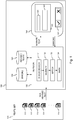
- the revision system 100 drawn in Fig. 1 is a productivity tool that enables a revisor to efficiently and objectively revise a set 101 of translated texts 111, 112, 113, 114, ..., 11 n that represent translations of the same source text.
- the translations 111-11 n may for instance be produced by student translators in the course of a test or exam.
- the revision system 100 relies on an error memory 120 instead of a traditional translation memory that would contain correct translations for certain phrases or sentences in the source text.
- the error memory 120 memorizes translation errors or wrong translations of words, phrases, sentences, expressions, etc. for the source text.
- the error memory 120 may contain translation errors that are predefined, i.e.
- the error memory 120 further memorizes translation errors that are identified by the revisor while revising the translated texts 111-11n. In relation to each translation error, the error memory 120 may also memorize corrections, i.e. substitute words, phrases, sentences, expressions, etc. that could be used to correct the respective translation errors. In relation to each translation error, the error memory 120 may also memorize a penalty, or a negative score or a penalty category to be applied when the error appears in translations.
- the error database 120 will enable the revision system 100 to suggest errors in non-revised translations 111-11n to the revisor, but also to check if newly identified errors also appear in already revised translations. These revised translated texts are stored in a revised texts memory 140. Thanks to the error memory 120, the productivity and efficiency of the revisor is improved, and revising a set of translated texts 111-11n is objectivised as identical errors will be detected and penalized similarly across all translated texts 111-11n.
- the revision system 100 thereto comprises a revision module 130 that imports a non-revised text 111-11n, for instance the non-revised text that the revisor selects for revision or the next non-revised text in line for revision.
- An error search sub-module 131 of the revision module 130 scans the imported non-revised text for the translation errors contained in the error database 120 and marks the detected translation errors in a marked version of the translated text that is outputted to display 150 for being displayed to the revisor.
- the revisor can then either accept or reject the errors suggested by the revision module 130 by selecting the suggested error in the displayed marked-up text 151 and using the acceptance/rejection buttons 152.
- the translator may identify new errors while revising the displayed translated text 151. When such new error is identified by the revisor, the error is reported back to the revision module 130 that stores the error in error database 120 and automatically checks if the new identified error also appears in already revised texts stored in the revised texts memory 140.
- a translator translated a segment of the source text in the exact same way or nearly exact to the translation of that same segment by another translator.
- the revisor preferably should not have to accept or reject the errors in the translated segment anymore.
- the revision module 130 could apply the penalties for identical translation errors in identical translated segments automatically.
- the revisor should not have to revise the identical segment in the translation under revision at all. Since there is a 100 % match with an earlier revised translation, the revision system can simply apply the penalties applied to the earlier revised translation.
- segmentation submodule 132 This saves the revisor of a set of translations 111-11n of the same source text a significant amount of time and effort, and is achieved in the revision system 100 by the segmentation submodule 132, segment matching submodule 133 and segment marking submodule 134.
- the segmentation submodule 132 identifies segments in the translated text under revision. These segments correspond to segments predefined or identified in the source text by the revisor, or automatically by the system, or semi-automatically by the system with manual assistance of the revisor.
- the source text to be translated in other words is a segmented source text.
- the translated textx 111-11n are segmented and corresponding segments identified by the segmentation submodule 132 in plural translated texts 111-11n represent respective translations of the same segment in the source text by different translators.
- the so called “corresponding segments” in different translated texts 111-11n consequently can be compared with each other.
- the segmentation submodule 132 may for instance identify sentences in the translated text under revision if the segments in the source text represent sentences.
- the segmentation submodule 132 may for instance identify paragraphs in the translated text under revision if the segments in the source text represent paragraphs.
- segments may also represent other portions of the source text. The corresponding portions then have to be identified by the segmentation submodule 132 in the translated text under revision.
- this may be automated or may require input from the revisor who may help in segmenting the translated text under revision by identifying the segments in the displayed version 151 of the translated text under revision.
- the segment matching submodule 132 compares each segment with the corresponding segment(s) in the previously revised translated texts that are stored in the revised texts memory 140. For segments that match 100 percent with a corresponding segment in a previously translated text, the translated segment is marked by the segment marking submodule 134.
- the marked text under revision is outputted by the revision module 130 to be displayed by display 150. Marked segments like for instance segments 161 and 162 in the translated text under revision 151 are displayed differently from non-marked segments.
- the marked segments 161 and 162 may be error-free, but the marked segments 161 and 162 may also contain translation errors while there is a 100 percent match with the corresponding segment in another translator's translation. In the latter case, the penalties for the translation errors can be applied automatically and consistently with the penalties applied when revising the other translator's translation, without requiring any further revision, confirmation or interaction from the revisor.
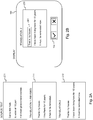
- Fig. 2A shows a source text 201 comprising three sentences in the Dutch language.
- the first sentence reads "Dat is mijn huis.”
- the second sentence reads "lk woon er 10 jaar.”
- the third sentence reads "Het moet gerenoveerd lake.”
- Fig. 2A further shows a first translated text 211 of a first translator.
- Fig. 2A further shows a second translated text 212 of a second translator.
- segment matching submodule only compares the first segment of translation 212 with the first segment of revised translation 211 and concludes that there is a 100 percent match between these corresponding segments.
- the first segment 261 will be marked visibly in the displayed version 251 of the translation 212 under revision. The marking is done under control or instruction of the segment marking submodule 134.
- segment matching submodule 133 compares the second segment in the translation under revision 212 with the second segment of already revised translations, i.e. only with the second segment of revised translation 211 in the example given.
- segment matching submodule 133 compares the third segment in the translation under revision 212 with the third segment of already revised translations, i.e. only with the third segment of revised translation 211 in the example given. As there is also here no 100 percent match between the segments, the third segment shall also remain unmarked in the displayed version 251 of the translated text under revision 212.
- translation errors that are stored in the error database 120 may be marked such that the revisor can accept or reject these known translation errors via acceptance/rejection buttons 152.
- the revisor may identify new errors, and suggest corrections and penalties for such new errors. Upon confirmation, such new errors and possibly any corrections or penalties suggested by the revisor, will be fed back to the revision module 130 for storage in error database 120.
- the revision of translated text 212 When the revision of translated text 212 is completed, the revised translated text shall be stored in revised texts memory 140 and shall serve as an additional revised text whose revised text segments can be compared with corresponding segments in further translations under revision. The revisor benefits from earlier revisions in order to reduce the effort and time for new revisions.
- the efficiency gain in terms of time and effort savings for the revisor will increase with the amount of translated texts revised and stored in the revised texts memory 140 because each segment in a translation under revision can be matched with a growing number of corresponding segments already revised hence increasing the chances for a 100 percent match with an earlier revised corresponding segment.
- consistency in the applied penalties for the same translation error across multiple translations is guaranteed.
- Advanced embodiments of the revision system according to the invention do not only mark segments that match 100 percent with a previously revised corresponding segment, but indicate in case there is no 100 percent match which revised corresponding segment matches best with the text segment under revision.
- such embodiments of the invention display the best matching revised segment and visibly indicate the differences between the segment under revision and the best matching revised corresponding segment, allowing the revisor to focus only on these differences while revising the segment.
- Fig. 3A and Fig. 3B Such embodiment is illustrated by Fig. 3A and Fig. 3B.
- Fig. 3A shows a source text 301 comprising three sentences in the Dutch language.
- the first sentence reads "Dat is mijn huis.”
- the second sentence reads “lk woon er 10 jaar.”
- the third sentence reads "Het moet gerenoveerd lake.”
- the three sentences in source text 301 represent three segments.
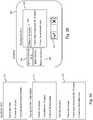
- Fig. 3A further shows a first translated text 311 of a first translator. Therein, the translation of the first sentence reads "That is my house.”, the translation of the second sentence reads "I live there for 10 years.”, and the translation of the third sentence reads "It has to be renovated.”. It is assumed in Fig. 3A that the first translation 311 has been revised already and was found to be error-free. The first translation 311 consequently has been stored unaltered, i.e.
- Fig. 3A further shows a second translated text 312 of a second translator.
- the translation of the first sentence reads "This is my house.”
- the translation of the second sentence reads "I have been living here for 10 years.”
- the translation of the third sentence reads "It must be renovated now.”
- the second translation 312 is currently under revision by the revisor as a consequence of which Fig. 3B depicts what is displayed in display 350 of the advanced embodiment of revision system 100.
- Segmentation submodule of the advanced embodiment of revision system 100 identifies three segments in the second translation 312, respectively corresponding to the three sentences.
- Segment matching submodule of the advanced embodiment of revision system 100 compares the first segment in the translation under revision 312 with the first segment of already revised translations. As it is assumed that only the first translation 311 has been revised so far, the segment matching submodule only compares the first segment of translation 312 with the first segment of revised translation 311 and concludes that there is a 75 percent match between these corresponding segments.
- the match level is determined by counting the number of identical words in the compared segments, but the skilled person will appreciate that other criteria or algorithms may be applied to determine a match level between two corresponding text segments.
- the best matching revised segment for the first segment "This is my house.” in the second translation 312 thus is the first segment "That is my house.” in the revised first translation 311.
- this segment will be marked visibly in the displayed version 351 of the translation 312 under revision, the match level or match score 362 of 75 percent will be displayed and the best matching revised corresponding segment 363 will be displayed.
- the differences between the segment under revision 361 and the best matching revised corresponding segment 363 are visibly marked, as is for instance shown in Fig. 3B where the word "This” is put between square brackets to indicate the difference from the word "That” that is used in the best matching revised corresponding segment 363.
- the marking is done under control or instruction of the segment marking submodule in the advanced embodiment of revision system 100.
- the revisor can use the acceptance/rejection buttons 352 to accept or reject the marked differences as errors.
- the match score and remaining differences as illustrated by Fig. 3A-3B will further increase the efficiency in revising a set of translations of a same source text in terms of time and effort spent by the revisor because also in case of a partial match, the revisor will be able to concentrate on the parts of the segment that differ from an earlier revision and spent no further time on parts of the segment that are identical to corresponding parts of the best matching revised corresponding segment.
- Fig. 4A shows a source text 401 comprising three sentences in the Dutch language. The first sentence reads "Dat is mijn huis.”, the second sentence reads "lk woon er 10 jaar.”, and the third sentence reads "Het moet gerenoveerd lake.”. It is assumed that the three sentences in source text 401 represent three segments. Fig. 4A further shows a first translated text 411 of a first translator.
- Fig. 4A further shows a second translated text 412 of a second translator.
- the segment matching submodule only compares the first segment of translation 412 with the first segment of revised translation 411 and concludes that there is a 75 percent match between these corresponding segments.
- the match level is determined by counting the number of identical words in the compared segments, but the skilled person will appreciate that other criteria or algorithms may be applied to determine a match level between two corresponding text segments.
- the best matching revised segment for the first segment "This is my house.” in the second translation 412 thus is the first segment "That is my house.” in the revised first translation 411.
- this segment 461 will be marked visibly in the displayed version 451 of the translation under revision 412, and the match level or match score 462 of 75 percent will be displayed.
- the best matching revised corresponding segment is displayed.
- the differences between the segment under revision 461 and the best matching revised corresponding segment are visibly marked.
- the word “This” is put between square brackets to indicate the difference from the word "That” that is used in the best matching revised corresponding segment. The marking is done under control or instruction of the segment marking submodule in the advanced embodiment of revision system 100.
- Fig. 4A-4B can suggest a possible correction 463 for the possible error resulting from the word "This".
- the revisor can use the acceptance/rejection buttons 452 to accept or reject the marked difference "This" as an error, and to accept or reject the suggested correction "That” as a valid correction of the error. Displaying possible corrections for translation errors, extracted from previous revisons, will further increase the efficiency in revising a set of translations of a same source text in terms of time and effort spent by the revisor because the revisor no longer has to enter possible corrections manually. Moreover, it will improve consistency as the same correction or corrections will be suggested for the same translation error across all translated texts.
- Fig. 5 shows a suitable computing system 500 enabling to implement embodiments of the method for revising translated texts according to the invention.
- Computing system 500 may in general be formed as a suitable general-purpose computer and comprise a bus 510, a processor 502, a local memory 504, one or more optional input interfaces 514, one or more optional output interfaces 516, a communication interface 512, a storage element interface 506, and one or more storage elements 508.
- Bus 510 may comprise one or more conductors that permit communication among the components of the computing system 500.
- Processor 502 may include any type of conventional processor or microprocessor that interprets and executes programming instructions.
- Local memory 504 may include a random access memory (RAM) or another type of dynamic storage device that stores information and instructions for execution by processor 502 and/or a read only memory (ROM) or another type of static storage device that stores static information and instructions for use by processor 502.
- Input interface 514 may comprise one or more conventional mechanisms that permit an operator or user to input information to the computing device 500, such as a keyboard 520, a mouse 530, a pen, voice recognition and/or biometric mechanisms, a camera, etc.
- Output interface 516 may comprise one or more conventional mechanisms that output information to the operator or user, such as a display 540, etc.
- Communication interface 512 may comprise any transceiver-like mechanism such as for example one or more Ethernet interfaces that enables computing system 500 to communicate with other devices and/or systems, for example with other computing devices 581, 582, 583.
- the communication interface 512 of computing system 500 may be connected to such another computing system by means of a local area network (LAN) or a wide area network (WAN) such as for example the internet.
- Storage element interface 506 may comprise a storage interface such as for example a Serial Advanced Technology Attachment (SATA) interface or a Small Computer System Interface (SCSI) for connecting bus 510 to one or more storage elements 508, such as one or more local disks, for example SATA disk drives, and control the reading and writing of data to and/or from these storage elements 508.
- SATA Serial Advanced Technology Attachment
- SCSI Small Computer System Interface
- the storage element(s) 508 above is/are described as a local disk, in general any other suitable computer-readable media such as a removable magnetic disk, optical storage media such as a CD or DVD, -ROM disk, solid state drives, flash memory cards, ... could be used. It is noticed that the entire method according to the present invention can be executed centralized, e.g. on a server in a management centre or in a cloud system, or it can be partially executed on a remote electronic device, e.g. worn by the user, and partially on a central server. Computing system 500 could thus correspond to the processing system available centrally or the processing system available in the electronic device.
- top, bottom, over, under, and the like are introduced for descriptive purposes and not necessarily to denote relative positions. It is to be understood that the terms so used are interchangeable under appropriate circumstances and embodiments of the invention are capable of operating according to the present invention in other sequences, or in orientations different from the one(s) described or illustrated above.
Landscapes
- Engineering & Computer Science (AREA)
- Theoretical Computer Science (AREA)
- Health & Medical Sciences (AREA)
- Artificial Intelligence (AREA)
- Audiology, Speech & Language Pathology (AREA)
- Computational Linguistics (AREA)
- General Health & Medical Sciences (AREA)
- Physics & Mathematics (AREA)
- General Engineering & Computer Science (AREA)
- General Physics & Mathematics (AREA)
- Machine Translation (AREA)
Priority Applications (1)
| Application Number | Priority Date | Filing Date | Title |
|---|---|---|---|
| EP17198104.6A EP3477496A1 (fr) | 2017-10-24 | 2017-10-24 | Système de révision et procédé de révision de textes traduits comportant une mise en correspondance des segments |
Applications Claiming Priority (1)
| Application Number | Priority Date | Filing Date | Title |
|---|---|---|---|
| EP17198104.6A EP3477496A1 (fr) | 2017-10-24 | 2017-10-24 | Système de révision et procédé de révision de textes traduits comportant une mise en correspondance des segments |
Publications (1)
| Publication Number | Publication Date |
|---|---|
| EP3477496A1 true EP3477496A1 (fr) | 2019-05-01 |
Family
ID=60186055
Family Applications (1)
| Application Number | Title | Priority Date | Filing Date |
|---|---|---|---|
| EP17198104.6A Ceased EP3477496A1 (fr) | 2017-10-24 | 2017-10-24 | Système de révision et procédé de révision de textes traduits comportant une mise en correspondance des segments |
Country Status (1)
| Country | Link |
|---|---|
| EP (1) | EP3477496A1 (fr) |
Cited By (2)
| Publication number | Priority date | Publication date | Assignee | Title |
|---|---|---|---|---|
| US20240354519A1 (en) * | 2023-04-24 | 2024-10-24 | Logitech Europe S.A. | System and method for transcribing audible information |
| WO2026021498A1 (fr) * | 2024-07-24 | 2026-01-29 | 灵智信息服务(深圳)有限公司 | Procédé et dispositif de révision, de révision, de numérotation automatique et de numérotation d'illustration, et support |
-
2017
- 2017-10-24 EP EP17198104.6A patent/EP3477496A1/fr not_active Ceased
Non-Patent Citations (7)
| Title |
|---|
| A. Y. G. ALFAIFI ET AL: "Computer-aided error annotation: a new tool for annotating Arabic error", 8TH SAUDI STUDENTS CONFERENCE, 31 January 2015 (2015-01-31), London, UK, pages 1 - 2, XP055467003, Retrieved from the Internet <URL:http://eprints.whiterose.ac.uk/83911/1/ALFAIFI_2015%20poster%208th%20SSC.pdf> [retrieved on 20180413] * |
| ADAM OBRUSNIK: "A Hybrid Approach to Parallel Text Alignment", 2012, MASARYK UNIVERSITY FACULTY |
| KRISTÝNA STEPÁNKOVÁ: "Learner Translation Corpus: CELTraC (Czech-English Learner Translation Corpus)", BACHELOR?S DIPLOMA THESIS MASARYK UNIVERSITY FACULTY OF ARTS DEPARTMENT OF ENGLISH AND AMERICAN STUDIES, 2014, XP055466684, Retrieved from the Internet <URL:https://is.muni.cz/th/vcg70/Bakalarka_-_CELTraC.pdf> [retrieved on 20180412] * |
| SARA STYMNE: "BLAST: A Tool for Error Analysis of Machine Translation Output", PROCEEDINGS OF THE 49TH ANNUAL MEETING OF THE ASSOCIATION FOR COMPUTATIONAL LINGUISTICS: HUMAN LANGUAGE TECHNOLOGIES: SYSTEMS DEMONSTRATIONS, 21 June 2011 (2011-06-21), Portland, Oregon, USA, pages 56 - 61, XP055467077 * |
| SIMON JAVORA: "Defining an Error Typology: the Case of CELTraC", 2015, MASARYK UNIVERSITY FACULTY |
| SONJA NIESSEN ET AL: "An Evaluation Tool for Machine Translation: Fast Evaluation for MT Research", INTERNATIONAL JOURNAL OF PRECISION ENGINEERING AND MANUFACTURING, vol. 18, 31 May 2000 (2000-05-31), Springer, pages 1567 - 1573, XP055467080, ISSN: 2234-7593, DOI: 10.1007/s12541-017-0186-1 * |
| TOM VANALLEMEERSCH ET AL: "Assessing linguistically aware fuzzy matching in translation memories", PROCEEDINGS OF EAMT 2015, 2015, pages 153, XP055467348 * |
Cited By (2)
| Publication number | Priority date | Publication date | Assignee | Title |
|---|---|---|---|---|
| US20240354519A1 (en) * | 2023-04-24 | 2024-10-24 | Logitech Europe S.A. | System and method for transcribing audible information |
| WO2026021498A1 (fr) * | 2024-07-24 | 2026-01-29 | 灵智信息服务(深圳)有限公司 | Procédé et dispositif de révision, de révision, de numérotation automatique et de numérotation d'illustration, et support |
Similar Documents
| Publication | Publication Date | Title |
|---|---|---|
| Tolmachev et al. | Juman++: A morphological analysis toolkit for scriptio continua | |
| US11538567B2 (en) | Expert report editor | |
| EP3508992A1 (fr) | Procédé et dispositif de correction d'erreur pour un terme de recherche | |
| CN110286967B (zh) | 交互式教程集成 | |
| JP2007109118A (ja) | 入力指示処理装置および入力指示処理プログラム | |
| WO2021089129A1 (fr) | Analyse et comparaison de données numériques codées en caractères, en particulier pour la mise en correspondance d'emplois | |
| CN113408253A (zh) | 一种作业评阅系统及方法 | |
| CN113360608A (zh) | 人机结合的中文作文批改系统和方法 | |
| US20230025835A1 (en) | Workflow generation support apparatus, workflow generation support method and workflow generation support program | |
| Popiolek | Terminology management within a translation quality assurance process | |
| EP3477496A1 (fr) | Système de révision et procédé de révision de textes traduits comportant une mise en correspondance des segments | |
| CN109683881B (zh) | 一种代码格式调整方法及装置 | |
| TWI698794B (zh) | 專利文件的圖形資料之導覽內容的自動化得出顯示設備 | |
| JP2019032704A (ja) | 表データ構造化システムおよび表データ構造化方法 | |
| CN109753976B (zh) | 语料标注装置和方法 | |
| US12111860B1 (en) | Patent application preparation system and template creator | |
| CN109828753A (zh) | 一种行为驱动开发中剧本文档的可视化编辑方法及其装置 | |
| Rosén et al. | Error Coding of Second-Language Learner Texts Based on Mostly Automatic Alignment of Parallel Corpora | |
| Iwashokun | Structural vetting of academic proposals | |
| EP3447655A1 (fr) | Système de vérification et procédé de vérification de textes traduits à réduction de faux positifs | |
| EP3477497A1 (fr) | Système de révision et procédé de révision de textes traduits avec des scores adaptatifs | |
| Meelen et al. | Collaborative Workflows for Handwritten Text Recognition in Under-Resourced Manuscript Collections | |
| JP2005031813A (ja) | 抄録作成支援システム、プログラム、抄録作成支援方法及び特許文献検索システム並びにその検索方法 | |
| JP6437684B1 (ja) | 問題作成支援システム、方法、およびプログラム | |
| EP3444727A1 (fr) | Système de révision et procédé de révision de textes traduits |
Legal Events
| Date | Code | Title | Description |
|---|---|---|---|
| PUAI | Public reference made under article 153(3) epc to a published international application that has entered the european phase |
Free format text: ORIGINAL CODE: 0009012 |
|
| STAA | Information on the status of an ep patent application or granted ep patent |
Free format text: STATUS: THE APPLICATION HAS BEEN PUBLISHED |
|
| AK | Designated contracting states |
Kind code of ref document: A1 Designated state(s): AL AT BE BG CH CY CZ DE DK EE ES FI FR GB GR HR HU IE IS IT LI LT LU LV MC MK MT NL NO PL PT RO RS SE SI SK SM TR |
|
| AX | Request for extension of the european patent |
Extension state: BA ME |
|
| STAA | Information on the status of an ep patent application or granted ep patent |
Free format text: STATUS: REQUEST FOR EXAMINATION WAS MADE |
|
| 17P | Request for examination filed |
Effective date: 20191104 |
|
| RBV | Designated contracting states (corrected) |
Designated state(s): AL AT BE BG CH CY CZ DE DK EE ES FI FR GB GR HR HU IE IS IT LI LT LU LV MC MK MT NL NO PL PT RO RS SE SI SK SM TR |
|
| STAA | Information on the status of an ep patent application or granted ep patent |
Free format text: STATUS: EXAMINATION IS IN PROGRESS |
|
| 17Q | First examination report despatched |
Effective date: 20200716 |
|
| APBK | Appeal reference recorded |
Free format text: ORIGINAL CODE: EPIDOSNREFNE |
|
| APBN | Date of receipt of notice of appeal recorded |
Free format text: ORIGINAL CODE: EPIDOSNNOA2E |
|
| APBR | Date of receipt of statement of grounds of appeal recorded |
Free format text: ORIGINAL CODE: EPIDOSNNOA3E |
|
| APAF | Appeal reference modified |
Free format text: ORIGINAL CODE: EPIDOSCREFNE |
|
| APBT | Appeal procedure closed |
Free format text: ORIGINAL CODE: EPIDOSNNOA9E |
|
| STAA | Information on the status of an ep patent application or granted ep patent |
Free format text: STATUS: THE APPLICATION HAS BEEN REFUSED |
|
| 18R | Application refused |
Effective date: 20240219 |