EP3477965A1 - Signalverarbeitungsvorrichtung, signalverarbeitungsverfahren und lautsprechervorrichtung - Google Patents
Signalverarbeitungsvorrichtung, signalverarbeitungsverfahren und lautsprechervorrichtung Download PDFInfo
- Publication number
- EP3477965A1 EP3477965A1 EP18202743.3A EP18202743A EP3477965A1 EP 3477965 A1 EP3477965 A1 EP 3477965A1 EP 18202743 A EP18202743 A EP 18202743A EP 3477965 A1 EP3477965 A1 EP 3477965A1
- Authority
- EP
- European Patent Office
- Prior art keywords
- processing
- audio signal
- signal
- pass filter
- frequency component
- Prior art date
- Legal status (The legal status is an assumption and is not a legal conclusion. Google has not performed a legal analysis and makes no representation as to the accuracy of the status listed.)
- Withdrawn
Links
Images




Classifications
-
- H—ELECTRICITY
- H04—ELECTRIC COMMUNICATION TECHNIQUE
- H04R—LOUDSPEAKERS, MICROPHONES, GRAMOPHONE PICK-UPS OR LIKE ACOUSTIC ELECTROMECHANICAL TRANSDUCERS; ELECTRIC HEARING AIDS; PUBLIC ADDRESS SYSTEMS
- H04R3/00—Circuits for transducers
- H04R3/007—Protection circuits for transducers
-
- H—ELECTRICITY
- H04—ELECTRIC COMMUNICATION TECHNIQUE
- H04R—LOUDSPEAKERS, MICROPHONES, GRAMOPHONE PICK-UPS OR LIKE ACOUSTIC ELECTROMECHANICAL TRANSDUCERS; ELECTRIC HEARING AIDS; PUBLIC ADDRESS SYSTEMS
- H04R3/00—Circuits for transducers
- H04R3/04—Circuits for transducers for correcting frequency response
-
- H—ELECTRICITY
- H04—ELECTRIC COMMUNICATION TECHNIQUE
- H04R—LOUDSPEAKERS, MICROPHONES, GRAMOPHONE PICK-UPS OR LIKE ACOUSTIC ELECTROMECHANICAL TRANSDUCERS; ELECTRIC HEARING AIDS; PUBLIC ADDRESS SYSTEMS
- H04R2430/00—Signal processing covered by H04R, not provided for in its groups
- H04R2430/01—Aspects of volume control, not necessarily automatic, in sound systems
-
- H—ELECTRICITY
- H04—ELECTRIC COMMUNICATION TECHNIQUE
- H04R—LOUDSPEAKERS, MICROPHONES, GRAMOPHONE PICK-UPS OR LIKE ACOUSTIC ELECTROMECHANICAL TRANSDUCERS; ELECTRIC HEARING AIDS; PUBLIC ADDRESS SYSTEMS
- H04R3/00—Circuits for transducers
- H04R3/12—Circuits for transducers for distributing signals to two or more loudspeakers
- H04R3/14—Cross-over networks
-
- H—ELECTRICITY
- H04—ELECTRIC COMMUNICATION TECHNIQUE
- H04R—LOUDSPEAKERS, MICROPHONES, GRAMOPHONE PICK-UPS OR LIKE ACOUSTIC ELECTROMECHANICAL TRANSDUCERS; ELECTRIC HEARING AIDS; PUBLIC ADDRESS SYSTEMS
- H04R5/00—Stereophonic arrangements
- H04R5/04—Circuit arrangements, e.g. for selective connection of amplifier inputs/outputs to loudspeakers, for loudspeaker detection, or for adaptation of settings to personal preferences or hearing impairments
-
- H—ELECTRICITY
- H04—ELECTRIC COMMUNICATION TECHNIQUE
- H04S—STEREOPHONIC SYSTEMS
- H04S1/00—Two-channel systems
- H04S1/002—Non-adaptive circuits, e.g. manually adjustable or static, for enhancing the sound image or the spatial distribution
-
- H—ELECTRICITY
- H04—ELECTRIC COMMUNICATION TECHNIQUE
- H04S—STEREOPHONIC SYSTEMS
- H04S2400/00—Details of stereophonic systems covered by H04S but not provided for in its groups
- H04S2400/03—Aspects of down-mixing multi-channel audio to configurations with lower numbers of playback channels, e.g. 7.1 -> 5.1
-
- H—ELECTRICITY
- H04—ELECTRIC COMMUNICATION TECHNIQUE
- H04S—STEREOPHONIC SYSTEMS
- H04S2400/00—Details of stereophonic systems covered by H04S but not provided for in its groups
- H04S2400/13—Aspects of volume control, not necessarily automatic, in stereophonic sound systems
Definitions
- the present invention relates to a signal processing device that performs signal processing to an audio signal, a signal processing method, and a speaker device that includes the signal processing device.
- a speaker device that outputs audio includes a signal processing device (for example, DSP (Digital Signal Processor) that performs signal processing to an audio signal.
- a signal processing device for example, DSP (Digital Signal Processor) that performs signal processing to an audio signal.
- DSP Digital Signal Processor
- Fig. 19 is a graph illustrating compression proceeding by the signal processing device.
- a horizontal axis illustrates input.
- a vertical axis illustrates output.
- a threshold is set to threshold 1 illustrated in Fig. 19
- the audio signal that excesses threshold 1 is compressed.
- a threshold is set to threshold 2 illustrated in Fig. 19
- the audio signal that excesses threshold 2 is compressed.
- An objective of the present invention is to resolve volume shortage of the middle and high band of speaker reproduction sound.
- a signal processing device of a first invention configured to perform: low pass filter processing to extract a low frequency component of an audio signal, compression processing to compress the audio signal to which the low pass filter processing is performed in a case that the audio signal to which the low pass filter processing is performed is not less than a predetermined signal level, high pass filter processing to extract high frequency component of the audio signal, first volume processing to attenuate the audio signal, and synthesis processing to synthesize the low frequency component of the audio signal to which the compression processing is performed and high frequency component of the audio signal.
- a signal processing device performs compression processing to compress an audio signal to which a low pass filter processing is performed when the audio signal to which the low pass filter processing is performed is not less than a predetermined signal level.
- the signal processing device of a second invention is the signal processing device of the first invention, wherein, in the first volume processing, the audio signal is attenuated based on a volume value that is received.
- the signal processing device of a third invention is the signal processing of the first or the second invention, wherein, the first volume processing is performed to the audio signal to which the low pass filter processing is performed and the audio signal to which the high pass filter processing is performed.
- the signal processing device of a fourth invention is the signal processing device of the first or the second invention, wherein, the low pass filter processing and the high pass filter processing are performed to the audio signal to which the first volume processing is performed.
- the signal processing device of a fifth invention is the signal processing device of the first or the second invention, further configured to perform: monaural synthesis processing to synthesize an audio signal that a left audio signal is multiplied by 0.5 and an audio signal that a right audio signal is multiplied by 0.5, and band pass filter processing to extract a predetermined frequency band component between the low frequency component and the high frequency component of the audio signal to which the monaural synthesis processing is performed, wherein, in the low pass filter processing, the low frequency component of the audio signal to which the monaural synthesis processing is performed is extracted, in the compression processing, the audio signal to which the low pass filter processing is performed is compressed when the audio signal to which the low pass filter processing is not less than the predetermined signal level, in the high pass filter processing, the high frequency component of the left and right audio signals is extracted, in the first volume processing, the left and right audio signals are attenuated, and in the synthesis processing, the low frequency component of the audio signal to which the compression processing is performed and a predetermined frequency band component of the
- the signal processing device performs band pass filter processing and low pass filter processing to an audio signal obtained by synthesizing an audio signal in which a left audio signal is multiplied by 0.5 and an audio signal in which a right audio signal is multiplied by 0.5. Namely, band component not more than a predetermined frequency of the monauralized audio signal is extracted. Further, the compression processing is performed to the low frequency component of the monaural audio signal to which the low pass filter processing is performed. Thus, volume shortage of bass and margin shortage of input signal level of compression processing for one speaker can be resolved.
- the signal processing device of a sixth invention is the signal processing device of the fifth invention, wherein, the first volume processing is performed to the audio signal to which the low pass filter processing is performed, the audio signal to which the band pass filter processing is performed, and the audio signal to which the high pass filter processing is performed.
- the signal processing device of a seventh invention is the signal processing device of the fifth invention, wherein, the high pass filter and the monaural synthesis processing are performed to the audio signal to which the first volume processing is performed.
- the signal processing device of a eighth invention is the signal processing device of the first or the second invention, further configured to perform: band pass filter processing to extract a predetermined frequency band component between the low frequency component and the high frequency component of the left and right audio signals, and monaural synthesis processing to synthesize the audio signal that a left audio signal is multiplied by 0.5 and the audio signal that a right audio signal is multiplied by 0.5, wherein, in the low pass filter processing, the low frequency component of the audio signal to which the monaural synthesis processing is performed is extracted, in the compression processing, the audio signal to which the low pass filter processing is performed when the audio signal to which the low pass filter processing is not less than the predetermined signal level is compressed, in the high pass filter processing, the high frequency component of the left and right audio signals is extracted, in the first volume processing, the left and right audio signals are attenuated, and in the synthesis processing, the low frequency component of the audio signal to which the compression processing is performed and the predetermined frequency band component of the left audio signal are synthesized and the
- the signal processing device performs low pass filter processing to an audio signal obtained by synthesizing an audio signal in which a left audio signal is multiplied by 0.5 and an audio signal in which a right audio signal is multiplied by 0.5. Namely, the low frequency component of the monauralized audio signal is extracted. Further, the signal processing device synthesizes the low frequency component of the audio signal and the predetermined frequency band component of the left audio signal, and synthesizes the low frequency component of the audio signal and the predetermined frequency band component of the right audio signals.
- volume sense of bass can be secured, burden of each unit/amplifier can be spread, and stereo sense can be obtained.
- volume sense and stereo sense can be achieved at the same time.
- the signal processing device of a ninth invention is the signal processing device of the eighth invention, wherein, the first volume processing is performed to the audio signal to which the low pass filter processing is performed, the audio signal to which the band pass filter processing is performed, and the audio signal to which the high pass filter processing is performed.
- the signal processing device of a tenth invention is the signal processing device of the eighth invention, wherein, the high pass filter processing, the band pass filter processing, and the monaural synthesis processing are performed to the audio signal to which the first volume processing is performed.
- the signal processing device of an eleventh invention is the signal processing device of the first or the second invention, further configured to perform band pass filter processing to extract a predetermined frequency band component between the low frequency component and the high frequency component of the audio signal that a left audio signal is multiplied by 0.5 and extract a predetermined frequency band component of the audio signal that a right audio signal is multiplied by -0.5, monaural synthesis processing to synthesis the audio signal that the left audio signal is multiplied by 0.5 and the audio signal that the right audio signal is multiplied by 0.5, and delay processing to delay the left and right audio signals to which the band pass filter processing is performed, wherein, in the low pass filter processing, the low frequency component the audio signal to which the monaural synthesis processing is performed is extracted, in the compression processing, the audio signal to which the low pass filter processing is performed when the audio signal to which the low pass filter processing is performed is not less than a predetermined signal level is compressed, in the high pass filter processing, the high frequency component of the left and right audio signal is extracted, in the first
- the signal processing device delays a predetermined frequency band component of the audio signal (L/2) that the left audio signal is multiplied by 0.5 and a predetermined frequency band component of the audio signal (-R/2) that the right audio signal is multiplied by 0.5, and adds these signal to the low frequency component of the monaural signal (L/2 + R/2).
- L/2 + R/2 the low frequency component of the monaural signal
- the signal processing device of a twelfth invention is the signal processing device of the eleventh invention, wherein, the first volume processing is performed to the audio signal to which the low pass filter processing is performed, the audio signal to which the band pass filter processing is performed, and the audio signal to which the high pass filter processing is performed.
- the signal processing device of a thirteenth invention is the signal processing device of the eleventh invention, wherein, the high pass filter processing, the band pass filter processing, and the monaural synthesis processing are performed to the audio signal to which the first volume processing is performed.
- the signal processing device of a fourteenth invention is the signal processing device of any one of the fifth to the tenth inventions, wherein, the high frequency component of the left and right audio signals is output to tweeters respectively, and the audio signal to which the synthesis processing is performed is output to two woofers respectively.
- the signal processing device of a fifteenth invention is the signal processing device of any one of the eleventh to the thirteenth inventions, wherein, the high frequency component of the left and right audio signals is output to tweeters respectively, and the audio signal to which the synthesis processing is performed is output to one woofer.
- the signal processing device of a sixteenth invention is the signal processing device of any one of the first to the fourth, and the eleventh to the thirteenth inventions, further configured to perform second volume processing to attenuate the high frequency component of the audio signal.
- the signal processing device of a seventeenth invention is the signal processing device of any one of the fifth to the tenth inventions, further configured to perform second volume processing to attenuate the predetermined frequency band component and the high frequency component of the audio signal.
- the signal processing device of a eighteenth invention is the signal processing device of the sixteenth or the seventeenth invention, wherein, in the second volume processing device, the audio signal is attenuated based on a volume value that is received.
- the low frequency component of the audio signal is compressed by a predetermined signal level or more so that amplitude of a speaker diaphragm does not reach failure point of the speaker diaphragm.
- the middle and high frequency component of the audio signal is not a signal level to reach failure point even if the attenuation amount by first volume processing to attenuate all the band component of the audio signal based on a volume value that is received is zero.
- the signal processing device performs second volume processing to attenuate the high frequency component of the audio signal or the predetermined frequency band component and the high frequency component of the audio signal based on the volume value that is received. Therefore, volume shortage of the middle and high frequency can be resolved because volume of the middle and high frequency component of the audio signal can be risen (the attenuation amount can be decreased).
- the signal processing device of a nineteenth invention is the signal processing device of any one of the first to the eighteenth inventions, further configured to perform low frequency equalizing processing to boost the low frequency equalizing processing of the audio signal.
- the signal processing device performs low frequency equalizing processing to boost the low frequency component of the audio signal.
- frequency characteristics of a speaker can be extended to a low frequency.
- the signal processing device of a twentieth invention is the signal processing device of any one of the first to the nineteenth inventions, further configured to perform attenuation processing to attenuate the low frequency component of the audio signal.
- the signal processing device performs attenuation processing to attenuate the low frequency component of the audio signal.
- the middle and high frequency component of the audio signal there can be a margin in the middle and high frequency component of the audio signal compared with a case where all band frequency component of the audio signal is attenuated because only the low frequency component of the audio signal is attenuated for the low frequency equalizing processing. Therefore, in the middle and high frequency component, volume can be risen with a predetermined the attenuation amount.
- the signal processing device of the twenty-first invention is the first or the second invention of the signal processing device, wherein, instead of the low pass filter processing, to perform first band pass filter to extract a predetermined frequency band component of the audio signal, and instead of the high pass filter processing, to perform second band pass filter processing to extract a predetermined frequency band component of the audio signal.
- the signal processing device of a twenty-second invention is the signal processing device of the first or the second invention, wherein, instead of the first volume processing, to perform third volume processing to attenuate the low frequency component of the audio signal and fourth volume processing to attenuate the high frequency component of the audio signal.
- a speaker device of a twenty-third invention comprising: the signal processing device to any one of the first to the twenty-second inventions, and a speaker to which an audio signal from the signal processing device is input.
- the signal processing device may be implemented to execute a signal processing method accordint ot any one of the following aspects.
- a signal processing method of a twenty-fourth invention performing: low pass filter processing to extract a low frequency component of an audio signal, compression processing to compress the audio signal to which the low pass filter processing is performed in a case that the audio signal to which the low pass filter processing is performed is not less than a predetermined signal level, high pass filter processing to extract high frequency component of the audio signal, first volume processing to attenuate the audio signal, and synthesis processing to synthesize the low frequency component of the audio signal to which the compression processing is performed and high frequency component the audio signal.
- the signal processing method of a twenty-fifth invention is the signal processing method of the twenty-fourth invention, further performing: monaural synthesis processing to synthesize the audio signal that a left audio signal is multiplied by 0.5 and the audio signal that a right audio signal is multiplied by 0.5, and band pass filter processing to extract a predetermined frequency band component between the low frequency component and the high frequency component of the audio signal to which the monaural synthesis processing is performed, wherein, in the low pass filter processing, the low frequency component of the audio signal to which the monaural synthesis processing is performed is extracted, in the compression processing, the audio signal to which the low pass filter processing is performed is compressed when the audio signal to which the low pass filter processing is performed is not less than the predetermined signal level, in the high pass filter processing, the high frequency component of the left and right audio signals is extracted, in the first volume processing, the left and right audio signals are attenuated, and in the synthesis processing, the low frequency component of the audio signal to which the compression processing is performed and a predetermined frequency
- the signal processing method of a twenty-sixth invention is the signal processing method of the twenty-fourth invention, further performing: band pass filter processing to extract a predetermined frequency band component between the low frequency component and the high frequency component of the left and right audio signals, and monaural synthesis processing to synthesize the audio signal that a left audio signal is multiplied by 0.5 and the audio signal that a right audio signal is multiplied by 0.5, wherein, in the low pass filter processing, the low frequency component of the audio signal to which the monaural synthesis processing is performed is extracted, in the compression processing, the audio signal to which the low pass filter processing is performed is compressed when the audio signal to which the low pass filter processing is not less than the predetermined signal level, in the high pass filter processing, the high frequency component of the left and right audio signals is extracted, in the first volume processing, the left and right audio signals are attenuated, and in the synthesis processing, the low frequency component of the audio signal to which the compression processing is performed and the predetermined frequency band component of the left audio signal are synthesized
- the signal processing method of a twenty-seventh invention is the signal processing method of the twenty-fourth invention, further performing: band pass filter processing to extract a predetermined frequency band component between the low frequency component and the high frequency component of the audio signal that the left audio signal is multiplied by 0.5 and extract a predetermined frequency band component of the audio signal that the right audio signal is multiplied by -0.5, monaural synthesis processing to synthesis the audio signal that the left audio signal is multiplied by 0.5 and the audio signal that the right audio signal is multiplied by 0.5, and delay processing to delay the left and right audio signals to which the band pass filter processing is performed, wherein, in the low pass filter processing, the low frequency component of the audio signal to which the monaural synthesis processing is performed is extracted, in the compression processing, the audio signal to which the low pass filter processing is performed is compressed when the audio signal to which the low pass filter processing is performed is not less than the predetermined signal level, in the high pass filter processing, the high frequency component of the left and right audio signals is extracted, in the
- volume shortage of the middle and high band of speaker reproduction sound can be resolved.
- Fig. 1 is a diagram illustrating a speaker device according to an embodiment of the present invention.
- the speaker device 1 includes a microcomputer 2, an operation section 3, a DSP (Digital Signal Processor) 4, a D/A converter (hereinafter, referred as to "DAC") 5, an amplifier 6, a speaker 7, and a wireless module 8.
- DSP Digital Signal Processor
- DAC D/A converter
- the microcomputer 2 controls respective sections composing the speaker device 1.
- the operation section 3 has operation keys and the like for receiving various settings. For example, the operation section 3 has a volume knob for receiving volume adjustment by a user.
- the DSP 4 (signal processing device) performs signal processing to a digital audio signal. Signal processing that the DSP 4 performs will be described later.
- the DAC 5 D/A-converts the digital audio signal to which the DSP 4 performs signal processing into an analog audio signal.
- the amplifier 6 amplifies the analog audio signal D/A-converted by the DAC 5.
- the analog audio signal that the amplifier 6 amplifies is output to the speaker 7.
- the speaker 7 outputs an audio based on the analog audio signal that is input.
- the wireless module 8 is for performing wireless communication according to Bluetooth (registered trademark) standard and Wi-Fi standard.
- the microcomputer 2 receives the digital audio signal that is sent from a smart phone, a digital audio player or the like via the wireless module 10.
- the microcomputer 2 makes the DSP 4 perform signal processing to the received digital audio signal.
- Fig. 2 is a diagram illustrating signal processing by the DSP in a first embodiment.
- the DSP 4 performs speaker adjustment equalizing processing (hereinafter referred as to “speaker adjustment EQ processing”), low pass filter processing (hereinafter referred as to “LPF processing”), low frequency equalizing processing (hereinafter referred as to “low frequency EQ processing”), attenuation processing, dynamic range control processing (hereinafter referred as to “DRC processing”), high pass filter processing (hereinafter referred as to "HPF processing”), first volume processing, second volume processing, and synthesis processing.
- speaker adjustment equalizing processing hereinafter referred as to "speaker adjustment EQ processing”
- LPF processing low pass filter processing
- low frequency equalizing processing hereinafter referred as to “low frequency EQ processing”
- attenuation processing hereinafter referred as to "DRC processing”
- DRC processing dynamic range control processing
- HPF processing high pass filter processing
- the speaker adjustment EQ processing is processing to adjust frequency characteristics of an audio signal based on characteristics of a speaker.
- the DSP 4 performs the speaker adjustment EQ processing to the audio signal to be input.
- the LPF processing is processing to extract the low frequency component (for example, not more than 150Hz) of the audio signal.
- the DSP 4 performs the LPF processing to the audio signal to which the speaker adjustment EQ processing is performed.
- the HPF processing is processing to extract high frequency component (for example, not less than 150 Hz) of the audio signal.
- the DSP 4 performs the HPF processing to the audio signal to which the speaker adjustment EQ processing is performed.
- the low frequency EQ processing is processing to boost the low frequency component of the audio signal.
- the DSP 4 performs the low frequency EQ processing to the audio signal to which the LPF processing is performed.
- the attenuation processing is processing to attenuate the audio signal.
- the DSP 4 performs the attenuation processing to the audio signal to which the first volume processing is performed.
- the DRC processing compression processing is processing to compress the audio signal when the audio signal is not less than a predetermined signal level.
- the DSP 4 performs the DRC processing to which the low frequency EQ processing is performed.
- the second volume processing is processing to attenuate the audio signal based on a volume value that is received by the microcomputer 2.
- the DSP 4 performs the second volume processing to the audio signal to which the HPF processing is performed.
- the synthesis processing is processing to synthesize the audio signal to which the DRC processing is performed and the audio signal to which the second volume processing is performed.
- the DSP 4 performs the synthesis processing to the audio signal to which the DRC processing is performed and the audio signal to which the second volume processing is performed.
- Fig. 3 is a diagram illustrating conventional volume processing that is one volume processing.
- all the band of an audio signal is attenuated.
- volume sense of the middle and high frequency is insufficient because volume processing to attenuate the all band component of the audio signal is one.
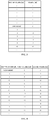
- Fig. 4 is a diagram illustrating relationship between the first volume processing and the second volume processing.
- Master volume is a volume value that the microcomputer 2 receives.
- First volume is the attenuation amount by the first volume processing.
- Second volume is the attenuation amount by the second volume processing.
- the attenuation amount by the second volume processing is constant “-6 dB”.
- the attenuation amount by the first volume processing changes.
- the attenuation is not performed by the first volume processing (attenuation amount 0).
- the attenuation amount by the second volume processing changes.
- volume of the middle and high frequency component of the audio signal can be risen (the attenuation amount is decreased) by the second volume processing.
- the attenuation processing is performed to only the low frequency component of the audio signal, a predetermined the attenuation amount margin exists in the middle and high frequency of the audio signal compared with a conventional device. Therefore, volume can be raised with the predetermined the attenuation amount in the second volume processing.
- the attenuation amount by the attenuation processing is a value of difference of the attenuation amount "0 dB" by the first volume processing and the attenuation amount "-6 dB" by the second volume processing in case where "master volume” is "0 dB". In a case that "master volume” changes beyond "0 dB", audio that the low frequency component and the middle and high frequency is balanced can be reproduced.
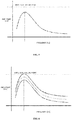
- Fig. 5 is a diagram illustrating amplitude of a speaker diaphragm against frequency of the audio signal to which the low frequency EQ processing is performed. As illustrated in Fig. 5 , in the low frequency EQ processing, the low frequency component of the audio signal is boosted with a predetermined frequency as a boost point.
- Fig. 6 is a diagram illustrating a state that volume is raised from the state of Fig. 5 . As illustrated in Fig. 6 , when volume is raised, the low frequency component of the audio signal reaches amplitude that failure sound outputs and distortion increases greatly.
- Fig. 7 is a diagram illustrating an audio signal to which the DRC processing is performed. As illustrated in Fig. 7 , failure is prevented because the low frequency component of the audio signal is compressed by the DRC processing. However, at a point that the low frequency component becomes 0 dBFS, amplitude of the middle and high frequency (shaded area in Fig. 7 ) is small and volume is insufficient. In other words, in the middle and high frequency, despite being able to produce volume, it is limited.
- Fig. 8 is a diagram illustrating addition of volume by the second volume processing. As illustrated in Fig. 8 , volume of the middle and high frequency component can be increased by the second volume processing.
- Fig. 9 is a diagram illustrating signal processing by the DSP 4 in a variation 1 of the first embodiment.
- the LPF processing is replaced to band bass filter processing (hereinafter, referred as to "BPF processing") to extract a predetermined frequency band component of the audio signal.
- BPF processing band bass filter processing
- HPF processing is replaced to the BPF processing to extract a predetermined frequency band component of the audio signal.
- Fig. 10 is a diagram illustrating signal processing by the DSP 4 in a variation 2 of the first embodiment.
- the DSP 4 performs third volume processing to attenuate the low frequency component of the audio signal based on a volume value that is received.
- the DSP 4 performs fourth volume processing to attenuate the high frequency component of the audio signal based on the volume value that is received. Namely, each of volume processing of the low frequency component of the audio signal and volume processing of the high frequency component of the audio signal is independent.
- the attenuation amount of the attenuation processing in the first embodiment may be always added to the attenuation amount by the volume value.
- the DSP 4 performs the DRC processing to compress the audio signal to which the LPF processing is performed when the audio signal to which the LPF processing is performed is not less than the predetermined signal level.
- volume shortage of the middle and high band can be resolved because the middle and high frequency component of the audio signal is not compressed wastefully.
- the low frequency component of the audio signal is compressed at a predetermined signal level or more so that the amplitude of a speaker diaphragm does not reach failure point.
- the middle and high frequency component of the audio signal is not a signal level to reach failure point even if the attenuation amount by the first volume processing to attenuate the all band component of the audio signal based on the volume value that is received is zero.
- the DSP 4 performs the second volume processing to attenuate the audio signal to which the HPF processing is performed based on the volume value that is received. Therefore, volume shortage of the middle and high frequency can be resolved because volume of the middle and high frequency component of the audio signal can be risen (the attenuation amount can be decreased).
- the attenuation amount by the first volume processing is zero and the attenuation amount by the second volume processing changes in a case that the volume value that is received exceeds a predetermined value. Therefore, the middle and high frequency component of the audio signal can be risen (the attenuation amount can be decreased) by the second volume processing even if the attenuation amount by the first volume processing becomes zero.
- the DSP 4 performs the first volume to the audio signal to which the low frequency EQ processing is performed and the audio signal to which the HPF processing is performed.
- the first volume processing may be performed before and after any processing as long as it is performed before the DRC processing.
- the DSP 4 may perform the first volume processing to the audio signal before performing the LPF processing and the HPF processing.
- the DSP 4 may perform the first volume processing to the audio signal before performing the BPF processing. Further, order of each processing may be interchanged.
- the constant attenuation amount is attenuated.
- the variable attenuation amount may be attenuated based on the volume value that is received by the microcomputer 2.
- the audio signal is attenuated (the attenuation amount is variable) based on the volume value that is received by the microcomputer 2.
- the constant attenuation amount may be attenuated.
- a low frequency is enhanced effectively, and in a small type powered speaker which is unsuitable to reproduce low frequency, sound quality improvement can be expected.
- volume of bass is likely to be restricted especially and volume sense is insufficient at large volume by enhancing low frequency and performing DRC processing.
- the low frequency component of the left audio signal L ch
- volume sense of the low frequency is insufficient.
- the speaker 7 is a 2 way speaker including two tweeters and two woofers.
- Fig. 12 is a diagram illustrating signal processing by the DSP 4 in the second embodiment. As illustrated in Fig. 12 , the DSP 4 performs the speaker adjustment EQ processing, the HPF processing, monaural synthesis processing, the BPF processing, the LPF processing, the low frequency EQ processing, the first volume processing, the attenuation processing, the second volume processing, the DRC processing, and the synthesis processing. The DSP 4 performs signal processing to the left and right audio signals. Description is omitted with regard to the same processing as the first embodiment.
- the DSP 4 performs the speaker adjustment EQ processing to the left and right audio signals.
- the monaural synthesis processing is processing to synthesize the audio signal that the left audio signal is multiplied by 0.5 and the audio signal that the right audio signal is multiplied by 0.5.
- the DSP 4 performs the monaural synthesis processing to the left and right audio signals to which the speaker EQ adjustment processing is performed.
- the DSP 4 performs the LPF processing to the audio signal to which the monaural synthesis processing is performed.
- the DSP 4 extracts the low frequency component not more than 100 Hz of the audio signal.
- the DSP 4 performs the low frequency EQ processing to the audio signal to which the LPF processing is performed.
- the DSP 4 performs the BPF processing to the audio signal to which the monaural synthesis processing is performed.
- the DSP 4 extracts a frequency band component between not less than 100 Hz and not more than 300 Hz of the audio signal.
- the DSP 4 performs the first volume processing to the low frequency component of the monaural audio signal to which the low frequency EQ processing is performed, a predetermined frequency band component of the monaural audio signal to which the BPF processing is performed, and the high frequency component of the left and right audio signals to which the HPF processing is performed. Therefore, the first volume processing is performed to the all band component of the audio signal which is output to the speaker 7.
- the DSP 4 performs the second volume processing to the high frequency component of the left and right audio signals to which the first volume processing is performed.
- the DSP 4 performs the attenuation processing to the low frequency component of the monaural audio signal to which the first volume processing is performed.
- the DSP 4 performs the DRC processing to the low frequency component of the monaural audio signal to which the attenuation processing is performed.
- the DSP 4 performs the second volume processing to the predetermined frequency band component of the monaural audio signal to which the first volume processing is performed.
- the DSP 4 synthesizes the low frequency component of the monaural audio signal to which the DRC processing is performed and the predetermined frequency band component of the monaural audio signal to which the second volume processing is performed.
- the high frequency component of the left and right audio signals to which the second volume processing is performed is output to the tweeters respectively.
- the band component not more than the predetermined frequency of the monaural audio signal that the synthesis processing is performed is output to two woofers.
- the DSP 4 performs the BPF processing and the LPF processing to the audio signal obtained by synthesizing the audio signal that the left audio signal is multiplied by 0.5 and the audio signal that the right audio signal that is multiplied by 0.5. Namely, the band component not more than the predetermined frequency of the monauralized audio signal is extracted. Further, the DRC processing is performed to the low frequency component of the monaural audio signal to which the LPF processing is performed. Thus, volume shortage of bass and margin shortage of input signal level of the DRC processing for one speaker can be resolved.
- Example 1 Case where one channel is a signal level which is suppressed by the DRC processing
- the DRC processing works on an average value of the left and right audio signal level. For this reason, when the level L1 of the left audio signal is 80, and the level R1 of the right audio signal is 20, average value of the left and right audio signal level is taken by the monaural synthesis processing.
- Example 2 Case where one signal level is a level which reaches to limit of the DRC processing
- the level L1 of the left audio signal is 50
- the level R1 of the right audio signal is 0, the average value of the left and right audio signal level is taken by the monaural synthesis processing.
- Margin can be made for limit value 50 of the DRC processing for one speaker. Effect of spreading burden on a speaker unit and an amplifier can be obtained.
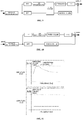
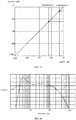
- Fig. 13 is a graph illustrating the signal level in the first embodiment.
- Fig. 14 is a graph illustrating the signal level in the present embodiment.
- Horizontal axis illustrates frequency.
- Vertical axis illustrates output from the DAC. Case where the level L1 of the left audio signal is 50 and the level R1 of the right audio signal is 50 and case where the level L1 of the left audio signal is 100 and the level R1 of the right audio signal is 100 are illustrated. As illustrated in the figure, it is understood that reproduction is performed without losing signal level of bass.
- the DSP 4 performs the first volume processing to the audio signal to which the low frequency EQ processing is performed, the audio signal to which the BPF processing is performed, and the audio signal to which the HPF processing is performed.
- the first volume processing may be performed before or after any processing as long as the first volume processing is performed before the DRC processing.
- the DSP 4 may perform the first volume processing to the audio signal before performing the monaural synthesis processing and the HPF processing. Further, order of each processing may be interchanged.
- the constant attenuation amount is attenuated.
- the variable attenuation amount may be attenuated based on a volume value that is received by the microcomputer 2.
- the audio signal is attenuated (attenuation amount is variable) based on the volume value that is received by the microcomputer 2.
- the constant attenuation amount may be attenuated.
- the speaker 7 is a 2 way speaker which includes two tweeters and two woofers.
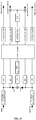
- Fig. 15 is a diagram illustrating signal processing by the DSP in the third embodiment. As illustrated in Fig. 15 , the DSP 4 performs the speaker adjustment EQ processing, the monaural synthesis processing, the LPF processing, the BPF processing, the HPF processing, the first volume processing, the attenuation processing, the low frequency EQ equalizing processing, the DRC processing, the second volume processing, and the synthesis processing. The DSP 4 performs the signal processing to the left and right audio signals. Description is omitted with regard to the same processing as the first and the second embodiment.
- the DSP 4 performs the speaker adjustment EQ processing to the left and right audio signals.
- the DSP 4 performs the HPF processing to the left and right audio signals to which the speaker adjustment EQ processing is performed.
- the DSP 4 extracts a high frequency component not less than 300Hz of the audio signal.
- the DSP 4 performs the BPF processing to the left and right audio signals to which the speaker EQ processing is performed.
- the DSP 4 extracts the predetermined frequency band component not less than 100 Hz and not more than 300 Hz.
- the DSP 4 performs the monaural synthesis processing to the left and right audio signals to which the speaker adjustment EQ processing is performed.
- the DSP 4 performs the LPF processing to the monaural audio signal to which the monaural synthesis processing is performed.
- the DSP 4 extracts the low frequency component not more than 100 Hz.
- the DSP 4 performs the low frequency EQ processing to the low frequency component of the monaural audio signal to which the LPF processing is performed.
- the DSP 4 performs the first volume processing to the high frequency component of the left and right audio signals to which the HPF processing is performed, the predetermined frequency band component of the left and right audio signals to which the BPF processing is performed, and the low frequency component of the monaural audio signal to which the low frequency EQ processing is performed.
- the DSP 4 performs the second volume processing to the high frequency component of the left and right audio signals and the predetermined frequency band component of the left and right audio signals to which the first volume processing is performed.
- the left and right audio signals to which the second volume processing is performed are output to the tweeters respectively.
- the DSP 4 performs the attenuation processing to the low frequency component of the monaural processing to which the first volume processing is performed.
- the DSP 4 performs the DRC processing to the low frequency component of the monaural audio signal to which the attenuation processing is performed.
- the DSP 4 synthesizes the predetermined frequency band component of the left audio signal to which the second volume processing is performed and the low frequency component of the monaural audio signal to which the DRC processing is performed, and synthesizes the low frequency component of the monaural audio signal to which the DRC processing is performed and the predetermined frequency band component of the right audio signal to which the second volume processing is performed.
- the audio signal to which the synthesis processing is performed is output to two woofers.
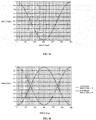
- Fig. 16 is a graph illustrating the audio signal to which the monaural synthesis processing is performed.
- a vertical axis illustrates amplitude
- a horizontal axis illustrates angle.
- the monaural synthesis processing is processing in which the audio signal (L/2) that the left audio signal is multiplied by 0.5 and the audio signal (R/2) that the right audio signal to which the first volume processing is performed is multiplied by 0.5 (L/2 + R/2).
- the DSP 4 performs the LPF processing to the audio signal that synthesizes the left audio signal that is multiplied by 0.5 and the right audio signal that is multiplied by 0.5. Namely, the low frequency component of the monauralized audio signal is extracted. Further, the DSP 4 synthesizes the low frequency component of the audio signal and the predetermined frequency band component of the left audio signal, and synthesizes the low frequency component of the audio signal and the predetermined frequency band component of the right audio signal. Therefore, the synthesized audio signal is output to two woofers, the high frequency component of the left and right audio signals is output to two tweeters, and the audio signal not less than the predetermined frequency is still stereo, and the audio signal not more than the predetermined frequency is monauralized. For this reason, volume sense of bass can be secured. Further, burden of each unit/amplifier can be spread, and stereo sense can be obtained. Like this, according to the present embodiment, volume sense and stereo sense can be compatible.
- the DSP 4 performs the first volume processing to the audio signal to which the low frequency EQ processing is performed, the audio signal to which the BPF processing is performed, and the audio signal to which the HPF processing is performed.
- the first volume processing may be performed before or after any processing as long as the first volume processing is performed before the DRC processing.
- the DSP 4 may perform the first volume processing to the audio signal before performing the monaural synthesis processing, the BPF processing, and the HPF processing. Further, order of each processing may be interchanged.
- the constant attenuation amount is attenuated.
- the variable attenuation amount may be attenuated based volume value that is received by the microcomputer 2.
- the audio signal is attenuated (attenuation amount is variable) based on a volume value that is received by the microcomputer 2.
- the constant attenuation amount may be attenuated.
- the speaker 7 is a 2 way speaker which includes two tweeters and one woofer.
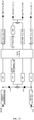
- Fig. 17 is a diagram illustrating signal processing by the DSP 4 in the fourth embodiment. As illustrated in Fig. 17 , the DSP 4 performs the speaker adjustment EQ processing, the monaural synthesis processing, the LPF processing, the BPF processing, the HPF processing, the first volume processing, the attenuation processing, the low frequency EQ processing, the DRC processing, the second volume processing, delay processing, and the synthesis processing. The DSP 4 performs the signal processing to the left and right audio signals. Description is omitted with regard to the same processing as the first to the third embodiment.
- the DSP 4 performs the speaker adjustment EQ processing to the left and right audio signals.
- the DSP 4 performs the HPF processing to the left and right audio signals to which the speaker adjustment EQ processing is performed.
- the DSP 4 extracts the high frequency component not less than 300 Hz of the audio signal.
- the DSP 4 performs the BPF processing to the audio signal that the left audio signal to which the speaker adjustment EQ processing is performed is multiplied by 0.5.
- the DSP 4 performs the BPF processing to the audio signal that the right audio signal to which the speaker adjustment EQ processing is performed is multiplied by -0.5.
- the DSP 4 extracts the high frequency not more than 100 Hz and not less than 300 Hz.
- the DSP 4 performs the monaural synthesis processing to the left and right audio signals to which the speaker adjustment EQ processing is performed.
- the DSP 4 performs the LPF processing to the monaural audio signal to which the monaural synthesis processing is performed.
- the DSP 4 extracts the low frequency component not more than 100 Hz.
- the DSP 4 performs the low frequency EQ processing to the low frequency component of the monaural audio signal to which the LPF processing is performed.
- the DSP 4 performs the first volume processing to the high frequency component of the left and right audio signals to which the HPF processing is performed, the predetermined frequency band component of the left and right audio signals to which the BPF processing is performed, and the low frequency component of the monaural audio signal to which the low frequency EQ processing is performed.
- the DSP 4 performs the second volume processing to the left and right audio signals to which the first volume processing is performed.
- the left and right audio signals to which the second volume processing is performed are output to the tweeters respectively.
- the DSP 4 performs the attenuation processing to the low frequency component of the monaural audio signal to which the first volume processing is performed.
- the DSP 4 performs the DRC processing to the low frequency component of the monaural audio signal to which the attenuation processing is performed.
- the DSP 4 performs the delay processing to delay the predetermined frequency band component of the left and right audio signals to which the second volume processing is performed.
- the DSP 4 synthesizes the predetermined frequency band component of the left and right audio signals to which the delay processing is performed and the low frequency component of the monaural audio signal to which the DRC processing is performed.
- the audio signal to which the synthesis processing is performed is output to one woofer.
- Fig. 16 In the monaural synthesis processing, as described above, processing of "L/2 + R/2" is performed. For this reason, as illustrated in Fig. 16 , the more the phase of L/R deviates, the lower the signal level becomes.
- the DSP 4 delays the predetermined frequency band component of the audio signal (L/2) that is the left audio signal multiplied by 0.5 and the predetermined frequency band component of the audio signal (-R/2) that is the right audio signal multiplied by -0.5, and adds these signals to the low frequency component of the monaural audio signal (delay processing and synthesis processing).
- Fig. 18 is a graph that phase - amplitude characteristics of "L/2 - R/2" are over-written to Fig. 15 .
- the DSP 4 performs the first volume processing to the audio signal to which the low frequency EQ processing is performed, the audio signal to which the BPF processing is performed, and the audio signal to which the HPF processing is performed.
- the first volume processing may be performed before or after any processing as long as the first volume processing is performed before the DRC processing.
- the DSP 4 may perform the first volume processing to the audio signal before performing the monaural synthesis processing, the BPF processing, and the HPF processing. Further, order of each processing may be interchanged.
- the constant attenuation amount is attenuated.
- the variable attenuation amount may be attenuated based on a volume value that is received by the microcomputer 2.
- the audio signal is attenuated (attenuation amount is variable) based on a volume value that is received by the microcomputer 2.
- the constant attenuation amount may be attenuated.
- each processing such as the first volume processing is performed by the DSP 4.
- each processing may be performed by a dedicated circuit or the like.
- the first volume processing is performed by an SoC (System On Chip) (controller).
- the present invention can be suitably employed in a signal processing device that performs signal processing to an audio signal, a signal processing method, and a speaker device that includes the signal processing device.
Landscapes
- Physics & Mathematics (AREA)
- Engineering & Computer Science (AREA)
- Acoustics & Sound (AREA)
- Signal Processing (AREA)
- Stereophonic System (AREA)
- Circuit For Audible Band Transducer (AREA)
Applications Claiming Priority (1)
| Application Number | Priority Date | Filing Date | Title |
|---|---|---|---|
| JP2017208219A JP2019080290A (ja) | 2017-10-27 | 2017-10-27 | 信号処理装置、信号処理方法、及び、スピーカー装置 |
Publications (1)
| Publication Number | Publication Date |
|---|---|
| EP3477965A1 true EP3477965A1 (de) | 2019-05-01 |
Family
ID=64082877
Family Applications (1)
| Application Number | Title | Priority Date | Filing Date |
|---|---|---|---|
| EP18202743.3A Withdrawn EP3477965A1 (de) | 2017-10-27 | 2018-10-26 | Signalverarbeitungsvorrichtung, signalverarbeitungsverfahren und lautsprechervorrichtung |
Country Status (3)
| Country | Link |
|---|---|
| US (1) | US20190132677A1 (de) |
| EP (1) | EP3477965A1 (de) |
| JP (1) | JP2019080290A (de) |
Families Citing this family (1)
| Publication number | Priority date | Publication date | Assignee | Title |
|---|---|---|---|---|
| US11689169B1 (en) * | 2021-02-26 | 2023-06-27 | Apple Inc. | Linking audio amplification gain reduction per channel and across frequency ranges |
Citations (5)
| Publication number | Priority date | Publication date | Assignee | Title |
|---|---|---|---|---|
| US4841573A (en) * | 1987-08-31 | 1989-06-20 | Yamaha Corporation | Stereophonic signal processing circuit |
| JP2007104407A (ja) | 2005-10-05 | 2007-04-19 | Matsushita Electric Ind Co Ltd | 音響信号処理装置 |
| WO2009030235A1 (en) * | 2007-09-03 | 2009-03-12 | Am3D A/S | Method and device for extension of low frequency output from a loudspeaker |
| WO2011085148A1 (en) * | 2010-01-07 | 2011-07-14 | That Corporation | Compressor based dynamic bass enhancement with eq |
| EP2362997A1 (de) * | 2008-11-14 | 2011-09-07 | THAT Corporation | Dynamische volumenregelung und schutz mehrfach-räumlicher verarbeitung |
Family Cites Families (6)
| Publication number | Priority date | Publication date | Assignee | Title |
|---|---|---|---|---|
| JPH05145991A (ja) * | 1991-11-18 | 1993-06-11 | Matsushita Electric Ind Co Ltd | 低音域特性補正回路 |
| JPH06177688A (ja) * | 1992-10-05 | 1994-06-24 | Mitsubishi Electric Corp | オーディオ信号処理装置 |
| JPH10294990A (ja) * | 1997-04-21 | 1998-11-04 | Matsushita Electric Ind Co Ltd | 音声信号処理装置 |
| WO2006018808A1 (en) * | 2004-08-16 | 2006-02-23 | Bang & Olufsen A/S | Speed- and user-dependent timbre and dynamic range control method, apparatus and system for automotive audio reproduction systems |
| JP2012156649A (ja) * | 2011-01-24 | 2012-08-16 | Roland Corp | 低音増強処理装置、楽器用スピーカ装置、および音響効果装置 |
| JP6336830B2 (ja) * | 2014-06-23 | 2018-06-06 | ローム株式会社 | レベル調節回路、デジタルサウンドプロセッサ、オーディオアンプ集積回路、電子機器、オーディオ信号の自動レベル調節方法 |
-
2017
- 2017-10-27 JP JP2017208219A patent/JP2019080290A/ja not_active Abandoned
-
2018
- 2018-10-26 EP EP18202743.3A patent/EP3477965A1/de not_active Withdrawn
- 2018-10-26 US US16/171,488 patent/US20190132677A1/en not_active Abandoned
Patent Citations (5)
| Publication number | Priority date | Publication date | Assignee | Title |
|---|---|---|---|---|
| US4841573A (en) * | 1987-08-31 | 1989-06-20 | Yamaha Corporation | Stereophonic signal processing circuit |
| JP2007104407A (ja) | 2005-10-05 | 2007-04-19 | Matsushita Electric Ind Co Ltd | 音響信号処理装置 |
| WO2009030235A1 (en) * | 2007-09-03 | 2009-03-12 | Am3D A/S | Method and device for extension of low frequency output from a loudspeaker |
| EP2362997A1 (de) * | 2008-11-14 | 2011-09-07 | THAT Corporation | Dynamische volumenregelung und schutz mehrfach-räumlicher verarbeitung |
| WO2011085148A1 (en) * | 2010-01-07 | 2011-07-14 | That Corporation | Compressor based dynamic bass enhancement with eq |
Also Published As
| Publication number | Publication date |
|---|---|
| JP2019080290A (ja) | 2019-05-23 |
| US20190132677A1 (en) | 2019-05-02 |
Similar Documents
| Publication | Publication Date | Title |
|---|---|---|
| KR101482488B1 (ko) | 개선된 오디오를 위한 통합된 심리음향 베이스 강화 (pbe) | |
| JP5488389B2 (ja) | 音響信号処理装置 | |
| KR101687085B1 (ko) | 2채널 오디오에서의 스테레오 음장 개선을 위한 시스템 및 방법 | |
| KR101755298B1 (ko) | Eq를 이용한 압축기 기반의 동적 베이스 향상 | |
| CN105811910B (zh) | 电子设备用声音处理系统、方法以及便携电话终端 | |
| US9894194B2 (en) | Mobile device | |
| US20100215192A1 (en) | Method and device for extension of low frequency output from a loudspeaker | |
| US9020166B2 (en) | Volume amplitude limiting device | |
| US9473102B2 (en) | Level adjusting circuit, digital sound processor, audio AMP integrated circuit, electronic apparatus and method of automatically adjusting level of audio signal | |
| US10149053B2 (en) | Signal processing device, signal processing method, and speaker device | |
| US20190132677A1 (en) | Signal processing device, signal processing method, and speaker device | |
| KR101405847B1 (ko) | 차량 오디오 시스템의 음질 향상을 위한 신호처리 구조 | |
| JP2946884B2 (ja) | 低音域特性補正回路 | |
| JPH05145991A (ja) | 低音域特性補正回路 | |
| JP6908833B2 (ja) | 信号処理装置、信号処理方法、及び、スピーカー装置 | |
| US10959020B2 (en) | Audio signal control circuit and audio signal control method | |
| US20140376725A1 (en) | Sound enhancement for powered speakers | |
| EP4521638A1 (de) | System und verfahren für mehrbandbegrenzer mit mehrfachfrequenzbereich | |
| JP2013255050A (ja) | チャンネルデバイダおよびこれを含む音声再生システム | |
| JPS6062218A (ja) | 信号処理回路 | |
| HK1253783B (en) | System and method for stereo field enhancement in two-channel audio systems | |
| KR20090023911A (ko) | 오디오 신호 처리장치 |
Legal Events
| Date | Code | Title | Description |
|---|---|---|---|
| PUAI | Public reference made under article 153(3) epc to a published international application that has entered the european phase |
Free format text: ORIGINAL CODE: 0009012 |
|
| STAA | Information on the status of an ep patent application or granted ep patent |
Free format text: STATUS: THE APPLICATION HAS BEEN PUBLISHED |
|
| AK | Designated contracting states |
Kind code of ref document: A1 Designated state(s): AL AT BE BG CH CY CZ DE DK EE ES FI FR GB GR HR HU IE IS IT LI LT LU LV MC MK MT NL NO PL PT RO RS SE SI SK SM TR |
|
| AX | Request for extension of the european patent |
Extension state: BA ME |
|
| STAA | Information on the status of an ep patent application or granted ep patent |
Free format text: STATUS: REQUEST FOR EXAMINATION WAS MADE |
|
| 17P | Request for examination filed |
Effective date: 20190926 |
|
| RBV | Designated contracting states (corrected) |
Designated state(s): AL AT BE BG CH CY CZ DE DK EE ES FI FR GB GR HR HU IE IS IT LI LT LU LV MC MK MT NL NO PL PT RO RS SE SI SK SM TR |
|
| STAA | Information on the status of an ep patent application or granted ep patent |
Free format text: STATUS: EXAMINATION IS IN PROGRESS |
|
| 17Q | First examination report despatched |
Effective date: 20200318 |
|
| STAA | Information on the status of an ep patent application or granted ep patent |
Free format text: STATUS: THE APPLICATION HAS BEEN WITHDRAWN |
|
| 18W | Application withdrawn |
Effective date: 20200728 |