EP3478728B1 - Procédé et système d'annotation de cellules avec apprentissage incrémentiel adaptatif - Google Patents
Procédé et système d'annotation de cellules avec apprentissage incrémentiel adaptatif Download PDFInfo
- Publication number
- EP3478728B1 EP3478728B1 EP17821044.9A EP17821044A EP3478728B1 EP 3478728 B1 EP3478728 B1 EP 3478728B1 EP 17821044 A EP17821044 A EP 17821044A EP 3478728 B1 EP3478728 B1 EP 3478728B1
- Authority
- EP
- European Patent Office
- Prior art keywords
- cell
- image
- class
- features
- annotation
- Prior art date
- Legal status (The legal status is an assumption and is not a legal conclusion. Google has not performed a legal analysis and makes no representation as to the accuracy of the status listed.)
- Active
Links
Images



Classifications
-
- G—PHYSICS
- G06—COMPUTING OR CALCULATING; COUNTING
- G06N—COMPUTING ARRANGEMENTS BASED ON SPECIFIC COMPUTATIONAL MODELS
- G06N20/00—Machine learning
-
- G—PHYSICS
- G06—COMPUTING OR CALCULATING; COUNTING
- G06F—ELECTRIC DIGITAL DATA PROCESSING
- G06F18/00—Pattern recognition
- G06F18/20—Analysing
- G06F18/21—Design or setup of recognition systems or techniques; Extraction of features in feature space; Blind source separation
- G06F18/217—Validation; Performance evaluation; Active pattern learning techniques
-
- G—PHYSICS
- G06—COMPUTING OR CALCULATING; COUNTING
- G06F—ELECTRIC DIGITAL DATA PROCESSING
- G06F18/00—Pattern recognition
- G06F18/20—Analysing
- G06F18/22—Matching criteria, e.g. proximity measures
-
- G—PHYSICS
- G06—COMPUTING OR CALCULATING; COUNTING
- G06F—ELECTRIC DIGITAL DATA PROCESSING
- G06F18/00—Pattern recognition
- G06F18/20—Analysing
- G06F18/24—Classification techniques
- G06F18/241—Classification techniques relating to the classification model, e.g. parametric or non-parametric approaches
- G06F18/2413—Classification techniques relating to the classification model, e.g. parametric or non-parametric approaches based on distances to training or reference patterns
-
- G—PHYSICS
- G06—COMPUTING OR CALCULATING; COUNTING
- G06F—ELECTRIC DIGITAL DATA PROCESSING
- G06F18/00—Pattern recognition
- G06F18/20—Analysing
- G06F18/24—Classification techniques
- G06F18/241—Classification techniques relating to the classification model, e.g. parametric or non-parametric approaches
- G06F18/2415—Classification techniques relating to the classification model, e.g. parametric or non-parametric approaches based on parametric or probabilistic models, e.g. based on likelihood ratio or false acceptance rate versus a false rejection rate
-
- G—PHYSICS
- G06—COMPUTING OR CALCULATING; COUNTING
- G06V—IMAGE OR VIDEO RECOGNITION OR UNDERSTANDING
- G06V10/00—Arrangements for image or video recognition or understanding
- G06V10/70—Arrangements for image or video recognition or understanding using pattern recognition or machine learning
- G06V10/764—Arrangements for image or video recognition or understanding using pattern recognition or machine learning using classification, e.g. of video objects
-
- G—PHYSICS
- G06—COMPUTING OR CALCULATING; COUNTING
- G06V—IMAGE OR VIDEO RECOGNITION OR UNDERSTANDING
- G06V20/00—Scenes; Scene-specific elements
- G06V20/60—Type of objects
- G06V20/69—Microscopic objects, e.g. biological cells or cellular parts
- G06V20/695—Preprocessing, e.g. image segmentation
-
- G—PHYSICS
- G06—COMPUTING OR CALCULATING; COUNTING
- G06V—IMAGE OR VIDEO RECOGNITION OR UNDERSTANDING
- G06V20/00—Scenes; Scene-specific elements
- G06V20/60—Type of objects
- G06V20/69—Microscopic objects, e.g. biological cells or cellular parts
- G06V20/698—Matching; Classification
-
- G—PHYSICS
- G06—COMPUTING OR CALCULATING; COUNTING
- G06T—IMAGE DATA PROCESSING OR GENERATION, IN GENERAL
- G06T2207/00—Indexing scheme for image analysis or image enhancement
- G06T2207/30—Subject of image; Context of image processing
- G06T2207/30004—Biomedical image processing
- G06T2207/30024—Cell structures in vitro; Tissue sections in vitro
Definitions
- This disclosure relates to method and system that can perform a continuous learning process as new classes of cell images are received, and then gradually expands its capacity to predict increasing number of new classes of cell images over time, and can, for example, be applied for automatic cell image annotation in pathological analysis.
- cell image data often has the following issues: wide variety of appearances resulting from different tissue types, block cuttings, staining process, equipment and hospitals; cell image data is gradually collected over time, and collected data is usually unbalanced, for example, some types of cell images are greater than other types of cell images.
- US 2016/0042511 A1 relates to a facility including systems and methods for providing a learning-based image analysis approach for the automated detection, classification, and counting of objects (e.g., cell nuclei) within digitized pathology tissue slides.
- the facility trains an object classifier using a plurality of reference sample slides. Subsequently, and in response to receiving a scanned image of a slide containing tissue data, the facility separates the whole slide into a background region and a tissue region using image segmentation techniques.
- the facility identifies dominant color regions within the tissue data and identifies seed points within those regions using, for example, a radial symmetry based approach. Based at least in part on those seed points, the facility generates a tessellation, each distinct area in the tessellation corresponding to a distinct detected object. These objects are then classified using the previously-trained classifier. The facility uses the classified objects to score slides.
- WO 2010/139697 A1 relates to an apparatus for genotoxicological screening.
- the apparatus comprises a processor for analyzing images.
- the processor configured to provide an identifier module for identifying target cells in an image and a dynamically modifiable classifier module for classifying the identified cells in accordance with one or more phenotype, such as micronuclei, for example.
- the processor is also configured to provide a scoring module for assigning respective confidence measurements to the classified cells.
- ZHOU YIN ET AL "Nuclei segmentation via sparsity constrained convolutional regression",2015 IEEE 12TH INTERNATIONAL SYMPOSIUM ON BIOMEDICAL IMAGING, IEEE, 16 April 2015, pages 1284-1287, XP033179689, DOI: 10.1109/ISBI.2015.7164109 relates to a novel approach, called sparsity constrained convolutional regression, for nuclei segmentation.
- the algorithm jointly learns a bank of convolutional filters and a sparse linear regressor, where the former is used for feature extraction, and the latter aims to produce a likelihood for each pixel being nuclear region or background.
- US 2016/042511 A1 relates to automated scoring of Digital Whole Slides.
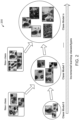
- a cell detection system that performs a continuous learning process as a new class of cell images arrive and/or are received, and incrementally expands its prediction capacity of new classes of cell images.
- a system and method which can use unsupervised learning to learn the class of cell images according to similarity of image feature and the arrival or receipt of new cell images are self-organized into different class models.
- a data mapping function is disclosed, which is significantly different from other known systems.
- the system can use a data divergence measure, which can greatly boost the cell detection performance, while other known systems use a non-linear mapping with neural network.
- cell image data can be gradually collected from different modalities and different anatomy parts with large variation in image stains, background noises, cell sizes and shapes.
- the classes of data are often unbalanced.
- Many known machine-learning algorithms for example, assume the training data is available at one time, which is not suitable for the above scenarios.
- the present disclosure provides an intelligent system to accommodate for the practical scenario of cell annotation by learning from the arrival of data incrementally, and can bring about several benefits in cell image annotation including: (1) a confidence measure of machine labeled results assists the end user to make decision whether the manual correction is needed or not; (2) data divergence distribution measures the likelihood of unseen features from previous time and it effectively encourages learning process to gradually shift more attention on the unseen features; (3) the likelihood measure of the prediction response effectively helps for the segmentation of overlapped cells; (4) automatically prune a weaker classifier when the number of classifiers reaches a predetermined threshold; (5) the way of similarity measure between two image in cell image clustering offsets the effect of image noise and any abnormality in value; (6) automatically group cell images into different cell classes so that the end users do not need to know about cell types and modalities that cell images belong to; (7) the system only needs one labeled image for initial learning and the performance gradually improves during continuous learning process; and (8) if the arrival image belongs to an unknown class
- FIG. 1 is a flow chart illustrating a system 100 for cell annotation with adaptive incremental learning in accordance with an exemplary embodiment.
- the system 100 can be configured into different block or modules.
- the system 100 can include a feature extraction module 110, a class identification module 120, a learning prediction module 130, a prediction module 140, and a learning module 150.
- the system and/or modules 100, 110, 120, 130, 140, and 150 can include one or more computer or processing devices having a memory, a processor, an operating system and/or software and/or an optional graphical user interface (GUI) and/or display.
- GUI graphical user interface
- each of the modules 110, 120, 130, 140, 150 can be combined in one computer device, for example, a standalone computer, or can be contained within one or more computer devices, wherein each of the one or more computer devices has a memory, a processor, an operating system and/or software, and a graphical user interface (GUI) or display.
- GUI graphical user interface
- the system 100 is configured such that step 1, initial training data is received in the extraction module 110.
- initial training data is received in the extraction module 110.
- the system 100 learns a prior model using a few labeled samples, which is the starting point for the incremental learning and the model will be updated during each run of a training process.
- a feature extraction is performed on the initial training data (original cell images).
- the features of cell images are extracted through this function and the features can be used for both the prediction module 130 and/or the learning module 150.
- the online clustering module 120 in step 3 performs a class identification, which can include determining whether the arrival of a cell image belongs to an unknown class or an existing (or known) class.
- a class pivot feature module or database is provided, which can be a matrix for holding the central features for each class of cell images and used for identifying the class of the input image.
- class identification is performed, which can include determining whether the arrival of a cell image belongs to an unknown class or an existing (or known) class.
- step 6 the system 100 receives a cell image stream for detection.
- step 7 feature extraction is performed, wherein the features of cell image are extracted and the extracted features can be used in both the learning module 150 and the prediction module 130.
- a class pivot feature is generated, which extract features for each class of cell images and stores the feature vector in the class pivot feature module or date base (step 4), "Class Pivot Feature".
- a class model selection is performed, which can include finding a closest class that a given cell image belongs to through feature similarity matching.
- a prediction is performed for detected cell pixels from a given cell image by using trained classifiers, and the output can be, for example, provided in a likelihood map.
- a post process extraction is performed in which individual cells are extracted from a given cell image by segmenting them from the likelihood map outputted from the prediction step.
- step 12 a machine annotation (or post processing) is performed using the output from step 11, wherein cell and non-cell pixels and cell boundaries are marked.
- step 13 a prediction confidence is calculated, which gives a confidence level (percentage) of the machine detection result.
- correction labeling is performed, which includes modifying the machine labeled results by manual intervention, in the case that the confidence level is lower than the certain threshold or level and wherein the image belongs to a unknown class.
- step 15 a final annotation is performed, which can include annotation results that can be used for pathology analysis or for feedback for further learning.
- the class pivot feature is updated, which can include updating the pivot feature of a class when additional images belonging to the class involve training.
- step 17 a class is identified and then a weak classifier for that class can be trained. With the continuous arrival data for this class, a series of weight distribution functions can be developed to represent the learning capability of data in each class.
- step 18 to avoid being over obsessive and to gradually adapt the newly arrival of images, the obsolete classifiers are removed when a new model is learned and the number of classifiers is over a threshold during learning process.
- step 19 a class model is performed, in which data structures containing all weak classifiers are indexed according to their class.
- the system 100 has the following features that differ from the known system with incremental learning mechanism:
- the method and system as disclosed can bring about several benefits in cell image annotation, which can include:
- the online class clustering groups the input cell images into different classes 200 according to image similarities during a continuous learning process.
- the purpose is to address the wide variety of appearances of the cell images.
- each class is associated with a classifier, which can be incrementally built and gradually updated by the arrival of new cell images.
- the system and method as disclosed herein can use the following color distribution-based approach for image grouping. For example, let H ( a ) its histogram for image a and H(b) for image b with k histogram bins, the colors in the image can be mapped into a discrete color space containing k colors, then the color histogram H ( a ) is a vector [ h 1 ( a ), ..., h k ( a )], and H(b) is a vector [ h 1 ( b ), ..., h k ( b )].
- the similarity of two images can be measured (or calculated) by a Euclidean distance between two histograms.
- Euclidean distance can suffer from sensitivity even to a small deformation. For example, if there is abnormality in one value in one of vectors, this can be reflected in the result of the distance.
- the following measurement can be used to measure the similarity between two images through their histograms.
- D H a , H b ⁇ 1 k 1 ⁇ 1 + min h i a , h i b 1 + max h i a , h i b + min h i a , h i b
- the online class clustering can consist of two modules: class identification and generating a new class.
- the class identification module verifies whether the new arrival of data belongs to an existing class or not by using Equation (1). If D ( H ( a ), H ( b )) is greater than a predefined threshold, the arrival of data belongs to an unknown class, and thus, a new class is built with class pivot features extracted in step 8.
- adaptive incremental learning 300 can be used to solve such a dynamic problem.
- AdaBoost AdaBoost or "Adaptive Boosting”
- Adaptive Boosting general ensemble methods
- K is the number of features and assume the length of feature vector are the same between two data sets.
- a data set with a large divergence with respect to a reference data set likely exist unseen samples from the reference data set.
- i 1 , ... , m , where o i is the index of d i in the reference data set.
- the divergence distribution in Equation (5) is modified iteratively each time a new data arrives.
- a data sample with a large divergence distribution value is likely an unseen sample (or new image). Because the unseen sample has a higher divergence with respect to the samples at t - 1, the unseen sample will receive more chances to be explored at t .
- incremental learning consists of training classifiers and model update.
- the training classifier is a learned classifier based on the theory described above. For example, if number of classifiers for a particular class is over a predefined threshold, a weaker classifier can be pruned (or deleted). This can be accomplished, for example, in the model update step (step 18).
- the learning algorithm can be described as follows:
- prediction is to obtain machine detection result by using the learned model.
- the class model selection finds an existing class best fit for the arrival data.
- the prediction module 130 outputs the likelihood map 400 as shown in FIG. 4A by using Equation (9) and an indication whether the arrival data belongs to a new class or an existing class.
- the post process module (step 11) generates the machine labeled result 410 as shown in FIG. 4B .
- the indication is one of the outputs from step 10 in FIG. 1 . If S is greater than a predefined threshold, the machine label is confident using the current learned model. Otherwise, the current learned model is not confident enough to decide some cell labels. In this case, human and/or manual intervention can be used to interactively correct machine labeled results through a software user interface, as indicated by step 14 in FIG. 1 . The final labeled result can be used for further pathologic analysis. Simultaneously, the cell image extracted in step 6 and the result obtained in step 15 can be feedback for the incremental learning (step 17) for building and updating the classifiers for the class that the cell image belongs to (identified or generated by steps 5, 8).
- the system gradually adapts intra-class image variation during the long term learning. As a result, the performance of detection accuracy improves gradually.
- FIG. 5 is an experimental result 500 illustrating the performance of incremental learning applied in cell detection for a class of cell images, where the image shows that the accuracy of detection improves gradually as training images are incrementally added in accordance with an exemplary embodiment.
- FIG. 6 is an experimental result 600 showing that overall system performance gradually improves as the system incrementally learns by the arrival or receipt of cell images, and wherein at the beginning, only one image for initial training was given, and afterwards, the system was able to achieve an average of 85% accuracy, and wherein the performance gradually improves during the continuous learning process, and wherein the dashed line is a statistic trend of accuracy improvement, and the solid line is the average of the accuracy that the system achieved.
- FIG. 7 is an example of machine annotation results 700 from a cell image in accordance with an exemplary embodiment, and wherein the contours are cell boundaries automatically annotated by machine.
- a non-transitory computer readable medium containing a computer program storing computer readable code for cell annotation is disclosed, the program being executable by a computer to cause the computer to perform a process comprising: receiving at least one new cell image for cell detection; extracting cell features from the at least one new cell image; comparing the extracted cell features to a matrix of cell features of each class to predict a closest class, wherein the matrix of cell features has been generated from at least initial training data comprising at least one cell image; detecting cell pixels from the extracted cell features of the at least one new cell image using the predicted closest class to generate a likelihood map; extracting individual cells from the at least one cell image by segmenting the individual cells from the likelihood map; performing a machine annotation on the extracted individual cells from the at least one new cell image to identify cells, non-cell pixels, and/or cell boundaries; calculating a confidence level for the machine annotation on the extracted individual cells from the at least one new cell image; and modifying the machine annotation if the confidence level is below a predetermined
- a non-transitory computer readable medium containing a computer program storing computer readable code for adaptive incremental learning for cell annotation is disclosed, the program being executable by a computer to cause the computer to perform a process comprising: generating a matrix of cell features for each of a plurality of classes of cell images; identifying one or more cell features of each of the plurality of classes of cell images; updating the one or more cell features for each of the plurality of classes of cell images upon receipt of additional cell images; constructing a plurality of classifiers for each of the plurality of classes of cell images, each of the plurality of classifiers corresponding to one or more cell features; weighting each of the plurality of classifiers for each of the plurality of classes of cell images; obtaining a new cell image; identifying a class from the plurality of classes in which the cell image belongs, and if no class is identified, creating a new class; if the cell image belongs to the class from the plurality of classes, extracting features from cell image and using
- the computer readable recording medium may be a magnetic recording medium, a magneto-optic recording medium, or any other recording medium which will be developed in future, all of which can be considered applicable to the present invention in all the same way. Duplicates of such medium including primary and secondary duplicate products and others are considered equivalent to the above medium without doubt. Furthermore, even if an embodiment of the present invention is a combination of software and hardware, it does not deviate from the concept of the invention at all. The present invention may be implemented such that its software part has been written onto a recording medium in advance and will be read as required in operation.
Landscapes
- Engineering & Computer Science (AREA)
- Theoretical Computer Science (AREA)
- Physics & Mathematics (AREA)
- General Physics & Mathematics (AREA)
- Data Mining & Analysis (AREA)
- Evolutionary Computation (AREA)
- Artificial Intelligence (AREA)
- Computer Vision & Pattern Recognition (AREA)
- Life Sciences & Earth Sciences (AREA)
- General Engineering & Computer Science (AREA)
- Software Systems (AREA)
- General Health & Medical Sciences (AREA)
- Health & Medical Sciences (AREA)
- Multimedia (AREA)
- Evolutionary Biology (AREA)
- Bioinformatics & Cheminformatics (AREA)
- Bioinformatics & Computational Biology (AREA)
- Computing Systems (AREA)
- Medical Informatics (AREA)
- Biomedical Technology (AREA)
- Molecular Biology (AREA)
- Mathematical Physics (AREA)
- Databases & Information Systems (AREA)
- Probability & Statistics with Applications (AREA)
- Image Analysis (AREA)
Claims (15)
- Procédé d'annotation de cellules, le procédé comprenant :la réception (6) d'au moins une nouvelle image de cellules en vue d'une détection de cellules ;l'extraction (7) de caractéristiques de cellules à partir de la au moins une nouvelle image de cellules ;la comparaison des caractéristiques de cellules extraites à une matrice de caractéristiques de cellules de chaque classe pour prédire une classe la plus proche, dans lequel la matrice de caractéristiques de cellules a été générée à partir d'au moins des données d'apprentissage initiales comprenant au moins une image de cellules ;la détection (10) de pixels de cellules à partir des caractéristiques de cellules extraites de la au moins une nouvelle image de cellules en utilisant la classe la plus proche prédite pour générer une carte de vraisemblances ;l'extraction (11) de cellules individuelles à partir de la au moins une nouvelle image de cellules par segmentation des cellules individuelles à partir de la carte de vraisemblances ;la mise en oeuvre (12) d'une annotation automatique sur les cellules individuelles extraites à partir de la au moins une nouvelle image de cellules pour identifier des pixels de cellules et des pixels qui ne sont pas de cellules et des limites de cellule ;le calcul (13) d'un niveau de confiance pour l'annotation automatique sur les cellules individuelles extraites à partir de la au moins une nouvelle image de cellules ; etla modification (14) de l'annotation automatique si le niveau de confiance est au-dessous d'un seuil prédéterminé et que la nouvelle image de cellules appartient à une classe inconnue, dans lequel l'annotation automatique est modifiée par intervention manuelle pour corriger des résultats marqués automatiquement.
- Procédé selon la revendication 1, comprenant :
la génération (15) d'une annotation finale en vue d'une analyse ou d'un retour d'informations de pathologie pour poursuivre l'apprentissage sur la base du niveau de confiance. - Procédé selon la revendication 2, comprenant :
la mise à jour (16) de la matrice de caractéristiques de cellules pour chaque classe d'images de cellules sur la base de l'annotation finale. - Procédé selon la revendication 1, dans lequel la comparaison des caractéristiques de cellules extraites à partir de la au moins une nouvelle image de cellules à la matrice de caractéristiques de cellules est mise en oeuvre par une mise en correspondance de similarités, la mise en correspondance de similarités comprenant : la mise en oeuvre d'une distance euclidienne entre des histogrammes en utilisant :
 où H(a) est un histogramme pour une image a et H(b) est un histogramme pour une image b avec k cases d'histogramme ;le mappage de couleurs dans l'image sur un espace colorimétrique distinct contenant k couleurs, dès lors l'histogramme de couleurs H(a) est un vecteur [h1 (a), ..., hk (a)], et H(b) est un vecteur [h1 (b), ..., hk (b)]; etdans lequel si D(H(a),H(b)) est supérieure à un seuil prédéfini, l'image appartient à une classe inconnue, et si D(H(a),H(b)) est inférieure au seuil prédéfini, alors l'image appartient à une classe connue.
 - Procédé selon la revendication 1, dans lequel le calcul du niveau de confiance comprend :le calcul d'un score de confiance S :
 dans lequel M est un nombre total de pixels, Pi(f|x1) est une probabilité qu'un pixel xi soit classé en tant que pixel de cellule en même temps que Pi(b|x1) est une probabilité qu'un pixel xi soit classé en tant que pixel d'arrière-plan (non en tant que pixel de cellule) ; etdans lequel C est un coefficient et sa valeur est déterminée par une indication selon laquelle la au moins une image de cellules appartient à une nouvelle classe ou à une classe existante.
 - Procédé selon la revendication 5, dans lequel si S est supérieur à un seuil prédéfini, l'annotation automatique utilise en toute confiance un modèle appris courant, et si S est inférieur au seuil prédéterminé, le modèle appris courant n'est pas suffisamment sûr pour décider d'étiquettes de cellules à partir de la au moins une nouvelle image de cellules.
- Support non transitoire lisible par ordinateur contenant un programme informatique stockant un code lisible par ordinateur pour une annotation de cellules, le programme étant exécutable par un ordinateur pour amener un ordinateur à mettre en oeuvre un processus comprenant :la réception (6) d'au moins une nouvelle image de cellules en vue d'une détection de cellules ;l'extraction (7) de caractéristiques de cellules à partir de la au moins une nouvelle image de cellules ;la comparaison des caractéristiques de cellules extraites à une matrice de caractéristiques de cellules de chaque classe pour prédire une classe la plus proche, dans lequel la matrice de caractéristiques de cellules a été générée à partir d'au moins des données d'apprentissage initiales comprenant au moins une image de cellules ;la détection (10) de pixels de cellules à partir des caractéristiques de cellules extraites de la au moins une nouvelle image de cellules en utilisant la classe la plus proche prédite pour générer une carte de vraisemblances ;l'extraction (11) de cellules individuelles à partir de la au moins une nouvelle image de cellules par segmentation des cellules individuelles à partir de la carte de vraisemblances ;la mise en oeuvre (12) d'une annotation automatique sur les cellules individuelles extraites à partir de la au moins une nouvelle image de cellules pour identifier des pixels de cellules et des pixels qui ne sont pas de cellules, et des limites de cellules ;le calcul (13) d'un niveau de confiance pour l'annotation automatique sur les cellules individuelles extraites à partir de la au moins une nouvelle image de cellules ; etla modification (14) de l'annotation automatique si le niveau de confiance est au-dessous d'un seuil prédéterminé et que la nouvelle image de cellules appartient à une classe inconnue, dans lequel l'annotation automatique est modifiée par intervention manuelle pour corriger des résultats marqués automatiquement.
- Support lisible par ordinateur selon la revendication 7, comprenant :
la génération (15) d'une annotation finale en vue d'une analyse ou d'un retour d'informations de pathologie pour poursuivre l'apprentissage sur la base du niveau de confiance. - Support lisible par ordinateur selon la revendication 8, comprenant :
la mise à jour (16) de la matrice de caractéristiques de cellules pour chaque classe d'images de cellules sur la base de l'annotation finale. - Support lisible par ordinateur selon la revendication 7, dans lequel la comparaison des caractéristiques de cellules extraites à partir de la au moins une nouvelle image de cellules à la matrice de caractéristiques de cellules est mise en oeuvre par une mise en correspondance de similarités, la mise en correspondance de similarités comprenant :la mise en oeuvre d'une distance euclidienne entre des histogrammes en utilisant :
 où H(a) est un histogramme pour une image a et H(b) est un histogramme pour une image b avec k cases d'histogramme ;le mappage de couleurs dans l'image sur un espace colorimétrique distinct contenant k couleurs, dès lors l'histogramme de couleurs H(a) est un vecteur [h1 (a), ..., hk (a)], et H(b) est un vecteur [h1 (b), ..., hk (b)] etdans lequel si D(H(a),H(b)) est supérieure à un seuil prédéfini, l'image appartient à une classe inconnue, et si D(H(a),H(b)) est inférieure au seuil prédéfini, alors l'image appartient à une classe connue.
 - Support lisible par ordinateur selon la revendication 7, dans lequel le calcul du niveau de confiance comprend :le calcul d'un score de confiance S :
 dans lequel M est un nombre total de pixels, Pi (f|xi) est une probabilité qu'un pixel xi soit classé en tant que pixel de cellule en même temps que Pi (b|Xi) est une probabilité qu'un pixel xi soit classé en tant que pixel d'arrière-plan (non en tant que pixel de cellule) ; etdans lequel C est un coefficient et sa valeur est déterminée par une indication selon laquelle la au moins une image de cellules appartient à une nouvelle classe ou à une classe existante.
 - Support lisible par ordinateur selon la revendication 11, dans lequel si S est supérieur à un seuil prédéfini, l'annotation automatique utilise en toute confiance un modèle appris courant, et si S est inférieur au seuil prédéfini, le modèle appris courant n'est pas suffisamment sûr pour décider d'étiquettes de cellules à partir de la au moins une nouvelle image de cellules.
- Système d'annotation de cellules, le système comprenant : au moins un processeur configuré pour :recevoir au moins une nouvelle image de cellules en vue d'une détection de cellules ;extraire des caractéristiques de cellules à partir de la au moins une nouvelle image de cellules ;comparer les caractéristiques de cellules extraites à une matrice de caractéristiques de cellules de chaque classe pour prédire une classe la plus proche, dans lequel la matrice de caractéristiques de cellules a été générée à partir d'au moins des données d'apprentissage initiales comprenant au moins une image de cellules ;détecter des pixels de cellules à partir des caractéristiques de cellules extraites de la au moins une nouvelle image de cellules en utilisant la classe la plus proche prédite pour générer une carte de vraisemblances ;extraire des cellules individuelles de la au moins une nouvelle image de cellules par segmentation des cellules individuelles à partir de la carte de vraisemblances ;mettre en oeuvre une annotation automatique sur les cellules individuelles extraites à partir de la au moins une nouvelle image de cellules pour identifier des pixels de cellules et des pixels qui ne sont pas de cellules, et des limites de cellules ;calculer un niveau de confiance pour l'annotation automatique sur les cellules individuelles extraites à partir de la au moins une nouvelle image de cellules ; etmodifier l'annotation automatique si le niveau de confiance est au-dessous d'un seuil prédéterminé et que la nouvelle image de cellules appartient à une classe inconnue, dans lequel l'annotation automatique est modifiée par intervention manuelle pour corriger des résultats marqués automatiquement.
- Système selon la revendication 13, dans lequel le au moins un processeur est configuré pour :générer une annotation finale en vue d'une analyse ou d'un retour d'informations de pathologie pour poursuivre l'apprentissage sur la base du niveau ; etmettre à jour la matrice de caractéristiques de cellules pour chaque classe d'images de cellules sur la base de l'annotation finale.
- Système selon la revendication 13, dans lequel la comparaison des caractéristiques de cellules extraites à partir de la au moins une nouvelle image de cellules à la matrice de caractéristiques de cellules est mise en oeuvre par une mise en correspondance de similarités, la mise en correspondance de similarités comprenant :la mise en oeuvre d'une distance euclidienne entre des histogrammes en utilisant :
 où H(a) est un histogramme pour une image a et H(b) est un histogramme pour une image b avec k cases d'histogramme ;le mappage de couleurs dans l'image sur un espace colorimétrique distinct contenant k couleurs, dès lors l'histogramme de couleurs H(a) est un vecteur [hi (a), ..., hk (a)], et H(b) est un vecteur [hi (b), ..., hk (b)] ; etdans lequel si D(H(a),H(b)) est supérieure à un seuil prédéfini, l'image appartient à une classe inconnue, et si D(H(a),H(b)) est inférieure au seuil prédéfini, alors l'image appartient à une classe connue.
Applications Claiming Priority (3)
| Application Number | Priority Date | Filing Date | Title |
|---|---|---|---|
| US201662356916P | 2016-06-30 | 2016-06-30 | |
| US201662356883P | 2016-06-30 | 2016-06-30 | |
| PCT/US2017/039378 WO2018005413A1 (fr) | 2016-06-30 | 2017-06-27 | Procédé et système d'annotation de cellules avec apprentissage incrémentiel adaptatif |
Publications (3)
| Publication Number | Publication Date |
|---|---|
| EP3478728A1 EP3478728A1 (fr) | 2019-05-08 |
| EP3478728A4 EP3478728A4 (fr) | 2019-07-17 |
| EP3478728B1 true EP3478728B1 (fr) | 2024-08-28 |
Family
ID=60785454
Family Applications (1)
| Application Number | Title | Priority Date | Filing Date |
|---|---|---|---|
| EP17821044.9A Active EP3478728B1 (fr) | 2016-06-30 | 2017-06-27 | Procédé et système d'annotation de cellules avec apprentissage incrémentiel adaptatif |
Country Status (4)
| Country | Link |
|---|---|
| US (1) | US10853695B2 (fr) |
| EP (1) | EP3478728B1 (fr) |
| JP (1) | JP6941123B2 (fr) |
| WO (1) | WO2018005413A1 (fr) |
Families Citing this family (43)
| Publication number | Priority date | Publication date | Assignee | Title |
|---|---|---|---|---|
| WO2014210368A1 (fr) | 2013-06-28 | 2014-12-31 | D-Wave Systems Inc. | Systèmes et procédés pour le traitement quantique de données |
| CN108351987A (zh) | 2015-08-19 | 2018-07-31 | D-波系统公司 | 用于使用绝热量子计算机进行机器学习的系统和方法 |
| US10817796B2 (en) | 2016-03-07 | 2020-10-27 | D-Wave Systems Inc. | Systems and methods for machine learning |
| CN109983481B (zh) | 2016-09-26 | 2023-08-15 | D-波系统公司 | 用于从采样服务器中采样的系统、方法和装置 |
| US11531852B2 (en) * | 2016-11-28 | 2022-12-20 | D-Wave Systems Inc. | Machine learning systems and methods for training with noisy labels |
| WO2019118644A1 (fr) | 2017-12-14 | 2019-06-20 | D-Wave Systems Inc. | Systèmes et procédés de filtrage collaboratif avec autocodeurs variationnels |
| CN108615007B (zh) * | 2018-04-23 | 2019-07-19 | 深圳大学 | 基于特征张量的三维人脸识别方法、装置及存储介质 |
| US11386346B2 (en) | 2018-07-10 | 2022-07-12 | D-Wave Systems Inc. | Systems and methods for quantum bayesian networks |
| EP3611654A1 (fr) * | 2018-08-15 | 2020-02-19 | Koninklijke Philips N.V. | Système et procédé permettant d'analyser des données d'images microscopiques et de générer un ensemble de données annotées pour formation de classificateur |
| US11087177B2 (en) * | 2018-09-27 | 2021-08-10 | Salesforce.Com, Inc. | Prediction-correction approach to zero shot learning |
| US11461644B2 (en) * | 2018-11-15 | 2022-10-04 | D-Wave Systems Inc. | Systems and methods for semantic segmentation |
| US11144748B2 (en) * | 2018-12-07 | 2021-10-12 | IOT Technology, LLC. | Classification system |
| JP7492226B2 (ja) * | 2018-12-13 | 2024-05-29 | 成典 田中 | 移動物追跡装置 |
| US11468293B2 (en) | 2018-12-14 | 2022-10-11 | D-Wave Systems Inc. | Simulating and post-processing using a generative adversarial network |
| US11900264B2 (en) | 2019-02-08 | 2024-02-13 | D-Wave Systems Inc. | Systems and methods for hybrid quantum-classical computing |
| US11625612B2 (en) | 2019-02-12 | 2023-04-11 | D-Wave Systems Inc. | Systems and methods for domain adaptation |
| JP7079745B2 (ja) * | 2019-03-08 | 2022-06-02 | 日立Astemo株式会社 | 演算装置 |
| CN110031960B (zh) * | 2019-05-30 | 2021-06-22 | 上海商汤智能科技有限公司 | 自动调节方法及装置 |
| CN110210560B (zh) * | 2019-05-31 | 2021-11-30 | 北京市商汤科技开发有限公司 | 分类网络的增量训练方法、分类方法及装置、设备及介质 |
| CN113366493A (zh) * | 2019-06-25 | 2021-09-07 | 松下知识产权经营株式会社 | 信息处理方法、以及信息处理系统 |
| CN110532408A (zh) * | 2019-08-28 | 2019-12-03 | 广州金域医学检验中心有限公司 | 病理切片管理方法、装置、计算机设备及存储介质 |
| JP6916849B2 (ja) * | 2019-09-13 | 2021-08-11 | 株式会社クレスコ | 情報処理装置、情報処理方法および情報処理プログラム |
| CN110781788B (zh) * | 2019-10-18 | 2020-12-25 | 中国科学技术大学 | 一种基于少量标注的野外机器人地面分类方法及系统 |
| CN111144488B (zh) * | 2019-12-27 | 2023-04-18 | 之江实验室 | 一种基于邻近共同预测的病理切片视野分类提升方法 |
| JP2021110974A (ja) * | 2020-01-06 | 2021-08-02 | 株式会社日立製作所 | モデルを再利用する方法 |
| US11727269B2 (en) | 2020-01-08 | 2023-08-15 | International Business Machines Corporation | Dual model incremental learning |
| EP3876193A1 (fr) * | 2020-03-02 | 2021-09-08 | Euroimmun Medizinische Labordiagnostika AG | Procédé de traitement des images permettant d'afficher des cellules d'une pluralité d'images complètes |
| CN111488927B (zh) * | 2020-04-08 | 2023-07-21 | 中国医学科学院肿瘤医院 | 分类阈值确定方法、装置、电子设备及存储介质 |
| CN111178458B (zh) * | 2020-04-10 | 2020-08-14 | 支付宝(杭州)信息技术有限公司 | 分类模型的训练、对象分类方法及装置 |
| KR102241724B1 (ko) * | 2020-05-22 | 2021-04-19 | 주식회사 루닛 | 레이블 정보를 보정하는 방법 및 시스템 |
| KR102246266B1 (ko) * | 2020-06-08 | 2021-04-29 | 주식회사 루닛 | 레이블 정보에 대한 피드백을 제공하는 방법 및 시스템 |
| CN112148909B (zh) * | 2020-09-18 | 2024-03-29 | 微梦创科网络科技(中国)有限公司 | 搜索相似图片的方法及系统 |
| KR102467047B1 (ko) * | 2020-11-18 | 2022-11-15 | (주)휴톰 | 어노테이션 평가 방법 및 장치 |
| JP7673757B2 (ja) * | 2020-12-15 | 2025-05-09 | 日本電信電話株式会社 | アノテーション装置、アノテーション方法およびアノテーションプログラム |
| TWI795787B (zh) * | 2021-05-24 | 2023-03-11 | 鴻海精密工業股份有限公司 | 自編碼器的訓練方法、細胞數量檢測方法及相關設備 |
| CN113486925B (zh) * | 2021-06-07 | 2024-07-16 | 北京鹰瞳科技发展股份有限公司 | 模型训练方法、眼底图像生成方法、模型评估方法及装置 |
| JP7782166B2 (ja) * | 2021-08-18 | 2025-12-09 | セイコーエプソン株式会社 | 機械学習モデルを用いてクラス分類処理を実行する方法、情報処理装置、及び、コンピュータープログラム |
| JP7829028B2 (ja) * | 2021-09-17 | 2026-03-12 | ベンタナ メディカル システムズ, インコーポレイテッド | 二重デジタル病理画像における表現型を予測するための機械学習技術 |
| CN114496099B (zh) * | 2022-01-26 | 2025-01-21 | 腾讯科技(深圳)有限公司 | 细胞功能注释方法、装置、设备及介质 |
| FR3130427B1 (fr) * | 2022-05-03 | 2024-04-19 | Idemia Identity & Security France | Procédé de génération d’une image de paume à partir d’images de paume partielles |
| FR3144371A1 (fr) * | 2022-12-27 | 2024-06-28 | Commissariat A L'energie Atomique Et Aux Energies Alternatives | Procédé de traitement d’une image d’un échantillon comportant des particules biologiques |
| CN118972160B (zh) * | 2024-10-08 | 2024-12-31 | 哈尔滨工业大学(深圳)(哈尔滨工业大学深圳科技创新研究院) | 基于图像的分布级概念漂移检测与适应方法及系统 |
| CN120014634B (zh) * | 2025-01-14 | 2025-08-29 | 华南师范大学 | 一种基于增量学习的细胞形态学检验系统迭代方法及装置 |
Family Cites Families (21)
| Publication number | Priority date | Publication date | Assignee | Title |
|---|---|---|---|---|
| US4965725B1 (en) | 1988-04-08 | 1996-05-07 | Neuromedical Systems Inc | Neural network based automated cytological specimen classification system and method |
| US6163622A (en) * | 1997-12-18 | 2000-12-19 | U.S. Philips Corporation | Image retrieval system |
| US20020159641A1 (en) * | 2001-03-14 | 2002-10-31 | Whitney Paul D. | Directed dynamic data analysis |
| JP2003030656A (ja) | 2001-07-13 | 2003-01-31 | Inst Of Physical & Chemical Res | 追加学習可能なパターン分離装置 |
| US20040199482A1 (en) | 2002-04-15 | 2004-10-07 | Wilson Scott B. | Systems and methods for automatic and incremental learning of patient states from biomedical signals |
| US20050027664A1 (en) | 2003-07-31 | 2005-02-03 | Johnson David E. | Interactive machine learning system for automated annotation of information in text |
| US8077958B2 (en) | 2006-06-30 | 2011-12-13 | University Of South Florida | Computer-aided pathological diagnosis system |
| US7844558B2 (en) | 2006-10-05 | 2010-11-30 | Siemens Corporation | Incremental learning of nonlinear regression networks for machine condition monitoring |
| US8165407B1 (en) * | 2006-10-06 | 2012-04-24 | Hrl Laboratories, Llc | Visual attention and object recognition system |
| JP5554776B2 (ja) * | 2008-05-30 | 2014-07-23 | ジーイー・ヘルスケア・バイオサイエンス・コーポレイション | 1以上のデフォーカス画像又は低コントラスト対雑音比画像を検出し除去するシステム及び方法 |
| GB0909461D0 (en) | 2009-06-02 | 2009-07-15 | Ge Healthcare Uk Ltd | Image analysis |
| US9296988B2 (en) * | 2009-06-19 | 2016-03-29 | The Regents Of The University Of California | Three-dimensional cell adhesion matrix |
| US8676826B2 (en) | 2011-06-28 | 2014-03-18 | International Business Machines Corporation | Method, system and program storage device for automatic incremental learning of programming language grammar |
| US9025811B1 (en) * | 2013-01-02 | 2015-05-05 | Google Inc. | Performing image similarity operations using semantic classification |
| US9488639B2 (en) * | 2013-02-25 | 2016-11-08 | Flagship Biosciences, Inc. | Cell-based tissue analysis |
| US9064149B1 (en) * | 2013-03-15 | 2015-06-23 | A9.Com, Inc. | Visual search utilizing color descriptors |
| DK2973397T3 (en) * | 2013-03-15 | 2017-10-02 | Ventana Med Syst Inc | Tissue-object-based machine learning system for automated assessment of digital whole-slide glass |
| JP2014219801A (ja) * | 2013-05-07 | 2014-11-20 | 株式会社東芝 | 車両判別装置 |
| US10083368B2 (en) | 2014-01-28 | 2018-09-25 | Qualcomm Incorporated | Incremental learning for dynamic feature database management in an object recognition system |
| CA2944829C (fr) | 2014-05-23 | 2022-10-25 | Ting Chen | Systemes et procedes de detection de structures et/ou de motifs biologiques dans des images |
| CN104102837A (zh) | 2014-07-11 | 2014-10-15 | 天津工业大学 | 一种用于软测量建模的增量学习集成算法 |
-
2017
- 2017-06-27 EP EP17821044.9A patent/EP3478728B1/fr active Active
- 2017-06-27 WO PCT/US2017/039378 patent/WO2018005413A1/fr not_active Ceased
- 2017-06-27 US US16/306,490 patent/US10853695B2/en active Active
- 2017-06-27 JP JP2018568681A patent/JP6941123B2/ja active Active
Non-Patent Citations (1)
| Title |
|---|
| C SOMMER ET AL: "Learning-based mitotic cell detection in histopathological images", INTERNATIONAL CONFERENCE ON PATTERN RECOGNITION, 1 November 2012 (2012-11-01), US, pages 2306 - 2309, XP055547556, ISSN: 1051-4651 * |
Also Published As
| Publication number | Publication date |
|---|---|
| JP6941123B2 (ja) | 2021-09-29 |
| US20190180147A1 (en) | 2019-06-13 |
| EP3478728A4 (fr) | 2019-07-17 |
| JP2019521443A (ja) | 2019-07-25 |
| EP3478728A1 (fr) | 2019-05-08 |
| US10853695B2 (en) | 2020-12-01 |
| WO2018005413A1 (fr) | 2018-01-04 |
Similar Documents
| Publication | Publication Date | Title |
|---|---|---|
| EP3478728B1 (fr) | Procédé et système d'annotation de cellules avec apprentissage incrémentiel adaptatif | |
| CN106682696B (zh) | 基于在线示例分类器精化的多示例检测网络及其训练方法 | |
| CN110648322B (zh) | 一种子宫颈异常细胞检测方法及系统 | |
| US8565538B2 (en) | Detecting and labeling places using runtime change-point detection | |
| CN112365497A (zh) | 基于TridentNet和Cascade-RCNN结构的高速目标检测方法和系统 | |
| CN108564102A (zh) | 图像聚类结果评价方法和装置 | |
| CN115359264B (zh) | 一种密集型分布的粘连细胞深度学习识别方法 | |
| CN104615986A (zh) | 利用多检测器对场景变化的视频图像进行行人检测的方法 | |
| CN114637877A (zh) | 标注方法、电子设备及存储介质 | |
| CN112036295A (zh) | 票据图像处理方法、装置、存储介质及电子设备 | |
| CN111914902A (zh) | 一种基于深度神经网络的中药识别与表面缺陷检测方法 | |
| CN114913487A (zh) | 一种基于多模态学习的目标识别检测方法及相关组件 | |
| CN110287970B (zh) | 一种基于cam与掩盖的弱监督物体定位方法 | |
| Horak et al. | Classification of SURF image features by selected machine learning algorithms | |
| Aristoteles et al. | Identification of human sperm based on morphology using the you only look once version 4 algorithm | |
| US20150242676A1 (en) | Method for the Supervised Classification of Cells Included in Microscopy Images | |
| CN108805181A (zh) | 一种基于多分类模型的图像分类装置及分类方法 | |
| CN114120097A (zh) | 一种基于机器视觉的配网工程现场变压器检测方法和系统 | |
| CN117540715A (zh) | 一种基于深度学习和计算机视觉的表格识别方法与系统 | |
| CN114998585B (zh) | 基于区域感知度量学习的开放世界语义分割方法和装置 | |
| CN106951924B (zh) | 基于AdaBoost算法的地震相干体图像断层自动识别方法及系统 | |
| CN108960005B (zh) | 一种智能视觉物联网中对象视觉标签的建立及显示方法、系统 | |
| US12327363B2 (en) | Apparatus, method and system for generating models for identifying objects of interest from images | |
| CN112508900B (zh) | 细胞病理图像分割方法及装置 | |
| CN118736322B (zh) | 基于邻域原子增强的深度字典学习在异常检测中的应用方法 |
Legal Events
| Date | Code | Title | Description |
|---|---|---|---|
| STAA | Information on the status of an ep patent application or granted ep patent |
Free format text: STATUS: THE INTERNATIONAL PUBLICATION HAS BEEN MADE |
|
| PUAI | Public reference made under article 153(3) epc to a published international application that has entered the european phase |
Free format text: ORIGINAL CODE: 0009012 |
|
| STAA | Information on the status of an ep patent application or granted ep patent |
Free format text: STATUS: REQUEST FOR EXAMINATION WAS MADE |
|
| 17P | Request for examination filed |
Effective date: 20181228 |
|
| AK | Designated contracting states |
Kind code of ref document: A1 Designated state(s): AL AT BE BG CH CY CZ DE DK EE ES FI FR GB GR HR HU IE IS IT LI LT LU LV MC MK MT NL NO PL PT RO RS SE SI SK SM TR |
|
| AX | Request for extension of the european patent |
Extension state: BA ME |
|
| REG | Reference to a national code |
Ref country code: DE Ref legal event code: R079 Free format text: PREVIOUS MAIN CLASS: C08F0116060000 Ipc: G06K0009000000 |
|
| A4 | Supplementary search report drawn up and despatched |
Effective date: 20190614 |
|
| RIC1 | Information provided on ipc code assigned before grant |
Ipc: G06K 9/62 20060101ALI20190607BHEP Ipc: G06K 9/00 20060101AFI20190607BHEP Ipc: G06N 20/00 20190101ALI20190607BHEP |
|
| DAV | Request for validation of the european patent (deleted) | ||
| DAX | Request for extension of the european patent (deleted) | ||
| STAA | Information on the status of an ep patent application or granted ep patent |
Free format text: STATUS: EXAMINATION IS IN PROGRESS |
|
| 17Q | First examination report despatched |
Effective date: 20200325 |
|
| P01 | Opt-out of the competence of the unified patent court (upc) registered |
Effective date: 20230510 |
|
| REG | Reference to a national code |
Ref country code: DE Ref legal event code: R079 Ipc: G06V0020690000 Ref country code: DE Ref legal event code: R079 Ref document number: 602017084491 Country of ref document: DE Free format text: PREVIOUS MAIN CLASS: G06K0009000000 Ipc: G06V0020690000 |
|
| GRAP | Despatch of communication of intention to grant a patent |
Free format text: ORIGINAL CODE: EPIDOSNIGR1 |
|
| STAA | Information on the status of an ep patent application or granted ep patent |
Free format text: STATUS: GRANT OF PATENT IS INTENDED |
|
| RIC1 | Information provided on ipc code assigned before grant |
Ipc: G06F 18/2413 20230101ALI20240315BHEP Ipc: G06N 20/00 20190101ALI20240315BHEP Ipc: G06V 10/764 20220101ALI20240315BHEP Ipc: G06V 20/69 20220101AFI20240315BHEP |
|
| INTG | Intention to grant announced |
Effective date: 20240405 |
|
| GRAS | Grant fee paid |
Free format text: ORIGINAL CODE: EPIDOSNIGR3 |
|
| GRAA | (expected) grant |
Free format text: ORIGINAL CODE: 0009210 |
|
| STAA | Information on the status of an ep patent application or granted ep patent |
Free format text: STATUS: THE PATENT HAS BEEN GRANTED |
|
| AK | Designated contracting states |
Kind code of ref document: B1 Designated state(s): AL AT BE BG CH CY CZ DE DK EE ES FI FR GB GR HR HU IE IS IT LI LT LU LV MC MK MT NL NO PL PT RO RS SE SI SK SM TR |
|
| REG | Reference to a national code |
Ref country code: GB Ref legal event code: FG4D |
|
| REG | Reference to a national code |
Ref country code: CH Ref legal event code: EP |
|
| REG | Reference to a national code |
Ref country code: DE Ref legal event code: R096 Ref document number: 602017084491 Country of ref document: DE |
|
| REG | Reference to a national code |
Ref country code: IE Ref legal event code: FG4D |
|
| REG | Reference to a national code |
Ref country code: LT Ref legal event code: MG9D |
|
| PG25 | Lapsed in a contracting state [announced via postgrant information from national office to epo] |
Ref country code: NO Free format text: LAPSE BECAUSE OF FAILURE TO SUBMIT A TRANSLATION OF THE DESCRIPTION OR TO PAY THE FEE WITHIN THE PRESCRIBED TIME-LIMIT Effective date: 20241128 |
|
| REG | Reference to a national code |
Ref country code: AT Ref legal event code: MK05 Ref document number: 1718830 Country of ref document: AT Kind code of ref document: T Effective date: 20240828 |
|
| PG25 | Lapsed in a contracting state [announced via postgrant information from national office to epo] |
Ref country code: PT Free format text: LAPSE BECAUSE OF FAILURE TO SUBMIT A TRANSLATION OF THE DESCRIPTION OR TO PAY THE FEE WITHIN THE PRESCRIBED TIME-LIMIT Effective date: 20241230 Ref country code: NL Free format text: LAPSE BECAUSE OF FAILURE TO SUBMIT A TRANSLATION OF THE DESCRIPTION OR TO PAY THE FEE WITHIN THE PRESCRIBED TIME-LIMIT Effective date: 20240828 Ref country code: FI Free format text: LAPSE BECAUSE OF FAILURE TO SUBMIT A TRANSLATION OF THE DESCRIPTION OR TO PAY THE FEE WITHIN THE PRESCRIBED TIME-LIMIT Effective date: 20240828 Ref country code: GR Free format text: LAPSE BECAUSE OF FAILURE TO SUBMIT A TRANSLATION OF THE DESCRIPTION OR TO PAY THE FEE WITHIN THE PRESCRIBED TIME-LIMIT Effective date: 20241129 Ref country code: PL Free format text: LAPSE BECAUSE OF FAILURE TO SUBMIT A TRANSLATION OF THE DESCRIPTION OR TO PAY THE FEE WITHIN THE PRESCRIBED TIME-LIMIT Effective date: 20240828 |
|
| PG25 | Lapsed in a contracting state [announced via postgrant information from national office to epo] |
Ref country code: BG Free format text: LAPSE BECAUSE OF FAILURE TO SUBMIT A TRANSLATION OF THE DESCRIPTION OR TO PAY THE FEE WITHIN THE PRESCRIBED TIME-LIMIT Effective date: 20240828 |
|
| PG25 | Lapsed in a contracting state [announced via postgrant information from national office to epo] |
Ref country code: LV Free format text: LAPSE BECAUSE OF FAILURE TO SUBMIT A TRANSLATION OF THE DESCRIPTION OR TO PAY THE FEE WITHIN THE PRESCRIBED TIME-LIMIT Effective date: 20240828 |
|
| REG | Reference to a national code |
Ref country code: NL Ref legal event code: MP Effective date: 20240828 |
|
| PG25 | Lapsed in a contracting state [announced via postgrant information from national office to epo] |
Ref country code: IS Free format text: LAPSE BECAUSE OF FAILURE TO SUBMIT A TRANSLATION OF THE DESCRIPTION OR TO PAY THE FEE WITHIN THE PRESCRIBED TIME-LIMIT Effective date: 20241228 Ref country code: AT Free format text: LAPSE BECAUSE OF FAILURE TO SUBMIT A TRANSLATION OF THE DESCRIPTION OR TO PAY THE FEE WITHIN THE PRESCRIBED TIME-LIMIT Effective date: 20240828 |
|
| PG25 | Lapsed in a contracting state [announced via postgrant information from national office to epo] |
Ref country code: HR Free format text: LAPSE BECAUSE OF FAILURE TO SUBMIT A TRANSLATION OF THE DESCRIPTION OR TO PAY THE FEE WITHIN THE PRESCRIBED TIME-LIMIT Effective date: 20240828 |
|
| PG25 | Lapsed in a contracting state [announced via postgrant information from national office to epo] |
Ref country code: RS Free format text: LAPSE BECAUSE OF FAILURE TO SUBMIT A TRANSLATION OF THE DESCRIPTION OR TO PAY THE FEE WITHIN THE PRESCRIBED TIME-LIMIT Effective date: 20241128 Ref country code: ES Free format text: LAPSE BECAUSE OF FAILURE TO SUBMIT A TRANSLATION OF THE DESCRIPTION OR TO PAY THE FEE WITHIN THE PRESCRIBED TIME-LIMIT Effective date: 20240828 |
|
| PG25 | Lapsed in a contracting state [announced via postgrant information from national office to epo] |
Ref country code: RS Free format text: LAPSE BECAUSE OF FAILURE TO SUBMIT A TRANSLATION OF THE DESCRIPTION OR TO PAY THE FEE WITHIN THE PRESCRIBED TIME-LIMIT Effective date: 20241128 Ref country code: PT Free format text: LAPSE BECAUSE OF FAILURE TO SUBMIT A TRANSLATION OF THE DESCRIPTION OR TO PAY THE FEE WITHIN THE PRESCRIBED TIME-LIMIT Effective date: 20241230 Ref country code: PL Free format text: LAPSE BECAUSE OF FAILURE TO SUBMIT A TRANSLATION OF THE DESCRIPTION OR TO PAY THE FEE WITHIN THE PRESCRIBED TIME-LIMIT Effective date: 20240828 Ref country code: NO Free format text: LAPSE BECAUSE OF FAILURE TO SUBMIT A TRANSLATION OF THE DESCRIPTION OR TO PAY THE FEE WITHIN THE PRESCRIBED TIME-LIMIT Effective date: 20241128 Ref country code: NL Free format text: LAPSE BECAUSE OF FAILURE TO SUBMIT A TRANSLATION OF THE DESCRIPTION OR TO PAY THE FEE WITHIN THE PRESCRIBED TIME-LIMIT Effective date: 20240828 Ref country code: LV Free format text: LAPSE BECAUSE OF FAILURE TO SUBMIT A TRANSLATION OF THE DESCRIPTION OR TO PAY THE FEE WITHIN THE PRESCRIBED TIME-LIMIT Effective date: 20240828 Ref country code: IS Free format text: LAPSE BECAUSE OF FAILURE TO SUBMIT A TRANSLATION OF THE DESCRIPTION OR TO PAY THE FEE WITHIN THE PRESCRIBED TIME-LIMIT Effective date: 20241228 Ref country code: HR Free format text: LAPSE BECAUSE OF FAILURE TO SUBMIT A TRANSLATION OF THE DESCRIPTION OR TO PAY THE FEE WITHIN THE PRESCRIBED TIME-LIMIT Effective date: 20240828 Ref country code: GR Free format text: LAPSE BECAUSE OF FAILURE TO SUBMIT A TRANSLATION OF THE DESCRIPTION OR TO PAY THE FEE WITHIN THE PRESCRIBED TIME-LIMIT Effective date: 20241129 Ref country code: FI Free format text: LAPSE BECAUSE OF FAILURE TO SUBMIT A TRANSLATION OF THE DESCRIPTION OR TO PAY THE FEE WITHIN THE PRESCRIBED TIME-LIMIT Effective date: 20240828 Ref country code: ES Free format text: LAPSE BECAUSE OF FAILURE TO SUBMIT A TRANSLATION OF THE DESCRIPTION OR TO PAY THE FEE WITHIN THE PRESCRIBED TIME-LIMIT Effective date: 20240828 Ref country code: BG Free format text: LAPSE BECAUSE OF FAILURE TO SUBMIT A TRANSLATION OF THE DESCRIPTION OR TO PAY THE FEE WITHIN THE PRESCRIBED TIME-LIMIT Effective date: 20240828 Ref country code: AT Free format text: LAPSE BECAUSE OF FAILURE TO SUBMIT A TRANSLATION OF THE DESCRIPTION OR TO PAY THE FEE WITHIN THE PRESCRIBED TIME-LIMIT Effective date: 20240828 |
|
| PG25 | Lapsed in a contracting state [announced via postgrant information from national office to epo] |
Ref country code: DK Free format text: LAPSE BECAUSE OF FAILURE TO SUBMIT A TRANSLATION OF THE DESCRIPTION OR TO PAY THE FEE WITHIN THE PRESCRIBED TIME-LIMIT Effective date: 20240828 Ref country code: SM Free format text: LAPSE BECAUSE OF FAILURE TO SUBMIT A TRANSLATION OF THE DESCRIPTION OR TO PAY THE FEE WITHIN THE PRESCRIBED TIME-LIMIT Effective date: 20240828 Ref country code: RO Free format text: LAPSE BECAUSE OF FAILURE TO SUBMIT A TRANSLATION OF THE DESCRIPTION OR TO PAY THE FEE WITHIN THE PRESCRIBED TIME-LIMIT Effective date: 20240828 |
|
| PG25 | Lapsed in a contracting state [announced via postgrant information from national office to epo] |
Ref country code: EE Free format text: LAPSE BECAUSE OF FAILURE TO SUBMIT A TRANSLATION OF THE DESCRIPTION OR TO PAY THE FEE WITHIN THE PRESCRIBED TIME-LIMIT Effective date: 20240828 |
|
| PG25 | Lapsed in a contracting state [announced via postgrant information from national office to epo] |
Ref country code: CZ Free format text: LAPSE BECAUSE OF FAILURE TO SUBMIT A TRANSLATION OF THE DESCRIPTION OR TO PAY THE FEE WITHIN THE PRESCRIBED TIME-LIMIT Effective date: 20240828 |
|
| PG25 | Lapsed in a contracting state [announced via postgrant information from national office to epo] |
Ref country code: IT Free format text: LAPSE BECAUSE OF FAILURE TO SUBMIT A TRANSLATION OF THE DESCRIPTION OR TO PAY THE FEE WITHIN THE PRESCRIBED TIME-LIMIT Effective date: 20240828 Ref country code: SK Free format text: LAPSE BECAUSE OF FAILURE TO SUBMIT A TRANSLATION OF THE DESCRIPTION OR TO PAY THE FEE WITHIN THE PRESCRIBED TIME-LIMIT Effective date: 20240828 |
|
| REG | Reference to a national code |
Ref country code: DE Ref legal event code: R097 Ref document number: 602017084491 Country of ref document: DE |
|
| PLBE | No opposition filed within time limit |
Free format text: ORIGINAL CODE: 0009261 |
|
| STAA | Information on the status of an ep patent application or granted ep patent |
Free format text: STATUS: NO OPPOSITION FILED WITHIN TIME LIMIT |
|
| 26N | No opposition filed |
Effective date: 20250530 |
|
| PG25 | Lapsed in a contracting state [announced via postgrant information from national office to epo] |
Ref country code: SE Free format text: LAPSE BECAUSE OF FAILURE TO SUBMIT A TRANSLATION OF THE DESCRIPTION OR TO PAY THE FEE WITHIN THE PRESCRIBED TIME-LIMIT Effective date: 20240828 |
|
| REG | Reference to a national code |
Ref country code: DE Ref legal event code: R119 Ref document number: 602017084491 Country of ref document: DE |
|
| REG | Reference to a national code |
Ref country code: CH Ref legal event code: H13 Free format text: ST27 STATUS EVENT CODE: U-0-0-H10-H13 (AS PROVIDED BY THE NATIONAL OFFICE) Effective date: 20260127 |
|
| PG25 | Lapsed in a contracting state [announced via postgrant information from national office to epo] |
Ref country code: MC Free format text: LAPSE BECAUSE OF FAILURE TO SUBMIT A TRANSLATION OF THE DESCRIPTION OR TO PAY THE FEE WITHIN THE PRESCRIBED TIME-LIMIT Effective date: 20240828 |
|
| PG25 | Lapsed in a contracting state [announced via postgrant information from national office to epo] |
Ref country code: LU Free format text: LAPSE BECAUSE OF NON-PAYMENT OF DUE FEES Effective date: 20250627 |
|
| GBPC | Gb: european patent ceased through non-payment of renewal fee |
Effective date: 20250627 |
|
| REG | Reference to a national code |
Ref country code: BE Ref legal event code: MM Effective date: 20250630 |
|
| PG25 | Lapsed in a contracting state [announced via postgrant information from national office to epo] |
Ref country code: GB Free format text: LAPSE BECAUSE OF NON-PAYMENT OF DUE FEES Effective date: 20250627 |
|
| PG25 | Lapsed in a contracting state [announced via postgrant information from national office to epo] |
Ref country code: IE Free format text: LAPSE BECAUSE OF NON-PAYMENT OF DUE FEES Effective date: 20250627 Ref country code: DE Free format text: LAPSE BECAUSE OF NON-PAYMENT OF DUE FEES Effective date: 20260101 |
|
| PG25 | Lapsed in a contracting state [announced via postgrant information from national office to epo] |
Ref country code: BE Free format text: LAPSE BECAUSE OF NON-PAYMENT OF DUE FEES Effective date: 20250630 |
|
| PG25 | Lapsed in a contracting state [announced via postgrant information from national office to epo] |
Ref country code: FR Free format text: LAPSE BECAUSE OF NON-PAYMENT OF DUE FEES Effective date: 20250630 |
|
| PG25 | Lapsed in a contracting state [announced via postgrant information from national office to epo] |
Ref country code: CH Free format text: LAPSE BECAUSE OF NON-PAYMENT OF DUE FEES Effective date: 20250630 |