EP3480232A1 - Verwendung von additiven zur erhöhung der zugscherfestigkeit und zusammensetzung enthaltend ein silanfunktionalisiertes präpolymer und additive - Google Patents
Verwendung von additiven zur erhöhung der zugscherfestigkeit und zusammensetzung enthaltend ein silanfunktionalisiertes präpolymer und additive Download PDFInfo
- Publication number
- EP3480232A1 EP3480232A1 EP18203914.9A EP18203914A EP3480232A1 EP 3480232 A1 EP3480232 A1 EP 3480232A1 EP 18203914 A EP18203914 A EP 18203914A EP 3480232 A1 EP3480232 A1 EP 3480232A1
- Authority
- EP
- European Patent Office
- Prior art keywords
- radicals
- group
- atoms
- formula
- silane
- Prior art date
- Legal status (The legal status is an assumption and is not a legal conclusion. Google has not performed a legal analysis and makes no representation as to the accuracy of the status listed.)
- Granted
Links
Classifications
-
- C—CHEMISTRY; METALLURGY
- C08—ORGANIC MACROMOLECULAR COMPOUNDS; THEIR PREPARATION OR CHEMICAL WORKING-UP; COMPOSITIONS BASED THEREON
- C08G—MACROMOLECULAR COMPOUNDS OBTAINED OTHERWISE THAN BY REACTIONS ONLY INVOLVING UNSATURATED CARBON-TO-CARBON BONDS
- C08G18/00—Polymeric products of isocyanates or isothiocyanates
- C08G18/06—Polymeric products of isocyanates or isothiocyanates with compounds having active hydrogen
- C08G18/28—Polymeric products of isocyanates or isothiocyanates with compounds having active hydrogen characterised by the compounds used containing active hydrogen
- C08G18/40—High-molecular-weight compounds
- C08G18/48—Polyethers
- C08G18/4825—Polyethers containing two hydroxy groups
-
- C—CHEMISTRY; METALLURGY
- C08—ORGANIC MACROMOLECULAR COMPOUNDS; THEIR PREPARATION OR CHEMICAL WORKING-UP; COMPOSITIONS BASED THEREON
- C08K—Use of inorganic or non-macromolecular organic substances as compounding ingredients
- C08K5/00—Use of organic ingredients
- C08K5/04—Oxygen-containing compounds
- C08K5/13—Phenols; Phenolates
- C08K5/134—Phenols containing ester groups
- C08K5/1345—Carboxylic esters of phenolcarboxylic acids
-
- C—CHEMISTRY; METALLURGY
- C08—ORGANIC MACROMOLECULAR COMPOUNDS; THEIR PREPARATION OR CHEMICAL WORKING-UP; COMPOSITIONS BASED THEREON
- C08G—MACROMOLECULAR COMPOUNDS OBTAINED OTHERWISE THAN BY REACTIONS ONLY INVOLVING UNSATURATED CARBON-TO-CARBON BONDS
- C08G18/00—Polymeric products of isocyanates or isothiocyanates
- C08G18/06—Polymeric products of isocyanates or isothiocyanates with compounds having active hydrogen
- C08G18/70—Polymeric products of isocyanates or isothiocyanates with compounds having active hydrogen characterised by the isocyanates or isothiocyanates used
- C08G18/71—Monoisocyanates or monoisothiocyanates
- C08G18/718—Monoisocyanates or monoisothiocyanates containing silicon
-
- C—CHEMISTRY; METALLURGY
- C08—ORGANIC MACROMOLECULAR COMPOUNDS; THEIR PREPARATION OR CHEMICAL WORKING-UP; COMPOSITIONS BASED THEREON
- C08G—MACROMOLECULAR COMPOUNDS OBTAINED OTHERWISE THAN BY REACTIONS ONLY INVOLVING UNSATURATED CARBON-TO-CARBON BONDS
- C08G18/00—Polymeric products of isocyanates or isothiocyanates
- C08G18/06—Polymeric products of isocyanates or isothiocyanates with compounds having active hydrogen
- C08G18/70—Polymeric products of isocyanates or isothiocyanates with compounds having active hydrogen characterised by the isocyanates or isothiocyanates used
- C08G18/72—Polyisocyanates or polyisothiocyanates
- C08G18/73—Polyisocyanates or polyisothiocyanates acyclic
-
- C—CHEMISTRY; METALLURGY
- C08—ORGANIC MACROMOLECULAR COMPOUNDS; THEIR PREPARATION OR CHEMICAL WORKING-UP; COMPOSITIONS BASED THEREON
- C08G—MACROMOLECULAR COMPOUNDS OBTAINED OTHERWISE THAN BY REACTIONS ONLY INVOLVING UNSATURATED CARBON-TO-CARBON BONDS
- C08G18/00—Polymeric products of isocyanates or isothiocyanates
- C08G18/06—Polymeric products of isocyanates or isothiocyanates with compounds having active hydrogen
- C08G18/83—Chemically modified polymers
- C08G18/837—Chemically modified polymers by silicon containing compounds
-
- C—CHEMISTRY; METALLURGY
- C08—ORGANIC MACROMOLECULAR COMPOUNDS; THEIR PREPARATION OR CHEMICAL WORKING-UP; COMPOSITIONS BASED THEREON
- C08G—MACROMOLECULAR COMPOUNDS OBTAINED OTHERWISE THAN BY REACTIONS ONLY INVOLVING UNSATURATED CARBON-TO-CARBON BONDS
- C08G65/00—Macromolecular compounds obtained by reactions forming an ether link in the main chain of the macromolecule
- C08G65/02—Macromolecular compounds obtained by reactions forming an ether link in the main chain of the macromolecule from cyclic ethers by opening of the heterocyclic ring
- C08G65/26—Macromolecular compounds obtained by reactions forming an ether link in the main chain of the macromolecule from cyclic ethers by opening of the heterocyclic ring from cyclic ethers and other compounds
- C08G65/2603—Macromolecular compounds obtained by reactions forming an ether link in the main chain of the macromolecule from cyclic ethers by opening of the heterocyclic ring from cyclic ethers and other compounds the other compounds containing oxygen
- C08G65/2606—Macromolecular compounds obtained by reactions forming an ether link in the main chain of the macromolecule from cyclic ethers by opening of the heterocyclic ring from cyclic ethers and other compounds the other compounds containing oxygen containing hydroxyl groups
- C08G65/2609—Macromolecular compounds obtained by reactions forming an ether link in the main chain of the macromolecule from cyclic ethers by opening of the heterocyclic ring from cyclic ethers and other compounds the other compounds containing oxygen containing hydroxyl groups containing aliphatic hydroxyl groups
-
- C—CHEMISTRY; METALLURGY
- C08—ORGANIC MACROMOLECULAR COMPOUNDS; THEIR PREPARATION OR CHEMICAL WORKING-UP; COMPOSITIONS BASED THEREON
- C08G—MACROMOLECULAR COMPOUNDS OBTAINED OTHERWISE THAN BY REACTIONS ONLY INVOLVING UNSATURATED CARBON-TO-CARBON BONDS
- C08G65/00—Macromolecular compounds obtained by reactions forming an ether link in the main chain of the macromolecule
- C08G65/02—Macromolecular compounds obtained by reactions forming an ether link in the main chain of the macromolecule from cyclic ethers by opening of the heterocyclic ring
- C08G65/26—Macromolecular compounds obtained by reactions forming an ether link in the main chain of the macromolecule from cyclic ethers by opening of the heterocyclic ring from cyclic ethers and other compounds
- C08G65/2642—Macromolecular compounds obtained by reactions forming an ether link in the main chain of the macromolecule from cyclic ethers by opening of the heterocyclic ring from cyclic ethers and other compounds characterised by the catalyst used
- C08G65/2645—Metals or compounds thereof, e.g. salts
- C08G65/266—Metallic elements not covered by group C08G65/2648 - C08G65/2645, or compounds thereof
-
- C—CHEMISTRY; METALLURGY
- C08—ORGANIC MACROMOLECULAR COMPOUNDS; THEIR PREPARATION OR CHEMICAL WORKING-UP; COMPOSITIONS BASED THEREON
- C08G—MACROMOLECULAR COMPOUNDS OBTAINED OTHERWISE THAN BY REACTIONS ONLY INVOLVING UNSATURATED CARBON-TO-CARBON BONDS
- C08G65/00—Macromolecular compounds obtained by reactions forming an ether link in the main chain of the macromolecule
- C08G65/02—Macromolecular compounds obtained by reactions forming an ether link in the main chain of the macromolecule from cyclic ethers by opening of the heterocyclic ring
- C08G65/26—Macromolecular compounds obtained by reactions forming an ether link in the main chain of the macromolecule from cyclic ethers by opening of the heterocyclic ring from cyclic ethers and other compounds
- C08G65/2642—Macromolecular compounds obtained by reactions forming an ether link in the main chain of the macromolecule from cyclic ethers by opening of the heterocyclic ring from cyclic ethers and other compounds characterised by the catalyst used
- C08G65/2669—Non-metals or compounds thereof
- C08G65/2678—Sulfur or compounds thereof
-
- C—CHEMISTRY; METALLURGY
- C08—ORGANIC MACROMOLECULAR COMPOUNDS; THEIR PREPARATION OR CHEMICAL WORKING-UP; COMPOSITIONS BASED THEREON
- C08G—MACROMOLECULAR COMPOUNDS OBTAINED OTHERWISE THAN BY REACTIONS ONLY INVOLVING UNSATURATED CARBON-TO-CARBON BONDS
- C08G65/00—Macromolecular compounds obtained by reactions forming an ether link in the main chain of the macromolecule
- C08G65/02—Macromolecular compounds obtained by reactions forming an ether link in the main chain of the macromolecule from cyclic ethers by opening of the heterocyclic ring
- C08G65/32—Polymers modified by chemical after-treatment
- C08G65/329—Polymers modified by chemical after-treatment with organic compounds
- C08G65/336—Polymers modified by chemical after-treatment with organic compounds containing silicon
-
- C—CHEMISTRY; METALLURGY
- C08—ORGANIC MACROMOLECULAR COMPOUNDS; THEIR PREPARATION OR CHEMICAL WORKING-UP; COMPOSITIONS BASED THEREON
- C08K—Use of inorganic or non-macromolecular organic substances as compounding ingredients
- C08K5/00—Use of organic ingredients
- C08K5/04—Oxygen-containing compounds
- C08K5/09—Carboxylic acids; Metal salts thereof; Anhydrides thereof
-
- C—CHEMISTRY; METALLURGY
- C08—ORGANIC MACROMOLECULAR COMPOUNDS; THEIR PREPARATION OR CHEMICAL WORKING-UP; COMPOSITIONS BASED THEREON
- C08G—MACROMOLECULAR COMPOUNDS OBTAINED OTHERWISE THAN BY REACTIONS ONLY INVOLVING UNSATURATED CARBON-TO-CARBON BONDS
- C08G2190/00—Compositions for sealing or packing joints
Definitions
- the present invention relates to the use of additives to increase the tensile shear strength of compositions, a composition containing a silane-functionalized prepolymer and additives, a process for the preparation of these compositions and their further use.
- Silane-based adhesives and sealants as such are known.
- a general overview of silane-based adhesives and sealants can be found eg in Bodo Müller u. Walter Rath, "Formulation of adhesives and sealants", Hannover: Vincentz Network, 3rd ed., 2015 ,
- a formulation for a parquet adhesive can be found in H. Kittel, "textbook of paints and coatings", Stuttgart: S. Hirzel Verlag, 2nd edition, 2005, Volume 7 (Vol. Hrsg.: Horst Reul ), " Construction Products, Coatings, Construction Adhesives, Sealants ", p this volume describes Roland Krieger in chapter 7.10 Building adhesives.
- on p.490 ff from Christoph Hollbeck in Chapter 7.11.2.2.2 Sealant compounds based on MS polymers (products of the company Kaneka) described.
- Adhesives and sealants must meet certain requirements. An important property of adhesive and sealant compositions is that they have adequate, often high, early strength in the cured state.
- the DE 10 2011 007 504 A1 describes crosslinkable polyurethane compositions in which a retarding substance is used.
- This retarding substance should cause that in a so-called induction phase, the catalytic reactivity of the catalyst is reduced and thus allows processing of the composition over a period of time.
- retarding substances cyclic ⁇ -hydroxy ketones or triphenols with three adjacent OH groups are used.
- this document does not address the effect of the retarding substances on the strength of the cured composition.
- the object of the present invention is to improve the tensile shear strength of cured compositions based on silane-functionalized prepolymers.
- X may represent an OH group.
- compositions containing additives in the form of a compound according to the formula (I) have an increased tensile shear strength in the cured state compared with a composition containing no compound of the formula (I).
- Suitable radicals having 1 to 12 C atoms are X and R 2 radicals which are selected from the group comprising substituted and unsubstituted, linear and branched C 1 to C 12 alkyl groups, preferably C 1 to C 8 alkyl groups, more preferably C 1 to C 3 alkyl groups , substituted and unsubstituted, linear and branched C1 to C12 alkenyl groups, preferably C1 to C8 alkenyl groups, particularly preferably C1 to C3 alkenyl groups, substituted and unsubstituted, linear and branched C1 to C12 alkynyl groups, preferably C1 to C8 alkynyl groups, particularly preferably C1 to C3 alkynyl groups , substituted and unsubstituted, linear and branched C1 to C12 alkoxy groups, preferably C1 to C8 alkoxy groups, particularly preferably C1 to C3 alkoxy groups, cyclic alkyl groups having 5 to 8 C atoms
- Radicals having 1 to 25 carbon atoms for R 1 radicals are suitable, which are selected from the group consisting of substituted and unsubstituted, linear and branched C1 to C25 alkyl groups, preferably C1 to C12 alkyl groups, more preferably C1 to C8 alkyl groups, substituted and unsubstituted, linear and branched C1 to C25 alkenyl groups, preferably C1 to C12 alkenyl groups, more preferably C1 to C8 alkenyl groups, substituted and unsubstituted, linear and branched C1 to C25 alkynyl groups, preferably C1 to C12 alkynyl groups, more preferably C1 to C8 alkynyl groups, substituted and unsubstituted, linear and branched C1 to C25 alkoxy groups, preferably C1 to C12 alkoxy groups, particularly preferably C1 to C8 alkoxy groups, cyclic alkyl groups having 5 to 8 C atoms,
- R 1 furthermore comprises radicals which are composed of a plurality of cyclic alkoxyalkenyl units, these radicals being able to have further hydroxyl and / or alkoxy substituents and also aromatic carboxylic acid derivatives as substituents.
- An example of such a compound is tannin.
- At least one of R 2 is an OH group.
- at least two of the radicals R 2 represent an OH group.
- the radicals R 2 are the same or different and represent an OH group or an H atom. Accordingly, the present invention relates to the use of a compound of formula (I) for improving the tensile shear strength of cured compositions based on silane-modified prepolymers wherein one of R 2 represents an OH group and four R 2 represent H or two the radicals R 2 represent an OH group and three of the radicals R 2 represent an H atom or three of the radicals R 2 represent an OH group and two of the radicals R 2 represent an H atom or four of the radicals R 2 is an OH Group and one of the radicals R 2 represents an H atom or all five radicals R 2 represents an OH group.
- two of R 2 represent an OH group and three of R 2 represent H or three of R 2 represent OH and two of R 2 represent H represents.
- R 1 represents an OH group and at least one of R 2 represents an OH group, wherein the remaining radicals R 2 represent an H atom.
- R 1 represents an OH group, two of the radicals R 2 represent an OH group and three of the radicals R 2 represent an H atom.
- R 1 is preferably an OH group, a C1 to C12 alkyl group, preferably a C1 to C8 alkyl group, more preferably a C1 to C3 alkyl group, a C1 to C12 alkoxy group, preferably a C1 to C8 alkoxy group, more preferably a C1 to C3 alkoxy group or an H atom, most preferably an OH group.
- the present invention relates to the use of a compound of formula (I) for improving the tensile shear strength of cured compositions based on silane-modified prepolymers wherein two of the R 2 groups represent OH groups and the two OH groups are on adjacent C atoms ,
- radicals R 2 represent an OH group and two of the radicals R 2 represent an H atom, it is preferred that at least two OH groups are located on adjacent C atoms. According to one embodiment of the invention, three of the radicals R 2 represent an OH group, wherein all three OH groups are located on adjacent C atoms. According to a further embodiment of the invention, three of the radicals R 2 represent an OH group, wherein only two of the three OH groups are located on adjacent C atoms.
- molecular weight Mw is meant the weight average molecular weight, as can be determined, for example, with a commercially available GPC (gel permeation chromatograph) (see, for example: DE102005041953A1 Para. [017]).
- polyalkoxyalkylene preferably a polyalkylene glycol, such as polyethylene glycol, polypropylene glycol or polybutylene glycol, in particular polypropylene glycol.
- p is equal to 2 or 3.
- a Michael acceptor is, for example, an ⁇ , ⁇ -unsaturated carbonyl compound, such as ⁇ , ⁇ -unsaturated aldehydes, ketones or esters, ⁇ , ⁇ -unsaturated nitriles or carboxylic acid amides.
- the present invention relates to a composition
- composition according to the invention contains a compound of the formula (I) in which radicals R 1 and R 2 which are selected from the group comprising substituted and unsubstituted, linear and branched C 1 - to C radicals as radicals having 1 to 12 carbon atoms C12 alkyl groups, preferably C1 to C8 alkyl groups, more preferably C1 to C3 alkyl groups, substituted and unsubstituted, linear and branched C1 to C12 alkenyl groups, preferably C1 to C8 alkenyl groups, more preferably C1 to C3 alkenyl groups, substituted and unsubstituted, linear and branched C1 to C12 alkynyl groups, preferably C1 to C8 alkynyl groups, more preferably C1 to C3 alkynyl groups, substituted and unsubstituted, linear and branched C1 to C12 alkoxy groups, preferably C1 to C8 alkoxy groups, more preferably C1 to C3 alk
- At least one of R 2 is an OH group.
- at least two of the radicals R 2 represent an OH group.
- the radicals R 2 are the same or different and represent an OH group or an H atom. Accordingly, the present invention relates to compositions comprising a compound of formula (I) wherein one of R 2 represents an OH group and four R 2 represent an H atom or two of R 2 represents an OH group and three of R 2 radicals represent an H atom or three of the radicals R 2 represent an OH group and two of the radicals R 2 represent an H atom or four of the radicals R 2 represents an OH group and one of the radicals R 2 represents an H atom or all five radicals R 2 represents an OH group.
- two of the radicals R 2 represent an OH group and three of the radicals R 2 represent an H atom or three of the radicals R 2 represent an OH group and two of the radicals R 2 represent an H atom.
- R 1 represents an OH group and at least one of R 2 represents an OH group, wherein the remaining radicals R 2 represent an H atom.
- R 1 represents an OH group
- two of the radicals R 2 represent an OH group
- three of the radicals R 2 represent an H atom.
- R 1 is preferably an OH group, a C1 to C12 alkyl group, preferably a C1 to C8 alkyl group, more preferably a C1 to C3 alkyl group, a C1 to C12 alkoxy group, preferably a C1 to C8 alkoxy group, more preferably a C1 to C3 alkoxy group or an H atom, most preferably an OH group.
- radicals R 2 represent an OH group and two of the radicals R 2 represent an H atom, it is preferred that at least two OH groups are located on adjacent C atoms. According to one embodiment of the invention, three of the radicals R 2 represent an OH group, wherein all three OH groups are located on adjacent C atoms. According to a further embodiment of the invention, three of the radicals R 2 represent an OH group, wherein only two of the three OH groups are located on adjacent C atoms.
- the composition contains the compound of the formula (I) in an amount of 0.005 to 0.5% by weight, preferably 0.01 to 0.5% by weight, more preferably 0.011 to 0.4% by weight .-%.
- the composition may contain conventional additives such as fillers, plasticizers, desiccants, adhesion promoters, color pigments (dyes), antioxidants, UV stabilizers, rheology additives, diluents, thickeners, catalysts, preservatives, etc.
- conventional additives such as fillers, plasticizers, desiccants, adhesion promoters, color pigments (dyes), antioxidants, UV stabilizers, rheology additives, diluents, thickeners, catalysts, preservatives, etc.
- Suitable fillers are, for example, ground or precipitated calcium carbonate, magnesium carbonate, calcium sulfate, barium sulfate, kaolin, dolomite, feldspar, zeolite, aluminum hydroxide and magnesium hydroxide, etc., wherein these fillers may also be surface-modified with, for example, silanes or fatty acids.
- One or more different fillers can be used.
- Fillers are usually added in amounts of 0 to 80 wt .-%, preferably 0 to 60 wt .-%. Here, as in all subsequent percentages by weight, these relate to the mass of the total formulation, unless otherwise stated.
- Commercially available fillers are, for example, Collafill® 60 (Steinwerke Kraft, Germany) and Apyral® 22 (Nabaltec, Germany).
- pigments both inorganic pigments such as carbon black, iron oxide, ultramarine, or zinc oxide, as well as organic dyes such as anthraquinones, acridines, phthalocyanines, indophenols, etc. may be used.
- organic dyes such as anthraquinones, acridines, phthalocyanines, indophenols, etc.
- pigments which promote oxidation e.g. Iron oxides may only be added in small amounts, otherwise the total amount of pigment is not critical.
- the pigments are usually added in amounts of 0 to 30% by weight, preferably 0 to 20% by weight.
- Commercially available pigments and pigment preparations or dyes are, for example, Bayferrox® (Lanxess, Germany).
- Suitable antioxidants or UV stabilizers are, for example, sterically hindered phenols, benzophenones, benzotriazoles, oxalanilides, phenyltriazines, etc. Such antioxidants or UV stabilizers are obtainable, for example, under the names Irganox® 1076, Tinuvin® 292, Tinuvin® 327, Tinuvin ® 770 (BASF, Germany). One or more different antioxidants or UV stabilizers can be used. The total amount Antioxidant or UV stabilizer depends on the intended use. Antioxidants or UV stabilizers are usually added in amounts of 0 to 5 wt .-%, preferably 0 to 2 wt .-%.
- Suitable drying agents are, for example, alkylsilanes, aminosilanes or vinylsilanes such as vinyltrimethoxysilane, phenyltrimethoxysilane, alkyltrimethoxysilanes or alkyltriethoxysilanes.
- One or more different desiccants can be used. The total amount of desiccant is not critical as long as the water content of other raw materials is removed. Desiccants are usually added in amounts of 0.1 to 10 wt .-%, preferably 0.1 to 5 wt .-%.
- Commercially available desiccants are, for example, Dynasylan® VTMO, Dynasylan® OCTEO, Dynasylan® AMMO (Evonik, Germany).
- adhesion promoters examples include aminosilanes, such as gamma-amino-propyl-trimethoxysilane or epoxysilanes. Also, oligomeric silanes, but which must be (partially) amino or epoxy functional, are suitable. One or more different adhesion promoters can be used. The total amount of adhesion promoter is not critical. Adhesion promoters are usually added in amounts of from 0.1 to 10% by weight, preferably from 0.1 to 5% by weight. Commercially available adhesion promoters are, for example, Dynasylan® AMMO, Dynasylan® GLYMO, Dynasylan® 1146 (oligomer) (Evonik, Germany).
- Suitable rheological additives are, for example, (hydrophobic) fumed silicas, precipitated silicas, phyllosilicates, amide waxes, castor oil derivatives, Celullose ethers, polyurethane, polyamide or acrylate thickeners, etc.
- One or more different rheology additives can be used.
- the total amount of rheology additive is not critical.
- Rheology additives are usually added in amounts of 0 to 15% by weight, preferably 0 to 10% by weight.
- rheology additives are, for example, Cab-O-Sil® TS720, Cab-O-Sil® LM 150 (Cabot, Germany), Aerosil® R208, (Evonik, Germany), Wacker H18 (Wacker, Germany).
- plasticizers or diluents it is possible to use esters, such as phthalates or cyclohexanedicarboxylic acids, citrates, adipates or polyethers. Also suitable are, for example, glycerin, polyols and polyethers, benzoates, etc.
- One or more different diluents may be used. The total amount of diluent is not critical. Diluents are usually used in amounts of 0 to 50% by weight, preferably 0 to 30% by weight. added. Commercially available diluents are, for example, Palatinol N, Palatinol 10 P or Hexamoll DINCH (BASF, Germany), Acclaim Polyol 2200 (Covestro, Germany).
- Suitable catalysts for the crosslinking and curing reaction are, for example, bis (ethylacetoacetato) bis (isobutane-1-olato) titanium, titanium (IV) isopropoxide, titanium (IV) acetylacetonate, iron (III) acetylacetonate, aluminum triisopropoxide, dibutyltin dilaurate, dioctyltin dilaurate, amidines or amidine derivatives, 1,4-diazabicyclo [2.2.2] octane, 1,8-diazabicyclo [5.4.0] undecene-7 (DBU), 1,5- Diazabicyclo [4.3.0] -none-5 (DBN), guanidine, guanidine derivatives such as 1,1,3,3-tetramethylguanidine, acetic acid, acetic acid derivatives, methanesulfonic acid, p-toluenesulfonic acid, etc.
- composition of the invention finds application in adhesives, sealants, coatings and / or primers. Accordingly, the present invention relates to the use of this compound in adhesives, sealants, coatings and / or primers based on silane-functionalized prepolymers and the use of this compound for the production of adhesives, sealants, coatings and / or primers based on silane-functionalized prepolymers.
- the present invention relates to a process for the preparation of the compositions according to the invention comprising: Mixing the silane-functionalized prepolymer of the formula (II) with a compound of the formula (I).
- the addition of the prepolymer, the antioxidant, the thickener, the fumed silica, the coupling agent and the catalysts and the optional addition of a further desiccant may alternatively be carried out together in one step. Finally, the mixture (total recipe) is degassed under vacuum.
- the process can also be done without the use of a plasticizer.
- the addition of the prepolymer, the antioxidant, the thickener, the fumed silica, the coupling agent and the catalysts and the optional addition of a further desiccant may alternatively be done together in one step. Finally, the mixture (total recipe) is degassed under vacuum.
- the tensile shear strength was determined according to DIN EN 14293, Chapter 4.7.
- prepolymer a gamma-silane based on PPG, Desmoseal® S XP 2458
- prepolymer a gamma-silane based on PPG, Desmoseal® S XP 2458
- 0.31 parts by weight of anti-oxidants (3,3 ', 3 ", 5,5', 5" -hexa-tert-butyl-a, a ', a "- (mesitylene-2,4,6-) triyl) tri-p-cresol, Irganox 1330)
- 0.55 parts by weight of thickener amide wax, Crayvallac SLX
- 0.95 part by weight of thickener pyrogenic silica, Aerosil R208
- Table 1 show that the compositions according to the invention have a higher tensile shear strength compared to the composition without compound (I).
- the comparative composition containing no compound of formula (I) has a tensile shear strength of 2.12 N / mm 2 after 3 days.
- the compositions investigated in the Examples which comprise a compound of the formula (I) have an up to 32% higher tensile shear strength.
Landscapes
- Chemical & Material Sciences (AREA)
- Organic Chemistry (AREA)
- Health & Medical Sciences (AREA)
- Chemical Kinetics & Catalysis (AREA)
- Medicinal Chemistry (AREA)
- Polymers & Plastics (AREA)
- General Chemical & Material Sciences (AREA)
- Compositions Of Macromolecular Compounds (AREA)
- Paints Or Removers (AREA)
- Sealing Material Composition (AREA)
- Adhesives Or Adhesive Processes (AREA)
Abstract
Description
- Die vorliegende Erfindung betrifft die Verwendung von Additiven zur Erhöhung der Zugscherfestigkeit von Zusammensetzungen, eine Zusammensetzung enthaltend ein silanfunktionalisiertes Präpolymer und Additive, ein Verfahren zur Herstellung dieser Zusammensetzungen sowie deren weitere Verwendung.
- Silanbasierte Kleb- und Dichtstoffe als solche sind bekannt. Einen allgemeinen Überblick über silanbasierte Kleb- und Dichtstoffe findet man z.B. in Bodo Müller u. Walter Rath, "Formulierung von Kleb- und Dichtstoffen", Hannover: Vincentz Network, 3. Aufl., 2015. Eine Formulierung für einen Parkettklebstoff findet man in H. Kittel, "Lehrbuch der Lacke und Beschichtungen", Stuttgart: S. Hirzel Verlag, 2. Auflage, 2005, Band 7 (Band.-Hrsg.: Horst Reul), "Produkte für das Bauwesen, Beschichtungen, Bauklebstoffe, Dichtstoffe". Auf S.355 ff dieses Bandes beschreibt Roland Krieger in Kapitel 7.10 Bauklebstoffe. Im gleichen Band werden auf S.490 ff von Christoph Hollbeck in Kapitel 7.11.2.2.2 Dichtstoffmassen auf Basis von MS-Polymeren (Produkte der Fa. Kaneka) beschrieben.
- Kleb- und Dichtstoffe müssen gewisse Anforderungen erfüllen. Eine wichtige Eigenschaft von Kleb- und Dichtstoff-Zusammensetzungen ist, dass diese im ausgehärteten Zustand eine angemessene, häufig hohe, frühe Festigkeit besitzen.
- Die
DE 10 2011 007 504 A1 beschreibt vernetzbare Polyurethanzusammensetzungen, in denen eine retardierende Substanz verwendet wird. Diese retardierende Substanz soll bewirken, dass in einer sogenannten Induktionsphase die katalytische Reaktivität des Katalysators vermindert ist und somit eine Verarbeitung der Zusammensetzung über einen gewissen Zeitraum erlaubt. Als retardierende Substanzen werden cyclische α-Hydroxyketone oder Triphenole mit drei benachbarten OH-Gruppen verwendet. Dieses Dokument geht jedoch nicht darauf ein, welchen Einfluss die retardierenden Substanzen auf die Festigkeit der ausgehärteten Zusammensetzung haben. - Die Aufgabe der vorliegenden Erfindung ist es die Zugscherfestigkeit von ausgehärteten Zusammensetzungen, basieren auf silanfunktionalisierten Präpolymeren zu verbessern.
- Die vorliegende Erfindung betrifft die Verwendung einer Verbindung der Formel (I)

wobei X ausgewählt ist aus der Gruppe bestehend aus -H, Resten mit 1 bis 12 C-Atomen, und einem Substituenten -C(=O)-R1, wobei R1 ausgewählt ist aus der Gruppe bestehend aus -OH, und Resten mit 1 bis 25 C-Atomen, und
wobei y = 5 ist und die Reste R2 gleich oder verschieden sind und ausgewählt sind aus der Gruppe bestehend aus -H, -OH und Resten mit 1 bis 12 C-Atomen. - Weiterhin kann X eine OH-Gruppe darstellen.
- Es wurde überraschend gefunden, dass Zusammensetzungen, die Additive in Form einer Verbindung gemäß der Formel (I) enthalten, eine erhöhte Zugscherfestigkeit im ausgehärteten Zustand aufweisen verglichen mit einer Zusammensetzung, die keine Verbindung der Formel (I) enthält.
- Als Reste mit 1 bis 12 C-Atomen kommen für X und R2 Reste in Betracht, die ausgewählt sind aus der Gruppe umfassend substituierte und unsubstituierte, lineare und verzweigte C1 bis C12 Alkylgruppen, bevorzugt C1 bis C8 Alkylgruppen, besonders bevorzugt C1 bis C3 Alkylgruppen, substituierte und unsubstituierte, lineare und verzweigte C1 bis C12 Alkenylgruppen, bevorzugt C1 bis C8 Alkenylgruppen, besonders bevorzugt C1 bis C3 Alkenylgruppen, substituierte und unsubstituierte, lineare und verzweigte C1 bis C12 Alkynylgruppen, bevorzugt C1 bis C8 Alkynylgruppen, besonders bevorzugt C1 bis C3 Alkynylgruppen, substituierte und unsubstituierte, lineare und verzweigte C1 bis C12 Alkoxygruppen, bevorzugt C1 bis C8 Alkoxygruppen, besonders bevorzugt C1 bis C3 Alkoxygruppen, cyclische Alkylgruppen mit 5 bis 8 C-Atomen, bevorzugt 5 bis 6 C-Atomen, cyclische Alkenylreste mit 5 bis 8 C-Atomen, bevorzugt 5 bis 6 C-Atomen.
- Als Reste mit 1 bis 25 C-Atomen kommen für R1 Reste in Betracht, die ausgewählt sind aus der Gruppe umfassend substituierte und unsubstituierte, lineare und verzweigte C1 bis C25 Alkylgruppen, bevorzugt C1 bis C12 Alkylgruppen, besonders bevorzugt C1 bis C8 Alkylgruppen, substituierte und unsubstituierte, lineare und verzweigte C1 bis C25 Alkenylgruppen, bevorzugt C1 bis C12 Alkenylgruppen, besonders bevorzugt C1 bis C8 Alkenylgruppen, substituierte und unsubstituierte, lineare und verzweigte C1 bis C25 Alkynylgruppen, bevorzugt C1 bis C12 Alkynylgruppen, besonders bevorzugt C1 bis C8 Alkynylgruppen, substituierte und unsubstituierte, lineare und verzweigte C1 bis C25 Alkoxygruppen, bevorzugt C1 bis C12 Alkoxygruppen, besonders bevorzugt C1 bis C8 Alkoxygruppen, cyclische Alkylgruppen mit 5 bis 8 C-Atomen, bevorzugt 5 bis 6 C-Atomen, cyclische Alkenylreste mit 5 bis 8 C-Atomen, bevorzugt 5 bis 6 C-Atomen. R1 umfasst weiterhin Reste die aus mehreren cyclischen Alkoxyalkenyleinheiten aufgebaut sind, wobei diese weitere Hydroxy- und/oder Alkoxysubstituenten sowie aromatische Carbonsäurederivate als Substituenten aufweisen können. Ein Beispiel für eine solche Verbindung ist Tannin.
- Gemäß der vorliegenden Erfindung ist es bevorzugt, dass mindestens einer der Reste R2 eine OH-Gruppe ist. Besonders bevorzugt stellen mindestens zwei der Reste R2 eine OH-Gruppe dar.
- Weiterhin ist es bevorzugt, dass die Reste R2 gleich oder verschieden sind und eine OH-Gruppe oder ein H-Atom darstellen. Folglich betrifft die vorliegende Erfindung die Verwendung einer Verbindung der Formel (I) zur Verbesserung der Zugscherfestigkeit von ausgehärteten Zusammensetzungen, basierend auf silanmodifizierten Präpolymere, wobei einer der Reste R2 eine OH-Gruppe darstellt und vier Reste R2 ein H-Atom darstellen oder zwei der Reste R2 eine OH-Gruppe darstellen und drei der Reste R2 ein H-Atom darstellen oder drei der Reste R2 eine OH-Gruppe darstellen und zwei der Reste R2 ein H-Atom darstellen oder vier der Reste R2 eine OH-Gruppe darstellt und einer der Reste R2 ein H-Atom darstellt oder alle fünf Reste R2 eine OH-Gruppe darstellen. Bevorzugt stellen unter diesem Ausführungsformen zwei der Reste R2 eine OH-Gruppe dar und drei der Reste R2 stellen ein H-Atom dar oder drei der Reste R2 stellen eine OH-Gruppe darstellen und zwei der Reste R2 stellen ein H-Atom dar.
- Bevorzugt ist X ein Substituent -C(=O)-R1. In diesem Fall ist es bevorzugt, dass R1 eine OH-Gruppe darstellt und mindestens einer der Reste R2 eine OH-Gruppe darstellt, wobei die übrigen Reste R2 ein H-Atom darstellen. Besonders bevorzugt stellt R1 eine OH-Gruppe dar, zwei der Reste R2 stellen eine OH-Gruppe dar und drei der Reste R2 stellen ein H-Atom dar.
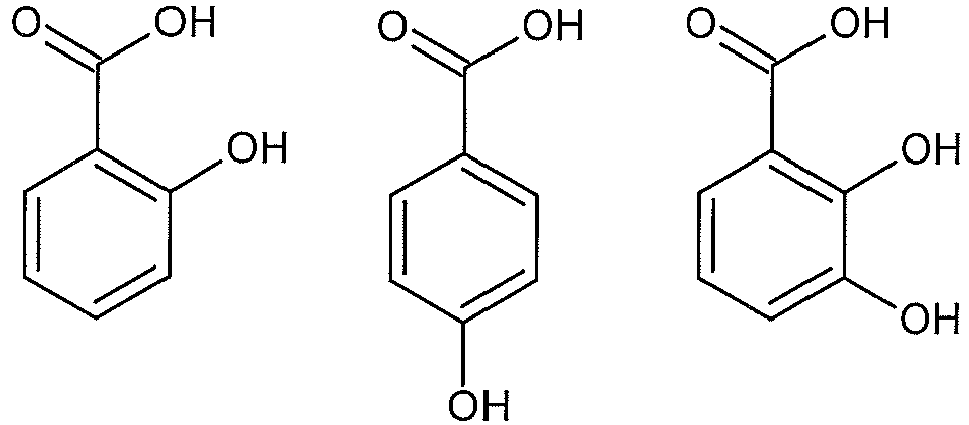
- Bevorzugte Verbindungen der Formel (I) sind


- Gemäß der vorliegenden Erfindung ist bevorzugt, dass wenn zwei der Reste R2 eine OH-Gruppe darstellen, sich die zwei OH-Gruppen an benachbarten C-Atomen befinden.
- Somit betrifft die vorliegende Erfindung die Verwendung einer Verbindung der Formel (I) zur Verbesserung der Zugscherfestigkeit von ausgehärteten Zusammensetzungen, basierend auf silanmodifizierten Präpolymeren, wobei zwei der Reste R2 OH-Gruppen darstellen und sich die beiden OH-Gruppen an benachbarten C-Atomen befinden.
- Wenn drei der Reste R2 eine OH-Gruppe darstellen und zwei der Reste R2 ein H-Atom darstellen, ist es bevorzugt, dass sich mindestens zwei OH-Gruppen an benachbarten C-Atomen befinden. Gemäß einer Ausführungsform der Erfindung, stellen drei der Reste R2 eine OH-Gruppe dar, wobei sich alle drei OH-Gruppen an benachbarten C-Atomen befinden. Gemäß einer weiteren Ausführungsform der Erfindung, stellen drei der Reste R2 eine OH-Gruppe dar, wobei sich nur zwei der drei OH-Gruppen an benachbarten C-Atomen befinden.
- Besonders bevorzugte Verbindungen der Formel (I) sind


- Silanfunktionalisierte Präpolymere, die sich für die Zwecke der vorliegenden Erfindung eignen sind beispielsweise beschrieben in der
EP-A-2 657 211 , auf die an dieser Stelle ausdrücklich Bezug genommen wird. Hierbei handelt es sich um silanfunktionalisierte Präpolymere der Formel (II)
- ein Polymer mit einem Molekulargewicht Mw von 1000 bis 50000, bevorzugt 1000 bis 20000 und besonders bevorzugt 4000 bis 20000 ist,

- R3 C1-C5-Alkyl oder C6-C10-Aryl, bevorzugt Methyl, Ethyl oder Phenyl,
- R4 C1-C4-Alkyl, bevorzugt Methyl oder Ethyl und
- X -O-, -(CH2)m-O-, -O-CO-NR-, -O-CO-NR-YY-NR-CO-NR- oder
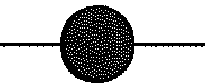
 einen C5 oder C6-Ring bildet und wobei
- R gleich oder verschieden ist und H, C1-C5-Alkyl, Phenyl oder den Rest eines Michael-Akzeptors bedeutet,
- Y gleich oder verschieden ist und lineares oder verzweigtes C1-C8-Alkylen (bevorzugt Methylen) oder eine Einfachbindung zwischen N und ist und

- unsubstituiertes oder mit C1-C3-Alkyl, bevorzugt Methyl, 1-, 2- oder 3-fach substituiertes Phenylen, Naphtylen, Cyclohexylen oder C4-C10-n-Alkylen bedeutet und

- m gleich oder verschieden ist und eine ganze Zahl von 1 bis 8, bevorzugt 1 bis 4, besonders bevorzugt 1 bis 3
- n eine ganze Zahl von 0 bis 2, bevorzugt 0 oder 1, besonders bevorzugt 0, und
- p eine ganze Zahl von 1 bis 50, bevorzugt 2 bis 4, besonders bevorzugt 2 bis 3 oder für den Fall, dass X -(CH2)m-O- ist oder X mit zwei benachbarten C-Atomen des Rückgrads des Polymers einen C5- oder C6-Ring bildet, 1 bis 100, bevorzugt 5 bis 10 ist.

- Mit dem Molekulargewicht Mw ist das Massemittel der Molmasse gemeint, wie es beispielsweise mit einem handelsüblichen GPC (Gel-Permeations-Chromatograph) ermittelt werden kann (siehe z.B.:
DE102005041953A1 Abs. [017]). - Bei dem Polymermit einem Molekulargewicht Mw von 1000 bis 50000, bevorzugt 1000 bis 20000 und besonders bevorzugt 4000 bis 20000 handelt es sich beispielsweise um Polyalkoxyalkylen, bevorzugt um ein Polyalkylenglykol, wie Polyethylenglykol, Polypropylenglykol oder Polybutylenglykol, insbesondere um Polypropylenglykol. In diesen Fällen ist p gleich 2 oder 3.

Bei einem Michael-Akzeptor handelt es sich z.B. um eine α,β-ungesättigte Carbonylverbindung, wie α,β-ungesättigte Aldehyde, Ketone oder Ester, α,β-ungesättigte Nitrile oder Carbonsäureamide. Beispiele hierfür sind Acrylsäure-C1-C8-Alkylester, Methacrylsäure-C1-C8-Alkylester (s. z.B.US-A-4,067,844 ) Maleinsäureester, Fumarsäureester (s. z.B.EP-A-0 596 360 ). Der Rest des Michael-Akzeptors "R" entspricht dann dem in β-Stellung gebundenen (gesättigten) Rest des Michael-Akzeptors. - Beispiele für die erfindungsgemäß einsetzbaren silanfunktionalisierten Präpolymere sind:
- Polypropylenglykol (PPG), dessen OH-Endgruppen umgesetzt wurden mit Allylchlorid wobei die sich daraus ergebenden terminalen Doppelbindungen hydrosilyliert wurden. Solche Präpolymere sind kommerziell unter der Bezeichnung "Kaneka Silyl SAX®" (Kaneka Corp., Osaka, Japan) erhältlich und sind beispielsweise beschrieben in
US 3971751 , auf die hier ausdrücklich Bezug genommen wird; - PPG, dessen OH-Endgruppen umgesetzt wurden mit Isocyanato-Silan. Solche Präpolymere sind kommerziell unter der Bezeichnung "Wacker Geniosil® STP E" (Wacker Chemie AG, München, Deutschland) erhältlich und sind beispielsweise beschrieben in
EP-A-1 535 940 , auf die hier ausdrücklich Bezug genommen wird; - PPG, dessen OH-Endgruppen umgesetzt wurden mit Diisocyanat und die sich daraus ergebenden terminalen Isocyanatgruppen mit Aminosilan umgesetzt wurden. Solche Präpolymere sind kommerziell unter der Bezeichnung "Bayer Desmoseal® SXP" (Bayer AG, Leverkusen, Deutschland) erhältlich. Ihre Herstellung ist beispielsweise beschrieben in
WO2011/069966 auf welche hier ausdrücklich Bezug genommen wird. - Polymerketten mit seitenständigen Silangruppen (Formel (II) mit p = 1 bis 100, bevorzugt 5 bis 10). Solche Präpolymere sind kommerziell unter der Bezeichnung "Evonik Tegopac®" (EVONIK Tego Chemie GmbH, Essen, Deutschland) erhältlich und sind beispielsweise beschrieben in
EP-A-2 093 244 , auf die hier ausdrücklich Bezug genommen wird. - Weiterhin betrifft die vorliegende Erfindung eine Zusammensetzung enthaltend ein silanfunktionalisiertes Präpolymer und eine Verbindung der Formel (I),

wobei y = 5 ist und die Reste R2 gleich oder verschieden sind und ausgewählt sind aus der Gruppe bestehend aus -H, -OH und Resten mit 1 bis 12 C-Atomen. - Die erfindungsgemäße Zusammensetzung enthält eine Verbindung der Formel (I), in der als Reste mit 1 bis 12 C-Atomen für R1 und R2 Reste in Betracht kommen, die ausgewählt sind aus der Gruppe umfassend substituierte und unsubstituierte, lineare und verzweigte C1 bis C12 Alkylgruppen, bevorzugt C1 bis C8 Alkylgruppen, besonders bevorzugt C1 bis C3 Alkylgruppen, substituierte und unsubstituierte, lineare und verzweigte C1 bis C12 Alkenylgruppen, bevorzugt C1 bis C8 Alkenylgruppen, besonders bevorzugt C1 bis C3 Alkenylgruppen, substituierte und unsubstituierte, lineare und verzweigte C1 bis C12 Alkynylgruppen, bevorzugt C1 bis C8 Alkynylgruppen, besonders bevorzugt C1 bis C3 Alkynylgruppen, substituierte und unsubstituierte, lineare und verzweigte C1 bis C12 Alkoxygruppen, bevorzugt C1 bis C8 Alkoxygruppen, besonders bevorzugt C1 bis C3 Alkoxygruppen, cyclische Alkylgruppen mit 5 bis 8 C-Atomen, bevorzugt 5 bis 6 C-Atomen, cyclische Alkenylreste mit 5 bis 8 C-Atomen, bevorzugt 5 bis 6 C-Atomen.
- Gemäß der vorliegenden Erfindung ist es bevorzugt, dass mindestens einer der Reste R2 eine OH-Gruppe ist. Besonders bevorzugt stellen mindestens zwei der Reste R2 eine OH-Gruppe dar.
- Weiterhin ist es bevorzugt, dass die Reste R2 gleich oder verschieden sind und eine OH-Gruppe oder ein H-Atom darstellen. Folglich betrifft die vorliegende Erfindung Zusammensetzungen enthaltend eine Verbindung der Formel (I), wobei einer der Reste R2 eine OH-Gruppe darstellt und vier Reste R2 ein H-Atom darstellen oder zwei der Reste R2 eine OH-Gruppe darstellen und drei der Reste R2 ein H-Atom darstellen oder drei der Reste R2 eine OH-Gruppe darstellen und zwei der Reste R2 ein H-Atom darstellen oder vier der Reste R2 eine OH-Gruppe darstellt und einer der Reste R2 ein H-Atom darstellt oder alle fünf Reste R2 eine OH-Gruppe darstellen. Bevorzugt stellen zwei der Reste R2 eine OH-Gruppe dar und drei der Reste R2 stellen ein H-Atom dar oder drei der Reste R2 stellen eine OH-Gruppe darstellen und zwei der Reste R2 stellen ein H-Atom dar.
- Bevorzugt stellt R1 eine OH-Gruppe dar und mindestens einer der Reste R2 stellt eine OH-Gruppe dar, wobei die übrigen Reste R2 ein H-Atom darstellen. Besonders bevorzugt stellt R1 eine OH-Gruppe dar, zwei der Reste R2 stellen eine OH-Gruppe dar und drei der Reste R2 stellen ein H-Atom dar.
- Bevorzugte Verbindungen der Formel (I), die in der erfindungsgemäßen Zusammensetzung enthalten sind, sind


- Gemäß der vorliegenden Erfindung ist es bevorzugt, dass wenn zwei der Reste R2 eine OH-Gruppe darstellen, sich die mindestens zwei OH-Gruppen an benachbarten C-Atomen befinden.
- Somit betrifft die vorliegende Erfindung Zusammensetzungen enthaltend eine Verbindung der Formel (I), wobei zwei der Reste R2 OH-Gruppen darstellen und sich die beiden OH-Gruppen an benachbarten C-Atomen befinden.
- Wenn drei der Reste R2 eine OH-Gruppe darstellen und zwei der Reste R2 ein H-Atom darstellen, ist es bevorzugt, dass sich mindestens zwei OH-Gruppen an benachbarten C-Atomen befinden. Gemäß einer Ausführungsform der Erfindung, stellen drei der Reste R2 eine OH-Gruppe dar, wobei sich alle drei OH-Gruppen an benachbarten C-Atomen befinden. Gemäß einer weiteren Ausführungsform der Erfindung, stellen drei der Reste R2 eine OH-Gruppe dar, wobei sich nur zwei der drei OH-Gruppen an benachbarten C-Atomen befinden.
- Besonders bevorzugte Verbindungen der Formel (I), die in der erfindungsgemäßen Zusammensetzung enthalten sind, sind

- Gemäß der vorliegenden Erfindung enthält die Zusammensetzung die Verbindung der Formel (I) in einer Menge von 0,005 bis 0,5 Gew.-%, bevorzugt von 0,01 bis 0,5 Gew.-% besonders bevorzugt von 0,011 bis 0,4 Gew.-%.
- Die Zusammensetzung kann übliche Additive wie Füllstoffe, Weichmacher, Trockenmittel, Haftvermittler, Farbpigmente (Farbstoffe), Antioxidationsmittel, UV-Stabilisatoren, Rheologieadditive, Verdünnungsmittel, Verdickungsmittel, Katalysatoren, Konservierungsmittel, etc. enthalten.
- Als Füllstoffe eignen sich beispielsweise gemahlenes oder gefälltes Calciumcarbonat, Magnesiumcarbonat, Calciumsulfat, Bariumsulfat, Kaolin, Dolomit, Feldspat, Zeolith, Aluminiumhydroxid und Magnesiumhydroxid, etc., wobei diese Füllstoffe auch beispielsweise mit Silanen oder Fettsäuren oberflächenmodifiziert sein können. Es können eine oder mehrere verschiedene Füllstoffe verwendet werden. Füllstoffe werden gewöhnlich in Mengen von 0 bis 80 Gew.-%, bevorzugt 0 bis 60 Gew.-% zugegeben. Hierbei, wie auch in allen folgenden Gewichtsprozentangaben, beziehen sich diese auf die Masse der Gesamtrezeptur, sofern nichts anderes angegeben ist. Kommerziell erhältliche Füllstoffe sind beispielsweise Collafill® 60 (Steinwerke Kraft, Deutschland) und Apyral® 22 (Nabaltec, Deutschland).
- Als Pigmente können sowohl anorganische Pigmente wie Ruß, Eisenoxid, Ultramarin, oder Zinkoxid, als auch organische Farbstoffe wie Anthrachinone, Acridine, Phthalocyanine, Indophenole, etc. eingesetzt werden. Es können ein oder mehrere verschiedene Pigmente oder Pigmentpräparationen verwendet werden. Pigmente, die die Oxidation fördern, wie z.B. Eisenoxide, dürfen nur in kleinen Mengen zugesetzt werden, ansonsten ist die Gesamtmenge an Pigment nicht kritisch. Die Pigmente werden gewöhnlich in Mengen von 0 bis 30 Gew.-%, bevorzugt 0 bis 20 Gew.-% zugegeben. Kommerziell erhältliche Pigmente und Pigmentpräparationen bzw. Farbstoffe sind beispielsweise Bayferrox® (Lanxess, Deutschland).
- Als Antioxidationsmittel bzw. UV-Stabilisatoren eignen sich beispielsweise sterisch gehinderte Phenole, Benzophenone, Benzotriazole, Oxalanilide, Phenyltriazine, etc. Solche Antioxidationsmittel bzw. UV-Stabilisatoren sind beispielsweise erhältlich unter den Bezeichnungen lrganox® 1076, Tinuvin® 292, Tinuvin® 327, Tinuvin® 770 (BASF, Deutschland). Es können eine oder mehrere verschiedene Antioxidationsmittel bzw. UV-Stabilisatoren verwendet werden. Die Gesamtmenge an Antioxidationsmittel bzw. UV-Stabilisator richtet sich nach dem geplanten Gebrauch. Antioxidationsmittel bzw. UV-Stabilisatoren werden gewöhnlich in Mengen von 0 bis 5 Gew.-%, bevorzugt 0 bis 2 Gew.-% zugegeben.
- Als Trockenmittel eignen sich beispielsweise Alkylsilane, Aminosilane oder Vinylsilane wie Vinyltrimethoxysilan, Phenyltrimethoxysilan, Alkyltrimethoxysilane oder Alkyltriethoxysilane. Es können eine oder mehrere verschiedene Trockenmittel verwendet werden. Die Gesamtmenge an Trockenmittel ist nicht kritisch, sofern der Wassergehalt der anderen Rohstoffe entfernt wird. Trockenmittel werden gewöhnlich in Mengen von 0,1 bis 10 Gew.-%, bevorzugt 0,1 bis 5 Gew.-% zugegeben. Kommerziell erhältliche Trockenmittel sind beispielsweise Dynasylan® VTMO, Dynasylan® OCTEO, Dynasylan® AMMO (Evonik, Deutschland).
- Als Haftvermittler eignen sich beispielsweise Aminosilane wie Gamma-Amino-propyl-Trimethoxysilan oder Epoxysilane. Auch oligomere Silane, die jedoch (teilweise) Amino- oder Epoxy-funktionell sein müssen, sind geeignet. Es können eine oder mehrere verschiedene Haftvermittler verwendet werden. Die Gesamtmenge an Haftvermittler ist nicht kritisch. Haftvermittler werden gewöhnlich in Mengen von 0,1 bis 10 Gew.-%, bevorzugt 0,1 bis 5 Gew.-% zugegeben. Kommerziell erhältliche Haftvermittler sind beispielsweise Dynasylan® AMMO, Dynasylan® GLYMO, Dynasylan® 1146 (Oligomer) (Evonik, Deutschland).
- Als Rheologieadditiv eignen sich beispielsweise (hydrophobe) pyrogene Kieselsäuren, gefällte Kieselsäuren, Schichtsilikate, Amidwachse, Rizinussölderivate, Celulloseether, Polyurethan-, Polyamid- oder Acrylatverdicker, etc. Es können eine oder mehrere verschiedene Rheologieadditive verwendet werden. Die Gesamtmenge an Rheologieadditiv ist nicht kritisch. Rheologieadditive werden gewöhnlich in Mengen von 0 bis 15 Gew.-%, bevorzugt 0 bis 10 Gew.-% zugegeben. Kommerziell erhältliche Rheologieadditive sind beispielsweise Cab-O-Sil® TS720, Cab-O-Sil® LM 150 (Cabot, Deutschland), Aerosil® R208, (Evonik, Deutschland), Wacker H18 (Wacker, Deutschland).
- Als Weichmacher oder Verdünnungsmittel können Ester, wie Phthalate bzw. Cyclohexandicarbonsäuren, Citrate, Adipate oder Polyether eingesetzt werden. Weiterhin eignen sich beispielsweise Glycerin, Polyole und Polyether, Benzoate, etc. Es können ein oder mehrere verschiedene Verdünnungsmittel verwendet werden. Die Gesamtmenge an Verdünnungsmittel ist nicht kritisch. Verdünnungsmittel werden gewöhnlich in Mengen von 0 bis 50 Gew.-%, bevorzugt 0 bis 30 Gew.-% zugegeben. Kommerziell erhältliche Verdünnungsmittel sind beispielsweise Palatinol N, Palatinol 10 P oder Hexamoll DINCH (BASF, Deutschland), Acclaim Polyol 2200 (Covestro, Deutschland).
- Als Katalysatoren für die Vernetzungs- und Aushärtungsreaktion, eignen sich beispielsweise Bis(ethyl-acetoacetato)bis(isobutan-1 -olato)titan, Titan-(IV)-isopropanolat, Titan-(IV)-acetylacetonat, Eisen-(III)-acetylacetonat, Aluminium-triisopropanolat, Dibutylzinndilaurat, Dioctylzinndilaurat, Amidine oder Amidin-Derivate, 1,4-Diazabicyclo[2.2.2]octan, 1,8-Diazabicyclo[5.4.0]-undecen-7 (DBU), 1,5-Diazabicyclo[4.3.0]-nonen-5 (DBN), Guanindin, Guanidin-Derivate wie beispielsweise 1,1,3,3-Tetramethylguanidin, Essigsäure, Essigsäure-Derivate, Methansulfonsäure, p-Toluolsulfonsäure, etc. Es können ein oder mehrere verschiedene Katalysatoren verwendet werden. Die Gesamtmenge an Katalysator ist nicht kritisch. Katalysatoren werden gewöhnlich in Mengen von 0 bis 2 Gew.-%, bevorzugt 0 bis 1 Gew.-% zugegeben.
- Die erfindungsgemäße Zusammensetzung findet Anwendung in Klebstoffen, Dichtstoffen, Beschichtungen und/oder Grundierungen. Folglich betrifft die vorliegende Erfindung die Verwendung dieser Verbindung in Klebstoffen, Dichtstoffen, Beschichtungen und/oder Grundierungen, basierend auf silanfunktionalisierten Präpolymeren und die Verwendung dieser Verbindung zur Herstellung von Klebstoffen, Dichtstoffen, Beschichtungen und/oder Grundierungen, basierend auf silanfunktionalisierten Präpolymeren.
- Ferner betrifft die vorliegende Erfindung ein Verfahren zur Herstellung der erfindungsgemäßen Zusammensetzungen umfassend:
Mischen des silanfunktionalisierten Präpolymers der Formel (II) mit einer Verbindung der Formel (I). - Das Verfahren zur Herstellung der erfindungegemäßen Zusammensetzung umfasst weiterhin die folgenden Schritte:
- der Weichmacher wird in einem Mischer vorgelegt,
- das Trockenmittel wird zugegeben und dabei untergemischt,
- die Verbindung der Formel (I) wird zugegeben;
- der Füllstoff wird zugegeben, eingemischt und die erhaltene Mischung wird bevorzugt unter statischem Vakuum von 1 bis 500 hPa auf eine Temperatur von 40 bis 100 °C gebracht.
- Die erfolgte Trocknung kann durch eine Karl-Fischer-Titration geprüft werden. Dann erfolgt:
- die Zugabe und das Einmischen des Präpolymers zweckmäßigerweise unter Schutzgas (N2, Taupunkt < -20 °C),
- die Zugabe eines Antioxidationsmittels,
- Verdicker werden zugegeben und unter Schutzgas ggf. bei erhöhter Temperatur aufgeschlossen,
- Pyrogene Kieselsäure wird zugegeben und unter Schutzgas untergemischt
- Optional wird ein weiteres Trockenmittel zugegeben
- der Haftvermittler wird zugegeben und untergemischt
- der/die Katalysatoren wird/werden zugeben und untergemischt.
- Die Zugabe des Präpolymers, des Antioxidationsmittels, des Verdickers, der pyrogenen Kieselsäure, des Haftvermittlers und der Katalysatoren sowie die optionale Zugabe eines weiteren Trockenmittels kann alternativ zusammen in einem Schritt erfolgen. Zum Schluss wird die Mischung (Gesamtrezeptur) unter Vakuum entgast.
- Alternativ kann das Verfahren auch ohne die Verwendung eines Weichmachers erfolgen.
- Das Verfahren zur Herstellung der erfindungsgemäßen Zusammensetzung umfasst in diesem Fall die folgenden Schritte:
- das Präpolymer wird in einem Mischer vorgelegt
- das Trockenmittel wird zugegeben
- die Verbindung der Formel (I) wird zugegeben;
- der Füllstoff wird zugegeben, eingemischt und die Mischung wird bevorzugt unter statischem Vakuum von 1 bis 500 hPa auf eine Temperatur von 40 bis 100 °C gebracht.
- die Zugabe eines Antioxidationsmittels,
- Verdicker werden zugegeben und unter Schutzgas ggf. bei erhöhter Temperatur aufgeschlossen,
- Pyrogene Kieselsäure wird zugegeben und unter Schutzgas untergemischt
- Optional wird ein weiteres Trockenmittel zugegeben
- der Haftvermittler wird zugegeben und untergemischt
- der/die Katalysatoren wird/werden zugeben und untergemischt.
- Die Zugabe des Präpolymers, des Antioxidationsmittels, des Verdickers, der pyrogenen Kieselsäure, des Haftvermittlers und der Katalysatoren sowie die optionale Zugabe eines weiteren Trockenmittels kann alternative zusammen in einem Schritt erfolgen. Zum Schluss wird die Mischung (Gesamtrezeptur) unter Vakuum entgast.
- Die Zugscherfestigkeit wurde gemäß DIN EN 14293, Kapitel 4.7, bestimmt.
- Für die Herstellung der untersuchten Zusammensetzungen wurde wie folgt vorgegangen. Es wurden 16,31 Gew.-Teile Weichmacher 1,2-Cyclohexandicarbonsäurediisononylester (Hexamol DINCH) in einem Mischer vorgelegt und 1,65 Gew.-Teile Trockenmittel (Vinyltrimethoxysilan, Dynasylan VTMO) zugegeben und dabei untergemischt. Anschließend wurden 0,02 Gew.-Teile der Verbindung (I) zugegeben. Dann wurden 57,68 Gew.-Teile Füllstoff (Calciumcarbonat, Collafill® 60) eingemischt und die Mischung bei ca. 500 hPa auf eine Temperatur von 70 °C gebracht. Die erfolgte Trocknung wurde durch eine Karl-Fischer-Titration geprüft. Dann erfolgte die Zugabe und das Einmischen von 20,37 Gew.-Teilen Präpolymer (ein gamma-Silan basierend auf PPG, Desmoseal® S XP 2458) unter Stickstoff. Anschließend wurden 0,31 Gew.-Teile Antioxidationsmittel (3,3',3",5,5',5"-hexa-tert-butyl-a,a',a"-(mesitylen-2,4,6-triyl)tri-p-cresol, Irganox 1330), 0,55 Gew.-Teile Verdicker (Amidwachs, Crayvallac SLX) und 0,95 Gew.-Teile Verdicker (Pyrogene Kieselsäure, Aerosil R208) zugegeben und unter Stickstoff untergerührt. Dann wurden 1,09 Gew.-Teile Trocknungsmittel und 0,96 Gew.-Teile Haftvermittler (Aminopropyltrimethoxysilan, Dynasylan AMMO) zugegeben und untergemischt. Schließlich erfolgte die Zugabe von 0,03 Gew.-Teilen Titankatalysator (Bis(ethyl-acetoaceto-O1',O3)bis(2-methylpropan-1-olato)titan, Tyzor IBAY) und 0,08 Gew.-Teilen Amin-Katalysator (DBU). Die Mischung wurde abschließend unter Vakuum entgast.
Tabelle 1: Vergleich der Zugscherfestigkeit der unterschiedlichen Zusammensetzungen Verbindung (I) Zugscherfestigkeit (N/mm2) nach einem Tag Zugscherfestigkeit (N/mm2) nach 3 Tagen Keine Verbindung (I) 1,60 2,12 Gallussäure 2,32 2,69 3,4-Dihydroxybenzoesäure 1,92 2,35 2,3- Dihydroxybenzoesäure 2,02 2,46 - Die Werte in Tabelle 1 zeigen, dass die erfindungsgemäßen Zusammensetzungen im Vergleich zu der Zusammensetzung ohne Verbindung (I) eine höhere Zugscherfestigkeit aufweisen. Die Vergleichszusammensetzung, die keine Verbindung der Formel (I) enthält, weist nach 3 Tagen eine Zugscherfestigkeit von 2,12 N/mm2 auf. Die in den Beispielen untersuchten Zusammensetzungen, die eine Verbindung der Formel (I) umfassen, weisen eine bis zu 32 % höhere Zugscherfestigkeit auf.
Claims (13)
- Verwendung der Verbindung der Formel (I)

wobei X ausgewählt ist aus der Gruppe bestehend aus -OH, -H, Resten mit 1 bis 12 C-Atomen, und einem Substituenten -C(=O)-R1, wobei R1 ausgewählt ist aus der Gruppe bestehend aus -OH, und Resten mit 1 bis 25 C-Atomen, und wobei y = 5 ist und die Reste R2 gleich oder verschieden sind und ausgewählt sind aus der Gruppe bestehend aus -H, -OH und Resten mit 1 bis 12 C-Atomen. - Zusammensetzung enthaltend ein silanfunktionalisiertes Präpolymer und eine Verbindung der Formel (I)

- Zusammensetzung nach Anspruch 2, dadurch gekennzeichnet, dass das silanfunktionalisierte Präpolymer eine Struktur gemäß Formel (II) besitzt
 ein Polymer mit einem Molekulargewicht Mw von 1000 bis 50000, bevorzugt 1000 bis 20000 und besonders bevorzugt 4000 bis 20000 ist,
 R3 C1-C5-Alkyl oder C6-C10-Aryl, bevorzugt Methyl, Ethyl oder Phenyl,R4 C1-C4-Alkyl, bevorzugt Methyl oder Ethyl undX -O-, -(CH2)m-O-, -O-CO-NR-, -O-CO-NR-YY-NR-CO-NR- oder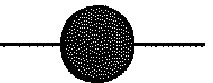
 einen C5 oder G6-Ring bildet und wobei
 R gleich oder verschieden ist und H, C1-C5-Alkyl, Phenyl oder den Rest eines Michael-Akzeptors bedeutet,Y gleich oder verschieden ist und lineares oder verzweigtes C1-C8-Alkylen (bevorzugt Methylen) oder eine Einfachbindung zwischen N undist und
 unsubstituiertes oder mit C1-C3-Alkyl, bevorzugt Methyl, 1-, 2- oder 3-fach substituiertes Phenylen, Naphtylen, Cyclohexylen oder C4-C10-n-Alkylen bedeutet
 undm gleich oder verschieden ist und eine ganze Zahl von 1 bis 8, bevorzugt 1 bis 4, besonders bevorzugt 1 bis 3n eine ganze Zahl von 0 bis 2, bevorzugt 0 oder 1, besonders bevorzugt 0, undp eine ganze Zahl von 1 bis 50, bevorzugt 2 bis 4, besonders bevorzugt 2 bis 3 oder für den Fall, dass X -(CH2)m-O- ist oder X mit zwei benachbarten C-Atomen des Rückgrads des Polymerseinen C5- oder C6-Ring bildet, 1 bis 100, bevorzugt 5 bis 10 ist.
- Zusammensetzung nach Anspruch 2 oder 3, dadurch gekennzeichnet, dass mindestens einer der Reste R2 -OH ist.
- Zusammensetzung nach einem oder mehreren der Ansprüche 2 bis 4, dadurch gekennzeichnet, dass zwei der Reste R2 -OH sind und drei der Reste R2 -H sind.
- Zusammensetzung nach einem oder mehreren der Ansprüche 2 bis 5, dadurch gekennzeichnet, dass R1 -OH ist und mindestens einer der Reste R2 -OH ist.
- Zusammensetzung nach einem oder mehreren der Ansprüche 2 bis 6, dadurch gekennzeichnet, dass R1 -OH ist, zwei der Reste R2 -OH sind und sich an benachbarten C-Atomen befinden und drei der Reste R2 -H sind.
- Zusammensetzung nach einem oder mehreren der Ansprüche 2 bis 7, dadurch gekennzeichnet, dass die Zusammensetzung die Verbindung der Formel (I) in einer Menge von 0,005 bis 0,5 Gew.-%, bevorzugt von 0,01 bis 0,5 Gew.-% besonders bevorzugt von 0,011 bis 0,4 Gew.-%.
- Zusammensetzung nach einem oder mehreren der Ansprüche 2 bis 8, dadurch gekennzeichnet, dass die Zusammensetzung Additive enthält, die ausgewählt sind aus der Gruppe bestehend aus Füllstoffe, Weichmacher, Trockenmittel, Haftvermittler, Farbpigmente (Farbstoffe), Antioxidationsmittel, UV-Stabilisatoren, Rheologieadditive, Verdünnungsmittel, Verdickungsmittel, Katalysatoren, Konservierungsmittel.
- Zusammensetzung nach einem oder mehreren der Ansprüche 2 bis 9, dadurch gekennzeichnet, dass die Zusammensetzung einen oder mehrere VernetzungsKatalysatoren umfasst, der bevorzugt ausgewählt ist aus der Gruppe bestehend aus Bis(ethyl-acetoacetato)bis(isobutan-1 -olato)titan, Titan-(IV)-isopropanolat, Titan-(IV)-acetylacetonat, Eisen-(III)-acetylacetonat, Aluminium-triisopropanolat, Dibutylzinndilaurat, Dioctylzinndilaurat, Amidine oder Amidin-Derivate, 1,4-Diazabicyclo[2.2.2]octan, 1,8-Diazabicyclo[5.4.0]-undecen-7, 1,5-Diazabicyclo[4.3.0]-nonen-5, Guanidin, Guanidin-Derivate, Essigsäure, Essigsäure-Derivate, Methansulfonsäure, p-Toluolsulfonsäure.
- Verwendung der Verbindung der Formel (I)

wobei X einen Substituenten -C(=O)-R1 darstellt, und wobei R1 ausgewählt ist aus der Gruppe bestehend aus -OH und Resten mit 1 bis 12 C-Atomen, und
wobei y = 5 ist und die Reste R2 gleich oder verschieden sind und ausgewählt sind aus der Gruppe bestehend aus -H, -OH und Resten mit 1 bis 12 C-Atomen. - Verwendung der Verbindung der Formel (I)
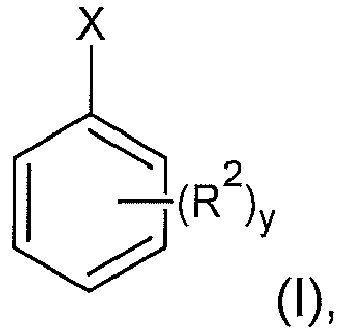
wobei X einen Substituenten -C(=O)-R1 darstellt, und wobei R1 ausgewählt ist aus der Gruppe bestehend aus -OH und Resten mit 1 bis 12 C-Atomen, und
wobei y = 5 ist und die Reste R2 gleich oder verschieden sind und ausgewählt sind aus der Gruppe bestehend aus -H, -OH und Resten mit 1 bis 12 C-Atomen. - Verfahren zur Herstellung von Zusammensetzungen nach einem oder mehreren der Ansprüche 2 bis 10 umfassend:
Mischen des silanfunktionalisierten Präpolymers der Formel (II) mit einer Verbindung der Formel (I).
Applications Claiming Priority (1)
| Application Number | Priority Date | Filing Date | Title |
|---|---|---|---|
| DE102017219755.2A DE102017219755A1 (de) | 2017-11-07 | 2017-11-07 | Verwendung von Additiven zur Erhöhung der Zugscherfestigkeit und Zusammensetzung enthaltend ein silanfunktionalisiertes Präpolymer und Additive |
Publications (2)
| Publication Number | Publication Date |
|---|---|
| EP3480232A1 true EP3480232A1 (de) | 2019-05-08 |
| EP3480232B1 EP3480232B1 (de) | 2023-02-01 |
Family
ID=64109745
Family Applications (1)
| Application Number | Title | Priority Date | Filing Date |
|---|---|---|---|
| EP18203914.9A Active EP3480232B1 (de) | 2017-11-07 | 2018-11-01 | Verwendung von additiven zur erhöhung der zugscherfestigkeit und zusammensetzung enthaltend ein silanfunktionalisiertes präpolymer und additive |
Country Status (6)
| Country | Link |
|---|---|
| US (1) | US11059953B2 (de) |
| EP (1) | EP3480232B1 (de) |
| CA (1) | CA3023220A1 (de) |
| DE (1) | DE102017219755A1 (de) |
| ES (1) | ES2940244T3 (de) |
| PL (1) | PL3480232T3 (de) |
Citations (13)
| Publication number | Priority date | Publication date | Assignee | Title |
|---|---|---|---|---|
| US3971751A (en) | 1975-06-09 | 1976-07-27 | Kanegafuchi Kagaku Kogyo Kabushiki Kaisha | Vulcanizable silylether terminated polymer |
| US4067844A (en) | 1976-12-22 | 1978-01-10 | Tremco Incorporated | Urethane polymers and sealant compositions containing the same |
| EP0596360A1 (de) | 1992-11-06 | 1994-05-11 | Bayer Ag | Alkoxysilian- und Aminogruppen aufweisende Verbindungen |
| EP1535940A1 (de) | 2003-11-27 | 2005-06-01 | Wacker-Chemie GmbH | Verfahren zur Herstellung von organyloxysilylterminierten Polymeren |
| DE102005041953A1 (de) | 2005-09-03 | 2007-03-08 | Bayer Materialscience Ag | Niedrigviskose alkoxysilangruppenaufweisende Prepolymere, ein Verfahren zu ihrer Herstellung sowie ihre Verwendung |
| EP2093244A1 (de) | 2008-02-21 | 2009-08-26 | Evonik Goldschmidt GmbH | Neue Alkoxysilylgruppen tragende Polyetheralkohole durch Alkoxylierung epoxidfunktioneller Alkoxysilane an Doppelmetallcyanid (DMC)-Katalysatoren, sowie Verfahren zu deren Herstellung |
| EP2103648A1 (de) * | 2008-03-20 | 2009-09-23 | Sika Technology AG | Feuchtigkeitshärtende Zusammensetzung mit guter Lagerstabilität und geringem Volumenschwund |
| WO2011069966A1 (de) | 2009-12-09 | 2011-06-16 | Bayer Materialscience Ag | Mit alkoxysilangruppen modifizierte polyurethane |
| DE102011007504A1 (de) | 2011-04-15 | 2012-10-18 | Henkel Ag & Co. Kgaa | PU-Zusammensetzungen mit komplexierten Katalysatoren |
| US20120277373A1 (en) * | 2009-10-30 | 2012-11-01 | Henkel Ag & Co. Kgaa | Moisture-curing formulations with time-modified phases |
| EP2178963B1 (de) * | 2007-08-15 | 2013-07-17 | Henkel AG & Co. KGaA | Silanvernetzender kleb-oder dichtstoff mit n-silylalkylamiden und seine verwendung |
| EP2657211A2 (de) | 2012-04-26 | 2013-10-30 | Bona GmbH Deutschland | Verwendung von silanfunktionalisierten Präpolymeren in einer Formulierung zur Estrichreparatur |
| DE102012223422A1 (de) * | 2012-12-17 | 2014-06-18 | Henkel Ag & Co. Kgaa | Niedermodulige silanterminierte PU-Präpolymere |
Family Cites Families (2)
| Publication number | Priority date | Publication date | Assignee | Title |
|---|---|---|---|---|
| US8216682B2 (en) * | 2007-10-11 | 2012-07-10 | Illinois Tool Works, Inc. | Moisture curable isocyanate containing acrylic formulation |
| ES2364725T3 (es) * | 2008-10-31 | 2011-09-13 | Sika Technology Ag | Composición de poliuretano que contiene organometoxisilano con propiedades de material anisotrópico. |
-
2017
- 2017-11-07 DE DE102017219755.2A patent/DE102017219755A1/de not_active Ceased
-
2018
- 2018-11-01 PL PL18203914.9T patent/PL3480232T3/pl unknown
- 2018-11-01 ES ES18203914T patent/ES2940244T3/es active Active
- 2018-11-01 EP EP18203914.9A patent/EP3480232B1/de active Active
- 2018-11-02 US US16/178,695 patent/US11059953B2/en active Active
- 2018-11-06 CA CA3023220A patent/CA3023220A1/en active Pending
Patent Citations (13)
| Publication number | Priority date | Publication date | Assignee | Title |
|---|---|---|---|---|
| US3971751A (en) | 1975-06-09 | 1976-07-27 | Kanegafuchi Kagaku Kogyo Kabushiki Kaisha | Vulcanizable silylether terminated polymer |
| US4067844A (en) | 1976-12-22 | 1978-01-10 | Tremco Incorporated | Urethane polymers and sealant compositions containing the same |
| EP0596360A1 (de) | 1992-11-06 | 1994-05-11 | Bayer Ag | Alkoxysilian- und Aminogruppen aufweisende Verbindungen |
| EP1535940A1 (de) | 2003-11-27 | 2005-06-01 | Wacker-Chemie GmbH | Verfahren zur Herstellung von organyloxysilylterminierten Polymeren |
| DE102005041953A1 (de) | 2005-09-03 | 2007-03-08 | Bayer Materialscience Ag | Niedrigviskose alkoxysilangruppenaufweisende Prepolymere, ein Verfahren zu ihrer Herstellung sowie ihre Verwendung |
| EP2178963B1 (de) * | 2007-08-15 | 2013-07-17 | Henkel AG & Co. KGaA | Silanvernetzender kleb-oder dichtstoff mit n-silylalkylamiden und seine verwendung |
| EP2093244A1 (de) | 2008-02-21 | 2009-08-26 | Evonik Goldschmidt GmbH | Neue Alkoxysilylgruppen tragende Polyetheralkohole durch Alkoxylierung epoxidfunktioneller Alkoxysilane an Doppelmetallcyanid (DMC)-Katalysatoren, sowie Verfahren zu deren Herstellung |
| EP2103648A1 (de) * | 2008-03-20 | 2009-09-23 | Sika Technology AG | Feuchtigkeitshärtende Zusammensetzung mit guter Lagerstabilität und geringem Volumenschwund |
| US20120277373A1 (en) * | 2009-10-30 | 2012-11-01 | Henkel Ag & Co. Kgaa | Moisture-curing formulations with time-modified phases |
| WO2011069966A1 (de) | 2009-12-09 | 2011-06-16 | Bayer Materialscience Ag | Mit alkoxysilangruppen modifizierte polyurethane |
| DE102011007504A1 (de) | 2011-04-15 | 2012-10-18 | Henkel Ag & Co. Kgaa | PU-Zusammensetzungen mit komplexierten Katalysatoren |
| EP2657211A2 (de) | 2012-04-26 | 2013-10-30 | Bona GmbH Deutschland | Verwendung von silanfunktionalisierten Präpolymeren in einer Formulierung zur Estrichreparatur |
| DE102012223422A1 (de) * | 2012-12-17 | 2014-06-18 | Henkel Ag & Co. Kgaa | Niedermodulige silanterminierte PU-Präpolymere |
Non-Patent Citations (2)
| Title |
|---|
| BODO MÜLLER U; WALTER RATH: "Formulierung von Kleb- und Dichtstoffen", 2015, HANNOVER: VINCENTZ NETWORK |
| H. KITTEL: "Lehrbuch der Lacke und Beschichtungen", vol. 7, 2005, S. HIRZEL VERLAG, article "Produkte für das Bauwesen, Beschichtungen, Bauklebstoffe, Dichtstoffe", pages: 355 ff |
Also Published As
| Publication number | Publication date |
|---|---|
| US11059953B2 (en) | 2021-07-13 |
| EP3480232B1 (de) | 2023-02-01 |
| ES2940244T3 (es) | 2023-05-04 |
| DE102017219755A1 (de) | 2019-05-09 |
| CA3023220A1 (en) | 2019-05-07 |
| US20190136012A1 (en) | 2019-05-09 |
| PL3480232T3 (pl) | 2023-06-12 |
Similar Documents
| Publication | Publication Date | Title |
|---|---|---|
| EP0549626B1 (de) | Feuchtigkeitshärtende, alkoxysilanterminierte polyurethane | |
| EP2493957B1 (de) | Harnstoffgebundende alkoxysilane zum einsatz in dicht- und klebstoffen | |
| EP3271367B1 (de) | Silane und härtbare zusammensetzungen, die diese silane als vernetzer enthalten | |
| EP1196469B1 (de) | Spezielle aminosilane enthaltende, kondensationsvernetzende polyurethanmassen, ein verfahren zu ihrer herstellung sowie ihre verwendung | |
| EP2178963B1 (de) | Silanvernetzender kleb-oder dichtstoff mit n-silylalkylamiden und seine verwendung | |
| DE102008020979A1 (de) | Härtbare Zusammensetzungen enthaltend silylierte Polyurethane | |
| EP2222751B1 (de) | Härtbare zusammensetzungen aus silanen mit drei hydrolisierbaren gruppen | |
| DE202015009134U1 (de) | Härtbare Silikonzusammensetzungen | |
| WO2017089068A1 (de) | Bindemittelsysteme enthaltend alkoxysilylgruppen tragende präpolymere und epoxidverbindungen sowie deren verwendung | |
| EP3947498A1 (de) | Zusammensetzung und verfahren zur herstellung feuchtigkeitsvernetzender polymere und deren verwendung | |
| EP1957553A1 (de) | Kieselsäuregefüllter, silanvernetzender kleb-, dicht- oder beschichtungsstoff und seine verwendung | |
| DE19929011A1 (de) | Spezielle Aminosilane enthaltende, kondensationsvernetzende Polyurethanmassen, ein Verfahren zu ihrer Herstellung sowie ihre Verwendung | |
| EP1576031B1 (de) | 3-(n-silylalkyl)-amino-propenoat-gruppen enthaltendes polymer und dessen verwendung | |
| EP3480232B1 (de) | Verwendung von additiven zur erhöhung der zugscherfestigkeit und zusammensetzung enthaltend ein silanfunktionalisiertes präpolymer und additive | |
| EP2813528A1 (de) | Härtbare Zusammensetzung auf Basis von Alkoxysilangruppen-haltigen Polyethern und einer Phosphazen-Base | |
| EP3841138A1 (de) | Trocknungsmittel für feuchtigkeitshärtende zusammensetzungen | |
| WO2011069954A1 (de) | Dichtstoffe | |
| DE102016200704A1 (de) | Verfahren zur Erhöhung der Anwendungssicherheit und der Alterungsbeständigkeit von Klebstoffen und anderen Produkten, enthaltend silanfunktionalisierte Präpolymere | |
| EP2477737B1 (de) | Silangruppenhaltige reaktivverdünner | |
| WO2024079186A1 (de) | Emissionsfreie silikonkautschukmassen | |
| WO2016120153A1 (de) | Organische zinkkomplexe als katalysatoren für kondensationsreaktionen | |
| DE102017115439A1 (de) | Verfahren zur Erhöhung der Anwendungssicherheit und der Alterungsbeständigkeit von Klebstoffen und anderen Produkten, enthaltend silanfunktionalisierte Präpolymere | |
| EP4263717A1 (de) | Verfahren zur herstellung von vernetzbaren massen auf basis von organyloxysilanterminierten polymeren | |
| DE3432794A1 (de) | Polyurethanharzmasse | |
| DE102008021222A1 (de) | Härtbare Zusammensetzungen auf Basis silylierter Polyurethane |
Legal Events
| Date | Code | Title | Description |
|---|---|---|---|
| PUAI | Public reference made under article 153(3) epc to a published international application that has entered the european phase |
Free format text: ORIGINAL CODE: 0009012 |
|
| STAA | Information on the status of an ep patent application or granted ep patent |
Free format text: STATUS: THE APPLICATION HAS BEEN PUBLISHED |
|
| AK | Designated contracting states |
Kind code of ref document: A1 Designated state(s): AL AT BE BG CH CY CZ DE DK EE ES FI FR GB GR HR HU IE IS IT LI LT LU LV MC MK MT NL NO PL PT RO RS SE SI SK SM TR |
|
| AX | Request for extension of the european patent |
Extension state: BA ME |
|
| STAA | Information on the status of an ep patent application or granted ep patent |
Free format text: STATUS: REQUEST FOR EXAMINATION WAS MADE |
|
| 17P | Request for examination filed |
Effective date: 20191108 |
|
| RBV | Designated contracting states (corrected) |
Designated state(s): AL AT BE BG CH CY CZ DE DK EE ES FI FR GB GR HR HU IE IS IT LI LT LU LV MC MK MT NL NO PL PT RO RS SE SI SK SM TR |
|
| STAA | Information on the status of an ep patent application or granted ep patent |
Free format text: STATUS: EXAMINATION IS IN PROGRESS |
|
| 17Q | First examination report despatched |
Effective date: 20201130 |
|
| GRAP | Despatch of communication of intention to grant a patent |
Free format text: ORIGINAL CODE: EPIDOSNIGR1 |
|
| STAA | Information on the status of an ep patent application or granted ep patent |
Free format text: STATUS: GRANT OF PATENT IS INTENDED |
|
| INTG | Intention to grant announced |
Effective date: 20220816 |
|
| GRAS | Grant fee paid |
Free format text: ORIGINAL CODE: EPIDOSNIGR3 |
|
| GRAA | (expected) grant |
Free format text: ORIGINAL CODE: 0009210 |
|
| STAA | Information on the status of an ep patent application or granted ep patent |
Free format text: STATUS: THE PATENT HAS BEEN GRANTED |
|
| AK | Designated contracting states |
Kind code of ref document: B1 Designated state(s): AL AT BE BG CH CY CZ DE DK EE ES FI FR GB GR HR HU IE IS IT LI LT LU LV MC MK MT NL NO PL PT RO RS SE SI SK SM TR |
|
| REG | Reference to a national code |
Ref country code: GB Ref legal event code: FG4D Free format text: NOT ENGLISH |
|
| REG | Reference to a national code |
Ref country code: CH Ref legal event code: EP Ref country code: AT Ref legal event code: REF Ref document number: 1546929 Country of ref document: AT Kind code of ref document: T Effective date: 20230215 |
|
| REG | Reference to a national code |
Ref country code: DE Ref legal event code: R096 Ref document number: 502018011534 Country of ref document: DE |
|
| REG | Reference to a national code |
Ref country code: IE Ref legal event code: FG4D Free format text: LANGUAGE OF EP DOCUMENT: GERMAN |
|
| REG | Reference to a national code |
Ref country code: RO Ref legal event code: EPE |
|
| REG | Reference to a national code |
Ref country code: SE Ref legal event code: TRGR |
|
| REG | Reference to a national code |
Ref country code: ES Ref legal event code: FG2A Ref document number: 2940244 Country of ref document: ES Kind code of ref document: T3 Effective date: 20230504 |
|
| REG | Reference to a national code |
Ref country code: LT Ref legal event code: MG9D |
|
| REG | Reference to a national code |
Ref country code: NL Ref legal event code: MP Effective date: 20230201 |
|
| P01 | Opt-out of the competence of the unified patent court (upc) registered |
Effective date: 20230508 |
|
| PG25 | Lapsed in a contracting state [announced via postgrant information from national office to epo] |
Ref country code: RS Free format text: LAPSE BECAUSE OF FAILURE TO SUBMIT A TRANSLATION OF THE DESCRIPTION OR TO PAY THE FEE WITHIN THE PRESCRIBED TIME-LIMIT Effective date: 20230201 Ref country code: PT Free format text: LAPSE BECAUSE OF FAILURE TO SUBMIT A TRANSLATION OF THE DESCRIPTION OR TO PAY THE FEE WITHIN THE PRESCRIBED TIME-LIMIT Effective date: 20230601 Ref country code: NO Free format text: LAPSE BECAUSE OF FAILURE TO SUBMIT A TRANSLATION OF THE DESCRIPTION OR TO PAY THE FEE WITHIN THE PRESCRIBED TIME-LIMIT Effective date: 20230501 Ref country code: NL Free format text: LAPSE BECAUSE OF FAILURE TO SUBMIT A TRANSLATION OF THE DESCRIPTION OR TO PAY THE FEE WITHIN THE PRESCRIBED TIME-LIMIT Effective date: 20230201 Ref country code: LV Free format text: LAPSE BECAUSE OF FAILURE TO SUBMIT A TRANSLATION OF THE DESCRIPTION OR TO PAY THE FEE WITHIN THE PRESCRIBED TIME-LIMIT Effective date: 20230201 Ref country code: LT Free format text: LAPSE BECAUSE OF FAILURE TO SUBMIT A TRANSLATION OF THE DESCRIPTION OR TO PAY THE FEE WITHIN THE PRESCRIBED TIME-LIMIT Effective date: 20230201 Ref country code: HR Free format text: LAPSE BECAUSE OF FAILURE TO SUBMIT A TRANSLATION OF THE DESCRIPTION OR TO PAY THE FEE WITHIN THE PRESCRIBED TIME-LIMIT Effective date: 20230201 |
|
| PG25 | Lapsed in a contracting state [announced via postgrant information from national office to epo] |
Ref country code: IS Free format text: LAPSE BECAUSE OF FAILURE TO SUBMIT A TRANSLATION OF THE DESCRIPTION OR TO PAY THE FEE WITHIN THE PRESCRIBED TIME-LIMIT Effective date: 20230601 Ref country code: GR Free format text: LAPSE BECAUSE OF FAILURE TO SUBMIT A TRANSLATION OF THE DESCRIPTION OR TO PAY THE FEE WITHIN THE PRESCRIBED TIME-LIMIT Effective date: 20230502 Ref country code: FI Free format text: LAPSE BECAUSE OF FAILURE TO SUBMIT A TRANSLATION OF THE DESCRIPTION OR TO PAY THE FEE WITHIN THE PRESCRIBED TIME-LIMIT Effective date: 20230201 |
|
| PG25 | Lapsed in a contracting state [announced via postgrant information from national office to epo] |
Ref country code: SM Free format text: LAPSE BECAUSE OF FAILURE TO SUBMIT A TRANSLATION OF THE DESCRIPTION OR TO PAY THE FEE WITHIN THE PRESCRIBED TIME-LIMIT Effective date: 20230201 Ref country code: EE Free format text: LAPSE BECAUSE OF FAILURE TO SUBMIT A TRANSLATION OF THE DESCRIPTION OR TO PAY THE FEE WITHIN THE PRESCRIBED TIME-LIMIT Effective date: 20230201 Ref country code: DK Free format text: LAPSE BECAUSE OF FAILURE TO SUBMIT A TRANSLATION OF THE DESCRIPTION OR TO PAY THE FEE WITHIN THE PRESCRIBED TIME-LIMIT Effective date: 20230201 Ref country code: CZ Free format text: LAPSE BECAUSE OF FAILURE TO SUBMIT A TRANSLATION OF THE DESCRIPTION OR TO PAY THE FEE WITHIN THE PRESCRIBED TIME-LIMIT Effective date: 20230201 |
|
| REG | Reference to a national code |
Ref country code: DE Ref legal event code: R097 Ref document number: 502018011534 Country of ref document: DE |
|
| PG25 | Lapsed in a contracting state [announced via postgrant information from national office to epo] |
Ref country code: SK Free format text: LAPSE BECAUSE OF FAILURE TO SUBMIT A TRANSLATION OF THE DESCRIPTION OR TO PAY THE FEE WITHIN THE PRESCRIBED TIME-LIMIT Effective date: 20230201 |
|
| PLBE | No opposition filed within time limit |
Free format text: ORIGINAL CODE: 0009261 |
|
| STAA | Information on the status of an ep patent application or granted ep patent |
Free format text: STATUS: NO OPPOSITION FILED WITHIN TIME LIMIT |
|
| 26N | No opposition filed |
Effective date: 20231103 |
|
| PG25 | Lapsed in a contracting state [announced via postgrant information from national office to epo] |
Ref country code: SI Free format text: LAPSE BECAUSE OF FAILURE TO SUBMIT A TRANSLATION OF THE DESCRIPTION OR TO PAY THE FEE WITHIN THE PRESCRIBED TIME-LIMIT Effective date: 20230201 |
|
| REG | Reference to a national code |
Ref country code: CH Ref legal event code: PL |
|
| PG25 | Lapsed in a contracting state [announced via postgrant information from national office to epo] |
Ref country code: MC Free format text: LAPSE BECAUSE OF FAILURE TO SUBMIT A TRANSLATION OF THE DESCRIPTION OR TO PAY THE FEE WITHIN THE PRESCRIBED TIME-LIMIT Effective date: 20230201 |
|
| PG25 | Lapsed in a contracting state [announced via postgrant information from national office to epo] |
Ref country code: LU Free format text: LAPSE BECAUSE OF NON-PAYMENT OF DUE FEES Effective date: 20231101 |
|
| PG25 | Lapsed in a contracting state [announced via postgrant information from national office to epo] |
Ref country code: CH Free format text: LAPSE BECAUSE OF NON-PAYMENT OF DUE FEES Effective date: 20231130 |
|
| PG25 | Lapsed in a contracting state [announced via postgrant information from national office to epo] |
Ref country code: MC Free format text: LAPSE BECAUSE OF FAILURE TO SUBMIT A TRANSLATION OF THE DESCRIPTION OR TO PAY THE FEE WITHIN THE PRESCRIBED TIME-LIMIT Effective date: 20230201 Ref country code: LU Free format text: LAPSE BECAUSE OF NON-PAYMENT OF DUE FEES Effective date: 20231101 Ref country code: CH Free format text: LAPSE BECAUSE OF NON-PAYMENT OF DUE FEES Effective date: 20231130 |
|
| REG | Reference to a national code |
Ref country code: BE Ref legal event code: MM Effective date: 20231130 |
|
| REG | Reference to a national code |
Ref country code: IE Ref legal event code: MM4A |
|
| PG25 | Lapsed in a contracting state [announced via postgrant information from national office to epo] |
Ref country code: IE Free format text: LAPSE BECAUSE OF NON-PAYMENT OF DUE FEES Effective date: 20231101 |
|
| PG25 | Lapsed in a contracting state [announced via postgrant information from national office to epo] |
Ref country code: BE Free format text: LAPSE BECAUSE OF NON-PAYMENT OF DUE FEES Effective date: 20231130 |
|
| PG25 | Lapsed in a contracting state [announced via postgrant information from national office to epo] |
Ref country code: IE Free format text: LAPSE BECAUSE OF NON-PAYMENT OF DUE FEES Effective date: 20231101 Ref country code: BE Free format text: LAPSE BECAUSE OF NON-PAYMENT OF DUE FEES Effective date: 20231130 |
|
| PGFP | Annual fee paid to national office [announced via postgrant information from national office to epo] |
Ref country code: IT Payment date: 20240916 Year of fee payment: 7 |
|
| PG25 | Lapsed in a contracting state [announced via postgrant information from national office to epo] |
Ref country code: BG Free format text: LAPSE BECAUSE OF FAILURE TO SUBMIT A TRANSLATION OF THE DESCRIPTION OR TO PAY THE FEE WITHIN THE PRESCRIBED TIME-LIMIT Effective date: 20230201 |
|
| PG25 | Lapsed in a contracting state [announced via postgrant information from national office to epo] |
Ref country code: BG Free format text: LAPSE BECAUSE OF FAILURE TO SUBMIT A TRANSLATION OF THE DESCRIPTION OR TO PAY THE FEE WITHIN THE PRESCRIBED TIME-LIMIT Effective date: 20230201 |
|
| REG | Reference to a national code |
Ref country code: AT Ref legal event code: MM01 Ref document number: 1546929 Country of ref document: AT Kind code of ref document: T Effective date: 20231101 |
|
| PGFP | Annual fee paid to national office [announced via postgrant information from national office to epo] |
Ref country code: PL Payment date: 20241024 Year of fee payment: 7 |
|
| PGFP | Annual fee paid to national office [announced via postgrant information from national office to epo] |
Ref country code: GB Payment date: 20241125 Year of fee payment: 7 |
|
| PGFP | Annual fee paid to national office [announced via postgrant information from national office to epo] |
Ref country code: FR Payment date: 20241128 Year of fee payment: 7 |
|
| PG25 | Lapsed in a contracting state [announced via postgrant information from national office to epo] |
Ref country code: AT Free format text: LAPSE BECAUSE OF NON-PAYMENT OF DUE FEES Effective date: 20231101 |
|
| PGFP | Annual fee paid to national office [announced via postgrant information from national office to epo] |
Ref country code: RO Payment date: 20241029 Year of fee payment: 7 |
|
| PGFP | Annual fee paid to national office [announced via postgrant information from national office to epo] |
Ref country code: ES Payment date: 20241204 Year of fee payment: 7 |
|
| PGFP | Annual fee paid to national office [announced via postgrant information from national office to epo] |
Ref country code: SE Payment date: 20241125 Year of fee payment: 7 |
|
| PG25 | Lapsed in a contracting state [announced via postgrant information from national office to epo] |
Ref country code: AT Free format text: LAPSE BECAUSE OF NON-PAYMENT OF DUE FEES Effective date: 20231101 |
|
| PGFP | Annual fee paid to national office [announced via postgrant information from national office to epo] |
Ref country code: DE Payment date: 20250105 Year of fee payment: 7 |
|
| PG25 | Lapsed in a contracting state [announced via postgrant information from national office to epo] |
Ref country code: CY Free format text: LAPSE BECAUSE OF FAILURE TO SUBMIT A TRANSLATION OF THE DESCRIPTION OR TO PAY THE FEE WITHIN THE PRESCRIBED TIME-LIMIT; INVALID AB INITIO Effective date: 20181101 |
|
| REG | Reference to a national code |
Ref country code: DE Ref legal event code: R082 Ref document number: 502018011534 Country of ref document: DE Representative=s name: DR. MUELLER PATENTANWAELTE, DE |
|
| PG25 | Lapsed in a contracting state [announced via postgrant information from national office to epo] |
Ref country code: HU Free format text: LAPSE BECAUSE OF FAILURE TO SUBMIT A TRANSLATION OF THE DESCRIPTION OR TO PAY THE FEE WITHIN THE PRESCRIBED TIME-LIMIT; INVALID AB INITIO Effective date: 20181101 |
|
| PG25 | Lapsed in a contracting state [announced via postgrant information from national office to epo] |
Ref country code: TR Free format text: LAPSE BECAUSE OF FAILURE TO SUBMIT A TRANSLATION OF THE DESCRIPTION OR TO PAY THE FEE WITHIN THE PRESCRIBED TIME-LIMIT Effective date: 20230201 |