EP3480253A1 - Composition de résine polyacétal pour moulage de corps moulé plat, corps moulé plat, et plaque-support de lève-glace - Google Patents
Composition de résine polyacétal pour moulage de corps moulé plat, corps moulé plat, et plaque-support de lève-glace Download PDFInfo
- Publication number
- EP3480253A1 EP3480253A1 EP17819601.0A EP17819601A EP3480253A1 EP 3480253 A1 EP3480253 A1 EP 3480253A1 EP 17819601 A EP17819601 A EP 17819601A EP 3480253 A1 EP3480253 A1 EP 3480253A1
- Authority
- EP
- European Patent Office
- Prior art keywords
- molded article
- polyacetal resin
- resin composition
- mass
- shaped molded
- Prior art date
- Legal status (The legal status is an assumption and is not a legal conclusion. Google has not performed a legal analysis and makes no representation as to the accuracy of the status listed.)
- Pending
Links
Images
Classifications
-
- C—CHEMISTRY; METALLURGY
- C08—ORGANIC MACROMOLECULAR COMPOUNDS; THEIR PREPARATION OR CHEMICAL WORKING-UP; COMPOSITIONS BASED THEREON
- C08G—MACROMOLECULAR COMPOUNDS OBTAINED OTHERWISE THAN BY REACTIONS ONLY INVOLVING UNSATURATED CARBON-TO-CARBON BONDS
- C08G2/00—Addition polymers of aldehydes or cyclic oligomers thereof or of ketones; Addition copolymers thereof with less than 50 molar percent of other substances
- C08G2/18—Copolymerisation of aldehydes or ketones
- C08G2/22—Copolymerisation of aldehydes or ketones with epoxy compounds
-
- C—CHEMISTRY; METALLURGY
- C08—ORGANIC MACROMOLECULAR COMPOUNDS; THEIR PREPARATION OR CHEMICAL WORKING-UP; COMPOSITIONS BASED THEREON
- C08L—COMPOSITIONS OF MACROMOLECULAR COMPOUNDS
- C08L59/00—Compositions of polyacetals; Compositions of derivatives of polyacetals
- C08L59/02—Polyacetals containing polyoxymethylene sequences only
-
- B—PERFORMING OPERATIONS; TRANSPORTING
- B29—WORKING OF PLASTICS; WORKING OF SUBSTANCES IN A PLASTIC STATE IN GENERAL
- B29C—SHAPING OR JOINING OF PLASTICS; SHAPING OF MATERIAL IN A PLASTIC STATE, NOT OTHERWISE PROVIDED FOR; AFTER-TREATMENT OF THE SHAPED PRODUCTS, e.g. REPAIRING
- B29C45/00—Injection moulding, i.e. forcing the required volume of moulding material through a nozzle into a closed mould; Apparatus therefor
-
- B—PERFORMING OPERATIONS; TRANSPORTING
- B29—WORKING OF PLASTICS; WORKING OF SUBSTANCES IN A PLASTIC STATE IN GENERAL
- B29C—SHAPING OR JOINING OF PLASTICS; SHAPING OF MATERIAL IN A PLASTIC STATE, NOT OTHERWISE PROVIDED FOR; AFTER-TREATMENT OF THE SHAPED PRODUCTS, e.g. REPAIRING
- B29C45/00—Injection moulding, i.e. forcing the required volume of moulding material through a nozzle into a closed mould; Apparatus therefor
- B29C45/0001—Injection moulding, i.e. forcing the required volume of moulding material through a nozzle into a closed mould; Apparatus therefor characterised by the choice of material
-
- B—PERFORMING OPERATIONS; TRANSPORTING
- B60—VEHICLES IN GENERAL
- B60J—WINDOWS, WINDSCREENS, NON-FIXED ROOFS, DOORS, OR SIMILAR DEVICES FOR VEHICLES; REMOVABLE EXTERNAL PROTECTIVE COVERINGS SPECIALLY ADAPTED FOR VEHICLES
- B60J1/00—Windows; Windscreens; Accessories therefor
- B60J1/004—Mounting of windows
-
- B—PERFORMING OPERATIONS; TRANSPORTING
- B60—VEHICLES IN GENERAL
- B60J—WINDOWS, WINDSCREENS, NON-FIXED ROOFS, DOORS, OR SIMILAR DEVICES FOR VEHICLES; REMOVABLE EXTERNAL PROTECTIVE COVERINGS SPECIALLY ADAPTED FOR VEHICLES
- B60J10/00—Sealing arrangements
- B60J10/70—Sealing arrangements specially adapted for windows or windscreens
- B60J10/74—Sealing arrangements specially adapted for windows or windscreens for sliding window panes, e.g. sash guides
-
- C—CHEMISTRY; METALLURGY
- C08—ORGANIC MACROMOLECULAR COMPOUNDS; THEIR PREPARATION OR CHEMICAL WORKING-UP; COMPOSITIONS BASED THEREON
- C08G—MACROMOLECULAR COMPOUNDS OBTAINED OTHERWISE THAN BY REACTIONS ONLY INVOLVING UNSATURATED CARBON-TO-CARBON BONDS
- C08G2/00—Addition polymers of aldehydes or cyclic oligomers thereof or of ketones; Addition copolymers thereof with less than 50 molar percent of other substances
- C08G2/18—Copolymerisation of aldehydes or ketones
- C08G2/24—Copolymerisation of aldehydes or ketones with acetals
-
- C—CHEMISTRY; METALLURGY
- C08—ORGANIC MACROMOLECULAR COMPOUNDS; THEIR PREPARATION OR CHEMICAL WORKING-UP; COMPOSITIONS BASED THEREON
- C08J—WORKING-UP; GENERAL PROCESSES OF COMPOUNDING; AFTER-TREATMENT NOT COVERED BY SUBCLASSES C08B, C08C, C08F, C08G or C08H
- C08J5/00—Manufacture of articles or shaped materials containing macromolecular substances
-
- C—CHEMISTRY; METALLURGY
- C08—ORGANIC MACROMOLECULAR COMPOUNDS; THEIR PREPARATION OR CHEMICAL WORKING-UP; COMPOSITIONS BASED THEREON
- C08K—Use of inorganic or non-macromolecular organic substances as compounding ingredients
- C08K5/00—Use of organic ingredients
- C08K5/04—Oxygen-containing compounds
- C08K5/13—Phenols; Phenolates
-
- C—CHEMISTRY; METALLURGY
- C08—ORGANIC MACROMOLECULAR COMPOUNDS; THEIR PREPARATION OR CHEMICAL WORKING-UP; COMPOSITIONS BASED THEREON
- C08L—COMPOSITIONS OF MACROMOLECULAR COMPOUNDS
- C08L59/00—Compositions of polyacetals; Compositions of derivatives of polyacetals
-
- C—CHEMISTRY; METALLURGY
- C08—ORGANIC MACROMOLECULAR COMPOUNDS; THEIR PREPARATION OR CHEMICAL WORKING-UP; COMPOSITIONS BASED THEREON
- C08L—COMPOSITIONS OF MACROMOLECULAR COMPOUNDS
- C08L59/00—Compositions of polyacetals; Compositions of derivatives of polyacetals
- C08L59/04—Copolyoxymethylenes
-
- B—PERFORMING OPERATIONS; TRANSPORTING
- B29—WORKING OF PLASTICS; WORKING OF SUBSTANCES IN A PLASTIC STATE IN GENERAL
- B29K—INDEXING SCHEME ASSOCIATED WITH SUBCLASSES B29B, B29C OR B29D, RELATING TO MOULDING MATERIALS OR TO MATERIALS FOR MOULDS, REINFORCEMENTS, FILLERS OR PREFORMED PARTS, e.g. INSERTS
- B29K2059/00—Use of polyacetals, e.g. POM, i.e. polyoxymethylene or derivatives thereof, as moulding material
-
- B—PERFORMING OPERATIONS; TRANSPORTING
- B60—VEHICLES IN GENERAL
- B60J—WINDOWS, WINDSCREENS, NON-FIXED ROOFS, DOORS, OR SIMILAR DEVICES FOR VEHICLES; REMOVABLE EXTERNAL PROTECTIVE COVERINGS SPECIALLY ADAPTED FOR VEHICLES
- B60J1/00—Windows; Windscreens; Accessories therefor
- B60J1/08—Windows; Windscreens; Accessories therefor arranged at vehicle sides
- B60J1/12—Windows; Windscreens; Accessories therefor arranged at vehicle sides adjustable
- B60J1/16—Windows; Windscreens; Accessories therefor arranged at vehicle sides adjustable slidable
- B60J1/17—Windows; Windscreens; Accessories therefor arranged at vehicle sides adjustable slidable vertically
-
- C—CHEMISTRY; METALLURGY
- C08—ORGANIC MACROMOLECULAR COMPOUNDS; THEIR PREPARATION OR CHEMICAL WORKING-UP; COMPOSITIONS BASED THEREON
- C08L—COMPOSITIONS OF MACROMOLECULAR COMPOUNDS
- C08L2205/00—Polymer mixtures characterised by other features
- C08L2205/02—Polymer mixtures characterised by other features containing two or more polymers of the same C08L -group
Definitions
- the present invention relates to a polyacetal resin composition for molding a plate-shaped molded article, a plate-shaped molded article, and a carrier plate for a window regulator.
- a power window is provided with a window regulator which raises and lowers a window glass by electric power
- a window regulator is constituted by comprising a carrier plate which holds the window glass, and a guide rail which extends in a raising and lowering (up and down) direction, and which moves the carrier plate in a raising and lowering (up and down) direction by the operation of a motor.
- the carrier plate prefferably be made of resin, because it is possible to attempt to design for mass reduction of the vehicle, and to increase cost efficiency.
- the carrier plate it is preferable for the carrier plate to be made of a polyacetal (POM) resin, because it is excellent in mechanical characteristics, thermal characteristics, slidability, moldability, and the like.
- POM polyacetal
- Patent Document 1 discloses a carrier plate made of polyacetal resin reinforced by a thickened reinforcing portion or the like, constituted by comprising a plate-shaped main body, and a reinforcing portion.
- the carrier plate is mounted in a space between a door outer panel and a door inner panel in a door main body constituted by comprising a door outer panel and a door inner panel.
- the volume of this space is limited, moreover, members other than the carrier plate are also accommodated in this space.
- the carrier plate is a relatively large resin molded article, occupying a length of about 10 cm in both the longitudinal and transverse directions.
- Patent Document 1 Japanese Unexamined Patent Application, First Publication No. 2004-314819
- the objective of the present invention is to provide a polyacetal resin composition suitable for providing a plate-shaped resin molded article which satisfies all of high flatness, low shrinkage ratio anisotropy (high dimensional stability), high creep resistance, high impact strength, and excellent color stability when remaining in the molding machine.
- the present inventors as a result of diligent research in order to achieve the above mentioned objective, discovered that the above mentioned objective can be achieved by blending a specified copolymer as a nucleating agent with respect to a polyacetal resin which has a melt index within a specified range, and thereby completed the present invention. More specifically, the present invention provides the following.
- a polyacetal resin composition suitable for providing a plate-shaped resin molded article which satisfies all of high flatness, low shrinkage ratio anisotropy (high dimensional stability), high creep resistance, high impact strength, and excellent color stability when remaining in the molding machine.
- the polyacetal resin composition according to the present invention comprises (A) 100 parts by mass of a polyacetal resin with a melt index of 2.0 g/10 min to 4.0 g/10 min, (B) 0.1 parts by mass to 2 parts by mass of a specified nucleating agent, and (C) 0.1 to 1 part by mass of a hindered phenol-based antioxidant.
- the (B) specified nucleating agent is a polyacetal copolymer having a branched or crosslinked structure, and is a copolymer of (b1) trioxane, (b2) a compound having 2 to 4 cyclic ether units per one molecule, and (b3) a compound having one cyclic ether unit per one molecule.
- the (A) polyacetal resin has a melt index of 2.0 g/10 min to 4.0 g/10 min. In the case that the melt index is too large, the creep resistance and impact strength of the molded article made from the resin composition will be low, and in the case that it is too small, undesirable effects for the moldability will arise, and it will become difficult to obtain a plate-shaped resin molded article having the desired excellent flatness, and low shrinkage ratio anisotropy (high dimensional stability).
- the melt index is a value measured under the conditions of 190°C, 2.16 kgf (21.2 N) according to ASTM-D1238.
- the (A) polyacetal resin is a polymer compound whose main constituent units are oxymethylene (-OCH 2 -), and representative resins are polyacetal homopolymers substantially consisting only of repeating units of oxymethylene, or polyacetal copolymers comprising comonomer units other than the oxymethylene units. Further, the polyacetal resin may also include a copolymer in which a branched or crosslinked structure has been introduced by copolymerizing with a branch-forming component or a crosslink-forming component, or a block copolymer or a graft copolymer having polymer units other than the polymer units consisting of the oxymethylene group repeating units. These polyacetal resins may be used individually or in combinations of 2 or more.
- a polyacetal homopolymer is produced by polymerizing an anhydrous formaldehyde or trioxane (cyclic trimer of formaldehyde), and usually, the terminals thereof are stabilized with respect to thermal decomposition by esterification.
- a polyacetal copolymer is generally produced by copolymerizing formaldehyde or a cyclic oligomer of formaldehyde (for example, trioxane) represented by the general formula (CH 2 O) n (in the formula, n is an integer of 3 or more), and a comonomer such as a cyclic ether or a cyclic formal or the like, and usually, it is stabilized with respect to thermal decomposition by eliminating the unstable portions of the terminals by hydrolysis.
- formaldehyde or a cyclic oligomer of formaldehyde for example, trioxane
- formaldehyde for example, trioxane
- n is an integer of 3 or more
- a comonomer such as a cyclic ether or a cyclic formal or the like
- trioxane or tetraoxane or the like may be mentioned, and usually, trioxane is used.
- the comonomer may include a cyclic ether, glycidyl ether compound, cyclic formal, cyclic ester (for example, ⁇ -propiolactone or the like), vinyl compound (for example, styrene, vinyl ether or the like) or the like.
- cyclic ether for example, ethylene oxide, propylene oxide, butylene oxide, cyclohexene oxide, epichlorohydrin, epibromohydrin, styrene oxide, oxetane, 3,3-bis(chloromethyl)oxetane, tetrahydrofuran, and the like may be mentioned.
- glycidyl ether compound for example, an aklyl or aryl glycidyl ether (for example, methyl glycidyl ether, ethyl glycidyl ether, phenyl glycidyl ether, naphthyl glycidyl ether and the like), alkylene or polyalkylene glycol glycidyl ether (for example, ethylene glycol diclycidyl ether, triethylene glycol diglycidyl ether, butanediol diglycidyl ether, and the like), alkyl or aryl glycidyl alcohol or the like may be mentioned.
- alkylene or polyalkylene glycol glycidyl ether for example, ethylene glycol diclycidyl ether, triethylene glycol diglycidyl ether, butanediol diglycidyl ether, and the like
- cyclic formal for example, 1,3-dioxolane, propylene glycol formal, diethylene glycol formal, triethylene glycol formal, 1,4-butanediol formal, 1,5-pentanediol formal, 1,6-hexanediol formal, trioxepane, and the like may be mentioned.
- comonomers may be used individually, or may be used in combinations of two or more.
- cyclic ether and/or cyclic formal is used, and in particular, a cyclic ether such as ethylene oxide or the like, or a cyclic formal such as 1,3-dioxolane, 1,4-butanediol formal, diethylene glycol formal or the like is preferable.
- proportions of these comonomer (for example, cyclic ether and/or cyclic formal) units are not particularly limited, but are generally in the range of 0.1 mass% to 20 mass%, with respect to the total polyacetal resin, preferably on the order of 0.5 mass% to 20 mass%, and more preferably 0.5 mass% to 15 mass% (especially 1 mass% to 10 mass%) .
- the polyacetal resin of the (A) component used in the present invention preferably has an unstable terminal group amount of 0.5 mass% or less.
- This unstable terminal group amount shows the amount of portions present at the terminal portions of the polyacetal copolymer, which are unstable and readily decomposed with respect to heat or bases.
- This unstable terminal group amount is shown as a mass% with respect to the polyacetal copolymer, by charging 1 g of the polyacetal copolymer, along with 100 ml of a 50% (volume%) methanol aqueous solution comprising 0.5% (volume%) ammonium hydroxide in the closed vessel of pressure-resistance, and after heat treatment for 45 min at 180°C, cooling, and opening, and measuring the formaldehyde amount decomposed and eluted in the obtained solution.
- the polyacetal resin of the (A) component is not one which has the above describe terminal characteristics, in the case that the upper limit value is exceeded, it becomes difficult to obtain a polyacetal resin composition with a low formaldehyde generation amount.
- the polyacetal resin of the (A) component preferably has an unstable terminal group amount of 0.5 mass% or less, more preferably 0.3 mass% or less.
- the lower limit of the unstable terminal group amount is not particularly limited.
- the polyacetal resin composition of the present invention comprises a specified nucleating agent (B).
- the specified nucleating agent (B) is a copolymer of (b1) trioxane, (b2) a compound having 2 to 4 cyclic ether units per one molecule, and (b3) a compound having one cyclic ether unit per one molecule, and is a polyacetal resin composition (below referred to as "copolymer of (b1), (b2), and (b3)”) having a branched or crosslinked structure.
- This specified nucleating agent (B) along with increasing the crystallization degree of the polyacetal resin composition, has the function of forming a fine crystal structure.
- the specified nucleating agent (B) has a high crystallization promotion ability, whereby it is possible to mold a plate-shaped resin molded article having excellent flatness, low shrinkage ratio anisotropy (high dimensional stability), and excellent creep resistance.
- the contents of the copolymer of (b1), (b2) and (b3) is 0.1 parts by mass to 2 parts by mass with respect to 100 parts by mass of the (A) polyacetal resin, more preferably 0.5 parts by mass to 1 part by mass. If the content of the copolymer of (b1), (b2) and (b3) is too small, the flatness or the reduction of the shrinkage ratio anisotropy of the plate-shaped resin molded article will be insufficient, which is undesirable. If the content of the copolymer of (b1), (b2) and (b3) is too large, undesirable effects will arise for the moldability of the resin composition, and the mechanical characteristics such as the hardness, strength and the like of the plate-shaped resin molded article may decrease and be insufficient.
- the (b1) trioxane is a cyclic trimer of formaldehyde, and is the same as the trioxane explained for the (A) component.
- the (b1) trioxane is obtained by reacting a formaldehyde aqueous solution under the presence of an acidic catalyst, and is used after purifying the same by a method such as distillation or the like.
- the trioxane used for the polymerization is preferably as free as possible of impurities such as water, methanol, formic acid, and the like.
- the (b2) compound having 2 to 4 cyclic ether units per one molecule is a generic name of a compound having 2 to 4 cyclic ether units selected from the group consisting of epoxy unit, glycidyl unit, 1,3-dioxolane unit, 1,4-butanediol formal unit, diethylene glycol formal unit, 1,3,6-trioxepane unit, and the like per one molecule.
- cyclic ether unit glycidyl unit is preferable, and triglycidyl ether compound and tetraglycidyl ether compound are preferable as the compound.
- ethylene glycol diglycidyl ether, propylene glycol diglycidyl ether, 1,4-butanediol diglycidyl ether, hexamethylene glycol diglycidyl ether, resorcinol diglycidyl ether, bisphenol A diglycidyl ether, polyethylene glycol diglycidyl ether, polypropylene glycol diglycidyl ether, polybutylene glycol diglycidyl ether, glycerol triglycidyl ether, trimethylol propane triglycidyl ether, pentaerythritol tetraglycidyl ether and the like may be mentioned.
- the copolymerized amount of the (b2) compound having 2 to 4 cyclic ether units per one molecule is 0.0005 parts by mass to 2 parts by mass with respect to 100 parts by mass of the (b1) trioxane, preferably 0.001 parts by mass to 1.5 parts by mass, more preferably 0.005 parts by mass to 1 parts by mass. If the copolymerization amount of the (c2) component is too small, it becomes difficult to obtain a plate-shaped resin molded article having the desired flatness, low shrinkage ratio anisotropy (high dimensional stability), and creep resistance, and on the contrary, if too large, problems with the moldability may arise due to the reduction of flowability.
- ethylene oxide, 1,3-dioxolane, 1,4-butanediol formal, and diethylene glycol formal are preferable.
- the copolymerization amount of the (b3) compound having one cyclic ester unit per molecule is 0 parts by mass to 20 parts by mass with respect to 100 parts by mass of the (b1) trioxane, preferably 0.05 parts by mass to 15 parts by mass, more preferably 0.1 parts by mass to 10 parts by mass.
- the copolymer proportion of the (b3) compound having one cyclic ether unit per molecule is too small, the copolymerization reaction may become unstable, and in addition, the thermal stability of the produced polyacetal copolymer may become inferior, and to the contrary, if the copolymer proportion of the (b3) compound having one cyclic ether unit per molecule is too large, the mechanical characteristics such as the rigidity, strength and the like of the plate-shaped resin molded article may decrease and be insufficient.
- the polyacetal resin composition of the present invention comprises a (C) hindered phenol-based antioxidant.
- the (C) hindered phenol-based antioxidant is not particularly limited, and for example, monocyclic hindered phenol compounds (for example, 2,6-di-t-butyl-p-cresol and the like), polycyclic hindered phenol compounds connected by a group comprising a hydrocarbon group or a sulfur atom (for example, 2,2'-methylenebis(4-methyl-6-t-butylphenol), 4,4'-methylenebis(2,6-di-t-butylphenol), 1,1,3-tris(2-methyl-4-hydroxy-5-t-butylphenyl)butane, 4,4'-butylidenebis(3-methyl-6-t-butylphenol), 1,3,5-trimethyl-2,4,6-tris(3,5-di-t-butyl-4-hydroxybenzyl)benzene, 4,4'-thiobis(3-methyl-6-t-
- the (C) hindered phenol-based antioxidant from the point of an excellent antioxidation effect of the polyacetal resin composition, triethylene glycol bis[3-(3-t-butyl-5-methyl-4-hydroxyphenyl)propionate], and pentaerythritol tetrakis[3-(3,5-di-t-butyl-4-hydroxyphenyl)propionate] are preferable.
- triethylene glycol bis[3-(3-t-butyl-5-methyl-4-hydroxyphenyl)propionate] is preferable.
- the content of the (B) hindered phenol-based antioxidant is 0.1 parts by mass to 1 part by mass with respect to 100 parts by mass of the (A) polyacetal resin, preferably 0.2 parts by mass to 0.5 parts by mass. If the content of the (B) hindered phenol-based antioxidant is too small, this is undesirable because the effect of the antioxidant is insufficient. If the content of the (B) hindered phenol-based antioxidant is too large, this is not only uneconomical, but this may also be a cause of a loss of some of the mechanical properties of the plate-shaped molded article obtained from the resin composition.
- the polyacetal resin composition of the present invention may further comprise a costabilizer, lubricating agent, anti-acid agent, impact modifier, luster control agent, slide characteristic improving agent, filler, coloring agent, mold releasing agent, antistatic agent, surfactant, antimicrobial agent, antifungal agent, fragrance, foaming agent, compatibilizer, physical property improving agent (boric acid or a derivative thereof or the like), aroma, or the like.
- melamine As the costabilizer, melamine, guanamine compounds such as aliphatic guanamine-based compounds, alicyclic guanamine-based compounds, aromatic guanamine-based compounds (benzoguanamine and the like), guanamine-based compounds comprising heteroatoms (CTU-guanamine) and the like, or hydrazide compounds or the like, may be mentioned.
- long chain fatty acid amides and the like may be mentioned, and acid amides (monoamides, bisamides and the like) of long chain fatty acids (monovalent or divalent long chain fatty acid) and amines (monoamines, diamines, polyamines and the like) may be used.
- the monoamide for example, primary acid amides of saturated fatty acids such as capric acid amide, lauric acid amide, myristic acid amide, palmitic acid amide, stearic acid amide, arachic acid amide, behenic acid amide, montanoic acid amide and the like, primary acid amides of unsaturated fatty acids such as oleic acid amide and the like, and secondary acid amides of saturated and/or unsaturated fatty acids and monoamine such as stearylstearamide, stearyloleamide and the like, and the like may be mentioned.
- primary acid amides of saturated fatty acids such as capric acid amide, lauric acid amide, myristic acid amide, palmitic acid amide, stearic acid amide, arachic acid amide, behenic acid amide, montanoic acid amide and the like
- primary acid amides of unsaturated fatty acids such as oleic acid amide and the like
- bisamide includes bisamides of the above-mentioned fatty acids and C1 to 6 alkylene diamines (in particular C1 to 2 alkylene diamines), and the like and as specific examples thereof, ethylenediamine-dipalmitic acid amide, ethylenediamine-distearic acid amide (ethylene bisstearyl amide), hexamethylenediamine-dibehenic acid amide, ethylenediamine-dimontanoic acid amide, ethylenediamine-dioleic acid amide, ethylenediamine-dierucic acid amide and the like may be mentioned, and further, bisamides having a structure wherein an amine portion unit of an alkylene diamde is bonded to a different acyl group such as ethylenediamine-(stearic acid amide)oleic acid amide and the like, and the like may be used.
- a preferable fatty acid amide is bisamide.
- an organic carboxylic acid metal salt may be mentioned.
- the organic carboxylic acid forming the organic carboxylic acid metal salt any kind of aliphatic carboxylic acid with a carbon number on the order of 1 to 34 may be used, and saturated aliphatic monocarboxylic acids, saturated aliphatic dicarboxylic acids, unsaturated aliphatic monocarboxylic acids, unsaturated aliphatic dicarboxylic acids, and oxyacids thereof and the like may be mentioned. These aliphatic carboxylic acids may also be ones having a hydroxyl group.
- polymerizable unsaturated carboxylic acid ((meth)acrylic acid, maleic acid, fumaric acid, anhydrous maleic acid, malec acid monoethyl and the like) and olefins.
- alkali metal organic carboxylic acid salts such as lithium citrate, potassium citrate, sodium citrate, lithium stearate, lithium 12-hydroxystearate and the like
- alkali earth metal organic carboxylic acids such as magnesium acetate, calcium acetate, magnesium citrate, calcium citrate, calcium stearate, magnesium stearate, magnesium 12-hydroxystearate, calcium 12-hydroxystearate and the like
- ionomer resins and the like.
- the preparation of the polyacetal resin composition can be easily carried out by a well-known method which is generally used as a resin composition preparation method of the prior art. For example, after mixing all of the components, kneading and extruding by an extruder to obtain pellets.
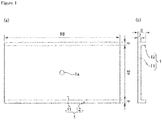
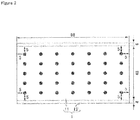
- the polyacetal resin composition of the present invention is excellent in shrinkage ratio anisotropy (dimensional stability) when made into a resin molded article. Specifically, when the polyacetal resin composition of the present invention is injection molded into a molded product of 120 mm x 120 mm x 2 mm under conditions of a cylinder temperature of 200°C, mold temperature of 80°C, holding pressure of 60 MPa, and injection rate of 16.7 mm/s, the polyacetal resin composition of the present invention provides a plate-shaped molded article whose the anisotropy of the shrinkage factor stipulated as the absolute value of difference between the shrinkage factor in the flow direction of the resin composition and the shrinkage factor in a direction perpendicular to the flow direction of the resin composition is 0.1% or less.
- shrinkage factor % mold dimension ⁇ molded article dimension / mold dimension ⁇ 100
- the resin molded article of the present invention is a plate-shaped molded article consisting of the above described polyacetal resin composition, and therefore, the anisotropy of the shrinkage factor is an extremely small value of 0.1% or less, and the dimensional stability is excellent.
- the polyacetal resin composition of the present embodiment has excellent flatness when made into a resin molded article. Specifically, the polyacetal resin composition of the present embodiment provides a plate-shaped molded article of whom the degree of flatness is 1.5 mm or less.
- the degree of flatness is measured by the below measurement method.
- the resin molded article of the present invention is a plate-shaped molded article consisting of the above described polyacetal resin composition, and therefore, it has excellent flatness with a degree of flatness of 1.5 mm or less.
- the polyacetal resin composition of the present embodiment has excellent creep resistance when made into a resin molded article. Specifically, by using the polyacetal resin composition of the present embodiment, it is possible to obtain a plate-shaped molded article with a creep resistance of 1000 hours or more measured according to the below measurement method.
- a tensile test piece according to ISO 20753 (Type 1A) was molded from the pellets of the examples and comparative examples, under conditions of cylinder temperature: 205°C, mold temperature: 90°C. This tensile test piece was hung in air at 80°C under a tensile stress of 20 MPa, and the time (lifetime) until breakage occurred was measured.
- the resin molded article of the present invention is a plate-shaped molded article consisting of the above described polyacetal resin composition, and therefore, it has excellent creep strength where the above described time is 1000 hours or more.
- the polyacetal resin composition of the present embodiment has excellent impact strength when made into a resin molded article. Specifically, by using the polyacetal resin composition of the present embodiment, it is possible to obtain a plate-shaped molded article with an impact strength of 9.0 kJ/m 2 or more measured according to the below measurement method.
- the resin molded article of the present invention is a plate-shaped molded article consisting of the above described polyacetal resin composition, and therefore, it has excellent impact strength where the above described Charpy impact strength is 9.0 kJ/m 2 or more.
- the polyacetal resin composition of the present embodiment has excellent color stability when made into a resin molded article. Specifically, by using the polyacetal resin composition of the present embodiment, it is possible to obtain a resin molded article with a degree of discoloration ( ⁇ E) after melt retention of 1.5 or less, preferably 1.0 or less, more preferably 0.5 or less, measured according to the below measurement method.
- ⁇ E degree of discoloration
- the hue (L, a, b) of a molded article (using the above described Charpy test piece) molded under the below described variable molding conditions was measured using a color sensor Z300A (manufactured by Nippon Denshoku Industries Co., Ltd.) After this, the degree of discoloration after melt retention ( ⁇ E)) was calculated.
- the degree of discoloration after melt retention ( ⁇ E) is calculated using the following formula.
- ⁇ ⁇ E L 1 ⁇ L 0 2 + a 1 ⁇ a 0 2 + b 1 ⁇ b 0 2 1 / 2
- L 1 , a 1 , and b 1 are hues of the molded article of the molding condition 2 (after retaining the molten resin for 30 min)
- L 0 , a 0 , and b 0 are hues of the molded article of the molding condition 1.
- the resin molded article of the present invention is a plate-shaped molded article consisting of the above described polyacetal resin composition, and therefore, it has excellent color stability after retaining in the molding machine with a degree of discoloration after melt retention ( ⁇ E) of 1.5 or less, preferably 1.0 or less, more preferably 0.5 or less.
- ⁇ E degree of discoloration after melt retention
- the polyacetal resin composition of the present invention is excellent in flatness and low shrinkage ratio anisotropy (dimensional stability), and therefore, is suitable for application to a plate-shaped molded article.
- the application of the plate-shaped molded article is not particularly limited, and it may be applied to an automobile component, electric•electronic component, building material, and the like.
- an automobile component a carrier plate of a window regulator, or a panel for an automobile such as an installment panel, door trim, trunk board or the like may be mentioned.
- an electric•electronic component a chassis, tray, side plate, a component for office automation equipment represented by printer or copier, or the like; a component for a camera or video device represented by a video movie, digital video camera, camera, and digital camera; music, image, or information devices represented by cassette players, DAT, LD (Laser Disk), MD (Mini Disk), CD (Compact Disk), DVD (Digital Video Disk), Blu-Ray (registered trademark) Disk, HD-DVD, and other optical disks, MFD, MO, navigation systems, and mobile personal computers, and components for transmission devices represented by mobile telephones and facsimile machines may be mentioned.
- building materials, panels for homes, flooring materials and the like may be mentioned.
- a window regulator is constituted by comprising a carrier panel which sandwiches a window glass, and a guide rail which extends in a raising and lowering (up and down) direction, and which moves the carrier plate in the raising and lowering (up and down) direction by the operation of a motor. Therefore, the carrier plate must be accommodated in a limited space between the door outer panel and the door inner panel without interference with other components, and further greatly contributes to the positional accuracy of the window glass. Accordingly, the resin molded article of the present invention is particularly suitable for a carrier plate of a window regulator which further requires excellent flatness, shrinkage ratio anisotropy (dimensional stability), creep resistance, impact strength, and color stability during retention in the molding machine.
- the plate-shaped molded article of the present embodiment is made by molding the above described polyacetal resin composition by a general molding method.
- a general molding method an injection molding method, extrusion molding method, blow molding method and the like may be mentioned.
- the molding conditions and molding method are appropriately set depending on the properties of the material and the form of the molded article.
- a continuous biaxial polymerization machine was used as the polymerization reaction device.
- the outside of the polymerization device is equipped with a jacket for passing a medium for heating or cooling, and inside two rotating shafts equipped with a plurality of paddles for stirring and propelling are provided.
- a heating medium at 80°C is passed through the jacket of this biaxial polymerization device, and while the two shafts are made to rotate at a constant speed, and at one end thereof, as a chain transfer agent, 350 ppm methylal is continuously supplied, and as a comonomer with respect to trioxane, 1,3-dioxolane is added at 3.3 mass% in the total monomer (trioxane + comonomer), and to this mixed liquid, boron trifluoride is continuously added at 20 ppm, and the copolymerization was carried out. After this, the crude polyacetal copolymer is discharged from the discharge opening provided at the other end of the polymerization device.
- the discharged reaction product is promptly passed through a shredder, it is added to an aqueous solution comprising 0.05 mass% triethylamine at 60°C to deactivate the catalyst. Further, by separating, washing and drying, the crude polyacetal copolymer was obtained. Next, 3 mass% of an aqueous solution of 5 mass% triethylamine was added to 100 parts by mass of this crude polyacetal copolymer, and by melt kneading in a biaxial extruder at 210°C the unstable portions were eliminated, and the polyacetal resin was obtained.
- melt index measurement device Melt Indexer L202 type (made by Takara Thermistor), as a result of measuring under conditions of a load of 2.16 kg, temperature of 190°C, the melt index (MI) was 2.5 g/10 min.
- MI melt index
- the polyacetal resin was obtained by the same method as the preparation of the (A) polyacetal resin.
- the melt index measured by the same method as above was 3.5 g/10 min.
- the polyacetal resin was obtained by the same method as the preparation of the (A) polyacetal resin.
- the melt index measured by the same method as above was 1.5 g/10 min.
- the polyacetal resin was obtained by the same method as the preparation of the (A) polyacetal resin.
- the melt index measured by the same method as above was 9.0 g/10 min.
- a branched or crosslinked polyacetal copolymer (B1) as a nucleating agent was obtained by the copolymerization of a compound having 2 cyclic ether units per one molecule in the same method as for the [(A) preparation of the polyacetal resin], other than the composition of the raw materials was (b1) 96.6 parts by mass of trioxane, (b2) 0.1 part by mass of butanediol diglycidyl ether, and (b3) 3.3 parts by mass 1,3-dioxolane (without adding methylal).
- a branched or crosslinked polyacetal copolymer (B2) as a nucleating agent was obtained by the copolymerization of a compound having 3 cyclic ether units per one molecule in the same method as for the [(A) preparation of the polyacetal resin], other than the composition of the raw materials was (b1) 98.8 parts by mass of trioxane, (b2) 0.1 part by mass of trimethylolpropane triglycidyl ether, and (b3) 1.1 parts by mass 1,3-dioxolane (without adding methylal).
- a branched or crosslinked polyacetal copolymer (B2) as a nucleating agent was obtained by the copolymerization of a compound having 4 cyclic ether units per one molecule in the same method as for the [(A) preparation of the polyacetal resin], other than the composition of the raw materials was (b1) 98.8 parts by mass of trioxane, (b2) 0.1 part by mass of trimethylolpropane triglycidyl ether, and (b3) 1.1 parts by mass 1,3-dioxolane (without adding methylal).
- test specimens plate-shaped molded articles obtained according to the above described ⁇ production of the test specimens> were evaluated for shrinkage ratio anisotropy (dimensional stability), flatness, creep resistance, impact strength, and color stability during residence in the mold machine according to the methods as described above. The results thereof are shown in Table 2. Further, in Table 2, the evaluation of the creep resistance was set as o when the tensile creep stress life was 1000 hours or more, and was set as x when less than 1000 hours.
- a resin molded article consisting of a polyacetal resin composition
- a polyacetal resin composition comprising, with respect to (A) a polyacetal resin, predetermined amounts of (B) a nucleating agent of a polyacetal copolymer having a branched or crosslinked structure, and (C) a hindered phenol-based antioxidant, has excellent shrinkage ratio anisotropy (dimensional stability), flatness, and creep resistance compared to Comparative Example 1 which does not comprise the nucleating agent specified in (B).
- Examples 1, 3, 4, and 5 which comprise ethylenebis(oxyethylene)bis[3-(3-t-butyl-4-hydroxy-5-methylphenyl)propionic acid] as the antioxidant, show particularly excellent color stability during residence in the molding machine.
Landscapes
- Chemical & Material Sciences (AREA)
- Chemical Kinetics & Catalysis (AREA)
- Health & Medical Sciences (AREA)
- Medicinal Chemistry (AREA)
- Polymers & Plastics (AREA)
- Organic Chemistry (AREA)
- Engineering & Computer Science (AREA)
- Mechanical Engineering (AREA)
- Manufacturing & Machinery (AREA)
- Materials Engineering (AREA)
- Compositions Of Macromolecular Compounds (AREA)
- Window Of Vehicle (AREA)
- Manufacture Of Macromolecular Shaped Articles (AREA)
- Injection Moulding Of Plastics Or The Like (AREA)
Applications Claiming Priority (2)
| Application Number | Priority Date | Filing Date | Title |
|---|---|---|---|
| JP2016129981A JP6798806B2 (ja) | 2016-06-30 | 2016-06-30 | 板状成形体成形用のポリアセタール樹脂組成物、板状成形体、及びウインドレギュレータのキャリアプレート |
| PCT/JP2017/015017 WO2018003233A1 (fr) | 2016-06-30 | 2017-04-12 | Composition de résine polyacétal pour moulage de corps moulé plat, corps moulé plat, et plaque-support de lève-glace |
Publications (2)
| Publication Number | Publication Date |
|---|---|
| EP3480253A1 true EP3480253A1 (fr) | 2019-05-08 |
| EP3480253A4 EP3480253A4 (fr) | 2020-08-12 |
Family
ID=60786375
Family Applications (1)
| Application Number | Title | Priority Date | Filing Date |
|---|---|---|---|
| EP17819601.0A Pending EP3480253A4 (fr) | 2016-06-30 | 2017-04-12 | Composition de résine polyacétal pour moulage de corps moulé plat, corps moulé plat, et plaque-support de lève-glace |
Country Status (4)
| Country | Link |
|---|---|
| US (1) | US10717864B2 (fr) |
| EP (1) | EP3480253A4 (fr) |
| JP (1) | JP6798806B2 (fr) |
| WO (1) | WO2018003233A1 (fr) |
Families Citing this family (1)
| Publication number | Priority date | Publication date | Assignee | Title |
|---|---|---|---|---|
| JP7149380B1 (ja) | 2021-06-22 | 2022-10-06 | ポリプラスチックス株式会社 | ポリアセタール樹脂組成物及び樹脂製歯車 |
Family Cites Families (11)
| Publication number | Priority date | Publication date | Assignee | Title |
|---|---|---|---|---|
| US3980734A (en) * | 1972-07-06 | 1976-09-14 | Hoechst Aktiengesellschaft | Thermoplastic moulding compositions based on poly (oxymethylene) |
| JP3169548B2 (ja) * | 1996-04-12 | 2001-05-28 | ポリプラスチックス株式会社 | ポリアセタール樹脂組成物並びにその成形品 |
| JP3771008B2 (ja) * | 1997-07-16 | 2006-04-26 | ポリプラスチックス株式会社 | 分岐又は架橋ポリアセタール樹脂の製造方法 |
| CN1267498C (zh) * | 2000-09-21 | 2006-08-02 | 汎塑料株式会社 | 聚缩醛树脂组合物及其制造方法 |
| WO2002088240A1 (fr) * | 2001-04-30 | 2002-11-07 | Ciba Specialty Chemicals Holding Inc. | Articles moules en polyacetal stabilises afin d'empecher la decoloration |
| JP2003342442A (ja) * | 2002-05-30 | 2003-12-03 | Polyplastics Co | ポリアセタール樹脂組成物 |
| US7672012B2 (en) * | 2003-03-20 | 2010-03-02 | Silverbrook Research Pty Ltd | Display device for use as a computer monitor, having a printer controller and a pagewidth printhead |
| JP2004314819A (ja) * | 2003-04-17 | 2004-11-11 | Asahi Kasei Chemicals Corp | キャリアプレート |
| JP4316321B2 (ja) * | 2003-07-30 | 2009-08-19 | ポリプラスチックス株式会社 | ディスクドライブ装置のディスクガイド部品 |
| KR20060130034A (ko) | 2003-11-07 | 2006-12-18 | 폴리플라스틱스 가부시키가이샤 | 폴리아세탈 수지 조성물 및 그의 성형품 |
| JP2014148626A (ja) * | 2013-02-01 | 2014-08-21 | Polyplastics Co | ポリアセタール樹脂組成物、及びこのポリアセタール樹脂組成物の成形品を備える硫黄燃料接触体 |
-
2016
- 2016-06-30 JP JP2016129981A patent/JP6798806B2/ja active Active
-
2017
- 2017-04-12 US US16/301,565 patent/US10717864B2/en active Active
- 2017-04-12 WO PCT/JP2017/015017 patent/WO2018003233A1/fr not_active Ceased
- 2017-04-12 EP EP17819601.0A patent/EP3480253A4/fr active Pending
Also Published As
| Publication number | Publication date |
|---|---|
| US20190309158A1 (en) | 2019-10-10 |
| WO2018003233A1 (fr) | 2018-01-04 |
| JP6798806B2 (ja) | 2020-12-09 |
| US10717864B2 (en) | 2020-07-21 |
| EP3480253A4 (fr) | 2020-08-12 |
| JP2018002830A (ja) | 2018-01-11 |
Similar Documents
| Publication | Publication Date | Title |
|---|---|---|
| EP2036949B1 (fr) | Composition de résine polyacétalique | |
| EP2226358B1 (fr) | Composition de résine polyacétal | |
| EP2123709A1 (fr) | Composition de résines polyacétales | |
| JP2009286874A (ja) | ポリアセタール樹脂組成物及びその成形品 | |
| JP2010037445A (ja) | ポリアセタール樹脂組成物及びその成形品 | |
| EP3072927A1 (fr) | Procédé de production d'une composition de résine de polyoxyméthylène | |
| KR20030040184A (ko) | 폴리옥시메틸렌 수지 조성물 및 그의 성형품 | |
| EP3981834A1 (fr) | Composition de résine polyacétal | |
| EP3480253A1 (fr) | Composition de résine polyacétal pour moulage de corps moulé plat, corps moulé plat, et plaque-support de lève-glace | |
| CN111534040A (zh) | 聚缩醛树脂组合物 | |
| JP6965102B2 (ja) | ポリアセタール樹脂組成物 | |
| CN104650527B (zh) | 聚缩醛树脂用母料以及包含该母料的聚缩醛树脂组合物 | |
| CN104650526B (zh) | 聚缩醛树脂组合物 | |
| JP6784805B1 (ja) | ポリアセタ−ル樹脂組成物及びその製造方法 | |
| CN104231536B (zh) | 聚缩醛树脂组合物 | |
| JPWO1996013548A1 (ja) | ポリアセタール樹脂組成物 | |
| EP2123710A1 (fr) | Composition de résines polyacétales | |
| JP2005232404A (ja) | ポリアセタール樹脂組成物 | |
| JP4601131B2 (ja) | 樹脂組成物及びその成形体 | |
| JP2023131674A (ja) | ポリアセタール樹脂組成物及び成形体 | |
| JP5401253B2 (ja) | ポリアセタール樹脂組成物及びそれを含有する成形体 | |
| CN120484432A (zh) | 聚缩醛树脂组合物 | |
| CN121086455A (zh) | 聚缩醛树脂组合物 | |
| JP2018080305A (ja) | ポリアセタール樹脂組成物 | |
| JPH1143584A (ja) | ポリオキシメチレン組成物 |
Legal Events
| Date | Code | Title | Description |
|---|---|---|---|
| STAA | Information on the status of an ep patent application or granted ep patent |
Free format text: STATUS: THE INTERNATIONAL PUBLICATION HAS BEEN MADE |
|
| PUAI | Public reference made under article 153(3) epc to a published international application that has entered the european phase |
Free format text: ORIGINAL CODE: 0009012 |
|
| STAA | Information on the status of an ep patent application or granted ep patent |
Free format text: STATUS: REQUEST FOR EXAMINATION WAS MADE |
|
| 17P | Request for examination filed |
Effective date: 20181227 |
|
| AK | Designated contracting states |
Kind code of ref document: A1 Designated state(s): AL AT BE BG CH CY CZ DE DK EE ES FI FR GB GR HR HU IE IS IT LI LT LU LV MC MK MT NL NO PL PT RO RS SE SI SK SM TR |
|
| AX | Request for extension of the european patent |
Extension state: BA ME |
|
| DAV | Request for validation of the european patent (deleted) | ||
| DAX | Request for extension of the european patent (deleted) | ||
| A4 | Supplementary search report drawn up and despatched |
Effective date: 20200713 |
|
| RIC1 | Information provided on ipc code assigned before grant |
Ipc: B60J 1/17 20060101ALI20200707BHEP Ipc: C08L 59/04 20060101ALI20200707BHEP Ipc: C08K 5/13 20060101ALI20200707BHEP Ipc: C08J 5/00 20060101ALI20200707BHEP Ipc: C08G 2/24 20060101ALI20200707BHEP Ipc: C08G 2/22 20060101ALI20200707BHEP Ipc: C08L 59/00 20060101AFI20200707BHEP Ipc: B29C 45/00 20060101ALI20200707BHEP |
|
| STAA | Information on the status of an ep patent application or granted ep patent |
Free format text: STATUS: EXAMINATION IS IN PROGRESS |
|
| 17Q | First examination report despatched |
Effective date: 20230217 |
|
| P01 | Opt-out of the competence of the unified patent court (upc) registered |
Effective date: 20230414 |