EP3480728B1 - Procédé et système permettant d'extraire des informations à partir de feuilles d'inspection industrielles manuscrites - Google Patents
Procédé et système permettant d'extraire des informations à partir de feuilles d'inspection industrielles manuscrites Download PDFInfo
- Publication number
- EP3480728B1 EP3480728B1 EP18163519.4A EP18163519A EP3480728B1 EP 3480728 B1 EP3480728 B1 EP 3480728B1 EP 18163519 A EP18163519 A EP 18163519A EP 3480728 B1 EP3480728 B1 EP 3480728B1
- Authority
- EP
- European Patent Office
- Prior art keywords
- arrow
- text
- digitization system
- document digitization
- zone
- Prior art date
- Legal status (The legal status is an assumption and is not a legal conclusion. Google has not performed a legal analysis and makes no representation as to the accuracy of the status listed.)
- Active
Links
Images





Classifications
-
- G—PHYSICS
- G06—COMPUTING OR CALCULATING; COUNTING
- G06V—IMAGE OR VIDEO RECOGNITION OR UNDERSTANDING
- G06V10/00—Arrangements for image or video recognition or understanding
- G06V10/70—Arrangements for image or video recognition or understanding using pattern recognition or machine learning
- G06V10/82—Arrangements for image or video recognition or understanding using pattern recognition or machine learning using neural networks
-
- G—PHYSICS
- G06—COMPUTING OR CALCULATING; COUNTING
- G06F—ELECTRIC DIGITAL DATA PROCESSING
- G06F18/00—Pattern recognition
- G06F18/20—Analysing
- G06F18/21—Design or setup of recognition systems or techniques; Extraction of features in feature space; Blind source separation
- G06F18/2163—Partitioning the feature space
-
- G—PHYSICS
- G06—COMPUTING OR CALCULATING; COUNTING
- G06F—ELECTRIC DIGITAL DATA PROCESSING
- G06F18/00—Pattern recognition
- G06F18/20—Analysing
- G06F18/24—Classification techniques
- G06F18/241—Classification techniques relating to the classification model, e.g. parametric or non-parametric approaches
- G06F18/2413—Classification techniques relating to the classification model, e.g. parametric or non-parametric approaches based on distances to training or reference patterns
- G06F18/24133—Distances to prototypes
-
- G—PHYSICS
- G06—COMPUTING OR CALCULATING; COUNTING
- G06V—IMAGE OR VIDEO RECOGNITION OR UNDERSTANDING
- G06V30/00—Character recognition; Recognising digital ink; Document-oriented image-based pattern recognition
- G06V30/10—Character recognition
- G06V30/19—Recognition using electronic means
- G06V30/191—Design or setup of recognition systems or techniques; Extraction of features in feature space; Clustering techniques; Blind source separation
- G06V30/19173—Classification techniques
-
- G—PHYSICS
- G06—COMPUTING OR CALCULATING; COUNTING
- G06V—IMAGE OR VIDEO RECOGNITION OR UNDERSTANDING
- G06V30/00—Character recognition; Recognising digital ink; Document-oriented image-based pattern recognition
- G06V30/40—Document-oriented image-based pattern recognition
- G06V30/41—Analysis of document content
- G06V30/413—Classification of content, e.g. text, photographs or tables
-
- G—PHYSICS
- G06—COMPUTING OR CALCULATING; COUNTING
- G06V—IMAGE OR VIDEO RECOGNITION OR UNDERSTANDING
- G06V30/00—Character recognition; Recognising digital ink; Document-oriented image-based pattern recognition
- G06V30/40—Document-oriented image-based pattern recognition
- G06V30/41—Analysis of document content
- G06V30/414—Extracting the geometrical structure, e.g. layout tree; Block segmentation, e.g. bounding boxes for graphics or text
-
- G—PHYSICS
- G06—COMPUTING OR CALCULATING; COUNTING
- G06V—IMAGE OR VIDEO RECOGNITION OR UNDERSTANDING
- G06V30/00—Character recognition; Recognising digital ink; Document-oriented image-based pattern recognition
- G06V30/40—Document-oriented image-based pattern recognition
- G06V30/41—Analysis of document content
- G06V30/416—Extracting the logical structure, e.g. chapters, sections or page numbers; Identifying elements of the document, e.g. authors
Definitions
- the disclosure herein generally relate to document processing, and, more particularly, to extracting information from hand-marked industrial inspection sheets.
- Document WO 2017095406 A1 discloses an example method of providing a digital representation of a well schematic includes storing a set of text strings and a set of image regions into a coordinate map.
- the method includes associating one or more text strings with one or more image regions.
- a text string is associated with an image region based on a context of the text string in the coordinate map.
- the method further includes linking one or more image regions with a corresponding catalogued image stored in a component database.
- the catalogued image represents a well schematic component.
- the method also includes generating a well schematic topology in accordance with the coordinate map and the one or more catalogued images linked with the one or more image regions.
- the method further includes updating the well schematic topology in accordance with one or more business rules.
- a processor-implemented method is provided according to claim 1. Initially, an inspection sheet is collected as input, via one or more hardware processors, by a document digitization system. Further, a component localization of one or more line diagrams in the inspection sheet is performed, by the document digitization system, wherein the component localization involves identification and classification of different machine zones in the one or more line diagrams.
- an arrow head-tail localization of the one or more line diagrams in the inspection sheet is performed, via the one or more hardware processors, by the document digitization system, wherein the arrow head-tail localization involves identifying arrow head and tail points in the inspection sheet, for all arrows present in the inspection sheet.
- text detection in the inspection sheet is performed by the document digitization system, wherein the text detection involves detection of all texts in the inspection sheet, and position of identified text with respect to one or more clusters in the inspection sheet.
- a text to arrow mapping is performed using one or more hardware processors by the document digitization system, wherein the text to arrow mapping is based on the identified head and tail points of arrows and position of cluster in which the text is present;.
- a zone to arrow mapping is performed via one or more hardware processors, by the document digitization system, wherein the zone to arrow mapping is based on the identified head and tail points of arrows and machine zones identified during the component localization.
- the document digitization system identifies text corresponding to different machine zones, based on result of the text to arrow mapping and zone to arrow mapping, via the one or more hardware processors.
- a document digitization system comprises of a processor; and a memory module comprising a plurality of instructions.
- the plurality of instructions are configured to cause the processor to collect an inspection sheet as input, via one or more hardware processors, by an Input/Output (I/O) module of the document digitization system.
- I/O Input/Output
- a component localization module of the document digitization system performs a component localization of one or more line diagrams in the inspection sheet, wherein the component localization involves identification and classification of different machine zones in the one or more line diagrams.
- an arrow localization module of the document digitization system performs an arrow head-tail localization of the one or more line diagrams in the inspection sheet, wherein the arrow head-tail localization involves identifying arrow head and tail points in the inspection sheet, for all arrows present in the inspection sheet.
- a text detection module of the document digitization system performs text detection in the inspection sheet, wherein the text detection involves detection of all texts in the inspection sheet, and position of identified text with respect to one or more clusters in the inspection sheet.
- a mapping module of the document digitization system performs a text to arrow mapping, wherein the text to arrow mapping is based on the identified head and tail points of arrows and position of cluster in which the text is present.
- the mapping module further performs a zone to arrow mapping, wherein the zone to arrow mapping is based on the identified head and tail points of arrows and machine zones identified during the component localization.
- the mapping module further identifies text corresponding to different machine zones, based on result of the text to arrow mapping and zone to arrow mapping.
- FIGS. 1 through 12 where similar reference characters denote corresponding features consistently throughout the figures, there are shown preferred embodiments and these embodiments are described in the context of the following exemplary system and/or method.
- FIG. 1 illustrates an exemplary block diagram depicting components of document digitization system, according to some embodiments of the present disclosure.
- the document digitization system 100 requires to identify contents (such as text, machine zones, arrows) present in an inspection sheet and then identify relationship between the identified contents, before extracting the contents/information, for accuracy of data. Once extracted, then the information can be digitized.
- the document digitization system 100 includes an Input/Output (I/O) module 101, a component localization module 102, an arrow localization module 103, a text detection module 104, a mapping module 105, a memory module 106, and a processing module 107.
- I/O Input/Output
- the I/O module 101 is configured to provide at least one communication interface for the document digitization system 100 to establish communication with at least one external entity.
- the term ⁇ external entity' can refer to any device/system that needs to communicate with the document digitization system 100 for the purpose of digitizing a document and/or for providing the digitized data to one or more external entities.
- the term 'document' herein refers to an inspection sheet.
- any document with structure similar to that of an inspection sheet and which contains information in similar data structure also can be processed using the document digitization system 100.
- the I/O module 101 can be further configured to provide appropriate communication channels with appropriate communication protocols, so as to facilitate communication between different components of the document digitization system 100.
- the component localization module 102 is configured to process the inspection sheet collected as input, to perform a component localization of all line diagrams present in the inspection sheet being processes.
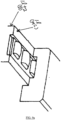
- the component localization is used to identify machine zones in the line diagrams of machines (as depicted in Fig. 9a ), present in the inspection sheet.
- the ⁇ machine zones' can refer to different parts/components of the machine (as depicted in Fig. 9b ) as defined for the purpose of inspection.
- the component localization module 102 performs the component localization, by using a template matching technique.
- the memory module 106 possesses template sheets, at least one corresponding to each machine being inspected, and in each template sheet, machine zones as marked as contours.
- the component localization module 102 initially fetches the template sheets from the memory module 106, and compares the inspection sheet with the template sheets. Any suitable technique such as sliding window protocol can be used for comparing the documents. Upon identifying a match, the component localization module 102 shortlists that particular template sheet, and further performs a pixel level comparison of the inspection sheet and the shortlisted template sheet. As the template sheet has machine zones marked as contours, by virtue of the pixel level comparison, the component localization module 102 identifies machine zones in the inspection sheet. In the pixel-level analysis, the component localization module 102 calculates cross correlation metric and then maximizes it over all rows and columns of the inspection sheet.
- the arrow localization module 103 performs arrow localization to identify head and tail points of each arrow present in the inspection sheet.
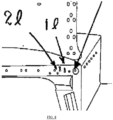
- arrows serve as the connecting entities mapping text segments to corresponding machine zone (as depicted in Fig. 8 ).
- arrow head would be pointing towards the machine zone, and the corresponding text would be present near tail point of the arrow.
- the arrow localization module 103 initially uses a deep neural network model to learn arrow structure. This step further involves:
- the ROI consists of a rectangular boundary around all arrows in the inspection sheet.
- ROIs in the inspection sheet are identified based on a faster Region based Convolution Neural network (RCNN) model, which is generated by training the model on multiple inspection sheets from set of training images.
- RCNN Region based Convolution Neural network
- arrows lie very close to each other, which results in more than one arrow being present in a single ROI.
- the faster RCNN model is trained on partial arrows, wherein 'partial arrow' refers to arrow head and part of shaft attached to the arrow head. Another reason for selecting the partial arrows are, low variation in size of ROIs.
- the Faster-RCNN is trained on the manually annotated arrow images from the complete training set using the Zeiler-Fergus network with random weight initialization. It is trained till maximum validation accuracy.
- the arrow localization module 103 After identifying the ROIs, the arrow localization module 103 performs localization of head and tail points for the arrows in the identified ROIs.
- the arrow localization module 103 uses a deep Convolution Neural Network (CNN) based regression model to detect the arrow head and tail points.
- the regression model predicts pixel locations of arrow head and tail points in the inspection sheet, and based on this, the arrow localization module 103 detects end points of partial arrows and direction in which the arrow is pointing.
- CNN deep Convolution Neural Network
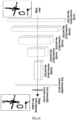
- the model comprises of 5 convolution layers with 8, 16, 32, 32 and 64 filters respectively, followed by 2 fully connected layers (as depicted in Fig. 10 ). Each layer except the last fully connected layer may use Rectified Linear Units (ReLU) as their activation function. Each convolution layer is followed by a Max-pool layer of size 2 ⁇ 2. Each convolution layer uses 3 ⁇ 3 kernel sized filters. The last fully connected layer has 4 hidden units representing x and y location of the arrow head and tail, and it can use any suitable linear activation function.
- ReLU Rectified Linear Units
- the linear activation function used is Adam optimizer with default hyper-parameters to optimize mean square error cost unction.
- Number of epochs used in training is 500, which is where highest validation accuracy is achieved by the arrow localization module 103.
- input size of image is 150 ⁇ 150.
- the text detection module 104 is configured to perform a text localization so as to detect texts in the inspection sheet being processed. All inspection sheets would have some standard data which can be discarded while performing the text localization. For example, all inspection sheets being in a standard format can have some common information in place, which are irrelevant and repeated objects. Such contents are to be removed from the inspection sheet before performing the text detection, so as to improve accuracy of the text detection.
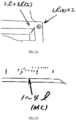
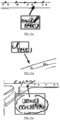
- the text detection module 104 removes the unwanted information using background subtraction, which in turn is achieved by virtue of template matching. In this step, the text detection module 104 subtracts the template sheet identified as matching the inspection sheet, from the inspection sheet; leaving behind only the contents added by the user (for example, refer to the text and arrows in Fig. 11a ), in the inspection sheet.
- the text detection module 104 After performing the background subtraction, the text detection module 104 removes noise (as in Fig. 1 1b ) from the inspection sheet, by using appropriate means. For example, the text detection module 104 may rely on a morphological operation of median filter for removing the noise from the inspection sheet.
- the text detection module 104 identifies Bounding Boxes (BB) (as in Figs. 11c to 11e ) for all text segments and objects present in the inspection sheet.
- the text detection module 104 may use any suitable algorithm such as but not limited to ⁇ connected component analysis' for the purpose of identifying the BBs in the inspection sheet.
- BB are present when the text and/or objects lie adjacent to each other, thus resulting more than one text and/or object present in a single box (in other words, presence of overlapping regions).
- NMS Non-Maximum Suppression
- the text detection module 104 detects text from area of the identified BB, based on pre-defined upper and lower threshold in terms of pixel values. In an embodiment, the threshold values are empirically defined.
- the mapping module 105 is configured to perform text to arrow mapping, zone to arrow mapping, and text to zone mapping. The processes are explained below:
- the memory module 106 can be configured to store any information associated with the document digitization process, permanently or temporarily, as per requirements.
- the memory module 106 can be configured to host one or more databases to store the data as needed.
- the memory module 106 can be further configured to provide data on request, to other components of the document digitization system 100, and also to a user, preferably after validating the data access request.
- the processing module 107 is configured to provide one or more hardware processors for the purpose of executing one or more actions in response to instructions received from the other components of the document digitization system 100.
- the processing module 107 is configured to be in communication with the other modules, receive instruction to execute one or more actions, and accordingly allocate one or more hardware processors to execute the action.
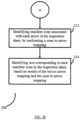
- FIG. 2 is a flow diagram depicting steps involved in the process of document digitization by the document digitization system, according to some embodiments of the present disclosure.
- the document digitization system 100 collects (202) inspection sheet to be digitized, as input.
- the document digitization system 100 then processes (204) the collected inspection sheep by performing a zone localization, and identifies machine zones in the sheet.
- the document digitization system 100 further performs an arrow localization, and identifies (206) head and tail points of the arrows, in the inspection sheet.
- the document digitization system 100 further identifies (208) text (text segments) in the inspection sheet, by performing a text detection by virtue of a text localization process.
- the document digitization system 100 then performs a text to arrow mapping, and identifies (210) text that is closest to the tail point of each arrow, and associates the text with corresponding arrows.
- the document digitization system 100 further performs a zone to arrow mapping and identifies (212) machine zone each arrow is pointing to, and accordingly assigns the arrows to corresponding machine zones. Further, by directly mapping text and machine zone identified as associated with each arrow, text that belongs to each machine zone is identified.
- Various actions in method 200 can be performed in the order specified, or in any other order as per requirements.
- FIG. 3 is a flow diagram depicting steps involved in the process of machine component localization by the document digitization system, according to some embodiments of the present disclosure.
- the component localization is used to identify machine zones in the line diagrams of machines, present in the inspection sheet.
- the component localization is performed by the document digitization system 100, using a template matching technique.
- the document digitization system 100 compares (302) the inspection sheet with the template sheets stored in the database. Any suitable technique such as sliding window protocol can be used for comparing the documents. Upon identifying (304) a match, that particular template sheet is shortlisted, and further a pixel level comparison of the inspection sheet and the shortlisted template sheet is performed.
- the document digitization system 100 identifies (308) machine zones in the inspection sheet.
- the component localization module 102 calculates cross correlation metric and then maximizes it over all rows and columns of the inspection sheet. This way, the machine localization helps in identifying zones in the inspection sheet, and corresponding contours also can be identified.
- Various actions in method 300 can be performed in the order specified, or in any other order as per requirements.
- FIG. 4 is a flow diagram depicting steps involved in the process of arrow localization by the document digitization system, according to some embodiments of the present disclosure.
- arrows are used to link comments added by user and corresponding machine zone in the line diagram provided in the inspection sheet.
- Arrow localization is performed to identify head and tail points of each arrow, and to also identify direction in which each arrow is pointing.
- the document digitization system 100 uses a deep neural network model to learn arrow structure. This step further involves:
- the ROI refers to a rectangular boundary around all arrows in the inspection sheet.
- the document digitization system 100 identifies (402) the ROIs in the inspection sheet based on a faster Recurring Convolution Neural network (RCNN) model, which is generated by training the model on multiple inspection sheets.
- RCNN Recurring Convolution Neural network
- arrows lie very close to each other, which results in more than one arrow being present in a single ROI.
- the faster RCNN model is trained on partial arrows, wherein 'partial arrow' refers to arrow head and part of shaft attached to the arrow head.
- the document digitization system 100 After identifying the ROIs, the document digitization system 100 performs (404) localization of head and tail points for the arrows in the identified ROIs, using a deep Convolution Neural Network (CNN) based regression model to detect the arrow head and tail points.
- CNN deep Convolution Neural Network
- the regression model predicts pixel locations of arrow head and tail points in the inspection sheet, and based on this, the arrow localization module 103 detects direction in which the arrow is pointing.
- Various actions in method 400 can be performed in the order specified, or in any other order as per requirements.
- FIG. 5 is a flow diagram depicting steps involved in the process of text detection by the document digitization system, according to some embodiments of the present disclosure.
- the document digitization system 100 performs text localization so as to detect texts in the inspection sheet being processed. Initially, the document digitization system 100 removes any unwanted (generic and repetitive) information in the inspection sheet, using background subtraction, which in turn is achieved by virtue of template matching. In this step, the document digitization system 100 subtracts the template sheet identified as matching the inspection sheet, from the inspection sheet; leaving behind only the contents added by the user, in the inspection sheet. After performing the background subtraction, the document digitization system 100 removes (502) noise from the inspection sheet, by using appropriate methodology/algorithm.
- the document digitization system 100 identifies (504) Bounding Boxes (BB) for all text segments and objects present in the inspection sheet. BB are present when the text and/or objects lie adjacent to each other, thus resulting more than one text and/or object present in a single box (in other words, presence of overlapping regions). Further, the overlapping regions are removed (506) using a suitable algorithm, by the document digitization system 100.
- the text detection module 104 detects text from area of the identified BB, based on pre-defined upper and lower threshold in terms of pixel values, and further extracts the identified text.
- Various actions in method 500 can be performed in the order specified, or in any other order as per requirements.
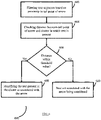
- FIG. 6 is a flow diagram depicting steps involved in the process of text to arrow mapping by the document digitization system, according to some embodiments of the present disclosure.
- the text to arrow mapping is performed to identify text corresponding to all arrows in the inspection sheet.
- inputs for performing the text to arrow mapping are head and tail points as well as direction of arrows identified during arrow localization, and text segments identified by the text detection module 104.
- the document digitization system 100 filters (602) text based on proximity to the tail point of each arrow being considered.
- the document digitization system 100 checks (604) distance between the tail point and the texts being considered.
- Threshold values in terms of distance of text from tail points or arrows are pre-defined and stored in appropriate database in the memory module 106.
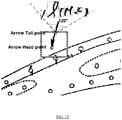
- information pertaining to a region with respect to the tail point (in terms of degree) also is defined and stored in the database in the memory module 106. For instance, texts present in only those clusters which are present in a sector of 120 degree (symmetrically or asymmetrically around the line of arrow) with respect to the arrow tail is considered. The value '120 degree' is meant to be only an example, and can change as per requirements. If distance between the text (or cluster) considered and the tail point falls within the threshold value, then the text is identified (608) as associated with the arrow being considered. If multiple clusters identified in the sector being considered, the closest one is selected by the mapping module 105, and the corresponding text is selected and assigned to the arrow.
- Various actions in method 600 can be performed in the order specified, or in any other order as per requirements.
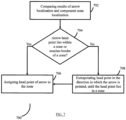
- FIG. 7 is a flow diagram depicting steps involved in the process of text to zone mapping by the document digitization system, according to some embodiments of the present disclosure.
- the document digitization system 100 by performing the zone to arrow mapping, identifies machine zone each of the identified arrows are associated with.
- the document digitization system 100 maps (702) result of the arrow localization (i.e. the head and tail point information of each arrow) against result of the component zone localization (i.e. the machine zones and contours identified during the machine localization).
- the document digitization system 100 checks (704) if the head point of the arrow lies inside any zone or is touching borders of any zone.
- the document digitization system 100 extrapolates (708) the arrow in a direction pointed by the arrow, until the head point is in a zone. Further, the document digitization system 100 assigns (706) head point of each arrow to the corresponding zone identified. For scenarios in which arrow is not pointing in the direction of a zone, but head point is close to boundary of a zone, zone nearest to the head point is selected.
- Various actions in method 700 can be performed in the order specified, or in any other order as per requirements.
- the dataset comprised of 330 camera scans of inspection sheets, out of which 280 were used for training the models being used by the document digitization system 100, and the remaining 50 were used for testing purpose. All inspection sheets were scanned using camera with the same position, orientation and intrinsic parameters, and resolution of each scan was 3120*2200.
- the inspection sheet represented 8 different kinds of machine structures. All these structures contain a total of 86 subparts constituting different zones. Hence, a total of 8 different reference templates were used, which are taken from a random image in the training set. Template matching resulted in the document digitization system 100 finding an exact match.
- the Faster-RCNN was trained on the manually annotated arrow images from the complete training set using the Zeiler-Fergus network with random weight initialization. This network was trained for 20000; 10000; 20000 and 10000 epochs, respectively for Stage1 RPN, Stage1 RCNN, Stage2 RPN and Stage2 RCNN. Rest of the training settings were taken as default.
- Accuracy is calculated as the percentage of correctly obtained ROIs out of the total arrows present in the test set.
- NMS Non Maximal Suppression
- the models used in the document digitization system 100 is able to detect 171 correct ROIs out of 179 and 3 of the detections were obtained as false positives.
- the ROI detection is assumed to be correct if it fully contains the arrow head.
- the accuracy obtained for Faster-RCNN is 95.5% (Refer Table I). It was observed that the accuracy obtained is significantly high and 8 arrow regions which failed to be detected were among the ones having closely drawn arrows, and hence affected by the strict NMS kept for maintaining minimal false positive rate.
- Cropped images of partial arrows, taken from the training set is used to train the Deep CNN regression model.
- the model comprises of 5 convolution layers with 8; 16; 32; 32 and 64 filters respectively, followed by 2 fully connected layers. Each layer except the last fully connected layer uses Rectified Linear Units (ReLU) as their activation function.
- Each convolution layer is followed by a Max-pool layer of size 2 * 2.
- Each convolution layer uses 3 * 3 kernel sized filters.
- the last fully connected layer has 4 hidden units representing x and y location of the arrow head and tail. It uses a linear activation function. Adam optimizer with default hyper-parameters was used to optimize mean square error cost function.
- the number of epochs used in training was 500, which helped in achieving highest validation accuracy.
- Input size of images were 150*150.
- a mean square error of 170.3 was obtained for a set of 171 ROI images obtained from Faster RCNN. It implies a circle of radius of approximately 13 pixels in the image plane where the expected outcome would lie. If manually annotated ROIs on test set are given, the network gives mean square error of 148.1 for a set of 179 ROI images. It depicts the absolute error measure of the Deep CNN regression model.
- Output from arrow localization is used for text detection.
- Accuracy of the detected text box was detected by finding Intersection of Union (IoU) between annotated text box and obtained text box.
- IoU threshold was set to be 0:9. Based on this, 157 correct text boxes were extracted at arrow tail out of 171 detected arrows (ROIs) by Faster RCNN. This indicates an accuracy of 91.8%.
- ROIs detected arrows
- 166 correct text boxes were extracted at the arrow tail out of 179 arrows. This yields an accuracy of 92.7%, which is the absolute error measure of text detection.
- the document digitization system could map 162 arrows correctly to their corresponding zones out of the 171 detected arrows, thereby obtaining an accuracy of 94.7%.
- the accuracy of zone mapping depends largely on the accuracy of head and tail point localization. With manually annotated ROIs and arrow head - tail points on the test set (which comprises of the inspection sheets selected for testing), 178 arrows were mapped correctly to their corresponding zone out of the set of 179 arrows. Hence according to the absolute error measure, it amounts to 99.4% accuracy.
- Table. 1 Results at each stage Results of individual component Method/step Successful cases Accuracy (%) Successful cases Accuracy (%) Arrow detection (Faster RCNN) 171/179 95.5 171/179 95.5 Text to arrow mapping 157/171 91.8 166/179 92.7 Zone to arrow mapping 162/171 94.7 178/179 99.4 Text to zone mapping 149/179 83.2 165/179 92.1
- the embodiments of present disclosure herein addresses unresolved problem of digitization of documents having unstructured data.
- the embodiment thus provides a method and system for extracting data from an inspection sheet in which information is manually penned down by a user.
- the hardware device can be any kind of device which can be programmed including e.g. any kind of computer like a server or a personal computer, or the like, or any combination thereof.
- the device may also include means which could be e.g. hardware means like e.g. an application-specific integrated circuit (ASIC), a field-programmable gate array (FPGA), or a combination of hardware and software means, e.g.
- ASIC application-specific integrated circuit
- FPGA field-programmable gate array
- the means can include both hardware means and software means.
- the method embodiments described herein could be implemented in hardware and software.
- the device may also include software means.
- the embodiments may be implemented on different hardware devices, e.g. using a plurality of CPUs.
- the embodiments herein can comprise hardware and software elements.
- the embodiments that are implemented in software include but are not limited to, firmware, resident software, microcode, etc.
- the functions performed by various modules described herein may be implemented in other modules or combinations of other modules.
- a computer-usable or computer readable medium can be any apparatus that can comprise, store, communicate, propagate, or transport the program for use by or in connection with the instruction execution system, apparatus, or device.
- a computer-readable storage medium refers to any type of physical memory on which information or data readable by a processor may be stored.
- a computer-readable storage medium may store instructions for execution by one or more processors, including instructions for causing the processor(s) to perform steps or stages consistent with the embodiments described herein.
- the term "computer-readable medium” should be understood to include tangible items and exclude carrier waves and transient signals, i.e., be non-transitory. Examples include random access memory (RAM), read-only memory (ROM), volatile memory, nonvolatile memory, hard drives, CD ROMs, DVDs, flash drives, disks, and any other known physical storage media.
Landscapes
- Engineering & Computer Science (AREA)
- Theoretical Computer Science (AREA)
- Computer Vision & Pattern Recognition (AREA)
- Physics & Mathematics (AREA)
- General Physics & Mathematics (AREA)
- Artificial Intelligence (AREA)
- Multimedia (AREA)
- Evolutionary Computation (AREA)
- Data Mining & Analysis (AREA)
- Evolutionary Biology (AREA)
- Databases & Information Systems (AREA)
- Life Sciences & Earth Sciences (AREA)
- Bioinformatics & Computational Biology (AREA)
- Bioinformatics & Cheminformatics (AREA)
- Health & Medical Sciences (AREA)
- Computing Systems (AREA)
- General Engineering & Computer Science (AREA)
- General Health & Medical Sciences (AREA)
- Medical Informatics (AREA)
- Software Systems (AREA)
- Computer Graphics (AREA)
- Geometry (AREA)
- Image Analysis (AREA)
- Character Input (AREA)
Claims (17)
- Procédé mis en œuvre par ordinateur, comprenant :la collecte d'une feuille d'inspection en entrée, via un ou plusieurs processeurs matériels, par un système de numérisation de documents ;la réalisation, via les un ou plusieurs processeurs matériels, d'une localisation de composants pour un ou plusieurs schémas au trait dans la feuille d'inspection, par le système de numérisation de composants, la localisation de composants consistant en l'identification et la classification de différentes zones de machine dans les un ou plusieurs schémas au trait, la localisation de composants comprenant :la réalisation d'une comparaison, au niveau du pixel, de la feuille d'inspection à une pluralité de feuilles modèles stockées dans une base de données associée au système de numérisation de documents, ladite pluralité de feuilles modèles ayant un ou plusieurs schémas au trait avec des zones représentées sous forme de contours ;l'identification d'au moins une feuille modèle comme correspondant à la feuille d'inspection ; etl'identification de différentes zones de machine dans la feuille d'inspection, sur la base des contours définis dans la feuille modèle qui est identifiée comme la feuille modèle correspondant à la feuille d'inspection ;la réalisation, via les un ou plusieurs processeurs matériels, d'une localisation de pointes-queues de flèches pour les un ou plusieurs schémas au trait dans la feuille d'inspection, par le système de numérisation de documents, la localisation de pointes-queues de flèches consistant en l'identification de points de pointe et de queue de flèche dans la feuille d'inspection, pour toutes les flèches présentes dans la feuille d'inspection ;la réalisation, via les un ou plusieurs processeurs matériels, d'une détection de texte dans la feuille d'inspection, par le système de numérisation de documents, la détection de texte consistant en la détection de tous les textes dans la feuille d'inspection et de la position du texte identifié par rapport à un ou plusieurs agrégats dans la feuille d'inspection ;la réalisation, via les un ou plusieurs processeurs matériels, d'un mappage texte-flèche, par le système de numérisation de documents, le mappage texte-flèche étant basé sur les points de pointe et de queue identifiés de flèches et la position de l'agrégat où le texte est présent ; etla réalisation, via les un ou plusieurs processeurs matériels, d'un mappage zone-flèche, par le système de numérisation de documents, le mappage zone-flèche étant basé sur les points de pointe et de queue identifiés de flèches et les zones de machine identifiées au cours de la localisation de composants.
- Procédé selon la revendication 1, dans lequel la réalisation de la localisation de pointes-queues de flèches comprend :la définition d'une pluralité de régions d'intérêt (ROI) dans la feuille d'inspection, par le système de numérisation de documents ; etla réalisation d'une localisation de points-clés dans ladite pluralité de ROI, par le système de numérisation de documents, des points de pointe et de queue de toutes les flèches présentes dans les ROI étant identifiés par la réalisation de la localisation de points-clés.
- Procédé selon la revendication 1, dans lequel la réalisation de la détection de texte comprend :la suppression du bruit de la feuille d'inspection, par le système de numérisation de documents ;l'identification de toutes les boîtes englobantes (BB) pour tous les segments de texte et objets présents dans la feuille d'inspection, par le système de numérisation de documents ;la suppression des régions se chevauchant pour toutes les boîtes englobantes identifiées, par le système de numérisation de documents ; etl'extraction de segments de texte du secteur de la BB, par le système de numérisation de documents.
- Procédé selon la revendication 1, dans lequel la réalisation du mappage texte-flèche comprend :le filtrage des segments de texte extraits au cours de la détection de texte, sur la base de leur proximité vis-à-vis d'un point de queue d'une ou de plusieurs flèches, par le système de numérisation de documents ; etl'identification du texte présent dans un agrégat le plus proche d'une flèche en tant que texte associé à cette flèche particulière, par le système de numérisation de documents.
- Procédé selon la revendication 1, dans lequel la réalisation du mappage zone-flèche comprend :la comparaison des points de pointe et de queue identifiés au cours de la localisation de pointes-queues de flèches à des zones de machine identifiées au cours de la localisation de zones, par le système de numérisation de documents ;la détermination si un point de pointe d'une flèche quelconque se situe à l'intérieur d'une zone de machine ou touche les limites d'une zone de machine, par le système de numérisation de documents ;l'extrapolation du point de pointe dans une direction dans laquelle la flèche pointe, jusqu'à ce que le point de pointe se situe à l'intérieur d'une zone de machine, si le point de pointe est identifié comme ne se situant pas à l'intérieur d'une zone de machine quelconque, par le système de numérisation de documents ; etl'assignation du point de pointe d'une flèche à une zone de machine, si le point de pointe est identifié comme se situant à l'intérieur, ou touchant les limites, de cette zone de machine particulière, par le système de numérisation de documents.
- Procédé selon la revendication 1, dans lequel l'identification de texte correspondant à différentes zones de machine sur la base du résultat du mappage texte-flèche et du mappage zone-flèche comprend le mappage direct de texte et d'une zone de machine associés à une flèche.
- Système de numérisation de documents, comprenant :un processeur ; etun module de mémoire comprenant une pluralité d'instructions, ladite pluralité d'instructions étant configurées pour amener le processeur à :collecter une feuille d'inspection en entrée, via un ou plusieurs processeurs matériels, par un module d'entrée/sortie (I/O) du système de numérisation de documents ;réaliser une localisation de composants pour un ou plusieurs schémas au trait dans la feuille d'inspection, par un module de localisation de composants du système de numérisation de composants, la localisation de composants consistant en l'identification et la classification de différentes zones de machine dans les un ou plusieurs schémas au trait, le processeur étant configuré en outre pour :réaliser une comparaison, au niveau du pixel, de la feuille d'inspection à une pluralité de feuilles modèles stockées dans une base de données associée au système de numérisation de documents, ladite pluralité de feuilles modèles ayant un ou plusieurs schémas au trait avec des zones représentées sous forme de contours ;identifier au moins une feuille modèle comme correspondant à la feuille d'inspection ; etidentifier différentes zones de machine dans la feuille d'inspection, sur la base des contours définis dans la feuille modèle qui est identifiée comme la feuille modèle correspondant à la feuille d'inspection ;réaliser une localisation de pointes-queues de flèches pour les un ou plusieurs schémas au trait dans la feuille d'inspection, par un module de localisation de flèches du système de numérisation de documents, la localisation de pointes-queues de flèches consistant en l'identification de points de pointe et de queue de flèche dans la feuille d'inspection, pour toutes les flèches présentes dans la feuille d'inspection ;réaliser une détection de texte dans la feuille d'inspection, par un module de détection de texte du système de numérisation de documents, la détection de texte consistant en la détection de tous les textes dans la feuille d'inspection et de la position du texte identifié par rapport à un ou plusieurs agrégats dans la feuille d'inspection ;réaliser un mappage texte-flèche, par un module de mappage du système de numérisation de documents, le mappage texte-flèche étant basé sur les points de pointe et de queue identifiés de flèches et la position de l'agrégat où le texte est présent ; etréaliser un mappage zone-flèche, par le module de mappage, le mappage zone-flèche étant basé sur les points de pointe et de queue identifiés de flèches et les zones de machine identifiées au cours de la localisation de composants.
- Système de numérisation de documents selon la revendication 7, dans lequel le module de localisation de flèches réalise la localisation de zones en :définissant une pluralité de régions d'intérêt (ROI) dans la feuille d'inspection, par le système de numérisation de documents ; etréalisant une localisation de points-clés dans ladite pluralité de ROI, par le système de numérisation de documents, des points de pointe et de queue de toutes les flèches présentes dans les ROI étant identifiés par la réalisation de la localisation de points-clés.
- Système de numérisation de documents selon la revendication 7, dans lequel le module de détection de texte réalise la détection de texte en :supprimant le bruit de la feuille d'inspection, par le système de numérisation de documents ;identifiant toutes les boîtes englobantes (BB) pour tous les segments de texte et objets présents dans la feuille d'inspection, par le système de numérisation de documents ;supprimant les régions se chevauchant pour toutes les boîtes englobantes identifiées, par le système de numérisation de documents ; etextrayant des segments de texte du secteur de la BB, par le système de numérisation de documents.
- Système de numérisation de documents selon la revendication 7, dans lequel le module de mappage réalise le mappage texte-flèche en :filtrant les segments de texte extraits au cours de la détection de texte, sur la base de leur proximité vis-à-vis d'un point de queue d'une ou de plusieurs flèches ; etidentifiant le texte présent dans un agrégat le plus proche d'une flèche en tant que texte associé à cette flèche particulière.
- Système de numérisation de documents selon la revendication 7, dans lequel le module de mappage réalise le mappage zone-flèche en :comparant les points de pointe et de queue identifiés au cours de la localisation de pointes-queues de flèches à des zones de machine identifiées au cours de la localisation de zones, par le système de numérisation de documents ;déterminant si un point de pointe d'une flèche quelconque se situe à l'intérieur d'une zone de machine ou touche les limites d'une zone de machine, par le système de numérisation de documents ;extrapolant le point de pointe dans une direction dans laquelle la flèche pointe, jusqu'à ce que le point de pointe se situe à l'intérieur d'une zone de machine, si le point de pointe est identifié comme ne se situant pas à l'intérieur d'une zone de machine quelconque, par le système de numérisation de documents ; etassignant le point de pointe d'une flèche à une zone de machine, si le point de pointe est identifié comme se situant à l'intérieur, ou touchant les limites, de cette zone de machine particulière, par le système de numérisation de documents.
- Système de numérisation de documents selon la revendication 7, dans lequel le module de mappage identifie du texte correspondant aux différentes zones de machine sur la base des résultats du mappage texte-flèche et du mappage zone-flèche en mappant directement du texte et une zone de machine associés à une flèche.
- Support lisible par ordinateur sur lequel sont stockées des instructions qui, lorsqu'elles sont exécutées par un ou plusieurs processeurs matériels, amènent les un ou plusieurs processeurs matériels à accomplir le procédé selon la revendication 1.
- Support lisible par ordinateur selon la revendication 13, dans lequel les une ou plusieurs instructions, lorsqu'elles sont exécutées par les un ou plusieurs processeurs matériels pour la détection de texte, entraînent :la suppression du bruit de la feuille d'inspection, par le système de numérisation de documents ;l'identification de toutes les boîtes englobantes (BB) pour tous les segments de texte et objets présents dans la feuille d'inspection, par le système de numérisation de documents ;la suppression des régions se chevauchant pour toutes les boîtes englobantes identifiées, par le système de numérisation de documents ; etl'extraction de segments de texte du secteur de la BB, par le système de numérisation de documents.
- Support lisible par ordinateur selon la revendication 13, dans lequel les une ou plusieurs instructions, lorsqu'elles sont exécutées par les un ou plusieurs processeurs matériels pour la réalisation du mappage texte-flèche, entraînent :le filtrage des segments de texte extraits au cours de la détection de texte, sur la base de leur proximité vis-à-vis d'un point de queue d'une ou de plusieurs flèches, par le système de numérisation de documents ; etl'identification du texte présent dans un agrégat le plus proche d'une flèche en tant que texte associé à cette flèche particulière, par le système de numérisation de documents.
- Support lisible par ordinateur selon la revendication 13, dans lequel les une ou plusieurs instructions, lorsqu'elles sont exécutées par les un ou plusieurs processeurs matériels pour la réalisation du mappage zone-flèche, entraînent :la comparaison des points de pointe et de queue identifiés au cours de la localisation de pointes-queues de flèches à des zones de machine identifiées au cours de la localisation de zones, par le système de numérisation de documents ;la détermination si un point de pointe d'une flèche quelconque se situe à l'intérieur d'une zone de machine ou touche les limites d'une zone de machine, par le système de numérisation de documents ;l'extrapolation du point de pointe dans une direction dans laquelle la flèche pointe, jusqu'à ce que le point de pointe se situe à l'intérieur d'une zone de machine, si le point de pointe est identifié comme ne se situant pas à l'intérieur d'une zone de machine quelconque, par le système de numérisation de documents ; etl'assignation du point de pointe d'une flèche à une zone de machine, si le point de pointe est identifié comme se situant à l'intérieur, ou touchant les limites, de cette zone de machine particulière, par le système de numérisation de documents.
- Support lisible par ordinateur selon la revendication 13, dans lequel les une ou plusieurs instructions, lorsqu'elles sont exécutées par les un ou plusieurs processeurs matériels pour l'identification de texte correspondant aux différentes zones de machine sur la base du résultat du mappage texte-flèche et du mappage zone-flèche, entraînent le mappage direct de texte et d'une zone de machine associés à une flèche.
Applications Claiming Priority (1)
| Application Number | Priority Date | Filing Date | Title |
|---|---|---|---|
| IN201721039681 | 2017-11-07 |
Publications (2)
| Publication Number | Publication Date |
|---|---|
| EP3480728A1 EP3480728A1 (fr) | 2019-05-08 |
| EP3480728B1 true EP3480728B1 (fr) | 2023-03-29 |
Family
ID=61965662
Family Applications (1)
| Application Number | Title | Priority Date | Filing Date |
|---|---|---|---|
| EP18163519.4A Active EP3480728B1 (fr) | 2017-11-07 | 2018-03-23 | Procédé et système permettant d'extraire des informations à partir de feuilles d'inspection industrielles manuscrites |
Country Status (4)
| Country | Link |
|---|---|
| US (1) | US10853640B2 (fr) |
| EP (1) | EP3480728B1 (fr) |
| JP (1) | JP6689903B2 (fr) |
| CA (1) | CA2999099C (fr) |
Families Citing this family (4)
| Publication number | Priority date | Publication date | Assignee | Title |
|---|---|---|---|---|
| US10733325B1 (en) | 2019-11-15 | 2020-08-04 | Capital One Services, Llc | Securing user-entered text in-transit |
| US11301622B2 (en) * | 2019-12-23 | 2022-04-12 | Citrix Systems, Inc. | Systems and methods for automatic recovery |
| MX2022014692A (es) * | 2020-05-29 | 2023-02-22 | Camelot Uk Bidco Ltd | Metodo, medio de almacenamiento legible por computadora no transitorio y aparato para busqueda en una base de datos de imagenes. |
| CN112633116B (zh) * | 2020-12-17 | 2024-02-02 | 西安理工大学 | 一种智能解析pdf图文的方法 |
Family Cites Families (14)
| Publication number | Priority date | Publication date | Assignee | Title |
|---|---|---|---|---|
| JPH03266182A (ja) * | 1990-03-16 | 1991-11-27 | Suzuki Motor Corp | 検査データの入力方法 |
| US6108444A (en) | 1997-09-29 | 2000-08-22 | Xerox Corporation | Method of grouping handwritten word segments in handwritten document images |
| GB2364813B (en) * | 2000-07-13 | 2004-12-29 | Vhsoft Technologies Company Lt | Computer automated process for analysing and interpreting engineering drawings |
| US7234106B2 (en) * | 2002-09-10 | 2007-06-19 | Simske Steven J | System for and method of generating image annotation information |
| JP4095512B2 (ja) | 2003-08-26 | 2008-06-04 | キヤノン株式会社 | 文書変換方法及び装置 |
| US7707039B2 (en) * | 2004-02-15 | 2010-04-27 | Exbiblio B.V. | Automatic modification of web pages |
| US7812860B2 (en) * | 2004-04-01 | 2010-10-12 | Exbiblio B.V. | Handheld device for capturing text from both a document printed on paper and a document displayed on a dynamic display device |
| US9460346B2 (en) * | 2004-04-19 | 2016-10-04 | Google Inc. | Handheld device for capturing text from both a document printed on paper and a document displayed on a dynamic display device |
| JP2010026805A (ja) * | 2008-07-18 | 2010-02-04 | Denso Corp | 文字認識装置及び文字認識方法 |
| US9224122B2 (en) | 2012-11-26 | 2015-12-29 | General Luminaire Co., Ltd. | Outdoor device management system |
| US10417491B2 (en) * | 2015-10-19 | 2019-09-17 | Myscript | System and method for recognition of handwritten diagram connectors |
| US10643067B2 (en) * | 2015-10-19 | 2020-05-05 | Myscript | System and method of handwriting recognition in diagrams |
| AU2015415910A1 (en) * | 2015-12-02 | 2018-05-10 | Landmark Graphics Corporation | Creation of digital representations of well schematics |
| US9934431B2 (en) * | 2016-07-27 | 2018-04-03 | Konica Minolta Laboratory U.S.A., Inc. | Producing a flowchart object from an image |
-
2018
- 2018-03-23 JP JP2018056832A patent/JP6689903B2/ja active Active
- 2018-03-23 EP EP18163519.4A patent/EP3480728B1/fr active Active
- 2018-03-23 CA CA2999099A patent/CA2999099C/fr active Active
- 2018-03-28 US US15/938,806 patent/US10853640B2/en active Active
Also Published As
| Publication number | Publication date |
|---|---|
| CA2999099C (fr) | 2023-02-14 |
| JP6689903B2 (ja) | 2020-04-28 |
| US20190272420A1 (en) | 2019-09-05 |
| US10853640B2 (en) | 2020-12-01 |
| JP2019087222A (ja) | 2019-06-06 |
| CA2999099A1 (fr) | 2019-05-07 |
| EP3480728A1 (fr) | 2019-05-08 |
Similar Documents
| Publication | Publication Date | Title |
|---|---|---|
| AU2020200251B2 (en) | Label and field identification without optical character recognition (OCR) | |
| JP5775225B2 (ja) | マルチレイヤ連結成分をヒストグラムと共に用いるテキスト検出 | |
| EP3660731B1 (fr) | Numérisation de feuilles d'inspection industrielle par inférence de relations visuelles | |
| EP3480728B1 (fr) | Procédé et système permettant d'extraire des informations à partir de feuilles d'inspection industrielles manuscrites | |
| JP6245880B2 (ja) | 情報処理装置および情報処理手法、プログラム | |
| WO2018166116A1 (fr) | Procédé de reconnaissance de dégâts causés à une voiture, appareil électronique et support d'informations lisible par ordinateur | |
| CN105631449A (zh) | 一种图片分割方法、装置及设备 | |
| CN114514555B (zh) | 类似区域检测装置、类似区域检测方法及程序 | |
| JP2019121187A (ja) | 画像処理装置、画像処理方法および画像処理プログラム | |
| TWI384418B (zh) | 採用區域架構之影像處理方法及系統 | |
| CN110135218A (zh) | 用于识别图像的方法、装置、设备和计算机存储介质 | |
| Hidayatullah et al. | License plate detection and recognition for Indonesian cars | |
| CN114943973A (zh) | 一种文本校正方法、装置、计算机设备及存储介质 | |
| CN110598575A (zh) | 表格版面分析与提取方法及相关装置 | |
| Nasiri et al. | A new binarization method for high accuracy handwritten digit recognition of slabs in steel companies | |
| CN115393337A (zh) | 工业缺陷检测方法、装置、设备及计算机可读存储介质 | |
| CN116152819A (zh) | 文本关系检测、模型的训练方法、装置、设备及介质 |
Legal Events
| Date | Code | Title | Description |
|---|---|---|---|
| PUAI | Public reference made under article 153(3) epc to a published international application that has entered the european phase |
Free format text: ORIGINAL CODE: 0009012 |
|
| STAA | Information on the status of an ep patent application or granted ep patent |
Free format text: STATUS: THE APPLICATION HAS BEEN PUBLISHED |
|
| AK | Designated contracting states |
Kind code of ref document: A1 Designated state(s): AL AT BE BG CH CY CZ DE DK EE ES FI FR GB GR HR HU IE IS IT LI LT LU LV MC MK MT NL NO PL PT RO RS SE SI SK SM TR |
|
| AX | Request for extension of the european patent |
Extension state: BA ME |
|
| STAA | Information on the status of an ep patent application or granted ep patent |
Free format text: STATUS: REQUEST FOR EXAMINATION WAS MADE |
|
| 17P | Request for examination filed |
Effective date: 20191108 |
|
| RBV | Designated contracting states (corrected) |
Designated state(s): AL AT BE BG CH CY CZ DE DK EE ES FI FR GB GR HR HU IE IS IT LI LT LU LV MC MK MT NL NO PL PT RO RS SE SI SK SM TR |
|
| STAA | Information on the status of an ep patent application or granted ep patent |
Free format text: STATUS: EXAMINATION IS IN PROGRESS |
|
| 17Q | First examination report despatched |
Effective date: 20210212 |
|
| REG | Reference to a national code |
Ref country code: DE Ref legal event code: R079 Ref document number: 602018047677 Country of ref document: DE Free format text: PREVIOUS MAIN CLASS: G06K0009000000 Ipc: G06V0010820000 |
|
| RIC1 | Information provided on ipc code assigned before grant |
Ipc: G06V 30/414 20220101ALI20220927BHEP Ipc: G06V 30/19 20220101ALI20220927BHEP Ipc: G06V 10/82 20220101AFI20220927BHEP |
|
| GRAP | Despatch of communication of intention to grant a patent |
Free format text: ORIGINAL CODE: EPIDOSNIGR1 |
|
| STAA | Information on the status of an ep patent application or granted ep patent |
Free format text: STATUS: GRANT OF PATENT IS INTENDED |
|
| INTG | Intention to grant announced |
Effective date: 20221121 |
|
| GRAS | Grant fee paid |
Free format text: ORIGINAL CODE: EPIDOSNIGR3 |
|
| GRAA | (expected) grant |
Free format text: ORIGINAL CODE: 0009210 |
|
| STAA | Information on the status of an ep patent application or granted ep patent |
Free format text: STATUS: THE PATENT HAS BEEN GRANTED |
|
| AK | Designated contracting states |
Kind code of ref document: B1 Designated state(s): AL AT BE BG CH CY CZ DE DK EE ES FI FR GB GR HR HU IE IS IT LI LT LU LV MC MK MT NL NO PL PT RO RS SE SI SK SM TR |
|
| REG | Reference to a national code |
Ref country code: CH Ref legal event code: EP |
|
| REG | Reference to a national code |
Ref country code: DE Ref legal event code: R096 Ref document number: 602018047677 Country of ref document: DE |
|
| REG | Reference to a national code |
Ref country code: AT Ref legal event code: REF Ref document number: 1557211 Country of ref document: AT Kind code of ref document: T Effective date: 20230415 |
|
| REG | Reference to a national code |
Ref country code: IE Ref legal event code: FG4D |
|
| P01 | Opt-out of the competence of the unified patent court (upc) registered |
Effective date: 20230526 |
|
| REG | Reference to a national code |
Ref country code: LT Ref legal event code: MG9D |
|
| REG | Reference to a national code |
Ref country code: NL Ref legal event code: FP |
|
| PG25 | Lapsed in a contracting state [announced via postgrant information from national office to epo] |
Ref country code: RS Free format text: LAPSE BECAUSE OF FAILURE TO SUBMIT A TRANSLATION OF THE DESCRIPTION OR TO PAY THE FEE WITHIN THE PRESCRIBED TIME-LIMIT Effective date: 20230329 Ref country code: NO Free format text: LAPSE BECAUSE OF FAILURE TO SUBMIT A TRANSLATION OF THE DESCRIPTION OR TO PAY THE FEE WITHIN THE PRESCRIBED TIME-LIMIT Effective date: 20230629 Ref country code: LV Free format text: LAPSE BECAUSE OF FAILURE TO SUBMIT A TRANSLATION OF THE DESCRIPTION OR TO PAY THE FEE WITHIN THE PRESCRIBED TIME-LIMIT Effective date: 20230329 Ref country code: LT Free format text: LAPSE BECAUSE OF FAILURE TO SUBMIT A TRANSLATION OF THE DESCRIPTION OR TO PAY THE FEE WITHIN THE PRESCRIBED TIME-LIMIT Effective date: 20230329 Ref country code: HR Free format text: LAPSE BECAUSE OF FAILURE TO SUBMIT A TRANSLATION OF THE DESCRIPTION OR TO PAY THE FEE WITHIN THE PRESCRIBED TIME-LIMIT Effective date: 20230329 |
|
| REG | Reference to a national code |
Ref country code: AT Ref legal event code: MK05 Ref document number: 1557211 Country of ref document: AT Kind code of ref document: T Effective date: 20230329 |
|
| PG25 | Lapsed in a contracting state [announced via postgrant information from national office to epo] |
Ref country code: SE Free format text: LAPSE BECAUSE OF FAILURE TO SUBMIT A TRANSLATION OF THE DESCRIPTION OR TO PAY THE FEE WITHIN THE PRESCRIBED TIME-LIMIT Effective date: 20230329 Ref country code: GR Free format text: LAPSE BECAUSE OF FAILURE TO SUBMIT A TRANSLATION OF THE DESCRIPTION OR TO PAY THE FEE WITHIN THE PRESCRIBED TIME-LIMIT Effective date: 20230630 Ref country code: FI Free format text: LAPSE BECAUSE OF FAILURE TO SUBMIT A TRANSLATION OF THE DESCRIPTION OR TO PAY THE FEE WITHIN THE PRESCRIBED TIME-LIMIT Effective date: 20230329 |
|
| PG25 | Lapsed in a contracting state [announced via postgrant information from national office to epo] |
Ref country code: SM Free format text: LAPSE BECAUSE OF FAILURE TO SUBMIT A TRANSLATION OF THE DESCRIPTION OR TO PAY THE FEE WITHIN THE PRESCRIBED TIME-LIMIT Effective date: 20230329 Ref country code: RO Free format text: LAPSE BECAUSE OF FAILURE TO SUBMIT A TRANSLATION OF THE DESCRIPTION OR TO PAY THE FEE WITHIN THE PRESCRIBED TIME-LIMIT Effective date: 20230329 Ref country code: PT Free format text: LAPSE BECAUSE OF FAILURE TO SUBMIT A TRANSLATION OF THE DESCRIPTION OR TO PAY THE FEE WITHIN THE PRESCRIBED TIME-LIMIT Effective date: 20230731 Ref country code: ES Free format text: LAPSE BECAUSE OF FAILURE TO SUBMIT A TRANSLATION OF THE DESCRIPTION OR TO PAY THE FEE WITHIN THE PRESCRIBED TIME-LIMIT Effective date: 20230329 Ref country code: EE Free format text: LAPSE BECAUSE OF FAILURE TO SUBMIT A TRANSLATION OF THE DESCRIPTION OR TO PAY THE FEE WITHIN THE PRESCRIBED TIME-LIMIT Effective date: 20230329 Ref country code: AT Free format text: LAPSE BECAUSE OF FAILURE TO SUBMIT A TRANSLATION OF THE DESCRIPTION OR TO PAY THE FEE WITHIN THE PRESCRIBED TIME-LIMIT Effective date: 20230329 |
|
| PG25 | Lapsed in a contracting state [announced via postgrant information from national office to epo] |
Ref country code: SK Free format text: LAPSE BECAUSE OF FAILURE TO SUBMIT A TRANSLATION OF THE DESCRIPTION OR TO PAY THE FEE WITHIN THE PRESCRIBED TIME-LIMIT Effective date: 20230329 Ref country code: PL Free format text: LAPSE BECAUSE OF FAILURE TO SUBMIT A TRANSLATION OF THE DESCRIPTION OR TO PAY THE FEE WITHIN THE PRESCRIBED TIME-LIMIT Effective date: 20230329 Ref country code: IS Free format text: LAPSE BECAUSE OF FAILURE TO SUBMIT A TRANSLATION OF THE DESCRIPTION OR TO PAY THE FEE WITHIN THE PRESCRIBED TIME-LIMIT Effective date: 20230729 |
|
| REG | Reference to a national code |
Ref country code: DE Ref legal event code: R097 Ref document number: 602018047677 Country of ref document: DE |
|
| PG25 | Lapsed in a contracting state [announced via postgrant information from national office to epo] |
Ref country code: DK Free format text: LAPSE BECAUSE OF FAILURE TO SUBMIT A TRANSLATION OF THE DESCRIPTION OR TO PAY THE FEE WITHIN THE PRESCRIBED TIME-LIMIT Effective date: 20230329 Ref country code: CZ Free format text: LAPSE BECAUSE OF FAILURE TO SUBMIT A TRANSLATION OF THE DESCRIPTION OR TO PAY THE FEE WITHIN THE PRESCRIBED TIME-LIMIT Effective date: 20230329 |
|
| PLBE | No opposition filed within time limit |
Free format text: ORIGINAL CODE: 0009261 |
|
| STAA | Information on the status of an ep patent application or granted ep patent |
Free format text: STATUS: NO OPPOSITION FILED WITHIN TIME LIMIT |
|
| 26N | No opposition filed |
Effective date: 20240103 |
|
| PG25 | Lapsed in a contracting state [announced via postgrant information from national office to epo] |
Ref country code: SI Free format text: LAPSE BECAUSE OF FAILURE TO SUBMIT A TRANSLATION OF THE DESCRIPTION OR TO PAY THE FEE WITHIN THE PRESCRIBED TIME-LIMIT Effective date: 20230329 |
|
| PG25 | Lapsed in a contracting state [announced via postgrant information from national office to epo] |
Ref country code: SI Free format text: LAPSE BECAUSE OF FAILURE TO SUBMIT A TRANSLATION OF THE DESCRIPTION OR TO PAY THE FEE WITHIN THE PRESCRIBED TIME-LIMIT Effective date: 20230329 Ref country code: IT Free format text: LAPSE BECAUSE OF FAILURE TO SUBMIT A TRANSLATION OF THE DESCRIPTION OR TO PAY THE FEE WITHIN THE PRESCRIBED TIME-LIMIT Effective date: 20230329 |
|
| PG25 | Lapsed in a contracting state [announced via postgrant information from national office to epo] |
Ref country code: BG Free format text: LAPSE BECAUSE OF FAILURE TO SUBMIT A TRANSLATION OF THE DESCRIPTION OR TO PAY THE FEE WITHIN THE PRESCRIBED TIME-LIMIT Effective date: 20230329 |
|
| PG25 | Lapsed in a contracting state [announced via postgrant information from national office to epo] |
Ref country code: LU Free format text: LAPSE BECAUSE OF NON-PAYMENT OF DUE FEES Effective date: 20240323 |
|
| PG25 | Lapsed in a contracting state [announced via postgrant information from national office to epo] |
Ref country code: MC Free format text: LAPSE BECAUSE OF FAILURE TO SUBMIT A TRANSLATION OF THE DESCRIPTION OR TO PAY THE FEE WITHIN THE PRESCRIBED TIME-LIMIT Effective date: 20230329 |
|
| PG25 | Lapsed in a contracting state [announced via postgrant information from national office to epo] |
Ref country code: MC Free format text: LAPSE BECAUSE OF FAILURE TO SUBMIT A TRANSLATION OF THE DESCRIPTION OR TO PAY THE FEE WITHIN THE PRESCRIBED TIME-LIMIT Effective date: 20230329 Ref country code: LU Free format text: LAPSE BECAUSE OF NON-PAYMENT OF DUE FEES Effective date: 20240323 Ref country code: BG Free format text: LAPSE BECAUSE OF FAILURE TO SUBMIT A TRANSLATION OF THE DESCRIPTION OR TO PAY THE FEE WITHIN THE PRESCRIBED TIME-LIMIT Effective date: 20230329 |
|
| REG | Reference to a national code |
Ref country code: BE Ref legal event code: MM Effective date: 20240331 |
|
| PG25 | Lapsed in a contracting state [announced via postgrant information from national office to epo] |
Ref country code: BE Free format text: LAPSE BECAUSE OF NON-PAYMENT OF DUE FEES Effective date: 20240331 |
|
| PG25 | Lapsed in a contracting state [announced via postgrant information from national office to epo] |
Ref country code: IE Free format text: LAPSE BECAUSE OF NON-PAYMENT OF DUE FEES Effective date: 20240323 |
|
| PG25 | Lapsed in a contracting state [announced via postgrant information from national office to epo] |
Ref country code: IE Free format text: LAPSE BECAUSE OF NON-PAYMENT OF DUE FEES Effective date: 20240323 Ref country code: BE Free format text: LAPSE BECAUSE OF NON-PAYMENT OF DUE FEES Effective date: 20240331 |
|
| PGFP | Annual fee paid to national office [announced via postgrant information from national office to epo] |
Ref country code: CH Payment date: 20250401 Year of fee payment: 8 |
|
| PG25 | Lapsed in a contracting state [announced via postgrant information from national office to epo] |
Ref country code: CY Free format text: LAPSE BECAUSE OF FAILURE TO SUBMIT A TRANSLATION OF THE DESCRIPTION OR TO PAY THE FEE WITHIN THE PRESCRIBED TIME-LIMIT; INVALID AB INITIO Effective date: 20180323 |
|
| PG25 | Lapsed in a contracting state [announced via postgrant information from national office to epo] |
Ref country code: HU Free format text: LAPSE BECAUSE OF FAILURE TO SUBMIT A TRANSLATION OF THE DESCRIPTION OR TO PAY THE FEE WITHIN THE PRESCRIBED TIME-LIMIT; INVALID AB INITIO Effective date: 20180323 |
|
| PG25 | Lapsed in a contracting state [announced via postgrant information from national office to epo] |
Ref country code: TR Free format text: LAPSE BECAUSE OF FAILURE TO SUBMIT A TRANSLATION OF THE DESCRIPTION OR TO PAY THE FEE WITHIN THE PRESCRIBED TIME-LIMIT Effective date: 20230329 |
|
| REG | Reference to a national code |
Ref country code: CH Ref legal event code: U11 Free format text: ST27 STATUS EVENT CODE: U-0-0-U10-U11 (AS PROVIDED BY THE NATIONAL OFFICE) Effective date: 20260401 |
|
| PGFP | Annual fee paid to national office [announced via postgrant information from national office to epo] |
Ref country code: GB Payment date: 20260304 Year of fee payment: 9 |
|
| PGFP | Annual fee paid to national office [announced via postgrant information from national office to epo] |
Ref country code: DE Payment date: 20260320 Year of fee payment: 9 |
|
| PGFP | Annual fee paid to national office [announced via postgrant information from national office to epo] |
Ref country code: NL Payment date: 20260323 Year of fee payment: 9 |
|
| PGFP | Annual fee paid to national office [announced via postgrant information from national office to epo] |
Ref country code: FR Payment date: 20260323 Year of fee payment: 9 |