EP3481013A1 - Procédé de commande de politique pour transmission à trajets multiples, et dispositif associé - Google Patents
Procédé de commande de politique pour transmission à trajets multiples, et dispositif associé Download PDFInfo
- Publication number
- EP3481013A1 EP3481013A1 EP16913172.9A EP16913172A EP3481013A1 EP 3481013 A1 EP3481013 A1 EP 3481013A1 EP 16913172 A EP16913172 A EP 16913172A EP 3481013 A1 EP3481013 A1 EP 3481013A1
- Authority
- EP
- European Patent Office
- Prior art keywords
- transmission
- network element
- policy
- resource modification
- subflows
- Prior art date
- Legal status (The legal status is an assumption and is not a legal conclusion. Google has not performed a legal analysis and makes no representation as to the accuracy of the status listed.)
- Granted
Links
Images






Classifications
-
- H—ELECTRICITY
- H04—ELECTRIC COMMUNICATION TECHNIQUE
- H04L—TRANSMISSION OF DIGITAL INFORMATION, e.g. TELEGRAPHIC COMMUNICATION
- H04L47/00—Traffic control in data switching networks
- H04L47/10—Flow control; Congestion control
- H04L47/20—Traffic policing
-
- H—ELECTRICITY
- H04—ELECTRIC COMMUNICATION TECHNIQUE
- H04L—TRANSMISSION OF DIGITAL INFORMATION, e.g. TELEGRAPHIC COMMUNICATION
- H04L45/00—Routing or path finding of packets in data switching networks
- H04L45/24—Multipath
-
- H—ELECTRICITY
- H04—ELECTRIC COMMUNICATION TECHNIQUE
- H04W—WIRELESS COMMUNICATION NETWORKS
- H04W28/00—Network traffic management; Network resource management
- H04W28/02—Traffic management, e.g. flow control or congestion control
- H04W28/10—Flow control between communication endpoints
-
- H—ELECTRICITY
- H04—ELECTRIC COMMUNICATION TECHNIQUE
- H04L—TRANSMISSION OF DIGITAL INFORMATION, e.g. TELEGRAPHIC COMMUNICATION
- H04L47/00—Traffic control in data switching networks
- H04L47/70—Admission control; Resource allocation
- H04L47/76—Admission control; Resource allocation using dynamic resource allocation, e.g. in-call renegotiation requested by the user or requested by the network in response to changing network conditions
- H04L47/762—Admission control; Resource allocation using dynamic resource allocation, e.g. in-call renegotiation requested by the user or requested by the network in response to changing network conditions triggered by the network
-
- H—ELECTRICITY
- H04—ELECTRIC COMMUNICATION TECHNIQUE
- H04W—WIRELESS COMMUNICATION NETWORKS
- H04W28/00—Network traffic management; Network resource management
- H04W28/02—Traffic management, e.g. flow control or congestion control
-
- H—ELECTRICITY
- H04—ELECTRIC COMMUNICATION TECHNIQUE
- H04W—WIRELESS COMMUNICATION NETWORKS
- H04W28/00—Network traffic management; Network resource management
- H04W28/02—Traffic management, e.g. flow control or congestion control
- H04W28/0273—Traffic management, e.g. flow control or congestion control adapting protocols for flow control or congestion control to wireless environment, e.g. adapting transmission control protocol [TCP]
-
- H—ELECTRICITY
- H04—ELECTRIC COMMUNICATION TECHNIQUE
- H04W—WIRELESS COMMUNICATION NETWORKS
- H04W28/00—Network traffic management; Network resource management
- H04W28/16—Central resource management; Negotiation of resources or communication parameters, e.g. negotiating bandwidth or QoS [Quality of Service]
-
- H—ELECTRICITY
- H04—ELECTRIC COMMUNICATION TECHNIQUE
- H04W—WIRELESS COMMUNICATION NETWORKS
- H04W4/00—Services specially adapted for wireless communication networks; Facilities therefor
- H04W4/70—Services for machine-to-machine communication [M2M] or machine type communication [MTC]
-
- H—ELECTRICITY
- H04—ELECTRIC COMMUNICATION TECHNIQUE
- H04W—WIRELESS COMMUNICATION NETWORKS
- H04W8/00—Network data management
- H04W8/02—Processing of mobility data, e.g. registration information at HLR [Home Location Register] or VLR [Visitor Location Register]; Transfer of mobility data, e.g. between HLR, VLR or external networks
- H04W8/04—Registration at HLR or HSS [Home Subscriber Server]
-
- H—ELECTRICITY
- H04—ELECTRIC COMMUNICATION TECHNIQUE
- H04W—WIRELESS COMMUNICATION NETWORKS
- H04W80/00—Wireless network protocols or protocol adaptations to wireless operation
- H04W80/06—Transport layer protocols, e.g. TCP [Transport Control Protocol] over wireless
-
- H—ELECTRICITY
- H04—ELECTRIC COMMUNICATION TECHNIQUE
- H04L—TRANSMISSION OF DIGITAL INFORMATION, e.g. TELEGRAPHIC COMMUNICATION
- H04L47/00—Traffic control in data switching networks
- H04L47/10—Flow control; Congestion control
- H04L47/11—Identifying congestion
Definitions
- the present invention relates to the field of communications technologies, and in particular, to a policy control method for multipath transmission, and a related device.
- An EPS Evolved Packet System, evolved packet system
- the EPC includes components such as an MME (Mobility Management Entity, mobility management entity), an S-GW (Serving Gateway, serving gateway), a P-GW (Packet Data Network Gateway, packet data network gateway), and a PCRF (Policy and Charging Rules Function, policy and charging rules function).
- MME Mobility Management Entity
- S-GW Serving Gateway, serving gateway
- P-GW Packet Data Network Gateway, packet data network gateway
- PCRF Policy and Charging Rules Function, policy and charging rules function
- operations such as dedicated bearer activation and bearer QoS (Quality of Service, quality of service) modification may be implemented by using the UE, a base station, the MME, the S-GW, the P-GW, and the PCRF.
- one user equipment has a plurality of network interfaces, for example, a Wi-Fi (Wireless-Fidelity, Wireless Fidelity) interface, a 2G (The 2nd Generation Mobile Communication Technology, 2nd generation mobile telecommunications technology) interface, and a 3G (The 3rd Generation Mobile Communication Technology, 3rd generation mobile telecommunications technology) interface, so that a plurality of links to a target node can be implemented.
- Wi-Fi Wireless-Fidelity, Wireless Fidelity
- 2G The 2nd Generation Mobile Communication Technology, 2nd generation mobile telecommunications technology
- 3G The 3rd Generation Mobile Communication Technology, 3rd generation mobile telecommunications technology
- the conventional Transmission Control Protocol (Transfer Control Protocol, TCP) is a one-to-one transmission protocol, and cannot fully take advantage of a plurality of addresses and a plurality of network interfaces of the user equipment. Consequently, resource waste is caused.
- the IETF Internet Engineering Task Force, Internet Engineering Task Force proposes the MPTCP (MultiPath TCP, Multipath Transmission Control Protocol).
- the MPTCP is an improvement protocol of the TCP, and allows two communication parties to perform data transmission by using a plurality of connections.
- a service requirement for example, a service requires higher bandwidth.
- a current solution is modifying bearer QoS on each connection based on the service requirement.
- modifying the bearer QoS on each connection may cause an increase in a signaling processing quantity of the UE and the server, and consume additional resources. Therefore, how to reduce the signaling processing quantity when bearer QoS modification is performed in multipath transmission is an urgent problem that needs to be resolved currently.
- Embodiments of the present invention disclose a policy control method for multipath transmission, and a related device, to reduce a signaling processing quantity when resource modification is performed in multipath transmission.
- a first aspect of the embodiments of the present invention discloses a policy control method for multipath transmission, where user equipment UE supporting multipath transmission performs service packet transmission by using at least two transmission subflows, and the method includes:
- the communication peer includes the UE or a server supporting multipath transmission.
- the receiving, by a policy decision network element, association information of the at least two transmission subflows from a communication peer includes:
- the method further includes:
- the method further includes:
- the determining, by the policy decision network element, a resource modification policy of at least one transmission subflow in the at least two transmission sub flows based on the association information includes:
- a second aspect of the embodiments of the present invention discloses a policy decision network element, where user equipment UE supporting multipath transmission performs service packet transmission by using at least two transmission subflows, and the policy decision network element includes:
- the communication peer includes the UE or a server supporting multipath transmission.
- a manner in which the receiving unit receives the association information of the at least two transmission subflows from the communication peer is specifically as follows:
- the receiving unit is further configured to receive, in the resource modification process, a policy control modification request from a forwarding plane network element, where the forwarding plane network element is a forwarding plane network element corresponding to one of the at least two transmission subflows; and the determining unit is specifically configured to: respond to the policy control modification request, and determine the resource modification policy of the at least one transmission subflow in the at least two transmission subflows based on the association information.
- the receiving unit is further configured to receive, in the resource modification process, a resource modification request from the communication peer; and the determining unit is specifically configured to: respond to the resource modification request, and determine the resource modification policy of the at least one transmission subflow in the at least two transmission subflows based on the association information.
- the determining unit includes:
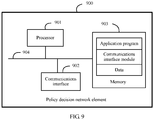
- a third aspect of the embodiments of the present invention discloses a policy decision network element, where user equipment UE supporting multipath transmission performs service packet transmission by using at least two transmission subflows, and the policy decision network element includes a processor, a memory, a communications interface, and a communications bus, where the memory is configured to store a program and data; the communications bus is configured to establish connections and communication between the processor, the memory, and the communications interface; and the processor is configured to invoke the program stored in the memory, to perform the following operations:
- the communication peer includes the UE or a server supporting multipath transmission.
- a manner in which the processor triggers the communications interface to receive the association information of the at least two transmission subflows from the communication peer is specifically:
- the processor is further configured to invoke the program stored in the memory, to perform the following operation:
- the processor is further configured to invoke the program stored in the memory, to perform the following operation:
- the manner in which the processor determines the resource modification policy of the at least one transmission subflow in the at least two transmission subflows based on the association information is specifically:
- a fourth aspect of the embodiments of the present invention discloses a policy control system for multipath transmission, including user equipment UE, the policy decision network element disclosed in the second aspect of the embodiments of the present invention, and a communication peer.
- the policy decision network element when the user equipment UE supporting multipath transmission performs service packet transmission by using the at least two transmission subflows, the policy decision network element receives the association information of the at least two transmission subflows from the communication peer; may determine the resource modification policy of the at least one transmission subflow in the at least two transmission subflows based on the association information; and sends the resource modification policy to the forwarding plane network element corresponding to the at least one transmission subflow, so that the forwarding plane network element corresponding to the at least one transmission subflow performs resource modification according to the resource modification policy.
- the policy decision network element may determine, based on the association information of the at least two transmission subflows on which the same service packet is transmitted, one or more transmission subflows on which resource modification needs to be performed, so that resource modification is performed on the one or more transmission subflows, instead of performing resource modification on each transmission subflow. Therefore, a signaling processing quantity can be reduced when resource modification is performed in multipath transmission, and resource consumption is reduced.
- the embodiments of the present invention disclose a policy control method for multipath transmission, and a related device, to reduce a signaling processing quantity when resource modification is performed in multipath transmission, and further optimize a procedure.
- the following provides detailed descriptions separately.
- FIG. 1 is a schematic diagram of an EPS system architecture according to an embodiment of the present invention.
- the EPS system architecture shown in FIG. 1 may include user equipment UE, an E-UTRAN (Evolved Universal Terrestrial Radio Access Network, evolved universal terrestrial radio access network), and an evolved packet core EPC.
- E-UTRAN Evolved Universal Terrestrial Radio Access Network, evolved universal terrestrial radio access network
- EPC evolved packet core
- the user equipment UE may include but is not limited to a handheld device (such as a mobile phone, a tablet computer, or a personal digital assistant) with a wireless communication function, an in-vehicle device, a wearable device (such as a smartwatch or a smart band), a computing device or another processing device connected to a wireless modem, or UE in various forms, including a mobile station (Mobile Station, MS for short), a terminal (Terminal), terminal equipment (Terminal Equipment), and the like.
- a handheld device such as a mobile phone, a tablet computer, or a personal digital assistant
- a wearable device such as a smartwatch or a smart band
- a computing device or another processing device connected to a wireless modem or UE in various forms, including a mobile station (Mobile Station, MS for short), a terminal (Terminal), terminal equipment (Terminal Equipment), and the like.
- MS mobile Station
- Terminal Terminal
- Terminal Equipment Terminal Equipment
- the E-UTRAN may include an eNodeB, the E-UTRAN and the UE are interconnected by using an LTE-Uu interface, and the E-UTRAN and the EPC are interconnected by using an S1 interface, to implement a function related to wireless access.
- the EPC may include components such as a mobility management entity MME, a serving gateway S-GW, a packet data network gateway P-GW, a policy and charging rules function PCRF, an SGSN (Serving GPRS Support Node, serving GPRS support node), and an HSS (Home Subscriber Server, home subscriber server).
- the MME is configured to complete processing of signaling plane functions, such as user authentication, handover, roaming control, mobility management of a terminal in an idle state, and management of a user context and a bearer.
- the S-GW is a user plane function entity, implements routing and forwarding of packet data, is used as a data anchor in a 3GPP system, terminates an interface towards the E-UTRAN, and is also a local mobility management anchor in an inter-E-UTRAN handover scenario in a specific geographical area.
- the P-GW is a gateway connected to an external data network, and is a user plane anchor between a 3GPP access network and a non-3GPP access network.
- the user equipment may be connected to the P-GW to create a PDN (Packet Data Network, packet data network) connection, to access an external packet data network.
- the PDN may be the Internet, a virtual private network (Virtual Private Network, VPN), an IP multimedia service (IP Multi-media Service, IMS) network, a Wireless Application Protocol (Wireless Application Protocol, WAP) network provided by an operator, or the like.
- the PCRF is a policy decision point for policy and charging control of a service data flow and an IP bearer resource, and maintains an association between a gateway control session and an IP-CAN (IP-Connectivity Access Network, IP-connectivity access network) session.
- IP-CAN IP-Connectivity Access Network, IP-connectivity access network
- the SGSN is used to implement functions such as routing and forwarding of a packet, mobility management, session management, logical link management, authentication and encryption, and bill generation and output.
- the HSS is a database used to store user subscription information, and a home network may include one or more HSSs.
- the HSS is responsible for storing user-related information, such as a user identifier, a number, routing information, security information, location information, and profile information.
- the S-GW and the P-GW may be separated or integrated. For example, in a non-roaming scenario, the S-GW and the P-GW are deployed through integration. In a roaming scenario, the S-GW and the P-GW are separately deployed, and are connected by using an S5 interface.
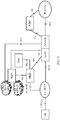
- FIG. 2 is a schematic diagram of a network architecture of multipath transmission according to an embodiment of the present invention.
- the network architecture shown in FIG. 2 may include UE, at least two base stations, a control plane network element, at least two forwarding plane network elements, a policy decision network element, and a server.
- the UE is user equipment that can support multipath transmission, for example, user equipment supporting an MPTCP transmission protocol, or user equipment supporting a QUIC (Quick UDP Internet Connection, quick UDP internet connection) transmission protocol.
- the control plane network element may be a control plane function network element responsible for user context and session management, for example, an MME or a mobile network controller.
- the forwarding plane network element may be a forwarding plane function network element that implements processing functions such as forwarding and statistics collection of a user packet, for example, a P-GW, an S-GW, a GW forwarding plane, or an SDN (Software Defined Network, software-defined networking) switch.
- the policy decision network element may be a function network element responsible for performing policy control and/or charging control on a mobile network, for example, a PCRF in an EPC network.
- the server is a server that can support multipath transmission, and is a network element that can provide a service for a user, for example, an application server supporting the MPTCP transmission protocol. In the network architecture shown in FIG.
- one user equipment UE has a plurality of network interfaces, so that a plurality of links to a target node can be implemented.
- the UE establishes a corresponding PDU (Packet Data Unit, packet data unit) connection by using a base station and a corresponding forwarding plane network element, for example, a PDN connection, and may establish one or more transmission subflows on each PDN connection.
- Multipath transmission may be implemented by using the MPTCP protocol, or may be implemented by using the QUIC protocol. This is not limited in this embodiment of the present invention.
- the UE separately establishes corresponding PDU connections (namely, a PDU connection 1 and a PDU connection 2) by using a base station 1 and a base station 2, and establishes corresponding transmission subflows, so that the UE can perform service packet transmission on the two transmission subflows.
- the UE transmits service packets of a same application on the two transmission subflows.
- the base station 1 and the base station 2 are two different base stations.
- the base station 1 may be a macro base station
- the base station 2 may be a micro base station, such as a home NodeB.
- the policy decision network element may receive association information of the two transmission subflows from the UE or the server, so that the policy decision network element learns that a same service is transmitted on the two transmission subflows.
- the policy decision network element may determine, based on at least one type of information of load statuses, air interface types, and base station types of the two transmission subflows, one or two transmission subflows that are of the two transmission subflows and on which resource modification needs to be performed. Therefore, a signaling processing quantity can be reduced when resource modification is performed in multipath transmission, a procedure is further optimized, and system resource consumption is reduced.
- the UE may establish at least two PDU connections to a plurality of base stations, that is, the UE may perform service packet transmission by using at least two transmission subflows.
- FIG. 3 is a schematic flowchart of a policy control method for multipath transmission according to an embodiment of the present invention. As shown in FIG. 3 , the policy control method for multipath transmission may include the following steps.
- a policy decision network element receives association information of at least two transmission subflows from a communication peer.
- user equipment UE may perform service packet transmission by using the at least two transmission subflows.
- the UE is user equipment supporting multipath transmission, that is, the UE may transmit a same service packet on the at least two transmission subflows.
- the UE may first establish a plurality of PDU connections, for example, PDN connections, and may establish one or more corresponding transmission subflows on each PDU connection.
- the at least two transmission subflows used for service packet transmission are transmission subflows corresponding to different PDU connections.
- the UE establishes different PDU connections to different base stations and forwarding plane network elements. For example, the UE establishes a PDU connection 1 to a base station 1 and a forwarding plane network element 1, and the UE establishes a PDU connection 2 to a base station 2 and a forwarding plane network element 2.
- the policy decision network element may receive the association information of the at least two transmission subflows from the communication peer.
- the association information is used to indicate that the same service packet is transmitted on the at least two transmission subflows.
- the association information may include flow identifiers of the at least two transmission subflows. Different transmission subflows have different flow identifiers. The flow identifiers may be used to distinguish between the different transmission subflows. Specifically, when the association information includes more than one flow identifiers, it may indicate that a same service packet is transmitted on transmission subflows corresponding to these flow identifiers.
- the communication peer may be the UE, or may be a server supporting multipath transmission, for example, an application server.
- the communication peer may initiate a resource establishment request, to request to establish or activate one or some resources corresponding to each transmission subflow.
- the UE may initiate a dedicated bearer activation request (namely, the resource establishment request) by using each transmission subflow, to activate a dedicated bearer corresponding to each transmission subflow.
- the communication peer may initiate a resource modification request on the transmission subflow.
- the communication peer may detect, in real time, a service packet transmission status (for example, a quantity of packet losses or packet loss frequency) on each transmission subflow, to determine whether resource modification needs to be performed on a transmission subflow.
- the communication peer may consider that the transmission subflow requires higher bandwidth, and therefore may determine that resource modification needs to be performed on the transmission subflow. Therefore, the communication peer may initiate a resource modification request on the transmission subflow.
- step 301 that a policy decision network element receives association information of at least two transmission subflows from a communication peer may include the following step:
- the resource establishment process and the resource modification process are two different processes described above.
- the communication peer may add the association information of the at least two transmission subflows to a resource establishment request initiated on one of the transmission subflows.
- the communication peer may add the association information of the at least two transmission subflows to an initiated resource modification request.
- the policy decision network element determines a resource modification policy of at least one transmission sub flow in the at least two transmission subflows based on the association information.
- the policy decision network element may determine the resource modification policy of the at least one transmission subflow in the at least two transmission subflows based on the received association information. Specifically, the policy decision network element first determines the at least one transmission subflow, and then further determines the resource modification policy of the at least one transmission subflow.
- the at least one transmission subflow may be any one or more of the at least two transmission subflows, or may be a transmission subflow on which resource modification needs to be performed and that is determined with reference to information such as a load status, an air interface type, and a base station type of each transmission subflow.
- the resource modification policy may include but is not limited to information such as a flow identifier of each transmission subflow in the at least one transmission subflow, and a type of a resource that needs to be modified and a modification amount on each transmission subflow.
- the type of the resource that needs to be modified means which type of resource is to be modified, and may be a quality of service QoS parameter.
- the QoS parameter may include a QCI (QoS Class Identifier, QoS class identifier), used to measure resource information such as a packet loss rate, a delay, bandwidth, and a priority during service transmission, to modify these resources.
- the modification amount means an amount by which a resource is modified. For example, if bandwidth on a transmission subflow is to be increased by 5 M, the type of the resource that needs to be modified is the bandwidth, and the modification amount is 5 M.
- a specific implementation of step 302 that the policy decision network element determines a resource modification policy of at least one transmission subflow in the at least two transmission subflows based on the association information may include the following steps:
- the information such as the load statuses, the air interface types, and the base station types of the at least two transmission subflows may be reported by a network management system or a radio access network (Radio Access Network, RAN) to the policy decision network element in real time or at a specific interval, or may be proactively obtained by the policy decision network element from a network management system or a RAN side.
- the UE transmits a same service packet by using two transmission subflows (for example, a transmission subflow 1 and a transmission subflow 2). It is assumed that maximum bandwidth on each of the transmission subflow 1 and the transmission subflow 2 is 5 M, 4 M bandwidth has been occupied on the transmission subflow 1, and 2 M bandwidth has been occupied on the transmission subflow 2. If resource modification needs to be performed when resource usage exceeds 60%, it may be determined that resource modification needs to be performed on the transmission subflow 1.
- the method described in FIG. 3 may further include the following step: (35)
- the policy decision network element receives, in the resource modification process, a policy control modification request from a forwarding plane network element, where the forwarding plane network element is a forwarding plane network element corresponding to one of the at least two transmission subflows.
- step 302 that the policy decision network element determines a resource modification policy of at least one transmission subflow in the at least two transmission subflows based on the association information may include the following step: (36)
- the policy decision network element responds to the policy control modification request, and determines the resource modification policy of the at least one transmission subflow in the at least two transmission subflows based on the association information.
- the policy decision network element may receive, in the resource modification process, the policy control modification request from the forwarding plane network element.
- the policy control modification request may be used to instruct the policy decision network element to determine the resource modification policy of the at least one transmission subflow in the at least two transmission subflows based on the association information.
- the forwarding plane network element is the forwarding plane network element corresponding to one of the at least two transmission subflows.
- the forwarding plane network element may be a forwarding plane network element corresponding to a transmission subflow on which a resource modification request is initiated.
- a specific implementation of step (36) that the policy decision network element determines the resource modification policy of the at least one transmission subflow in the at least two transmission subflows based on the association information may be as follows: The policy decision network element obtains at least one type of information of load statuses, air interface types, and base station types of the at least two transmission subflows based on the association information; and determines the resource modification policy of the at least one transmission subflow in the at least two transmission subflows based on the at least one type of information of the load statuses, the air interface types, and the base station types of the at least two transmission subflows.
- the method described in FIG. 3 may further include the following step: (37)
- the policy decision network element receives, in the resource modification process, a resource modification request from the communication peer.
- step 302 that the policy decision network element determines a resource modification policy of at least one transmission subflow in the at least two transmission subflows based on the association information may include the following step: (38) The policy decision network element responds to the resource modification request, and determines the resource modification policy of the at least one transmission subflow in the at least two transmission subflows based on the association information.
- the policy decision network element may receive, in the resource modification process, the resource modification request from the communication peer.
- the resource modification request may be used to instruct the policy decision network element to determine the resource modification policy of the at least one transmission subflow in the at least two transmission subflows based on the association information.
- a specific implementation of step (38) that the policy decision network element determines the resource modification policy of the at least one transmission subflow in the at least two transmission subflows based on the association information may be as follows: The policy decision network element obtains at least one type of information of load statuses, air interface types, and base station types of the at least two transmission subflows based on the association information; and determines the resource modification policy of the at least one transmission subflow in the at least two transmission subflows based on the at least one type of information of the load statuses, the air interface types, and the base station types of the at least two transmission subflows.
- the policy decision network element sends the resource modification policy to a forwarding plane network element corresponding to the at least one transmission subflow.
- the policy decision network element may send the resource modification policy to the forwarding plane network element corresponding to the at least one transmission subflow, so that the forwarding plane network element corresponding to the at least one transmission subflow performs resource modification according to the resource modification policy.
- One transmission subflow is corresponding to one forwarding plane network element, and forwarding plane network elements corresponding to different transmission subflows may be different.
- a forwarding plane network element may parse the resource modification policy to obtain a modification policy of a transmission subflow corresponding to the forwarding plane network element, and perform resource modification according to the modification policy.
- the forwarding plane network element 1 receives a resource modification policy; parses the resource modification policy to obtain a modification policy of the transmission subflow 1 corresponding to the forwarding plane network element 1, for example, a type of a resource that needs to be modified and a modification amount; and performs corresponding resource modification on the transmission subflow 1 based on the type of the resource and the modification amount.
- the policy decision network element when the UE supporting multipath transmission performs service packet transmission by using the at least two transmission subflows, the policy decision network element receives the association information of the at least two transmission subflows from the communication peer; may determine the resource modification policy of the at least one transmission subflow in the at least two transmission subflows based on the association information; and sends the resource modification policy to the forwarding plane network element corresponding to the at least one transmission subflow, so that the forwarding plane network element corresponding to the at least one transmission subflow performs resource modification according to the resource modification policy.
- the policy decision network element may determine, based on the association information of the at least two transmission subflows on which the same service packet is transmitted, one or more transmission subflows on which resource modification needs to be performed, so that resource modification is performed on the one or more transmission subflows, instead of performing resource modification on each transmission subflow. Therefore, a signaling processing quantity can be reduced when resource modification is performed in multipath transmission, a processing procedure is further optimized, and system resource consumption is reduced.
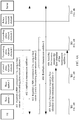
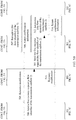
- FIG. 4A to FIG. 4C are a schematic flowchart of another policy control method for multipath transmission according to an embodiment of the present invention.
- association information is transmitted in a resource establishment process, and a communication peer is user equipment UE.
- the UE may perform service packet transmission by using at least two transmission subflows, and an example in which the UE performs service packet transmission by using two transmission subflows is used herein for detailed description.
- the policy control method for multipath transmission may include the following steps.
- the UE establishes a PDU connection 1 by using a base station 1 and a forwarding plane network element 1.
- the UE establishes, for the PDU connection 1 by using the base station 1 and the forwarding plane network element 1, a transmission subflow 1 on which the UE communicates with a server.
- the UE establishes a PDU connection 2 by using a base station 2 and a forwarding plane network element 2.
- the UE establishes, for the PDU connection 2 by using the base station 2 and the forwarding plane network element 2, a transmission subflow 2 on which the UE communicates with the server.
- the UE supporting multipath transmission may establish a plurality of PDU connections, and may establish one or more corresponding transmission subflows on each PDU connection.
- the UE may transmit a same service packet by using the transmission subflow 1 corresponding to the PDU connection 1 and the transmission subflow 2 corresponding to the PDU connection 2.
- the base station 1 and the base station 2 are two different base stations.
- the base station 1 is a macro base station
- the base station 2 is a micro base station.
- the UE sends a first resource request to a control plane network element by using the PDU connection 1, where the first resource request carries a flow identifier of the transmission subflow 1.
- the control plane network element sends, to the forwarding plane network element 1, the first resource request transmitted by the UE by using the PDU connection 1.
- the forwarding plane network element 1 interacts with a policy decision network element.
- the forwarding plane network element 1 performs corresponding resource modification on the transmission subflow 1 by using the control plane network element, the base station 1, and the UE.
- the first resource request transmitted on the PDU connection 1 may be a resource establishment request, namely, a request to establish one or some resources on the connection.
- the request may include the flow identifier of the transmission subflow 1 and information about a resource that the UE requests to establish.
- the forwarding plane network element 1 may establish an IP-CAN session based on the first resource request, to implement interaction with the policy decision network element. Specifically, the forwarding plane network element 1 sends a session request to the policy decision network element.
- the session request may carry the flow identifier of the transmission subflow 1.
- the policy decision network element responds to the session request, and may initiate policy modification by using a policy enforcement network element.
- the policy decision network element delivers a modification policy to the forwarding plane network element 1, so that the forwarding plane network element 1 initiates corresponding resource modification according to the modification policy.
- the resource modification is to establish or activate a requested resource.
- the forwarding plane network element 1 After completing the resource modification, the forwarding plane network element 1 returns confirmation information to the policy decision network element, to indicate that the requested resource modification has been performed.
- the forwarding plane network element 1 may return the confirmation information to the policy decision network element, to notify the policy decision network element that the requested resource has been successfully established.
- the UE sends a first resource request to the control plane network element by using the PDU connection 2, where the first resource request carries a flow identifier of the transmission subflow 2 and association information of the transmission subflow 1 and the transmission subflow 2.
- the control plane network element sends, to the forwarding plane network element 2, the first resource request transmitted by the UE by using the PDU connection 2.
- the forwarding plane network element 2 interacts with the policy decision network element.
- the forwarding plane network element 2 performs corresponding resource modification on the transmission subflow 2 by using the control plane network element, the base station 2, and the UE.
- the first resource request transmitted on the PDU connection 2 may be a resource establishment request, namely, a request to establish one or some resources on the connection.
- the request may include the flow identifier of the transmission subflow 2, the association information of the two transmission subflows, and information about a resource that the UE requests to establish.
- the forwarding plane network element 2 may establish an IP-CAN session based on the first resource request, to implement interaction with the policy decision network element. Specifically, the forwarding plane network element 2 sends a session request to the policy decision network element.
- the session request may carry the flow identifier of the transmission subflow 2 and the association information of the transmission subflow 1 and the transmission subflow 2.
- the policy decision network element responds to the session request, and may initiate policy modification by using the policy enforcement network element.
- the policy decision network element delivers a modification policy to the forwarding plane network element 2, so that the forwarding plane network element 2 initiates corresponding resource modification according to the modification policy.
- the resource modification is to establish or activate a requested resource.
- the forwarding plane network element 2 After completing the resource modification, the forwarding plane network element 2 returns confirmation information to the policy decision network element, to indicate that the requested resource modification has been performed.
- step 405 to step 409 and step 410 to step 414 may be performed sequentially, synchronously, or alternately. This is not limited in this embodiment of the present invention.
- the association information of the transmission subflow 1 and the transmission subflow 2 may be transmitted on one of the transmission subflows.
- Step 405 to step 414 may be considered as a resource establishment process, and the association information is transmitted in the resource establishment process.
- the UE detects that resource modification needs to be performed on a transmission subflow.
- the UE may detect, in real time or at a specific interval, whether resource modification needs to be performed on the transmission subflow 1 and the transmission sub flow 2. Specifically, the UE may determine, based on data transmission statuses of the transmission subflow 1 and the transmission subflow 2, whether resource modification needs to be performed. For example, when a quantity of packet losses of data transmitted on the transmission subflow 1 is greater than a preset value, the UE may consider that the transmission subflow 1 requires higher bandwidth, that is, detect that resource modification needs to be performed on the transmission subflow 1.
- the UE sends a second resource request to the control plane network element on the transmission subflow.
- the second resource request may be a resource modification request.
- the UE may send the second resource request on the transmission subflow 1.
- the UE may send the second resource request on the transmission subflow 2.
- the UE may send the second resource request on the transmission subflow 2.
- the control plane network element forwards the second resource request to the forwarding plane network element 1.
- the forwarding plane network element 1 sends a policy control modification request to the policy decision network element.
- the policy decision network element responds to the policy control modification request, and determines a resource modification policy of at least one transmission subflow in the transmission subflow 1 and the transmission subflow 2 based on the association information.
- the policy decision network element responds to the policy control modification request from the forwarding plane network element, and determines the resource modification policy of the at least one transmission subflow based on the received association information of the transmission subflow 1 and the transmission subflow 2.
- the at least one transmission subflow may be any one or two of the transmission subflow 1 and the transmission subflow 2, or may be one or two transmission subflows that are of the transmission subflow 1 and the transmission subflow 2 and on which resource modification needs to be performed.
- the policy control modification request is also transmitted when the forwarding plane network element establishes the IP-CAN session with the policy decision network element.
- a specific implementation of step 419 that the policy decision network element determines a resource modification policy of at least one transmission subflow in the transmission subflow 1 and the transmission subflow 2 based on the association information may be as follows: The policy decision network element obtains at least one type of information of load statuses, air interface types, and base station types of the transmission subflow 1 and the transmission subflow 2 based on the association information; and determines the resource modification policy of the at least one transmission subflow in the transmission subflow 1 and the transmission subflow 2 based on the at least one type of information of the load statuses, the air interface types, and the base station types of the transmission subflow 1 and the transmission subflow 2.
- the policy decision network element delivers the resource modification policy for resource modification.
- step 420 that the policy decision network element delivers the resource modification policy for resource modification may include the following steps:
- the policy decision network element sends the resource modification policy to the forwarding plane network element 1, so that the forwarding plane network element 1 performs corresponding resource modification according to the resource modification policy.
- the policy decision network element sends the resource modification policy to the forwarding plane network element 2, so that the forwarding plane network element 2 performs corresponding resource modification according to the resource modification policy.
- the policy decision network element separately sends the resource modification policy to the forwarding plane network element 1 and the forwarding plane network element 2, so that the forwarding plane network element 1 and the forwarding plane network element 2 separately perform corresponding resource modification according to the resource modification policy.
- the method described in FIG. 4A to FIG. 4C may further include the following step: (43) After completing the resource modification, the forwarding plane network element corresponding to the at least one transmission subflow returns confirmation information to the policy decision network element, to indicate that the requested resource modification has been performed.
- the forwarding plane network element 1 may return the confirmation information to the policy decision network element, to notify the policy decision network element that the requested resource modification has been performed.
- the forwarding plane network element 2 may return the confirmation information to the policy decision network element, to notify the policy decision network element that the requested resource modification has been performed.
- the forwarding plane network element 1 and the forwarding plane network element 2 may separately return the confirmation information to the policy decision network element, to separately indicate that the requested resource modification has been performed.
- Step 415 to step 420 may be considered as a resource modification process.
- the first resource request transmitted by the UE by using each of the PDU connection 1 and the PDU connection 2 may be a dedicated bearer activation request, and the resource modification may be dedicated bearer activation.
- step 405 to step 409 are an activation process of a dedicated bearer on the transmission subflow 1
- step 410 to step 414 are an activation process of a dedicated bearer on the transmission subflow 2.
- the second resource request transmitted on the transmission subflow may be a dedicated bearer modification request.
- the resource modification policy of the at least one transmission subflow and that is determined by the policy decision network element based on the association information of the two transmission subflows may be a bearer QoS modification policy of the at least one transmission subflow.
- the bearer QoS modification policy is delivered to a corresponding forwarding plane network element, so that the corresponding forwarding plane network element initiates bearer QoS modification, and returns confirmation information to the policy decision network element, to indicate that the requested bearer QoS modification has been performed.
- the UE separately establishes PDU connections by using a plurality of different base stations, and establishes corresponding transmission subflows.
- the UE may notify the policy decision network element of flow identifiers of the transmission subflows and association information of the plurality of transmission subflows in a resource establishment process.
- the policy decision network element determines, based on the association information, one or more transmission subflows for resource modification. Therefore, a signaling processing quantity can be reduced when resource modification is performed in multipath transmission, a processing procedure is further optimized, and system resource consumption is reduced.
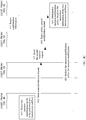
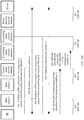
- FIG. 5A to FIG. 5C are a schematic flowchart of another policy control method for multipath transmission according to an embodiment of the present invention.
- association information is transmitted in a resource modification process, and a communication peer is user equipment UE.
- the UE may perform service packet transmission by using at least two transmission subflows, and an example in which the UE performs service packet transmission by using two transmission subflows is used herein for detailed description.
- the policy control method for multipath transmission may include the following steps.
- the UE establishes a PDU connection 1 by using a base station 1 and a forwarding plane network element 1.
- the UE establishes, for the PDU connection 1 by using the base station 1 and the forwarding plane network element 1, a transmission subflow 1 on which the UE communicates with a server.
- the UE establishes a PDU connection 2 by using a base station 2 and a forwarding plane network element 2.
- the UE establishes, for the PDU connection 2 by using the base station 2 and the forwarding plane network element 2, a transmission subflow 2 on which the UE communicates with the server.
- the UE sends a first resource request to a control plane network element by using the PDU connection 1, where the first resource request carries a flow identifier of the transmission subflow 1.
- the control plane network element sends, to the forwarding plane network element 1, the first resource request transmitted by the UE by using the PDU connection 1.
- the forwarding plane network element 1 interacts with a policy decision network element.
- the forwarding plane network element 1 performs corresponding resource modification on the transmission subflow 1 by using the control plane network element, the base station 1, and the UE.
- the first resource request transmitted on the PDU connection 1 may be a resource establishment request, namely, a request to establish or activate one or some resources on the connection.
- the request may include the flow identifier of the transmission subflow 1 and information about a resource that the UE requests to establish.
- the forwarding plane network element 1 may establish an IP-CAN session based on the first resource request, to implement interaction with the policy decision network element. Specifically, the forwarding plane network element 1 sends a session request to the policy decision network element.
- the session request may carry the flow identifier of the transmission subflow 1.
- the policy decision network element responds to the session request, and may initiate policy modification by using a policy enforcement network element.
- the policy decision network element delivers a modification policy to the forwarding plane network element 1, so that the forwarding plane network element 1 initiates corresponding resource modification according to the modification policy.
- the resource modification is to establish or activate a requested resource.
- the forwarding plane network element 1 After completing the resource modification, the forwarding plane network element 1 returns confirmation information to the policy decision network element, to indicate that the requested resource modification has been performed.
- the UE sends a first resource request to the control plane network element by using the PDU connection 2, where the first resource request carries a flow identifier of the transmission sub flow 2.
- the control plane network element sends, to the forwarding plane network element 2, the first resource request transmitted by the UE by using the PDU connection 2.
- the forwarding plane network element 2 interacts with the policy decision network element.
- the forwarding plane network element 2 performs corresponding resource modification on the transmission subflow 2 by using the control plane network element, the base station 2, and the UE.
- the first resource request transmitted on the PDU connection 2 may be a resource establishment request, namely, a request to establish one or some resources on the connection.
- the request may include the flow identifier of the transmission subflow 2 and information about a resource that the UE requests to establish.
- the forwarding plane network element 2 may establish an IP-CAN session based on the first resource request, to implement interaction with the policy decision network element. Specifically, the forwarding plane network element 2 sends a session request to the policy decision network element.
- the session request may carry the flow identifier of the transmission subflow 2.
- the policy decision network element responds to the session request, and may initiate policy modification by using the policy enforcement network element.
- the policy decision network element delivers a modification policy to the forwarding plane network element 2, so that the forwarding plane network element 2 performs corresponding resource modification according to the modification policy.
- the resource modification is to establish or activate a requested resource.
- the forwarding plane network element 2 After completing the resource modification, the forwarding plane network element 2 returns confirmation information to the policy decision network element, to indicate that the requested resource modification has been performed.
- step 505 to step 509 and step 510 to step 514 may be performed sequentially, synchronously, or alternately. This is not limited in this embodiment of the present invention. Step 505 to step 514 may be considered as a resource establishment process.
- the UE detects that resource modification needs to be performed on a transmission subflow.
- the UE sends a second resource request to the control plane network element on the transmission subflow, where the second resource request carries association information of the transmission subflow 1 and the transmission subflow 2.
- the second resource request may be a resource modification request.
- the UE may send the second resource request on the transmission subflow 1.
- the UE may send the second resource request on the transmission subflow 2.
- the UE may send the second resource request on the transmission subflow 2.
- the control plane network element forwards the second resource request to the forwarding plane network element 1.
- control plane network element may send the second resource request and the association information of the two transmission subflows together to the forwarding plane network element 1, or may send the second resource request to the forwarding plane network element 1, and directly send the association information of the two transmission subflows to the policy decision network element. This is not limited in this embodiment of the present invention.
- the forwarding plane network element 1 sends a policy control modification request to the policy decision network element.
- the policy control modification request when the control plane network element directly sends the association information of the two transmission subflows to the policy decision network element, the policy control modification request may not carry the association information.
- the policy control modification request may carry the association information of the two transmission subflows.
- the policy decision network element responds to the policy control modification request, and determines a resource modification policy of at least one transmission subflow in the transmission subflow 1 and the transmission subflow 2 based on the association information.
- a specific implementation of step 519 that the policy decision network element determines a resource modification policy of at least one transmission subflow in the transmission subflow 1 and the transmission subflow 2 based on the association information may be as follows: The policy decision network element obtains at least one type of information of load statuses, air interface types, and base station types of the transmission subflow 1 and the transmission subflow 2 based on the association information; and determines the resource modification policy of the at least one transmission subflow in the transmission subflow 1 and the transmission subflow 2 based on the at least one type of information of the load statuses, the air interface types, and the base station types of the transmission subflow 1 and the transmission subflow 2.
- the policy decision network element delivers the resource modification policy for resource modification.
- step 520 that the policy decision network element delivers the resource modification policy for resource modification may include the following steps:
- the method described in FIG. 5A to FIG. 5C may further include the following step: (53) After completing the resource modification, the forwarding plane network element corresponding to the at least one transmission subflow returns confirmation information to the policy decision network element, to indicate that the requested resource modification has been performed.
- the UE may send the second resource request on the transmission subflow 2, and transmit the association information of the two transmission subflows.
- the association information is transmitted in the resource modification process.
- the first resource request transmitted by the UE by using each of the PDU connection 1 and the PDU connection 2 may be a dedicated bearer activation request, and the resource modification may be dedicated bearer activation.
- step 505 to step 509 are an activation process of a dedicated bearer on the transmission subflow 1
- step 510 to step 514 are an activation process of a dedicated bearer on the transmission subflow 2.
- the second resource request transmitted on the transmission subflow may be a dedicated bearer modification request, and carries the association information of the two transmission subflows.
- the resource modification policy of the at least one transmission subflow and that is determined by the policy decision network element based on the association information of the two transmission subflows may be a bearer QoS modification policy of the at least one transmission subflow.
- the bearer QoS modification policy is delivered to a corresponding forwarding plane network element, so that the corresponding forwarding plane network element initiates bearer QoS modification, and returns confirmation information to the policy decision network element, to indicate that the requested bearer QoS modification has been performed.
- the UE separately establishes PDU connections by using a plurality of different base stations, and establishes corresponding transmission subflows.
- the UE may notify the policy decision network element of flow identifiers of the transmission subflows in a resource establishment process.
- the UE detects that resource modification needs to be performed on one of the transmission subflows, the UE notifies the policy decision network element of association information of the transmission subflows in a resource modification process, so that the policy decision network element determines, based on the association information, one or more transmission subflows for resource modification. Therefore, a signaling processing quantity can be reduced when resource modification is performed in multipath transmission, a processing procedure is further optimized, and system resource consumption is reduced.
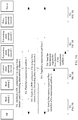
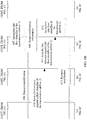
- FIG. 6A to FIG. 6C are a schematic flowchart of still another policy control method for multipath transmission according to an embodiment of the present invention.
- association information is transmitted in a resource modification process
- a communication peer is a server supporting multipath transmission.
- User equipment UE may perform service packet transmission by using at least two transmission subflows, and an example in which the UE performs service packet transmission by using two transmission subflows is used herein for detailed description.
- the policy control method for multipath transmission may include the following steps.
- the UE establishes a PDU connection 1 by using a base station 1 and a forwarding plane network element 1.
- the UE establishes, for the PDU connection 1 by using the base station 1 and the forwarding plane network element 1, a transmission subflow 1 on which the UE communicates with the server.
- the UE establishes a PDU connection 2 by using a base station 2 and a forwarding plane network element 2.
- the UE establishes, for the PDU connection 2 by using the base station 2 and the forwarding plane network element 2, a transmission subflow 2 on which the UE communicates with the server.
- the UE sends a first resource request to a control plane network element by using the PDU connection 1, where the first resource request carries a flow identifier of the transmission subflow 1.
- the control plane network element sends, to the forwarding plane network element 1, the first resource request transmitted by the UE by using the PDU connection 1.
- the forwarding plane network element 1 interacts with a policy decision network element.
- the forwarding plane network element 1 performs corresponding resource modification on the transmission subflow 1 by using the control plane network element, the base station 1, and the UE.
- the first resource request transmitted on the PDU connection 1 may be a resource establishment request, namely, a request to establish one or some resources on the connection.
- the request may include the flow identifier of the transmission subflow 1 and information about a resource that the UE requests to establish.
- the forwarding plane network element 1 may establish an IP-CAN session based on the first resource request, to implement interaction with the policy decision network element. Specifically, the forwarding plane network element 1 sends a session request to the policy decision network element.
- the session request may carry the flow identifier of the transmission subflow 1.
- the policy decision network element responds to the session request, and may initiate policy modification by using a policy enforcement network element.
- the policy decision network element delivers a modification policy to the forwarding plane network element 1, so that the forwarding plane network element 1 initiates corresponding resource modification according to the modification policy.
- the resource modification is to establish or activate a requested resource.
- the forwarding plane network element 1 After completing the resource modification, the forwarding plane network element 1 returns confirmation information to the policy decision network element, to indicate that the requested resource modification has been performed.
- the UE sends a first resource request to the control plane network element by using the PDU connection 2, where the first resource request carries a flow identifier of the transmission subflow 2.
- the control plane network element sends, to the forwarding plane network element 2, the first resource request transmitted by the UE by using the PDU connection 2.
- the forwarding plane network element 2 interacts with the policy decision network element.
- the forwarding plane network element 2 performs corresponding resource modification on the transmission subflow 2 by using the control plane network element, the base station 2, and the UE.
- the first resource request transmitted on the PDU connection 2 may be a resource establishment request, namely, a request to establish one or some resources on the connection.
- the request may include the flow identifier of the transmission subflow 2 and information about a resource that the UE requests to establish.
- the forwarding plane network element 2 may establish an IP-CAN session based on the first resource request, to implement interaction with the policy decision network element. Specifically, the forwarding plane network element 2 sends a session request to the policy decision network element.
- the session request may carry the flow identifier of the transmission subflow 2.
- the policy decision network element responds to the session request, and may initiate policy modification by using the policy enforcement network element.
- the policy decision network element delivers a modification policy to the forwarding plane network element 2, so that the forwarding plane network element 2 performs corresponding resource modification according to the modification policy.
- the resource modification is to establish or activate a requested resource.
- the forwarding plane network element 2 After completing the resource modification, the forwarding plane network element 2 returns confirmation information to the policy decision network element, to indicate that the requested resource modification has been performed.
- step 605 to step 609 and step 610 to step 614 may be performed sequentially, synchronously, or alternately. This is not limited in this embodiment of the present invention. Step 605 to step 614 may be considered as a resource establishment process.
- the server detects that resource modification needs to be performed on a transmission subflow.
- the server may determine, based on a service requirement, a transmission subflow on which resource modification needs to be performed, for example, determine which transmission subflow requires higher bandwidth.
- the server sends a second resource request to the policy decision network element on the transmission subflow, where the second resource request carries association information of the transmission subflow 1 and the transmission subflow 2.
- the second resource request may be the foregoing resource modification request.
- the resource modification request carries the association information of the two transmission subflows.
- the server may send, on the transmission subflow 1, the second resource request carrying the association information.
- the server may send, on the transmission subflow 2, the second resource request carrying the association information.
- the policy decision network element responds to the second resource request, and determines a resource modification policy of at least one transmission subflow in the transmission subflow 1 and the transmission subflow 2 based on the association information.
- a specific implementation of step 617 that the policy decision network element determines a resource modification policy of at least one transmission subflow in the transmission subflow 1 and the transmission subflow 2 based on the association information may be as follows: The policy decision network element obtains at least one type of information of load statuses, air interface types, and base station types of the transmission subflow 1 and the transmission subflow 2 based on the association information; and determines the resource modification policy of the at least one transmission subflow in the transmission subflow 1 and the transmission subflow 2 based on the at least one type of information of the load statuses, the air interface types, and the base station types of the transmission subflow 1 and the transmission subflow 2.
- the policy decision network element delivers the resource modification policy for resource modification.
- step 618 that the policy decision network element delivers the resource modification policy for resource modification may include the following steps:
- the method described in FIG. 6A to FIG. 6C may further include the following step: (63) After completing the resource modification, the forwarding plane network element corresponding to the at least one transmission subflow returns confirmation information to the policy decision network element, to indicate that the requested resource modification has been performed.
- Step 615 to step 618 may be considered as a resource modification process, and the association information is transmitted in the resource modification process.
- the first resource request transmitted by the UE by using each of the PDU connection 1 and the PDU connection 2 may be a dedicated bearer activation request, and the resource modification may be dedicated bearer activation.
- step 605 to step 609 are an activation process of a dedicated bearer on the transmission subflow 1
- step 610 to step 614 are an activation process of a dedicated bearer on the transmission subflow 2.
- the server detects that resource modification needs to be performed on a transmission subflow in step 615
- the second resource request transmitted on the transmission subflow may be a dedicated bearer modification request, and carries the association information of the two transmission subflows.
- the resource modification policy of the at least one transmission subflow and that is determined by the policy decision network element based on the association information of the two transmission subflows may be a bearer QoS modification policy of the at least one transmission subflow.
- the bearer QoS modification policy is delivered to a corresponding forwarding plane network element, so that the corresponding forwarding plane network element initiates bearer QoS modification, and returns confirmation information to the policy decision network element, to indicate that the requested bearer QoS modification has been performed.
- the UE separately establishes PDU connections by using a plurality of different base stations, and establishes corresponding transmission subflows.
- the UE may notify the policy decision network element of flow identifiers of the transmission subflows in a resource establishment process.
- the server detects that resource modification needs to be performed on one of the transmission subflows, the server notifies the policy decision network element of association information of the two transmission subflows in a resource modification process, so that the policy decision network element determines, based on the association information, one or more transmission subflows for resource modification. Therefore, a signaling processing quantity can be reduced when resource modification is performed in multipath transmission, a processing procedure is further optimized, and system resource consumption is reduced.
- FIG. 7 is a schematic structural diagram of a policy decision network element according to an embodiment of the present invention.
- the policy decision network element may be configured to execute the policy control method for multipath transmission disclosed in the embodiments of the present invention.
- the policy decision network element may include a receiving unit 701, a determining unit 702, and a sending unit 703.
- the receiving unit 701 is configured to receive association information of at least two transmission subflows from a communication peer.
- user equipment UE supporting multipath transmission may perform service packet transmission by using the at least two transmission subflows, that is, the UE may transmit a same service packet on the at least two transmission subflows.
- the receiving unit 701 may receive the association information of the at least two transmission subflows from the communication peer.
- the association information is used to indicate that the same service packet is transmitted on the at least two transmission subflows.
- the association information may include flow identifiers of the at least two transmission subflows. Different transmission subflows have different flow identifiers. The flow identifiers may be used to distinguish between the different transmission subflows.
- the communication peer may be the UE, or may be a server supporting multipath transmission, for example, an application server.
- a specific implementation in which the receiving unit 701 receives the association information of the at least two transmission subflows from the communication peer may be as follows:
- the communication peer may initiate a resource establishment request, to request to establish or activate one or some resources corresponding to each transmission subflow.
- the communication peer may initiate a resource modification request on the transmission subflow.
- the communication peer may add the association information of the at least two transmission subflows to a resource establishment request initiated on one of the transmission subflows.
- the communication peer may add the association information of the at least two transmission subflows to an initiated resource modification request.
- the determining unit 702 is configured to determine a resource modification policy of at least one transmission subflow in the at least two transmission subflows based on the association information.
- the determining unit 702 may determine the resource modification policy of the at least one transmission subflow in the at least two transmission subflows based on the association information received by the receiving unit 701.
- the at least one transmission subflow may be any one or more of the at least two transmission subflows, or may be a transmission subflow on which resource modification needs to be performed and that is determined with reference to information such as a load status, an air interface type, and a base station type of each transmission subflow.
- the resource modification policy may include but is not limited to information such as a flow identifier of each transmission subflow in the at least one transmission subflow, and a type of a resource that needs to be modified and a modification amount on each transmission subflow.
- the type of the resource that needs to be modified means which type of resource is to be modified, and may be a quality of service QoS parameter.
- the QoS parameter may include a QCI, used to measure information such as a packet loss rate, a delay, bandwidth, and a priority during service transmission.
- the modification amount means an amount by which a resource is modified.
- the sending unit 703 is configured to send the resource modification policy to a forwarding plane network element corresponding to the at least one transmission subflow.
- the sending unit 703 may send the resource modification policy to the forwarding plane network element corresponding to the at least one transmission subflow.
- One transmission subflow is corresponding to one forwarding plane network element, and forwarding plane network elements corresponding to different transmission subflows may be different.
- a forwarding plane network element may parse the resource modification policy to obtain a modification policy of a transmission subflow corresponding to the forwarding plane network element, and perform resource modification according to the modification policy.
- the receiving unit 701 may be further configured to receive, in the resource modification process, a policy control modification request from a forwarding plane network element, where the forwarding plane network element is a forwarding plane network element corresponding to one of the at least two transmission subflows.
- the determining unit 702 may be specifically configured to: respond to the policy control modification request, and determine the resource modification policy of the at least one transmission subflow in the at least two transmission subflows based on the association information.
- the receiving unit 701 may receive, in the resource modification process, the policy control modification request from the forwarding plane network element.
- the policy control modification request may be used to instruct the determining unit 702 to determine the resource modification policy of the at least one transmission subflow in the at least two transmission subflows.
- the forwarding plane network element is the forwarding plane network element corresponding to one of the at least two transmission subflows.
- the forwarding plane network element may be a forwarding plane network element corresponding to a transmission subflow on which a resource modification request is initiated.
- the receiving unit 701 may be further configured to receive, in the resource modification process, a resource modification request from the communication peer.
- the determining unit 702 may be specifically configured to: respond to the resource modification request, and determine the resource modification policy of the at least one transmission subflow in the at least two transmission subflows based on the association information.
- the receiving unit 701 may receive, in the resource modification process, the resource modification request from the communication peer.
- the resource modification request may be used to instruct the determining unit 702 to determine the resource modification policy of the at least one transmission subflow in the at least two transmission subflows.
- FIG. 8 is a schematic structural diagram of another policy decision network element according to an embodiment of the present invention.
- the policy decision network element may be configured to execute the policy control method for multipath transmission disclosed in the embodiments of the present invention.
- the policy decision network element shown in FIG. 8 is obtained by further optimizing the policy decision network element shown in FIG. 7 .
- the determining unit 702 in the policy decision network element shown in FIG. 8 may include:
- the information such as the load statuses, the air interface types, and the base station types of the at least two transmission subflows may be reported by a network management system or a radio access network to the policy decision network element in real time or at a specific interval, or may be proactively obtained by the policy decision network element from a network management system or a RAN side.
- the policy decision network element shown in FIG. 7 and FIG. 8 may determine, based on the association information of the at least two transmission subflows on which the same service packet is transmitted, one or more transmission subflows on which resource modification needs to be performed, so that resource modification is performed on the one or more transmission subflows, instead of performing resource modification on each transmission subflow. Therefore, a signaling processing quantity can be reduced when resource modification is performed in multipath transmission, a processing procedure is further optimized, and system resource consumption is reduced.
- FIG. 9 is a schematic structural diagram of still another policy decision network element according to an embodiment of the present invention.
- the policy decision network element may be configured to execute the policy control method for multipath transmission disclosed in the embodiments of the present invention.
- the policy decision network element 900 may include components such as at least one processor 901, for example, a CPU (Central Processing Unit, central processing unit), at least one communications interface 902, and a memory 903. These components may perform communication and connection by using one or more communications buses 904.
- a person skilled in the art may understand that a structure of the policy decision network element 900 shown in FIG. 9 imposes no limitation on this embodiment of the present invention.
- the structure may be a bus structure, or may be a star structure, and may alternatively include components more or fewer than those shown in the figure, or combine some components, or have components disposed differently.
- the communications interface 902 may include a wired interface, a wireless interface, and the like, and may be configured to communicate with a communication peer.
- the memory 903 may be a high-speed RAM or a non-volatile memory (non-volatile memory), such as at least one magnetic disk storage.
- the memory 903 may be at least one storage apparatus that is far away from the processor 901.
- the memory 903 may include an application program, a communications interface module, data, and the like. This is not limited in this embodiment of the present invention.
- the processor 901 may be configured to invoke the application program stored in the memory 903, to perform the following operations:
- the communication peer may include the UE or a server supporting multipath transmission.
- a specific implementation in which the processor 901 triggers the communications interface 902 to receive the association information of the at least two transmission subflows from the communication peer may be:
- the processor 901 may be further configured to invoke the application program stored in the memory 903, to perform the following operation: triggering the communications interface 902 to receive, in the resource modification process, a policy control modification request from a forwarding plane network element, where the forwarding plane network element is a forwarding plane network element corresponding to one of the at least two transmission subflows.
- a specific implementation in which the processor 901 determines the resource modification policy of the at least one transmission subflow in the at least two transmission subflows based on the association information may be: responding to the policy control modification request, and determining the resource modification policy of the at least one transmission subflow in the at least two transmission subflows based on the association information.
- the processor 901 may be further configured to invoke the application program stored in the memory 903, to perform the following operation: triggering the communications interface 902 to receive, in the resource modification process, a resource modification request from the communication peer.
- a specific implementation in which the processor 901 determines the resource modification policy of the at least one transmission subflow in the at least two transmission subflows based on the association information may be: responding to the resource modification request, and determining the resource modification policy of the at least one transmission subflow in the at least two transmission subflows based on the association information.
- the specific implementation in which the processor 901 determines the resource modification policy of the at least one transmission subflow in the at least two transmission subflows based on the association information may be:
- the policy decision network element described in this embodiment of the present invention may implement some or all procedures in the embodiments of the policy control method for multipath transmission described with reference to FIG. 3 , FIG. 4A to FIG. 4C , FIG. 5A to FIG. 5C , or FIG. 6A to FIG. 6C in the present invention.
- the policy decision network element shown in FIG. 9 may determine, based on the association information of the at least two transmission subflows on which a same service packet is transmitted, one or more transmission subflows on which resource modification needs to be performed, so that resource modification is performed on the one or more transmission subflows, instead of performing resource modification on each transmission subflow. Therefore, a signaling processing quantity can be reduced when resource modification is performed in multipath transmission, a processing procedure is further optimized, and system resource consumption is reduced.
- FIG. 10 is a policy control system for multipath transmission according to an embodiment of the present invention.
- the policy control system for multipath transmission may include user equipment UE 1001, at least two base stations 1002 (such as a base station 1, a base station 2, ..., and a base station n, where n is a positive integer greater than or equal to 2), a control plane network element 1003, at least two forwarding plane network elements 1004 (such as a forwarding plane network element 1, a forwarding plane network element 2, ..., and a forwarding plane network element n), a policy decision network element 1005, and a server 1006.
- UE 1001 user equipment UE 1001
- base stations 1002 such as a base station 1, a base station 2, ..., and a base station n, where n is a positive integer greater than or equal to 2
- a control plane network element 1003 such as a forwarding plane network element 1, a forwarding plane network element 2, ..., and a forwarding plane network element n
- the policy control system for multipath transmission shown in FIG. 10 may be configured to execute the policy control method for multipath transmission described in any one of FIG. 3 to FIG. 6C .
- the policy control system for multipath transmission shown in FIG. 10 may determine, based on association information of at least two transmission subflows on which a same service packet is transmitted, one or more transmission subflows on which resource modification needs to be performed, so that resource modification is performed on the one or more transmission subflows, instead of performing resource modification on each transmission subflow. Therefore, a signaling processing quantity can be reduced when resource modification is performed in multipath transmission, a processing procedure is further optimized, and system resource consumption is reduced.
- a sequence of the steps of the method in the embodiments of the present invention may be adjusted, and steps may be combined or removed depending on an actual requirement.
- the units or subunits in the policy decision network element in the embodiments of the present invention may be combined, divided, and removed depending on an actual requirement.
- the program may be stored in a computer readable storage medium.
- the storage medium includes a read-only memory (Read-Only Memory, ROM), a random access memory (Random Access Memory, RAM), a programmable read-only memory (Programmable Read-only Memory, PROM), an erasable programmable read-only memory (Erasable Programmable Read Only Memory, EPROM), a one-time programmable read-only memory (One-time Programmable Read-Only Memory, OTPROM), an electrically erasable programmable read-only memory (Electrically-Erasable Programmable Read-Only Memory, EEPROM), a compact disc read-only memory (Compact Disc Read-Only Memory, CD-ROM) or another optical disc memory, a magnetic disk memory, a magnetic tape memory, or any other computer readable medium that can be used to carry or store
Landscapes
- Engineering & Computer Science (AREA)
- Computer Networks & Wireless Communication (AREA)
- Signal Processing (AREA)
- Databases & Information Systems (AREA)
- Quality & Reliability (AREA)
- Mobile Radio Communication Systems (AREA)
Applications Claiming Priority (1)
| Application Number | Priority Date | Filing Date | Title |
|---|---|---|---|
| PCT/CN2016/095698 WO2018032412A1 (fr) | 2016-08-17 | 2016-08-17 | Procédé de commande de politique pour transmission à trajets multiples, et dispositif associé |
Publications (3)
| Publication Number | Publication Date |
|---|---|
| EP3481013A1 true EP3481013A1 (fr) | 2019-05-08 |
| EP3481013A4 EP3481013A4 (fr) | 2019-06-26 |
| EP3481013B1 EP3481013B1 (fr) | 2025-02-26 |
Family
ID=61196413
Family Applications (1)
| Application Number | Title | Priority Date | Filing Date |
|---|---|---|---|
| EP16913172.9A Active EP3481013B1 (fr) | 2016-08-17 | 2016-08-17 | Procédé de commande de politique pour transmission à trajets multiples, et dispositif associé |
Country Status (4)
| Country | Link |
|---|---|
| US (1) | US11349765B2 (fr) |
| EP (1) | EP3481013B1 (fr) |
| CN (2) | CN109328450B (fr) |
| WO (1) | WO2018032412A1 (fr) |
Cited By (1)
| Publication number | Priority date | Publication date | Assignee | Title |
|---|---|---|---|---|
| EP4199571A4 (fr) * | 2020-09-02 | 2024-01-17 | Huawei Technologies Co., Ltd. | Procédé, appareil et système de transmission associée à des flux multiples |
Families Citing this family (10)
| Publication number | Priority date | Publication date | Assignee | Title |
|---|---|---|---|---|
| US11202230B2 (en) * | 2017-05-19 | 2021-12-14 | Telefonaktiebolaget Lm Ericsson (Publ) | Technique for enabling multipath transmission |
| EP3737127B1 (fr) * | 2019-05-10 | 2025-09-24 | Ntt Docomo, Inc. | Agencement de réseau de communication mobile et procédé de fonctionnement d'un agencement de réseau de communication mobile pour prendre en charge une itinérance de réseau inter-coeurs |
| US11523305B2 (en) | 2019-09-25 | 2022-12-06 | Cisco Technology, Inc. | Traffic steering and policy combining |
| PL3820088T3 (pl) | 2019-11-06 | 2024-05-13 | Deutsche Telekom Ag | Sposób i urządzenie sieciowe do łączności wielotorowej |
| US11483279B2 (en) * | 2019-11-15 | 2022-10-25 | Cisco Technology, Inc. | Domain name system as an authoritative source for multipath mobility policy |
| US11558287B2 (en) | 2020-02-14 | 2023-01-17 | Cisco Technology, Inc. | Policy combining utilizing purpose |
| CN120186812A (zh) * | 2020-03-06 | 2025-06-20 | 华为技术有限公司 | 通信方法和装置 |
| CN112968843B (zh) * | 2021-02-03 | 2023-02-28 | 长春理工大学 | 基于sdn的多路径传输控制系统及方法 |
| CN115190635A (zh) * | 2021-04-02 | 2022-10-14 | 索尼集团公司 | 电子设备、通信方法以及计算机可读存储介质 |
| CN118713783A (zh) * | 2023-03-27 | 2024-09-27 | 华为技术有限公司 | 通信方法、设备、芯片、存储介质和程序产品 |
Family Cites Families (17)
| Publication number | Priority date | Publication date | Assignee | Title |
|---|---|---|---|---|
| CN101662415B (zh) * | 2008-08-29 | 2012-11-07 | 华为技术有限公司 | 一种策略控制方法及通讯系统以及相关设备 |
| CN101998494B (zh) * | 2009-08-21 | 2016-02-03 | 华为技术有限公司 | 业务流共享资源的方法、系统和接入网关 |
| CN101719918A (zh) * | 2009-11-27 | 2010-06-02 | 北京交通大学 | 一种改进的适用于多连接多路径的传输方法 |
| US9295089B2 (en) * | 2010-09-07 | 2016-03-22 | Interdigital Patent Holdings, Inc. | Bandwidth management, aggregation and internet protocol flow mobility across multiple-access technologies |
| WO2012042208A1 (fr) * | 2010-09-28 | 2012-04-05 | British Telecommunications Public Limited Company | Transport de données selon plusieurs classes |
| WO2012171172A1 (fr) * | 2011-06-14 | 2012-12-20 | 华为技术有限公司 | Procédé de contrôle de politique, appareil associé, et système de contrôle de politique et de facturation |
| CN104753804B (zh) * | 2013-12-31 | 2019-01-08 | 中国移动通信集团公司 | 一种数据流传输控制方法、装置及系统 |
| CN103763217A (zh) * | 2014-02-07 | 2014-04-30 | 清华大学 | 多路径tcp的分组调度方法和装置 |
| WO2015127294A1 (fr) * | 2014-02-21 | 2015-08-27 | Broadcom Corporation | Agrégation de porteuses sur lte et wi-fi |
| CN103916253A (zh) * | 2014-03-21 | 2014-07-09 | 中国科学院计算技术研究所 | 一种基于信息中心网络的信息传输方法及其系统 |
| US10103896B2 (en) * | 2014-04-30 | 2018-10-16 | Telefonaktiebolaget Lm Ericsson (Publ) | Method and device of a policy control and charging (PCC) system in a communication network |
| WO2015180097A1 (fr) * | 2014-05-29 | 2015-12-03 | 华为技术有限公司 | Procédé et dispositif pour commander une transmission de charge |
| WO2016027130A1 (fr) * | 2014-08-21 | 2016-02-25 | Telefonaktiebolaget L M Ericsson (Publ) | Identification et commande de trafic à trajets multiples |
| KR20160041444A (ko) * | 2014-10-07 | 2016-04-18 | 주식회사 케이티 | 이종망 동시전송 환경에서 서버 푸시 서비스 제공을 위한 전송 경로 제어 방법 및 장치 |
| US10244580B2 (en) * | 2014-10-16 | 2019-03-26 | Nokia Of America Corporation | Methods and devices for providing application services to users in communications network |
| US10944875B2 (en) * | 2015-01-27 | 2021-03-09 | Alcatel-Lucent Usa Inc. | Interface aggregation for heterogeneous wireless communication systems |
| EP3278514B1 (fr) * | 2015-03-30 | 2019-03-06 | British Telecommunications public limited company | Transmission de données |
-
2016
- 2016-08-17 CN CN201680086903.3A patent/CN109328450B/zh active Active
- 2016-08-17 EP EP16913172.9A patent/EP3481013B1/fr active Active
- 2016-08-17 WO PCT/CN2016/095698 patent/WO2018032412A1/fr not_active Ceased
- 2016-08-17 CN CN202110656702.5A patent/CN113473535B/zh active Active
-
2019
- 2019-02-15 US US16/277,325 patent/US11349765B2/en active Active
Cited By (1)
| Publication number | Priority date | Publication date | Assignee | Title |
|---|---|---|---|---|
| EP4199571A4 (fr) * | 2020-09-02 | 2024-01-17 | Huawei Technologies Co., Ltd. | Procédé, appareil et système de transmission associée à des flux multiples |
Also Published As
| Publication number | Publication date |
|---|---|
| US11349765B2 (en) | 2022-05-31 |
| EP3481013A4 (fr) | 2019-06-26 |
| CN109328450A (zh) | 2019-02-12 |
| WO2018032412A1 (fr) | 2018-02-22 |
| EP3481013B1 (fr) | 2025-02-26 |
| CN113473535A (zh) | 2021-10-01 |
| CN109328450B (zh) | 2021-06-15 |
| US20190182165A1 (en) | 2019-06-13 |
| CN113473535B (zh) | 2023-08-22 |
Similar Documents
| Publication | Publication Date | Title |
|---|---|---|
| US11349765B2 (en) | Policy control method for multipath transmission, and related device | |
| USRE49636E1 (en) | Method and apparatus of improving quality of calls in mobile communication system | |
| US8867471B2 (en) | Method, device, and system for reporting radio access network element information | |
| US20140022900A1 (en) | System and method for indicating a level of ran congestion for user plane traffic in a network environment | |
| KR20130015529A (ko) | 이동통신 시스템에서 위치 기반 pcc 제어 방법 및 시스템, 위치 기반 pcc 제어를 위한 패킷 데이터 네트워크 게이트웨이 장치 | |
| CN103582017A (zh) | 终端、网络设备及网络系统接入方法 | |
| KR101216542B1 (ko) | Epc망의 pdn-gw 및 그 과금 데이터 생성 방법 | |
| US9706587B2 (en) | Method and apparatus for establishing direct tunnel | |
| WO2015062643A1 (fr) | Maintenir un équipement d'utilisateur dans un état rattaché à un réseau de communication cellulaire durant le délestage de données cellulaires à un autre réseau de communication | |
| WO2020049347A1 (fr) | Transfert de session vocale de réseau local sans fil (wlan) à cellulaire déclenché par l'utilisateur | |
| CN116724659A (zh) | 一种通信方法和通信装置 | |
| WO2014180210A1 (fr) | Procédé de commande de congestion de réseau et fonction de perception de charge | |
| KR102084038B1 (ko) | 중요 데이터 패킷을 우선 처리하는 방법 및 장치 | |
| US9237484B2 (en) | Method, system and device for configuring radio access bearers in mobile networks with multi-RAB capability | |
| US9705685B2 (en) | Charging control method and system in communication network | |
| KR101830224B1 (ko) | 패킷 트래픽 제어 방법 및 이를 위한 장치 | |
| KR101817267B1 (ko) | 이기종 망에서 음성 서비스를 제공하기 위한 페이징 장치 및 방법 | |
| KR101449720B1 (ko) | 베어러 설정 시간을 단축하기 위한 방법 및 장치 | |
| JP6367874B2 (ja) | ダイレクトトンネルを確立するための方法および装置 | |
| KR101512044B1 (ko) | 호 처리 방법 및 장치 | |
| KR101783319B1 (ko) | 동적 pcc 프로비저닝 제어 시스템, 장치 및 방법 | |
| KR101890887B1 (ko) | Epc망에서 중복 페이징 처리 장치 및 방법 | |
| KR101746718B1 (ko) | 디폴트 rat-type 정보를 가지는 패킷데이터 네트워크 게이트웨이, 이동통신시스템 및 방법 | |
| KR20140045670A (ko) | 호 처리에 대한 이벤트 정보 제공 장치 및 방법 |
Legal Events
| Date | Code | Title | Description |
|---|---|---|---|
| STAA | Information on the status of an ep patent application or granted ep patent |
Free format text: STATUS: THE INTERNATIONAL PUBLICATION HAS BEEN MADE |
|
| PUAI | Public reference made under article 153(3) epc to a published international application that has entered the european phase |
Free format text: ORIGINAL CODE: 0009012 |
|
| STAA | Information on the status of an ep patent application or granted ep patent |
Free format text: STATUS: REQUEST FOR EXAMINATION WAS MADE |
|
| 17P | Request for examination filed |
Effective date: 20190130 |
|
| AK | Designated contracting states |
Kind code of ref document: A1 Designated state(s): AL AT BE BG CH CY CZ DE DK EE ES FI FR GB GR HR HU IE IS IT LI LT LU LV MC MK MT NL NO PL PT RO RS SE SI SK SM TR |
|
| AX | Request for extension of the european patent |
Extension state: BA ME |
|
| A4 | Supplementary search report drawn up and despatched |
Effective date: 20190524 |
|
| RIC1 | Information provided on ipc code assigned before grant |
Ipc: H04W 80/06 20090101ALI20190520BHEP Ipc: H04L 12/801 20130101ALN20190520BHEP Ipc: H04L 12/707 20130101AFI20190520BHEP Ipc: H04W 28/02 20090101ALI20190520BHEP |
|
| DAV | Request for validation of the european patent (deleted) | ||
| DAX | Request for extension of the european patent (deleted) | ||
| STAA | Information on the status of an ep patent application or granted ep patent |
Free format text: STATUS: EXAMINATION IS IN PROGRESS |
|
| 17Q | First examination report despatched |
Effective date: 20200618 |
|
| REG | Reference to a national code |
Ref legal event code: R079 Ipc: H04W0028020000 Ref country code: DE Ref legal event code: R079 Ref document number: 602016091410 Country of ref document: DE Free format text: PREVIOUS MAIN CLASS: H04L0012707000 Ipc: H04W0028020000 |
|
| GRAP | Despatch of communication of intention to grant a patent |
Free format text: ORIGINAL CODE: EPIDOSNIGR1 |
|
| STAA | Information on the status of an ep patent application or granted ep patent |
Free format text: STATUS: GRANT OF PATENT IS INTENDED |
|
| RIC1 | Information provided on ipc code assigned before grant |
Ipc: H04W 80/06 20090101ALI20241010BHEP Ipc: H04L 47/11 20220101ALI20241010BHEP Ipc: H04L 45/24 20220101ALI20241010BHEP Ipc: H04W 28/02 20090101AFI20241010BHEP |
|
| INTG | Intention to grant announced |
Effective date: 20241018 |
|
| RIN1 | Information on inventor provided before grant (corrected) |
Inventor name: NI, HUI Inventor name: YANG, JIAO |
|
| GRAS | Grant fee paid |
Free format text: ORIGINAL CODE: EPIDOSNIGR3 |
|
| GRAA | (expected) grant |
Free format text: ORIGINAL CODE: 0009210 |
|
| STAA | Information on the status of an ep patent application or granted ep patent |
Free format text: STATUS: THE PATENT HAS BEEN GRANTED |
|
| AK | Designated contracting states |
Kind code of ref document: B1 Designated state(s): AL AT BE BG CH CY CZ DE DK EE ES FI FR GB GR HR HU IE IS IT LI LT LU LV MC MK MT NL NO PL PT RO RS SE SI SK SM TR |
|
| REG | Reference to a national code |
Ref country code: GB Ref legal event code: FG4D |
|
| REG | Reference to a national code |
Ref country code: CH Ref legal event code: EP |
|
| REG | Reference to a national code |
Ref country code: DE Ref legal event code: R096 Ref document number: 602016091410 Country of ref document: DE |
|
| REG | Reference to a national code |
Ref country code: IE Ref legal event code: FG4D |
|
| REG | Reference to a national code |
Ref country code: NL Ref legal event code: FP |
|
| PG25 | Lapsed in a contracting state [announced via postgrant information from national office to epo] |
Ref country code: RS Free format text: LAPSE BECAUSE OF FAILURE TO SUBMIT A TRANSLATION OF THE DESCRIPTION OR TO PAY THE FEE WITHIN THE PRESCRIBED TIME-LIMIT Effective date: 20250526 |
|
| PG25 | Lapsed in a contracting state [announced via postgrant information from national office to epo] |
Ref country code: FI Free format text: LAPSE BECAUSE OF FAILURE TO SUBMIT A TRANSLATION OF THE DESCRIPTION OR TO PAY THE FEE WITHIN THE PRESCRIBED TIME-LIMIT Effective date: 20250226 |
|
| PG25 | Lapsed in a contracting state [announced via postgrant information from national office to epo] |
Ref country code: PL Free format text: LAPSE BECAUSE OF FAILURE TO SUBMIT A TRANSLATION OF THE DESCRIPTION OR TO PAY THE FEE WITHIN THE PRESCRIBED TIME-LIMIT Effective date: 20250226 |
|
| PG25 | Lapsed in a contracting state [announced via postgrant information from national office to epo] |
Ref country code: ES Free format text: LAPSE BECAUSE OF FAILURE TO SUBMIT A TRANSLATION OF THE DESCRIPTION OR TO PAY THE FEE WITHIN THE PRESCRIBED TIME-LIMIT Effective date: 20250226 |
|
| REG | Reference to a national code |
Ref country code: LT Ref legal event code: MG9D |
|
| PG25 | Lapsed in a contracting state [announced via postgrant information from national office to epo] |
Ref country code: IS Free format text: LAPSE BECAUSE OF FAILURE TO SUBMIT A TRANSLATION OF THE DESCRIPTION OR TO PAY THE FEE WITHIN THE PRESCRIBED TIME-LIMIT Effective date: 20250626 Ref country code: NO Free format text: LAPSE BECAUSE OF FAILURE TO SUBMIT A TRANSLATION OF THE DESCRIPTION OR TO PAY THE FEE WITHIN THE PRESCRIBED TIME-LIMIT Effective date: 20250526 |
|
| PG25 | Lapsed in a contracting state [announced via postgrant information from national office to epo] |
Ref country code: HR Free format text: LAPSE BECAUSE OF FAILURE TO SUBMIT A TRANSLATION OF THE DESCRIPTION OR TO PAY THE FEE WITHIN THE PRESCRIBED TIME-LIMIT Effective date: 20250226 |
|
| PG25 | Lapsed in a contracting state [announced via postgrant information from national office to epo] |
Ref country code: LV Free format text: LAPSE BECAUSE OF FAILURE TO SUBMIT A TRANSLATION OF THE DESCRIPTION OR TO PAY THE FEE WITHIN THE PRESCRIBED TIME-LIMIT Effective date: 20250226 Ref country code: PT Free format text: LAPSE BECAUSE OF FAILURE TO SUBMIT A TRANSLATION OF THE DESCRIPTION OR TO PAY THE FEE WITHIN THE PRESCRIBED TIME-LIMIT Effective date: 20250626 |
|
| PG25 | Lapsed in a contracting state [announced via postgrant information from national office to epo] |
Ref country code: GR Free format text: LAPSE BECAUSE OF FAILURE TO SUBMIT A TRANSLATION OF THE DESCRIPTION OR TO PAY THE FEE WITHIN THE PRESCRIBED TIME-LIMIT Effective date: 20250527 Ref country code: BG Free format text: LAPSE BECAUSE OF FAILURE TO SUBMIT A TRANSLATION OF THE DESCRIPTION OR TO PAY THE FEE WITHIN THE PRESCRIBED TIME-LIMIT Effective date: 20250226 |
|
| REG | Reference to a national code |
Ref country code: AT Ref legal event code: MK05 Ref document number: 1771877 Country of ref document: AT Kind code of ref document: T Effective date: 20250226 |
|
| PGFP | Annual fee paid to national office [announced via postgrant information from national office to epo] |
Ref country code: NL Payment date: 20250704 Year of fee payment: 10 |
|
| PG25 | Lapsed in a contracting state [announced via postgrant information from national office to epo] |
Ref country code: SE Free format text: LAPSE BECAUSE OF FAILURE TO SUBMIT A TRANSLATION OF THE DESCRIPTION OR TO PAY THE FEE WITHIN THE PRESCRIBED TIME-LIMIT Effective date: 20250226 |
|
| PG25 | Lapsed in a contracting state [announced via postgrant information from national office to epo] |
Ref country code: SM Free format text: LAPSE BECAUSE OF FAILURE TO SUBMIT A TRANSLATION OF THE DESCRIPTION OR TO PAY THE FEE WITHIN THE PRESCRIBED TIME-LIMIT Effective date: 20250226 |
|
| PG25 | Lapsed in a contracting state [announced via postgrant information from national office to epo] |
Ref country code: DK Free format text: LAPSE BECAUSE OF FAILURE TO SUBMIT A TRANSLATION OF THE DESCRIPTION OR TO PAY THE FEE WITHIN THE PRESCRIBED TIME-LIMIT Effective date: 20250226 |
|
| PGFP | Annual fee paid to national office [announced via postgrant information from national office to epo] |
Ref country code: DE Payment date: 20250702 Year of fee payment: 10 |
|
| PG25 | Lapsed in a contracting state [announced via postgrant information from national office to epo] |
Ref country code: IT Free format text: LAPSE BECAUSE OF FAILURE TO SUBMIT A TRANSLATION OF THE DESCRIPTION OR TO PAY THE FEE WITHIN THE PRESCRIBED TIME-LIMIT Effective date: 20250226 |
|
| PGFP | Annual fee paid to national office [announced via postgrant information from national office to epo] |
Ref country code: GB Payment date: 20250703 Year of fee payment: 10 |
|
| PG25 | Lapsed in a contracting state [announced via postgrant information from national office to epo] |
Ref country code: AT Free format text: LAPSE BECAUSE OF FAILURE TO SUBMIT A TRANSLATION OF THE DESCRIPTION OR TO PAY THE FEE WITHIN THE PRESCRIBED TIME-LIMIT Effective date: 20250226 |
|
| PG25 | Lapsed in a contracting state [announced via postgrant information from national office to epo] |
Ref country code: EE Free format text: LAPSE BECAUSE OF FAILURE TO SUBMIT A TRANSLATION OF THE DESCRIPTION OR TO PAY THE FEE WITHIN THE PRESCRIBED TIME-LIMIT Effective date: 20250226 Ref country code: CZ Free format text: LAPSE BECAUSE OF FAILURE TO SUBMIT A TRANSLATION OF THE DESCRIPTION OR TO PAY THE FEE WITHIN THE PRESCRIBED TIME-LIMIT Effective date: 20250226 |
|
| PG25 | Lapsed in a contracting state [announced via postgrant information from national office to epo] |
Ref country code: RO Free format text: LAPSE BECAUSE OF FAILURE TO SUBMIT A TRANSLATION OF THE DESCRIPTION OR TO PAY THE FEE WITHIN THE PRESCRIBED TIME-LIMIT Effective date: 20250226 |
|
| PG25 | Lapsed in a contracting state [announced via postgrant information from national office to epo] |
Ref country code: SK Free format text: LAPSE BECAUSE OF FAILURE TO SUBMIT A TRANSLATION OF THE DESCRIPTION OR TO PAY THE FEE WITHIN THE PRESCRIBED TIME-LIMIT Effective date: 20250226 |
|
| REG | Reference to a national code |
Ref country code: DE Ref legal event code: R097 Ref document number: 602016091410 Country of ref document: DE |
|
| PLBE | No opposition filed within time limit |
Free format text: ORIGINAL CODE: 0009261 |
|
| STAA | Information on the status of an ep patent application or granted ep patent |
Free format text: STATUS: NO OPPOSITION FILED WITHIN TIME LIMIT |
|
| REG | Reference to a national code |
Ref country code: CH Ref legal event code: L10 Free format text: ST27 STATUS EVENT CODE: U-0-0-L10-L00 (AS PROVIDED BY THE NATIONAL OFFICE) Effective date: 20260107 |
|
| 26N | No opposition filed |
Effective date: 20251127 |
|
| REG | Reference to a national code |
Ref country code: CH Ref legal event code: H13 Free format text: ST27 STATUS EVENT CODE: U-0-0-H10-H13 (AS PROVIDED BY THE NATIONAL OFFICE) Effective date: 20260324 |
|
| PG25 | Lapsed in a contracting state [announced via postgrant information from national office to epo] |
Ref country code: MC Free format text: LAPSE BECAUSE OF FAILURE TO SUBMIT A TRANSLATION OF THE DESCRIPTION OR TO PAY THE FEE WITHIN THE PRESCRIBED TIME-LIMIT Effective date: 20250226 |
|
| PG25 | Lapsed in a contracting state [announced via postgrant information from national office to epo] |
Ref country code: LU Free format text: LAPSE BECAUSE OF NON-PAYMENT OF DUE FEES Effective date: 20250817 |
|
| PG25 | Lapsed in a contracting state [announced via postgrant information from national office to epo] |
Ref country code: CH Free format text: LAPSE BECAUSE OF NON-PAYMENT OF DUE FEES Effective date: 20250831 |