EP3481094A1 - Procédé de configuration de séquences de préambule, équipement d'utilisateur et équipement de réseau d'accès - Google Patents
Procédé de configuration de séquences de préambule, équipement d'utilisateur et équipement de réseau d'accès Download PDFInfo
- Publication number
- EP3481094A1 EP3481094A1 EP17833374.6A EP17833374A EP3481094A1 EP 3481094 A1 EP3481094 A1 EP 3481094A1 EP 17833374 A EP17833374 A EP 17833374A EP 3481094 A1 EP3481094 A1 EP 3481094A1
- Authority
- EP
- European Patent Office
- Prior art keywords
- preamble sequence
- information
- network device
- access network
- space
- Prior art date
- Legal status (The legal status is an assumption and is not a legal conclusion. Google has not performed a legal analysis and makes no representation as to the accuracy of the status listed.)
- Granted
Links
Images




Classifications
-
- H—ELECTRICITY
- H04—ELECTRIC COMMUNICATION TECHNIQUE
- H04W—WIRELESS COMMUNICATION NETWORKS
- H04W28/00—Network traffic management; Network resource management
- H04W28/02—Traffic management, e.g. flow control or congestion control
- H04W28/0215—Traffic management, e.g. flow control or congestion control based on user or device properties, e.g. MTC-capable devices
-
- H—ELECTRICITY
- H04—ELECTRIC COMMUNICATION TECHNIQUE
- H04W—WIRELESS COMMUNICATION NETWORKS
- H04W74/00—Wireless channel access
- H04W74/08—Non-scheduled access, e.g. ALOHA
- H04W74/0833—Random access procedures, e.g. with 4-step access
-
- H—ELECTRICITY
- H04—ELECTRIC COMMUNICATION TECHNIQUE
- H04L—TRANSMISSION OF DIGITAL INFORMATION, e.g. TELEGRAPHIC COMMUNICATION
- H04L1/00—Arrangements for detecting or preventing errors in the information received
- H04L1/0001—Systems modifying transmission characteristics according to link quality, e.g. power backoff
- H04L1/0036—Systems modifying transmission characteristics according to link quality, e.g. power backoff arrangements specific to the receiver
- H04L1/0038—Blind format detection
-
- H—ELECTRICITY
- H04—ELECTRIC COMMUNICATION TECHNIQUE
- H04L—TRANSMISSION OF DIGITAL INFORMATION, e.g. TELEGRAPHIC COMMUNICATION
- H04L1/00—Arrangements for detecting or preventing errors in the information received
- H04L1/004—Arrangements for detecting or preventing errors in the information received by using forward error control
- H04L1/0056—Systems characterized by the type of code used
- H04L1/0061—Error detection codes
-
- H—ELECTRICITY
- H04—ELECTRIC COMMUNICATION TECHNIQUE
- H04W—WIRELESS COMMUNICATION NETWORKS
- H04W24/00—Supervisory, monitoring or testing arrangements
- H04W24/08—Testing, supervising or monitoring using real traffic
-
- H—ELECTRICITY
- H04—ELECTRIC COMMUNICATION TECHNIQUE
- H04W—WIRELESS COMMUNICATION NETWORKS
- H04W28/00—Network traffic management; Network resource management
- H04W28/02—Traffic management, e.g. flow control or congestion control
-
- H—ELECTRICITY
- H04—ELECTRIC COMMUNICATION TECHNIQUE
- H04W—WIRELESS COMMUNICATION NETWORKS
- H04W28/00—Network traffic management; Network resource management
- H04W28/02—Traffic management, e.g. flow control or congestion control
- H04W28/04—Error control
-
- H—ELECTRICITY
- H04—ELECTRIC COMMUNICATION TECHNIQUE
- H04W—WIRELESS COMMUNICATION NETWORKS
- H04W28/00—Network traffic management; Network resource management
- H04W28/02—Traffic management, e.g. flow control or congestion control
- H04W28/08—Load balancing or load distribution
-
- H—ELECTRICITY
- H04—ELECTRIC COMMUNICATION TECHNIQUE
- H04W—WIRELESS COMMUNICATION NETWORKS
- H04W48/00—Access restriction; Network selection; Access point selection
- H04W48/16—Discovering, processing access restriction or access information
-
- H—ELECTRICITY
- H04—ELECTRIC COMMUNICATION TECHNIQUE
- H04W—WIRELESS COMMUNICATION NETWORKS
- H04W72/00—Local resource management
- H04W72/04—Wireless resource allocation
- H04W72/044—Wireless resource allocation based on the type of the allocated resource
- H04W72/0446—Resources in time domain, e.g. slots or frames
-
- H—ELECTRICITY
- H04—ELECTRIC COMMUNICATION TECHNIQUE
- H04W—WIRELESS COMMUNICATION NETWORKS
- H04W72/00—Local resource management
- H04W72/04—Wireless resource allocation
- H04W72/044—Wireless resource allocation based on the type of the allocated resource
- H04W72/0453—Resources in frequency domain, e.g. a carrier in FDMA
-
- H—ELECTRICITY
- H04—ELECTRIC COMMUNICATION TECHNIQUE
- H04W—WIRELESS COMMUNICATION NETWORKS
- H04W72/00—Local resource management
- H04W72/04—Wireless resource allocation
- H04W72/044—Wireless resource allocation based on the type of the allocated resource
- H04W72/0466—Wireless resource allocation based on the type of the allocated resource the resource being a scrambling code
-
- H—ELECTRICITY
- H04—ELECTRIC COMMUNICATION TECHNIQUE
- H04W—WIRELESS COMMUNICATION NETWORKS
- H04W74/00—Wireless channel access
- H04W74/002—Transmission of channel access control information
- H04W74/006—Transmission of channel access control information in the downlink, i.e. towards the terminal
-
- H—ELECTRICITY
- H04—ELECTRIC COMMUNICATION TECHNIQUE
- H04W—WIRELESS COMMUNICATION NETWORKS
- H04W88/00—Devices specially adapted for wireless communication networks, e.g. terminals, base stations or access point devices
- H04W88/02—Terminal devices
- H04W88/022—Selective call receivers
- H04W88/023—Selective call receivers with message or information receiving capability
-
- H—ELECTRICITY
- H04—ELECTRIC COMMUNICATION TECHNIQUE
- H04L—TRANSMISSION OF DIGITAL INFORMATION, e.g. TELEGRAPHIC COMMUNICATION
- H04L5/00—Arrangements affording multiple use of the transmission path
- H04L5/0001—Arrangements for dividing the transmission path
- H04L5/0014—Three-dimensional division
- H04L5/0016—Time-frequency-code
Definitions
- Embodiments of this application relate to the field of communications technologies, and in particular, to a preamble sequence configuration method, user equipment, and an access network device.
- an access resource is a preamble sequence (Preamble) randomly selected by user equipment (User Equipment, UE) in an access process before the user equipment starts to communicate with a network. Because the UE randomly selects a preamble sequence, it is possible that a plurality of UEs transmit a same preamble sequence at the same time, causing a random access (Random Access, RA) conflict.
- Preamble preamble sequence randomly selected by user equipment
- UE User Equipment
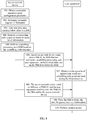
- a contention-based RA process is shown in FIG. 1 .
- Step 1 UE sends a Msg 1 to an access network device on a physical RA channel (Physical Random Access Channel, PRACH) specified by a communications network system, where the Msg 1 is a preamble sequence used for RA.
- Step 2 The access network device sends a Msg 2 based on a detection result of the received preamble sequence, where the Msg 2 is a random access response (Random Access Response, RAR).
- Step 3 UE that has no RA conflict transfers an exact Msg 3 to the access network device, where the Msg 3 is an RA process message, such as tracking area update or a scheduling request.
- Step 4 The access network device resolves contention between a plurality of UEs, and feeds back a Msg 4 to the UE.
- a preamble sequence may be used to differentiate different UEs on a same PRACH time-frequency resource. If more than one UE transmits a same preamble sequence on a same PRACH time-frequency resource, a random access conflict occurs, causing a random access failure.
- This application provides a preamble sequence configuration method, user equipment, and an access network device, so that the user equipment can randomly access a communications network system, reducing a probability of a random access failure.
- a first aspect of this application provides a preamble sequence configuration method, including:
- the user equipment When the user equipment performs random access, the user equipment needs to select one preamble sequence from a quantity of preamble sequences that is specified by the access network device and send the preamble sequence to the access network device.
- the access network device determines the preamble sequence information based on a preamble sequence space configuration parameter, where the preamble sequence information includes the message used to indicate a quantity of preamble sequences, and sends the preamble sequence information to the user equipment, so that the user equipment can perform random access based on the preamble sequence information. In this way, the user equipment can randomly access a communications network system successfully, reducing a probability of a random access failure.
- the preamble sequence information further includes space level information, and the space level information is used to indicate a quantity of code domain space layers of preamble sequence space.
- a preamble sequence crosses time domain, frequency domain, and code domain, and optional preamble sequence space includes a plurality of layers of code domain space in a code domain.
- the preamble sequence information determined by the access network device further includes the space level information used to indicate the quantity of code domain space layers of the preamble sequence space.
- the sending, by the access network device, the preamble sequence information to user equipment includes:
- system information Before the user equipment performs random access, in a system message sent by the access network device to the user equipment, system information includes a master system information block (Master Information Block, MIB) and a plurality of SIBs, and the cyclic redundancy check (Cyclic Redundancy Check, CRC) code is generated based on the space level information to perform check processing on the MIB.
- MIB Master Information Block
- CRC Cyclic Redundancy Check
- the generating, by the access network device, a CRC code based on the space level information includes: determining, by the access network device, a corresponding CRC design rule based on the space level information, and generating the CRC code based on the CRC design rule, where a correspondence between the space level information and the CRC design rule is known by both the access network device and the user equipment.
- a communications system presets a correspondence that is between space level information and a CRC design rule and that is known by both the user equipment and the access network device, so that a different CRC design rule is selected based on different space level information to generate a CRC code.
- the user equipment can determine the CRC design rule based on the removed CRC code, and therefore obtains the accurate space level information corresponding to the CRC design rule.
- the sending, by the access network device, the preamble sequence information to user equipment includes:
- the scrambling code sequence is generated based on the space level information, and scrambling processing is performed on the MIB based on the scrambling code sequence.
- the user equipment can obtain the accurate space level information based on a used decoding sequence. Therefore, the space level information can be transmitted by using a descrambling processing process, reducing signaling overheads.
- the generating, by the access network device, a scrambling code sequence based on the space level information includes: determining, by the access network device, a corresponding descrambling design rule based on the space level information, and generating the scrambling code sequence based on the descrambling design rule, where a correspondence between the space level information and the descrambling design rule is known by both the access network device and the user equipment.
- a communications system presets a correspondence that is between space level information and a descrambling design rule and that is known by both the user equipment and the access network device, so that a different descrambling design rule is selected based on different space level information to generate a scrambling code sequence for performing scrambling processing on the MIB.
- the user equipment can determine the descrambling design rule based on the used decoding sequence, and therefore obtains the accurate space level information corresponding to the descrambling design rule.
- the sending, by the access network device, the preamble sequence information to user equipment includes:
- system information Before the user equipment performs random access, in a system message sent by the access network device to the user equipment, system information includes a MIB and a plurality of SIBs. There are a plurality of types of SIBs, and time-frequency resource information is usually indicated by using a field in a SIB 2. Therefore, the space level information in the preamble sequence information can still be indicated by using the field in the SIB 2. In this way, the SIB 2 carries the space level information, and the SIB 2 is sent to the user equipment over the PDSCH, so that after receiving the SIB 2, the user equipment can obtain the space level information by parsing the field in the SIB 2.
- the preamble sequence information further includes time-frequency resource information, and the time-frequency resource information is used to indicate a time-frequency resource occupied by the preamble sequence space on a PRACH; and the sending, by the access network device, the preamble sequence information to user equipment further includes:
- system information Before the user equipment performs random access, in a system message sent by the access network device to the user equipment, system information includes a MIB and a plurality of SIBs. There are a plurality of types of SIBs, and time-frequency resource information is usually indicated by using a field in a SIB 2. Therefore, to avoid additional workload, the time-frequency resource information is still carried in the SIB 2.
- the method before the determining, by an access network device, preamble sequence information, the method further includes: obtaining, by the access network device, a preamble sequence space configuration parameter, where the preamble sequence space configuration parameter includes network load, a system parameter, and a quantity of user equipments.
- the preamble sequence space configuration parameter includes the network load, the system parameter, and the quantity of user equipments.
- the system parameter includes at least one of a user sequence length, a collision probability tolerance value, a residual probability tolerance value, a timing estimation error, a channel estimation error, a bit error rate, an available time-frequency resource size, an available computing resource size, received signal power, and a signal-to-noise ratio. Therefore, the access network device can determine the preamble sequence information based on the preamble sequence space configuration parameter.
- a second aspect of this application provides a preamble sequence configuration method, including:
- the user equipment When the user equipment performs random access, the user equipment needs to select one preamble sequence from a quantity of preamble sequences that is specified by the access network device and send the preamble sequence to the access network device. Before the preamble sequence is sent to the access network device, the user equipment obtains the preamble sequence information sent by the access network device, where the preamble sequence information includes the message used to indicate a quantity of preamble sequences; and the user equipment performs random access based on the received preamble sequence information. In this way, the user equipment can randomly access a communications network system successfully, reducing a probability of a random access failure.
- the preamble sequence information further includes space level information, and the space level information is used to indicate a quantity of code domain space layers of preamble sequence space.
- a preamble sequence crosses time domain, frequency domain, and code domain, and optional preamble sequence space includes a plurality of layers of code domain space in a code domain.
- the preamble sequence information determined by the access network device further includes the space level information used to indicate the quantity of code domain space layers of the preamble sequence space.
- the obtaining, by user equipment, preamble sequence information sent by an access network device includes: performing, by the user equipment, blind detection on a PBCH to obtain a MIB, and determining the space level information based on a CRC code removed during the blind detection.
- the access network device generates a different CRC code based on different space level information to perform check processing on the MIB.
- the user equipment can obtain the accurate space level information based on the removed CRC code. Therefore, the space level information can be transmitted by using a check process, reducing signaling overheads.
- the performing, by the user equipment, blind detection on a PBCH to obtain a MIB, and determining the space level information based on a CRC code removed during the blind detection includes: performing, by the user equipment, blind detection on the PBCH to obtain the MIB, determining a CRC design rule based on the CRC code removed during the blind detection, and obtaining the corresponding space level information based on the CRC design rule, where a correspondence between the space level information and the CRC design rule is known by both the access network device and the user equipment.
- a communications system presets a correspondence that is between space level information and a CRC design rule and that is known by both the user equipment and the access network device, so that a different CRC design rule is selected based on different space level information to generate a CRC code.
- the user equipment can determine the CRC design rule based on the removed CRC code, and therefore obtains the accurate space level information corresponding to the CRC design rule.
- the obtaining, by user equipment, preamble sequence information sent by an access network device includes: performing, by the user equipment, blind detection on a PBCH to obtain a MIB, and determining the space level information based on a decoding sequence used during the blind detection.
- the access network device generates a different scrambling code sequence based on different space level information to perform scrambling processing on the MIB.
- the user equipment can obtain the accurate space level information based on the used decoding sequence. Therefore, the space level information can be transmitted by using a descrambling processing process, reducing signaling overheads.
- the performing, by the user equipment, blind detection on a PBCH to obtain a MIB, and determining the space level information based on a decoding sequence used during the blind detection includes: performing, by the user equipment, blind detection on the PBCH to obtain the MIB, determining a descrambling design rule based on the decoding sequence used during the blind detection, and obtaining the corresponding space level information based on the descrambling design rule, where a correspondence between the space level information and the descrambling design rule is known by both the access network device and the user equipment.
- a communications system presets a correspondence that is between space level information and a descrambling design rule and that is known by both the user equipment and the access network device, so that a different descrambling design rule is selected based on different space level information to generate a scrambling code sequence for performing scrambling processing on the MIB.
- the user equipment can determine the descrambling design rule based on the used decoding sequence, and therefore obtains the accurate space level information corresponding to the descrambling design rule.
- the obtaining, by user equipment, preamble sequence information sent by an access network device includes:
- system information Before the user equipment performs random access, in a system message sent by the access network device to the user equipment, system information includes a MIB and a plurality of SIBs. There are a plurality of types of SIBs, and time-frequency resource information is usually indicated by using a field in a SIB 2. Therefore, the space level information in the preamble sequence information can still be indicated by using the field in the SIB 2. In this way, the SIB 2 carries the preamble sequence information, and the user equipment receives, over the PDSCH, the SIB 2 sent by the access network device, and obtains the space level information by parsing the SIB 2.
- the preamble sequence information further includes time-frequency resource information, and the time-frequency resource information is used to indicate a time-frequency resource occupied by the preamble sequence space on a PRACH; and the obtaining, by user equipment, preamble sequence information sent by an access network device further includes:
- system information Before the user equipment performs RA, in a system message sent by the access network device to the user equipment, system information includes a MIB and a plurality of SIBs. There are a plurality of types of SIBs, and time-frequency resource information is usually indicated by using a field in a SIB 2. Therefore, to avoid additional workload, the time-frequency resource information is still carried in the SIB 2.
- a third aspect of this application provides an access network device, including a processor and a transmitter, where the processor is connected to the transmitter; the processor is configured to determine preamble sequence information, where the preamble sequence information includes a message used to indicate a quantity of preamble sequences; and the transmitter is configured to send the preamble sequence information to user equipment, where the preamble sequence information is used by the user equipment for random access.
- the user equipment When the user equipment performs random access, the user equipment needs to select one preamble sequence from a quantity of preamble sequences that is specified by the access network device and send the preamble sequence to the access network device.
- the processor determines the preamble sequence information based on a preamble sequence space configuration parameter, where the preamble sequence information includes the message used to indicate a quantity of preamble sequences, and the transmitter sends the preamble sequence information to the user equipment, so that the user equipment can perform random access based on the preamble sequence information. In this way, the user equipment can randomly access a communications network system successfully, reducing a probability of a random access failure.
- the preamble sequence information further includes space level information, and the space level information is used to indicate a quantity of code domain space layers of preamble sequence space; the processor is further configured to generate a CRC code based on the space level information; the processor is further configured to perform check processing on a MIB based on the CRC code; and the transmitter is configured to send, over a PBCH, the MIB that has undergone check processing.
- the preamble sequence information includes the space level information, and a correspondence that is between space level information and a CRC design rule and that is known by both the user equipment and the access network device is preset, so that the processor generates a different CRC code based on different space level information to perform check processing on the MIB.
- the transmitter sends, over the PBCH, the MIB that has undergone check processing.
- the user equipment can obtain the accurate space level information based on the removed CRC code. Therefore, the space level information can be transmitted by using a check process, reducing signaling overheads.
- the preamble sequence information further includes space level information, and the space level information is used to indicate a quantity of code domain space layers of preamble sequence space; the processor is further configured to generate a scrambling code sequence based on the space level information; the processor is further configured to perform scrambling processing on a MIB based on the scrambling code sequence; and the transmitter is configured to send, over a PBCH, the MIB that has undergone scrambling processing.
- the preamble sequence information includes the space level information, and a correspondence that is between space level information and a descrambling design rule and that is known by both the user equipment and the access network device is preset, so that the processor generates a different scrambling code sequence based on different space level information to perform scrambling processing on the MIB.
- the transmitter sends, over the PBCH, the MIB that has undergone check processing.
- the user equipment can obtain the accurate space level information based on a used decoding sequence. Therefore, the space level information can be transmitted by using a descrambling processing process, reducing signaling overheads.
- the preamble sequence information further includes space level information, and the space level information is used to indicate a quantity of code domain space layers of preamble sequence space; the transmitter is configured to add the space level information in the preamble sequence information to a SIB; and the transmitter is configured to send the SIB over a PDSCH.
- system information Before the user equipment performs random access, in a system message sent by the access network device to the user equipment, system information includes a MIB and a plurality of SIBs.
- SIBs There are a plurality of types of SIBs, and in the prior art, time-frequency resource information is indicated by using a field in a SIB 2. Therefore, the transmitter can still indicate the space level information in the preamble sequence information by using the field in the SIB 2.
- the SIB 2 carries the space level information, and the SIB 2 is sent to the user equipment over the PDSCH, so that after receiving the SIB 2, the user equipment can obtain the space level information by parsing the field in the SIB 2.
- the preamble sequence information further includes time-frequency resource information, and the time-frequency resource information is used to indicate a time-frequency resource occupied by the preamble sequence space on a PRACH; the processor is further configured to add the time-frequency resource information in the preamble sequence information to the SIB; and the transmitter is further configured to send the SIB over the PDSCH.
- system information Before the user equipment performs random access, in a system message sent by the access network device to the user equipment, system information includes a MIB and a plurality of SIBs. There are a plurality of types of SIBs, and in the prior art, time-frequency resource information is indicated by using a field in a SIB 2. Therefore, to avoid additional workload, the processor still adds the time-frequency resource information to the SIB 2, and the transmitter sends the SIB 2 over the PDSCH.
- the access network device further includes a receiver; and the receiver is specifically configured to obtain a preamble sequence space configuration parameter, where the preamble sequence space configuration parameter includes network load, a system parameter, and a quantity of user equipments.
- the receiver Before the processor determines the preamble sequence information, the receiver needs to obtain the preamble sequence space configuration parameter.
- the preamble sequence space configuration parameter includes the network load, the system parameter, and the quantity of user equipments.
- the system parameter includes at least one of a user sequence length, a collision probability tolerance value, a residual probability tolerance value, a timing estimation error, a channel estimation error, a bit error rate, an available time-frequency resource size, an available computing resource size, received signal power, and a signal-to-noise ratio, so that the receiver can determine the preamble sequence information based on the preamble sequence space configuration parameter.
- a fourth aspect of this application provides user equipment, including a receiver and a processor, where the receiver is connected to the processor; the receiver is configured to obtain preamble sequence information sent by an access network device, where the preamble sequence information includes a message used to indicate a quantity of preamble sequences; and the processor is configured to perform random access based on the preamble sequence information.
- the user equipment When the user equipment performs random access, the user equipment needs to select one preamble sequence from a quantity of preamble sequences that is specified by the access network device and send the preamble sequence to the access network device. Before the preamble sequence is sent to the access network device, the receiver obtains the preamble sequence information sent by the access network device, and the processor performs random access based on the preamble sequence information. In this way, the user equipment can randomly access a communications network system successfully, reducing a probability of a random access failure.
- the preamble sequence information further includes space level information, and the space level information is used to indicate a quantity of code domain space layers of preamble sequence space; and the receiver is specifically configured to: perform blind detection on a PBCH to obtain a master system information block MIB, and determine the space level information based on a CRC code removed during the blind detection.
- the preamble sequence information further includes the space level information, and a correspondence that is between space level information and a CRC design rule and that is known by both the user equipment and the access network device is preset, so that a different CRC code is generated based on different space level information to perform check processing on the MIB.
- the receiver can obtain the accurate space level information based on the removed CRC code. Therefore, the space level information can be transmitted by using a check process, reducing signaling overheads.
- the preamble sequence information further includes space level information, and the space level information is used to indicate a quantity of code domain space layers of preamble sequence space; and the receiver is specifically configured to: perform blind detection on a PBCH to obtain a MIB, and determine the space level information based on a decoding sequence used during the blind detection.
- the preamble sequence information further includes the space level information, and a correspondence that is between space level information and a descrambling design rule and that is known by both the user equipment and the access network device is preset, so that a different scrambling code sequence is generated based on different space level information to perform scrambling processing on the MIB.
- the user equipment can obtain the accurate space level information based on the used decoding sequence. Therefore, the space level information can be transmitted by using a descrambling processing process, reducing signaling overheads.
- the preamble sequence information further includes space level information, and the space level information is used to indicate a quantity of code domain space layers of preamble sequence space;
- the receiver is configured to receive, over a physical downlink shared channel PDSCH, a system information block SIB sent by the access network device, where the SIB carries the space level information in the preamble sequence information; and the receiver is further configured to parse the SIB to obtain the space level information.
- system information Before the user equipment performs random access, in a system message sent by the access network device to the user equipment, system information includes a MIB and a plurality of SIBs. There are a plurality of types of SIBs, and time-frequency resource information is usually indicated by using a field in a SIB 2. Therefore, the space level information in the preamble sequence information can still be indicated by using the field in the SIB 2. In this way, the SIB 2 carries the preamble sequence information, and the receiver receives, over the PDSCH, the SIB 2 sent by the access network device, and obtains the space level information by parsing the SIB 2.
- the preamble sequence information further includes time-frequency resource information, and the time-frequency resource information is used to indicate a time-frequency resource occupied by the preamble sequence space on a PRACH; the receiver is further configured to receive, over the PDSCH, the SIB sent by the access network device, where the SIB carries the time-frequency resource information in the preamble sequence information; and the receiver is further configured to parse the SIB to obtain the time-frequency resource information.
- system information Before the user equipment performs random access, in a system message sent by the access network device to the user equipment, system information includes a MIB and a plurality of SIBs. There are a plurality of types of SIBs, and time-frequency resource information is usually indicated by using a field in a SIB 2. Therefore, to avoid additional workload, the time-frequency resource information is still carried in the SIB 2, and the receiver receives, over the PDSCH, the SIB 2 sent by the access network device, and can obtain the time-frequency resource information by parsing the SIB 2.
- This application provides a preamble sequence configuration method, user equipment, and an access network device.
- the access network device determines preamble sequence information and notifies the user equipment, and the user equipment determines optional preamble sequence space based on the preamble sequence information, so that the user equipment can randomly access a communications network system.
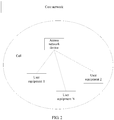
- N user equipments access a core network by using an access network device, and the user equipments may be connected to the access network device in a wireless manner.
- the access network device may be a network device in a cell, or may be a base station in a cell or a network device that is in the cell and that has a function similar to that of the base station, such as a wireless router or a wireless access point (Access Point, AP).
- the access network device may be a network device providing wireless access and a communication service for mobile or fixed user equipment in a cell. All user equipments served by the access network device include user equipment connected to the access network device, user equipment that camps on a network provided by the access network device, and the like.
- user equipment UE Before communicating with the access network device, user equipment UE needs to perform RA. Before RA, an LTE system needs to specify optional preamble sequence space on a PRACH, so that in an RA process, the UE selects, from the optional preamble sequence space, preamble sequence space carrying a preamble sequence, and can send the preamble sequence to an eNB successfully.
- the preamble sequence crosses time domain, frequency domain, and code domain, and the optional preamble sequence space includes time-frequency resource space and code domain space.
- a resource used to resolve an RA conflict between a plurality of UEs includes both a PRACH time-frequency resource and a preamble sequence.
- the PRACH and a physical uplink shared channel (Physical Uplink Shared Channel, PUSCH) and the PRACH and a physical uplink control channel (Physical Uplink Control Channel, PUCCH) are reused in both a time domain and a frequency domain.
- PRACH time-frequency resources are semi-statically distributed in a PUSCH range and periodically repeated.
- a PRACH resource configuration determines allocation of resources used for RA and data transmission. If more time-frequency resources are allocated to the PRACH, fewer time-frequency resources are used for data transmission.
- a preamble sequence may be used to differentiate different UEs on a same PRACH time-frequency resource. If more than one UE transmits a same preamble sequence on a same PRACH time-frequency resource, a random access conflict occurs, causing a random access failure.
- the preamble sequence in the LTE is obtained by performing cyclic shift on a ZC sequence.
- An LTE cell has 64 preamble sequences, some of the preamble sequences are used for non-contention-based RA, and less than 64 preamble sequences are used for contention-based RA. When a quantity of UEs is increased, especially in massive MTCs of the IoT, a base number of UEs is quite large.
- preamble sequences are planned based on a time-frequency resource.
- preamble sequences may also be planned in code domain while time-frequency resource occupancy is not increased.
- a new preamble sequence crosses time domain, frequency domain, and code domain. It is assumed that there are 64 preamble sequences at each layer. When code domain space is of one layer, there are 64 preamble sequences. When the code domain space is of two layers, there may be 128 preamble sequences. When the code domain space is of four layers, there are 256 preamble sequences. Each time the code domain space increases by one layer, an available quantity of preamble sequences increases by 64.
- System Information Block 2 sent by the access network device on a broadcast channel (Broadcast Channel, BCH).
- SIB 2 System Information Block
- System information obtained by the UE by using the SIB 2 includes an RA channel parameter, a preamble sequence format of a cell, a quantity of and sequence numbers of ZC (Zadoff-Chu) root sequences, the preamble sequence, implicit information, a correspondence between implicit information, a power incremental compensation (greater than or equal to 0 dB), and a maximum quantity of preamble sequence retransmission times.
- the UE receives the system information block SIB 2 to obtain preamble sequence information.
- An available PRACH time-frequency resource of a cell corresponding to the access network device is determined based on prach-Configlndex and prach-FrequencyOffset fields in the SIB 2. For all UEs connected to the cell, once the two fields are determined, a preamble sequence format (format) and an optional PRACH resource are determined.
- PRACH configuration information in the SIB 2 is as follows:
- the UE receives the system information block SIB 2 to obtain the preamble sequence information, and the available PRACH time-frequency resource (in other words, optional preamble sequence space) of a cell corresponding to the eNB is determined based on the prach-Configlndex and prach-FrequencyOffset fields in the SIB 2. It can be learned that the LTE system cannot notify the UE of the preamble sequence information in any way. Therefore, the UE cannot send a preamble sequence across time domain, frequency domain, and code domain.
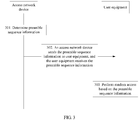
- an embodiment of this application provides a preamble sequence configuration method.
- the method includes the following steps.
- An access network device determines preamble sequence information.
- the access network device determines the preamble sequence information based on a preamble sequence space configuration parameter.
- the preamble sequence information includes a message used to indicate a quantity of preamble sequences.
- the access network device sends the preamble sequence information to user equipment, and the user equipment receives the preamble sequence information.
- the access network device determines the preamble sequence information
- the user equipment does not know the preamble sequence information, and cannot send a preamble sequence in an RA process. Therefore, the access network device needs to send the preamble sequence information to the user equipment over a channel such as a PBCH or a PDSCH, and the user equipment obtains, by using the channel such as the PBCH or the PDSCH, the preamble sequence information sent by the access network device.
- the user equipment performs random access based on the preamble sequence information.
- the user equipment may select, based on the received preamble sequence information, one preamble sequence from a specified quantity of preamble sequences and send the preamble sequence to the access network device for random access.
- the user equipment when the user equipment performs random access, the user equipment needs to select one preamble sequence from the quantity of preamble sequences that is specified by the access network device and send the preamble sequence to the access network device.
- the access network device determines the preamble sequence information based on the preamble sequence space configuration parameter, where the preamble sequence information includes the message used to indicate a quantity of preamble sequences, and sends the preamble sequence information to the user equipment, so that the user equipment can perform random access based on the preamble sequence information. In this way, the user equipment can randomly access a communications network system successfully, reducing a probability of a random access failure.
- the preamble sequence information includes the message used to indicate a quantity of preamble sequences.
- the preamble sequence information further includes space level information, and the space level information is used to indicate a quantity of code domain space layers of preamble sequence space. It can be learned based on descriptions of the foregoing system architecture or scenario that, in the prior art, time-frequency resource information in the preamble sequence information is transmitted by using a SIB 2.
- the space level information may be included in the SIB 2 and sent to the user equipment in an explicit manner, or may be notified to the user equipment in an implicit manner. This is not specifically limited.
- an explicit transfer manner may be a manner of adding signaling to a SIB 2.
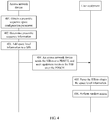
- an embodiment of this application provides a preamble sequence configuration method. The method includes the following steps.
- An access network device obtains a preamble sequence space configuration parameter.
- the access network device before determining preamble sequence space, the access network device needs to know a size of the preamble sequence space. In other words, a quantity of preamble sequences in the preamble sequence space, and therefore needs to obtain a preamble sequence space configuration parameter.
- the access network device may collect a preamble sequence space configuration parameter in a particular period.
- the preamble sequence space configuration parameter includes network load, a system parameter, and a quantity of user equipments, and may further include parameters such as a quantity of access users, a system performance parameter, and a preamble sequence length.
- the period may be a broadcast period.
- the access network device determines preamble sequence information.
- the preamble sequence information further includes space level information.
- the access network device adds space level information in the preamble sequence information to a SIB.
- time-frequency resource information of the preamble sequence space is indicated by using prach-Configlndex and prach-FrequencyOffset fields in a SIB 2. Therefore, the time-frequency resource information is still indicated by using the prach-Configlndex and prach-FrequencyOffset fields in the SIB 2, and a field is added to the SIB 2 to indicate the space level information (that is, a quantity of code domain space layers).
- RACH configuration information in the SIB 2 is as follows:
- the preamble sequence information may be carried in another type of SIB. This is not specifically limited.
- the access network device sends the SIB over a PDSCH, and user equipment receives the SIB over the PDSCH.
- the access network device after adding the space level information to the SIB 2, the access network device sends the SIB 2 over the PDSCH, and the user equipment receives, over the PDSCH, the SIB sent by the access network device, to obtain the SIB2 in the SIB.
- the user equipment parses the SIB to obtain the space level information.
- the user equipment parses the field in the SIB 2, to obtain the preamble sequence information.
- the user equipment performs random access based on the preamble sequence information.
- step 303 For details, refer to step 303.
- the access network device may indicate the space level information in the preamble sequence information by using the field in the SIB 2, to add the preamble sequence information to the SIB 2, and send the SIB 2 to the user equipment over the PDSCH, so that the user equipment can parse the field in the SIB 2 after receiving the SIB 2 in the SIB, to conveniently and quickly obtain the preamble sequence information.
- the access network device notifies the user equipment by adding the space level information to the SIB.
- the user equipment can conveniently and quickly obtain the space level information
- signaling overheads are increased at the same time because a field is added to the SIB 2 to indicate the space level information.
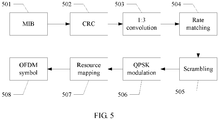
- information transferring can be implemented only during processing of a MIB in system information.
- FIG. 5 shows processing steps that are before an access network device sends a MIB. Details are as follows:
- the CRC code and the decoding sequence/scrambling code sequence that are respectively used in step 502 and step 505 may be changed manually, and may be used to transmit space level information in an implicit manner.
- an embodiment of this application provides a preamble sequence configuration method.
- the method includes the following steps.
- An access network device obtains a preamble sequence space configuration parameter.
- step 401 For details, refer to step 401.
- the access network device determines preamble sequence information.
- the preamble sequence information further includes time-frequency resource information.
- the access network device adds time-frequency resource information in the preamble sequence information to a SIB.
- time-frequency resource information of the preamble sequence space is indicated by using prach-Configlndex and prach-FrequencyOffset fields in a SIB 2.
- the time-frequency resource information is still indicated by using the prach-Configlndex and prach-FrequencyOffset fields in the SIB 2, and using the existing manner can avoid additional workload of the access network device.
- the access network device generates a CRC code based on space level information.
- an existing CRC code is shown in FIG. 7 .
- a CRC design rule is formulated, it is better to design a CRC code that is still 16 bits, so as to facilitate subsequent channel encoding and rate matching operations.
- the CRC code is not limited to 16 bits.
- the space level information indicates that there are four code domain space layers, and a CRC code generated according to a corresponding CRC design rule is (0,0,0,0,0,0,0,0,0,0,0,0,0,0,0,1,1); or there are three code domain space layers, and a corresponding CRC code is (0,0,0,0,0,0,0,0,0,0,0,0,0,1,0).
- the CRC code may be in a plurality of specific representation forms. There may be totally 2 16 types of 16-bit CRC codes, and therefore the CRC design rule may be selected from 2 16 manners.
- the access network device determines the corresponding CRC design rule based on the space level information, and generates the CRC code according to the CRC design rule.
- the access network device performs check processing on a MIB based on the CRC code.
- the access network device performs check processing on the MIB, and adds the CRC code after the MIB.
- the access network device sends, over a PBCH, the MIB that has undergone check processing, and user equipment performs blind detection on the PBCH to obtain the MIB.
- the access network device performs the foregoing processing of step 503 to step 508 on the MIB that has undergone check processing, adds the MIB to an OFDM symbol, and sends the OFDM symbol over the PBCH, and the user equipment performs blind detection on the OFDM symbol on the PBCH to obtain the MIB.
- the user equipment determines the space level information based on the CRC code removed during the blind detection.
- the user equipment can determine the corresponding CRC design rule based on the removed CRC code, and can obtain the space level information based on the correspondence between the CRC design rule and the space level information.
- the access network device sends the SIB over a PDSCH, and the user equipment receives, over the PDSCH, the SIB sent by the access network device.
- the access network device sends the SIB over the PDSCH, where the SIB includes a SIB 2, and the user equipment receives, over the PDSCH, the SIB sent by the access network device.
- the user equipment parses the SIB to obtain the time-frequency resource information.
- the user equipment after receiving the SIB, parses the SIB 2 in the SIB, to obtain the time-frequency resource information.
- the user equipment performs random access based on the preamble sequence information.
- step 303 For details, refer to step 303.
- time-frequency resource information is indicated by using the fields in the SIB 2.
- the time-frequency resource information is still carried in the SIB 2, and the correspondence that is between the space level information and the CRC design rule and that is known by both the user equipment and the access network device is preset.
- a different CRC code is generated based on different space level information to perform check processing on the MIB.
- the user equipment can obtain the accurate space level information based on the removed CRC code. Therefore, the space level information can be transmitted by using a check process, reducing signaling overheads.
- step 606 and step 608 are not limited; however, step 607 needs to be performed after step 606, and step 609 needs to be performed after step 608.
- a preamble sequence configuration method in an embodiment of this application includes the following steps.
- An access network device obtains a preamble sequence space configuration parameter.
- the access network device determines preamble sequence information.
- the access network device adds time-frequency resource information in the preamble sequence information to a SIB.
- the access network device generates a scrambling code sequence based on space level information.
- a scrambling code in existing LTE, is a Gold code whose order is 31 and that is generated by using a cell ID as an initial value.
- a sequence having different code phases is used as a scrambling code sequence.
- Original four code phases correspond to code domain space at level 0.
- a code phase of a generated scrambling code sequence not only corresponds to a PBCH sending period that is 40 ms, but also corresponds to space level information.
- Table 1 A correspondence between a code phase design scheme and space level information is shown in Table 1.
- Table 1 Initial code phase 0, 1, 2, and 3 Space at level 0, and 64 optional preamble sequences Code phase design 1 4, 5, 6, and 7 Space at level 0 and level 1, and 128 optional preamble sequences Code phase design 2 8, 9, 10, and 11 Space at level 0, level 1, and level 2, and 192 optional preamble sequences Code phase design 3 12, 13, 14, and 15 Space at level 0, level 1, level 2, and level 3, and 256 optional preamble sequences ... ... ...
- the initial code phase scheme indicates that, in the prior art, a scrambling code sequence has four initial code phases (0, 1, 2, and 3) and corresponding space level information is space at level 0 (to be specific, there is only one code domain space layer).
- the code phase design 1 indicates that a scrambling code sequence in this application has four code phases (4, 5, 6, and 7) and space level information corresponding to the four code phases is space at level 0 and level 1 (to be specific, there are two code domain space layers).
- the code phase design 2 indicates that space level information is three code domain space layers
- the code phase design 3 indicates that space level information is four code domain space layers.
- the code phase design scheme is a descrambling design rule.
- the access network device determines a corresponding code phase design scheme based on a quantity of code domain space layers that is indicated by the space level information, where the code phase design scheme is a descrambling design rule, generates, based on the descrambling design rule, the scrambling code sequence having four different code phases, where the descrambling design rule is known by both user equipment and the access network device.
- the access network device performs scrambling processing on a MIB based on the scrambling code sequence.
- the access network device performs scrambling processing on the MIB based on the generated scrambling code sequence.
- a process of performing scrambling processing based on the scrambling code sequence is the same as a process in the prior art, and therefore no specific descriptions are provided herein.
- the access network device sends, over a PBCH, the MIB that has undergone scrambling processing, and user equipment performs blind detection on the PBCH to obtain the MIB.
- the access network device performs processing of step 506 to step 508 on the MIB that has undergone scrambling processing, adds the MIB that has undergone scrambling processing to an OFDM symbol, and sends the OFDM symbol over the PBCH, and the user equipment performs blind detection on the OFDM symbol on the PBCH to obtain the MIB.
- the user equipment determines the space level information based on a decoding sequence used during the blind detection.
- the user equipment can determine the corresponding descrambling design rule based on the decoding sequence (corresponding to the scrambling code sequence in step 804) used during the blind detection, and can obtain the space level information based on the correspondence between the descrambling design rule and the space level information.
- the access network device sends the SIB over a PDSCH, and the user equipment receives, over the PDSCH, the SIB sent by the access network device.
- the user equipment parses the SIB to obtain the time-frequency resource information.
- the user equipment performs random access based on the preamble sequence information.
- step 303 For details, refer to step 303.
- time-frequency resource information is indicated by using a field in a SIB 2.
- the time-frequency resource information is still carried in the SIB 2, and the correspondence that is between the space level information and the descrambling design rule and that is known by both the user equipment and the access network device is preset.
- a different scrambling code sequence is generated based on different space level information to perform scrambling processing on the MIB.
- the user equipment can obtain the accurate space level information based on the decoding sequence used during the blind detection. Therefore, the space level information can be transmitted by using a descrambling processing process, reducing signaling overheads.
- step 806 and step 808 are not limited; however, step 707 needs to be performed after step 806, and step 809 needs to be performed after step 808.
- the CRC code and the decoding sequence/scrambling code sequence are used in (1) and (2), respectively, to transmit the space level information.
- the CRC code and the decoding sequence/scrambling code sequence may also be used at the same time to transmit the space level information.
- space level information is space at level 0, level 1, and level 2 (three layers)
- a generated CRC code is (1,0,0,0,0,0,0,0,0,0,0,0,0,0,0,0,0,0,0,0,0,0,0,1)
- four code phases of a scrambling code sequence are (0, 1, 3, and 5).
- the preamble sequence configuration method is described.
- an access network device and user equipment are separately described.
- an embodiment of this application provides an access network device, including:
- the processor 901 determines the preamble sequence information based on a preamble sequence space configuration parameter, where the preamble sequence information includes the message used to indicate a quantity of preamble sequences; and the transmitter 902 sends the preamble sequence information to the user equipment, so that the user equipment can perform random access based on the preamble sequence information.
- the user equipment can randomly access a communications network system successfully, reducing a probability of a random access failure.
- the preamble sequence information further includes space level information, and the space level information is used to indicate a quantity of code domain space layers of preamble sequence space.
- the processor 901 is further configured to generate a CRC code based on the space level information.
- the processor 901 is further configured to perform check processing on a MIB based on the CRC code.
- the transmitter 902 is configured to send, over a PBCH, the MIB that has undergone check processing.
- the preamble sequence information includes the space level information, and a correspondence that is between space level information and a CRC design rule and that is known by both the user equipment and the access network device is preset, so that the processor 901 generates a different CRC code based on different space level information to perform check processing on the MIB, the transmitter 902 sends, over the PBCH, the MIB that has undergone check processing.
- the user equipment can obtain the accurate space level information based on the removed CRC code. Therefore, the space level information can be transmitted by using a check process, reducing signaling overheads.
- the preamble sequence information further includes space level information, and the space level information is used to indicate a quantity of code domain space layers of preamble sequence space.
- the processor 901 is further configured to generate a scrambling code sequence based on the space level information.
- the processor 901 is further configured to perform scrambling processing on a MIB based on the scrambling code sequence.
- the transmitter 902 is configured to send, over a PBCH, the MIB that has undergone scrambling processing.
- the preamble sequence information includes the space level information, and a correspondence that is between space level information and a descrambling design rule and that is known by both the user equipment and the access network device is preset, so that the processor 901 generates a different scrambling code sequence based on different space level information to perform scrambling processing on the MIB, the transmitter 902 sends, over the PBCH, the MIB that has undergone check processing.
- the user equipment can obtain the accurate space level information based on a used decoding sequence. Therefore, the space level information can be transmitted by using a descrambling processing process, reducing signaling overheads.
- the preamble sequence information further includes space level information, and the space level information is used to indicate a quantity of code domain space layers of preamble sequence space.
- the transmitter 902 is configured to add the space level information in the preamble sequence information to a SIB.
- the transmitter 902 is configured to send the SIB over a PDSCH.
- system information before the user equipment performs RA, in a system message sent by the access network device to the user equipment, system information includes a MIB and a plurality of SIBs.
- SIBs There are a plurality of types of SIBs, and in the prior art, time-frequency resource information is indicated by using a field in a SIB 2. Therefore, the transmitter 902 can still indicate the space level information in the preamble sequence information by using the field in the SIB 2. In this way, the space level information is carried in the SIB 2, and the SIB 2 is sent to the user equipment over the PDSCH, so that after receiving the SIB 2, the user equipment can obtain the space level information by parsing the field in the SIB 2.
- the preamble sequence information includes time-frequency resource information, and the time-frequency resource information is used to indicate a time-frequency resource occupied by the preamble sequence space on a PRACH.
- the processor 901 is configured to add the time-frequency resource information in the preamble sequence information to the SIB.
- the transmitter 902 is configured to send the SIB over the PDSCH.
- system information before the user equipment performs RA, in a system message sent by the access network device to the user equipment, system information includes a MIB and a plurality of SIBs.
- SIBs There are a plurality of types of SIBs, and in the prior art, time-frequency resource information is indicated by using a field in a SIB 2. Therefore, to avoid additional workload, the processor 901 still adds the time-frequency resource information to the SIB 2, and the transmitter 902 sends the SIB 2 over the PDSCH.
- the access network device further includes a receiver 903.
- the receiver 903 is specifically configured to obtain a preamble sequence space configuration parameter.
- the preamble sequence space configuration parameter includes network load, a system parameter, and a quantity of user equipments.
- an access network device 1000 may include a processor 1001, a transmitter 1002, a receiver 1003, and a memory 1004.
- the memory 1004 may be configured to store code to be executed by the processor 1001, and the like.
- the bus system 1005 not only includes a data bus, but also includes a power bus, a control bus, and a status signal bus.
- the access network device 900 shown in FIG. 9 or the access network device 1000 shown in FIG. 10 can implement processes implemented by the access network device in the foregoing preamble sequence configuration method embodiments. To avoid repetition, details are not described herein again.
- the processor may be an integrated circuit chip, and has a signal processing capability. In an implementation process, steps of the foregoing method embodiments may be implemented by using an integrated logical circuit of hardware in the processor or an instruction in a form of software.
- the processor may be a general purpose processor, a digital signal processor (digital signal processor, DSP), an application-specific integrated circuit (application specific integrated circuit, ASIC), a field programmable gate array (field programmable gate array, FPGA), or another programmable logic device, a discrete gate or a transistor logic device, or a discrete hardware component.
- the processor may implement or perform all methods, steps, and logical block diagrams disclosed in the embodiments of this application.
- the general purpose processor may be a microprocessor, or the processor may be any conventional processor or the like.
- the steps of the methods disclosed with reference to the embodiments of this application may be directly implemented by a hardware decoding processor, or may be implemented by using a combination of hardware and software modules in a decoding processor.
- the software module may be located in a mature storage medium in the field such as a random access memory, a flash memory, a read-only memory, a programmable read-only memory, an electrically erasable programmable memory, or a register.
- the storage medium is located in a memory.
- the processor reads information in the memory and completes the steps of the foregoing methods with reference to the hardware of the processor.
- the memory in the embodiments of this application may be a volatile memory or a non-volatile memory, or may include both a volatile memory and a non-volatile memory.
- the non-volatile memory may be a read-only memory (read-only memory, ROM), a programmable read-only memory (programmable ROM, PROM), an erasable programmable read-only memory (erasable PROM, EPROM), an electrically erasable programmable read-only memory (electrically EPROM, EEPROM), or a flash memory.
- the volatile memory may be a random access memory (random access memory, RAM) and is used as an external high-speed cache.
- RAMs such as a static random access memory (static RAM, SRAM), a dynamic random access memory (dynamic RAM, DRAM), a synchronous dynamic random access memory (synchronous DRAM, SDRAM), a double data rate synchronous dynamic random access memory (double data rate SDRAM, DDR SDRAM), an enhanced synchronous dynamic random access memory (enhanced SDRAM, ESDRAM), a synchlink dynamic random access memory (synchlink DRAM, SLDRAM), and a direct memory bus random access memory (direct rambus RAM, DR RAM).
- static random access memory static random access memory
- DRAM dynamic random access memory
- DRAM synchronous dynamic random access memory
- SDRAM double data rate synchronous dynamic random access memory
- ESDRAM enhanced synchronous dynamic random access memory
- synchlink dynamic random access memory synchlink dynamic random access memory
- direct rambus RAM direct rambus RAM
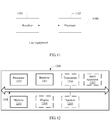
- an embodiment of this application provides user equipment, including:
- the receiver 1101 obtains the preamble sequence information sent by the access network device, where the preamble sequence information includes the message used to indicate a quantity of preamble sequences, and the processor 1102 performs random access based on the preamble sequence information.
- the user equipment can randomly access a communications network system successfully, reducing a probability of a random access failure.
- the preamble sequence information further includes space level information, and the space level information is used to indicate a quantity of code domain space layers of preamble sequence space.
- the receiver 1101 is specifically configured to: perform blind detection on a PBCH to obtain a MIB, and determine the space level information based on a CRC code removed during the blind detection.
- the preamble sequence information further includes the space level information, and a correspondence that is between space level information and a CRC design rule and that is known by both the user equipment and the access network device is preset, so that a different CRC code is generated based on different space level information to perform check processing on the MIB.
- the receiver 1101 can obtain the accurate space level information based on the removed CRC code. Therefore, the space level information can be transmitted by using a check process, reducing signaling overheads.
- the preamble sequence information further includes space level information, and the space level information is used to indicate a quantity of code domain space layers of preamble sequence space.
- the receiver 1101 is specifically configured to: perform blind detection on a PBCH to obtain a MIB, and determine the space level information based on a decoding sequence used during the blind detection.
- the preamble sequence information further includes the space level information, and a correspondence that is between space level information and a descrambling design rule and that is known by both the user equipment and the access network device is preset, so that a different scrambling code sequence is generated based on different space level information to perform scrambling processing on the MIB.
- the receiver 1101 can obtain the accurate space level information based on the used decoding sequence. Therefore, the space level information can be transmitted by using a descrambling processing process, reducing signaling overheads.
- the preamble sequence information includes space level information, and the space level information is used to indicate a quantity of code domain space layers of preamble sequence space.
- the receiver 1101 is configured to receive, over a PDSCH, a SIB sent by the access network device, where the SIB carries the space level information in the preamble sequence information.
- the receiver 1101 is further configured to parse the SIB to obtain the space level information.
- system information before the user equipment performs RA, in a system message sent by the access network device to the user equipment, system information includes a MIB and a plurality of SIBs.
- SIBs There are a plurality of types of SIBs, and in the prior art, time-frequency resource information is indicated by using a field in a SIB 2. Therefore, the space level information in the preamble sequence information can still be indicated by using the field in the SIB 2.
- the SIB 2 carries the preamble sequence information, and the receiver 1101 receives, over the PDSCH, the SIB 2 sent by the access network device, and obtains the space level information and the time-frequency resource information by parsing the SIB 2. Therefore, the preamble sequence information can be obtained conveniently and quickly.
- the preamble sequence information further includes time-frequency resource information, and the time-frequency resource information is used to indicate a time-frequency resource occupied by the preamble sequence space on a PRACH.
- the receiver 1101 is configured to receive, over the PDSCH, the SIB sent by the access network device, where the SIB carries the time-frequency resource information in the preamble sequence information.
- the receiver 1101 is further configured to parse the SIB to obtain the time-frequency resource information.
- system information before the user equipment performs RA, in a system message sent by the access network device to the user equipment, system information includes a MIB and a plurality of SIBs.
- SIBs There are a plurality of types of SIBs, and in the prior art, time-frequency resource information is indicated by using a field in a SIB 2. Therefore, to avoid additional workload, the time-frequency resource information is still carried in the SIB 2, and the receiver 1101 receives, over the PDSCH, the SIB 2 sent by the access network device, and can obtain the time-frequency resource information through parsing.
- user equipment 1200 may include a processor 1202, a receiver 1201, a memory 1203, a display 1204, a speaker 1205, a transmitter 1206, an input apparatus 1207, and the like.
- the memory 1203 may be configured to store code to be executed by the processor 1202, and the like.
- the bus system 1204 not only includes a data bus, but also includes a power bus, a control bus, and a status signal bus.
- the access network device 1100 shown in FIG. 11 or the access network device 1200 shown in FIG. 12 can implement processes implemented by the user equipment in the foregoing preamble sequence space configuration method embodiments. To avoid repetition, details are not described herein again.
- sequence numbers of the foregoing processes do not mean execution sequences in various embodiments of this application.
- the execution sequences of the processes should be determined according to functions and internal logic of the processes, and should not be construed as any limitation to the implementation processes of the embodiments of this application.
Landscapes
- Engineering & Computer Science (AREA)
- Computer Networks & Wireless Communication (AREA)
- Signal Processing (AREA)
- Computer Security & Cryptography (AREA)
- Quality & Reliability (AREA)
- Mobile Radio Communication Systems (AREA)
Applications Claiming Priority (2)
| Application Number | Priority Date | Filing Date | Title |
|---|---|---|---|
| CN201610594750.5A CN107659963B (zh) | 2016-07-26 | 2016-07-26 | 前导序列的配置方法、用户设备及接入网设备 |
| PCT/CN2017/090323 WO2018019071A1 (fr) | 2016-07-26 | 2017-06-27 | Procédé de configuration de séquences de préambule, équipement d'utilisateur et équipement de réseau d'accès |
Publications (3)
| Publication Number | Publication Date |
|---|---|
| EP3481094A1 true EP3481094A1 (fr) | 2019-05-08 |
| EP3481094A4 EP3481094A4 (fr) | 2019-07-03 |
| EP3481094B1 EP3481094B1 (fr) | 2021-04-28 |
Family
ID=61017520
Family Applications (1)
| Application Number | Title | Priority Date | Filing Date |
|---|---|---|---|
| EP17833374.6A Active EP3481094B1 (fr) | 2016-07-26 | 2017-06-27 | Procédé de configuration de séquences de préambule, équipement d'utilisateur et équipement de réseau d'accès |
Country Status (4)
| Country | Link |
|---|---|
| US (1) | US10873974B2 (fr) |
| EP (1) | EP3481094B1 (fr) |
| CN (1) | CN107659963B (fr) |
| WO (1) | WO2018019071A1 (fr) |
Families Citing this family (5)
| Publication number | Priority date | Publication date | Assignee | Title |
|---|---|---|---|---|
| KR20180035638A (ko) * | 2016-09-29 | 2018-04-06 | 삼성전자주식회사 | RRC Inactive 및 active 상태에서 data 전송 결정 및 방법 및 장치 |
| CN108633013B (zh) * | 2017-03-22 | 2019-09-17 | 电信科学技术研究院 | 一种收发物理随机接入信道前导码序列的方法及装置 |
| CN115804230A (zh) * | 2020-09-22 | 2023-03-14 | 华为技术有限公司 | 信息发送方法、装置及系统 |
| US11683841B2 (en) | 2020-11-24 | 2023-06-20 | Sprint Spectrum Llc | Dynamic control of PRACH format based on RRC-connection-establishment-failure history |
| CN118474907B (zh) * | 2024-07-15 | 2024-11-05 | 中国电信股份有限公司 | 接入方法、装置、设备、可读存储介质和程序产品 |
Family Cites Families (20)
| Publication number | Priority date | Publication date | Assignee | Title |
|---|---|---|---|---|
| US20100103911A1 (en) * | 2008-10-28 | 2010-04-29 | Samsung Electronics, Co., Ltd. | Apparatus and method providing an IEEE-802.16 self-organizing network |
| KR101151134B1 (ko) * | 2008-12-03 | 2012-06-01 | 한국전자통신연구원 | 넓은 셀 영역을 가지는 무선통신 시스템을 위한 계층적 임의 접속 방법 |
| KR101962245B1 (ko) * | 2011-09-23 | 2019-03-27 | 삼성전자 주식회사 | 광대역 단말과 협대역 단말을 함께 운용하는 무선통신시스템에서 협대역 단말의 시스템 접속 방법 및 장치 |
| WO2013089020A1 (fr) * | 2011-12-12 | 2013-06-20 | シャープ株式会社 | Système de communication, dispositif de station mobile, dispositif de station de base, procédé de communication et circuit intégré |
| US8761109B2 (en) * | 2012-08-03 | 2014-06-24 | Motorola Mobility Llc | Method and apparatus for receiving a control channel |
| CN103716895B (zh) * | 2012-09-29 | 2020-11-17 | 中兴通讯股份有限公司 | 物理随机接入信道的资源确定方法及装置 |
| US9468022B2 (en) * | 2012-12-26 | 2016-10-11 | Samsung Electronics Co., Ltd. | Method and apparatus for random access in communication system with large number of antennas |
| US11283574B2 (en) * | 2013-04-03 | 2022-03-22 | Interdigital Patent Holdings, Inc. | EPDCCH common search space design for one or more carrier types |
| CN104348579B (zh) * | 2013-08-05 | 2019-11-19 | 中兴通讯股份有限公司 | 下行信道时域位置确定方法和装置 |
| WO2015088264A1 (fr) * | 2013-12-11 | 2015-06-18 | 엘지전자 주식회사 | Procédé permettant à un terminal d'exécuter une procédure d'accès aléatoire sur un réseau dans lequel plusieurs systèmes de communication interagissent, et appareil associé |
| EP3657882B1 (fr) * | 2014-06-09 | 2023-04-26 | Commscope Technologies LLC | Réseaux d'accès radio utilisant plusieurs unités à distance |
| WO2015190961A1 (fr) * | 2014-06-13 | 2015-12-17 | Telefonaktiebolaget L M Ericsson (Publ) | Ensembles de préambules adaptés à des conditions de transmission en liaison montante |
| EP3225070A1 (fr) * | 2014-11-26 | 2017-10-04 | IDAC Holdings, Inc. | Accès initial dans des systèmes sans fil haute fréquence |
| CN104469966B (zh) * | 2014-12-08 | 2019-03-01 | 哈尔滨工业大学深圳研究生院 | Td-lte虚拟专网基于动态优先级的随机接入方法及系统 |
| EP3241321B1 (fr) * | 2014-12-29 | 2019-10-23 | Telefonaktiebolaget LM Ericsson (publ) | Procédés et dispositifs permettant de générer et de détecter des préambules d'accès aléatoire |
| EP4318996A3 (fr) * | 2015-07-30 | 2024-02-21 | Apple Inc. | Conception de canal de diffusion physique |
| EP3358894B1 (fr) * | 2015-10-29 | 2023-04-05 | Huawei Technologies Co., Ltd. | Équipement utilisateur impliqué dans une radiorecherche |
| US11102024B2 (en) * | 2016-03-30 | 2021-08-24 | Qualcomm Incorporated | Standalone multicast broadcast single frequency network cell acquisition |
| US10615862B2 (en) * | 2016-04-13 | 2020-04-07 | Qualcomm Incorporated | System and method for beam adjustment request |
| US11246181B2 (en) * | 2016-07-20 | 2022-02-08 | Nec Corporation | Methods and apparatuses for system information transmission and system information reception in a wireless communication system |
-
2016
- 2016-07-26 CN CN201610594750.5A patent/CN107659963B/zh active Active
-
2017
- 2017-06-27 WO PCT/CN2017/090323 patent/WO2018019071A1/fr not_active Ceased
- 2017-06-27 EP EP17833374.6A patent/EP3481094B1/fr active Active
-
2019
- 2019-01-25 US US16/258,097 patent/US10873974B2/en active Active
Also Published As
| Publication number | Publication date |
|---|---|
| US20190159262A1 (en) | 2019-05-23 |
| WO2018019071A1 (fr) | 2018-02-01 |
| CN107659963B (zh) | 2020-12-04 |
| CN107659963A (zh) | 2018-02-02 |
| EP3481094B1 (fr) | 2021-04-28 |
| US10873974B2 (en) | 2020-12-22 |
| EP3481094A4 (fr) | 2019-07-03 |
Similar Documents
| Publication | Publication Date | Title |
|---|---|---|
| US20230262767A1 (en) | Method and apparatus for performing random access | |
| US20240224344A1 (en) | Two-Step Contention-Based Random Access Over Radio Resources in LAA | |
| US20240215015A1 (en) | Method and Apparatus for PUSCH Repetition in a Random Access Procedure | |
| EP3787210B1 (fr) | Procédé de transmission asynchrone en liaison montante, dispositif et support d'informations | |
| RU2735689C1 (ru) | Автономная передача управляющей информации восходящей линии связи | |
| US10616872B2 (en) | Method and apparatus for transmitting data in wireless communication system | |
| CN110583091B (zh) | 执行随机接入过程的方法及其装置 | |
| US10873974B2 (en) | Preamble sequence configuration method, user equipment, and access network device | |
| CN105264999B (zh) | 随机接入中预先确定资源的方法、用户设备和基站 | |
| US20250175312A1 (en) | Transmission methods and apparatus, and storage medium | |
| EP4035488B1 (fr) | Procédé et appareil destinés à une procédure d'accès aléatoire | |
| CN113767702B (zh) | 随机接入中的资源指示 | |
| US20220272771A1 (en) | Information Indication Method and Apparatus | |
| US11184929B2 (en) | Device and method of handling channel access in unlicensed band | |
| US12495398B2 (en) | Communications network and methods with enhanced duplex | |
| US12598589B2 (en) | Access and transmission method for avoiding preamble collision in massive access technology, and network-side device, terminal and storage medium | |
| CN118020274A (zh) | 用于发起随机接入过程的方法 | |
| CN106304391B (zh) | 一种prach接入控制方法、接入方法及装置 | |
| KR20250160987A (ko) | 비지상 네트워크(ntn)에서의 커버리지 향상을 위한 시스템 및 방법 | |
| CN101267250A (zh) | Lte系统tdd模式中随机接入信号的发送方法和装置 |
Legal Events
| Date | Code | Title | Description |
|---|---|---|---|
| STAA | Information on the status of an ep patent application or granted ep patent |
Free format text: STATUS: THE INTERNATIONAL PUBLICATION HAS BEEN MADE |
|
| PUAI | Public reference made under article 153(3) epc to a published international application that has entered the european phase |
Free format text: ORIGINAL CODE: 0009012 |
|
| STAA | Information on the status of an ep patent application or granted ep patent |
Free format text: STATUS: REQUEST FOR EXAMINATION WAS MADE |
|
| 17P | Request for examination filed |
Effective date: 20190130 |
|
| AK | Designated contracting states |
Kind code of ref document: A1 Designated state(s): AL AT BE BG CH CY CZ DE DK EE ES FI FR GB GR HR HU IE IS IT LI LT LU LV MC MK MT NL NO PL PT RO RS SE SI SK SM TR |
|
| AX | Request for extension of the european patent |
Extension state: BA ME |
|
| A4 | Supplementary search report drawn up and despatched |
Effective date: 20190531 |
|
| RIC1 | Information provided on ipc code assigned before grant |
Ipc: H04L 5/00 20060101ALN20190524BHEP Ipc: H04W 74/00 20090101AFI20190524BHEP Ipc: H04W 74/08 20090101ALN20190524BHEP |
|
| DAV | Request for validation of the european patent (deleted) | ||
| DAX | Request for extension of the european patent (deleted) | ||
| STAA | Information on the status of an ep patent application or granted ep patent |
Free format text: STATUS: EXAMINATION IS IN PROGRESS |
|
| 17Q | First examination report despatched |
Effective date: 20200507 |
|
| REG | Reference to a national code |
Ref country code: DE Ref legal event code: R079 Ref document number: 602017037781 Country of ref document: DE Free format text: PREVIOUS MAIN CLASS: H04W0028020000 Ipc: H04W0074000000 |
|
| RIC1 | Information provided on ipc code assigned before grant |
Ipc: H04W 74/00 20090101AFI20201030BHEP Ipc: H04W 74/08 20090101ALN20201030BHEP Ipc: H04L 5/00 20060101ALN20201030BHEP |
|
| GRAP | Despatch of communication of intention to grant a patent |
Free format text: ORIGINAL CODE: EPIDOSNIGR1 |
|
| STAA | Information on the status of an ep patent application or granted ep patent |
Free format text: STATUS: GRANT OF PATENT IS INTENDED |
|
| INTG | Intention to grant announced |
Effective date: 20201214 |
|
| GRAS | Grant fee paid |
Free format text: ORIGINAL CODE: EPIDOSNIGR3 |
|
| GRAA | (expected) grant |
Free format text: ORIGINAL CODE: 0009210 |
|
| STAA | Information on the status of an ep patent application or granted ep patent |
Free format text: STATUS: THE PATENT HAS BEEN GRANTED |
|
| AK | Designated contracting states |
Kind code of ref document: B1 Designated state(s): AL AT BE BG CH CY CZ DE DK EE ES FI FR GB GR HR HU IE IS IT LI LT LU LV MC MK MT NL NO PL PT RO RS SE SI SK SM TR |
|
| REG | Reference to a national code |
Ref country code: GB Ref legal event code: FG4D |
|
| REG | Reference to a national code |
Ref country code: CH Ref legal event code: EP |
|
| REG | Reference to a national code |
Ref country code: AT Ref legal event code: REF Ref document number: 1388586 Country of ref document: AT Kind code of ref document: T Effective date: 20210515 |
|
| REG | Reference to a national code |
Ref country code: DE Ref legal event code: R096 Ref document number: 602017037781 Country of ref document: DE |
|
| REG | Reference to a national code |
Ref country code: IE Ref legal event code: FG4D |
|
| REG | Reference to a national code |
Ref country code: LT Ref legal event code: MG9D |
|
| REG | Reference to a national code |
Ref country code: AT Ref legal event code: MK05 Ref document number: 1388586 Country of ref document: AT Kind code of ref document: T Effective date: 20210428 |
|
| PG25 | Lapsed in a contracting state [announced via postgrant information from national office to epo] |
Ref country code: LT Free format text: LAPSE BECAUSE OF FAILURE TO SUBMIT A TRANSLATION OF THE DESCRIPTION OR TO PAY THE FEE WITHIN THE PRESCRIBED TIME-LIMIT Effective date: 20210428 Ref country code: FI Free format text: LAPSE BECAUSE OF FAILURE TO SUBMIT A TRANSLATION OF THE DESCRIPTION OR TO PAY THE FEE WITHIN THE PRESCRIBED TIME-LIMIT Effective date: 20210428 Ref country code: HR Free format text: LAPSE BECAUSE OF FAILURE TO SUBMIT A TRANSLATION OF THE DESCRIPTION OR TO PAY THE FEE WITHIN THE PRESCRIBED TIME-LIMIT Effective date: 20210428 Ref country code: BG Free format text: LAPSE BECAUSE OF FAILURE TO SUBMIT A TRANSLATION OF THE DESCRIPTION OR TO PAY THE FEE WITHIN THE PRESCRIBED TIME-LIMIT Effective date: 20210728 Ref country code: AT Free format text: LAPSE BECAUSE OF FAILURE TO SUBMIT A TRANSLATION OF THE DESCRIPTION OR TO PAY THE FEE WITHIN THE PRESCRIBED TIME-LIMIT Effective date: 20210428 Ref country code: NL Free format text: LAPSE BECAUSE OF FAILURE TO SUBMIT A TRANSLATION OF THE DESCRIPTION OR TO PAY THE FEE WITHIN THE PRESCRIBED TIME-LIMIT Effective date: 20210428 |
|
| PG25 | Lapsed in a contracting state [announced via postgrant information from national office to epo] |
Ref country code: IS Free format text: LAPSE BECAUSE OF FAILURE TO SUBMIT A TRANSLATION OF THE DESCRIPTION OR TO PAY THE FEE WITHIN THE PRESCRIBED TIME-LIMIT Effective date: 20210828 Ref country code: GR Free format text: LAPSE BECAUSE OF FAILURE TO SUBMIT A TRANSLATION OF THE DESCRIPTION OR TO PAY THE FEE WITHIN THE PRESCRIBED TIME-LIMIT Effective date: 20210729 Ref country code: LV Free format text: LAPSE BECAUSE OF FAILURE TO SUBMIT A TRANSLATION OF THE DESCRIPTION OR TO PAY THE FEE WITHIN THE PRESCRIBED TIME-LIMIT Effective date: 20210428 Ref country code: NO Free format text: LAPSE BECAUSE OF FAILURE TO SUBMIT A TRANSLATION OF THE DESCRIPTION OR TO PAY THE FEE WITHIN THE PRESCRIBED TIME-LIMIT Effective date: 20210728 Ref country code: PL Free format text: LAPSE BECAUSE OF FAILURE TO SUBMIT A TRANSLATION OF THE DESCRIPTION OR TO PAY THE FEE WITHIN THE PRESCRIBED TIME-LIMIT Effective date: 20210428 Ref country code: PT Free format text: LAPSE BECAUSE OF FAILURE TO SUBMIT A TRANSLATION OF THE DESCRIPTION OR TO PAY THE FEE WITHIN THE PRESCRIBED TIME-LIMIT Effective date: 20210830 Ref country code: SE Free format text: LAPSE BECAUSE OF FAILURE TO SUBMIT A TRANSLATION OF THE DESCRIPTION OR TO PAY THE FEE WITHIN THE PRESCRIBED TIME-LIMIT Effective date: 20210428 Ref country code: RS Free format text: LAPSE BECAUSE OF FAILURE TO SUBMIT A TRANSLATION OF THE DESCRIPTION OR TO PAY THE FEE WITHIN THE PRESCRIBED TIME-LIMIT Effective date: 20210428 |
|
| REG | Reference to a national code |
Ref country code: NL Ref legal event code: MP Effective date: 20210428 |
|
| PG25 | Lapsed in a contracting state [announced via postgrant information from national office to epo] |
Ref country code: MC Free format text: LAPSE BECAUSE OF FAILURE TO SUBMIT A TRANSLATION OF THE DESCRIPTION OR TO PAY THE FEE WITHIN THE PRESCRIBED TIME-LIMIT Effective date: 20210428 Ref country code: DK Free format text: LAPSE BECAUSE OF FAILURE TO SUBMIT A TRANSLATION OF THE DESCRIPTION OR TO PAY THE FEE WITHIN THE PRESCRIBED TIME-LIMIT Effective date: 20210428 Ref country code: EE Free format text: LAPSE BECAUSE OF FAILURE TO SUBMIT A TRANSLATION OF THE DESCRIPTION OR TO PAY THE FEE WITHIN THE PRESCRIBED TIME-LIMIT Effective date: 20210428 Ref country code: CZ Free format text: LAPSE BECAUSE OF FAILURE TO SUBMIT A TRANSLATION OF THE DESCRIPTION OR TO PAY THE FEE WITHIN THE PRESCRIBED TIME-LIMIT Effective date: 20210428 Ref country code: RO Free format text: LAPSE BECAUSE OF FAILURE TO SUBMIT A TRANSLATION OF THE DESCRIPTION OR TO PAY THE FEE WITHIN THE PRESCRIBED TIME-LIMIT Effective date: 20210428 Ref country code: ES Free format text: LAPSE BECAUSE OF FAILURE TO SUBMIT A TRANSLATION OF THE DESCRIPTION OR TO PAY THE FEE WITHIN THE PRESCRIBED TIME-LIMIT Effective date: 20210428 Ref country code: SK Free format text: LAPSE BECAUSE OF FAILURE TO SUBMIT A TRANSLATION OF THE DESCRIPTION OR TO PAY THE FEE WITHIN THE PRESCRIBED TIME-LIMIT Effective date: 20210428 Ref country code: SM Free format text: LAPSE BECAUSE OF FAILURE TO SUBMIT A TRANSLATION OF THE DESCRIPTION OR TO PAY THE FEE WITHIN THE PRESCRIBED TIME-LIMIT Effective date: 20210428 |
|
| REG | Reference to a national code |
Ref country code: DE Ref legal event code: R097 Ref document number: 602017037781 Country of ref document: DE Ref country code: CH Ref legal event code: PL |
|
| PLBE | No opposition filed within time limit |
Free format text: ORIGINAL CODE: 0009261 |
|
| STAA | Information on the status of an ep patent application or granted ep patent |
Free format text: STATUS: NO OPPOSITION FILED WITHIN TIME LIMIT |
|
| REG | Reference to a national code |
Ref country code: BE Ref legal event code: MM Effective date: 20210630 |
|
| PG25 | Lapsed in a contracting state [announced via postgrant information from national office to epo] |
Ref country code: LU Free format text: LAPSE BECAUSE OF NON-PAYMENT OF DUE FEES Effective date: 20210627 |
|
| 26N | No opposition filed |
Effective date: 20220131 |
|
| PG25 | Lapsed in a contracting state [announced via postgrant information from national office to epo] |
Ref country code: LI Free format text: LAPSE BECAUSE OF NON-PAYMENT OF DUE FEES Effective date: 20210630 Ref country code: IE Free format text: LAPSE BECAUSE OF NON-PAYMENT OF DUE FEES Effective date: 20210627 Ref country code: CH Free format text: LAPSE BECAUSE OF NON-PAYMENT OF DUE FEES Effective date: 20210630 |
|
| PG25 | Lapsed in a contracting state [announced via postgrant information from national office to epo] |
Ref country code: IS Free format text: LAPSE BECAUSE OF FAILURE TO SUBMIT A TRANSLATION OF THE DESCRIPTION OR TO PAY THE FEE WITHIN THE PRESCRIBED TIME-LIMIT Effective date: 20210828 Ref country code: FR Free format text: LAPSE BECAUSE OF NON-PAYMENT OF DUE FEES Effective date: 20210628 Ref country code: AL Free format text: LAPSE BECAUSE OF FAILURE TO SUBMIT A TRANSLATION OF THE DESCRIPTION OR TO PAY THE FEE WITHIN THE PRESCRIBED TIME-LIMIT Effective date: 20210428 |
|
| PG25 | Lapsed in a contracting state [announced via postgrant information from national office to epo] |
Ref country code: IT Free format text: LAPSE BECAUSE OF FAILURE TO SUBMIT A TRANSLATION OF THE DESCRIPTION OR TO PAY THE FEE WITHIN THE PRESCRIBED TIME-LIMIT Effective date: 20210428 Ref country code: BE Free format text: LAPSE BECAUSE OF NON-PAYMENT OF DUE FEES Effective date: 20210630 |
|
| PG25 | Lapsed in a contracting state [announced via postgrant information from national office to epo] |
Ref country code: CY Free format text: LAPSE BECAUSE OF FAILURE TO SUBMIT A TRANSLATION OF THE DESCRIPTION OR TO PAY THE FEE WITHIN THE PRESCRIBED TIME-LIMIT Effective date: 20210428 |
|
| PG25 | Lapsed in a contracting state [announced via postgrant information from national office to epo] |
Ref country code: HU Free format text: LAPSE BECAUSE OF FAILURE TO SUBMIT A TRANSLATION OF THE DESCRIPTION OR TO PAY THE FEE WITHIN THE PRESCRIBED TIME-LIMIT; INVALID AB INITIO Effective date: 20170627 |
|
| PG25 | Lapsed in a contracting state [announced via postgrant information from national office to epo] |
Ref country code: MK Free format text: LAPSE BECAUSE OF FAILURE TO SUBMIT A TRANSLATION OF THE DESCRIPTION OR TO PAY THE FEE WITHIN THE PRESCRIBED TIME-LIMIT Effective date: 20210428 |
|
| PG25 | Lapsed in a contracting state [announced via postgrant information from national office to epo] |
Ref country code: TR Free format text: LAPSE BECAUSE OF FAILURE TO SUBMIT A TRANSLATION OF THE DESCRIPTION OR TO PAY THE FEE WITHIN THE PRESCRIBED TIME-LIMIT Effective date: 20210428 |
|
| PG25 | Lapsed in a contracting state [announced via postgrant information from national office to epo] |
Ref country code: MT Free format text: LAPSE BECAUSE OF FAILURE TO SUBMIT A TRANSLATION OF THE DESCRIPTION OR TO PAY THE FEE WITHIN THE PRESCRIBED TIME-LIMIT Effective date: 20210428 |
|
| PGFP | Annual fee paid to national office [announced via postgrant information from national office to epo] |
Ref country code: DE Payment date: 20250429 Year of fee payment: 9 |
|
| PGFP | Annual fee paid to national office [announced via postgrant information from national office to epo] |
Ref country code: GB Payment date: 20250508 Year of fee payment: 9 |