EP3483105A1 - Système de sécurité de zone à accès restreint - Google Patents
Système de sécurité de zone à accès restreint Download PDFInfo
- Publication number
- EP3483105A1 EP3483105A1 EP18194608.8A EP18194608A EP3483105A1 EP 3483105 A1 EP3483105 A1 EP 3483105A1 EP 18194608 A EP18194608 A EP 18194608A EP 3483105 A1 EP3483105 A1 EP 3483105A1
- Authority
- EP
- European Patent Office
- Prior art keywords
- transmitter
- receiver
- safety system
- restricted access
- elevator
- Prior art date
- Legal status (The legal status is an assumption and is not a legal conclusion. Google has not performed a legal analysis and makes no representation as to the accuracy of the status listed.)
- Withdrawn
Links
- 238000000034 method Methods 0.000 claims description 17
- 230000005540 biological transmission Effects 0.000 description 6
- 238000005516 engineering process Methods 0.000 description 3
- 238000001514 detection method Methods 0.000 description 2
- 238000010586 diagram Methods 0.000 description 2
- 230000000694 effects Effects 0.000 description 2
- 230000008569 process Effects 0.000 description 2
- 230000008439 repair process Effects 0.000 description 2
- 230000003213 activating effect Effects 0.000 description 1
- 238000004891 communication Methods 0.000 description 1
- 230000008878 coupling Effects 0.000 description 1
- 238000010168 coupling process Methods 0.000 description 1
- 238000005859 coupling reaction Methods 0.000 description 1
- 238000005259 measurement Methods 0.000 description 1
- 238000012986 modification Methods 0.000 description 1
- 230000004048 modification Effects 0.000 description 1
- 238000012544 monitoring process Methods 0.000 description 1
Images
Classifications
-
- B—PERFORMING OPERATIONS; TRANSPORTING
- B66—HOISTING; LIFTING; HAULING
- B66B—ELEVATORS; ESCALATORS OR MOVING WALKWAYS
- B66B5/00—Applications of checking, fault-correcting, or safety devices in elevators
- B66B5/0043—Devices enhancing safety during maintenance
- B66B5/005—Safety of maintenance personnel
-
- B—PERFORMING OPERATIONS; TRANSPORTING
- B66—HOISTING; LIFTING; HAULING
- B66B—ELEVATORS; ESCALATORS OR MOVING WALKWAYS
- B66B1/00—Control systems of elevators in general
- B66B1/24—Control systems with regulation, i.e. with retroactive action, for influencing travelling speed, acceleration, or deceleration
- B66B1/28—Control systems with regulation, i.e. with retroactive action, for influencing travelling speed, acceleration, or deceleration electrical
-
- B—PERFORMING OPERATIONS; TRANSPORTING
- B66—HOISTING; LIFTING; HAULING
- B66B—ELEVATORS; ESCALATORS OR MOVING WALKWAYS
- B66B1/00—Control systems of elevators in general
- B66B1/34—Details, e.g. call counting devices, data transmission from car to control system, devices giving information to the control system
- B66B1/3415—Control system configuration and the data transmission or communication within the control system
- B66B1/3446—Data transmission or communication within the control system
- B66B1/3461—Data transmission or communication within the control system between the elevator control system and remote or mobile stations
-
- B—PERFORMING OPERATIONS; TRANSPORTING
- B66—HOISTING; LIFTING; HAULING
- B66B—ELEVATORS; ESCALATORS OR MOVING WALKWAYS
- B66B3/00—Applications of devices for indicating or signalling operating conditions of elevators
- B66B3/002—Indicators
-
- B—PERFORMING OPERATIONS; TRANSPORTING
- B66—HOISTING; LIFTING; HAULING
- B66B—ELEVATORS; ESCALATORS OR MOVING WALKWAYS
- B66B5/00—Applications of checking, fault-correcting, or safety devices in elevators
- B66B5/0043—Devices enhancing safety during maintenance
- B66B5/005—Safety of maintenance personnel
- B66B5/0056—Safety of maintenance personnel by preventing crushing
Definitions
- Exemplary embodiments pertain to the art of safety systems.
- the present invention relates to a system that contains safety features to protect workers located in a restricted access area.
- An elevator system typically includes an elevator car located in a hoistway.
- the elevator car is moved up and down the hoistway through a variety of different means, including hydraulics, cables, electric motors, and the like. Occasionally, workers may repair or maintain portions of the elevator hoistway, either above or below the elevator car.
- a safety system can comprise at least one receiver, each located in a restricted access area; a safe operation monitor coupled to the at least one receiver configured to detect signals from the at least one receiver; wherein: the at least one receiver is configured to receive signals from a transmitter, the transmitter being used by a worker within the restricted access area; the safe operation monitor is configured to protect worker within the restricted access area, based on the receipt of a signal from the transmitter.
- further embodiments may include wherein the safety system is coupled to an elevator system; the restricted access area is located in an elevator hoistway; and protecting the restricted access area comprises ceasing operation of an elevator car within the elevator system.
- each of the at least one receiver has a unique identifier; and the safe operation monitor uses the unique identifier to determine a location of the transmitter.
- further embodiments may include wherein safe operation monitor is further configured to cause an alert on the transmitter.
- each of the at least one receiver is configured to receive radio frequency identification (RFID) signals from a transmitter.
- RFID radio frequency identification
- each of the one or more receivers is configured to receive a panic button signal from a transmitter; and the safe operation monitor is configured to cease the operation of the elevator, based on the receipt of the panic button signal from the transmitter.
- each of the at least one receiver is configured to receive short-range signals from a transmitter that indicates the presence of the transmitter in the vicinity of one of the receivers.
- further embodiments may include wherein the restricted access area is on an elevator car.
- further embodiments may include wherein the restricted access area is at a bottom of an elevator hoistway.
- further embodiments may include wherein the alert on the transmitter is configured to continue until a hardware button in the restricted access area is activated.
- further embodiments may include at least one mixer coupled to the at least one receiver, wherein the at least mixer is configured to combine a first unique identifier associated with the receiver with a second unique identifier associated with a transmitter, upon the receipt of the signal from the transmitter, to identify a location of the transmitter.
- further embodiments may include wherein the safe operation monitor is further configured to resume operation of the elevator upon a removal of the transmitter from the restricted area.
- a method can comprise receiving a signal from a transmitter indicative of the transmitter being in a restricted access area; determining a location of the transmitter; using the location to protect the restricted access area at the location of the transmitter; and causing an alert on the transmitter.
- determining the location of the transmitter comprises using a unique identifier associated with a receiver.
- further embodiments may include wherein receiving the signal comprises receiving a radio frequency identification (RFID) signal from a transmitter.
- RFID radio frequency identification
- further embodiments may include wherein receiving comprises receiving a panic button signal from a transmitter.
- further embodiments may include wherein receiving comprises receive a short-range signal from a transmitter that indicates the presence of the transmitter in the vicinity of one of the receivers.
- further embodiments may include wherein the restricted access area is on an elevator car.
- further embodiments may include wherein the restricted access area is at a bottom of an elevator hoistway.
- further embodiments may include continuing the alert on the transmitter is configured until a hardware button in the restricted access area is activated.
- further embodiments may include wherein protecting the restricted access area comprises ceasing operation of an elevator.
- a transmitter worn or used by the worker is used in conjunction with a variety of different gear, including a receiver, mixer, collector, and safe operation monitor.
- a signal from the transmitter is sensed in a particular location, a variety of different safety features can be activated to protect the worker.
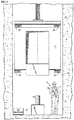
- an elevator worker 9 is wearing a uniform 10 having a portable transmitter 11, described in greater detail below.
- the portable transmitter 11 may be worn directly by the worker 9.
- the worker 9 is standing next to an elevator car buffer 14, in the pit 15 of an elevator hoistway 16, within which an elevator car 17 travels vertically to transport to passengers in a vertical direction.
- a controller 20 may be disposed within the pit 15, or elsewhere in the building 22, such as in a machine room at the top of the elevator hoistway 16, in any conventional fashion.
- at least one of sensing device 25, 26 is disposed at the top and/or the bottom of the elevator car 17.
- the transmitter 11 may comprise a transmitter powered by a battery or any other conventional portable powered device.
- sensors 25, 26 need only be receivers capable of receiving a signal transmitted from the transmitter 11 when transmitter 11 is in the vicinity of sensors 25, 26.
- elevator worker 9 when elevator worker 9 proceeds to work in the elevator hoistway or on top of the elevator, elevator worker 9 activates a switch (not shown) that deactivates elevator car 17, thereby preventing the elevator car 17 from moving unexpectedly. However, on rare occasions, the elevator worker 9 may forget to activate the switch when working in the elevator hoistway 16 or on elevator car 17.
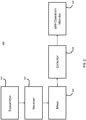
- FIG. 2 is a block diagram illustrating components of one or more embodiments.
- a worker has a transmitter 202.
- Transmitter 202 can be utilized in one of a variety of different manners.
- transmitter 202 can utilize radio-frequency identification (RFID) technology to perform transmissions.
- RFID radio-frequency identification
- Other technologies can be used, such as Bluetooth, WiFi, or any other known wireless communication technology.
- Transmitter 202 can be carried by workers. It can be worn as a lanyard or a wristband.
- transmitter 202 can be incorporated into an identification or worn as or behind a badge, or on or as part of a hardhat.
- Transmitter 202 can be uniquely encoded such that, if multiple transmitters are used, it is known which transmitter is making a transmission that is being received.
- transmitter 202 can be coupled to a manually operated switch.
- a button on a key card can be used.
- the button can be used as a "panic” button, to be used in an emergency. The use of such a button will be explained in greater detail below.
- Receiver 204 was illustrated as sensing device 25 and 26 in FIG. 1 .
- Receiver 204 can be located in any area where a worker would likely be placed, such as at the bottom of an elevator hoistway, on top of an elevator car, or in the area of the motors of the elevator system.
- Receiver 204 can be a range-limited receiver such that only a signal from a transmitter 202 that is closely located is received. In such a manner, only a transmitter that is actually in a dangerous area will be sensed by receiver 204.
- the detection of a transmitter 202 by a receiver 204 can be considered a hoistway access detection (HAD) fault.
- HAD hoistway access detection
- a HAD fault occurs when a hoistway door is detected to be open on a floor without a corresponding opening of a door of an elevator car. In those situations, the elevator car can be shut down in the presence of the HAD fault.
- Mixer 206 is coupled to each receiver 204. It should be understood that multiple receivers are present in a typical elevator system. For example, there can be one or more receivers at the top of each elevator car. There can be one or more receivers at the bottom of each elevator car. There can be one or more receivers at the bottom of the elevator hoistway, each located in an area where a worker will likely be placed. In a manner similar to that described above with respect to the transmitter 202, each receiver 204 can contain a unique identifier. Thus, when an alert signal is generated by receiver 204, mixer 206 can be made aware of which receiver 204 received the signal and which transmitter 202 generated the signal. Mixer 206 can then generate a "mechanic present" alert signal. The signal can be placed at one of a variety of different locations. For example, embodiments used in elevator systems can have the signal placed in the hoistway, in the machine room, or in any location where the signal is likely to be seen or heard by a worker.
- Collector 208 is configured to aggregate signals from mixer 206. In embodiments where there are multiple mixers, collector 208 can used to examine all of the signals from the multiple mixers. Collector 208 might not be present in an elevator system that only contains a single mixer 206. In some embodiments, the functions of collector 208 can be performed by mixer 206.
- Safe operation monitor 210 is a part of the elevator system that ensures the safe operation of the elevators. Safe operation monitor 210 receives signals from a variety of different sources, both those described herein as well as hardware switches located in the elevator hoistway or on the top of each elevator car. Safe operation monitor 210 can thus monitor which elevator cars are being serviced and which are available for use. If a signal is received from collector 208 indicating the presence of a transmitter 202 in a monitored location, a variety of actions can occur. In some embodiments, the safe operation monitor 210 may perform the functions of one or both of the mixer 206 and collector 208. In some embodiments, signals from the receiver 204 may be transmitted directly to the collector 208 or safe operation monitor 210. In some embodiments, signals from the mixer 206 may be transmitted directly to the collector 208 or safe operation monitor 210.
- transmitter 202 can transmit RFID signals and receiver 204 can receive RFID signals.
- Other wireless protocols can be used for transmitter 202 and receiver 204.
- any wireless system can be used that provides proximity sensing of signals generated by transmitter 202 by receiver 204.
- the "panic" button of transmitter 202 can use one of a variety of different protocols also, either the same as the signals described above or as a longer-distance protocol.
- the panic button uses a different transmission protocol, such that signals can be detected from a longer distance. This feature can be useful if, for example, the nearest receiver is out of order. In such a case, the panic button can still protect the worker by preventing the operation of elevator cars within the elevator hoistway.
- Other elements of FIG. 2 can be coupled together via any wireless or wired protocol.
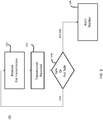
- Method 300 is merely exemplary and is not limited to the embodiments presented herein. Method 300 can be employed in many different embodiments or examples not specifically depicted or described herein. In some embodiments, the procedures, processes, and/or activities of method 300 can be performed in the order presented. In other embodiments, one or more of the procedures, processes, and/or activities of method 300 can be combined or skipped. In one or more embodiments, method 300 is performed by a processor as it is executing instructions.
- Method 300 is from the perspective of safe operation monitor 210. Transmissions are monitored at block 301. At block 302, a transmission is received from collector 208. As mentioned above, in some embodiments, collector 208 might not be present. In such a case, the alert is received from mixer 206. The transmission may indicate that a transmitter is present in a restricted access area. For example, if a transmitter is in proximity of a receiver, an alert can be generated. The alert can be an indication that a worker may be located in a restricted access area.
- a safe condition means that the worker has activated the appropriate safety features located in the elevator hoistway or on the elevator car. For example, traditional safe operation for an elevator worker is to activate a safety switch located in the elevator hoistway or on top of the elevator car on which he is working. If the worker has not activated such a switch, the condition can be considered not safe. In such a situation, the worker can be alerted (block 308). In some embodiments, if the safety switch has not been engaged within a prescribed period of time, regardless of an alert to the worker, the elevator car is passively shut down. In order to re-enable the elevator car, manual intervention by the worked would be needed.
- the alert is an audible signal that reminds the worker to activate the appropriate switch.
- other alerts can be used, such as warning lights that are located in the elevator hoistway or on the elevator car.
- the alert helps to train workers because the presence of the alert encourages the workers to activate the appropriate safety switches. This behavior can become habit for the workers such that they will be more likely to activate the appropriate safety switches before beginning repairs to the elevator system in the future.
- the alert can also serve to warn others of the presence of a worker in the restricted access area.
- the elevator can be considered to be in a safe condition.
- the system continues monitoring for safety signals (block 301).
- the transmitter (such as transmitter 202) thus acts as an additional layer of safety-instead of relying solely on manually-operated switches that are located in the elevator hoistway or on the elevator car, a system using one or more embodiments allows redundancy, to provide a safer environment for workers.
Landscapes
- Engineering & Computer Science (AREA)
- Automation & Control Theory (AREA)
- Computer Networks & Wireless Communication (AREA)
- Maintenance And Inspection Apparatuses For Elevators (AREA)
- Indicating And Signalling Devices For Elevators (AREA)
Applications Claiming Priority (1)
| Application Number | Priority Date | Filing Date | Title |
|---|---|---|---|
| US15/705,358 US20190084796A1 (en) | 2017-09-15 | 2017-09-15 | Restricted access area safety system |
Publications (1)
| Publication Number | Publication Date |
|---|---|
| EP3483105A1 true EP3483105A1 (fr) | 2019-05-15 |
Family
ID=63592643
Family Applications (1)
| Application Number | Title | Priority Date | Filing Date |
|---|---|---|---|
| EP18194608.8A Withdrawn EP3483105A1 (fr) | 2017-09-15 | 2018-09-14 | Système de sécurité de zone à accès restreint |
Country Status (3)
| Country | Link |
|---|---|
| US (1) | US20190084796A1 (fr) |
| EP (1) | EP3483105A1 (fr) |
| CN (1) | CN109502439A (fr) |
Cited By (1)
| Publication number | Priority date | Publication date | Assignee | Title |
|---|---|---|---|---|
| US12157657B2 (en) | 2019-11-28 | 2024-12-03 | Otis Elevator Company | Emergency stop system for elevator |
Families Citing this family (8)
| Publication number | Priority date | Publication date | Assignee | Title |
|---|---|---|---|---|
| CN110234588A (zh) * | 2017-03-21 | 2019-09-13 | 通力股份公司 | 用于控制电梯系统的方法和控制设备 |
| EP3409627B1 (fr) * | 2017-05-29 | 2019-07-03 | KONE Corporation | Procédé de commande d'un éclairage d'ascenseur et ascenseur |
| US10741049B2 (en) * | 2017-09-26 | 2020-08-11 | Otis Elevator Company | Elevator motion alert system |
| US11053095B2 (en) * | 2018-05-02 | 2021-07-06 | Otis Elevator Company | Elevator alert system |
| WO2023126215A1 (fr) * | 2021-12-31 | 2023-07-06 | Inventio Ag | Procédé de fonctionnement d'un ascenseur lors de la maintenance |
| US20240101391A1 (en) * | 2022-09-26 | 2024-03-28 | Otis Elevator Company | Systems and method for detecting a location of a person in a hoistway |
| WO2024069675A1 (fr) * | 2022-09-26 | 2024-04-04 | 三菱電機ビルソリューションズ株式会社 | Système de sécurité |
| JP7779225B2 (ja) * | 2022-10-05 | 2025-12-03 | 三菱電機ビルソリューションズ株式会社 | 釣合い錘および衝突緩和装置 |
Citations (4)
| Publication number | Priority date | Publication date | Assignee | Title |
|---|---|---|---|---|
| US6202797B1 (en) * | 1999-08-26 | 2001-03-20 | Otis Elevator Company | Automatic protection of elevator mechanics |
| US20130153335A1 (en) * | 2011-12-19 | 2013-06-20 | Haulotte Group | Protecting device for a user of an aerial lift and aerial lift comprising such a device |
| US9359171B1 (en) * | 2015-01-20 | 2016-06-07 | Inventio Ag | Safety system for a lift installation and safety helmet as individual component of such a safety system |
| WO2017001005A1 (fr) * | 2015-07-01 | 2017-01-05 | Otis Elevator Company | Système de commande d'ascenseur et système d'ascenseur le comprenant |
Family Cites Families (18)
| Publication number | Priority date | Publication date | Assignee | Title |
|---|---|---|---|---|
| US6630886B2 (en) * | 2001-07-10 | 2003-10-07 | Otis Elevator Company | Top of elevator car inspection station with alarm |
| TW528593B (en) * | 2002-05-17 | 2003-04-21 | Jang-Min Yang | Device for monitoring physiological status and method for using the device |
| AU2003263423A1 (en) * | 2003-09-15 | 2005-04-06 | Otis Elevator Company | Elevator inspection safety devices |
| JP2005132543A (ja) * | 2003-10-29 | 2005-05-26 | Hitachi Building Systems Co Ltd | エレベーターの保守時安全装置 |
| US7954606B2 (en) * | 2005-10-05 | 2011-06-07 | Otis Elevator Company | Elevator system control responsive to hoistway access detection |
| WO2009073001A1 (fr) * | 2007-12-03 | 2009-06-11 | Otis Elevator Company | Détection passive de personnes dans une cage d'ascenseur |
| WO2011076531A1 (fr) * | 2009-12-21 | 2011-06-30 | Inventio Ag | Dispositif de validation de l'accès à la cage d'une installation d'ascenseur |
| EP2765108A1 (fr) * | 2013-02-06 | 2014-08-13 | Kone Corporation | Procédé de fourniture d'accès à un puits dans un ascenseur |
| US9814278B2 (en) * | 2014-10-17 | 2017-11-14 | Avante International Technology, Inc. | Protective headgear including a personnel electronic monitor device |
| EP3012217B8 (fr) * | 2014-10-21 | 2017-08-02 | KONE Corporation | Système de sécurité pour ascenseur |
| US10526168B2 (en) * | 2015-10-22 | 2020-01-07 | Otis Elevator Company | Service alarm device for warning if an elevator safety device is not activated |
| US10567910B2 (en) * | 2015-11-02 | 2020-02-18 | Regents Of The University Of Minnesota | Workzone safety system |
| JP6681176B2 (ja) * | 2015-11-17 | 2020-04-15 | オーチス エレベータ カンパニーOtis Elevator Company | エレベータかごモーションアラートシステム |
| WO2017149336A1 (fr) * | 2016-03-04 | 2017-09-08 | Otis Elevator Company | Mécanisme de déverrouillage de porte d'accostage de système d'ascenseur |
| JP6242959B1 (ja) * | 2016-08-08 | 2017-12-06 | 東芝エレベータ株式会社 | エレベータの安全装置 |
| CN206437731U (zh) * | 2016-12-06 | 2017-08-25 | 宁波永良电梯技术发展有限公司 | 电梯井道监测系统 |
| US10112802B2 (en) * | 2017-01-30 | 2018-10-30 | Otis Elevator Company | Elevator service person collision protection system |
| US10462638B2 (en) * | 2017-06-20 | 2019-10-29 | Otis Elevator Company | Lone worker fall detection |
-
2017
- 2017-09-15 US US15/705,358 patent/US20190084796A1/en not_active Abandoned
-
2018
- 2018-09-14 CN CN201811078907.4A patent/CN109502439A/zh active Pending
- 2018-09-14 EP EP18194608.8A patent/EP3483105A1/fr not_active Withdrawn
Patent Citations (4)
| Publication number | Priority date | Publication date | Assignee | Title |
|---|---|---|---|---|
| US6202797B1 (en) * | 1999-08-26 | 2001-03-20 | Otis Elevator Company | Automatic protection of elevator mechanics |
| US20130153335A1 (en) * | 2011-12-19 | 2013-06-20 | Haulotte Group | Protecting device for a user of an aerial lift and aerial lift comprising such a device |
| US9359171B1 (en) * | 2015-01-20 | 2016-06-07 | Inventio Ag | Safety system for a lift installation and safety helmet as individual component of such a safety system |
| WO2017001005A1 (fr) * | 2015-07-01 | 2017-01-05 | Otis Elevator Company | Système de commande d'ascenseur et système d'ascenseur le comprenant |
Cited By (1)
| Publication number | Priority date | Publication date | Assignee | Title |
|---|---|---|---|---|
| US12157657B2 (en) | 2019-11-28 | 2024-12-03 | Otis Elevator Company | Emergency stop system for elevator |
Also Published As
| Publication number | Publication date |
|---|---|
| CN109502439A (zh) | 2019-03-22 |
| US20190084796A1 (en) | 2019-03-21 |
Similar Documents
| Publication | Publication Date | Title |
|---|---|---|
| US20190084796A1 (en) | Restricted access area safety system | |
| US8952805B2 (en) | Worker's personal alarm device | |
| EP3689517B1 (fr) | Système de sécurité pour des opérations ayant un champ de travail sur un côté opposé d'une barrière à partir d'un dispositif | |
| JP2009165517A (ja) | 安全帯使用状況の監視及び警報システム | |
| JP3964405B2 (ja) | 警報装置 | |
| KR101709098B1 (ko) | 열차 운행 정보 제공 시스템 및 방법 | |
| KR101858995B1 (ko) | 안전사고 예방 시스템 | |
| KR101719976B1 (ko) | 주변 상황 적응형 고속도로 경보 시스템 | |
| CN101676153B (zh) | 车辆安全系统 | |
| KR100627603B1 (ko) | 열차자동후부감지장치 | |
| US11158205B2 (en) | Systems, methods and devices for remote control locomotive training | |
| CN211395457U (zh) | 一种交通锥翻倒报警系统 | |
| KR20160146862A (ko) | 비상 정지 장치 | |
| KR101533614B1 (ko) | 중장비용 충돌경고장치 | |
| JP3450254B2 (ja) | 列車接近警報方法 | |
| KR20110042684A (ko) | 무선통신을 이용한 위험 지역 감시 시스템 | |
| WO2007018540A1 (fr) | Systeme d'avertissement pour les techniciens travaillant dans des gaines d'ascenseurs | |
| KR20170054223A (ko) | 열차 운행 정보 제공 시스템 및 방법 | |
| JP2018008813A (ja) | エレベーター用保守運転監視システム | |
| RU2760042C2 (ru) | Устройство для обнаружения подвижного состава с радиостанцией (ДОП.РСДОП-М) | |
| EP4342834A1 (fr) | Systèmes et procédé de détection d'un emplacement d'une personne dans une cage d'ascenseur | |
| JP2021084767A (ja) | エレベーターの安全管理システム | |
| KR100777914B1 (ko) | 타이어 압력 모니터링 시스템을 이용한 능동 안전 시스템및 그 제어방법 | |
| JP2018020675A (ja) | 通知システム | |
| CN215513636U (zh) | 一种矿用运输绞车制动器的控制器 |
Legal Events
| Date | Code | Title | Description |
|---|---|---|---|
| PUAI | Public reference made under article 153(3) epc to a published international application that has entered the european phase |
Free format text: ORIGINAL CODE: 0009012 |
|
| STAA | Information on the status of an ep patent application or granted ep patent |
Free format text: STATUS: THE APPLICATION HAS BEEN PUBLISHED |
|
| AK | Designated contracting states |
Kind code of ref document: A1 Designated state(s): AL AT BE BG CH CY CZ DE DK EE ES FI FR GB GR HR HU IE IS IT LI LT LU LV MC MK MT NL NO PL PT RO RS SE SI SK SM TR |
|
| AX | Request for extension of the european patent |
Extension state: BA ME |
|
| STAA | Information on the status of an ep patent application or granted ep patent |
Free format text: STATUS: REQUEST FOR EXAMINATION WAS MADE |
|
| 17P | Request for examination filed |
Effective date: 20191114 |
|
| RBV | Designated contracting states (corrected) |
Designated state(s): AL AT BE BG CH CY CZ DE DK EE ES FI FR GB GR HR HU IE IS IT LI LT LU LV MC MK MT NL NO PL PT RO RS SE SI SK SM TR |
|
| STAA | Information on the status of an ep patent application or granted ep patent |
Free format text: STATUS: THE APPLICATION HAS BEEN WITHDRAWN |
|
| 18W | Application withdrawn |
Effective date: 20201123 |