EP3484194A2 - Système de communication d'informations de véhicule et système d'amélioration de l'environnement et serveur correspondant - Google Patents
Système de communication d'informations de véhicule et système d'amélioration de l'environnement et serveur correspondant Download PDFInfo
- Publication number
- EP3484194A2 EP3484194A2 EP18205862.8A EP18205862A EP3484194A2 EP 3484194 A2 EP3484194 A2 EP 3484194A2 EP 18205862 A EP18205862 A EP 18205862A EP 3484194 A2 EP3484194 A2 EP 3484194A2
- Authority
- EP
- European Patent Office
- Prior art keywords
- vehicle
- server
- vehicles
- communication
- information
- Prior art date
- Legal status (The legal status is an assumption and is not a legal conclusion. Google has not performed a legal analysis and makes no representation as to the accuracy of the status listed.)
- Granted
Links
Images





Classifications
-
- H—ELECTRICITY
- H04—ELECTRIC COMMUNICATION TECHNIQUE
- H04L—TRANSMISSION OF DIGITAL INFORMATION, e.g. TELEGRAPHIC COMMUNICATION
- H04L67/00—Network arrangements or protocols for supporting network services or applications
- H04L67/01—Protocols
- H04L67/10—Protocols in which an application is distributed across nodes in the network
- H04L67/1001—Protocols in which an application is distributed across nodes in the network for accessing one among a plurality of replicated servers
- H04L67/1004—Server selection for load balancing
- H04L67/1008—Server selection for load balancing based on parameters of servers, e.g. available memory or workload
-
- B—PERFORMING OPERATIONS; TRANSPORTING
- B01—PHYSICAL OR CHEMICAL PROCESSES OR APPARATUS IN GENERAL
- B01D—SEPARATION
- B01D46/00—Filters or filtering processes specially modified for separating dispersed particles from gases or vapours
- B01D46/02—Particle separators, e.g. dust precipitators, having hollow filters made of flexible material
-
- B—PERFORMING OPERATIONS; TRANSPORTING
- B01—PHYSICAL OR CHEMICAL PROCESSES OR APPARATUS IN GENERAL
- B01D—SEPARATION
- B01D46/00—Filters or filtering processes specially modified for separating dispersed particles from gases or vapours
- B01D46/42—Auxiliary equipment or operation thereof
- B01D46/44—Auxiliary equipment or operation thereof controlling filtration
- B01D46/442—Auxiliary equipment or operation thereof controlling filtration by measuring the concentration of particles
-
- B—PERFORMING OPERATIONS; TRANSPORTING
- B01—PHYSICAL OR CHEMICAL PROCESSES OR APPARATUS IN GENERAL
- B01D—SEPARATION
- B01D46/00—Filters or filtering processes specially modified for separating dispersed particles from gases or vapours
- B01D46/42—Auxiliary equipment or operation thereof
- B01D46/44—Auxiliary equipment or operation thereof controlling filtration
- B01D46/46—Auxiliary equipment or operation thereof controlling filtration automatic
-
- G—PHYSICS
- G01—MEASURING; TESTING
- G01C—MEASURING DISTANCES, LEVELS OR BEARINGS; SURVEYING; NAVIGATION; GYROSCOPIC INSTRUMENTS; PHOTOGRAMMETRY OR VIDEOGRAMMETRY
- G01C21/00—Navigation; Navigational instruments not provided for in groups G01C1/00 - G01C19/00
- G01C21/26—Navigation; Navigational instruments not provided for in groups G01C1/00 - G01C19/00 specially adapted for navigation in a road network
- G01C21/34—Route searching; Route guidance
- G01C21/3407—Route searching; Route guidance specially adapted for specific applications
- G01C21/343—Calculating itineraries
-
- G—PHYSICS
- G05—CONTROLLING; REGULATING
- G05D—SYSTEMS FOR CONTROLLING OR REGULATING NON-ELECTRIC VARIABLES
- G05D1/00—Control of position, course, altitude or attitude of land, water, air or space vehicles, e.g. using automatic pilots
- G05D1/0011—Control of position, course, altitude or attitude of land, water, air or space vehicles, e.g. using automatic pilots associated with a remote control arrangement
- G05D1/0027—Control of position, course, altitude or attitude of land, water, air or space vehicles, e.g. using automatic pilots associated with a remote control arrangement involving a plurality of vehicles, e.g. fleet or convoy travelling
-
- G—PHYSICS
- G05—CONTROLLING; REGULATING
- G05D—SYSTEMS FOR CONTROLLING OR REGULATING NON-ELECTRIC VARIABLES
- G05D1/00—Control of position, course, altitude or attitude of land, water, air or space vehicles, e.g. using automatic pilots
- G05D1/02—Control of position or course in two dimensions
- G05D1/021—Control of position or course in two dimensions specially adapted to land vehicles
- G05D1/0287—Control of position or course in two dimensions specially adapted to land vehicles involving a plurality of land vehicles, e.g. fleet or convoy travelling
- G05D1/0291—Fleet control
- G05D1/0297—Fleet control by controlling means in a control room
-
- G—PHYSICS
- G06—COMPUTING OR CALCULATING; COUNTING
- G06Q—INFORMATION AND COMMUNICATION TECHNOLOGY [ICT] SPECIALLY ADAPTED FOR ADMINISTRATIVE, COMMERCIAL, FINANCIAL, MANAGERIAL OR SUPERVISORY PURPOSES; SYSTEMS OR METHODS SPECIALLY ADAPTED FOR ADMINISTRATIVE, COMMERCIAL, FINANCIAL, MANAGERIAL OR SUPERVISORY PURPOSES, NOT OTHERWISE PROVIDED FOR
- G06Q50/00—Information and communication technology [ICT] specially adapted for implementation of business processes of specific business sectors, e.g. utilities or tourism
- G06Q50/40—Business processes related to the transportation industry
-
- G—PHYSICS
- G08—SIGNALLING
- G08G—TRAFFIC CONTROL SYSTEMS
- G08G1/00—Traffic control systems for road vehicles
- G08G1/01—Detecting movement of traffic to be counted or controlled
- G08G1/0104—Measuring and analyzing of parameters relative to traffic conditions
- G08G1/0108—Measuring and analyzing of parameters relative to traffic conditions based on the source of data
- G08G1/0112—Measuring and analyzing of parameters relative to traffic conditions based on the source of data from the vehicle, e.g. floating car data [FCD]
-
- G—PHYSICS
- G08—SIGNALLING
- G08G—TRAFFIC CONTROL SYSTEMS
- G08G1/00—Traffic control systems for road vehicles
- G08G1/01—Detecting movement of traffic to be counted or controlled
- G08G1/0104—Measuring and analyzing of parameters relative to traffic conditions
- G08G1/0125—Traffic data processing
- G08G1/0129—Traffic data processing for creating historical data or processing based on historical data
-
- G—PHYSICS
- G08—SIGNALLING
- G08G—TRAFFIC CONTROL SYSTEMS
- G08G1/00—Traffic control systems for road vehicles
- G08G1/01—Detecting movement of traffic to be counted or controlled
- G08G1/0104—Measuring and analyzing of parameters relative to traffic conditions
- G08G1/0125—Traffic data processing
- G08G1/0133—Traffic data processing for classifying traffic situation
-
- G—PHYSICS
- G08—SIGNALLING
- G08G—TRAFFIC CONTROL SYSTEMS
- G08G1/00—Traffic control systems for road vehicles
- G08G1/01—Detecting movement of traffic to be counted or controlled
- G08G1/0104—Measuring and analyzing of parameters relative to traffic conditions
- G08G1/0137—Measuring and analyzing of parameters relative to traffic conditions for specific applications
- G08G1/0141—Measuring and analyzing of parameters relative to traffic conditions for specific applications for traffic information dissemination
-
- G—PHYSICS
- G08—SIGNALLING
- G08G—TRAFFIC CONTROL SYSTEMS
- G08G1/00—Traffic control systems for road vehicles
- G08G1/01—Detecting movement of traffic to be counted or controlled
- G08G1/0104—Measuring and analyzing of parameters relative to traffic conditions
- G08G1/0137—Measuring and analyzing of parameters relative to traffic conditions for specific applications
- G08G1/0145—Measuring and analyzing of parameters relative to traffic conditions for specific applications for active traffic flow control
-
- H—ELECTRICITY
- H04—ELECTRIC COMMUNICATION TECHNIQUE
- H04L—TRANSMISSION OF DIGITAL INFORMATION, e.g. TELEGRAPHIC COMMUNICATION
- H04L63/00—Network architectures or network communication protocols for network security
- H04L63/08—Network architectures or network communication protocols for network security for authentication of entities
- H04L63/0876—Network architectures or network communication protocols for network security for authentication of entities based on the identity of the terminal or configuration, e.g. MAC address, hardware or software configuration or device fingerprint
-
- H—ELECTRICITY
- H04—ELECTRIC COMMUNICATION TECHNIQUE
- H04L—TRANSMISSION OF DIGITAL INFORMATION, e.g. TELEGRAPHIC COMMUNICATION
- H04L65/00—Network arrangements, protocols or services for supporting real-time applications in data packet communication
- H04L65/40—Support for services or applications
-
- H—ELECTRICITY
- H04—ELECTRIC COMMUNICATION TECHNIQUE
- H04L—TRANSMISSION OF DIGITAL INFORMATION, e.g. TELEGRAPHIC COMMUNICATION
- H04L67/00—Network arrangements or protocols for supporting network services or applications
- H04L67/01—Protocols
- H04L67/12—Protocols specially adapted for proprietary or special-purpose networking environments, e.g. medical networks, sensor networks, networks in vehicles or remote metering networks
-
- H—ELECTRICITY
- H04—ELECTRIC COMMUNICATION TECHNIQUE
- H04L—TRANSMISSION OF DIGITAL INFORMATION, e.g. TELEGRAPHIC COMMUNICATION
- H04L67/00—Network arrangements or protocols for supporting network services or applications
- H04L67/01—Protocols
- H04L67/12—Protocols specially adapted for proprietary or special-purpose networking environments, e.g. medical networks, sensor networks, networks in vehicles or remote metering networks
- H04L67/125—Protocols specially adapted for proprietary or special-purpose networking environments, e.g. medical networks, sensor networks, networks in vehicles or remote metering networks involving control of end-device applications over a network
-
- H—ELECTRICITY
- H04—ELECTRIC COMMUNICATION TECHNIQUE
- H04W—WIRELESS COMMUNICATION NETWORKS
- H04W12/00—Security arrangements; Authentication; Protecting privacy or anonymity
- H04W12/06—Authentication
- H04W12/069—Authentication using certificates or pre-shared keys
-
- H—ELECTRICITY
- H04—ELECTRIC COMMUNICATION TECHNIQUE
- H04W—WIRELESS COMMUNICATION NETWORKS
- H04W4/00—Services specially adapted for wireless communication networks; Facilities therefor
- H04W4/30—Services specially adapted for particular environments, situations or purposes
- H04W4/38—Services specially adapted for particular environments, situations or purposes for collecting sensor information
-
- H—ELECTRICITY
- H04—ELECTRIC COMMUNICATION TECHNIQUE
- H04W—WIRELESS COMMUNICATION NETWORKS
- H04W4/00—Services specially adapted for wireless communication networks; Facilities therefor
- H04W4/30—Services specially adapted for particular environments, situations or purposes
- H04W4/40—Services specially adapted for particular environments, situations or purposes for vehicles, e.g. vehicle-to-pedestrians [V2P]
- H04W4/44—Services specially adapted for particular environments, situations or purposes for vehicles, e.g. vehicle-to-pedestrians [V2P] for communication between vehicles and infrastructures, e.g. vehicle-to-cloud [V2C] or vehicle-to-home [V2H]
-
- H—ELECTRICITY
- H04—ELECTRIC COMMUNICATION TECHNIQUE
- H04W—WIRELESS COMMUNICATION NETWORKS
- H04W4/00—Services specially adapted for wireless communication networks; Facilities therefor
- H04W4/30—Services specially adapted for particular environments, situations or purposes
- H04W4/40—Services specially adapted for particular environments, situations or purposes for vehicles, e.g. vehicle-to-pedestrians [V2P]
- H04W4/46—Services specially adapted for particular environments, situations or purposes for vehicles, e.g. vehicle-to-pedestrians [V2P] for vehicle-to-vehicle communication [V2V]
-
- H—ELECTRICITY
- H04—ELECTRIC COMMUNICATION TECHNIQUE
- H04W—WIRELESS COMMUNICATION NETWORKS
- H04W40/00—Communication routing or communication path finding
- H04W40/02—Communication route or path selection, e.g. power-based or shortest path routing
- H04W40/22—Communication route or path selection, e.g. power-based or shortest path routing using selective relaying for reaching a BTS [Base Transceiver Station] or an access point
-
- H—ELECTRICITY
- H04—ELECTRIC COMMUNICATION TECHNIQUE
- H04W—WIRELESS COMMUNICATION NETWORKS
- H04W40/00—Communication routing or communication path finding
- H04W40/34—Modification of an existing route
-
- B—PERFORMING OPERATIONS; TRANSPORTING
- B01—PHYSICAL OR CHEMICAL PROCESSES OR APPARATUS IN GENERAL
- B01D—SEPARATION
- B01D2279/00—Filters adapted for separating dispersed particles from gases or vapours specially modified for specific uses
- B01D2279/40—Filters adapted for separating dispersed particles from gases or vapours specially modified for specific uses for cleaning of environmental air, e.g. by filters installed on vehicles or on streets
-
- G—PHYSICS
- G08—SIGNALLING
- G08G—TRAFFIC CONTROL SYSTEMS
- G08G1/00—Traffic control systems for road vehicles
- G08G1/20—Monitoring the location of vehicles belonging to a group, e.g. fleet of vehicles, countable or determined number of vehicles
- G08G1/202—Dispatching vehicles on the basis of a location, e.g. taxi dispatching
-
- H—ELECTRICITY
- H04—ELECTRIC COMMUNICATION TECHNIQUE
- H04L—TRANSMISSION OF DIGITAL INFORMATION, e.g. TELEGRAPHIC COMMUNICATION
- H04L9/00—Cryptographic mechanisms or cryptographic arrangements for secret or secure communications; Network security protocols
- H04L9/50—Cryptographic mechanisms or cryptographic arrangements for secret or secure communications; Network security protocols using hash chains, e.g. blockchains or hash trees
-
- H—ELECTRICITY
- H04—ELECTRIC COMMUNICATION TECHNIQUE
- H04W—WIRELESS COMMUNICATION NETWORKS
- H04W12/00—Security arrangements; Authentication; Protecting privacy or anonymity
- H04W12/06—Authentication
-
- H—ELECTRICITY
- H04—ELECTRIC COMMUNICATION TECHNIQUE
- H04W—WIRELESS COMMUNICATION NETWORKS
- H04W76/00—Connection management
- H04W76/10—Connection setup
- H04W76/14—Direct-mode setup
-
- Y—GENERAL TAGGING OF NEW TECHNOLOGICAL DEVELOPMENTS; GENERAL TAGGING OF CROSS-SECTIONAL TECHNOLOGIES SPANNING OVER SEVERAL SECTIONS OF THE IPC; TECHNICAL SUBJECTS COVERED BY FORMER USPC CROSS-REFERENCE ART COLLECTIONS [XRACs] AND DIGESTS
- Y02—TECHNOLOGIES OR APPLICATIONS FOR MITIGATION OR ADAPTATION AGAINST CLIMATE CHANGE
- Y02T—CLIMATE CHANGE MITIGATION TECHNOLOGIES RELATED TO TRANSPORTATION
- Y02T90/00—Enabling technologies or technologies with a potential or indirect contribution to GHG emissions mitigation
- Y02T90/10—Technologies relating to charging of electric vehicles
- Y02T90/16—Information or communication technologies improving the operation of electric vehicles
Definitions
- the present disclosure relates to a vehicle information communication system and an environment improvement system, and a server used therein. More particularly, the present disclosure relates to the technique of performing communication by switching a communication mode between a server and vehicles.
- Japanese Patent Laying-Open No. 2009-276991 discloses a risk avoidance system for avoiding risk in a vehicle group level.
- a traffic information management server upon receiving information that a risk of collision with a following vehicle (third vehicle) has been detected from a vehicle (first vehicle), a traffic information management server provides the first vehicle and a vehicle (second vehicle) therearound with a command to execute coordinated travel control, thereby avoiding a collision between the first vehicle and the third vehicle and a collision between the first vehicle and the second vehicle.
- the server provides comprehensive control of a plurality of vehicles, and thus, the safety in a vehicle group level can be improved.
- the server executes the entire control, and thus, when the number of vehicles to be controlled increases, a load on the server increases, which may cause a reduction in control speed and the like.
- the present disclosure has been made to solve the above-described problem, and an object of the present disclosure is to provide a vehicle information communication system configured to perform communication between a plurality of vehicles and a server, in which an increase in load on the server is suppressed and appropriate communication is performed.
- a vehicle information communication system includes: a plurality of vehicles; and a server configured to communicate with the plurality of vehicles.
- the server communicates with the plurality of vehicles by using either a first communication mode or a second communication mode.
- the server receives and transmits information to and from each of the plurality of vehicles individually.
- the server receives and transmits the information to and from a part of the plurality of vehicles and the information is shared among the plurality of vehicles by using vehicle-to-vehicle communication.
- the communication mode in the system configured to perform communication between the plurality of vehicles and the server, can be switched between the first communication mode and the second communication mode.
- the first communication mode communication is performed individually between each vehicle and the server.
- the second communication mode communication is distributed and performed between the server and only a part of the vehicles and the information is shared among the vehicles by using vehicle-to-vehicle communication.
- the information can be obtained in real time.
- a load on the server side increases when the number of vehicles with which the server communicates increases.
- the server performs communication in the first communication mode when a communication load between the server and the plurality of vehicles is lower than a threshold value, and performs communication in the second communication mode when the communication load is higher than the threshold value.
- the information can be obtained in real time by using the first communication mode when the communication load between the server and the vehicles is low, and an increase in load can be suppressed by distributed communication when the communication load is high.
- the plurality of vehicles share the information by using blockchain authentication.
- An environment improvement system includes: a sensor configured to detect a state of pollution by an environmental pollutant; a plurality of vehicles on each of which an environment improvement device configured to remove the environmental pollutant is mounted; and a server configured to communicate with the plurality of vehicles.
- the server communicates with the plurality of vehicles by using either a first communication mode or a second communication mode.
- the server receives and transmits information to and from each of the plurality of vehicles individually.
- the server receives and transmits the information to and from a part of the plurality of vehicles and the information is shared among the plurality of vehicles by using vehicle-to-vehicle communication.
- the server causes a vehicle selected from the plurality of vehicles to move to the area, and outputs a command to execute an environment improvement operation using the environment improvement device.
- the server performs communication in the first communication mode when the number of vehicles selected to execute the environment improvement operation is smaller than the reference number, and performs communication in the second communication mode when the number is larger than the reference number.
- the information can be obtained in real time by using the first communication mode when the number of target vehicles is small and the communication load between the server and the vehicles is low, and an increase in load can be suppressed by distributed communication when the number of target vehicles is large and the communication load is high.
- the sensor is provided in each of the plurality of vehicles.
- the pollution level is determined based only on information from a fixed sensor, environment improvement in the entire area may be impossible if the state of pollution in the area is not uniform.
- the state of pollution can be detected in a wider range in the area.
- the state of environmental pollution can be appropriately improved in the entire area.
- the server calculates the pollution level for each predetermined area, using position information of the plurality of vehicles and information about the state of pollution detected by the sensor.
- the position information of the moving vehicles and the state of pollution can be associated with each other and the pollution level can be calculated, and thus, the state of environmental pollution in the area can be detected more appropriately.
- the server determines, for each area, a representative vehicle for communicating with the server.
- the representative vehicle transmits the information from the server to the other vehicles in the area by vehicle-to-vehicle communication, and transmits the information shared among the vehicles in the area to the server.
- the information from the server is transmitted to each vehicle via the representative vehicle and the information shared among the vehicles is also transmitted to the server by the representative vehicle. Since the representative vehicle provides comprehensive control of the group of vehicles as described above, an increase in communication load between the vehicles and the server can be suppressed and appropriate communication can be performed.
- a server is configured to communicate with a plurality of vehicles.
- the server communicates with the plurality of vehicles by using either a first communication mode or a second communication mode.
- the first communication mode is a communication mode in which the server receives and transmits information to and from each of the plurality of vehicles individually.
- the second communication mode is a communication mode in which the server receives and transmits the information to and from a part of the plurality of vehicles and the information is shared among the plurality of vehicles by using vehicle-to-vehicle communication.
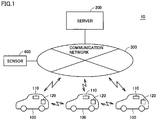
- Fig. 1 is a schematic diagram of an overall configuration of a vehicle information communication system 10 according to the present embodiment.
- vehicle information communication system 10 includes a plurality of vehicles (hereinafter also simply referred to as “vehicles”) 100, and a server 200 configured to communicate with vehicles 100, and information is exchanged between server 200 and vehicles 100.
- vehicles hereinafter also simply referred to as “vehicles”
- server 200 configured to communicate with vehicles 100, and information is exchanged between server 200 and vehicles 100.
- vehicle information communication system 10 may also be referred to as "environment improvement system 10".
- the vehicle information communication system according to the present embodiment is not limited to the environment improvement system described below, as long as information is exchanged between server 200 and the plurality of vehicles 100.
- Vehicles 100 and server 200 are configured to mutually exchange information via a communication network 300 such as, for example, the Internet or a telephone line. Vehicles 100 and server 200 may directly communicate with each other without communication network 300. Direct communication between vehicles 100 is also possible.
- a communication network 300 such as, for example, the Internet or a telephone line.
- Vehicles 100 and server 200 may directly communicate with each other without communication network 300. Direct communication between vehicles 100 is also possible.
- Vehicle 100 is an electrically-powered vehicle that can travel using the electric power provided from a battery mounted thereon.
- the electrically-powered vehicle include an electric vehicle, a hybrid vehicle, a fuel cell vehicle and the like.
- a vehicle that travels using only the driving force generated in an internal combustion engine can also be used as vehicle 100.
- an electrically-powered vehicle with a relatively small amount of release of an air pollutant (hereinafter also referred to as "environmental pollutant”) is preferably used from the perspective of environment improvement.
- Vehicle 100 includes a sensor unit 110 configured to detect a concentration of a particulate matter such as pollen or PM2.5 or a gaseous air pollutant such as sulfur oxide (SOx) or nitrogen oxide (NOx). Vehicle 100 also includes an environment improvement device 120 such as an air cleaner or a bag filter configured to remove the air pollutant.
- a sensor unit 110 configured to detect a concentration of a particulate matter such as pollen or PM2.5 or a gaseous air pollutant such as sulfur oxide (SOx) or nitrogen oxide (NOx).
- Vehicle 100 also includes an environment improvement device 120 such as an air cleaner or a bag filter configured to remove the air pollutant.
- Server 200 obtains, through communication network 300, the concentration of the environmental pollutant detected by sensor unit 110 mounted on vehicle 100 or a sensor 400 fixed on the roadside or the like, and calculates a pollution level in a prescribed area. When the calculated pollution level becomes worse and exceeds a prescribed threshold value, server 200 causes vehicles 100 located in the area or in an area close thereto to move to within the area, and to operate environment improvement devices 120 mounted on vehicles 100. As a result, the environmental pollutant in the area having a high pollution level is removed and the environment is improved.
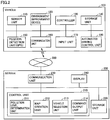
- Fig. 2 is a block diagram for illustrating details of vehicle 100 and server 200 in Fig. 1 .
- vehicle 100 in addition to sensor unit 110 configured to detect the environmental pollutant and environment improvement device 120 configured to remove the environmental pollutant, vehicle 100 further includes a controller 130, a storage unit 140, a position detection unit 150, a communication unit 160, an input unit 170, and an automated driving control unit 180.
- Communication unit 160 is a communication interface between vehicle 100 and communication network 300.
- Vehicle 100 performs wireless communication with communication network 300 via communication unit 160, and receives and transmits information to and from server 200.
- Vehicle 100 can also perform vehicle-to-vehicle communication with another vehicle via communication unit 160.
- controller 130 includes a CPU (Central Processing Unit), a storage device such as a memory, and an input/output buffer, and provides comprehensive control of vehicle 100. Controller 130 receives a command from server 200 via communication unit 160. Upon receiving a command to move vehicle 100 from server 200, controller 130 causes automated driving control unit 180 to execute automated driving of vehicle 100, thereby moving vehicle 100 to a position specified by server 200. Controller 130 also controls start or stop of environment improvement device 120 based on a command from server 200.
- CPU Central Processing Unit
- storage device such as a memory
- input/output buffer an input/output buffer
- Storage unit 140 is configured to include a recording device such as, for example, a nonvolatile memory or an HDD (Hard Disc Drive). Storage unit 140 stores a command received from server 200, and stores a parameter and the like set by a user.
- a recording device such as, for example, a nonvolatile memory or an HDD (Hard Disc Drive).
- Storage unit 140 stores a command received from server 200, and stores a parameter and the like set by a user.
- Position detection unit 150 is included in, for example, a navigation device (not shown), and obtains absolute position information of vehicle 100 itself by using the GPS (Global Positioning System). Position detection unit 150 outputs the obtained position information to server 200.
- GPS Global Positioning System
- Input unit 170 is formed by a touch panel, a switch or the like, and is included in, for example, the above-described navigation device. The user can set the parameter and the like by operating input unit 170.
- Control unit 210 includes a pollution level determination unit 211, a map creation unit 212, a vehicle selection unit 213, and a command output unit 214.
- Communication unit 230 is a communication interface between server 200 and communication network 300.
- Server 200 obtains vehicle information from vehicle 100 via communication unit 230, and outputs the movement command and the command to operate environment improvement device 120 to vehicle 100.
- Storage unit 220 stores contents of the vehicle information received via communication unit 230. Storage unit 220 also prestores map information of a region where the environment improvement operation is to be executed.
- Pollution level determination unit 211 included in control unit 210 calculates a pollution level for each predetermined area, using the concentration of the environmental pollutant included in the vehicle information transmitted from each vehicle 100, and determines necessity of the environment improvement operation.
- Map creation unit 212 associates the pollution level calculated by pollution level determination unit 211 with the map information stored in storage unit 220, and creates a pollution map.
- the created pollution map is displayed on display 240 such as a liquid crystal display panel, and thus, a server administrator and the like can visually recognize a state of environmental pollution.
- vehicle selection unit 213 selects vehicles for executing the environment improvement operation in the target area, from vehicles 100 located in the target area or in an area close thereto.
- Command output unit 214 generates a command to execute the environment improvement operation, and outputs the command to selected vehicles 100.
- the state of pollution by the environmental pollutant is detected for each area based on the information obtained from the sensor mounted on the vehicle or the fixed sensor, and the vehicles having the environment improvement devices mounted thereon are moved to the area having a high pollution level, thereby removing the environmental pollutant.
- the pollution level in the area can be reduced and the state of environmental pollution can be improved.
- server 200 can execute appropriate control even when server 200 communicates with each vehicle 100 individually. However, if a range of a region covered by server 200 becomes wider and the number of vehicles 100 to be controlled increases, a load on server 200 increases, which may cause a reduction in control speed and the like.
- a method for suppressing an increase in load on server 200 by using different communication modes depending on a communication load between server 200 and vehicles 100 is adopted.
- Two communication modes in the present embodiment will be described below with reference to Figs. 3 and 4 .
- Fig. 3 is a diagram for illustrating an overview of communication in a first communication mode (hereinafter also referred to as "mode I"), which is used when the number of vehicles 100 to be controlled is relatively small (i.e., when the load on server 200 is low).
- mode I server 200 communicates with each vehicle 100 individually.
- server 200 directly obtains information from each vehicle 100, and thus, mode I has the advantage that server 200 can monitor the entire system in real time.
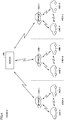
- Fig. 4 is a diagram for illustrating an overview of communication in a second communication mode (hereinafter also referred to as "mode II"), which is used when the number of vehicles 100 to be controlled is large (i.e., when the load on server 200 is high).
- mode II server 200 communicates with only a part (hereinafter also referred to as "representative vehicle") of the plurality of vehicles 100, and the other vehicles obtain information from server 200 by vehicle-to-vehicle communication with the representative vehicle.
- the representative vehicle is set for each area where the pollution level is determined.
- a vehicle 100A-1 is selected as a representative vehicle in an area A
- a vehicle 100B-1 is selected as a representative vehicle in an area B
- a vehicle 100C-1 is selected as a representative vehicle in an area C.
- the vehicles (vehicles 100A-2 and 100A-3) other than representative vehicle 100A-1 obtain a command from server 200 by vehicle-to-vehicle communication with representative vehicle 100A-1.
- the operation condition (vehicle information) of the vehicles in the same area is shared among the vehicles and the vehicle information of the vehicles in the area is collectively transmitted to server 200 by representative vehicle 100A-1. Sharing of the information by vehicle-to-vehicle communication in the area is implemented using blockchain authentication.
- representative vehicles 100B-1 and 100C-1 communicate with server 200, and the information is shared among the other vehicles by vehicle-to-vehicle communication in the respective areas.
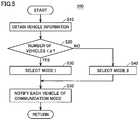
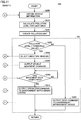
- Fig. 5 is a flowchart for illustrating communication mode switching control executed in server 200.
- the flowcharts shown in Fig. 5 and below-described Figs. 10 to 12 and 14 are implemented by invoking a program stored in controller 130 of vehicle 100 or control unit 210 of server 200 from a main routine and executing the program when a prescribed cycle or a prescribed condition is satisfied.
- the processing in a part or all of the steps of the flowcharts can be implemented by dedicated hardware (electronic circuit).
- server 200 obtains vehicle information from vehicles 100 located in a target region, and recognizes the number of vehicles 100 to be controlled based on the obtained vehicle information. Then, in S20, server 200 determines whether or not the number of vehicles in the region is smaller than the reference number ⁇ .
- the reference number ⁇ herein is determined in accordance with a communication load that can be handled by server 200.
- server 200 notifies each vehicle 100 of the selected communication mode.
- the communication mode is selected using the number of all vehicles included in the entire region covered by server 200. Instead of this, the communication mode may be selected in accordance with the number of vehicles actually executing the environment improvement operation by operating environment improvement devices 120.
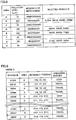
- Fig. 6 shows one example of contents of the vehicle information transmitted from vehicle 100 to server 200.
- the vehicle information transmitted from each vehicle includes a vehicle ID for identifying the vehicle itself, a date of transmission, position information of the vehicle, the concentration of the environmental pollutant detected by sensor unit 110, a time period during which the environment improvement operation can be executed (available time period), and information about possibility of movement in accordance with the command from server 200 (movement possible information).
- X represents a longitude
- Y represents a latitude
- Z represents an altitude, for example.
- Information about a travel direction (orientation) of the vehicle may be further included as the position information of the vehicle.
- the available time period is a parameter that can be arbitrarily set by the user via input unit 170.
- the user sets a time period for which use of the vehicle is permitted for the environment improvement operation during a time period for which the vehicle is not used.
- Server 200 refers to the available time period and selects a vehicle used for the environment improvement operation.
- the environment improvement operation is executed within the range of the available time period set by the user, which makes it possible to contribute to environment improvement while satisfying the user's needs.
- the movement possible information is information indicating whether or not the vehicle can be moved to a specified area when the vehicle is used for the environment improvement operation. For example, when the target vehicle is placed in a home garage and a door of the garage is closed (locked), the vehicle cannot be moved from the garage to a specified location, although the environment improvement device can be used in the garage.
- Server 200 refers to the movement possible information and selects the target vehicle.
- server 200 calculates the pollution level for each specified area on the map, using the position information of the vehicles and the information about the concentration of the environmental pollutant. For example, server 200 can use a maximum value of the concentrations of the environmental pollutant transmitted from vehicles 100 located in the same area, as the pollution level in the area. Alternatively, server 200 may use an average value of the concentrations of the environmental pollutant in the area as the pollution level.
- server 200 Based on the calculated pollution level, server 200 creates a map of the pollution level shown in Fig. 7 and displays the map on display 240 of server 200.
- a region displayed on display 240 is divided into eight rectangular areas, i.e., area A to area H, and the pollution level is displayed for each area.
- Area setting is not limited to the rectangular areas shown in Fig. 7 , and may be, for example, administrative sections such as cities, or may be sections determined by main roads.
- server 200 determines necessity of environment improvement in the area.
- Fig. 8 shows one example of determination of the necessity of environment improvement, and vehicle selection that are executed by server 200.
- a threshold value of the pollution level for determining the necessity of environment improvement is, for example, 100 ppm, and it is determined that environment improvement is necessary in areas B, D, E, and G where their pollution levels exceed the threshold value. From vehicles 100 located in the region, server 200 selects vehicles executing the environment improvement operation in each area.
- Server 200 determines vehicles 100 to be selected, in consideration of the type of the environmental pollutant that should be removed and the type of environmental pollutant that can be removed by the environment improvement device mounted on each vehicle 100.
- the available time period varies from vehicle 100 to vehicle 100, and thus, when a part of the initially selected vehicles becomes unavailable, server 200 further selects another vehicle located in the target area or in an area close thereto, instead of the unavailable vehicle.
- server 200 When the area where environment improvement is executed and vehicles 100 used therefor are determined, server 200 generates a control command shown in Fig. 9 and outputs the control command to each vehicle 100. More specifically, server 200 transmits information about the area where environment improvement is executed, initial movement position information, and information about an operation manner in the area to each selected vehicle 100.
- the initial movement position information is information indicating a position where the vehicle is initially arranged.
- Each vehicle 100 moves to the position indicated by the initial movement position information from server 200 by automated driving, and then, executes the environment improvement operation based on the area information and the information about the operation manner.
- Fig. 9 when the operation manner is "stop", vehicle 100 moves to the initial movement position, and then, operates environment improvement device 120, with vehicle 100 being at a stop at that position.
- vehicle 100 when the operation manner is "travel”, vehicle 100 moves to the initial movement position, and then, travels autonomously in the specified area while operating environment improvement device 120.
- the environment improvement operation may be executed, with a particular vehicle being at a stop.
- the operation manner is preferably changed in accordance with the distribution of the state of pollution (concentration) by the environmental pollutant.
- each selected vehicle 100 transmits the vehicle information shown in Fig. 6 to server 200 at prescribed time intervals.
- Server 200 monitors a change in pollution level caused by execution of the environment improvement operation, and repeatedly executes the above-described operation. Then, when the pollution level in the specified area is improved and falls below the threshold value, server 200 outputs a command to stop environment improvement device 120 to each vehicle 100 that is executing the environment improvement operation in the area.
- Figs. 10 and 11 are flowcharts for illustrating details of control executed in vehicle 100 and server 200 in mode I.
- the flowcharts shown in Figs. 10 and 11 are implemented by invoking programs stored in controller 130 of vehicle 100 and control unit 210 of server 200 from a main routine and executing the programs when a prescribed cycle or a prescribed condition is satisfied.
- the processing in a part or all of the steps of the flowcharts can be implemented by dedicated hardware (electronic circuit).
- vehicle 100 obtains pollution data including the concentration of the environmental pollutant at the current position of vehicle 100, using sensor unit 110. Then, in S110, in addition to the pollution data obtained in S100, vehicle 100 transmits the vehicle information including the other information shown in Fig. 6 to server 200. When a plurality of types of environmental pollutants are detected, individual concentration data of each environmental pollutant may be included.
- vehicle 100 determines in S120 whether or not vehicle 100 itself has been selected as a target vehicle for executing the environment improvement operation. When vehicle 100 has not been selected as the target vehicle (NO in S120), vehicle 100 skips the following steps and returns the process to the main routine.
- vehicle 100 when vehicle 100 has been selected as the target vehicle (YES in S120), the process proceeds to S130 and vehicle 100 moves to the specified area by automated driving in accordance with the movement command transmitted from server 200.
- vehicle 100 is, for example, a vehicle owned by a business operator specializing in environment improvement, automated driving is not necessarily required, and a driver of the business operator may drive vehicle 100 to the specified area in a manned manner in accordance with the command from server 200.
- vehicle 100 when vehicle 100 is selected as the target vehicle by server 200, vehicle 100 notifies the user that vehicle 100 has been selected as the target vehicle, using an email or the like.
- vehicle 100 transmits movement completion information to server 200 in S140.
- vehicle 100 receives the command to operate environment improvement device 120 from server 200 in response (YES in S150)
- vehicle 100 operates environment improvement device 120, and maintains the state of being at a stop at the position or travels in the area in accordance with the specified operation manner (S160).
- vehicle 100 does not receive the command to operate environment improvement device 120 from server 200 (NO in S150)
- vehicle 100 moves the process to S170, with environment improvement device 120 being at a stop.
- vehicle 100 determines whether or not the command to stop environment improvement device 120 has been received from server 200.
- vehicle 100 stops environment improvement device 120 (S180) and returns the process to the main routine.
- vehicle 100 maintains the operation of environment improvement device 120 and returns the process to the main routine.
- environment improvement device 120 is still at a stop, the stop state of environment improvement device 120 is maintained regardless of reception of the stop command.
- S150 is about the initial state with environment improvement device 120 being at a stop. However, when the process in Fig. 10 is started with environment improvement device 120 being in operation, the operation of environment improvement device 120 is maintained regardless of whether determination in S150 is YES or NO.
- server 200 obtains the vehicle information from each vehicle 100 in S200
- server 200 calculates the pollution level for each specified area, using the information about the concentration of the environmental pollutant included in the vehicle information from the vehicles located in the area (S210), and creates a pollution map of the entire region including the area (S220).
- the processing in S230 and the subsequent steps is executed for each specified area.
- server 200 determines whether or not the pollution level in the specified area exceeds the predetermined threshold value. When the pollution level is equal to or lower than the threshold value (NO in S230), server 200 determines that the environment improvement operation is unnecessary, and moves the process to S280. In S280, when each environment improvement device 120 is at a stop, the stop state is maintained. When each environment improvement device 120 is in operation, each environment improvement device 120 is stopped and the process is returned to the main routine.
- server 200 determines that the environment improvement operation is necessary.
- server 200 selects execution vehicles executing the environment improvement operation in the area, based on the position information of each vehicle 100, the information about the available time period and the like obtained as the vehicle information, and transmits the selection information to the vehicles in the area.
- server 200 outputs the movement command to selected vehicles 100. Transmission of the selection information of the execution vehicles and transmission of the movement command to vehicles 100 may be performed at different timings as shown in Fig. 11 . Alternatively, however, the selection information and the movement command may be included in the same command and transmitted at the same timing.
- server 200 determines whether or not all of the vehicles selected for the specified area have moved to the respectively-set initial movement positions. When server 200 does not receive the movement completion information from each vehicle 100 (NO in S260), the process is returned to S260 and server 200 awaits for completion of movement of the execution vehicles.
- server 200 when server 200 receives the movement completion information from each vehicle 100 and recognizes that movement of each vehicle to the set initial movement position has been completed (YES in S260), server 200 outputs the operation command to actuate environment improvement device 120 to each execution vehicle in S270, thereby causing each vehicle 100 to execute the environment improvement operation. Then, the process is returned to the main routine.
- the processing in broken line box SA in Fig. 11 is executed for each area, and the environment improvement operation using vehicles 100 is continued until the pollution level in each area becomes equal to or lower than the prescribed threshold value.
- the environment improvement operation using vehicles 100 is continued until the pollution level in each area becomes equal to or lower than the prescribed threshold value.
- mode II When mode II is selected as a communication mode, contents of control vary depending on whether or not the vehicle itself is a representative vehicle.
- the vehicle selected as a representative vehicle receives a control command including a command for the other vehicles in the area from server 200, and transmits the command to each of the other vehicles by using vehicle-to-vehicle communication.
- the representative vehicle collects data shared among the vehicles in the area, and transmits the data to server 200.
- Fig. 12 shows one example of the control command transmitted to the representative vehicle by server 200.
- the control command in Fig. 12 is similar to the control command in mode I shown in Fig. 9 , the former is different from the latter in that the control command in Fig. 12 is a command for each area to which the destination representative vehicle belongs, and a command as to whether or not the vehicle itself is a representative vehicle is added.
- the control command in Fig. 12 is a command for each area to which the destination representative vehicle belongs, and a command as to whether or not the vehicle itself is a representative vehicle is added.
- four vehicles are selected as target vehicles for executing the environment improvement operation in area A, and a vehicle having the vehicle ID of "A1234", of the four vehicles, is selected as a representative vehicle.
- the control command is transmitted from server 200 to the vehicle having the vehicle ID of "A1234".
- the vehicle having vehicle ID of "A1234" and having received the control command from server 200 recognizes that the vehicle itself is a representative vehicle, and transmits the control command to the other three vehicles (vehicle IDs "D5123”, “F8546” and “G5564") by using vehicle-to-vehicle communication.
- the representative vehicle and the other three vehicles move to the initial movement positions included in the control command, and then, execute the environment improvement operation in accordance with the operation manner.
- the data (such as, for example, the position information of each vehicle and the detected concentration of the environmental pollutant) owned by each vehicle is shared among the vehicles by vehicle-to-vehicle communication.
- the representative vehicle aggregates information about each vehicle in the area, and periodically transmits the information to server 200 as area information.
- the available time period is set for each vehicle, the available time period may be exceeded during execution of the environment improvement operation.
- information about the unavailable vehicle is transmitted from the representative vehicle to server 200, and in response, server 200 again selects a vehicle executing the environment improvement operation, based on the state of environmental pollution at this point in time.
- server 200 selects another vehicle as a representative vehicle, and transmits the control command to the newly selected representative vehicle.
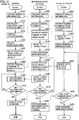
- Fig. 13 is a flowchart for illustrating the detailed process of control executed in server 200 and vehicles 100 in mode II.
- server 200 When each vehicle 100 is notified from server 200 that mode II has been selected as a communication mode in accordance with the control shown in Fig. 5 , the vehicle information is transmitted from each vehicle in the region covered by server 200 to server 200 (S400 and S500). At this point in time, it is not yet determined which vehicle is to be selected as a target vehicle for executing the environment improvement operation and which vehicle is to be selected as a representative vehicle.
- server 200 When server 200 obtains the vehicle information from each vehicle 100 in S300, server 200 calculates the pollution level in each area based on the concentration of the environmental pollutant included in the vehicle information (S310), and creates the map shown in Fig. 7 (S320). Then, in S330, server 200 selects a target area where the environment improvement operation is executed, by comparing the calculated pollution level and the threshold value. In S340, server 200 selects execution vehicles executing the environment improvement operation in the target area. In S340, together with selection of the execution vehicles, a representative vehicle is selected from the execution vehicles. Then, in S350, server 200 transmits the control command shown in Fig. 12 to the selected representative vehicle.
- server 200 When the environment improvement operation is started in each area, server 200 periodically obtains, from the representative vehicle in each area, the area information including the position information of each vehicle in the area and the information about a change in concentration of the environmental pollutant (S360). Then, in S370, server 200 determines whether or not the pollution level in the target area has been improved to be equal to or lower than the prescribed threshold value, based on the area information.
- the process proceeds to S380 and server 200 transmits, to the representative vehicle, the command to stop the environment improvement operation for the target area.
- the process is returned to S360 and server 200 continues the environment improvement operation in the target area.
- server 200 again executes selection of a vehicle executing the environment improvement operation as needed, and outputs a changed control command to each vehicle via the representative vehicle. In server 200, such control is executed for each target area.
- each vehicle 100 upon receiving the notification that mode II has been selected as a communication mode from server 200, each vehicle 100 first transmits its own vehicle information to server 200 (S400).
- server 200 When the environment improvement operation and the representative vehicle is selected by server 200 and the control command ( Fig. 12 ) is received from server 200 (S410), the vehicle having received the control command recognizes that the vehicle itself is selected as the representative vehicle.
- the representative vehicle broadcasts the control command transmitted from server 200 to the other vehicles by using vehicle-to-vehicle communication. Transmission of the control command from the representative vehicle to the other vehicles may be implemented by one-to-one communication (P2P communication).
- P2P communication one-to-one communication
- the representative vehicle moves to the initial movement position in the target area (S430), and operates environment improvement device 120 to start the environment improvement operation (S440).
- the representative vehicle shares the data of the vehicles in the area by using vehicle-to-vehicle communication (S450).
- the representative vehicle edits the data of the vehicles as appropriate to generate area information, and transmits the area information to server 200 at prescribed time intervals.
- the area information also includes information about whether or not a change of the execution vehicles is necessary.
- server 200 monitors a status of improvement of the pollution level in the target area based on the area information, and determines whether or not to continue the environment improvement operation.
- the representative vehicle determines whether or not the command to stop the environment improvement operation has been received from server 200. When the stop command has not been received (NO in S470), the process is returned to S450 and the environment improvement operation is continued. On the other hand, when the stop command has been received (YES in S470), the process proceeds to S480, and the representative vehicle stops its own environment improvement device 120 and transmits the command to stop the environment improvement operation to the other vehicles in the target area by using vehicle-to-vehicle communication.
- each vehicle 100 When each vehicle 100 receives the notification that mode II has been selected as a communication mode from server 200, each vehicle 100 first transmits its own vehicle information to server 200 (S500). Then, when vehicle 100 receives the control command from the representative vehicle using vehicle-to-vehicle communication (S510), vehicle 100 recognizes that vehicle 100 itself has been selected as a vehicle executing the environment improvement operation. Then, in accordance with the control command, vehicle 100 moves to the initial movement position in the target area (S520), and operates environment improvement device 120 to start the environment improvement operation (S530).
- S 500 vehicle-to-vehicle communication
- vehicle 100 recognizes that vehicle 100 itself has been selected as a vehicle executing the environment improvement operation. Then, in accordance with the control command, vehicle 100 moves to the initial movement position in the target area (S520), and operates environment improvement device 120 to start the environment improvement operation (S530).
- vehicle 100 shares the data of each vehicle in the area by using vehicle-to-vehicle communication (S540). Then, in S550, vehicle 100 determines whether or not the command to stop the environment improvement operation has been received from the representative vehicle. When the stop command has not been received (NO in S550), the process is returned to S540 and the environment improvement operation is continued. On the other hand, when the stop command has been received (YES in S550), the process proceeds to S560 and vehicle 100 stops its own environment improvement device 120 and stops the environment improvement operation.
- the communication mode of "mode II" is used in which communication is distributed using the representative vehicle and the data is shared among the vehicles by vehicle-to-vehicle communication. As a result, the communication load between the server and the vehicles can be reduced and appropriate communication can be performed.
Landscapes
- Engineering & Computer Science (AREA)
- Computer Networks & Wireless Communication (AREA)
- Signal Processing (AREA)
- Physics & Mathematics (AREA)
- General Physics & Mathematics (AREA)
- Chemical & Material Sciences (AREA)
- Analytical Chemistry (AREA)
- Radar, Positioning & Navigation (AREA)
- Remote Sensing (AREA)
- Chemical Kinetics & Catalysis (AREA)
- Automation & Control Theory (AREA)
- General Engineering & Computer Science (AREA)
- Computer Hardware Design (AREA)
- Computing Systems (AREA)
- General Health & Medical Sciences (AREA)
- Health & Medical Sciences (AREA)
- Aviation & Aerospace Engineering (AREA)
- Computer Security & Cryptography (AREA)
- Business, Economics & Management (AREA)
- Medical Informatics (AREA)
- Tourism & Hospitality (AREA)
- Power Engineering (AREA)
- Primary Health Care (AREA)
- Strategic Management (AREA)
- Economics (AREA)
- General Business, Economics & Management (AREA)
- Theoretical Computer Science (AREA)
- Multimedia (AREA)
- Marketing (AREA)
- Human Resources & Organizations (AREA)
- Traffic Control Systems (AREA)
- Operations Research (AREA)
- Management, Administration, Business Operations System, And Electronic Commerce (AREA)
- Mechanical Engineering (AREA)
Applications Claiming Priority (1)
| Application Number | Priority Date | Filing Date | Title |
|---|---|---|---|
| JP2017218408A JP7119346B2 (ja) | 2017-11-13 | 2017-11-13 | 環境改善システム、ならびにそれに用いられるサーバ |
Publications (3)
| Publication Number | Publication Date |
|---|---|
| EP3484194A2 true EP3484194A2 (fr) | 2019-05-15 |
| EP3484194A3 EP3484194A3 (fr) | 2019-08-14 |
| EP3484194B1 EP3484194B1 (fr) | 2023-01-11 |
Family
ID=64308586
Family Applications (1)
| Application Number | Title | Priority Date | Filing Date |
|---|---|---|---|
| EP18205862.8A Active EP3484194B1 (fr) | 2017-11-13 | 2018-11-13 | Système de communication d'informations de véhicule et système d'amélioration de l'environnement et serveur correspondant |
Country Status (6)
| Country | Link |
|---|---|
| US (2) | US11245749B2 (fr) |
| EP (1) | EP3484194B1 (fr) |
| JP (2) | JP7119346B2 (fr) |
| KR (3) | KR20190054935A (fr) |
| CN (1) | CN109788022B (fr) |
| RU (1) | RU2719056C1 (fr) |
Cited By (8)
| Publication number | Priority date | Publication date | Assignee | Title |
|---|---|---|---|---|
| DE102019208753A1 (de) * | 2019-06-17 | 2020-12-17 | Audi Ag | Mobile luftreinigungseinrichtung und system zur luftreinigung |
| CN112991715A (zh) * | 2019-12-13 | 2021-06-18 | 中移雄安信息通信科技有限公司 | 一种车辆盲区风险检测方法、装置及系统 |
| WO2021160906A1 (fr) * | 2020-02-10 | 2021-08-19 | Brigido Sepulveda Crespo | Système de gestion et contrôle de la contamination atmosphérique |
| WO2021205088A1 (fr) | 2020-04-09 | 2021-10-14 | Psa Automobiles Sa | Utilisation de vehicules electriques ou hybrides pour le traitement de l'air ambiant en milieu urbain et centre de controle pour la gestion de ladite utilisation |
| WO2023069647A1 (fr) * | 2021-10-21 | 2023-04-27 | Tesla, Inc. | Journalisation et directives sous pseudonyme |
| EP4245587A1 (fr) * | 2022-03-18 | 2023-09-20 | MANN+HUMMEL GmbH | Système de traitement de l'air, procédé, véhicule et flotte de traitement de l'air ambiant |
| EP4403390A1 (fr) * | 2023-01-20 | 2024-07-24 | MANN+HUMMEL Ventures Pte. Ltd. | Véhicule, flotte et procédé de traitement de l'air ambiant |
| CN119723929A (zh) * | 2024-11-28 | 2025-03-28 | 湖南雷升信息技术集团有限公司 | 一种基于移动终端的电子站牌系统 |
Families Citing this family (30)
| Publication number | Priority date | Publication date | Assignee | Title |
|---|---|---|---|---|
| US10349246B1 (en) * | 2018-05-08 | 2019-07-09 | BaiJie Teng Technology Corporation | Method and system for vehicle-to-vehicle identification and detection |
| US10937253B2 (en) * | 2018-06-11 | 2021-03-02 | International Business Machines Corporation | Validation of vehicle data via blockchain |
| JP7033731B2 (ja) | 2018-08-22 | 2022-03-11 | パナソニックIpマネジメント株式会社 | サーバ、車両、分散型トランザクション証明システムおよび分散型トランザクション証明方法 |
| JP7119985B2 (ja) * | 2018-12-21 | 2022-08-17 | トヨタ自動車株式会社 | 地図生成装置、地図生成システム、地図生成方法、及び地図生成プログラム |
| US11238478B2 (en) * | 2019-01-25 | 2022-02-01 | Toyota Motor North America, Inc. | Commercializing user patterns via blockchain |
| US10535207B1 (en) | 2019-03-29 | 2020-01-14 | Toyota Motor North America, Inc. | Vehicle data sharing with interested parties |
| US10896555B2 (en) | 2019-03-29 | 2021-01-19 | Toyota Motor North America, Inc. | Vehicle data sharing with interested parties |
| US10726642B1 (en) | 2019-03-29 | 2020-07-28 | Toyota Motor North America, Inc. | Vehicle data sharing with interested parties |
| KR102228881B1 (ko) * | 2019-08-19 | 2021-03-18 | 엘지전자 주식회사 | 자율주행시스템에서 군집주행중에 주행데이터의 수신방법 및 이를 위한 장치 |
| US12073721B2 (en) | 2019-08-22 | 2024-08-27 | Quantum Gate Inc. | Method for managing transport on basis of blockchain network, and device and system for performing same |
| WO2021034163A1 (fr) * | 2019-08-22 | 2021-02-25 | 주식회사 퀀텀게이트 | Procédé de gestion de transport sur la base d'un réseau à chaîne de blocs, et dispositif et système pour la mise en oeuvre de ce procédé |
| US20210061201A1 (en) | 2019-09-02 | 2021-03-04 | Toyota Motor North America, Inc. | Adjustment of environment of transports |
| US11529918B2 (en) | 2019-09-02 | 2022-12-20 | Toyota Motor North America, Inc. | Adjustment of environment of transports |
| US11368284B2 (en) | 2019-09-25 | 2022-06-21 | Ford Global Technologies, Llc | Vehicle blockchain transactions |
| JP7080207B2 (ja) * | 2019-10-28 | 2022-06-03 | 本田技研工業株式会社 | 情報管理システム |
| US11719541B2 (en) | 2019-11-13 | 2023-08-08 | Aclima Inc. | Hyper-local mapping of environmental conditions |
| KR102317862B1 (ko) * | 2019-12-30 | 2021-10-28 | 인하대학교 산학협력단 | 블록 체인을 이용한 원격 주행차의 해킹방지 기법 |
| KR20210087710A (ko) | 2020-01-03 | 2021-07-13 | 삼성전자주식회사 | 운송 장치, 통신 시스템 및 이를 이용한 통신 방법 |
| US20230038372A1 (en) * | 2020-02-07 | 2023-02-09 | Qualcomm Incorporated | Vehicle to vehicle communication control for vehicles in a platoon |
| KR102172533B1 (ko) * | 2020-04-27 | 2020-11-02 | 주식회사 에스비이엔씨 | 도로를 주행하는 자율주행 차량의 충돌방지를 위한 센서 근거리 통신과 블록체인 방법 |
| US12481060B2 (en) | 2020-04-29 | 2025-11-25 | Lg Electronics Inc. | Method for operating RSU related to VRU location in wireless communication system |
| CN111710187B (zh) * | 2020-05-19 | 2024-10-01 | 腾讯科技(深圳)有限公司 | 确定车辆驾驶风险的方法、装置、介质及电子设备 |
| US11180048B1 (en) | 2020-07-01 | 2021-11-23 | Toyota Motor North America, Inc. | Transport-based exchange of electrical charge and services |
| US11999247B2 (en) | 2020-07-01 | 2024-06-04 | Toyota Motor North America, Inc. | Providing transport to transport energy transfer |
| JP7327317B2 (ja) * | 2020-08-03 | 2023-08-16 | トヨタ自動車株式会社 | 通信装置、車両、情報処理システム、プログラム、及びサーバ |
| CN112344956B (zh) * | 2020-11-05 | 2022-02-25 | 腾讯科技(深圳)有限公司 | 地图显示方法及装置 |
| JP2024515397A (ja) * | 2021-03-31 | 2024-04-10 | ジェイアイオー・プラットフォームズ・リミテッド | ブロックチェーンネットワークにおける時空間データ分割のためのシステムおよび方法 |
| US12525070B2 (en) | 2023-02-07 | 2026-01-13 | Toyota Motor Engineering & Manufacturing North America, Inc. | Selective information gathering system for multiple vehicles |
| CN118540758B (zh) * | 2024-06-06 | 2025-02-11 | 名商科技有限公司 | 基于环境检测的远程驾驶控制方法及系统 |
| KR102888519B1 (ko) * | 2025-01-22 | 2025-11-21 | 더다인 주식회사 | Dsrc 및 c-v2x 듀얼모드 기반 차량간 통신 방법 및 장치 |
Citations (4)
| Publication number | Priority date | Publication date | Assignee | Title |
|---|---|---|---|---|
| JP2009276991A (ja) | 2008-05-14 | 2009-11-26 | Toyota Motor Corp | 危険回避システム |
| JP2017091149A (ja) | 2015-11-09 | 2017-05-25 | 日本電信電話株式会社 | ブロックチェーン生成装置、ブロックチェーン生成方法、ブロックチェーン検証装置、ブロックチェーン検証方法およびプログラム |
| JP2017123692A (ja) | 2017-03-22 | 2017-07-13 | 株式会社bitFlyer | 存在証明装置、存在証明方法、及びそのためのプログラム |
| JP2017218408A (ja) | 2016-06-07 | 2017-12-14 | 国立大学法人東京工業大学 | 結合体 |
Family Cites Families (24)
| Publication number | Priority date | Publication date | Assignee | Title |
|---|---|---|---|---|
| JP2002211231A (ja) | 2001-01-18 | 2002-07-31 | Denso Corp | 車載用報知装置及び車載用経路設定装置 |
| US20060037565A1 (en) * | 2004-08-18 | 2006-02-23 | Coates George J | Vehicle mounted filter assembly for entrapment of ambient air pollutants |
| JP2006293491A (ja) | 2005-04-06 | 2006-10-26 | Toyota Motor Corp | 交通状態収集装置、情報センタ、および交通状態収集システム |
| KR20090000773A (ko) | 2007-04-02 | 2009-01-08 | 백원모 | 차량용 대기오염 감시장치, 차량용 대기오염 감시장치에서실행되는 대기오염 감시방법 및 대기오염 감시서버 |
| EP2174480B1 (fr) | 2007-08-06 | 2016-09-28 | Nec Corporation | Procédé de configuration d'adresse automatique dans un réseau ad hoc mobile (manet) |
| KR20100036505A (ko) | 2008-09-30 | 2010-04-08 | 주식회사 현대오토넷 | 주변 환경 보정 시스템 및 방법 |
| JP5348200B2 (ja) | 2011-08-10 | 2013-11-20 | 株式会社デンソー | 通信管理装置および車載無線通信装置 |
| JP2013146310A (ja) | 2012-01-17 | 2013-08-01 | Sharp Corp | 自走式電子機器 |
| WO2014113091A1 (fr) * | 2013-01-18 | 2014-07-24 | Irobot Corporation | Systèmes de gestion environnementale comprenant des robots mobiles et procédés les utilisant |
| US9375847B2 (en) * | 2013-01-18 | 2016-06-28 | Irobot Corporation | Environmental management systems including mobile robots and methods using same |
| CN103763334B (zh) | 2013-05-28 | 2017-02-22 | 大连理工大学 | Vanet中基于p2p‑bt的多媒体合作共享方法 |
| US9832706B2 (en) | 2014-07-30 | 2017-11-28 | Nec Corporation | Information dissemination in a multi-technology communication network |
| KR101659037B1 (ko) | 2015-02-16 | 2016-09-23 | 엘지전자 주식회사 | 로봇 청소기, 이를 포함하는 원격 제어 시스템 및 이의 제어 방법 |
| US9688194B2 (en) * | 2015-03-26 | 2017-06-27 | Ford Global Technologies, Llc | In-vehicle particulate sensor data analysis |
| RU2600896C1 (ru) * | 2015-05-15 | 2016-10-27 | Общество с ограниченной ответственностью "АВТЭКС" | Система вентиляции с удалением продуктов выдоха |
| JP2017044408A (ja) | 2015-08-27 | 2017-03-02 | シャープ株式会社 | 空気清浄システム、空気清浄方法、空気清浄機、及び電気機器 |
| CA3001612A1 (fr) | 2015-10-19 | 2017-04-27 | Recycle Track Systems Inc. | Systeme et procede pour planifier et faciliter l'enlevement de dechets |
| GB2551947A (en) | 2016-02-29 | 2018-01-10 | Norwegian Institute For Air Res | Internal air quality in vehicles |
| US9921578B2 (en) * | 2016-03-09 | 2018-03-20 | International Business Machines Corporation | Automatic database filtering system utilizing robotic filters |
| US9896089B2 (en) * | 2016-04-07 | 2018-02-20 | Ford Global Technologies, Llc | Methods and systems for adjusting engine operation based on weather data |
| WO2017180382A1 (fr) | 2016-04-12 | 2017-10-19 | Pcms Holdings, Inc. | Système et procédé de validation de données dans un réseau de capteurs décentralisé |
| US10440452B2 (en) * | 2016-06-03 | 2019-10-08 | Samsung Electronics Co., Ltd. | Apparatus and method for transmitting and receiving environmental information in wireless communication system |
| DE102017210566A1 (de) * | 2017-06-22 | 2018-12-27 | Robert Bosch Gmbh | Verfahren zum Betrieb einer Ladevorrichtung |
| CN107396291B (zh) | 2017-07-26 | 2019-12-03 | 中国联合网络通信集团有限公司 | 车辆分簇处理方法和系统 |
-
2017
- 2017-11-13 JP JP2017218408A patent/JP7119346B2/ja active Active
-
2018
- 2018-11-02 RU RU2018138747A patent/RU2719056C1/ru active
- 2018-11-06 KR KR1020180135015A patent/KR20190054935A/ko not_active Ceased
- 2018-11-08 US US16/183,932 patent/US11245749B2/en active Active
- 2018-11-12 CN CN201811339051.1A patent/CN109788022B/zh active Active
- 2018-11-13 EP EP18205862.8A patent/EP3484194B1/fr active Active
-
2021
- 2021-01-20 KR KR1020210008046A patent/KR20210010609A/ko not_active Ceased
- 2021-11-10 US US17/454,455 patent/US20220070252A1/en not_active Abandoned
-
2022
- 2022-01-05 KR KR1020220001664A patent/KR102482647B1/ko active Active
- 2022-04-28 JP JP2022074661A patent/JP2022093565A/ja active Pending
Patent Citations (4)
| Publication number | Priority date | Publication date | Assignee | Title |
|---|---|---|---|---|
| JP2009276991A (ja) | 2008-05-14 | 2009-11-26 | Toyota Motor Corp | 危険回避システム |
| JP2017091149A (ja) | 2015-11-09 | 2017-05-25 | 日本電信電話株式会社 | ブロックチェーン生成装置、ブロックチェーン生成方法、ブロックチェーン検証装置、ブロックチェーン検証方法およびプログラム |
| JP2017218408A (ja) | 2016-06-07 | 2017-12-14 | 国立大学法人東京工業大学 | 結合体 |
| JP2017123692A (ja) | 2017-03-22 | 2017-07-13 | 株式会社bitFlyer | 存在証明装置、存在証明方法、及びそのためのプログラム |
Cited By (11)
| Publication number | Priority date | Publication date | Assignee | Title |
|---|---|---|---|---|
| DE102019208753A1 (de) * | 2019-06-17 | 2020-12-17 | Audi Ag | Mobile luftreinigungseinrichtung und system zur luftreinigung |
| DE102019208753B4 (de) | 2019-06-17 | 2022-03-24 | Audi Ag | Mobile luftreinigungseinrichtung und system zur luftreinigung |
| CN112991715A (zh) * | 2019-12-13 | 2021-06-18 | 中移雄安信息通信科技有限公司 | 一种车辆盲区风险检测方法、装置及系统 |
| CN112991715B (zh) * | 2019-12-13 | 2022-12-16 | 中移雄安信息通信科技有限公司 | 一种车辆盲区风险检测方法、装置及系统 |
| WO2021160906A1 (fr) * | 2020-02-10 | 2021-08-19 | Brigido Sepulveda Crespo | Système de gestion et contrôle de la contamination atmosphérique |
| WO2021205088A1 (fr) | 2020-04-09 | 2021-10-14 | Psa Automobiles Sa | Utilisation de vehicules electriques ou hybrides pour le traitement de l'air ambiant en milieu urbain et centre de controle pour la gestion de ladite utilisation |
| FR3109099A1 (fr) | 2020-04-09 | 2021-10-15 | Psa Automobiles Sa | Utilisation de vehicules electriques ou hybrides pour le traitement de l’air ambiant en milieu urbain et centre de controle pour la gestion de ladite utilisation |
| WO2023069647A1 (fr) * | 2021-10-21 | 2023-04-27 | Tesla, Inc. | Journalisation et directives sous pseudonyme |
| EP4245587A1 (fr) * | 2022-03-18 | 2023-09-20 | MANN+HUMMEL GmbH | Système de traitement de l'air, procédé, véhicule et flotte de traitement de l'air ambiant |
| EP4403390A1 (fr) * | 2023-01-20 | 2024-07-24 | MANN+HUMMEL Ventures Pte. Ltd. | Véhicule, flotte et procédé de traitement de l'air ambiant |
| CN119723929A (zh) * | 2024-11-28 | 2025-03-28 | 湖南雷升信息技术集团有限公司 | 一种基于移动终端的电子站牌系统 |
Also Published As
| Publication number | Publication date |
|---|---|
| JP2019091168A (ja) | 2019-06-13 |
| KR20190054935A (ko) | 2019-05-22 |
| US20190149598A1 (en) | 2019-05-16 |
| CN109788022B (zh) | 2022-04-19 |
| US20220070252A1 (en) | 2022-03-03 |
| US11245749B2 (en) | 2022-02-08 |
| CN109788022A (zh) | 2019-05-21 |
| EP3484194B1 (fr) | 2023-01-11 |
| KR102482647B1 (ko) | 2022-12-30 |
| JP2022093565A (ja) | 2022-06-23 |
| KR20210010609A (ko) | 2021-01-27 |
| EP3484194A3 (fr) | 2019-08-14 |
| JP7119346B2 (ja) | 2022-08-17 |
| KR20220009469A (ko) | 2022-01-24 |
| RU2719056C1 (ru) | 2020-04-17 |
| BR102018071318A2 (pt) | 2019-06-04 |
Similar Documents
| Publication | Publication Date | Title |
|---|---|---|
| EP3484194B1 (fr) | Système de communication d'informations de véhicule et système d'amélioration de l'environnement et serveur correspondant | |
| EP3030468B1 (fr) | Appareil de traitement d'information de mobilité, procédé de traitement d'information de mobilité, et système de support d'entraînement | |
| US11501640B2 (en) | Processing device, processing method, and processing program | |
| US9721472B2 (en) | Formulating lane level routing plans | |
| US20160245662A1 (en) | System And Method For Vehicle Energy Estimation, Adaptive Control And Routing | |
| US20200406896A1 (en) | Driving assist apparatus, driving assist method and program therefor | |
| Santamaria et al. | An efficient traffic management protocol based on IEEE802. 11p standard | |
| JP5387152B2 (ja) | 車両走行制御装置 | |
| JP2013120071A (ja) | エネルギー供給装置の予約管理装置、予約管理システム及び予約管理方法 | |
| US20200269879A1 (en) | Vehicle, information processing apparatus, method of information processing, and program | |
| US20190146506A1 (en) | Environment improvement system and environment improvement method, and server used therein | |
| JP2021172239A (ja) | 走行制御装置、情報処理装置、および情報処理方法 | |
| Casimiro et al. | Vehicular coordination via a safety kernel in the gulliver test-bed | |
| JP6319010B2 (ja) | プローブ情報収集装置、及びプローブ情報収集方法 | |
| CN109017814A (zh) | 车载人机交互系统 | |
| BR102018071318B1 (pt) | Sistema de melhoria de ambiente de veículo | |
| JP7593259B2 (ja) | 情報処理装置、及び、情報処理方法 | |
| JP4281048B2 (ja) | 遠隔故障診断システム及びその制御方法 | |
| Tricomi et al. | The (smart) city-vehicle participatory-opportunistic cooperative route navigation system | |
| JP6890761B2 (ja) | 位置情報取得装置、位置情報取得方法、及びそのプログラム | |
| Guirado | Energy-aware path planning algorithm | |
| KR20240111685A (ko) | 차량 데이터 관리 서버, 플랫폼 관리 서버 및 서비스 서버, 그리고 자율주행 플랫폼과 연계한 서비스 제공 시스템 | |
| CN121838499A (zh) | 监测自动化车辆的编组状态转换的系统和方法 | |
| Ponce et al. | Annex A Papers and Reports |
Legal Events
| Date | Code | Title | Description |
|---|---|---|---|
| PUAI | Public reference made under article 153(3) epc to a published international application that has entered the european phase |
Free format text: ORIGINAL CODE: 0009012 |
|
| STAA | Information on the status of an ep patent application or granted ep patent |
Free format text: STATUS: REQUEST FOR EXAMINATION WAS MADE |
|
| 17P | Request for examination filed |
Effective date: 20181113 |
|
| AK | Designated contracting states |
Kind code of ref document: A2 Designated state(s): AL AT BE BG CH CY CZ DE DK EE ES FI FR GB GR HR HU IE IS IT LI LT LU LV MC MK MT NL NO PL PT RO RS SE SI SK SM TR |
|
| AX | Request for extension of the european patent |
Extension state: BA ME |
|
| PUAL | Search report despatched |
Free format text: ORIGINAL CODE: 0009013 |
|
| AK | Designated contracting states |
Kind code of ref document: A3 Designated state(s): AL AT BE BG CH CY CZ DE DK EE ES FI FR GB GR HR HU IE IS IT LI LT LU LV MC MK MT NL NO PL PT RO RS SE SI SK SM TR |
|
| AX | Request for extension of the european patent |
Extension state: BA ME |
|
| RIC1 | Information provided on ipc code assigned before grant |
Ipc: H04W 76/14 20180101ALI20190708BHEP Ipc: H04W 4/38 20180101ALI20190708BHEP Ipc: H04W 40/34 20090101ALI20190708BHEP Ipc: H04W 4/46 20180101ALI20190708BHEP Ipc: H04W 4/44 20180101AFI20190708BHEP Ipc: G08G 1/01 20060101ALI20190708BHEP Ipc: H04W 40/22 20090101ALI20190708BHEP Ipc: H04L 29/08 20060101ALI20190708BHEP |
|
| STAA | Information on the status of an ep patent application or granted ep patent |
Free format text: STATUS: EXAMINATION IS IN PROGRESS |
|
| 17Q | First examination report despatched |
Effective date: 20210113 |
|
| GRAP | Despatch of communication of intention to grant a patent |
Free format text: ORIGINAL CODE: EPIDOSNIGR1 |
|
| STAA | Information on the status of an ep patent application or granted ep patent |
Free format text: STATUS: GRANT OF PATENT IS INTENDED |
|
| RIC1 | Information provided on ipc code assigned before grant |
Ipc: H04L 67/1008 20220101ALI20220317BHEP Ipc: H04L 67/125 20220101ALI20220317BHEP Ipc: G08G 1/01 20060101ALI20220317BHEP Ipc: H04W 40/22 20090101ALI20220317BHEP Ipc: H04W 40/34 20090101ALI20220317BHEP Ipc: H04L 65/40 20220101ALI20220317BHEP Ipc: H04W 4/46 20180101ALI20220317BHEP Ipc: H04W 4/38 20180101ALI20220317BHEP Ipc: H04W 76/14 20180101ALI20220317BHEP Ipc: H04W 4/44 20180101AFI20220317BHEP |
|
| INTG | Intention to grant announced |
Effective date: 20220412 |
|
| GRAJ | Information related to disapproval of communication of intention to grant by the applicant or resumption of examination proceedings by the epo deleted |
Free format text: ORIGINAL CODE: EPIDOSDIGR1 |
|
| STAA | Information on the status of an ep patent application or granted ep patent |
Free format text: STATUS: EXAMINATION IS IN PROGRESS |
|
| GRAP | Despatch of communication of intention to grant a patent |
Free format text: ORIGINAL CODE: EPIDOSNIGR1 |
|
| STAA | Information on the status of an ep patent application or granted ep patent |
Free format text: STATUS: GRANT OF PATENT IS INTENDED |
|
| INTC | Intention to grant announced (deleted) | ||
| INTG | Intention to grant announced |
Effective date: 20220825 |
|
| GRAS | Grant fee paid |
Free format text: ORIGINAL CODE: EPIDOSNIGR3 |
|
| GRAA | (expected) grant |
Free format text: ORIGINAL CODE: 0009210 |
|
| STAA | Information on the status of an ep patent application or granted ep patent |
Free format text: STATUS: THE PATENT HAS BEEN GRANTED |
|
| AK | Designated contracting states |
Kind code of ref document: B1 Designated state(s): AL AT BE BG CH CY CZ DE DK EE ES FI FR GB GR HR HU IE IS IT LI LT LU LV MC MK MT NL NO PL PT RO RS SE SI SK SM TR |
|
| REG | Reference to a national code |
Ref country code: GB Ref legal event code: FG4D |
|
| REG | Reference to a national code |
Ref country code: CH Ref legal event code: EP |
|
| REG | Reference to a national code |
Ref country code: DE Ref legal event code: R096 Ref document number: 602018045253 Country of ref document: DE |
|
| REG | Reference to a national code |
Ref country code: IE Ref legal event code: FG4D |
|
| REG | Reference to a national code |
Ref country code: AT Ref legal event code: REF Ref document number: 1544133 Country of ref document: AT Kind code of ref document: T Effective date: 20230215 |
|
| REG | Reference to a national code |
Ref country code: LT Ref legal event code: MG9D |
|
| REG | Reference to a national code |
Ref country code: NL Ref legal event code: MP Effective date: 20230111 |
|
| REG | Reference to a national code |
Ref country code: AT Ref legal event code: MK05 Ref document number: 1544133 Country of ref document: AT Kind code of ref document: T Effective date: 20230111 |
|
| REG | Reference to a national code |
Ref country code: DE Ref legal event code: R084 Ref document number: 602018045253 Country of ref document: DE |
|
| PG25 | Lapsed in a contracting state [announced via postgrant information from national office to epo] |
Ref country code: NL Free format text: LAPSE BECAUSE OF FAILURE TO SUBMIT A TRANSLATION OF THE DESCRIPTION OR TO PAY THE FEE WITHIN THE PRESCRIBED TIME-LIMIT Effective date: 20230111 |
|
| PG25 | Lapsed in a contracting state [announced via postgrant information from national office to epo] |
Ref country code: RS Free format text: LAPSE BECAUSE OF FAILURE TO SUBMIT A TRANSLATION OF THE DESCRIPTION OR TO PAY THE FEE WITHIN THE PRESCRIBED TIME-LIMIT Effective date: 20230111 Ref country code: PT Free format text: LAPSE BECAUSE OF FAILURE TO SUBMIT A TRANSLATION OF THE DESCRIPTION OR TO PAY THE FEE WITHIN THE PRESCRIBED TIME-LIMIT Effective date: 20230511 Ref country code: NO Free format text: LAPSE BECAUSE OF FAILURE TO SUBMIT A TRANSLATION OF THE DESCRIPTION OR TO PAY THE FEE WITHIN THE PRESCRIBED TIME-LIMIT Effective date: 20230411 Ref country code: LV Free format text: LAPSE BECAUSE OF FAILURE TO SUBMIT A TRANSLATION OF THE DESCRIPTION OR TO PAY THE FEE WITHIN THE PRESCRIBED TIME-LIMIT Effective date: 20230111 Ref country code: LT Free format text: LAPSE BECAUSE OF FAILURE TO SUBMIT A TRANSLATION OF THE DESCRIPTION OR TO PAY THE FEE WITHIN THE PRESCRIBED TIME-LIMIT Effective date: 20230111 Ref country code: HR Free format text: LAPSE BECAUSE OF FAILURE TO SUBMIT A TRANSLATION OF THE DESCRIPTION OR TO PAY THE FEE WITHIN THE PRESCRIBED TIME-LIMIT Effective date: 20230111 Ref country code: ES Free format text: LAPSE BECAUSE OF FAILURE TO SUBMIT A TRANSLATION OF THE DESCRIPTION OR TO PAY THE FEE WITHIN THE PRESCRIBED TIME-LIMIT Effective date: 20230111 Ref country code: AT Free format text: LAPSE BECAUSE OF FAILURE TO SUBMIT A TRANSLATION OF THE DESCRIPTION OR TO PAY THE FEE WITHIN THE PRESCRIBED TIME-LIMIT Effective date: 20230111 |
|
| PG25 | Lapsed in a contracting state [announced via postgrant information from national office to epo] |
Ref country code: SE Free format text: LAPSE BECAUSE OF FAILURE TO SUBMIT A TRANSLATION OF THE DESCRIPTION OR TO PAY THE FEE WITHIN THE PRESCRIBED TIME-LIMIT Effective date: 20230111 Ref country code: PL Free format text: LAPSE BECAUSE OF FAILURE TO SUBMIT A TRANSLATION OF THE DESCRIPTION OR TO PAY THE FEE WITHIN THE PRESCRIBED TIME-LIMIT Effective date: 20230111 Ref country code: IS Free format text: LAPSE BECAUSE OF FAILURE TO SUBMIT A TRANSLATION OF THE DESCRIPTION OR TO PAY THE FEE WITHIN THE PRESCRIBED TIME-LIMIT Effective date: 20230511 Ref country code: GR Free format text: LAPSE BECAUSE OF FAILURE TO SUBMIT A TRANSLATION OF THE DESCRIPTION OR TO PAY THE FEE WITHIN THE PRESCRIBED TIME-LIMIT Effective date: 20230412 Ref country code: FI Free format text: LAPSE BECAUSE OF FAILURE TO SUBMIT A TRANSLATION OF THE DESCRIPTION OR TO PAY THE FEE WITHIN THE PRESCRIBED TIME-LIMIT Effective date: 20230111 |
|
| REG | Reference to a national code |
Ref country code: DE Ref legal event code: R097 Ref document number: 602018045253 Country of ref document: DE |
|
| PG25 | Lapsed in a contracting state [announced via postgrant information from national office to epo] |
Ref country code: SM Free format text: LAPSE BECAUSE OF FAILURE TO SUBMIT A TRANSLATION OF THE DESCRIPTION OR TO PAY THE FEE WITHIN THE PRESCRIBED TIME-LIMIT Effective date: 20230111 Ref country code: RO Free format text: LAPSE BECAUSE OF FAILURE TO SUBMIT A TRANSLATION OF THE DESCRIPTION OR TO PAY THE FEE WITHIN THE PRESCRIBED TIME-LIMIT Effective date: 20230111 Ref country code: EE Free format text: LAPSE BECAUSE OF FAILURE TO SUBMIT A TRANSLATION OF THE DESCRIPTION OR TO PAY THE FEE WITHIN THE PRESCRIBED TIME-LIMIT Effective date: 20230111 Ref country code: DK Free format text: LAPSE BECAUSE OF FAILURE TO SUBMIT A TRANSLATION OF THE DESCRIPTION OR TO PAY THE FEE WITHIN THE PRESCRIBED TIME-LIMIT Effective date: 20230111 Ref country code: CZ Free format text: LAPSE BECAUSE OF FAILURE TO SUBMIT A TRANSLATION OF THE DESCRIPTION OR TO PAY THE FEE WITHIN THE PRESCRIBED TIME-LIMIT Effective date: 20230111 |
|
| PLBE | No opposition filed within time limit |
Free format text: ORIGINAL CODE: 0009261 |
|
| STAA | Information on the status of an ep patent application or granted ep patent |
Free format text: STATUS: NO OPPOSITION FILED WITHIN TIME LIMIT |
|
| P01 | Opt-out of the competence of the unified patent court (upc) registered |
Effective date: 20231024 |
|
| PG25 | Lapsed in a contracting state [announced via postgrant information from national office to epo] |
Ref country code: SK Free format text: LAPSE BECAUSE OF FAILURE TO SUBMIT A TRANSLATION OF THE DESCRIPTION OR TO PAY THE FEE WITHIN THE PRESCRIBED TIME-LIMIT Effective date: 20230111 |
|
| 26N | No opposition filed |
Effective date: 20231012 |
|
| PG25 | Lapsed in a contracting state [announced via postgrant information from national office to epo] |
Ref country code: SI Free format text: LAPSE BECAUSE OF FAILURE TO SUBMIT A TRANSLATION OF THE DESCRIPTION OR TO PAY THE FEE WITHIN THE PRESCRIBED TIME-LIMIT Effective date: 20230111 |
|
| PG25 | Lapsed in a contracting state [announced via postgrant information from national office to epo] |
Ref country code: IT Free format text: LAPSE BECAUSE OF FAILURE TO SUBMIT A TRANSLATION OF THE DESCRIPTION OR TO PAY THE FEE WITHIN THE PRESCRIBED TIME-LIMIT Effective date: 20230111 |
|
| REG | Reference to a national code |
Ref country code: CH Ref legal event code: PL |
|
| PG25 | Lapsed in a contracting state [announced via postgrant information from national office to epo] |
Ref country code: MC Free format text: LAPSE BECAUSE OF FAILURE TO SUBMIT A TRANSLATION OF THE DESCRIPTION OR TO PAY THE FEE WITHIN THE PRESCRIBED TIME-LIMIT Effective date: 20230111 |
|
| PG25 | Lapsed in a contracting state [announced via postgrant information from national office to epo] |
Ref country code: LU Free format text: LAPSE BECAUSE OF NON-PAYMENT OF DUE FEES Effective date: 20231113 |
|
| PG25 | Lapsed in a contracting state [announced via postgrant information from national office to epo] |
Ref country code: CH Free format text: LAPSE BECAUSE OF NON-PAYMENT OF DUE FEES Effective date: 20231130 |
|
| GBPC | Gb: european patent ceased through non-payment of renewal fee |
Effective date: 20231113 |
|
| PG25 | Lapsed in a contracting state [announced via postgrant information from national office to epo] |
Ref country code: MC Free format text: LAPSE BECAUSE OF FAILURE TO SUBMIT A TRANSLATION OF THE DESCRIPTION OR TO PAY THE FEE WITHIN THE PRESCRIBED TIME-LIMIT Effective date: 20230111 Ref country code: LU Free format text: LAPSE BECAUSE OF NON-PAYMENT OF DUE FEES Effective date: 20231113 Ref country code: CH Free format text: LAPSE BECAUSE OF NON-PAYMENT OF DUE FEES Effective date: 20231130 |
|
| REG | Reference to a national code |
Ref country code: BE Ref legal event code: MM Effective date: 20231130 |
|
| REG | Reference to a national code |
Ref country code: IE Ref legal event code: MM4A |
|
| PG25 | Lapsed in a contracting state [announced via postgrant information from national office to epo] |
Ref country code: IE Free format text: LAPSE BECAUSE OF NON-PAYMENT OF DUE FEES Effective date: 20231113 |
|
| PG25 | Lapsed in a contracting state [announced via postgrant information from national office to epo] |
Ref country code: GB Free format text: LAPSE BECAUSE OF NON-PAYMENT OF DUE FEES Effective date: 20231113 |
|
| PG25 | Lapsed in a contracting state [announced via postgrant information from national office to epo] |
Ref country code: BE Free format text: LAPSE BECAUSE OF NON-PAYMENT OF DUE FEES Effective date: 20231130 |
|
| PG25 | Lapsed in a contracting state [announced via postgrant information from national office to epo] |
Ref country code: FR Free format text: LAPSE BECAUSE OF NON-PAYMENT OF DUE FEES Effective date: 20231130 |
|
| PG25 | Lapsed in a contracting state [announced via postgrant information from national office to epo] |
Ref country code: IE Free format text: LAPSE BECAUSE OF NON-PAYMENT OF DUE FEES Effective date: 20231113 Ref country code: GB Free format text: LAPSE BECAUSE OF NON-PAYMENT OF DUE FEES Effective date: 20231113 Ref country code: FR Free format text: LAPSE BECAUSE OF NON-PAYMENT OF DUE FEES Effective date: 20231130 Ref country code: BE Free format text: LAPSE BECAUSE OF NON-PAYMENT OF DUE FEES Effective date: 20231130 |
|
| PG25 | Lapsed in a contracting state [announced via postgrant information from national office to epo] |
Ref country code: BG Free format text: LAPSE BECAUSE OF FAILURE TO SUBMIT A TRANSLATION OF THE DESCRIPTION OR TO PAY THE FEE WITHIN THE PRESCRIBED TIME-LIMIT Effective date: 20230111 |
|
| PG25 | Lapsed in a contracting state [announced via postgrant information from national office to epo] |
Ref country code: BG Free format text: LAPSE BECAUSE OF FAILURE TO SUBMIT A TRANSLATION OF THE DESCRIPTION OR TO PAY THE FEE WITHIN THE PRESCRIBED TIME-LIMIT Effective date: 20230111 |
|
| PG25 | Lapsed in a contracting state [announced via postgrant information from national office to epo] |
Ref country code: CY Free format text: LAPSE BECAUSE OF FAILURE TO SUBMIT A TRANSLATION OF THE DESCRIPTION OR TO PAY THE FEE WITHIN THE PRESCRIBED TIME-LIMIT; INVALID AB INITIO Effective date: 20181113 |
|
| PG25 | Lapsed in a contracting state [announced via postgrant information from national office to epo] |
Ref country code: HU Free format text: LAPSE BECAUSE OF FAILURE TO SUBMIT A TRANSLATION OF THE DESCRIPTION OR TO PAY THE FEE WITHIN THE PRESCRIBED TIME-LIMIT; INVALID AB INITIO Effective date: 20181113 |
|
| PG25 | Lapsed in a contracting state [announced via postgrant information from national office to epo] |
Ref country code: TR Free format text: LAPSE BECAUSE OF FAILURE TO SUBMIT A TRANSLATION OF THE DESCRIPTION OR TO PAY THE FEE WITHIN THE PRESCRIBED TIME-LIMIT Effective date: 20230111 |
|
| PGFP | Annual fee paid to national office [announced via postgrant information from national office to epo] |
Ref country code: DE Payment date: 20250930 Year of fee payment: 8 |