EP3485270B1 - Méthode de détection des composés organophosphorés et des drogues illicites - Google Patents
Méthode de détection des composés organophosphorés et des drogues illicites Download PDFInfo
- Publication number
- EP3485270B1 EP3485270B1 EP17721919.3A EP17721919A EP3485270B1 EP 3485270 B1 EP3485270 B1 EP 3485270B1 EP 17721919 A EP17721919 A EP 17721919A EP 3485270 B1 EP3485270 B1 EP 3485270B1
- Authority
- EP
- European Patent Office
- Prior art keywords
- opc
- tertiary amine
- dopant
- ion
- analyte
- Prior art date
- Legal status (The legal status is an assumption and is not a legal conclusion. Google has not performed a legal analysis and makes no representation as to the accuracy of the status listed.)
- Active
Links
Images





Classifications
-
- G—PHYSICS
- G01—MEASURING; TESTING
- G01N—INVESTIGATING OR ANALYSING MATERIALS BY DETERMINING THEIR CHEMICAL OR PHYSICAL PROPERTIES
- G01N33/00—Investigating or analysing materials by specific methods not covered by groups G01N1/00 - G01N31/00
- G01N33/0004—Gaseous mixtures, e.g. polluted air
- G01N33/0009—General constructional details of gas analysers, e.g. portable test equipment
- G01N33/0027—General constructional details of gas analysers, e.g. portable test equipment concerning the detector
- G01N33/0036—General constructional details of gas analysers, e.g. portable test equipment concerning the detector specially adapted to detect a particular component
- G01N33/0047—Organic compounds
Definitions
- This invention relates to detection of organophosphorus compounds (OPCs) and illicit drugs. More specifically, this invention relates to detection of OPCs and illicit drugs using an ion detector and unique chemistry including proton affinity, chemical functionality, and chemical structure of the reaction dopant to improve selectivity and detection limits.
- OPCs organophosphorus compounds
- WO 00/52432 A2 discloses ion mobility spectrometer systems.
- Thomas KELLER et al. "Detection of designer drugs in human hair by ion mobility spectrometry," Forensic Science International, Vol. 94, No. 1-2, pages 55-63 , discloses a method to screen for the presence of illicit drugs.
- US 2013/260478 A1 discloses a system for detection of vapor-phase analytes.
- an organophosphorus compound OPC
- an illicit drug with an ion detector
- the at least one secondary or tertiary amine includes a proton affinity greater than the organophosphorus compound ion, optionally wherein the at least one secondary or tertiary amine includes a proton affinity between 220 kcal/mol and 250 kcal/mol.
- the at least one OPC is an analyte and the at least one secondary or tertiary amine is a dopant, optionally wherein:
- dialkylamine or the trialkylamine have R groups with between 1 and 12 carbons optionally wherein the dialkylamine or trialkylamine is selected from diethylamine, diisopropyl amine, diethylmethyl amine, triethylamine, tripropylamine, tributylamine, trioctylamine, tridecylamine, tridodecylamine, and combinations thereof.
- the OPC is detectable at 100 parts-per-quadrillion or better.
- the illicit drug is an analyte and the at least one OPC is a dopant, optionally wherein the OPC is a phosphonate or an organophosphate.
- the illicit drug includes at least one of: heroin, cocaine, and methamphetamine.
- the illicit drug is detectable at 160 parts-per-quadrillion or better.
- a vapor sample comprising the at least one secondary or tertiary amine and/or the at least one OPC therein with the ionization source, wherein the at least one secondary or tertiary amine has a proton affinity greater than or equal to about 220 kcal/mol.
- the at least one secondary or tertiary amine has a proton affinity greater than the organophosphorus compound ion, optionally wherein the at least one secondary or tertiary amine has a proton affinity between 220 kcal/mol and 250 kcal/mol.
- the at least one OPC is an analyte and the at least one secondary or tertiary amine is a dopant, optionally wherein is a dialkylamine, alkyl substituted derivative of pyridine, or a trialkylamine.
- dialkylamine or trialkylamine have R groups with between 1 and 12 carbons
- dialkylamine or trialkylamine is selected from diethylamine, diisopropyl amine, diethylmethyl amine, triethylamine, tripropylamine, tributylamine, trioctylamine, tridecylamine, tridodecylamine, and combinations thereof.
- the OPC is detectable at 100 parts-per-quadrillion or better.
- the at least one secondary or tertiary amine is an illicit drug and the at least one OPC is a dopant, optionally wherein the illicit drug is detectable at or greater than 160 parts-per-quadrillion.
- FIG. 1A is a schematic diagram of an exemplary AFT-MS system 100 for detecting OPCs and/or illicit drugs in concert with the present invention detailed in U.S. patent 9,123,520 .
- the AFT-MS system delivers peak intensities corresponding to vapor data from detected threats.
- sample vapors 2 containing analytes of interest may be introduced to a reaction region 10 of an atmospheric flow tube (AFT) 12 in various ways.
- AFT atmospheric flow tube
- one or more analyte vapors of interest may be introduced to the reaction region, for example, through a sample gas inlet 14.
- a sample gas including one or more analyte (sample) vapors 2 of interest and a selected dopant 4 (described further herein) from a dopant vapor source 6 all in the gas phase may be introduced to the reaction region 10, for example, through the sample gas inlet 14. Samples introduced for analysis may be pushed or pulled by suction (as shown).
- reactant ions generated by ionization of a carrier gas 8 with an ionization source 16 interact with (i.e., react) vapors of both the analyte 2 and dopant 4 when introduced into the reaction region 10.
- Positive ions are generated, for example, when a high energy electron emitted from the ionization source collides with the carrier gas and removes an electron from the carrier gas producing a positive ion, for example N 2 + .
- a high energy electron emitted from the ionization source collides with the carrier gas and removes an electron from the carrier gas producing a positive ion, for example N 2 + .
- multiple collisions occur within the reaction region at or near atmospheric pressure resulting in a series of reactions that ultimately yield protonated species.
- pressures are not limited.
- Dopants, analytes, or other molecular species (e.g., contaminants) introduced in the reaction region may then be ionized by transfer of protons, which transfer is governed by relative proton affinities. Typically, molecular species with the highest proton affinity are observed.
- adduct ions described herein are formed by reactions between analytes of interest (OPCs and/or illicit drugs) and added dopants (amines or OPCs). Detection of adduct ions confirms the presence of the analytes of interest.
- OPCs and/or illicit drugs analytes of interest
- dopants amines or OPCs
- an analyte contained within a vial or other container and capable of emitting a vapor is placed in front of the sample gas inlet to the reaction region to introduce the analyte of interest thereto.
- an analyte vapor is present in an environment and is drawn directly into the sample gas inlet by suction.
- an analyte vapor is drawn directly into the inlet of the reaction region from the ambient environment by suction.
- a solid surface containing a surface residue(s) may be placed in front of the sample gas inlet to the reaction region.
- a solid surface containing a solid sample may be placed in front of the sample gas inlet into the reaction region.
- Samples containing, e.g., OPCs and illicit drugs can also be introduced into the reaction region in front of the ionization source, e.g., on various surfaces including, but not limited to, e.g., sample slides, sample swipes, and/or other solid surfaces.
- samples in the form of surface residues and/or surface solids on a solid surface can be desorbed from the solid surface to transfer the residues and/or surface solids into the gas phase, for example, by application of heat.
- a gas-phase sample may be introduced into the reaction region in a carrier gas that distributes within the reaction region.
- Carrier gases include, but are not limited to, e.g., air, nitrogen (N 2 ), argon (Ar), helium (He), oxygen (O 2 ), carbon dioxide (CO 2 ), other inert gases, and combinations of these various gases.
- the carrier gas includes ambient air.
- a carrier gas may be used to introduce analyte vapors into the reaction region. Samples introduced as vapors can be carried by way of the carrier gas, e.g., from a carrier gas source, into the reaction region.
- the reaction region may be defined between the ionization source and the detector.
- the ionization source may be located in the reaction region downstream from where samples are introduced, but position is not intended to be limited.
- the ionization source ionizes the carrier gas in the reaction region, which produces reactant ions. These reactant ions further react with an added dopant to produce dopant ions that are selective (i.e., preferentially or selectively bind to) for target analytes of interest when present in the gas-phase sample introduced to the reaction region.
- the ionization source also ionizes some fraction of the carrier gas, ambient gas, or dopants in the reaction region producing reactant ions.
- the ionization source may be located adjacent to, and in front of, the reaction region, but position is not intended to be limited.
- Reactant ions formed by ionization of clean air or carrier gas
- analytes react forming chemical adduct ions described herein that are subsequently detected in the mass spectrometer 24.
- Excess carrier gas exits the reaction region immediately prior to the inlet 22 of the mass spectrometer 24, but exit location is not limited thereto, as will be understood by those of ordinary skill in the mass-spectrometry arts.
- the reaction region may be of selected lengths that provide dopant ions a residence time sufficient to form chemical adduct ions with analyte molecules introduced in the carrier gas.
- Adduct ions are subsequently delivered to, and detected in, an ion detector, where the detection signal for chemical adduct ions of interest may be monitored and determined.
- the detector determines the presence or absence of the chemical adduct ion. Sensitivity or an increase in response could be improved by providing additional collisions between the reactant ions and analyte molecules. Number of collisions between the reactant ions is defined by the amount of time reactant ions and analyte molecules are present in the reaction region.
- Optimizing the detection signal for the chemical adduct ions when present includes adjusting the number of collisions between the reactant ions with the carrier gas containing the target analytes until the detection signal for the chemical adduct ions is above the signal background. In some aspects, reactant ions move from the inlet to the detector by air flow, by an electric field, or by a combination of these approaches.
- the AFT-MS detection system 100 of the present disclosure enhances sensitivity and selectivity at low parts-per-trillion (ppt) and parts-per-quadrillion (ppq) levels.
- determination of the chemical adduct ions identifies the presence of the target analyte (e.g., OPCs and illicit drugs) in the vapor sample.
- the target analyte e.g., OPCs and illicit drugs
- analytes and/or dopants in a vapor sample can be detected at a concentration better than 100 parts-per-quadrillion (i.e., 100 parts in 10 15 parts or 1 ppt) in less than 10 seconds.
- FIG. 1B shows an exemplary IMS system 200 for detecting OPCs in concert with the present invention.
- the system includes a sample gas inlet 14, an ionization source 16, an ion gate 18, a reaction region 10, a drift region 20, and a Faraday detector 28.
- the system produces mobility spectra with peaks corresponding to vapors from the detected OPC threats.
- ammonia-doped molecular sieves internal to the IMS instrument were replaced with non-doped molecular sieves 26 to generate unmodified reactant ions via ionization of clean air or carrier gas thus permitting selected dopants described herein to be introduced into the reaction region of the instrument.
- Positive ions are generated, for example, when a high energy electron emitted from the ionization source collides with the carrier gas and removes an electron from the carrier gas producing a positive ion, for example N 2 + .
- Dopants, analytes, or other molecular species (e.g., contaminants) introduced in the reaction region may then be ionized by proton transfer, which transfer is governed by relative proton affinities.
- multiple collisions occur within the reaction region at or near atmospheric pressure resulting in series of reactions that ultimately yield protonated species.
- pressures are not limited.
- generated reactant ions typically form protonated water molecules.
- These reactant ions further react with added dopants which yield protonated dopant ions that are selective (i.e., preferentially or selectively bind to) for target analytes of interest when present in the gas-phase sample introduced to the reaction region.
- Added dopants then selectively bind to analytes of interest forming proton-bound adducts by reaction between the dopant and the analyte.
- Resulting ions are introduced into the drift region 20 by pulsing ion gate 18. Introduced ions are then separated in the drift region based upon mobility in the gas phase. Ions are subsequently detected at the Faraday plate (detector) 28. Spectra generated subsequently include peaks in which mobility (observed as a function of drift time) can be linked to specific molecular species of interest. Intensity of the resulting peaks are related to concentration of the adduct ions of interest. Exemplary ion mobility spectra are shown in FIG. 9 described further herein.
- both the analyte 2 and the dopant 4 are added together.
- the invention is not limited thereto.
- the dopant may be introduced from a source (not shown) located internal to the instrument.
- a source not shown
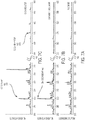
- FIGs. 2A-2D are MS spectra (shown on the same x and y scales) showing peak intensities of selected vapors used to determine an exemplary OPC, dimethyl methyl phosphonate (DMMP), in concert with the present invention in the AFT-MS system of FIG. 1 .
- FIG. 2A is an MS background spectrum of room air showing contaminates detected therein.
- FIG. 2B is an MS spectrum showing analysis of a trace level quantity of DMMP in room air. The spectrum is nearly identical to the background spectrum of FIG. 2A indicating that the analyte vapor DMMP is not detected alone at the trace level. However, the DMMP vapor can be detected in the presence of selected trialkylamine dopants.
- FIG. 1 is an MS background spectrum of room air showing contaminates detected therein.
- FIG. 2B is an MS spectrum showing analysis of a trace level quantity of DMMP in room air. The spectrum is nearly identical to the background spectrum of FIG. 2A indicating that the analyte
- 2C shows an MS spectrum for a trace quantity of an exemplary trialkylamine dopant, triethylamine (TEA), in room air.
- Trialkylamines have high proton affinities relative to other species, and thus are observed at trace levels.
- a peak corresponding to the protonated TEA moiety [TEA ⁇ H + ] is positioned at an m/z value of 102.
- the TEA dopant has a high proton affinity and does not transfer the proton to DMMP, [TEA ⁇ H + ] does form an adduct [TEA ⁇ H + ⁇ DMMP] with the OPC in the AFT leading into the MS that is used to selectively detect OPCs in the sample vapor.
- the adduct generates a characteristic peak that permits the OPC to be determined at trace quantities.
- FIG. 2D shows the MS peak corresponding to the adduct [TEA ⁇ H + ⁇ DMMP] formed between the TEA dopant and the DMMP analyte of interest at an m/z value of 226. Presence of the adduct peak in the spectrum confirms the presence of the DMMP analyte in the vapor sample, which is not detected when the sample vapor is analyzed without the dopant therein.
- FIGs. 3A-3D are MS spectra showing peak intensities of selected vapors used to determine another exemplary OPC, tributyl phosphate (TBP), in the detection system of FIG. 1 .
- FIG. 3A is an MS background spectrum of room air showing contaminates detected therein.
- FIG. 3B shows the MS spectrum resulting from analysis of a trace quantity of the analyte TBP in room air. As with DMMP described previously, the spectrum indicates that the analyte TBP is not detected at the trace level. However, TBP vapor can be detected in the presence of another trialkylamine dopant described hereafter.
- FIG. 3A is an MS background spectrum of room air showing contaminates detected therein.
- FIG. 3B shows the MS spectrum resulting from analysis of a trace quantity of the analyte TBP in room air. As with DMMP described previously, the spectrum indicates that the analyte TBP is not detected at the trace level. However, TBP vapor can be detected in the presence of
- 3C shows the MS spectrum of a trace quantity of another trialkylamine dopant in room air, i.e., tributylamine (TBA), shown by the presence of a peak at an m/z value of 186 corresponding to the protonated TBA moiety [TBA ⁇ H + ].
- TBA tributylamine
- the TBA dopant forms an adduct [TBA ⁇ H + ⁇ TBP] with the OPC in the AFT leading into the MS that has a characteristic peak at an m/z value of 452 that permits the TBP analyte to be determined at trace quantities.
- 3D shows the MS peak corresponding to the [TBA ⁇ H + ⁇ TBP] adduct formed between the TBA dopant ion and the TBP analyte of interest.
- the adduct peak in the spectrum confirms the presence of the TBP analyte in the sample, which was not previously detected in the sample vapor when analyzed alone.
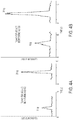
- FIGs. 4A-4B show selected ion monitoring (SIM) peaks corresponding to adducts formed between TBP (the OPC) and the dopant TBA ( FIG. 4A ) and the dopant TEA ( FIG. 4B ), respectively, used to determine the TBP analyte at different concentrations [e.g., 6 picograms per microliter (6 pg/ ⁇ L) and 24 pg/ ⁇ L in methanol). 1 ⁇ L of each TBP solution was spiked onto a filament and released by desorption into the air stream at the inlet of the AFT leading to the MS system by heating the filament. Dopants were delivered from a permeation tube placed inside the AFT ( FIG. 1 ). In FIG.
- SIM selected ion monitoring
- a SIM peak monitored at an m/z value of 452 corresponding to the adduct [TBA ⁇ H + ⁇ TBP] confirmed the presence of the TBP analyte in the vapor sample.
- a SIM peak positioned at an m/z value of 368 corresponding to the adduct [TEA ⁇ H + ⁇ TBP] was monitored, which confirmed the presence of the TBP analyte in the vapor sample.
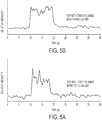
- FIG. 5A shows a SIM peak at an m/z value of 284 corresponding to the adduct [TEA ⁇ H + ⁇ TEP] formed between another exemplary OPC analyte, TEP, and another exemplary dopant, TEA, used to determine TEP at trace concentrations.
- the peak rises above the background when the permeation tube containing TEP is positioned in front of the AFT inlet and falls back to baseline when the TEP permeation tube is removed, for example, at 10 seconds and 20 seconds, respectively.
- Results yield a concentration for the TEP analyte of about 0.04 ng/L or about 5 parts-per-trillion (5 ppt).
- 5B shows a SIM peak at an m/z value of 368 that corresponds to the adduct [TBA ⁇ H + ⁇ TEP] formed between the TEP analyte (OPC) and another exemplary dopant, TBA.
- the confirmatory peak again rises above the background when the permeation tube containing TEP is positioned in front of the AFT inlet and falls back to baseline when the TEP permeation tube is removed from the inlet.
- Results again yield a concentration for the TEP analyte of about 0.04 ng/L or about 5 parts-per-trillion (5 ppt).
- FIGs. 6A-6C are MS spectra showing vapor detection of an exemplary illicit drug, methamphetamine, in concert with the present invention.
- FIG. 6A is a background spectrum of room air showing trace level contaminates therein.
- FIG. 6B shows results from the analysis of a vapor sample containing a trace quantity of methamphetamine.
- a glass slide containing about 10 ug of the solid analyte of interest was presented at the AFT inlet.
- Methamphetamine vapor released from the glass slide was analyzed.
- a peak corresponding to the [Meth ⁇ H + ] moiety positioned at an m/z of 150 is observed, which confirms the presence of the methamphetamine.
- FIG. 6A is a background spectrum of room air showing trace level contaminates therein.
- FIG. 6B shows results from the analysis of a vapor sample containing a trace quantity of methamphetamine.
- 6C shows results from another test used to determine methamphetamine in a sample vapor.
- a permeation tube containing the dopant TBP was positioned inside the AFT inlet, which delivered the dopant into the AFT.
- Methamphetamine vapor released from the solid on the glass slide combines with the TBP dopant released into the AFT forming an adduct [Meth ⁇ H + ⁇ TBP] that generates a peak in the MS spectrum positioned at an m/z of 416. Presence of the peak confirms presence of the analyte of interest in the vapor sample.
- the confirmation peak includes a peak intensity that is enhanced by a factor of about 3 times, which permits a determination of the methamphetamine concentration therein.
- the drug an amine
- OPC trialkylphosphate
- FIGs. 7A-7C are MS spectra showing results for detection of another illicit drug, cocaine, in concert with the present disclosure.
- FIG. 7A is a background spectrum of room air showing trace level contaminates therein.
- FIG. 7B shows analysis results of a trace quantity of cocaine vapor released from a glass slide containing about 10 ug of the solid sample into the AFT. As shown in the figure, a peak corresponding to the [Cocaine ⁇ H + ] moiety positioned at an m/z of 304 with a sufficiently strong intensity to identify the presence of cocaine in the vapor sample. However, as shown previously in FIG.
- use of the dopant TBP delivered, for example, from a permeation tube positioned inside the AFT yields a unique peak in the MS spectrum positioned at an m/z of 570, which corresponds to the adduct [Cocaine ⁇ H + ⁇ TBP] formed in the AFT between the cocaine analyte and the TBP dopant that confirms presence of the cocaine analyte of interest in the vapor sample.
- the m/z 570 peak has a lower relative intensity, but does confirm presence of the illicit drug of interest by generating a unique adduct.
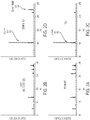
- FIGs. 8A-8B show SIM peaks used for determination of a trace quantity [e.g., 1 ng] of heroin, another illicit drug, in concert with the present invention.
- a trace quantity e.g., 1 ng
- 1 ⁇ L of a 1 ng/mL heroin sample in methanol was deposited onto a filament and the methanol was allowed to evaporate.
- the heroin residue (1 ng) was desorbed from the heated filament into the inlet of the AFT. No dopant was present in the AFT.
- Results of the SIM trace monitored at an m/z of 370 show presence of a protonated heroin moiety [Heroin ⁇ H + ], which appeared about 2 seconds after applying heat to the filament. As shown in FIG.
- the peak was observed at an arbitrary time of about 14 seconds. However, the peak corresponding to the [Heroin ⁇ H + ⁇ TBP] adduct ion at an m/z of 636 is absent from the SIM trace, confirming the absence of the dopant in the vapor sample.
- FIG. 8B the test was repeated with a permeation tube containing TBP dopant positioned just inside the inlet of the AFT.
- results show a relatively minor peak positioned at an m/z of 370 for the protonated heroin moiety and a new unique SIM peak observed at an m/z of 636 which corresponds to the adduct ion [Heroin ⁇ H + ⁇ TBP] formed between the heroin analyte of interest and the TBP dopant in the AFT.
- Results show the adduct peak has an enhanced peak intensity of about 2 times, which permits determination of the heroin analyte of interest.
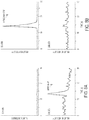
- FIG. 9 compares IMS spectra collected with the IMS system of FIG. 1B for an exemplary OPC and the OPC in combination with an exemplary dopant used for detection of the OPC in concert with the present invention.
- reactant ions are protonated water molecules.
- the bottom spectrum demonstrates the result of introducing DMMP vapor into the system without a dopant present.
- a protonated monomer [DMMP ⁇ H + ] and a proton-bound dimer [(DMMP) 2 ⁇ H + ] are observed.
- the present invention has many applications in the detection of OPCs, illicit drugs, chemical weapons, and pesticides, such as in cargo, in baggage, and in screening mail.
- Non-contact detection would significantly improve interdiction efforts in these areas.
- OPCs including pesticides and nerve agents ability to detect these agents at or below part-per-trillion (ppt) levels will be highly valuable in any area where detection of these compounds below hazardous levels is desired.
- ppt part-per-trillion
- FIGs. 2A-2D present results.
- a capped 2-mL vial containing about 0.5 mL undiluted TEA dopant was introduced in front of the AFT inlet ( FIG. 1 ).
- 1 ⁇ L aliquots of tributylphosphate (TBP) solutions with different concentrations were delivered in separate experiments to a coiled Ni-chrome wire filament connected to a 10V DC power supply that heated the wire desorbing the TBP at the inlet of the AFT introducing the vapor into the air stream along with the TEA dopant.
- TBP tributylphosphate
- a spike consisting of 6 pg of the TBP analyte, a peak width of ⁇ 6 seconds, and an air volume of 1 L corresponds with an unoptimized detection limit for TBP of about 6 pg in 1 L, or approximately 780 parts-per-quadrillion (ppq).
- ppq parts-per-quadrillion
- TEP an exemplary OPC
- TEA an exemplary dopant vapor
- the permeation tube delivered the TEP at a rate of, for example, ⁇ 5 ng/min at a temperature of 50 °C, for an estimated delivery at room temperature of ⁇ 0.6 ng/min.
- TEP OPC
- TBA another exemplary dopant vapor
- TBA another exemplary dopant vapor
- FIG. 5B shows a SIM peak at an m/z value of 368 that corresponds to the adduct [TBA ⁇ H + ⁇ TEP] formed between the TEP analyte (OPC) and the TBA dopant.
- Results again yield a concentration for the TEP analyte of about 0.04 ng/L or about 5 parts-per-trillion (5 ppt).
- a capped 4-mL vial containing about 0.5 mL undiluted tributylphosphate (TBP) dopant was introduced in front of the AFT inlet ( FIG. 1 ).
- a 10 ug sample of cocaine residue was placed on an 18 x 18 mm glass slide and placed at the inlet of the AFT introducing the cocaine vapor into the air stream along with the TBP dopant.
- the air stream flowed through the reaction region at a flow rate of about 10 L/min towards the inlet of the mass spectrometer.
- FIG. 7C presents results.
- Equilibrium vapor pressure of cocaine (literature) ranges between 20 parts-per-trillion (ppt) and 400 ppt. Both of these peaks demonstrate the ability to detect cocaine vapor from a 10 ug residue introduced into a 10 L/min flow at ambient temperature of ⁇ 20 °C using a full scan of the mass spectrometer.
- Vapor concentrations of the sample containing 1 pg of cocaine in an air volume of about 0.5 L was introduced into the instrument at a 10 L/min flow rate, corresponding to an unoptimized detection limit for cocaine of ⁇ 160 parts-per-quadrillion (ppq).
- a capped 4-mL vial containing about 0.5 mL tributylphosphate (TBP) dopant was introduced in front of the AFT inlet ( FIG. 1 ).
- a 1 ⁇ L aliquot of a heroin solution with a concentration of 1 ng/ ⁇ L was delivered to a coiled Ni-chrome wire filament.
- the filament was connected to a 10V DC power supply that heated the wire desorbing the heroin at the inlet of the AFT introducing the vapor into the air stream along with the TBP dopant.
- the air stream flowed through the reaction region at a flow rate of about 10 L/min towards the inlet of the mass spectrometer.
- the spike consisting of 1 ng of the heroin analyte, a peak width of ⁇ 5 seconds, and an air volume of about 0.8 L (i.e., at the 10 L/min flow rate) corresponds with an unoptimized detection for heroin of about 1 ng in 0.8 L, or approximately 81 parts-per-trillion (ppt).
- the observed peak is well above the detection limit of ⁇ 1 ppt based at the observed signal-to-noise ratio.
- a hand-held ion mobility spectrometer (e.g., an LCD ABBII, Smiths Detection, Watford, U.K.) was used for detecting OPC vapors in the presence of various dopants.
- a flow diagram is presented in FIG. 1B . Modifications included removing ammonia vapors from the instrument by replacing the ammonia doped molecular sieve with fresh undoped molecular sieve several times over an extended period to change the reactant ion chemistry from ammonium ions to hydronium ions.
- the inlet of the IMS was placed loosely inside a 1-inch O.D. tube so that the IMS could sample vapors at a rate determined by its internal flow system.
- Clean, dry air was supplied in excess at a rate of 10 L/min flowing down the tube towards the IMS inlet with the excess venting around the inlet.
- the 1-inch tube contained two tees in series between the air supply and the inlet to the IMS. Each tee was capable of containing a 2 mL glass vial. A2 mL vial containing DMMP with the cap removed was placed in the first tee and the resulting IMS spectra is shown in the bottom trace of FIG. 9 , confirming detection of a protonated monomer and proton-bound dimer of DMMP.
- the method comprises, consists essentially of or consists of forming a proton-bound adduct ion between at least one OPC and at least one secondary or tertiary amine in a reaction region defined between an ionization source and the ion detector, and detecting the proton-bound adduct ion with the ion detector to confirm presence of the OPC and/or the illicit drug.
- This embodiment may further include the at least one secondary or tertiary amine having a proton affinity greater than the organophosphorus compound ion.
- Certain embodiments may or may not also include the at least one secondary or tertiary amine including a proton affinity between 220 kcal/mol and 250 kcal/mol. Any of the preceding embodiments may further include the at least one OPC being an analyte and/or the at least one secondary or tertiary amine being a dopant.
- any of the preceding embodiments may include the OPC being a phosphonate and/or an organophosphate.
- Any of the preceding embodiments may include the dopant being a dialkylamine, alkyl substituted derivative of pyridine, and/or a trialkylamine.
- Certain of the preceding embodiments, where applicable, may further include the dialkylamine or trialkylamine having R groups with between 1 and 12 carbons including: diethylamine, diisopropyl amine, diethylmethyl amine, triethylamine, tripropylamine, tributylamine, trioctylamine, tridecylamine, tridodecylamine, and any combination thereof.
- any of the preceding embodiments may include the OPC as detectable at 100 parts-per-quadrillion or better.
- Any of the preceding embodiments may include the illicit drug as an analyte and/or the at least one OPC as a dopant.
- Any of the preceding embodiments may include the OPC is a phosphonate and/or an organophosphate.
- Any of the preceding embodiments may include the illicit drug as having at least one of: heroin, cocaine, and methamphetamine.
- the illicit drug is detectable at 160 parts-per-quadrillion or better.
- the ion detector may comprise a mass spectrometer or an ion mobility spectrometer.
- the method may further include ionizing a vapor sample comprising the at least one secondary or tertiary amine and/or the at least one OPC therein with the ionization source, wherein the at least one secondary or tertiary amine has a proton affinity greater than or equal to about 220 kcal/mol.
- the method comprises, consists essentially of or consists of detecting an organophosphorus compound (OPC) and/or an illicit drug with an ion detector by ionizing a vapor sample with an ionization source, the vapor sample containing at least one OPC and at least one secondary or tertiary amine, introducing the ionized vapor sample containing the at least one OPC and at least one secondary or tertiary amine therein into a reaction region defined between the ionization source and the ion detector, forming at least one proton-bound adduct ion between the OPC and the at least one secondary or tertiary amine therein, and detecting the at least one proton-bound adduct ion with the ion detector to confirm presence of the OPC and/or the illicit drug in the vapor sample.
- OPC organophosphorus compound
- This embodiment may further comprise the at least one secondary or tertiary amine having a proton affinity greater than the organophosphorus compound ion.
- the at least one secondary or tertiary amine may have a proton affinity between 220 kcal/mol and 250 kcal/mol.
- the at least one OPC is an analyte and/or the at least one secondary or tertiary amine is a dopant.
- the dopant may be a dialkylamine, alkyl substituted derivative of pyridine, or a trialkylamine.
Landscapes
- Chemical & Material Sciences (AREA)
- Health & Medical Sciences (AREA)
- Life Sciences & Earth Sciences (AREA)
- Engineering & Computer Science (AREA)
- Physics & Mathematics (AREA)
- General Physics & Mathematics (AREA)
- Pathology (AREA)
- Immunology (AREA)
- Analytical Chemistry (AREA)
- Biochemistry (AREA)
- General Health & Medical Sciences (AREA)
- Food Science & Technology (AREA)
- Medicinal Chemistry (AREA)
- Combustion & Propulsion (AREA)
- Other Investigation Or Analysis Of Materials By Electrical Means (AREA)
- Investigating Or Analysing Biological Materials (AREA)
- Spectroscopy & Molecular Physics (AREA)
- Chemical Kinetics & Catalysis (AREA)
- Electrochemistry (AREA)
- Medicinal Preparation (AREA)
Claims (15)
- Procédé de détection d'un composé organophosphoré (OPC) et/ou d'une drogue illégale à l'aide d'un détecteur d'ions, le procédé comprenant les étapes suivantes :la formation d'un ion d'adduit lié à un proton entre au moins un OPC et au moins une amine secondaire ou tertiaire dans une région de réaction définie entre une source d'ionisation et le détecteur d'ions ; etla détection de l'ion d'adduit lié à un proton à l'aide du détecteur d'ions pour confirmer la présence de l'OPC et/ou de la drogue illégale, où, de manière facultative, le détecteur d'ions est un spectromètre de masse ou un spectromètre de mobilité ionique.
- Procédé selon la revendication 1 dans lequel l'au moins une amine secondaire ou tertiaire a une affinité protonique supérieure à l'ion du composé organophosphoré, dans lequel, de manière facultative, l'au moins une amine secondaire ou tertiaire a une affinité protonique entre 220 kcal/mol et 250 kcal/mol.
- Procédé selon l'une quelconque des revendications précédentes, dans lequel l'au moins un OPC est un analyte et l'au moins une amine secondaire ou tertiaire est un dopant, dans lequel, de manière facultative :(i) l'au moins un OPC est un phosphonate ou un organophosphate ; et/ou(ii) le dopant est une dialkylamine, un dérivé de pyridine substitué par un alkyle, ou une trialkylamine.
- Procédé selon la revendication 3 dans lequel la dialkylamine ou la trialkylamine ont des groupes R ayant entre 1 et 12 atomes de carbone et, de manière facultative, dans lequel la dialkylamine ou trialkylamine est choisie parmi la diéthylamine, la diisopropyle amine, la diéthylméthyl amine, la triéthylamine, la tripropylamine, la tributylamine, la trioctylamine, la tridécylamine, la tridodécylamine, et des combinaisons de celles-ci.
- Procédé selon la revendication 3 dans lequel l'OPC est détectable à 100 parties par quadrillion ou mieux.
- Procédé selon la revendication 1 dans lequel la drogue illégale est un analyte et l'au moins un OPC est un dopant, dans lequel, de manière optionnelle, l'OPC est un phosphonate ou un organophosphate.
- Procédé selon l'une quelconque des revendications précédentes, dans lequel la drogue illégale comprend au moins l'un parmi : l'héroïne, la cocaïne et la méthamphétamine.
- Procédé selon l'une quelconque des revendications précédentes, dans lequel la drogue illégale est détectable à 160 parties par quadrillion ou mieux.
- Procédé selon l'une quelconque des revendications précédentes, incluant en outre l'ionisation d'un échantillon de vapeur comprenant l'au moins une amine secondaire ou tertiaire et/ou l'au moins un OPC dans celui-ci avec la source d'ionisation, dans lequel l'au moins une amine secondaire ou tertiaire a une affinité protonique supérieure ou égale à environ 220 kcal/mol.
- Procédé selon la revendication 1 comprenant en outre :l'ionisation d'un échantillon de vapeur avec une source d'ionisation, l'échantillon de vapeur contenant au moins un OPC et/ou au moins une amine secondaire ou tertiaire ;l'introduction de l'échantillon de vapeur ionisée contenant l'au moins un OPC et l'au moins une amine secondaire ou tertiaire dans celui-ci dans une région de réaction définie entre la source d'ionisation et le détecteur d'ions ;la formation d'au moins un ion d'adduit lié à un proton entre l'OPC et l'au moins une amine secondaire ou tertiaire dans celui-ci ; etla détection de l'au moins un ion d'adduit lié à un proton avec le détecteur d'ions pour confirmer la présence de l'OPC et/ou de la drogue illégale dans l'échantillon de vapeur.
- Procédé selon la revendication 10 dans lequel l'au moins une amine secondaire ou tertiaire a une affinité protonique supérieure à l'ion du composé organophosphoré, dans lequel, de manière facultative, l'au moins une amine secondaire ou tertiaire a une affinité protonique entre 220 kcal/mol et 250 kcal/mol.
- Procédé selon la revendication 10 dans lequel l'au moins un OPC est un analyte et l'au moins une amine secondaire ou tertiaire est un dopant, dans lequel, de manière facultative, se trouve une dialkylamine, un dérivé de pyridine substitué par un alkyle ou une trialkylamine.
- Procédé selon la revendication 12 dans lequel la dialkylamine ou la trialkylamine ont des groupes R ayant entre 1 et 12 atomes de carbone et, de manière facultative, dans lequel la dialkylamine ou trialkylamine est choisie parmi la diéthylamine, la diisopropyle amine, la diéthylméthyl amine, la triéthylamine, la tripropylamine, la tributylamine, la trioctylamine, la tridécylamine, la tridodécylamine, et des combinaisons de celles-ci.
- Procédé selon la revendication 10 dans lequel l'OPC est détectable à 100 parties par quadrillion ou mieux.
- Procédé selon la revendication 10 dans lequel l'au moins une amine secondaire ou tertiaire est une drogue illégale et l'au moins un OPC est un dopant, dans lequel, de manière facultative, la drogue illégale est détectable à 160 parties par quadrillion ou plus.
Applications Claiming Priority (2)
| Application Number | Priority Date | Filing Date | Title |
|---|---|---|---|
| US15/211,752 US10119937B2 (en) | 2016-07-15 | 2016-07-15 | Method for detecting organophosphorus compounds and illicit drugs |
| PCT/US2017/028758 WO2018013195A1 (fr) | 2016-07-15 | 2017-04-21 | Procédé de détection de composés organophosphorés et de drogues illicites |
Publications (2)
| Publication Number | Publication Date |
|---|---|
| EP3485270A1 EP3485270A1 (fr) | 2019-05-22 |
| EP3485270B1 true EP3485270B1 (fr) | 2021-01-06 |
Family
ID=58671922
Family Applications (1)
| Application Number | Title | Priority Date | Filing Date |
|---|---|---|---|
| EP17721919.3A Active EP3485270B1 (fr) | 2016-07-15 | 2017-04-21 | Méthode de détection des composés organophosphorés et des drogues illicites |
Country Status (8)
| Country | Link |
|---|---|
| US (1) | US10119937B2 (fr) |
| EP (1) | EP3485270B1 (fr) |
| AU (1) | AU2017295125B2 (fr) |
| CA (1) | CA3028086C (fr) |
| IL (1) | IL263778B (fr) |
| MX (1) | MX2019000399A (fr) |
| SG (1) | SG11201811079QA (fr) |
| WO (1) | WO2018013195A1 (fr) |
Families Citing this family (2)
| Publication number | Priority date | Publication date | Assignee | Title |
|---|---|---|---|---|
| US11043370B2 (en) | 2018-07-20 | 2021-06-22 | Battelle Memorial Institute | Device and system for selective ionization and analyte detection and method of using the same |
| US10670561B2 (en) | 2018-07-20 | 2020-06-02 | Battelle Memorial Institute | Device and system for selective ionization and analyte detection and method of using the same |
Family Cites Families (4)
| Publication number | Priority date | Publication date | Assignee | Title |
|---|---|---|---|---|
| US5234838A (en) | 1990-04-17 | 1993-08-10 | Environmental Technologies Group, Inc. | Ammonia monitor based on ion mobility spectrometry with selective dopant chemistry |
| US6239428B1 (en) | 1999-03-03 | 2001-05-29 | Massachusetts Institute Of Technology | Ion mobility spectrometers and methods |
| US7812305B2 (en) * | 2006-06-29 | 2010-10-12 | Sionex Corporation | Tandem differential mobility spectrometers and mass spectrometer for enhanced analysis |
| US9123520B2 (en) | 2012-04-02 | 2015-09-01 | Battelle Memorial Institute | Method for selective detection of explosives in mass spectrometer or ion mobility spectrometer at parts-per-quadrillion level |
-
2016
- 2016-07-15 US US15/211,752 patent/US10119937B2/en active Active
-
2017
- 2017-04-21 MX MX2019000399A patent/MX2019000399A/es unknown
- 2017-04-21 EP EP17721919.3A patent/EP3485270B1/fr active Active
- 2017-04-21 SG SG11201811079QA patent/SG11201811079QA/en unknown
- 2017-04-21 CA CA3028086A patent/CA3028086C/fr active Active
- 2017-04-21 WO PCT/US2017/028758 patent/WO2018013195A1/fr not_active Ceased
- 2017-04-21 AU AU2017295125A patent/AU2017295125B2/en active Active
-
2018
- 2018-12-18 IL IL263778A patent/IL263778B/en active IP Right Grant
Non-Patent Citations (1)
| Title |
|---|
| None * |
Also Published As
| Publication number | Publication date |
|---|---|
| WO2018013195A1 (fr) | 2018-01-18 |
| CA3028086C (fr) | 2024-11-12 |
| US20180017529A1 (en) | 2018-01-18 |
| IL263778A (en) | 2019-01-31 |
| IL263778B (en) | 2020-08-31 |
| AU2017295125B2 (en) | 2021-11-11 |
| AU2017295125A1 (en) | 2018-12-20 |
| EP3485270A1 (fr) | 2019-05-22 |
| CA3028086A1 (fr) | 2018-01-18 |
| MX2019000399A (es) | 2019-09-09 |
| SG11201811079QA (en) | 2019-01-30 |
| US10119937B2 (en) | 2018-11-06 |
Similar Documents
| Publication | Publication Date | Title |
|---|---|---|
| Puton et al. | Ion mobility spectrometry: Current status and application for chemical warfare agents detection | |
| US7015464B2 (en) | Apparatus for detecting chemical substances and method therefor | |
| De Gouw et al. | Measurements of volatile organic compounds in the earth's atmosphere using proton‐transfer‐reaction mass spectrometry | |
| Borsdorf et al. | Recent developments in ion mobility spectrometry | |
| Ewing et al. | A critical review of ion mobility spectrometry for the detection of explosives and explosive related compounds | |
| EP2435166B1 (fr) | Système d'analyse directe d'un échantillon à pression atmosphérique | |
| Krechmer et al. | Ion mobility spectrometry–mass spectrometry (IMS–MS) for on-and offline analysis of atmospheric gas and aerosol species | |
| EP2951853B1 (fr) | Appareil et procédés pour une spectrométrie de masse d'ionisation chimique à réaction assistée par plasma (parci) | |
| EP2834834B1 (fr) | Système et procédé pour la détection sélective d'analytes en phase vapeur | |
| WO2003067242A1 (fr) | Dispositif et procede bases sur faims servant a detecter des traces de vapeur dans un gaz entraineur | |
| EP3138117A1 (fr) | Systèmes et procédés de détection et de quantification de sélénium et de silicium dans des échantillons | |
| US20140030816A1 (en) | Reagent impregnated swipe for chemical detection | |
| Li et al. | Direct detection of chemical warfare agent simulants in soil by thermal desorption-low temperature plasma-mass spectrometry | |
| EP3485270B1 (fr) | Méthode de détection des composés organophosphorés et des drogues illicites | |
| Kendler et al. | Fragmentation pathways and mechanisms of aromatic compounds in atmospheric pressure studied by GC–DMS and DMS–MS | |
| Morrison et al. | Non-contact vapor detection of illicit drugs via atmospheric flow tube-mass spectrometry | |
| EP3824279B1 (fr) | Dispositif et système d'ionisation sélective et de détection d'analyte et procédé correspondant | |
| Baumbach et al. | Coupling of multi-capillary columns with two different types of ion mobility spectrometer | |
| Kanu et al. | Ion mobility spectrometry: recent developments and novel applications | |
| Zarejousheghani et al. | Sprayed liquid-gas extraction in combination with ion mobility spectrometry: A novel approach for the fast determination of semi-volatile compounds in air and from contaminated surfaces | |
| Gurung | Enthalpy of Decomposition of Chloride Adduct of Nitrate Esters with Complex Properties Using Tandem Mass Spectrometry and Tandem Ion Mobility Spectrometry | |
| Saad | Strategies for high-precision nitrogen and carbon position-specific isotope analysis | |
| Ruszkiewicz | The secret life of small alcohols: the discovery and exploitation of fragmentation, adduct formation and auto-modification phenomena in differential ion mobility spectrometry leading to next-generation toxicity screening | |
| Brüggemann | Development, characterization, and application of flowing atmospheric-pressure afterglow ionization for mass spectrometric analysis of ambient organic aerosols | |
| Marinsky et al. | Spectrometry^ Mass Spectrometry Ion Mobility |
Legal Events
| Date | Code | Title | Description |
|---|---|---|---|
| STAA | Information on the status of an ep patent application or granted ep patent |
Free format text: STATUS: UNKNOWN |
|
| STAA | Information on the status of an ep patent application or granted ep patent |
Free format text: STATUS: THE INTERNATIONAL PUBLICATION HAS BEEN MADE |
|
| PUAI | Public reference made under article 153(3) epc to a published international application that has entered the european phase |
Free format text: ORIGINAL CODE: 0009012 |
|
| STAA | Information on the status of an ep patent application or granted ep patent |
Free format text: STATUS: REQUEST FOR EXAMINATION WAS MADE |
|
| 17P | Request for examination filed |
Effective date: 20181206 |
|
| AK | Designated contracting states |
Kind code of ref document: A1 Designated state(s): AL AT BE BG CH CY CZ DE DK EE ES FI FR GB GR HR HU IE IS IT LI LT LU LV MC MK MT NL NO PL PT RO RS SE SI SK SM TR |
|
| AX | Request for extension of the european patent |
Extension state: BA ME |
|
| DAV | Request for validation of the european patent (deleted) | ||
| DAX | Request for extension of the european patent (deleted) | ||
| STAA | Information on the status of an ep patent application or granted ep patent |
Free format text: STATUS: EXAMINATION IS IN PROGRESS |
|
| 17Q | First examination report despatched |
Effective date: 20200123 |
|
| GRAP | Despatch of communication of intention to grant a patent |
Free format text: ORIGINAL CODE: EPIDOSNIGR1 |
|
| STAA | Information on the status of an ep patent application or granted ep patent |
Free format text: STATUS: GRANT OF PATENT IS INTENDED |
|
| INTG | Intention to grant announced |
Effective date: 20200721 |
|
| GRAS | Grant fee paid |
Free format text: ORIGINAL CODE: EPIDOSNIGR3 |
|
| GRAA | (expected) grant |
Free format text: ORIGINAL CODE: 0009210 |
|
| STAA | Information on the status of an ep patent application or granted ep patent |
Free format text: STATUS: THE PATENT HAS BEEN GRANTED |
|
| AK | Designated contracting states |
Kind code of ref document: B1 Designated state(s): AL AT BE BG CH CY CZ DE DK EE ES FI FR GB GR HR HU IE IS IT LI LT LU LV MC MK MT NL NO PL PT RO RS SE SI SK SM TR |
|
| REG | Reference to a national code |
Ref country code: GB Ref legal event code: FG4D |
|
| REG | Reference to a national code |
Ref country code: AT Ref legal event code: REF Ref document number: 1352917 Country of ref document: AT Kind code of ref document: T Effective date: 20210115 Ref country code: CH Ref legal event code: NV Representative=s name: RENTSCH PARTNER AG, CH Ref country code: CH Ref legal event code: EP |
|
| REG | Reference to a national code |
Ref country code: DE Ref legal event code: R096 Ref document number: 602017030908 Country of ref document: DE |
|
| REG | Reference to a national code |
Ref country code: FI Ref legal event code: FGE |
|
| REG | Reference to a national code |
Ref country code: IE Ref legal event code: FG4D |
|
| REG | Reference to a national code |
Ref country code: NL Ref legal event code: FP |
|
| REG | Reference to a national code |
Ref country code: AT Ref legal event code: MK05 Ref document number: 1352917 Country of ref document: AT Kind code of ref document: T Effective date: 20210106 |
|
| REG | Reference to a national code |
Ref country code: LT Ref legal event code: MG9D |
|
| PG25 | Lapsed in a contracting state [announced via postgrant information from national office to epo] |
Ref country code: NO Free format text: LAPSE BECAUSE OF FAILURE TO SUBMIT A TRANSLATION OF THE DESCRIPTION OR TO PAY THE FEE WITHIN THE PRESCRIBED TIME-LIMIT Effective date: 20210406 Ref country code: PT Free format text: LAPSE BECAUSE OF FAILURE TO SUBMIT A TRANSLATION OF THE DESCRIPTION OR TO PAY THE FEE WITHIN THE PRESCRIBED TIME-LIMIT Effective date: 20210506 Ref country code: HR Free format text: LAPSE BECAUSE OF FAILURE TO SUBMIT A TRANSLATION OF THE DESCRIPTION OR TO PAY THE FEE WITHIN THE PRESCRIBED TIME-LIMIT Effective date: 20210106 Ref country code: GR Free format text: LAPSE BECAUSE OF FAILURE TO SUBMIT A TRANSLATION OF THE DESCRIPTION OR TO PAY THE FEE WITHIN THE PRESCRIBED TIME-LIMIT Effective date: 20210407 Ref country code: LT Free format text: LAPSE BECAUSE OF FAILURE TO SUBMIT A TRANSLATION OF THE DESCRIPTION OR TO PAY THE FEE WITHIN THE PRESCRIBED TIME-LIMIT Effective date: 20210106 Ref country code: BG Free format text: LAPSE BECAUSE OF FAILURE TO SUBMIT A TRANSLATION OF THE DESCRIPTION OR TO PAY THE FEE WITHIN THE PRESCRIBED TIME-LIMIT Effective date: 20210406 |
|
| PG25 | Lapsed in a contracting state [announced via postgrant information from national office to epo] |
Ref country code: SE Free format text: LAPSE BECAUSE OF FAILURE TO SUBMIT A TRANSLATION OF THE DESCRIPTION OR TO PAY THE FEE WITHIN THE PRESCRIBED TIME-LIMIT Effective date: 20210106 Ref country code: AT Free format text: LAPSE BECAUSE OF FAILURE TO SUBMIT A TRANSLATION OF THE DESCRIPTION OR TO PAY THE FEE WITHIN THE PRESCRIBED TIME-LIMIT Effective date: 20210106 Ref country code: RS Free format text: LAPSE BECAUSE OF FAILURE TO SUBMIT A TRANSLATION OF THE DESCRIPTION OR TO PAY THE FEE WITHIN THE PRESCRIBED TIME-LIMIT Effective date: 20210106 Ref country code: LV Free format text: LAPSE BECAUSE OF FAILURE TO SUBMIT A TRANSLATION OF THE DESCRIPTION OR TO PAY THE FEE WITHIN THE PRESCRIBED TIME-LIMIT Effective date: 20210106 Ref country code: PL Free format text: LAPSE BECAUSE OF FAILURE TO SUBMIT A TRANSLATION OF THE DESCRIPTION OR TO PAY THE FEE WITHIN THE PRESCRIBED TIME-LIMIT Effective date: 20210106 |
|
| PG25 | Lapsed in a contracting state [announced via postgrant information from national office to epo] |
Ref country code: IS Free format text: LAPSE BECAUSE OF FAILURE TO SUBMIT A TRANSLATION OF THE DESCRIPTION OR TO PAY THE FEE WITHIN THE PRESCRIBED TIME-LIMIT Effective date: 20210506 |
|
| REG | Reference to a national code |
Ref country code: DE Ref legal event code: R097 Ref document number: 602017030908 Country of ref document: DE |
|
| PG25 | Lapsed in a contracting state [announced via postgrant information from national office to epo] |
Ref country code: EE Free format text: LAPSE BECAUSE OF FAILURE TO SUBMIT A TRANSLATION OF THE DESCRIPTION OR TO PAY THE FEE WITHIN THE PRESCRIBED TIME-LIMIT Effective date: 20210106 Ref country code: CZ Free format text: LAPSE BECAUSE OF FAILURE TO SUBMIT A TRANSLATION OF THE DESCRIPTION OR TO PAY THE FEE WITHIN THE PRESCRIBED TIME-LIMIT Effective date: 20210106 Ref country code: SM Free format text: LAPSE BECAUSE OF FAILURE TO SUBMIT A TRANSLATION OF THE DESCRIPTION OR TO PAY THE FEE WITHIN THE PRESCRIBED TIME-LIMIT Effective date: 20210106 |
|
| PLBE | No opposition filed within time limit |
Free format text: ORIGINAL CODE: 0009261 |
|
| STAA | Information on the status of an ep patent application or granted ep patent |
Free format text: STATUS: NO OPPOSITION FILED WITHIN TIME LIMIT |
|
| PG25 | Lapsed in a contracting state [announced via postgrant information from national office to epo] |
Ref country code: DK Free format text: LAPSE BECAUSE OF FAILURE TO SUBMIT A TRANSLATION OF THE DESCRIPTION OR TO PAY THE FEE WITHIN THE PRESCRIBED TIME-LIMIT Effective date: 20210106 Ref country code: SK Free format text: LAPSE BECAUSE OF FAILURE TO SUBMIT A TRANSLATION OF THE DESCRIPTION OR TO PAY THE FEE WITHIN THE PRESCRIBED TIME-LIMIT Effective date: 20210106 Ref country code: RO Free format text: LAPSE BECAUSE OF FAILURE TO SUBMIT A TRANSLATION OF THE DESCRIPTION OR TO PAY THE FEE WITHIN THE PRESCRIBED TIME-LIMIT Effective date: 20210106 Ref country code: MC Free format text: LAPSE BECAUSE OF FAILURE TO SUBMIT A TRANSLATION OF THE DESCRIPTION OR TO PAY THE FEE WITHIN THE PRESCRIBED TIME-LIMIT Effective date: 20210106 |
|
| 26N | No opposition filed |
Effective date: 20211007 |
|
| PG25 | Lapsed in a contracting state [announced via postgrant information from national office to epo] |
Ref country code: LU Free format text: LAPSE BECAUSE OF NON-PAYMENT OF DUE FEES Effective date: 20210421 |
|
| REG | Reference to a national code |
Ref country code: BE Ref legal event code: MM Effective date: 20210430 |
|
| PG25 | Lapsed in a contracting state [announced via postgrant information from national office to epo] |
Ref country code: ES Free format text: LAPSE BECAUSE OF FAILURE TO SUBMIT A TRANSLATION OF THE DESCRIPTION OR TO PAY THE FEE WITHIN THE PRESCRIBED TIME-LIMIT Effective date: 20210106 Ref country code: AL Free format text: LAPSE BECAUSE OF FAILURE TO SUBMIT A TRANSLATION OF THE DESCRIPTION OR TO PAY THE FEE WITHIN THE PRESCRIBED TIME-LIMIT Effective date: 20210106 Ref country code: FR Free format text: LAPSE BECAUSE OF NON-PAYMENT OF DUE FEES Effective date: 20210430 |
|
| PG25 | Lapsed in a contracting state [announced via postgrant information from national office to epo] |
Ref country code: SI Free format text: LAPSE BECAUSE OF FAILURE TO SUBMIT A TRANSLATION OF THE DESCRIPTION OR TO PAY THE FEE WITHIN THE PRESCRIBED TIME-LIMIT Effective date: 20210106 |
|
| PG25 | Lapsed in a contracting state [announced via postgrant information from national office to epo] |
Ref country code: IT Free format text: LAPSE BECAUSE OF FAILURE TO SUBMIT A TRANSLATION OF THE DESCRIPTION OR TO PAY THE FEE WITHIN THE PRESCRIBED TIME-LIMIT Effective date: 20210106 Ref country code: IE Free format text: LAPSE BECAUSE OF NON-PAYMENT OF DUE FEES Effective date: 20210421 |
|
| PG25 | Lapsed in a contracting state [announced via postgrant information from national office to epo] |
Ref country code: IS Free format text: LAPSE BECAUSE OF FAILURE TO SUBMIT A TRANSLATION OF THE DESCRIPTION OR TO PAY THE FEE WITHIN THE PRESCRIBED TIME-LIMIT Effective date: 20210506 |
|
| PG25 | Lapsed in a contracting state [announced via postgrant information from national office to epo] |
Ref country code: BE Free format text: LAPSE BECAUSE OF NON-PAYMENT OF DUE FEES Effective date: 20210430 |
|
| PG25 | Lapsed in a contracting state [announced via postgrant information from national office to epo] |
Ref country code: CY Free format text: LAPSE BECAUSE OF FAILURE TO SUBMIT A TRANSLATION OF THE DESCRIPTION OR TO PAY THE FEE WITHIN THE PRESCRIBED TIME-LIMIT Effective date: 20210106 |
|
| P01 | Opt-out of the competence of the unified patent court (upc) registered |
Effective date: 20230530 |
|
| PG25 | Lapsed in a contracting state [announced via postgrant information from national office to epo] |
Ref country code: HU Free format text: LAPSE BECAUSE OF FAILURE TO SUBMIT A TRANSLATION OF THE DESCRIPTION OR TO PAY THE FEE WITHIN THE PRESCRIBED TIME-LIMIT; INVALID AB INITIO Effective date: 20170421 |
|
| PG25 | Lapsed in a contracting state [announced via postgrant information from national office to epo] |
Ref country code: MK Free format text: LAPSE BECAUSE OF FAILURE TO SUBMIT A TRANSLATION OF THE DESCRIPTION OR TO PAY THE FEE WITHIN THE PRESCRIBED TIME-LIMIT Effective date: 20210106 |
|
| PG25 | Lapsed in a contracting state [announced via postgrant information from national office to epo] |
Ref country code: MT Free format text: LAPSE BECAUSE OF FAILURE TO SUBMIT A TRANSLATION OF THE DESCRIPTION OR TO PAY THE FEE WITHIN THE PRESCRIBED TIME-LIMIT Effective date: 20210106 |
|
| PGFP | Annual fee paid to national office [announced via postgrant information from national office to epo] |
Ref country code: DE Payment date: 20250317 Year of fee payment: 9 |
|
| PGFP | Annual fee paid to national office [announced via postgrant information from national office to epo] |
Ref country code: CH Payment date: 20250501 Year of fee payment: 9 |
|
| PG25 | Lapsed in a contracting state [announced via postgrant information from national office to epo] |
Ref country code: TR Free format text: LAPSE BECAUSE OF FAILURE TO SUBMIT A TRANSLATION OF THE DESCRIPTION OR TO PAY THE FEE WITHIN THE PRESCRIBED TIME-LIMIT Effective date: 20210106 |
|
| PGFP | Annual fee paid to national office [announced via postgrant information from national office to epo] |
Ref country code: GB Payment date: 20260320 Year of fee payment: 10 |
|
| PGFP | Annual fee paid to national office [announced via postgrant information from national office to epo] |
Ref country code: FI Payment date: 20260330 Year of fee payment: 10 |
|
| PGFP | Annual fee paid to national office [announced via postgrant information from national office to epo] |
Ref country code: NL Payment date: 20260323 Year of fee payment: 10 |