EP3487100B1 - Harq-antwort-informationsübertragungsverfahren - Google Patents
Harq-antwort-informationsübertragungsverfahren Download PDFInfo
- Publication number
- EP3487100B1 EP3487100B1 EP16911098.8A EP16911098A EP3487100B1 EP 3487100 B1 EP3487100 B1 EP 3487100B1 EP 16911098 A EP16911098 A EP 16911098A EP 3487100 B1 EP3487100 B1 EP 3487100B1
- Authority
- EP
- European Patent Office
- Prior art keywords
- subframe
- information
- user equipment
- network device
- harq acknowledgement
- Prior art date
- Legal status (The legal status is an assumption and is not a legal conclusion. Google has not performed a legal analysis and makes no representation as to the accuracy of the status listed.)
- Active
Links
Images

Classifications
-
- H—ELECTRICITY
- H04—ELECTRIC COMMUNICATION TECHNIQUE
- H04L—TRANSMISSION OF DIGITAL INFORMATION, e.g. TELEGRAPHIC COMMUNICATION
- H04L1/00—Arrangements for detecting or preventing errors in the information received
- H04L1/12—Arrangements for detecting or preventing errors in the information received by using return channel
- H04L1/16—Arrangements for detecting or preventing errors in the information received by using return channel in which the return channel carries supervisory signals, e.g. repetition request signals
- H04L1/18—Automatic repetition systems, e.g. Van Duuren systems
- H04L1/1812—Hybrid protocols; Hybrid automatic repeat request [HARQ]
- H04L1/1819—Hybrid protocols; Hybrid automatic repeat request [HARQ] with retransmission of additional or different redundancy
-
- H—ELECTRICITY
- H04—ELECTRIC COMMUNICATION TECHNIQUE
- H04L—TRANSMISSION OF DIGITAL INFORMATION, e.g. TELEGRAPHIC COMMUNICATION
- H04L1/00—Arrangements for detecting or preventing errors in the information received
- H04L1/12—Arrangements for detecting or preventing errors in the information received by using return channel
- H04L1/16—Arrangements for detecting or preventing errors in the information received by using return channel in which the return channel carries supervisory signals, e.g. repetition request signals
- H04L1/18—Automatic repetition systems, e.g. Van Duuren systems
- H04L1/1829—Arrangements specially adapted for the receiver end
- H04L1/1854—Scheduling and prioritising arrangements
-
- H—ELECTRICITY
- H04—ELECTRIC COMMUNICATION TECHNIQUE
- H04L—TRANSMISSION OF DIGITAL INFORMATION, e.g. TELEGRAPHIC COMMUNICATION
- H04L5/00—Arrangements affording multiple use of the transmission path
- H04L5/003—Arrangements for allocating sub-channels of the transmission path
- H04L5/0053—Allocation of signalling, i.e. of overhead other than pilot signals
- H04L5/0055—Physical resource allocation for ACK/NACK
-
- H—ELECTRICITY
- H04—ELECTRIC COMMUNICATION TECHNIQUE
- H04W—WIRELESS COMMUNICATION NETWORKS
- H04W16/00—Network planning, e.g. coverage or traffic planning tools; Network deployment, e.g. resource partitioning or cells structures
- H04W16/14—Spectrum sharing arrangements between different networks
-
- H—ELECTRICITY
- H04—ELECTRIC COMMUNICATION TECHNIQUE
- H04W—WIRELESS COMMUNICATION NETWORKS
- H04W72/00—Local resource management
- H04W72/02—Selection of wireless resources by user or terminal
-
- H—ELECTRICITY
- H04—ELECTRIC COMMUNICATION TECHNIQUE
- H04W—WIRELESS COMMUNICATION NETWORKS
- H04W72/00—Local resource management
- H04W72/04—Wireless resource allocation
- H04W72/044—Wireless resource allocation based on the type of the allocated resource
- H04W72/0446—Resources in time domain, e.g. slots or frames
-
- H—ELECTRICITY
- H04—ELECTRIC COMMUNICATION TECHNIQUE
- H04W—WIRELESS COMMUNICATION NETWORKS
- H04W72/00—Local resource management
- H04W72/04—Wireless resource allocation
- H04W72/044—Wireless resource allocation based on the type of the allocated resource
- H04W72/0453—Resources in frequency domain, e.g. a carrier in FDMA
-
- H—ELECTRICITY
- H04—ELECTRIC COMMUNICATION TECHNIQUE
- H04W—WIRELESS COMMUNICATION NETWORKS
- H04W72/00—Local resource management
- H04W72/20—Control channels or signalling for resource management
- H04W72/23—Control channels or signalling for resource management in the downlink direction of a wireless link, i.e. towards a terminal
Definitions
- the present disclosure relates to the field of mobile communications technologies, and in particular, to a method for transmitting HARQ acknowledgement information and a device.
- a base station sends downlink data to user equipment (User Equipment, UE) in a subframe n. After receiving the downlink data, the UE sends HARQ acknowledgement information to the base station in a subframe n+4. If the HARQ acknowledgement information sent by the UE is a negative acknowledgement (NACK), the base station may re-transmit the downlink data to the UE in a subframe n+8.
- HARQ Hybrid Automatic Repeat-request
- FDD Frequency Division Duple
- a base station sends downlink data to UE in a subframe n. After receiving the data, the UE may send, based on different uplink/downlink configurations (UL/DL configuration) shown in Table 1, HARQ acknowledgement information to the base station in a subframe n+k.
- UL/DL configuration uplink/downlink configurations
- LAA-LTE Long Term Evolution
- TDM Time Division Multiplexing
- CATT "UCI transmission for Rel-14 eLAA", 3GPP DRAFT; R1-164198, 3RD GENERATION PARTNERSHIP PROJECT (3GPP), MOBILE COMPETENCE CENTRE ; 650, ROUTE DES LUCIOLES ; F-06921 SOPHIA-ANTIPOLIS CEDEX; FRANCE, vol. RAN WG1, no. Nanjing, China; 20160523- 20160527 14 May 2016 relates to UCI transmission.
- aspects of the present disclosure provide a method for transmitting HARQ acknowledgement information to provide a manner of performing HARQ feedback in an LAA-LTE system.
- the network device indicates a subframe in which the user equipment sends the HARQ acknowledgement information, and the user equipment does not need to select a subframe on its own, thereby minimizing a possibility that the HARQ acknowledgement information fails to be sent because a subframe selected by the user equipment may not be an uplink subframe, and improving a success rate of sending the HARQ acknowledgement information.
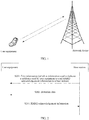
- FIG. 1 includes user equipment and a network device.
- the user equipment and the network device may communicate with each other. After the network device sends downlink data to the user equipment, the user equipment returns HARQ acknowledgement information to the network device depending on whether the downlink data is successfully received.
- the HARQ acknowledgement information includes an acknowledgement (ACK) and a NACK. If the user equipment successfully receives the downlink data sent by the network device, the user equipment may return an ACK to the network device, and the network device may continue to transmit new data or end the transmission process. However, if the user equipment fails to receive the downlink data sent by the network device, the user equipment may return a NACK to the network device, and the network device may re-transmit the data that is transmitted last time, to maximize a success rate of data transmission.
- ACK acknowledgement
- NACK acknowledgement
- an aspect of the present disclosure provides a new method for transmitting HARQ acknowledgement information.
- the method provided in this aspect of the present disclosure may be applied to an LAA-LTE system, and in addition may be applied to another system without a fixed uplink/downlink configuration, or may be applied to a system having a fixed uplink/downlink configuration.
- the technical solution provided in this aspect of the present disclosure may also be applied to an FDD system, a TDD system, or the like. This is not limited in this aspect of the present disclosure.
- an aspect of the present disclosure provides a method for transmitting HARQ acknowledgement information applied to an application scenario.
- the application scenario shown in FIG. 1 is used as an example.
- that a network device is a base station is used as an example.
- the base station may send first information to user equipment at the same time, where the first information is information used to indicate a subframe used by the user equipment to send HARQ acknowledgement information to the base station on an unlicensed carrier.
- the user equipment receives the first information sent by the base station.
- the first information may be sent by using a physical downlink control channel.
- the first information may be carried in downlink control information of the physical downlink control channel (where this is used as an example in the aspect shown in FIG. 2 ), or the first information may be sent separately, or the first information may be carried in other information in the physical downlink control channel. This is not limited in this aspect of the present disclosure.
- the downlink control information is scheduling information sent by the base station to the user equipment, and the downlink control information is, for example, downlink control information (Downlink Control Information, DCI), or may be other information.
- DCI Downlink Control Information
- the base station may first send DCI to the user equipment, and schedules a downlink transmission resource to the user equipment by using the DCI, so that the user equipment may receive, based on the downlink transmission resource indicated by the DCI, the downlink data sent by the base station.
- the downlink control information may carry uplink/downlink transmission resource allocation information, HARQ information, power control information, or the like.
- the base station sends the downlink data to the user equipment is used as an example.
- the DCI sent by the base station to the user equipment usually includes a downlink transmission resource scheduled for the downlink data.
- a subframe in which the user equipment feeds back the HARQ acknowledgement information for the downlink data is usually specified by using a protocol.
- a subframe that is selected by the user equipment and in which the HARQ acknowledgement information is sent is probably not an uplink subframe, and this may lead to a failure of sending the HARQ acknowledgement information.
- the base station may send the first information to the user equipment, the first information may indicate a subframe in which the user equipment sends the HARQ acknowledgement information, and the user equipment does not need to select a subframe on its own.
- uplink subframes are known to the base station, and therefore a possibility that a subframe selected by the user equipment is not an uplink subframe can be minimized, thereby improving a success rate of sending the HARQ acknowledgement information.
- the first information may be used to indicate a single subframe.
- the first information may include a subframe index or a subframe index offset of the single subframe indicated by the first information. If the first information includes the subframe index offset of the indicated single subframe, the subframe index offset may be an offset of the subframe index of the subframe indicated by the first information relative to a subframe index of a subframe in which the network device sends downlink data to the user equipment, and the downlink data is downlink data corresponding to the HARQ acknowledgement information.
- the correspondence herein means that the HARQ acknowledgement information is used for feeding back whether the downlink data is successfully received by the user equipment.
- the base station sends the DCI to the user equipment, and the DCI is used to schedule the downlink data sent by the base station to the user equipment in the subframe n.
- the first information is carried in the DCI.
- One or more bits (bit) are newly added to the DCI, and the newly-added bit is used as the first information to carry k or n+k to indicate the subframe n+k in which the user equipment sends the HARQ acknowledgement information to the base station for the downlink data.
- n+k is an index of the subframe in which the user equipment sends the HARQ acknowledgement information. If the first information includes k, the user equipment may calculate n+k on its own, and k may be considered as the subframe index offset. If the first information directly includes n+k, the user equipment does not need to perform calculation.
- the subframe selected by the base station may be an uplink subframe at a shortest distance from n.
- the base station sends downlink data in the subframe n, the subframe n, a subframe n+1, a subframe n+2, and a subframe n+3 are all downlink subframes, and a subframe n+4, a subframe n+5, a subframe n+6, and a subframe n+7 are all uplink subframes.
- the subframe n+4 is at a shortest distance from the subframe n, that is, a difference between n+4 and n is the smallest.
- the base station may enable the first information to indicate the subframe n+4, so that a delay in feeding back the HARQ acknowledgement information may be reduced as much as possible.
- a subframe indicated by the first information is not limited thereto.
- the base station may also select, based on another factor, a proper uplink subframe as the subframe indicated by the first information. For example, it may be required that a distance between a subframe in which a HARQ acknowledgement message is fed back and a subframe in which the base station sends the downlink data be greater than or equal to 4 ms, and therefore k in a selected uplink subframe n+k is greater than or equal to 4.
- the first information may be used to indicate a plurality of subframes. This may also be considered as that the first information indicates a subframe window, and the subframe window includes the plurality of subframes indicated by the first information.
- the first information may include one or more of subframe indexes of the plurality of subframes in the subframe window indicated by the first information, a subframe index of a start subframe and a subframe index of an end subframe in the subframe window, and a subframe index of a start subframe in the subframe window and subframe span information.
- the subframe span information is used to indicate a quantity of the subframes indicated by the first information, that is, a subframe index of a subframe that is indicated by the first information and that is included in the subframe window may be obtained based on the subframe index of the start subframe in the subframe window and the subframe span information. If the first information includes subframe indexes of a plurality of subframes, the plurality of subframes may be consecutive subframes or non-consecutive subframes.
- the start subframe selected by the base station in the subframe window may be an uplink subframe at a shortest distance from n.
- the base station sends downlink data in the subframe n, the subframe n, a subframe n+1, a subframe n+2, and a subframe n+3 are all downlink subframes, and a subframe n+4, a subframe n+5, a subframe n+6, and a subframe n+7 are uplink subframes.
- the subframe n+4 is at a shortest distance from the subframe n, that is, a difference between n+4 and n is the smallest.
- the base station may enable the start subframe in the subframe window indicated by the first information to be the subframe n+4.
- the span of the subframe window indicated by the first information may be selected to be within a proper range, for example, to be less than or equal to 10 or to be less than or equal to 8. In this way, a delay in feeding back the HARQ acknowledgement information may be minimized.
- a subframe indicated by the first information is not limited thereto.
- the base station may also select, based on another factor, a proper uplink subframe as the subframe indicated by the first information.
- the base station sends the DCI to the user equipment, and the DCI is used to schedule the downlink data sent by the base station to the user equipment in the subframe n.
- the first information is carried in the DCI.
- One or more bits (bit) are newly added to the DCI, and the newly-added bit is used to carry the first information indicating the subframe window, to indicate the uplink subframe that is included in the subframe window and in which the user equipment sends the HARQ acknowledgement information for the downlink data to the base station.
- the subframe window indicated by the first information is a subframe window whose start subframe is a subframe n+4 and whose end subframe is a subframe n+7, and the subframe window includes four uplink subframes, namely, the subframe n+4, a subframe n+5, a subframe n+6, and the subframe n+7.
- the first information may include subframe indexes, namely, n+4, n+5, n+6, and n+7, of the four subframes.
- the first information may include a subframe index of the start subframe and a subframe index of the end subframe in the subframe window, the subframe index of the start subframe is n+4, and the subframe index of the end subframe is n+7. Based on the subframe indexes, the user equipment may learn that the subframes indicated by the first information are the subframe n+4, the subframe n+5, the subframe n+6, and the subframe n+7.
- the first information may include a subframe index of the start subframe in the subframe window and subframe span information, the subframe index of the start subframe is n+4, and the subframe span information is 3.
- the user equipment may learn that the subframes indicated by the first information are the subframe n+4, the subframe n+5, the subframe n+6, and the subframe n+7.
- the numbers herein are merely examples provided to describe the solution in this aspect of the present disclosure, and this is not limited during actual application.
- the foregoing example describes a case in which the subframe indexes of the subframes indicated by the first information are consecutive.
- the subframe indexes indicated by the first information may alternatively be nonconsecutive.
- the subframe n+4, the subframe n+5, the subframe n+6, and the subframe n+7 are all uplink subframes, and the first information may be used to indicate some of the uplink subframes.
- the first information indicates the subframe n+4, the subframe n+6, and the subframe n+7 but does not indicate the subframe n+5, or indicates the subframe n+4 and the subframe n+7 but does not indicate the subframe n+5 and the subframe n+6.
- the subframe indexes indicated by the first subframe are nonconsecutive.
- the base station sends the downlink data to the user equipment, and the user equipment receives the downlink data.
- the first information is carried in DCI is used as an example.
- the DCI is used to schedule a downlink transmission resource. Therefore, after sending the DCI to the user equipment, the base station needs to send downlink data scheduled by using the DCI to the user equipment.
- the user equipment sends HARQ acknowledgement information for the downlink data sent by the base station, and the base station receives the HARQ acknowledgement information. If the user equipment determines that the downlink data is successfully received, the HARQ acknowledgement information sent by the user equipment is an ACK. If the user equipment determines that the downlink data fails to be received, the HARQ acknowledgement information sent by the user equipment is a NACK.
- the user equipment determines, depending on whether the downlink data is successfully received, whether the HARQ acknowledgement information sent to the base station is an ACK or a NACK, and then sends the HARQ acknowledgement information to the base station on an unlicensed carrier in the subframe indicated by the first information.
- the user equipment directly sends the HARQ acknowledgement information to the base station based on the subframe index included in the first information.
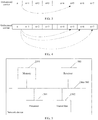
- the base station sends DCI to the user equipment on a PDCCH of the subframe n
- the DCI includes the first information
- the user equipment preempts, based on indication in the DCI, a channel in the subframe n+5 on the unlicensed carrier by using an LBT mechanism. If the channel is successfully preempted, the user equipment sends the HARQ acknowledgement information for the downlink data to the base station in the subframe n+5.
- FIG. 3 the base station sends DCI to the user equipment on a PDCCH of the subframe n
- the DCI includes the first information
- the subframe n, the subframe n+1, the subframe n+2, and the subframe n+3 are downlink subframes, and the subframe n+4, the subframe n+5, the subframe n+6, and the subframe n+7 are uplink subframes.
- the user equipment may fail to preempt a channel.
- the aspect shown in FIG. 3 is still used as an example. If the user equipment fails to preempt a channel in the subframe n+5 on the unlicensed carrier, apparently, the user equipment cannot send the HARQ acknowledgement information to the base station by using the subframe indicated by the base station. In this case, to ensure that the HARQ acknowledgement information can be sent to the base station, the user equipment may send the corresponding HARQ acknowledgement information on another unlicensed carrier.
- a premise for doing this is that there are a plurality of carriers, and certainly a channel needs to be preempted when the HARQ acknowledgement information is sent on each unlicensed carrier. If a channel on one of the unlicensed carriers is successfully preempted, the HARQ acknowledgement information is sent to the base station on the unlicensed carrier. There may be another case that the user equipment fails to preempt a channel on all unlicensed carriers of the user equipment. In this case, the user equipment may send the HARQ acknowledgement information to the base station on a licensed carrier.
- the user equipment may directly send the HARQ acknowledgement information on the licensed carrier.
- a channel does not need to be preempted on the licensed carrier, and the HARQ acknowledgement information can be directly sent, so that efficiency is relatively high and a success rate of sending the HARQ acknowledgement information is improved.
- the user equipment may first send a notification message to the network device.
- the notification message is used to instruct the user equipment to send the HARQ acknowledgement information to the network device on the unlicensed carrier, or is used to instruct the user equipment to send the HARQ acknowledgement information to the network device on the unlicensed carrier, so that the network device may listen and receive the HARQ acknowledgement information at a correct location.
- the user equipment sends the HARQ acknowledgement information successfully after making attempts on several carriers to send the HARQ acknowledgement information, for example, making separate attempts to preempt a channel on a plurality of unlicensed carriers, each time the user equipment sends the HARQ acknowledgement information on another carrier, the user equipment needs to send a notification message to the network device.
- the network device is a recipient. If the network device does not receive, in the subframe indicated by the first information, the HARQ acknowledgement information sent by the user equipment, the network device determines that the user equipment fails to send the HARQ acknowledgement information, and the network device may send the notification message to the user equipment.
- the notification message is used to instruct the user equipment to send the HARQ acknowledgement information to the network device on an unlicensed carrier. In this case, the notification message may indicate a specific unlicensed carrier, or the notification message is used to instruct the user equipment to send the HARQ acknowledgement information to the network device on a licensed carrier.
- the user equipment may send the HARQ acknowledgement information on another carrier based on the indication of the network device, and the network device may correctly receive the HARQ acknowledgement information. If the network device sends a notification message to the user equipment once, where the notification message is used to instruct the user equipment to send the HARQ acknowledgement information to the network device on the unlicensed carrier, and the network device still does not receive the HARQ acknowledgement information on the indicated unlicensed carrier, the network device determines that the user equipment still sends a device, and the network device may continue to send the notification message to the user equipment, to instruct the user equipment to send the HARQ acknowledgement information on another unlicensed carrier or a licensed carrier again.
- the user equipment may send the HARQ acknowledgement information to the base station in any subframe in the subframe window indicated by the first information.
- the base station sends DCI to the user equipment on a PDCCH of the subframe n, the DCI includes the first information, and the first information indicates the subframe n+5, the subframe n+6 or the subframe n+7 that is on the unlicensed carrier and in which the user equipment sends the HARQ acknowledgement information for the downlink data to the base station.
- the user equipment may first preempt, based on the indication in the DCI, a channel in the subframe n+5 on the unlicensed carrier by using an LBT mechanism.
- the user equipment sends the HARQ acknowledgement information for the downlink data to the base station in the subframe n+5 on the unlicensed carrier, and no longer needs to consider sending the HARQ acknowledgement information for the downlink data to the base station in the subframe n+6 and the subframe n+7. If the user equipment fails to preempt a channel in the subframe n+5 on the unlicensed carrier, the user equipment may preempt a channel in the subframe n+6 on the unlicensed carrier by using the LBT mechanism.
- the user equipment sends the HARQ acknowledgement information for the downlink data to the base station in the subframe n+6 on the unlicensed carrier, and no longer needs to consider sending the HARQ acknowledgement information for the downlink data to the base station in the subframe n+7. If the user equipment also fails to preempt the channel in the subframe n+6 on the unlicensed carrier, the user equipment may preempt a channel in the subframe n+7 on the unlicensed carrier by using the LBT mechanism, and the rest may be deduced by analogy. In FIG.
- the subframe n, the subframe n+1, the subframe n+2, and the subframe n+3 are downlink subframes, and the subframe n+4, the subframe n+5, the subframe n+6, and the subframe n+7 are uplink subframes.
- the user equipment may probably fail to preempt a channel on all of the subframe n+5, the subframe n+6, and the subframe n+7, and as a result, the user equipment cannot send the HARQ acknowledgement information to the base station in a subframe indicated by the base station.
- the user equipment may send the corresponding HARQ acknowledgement information on another unlicensed carrier. If the user equipment fails to preempt a channel on all unlicensed carriers of the user equipment, the user equipment may send the HARQ acknowledgement information to the base station on a licensed carrier.
- the user equipment may directly send the HARQ acknowledgement information on the licensed carrier.
- a channel does not need to be preempted on the licensed carrier, and the HARQ acknowledgement information can be directly sent, so that efficiency is relatively high and a success rate of sending the HARQ acknowledgement information is improved.
- the user equipment may first send a notification message to the network device.
- the notification message is used to instruct the user equipment to send the HARQ acknowledgement information to the network device on the unlicensed carrier, or is used to instruct the user equipment to send the HARQ acknowledgement information to the network device on the unlicensed carrier, so that the network device may listen and receive the HARQ acknowledgement information at a correct location.
- the network device is a recipient. If the network device does not receive, in the subframe indicated by the first information, the HARQ acknowledgement information sent by the user equipment, the network device determines that the user equipment fails to send the HARQ acknowledgement information, and the network device may send the notification message to the user equipment.
- the notification message is used to instruct the user equipment to send the HARQ acknowledgement information to the network device on an unlicensed carrier. In this case, the notification message may indicate a specific unlicensed carrier, or the notification message is used to instruct the user equipment to send the HARQ acknowledgement information to the network device on a licensed carrier.
- the user equipment may send the HARQ acknowledgement information on another carrier based on the indication of the network device, and the network device may correctly receive the HARQ acknowledgement information.
- the network device may correctly receive the HARQ acknowledgement information.
- the HARQ acknowledgement information is preferentially sent on an unlicensed carrier.
- the HARQ acknowledgement information may be sent on the licensed carrier instead, to ensure a high success rate of sending the HARQ acknowledgement information.
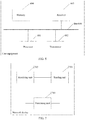
- the network device may include a processor 501, a transmitter 502, and a receiver 503.
- the processor 501 may include a central processing unit (CPU) or an application-specific integrated circuit (Application-Specific Integrated Circuit, ASIC), may include one or more integrated circuits for controlling execution of programs, may include a hardware circuit developed by using a field programmable gate array (Field Programmable Gate Array, FPGA), and may include a baseband chip.
- CPU central processing unit
- ASIC Application-Specific Integrated Circuit
- FPGA Field Programmable Gate Array
- the transmitter 502 may be configured to perform network communication with an external device, for example, may perform communication with an external device by using a network such as an Ethernet network, a radio access network, a wireless local area network, or a wired network.
- a network such as an Ethernet network, a radio access network, a wireless local area network, or a wired network.
- the receiver 503 may be configured to perform network communication with an external device, for example, may perform communication with an external device by using a network such as an Ethernet network, a radio access network, a wireless local area network, or a wired network.
- a network such as an Ethernet network, a radio access network, a wireless local area network, or a wired network.
- the receiver 503 and the transmitter 502 may be one functional module, for example, a functional module that can implement both a sending function and a receiving function.
- the receiver 503 and the transmitter 502 may be different submodules in a functional module.
- the receiver 503 and the transmitter 502 may be two independent functional modules.
- the network device may further include a memory 504.
- the memory 504 may include a read only memory (Read Only Memory, ROM), a random access memory (Random Access Memory, RAM), a magnetic disk memory, and the like.
- the memory 504 may be configured to store program code required by the processor 501 for executing a task, may further be configured to store data, and the like. Being an optional functional module instead of an indispensable functional module, the memory 504 is shown by using dashed lines in FIG. 5 .
- the memory 504, the receiver 503, and the transmitter 502 may be connected to the processor 501 by using a bus 500 (where this is used as an example in FIG. 5 ), or may be connected to the processor 501 by using a dedicated connection wire.
- the processor 501 is designed and programmed, so that code corresponding to the method shown in the foregoing is built into a chip, enabling the chip to perform, when running, the method shown in the foregoing aspects. How to design and program the processor 501 is a technology well known to persons skilled in the art. Details are no longer described again herein.
- the network device may be configured to perform the method provided in the aspect shown in FIG. 2 , and may be, for example, the foregoing network device. Therefore, for functions and the like implemented by the units in the network device, refer to the description of the foregoing method part, and details are not described.
- the user equipment may include a processor 601, a transmitter 602, and a receiver 603.
- the processor 601 may include a CPU or an ASIC, may include one or more integrated circuits for controlling execution of programs, may include a hardware circuit developed by using an FPGA, and may include a baseband chip.
- the transmitter 602 may be configured to perform network communication with an external device, for example, may perform communication with an external device by using a network such as an Ethernet network, a radio access network, a wireless local area network, or a wired network.
- a network such as an Ethernet network, a radio access network, a wireless local area network, or a wired network.
- the receiver 603 may be configured to perform network communication with an external device, for example, may perform communication with an external device by using a network such as an Ethernet network, a radio access network, a wireless local area network, or a wired network.
- a network such as an Ethernet network, a radio access network, a wireless local area network, or a wired network.
- the receiver 603 and the transmitter 602 may be one functional module, for example, a functional module that can implement both a sending function and a receiving function.
- the receiver 603 and the transmitter 602 may be different submodules in a functional module.
- the receiver 603 and the transmitter 602 may be two independent functional modules.
- the user equipment may further include a memory 604.
- the memory 604 may include a ROM, a RAM, a magnetic disk memory, and the like.
- the memory 604 may be configured to store program code required by the processor 601 for executing a task, may further be configured to store data, and the like. Being an optional functional module instead of an indispensable functional module, the memory 604 is shown by using dashed lines in FIG. 6 .
- the memory 604, the receiver 603, and the transmitter 602 may be connected to the processor 601 by using a bus 600 (where this is used as an example in FIG. 6 ), or may be connected to the processor 601 by using a dedicated connection wire.
- the processor 601 is designed and programmed, so that code corresponding to the method shown in the foregoing is built into a chip, enabling the chip to perform, when running, the method shown in the foregoing aspects. How to design and program the processor 601 is a technology well known to persons skilled in the art. Details are no longer described again herein.
- the user equipment may be configured to perform the method provided in the aspect shown in FIG. 2 , and may be, for example, the foregoing user equipment. Therefore, for functions and the like implemented by the units in the user equipment, refer to the description of the foregoing method part, and details are not described.
- the network device may include a sending unit 701 and a receiving unit 702.
- the network device may further include a processing unit 703 that is also shown in FIG. 7 .
- the processing unit 703 is shown in FIG. 7 by using dashed lines.
- a physical device corresponding to the sending unit 701 may be the transmitter 502 in the aspect shown in FIG. 5
- a physical device corresponding to the receiving unit 702 may be the receiver 503 in the aspect shown in FIG. 5
- a physical device corresponding to the processing unit 703 may be the processor 501 in the aspect shown in FIG. 5 .
- the network device may be configured to perform the method provided in the aspect shown in FIG. 2 , and may be, for example, the foregoing network device. Therefore, for functions and the like implemented by the units in the network device, refer to the description of the foregoing method part, and details are not described.
- the user equipment may include a sending unit 801 and a receiving unit 802.
- the user equipment may further include a processing unit 803 that is also shown in FIG. 8 .
- the processing unit 803 is shown in FIG. 8 by using dashed lines.
- a physical device corresponding to the sending unit 801 may be the transmitter 602 in the aspect shown in FIG. 6
- a physical device corresponding to the receiving unit 802 may be the receiver 603 in the aspect shown in FIG. 6
- a physical device corresponding to the processing unit 803 may be the processor 601 in the aspect shown in FIG. 6 .
- the user equipment may be configured to perform the method provided in the aspect shown in FIG. 2 , and may be, for example, the foregoing user equipment. Therefore, for functions and the like implemented by the units in the user equipment, refer to the description of the foregoing method part, and details are not described.
- an uplink subframe is known to the network device, and therefore the network device may send the first information to the user equipment.
- the first information indicates a subframe that can be used by the user equipment to send the HARQ acknowledgement information to the network device.
- the user equipment may send the HARQ acknowledgement information to the network device based on the first information, that is, perform HARQ feedback.
- the aspects of the present disclosure provide a manner of performing HARQ feedback, by using which the HARQ feedback can be desirably performed.
- the subframe indicated by the network device is the uplink subframe, so that a case is avoided that the user equipment selects a subframe on its own and therefore may fail to select a subframe.
- the disclosed device and method may be implemented in other manners.
- the described apparatus aspect is merely an example.
- the unit division is merely logical function division and may be other division during actual implementation.
- a plurality of units or components may be combined or integrated into another system, or some features may be ignored or not performed.
- the displayed or discussed mutual couplings or direct couplings or communication connections may be implemented through some interfaces.
- the indirect couplings or communication connections between the apparatuses or units may be implemented in electronic or other forms.
- the units described as separate parts may or may not be physically separate, and parts displayed as units may or may not be physical units, may be located in one position, or may be distributed on a plurality of network units. Some or all of the units may be selected according to actual needs to achieve the aspects of the present disclosure.
- Functional units in the aspects of the present disclosure may be integrated into one processing unit, or each of the units may be an independent physical module.
- the integrated unit When the integrated unit is implemented in the form of a software functional unit and sold or used as an independent product, the integrated unit may be stored in a computer-readable storage medium. Based on such an understanding, all of or a part of the technical solutions of the present disclosure may be implemented in a form of a software product.
- the computer software product is stored in a storage medium and includes several instructions for instructing a computer device, for example, a personal computer, a server, or a network device or a processor (processor) to perform all or some of the steps of the methods described in the aspects of the present disclosure.
- the foregoing storage medium includes: any medium that can store program code, such as a Universal Serial Bus flash drive (Universal Serial Bus flash drive), a removable hard disk, a read-only memory (Read-Only Memory, ROM), a random access memory (random access memory, RAM), a magnetic disk, or an optical disc.
- Universal Serial Bus flash drive Universal Serial Bus flash drive
- ROM read-only memory
- RAM random access memory
- magnetic disk or an optical disc.
Landscapes
- Engineering & Computer Science (AREA)
- Signal Processing (AREA)
- Computer Networks & Wireless Communication (AREA)
- Mobile Radio Communication Systems (AREA)
Claims (12)
- Verfahren zum Empfangen von Hybrid-Automatic-Repeat-Request-HARQ-Bestätigungsinformationen, umfassend:Senden (S201) einer ersten Information zu einem Benutzergerät durch eine Netzwerkvorrichtung, wobei es sich bei der ersten Information um eine Information handelt, die verwendet wird, um einen Unterrahmen anzuzeigen, der von dem Benutzergerät verwendet wird, um HARQ-Bestätigungsinformationen auf einem nicht lizenzierten Träger an die Netzwerkvorrichtung zu senden; undEmpfangen (S203), durch die Netzwerkvorrichtung, der HARQ-Bestätigungsinformationen, die von dem Benutzergerät in dem Unterrahmen gesendet werden, der von der ersten Information angezeigt wird;wobei:
nach dem Empfangen der von dem Benutzergerät gesendeten HARQ-Bestätigungsinformationen durch die Netzwerkvorrichtung in dem von der ersten Information angezeigten Unterrahmen das Verfahren ferner Folgendes umfasst:wenn der Empfang der HARQ-Bestätigungsinformationen in dem von der ersten Information angezeigten Unterrahmen fehlschlägt, Empfangen, durch die Netzwerkvorrichtung, einer Benachrichtigung, die von dem Benutzergerät gesendet wurde, wobei die Benachrichtigung verwendet wird, um die Netzwerkvorrichtung anzuweisen, die HARQ-Bestätigungsinformationen auf einem anderen nicht lizenzierten Träger zu empfangen oder die HARQ-Bestätigungsinformationen auf einem lizenzierten Träger zu empfangen; oderwenn der Empfang der HARQ-Bestätigungsinformationen in dem von der ersten Information angezeigten Unterrahmen fehlschlägt, Senden einer Benachrichtigung an das Benutzergerät durch die Netzwerkvorrichtung, wobei die Benachrichtigung verwendet wird, um das Benutzergerät anzuweisen, die HARQ-Bestätigungsinformationen auf einem anderen nicht lizenzierten Träger zu senden. - Verfahren nach Anspruch 1, wobei die ersten Informationen verwendet werden, um einen einzelnen Unterrahmen anzuzeigen, und die erste Information einen Unterrahmenindex oder einen Unterrahmenindex-Offset des angezeigten einzelnen Unterrahmens umfasst, der Unterrahmenindex-Offset verwendet wird, um einen Offset des Unterrahmenindex des einzelnen Unterrahmens in Bezug auf einen Unterrahmenindex eines Unterrahmens anzuzeigen, in dem die Netzwerkvorrichtung Downlink-Daten zu dem Benutzergerät sendet, und es sich bei den Downlink-Daten um Downlink-Daten handelt, die den HARQ-Bestätigungsinformationen entsprechen.
- Verfahren nach Anspruch 1, wobei die erste Information zum Anzeigen eines Unterrahmenfensters verwendet wird und die erste Information mindestens eines der Folgenden umfasst:Unterrahmenindizes einer Vielzahl von Unterrahmen in dem von der Netzwerkvorrichtung angezeigten Unterrahmenfenster, einen Unterrahmenindex eines Startunterrahmens und einen Unterrahmenindex eines Endunterrahmens in dem Unterrahmenfenster, und einen Unterrahmenindex eines Startunterrahmens in dem Unterrahmenfenster undUnterrahmenerstreckungsinformationen; und die Unterrahmenerstreckungsinformationen verwendet werden, um eine Menge der Unterrahmen anzuzeigen, die durch die erste Information angezeigt werden.
- Verfahren nach Anspruch 3, wobei, wenn die erste Information die Unterrahmenindizes der Vielzahl von Unterrahmen umfasst, die Vielzahl von Unterrahmen aufeinanderfolgenden Unterrahmen oder nicht aufeinanderfolgenden Unterrahmen entspricht.
- Verfahren nach einem der Ansprüche 1 bis 4, wobei die erste Information in Downlink-Steuerinformationen eines physikalischen Downlink-Steuerkanals transportiert wird.
- Verfahren zum Übertragen von Hybrid-Automatic-Repeat-Request-HARQ-Bestätigungsinformationen, umfassend:Empfangen (S201) einer ersten Information, die von einer Netzwerkvorrichtung gesendet wird, durch ein Benutzergerät, wobei es sich bei der ersten Information um eine Information handelt, die verwendet wird, um einen Unterrahmen anzuzeigen, der von dem Benutzergerät verwendet wird, um HARQ-Bestätigungsinformationen auf einem nicht lizenzierten Träger an die Netzwerkvorrichtung zu senden; undSenden (S203), durch das Benutzergerät, der HARQ-Bestätigungsinformationen an die Netzwerkvorrichtung in dem Unterrahmen, der von der ersten Information angezeigt wird;wobei nach dem Senden der HARQ-Bestätigungsinformationen durch das Benutzergerät in dem von der ersten Information angezeigten Unterrahmen, das Verfahren ferner Folgendes umfasst:wenn das Senden der HARQ-Bestätigungsinformationen in dem von der ersten Information angezeigten Unterrahmen fehlschlägt, Senden einer Benachrichtigung an die Netzwerkvorrichtung durch das Benutzergerät, wobei die Benachrichtigung verwendet wird, um die Netzwerkvorrichtung anzuweisen, die HARQ-Bestätigungsinformationen auf einem anderen nicht lizenzierten Träger zu empfangen oder die HARQ-Bestätigungsinformationen auf einem lizenzierten Träger zu empfangen; oderwenn das Senden der HARQ-Bestätigungsinformationen in dem von der ersten Information angezeigten Unterrahmen fehlschlägt, Empfangen einer Benachrichtigung von der Netzwerkvorrichtung durch das Benutzergerät, wobei die Benachrichtigung verwendet wird, um das Benutzergerät anzuweisen, die HARQ-Bestätigungsinformationen auf einem anderen nicht lizenzierten Träger zu senden.
- Verfahren nach Anspruch 6, wobei die erste Information zum Anzeigen eines einzelnen Unterrahmens verwendet wird, und die erste Information einen Unterrahmenindex oder einen Unterrahmenindex-Offset des angezeigten einzelnen Unterrahmens umfasst, der Unterrahmenindex-Offset verwendet wird, um einen Offset des Unterrahmenindex des einzelnen Unterrahmens in Bezug auf einen Unterrahmenindex eines Unterrahmens anzuzeigen, in dem die Netzwerkvorrichtung Downlink-Daten zu dem Benutzergerät sendet, und es sich bei den Downlink-Daten um Downlink-Daten handelt, die den HARQ-Bestätigungsinformationen entsprechen.
- Verfahren nach Anspruch 6, wobei die erste Information zum Anzeigen eines Unterrahmenfensters verwendet wird und die erste Information mindestens eines der Folgenden umfasst:Unterrahmenindizes einer Vielzahl von Unterrahmen in dem von der Netzwerkvorrichtung angezeigten Unterrahmenfenster, einen Unterrahmenindex eines Startunterrahmens und einen Unterrahmenindex eines Endunterrahmens in dem Unterrahmenfenster, und einen Unterrahmenindex eines Startunterrahmens in dem Unterrahmenfenster undUnterrahmenerstreckungsinformationen; und die Unterrahmenerstreckungsinformationen verwendet werden, um eine Menge der Unterrahmen anzuzeigen, die durch die erste Information angezeigt werden.
- Verfahren nach Anspruch 8, wobei, wenn die erste Information die Unterrahmenindizes der Vielzahl von Unterrahmen umfasst, die Vielzahl von Unterrahmen aufeinanderfolgenden Unterrahmen oder nicht aufeinanderfolgenden Unterrahmen entspricht.
- Verfahren nach einem der Ansprüche 6 bis 9, wobei die erste Information in Downlink-Steuerinformationen eines physikalischen Downlink-Steuerkanals transportiert wird.
- Verfahren nach einem der Ansprüche 6 bis 10, wobei nach dem Empfangen der ersten Information, die von einer Netzwerkvorrichtung gesendet wird, durch das Benutzergerät das Verfahren ferner Folgendes umfasst:Ausschließen eines Kanals auf dem nicht lizenzierten Träger durch das Benutzergerät; unddas Senden, durch das Benutzergerät, der HARQ-Bestätigungsinformationen an die Netzwerkvorrichtung in dem von der ersten Information angezeigten Unterrahmen Folgendes umfasst:
wenn das Benutzergerät einen Kanal auf dem nicht lizenzierten Träger erfolgreich ausschließt, Senden, durch das Benutzergerät, der HARQ-Bestätigungsinformationen an die Netzwerkvorrichtung in dem von der ersten Information angezeigten Unterrahmen. - Verfahren nach Anspruch 11, wobei das Verfahren ferner Folgendes umfasst:
wenn das Benutzergerät keinen Kanal auf dem nicht lizenzierten Träger ausschließen kann, Senden, durch das Benutzergerät, der HARQ-Bestätigungsinformationen an die Netzwerkvorrichtung auf einem anderen nicht lizenzierten Träger oder einem lizenzierten Träger gemäß der Benachrichtigung.
Applications Claiming Priority (1)
| Application Number | Priority Date | Filing Date | Title |
|---|---|---|---|
| PCT/CN2016/093120 WO2018023501A1 (zh) | 2016-08-03 | 2016-08-03 | 一种harq应答信息传输方法及设备 |
Publications (3)
| Publication Number | Publication Date |
|---|---|
| EP3487100A1 EP3487100A1 (de) | 2019-05-22 |
| EP3487100A4 EP3487100A4 (de) | 2019-08-07 |
| EP3487100B1 true EP3487100B1 (de) | 2021-06-09 |
Family
ID=61072249
Family Applications (1)
| Application Number | Title | Priority Date | Filing Date |
|---|---|---|---|
| EP16911098.8A Active EP3487100B1 (de) | 2016-08-03 | 2016-08-03 | Harq-antwort-informationsübertragungsverfahren |
Country Status (4)
| Country | Link |
|---|---|
| US (1) | US20190181989A1 (de) |
| EP (1) | EP3487100B1 (de) |
| CN (1) | CN108702258B (de) |
| WO (1) | WO2018023501A1 (de) |
Families Citing this family (3)
| Publication number | Priority date | Publication date | Assignee | Title |
|---|---|---|---|---|
| US11363465B2 (en) * | 2018-09-26 | 2022-06-14 | Qualcomm Incorporated | Licensed supplemental uplink as fallback with unlicensed uplink and downlink |
| CN111565098B (zh) * | 2019-02-13 | 2022-02-11 | 华为技术有限公司 | 一种确定harq反馈资源的方法、装置及系统 |
| WO2022150991A1 (zh) * | 2021-01-12 | 2022-07-21 | Oppo广东移动通信有限公司 | 无线通信的方法和设备 |
Family Cites Families (11)
| Publication number | Priority date | Publication date | Assignee | Title |
|---|---|---|---|---|
| WO2012106843A1 (en) * | 2011-02-11 | 2012-08-16 | Renesas Mobile Corporation | Signaling method to enable controlled tx deferring in mixed licensed and unlicensed spectrum carrier aggregation in future lte-a networks |
| CN103368715B (zh) * | 2012-03-28 | 2017-10-20 | 电信科学技术研究院 | 一种应答信息的传输方法、系统以及装置 |
| KR20140040902A (ko) * | 2012-09-27 | 2014-04-04 | 삼성전자주식회사 | 동적 시분할 복식 시스템에서 제어채널의 송수신 방법 및 장치 |
| US10326577B2 (en) * | 2013-08-13 | 2019-06-18 | Qualcomm Incorporated | Harq design for LTE in unlicensed spectrum utilizing individual ACK/NACK |
| CN104901775B (zh) * | 2014-03-09 | 2018-12-21 | 上海朗帛通信技术有限公司 | 一种在非授权频谱上的通信方法和装置 |
| CN104936189A (zh) * | 2014-05-01 | 2015-09-23 | 上海朗帛通信技术有限公司 | 一种ue、基站中在非授权频带上的通信方法和设备 |
| CN105162557B (zh) * | 2014-05-30 | 2019-03-15 | 中兴通讯股份有限公司 | 混合自动重传进程指示方法、装置及系统 |
| CN105356967B (zh) * | 2014-08-22 | 2020-08-11 | 中兴通讯股份有限公司 | 一种实现数据处理的方法、基站及终端 |
| US10057885B2 (en) * | 2014-09-26 | 2018-08-21 | Htc Corporation | Device and method of handling transmission in unlicensed band |
| BR112017021839A2 (pt) * | 2015-04-10 | 2018-07-10 | Ericsson Telefon Ab L M | método e equipamento de usuário para compactar feedback de harq |
| CN105187173A (zh) * | 2015-09-08 | 2015-12-23 | 魅族科技(中国)有限公司 | 用于非授权频谱上的数据重传方法及装置 |
-
2016
- 2016-08-03 EP EP16911098.8A patent/EP3487100B1/de active Active
- 2016-08-03 CN CN201680080084.1A patent/CN108702258B/zh active Active
- 2016-08-03 WO PCT/CN2016/093120 patent/WO2018023501A1/zh not_active Ceased
- 2016-08-03 US US16/323,098 patent/US20190181989A1/en not_active Abandoned
Non-Patent Citations (1)
| Title |
|---|
| None * |
Also Published As
| Publication number | Publication date |
|---|---|
| WO2018023501A1 (zh) | 2018-02-08 |
| US20190181989A1 (en) | 2019-06-13 |
| CN108702258B (zh) | 2021-02-12 |
| EP3487100A1 (de) | 2019-05-22 |
| CN108702258A (zh) | 2018-10-23 |
| EP3487100A4 (de) | 2019-08-07 |
Similar Documents
| Publication | Publication Date | Title |
|---|---|---|
| US11128416B2 (en) | Feedback information transmission method and apparatus | |
| US11678401B2 (en) | Transmission timing information sending method, transmission timing information receiving method, and apparatus | |
| US10277363B2 (en) | Hybrid automatic repeat request acknowledgement transmission method, user equipment, and base station | |
| WO2014068891A1 (en) | Systems and methods for carrier aggregation | |
| US9713127B2 (en) | Method and device for configuring data transmission resource | |
| WO2017129081A1 (zh) | 一种帧格式配置方法、装置和系统 | |
| US20170135101A1 (en) | Method and Apparatus for Determining Data Transmission | |
| US12047319B2 (en) | Information transmission apparatus, method, and system | |
| EP3487100B1 (de) | Harq-antwort-informationsübertragungsverfahren | |
| EP3531762B1 (de) | Nachrichtenrückmeldungsverfahren und -vorrichtung für trägeraggregation | |
| US10536252B2 (en) | Method for sending and receiving information, user equipment, and base station | |
| KR20220075192A (ko) | 업링크 정보 생성 방법 및 이의 장치 | |
| CN114071571B (zh) | 上行信道间冲突的传输方法、装置及存储介质 | |
| WO2018076300A1 (zh) | 基于harq的消息反馈方法及装置 |
Legal Events
| Date | Code | Title | Description |
|---|---|---|---|
| STAA | Information on the status of an ep patent application or granted ep patent |
Free format text: STATUS: THE INTERNATIONAL PUBLICATION HAS BEEN MADE |
|
| PUAI | Public reference made under article 153(3) epc to a published international application that has entered the european phase |
Free format text: ORIGINAL CODE: 0009012 |
|
| STAA | Information on the status of an ep patent application or granted ep patent |
Free format text: STATUS: REQUEST FOR EXAMINATION WAS MADE |
|
| 17P | Request for examination filed |
Effective date: 20190215 |
|
| AK | Designated contracting states |
Kind code of ref document: A1 Designated state(s): AL AT BE BG CH CY CZ DE DK EE ES FI FR GB GR HR HU IE IS IT LI LT LU LV MC MK MT NL NO PL PT RO RS SE SI SK SM TR |
|
| AX | Request for extension of the european patent |
Extension state: BA ME |
|
| A4 | Supplementary search report drawn up and despatched |
Effective date: 20190704 |
|
| RIC1 | Information provided on ipc code assigned before grant |
Ipc: H04W 72/02 20090101ALI20190628BHEP Ipc: H04W 72/04 20090101ALI20190628BHEP Ipc: H04L 1/18 20060101AFI20190628BHEP |
|
| DAV | Request for validation of the european patent (deleted) | ||
| DAX | Request for extension of the european patent (deleted) | ||
| STAA | Information on the status of an ep patent application or granted ep patent |
Free format text: STATUS: EXAMINATION IS IN PROGRESS |
|
| 17Q | First examination report despatched |
Effective date: 20200721 |
|
| GRAP | Despatch of communication of intention to grant a patent |
Free format text: ORIGINAL CODE: EPIDOSNIGR1 |
|
| STAA | Information on the status of an ep patent application or granted ep patent |
Free format text: STATUS: GRANT OF PATENT IS INTENDED |
|
| INTG | Intention to grant announced |
Effective date: 20201223 |
|
| GRAS | Grant fee paid |
Free format text: ORIGINAL CODE: EPIDOSNIGR3 |
|
| GRAA | (expected) grant |
Free format text: ORIGINAL CODE: 0009210 |
|
| STAA | Information on the status of an ep patent application or granted ep patent |
Free format text: STATUS: THE PATENT HAS BEEN GRANTED |
|
| AK | Designated contracting states |
Kind code of ref document: B1 Designated state(s): AL AT BE BG CH CY CZ DE DK EE ES FI FR GB GR HR HU IE IS IT LI LT LU LV MC MK MT NL NO PL PT RO RS SE SI SK SM TR |
|
| REG | Reference to a national code |
Ref country code: GB Ref legal event code: FG4D |
|
| REG | Reference to a national code |
Ref country code: CH Ref legal event code: EP Ref country code: AT Ref legal event code: REF Ref document number: 1401360 Country of ref document: AT Kind code of ref document: T Effective date: 20210615 |
|
| REG | Reference to a national code |
Ref country code: DE Ref legal event code: R096 Ref document number: 602016059254 Country of ref document: DE |
|
| REG | Reference to a national code |
Ref country code: IE Ref legal event code: FG4D |
|
| REG | Reference to a national code |
Ref country code: LT Ref legal event code: MG9D |
|
| PG25 | Lapsed in a contracting state [announced via postgrant information from national office to epo] |
Ref country code: BG Free format text: LAPSE BECAUSE OF FAILURE TO SUBMIT A TRANSLATION OF THE DESCRIPTION OR TO PAY THE FEE WITHIN THE PRESCRIBED TIME-LIMIT Effective date: 20210909 Ref country code: HR Free format text: LAPSE BECAUSE OF FAILURE TO SUBMIT A TRANSLATION OF THE DESCRIPTION OR TO PAY THE FEE WITHIN THE PRESCRIBED TIME-LIMIT Effective date: 20210609 Ref country code: LT Free format text: LAPSE BECAUSE OF FAILURE TO SUBMIT A TRANSLATION OF THE DESCRIPTION OR TO PAY THE FEE WITHIN THE PRESCRIBED TIME-LIMIT Effective date: 20210609 Ref country code: FI Free format text: LAPSE BECAUSE OF FAILURE TO SUBMIT A TRANSLATION OF THE DESCRIPTION OR TO PAY THE FEE WITHIN THE PRESCRIBED TIME-LIMIT Effective date: 20210609 |
|
| REG | Reference to a national code |
Ref country code: AT Ref legal event code: MK05 Ref document number: 1401360 Country of ref document: AT Kind code of ref document: T Effective date: 20210609 |
|
| REG | Reference to a national code |
Ref country code: NL Ref legal event code: MP Effective date: 20210609 |
|
| PG25 | Lapsed in a contracting state [announced via postgrant information from national office to epo] |
Ref country code: NO Free format text: LAPSE BECAUSE OF FAILURE TO SUBMIT A TRANSLATION OF THE DESCRIPTION OR TO PAY THE FEE WITHIN THE PRESCRIBED TIME-LIMIT Effective date: 20210909 Ref country code: SE Free format text: LAPSE BECAUSE OF FAILURE TO SUBMIT A TRANSLATION OF THE DESCRIPTION OR TO PAY THE FEE WITHIN THE PRESCRIBED TIME-LIMIT Effective date: 20210609 Ref country code: RS Free format text: LAPSE BECAUSE OF FAILURE TO SUBMIT A TRANSLATION OF THE DESCRIPTION OR TO PAY THE FEE WITHIN THE PRESCRIBED TIME-LIMIT Effective date: 20210609 Ref country code: LV Free format text: LAPSE BECAUSE OF FAILURE TO SUBMIT A TRANSLATION OF THE DESCRIPTION OR TO PAY THE FEE WITHIN THE PRESCRIBED TIME-LIMIT Effective date: 20210609 Ref country code: GR Free format text: LAPSE BECAUSE OF FAILURE TO SUBMIT A TRANSLATION OF THE DESCRIPTION OR TO PAY THE FEE WITHIN THE PRESCRIBED TIME-LIMIT Effective date: 20210910 |
|
| PG25 | Lapsed in a contracting state [announced via postgrant information from national office to epo] |
Ref country code: ES Free format text: LAPSE BECAUSE OF FAILURE TO SUBMIT A TRANSLATION OF THE DESCRIPTION OR TO PAY THE FEE WITHIN THE PRESCRIBED TIME-LIMIT Effective date: 20210609 Ref country code: RO Free format text: LAPSE BECAUSE OF FAILURE TO SUBMIT A TRANSLATION OF THE DESCRIPTION OR TO PAY THE FEE WITHIN THE PRESCRIBED TIME-LIMIT Effective date: 20210609 Ref country code: NL Free format text: LAPSE BECAUSE OF FAILURE TO SUBMIT A TRANSLATION OF THE DESCRIPTION OR TO PAY THE FEE WITHIN THE PRESCRIBED TIME-LIMIT Effective date: 20210609 Ref country code: PT Free format text: LAPSE BECAUSE OF FAILURE TO SUBMIT A TRANSLATION OF THE DESCRIPTION OR TO PAY THE FEE WITHIN THE PRESCRIBED TIME-LIMIT Effective date: 20211011 Ref country code: AT Free format text: LAPSE BECAUSE OF FAILURE TO SUBMIT A TRANSLATION OF THE DESCRIPTION OR TO PAY THE FEE WITHIN THE PRESCRIBED TIME-LIMIT Effective date: 20210609 Ref country code: CZ Free format text: LAPSE BECAUSE OF FAILURE TO SUBMIT A TRANSLATION OF THE DESCRIPTION OR TO PAY THE FEE WITHIN THE PRESCRIBED TIME-LIMIT Effective date: 20210609 Ref country code: EE Free format text: LAPSE BECAUSE OF FAILURE TO SUBMIT A TRANSLATION OF THE DESCRIPTION OR TO PAY THE FEE WITHIN THE PRESCRIBED TIME-LIMIT Effective date: 20210609 Ref country code: SM Free format text: LAPSE BECAUSE OF FAILURE TO SUBMIT A TRANSLATION OF THE DESCRIPTION OR TO PAY THE FEE WITHIN THE PRESCRIBED TIME-LIMIT Effective date: 20210609 Ref country code: SK Free format text: LAPSE BECAUSE OF FAILURE TO SUBMIT A TRANSLATION OF THE DESCRIPTION OR TO PAY THE FEE WITHIN THE PRESCRIBED TIME-LIMIT Effective date: 20210609 |
|
| PG25 | Lapsed in a contracting state [announced via postgrant information from national office to epo] |
Ref country code: PL Free format text: LAPSE BECAUSE OF FAILURE TO SUBMIT A TRANSLATION OF THE DESCRIPTION OR TO PAY THE FEE WITHIN THE PRESCRIBED TIME-LIMIT Effective date: 20210609 |
|
| REG | Reference to a national code |
Ref country code: DE Ref legal event code: R097 Ref document number: 602016059254 Country of ref document: DE |
|
| REG | Reference to a national code |
Ref country code: CH Ref legal event code: PL |
|
| PG25 | Lapsed in a contracting state [announced via postgrant information from national office to epo] |
Ref country code: MC Free format text: LAPSE BECAUSE OF FAILURE TO SUBMIT A TRANSLATION OF THE DESCRIPTION OR TO PAY THE FEE WITHIN THE PRESCRIBED TIME-LIMIT Effective date: 20210609 |
|
| PLBE | No opposition filed within time limit |
Free format text: ORIGINAL CODE: 0009261 |
|
| STAA | Information on the status of an ep patent application or granted ep patent |
Free format text: STATUS: NO OPPOSITION FILED WITHIN TIME LIMIT |
|
| REG | Reference to a national code |
Ref country code: BE Ref legal event code: MM Effective date: 20210831 |
|
| PG25 | Lapsed in a contracting state [announced via postgrant information from national office to epo] |
Ref country code: LI Free format text: LAPSE BECAUSE OF NON-PAYMENT OF DUE FEES Effective date: 20210831 Ref country code: DK Free format text: LAPSE BECAUSE OF FAILURE TO SUBMIT A TRANSLATION OF THE DESCRIPTION OR TO PAY THE FEE WITHIN THE PRESCRIBED TIME-LIMIT Effective date: 20210609 Ref country code: CH Free format text: LAPSE BECAUSE OF NON-PAYMENT OF DUE FEES Effective date: 20210831 |
|
| 26N | No opposition filed |
Effective date: 20220310 |
|
| PG25 | Lapsed in a contracting state [announced via postgrant information from national office to epo] |
Ref country code: LU Free format text: LAPSE BECAUSE OF NON-PAYMENT OF DUE FEES Effective date: 20210803 Ref country code: AL Free format text: LAPSE BECAUSE OF FAILURE TO SUBMIT A TRANSLATION OF THE DESCRIPTION OR TO PAY THE FEE WITHIN THE PRESCRIBED TIME-LIMIT Effective date: 20210609 |
|
| PG25 | Lapsed in a contracting state [announced via postgrant information from national office to epo] |
Ref country code: IT Free format text: LAPSE BECAUSE OF FAILURE TO SUBMIT A TRANSLATION OF THE DESCRIPTION OR TO PAY THE FEE WITHIN THE PRESCRIBED TIME-LIMIT Effective date: 20210609 Ref country code: IE Free format text: LAPSE BECAUSE OF NON-PAYMENT OF DUE FEES Effective date: 20210803 Ref country code: FR Free format text: LAPSE BECAUSE OF NON-PAYMENT OF DUE FEES Effective date: 20210809 Ref country code: BE Free format text: LAPSE BECAUSE OF NON-PAYMENT OF DUE FEES Effective date: 20210831 |
|
| PG25 | Lapsed in a contracting state [announced via postgrant information from national office to epo] |
Ref country code: CY Free format text: LAPSE BECAUSE OF FAILURE TO SUBMIT A TRANSLATION OF THE DESCRIPTION OR TO PAY THE FEE WITHIN THE PRESCRIBED TIME-LIMIT Effective date: 20210609 |
|
| PG25 | Lapsed in a contracting state [announced via postgrant information from national office to epo] |
Ref country code: HU Free format text: LAPSE BECAUSE OF FAILURE TO SUBMIT A TRANSLATION OF THE DESCRIPTION OR TO PAY THE FEE WITHIN THE PRESCRIBED TIME-LIMIT; INVALID AB INITIO Effective date: 20160803 |
|
| PG25 | Lapsed in a contracting state [announced via postgrant information from national office to epo] |
Ref country code: MK Free format text: LAPSE BECAUSE OF FAILURE TO SUBMIT A TRANSLATION OF THE DESCRIPTION OR TO PAY THE FEE WITHIN THE PRESCRIBED TIME-LIMIT Effective date: 20210609 |
|
| PG25 | Lapsed in a contracting state [announced via postgrant information from national office to epo] |
Ref country code: TR Free format text: LAPSE BECAUSE OF FAILURE TO SUBMIT A TRANSLATION OF THE DESCRIPTION OR TO PAY THE FEE WITHIN THE PRESCRIBED TIME-LIMIT Effective date: 20210609 |
|
| PG25 | Lapsed in a contracting state [announced via postgrant information from national office to epo] |
Ref country code: MT Free format text: LAPSE BECAUSE OF FAILURE TO SUBMIT A TRANSLATION OF THE DESCRIPTION OR TO PAY THE FEE WITHIN THE PRESCRIBED TIME-LIMIT Effective date: 20210609 |
|
| PGFP | Annual fee paid to national office [announced via postgrant information from national office to epo] |
Ref country code: DE Payment date: 20250702 Year of fee payment: 10 |
|
| PGFP | Annual fee paid to national office [announced via postgrant information from national office to epo] |
Ref country code: GB Payment date: 20250703 Year of fee payment: 10 |