EP3488349B1 - Auswahl einer cache-speichertransferrichtlinie für vorabgerufene daten auf der basis von cache-speichertestregionen - Google Patents
Auswahl einer cache-speichertransferrichtlinie für vorabgerufene daten auf der basis von cache-speichertestregionen Download PDFInfo
- Publication number
- EP3488349B1 EP3488349B1 EP17831761.6A EP17831761A EP3488349B1 EP 3488349 B1 EP3488349 B1 EP 3488349B1 EP 17831761 A EP17831761 A EP 17831761A EP 3488349 B1 EP3488349 B1 EP 3488349B1
- Authority
- EP
- European Patent Office
- Prior art keywords
- cache
- region
- data
- transfer policy
- performance characteristic
- Prior art date
- Legal status (The legal status is an assumption and is not a legal conclusion. Google has not performed a legal analysis and makes no representation as to the accuracy of the status listed.)
- Active
Links
Images


Classifications
-
- G—PHYSICS
- G06—COMPUTING OR CALCULATING; COUNTING
- G06F—ELECTRIC DIGITAL DATA PROCESSING
- G06F12/00—Accessing, addressing or allocating within memory systems or architectures
- G06F12/02—Addressing or allocation; Relocation
- G06F12/08—Addressing or allocation; Relocation in hierarchically structured memory systems, e.g. virtual memory systems
- G06F12/0802—Addressing of a memory level in which the access to the desired data or data block requires associative addressing means, e.g. caches
- G06F12/0893—Caches characterised by their organisation or structure
- G06F12/0897—Caches characterised by their organisation or structure with two or more cache hierarchy levels
-
- G—PHYSICS
- G06—COMPUTING OR CALCULATING; COUNTING
- G06F—ELECTRIC DIGITAL DATA PROCESSING
- G06F12/00—Accessing, addressing or allocating within memory systems or architectures
- G06F12/02—Addressing or allocation; Relocation
- G06F12/08—Addressing or allocation; Relocation in hierarchically structured memory systems, e.g. virtual memory systems
- G06F12/0802—Addressing of a memory level in which the access to the desired data or data block requires associative addressing means, e.g. caches
- G06F12/0862—Addressing of a memory level in which the access to the desired data or data block requires associative addressing means, e.g. caches with prefetch
-
- G—PHYSICS
- G06—COMPUTING OR CALCULATING; COUNTING
- G06F—ELECTRIC DIGITAL DATA PROCESSING
- G06F12/00—Accessing, addressing or allocating within memory systems or architectures
- G06F12/02—Addressing or allocation; Relocation
- G06F12/08—Addressing or allocation; Relocation in hierarchically structured memory systems, e.g. virtual memory systems
- G06F12/0802—Addressing of a memory level in which the access to the desired data or data block requires associative addressing means, e.g. caches
- G06F12/0806—Multiuser, multiprocessor or multiprocessing cache systems
- G06F12/0811—Multiuser, multiprocessor or multiprocessing cache systems with multilevel cache hierarchies
-
- G—PHYSICS
- G06—COMPUTING OR CALCULATING; COUNTING
- G06F—ELECTRIC DIGITAL DATA PROCESSING
- G06F12/00—Accessing, addressing or allocating within memory systems or architectures
- G06F12/02—Addressing or allocation; Relocation
- G06F12/08—Addressing or allocation; Relocation in hierarchically structured memory systems, e.g. virtual memory systems
- G06F12/0802—Addressing of a memory level in which the access to the desired data or data block requires associative addressing means, e.g. caches
- G06F12/0866—Addressing of a memory level in which the access to the desired data or data block requires associative addressing means, e.g. caches for peripheral storage systems, e.g. disk cache
- G06F12/0868—Data transfer between cache memory and other subsystems, e.g. storage devices or host systems
-
- G—PHYSICS
- G06—COMPUTING OR CALCULATING; COUNTING
- G06F—ELECTRIC DIGITAL DATA PROCESSING
- G06F12/00—Accessing, addressing or allocating within memory systems or architectures
- G06F12/02—Addressing or allocation; Relocation
- G06F12/08—Addressing or allocation; Relocation in hierarchically structured memory systems, e.g. virtual memory systems
- G06F12/0802—Addressing of a memory level in which the access to the desired data or data block requires associative addressing means, e.g. caches
- G06F12/0866—Addressing of a memory level in which the access to the desired data or data block requires associative addressing means, e.g. caches for peripheral storage systems, e.g. disk cache
- G06F12/0871—Allocation or management of cache space
-
- G—PHYSICS
- G06—COMPUTING OR CALCULATING; COUNTING
- G06F—ELECTRIC DIGITAL DATA PROCESSING
- G06F12/00—Accessing, addressing or allocating within memory systems or architectures
- G06F12/02—Addressing or allocation; Relocation
- G06F12/08—Addressing or allocation; Relocation in hierarchically structured memory systems, e.g. virtual memory systems
- G06F12/12—Replacement control
- G06F12/121—Replacement control using replacement algorithms
-
- G—PHYSICS
- G06—COMPUTING OR CALCULATING; COUNTING
- G06F—ELECTRIC DIGITAL DATA PROCESSING
- G06F12/00—Accessing, addressing or allocating within memory systems or architectures
- G06F12/02—Addressing or allocation; Relocation
- G06F12/08—Addressing or allocation; Relocation in hierarchically structured memory systems, e.g. virtual memory systems
- G06F12/12—Replacement control
- G06F12/121—Replacement control using replacement algorithms
- G06F12/126—Replacement control using replacement algorithms with special data handling, e.g. priority of data or instructions, handling errors or pinning
-
- G—PHYSICS
- G06—COMPUTING OR CALCULATING; COUNTING
- G06F—ELECTRIC DIGITAL DATA PROCESSING
- G06F12/00—Accessing, addressing or allocating within memory systems or architectures
- G06F12/02—Addressing or allocation; Relocation
- G06F12/08—Addressing or allocation; Relocation in hierarchically structured memory systems, e.g. virtual memory systems
- G06F12/12—Replacement control
- G06F12/121—Replacement control using replacement algorithms
- G06F12/126—Replacement control using replacement algorithms with special data handling, e.g. priority of data or instructions, handling errors or pinning
- G06F12/127—Replacement control using replacement algorithms with special data handling, e.g. priority of data or instructions, handling errors or pinning using additional replacement algorithms
-
- G—PHYSICS
- G06—COMPUTING OR CALCULATING; COUNTING
- G06F—ELECTRIC DIGITAL DATA PROCESSING
- G06F12/00—Accessing, addressing or allocating within memory systems or architectures
- G06F12/02—Addressing or allocation; Relocation
- G06F12/08—Addressing or allocation; Relocation in hierarchically structured memory systems, e.g. virtual memory systems
- G06F12/12—Replacement control
- G06F12/121—Replacement control using replacement algorithms
- G06F12/128—Replacement control using replacement algorithms adapted to multidimensional cache systems, e.g. set-associative, multicache, multiset or multilevel
-
- G—PHYSICS
- G06—COMPUTING OR CALCULATING; COUNTING
- G06F—ELECTRIC DIGITAL DATA PROCESSING
- G06F2212/00—Indexing scheme relating to accessing, addressing or allocation within memory systems or architectures
- G06F2212/60—Details of cache memory
- G06F2212/6026—Prefetching based on access pattern detection, e.g. stride based prefetch
Definitions
- processors employ a memory hierarchy, whereby a processor includes one or more caches to store a subset of data stored in main memory.
- the criterion for which subset of data from the main memory is stored in the cache can vary depending on the processor design, but typically prioritizes the caching of data that has recently been accessed.
- some processors employ one or more prefetchers that predict data that is likely to be accessed by the processor in the near future, and copies that data from main memory to the one or more caches.
- the processor selects previously stored data for eviction based on a specified replacement scheme, but conventional replacement schemes can result in undesirably low memory access efficiency.
- US 2015/286571 A1 relates to a method of adaptive cache prefetching based on competing dedicated prefetch policies in dedicated cache sets.
- the invention is provided in accordance with the method of claim 1 and the processor of claim 7.
- FIGs. 1-5 illustrate techniques for applying a transfer policy to a portion of a cache based on access metrics for different test regions of the cache, wherein each test region applies a different transfer policy for data in cache entries that were stored in response to a prefetch requests but were not the subject of demand requests (referred to as "unused prefetches" or "unused prefetched data").
- One test region applies a transfer policy under which unused prefetches are transferred to a higher level cache in a cache hierarchy upon eviction from the test region of the cache.
- the other test region applies a transfer policy under which unused prefetches are replaced without being transferred to a higher level cache (or are transferred to the higher level cache but stored as invalid data) upon eviction from the test region of the cache.
- the cache dynamically changes the transfer policy to the more efficient policy for the pattern of instructions currently executing at a processor.
- the cache has two test regions and a non-test region, whereby all the regions are employed by the cache to store data in response to demand requests from a processor and in response to prefetch requests from a prefetcher.
- the cache employs different transfer policies for the different test regions, such that for one of the test regions the cache transfers to a higher level cache evicted cache entries that store unused prefetches. For the other test region, the cache replaces evicted cache entries that store unused prefetches without transferring the data to a higher level cache, or transfers the data to the higher level cache but stores the data as invalid data.
- the processor monitors access metrics for each of the test regions, such as a cache hit rate, cache miss rate, or a combination thereof. Based on the access metrics, the processor selects the transfer policy for one of the test regions and applies it to the non-test region of the cache. For example, if the cache hit rate is higher for one of the test regions, the processor applies the transfer policy for that test region to the non-test region of the cache, thereby improving the hit rate for the cache overall.
- access metrics for each of the test regions such as a cache hit rate, cache miss rate, or a combination thereof. Based on the access metrics, the processor selects the transfer policy for one of the test regions and applies it to the non-test region of the cache. For example, if the cache hit rate is higher for one of the test regions, the processor applies the transfer policy for that test region to the non-test region of the cache, thereby improving the hit rate for the cache overall.
- transfer policy refers to how data stored in a cache entry is handled upon eviction from the cache.
- the transfer policy may require that all unused prefetches are to be transferred to and stored as valid data at a higher level cache upon eviction from the cache.
- Another transfer policy mandates that all unused prefetches are to be discarded upon eviction from the cache.
- the prefetch data is discarded by replacing the data at the cache without transferring the data to the higher level cache.
- the prefetch data is discarded by providing the data to the higher level cache but storing the data at the higher level cache with an indicator that the data is invalid, so that the data can be replaced by valid incoming data during cache entry replacement at the higher level cache.
- FIG. 1 illustrates a processing system 100 that applies a cache transfer policy for unused prefetches to a portion of a cache based on access metrics for different test regions of the cache in accordance with some embodiments.
- the processing system 100 is generally configured to execute sets of instructions organized in the form of computer programs in order to carry out tasks on behalf of an electronic device. Accordingly, the processing system 100 may be used in any of a variety of electronic devices, such as a desktop or laptop computer, server, smartphone, tablet, game console, and the like.
- the processing system 100 includes a processor 101 and memory 130.
- the processor 101 includes a processor core 102, a cache controller 105, an L2 cache 110, and an L3 cache 120.
- each of the modules of the processor 101 are formed on the same semiconductor die to form at least a portion of a processor core 102, and the memory 130 is formed on a different semiconductor die and connected to the processor 101 via one or more busses or signal lines.
- at least a portion of the memory 130 is formed on the same semiconductor die as modules of the processor 101.
- the L2 cache 110, L3 cache 120 and the memory 130 are each memory devices generally configured to store data, and therefore may be random access memory (RAM) memory modules, non-volatile memory devices (e.g., flash memory), and the like. As described further herein, the L2 cache 110, L3 cache 120 and the memory 130 form a memory hierarchy for the processing system 100. In addition, the memory hierarchy of the processing system 100 may include other memory modules, such as additional caches not illustrated at FIG. 1 .
- the processor core 102 includes an instruction pipeline having, for example, a fetch stage to fetch instructions, a decode stage to decode each fetched instruction into one or more operations, execution stages to execute the operations, and a retire stage to retire instructions whose operations have completed execution.
- One set of operations generated based on the instructions are referred to herein as memory access instructions, and are requests to load data (load operations) from the memory hierarchy of the processing system 100, and requests to store data at the memory hierarchy of the processing system 100.
- Memory access requests generated by the processor core 102 represent requests to load or store data that are being used or are known to be needed by an executing program, and are referred to herein as demand requests.
- the cache controller 105 is a module generally configured to manage the memory hierarchy of the processing system 100 by moving data between the L2 cache 110, the L3 cache 120, and the memory 130.
- the L2 cache 110 and L3 cache 120 are memory devices, each of which includes a plurality of entries, whereby each entry is associated with one or more addresses of the memory 130.
- the cache controller 105 reviews the data stored at one or more entries of the L2 cache 110 to determine if any of the entries stores data associated with the memory address targeted by the memory access request.
- the cache controller 105 indicates a cache hit and satisfies the memory access request at the identified entry, either by storing data at the entry (in the case of a store operation) or by providing the data at the identified entry to the processor core 102 (in the case of a load operation).
- the cache controller 105 If data associated with the memory address is not stored at an entry of the L2 cache 110, the cache controller 105 indicates a cache miss and issues a request to the L3 cache 120. In response to the memory access request, the cache controller 105 (or, in some embodiments, a separate cache controller) reviews the data stored at one or more entries of the L3 cache 120 to determine if any of the entries stores data associated with the memory address targeted by the memory access request. If so, the cache controller 105 indicates a cache hit and satisfies the memory access request at the identified entry, either by storing data at the entry (in the case of a store operation) or by providing the data at the identified entry to the L2 cache 110, from which it is subsequently provided to the processor core 102 (in the case of a load operation).
- the cache controller 105 If data associated with the memory address is not stored in an entry of the L3 cache 120, the cache controller 105 indicates a cache miss and issues a request to the memory 130 for the data at the memory address. Upon receipt of the data from the memory 130, the cache controller 105 stores the data at an entry of the L3 cache 120, from which it is subsequently transferred to the L2 cache 110, which in turn provides the data to the processor core 102, thus satisfying the memory access request.
- the processor 101 includes a prefetcher 106 that monitors demand requests issued to the cache controller 105 to identify patterns and predict, based on the identified patterns, memory addresses that will be the target of demand requests by the processor core 102 in the near future.
- the prefetcher 106 issues to the cache controller 105 memory access requests, referred to herein as prefetch requests, targeting the identified memory addresses.
- the cache controller 105 treats a prefetch request similar to a demand request by first identifying if data associated with the memory address targeted by the prefetch request is already stored at an entry of the L2 cache 110 and, if not already stored, requesting the data from the L3 cache 120 or the memory 130 and storing the data at an entry of the L2 cache 110.
- each entry of the L2 cache 110 and L3 cache 120 is associated with a subset of memory addresses and only data associated with that subset is permitted to be stored at the entry.
- the cache is an N-way set associative cache having M sets and each of the M sets including N entries. Each of the M sets is assigned a different subset of memory addresses, such that the cache controller 105 only stores data at an entry if the data is associated with a memory address in the entry's assigned subset.
- valid data When all entries of a set store data (referred to herein as "valid data") that may be the target of a memory access, the set is referred to herein as full.
- the cache controller 105 when the cache controller 105 receives data that is to be stored at a full set, it selects one of the entries of the set to evict (that is, to remove from the set) and replace with the received data. When an entry is evicted from the L2 cache 110, it may be transferred to the L3 cache 120, or it may be replaced without first being transferred to the L3 cache 120.
- the scheme that the cache controller 105 uses to select the entry for transfer or for replacement without transfer is referred to as the transfer policy for the L2 cache 110.
- the transfer policy for the L2 cache 110 may be based at least in part on whether the data stored at the cache entries was stored in response to a prefetch request but was not the subject of a demand request. Under one transfer policy, unused prefetches in the L2 cache 110 will be transferred to the L3 cache 120 with a valid status upon eviction from the L2 cache 110. Under a different transfer policy, unused prefetches in the L2 cache 110 are transferred to the L3 cache 120 with a status indicating that the data is invalid, and therefore is eligible to be discarded.
- unused prefetches in the L2 cache 110 will be replaced without being transferred to the L3 cache 120 upon eviction from the L2 cache 110.
- data that was transferred to the L2 cache 110 in response to a prefetch request was previously transferred or copied from the L3 cache 120.
- the L3 cache 120 is not inclusive of the L2 cache 110 such at least some of the cache entries stored in the L2 cache 110 are not also stored at the L3 cache 120.
- Transferring unused prefetched data to the L3 cache 120 upon its eviction from the L2 cache 110 where the L3 cache 120 is not inclusive of the L2 cache 110 may require the eviction of other valid data from the L3 cache 120, for example, if the set in the L3 cache 120 into which the unused prefetched data is assigned is full, and resulting in less efficient processing of memory requests.
- a transfer policy that transfers unused prefetched data to the L3 cache 120 with an invalid status or, alternatively, that replaces unused prefetched data upon its eviction from the L2 cache 110 without transferring the unused prefetched data to the L3 cache 120, more efficient processing of memory requests may be achieved.
- unused prefetched data is transferred to the L3 cache 120 upon its eviction from the L2 cache 110 with a valid status, thereby potentially evicting more useful data (e.g., data that is more likely to be accessed than the unused prefetch data), reducing memory access efficiency.
- the cache controller 105 applies different transfer policies to different regions of the cache 110, wherein each region includes a plurality of entries.
- each region only varies as to its transfer policy.
- the entries of a region may be used for any set, and different regions may include different entries of the same set.
- the cache 110 includes three regions: test regions 115 and 116 and non-test region 118.
- the cache controller 105 stores transfer policies 111 and 112 that differ in at least one aspect, such as whether unused prefetched data is transferred to the L3 cache 120 upon eviction from the L2 cache 110 with a valid status or an invalid status or, alternatively, is replaced without being transferred to the L3 cache 120.
- the transfer policy 111 mandates that upon eviction from the L2 cache 110, all or a portion of the unused prefetched data is transferred to the L3 cache 120 with a valid status, as is any non-prefetch request data.
- non-prefetch request refers to a memory access that is not a prefetch request targeted to the cache level to which the transfer policy is applied.
- Examples of non-prefetch requests include demand requests, memory access requests generated in response to instruction cache misses, hardware page table walk requests, speculative memory access requests generated by the processor core 102 (e.g., memory access requests generated during speculative execution of instructions after a branch instruction), and prefetch requests generated at other cache levels.
- the transfer policy 112 mandates that upon eviction from the L2 cache 110 all or a portion of the unused prefetched data is transferred to the L3 cache 120 with an invalid status or, alternatively, is replaced without being transferred to the L3 cache 120, whereas non-prefetch request data is transferred to the L3 cache 120 upon eviction from the L2 cache 110.
- the transfer policy 111 may therefore be more efficient for memory access patterns that more frequently access prefetched data, and the transfer policy 112 may be more efficient for memory access patterns that access prefetched data with less frequency.
- the memory access pattern for the processor core 102 may vary over time, such that the cache 110 operates more efficiently under different transfer policies at different times. Accordingly, for the non-test region 118, the cache controller 105 selects between the transfer policies 111 and 112 depending on performance characteristics of the test regions 115 and 116.
- the processor 101 includes a performance monitor 104 that monitors and records performance characteristics, such as cache hit rate, cache miss rate, and the like, for each of the test regions 115 and 116. Based on one or more of the performance characteristics, or a combination thereof, of the test regions 115 and 116, the cache controller selects one of the transfer policies 111 and 112 and applies it to the non-test region 118. For example, if the cache hit rate for the test region 115 is higher than the cache hit rate for the test region 116, the cache controller 105 selects the transfer policy for the test region 115 (e.g., transfer policy 111) and applies it to the non-test region 118. In some embodiments, the non-test region 118 includes the majority of the entries of the cache 110.
- the transfer policy for the test region 115 e.g., transfer policy 111
- the non-test region 118 includes the majority of the entries of the cache 110.
- the cache controller 105 enhances the overall efficiency of the cache 110. Further, as the performance characteristics of the test regions 115 and 116 change over time, the cache controller changes the transfer policy to the policy that is more efficient for a given set of performance characteristics.
- FIG. 2 illustrates an example of the cache controller 105 applying different transfer policies to the test regions 115 and 116 of the L2 cache 110 of FIG. 1 in accordance with some embodiments.
- each of the test regions 115 and 116 includes a plurality of entries, such as entries 240, 241, 242, and 243 of test region 115 and entries 246, 247, 248, and 249 of test region 116.
- Each of the entries includes a data portion (e.g., data portion 244 of entry 240) to store data retrieved from the memory 130—that is, the data used to satisfy memory access requests at the entry.
- Each entry also includes a transfer field (e.g., transfer field 245 of entry 240) to store an indication of whether the transfer policy being applied to test region 115 mandates that the data be transferred to the L3 cache 120 or replaced without being transferred to the L3 cache 120 (or, alternatively, transferred with a status indicating that the data is to be discarded) upon eviction from the test region 115 of the L2 cache 110.
- a transfer field e.g., transfer field 245 of entry 240
- test region 115 of the L2 cache 110 is populated with data associated with prefetch requests 250 and 252, respectively, and data associated with demand requests 251 and 253, respectively.
- the cache controller 105 applies different transfer policies to the different test regions 115 and 116. By measuring the performance characteristics for each test region, the cache controller 105 identifies the more efficient transfer policy for a recent memory access pattern of the processor core 102, and applies the more efficient transfer policy to the non-test region 118, thereby improving overall cache efficiency.
- the transfer policy mandates replacement without transfer to the L3 cache 120 for a portion of the unused data associated with prefetch requests. For example, for the test region 115, the cache controller 105 applies a transfer policy pursuant to which only a percentage of entries associated with prefetch requests will be replaced without first being transferred to the L3 cache 120.
- test region 116 In contrast to the transfer policy applied to the test region 115, the transfer policy applied to the test region 116 mandates transfer with a valid status to the L3 cache 120 for each entry upon eviction from the L2 cache 110, without regard to whether the entry is associated with a demand request or a prefetch request.
- test region 116 is populated with data associated with prefetch requests 256 and 258, respectively, and data associated with demand requests 257 and 259, respectively.
- the cache controller 105 applies a transfer policy to require that the entry be transferred to the L3 cache 120, whether the data is associated with a demand request or a prefetch request.
- the different transfer policies applied to the different test regions 115 and 116 vary in one or more of several aspects, including whether all, some, or none of the entries associated with prefetch requests be replaced without first transferring to the L3 cache 120 upon eviction from the L2 cache 110.
- the cache 110 includes more than two test regions, with different transfer policies applied to each test region, thereby giving the cache controller a wide range of possible transfer policies to apply to the non-test region 118.
- FIG. 3 illustrates an example of a cache controller 305 applying different transfer policies to different test regions of an L2 cache 310.
- the cache controller 305 applies transfer policy 311 to test region 315 of the L2 cache 310, and applies transfer policy 312 to test region 316 of the L2 cache 310.
- Transfer policy 311 mandates that upon eviction from the L2 cache 310, all entries are to be transferred to the L3 cache 320, without regard to whether the entries are associated with prefetch requests or demand requests.
- incoming data 341 is received into a set containing prefetch data 345 in test region 315 of the L2 cache 310, necessitating the eviction of prefetch data 345.
- Cache controller 305 applies transfer policy 311 to test region 315, and therefore transfers prefetch data 345 to the L3 cache 320 before replacing it with incoming data 341.
- incoming data 342 is received into a set containing prefetch data 346 in test region 316 of the L2 cache 310, necessitating the eviction of prefetch data 346.
- Cache controller 305 applies transfer policy 312 to test region 316, and therefore discards the prefetch data 346 without being transferring it to the L3 cache 320.
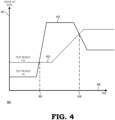
- FIG. 4 illustrates a diagram 400 depicting an example of the relative performance of the different test regions 115 and 116 changing over time in accordance with some embodiments.
- the diagram 400 includes an X-axis 450 representing time and a Y-axis 451 representing cache hit rate.
- the diagram 400 depicts a curve 452 representing the cache hit rate for the test region 116 over time and a curve 453 representing the cache hit rate for the test region 115.
- the cache controller 105 applies the transfer policy for the test region 115 to the non-test region 118.
- the relationship between the cache hit rates for the test regions 115 and 116 changes, such that the cache hit rate for the test region 116 is greater than the cache hit rate for the test region 115.
- the cache controller 105 changes the transfer policy for the non-test region 118 to match the transfer policy for the test region 116.
- the relationship between the cache hit rates for the test regions 115 and 116 again changes, such that the cache hit rate for the test region 115 is again greater than the cache hit rate for the test region 116.
- the cache controller 105 changes the transfer policy for the non-test region 118 to match the transfer policy for the test region 115.
- the cache controller 105 changes the transfer policy applied to the non-test region 118 based on changes in the relative performance of the test regions 115 and 116.
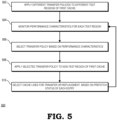
- FIG. 5 is a flow diagram of a method 500 of selecting a transfer policy for a non-test region of a cache based on performance characteristics of different test regions of the cache in accordance with some embodiments.
- the method 500 is described with respect to an example implementation at the processing system 100 of FIG. 1 .
- the cache controller 105 applies the different transfer policies 111 and 112 to the different test regions 115 and 116 of the cache 110.
- the cache controller 105 applies the transfer policy 111 to the test region 115 and the transfer policy 112 to the test region 116.
- the performance monitor 104 monitors and records performance characteristics for the different test regions 115 and 116, such as cache hit rate, cache miss rate, a weighted sum of cache hit rate and cache miss rate, and the like.
- the cache controller 105 compares the performance characteristics for each of the test regions 115 and 116 and based on the comparison selects one of the transfer polices 111 and 112. For example, the cache controller 105 selects the transfer policy that is applied to the test region that has a higher performance as indicated by the performance characteristics.
- the cache controller 105 applies the selected transfer policy to the non-test region 118 of the cache 110. That is, the cache controller designates cache entries either for transfer or replacement without prior transfer upon eviction at the non-test region 118 in keeping with the requirements of the selected transfer policy.
- the cache controller 105 uses the transfer or replacement designations to either transfer or discard the prefetch data stored at the non-test region 118 of the L2 cache 110 in accordance with a replacement policy non-test region 118 of the L2 cache 110.
- the method flow returns to block 504, reflecting that the cache controller 105 continues to monitor the performance of the test regions 115 and 116 and based on the performance adjusts the transfer policy applied to the non-test region 118.
- certain aspects of the techniques described above may implemented by one or more processors of a processing system executing software.
- the software comprises one or more sets of executable instructions stored or otherwise tangibly embodied on a non-transitory computer readable storage medium.
- the software includes the instructions and certain data that, when executed by the one or more processors, manipulate the one or more processors to perform one or more aspects of the techniques described above.
- the non-transitory computer readable storage medium may include, for example, a magnetic or optical disk storage device, solid state storage devices such as Flash memory, a cache, random access memory (RAM) or other non-volatile memory device or devices, and the like.
- the executable instructions stored on the non-transitory computer readable storage medium may be in source code, assembly language code, object code, or other instruction format that is interpreted or otherwise executable by one or more processors.
- a computer readable storage medium may include any storage medium, or combination of storage media, accessible by a computer system during use to provide instructions and/or data to the computer system.
- Such storage media includes, but is not limited to, optical media (e.g., compact disc (CD), digital versatile disc (DVD), Blu-Ray disc), magnetic media (e.g., floppy disc, magnetic tape, or magnetic hard drive), volatile memory (e.g., random access memory (RAM) or cache), non-volatile memory (e.g., read-only memory (ROM) or Flash memory), or microelectromechanical systems (MEMS)-based storage media.
- optical media e.g., compact disc (CD), digital versatile disc (DVD), Blu-Ray disc
- magnetic media e.g., floppy disc, magnetic tape, or magnetic hard drive
- volatile memory e.g., random access memory (RAM) or cache
- non-volatile memory e.g., read-only memory (ROM) or Flash memory
- MEMS microelectromechanical
- the computer readable storage medium may be embedded in the computing system (e.g., system RAM or ROM), fixedly attached to the computing system (e.g., a magnetic hard drive), removably attached to the computing system (e.g., an optical disc or Universal Serial Bus (USB)-based Flash memory), or coupled to the computer system via a wired or wireless network (e.g., network accessible storage (NAS)).
- system RAM or ROM system RAM or ROM
- USB Universal Serial Bus
- NAS network accessible storage
Landscapes
- Engineering & Computer Science (AREA)
- Theoretical Computer Science (AREA)
- Physics & Mathematics (AREA)
- General Engineering & Computer Science (AREA)
- General Physics & Mathematics (AREA)
- Memory System Of A Hierarchy Structure (AREA)
Claims (10)
- Verfahren, umfassend:als Reaktion auf das Ersetzen erster Daten in einem ersten Cache-Eintrag (246) in einer ersten Region (116) eines ersten Cache (110), Übertragen der ersten Daten in einen zweiten Cache (120) als Reaktion darauf, dass die ersten Daten vorabgerufene Daten sind, die kein Ziel einer Anforderung waren, gemäß einer ersten Übertragungsrichtlinie (111, 311); undals Reaktion auf das Ersetzen zweiter Daten in einem zweiten Cache-Eintrag (244) in einer zweiten Region (115) des ersten Cache, Verwerfen der zweiten Daten aus dem ersten Cache als Reaktion darauf, dass die Daten vorabgerufene Daten sind, die kein Ziel einer Anforderung waren, gemäß einer zweiten Übertragungsrichtlinie (112, 312);Messen einer ersten Leistungscharakteristik (504) für die erste Region des ersten Cache und einer zweiten Leistungscharakteristik für die zweite Region des ersten Cache ;Auswählen der ersten Übertragungsrichtlinie (111) oder der zweiten Übertragungsrichtlinie (112) für eine dritte Region (118) des ersten Cache basierend auf der ersten Leistungscharakteristik und der zweiten Leistungscharakteristik.
- Verfahren nach Anspruch 1, wobei das Auswählen der ersten Übertragungsrichtlinie oder der zweiten Übertragungsrichtlinie das Auswählen der ersten Übertragungsrichtlinie zu einem ersten Zeitpunkt (455) umfasst, und wobei das Verfahren ferner umfasst:
Auswählen, zu einem zweiten Zeitpunkt (456), der zweiten Übertragungsrichtlinie für die dritte Region des ersten Cache als Reaktion auf eine Änderung einer Beziehung zwischen der ersten Leistungscharakteristik und der zweiten Leistungscharakteristik, wobei sich die zweite Übertragungsrichtlinie von der ersten Übertragungsrichtlinie unterscheidet. - Verfahren nach Anspruch 1, wobei:die erste Leistungscharakteristik eine Cache-Trefferrate (452) in der ersten Region des ersten Caches umfasst; unddie zweite Leistungscharakteristik eine Cache-Trefferrate (453) in einer zweiten Region des ersten Caches umfasst.
- Verfahren nach Anspruch 1, wobei:die erste Leistungscharakteristik eine Cache-Fehlerrate in der ersten Region des ersten Caches umfasst; unddie zweite Leistungscharakteristik eine Cache-Fehlerrate in einer zweiten Region des ersten Caches umfasst.
- Verfahren nach Anspruch 1, wobei:die erste Leistungscharakteristik eine erste gewichtete Summe einer Cache-Trefferrate in der ersten Region des ersten Cache und einer Cache-Fehlerrate in der ersten Region des ersten Caches umfasst; unddie zweite Leistungscharakteristik eine zweite gewichtete Summe einer Cache-Trefferrate in einer zweiten Region des ersten Cache und einer Cache-Fehlerrate in der zweiten Region des ersten Caches umfasst.
- Verfahren nach Anspruch 1, wobei die erste Leistungscharakteristik und die zweite Leistungscharakteristik unterschiedliche Arten von Leistungscharakteristik sind.
- Prozessor (101), umfassend:einen ersten Cache (110), der eine erste Region (115) und eine zweite Region (116) umfasst;einen zweiten Cache (120); undeine Cache-Steuerung (105), die konfiguriert ist zum:in der ersten Region, Auswählen einer ersten Übertragungsrichtlinie (111) für einen ersten Cache-Eintrag (240) basierend darauf, ob Daten in dem ersten Cache-Eintrag als Reaktion auf eine Vorabrufanforderung gespeichert werden, die kein Ziel einer Anforderung war ;in einer zweiten Region, Auswählen einer zweiten Übertragungsrichtlinie (112) für Cache-Einträge, unabhängig davon, ob Daten in den Cache-Einträgen der zweiten Region gespeichert werden, als Reaktion auf eine Vorabrufanforderung, die nicht ein Ziel einer Anforderung war;selektiven Übertragen von Daten in der ersten Region und der zweiten Region in den zweiten Cache als Reaktion auf das Empfangen von Daten in dem ersten Cache, das eine Freigabe eines Cache-Eintrags aus dem ersten Cache erfordert, basierend auf den ausgewählten Übertragungsrichtlinien an die erste Region und die zweite Region ; undeinen Leistungsmonitor (104), um eine erste Leistungscharakteristik für die erste Region und eine zweite Leistungscharakteristik für die zweite Region zu messen ;wobei die Cache-Steuerung konfiguriert ist zum:
Auswählen der ersten Übertragungsrichtlinie oder der zweiten Übertragungsrichtlinie für eine dritte Region (118) des ersten Cache basierend auf der ersten Leistungscharakteristik und der zweiten Leistungscharakteristik. - Prozessor nach Anspruch 7, wobei die zweite Übertragungsrichtlinie dient zum:
Übertragen von Daten in einem zweiten Cache-Eintrag in den zweiten Cache vor dem Speichern der empfangenen Daten in dem zweiten Cache-Eintrag. - Prozessor nach Anspruch 7, wobei die Cache-Steuerung dient zum:Auswählen der ersten Übertragungsrichtlinie für die dritte Region zu einem ersten Zeitpunkt (455); undAuswählen, zu einem zweiten Zeitpunkt (456), der zweiten Übertragungsrichtlinie für die dritte Region als Reaktion auf eine Änderung einer Beziehung zwischen der ersten Leistungscharakteristik und der zweiten Leistungscharakteristik, wobei sich die zweite Übertragungsrichtlinie von der ersten Übertragungsrichtlinie unterscheidet.
- Prozessor nach Anspruch 7, wobei:die erste Leistungscharakteristik eine Cache-Trefferrate (453) in der ersten Region umfasst; unddie zweite Leistungscharakteristik eine Cache-Trefferrate (452) in der zweiten Region umfasst.
Applications Claiming Priority (2)
| Application Number | Priority Date | Filing Date | Title |
|---|---|---|---|
| US15/215,033 US9928176B2 (en) | 2016-07-20 | 2016-07-20 | Selecting cache transfer policy for prefetched data based on cache test regions |
| PCT/US2017/042794 WO2018017671A1 (en) | 2016-07-20 | 2017-07-19 | Selecting cache transfer policy for prefetched data based on cache test regions |
Publications (3)
| Publication Number | Publication Date |
|---|---|
| EP3488349A1 EP3488349A1 (de) | 2019-05-29 |
| EP3488349A4 EP3488349A4 (de) | 2020-03-25 |
| EP3488349B1 true EP3488349B1 (de) | 2024-05-15 |
Family
ID=60989964
Family Applications (1)
| Application Number | Title | Priority Date | Filing Date |
|---|---|---|---|
| EP17831761.6A Active EP3488349B1 (de) | 2016-07-20 | 2017-07-19 | Auswahl einer cache-speichertransferrichtlinie für vorabgerufene daten auf der basis von cache-speichertestregionen |
Country Status (6)
| Country | Link |
|---|---|
| US (1) | US9928176B2 (de) |
| EP (1) | EP3488349B1 (de) |
| JP (1) | JP7232175B2 (de) |
| KR (1) | KR20190020825A (de) |
| CN (1) | CN109478165B (de) |
| WO (1) | WO2018017671A1 (de) |
Families Citing this family (10)
| Publication number | Priority date | Publication date | Assignee | Title |
|---|---|---|---|---|
| US12147353B2 (en) * | 2019-05-24 | 2024-11-19 | Texas Instruments Incorporated | Methods and apparatus for read-modify-write support in multi-banked data RAM cache for bank arbitration |
| US11500779B1 (en) | 2019-07-19 | 2022-11-15 | Marvell Asia Pte, Ltd. | Vector prefetching for computing systems |
| US11561895B2 (en) * | 2019-09-05 | 2023-01-24 | Advanced Micro Devices, Inc. | Oldest operation wait time indication input into set-dueling |
| US11210234B2 (en) | 2019-10-31 | 2021-12-28 | Advanced Micro Devices, Inc. | Cache access measurement deskew |
| US11379379B1 (en) * | 2019-12-05 | 2022-07-05 | Marvell Asia Pte, Ltd. | Differential cache block sizing for computing systems |
| CN111723058B (zh) * | 2020-05-29 | 2023-07-14 | 广东浪潮大数据研究有限公司 | 一种预读数据缓存方法、装置、设备及存储介质 |
| US11467937B2 (en) * | 2020-06-26 | 2022-10-11 | Advanced Micro Devices, Inc. | Configuring cache policies for a cache based on combined cache policy testing |
| CN113760783B (zh) * | 2021-09-09 | 2023-03-24 | 海光信息技术股份有限公司 | 联合偏移预取方法、装置、计算设备和可读存储介质 |
| CN114238167B (zh) * | 2021-12-14 | 2022-09-09 | 海光信息技术股份有限公司 | 信息预取方法、处理器、电子设备 |
| CN117971728B (zh) * | 2024-03-29 | 2024-10-18 | 北京象帝先计算技术有限公司 | 缓存器及缓存控制方法、集成电路系统、电子组件及设备 |
Family Cites Families (23)
| Publication number | Priority date | Publication date | Assignee | Title |
|---|---|---|---|---|
| US5293609A (en) * | 1991-04-19 | 1994-03-08 | International Business Machines Corporation | Hit-density-based replacement for data cache with prefetching |
| US5381539A (en) * | 1992-06-04 | 1995-01-10 | Emc Corporation | System and method for dynamically controlling cache management |
| JPH06282487A (ja) * | 1993-03-25 | 1994-10-07 | Matsushita Electric Ind Co Ltd | キャッシュ装置 |
| US5553276A (en) * | 1993-06-30 | 1996-09-03 | International Business Machines Corporation | Self-time processor with dynamic clock generator having plurality of tracking elements for outputting sequencing signals to functional units |
| US5544342A (en) * | 1993-06-30 | 1996-08-06 | International Business Machines Corporation | System and method for prefetching information in a processing system |
| KR0146059B1 (ko) * | 1995-04-11 | 1998-09-15 | 문정환 | 미참조 선인출 캐쉬를 이용한 명령어 선인출 방법 및 그 회로 |
| US6223256B1 (en) * | 1997-07-22 | 2001-04-24 | Hewlett-Packard Company | Computer cache memory with classes and dynamic selection of replacement algorithms |
| US6272598B1 (en) | 1999-03-22 | 2001-08-07 | Hewlett-Packard Company | Web cache performance by applying different replacement policies to the web cache |
| US6721853B2 (en) | 2001-06-29 | 2004-04-13 | International Business Machines Corporation | High performance data processing system via cache victimization protocols |
| JP3964705B2 (ja) | 2002-03-25 | 2007-08-22 | 川崎マイクロエレクトロニクス株式会社 | 適応置換制御機能を有するセット・アソシアティブ方式のキャッシュシステム及びキャッシュ制御方法 |
| US7558920B2 (en) * | 2004-06-30 | 2009-07-07 | Intel Corporation | Apparatus and method for partitioning a shared cache of a chip multi-processor |
| US20060143256A1 (en) | 2004-12-28 | 2006-06-29 | Galin Galchev | Cache region concept |
| US20090006813A1 (en) * | 2007-06-28 | 2009-01-01 | Abhishek Singhal | Data forwarding from system memory-side prefetcher |
| US7917702B2 (en) * | 2007-07-10 | 2011-03-29 | Qualcomm Incorporated | Data prefetch throttle |
| US7793049B2 (en) | 2007-10-30 | 2010-09-07 | International Business Machines Corporation | Mechanism for data cache replacement based on region policies |
| US8478942B2 (en) | 2010-09-27 | 2013-07-02 | Advanced Micro Devices, Inc. | Method and apparatus for reducing processor cache pollution caused by aggressive prefetching |
| WO2012095957A1 (ja) | 2011-01-12 | 2012-07-19 | 富士通株式会社 | キャッシュメモリ装置,キャッシュメモリの制御装置,情報処理装置,キャッシュメモリの制御方法,及びキャッシュメモリ装置の閾値決定プログラム |
| US9009416B1 (en) * | 2011-12-30 | 2015-04-14 | Emc Corporation | System and method for managing cache system content directories |
| US9235524B1 (en) * | 2011-12-30 | 2016-01-12 | Emc Corporation | System and method for improving cache performance |
| US9779029B2 (en) | 2012-11-06 | 2017-10-03 | Facebook, Inc. | Cache replacement policy for data with strong temporal locality |
| US20150286571A1 (en) * | 2014-04-04 | 2015-10-08 | Qualcomm Incorporated | Adaptive cache prefetching based on competing dedicated prefetch policies in dedicated cache sets to reduce cache pollution |
| WO2016097813A1 (en) | 2014-12-14 | 2016-06-23 | Via Alliance Semiconductor Co., Ltd. | Set associative cache memory with heterogeneous replacement policy |
| CN104572502B (zh) * | 2015-01-12 | 2018-06-19 | 浪潮电子信息产业股份有限公司 | 一种存储系统缓存策略自适应方法 |
-
2016
- 2016-07-20 US US15/215,033 patent/US9928176B2/en active Active
-
2017
- 2017-07-19 JP JP2019502753A patent/JP7232175B2/ja active Active
- 2017-07-19 EP EP17831761.6A patent/EP3488349B1/de active Active
- 2017-07-19 CN CN201780044628.3A patent/CN109478165B/zh active Active
- 2017-07-19 WO PCT/US2017/042794 patent/WO2018017671A1/en not_active Ceased
- 2017-07-19 KR KR1020197003109A patent/KR20190020825A/ko not_active Ceased
Also Published As
| Publication number | Publication date |
|---|---|
| US20180024931A1 (en) | 2018-01-25 |
| JP7232175B2 (ja) | 2023-03-02 |
| CN109478165B (zh) | 2020-10-02 |
| CN109478165A (zh) | 2019-03-15 |
| US9928176B2 (en) | 2018-03-27 |
| WO2018017671A1 (en) | 2018-01-25 |
| EP3488349A1 (de) | 2019-05-29 |
| JP2019525330A (ja) | 2019-09-05 |
| EP3488349A4 (de) | 2020-03-25 |
| KR20190020825A (ko) | 2019-03-04 |
Similar Documents
| Publication | Publication Date | Title |
|---|---|---|
| US11321245B2 (en) | Selecting cache aging policy for prefetches based on cache test regions | |
| EP3488349B1 (de) | Auswahl einer cache-speichertransferrichtlinie für vorabgerufene daten auf der basis von cache-speichertestregionen | |
| US11803484B2 (en) | Dynamic application of software data caching hints based on cache test regions | |
| US8935478B2 (en) | Variable cache line size management | |
| US8364904B2 (en) | Horizontal cache persistence in a multi-compute node, symmetric multiprocessing computer | |
| CN112585580A (zh) | 处理器的被过滤的分支预测结构 | |
| JP7453360B2 (ja) | キャッシュアクセス測定デスキュー | |
| US20170357585A1 (en) | Setting cache entry age based on hints from another cache level | |
| US10534721B2 (en) | Cache replacement policy based on non-cache buffers | |
| EP3239848A1 (de) | Auswahl von cache-speicheralterungspolitik für vorabrufe basierend auf cache-speichertestregionen |
Legal Events
| Date | Code | Title | Description |
|---|---|---|---|
| STAA | Information on the status of an ep patent application or granted ep patent |
Free format text: STATUS: THE INTERNATIONAL PUBLICATION HAS BEEN MADE |
|
| PUAI | Public reference made under article 153(3) epc to a published international application that has entered the european phase |
Free format text: ORIGINAL CODE: 0009012 |
|
| STAA | Information on the status of an ep patent application or granted ep patent |
Free format text: STATUS: REQUEST FOR EXAMINATION WAS MADE |
|
| 17P | Request for examination filed |
Effective date: 20190129 |
|
| AK | Designated contracting states |
Kind code of ref document: A1 Designated state(s): AL AT BE BG CH CY CZ DE DK EE ES FI FR GB GR HR HU IE IS IT LI LT LU LV MC MK MT NL NO PL PT RO RS SE SI SK SM TR |
|
| AX | Request for extension of the european patent |
Extension state: BA ME |
|
| RIN1 | Information on inventor provided before grant (corrected) |
Inventor name: MOYER, PAUL JAMES |
|
| DAV | Request for validation of the european patent (deleted) | ||
| DAX | Request for extension of the european patent (deleted) | ||
| A4 | Supplementary search report drawn up and despatched |
Effective date: 20200221 |
|
| RIC1 | Information provided on ipc code assigned before grant |
Ipc: G06F 12/126 20160101ALI20200217BHEP Ipc: G06F 12/0871 20160101ALI20200217BHEP Ipc: G06F 12/121 20160101ALI20200217BHEP Ipc: G06F 12/128 20160101ALI20200217BHEP Ipc: G06F 12/0868 20160101ALI20200217BHEP Ipc: G06F 12/0811 20160101ALI20200217BHEP Ipc: G06F 12/0897 20160101AFI20200217BHEP Ipc: G06F 12/127 20160101ALI20200217BHEP |
|
| STAA | Information on the status of an ep patent application or granted ep patent |
Free format text: STATUS: EXAMINATION IS IN PROGRESS |
|
| 17Q | First examination report despatched |
Effective date: 20211108 |
|
| GRAP | Despatch of communication of intention to grant a patent |
Free format text: ORIGINAL CODE: EPIDOSNIGR1 |
|
| STAA | Information on the status of an ep patent application or granted ep patent |
Free format text: STATUS: GRANT OF PATENT IS INTENDED |
|
| INTG | Intention to grant announced |
Effective date: 20231211 |
|
| GRAS | Grant fee paid |
Free format text: ORIGINAL CODE: EPIDOSNIGR3 |
|
| GRAA | (expected) grant |
Free format text: ORIGINAL CODE: 0009210 |
|
| STAA | Information on the status of an ep patent application or granted ep patent |
Free format text: STATUS: THE PATENT HAS BEEN GRANTED |
|
| AK | Designated contracting states |
Kind code of ref document: B1 Designated state(s): AL AT BE BG CH CY CZ DE DK EE ES FI FR GB GR HR HU IE IS IT LI LT LU LV MC MK MT NL NO PL PT RO RS SE SI SK SM TR |
|
| P01 | Opt-out of the competence of the unified patent court (upc) registered |
Effective date: 20240409 |
|
| REG | Reference to a national code |
Ref country code: CH Ref legal event code: EP Ref country code: GB Ref legal event code: FG4D |
|
| REG | Reference to a national code |
Ref country code: DE Ref legal event code: R096 Ref document number: 602017081978 Country of ref document: DE |
|
| REG | Reference to a national code |
Ref country code: IE Ref legal event code: FG4D |
|
| REG | Reference to a national code |
Ref country code: LT Ref legal event code: MG9D |
|
| REG | Reference to a national code |
Ref country code: NL Ref legal event code: MP Effective date: 20240515 |
|
| PG25 | Lapsed in a contracting state [announced via postgrant information from national office to epo] |
Ref country code: IS Free format text: LAPSE BECAUSE OF FAILURE TO SUBMIT A TRANSLATION OF THE DESCRIPTION OR TO PAY THE FEE WITHIN THE PRESCRIBED TIME-LIMIT Effective date: 20240915 |
|
| PG25 | Lapsed in a contracting state [announced via postgrant information from national office to epo] |
Ref country code: BG Free format text: LAPSE BECAUSE OF FAILURE TO SUBMIT A TRANSLATION OF THE DESCRIPTION OR TO PAY THE FEE WITHIN THE PRESCRIBED TIME-LIMIT Effective date: 20240515 |
|
| PG25 | Lapsed in a contracting state [announced via postgrant information from national office to epo] |
Ref country code: FI Free format text: LAPSE BECAUSE OF FAILURE TO SUBMIT A TRANSLATION OF THE DESCRIPTION OR TO PAY THE FEE WITHIN THE PRESCRIBED TIME-LIMIT Effective date: 20240515 Ref country code: HR Free format text: LAPSE BECAUSE OF FAILURE TO SUBMIT A TRANSLATION OF THE DESCRIPTION OR TO PAY THE FEE WITHIN THE PRESCRIBED TIME-LIMIT Effective date: 20240515 |
|
| PG25 | Lapsed in a contracting state [announced via postgrant information from national office to epo] |
Ref country code: GR Free format text: LAPSE BECAUSE OF FAILURE TO SUBMIT A TRANSLATION OF THE DESCRIPTION OR TO PAY THE FEE WITHIN THE PRESCRIBED TIME-LIMIT Effective date: 20240816 |
|
| PG25 | Lapsed in a contracting state [announced via postgrant information from national office to epo] |
Ref country code: PT Free format text: LAPSE BECAUSE OF FAILURE TO SUBMIT A TRANSLATION OF THE DESCRIPTION OR TO PAY THE FEE WITHIN THE PRESCRIBED TIME-LIMIT Effective date: 20240916 |
|
| REG | Reference to a national code |
Ref country code: AT Ref legal event code: MK05 Ref document number: 1687471 Country of ref document: AT Kind code of ref document: T Effective date: 20240515 |
|
| PG25 | Lapsed in a contracting state [announced via postgrant information from national office to epo] |
Ref country code: NL Free format text: LAPSE BECAUSE OF FAILURE TO SUBMIT A TRANSLATION OF THE DESCRIPTION OR TO PAY THE FEE WITHIN THE PRESCRIBED TIME-LIMIT Effective date: 20240515 |
|
| PG25 | Lapsed in a contracting state [announced via postgrant information from national office to epo] |
Ref country code: ES Free format text: LAPSE BECAUSE OF FAILURE TO SUBMIT A TRANSLATION OF THE DESCRIPTION OR TO PAY THE FEE WITHIN THE PRESCRIBED TIME-LIMIT Effective date: 20240515 |
|
| PG25 | Lapsed in a contracting state [announced via postgrant information from national office to epo] |
Ref country code: AT Free format text: LAPSE BECAUSE OF FAILURE TO SUBMIT A TRANSLATION OF THE DESCRIPTION OR TO PAY THE FEE WITHIN THE PRESCRIBED TIME-LIMIT Effective date: 20240515 |
|
| PG25 | Lapsed in a contracting state [announced via postgrant information from national office to epo] |
Ref country code: PL Free format text: LAPSE BECAUSE OF FAILURE TO SUBMIT A TRANSLATION OF THE DESCRIPTION OR TO PAY THE FEE WITHIN THE PRESCRIBED TIME-LIMIT Effective date: 20240515 |
|
| PG25 | Lapsed in a contracting state [announced via postgrant information from national office to epo] |
Ref country code: LV Free format text: LAPSE BECAUSE OF FAILURE TO SUBMIT A TRANSLATION OF THE DESCRIPTION OR TO PAY THE FEE WITHIN THE PRESCRIBED TIME-LIMIT Effective date: 20240515 |
|
| PG25 | Lapsed in a contracting state [announced via postgrant information from national office to epo] |
Ref country code: PT Free format text: LAPSE BECAUSE OF FAILURE TO SUBMIT A TRANSLATION OF THE DESCRIPTION OR TO PAY THE FEE WITHIN THE PRESCRIBED TIME-LIMIT Effective date: 20240916 Ref country code: PL Free format text: LAPSE BECAUSE OF FAILURE TO SUBMIT A TRANSLATION OF THE DESCRIPTION OR TO PAY THE FEE WITHIN THE PRESCRIBED TIME-LIMIT Effective date: 20240515 Ref country code: NO Free format text: LAPSE BECAUSE OF FAILURE TO SUBMIT A TRANSLATION OF THE DESCRIPTION OR TO PAY THE FEE WITHIN THE PRESCRIBED TIME-LIMIT Effective date: 20240815 Ref country code: NL Free format text: LAPSE BECAUSE OF FAILURE TO SUBMIT A TRANSLATION OF THE DESCRIPTION OR TO PAY THE FEE WITHIN THE PRESCRIBED TIME-LIMIT Effective date: 20240515 Ref country code: LV Free format text: LAPSE BECAUSE OF FAILURE TO SUBMIT A TRANSLATION OF THE DESCRIPTION OR TO PAY THE FEE WITHIN THE PRESCRIBED TIME-LIMIT Effective date: 20240515 Ref country code: IS Free format text: LAPSE BECAUSE OF FAILURE TO SUBMIT A TRANSLATION OF THE DESCRIPTION OR TO PAY THE FEE WITHIN THE PRESCRIBED TIME-LIMIT Effective date: 20240915 Ref country code: HR Free format text: LAPSE BECAUSE OF FAILURE TO SUBMIT A TRANSLATION OF THE DESCRIPTION OR TO PAY THE FEE WITHIN THE PRESCRIBED TIME-LIMIT Effective date: 20240515 Ref country code: GR Free format text: LAPSE BECAUSE OF FAILURE TO SUBMIT A TRANSLATION OF THE DESCRIPTION OR TO PAY THE FEE WITHIN THE PRESCRIBED TIME-LIMIT Effective date: 20240816 Ref country code: FI Free format text: LAPSE BECAUSE OF FAILURE TO SUBMIT A TRANSLATION OF THE DESCRIPTION OR TO PAY THE FEE WITHIN THE PRESCRIBED TIME-LIMIT Effective date: 20240515 Ref country code: ES Free format text: LAPSE BECAUSE OF FAILURE TO SUBMIT A TRANSLATION OF THE DESCRIPTION OR TO PAY THE FEE WITHIN THE PRESCRIBED TIME-LIMIT Effective date: 20240515 Ref country code: BG Free format text: LAPSE BECAUSE OF FAILURE TO SUBMIT A TRANSLATION OF THE DESCRIPTION OR TO PAY THE FEE WITHIN THE PRESCRIBED TIME-LIMIT Effective date: 20240515 Ref country code: AT Free format text: LAPSE BECAUSE OF FAILURE TO SUBMIT A TRANSLATION OF THE DESCRIPTION OR TO PAY THE FEE WITHIN THE PRESCRIBED TIME-LIMIT Effective date: 20240515 Ref country code: RS Free format text: LAPSE BECAUSE OF FAILURE TO SUBMIT A TRANSLATION OF THE DESCRIPTION OR TO PAY THE FEE WITHIN THE PRESCRIBED TIME-LIMIT Effective date: 20240815 |
|
| PG25 | Lapsed in a contracting state [announced via postgrant information from national office to epo] |
Ref country code: DK Free format text: LAPSE BECAUSE OF FAILURE TO SUBMIT A TRANSLATION OF THE DESCRIPTION OR TO PAY THE FEE WITHIN THE PRESCRIBED TIME-LIMIT Effective date: 20240515 |
|
| PG25 | Lapsed in a contracting state [announced via postgrant information from national office to epo] |
Ref country code: EE Free format text: LAPSE BECAUSE OF FAILURE TO SUBMIT A TRANSLATION OF THE DESCRIPTION OR TO PAY THE FEE WITHIN THE PRESCRIBED TIME-LIMIT Effective date: 20240515 |
|
| PG25 | Lapsed in a contracting state [announced via postgrant information from national office to epo] |
Ref country code: CZ Free format text: LAPSE BECAUSE OF FAILURE TO SUBMIT A TRANSLATION OF THE DESCRIPTION OR TO PAY THE FEE WITHIN THE PRESCRIBED TIME-LIMIT Effective date: 20240515 |
|
| PG25 | Lapsed in a contracting state [announced via postgrant information from national office to epo] |
Ref country code: RO Free format text: LAPSE BECAUSE OF FAILURE TO SUBMIT A TRANSLATION OF THE DESCRIPTION OR TO PAY THE FEE WITHIN THE PRESCRIBED TIME-LIMIT Effective date: 20240515 Ref country code: SK Free format text: LAPSE BECAUSE OF FAILURE TO SUBMIT A TRANSLATION OF THE DESCRIPTION OR TO PAY THE FEE WITHIN THE PRESCRIBED TIME-LIMIT Effective date: 20240515 |
|
| PG25 | Lapsed in a contracting state [announced via postgrant information from national office to epo] |
Ref country code: SM Free format text: LAPSE BECAUSE OF FAILURE TO SUBMIT A TRANSLATION OF THE DESCRIPTION OR TO PAY THE FEE WITHIN THE PRESCRIBED TIME-LIMIT Effective date: 20240515 |
|
| PG25 | Lapsed in a contracting state [announced via postgrant information from national office to epo] |
Ref country code: SM Free format text: LAPSE BECAUSE OF FAILURE TO SUBMIT A TRANSLATION OF THE DESCRIPTION OR TO PAY THE FEE WITHIN THE PRESCRIBED TIME-LIMIT Effective date: 20240515 Ref country code: SK Free format text: LAPSE BECAUSE OF FAILURE TO SUBMIT A TRANSLATION OF THE DESCRIPTION OR TO PAY THE FEE WITHIN THE PRESCRIBED TIME-LIMIT Effective date: 20240515 Ref country code: RO Free format text: LAPSE BECAUSE OF FAILURE TO SUBMIT A TRANSLATION OF THE DESCRIPTION OR TO PAY THE FEE WITHIN THE PRESCRIBED TIME-LIMIT Effective date: 20240515 Ref country code: EE Free format text: LAPSE BECAUSE OF FAILURE TO SUBMIT A TRANSLATION OF THE DESCRIPTION OR TO PAY THE FEE WITHIN THE PRESCRIBED TIME-LIMIT Effective date: 20240515 Ref country code: DK Free format text: LAPSE BECAUSE OF FAILURE TO SUBMIT A TRANSLATION OF THE DESCRIPTION OR TO PAY THE FEE WITHIN THE PRESCRIBED TIME-LIMIT Effective date: 20240515 Ref country code: CZ Free format text: LAPSE BECAUSE OF FAILURE TO SUBMIT A TRANSLATION OF THE DESCRIPTION OR TO PAY THE FEE WITHIN THE PRESCRIBED TIME-LIMIT Effective date: 20240515 |
|
| PG25 | Lapsed in a contracting state [announced via postgrant information from national office to epo] |
Ref country code: IT Free format text: LAPSE BECAUSE OF FAILURE TO SUBMIT A TRANSLATION OF THE DESCRIPTION OR TO PAY THE FEE WITHIN THE PRESCRIBED TIME-LIMIT Effective date: 20240515 Ref country code: MC Free format text: LAPSE BECAUSE OF FAILURE TO SUBMIT A TRANSLATION OF THE DESCRIPTION OR TO PAY THE FEE WITHIN THE PRESCRIBED TIME-LIMIT Effective date: 20240515 |
|
| REG | Reference to a national code |
Ref country code: DE Ref legal event code: R097 Ref document number: 602017081978 Country of ref document: DE |
|
| REG | Reference to a national code |
Ref country code: CH Ref legal event code: PL |
|
| PG25 | Lapsed in a contracting state [announced via postgrant information from national office to epo] |
Ref country code: LU Free format text: LAPSE BECAUSE OF NON-PAYMENT OF DUE FEES Effective date: 20240719 |
|
| PLBE | No opposition filed within time limit |
Free format text: ORIGINAL CODE: 0009261 |
|
| STAA | Information on the status of an ep patent application or granted ep patent |
Free format text: STATUS: NO OPPOSITION FILED WITHIN TIME LIMIT |
|
| PG25 | Lapsed in a contracting state [announced via postgrant information from national office to epo] |
Ref country code: LU Free format text: LAPSE BECAUSE OF NON-PAYMENT OF DUE FEES Effective date: 20240719 |
|
| 26N | No opposition filed |
Effective date: 20250218 |
|
| PG25 | Lapsed in a contracting state [announced via postgrant information from national office to epo] |
Ref country code: SI Free format text: LAPSE BECAUSE OF FAILURE TO SUBMIT A TRANSLATION OF THE DESCRIPTION OR TO PAY THE FEE WITHIN THE PRESCRIBED TIME-LIMIT Effective date: 20240515 Ref country code: CH Free format text: LAPSE BECAUSE OF NON-PAYMENT OF DUE FEES Effective date: 20240731 Ref country code: BE Free format text: LAPSE BECAUSE OF NON-PAYMENT OF DUE FEES Effective date: 20240731 |
|
| PG25 | Lapsed in a contracting state [announced via postgrant information from national office to epo] |
Ref country code: FR Free format text: LAPSE BECAUSE OF NON-PAYMENT OF DUE FEES Effective date: 20240731 |
|
| REG | Reference to a national code |
Ref country code: BE Ref legal event code: MM Effective date: 20240731 |
|
| PG25 | Lapsed in a contracting state [announced via postgrant information from national office to epo] |
Ref country code: IE Free format text: LAPSE BECAUSE OF NON-PAYMENT OF DUE FEES Effective date: 20240719 |
|
| PG25 | Lapsed in a contracting state [announced via postgrant information from national office to epo] |
Ref country code: SE Free format text: LAPSE BECAUSE OF FAILURE TO SUBMIT A TRANSLATION OF THE DESCRIPTION OR TO PAY THE FEE WITHIN THE PRESCRIBED TIME-LIMIT Effective date: 20240515 |
|
| PGFP | Annual fee paid to national office [announced via postgrant information from national office to epo] |
Ref country code: DE Payment date: 20250618 Year of fee payment: 9 |
|
| PGFP | Annual fee paid to national office [announced via postgrant information from national office to epo] |
Ref country code: GB Payment date: 20250708 Year of fee payment: 9 |
|
| PG25 | Lapsed in a contracting state [announced via postgrant information from national office to epo] |
Ref country code: CY Free format text: LAPSE BECAUSE OF FAILURE TO SUBMIT A TRANSLATION OF THE DESCRIPTION OR TO PAY THE FEE WITHIN THE PRESCRIBED TIME-LIMIT; INVALID AB INITIO Effective date: 20170719 |
|
| PG25 | Lapsed in a contracting state [announced via postgrant information from national office to epo] |
Ref country code: HU Free format text: LAPSE BECAUSE OF FAILURE TO SUBMIT A TRANSLATION OF THE DESCRIPTION OR TO PAY THE FEE WITHIN THE PRESCRIBED TIME-LIMIT; INVALID AB INITIO Effective date: 20170719 |