EP3489201A1 - Verfahren zur herstellung einer infrarot-transmissiblen linse, infrarot-transmissible linse und infrarotkamera - Google Patents
Verfahren zur herstellung einer infrarot-transmissiblen linse, infrarot-transmissible linse und infrarotkamera Download PDFInfo
- Publication number
- EP3489201A1 EP3489201A1 EP17830669.2A EP17830669A EP3489201A1 EP 3489201 A1 EP3489201 A1 EP 3489201A1 EP 17830669 A EP17830669 A EP 17830669A EP 3489201 A1 EP3489201 A1 EP 3489201A1
- Authority
- EP
- European Patent Office
- Prior art keywords
- infrared
- manufacturing
- glass
- transmissive lens
- lens
- Prior art date
- Legal status (The legal status is an assumption and is not a legal conclusion. Google has not performed a legal analysis and makes no representation as to the accuracy of the status listed.)
- Granted
Links
Images
Classifications
-
- C—CHEMISTRY; METALLURGY
- C03—GLASS; MINERAL OR SLAG WOOL
- C03B—MANUFACTURE, SHAPING, OR SUPPLEMENTARY PROCESSES
- C03B23/00—Re-forming shaped glass
- C03B23/0013—Re-forming shaped glass by pressing
-
- C—CHEMISTRY; METALLURGY
- C03—GLASS; MINERAL OR SLAG WOOL
- C03B—MANUFACTURE, SHAPING, OR SUPPLEMENTARY PROCESSES
- C03B5/00—Melting in furnaces; Furnaces so far as specially adapted for glass manufacture
- C03B5/06—Melting in furnaces; Furnaces so far as specially adapted for glass manufacture in pot furnaces
-
- C—CHEMISTRY; METALLURGY
- C03—GLASS; MINERAL OR SLAG WOOL
- C03B—MANUFACTURE, SHAPING, OR SUPPLEMENTARY PROCESSES
- C03B11/00—Pressing molten glass or performed glass reheated to equivalent low viscosity without blowing
-
- C—CHEMISTRY; METALLURGY
- C03—GLASS; MINERAL OR SLAG WOOL
- C03B—MANUFACTURE, SHAPING, OR SUPPLEMENTARY PROCESSES
- C03B11/00—Pressing molten glass or performed glass reheated to equivalent low viscosity without blowing
- C03B11/06—Construction of plunger or mould
- C03B11/08—Construction of plunger or mould for making solid articles, e.g. lenses
-
- C—CHEMISTRY; METALLURGY
- C03—GLASS; MINERAL OR SLAG WOOL
- C03B—MANUFACTURE, SHAPING, OR SUPPLEMENTARY PROCESSES
- C03B19/00—Other methods of shaping glass
- C03B19/02—Other methods of shaping glass by casting molten glass, e.g. injection moulding
-
- C—CHEMISTRY; METALLURGY
- C03—GLASS; MINERAL OR SLAG WOOL
- C03B—MANUFACTURE, SHAPING, OR SUPPLEMENTARY PROCESSES
- C03B19/00—Other methods of shaping glass
- C03B19/06—Other methods of shaping glass by sintering, e.g. by cold isostatic pressing of powders and subsequent sintering, by hot pressing of powders, by sintering slurries or dispersions not undergoing a liquid phase reaction
-
- C—CHEMISTRY; METALLURGY
- C03—GLASS; MINERAL OR SLAG WOOL
- C03B—MANUFACTURE, SHAPING, OR SUPPLEMENTARY PROCESSES
- C03B32/00—Thermal after-treatment of glass products not provided for in groups C03B19/00, C03B25/00 - C03B31/00 or C03B37/00, e.g. crystallisation, eliminating gas inclusions or other impurities; Hot-pressing vitrified, non-porous, shaped glass products
-
- C—CHEMISTRY; METALLURGY
- C03—GLASS; MINERAL OR SLAG WOOL
- C03C—CHEMICAL COMPOSITION OF GLASSES, GLAZES OR VITREOUS ENAMELS; SURFACE TREATMENT OF GLASS; SURFACE TREATMENT OF FIBRES OR FILAMENTS MADE FROM GLASS, MINERALS OR SLAGS; JOINING GLASS TO GLASS OR OTHER MATERIALS
- C03C3/00—Glass compositions
- C03C3/32—Non-oxide glass compositions, e.g. binary or ternary halides, sulfides or nitrides of germanium, selenium or tellurium
-
- C—CHEMISTRY; METALLURGY
- C03—GLASS; MINERAL OR SLAG WOOL
- C03C—CHEMICAL COMPOSITION OF GLASSES, GLAZES OR VITREOUS ENAMELS; SURFACE TREATMENT OF GLASS; SURFACE TREATMENT OF FIBRES OR FILAMENTS MADE FROM GLASS, MINERALS OR SLAGS; JOINING GLASS TO GLASS OR OTHER MATERIALS
- C03C3/00—Glass compositions
- C03C3/32—Non-oxide glass compositions, e.g. binary or ternary halides, sulfides or nitrides of germanium, selenium or tellurium
- C03C3/321—Chalcogenide glasses, e.g. containing S, Se, Te
-
- C—CHEMISTRY; METALLURGY
- C03—GLASS; MINERAL OR SLAG WOOL
- C03C—CHEMICAL COMPOSITION OF GLASSES, GLAZES OR VITREOUS ENAMELS; SURFACE TREATMENT OF GLASS; SURFACE TREATMENT OF FIBRES OR FILAMENTS MADE FROM GLASS, MINERALS OR SLAGS; JOINING GLASS TO GLASS OR OTHER MATERIALS
- C03C3/00—Glass compositions
- C03C3/32—Non-oxide glass compositions, e.g. binary or ternary halides, sulfides or nitrides of germanium, selenium or tellurium
- C03C3/321—Chalcogenide glasses, e.g. containing S, Se, Te
- C03C3/323—Chalcogenide glasses, e.g. containing S, Se, Te containing halogen, e.g. chalcohalide glasses
-
- C—CHEMISTRY; METALLURGY
- C03—GLASS; MINERAL OR SLAG WOOL
- C03C—CHEMICAL COMPOSITION OF GLASSES, GLAZES OR VITREOUS ENAMELS; SURFACE TREATMENT OF GLASS; SURFACE TREATMENT OF FIBRES OR FILAMENTS MADE FROM GLASS, MINERALS OR SLAGS; JOINING GLASS TO GLASS OR OTHER MATERIALS
- C03C4/00—Compositions for glass with special properties
- C03C4/10—Compositions for glass with special properties for infrared transmitting glass
-
- G—PHYSICS
- G02—OPTICS
- G02B—OPTICAL ELEMENTS, SYSTEMS OR APPARATUS
- G02B1/00—Optical elements characterised by the material of which they are made; Optical coatings for optical elements
-
- C—CHEMISTRY; METALLURGY
- C03—GLASS; MINERAL OR SLAG WOOL
- C03B—MANUFACTURE, SHAPING, OR SUPPLEMENTARY PROCESSES
- C03B2201/00—Type of glass produced
- C03B2201/80—Non-oxide glasses or glass-type compositions
- C03B2201/86—Chalcogenide glasses, i.e. S, Se or Te glasses
-
- C—CHEMISTRY; METALLURGY
- C03—GLASS; MINERAL OR SLAG WOOL
- C03B—MANUFACTURE, SHAPING, OR SUPPLEMENTARY PROCESSES
- C03B2215/00—Press-moulding glass
- C03B2215/40—Product characteristics
- C03B2215/46—Lenses, e.g. bi-convex
-
- C—CHEMISTRY; METALLURGY
- C03—GLASS; MINERAL OR SLAG WOOL
- C03B—MANUFACTURE, SHAPING, OR SUPPLEMENTARY PROCESSES
- C03B2215/00—Press-moulding glass
- C03B2215/66—Means for providing special atmospheres, e.g. reduced pressure, inert gas, reducing gas, clean room
-
- G—PHYSICS
- G02—OPTICS
- G02B—OPTICAL ELEMENTS, SYSTEMS OR APPARATUS
- G02B3/00—Simple or compound lenses
Definitions
- the present invention relates to methods for manufacturing infrared-transmissive lenses for use in infrared sensors, infrared cameras, and so on.
- Vehicle-mounted night vision devices, security systems, and the like include infrared sensors for use to detect living bodies at night.
- infrared sensors for use to detect living bodies at night.
- an infrared sensor is provided, in front of the sensor section, with an optical element, such as a filter or a lens, capable of transmitting infrared rays in the above wavelength range.
- Examples of a material for the optical element as described above include Ge, Zn, and Se. These materials are crystalline bodies and therefore poor in processability, which makes them difficult to process into complicated shapes, such as an aspheric lens. For this reason, these materials have the problem of making mass production of the above optical element difficult and also have the problem of making size reduction of the infrared sensor difficult.
- chalcogenide glasses are proposed as vitreous materials that can transmit infrared rays with wavelengths of about 8 to 14 ⁇ m and are relatively easily processable (see, for example, Patent Literature 1).
- Chalcogenide glasses are moldable and can provide optical elements, such as an aspheric lens, by hot pressing chalcogenide glass sandwiched between an upper mold half and a lower mold half (see, for example, Patent Literature 2).
- Chalcogenide glasses have a drawback that heat applied thereto during pressing causes depressions to be formed in an optical element surface of a molded lens, thus deteriorating the surface quality of the lens. If a large number of depressions are formed in the surface of the optical element, its use as a lens on a camera incurs the occurrence of distortion or corruption of an image formed by the lens.
- the present invention has been made in view of the above situation and, therefore, has an object of providing a method for manufacturing an infrared-transmissive lens having an excellent surface quality.
- Chalcogenide glass generates a gas during hot press molding by reaction of surface-adsorbed water on the chalcogenide glass with a component in the chalcogenide glass.
- a component in the chalcogenide glass For example, in the case of a sulfide-based chalcogenide glass containing much sulfur, surface-adsorbed water on the glass reacts with sulfur in the glass, so that H 2 S generates from the glass surface. If the gas generates at the interface between the chalcogenide glass and the mold assembly, depressions are likely to be formed in the lens surface after hot press molding, so that the surface quality is likely to deteriorate.
- a method for manufacturing an infrared-transmissive lens according to the present invention includes firing a preform of a chalcogenide glass in an inert gas atmosphere to obtain a fired body and then subjecting the fired body to hot press molding.
- the preform is preferably fired at a temperature 0 to 50°C lower than a deformation point of the chalcogenide glass.
- the preform is preferably fired in a nitrogen atmosphere.
- the fired body is preferably subjected to the hot press molding at a temperature equal to or higher than a deformation point of the chalcogenide glass and equal to or lower than a softening point of the chalcogenide glass.
- the fired body is preferably subjected to the hot press molding in an inert gas atmosphere.
- the fired body is preferably subjected to the hot press molding in a nitrogen atmosphere.
- the chalcogenide glass preferably contains at least one of S, Se, and Te.
- the chalcogenide glass preferably contains S+Se+Te in an amount of 30 to 80% by mole.
- An infrared-transmissive lens according to the present invention is made of a chalcogenide glass and has, per unit area (1 mm ⁇ 1 mm) in a surface thereof, 100 or smaller number of depressions having a diameter of not less than 2.5 ⁇ m and not more than 100 ⁇ m.
- An infrared camera according to the present invention on which the infrared-transmissive lens is used.
- the present invention enables provision of a method for manufacturing an infrared-transmissive lens having an excellent surface quality.
- a method for manufacturing an infrared-transmissive lens according to the present invention includes firing a preform of a chalcogenide glass in an inert gas atmosphere to obtain a fired body and then subjecting the fired body to hot press molding.
- a method for manufacturing an infrared-transmissive lens according to the present invention includes firing a preform of a chalcogenide glass in an inert gas atmosphere to obtain a fired body and then subjecting the fired body to hot press molding.
- a preform of a chalcogenide glass is obtained, for example, in the following manner.
- the composition of the chalcogenide glass will be described later.
- Raw materials are mixed to give a desired glass composition, thus obtaining a raw material batch.
- a silica glass ampoule is evacuated with the application of heat, the raw material batch is then put into the silica glass ampoule, and the silica glass ampoule is sealed with an oxygen burner while being evacuated.
- the sealed silica glass ampoule is raised in temperature to 650 to 1000°C at a rate of 10°C to 20°C/hour in a melting furnace and then held for six to twelve hours. During the holding time, the silica glass ampoule is turned upside down as necessary to stir the melt.
- the silica glass ampoule is taken out of the melting furnace and rapidly cooled to room temperature, thus obtaining a chalcogenide glass.
- the obtained chalcogenide glass is processed by cutting, polishing, and so on, thus obtaining a preform of the chalcogenide glass.
- the obtained preform is fired, thus obtaining a fired body.
- generation of gas from the glass surface can be prevented as described previously.
- the firing atmosphere is an inert atmosphere and preferably a nitrogen, argon or helium atmosphere. Particularly preferred is a nitrogen atmosphere because of its inexpensiveness. If firing is performed without controlling the atmosphere, the glass may be oxidized, so that its infrared transparency tends to decrease.
- the firing temperature is preferably 0 to 50°C lower than the deformation point of the glass, more preferably 0 to 40°C lower than that, and particularly preferably 0 to 20°C lower than that. If the firing temperature is too high, surface-adsorbed water on the chalcogenide glass reacts with a component in the chalcogenide glass during firing to generate a gas, which deteriorates the surface quality of the fired body. On the other hand, if the firing temperature is too low, surface-adsorbed water on the glass cannot completely be removed, so that a gas generates during hot press molding and, thus, the surface quality after the molding tends to deteriorate.
- the obtained fired body is subjected to hot press molding in a mold assembly, thus obtaining an infrared-transmissive lens .
- the hot pressing atmosphere is an inert atmosphere and, for example, preferably a nitrogen, argon or helium atmosphere. Particularly preferred is a nitrogen atmosphere because of its inexpensiveness. If hot pressing is performed without controlling the atmosphere, the glass may be oxidized, so that its infrared transparency tends to decrease. Furthermore, the mold assembly is oxidized to promote its deterioration and shorten its utilization life, which tends to raise the production cost.
- the pressing temperature is preferably not more than the deformation point of the glass and not less than the softening point of the glass, more preferably 0 to 50°C higher than the deformation point of the glass, still more preferably 0 to 30°C higher than the deformation point of the glass, and particularly preferably 0 to 20°C higher than the deformation point of the glass. If the pressing temperature is too low, the glass does not soften and deform, so that the glass may be broken by pressure of the pressing. On the other hand, if the pressing temperature is too high, the amount of gas generated during pressing increases and, thus, the surface quality of the lens after the molding tends to deteriorate.
- the mold assembly preferably has an optically polished surface. Furthermore, the lens preferably has a meniscus shape.
- the infrared-transmissive lens produced according to the present invention has an excellent surface quality.
- the number of depressions having a diameter of not less than 2.5 ⁇ m and not more than 100 ⁇ m per unit area (1 mm ⁇ 1 mm) of the lens is preferably 100 or less, more preferably 50 or less, still more preferably 30 or less, and particularly preferably 10 or less. Since the infrared-transmissive lens produced according to the present invention has an excellent surface quality, it is suitable as an optical element, such as a lens for focusing infrared light on an infrared sensor section of an infrared camera.
- the chalcogenide glass preferably contains at least one of S, Se, and Te. These chalcogen elements, S, Se, and Te, are components for forming the glass network.
- the S+Se+Te content (the total amount of S, Se, and Te) is, in % by mole, preferably 30 to 80% and more preferably 35 to 70%. If the S+Se+Te content is too small, vitrification becomes difficult. On the other hand, if it is too large, the weather resistance may decrease.
- the preferred chalcogen element to be selected is S or Te from an environmental viewpoint.
- the chalcogenide glass may contain, in addition to the above components, the following components.
- Ge, Ga, Sb, Bi, and, Sn are components that widen the vitrification range and increase the thermal stability of glass and the content of each of them is, in % by mole, preferably 0 to 50% and more preferably 0 to 40%. If the content of each of them is too large, vitrification becomes difficult.
- Zn, In, and P are components that widen the vitrification range and the content of each of them is, in % by mole, preferably 0 to 20% by mole. If the content of each of them is too large, vitrification becomes difficult.
- Cl, F, and I are components that widen the range of infrared transmission wavelengths and the content of each of them is, in % by mole, preferably 0 to 20% by mole. If the content of each of them is too large, the weather resistance is likely to decrease.
- the chalcogenide glass is preferably substantially free of As, Cd, Tl, and Pb which are toxic substances. By doing so, effects on the environment can be minimized.
- substantially free of herein means that no amount of these components are deliberately contained in the raw materials, and is not intended to exclude even the incorporation thereof in impurity level. Objectively, this means that the content of each component is less than 1000 ppm.
- the deformation point of the chalcogenide glass is preferably 200 to 400°C and particularly preferably 220 to 340°C.
- the softening point thereof is preferably 230 to 430°C and particularly preferably 250 to 370°C.
- a lens in Example was produced in the following manner.
- Raw materials were mixed to give, in % by mole, a composition of 61% S, 5% Ge, 1% Bi, and 33% Sb, thus obtaining a raw material batch.
- a silica glass ampoule washed in pure water was evacuated with the application of heat, the raw material batch was then put into the silica glass ampoule, and the silica glass ampoule was sealed with an oxygen burner while being evacuated.
- the sealed silica glass ampoule was raised in temperature to 650 to 1000°C at a rate of 10 to 20°C/hour in a melting furnace and then held for six to twelve hours. During the holding time, the silica glass ampoule was turned upside down every two hours to stir the melt. Thereafter, the silica glass ampoule was taken out of the melting furnace and rapidly cooled to room temperature, thus obtaining a chalcogenide glass (deformation point: 240°C, softening point: 270°C).
- the obtained chalcogenide glass was processed in the shape of a preform. After the processing, the preform was fired at a temperature 10 to 20°C lower than the deformation point in a nitrogen atmosphere for six to twelve hours, thus removing surface-adsorbed water on the glass.
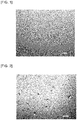
- Fig. 1 shows a photograph of a surface state of the lens.
- the number of depressions formed in the lens surface and having a diameter of not less than 2.5 ⁇ m and not more than 100 ⁇ m per unit area (1 mm ⁇ 1 mm) was six, which showed a good surface quality.
- a lens was obtained in the same manner as in Example except that a chalcogenide glass was hot-press molded without firing of its preform.
- Fig. 2 shows a photograph of a surface state of the lens. The number of depressions formed in the lens surface and having a diameter of not less than 2.5 ⁇ m and not more than 100 ⁇ m per unit area (1 mm ⁇ 1 mm) was 162, which showed a poor surface quality.
- the infrared-transmissive lens produced according to the present invention is suitable as an optical element, such as a lens for focusing infrared light on an infrared sensor section of an infrared camera.
Landscapes
- Chemical & Material Sciences (AREA)
- Engineering & Computer Science (AREA)
- Materials Engineering (AREA)
- Organic Chemistry (AREA)
- Chemical Kinetics & Catalysis (AREA)
- Geochemistry & Mineralogy (AREA)
- General Chemical & Material Sciences (AREA)
- Life Sciences & Earth Sciences (AREA)
- Physics & Mathematics (AREA)
- Manufacturing & Machinery (AREA)
- General Physics & Mathematics (AREA)
- Optics & Photonics (AREA)
- Dispersion Chemistry (AREA)
- Thermal Sciences (AREA)
- Glass Compositions (AREA)
Applications Claiming Priority (2)
| Application Number | Priority Date | Filing Date | Title |
|---|---|---|---|
| JP2016142059A JP6938864B2 (ja) | 2016-07-20 | 2016-07-20 | 赤外線透過性レンズの製造方法 |
| PCT/JP2017/016237 WO2018016149A1 (ja) | 2016-07-20 | 2017-04-24 | 赤外線透過性レンズの製造方法、赤外線透過性レンズ及び赤外線カメラ |
Publications (3)
| Publication Number | Publication Date |
|---|---|
| EP3489201A1 true EP3489201A1 (de) | 2019-05-29 |
| EP3489201A4 EP3489201A4 (de) | 2020-03-11 |
| EP3489201B1 EP3489201B1 (de) | 2024-12-04 |
Family
ID=60992060
Family Applications (1)
| Application Number | Title | Priority Date | Filing Date |
|---|---|---|---|
| EP17830669.2A Active EP3489201B1 (de) | 2016-07-20 | 2017-04-24 | Verfahren zur herstellung einer infrarot-transmissiblen linse |
Country Status (5)
| Country | Link |
|---|---|
| US (1) | US11155487B2 (de) |
| EP (1) | EP3489201B1 (de) |
| JP (1) | JP6938864B2 (de) |
| CN (2) | CN112897859A (de) |
| WO (1) | WO2018016149A1 (de) |
Families Citing this family (2)
| Publication number | Priority date | Publication date | Assignee | Title |
|---|---|---|---|---|
| WO2020105719A1 (ja) * | 2018-11-21 | 2020-05-28 | 日本電気硝子株式会社 | カルコゲナイドガラスレンズ |
| CN115594388B (zh) * | 2022-10-28 | 2023-12-05 | 湖北戈碧迦光电科技股份有限公司 | 一种中红外波段低吸收的As-Se硫系玻璃的制备方法 |
Family Cites Families (17)
| Publication number | Priority date | Publication date | Assignee | Title |
|---|---|---|---|---|
| JPH0777964B2 (ja) * | 1988-12-13 | 1995-08-23 | 非酸化物ガラス研究開発株式会社 | レンズ作製方法 |
| US5315434A (en) * | 1991-05-21 | 1994-05-24 | Matsushita Electric Industrial Co., Ltd. | Infrared-transmissive lens and human body detecting sensor using the same |
| JPH05229838A (ja) | 1992-02-21 | 1993-09-07 | Matsushita Electric Ind Co Ltd | 赤外線透過性ガラスロッドの成形方法 |
| JPH0692651A (ja) | 1992-09-07 | 1994-04-05 | Matsushita Electric Ind Co Ltd | 赤外線透過性レンズの製造方法 |
| JPH0692652A (ja) | 1992-09-14 | 1994-04-05 | Matsushita Electric Ind Co Ltd | 赤外線透過性レンズの製造方法 |
| JPH06183760A (ja) | 1992-12-22 | 1994-07-05 | Matsushita Electric Ind Co Ltd | 赤外線透過性レンズの製造方法 |
| JPH06211540A (ja) | 1993-01-20 | 1994-08-02 | Matsushita Electric Ind Co Ltd | 赤外用光学素子およびその製造方法 |
| US7143609B2 (en) * | 2002-10-29 | 2006-12-05 | Corning Incorporated | Low-temperature fabrication of glass optical components |
| JP5296345B2 (ja) * | 2007-08-10 | 2013-09-25 | 株式会社オハラ | 光学ガラス |
| CN101148319B (zh) * | 2007-09-14 | 2010-12-15 | 中国科学院上海硅酸盐研究所 | 一种硫卤微晶玻璃红外光学元件的热压成型制备方法 |
| JP5339720B2 (ja) | 2007-12-28 | 2013-11-13 | 五鈴精工硝子株式会社 | モールド成型用赤外線透過ガラス |
| JP2010072484A (ja) | 2008-09-19 | 2010-04-02 | Hitachi Maxell Ltd | 光学素子、光学素子成形用の金型の製造方法および光学素子の製造方法 |
| JP2010285308A (ja) * | 2009-06-10 | 2010-12-24 | Hitachi Maxell Ltd | 光学素子製造装置及び方法 |
| JP6269075B2 (ja) * | 2014-01-09 | 2018-01-31 | 日本電気硝子株式会社 | 赤外線透過ガラス |
| JP6540684B2 (ja) * | 2014-02-20 | 2019-07-10 | コニカミノルタ株式会社 | 光学素子の製造方法 |
| CN104310755B (zh) | 2014-08-11 | 2016-09-07 | 宁波鼎创红外精密光学科技有限公司 | 一种硫系玻璃非球面透镜成形方法 |
| US10414687B2 (en) * | 2015-03-31 | 2019-09-17 | National University Corporation Kyoto Institute Of Technology | Infrared-transmitting glass suitable for mold forming |
-
2016
- 2016-07-20 JP JP2016142059A patent/JP6938864B2/ja active Active
-
2017
- 2017-04-24 EP EP17830669.2A patent/EP3489201B1/de active Active
- 2017-04-24 CN CN202110188643.3A patent/CN112897859A/zh active Pending
- 2017-04-24 WO PCT/JP2017/016237 patent/WO2018016149A1/ja not_active Ceased
- 2017-04-24 CN CN201780022608.6A patent/CN108883956B/zh active Active
- 2017-04-24 US US16/091,611 patent/US11155487B2/en active Active
Also Published As
| Publication number | Publication date |
|---|---|
| EP3489201A4 (de) | 2020-03-11 |
| CN108883956B (zh) | 2022-03-01 |
| US11155487B2 (en) | 2021-10-26 |
| CN112897859A (zh) | 2021-06-04 |
| JP6938864B2 (ja) | 2021-09-22 |
| US20190127259A1 (en) | 2019-05-02 |
| JP2018012617A (ja) | 2018-01-25 |
| EP3489201B1 (de) | 2024-12-04 |
| WO2018016149A1 (ja) | 2018-01-25 |
| CN108883956A (zh) | 2018-11-23 |
Similar Documents
| Publication | Publication Date | Title |
|---|---|---|
| US7618909B2 (en) | Precision press-molding preform, process for the production thereof, optical element and process for the production of the optical element | |
| JP5339720B2 (ja) | モールド成型用赤外線透過ガラス | |
| US11643357B2 (en) | Chalcogenide glass material | |
| US11760681B2 (en) | Chalcogenide glass material | |
| WO2020105719A1 (ja) | カルコゲナイドガラスレンズ | |
| EP3093275A1 (de) | Infrarot-übertragungsglas | |
| WO2019167462A1 (ja) | 赤外線透過ガラス | |
| US11155487B2 (en) | Method for manufacturing infrared-transmissible lens, infrared-transmissible lens, and infrared camera | |
| EP3778507B1 (de) | Chalkogenidglasmaterial | |
| JPWO2016052159A1 (ja) | カルコゲナイドガラスレンズの製造方法 | |
| JP2020045265A (ja) | 赤外線透過ガラス | |
| KR20230027110A (ko) | 중적외광 투과 유리용 조성물 및 그의 제조방법 | |
| KR20220074613A (ko) | 중금속 성분을 포함하지 않는 친환경 원적외광 투과 유리용 조성물 및 그의 제조방법 | |
| KR20240080364A (ko) | 칼코겐유리소재의 경면 가공방법 | |
| EP4442659A1 (de) | Infrarotdurchlässiges glas | |
| US9908808B1 (en) | Ternary glass materials with low refractive index variability |
Legal Events
| Date | Code | Title | Description |
|---|---|---|---|
| STAA | Information on the status of an ep patent application or granted ep patent |
Free format text: STATUS: THE INTERNATIONAL PUBLICATION HAS BEEN MADE |
|
| PUAI | Public reference made under article 153(3) epc to a published international application that has entered the european phase |
Free format text: ORIGINAL CODE: 0009012 |
|
| STAA | Information on the status of an ep patent application or granted ep patent |
Free format text: STATUS: REQUEST FOR EXAMINATION WAS MADE |
|
| 17P | Request for examination filed |
Effective date: 20180822 |
|
| AK | Designated contracting states |
Kind code of ref document: A1 Designated state(s): AL AT BE BG CH CY CZ DE DK EE ES FI FR GB GR HR HU IE IS IT LI LT LU LV MC MK MT NL NO PL PT RO RS SE SI SK SM TR |
|
| AX | Request for extension of the european patent |
Extension state: BA ME |
|
| DAV | Request for validation of the european patent (deleted) | ||
| DAX | Request for extension of the european patent (deleted) | ||
| REG | Reference to a national code |
Ref country code: DE Ref legal event code: R079 Free format text: PREVIOUS MAIN CLASS: C03B0011000000 Ipc: C03B0019020000 Ref country code: DE Ref legal event code: R079 Ref document number: 602017086585 Country of ref document: DE Free format text: PREVIOUS MAIN CLASS: C03B0011000000 Ipc: C03B0019020000 |
|
| A4 | Supplementary search report drawn up and despatched |
Effective date: 20200210 |
|
| RIC1 | Information provided on ipc code assigned before grant |
Ipc: C03C 4/10 20060101ALI20200204BHEP Ipc: C03B 32/00 20060101ALI20200204BHEP Ipc: C03C 3/32 20060101ALI20200204BHEP Ipc: C03B 11/08 20060101ALI20200204BHEP Ipc: C03B 5/06 20060101ALI20200204BHEP Ipc: C03B 19/02 20060101AFI20200204BHEP Ipc: G02B 1/00 20060101ALI20200204BHEP |
|
| STAA | Information on the status of an ep patent application or granted ep patent |
Free format text: STATUS: EXAMINATION IS IN PROGRESS |
|
| 17Q | First examination report despatched |
Effective date: 20220503 |
|
| GRAP | Despatch of communication of intention to grant a patent |
Free format text: ORIGINAL CODE: EPIDOSNIGR1 |
|
| STAA | Information on the status of an ep patent application or granted ep patent |
Free format text: STATUS: GRANT OF PATENT IS INTENDED |
|
| INTG | Intention to grant announced |
Effective date: 20240902 |
|
| RIN1 | Information on inventor provided before grant (corrected) |
Inventor name: SATO, FUMIO Inventor name: MATSUSHITA, YOSHIMASA |
|
| GRAS | Grant fee paid |
Free format text: ORIGINAL CODE: EPIDOSNIGR3 |
|
| GRAA | (expected) grant |
Free format text: ORIGINAL CODE: 0009210 |
|
| STAA | Information on the status of an ep patent application or granted ep patent |
Free format text: STATUS: THE PATENT HAS BEEN GRANTED |
|
| AK | Designated contracting states |
Kind code of ref document: B1 Designated state(s): AL AT BE BG CH CY CZ DE DK EE ES FI FR GB GR HR HU IE IS IT LI LT LU LV MC MK MT NL NO PL PT RO RS SE SI SK SM TR |
|
| REG | Reference to a national code |
Ref country code: GB Ref legal event code: FG4D |
|
| REG | Reference to a national code |
Ref country code: CH Ref legal event code: EP |
|
| REG | Reference to a national code |
Ref country code: DE Ref legal event code: R096 Ref document number: 602017086585 Country of ref document: DE |
|
| REG | Reference to a national code |
Ref country code: IE Ref legal event code: FG4D |
|
| REG | Reference to a national code |
Ref country code: LT Ref legal event code: MG9D |
|
| REG | Reference to a national code |
Ref country code: NL Ref legal event code: MP Effective date: 20241204 |
|
| PG25 | Lapsed in a contracting state [announced via postgrant information from national office to epo] |
Ref country code: HR Free format text: LAPSE BECAUSE OF FAILURE TO SUBMIT A TRANSLATION OF THE DESCRIPTION OR TO PAY THE FEE WITHIN THE PRESCRIBED TIME-LIMIT Effective date: 20241204 |
|
| PG25 | Lapsed in a contracting state [announced via postgrant information from national office to epo] |
Ref country code: FI Free format text: LAPSE BECAUSE OF FAILURE TO SUBMIT A TRANSLATION OF THE DESCRIPTION OR TO PAY THE FEE WITHIN THE PRESCRIBED TIME-LIMIT Effective date: 20241204 |
|
| PG25 | Lapsed in a contracting state [announced via postgrant information from national office to epo] |
Ref country code: BG Free format text: LAPSE BECAUSE OF FAILURE TO SUBMIT A TRANSLATION OF THE DESCRIPTION OR TO PAY THE FEE WITHIN THE PRESCRIBED TIME-LIMIT Effective date: 20241204 |
|
| PG25 | Lapsed in a contracting state [announced via postgrant information from national office to epo] |
Ref country code: ES Free format text: LAPSE BECAUSE OF FAILURE TO SUBMIT A TRANSLATION OF THE DESCRIPTION OR TO PAY THE FEE WITHIN THE PRESCRIBED TIME-LIMIT Effective date: 20241204 |
|
| PG25 | Lapsed in a contracting state [announced via postgrant information from national office to epo] |
Ref country code: NO Free format text: LAPSE BECAUSE OF FAILURE TO SUBMIT A TRANSLATION OF THE DESCRIPTION OR TO PAY THE FEE WITHIN THE PRESCRIBED TIME-LIMIT Effective date: 20250304 |
|
| PG25 | Lapsed in a contracting state [announced via postgrant information from national office to epo] |
Ref country code: GR Free format text: LAPSE BECAUSE OF FAILURE TO SUBMIT A TRANSLATION OF THE DESCRIPTION OR TO PAY THE FEE WITHIN THE PRESCRIBED TIME-LIMIT Effective date: 20250305 Ref country code: LV Free format text: LAPSE BECAUSE OF FAILURE TO SUBMIT A TRANSLATION OF THE DESCRIPTION OR TO PAY THE FEE WITHIN THE PRESCRIBED TIME-LIMIT Effective date: 20241204 |
|
| PG25 | Lapsed in a contracting state [announced via postgrant information from national office to epo] |
Ref country code: RS Free format text: LAPSE BECAUSE OF FAILURE TO SUBMIT A TRANSLATION OF THE DESCRIPTION OR TO PAY THE FEE WITHIN THE PRESCRIBED TIME-LIMIT Effective date: 20250304 |
|
| PG25 | Lapsed in a contracting state [announced via postgrant information from national office to epo] |
Ref country code: NL Free format text: LAPSE BECAUSE OF FAILURE TO SUBMIT A TRANSLATION OF THE DESCRIPTION OR TO PAY THE FEE WITHIN THE PRESCRIBED TIME-LIMIT Effective date: 20241204 |
|
| REG | Reference to a national code |
Ref country code: AT Ref legal event code: MK05 Ref document number: 1748023 Country of ref document: AT Kind code of ref document: T Effective date: 20241204 |
|
| PG25 | Lapsed in a contracting state [announced via postgrant information from national office to epo] |
Ref country code: SM Free format text: LAPSE BECAUSE OF FAILURE TO SUBMIT A TRANSLATION OF THE DESCRIPTION OR TO PAY THE FEE WITHIN THE PRESCRIBED TIME-LIMIT Effective date: 20241204 |
|
| PG25 | Lapsed in a contracting state [announced via postgrant information from national office to epo] |
Ref country code: PL Free format text: LAPSE BECAUSE OF FAILURE TO SUBMIT A TRANSLATION OF THE DESCRIPTION OR TO PAY THE FEE WITHIN THE PRESCRIBED TIME-LIMIT Effective date: 20241204 |
|
| PGFP | Annual fee paid to national office [announced via postgrant information from national office to epo] |
Ref country code: DE Payment date: 20250402 Year of fee payment: 9 |
|
| PG25 | Lapsed in a contracting state [announced via postgrant information from national office to epo] |
Ref country code: IS Free format text: LAPSE BECAUSE OF FAILURE TO SUBMIT A TRANSLATION OF THE DESCRIPTION OR TO PAY THE FEE WITHIN THE PRESCRIBED TIME-LIMIT Effective date: 20250404 |
|
| PG25 | Lapsed in a contracting state [announced via postgrant information from national office to epo] |
Ref country code: PT Free format text: LAPSE BECAUSE OF FAILURE TO SUBMIT A TRANSLATION OF THE DESCRIPTION OR TO PAY THE FEE WITHIN THE PRESCRIBED TIME-LIMIT Effective date: 20250404 |
|
| PG25 | Lapsed in a contracting state [announced via postgrant information from national office to epo] |
Ref country code: EE Free format text: LAPSE BECAUSE OF FAILURE TO SUBMIT A TRANSLATION OF THE DESCRIPTION OR TO PAY THE FEE WITHIN THE PRESCRIBED TIME-LIMIT Effective date: 20241204 |
|
| PG25 | Lapsed in a contracting state [announced via postgrant information from national office to epo] |
Ref country code: AT Free format text: LAPSE BECAUSE OF FAILURE TO SUBMIT A TRANSLATION OF THE DESCRIPTION OR TO PAY THE FEE WITHIN THE PRESCRIBED TIME-LIMIT Effective date: 20241204 Ref country code: RO Free format text: LAPSE BECAUSE OF FAILURE TO SUBMIT A TRANSLATION OF THE DESCRIPTION OR TO PAY THE FEE WITHIN THE PRESCRIBED TIME-LIMIT Effective date: 20241204 |
|
| PG25 | Lapsed in a contracting state [announced via postgrant information from national office to epo] |
Ref country code: SK Free format text: LAPSE BECAUSE OF FAILURE TO SUBMIT A TRANSLATION OF THE DESCRIPTION OR TO PAY THE FEE WITHIN THE PRESCRIBED TIME-LIMIT Effective date: 20241204 |
|
| PG25 | Lapsed in a contracting state [announced via postgrant information from national office to epo] |
Ref country code: CZ Free format text: LAPSE BECAUSE OF FAILURE TO SUBMIT A TRANSLATION OF THE DESCRIPTION OR TO PAY THE FEE WITHIN THE PRESCRIBED TIME-LIMIT Effective date: 20241204 |
|
| PG25 | Lapsed in a contracting state [announced via postgrant information from national office to epo] |
Ref country code: IT Free format text: LAPSE BECAUSE OF FAILURE TO SUBMIT A TRANSLATION OF THE DESCRIPTION OR TO PAY THE FEE WITHIN THE PRESCRIBED TIME-LIMIT Effective date: 20241204 |
|
| REG | Reference to a national code |
Ref country code: DE Ref legal event code: R097 Ref document number: 602017086585 Country of ref document: DE |
|
| PG25 | Lapsed in a contracting state [announced via postgrant information from national office to epo] |
Ref country code: SE Free format text: LAPSE BECAUSE OF FAILURE TO SUBMIT A TRANSLATION OF THE DESCRIPTION OR TO PAY THE FEE WITHIN THE PRESCRIBED TIME-LIMIT Effective date: 20241204 |
|
| PG25 | Lapsed in a contracting state [announced via postgrant information from national office to epo] |
Ref country code: DK Free format text: LAPSE BECAUSE OF FAILURE TO SUBMIT A TRANSLATION OF THE DESCRIPTION OR TO PAY THE FEE WITHIN THE PRESCRIBED TIME-LIMIT Effective date: 20241204 |
|
| PLBE | No opposition filed within time limit |
Free format text: ORIGINAL CODE: 0009261 |
|
| STAA | Information on the status of an ep patent application or granted ep patent |
Free format text: STATUS: NO OPPOSITION FILED WITHIN TIME LIMIT |
|
| REG | Reference to a national code |
Ref country code: CH Ref legal event code: L10 Free format text: ST27 STATUS EVENT CODE: U-0-0-L10-L00 (AS PROVIDED BY THE NATIONAL OFFICE) Effective date: 20251015 |
|
| 26N | No opposition filed |
Effective date: 20250905 |
|
| REG | Reference to a national code |
Ref country code: CH Ref legal event code: H13 Free format text: ST27 STATUS EVENT CODE: U-0-0-H10-H13 (AS PROVIDED BY THE NATIONAL OFFICE) Effective date: 20251125 |
|
| PG25 | Lapsed in a contracting state [announced via postgrant information from national office to epo] |
Ref country code: LU Free format text: LAPSE BECAUSE OF NON-PAYMENT OF DUE FEES Effective date: 20250424 |
|
| PG25 | Lapsed in a contracting state [announced via postgrant information from national office to epo] |
Ref country code: MC Free format text: LAPSE BECAUSE OF FAILURE TO SUBMIT A TRANSLATION OF THE DESCRIPTION OR TO PAY THE FEE WITHIN THE PRESCRIBED TIME-LIMIT Effective date: 20241204 |
|
| GBPC | Gb: european patent ceased through non-payment of renewal fee |
Effective date: 20250424 |
|
| REG | Reference to a national code |
Ref country code: BE Ref legal event code: MM Effective date: 20250430 |
|
| PG25 | Lapsed in a contracting state [announced via postgrant information from national office to epo] |
Ref country code: GB Free format text: LAPSE BECAUSE OF NON-PAYMENT OF DUE FEES Effective date: 20250424 |
|
| PG25 | Lapsed in a contracting state [announced via postgrant information from national office to epo] |
Ref country code: FR Free format text: LAPSE BECAUSE OF NON-PAYMENT OF DUE FEES Effective date: 20250430 |
|
| PG25 | Lapsed in a contracting state [announced via postgrant information from national office to epo] |
Ref country code: BE Free format text: LAPSE BECAUSE OF NON-PAYMENT OF DUE FEES Effective date: 20250430 |
|
| PG25 | Lapsed in a contracting state [announced via postgrant information from national office to epo] |
Ref country code: CH Free format text: LAPSE BECAUSE OF NON-PAYMENT OF DUE FEES Effective date: 20250430 |
|
| PG25 | Lapsed in a contracting state [announced via postgrant information from national office to epo] |
Ref country code: IE Free format text: LAPSE BECAUSE OF NON-PAYMENT OF DUE FEES Effective date: 20250424 |