EP3490255A1 - Intelligente komprimierung von grob gepixelten videoinhalten - Google Patents
Intelligente komprimierung von grob gepixelten videoinhalten Download PDFInfo
- Publication number
- EP3490255A1 EP3490255A1 EP18206916.1A EP18206916A EP3490255A1 EP 3490255 A1 EP3490255 A1 EP 3490255A1 EP 18206916 A EP18206916 A EP 18206916A EP 3490255 A1 EP3490255 A1 EP 3490255A1
- Authority
- EP
- European Patent Office
- Prior art keywords
- video stream
- grain
- film grain
- intensity
- encoding
- Prior art date
- Legal status (The legal status is an assumption and is not a legal conclusion. Google has not performed a legal analysis and makes no representation as to the accuracy of the status listed.)
- Granted
Links
Images




Classifications
-
- H—ELECTRICITY
- H04—ELECTRIC COMMUNICATION TECHNIQUE
- H04N—PICTORIAL COMMUNICATION, e.g. TELEVISION
- H04N19/00—Methods or arrangements for coding, decoding, compressing or decompressing digital video signals
- H04N19/85—Methods or arrangements for coding, decoding, compressing or decompressing digital video signals using pre-processing or post-processing specially adapted for video compression
-
- H—ELECTRICITY
- H04—ELECTRIC COMMUNICATION TECHNIQUE
- H04N—PICTORIAL COMMUNICATION, e.g. TELEVISION
- H04N19/00—Methods or arrangements for coding, decoding, compressing or decompressing digital video signals
- H04N19/10—Methods or arrangements for coding, decoding, compressing or decompressing digital video signals using adaptive coding
- H04N19/102—Methods or arrangements for coding, decoding, compressing or decompressing digital video signals using adaptive coding characterised by the element, parameter or selection affected or controlled by the adaptive coding
- H04N19/117—Filters, e.g. for pre-processing or post-processing
-
- H—ELECTRICITY
- H04—ELECTRIC COMMUNICATION TECHNIQUE
- H04N—PICTORIAL COMMUNICATION, e.g. TELEVISION
- H04N19/00—Methods or arrangements for coding, decoding, compressing or decompressing digital video signals
- H04N19/10—Methods or arrangements for coding, decoding, compressing or decompressing digital video signals using adaptive coding
- H04N19/134—Methods or arrangements for coding, decoding, compressing or decompressing digital video signals using adaptive coding characterised by the element, parameter or criterion affecting or controlling the adaptive coding
- H04N19/136—Incoming video signal characteristics or properties
-
- H—ELECTRICITY
- H04—ELECTRIC COMMUNICATION TECHNIQUE
- H04N—PICTORIAL COMMUNICATION, e.g. TELEVISION
- H04N19/00—Methods or arrangements for coding, decoding, compressing or decompressing digital video signals
- H04N19/10—Methods or arrangements for coding, decoding, compressing or decompressing digital video signals using adaptive coding
- H04N19/134—Methods or arrangements for coding, decoding, compressing or decompressing digital video signals using adaptive coding characterised by the element, parameter or criterion affecting or controlling the adaptive coding
- H04N19/146—Data rate or code amount at the encoder output
-
- H—ELECTRICITY
- H04—ELECTRIC COMMUNICATION TECHNIQUE
- H04N—PICTORIAL COMMUNICATION, e.g. TELEVISION
- H04N19/00—Methods or arrangements for coding, decoding, compressing or decompressing digital video signals
- H04N19/10—Methods or arrangements for coding, decoding, compressing or decompressing digital video signals using adaptive coding
- H04N19/169—Methods or arrangements for coding, decoding, compressing or decompressing digital video signals using adaptive coding characterised by the coding unit, i.e. the structural portion or semantic portion of the video signal being the object or the subject of the adaptive coding
- H04N19/17—Methods or arrangements for coding, decoding, compressing or decompressing digital video signals using adaptive coding characterised by the coding unit, i.e. the structural portion or semantic portion of the video signal being the object or the subject of the adaptive coding the unit being an image region, e.g. an object
- H04N19/172—Methods or arrangements for coding, decoding, compressing or decompressing digital video signals using adaptive coding characterised by the coding unit, i.e. the structural portion or semantic portion of the video signal being the object or the subject of the adaptive coding the unit being an image region, e.g. an object the region being a picture, frame or field
-
- H—ELECTRICITY
- H04—ELECTRIC COMMUNICATION TECHNIQUE
- H04N—PICTORIAL COMMUNICATION, e.g. TELEVISION
- H04N19/00—Methods or arrangements for coding, decoding, compressing or decompressing digital video signals
- H04N19/85—Methods or arrangements for coding, decoding, compressing or decompressing digital video signals using pre-processing or post-processing specially adapted for video compression
- H04N19/86—Methods or arrangements for coding, decoding, compressing or decompressing digital video signals using pre-processing or post-processing specially adapted for video compression involving reduction of coding artifacts, e.g. of blockiness
-
- G—PHYSICS
- G06—COMPUTING OR CALCULATING; COUNTING
- G06T—IMAGE DATA PROCESSING OR GENERATION, IN GENERAL
- G06T2207/00—Indexing scheme for image analysis or image enhancement
- G06T2207/20—Special algorithmic details
- G06T2207/20172—Image enhancement details
- G06T2207/20204—Removing film grain; Adding simulated film grain
-
- H—ELECTRICITY
- H04—ELECTRIC COMMUNICATION TECHNIQUE
- H04N—PICTORIAL COMMUNICATION, e.g. TELEVISION
- H04N19/00—Methods or arrangements for coding, decoding, compressing or decompressing digital video signals
- H04N19/10—Methods or arrangements for coding, decoding, compressing or decompressing digital video signals using adaptive coding
- H04N19/102—Methods or arrangements for coding, decoding, compressing or decompressing digital video signals using adaptive coding characterised by the element, parameter or selection affected or controlled by the adaptive coding
- H04N19/103—Selection of coding mode or of prediction mode
-
- H—ELECTRICITY
- H04—ELECTRIC COMMUNICATION TECHNIQUE
- H04N—PICTORIAL COMMUNICATION, e.g. TELEVISION
- H04N19/00—Methods or arrangements for coding, decoding, compressing or decompressing digital video signals
- H04N19/10—Methods or arrangements for coding, decoding, compressing or decompressing digital video signals using adaptive coding
- H04N19/102—Methods or arrangements for coding, decoding, compressing or decompressing digital video signals using adaptive coding characterised by the element, parameter or selection affected or controlled by the adaptive coding
- H04N19/115—Selection of the code volume for a coding unit prior to coding
-
- H—ELECTRICITY
- H04—ELECTRIC COMMUNICATION TECHNIQUE
- H04N—PICTORIAL COMMUNICATION, e.g. TELEVISION
- H04N19/00—Methods or arrangements for coding, decoding, compressing or decompressing digital video signals
- H04N19/10—Methods or arrangements for coding, decoding, compressing or decompressing digital video signals using adaptive coding
- H04N19/134—Methods or arrangements for coding, decoding, compressing or decompressing digital video signals using adaptive coding characterised by the element, parameter or criterion affecting or controlling the adaptive coding
- H04N19/146—Data rate or code amount at the encoder output
- H04N19/147—Data rate or code amount at the encoder output according to rate distortion criteria
-
- H—ELECTRICITY
- H04—ELECTRIC COMMUNICATION TECHNIQUE
- H04N—PICTORIAL COMMUNICATION, e.g. TELEVISION
- H04N19/00—Methods or arrangements for coding, decoding, compressing or decompressing digital video signals
- H04N19/10—Methods or arrangements for coding, decoding, compressing or decompressing digital video signals using adaptive coding
- H04N19/189—Methods or arrangements for coding, decoding, compressing or decompressing digital video signals using adaptive coding characterised by the adaptation method, adaptation tool or adaptation type used for the adaptive coding
- H04N19/19—Methods or arrangements for coding, decoding, compressing or decompressing digital video signals using adaptive coding characterised by the adaptation method, adaptation tool or adaptation type used for the adaptive coding using optimisation based on Lagrange multipliers
Definitions
- the present invention is in the field of image processing and video, specifically in the processing of film grain for video encoding.
- the invention relates to a method for processing a video stream comprising a film grain.
- the grain of film present in an analog video signal gives the video a particular rendering. This rendering is inked in the mores, video users may want an equivalent rendering with a digital video signal. As a result, the film grain is often added to a digital video signal in order to obtain a rendering similar to an analog video signal.
- a digital video signal such as a high definition digital video signal for example
- the film grain is absent.
- the absence of film grain within a video signal may be considered by a user as a disadvantage. Indeed, the rendering of a human face of a digital video signal, in the absence of a grain of film, can appear "inanimate". Therefore, when recording the digital video signal, the film grain is often added after capture. As a result of this need to add a grain of film in a digital video signal, many companies are marketing software called "digital grain suppliers". This makes it possible to imagine the importance of adding film grain within a digital video signal.
- the grain of film nevertheless constitutes a difficulty when encoding a video signal.
- the presence of film grain increases the complexity required for processing which corresponds to the encoding of the digital video signal.
- Encoding video content comprising a film grain involves a higher encoding cost (in number of bits).
- the encoding of video content including a film grain may therefore be a major difficulty.
- after encoding a digital video content comprising a film grain there is no guarantee of a result that is equivalent or close to the rendering obtained with analog video content comprising a film grain.
- a first solution often proposed is to completely remove the film grain of video content, this in order to encode a video content, devoid of any grain of film.
- a message is inserted in the video stream transmitting information to the decoder according to which the film grain must be added after decoding.
- This solution has significant disadvantages. Indeed, the decoders do not all support this function.
- Another solution concerning the management of grainy video content is to propose a treatment of the film grain in order to preserve it during the video encoding.
- a solution does not guarantee the final result obtained, such as the preservation of a grainy appearance uniformly distributed on the video content.
- the treatments currently proposed in the literature are often insufficient or unsuitable for the encoding rate. Since the encoding rate is often little or not taken into account when managing grainy video content, the effectiveness of such a solution is limited.
- the grain of film present in analog video content is an inevitable phenomenon.
- analog video content is converted to digital video content by a scanning action, digital noise appears in the digital video content.
- Digital noise represents unwanted information present in digital data corresponding to digital video content. Indeed, in the field of signal processing, unwanted information within a digital content, image or video, is qualified as digital noise.
- This digital noise can materialize in the form of random details, which is reflected in this case by a grain of film whose distribution is random.
- the film grain can also be added artificially a posteriori of the capture of a digital video signal, as mentioned above.
- denoising means, a filter used to perform the denoising namely reduce or remove the noise present in a video content.
- the film grain has a relatively high energy level, with potential peaks in the high frequencies. Therefore, encoding video content comprising a film grain is expensive in terms of resources. In addition, video content suffers from poor motion estimation. A poor motion estimation provides an inaccurate prediction, and thus increases the cost of coding.
- the encoding rate is a non-negligible parameter to take into account when managing grainy video content. Indeed, when the encoding rate is not high enough, a conventional encoder will often flatten the areas of an image containing a film grain. Consequently, the rendering for a user can correspond to an unnatural effect, due to the coexistence of grainy and ungrained areas within the same video content. Thus, the appearance rendered by a film grain uniformly distributed is no longer guaranteed for the user.
- Some video encoders provide a mode of operation adapted to video content including a film grain.
- the treatments proposed for the grain of film can be effective but require the intervention of the user. Indeed, a film grain management mode must be activated or deactivated by the user according to the video content displayed. If the film grain treatments are activated when there is no grain of film in the video, these treatments may, on the contrary, deteriorate the video quality normally obtained without treatment. Therefore, the user must intervene whenever he wants to encode different video content.
- the implementation of a video encoder including an operating mode adapted to the management of video content comprising a film grain, and which specifically requires a user activation for each content is therefore limited.
- the document US 2016/0198165 offers a solution without user intervention.
- the film grain included in the video content is detected using a time calculation method. Once the film grain is detected, a reallocation of flow is applied. The encoding rate is not taken into account here in the management of the film grain.
- the present invention improves the situation.
- the film grain intensity and video encoding rate are taken into account to provide a film grain management strategy adapted to the video content.
- Such a method provides the advantage of being fully automatic. Indeed, an explicit intervention or parameterization of the user is not necessary.
- the application of a film grain management strategy can be deployed upstream of any existing encoding system.
- a conservation energy treatment is applied to the video stream.
- the flow rate is also lower than a second threshold flow (D1), which second threshold flow (D1) is greater than the first threshold flow (D0), and if the measured grain intensity is greater than a second intensity threshold (I1), greater than the first intensity threshold (I0), applying, in addition to the energy conservation treatment to the video stream, a low-pass filter on the image to attenuate the high frequencies of grain.
- D1 second threshold flow
- I1 second intensity threshold
- the energy conservation treatment applied to the video stream may comprise a more equitable allocation of the encoding rate associated with the video stream on the different frames that make up the stream.
- the energy conservation treatment applied to the video stream may include taking into account an energy difference in the rate-distortion cost calculations.
- the method may further comprise: a transmission of the video stream, said video stream being devoid of message relating to the presence of film grain.
- the message relating to the presence of film grain is an SEI type message.
- a second aspect of the invention relates to a computer program comprising instructions for implementing the steps of the method according to one of the preceding embodiments, when these instructions are executed by a processor.
- the figure 1 is an example of grainy image from video content.
- the figure 1 represents an individual located in an indoor environment.
- a film grain management module MOD_G 203 has the function of determining a suitable strategy for film grain management within IMG video content 201.
- a film grain detection is performed by a grain detection module of the film MOD_DETECT_G 202.
- the film grain detection module MOD_DETECT_G 202 thus determines the grain of film within the IMG video content 201.
- the film grain management module MOD_G 203 takes into account the information concerning the detection of grain of film from the film grain detection module MOD_DETECT_G 202.
- the film grain management module MOD_G203 also takes into account the encoding bit rate D_ENC 200.
- the encoding bit rate D_ENC 200 represents the desired encoding bit rate.
- the film grain management module MOD_G203 uses its information to intervene during the pretreatment of the video content PRE_T 204 as well as during the encoding of the pre-processed video content made by the encoder ENCOD 205.
- the film grain detection module MOD_DETECT_G 202 performs for each frame to be encoded a measurement of the film grain intensity i .
- the value of the film grain intensity i measured by the film grain detection module MOD_DETECT_G 202 is then transmitted to the film grain management module MOD_G203.
- the film grain management module MOD_G203 also receives encoding rate information D_ENC 200.
- the encoding bit rate D_ENC 200 can be constant or variable per frame.
- the film grain management module MOD_G203 categorizes the IMG video content 201 by comparing the film grain intensity i to film grain intensity threshold values and also comparing the film throughput value. encoding D_ENC 200 encoding rate threshold values. Processing of the video stream IN is then applied to a step TRAIT (IN) 304.
- the figure 3 illustrates the steps of the method of processing an IN 300 video stream according to an exemplary embodiment of the invention.
- a film grain intensity i is measured MES_i at step 301A.
- an encoding rate d is determined from an IN 300 video stream.
- the measured film grain intensity value i is compared to film I 0 and I 1 film intensity threshold values. in a first comparison step COMP (i , I 0 , I 1 ) 302A.
- the encoding rate value d determined is compared with encoding rate threshold values D 0 and D 1 in a second comparison step COMP ( d , D 0 , D 1 ) 302B.
- the IN 300 video stream is categorized at a categorization step CAT (IN ) 303.
- the video content is then categorized according to the step CAT (IN) 303.
- An ECO energy conservation treatment can be applied to video contents containing a medium or high film grain from an encoding rate considered as way.
- ECO energy conservation processing consists of one or more changes in encoding rate control and decision to improve film grain retention during encoding.
- a low pass filter is coupled with the ECO energy conservation processing. This is to remove the high frequencies of the film grain.
- the ECO energy conservation treatment is not sufficient to obtain a satisfactory video content rendering.
- the film grain is in this case suppressed using a denoiser which can have a denoising force proportional to the measured film grain intensity i .
- the strategy STR ( d , i ) is applied to the video content comprising a film grain at the preprocessing and encoding level.
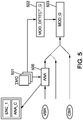
- the figure 5 represents an example of obtaining the encoding rate for a current frame.
- VBR of English " Variable Bit Rate” refers to a variable encoding rate.
- CBR " Constant Bit Rate” refers to a constant encoding rate.
- An average rate targeted by the user is indicated by the latter for a first encoding ENC_1 and a content analysis ANA_C within the module 500. A rate is thus calculated for the current frame.
- the IMG images 501 are analyzed by the film grain detection module MOD_DETECT_G 502 which then transmits the information to the film grain management module MOD_G503.
- the film grain management module MOD_G 503 therefore receives at the input the flow information as well as the information coming from the film grain detection module MOD_DETECT_G 502.
- the categorization of the encoding rate into different categories can take into account the resolution of the image.
- the resolution of the image can be noted W x H from the English " Width X Height " respectively designating the width and height of the image.
- the categorization of the encoding rate can also take into account the frame rate that will be noted F and the compression standard used.
- FIG. 3 indicated that an ECO energy conservation treatment can be applied to video content containing a medium or high grain from an encoding rate considered average.
- an ECO energy conservation treatment can be applied to video content containing a medium or high grain from an encoding rate considered average.
- several types of energy conservation treatments can be used. These energy conservation treatments can be classified in two. Indeed, on the figure 2 it is distinguished that the film grain management module MOD_G203 intervenes during encoding ENCOD 205 at the same time at the level of the flow control CONT_D 205A as well as at the decision 205B DEC process of the encoder ENCOD 205.
- I, P and B respectively come from the English " Intra Coded Pictures ", " Predicted Pictures " and " Bi-directionally predicted pictures ".
- Such a bit rate allocation makes it possible to prevent the user viewing the video content from observing an alternation between a grainy aspect of the video content and a smooth aspect of the video content. Indeed, such a situation can negatively impact the user's experience vis-à-vis the viewing of video content.
- debit-distortion costs can be calculated. This is in order to determine the best coding mode to use among the different coding modes proposed by the video compression standard.
- the difference in energy can reduce the choice of the Intra coding mode in the P and B frames.
- intra predictions are regularly flattened.
- a first solution for example, may therefore be to not allow the encoder to test the intra in the P and B frames.
- Other solutions may include: not allowing the test of the Skip mode, disabling the trellis, and prohibiting bi-predictions in B frames. These solutions can be combined with one another.
- the skip mode corresponds to an Inter coding mode, in which no block residual is transmitted.
- the block residual corresponds to a difference between the source block and the predicted block. At the decoder, the reconstructed block corresponds exactly to the prediction Inter.
- the film grain management strategy STR (d, i) taking into account both the measured film grain intensity i and the determined encoding bit rate d is to apply a denoiser to the video content when the encoding rate d is considered low. Indeed, when the encoding rate is low, the use of a conservation energy treatment is not sufficient to ensure a satisfactory result in terms of film grain for the user viewing the video content . Therefore, the use of a denoiser completely removing the film grain of the video content avoids obtaining encoding artifacts where the film grain could be partially distributed.
- a denoiser allowing the denoising of image with a denoising force according to the measured film grain intensity i . It is conceivable to use a denoiser whose denoising force is proportional to the film grain intensity detected by the film grain detection module MOD_DETECT_G 202 as illustrated in FIG. figure 2 for example. Controlling the denoising force according to the detected film grain intensity is justified by the fact that for video content comprising little film grain, a denoiser with a high denoising force can impact important details. to video content. Indeed, a denoister whose denoising force would be too great compared to the grain of film included in the video content, could inadvertently smooth contours or textures of the video content. This would therefore have a negative impact on the user's viewing experience of the video content.
- the de-energizing force of the denoiser must be high enough to remove the film grain included in the video content. It is therefore possible to use several types of denoisers as for example: FFT2D, MCTemporalDenoise, or a bilateral or anisotropic filter.
- STR ( d , i ) film grain management strategies have been represented in a matrix form. These STR ( d , i ) film grain management strategies were determined in the case where two encoding rate threshold values D 0 and D 1 and two film grain intensity threshold values I 0 and I 1 have been previously determined.
- a film grain detection module such as the module MOD_DETECT_G 202 illustrated in FIG. figure 2 as an example, detects with a time difference algorithm, the intensity of the film grain included in the video content.
- the film grain intensity thus detected is quantified by a numerical value between 0 and 100.
- the denoister used in this exemplary embodiment is the FFT2D denoiser.
- the figure 6 represents the denoising force ⁇ with respect to the intensity of the film grain. Note that the denoising force is a piecewise linear function with respect to film grain intensity. It is therefore possible to consider that the denoising force ⁇ of the denoister used is proportional in parts with respect to the film grain intensity.
- the low-pass filter used here is a Lanczos filter whose cutoff frequency is 0.5.
- energy conservation treatments are applied. These energy conservation treatments may include reducing the differences in the quantization steps associated with the I, P and B frames. This allows a more equitable bit rate allocation. Other energy conservation treatments may consist in forbidding the choices of the Intra coding mode in the P and B frames, the skip mode in the P and B frames.
- An alternative of energy conservation processing may be to disable the lattice.
- the figure 7a represents an image from a video content comprising a high film grain.
- the encoding here considered is an encoding of a sequence 1920x1080 comprising a high film grain in HEVC at 2.9 Mbps.
- HEVC is an acronym for a High Efficiency Video Coding compression standard.
- Mbps is another acronym for an encoding rate from the English " Megabits per second ".
- the film grain management strategy STR ( d , i ) takes into account both the measured film grain intensity. i and the encoding rate determined d will consist of applying a denoiser and then encode the video content to provide a satisfactory result for the user. This corresponds to the grain management strategy STR ( d ⁇ D 0 , i ⁇ I 1 ).
- the Figures 8a, 8b and 8c illustrate the difference in the result obtained with the invention for a video content comprising a high film grain with an average encoding rate.
- the figure 8a represents an image of the video content in question.
- the figure 8b represents the reference result and the figure 8c the reference result obtained with the invention.
- An average encoding rate translates as D 0 ⁇ d ⁇ D 1 and a video content comprising a high film grain results in i ⁇ I 1 .
- the video content SD 576p24 is encoded in HEVC at 1 Mbps with the present invention. Therefore, the film grain management strategy STR ( d , i ) will consist in applying energy conservation treatment coupled to a low-pass filter.
- a film grain management strategy STR ( D 0 ⁇ d ⁇ D 1 , i ⁇ I 1 ) is applied, consisting of firstly filtering the high frequencies of film grain and then applying a coating treatment. conservation of energy in order to preserve the residual film grain.
- a film grain detection module such as the module MOD_DETECT_G 202 illustrated in FIG. figure 2 as an example, detects with a time difference algorithm, the intensity of the film grain included in the video content.
- the film grain intensity thus detected is quantified by a numerical value between 0 and 100.
- the denoister used in this exemplary embodiment is a Gaussian filter with a standard deviation ⁇ proportional to the grain intensity.
- the figure 9 represents the standard deviation ⁇ as a function of the measured film grain intensity i . It is easily remarkable that it is a linear function.
- the low-pass filter used is a Lanczos filter with a cutoff frequency of 0.5.
- the intensity thresholds of film grains are variable. Therefore, these film grain intensity thresholds may differ for each image of the video content.
- the principle of this embodiment is to categorize an image N of the video content with respect to the pair of film grain intensity values i and encoding rate d of the previous image N-1.
- the film grain intensity i detected by the film grain detection module such as the module MOD_DETECT_G 202 shown in FIG. figure 2
- the threshold thus approached is increased or reduced so as to bias the next image N + 1 in the same categorization, that is to say to match a pair of values of 'film grain intensity i and of equivalent encoding rate. This is to ensure a certain stability in the application of STR ( d , i ) film grain management strategies.
- the figure 10 illustrates the example of a dynamic change method of the film grain intensity thresholds described above.
- the calculation of I 1 [1] gives the value of 71, thus providing a larger margin for the intensity i [1] thus favoring the content categorization comprising a high film grain as indicated by the area 1002 of the figure 10 .
- the present invention can also be applied in the case where encoding rate thresholds are variable.
- encoding rate thresholds depend on the complexity of the video content. It is thus possible to interpose a content analysis module MOD_ANA_C 1107 in order to transmit the information to the grain management module MOD_G 1103 as illustrated in FIG. figure 11 .
- the content analysis module MOD_ANA_C 1107 determines a value C making it possible to quantify the complexity of the content numerically. For example, if the video content contains fast motion sequences or sequences that include detailed textures.
- the content analysis module MOD_ANA_C 1107 thus provides this complexity information to the grain management module MOD_G1103.
- the complexity returned by the content analysis module MOD_ANA_C 1107 would be higher than in the case of a television news program.
- the complexity may also vary within the same sequence, for example in the case of an alternation between dialogue scene and action scene.
- the content analysis module MOD_ANA_C 1107 can provide complexity C [i] for each image "i".
- the aforementioned memory 1230 can typically store instruction codes of the computer program within the meaning of the invention (an example of which is shown on the figure 3 commented previously). These instruction codes can be read by the processor 1220 to execute the method according to the invention.
- the device may further include a working memory (separate or identical to the memory 1230) for storing temporary data.
- the invention is not limited to the examples of embodiments described above, only by way of example, but encompasses all the variants that may be considered by those skilled in the art within the scope of the claims below.
- the invention is not limited in terms of the number of film grain intensity thresholds as well as the number of encoding bit rate thresholds.
Landscapes
- Engineering & Computer Science (AREA)
- Multimedia (AREA)
- Signal Processing (AREA)
- Compression Or Coding Systems Of Tv Signals (AREA)
- Testing, Inspecting, Measuring Of Stereoscopic Televisions And Televisions (AREA)
Applications Claiming Priority (1)
| Application Number | Priority Date | Filing Date | Title |
|---|---|---|---|
| FR1761125A FR3073999B1 (fr) | 2017-11-23 | 2017-11-23 | Compression intelligente de contenus video graines |
Publications (2)
| Publication Number | Publication Date |
|---|---|
| EP3490255A1 true EP3490255A1 (de) | 2019-05-29 |
| EP3490255B1 EP3490255B1 (de) | 2024-02-21 |
Family
ID=62091946
Family Applications (1)
| Application Number | Title | Priority Date | Filing Date |
|---|---|---|---|
| EP18206916.1A Active EP3490255B1 (de) | 2017-11-23 | 2018-11-19 | Intelligente komprimierung von grob gepixelten videoinhalten |
Country Status (3)
| Country | Link |
|---|---|
| US (1) | US10911785B2 (de) |
| EP (1) | EP3490255B1 (de) |
| FR (1) | FR3073999B1 (de) |
Families Citing this family (4)
| Publication number | Priority date | Publication date | Assignee | Title |
|---|---|---|---|---|
| JP7273193B2 (ja) * | 2019-05-12 | 2023-05-12 | 北京字節跳動網絡技術有限公司 | 参照ピクチャ再サンプリングのための信号通知 |
| US10708624B1 (en) * | 2019-05-30 | 2020-07-07 | Ati Technologies Ulc | Pre-processing for video compression |
| US11930222B1 (en) * | 2021-03-30 | 2024-03-12 | Amazon Technologies, Inc. | Encoding video for film grain synthesis |
| US11622123B1 (en) * | 2021-09-02 | 2023-04-04 | Amazon Technologies, Inc. | Film grain preservation |
Citations (6)
| Publication number | Priority date | Publication date | Assignee | Title |
|---|---|---|---|---|
| EP0758186A2 (de) * | 1995-08-09 | 1997-02-12 | Sony Corporation | Kodierung von digitalen Videosignalen |
| EP1564997A1 (de) * | 2004-02-12 | 2005-08-17 | Matsushita Electric Industrial Co., Ltd. | Enkodierung und Dekodierung von Videobildern basierend auf einer Quantisierung mit einer adaptiven Grösse der Dead-zone |
| EP1569458A1 (de) * | 2004-02-12 | 2005-08-31 | Matsushita Electric Industrial Co., Ltd. | Kodierung und Dekodierung von Videobildern mit nichtlinearer Quantisierung |
| US20070014484A1 (en) * | 2005-07-18 | 2007-01-18 | Alexander Maclnnis | Method and system for adaptive film grain noise processing |
| JP2008066911A (ja) * | 2006-09-06 | 2008-03-21 | Nippon Telegr & Teleph Corp <Ntt> | 映像符号化方法、映像符号化装置、映像符号化プログラムおよびそのプログラムを記録したコンピュータ読み取り可能な記録媒体 |
| EP3041236A1 (de) * | 2015-01-05 | 2016-07-06 | Arris Enterprises, Inc. | Verfahren zur codierung von video mit filmkorneffekten |
Family Cites Families (5)
| Publication number | Priority date | Publication date | Assignee | Title |
|---|---|---|---|---|
| CN101044511A (zh) * | 2004-10-18 | 2007-09-26 | 汤姆森特许公司 | 胶片颗粒模拟的方法、装置及系统 |
| CA2583156C (en) * | 2004-10-18 | 2014-03-18 | Thomson Licensing | Film grain simulation method |
| KR101229942B1 (ko) * | 2004-11-16 | 2013-02-06 | 톰슨 라이센싱 | 비디오 시스템에서 비트까지 정확한 시뮬레이션을 위한필름 그레인 sei 메시지 삽입 |
| US9854275B2 (en) * | 2011-06-25 | 2017-12-26 | Qualcomm Incorporated | Quantization in video coding |
| US10708577B2 (en) * | 2015-12-16 | 2020-07-07 | Facebook Technologies, Llc | Range-gated depth camera assembly |
-
2017
- 2017-11-23 FR FR1761125A patent/FR3073999B1/fr active Active
-
2018
- 2018-11-19 EP EP18206916.1A patent/EP3490255B1/de active Active
- 2018-11-20 US US16/196,218 patent/US10911785B2/en active Active
Patent Citations (7)
| Publication number | Priority date | Publication date | Assignee | Title |
|---|---|---|---|---|
| EP0758186A2 (de) * | 1995-08-09 | 1997-02-12 | Sony Corporation | Kodierung von digitalen Videosignalen |
| EP1564997A1 (de) * | 2004-02-12 | 2005-08-17 | Matsushita Electric Industrial Co., Ltd. | Enkodierung und Dekodierung von Videobildern basierend auf einer Quantisierung mit einer adaptiven Grösse der Dead-zone |
| EP1569458A1 (de) * | 2004-02-12 | 2005-08-31 | Matsushita Electric Industrial Co., Ltd. | Kodierung und Dekodierung von Videobildern mit nichtlinearer Quantisierung |
| US20070014484A1 (en) * | 2005-07-18 | 2007-01-18 | Alexander Maclnnis | Method and system for adaptive film grain noise processing |
| JP2008066911A (ja) * | 2006-09-06 | 2008-03-21 | Nippon Telegr & Teleph Corp <Ntt> | 映像符号化方法、映像符号化装置、映像符号化プログラムおよびそのプログラムを記録したコンピュータ読み取り可能な記録媒体 |
| EP3041236A1 (de) * | 2015-01-05 | 2016-07-06 | Arris Enterprises, Inc. | Verfahren zur codierung von video mit filmkorneffekten |
| US20160198165A1 (en) | 2015-01-05 | 2016-07-07 | Arris Enterprises, Inc. | Method of encoding video with film grain |
Also Published As
| Publication number | Publication date |
|---|---|
| FR3073999B1 (fr) | 2024-02-09 |
| US10911785B2 (en) | 2021-02-02 |
| FR3073999A1 (fr) | 2019-05-24 |
| US20190158885A1 (en) | 2019-05-23 |
| EP3490255B1 (de) | 2024-02-21 |
Similar Documents
| Publication | Publication Date | Title |
|---|---|---|
| EP1099352B1 (de) | Quantisierer für videokompression | |
| CN112150400B (zh) | 图像增强方法、装置和电子设备 | |
| EP3490255B1 (de) | Intelligente komprimierung von grob gepixelten videoinhalten | |
| EP3594895B1 (de) | Räumlich-zeitlicher rauschfilter für videodaten, der auf konfidenzindexen basiert | |
| EP0294357A1 (de) | Kodierungsverfahren von Bildsignalen | |
| FR2759802A1 (fr) | Procede de filtrage adaptatif de signaux et filtre adaptatif de signaux | |
| EP3225029B1 (de) | Bildcodierungsverfahren und ausrüstung zur umsetzung des verfahrens | |
| EP3340169A1 (de) | Hybride bild- und video-entrauschung auf basis von interessensmetriken | |
| FR2919779A1 (fr) | Procede et dispositif de codage avec perte d'un signal numerique | |
| EP3637765A1 (de) | Optimierung einer unterabtastung vor der kodierung von bildkompressionen | |
| EP1223554A1 (de) | Verfahren zur Rauschverminderung | |
| EP1261209A2 (de) | Geräuschdetektionsverfahren in einem Videodatenstrom | |
| WO2020260034A1 (fr) | Procede et dispositif de traitement de donnees de video multi-vues | |
| FR2822330A1 (fr) | Procede de codage par blocs, de type mpeg, dans lequel on affecte une resolution a chaque bloc | |
| FR2821998A1 (fr) | Procede de codage d'images numeriques base sur la dissimulation d'erreurs | |
| FR3015090A1 (fr) | Procede de traitement d'images, notamment issues de systemes de visualisation de nuit et systeme associe | |
| EP3797509B1 (de) | Verarbeitung von impulsrauschen in einer videosequenz | |
| FR2934453A1 (fr) | Procede et dispositif de masquage d'erreurs | |
| EP1359547A2 (de) | Verfahren zur Digitalbildverarbeitung für Anwendungen mit niedriger Bitrate | |
| FR3120173A1 (fr) | Détermination d’au moins un mode de codage d’image ou d’au moins un mode de décodage d’image, codage et décodage d’image utilisant une telle détermination | |
| FR2878396A1 (fr) | Procede de codage d'images codees par ondelettes a controle du debit, dispositif de codage et programme d'ordinateur corespondants | |
| FR2896118A1 (fr) | Codage et decodage adaptatifs | |
| FR2957744A1 (fr) | Procede de traitement d'une sequence video et dispositif associe | |
| FR2929431A1 (fr) | Procede et dispositif de classification des echantillons representatifs d'un signal numerique d'image | |
| WO2020002795A1 (fr) | Procédés et dispositifs de codage et de décodage d'un flux de données représentatif d'au moins une image |
Legal Events
| Date | Code | Title | Description |
|---|---|---|---|
| PUAI | Public reference made under article 153(3) epc to a published international application that has entered the european phase |
Free format text: ORIGINAL CODE: 0009012 |
|
| STAA | Information on the status of an ep patent application or granted ep patent |
Free format text: STATUS: THE APPLICATION HAS BEEN PUBLISHED |
|
| AK | Designated contracting states |
Kind code of ref document: A1 Designated state(s): AL AT BE BG CH CY CZ DE DK EE ES FI FR GB GR HR HU IE IS IT LI LT LU LV MC MK MT NL NO PL PT RO RS SE SI SK SM TR |
|
| AX | Request for extension of the european patent |
Extension state: BA ME |
|
| STAA | Information on the status of an ep patent application or granted ep patent |
Free format text: STATUS: REQUEST FOR EXAMINATION WAS MADE |
|
| 17P | Request for examination filed |
Effective date: 20191129 |
|
| RBV | Designated contracting states (corrected) |
Designated state(s): AL AT BE BG CH CY CZ DE DK EE ES FI FR GB GR HR HU IE IS IT LI LT LU LV MC MK MT NL NO PL PT RO RS SE SI SK SM TR |
|
| STAA | Information on the status of an ep patent application or granted ep patent |
Free format text: STATUS: EXAMINATION IS IN PROGRESS |
|
| 17Q | First examination report despatched |
Effective date: 20211108 |
|
| GRAP | Despatch of communication of intention to grant a patent |
Free format text: ORIGINAL CODE: EPIDOSNIGR1 |
|
| STAA | Information on the status of an ep patent application or granted ep patent |
Free format text: STATUS: GRANT OF PATENT IS INTENDED |
|
| INTG | Intention to grant announced |
Effective date: 20230912 |
|
| GRAS | Grant fee paid |
Free format text: ORIGINAL CODE: EPIDOSNIGR3 |
|
| GRAA | (expected) grant |
Free format text: ORIGINAL CODE: 0009210 |
|
| STAA | Information on the status of an ep patent application or granted ep patent |
Free format text: STATUS: THE PATENT HAS BEEN GRANTED |
|
| AK | Designated contracting states |
Kind code of ref document: B1 Designated state(s): AL AT BE BG CH CY CZ DE DK EE ES FI FR GB GR HR HU IE IS IT LI LT LU LV MC MK MT NL NO PL PT RO RS SE SI SK SM TR |
|
| REG | Reference to a national code |
Ref country code: GB Ref legal event code: FG4D Free format text: NOT ENGLISH |
|
| REG | Reference to a national code |
Ref country code: CH Ref legal event code: EP |
|
| REG | Reference to a national code |
Ref country code: DE Ref legal event code: R096 Ref document number: 602018065460 Country of ref document: DE |
|
| REG | Reference to a national code |
Ref country code: IE Ref legal event code: FG4D Free format text: LANGUAGE OF EP DOCUMENT: FRENCH |
|
| REG | Reference to a national code |
Ref country code: LT Ref legal event code: MG9D |
|
| REG | Reference to a national code |
Ref country code: NL Ref legal event code: MP Effective date: 20240221 |
|
| PG25 | Lapsed in a contracting state [announced via postgrant information from national office to epo] |
Ref country code: IS Free format text: LAPSE BECAUSE OF FAILURE TO SUBMIT A TRANSLATION OF THE DESCRIPTION OR TO PAY THE FEE WITHIN THE PRESCRIBED TIME-LIMIT Effective date: 20240621 |
|
| PG25 | Lapsed in a contracting state [announced via postgrant information from national office to epo] |
Ref country code: LT Free format text: LAPSE BECAUSE OF FAILURE TO SUBMIT A TRANSLATION OF THE DESCRIPTION OR TO PAY THE FEE WITHIN THE PRESCRIBED TIME-LIMIT Effective date: 20240221 |
|
| PG25 | Lapsed in a contracting state [announced via postgrant information from national office to epo] |
Ref country code: GR Free format text: LAPSE BECAUSE OF FAILURE TO SUBMIT A TRANSLATION OF THE DESCRIPTION OR TO PAY THE FEE WITHIN THE PRESCRIBED TIME-LIMIT Effective date: 20240522 |
|
| REG | Reference to a national code |
Ref country code: AT Ref legal event code: MK05 Ref document number: 1660125 Country of ref document: AT Kind code of ref document: T Effective date: 20240221 |
|
| PG25 | Lapsed in a contracting state [announced via postgrant information from national office to epo] |
Ref country code: NL Free format text: LAPSE BECAUSE OF FAILURE TO SUBMIT A TRANSLATION OF THE DESCRIPTION OR TO PAY THE FEE WITHIN THE PRESCRIBED TIME-LIMIT Effective date: 20240221 Ref country code: RS Free format text: LAPSE BECAUSE OF FAILURE TO SUBMIT A TRANSLATION OF THE DESCRIPTION OR TO PAY THE FEE WITHIN THE PRESCRIBED TIME-LIMIT Effective date: 20240521 Ref country code: HR Free format text: LAPSE BECAUSE OF FAILURE TO SUBMIT A TRANSLATION OF THE DESCRIPTION OR TO PAY THE FEE WITHIN THE PRESCRIBED TIME-LIMIT Effective date: 20240221 |
|
| PG25 | Lapsed in a contracting state [announced via postgrant information from national office to epo] |
Ref country code: ES Free format text: LAPSE BECAUSE OF FAILURE TO SUBMIT A TRANSLATION OF THE DESCRIPTION OR TO PAY THE FEE WITHIN THE PRESCRIBED TIME-LIMIT Effective date: 20240221 |
|
| PG25 | Lapsed in a contracting state [announced via postgrant information from national office to epo] |
Ref country code: AT Free format text: LAPSE BECAUSE OF FAILURE TO SUBMIT A TRANSLATION OF THE DESCRIPTION OR TO PAY THE FEE WITHIN THE PRESCRIBED TIME-LIMIT Effective date: 20240221 |
|
| PG25 | Lapsed in a contracting state [announced via postgrant information from national office to epo] |
Ref country code: RS Free format text: LAPSE BECAUSE OF FAILURE TO SUBMIT A TRANSLATION OF THE DESCRIPTION OR TO PAY THE FEE WITHIN THE PRESCRIBED TIME-LIMIT Effective date: 20240521 Ref country code: NO Free format text: LAPSE BECAUSE OF FAILURE TO SUBMIT A TRANSLATION OF THE DESCRIPTION OR TO PAY THE FEE WITHIN THE PRESCRIBED TIME-LIMIT Effective date: 20240521 Ref country code: NL Free format text: LAPSE BECAUSE OF FAILURE TO SUBMIT A TRANSLATION OF THE DESCRIPTION OR TO PAY THE FEE WITHIN THE PRESCRIBED TIME-LIMIT Effective date: 20240221 Ref country code: LT Free format text: LAPSE BECAUSE OF FAILURE TO SUBMIT A TRANSLATION OF THE DESCRIPTION OR TO PAY THE FEE WITHIN THE PRESCRIBED TIME-LIMIT Effective date: 20240221 Ref country code: IS Free format text: LAPSE BECAUSE OF FAILURE TO SUBMIT A TRANSLATION OF THE DESCRIPTION OR TO PAY THE FEE WITHIN THE PRESCRIBED TIME-LIMIT Effective date: 20240621 Ref country code: HR Free format text: LAPSE BECAUSE OF FAILURE TO SUBMIT A TRANSLATION OF THE DESCRIPTION OR TO PAY THE FEE WITHIN THE PRESCRIBED TIME-LIMIT Effective date: 20240221 Ref country code: GR Free format text: LAPSE BECAUSE OF FAILURE TO SUBMIT A TRANSLATION OF THE DESCRIPTION OR TO PAY THE FEE WITHIN THE PRESCRIBED TIME-LIMIT Effective date: 20240522 Ref country code: FI Free format text: LAPSE BECAUSE OF FAILURE TO SUBMIT A TRANSLATION OF THE DESCRIPTION OR TO PAY THE FEE WITHIN THE PRESCRIBED TIME-LIMIT Effective date: 20240221 Ref country code: ES Free format text: LAPSE BECAUSE OF FAILURE TO SUBMIT A TRANSLATION OF THE DESCRIPTION OR TO PAY THE FEE WITHIN THE PRESCRIBED TIME-LIMIT Effective date: 20240221 Ref country code: BG Free format text: LAPSE BECAUSE OF FAILURE TO SUBMIT A TRANSLATION OF THE DESCRIPTION OR TO PAY THE FEE WITHIN THE PRESCRIBED TIME-LIMIT Effective date: 20240221 Ref country code: AT Free format text: LAPSE BECAUSE OF FAILURE TO SUBMIT A TRANSLATION OF THE DESCRIPTION OR TO PAY THE FEE WITHIN THE PRESCRIBED TIME-LIMIT Effective date: 20240221 |
|
| PG25 | Lapsed in a contracting state [announced via postgrant information from national office to epo] |
Ref country code: PL Free format text: LAPSE BECAUSE OF FAILURE TO SUBMIT A TRANSLATION OF THE DESCRIPTION OR TO PAY THE FEE WITHIN THE PRESCRIBED TIME-LIMIT Effective date: 20240221 Ref country code: PT Free format text: LAPSE BECAUSE OF FAILURE TO SUBMIT A TRANSLATION OF THE DESCRIPTION OR TO PAY THE FEE WITHIN THE PRESCRIBED TIME-LIMIT Effective date: 20240621 |
|
| PG25 | Lapsed in a contracting state [announced via postgrant information from national office to epo] |
Ref country code: SE Free format text: LAPSE BECAUSE OF FAILURE TO SUBMIT A TRANSLATION OF THE DESCRIPTION OR TO PAY THE FEE WITHIN THE PRESCRIBED TIME-LIMIT Effective date: 20240221 Ref country code: PT Free format text: LAPSE BECAUSE OF FAILURE TO SUBMIT A TRANSLATION OF THE DESCRIPTION OR TO PAY THE FEE WITHIN THE PRESCRIBED TIME-LIMIT Effective date: 20240621 Ref country code: PL Free format text: LAPSE BECAUSE OF FAILURE TO SUBMIT A TRANSLATION OF THE DESCRIPTION OR TO PAY THE FEE WITHIN THE PRESCRIBED TIME-LIMIT Effective date: 20240221 Ref country code: LV Free format text: LAPSE BECAUSE OF FAILURE TO SUBMIT A TRANSLATION OF THE DESCRIPTION OR TO PAY THE FEE WITHIN THE PRESCRIBED TIME-LIMIT Effective date: 20240221 |
|
| PG25 | Lapsed in a contracting state [announced via postgrant information from national office to epo] |
Ref country code: DK Free format text: LAPSE BECAUSE OF FAILURE TO SUBMIT A TRANSLATION OF THE DESCRIPTION OR TO PAY THE FEE WITHIN THE PRESCRIBED TIME-LIMIT Effective date: 20240221 |
|
| PG25 | Lapsed in a contracting state [announced via postgrant information from national office to epo] |
Ref country code: SM Free format text: LAPSE BECAUSE OF FAILURE TO SUBMIT A TRANSLATION OF THE DESCRIPTION OR TO PAY THE FEE WITHIN THE PRESCRIBED TIME-LIMIT Effective date: 20240221 |
|
| PG25 | Lapsed in a contracting state [announced via postgrant information from national office to epo] |
Ref country code: CZ Free format text: LAPSE BECAUSE OF FAILURE TO SUBMIT A TRANSLATION OF THE DESCRIPTION OR TO PAY THE FEE WITHIN THE PRESCRIBED TIME-LIMIT Effective date: 20240221 Ref country code: EE Free format text: LAPSE BECAUSE OF FAILURE TO SUBMIT A TRANSLATION OF THE DESCRIPTION OR TO PAY THE FEE WITHIN THE PRESCRIBED TIME-LIMIT Effective date: 20240221 |
|
| PG25 | Lapsed in a contracting state [announced via postgrant information from national office to epo] |
Ref country code: SK Free format text: LAPSE BECAUSE OF FAILURE TO SUBMIT A TRANSLATION OF THE DESCRIPTION OR TO PAY THE FEE WITHIN THE PRESCRIBED TIME-LIMIT Effective date: 20240221 |
|
| PG25 | Lapsed in a contracting state [announced via postgrant information from national office to epo] |
Ref country code: SM Free format text: LAPSE BECAUSE OF FAILURE TO SUBMIT A TRANSLATION OF THE DESCRIPTION OR TO PAY THE FEE WITHIN THE PRESCRIBED TIME-LIMIT Effective date: 20240221 Ref country code: SK Free format text: LAPSE BECAUSE OF FAILURE TO SUBMIT A TRANSLATION OF THE DESCRIPTION OR TO PAY THE FEE WITHIN THE PRESCRIBED TIME-LIMIT Effective date: 20240221 Ref country code: RO Free format text: LAPSE BECAUSE OF FAILURE TO SUBMIT A TRANSLATION OF THE DESCRIPTION OR TO PAY THE FEE WITHIN THE PRESCRIBED TIME-LIMIT Effective date: 20240221 Ref country code: EE Free format text: LAPSE BECAUSE OF FAILURE TO SUBMIT A TRANSLATION OF THE DESCRIPTION OR TO PAY THE FEE WITHIN THE PRESCRIBED TIME-LIMIT Effective date: 20240221 Ref country code: DK Free format text: LAPSE BECAUSE OF FAILURE TO SUBMIT A TRANSLATION OF THE DESCRIPTION OR TO PAY THE FEE WITHIN THE PRESCRIBED TIME-LIMIT Effective date: 20240221 Ref country code: CZ Free format text: LAPSE BECAUSE OF FAILURE TO SUBMIT A TRANSLATION OF THE DESCRIPTION OR TO PAY THE FEE WITHIN THE PRESCRIBED TIME-LIMIT Effective date: 20240221 |
|
| REG | Reference to a national code |
Ref country code: DE Ref legal event code: R097 Ref document number: 602018065460 Country of ref document: DE |
|
| PG25 | Lapsed in a contracting state [announced via postgrant information from national office to epo] |
Ref country code: IT Free format text: LAPSE BECAUSE OF FAILURE TO SUBMIT A TRANSLATION OF THE DESCRIPTION OR TO PAY THE FEE WITHIN THE PRESCRIBED TIME-LIMIT Effective date: 20240221 |
|
| PLBE | No opposition filed within time limit |
Free format text: ORIGINAL CODE: 0009261 |
|
| STAA | Information on the status of an ep patent application or granted ep patent |
Free format text: STATUS: NO OPPOSITION FILED WITHIN TIME LIMIT |
|
| PG25 | Lapsed in a contracting state [announced via postgrant information from national office to epo] |
Ref country code: IT Free format text: LAPSE BECAUSE OF FAILURE TO SUBMIT A TRANSLATION OF THE DESCRIPTION OR TO PAY THE FEE WITHIN THE PRESCRIBED TIME-LIMIT Effective date: 20240221 |
|
| 26N | No opposition filed |
Effective date: 20241122 |
|
| REG | Reference to a national code |
Ref country code: DE Ref legal event code: R082 Ref document number: 602018065460 Country of ref document: DE Representative=s name: PLASSERAUD IP GMBH, DE |
|
| PG25 | Lapsed in a contracting state [announced via postgrant information from national office to epo] |
Ref country code: SI Free format text: LAPSE BECAUSE OF FAILURE TO SUBMIT A TRANSLATION OF THE DESCRIPTION OR TO PAY THE FEE WITHIN THE PRESCRIBED TIME-LIMIT Effective date: 20240221 |
|
| REG | Reference to a national code |
Ref country code: CH Ref legal event code: PL |
|
| PG25 | Lapsed in a contracting state [announced via postgrant information from national office to epo] |
Ref country code: MC Free format text: LAPSE BECAUSE OF FAILURE TO SUBMIT A TRANSLATION OF THE DESCRIPTION OR TO PAY THE FEE WITHIN THE PRESCRIBED TIME-LIMIT Effective date: 20240221 |
|
| PG25 | Lapsed in a contracting state [announced via postgrant information from national office to epo] |
Ref country code: LU Free format text: LAPSE BECAUSE OF NON-PAYMENT OF DUE FEES Effective date: 20241119 |
|
| REG | Reference to a national code |
Ref country code: CH Ref legal event code: PL |
|
| PG25 | Lapsed in a contracting state [announced via postgrant information from national office to epo] |
Ref country code: CH Free format text: LAPSE BECAUSE OF NON-PAYMENT OF DUE FEES Effective date: 20241130 |
|
| REG | Reference to a national code |
Ref country code: BE Ref legal event code: MM Effective date: 20241130 |
|
| PG25 | Lapsed in a contracting state [announced via postgrant information from national office to epo] |
Ref country code: BE Free format text: LAPSE BECAUSE OF NON-PAYMENT OF DUE FEES Effective date: 20241130 |
|
| PG25 | Lapsed in a contracting state [announced via postgrant information from national office to epo] |
Ref country code: IE Free format text: LAPSE BECAUSE OF NON-PAYMENT OF DUE FEES Effective date: 20241119 |
|
| PGFP | Annual fee paid to national office [announced via postgrant information from national office to epo] |
Ref country code: DE Payment date: 20251117 Year of fee payment: 8 |
|
| PGFP | Annual fee paid to national office [announced via postgrant information from national office to epo] |
Ref country code: GB Payment date: 20251126 Year of fee payment: 8 |
|
| PGFP | Annual fee paid to national office [announced via postgrant information from national office to epo] |
Ref country code: FR Payment date: 20251030 Year of fee payment: 8 |
|
| PG25 | Lapsed in a contracting state [announced via postgrant information from national office to epo] |
Ref country code: HU Free format text: LAPSE BECAUSE OF FAILURE TO SUBMIT A TRANSLATION OF THE DESCRIPTION OR TO PAY THE FEE WITHIN THE PRESCRIBED TIME-LIMIT; INVALID AB INITIO Effective date: 20181119 |
|
| PG25 | Lapsed in a contracting state [announced via postgrant information from national office to epo] |
Ref country code: CY Free format text: LAPSE BECAUSE OF FAILURE TO SUBMIT A TRANSLATION OF THE DESCRIPTION OR TO PAY THE FEE WITHIN THE PRESCRIBED TIME-LIMIT; INVALID AB INITIO Effective date: 20181119 |