EP3490565B1 - Azetidin abkömmlinge als chemokin-rezeptor-modulatoren und deren verwendungen - Google Patents
Azetidin abkömmlinge als chemokin-rezeptor-modulatoren und deren verwendungen Download PDFInfo
- Publication number
- EP3490565B1 EP3490565B1 EP17835338.9A EP17835338A EP3490565B1 EP 3490565 B1 EP3490565 B1 EP 3490565B1 EP 17835338 A EP17835338 A EP 17835338A EP 3490565 B1 EP3490565 B1 EP 3490565B1
- Authority
- EP
- European Patent Office
- Prior art keywords
- substituted
- unsubstituted
- alkyl
- cycloalkyl
- membered
- Prior art date
- Legal status (The legal status is an assumption and is not a legal conclusion. Google has not performed a legal analysis and makes no representation as to the accuracy of the status listed.)
- Active
Links
Classifications
-
- A—HUMAN NECESSITIES
- A61—MEDICAL OR VETERINARY SCIENCE; HYGIENE
- A61K—PREPARATIONS FOR MEDICAL, DENTAL OR TOILETRY PURPOSES
- A61K31/00—Medicinal preparations containing organic active ingredients
- A61K31/12—Ketones
- A61K31/122—Ketones having the oxygen directly attached to a ring, e.g. quinones, vitamin K1, anthralin
-
- A—HUMAN NECESSITIES
- A61—MEDICAL OR VETERINARY SCIENCE; HYGIENE
- A61K—PREPARATIONS FOR MEDICAL, DENTAL OR TOILETRY PURPOSES
- A61K31/00—Medicinal preparations containing organic active ingredients
- A61K31/185—Acids; Anhydrides, halides or salts thereof, e.g. sulfur acids, imidic, hydrazonic or hydroximic acids
- A61K31/19—Carboxylic acids, e.g. valproic acid
- A61K31/195—Carboxylic acids, e.g. valproic acid having an amino group
- A61K31/197—Carboxylic acids, e.g. valproic acid having an amino group the amino and the carboxyl groups being attached to the same acyclic carbon chain, e.g. gamma-aminobutyric acid [GABA], beta-alanine, epsilon-aminocaproic acid or pantothenic acid
- A61K31/198—Alpha-amino acids, e.g. alanine or edetic acid [EDTA]
-
- A—HUMAN NECESSITIES
- A61—MEDICAL OR VETERINARY SCIENCE; HYGIENE
- A61K—PREPARATIONS FOR MEDICAL, DENTAL OR TOILETRY PURPOSES
- A61K31/00—Medicinal preparations containing organic active ingredients
- A61K31/21—Esters, e.g. nitroglycerine, selenocyanates
- A61K31/215—Esters, e.g. nitroglycerine, selenocyanates of carboxylic acids
- A61K31/235—Esters, e.g. nitroglycerine, selenocyanates of carboxylic acids having an aromatic ring attached to a carboxyl group
-
- A—HUMAN NECESSITIES
- A61—MEDICAL OR VETERINARY SCIENCE; HYGIENE
- A61K—PREPARATIONS FOR MEDICAL, DENTAL OR TOILETRY PURPOSES
- A61K31/00—Medicinal preparations containing organic active ingredients
- A61K31/33—Heterocyclic compounds
- A61K31/395—Heterocyclic compounds having nitrogen as a ring hetero atom, e.g. guanethidine or rifamycins
- A61K31/41—Heterocyclic compounds having nitrogen as a ring hetero atom, e.g. guanethidine or rifamycins having five-membered rings with two or more ring hetero atoms, at least one of which being nitrogen, e.g. tetrazole
- A61K31/42—Oxazoles
-
- A—HUMAN NECESSITIES
- A61—MEDICAL OR VETERINARY SCIENCE; HYGIENE
- A61K—PREPARATIONS FOR MEDICAL, DENTAL OR TOILETRY PURPOSES
- A61K31/00—Medicinal preparations containing organic active ingredients
- A61K31/33—Heterocyclic compounds
- A61K31/395—Heterocyclic compounds having nitrogen as a ring hetero atom, e.g. guanethidine or rifamycins
- A61K31/435—Heterocyclic compounds having nitrogen as a ring hetero atom, e.g. guanethidine or rifamycins having six-membered rings with one nitrogen as the only ring hetero atom
- A61K31/44—Non condensed pyridines; Hydrogenated derivatives thereof
- A61K31/445—Non condensed piperidines, e.g. piperocaine
- A61K31/4523—Non condensed piperidines, e.g. piperocaine containing further heterocyclic ring systems
- A61K31/454—Non condensed piperidines, e.g. piperocaine containing further heterocyclic ring systems containing a five-membered ring with nitrogen as a ring hetero atom, e.g. pimozide, domperidone
-
- A—HUMAN NECESSITIES
- A61—MEDICAL OR VETERINARY SCIENCE; HYGIENE
- A61K—PREPARATIONS FOR MEDICAL, DENTAL OR TOILETRY PURPOSES
- A61K31/00—Medicinal preparations containing organic active ingredients
- A61K31/33—Heterocyclic compounds
- A61K31/395—Heterocyclic compounds having nitrogen as a ring hetero atom, e.g. guanethidine or rifamycins
- A61K31/435—Heterocyclic compounds having nitrogen as a ring hetero atom, e.g. guanethidine or rifamycins having six-membered rings with one nitrogen as the only ring hetero atom
- A61K31/47—Quinolines; Isoquinolines
- A61K31/4706—4-Aminoquinolines; 8-Aminoquinolines, e.g. chloroquine, primaquine
-
- A—HUMAN NECESSITIES
- A61—MEDICAL OR VETERINARY SCIENCE; HYGIENE
- A61K—PREPARATIONS FOR MEDICAL, DENTAL OR TOILETRY PURPOSES
- A61K31/00—Medicinal preparations containing organic active ingredients
- A61K31/33—Heterocyclic compounds
- A61K31/395—Heterocyclic compounds having nitrogen as a ring hetero atom, e.g. guanethidine or rifamycins
- A61K31/495—Heterocyclic compounds having nitrogen as a ring hetero atom, e.g. guanethidine or rifamycins having six-membered rings with two or more nitrogen atoms as the only ring heteroatoms, e.g. piperazine or tetrazines
- A61K31/4985—Pyrazines or piperazines ortho- or peri-condensed with heterocyclic ring systems
-
- A—HUMAN NECESSITIES
- A61—MEDICAL OR VETERINARY SCIENCE; HYGIENE
- A61K—PREPARATIONS FOR MEDICAL, DENTAL OR TOILETRY PURPOSES
- A61K31/00—Medicinal preparations containing organic active ingredients
- A61K31/33—Heterocyclic compounds
- A61K31/395—Heterocyclic compounds having nitrogen as a ring hetero atom, e.g. guanethidine or rifamycins
- A61K31/495—Heterocyclic compounds having nitrogen as a ring hetero atom, e.g. guanethidine or rifamycins having six-membered rings with two or more nitrogen atoms as the only ring heteroatoms, e.g. piperazine or tetrazines
- A61K31/505—Pyrimidines; Hydrogenated pyrimidines, e.g. trimethoprim
- A61K31/519—Pyrimidines; Hydrogenated pyrimidines, e.g. trimethoprim ortho- or peri-condensed with heterocyclic rings
-
- A—HUMAN NECESSITIES
- A61—MEDICAL OR VETERINARY SCIENCE; HYGIENE
- A61K—PREPARATIONS FOR MEDICAL, DENTAL OR TOILETRY PURPOSES
- A61K31/00—Medicinal preparations containing organic active ingredients
- A61K31/33—Heterocyclic compounds
- A61K31/395—Heterocyclic compounds having nitrogen as a ring hetero atom, e.g. guanethidine or rifamycins
- A61K31/535—Heterocyclic compounds having nitrogen as a ring hetero atom, e.g. guanethidine or rifamycins having six-membered rings with at least one nitrogen and one oxygen as the ring hetero atoms, e.g. 1,2-oxazines
- A61K31/5375—1,4-Oxazines, e.g. morpholine
- A61K31/5377—1,4-Oxazines, e.g. morpholine not condensed and containing further heterocyclic rings, e.g. timolol
-
- A—HUMAN NECESSITIES
- A61—MEDICAL OR VETERINARY SCIENCE; HYGIENE
- A61K—PREPARATIONS FOR MEDICAL, DENTAL OR TOILETRY PURPOSES
- A61K31/00—Medicinal preparations containing organic active ingredients
- A61K31/59—Compounds containing 9, 10- seco- cyclopenta[a]hydrophenanthrene ring systems
- A61K31/593—9,10-Secocholestane derivatives, e.g. cholecalciferol, i.e. vitamin D3
-
- A—HUMAN NECESSITIES
- A61—MEDICAL OR VETERINARY SCIENCE; HYGIENE
- A61K—PREPARATIONS FOR MEDICAL, DENTAL OR TOILETRY PURPOSES
- A61K31/00—Medicinal preparations containing organic active ingredients
- A61K31/70—Carbohydrates; Sugars; Derivatives thereof
- A61K31/7135—Compounds containing heavy metals
-
- A—HUMAN NECESSITIES
- A61—MEDICAL OR VETERINARY SCIENCE; HYGIENE
- A61K—PREPARATIONS FOR MEDICAL, DENTAL OR TOILETRY PURPOSES
- A61K31/00—Medicinal preparations containing organic active ingredients
- A61K31/70—Carbohydrates; Sugars; Derivatives thereof
- A61K31/715—Polysaccharides, i.e. having more than five saccharide radicals attached to each other by glycosidic linkages; Derivatives thereof, e.g. ethers, esters
- A61K31/726—Glycosaminoglycans, i.e. mucopolysaccharides
- A61K31/728—Hyaluronic acid
-
- A—HUMAN NECESSITIES
- A61—MEDICAL OR VETERINARY SCIENCE; HYGIENE
- A61K—PREPARATIONS FOR MEDICAL, DENTAL OR TOILETRY PURPOSES
- A61K45/00—Medicinal preparations containing active ingredients not provided for in groups A61K31/00 - A61K41/00
- A61K45/06—Mixtures of active ingredients without chemical characterisation, e.g. antiphlogistics and cardiaca
-
- A—HUMAN NECESSITIES
- A61—MEDICAL OR VETERINARY SCIENCE; HYGIENE
- A61P—SPECIFIC THERAPEUTIC ACTIVITY OF CHEMICAL COMPOUNDS OR MEDICINAL PREPARATIONS
- A61P29/00—Non-central analgesic, antipyretic or antiinflammatory agents, e.g. antirheumatic agents; Non-steroidal antiinflammatory drugs [NSAID]
-
- A—HUMAN NECESSITIES
- A61—MEDICAL OR VETERINARY SCIENCE; HYGIENE
- A61P—SPECIFIC THERAPEUTIC ACTIVITY OF CHEMICAL COMPOUNDS OR MEDICINAL PREPARATIONS
- A61P3/00—Drugs for disorders of the metabolism
-
- A—HUMAN NECESSITIES
- A61—MEDICAL OR VETERINARY SCIENCE; HYGIENE
- A61P—SPECIFIC THERAPEUTIC ACTIVITY OF CHEMICAL COMPOUNDS OR MEDICINAL PREPARATIONS
- A61P35/00—Antineoplastic agents
-
- A—HUMAN NECESSITIES
- A61—MEDICAL OR VETERINARY SCIENCE; HYGIENE
- A61P—SPECIFIC THERAPEUTIC ACTIVITY OF CHEMICAL COMPOUNDS OR MEDICINAL PREPARATIONS
- A61P37/00—Drugs for immunological or allergic disorders
- A61P37/02—Immunomodulators
-
- A—HUMAN NECESSITIES
- A61—MEDICAL OR VETERINARY SCIENCE; HYGIENE
- A61P—SPECIFIC THERAPEUTIC ACTIVITY OF CHEMICAL COMPOUNDS OR MEDICINAL PREPARATIONS
- A61P43/00—Drugs for specific purposes, not provided for in groups A61P1/00-A61P41/00
-
- A—HUMAN NECESSITIES
- A61—MEDICAL OR VETERINARY SCIENCE; HYGIENE
- A61P—SPECIFIC THERAPEUTIC ACTIVITY OF CHEMICAL COMPOUNDS OR MEDICINAL PREPARATIONS
- A61P9/00—Drugs for disorders of the cardiovascular system
-
- C—CHEMISTRY; METALLURGY
- C07—ORGANIC CHEMISTRY
- C07D—HETEROCYCLIC COMPOUNDS
- C07D487/00—Heterocyclic compounds containing nitrogen atoms as the only ring hetero atoms in the condensed system, not provided for by groups C07D451/00 - C07D477/00
- C07D487/02—Heterocyclic compounds containing nitrogen atoms as the only ring hetero atoms in the condensed system, not provided for by groups C07D451/00 - C07D477/00 in which the condensed system contains two hetero rings
- C07D487/04—Ortho-condensed systems
-
- A—HUMAN NECESSITIES
- A61—MEDICAL OR VETERINARY SCIENCE; HYGIENE
- A61K—PREPARATIONS FOR MEDICAL, DENTAL OR TOILETRY PURPOSES
- A61K2300/00—Mixtures or combinations of active ingredients, wherein at least one active ingredient is fully defined in groups A61K31/00 - A61K41/00
Definitions
- Chemokines are a family of cytokines that act as chemoattractants to guide leukocyte migration. They are secreted by a wide variety of cells and can be functionally divided into two groups, hemostatic chemokines and inflammatory chemokines. Hemostatic chemokines are constituently produced in certain tissues and control cells of the immune system during processes of immune surveillance, such as directing lymphocytes to the lymph nodes to allow them to screen for invasion of pathogens.
- Inflammatory chemokines are released from cells in response to a pathological event (e.g., pro-inflammatory stimuli such as IL-1 or viruses). They function primarily as chemoattractants as part of the inflammatory response and serve to guide cells of both the innate and adaptive immune systems to the site of inflammation.
- the C-C chemokine receptor type 4 (CCR4), plays a role in the progression of a number of inflammation-related and other disorders.
- CCR4 C-C chemokine receptor type 4
- composition comprising a compound described herein, and a pharmaceutically acceptable excipient.
- a pharmaceutical composition described herein for use in a method of treating or preventing a disease or disorder mediated by CCR4, comprising administering to a subject in need thereof a therapeutically effective amount of the pharmaceutical composition, wherein the disease or disorder mediated by CCR4 is an immune disease or disorder, an inflammatory disease or disorder, a cardiovascular disease or disorder, a metabolic disease or disorder, or cancer.
- a compound described herein, or a pharmaceutically acceptable salt thereof for use in a method of treating or preventing a disease or disorder mediated by CCR4, comprising administering to a subject in need thereof a therapeutically effective amount of the compound, or a pharmaceutically acceptable salt thereof, wherein the disease or disorder mediated by CCR4 is an immune disease or disorder, an inflammatory disease or disorder, a cardiovascular disease or disorder, a metabolic disease or disorder, or cancer.
- a compound having structural Formula (I): (I), or a pharmaceutically acceptable salt thereof is CR 1 or CR 8 or N.
- X 2 is CR 9 or N.
- X 3 is CR 10 or N.
- n1, n2, n3, n4, n5, n6, n7, n8, n9 and n10 are independently an integer from 0 to 4.
- the symbol z3 is an integer from 0 to 11. In embodiments, z3 is independently an integer from 0 to 4.
- the symbols m1, m2, m3, m4, m5, m6, m7, m8, m9, m10, v1, v2, v3, v4, v5, v6, v7, v8, v9 and v10 are independently 1 or 2.
- the symbol z1 is an integer from 0 to 5.
- the symbol z2 is an integer from 0 to 4.
- z2 is an integer from 0 to 2.
- the symbol z4 is an integer from 0 to 2.
- L 7 is a bond, -O-, -S-, - NR 7.2B -, -C(O)-, -C(O)O-, -S(O) -, -S(O) 2 -, substituted or unsubstituted alkylene, substituted or unsubstituted heteroalkylene, substituted or unsubstituted cycloalkylene, substituted or unsubstituted heterocycloalkylene, substituted or unsubstituted arylene, or substituted or unsubstituted heteroarylene.
- R 1 is hydrogen, halogen, -CX 1.1 3 , -CHX 1.1 2 , -CH 2 X 1.1 , -CN, -N 3 , - SO n1 R 1A , -SO v1 NR 1B R 1C , -NHNR 1B R 1C , -ONR 1B R 1C , -NHC(O)NHNR 1B R 1C , -NHC(O)NR 1B R 1C , -N(O) m1 , -NR 1B R 1C , -C(O)R 1D , -C(O)OR 1D , -C(O)NR 1B R 1C , -OR 1A , - NR 1B SO 2 R 1A , -NR 1B C(O)R 1D , -NR 1B C(O)OR 1D , -NR 1B OR 1D , -OCX 1.1 3 , -OCH
- R 2 is hydrogen, halogen, -CX 2.1 3 , -CHX 2.1 2 , -CH 2 X 2.1 , - CN, -N 3 ,-SO n2 R 2A , -SO v2 NR 2B R 2C , -NHNR 2B R 2C , -ONR 2B R 2C , -NHC(O)NHNR 2B R 2C , -NHC(O)NR 2B R 2C , -N(O) m2 , -NR 2B R 2C , -C(O)R 2D , -C(O)OR 2D , -C(O)NR 2B R 2C , -OR 2A , - NR 2B SO 2 R 2A , -NR 2B C(O)R 2D , -NR 2B C(O)OR 2D , -NR 2B OR 2D , -OCX 2.1 3 , -OCH
- R 3 is independently hydrogen, halogen, -CX 3.1 3 , - CHX 3.1 2 , -CH 2 X 3.1 , -CN, -N 3 ,-SO n3 R 3A , -SO v3 NR 3B R 3C , -NHNR 3B R 3C , -ONR 3B R 3C , -NHC(O)NHNR 3B R 3C , -NHC(O)NR 3B R 3C , -N(O) m3 , -NR 3B R 3C , -C(O)R 3D , -C(O)OR 3D , - C(O)NR 3B R 3C , -OR 3A , -NR 3B SO 2 R 3A , -NR 3B C(O)R 3D , -NR 3B C(O)OR 3D , -NR 3B OR 3D , -OCX 3.1 3 , -OCHX
- R 4 is hydrogen, halogen, -CX 4.1 3 , -CHX 4.1 2 , -CH 2 X 4.1 , -CN, -N 3, -SO n4 R 4A , -SO v4 NR 4B R 4C , -NHNR 4B R 4C , -ONR 4B R 4C , -NHC(O)NHNR 4B R 4C , -NHC(O)NR 4B R 4C , -N(O) m4 , -NR 4B R 4C , -C(O)R 4D , -C(O)OR 4D , - C(O)NR 4B R 4C , -OR 4A , -NR 4B SO 2 R 4A , -NR 4B C(O)R 4D , -NR 4B C(O)OR 4D , -NR 4B OR 4D , -OCX 4.1 3 , -OCHX 4.1
- R 5 is independently hydrogen, halogen, oxo, -CX 5.1 3 , -CHX 5.1 2 , -CH 2 X 5.1 , -CN, -N 3 ,-SO n5 R 5A , -SO v5 NR 5B R 5C , -NHNR 5B R 5C , -ONR 5B R 5C , -NHC(O)NHNR 5B R 5C , -NHC(O)NR 5B R 5C , -N(O) m5 , -NR 5B R 5C , -C(O)R 5D , - C(O)OR 5D , -C(O)NR 5B R 5C , -OR 5A , -NR 5B SO 2 R 5A , -NR 5B C(O)R 5D , -NR 5B C(O)OR 5D , _ NR 5B OR 5D , -OCX 5.1 3
- R 6 is independently hydrogen, halogen, oxo, -CX 6.1 3 , -CHX 6.1 2 , -CH 2 X 6.1 , -CN, -N 3 ,-SO n6 R 6A , - SO v6 NR 6B R 6C , -NHNR 6B R 6C , -ONR 6B R 6C , -NHC(O)NHNR 6B R 6C , -NHC(O)NR 6B R 6C , - N(O) m6 , -NR 6B R 6C , -C(O)R 6D , -C(O)OR 6D , -C(O)NR 6B R 6C , -OR 6A , -NR 6B SO 2 R 6A , - NR 6B C(O)R 6D , -NR 6B C(O)OR 6D , -NR 6B OR 6D , -OCX 6.1 3
- R 7 is hydrogen, halogen, -CX 7.1 3 , -CHX 7.1 2 , -CH 2 X 7.1 , - CN, -N 3 ,-SO n7 R 7A , -SO v7 NR 7B R 7C , -NHNR 7B R 7C , -ONR 7B R 7C , -NHC(O)NHNR 7B R 7C , -NHC(O)NR 7B R 7C , -N(O) m7 , -NR 7B R 7C , -C(O)R 7D , -C(O)OR 7D , -C(O)NR 7B R 7C , -OR 7A , - NR 7B SO 2 R 7A , -NR 7B C(O)R 7D , -NR 7B C(O)OR 7D , -NR 7B OR 7D , -OCX 7.1 3 , -OCH
- R 8 is hydrogen, halogen, -CX 8.1 3 , -CHX 8.1 2 , -CH 2 X 8.1 , - CN, -N 3 ,-SO n8 R 8A , -SO v8 NR 8B R 8C , -NHNR 8B R 8C , -ONR 8B R 8C , -NHC(O)NHNR 8B R 8C , -NHC(O)NR 8B R 8C , -N(O) m8 , -NR 8B R 8C , -C(O)R 8D , -C(O)OR 8D , -C(O)NR 8B R 8C , -OR 8A , - NR 8B SO 2 R 8A , -NR 8B C(O)R 8D , -NR 8B C(O)OR 8D , -NR 8B OR 8D , -OCX 8.1 3 , -OCH
- R 9 is hydrogen, halogen, -CX 9.1 3 , -CHX 9.1 2 , -CH 2 X 9.1 , - CN, -N 3 ,-SO n9 R 9A , -SO v9 NR 9B R 9C , -NHNR 9B R 9C , -ONR 9B R 9C , -NHC(O)NHNR 9B R 9C , -NHC(O)NR 9B R 9C , -N(O) m9 , -NR 9B R 9C , -C(O)R 9D , -C(O)OR 9D , -C(O)NR 9B R 9C , -OR 9A , - NR 9B SO 2 R 9A , -NR 9B C(O)R 9D , -NR 9B C(O)OR 9D , -NR 9B OR 9D , -OCX 9.1 3 , -OCH
- R 10 is hydrogen, halogen, -CX 10.1 3 , -CHX 10.1 2 , -CH 2 X 10.1 , -CN, -N 3 ,-SO n10 R 10A , -SO v10 NR 10B R 10C , -NHNR 10B R 10C , -ONR 10B R 10C , -NHC(O)NHNR 10B R 10C , -NHC(O)NR 10B R 10C , -N(O) m10 , -NR 10B R 10C , -C(O)R 10D , -C(O)OR 10D , -C(O)NR 10B R 10C , -OR 10A , -NR 10B SO 2 R 10A , -NR 10B C(O)R 10D , -NR 10B C(O)OR 10D , -NR 10B OR 10D , -OCX 10.1 3 , -OCHX
- R 1A , R 1B , R 1C , R 1D , R 2A , R 2B , R 2C , R 2D , R 3A , R 3B , R 3C , R 3D , R 4A , R 4B , R 4C , R 4D , R 5A , R 5B , R 5C , R 5D , R 6A , R 6B , R 6C , R 6D , R 7A , R 7B , R 7C , R 7D , R 7.2B , R 8A , R 8B , R 8C , R 8D , R 9A, R 9B , R 9C , R 9D , R 10A , R 10B , R 10C and R 10D are independently hydrogen, halogen, -CF 3 , -CCl 3 , -CBr 3 , -Cl 3 ,-COOH, - CONH 2 , substituted or unsub
- X 1.1 , X 2.1 , X 3.1 , X 4.1 , X 5.1 , X 6.1 , X 7.1 , X 8.1 , X 9.1 and X 10.1 are independently -Cl, -Br, -I or -F. At least one of X 1 , X 2 and X 3 is N.
- compositions including a compound as described herein, including embodiments, or the structural Formula (I), (II), (IIa), (IIb), (IIc), (IId), (III), (IV), (V), (VI), or (VII), and a pharmaceutically acceptable excipient.
- references to methods of treatment in the subsequent paragraphs of this description are to be interpreted as references to the compounds, pharmaceutical compositions and medicaments of the present disclosure for use in a method for treatment of the human (or animal) body by therapy (or for diagnosis).
- a method of inhibiting C-C chemokine receptor type 4 (CCR4) comprising contacting CCR4 with a compound as described herein, including embodiments, or the structural Formula (I), (II), (IIa), (IIb), (IIc), (IId), (III), (IV), (V), (VI), or (VII) or a pharmaceutically acceptable salt thereof.
- a method of treating or preventing a disease or disorder mediated by CCR4 comprising administering to a subject in need thereof a therapeutically effective amount of a compound as described herein, including embodiments, or the structural Formula (I), (II), (IIa), (IIb), (IIc), (IId), (III), (IV), (V), (VI), or (VII) or a pharmaceutically acceptable salt thereof.
- kits including a compound described herein (e.g., a CCR4 inhibitor) or pharmaceutical compositions thereof.
- the kits are generally in the form of a physical structure housing various components, as described below, and may be utilized, for example, in practicing the methods described above.
- Disclosed herein are, for example, compounds and compositions for inhibition of C-C chemokine receptor type 4, and pharmaceutical compositions comprising same. Also disclosed herein are, for example, methods of treating or preventing a disease, disorder or condition, or a symptom thereof, mediated by modulation (e.g., inhibition) of CCR4.
- substituent groups are specified by their conventional chemical formulae, written from left to right, they equally encompass the chemically identical substituents that would result from writing the structure from right to left, e.g., -CH 2 O- is equivalent to -OCH 2 -.
- alkyl by itself or as part of another substituent, means, unless otherwise stated, a straight (i.e., unbranched) or branched carbon chain (or carbon), or combination thereof, which may be fully saturated, mono- or polyunsaturated and can include mono-, di- and multivalent radicals, having the number of carbon atoms designated (i.e., C 1 -C 10 means one to ten carbons).
- Alkyl is an uncyclized chain.
- saturated hydrocarbon radicals include, but are not limited to, groups such as methyl, ethyl, n-propyl, isopropyl, n-butyl, t-butyl, isobutyl, sec-butyl, (cyclohexyl)methyl, homologs and isomers of, for example, n-pentyl, n-hexyl, n-heptyl, n-octyl, and the like.
- An unsaturated alkyl group is one having one or more double bonds or triple bonds.
- unsaturated alkyl groups include, but are not limited to, vinyl, 2-propenyl, crotyl, 2-isopentenyl, 2-(butadienyl), 2,4-pentadienyl, 3-(1,4-pentadienyl), ethynyl, 1- and 3-propynyl, 3-butynyl, and the higher homologs and isomers.
- An alkoxy is an alkyl attached to the remainder of the molecule via an oxygen linker (-O-).
- alkylene by itself or as part of another substituent, means, unless otherwise stated, a divalent radical derived from an alkyl, as exemplified, but not limited by, - CH 2 CH 2 CH 2 CH 2 -.
- an alkyl (or alkylene) group will have from 1 to 24 carbon atoms, with those groups having 10 or fewer carbon atoms being preferred herein.
- a “lower alkyl” or “lower alkylene” is a shorter chain alkyl or alkylene group, generally having eight or fewer carbon atoms.
- alkenylene by itself or as part of another substituent, means, unless otherwise stated, a divalent radical derived from an alkene.
- heteroalkyl by itself or in combination with another term, means, unless otherwise stated, a stable straight or branched chain, or combinations thereof, including at least one carbon atom and at least one heteroatom (e.g., O, N, P, Si, and S), and wherein the nitrogen and sulfur atoms may optionally be oxidized, and the nitrogen heteroatom may optionally be quaternized.
- the heteroatom(s) e.g., N, S, Si, or P
- Heteroalkyl is an uncyclized chain.
- a heteroalkyl moiety may include one heteroatom (e.g., O, N, S, Si, or P).
- a heteroalkyl moiety may include two optionally different heteroatoms (e.g., O, N, S, Si, or P).
- a heteroalkyl moiety may include three optionally different heteroatoms (e.g., O, N, S, Si, or P).
- a heteroalkyl moiety may include four optionally different heteroatoms (e.g., O, N, S, Si, or P).
- a heteroalkyl moiety may include five optionally different heteroatoms (e.g., O, N, S, Si, or P).
- a heteroalkyl moiety may include up to 8 optionally different heteroatoms (e.g., O, N, S, Si, or P).
- heteroalkylene by itself or as part of another substituent, means, unless otherwise stated, a divalent radical derived from heteroalkyl, as exemplified, but not limited by, -CH 2 -CH 2 -S-CH 2 -CH 2 - and -CH 2 -S-CH 2 -CH 2 -NH-CH 2 -.
- heteroatoms can also occupy either or both of the chain termini (e.g., alkyleneoxy, alkylenedioxy, alkyleneamino, alkylenediamino, and the like).
- heteroalkyl groups include those groups that are attached to the remainder of the molecule through a heteroatom, such as - C(O)R', -C(O)NR', -NR'R", -OR', -SR', and/or -SO 2 R'.
- heteroalkyl is recited, followed by recitations of specific heteroalkyl groups, such as -NR'R” or the like, it will be understood that the terms heteroalkyl and -NR'R" are not redundant or mutually exclusive. Rather, the specific heteroalkyl groups are recited to add clarity. Thus, the term “heteroalkyl” should not be interpreted herein as excluding specific heteroalkyl groups, such as -NR'R" or the like.
- cycloalkyl and heterocycloalkyl by themselves or in combination with other terms, mean, unless otherwise stated, cyclic versions of “alkyl” and “heteroalkyl,” respectively. Cycloalkyl and heterocycloalkyl are not aromatic. Additionally, for heterocycloalkyl, a heteroatom can occupy the position at which the heterocycle is attached to the remainder of the molecule. Examples of cycloalkyl include, but are not limited to, cyclopropyl, cyclobutyl, cyclopentyl, cyclohexyl, 1-cyclohexenyl, 3-cyclohexenyl, cycloheptyl, and the like.
- heterocycloalkyl examples include, but are not limited to, 1-(1,2,5,6-tetrahydropyridyl), 1-piperidinyl, 2-piperidinyl, 3-piperidinyl, 4-morpholinyl, 3-morpholinyl, tetrahydrofuran-2-yl, tetrahydrofuran-3-yl, tetrahydrothien-2-yl, tetrahydrothien-3-yl, 1-piperazinyl, 2-piperazinyl, and the like.
- cycloalkylene and a “heterocycloalkylene,” alone or as part of another substituent, means a divalent radical derived from a cycloalkyl and heterocycloalkyl, respectively.
- Cycloalkyl is also meant to refer to bicyclic and polycyclic hydrocarbon rings such as, for example, bicyclo[2.2.1]heptane, bicyclo[2.2.2]octane, etc.
- halo or halogen
- haloalkyl by themselves or as part of another substituent, mean, unless otherwise stated, a fluorine, chlorine, bromine, or iodine atom.
- terms such as “haloalkyl” are meant to include monohaloalkyl and polyhaloalkyl.
- halo(C 1 -C 4 )alkyl includes, but is not limited to, fluoromethyl, difluoromethyl, trifluoromethyl, 2,2,2-trifluoroethyl, 4-chlorobutyl, 3-bromopropyl, and the like.
- acyl means, unless otherwise stated, -C(O)R where R is a substituted or unsubstituted alkyl, substituted or unsubstituted cycloalkyl, substituted or unsubstituted heteroalkyl, substituted or unsubstituted heterocycloalkyl, substituted or unsubstituted aryl, or substituted or unsubstituted heteroaryl.
- aryl means, unless otherwise stated, a polyunsaturated, aromatic, hydrocarbon substituent, which can be a single ring or multiple rings (preferably from 1 to 3 rings) that are fused together (i.e., a fused ring aryl) or linked covalently.
- a fused ring aryl refers to multiple rings fused together wherein at least one of the fused rings is an aryl ring.
- heteroaryl refers to aryl groups (or rings) that contain at least one heteroatom such as N, O, or S, wherein the nitrogen and sulfur atoms are optionally oxidized, and the nitrogen atom(s) are optionally quaternized.
- heteroaryl includes fused ring heteroaryl groups (i.e., multiple rings fused together wherein at least one of the fused rings is a heteroaromatic ring).
- a 5,6-fused ring heteroarylene refers to two rings fused together, wherein one ring has 5 members and the other ring has 6 members, and wherein at least one ring is a heteroaryl ring.
- a 6,6-fused ring heteroarylene refers to two rings fused together, wherein one ring has 6 members and the other ring has 6 members, and wherein at least one ring is a heteroaryl ring.
- a 6,5-fused ring heteroarylene refers to two rings fused together, wherein one ring has 6 members and the other ring has 5 members, and wherein at least one ring is a heteroaryl ring.
- a heteroaryl group can be attached to the remainder of the molecule through a carbon or heteroatom.
- Non-limiting examples of aryl and heteroaryl groups include phenyl, naphthyl, pyrrolyl, pyrazolyl, pyridazinyl, triazinyl, pyrimidinyl, imidazolyl, pyrazinyl, purinyl, oxazolyl, isoxazolyl, thiazolyl, furyl, thienyl, pyridyl, pyrimidyl, benzothiazolyl, benzoxazoyl benzimidazolyl, benzofuran, isobenzofuranyl, indolyl, isoindolyl, benzothiophenyl, isoquinolyl, quinoxalinyl, quinolyl, 1-naphthyl, 2-naphthyl, 4-biphenyl, 1-pyrrolyl, 2-pyrrolyl, 3-pyrrolyl, 3-pyrazolyl, 2-imidazolyl, 4-imidazo
- arylene and heteroarylene are selected from the group of acceptable substituents described below.
- a heteroaryl group substituent may be -O- bonded to a ring heteroatom nitrogen.
- Spirocyclic rings are two or more rings wherein adjacent rings are attached through a single atom.
- the individual rings within spirocyclic rings may be identical or different.
- Individual rings in spirocyclic rings may be substituted or unsubstituted and may have different substituents from other individual rings within a set of spirocyclic rings.
- Possible substituents for individual rings within spirocyclic rings are the possible substituents for the same ring when not part of spirocyclic rings (e.g. substituents for cycloalkyl or heterocycloalkyl rings).
- Spirocylic rings may be substituted or unsubstituted cycloalkyl, substituted or unsubstituted cycloalkylene, substituted or unsubstituted heterocycloalkyl or substituted or unsubstituted heterocycloalkylene and individual rings within a spirocyclic ring group may be any of the immediately previous list, including having all rings of one type (e.g. all rings being substituted heterocycloalkylene wherein each ring may be the same or different substituted heterocycloalkylene).
- heterocyclic spirocyclic rings means a spirocyclic rings wherein at least one ring is a heterocyclic ring and wherein each ring may be a different ring.
- substituted spirocyclic rings means that at least one ring is substituted and each substituent may optionally be different.
- oxo means an oxygen that is double bonded to a carbon atom.
- alkylarylene as an arylene moiety covalently bonded to an alkylene moiety (also referred to herein as an alkylene linker).
- alkylarylene group has the formula:
- alkylarylene moiety may be substituted (e.g. with a substituent group) on the alkylene moiety or the arylene linker (e.g. at carbons 2, 3, 4, or 6) with halogen, oxo, -N 3 , -CF 3 , - CCl 3 , -CBr 3 , -CI 3 , -CN, -CHO, -OH, -NH 2 , -COOH, -CONH 2 , -NO 2 , -SH, -SO 2 CH 3 -SO 3 H, - OSO 3 H, -SO 2 NH 2 , -NHNH 2 , -ONH 2 , -NHC(O)NHNH 2 , substituted or unsubstituted C 1 -C 5 alkyl or substituted or unsubstituted 2 to 5 membered heteroalkyl).
- the alkylarylene is unsubstituted.
- alkyl e.g., “alkyl,” “heteroalkyl,” “cycloalkyl,” “heterocycloalkyl,” “aryl,” and “heteroaryl”
- alkyl e.g., “alkyl,” “heteroalkyl,” “cycloalkyl,” “heterocycloalkyl,” “aryl,” and “heteroaryl”
- Preferred substituents for each type of radical are provided below.
- R, R', R", R′′′, and R ⁇ each preferably independently refer to hydrogen, substituted or unsubstituted heteroalkyl, substituted or unsubstituted cycloalkyl, substituted or unsubstituted heterocycloalkyl, substituted or unsubstituted aryl (e.g., aryl substituted with 1-3 halogens), substituted or unsubstituted heteroaryl, substituted or unsubstituted alkyl, alkoxy, or thioalkoxy groups, or arylalkyl groups.
- aryl e.g., aryl substituted with 1-3 halogens
- substituted or unsubstituted heteroaryl substituted or unsubstituted alkyl, alkoxy, or thioalkoxy groups, or arylalkyl groups.
- each of the R groups is independently selected as are each R', R", R′′′, and R ⁇ group when more than one of these groups is present.
- R' and R" are attached to the same nitrogen atom, they can be combined with the nitrogen atom to form a 4-, 5-, 6-, or 7-membered ring.
- -NR'R includes, but is not limited to, 1-pyrrolidinyl and 4-morpholinyl.
- alkyl is meant to include groups including carbon atoms bound to groups other than hydrogen groups, such as haloalkyl (e.g., -CF 3 and -CH 2 CF 3 ) and acyl (e.g., -C(O)CH 3 , -C(O)CF 3 , -C(O)CH 2 OCH 3 , and the like).
- haloalkyl e.g., -CF 3 and -CH 2 CF 3
- acyl e.g., -C(O)CH 3 , -C(O)CF 3 , -C(O)CH 2 OCH 3 , and the like.
- Substituents for rings may be depicted as substituents on the ring rather than on a specific atom of a ring (commonly referred to as a floating substituent).
- the substituent may be attached to any of the ring atoms (obeying the rules of chemical valency) and in the case of fused rings or spirocyclic rings, a substituent depicted as associated with one member of the fused rings or spirocyclic rings (a floating substituent on a single ring), may be a substituent on any of the fused rings or spirocyclic rings (a floating substituent on multiple rings).
- the multiple substituents may be on the same atom, same ring, different atoms, different fused rings, different spirocyclic rings, and each substituent may optionally be different.
- a point of attachment of a ring to the remainder of a molecule is not limited to a single atom (a floating substituent)
- the attachment point may be any atom of the ring and in the case of a fused ring or spirocyclic ring, any atom of any of the fused rings or spirocyclic rings while obeying the rules of chemical valency.
- a ring, fused rings, or spirocyclic rings contain one or more ring heteroatoms and the ring, fused rings, or spirocyclic rings are shown with one more floating substituents (including, but not limited to, points of attachment to the remainder of the molecule), the floating substituents may be bonded to the heteroatoms.
- the ring heteroatoms are shown bound to one or more hydrogens (e.g. a ring nitrogen with two bonds to ring atoms and a third bond to a hydrogen) in the structure or formula with the floating substituent, when the heteroatom is bonded to the floating substituent, the substituent will be understood to replace the hydrogen, while obeying the rules of chemical valency.
- Two or more substituents may optionally be joined to form aryl, heteroaryl, cycloalkyl, or heterocycloalkyl groups.
- Such so-called ring-forming substituents are typically, though not necessarily, found attached to a cyclic base structure.
- the ring-forming substituents are attached to adjacent members of the base structure.
- two ring-forming substituents attached to adjacent members of a cyclic base structure create a fused ring structure.
- the ring-forming substituents are attached to a single member of the base structure.
- two ring-forming substituents attached to a single member of a cyclic base structure create a spirocyclic structure.
- the ring-forming substituents are attached to non-adjacent members of the base structure.
- Two of the substituents on adjacent atoms of the aryl or heteroaryl ring may optionally form a ring of the formula -T-C(O)-(CRR') q -U-, wherein T and U are independently -NR-, -O-, - CRR'-, or a single bond, and q is an integer of from 0 to 3.
- two of the substituents on adjacent atoms of the aryl or heteroaryl ring may optionally be replaced with a substituent of the formula -A-(CH 2 ) r -B-, wherein A and B are independently -CRR'-, -O-, -NR-, -S-, -S(O) -, - S(O) 2 -, -S(O) 2 NR'-, or a single bond, and r is an integer of from 1 to 4.
- One of the single bonds of the new ring so formed may optionally be replaced with a double bond.
- two of the substituents on adjacent atoms of the aryl or heteroaryl ring may optionally be replaced with a substituent of the formula -(CRR') s -X'- (C"R"R′′′) d -, where s and d are independently integers of from 0 to 3, and X' is -O-, -NR'-, -S-, -S(O)-, -S(O) 2 -, or -S(O) 2 NR'-.
- R, R', R", and R' are preferably independently selected from hydrogen, substituted or unsubstituted alkyl, substituted or unsubstituted heteroalkyl, substituted or unsubstituted cycloalkyl, substituted or unsubstituted heterocycloalkyl, substituted or unsubstituted aryl, and substituted or unsubstituted heteroaryl.
- heteroatom or “ring heteroatom” are meant to include oxygen (O), nitrogen (N), sulfur (S), phosphorus (P), and silicon (Si).
- a “substituent group,” as used herein, means a group selected from the following moieties:
- a “size-limited substituent” or “ size-limited substituent group,” as used herein, means a group selected from all of the substituents described above for a "substituent group,” wherein each substituted or unsubstituted alkyl is a substituted or unsubstituted C 1 -C 20 alkyl, each substituted or unsubstituted heteroalkyl is a substituted or unsubstituted 2 to 20 membered heteroalkyl, each substituted or unsubstituted cycloalkyl is a substituted or unsubstituted C 3 -C 8 cycloalkyl, each substituted or unsubstituted heterocycloalkyl is a substituted or unsubstituted 3 to 8 membered heterocycloalkyl, each substituted or unsubstituted aryl is a substituted or unsubstituted C 6 -C 10 aryl, and each substituted or unsubstituted heteroaryl is
- a “lower substituent” or “lower substituent group,” as used herein, means a group selected from all of the substituents described above for a “substituent group,” wherein each substituted or unsubstituted alkyl is a substituted or unsubstituted C 1 -C 8 alkyl, each substituted or unsubstituted heteroalkyl is a substituted or unsubstituted 2 to 8 membered heteroalkyl, each substituted or unsubstituted cycloalkyl is a substituted or unsubstituted C 3 -C 7 cycloalkyl, each substituted or unsubstituted heterocycloalkyl is a substituted or unsubstituted 3 to 7 membered heterocycloalkyl, each substituted or unsubstituted aryl is a substituted or unsubstituted C 6 -C 10 aryl, and each substituted or unsubstituted heteroaryl is a substitute
- each substituted group described in the compounds herein is substituted with at least one substituent group. More specifically, in some embodiments, each substituted alkyl, substituted heteroalkyl, substituted cycloalkyl, substituted heterocycloalkyl, substituted aryl, substituted heteroaryl, substituted alkylene, substituted heteroalkylene, substituted cycloalkylene, substituted heterocycloalkylene, substituted arylene, and/or substituted heteroarylene described in the compounds herein are substituted with at least one substituent group. In other embodiments, at least one or all of these groups are substituted with at least one size-limited substituent group. In other embodiments, at least one or all of these groups are substituted with at least one lower substituent group.
- each substituted or unsubstituted alkyl may be a substituted or unsubstituted C 1 -C 20 alkyl
- each substituted or unsubstituted heteroalkyl is a substituted or unsubstituted 2 to 20 membered heteroalkyl
- each substituted or unsubstituted cycloalkyl is a substituted or unsubstituted C 3 -C 8 cycloalkyl
- each substituted or unsubstituted heterocycloalkyl is a substituted or unsubstituted 3 to 8 membered heterocycloalkyl
- each substituted or unsubstituted aryl is a substituted or unsubstituted C 6 -C 10 aryl
- each substituted or unsubstituted heteroaryl is a substituted or unsubstituted 5 to 10 membered heteroaryl.
- each substituted or unsubstituted alkylene is a substituted or unsubstituted C 1 -C 20 alkylene
- each substituted or unsubstituted heteroalkylene is a substituted or unsubstituted 2 to 20 membered heteroalkylene
- each substituted or unsubstituted cycloalkylene is a substituted or unsubstituted C 3 -C 8 cycloalkylene
- each substituted or unsubstituted heterocycloalkylene is a substituted or unsubstituted 3 to 8 membered heterocycloalkylene
- each substituted or unsubstituted arylene is a substituted or unsubstituted C 6 -C 10 arylene
- each substituted or unsubstituted heteroarylene is a substituted or unsubstituted 5 to 10 membered heteroarylene.
- each substituted or unsubstituted alkyl is a substituted or unsubstituted C 1 -C 8 alkyl
- each substituted or unsubstituted heteroalkyl is a substituted or unsubstituted 2 to 8 membered heteroalkyl
- each substituted or unsubstituted cycloalkyl is a substituted or unsubstituted C 3 -C 7 cycloalkyl
- each substituted or unsubstituted heterocycloalkyl is a substituted or unsubstituted 3 to 7 membered heterocycloalkyl
- each substituted or unsubstituted aryl is a substituted or unsubstituted C 6 -C 10 aryl
- each substituted or unsubstituted heteroaryl is a substituted or unsubstituted 5 to 9 membered heteroaryl.
- each substituted or unsubstituted alkylene is a substituted or unsubstituted C 1 -C 8 alkylene
- each substituted or unsubstituted heteroalkylene is a substituted or unsubstituted 2 to 8 membered heteroalkylene
- each substituted or unsubstituted cycloalkylene is a substituted or unsubstituted C 3 -C 7 cycloalkylene
- each substituted or unsubstituted heterocycloalkylene is a substituted or unsubstituted 3 to 7 membered heterocycloalkylene
- each substituted or unsubstituted arylene is a substituted or unsubstituted C 6 -C 10 arylene
- each substituted or unsubstituted heteroarylene is a substituted or unsubstituted 5 to 9 membered heteroarylene.
- the compound is a chemical species set forth in the Examples section, figures, or tables
- Certain compounds of the present invention possess asymmetric carbon atoms (optical or chiral centers) or double bonds; the enantiomers, racemates, diastereomers, tautomers, geometric isomers, stereoisometric forms that may be defined, in terms of absolute stereochemistry, as (R)-or (S)- or, as (D)- or (L)- for amino acids, and individual isomers are encompassed within the scope of the present invention.
- the compounds of the present invention do not include those that are known in art to be too unstable to synthesize and/or isolate.
- the present invention is meant to include compounds in racemic and optically pure forms.
- Optically active (R)- and (S)-, or (D)- and (L)-isomers may be prepared using chiral synthons or chiral reagents, or resolved using conventional techniques.
- the compounds described herein contain olefinic bonds or other centers of geometric asymmetry, and unless specified otherwise, it is intended that the compounds include both E and Z geometric isomers.
- isomers refers to compounds having the same number and kind of atoms, and hence the same molecular weight, but differing in respect to the structural arrangement or configuration of the atoms.
- tautomer refers to one of two or more structural isomers which exist in equilibrium and which are readily converted from one isomeric form to another.
- structures depicted herein are also meant to include all stereochemical forms of the structure; i.e., the R and S configurations for each asymmetric center. Therefore, single stereochemical isomers as well as enantiomeric and diastereomeric mixtures of the present compounds are within the scope of the invention.
- structures depicted herein are also meant to include compounds which differ only in the presence of one or more isotopically enriched atoms.
- compounds having the present structures except for the replacement of a hydrogen by a deuterium or tritium, or the replacement of a carbon by 13 C- or 14 C-enriched carbon are within the scope of this invention.
- the compounds of the present invention may also contain unnatural proportions of atomic isotopes at one or more of the atoms that constitute such compounds.
- the compounds may be radiolabeled with radioactive isotopes, such as for example tritium ( 3 H), iodine-125 ( 125 I), or carbon-14 ( 14 C). All isotopic variations of the compounds of the present invention, whether radioactive or not, are encompassed within the scope of the present invention.
- each amino acid position that contains more than one possible amino acid. It is specifically contemplated that each member of the Markush group should be considered separately, thereby comprising another embodiment, and the Markush group is not to be read as a single unit.
- an analog is used in accordance with its plain ordinary meaning within Chemistry and Biology and refers to a chemical compound that is structurally similar to another compound (i.e., a so-called “reference” compound) but differs in composition, e.g., in the replacement of one atom by an atom of a different element, or in the presence of a particular functional group, or the replacement of one functional group by another functional group, or the absolute stereochemistry of one or more chiral centers of the reference compound. Accordingly, an analog is a compound that is similar or comparable in function and appearance but not in structure or origin to a reference compound.
- a or “an,” as used in herein means one or more.
- substituted with a[n] means the specified group may be substituted with one or more of any or all of the named substituents.
- a group such as an alkyl or heteroaryl group
- the group may contain one or more unsubstituted C 1 -C 20 alkyls, and/or one or more unsubstituted 2 to 20 membered heteroalkyls.
- R-substituted where a moiety is substituted with an R substituent, the group may be referred to as "R-substituted.” Where a moiety is R-substituted, the moiety is substituted with at least one R substituent and each R substituent is optionally different. Where a particular R group is present in the description of a chemical genus (such as Formula (I)), a Roman alphabetic symbol may be used to distinguish each appearance of that particular R group. For example, where multiple R 13 substituents are present, each R 13 substituent may be distinguished as R 13A , R 13B , R 13C , R 13D , etc., wherein each of R 13A , R 13B , R 13C , R 13D , etc. is defined within the scope of the definition of R 13 and optionally differently.
- a "detectable moiety” as used herein refers to a moiety that can be covalently or noncovalently attached to a compound or biomolecule that can be detected for instance, using techniques known in the art.
- the detectable moiety is covalently attached.
- the detectable moiety may provide for imaging of the attached compound or biomolecule.
- the detectable moiety may indicate the contacting between two compounds.
- Exemplary detectable moieties are fluorophores, antibodies, reactive dies, radio-labeled moieties, magnetic contrast agents, and quantum dots.
- Exemplary fluorophores include fluorescein, rhodamine, GFP, coumarin, FITC, Alexa fluor, Cy3, Cy5, BODIPY, and cyanine dyes.
- Exemplary radionuclides include Fluorine-18, Gallium-68, and Copper-64.
- Exemplary magnetic contrast agents include gadolinium, iron oxide and iron platinum, and manganese.
- salts are meant to include salts of the active compounds that are prepared with relatively nontoxic acids or bases, depending on the particular substituents found on the compounds described herein.
- base addition salts can be obtained by contacting the neutral form of such compounds with a sufficient amount of the desired base, either neat or in a suitable inert solvent.
- pharmaceutically acceptable base addition salts include sodium, potassium, calcium, ammonium, organic amino, or magnesium salt, or a similar salt.
- acid addition salts can be obtained by contacting the neutral form of such compounds with a sufficient amount of the desired acid, either neat or in a suitable inert solvent.
- Examples of pharmaceutically acceptable acid addition salts include those derived from inorganic acids like hydrochloric, hydrobromic, nitric, carbonic, monohydrogencarbonic, phosphoric, monohydrogenphosphoric, dihydrogenphosphoric, sulfuric, monohydrogensulfuric, hydriodic, or phosphorous acids and the like, as well as the salts derived from relatively nontoxic organic acids like acetic, propionic, isobutyric, maleic, malonic, benzoic, succinic, suberic, fumaric, lactic, mandelic, phthalic, benzenesulfonic, p-tolylsulfonic, citric, tartaric, oxalic, methanesulfonic, and the like.
- inorganic acids like hydrochloric, hydrobromic, nitric, carbonic, monohydrogencarbonic, phosphoric, monohydrogenphosphoric, dihydrogenphosphoric, sulfuric, monohydrogensulfuric, hydriodic,
- salts of amino acids such as arginate and the like, and salts of organic acids like glucuronic or galactunoric acids and the like (see, for example, Berge et al., "Pharmaceutical Salts", Journal of Pharmaceutical Science, 1977, 66, 1-19 ).
- Certain specific compounds of the present invention contain both basic and acidic functionalities that allow the compounds to be converted into either base or acid addition salts.
- the compounds of the present invention may exist as salts, such as with pharmaceutically acceptable acids.
- the present invention includes such salts.
- Non-limiting examples of such salts include hydrochlorides, hydrobromides, phosphates, sulfates, methanesulfonates, nitrates, maleates, acetates, citrates, fumarates, proprionates, tartrates (e.g., (+)-tartrates, (-)-tartrates, or mixtures thereof including racemic mixtures), succinates, benzoates, and salts with amino acids such as glutamic acid, and quaternary ammonium salts (e.g. methyl iodide, ethyl iodide, and the like). These salts may be prepared by methods known to those skilled in the art.
- the neutral forms of the compounds are preferably regenerated by contacting the salt with a base or acid and isolating the parent compound in the conventional manner.
- the parent form of the compound may differ from the various salt forms in certain physical properties, such as solubility in polar solvents.
- compounds of the present invention contain both basic and acidic functionalities that allow the compounds to be converted into either base or acid addition salts.
- the neutral forms of the compounds may be regenerated by contacting the salt with a base or acid and isolating the parent compound in a conventional manner.
- the parent form of the compounds differs from the various salt forms in certain physical properties, such as solubility in polar solvents, but, unless specifically indicated, the salts disclosed herein are equivalent to the parent form of the compound for the purposes of the present invention.
- Prodrugs of the compounds described herein are those compounds that readily undergo chemical changes under physiological conditions to provide the compounds of the present invention. Prodrugs of the compounds described herein may be converted in vivo after administration. Additionally, prodrugs can be converted to the compounds of the present invention by chemical or biochemical methods in an ex vivo environment, such as, for example, when contacted with a suitable enzyme or chemical reagent.
- Certain compounds of the present invention can exist in unsolvated forms as well as solvated forms, including hydrated forms. In general, the solvated forms are equivalent to unsolvated forms and are encompassed within the scope of the present invention. Certain compounds of the present invention may exist in multiple crystalline or amorphous forms. In general, all physical forms are equivalent for the uses contemplated by the present invention and are intended to be within the scope of the present invention.
- “Pharmaceutically acceptable excipient” and “pharmaceutically acceptable carrier” refer to a substance that aids the administration of a compound to and absorption by a subject and can be included in the compositions of the present invention without causing a significant adverse toxicological effect on the patient.
- Non-limiting examples of pharmaceutically acceptable excipients include water, NaCl, normal saline solutions, lactated Ringer's, normal sucrose, normal glucose, binders, fillers, disintegrants, lubricants, coatings, sweeteners, flavors, salt solutions (such as Ringer's solution), alcohols, oils, gelatins, carbohydrates such as lactose, amylose or starch, fatty acid esters, hydroxymethycellulose, polyvinyl pyrrolidine, and colors, and the like.
- Such preparations can be sterilized and, if desired, mixed with auxiliary agents such as lubricants, preservatives, stabilizers, wetting agents, emulsifiers, salts for influencing osmotic pressure, buffers, coloring, and/or aromatic substances and the like that do not deleteriously react with the compounds of the invention.
- auxiliary agents such as lubricants, preservatives, stabilizers, wetting agents, emulsifiers, salts for influencing osmotic pressure, buffers, coloring, and/or aromatic substances and the like that do not deleteriously react with the compounds of the invention.
- auxiliary agents such as lubricants, preservatives, stabilizers, wetting agents, emulsifiers, salts for influencing osmotic pressure, buffers, coloring, and/or aromatic substances and the like that do not deleteriously react with the compounds of the invention.
- auxiliary agents such as lubricants, preservatives, stabilizers, wetting agents
- preparation is intended to include the formulation of the active compound with encapsulating material as a carrier providing a capsule in which the active component with or without other carriers, is surrounded by a carrier, which is thus in association with it.
- carrier providing a capsule in which the active component with or without other carriers, is surrounded by a carrier, which is thus in association with it.
- cachets and lozenges are included. Tablets, powders, capsules, pills, cachets, and lozenges can be used as solid dosage forms suitable for oral administration.
- CCR4 inhibitor refers to a compound (e.g., compounds described herein) that reduces the activity of CCR4 when compared to a control, such as absence of the compound or a compound with known inactivity.
- polypeptide peptide
- protein protein
- amino acid polymers in which one or more amino acid residue is an artificial chemical mimetic of a corresponding naturally occurring amino acid, as well as to naturally occurring amino acid polymers and non-naturally occurring amino acid polymer.
- polypeptide refers to a polymeric form of amino acids of any length, which can include genetically coded and non-genetically coded amino acids, chemically or biochemically modified or derivatized amino acids, and polypeptides having modified polypeptide backbones.
- the terms include fusion proteins, including, but not limited to, fusion proteins with a heterologous amino acid sequence; fusion proteins with heterologous and homologous leader sequences, with or without N-terminus methionine residues; immunologically tagged proteins; and the like.
- a polypeptide, or a cell is "recombinant" when it is artificial or engineered, or derived from or contains an artificial or engineered protein or nucleic acid (e.g. non-natural or not wild type).
- a polynucleotide that is inserted into a vector or any other heterologous location, e . g ., in a genome of a recombinant organism, such that it is not associated with nucleotide sequences that normally flank the polynucleotide as it is found in nature is a recombinant polynucleotide.
- a protein expressed in vitro or in vivo from a recombinant polynucleotide is an example of a recombinant polypeptide.
- a polynucleotide sequence that does not appear in nature for example a variant of a naturally occurring gene, is recombinant.
- Contacting is used in accordance with its plain ordinary meaning and refers to the process of allowing at least two distinct species (e.g. chemical compounds including biomolecules or cells) to become sufficiently proximal to react, interact or physically touch. It should be appreciated; however, the resulting reaction product can be produced directly from a reaction between the added reagents or from an intermediate from one or more of the added reagents that can be produced in the reaction mixture.
- species e.g. chemical compounds including biomolecules or cells
- contacting may include allowing two species to react, interact, or physically touch, wherein the two species may be a compound as described herein and a protein or enzyme.
- contacting includes allowing a compound described herein to interact with a protein or enzyme that is involved in a signaling pathway (e.g., MAP kinase pathway).
- activation As defined herein, the term “activation”, “activate”, “activating” and the like in reference to a protein refers to conversion of a protein into a biologically active derivative from an initial inactive or deactivated state.
- the terms reference activation, or activating, sensitizing, or up-regulating signal transduction or enzymatic activity or the amount of a protein decreased in a disease.
- agonist refers to a substance capable of detectably increasing the expression or activity of a given gene or protein.
- the agonist can increase expression or activity 10%, 20%, 30%, 40%, 50%, 60%, 70%, 80%, 90% or more in comparison to a control in the absence of the agonist. In certain instances, expression or activity is 1.5-fold, 2-fold, 3-fold, 4-fold, 5-fold, 10-fold or higher than the expression or activity in the absence of the agonist.
- an agonist is a molecule that interacts with a target to cause or promote an increase in the activation of the target.
- activators are molecules that increase, activate, facilitate, enhance activation, sensitize, or up-regulate, e.g., a gene, protein, ligand, receptor, or cell.
- the term “inhibition,” “inhibit,”, “inhibiting,” and the like, in reference to a protein-inhibitor interaction means negatively affecting (e.g. decreasing) the activity or function of the protein relative to the activity or function of the protein in the absence of the inhibitor.
- inhibition means negatively affecting (e.g. decreasing) the concentration or levels of the protein relative to the concentration or level of the protein in the absence of the inhibitor.
- inhibition refers to reduction of a disease or symptoms of disease.
- inhibition refers to a reduction in the activity of a particular protein target.
- inhibition includes, at least in part, partially or totally blocking stimulation, decreasing, preventing, or delaying activation, or inactivating, desensitizing, or down-regulating signal transduction or enzymatic activity or the amount of a protein.
- inhibition refers to a reduction of activity of a target protein resulting from a direct interaction (e.g. an inhibitor binds to the target protein).
- inhibition refers to a reduction of activity of a target protein from an indirect interaction (e.g. an inhibitor binds to a protein that activates the target protein, thereby preventing target protein activation).
- inhibitor refers to a substance capable of detectably decreasing the expression or activity of a given gene or protein.
- the antagonist can decrease expression or activity 10%, 20%, 30%, 40%, 50%, 60%, 70%, 80%, 90% or more in comparison to a control in the absence of the antagonist. In certain instances, expression or activity is 1.5-fold, 2-fold, 3-fold, 4-fold, 5-fold, 10-fold or lower than the expression or activity in the absence of the antagonist.
- An antagonist prevents, reduces, inhibits, or neutralizes the activity of an agonist, and an antagonist can also prevent, inhibit, or reduce constitutive activity of a target, e.g., a target receptor, even where there is no identified agonist.
- inhibitors are molecules that decrease, block, prevent, delay activation, inactivate, desensitize, or down-regulate, e.g., a gene, protein, ligand, receptor, or cell.
- An inhibitor may also be defined as a molecule that reduces, blocks, or inactivates a constitutive activity.
- An "antagonist” is a molecule that opposes the action(s) of an agonist.
- C-C chemokine receptor type 4" and “CCR4" refer to a protein (including homologs, isoforms, and functional fragments thereof) and is a high affinity receptor for the C-C -type chemokines (e.g., CCL2 (MCP-1), CCL4 (MIP-1), CCL5 (RANTES), CCL17 (TARC), and CCL22 (MDC)). It is referred to by a number of different names in the scientific literature, including "CC-CKR-4", “C-C CKR-4”, “K5-5”, "CD194", “CMKBR4", "ChemR13", “HGCN”, and "14099".
- the term includes any recombinant or naturally-occurring form of CCR4 variants thereof that maintain CCR4 activity (e.g. within at least 30%, 40%, 50%, 60%, 70%, 80%, 90%, 95%, or 100% activity compared to wildtype CCR4).
- the term includes any mutant form of CCR4 variants (e.g., frameshift mutations) thereof that maintain CCR4 activity (e.g. within at least 30%, 40%, 50%, 60%, 70%, 80%, 90%, 95%, or 100% activity compared to wildtype CCR4).
- the CCR4 protein encoded by the CCR4 gene has the amino acid sequence set forth in or corresponding to Entrez 1233, UniProt P51679, or RefSeq (protein) NP_005499.1.
- the CCR4 gene has the nucleic acid sequence set forth in RefSeq (mRNA) NM_005508.
- the amino acid sequence or nucleic acid sequence is the sequence known at the time of filing of the present application.
- the sequence corresponds to GI:5031627.
- the sequence corresponds to NP_005499.1.
- the sequence corresponds to NM_005508.4.
- the sequence corresponds to GI:48762930.
- the CCR4 is a human CCR4, such as a human cancer causing CCR4. Though frequently found on dendritic cells, macrophages, NK cells, platelets, and basophils, CCR4 is predominantly associated with T cells. It plays a role in the progression of multiple inflammation-related disorders, and, as described herein, has also been implicated in a number of other conditions.
- the genomic sequence of CCR4 is present on chromosome 3 (NC_000003.12), and the CCR4 gene is conserved in a number of species, including chimpanzee, Rhesus monkey, dog, cow, mouse, rat, chicken, and zebrafish.
- the CCR4 polypeptide comprises 360 amino acid residues (NP_005499.1), and, like other chemokine receptors, CCR4 is a G protein-coupled receptor found on the surface of leukocytes (see Horuk (1994) Trends Pharm. Sci. 15:159-165 ).
- expression includes any step involved in the production of the polypeptide including, but not limited to, transcription, post-transcriptional modification, translation, post-translational modification, and secretion. Expression can be detected using conventional techniques for detecting protein (e.g., ELISA, Western blotting, flow cytometry, immunofluorescence, immunohistochemistry, etc.).
- the terms “disease” or “condition” refer to a state of being or health status of a patient or subject capable of being treated with the compounds or methods provided herein.
- the disease may be a cancer.
- the disease may be an autoimmune disease.
- the disease may be an inflammatory disease.
- the disease may be an infectious disease.
- cancer refers to human cancers and carcinomas, sarcomas, adenocarcinomas, lymphomas, leukemias, etc., including solid and lymphoid cancers, kidney, breast, lung, bladder, colon, ovarian, prostate, pancreas, stomach, brain, head and neck, skin, uterine, testicular, glioma, esophagus, and liver cancer, including hepatocarcinoma, lymphoma, including B-acute lymphoblastic lymphoma, non-Hodgkin's lymphomas (e.g., Burkitt's, Small Cell, and Large Cell lymphomas), Hodgkin's lymphoma, leukemia (including MDS, AML, ALL, ATLL and CML), or multiple myeloma.
- cancers and carcinomas, sarcomas, adenocarcinomas, lymphomas, leukemias, etc. including solid and lymphoid cancers, kidney, breast, lung
- inflammatory disease refers to a disease or condition characterized by aberrant inflammation (e.g. an increased level of inflammation compared to a control such as a healthy person not suffering from a disease).
- inflammatory diseases include autoimmune diseases, arthritis, rheumatoid arthritis, psoriatic arthritis, juvenile idiopathic arthritis, multiple sclerosis, systemic lupus erythematosus (SLE), myasthenia gravis, juvenile onset diabetes, diabetes mellitus type 1, Guillain-Barre syndrome, Hashimoto's encephalitis, Hashimoto's thyroiditis, ankylosing spondylitis, psoriasis, Sjogren's syndrome,vasculitis, glomerulonephritis, auto-immune thyroiditis, Behcet's disease, Crohn's disease, ulcerative colitis, bullous pemphigoid, sarcoidosis, ichthyosis, Graves o
- inflammatory-related diseases, disorders and conditions which may, for example, be caused by inflammatory cytokines, include, arthritis, kidney failure, lupus, asthma, psoriasis, colitis, pancreatitis, allergies, fibrosis, surgical complications (e.g., where inflammatory cytokines prevent healing), anemia, and fibromyalgia.
- diseases and disorders which may be associated with chronic inflammation include Alzheimer's disease, congestive heart failure, stroke, aortic valve stenosis, arteriosclerosis, osteoporosis, Parkinson's disease, infections, inflammatory bowel disease (IBD), allergic contact dermatitis and other eczemas, systemic sclerosis, transplantation and multiple sclerosis.
- IBD inflammatory bowel disease
- cancer refers to all types of cancer, neoplasm or malignant tumors found in mammals (e.g. humans), including leukemia, carcinomas and sarcomas.
- exemplary cancers that may be treated with a compound or method provided herein include brain cancer, glioma, glioblastoma, neuroblastoma, prostate cancer, colorectal cancer, pancreatic cancer, cervical cancer, gastric cancer, ovarian cancer, lung cancer, and cancer of the head.
- Exemplary cancers that may be treated with a compound or method provided herein include cancer of the thyroid, endocrine system, brain, breast, cervix, colon, head & neck, liver, kidney, lung, non-small cell lung, melanoma, mesothelioma, ovary, sarcoma, stomach, uterus, Medulloblastoma, colorectal cancer, pancreatic cancer.
- Additional examples include, thyroid carcinoma, cholangiocarcinoma, pancreatic adenocarcinoma, skin cutaneous melanoma, colon adenocarcinoma, rectum adenocarcinoma, stomach adenocarcinoma, esophageal carcinoma, head and neck squamous cell carcinoma, breast invasive carcinoma, lung adenocarcinoma, lung squamous cell carcinoma, Hodgkin's Disease, Non-Hodgkin's Lymphoma, multiple myeloma, neuroblastoma, glioma, glioblastoma multiforme, ovarian cancer, rhabdomyosarcoma, primary thrombocytosis, primary macroglobulinemia, primary brain tumors, cancer, malignant pancreatic insulanoma, malignant carcinoid, urinary bladder cancer, premalignant skin lesions, testicular cancer, lymphomas, thyroid cancer, neuroblastoma, esoph
- leukemia refers broadly to progressive, malignant diseases of the blood-forming organs and is generally characterized by a distorted proliferation and development of leukocytes and their precursors in the blood and bone marrow. Leukemia is generally clinically classified on the basis of (1) the duration and character of the disease-acute or chronic; (2) the type of cell involved; myeloid (myelogenous), lymphoid (lymphogenous), or monocytic; and (3) the increase or non-increase in the number abnormal cells in the blood-leukemic or aleukemic (subleukemic).
- Exemplary leukemias that may be treated with a compound or method provided herein include, for example, acute nonlymphocytic leukemia, chronic lymphocytic leukemia, acute granulocytic leukemia, chronic granulocytic leukemia, acute promyelocytic leukemia, adult T-cell leukemia, aleukemic leukemia, a leukocythemic leukemia, basophylic leukemia, blast cell leukemia, bovine leukemia, chronic myelocytic leukemia, leukemia cutis, embryonal leukemia, eosinophilic leukemia, Gross' leukemia, hairy-cell leukemia, hemoblastic leukemia, hemocytoblastic leukemia, histiocytic leukemia, stem cell leukemia, acute monocytic leukemia, leukopenic leukemia, lymphatic leukemia, lymphoblastic leukemia, lymphocytic leukemia, lymphogenous leukemia,
- sarcoma generally refers to a tumor which is made up of a substance like the embryonic connective tissue and is generally composed of closely packed cells embedded in a fibrillar or homogeneous substance.
- Sarcomas that may be treated with a compound or method provided herein include a chondrosarcoma, fibrosarcoma, lymphosarcoma, melanosarcoma, myxosarcoma, osteosarcoma, Abemethy's sarcoma, adipose sarcoma, liposarcoma, alveolar soft part sarcoma, ameloblastic sarcoma, botryoid sarcoma, chloroma sarcoma, chorio carcinoma, embryonal sarcoma, Wilms' tumor sarcoma, endometrial sarcoma, stromal sarcoma, Ewing's sarcoma, fascial sarcoma,
- melanoma is taken to mean a tumor arising from the melanocytic system of the skin and other organs.
- Melanomas that may be treated with a compound or method provided herein include, for example, acral-lentiginous melanoma, amelanotic melanoma, benign juvenile melanoma, Cloudman's melanoma, S91 melanoma, Harding-Passey melanoma, juvenile melanoma, lentigo maligna melanoma, malignant melanoma, nodular melanoma, subungal melanoma, or superficial spreading melanoma.
- carcinoma refers to a malignant new growth made up of epithelial cells tending to infiltrate the surrounding tissues and give rise to metastases.
- exemplary carcinomas that may be treated with a compound or method provided herein include, for example, thyroid carcinoma, cholangiocarcinoma, pancreatic adenocarcinoma, skin cutaneous melanoma, colon adenocarcinoma, rectum adenocarcinoma, stomach adenocarcinoma, esophageal carcinoma, head and neck squamous cell carcinoma, breast invasive carcinoma, lung adenocarcinoma, lung squamous cell carcinoma, medullary thyroid carcinoma, familial medullary thyroid carcinoma, acinar carcinoma, acinous carcinoma, adenocystic carcinoma, adenoid cystic carcinoma, carcinoma adenomatosum, carcinoma of adrenal cortex, alveolar carcinoma, alveolar cell carcinoma, basal cell carcinoma, carcinoma basocellulare, basaloid
- autoimmune disease refers to a disease or condition in which a subject's immune system has an aberrant immune response against a substance that does not normally elicit an immune response in a healthy subject.
- autoimmune diseases include Acute Disseminated Encephalomyelitis (ADEM), Acute necrotizing hemorrhagic leukoencephalitis, Addison's disease, Agammaglobulinemia, Alopecia areata, Amyloidosis, Ankylosing spondylitis, Anti-GBM/Anti-TBM nephritis, Antiphospholipid syndrome (APS), Autoimmune angioedema, Autoimmune aplastic anemia, Autoimmune dysautonomia, Autoimmune hepatitis, Autoimmune hyperlipidemia, Autoimmune immunodeficiency, Autoimmune inner ear disease (AIED), Autoimmune myocarditis,
- Acute Disseminated Encephalomyelitis Acute necrotizing hemorr
- inflammatory disease refers to a disease or condition characterized by aberrant inflammation (e.g. an increased level of inflammation compared to a control such as a healthy person not suffering from a disease).
- inflammatory diseases include traumatic brain injury, arthritis, rheumatoid arthritis, psoriatic arthritis, juvenile idiopathic arthritis, multiple sclerosis, systemic lupus erythematosus (SLE), myasthenia gravis, juvenile onset diabetes, diabetes mellitus type 1, Guillain-Barre syndrome, Hashimoto's encephalitis, Hashimoto's thyroiditis, ankylosing spondylitis, psoriasis, Sjogren's syndrome,vasculitis, glomerulonephritis, auto-immune thyroiditis, Behcet's disease, Crohn's disease, ulcerative colitis, bullous pemphigoid, sarcoidosis, ichthyosis, Graves
- treating refers to any indicia of success in the therapy or amelioration of an injury, disease, pathology or condition, including any objective or subjective parameter such as abatement; remission; diminishing of symptoms or making the injury, pathology or condition more tolerable to the patient; slowing in the rate of degeneration or decline; making the final point of degeneration less debilitating; improving a patient's physical or mental well-being.
- the treatment or amelioration of symptoms can be based on objective or subjective parameters; including the results of a physical examination, neuropsychiatric exams, and/or a psychiatric evaluation.
- the term "treating" and conjugations thereof, may include prevention of an injury, pathology, condition, or disease.
- treating is preventing.
- treating does not include preventing.
- Treating” or “treatment” as used herein also broadly includes any approach for obtaining beneficial or desired results in a subject's condition, including clinical results.
- Beneficial or desired clinical results can include, but are not limited to, alleviation or amelioration of one or more symptoms or conditions, diminishment of the extent of a disease, stabilizing (i.e., not worsening) the state of disease, prevention of a disease's transmission or spread, delay or slowing of disease progression, amelioration or palliation of the disease state, diminishment of the reoccurrence of disease, and remission, whether partial or total and whether detectable or undetectable.
- treatment as used herein includes any cure, amelioration, or prevention of a disease.
- Treatment may prevent the disease from occurring; inhibit the disease's spread; relieve the disease's symptoms (e.g., ocular pain, seeing halos around lights, red eye, very high intraocular pressure), fully or partially remove the disease's underlying cause, shorten a disease's duration, or do a combination of these things.
- the disease's symptoms e.g., ocular pain, seeing halos around lights, red eye, very high intraocular pressure
- fully or partially remove the disease's underlying cause shorten a disease's duration, or do a combination of these things.
- Treating” and “treatment” as used herein include prophylactic treatment.
- Treatment methods include administering to a subject a therapeutically effective amount of a compound described herein.
- the administering step may consist of a single administration or may include a series of administrations.
- the length of the treatment period depends on a variety of factors, such as the severity of the condition, the age of the patient, the concentration of the compound, the activity of the compositions used in the treatment, or a combination thereof.
- the effective dosage of an agent used for the treatment or prophylaxis may increase or decrease over the course of a particular treatment or prophylaxis regime. Changes in dosage may result and become apparent by standard diagnostic assays known in the art. In some instances, chronic administration may be required.
- the compositions are administered to the subject in an amount and for a duration sufficient to treat the patient.
- prevent refers to a decrease in the occurrence of disease symptoms in a patient. As indicated above, the prevention may be complete (no detectable symptoms) or partial, such that fewer symptoms are observed than would likely occur absent treatment. In embodiments, prevent refers to slowing the progression of the disease, disorder or condition or inhibiting progression thereof to a harmful or otherwise undesired state.
- Patient refers to a living organism suffering from or prone to a disease or condition that can be treated by administration of a pharmaceutical composition as provided herein.
- Non-limiting examples include humans, other mammals, bovines, rats, mice, dogs, monkeys, goat, sheep, cows, deer, and other non-mammalian animals.
- a patient is human.
- an “effective amount” is an amount sufficient for a compound to accomplish a stated purpose relative to the absence of the compound (e.g. achieve the effect for which it is administered, treat a disease, reduce enzyme activity, increase enzyme activity, reduce a signaling pathway, or reduce one or more symptoms of a disease or condition).
- An example of an “effective amount” is an amount sufficient to contribute to the treatment, prevention, or reduction of a symptom or symptoms of a disease, which could also be referred to as a "therapeutically effective amount.”
- a “reduction” of a symptom or symptoms means decreasing of the severity or frequency of the symptom(s), or elimination of the symptom(s).
- a “prophylactically effective amount” of a drug is an amount of a drug that, when administered to a subject, will have the intended prophylactic effect, e.g., preventing or delaying the onset (or reoccurrence) of an injury, disease, pathology or condition, or reducing the likelihood of the onset (or reoccurrence) of an injury, disease, pathology, or condition, or their symptoms.
- the full prophylactic effect does not necessarily occur by administration of one dose, and may occur only after administration of a series of doses.
- a prophylactically effective amount may be administered in one or more administrations.
- An “activity decreasing amount,” as used herein, refers to an amount of antagonist required to decrease the activity of an enzyme relative to the absence of the antagonist.
- a “function disrupting amount,” as used herein, refers to the amount of antagonist required to disrupt the function of an enzyme or protein relative to the absence of the antagonist. The exact amounts will depend on the purpose of the treatment, and will be ascertainable by one skilled in the art using known techniques (see , e.g ., Lieberman, Pharmaceutical Dosage Forms (vols. 1-3, 1992 ); Lloyd, The Art, Science and Technology of Pharmaceutical Compounding (1999 ); Pickar, Dosage Calculations (1999 ); and Remington: The Science and Practice of Pharmacy, 20th Edition, 2003, Gennaro, Ed., Lippincott, Williams & Wilkins ).
- the therapeutically effective amount can be ascertained by measuring relevant physiological effects, and it can be adjusted in connection with the dosing regimen and diagnostic analysis of the subject's condition, and the like.
- measurement of the serum level of a CCR4 inhibitor (or, e.g., a metabolite thereof) at a particular time post-administration may be indicative of whether a therapeutically effective amount has been administered.
- the therapeutically effective amount can be initially determined from cell culture assays.
- Target concentrations will be those concentrations of active compound(s) that are capable of achieving the methods described herein, as measured using the methods described herein or known in the art.
- therapeutically effective amounts for use in humans can also be determined from animal models.
- a dose for humans can be formulated to achieve a concentration that has been found to be effective in animals.
- the dosage in humans can be adjusted by monitoring compounds effectiveness and adjusting the dosage upwards or downwards, as described above. Adjusting the dose to achieve maximal efficacy in humans based on the methods described above and other methods is well within the capabilities of the ordinarily skilled artisan. Adjusting the dose to achieve maximal therapeutic window efficacy or toxicity in humans based on the methods described above and other methods is well within the capabilities of the ordinarily skilled artisan.
- a therapeutically effective amount refers to that amount of the therapeutic agent sufficient to ameliorate the disorder, as described above.
- a therapeutically effective amount will show an increase or decrease of at least 5%, 10%, 15%, 20%, 25%, 40%, 50%, 60%, 75%, 80%, 90%, or at least 100%.
- Therapeutic efficacy can also be expressed as "-fold" increase or decrease.
- a therapeutically effective amount can have at least a 1.2-fold, 1.5-fold, 2-fold, 5-fold, or more effect over a control.
- Dosages may be varied depending upon the requirements of the patient and the compound being employed.
- the dose administered to a patient, in the context of the present invention should be sufficient to effect a beneficial therapeutic response in the patient over time.
- the size of the dose also will be determined by the existence, nature, and extent of any adverse side-effects. Determination of the proper dosage for a particular situation is within the skill of the practitioner. Generally, treatment is initiated with smaller dosages which are less than the optimum dose of the compound. Thereafter, the dosage is increased by small increments until the optimum effect under circumstances is reached. Dosage amounts and intervals can be adjusted individually to provide levels of the administered compound effective for the particular clinical indication being treated. This will provide a therapeutic regimen that is commensurate with the severity of the individual's disease state.
- administering means oral administration, administration as a suppository, topical contact, intravenous, parenteral, intraperitoneal, intramuscular, intralesional, intrathecal, intracranial, intranasal or subcutaneous administration, or the implantation of a slow-release device, e.g., a mini-osmotic pump, to a subject.
- Administration is by any route, including parenteral and transmucosal (e.g., buccal, sublingual, palatal, gingival, nasal, vaginal, rectal, or transdermal).
- Parenteral administration includes, e.g., intravenous, intramuscular, intra-arteriole, intradermal, subcutaneous, intraperitoneal, intraventricular, and intracranial.
- Other modes of delivery include, but are not limited to, the use of liposomal formulations, intravenous infusion, transdermal patches, etc.
- co-administer it is meant that a composition described herein is administered at the same time, just prior to, or just after the administration of one or more additional therapies (e.g. anti-cancer agent, chemotherapeutic, or treatment for a neurodegenerative disease).
- additional therapies e.g. anti-cancer agent, chemotherapeutic, or treatment for a neurodegenerative disease.
- the compound of the invention can be administered alone or can be coadministered to the patient.
- Coadministration is meant to include simultaneous or sequential administration of the compound individually or in combination (more than one compound or agent).
- the preparations can also be combined, when desired, with other active substances (e.g. to reduce metabolic degradation).
- the compositions of the present invention can be delivered by transdermally, by a topical route, formulated as applicator sticks, solutions, suspensions, emulsions, gels, creams, ointments, pastes, jellies, paints, powders, and aerosols.
- Oral preparations include tablets, pills, powder, dragees, capsules, liquids, lozenges, cachets, gels, syrups, slurries, suspensions, etc., suitable for ingestion by the patient.
- Solid form preparations include powders, tablets, pills, capsules, cachets, suppositories, and dispersible granules.
- Liquid form preparations include solutions, suspensions, and emulsions, for example, water or water/propylene glycol solutions.
- the compositions of the present invention may additionally include components to provide sustained release and/or comfort. Such components include high molecular weight, anionic mucomimetic polymers, gelling polysaccharides and finely-divided drug carrier substrates. These components are discussed in greater detail in U.S. Pat. Nos. 4,911,920 ; 5,403,841 ; 5,212,162 ; and 4,861,760 .
- the compositions of the present invention can also be delivered as microspheres for slow release in the body.
- microspheres can be administered via intradermal injection of drug-containing microspheres, which slowly release subcutaneously (see Rao, J. Biomater Sci. Polym. Ed. 7:623-645, 1995 ; as biodegradable and injectable gel formulations (see, e.g., Gao Pharm. Res. 12:857-863, 1995 ); or, as microspheres for oral administration (see, e.g., Eyles, J. Pharm. Pharmacol. 49:669-674, 1997 ).
- the formulations of the compositions of the present invention can be delivered by the use of liposomes which fuse with the cellular membrane or are endocytosed, i.e., by employing receptor ligands attached to the liposome, that bind to surface membrane protein receptors of the cell resulting in endocytosis.
- liposomes particularly where the liposome surface carries receptor ligands specific for target cells, or are otherwise preferentially directed to a specific organ, one can focus the delivery of the compositions of the present invention into the target cells in vivo.
- the compositions of the present invention can also be delivered as nanoparticles.
- compositions described herein are administered at the same time, just prior to, or just after the administration of one or more additional therapies.
- the compounds of the invention can be administered alone or can be coadministered to the patient. Coadministration is meant to include simultaneous or sequential administration of the compounds individually or in combination (more than one compound).
- the compositions of the present invention can be delivered transdermally, by a topical route, or formulated as applicator sticks, solutions, suspensions, emulsions, gels, creams, ointments, pastes, jellies, paints, powders, and aerosols.
- the therapeutically effective amount can be initially determined from cell culture assays.
- Target concentrations will be those concentrations of active compound(s) that are capable of achieving the methods described herein, as measured using the methods described herein or known in the art.
- therapeutically effective amounts for use in humans can also be determined from animal models.
- a dose for humans can be formulated to achieve a concentration that has been found to be effective in animals.
- the dosage in humans can be adjusted by monitoring compounds effectiveness and adjusting the dosage upwards or downwards, as described above. Adjusting the dose to achieve maximal efficacy in humans based on the methods described above and other methods is well within the capabilities of the ordinarily skilled artisan.
- Dosages may be varied depending upon the requirements of the patient and the compound being employed.
- the dose administered to a patient, in the context of the present invention should be sufficient to affect a beneficial therapeutic response in the patient over time.
- the size of the dose also will be determined by the existence, nature, and extent of any adverse side-effects. Determination of the proper dosage for a particular situation is within the skill of the practitioner. Generally, treatment is initiated with smaller dosages which are less than the optimum dose of the compound. Thereafter, the dosage is increased by small increments until the optimum effect under circumstances is reached.
- Dosage amounts and intervals can be adjusted individually to provide levels of the administered compound effective for the particular clinical indication being treated. This will provide a therapeutic regimen that is commensurate with the severity of the individual's disease state.
- an effective prophylactic or therapeutic treatment regimen can be planned that does not cause substantial toxicity and yet is effective to treat the clinical symptoms demonstrated by the particular patient.
- This planning should involve the careful choice of active compound by considering factors such as compound potency, relative bioavailability, patient body weight, presence and severity of adverse side effects, preferred mode of administration and the toxicity profile of the selected agent.
- the compounds described herein can be used in combination with one another, with other active agents known to be useful in treating cancer (e.g. colon cancer), cardiovascular disease, metabolic disease, immune or inflammatory disease or disorder.
- co-administration includes administering one active agent within 0.5, 1, 2, 4, 6, 8, 10, 12, 16, 20, 24 hours, 2 days, 4 days, 1 week or 1 month of a second active agent.
- Co-administration includes administering two active agents simultaneously, approximately simultaneously (e.g., within about 1, 5, 10, 15, 20, or 30 minutes of each other), or sequentially in any order.
- co-administration can be accomplished by co-formulation, i.e., preparing a single pharmaceutical composition including both active agents.
- the active agents can be formulated separately.
- the active and/or adjunctive agents may be linked or conjugated to one another.
- the compounds described herein may be combined with treatments for cancer (e.g. colon cancer), cardiovascular disease, metabolic disease, immune or inflammatory disease or disorder.
- Cardiovascular agent is used in accordance with its plain ordinary meaning and refers to a composition (e.g. compound, drug, antagonist, inhibitor, modulator) used in any way to treat conditions of the heart or the circulatory or vascular system.
- a cardiovascular agent is an agent identified herein having utility in methods of treating cardiovascular disease or disorder.
- a cardiovascular agent is an agent approved by the FDA or similar regulatory agency of a country other than the USA, for treating cardiovascular disease or disorder.
- Anti-inflammatory agent is used in accordance with its plain ordinary meaning and refers to a composition (e.g. compound, drug, antagonist, inhibitor, modulator) used in any way to reduce inlfammation or swelling.
- an anti-inflammatory agent is an agent identified herein having utility in methods of treating an inflammatory disease or disorder.
- an anti-inflammatory agent is an agent approved by the FDA or similar regulatory agency of a country other than the USA, for reducing swelling and inflammation.
- the compounds described herein can be administered to treat an immune or inflammatory disease or disorder, a cardiovascular or metabolic disease or disorder and/or cancer.
- the compounds disclosed herein may be administered either alone to treat such diseases or disorders or may be co-administered with another therapeutic agent to treat such diseases or disorders.
- the compounds disclosed herein may be co-administered with a cytokine or agonist or antagonist of cytokine function, (including agents which act on cytokine signaling pathways such as modulators of the SOCS system) including alpha-, beta-, and gamma-interferons; insulin-like growth factor type I (IGF-1); interleukins (IL) including IL1 to 17, and interleukin antagonists or inhibitors such as analcinra; tumour necrosis factor alpha (TNF-.alpha.) inhibitors such as anti-TNF monoclonal antibodies (for example infliximab; adalimumab, and CDP-870) and TNF receptor antagonists including immunoglobulin molecules (such as etanercept) and low-molecular-weight agents such as pentoxyfylline.
- a cytokine or agonist or antagonist of cytokine function including agents which act on cytokine signaling pathways such as modulators of the SOCS system
- the compounds disclosed herein may be co-administered with an anti-inflammatory agent, such as thalidomide or a derivative thereof, a retinoid, dithranol or calcipotriol, a non-steroidal anti-inflammatory agent (hereinafter NSAID) including non-selective cyclo-oxygenase COX-1/COX-2 inhibitors whether applied topically or systemically (such as piroxicam, diclofenac, propionic acids such as naproxen, flurbiprofen, fenoprofen, ketoprofen and ibuprofen, fenamates such as mefenamic acid, indomethacin, sulindac, azapropazone, pyrazolones such as phenylbutazone, salicylates such as aspirin); selective COX-2 inhibitors (such as meloxicam, celecoxib, rofecoxib, valdecoxib, lumarocoxib,
- the compounds disclosed herein may be co-administered with a calcium channel blocker, a beta-adrenoceptor blocker, an angiotensin-converting enzyme (ACE) inhibitor, an angiotensin-2 receptor antagonist; a lipid lowering agent such as a statin or a fibrate; a modulator of blood cell morphology such as pentoxyfylline; thrombolytic, or an anticoagulant such as a platelet aggregation inhibitor.
- ACE angiotensin-converting enzyme
- Anti-cancer agent is used in accordance with its plain ordinary meaning and refers to a composition (e.g. compound, drug, antagonist, inhibitor, modulator) having antineoplastic properties or the ability to inhibit the growth or proliferation of cells.
- an anti-cancer agent is a chemotherapeutic.
- an anti-cancer agent is an agent identified herein having utility in methods of treating cancer.
- an anti-cancer agent is an agent approved by the FDA or similar regulatory agency of a country other than the USA, for treating cancer. Examples of anti-cancer agents include, but are not limited to, MEK (e.g. MEK1, MEK2, or MEK1 and MEK2) inhibitors (e.g.
- cyclophosphamide ifosfamide, chlorambucil, busulfan, melphalan, mechlorethamine, uramustine, thiotepa, nitrosoureas, nitrogen mustards (e.g., mechloroethamine, cyclophosphamide, chlorambucil, meiphalan), ethylenimine and methylmelamines (e.g., hexamethlymelamine, thiotepa), alkyl sulfonates (e.g., busulfan), nitrosoureas (e.g., carmustine, lomusitne, semustine, streptozocin), triazenes (decarbazine)), anti-metabolites (e.g., 5- azathioprine, leucovorin, capecitabine, fludarabine, gemcitabine, pemetrexed, raltitrexed,
- anti-metabolites
- Taxol.TM i.e. paclitaxel
- Taxotere.TM compounds comprising the taxane skeleton, Erbulozole (i.e. R-55104), Dolastatin 10 (i.e. DLS-10 and NSC-376128), Mivobulin isethionate (i.e. as CI-980), Vincristine, NSC-639829, Discodermolide (i.e. as NVP-XX-A-296), ABT-751 (Abbott, i.e. E-7010), Altorhyrtins (e.g. Altorhyrtin A and Altorhyrtin C), Spongistatins (e.g.
- Epothilone E Epothilone F
- Epothilone B N-oxide Epothilone A N-oxide
- 16-aza-epothilone B Epothilone B
- 21-aminoepothilone B i.e. BMS-310705
- 21-hydroxyepothilone D i.e. Desoxyepothilone F and dEpoF
- 26-fluoroepothilone i.e. NSC-654663
- Soblidotin i.e. TZT-1027
- LS-4559-P Pulacia, i.e.
- LS-4577 LS-4578 (Pharmacia, i.e. LS-477-P), LS-4477 (Pharmacia), LS-4559 (Pharmacia), RPR-112378 (Aventis), Vincristine sulfate, DZ-3358 (Daiichi), FR-182877 (Fujisawa, i.e. WS-9885B), GS-164 (Takeda), GS-198 (Takeda), KAR-2 (Hungarian Academy of Sciences), BSF-223651 (BASF, i.e.
- ILX-651 and LU-223651 SAH-49960 (Lilly/Novartis), SDZ-268970 (Lilly/Novartis), AM-97 (Armad/Kyowa Hakko), AM-132 (Armad), AM-138 (Armad/Kyowa Hakko), IDN-5005 (Indena), Cryptophycin 52 (i.e. LY-355703), AC-7739 (Ajinomoto, i.e. AVE-8063A and CS-39.HCl), AC-7700 (Ajinomoto, i.e.
- T-900607 RPR-115781 (Aventis), Eleutherobins (such as Desmethyleleutherobin, Desaetyleleutherobin, lsoeleutherobin A, and Z-Eleutherobin), Caribaeoside, Caribaeolin, Halichondrin B, D-64131 (Asta Medica), D-68144 (Asta Medica), Diazonamide A, A-293620 (Abbott), NPI-2350 (Nereus), Taccalonolide A, TUB-245 (Aventis), A-259754 (Abbott), Diozostatin, (-)-Phenylahistin (i.e.
- NSCL-96F03-7 D-68838 (Asta Medica), D-68836 (Asta Medica), Myoseverin B, D-43411 (Zentaris, i.e. D-81862), A-289099 (Abbott), A-318315 (Abbott), HTI-286 (i.e.
- SPA-110, trifluoroacetate salt) (Wyeth), D-82317 (Zentaris), D-82318 (Zentaris), SC-12983 (NCI), Resverastatin phosphate sodium, BPR-OY-007 (National Health Research Institutes), and SSR-250411 (Sanofi)), steroids (e.g., dexamethasone), finasteride, aromatase inhibitors, gonadotropin-releasing hormone agonists (GnRH) such as goserelin or leuprolide, adrenocorticosteroids (e.g., prednisone), progestins (e.g., hydroxyprogesterone caproate, megestrol acetate, medroxyprogesterone acetate), estrogens (e.g., diethlystilbestrol, ethinyl estradiol), antiestrogen (e.g., tamoxifen), androgens (e.
- gefitinib Iressa TM
- erlotinib Tarceva TM
- cetuximab Erbitux TM
- lapatinib Tykerb TM
- panitumumab Vectibix TM
- vandetanib Caprelsa TM
- afatinib/BIBW2992 CI-1033/canertinib
- neratinib/HKI-272 CP-724714, TAK-285
- AST-1306 ARRY334543
- ARRY-380 AG-1478
- dacomitinib/PF299804 OSI-420/desmethyl erlotinib, AZD8931, AEE788, pelitinib/EKB-569, CUDC-101, WZ8040, WZ4002, WZ3146, AG-490, XL647, PD153035, BMS-599626), sorafenib, imat
- “Chemotherapeutic” or “chemotherapeutic agent” is used in accordance with its plain ordinary meaning and refers to a chemical composition or compound having antineoplastic properties or the ability to inhibit the growth or proliferation of cells.
- the compounds described herein can be co-administered with conventional immunotherapeutic agents including, but not limited to, immunostimulants (e.g., Bacillus Calmette-Guerin (BCG), levamisole, interleukin-2, alpha-interferon, etc.), monoclonal antibodies (e.g., anti-CD20, anti-HER2, anti-CD52, anti-HLA-DR, and anti-VEGF monoclonal antibodies), immunotoxins (e.g., anti-CD33 monoclonal antibody-calicheamicin conjugate, anti-CD22 monoclonal antibody-pseudomonas exotoxin conjugate, etc.), and radio immunotherapy (e.g., anti-CD20 monoclonal antibody conjugated to 111 In, 90 Y, or 131 I, etc.).
- immunostimulants e.g., Bacillus Calmette-Guerin (BCG), levamisole, interleukin-2, alpha-interferon, etc.
- the compounds disclosed herein may be co-administered with an antiproliferative/antineoplastic drug or a combination thereof, as used in medical oncology, such as an alkylating agent (for example cis-platin, carboplatin, cyclophosphamide, nitrogen mustard, melphalan, chlorambucil, busulphan or a nitrosourea); an antimetabolite (for example an antifolate such as a fluoropyrimidine like 5-fluorouracil or tegafur, raltitrexed, methotrexate, cytosine arabinoside, hydroxyurea, gemcitabine or paclitaxel); an antitumour antibiotic (for example an anthracycline such as adriamycin, bleomycin, doxorubicin, daunomycin, epirubicin, idarubicin, mitomycin-C, dactinomycin or mithramycin); an antimitotic agent (
- the compounds disclosed herein can be co-administered with an antibody, such as a monoclonal antibody targeting B-Lymphocytes (such as CD20 (rituximab), MRA-aIL16R and T-Lymphocytes, CTLA4-Ig, HuMax 11-15) or antibody modulating Ig function such as anti-IgE (for example omalizumab).
- an antibody such as a monoclonal antibody targeting B-Lymphocytes (such as CD20 (rituximab), MRA-aIL16R and T-Lymphocytes, CTLA4-Ig, HuMax 11-15) or antibody modulating Ig function such as anti-IgE (for example omalizumab).
- treatment of cancer includes administration of an effective amount of at least two of the following: a CCR4 inhibitor, an inhibitor of the PD-L1/PD-1 pathway, an inhibitor of CTLA-4, an agonistic antibody of CD 137 (4-1BB).
- the method may comprise the use of two or more combinations.
- treatment of cancer includes an effective amount of at least two or more of the following: a CCR4 inhibitor and any combination of agent that may be an immune modulator such as, but not limited to, those listed in Table 1.
- immune modulators can be depleting antibodies, neutralizing antibodies, blocking antibodies, agonistic antibodies, small molecule modulators (inhibitors or stimulators) or small molecule analogs. Table 1.
- the compounds described herein can be co-administered with conventional radiotherapeutic agents including, but not limited to, radionuclides such as 47 Sc, 64 Cu, 67 Cu, 89 Sr, 86 Y, 87 Y, 90 Y, 105 Rh, 111 Ag, 111 In, 117m Sn, 149 Pm, 153 Sm, 166 Ho, 177 Lu, 186 Re, 188 Re, 211 At, and 212 Bi, optionally conjugated to antibodies directed against tumor antigens.
- radionuclides such as 47 Sc, 64 Cu, 67 Cu, 89 Sr, 86 Y, 87 Y, 90 Y, 105 Rh, 111 Ag, 111 In, 117m Sn, 149 Pm, 153 Sm, 166 Ho, 177 Lu, 186 Re, 188 Re, 211 At, and 212 Bi, optionally conjugated to antibodies directed against tumor antigens.
- a CCR4 inhibitor may be combined with the therapeutic administration of immune cells, sometimes referred to as adoptive cell transfer.
- immune cells may be cells from the patient, a genetically related or unrelated donor, they may be genetically modified (e.g. CAR-T cells, NK cells, etc), cell lines, genetically modified cell lines and live or dead versions of the above.
- CCR4 inhibitors may also be combined with vaccines of any kind (e.g. protein/peptide, viral, bacterial, cellular) to stimulate immune responses to cancer.
- treatment is administration of an effective amount of a CCR4 inhibitor in combination with an inhibitor of the PD-L1/PD-1 pathway, an inhibitor of CTLA-4, an agonistic antibody of CD137 (4-1BB) or in combination with another immune modulator as listed in Table 1.
- treatment is therapeutic administration of an effective amount of a CCR4 inhibitor in combination with an inhibitor of the PD-L1/PD-1 pathway, an inhibitor of CTLA-4, an agonistic antibody of CD137 (4-1BB) or in combination with another immune modulator as listed in Table 1.
- treatment starts when tumors reach a size of 40-70mm 3 .
- the CCR4 inhibitors discloused herein can be administered by any acceptable route, such oral, intraadiposal, intraarterial, intraarticular, intracranial, intradermal, intralesional, intramusculay, intranasal, intraocularal, intrapericardial, intraperitoneal, intrapleural, intraprostatical, intrarectal, intrathecal, intratracheal, intratumoral, intraumbilical, intravaginal, intravenousl, intravesicullar, intravitreal, liposomal, local, mucosal, parenteral, rectal, subconjunctival, subcutaneous, sublingual, topical, transbuccal, transdermal, vaginal, in cremes, in lipid compositions, via a catheter, via a lavage, via continuous infusion, via infusion, via inhalation, via injection, via local delivery, via localized perfusion, bathing target cells directly, or any combination thereof.
- the immune modulators disclosed herein can be administered by any acceptable route, such oral, intraadiposal, intraarterial, intraarticular, intracranial, intradermal, intralesional, intramusculay, intranasal, intraocularal, intrapericardial, intraperitoneal, intrapleural, intraprostatical, intrarectal, intrathecal, intratracheal, intratumoral, intraumbilical, intravaginal, intravenousl, intravesicullar, intravitreal, liposomal, local, mucosal, parenteral, rectal, subconjunctival, subcutaneous, sublingual, topical, transbuccal, transdermal, vaginal, in cremes, in lipid compositions, via a catheter, via a lavage, via continuous infusion, via infusion, via inhalation, via injection, via local delivery, via localized perfusion, bathing target cells directly, or any combination thereof.
- the CCR4 inhibitors disclosed herein may be administered once daily until study reached endpoint.
- the immune modulator disclosed herein may be administered at least three times but in some studies four or more times depending on the length of the study and/or the design of the study.
- the methods disclosed herein may be used in combination with additional cancer therapy.
- the distinct cancer therapy comprises surgery, radiotherapy, chemotherapy, toxin therapy, immunotherapy, cryotherapy or gene therapy.
- the cancer is a chemotherapy-resistant or radio-resistant cancer.
- a "cell” as used herein, refers to a cell carrying out metabolic or other function sufficient to preserve or replicate its genomic DNA.
- a cell can be identified by well-known methods in the art including, for example, presence of an intact membrane, staining by a particular dye, ability to produce progeny or, in the case of a gamete, ability to combine with a second gamete to produce a viable offspring.
- Cells may include prokaryotic and eukaroytic cells.
- Prokaryotic cells include but are not limited to bacteria.
- Eukaryotic cells include but are not limited to yeast cells and cells derived from plants and animals, for example mammalian, insect (e.g., spodoptera) and human cells. Cells may be useful when they are naturally nonadherent or have been treated not to adhere to surfaces, for example by trypsinization.
- Control or "control experiment” is used in accordance with its plain ordinary meaning and refers to an experiment in which the subjects or reagents of the experiment are treated as in a parallel experiment except for omission of a procedure, reagent, or variable of the experiment. In some instances, the control is used as a standard of comparison in evaluating experimental effects. In some embodiments, a control is the measurement of the activity of a protein in the absence of a compound as described herein (including embodiments and examples).
- a CCR4 associated disease modulator is a compound that reduces the severity of one or more symptoms of a disease associated with CCR4 (e.g. cancer, inflammatory disease, autoimmune disease, or infectious disease).
- a CCR4 modulator is a compound that increases or decreases the activity or function or level of activity or level of function of CCR4.
- a modulator may act alone, or it may use a cofactor, e.g., a protein, metal ion, or small molecule. Examples of modulators include small molecule compounds and other bioorganic molecules.
- modulate is used in accordance with its plain ordinary meaning and refers to the act of changing or varying one or more properties.
- Modulation refers to the process of changing or varying one or more properties.
- to modulate means to change by increasing or decreasing a property or function of the target molecule or the amount of the target molecule.
- the terms “modulate”, “modulation” and the like refer to the ability of a molecule (e.g., an activator or an inhibitor) to increase or decrease the function or activity of CCR4, either directly or indirectly, relative to the absence of the molecule.
- a disease e.g. a protein associated disease, a cancer associated with CCR4 activity, CCR4 associated cancer, CCR4 associated disease (e.g., cancer, inflammatory disease, autoimmune disease, or infectious disease)
- the disease e.g. cancer, inflammatory disease, autoimmune disease, or infectious disease
- a cancer associated with CCR4 activity or function may be a cancer that results (entirely or partially) from aberrant CCR4 function (e.g.
- a cancer associated with CCR4 activity or function or a CCR4 associated disease e.g., cancer, inflammatory disease, autoimmune disease, or infectious disease
- a compound described herein e.g., CCR4 modulator or CCR4 inhibitor
- an inflammatory disease associated with CCR4 activity or function or an CCR4 associated inflammatory disease may be treated with an CCR4 modulator or CCR4 inhibitor, in the instance where increased CCR4 activity or function (e.g. signaling pathway activity) causes the disease.
- aberrant refers to different from normal. When used to describe enzymatic activity or protein function, aberrant refers to activity or function that is greater or less than a normal control or the average of normal non-diseased control samples. Aberrant activity may refer to an amount of activity that results in a disease, wherein returning the aberrant activity to a normal or non-disease-associated amount (e.g. by administering a compound or using a method as described herein), results in reduction of the disease or one or more disease symptoms.
- signaling pathway refers to a series of interactions between cellular and optionally extra-cellular components (e.g. proteins, nucleic acids, small molecules, ions, lipids) that conveys a change in one component to one or more other components, which in turn may convey a change to additional components, which is optionally propogated to other signaling pathway components.
- extra-cellular components e.g. proteins, nucleic acids, small molecules, ions, lipids
- binding of a CCR4 with a compound as described herein may reduce the level of a product of the CCR4 catalyzed reaction or the level of a downstream derivative of the product or binding may reduce the interactions between the CCR4 or a reaction product and downstream effectors or signaling pathway components (e.g., MAP kinase pathway), resulting in changes in cell growth, proliferation, or survival.
- a CCR4 may reduce the level of a product of the CCR4 catalyzed reaction or the level of a downstream derivative of the product or binding by the interactions between the CCR4 or a reaction product and downstream effectors or signaling pathway components (e.g., MAP kinase pathway), resulting in changes in cell growth, proliferation, or survival.
- downstream effectors or signaling pathway components e.g., MAP kinase pathway
- CCR4 inhibitor refers to a compound capable of modulating, either directly or indirectly, the CCR4 receptor in an in vitro assay, an in vivo model, and/or other means indicative of therapeutic efficacy.
- the terms also refer to a compound that exhibits at least some therapeutic benefit in a human subject.
- in a sufficient amount to effect a change means that there is a detectable difference between a level of an indicator measured before (e.g., a baseline level) and after administration of a particular therapy.
- Indicators include any objective parameter (e.g., serum concentration) or subjective parameter (e.g., a subject's feeling of well-being).
- the "activity" of a molecule may describe or refer to the binding of the molecule to a ligand or to a receptor; to catalytic activity; to the ability to stimulate gene expression or cell signaling, differentiation, or maturation; to antigenic activity; to the modulation of activities of other molecules; and the like.
- the term "proliferative activity” encompasses an activity that promotes, that is necessary for, or that is specifically associated with, for example, normal cell division, as well as cancer, tumors, dysplasia, cell transformation, metastasis, and angiogenesis.
- substantially pure indicates that a component makes up greater than about 50% of the total content of the composition, and typically greater than about 60% of the total polypeptide content. More typically, “substantially pure” refers to compositions in which at least 75%, at least 85%, at least 90% or more of the total composition is the component of interest. In some cases, the polypeptide will make up greater than about 90%, or greater than about 95% of the total content of the composition (percentage in a weight per weight basis).
- a specified ligand binds to a particular receptor and does not bind in a significant amount to other proteins present in the sample.
- the antibody, or binding composition derived from the antigen-binding site of an antibody, of the contemplated method binds to its antigen, or a variant or mutein thereof, with an affinity that is at least twofold greater, at least 10-times greater, at least 20-times greater, or at least 100-times greater than the affinity with any other antibody, or binding composition derived therefrom.
- the antibody will have an affinity that is greater than about 10 9 liters/mol, as determined by, e.g., Scatchard analysis ( Munsen, et al. (1980) Analyt. Biochem. 107:220-239 ).
- DNA DNA
- nucleic acid nucleic acid molecule
- polynucleotide polynucleotide
- mRNA messenger RNA
- cDNA complementary DNA
- recombinant polynucleotides vectors, probes, primers and the like.
- variants are used interchangeably to refer to amino acid or nucleic acid sequences that are similar to reference amino acid or nucleic acid sequences, respectively.
- the term encompasses naturally-occurring variants and non-naturally-occurring variants.
- Naturally-occurring variants include homologs (polypeptides and nucleic acids that differ in amino acid or nucleotide sequence, respectively, from one species to another), and allelic variants (polypeptides and nucleic acids that differ in amino acid or nucleotide sequence, respectively, from one individual to another within a species).
- variants and homologs encompass naturally occurring amino acid and nucleic acid sequences encoded thereby and their isoforms, as well as splice variants of a protein or gene.
- the terms also encompass nucleic acid sequences that vary in one or more bases from a naturally-occurring nucleic acid sequence but still translate into an amino acid sequence that corresponds to the naturally-occurring protein due to degeneracy of the genetic code.
- Non-naturally-occurring variants and homologs include polypeptides and nucleic acids that comprise a change in amino acid or nucleotide sequence, respectively, where the change in sequence is artificially introduced (e.g., muteins); for example, the change is generated in the laboratory by human intervention ("hand of man”). Therefore, non-naturally occurring variants and homologs may also refer to those that differ from the naturally occurring sequences by one or more conservative substitutions and/or tags and/or conjugates.
- muteins refers broadly to mutated recombinant proteins. These proteins usually carry single or multiple amino acid substitutions and are frequently derived from cloned genes that have been subjected to site-directed or random mutagenesis, or from completely synthetic genes.
- X 1 is CR 8 or N.
- X 2 is CR 9 or N.
- X 3 is CR 10 or N.
- n1, n2, n3, n4, n5, n6, n7, n8, n9 and n10 are independently an integer from 0 to 4.
- the symbols m1, m2, m3, m4, m5, m6, m7, m8, m9, m10, v1, v2, v3, v4, v5, v6, v7, v8, v9 and v10 are independently 1 or 2.
- the symbol z1 is an integer from 0 to 5.
- the symbol z2 is an integer from 0 to 5. In embodiments, z2 is an integer from 0 to 2.
- the symbol z3 is an integer from 0 to 11. In embodiments, the symbol z3 is an integer from 0 to 4.
- the symbol z4 is an integer from 0 to 2.
- L 7 is a bond, -O-, -S-,-NR, 7.2B -, -C(O)-, -C(O)O-, -S(O)-, -S(O) 2 -, substituted or unsubstituted alkylene, substituted or unsubstituted heteroalkylene, substituted or unsubstituted cycloalkylene, substituted or unsubstituted heterocycloalkylene, substituted or unsubstituted arylene, or substituted or unsubstituted heteroarylene.
- R 1 is hydrogen, halogen, -CX 1.1 3 , -CHX 1.1 2 , -CH 2 X 1.1 -CN, -N 3 ,-SO n1 R 1A , -SO v1 NR 1B R 1C , -NHNR 1B R 1C , -ONR 1B R 1C , -NHC(O)NHNR 1B R 1C , -NHC(O)NR 1B R 1C , -N(O) m1 , -NR 1B R 1C , -C(O)R 1D , -C(O)OR 1D , -C(O)NR 1B R 1C , -OR 1A ,-NR 1B SO 2 R 1A , -NR 1B C(O)R 1D , -NR 1B C(O)OR 1D , -NR 1B OR 1D , -OCX 1.1 3 , -OCHX 1.1 2
- R 2 is hydrogen, halogen, -CX 2.1 3 , -CHX 2.1 2 , -CH 2 X 2.1 ,-CN, -N 3 , -SO n2 R 2A , -SO v2 NR 2B R 2C , -NHNR 2B R 2C , -ONR 2B R 2C , -NHC(O)NHNR 2B R 2C , -NHC(O)NR 2B R 2C , -N(O) m2 , -NR 2B R 2C , -C(O)R 2D , -C(O)OR 2D , -C(O)NR 2B R 2C , -OR 2A ,-NR 2B SO 2 R 2A , -NR 2B C(O)R 2D , -NR 2B C(O)OR 2D , -NR 2B OR 2D , -OCX 2.1 3 , -OCHX 2.1
- R 3 is independently hydrogen, halogen, -CX 3.1 3 ,-CHX 3.1 2 , -CH 2 X 3.1 , -CN, -N 3 , -SO n3 R 3A , -SO v3 NR 3B R 3C , -NHNR 3B R 3C , -ONR 3B R 3C , -NHC(O)NHNR 3B R 3C , -NHC(O)NR 3B R 3C , -N(O) m3 , -NR 3B R 3C , -C(O)R 3D , -C(O)OR 3B ,-C(O)NR 3B R 3C , -OR 3A , -NR 3B SO 2 R 3A , -NR 3B C(O)R 3D , -NR 3B C(O)OR 3D , -NR 3B OR 3D , -OCX 3.1 3 , -OCHX
- R 4 is hydrogen, halogen, -CX 4.1 3 , -CHX 4.1 2 , -CH 2 X 4.1 , -CN, -N 3 , -SO n4 R 4A , -SO v4 NR 4B R 4C , -NHNR 4B R 4C , -ONR 4B R 4C , -NHC(O)NHNR 4B R 4C , -NHC(O)NR 4B R 4C , —N(O) m4 , -NR 4B R 4C , -C(O)R 4D , -C(O)OR 4D ,-C(O)NR 4B R 4C , -OR 4A , -NW 4B SO 2 R 4A , -NR 4B C(O)R 4D , -NR 4B C(O)OR 4D , -NR 4B OR 4D , -OCX 4.1 3 , -OCHX
- R 5 is independently hydrogen, halogen, oxo, -CX 5.1 3 , -CHX 5.1 2 , -CH 2 X 5.1 , -CN, -N 3 , -SO n5 R 5A , -SO v5 NR 5B R 5C , -NHNR 5B R 5C , -ONR 5B R 5C , -NHC(O)NHNR 5B R 5C , -NHC(O)NR 5B R 5C , -N(O) m5 , -NR 5B R 5C , -C(O)R 5D ,-C(O)OR 5D , -C(O)NR 5B R 5C , -OR 5A , -NR 5B SO 2 R 5A , -NR 5B C(O)R 5D , -NR 5B C(O)OR 5D , _ NR 5B OR 5D , -OCX 5.1 3
- R 6 is independently hydrogen, halogen, oxo, -CX 6.1 3 , -CHX 6.1 2 , -CH 2 X 6.1 , -CN, -N 3 , -SO n6 R 6A , - SO v6 NR 6B R 6C , -NHNR 6B R 6C , -ONR 6B R 6C , -NHC(O)NHNR 6B R 6C , -NHC(O)NR 6B R 6C , - N(O) m6 , -NR 6B R 6C , -C(O)R 6D , -C(O)OR 6D , -C(O)NR 6B R 6C , -OR 6A , -NR 6B SO 2 R 6A ,-NR 6B C(O)R 6D , -NR 6B C(O)OR 6D , -NR 6B OR 6D , -OCX 6.1 3 ,
- R 7 is hydrogen, halogen, -CX 7.1 3 , -CHX 7.1 2 , -CH 2 X 7.1 ,-CN, -N 3 , -SO n7 R 7A , -SO v7 NR 7B R 7C , -NHNR 7B R 7C , -ONR 7B R 7C , -NHC(O)NHNR 7B R 7C , -NHC(O)NR 7B R 7C , -N(O) m7 , -NR 7B R 7C , -C(O)R 7D , -C(O)OR 7D , -C(O)NR 7B R 7C , -OR 7A ,-NR 7B SO 2 R 7A , -NR 7B C(O)R 7D , -NR 7B C(O)OR 7D , -NR 7B OR 7D , -OCX 7.1 3 , -OCHX 7.1
- R 8 is hydrogen, halogen, -CX 8.1 3 , -CHX 8.1 2 , -CH 2 X 8.1 ,-CN, -N 3 , -SO n8 R 8A , -SO v8 NR 8B R 8C , -NHNR 8B R 8C , -ONR 8B R 8C , -NHC(O)NHNR 8B R 8C , -NHC(O)NR 8B R 8C , -N(O) m8 , -NR 8B R 8C , -C(O)R 8D , -C(O)OR 8D , -C(O)NR 8B R 8C , -OR 8A ,-NR 8B SO 2 R 8A , -NR 8B C(O)R 8D , -NR 8B C(O)OR 8D , -NR 8B OR 8D , -OCX 8.1 3 , -OCHX 8.1
- R 9 is hydrogen, halogen, -CX 9.1 3 , -CHX 9.1 2 , -CH 2 X 9.1 ,-CN, -N 3 , -SO n9 R 9A , -SO v9 NR 9B R 9C , -NHNR 9B R 9C , -ONR 9B R 9C , -NHC(O)NHNR 9B R 9C , -NHC(O)NR 9B R 9C , -N(O) m9 , -NR 9B R 9C , -C(O)R 9D , -C(O)OR 9B , -C(O)NR 9B R 9C , -OR 9A ,-NR 9B SO 2 R 9A , -NR 9B C(O)R 9D , -NR 9B C(O)OR 9D , -NR 9B OR 9D , -OCX 9.1 3 , -OCHX 9.1
- R 10 is hydrogen, halogen, -CX 10.1 3 , -CHX 10.1 2 , -CH 2 X 10.1 , -CN, -SO n10 R 10A , -SO v10 NR 10B R 10C , -NHNR 10B R 10C , -ONR 10B R 10C , -NHC(O)NHNR 10B R 10C , -NHC(O)NR 10B R 10C , -N(O)M m10 , -NR 10B R 10C , -C(O)R 10D , -C(O)OR 10D , -C(O)NR 10B R 10C ,-OR 10A , -NR 10B SO 2 R 10A , -NR 10B C(O)R 10D , -NR 10B C(O)OR 10D , -NR 10B OR 10D , -OCX 10.1 3 ,-OCHX 10.1 2 , substituted
- R 1A , R 1B , R 1C , R 1D , R 2A , R 2B , R 2C , R 2D , R 3A , R 3B , R 3C , R 3D , R 4A , R 4B , R 4C , R 4D , R 5A , R 5B , R 5C , R 5D , R 6A , R 6B , R 6C , R 6D , R 7A , R 7B , R 7C , R 7D , R 7.2B , R 8A , R 8B , R 8C , R 8D , R 9A , R 9B , R 9C , R 9D , R 10A , R 10B , R 10C and R 10D are independently hydrogen, halogen, -CF 3 , -CCl 3 , -CBr 3 , -CI 3 ,-COOH, -CONH 2 , substituted or unsub
- X 1.1 , X 2.1 , X 3.1 , X 4.1 , X 5.1 , X 6.1 , X 7.1 , X 8.1 , X 9.1 and X 10.1 are independently -Cl, -Br, -I or -F, wherein at least one of X 1 , X 2 and X 3 is N.
- X 1 is CR 8 . In embodiments, X 2 is CR 9 . In embodiments, X 3 is CR 10 . In embodiments, X 1 is N. In embodiments, X 2 is N. In embodiments, X 3 is N.
- R 1 is halogen, -CX 1.1 3 , -CHX 1.1 2 , -CH 2 X 1.1 , -CN, -N 3 , -SO n1 R 1A ,-SO v1 NR 1B R 1C , -NHNR 1B R 1C , -ONR 1B R 1C , -NHC(O)NHNR 1B R 1C , -NHC(O)NR 1B R 1C ,-N(O) ml , -NR 1B R 1C , -C(O)R 1D , -C(O)OR 1D , -C(O)NR 1B R 1C , -OR 1A , -NR 1B SO 2 R 1A , - NR 1B C(O)R 1D , -NR 1B C(O)OR 1D , -NR 1B OR 1D , -OCX 1.1 3 , -OCHX
- R 1 is hydrogen, halogen, -CX 1.1 3 , -CHX 1.1 2 , -CH 2 X 1.1 , -CN, -N 3 ,-SO n1 R 1A , -SO v1 NR 1B R 1c , -NHNR 1B R 1C , -ONR 1B R 1C , -NHC(O)NHNR 1B R 1C , -NHC(O)NR 1B R 1C , -N(O) m1 , -NR 1B R 1C , -C(O)R 1D , -C(O)OR 1D , -C(O)NR 1B R 1C , -OR 1A ,-NR 1B SO 2 R 1A , -NR 1B C(O)R 1D , -NR 1B C(O)OR 1D , -NR 1B OR 1D , -OCX 1.1 3 , -OCH
- R 1 is R 11 -substituted or unsubstituted alkyl (e.g., C 1 -C 8 alkyl, C 1 -C 6 alkyl, or C 1 -C 4 alkyl). In embodiments, R 1 is R 11 -substituted alkyl (e.g., C 1 -C 8 alkyl, C 1 -C 6 alkyl, or C 1 -C 4 alkyl). In embodiments, R 1 is an unsubstituted alkyl (e.g., C 1 -C 8 alkyl, C 1 -C 6 alkyl, or C 1 -C 4 alkyl).
- R 1 is R 11 -substituted or unsubstituted heteroalkyl (e.g., 2 to 8 membered heteroalkyl, 2 to 6 membered heteroalkyl, or 2 to 4 membered heteroalkyl). In embodiments, R 1 is R 11 -substituted heteroalkyl (e.g., 2 to 8 membered heteroalkyl, 2 to 6 membered heteroalkyl, or 2 to 4 membered heteroalkyl). In embodiments, R 1 is an unsubstituted heteroalkyl (e.g., 2 to 8 membered heteroalkyl, 2 to 6 membered heteroalkyl, or 2 to 4 membered heteroalkyl).
- R 1 is R 11 -substituted or unsubstituted cycloalkyl (e.g., C 3 -C 8 cycloalkyl, C 3 -C 6 cycloalkyl, or C 5 -C 6 cycloalkyl). In embodiments, R 1 is R 11 -substituted cycloalkyl (e.g., C 3 -C 8 cycloalkyl, C 3 -C 6 cycloalkyl, or C 5 -C 6 cycloalkyl).
- R 1 is an unsubstituted cycloalkyl (e.g., C 3 -C 8 cycloalkyl, C 3 -C 6 cycloalkyl, or C 5 -C 6 cycloalkyl).
- R 1 is R 11 -substituted or unsubstituted heterocycloalkyl (e.g., 3 to 8 membered heterocycloalkyl, 3 to 6 membered heterocycloalkyl, or 5 to 6 membered heterocycloalkyl). In embodiments, R 1 is R 11 -substituted heterocycloalkyl (e.g., 3 to 8 membered heterocycloalkyl, 3 to 6 membered heterocycloalkyl, or 5 to 6 membered heterocycloalkyl).
- R 1 is an unsubstituted heterocycloalkyl (e.g., 3 to 8 membered heterocycloalkyl, 3 to 6 membered heterocycloalkyl, or 5 to 6 membered heterocycloalkyl).
- R 1 is R 11 -substituted or unsubstituted aryl (e.g., C 6 -C 10 aryl, C 10 aryl, or phenyl). In embodiments, R 1 is R 11 -substituted aryl (e.g., C 6 -C 10 aryl, C 10 aryl, or phenyl). In embodiments, R 1 is an unsubstituted aryl (e.g., C 6 -C 10 aryl, C 10 aryl, or phenyl).
- R 1 is R 11 -substituted or unsubstituted heteroaryl (e.g., 5 to 10 membered heteroaryl, 5 to 9 membered heteroaryl, or 5 to 6 membered heteroaryl). In embodiments, R 1 is R 11 -substituted heteroaryl (e.g., 5 to 10 membered heteroaryl, 5 to 9 membered heteroaryl, or 5 to 6 membered heteroaryl). In embodiments, R 1 is an unsubstituted heteroaryl (e.g., 5 to 10 membered heteroaryl, 5 to 9 membered heteroaryl, or 5 to 6 membered heteroaryl).
- R 2 is halogen, -CX 2.1 3 , -CHX 2.1 2 , -CH 2 X 2.1 , -CN, -N 3 , -SO n2 R 2A ,-SO v2 NR 2B R 2C , -NHNR 2B R 2C , -ONR 2B R 2C , -NHC(O)NHNR 2B R 2C , -NHC(O)NR 2B R 2C ,-N(O) m2 , -NR 2B R 2C , -C(O)R 2D , -C(O)OR 2D , -C(O)NR 2B R 2C , -OR 2A , -NR 2B SO 2 R 2A ,-NR 2B C(O)R 2D , -NR 2B C(O)OR 2D , -NR 2B OR 2D , -OCX 2.1 3 , -OCHX 2.1
- R 2 is halogen, -CX 2.1 3 , -CHX 2.1 2 , -CH 2 X 2.1 , -CN, -N 3 , -SO n2 R 2A ,-SO v2 NR 2B R 2C , -NHNR 2B R 2C , -ONR 2B R 2C , -NHC(O)NHNR 2B R 2C , -NHC(O)NR 2B R 2C ,-N(O) m2 , -NR 2B R 2C , -C(O)R 2D , -C(O)OR 2D , -C(O)NR 2B R 2C , -OR 2A , -NR 2B SO 2 R 2A ,-NR 2B C(O)R 2D , -NR 2B C(O)OR 2D , -NR 2B OR 2D , -OCX 2.1 3 , -OCHX 2.1
- R 2 is R 14 -substituted or unsubstituted alkyl (e.g., C 1 -C 8 alkyl, C 1 -C 6 alkyl, or C 1 -C 4 alkyl). In embodiments, R 2 is R 14 -substituted alkyl (e.g., C 1 -C 8 alkyl, C 1 -C 6 alkyl, or C 1 -C 4 alkyl). In embodiments, R 2 is an unsubstituted alkyl (e.g., C 1 -C 8 alkyl, C 1 -C 6 alkyl, or C 1 -C 4 alkyl). In embodiments, R 2 is an unsubstituted ethyl. In embodiments, R 2 is an unsubstituted C 3 alkyl. In embodiments, R 2 is an unsubstituted C 4 alkyl.
- R 2 is R 14 -substituted or unsubstituted heteroalkyl (e.g., 2 to 8 membered heteroalkyl, 2 to 6 membered heteroalkyl, or 2 to 4 membered heteroalkyl). In embodiments, R 2 is R 14 -substituted heteroalkyl (e.g., 2 to 8 membered heteroalkyl, 2 to 6 membered heteroalkyl, or 2 to 4 membered heteroalkyl). In embodiments, R 2 is an unsubstituted heteroalkyl (e.g., 2 to 8 membered heteroalkyl, 2 to 6 membered heteroalkyl, or 2 to 4 membered heteroalkyl).
- R 2 is R 14 -substituted or unsubstituted cycloalkyl (e.g., C 3 -C 8 cycloalkyl, C 3 -C 6 cycloalkyl, or C 5 -C 6 cycloalkyl). In embodiments, R 2 is R 14 -substituted cycloalkyl (e.g., C 3 -C 8 cycloalkyl, C 3 -C 6 cycloalkyl, or C 5 -C 6 cycloalkyl).
- R 2 is an unsubstituted cycloalkyl (e.g., C 3 -C 8 cycloalkyl, C 3 -C 6 cycloalkyl, or C 5 -C 6 cycloalkyl).
- R 2 is R 14 -substituted or unsubstituted heterocycloalkyl (e.g., 3 to 8 membered heterocycloalkyl, 3 to 6 membered heterocycloalkyl, or 5 to 6 membered heterocycloalkyl).
- R 2 is R 14 -substituted heterocycloalkyl (e.g., 3 to 8 membered heterocycloalkyl, 3 to 6 membered heterocycloalkyl, or 5 to 6 membered heterocycloalkyl).
- R 2 is an unsubstituted heterocycloalkyl (e.g., 3 to 8 membered heterocycloalkyl, 3 to 6 membered heterocycloalkyl, or 5 to 6 membered heterocycloalkyl).
- R 2 is R 14 -substituted or unsubstituted aryl (e.g., C 6 -C 10 aryl, C 10 aryl, or phenyl). In embodiments, R 2 is R 14 -substituted aryl (e.g., C 6 -C 10 aryl, C 10 aryl, or phenyl). In embodiments, R 2 is an unsubstituted aryl (e.g., C 6 -C 10 aryl, C 10 aryl, or phenyl).
- R 2 is R 14 -substituted or unsubstituted heteroaryl (e.g., 5 to 10 membered heteroaryl, 5 to 9 membered heteroaryl, or 5 to 6 membered heteroaryl). In embodiments, R 2 is R 14 -substituted heteroaryl (e.g., 5 to 10 membered heteroaryl, 5 to 9 membered heteroaryl, or 5 to 6 membered heteroaryl). In embodiments, R 2 is an unsubstituted heteroaryl (e.g., 5 to 10 membered heteroaryl, 5 to 9 membered heteroaryl, or 5 to 6 membered heteroaryl).
- R 3 is independently halogen, -CX 3.1 3 , -CHX 3.1 2 , -CH 2 X 3.1 , -CN, -N 3 , -SO n3 R 3A , -SO v3 NR 3B R 3C , -NHNR 3B R 3C , -ONR 3B R 3C , -NHC(O)NHNR 3B R 3C , -NHC(O)NR 3B R 3C , -N(O) m3 , -NR 3B R 3C , -C(O)R 3D , -C(O)OR 3B , -C(O)NR 3B R 3C , -OR 3A ,-NR 3B SO 2 R 3A , -NR 3B C(O)R 3D , -NR 3B C(O)OR 3D , -NR 3B OR 3D , -OCX 3.1 3 , -OCH
- R 3 is independently halogen, -CX 3.1 3 , -CHX 3.1 2 , -CH 2 X 3.1 , -CN, -N 3 , -SO n3 R 3A , -SO v3 NR 3B R 3C , -NHNR 3B R 3C , -ONR 3B R 3C , -NHC(O)NHNR 3B R 3C , -NHC(O)NR 3B R 3C , -N(O) m3 , -NR 3B R 3C , -C(O)R 3D , -C(O)OR 3D , -C(O)NR 3B R 3C , -OR 3A ,-NR 3B SO 2 R 3A , -NR 3B C(O)R 3D , -NR 3B C(O)OR 3D , -NR 3B OR 3D , -OCX 3.1 3 , -OCH
- R 3 is independently R 17 -substituted or unsubstituted alkyl (e.g., C 1 -C 8 alkyl, C 1 -C 6 alkyl, or C 1 -C 4 alkyl). In embodiments, R 3 is independently R 17 -substituted alkyl (e.g., C 1 -C 8 alkyl, C 1 -C 6 alkyl, or C 1 -C 4 alkyl). In embodiments, R 3 is independently an unsubstituted alkyl (e.g., C 1 -C 8 alkyl, C 1 -C 6 alkyl, or C 1 -C 4 alkyl).
- R 3 is independently R 17 -substituted or unsubstituted heteroalkyl (e.g., 2 to 8 membered heteroalkyl, 2 to 6 membered heteroalkyl, or 2 to 4 membered heteroalkyl). In embodiments, R 3 is independently R 17 -substituted heteroalkyl (e.g., 2 to 8 membered heteroalkyl, 2 to 6 membered heteroalkyl, or 2 to 4 membered heteroalkyl). In embodiments, R 3 is independently an unsubstituted heteroalkyl (e.g., 2 to 8 membered heteroalkyl, 2 to 6 membered heteroalkyl, or 2 to 4 membered heteroalkyl).
- R 3 is independently R 17 -substituted or unsubstituted cycloalkyl (e.g., C 3 -C 8 cycloalkyl, C 3 -C 6 cycloalkyl, or C 5 -C 6 cycloalkyl). In embodiments, R 3 is independently R 17 -substituted cycloalkyl (e.g., C 3 -C 8 cycloalkyl, C 3 -C 6 cycloalkyl, or C 5 -C 6 cycloalkyl).
- R 3 is independently an unsubstituted cycloalkyl (e.g., C 3 -C 8 cycloalkyl, C 3 -C 6 cycloalkyl, or C 5 -C 6 cycloalkyl).
- R 3 is independently R 17 -substituted or unsubstituted heterocycloalkyl (e.g., 3 to 8 membered heterocycloalkyl, 3 to 6 membered heterocycloalkyl, or 5 to 6 membered heterocycloalkyl). In embodiments, R 3 is independently R 17 -substituted heterocycloalkyl (e.g., 3 to 8 membered heterocycloalkyl, 3 to 6 membered heterocycloalkyl, or 5 to 6 membered heterocycloalkyl).
- R 3 is independently an unsubstituted heterocycloalkyl (e.g., 3 to 8 membered heterocycloalkyl, 3 to 6 membered heterocycloalkyl, or 5 to 6 membered heterocycloalkyl).
- R 3 is independently R 17 -substituted or unsubstituted aryl (e.g., C 6 -C 10 aryl, C 10 aryl, or phenyl). In embodiments, R 3 is independently R 17 -substituted aryl (e.g., C 6 -C 10 aryl, C 10 aryl, or phenyl). In embodiments, R 3 is independently an unsubstituted aryl (e.g., C 6 -C 10 aryl, C 10 aryl, or phenyl).
- R 3 is independently R 17 -substituted or unsubstituted heteroaryl (e.g., 5 to 10 membered heteroaryl, 5 to 9 membered heteroaryl, or 5 to 6 membered heteroaryl). In embodiments, R 3 is independently R 17 -substituted heteroaryl (e.g., 5 to 10 membered heteroaryl, 5 to 9 membered heteroaryl, or 5 to 6 membered heteroaryl). In embodiments, R 3 is independently an unsubstituted heteroaryl (e.g., 5 to 10 membered heteroaryl, 5 to 9 membered heteroaryl, or 5 to 6 membered heteroaryl).
- R 3 is assumed by (independently assigned to) R 3.1 , R 3.2 , R 3.3 , R 3.4 , R 3.5 .
- R 3.2 is halogen, -CX 3.2 3 , -CHX 3.2 2 , -CH 2 X 3.2 , -CN, -N 3 , -SO n3.2 R 3.2A , -SO v3.2 NR 3.2B R 3.2C , -NHNR 3.2B R 3.2C , -ONR 3.2B R 3.2C , -NHC(O)NHNR 3.2B R 3.2C , -NHC(O)NR 3.2B R 3.2C , -N(O) m3.2 , -NR 3.2B R 3.2C , -C(O)R 3.2D , -C(O)OR 3.2D , -C(O)NR 3.2B R 3.2C , - OR 3.2A , -NR 3.2B SO 2 R 3.2A , -NR 3.2B C(O)R 3.2D , -NR 3.2B C(O)OR 3.2D ,
- R 3.2 is hydrogen, halogen, -CX 3.2 3 , -CHX 3.2 2 , -CH 2 X 3.2 , -CN, -N 3 ,-SO n3.2 R 3.2A , -SO v3.2 NR 3.2B R 3.2C , -NHNR 3.2B R 3.2C , -ONR 3.2B R 3.2C , -NHC(O)NHNR 3.2B R 3.2C , -NHC(O)NR 3.2B R 3.2C , -N(O) m3.2 , -NR 3.2B R 3.2C , -C(O)R 3.2D , -C(O)OR 3.2D , -C(O)NR 3.2B R 3.2C ,-OR 3.2A , -NR 3.2B SO 2 R 3.2A , -NR 3.2B C(O)R 3.2D , -NR 3.2B C(O)OR 3.2D
- R 3.2 is R 17.2 -substituted or unsubstituted alkyl (e.g., C 1 -C 8 alkyl, C 1 -C 6 alkyl, or C 1 -C 4 alkyl). In embodiments, R 3.2 is R 17,2 -substituted alkyl (e.g., C 1 -C 8 alkyl, C 1 -C 6 alkyl, or C 1 -C 4 alkyl). In embodiments, R 3.2 is an unsubstituted alkyl (e.g., C 1 -C 8 alkyl, C 1 -C 6 alkyl, or C 1 -C 4 alkyl).
- R 3.2 is R 17.2 -substituted or unsubstituted heteroalkyl (e.g., 2 to 8 membered heteroalkyl, 2 to 6 membered heteroalkyl, or 2 to 4 membered heteroalkyl). In embodiments, R 3.2 is R 17.2 -substituted heteroalkyl (e.g., 2 to 8 membered heteroalkyl, 2 to 6 membered heteroalkyl, or 2 to 4 membered heteroalkyl). In embodiments, R 3.2 is an unsubstituted heteroalkyl (e.g., 2 to 8 membered heteroalkyl, 2 to 6 membered heteroalkyl, or 2 to 4 membered heteroalkyl).
- R 3.2 is R 17.2 -substituted or unsubstituted cycloalkyl (e.g., C 3 -C 8 cycloalkyl, C 3 -C 6 cycloalkyl, or C 5 -C 6 cycloalkyl). In embodiments, R 3.2 is R 17.2 -substituted cycloalkyl (e.g., C 3 -C 8 cycloalkyl, C 3 -C 6 cycloalkyl, or C 5 -C 6 cycloalkyl).
- R 3.2 is an unsubstituted cycloalkyl (e.g., C 3 -C 8 cycloalkyl, C 3 -C 6 cycloalkyl, or C 5 -C 6 cycloalkyl).
- R 3.2 is R 17.2 -substituted or unsubstituted heterocycloalkyl (e.g., 3 to 8 membered heterocycloalkyl, 3 to 6 membered heterocycloalkyl, or 5 to 6 membered heterocycloalkyl). In embodiments, R 3.2 is R 17.2 -substituted heterocycloalkyl (e.g., 3 to 8 membered heterocycloalkyl, 3 to 6 membered heterocycloalkyl, or 5 to 6 membered heterocycloalkyl).
- R 3.2 is an unsubstituted heterocycloalkyl (e.g., 3 to 8 membered heterocycloalkyl, 3 to 6 membered heterocycloalkyl, or 5 to 6 membered heterocycloalkyl).
- R 3.2 is R 17.2 -substituted or unsubstituted aryl (e.g., C 6 -C 10 aryl, C 10 aryl, or phenyl). In embodiments, R 3.2 is R 17,2 -substituted aryl (e.g., C 6 -C 10 aryl, C 10 aryl, or phenyl). In embodiments, R 3.2 is an unsubstituted aryl (e.g., C 6 -C 10 aryl, C 10 aryl, or phenyl).
- R 3.2 is R 17.2 -substituted or unsubstituted heteroaryl (e.g., 5 to 10 membered heteroaryl, 5 to 9 membered heteroaryl, or 5 to 6 membered heteroaryl). In embodiments, R 3.2 is R 17.2 -substituted heteroaryl (e.g., 5 to 10 membered heteroaryl, 5 to 9 membered heteroaryl, or 5 to 6 membered heteroaryl). In embodiments, R 3.2 is an unsubstituted heteroaryl (e.g., 5 to 10 membered heteroaryl, 5 to 9 membered heteroaryl, or 5 to 6 membered heteroaryl).
- R 3.3 is, halogen, -CX 3.3 3 , -CHX 3.3 2 , -CH 2 X 3.3 , -CN, -N 3 , -SO n3.3 R 3.3A , -SO v3.3 NR 3.3B R 3.3C , -NHNR 3.3B R 3.3C , -ONR 3.3B R 3.3C , -NHC(O)NHNR 3.3B R 3.3C , -NHC(O)NR 3.3B R 3.3C , -N(O) m3.3 , -NR 3.3B R 3.3C , -C(O)R 3.3D , -C(O)OR 3.3D , -C(O)NR 3.3B R 3.3C ,-OR 3.3A , -NR 3.3B SO 2 R 3.3A , -NR 3.3B C(O)R 3.3D , -NR 3.3B C(O)OR 3.3D
- R 3.3 is hydrogen, halogen, -CX 3.3 3 , -CHX 3,3 2 , -CH 2 X 3.3 , -CN, -N 3 ,-SO n3.3 R 3.3A , -SO v3.3 NR 3.3B R 3.3C , -NHNR 3.3B R 3.3C , -ONR 3.3B R 3.3C , -NHC(O)NHNR 3.3B R 3.3C , -NHC(O)NR 3.3B R 3.3C , -N(O) m3.3 , -NR 3.3B R 3.3C , -C(O)R 3.3D , -C(O)OR 3.3D , -C(O)NR 3.3B R 3.3C , - OR 3.3A , -NR 3.3B SO 2 R 3 .3A , -NR 3.3B C(O)R 3.3D , -NR 3.3B C(O)OR
- R 3.3 is R 17.3 -substituted or unsubstituted alkyl (e.g., C 1 -C 8 alkyl, C 1 -C 6 alkyl, or C 1 -C 4 alkyl). In embodiments, R 3.3 is R 17.3 -substituted alkyl (e.g., C 1 -C 8 alkyl, C 1 -C 6 alkyl, or C 1 -C 4 alkyl). In embodiments, R 3.3 is an unsubstituted alkyl (e.g., C 1 -C 8 alkyl, C 1 -C 6 alkyl, or C 1 -C 4 alkyl).
- R 3.3 is R 17.3 -substituted or unsubstituted heteroalkyl (e.g., 2 to 8 membered heteroalkyl, 2 to 6 membered heteroalkyl, or 2 to 4 membered heteroalkyl). In embodiments, R 3.3 is R 17.3 -substituted heteroalkyl (e.g., 2 to 8 membered heteroalkyl, 2 to 6 membered heteroalkyl, or 2 to 4 membered heteroalkyl). In embodiments, R 3.3 is an unsubstituted heteroalkyl (e.g., 2 to 8 membered heteroalkyl, 2 to 6 membered heteroalkyl, or 2 to 4 membered heteroalkyl).
- R 3.3 is R 17.3 -substituted or unsubstituted cycloalkyl (e.g., C 3 -C 8 cycloalkyl, C 3 -C 6 cycloalkyl, or C 5 -C 6 cycloalkyl). In embodiments, R 3.3 is R 17.3 -substituted cycloalkyl (e.g., C 3 -C 8 cycloalkyl, C 3 -C 6 cycloalkyl, or C 5 -C 6 cycloalkyl).
- R 3.3 is an unsubstituted cycloalkyl (e.g., C 3 -C 8 cycloalkyl, C 3 -C 6 cycloalkyl, or C 5 -C 6 cycloalkyl).
- R 3.3 is R 17.3 -substituted or unsubstituted heterocycloalkyl (e.g., 3 to 8 membered heterocycloalkyl, 3 to 6 membered heterocycloalkyl, or 5 to 6 membered heterocycloalkyl). In embodiments, R 3.3 is R 17.3 -substituted heterocycloalkyl (e.g., 3 to 8 membered heterocycloalkyl, 3 to 6 membered heterocycloalkyl, or 5 to 6 membered heterocycloalkyl).
- R 3.3 is an unsubstituted heterocycloalkyl (e.g., 3 to 8 membered heterocycloalkyl, 3 to 6 membered heterocycloalkyl, or 5 to 6 membered heterocycloalkyl).
- R 3.3 is R 17.3 -substituted or unsubstituted aryl (e.g., C 6 -C 10 aryl, C 10 aryl, or phenyl). In embodiments, R 3.3 is R 17.3 -substituted aryl (e.g., C 6 -C 10 aryl, C 10 aryl, or phenyl). In embodiments, R 3.3 is an unsubstituted aryl (e.g., C 6 -C 10 aryl, C 10 aryl, or phenyl).
- R 3.3 is R 17.3 -substituted or unsubstituted heteroaryl (e.g., 5 to 10 membered heteroaryl, 5 to 9 membered heteroaryl, or 5 to 6 membered heteroaryl). In embodiments, R 3.3 is R 17.3 -substituted heteroaryl (e.g., 5 to 10 membered heteroaryl, 5 to 9 membered heteroaryl, or 5 to 6 membered heteroaryl). In embodiments, R 3.3 is an unsubstituted heteroaryl (e.g., 5 to 10 membered heteroaryl, 5 to 9 membered heteroaryl, or 5 to 6 membered heteroaryl).
- R 4 is halogen, -CX 4.1 3 , -CHX 4.1 2, -CH 2 X 4.1 , -CN, -N 3 , -SO n4 R 4A ,-SO v4 NR 4B R 4C , -NHNR 4B R 4C , -ONR 4B R 4C , -NHC(O)NHNR 4B R 4C , -NHC(O)NR 4B R 4C ,-N(O) m4 , -NR 4B R 4C , -C(O)R 4D , -C(O)OR 4D , -C(O)NR 4B R 4C , -OR 4A , -NR 4B SO 2 R 4A ,-NR 4B C(O)R 4D , -NR 4B C(O)OR 4D , -NR 4B OR 4D , -OCX 4.1 3 , -OCHX 4.1 2
- R 4 is halogen, -CX 4.1 3 , -CHX 4.1 2 , -CH 2 X 4.1 , -CN, -N 3 , -SO n4 R 4A ,-SO v4 NR 4B R 4C , -NHNR 4B R 4C , -ONR 4B R 4C , -NHC(O)NHNR 4B R 4C , -NHC(O)NR 4B R 4C ,-N(O) m4 , -NR 4B R 4C , -C(O)R 4D , -C(O)OR 4D , -C(O)NR 4B R 4C , -OR 4A , -NR 4B SO 2 R 4A ,-NR 4B C(O)R 4D , -NR 4B C(O)OR 4D , -NR 4B OR 4D , -OCX 4.1 3 , -OCHX 4.1
- R 4 is R 20 -substituted or unsubstituted alkyl (e.g., C 1 -C 8 alkyl, C 1 -C 6 alkyl, or C 1 -C 4 alkyl). In embodiments, R 4 is R 20 -substituted alkyl (e.g., C 1 -C 8 alkyl, C 1 -C 6 alkyl, or C 1 -C 4 alkyl). In embodiments, R 4 is an unsubstituted alkyl (e.g., C 1 -C 8 alkyl, C 1 -C 6 alkyl, or C 1 -C 4 alkyl). In embodiments, R 4 is an unsubstituted ethyl. In embodiments, R 4 is an unsubstituted C 3 alkyl. In embodiments, R 4 is an unsubstituted C 4 alkyl.
- R 4 is R 20 -substituted or unsubstituted heteroalkyl (e.g., 2 to 8 membered heteroalkyl, 2 to 6 membered heteroalkyl, or 2 to 4 membered heteroalkyl). In embodiments, R 4 is R 20 -substituted heteroalkyl (e.g., 2 to 8 membered heteroalkyl, 2 to 6 membered heteroalkyl, or 2 to 4 membered heteroalkyl). In embodiments, R 4 is an unsubstituted heteroalkyl (e.g., 2 to 8 membered heteroalkyl, 2 to 6 membered heteroalkyl, or 2 to 4 membered heteroalkyl).
- R 4 is R 20 -substituted or unsubstituted cycloalkyl (e.g., C 3 -C 8 cycloalkyl, C 3 -C 6 cycloalkyl, or C 5 -C 6 cycloalkyl). In embodiments, R 4 is R 20 -substituted cycloalkyl (e.g., C 3 -C 8 cycloalkyl, C 3 -C 6 cycloalkyl, or C 5 -C 6 cycloalkyl).
- R 4 is an unsubstituted cycloalkyl (e.g., C 3 -C 8 cycloalkyl, C 3 -C 6 cycloalkyl, or C 5 -C 6 cycloalkyl).
- R 4 is R 20 -substituted or unsubstituted heterocycloalkyl (e.g., 3 to 8 membered heterocycloalkyl, 3 to 6 membered heterocycloalkyl, or 5 to 6 membered heterocycloalkyl). In embodiments, R 4 is R 20 -substituted heterocycloalkyl (e.g., 3 to 8 membered heterocycloalkyl, 3 to 6 membered heterocycloalkyl, or 5 to 6 membered heterocycloalkyl).
- R 4 is an unsubstituted heterocycloalkyl (e.g., 3 to 8 membered heterocycloalkyl, 3 to 6 membered heterocycloalkyl, or 5 to 6 membered heterocycloalkyl).
- R 4 is R 20 -substituted or unsubstituted aryl (e.g., C 6 -C 10 aryl, C 10 aryl, or phenyl). In embodiments, R 4 is R 20 -substituted aryl (e.g., C 6 -C 10 aryl, C 10 aryl, or phenyl). In embodiments, R 4 is an unsubstituted aryl (e.g., C 6 -C 10 aryl, C 10 aryl, or phenyl).
- R 4 is R 20 -substituted or unsubstituted heteroaryl (e.g., 5 to 10 membered heteroaryl, 5 to 9 membered heteroaryl, or 5 to 6 membered heteroaryl). In embodiments, R 4 is R 20 -substituted heteroaryl (e.g., 5 to 10 membered heteroaryl, 5 to 9 membered heteroaryl, or 5 to 6 membered heteroaryl). In embodiments, R 4 is an unsubstituted heteroaryl (e.g., 5 to 10 membered heteroaryl, 5 to 9 membered heteroaryl, or 5 to 6 membered heteroaryl).
- R 5 is independently halogen, oxo, -CX 5.1 3 , -CHX 5.1 2 , -CH 2 X 5.1 , -CN, -N 3 , -SO n5 R 5A , -SO v5 NR 5B R 5C , -NHNR 5B R 5C , -ONR 5B R 5C , -NHC(O)NHNR 5B R 5C , -NHC(O)NR 5B R 5C , -N(O) m5 , -NR 5B R 5C , -C(O)R 5D , -C(O)OR 5D , -C(O)NR 5B R 5C , -OR 5A ,-NR 5B SO 2 R 5A , -NR 5B C(O)R 5D , -NR 5B C(O)OR 5D , -NR 5B OR 5D , -OCX 5.1 3
- R 5 is independently halogen, -CX 5.1 3 , -CHX 5.1 2 , -CH 2 X 5.1 , -CN, -N 3 , -SO n5 R 5A , -SO v5 NR 5B R 5C , -NHNR 5B R 5C , -ONR 5B R 5C , -NHC(O)NHNR 5B R 5C , -NHC(O)NR 5B R 5C , -N(O) m5 , -NR 5B R 5C , -C(O)R 5D , -C(O)OR 5D , -C(O)NR 5B R 5C , -OR 5A ,-NR 5B SO 2 R 5A , -NR 5B C(O)R 5D , -NR 5B C(O)OR 5D , -NR 5B OR 5D , -OCX 5.1 3 , -OCH
- R 5 is independently R 23 -substituted or unsubstituted alkyl (e.g., C 1 -C 8 alkyl, C 1 -C 6 alkyl, or C 1 -C 4 alkyl). In embodiments, R 5 is independently R 23 -substituted alkyl (e.g., C 1 -C 8 alkyl, C 1 -C 6 alkyl, or C 1 -C 4 alkyl). In embodiments, R 5 is independently an unsubstituted alkyl (e.g., C 1 -C 8 alkyl, C 1 -C 6 alkyl, or C 1 -C 4 alkyl).
- R 5 is independently R 23 -substituted or unsubstituted heteroalkyl (e.g., 2 to 8 membered heteroalkyl, 2 to 6 membered heteroalkyl, or 2 to 4 membered heteroalkyl). In embodiments, R 5 is independently R 23 -substituted heteroalkyl (e.g., 2 to 8 membered heteroalkyl, 2 to 6 membered heteroalkyl, or 2 to 4 membered heteroalkyl). In embodiments, R 5 is independently an unsubstituted heteroalkyl (e.g., 2 to 8 membered heteroalkyl, 2 to 6 membered heteroalkyl, or 2 to 4 membered heteroalkyl).
- R 5 is independently R 23 -substituted or unsubstituted cycloalkyl (e.g., C 3 -C 8 cycloalkyl, C 3 -C 6 cycloalkyl, or C 5 -C 6 cycloalkyl). In embodiments, R 5 is independently R 23 -substituted cycloalkyl (e.g., C 3 -C 8 cycloalkyl, C 3 -C 6 cycloalkyl, or C 5 -C 6 cycloalkyl).
- R 5 is independently an unsubstituted cycloalkyl (e.g., C 3 -C 8 cycloalkyl, C 3 -C 6 cycloalkyl, or C 5 -C 6 cycloalkyl).
- R 5 is independently R 23 -substituted or unsubstituted heterocycloalkyl (e.g., 3 to 8 membered heterocycloalkyl, 3 to 6 membered heterocycloalkyl, or 5 to 6 membered heterocycloalkyl).
- R 5 is independently R 23 -substituted heterocycloalkyl (e.g., 3 to 8 membered heterocycloalkyl, 3 to 6 membered heterocycloalkyl, or 5 to 6 membered heterocycloalkyl).
- R 5 is independently an unsubstituted heterocycloalkyl (e.g., 3 to 8 membered heterocycloalkyl, 3 to 6 membered heterocycloalkyl, or 5 to 6 membered heterocycloalkyl).
- R 5 is independently R 23 -substituted or unsubstituted aryl (e.g., C 6 -C 10 aryl, C 10 aryl, or phenyl). In embodiments, R 5 is independently R 23 -substituted aryl (e.g., C 6 -C 10 aryl, C 10 aryl, or phenyl). In embodiments, R 5 is independently an unsubstituted aryl (e.g., C 6 -C 10 aryl, C 10 aryl, or phenyl).
- R 5 is independently R 23 -substituted or unsubstituted heteroaryl (e.g., 5 to 10 membered heteroaryl, 5 to 9 membered heteroaryl, or 5 to 6 membered heteroaryl). In embodiments, R 5 is independently R 23 -substituted heteroaryl (e.g., 5 to 10 membered heteroaryl, 5 to 9 membered heteroaryl, or 5 to 6 membered heteroaryl). In embodiments, R 5 is independently an unsubstituted heteroaryl (e.g., 5 to 10 membered heteroaryl, 5 to 9 membered heteroaryl, or 5 to 6 membered heteroaryl).
- R 6 is independently halogen, oxo, -CX 6.1 3 , -CHX 6.1 2 , -CH 2 X 6.1 , -CN, -N 3 , -SO n6 R 6A , -SO v6 NR 6B R 6C , -NHNR 6B R 6C , -ONR 6B R 6C , -NHC(O)NHNR 6B R 6C , -NHC(O)NR 6B R 6C , -N(O) m6 , -NR 6B R 6C , -C(O)R 6D , -C(O)OR 6D , -C(O)NR 6B R 6C , -OR 6A ,-NR 6B SO 2 R 6A , -NR 6B C(O)R 6D , -NR 6B C(O)OR 6D , -NR 6B OR 6D , -OCX 6.1 3 , -
- R 6 is independently halogen, -CX 6.1 3 , -CHX 6.1 2 , -CH 2 X 6.1 , -CN, -N 3 , -SO n6 R 6A , -SO v6 NR 6B R 6C , -NHNR 6B R 6C , -ONR 6B R 6C , -NHC(O)NHNR 6B R 6C , -NHC(O)NR 6B R 6C , -N(O) m6 , -NR 6B R 6C , -C(O)R 6D , -C(O)OR 6D , -C(O)NR 6B R 6C , -OR 6A ,-NR 6B SO 2 R 6A , -NR 6B C(O)R 6D , -NR 6B C(O)OR 6D , -NR 6B OR 6D , -OCX 6.1 3 , -OCH
- R 6 is hydrogen. In embodiments, R 6 is R 26 -substituted or unsubstituted alkyl. In embodiments, R 6 is unsubstituted phenyl. In embodiments, R 6 is -F. In embodiments, R 6 is -OH. In embodiments, R 6 is -CH 2 OH. In embodiments, R 6 is -(CH 2 ) 2 OH. In embodiments, R 6 is -(CH 2 ) 3 OH. In embodiments, R 6 is -C(CH 3 ) 2 OH. In embodiments, R 6 is - CH 2 SO 2 NH 2 . In embodiments, R 6 is -(CH 2 ) 2 SO 2 NH 2 .
- R 6 is -CH 2 C(O)NH 2 . In embodiments, R 6 is -(CH 2 ) 2 C(O)NH 2 . In embodiments, R 6 is -(CH 2 ) 3 C(O)NH 2 . In embodiments, R 6 is -CH 2 NHSO 2 CF 3 . In embodiments, R 6 is -(CH 2 ) 2 NHSO 2 CF 3 . In embodiments, R 6 is -(CH 2 ) 3 NHSO 2 CF 3 . In embodiments, R 6 is -CH 2 NHSO 2 CH 3 . In embodiments, R 6 is -(CH 2 ) 2 NHSO 2 CH 3 . In embodiments, R 6 is -(CH 2 ) 3 NHSO 2 CH 3 .
- R 6 is -CH 2 SO 2 CH 3 . In embodiments, R 6 is -(CH 2 ) 2 SO 2 CH 3 . In embodiments, R 6 is -CH 2 SO 2 NH 2 . In embodiments, R 6 is -(CH 2 ) 2 SO 2 NH 2 .
- R 6 is independently R 26 -substituted or unsubstituted alkyl (e.g., C 1 -C 8 alkyl, C 1 -C 6 alkyl, or C 1 -C 4 alkyl). In embodiments, R 6 is independently R 26 -substituted alkyl (e.g., C 1 -C 8 alkyl, C 1 -C 6 alkyl, or C 1 -C 4 alkyl). In embodiments, R 6 is independently an unsubstituted alkyl (e.g., C 1 -C 8 alkyl, C 1 -C 6 alkyl, or C 1 -C 4 alkyl).
- R 6 is independently R 26 -substituted or unsubstituted heteroalkyl (e.g., 2 to 8 membered heteroalkyl, 2 to 6 membered heteroalkyl, or 2 to 4 membered heteroalkyl). In embodiments, R 6 is independently R 26 -substituted heteroalkyl (e.g., 2 to 8 membered heteroalkyl, 2 to 6 membered heteroalkyl, or 2 to 4 membered heteroalkyl). In embodiments, R 6 is independently an unsubstituted heteroalkyl (e.g., 2 to 8 membered heteroalkyl, 2 to 6 membered heteroalkyl, or 2 to 4 membered heteroalkyl).
- R 6 is independently R 26 -substituted or unsubstituted cycloalkyl (e.g., C 3 -C 8 cycloalkyl, C 3 -C 6 cycloalkyl, or C 5 -C 6 cycloalkyl). In embodiments, R 6 is independently R 26 -substituted cycloalkyl (e.g., C 3 -C 8 cycloalkyl, C 3 -C 6 cycloalkyl, or C 5 -C 6 cycloalkyl).
- R 6 is independently an unsubstituted cycloalkyl (e.g., C 3 -C 8 cycloalkyl, C 3 -C 6 cycloalkyl, or C 5 -C 6 cycloalkyl).
- R 6 is independently R 26 -substituted or unsubstituted heterocycloalkyl (e.g., 3 to 8 membered heterocycloalkyl, 3 to 6 membered heterocycloalkyl, or 5 to 6 membered heterocycloalkyl). In embodiments, R 6 is independently R 26 -substituted heterocycloalkyl (e.g., 3 to 8 membered heterocycloalkyl, 3 to 6 membered heterocycloalkyl, or 5 to 6 membered heterocycloalkyl).
- R 6 is independently an unsubstituted heterocycloalkyl (e.g., 3 to 8 membered heterocycloalkyl, 3 to 6 membered heterocycloalkyl, or 5 to 6 membered heterocycloalkyl).
- R 6 is independently R 26 -substituted or unsubstituted aryl (e.g., C 6 -C 10 aryl, C 10 aryl, or phenyl). In embodiments, R 6 is independently R 26 -substituted aryl (e.g., C 6 -C 10 aryl, C 10 aryl, or phenyl). In embodiments, R 6 is independently an unsubstituted aryl (e.g., C 6 -C 10 aryl, C 10 aryl, or phenyl).
- R 6 is independently R 26 -substituted or unsubstituted heteroaryl (e.g., 5 to 10 membered heteroaryl, 5 to 9 membered heteroaryl, or 5 to 6 membered heteroaryl). In embodiments, R 6 is independently R 26 -substituted heteroaryl (e.g., 5 to 10 membered heteroaryl, 5 to 9 membered heteroaryl, or 5 to 6 membered heteroaryl). In embodiments, R 6 is independently an unsubstituted heteroaryl (e.g., 5 to 10 membered heteroaryl, 5 to 9 membered heteroaryl, or 5 to 6 membered heteroaryl).
- R 7 is halogen, -CX 7.1 3 , -CHX 7.1 2 , -CH 2 X 7.1 , -CN, -N 3 , -SO n7 R 7A ,-SO v7 NR 7B R 7C , -NHNR 7B R 7C , -ONR 7B R 7C , -NHC(O)NHNR 7B R 7C , -NHC(O)NR 7B R 7C ,-N(O) m7 , -NR 7B R 7C , -C(O)R 7D , -C(O)OR 7D , -C(O)NR 7B R 7C , -OR 7A , -NR 7B SO 2 R 7A ,-NR 7B C(O)R 7D , -NR 7B C(O)OR 7D , -NR 7B OR 7D , -OCX 7.1 3 , -OCHX 7.1
- R 7 is hydrogen. In embodiments, R 7 is -C(O)OH. In embodiments, R 7 is -OH. In embodiments, R 7 is -NH 2 . In embodiments, R 7 is-C(O)NH 2 .
- R 7 is halogen, -CX 7.1 3 , -CHX 7.1 2 , -CH 2 X 7.1 , -CN, -N 3 , -SO n7 R 7A ,-SO v7 NR 7B R 7C , -NHNR 7B R 7C , -ONR 7B R 7C , -NHC(O)NHNR 7B R 7C , -NHC(O)NR 7B R 7C ,-N(O) m7 , -NR 7B R 7C , -C(O)R 7D , -C(O)OR 7D , -C(O)NR 7B R 7C , -OR 7A , -NR 7B SO 2 R 7A ,-NR 7B C(O)R 7D , -NR 7B C(O)OR 7D , -NR 7B OR 7D , -OCX 7.1 3 , -OCHX 7.1
- R 7 is -(CH 2 ) 3 COOH. In embodiments, R 7 is -(CH 2 ) 2 COOH. In embodiments, R 7 is -(CH 2 ) 1 COOH. In embodiments, R 7 is -(CH 2 ) 2 CONH 2 . In embodiments, R 7 is -(CH 2 ) 3 CONH 2 . In embodiments, R 7 is -(CH 2 ) 3 OH. In embodiments, R 7 is substituted cyclobutyl. In embodiments, R 7 is -(CH 2 ) 2 SO 2 CH 3 . In embodiments, R 7 is -CH 2 CH(CH 3 )OH. In embodiments, R 7 is -(CHz)zOH.
- R 7 is -(CH 2 ) 4 OH. In embodiments, R 7 is-(CH 2 ) 1 OH. In embodiments, R 7 is -(CH 2 ) 2 NHSO 2 CH 3 . In embodiments, R 7 is-(CH 2 ) 2 NHSO 2 CH 2 CH 3 . In embodiments, R 7 is -(CH 2 ) 2 NHSO 2 (CH 2 ) 2 CH 3 . In embodiments, R 7 is -(CH 2 ) 2 NHSO 2 CH(CH 3 ) 2 . In embodiments, R 7 is -(CH 2 ) 2 NHC(O)OCH 3 . In embodiments, R 7 is -(CH 2 ) 3 SO 2 CH 3 .
- R 7 is -(CH 2 ) 2 NHC(O)CH 3 . In embodiments, R 7 is-(CH 2 ) 2 NHC(O)H. In embodiments, R 7 is -CH 2 C(O)OCH 3 . In embodiments, R 7 is-CH 2 C(O)OCH 2 CH 3 . In embodiments, R 7 is -(CH 2 ) 3 SO 2 NH 2 . In embodiments, R 7 is-(CH 2 ) 2 SO 2 NH 2 . In embodiments, R 7 is -(CH 2 ) 1 SO 2 NH 2 . In embodiments, R 7 is-(CH 2 ) 2 NHC(O)CH 2 CH 3 . In embodiments, R 7 is -(CH 2 ) 2 NHC(O)CH(CH 3 ) 2 .
- R 7 is hydrogen. In embodiments, R 7 is R 29 -substituted or unsubstituted alkyl. In embodiments, R 7 is phenyl. In embodiments, R 7 is -(CH 2 ) 2 OH. In embodiments, R 7 is -CH 2 C(CH 3 ) 2 OH. In embodiments, R 7 is -(CH 2 ) 3 OH. In embodiments, R 7 is -(CH 2 ) 2 CH(CH 3 ) 2 OH. In embodiments, R 7 is -(CH 2 ) 2 SO 2 NH 2 . In embodiments, R 7 is-(CH 2 ) 3 SO 2 NH 2 .
- R 7 is -(CH 2 ) 2 CONH 2 . In embodiments, R 7 is -(CH 2 ) 3 CONH 2 . In embodiments, R 7 is -(CH 2 ) 3 CON(H)Me. In embodiments, R 7 is -(CH 2 ) 3 CON(Me) 2 . In embodiments, R 7 is -(CH 2 ) 2 SO 2 Me. In embodiments, R 7 is -(CH 2 ) 3 SO 2 Me. In embodiments, R 7 is -CH 2 CH(OH)Me. In embodiments, R 7 is -CH 2 CO 2 H. In embodiments, R 7 is -(CH 2 ) 2 CO 2 H.
- R 7 is -CH(CH 3 )CH 2 CO 2 H. In embodiments, R 7 is -(CH 2 ) 3 CO 2 H. In embodiments, R 7 is -(CH 2 ) 2 SO 2 NHCH 3 . In embodiments, R 7 is -(CH 2 ) 2 SO 2 N(CH 3 ) 2 . In embodiments, R 7 is -(CH 2 ) 2 SO 2 -(N-morpholinyl). In embodiments, R 7 is -(CH 2 ) 2 NHCOCH 3 . In embodiments, R 7 is -(CH 2 ) 2 NHC(O)OCH 3 . In embodiments, R 7 is -(CH 2 ) 3 NHCOCH 3 .
- R 7 is -(CH 2 ) 2 NHCOCH(CH 3 ) 2 . In embodiments, R 7 is -(CH 2 ) 2 NHSO 2 CH 3 . In embodiments, R 7 is -(CH 2 ) 2 NHSO 2 CF 3 . In embodiments, R 7 is -(CH 2 ) 2 NHSO 2 NHCH(CH 3 ) 2 . In embodiments, R 7 is -CH 2 CH(CH 3 )CH 2 OH (R and S). In embodiments, R 7 is-CH(CH 3 )(CH 2 ) 2 OH. In embodiments, R 7 is -CH 2 -(2-imidazoyl).
- R 7 is -CH 2 -(4-imidazoyl). In embodiments, R 7 is -CH 2 -(3-pyrazoyl). In embodiments, R 7 is 4-tetrahydropyranyl. In embodiments, R 7 is 3-oxetanyl. In embodiments, R 7 is-(CH 2 ) 2 NHCO 2 Me. In embodiments, R 7 is -(CH 2 ) 3 NHCO 2 Me.
- R 7 is hydrogen, R 29 -substituted or unsubstituted alkyl, phenyl, -F,-OH, CH 2 OH, -(CH 2 ) 2 OH, -(CH 2 ) 3 OH, -C(CH 3 ) 2 OH, -CH 2 SO 2 NH 2 , -(CH 2 ) 2 SO 2 NH 2 ,-CH 2 C(O)NH 2 , -(CH 2 ) 2 C(O)NH 2 , -(CH 2 ) 3 C(O)NH 2 , -CH 2 NHSO 2 CF 3 , -(CH 2 ) 2 NHSO 2 CF 3 ,-(CH 2 ) 3 NHSO 2 CF 3 , -CH 2 NHSO 2 CH 3 , -(CH 2 ) 2 NHSO 2 CH 3 , -(CH 2 ) 3 NHSO 2 CH 3 , -CH 2 NHSO 2 CH 3 , -(CH 2 ) 2 NHSO 2 CH 3
- R 7 is R 29 -substituted or unsubstituted alkyl (e.g., C 1 -C 8 alkyl, C 1 -C 6 alkyl, or C 1 -C 4 alkyl). In embodiments, R 7 is R 29 -substituted alkyl (e.g., C 1 -C 8 alkyl, C 1 -C 6 alkyl, or C 1 -C 4 alkyl). In embodiments, R 7 is an unsubstituted alkyl (e.g., C 1 -C 8 alkyl, C 1 -C 6 alkyl, or C 1 -C 4 alkyl).
- R 7 is an unsubstituted C 1 -C 4 alkyl. In embodiments, R 7 is an unsubstituted C 1 -C 3 alkyl. In embodiments, R 7 is an unsubstituted C 1 -C 2 alkyl. In embodiments, R 7 is an unsubstituted C 4 alkyl. In embodiments, R 7 is an unsubstituted C 3 alkyl. In embodiments, R 7 is a R 27 -substituted alkyl (e.g., C 1 -C 8 alkyl, C 1 -C 6 alkyl, or C 1 -C 4 alkyl).
- R 27 -substituted alkyl e.g., C 1 -C 8 alkyl, C 1 -C 6 alkyl, or C 1 -C 4 alkyl.
- R 7 is a R 27 -substituted C 1 -C 4 alkyl. In embodiments, R 7 is a R 27 -substituted C 1 -C 3 alkyl. In embodiments, R 7 is a R 27 -substituted C 1 -C 2 alkyl. In embodiments, R 7 is a R 27 -substituted C 4 alkyl. In embodiments, R 7 is a R 27 -substituted C 3 alkyl.
- R 7 is R 29 -substituted or unsubstituted heteroalkyl (e.g., 2 to 8 membered heteroalkyl, 2 to 6 membered heteroalkyl, or 2 to 4 membered heteroalkyl). In embodiments, R 7 is R 29 -substituted heteroalkyl (e.g., 2 to 8 membered heteroalkyl, 2 to 6 membered heteroalkyl, or 2 to 4 membered heteroalkyl). In embodiments, R 7 is an unsubstituted heteroalkyl (e.g., 2 to 8 membered heteroalkyl, 2 to 6 membered heteroalkyl, or 2 to 4 membered heteroalkyl).
- R 7 is R 29 -substituted or unsubstituted cycloalkyl (e.g., C 3 -C 8 cycloalkyl, C 3 -C 6 cycloalkyl, or C 5 -C 6 cycloalkyl). In embodiments, R 7 is R 29 -substituted cycloalkyl (e.g., C 3 -C 8 cycloalkyl, C 3 -C 6 cycloalkyl, or C 5 -C 6 cycloalkyl).
- R 7 is an unsubstituted cycloalkyl (e.g., C 3 -C 8 cycloalkyl, C 3 -C 6 cycloalkyl, or C 5 -C 6 cycloalkyl). In embodiments, R 7 is an unsubstituted C 3 -C 6 cycloalkyl. In embodiments, R 7 is an unsubstituted C 3 -C 5 cycloalkyl. In embodiments, R 7 is an unsubstituted C 3 -C 4 cycloalkyl. In embodiments, R 7 is an unsubstituted C 4 cycloalkyl.
- cycloalkyl e.g., C 3 -C 8 cycloalkyl, C 3 -C 6 cycloalkyl, or C 5 -C 6 cycloalkyl. In embodiments, R 7 is an unsubstituted C 3 -C 6 cycloalkyl. In embodiments, R 7 is
- R 7 is a R 29 -substituted C 3 -C 6 cycloalkyl. In embodiments, R 7 is a R 29 -substituted C 3 -C 5 cycloalkyl. In embodiments, R 7 is a R 29 -substituted C 3 -C 4 cycloalkyl. In embodiments, R 7 is a R 29 -substituted C 4 cycloalkyl.
- R 7 is R 29 -substituted or unsubstituted heterocycloalkyl (e.g., 3 to 8 membered heterocycloalkyl, 3 to 6 membered heterocycloalkyl, or 5 to 6 membered heterocycloalkyl). In embodiments, R 7 is R 29 -substituted heterocycloalkyl (e.g., 3 to 8 membered heterocycloalkyl, 3 to 6 membered heterocycloalkyl, or 5 to 6 membered heterocycloalkyl).
- R 7 is an unsubstituted heterocycloalkyl (e.g., 3 to 8 membered heterocycloalkyl, 3 to 6 membered heterocycloalkyl, or 5 to 6 membered heterocycloalkyl).
- R 7 is R 29 -substituted or unsubstituted aryl (e.g., C 6 -C 10 aryl, C 10 aryl, or phenyl). In embodiments, R 7 is R 29 -substituted aryl (e.g., C 6 -C 10 aryl, C 10 aryl, or phenyl). In embodiments, R 7 is an unsubstituted aryl (e.g., C 6 -C 10 aryl, C 10 aryl, or phenyl).
- R 7 is R 29 -substituted or unsubstituted heteroaryl (e.g., 5 to 10 membered heteroaryl, 5 to 9 membered heteroaryl, or 5 to 6 membered heteroaryl). In embodiments, R 7 is R 29 -substituted heteroaryl (e.g., 5 to 10 membered heteroaryl, 5 to 9 membered heteroaryl, or 5 to 6 membered heteroaryl). In embodiments, R 7 is an unsubstituted heteroaryl (e.g., 5 to 10 membered heteroaryl, 5 to 9 membered heteroaryl, or 5 to 6 membered heteroaryl).
- R 8 is halogen, -CX 8.1 3 , -CHX 8.1 2 , -CH 2 X 8.1 , -CN, -N 3 , -SO n8 R 8A ,-SO v8 NR 8B R 8C , -NHNR 8B R 8C , -ONR 8B R 8C , -NHC(O)NHNR 8B R 8C , -NHC(O)NR 8B R 8C ,-N(O) m8 , -NR 8B R 8C , -C(O)R 8D , -C(O)OR 8D , -C(O)NR 8B R 8C , -OR 8A , -NR 8B SO 2 R 8A ,-NR 8B C(O)R 8D , -NR 8B C(O)OR 8D , -NR 8B OR 8D , -OCX 8.1 3 , -OCHX 8.1
- R 8 is halogen, -CX 8.1 3 , -CHX 8.1 2 , -CH 2 X 8.1 , -CN, -N 3 , -SO n8 R 8A ,-SO v8 NR 8B R 8C , -NHNR 8B R 8C , -ONR 8B R 8C , -NHC(O)NHNR 8B R 8C , -NHC(O)NR 8B R 8C ,-N(O) m8 , -NR 8B R 8C , -C(O)R 8D , -C(O)OR 8D , -C(O)NR 8B R 8C , -OR 8A , -NR 8B SO 2 R 8A ,-NR 8B C(O)R 8D , -NR 8B C(O)OR 8D , -NR 8B OR 8D , -OCX 8.1 3 , -OCHX 8.1
- R 8 is R 32 -substituted or unsubstituted alkyl (e.g., C 1 -C 8 alkyl, C 1 -C 6 alkyl, or C 1 -C 4 alkyl). In embodiments, R 8 is R 32 -substituted alkyl (e.g., C 1 -C 8 alkyl, C 1 -C 6 alkyl, or C 1 -C 4 alkyl). In embodiments, R 8 is an unsubstituted alkyl (e.g., C 1 -C 8 alkyl, C 1 -C 6 alkyl, or C 1 -C 4 alkyl).
- R 8 is R 32 -substituted or unsubstituted heteroalkyl (e.g., 2 to 8 membered heteroalkyl, 2 to 6 membered heteroalkyl, or 2 to 4 membered heteroalkyl). In embodiments, R 8 is R 32 -substituted heteroalkyl (e.g., 2 to 8 membered heteroalkyl, 2 to 6 membered heteroalkyl, or 2 to 4 membered heteroalkyl). In embodiments, R 8 is an unsubstituted heteroalkyl (e.g., 2 to 8 membered heteroalkyl, 2 to 6 membered heteroalkyl, or 2 to 4 membered heteroalkyl).
- R 8 is R 32 -substituted or unsubstituted cycloalkyl (e.g., C 3 -C 8 cycloalkyl, C 3 -C 6 cycloalkyl, or C 5 -C 6 cycloalkyl). In embodiments, R 8 is R 32 -substituted cycloalkyl (e.g., C 3 -C 8 cycloalkyl, C 3 -C 6 cycloalkyl, or C 5 -C 6 cycloalkyl).
- R 8 is an unsubstituted cycloalkyl (e.g., C 3 -C 8 cycloalkyl, C 3 -C 6 cycloalkyl, or C 5 -C 6 cycloalkyl).
- R 8 is R 32 -substituted or unsubstituted heterocycloalkyl (e.g., 3 to 8 membered heterocycloalkyl, 3 to 6 membered heterocycloalkyl, or 5 to 6 membered heterocycloalkyl). In embodiments, R 8 is R 32 -substituted heterocycloalkyl (e.g., 3 to 8 membered heterocycloalkyl, 3 to 6 membered heterocycloalkyl, or 5 to 6 membered heterocycloalkyl).
- R 8 is an unsubstituted heterocycloalkyl (e.g., 3 to 8 membered heterocycloalkyl, 3 to 6 membered heterocycloalkyl, or 5 to 6 membered heterocycloalkyl).
- R 8 is R 32 -substituted or unsubstituted aryl (e.g., C 6 -C 10 aryl, C 10 aryl, or phenyl). In embodiments, R 8 is R 32 -substituted aryl (e.g., C 6 -C 10 aryl, C 10 aryl, or phenyl). In embodiments, R 8 is an unsubstituted aryl (e.g., C 6 -C 10 aryl, C 10 aryl, or phenyl).
- R 8 is R 32 -substituted or unsubstituted heteroaryl (e.g., 5 to 10 membered heteroaryl, 5 to 9 membered heteroaryl, or 5 to 6 membered heteroaryl). In embodiments, R 8 is R 32 -substituted heteroaryl (e.g., 5 to 10 membered heteroaryl, 5 to 9 membered heteroaryl, or 5 to 6 membered heteroaryl). In embodiments, R 8 is an unsubstituted heteroaryl (e.g., 5 to 10 membered heteroaryl, 5 to 9 membered heteroaryl, or 5 to 6 membered heteroaryl).
- R 9 is halogen, -CX 9.1 3 , -CHX 9.1 2 , -CH 2 X 9.1 , -CN, -N 3 , -SO n9 R 9A ,-SO v9 NR 9B R 9C , -NHNR 9B R 9C , -ONR 9B R 9C , -NHC(O)NHNR 9B R 9C , -NHC(O)NR 9B R 9C ,-N(O) m9 , -NR 9B R 9C , -C(O)R 9D , -C(O)OR 9D , -C(O)NR 9B R 9C , -OR 9A , -NR 9B SO 2 R 9A ,-NR 9B C(O)R 9D , -NR 9B C(O)OR 9D , -NR 9B OR 9D , -OCX 9.1 3 , -OCHX 9.1
- R 9 is halogen, -CX 9.1 3 , -CHX 9.1 2 , -CH 2 X 9.1 , -CN, -N 3 , -SO n9 R 9A ,-SO v9 NR 9B R 9C , -NHNR 9B R 9C , -ONR 9B R 9C , -NHC(O)NHNR 9B R 9C , -NHC(O)NR 9B R 9C ,-N(O) m9 , -NR 9B R 9C , -C(O)R 9D , -C(O)OR 9D , -C(O)NR 9B R 9C , -OR 9A , -NR 9B SO 2 R 9A ,-NR 9B C(O)R 9D , -NR 9B C(O)OR 9D , -NR 9B OR 9D , -OCX 9.1 3 , -OCHX 9.1
- R 9 is R 35 -substituted or unsubstituted alkyl (e.g., C 1 -C 8 alkyl, C 1 -C 6 alkyl, or C 1 -C 4 alkyl). In embodiments, R 9 is R 35 -substituted alkyl (e.g., C 1 -C 8 alkyl, C 1 -C 6 alkyl, or C 1 -C 4 alkyl). In embodiments, R 9 is an unsubstituted alkyl (e.g., C 1 -C 8 alkyl, C 1 -C 6 alkyl, or C 1 -C 4 alkyl).
- R 9 is R 35 -substituted or unsubstituted heteroalkyl (e.g., 2 to 8 membered heteroalkyl, 2 to 6 membered heteroalkyl, or 2 to 4 membered heteroalkyl). In embodiments, R 9 is R 35 -substituted heteroalkyl (e.g., 2 to 8 membered heteroalkyl, 2 to 6 membered heteroalkyl, or 2 to 4 membered heteroalkyl). In embodiments, R 9 is an unsubstituted heteroalkyl (e.g., 2 to 8 membered heteroalkyl, 2 to 6 membered heteroalkyl, or 2 to 4 membered heteroalkyl).
- R 9 is R 35 -substituted or unsubstituted cycloalkyl (e.g., C 3 -C 8 cycloalkyl, C 3 -C 6 cycloalkyl, or C 5 -C 6 cycloalkyl). In embodiments, R 9 is R 35 -substituted cycloalkyl (e.g., C 3 -C 8 cycloalkyl, C 3 -C 6 cycloalkyl, or C 5 -C 6 cycloalkyl).
- R 9 is an unsubstituted cycloalkyl (e.g., C 3 -C 8 cycloalkyl, C 3 -C 6 cycloalkyl, or C 5 -C 6 cycloalkyl).
- R 9 is R 35 -substituted or unsubstituted heterocycloalkyl (e.g., 3 to 8 membered heterocycloalkyl, 3 to 6 membered heterocycloalkyl, or 5 to 6 membered heterocycloalkyl). In embodiments, R 9 is R 35 -substituted heterocycloalkyl (e.g., 3 to 8 membered heterocycloalkyl, 3 to 6 membered heterocycloalkyl, or 5 to 6 membered heterocycloalkyl).
- R 9 is an unsubstituted heterocycloalkyl (e.g., 3 to 8 membered heterocycloalkyl, 3 to 6 membered heterocycloalkyl, or 5 to 6 membered heterocycloalkyl).
- R 9 is R 35 -substituted or unsubstituted aryl (e.g., C 6 -C 10 aryl, C 10 aryl, or phenyl). In embodiments, R 9 is R 35 -substituted aryl (e.g., C 6 -C 10 aryl, C 10 aryl, or phenyl). In embodiments, R 9 is an unsubstituted aryl (e.g., C 6 -C 10 aryl, C 10 aryl, or phenyl).
- R 9 is R 35 -substituted or unsubstituted heteroaryl (e.g., 5 to 10 membered heteroaryl, 5 to 9 membered heteroaryl, or 5 to 6 membered heteroaryl). In embodiments, R 9 is R 35 -substituted heteroaryl (e.g., 5 to 10 membered heteroaryl, 5 to 9 membered heteroaryl, or 5 to 6 membered heteroaryl). In embodiments, R 9 is an unsubstituted heteroaryl (e.g., 5 to 10 membered heteroaryl, 5 to 9 membered heteroaryl, or 5 to 6 membered heteroaryl).
- R 10 is halogen, -CX 10.1 3 , -CHX 10.1 2 , -CH 2 X 10.1 , -CN, -N 3 , -SO n10 R 10A , -SO v10 NR 10B R 10C , -NHNR 10B R 10C , -ONR 10B R 10C , -NHC(O)NHNR 10B R 10C , -NHC(O)NR 10B R 10C , -N(O) m10 , -NR 10B R 10C , -C(O)R 10D , -C(O)OR 10D , -C(O)NR 10B R 10C , - OR 10A , -NR 10B SO 2 R 10A , -NR 10B C(O)R 10D , -NR 10B C(O)OR 10D , -NR 10B OR 10D , -OCX 10.1 3 , - OCH
- R 10 is halogen, -CX 10.1 3 , -CHX 10.1 2 , -CH 2 X 10.1 , -CN, -N 3 , -SO n10 R 10A , -SO v10 NR 10B R 10C , -NHNR 10B R 10C , -ONR 10B R 10C , -NHC(O)NHNR 10B R 10C , -NHC(O)NR 10B R 10C , -N(O) m10 , -NR 10B R 10C , -C(O)R 10D , -C(O)OR 10D , -C(O)NR 10B R 10C , - OR 10A , -NR 10B SO 2 R 10A , -NR 10B C(O)R 10D , -NR 10B C(O)OR 10D , -NR 10B OR 10D , -OCX 10.1 3 , - OCH
- R 10 is R 38 -substituted or unsubstituted alkyl (e.g., C 1 -C 8 alkyl, C 1 -C 6 alkyl, or C 1 -C 4 alkyl). In embodiments, R 10 is R 38 -substituted alkyl (e.g., C 1 -C 8 alkyl, C 1 -C 6 alkyl, or C 1 -C 4 alkyl). In embodiments, R 10 is an unsubstituted alkyl (e.g., C 1 -C 8 alkyl, C 1 -C 6 alkyl, or C 1 -C 4 alkyl).
- R 10 is R 38 -substituted or unsubstituted heteroalkyl (e.g., 2 to 8 membered heteroalkyl, 2 to 6 membered heteroalkyl, or 2 to 4 membered heteroalkyl). In embodiments, R 10 is R 38 -substituted heteroalkyl (e.g., 2 to 8 membered heteroalkyl, 2 to 6 membered heteroalkyl, or 2 to 4 membered heteroalkyl). In embodiments, R 10 is an unsubstituted heteroalkyl (e.g., 2 to 8 membered heteroalkyl, 2 to 6 membered heteroalkyl, or 2 to 4 membered heteroalkyl).
- R 10 is R 38 -substituted or unsubstituted cycloalkyl (e.g., C 3 -C 8 cycloalkyl, C 3 -C 6 cycloalkyl, or C 5 -C 6 cycloalkyl). In embodiments, R 10 is R 38 -substituted cycloalkyl (e.g., C 3 -C 8 cycloalkyl, C 3 -C 6 cycloalkyl, or C 5 -C 6 cycloalkyl).
- R 10 is an unsubstituted cycloalkyl (e.g., C 3 -C 8 cycloalkyl, C 3 -C 6 cycloalkyl, or C 5 -C 6 cycloalkyl).
- R 10 is R 38 -substituted or unsubstituted heterocycloalkyl (e.g., 3 to 8 membered heterocycloalkyl, 3 to 6 membered heterocycloalkyl, or 5 to 6 membered heterocycloalkyl).
- R 10 is R 38 -substituted heterocycloalkyl (e.g., 3 to 8 membered heterocycloalkyl, 3 to 6 membered heterocycloalkyl, or 5 to 6 membered heterocycloalkyl).
- R 10 is an unsubstituted heterocycloalkyl (e.g., 3 to 8 membered heterocycloalkyl, 3 to 6 membered heterocycloalkyl, or 5 to 6 membered heterocycloalkyl).
- R 10 is R 38 -substituted or unsubstituted aryl (e.g., C 6 -C 10 aryl, C 10 aryl, or phenyl). In embodiments, R 10 is R 38 -substituted aryl (e.g., C 6 -C 10 aryl, C 10 aryl, or phenyl). In embodiments, R 10 is an unsubstituted aryl (e.g., C 6 -C 10 aryl, C 10 aryl, or phenyl).
- R 10 is R 38 -substituted or unsubstituted heteroaryl (e.g., 5 to 10 membered heteroaryl, 5 to 9 membered heteroaryl, or 5 to 6 membered heteroaryl). In embodiments, R 10 is R 38 -substituted heteroaryl (e.g., 5 to 10 membered heteroaryl, 5 to 9 membered heteroaryl, or 5 to 6 membered heteroaryl). In embodiments, R 10 is an unsubstituted heteroaryl (e.g., 5 to 10 membered heteroaryl, 5 to 9 membered heteroaryl, or 5 to 6 membered heteroaryl).
- L 7 is a bond, -O-, -S-, -NR 7.2B -, -C(O)-, -C(O)O-, -S(O) -, - S(O) 2 -, substituted or unsubstituted alkylene (e.g., C 1 -C 8 alkylene, C 1 -C 6 alkylene, or C 1 -C 4 alkylene), substituted or unsubstituted heteroalkylene (e.g., 2 to 8 membered heteroalkylene, 2 to 6 membered heteroalkylene, or 2 to 4 membered heteroalkylene), substituted or unsubstituted cycloalkylene (e.g., C 3 -C 8 cycloalkylene, C 3 -C 6 cycloalkylene, or C 5 -C 6 cycloalkylene), substituted or unsubstituted heterocycloalkylene (e.g., 3 to 8 membere
- L 7 is a bond, -O-, -S-, -NR 7.2B -, -C(O)-, -C(O)O-, -S(O) -, - S(O) 2 -
- R 41 -substituted or unsubstituted alkylene e.g., C 1 -C 8 alkylene, C 1 -C 6 alkylene, or C 1 -C 4 alkylene
- R 41 -substituted or unsubstituted heteroalkylene e.g., 2 to 8 membered heteroalkylene, 2 to 6 membered heteroalkylene, or 2 to 4 membered heteroalkylene
- R 41 -substituted or unsubstituted cycloalkylene e.g., C 3 -C 8 cycloalkylene, C 3 -C 6 cycloalkylene, or C 5 -C 6 cycloalkylene
- L 7 is R 41 -substituted or unsubstituted alkylene (e.g., C 1 -C 8 alkylene, C 1 -C 6 alkylene, or C 1 -C 4 alkylene). In embodiments, L 7 is R 41 -substituted alkylene (e.g., C 1 -C 8 alkylene, C 1 -C 6 alkylene, or C 1 -C 4 alkylene). In embodiments, L 7 is an unsubstituted alkylene (e.g., C 1 -C 8 alkylene, C 1 -C 6 alkylene, or C 1 -C 4 alkylene).
- L 7 is R 41 -substituted or unsubstituted heteroalkylene (e.g., 2 to 8 membered heteroalkylene, 2 to 6 membered heteroalkylene, or 2 to 4 membered heteroalkylene). In embodiments, L 7 is R 41 -substituted heteroalkylene (e.g., 2 to 8 membered heteroalkylene, 2 to 6 membered heteroalkylene, or 2 to 4 membered heteroalkylene). In embodiments, L 7 is an unsubstituted heteroalkylene (e.g., 2 to 8 membered heteroalkylene, 2 to 6 membered heteroalkylene, or 2 to 4 membered heteroalkylene).
- L 7 is R 41 -substituted or unsubstituted cycloalkylene (e.g., C 3 -C 8 cycloalkylene, C 3 -C 6 cycloalkylene, or C 5 -C 6 cycloalkylene).
- L 7 is R 41 -substituted cycloalkylene (e.g., C 3 -C 8 cycloalkylene, C 3 -C 6 cycloalkylene, or C 5 -C 6 cycloalkylene).
- L 7 is an unsubstituted cycloalkylene (e.g., C 3 -C 8 cycloalkylene, C 3 -C 6 cycloalkylene, or C 5 -C 6 cycloalkylene).
- L 7 is R 41 -substituted or unsubstituted heterocycloalkylene (e.g., 3 to 8 membered heterocycloalkylene, 3 to 6 membered heterocycloalkylene, or 5 to 6 membered heterocycloalkylene).
- L 7 is R 41 -substituted heterocycloalkylene (e.g., 3 to 8 membered heterocycloalkylene, 3 to 6 membered heterocycloalkylene, or 5 to 6 membered heterocycloalkylene).
- L 7 is an unsubstituted heterocycloalkylene (e.g., 3 to 8 membered heterocycloalkylene, 3 to 6 membered heterocycloalkylene, or 5 to 6 membered heterocycloalkylene).
- L 7 is R 41 -substituted or unsubstituted arylene (e.g., C 6 -C 10 arylene, C 10 arylene, or phenylene). In embodiments, L 7 is R 41 -substituted arylene (e.g., C 6 -C 10 arylene, C 10 arylene, or phenylene). In embodiments, L 7 is an unsubstituted arylene (e.g., C 6 -C 10 arylene, C 10 arylene, or phenylene).
- L 7 is R 41 -substituted or unsubstituted heteroarylene (e.g., 5 to 10 membered heteroarylene, 5 to 9 membered heteroarylene, or 5 to 6 membered heteroarylene). In embodiments, L 7 is R 41 -substituted heteroarylene (e.g., 5 to 10 membered heteroarylene, 5 to 9 membered heteroarylene, or 5 to 6 membered heteroarylene). In embodiments, L 7 is an unsubstituted heteroarylene (e.g., 5 to 10 membered heteroarylene, 5 to 9 membered heteroarylene, or 5 to 6 membered heteroarylene).
- R 1A is hydrogen, halogen, -CF 3 , -CCl 3 , -CBr 3 , -CI 3 ,-COOH, - CONH 2 , R 11A -substituted or unsubstituted alkyl (e.g., C 1 -C 8 alkyl, C 1 -C 6 alkyl, or C 1 -C 4 alkyl), R 11A -substituted or unsubstituted heteroalkyl (e.g., 2 to 8 membered heteroalkyl, 2 to 6 membered heteroalkyl, or 2 to 4 membered heteroalkyl), R 11A -substituted or unsubstituted cycloalkyl (e.g., C 3 -C 8 cycloalkyl, C 3 -C 6 cycloalkyl, or C 5 -C 6 cycloalkyl), R 11A -substituted or unsubstituted or un
- R 2A is hydrogen, halogen, -CF 3 , -CCl 3 , -CBr 3 , -CI 3 ,-COOH, - CONH 2 , R 14A -substituted or unsubstituted alkyl (e.g., C 1 -C 8 alkyl, C 1 -C 6 alkyl, or C 1 -C 4 alkyl), R 14A -substituted or unsubstituted heteroalkyl (e.g., 2 to 8 membered heteroalkyl, 2 to 6 membered heteroalkyl, or 2 to 4 membered heteroalkyl), R 14A -substituted or unsubstituted cycloalkyl (e.g., C 3 -C 8 cycloalkyl, C 3 -C 6 cycloalkyl, or C 5 -C 6 cycloalkyl), R 14A -substituted or unsubstituted or un
- R 3A is hydrogen, halogen, -CF 3 , -CCl 3 , -CBr 3 , -CI 3 ,-COOH, - CONH 2 , R 17A -substituted or unsubstituted alkyl (e.g., C 1 -C 8 alkyl, C 1 -C 6 alkyl, or C 1 -C 4 alkyl), R 17A -substituted or unsubstituted heteroalkyl (e.g., 2 to 8 membered heteroalkyl, 2 to 6 membered heteroalkyl, or 2 to 4 membered heteroalkyl), R 17A -substituted or unsubstituted cycloalkyl (e.g., C 3 -C 8 cycloalkyl, C 3 -C 6 cycloalkyl, or C 5 -C 6 cycloalkyl), R 17A -substituted or unsubstituted or un
- R 3.2A is hydrogen, halogen, -CF 3 , -CCl 3 , -CBr 3 , -Cl 3 ,-COOH, - CONH 2 , R 17.2A -substituted or unsubstituted alkyl (e.g., C 1 -C 8 alkyl, C 1 -C 6 alkyl, or C 1 -C 4 alkyl), R 17.2A -substituted or unsubstituted heteroalkyl (e.g., 2 to 8 membered heteroalkyl, 2 to 6 membered heteroalkyl, or 2 to 4 membered heteroalkyl), R 17.2A -substituted or unsubstituted cycloalkyl (e.g., C 3 -C 8 cycloalkyl, C 3 -C 6 cycloalkyl, or C 5 -C 6 cycloalkyl), R 17.2A -substituted
- R 3.3A is hydrogen, halogen, -CF 3 , -CCl 3 , -CBr 3 , -CI 3 ,-COOH, - CONH 2 , R 17.3A -substituted or unsubstituted alkyl (e.g., C 1 -C 8 alkyl, C 1 -C 6 alkyl, or C 1 -C 4 alkyl), R 17.3A -substituted or unsubstituted heteroalkyl (e.g., 2 to 8 membered heteroalkyl, 2 to 6 membered heteroalkyl, or 2 to 4 membered heteroalkyl), R 17.3A -substituted or unsubstituted cycloalkyl (e.g., C 3 -C 8 cycloalkyl, C 3 -C 6 cycloalkyl, or C 5 -C 6 cycloalkyl), R 17.3A -substituted or
- R 4A is hydrogen, halogen, -CF 3 , -CCl 3 , -CBr 3 , -CI 3 ,-COOH, - CONH 2 , R 21A -substituted or unsubstituted alkyl (e.g., C 1 -C 8 alkyl, C 1 -C 6 alkyl, or C 1 -C 4 alkyl), R 21A -substituted or unsubstituted heteroalkyl (e.g., 2 to 8 membered heteroalkyl, 2 to 6 membered heteroalkyl, or 2 to 4 membered heteroalkyl), R 20A -substituted or unsubstituted cycloalkyl (e.g., C 3 -C 8 cycloalkyl, C 3 -C 6 cycloalkyl, or C 5 -C 6 cycloalkyl), R 20A -substituted or unsubstituted or un
- R 5A is hydrogen, halogen, -CF 3 , -CCl 3 , -CBr 3 , -Cl 3 ,-COOH, - CONH 2 , R 13A -substituted or unsubstituted alkyl (e.g., C 1 -C 8 alkyl, C 1 -C 6 alkyl, or C 1 -C 4 alkyl), R 23A -substituted or unsubstituted heteroalkyl (e.g., 2 to 8 membered heteroalkyl, 2 to 6 membered heteroalkyl, or 2 to 4 membered heteroalkyl), R 23A -substituted or unsubstituted cycloalkyl (e.g., C 3 -C 8 cycloalkyl, C 3 -C 6 cycloalkyl, or C 5 -C 6 cycloalkyl), R 23A -substituted or unsubstituted or
- R 6A is hydrogen, halogen, -CF 3 , -CCl 3 , -CBr 3 , -Cl 3 ,-COOH, - CONH 2 , R 21A -substituted or unsubstituted alkyl (e.g., C 1 -C 8 alkyl, C 1 -C 6 alkyl, or C 1 -C 4 alkyl), R 26A -substituted or unsubstituted heteroalkyl (e.g., 2 to 8 membered heteroalkyl, 2 to 6 membered heteroalkyl, or 2 to 4 membered heteroalkyl), R 26A -substituted or unsubstituted cycloalkyl (e.g., C 3 -C 8 cycloalkyl, C 3 -C 6 cycloalkyl, or C 5 -C 6 cycloalkyl), R 26A -substituted or unsubstituted or
- R 7A is hydrogen, halogen, -CF 3 , -CCl 3 , -CBr 3 , -Cl 3 ,-COOH, - CONH 2 , R 21A -substituted or unsubstituted alkyl (e.g., C 1 -C 8 alkyl, C 1 -C 6 alkyl, or C 1 -C 4 alkyl), R 29A -substituted or unsubstituted heteroalkyl (e.g., 2 to 8 membered heteroalkyl, 2 to 6 membered heteroalkyl, or 2 to 4 membered heteroalkyl), R 29A -substituted or unsubstituted cycloalkyl (e.g., C 3 -C 8 cycloalkyl, C 3 -C 6 cycloalkyl, or C 5 -C 6 cycloalkyl), R 29A -substituted or unsubstituted or
- R 8A is hydrogen, halogen, -CF 3 , -CCl 3 , -CBr 3 , -CI 3 ,-COOH, - CONH 2 , R 32A -substituted or unsubstituted alkyl (e.g., C 1 -C 8 alkyl, C 1 -C 6 alkyl, or C 1 -C 4 alkyl), R 32A -substituted or unsubstituted heteroalkyl (e.g., 2 to 8 membered heteroalkyl, 2 to 6 membered heteroalkyl, or 2 to 4 membered heteroalkyl), R 32A -substituted or unsubstituted cycloalkyl (e.g., C 3 -C 8 cycloalkyl, C 3 -C 6 cycloalkyl, or C 5 -C 6 cycloalkyl), R 32A -substituted or unsubstituted or un
- R 9A is hydrogen, halogen, -CF 3 , -CCl 3 , -CBr 3 , -Cl 3 ,-COOH, - CONH 2 , R 35A -substituted or unsubstituted alkyl (e.g., C 1 -C 8 alkyl, C 1 -C 6 alkyl, or C 1 -C 4 alkyl), R 35A -substituted or unsubstituted heteroalkyl (e.g., 2 to 8 membered heteroalkyl, 2 to 6 membered heteroalkyl, or 2 to 4 membered heteroalkyl), R 35A -substituted or unsubstituted cycloalkyl (e.g., C 3 -C 8 cycloalkyl, C 3 -C 6 cycloalkyl, or C 5 -C 6 cycloalkyl), R 35A -substituted or unsubstituted or
- R 10A is hydrogen, halogen, -CF 3 , -CCl 3 , -CBr 3 , -CI 3 ,-COOH, - CONH 2 , R 38A -substituted or unsubstituted alkyl (e.g., C 1 -C 8 alkyl, C 1 -C 6 alkyl, or C 1 -C 4 alkyl), R 38A -substituted or unsubstituted heteroalkyl (e.g., 2 to 8 membered heteroalkyl, 2 to 6 membered heteroalkyl, or 2 to 4 membered heteroalkyl), R 38A -substituted or unsubstituted cycloalkyl (e.g., C 3 -C 8 cycloalkyl, C 3 -C 6 cycloalkyl, or C 5 -C 6 cycloalkyl), R 38A -substituted or unsubstituted or un
- R 1B is hydrogen, halogen, -CF 3 , -CCl 3 , -CBr 3 , -CI 3 ,-COOH, - CONH 2 , R 11B -substituted or unsubstituted alkyl (e.g., C 1 -C 8 alkyl, C 1 -C 6 alkyl, or C 1 -C 4 alkyl), R 11B -substituted or unsubstituted heteroalkyl (e.g., 2 to 8 membered heteroalkyl, 2 to 6 membered heteroalkyl, or 2 to 4 membered heteroalkyl), R 11B -substituted or unsubstituted cycloalkyl (e.g., C 3 -C 8 cycloalkyl, C 3 -C 6 cycloalkyl, or C 5 -C 6 cycloalkyl), R 11B -substituted or unsubstituted or un
- R 1B and R 1C substituents bonded to the same nitrogen atom may optionally be joined to form a R 11B -substituted or unsubstituted heterocycloalkyl (e.g., 3 to 8 membered heterocycloalkyl, 3 to 6 membered heterocycloalkyl, or 5 to 6 membered heterocycloalkyl) or R 11B -substituted or unsubstituted heteroaryl (e.g., 5 to 10 membered heteroaryl, 5 to 9 membered heteroaryl, or 5 to 6 membered heteroaryl).
- a R 11B -substituted or unsubstituted heterocycloalkyl e.g., 3 to 8 membered heterocycloalkyl, 3 to 6 membered heterocycloalkyl, or 5 to 6 membered heterocycloalkyl
- R 11B -substituted or unsubstituted heteroaryl e.g.,
- R 2B is hydrogen, halogen, -CF 3 , -CCl 3 , -CBr 3 , -CI 3 ,-COOH, - CONH 2 , R 14B -substituted or unsubstituted alkyl (e.g., C 1 -C 8 alkyl, C 1 -C 6 alkyl, or C 1 -C 4 alkyl), R 14B -substituted or unsubstituted heteroalkyl (e.g., 2 to 8 membered heteroalkyl, 2 to 6 membered heteroalkyl, or 2 to 4 membered heteroalkyl), R 14B -substituted or unsubstituted cycloalkyl (e.g., C 3 -C 8 cycloalkyl, C 3 -C 6 cycloalkyl, or C 5 -C 6 cycloalkyl), R 14B -substituted or unsubstituted or un
- R 2B and R 2C substituents bonded to the same nitrogen atom may optionally be joined to form a R 14B -substituted or unsubstituted heterocycloalkyl (e.g., 3 to 8 membered heterocycloalkyl, 3 to 6 membered heterocycloalkyl, or 5 to 6 membered heterocycloalkyl) or R 14B -substituted or unsubstituted heteroaryl (e.g., 5 to 10 membered heteroaryl, 5 to 9 membered heteroaryl, or 5 to 6 membered heteroaryl).
- a R 14B -substituted or unsubstituted heterocycloalkyl e.g., 3 to 8 membered heterocycloalkyl, 3 to 6 membered heterocycloalkyl, or 5 to 6 membered heterocycloalkyl
- R 14B -substituted or unsubstituted heteroaryl e.g.,
- R 3B is hydrogen, halogen, -CF 3 , -CCb, -CBr 3 , -Cl 3 ,-COOH, - CONH 2 , R 17B -substituted or unsubstituted alkyl (e.g., C 1 -C 8 alkyl, C 1 -C 6 alkyl, or C 1 -C 4 alkyl), R 17B -substituted or unsubstituted heteroalkyl (e.g., 2 to 8 membered heteroalkyl, 2 to 6 membered heteroalkyl, or 2 to 4 membered heteroalkyl), R 17B -substituted or unsubstituted cycloalkyl (e.g., C 3 -C 8 cycloalkyl, C 3 -C 6 cycloalkyl, or C 5 -C 6 cycloalkyl), R 17B -substituted or unsubstituted or unsub
- R 3B and R 3C substituents bonded to the same nitrogen atom may optionally be joined to form a R 17B -substituted or unsubstituted heterocycloalkyl (e.g., 3 to 8 membered heterocycloalkyl, 3 to 6 membered heterocycloalkyl, or 5 to 6 membered heterocycloalkyl) or R 17B -substituted or unsubstituted heteroaryl (e.g., 5 to 10 membered heteroaryl, 5 to 9 membered heteroaryl, or 5 to 6 membered heteroaryl).
- a R 17B -substituted or unsubstituted heterocycloalkyl e.g., 3 to 8 membered heterocycloalkyl, 3 to 6 membered heterocycloalkyl, or 5 to 6 membered heterocycloalkyl
- R 17B -substituted or unsubstituted heteroaryl e.g.,
- R 3.2B is hydrogen, halogen, -CF 3 , -CCl 3 , -CBr 3 , -CI 3 ,-COOH, - CONH 2 , R 17.2B -substituted or unsubstituted alkyl (e.g., C 1 -C 8 alkyl, C 1 -C 6 alkyl, or C 1 -C 4 alkyl), R 17.2B -substituted or unsubstituted heteroalkyl (e.g., 2 to 8 membered heteroalkyl, 2 to 6 membered heteroalkyl, or 2 to 4 membered heteroalkyl), R 17.2B -substituted or unsubstituted cycloalkyl (e.g., C 3 -C 8 cycloalkyl, C 3 -C 6 cycloalkyl, or C 5 -C 6 cycloalkyl), R 17.2B -Substituted or
- R 3.3B is hydrogen, halogen, -CF 3 , -CCl 3 , -CBr 3 , -Cl 3 ,-COOH, - CONH 2 , R 17.3B -substituted or unsubstituted alkyl (e.g., C 1 -C 8 alkyl, C 1 -C 6 alkyl, or C 1 -C 4 alkyl), R 17.3B -substituted or unsubstituted heteroalkyl (e.g., 2 to 8 membered heteroalkyl, 2 to 6 membered heteroalkyl, or 2 to 4 membered heteroalkyl), R 17.3B -substituted or unsubstituted cycloalkyl (e.g., C 3 -C 8 cycloalkyl, C 3 -C 6 cycloalkyl, or C 5 -C 6 cycloalkyl), R 17.3B -substituted
- R 4B is hydrogen, halogen, -CF 3 , -CCl 3 , -CBr 3 , -CI 3 ,-COOH, - CONH 2 , R 20B -substituted or unsubstituted alkyl (e.g., C 1 -C 8 alkyl, C 1 -C 6 alkyl, or C 1 -C 4 alkyl), R 20B -substituted or unsubstituted heteroalkyl (e.g., 2 to 8 membered heteroalkyl, 2 to 6 membered heteroalkyl, or 2 to 4 membered heteroalkyl), R 20B -substituted or unsubstituted cycloalkyl (e.g., C 3 -C 8 cycloalkyl, C 3 -C 6 cycloalkyl, or C 5 -C 6 cycloalkyl), R 20B -substituted or unsubstituted or un
- R 4B and R 4C substituents bonded to the same nitrogen atom may optionally be joined to form a R 21B -substituted or unsubstituted heterocycloalkyl (e.g., 3 to 8 membered heterocycloalkyl, 3 to 6 membered heterocycloalkyl, or 5 to 6 membered heterocycloalkyl) or R 20B -substituted or unsubstituted heteroaryl (e.g., 5 to 10 membered heteroaryl, 5 to 9 membered heteroaryl, or 5 to 6 membered heteroaryl).
- a R 21B -substituted or unsubstituted heterocycloalkyl e.g., 3 to 8 membered heterocycloalkyl, 3 to 6 membered heterocycloalkyl, or 5 to 6 membered heterocycloalkyl
- R 20B -substituted or unsubstituted heteroaryl e.g.,
- R 5B is hydrogen, halogen, -CF 3 , -CCb, -CBr 3 , -CI 3 ,-COOH, - CONH 2 , R 23B -substituted or unsubstituted alkyl (e.g., C 1 -C 8 alkyl, C 1 -C 6 alkyl, or C 1 -C 4 alkyl), R 23B -substituted or unsubstituted heteroalkyl (e.g., 2 to 8 membered heteroalkyl, 2 to 6 membered heteroalkyl, or 2 to 4 membered heteroalkyl), R 23B -substituted or unsubstituted cycloalkyl (e.g., C 3 -C 8 cycloalkyl, C 3 -C 6 cycloalkyl, or C 5 -C 6 cycloalkyl), R 23B -substituted or unsubstituted heteroalkyl
- R 5B and R 5C substituents bonded to the same nitrogen atom may optionally be joined to form a R 23B -substituted or unsubstituted heterocycloalkyl (e.g., 3 to 8 membered heterocycloalkyl, 3 to 6 membered heterocycloalkyl, or 5 to 6 membered heterocycloalkyl) or R 23B -substituted or unsubstituted heteroaryl (e.g., 5 to 10 membered heteroaryl, 5 to 9 membered heteroaryl, or 5 to 6 membered heteroaryl).
- a R 23B -substituted or unsubstituted heterocycloalkyl e.g., 3 to 8 membered heterocycloalkyl, 3 to 6 membered heterocycloalkyl, or 5 to 6 membered heterocycloalkyl
- R 23B -substituted or unsubstituted heteroaryl e.g.,
- R 6B is hydrogen, halogen, -CF 3 , -CCl 3 , -CBr 3 , -Cl 3 ,-COOH, - CONH 2 , R 26B -substituted or unsubstituted alkyl (e.g., C 1 -C 8 alkyl, C 1 -C 6 alkyl, or C 1 -C 4 alkyl), R 26B -substituted or unsubstituted heteroalkyl (e.g., 2 to 8 membered heteroalkyl, 2 to 6 membered heteroalkyl, or 2 to 4 membered heteroalkyl), R 26B -substituted or unsubstituted cycloalkyl (e.g., C 3 -C 8 cycloalkyl, C 3 -C 6 cycloalkyl, or C 5 -C 6 cycloalkyl), R 26B -substituted or unsubstituted or
- R 6B and R 6C substituents bonded to the same nitrogen atom may optionally be joined to form a R 26B -substituted or unsubstituted heterocycloalkyl (e.g., 3 to 8 membered heterocycloalkyl, 3 to 6 membered heterocycloalkyl, or 5 to 6 membered heterocycloalkyl) or R 26B -substituted or unsubstituted heteroaryl (e.g., 5 to 10 membered heteroaryl, 5 to 9 membered heteroaryl, or 5 to 6 membered heteroaryl).
- a R 26B -substituted or unsubstituted heterocycloalkyl e.g., 3 to 8 membered heterocycloalkyl, 3 to 6 membered heterocycloalkyl, or 5 to 6 membered heterocycloalkyl
- R 26B -substituted or unsubstituted heteroaryl e.g.,
- R 7B is hydrogen, halogen, -CF 3 , -CCb, -CBr 3 , -CI 3 ,-COOH, - CONH 2 , R 29B -substituted or unsubstituted alkyl (e.g., C 1 -C 8 alkyl, C 1 -C 6 alkyl, or C 1 -C 4 alkyl), R 29B -substituted or unsubstituted heteroalkyl (e.g., 2 to 8 membered heteroalkyl, 2 to 6 membered heteroalkyl, or 2 to 4 membered heteroalkyl), R 29B -substituted or unsubstituted cycloalkyl (e.g., C 3 -C 8 cycloalkyl, C 3 -C 6 cycloalkyl, or C 5 -C 6 cycloalkyl), R 29B -substituted or unsubstituted heteroalkyl
- R 7B and R 7C substituents bonded to the same nitrogen atom may optionally be joined to form a R 29B -substituted or unsubstituted heterocycloalkyl (e.g., 3 to 8 membered heterocycloalkyl, 3 to 6 membered heterocycloalkyl, or 5 to 6 membered heterocycloalkyl) or R 29B -substituted or unsubstituted heteroaryl (e.g., 5 to 10 membered heteroaryl, 5 to 9 membered heteroaryl, or 5 to 6 membered heteroaryl).
- a R 29B -substituted or unsubstituted heterocycloalkyl e.g., 3 to 8 membered heterocycloalkyl, 3 to 6 membered heterocycloalkyl, or 5 to 6 membered heterocycloalkyl
- R 29B -substituted or unsubstituted heteroaryl e.g.,
- R 8B is hydrogen, halogen, -CF 3 , -CCl 3 , -CBr 3 , -CI 3 ,-COOH, - CONH 2 , R 32B -substituted or unsubstituted alkyl (e.g., C 1 -C 8 alkyl, C 1 -C 6 alkyl, or C 1 -C 4 alkyl), R 32B -substituted or unsubstituted heteroalkyl (e.g., 2 to 8 membered heteroalkyl, 2 to 6 membered heteroalkyl, or 2 to 4 membered heteroalkyl), R 32B -substituted or unsubstituted cycloalkyl (e.g., C 3 -C 8 cycloalkyl, C 3 -C 6 cycloalkyl, or C 5 -C 6 cycloalkyl), R 32B -substituted or unsubstituted or un
- R 8B and R 8C substituents bonded to the same nitrogen atom may optionally be joined to form a R 32B -substituted or unsubstituted heterocycloalkyl (e.g., 3 to 8 membered heterocycloalkyl, 3 to 6 membered heterocycloalkyl, or 5 to 6 membered heterocycloalkyl) or R 32B -substituted or unsubstituted heteroaryl (e.g., 5 to 10 membered heteroaryl, 5 to 9 membered heteroaryl, or 5 to 6 membered heteroaryl).
- a R 32B -substituted or unsubstituted heterocycloalkyl e.g., 3 to 8 membered heterocycloalkyl, 3 to 6 membered heterocycloalkyl, or 5 to 6 membered heterocycloalkyl
- R 32B -substituted or unsubstituted heteroaryl e.g.,
- R 9B is hydrogen, halogen, -CF 3 , -CCl 3 , -CBr 3 , -CI 3 ,-COOH, - CONH 2 , R 35B -substituted or unsubstituted alkyl (e.g., C 1 -C 8 alkyl, C 1 -C 6 alkyl, or C 1 -C 4 alkyl), R 35B -substituted or unsubstituted heteroalkyl (e.g., 2 to 8 membered heteroalkyl, 2 to 6 membered heteroalkyl, or 2 to 4 membered heteroalkyl), R 35B -substituted or unsubstituted cycloalkyl (e.g., C 3 -C 8 cycloalkyl, C 3 -C 6 cycloalkyl, or C 5 -C 6 cycloalkyl), R 35B -substituted or unsubstituted or un
- R 9B and R 9C substituents bonded to the same nitrogen atom may optionally be joined to form a R 35B -substituted or unsubstituted heterocycloalkyl (e.g., 3 to 8 membered heterocycloalkyl, 3 to 6 membered heterocycloalkyl, or 5 to 6 membered heterocycloalkyl) or R 35B -substituted or unsubstituted heteroaryl (e.g., 5 to 10 membered heteroaryl, 5 to 9 membered heteroaryl, or 5 to 6 membered heteroaryl).
- a R 35B -substituted or unsubstituted heterocycloalkyl e.g., 3 to 8 membered heterocycloalkyl, 3 to 6 membered heterocycloalkyl, or 5 to 6 membered heterocycloalkyl
- R 35B -substituted or unsubstituted heteroaryl e.g.,
- R 10B is hydrogen, halogen, -CF 3 , -CCl 3 , -CBr 3 , -CI 3 ,-COOH, - CONH 2 , R 38B -substituted or unsubstituted alkyl (e.g., C 1 -C 8 alkyl, C 1 -C 6 alkyl, or C 1 -C 4 alkyl), R 38B -substituted or unsubstituted heteroalkyl (e.g., 2 to 8 membered heteroalkyl, 2 to 6 membered heteroalkyl, or 2 to 4 membered heteroalkyl), R 38B -substituted or unsubstituted cycloalkyl (e.g., C 3 -C 8 cycloalkyl, C 3 -C 6 cycloalkyl, or C 5 -C 6 cycloalkyl), R 38B -substituted or unsubstituted or un
- R 10B and R 10C substituents bonded to the same nitrogen atom may optionally be joined to form a R 38B -substituted or unsubstituted heterocycloalkyl (e.g., 3 to 8 membered heterocycloalkyl, 3 to 6 membered heterocycloalkyl, or 5 to 6 membered heterocycloalkyl) or R 38B -substituted or unsubstituted heteroaryl (e.g., 5 to 10 membered heteroaryl, 5 to 9 membered heteroaryl, or 5 to 6 membered heteroaryl).
- a R 38B -substituted or unsubstituted heterocycloalkyl e.g., 3 to 8 membered heterocycloalkyl, 3 to 6 membered heterocycloalkyl, or 5 to 6 membered heterocycloalkyl
- R 38B -substituted or unsubstituted heteroaryl e.g.,
- R 1C is hydrogen, halogen, -CF 3 , -CCl 3 , -CBr 3 , -CI 3 ,-COOH, - CONH 2 , R 11C -substituted or unsubstituted alkyl (e.g., C 1 -C 8 alkyl, C 1 -C 6 alkyl, or C 1 -C 4 alkyl), R 11C -substituted or unsubstituted heteroalkyl (e.g., 2 to 8 membered heteroalkyl, 2 to 6 membered heteroalkyl, or 2 to 4 membered heteroalkyl), R 11C -substituted or unsubstituted cycloalkyl (e.g., C 3 -C 8 cycloalkyl, C 3 -C 6 cycloalkyl, or C 5 -C 6 cycloalkyl), R 11C -substituted or unsubstituted or un
- R 1B and R 1C substituents bonded to the same nitrogen atom may optionally be joined to form a R 11C -substituted or unsubstituted heterocycloalkyl (e.g., 3 to 8 membered heterocycloalkyl, 3 to 6 membered heterocycloalkyl, or 5 to 6 membered heterocycloalkyl) or R 11C -substituted or unsubstituted heteroaryl (e.g., 5 to 10 membered heteroaryl, 5 to 9 membered heteroaryl, or 5 to 6 membered heteroaryl).
- a R 11C -substituted or unsubstituted heterocycloalkyl e.g., 3 to 8 membered heterocycloalkyl, 3 to 6 membered heterocycloalkyl, or 5 to 6 membered heterocycloalkyl
- R 11C -substituted or unsubstituted heteroaryl e.g.,
- R 2C is hydrogen, halogen, -CF 3 , -CCl 3 , -CBr 3 , -CI 3 ,-COOH, - CONH 2 , R 14C -substituted or unsubstituted alkyl (e.g., C 1 -C 8 alkyl, C 1 -C 6 alkyl, or C 1 -C 4 alkyl), R 14C -substituted or unsubstituted heteroalkyl (e.g., 2 to 8 membered heteroalkyl, 2 to 6 membered heteroalkyl, or 2 to 4 membered heteroalkyl), R 14C -substituted or unsubstituted cycloalkyl (e.g., C 3 -C 8 cycloalkyl, C 3 -C 6 cycloalkyl, or C 5 -C 6 cycloalkyl), R 14C -substituted or unsubstituted or un
- R 2B and R 2C substituents bonded to the same nitrogen atom may optionally be joined to form a R 14C -substituted or unsubstituted heterocycloalkyl (e.g., 3 to 8 membered heterocycloalkyl, 3 to 6 membered heterocycloalkyl, or 5 to 6 membered heterocycloalkyl) or R 14C -substituted or unsubstituted heteroaryl (e.g., 5 to 10 membered heteroaryl, 5 to 9 membered heteroaryl, or 5 to 6 membered heteroaryl).
- a R 14C -substituted or unsubstituted heterocycloalkyl e.g., 3 to 8 membered heterocycloalkyl, 3 to 6 membered heterocycloalkyl, or 5 to 6 membered heterocycloalkyl
- R 14C -substituted or unsubstituted heteroaryl e.g.,
- R 3C is hydrogen, halogen, -CF 3 , -CCb, -CBr 3 , -CI 3 ,-COOH, - CONH 2 , R 17C -substituted or unsubstituted alkyl (e.g., C 1 -C 8 alkyl, C 1 -C 6 alkyl, or C 1 -C 4 alkyl), R 17C -substituted or unsubstituted heteroalkyl (e.g., 2 to 8 membered heteroalkyl, 2 to 6 membered heteroalkyl, or 2 to 4 membered heteroalkyl), R 17C -substituted or unsubstituted cycloalkyl (e.g., C 3 -C 8 cycloalkyl, C 3 -C 6 cycloalkyl, or C 5 -C 6 cycloalkyl), R 17C -substituted or unsubstituted heteroalkyl
- R 3B and R 3C substituents bonded to the same nitrogen atom may optionally be joined to form a R 17C -substituted or unsubstituted heterocycloalkyl (e.g., 3 to 8 membered heterocycloalkyl, 3 to 6 membered heterocycloalkyl, or 5 to 6 membered heterocycloalkyl) or R 17C -substituted or unsubstituted heteroaryl (e.g., 5 to 10 membered heteroaryl, 5 to 9 membered heteroaryl, or 5 to 6 membered heteroaryl).
- a R 17C -substituted or unsubstituted heterocycloalkyl e.g., 3 to 8 membered heterocycloalkyl, 3 to 6 membered heterocycloalkyl, or 5 to 6 membered heterocycloalkyl
- R 17C -substituted or unsubstituted heteroaryl e.g.,
- R 3.2C is hydrogen, halogen, -CF 3 , -CCl 3 , -CBr 3 , -CI 3 ,-COOH, - CONH 2 , R 17.2C -substituted or unsubstituted alkyl (e.g., C 1 -C 8 alkyl, C 1 -C 6 alkyl, or C 1 -C 4 alkyl), R 17.2C - substituted or unsubstituted heteroalkyl (e.g., 2 to 8 membered heteroalkyl, 2 to 6 membered heteroalkyl, or 2 to 4 membered heteroalkyl), R 17.2C -substituted or unsubstituted cycloalkyl (e.g., C 3 -C 8 cycloalkyl, C 3 -C 6 cycloalkyl, or C 5 -C 6 cycloalkyl), R 17.2C -substituted or unsubstituted
- R 3.3C is hydrogen, halogen, -CF 3 , -CCl 3 , -CBr 3 , -CI 3 ,-COOH, - CONH 2 , R 17.1C -substituted or unsubstituted alkyl (e.g., C 1 -C 8 alkyl, C 1 -C 6 alkyl, or C 1 -C 4 alkyl), R 17.3C -substituted or unsubstituted heteroalkyl (e.g., 2 to 8 membered heteroalkyl, 2 to 6 membered heteroalkyl, or 2 to 4 membered heteroalkyl), R 17.3C -substituted or unsubstituted cycloalkyl (e.g., C 3 -C 8 cycloalkyl, C 3 -C 6 cycloalkyl, or C 5 -C 6 cycloalkyl), R 17.3C -substituted or
- R 4C is hydrogen, halogen, -CF 3 , -CCb, -CBr 3 , -CI 3 ,-COOH, - CONH 2 , R 20C -substituted or unsubstituted alkyl (e.g., C 1 -C 8 alkyl, C 1 -C 6 alkyl, or C 1 -C 4 alkyl), R 20C -substituted or unsubstituted heteroalkyl (e.g., 2 to 8 membered heteroalkyl, 2 to 6 membered heteroalkyl, or 2 to 4 membered heteroalkyl), R 20C -substituted or unsubstituted cycloalkyl (e.g., C 3 -C 8 cycloalkyl, C 3 -C 6 cycloalkyl, or C 5 -C 6 cycloalkyl), R 20C -substituted or unsubstituted heteroalkyl
- R 4B and R 4C substituents bonded to the same nitrogen atom may optionally be joined to form a R 20C -substituted or unsubstituted heterocycloalkyl (e.g., 3 to 8 membered heterocycloalkyl, 3 to 6 membered heterocycloalkyl, or 5 to 6 membered heterocycloalkyl) or R 20C -substituted or unsubstituted heteroaryl (e.g., 5 to 10 membered heteroaryl, 5 to 9 membered heteroaryl, or 5 to 6 membered heteroaryl).
- a R 20C -substituted or unsubstituted heterocycloalkyl e.g., 3 to 8 membered heterocycloalkyl, 3 to 6 membered heterocycloalkyl, or 5 to 6 membered heterocycloalkyl
- R 20C -substituted or unsubstituted heteroaryl e.g.,
- R 5C is hydrogen, halogen, -CF 3 , -CCl 3 , -CBr 3 , -CI 3 ,-COOH, - CONH 2 , R 23C -substituted or unsubstituted alkyl (e.g., C 1 -C 8 alkyl, C 1 -C 6 alkyl, or C 1 -C 4 alkyl), R 23C -substituted or unsubstituted heteroalkyl (e.g., 2 to 8 membered heteroalkyl, 2 to 6 membered heteroalkyl, or 2 to 4 membered heteroalkyl), R 23C -substituted or unsubstituted cycloalkyl (e.g., C 3 -C 8 cycloalkyl, C 3 -C 6 cycloalkyl, or C 5 -C 6 cycloalkyl), R 23C -substituted or unsubstituted or un
- R 5B and R 5C substituents bonded to the same nitrogen atom may optionally be joined to form a R 23C -substituted or unsubstituted heterocycloalkyl (e.g., 3 to 8 membered heterocycloalkyl, 3 to 6 membered heterocycloalkyl, or 5 to 6 membered heterocycloalkyl) or R 23C -substituted or unsubstituted heteroaryl (e.g., 5 to 10 membered heteroaryl, 5 to 9 membered heteroaryl, or 5 to 6 membered heteroaryl).
- a R 23C -substituted or unsubstituted heterocycloalkyl e.g., 3 to 8 membered heterocycloalkyl, 3 to 6 membered heterocycloalkyl, or 5 to 6 membered heterocycloalkyl
- R 23C -substituted or unsubstituted heteroaryl e.g.,
- R 6C is hydrogen, halogen, -CF 3 , -CCl 3 ,-CBr 3 , -CI 3 ,-COOH, - CONH 2 , R 26C -substituted or unsubstituted alkyl (e.g., C 1 -C 8 alkyl, C 1 -C 6 alkyl, or C 1 -C 4 alkyl), R 26C -substituted or unsubstituted heteroalkyl (e.g., 2 to 8 membered heteroalkyl, 2 to 6 membered heteroalkyl, or 2 to 4 membered heteroalkyl), R 26C -substituted or unsubstituted cycloalkyl (e.g., C 3 -C 8 cycloalkyl, C 3 -C 6 cycloalkyl, or C 5 -C 6 cycloalkyl), R 26C -substituted or unsubstituted or unsub
- R 6B and R 6C substituents bonded to the same nitrogen atom may optionally be joined to form a R 26C -substituted or unsubstituted heterocycloalkyl (e.g., 3 to 8 membered heterocycloalkyl, 3 to 6 membered heterocycloalkyl, or 5 to 6 membered heterocycloalkyl) or R 26C -substituted or unsubstituted heteroaryl (e.g., 5 to 10 membered heteroaryl, 5 to 9 membered heteroaryl, or 5 to 6 membered heteroaryl).
- a R 26C -substituted or unsubstituted heterocycloalkyl e.g., 3 to 8 membered heterocycloalkyl, 3 to 6 membered heterocycloalkyl, or 5 to 6 membered heterocycloalkyl
- R 26C -substituted or unsubstituted heteroaryl e.g.,
- R 7C is hydrogen, halogen, -CF 3 , -CCl 3 ,-CBr 3 , -CI 3 ,-COOH, - CONH 2 , R 29C -substituted or unsubstituted alkyl (e.g., C 1 -C 8 alkyl, C 1 -C 6 alkyl, or C 1 -C 4 alkyl), R 29C -substituted or unsubstituted heteroalkyl (e.g., 2 to 8 membered heteroalkyl, 2 to 6 membered heteroalkyl, or 2 to 4 membered heteroalkyl), R 29C -substituted or unsubstituted cycloalkyl (e.g., C 3 -C 8 cycloalkyl, C 3 -C 6 cycloalkyl, or C 5 -C 6 cycloalkyl), R 29C -substituted or unsubstituted or unsub
- R 7B and R 7C substituents bonded to the same nitrogen atom may optionally be joined to form a R 29C -substituted or unsubstituted heterocycloalkyl (e.g., 3 to 8 membered heterocycloalkyl, 3 to 6 membered heterocycloalkyl, or 5 to 6 membered heterocycloalkyl) or R 29C -substituted or unsubstituted heteroaryl (e.g., 5 to 10 membered heteroaryl, 5 to 9 membered heteroaryl, or 5 to 6 membered heteroaryl).
- a R 29C -substituted or unsubstituted heterocycloalkyl e.g., 3 to 8 membered heterocycloalkyl, 3 to 6 membered heterocycloalkyl, or 5 to 6 membered heterocycloalkyl
- R 29C -substituted or unsubstituted heteroaryl e.g.,
- R 8C is hydrogen, halogen, -CF 3 , -CCl 3 , -CBr 3 , -Cl 3 ,-COOH, - CONH 2 , R 32C -substituted or unsubstituted alkyl (e.g., C 1 -C 8 alkyl, C 1 -C 6 alkyl, or C 1 -C 4 alkyl), R 32C -substituted or unsubstituted heteroalkyl (e.g., 2 to 8 membered heteroalkyl, 2 to 6 membered heteroalkyl, or 2 to 4 membered heteroalkyl), R 32C -substituted or unsubstituted cycloalkyl (e.g., C 3 -C 8 cycloalkyl, C 3 -C 6 cycloalkyl, or C 5 -C 6 cycloalkyl), R 32C -substituted or unsubstituted or
- R 8B and R 8C substituents bonded to the same nitrogen atom may optionally be joined to form a R 32C -substituted or unsubstituted heterocycloalkyl (e.g., 3 to 8 membered heterocycloalkyl, 3 to 6 membered heterocycloalkyl, or 5 to 6 membered heterocycloalkyl) or R 32C -substituted or unsubstituted heteroaryl (e.g., 5 to 10 membered heteroaryl, 5 to 9 membered heteroaryl, or 5 to 6 membered heteroaryl).
- a R 32C -substituted or unsubstituted heterocycloalkyl e.g., 3 to 8 membered heterocycloalkyl, 3 to 6 membered heterocycloalkyl, or 5 to 6 membered heterocycloalkyl
- R 32C -substituted or unsubstituted heteroaryl e.g.,
- R 9C is hydrogen, halogen, -CF 3 , -CCb, -CBr 3 , -Cl 3 ,-COOH, - CONH 2 , R 35C -substituted or unsubstituted alkyl (e.g., C 1 -C 8 alkyl, C 1 -C 6 alkyl, or C 1 -C 4 alkyl), R 35C -substituted or unsubstituted heteroalkyl (e.g., 2 to 8 membered heteroalkyl, 2 to 6 membered heteroalkyl, or 2 to 4 membered heteroalkyl), R 35C -substituted or unsubstituted cycloalkyl (e.g., C 3 -C 8 cycloalkyl, C 3 -C 6 cycloalkyl, or C 5 -C 6 cycloalkyl), R 35C -substituted or unsubstituted or unsub
- R 9B and R 9C substituents bonded to the same nitrogen atom may optionally be joined to form a R 35C -substituted or unsubstituted heterocycloalkyl (e.g., 3 to 8 membered heterocycloalkyl, 3 to 6 membered heterocycloalkyl, or 5 to 6 membered heterocycloalkyl) or R 35C -substituted or unsubstituted heteroaryl (e.g., 5 to 10 membered heteroaryl, 5 to 9 membered heteroaryl, or 5 to 6 membered heteroaryl).
- a R 35C -substituted or unsubstituted heterocycloalkyl e.g., 3 to 8 membered heterocycloalkyl, 3 to 6 membered heterocycloalkyl, or 5 to 6 membered heterocycloalkyl
- R 35C -substituted or unsubstituted heteroaryl e.g.,
- R 10C is hydrogen, halogen, -CF 3 , -CCl 3 ,-CBr 3 , -CI 3 ,-COOH, - CONH 2 , R 38C -substituted or unsubstituted alkyl (e.g., C 1 -C 8 alkyl, C 1 -C 6 alkyl, or C 1 -C 4 alkyl), R 38C -substituted or unsubstituted heteroalkyl (e.g., 2 to 8 membered heteroalkyl, 2 to 6 membered heteroalkyl, or 2 to 4 membered heteroalkyl), R 38C -substituted or unsubstituted cycloalkyl (e.g., C 3 -C 8 cycloalkyl, C 3 -C 6 cycloalkyl, or C 5 -C 6 cycloalkyl), R 38C -substituted or unsubstituted or unsub
- R 10B and R 10C substituents bonded to the same nitrogen atom may optionally be joined to form a R 38B -substituted or unsubstituted heterocycloalkyl (e.g., 3 to 8 membered heterocycloalkyl, 3 to 6 membered heterocycloalkyl, or 5 to 6 membered heterocycloalkyl) or R 31B -substituted or unsubstituted heteroaryl (e.g., 5 to 10 membered heteroaryl, 5 to 9 membered heteroaryl, or 5 to 6 membered heteroaryl).
- a R 38B -substituted or unsubstituted heterocycloalkyl e.g., 3 to 8 membered heterocycloalkyl, 3 to 6 membered heterocycloalkyl, or 5 to 6 membered heterocycloalkyl
- R 31B -substituted or unsubstituted heteroaryl e.g.,
- R 1D is hydrogen, halogen, -CF 3 , -CCl 3 , -CBr 3 , -CI 3 ,-COOH, - CONH 2 , R 11D -substituted or unsubstituted alkyl (e.g., C 1 -C 8 alkyl, C 1 -C 6 alkyl, or C 1 -C 4 alkyl), R 11D -substituted or unsubstituted heteroalkyl (e.g., 2 to 8 membered heteroalkyl, 2 to 6 membered heteroalkyl, or 2 to 4 membered heteroalkyl), R 11D -substituted or unsubstituted cycloalkyl (e.g., C 3 -C 8 cycloalkyl, C 3 -C 6 cycloalkyl, or C 5 -C 6 cycloalkyl), R 11D -substituted or unsubstituted or un
- R 2D is hydrogen, halogen, -CF 3 , -CCl 3 , -CBr 3 , -Cl 3 ,-COOH, - CONH 2 , R 14D -substituted or unsubstituted alkyl (e.g., C 1 -C 8 alkyl, C 1 -C 6 alkyl, or C 1 -C 4 alkyl), R 14D -substituted or unsubstituted heteroalkyl (e.g., 2 to 8 membered heteroalkyl, 2 to 6 membered heteroalkyl, or 2 to 4 membered heteroalkyl), R 14D -substituted or unsubstituted cycloalkyl (e.g., C 3 -C 8 cycloalkyl, C 3 -C 6 cycloalkyl, or C 5 -C 6 cycloalkyl), R 14D -substituted or unsubstituted or
- R 3D is hydrogen, halogen, -CF 3 , -CCl 3 , -CBr 3 , -Cl 3 ,-COOH, - CONH 2 , R 17D -substituted or unsubstituted alkyl (e.g., C 1 -C 8 alkyl, C 1 -C 6 alkyl, or C 1 -C 4 alkyl), R 17D -substituted or unsubstituted heteroalkyl (e.g., 2 to 8 membered heteroalkyl, 2 to 6 membered heteroalkyl, or 2 to 4 membered heteroalkyl), R 17D -substituted or unsubstituted cycloalkyl (e.g., C 3 -C 8 cycloalkyl, C 3 -C 6 cycloalkyl, or C 5 -C 6 cycloalkyl), R 17D -substituted or unsubstituted or
- R 3.2D is hydrogen, halogen, -CF 3 , -CCl 3 , -CBr 3 , -CI 3 ,-COOH, - CONH 2 , R 17.2D -substituted or unsubstituted alkyl (e.g., C 1 -C 8 alkyl, C 1 -C 6 alkyl, or C 1 -C 4 alkyl), R 17.2D -substituted or unsubstituted heteroalkyl (e.g., 2 to 8 membered heteroalkyl, 2 to 6 membered heteroalkyl, or 2 to 4 membered heteroalkyl), R 17.2D -substituted or unsubstituted cycloalkyl (e.g., C 3 -C 8 cycloalkyl, C 3 -C 6 cycloalkyl, or C 5 -C 6 cycloalkyl), R 17.2D -substituted or
- R 3.3D is hydrogen, halogen, -CF 3 , -CCl 3 , -CBr 3 , -Cl 3 ,-COOH, - CONH 2 , R 17.3D -substituted or unsubstituted alkyl (e.g., C 1 -C 8 alkyl, C 1 -C 6 alkyl, or C 1 -C 4 alkyl), R 17.3D -substituted or unsubstituted heteroalkyl (e.g., 2 to 8 membered heteroalkyl, 2 to 6 membered heteroalkyl, or 2 to 4 membered heteroalkyl), R 17.3D -substituted or unsubstituted cycloalkyl (e.g., C 3 -C 8 cycloalkyl, C 3 -C 6 cycloalkyl, or C 5 -C 6 cycloalkyl), R 17.3D -substituted
- R 4D is hydrogen, halogen, -CF 3 , -CCl 3 , -CBr 3 , -Cl 3 ,-COOH, - CONH 2 , R 20D -substituted or unsubstituted alkyl (e.g., C 1 -C 8 alkyl, C 1 -C 6 alkyl, or C 1 -C 4 alkyl), R 20D -substituted or unsubstituted heteroalkyl (e.g., 2 to 8 membered heteroalkyl, 2 to 6 membered heteroalkyl, or 2 to 4 membered heteroalkyl), R 20D -substituted or unsubstituted cycloalkyl (e.g., C 3 -C 8 cycloalkyl, C 3 -C 6 cycloalkyl, or C 5 -C 6 cycloalkyl), R 20D -substituted or unsubstituted or
- R 5D is hydrogen, halogen, -CF 3 , -CCl 3 , -CBr 3 , -Cl 3 ,-COOH, - CONH 2 , R 23D -substituted or unsubstituted alkyl (e.g., C 1 -C 8 alkyl, C 1 -C 6 alkyl, or C 1 -C 4 alkyl), R 23D -substituted or unsubstituted heteroalkyl (e.g., 2 to 8 membered heteroalkyl, 2 to 6 membered heteroalkyl, or 2 to 4 membered heteroalkyl), R 23D -substituted or unsubstituted cycloalkyl (e.g., C 3 -C 8 cycloalkyl, C 3 -C 6 cycloalkyl, or C 5 -C 6 cycloalkyl), R 23D -substituted or unsubstituted or
- R 6D is hydrogen, halogen, -CF 3 , -CCl 3 , -CBr 3 , -CI 3 ,-COOH, - CONH 2 , R 26D -substituted or unsubstituted alkyl (e.g., C 1 -C 8 alkyl, C 1 -C 6 alkyl, or C 1 -C 4 alkyl), R 26D -substituted or unsubstituted heteroalkyl (e.g., 2 to 8 membered heteroalkyl, 2 to 6 membered heteroalkyl, or 2 to 4 membered heteroalkyl), R 26D -substituted or unsubstituted cycloalkyl (e.g., C 3 -C 8 cycloalkyl, C 3 -C 6 cycloalkyl, or C 5 -C 6 cycloalkyl), R 26D -substituted or unsubstituted or un
- R 7D is hydrogen, halogen, -CF 3 , -CCl 3 , -CBr 3 , -Cl 3 ,-COOH, - CONH 2 , R 29D -substituted or unsubstituted alkyl (e.g., C 1 -C 8 alkyl, C 1 -C 6 alkyl, or C 1 -C 4 alkyl), R 29D -substituted or unsubstituted heteroalkyl (e.g., 2 to 8 membered heteroalkyl, 2 to 6 membered heteroalkyl, or 2 to 4 membered heteroalkyl), R 29D -substituted or unsubstituted cycloalkyl (e.g., C 3 -C 8 cycloalkyl, C 3 -C 6 cycloalkyl, or C 5 -C 6 cycloalkyl), R 29D -substituted or unsubstituted or
- R 8D is hydrogen, halogen, -CF 3 , -CCl 3 , -CBr 3 , -Cl 3 ,-COOH, - CONH 2 , R 32D -substituted or unsubstituted alkyl (e.g., C 1 -C 8 alkyl, C 1 -C 6 alkyl, or C 1 -C 4 alkyl), R 32D -substituted or unsubstituted heteroalkyl (e.g., 2 to 8 membered heteroalkyl, 2 to 6 membered heteroalkyl, or 2 to 4 membered heteroalkyl), R 32D -substituted or unsubstituted cycloalkyl (e.g., C 3 -C 8 cycloalkyl, C 3 -C 6 cycloalkyl, or C 5 -C 6 cycloalkyl), R 32D -substituted or unsubstituted or
- R 9D is hydrogen, halogen, -CF 3 , -CCl 3 , -CBr 3 , -CI 3 ,-COOH, - CONH 2 , R 35D -substituted or unsubstituted alkyl (e.g., C 1 -C 8 alkyl, C 1 -C 6 alkyl, or C 1 -C 4 alkyl), R 35D -substituted or unsubstituted heteroalkyl (e.g., 2 to 8 membered heteroalkyl, 2 to 6 membered heteroalkyl, or 2 to 4 membered heteroalkyl), R 35D -substituted or unsubstituted cycloalkyl (e.g., C 3 -C 8 cycloalkyl, C 3 -C 6 cycloalkyl, or C 5 -C 6 cycloalkyl), R 35D -substituted or unsubstituted or un
- R 10D is hydrogen, halogen, -CF 3 , -CCl 3 ,-CBr 3 , -Cl 3 ,-COOH, - CONH 2 , R 38D -substituted or unsubstituted alkyl (e.g., C 1 -C 8 alkyl, C 1 -C 6 alkyl, or C 1 -C 4 alkyl), R 38D -substituted or unsubstituted heteroalkyl (e.g., 2 to 8 membered heteroalkyl, 2 to 6 membered heteroalkyl, or 2 to 4 membered heteroalkyl), R 38D -substituted or unsubstituted cycloalkyl (e.g., C 3 -C 8 cycloalkyl, C 3 -C 6 cycloalkyl, or C 5 -C 6 cycloalkyl), R 38D -substituted or unsubstituted or un
- R 7.2B is hydrogen, halogen, -CF 3 , -CCb, -CBr 3 , -CI 3 ,-COOH, - CONH 2 , R 41.2B -substituted or unsubstituted alkyl (e.g., C 1 -C 8 alkyl, C 1 -C 6 alkyl, or C 1 -C 4 alkyl), R 41.2B -substituted or unsubstituted heteroalkyl (e.g., 2 to 8 membered heteroalkyl, 2 to 6 membered heteroalkyl, or 2 to 4 membered heteroalkyl), R 41.2B -substituted or unsubstituted cycloalkyl (e.g., C 3 -C 8 cycloalkyl, C 3 -C 6 cycloalkyl, or C 5 -C 6 cycloalkyl), R 41.2B -substituted or unsub
- R 11 is independently oxo,halogen, -CCl 3 , -CBr 3 , -CF 3 , -CI 3 .-CN, -OH, -NH 2 , -COOH, -CONH 2 , -NO 2 , -SH, -SO 3 H, -SO 4 H, -SO 2 NH 2 , -NHNH 2 , -ONH 2 , -NHC(O)NHNH 2 , -NHC(O)NH 2 , -NHSO 2 H, -NHC(O)H,-NHC(O)OH, -NHOH, -OCCl 3 , -OCF 3 , -OCBr 3 , -OCI 3 ,-OCHCl 2 , -OCHBr 2 , -OCHI 2 , -OCHF 2 , R 12 -substituted or unsubstituted alkyl (e.g., C 1 -C 8 alkyl
- R 11 is R 12 -substituted or unsubstituted alkyl (e.g., C 1 -C 8 alkyl, C 1 -C 6 alkyl, or C 1 -C 4 alkyl). In embodiments, R 11 is R 12 -substituted alkyl (e.g., C 1 -C 8 alkyl, C 1 -C 6 alkyl, or C 1 -C 4 alkyl). In embodiments, R 11 is an unsubstituted alkyl (e.g., C 1 -C 8 alkyl, C 1 -C 6 alkyl, or C 1 -C 4 alkyl).
- R 11 is R 12 -substituted or unsubstituted heteroalkyl (e.g., 2 to 8 membered heteroalkyl, 2 to 6 membered heteroalkyl, or 2 to 4 membered heteroalkyl). In embodiments, R 11 is R 12 -substituted heteroalkyl (e.g., 2 to 8 membered heteroalkyl, 2 to 6 membered heteroalkyl, or 2 to 4 membered heteroalkyl). In embodiments, R 11 is an unsubstituted heteroalkyl (e.g., 2 to 8 membered heteroalkyl, 2 to 6 membered heteroalkyl, or 2 to 4 membered heteroalkyl).
- R 11 is R 12 -substituted or unsubstituted cycloalkyl (e.g., C 3 -C 8 cycloalkyl, C 3 -C 6 cycloalkyl, or C 5 -C 6 cycloalkyl). In embodiments, R 11 is R 12 -substituted cycloalkyl (e.g., C 3 -C 8 cycloalkyl, C 3 -C 6 cycloalkyl, or C 5 -C 6 cycloalkyl).
- R 11 is an unsubstituted cycloalkyl (e.g., C 3 -C 8 cycloalkyl, C 3 -C 6 cycloalkyl, or C 5 -C 6 cycloalkyl).
- R 11 is R 12 -substituted or unsubstituted heterocycloalkyl (e.g., 3 to 8 membered heterocycloalkyl, 3 to 6 membered heterocycloalkyl, or 5 to 6 membered heterocycloalkyl). In embodiments, R 11 is R 12 -substituted heterocycloalkyl (e.g., 3 to 8 membered heterocycloalkyl, 3 to 6 membered heterocycloalkyl, or 5 to 6 membered heterocycloalkyl).
- R 11 is an unsubstituted heterocycloalkyl (e.g., 3 to 8 membered heterocycloalkyl, 3 to 6 membered heterocycloalkyl, or 5 to 6 membered heterocycloalkyl).
- R 11 is R 12 -substituted or unsubstituted aryl (e.g., C 6 -C 10 aryl, C 10 aryl, or phenyl). In embodiments, R 11 is R 12 -substituted aryl (e.g., C 6 -C 10 aryl, C 10 aryl, or phenyl). In embodiments, R 11 is an unsubstituted aryl (e.g., C 6 -C 10 aryl, C 10 aryl, or phenyl).
- R 11 is R 12 -substituted or unsubstituted heteroaryl (e.g., 5 to 10 membered heteroaryl, 5 to 9 membered heteroaryl, or 5 to 6 membered heteroaryl). In embodiments, R 11 is R 12 -substituted heteroaryl (e.g., 5 to 10 membered heteroaryl, 5 to 9 membered heteroaryl, or 5 to 6 membered heteroaryl). In embodiments, R 11 is an unsubstituted heteroaryl (e.g., 5 to 10 membered heteroaryl, 5 to 9 membered heteroaryl, or 5 to 6 membered heteroaryl).
- R 12 is independently oxo, halogen, -CCb, -CBr 3 , -CF 3 , -CI 3 ,-CN, -OH, -NH 2 , -COOH, -CONH 2 , -NO 2 , -SH, -SO 3 H, -SO 4 H, -SO 2 NH 2 , -NHNH 2 , -ONH 2 , -NHC(O)NHNH 2 , -NHC(O)NH 2 , -NHSO 2 H, -NHC(O)H, -NHC(O)OH, -NHOH, -OCCl 3 , -OCF 3 , -OCBr 3 , -OCI 3 ,-OCHCl 2 , -OCHBr 2 , -OCHI 2 , -OCHF 2 , R 13 -substituted or unsubstituted alkyl (e.g., C 1 -C 8 alkyl
- R 12 is R 13 -substituted or unsubstituted alkyl (e.g., C 1 -C 8 alkyl, C 1 -C 6 alkyl, or C 1 -C 4 alkyl). In embodiments, R 12 is R 13 -substituted alkyl (e.g., C 1 -C 8 alkyl, C 1 -C 6 alkyl, or C 1 -C 4 alkyl). In embodiments, R 12 is an unsubstituted alkyl (e.g., C 1 -C 8 alkyl, C 1 -C 6 alkyl, or C 1 -C 4 alkyl).
- R 12 is R 13 -substituted or unsubstituted heteroalkyl (e.g., 2 to 8 membered heteroalkyl, 2 to 6 membered heteroalkyl, or 2 to 4 membered heteroalkyl). In embodiments, R 12 is R 13 -substituted heteroalkyl (e.g., 2 to 8 membered heteroalkyl, 2 to 6 membered heteroalkyl, or 2 to 4 membered heteroalkyl). In embodiments, R 12 is an unsubstituted heteroalkyl (e.g., 2 to 8 membered heteroalkyl, 2 to 6 membered heteroalkyl, or 2 to 4 membered heteroalkyl).
- R 12 is R 13 -substituted or unsubstituted cycloalkyl (e.g., C 3 -C 8 cycloalkyl, C 3 -C 6 cycloalkyl, or C 5 -C 6 cycloalkyl). In embodiments, R 12 is R 13 -substituted cycloalkyl (e.g., C 3 -C 8 cycloalkyl, C 3 -C 6 cycloalkyl, or C 5 -C 6 cycloalkyl).
- R 12 is an unsubstituted cycloalkyl (e.g., C 3 -C 8 cycloalkyl, C 3 -C 6 cycloalkyl, or C 5 -C 6 cycloalkyl).
- R 12 is R 13 -substituted or unsubstituted heterocycloalkyl (e.g., 3 to 8 membered heterocycloalkyl, 3 to 6 membered heterocycloalkyl, or 5 to 6 membered heterocycloalkyl). In embodiments, R 12 is R 13 -substituted heterocycloalkyl (e.g., 3 to 8 membered heterocycloalkyl, 3 to 6 membered heterocycloalkyl, or 5 to 6 membered heterocycloalkyl).
- R 12 is an unsubstituted heterocycloalkyl (e.g., 3 to 8 membered heterocycloalkyl, 3 to 6 membered heterocycloalkyl, or 5 to 6 membered heterocycloalkyl).
- R 12 is R 13 -substituted or unsubstituted aryl (e.g., C 6 -C 10 aryl, C 10 aryl, or phenyl). In embodiments, R 12 is R 13 -substituted aryl (e.g., C 6 -C 10 aryl, C 10 aryl, or phenyl). In embodiments, R 12 is an unsubstituted aryl (e.g., C 6 -C 10 aryl, C 10 aryl, or phenyl).
- R 12 is R 13 -substituted or unsubstituted heteroaryl (e.g., 5 to 10 membered heteroaryl, 5 to 9 membered heteroaryl, or 5 to 6 membered heteroaryl). In embodiments, R 12 is R 13 -substituted heteroaryl (e.g., 5 to 10 membered heteroaryl, 5 to 9 membered heteroaryl, or 5 to 6 membered heteroaryl). In embodiments, R 12 is an unsubstituted heteroaryl (e.g., 5 to 10 membered heteroaryl, 5 to 9 membered heteroaryl, or 5 to 6 membered heteroaryl).
- R 14 is independently oxo, halogen, -CCl 3 , -CBr 3 , -CF 3 , -CI 3 ,-CN, -OH, -NH 2 , -COOH, -CONH 2 , -NO 2 , -SH, -SO 3 H, -SO 4 H, -SO 2 NH 2 , -NHNH 2 , -ONH 2 , -NHC(O)NHNH 2 , -NHC(O)NH 2 , -NHSO 2 H, -NHC(O)H, -NHC(O)OH, -NHOH, -OCCl 3 , -OCF 3 , -OCBr 3 , -OCI 3 ,-OCHCl 2 , -OCHBr 2 , -OCHI 2 , -OCHF 2 , R 15 -substituted or unsubstituted alkyl (e.g., C 1 -C 8 al
- R 14 is R 15 -substituted or unsubstituted alkyl (e.g., C 1 -C 8 alkyl, C 1 -C 6 alkyl, or C 1 -C 4 alkyl). In embodiments, R 14 is R 15 -substituted alkyl (e.g., C 1 -C 8 alkyl, C 1 -C 6 alkyl, or C 1 -C 4 alkyl). In embodiments, R 14 is an unsubstituted alkyl (e.g., C 1 -C 8 alkyl, C 1 -C 6 alkyl, or C 1 -C 4 alkyl).
- R 14 is R 15 -substituted or unsubstituted heteroalkyl (e.g., 2 to 8 membered heteroalkyl, 2 to 6 membered heteroalkyl, or 2 to 4 membered heteroalkyl). In embodiments, R 14 is R 15 -substituted heteroalkyl (e.g., 2 to 8 membered heteroalkyl, 2 to 6 membered heteroalkyl, or 2 to 4 membered heteroalkyl). In embodiments, R 14 is an unsubstituted heteroalkyl (e.g., 2 to 8 membered heteroalkyl, 2 to 6 membered heteroalkyl, or 2 to 4 membered heteroalkyl).
- R 14 is R 15 -substituted or unsubstituted cycloalkyl (e.g., C 3 -C 8 cycloalkyl, C 3 -C 6 cycloalkyl, or C 5 -C 6 cycloalkyl). In embodiments, R 14 is R 15 -substituted cycloalkyl (e.g., C 3 -C 8 cycloalkyl, C 3 -C 6 cycloalkyl, or C 5 -C 6 cycloalkyl).
- R 14 is an unsubstituted cycloalkyl (e.g., C 3 -C 8 cycloalkyl, C 3 -C 6 cycloalkyl, or C 5 -C 6 cycloalkyl).
- R 14 is R 15 -substituted or unsubstituted heterocycloalkyl (e.g., 3 to 8 membered heterocycloalkyl, 3 to 6 membered heterocycloalkyl, or 5 to 6 membered heterocycloalkyl). In embodiments, R 14 is R 15 -substituted heterocycloalkyl (e.g., 3 to 8 membered heterocycloalkyl, 3 to 6 membered heterocycloalkyl, or 5 to 6 membered heterocycloalkyl).
- R 14 is an unsubstituted heterocycloalkyl (e.g., 3 to 8 membered heterocycloalkyl, 3 to 6 membered heterocycloalkyl, or 5 to 6 membered heterocycloalkyl).
- R 14 is R 15 -substituted or unsubstituted aryl (e.g., C 6 -C 10 aryl, C 10 aryl, or phenyl). In embodiments, R 14 is R 15 -substituted aryl (e.g., C 6 -C 10 aryl, C 10 aryl, or phenyl). In embodiments, R 14 is an unsubstituted aryl (e.g., C 6 -C 10 aryl, C 10 aryl, or phenyl).
- R 14 is R 15 -substituted or unsubstituted heteroaryl (e.g., 5 to 10 membered heteroaryl, 5 to 9 membered heteroaryl, or 5 to 6 membered heteroaryl). In embodiments, R 14 is R 15 -substituted heteroaryl (e.g., 5 to 10 membered heteroaryl, 5 to 9 membered heteroaryl, or 5 to 6 membered heteroaryl). In embodiments, R 14 is an unsubstituted heteroaryl (e.g., 5 to 10 membered heteroaryl, 5 to 9 membered heteroaryl, or 5 to 6 membered heteroaryl).
- R 15 is independently oxo, halogen, -CCb, -CBr 3 , -CF 3 , -CI 3 ,-CN, -OH, -NH 2 , -COOH, -CONH 2 , -NO 2 , -SH, -SO 3 H, -SO 4 H, -SO 2 NH 2 , -NHNH 2 , -ONH 2 , -NHC(O)NHNH 2 , -NHC(O)NH 2 , -NHSO 2 H, -NHC(O)H, -NHC(O)OH, -NHOH, -OCCl 3 , -OCF 3 , -OCBr 3 , -OCI 3 ,-OCHCl 2 , -OCHBr 2 , -OCHI 2 , -OCHF 2 , R 16 -substituted or unsubstituted alkyl (e.g., C 1 -C 8 alkyl
- R 15 is R 16 -substituted or unsubstituted alkyl (e.g., C 1 -C 8 alkyl, C 1 -C 6 alkyl, or C 1 -C 4 alkyl). In embodiments, R 15 is R 16 -substituted alkyl (e.g., C 1 -C 8 alkyl, C 1 -C 6 alkyl, or C 1 -C 4 alkyl). In embodiments, R 15 is an unsubstituted alkyl (e.g., C 1 -C 8 alkyl, C 1 -C 6 alkyl, or C 1 -C 4 alkyl).
- R 15 is R 16 -substituted or unsubstituted heteroalkyl (e.g., 2 to 8 membered heteroalkyl, 2 to 6 membered heteroalkyl, or 2 to 4 membered heteroalkyl). In embodiments, R 15 is R 16 -substituted heteroalkyl (e.g., 2 to 8 membered heteroalkyl, 2 to 6 membered heteroalkyl, or 2 to 4 membered heteroalkyl). In embodiments, R 15 is an unsubstituted heteroalkyl (e.g., 2 to 8 membered heteroalkyl, 2 to 6 membered heteroalkyl, or 2 to 4 membered heteroalkyl).
- R 15 is R 16 -substituted or unsubstituted cycloalkyl (e.g., C 3 -C 8 cycloalkyl, C 3 -C 6 cycloalkyl, or C 5 -C 6 cycloalkyl). In embodiments, R 15 is R 16 -substituted cycloalkyl (e.g., C 3 -C 8 cycloalkyl, C 3 -C 6 cycloalkyl, or C 5 -C 6 cycloalkyl).
- R 15 is an unsubstituted cycloalkyl (e.g., C 3 -C 8 cycloalkyl, C 3 -C 6 cycloalkyl, or C 5 -C 6 cycloalkyl).
- R 15 is R 16 -substituted or unsubstituted heterocycloalkyl (e.g., 3 to 8 membered heterocycloalkyl, 3 to 6 membered heterocycloalkyl, or 5 to 6 membered heterocycloalkyl). In embodiments, R 15 is R 16 -substituted heterocycloalkyl (e.g., 3 to 8 membered heterocycloalkyl, 3 to 6 membered heterocycloalkyl, or 5 to 6 membered heterocycloalkyl).
- R 15 is an unsubstituted heterocycloalkyl (e.g., 3 to 8 membered heterocycloalkyl, 3 to 6 membered heterocycloalkyl, or 5 to 6 membered heterocycloalkyl).
- R 15 is R 16 -substituted or unsubstituted aryl (e.g., C 6 -C 10 aryl, C 10 aryl, or phenyl). In embodiments, R 15 is R 16 -substituted aryl (e.g., C 6 -C 10 aryl, C 10 aryl, or phenyl). In embodiments, R 15 is an unsubstituted aryl (e.g., C 6 -C 10 aryl, C 10 aryl, or phenyl).
- R 15 is R 16 -substituted or unsubstituted heteroaryl (e.g., 5 to 10 membered heteroaryl, 5 to 9 membered heteroaryl, or 5 to 6 membered heteroaryl). In embodiments, R 15 is R 16 -substituted heteroaryl (e.g., 5 to 10 membered heteroaryl, 5 to 9 membered heteroaryl, or 5 to 6 membered heteroaryl). In embodiments, R 15 is an unsubstituted heteroaryl (e.g., 5 to 10 membered heteroaryl, 5 to 9 membered heteroaryl, or 5 to 6 membered heteroaryl).
- R 17 is independently oxo, halogen, -CCl 3 , -CBr 3 , -CF 3 , -CI 3 ,-CN, -OH, -NH 2 , -COOH, -CONH 2 , -NO 2 , -SH, -SO 3 H, -SO 4 H, -SO 2 NH 2 , -NHNH 2 , -ONH 2 , -NHC(O)NHNH 2 , -NHC(O)NH 2 , -NHSO 2 H, -NHC(O)H, -NHC(O)OH, -NHOH, -OCCl 3 , -OCF 3 , -OCBr 3 , -OCI 3 ,-OCHCl 2 , -OCHBr 2 , -OCHI 2 , -OCHF 2 , R 18 -substituted or unsubstituted alkyl (e.g., C 1 -C 8 al
- R 17 is R 18 -substituted or unsubstituted alkyl (e.g., C 1 -C 8 alkyl, C 1 -C 6 alkyl, or C 1 -C 4 alkyl). In embodiments, R 17 is R 18 -substituted alkyl (e.g., C 1 -C 8 alkyl, C 1 -C 6 alkyl, or C 1 -C 4 alkyl). In embodiments, R 17 is an unsubstituted alkyl (e.g., C 1 -C 8 alkyl, C 1 -C 6 alkyl, or C 1 -C 4 alkyl).
- R 17 is R 18 -substituted or unsubstituted heteroalkyl (e.g., 2 to 8 membered heteroalkyl, 2 to 6 membered heteroalkyl, or 2 to 4 membered heteroalkyl). In embodiments, R 17 is R 18 -substituted heteroalkyl (e.g., 2 to 8 membered heteroalkyl, 2 to 6 membered heteroalkyl, or 2 to 4 membered heteroalkyl). In embodiments, R 17 is an unsubstituted heteroalkyl (e.g., 2 to 8 membered heteroalkyl, 2 to 6 membered heteroalkyl, or 2 to 4 membered heteroalkyl).
- R 17 is R 18 -substituted or unsubstituted cycloalkyl (e.g., C 3 -C 8 cycloalkyl, C 3 -C 6 cycloalkyl, or C 5 -C 6 cycloalkyl). In embodiments, R 17 is R 18 -substituted cycloalkyl (e.g., C 3 -C 8 cycloalkyl, C 3 -C 6 cycloalkyl, or C 5 -C 6 cycloalkyl).
- R 17 is an unsubstituted cycloalkyl (e.g., C 3 -C 8 cycloalkyl, C 3 -C 6 cycloalkyl, or C 5 -C 6 cycloalkyl).
- R 17 is R 18 -substituted or unsubstituted heterocycloalkyl (e.g., 3 to 8 membered heterocycloalkyl, 3 to 6 membered heterocycloalkyl, or 5 to 6 membered heterocycloalkyl). In embodiments, R 17 is R 18 -substituted heterocycloalkyl (e.g., 3 to 8 membered heterocycloalkyl, 3 to 6 membered heterocycloalkyl, or 5 to 6 membered heterocycloalkyl).
- R 17 is an unsubstituted heterocycloalkyl (e.g., 3 to 8 membered heterocycloalkyl, 3 to 6 membered heterocycloalkyl, or 5 to 6 membered heterocycloalkyl).
- R 17 is R 18 -substituted or unsubstituted aryl (e.g., C 6 -C 10 aryl, C 10 aryl, or phenyl). In embodiments, R 17 is R 18 -substituted aryl (e.g., C 6 -C 10 aryl, C 10 aryl, or phenyl). In embodiments, R 17 is an unsubstituted aryl (e.g., C 6 -C 10 aryl, C 10 aryl, or phenyl).
- R 17 is R 18 -substituted or unsubstituted heteroaryl (e.g., 5 to 10 membered heteroaryl, 5 to 9 membered heteroaryl, or 5 to 6 membered heteroaryl). In embodiments, R 17 is R 18 -substituted heteroaryl (e.g., 5 to 10 membered heteroaryl, 5 to 9 membered heteroaryl, or 5 to 6 membered heteroaryl). In embodiments, R 17 is an unsubstituted heteroaryl (e.g., 5 to 10 membered heteroaryl, 5 to 9 membered heteroaryl, or 5 to 6 membered heteroaryl).
- R 18 is independently oxo, halogen, -CCb, -CBr 3 , -CF 3 , -CI 3 ,-CN, -OH, -NH 2 , -COOH, -CONH 2 , -NO 2 , -SH, -SO 3 H, -SO 4 H, -SO 2 NH 2 , -NHNH 2 , -ONH 2 , -NHC(O)NHNH 2 , -NHC(O)NH 2 , -NHSO 2 H, -NHC(O)H, -NHC(O)OH, -NHOH, -OCCl 3 , -OCF 3 , -OCBr 3 , -OCI 3 ,-OCHCl 2 , -OCHBr 2 , -OCHI 2 , -OCHF 2 , R 19 -substituted or unsubstituted alkyl (e.g., C 1 -C 8 alkyl
- R 18 is R 19 -substituted or unsubstituted alkyl (e.g., C 1 -C 8 alkyl, C 1 -C 6 alkyl, or C 1 -C 4 alkyl). In embodiments, R 18 is R 19 -substituted alkyl (e.g., C 1 -C 8 alkyl, C 1 -C 6 alkyl, or C 1 -C 4 alkyl). In embodiments, R 18 is an unsubstituted alkyl (e.g., C 1 -C 8 alkyl, C 1 -C 6 alkyl, or C 1 -C 4 alkyl).
- R 18 is R 19 -substituted or unsubstituted heteroalkyl (e.g., 2 to 8 membered heteroalkyl, 2 to 6 membered heteroalkyl, or 2 to 4 membered heteroalkyl). In embodiments, R 18 is R 19 -substituted heteroalkyl (e.g., 2 to 8 membered heteroalkyl, 2 to 6 membered heteroalkyl, or 2 to 4 membered heteroalkyl). In embodiments, R 18 is an unsubstituted heteroalkyl (e.g., 2 to 8 membered heteroalkyl, 2 to 6 membered heteroalkyl, or 2 to 4 membered heteroalkyl).
- R 18 is R 19 -substituted or unsubstituted cycloalkyl (e.g., C 3 -C 8 cycloalkyl, C 3 -C 6 cycloalkyl, or C 5 -C 6 cycloalkyl). In embodiments, R 18 is R 19 -substituted cycloalkyl (e.g., C 3 -C 8 cycloalkyl, C 3 -C 6 cycloalkyl, or C 5 -C 6 cycloalkyl).
- R 18 is an unsubstituted cycloalkyl (e.g., C 3 -C 8 cycloalkyl, C 3 -C 6 cycloalkyl, or C 5 -C 6 cycloalkyl).
- R 18 is R 19 -substituted or unsubstituted heterocycloalkyl (e.g., 3 to 8 membered heterocycloalkyl, 3 to 6 membered heterocycloalkyl, or 5 to 6 membered heterocycloalkyl). In embodiments, R 18 is R 19 -substituted heterocycloalkyl (e.g., 3 to 8 membered heterocycloalkyl, 3 to 6 membered heterocycloalkyl, or 5 to 6 membered heterocycloalkyl).
- R 18 is an unsubstituted heterocycloalkyl (e.g., 3 to 8 membered heterocycloalkyl, 3 to 6 membered heterocycloalkyl, or 5 to 6 membered heterocycloalkyl).
- R 18 is R 19 -substituted or unsubstituted aryl (e.g., C 6 -C 10 aryl, C 10 aryl, or phenyl). In embodiments, R 18 is R 19 -substituted aryl (e.g., C 6 -C 10 aryl, C 10 aryl, or phenyl). In embodiments, R 18 is an unsubstituted aryl (e.g., C 6 -C 10 aryl, C 10 aryl, or phenyl).
- R 18 is R 19 -substituted or unsubstituted heteroaryl (e.g., 5 to 10 membered heteroaryl, 5 to 9 membered heteroaryl, or 5 to 6 membered heteroaryl). In embodiments, R 18 is R 19 -substituted heteroaryl (e.g., 5 to 10 membered heteroaryl, 5 to 9 membered heteroaryl, or 5 to 6 membered heteroaryl). In embodiments, R 18 is an unsubstituted heteroaryl (e.g., 5 to 10 membered heteroaryl, 5 to 9 membered heteroaryl, or 5 to 6 membered heteroaryl).
- R 17.2 is independently oxo, halogen, -CCl 3 , -CBr 3 , -CF 3 , -CI 3 ,-CN, -OH, -NH 2 , -COOH, -CONH 2 , -NO 2 , -SH, -SO 3 H, -SO 4 H, -SO 2 NH 2 , -NHNH 2 , -ONH 2 , -NHC(O)NHNH 2 , -NHC(O)NH 2 , -NHSO 2 H, -NHC(O)H, -NHC(O)OH, -NHOH, -OCCl 3 , -OCF 3 , -OCBr 3 , -OCI 3 ,-OCHCl 2 , -OCHBr 2 , -OCHI 2 , -OCHF 2 , R 18.2 -substituted or unsubstituted alkyl (e.g., C 1 -C
- R 17.2 is R 18.2 -substituted or unsubstituted alkyl (e.g., C 1 -C 8 alkyl, C 1 -C 6 alkyl, or C 1 -C 4 alkyl). In embodiments, R 17.2 is R 18.2 -substituted alkyl (e.g., C 1 -C 8 alkyl, Ci-C 6 alkyl, or C 1 -C 4 alkyl). In embodiments, R 17.2 is an unsubstituted alkyl (e.g., C 1 -C 8 alkyl, C 1 -C 6 alkyl, or C 1 -C 4 alkyl).
- R 17.2 is R 18.2 -substituted or unsubstituted heteroalkyl (e.g., 2 to 8 membered heteroalkyl, 2 to 6 membered heteroalkyl, or 2 to 4 membered heteroalkyl). In embodiments, R 17.2 is R 18.2 -substituted heteroalkyl (e.g., 2 to 8 membered heteroalkyl, 2 to 6 membered heteroalkyl, or 2 to 4 membered heteroalkyl). In embodiments, R 17.2 is an unsubstituted heteroalkyl (e.g., 2 to 8 membered heteroalkyl, 2 to 6 membered heteroalkyl, or 2 to 4 membered heteroalkyl).
- R 17.2 is R 18.2 -substituted or unsubstituted cycloalkyl (e.g., C 3 -C 8 cycloalkyl, C 3 -C 6 cycloalkyl, or C 5 -C 6 cycloalkyl). In embodiments, R 17.2 is R 18.2 -substituted cycloalkyl (e.g., C 3 -C 8 cycloalkyl, C 3 -C 6 cycloalkyl, or C 5 -C 6 cycloalkyl).
- R 17.2 is an unsubstituted cycloalkyl (e.g., C 3 -C 8 cycloalkyl, C 3 -C 6 cycloalkyl, or C 5 -C 6 cycloalkyl).
- R 17.2 is R 18.2 -substituted or unsubstituted heterocycloalkyl (e.g., 3 to 8 membered heterocycloalkyl, 3 to 6 membered heterocycloalkyl, or 5 to 6 membered heterocycloalkyl).
- R 17.2 is R 18.2 -substituted heterocycloalkyl (e.g., 3 to 8 membered heterocycloalkyl, 3 to 6 membered heterocycloalkyl, or 5 to 6 membered heterocycloalkyl).
- R 17.2 is an unsubstituted heterocycloalkyl (e.g., 3 to 8 membered heterocycloalkyl, 3 to 6 membered heterocycloalkyl, or 5 to 6 membered heterocycloalkyl).
- R 17.2 is R 18.2 -substituted or unsubstituted aryl (e.g., C 6 -C 10 aryl, C 10 aryl, or phenyl). In embodiments, R 17.2 is R 18.2 -substituted aryl (e.g., C 6 -C 10 aryl, C 10 aryl, or phenyl). In embodiments, R 17.2 is an unsubstituted aryl (e.g., C 6 -C 10 aryl, C 10 aryl, or phenyl).
- R 17.2 is R 18.2 -substituted or unsubstituted heteroaryl (e.g., 5 to 10 membered heteroaryl, 5 to 9 membered heteroaryl, or 5 to 6 membered heteroaryl). In embodiments, R 17.2 is R 18.2 -substituted heteroaryl (e.g., 5 to 10 membered heteroaryl, 5 to 9 membered heteroaryl, or 5 to 6 membered heteroaryl). In embodiments, R 17.2 is an unsubstituted heteroaryl (e.g., 5 to 10 membered heteroaryl, 5 to 9 membered heteroaryl, or 5 to 6 membered heteroaryl).
- R 18.2 is independently oxo, halogen, -CCl 3 , -CBr 3 , -CF 3 , -CI 3 ,-CN, -OH, -NH 2 , -COOH, -CONH 2 , -NO 2 , -SH, -SO 3 H, -SO 4 H, -SO 2 NH 2 , -NHNH 2 , -ONH 2 , -NHC(O)NHNH 2 , -NHC(O)NH 2 , -NHSO 2 H, -NHC(O)H, -NHC(O)OH, -NHOH, -OCCl 3 , -OCF 3 , -OCBr 3 , -OCI 3 ,-OCHCl 2 , -OCHBr 2 , -OCHI 2 , -OCHF 2 , R 19.2 -substituted or unsubstituted alkyl (e.g., C 1 -C
- R 18.2 is R 19.2 -substituted or unsubstituted alkyl (e.g., C 1 -C 8 alkyl, Ci-C 6 alkyl, or C 1 -C 4 alkyl). In embodiments, R 18.2 is R 19.2 -substituted alkyl (e.g., C 1 -C 8 alkyl, C 1 -C 6 alkyl, or C 1 -C 4 alkyl). In embodiments, R 18.2 is an unsubstituted alkyl (e.g., C 1 -C 8 alkyl, C 1 -C 6 alkyl, or C 1 -C 4 alkyl).
- R 18.2 is R 19.2 -substituted or unsubstituted heteroalkyl (e.g., 2 to 8 membered heteroalkyl, 2 to 6 membered heteroalkyl, or 2 to 4 membered heteroalkyl).
- R 18.2 is R 19.2 -substituted heteroalkyl (e.g., 2 to 8 membered heteroalkyl, 2 to 6 membered heteroalkyl, or 2 to 4 membered heteroalkyl).
- R 18.2 is an unsubstituted heteroalkyl (e.g., 2 to 8 membered heteroalkyl, 2 to 6 membered heteroalkyl, or 2 to 4 membered heteroalkyl).
- R 18.2 is R 19.2 -substituted or unsubstituted cycloalkyl (e.g., C 3 -C 8 cycloalkyl, C 3 -C 6 cycloalkyl, or C 5 -C 6 cycloalkyl).
- R 18.2 is R 19.2 -substituted cycloalkyl (e.g., C 3 -C 8 cycloalkyl, C 3 -C 6 cycloalkyl, or C 5 -C 6 cycloalkyl).
- R 18.2 is an unsubstituted cycloalkyl (e.g., C 3 -C 8 cycloalkyl, C 3 -C 6 cycloalkyl, or C 5 -C 6 cycloalkyl).
- R 18.2 is R 19.2 -substituted or unsubstituted heterocycloalkyl (e.g., 3 to 8 membered heterocycloalkyl, 3 to 6 membered heterocycloalkyl, or 5 to 6 membered heterocycloalkyl).
- R 18.2 is R 19.2 -substituted heterocycloalkyl (e.g., 3 to 8 membered heterocycloalkyl, 3 to 6 membered heterocycloalkyl, or 5 to 6 membered heterocycloalkyl).
- R 18.2 is an unsubstituted heterocycloalkyl (e.g., 3 to 8 membered heterocycloalkyl, 3 to 6 membered heterocycloalkyl, or 5 to 6 membered heterocycloalkyl).
- R 18.2 is R 19.2 -substituted or unsubstituted aryl (e.g., C 6 -C 10 aryl, C 10 aryl, or phenyl). In embodiments, R 18.2 is R 19.2 -substituted aryl (e.g., C 6 -C 10 aryl, C 10 aryl, or phenyl). In embodiments, R 18.2 is an unsubstituted aryl (e.g., C 6 -C 10 aryl, C 10 aryl, or phenyl).
- R 18.2 is R 19.2 -substituted or unsubstituted heteroaryl (e.g., 5 to 10 membered heteroaryl, 5 to 9 membered heteroaryl, or 5 to 6 membered heteroaryl).
- R 18.2 is R 19.2 -substituted heteroaryl (e.g., 5 to 10 membered heteroaryl, 5 to 9 membered heteroaryl, or 5 to 6 membered heteroaryl).
- R 18.2 is an unsubstituted heteroaryl (e.g., 5 to 10 membered heteroaryl, 5 to 9 membered heteroaryl, or 5 to 6 membered heteroaryl).
- R 17.3 is independently oxo, halogen, -CCl 3 , -CBr 3 , -CF 3 , -CI 3 ,-CN, -OH, -NH 2 , -COOH, -CONH 2 , -NO 2 , -SH, -SO 3 H, -SO 4 H, -SO 2 NH 2 , -NHNH 2 , -ONH 2 , -NHC(O)NHNH 2 , -NHC(O)NH 2 , -NHSO 2 H, -NHC(O)H, -NHC(O)OH, -NHOH, -OCCl 3 , -OCF 3 , -OCBr 3 , -OCI 3 ,-OCHCl 2 , -OCHBr 2 , -OCHI 2 , -OCHF 2 , R 18.3 -substituted or unsubstituted alkyl (e.g., C 1 -C
- R 17.3 is R 18.3 -substituted or unsubstituted alkyl (e.g., C 1 -C 8 alkyl, C 1 -C 6 alkyl, or C 1 -C 4 alkyl). In embodiments, R 17.3 is R 18.3 -substituted alkyl (e.g., C 1 -C 8 alkyl, Ci-C 6 alkyl, or C 1 -C 4 alkyl). In embodiments, R 17.3 is an unsubstituted alkyl (e.g., C 1 -C 8 alkyl, C 1 -C 6 alkyl, or C 1 -C 4 alkyl).
- R 17.3 is R 18.3 -substituted or unsubstituted heteroalkyl (e.g., 2 to 8 membered heteroalkyl, 2 to 6 membered heteroalkyl, or 2 to 4 membered heteroalkyl). In embodiments, R 17.3 is R 18.3 -substituted heteroalkyl (e.g., 2 to 8 membered heteroalkyl, 2 to 6 membered heteroalkyl, or 2 to 4 membered heteroalkyl). In embodiments, R 17.3 is an unsubstituted heteroalkyl (e.g., 2 to 8 membered heteroalkyl, 2 to 6 membered heteroalkyl, or 2 to 4 membered heteroalkyl).
- R 17.3 is R 18.3 -substituted or unsubstituted cycloalkyl (e.g., C 3 -C 8 cycloalkyl, C 3 -C 6 cycloalkyl, or C 5 -C 6 cycloalkyl). In embodiments, R 17.3 is R 18.3 -substituted cycloalkyl (e.g., C 3 -C 8 cycloalkyl, C 3 -C 6 cycloalkyl, or C 5 -C 6 cycloalkyl).
- R 17.3 is an unsubstituted cycloalkyl (e.g., C 3 -C 8 cycloalkyl, C 3 -C 6 cycloalkyl, or C 5 -C 6 cycloalkyl).
- R 17.3 is R 18.3 -substituted or unsubstituted heterocycloalkyl (e.g., 3 to 8 membered heterocycloalkyl, 3 to 6 membered heterocycloalkyl, or 5 to 6 membered heterocycloalkyl). In embodiments, R 17.3 is R 18.3 -substituted heterocycloalkyl (e.g., 3 to 8 membered heterocycloalkyl, 3 to 6 membered heterocycloalkyl, or 5 to 6 membered heterocycloalkyl).
- R 17.3 is an unsubstituted heterocycloalkyl (e.g., 3 to 8 membered heterocycloalkyl, 3 to 6 membered heterocycloalkyl, or 5 to 6 membered heterocycloalkyl).
- R 17.3 is R 18.3 -substituted or unsubstituted aryl (e.g., C 6 -C 10 aryl, C 10 aryl, or phenyl). In embodiments, R 17.3 is R 18.3 -substituted aryl (e.g., C 6 -C 10 aryl, C 10 aryl, or phenyl). In embodiments, R 17.3 is an unsubstituted aryl (e.g., C 6 -C 10 aryl, C 10 aryl, or phenyl).
- R 17.3 is R 18.3 -substituted or unsubstituted heteroaryl (e.g., 5 to 10 membered heteroaryl, 5 to 9 membered heteroaryl, or 5 to 6 membered heteroaryl). In embodiments, R 17.3 is R 18.3 -substituted heteroaryl (e.g., 5 to 10 membered heteroaryl, 5 to 9 membered heteroaryl, or 5 to 6 membered heteroaryl). In embodiments, R 17.3 is an unsubstituted heteroaryl (e.g., 5 to 10 membered heteroaryl, 5 to 9 membered heteroaryl, or 5 to 6 membered heteroaryl).
- R 18.3 is independently oxo, halogen, -CCl 3 , -CBr 3 , -CF 3 , -CI 3 ,-CN, -OH, -NH 2 , -COOH, -CONH 2 , -NO 2 , -SH, -SO 3 H, -SO 4 H, -SO 2 NH 2 , -NHNH 2 , -ONH 2 , -NHC(O)NHNHz, -NHC(O)NH 2 , -NHSO 2 H, -NHC(O)H, -NHC(O)OH, -NHOH, -OCCl 3 , -OCF 3 , -OCBr 3 , -OCI 3 ,-OCHCl 2 , -OCHBr 2 , -OCHI 2 , -OCHF 2 , R 19.3 -substituted or unsubstituted alkyl (e.g., C 1 -C 8
- R 18.3 is R 19.3 -substituted or unsubstituted alkyl (e.g., C 1 -C 8 alkyl, Ci-C 6 alkyl, or C 1 -C 4 alkyl). In embodiments, R 18.3 is R 19.3 -substituted alkyl (e.g., C 1 -C 8 alkyl, Ci-C 6 alkyl, or C 1 -C 4 alkyl). In embodiments, R 18.3 is an unsubstituted alkyl (e.g., C 1 -C 8 alkyl, C 1 -C 6 alkyl, or C 1 -C 4 alkyl).
- R 18.3 is R 19.3 -substituted or unsubstituted heteroalkyl (e.g., 2 to 8 membered heteroalkyl, 2 to 6 membered heteroalkyl, or 2 to 4 membered heteroalkyl). In embodiments, R 18.3 is R 19.3 -substituted heteroalkyl (e.g., 2 to 8 membered heteroalkyl, 2 to 6 membered heteroalkyl, or 2 to 4 membered heteroalkyl). In embodiments, R 18.3 is an unsubstituted heteroalkyl (e.g., 2 to 8 membered heteroalkyl, 2 to 6 membered heteroalkyl, or 2 to 4 membered heteroalkyl).
- R 18.3 is R 19.3 -substituted or unsubstituted cycloalkyl (e.g., C 3 -C 8 cycloalkyl, C 3 -C 6 cycloalkyl, or C 5 -C 6 cycloalkyl). In embodiments, R 18.3 is R 19.3 -substituted cycloalkyl (e.g., C 3 -C 8 cycloalkyl, C 3 -C 6 cycloalkyl, or C 5 -C 6 cycloalkyl).
- R 18.3 is an unsubstituted cycloalkyl (e.g., C 3 -C 8 cycloalkyl, C 3 -C 6 cycloalkyl, or C 5 -C 6 cycloalkyl).
- R 18.3 is R 19.3 -substituted or unsubstituted heterocycloalkyl (e.g., 3 to 8 membered heterocycloalkyl, 3 to 6 membered heterocycloalkyl, or 5 to 6 membered heterocycloalkyl).
- R 18.3 is R 19.3 -substituted heterocycloalkyl (e.g., 3 to 8 membered heterocycloalkyl, 3 to 6 membered heterocycloalkyl, or 5 to 6 membered heterocycloalkyl).
- R 18.3 is an unsubstituted heterocycloalkyl (e.g., 3 to 8 membered heterocycloalkyl, 3 to 6 membered heterocycloalkyl, or 5 to 6 membered heterocycloalkyl).
- R 18.3 is R 19.3 -substituted or unsubstituted aryl (e.g., C 6 -C 10 aryl, C 10 aryl, or phenyl). In embodiments, R 18.3 is R 19.3 -substituted aryl (e.g., C 6 -C 10 aryl, C 10 aryl, or phenyl). In embodiments, R 18.3 is an unsubstituted aryl (e.g., C 6 -C 10 aryl, C 10 aryl, or phenyl).
- R 18.3 is R 19.3 -substituted or unsubstituted heteroaryl (e.g., 5 to 10 membered heteroaryl, 5 to 9 membered heteroaryl, or 5 to 6 membered heteroaryl). In embodiments, R 18.3 is R 19.3 -substituted heteroaryl (e.g., 5 to 10 membered heteroaryl, 5 to 9 membered heteroaryl, or 5 to 6 membered heteroaryl). In embodiments, R 18.3 is an unsubstituted heteroaryl (e.g., 5 to 10 membered heteroaryl, 5 to 9 membered heteroaryl, or 5 to 6 membered heteroaryl).
- R 20 is independently oxo, halogen, -CCl 3 , -CBr 3 , -CF 3 , -CI 3 ,-CN, -OH, -NH 2 , -COOH, -CONH 2 , -NO 2 , -SH, -SO 3 H, -SO 4 H, -SO 2 NH 2 , -NHNH 2 , -ONH 2 , -NHC(O)NHNH 2 , -NHC(O)NH 2 , -NHSO 2 H, -NHC(O)H, -NHC(O)OH, -NHOH, -OCCl 3 , -OCF 3 , -OCBr 3 , -OCI 3 ,-OCHCl 2 , -OCHBr 2 , -OCHI 2 , -OCHF 2 , R 21 -substituted or unsubstituted alkyl (e.g., C 1 -C 8 al
- R 20 is R 21 -substituted or unsubstituted alkyl (e.g., C 1 -C 8 alkyl, C 1 -C 6 alkyl, or C 1 -C 4 alkyl). In embodiments, R 20 is R 21 -substituted alkyl (e.g., C 1 -C 8 alkyl, C 1 -C 6 alkyl, or C 1 -C 4 alkyl). In embodiments, R 20 is an unsubstituted alkyl (e.g., C 1 -C 8 alkyl, C 1 -C 6 alkyl, or C 1 -C 4 alkyl).
- R 20 is R 21 -substituted or unsubstituted heteroalkyl (e.g., 2 to 8 membered heteroalkyl, 2 to 6 membered heteroalkyl, or 2 to 4 membered heteroalkyl). In embodiments, R 20 is R 21 -substituted heteroalkyl (e.g., 2 to 8 membered heteroalkyl, 2 to 6 membered heteroalkyl, or 2 to 4 membered heteroalkyl). In embodiments, R 20 is an unsubstituted heteroalkyl (e.g., 2 to 8 membered heteroalkyl, 2 to 6 membered heteroalkyl, or 2 to 4 membered heteroalkyl).
- R 20 is R 21 -substituted or unsubstituted cycloalkyl (e.g., C 3 -C 8 cycloalkyl, C 3 -C 6 cycloalkyl, or C 5 -C 6 cycloalkyl). In embodiments, R 20 is R 21 -substituted cycloalkyl (e.g., C 3 -C 8 cycloalkyl, C 3 -C 6 cycloalkyl, or C 5 -C 6 cycloalkyl).
- R 20 is an unsubstituted cycloalkyl (e.g., C 3 -C 8 cycloalkyl, C 3 -C 6 cycloalkyl, or C 5 -C 6 cycloalkyl).
- R 20 is R 21 -substituted or unsubstituted heterocycloalkyl (e.g., 3 to 8 membered heterocycloalkyl, 3 to 6 membered heterocycloalkyl, or 5 to 6 membered heterocycloalkyl).
- R 20 is R 21 -substituted heterocycloalkyl (e.g., 3 to 8 membered heterocycloalkyl, 3 to 6 membered heterocycloalkyl, or 5 to 6 membered heterocycloalkyl).
- R 20 is an unsubstituted heterocycloalkyl (e.g., 3 to 8 membered heterocycloalkyl, 3 to 6 membered heterocycloalkyl, or 5 to 6 membered heterocycloalkyl).
- R 20 is R 21 -substituted or unsubstituted aryl (e.g., C 6 -C 10 aryl, C 10 aryl, or phenyl). In embodiments, R 20 is R 21 -substituted aryl (e.g., C 6 -C 10 aryl, C 10 aryl, or phenyl). In embodiments, R 20 is an unsubstituted aryl (e.g., C 6 -C 10 aryl, C 10 aryl, or phenyl).
- R 20 is R 21 -substituted or unsubstituted heteroaryl (e.g., 5 to 10 membered heteroaryl, 5 to 9 membered heteroaryl, or 5 to 6 membered heteroaryl). In embodiments, R 20 is R 21 -substituted heteroaryl (e.g., 5 to 10 membered heteroaryl, 5 to 9 membered heteroaryl, or 5 to 6 membered heteroaryl). In embodiments, R 20 is an unsubstituted heteroaryl (e.g., 5 to 10 membered heteroaryl, 5 to 9 membered heteroaryl, or 5 to 6 membered heteroaryl).
- R 21 is independently oxo, halogen, -CCb, -CBr 3 , -CF 3 , -CI 3 ,-CN, -OH, -NH 2 , -COOH, -CONH 2 , -NO 2 , -SH, -SO 3 H, -SO 4 H, -SO 2 NH 2 , -NHNH 2 , -ONH 2 , -NHC(O)NHNH 2 ,-NHC(O)NH 2 , -NHSO 2 H, -NHC(O)H, -NHC(O)OH, -NHOH, -OCCl 3 , -OCF 3 , -OCBr 3 , -OCI 3 ,-OCHCl 2 , -OCHBr 2 , -OCHI 2 , -OCHF 2 , R 22 -substituted or unsubstituted alkyl (e.g., C 1 -C 8 alkyl,
- R 21 is R 22 -substituted or unsubstituted alkyl (e.g., C 1 -C 8 alkyl, C 1 -C 6 alkyl, or C 1 -C 4 alkyl). In embodiments, R 21 is R 22 -substituted alkyl (e.g., C 1 -C 8 alkyl, C 1 -C 6 alkyl, or C 1 -C 4 alkyl). In embodiments, R 21 is an unsubstituted alkyl (e.g., C 1 -C 8 alkyl, C 1 -C 6 alkyl, or C 1 -C 4 alkyl).
- R 21 is R 22 -substituted or unsubstituted heteroalkyl (e.g., 2 to 8 membered heteroalkyl, 2 to 6 membered heteroalkyl, or 2 to 4 membered heteroalkyl). In embodiments, R 21 is R 22 -substituted heteroalkyl (e.g., 2 to 8 membered heteroalkyl, 2 to 6 membered heteroalkyl, or 2 to 4 membered heteroalkyl). In embodiments, R 21 is an unsubstituted heteroalkyl (e.g., 2 to 8 membered heteroalkyl, 2 to 6 membered heteroalkyl, or 2 to 4 membered heteroalkyl).
- R 21 is R 22 -substituted or unsubstituted cycloalkyl (e.g., C 3 -C 8 cycloalkyl, C 3 -C 6 cycloalkyl, or C 5 -C 6 cycloalkyl). In embodiments, R 21 is R 22 -substituted cycloalkyl (e.g., C 3 -C 8 cycloalkyl, C 3 -C 6 cycloalkyl, or C 5 -C 6 cycloalkyl).
- R 21 is an unsubstituted cycloalkyl (e.g., C 3 -C 8 cycloalkyl, C 3 -C 6 cycloalkyl, or C 5 -C 6 cycloalkyl).
- R 21 is R 22 -substituted or unsubstituted heterocycloalkyl (e.g., 3 to 8 membered heterocycloalkyl, 3 to 6 membered heterocycloalkyl, or 5 to 6 membered heterocycloalkyl).
- R 21 is R 22 -substituted heterocycloalkyl (e.g., 3 to 8 membered heterocycloalkyl, 3 to 6 membered heterocycloalkyl, or 5 to 6 membered heterocycloalkyl).
- R 21 is an unsubstituted heterocycloalkyl (e.g., 3 to 8 membered heterocycloalkyl, 3 to 6 membered heterocycloalkyl, or 5 to 6 membered heterocycloalkyl).
- R 21 is R 22 -substituted or unsubstituted aryl (e.g., C 6 -C 10 aryl, C 10 aryl, or phenyl). In embodiments, R 21 is R 22 -substituted aryl (e.g., C 6 -C 10 aryl, C 10 aryl, or phenyl). In embodiments, R 21 is an unsubstituted aryl (e.g., C 6 -C 10 aryl, C 10 aryl, or phenyl).
- R 21 is R 22 -substituted or unsubstituted heteroaryl (e.g., 5 to 10 membered heteroaryl, 5 to 9 membered heteroaryl, or 5 to 6 membered heteroaryl). In embodiments, R 21 is R 22 -substituted heteroaryl (e.g., 5 to 10 membered heteroaryl, 5 to 9 membered heteroaryl, or 5 to 6 membered heteroaryl). In embodiments, R 21 is an unsubstituted heteroaryl (e.g., 5 to 10 membered heteroaryl, 5 to 9 membered heteroaryl, or 5 to 6 membered heteroaryl).
- R 23 is independently oxo, halogen, -CCl 3 , -CBr 3 , -CF 3 , -CI 3 ,-CN, -OH, -NH 2 , -COOH, -CONH 2 , -NO 2 , -SH, -SO 3 H, -SO 4 H, -SO 2 NH 2 , -NHNH 2 , -ONH 2 , -NHC(O)NHNH 2 , -NHC(O)NH 2 , -NHSO 2 H, -NHC(O)H, -NHC(O)OH, -NHOH, -OCCl 3 , -OCF 3 , -OCBr 3 , -OCI 3 ,-OCHCl 2 , -OCHBr 2 , -OCHI 2 , -OCHF 2 , R 24 -substituted or unsubstituted alkyl (e.g., C 1 -C 8 al
- R 23 is R 24 -substituted or unsubstituted alkyl (e.g., C 1 -C 8 alkyl, C 1 -C 6 alkyl, or C 1 -C 4 alkyl). In embodiments, R 23 is R 24 -substituted alkyl (e.g., C 1 -C 8 alkyl, C 1 -C 6 alkyl, or C 1 -C 4 alkyl). In embodiments, R 23 is an unsubstituted alkyl (e.g., C 1 -C 8 alkyl, C 1 -C 6 alkyl, or C 1 -C 4 alkyl).
- R 23 is R 24 -substituted or unsubstituted heteroalkyl (e.g., 2 to 8 membered heteroalkyl, 2 to 6 membered heteroalkyl, or 2 to 4 membered heteroalkyl). In embodiments, R 23 is R 24 -substituted heteroalkyl (e.g., 2 to 8 membered heteroalkyl, 2 to 6 membered heteroalkyl, or 2 to 4 membered heteroalkyl). In embodiments, R 23 is an unsubstituted heteroalkyl (e.g., 2 to 8 membered heteroalkyl, 2 to 6 membered heteroalkyl, or 2 to 4 membered heteroalkyl).
- R 23 is R 24 -substituted or unsubstituted cycloalkyl (e.g., C 3 -C 8 cycloalkyl, C 3 -C 6 cycloalkyl, or C 5 -C 6 cycloalkyl). In embodiments, R 23 is R 24 -substituted cycloalkyl (e.g., C 3 -C 8 cycloalkyl, C 3 -C 6 cycloalkyl, or C 5 -C 6 cycloalkyl).
- R 23 is an unsubstituted cycloalkyl (e.g., C 3 -C 8 cycloalkyl, C 3 -C 6 cycloalkyl, or C 5 -C 6 cycloalkyl).
- R 23 is R 24 -substituted or unsubstituted heterocycloalkyl (e.g., 3 to 8 membered heterocycloalkyl, 3 to 6 membered heterocycloalkyl, or 5 to 6 membered heterocycloalkyl). In embodiments, R 23 is R 24 -substituted heterocycloalkyl (e.g., 3 to 8 membered heterocycloalkyl, 3 to 6 membered heterocycloalkyl, or 5 to 6 membered heterocycloalkyl).
- R 23 is an unsubstituted heterocycloalkyl (e.g., 3 to 8 membered heterocycloalkyl, 3 to 6 membered heterocycloalkyl, or 5 to 6 membered heterocycloalkyl).
- R 23 is R 24 -substituted or unsubstituted aryl (e.g., C 6 -C 10 aryl, C 10 aryl, or phenyl). In embodiments, R 23 is R 24 -substituted aryl (e.g., C 6 -C 10 aryl, C 10 aryl, or phenyl). In embodiments, R 23 is an unsubstituted aryl (e.g., C 6 -C 10 aryl, C 10 aryl, or phenyl).
- R 23 is R 24 -substituted or unsubstituted heteroaryl (e.g., 5 to 10 membered heteroaryl, 5 to 9 membered heteroaryl, or 5 to 6 membered heteroaryl). In embodiments, R 23 is R 24 -substituted heteroaryl (e.g., 5 to 10 membered heteroaryl, 5 to 9 membered heteroaryl, or 5 to 6 membered heteroaryl). In embodiments, R 23 is an unsubstituted heteroaryl (e.g., 5 to 10 membered heteroaryl, 5 to 9 membered heteroaryl, or 5 to 6 membered heteroaryl).
- R 24 is independently oxo, halogen, -CCb, -CBr 3 , -CF 3 , -CI 3 ,-CN, -OH, -NH 2 , -COOH, -CONH 2 , -NO 2 , -SH, -SO 3 H, -SO 4 H, -SO 2 NH 2 , -NHNH 2 , -ONH 2 , -NHC(O)NHNH 2 , -NHC(O)NH 2 , -NHSO 2 H, -NHC(O)H, -NHC(O)OH, -NHOH, -OCCl 3 , -OCF 3 , -OCBr 3 , -OCI 3 ,-OCHCl 2 , -OCHBr 2 , -OCHI 2 , -OCHF 2 , R 25 -substituted or unsubstituted alkyl (e.g., C 1 -C 8 alkyl
- R 24 is R 25 -substituted or unsubstituted alkyl (e.g., C 1 -C 8 alkyl, C 1 -C 6 alkyl, or C 1 -C 4 alkyl). In embodiments, R 24 is R 25 -substituted alkyl (e.g., C 1 -C 8 alkyl, C 1 -C 6 alkyl, or C 1 -C 4 alkyl). In embodiments, R 24 is an unsubstituted alkyl (e.g., C 1 -C 8 alkyl, C 1 -C 6 alkyl, or C 1 -C 4 alkyl).
- R 24 is R 25 -substituted or unsubstituted heteroalkyl (e.g., 2 to 8 membered heteroalkyl, 2 to 6 membered heteroalkyl, or 2 to 4 membered heteroalkyl). In embodiments, R 24 is R 25 -substituted heteroalkyl (e.g., 2 to 8 membered heteroalkyl, 2 to 6 membered heteroalkyl, or 2 to 4 membered heteroalkyl). In embodiments, R 24 is an unsubstituted heteroalkyl (e.g., 2 to 8 membered heteroalkyl, 2 to 6 membered heteroalkyl, or 2 to 4 membered heteroalkyl).
- R 24 is R 25 -substituted or unsubstituted cycloalkyl (e.g., C 3 -C 8 cycloalkyl, C 3 -C 6 cycloalkyl, or C 5 -C 6 cycloalkyl). In embodiments, R 24 is R 25 -substituted cycloalkyl (e.g., C 3 -C 8 cycloalkyl, C 3 -C 6 cycloalkyl, or C 5 -C 6 cycloalkyl).
- R 24 is an unsubstituted cycloalkyl (e.g., C 3 -C 8 cycloalkyl, C 3 -C 6 cycloalkyl, or C 5 -C 6 cycloalkyl).
- R 24 is R 25 -substituted or unsubstituted heterocycloalkyl (e.g., 3 to 8 membered heterocycloalkyl, 3 to 6 membered heterocycloalkyl, or 5 to 6 membered heterocycloalkyl).
- R 24 is R 25 -substituted heterocycloalkyl (e.g., 3 to 8 membered heterocycloalkyl, 3 to 6 membered heterocycloalkyl, or 5 to 6 membered heterocycloalkyl).
- R 24 is an unsubstituted heterocycloalkyl (e.g., 3 to 8 membered heterocycloalkyl, 3 to 6 membered heterocycloalkyl, or 5 to 6 membered heterocycloalkyl).
- R 24 is R 25 -substituted or unsubstituted aryl (e.g., C 6 -C 10 aryl, C 10 aryl, or phenyl). In embodiments, R 24 is R 25 -substituted aryl (e.g., C 6 -C 10 aryl, C 10 aryl, or phenyl). In embodiments, R 24 is an unsubstituted aryl (e.g., C 6 -C 10 aryl, C 10 aryl, or phenyl).
- R 24 is R 25 -substituted or unsubstituted heteroaryl (e.g., 5 to 10 membered heteroaryl, 5 to 9 membered heteroaryl, or 5 to 6 membered heteroaryl). In embodiments, R 24 is R 25 -substituted heteroaryl (e.g., 5 to 10 membered heteroaryl, 5 to 9 membered heteroaryl, or 5 to 6 membered heteroaryl). In embodiments, R 24 is an unsubstituted heteroaryl (e.g., 5 to 10 membered heteroaryl, 5 to 9 membered heteroaryl, or 5 to 6 membered heteroaryl).
- R 26 is independently oxo, halogen, -CCl 3 , -CBr 3 , -CF 3 , -CI 3 ,-CN, -OH, -NH 2 , -COOH, -CONH 2 , -NO 2 , -SH, -SO 3 H, -SO 4 H, -SO 2 NH 2 , -NHNH 2 , -ONH 2 , -NHC(O)NHNH 2 , -NHC(O)NH 2 , -NHSO 2 H, -NHC(O)H, -NHC(O)OH, -NHOH, -OCCl 3 , -OCF 3 , -OCBr 3 , -OCI 3 ,-OCHCl 2 , -OCHBr 2 , -OCHI 2 , -OCHF 2 , R 27 -substituted or unsubstituted alkyl (e.g., C 1 -C 8 al
- R 26 is R 27 -substituted or unsubstituted alkyl (e.g., C 1 -C 8 alkyl, C 1 -C 6 alkyl, or C 1 -C 4 alkyl). In embodiments, R 26 is R 27 -substituted alkyl (e.g., C 1 -C 8 alkyl, C 1 -C 6 alkyl, or C 1 -C 4 alkyl). In embodiments, R 26 is an unsubstituted alkyl (e.g., C 1 -C 8 alkyl, C 1 -C 6 alkyl, or C 1 -C 4 alkyl).
- R 26 is R 27 -substituted or unsubstituted heteroalkyl (e.g., 2 to 8 membered heteroalkyl, 2 to 6 membered heteroalkyl, or 2 to 4 membered heteroalkyl). In embodiments, R 26 is R 27 -substituted heteroalkyl (e.g., 2 to 8 membered heteroalkyl, 2 to 6 membered heteroalkyl, or 2 to 4 membered heteroalkyl). In embodiments, R 26 is an unsubstituted heteroalkyl (e.g., 2 to 8 membered heteroalkyl, 2 to 6 membered heteroalkyl, or 2 to 4 membered heteroalkyl).
- R 26 is R 27 -substituted or unsubstituted cycloalkyl (e.g., C 3 -C 8 cycloalkyl, C 3 -C 6 cycloalkyl, or C 5 -C 6 cycloalkyl). In embodiments, R 26 is R 27 -substituted cycloalkyl (e.g., C 3 -C 8 cycloalkyl, C 3 -C 6 cycloalkyl, or C 5 -C 6 cycloalkyl).
- R 26 is an unsubstituted cycloalkyl (e.g., C 3 -C 8 cycloalkyl, C 3 -C 6 cycloalkyl, or C 5 -C 6 cycloalkyl).
- R 26 is R 27 -substituted or unsubstituted heterocycloalkyl (e.g., 3 to 8 membered heterocycloalkyl, 3 to 6 membered heterocycloalkyl, or 5 to 6 membered heterocycloalkyl). In embodiments, R 26 is R 27 -substituted heterocycloalkyl (e.g., 3 to 8 membered heterocycloalkyl, 3 to 6 membered heterocycloalkyl, or 5 to 6 membered heterocycloalkyl).
- R 26 is an unsubstituted heterocycloalkyl (e.g., 3 to 8 membered heterocycloalkyl, 3 to 6 membered heterocycloalkyl, or 5 to 6 membered heterocycloalkyl).
- R 26 is R 27 -substituted or unsubstituted aryl (e.g., C 6 -C 10 aryl, C 10 aryl, or phenyl). In embodiments, R 26 is R 27 -substituted aryl (e.g., C 6 -C 10 aryl, C 10 aryl, or phenyl). In embodiments, R 26 is an unsubstituted aryl (e.g., C 6 -C 10 aryl, C 10 aryl, or phenyl).
- R 26 is R 27 -substituted or unsubstituted heteroaryl (e.g., 5 to 10 membered heteroaryl, 5 to 9 membered heteroaryl, or 5 to 6 membered heteroaryl). In embodiments, R 26 is R 27 -substituted heteroaryl (e.g., 5 to 10 membered heteroaryl, 5 to 9 membered heteroaryl, or 5 to 6 membered heteroaryl). In embodiments, R 26 is an unsubstituted heteroaryl (e.g., 5 to 10 membered heteroaryl, 5 to 9 membered heteroaryl, or 5 to 6 membered heteroaryl).
- R 27 is independently oxo, halogen, -CCb, -CBr 3 , -CF 3 , -CI 3 ,-CN, -OH, -NH 2 , -COOH, -CONH 2 , -NO 2 , -SH, -SO 3 H, -SO 4 H, -SO 2 NH 2 , -NHNH 2 , -ONH 2 , -NHC(O)NHNH 2 , -NHC(O)NH 2 , -NHSO 2 H, -NHC(O)H, -NHC(O)OH, -NHOH, -OCCl 3 , -OCF 3 , -OCBr 3 , -OCI 3 ,-OCHCl 2 , -OCHBr 2 , -OCHI 2 , -OCHF 2 , R 28 -substituted or unsubstituted alkyl (e.g., C 1 -C 8 alkyl
- R 27 is R 28 -substituted or unsubstituted alkyl (e.g., C 1 -C 8 alkyl, C 1 -C 6 alkyl, or C 1 -C 4 alkyl). In embodiments, R 27 is R 28 -substituted alkyl (e.g., C 1 -C 8 alkyl, C 1 -C 6 alkyl, or C 1 -C 4 alkyl). In embodiments, R 27 is an unsubstituted alkyl (e.g., C 1 -C 8 alkyl, C 1 -C 6 alkyl, or C 1 -C 4 alkyl).
- R 27 is R 28 -substituted or unsubstituted heteroalkyl (e.g., 2 to 8 membered heteroalkyl, 2 to 6 membered heteroalkyl, or 2 to 4 membered heteroalkyl). In embodiments, R 27 is R 28 -substituted heteroalkyl (e.g., 2 to 8 membered heteroalkyl, 2 to 6 membered heteroalkyl, or 2 to 4 membered heteroalkyl). In embodiments, R 27 is an unsubstituted heteroalkyl (e.g., 2 to 8 membered heteroalkyl, 2 to 6 membered heteroalkyl, or 2 to 4 membered heteroalkyl).
- R 27 is R 28 -substituted or unsubstituted cycloalkyl (e.g., C 3 -C 8 cycloalkyl, C 3 -C 6 cycloalkyl, or C 5 -C 6 cycloalkyl). In embodiments, R 27 is R 28 -substituted cycloalkyl (e.g., C 3 -C 8 cycloalkyl, C 3 -C 6 cycloalkyl, or C 5 -C 6 cycloalkyl).
- R 27 is an unsubstituted cycloalkyl (e.g., C 3 -C 8 cycloalkyl, C 3 -C 6 cycloalkyl, or C 5 -C 6 cycloalkyl).
- R 27 is R 28 -substituted or unsubstituted heterocycloalkyl (e.g., 3 to 8 membered heterocycloalkyl, 3 to 6 membered heterocycloalkyl, or 5 to 6 membered heterocycloalkyl). In embodiments, R 27 is R 28 -substituted heterocycloalkyl (e.g., 3 to 8 membered heterocycloalkyl, 3 to 6 membered heterocycloalkyl, or 5 to 6 membered heterocycloalkyl).
- R 27 is an unsubstituted heterocycloalkyl (e.g., 3 to 8 membered heterocycloalkyl, 3 to 6 membered heterocycloalkyl, or 5 to 6 membered heterocycloalkyl).
- R 27 is R 28 -substituted or unsubstituted aryl (e.g., C 6 -C 10 aryl, C 10 aryl, or phenyl). In embodiments, R 27 is R 28 -substituted aryl (e.g., C 6 -C 10 aryl, C 10 aryl, or phenyl). In embodiments, R 27 is an unsubstituted aryl (e.g., C 6 -C 10 aryl, C 10 aryl, or phenyl).
- R 27 is R 28 -substituted or unsubstituted heteroaryl (e.g., 5 to 10 membered heteroaryl, 5 to 9 membered heteroaryl, or 5 to 6 membered heteroaryl). In embodiments, R 27 is R 28 -substituted heteroaryl (e.g., 5 to 10 membered heteroaryl, 5 to 9 membered heteroaryl, or 5 to 6 membered heteroaryl). In embodiments, R 27 is an unsubstituted heteroaryl (e.g., 5 to 10 membered heteroaryl, 5 to 9 membered heteroaryl, or 5 to 6 membered heteroaryl).
- R 29 is independently oxo, halogen, -CCl 3 , -CBr 3 , -CF 3 , -CI 3 ,-CN, -OH, -NH 2 , -COOH, -CONH 2 , -NO 2 , -SH, -SO 3 H, -SO 4 H, -SO 2 NH 2 , -NHNH 2 , -ONH 2 , -NHC(O)NHNH 2 , -NHC(O)NH 2 , -NHSO 2 H, -NHC(O)H, -NHC(O)OH, -NHOH, -OCCl 3 , -OCF 3 , -OCBr 3 , -OCI 3 ,-OCHCl 2 , -OCHBr 2 , -OCHI 2 , -OCHF 2 , R 30 -substituted or unsubstituted alkyl (e.g., C 1 -C 8 al
- R 29 is oxo. In embodiments, R 29 is -CH 3 . In embodiments, R 29 is -COOH. In embodiments, R 29 is -NHC(O)NH 2 . In embodiments, R 29 is -OH. In embodiments, R 29 is -NH 2 . In embodiments, R 29 is -CONH 2 . In embodiments, R 29 is -NHC(O)OH. In embodiments, R 29 is -SO 2 CH 3 . In embodiments, R 29 is -NHSO 2 CH 3 . In embodiments, R 29 is -SO 2 CH 2 CH 3 . In embodiments, R 29 is -SO 2 R 30 . In embodiments, R 29 is - SO 2 CH(CH 3 ) 2 .
- R 29 is R 30 -substituted or unsubstituted alkyl (e.g., C 1 -C 8 alkyl, C 1 -C 6 alkyl, or C 1 -C 4 alkyl). In embodiments, R 29 is R 30 -substituted alkyl (e.g., C 1 -C 8 alkyl, C 1 -C 6 alkyl, or C 1 -C 4 alkyl). In embodiments, R 29 is an unsubstituted alkyl (e.g., C 1 -C 8 alkyl, C 1 -C 6 alkyl, or C 1 -C 4 alkyl).
- R 29 is R 30 -substituted or unsubstituted heteroalkyl (e.g., 2 to 8 membered heteroalkyl, 2 to 6 membered heteroalkyl, or 2 to 4 membered heteroalkyl). In embodiments, R 29 is R 30 -substituted heteroalkyl (e.g., 2 to 8 membered heteroalkyl, 2 to 6 membered heteroalkyl, or 2 to 4 membered heteroalkyl). In embodiments, R 29 is an unsubstituted heteroalkyl (e.g., 2 to 8 membered heteroalkyl, 2 to 6 membered heteroalkyl, or 2 to 4 membered heteroalkyl).
- R 29 is R 30 -substituted or unsubstituted cycloalkyl (e.g., C 3 -C 8 cycloalkyl, C 3 -C 6 cycloalkyl, or C 5 -C 6 cycloalkyl). In embodiments, R 29 is R 30 -substituted cycloalkyl (e.g., C 3 -C 8 cycloalkyl, C 3 -C 6 cycloalkyl, or C 5 -C 6 cycloalkyl).
- R 29 is an unsubstituted cycloalkyl (e.g., C 3 -C 8 cycloalkyl, C 3 -C 6 cycloalkyl, or C 5 -C 6 cycloalkyl).
- R 29 is R 30 -substituted or unsubstituted heterocycloalkyl (e.g., 3 to 8 membered heterocycloalkyl, 3 to 6 membered heterocycloalkyl, or 5 to 6 membered heterocycloalkyl). In embodiments, R 29 is R 30 -substituted heterocycloalkyl (e.g., 3 to 8 membered heterocycloalkyl, 3 to 6 membered heterocycloalkyl, or 5 to 6 membered heterocycloalkyl).
- R 29 is an unsubstituted heterocycloalkyl (e.g., 3 to 8 membered heterocycloalkyl, 3 to 6 membered heterocycloalkyl, or 5 to 6 membered heterocycloalkyl).
- R 29 is R 30 -substituted or unsubstituted aryl (e.g., C 6 -C 10 aryl, C 10 aryl, or phenyl). In embodiments, R 29 is R 30 -substituted aryl (e.g., C 6 -C 10 aryl, C 10 aryl, or phenyl). In embodiments, R 29 is an unsubstituted aryl (e.g., C 6 -C 10 aryl, C 10 aryl, or phenyl).
- R 29 is R 30 -substituted or unsubstituted heteroaryl (e.g., 5 to 10 membered heteroaryl, 5 to 9 membered heteroaryl, or 5 to 6 membered heteroaryl). In embodiments, R 29 is R 30 -substituted heteroaryl (e.g., 5 to 10 membered heteroaryl, 5 to 9 membered heteroaryl, or 5 to 6 membered heteroaryl). In embodiments, R 29 is an unsubstituted heteroaryl (e.g., 5 to 10 membered heteroaryl, 5 to 9 membered heteroaryl, or 5 to 6 membered heteroaryl).
- R 30 is independently oxo, halogen, -CCl 3 , -CBr 3 , -CF 3 , -CI 3 ,-CN, -OH, -NH 2 , -COOH, -CONH 2 , -NO 2 , -SH, -SO 3 H, -SO 4 H, -SO 2 NH 2 , -NHNH 2 , -ONH 2 , -NHC(O)NHNH 2 , -NHC(O)NH 2 , -NHSO 2 H, -NHC(O)H, -NHC(O)OH, -NHOH, -OCCl 3 , -OCF 3 , -OCBr 3 , -OCI 3 ,-OCHCl 2 , -OCHBr 2 , -OCHI 2 , -OCHF 2 , R 31 -substituted or unsubstituted alkyl (e.g., C 1 -C 8 al
- R 30 is R 31 -substituted or unsubstituted alkyl (e.g., C 1 -C 8 alkyl, C 1 -C 6 alkyl, or C 1 -C 4 alkyl). In embodiments, R 30 is R 31 -substituted alkyl (e.g., C 1 -C 8 alkyl, C 1 -C 6 alkyl, or C 1 -C 4 alkyl). In embodiments, R 30 is an unsubstituted alkyl (e.g., C 1 -C 8 alkyl, C 1 -C 6 alkyl, or C 1 -C 4 alkyl).
- R 30 is R 31 -substituted or unsubstituted heteroalkyl (e.g., 2 to 8 membered heteroalkyl, 2 to 6 membered heteroalkyl, or 2 to 4 membered heteroalkyl). In embodiments, R 30 is R 31 -substituted heteroalkyl (e.g., 2 to 8 membered heteroalkyl, 2 to 6 membered heteroalkyl, or 2 to 4 membered heteroalkyl). In embodiments, R 30 is an unsubstituted heteroalkyl (e.g., 2 to 8 membered heteroalkyl, 2 to 6 membered heteroalkyl, or 2 to 4 membered heteroalkyl).
- R 30 is R 31 -substituted or unsubstituted cycloalkyl (e.g., C 3 -C 8 cycloalkyl, C 3 -C 6 cycloalkyl, or C 5 -C 6 cycloalkyl). In embodiments, R 30 is R 31 -substituted cycloalkyl (e.g., C 3 -C 8 cycloalkyl, C 3 -C 6 cycloalkyl, or C 5 -C 6 cycloalkyl).
- R 30 is an unsubstituted cycloalkyl (e.g., C 3 -C 8 cycloalkyl, C 3 -C 6 cycloalkyl, or C 5 -C 6 cycloalkyl).
- R 30 is R 31 -substituted or unsubstituted heterocycloalkyl (e.g., 3 to 8 membered heterocycloalkyl, 3 to 6 membered heterocycloalkyl, or 5 to 6 membered heterocycloalkyl). In embodiments, R 30 is R 31 -substituted heterocycloalkyl (e.g., 3 to 8 membered heterocycloalkyl, 3 to 6 membered heterocycloalkyl, or 5 to 6 membered heterocycloalkyl).
- R 30 is an unsubstituted heterocycloalkyl (e.g., 3 to 8 membered heterocycloalkyl, 3 to 6 membered heterocycloalkyl, or 5 to 6 membered heterocycloalkyl).
- R 30 is R 31 -substituted or unsubstituted aryl (e.g., C 6 -C 10 aryl, C 10 aryl, or phenyl). In embodiments, R 30 is R 31 -substituted aryl (e.g., C 6 -C 10 aryl, C 10 aryl, or phenyl). In embodiments, R 30 is an unsubstituted aryl (e.g., C 6 -C 10 aryl, C 10 aryl, or phenyl).
- R 30 is R 31 -substituted or unsubstituted heteroaryl (e.g., 5 to 10 membered heteroaryl, 5 to 9 membered heteroaryl, or 5 to 6 membered heteroaryl). In embodiments, R 30 is R 31 -substituted heteroaryl (e.g., 5 to 10 membered heteroaryl, 5 to 9 membered heteroaryl, or 5 to 6 membered heteroaryl). In embodiments, R 30 is an unsubstituted heteroaryl (e.g., 5 to 10 membered heteroaryl, 5 to 9 membered heteroaryl, or 5 to 6 membered heteroaryl).
- R 32 is independently oxo, halogen, -CCl 3 , -CBr 3 , -CF 3 , -CI 3 ,-CN, -OH, -NH 2 , -COOH, -CONH 2 , -NO 2 , -SH, -SO 3 H, -SO 4 H, -SO 2 NH 2 , -NHNH 2 , -ONH 2 , -NHC(O)NHNH 2 , -NHC(O)NH 2 , -NHSO 2 H, -NHC(O)H, -NHC(O)OH, -NHOH, -OCCl 3 , -OCF 3 , -OCBr 3 , -OCI 3 ,-OCHCl 2 , -OCHBr 2 , -OCHI 2 , -OCHF 2 , R 33 -substituted or unsubstituted alkyl (e.g., C 1 -C 8 al
- R 32 is R 33 -substituted or unsubstituted alkyl (e.g., C 1 -C 8 alkyl, C 1 -C 6 alkyl, or C 1 -C 4 alkyl). In embodiments, R 32 is R 33 -substituted alkyl (e.g., C 1 -C 8 alkyl, C 1 -C 6 alkyl, or C 1 -C 4 alkyl). In embodiments, R 32 is an unsubstituted alkyl (e.g., C 1 -C 8 alkyl, C 1 -C 6 alkyl, or C 1 -C 4 alkyl).
- R 32 is R 33 -substituted or unsubstituted heteroalkyl (e.g., 2 to 8 membered heteroalkyl, 2 to 6 membered heteroalkyl, or 2 to 4 membered heteroalkyl). In embodiments, R 32 is R 33 -substituted heteroalkyl (e.g., 2 to 8 membered heteroalkyl, 2 to 6 membered heteroalkyl, or 2 to 4 membered heteroalkyl). In embodiments, R 32 is an unsubstituted heteroalkyl (e.g., 2 to 8 membered heteroalkyl, 2 to 6 membered heteroalkyl, or 2 to 4 membered heteroalkyl).
- R 32 is R 33 -substituted or unsubstituted cycloalkyl (e.g., C 3 -C 8 cycloalkyl, C 3 -C 6 cycloalkyl, or C 5 -C 6 cycloalkyl). In embodiments, R 32 is R 33 -substituted cycloalkyl (e.g., C 3 -C 8 cycloalkyl, C 3 -C 6 cycloalkyl, or C 5 -C 6 cycloalkyl).
- R 32 is an unsubstituted cycloalkyl (e.g., C 3 -C 8 cycloalkyl, C 3 -C 6 cycloalkyl, or C 5 -C 6 cycloalkyl).
- R 32 is R 33 -substituted or unsubstituted heterocycloalkyl (e.g., 3 to 8 membered heterocycloalkyl, 3 to 6 membered heterocycloalkyl, or 5 to 6 membered heterocycloalkyl). In embodiments, R 32 is R 33 -substituted heterocycloalkyl (e.g., 3 to 8 membered heterocycloalkyl, 3 to 6 membered heterocycloalkyl, or 5 to 6 membered heterocycloalkyl).
- R 32 is an unsubstituted heterocycloalkyl (e.g., 3 to 8 membered heterocycloalkyl, 3 to 6 membered heterocycloalkyl, or 5 to 6 membered heterocycloalkyl).
- R 32 is R 33 -substituted or unsubstituted aryl (e.g., C 6 -C 10 aryl, C 10 aryl, or phenyl). In embodiments, R 32 is R 33 -substituted aryl (e.g., C 6 -C 10 aryl, C 10 aryl, or phenyl). In embodiments, R 32 is an unsubstituted aryl (e.g., C 6 -C 10 aryl, C 10 aryl, or phenyl).
- R 32 is R 33 -substituted or unsubstituted heteroaryl (e.g., 5 to 10 membered heteroaryl, 5 to 9 membered heteroaryl, or 5 to 6 membered heteroaryl). In embodiments, R 32 is R 33 -substituted heteroaryl (e.g., 5 to 10 membered heteroaryl, 5 to 9 membered heteroaryl, or 5 to 6 membered heteroaryl). In embodiments, R 32 is an unsubstituted heteroaryl (e.g., 5 to 10 membered heteroaryl, 5 to 9 membered heteroaryl, or 5 to 6 membered heteroaryl).
- R 33 is independently oxo, halogen, -CCl 3 , -CBr 3 , -CF 3 , -Cl 3 ,-CN, -OH, -NH 2 , -COOH, -CONH 2 , -NO 2 , -SH, -SO 3 H, -SO 4 H, -SO 2 NH 2 , -NHNH 2 , -ONH 2 , -NHC(O)NHNH 2 , -NHC(O)NH 2 , -NHSO 2 H, -NHC(O)H, -NHC(O)OH, -NHOH, -OCCl 3 , -OCF 3 , -OCBr 3 , -OCI 3 ,-OCHCl 2 , -OCHBr 2 , -OCHI 2 , -OCHF 2 , R 34 -substituted or unsubstituted alkyl (e.g., C 1 -C 8
- R 33 is R 34 -substituted or unsubstituted alkyl (e.g., C 1 -C 8 alkyl, C 1 -C 6 alkyl, or C 1 -C 4 alkyl). In embodiments, R 33 is R 34 -substituted alkyl (e.g., C 1 -C 8 alkyl, C 1 -C 6 alkyl, or C 1 -C 4 alkyl). In embodiments, R 33 is an unsubstituted alkyl (e.g., C 1 -C 8 alkyl, C 1 -C 6 alkyl, or C 1 -C 4 alkyl).
- R 33 is R 34 -substituted or unsubstituted heteroalkyl (e.g., 2 to 8 membered heteroalkyl, 2 to 6 membered heteroalkyl, or 2 to 4 membered heteroalkyl). In embodiments, R 33 is R 34 -substituted heteroalkyl (e.g., 2 to 8 membered heteroalkyl, 2 to 6 membered heteroalkyl, or 2 to 4 membered heteroalkyl). In embodiments, R 33 is an unsubstituted heteroalkyl (e.g., 2 to 8 membered heteroalkyl, 2 to 6 membered heteroalkyl, or 2 to 4 membered heteroalkyl).
- R 33 is R 34 -substituted or unsubstituted cycloalkyl (e.g., C 3 -C 8 cycloalkyl, C 3 -C 6 cycloalkyl, or C 5 -C 6 cycloalkyl). In embodiments, R 33 is R 34 -substituted cycloalkyl (e.g., C 3 -C 8 cycloalkyl, C 3 -C 6 cycloalkyl, or C 5 -C 6 cycloalkyl).
- R 33 is an unsubstituted cycloalkyl (e.g., C 3 -C 8 cycloalkyl, C 3 -C 6 cycloalkyl, or C 5 -C 6 cycloalkyl).
- R 33 is R 34 -substituted or unsubstituted heterocycloalkyl (e.g., 3 to 8 membered heterocycloalkyl, 3 to 6 membered heterocycloalkyl, or 5 to 6 membered heterocycloalkyl). In embodiments, R 33 is R 34 -substituted heterocycloalkyl (e.g., 3 to 8 membered heterocycloalkyl, 3 to 6 membered heterocycloalkyl, or 5 to 6 membered heterocycloalkyl).
- R 33 is an unsubstituted heterocycloalkyl (e.g., 3 to 8 membered heterocycloalkyl, 3 to 6 membered heterocycloalkyl, or 5 to 6 membered heterocycloalkyl).
- R 33 is R 34 -substituted or unsubstituted aryl (e.g., C 6 -C 10 aryl, C 10 aryl, or phenyl). In embodiments, R 33 is R 34 -substituted aryl (e.g., C 6 -C 10 aryl, C 10 aryl, or phenyl). In embodiments, R 33 is an unsubstituted aryl (e.g., C 6 -C 10 aryl, C 10 aryl, or phenyl).
- R 33 is R 34 -substituted or unsubstituted heteroaryl (e.g., 5 to 10 membered heteroaryl, 5 to 9 membered heteroaryl, or 5 to 6 membered heteroaryl). In embodiments, R 33 is R 34 -substituted heteroaryl (e.g., 5 to 10 membered heteroaryl, 5 to 9 membered heteroaryl, or 5 to 6 membered heteroaryl). In embodiments, R 33 is an unsubstituted heteroaryl (e.g., 5 to 10 membered heteroaryl, 5 to 9 membered heteroaryl, or 5 to 6 membered heteroaryl).
- R 35 is independently oxo, halogen, -CCl 3 , -CBr 3 , -CF 3 , -CI 3 ,-CN, -OH, -NH 2 , -COOH, -CONH 2 , -NO 2 , -SH, -SO 3 H, -SO 4 H, -SO 2 NH 2 , -NHNH 2 , -ONH 2 , -NHC(O)NHNH 2 , -NHC(O)NH 2 , -NHSO 2 H, -NHC(O)H, -NHC(O)OH, -NHOH, -OCCl 3 , -OCF 3 , -OCBr 3 , -OCI 3 ,-OCHCl 2 , -OCHBr 2 , -OCHI 2 , -OCHF 2 , R 36 -substituted or unsubstituted alkyl (e.g., C 1 -C 8 al
- R 35 is R 36 -substituted or unsubstituted alkyl (e.g., C 1 -C 8 alkyl, C 1 -C 6 alkyl, or C 1 -C 4 alkyl). In embodiments, R 35 is R 36 -substituted alkyl (e.g., C 1 -C 8 alkyl, C 1 -C 6 alkyl, or C 1 -C 4 alkyl). In embodiments, R 35 is an unsubstituted alkyl (e.g., C 1 -C 8 alkyl, C 1 -C 6 alkyl, or C 1 -C 4 alkyl).
- R 35 is R 36 -substituted or unsubstituted heteroalkyl (e.g., 2 to 8 membered heteroalkyl, 2 to 6 membered heteroalkyl, or 2 to 4 membered heteroalkyl). In embodiments, R 35 is R 36 -substituted heteroalkyl (e.g., 2 to 8 membered heteroalkyl, 2 to 6 membered heteroalkyl, or 2 to 4 membered heteroalkyl). In embodiments, R 35 is an unsubstituted heteroalkyl (e.g., 2 to 8 membered heteroalkyl, 2 to 6 membered heteroalkyl, or 2 to 4 membered heteroalkyl).
- R 35 is R 36 -substituted or unsubstituted cycloalkyl (e.g., C 3 -C 8 cycloalkyl, C 3 -C 6 cycloalkyl, or C 5 -C 6 cycloalkyl). In embodiments, R 35 is R 36 -substituted cycloalkyl (e.g., C 3 -C 8 cycloalkyl, C 3 -C 6 cycloalkyl, or C 5 -C 6 cycloalkyl).
- R 35 is an unsubstituted cycloalkyl (e.g., C 3 -C 8 cycloalkyl, C 3 -C 6 cycloalkyl, or C 5 -C 6 cycloalkyl).
- R 35 is R 36 -substituted or unsubstituted heterocycloalkyl (e.g., 3 to 8 membered heterocycloalkyl, 3 to 6 membered heterocycloalkyl, or 5 to 6 membered heterocycloalkyl). In embodiments, R 35 is R 36 -substituted heterocycloalkyl (e.g., 3 to 8 membered heterocycloalkyl, 3 to 6 membered heterocycloalkyl, or 5 to 6 membered heterocycloalkyl).
- R 35 is an unsubstituted heterocycloalkyl (e.g., 3 to 8 membered heterocycloalkyl, 3 to 6 membered heterocycloalkyl, or 5 to 6 membered heterocycloalkyl).
- R 35 is R 36 -substituted or unsubstituted aryl (e.g., C 6 -C 10 aryl, C 10 aryl, or phenyl). In embodiments, R 35 is R 36 -substituted aryl (e.g., C 6 -C 10 aryl, C 10 aryl, or phenyl). In embodiments, R 35 is an unsubstituted aryl (e.g., C 6 -C 10 aryl, C 10 aryl, or phenyl).
- R 35 is R 36 -substituted or unsubstituted heteroaryl (e.g., 5 to 10 membered heteroaryl, 5 to 9 membered heteroaryl, or 5 to 6 membered heteroaryl). In embodiments, R 35 is R 36 -substituted heteroaryl (e.g., 5 to 10 membered heteroaryl, 5 to 9 membered heteroaryl, or 5 to 6 membered heteroaryl). In embodiments, R 35 is an unsubstituted heteroaryl (e.g., 5 to 10 membered heteroaryl, 5 to 9 membered heteroaryl, or 5 to 6 membered heteroaryl).
- R 36 is independently oxo, halogen, -CCl 3 , -CBr 3 , -CF 3 , -CI 3 ,-CN, -OH, -NH 2 , -COOH, -CONH 2 , -NO 2 , -SH, -SO 3 H, -SO 4 H, -SO 2 NH 2 , -NHNH 2 , -ONH 2 , -NHC(O)NHNH 2 , -NHC(O)NH 2 , -NHSO 2 H, -NHC(O)H, -NHC(O)OH, -NHOH, -OCCl 3 , -OCF 3 , -OCBr 3 , -OCI 3 ,-OCHCl 2 , -OCHBr 2 , -OCHI 2 , -OCHF 2 , R 37 -substituted or unsubstituted alkyl (e.g., C 1 -C 8 al
- R 36 is R 37 -substituted or unsubstituted alkyl (e.g., C 1 -C 8 alkyl, C 1 -C 6 alkyl, or C 1 -C 4 alkyl). In embodiments, R 36 is R 37 -substituted alkyl (e.g., C 1 -C 8 alkyl, C 1 -C 6 alkyl, or C 1 -C 4 alkyl). In embodiments, R 36 is an unsubstituted alkyl (e.g., C 1 -C 8 alkyl, C 1 -C 6 alkyl, or C 1 -C 4 alkyl).
- R 36 is R 37 -substituted or unsubstituted heteroalkyl (e.g., 2 to 8 membered heteroalkyl, 2 to 6 membered heteroalkyl, or 2 to 4 membered heteroalkyl). In embodiments, R 36 is R 37 -substituted heteroalkyl (e.g., 2 to 8 membered heteroalkyl, 2 to 6 membered heteroalkyl, or 2 to 4 membered heteroalkyl). In embodiments, R 36 is an unsubstituted heteroalkyl (e.g., 2 to 8 membered heteroalkyl, 2 to 6 membered heteroalkyl, or 2 to 4 membered heteroalkyl).
- R 36 is R 37 -substituted or unsubstituted cycloalkyl (e.g., C 3 -C 8 cycloalkyl, C 3 -C 6 cycloalkyl, or C 5 -C 6 cycloalkyl). In embodiments, R 36 is R 37 -substituted cycloalkyl (e.g., C 3 -C 8 cycloalkyl, C 3 -C 6 cycloalkyl, or C 5 -C 6 cycloalkyl).
- R 36 is an unsubstituted cycloalkyl (e.g., C 3 -C 8 cycloalkyl, C 3 -C 6 cycloalkyl, or C 5 -C 6 cycloalkyl).
- R 36 is R 37 -substituted or unsubstituted heterocycloalkyl (e.g., 3 to 8 membered heterocycloalkyl, 3 to 6 membered heterocycloalkyl, or 5 to 6 membered heterocycloalkyl).
- R 36 is R 37 -substituted heterocycloalkyl (e.g., 3 to 8 membered heterocycloalkyl, 3 to 6 membered heterocycloalkyl, or 5 to 6 membered heterocycloalkyl).
- R 36 is an unsubstituted heterocycloalkyl (e.g., 3 to 8 membered heterocycloalkyl, 3 to 6 membered heterocycloalkyl, or 5 to 6 membered heterocycloalkyl).
- R 36 is R 37 -substituted or unsubstituted aryl (e.g., C 6 -C 10 aryl, C 10 aryl, or phenyl). In embodiments, R 36 is R 37 -substituted aryl (e.g., C 6 -C 10 aryl, C 10 aryl, or phenyl). In embodiments, R 36 is an unsubstituted aryl (e.g., C 6 -C 10 aryl, C 10 aryl, or phenyl).
- R 36 is R 37 -substituted or unsubstituted heteroaryl (e.g., 5 to 10 membered heteroaryl, 5 to 9 membered heteroaryl, or 5 to 6 membered heteroaryl). In embodiments, R 36 is R 37 -substituted heteroaryl (e.g., 5 to 10 membered heteroaryl, 5 to 9 membered heteroaryl, or 5 to 6 membered heteroaryl). In embodiments, R 36 is an unsubstituted heteroaryl (e.g., 5 to 10 membered heteroaryl, 5 to 9 membered heteroaryl, or 5 to 6 membered heteroaryl).
- R 38 is independently oxo, halogen, -CCl 3 , -CBr 3 , -CF 3 , -CI 3 ,-CN, -OH, -NH 2 , -COOH, -CONH 2 , -NO 2 , -SH, -SO 3 H, -SO 4 H, -SO 2 NH 2 , -NHNH 2 , -ONH 2 , -NHC(O)NHNH 2 , -NHC(O)NH 2 , -NHSO 2 H, -NHC(O)H, -NHC(O)OH, -NHOH, -OCCl 3 , -OCF 3 , -OCBr 3 , -OCI 3 ,-OCHCl 2 , -OCHBr 2 , -OCHI 2 , -OCHF 2 , R 39 -substituted or unsubstituted alkyl (e.g., C 1 -C 8 al
- R 38 is R 39 -substituted or unsubstituted alkyl (e.g., C 1 -C 8 alkyl, C 1 -C 6 alkyl, or C 1 -C 4 alkyl). In embodiments, R 38 is R 39 -substituted alkyl (e.g., C 1 -C 8 alkyl, C 1 -C 6 alkyl, or C 1 -C 4 alkyl). In embodiments, R 38 is an unsubstituted alkyl (e.g., C 1 -C 8 alkyl, C 1 -C 6 alkyl, or C 1 -C 4 alkyl).
- R 38 is R 39 -substituted or unsubstituted heteroalkyl (e.g., 2 to 8 membered heteroalkyl, 2 to 6 membered heteroalkyl, or 2 to 4 membered heteroalkyl). In embodiments, R 38 is R 39 -substituted heteroalkyl (e.g., 2 to 8 membered heteroalkyl, 2 to 6 membered heteroalkyl, or 2 to 4 membered heteroalkyl). In embodiments, R 38 is an unsubstituted heteroalkyl (e.g., 2 to 8 membered heteroalkyl, 2 to 6 membered heteroalkyl, or 2 to 4 membered heteroalkyl).
- R 38 is R 39 -substituted or unsubstituted cycloalkyl (e.g., C 3 -C 8 cycloalkyl, C 3 -C 6 cycloalkyl, or C 5 -C 6 cycloalkyl). In embodiments, R 38 is R 39 -substituted cycloalkyl (e.g., C 3 -C 8 cycloalkyl, C 3 -C 6 cycloalkyl, or C 5 -C 6 cycloalkyl).
- R 38 is an unsubstituted cycloalkyl (e.g., C 3 -C 8 cycloalkyl, C 3 -C 6 cycloalkyl, or C 5 -C 6 cycloalkyl).
- R 38 is R 39 -substituted or unsubstituted heterocycloalkyl (e.g., 3 to 8 membered heterocycloalkyl, 3 to 6 membered heterocycloalkyl, or 5 to 6 membered heterocycloalkyl).
- R 38 is R 39 -substituted heterocycloalkyl (e.g., 3 to 8 membered heterocycloalkyl, 3 to 6 membered heterocycloalkyl, or 5 to 6 membered heterocycloalkyl).
- R 38 is an unsubstituted heterocycloalkyl (e.g., 3 to 8 membered heterocycloalkyl, 3 to 6 membered heterocycloalkyl, or 5 to 6 membered heterocycloalkyl).
- R 38 is R 39 -substituted or unsubstituted aryl (e.g., C 6 -C 10 aryl, C 10 aryl, or phenyl). In embodiments, R 38 is R 39 -substituted aryl (e.g., C 6 -C 10 aryl, C 10 aryl, or phenyl). In embodiments, R 38 is an unsubstituted aryl (e.g., C 6 -C 10 aryl, C 10 aryl, or phenyl).
- R 38 is R 39 -substituted or unsubstituted heteroaryl (e.g., 5 to 10 membered heteroaryl, 5 to 9 membered heteroaryl, or 5 to 6 membered heteroaryl). In embodiments, R 38 is R 39 -substituted heteroaryl (e.g., 5 to 10 membered heteroaryl, 5 to 9 membered heteroaryl, or 5 to 6 membered heteroaryl). In embodiments, R 38 is an unsubstituted heteroaryl (e.g., 5 to 10 membered heteroaryl, 5 to 9 membered heteroaryl, or 5 to 6 membered heteroaryl).
- R 39 is independently oxo, halogen, -CCl 3 , -CBr 3 , -CF 3 , -CI 3 ,-CN, -OH, -NH 2 , -COOH, -CONH 2 , -NO 2 , -SH, -SO 3 H, -SO 4 H, -SO 2 NH 2 , -NHNH 2 , -ONH 2 , -NHC(O)NHNH 2 , -NHC(O)NH 2 , -NHSO 2 H, -NHC(O)H, -NHC(O)OH, -NHOH, -OCCl 3 , -OCF 3 , -OCBr 3 , -OCI 3 ,-OCHCl 2 , -OCHBr 2 , -OCHI 2 , -OCHF 2 , R 40 -substituted or unsubstituted alkyl (e.g., C 1 -C 8 al
- R 39 is R 40 -substituted or unsubstituted alkyl (e.g., C 1 -C 8 alkyl, C 1 -C 6 alkyl, or C 1 -C 4 alkyl). In embodiments, R 39 is R 40 -substituted alkyl (e.g., C 1 -C 8 alkyl, C 1 -C 6 alkyl, or C 1 -C 4 alkyl). In embodiments, R 39 is an unsubstituted alkyl (e.g., C 1 -C 8 alkyl, C 1 -C 6 alkyl, or C 1 -C 4 alkyl).
- R 39 is R 40 -substituted or unsubstituted heteroalkyl (e.g., 2 to 8 membered heteroalkyl, 2 to 6 membered heteroalkyl, or 2 to 4 membered heteroalkyl).
- R 39 is R 40 -substituted heteroalkyl (e.g., 2 to 8 membered heteroalkyl, 2 to 6 membered heteroalkyl, or 2 to 4 membered heteroalkyl).
- R 39 is an unsubstituted heteroalkyl (e.g., 2 to 8 membered heteroalkyl, 2 to 6 membered heteroalkyl, or 2 to 4 membered heteroalkyl).
- R 39 is R 40 -substituted or unsubstituted cycloalkyl (e.g., C 3 -C 8 cycloalkyl, C 3 -C 6 cycloalkyl, or C 5 -C 6 cycloalkyl). In embodiments, R 39 is R 40 -substituted cycloalkyl (e.g., C 3 -C 8 cycloalkyl, C 3 -C 6 cycloalkyl, or C 5 -C 6 cycloalkyl).
- R 39 is an unsubstituted cycloalkyl (e.g., C 3 -C 8 cycloalkyl, C 3 -C 6 cycloalkyl, or C 5 -C 6 cycloalkyl).
- R 39 is R 40 -substituted or unsubstituted heterocycloalkyl (e.g., 3 to 8 membered heterocycloalkyl, 3 to 6 membered heterocycloalkyl, or 5 to 6 membered heterocycloalkyl).
- R 39 is R 40 -substituted heterocycloalkyl (e.g., 3 to 8 membered heterocycloalkyl, 3 to 6 membered heterocycloalkyl, or 5 to 6 membered heterocycloalkyl).
- R 39 is an unsubstituted heterocycloalkyl (e.g., 3 to 8 membered heterocycloalkyl, 3 to 6 membered heterocycloalkyl, or 5 to 6 membered heterocycloalkyl).
- R 39 is R 40 -substituted or unsubstituted aryl (e.g., C 6 -C 10 aryl, C 10 aryl, or phenyl). In embodiments, R 39 is R 40 -substituted aryl (e.g., C 6 -C 10 aryl, C 10 aryl, or phenyl). In embodiments, R 39 is an unsubstituted aryl (e.g., C 6 -C 10 aryl, C 10 aryl, or phenyl).
- R 39 is R 40 -substituted or unsubstituted heteroaryl (e.g., 5 to 10 membered heteroaryl, 5 to 9 membered heteroaryl, or 5 to 6 membered heteroaryl). In embodiments, R 39 is R 40 -substituted heteroaryl (e.g., 5 to 10 membered heteroaryl, 5 to 9 membered heteroaryl, or 5 to 6 membered heteroaryl). In embodiments, R 39 is an unsubstituted heteroaryl (e.g., 5 to 10 membered heteroaryl, 5 to 9 membered heteroaryl, or 5 to 6 membered heteroaryl).
- R 41 is independently oxo, halogen, -CCl 3 , -CBr 3 , -CF 3 , -CI 3 ,-CN, -OH, -NH 2 , -COOH, -CONH 2 , -NO 2 , -SH, -SO 3 H, -SO 4 H, -SO 2 NH 2 , -NHNH 2 , -ONH 2 , -NHC(O)NHNH 2 , -NHC(O)NH 2 , -NHSO 2 H, -NHC(O)H, -NHC(O)OH, -NHOH, -OCCl 3 , -OCF 3 , -OCBr 3 , -OCI 3 ,-OCHCl 2 , -OCHBr 2 , -OCHI 2 , -OCHF 2 , R 42 -substituted or unsubstituted alkyl (e.g., C 1 -C 8 al
- R 41 is R 42 -substituted or unsubstituted alkyl (e.g., C 1 -C 8 alkyl, C 1 -C 6 alkyl, or C 1 -C 4 alkyl). In embodiments, R 41 is R 42 -substituted alkyl (e.g., C 1 -C 8 alkyl, C 1 -C 6 alkyl, or C 1 -C 4 alkyl). In embodiments, R 41 is an unsubstituted alkyl (e.g., C 1 -C 8 alkyl, C 1 -C 6 alkyl, or C 1 -C 4 alkyl).
- R 41 is R 42 -substituted or unsubstituted heteroalkyl (e.g., 2 to 8 membered heteroalkyl, 2 to 6 membered heteroalkyl, or 2 to 4 membered heteroalkyl). In embodiments, R 41 is R 42 -substituted heteroalkyl (e.g., 2 to 8 membered heteroalkyl, 2 to 6 membered heteroalkyl, or 2 to 4 membered heteroalkyl). In embodiments, R 41 is an unsubstituted heteroalkyl (e.g., 2 to 8 membered heteroalkyl, 2 to 6 membered heteroalkyl, or 2 to 4 membered heteroalkyl).
- R 41 is R 42 -substituted or unsubstituted cycloalkyl (e.g., C 3 -C 8 cycloalkyl, C 3 -C 6 cycloalkyl, or C 5 -C 6 cycloalkyl). In embodiments, R 41 is R 42 -substituted cycloalkyl (e.g., C 3 -C 8 cycloalkyl, C 3 -C 6 cycloalkyl, or C 5 -C 6 cycloalkyl).
- R 41 is an unsubstituted cycloalkyl (e.g., C 3 -C 8 cycloalkyl, C 3 -C 6 cycloalkyl, or C 5 -C 6 cycloalkyl).
- R 41 is R 42 -substituted or unsubstituted heterocycloalkyl (e.g., 3 to 8 membered heterocycloalkyl, 3 to 6 membered heterocycloalkyl, or 5 to 6 membered heterocycloalkyl). In embodiments, R 41 is R 42 -substituted heterocycloalkyl (e.g., 3 to 8 membered heterocycloalkyl, 3 to 6 membered heterocycloalkyl, or 5 to 6 membered heterocycloalkyl).
- R 41 is an unsubstituted heterocycloalkyl (e.g., 3 to 8 membered heterocycloalkyl, 3 to 6 membered heterocycloalkyl, or 5 to 6 membered heterocycloalkyl).
- R 41 is R 42 -substituted or unsubstituted aryl (e.g., C 6 -C 10 aryl, C 10 aryl, or phenyl). In embodiments, R 41 is R 42 -substituted aryl (e.g., C 6 -C 10 aryl, C 10 aryl, or phenyl). In embodiments, R 41 is an unsubstituted aryl (e.g., C 6 -C 10 aryl, C 10 aryl, or phenyl).
- R 41 is R 42 -substituted or unsubstituted heteroaryl (e.g., 5 to 10 membered heteroaryl, 5 to 9 membered heteroaryl, or 5 to 6 membered heteroaryl). In embodiments, R 41 is R 42 -substituted heteroaryl (e.g., 5 to 10 membered heteroaryl, 5 to 9 membered heteroaryl, or 5 to 6 membered heteroaryl). In embodiments, R 41 is an unsubstituted heteroaryl (e.g., 5 to 10 membered heteroaryl, 5 to 9 membered heteroaryl, or 5 to 6 membered heteroaryl).
- R 42 is independently oxo, halogen, -CCl 3 , -CBr 3 , -CF 3 , -CI 3 ,-CN, -OH, -NH 2 , -COOH, -CONH 2 , -NO 2 , -SH, -SO 3 H, -SO 4 H, -SO 2 NH 2 , -NHNH 2 , -ONH 2 , -NHC(O)NHNH 2 , -NHC(O)NH 2 , -NHSO 2 H, -NHC(O)H, -NHC(O)OH, -NHOH, -OCCl 3 , -OCF 3 , -OCBr 3 , -OCI 3 ,-OCHCl 2 , -OCHBr 2 , -OCHI 2 , -OCHF 2 , R 43 -substituted or unsubstituted alkyl (e.g., C 1 -C 8 al
- R 42 is R 43 -substituted or unsubstituted alkyl (e.g., C 1 -C 8 alkyl, C 1 -C 6 alkyl, or C 1 -C 4 alkyl). In embodiments, R 42 is R 43 -substituted alkyl (e.g., C 1 -C 8 alkyl, C 1 -C 6 alkyl, or C 1 -C 4 alkyl). In embodiments, R 42 is an unsubstituted alkyl (e.g., C 1 -C 8 alkyl, C 1 -C 6 alkyl, or C 1 -C 4 alkyl).
- R 42 is R 43 -substituted or unsubstituted heteroalkyl (e.g., 2 to 8 membered heteroalkyl, 2 to 6 membered heteroalkyl, or 2 to 4 membered heteroalkyl). In embodiments, R 42 is R 43 -substituted heteroalkyl (e.g., 2 to 8 membered heteroalkyl, 2 to 6 membered heteroalkyl, or 2 to 4 membered heteroalkyl). In embodiments, R 42 is an unsubstituted heteroalkyl (e.g., 2 to 8 membered heteroalkyl, 2 to 6 membered heteroalkyl, or 2 to 4 membered heteroalkyl).
- R 42 is R 43 -substituted or unsubstituted cycloalkyl (e.g., C 3 -C 8 cycloalkyl, C 3 -C 6 cycloalkyl, or C 5 -C 6 cycloalkyl). In embodiments, R 42 is R 43 -substituted cycloalkyl (e.g., C 3 -C 8 cycloalkyl, C 3 -C 6 cycloalkyl, or C 5 -C 6 cycloalkyl).
- R 42 is an unsubstituted cycloalkyl (e.g., C 3 -C 8 cycloalkyl, C 3 -C 6 cycloalkyl, or C 5 -C 6 cycloalkyl).
- R 42 is R 43 -substituted or unsubstituted heterocycloalkyl (e.g., 3 to 8 membered heterocycloalkyl, 3 to 6 membered heterocycloalkyl, or 5 to 6 membered heterocycloalkyl).
- R 42 is R 43 -substituted heterocycloalkyl (e.g., 3 to 8 membered heterocycloalkyl, 3 to 6 membered heterocycloalkyl, or 5 to 6 membered heterocycloalkyl).
- R 42 is an unsubstituted heterocycloalkyl (e.g., 3 to 8 membered heterocycloalkyl, 3 to 6 membered heterocycloalkyl, or 5 to 6 membered heterocycloalkyl).
- R 42 is R 43 -substituted or unsubstituted aryl (e.g., C 6 -C 10 aryl, C 10 aryl, or phenyl). In embodiments, R 42 is R 43 -substituted aryl (e.g., C 6 -C 10 aryl, C 10 aryl, or phenyl). In embodiments, R 42 is an unsubstituted aryl (e.g., C 6 -C 10 aryl, C 10 aryl, or phenyl).
- R 42 is R 43 -substituted or unsubstituted heteroaryl (e.g., 5 to 10 membered heteroaryl, 5 to 9 membered heteroaryl, or 5 to 6 membered heteroaryl). In embodiments, R 42 is R 43 -substituted heteroaryl (e.g., 5 to 10 membered heteroaryl, 5 to 9 membered heteroaryl, or 5 to 6 membered heteroaryl). In embodiments, R 42 is an unsubstituted heteroaryl (e.g., 5 to 10 membered heteroaryl, 5 to 9 membered heteroaryl, or 5 to 6 membered heteroaryl).
- R 41.2B is independently oxo, halogen, -CCl 3 , -CBr 3 , -CF 3 , -CI 3 ,-CN, -OH, -NH 2 , -COOH, -CONH 2 , -NO 2 , -SH, -SO 3 H, -SO 4 H, -SO 2 NH 2 , -NHNH 2 , -ONH 2 , -NHC(O)NHNH 2 , -NHC(O)NH 2 , -NHSO 2 H, -NHC(O)H, -NHC(O)OH, -NHOH, -OCCl 3 , -OCF 3 , -OCBr 3 , -OCI 3 ,-OCHCl 2 , -OCHBr 2 , -OCHI 2 , -OCHF 2 , R 42.2B -substituted or unsubstituted alkyl (e.g., C 1
- R 41.2B is R 42.2B -substituted or unsubstituted alkyl (e.g., C 1 -C 8 alkyl, C 1 -C 6 alkyl, or C 1 -C 4 alkyl). In embodiments, R 41.2B is R 42.2B -substituted alkyl (e.g., C 1 -C 8 alkyl, C 1 -C 6 alkyl, or C 1 -C 4 alkyl). In embodiments, R 41.2B is an unsubstituted alkyl (e.g., C 1 -C 8 alkyl, C 1 -C 6 alkyl, or C 1 -C 4 alkyl).
- R 41.2B is R 42.2B -substituted or unsubstituted heteroalkyl (e.g., 2 to 8 membered heteroalkyl, 2 to 6 membered heteroalkyl, or 2 to 4 membered heteroalkyl).
- R 41.2B is R 42.2B -substituted heteroalkyl (e.g., 2 to 8 membered heteroalkyl, 2 to 6 membered heteroalkyl, or 2 to 4 membered heteroalkyl).
- R 41.2B is an unsubstituted heteroalkyl (e.g., 2 to 8 membered heteroalkyl, 2 to 6 membered heteroalkyl, or 2 to 4 membered heteroalkyl).
- R 41.2B is R 42.2B -substituted or unsubstituted cycloalkyl (e.g., C 3 -C 8 cycloalkyl, C 3 -C 6 cycloalkyl, or C 5 -C 6 cycloalkyl). In embodiments, R 41.2B is R 42.2B -substituted cycloalkyl (e.g., C 3 -C 8 cycloalkyl, C 3 -C 6 cycloalkyl, or C 5 -C 6 cycloalkyl).
- R 41.2B is an unsubstituted cycloalkyl (e.g., C 3 -C 8 cycloalkyl, C 3 -C 6 cycloalkyl, or C 5 -C 6 cycloalkyl).
- R 41.2B is R 42.2B -substituted or unsubstituted heterocycloalkyl (e.g., 3 to 8 membered heterocycloalkyl, 3 to 6 membered heterocycloalkyl, or 5 to 6 membered heterocycloalkyl).
- R 41.2B is R 42.2B -substituted heterocycloalkyl (e.g., 3 to 8 membered heterocycloalkyl, 3 to 6 membered heterocycloalkyl, or 5 to 6 membered heterocycloalkyl).
- R 41.2B is an unsubstituted heterocycloalkyl (e.g., 3 to 8 membered heterocycloalkyl, 3 to 6 membered heterocycloalkyl, or 5 to 6 membered heterocycloalkyl).
- R 41.2B is R 42.2B -substituted or unsubstituted aryl (e.g., C 6 -C 10 aryl, C 10 aryl, or phenyl). In embodiments, R 41.2B is R 42.2B -substituted aryl (e.g., C 6 -C 10 aryl, C 10 aryl, or phenyl). In embodiments, R 41.2B is an unsubstituted aryl (e.g., C 6 -C 10 aryl, C 10 aryl, or phenyl).
- R 41.2B is R 42.2B -substituted or unsubstituted heteroaryl (e.g., 5 to 10 membered heteroaryl, 5 to 9 membered heteroaryl, or 5 to 6 membered heteroaryl).
- R 41.2B is R 42.2B -substituted heteroaryl (e.g., 5 to 10 membered heteroaryl, 5 to 9 membered heteroaryl, or 5 to 6 membered heteroaryl).
- R 41.2B is an unsubstituted heteroaryl (e.g., 5 to 10 membered heteroaryl, 5 to 9 membered heteroaryl, or 5 to 6 membered heteroaryl).
- R 42.2B is independently oxo, halogen, -CCl 3 , -CBr 3 , -CF 3 , -CI 3 ,-CN, -OH, -NH 2 , -COOH, -CONH 2 , -NO 2 , -SH, -SO 3 H, -SO 4 H, -SO 2 NH 2 , -NHNH 2 , -ONH 2 , -NHC(O)NHNH 2 , -NHC(O)NH 2 , -NHSO 2 H, -NHC(O)H, -NHC(O)OH, -NHOH, -OCCl 3 , -OCF 3 , -OCBr 3 , -OCI 3 ,-OCHCl 2 , -OCHBr 2 , -OCHI 2 , -OCHF 2 , R 43.2B -substituted or unsubstituted alkyl (e.g., C 1
- R 42.2B is R 43.2B -substituted or unsubstituted alkyl (e.g., C 1 -C 8 alkyl, Ci-C 6 alkyl, or C 1 -C 4 alkyl). In embodiments, R 42.2B is R 43.2B -substituted alkyl (e.g., C 1 -C 8 alkyl, C 1 -C 6 alkyl, or C 1 -C 4 alkyl). In embodiments, R 42.2B is an unsubstituted alkyl (e.g., C 1 -C 8 alkyl, C 1 -C 6 alkyl, or C 1 -C 4 alkyl).
- R 42.2B is R 43.2B -substituted or unsubstituted heteroalkyl (e.g., 2 to 8 membered heteroalkyl, 2 to 6 membered heteroalkyl, or 2 to 4 membered heteroalkyl). In embodiments, R 42.2B is R 43.2B -substituted heteroalkyl (e.g., 2 to 8 membered heteroalkyl, 2 to 6 membered heteroalkyl, or 2 to 4 membered heteroalkyl). In embodiments, R 42.2B is an unsubstituted heteroalkyl (e.g., 2 to 8 membered heteroalkyl, 2 to 6 membered heteroalkyl, or 2 to 4 membered heteroalkyl).
- R 42.2B is R 43.2B -substituted or unsubstituted cycloalkyl (e.g., C 3 -C 8 cycloalkyl, C 3 -C 6 cycloalkyl, or C 5 -C 6 cycloalkyl). In embodiments, R 42.2B is R 43.2B -substituted cycloalkyl (e.g., C 3 -C 8 cycloalkyl, C 3 -C 6 cycloalkyl, or C 5 -C 6 cycloalkyl).
- R 42.2B is an unsubstituted cycloalkyl (e.g., C 3 -C 8 cycloalkyl, C 3 -C 6 cycloalkyl, or C 5 -C 6 cycloalkyl).
- R 42.2B is R 43.2B -substituted or unsubstituted heterocycloalkyl (e.g., 3 to 8 membered heterocycloalkyl, 3 to 6 membered heterocycloalkyl, or 5 to 6 membered heterocycloalkyl).
- R 42.2B is R 43.2B -substituted heterocycloalkyl (e.g., 3 to 8 membered heterocycloalkyl, 3 to 6 membered heterocycloalkyl, or 5 to 6 membered heterocycloalkyl).
- R 42.2B is an unsubstituted heterocycloalkyl (e.g., 3 to 8 membered heterocycloalkyl, 3 to 6 membered heterocycloalkyl, or 5 to 6 membered heterocycloalkyl).
- R 42.2B is R 43.2B -substituted or unsubstituted aryl (e.g., C 6 -C 10 aryl, C 10 aryl, or phenyl). In embodiments, R 42.2B is R 43.2B -substituted aryl (e.g., C 6 -C 10 aryl, C 10 aryl, or phenyl). In embodiments, R 42.2B is an unsubstituted aryl (e.g., C 6 -C 10 aryl, C 10 aryl, or phenyl).
- R 42.2B is R 43.2B -substituted or unsubstituted heteroaryl (e.g., 5 to 10 membered heteroaryl, 5 to 9 membered heteroaryl, or 5 to 6 membered heteroaryl). In embodiments, R 42.2B is R 43.2B -substituted heteroaryl (e.g., 5 to 10 membered heteroaryl, 5 to 9 membered heteroaryl, or 5 to 6 membered heteroaryl). In embodiments, R 42.2B is an unsubstituted heteroaryl (e.g., 5 to 10 membered heteroaryl, 5 to 9 membered heteroaryl, or 5 to 6 membered heteroaryl).
- R 13 , R 16 , R 19 , R 19.2 , R 19.3 , R 22 , R 25 , R 28 , R 31 , R 34 , R 37 , R 40 , R 43 , and R 43.20 are independently hydrogen, oxo, halogen, -CCl 3 , -CBr 3 , -CF 3 , -CI 3 ,-CN, -OH, -NH 2 , -COOH, -CONH 2 , -NO 2 , -SH, -SO 3 H,-SO 4 H, -SO 2 NH 2 , -NHNH 2 , -ONH 2 , -NHC(O)NHNH 2 , -NHC(O)NH 2 , -NHSO 2 H, -NHC(O)H, -NHC(O)OH, -NHOH, -OCCl 3 , -OCF 3 , -OCBr 3 , -OCI 3 ,-OCHC
- R 11A , R 11B , R 11C , R 11D , R 14A , R 14B , R 14C , R 14D , R 17A , R 17B , R 17C , R 17D , R 17.2A , R 17.2B , R 17.2C , R 17.2D , R 17.3A , R 17.3B , R 17.3C , R 17.3D , R 20A , R 20B , R 20C , R 20D , R 23A , R 23B , R 23C , R 23D , R 26A , R 26B , R 26C , R 26D , R 29A , R 29B , R 29C , R 29D , R 32A , R 32B , R 32C , R 32D , R 35A , R 35B , R 33C , R 35D , R 38A , R 38B , R 38C , and R 38D are independently hydrogen, ox
- X 1.1 is -Cl. In embodiments, X 1.1 is -F. In embodiments, X 1.1 is -Br. In embodiments, X 1.1 is -I. In embodiments, X 2.1 is -Cl. In embodiments, X 2.1 is -F. In embodiments, X 2.1 is -Br. In embodiments, X 2.1 is -I. In embodiments, X 3.1 is -Cl. In embodiments, X 3.1 is -F. In embodiments, X 3.1 is -Br. In embodiments, X 3.1 is -I. In embodiments, X 3.2 is -Cl. In embodiments, X 3.2 is -F.
- X 3.2 is -Br. In embodiments, X 3.2 is -I. In embodiments, X 3.3 is -Cl. In embodiments, X 3.3 is -F. In embodiments, X 3.3 is -Br. In embodiments, X 3.3 is -I. In embodiments, X 4.1 is -Cl. In embodiments, X 4.1 is -F. In embodiments, X 4.1 is -Br. In embodiments, X 4.1 is -I. In embodiments, X 5.1 is -Cl. In embodiments, X 5.1 is -F. In embodiments, X 5.1 is -Br. In embodiments, X 5.1 is -I.
- X 6.1 is -Cl. In embodiments, X 6.1 is -F. In embodiments, X 6.1 is -Br. In embodiments, X 6.1 is -I. In embodiments, X 7.1 is -Cl. In embodiments, X 7.1 is -F. In embodiments, X 7.1 is -Br. In embodiments, X 7.1 is -I. In embodiments, X 8.1 is -Cl. In embodiments, X 8.1 is -F. In embodiments, X 8.1 is -Br. In embodiments, X 8.1 is -I. In embodiments, X 9.1 is -Cl. In embodiments, X 9.1 is -F.
- X 9.1 is -Br. In embodiments, X 9.1 is -I. In embodiments, X 10.1 is -Cl. In embodiments, X 10.1 is -F. In embodiments, X 10.1 is -Br. In embodiments, X 10.1 is -I.
- X 1.1 is -Cl, and X 1 is N. In embodiments, X 1.1 is -F, and X 1 is N. In embodiments, X 1.1 is -Br, and X 1 is N. In embodiments, X 1.1 is -I, and X 1 is N. In embodiments, X 2.1 is -Cl, and X 1 is N. In embodiments, X 2.1 is -F, and X 1 is N. In embodiments, X 2.1 is -Br, and X 1 is N. In embodiments, X 2.1 is -I, and X 1 is N. In embodiments, X 3.1 is -Cl, and X 1 is N.
- X 3.1 is -F, and X 1 is N. In embodiments, X 3.1 is -Br, and X 1 is N. In embodiments, X 3.1 is -I, and X 1 is N. In embodiments, X 4.1 is -Cl, and X 1 is N. In embodiments, X 4.1 is -F, and X 1 is N. In embodiments, X 4.1 is -Br, and X 1 is N. In embodiments, X 4.1 is -I, and X 1 is N. In embodiments, X 5.1 is -Cl, and X 1 is N. In embodiments, X 5.1 is -F, and X 1 is N.
- X 5.1 is -Br, and X 1 is N. In embodiments, X 5.1 is -I, and X 1 is N. In embodiments, X 6.1 is -Cl, and X 1 is N. In embodiments, X 6.1 is -F, and X 1 is N. In embodiments, X 6.1 is -Br, and X 1 is N. In embodiments, X 6.1 is -I, and X 1 is N. In embodiments, X 7.1 is -Cl, and X 1 is N. In embodiments, X 7.1 is -F, and X 1 is N. In embodiments, X 7.1 is -Br, and X 1 is N.
- X 7.1 is -I, and X 1 is N.
- X 8.1 is -Cl, and X 1 is N.
- X 8.1 is -F, and X 1 is N.
- X 8.1 is -Br, and X 1 is N.
- X 8.1 is -I, and X 1 is N.
- X 9.1 is -Cl, and X 1 is N.
- X 9.1 is -F, and X 1 is N.
- X 9.1 is -Br, and X 1 is N.
- X 9.1 is -I, and X 1 is N.
- X 10.1 is -Cl, and X 1 is N. In embodiments, X 10.1 is -F, and X 1 is N. In embodiments, X 10.1 is -Br, and X 1 is N. In embodiments, X 10.1 is -I, and X 1 is N.
- X 1.1 is -Cl, and X 2 is N. In embodiments, X 1.1 is -F, and X 2 is N. In embodiments, X 1.1 is -Br, and X 2 is N. In embodiments, X 1.1 is -I, and X 2 is N. In embodiments, X 2.1 is -Cl, and X 2 is N. In embodiments, X 2.1 is -F, and X 2 is N. In embodiments, X 2.1 is -Br, and X 2 is N. In embodiments, X 2.1 is -I, and X 2 is N. In embodiments, X 3.1 is -Cl, and X 2 is N.
- X 3.1 is -F, and X 2 is N. In embodiments, X 3.1 is -Br, and X 2 is N. In embodiments, X 3.1 is -I, and X 2 is N. In embodiments, X 4.1 is -Cl, and X 2 is N. In embodiments, X 4.1 is -F, and X 2 is N. In embodiments, X 4.1 is -Br, and X 2 is N. In embodiments, X 4.1 is -I, and X 2 is N. In embodiments, X 5.1 is -Cl, and X 2 is N. In embodiments, X 5.1 is -F, and X 2 is N.
- X 5.1 is -Br, and X 2 is N. In embodiments, X 5.1 is -I, and X 2 is N. In embodiments, X 6.1 is -Cl, and X 2 is N. In embodiments, X 6.1 is -F, and X 2 is N. In embodiments, X 6.1 is -Br, and X 2 is N. In embodiments, X 6.1 is -I, and X 2 is N. In embodiments, X 7.1 is -Cl, and X 2 is N. In embodiments, X 7.1 is -F, and X 2 is N. In embodiments, X 7.1 is -Br, and X 2 is N.
- X 7.1 is -I, and X 2 is N.
- X 8.1 is -Cl, and X 2 is N.
- X 8.1 is -F, and X 2 is N.
- X 8.1 is -Br, and X 2 is N.
- X 8.1 is -I, and X 2 is N.
- X 9.1 is -Cl, and X 2 is N.
- X 9.1 is -F
- X 2 is N.
- X 9.1 is -Br, and X 2 is N.
- X 9.1 is -I, and X 2 is N.
- X 10.1 is -Cl, and X 2 is N. In embodiments, X 10.1 is -F, and X 2 is N. In embodiments, X 10.1 is -Br, and X 2 is N. In embodiments, X 10.1 is -I, and X 2 is N.
- X 1.1 is -Cl, and X 3 is N. In embodiments, X 1.1 is -F, and X 3 is N. In embodiments, X 1.1 is -Br, and X 3 is N. In embodiments, X 1.1 is -I, and X 3 is N. In embodiments, X 2.1 is -Cl, and X 3 is N. In embodiments, X 2.1 is -F, and X 3 is N. In embodiments, X 2.1 is -Br, and X 3 is N. In embodiments, X 2.1 is -I, and X 3 is N. In embodiments, X 3.1 is -Cl, and X 3 is N.
- X 3.1 is -F, and X 3 is N. In embodiments, X 3.1 is -Br, and X 3 is N. In embodiments, X 3.1 is -I, and X 3 is N. In embodiments, X 4.1 is -Cl, and X 3 is N. In embodiments, X 4.1 is -F, and X 3 is N. In embodiments, X 4.1 is -Br, and X 3 is N. In embodiments, X 4.1 is -I, and X 3 is N. In embodiments, X 5.1 is -Cl, and X 3 is N. In embodiments, X 5.1 is -F, and X 3 is N.
- X 5.1 is -Br, and X 3 is N. In embodiments, X 5.1 is -I, and X 3 is N. In embodiments, X 6.1 is -Cl, and X 3 is N. In embodiments, X 6.1 is -F, and X 3 is N. In embodiments, X 6.1 is -Br, and X 3 is N. In embodiments, X 6.1 is -I, and X 3 is N. In embodiments, X 7.1 is -Cl, and X 3 is N. In embodiments, X 7.1 is -F, and X 3 is N. In embodiments, X 7.1 is -Br, and X 3 is N.
- X 7.1 is -I, and X 3 is N.
- X 8.1 is -Cl, and X 3 is N.
- X 8.1 is -F, and X 3 is N.
- X 8.1 is -Br, and X 3 is N.
- X 8.1 is -I, and X 3 is N.
- X 9.1 is -Cl, and X 3 is N.
- X 9.1 is -F
- X 3 is N.
- X 9.1 is -Br, and X 3 is N.
- X 9.1 is -I, and X 3 is N.
- X 10.1 is -Cl, and X 3 is N. In embodiments, X 10.1 is -F, and X 3 is N. In embodiments, X 10.1 is -Br, and X 3 is N. In embodiments, X 10.1 is -I, and X 3 is N.
- n1 is 0. In embodiments, n1 is 1. In embodiments, n1 is 2. In embodiments, n1 is 3. In embodiments, n1 is 4. In embodiments, n2 is 0. In embodiments, n2 is 1. In embodiments, n2 is 2. In embodiments, n2 is 3. In embodiments, n2 is 4. In embodiments, n3 is 0. In embodiments, n3 is 1. In embodiments, n3 is 2. In embodiments, n3 is 3. In embodiments, n3 is 4. In embodiments, n3.2 is 0. In embodiments, n3.2 is 1. In embodiments, n3.2 is 2. In embodiments, n3.2 is 3. In embodiments, n3.2 is 4. In embodiments, n3.3 is 0.
- n3.3 is 1. In embodiments, n3.3 is 2. In embodiments, n3.3 is 3. In embodiments, n3.3 is 4. In embodiments, n4 is 0. In embodiments, n4 is 1. In embodiments, n4 is 2. In embodiments, n4 is 3. In embodiments, n4 is 4. In embodiments, n5 is 0. In embodiments, n5 is 1. In embodiments, n5 is 2. In embodiments, n5 is 3. In embodiments, n5 is 4. In embodiments, n6 is 0. In embodiments, n6 is 1. In embodiments, n6 is 2. In embodiments, n6 is 3. In embodiments, n6 is 4. In embodiments, n7 is 0. In embodiments, n7 is 1. In embodiments, n7 is 1.
- n7 is 2. In embodiments, n7 is 3. In embodiments, n7 is 4. In embodiments, n8 is 0. In embodiments, n8 is 1. In embodiments, n8 is 2. In embodiments, n8 is 3. In embodiments, n8 is 4. In embodiments, n8 is 0. In embodiments, n8 is 1. In embodiments, n8 is 2. In embodiments, n8 is 3. In embodiments, n8 is 4. In embodiments, n9 is 0. In embodiments, n9 is 1. In embodiments, n9 is 2. In embodiments, n9 is 3. In embodiments, n9 is 4. In embodiments, n10 is 0. In embodiments, n10 is 1. In embodiments, n10 is 2. In embodiments, n10 is 3. In embodiments, n10 is 4.
- m1 is 1. In embodiments, m1 is 2. In embodiments, v1 is 1. In embodiments, v1 is 2. In embodiments, m2 is 1. In embodiments, m2 is 2. In embodiments, v2 is 1. In embodiments, v2 is 2. In embodiments, m3 is 1. In embodiments, m3 is 2. In embodiments, v3 is 1. In embodiments, v3 is 2. In embodiments, m3.2 is 1. In embodiments, m3.2 is 2. In embodiments, v3.2 is 1. In embodiments, v3.2 is 2. In embodiments, m3.3 is 1. In embodiments, m3.3 is 2. In embodiments, v3.3 is 1. In embodiments, v3.3 is 2. In embodiments, m4 is 1.
- m4 is 2. In embodiments, v4 is 1. In embodiments, v4 is 2. In embodiments, m5 is 1. In embodiments, m5 is 2. In embodiments, v5 is 1. In embodiments, v5 is 2. In embodiments, m6 is 1. In embodiments, m6 is 2. In embodiments, v6 is 1. In embodiments, v6 is 2. In embodiments, m7 is 1. In embodiments, m7 is 2. In embodiments, v7 is 1. In embodiments, v7 is 2. In embodiments, m8 is 1. In embodiments, m8 is 2. In embodiments, v8 is 1. In embodiments, v8 is 2. In embodiments, m9 is 1. In embodiments, m9 is 2. In embodiments, v9 is 1. In embodiments, v9 is 2. In embodiments, m10 is 1. In embodiments, m10 is 2. In embodiments, v10 is 1. In embodiments, v10 is 2. In embodiments, v10 is 1. In embodiments, v
- z1 is 0. In embodiments, z1 is 1. In embodiments, z1 is 2. In embodiments, z1 is 3. In embodiments, z1 is 4. In embodiments, z1 is 5.
- z2 is 0. In embodiments, z2 is 1. In embodiments, z2 is 2. In embodiments, z2 is 3. In embodiments, z2 is 4. In embodiments, z2 is 5.
- z3 is 0. In embodiments, z3 is 1. In embodiments, z3 is 2. In embodiments, z3 is 3. In embodiments, z3 is 4. In embodiments, z3 is 5. In embodiments, z3 is 6. In embodiments, z3 is 7. In embodiments, z3 is 8. In embodiments, z3 is 9. In embodiments, z3 is 10. In embodiments, z3 is 11.
- z4 is 0. In embodiments, z4 is 1. In embodiments, z4 is 2.
- z1 is 2, z2 is 0, z4 is 1, and R 7 is hydrogen, substituted or unsubstituted alkyl, phenyl, -F, -OH, -CH 2 OH, -(CH 2 ) 2 OH, -(CH 2 ) 3 OH, -C(CH 3 ) 2 OH, - CH 2 SO 2 NH 2 , -(CH 2 ) 2 SO 2 NH 2 , -CH 2 C(O)NH 2 , -(CH 2 ) 2 C(O)NH 2 , -(CH 2 ) 3 C(O)NH 2 , - CH 2 NHSO 2 CF 3 , -(CH 2 ) 2 NHSO 2 CF 3 , -(CH 2 ) 3 NHSO 2 CF 3 , -CH 2 NHSO 2 CH 3 , -(CH 2 ) 2 NHSO 2 CH 3 , -(CH 2 ) 3 NHSO 2 CF 3 , -CH 2 NHSO 2 CH 3
- R 1 and R 2 are independently hydrogen, substituted or unsubstituted alkyl or substituted or unsubstituted heteroalkyl. In embodiments, R 1 and R 2 are independently hydrogen, R 11 -substituted or unsubstituted alkyl or R 11 -substituted or unsubstituted heteroalkyl. In embodiments, R 1 and R 2 are hydrogen.
- the compound has structural Formula (II): , or a pharmaceutically acceptable salt thereof, wherein R 1 , R 2 , R 4 , X 2 , X 3 , z4, L 7 , and R 7 as described herein, including embodiments.
- R 3.2 and R 3.3 may be are substituents encompassed by the definitions of R 3 .
- R 3.2 is hydrogen, halogen, -CX 3.2 3 , -CHX 3.2 2 , -CH 2 X 3.2 , -CN, -N 3 , -SO n3.2 R 3.2A , _ SO v3.2 NR 3.2B R 3.2C , -NHNR 3.2B R 3.2C , -ONR 3.2B R 3.2C , -NHC(O)NHNR 3.2B R 3.2C , -NHC(O)NR 3.2B R 3.2C , -N(O) m3.2 , -NR 3.2B R 3.2C , -C(O)R 3.2D , -C(O)OR 3.2D , -C(O)NR 3.2B R 3.2C , _ OR 3.2A , -NR 3.2B SO 2 R 3.2A , -NR 3.2B C(O)R 3.2D , -NR 3.2B C(O)OR
- R 3.3 is hydrogen, halogen, -CX 3.3 3 , -CHX 3.3 2 , -CH 2 X 3.3 , -CN, -N 3 , -SO n3.3 R 3.3A , -SO v3.3 NR 3.3B R 3.3C , -NHNR 3.3B R 3.3C , -ONR 3.3B R 3.3C , -NHC(O)NHNR 3.3B R 3.3C , -NHC(O)NR 3.3B R 3.3C , -N(O) m3.3 , -NR 3.3B R 3.3C , - C(O)R 3.3D , -C(O)OR 3.3D , -C(O)NR 3.3B R 3.3C , -OR 3.3A , -NR 3.3B SO 2 R 3.3A , -NR 3.3B C(O)R 3.3D ,-NR 3.3B C(O)OR 3.3D ,
- R 4 is hydrogen, -CX 4.1 3 , -CN, -C(O)NR 4B R 4C , substituted or unsubstituted alkyl, substituted or unsubstituted heteroalkyl, substituted or unsubstituted cycloalkyl, substituted or unsubstituted heterocycloalkyl, substituted or unsubstituted aryl, or substituted or unsubstituted heteroaryl.
- R 3.2A, R 3.2B , R 3.2C , R 3.2D , R 3.3A , R 3.3B , R 3.3C and R 3.3D are independently hydrogen, halogen, -CF 3 , -CCl 3 , -CBr 3 , -CI 3 , -COOH, -CONH 2 , substituted or unsubstituted alkyl, substituted or unsubstituted heteroalkyl, substituted or unsubstituted cycloalkyl, substituted or unsubstituted heterocycloalkyl, substituted or unsubstituted aryl, or substituted or unsubstituted heteroaryl.
- R 3.2B , R 3.2C , R 3.2B and R 3.2C substituents bonded to the same nitrogen atom may optionally be joined to form a substituted or unsubstituted heterocycloalkyl or substituted or unsubstituted heteroaryl; and X 3.3 and X 3.3 are independently -Cl, -Br, -I or -F.
- the compound has structural Formula (IIa): , or a pharmaceutically acceptable salt thereof, wherein R 1 , R 2 , R 4 , X 3 , z4, L 7 , and R 7 as described herein, including embodiments.
- the compound has structural Formula (IIb): , or a pharmaceutically acceptable salt thereof, wherein R 1 , R 2 , R 4 , X 2 , z4, L 7 , and R 7 as described herein, including embodiments.
- the compound has structural Formula (IIc): or a pharmaceutically acceptable salt thereof wherein R 1 , R 2 , R 4 , z4, L 7 , and R 7 as described herein, including embodiments.
- z4 is 1.
- R 1 and R 2 are independently hydrogen, substituted or unsubstituted alkyl or substituted or unsubstituted heteroalkyl.
- R 1 is hydrogen.
- R 2 is substituted or unsubstituted alkyl.
- R 4 is hydrogen, -CN, -C(O)NH 2 , -CX 4.1 3 or substituted or unsubstituted alkyl.
- R 3.2 and R 3.3 are independently halogen. In embodiments, R 3.2 and R 3.3 are independently chlorine.
- R 7 is -OR 7A , -C(O)R 7D , -C(O)OR 7D , -C(O)NR 7B R 7C , -SO n1 R 7A , -SO v1 NR 7B R 7C , substituted or unsubstituted alkyl, substituted or unsubstituted heteroalkyl, substituted or unsubstituted cycloalkyl, substituted or unsubstituted heterocycloalkyl, substituted or unsubstituted aryl or substituted or unsubstituted heteroaryl.
- L 7 is a bond or substituted or unsubstituted alkylene. In embodiments, L 7 is a bond. In embodiments, L 7 is a bond; and R 7 is hydrogen, substituted or unsubstituted alkyl, phenyl, -(CH 2 ) 2 OH, - CH 2 C(CH 3 ) 2 OH, -(CH 2 ) 3 OH, -(CH 2 ) 2 CH(CH 3 ) 2 OH, -(CH 2 ) 2 SO 2 NH 2 , -(CH 2 ) 3 SO 2 NH 2 , - (CH 2 ) 2 CONH 2 , -(CH 2 ) 3 CONH 2 -(CH 2 ) 3 CON(H)Me, -(CH 2 ) 3 CON(Me) 2 , -(CH 2 ) 2 SO 2 Me, - (CH 2 ) 3 SO 2 Me, -CH 2 CH(OH)Me, -CH 2 CO 2 H, -(CH 2
- the compound has structural Formula (IId): or a pharmaceutically acceptable salt thereof, wherein R 1 , R 2 , R 4 , z4, L 7 , and R 7 as described herein, including embodiments.
- z4 is 1.
- R 1 and R 2 are independently hydrogen, substituted or unsubstituted alkyl or substituted or unsubstituted heteroalkyl.
- R 1 is hydrogen.
- R 2 is substituted or unsubstituted alkyl.
- R 4 is hydrogen, -CN, - C(O)NH 2 , -CX 4.1 3 or substituted or unsubstituted alkyl.
- R 4 is -CN, -C(O)NH 2 , -CF 3 or -CH 3 .
- R 3.2 and R 3.3 are independently halogen.
- R 3.2 and R 3.3 are independently chlorine.
- R 7 is -OR 7A , -C(O)R 7D , -C(O)OR 7D , - C(O)NR 7B R 7C , -SO n1 R 7A , -SO v1 NR 7B R 7C , substituted or unsubstituted alkyl, substituted or unsubstituted heteroalkyl, substituted or unsubstituted cycloalkyl, substituted or unsubstituted heterocycloalkyl, substituted or unsubstituted aryl or substituted or unsubstituted heteroaryl.
- L 7 is a bond or substituted or unsubstituted alkylene.
- L 7 is a bond. In embodiments, L 7 is a bond; and R 7 is hydrogen, substituted or unsubstituted alkyl, phenyl, -(CH 2 ) 2 OH, -CH 2 C(CH 3 ) 2 OH, -(CH 2 ) 3 OH, -(CH 2 ) 2 CH(CH 3 ) 2 OH, -(CH 2 ) 2 SO 2 NH 2 , - (CH 2 ) 3 SO 2 NH 2 , -(CH 2 ) 2 CONH 2 , -(CH 2 ) 3 CONH 2 -(CH 2 ) 3 CON(H)Me, -(CH 2 ) 3 CON(Me) 2 , - (CH 2 ) 2 SO 2 Me, -(CH 2 ) 3 SO 2 Me, -CH 2 CH(OH)Me, -CH 2 CO 2 H, -(CH 2 ) 2 CO 2 H, - CH(CH 3 )CH 2 CO 2 H, -CH 2
- the compound has structural Formula (III): , or a pharmaceutically acceptable salt thereof, wherein R 1 , R 2 , R 4 , R 3 , z1, X 1 , X 2 , X 3 , R 5 , z2, R 6 , z 3 , z4, L 7 , and R 7 as described herein, including embodiments.
- R 2 is hydrogen.
- R 1 is hydrogen.
- R 1 is -CH 3 .
- the compound has structural Formula (IV): or a pharmaceutically acceptable salt thereof, wherein R 1 , R 2 , R 4 , R 3.2 , R 3.3 , X 2 , X 3 , z4, L 7 , and R 7 as described herein, including embodiments.
- R 2 is hydrogen.
- R 1 is hydrogen.
- R 1 is -CH 3 .
- the compound has structural Formula (V): or a pharmaceutically acceptable salt thereof, wherein R 1 , R 2 , R 4 , R 3.2 , R 3.3 , X 2 , X 3 , z4, L 7 , and R 7 as described herein, including embodiments.
- R 2 is hydrogen.
- R 1 is hydrogen.
- R 1 is -CH 3 .
- the compound has structural Formula (VI): or a pharmaceutically acceptable salt thereof, wherein R 1 , R 2 , R 4 , X 2 , X 3 , L 7 , and R 7 as described herein, including embodiments.
- the compound has structural Formula (VII): or a pharmaceutically acceptable salt thereof, wherein R 4 , R 3.2 , R 3.3 , X 2 , X 3 , L 7 , and R 7 as described herein, including embodiments.
- the compound has the structure: or or a pharmaceutically acceptable salt thereof.
- the compound has the structure: or a pharmaceutically acceptable salt thereof.
- the compound has the structure: or or a pharmaceutically acceptable salt thereof.
- the compound has the structure: or a pharmaceutically acceptable salt thereof.
- a compound as described herein may include multiple instances of a substituent (e.g., R 3 , R 5 , or R 6 and/or other variables).
- each variable may optional be different and be appropriately labeled to distinguish each group for greater clarity.
- each R 3 , R 5 , R 6 may be referred to, for example, as R 31 , R 3.2 , R 3.3 , R 3.4 , R 3.5 , R 5.1 , R 5.2 , R 5.3 , R 5.4 , or R 6.1 , R 6.2 , R 6.3 , R 6.4 , R 6.5 , R 6.6 , R 6.7 , R 6.8 , R 6.9 , or R 6.10 , respectively, wherein the definition of R 3 is assumed by (independently assigned to) R 31 , R 3.2 , R 3.3 , R 3.4 , R 3,5 ; R 5 is assumed by (independently assigned to) R 5.1 , R 5.2 , R 5.3 , R 5.4 ; or R 6 is assumed by (independently assigned to) R 6.1 , R 6.2 , R 6.3 , R 6.4 , R 6.5 , R 6.6 , R 6.7 , R 6.8 , R 6.9
- a compound described herein is a racemic mixture of all stereoisomers. In embodiments, unless otherwise indicated, a compound described herein is a racemic mixture of all enantiomers. In embodiments, unless otherwise indicated, a compound described herein is a racemic mixture of two opposite stereoisomers. In embodiments, unless otherwise indicated, a compound described herein is a racemic mixture of two opposite enantiomers. In embodiments, unless otherwise indicated, a compound described herein is a single stereoisomer. In embodiments, unless otherwise indicated, a compound described herein is a single enantiomer. In embodiments, the compound is a compound described herein (e.g., in an aspect, embodiment, example, figure, table, scheme, or claim).
- a pharmaceutical composition including a compound as described herein, including embodiments, or the structural Formula (I), (II), (IIa), (IIb), (IIc), (IId), (III), (IV), (V), (VI), or (VII), and a pharmaceutically acceptable excipient.
- compositions suitable for administration to a subject may be in the form of compositions suitable for administration to a subject.
- compositions are "pharmaceutical compositions" comprising a compound (e.g., CCR4 inhibitor(s)) and one or more pharmaceutically acceptable or physiologically acceptable diluents, carriers or excipients.
- the compound (e.g., CCR4 inhibitor) are present in a therapeutically acceptable amount.
- the pharmaceutical compositions may be used in the methods of the present invention; thus, for example, the pharmaceutical compositions can be administered ex vivo or in vivo to a subject in order to practice the therapeutic and prophylactic methods and uses described herein.
- compositions of the present invention can be formulated to be compatible with the intended method or route of administration; exemplary routes of administration are set forth herein.
- compositions containing the active ingredient may be in a form suitable for oral use, for example, as tablets, capsules, troches, lozenges, aqueous or oily suspensions, dispersible powders or granules, emulsions, hard or soft capsules, or syrups, solutions, microbeads or elixirs.
- Pharmaceutical compositions intended for oral use may be prepared according to any method known to the art for the manufacture of pharmaceutical compositions, and such compositions may contain one or more agents such as, for example, sweetening agents, flavoring agents, coloring agents and preserving agents in order to provide pharmaceutically elegant and palatable preparations.
- Tablets, capsules and the like contain the active ingredient in admixture with non-toxic pharmaceutically acceptable excipients which are suitable for the manufacture thereof.
- excipients may be, for example, diluents, such as calcium carbonate, sodium carbonate, lactose, calcium phosphate or sodium phosphate; granulating and disintegrating agents, for example, corn starch, or alginic acid; binding agents, for example starch, gelatin or acacia, and lubricating agents, for example magnesium stearate, stearic acid or talc.
- the tablets, capsules and the like suitable for oral administration may be uncoated or coated by known techniques to delay disintegration and absorption in the gastrointestinal tract and thereby provide a sustained action.
- a time-delay material such as glyceryl monostearate or glyceryl distearate may be employed. They may also be coated by techniques known in the art to form osmotic therapeutic tablets for controlled release.
- Additional agents include biodegradable or biocompatible particles or a polymeric substance such as polyesters, polyamine acids, hydrogel, polyvinyl pyrrolidone, polyanhydrides, polyglycolic acid, ethylenevinylacetate, methylcellulose, carboxymethylcellulose, protamine sulfate, or lactide/glycolide copolymers, polylactide/glycolide copolymers, or ethylenevinylacetate copolymers in order to control delivery of an administered composition.
- a polymeric substance such as polyesters, polyamine acids, hydrogel, polyvinyl pyrrolidone, polyanhydrides, polyglycolic acid, ethylenevinylacetate, methylcellulose, carboxymethylcellulose, protamine sulfate, or lactide/glycolide copolymers, polylactide/glycolide copolymers, or ethylenevinylacetate copolymers in order to control delivery of an administered composition.
- the oral agent can be entrapped in microcapsules prepared by coacervation techniques or by interfacial polymerization, by the use of hydroxymethylcellulose or gelatin-microcapsules or poly(methylmethacrolate) microcapsules, respectively, or in a colloid drug delivery system.
- Colloidal dispersion systems include macromolecule complexes, nano-capsules, microspheres, microbeads, and lipid-based systems, including oil-in-water emulsions, micelles, mixed micelles, and liposomes. Methods for the preparation of the above-mentioned formulations will be apparent to those skilled in the art.
- Formulations for oral use may also be presented as hard gelatin capsules wherein the active ingredient is mixed with an inert solid diluent, for example, calcium carbonate, calcium phosphate, kaolin or microcrystalline cellulose, or as soft gelatin capsules wherein the active ingredient is mixed with water or an oil medium, for example peanut oil, liquid paraffin, or olive oil.
- an inert solid diluent for example, calcium carbonate, calcium phosphate, kaolin or microcrystalline cellulose
- water or an oil medium for example peanut oil, liquid paraffin, or olive oil.
- Aqueous suspensions contain the active materials in admixture with excipients suitable for the manufacture thereof.
- excipients can be suspending agents, for example sodium carboxymethylcellulose, methylcellulose, hydroxy-propylmethylcellulose, sodium alginate, polyvinyl-pyrrolidone, gum tragacanth and gum acacia; dispersing or wetting agents, for example a naturally-occurring phosphatide (e.g., lecithin), or condensation products of an alkylene oxide with fatty acids (e.g., polyoxy-ethylene stearate), or condensation products of ethylene oxide with long chain aliphatic alcohols (e.g., for heptadecaethyleneoxycetanol), or condensation products of ethylene oxide with partial esters derived from fatty acids and a hexitol (e.g., polyoxyethylene sorbitol monooleate), or condensation products of ethylene oxide with partial esters derived from fatty acids and hexitol anhydrides
- Oily suspensions may be formulated by suspending the active ingredient in a vegetable oil, for example arachis oil, olive oil, sesame oil or coconut oil, or in a mineral oil such as liquid paraffin.
- the oily suspensions may contain a thickening agent, for example beeswax, hard paraffin or cetyl alcohol. Sweetening agents, such as those set forth above, and flavoring agents may be added to provide a palatable oral preparation.
- Dispersible powders and granules suitable for preparation of an aqueous suspension by the addition of water provide the active ingredient in admixture with a dispersing or wetting agent, and optionally one or more suspending agents and/or preservatives.
- a dispersing or wetting agent and optionally one or more suspending agents and/or preservatives.
- suspending agents are exemplified herein.
- the pharmaceutical compositions of the present invention may also be in the form of oil-in-water emulsions.
- the oily phase may be a vegetable oil, for example olive oil or arachis oil, or a mineral oil, for example, liquid paraffin, or mixtures of these.
- Suitable emulsifying agents may be naturally occurring gums, for example, gum acacia or gum tragacanth; naturally occurring phosphatides, for example, soy bean, lecithin, and esters or partial esters derived from fatty acids; hexitol anhydrides, for example, sorbitan monooleate; and condensation products of partial esters with ethylene oxide, for example, polyoxyethylene sorbitan monooleate.
- compositions typically comprise a therapeutically effective amount of a CCR4 inhibitor contemplated by the present invention and one or more pharmaceutically and physiologically acceptable formulation agents.
- suitable pharmaceutically acceptable or physiologically acceptable diluents, carriers or excipients include, but are not limited to, antioxidants (e.g., ascorbic acid and sodium bisulfate), preservatives (e.g., benzyl alcohol, methyl parabens, ethyl or n-propyl, p-hydroxybenzoate), emulsifying agents, suspending agents, dispersing agents, solvents, fillers, bulking agents, detergents, buffers, vehicles, diluents, and/or adjuvants.
- antioxidants e.g., ascorbic acid and sodium bisulfate
- preservatives e.g., benzyl alcohol, methyl parabens, ethyl or n-propyl, p-hydroxybenzoate
- emulsifying agents suspend
- a suitable vehicle may be physiological saline solution or citrate-buffered saline, possibly supplemented with other materials common in pharmaceutical compositions for parenteral administration.
- Neutral buffered saline or saline mixed with serum albumin are further exemplary vehicles.
- Typical buffers include, but are not limited to, pharmaceutically acceptable weak acids, weak bases, or mixtures thereof.
- the buffer components can be water soluble materials such as phosphoric acid, tartaric acids, lactic acid, succinic acid, citric acid, acetic acid, ascorbic acid, aspartic acid, glutamic acid, and salts thereof.
- Acceptable buffering agents include, for example, a Tris buffer; N-(2-Hydroxyethyl)piperazine-N'-(2-ethanesulfonic acid) (HEPES); 2-(N-Morpholino)ethanesulfonic acid (MES); 2-(N-Morpholino)ethanesulfonic acid sodium salt (MES); 3-(N-Morpholino)propanesulfonic acid (MOPS); and N-tris[Hydroxymethyl]methyl-3-aminopropanesulfonic acid (TAPS).
- Tris buffer N-(2-Hydroxyethyl)piperazine-N'-(2-ethanesulfonic acid)
- MES 2-(N-Morpholino)ethanesulfonic acid
- MES 2-(N-Morpholino)ethanesulfonic acid sodium salt
- MOPS 3-(N-Morpholino)propanes
- a pharmaceutical composition After a pharmaceutical composition has been formulated, it may be stored in sterile vials as a solution, suspension, gel, emulsion, solid, or dehydrated or lyophilized powder. Such formulations may be stored either in a ready-to-use form, a lyophilized form requiring reconstitution prior to use, a liquid form requiring dilution prior to use, or other acceptable form.
- the pharmaceutical composition is provided in a single-use container (e.g., a single-use vial, ampule, syringe, or autoinjector (similar to, e.g., an EpiPen ® )), whereas a multi-use container (e.g., a multi-use vial) is provided in other embodiments.
- Formulations can also include carriers to protect the composition against rapid degradation or elimination from the body, such as a controlled release formulation, including liposomes, hydrogels, prodrugs and microencapsulated delivery systems.
- a controlled release formulation including liposomes, hydrogels, prodrugs and microencapsulated delivery systems.
- a time-delay material such as glyceryl monostearate or glyceryl stearate alone, or in combination with a wax, may be employed.
- Any drug delivery apparatus may be used to deliver a CCR4 inhibitor, including implants (e.g., implantable pumps) and catheter systems, slow injection pumps and devices, all of which are well known to the skilled artisan.
- Depot injections which are generally administered subcutaneously or intramuscularly, may also be utilized to release the compound (e.g., CCR4 inhibitor) disclosed herein over a defined period of time.
- Depot injections are usually either solid- or oil-based and generally comprise at least one of the formulation components set forth herein.
- One of ordinary skill in the art is familiar with possible formulations and uses of depot injections.
- compositions may be in the form of a sterile injectable aqueous or oleagenous suspension.
- This suspension may be formulated according to the known art using those suitable dispersing or wetting agents and suspending agents mentioned herein.
- the sterile injectable preparation may also be a sterile injectable solution or suspension in a non-toxic parenterally-acceptable diluent or solvent, for example, as a solution in 1,3-butane diol.
- Acceptable diluents, solvents and dispersion media include water, Ringer's solution, isotonic sodium chloride solution, Cremophor ® EL (BASF, Parsippany, NJ) or phosphate buffered saline (PBS), ethanol, polyol (e.g., glycerol, propylene glycol, and liquid polyethylene glycol), and suitable mixtures thereof.
- sterile fixed oils are conventionally employed as a solvent or suspending medium; for this purpose, any bland fixed oil may be employed, including synthetic mono- or diglycerides.
- fatty acids, such as oleic acid find use in the preparation of injectables. Prolonged absorption of particular injectable formulations can be achieved by including an agent that delays absorption (e.g., aluminum monostearate or gelatin).
- the present invention contemplates the administration of the compound (e.g., CCR4 inhibitor) in the form of suppositories for rectal administration.
- the suppositories can be prepared by mixing the drug with a suitable non-irritating excipient, which is solid at ordinary temperatures but liquid at the rectal temperature and will therefore melt in the rectum to release the drug.
- suitable non-irritating excipient include, but are not limited to, cocoa butter and polyethylene glycols.
- the compound (e.g., CCR4 inhibitor) contemplated by the present invention may be in the form of any other suitable pharmaceutical composition (e.g., sprays for nasal or inhalation use) currently known or developed in the future.
- suitable pharmaceutical composition e.g., sprays for nasal or inhalation use
- CCR4 C-C chemokine receptor type 4
- the method comprising contacting CCR4 with a compound as described herein, including embodiments, or the structural Formula (I), (II), (IIa), (IIb), (IIc), (IId), (III), (IV), (V), (VI), or (VII) or a pharmaceutically acceptable salt thereof.
- a method of treating or preventing a disease or disorder mediated by CCR4 comprising administering to a subject in need thereof a therapeutically effective amount of a compound as described herein, including embodiments, or the structural Formula (I), (II), (IIa), (IIb), (IIc), (IId), (III), (IV), (V), (VI), or (VII) or a pharmaceutically acceptable salt thereof.
- the method further includes administering a therapeutically effective amount of a compound as described herein, including embodiments, or the structural Formula (I), (II), (IIa), (IIb), (IIc), (IId), (III), (IV), (V), (VI), or (VII) or a pharmaceutically acceptable salt thereof.
- the method further includes administering a therapeutically effective amount of a compound as described herein, including embodiments, or the structural Formulae (I), (II), (IIa), (IIb), (IIc), (IId), (III), (IV), (V), (VI), or (VII) or a pharmaceutically acceptable salt thereof.
- the disease or disorder is an immune or inflammatory disease or disorder.
- the methods of treating an immune or inflammatory disease or disorder disclosed herein further include co-administering an anti-inflammatory agent in combination with a compound of structural Formula (I), (II), (IIa), (IIb), (IIc), (IId), (III), (IV), (V), (VI), or (VII), or a pharmaceutically acceptable salt thereof.
- the anti-inflammatory is thalidomide or a derivative thereof, a retinoid, dithranol or calcipotriol, a non-steroidal anti-inflammatory agent (NSAID), cyclo-oxygenase inhibiting nitric oxide donors (CINODs), glucocorticosteroids, methotrexate, leflunomide, hydroxychloroquine, d-penicillamine, auranofin , analgesics; diacerein, hyaluronic acid derivatives or nutritional supplements.
- NSAID non-steroidal anti-inflammatory agent
- CINODs cyclo-oxygenase inhibiting nitric oxide donors
- glucocorticosteroids glucocorticosteroids
- methotrexate leflunomide
- hydroxychloroquine d-penicillamine
- auranofin analgesics
- diacerein hyaluronic acid derivatives or nutritional supplements.
- the disease or disorder is a cardiovascular or metabolic disease or disorder.
- the methods of treating a cardiovascular or metabolic disease or disorder disclosed herein further include co-administering a cardiovascular agent or a metabolic disorder agent in combination with a compound of structural Formula (I), (II), (IIa), (IIb), (IIc), (IId), (III), (IV), (V), (VI), or (VII), or a pharmaceutically acceptable salt thereof.
- the cardiovascular agent is a calcium channel blocker, a beta-adrenoceptor blocker, an angiotensin-converting enzyme (ACE) inhibitor, an angiotensin-2 receptor antagonist, a lipid lowering agent, a modulator of blood cell morphology, a thrombolytic or an anticoagulant.
- ACE angiotensin-converting enzyme
- the disease or disorder is cancer.
- the methods of treating cancer disclosed herein further include co-administering a chemotherapeutic agent or anticancer agent in combination with a compound of structural Formula (I), (II), (IIa), (IIb), (IIc), (IId), (III), (IV), (V), (VI), or (VII), or a pharmaceutically acceptable salt thereof.
- the chemotherapeutic agent or anticancer agent is an antiproliferative/antineoplastic drug, an antimetabolite, an antitumour antibiotic, an antimitotic agent, a topoisomerase inhibitor, a cytostatic agent, an oestrogen receptor down regulator, an antiandrogen, a LHRH antagonist or LHRH agonist, a progestogen, an aromatase inhibitor, an inhibitor of 5.alpha.-reductase, an agent which inhibits cancer cell invasion, an inhibitor of growth factor function, a farnesyl transferase inhibitor, a tyrosine kinase inhibitor, a serine/threonine kinase inhibitor, an inhibitor of the epidermal growth factor family, an inhibitor of the platelet-derived growth factor family, an inhibitor of the hepatocyte growth factor family; an antiangiogenic agent, a vascular damaging agent, an agent used in antisense therapy, an anti-ras antisense, an agent used in a
- the methods of treating cancer disclosed herein further include co-administering a chemotherapeutic agent or anticancer agent in combination with a compound of structural Formula (I), (II), (IIa), (IIb), (IIc), (IId), (III), (IV), (V), (VI), or (VII), or a pharmaceutically acceptable salt thereof and a therapeutically effective amount of at least two of: a CCR4 inhibitor, an inhibitor of the PD-L1/PD-1 pathway, an inhibitor of CTLA-4 or an agonistic antibody of CD137 (4-1BB).
- a chemotherapeutic agent or anticancer agent in combination with a compound of structural Formula (I), (II), (IIa), (IIb), (IIc), (IId), (III), (IV), (V), (VI), or (VII), or a pharmaceutically acceptable salt thereof and a therapeutically effective amount of at least two of: a CCR4 inhibitor, an inhibitor of the PD-L1/PD-1 pathway, an inhibitor
- the methods of treating cancer disclosed herein further include co-administering a chemotherapeutic agent or anticancer agent in combination with a compound of structural Formula (I), (II), (IIa), (IIb), (IIc), (IId), (III), (IV), (V), (VI), or (VII), or a pharmaceutically acceptable salt thereof and a therapeutically effective amount of at least two of: a CCR4 inhibitor, an immune modulator agent or an agent from Table 1, or any combination thereof.
- a chemotherapeutic agent or anticancer agent in combination with a compound of structural Formula (I), (II), (IIa), (IIb), (IIc), (IId), (III), (IV), (V), (VI), or (VII), or a pharmaceutically acceptable salt thereof and a therapeutically effective amount of at least two of: a CCR4 inhibitor, an immune modulator agent or an agent from Table 1, or any combination thereof.
- the disease or disorder is inflammatory bowel disease.
- the disease or disorder is rheumatoid arthritis.
- the disease or disorder is psoriasis.
- the disease or disorder includes allergy-related disorders (e.g., hypersensitivity and anaphylactic responses); gastrointestinal disorders (e.g., Crohn's disease, ulcerative colitis, ileitis and enteritis); psoriasis and inflammatory dermatoses (e.g., dermatitis, eczema, atopic dermatitis, allergic contact dermatitis, dermatomyositis, urticaria and pruritus); vasculitis; scleroderma; asthma, COPD, and respiratory allergic diseases (e.g., allergic rhinitis and hypersensitivity lung diseases); autoimmune diseases, including arthritis (e.g., rheumatoid and psoriatic), multiple sclerosis, systemic lupus erythemat
- the CCR4-mediated disease, disorder or condition is asthma, COPD, rhinitis, idiopathic pulmonary fibrosis, psoriasis and contact dermatitis.
- the disease or disorder is including pulmonary fibrosis, hepatic inflammation, asthma, atopic dermatitis, cancer (e.g., thyroid carcinoma, cholangiocarcinoma, pancreatic adenocarcinoma, skin cutaneous melanoma, colon adenocarcinoma, rectum adenocarcinoma, stomach adenocarcinoma, esophageal carcinoma, head and neck squamous cell carcinoma, breast invasive carcinoma, lung adenocarcinoma, lung squamous cell carcinoma), or granuloma development.
- cancer e.g., thyroid carcinoma, cholangiocarcinoma, pancreatic adenocarcinoma, skin cutaneous melanoma, colon adenocarcinom
- the method further includes administering a therapeutically effective amount of a compound as described herein, including embodiments, or the structural Formula (I), (II), (IIa), (IIb), (IIc), (IId), (III), (IV), (V), (VI), or (VII) or a pharmaceutically acceptable salt thereof.
- the administration of the compounds disclosed herein for the treatment or prevention of immune-, inflammatory-, or cancer-related diseases, disorders and conditions are described in detail elsewhere, as are other maladies that may be treated or prevented with compounds (e.g., CCR4 inhibitor) described herein.
- Improvements of physical properties include, for example, methods of increasing water solubility, bioavailability, serum half-life, and/or therapeutic half-life; and/or modulating biological activity. Modifications known in the art include pegylation, Fc-fusion and albumin fusion. Although generally associated with large molecule agents (e.g., polypeptides), such modifications have recently been evaluated with particular small molecules. By way of example, Chiang, M. et al. (J. Am. Chem.
- Soc., 2014, 136(9):3370-73 describe a small molecule agonist of the adenosine 2a receptor conjugated to the immunoglobulin Fc domain.
- the small molecule-Fc conjugate retained potent Fc receptor and adenosine 2a receptor interactions and showed superior properties compared to the unconjugated small molecule.
- Covalent attachment of PEG molecules to small molecule therapeutics has also been described ( Li, W. et al., Progress in Polymer Science, 2013 38:421-44 ).
- compounds of the present invention are effective in the treatment and prevention of IBD (e.g., Crohn's disease and ulcerative colitis, both of which are chronic idiopathic diseases that can affect any part of the gastrointestinal tract, and are associated with many untoward effects, and patients with prolonged ulcerative colitis are at an increased risk of developing colon cancer).
- IBD e.g., Crohn's disease and ulcerative colitis, both of which are chronic idiopathic diseases that can affect any part of the gastrointestinal tract, and are associated with many untoward effects, and patients with prolonged ulcerative colitis are at an increased risk of developing colon cancer).
- IBD treatments are aimed at controlling inflammatory symptoms, and while certain agents (e.g., corticosteroids, aminosalicylates and standard immunosuppressive agents (e.g., cyclosporine, azathioprine, and methotrexate)) have met with limited success, long-term therapy may cause liver damage (e.g., fibrosis or cirrhosis) and bone marrow suppression, and patients often become refractory to such treatments.
- agents e.g., corticosteroids, aminosalicylates and standard immunosuppressive agents (e.g., cyclosporine, azathioprine, and methotrexate)
- liver damage e.g., fibrosis or cirrhosis
- bone marrow suppression e.g., fibrosis or cirrhosis
- the compounds of the present invention can be used to increase or enhance an immune response; to improve immunization, including increasing vaccine efficacy; and to increase inflammation.
- Immune deficiencies associated with immune deficiency diseases, immunosuppressive medical treatment, acute and/or chronic infection, and aging can be treated using the compounds disclosed herein.
- the compounds described herein can also be used to stimulate the immune system of patients suffering from iatrogenically-induced immune suppression, including those who have undergone bone marrow transplants, chemotherapy, or radiotherapy.
- a compound or pharmaceutical salt thereof can be used to treat or prevent a proliferative condition or disorder, including a cancer, for example, cancer of the uterus, cervix, breast, prostate, testes, gastrointestinal tract (e.g., esophagus, oropharynx, stomach, small or large intestines, colon, or rectum), kidney, renal cell, bladder, bone, bone marrow, skin, head or neck, liver, gall bladder, heart, lung, pancreas, salivary gland, adrenal gland, thyroid, brain (e.g., gliomas), ganglia, central nervous system (CNS) and peripheral nervous system (PNS), and cancers of the hematopoietic system and the immune system (e.g., spleen or thymus).
- a cancer for example, cancer of the uterus, cervix, breast, prostate, testes, gastrointestinal tract (e.g., esophagus, oropharynx, stomach, small or large
- the present invention also provides methods of treating or preventing other cancer-related diseases, disorders or conditions, including, for example, immunogenic tumors, non-immunogenic tumors, dormant tumors, virus-induced cancers (e.g., epithelial cell cancers, endothelial cell cancers, squamous cell carcinomas and papillomavirus), adenocarcinomas, lymphomas, carcinomas, melanomas, leukemias, myelomas, sarcomas, teratocarcinomas, chemically-induced cancers, metastasis, and angiogenesis.
- immunogenic tumors e.g., epithelial cell cancers, endothelial cell cancers, squamous cell carcinomas and papillomavirus
- virus-induced cancers e.g., epithelial cell cancers, endothelial cell cancers, squamous cell carcinomas and papillomavirus
- the invention contemplates reducing tolerance to a tumor cell or cancer cell antigen, e.g., by modulating activity of a regulatory T-cell and/or a CD8+ T-cell (see, e.g., Ramirez-Montagut, et al. (2003) Oncogene 22:3180-87 ; and Sawaya, et al. (2003) New Engl. J. Med. 349:1501-09 ).
- the tumor or cancer is colon cancer, ovarian cancer, breast cancer, melanoma, lung cancer, glioblastoma, or leukemia.
- the cancer is gastric cancer.
- cancer-related diseases, disorders and conditions refer broadly to conditions that are associated, directly or indirectly, with cancer, and includes, e.g., angiogenesis and precancerous conditions such as dysplasia.
- the cancer is thyroid carcinoma, cholangiocarcinoma, pancreatic cancer, pancreatic adenocarcinoma, skin cutaneous melanoma, colon cancer, colon adenocarcinoma, rectum adenocarcinoma, stomach adenocarcinoma, esophageal carcinoma, head and neck squamous cell carcinoma, breast invasive carcinoma, lung adenocarcinoma, lung squamous cell carcinoma.
- a cancer be metastatic or at risk of becoming metastatic, or may occur in a diffuse tissue, including cancers of the blood or bone marrow (e.g., leukemia).
- the compounds of the invention can be used to overcome T-cell tolerance.
- the present invention provides methods for treating a proliferative condition, cancer, tumor, or precancerous condition with a compound described herein and at least one additional therapeutic or diagnostic agent, examples of which are set forth elsewhere herein.
- the present invention provides methods for treating and/or preventing a proliferative condition, cancer, tumor, or precancerous disease, disorder or condition with a compound described herein.
- the administration of a therapeutically effective amount of a compound described herein results in a cancer survival rate greater than the cancer survival rate observed by administering either agent alone.
- the administration of a therapeutically effective amount of a compound described herein results in a reduction of tumor size or a slowing of tumor growth greater than reduction of tumor size or tumor growth observed following administration of either agent alone.
- the methods of treating cancer disclosed herein further include administering a chemotherapeutic agent or anticancer agent in combination with a compound of structural Formula (I), (II), (IIa), (IIb), (IIc), (IId), (III), (IV), (V), (VI), or (VII), or a pharmaceutically acceptable salt thereof.
- the chemotherapeutic agent or anticancer agent is an antiproliferative/antineoplastic drug, an antimetabolite, an antitumour antibiotic, an antimitotic agent, a topoisomerase inhibitor, a cytostatic agent, an oestrogen receptor down regulator, an antiandrogen, a LHRH antagonist or LHRH agonist, a progestogen, an aromatase inhibitor, an inhibitor of 5.alpha.-reductase, an agent which inhibits cancer cell invasion, an inhibitor of growth factor function, a farnesyl transferase inhibitor, a tyrosine kinase inhibitor, a serine/threonine kinase inhibitor, an inhibitor of the epidermal growth factor family, an inhibitor of the platelet-derived growth factor family, an inhibitor of the hepatocyte growth factor family; an antiangiogenic agent, a vascular damaging agent, an agent used in antisense therapy, an anti-ras antisense, an agent used in a
- the methods of treating cancer disclosed herein further include co-administering a therapeutically effective amount of at least two of: a CCR4 inhibitor, an inhibitor of the PD-L1/PD-1 pathway, an inhibitor of CTLA-4 or an agonistic antibody of CD137 (4-1BB).
- the methods of treating cancer disclosed herein further include co-administering a therapeutically effective amount of at least two of: a CCR4 inhibitor, an agent that may be an immune modulator or an agent from Table 1.
- Inhibition of CCR4 activity may also represent an important strategy for the treatment or prevention of neurological, neuropsychiatric, neurodegenerative or other diseases, disorders and conditions having some association with the central nervous system, including disorders associated with impairment of cognitive function and/or motor function. Many of these diseases, disorders and conditions comprise an immune and/or inflammatory component.
- the disease or disorder is Parkinson's disease, extra pyramidal syndrome (EPS), dystonia, akathisia, tardive dyskinesia, restless leg syndrome, epilepsy, periodic limb movement in sleep, attention deficit disorders, depression, anxiety, dementia, Alzheimer's disease, Huntington's disease, multiple sclerosis, cerebral ischemia, hemorrhagic stroke, subarachnoid hemorrhage, or traumatic brain injury.
- EPS extra pyramidal syndrome
- dystonia akathisia
- tardive dyskinesia restless leg syndrome
- epilepsy periodic limb movement in sleep
- attention deficit disorders depression, anxiety, dementia, Alzheimer's disease, Huntington's disease, multiple
- Embodiments of the present invention contemplate the administration of the compounds described herein to a subject for the treatment or prevention of any other disorder that may benefit from at least some level of CCR4 modulation.
- diseases, disorders and conditions may include, for example, asthma, chronic obstructive pulmonary disease (COPD) including chronic bronchitis and emphysema, idiopathic pulmonary fibrosis, atopic or contact dermatitis, urticaria, allergic rhinitis, nasal polyps, allergic conjunctivitis, thrombosis, reperfusion injury of the myocardium and brain, chronic glomerulonephritis, sepsis, adult respiratory distress syndrome, and pain.
- COPD chronic obstructive pulmonary disease
- Additional diseases, disorders and conditions include allergic bronchopulmonary aspergillosis, allergic fungal sinusitis, severe asthma with fungal sensitization and diseases involving a pathogenic role for fungi including invasion or colonization (such as invasive aspergillosis, aspergilloma or candidiasis).
- the disease or disorder includes cardiovascular (e.g., cardiac ischemia), metabolic (e.g., development of insulititis diabetes), hepatic (e.g., hepatic fibrosis, NASH, and NAFLD), ophthalmologic (e.g., diabetic retinopathy), and renal (e.g., renal failure) disorders.
- cardiovascular e.g., cardiac ischemia
- metabolic e.g., development of insulititis diabetes
- hepatic e.g., hepatic fibrosis, NASH, and NAFLD
- ophthalmologic e.g., diabetic retinopathy
- renal e.g., renal failure
- the present invention contemplates the administration of the compounds described herein, and compositions (e.g., pharmaceutical salts, pharmaceutical composition) thereof, in any appropriate manner.
- Suitable routes of administration include oral, parenteral (e.g., intramuscular, intravenous, subcutaneous (e.g., injection or implant), intraperitoneal, intracisternal, intraarticular, intraperitoneal, intracerebral (intraparenchymal) and intracerebroventricular), nasal, vaginal, sublingual, intraocular, rectal, topical (e.g., transdermal), buccal and inhalation.
- Depot injections which are generally administered subcutaneously or intramuscularly, may also be utilized to release the compounds disclosed herein over a defined period of time.
- the administration is oral administration.
- the present invention provides methods for treating and/or preventing certain cardiovascular- and/or metabolic-related diseases, disorders and conditions, as well as disorders associated therewith, with a compound described herein.
- the compounds of the present invention may be administered to a subject in an amount that is dependent upon, for example, the goal of administration (e.g., the degree of resolution desired); the age, weight, sex, and health and physical condition of the subject to which the formulation is being administered; the route of administration; and the nature of the disease, disorder, condition or symptom thereof.
- the dosing regimen may also take into consideration the existence, nature, and extent of any adverse effects associated with the agent(s) being administered. Effective dosage amounts and dosage regimens can readily be determined from, for example, safety and dose-escalation trials, in vivo studies (e.g., animal models), and other methods known to the skilled artisan.
- dosing parameters dictate that the dosage amount be less than an amount that could be irreversibly toxic to the subject (the maximum tolerated dose (MTD)) and not less than an amount required to produce a measurable effect on the subject.
- MTD maximum tolerated dose
- Such amounts are determined by, for example, the pharmacokinetic and pharmacodynamic parameters associated with ADME, taking into consideration the route of administration and other factors.
- An effective dose is the dose or amount of an agent that produces a therapeutic response or desired effect in some fraction of the subjects taking it.
- the "median effective dose” or ED50 of an agent is the dose or amount of an agent that produces a therapeutic response or desired effect in 50% of the population to which it is administered.
- the ED50 is commonly used as a measure of reasonable expectance of an agent's effect, it is not necessarily the dose that a clinician might deem appropriate taking into consideration all relevant factors.
- the effective amount is more than the calculated ED50, in other situations the effective amount is less than the calculated ED50, and in still other situations the effective amount is the same as the calculated ED50.
- an effective dose of the compounds of the present invention may be an amount that, when administered in one or more doses to a subject, produces a desired result relative to a healthy subject.
- an effective dose may be one that improves a diagnostic parameter, measure, marker and the like of that disorder by at least about 5%, at least about 10%, at least about 20%, at least about 25%, at least about 30%, at least about 40%, at least about 50%, at least about 60%, at least about 70%, at least about 80%, at least about 90%, or more than 90%, where 100% is defined as the diagnostic parameter, measure, marker and the like exhibited by a normal subject.
- the compounds contemplated by the present invention may be administered (e.g., orally) at dosage levels of about 0.01 mg/kg to about 50 mg/kg, or about 1 mg/kg to about 25 mg/kg, of subject body weight per day, one, two, three, four or more times a day, to obtain the desired therapeutic effect.
- compositions can be provided in the form of tablets, capsules and the like containing from 0.05 to 1000 milligrams of the active ingredient, particularly 0.05, 0.1, 0.25, 0.5, 0.75, 1.0, 1.25, 1.5, 1.75, 2.0, 2.5, 5.0, 7.5, 10.0, 15.0, 20.0, 25.0, 50.0, 75.0, 100.0, 125.0, 150.0, 175.0, 200.0, 250.0, 300.0, 400.0, 500.0, 600.0, 750.0, 800.0, 900.0, and 1000.0 milligrams of the active ingredient.
- a pharmaceutically acceptable carrier(s), diluent(s) and/or excipient(s) may be present in an amount of from about 0.1 g to about 2.0 g.
- the dosage of the desired compound is contained in a "unit dosage form".
- unit dosage form refers to physically discrete units, each unit including a predetermined amount of the compound (e.g., CCR4 inhibitor), sufficient to produce the desired effect. It will be appreciated that the parameters of a unit dosage form will depend on the particular agent and the effect to be achieved.
- kits including a compound described herein (e.g., a CCR4 inhibitor) or pharmaceutical compositions thereof.
- the kits are generally in the form of a physical structure housing various components, as described below, and may be utilized, for example, in practicing the methods described above.
- a kit may include one or more of the compounds disclosed herein (e.g., provided in a sterile container), which may be in the form of a pharmaceutical composition suitable for administration to a subject.
- the compounds described herein e.g., CCR4 inhibitors
- can be provided in a form that is ready for use e.g., a tablet or capsule
- a form requiring, for example, reconstitution or dilution e.g., a powder
- the kit may also include diluents (e.g., sterile water), buffers, pharmaceutically acceptable excipients, and the like, packaged with, or separately from, the compound.
- diluents e.g., sterile water
- buffers e.g., sterile water
- pharmaceutically acceptable excipients e.g., EDTA
- kits disclosed herein may be designed for conditions necessary to properly maintain the components housed therein (e.g., refrigeration or freezing).
- a kit may contain a label or packaging insert including identifying information for the components therein and instructions for their use (e.g., dosing parameters, clinical pharmacology of the active ingredient(s), including mechanism of action, pharmacokinetics and pharmacodynamics, adverse effects, contraindications, etc.). Labels or inserts can include manufacturer information such as lot numbers and expiration dates.
- the label or packaging insert may be, e.g., integrated into the physical structure housing the components, contained separately within the physical structure, or affixed to a component of the kit (e.g., an ampule, tube or vial).
- Labels or inserts can additionally include, or be incorporated into, a computer readable medium, such as a disk (e.g., hard disk, card, memory disk), optical disk such as CD- or DVD-ROM/RAM, DVD, MP3, magnetic tape, or an electrical storage media such as RAM and ROM or hybrids of these such as magnetic/optical storage media, FLASH media or memory-type cards.
- a computer readable medium such as a disk (e.g., hard disk, card, memory disk), optical disk such as CD- or DVD-ROM/RAM, DVD, MP3, magnetic tape, or an electrical storage media such as RAM and ROM or hybrids of these such as magnetic/optical storage media, FLASH media or memory-type cards.
- the actual instructions are not present in the kit, but means for obtaining the instructions from a remote source, e.g., via the internet, are provided.
- Embodiments includes embodiment P1 to P41 following.
- the successful operation of the host defense system is the result of several processes that work together to eliminate foreign pathogens. Coordinated innate and acquired immune responses are required, and many secreted and cell-associated factors have been identified as important mediators coordinating and regulating these two arms of host defense (see, e.g., Ness, T. et al. (2006) J Immunol 177:7531-39 ).
- Chemokines are a family of cytokines that act as chemoattractants to guide leukocyte migration. They are secreted by a wide variety of cells and can be functionally divided into two groups, hemostatic chemokines and inflammatory chemokines. Hemostatic chemokines are constituently produced in certain tissues and control cells of the immune system during processes of immune surveillance, such as directing lymphocytes to the lymph nodes to allow them to screen for invasion of pathogens. Inflammatory chemokines are released from cells in response to a pathological event (e.g., pro-inflammatory stimuli such as IL-1 or viruses).
- a pathological event e.g., pro-inflammatory stimuli such as IL-1 or viruses.
- chemokines there are four subgroups of chemokines, classified according to the spacing of the first two cysteine residues: i) CC chemokines ( ⁇ -chemokines) have adjacent cysteines; ii) CXC chemokines ( ⁇ -chemokines) having a single amino acid residue between the first two cysteines; iii) C chemokines ( ⁇ -chemokines) have only a single N-terminal cysteine residue; and iv) CX 3 C chemokines ( ⁇ -chemokines) having three amino acid residues between the first two cysteines.
- CC chemokines examples of which include monocyte chemoattractant protein-1 (MCP-1 or CCL2) and CCL5 (RANTES), induce the migration of monocytes and other cell types; at least 27 members have been identified.
- CXC chemokines (some 17 in number) can be subdivided into two groups, both of which have unique structural and functional features; the CXC chemokines bind to CXC chemokine receptors, of which 7 are known (designated CXCR1-7). Only two members of the C chemokine subgroup have been identified, XCL1 and XCL2 (lymphotactin- ⁇ and - ⁇ , respectively).
- CX 3 C chemokine subgroup has only one member, CX 3 CL1, which is both secreted and associated with the surface of the cells that express it, resulting in both chemoattractant and adhesion properties.
- Chemokines bind to specific G protein-coupled receptors ("chemokine receptors"), which are characterized by containing seven transmembrane domains, found on the surface of leukocytes (see Horuk (1994) Trends Pharm. Sci. 15:159-165 ). Approximately 20 human chemokine receptors have been identified, which are divided into four subgroups depending on the type of chemokine they bind: CXCR bind CXC chemokines; CCR bind CC chemokines; CX3CR1 binds CX3CL1, the sole CXC3 chemokine; and XCR1 binds XCL1 and XCL2, the two XC chemokines.
- CXCR bind CXC chemokines
- CCR bind CC chemokines
- CX3CR1 binds CX3CL1, the sole CXC3 chemokine
- XCR1 binds XCL1 and XCL2, the two XC
- chemokine receptors have been implicated as being important mediators of inflammatory and immunoregulatory disorders and diseases, including asthma and allergic diseases, as well as autoimmune pathologies such as rheumatoid arthritis and atherosclerosis. [See, e.g., Comerford, I. and McColl, S. (2011) Immunol Cell Biol 89:183-84 .]
- CCR4 The C-C chemokine receptor type 4 (CCR4), first identified by Power et al. (J. Biol. Chem. 270:19495-500 (1995 )), plays a vital role in the progression of a number of inflammation-related and other disorders ( Gadhe, CG (Feb 2015) Mol Biosyst 11(2):618-34 ).
- CCR4 is a high affinity receptor for the C-C - type chemokines CCL2 (MCP-1), CCL4 (MIP-1), CCL5 (RANTES), CCL17 (TARC), and CCL22 (MDC).
- CCR4 and its ligands are associated with the pathogenesis of a diverse array of diseases, including pulmonary fibrosis, hepatic inflammation, granuloma development, certain cancers and diabetes, each of which is characterized by the infiltration of CCR4 + T cells into affected sites.
- the identification of compounds that modulate CCR4 function provides an opportunity for the development of therapeutic agents for the treatment of a diverse array of diseases and disorders associated with CCR4 activation.
- CCR4 C-C chemokine receptor type 4
- compositions e.g., pharmaceutical compositions
- Such compounds including methods of their synthesis, and compositions are described in detail herein.
- use of such compounds and compositions for the treatment and/or prevention of diseases, disorders and conditions mediated, in whole or in part, by CCR4.
- compounds described herein possess at least one property or characteristic that is of therapeutic relevance.
- Candidate inhibitors may be identified by using, for example, an art-accepted assay or model.
- candidate inhibitors can be further evaluated by using techniques that provide data regarding characteristics of the inhibitors (e.g., pharmacokinetic parameters). Comparisons of the candidate inhibitors to a reference standard (which may the "best-of-class" of current inhibitors) are indicative of the potential viability of such candidates.
- CCR4 inhibitors that can serve as reference or benchmark compounds include those shown to demonstrate desired activity and characteristics as described in, for example, US Patent Publn 2012/0015932 and PCT Publn 2013/082490 . Other means of analyzing candidate inhibitors will be apparent to the skilled artisan.
- HATU (1-[Bis(dimethylamino)methylene]-1H-1,2,3-triazolo[4,5-b]pyridinium 3-oxid hexafluorophosphate);
- MBTE methyl t-butyl ether;
- DCM dichloromethane;
- PBS phosphate-buffered saline;
- IHC immunohistochemistry;
- a substituted aminomethyl benzene of general structure 1 can be reacted with an alkaline metal cyanate such as potassium cyanate in an acidified solvent such as concentrated HCl.
- the resulting urea of general structure 2 can be isolated by standard methods such as filtration. After suitable purification, the urea of general structure 2 can be dissolved in a mixture of organic solvents such as toluene and tert -butanol and treated with t-butyl hypochlorite under a nitrogen atmosphere and the mixture is cooled to a temperature between -40 and 0 °C preferably around -20 °C.
- the mixture is then warmed to 0 °C and the resulting solution is transferred to a flask containing a solution of an alkoxide base such a potassium t-butoxide in a mixture of organic solvents such as toluene and t-butanol which was being maintained at temperature between -40 and 0 °C preferably at -20 °C.
- an alkoxide base such as potassium t-butoxide
- organic solvents such as toluene and t-butanol which was being maintained at temperature between -40 and 0 °C preferably at -20 °C.
- the reaction is stirred for 15 min at a temperature of 0 °C and then poured onto ice water.
- the mixture is allowed to warm to room temperature over 20 min and is then extracted with an organic solvent such as ethyl acetate.
- the organic extract is washed with water, an aqueous solution of sodium thiosulfate, and brine.
- the mixture is then concentrated to give the desired tert-butyl hydrazine carboxylate intermediate which can be immediate hydrolyzed in an acidic organic mixture such as HCl in dioxane for 8-24 h. Concentration of the solution followed by trituration of the resulting residue with an organic solvent such as ethyl acetate to give the desired hydrazine hydrochloride 3.
- a solution of hydrazine hydrochloride of general structure 3 in a protic organic solvent such as ethanol is treated with the ketone of general structure 4.
- the mixture was stirred for 8 h at room temperature.
- the reaction is concentrated under reduced pressure to give a residue.
- the residue was suspended in the mixture of organic solvents such as ethyl acetate and hexanes and then filtered through a silica gel plug and eluted with a similar solvent mixture.
- the filtrate is concentrated to give the crude hydrazone of the general structure 5 as a mixture of E and Z isomers.
- the mixture of E and Z hydrazine isomers of general structure 5 is dissolved in a polar aprotic solvent such as N-methyl-2-pyrrolidinone and treated with excess of a Lewis base, for example 2,6-lutidine.
- a Lewis base for example 2,6-lutidine.
- the mixture is degassed with nitrogen and stirred under a nitrogen atmosphere at an elevated temperature for example 100 °C, for eight h.
- the reaction mixture is cooled to room temperature and then poured into an acidic aqueous solution such as 1M HCl and the resulting mixture is extracted with an organic solvent such as ethyl acetate.
- the layers were separated and the organic layer was washed with an acidic aqueous solution such as 1M HCl, dried over a drying agent such as magnesium sulfate, and concentrated under reduced pressure.
- the resulting residue could be optionally be purified by recrystallization or silica gel chromatography using a mixture of organic solvents for example a mixture of MBTE and DCM to give compounds of the general formula 6.
- ketone 4 is not commercially available, it can be prepared in the following way:
- a solution of halide of general structure 4a and a source of acetate in polar aprotic solvent such as THF is treated with a strong alkali complex base such as LiTMP at low temperature -78 °C to afford 4 which is used right away in the next step described in the previous procedure to afford compounds of the general formula 6.
- a solution of halide of general structure 6 in an organic solvent such as dioxane is treated with ammonia source such as ammonium hydroxide (29% in water). The mixture is stirred at room temperature for 3 d. The reaction is diluted with a solvent such as ethyl acetate and washed with a weak aqueous base such as aqueous sodium carbonate. The organic layer is separated and dried over a drying agent such as magnesium sulfate. The organic layer is concentrated under reduced pressure to give compounds of general formula 7.
- a solution of primary amide of general structure 7 in a polar aprotic organic solvent such as DCM at room temperature under innert atmosphere is added dehydration agent such as Burgess' reagent. The mixture was stirred at room temperature for about 2d. The resulting mixture can be purified by silica gel chromatography using a mixture of organic solvents for example a mixture of EtOAc and Hexanes to give compounds of the general formula 8 .
- amine 9 To a solution of the protected ketone of general structure 10 in an organic solvent such as dichloroethane is added amine 9 and an imine reducing agent such as sodium triacetoxyborohydride and the mixture is stirred for between 4 and 18 h.
- the reaction is treated with a weak aqueous base such as aqueous sodium carbonate and the mixture is extracted with an organic solvent such as ethyl acetate.
- the organic solvent is separated, treated with a drying agent such as sodium sulfate and the dried solution is evaporated to give amine of general structure 11.
- the protective group on compound of general structure 11 can be exposed to an acidic organic solution, for example HCl in dioxane or trifluoroacetic acid in DCM or can be removed using catalytic Pd.
- the mixture is stirred at room temperature for a time between one and 16 h.
- the reaction mixture can be concentrated or filtered through a celite pad and then concentrated under reduced pressure to give an amine salt of the general structure
- the piperidine 9 can be be reacted with an alkyl halide optionally in the presence sodium iodide, in the presence of a base such as sodium carbonate in a solvent such as DMF.
- a base such as sodium carbonate in a solvent such as DMF.
- the reaction is diluted with water, and the mixture is extracted with an organic solvent such as ethyl acetate.
- the organic solvent is separated, treated with a drying agent such as sodium sulfate and the dried solution is evaporated to give amine of general structure 11.
- the protective group on compound of general structure 11 can be exposed to an acidic organic solution, for example HCl in dioxane or trifluoroacetic acid in DCM or can be removed using catalytic Pd.
- the mixture is stirred at room temperature for a time between one and 16 h.
- the reaction mixture can be concentrated or filtered through a celite pad and then concentrated under reduced pressure to give an amine salt of the general structure 12 that can be used in subsequent reactions
- R8 contains electron withdrawing groups (EWG):
- Michael acceptor 13 To a solution of amine of general structure 9 in dry organic solvent such as DCM is added Michael acceptor 13. Reaction mixture was stirred either at room temperature or at 50° C until complete conversion which can be monitored using TLC or LCMS. Upon completion solvent is removed. The resulting residue can be purified by silica gel chromatography using a mixture of organic solvents for example a mixture of MeOH and DCM to give compounds of the general formula 14.
- the protective group on compound of general structure 14 can be exposed to an acidic organic solution, for example HCl in dioxane or trifluoroacetic acid in DCM or can be removed using catalytic Pd. The mixture is stirred at room temperature for a time between one and 16 h.
- the reaction mixture can be concentrated or filtered through a celite pad and then concentrated under reduced pressure to give an amine salt of the general structure 12 that can be used in subsequent reactions without further purification.
- the resulting mixture of stereoisomers could be converted to the free base by passing through amyberlyst resin and the basified amines purified using a chiral HPLC column such as Chiracel OZ-H and the like using a mixture of organic solvents such as ethanol and heptanes containing 0.1% diethyl amine as the solvent.
- the purified stereoisomers could be dissolved in ethanol and treated with HCl in ether and the solvents were removed under reduced pressure to give the desired compound 15 as HCl salt.
- Step 3 Alkylation of 6-chloro-3-methyl-1H-pyrazolo[3,4-d]pyrimidine with (S)-2,4-dichloro-1-(1-chloroethyl)benzene.
- Step 1 Preparation of ( R )-1-(1-(2,4-dichlorophenyl)ethyl)urea.
- Step 2 Preparation of ( R )-(1-(2,4-dichlorophenyl)ethyl)hydrazine hydrochloride.
- the 5 L flask was purged with nitrogen, and a degassed mixture of 1000 mL of toluene and 650 mL of tBuOH was added via cannula under nitrogen gas.
- the 2 L and the 5 L mixtures were slurries and were cooled to -20 °C.
- the lights inside the hood were turned off.
- tBuOCl 23.18 g, 24 mL, 214.6 mmol
- the -20 °C bath was removed and the mixture was placed in a 0 °C bath. As soon as the slurry went all into solution, the mixture was transferred to the 5 L flask via cannula under nitrogen at - 20 °C.
- 2,6-Dichloropyrazine 55 g, 0.37 mol
- formamide 300 mL
- Sodium persulfate 86.7 g, 0.36 mol
- the mixture was stirred at 90 °C for 2 h and then cooled to room temperature.
- the mixture was diluted with water (500 mL) and filtered. The filtrate layers were separated.
- the aqueous layer was extracted with IPA/chloroform (1/3, 3 ⁇ 750 mL).
- Step 6 Preparation of ( R , Z )-3,5-dichloro-2-(1-(2-(1-(2,4-dichlorophenyl)ethyl)hydrazono)ethyl)pyrazine and ( R , E )-3,5-dichloro-2-(1-(2-(1 -(2,4-dichlorophenyl)ethyl)hydrazono)ethyl)pyrazine.
- Step 7 Cyclization of ( R , Z )-3,5-dichloro-2-(1-(2-(1-(2,4-dichlorophenyl)ethyl)hydrazono)ethyl)pyrazine and ( R , E )-3,5-dichloro-2-(1-(2-(1 -(2,4-dichlorophenyl)ethyl)hydrazono)ethyl)pyrazine.
- the mixture was degassed with nitrogen and then heated to 100 °C under nitrogen for 8 h.
- the reaction mixture was cooled to room temperature and then poured into a separatory funnel containing 500 mL of HCl in water (1 M) and 500 mL of ethyl acetate.
- the layers were separated and the organic layer was washed with 500 mL of HCl in water (1 M), dried over MgSO 4 , and concentrated under reduced pressure.
- the residue was purified by silica gel chromatography (0 to 20% (1:1 MTBE:CH 2 Cl 2 ) in hexanes) to provide the title compounds as off-white solid (67% yield).
- the lithium 2,4,6-trimethylpyridine solution was added to the 2,6-dichloropyrazine solution via cannula over 1 h at -78 °C.
- the mixture was stirred at -78 °C for 20 min and then the mixture was poured into a mixture of sat. NH 4 Cl (300 mL) and water (300 mL).
- the mixture was diluted with EtOAc (300 mL) and the layers were separated.
- the aqueous layer was extracted with EtOAc (300 mL) and the combined organic layers were dried over MgSO 4 .
- the mixture was concentrated under reduced pressure.
- the red oil was dissolved in THF (240 mL) and cooled to 0 °C.
- Sodium hydride (60% dispersion in mineral oil, 3.9 g, 97 mmol) was added and the mixture was stirred at room temperature for 15 h.
- the mixture was diluted with sat. NH 4 Cl (200 mL), water (200 mL), and EtOAc (200 mL).
- the layers were separated and the aqueous layer was extracted with EtOAc (100 mL). The combined organic layers were dried over MgSO 4 and concentrated under reduced pressure.
- Step 3 Reaction of ammonia with ethyl ( R )-6-chloro-1-(1-(2,4-dichlorophenyl)ethyl)-1H-pyrazolo[3,4-b]pyrazine-3-carboxylate.
- Step 1 ( E )-3,5-Dichloro-2-(1-(2-(1-(2,4-dichlorophenyl)ethyl)hydrazono)-2,2,2-trifluoroethyl)pyrazine and (Z)-3,5-dichloro-2-(1-(2-(1-(2,4-dichlorophenyl)ethyl) hydrazono)-2,2,2-trifluoroethyl)pyrazine.
- the lithium 2,2,6,6-tetramethylpiperidine solution was added to the 2,6-dichloropyrazine solution via cannula over 30 min at -90 °C.
- the mixture was stirred at -90 °C for 30 min and ( R )-(1-(2,4-dichlorophenyl)ethyl)hydrazine hydrochloride (Example 5, Step 2, 11.7g, 9.73 g, 40.28 mmol) was added, and then the mixture was allowed to warm up to room temperature .
- the mixture was concentrated under reduced pressure, then ethanol (200 mL) was added and the mixture was stirred at room temperature for 24 h.
- the mixture was concentrated under reduced pressure and then the residue was purified by silica gel chromatography (0 to 100% EtOAc in hexanes) to provide the title compounds as a viscous orange oil.
- Step 2 ( R )-6-Chloro-1-(1-(2,4-dichlorophenyl)ethyl)-3-(trifluoromethyl)-1H-pyrazolo[3,4-b]pyrazine.
- tert-Butyl 3-(piperidin-3-yl)azetidine-1-carboxylate (240 mg, 1 mmol) was dissolved in 5 mL of dry solvent and either (a) Michael acceptor (1 mmol) was added to the solution all at once and reaction mixture was stirred either at room temperature or at 50°C until complete conversion was achieved (followed by LCMS); upon completion solvent was removed in vacuo and product purified by silica gel chromatography using methanol and dichloromethane as eluent, or (b) 1 mmol of alkyl halide, 10 mol% of sodium iodide, and sodium carbonate (2 mmol) were added to the solution all at once and the reaction mixture was heated to 75 °C under nitrogen atmosphere and monitored by LCMS; upon completion the reaction mixture was diluted with 20 mL of water, extracted 3 times with ethyl acetate, combined organic phase was dried over sodium sulfate, filtered, and concentrated under reduced pressure; the residue
- reaction mixture was either (a) diluted with 2 mL of acetonitrile and injected directly on reverse phase HPLC for purification or (b) concentrated in vacuo, and purified by normal phase silica gel chromatography using dichloromethane and methanol as eluent.
- tert-Butyl 3-(3-piperidyl)azetidine-1-carboxylate (77.02 g, 320 mmol) was dissolved in tert -butylmethyl ether (1,700 mL) in a 5-L three-necked flask equipped with a mechanical stirring and a water condenser. When the mixture was stirred at reflux, L-(+)-Mandelic acid (24.38 g, 160 mmol) was added. The resulting mixture was allowed to stir at reflux for 15 min and then cooled to rt overnight. The white solid was collected by filtration, rinsing with tert- butylmethyl ether (500 mL).
- the white salt ( ⁇ 62.8g) was further purified by re-crystallization from chloroform/ tert- butylmethyl ether (900 mL/900 mL).
- the salt was dissolved in chloroform (900 mL) on a hot plate making it slightly boiling, then tert-butylmethyl ether (900 mL) was slowly added. It was a clear solution when it was hot. The solution was cooled to ambient temperature overnight, and crystals appeared. The crystals were isolated by filtration and further dried under high vacuum for 4h to afford 64.85 g of the mandelate salt with 1 equiv of chloroform by 1 H nuclear magnetic resonance ("NMR”) in methanol (>99% ee).
- NMR nuclear magnetic resonance
- Precursor VIII 1-((R)-1-(4-chloro-2-fluorophenyl)ethyl)-6-(3-((R)-1-(2-hydroxyethyl)piperidin-3-yl)azetidin-1-yl)-1H-pyrazolo[3,4-b]pyrazine-3-carbonitrile.
- Step 1 (R)-1-(4-Chloro-2-fluorophenyl)ethan-1-ol.
- Step 2 4-Chloro-1-(1-chloroethyl)-2-fluorobenzene.
- Step 3 (1-(4-Chloro-2-fluorophenyl)ethyl)hydrazine hydrochloride.
- Step 4. -6-chloro-1-(1-(4-chloro-2-fluorophenyl)ethyl)-3-methyl-1H-pyrazolo[3,4-b]pyrazine.
- This material was repurified by alumina column to afford the title compound (1.94 g) as a light yellow oil which was purified by SFC (Lux-amylose 4 (two 2 ⁇ 15 cm columns), eluting with 10% methanol with 0.1% DEA and CO2 at 100 bar, 60 mL/min) to afford the pure product as a mixture of enantiomers.
- the enantiomers were separated by preparative chiral SFC (OJ-H (2 ⁇ 25 cm), eluting with 10% isopropanol with 0.1% DEA and CO2 at 100 bar, 70 mL/min) to afford the desired enantiomer as the first eluting enantiomer (485 mg) at 2.67 min.
- Example 1 The diastereomers of Example 1 were separated using 5% isopropanol in heptanes (0.1% diethylamine) on CHIRALPAK IF SFC 20x250mm (5 ⁇ M), followed by treatment of the first eluting diastereomer with 5 equiv of LiOH in MeOH at room temperature for 12 hrs, and repurifying by reverse phase HPLC using water (0.1% TFA) and acetonitrile (0.1% TFA) as eluent.
- Example 1 The diastereomers of Example 1 were separated at the ester stage using 5% isopropanol in heptanes (0.1% diethylamine) on CHIRALPAK IF SFC 20x250mm (5 ⁇ M), followed by treatment of the second eluting diastereomer with 5 equiv of LiOH in MeOH at room temperature for 12 h, and repurifying by reverse phase HPLC using water (0.1% TFA) and acetonitrile (0.1% TFA) as eluent.
Landscapes
- Health & Medical Sciences (AREA)
- Chemical & Material Sciences (AREA)
- Life Sciences & Earth Sciences (AREA)
- Animal Behavior & Ethology (AREA)
- Veterinary Medicine (AREA)
- Public Health (AREA)
- General Health & Medical Sciences (AREA)
- Medicinal Chemistry (AREA)
- Pharmacology & Pharmacy (AREA)
- Organic Chemistry (AREA)
- Epidemiology (AREA)
- Chemical Kinetics & Catalysis (AREA)
- Nuclear Medicine, Radiotherapy & Molecular Imaging (AREA)
- General Chemical & Material Sciences (AREA)
- Bioinformatics & Cheminformatics (AREA)
- Engineering & Computer Science (AREA)
- Immunology (AREA)
- Molecular Biology (AREA)
- Pain & Pain Management (AREA)
- Rheumatology (AREA)
- Cardiology (AREA)
- Heart & Thoracic Surgery (AREA)
- Emergency Medicine (AREA)
- Dermatology (AREA)
- Diabetes (AREA)
- Hematology (AREA)
- Obesity (AREA)
- Pharmaceuticals Containing Other Organic And Inorganic Compounds (AREA)
- Medicines That Contain Protein Lipid Enzymes And Other Medicines (AREA)
- Nitrogen Condensed Heterocyclic Rings (AREA)
- Medicines Containing Antibodies Or Antigens For Use As Internal Diagnostic Agents (AREA)
- Preparation Of Compounds By Using Micro-Organisms (AREA)
- Peptides Or Proteins (AREA)
- Plural Heterocyclic Compounds (AREA)
- Heterocyclic Carbon Compounds Containing A Hetero Ring Having Nitrogen And Oxygen As The Only Ring Hetero Atoms (AREA)
- Pyridine Compounds (AREA)
Claims (24)
- Verbindung mit einer Strukturformel (II):
 X2 CR9 oder N ist;X3 CR10 oder N ist;n1, n2, n3.2, n3.3, n4, n7, n9 und n10 unabhängig eine ganze Zahl von 0 bis 4 sind;m1, m2, m3.2, m3.3, m4, m7, m9, m10, v1, v2, v3.2, v3.3, v4, v7, v9 und v10 unabhängig 1 oder 2 sind;z4 eine ganze Zahl von 0 bis 1 ist;L7 eine Bindung, -O-, -S-, -NR7.2B-, -C(O)-, -C(O)O-, -S(O)-, -S(O)2-, substituiertes oder unsubstituiertes Alkylen, substituiertes oder unsubstituiertes Heteroalkylen, substituiertes oder unsubstituiertes Cycloalkylen, substituiertes oder unsubstituiertes Heterocycloalkylen, substituiertes oder unsubstituiertes Arylen oder substituiertes oder unsubstituiertes Heteroarylen ist;R1 Wasserstoff, Halogen, -CX1.1 3, -CHX1.1 2, -CH2X1.1, -CN, -N3, -SOn1R1A, - SOv1NR1BR1C, -NHNR1BR1C, -ONR1BR1C, -NHC(O)NHNR1BR1C, -NHC(O)NR1BR1C, -N(O)m1, -NR1BR1C, -C(O)R1D, -C(O)OR1D, -C(O)NR1BR1C, -OR1A, -NR1BSO2R1A, -NR1BC(O)R1D, - NR1BC(O)OR1D, -NR1BOR1D, -OCX1.1 3, -OCHX1.1 2, substituiertes oder unsubstituiertes Alkyl, substituiertes oder unsubstituiertes Heteroalkyl, substituiertes oder unsubstituiertes Cycloalkyl, substituiertes oder unsubstituiertes Heterocycloalkyl, substituiertes oder unsubstituiertes Aryl oder substituiertes oder unsubstituiertes Heteroaryl ist;R2 Wasserstoff, Halogen, -CX2.1 3, -CHX2.1 2, -CH2X2.1, -CN, -N3, -SOn2R2A, - SOV2NR2BR2C, -NHNR2BR2C, -ONR2BR2C, -NHC(O)NHNR2BR2C, -NHC(O)NR2BR2C, -N(O)m2, -NR2BR2C, -C(O)R2D, -C(O)OR2D, -C(O)NR2BR2C, -OR2A, -NR2BSO2R2A, -NR2BC(O)R2D,-NR2BC(O)OR2D, -NR2BOR2D, -OCX2.1 3, -OCHX2.1 2, substituiertes oder unsubstituiertes Alkyl, substituiertes oder unsubstituiertes Heteroalkyl, substituiertes oder unsubstituiertes Cycloalkyl, substituiertes oder unsubstituiertes Heterocycloalkyl, substituiertes oder unsubstituiertes Aryl oder substituiertes oder unsubstituiertes Heteroaryl ist;R3.2 Wasserstoff, Halogen, -CX3.2 3, -CHX3.2 2, -CH2X3.2, -CN, -N3, -SOn3.2R3.2A, - SOv3.2NR3.2BR3.2C, -NHNR3.2BR3.2C, -ONR3.2BR3.2C, -NHC(O)NHNR3.2BR3.2C,-NHC(O)NR3.2BR3.2C, -N(O)m3.2, -NR3.2BR3.2C, -C(O)R3.2D, -C(O)OR3.2D, C(O)NR3.2BR3.2C,-OR3.2A, -NR3.2BSO2R3.2A, -NR3.2BC(O)R3.2D, -NR3.2BC(O)OR3.2D, -NR3.2BOR3.2D, -OCX3.2 3,-OCHX3.2 2, substituiertes oder unsubstituiertes Alkyl, substituiertes oder unsubstituiertes Heteroalkyl, substituiertes oder unsubstituiertes Cycloalkyl, substituiertes oder unsubstituiertes Heterocycloalkyl, substituiert oder unsubstituiert Aryl oder substituiertes oder unsubstituiertes Heteroaryl ist;R3.3 Wasserstoff, Halogen, -CX3.3 3, -CHX3.3 2, -CH2X3.3, -CN, -N3, -SOn3.3R3.3A, - SOv3.3NR3.3BR3.3C, -NHNR3.3BR3.3C, -ONR3.3BR3.3C, NHC(O)NHNR3.3BR3.3C,-NHC(O)NR3.3BR3.3C, -N(O)m3.3, -NR3.3BR3.3C, -C(O)R3.3D, -C(O)OR3.3D, C(O)NR3.3BR3.3C,-OR3.3A, -NR3.3BSO2R3.3A, -NR3.3BC(O)R3.3D, -NR3.3BC(O)OR3.3D, -NR3.3BOR3.3D, -OCX3.3 3,-OCHX3.3 2, substituiertes oder unsubstituiertes Alkyl, substituiertes oder unsubstituiertes Heteroalkyl, substituiertes oder unsubstituiertes Cycloalkyl, substituiertes oder unsubstituiertes Heterocycloalkyl, substituiert oder unsubstituiert Aryl oder substituiertes oder unsubstituiertes Heteroaryl ist;R4 Wasserstoff, Halogen, -CX4.1 3, -CHX4.1 2, -CH2X4.1, -CN, -N3, -SOn4R4A, - SOV4NR4BR4C, -NHNR4BR4C, -ONR4BR4C, -NHC(O)NR4BR4C, -NHC(O)NR4BR4C, -NR4BR4C, -C(O)R4D, -C(O)OR4D, -C(O)NR4BR4C, -OR4A, -NR4BSO2R4A, -NR4BC(O)R4D,-NR4BC(O)OR4D, -NR4BOR4D, -OCX4.1 3 -OCHX4.1 2, substituiertes oder unsubstituiertes Alkyl, substituiertes oder unsubstituiertes Heteroalkyl, substituiertes oder unsubstituiertes Cycloalkyl, substituiertes oder unsubstituiertes Heterocycloalkyl, substituiertes oder unsubstituiertes Aryl oder substituiertes oder unsubstituiertes Heteroaryl ist;R7 Wasserstoff, Halogen, -CX7.1 3, -CHX7.1 2, -CH2X7.1, -CN, -N3, -SOn7R7A, - SOV7NR7BR7C, -NHNR7BR7C, -ONR7BR7C, -NHC(O)NHNR7BR7C, -NHC(O)NR7BR7C, -N(O)m7, -NR7BR7C, -C(O)R7D, -C(O)OR7D, -C(O)NR7BR7C, -OR7A, -NR7BSO2R7A, -NR7BC(O)R7D, - NR7BC(O)OR7D, -NR7BOR7D, -OCX7.1 3, -OCHX7.1 2, substituiertes oder unsubstituiertes Alkyl, substituiertes oder unsubstituiertes Heteroalkyl, substituiertes oder unsubstituiertes Cycloalkyl, substituiertes oder unsubstituiertes Heterocycloalkyl, substituiertes oder unsubstituiertes Aryl oder substituiertes oder unsubstituiertes Heteroaryl ist;R9 Wasserstoff, Halogen, -CX9.1 3, -CHX9.1 2, -CH2X9.1, -CN, -N3, -SOn9R9A, - SOV9NR9BR9C, -NHNR9BR9C, -ONR9BR9C, -NHC(O)NHNR9BR9C, -NHC(O)NR9BR9C, -N(O)m9, -NR9BR9C, -C(O)R9D, -C(O)OR9D, -C(O)NR9BR9C, -OR9A, -NR9BSO2R9A, -NR9BC(O)R9D, - NR9BC(O)OR9D, -NR9BOR9D, -OCX9.1 3, -OCHX9.1 2, substituiertes oder unsubstituiertes Alkyl, substituiertes oder unsubstituiertes Heteroalkyl, substituiertes oder unsubstituiertes Cycloalkyl, substituiertes oder unsubstituiertes Heterocycloalkyl, substituiertes oder unsubstituiertes Aryl oder substituiertes oder unsubstituiertes Heteroaryl ist;R10 Wasserstoff, Halogen, -CX10.1 3, -CHX10.1 2, -CH2X10.1, -CN, -N3, -SOn10R10A, - SOv10NR10BR10C, -NHNR10BR10C, -ONR10BR10C, -NHC(O)NHNR10BR10C, -NHC(O)NR10BR10C, - N(O)m10, -NR10BR10C, -C(O)R10D, -C(O)OR10D, -C(O)NR10BR10C, -OR10A, -NR10BSO2R10A, - NR10BC(O)R10D, -NR10BC(O)OR10D, -NR10BOR10D, -OCX10.13, -OCHX10.1 2, substituiertes oder unsubstituiertes Alkyl, substituiertes oder unsubstituiertes Heteroalkyl, substituiertes oder unsubstituiertes Cycloalkyl, substituiertes oder unsubstituiertes Heterocycloalkyl, substituiertes oder unsubstituiertes Aryl oder substituiertes oder unsubstituiertes Heteroaryl ist;R1A, R1B, R1C R1D, R2A, R2B, R2C, R2D, R3.2A, R3.2B, R3.2C, R3.2D, R3.3A, R3.3B, R3.3C, R3.3D, R4A, R4B, R4C, R4D, R7A, R7B, R7C, R7D, R7.2B, R9A, R9B, R9C, R9D, R10A, R10B, R10C und R10D unabhängig Wasserstoff, Halogen, -CF3, -CCl3, -CBr3, -CI3,-COOH, -CONH2, substituiertes oder unsubstituiertes Alkyl, substituiertes oder unsubstituiertes Heteroalkyl, substituiertes oder unsubstituiertes Cycloalkyl, substituiertes oder unsubstituiertes Heterocycloalkyl, substituiertes oder unsubstituiertes Aryl oder substituiertes oder unsubstituiertes Heteroaryl sind; Substituenten von R1B, R1C, R2B, R2C, R3.2B, R3.2C, R3.3B, R3.3C, R4B, R4C, R7B, R7C, R9B, R9C, R10B und R10C, die an dasselbe Stickstoffatom gebunden sind, können gegebenenfalls verbunden sein, um ein substituiertes oder unsubstituiertes Heterocycloalkyl oder substituiertes oder unsubstituiertes Heteroaryl zu bilden; undX1.1, X2.1, X3.2, X3.3, X4.1, X7.1, X9.1 und X10.1 unabhängig -Cl, -Br, -I oder -F sind, wobei das substituierte Alkyl, substituierte Alkylen, substituierte Heteroalkyl, substituierte Heteroalkylen, substituierte Cycloalkyl, substituierte Cycloalkylen, substituierte Heterocycloalkyl, substituierte Heterocycloalkylen, substituierte Aryl, substituierte Arylen, substituierte Heteroaryl oder substituierte Heteroarylen mit einer oder mehreren Substituentengruppen substituiert ist, die unabhängig ausgewählt sind aus:(A) Oxo, Halogen, -CF3, -CN, -OH, -NH2, -COOH, -CONH2, -NO2, -SH, -SO3H, - SO4H, -SO2NH2, -NHNH2, -ONH2, -NHC=(O)NHNH2, -NHC=(O) NH2, -NHSO2H, - NHC= (O)H, -NHC(O)-OH, -NHOH, -OCF3, -OCHF2, unsubstituiertem Alkyl, unsubstituiertem Heteroalkyl, unsubstituiertem Cycloalkyl, unsubstituiertem Heterocycloalkyl, unsubstituiertem Aryl, unsubstituiertem Heteroaryl und(B) Alkyl, Heteroalkyl, Cycloalkyl, Heterocycloalkyl, Aryl, Heteroaryl, substituiert mit zumindest einem Substituenten, ausgewählt aus:(i) Oxo, Halogen, -CF3, -CN, -OH, -NH2, -COOH, -CONH2, -NO2, -SH, -SO3H, -SO4H, - SO2NH2, -NHNH2, -ONH2, -NHC=(O)NHNH2, -NHC=(O) NH2, -NHSO2H, -NHC=(O)H, - NHC(O)-OH, -NHOH, -OCF3, -OCHF2, unsubstituiertem Alkyl, unsubstituiertem Heteroalkyl, unsubstituiertem Cycloalkyl, unsubstituiertem Heterocycloalkyl, unsubstituiertem Aryl, unsubstituiertem Heteroaryl und(ii) Alkyl, Heteroalkyl, Cycloalkyl, Heterocycloalkyl, Aryl, Heteroaryl, substituiert mit zumindest einem Substituenten, ausgewählt aus:(a) Oxo, Halogen, -CF3, -CN, -OH, -NH2, -COOH, -CONH2, -NO2, -SH, -SO3H, - SO4H, -SO2NH2, -NHNH2, -ONH2, -NHC=(O)NHNH2, -NHC=(O) NH2, -NHSO2H, - NHC= (O)H, -NHC(O)-OH, -NHOH, -OCF3, -OCHF2, unsubstituiertem Alkyl, unsubstituiertem Heteroalkyl, unsubstituiertem Cycloalkyl, unsubstituiertem Heterocycloalkyl, unsubstituiertem Aryl, unsubstituiertem Heteroaryl und(b) Alkyl, Heteroalkyl, Cycloalkyl, Heterocycloalkyl, Aryl, Heteroaryl, substituiert mit zumindest einem Substituenten, ausgewählt aus: Oxo, Halogen, -CF3, -CN, -OH, -NH2, - COOH, -CONH2, -NO2, -SH, -SO3H, -SO4H, -SO2NH2, -NHNH2, -ONH2, -NHC=(O)NHNH2, - NHC=(O) NH2, -NHSO2H, -NHC= (O)H, -NHC(O)-OH, -NHOH, -OCF3, -OCHF2, unsubstituiertem Alkyl, unsubstituiertem Heteroalkyl, unsubstituiertem Cycloalkyl, unsubstituiertem Heterocycloalkyl, unsubstituiertem Aryl, unsubstituiertem Heteroaryl.
 - Verbindung nach Anspruch 1 oder ein pharmazeutisch annehmbares Salz davon, wobei R1 und R2 unabhängig Wasserstoff, substituiertes oder unsubstituiertes Alkyl oder substituiertes oder unsubstituiertes Heteroalkyl sind.
- Verbindung nach Anspruch 1 oder Anspruch 2 oder ein pharmazeutisch annehmbares Salz davon, wobei z4 1 ist.
- Verbindung nach einem der Ansprüche 1 bis 3 oder ein pharmazeutisch annehmbares Salz davon, wobei die Verbindung die Strukturformel (IIc) oder Formel (IId) aufweist:

- Verbindung nach einem der Ansprüche 1 bis 3 oder ein pharmazeutisch annehmbares Salz davon, wobei die Verbindung die Strukturformel (IIc) oder Formel (IId) aufweist:

- Verbindung nach Anspruch 1 oder ein pharmazeutisch annehmbares Salz davon, wobei die Verbindung die Struktur aufweist:


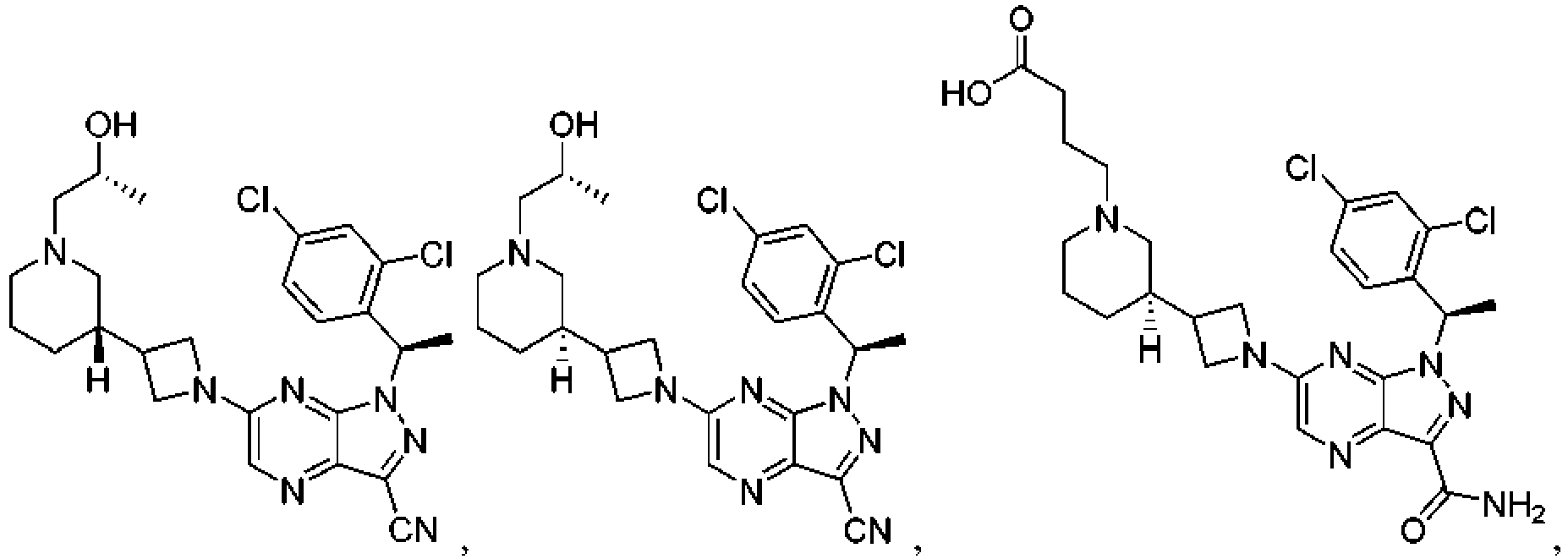


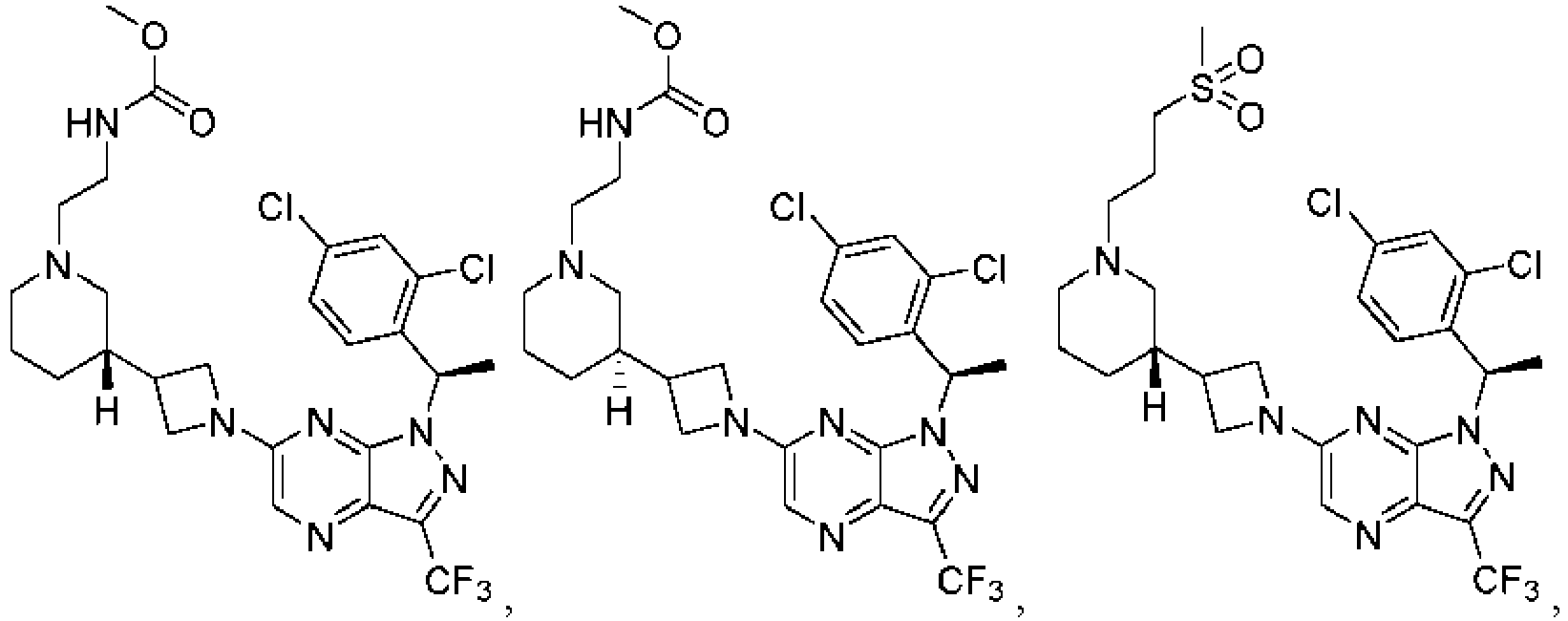


- Verbindung nach Anspruch 1 oder ein pharmazeutisch annehmbares Salz davon, wobei die Verbindung die Struktur aufweist:


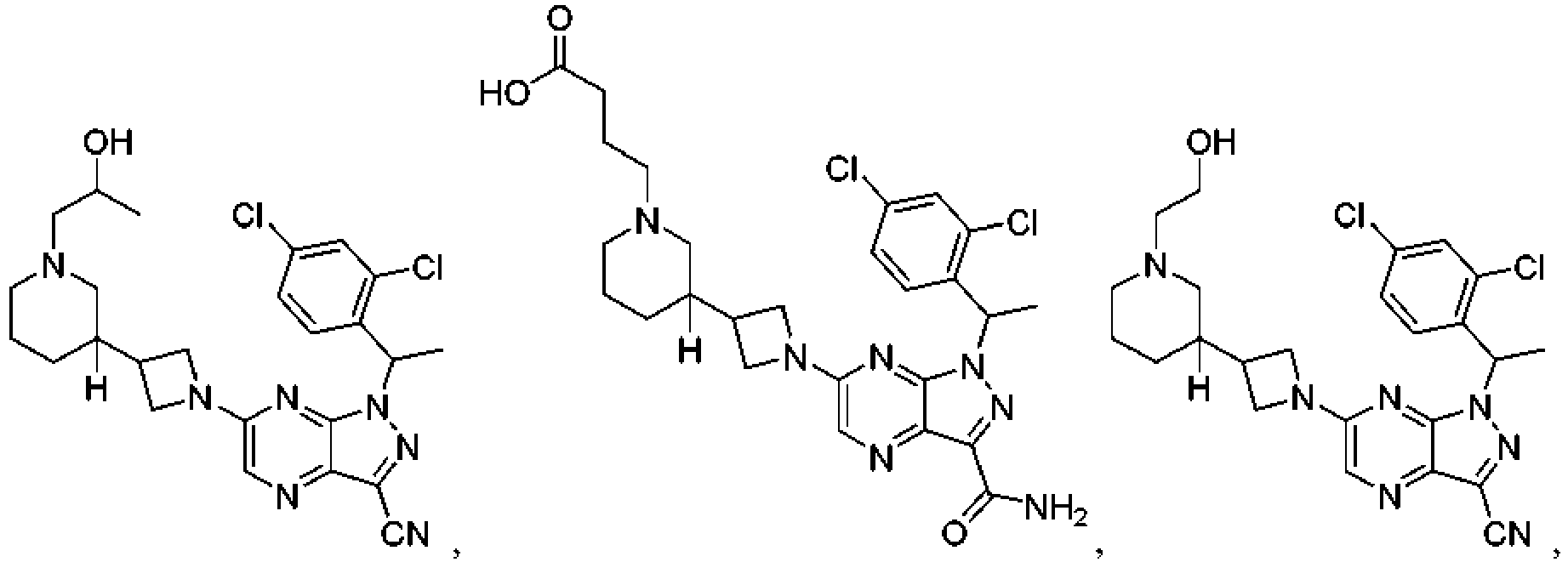


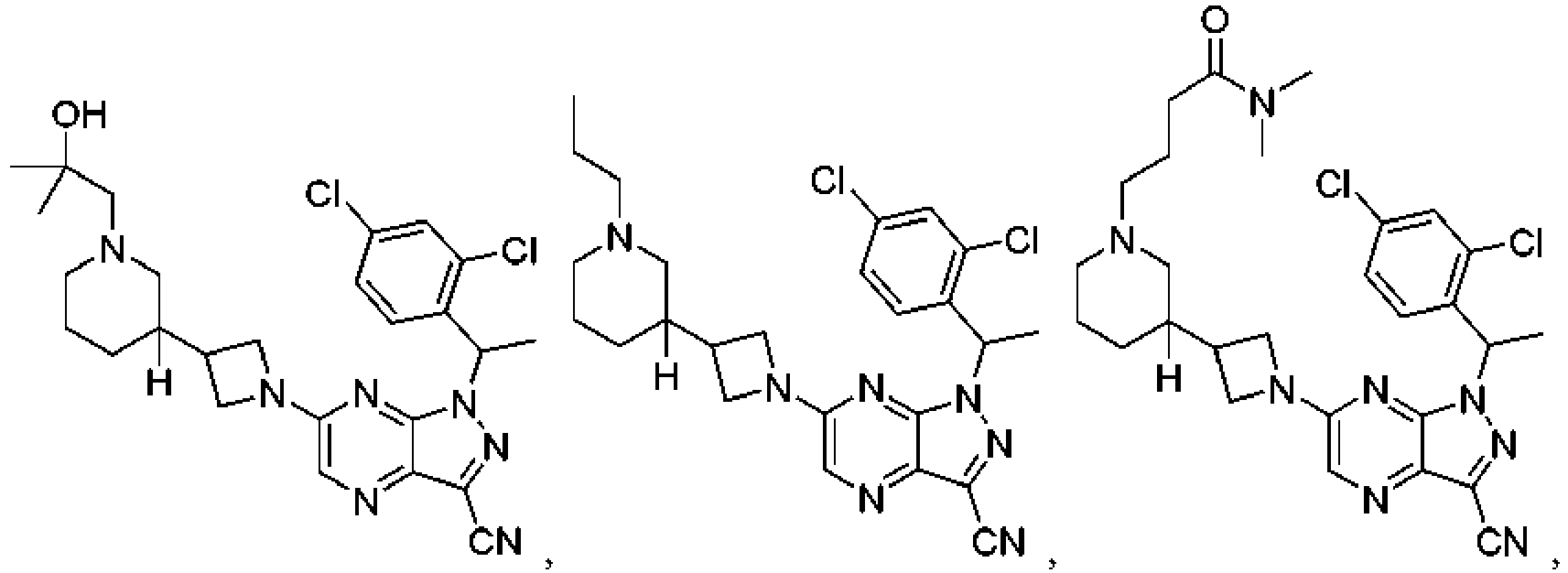


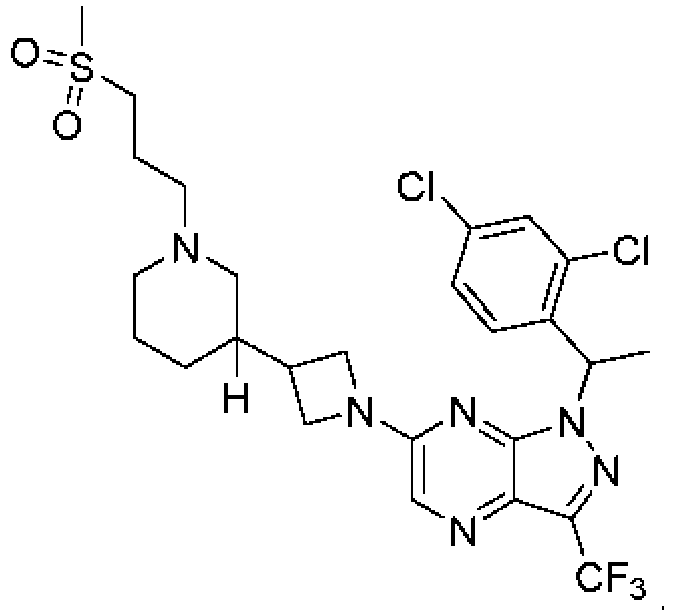
- Verbindung nach Anspruch 1 mit der Formel:

- Verbindung nach Anspruch 1 mit der Formel:

- Verbindung nach Anspruch 1 mit der Formel:

- Verbindung nach Anspruch 1 mit der Formel:

- Verbindung nach Anspruch 1 mit der Formel:

- Verbindung nach Anspruch 1 mit der Formel:

- Verbindung nach Anspruch 1 mit der Formel:

- Verbindung nach Anspruch 1 mit der Formel:

- Verbindung nach Anspruch 1 mit der Formel:

- Verbindung nach Anspruch 1 mit der Formel:

- Verbindung nach Anspruch 1 mit der Formel:
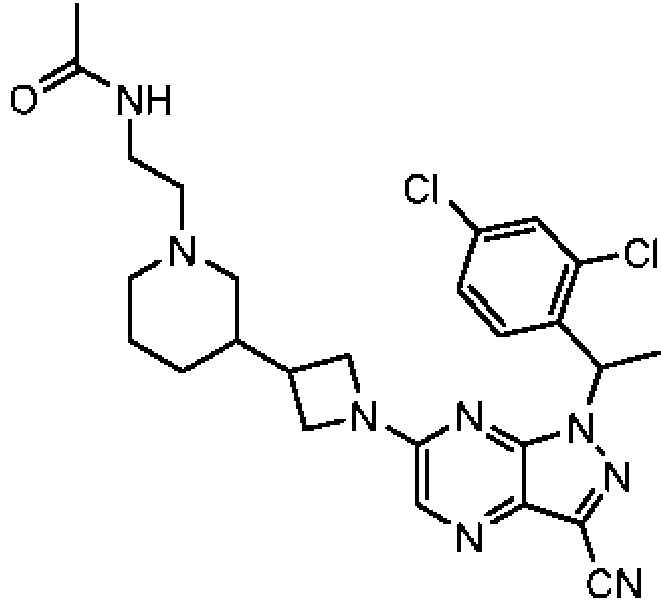
- Verbindung nach Anspruch 1 mit der Formel:

- Pharmazeutische Zusammensetzung, umfassend eine Verbindung nach einem der Ansprüche 1 bis 19 und einen pharmazeutisch annehmbaren Hilfsstoff.
- Pharmazeutische Zusammensetzung gemäß Anspruch 20 zur Verwendung in einem Verfahren zum Behandeln oder Vorbeugen einer durch CCR4 vermittelten Erkrankung oder Störung, umfassend das Verabreichen einer therapeutisch wirksamen Menge der pharmazeutischen Zusammensetzung an einen Probanden, der dessen bedarf, wobei die durch CCR4 vermittelte Erkrankung oder Störung eine Immunerkrankung oder -störung, eine entzündliche Erkrankung oder Störung, eine kardiovaskuläre Erkrankung oder Störung, eine Stoffwechselerkrankung oder -störung oder Krebs ist.
- Verbindung nach einem der Ansprüche 1 bis 19 oder ein pharmazeutisch annehmbares Salz davon zur Verwendung in einem Verfahren zum Behandeln oder Vorbeugen einer durch CCR4 vermittelten Erkrankung oder Störung, umfassend das Verabreichen einer therapeutisch wirksamen Menge der Verbindung oder eines pharmazeutisch annehmbaren Salzes davon an einen Probanden, der dessen bedarf, wobei die durch CCR4 vermittelte Erkrankung oder Störung eine Immunerkrankung oder -störung, eine entzündliche Erkrankung oder Störung, eine kardiovaskuläre Erkrankung oder Störung, eine Stoffwechselerkrankung oder -störung oder Krebs ist.
- Verbindung oder ein pharmazeutisch annehmbares Salz davon zur Verwendung nach Anspruch 22, wobei die Erkrankung oder Störung Krebs ist, und ferner umfassend das gleichzeitige Verabreichen eines Chemotherapeutikums oder Antikrebsmittels in Kombination mit der Verbindung oder einem pharmazeutisch annehmbaren Salz davon.
- Verbindung oder ein pharmazeutisch annehmbares Salz davon zur Verwendung nach Anspruch 23, wobei das Chemotherapeutikum oder Antikrebsmittel ein Inhibitor des PD-L1/PD-1-Weges, ein Inhibitor von CTLA-4 oder ein agonistischer Antikörper von CD137 (4-1BB) ist, wobei gegebenenfalls:(i) der Inhibitor des PD-L1/PD-1-Weges ausgewählt ist aus Pembrolizumab, Nivolumab, Atezolizumab oder Avelumab; und/oder(ii) der Inhibitor von CTLA-4 Tremelimumab ist; und/oder(iii) der agonistische Antikörper von CD137 (4-1BB) ausgewählt ist aus Urelumab oder Utomilumab.
Applications Claiming Priority (3)
| Application Number | Priority Date | Filing Date | Title |
|---|---|---|---|
| US201662368848P | 2016-07-29 | 2016-07-29 | |
| US201662426087P | 2016-11-23 | 2016-11-23 | |
| PCT/US2017/044369 WO2018022992A1 (en) | 2016-07-29 | 2017-07-28 | Chemokine receptor modulators and uses thereof |
Publications (3)
| Publication Number | Publication Date |
|---|---|
| EP3490565A1 EP3490565A1 (de) | 2019-06-05 |
| EP3490565A4 EP3490565A4 (de) | 2019-12-25 |
| EP3490565B1 true EP3490565B1 (de) | 2022-06-08 |
Family
ID=61016874
Family Applications (1)
| Application Number | Title | Priority Date | Filing Date |
|---|---|---|---|
| EP17835338.9A Active EP3490565B1 (de) | 2016-07-29 | 2017-07-28 | Azetidin abkömmlinge als chemokin-rezeptor-modulatoren und deren verwendungen |
Country Status (20)
| Country | Link |
|---|---|
| US (4) | US10179787B2 (de) |
| EP (1) | EP3490565B1 (de) |
| JP (1) | JP6985388B2 (de) |
| KR (1) | KR102566924B1 (de) |
| CN (1) | CN109789146B (de) |
| AU (1) | AU2017302635B2 (de) |
| CY (1) | CY1125539T1 (de) |
| DK (1) | DK3490565T3 (de) |
| ES (1) | ES2925564T3 (de) |
| HU (1) | HUE059242T2 (de) |
| IL (1) | IL264397B2 (de) |
| MX (1) | MX394691B (de) |
| NZ (1) | NZ750182A (de) |
| PL (1) | PL3490565T3 (de) |
| PT (1) | PT3490565T (de) |
| RU (1) | RU2768827C2 (de) |
| SG (1) | SG11201900561XA (de) |
| TW (1) | TWI817929B (de) |
| WO (1) | WO2018022992A1 (de) |
| ZA (1) | ZA201900961B (de) |
Families Citing this family (28)
| Publication number | Priority date | Publication date | Assignee | Title |
|---|---|---|---|---|
| MX356163B (es) | 2011-12-01 | 2018-05-16 | Chemocentryx Inc | Anilinas sustituidas como antagonistas de ccr(4). |
| MX2021012208A (es) | 2013-10-04 | 2023-01-19 | Infinity Pharmaceuticals Inc | Compuestos heterocíclicos y usos de los mismos. |
| NZ724368A (en) | 2014-03-19 | 2023-07-28 | Infinity Pharmaceuticals Inc | Heterocyclic compounds for use in the treatment of pi3k-gamma mediated disorders |
| EP4585268A3 (de) | 2015-09-14 | 2025-10-15 | Twelve Therapeutics, Inc. | Feste formen von isochinolinonderivaten, herstellungsverfahren, zusammensetzungen damit und verfahren zur verwendung davon |
| HUE059242T2 (hu) | 2016-07-29 | 2022-11-28 | Rapt Therapeutics Inc | Azetidin-származékok mint kemokin receptor modulátorok és felhasználásuk |
| RU2020118594A (ru) * | 2017-11-06 | 2021-12-09 | Рапт Терапьютикс, Инк. | Противораковые агенты |
| CN111971279B (zh) * | 2018-01-26 | 2025-09-09 | 拉普特医疗公司 | 趋化因子受体调节剂及其用途 |
| WO2019178329A1 (en) * | 2018-03-16 | 2019-09-19 | The Regents Of The University Of Michigan | Compositions and methods for treating graves disease |
| CN112292374B (zh) * | 2018-05-31 | 2023-01-03 | 信达生物制药(苏州)有限公司 | 一种新型磷酸肌醇3-激酶抑制剂及其制备方法和用途 |
| CA3104760C (en) * | 2018-06-26 | 2023-09-26 | Kpc Pharmaceuticals, Inc. | Benzimidazole derivatives and use thereof as idh1 inhibitors |
| CN112601526B (zh) | 2018-08-29 | 2025-10-03 | 凯莫森特里克斯股份有限公司 | 使用c-c趋化因子受体4(ccr4)拮抗剂和一种或多种检查点抑制剂的联合治疗 |
| US12331320B2 (en) | 2018-10-10 | 2025-06-17 | The Research Foundation For The State University Of New York | Genome edited cancer cell vaccines |
| CN109796457B (zh) * | 2019-03-28 | 2020-03-06 | 苏州国匡医药科技有限公司 | 一种2-(3-(氮杂环丁烷-3-基)哌啶-1-基)乙基-1-醇的制备方法及其应用 |
| CN112062728A (zh) * | 2019-05-25 | 2020-12-11 | 上海鑫凯化学科技有限公司 | 一种3,5-二氯-6-乙基吡嗪甲酰胺的合成方法 |
| BR112022009331A2 (pt) | 2019-11-13 | 2022-08-09 | Rapt Therapeutics Inc | Formas cristalinas do receptor de quimiocina c c antagonista tipo 4 e usos das mesmas |
| IL293703A (en) * | 2019-12-09 | 2022-08-01 | Imago Biosciences Inc | Lysine-specific histone demethylase inhibitors for the treatment of myeloproliferative neoplasms |
| CN111471025A (zh) * | 2020-03-26 | 2020-07-31 | 兰州康寓信生物科技有限公司 | 一种法匹拉韦中间体及法匹拉韦的合成方法 |
| CN111732572B (zh) * | 2020-07-31 | 2020-11-13 | 苏州国匡医药科技有限公司 | 一种手性抗肿瘤药物flx475及其中间体的制备方法 |
| CN115466244B (zh) * | 2021-06-10 | 2024-08-02 | 武汉伯瑞恒医药科技有限公司 | 趋化因子受体ccr4拮抗剂、其中间体、制备方法、药物组合物和应用 |
| TW202340177A (zh) | 2021-12-30 | 2023-10-16 | 美商拜歐米富士恩股份有限公司 | 作為 flt3抑制劑之吡嗪化合物 |
| JP2025512963A (ja) * | 2022-04-06 | 2025-04-22 | ラプト・セラピューティクス・インコーポレイテッド | ケモカイン受容体モジュレータ及びその使用 |
| TW202411219A (zh) | 2022-06-02 | 2024-03-16 | 大陸商西藏海思科製藥有限公司 | 雜環化合物ccr4抑制劑及其用途 |
| CN121002023A (zh) * | 2023-04-24 | 2025-11-21 | 浙江华海药业股份有限公司 | 趋化因子受体调节剂制备方法和用途 |
| CN119638669A (zh) * | 2023-09-15 | 2025-03-18 | 上海医药集团股份有限公司 | 一种趋化因子受体拮抗剂、药物组合物和应用 |
| WO2025098425A1 (zh) * | 2023-11-09 | 2025-05-15 | 浙江华海药业股份有限公司 | 趋化因子受体调节剂制备方法和用途 |
| WO2025109150A1 (en) | 2023-11-24 | 2025-05-30 | Ludwig-Maximilians-Universität München, In Vertretung Des Freistaates Bayern | The combination of gm-csf and inhibition of ccl22-ccr4 signaling in the treatment of cancer |
| US20250388571A1 (en) * | 2024-06-20 | 2025-12-25 | Biolexis Therapeutics, Inc. | Amp-activated protein kinase modulator compounds and uses thereof |
| WO2026012376A1 (zh) * | 2024-07-10 | 2026-01-15 | 浙江华海药业股份有限公司 | 趋化因子受体调节剂制备方法和用途 |
Family Cites Families (33)
| Publication number | Priority date | Publication date | Assignee | Title |
|---|---|---|---|---|
| US4911920A (en) | 1986-07-30 | 1990-03-27 | Alcon Laboratories, Inc. | Sustained release, comfort formulation for glaucoma therapy |
| FR2588189B1 (fr) | 1985-10-03 | 1988-12-02 | Merck Sharp & Dohme | Composition pharmaceutique de type a transition de phase liquide-gel |
| ATE141502T1 (de) | 1991-01-15 | 1996-09-15 | Alcon Lab Inc | Verwendung von karrageenan in topischen ophthalmologischen zusammensetzungen |
| US5212162A (en) | 1991-03-27 | 1993-05-18 | Alcon Laboratories, Inc. | Use of combinations gelling polysaccharides and finely divided drug carrier substrates in topical ophthalmic compositions |
| GB9624482D0 (en) | 1995-12-18 | 1997-01-15 | Zeneca Phaema S A | Chemical compounds |
| BR9707495A (pt) | 1996-02-13 | 1999-07-27 | Zeneca Ltd | Derivado de quinazolina processo para a preparação do mesmo composição farmacêutica e processo para a produç o de um efeito antiangiogênico e/ou de redução de permeabilidade vascular em um animal de sangue quente |
| US6291455B1 (en) | 1996-03-05 | 2001-09-18 | Zeneca Limited | 4-anilinoquinazoline derivatives |
| GB9718972D0 (en) | 1996-09-25 | 1997-11-12 | Zeneca Ltd | Chemical compounds |
| GB9714249D0 (en) | 1997-07-08 | 1997-09-10 | Angiogene Pharm Ltd | Vascular damaging agents |
| GB9900334D0 (en) | 1999-01-07 | 1999-02-24 | Angiogene Pharm Ltd | Tricylic vascular damaging agents |
| GB9900752D0 (en) | 1999-01-15 | 1999-03-03 | Angiogene Pharm Ltd | Benzimidazole vascular damaging agents |
| NZ522074A (en) | 2000-05-31 | 2004-06-25 | Astrazeneca Ab | Indole derivatives with vascular damaging activity |
| CN1255392C (zh) | 2000-07-07 | 2006-05-10 | 安吉奥金尼药品有限公司 | 作为血管生成抑制剂的秋水仙醇衍生物 |
| IL153484A0 (en) | 2000-07-07 | 2003-07-06 | Angiogene Pharm Ltd | Colchinol derivatives as angiogenesis inhibitors |
| WO2003051876A1 (en) * | 2001-12-14 | 2003-06-26 | Japan Tobacco Inc. | Pyrazolopyridine derivatives and medicinal use thereof |
| US20060004010A1 (en) | 2002-07-10 | 2006-01-05 | Hiromu Habashita | Ccr4 antagonist and medical use thereof |
| WO2005082865A1 (ja) * | 2004-02-27 | 2005-09-09 | Astellas Pharma Inc. | 縮合二環性ピリミジン誘導体 |
| US7514463B2 (en) * | 2004-08-20 | 2009-04-07 | University Of Kansas | Lonidamine analogues and their use in male contraception and cancer treatment |
| NL2000323C2 (nl) * | 2005-12-20 | 2007-11-20 | Pfizer Ltd | Pyrimidine-derivaten. |
| US7790884B2 (en) * | 2006-03-24 | 2010-09-07 | Astellas Pharma Inc. | Acylaminopiperidine compound |
| JP2010208945A (ja) * | 2007-06-01 | 2010-09-24 | Mitsubishi Tanabe Pharma Corp | 複素環化合物 |
| KR101048448B1 (ko) * | 2008-11-21 | 2011-07-11 | 한국화학연구원 | 신규 피라졸로[4,3-b]피리딘 유도체 또는 이의 약학적으로허용가능한 염, 이의 제조방법 및 이를 유효성분으로 함유하는 약학적 조성물 |
| JP2010126496A (ja) * | 2008-11-28 | 2010-06-10 | Mitsubishi Tanabe Pharma Corp | 複素環化合物 |
| ES2439773T3 (es) * | 2009-02-26 | 2014-01-24 | Glaxo Group Limited | Derivados de pirazol usados como antagonistas del receptor CCR4 |
| US9242987B2 (en) * | 2009-10-20 | 2016-01-26 | Cellzome Limited | Heterocyclyl pyrazolopyrimidine analogues as JAK inhibitors |
| JP2013525370A (ja) | 2010-04-22 | 2013-06-20 | ヤンセン ファーマシューティカ エヌ.ベー. | ケトヘキソキナーゼ阻害剤として有用なインダゾール化合物 |
| US9040545B2 (en) * | 2010-08-20 | 2015-05-26 | Cellzome Limited | Heterocyclyl pyrazolopyrimidine analogues as selective JAK inhibitors |
| DK2785710T3 (en) | 2011-12-01 | 2017-12-04 | Chemocentryx Inc | SUBSTITUTED BENZIMIDAZOLES AND BENZOPYRAZOLES AS CCR (4) - ANTAGONISTS |
| MX356163B (es) | 2011-12-01 | 2018-05-16 | Chemocentryx Inc | Anilinas sustituidas como antagonistas de ccr(4). |
| WO2014026327A1 (en) | 2012-08-15 | 2014-02-20 | Merck Sharp & Dohme Corp. | 4-heteroaryl substituted benzoic acid compounds as rorgammat inhibitors and uses thereof |
| WO2016021742A1 (en) * | 2014-08-07 | 2016-02-11 | Takeda Pharmaceutical Company Limited | Heterocyclic compounds as ep4 receptor antagonists |
| WO2016192083A1 (en) * | 2015-06-04 | 2016-12-08 | Merck Sharp & Dohme Corp. | Dihydropyrazolopyrimidinone compounds as pde2 inhibitors |
| HUE059242T2 (hu) | 2016-07-29 | 2022-11-28 | Rapt Therapeutics Inc | Azetidin-származékok mint kemokin receptor modulátorok és felhasználásuk |
-
2017
- 2017-07-28 HU HUE17835338A patent/HUE059242T2/hu unknown
- 2017-07-28 NZ NZ750182A patent/NZ750182A/en unknown
- 2017-07-28 PL PL17835338.9T patent/PL3490565T3/pl unknown
- 2017-07-28 TW TW106125505A patent/TWI817929B/zh active
- 2017-07-28 RU RU2019105534A patent/RU2768827C2/ru active
- 2017-07-28 KR KR1020197004851A patent/KR102566924B1/ko active Active
- 2017-07-28 ES ES17835338T patent/ES2925564T3/es active Active
- 2017-07-28 CN CN201780060183.8A patent/CN109789146B/zh active Active
- 2017-07-28 DK DK17835338.9T patent/DK3490565T3/da active
- 2017-07-28 US US15/662,861 patent/US10179787B2/en active Active
- 2017-07-28 IL IL264397A patent/IL264397B2/en unknown
- 2017-07-28 MX MX2019001223A patent/MX394691B/es unknown
- 2017-07-28 SG SG11201900561XA patent/SG11201900561XA/en unknown
- 2017-07-28 PT PT178353389T patent/PT3490565T/pt unknown
- 2017-07-28 AU AU2017302635A patent/AU2017302635B2/en active Active
- 2017-07-28 JP JP2019526200A patent/JP6985388B2/ja active Active
- 2017-07-28 EP EP17835338.9A patent/EP3490565B1/de active Active
- 2017-07-28 WO PCT/US2017/044369 patent/WO2018022992A1/en not_active Ceased
-
2018
- 2018-11-19 US US16/195,506 patent/US10604526B2/en active Active
-
2019
- 2019-02-14 ZA ZA2019/00961A patent/ZA201900961B/en unknown
-
2020
- 2020-01-28 US US16/775,192 patent/US20200239480A1/en not_active Abandoned
-
2022
- 2022-08-22 CY CY20221100563T patent/CY1125539T1/el unknown
-
2023
- 2023-11-13 US US18/389,182 patent/US20240199620A1/en not_active Abandoned
Also Published As
Similar Documents
| Publication | Publication Date | Title |
|---|---|---|
| US10604526B2 (en) | Chemokine receptor modulators and uses thereof | |
| US12098139B2 (en) | Chemokine receptor modulators and uses thereof | |
| US10246462B2 (en) | Chemokine receptor modulators and uses thereof | |
| US20260092050A1 (en) | Chemokine receptor modulators and uses thereof | |
| WO2019213620A1 (en) | Epha4 cyclic peptide antagonists and methods of use thereof | |
| US20250122208A1 (en) | Chemokine receptor modulators and uses thereof | |
| HK40006272B (en) | Azetidine derivatives as chemokine receptor modulators and uses thereof | |
| HK40006272A (en) | Azetidine derivatives as chemokine receptor modulators and uses thereof | |
| BR112019001732B1 (pt) | Moduladores de receptor de quimiocina e usos dos mesmos |
Legal Events
| Date | Code | Title | Description |
|---|---|---|---|
| STAA | Information on the status of an ep patent application or granted ep patent |
Free format text: STATUS: THE INTERNATIONAL PUBLICATION HAS BEEN MADE |
|
| PUAI | Public reference made under article 153(3) epc to a published international application that has entered the european phase |
Free format text: ORIGINAL CODE: 0009012 |
|
| STAA | Information on the status of an ep patent application or granted ep patent |
Free format text: STATUS: REQUEST FOR EXAMINATION WAS MADE |
|
| 17P | Request for examination filed |
Effective date: 20190223 |
|
| AK | Designated contracting states |
Kind code of ref document: A1 Designated state(s): AL AT BE BG CH CY CZ DE DK EE ES FI FR GB GR HR HU IE IS IT LI LT LU LV MC MK MT NL NO PL PT RO RS SE SI SK SM TR |
|
| AX | Request for extension of the european patent |
Extension state: BA ME |
|
| RIN1 | Information on inventor provided before grant (corrected) |
Inventor name: REILLY, MAUREEN, KAY Inventor name: HU, DENNIS, X. Inventor name: WALKER, JAMES, ROSS Inventor name: KETCHAM, JOHN, MICHAEL Inventor name: ROBLES-RESENDIZ, OMAR Inventor name: JACKSON, JEFFREY JAMES Inventor name: BUI, MINNA HUE, THANH Inventor name: BECK, HILARY, PLAKE Inventor name: POWERS, JAY, PATRICK Inventor name: ZIBINSKY, MIKHAIL Inventor name: YOUNAI, ASHKAAN Inventor name: BIANNIC, BERENGER Inventor name: WUSTROW, DAVID, JUERGEN Inventor name: SHUNATONA, HUNTER, PAUL |
|
| RAP1 | Party data changed (applicant data changed or rights of an application transferred) |
Owner name: RAPT THERAPEUTICS, INC. |
|
| DAV | Request for validation of the european patent (deleted) | ||
| DAX | Request for extension of the european patent (deleted) | ||
| A4 | Supplementary search report drawn up and despatched |
Effective date: 20191126 |
|
| RIC1 | Information provided on ipc code assigned before grant |
Ipc: A61K 31/5377 20060101AFI20191120BHEP Ipc: C07D 401/12 20060101ALI20191120BHEP |
|
| REG | Reference to a national code |
Ref country code: HK Ref legal event code: DE Ref document number: 40006272 Country of ref document: HK |
|
| STAA | Information on the status of an ep patent application or granted ep patent |
Free format text: STATUS: EXAMINATION IS IN PROGRESS |
|
| 17Q | First examination report despatched |
Effective date: 20201013 |
|
| REG | Reference to a national code |
Ref country code: DE Ref legal event code: R079 Ref document number: 602017058375 Country of ref document: DE Free format text: PREVIOUS MAIN CLASS: A61K0031537700 Ipc: C07D0487040000 |
|
| RIC1 | Information provided on ipc code assigned before grant |
Ipc: C07D 487/04 20060101AFI20210520BHEP Ipc: C07D 401/12 20060101ALI20210520BHEP Ipc: A61K 31/5377 20060101ALI20210520BHEP |
|
| GRAP | Despatch of communication of intention to grant a patent |
Free format text: ORIGINAL CODE: EPIDOSNIGR1 |
|
| STAA | Information on the status of an ep patent application or granted ep patent |
Free format text: STATUS: GRANT OF PATENT IS INTENDED |
|
| INTG | Intention to grant announced |
Effective date: 20210702 |
|
| GRAJ | Information related to disapproval of communication of intention to grant by the applicant or resumption of examination proceedings by the epo deleted |
Free format text: ORIGINAL CODE: EPIDOSDIGR1 |
|
| STAA | Information on the status of an ep patent application or granted ep patent |
Free format text: STATUS: EXAMINATION IS IN PROGRESS |
|
| GRAP | Despatch of communication of intention to grant a patent |
Free format text: ORIGINAL CODE: EPIDOSNIGR1 |
|
| INTC | Intention to grant announced (deleted) | ||
| STAA | Information on the status of an ep patent application or granted ep patent |
Free format text: STATUS: GRANT OF PATENT IS INTENDED |
|
| INTG | Intention to grant announced |
Effective date: 20211216 |
|
| GRAS | Grant fee paid |
Free format text: ORIGINAL CODE: EPIDOSNIGR3 |
|
| GRAA | (expected) grant |
Free format text: ORIGINAL CODE: 0009210 |
|
| STAA | Information on the status of an ep patent application or granted ep patent |
Free format text: STATUS: THE PATENT HAS BEEN GRANTED |
|
| AK | Designated contracting states |
Kind code of ref document: B1 Designated state(s): AL AT BE BG CH CY CZ DE DK EE ES FI FR GB GR HR HU IE IS IT LI LT LU LV MC MK MT NL NO PL PT RO RS SE SI SK SM TR |
|
| REG | Reference to a national code |
Ref country code: AT Ref legal event code: REF Ref document number: 1496864 Country of ref document: AT Kind code of ref document: T Effective date: 20220615 Ref country code: CH Ref legal event code: EP |
|
| REG | Reference to a national code |
Ref country code: DE Ref legal event code: R096 Ref document number: 602017058375 Country of ref document: DE |
|
| REG | Reference to a national code |
Ref country code: IE Ref legal event code: FG4D |
|
| REG | Reference to a national code |
Ref country code: FI Ref legal event code: FGE |
|
| REG | Reference to a national code |
Ref country code: DK Ref legal event code: T3 Effective date: 20220705 |
|
| REG | Reference to a national code |
Ref country code: NL Ref legal event code: FP |
|
| REG | Reference to a national code |
Ref country code: SE Ref legal event code: TRGR |
|
| REG | Reference to a national code |
Ref country code: NO Ref legal event code: T2 Effective date: 20220608 |
|
| REG | Reference to a national code |
Ref country code: PT Ref legal event code: SC4A Ref document number: 3490565 Country of ref document: PT Date of ref document: 20220906 Kind code of ref document: T Free format text: AVAILABILITY OF NATIONAL TRANSLATION Effective date: 20220831 |
|
| REG | Reference to a national code |
Ref country code: LT Ref legal event code: MG9D |
|
| REG | Reference to a national code |
Ref country code: ES Ref legal event code: FG2A Ref document number: 2925564 Country of ref document: ES Kind code of ref document: T3 Effective date: 20221018 |
|
| REG | Reference to a national code |
Ref country code: GR Ref legal event code: EP Ref document number: 20220401674 Country of ref document: GR Effective date: 20221010 |
|
| PG25 | Lapsed in a contracting state [announced via postgrant information from national office to epo] |
Ref country code: LT Free format text: LAPSE BECAUSE OF FAILURE TO SUBMIT A TRANSLATION OF THE DESCRIPTION OR TO PAY THE FEE WITHIN THE PRESCRIBED TIME-LIMIT Effective date: 20220608 Ref country code: HR Free format text: LAPSE BECAUSE OF FAILURE TO SUBMIT A TRANSLATION OF THE DESCRIPTION OR TO PAY THE FEE WITHIN THE PRESCRIBED TIME-LIMIT Effective date: 20220608 Ref country code: BG Free format text: LAPSE BECAUSE OF FAILURE TO SUBMIT A TRANSLATION OF THE DESCRIPTION OR TO PAY THE FEE WITHIN THE PRESCRIBED TIME-LIMIT Effective date: 20220908 |
|
| REG | Reference to a national code |
Ref country code: HU Ref legal event code: AG4A Ref document number: E059242 Country of ref document: HU |
|
| PG25 | Lapsed in a contracting state [announced via postgrant information from national office to epo] |
Ref country code: RS Free format text: LAPSE BECAUSE OF FAILURE TO SUBMIT A TRANSLATION OF THE DESCRIPTION OR TO PAY THE FEE WITHIN THE PRESCRIBED TIME-LIMIT Effective date: 20220608 Ref country code: LV Free format text: LAPSE BECAUSE OF FAILURE TO SUBMIT A TRANSLATION OF THE DESCRIPTION OR TO PAY THE FEE WITHIN THE PRESCRIBED TIME-LIMIT Effective date: 20220608 |
|
| PG25 | Lapsed in a contracting state [announced via postgrant information from national office to epo] |
Ref country code: SM Free format text: LAPSE BECAUSE OF FAILURE TO SUBMIT A TRANSLATION OF THE DESCRIPTION OR TO PAY THE FEE WITHIN THE PRESCRIBED TIME-LIMIT Effective date: 20220608 Ref country code: SK Free format text: LAPSE BECAUSE OF FAILURE TO SUBMIT A TRANSLATION OF THE DESCRIPTION OR TO PAY THE FEE WITHIN THE PRESCRIBED TIME-LIMIT Effective date: 20220608 Ref country code: RO Free format text: LAPSE BECAUSE OF FAILURE TO SUBMIT A TRANSLATION OF THE DESCRIPTION OR TO PAY THE FEE WITHIN THE PRESCRIBED TIME-LIMIT Effective date: 20220608 Ref country code: EE Free format text: LAPSE BECAUSE OF FAILURE TO SUBMIT A TRANSLATION OF THE DESCRIPTION OR TO PAY THE FEE WITHIN THE PRESCRIBED TIME-LIMIT Effective date: 20220608 |
|
| PG25 | Lapsed in a contracting state [announced via postgrant information from national office to epo] |
Ref country code: IS Free format text: LAPSE BECAUSE OF FAILURE TO SUBMIT A TRANSLATION OF THE DESCRIPTION OR TO PAY THE FEE WITHIN THE PRESCRIBED TIME-LIMIT Effective date: 20221008 |
|
| REG | Reference to a national code |
Ref country code: DE Ref legal event code: R097 Ref document number: 602017058375 Country of ref document: DE |
|
| PG25 | Lapsed in a contracting state [announced via postgrant information from national office to epo] |
Ref country code: AL Free format text: LAPSE BECAUSE OF FAILURE TO SUBMIT A TRANSLATION OF THE DESCRIPTION OR TO PAY THE FEE WITHIN THE PRESCRIBED TIME-LIMIT Effective date: 20220608 |
|
| PLBE | No opposition filed within time limit |
Free format text: ORIGINAL CODE: 0009261 |
|
| STAA | Information on the status of an ep patent application or granted ep patent |
Free format text: STATUS: NO OPPOSITION FILED WITHIN TIME LIMIT |
|
| 26N | No opposition filed |
Effective date: 20230310 |
|
| PG25 | Lapsed in a contracting state [announced via postgrant information from national office to epo] |
Ref country code: SI Free format text: LAPSE BECAUSE OF FAILURE TO SUBMIT A TRANSLATION OF THE DESCRIPTION OR TO PAY THE FEE WITHIN THE PRESCRIBED TIME-LIMIT Effective date: 20220608 |
|
| P01 | Opt-out of the competence of the unified patent court (upc) registered |
Effective date: 20230512 |
|
| PG25 | Lapsed in a contracting state [announced via postgrant information from national office to epo] |
Ref country code: MK Free format text: LAPSE BECAUSE OF FAILURE TO SUBMIT A TRANSLATION OF THE DESCRIPTION OR TO PAY THE FEE WITHIN THE PRESCRIBED TIME-LIMIT Effective date: 20220608 |
|
| PG25 | Lapsed in a contracting state [announced via postgrant information from national office to epo] |
Ref country code: MT Free format text: LAPSE BECAUSE OF FAILURE TO SUBMIT A TRANSLATION OF THE DESCRIPTION OR TO PAY THE FEE WITHIN THE PRESCRIBED TIME-LIMIT Effective date: 20220608 |
|
| PG25 | Lapsed in a contracting state [announced via postgrant information from national office to epo] |
Ref country code: BG Free format text: LAPSE BECAUSE OF FAILURE TO SUBMIT A TRANSLATION OF THE DESCRIPTION OR TO PAY THE FEE WITHIN THE PRESCRIBED TIME-LIMIT Effective date: 20220608 |
|
| PG25 | Lapsed in a contracting state [announced via postgrant information from national office to epo] |
Ref country code: BG Free format text: LAPSE BECAUSE OF FAILURE TO SUBMIT A TRANSLATION OF THE DESCRIPTION OR TO PAY THE FEE WITHIN THE PRESCRIBED TIME-LIMIT Effective date: 20220608 |
|
| PGFP | Annual fee paid to national office [announced via postgrant information from national office to epo] |
Ref country code: MC Payment date: 20250626 Year of fee payment: 9 |
|
| PGFP | Annual fee paid to national office [announced via postgrant information from national office to epo] |
Ref country code: PL Payment date: 20250522 Year of fee payment: 9 |
|
| PGFP | Annual fee paid to national office [announced via postgrant information from national office to epo] |
Ref country code: GB Payment date: 20250605 Year of fee payment: 9 |
|
| PGFP | Annual fee paid to national office [announced via postgrant information from national office to epo] |
Ref country code: NL Payment date: 20250613 Year of fee payment: 9 Ref country code: BE Payment date: 20250619 Year of fee payment: 9 |
|
| PGFP | Annual fee paid to national office [announced via postgrant information from national office to epo] |
Ref country code: PT Payment date: 20250630 Year of fee payment: 9 |
|
| PGFP | Annual fee paid to national office [announced via postgrant information from national office to epo] |
Ref country code: FR Payment date: 20250610 Year of fee payment: 9 |
|
| PGFP | Annual fee paid to national office [announced via postgrant information from national office to epo] |
Ref country code: GR Payment date: 20250618 Year of fee payment: 9 |
|
| PGFP | Annual fee paid to national office [announced via postgrant information from national office to epo] |
Ref country code: IE Payment date: 20250610 Year of fee payment: 9 |
|
| PGFP | Annual fee paid to national office [announced via postgrant information from national office to epo] |
Ref country code: SE Payment date: 20250610 Year of fee payment: 9 |
|
| PGFP | Annual fee paid to national office [announced via postgrant information from national office to epo] |
Ref country code: HU Payment date: 20250630 Year of fee payment: 9 |
|
| PGFP | Annual fee paid to national office [announced via postgrant information from national office to epo] |
Ref country code: LU Payment date: 20250714 Year of fee payment: 9 |
|
| PGFP | Annual fee paid to national office [announced via postgrant information from national office to epo] |
Ref country code: FI Payment date: 20250715 Year of fee payment: 9 Ref country code: ES Payment date: 20250807 Year of fee payment: 9 |
|
| PGFP | Annual fee paid to national office [announced via postgrant information from national office to epo] |
Ref country code: DE Payment date: 20250604 Year of fee payment: 9 Ref country code: DK Payment date: 20250714 Year of fee payment: 9 |
|
| PGFP | Annual fee paid to national office [announced via postgrant information from national office to epo] |
Ref country code: NO Payment date: 20250709 Year of fee payment: 9 |
|
| PGFP | Annual fee paid to national office [announced via postgrant information from national office to epo] |
Ref country code: TR Payment date: 20250711 Year of fee payment: 9 Ref country code: IT Payment date: 20250623 Year of fee payment: 9 |
|
| PGFP | Annual fee paid to national office [announced via postgrant information from national office to epo] |
Ref country code: AT Payment date: 20250625 Year of fee payment: 9 |
|
| PGFP | Annual fee paid to national office [announced via postgrant information from national office to epo] |
Ref country code: CH Payment date: 20250801 Year of fee payment: 9 |
|
| PGFP | Annual fee paid to national office [announced via postgrant information from national office to epo] |
Ref country code: CZ Payment date: 20250718 Year of fee payment: 9 |
|
| PGFP | Annual fee paid to national office [announced via postgrant information from national office to epo] |
Ref country code: CY Payment date: 20250605 Year of fee payment: 9 |
|
| REG | Reference to a national code |
Ref country code: AT Ref legal event code: UEP Ref document number: 1496864 Country of ref document: AT Kind code of ref document: T Effective date: 20220608 |