EP3493585B1 - Dispositif utilisateur, station de base et procédé de communication - Google Patents
Dispositif utilisateur, station de base et procédé de communication Download PDFInfo
- Publication number
- EP3493585B1 EP3493585B1 EP17833968.5A EP17833968A EP3493585B1 EP 3493585 B1 EP3493585 B1 EP 3493585B1 EP 17833968 A EP17833968 A EP 17833968A EP 3493585 B1 EP3493585 B1 EP 3493585B1
- Authority
- EP
- European Patent Office
- Prior art keywords
- category
- base station
- soft buffer
- layers
- user apparatus
- Prior art date
- Legal status (The legal status is an assumption and is not a legal conclusion. Google has not performed a legal analysis and makes no representation as to the accuracy of the status listed.)
- Active
Links
Images





Classifications
-
- H—ELECTRICITY
- H04—ELECTRIC COMMUNICATION TECHNIQUE
- H04L—TRANSMISSION OF DIGITAL INFORMATION, e.g. TELEGRAPHIC COMMUNICATION
- H04L27/00—Modulated-carrier systems
- H04L27/32—Carrier systems characterised by combinations of two or more of the types covered by groups H04L27/02, H04L27/10, H04L27/18 or H04L27/26
- H04L27/34—Amplitude- and phase-modulated carrier systems, e.g. quadrature-amplitude modulated carrier systems
-
- H—ELECTRICITY
- H04—ELECTRIC COMMUNICATION TECHNIQUE
- H04L—TRANSMISSION OF DIGITAL INFORMATION, e.g. TELEGRAPHIC COMMUNICATION
- H04L1/00—Arrangements for detecting or preventing errors in the information received
- H04L1/12—Arrangements for detecting or preventing errors in the information received by using return channel
- H04L1/16—Arrangements for detecting or preventing errors in the information received by using return channel in which the return channel carries supervisory signals, e.g. repetition request signals
- H04L1/18—Automatic repetition systems, e.g. Van Duuren systems
- H04L1/1829—Arrangements specially adapted for the receiver end
- H04L1/1835—Buffer management
Definitions
- the present invention relates to a user apparatus, a base station, and a communication method.
- LTE Long Term Evolution
- LTE-A LTE-Advanced
- FRA Full Radio Access
- UE category User apparatuses in LTE are classified into multiple categories according to UE (User Equipment) capability. This category is called a "UE category". For example, a category 6 user apparatus defined in 3GPP Release 10 supports 300 Mbps and 51 Mbps, respectively, as a maximum bit rate (peak rate) of a DL (Downlink) and a maximum bit rate of UL (Uplink). Since 3GPP Release 12 and later, the UE category is defined separately for DL and UL. The UE category of DL is called “UE DL category”, and the UE category of UL is called “UE UL category" (Non-Patent Document 1). The user apparatus UE is defined to report, when accessing, for example, a network, a UE category supported by the user apparatus UE itself to the base station via a predetermined signaling message (UE-EUTRA-Capability) .
- UE-EUTRA-Capability predetermined signaling message
- Hybrid Automatic Repeat Request (HARQ) with soft combining is applied.
- HARQ Hybrid Automatic Repeat Request
- the user apparatus when receiving error-containing data, the user apparatus accumulates data in a memory and combines the data with retransmission data to be retransmitted later.
- the memory used for the HARQ process is called a "soft buffer”.
- the base station also performs a data transmission process according to the size of the soft buffer in the user apparatus. Specifically, when performing DL (Downlink) data transmission, the base station performs a rate matching process based on the size of the soft buffer in the user apparatus.
- WO 2015/178671 A1 relates to a method and apparatus for configuring user equipment (UE) capability in a wireless communication system.
- eNB evolved NodeB
- a first UE for a first release of 3rd generation partnership project (3GPP) long-term evolution (LTE), which does not support 256 quadrature amplitude modulation (QAM), with a first category
- 3GPP 3rd generation partnership project
- QAM quadrature amplitude modulation
- a second UE for a second release of 3GPP LTE, which supports 256QAM, with a second category.
- 3GPP proposes to define a new UE category that supports 1.2 Gbps and 1.6 Gbps as the maximum bit rate of DL.
- the new UE category it is desirable that the user apparatus supports up to 8-layer MIMO and supports up to 256 QAM as a modulation scheme.
- Non-Patent Document 2 defines that the size of the aforementioned soft buffer is determined according to the UE category, the number of MIMO layers configured for each of cells, and the modulation scheme configured for a corresponding one of the cells.
- the specifications of the current 3GPP there is no specific method for determining the size of a soft buffer corresponding to 8 MIMO layers in order to specify a new UE category in a range higher than 1 Gbps (DL category 16) and less than 3 Gbps (category 8).
- the eight-layer MIMO when the eight-layer MIMO is applied, the user apparatus corresponding to the new UE category may not secure a soft buffer of a size required for the HARQ process. Further, since the base station may not properly perform a rate matching process, the base station and the user apparatus may not perform communications properly.
- the disclosed technology is developed in view of the above-described problems, and an object is to provide a technology allowing a user apparatus to properly perform communications when a new UE category is added.
- a user apparatus is defined according to independent claim 1.
- a base station is defined according to independent claim 2.
- a method executed by a user apparatus is defined according to independent claim 3.
- a method executed by a base station is defined according to independent claim 4.
- a technology that allows a user apparatus to perform communications properly when a new UE category is added.
- LTE Long Term Evolution
- the term "LTE" is used in a broad meaning that includes, not only a communication scheme corresponding to release 8 or 9 of the 3GPP, but also a communication scheme corresponding to release 10, 11, 12, or 13, or the fifth-generation mobile communication system corresponding to on or after release 14.
- a base station eNB When transmitting the DL data, a base station eNB adds a 24-bit CRC (Cyclic Redundancy Check) to a transport block (TB: Transport Block). Subsequently, when the size of the transport block including the CRC exceeds 6144 bits, the base station eNB divides the transport block including the CRC into multiple code blocks (Code block segmentation), and adds a 24-bit CRC to each of the code blocks (Code block CRC attachment). The base station eNB then performs channel coding (Channel coding) for each code block to which the CRC is added. Channel coding is performed by turbo encoding with a coding rate of 1/3 to output coded bits with a bit length K W .
- the encoded bits include systematic bits, first parity bits, and second parity bits, which are information bits for each code block.
- the base station eNB individually performs an interleave process on the systematic bits, the first parity bits, and the second parity bits.
- the base station eNB first stores the systematic bits in a virtual circular buffer (virtual circular buffer), and subsequently stores the first parity bits and the second parity bits alternately (Bit collection).
- the size of the virtual circular buffer is the same as the above-mentioned K W .
- the base station eNB performs a rate matching process for each code block. Specifically, the base station eNB first determines a head position (k 0 ) for each retransmission version (RV: redundancy version) in the virtual circular buffer based on the soft buffer size for each code block. Next, the base station eNB takes, from the virtual circular buffer, bits corresponding to an output length (E) for each code block calculated based on the number of bits actually transmittable with 1 TB from the determined head position as a reference point.
- k 0 head position
- RV redundancy version
- the base station eNB concatenates each of bit sequences outputted by the rate matching process for each code block, performs scrambling, modulation processing, mapping to a resource block, and the like, and transmits the concatenated bit sequences to the user apparatus UE.
- the user apparatus UE decodes the received data by performing an HARQ process. Specifically, when data for each received code block includes an error, the initial data and the retransmission data are stored in the soft buffer for each code block and combined to decode the received data.
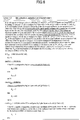
- FIG. 1 is an extracted section of UE categories among DL physical layer parameter sets for each UE category defined in Chapter 4.1 of Non-Patent Document 1.
- the user apparatus UE secures a soft buffer for each cell. That is, the soft buffer of the total soft buffer size is divided into sizes determined for each cell using the following equation 2 (Eq. 2), thereby securing a soft buffer for each transport block within the user apparatus UE. Furthermore, the soft buffer for each transport block is divided into sizes determined using the following equation 1 (Eq. 1), thereby securing a soft buffer for each code block within the user apparatus UE.
- N cb The soft buffer size (N cb ) for each code block is determined based on the following equation 1 (Eq. 1).
- N cb min ⁇ N IR C ⁇ K w
- N IR is a soft buffer size (bits) for each transport block in one cell
- C is the number of code blocks
- K W is a bit length of the encoded bits generated by turbo encoding.
- N IR is determined based on the following equation 2 (Eq. 2).
- N IR ⁇ N soft K C ⁇ K MIMO ⁇ min M DL _ HARQ M limit ⁇
- N SOFT is a total soft buffer size (Total number of soft channel bits) described above.
- TM Transmission mode
- MIMO 1
- K C is defined in 5.1.4.1.2 of Non-Patent Document 2; and value of "K C " is determined by the following procedure based on the value of "N SOFT ", a maximum number of MIMO layers, and a modulation scheme with the highest modulation level.
- a modulation scheme with the highest modulation level is referred to as a “maximum modulation scheme” or the like for the purpose of convenience.
- the user apparatus UE supporting a combination of a UE DL category 16 and a UE UL category 13 is required to report, in addition to a combination of the UE DL category 16 and the UE UL 13, UE categories 12, 10, 7, 4, and a combination of a UE DL category 12 and a UEUL category 13. That is, the above-described (1) through (4) are defined so as to satisfy at least one UE category among the UE category corresponding to the user apparatus UE and the UE categories lower than the UE category corresponding to the user apparatus UE.
- MIMO up to 2-layer MIMO i.e., 1 layer or 2 layers
- QAM up to 64 QAM i.e., QPSK, 16 QAM, or 64 QAM
- UE category 8 is a special UE category for achieving 3 Gbps as the DL maximum bit rate by making it mandatory to support 64QAN and 8-layer MIMO.
- UE DL categories 14 and 17 are special UE categories for achieving 4 Gbps and 25 Gbps, respectively, as maximum bit rates of DL, by making it mandatory to support 256 QAM and 8 layer MIMO.
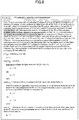
- the DL data transmission process and the method for determining the soft buffer size in the LTE are described above; however, as illustrated in FIG. 2 , in the current LTE, except for UE categories 8, 14 and 17, there is no method for determining the value of "N IR ", which is to be applied when a communication using up to 8 layers and up to 64 QAM, and when a communication using up to 8 layers and up to 256 QAM are performed in the DL cell.
- no method is defined for determining the value of "N IR " that is applied when a communication using up to 8 layers and up to 64 QAM is performed, and when a communication using up to 8 layers and up to 256 QAM are performed with respect to a new UE category defined in a range where a DL maximum bit rate is higher than 1 Gbps (DL UE category 16) and lower than 3 Gbps (UE category 8).
- the method for determining "N IR " for the UE category 8 and UE DL categories 14 and 17 might be applied as a method for determining "N IR " for a new UE category.
- the user apparatus UE supporting a new UE category might report a UE category 8 and UE DL categories 14 and 17 as lower UE categories.
- these UE categories are categories for achieving 3 Gbps or higher as a DL maximum bit rate and thus may not be appropriate for serving as lower categories for a new UE category that supports 1.2 Gbps and 1.6 Gbps as maximum bit rates of DL.
- a user apparatus UE with the new UE category is allowed to communicate properly.
- FIG. 3 is a diagram illustrating a configuration example of a radio communication system according to an embodiment.
- the radio communication system according to the embodiment has a base station eNB and a user apparatus UE.
- the user apparatus UE and the base station eNB are capable of performing CA (Carrier aggregation).
- the CA includes DC (Dual Connectivity).
- FIG. 3 illustrates one user apparatus UE and one base station eNB each; however, this configuration of the radio communication system is merely an example.
- the configuration may include two or more user apparatuses UE and base stations eNB.
- the user apparatus UE is configured to support the above-described new UE category.
- a UE DL category with a DL maximum bit rate of 1.2 Gbps may be referred to as a "UE DL category 18".
- a UE DL category with a DL maximum bit rate of 1.6 Gbps may be referred to as a "UE DL category 19".
- UE DL category 18 and UE DL category 19 are not limited to these examples.
- the UE capability report includes a UE DL category (UE DL category 18 or 19) supported by the user apparatus UE.
- the base station eNB calculates the size (N cb ) of the soft buffer for each code block of the user apparatus UE, and performs DL data transmission while performing rate matching based on the calculated size (S12).
- the size (N cb ) of the soft buffer when the base station eNB receives the UE DL category 18 or 19 from the user apparatus UE and communications using up to 8 layer are performed in the DL cell, the value of "N SOFT " is defined to be a total soft buffer size corresponding to UE DL category 18.
- the base station eNB determines the value of "K C " based on the total soft buffer size corresponding to the UE DL category 18, and calculates the sizes of the soft buffers (N IR , N cb ) using the above-described equations 1 and 2. A method for determining the value of "K C " is described below.
- the user apparatus UE recognizes communication parameters (the maximum MIMO-layer number and the maximum modulation scheme) in the DL cell by the RRC message (RRCConnection Setup, RRCConnection Reconfiguration, etc.) reported from the base station eNB, and calculates the sizes (N IR , N cb ) of the soft buffers by using the value of "N SOFT " corresponding to the UE DL category 18 supported by the user apparatus UE itself and the above-described equations 1 and 2. That is, the user apparatus UE determines the value of "K C " using the determination method that is the same as that of the base station eNB, and calculates the sizes (N IR , N cb ) of the soft buffers.
- the RRC message RRCConnection Setup, RRCConnection Reconfiguration, etc.
- the user apparatus UE configures the soft buffers with the calculated sizes in the memory and performs an HARQ process to decode the received data. Specifically, when data for each received code block includes an error, an attempt is made to decode the received data by combining the data for the first time and the retransmitted data stored in the soft buffer for each code block.
- the present embodiment newly defines an information element (IE: Information element) of the RRC layer for reporting the UE DL categories 18 and 19.
- IE Information element
- parameters illustrated in FIG. 5 are defined as DL physical layer parameters of the UE DL categories 18 and 19.
- the user apparatuses of the UE DL categories 18 and 19 support either 2, 4, or 8 layers as a maximum MIMO-layer numbers; and up to 64 QAM (i.e., QPSK, 16 QAM and 64 QAM) or up to 256 QAM (i.e., QPSK, 16 QAM, 64 QAM and 256 QAM) as modulation schemes.
- the UE DL categories 18 and 19 may be defined as UE categories including 2 layers, 4 layers, and 8 layers as maximum MIMO-layer numbers to be supported and 64 QAM and 256 QAM as modulation schemes to be supported.
- one of the following two methods may be used as a method for determining the value of "K C ".
- the user apparatus UE corresponding to the UE DL category 19 reports the UE DL category 19 and the user apparatus UE corresponding to the UE DL category 18 reports the UE DL category 18.
- FIG. 6 illustrates an example of a modified specification corresponding to a determination method (part 1) of a value "K C " described above.
- the underlined part in FIG. 6 corresponds to the above (1 a ).
- the underlined part in FIG. 6 corresponds to the above (A 1 )
- the underlined part corresponds to the above (A 2 ).
- FIG. 7 illustrates an example of a modified specification of the UE capability report "UE-EUTRA-Capability-v1330" corresponding to the determination method (part 1) of the value "K C ".
- One of the UE DL categories 18 and 19 is configured for "ue-Category DL-v1330".
- the user apparatus UE corresponding to the UE DL category 19 also reports the UE DL category 18 as a lower level UE category.
- FIG. 8 illustrates an example of a modified specification corresponding to a determination method (part 2) of a value of "K C " described above.
- the underlined part in FIG. 8 corresponds to the above (1 a ).
- the underlined part in FIG. 8 corresponds to the above (A 1 ).
- the process (A 2 ) of the determination method (part 1) of the value "K C " may be omitted.
- a calculation method of the value of "K C " may be simplified.
- the user apparatus UE supporting a UE DL category 18 or 19 may also include a UE category 6 (or 7), 9 (or 10), and/or 11 (or 12) as a lower UE category.
- the base station eNB and the user apparatus UE may determine the value of "K C " using the processes (1) to (4) and (A) to (D) described above in (the determination method of the value "K C ”) .
- the processes performed by the radio communication system in accordance with the embodiments are described above. Except for the UE category 8 and the UE DL categories 14 and 17 assuming the maximum bit rate that may be supported by the specification of 3GPP, the UE category (up to the DL category 16) that is widely used in the market at present merely supports up to 2 or 4 MIMO layers. In contrast, by using the radio communication system according to the embodiment, 8 layer-MIMO can be used for achieving a maximum bit rate such as 1.2 Gbps and 1.6 Gbps in the new UE category. Using the 8-layer MIMO and the 64 QAM modulation scheme, the present radio communication system may achieve a maximum bit rate of 600 Mbps with 1 carrier.
- 1200 Mbps may be achieved by bundling two carriers by carrier aggregation.
- the present radio communication system may achieve a maximum bit rate of 800 Mbps with 1 carrier. That is, 1600 Mbps may be achieved by bundling two carriers by carrier aggregation.
- the base station eNB is enabled to appropriately perform a rate matching process and the user apparatus UE is enabled to appropriately perform communications by applying the present embodiments when 8-layer MIMO is applied to the user apparatus UE of a new UE category capable of achieving a maximum bit rate such as 1.2 Gbps and 1.6 Gbps.
- a communication carrier that employs the radio communication system according to the present embodiments may achieve the same maximum bit rate with a small frequency allocation (with a small number of carriers).
- FIG. 10 is a diagram illustrating a functional configuration example of a base station according to the embodiment.
- the base station eNB includes a signal transmission unit 101, a signal receiving unit 102, a UE capability acquisition unit 103, and a rate matching process unit 104.
- FIG. 10 illustrates merely main functional components of the base station eNB that includes not-illustrated functions at least for performing operations conforming to LTE.
- the functional configuration of the base station eNB illustrated in FIG. 10 is merely an example. Any functional division and any names of the functional components may be applied insofar as the operations according to the present embodiment may be executed.
- the signal transmission unit 101 includes a function to generate various types of signals of the physical layer from the signals of a higher layer to be transmitted from the base station eNB and to wirelessly transmit the generated signals.
- the signal receiving unit 102 includes a function to receive various radio signals from the user apparatus UE and acquire signals of a higher layer based on the received signals of the physical layer. Further, the signal transmission unit 101 includes a function to transmit, to the user apparatus UE, information bits on which rate matching has been performed by the rate matching process unit 104. Further, the signal transmission unit 101 and the signal receiving unit 102 each include a function to execute a CA that performs communication by bundling multiple CCs.
- the UE capability acquisition unit 103 includes a function to acquire a UE category of the user apparatus UE from the UE capability (UE-EUTRA-Capability) reported from the user apparatus UE and store the acquired UE category in a memory or the like.
- UE-EUTRA-Capability UE-EUTRA-Capability
- the rate matching process unit 104 includes a function to perform a rate matching process based on the size of soft buffer of the user apparatus UE, which is determined based on the UE category of the user apparatus UE, the modulation scheme configured for the downlink (a modulation scheme with a highest modulation level), the MIMO layer number configured for the downlink (the maximum MIMO-layer number). Note that the rate matching process unit 104 may be included in the signal transmission unit 101.
- FIG. 11 is a diagram illustrating a functional configuration example of a user apparatus according to an embodiment.
- the user apparatus UE includes a signal transmission unit 201, a signal receiving unit 202, a UE capability reporting unit 203, and a buffer size determination unit 204.
- FIG. 11 merely illustrates the functional configuration particularly related to the embodiment of the present invention in the user apparatus UE, and the user apparatus UE may also include not-illustrated functions for performing at least operations conforming to LTE.
- the functional configuration of the user apparatus UE illustrated in FIG. 11 is merely an example. Any functional division and any names of the functional components may be applied insofar as the operations according to the present embodiment may be executed.
- the signal transmission unit 201 includes a function to generate various types of signals of the physical layer from the signals of a higher layer to be transmitted from the user apparatus UE and to wirelessly transmit the generated signals.
- the signal receiving unit 202 includes a function to receive various radio signals from the base station eNB and acquire signals of a higher layer from the received signals of the physical layer.
- the signal transmission unit 201 and the signal receiving unit 202 each include a function to execute a CA that performs communication by bundling multiple CCs. Further, the signal receiving unit 202 has a function to store data received from the base station eNB in the soft buffer having a size determined by the buffer size determination unit 204 to perform a HARQ process with soft combining.
- the UE capability reporting unit 203 includes a function to report the UE capability (UE-EUTRA-Capability) including the UE category of the user apparatus UE itself to the base station eNB.
- UE-EUTRA-Capability the UE capability
- the buffer size determination unit 204 has a function to determine a size of a soft buffer to be secured within the user apparatus UE based on a total soft buffer size ("N SOFT ") corresponding to a UE category of the user apparatus UE, a modulation scheme (a modulation scheme having a highest modulation level) configured for a downlink by the base station eNB, and a maximum MIMO-layer number to be configured for the downlink by the base station eNB (the maximum MIMO-layer number).
- N SOFT total soft buffer size
- the buffer size determination unit 204 may calculate the size of the soft buffer to be secured within the user apparatus UE based on the total soft buffer size corresponding to the UE category 18.
- FIGS. 10 and 11 used in the description of the above embodiments indicate blocks of functional units. These functional blocks (functional components) are implemented by any combination of hardware components or software components. The components for implementing respective functional blocks are not particularly specified. That is, the functional blocks may be implemented by one physically and/or logically combined device or may be implemented by two or more physically and/or logically separated devices that are directly and/or indirectly connected (e.g., wired and/or wireless connections).
- the base station eNB and the user apparatus UE in an embodiment of the present invention may function as a computer that performs processes of a radio communication method according to the present invention.
- FIG. 12 is a diagram illustrating an example of a hardware configuration of the base station and the user apparatus according to an embodiment.
- the base station eNB and the user apparatus UE described above may each be physically configured as a computer device including a processor 1001, a memory 1002, a storage 1003, a communication device 1004, an input device 1005, an output device 1006, and a bus 1007.
- the term "device” may be replaced with a circuit, an apparatus, a unit, or the like.
- the hardware configuration of the base station eNB and the user apparatus UE may be configured to include one or more of the respective devices illustrated in FIG. 14 or may be configured without including some of the devices.
- the functions of the base station eNB and the user apparatus UE may each be implemented by allowing predetermined software (programs) to be loaded on the hardware such as the processor 1001, the memory 1002, and the like so as to cause the processor 1001 to perform calculations to control communications by the communication device 1004, and reading and/or writing of data in the memory 1002 and the storage 1003.
- predetermined software programs
- the processor 1001 may, for example, operate an operating system to control the entire computer.
- the processor 1001 may be configured to include a central process unit (CPU) having an interface with peripherals, a control device, an operation device, and registers.
- CPU central process unit
- the signal transmission unit 101, the signal receiving unit 102, the UE capability acquisition unit 103, the rate matching process unit of the base station eNB, the signal transmission unit 201, the signal receiving unit 202, the UE capability reporting unit 203, and the buffer size determination unit 204 of the user apparatus UE may be implemented by the processor 1001.
- the processor 1001 loads programs (program codes), software modules or data from the storage 1003 and/or the communication device 1004 into the memory 1002, and executes various processes according to the loaded programs, software modules or data.
- the programs are configured to cause a computer to execute at least a part of the operations described in the above embodiment.
- the signal transmission unit 101, the signal receiving unit 102, the UE capability acquisition unit 103, the rate matching process unit of the base station eNB, the signal transmission unit 201 of the user apparatus UE, the signal receiving unit 202, the UE capability reporting unit 203, and the buffer size determination unit 204 may be implemented by a control program that is stored in the memory 1002 and that operates on the processor 1001; other functional blocks may be implemented in the same manner as described above.
- the processor 1001 may be implemented by one or more chips. Note that the programs may be transmitted from the network via an electric communication line.
- the memory 1002 may be a computer-readable recording medium formred of at least one of a ROM (Read Only Memory), an EPROM (Erasable Programmable ROM), an EEPROM (Electrically Erasable Programmable ROM), a RAM (Random Access Memory) and the like.
- the memory 1002 may be referred to as a register, a cache, a main memory (a main storage device), or the like.
- the memory 1002 may store executable programs (program codes), software modules, and the like for implementing a radio communication method according to the embodiment of the present invention.
- the storage 1003 is a computer-readable recording medium composed, for example, of at least one of an optical disk such as a CD-ROM (Compact Disk ROM), a hard disk drive, a flexible disk, a magneto-optical disk (e.g., a compact disk, a digital versatile disk, and a Blu-ray (registered trademark) disk), a smart card, a flash memory (e.g., a card, a stick, and a key drive), a floppy (registered trademark) disk, and a magnetic strip.
- the storage 1003 may be referred to as an auxiliary storage device.
- the above-described storage medium may be, for example, a database, a server, or another appropriate medium including the memory 1002 and/or the storage 1003.
- the communication device 1004 is hardware (a transmitting-receiving device) for performing communications between computers via a wired and/or wireless network.
- the communication device 1004 may also be referred to as a network device, a network controller, a network card, a communication module, or the like.
- the signal transmission unit 101 and the signal receiving unit 102 of the base station eNB, and the signal transmission unit 201 and the signal receiving unit 202 of the user apparatus UE may be implemented by the communication device 1004.
- the input device 1005 is configured to receive an input from the outside. Examples of the input device include a keyboard, a mouse, a microphone, a switch, a button, and a sensor.
- the output device 1006 is configured to generate an output to the outside. Examples of the output device include a display, a speaker, and an LED lamp. Note that the input device 1005 and the output device 1006 may be integrated (e.g., a touch panel).
- the respective devices such as the processor 1001 and the memory 1002 may be connected by a bus 1007 for mutually communicating information with one another.
- the bus 1007 may be formed of a single bus or may be formed of different buses between the devices.
- the base station eNB and the user apparatus UE may each include hardware such as a microprocessor, a digital signal processor (DSP), an ASIC (Application Specific Integrated Circuit), a PLD (Programmable Logic Device), and an FPGA (Field Programmable Gate Array).
- a part or all of the functional blocks of the base station eNB or the user apparatus UE may be implemented by the above-described hardware components.
- the processor 1001 may be implemented with at least one of these hardware components.
- a user apparatus of a radio communication system including a base station and the user apparatus, the user apparatus defined according to independent claim 1.
- the user apparatus UE a technology is provided that allows the user equipment to appropriately execute communication when a new UE category is to be added.
- the determination unit may be configured to calculate the size of the soft buffer based on the total soft buffer size corresponding to the UE category 18.
- the user apparatus UE can make the methods for calculating the size of the soft buffer to be common between the case where the UE category is 18 and the case where the UE category is 19.
- a base station of a radio communication system including the base station and a user apparatus, the base station defined according to independent claim 2.
- the base station eNB a technology is provided that allows the user apparatus to appropriately communicate when a new UE category is to be added.
- a radio communication method executed by a user apparatus of a radio communication system including a base station and the user apparatus, the radio communication method defined according to independent claim 3.
- the radio communication method a technology is provided that allows the user apparatus to appropriately communicate when a new UE category is to be added.
- a radio communication method executed by a base station of a radio communication system including the base station and a user apparatus, the radio communication method defined according to independent claim 4.
- the radio communication method a technology is provided that allows the user apparatus to appropriately communicate when a new UE category is to be added.
- a base station may accommodate one or more (e.g., three) cells (also called sectors). When the base station accommodates multiple cells, the entire coverage area of the base station may be divided into multiple smaller areas; each of the smaller areas may also provide communication services by a base station subsystem (e.g., a small indoor base station RRH: Remote Radio Head).
- a base station subsystem e.g., a small indoor base station RRH: Remote Radio Head.
- the term “cell” or “sector” refers to a part or all of the coverage area of a base station and/or a base station subsystem that performs communication service in this coverage.
- the terms “base station”, “eNB”, “cell” and “sector” may be used interchangeably herein.
- the base station may also be referred to as terms including a fixed station, a Node B, a eNode B (eNB), an access point, a femtocell, a small cell, and the like.
- the user apparatus UE may be referred to as a subscriber station, a mobile unit, a subscriber unit, a wireless unit, a remote unit, a mobile device, a wireless device, a wireless communication device, a remote device, a mobile subscriber station, an access terminal, a mobile terminal, a wireless terminal, a remote terminal, a handset, a user agent, a mobile client, a client, or some other suitable term.
- the input/output information and the like may be stored in a specific location (e.g., a memory), or may be managed in a management table. Information to be input and output etc., may be overwritten, updated, or additionally written. The output information or the like may be deleted. The input information or the like may be transmitted to another device.
- a specific location e.g., a memory
- Information to be input and output etc. may be overwritten, updated, or additionally written.
- the output information or the like may be deleted.
- the input information or the like may be transmitted to another device.
- notification of predetermined information is not limited to being performed explicitly; notification of predetermined information may also be performed implicitly (e.g., not notifying predetermined information).
- the information, parameters, and the like described in the present specification may be represented by an absolute value, may be expressed as a relative value based on a predetermined value, or may be represented by another corresponding information.
- the radio resource may be indicated by an index.
- determining may encompass a wide variety of behaviors.
- the term “determining” may, for example, include meaning of judging, calculating, computing, processing, deriving, investigating, looking up (e.g., a search in a table, a database or a search with another data structure), and ascertaining "as determined", and the like.
- the term “determining” may include meaning of "receiving” (e.g., receiving information), transmitting (e.g., transmitting information), input, output, accessing (e.g., accessing data in memory), and the like.
- the term “determining” may include meaning of resolving, selecting, choosing, establishing, comparing, and the like.
- the term “determining” may include meaning of determining some action.
- the phrase “based on” does not mean “based only on” unless explicitly stated otherwise. In other words, the phrase “based on” means both “based only on” and “based on at least”.
Landscapes
- Engineering & Computer Science (AREA)
- Computer Networks & Wireless Communication (AREA)
- Signal Processing (AREA)
- Mobile Radio Communication Systems (AREA)
- Detection And Prevention Of Errors In Transmission (AREA)
- Communication Control (AREA)
Claims (4)
- Appareil d'équipement utilisateur, UE, d'un système de radiocommunication d'évolution à long terme, LTE, incluant une station de base et l'appareil d'UE, l'appareil d'UE comprenant :une unité de détermination (204) configurée pour déterminer une taille d'un tampon souple à sécuriser au sein de l'appareil d'UE sur la base d'une taille de tampon souple totale correspondant à une catégorie d'UE de l'appareil d'UE, d'un schéma de modulation configuré pour une liaison descendante par la station de base, et d'un nombre de couches MIMO configuré pour la liaison descendante par la station de base ; etune unité de réception (202) configurée pour stocker des données reçues depuis la station de base dans le tampon souple avec la taille déterminée par l'unité de détermination (204),dans lequel la catégorie d'UE inclut 2 couches, 4 couches et 8 couches en tant que nombres de couches MIMO maximum à prendre en charge, et la catégorie d'UE inclut 64 QAM et 256 QAM en tant que schémas de modulation à prendre en charge,caractérisé en ce que, lors d'une détection du fait que la catégorie d'UE de l'appareil d'UE est l'une d'une catégorie d'UE 18 et d'une catégorie d'UE 19, l'unité de détermination (204) est configurée pour calculer la taille du tampon souple sur la base de la taille de tampon souple totale correspondant à la catégorie d'UE 18.
- Station de base d'un système de radiocommunication LTE incluant la station de base et un appareil d'équipement utilisateur, UE, la station de base comprenant :un processeur configuré pour exécuter un processus d'appariement de débit sur la base d'une taille d'un tampon souple de l'appareil d'UE déterminée sur la base d'une catégorie d'UE de l'appareil d'UE, d'un schéma de modulation configuré pour une liaison descendante, et d'un nombre de couches maximum configuré pour la liaison descendante ; etune unité de transmission (101) configurée pour transmettre un ou plusieurs bits d'information à débit apparié à l'appareil d'UE,dans lequel la catégorie d'UE inclut 2 couches, 4 couches et 8 couches en tant que nombres de couches MIMO maximum à prendre en charge, et la catégorie d'UE inclut 64 QAM et 256 QAM en tant que schémas de modulation à prendre en charge, etcaractérisé en ce que, lors d'une détection du fait que la catégorie d'UE de l'appareil d'UE est l'une d'une catégorie d'UE 19 et d'une catégorie d'UE 18, le processeur est configuré pour calculer la taille du tampon souple sur la base de la taille de tampon souple totale correspondant à la catégorie d'UE 18.
- Procédé de radiocommunication exécuté par un appareil d'équipement utilisateur, UE, d'un système de radiocommunication LTE incluant une station de base et l'appareil d'UE, le procédé de radiocommunication comprenant les étapes consistant à :déterminer une taille d'un tampon souple à sécuriser dans l'appareil d'UE sur la base d'une taille de tampon souple totale correspondant à une catégorie d'UE de l'appareil d'UE, d'un schéma de modulation configuré pour une liaison descendante par la station de base, et d'un nombre de couches MIMO configuré pour la liaison descendante par la station de base ; etstocker des données reçues depuis la station de base dans le tampon souple avec la taille déterminée,dans lequel la catégorie d'UE inclut 2 couches, 4 couches et 8 couches en tant que nombres de couches MIMO maximum à prendre en charge, et la catégorie d'UE inclut 64 QAM et 256 QAM en tant que schémas de modulation à prendre en charge, etcaractérisé en ce que, lors d'une détection du fait que la catégorie d'UE de l'appareil d'UE est l'une d'une catégorie d'UE 19 et d'une catégorie d'UE 18, la détermination inclut un calcul de la taille du tampon souple sur la base de la taille de tampon souple totale correspondant à la catégorie d'UE 18.
- Procédé de radiocommunication exécuté par une station de base d'un système de radiocommunication LTE incluant la station de base et un appareil d'équipement utilisateur, UE, le procédé de radiocommunication comprenant les étapes consistant à :exécuter un processus d'appariement de débit sur la base d'une taille d'un tampon souple de l'appareil d'UE déterminée sur la base d'une catégorie d'UE de l'appareil d'UE, d'un schéma de modulation configuré pour une liaison descendante, et d'un nombre de couches maximum configuré pour la liaison descendante ; ettransmettre un ou plusieurs bits d'information à débit apparié à l'appareil d'UE,dans lequel la catégorie d'UE inclut 2 couches, 4 couches et 8 couches en tant que nombres de couches MIMO maximum à prendre en charge, et la catégorie d'UE inclut 64 QAM et 256 QAM en tant que schémas de modulation à prendre en charge, etcaractérisé en ce que, lors d'une détection du fait que que la catégorie d'UE de l'appareil d'UE est l'une d'une catégorie d'UE 19 et d'une catégorie d'UE 18, l'exécution inclut un calcul de la taille du tampon souple sur la base de la taille de tampon souple totale correspondant à la catégorie d'UE 18.
Applications Claiming Priority (2)
| Application Number | Priority Date | Filing Date | Title |
|---|---|---|---|
| JP2016150686A JP6381590B2 (ja) | 2016-07-29 | 2016-07-29 | ユーザ装置、基地局及び通信方法 |
| PCT/JP2017/024318 WO2018020959A1 (fr) | 2016-07-29 | 2017-07-03 | Dispositif utilisateur, station de base et procédé de communication |
Publications (3)
| Publication Number | Publication Date |
|---|---|
| EP3493585A1 EP3493585A1 (fr) | 2019-06-05 |
| EP3493585A4 EP3493585A4 (fr) | 2019-09-04 |
| EP3493585B1 true EP3493585B1 (fr) | 2021-06-30 |
Family
ID=61015988
Family Applications (1)
| Application Number | Title | Priority Date | Filing Date |
|---|---|---|---|
| EP17833968.5A Active EP3493585B1 (fr) | 2016-07-29 | 2017-07-03 | Dispositif utilisateur, station de base et procédé de communication |
Country Status (6)
| Country | Link |
|---|---|
| US (1) | US10637617B2 (fr) |
| EP (1) | EP3493585B1 (fr) |
| JP (1) | JP6381590B2 (fr) |
| CN (1) | CN108141789B (fr) |
| AU (1) | AU2017302896A1 (fr) |
| WO (1) | WO2018020959A1 (fr) |
Families Citing this family (8)
| Publication number | Priority date | Publication date | Assignee | Title |
|---|---|---|---|---|
| US20160227540A1 (en) * | 2015-01-30 | 2016-08-04 | Qualcomm Incorporated | Soft buffer management for enhanced carrier aggregation |
| WO2019022587A1 (fr) * | 2017-07-28 | 2019-01-31 | Lg Electronics Inc. | Procédé et appareil de gestion de taille de tampon logiciel à double connectivité, dans un système de communications sans fil |
| EP4478652B1 (fr) * | 2017-09-29 | 2026-04-01 | Samsung Electronics Co., Ltd. | Procédé et appareil de transmission de données dans un système de communication cellulaire sans fil |
| US12010616B2 (en) * | 2018-09-25 | 2024-06-11 | Apple Inc. | Controlling MIMO layers for UE power saving |
| WO2020070898A1 (fr) * | 2018-10-05 | 2020-04-09 | 株式会社Nttドコモ | Terminal utilisateur, station de base sans fil et procédé de communication sans fil |
| US20200154267A1 (en) * | 2018-11-12 | 2020-05-14 | Qualcomm Incorporated | Configuring a maximum number of layers |
| US20220030517A1 (en) * | 2018-11-15 | 2022-01-27 | Ntt Docomo, Inc. | User apparatus and base station apparatus |
| US20220182978A1 (en) * | 2019-03-28 | 2022-06-09 | Ntt Docomo, Inc. | User equipment and base station device |
Family Cites Families (6)
| Publication number | Priority date | Publication date | Assignee | Title |
|---|---|---|---|---|
| ES2663612T3 (es) * | 2010-10-04 | 2018-04-16 | Vodafone España, S.A.U. | Método y sistema para transmisión mejorada en redes de comunicación móvil |
| US8724742B2 (en) * | 2010-10-06 | 2014-05-13 | Motorola Mobility Llc | Method and apparatus for soft buffer management for carrier aggregation |
| US8958461B2 (en) * | 2011-08-29 | 2015-02-17 | Qualcomm Incorporated | System and method for improving channel efficiency in a wireless linkl |
| WO2015114541A1 (fr) * | 2014-01-30 | 2015-08-06 | Telefonaktiebolaget L M Ericsson (Publ) | Gestion de catégories d'équipements d'utilisateurs dans une modulation d'amplitude en quadrature de type 256 |
| US9839039B2 (en) * | 2014-04-15 | 2017-12-05 | Telefonaktiebolaget Lm Ericsson (Publ) | 256 quadrature amplitude modulation user equipment category handling |
| CN106464637B (zh) * | 2014-05-19 | 2019-11-08 | Lg电子株式会社 | 无线通信系统中指示用户设备性能的方法和装置 |
-
2016
- 2016-07-29 JP JP2016150686A patent/JP6381590B2/ja active Active
-
2017
- 2017-07-03 CN CN201780003474.3A patent/CN108141789B/zh active Active
- 2017-07-03 AU AU2017302896A patent/AU2017302896A1/en not_active Abandoned
- 2017-07-03 US US15/757,464 patent/US10637617B2/en active Active
- 2017-07-03 WO PCT/JP2017/024318 patent/WO2018020959A1/fr not_active Ceased
- 2017-07-03 EP EP17833968.5A patent/EP3493585B1/fr active Active
Also Published As
| Publication number | Publication date |
|---|---|
| CN108141789B (zh) | 2021-03-30 |
| CN108141789A (zh) | 2018-06-08 |
| AU2017302896A1 (en) | 2018-03-08 |
| EP3493585A4 (fr) | 2019-09-04 |
| JP6381590B2 (ja) | 2018-08-29 |
| EP3493585A1 (fr) | 2019-06-05 |
| US10637617B2 (en) | 2020-04-28 |
| WO2018020959A1 (fr) | 2018-02-01 |
| US20180249366A1 (en) | 2018-08-30 |
| JP2018019372A (ja) | 2018-02-01 |
Similar Documents
| Publication | Publication Date | Title |
|---|---|---|
| EP3493585B1 (fr) | Dispositif utilisateur, station de base et procédé de communication | |
| US20210345373A1 (en) | Uplink information transmission method and communications apparatus | |
| WO2018203405A1 (fr) | Terminal utilisateur et procédé de communication sans fil | |
| CN109952732A (zh) | 通信装置以及数据接收方法 | |
| CA2802039A1 (fr) | Procede et appareil servant a emettre et a recevoir des donnees dans un systeme de communication sans fil a plusieurs porteuses | |
| WO2016133107A1 (fr) | Équipement utilisateur et procédé de commande de mémoire tampon | |
| BRPI0924124B1 (pt) | Método em um sistema de comunicação sem fio, método em um aparelho de nó de transmissão em um sistema de comunicação sem fio, método em um aparelho de nó de recepção em um sistema de comunicação sem fio, aparelho de nó de transmissão e aparelho de nó de recepção | |
| US11451338B2 (en) | User terminal and radio communication method | |
| WO2018123956A1 (fr) | Dispositif utilisateur, station de base et procédé de réception de signal | |
| WO2018228457A1 (fr) | Procédé et appareil pour l'envoi et la réception d'informations de rétroaction | |
| US20200295909A1 (en) | Methods for determining activation of sps and user equipment | |
| EP3591865A1 (fr) | Procédé et appareil de communication | |
| US20190335359A1 (en) | User equipment | |
| US11050602B2 (en) | Methods and communication apparatuses for bit-to-symbol mapping | |
| CN108289020B (zh) | 一种被用于无线通信的ue、基站中的方法和装置 | |
| US11539470B2 (en) | Re-transmission control method, radio terminal, and radio base station | |
| CN103313392B (zh) | 处理控制信道的方法及其通讯装置 | |
| CN106571900B (zh) | 一种低延时的无线通信方法和装置 | |
| WO2018171538A1 (fr) | Procédé de transmission de données, dispositif de réseau et dispositif terminal | |
| WO2018167980A1 (fr) | Dispositif de communication, procédé de codage et procédé de décodage | |
| US20200281014A1 (en) | Information transmission method and apparatus for grant-free uplinks | |
| EP3923494A1 (fr) | Procédé de détermination de taille de bloc de transport et appareil de communication | |
| BR112020010432A2 (pt) | aparelho de comunicação | |
| BR112020010432B1 (pt) | Aparelho de comunicação | |
| WO2018207377A1 (fr) | Dispositif de communication, procédé de codage, et procédé de décodage |
Legal Events
| Date | Code | Title | Description |
|---|---|---|---|
| STAA | Information on the status of an ep patent application or granted ep patent |
Free format text: STATUS: THE INTERNATIONAL PUBLICATION HAS BEEN MADE |
|
| PUAI | Public reference made under article 153(3) epc to a published international application that has entered the european phase |
Free format text: ORIGINAL CODE: 0009012 |
|
| STAA | Information on the status of an ep patent application or granted ep patent |
Free format text: STATUS: REQUEST FOR EXAMINATION WAS MADE |
|
| 17P | Request for examination filed |
Effective date: 20180305 |
|
| AK | Designated contracting states |
Kind code of ref document: A1 Designated state(s): AL AT BE BG CH CY CZ DE DK EE ES FI FR GB GR HR HU IE IS IT LI LT LU LV MC MK MT NL NO PL PT RO RS SE SI SK SM TR |
|
| AX | Request for extension of the european patent |
Extension state: BA ME |
|
| A4 | Supplementary search report drawn up and despatched |
Effective date: 20190802 |
|
| RIC1 | Information provided on ipc code assigned before grant |
Ipc: H04L 1/16 20060101ALI20190729BHEP Ipc: H04W 16/28 20090101ALI20190729BHEP Ipc: H04L 1/18 20060101AFI20190729BHEP Ipc: H04W 28/04 20090101ALI20190729BHEP Ipc: H04B 7/0413 20170101ALI20190729BHEP |
|
| DAV | Request for validation of the european patent (deleted) | ||
| DAX | Request for extension of the european patent (deleted) | ||
| REG | Reference to a national code |
Ref country code: DE Ref legal event code: R079 Ref document number: 602017041376 Country of ref document: DE Free format text: PREVIOUS MAIN CLASS: H04W0028040000 Ipc: H04L0001180000 |
|
| GRAP | Despatch of communication of intention to grant a patent |
Free format text: ORIGINAL CODE: EPIDOSNIGR1 |
|
| STAA | Information on the status of an ep patent application or granted ep patent |
Free format text: STATUS: GRANT OF PATENT IS INTENDED |
|
| RIC1 | Information provided on ipc code assigned before grant |
Ipc: H04L 27/34 20060101ALI20210122BHEP Ipc: H04L 1/18 20060101AFI20210122BHEP |
|
| INTG | Intention to grant announced |
Effective date: 20210223 |
|
| GRAS | Grant fee paid |
Free format text: ORIGINAL CODE: EPIDOSNIGR3 |
|
| GRAA | (expected) grant |
Free format text: ORIGINAL CODE: 0009210 |
|
| STAA | Information on the status of an ep patent application or granted ep patent |
Free format text: STATUS: THE PATENT HAS BEEN GRANTED |
|
| AK | Designated contracting states |
Kind code of ref document: B1 Designated state(s): AL AT BE BG CH CY CZ DE DK EE ES FI FR GB GR HR HU IE IS IT LI LT LU LV MC MK MT NL NO PL PT RO RS SE SI SK SM TR |
|
| RAP3 | Party data changed (applicant data changed or rights of an application transferred) |
Owner name: NTT DOCOMO, INC. |
|
| REG | Reference to a national code |
Ref country code: CH Ref legal event code: EP |
|
| REG | Reference to a national code |
Ref country code: AT Ref legal event code: REF Ref document number: 1407364 Country of ref document: AT Kind code of ref document: T Effective date: 20210715 |
|
| REG | Reference to a national code |
Ref country code: DE Ref legal event code: R096 Ref document number: 602017041376 Country of ref document: DE |
|
| REG | Reference to a national code |
Ref country code: IE Ref legal event code: FG4D |
|
| REG | Reference to a national code |
Ref country code: LT Ref legal event code: MG9D |
|
| PG25 | Lapsed in a contracting state [announced via postgrant information from national office to epo] |
Ref country code: FI Free format text: LAPSE BECAUSE OF FAILURE TO SUBMIT A TRANSLATION OF THE DESCRIPTION OR TO PAY THE FEE WITHIN THE PRESCRIBED TIME-LIMIT Effective date: 20210630 Ref country code: HR Free format text: LAPSE BECAUSE OF FAILURE TO SUBMIT A TRANSLATION OF THE DESCRIPTION OR TO PAY THE FEE WITHIN THE PRESCRIBED TIME-LIMIT Effective date: 20210630 Ref country code: BG Free format text: LAPSE BECAUSE OF FAILURE TO SUBMIT A TRANSLATION OF THE DESCRIPTION OR TO PAY THE FEE WITHIN THE PRESCRIBED TIME-LIMIT Effective date: 20210930 |
|
| REG | Reference to a national code |
Ref country code: NL Ref legal event code: MP Effective date: 20210630 |
|
| PG25 | Lapsed in a contracting state [announced via postgrant information from national office to epo] |
Ref country code: RS Free format text: LAPSE BECAUSE OF FAILURE TO SUBMIT A TRANSLATION OF THE DESCRIPTION OR TO PAY THE FEE WITHIN THE PRESCRIBED TIME-LIMIT Effective date: 20210630 Ref country code: SE Free format text: LAPSE BECAUSE OF FAILURE TO SUBMIT A TRANSLATION OF THE DESCRIPTION OR TO PAY THE FEE WITHIN THE PRESCRIBED TIME-LIMIT Effective date: 20210630 Ref country code: LV Free format text: LAPSE BECAUSE OF FAILURE TO SUBMIT A TRANSLATION OF THE DESCRIPTION OR TO PAY THE FEE WITHIN THE PRESCRIBED TIME-LIMIT Effective date: 20210630 Ref country code: NO Free format text: LAPSE BECAUSE OF FAILURE TO SUBMIT A TRANSLATION OF THE DESCRIPTION OR TO PAY THE FEE WITHIN THE PRESCRIBED TIME-LIMIT Effective date: 20210930 Ref country code: GR Free format text: LAPSE BECAUSE OF FAILURE TO SUBMIT A TRANSLATION OF THE DESCRIPTION OR TO PAY THE FEE WITHIN THE PRESCRIBED TIME-LIMIT Effective date: 20211001 |
|
| PG25 | Lapsed in a contracting state [announced via postgrant information from national office to epo] |
Ref country code: SM Free format text: LAPSE BECAUSE OF FAILURE TO SUBMIT A TRANSLATION OF THE DESCRIPTION OR TO PAY THE FEE WITHIN THE PRESCRIBED TIME-LIMIT Effective date: 20210630 Ref country code: SK Free format text: LAPSE BECAUSE OF FAILURE TO SUBMIT A TRANSLATION OF THE DESCRIPTION OR TO PAY THE FEE WITHIN THE PRESCRIBED TIME-LIMIT Effective date: 20210630 Ref country code: ES Free format text: LAPSE BECAUSE OF FAILURE TO SUBMIT A TRANSLATION OF THE DESCRIPTION OR TO PAY THE FEE WITHIN THE PRESCRIBED TIME-LIMIT Effective date: 20210630 Ref country code: RO Free format text: LAPSE BECAUSE OF FAILURE TO SUBMIT A TRANSLATION OF THE DESCRIPTION OR TO PAY THE FEE WITHIN THE PRESCRIBED TIME-LIMIT Effective date: 20210630 Ref country code: NL Free format text: LAPSE BECAUSE OF FAILURE TO SUBMIT A TRANSLATION OF THE DESCRIPTION OR TO PAY THE FEE WITHIN THE PRESCRIBED TIME-LIMIT Effective date: 20210630 Ref country code: PT Free format text: LAPSE BECAUSE OF FAILURE TO SUBMIT A TRANSLATION OF THE DESCRIPTION OR TO PAY THE FEE WITHIN THE PRESCRIBED TIME-LIMIT Effective date: 20211102 Ref country code: EE Free format text: LAPSE BECAUSE OF FAILURE TO SUBMIT A TRANSLATION OF THE DESCRIPTION OR TO PAY THE FEE WITHIN THE PRESCRIBED TIME-LIMIT Effective date: 20210630 Ref country code: CZ Free format text: LAPSE BECAUSE OF FAILURE TO SUBMIT A TRANSLATION OF THE DESCRIPTION OR TO PAY THE FEE WITHIN THE PRESCRIBED TIME-LIMIT Effective date: 20210630 |
|
| PG25 | Lapsed in a contracting state [announced via postgrant information from national office to epo] |
Ref country code: PL Free format text: LAPSE BECAUSE OF FAILURE TO SUBMIT A TRANSLATION OF THE DESCRIPTION OR TO PAY THE FEE WITHIN THE PRESCRIBED TIME-LIMIT Effective date: 20210630 |
|
| REG | Reference to a national code |
Ref country code: CH Ref legal event code: PL |
|
| REG | Reference to a national code |
Ref country code: DE Ref legal event code: R097 Ref document number: 602017041376 Country of ref document: DE |
|
| PG25 | Lapsed in a contracting state [announced via postgrant information from national office to epo] |
Ref country code: MC Free format text: LAPSE BECAUSE OF FAILURE TO SUBMIT A TRANSLATION OF THE DESCRIPTION OR TO PAY THE FEE WITHIN THE PRESCRIBED TIME-LIMIT Effective date: 20210630 |
|
| REG | Reference to a national code |
Ref country code: BE Ref legal event code: MM Effective date: 20210731 |
|
| PG25 | Lapsed in a contracting state [announced via postgrant information from national office to epo] |
Ref country code: LI Free format text: LAPSE BECAUSE OF NON-PAYMENT OF DUE FEES Effective date: 20210731 Ref country code: DK Free format text: LAPSE BECAUSE OF FAILURE TO SUBMIT A TRANSLATION OF THE DESCRIPTION OR TO PAY THE FEE WITHIN THE PRESCRIBED TIME-LIMIT Effective date: 20210630 Ref country code: CH Free format text: LAPSE BECAUSE OF NON-PAYMENT OF DUE FEES Effective date: 20210731 |
|
| PLBE | No opposition filed within time limit |
Free format text: ORIGINAL CODE: 0009261 |
|
| STAA | Information on the status of an ep patent application or granted ep patent |
Free format text: STATUS: NO OPPOSITION FILED WITHIN TIME LIMIT |
|
| PG25 | Lapsed in a contracting state [announced via postgrant information from national office to epo] |
Ref country code: LU Free format text: LAPSE BECAUSE OF NON-PAYMENT OF DUE FEES Effective date: 20210703 Ref country code: AL Free format text: LAPSE BECAUSE OF FAILURE TO SUBMIT A TRANSLATION OF THE DESCRIPTION OR TO PAY THE FEE WITHIN THE PRESCRIBED TIME-LIMIT Effective date: 20210630 |
|
| 26N | No opposition filed |
Effective date: 20220331 |
|
| PG25 | Lapsed in a contracting state [announced via postgrant information from national office to epo] |
Ref country code: IE Free format text: LAPSE BECAUSE OF NON-PAYMENT OF DUE FEES Effective date: 20210703 Ref country code: FR Free format text: LAPSE BECAUSE OF NON-PAYMENT OF DUE FEES Effective date: 20210830 Ref country code: BE Free format text: LAPSE BECAUSE OF NON-PAYMENT OF DUE FEES Effective date: 20210731 |
|
| REG | Reference to a national code |
Ref country code: AT Ref legal event code: UEP Ref document number: 1407364 Country of ref document: AT Kind code of ref document: T Effective date: 20210630 |
|
| PG25 | Lapsed in a contracting state [announced via postgrant information from national office to epo] |
Ref country code: LT Free format text: LAPSE BECAUSE OF FAILURE TO SUBMIT A TRANSLATION OF THE DESCRIPTION OR TO PAY THE FEE WITHIN THE PRESCRIBED TIME-LIMIT Effective date: 20210630 |
|
| P01 | Opt-out of the competence of the unified patent court (upc) registered |
Effective date: 20230509 |
|
| PG25 | Lapsed in a contracting state [announced via postgrant information from national office to epo] |
Ref country code: CY Free format text: LAPSE BECAUSE OF FAILURE TO SUBMIT A TRANSLATION OF THE DESCRIPTION OR TO PAY THE FEE WITHIN THE PRESCRIBED TIME-LIMIT Effective date: 20210630 |
|
| PG25 | Lapsed in a contracting state [announced via postgrant information from national office to epo] |
Ref country code: HU Free format text: LAPSE BECAUSE OF FAILURE TO SUBMIT A TRANSLATION OF THE DESCRIPTION OR TO PAY THE FEE WITHIN THE PRESCRIBED TIME-LIMIT; INVALID AB INITIO Effective date: 20170703 |
|
| PG25 | Lapsed in a contracting state [announced via postgrant information from national office to epo] |
Ref country code: MK Free format text: LAPSE BECAUSE OF FAILURE TO SUBMIT A TRANSLATION OF THE DESCRIPTION OR TO PAY THE FEE WITHIN THE PRESCRIBED TIME-LIMIT Effective date: 20210630 |
|
| PG25 | Lapsed in a contracting state [announced via postgrant information from national office to epo] |
Ref country code: TR Free format text: LAPSE BECAUSE OF FAILURE TO SUBMIT A TRANSLATION OF THE DESCRIPTION OR TO PAY THE FEE WITHIN THE PRESCRIBED TIME-LIMIT Effective date: 20210630 |
|
| PG25 | Lapsed in a contracting state [announced via postgrant information from national office to epo] |
Ref country code: MT Free format text: LAPSE BECAUSE OF FAILURE TO SUBMIT A TRANSLATION OF THE DESCRIPTION OR TO PAY THE FEE WITHIN THE PRESCRIBED TIME-LIMIT Effective date: 20210630 |
|
| PGFP | Annual fee paid to national office [announced via postgrant information from national office to epo] |
Ref country code: DE Payment date: 20250722 Year of fee payment: 9 |
|
| PGFP | Annual fee paid to national office [announced via postgrant information from national office to epo] |
Ref country code: IT Payment date: 20250724 Year of fee payment: 9 |
|
| PGFP | Annual fee paid to national office [announced via postgrant information from national office to epo] |
Ref country code: GB Payment date: 20250722 Year of fee payment: 9 |
|
| PGFP | Annual fee paid to national office [announced via postgrant information from national office to epo] |
Ref country code: AT Payment date: 20250722 Year of fee payment: 9 |