EP3494251B1 - Artikel mit integral gestricktem wärmebehandelbaren garn - Google Patents
Artikel mit integral gestricktem wärmebehandelbaren garn Download PDFInfo
- Publication number
- EP3494251B1 EP3494251B1 EP17804379.0A EP17804379A EP3494251B1 EP 3494251 B1 EP3494251 B1 EP 3494251B1 EP 17804379 A EP17804379 A EP 17804379A EP 3494251 B1 EP3494251 B1 EP 3494251B1
- Authority
- EP
- European Patent Office
- Prior art keywords
- knit
- yarn
- course
- needle positions
- subset
- Prior art date
- Legal status (The legal status is an assumption and is not a legal conclusion. Google has not performed a legal analysis and makes no representation as to the accuracy of the status listed.)
- Active
Links
Images


Classifications
-
- D—TEXTILES; PAPER
- D04—BRAIDING; LACE-MAKING; KNITTING; TRIMMINGS; NON-WOVEN FABRICS
- D04B—KNITTING
- D04B21/00—Warp knitting processes for the production of fabrics or articles not dependent on the use of particular machines; Fabrics or articles defined by such processes
- D04B21/10—Open-work fabrics
- D04B21/12—Open-work fabrics characterised by thread material
-
- D—TEXTILES; PAPER
- D04—BRAIDING; LACE-MAKING; KNITTING; TRIMMINGS; NON-WOVEN FABRICS
- D04B—KNITTING
- D04B1/00—Weft knitting processes for the production of fabrics or articles not dependent on the use of particular machines; Fabrics or articles defined by such processes
- D04B1/22—Weft knitting processes for the production of fabrics or articles not dependent on the use of particular machines; Fabrics or articles defined by such processes specially adapted for knitting goods of particular configuration
- D04B1/24—Weft knitting processes for the production of fabrics or articles not dependent on the use of particular machines; Fabrics or articles defined by such processes specially adapted for knitting goods of particular configuration wearing apparel
- D04B1/26—Weft knitting processes for the production of fabrics or articles not dependent on the use of particular machines; Fabrics or articles defined by such processes specially adapted for knitting goods of particular configuration wearing apparel stockings
-
- D—TEXTILES; PAPER
- D04—BRAIDING; LACE-MAKING; KNITTING; TRIMMINGS; NON-WOVEN FABRICS
- D04B—KNITTING
- D04B1/00—Weft knitting processes for the production of fabrics or articles not dependent on the use of particular machines; Fabrics or articles defined by such processes
- D04B1/10—Patterned fabrics or articles
- D04B1/12—Patterned fabrics or articles characterised by thread material
-
- D—TEXTILES; PAPER
- D04—BRAIDING; LACE-MAKING; KNITTING; TRIMMINGS; NON-WOVEN FABRICS
- D04B—KNITTING
- D04B9/00—Circular knitting machines with independently-movable needles
- D04B9/42—Circular knitting machines with independently-movable needles specially adapted for producing goods of particular configuration
- D04B9/46—Circular knitting machines with independently-movable needles specially adapted for producing goods of particular configuration stockings, or portions thereof
- D04B9/54—Circular knitting machines with independently-movable needles specially adapted for producing goods of particular configuration stockings, or portions thereof welts, e.g. double or turned welts
-
- D—TEXTILES; PAPER
- D10—INDEXING SCHEME ASSOCIATED WITH SUBLASSES OF SECTION D, RELATING TO TEXTILES
- D10B—INDEXING SCHEME ASSOCIATED WITH SUBLASSES OF SECTION D, RELATING TO TEXTILES
- D10B2401/00—Physical properties
- D10B2401/04—Heat-responsive characteristics
- D10B2401/041—Heat-responsive characteristics thermoplastic; thermosetting
Definitions
- This application is related to articles knit with one or more yarn types that are treated to include article-enhancing properties.
- yarns include heat-treatable yarns, moisture-wicking yarns (e.g., hydrophilic), water-repellant yarns (e.g., hydrophobic), and the like.
- a variety of products and clothing garments may include one or more knit layers that are typically constructed from one or more yarn types.
- the one or more knit layers may include features and properties that result from the knit structure, the yarn types(s), and various other factors.
- Document EP 1 813 159 A1 describes a sock with a performance that matches its purpose of use and seasonal requirements. To change the thickness and strength of different parts of the sock according to the load distribution on the sole and the impact that the different parts of the sock are subjected to when walking and running.
- Knitting structures of different thicknesses and airspace ratios e.g., flat stitches P, short-terry stitches SP, long-terry stitches LP, mesh stitches M, short-terry stitches based on mesh stitches M-SP, long-terry stitches based on mesh stitches M-LP, short-terry stitches based on reinforced mesh stitches M-R-SP, long-terry stitches based on reinforced mesh stitches M-R-LP, short-terry stitches with reinforcement yarn R-SP and long-terry stitches with reinforcement yarn R-LP are distributed in different parts of the sock.
- Document US 2014/068968 describes an article of footwear that may include an upper incorporating a knitted component.
- the knitted component includes a knit element and an inlaid strand formed of unitary knit construction with the knit element.
- the inlaid strand extends through the knit element.
- a portion of the inlaid strand may extend into the heel region and may be external to the heel region. Pulling on the external portion may tension the inlaid strand.
- Document US 2 102 369 describes stockings, socks or anklets of inelastic yarn, characterized by certain areas in which a fine elastic yarn is knitted in with the inelastic yarn so as to impart additional resilience to such areas for certain purposes. More specifically, the document describes stockings having elastic areas located in such place or places as to be serviceable in holding up the stockings, but which are arranged to be in conspicuous and to provide maximum comfort to the wearer.
- Document WO 2012/067645 A1 describes a knit sock including a foot portion having an upper instep area and a lower sole area integrally knit of a body yarn in circumferential courses and axial wales.
- the lower sole area defines inner and outer arch regions.
- the inner arch region incorporates a targeted compression zone adapted to reside generally adjacent an inner arch of a wearer's foot.
- the compression zone includes axially extending compression ridges of variable length spaced apart from a top of the compression zone to a bottom of the compression zone.
- Knit textile layers constructed to include one or more yarns that have been enhanced to provide certain properties include thermoplastic yarns. Knit textile layers having enhanced yarns may be incorporated into various types of products, such as garments, bags, equipment, and the like. Exemplary garments that may be at least partially constructed of knit textile layers having enhanced yarns include footwear, socks, pants, shorts, shirts, under garments, bras, base layers, outer layers, coats, jackets, arm sleeves, leg sleeves, and the like. The garments, and other articles described throughout this disclosure, are merely exemplary, and other articles not expressly described in this disclosure may also include knit textile layers constructed of enhanced yarns and are also deemed within the scope of this disclosure.
- thermoplastic yarn refers to a yarn that is coated with, or otherwise made to include, a thermoplastic polymer composition.
- the thermoplastic polymer composition may include a melting temperature within an exemplary range from about 85°C to about 230°C and therefore, may melt or deform (and subsequently solidify) when heated or thermoformed.
- the melting temperature of the thermoplastic polymer composition may be such that a structure of the melt yarn may be maintained during a commercial knitting process and during conventional dyeing techniques. It should be noted that the melting temperature may be lower or higher than the exemplary range and encompasses the varying melting temperatures of the multiple thermoplastic polymer compositions contemplated herein.
- the TP yarn may be heat-treated or thermoformed, which causes an area of the garment including the melt yarn to then include a coat of film, which may provide certain properties or characteristics.
- the film may provide some impact attenuation, abrasion or wear resistance, friction reduction, and the like.
- a thermoplastic yarn may also be referred to as a "melt yarn,” which refers to the nature of the yarn in which at least a portion of the yarn changes states at a particular temperature and then hardens upon cooling to a solid state.
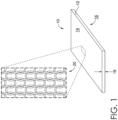
- a knit textile layer is generally denoted by reference numeral 10, and in the context of this disclosure, the knit textile layer 10 includes a knit wall 12.
- the knit wall 12 conceptually represents one or more yarns that are knit together to form a knit structure having a first side 14, a second side 16, and a thickness 18 between the first side 14 and the second side 16.
- the knit wall 12 generally includes a series of courses, which are conceptually similar to rows in a grid-like structure.
- each course includes a set of stitches, stitch positions, needles, or needle positions that are sometimes referred to as wales in some knitting methods and that are generally aligned with corresponding needle positions of adjacent courses.
- a needle position in a knit textile layer refers to a position at which a stitch is located and may also be referred to as a stitch position.
- the properties of the knit wall 12 might be regulated by constructing different regions (e.g., courses) with different yarns. And when a thermoplastic yarn that is integrated into a knit textile layer is transformed into a solid state, such as when heat is applied and the yarn is allowed to cool (e.g., heat-set or thermoformed), characteristics of the knit textile layer may be altered. For instance, a heat-treated TP yarn that has been cooled and has hardened might increase an overall rigidity of the knit textile layer. In addition, when the thermoplastic yarn is melted and then cooled, the hardened thermoplastic may at least partially coat other yarns included in the knit textile layer to effectively "lock" the other yarns and impede at least some elasticity.
- the properties of the knit wall 12 can be at least partially regulated by dictating the placement of TP yarn, as well as the type of knit structure or stitch into which a TP yarn is formed.
- TP yarn may be used to construct all of the courses of a knit wall, such that when the TP yarn is heated and cooled, the entire knit wall is formed of the heat-treated TP yarn that has been cooled and has hardened.
- the TP yarn may solidify into a film or thermoplastic sheet.
- the TP yarn may not possess a traditional elongated yarn strand body, and instead may include the film, or some combination of the film with part of the yarn strand body. While this type of TP-yarn knit structure with only TP yarn may be useful in many instances, in other aspects it may be desirable to regulate the extent to which certain properties of the knit wall (e.g., rigidity and elasticity) are modified by the heat-treated TP yarn. As such, in some aspects of this disclosure, both non-TP yarn and TP yarn is selectively knit into the knit textile layer in one or more patterns and/or using one or more techniques in order to at least partially regulate the extent to which the heat-treated TP yarn affects the rigidity, elasticity, and other properties of the knit textile layer.
- certain properties of the knit wall e.g., rigidity and elasticity
- a knitting technique is applied that may at least partially regulate how a heat-treated TP yarn affects the systematic properties of a knit wall.
- a knit textile layer 110 is depicted that is similar in some respects to the knit wall 12 depicted in FIG. 1 .
- the knit textile layer 110 includes a knit wall 112 with a first side 114 and a second side 116.
- the knit wall 112 includes a thickness 118 between the first side 114 and the second side 116.
- the TP yarn is knit into the knit wall 112 by arranging a first portion of the TP yarn on the first side 114 of the knit wall 112 and a second portion of the TP yarn on the second side 116 of the knit wall 112. Furthermore, the TP yarn includes another portion that connects the first portion to the second portion and that passes through the thickness 118, from the first side 114 to the second side 116.
- the first portion of the TP yarn is identified in the knit wall 112 by reference numeral 148, which labels the schematic representation of the first portion (i.e., box with hatching) in the knit wall 112.
- the knit wall 112 may be less rigid than if the TP yarn were positioned on a single side throughout the entire course.
- FIG. 2 also includes a magnified view 120 depicting an exemplary knit structure 122 that could be used to arrange a TP yarn strand 150 on the first side 114 and on the second side 116 in an alternating manner.
- the magnified view 120 illustrates various needle positions (e.g., 128 - 146), and needle positions 140 and 142 including TP-yarn stitches 152 and 154, respectively, make up the first portion 148 identified in the knit wall 112.
- the TP yarn includes a TP-yarn float portion 156 that traverses needle positions 136 and 138 and that is positioned on the second side 116.
- the TP-yarn float portion 156 is connected to the TP-yarn stitch 152 by a length 158 of the TP yarn.
- the knit structure 122 includes other yarns as well that form the knit wall 112.
- the knit structure 122 includes a plaiting yarn 160 (e.g., binding yarn) and a laid-in yarn 162, as well as another body yarn 164.
- a plaiting yarn 160 e.g., binding yarn
- a laid-in yarn 162 as well as another body yarn 164.
- the body yarn 164 is arranged on the second side 116. As depicted in FIG. 2 , the body yarn 164 is floated on the second side 116.
- the knit structure 122 represents one type of knit arrangement that might be used to integrally knit TP yarn 150 into a knit wall 112, other knit arrangements are also possible. For example, one or more yarns may be added to the knit structure 122 depicted in the magnified portion.
- An alternative knit structure 222 is depicted by FIG. 3 , which is similar to the knit structure 122 of FIG. 2 . That is, the structure 222 is similar in that it includes the TP yarn 150, the plaiting yarn 160, and the laid-in yarn 162. However, in accordance with an aspect of the disclosure, the structure 222 includes a body yarn 264 that is knitted to include an additional terry loop 266, which is brought to the second side 116. As such, the terry loop 266 may help to cushion the heat-treated TP yarn 150 on the second side 116, which may face towards a wearer when the knit wall 112 is knit into a garment that is worn.
- the number of needles with TP-yarn stitches on the first side is the same as the number of needles traversed by a TP float on the second side (e.g., 136 and 138).
- a plan view of the knit textile layer 110 is depicted in FIG. 4 , which also identifies the first portion 148 in the knit wall that includes TP-yarn stitches on the first side.
- a single course may include two TP-yarn stitches on the first side followed by a TP float that traverses two needle positions on the second side.
- a single course may include more than two TP-yarn stitches on the first side followed by a TP float that traverses more than two needle positions on the second side.
- a single course may include a single TP-yarn stitch on the first side followed by a TP float that traverses a single needle position on the second side.
- the number of needles having TP-yarn stitches and TP float may not be the same.
- a schematic is depicted of an alternative knit structure in which the number of needle positions having TP-yarn stitches (e.g., 548) is larger than the number of needle positions having TP float 550.
- the number of needle positions having TP-yarn stitches may be smaller than the number of needle positions having TP float, as depicted by the schematic in FIG. 6 , which includes a smaller TP-yarn portion 648 and a larger TP float portion 650.
- an amount of rigidity of a portion of a knit wall may be regulated by varying the number of TP-yarn stitches and TP floats.
- multiple courses that are adjacent to one another may each include TP yarn.
- the needle positions that include TP stitches in a first course may be offset from needle positions that include TP stitches in a second course (e.g., represented by reference numeral 166).
- FIG. 2 illustratively depicts single course 124 and 126 that are offset, in other aspects a plurality of courses may include a first TP-stitch configuration and a second plurality of stitches may include a second TP-stitch configuration.
- two or more adjacently positioned courses may include a TP-stitch pattern consistent with the course 124, and a subsequent set of two or more adjacently positioned courses may include a TP-stitch pattern consistent with the course 126.
- elongated rigid regions that span a larger number of courses may be avoided or omitted, such as elongated, rigid TP-yarn "ribs" that align with one or more needle positions.
- elongated TP-yarn ribs it may be desirable to incorporate elongated TP-yarn ribs.
- FIG. 7 a schematic diagram illustrates an alternative knit structure in which a portion 748 includes TP-yarn stitches on the first side that spans a plurality of courses to form an elongated TP rib.
- the portion 748 may be constructed in a manner similar to the knit structures depicted by the knit structures 122 and 222, or by some other technique.
- FIGS. 4-7 depict various manners in which TP yarn may be knit into one or more courses and needles, and in one aspect of this disclosure, these and other techniques are used to try and regulate an extent to which integrated TP yarn may affect the flexibility and rigidity of a knit wall.
- These properties of a knit wall may contribute to the ability of the knit wall to conform to an underlying structure. For example, in garments and other articles it is advantageous in some instances for the knit wall that constructs the garment or article to shape or conform to a portion of a person engaging with the garment or article.
- a sock constructed to conform to the underlying contours of an anatomy, such as a sock, arm sleeve (e.g., elbow region), leg sleeve (e.g., knee or shin region), and the like.
- arm sleeve e.g., elbow region
- leg sleeve e.g., knee or shin region
- Another example includes a shoulder strap or carrying handle for a bag.
- incorporating heat-treated TP yarn into a series of courses may reduce elasticity of the knit wall over the length of those courses, since the melted and solidified TP yarn may coat and lock the elastic properties of other yarns.
- This reduction in elasticity may be desirable in various contexts.
- aspects of this disclosure are directed to knit structures and configurations that at least partially regulate the extent to which elasticity of a knit wall is reduced when TP yarn is integrally knit into the knit wall.
- FIG. 8 a schematic diagram of a knit wall 812 not according to the invention is depicted in which a plurality of courses 814A - 816D of the knit wall 812 have been constructed at least partially of a TP yarn.
- the knit wall 812 may be any of a variety of different knit types, such as single knit, double knit, and the like in which a TP-yarn stitch is arranged at least on the first side (i.e., the TP yarn may be positioned on the second side also).
- the knit wall 812 includes a set of courses 816A - 816D in which TP yarn is omitted.
- the knit strategy illustrated by FIG. 8 including non-TP courses may be desirable in various garments that are constructed to stretch when donning, doffing, or wearing the garment, such as, but not limited to, socks, arm sleeves, leg sleeves, gloves, headwear, and the like.
- FIG. 8 illustrates one aspect in which the TP-yarn is integrated into every other course, in other aspects, multiple TP-yarn courses may be adjacently positioned, and likewise, multiple non-TP-yarn courses may be adjacently positioned.
- non-TP-yarn courses 916A - 916D are again positioned between TP-yarn courses 914A- 914D, but the TP-yarn courses 914A - 914D include TP-yarn stitches on the first side of select needle positions.
- the TP-yarn courses 914A - 914D may incorporate the knit structures 122 and 222 that were previously described (i.e., the TP yarn 150 includes TP-yarn stitches 152 and 154 positioned on the first side).
- FIG. 10 depicts a knit wall 1012 incorporating a knitting strategy that is similar to FIG. 9 , but the knit wall 1012 includes at least two adjacently positioned TP-yarn courses 1014A and 1014B, which are separated from another set of adjacently positioned TP-yarn courses 1014C and 1014D by a non-TP-yarn course 1016.
- the non-TP-yarn course 1016 is illustrated as a single course, the TP-yarn courses 1014B and 1014C may be separated by a plurality of non-TP-yarn courses.
- FIGS. 11-14 illustrate various garments that include knit walls at least partially constructed of TP-yarn.
- FIG. 11 depicts a sock 1100 that includes an open end 1110, a closed end 1112, and a heel pocket 1114 positioned between the open end 1110 and the closed end 1112.
- the heel pocket 1114 is generally on the posterior portion of the sock and is formed by a series of reciprocating courses.
- the sock 1100 includes a knit wall having a portion or zone 1116 that includes TP yarn and that is positioned on the anterior portion generally opposite to the heel pocket 1114.
- the zone 1116 generally extends from a portion of the sock 1100 configured to align with a top of the wearer's foot to a portion of the sock 1100 configured to align with a lower portion of a wearer's shin.
- This sock 1100 is merely exemplary, and the sock 1100 may be longer and include a larger TP-yarn zone.
- the zone 1116 may represent a placement of TP yarn that provides some desired characteristic, such as increased wear resistance, abrasion resistance, support, reduced elasticity, and the like.
- the zone 1116 may include a zone that is commonly exposed to repeated lacing of a shoe, as well as compression caused by lacing of the shoe. Some activities in which a wearer engages (such as basketball and hiking) may cause greater wear and abrasion at the zone 1116, either by the nature of the activity, by the nature of the shoes, or a combination thereof.
- the sock 1100 may be an activity-focused sock that includes other characteristics beneficial to a wearer engaging in that activity.
- the zone 1116 may include one or more of the knitting structures depicted in, and described with respect to, FIGS. 2 - 10 .
- FIG. 12 depicts another sock 1200 having a TP-yarn zone with a knit strategy similar to FIG. 8 with non-TP-yarn courses alternating with TP-yarn courses.
- the reduction in elasticity that may arise from integrating TP-yarn into the zone 1216 may be at least partially regulated by position and spacing of the TP-yarn courses and non-TP-yarn courses.
- a sock 1300 includes a similarly positioned TP-yarn zone 1316 having a knit strategy similar to FIGS. 4 - 6 in which TP-yarn crosses over between the first side (outward facing) and the second side (inward facing and towards wearer in an in-use arrangement) as the TP-yarn is knit into a single course.
- the reduction in rigidity that may arise from integrating TP-yarn into the zone 1316 may be at least partially regulated, which may improve a fit of the sock 1300 around the foot, ankle, and shin.
- a sock 1400 includes a similarly positioned TP-yarn zone 1416 having a knit strategy similar to FIG. 10 , which combines aspects of the knit strategies depicted by (and described with respect to) FIGS. 4 - 9 .
- the TP-yarn crosses over between the first side (outward facing) and the second side (inward facing and towards wearer in an in-use arrangement) as the TP-yarn is knit into a single course.
- non-TP-yarn courses alternate between one or more TP-yarn courses.
- the reduction in rigidity and elasticity that may arise from integrating TP-yarn into the zone 1416 may be at least partially regulated, which may improve a fit of the sock 1400 around the foot, ankle, and shin, and may increase the ease of donning and doffing.
- TP yarn that is heat treatable, or that has been heat treated by melting and solidifying may be incorporated into other regions of a sock.
- TP yarn may be incorporated into a medial side of the sock, a lateral side of the sock, an anterior shin region, and any combination thereof.
- Constructing a sock to include thermoset TP yarn in these regions may provide various features, such as impact attenuation in an ankle region, a shin region, or both an ankle and a shin region.
- TP yarn may be integrally knit into other zones of the sock.
- the zones identified in FIGS. 11 - 14 may include TP yarn and other portions of the sock that form a perimeter around the identified zones may omit the TP yarn.
- TP yarn may be constructed into other garments, including shirts, pants, arm sleeves, calf sleeves, gloves, headwear, footwear, protective garments, base layers, outerlayers, and the like. Selective placement of TP yarn may be based on various factors, such as regions that would benefit from abrasion resistance and/or regions that may afford impact attenuation to an underlying structure or wearer. For example, in a leg garment that covers the knee or hips, TP yarn may be incorporated into these zones to provide additional abrasion resistance and impact attenuation.
- TP yarn may be constructed into bags or athletic equipment and positioned in select zones for abrasion resistance, added impact attenuation, friction reduction, and the like.
- any of the yarns discussed herein may be mono-filament yarns or multi-filament yarns, and in other aspects, the yarns may be filament yarns or spun yarns. In some aspects, the yarns may be formed using conventional techniques including, but not limited to, melt-spinning, solution spinning, or electrospinning.
- the yarns may include synthetic and natural textile filaments of varying sizes that may or may not be suitable for use in a commercial knitting machine.
- thermoplastic polymer composition may be included as a coating on the TP-yarn.
- the thermoplastic polymer composition can be included as one or more filaments in the TP-yarn, and in further aspects, the TP-yarn may only include filaments comprising the thermoplastic polymer composition and may form mono-filament or multi-filament yarn.
- the thermoplastic polymer composition may comprise any weight percentage of the TP yarn required to impart a desired characteristic, property, or effect on the TP yarn and a knit wall and in some aspects may comprise about 25 wt. % to about 99wt. % of the TP yarn.
- the TP yarn may also include one or more conventional additives found in yarns that comprise polymeric materials.
- the thermoplastic polymer composition may include a melting temperature within an exemplary range from lowest of about 85°C to highest of about 230°C.
- the melting temperature may be lower or higher than the exemplary range and may include respective melting temperatures of any of the thermoplastic polymer compositions discussed herein and described in detail below.
- thermoplastic polymer composition may include one or more thermoplastic polymers.
- thermoplastic polymers may include one or more polymers selected from the group consisting of polyesters, polyethers, polyamides, polyurethanes and polyolefins.
- thermoplastic polymers may include one or more polymers selected from the group consisting of polyesters, polyethers, polyamides, polyurethanes, and combinations thereof.
- the thermoplastic polymers may include one or more polyesters.
- the polyesters may include polyethylene terephthalate (PET).
- PET polyethylene terephthalate
- the thermoplastic polymers may include one or more polyamides.
- the polyamides may include nylon 6,6, nylon 6, nylon 12, and combinations thereof.
- the thermoplastic polymers may include one or more polyurethanes.
- the thermoplastic polymers may include one or more co-polymers.
- the thermoplastic polymers may include one or more co-polymers selected from the group consisting of co-polyesters, co-polyethers, co-polyamides, co-polyurethanes, and combinations thereof.
- the thermoplastic polymers may include one or more co-polyesters.
- the thermoplastic polymers may include one or more co-polyethers.
- the thermoplastic polymers may include one or more co-polyamides.
- the thermoplastic polymers may include one or more co-polyurethanes.
- the thermoplastic polymers may include one or more polyether block amide (PEBA) co-polymers.
- PEBA polyether block amide
- thermoplastic polymer may include one or more of a thermoplastic polyurethane, a thermoplastic polyamide, a thermoplastic polyester, and a thermoplastic polyolefin. It should be understood that other thermoplastic polymeric materials not specifically described herein are also contemplated for use in the thermoplastic polymer composition.
- thermoplastic polyurethanes having greater hydrophilicity suitable for the present use include, but are not limited to those under the tradename "TECOPHILIC”, such as TG-500, TG-2000, SP-80A-150, SP-93A-100, SP-60D-60 (Lubrizol, Countryside, IL), "ESTANE” (e.g., ALR G 500, or 58213; Lubrizol, Countryside, IL).
- TECOPHILIC such as TG-500, TG-2000, SP-80A-150, SP-93A-100, SP-60D-60 (Lubrizol, Countryside, IL), "ESTANE” (e.g., ALR G 500, or 58213; Lubrizol, Countryside, IL).
Landscapes
- Engineering & Computer Science (AREA)
- Textile Engineering (AREA)
- Knitting Of Fabric (AREA)
Claims (12)
- Ein Artikel, der Folgendes umfasst:eine Strickwand (knit wall) (112), die aus einer Vielzahl von Strickverläufen bzw. Strickreihen bzw. Maschenreihen (knit courses) aufgebaut ist und eine erste Seite (114) und eine zweite Seite (116) beinhaltet, wobei jede Maschenreihe der Vielzahl von Maschenreihen eine Vielzahl von Nadelpositionen (needle positions) (128, 130, 132, 134) beinhaltet; undein thermoplastisches Garn (150), das einstückig in eine erste Maschenreihe eingestrickt ist;gekennzeichnet durch eine Maschenstrukturwobei das thermoplastische Garn (150) einen ersten Abschnitt (148) beinhaltet, der einstückig in die erste Maschenreihe eingestrickt ist und eine oder mehrere Maschen (stitches) (152, 154) im Bereich einer ersten Teilmenge von benachbarten Nadelpositionen (140, 142) bildet und der auf der ersten Seite (114) positioniert ist,wobei das thermoplastische Garn (150) einen zweiten Abschnitt (158) beinhaltet, der sich durch eine Dicke (118) der Strickwand (112) und somit von der ersten Seite (114) zu der zweiten Seite (116) erstreckt,wobei das thermoplastische Garn (150) einen dritten Abschnitt (156) beinhaltet, der eine zweite Teilmenge von benachbarten Nadelpositionen (136, 138) durchquert und der auf der zweiten Seite (116) positioniert ist,wobei die Strickwand (112) zusätzlich ein Flechtgarn (plaiting yarn) (160) und ein Einlegefaden (laid-in yarn) (162) beinhaltet, wobei das thermoplastische Garn (150) ein erstes Körpergarn (body yarn) ist,wobei der dritte Abschnitt (156) eine flottierte Länge (floated length) des thermoplastischen Garns (150) enthält, die auf der zweiten Seite (116) angeordnet ist, unddie ferner ein zweites Körpergarn (164, 264) umfasst, das in die erste Maschenreihe eingestrickt ist, wobei das zweite Körpergarn (264) auf der zweiten Seite (116) an der ersten Teilmenge von Nadelpositionen flottiert (floated) ist.
- Ein Zwischenartikel, der Folgendes umfasst:eine Strickwand (knit wall) (112), die aus einer Vielzahl von Strickverläufen bzw. Strickreihen bzw. Maschenreihen (knit courses) aufgebaut ist und eine erste Seite (114) und eine zweite Seite (116) beinhaltet, wobei jede Maschenreihe der Vielzahl von Maschenreihen eine Vielzahl von Nadelpositionen (needle positions) (128, 130, 132, 134) beinhaltet; undein thermoplastisches Garn (150), das einstückig in eine erste Maschenreihe eingestrickt ist; gekennzeichnet durch eine Maschenstrukturwobei das thermoplastische Garn (150) einen ersten Abschnitt (148) beinhaltet, der einstückig in die erste Maschenreihe eingestrickt ist und eine oder mehrere Maschen (stitches) (152, 154) im Bereich einer ersten Teilmenge von benachbarten Nadelpositionen (140, 142) bildet und der auf der ersten Seite (114) positioniert ist,wobei das thermoplastische Garn (150) einen zweiten Abschnitt (158) beinhaltet, der sich durch eine Dicke (118) der Strickwand (112) und somit von der ersten Seite (114) zu der zweiten Seite (116) erstreckt,wobei das thermoplastische Garn (150) einen dritten Abschnitt (156) beinhaltet, der eine zweite Teilmenge von benachbarten Nadelpositionen (136, 138) durchquert und der auf der zweiten Seite (116) positioniert ist,wobei die Strickwand (112) zusätzlich ein Flechtgarn (plaiting yarn) (160) und ein Einlegefaden (laid-in yarn) (162) beinhaltet,wobei das thermoplastische Garn (150) ein erstes Körpergarn (body yarn) ist,wobei der dritte Abschnitt (156) eine flottierte Länge (floated length) des thermoplastischen Garns (150) enthält, die auf der zweiten Seite (116) angeordnet ist,und die ferner ein zweites Körpergarn (164, 264) umfasst, das in die erste Maschenreihe eingestrickt ist,wobei das zweite Körpergarn (264) auf der zweiten Seite (116) an der ersten Teilmenge von Nadelpositionen flottiert (floated) ist.
- Der Artikel nach Anspruch 1 oder 2, wobei das zweite Körpergarn (164, 264) eine oder mehrere Maschen beinhaltet, die auf der ersten Seite (114) im Bereich der zweiten Teilmenge von Nadelpositionen (136, 138) gebildet werden.
- Der Artikel nach Anspruch 3, wobei das zweite Körpergarn (264) eine oder mehrere Frotteeschlingen (266) beinhaltet, die auf der zweiten Seite (116) im Bereich der zweiten Teilmenge von Nadelpositionen ausgebildet sind.
- Der Artikel nach Anspruch 3, der ferner eine zweite Maschenreihe umfasst, die benachbart zur ersten Maschenreihe angeordnet ist, wobei das thermoplastische Garn (150) in die zweite Maschenreihe eingestrickt ist, wobei in der zweiten Maschenreihe das thermoplastische Garn (150) auf der zweiten Seite (116) im Bereich der ersten Teilmenge von Nadelpositionen flottiert ist, und wobei in der zweiten Maschenreihe das thermoplastische Garn (150) eine oder mehrere Maschen auf der ersten Seite (114) im Bereich der zweiten Teilmenge von Nadelpositionen bildet.
- Der Artikel nach Anspruch 5, wobei das zweite Körpergarn (164, 264) in die zweite Maschenreihe eingestrickt ist, wobei in der zweiten Maschenreihe das zweite Körpergarn (164, 264) auf der zweiten Seite (116) im Bereich der zweiten Teilmenge von Nadelpositionen flottiert wird, und wobei in der zweiten Maschenreihe das zweite Körpergarn (264) eine oder mehrere Maschen auf der ersten Seite (114) im Bereich der ersten Teilmenge von Nadelpositionen bildet.
- Der Artikel nach Anspruch 3, wobei das thermoplastische Garn (150) und das zweite Körpergarn (164, 264) ein Wechselmuster im Bereich der ersten Teilmenge von Nadelpositionen und der zweiten Teilmenge von Nadelpositionen bilden, und wobei sich das Wechselmuster entlang der ersten Maschenreihe wiederholt.
- Der Artikel nach Anspruch 7, wobei die erste Teilmenge von Nadelpositionen eine erste Menge von Nadelpositionen beinhaltet, die etwa fünf oder weniger Nadelpositionen beträgt, und wobei die zweite Teilmenge von Nadelpositionen eine zweite Menge von Nadelpositionen beinhaltet, die etwa fünf oder weniger Nadelpositionen beträgt.
- Der Artikel nach Anspruch 2, wobei sich das thermoplastische Garn (150) in einem vorgeformten Zustand befindet, bevor es wärmebehandelt wird.
- Der Artikel nach Anspruch 1, wobei sich das thermoplastische Garn (150) in einem thermogeformten Zustand befindet.
- Der Artikel nach Anspruch 1 oder 2, wobei der Artikel eine Socke (1100) ist, die ein geschlossenes Ende (1112), ein offenes Ende (1110) und eine Fersentasche (1114) aufweist, die aus gegenläufigen Verläufen bzw. Maschenreihen (courses) gebildet ist, die an einer hinteren Seite der Socke (1100) angeordnet sind, und wobei das thermoplastische Garn (150) in einem vorderen Abschnitt einer oder mehrerer Maschenreihen gegenüber der Fersentasche (1114) angeordnet ist.
- Der Artikel nach irgendeinem der Ansprüche von 1 bis 4 und von 7 bis 11, wobei die Vielzahl der Maschenreihen eine erste Maschenreihe, eine zweite Maschenreihe und eine dritte Maschenreihe beinhaltet; wobei die zweite Maschenreihe zwischen der ersten Maschenreihe und der dritten Maschenreihe angeordnet ist; und wobei ein thermoplastisches Garn (150), das einstückig in die erste Maschenreihe und die dritte Maschenreihe eingestrickt ist und das in der zweiten Maschenreihe weggelassen ist.
Applications Claiming Priority (2)
| Application Number | Priority Date | Filing Date | Title |
|---|---|---|---|
| US201662419447P | 2016-11-08 | 2016-11-08 | |
| PCT/US2017/060649 WO2018089501A1 (en) | 2016-11-08 | 2017-11-08 | Articles with integrally knit heat-treatable yarn |
Publications (2)
| Publication Number | Publication Date |
|---|---|
| EP3494251A1 EP3494251A1 (de) | 2019-06-12 |
| EP3494251B1 true EP3494251B1 (de) | 2023-06-07 |
Family
ID=60452774
Family Applications (1)
| Application Number | Title | Priority Date | Filing Date |
|---|---|---|---|
| EP17804379.0A Active EP3494251B1 (de) | 2016-11-08 | 2017-11-08 | Artikel mit integral gestricktem wärmebehandelbaren garn |
Country Status (4)
| Country | Link |
|---|---|
| US (1) | US11001947B2 (de) |
| EP (1) | EP3494251B1 (de) |
| CN (1) | CN109844199B (de) |
| WO (1) | WO2018089501A1 (de) |
Families Citing this family (7)
| Publication number | Priority date | Publication date | Assignee | Title |
|---|---|---|---|---|
| EP3494251B1 (de) * | 2016-11-08 | 2023-06-07 | Nike Innovate C.V. | Artikel mit integral gestricktem wärmebehandelbaren garn |
| IT201700004581A1 (it) * | 2017-01-17 | 2018-07-17 | Miles S P A | Metodo di realizzazione di un manufatto tessile, in particolare un accessorio di abbigliamento, contenente filato termoretraibile e relativo accessorio di abbigliamento |
| CN110612369A (zh) * | 2017-03-10 | 2019-12-24 | 迈恩特公司 | 形成三维导电编织织片的方法 |
| US11964061B2 (en) | 2021-02-17 | 2024-04-23 | Aspen Medical Products, Llc | Method of producing a custom orthosis for a patient |
| US20220256939A1 (en) * | 2021-02-17 | 2022-08-18 | Aspen Medical Products, Llc | Customized knitted wearable with reactive material for rigidity |
| US20240277103A1 (en) * | 2021-09-14 | 2024-08-22 | Nike, Inc | Knitted components and articles for improved ball control and durability |
| US12433776B2 (en) | 2023-08-12 | 2025-10-07 | Aspen Medical Products, Llc | Customized wearable with integrated pathways and/or interconnects |
Family Cites Families (57)
| Publication number | Priority date | Publication date | Assignee | Title |
|---|---|---|---|---|
| US1910251A (en) * | 1931-12-09 | 1933-05-23 | Reliable Knitting Works | Knitted foot covering and method of making the same |
| US1888172A (en) * | 1932-06-06 | 1932-11-15 | Reliable Knitting Works | Knitted footwear and method of making the same |
| US2001293A (en) * | 1934-02-10 | 1935-05-14 | Wilson Wallace | Knitted stocking foot protector |
| US2047724A (en) * | 1934-07-12 | 1936-07-14 | Louis G Zuckerman | Knitted article and method of making same |
| US2102369A (en) * | 1936-03-03 | 1937-12-14 | Edgar J Martel | Garter stocking |
| US2608078A (en) * | 1950-01-04 | 1952-08-26 | Munsingwear Inc | Foundation garment and element therefor |
| US2811029A (en) * | 1954-09-10 | 1957-10-29 | Patrick E Conner | Non-run barrier for hosiery |
| GB914306A (en) | 1958-03-14 | 1963-01-02 | Bernard Thornton Reymes Reymes | Improvements in or relating to the manufacture of hosiery footwear |
| US3796066A (en) * | 1970-02-24 | 1974-03-12 | Scott & Williams Inc | Method of making a run resistant stocking tab |
| US3793851A (en) | 1972-05-19 | 1974-02-26 | Thorneburg Hosiery Mills Inc | Boot sock |
| DE2943235C1 (de) * | 1978-03-24 | 1985-07-18 | Nitto Electric Industrial Co., Ltd., Ibaraki, Osaka | Haft- oder Klebeband zum Verbinden von Stoffteilen |
| CH632889B (de) * | 1979-06-19 | Textilma Ag | Bandgewebe und verfahren zu seiner herstellung. | |
| US4750339A (en) * | 1987-02-17 | 1988-06-14 | Golden Needles Knitting & Glove Co., Inc. | Edge binding for fabric articles |
| US4842661A (en) * | 1987-02-17 | 1989-06-27 | Golden Needles Knitting & Glove Co., Inc. | Method and apparatus for binding edges of woven, non woven and knitted articles |
| US4733545A (en) * | 1987-06-04 | 1988-03-29 | Collins & Aikman Corporation | Ravel resistant warp knit elastic tape and method |
| US5832539A (en) | 1992-10-09 | 1998-11-10 | Williams; Cole | Waterproof, breathable articles of apparel |
| US5708985A (en) | 1996-11-12 | 1998-01-20 | Ogden & Company, Inc. | Enhanced frictional engagement sock |
| JP2000170017A (ja) | 1998-12-04 | 2000-06-20 | Nisshinbo Ind Inc | ずれ止め部材を備えた衣類の製造方法、製造装置及び衣類 |
| US6032295A (en) | 1999-05-12 | 2000-03-07 | Marshall; James B. | Moisture-absorbent sock |
| US6158253A (en) * | 1999-09-17 | 2000-12-12 | Knit-Rite, Inc. | Seamless, form fitting foot sock |
| WO2001044551A1 (fr) | 1999-12-16 | 2001-06-21 | Asahi Doken Kabushiki Kaisha | Tissu tricote en 3 d de style marquisette |
| US6571397B1 (en) | 2000-09-14 | 2003-06-03 | Cole Williams | Protective garments |
| GB0104143D0 (en) * | 2001-02-20 | 2001-04-11 | Courtaulds Textiles Holdings | Knitted fabric |
| US6308337B1 (en) | 2001-03-12 | 2001-10-30 | Neuville Industries, Inc. | Blister protection mohair sock |
| US6910288B2 (en) * | 2002-12-18 | 2005-06-28 | Nike, Inc. | Footwear incorporating a textile with fusible filaments and fibers |
| CN2645464Y (zh) | 2003-09-23 | 2004-10-06 | 广州金霖贴合鞋材布有限公司 | 防水透湿气袜套 |
| US20060065353A1 (en) | 2004-09-24 | 2006-03-30 | Cole Williams | Method of making articles of protective clothing containing adsorptive membranes |
| JP4502768B2 (ja) * | 2004-09-30 | 2010-07-14 | 岡本株式会社 | 多段パイル構造の靴下 |
| FR2876778B1 (fr) * | 2004-10-15 | 2007-05-04 | Fed Mogul Systems Prot Group S | Element textile de protection d'un support plastique |
| EP2112893B1 (de) | 2007-02-21 | 2011-05-04 | Rikke Dierssen-Morice | Bekleidungsartikel mit verbindbaren vorrichtungen sowie verfahren zur herstellung und verwendung dieser vorrichtungen |
| US8069692B2 (en) * | 2008-03-09 | 2011-12-06 | Pacific Textiles Limited | Circular knitted fabric with finished edges and integral elastic band-like selvedge and the method of manufacturing the same |
| US8490436B2 (en) * | 2008-03-09 | 2013-07-23 | Pacific Textiles Limited | Circular knitted fabric with finished edges and integral elastic band-like selvedge and the method of manufacturing the same |
| BRPI0907680B1 (pt) | 2008-05-01 | 2020-01-14 | Invista Tech Sarl | artigo |
| KR20100003407U (ko) | 2008-09-19 | 2010-03-29 | 황보국정 | 충격흡수 안창겸용 양말 |
| JP3156544U (ja) | 2009-10-22 | 2010-01-07 | 株式会社グランディ | 靴下 |
| CN102100411A (zh) | 2009-12-17 | 2011-06-22 | 株式会社山忠 | 保护脚跟用袜子 |
| US9498003B2 (en) | 2010-09-03 | 2016-11-22 | Trusox Llc | Construction of a gripping fabric |
| US9961943B2 (en) | 2010-11-03 | 2018-05-08 | F3 Tech, Llc | Athletic sock |
| AU2011329538B2 (en) * | 2010-11-15 | 2015-05-07 | Flagship Brands, Llc | Knit sock with targeted compression zone |
| KR20120078493A (ko) | 2010-12-31 | 2012-07-10 | 주식회사 효성 | 올풀림 방지 기능성 스타킹 및 이의 제조방법 |
| US10398196B2 (en) | 2011-03-15 | 2019-09-03 | Nike, Inc. | Knitted component with adjustable inlaid strand for an article of footwear |
| US9150986B2 (en) * | 2011-05-04 | 2015-10-06 | Nike, Inc. | Knit component bonding |
| US20140090273A1 (en) * | 2012-09-28 | 2014-04-03 | Sharone Piontkowski | Foot membrane |
| US20130180027A1 (en) | 2012-01-12 | 2013-07-18 | Mmi-Ipco, Llc | Stretchable fabrics and protective gloves formed thereof, including with touch screen compatibility |
| US20130260104A1 (en) * | 2012-04-03 | 2013-10-03 | Nike, Inc. | Yarns, Threads, And Textiles Incorporating A Thermoplastic Polymer Material |
| US9371603B2 (en) * | 2013-02-28 | 2016-06-21 | Nike, Inc. | Feeder for knitting machine with friction reducing features |
| DE102013207153B4 (de) | 2013-04-19 | 2019-11-07 | Adidas Ag | An die Fußform angepasster Schuh |
| US9538803B2 (en) | 2013-05-31 | 2017-01-10 | Nike, Inc. | Method of knitting a knitted component for an article of footwear |
| BR102013013979A2 (pt) | 2013-06-06 | 2015-10-27 | Marcelo Fortes Teixeira | artigo de calçado, do tipo meia, provido de solado e um ou mais revestimentos externos emborrachados e processo de obtenção de artigo de calçado |
| CN103330294A (zh) | 2013-07-08 | 2013-10-02 | 上海智宇国际贸易有限公司 | 一种复合型四面弹力防水透气袜子 |
| CN103564663B (zh) | 2013-09-26 | 2015-07-01 | 浙江和也健康科技有限公司 | 一种袜子及其制备方法 |
| WO2015100369A1 (en) * | 2013-12-23 | 2015-07-02 | The North Face Apparel Corp. | Textile constructs formed with fusible filaments |
| US8997529B1 (en) * | 2014-02-03 | 2015-04-07 | Nike, Inc. | Article of footwear including a monofilament knit element with peripheral knit portions |
| CN204742767U (zh) | 2015-07-03 | 2015-11-11 | 上海智宇国际贸易有限公司 | 无缝一体针织鞋面防水透湿袜子鞋 |
| EP3494251B1 (de) * | 2016-11-08 | 2023-06-07 | Nike Innovate C.V. | Artikel mit integral gestricktem wärmebehandelbaren garn |
| TWI686523B (zh) * | 2017-06-05 | 2020-03-01 | 薩摩亞商紘織國際有限公司 | 二針床橫編機編織的立體鞋胚及其織造方法 |
| TWI688685B (zh) * | 2017-06-05 | 2020-03-21 | 薩摩亞商紘織國際有限公司 | 橫編機編織的立體鞋胚及其織造方法 |
-
2017
- 2017-11-08 EP EP17804379.0A patent/EP3494251B1/de active Active
- 2017-11-08 US US15/807,010 patent/US11001947B2/en active Active
- 2017-11-08 CN CN201780064537.6A patent/CN109844199B/zh active Active
- 2017-11-08 WO PCT/US2017/060649 patent/WO2018089501A1/en not_active Ceased
Also Published As
| Publication number | Publication date |
|---|---|
| EP3494251A1 (de) | 2019-06-12 |
| WO2018089501A1 (en) | 2018-05-17 |
| US20180127905A1 (en) | 2018-05-10 |
| CN109844199B (zh) | 2021-10-26 |
| US11001947B2 (en) | 2021-05-11 |
| CN109844199A (zh) | 2019-06-04 |
Similar Documents
| Publication | Publication Date | Title |
|---|---|---|
| EP3494251B1 (de) | Artikel mit integral gestricktem wärmebehandelbaren garn | |
| TWI609639B (zh) | 具有預先配置加壓區與整合結構圖案的跑步緊身褲 | |
| EP3297592B1 (de) | Rückgewinnung einer strumpfhose mit vorkonfigurierten kompressionszonen und integrierten strukturmustern | |
| TWI621403B (zh) | 訓練緊身褲及其製作方法 | |
| TWI587802B (zh) | 具有含浮起部之編織組件之鞋類物件 | |
| US12202244B2 (en) | Article of apparel | |
| WO2018083545A2 (en) | Base layer of a garment | |
| US20170035120A1 (en) | Sock with selective yarn placement | |
| EP4271867B1 (de) | Sportsocke | |
| EP3502331B1 (de) | Gestrickte komponente und verfahren für deren herstellung | |
| EP4428282B1 (de) | Auxetischer artikel | |
| HK40007299A (en) | Articles with integrally knit heat-treatable yarn | |
| HK40007299B (zh) | 具有整合地针织的可热处理纱线的物品 | |
| US20250143385A1 (en) | Sock with assistive knit pockets | |
| WO2025096437A1 (en) | Sock with assistive knit pockets | |
| HK40028787B (en) | Knitted tensile structures | |
| HK40028787A (en) | Knitted tensile structures | |
| HK1249995B (zh) | 具有预配置压缩区段和一体式结构图案的跑步紧身衣 |
Legal Events
| Date | Code | Title | Description |
|---|---|---|---|
| STAA | Information on the status of an ep patent application or granted ep patent |
Free format text: STATUS: UNKNOWN |
|
| STAA | Information on the status of an ep patent application or granted ep patent |
Free format text: STATUS: THE INTERNATIONAL PUBLICATION HAS BEEN MADE |
|
| PUAI | Public reference made under article 153(3) epc to a published international application that has entered the european phase |
Free format text: ORIGINAL CODE: 0009012 |
|
| STAA | Information on the status of an ep patent application or granted ep patent |
Free format text: STATUS: REQUEST FOR EXAMINATION WAS MADE |
|
| 17P | Request for examination filed |
Effective date: 20190307 |
|
| AK | Designated contracting states |
Kind code of ref document: A1 Designated state(s): AL AT BE BG CH CY CZ DE DK EE ES FI FR GB GR HR HU IE IS IT LI LT LU LV MC MK MT NL NO PL PT RO RS SE SI SK SM TR |
|
| AX | Request for extension of the european patent |
Extension state: BA ME |
|
| DAV | Request for validation of the european patent (deleted) | ||
| DAX | Request for extension of the european patent (deleted) | ||
| STAA | Information on the status of an ep patent application or granted ep patent |
Free format text: STATUS: EXAMINATION IS IN PROGRESS |
|
| 17Q | First examination report despatched |
Effective date: 20210309 |
|
| GRAP | Despatch of communication of intention to grant a patent |
Free format text: ORIGINAL CODE: EPIDOSNIGR1 |
|
| STAA | Information on the status of an ep patent application or granted ep patent |
Free format text: STATUS: GRANT OF PATENT IS INTENDED |
|
| INTG | Intention to grant announced |
Effective date: 20220705 |
|
| GRAJ | Information related to disapproval of communication of intention to grant by the applicant or resumption of examination proceedings by the epo deleted |
Free format text: ORIGINAL CODE: EPIDOSDIGR1 |
|
| STAA | Information on the status of an ep patent application or granted ep patent |
Free format text: STATUS: EXAMINATION IS IN PROGRESS |
|
| INTC | Intention to grant announced (deleted) | ||
| GRAP | Despatch of communication of intention to grant a patent |
Free format text: ORIGINAL CODE: EPIDOSNIGR1 |
|
| STAA | Information on the status of an ep patent application or granted ep patent |
Free format text: STATUS: GRANT OF PATENT IS INTENDED |
|
| INTG | Intention to grant announced |
Effective date: 20221215 |
|
| GRAS | Grant fee paid |
Free format text: ORIGINAL CODE: EPIDOSNIGR3 |
|
| GRAA | (expected) grant |
Free format text: ORIGINAL CODE: 0009210 |
|
| STAA | Information on the status of an ep patent application or granted ep patent |
Free format text: STATUS: THE PATENT HAS BEEN GRANTED |
|
| AK | Designated contracting states |
Kind code of ref document: B1 Designated state(s): AL AT BE BG CH CY CZ DE DK EE ES FI FR GB GR HR HU IE IS IT LI LT LU LV MC MK MT NL NO PL PT RO RS SE SI SK SM TR |
|
| REG | Reference to a national code |
Ref country code: GB Ref legal event code: FG4D |
|
| REG | Reference to a national code |
Ref country code: CH Ref legal event code: EP Ref country code: AT Ref legal event code: REF Ref document number: 1575263 Country of ref document: AT Kind code of ref document: T Effective date: 20230615 |
|
| P01 | Opt-out of the competence of the unified patent court (upc) registered |
Effective date: 20230515 |
|
| REG | Reference to a national code |
Ref country code: DE Ref legal event code: R096 Ref document number: 602017069775 Country of ref document: DE |
|
| REG | Reference to a national code |
Ref country code: LT Ref legal event code: MG9D |
|
| REG | Reference to a national code |
Ref country code: NL Ref legal event code: MP Effective date: 20230607 |
|
| PG25 | Lapsed in a contracting state [announced via postgrant information from national office to epo] |
Ref country code: SE Free format text: LAPSE BECAUSE OF FAILURE TO SUBMIT A TRANSLATION OF THE DESCRIPTION OR TO PAY THE FEE WITHIN THE PRESCRIBED TIME-LIMIT Effective date: 20230607 Ref country code: NO Free format text: LAPSE BECAUSE OF FAILURE TO SUBMIT A TRANSLATION OF THE DESCRIPTION OR TO PAY THE FEE WITHIN THE PRESCRIBED TIME-LIMIT Effective date: 20230907 Ref country code: ES Free format text: LAPSE BECAUSE OF FAILURE TO SUBMIT A TRANSLATION OF THE DESCRIPTION OR TO PAY THE FEE WITHIN THE PRESCRIBED TIME-LIMIT Effective date: 20230607 |
|
| REG | Reference to a national code |
Ref country code: AT Ref legal event code: MK05 Ref document number: 1575263 Country of ref document: AT Kind code of ref document: T Effective date: 20230607 |
|
| PG25 | Lapsed in a contracting state [announced via postgrant information from national office to epo] |
Ref country code: RS Free format text: LAPSE BECAUSE OF FAILURE TO SUBMIT A TRANSLATION OF THE DESCRIPTION OR TO PAY THE FEE WITHIN THE PRESCRIBED TIME-LIMIT Effective date: 20230607 Ref country code: NL Free format text: LAPSE BECAUSE OF FAILURE TO SUBMIT A TRANSLATION OF THE DESCRIPTION OR TO PAY THE FEE WITHIN THE PRESCRIBED TIME-LIMIT Effective date: 20230607 Ref country code: LV Free format text: LAPSE BECAUSE OF FAILURE TO SUBMIT A TRANSLATION OF THE DESCRIPTION OR TO PAY THE FEE WITHIN THE PRESCRIBED TIME-LIMIT Effective date: 20230607 Ref country code: LT Free format text: LAPSE BECAUSE OF FAILURE TO SUBMIT A TRANSLATION OF THE DESCRIPTION OR TO PAY THE FEE WITHIN THE PRESCRIBED TIME-LIMIT Effective date: 20230607 Ref country code: HR Free format text: LAPSE BECAUSE OF FAILURE TO SUBMIT A TRANSLATION OF THE DESCRIPTION OR TO PAY THE FEE WITHIN THE PRESCRIBED TIME-LIMIT Effective date: 20230607 Ref country code: GR Free format text: LAPSE BECAUSE OF FAILURE TO SUBMIT A TRANSLATION OF THE DESCRIPTION OR TO PAY THE FEE WITHIN THE PRESCRIBED TIME-LIMIT Effective date: 20230908 |
|
| PG25 | Lapsed in a contracting state [announced via postgrant information from national office to epo] |
Ref country code: FI Free format text: LAPSE BECAUSE OF FAILURE TO SUBMIT A TRANSLATION OF THE DESCRIPTION OR TO PAY THE FEE WITHIN THE PRESCRIBED TIME-LIMIT Effective date: 20230607 |
|
| PG25 | Lapsed in a contracting state [announced via postgrant information from national office to epo] |
Ref country code: SK Free format text: LAPSE BECAUSE OF FAILURE TO SUBMIT A TRANSLATION OF THE DESCRIPTION OR TO PAY THE FEE WITHIN THE PRESCRIBED TIME-LIMIT Effective date: 20230607 |
|
| PG25 | Lapsed in a contracting state [announced via postgrant information from national office to epo] |
Ref country code: IS Free format text: LAPSE BECAUSE OF FAILURE TO SUBMIT A TRANSLATION OF THE DESCRIPTION OR TO PAY THE FEE WITHIN THE PRESCRIBED TIME-LIMIT Effective date: 20231007 |
|
| PG25 | Lapsed in a contracting state [announced via postgrant information from national office to epo] |
Ref country code: SM Free format text: LAPSE BECAUSE OF FAILURE TO SUBMIT A TRANSLATION OF THE DESCRIPTION OR TO PAY THE FEE WITHIN THE PRESCRIBED TIME-LIMIT Effective date: 20230607 Ref country code: SK Free format text: LAPSE BECAUSE OF FAILURE TO SUBMIT A TRANSLATION OF THE DESCRIPTION OR TO PAY THE FEE WITHIN THE PRESCRIBED TIME-LIMIT Effective date: 20230607 Ref country code: RO Free format text: LAPSE BECAUSE OF FAILURE TO SUBMIT A TRANSLATION OF THE DESCRIPTION OR TO PAY THE FEE WITHIN THE PRESCRIBED TIME-LIMIT Effective date: 20230607 Ref country code: PT Free format text: LAPSE BECAUSE OF FAILURE TO SUBMIT A TRANSLATION OF THE DESCRIPTION OR TO PAY THE FEE WITHIN THE PRESCRIBED TIME-LIMIT Effective date: 20231009 Ref country code: IS Free format text: LAPSE BECAUSE OF FAILURE TO SUBMIT A TRANSLATION OF THE DESCRIPTION OR TO PAY THE FEE WITHIN THE PRESCRIBED TIME-LIMIT Effective date: 20231007 Ref country code: EE Free format text: LAPSE BECAUSE OF FAILURE TO SUBMIT A TRANSLATION OF THE DESCRIPTION OR TO PAY THE FEE WITHIN THE PRESCRIBED TIME-LIMIT Effective date: 20230607 Ref country code: CZ Free format text: LAPSE BECAUSE OF FAILURE TO SUBMIT A TRANSLATION OF THE DESCRIPTION OR TO PAY THE FEE WITHIN THE PRESCRIBED TIME-LIMIT Effective date: 20230607 Ref country code: AT Free format text: LAPSE BECAUSE OF FAILURE TO SUBMIT A TRANSLATION OF THE DESCRIPTION OR TO PAY THE FEE WITHIN THE PRESCRIBED TIME-LIMIT Effective date: 20230607 |
|
| PG25 | Lapsed in a contracting state [announced via postgrant information from national office to epo] |
Ref country code: PL Free format text: LAPSE BECAUSE OF FAILURE TO SUBMIT A TRANSLATION OF THE DESCRIPTION OR TO PAY THE FEE WITHIN THE PRESCRIBED TIME-LIMIT Effective date: 20230607 |
|
| REG | Reference to a national code |
Ref country code: DE Ref legal event code: R097 Ref document number: 602017069775 Country of ref document: DE |
|
| PLBE | No opposition filed within time limit |
Free format text: ORIGINAL CODE: 0009261 |
|
| STAA | Information on the status of an ep patent application or granted ep patent |
Free format text: STATUS: NO OPPOSITION FILED WITHIN TIME LIMIT |
|
| PG25 | Lapsed in a contracting state [announced via postgrant information from national office to epo] |
Ref country code: DK Free format text: LAPSE BECAUSE OF FAILURE TO SUBMIT A TRANSLATION OF THE DESCRIPTION OR TO PAY THE FEE WITHIN THE PRESCRIBED TIME-LIMIT Effective date: 20230607 |
|
| PG25 | Lapsed in a contracting state [announced via postgrant information from national office to epo] |
Ref country code: SI Free format text: LAPSE BECAUSE OF FAILURE TO SUBMIT A TRANSLATION OF THE DESCRIPTION OR TO PAY THE FEE WITHIN THE PRESCRIBED TIME-LIMIT Effective date: 20230607 |
|
| 26N | No opposition filed |
Effective date: 20240308 |
|
| PG25 | Lapsed in a contracting state [announced via postgrant information from national office to epo] |
Ref country code: SI Free format text: LAPSE BECAUSE OF FAILURE TO SUBMIT A TRANSLATION OF THE DESCRIPTION OR TO PAY THE FEE WITHIN THE PRESCRIBED TIME-LIMIT Effective date: 20230607 Ref country code: IT Free format text: LAPSE BECAUSE OF FAILURE TO SUBMIT A TRANSLATION OF THE DESCRIPTION OR TO PAY THE FEE WITHIN THE PRESCRIBED TIME-LIMIT Effective date: 20230607 |
|
| REG | Reference to a national code |
Ref country code: CH Ref legal event code: PL |
|
| PG25 | Lapsed in a contracting state [announced via postgrant information from national office to epo] |
Ref country code: MC Free format text: LAPSE BECAUSE OF FAILURE TO SUBMIT A TRANSLATION OF THE DESCRIPTION OR TO PAY THE FEE WITHIN THE PRESCRIBED TIME-LIMIT Effective date: 20230607 |
|
| PG25 | Lapsed in a contracting state [announced via postgrant information from national office to epo] |
Ref country code: LU Free format text: LAPSE BECAUSE OF NON-PAYMENT OF DUE FEES Effective date: 20231108 |
|
| PG25 | Lapsed in a contracting state [announced via postgrant information from national office to epo] |
Ref country code: CH Free format text: LAPSE BECAUSE OF NON-PAYMENT OF DUE FEES Effective date: 20231130 |
|
| PG25 | Lapsed in a contracting state [announced via postgrant information from national office to epo] |
Ref country code: MC Free format text: LAPSE BECAUSE OF FAILURE TO SUBMIT A TRANSLATION OF THE DESCRIPTION OR TO PAY THE FEE WITHIN THE PRESCRIBED TIME-LIMIT Effective date: 20230607 Ref country code: LU Free format text: LAPSE BECAUSE OF NON-PAYMENT OF DUE FEES Effective date: 20231108 Ref country code: CH Free format text: LAPSE BECAUSE OF NON-PAYMENT OF DUE FEES Effective date: 20231130 |
|
| REG | Reference to a national code |
Ref country code: BE Ref legal event code: MM Effective date: 20231130 |
|
| REG | Reference to a national code |
Ref country code: IE Ref legal event code: MM4A |
|
| PG25 | Lapsed in a contracting state [announced via postgrant information from national office to epo] |
Ref country code: IE Free format text: LAPSE BECAUSE OF NON-PAYMENT OF DUE FEES Effective date: 20231108 |
|
| PG25 | Lapsed in a contracting state [announced via postgrant information from national office to epo] |
Ref country code: BE Free format text: LAPSE BECAUSE OF NON-PAYMENT OF DUE FEES Effective date: 20231130 |
|
| PG25 | Lapsed in a contracting state [announced via postgrant information from national office to epo] |
Ref country code: IE Free format text: LAPSE BECAUSE OF NON-PAYMENT OF DUE FEES Effective date: 20231108 Ref country code: BE Free format text: LAPSE BECAUSE OF NON-PAYMENT OF DUE FEES Effective date: 20231130 |
|
| PG25 | Lapsed in a contracting state [announced via postgrant information from national office to epo] |
Ref country code: BG Free format text: LAPSE BECAUSE OF FAILURE TO SUBMIT A TRANSLATION OF THE DESCRIPTION OR TO PAY THE FEE WITHIN THE PRESCRIBED TIME-LIMIT Effective date: 20230607 |
|
| PG25 | Lapsed in a contracting state [announced via postgrant information from national office to epo] |
Ref country code: BG Free format text: LAPSE BECAUSE OF FAILURE TO SUBMIT A TRANSLATION OF THE DESCRIPTION OR TO PAY THE FEE WITHIN THE PRESCRIBED TIME-LIMIT Effective date: 20230607 |
|
| PG25 | Lapsed in a contracting state [announced via postgrant information from national office to epo] |
Ref country code: CY Free format text: LAPSE BECAUSE OF FAILURE TO SUBMIT A TRANSLATION OF THE DESCRIPTION OR TO PAY THE FEE WITHIN THE PRESCRIBED TIME-LIMIT; INVALID AB INITIO Effective date: 20171108 |
|
| PG25 | Lapsed in a contracting state [announced via postgrant information from national office to epo] |
Ref country code: HU Free format text: LAPSE BECAUSE OF FAILURE TO SUBMIT A TRANSLATION OF THE DESCRIPTION OR TO PAY THE FEE WITHIN THE PRESCRIBED TIME-LIMIT; INVALID AB INITIO Effective date: 20171108 |
|
| PGFP | Annual fee paid to national office [announced via postgrant information from national office to epo] |
Ref country code: GB Payment date: 20250918 Year of fee payment: 9 |
|
| PGFP | Annual fee paid to national office [announced via postgrant information from national office to epo] |
Ref country code: FR Payment date: 20250908 Year of fee payment: 9 |
|
| PG25 | Lapsed in a contracting state [announced via postgrant information from national office to epo] |
Ref country code: TR Free format text: LAPSE BECAUSE OF FAILURE TO SUBMIT A TRANSLATION OF THE DESCRIPTION OR TO PAY THE FEE WITHIN THE PRESCRIBED TIME-LIMIT Effective date: 20230607 |
|
| PGFP | Annual fee paid to national office [announced via postgrant information from national office to epo] |
Ref country code: DE Payment date: 20250916 Year of fee payment: 9 |