EP3495847B2 - Agencement de tachygraphe et procédé de fonctionnement d'un agencement de tachygraphe - Google Patents
Agencement de tachygraphe et procédé de fonctionnement d'un agencement de tachygraphe Download PDFInfo
- Publication number
- EP3495847B2 EP3495847B2 EP18211001.5A EP18211001A EP3495847B2 EP 3495847 B2 EP3495847 B2 EP 3495847B2 EP 18211001 A EP18211001 A EP 18211001A EP 3495847 B2 EP3495847 B2 EP 3495847B2
- Authority
- EP
- European Patent Office
- Prior art keywords
- tachograph
- signals
- unit
- vehicle
- received
- Prior art date
- Legal status (The legal status is an assumption and is not a legal conclusion. Google has not performed a legal analysis and makes no representation as to the accuracy of the status listed.)
- Active
Links
Images

Classifications
-
- G—PHYSICS
- G07—CHECKING-DEVICES
- G07C—TIME OR ATTENDANCE REGISTERS; REGISTERING OR INDICATING THE WORKING OF MACHINES; GENERATING RANDOM NUMBERS; VOTING OR LOTTERY APPARATUS; ARRANGEMENTS, SYSTEMS OR APPARATUS FOR CHECKING NOT PROVIDED FOR ELSEWHERE
- G07C5/00—Registering or indicating the working of vehicles
- G07C5/08—Registering or indicating performance data other than driving, working, idle, or waiting time, with or without registering driving, working, idle or waiting time
- G07C5/0816—Indicating performance data, e.g. occurrence of a malfunction
-
- G—PHYSICS
- G01—MEASURING; TESTING
- G01S—RADIO DIRECTION-FINDING; RADIO NAVIGATION; DETERMINING DISTANCE OR VELOCITY BY USE OF RADIO WAVES; LOCATING OR PRESENCE-DETECTING BY USE OF THE REFLECTION OR RERADIATION OF RADIO WAVES; ANALOGOUS ARRANGEMENTS USING OTHER WAVES
- G01S19/00—Satellite radio beacon positioning systems; Determining position, velocity or attitude using signals transmitted by such systems
- G01S19/01—Satellite radio beacon positioning systems transmitting time-stamped messages, e.g. GPS [Global Positioning System], GLONASS [Global Orbiting Navigation Satellite System] or GALILEO
- G01S19/13—Receivers
- G01S19/20—Integrity monitoring, fault detection or fault isolation of space segment
-
- B—PERFORMING OPERATIONS; TRANSPORTING
- B60—VEHICLES IN GENERAL
- B60W—CONJOINT CONTROL OF VEHICLE SUB-UNITS OF DIFFERENT TYPE OR DIFFERENT FUNCTION; CONTROL SYSTEMS SPECIALLY ADAPTED FOR HYBRID VEHICLES; ROAD VEHICLE DRIVE CONTROL SYSTEMS FOR PURPOSES NOT RELATED TO THE CONTROL OF A PARTICULAR SUB-UNIT
- B60W50/00—Details of control systems for road vehicle drive control not related to the control of a particular sub-unit, e.g. process diagnostic or vehicle driver interfaces
- B60W50/02—Ensuring safety in case of control system failures, e.g. by diagnosing, circumventing or fixing failures
- B60W50/0205—Diagnosing or detecting failures; Failure detection models
-
- B—PERFORMING OPERATIONS; TRANSPORTING
- B60—VEHICLES IN GENERAL
- B60W—CONJOINT CONTROL OF VEHICLE SUB-UNITS OF DIFFERENT TYPE OR DIFFERENT FUNCTION; CONTROL SYSTEMS SPECIALLY ADAPTED FOR HYBRID VEHICLES; ROAD VEHICLE DRIVE CONTROL SYSTEMS FOR PURPOSES NOT RELATED TO THE CONTROL OF A PARTICULAR SUB-UNIT
- B60W50/00—Details of control systems for road vehicle drive control not related to the control of a particular sub-unit, e.g. process diagnostic or vehicle driver interfaces
- B60W50/08—Interaction between the driver and the control system
- B60W50/14—Means for informing the driver, warning the driver or prompting a driver intervention
-
- G—PHYSICS
- G07—CHECKING-DEVICES
- G07B—TICKET-ISSUING APPARATUS; FARE-REGISTERING APPARATUS; FRANKING APPARATUS
- G07B15/00—Arrangements or apparatus for collecting fares, tolls or entrance fees at one or more control points
- G07B15/06—Arrangements for road pricing or congestion charging of vehicles or vehicle users, e.g. automatic toll systems
- G07B15/063—Arrangements for road pricing or congestion charging of vehicles or vehicle users, e.g. automatic toll systems using wireless information transmission between the vehicle and a fixed station
Definitions
- the invention relates to a tachograph arrangement and a method for operating a tachograph arrangement.
- the "Operating Instructions for the Toll Collect Vehicle Device” from Toll Collect GmbH describes various functions of an automatic toll collection system.
- the "Operating Instructions for the emotach Recording Device” from the Federal Customs Administration also describes various functions of a recording device for recording mileage and relevant data for collecting the performance-related heavy goods vehicle fee.
- the publication EP 3 174 015 A1 discloses, in order to detect faulty state variables of a vehicle device used for toll collection, input data from which output data in the form of a value of the state variable is generated by the vehicle device is stored in an event log and the output data in a status log, in order to then search for expected and/or prohibited output data in the status log based on the input data to be checked by means of a set of rules, or to search for expected and/or prohibited input data in the event log based on the output data to be checked by means of a set of rules, wherein an error message is issued if one or the other search for expected data is unsuccessful and/or one or the other search for prohibited data is successful.
- Tachographs are control devices that are installed in motor vehicles to monitor various vehicle operating parameters.
- the vehicle operating parameters to be monitored are usually recorded by various types of sensors and stored and processed by the tachograph.
- Vehicle operating parameters can be, for example, driving times, a distance traveled or average and maximum speeds driven during the distance traveled. Certain events, such as interruptions in driving time, can also be recorded and stored by the tachograph. The recorded and stored data can then be read out.
- the tachograph and the recorded data can be checked regularly or randomly. Such a check can be carried out, for example, by means of roadside checks, during which the tachograph data is read out via remote communication and checked for plausibility. Errors in the recorded data can also occur, for example, if there is no intentional manipulation, but if, for example, the tachograph's position determination was incorrect in the previous period because the corresponding function was interrupted by unwanted sources of interference.
- the object of the invention is to provide a tachograph arrangement and a method for operating a tachograph arrangement in which disturbances in the function of the tachograph caused by sources of interference are detected.
- An arrangement has a tachograph and a readout unit.
- the tachograph has a control unit which is designed to detect whether signals are being received by means of the DSRC unit, to check at least one parameter in connection with the received signals, to recognize a fault and to issue a warning if a fault has been detected. A fault is detected if the DSRC unit receives signals and the at least one parameter meets predetermined requirements.
- the at least one parameter may comprise: a duration for which signals are received, a duration for which no signals are received, a current or past position of the arrangement, the type of communication protocol of the received signals, information about whether the arrangement is in motion, and/or information about whether the arrangement is moving faster than a predetermined minimum speed.
- At least one parameter A fault is not always detected if either no or too few signals are received or if unwanted signals are received.
- a fault can be detected, for example, if the arrangement is moving and the DSRC unit receives signals for a period longer than a minimum duration.
- the minimum duration can be, for example, 30 seconds, 60 seconds or 3 minutes.
- the DSRC unit usually only receives data from the reading unit for a short period of time. If the DSRC unit passes an electronic toll station, for example, data can also be received for a short time, although this usually does not constitute a fault. Thus, receiving data over a longer period of time when the tachograph unit is moving can indicate a fault.
- the tachograph unit can also be a GNSS unit, for example, and the external device can have at least one satellite.
- the GNSS unit is designed to receive satellite signals from at least one satellite and to determine a position of the arrangement based on the satellite signals.
- a fault can be detected if the arrangement is moving and receives too few signals for a period longer than a minimum period. If no signals or too few signals are received for too long, the GNSS unit cannot determine its position.
- the minimum period can be 10 seconds, 20 seconds, 30 seconds or 60 seconds. Short-term interruptions of the signals are therefore permitted.
- the signals can be briefly interrupted under various circumstances, e.g. driving through a tunnel, without there being a fault.
- a method for operating a tachograph with a tachograph unit comprises: detecting whether signals are received from a readout unit by means of the tachograph unit, which is a DSRC unit; checking at least one parameter in connection with the received signals; detecting a fault; and issuing a warning if a fault has been detected.
- a fault is detected when the DSRC unit receives signals and the at least one parameter meets predetermined requirements.
- Issuing a warning may include at least one of generating a visual warning, generating an audible warning, generating a haptic warning, generating a Diagnostic Trouble Code (DTC), and providing the warning on a vehicle electronic data bus.
- DTC Diagnostic Trouble Code
- a user can therefore be informed about the fault so that he or she can, for example, rectify the fault or make manual entries on the tachograph.
- information about the fault can be stored so that it can be read out at a later time.
- Information about the fault can also be made available to other units or control devices.
- the tachograph can, for example, be installed in a vehicle.
- Tachographs are devices designed to be installed in motor vehicles for the fully or semi-automatic display, recording, printing, storing and outputting information about the journeys of the vehicle, including its speed and information about certain periods of activity of the driver(s) of the vehicle.
- the vehicle can be a truck or a bus, for example. Truck drivers in particular must not exceed certain driving times and must observe specified rest periods after their driving times.
- tachographs must therefore record accurate and reliable data relating to the driver, the driver's activity and the vehicle. For example, the distance travelled and speed of the vehicle, the driver's identity, the driver's activity, events and errors are recorded.
- control, calibration and tachograph repair data can also be recorded, for example. The integrity and origin of the data recorded and retrieved from vehicle units and motion sensors must be guaranteed.
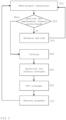
- FIG. 1 shows an arrangement with a tachograph 10.
- the tachograph 10 has at least one tachograph unit 11.
- the tachograph unit 11 can exchange data with an external device 20 via a radio connection.
- One-way communication or two-way communication can take place.
- the tachograph unit 11 can, for example, only receive data or only send data.
- data can be both sent and received.
- the DSRC unit 111 can be used to read data from the tachograph 10, for example.
- the external device 20 can be a readout unit 201, for example, which is designed to read out the tachograph data.
- Data can relate, for example, to current and past positions of the tachograph 10 or of a vehicle in which the tachograph 10 is arranged, a distance traveled, a speed on the distance traveled, information about the driver of the vehicle, information about the driver's activity, or information about the driver's driving times and rest periods.
- the data can be stored in the tachograph 10 and read out by the readout unit 201 at any later time.
- a DSRC unit 111 generally sends and receives data in a frequency band in the range between 5795 - 5805 MHz.
- the problem here is that the transmission can be disrupted.
- the same frequency band between 5795 and 5805 MHz is used for electronic toll collection in Germany.
- a corresponding unit is installed in a vehicle for electronic toll collection.
- Electronic toll stations are located at certain points on toll roads, which register when a vehicle passes the toll station. This makes it possible to calculate the distance traveled and the toll to be paid for the route. If a truck with a tachograph 10 that has a DSRC unit 111 passes an electronic toll station, the signals sent out by the toll station can cause disruptions in the transmission (e.g.
- the radio connection between the DSRC unit 111 and the reading unit 201 can also be disrupted by other devices and components, such as WLAN access points (wireless access points for a wireless local area network).
- the function of a DSRC unit 111 is fundamentally disturbed if signals other than those of a readout unit 201 are received by the DSRC unit 111 in the same frequency band.
- GNSS global navigation satellite system
- GPS Global Positioning System
- GLONASS Global Navigation Satellite System
- Galileo Beidou
- Satellites 202 of the GNSS satellite constellation use radio codes to communicate their exact position and time.
- a GNSS unit 112 in the receiver (here: in the tachograph 10) must receive the signals from at least three satellites simultaneously.
- the GNSS unit 112 calculates the signal propagation times based on the time of reception and from this the position of the tachograph 10 using suitable triangulation or multilateration methods.
- the signals transmitted by the satellites 202 can also be disturbed by sources of interference. If the satellite signals are disturbed, a sufficiently accurate position determination can no longer be guaranteed.
- the distance traveled and the speed of the corresponding vehicle in which the tachograph 10 is installed can be determined using the determined positions. In this way, for example, speeding can also be detected. If the satellite signals are disturbed over a longer period of time, however, an accurate speed determination can no longer be carried out.
- the data stored in the tachograph 10 can therefore be incomplete or incorrect if the satellite signals are disturbed.
- DSRC communication is usually only temporary. For example, appropriate checks can be carried out in which the recorded data is read out via a readout unit 201 and checked for plausibility. Appropriate control stations can be set up for this purpose, for example on motorways.
- the readout unit 201 sends a corresponding request signal to the DSRC unit 111, whereupon the latter sends the corresponding data to the readout unit 201.
- disruptions can occur as described above.
- the GNSS unit 112 While the DSRC unit 111 usually only exchanges data temporarily, the GNSS unit 112 must usually be permanently functional. In particular, while the vehicle is driving (operating time), the position of the vehicle must be permanently recorded in order to be able to track the distance traveled and the speed driven. It is therefore also desirable for the GNSS unit 112 that the communication with external devices 20 (e.g. satellites 202) is not disrupted, or at least not for a longer period of time (e.g. more than a few seconds or more than a few minutes).
- external devices 20 e.g. satellites 202
- the tachograph 10 therefore comprises a control unit 12.
- the control unit 12 can, as in Figure 1 shown by way of example, be connected to the at least one tachograph unit 11. As shown in Figure 2 As an example, the control unit 11 can be connected to a DSRC unit 111 and to a GNSS unit 112. However, any other tachograph units 11 can be monitored by the control unit 12.
- the control unit 12 can monitor the function of the tachograph units 11. If the function of a tachograph unit 11 is faulty, a warning can be generated under certain conditions. This can, for example, alert the driver of the vehicle that a function of the tachograph 10 is faulty. The driver can then initiate appropriate measures, for example removing the sources of interference.
- a fault can occur, for example, if the GNSS unit either receives too few satellite signals or if the quality of the received satellite signals is insufficient (e.g. reception field strength too low) to determine a position. Short-term fluctuations in the number of signals received cannot be regarded as a fault. For example, no satellite signals can be received if the vehicle drives through a tunnel. However, this does not constitute a fault within the meaning of the invention. When driving through a tunnel, no satellite signals can be received for a certain period of time. As soon as the vehicle leaves the tunnel again, sufficient signals are usually received again.
- a disturbance in the GNSS unit 112 can therefore be detected, for example, if the number of received signals fluctuates very frequently and very strongly within a short period of time.
- a disturbance can also be detected, for example, if the disturbance occurs over a longer period of time. If, for example, no position can be determined for more than 10 seconds, more than 20 seconds, more than 30 seconds or more than 60 seconds, this can be interpreted as a disturbance.
- a fault it can be checked, for example, whether the vehicle is moving. For example, satellite signals may not be received for a long period of time if the vehicle is stuck in a traffic jam in a tunnel. If it is detected that the signal quality of the received signals is insufficient, or that no or too few satellite signals are being received, and the vehicle is not moving or is moving at a speed that is slower than a minimum speed, then this will not be detected as a fault. If the signal quality is detected as insufficient, or too few signals are being received and the vehicle is moving at a speed that is greater than or equal to a minimum speed, then a fault can be detected, for example.
- map data can be used to check whether there is a fault.
- corresponding maps can be stored in the tachograph 10 or a navigation device in the vehicle can deliver corresponding map data to the tachograph 10. Based on the last determined position, it can be determined by comparing it with the map data, for example, that the vehicle is moving into a tunnel. Even then, an interruption in the satellite signals cannot be recognized as a fault, for example.
- interference with satellite signals can be caused not only by tunnels, but also by trees that shade the signals or a thick cloud cover. Therefore, a comparison with map data can only help to rule out interference in some cases.
- very frequent changes in the number of signals received and/or the reception field strength can be an indication of interference.
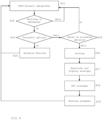
- the tachograph unit 11 such as a GNSS unit 112 is checked for its function (step 301). During the check, the signal quality can be checked, for example (step 302). If the signal quality of the received signals is sufficient and enough signals are received to enable position determination, the GNSS unit 112 can be operated in normal mode (step 303) and the process starts again with step 301. If the received signals are too weak or too few signals are received to enable position determination, this can be interpreted as a fault. Optionally, The additional parameters described above must also be taken into account in determining whether a disruption has occurred (e.g. duration of the interruption, card data, etc.).
- step 304 If a fault is detected (step 304), this can be shown to the driver, for example, on a display of the tachograph 10 (step 305). This informs the driver of the detected fault and he can remedy the fault accordingly or make manual entries in the tachograph 10.
- a so-called diagnostic trouble code can also be generated (step 306).
- a DTC is generally a hexadecimal code number for identifying malfunctions.
- the DTC can, for example, be stored in an error memory in the vehicle so that it can be determined at a later point in time when the malfunction occurred.
- the error memory can, for example, be read out in a workshop using an appropriate reader.
- Other control units in the vehicle can also access the error memory and are thus informed about the malfunction of the GNSS unit 112.
- the malfunction can, for example, also be output as a warning (step 307).
- the malfunction can be made available as an error message on an electronic vehicle data bus (e.g. CAN, Controller Area Network) for other control units in the vehicle.
- an electronic vehicle data bus e.g. CAN, Controller Area Network
- FIG. 4 shows an example of a method with which a fault in a DSRC unit 111 can be determined.
- the function of the DSRC unit can be checked (step 401).
- the DSRC unit 111 receives signals for a longer period of time.
- a DSRC unit 111 normally only receives signals for a short period of time, namely when data is to be read out.
- the faulty function cannot be recognized as a fault, for example.
- the method then begins again with step 401.
- step 403 it can be checked whether the protocol of the received signals is a valid protocol.
- Signals that a DSRC unit 111 receives from a reading unit 201 usually correspond to a certain standard. However, signals from electronic toll stations or other external devices such as WLAN access points usually correspond to a different standard. If the communication protocol of the received signals corresponds to the predetermined standard, the DSRC unit 111 can be operated in normal operation (step 404) and the method can start again with step 401.
- the duration for which the signals are received can still be determined (step 405). If the duration of the reception of the signals does not exceed a threshold value, the method can start again from the beginning with step 401. However, if the duration exceeds a specified threshold value, this can be detected as a fault (step 406).
- a vehicle is usually only near an electronic toll station for a limited period of time. Vehicles in a traffic jam usually move at least a few meters further at regular intervals.
- the DSRC unit 111 is therefore usually only near an electronic toll station for a limited period of time, even in a traffic jam.
- the range of the signals sent out by an electronic toll station is usually also limited. The signals can therefore only be received in a limited area around the toll station.
- a fault can be detected if signals are received for more than 30 seconds, for more than 60 seconds or for more than 3 minutes.
- the limit from which the reception of signals is detected as a fault can in principle be chosen arbitrarily.
- communication with a readout unit 201 should not be detected as a fault if possible, and other situations in which signals should be received for at least a limited period of time should also not be reliably detected as a fault. Therefore, the limit should generally not be chosen too short.
- a fault is detected (step 406), it can be shown to the driver, for example, on a display of the tachograph 10 (step 407). This informs the driver of the detected fault and he can correct the fault accordingly or make manual entries in the tachograph 10.
- a so-called Diagnostic Trouble Code can also be generated (step 408).
- a DTC is generally a hexadecimal code number for identifying malfunctions.
- the DTC can, for example, be stored in an error memory in the vehicle so that it is possible to determine at a later point in time when the fault occurred.
- the error memory can for example, in a workshop using a corresponding reading device.
- the fault can also be output as a warning (step 409).
- the fault can be made available as an error message on an electronic vehicle data bus (eg CAN, Controller Area Network) for other control units of the vehicle.
- an electronic vehicle data bus eg CAN, Controller Area Network
- interference is detected when unwanted signals are received.
- interference is detected when the desired signals are not received or are not received with sufficient reception field strength.
- the display of a fault on a display is optional.
- the driver can be informed of the fault in any way.
- a generated warning signal can have a visual, acoustic or haptic signal.
- a warning tone, a sequence of warning tones or a corresponding warning message can be generated.
- a lamp on the tachograph 10 or in the vehicle can light up and thus inform the driver of the fault.
- a display can be made on a display of the tachograph 10 as described above, but also on another display in the vehicle, such as the display of a navigation device or a head-up display.
- a corresponding message can be sent to the driver's mobile phone and for this to generate a corresponding visual, acoustic and/or haptic warning.
- the driver's mobile phone can vibrate.
- the steering wheel can vibrate to inform the driver of the fault.
- the driver can also be informed of the fault in any other way, alternatively or additionally.
- the driver can, for example, remove the source of the fault or make a manual entry in the tachograph 10. If the driver knows which source of the fault is causing the fault, he can, for example, switch it off (e.g. WLAN access point) or, if possible, move the vehicle away from the source of the fault.
- the driver can, for example, also switch off the warning if he realizes that there is no fault and that it was detected incorrectly. For example, if the driver is in a tunnel for a long period of time because of a traffic jam and the tachograph 10 generates a warning because no satellite signal was received for a certain period of time, the driver can switch off the warning message because there is actually no fault in the true sense of the word.
- the driver can, for example, also make entries in the tachograph 10. For example, he can store corresponding information in the tachograph that he was in a traffic jam.
- the fault can be stored in the tachograph and/or in the vehicle and/or information about the fault can be provided to other control units, for example. If, for example, a DTC is generated and stored in an error log as described above, the fault can be reproduced later. If irregularities are detected when reading the data from the tachograph 10, the error log can be read out, for example, in order to obtain information about a previous fault.
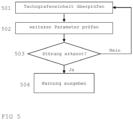
- Figure 5 shows, by way of example, a very general method for operating a tachograph arrangement.
- a tachograph unit 11 of the tachograph 10 can be checked (step 501).
- Checking the tachograph unit 11 includes detecting whether signals are being received by the tachograph unit 11.
- the method also includes checking at least one parameter in connection with the received signals (step 502).
- the at least one parameter in connection with the received signals can, for example, relate to a duration for which the signals are received, or a duration for which no signals are received, or a duration for which the reception field strength of the received signals does not exceed a predetermined threshold value.
- the at least one parameter can alternatively or additionally relate to a position of a vehicle in which the tachograph 10 is arranged.
- a warning is issued (step 504).
- the warning can, as described above, be issued as a warning for the driver (visual, acoustic or haptic) and/or as a warning in the vehicle (e.g. DTC).
- a fault can be detected either when the tachograph unit 11 receives signals and the at least one parameter fulfills predetermined requirements, or when the tachograph unit 11 does not receive any signals or the reception field strengths of the received signals fall below a predetermined threshold and the at least one parameter fulfills predetermined requirements.
- a fault depends on the type of tachograph unit (e.g. DSRC unit 111 or GNSS unit 112) involved, or whether the reception of signals with the corresponding tachograph unit 11 is desired or not.
- the invention was based on a tachograph arrangement described. In principle, however, it is also possible to check other arrangements for faults in the same way. For example, not only a DSRC unit can be disrupted by an electronic toll station. It is also possible that the function of a corresponding toll device in the vehicle is disrupted by a DSRC unit or another unit. In this way, a toll device in the vehicle could also be checked to see whether signals are being received. In this case, too, the reception of signals for a longer period of time could be regarded as a fault, since signals are generally only received by a toll device for very short periods of time, namely when it passes an electronic toll station.
Landscapes
- Engineering & Computer Science (AREA)
- Physics & Mathematics (AREA)
- General Physics & Mathematics (AREA)
- Radar, Positioning & Navigation (AREA)
- Remote Sensing (AREA)
- Computer Security & Cryptography (AREA)
- Computer Networks & Wireless Communication (AREA)
- Traffic Control Systems (AREA)
- Time Recorders, Dirve Recorders, Access Control (AREA)
- Alarm Systems (AREA)
Claims (7)
- Ensemble comprenant un tachygraphe (10) et une unité de lecture (201),le tachygraphe (10) comportant une unité tachygraphique (11) qui est une unité DSRC (111) qui est conçue pour établir une liaison sans fil avec l'unité de lecture (201), pour recevoir des signaux de requête de l'unité de lecture (201) et pour transmettre des données à l'unité de lecture (201) ;le tachygraphe (10) comportant une unité de commande (12) qui est conçue pour détecter si des signaux sont reçus par l'unité DSRC (111) ;vérifier les paramètres en liaison avec les signaux reçus ;détecter un dysfonctionnement du tachygraphe (10) dû à des sources d'interférences ; etémettre un avertissement si un dysfonctionnement du tachygraphe (10) dû à des sources d'interférences a été détecté, un dysfonctionnement du tachygraphe (10) dû à des sources d'interférences ayant été détecté lorsque l'unité DSRC (111) reçoit des signaux et que les paramètres répondent à des exigences spécifiées ; les paramètres comportant au moins :
une durée pendant laquelle les signaux sont reçus ;
eta. une position actuelle ou passée d'un véhicule dans lequel le tachygraphe (10) est disposé ; et/oub. le type de protocole de communication des signaux reçus ; et/ouc. une information indiquant si le véhicule dans lequel le tachygraphe est disposé se déplace ; et/oud. une information indiquant si le véhicule dans lequel le tachygraphe est disposé se déplace à une vitesse supérieure à une vitesse minimale spécifiée. - Ensemble selon la revendication 1, les paramètres comportant:
une durée pendant laquelle aucun signal n'est reçu. - Ensemble selon la revendication 1 ou 2, un dysfonctionnement du tachygraphe (10) dû à des sources d'interférences étant détecté lorsque le véhicule dans lequel le tachygraphe (10) est disposé est en mouvement et que l'unité DSRC (111) reçoit des signaux pendant une durée supérieure à une durée minimale.
- Ensemble selon la revendication 3, la durée minimale étant de 30 secondes, 60 secondes ou 3 minutes.
- Procédé de fonctionnement d'un tachygraphe (10) comprenant une unité tachygraphique (11), le procédé comprenant les étapes suivantesdétecter si des signaux sont reçus d'une unité de lecture (201) au moyen de l'unité tachygraphique (11) qui est une unité DSRC (111) ;vérifier des paramètres en liaison avec les signaux reçus ;détecter un dysfonctionnement du tachygraphe (10) dû à des sources d'interférences ; etémettre un avertissement si un dysfonctionnement du tachygraphe (10) dû à des sources d'interférences a été détecté, un dysfonctionnement du tachygraphe (10) dû à des sources d'interférences ayant été détecté lorsque l'unité DSRC (111) reçoit des signaux et que les paramètres répondent à des exigences spécifiées ; les paramètres comportant au moins :
une durée pendant laquelle les signaux sont reçus ;
eta. une position actuelle ou passée d'un véhicule dans lequel le tachygraphe (10) est disposé ; et/oub. le type de protocole de communication des signaux reçus ; et/ouc. une information indiquant si le véhicule dans lequel le tachygraphe (10) est disposé est en mouvement ; et/oud. une information indiquant si le véhicule dans lequel le tachygraphe (10) est disposé se déplace à une vitesse supérieure à une vitesse minimale spécifiée. - Procédé selon la revendication 5, l'émission d'un avertissement comprenant l'une au moins des étapes suivantesgénérer un avertissement visuel ;générer un avertissement sonore ;générer un avertissement haptique ;générer un code de problème de diagnostic (DTC) ; etfournir l'avertissement sur un bus de données de véhicule électroniques.
- Véhicule équipé d'un tachygraphe (10) selon la revendication 1.
Applications Claiming Priority (1)
| Application Number | Priority Date | Filing Date | Title |
|---|---|---|---|
| DE102017222320.0A DE102017222320A1 (de) | 2017-12-08 | 2017-12-08 | Tachografenanordnung und Verfahren zum Betreiben einer Tachografenanordnung |
Publications (3)
| Publication Number | Publication Date |
|---|---|
| EP3495847A1 EP3495847A1 (fr) | 2019-06-12 |
| EP3495847B1 EP3495847B1 (fr) | 2022-05-11 |
| EP3495847B2 true EP3495847B2 (fr) | 2024-07-17 |
Family
ID=64661157
Family Applications (1)
| Application Number | Title | Priority Date | Filing Date |
|---|---|---|---|
| EP18211001.5A Active EP3495847B2 (fr) | 2017-12-08 | 2018-12-07 | Agencement de tachygraphe et procédé de fonctionnement d'un agencement de tachygraphe |
Country Status (2)
| Country | Link |
|---|---|
| EP (1) | EP3495847B2 (fr) |
| DE (2) | DE102017222320A1 (fr) |
Families Citing this family (2)
| Publication number | Priority date | Publication date | Assignee | Title |
|---|---|---|---|---|
| DE102020216301A1 (de) | 2020-12-18 | 2022-06-23 | Continental Automotive Gmbh | Tachographenvorrichtung mit länderspezifischen Funktionen, Fahrzeug umfassend zumindest eine Tachographenvorrichtung und Verfahren zum Betreiben einer Tachographenvorrichtung |
| DE102022001573A1 (de) | 2022-05-04 | 2023-07-13 | Mercedes-Benz Group AG | Verfahren zum Protokollieren einer Fahrtstrecke eines Kraftwagens mittels eines Fahrtenbuchsystems |
Family Cites Families (10)
| Publication number | Priority date | Publication date | Assignee | Title |
|---|---|---|---|---|
| KR100356507B1 (ko) | 2000-11-27 | 2002-10-18 | 엘지전자 주식회사 | Dsrc 지능형 교통 시스템의 비트 오류율 시험 장치 및방법 |
| US7486199B2 (en) | 2005-11-17 | 2009-02-03 | Nissan Technical Center North America, Inc. | Forward vehicle brake warning system |
| US8274405B2 (en) | 2008-09-03 | 2012-09-25 | GM Global Technology Operations LLC | System and method for device management on a dedicated short-range communication network |
| DE102008048162A1 (de) | 2008-09-19 | 2010-03-25 | Continental Automotive Gmbh | System und On-Board-Unit |
| JP5347653B2 (ja) | 2009-03-30 | 2013-11-20 | 沖電気工業株式会社 | 通信方法及び通信装置 |
| WO2012012836A1 (fr) | 2010-07-28 | 2012-02-02 | Cohda Wireless Pty Ltd | Dispositif de systèmes de transport intelligents |
| US8923147B2 (en) | 2011-10-03 | 2014-12-30 | Qualcomm Incorporated | Method and apparatus for filtering and processing received vehicle peer transmissions based on reliability information |
| CN105960812B (zh) | 2014-02-19 | 2019-10-25 | 哈曼国际工业有限公司 | 通信方法及装置 |
| DE102015209463A1 (de) | 2015-05-22 | 2016-11-24 | Continental Automotive Gmbh | Verfahren zur Detektion eines DRSC-Signals in einem Kraftfahrzeug |
| EP3174015B1 (fr) * | 2015-11-27 | 2025-03-12 | Toll Collect GmbH | Reconnaissance d'erreurs dans une unité embarquée à bord d'une véhicule d'un système de péage |
-
2017
- 2017-12-08 DE DE102017222320.0A patent/DE102017222320A1/de not_active Ceased
-
2018
- 2018-12-07 EP EP18211001.5A patent/EP3495847B2/fr active Active
- 2018-12-07 DE DE202018006823.3U patent/DE202018006823U1/de not_active Ceased
Also Published As
| Publication number | Publication date |
|---|---|
| EP3495847A1 (fr) | 2019-06-12 |
| EP3495847B1 (fr) | 2022-05-11 |
| DE102017222320A1 (de) | 2019-06-13 |
| DE202018006823U1 (de) | 2023-05-11 |
Similar Documents
| Publication | Publication Date | Title |
|---|---|---|
| EP2535731B1 (fr) | Dispositif de localisation et de suivi d'un véhicule | |
| DE102007046763A1 (de) | Steuerverfahren und System | |
| EP2924662B1 (fr) | Unité embarquée et procédé de surveillance du fonctionnement dans un système de péage routier | |
| EP3499269B1 (fr) | Dispositif et procédé de détermination de la position | |
| DE102007042877A1 (de) | Kraftfahrzeug und System zur Vermittlung von Fahrbahneigenschaftsinformationen | |
| EP2535737A1 (fr) | Procédé et système de détection de la position d'un récepteur GNSS installé dans un véhicule automobile | |
| DE102008012661A1 (de) | Aktualisierungseinheit und Verfahren zur Aktualisierung einer digitalen Karte | |
| DE102022125933A1 (de) | System und Verfahren zur Mauterhebung für ein Kraftfahrzeug | |
| DE102017130412A1 (de) | Tastenfeld-mastercode | |
| EP3495847B1 (fr) | Agencement de tachygraphe et procédé de fonctionnement d'un agencement de tachygraphe | |
| EP2811468B1 (fr) | Procédé et dispositif de reconnaissance d'erreurs dans un système de péage | |
| EP4163886B1 (fr) | Système et procédé de perception de péage pour un véhicule automobile | |
| DE102007007730B4 (de) | Verfahren und Vorrichtung zur Durchführung einer Verkehrsflusssteuerung zur Reduzierung des Energie- Kraftstoffverbrauchs, des CO2- Ausstoßes sowie der Unfallzahlen im Straßenverkehr | |
| EP3521844B1 (fr) | Tachygraphe, procédé de fonctionnement d'un tachographe | |
| EP3625519A1 (fr) | Surveillance de données de capteur et de donnees d'odométrie d'un véhicule ferroviaire sur la base de données cartographiques | |
| DE102007014684B4 (de) | Verfahren und Vorrichtung zur Durchführung einer Verkehrsflusssteuerung zur Reduzierung des Energie-Kraftstoffverbrauchs, des CO2-Ausstoßes sowie der Unfallzahlen im Straßenverkehr | |
| EP2042884B1 (fr) | Procédé et système destinés à la modification d'un système d'appel d'urgence | |
| EP3174015B1 (fr) | Reconnaissance d'erreurs dans une unité embarquée à bord d'une véhicule d'un système de péage | |
| EP2922031B1 (fr) | Procédé et dispositifs de détection des erreurs dans un système de péage | |
| WO2014117915A1 (fr) | Procédé permettant de faire fonctionner un système d'aide au stationnement et véhicule à moteur | |
| EP1860615A2 (fr) | Procédé destiné à la vérification du fonctionnement d'une unité de détection mobile | |
| EP4462391A1 (fr) | Procédé, terminal et système de surveillance d'une application de perception de péage | |
| WO2016184611A1 (fr) | Détection de fins de voie de circulation sur des routes | |
| EP4163884A1 (fr) | Procédé et système de contrôle automatique dans un système de péage | |
| EP4488964A1 (fr) | Agencement de véhicule pour un véhicule de transport de personnes |
Legal Events
| Date | Code | Title | Description |
|---|---|---|---|
| PUAI | Public reference made under article 153(3) epc to a published international application that has entered the european phase |
Free format text: ORIGINAL CODE: 0009012 |
|
| STAA | Information on the status of an ep patent application or granted ep patent |
Free format text: STATUS: THE APPLICATION HAS BEEN PUBLISHED |
|
| AK | Designated contracting states |
Kind code of ref document: A1 Designated state(s): AL AT BE BG CH CY CZ DE DK EE ES FI FR GB GR HR HU IE IS IT LI LT LU LV MC MK MT NL NO PL PT RO RS SE SI SK SM TR |
|
| AX | Request for extension of the european patent |
Extension state: BA ME |
|
| STAA | Information on the status of an ep patent application or granted ep patent |
Free format text: STATUS: REQUEST FOR EXAMINATION WAS MADE |
|
| 17P | Request for examination filed |
Effective date: 20191212 |
|
| RBV | Designated contracting states (corrected) |
Designated state(s): AL AT BE BG CH CY CZ DE DK EE ES FI FR GB GR HR HU IE IS IT LI LT LU LV MC MK MT NL NO PL PT RO RS SE SI SK SM TR |
|
| GRAP | Despatch of communication of intention to grant a patent |
Free format text: ORIGINAL CODE: EPIDOSNIGR1 |
|
| STAA | Information on the status of an ep patent application or granted ep patent |
Free format text: STATUS: GRANT OF PATENT IS INTENDED |
|
| INTG | Intention to grant announced |
Effective date: 20210813 |
|
| GRAJ | Information related to disapproval of communication of intention to grant by the applicant or resumption of examination proceedings by the epo deleted |
Free format text: ORIGINAL CODE: EPIDOSDIGR1 |
|
| STAA | Information on the status of an ep patent application or granted ep patent |
Free format text: STATUS: REQUEST FOR EXAMINATION WAS MADE |
|
| INTC | Intention to grant announced (deleted) | ||
| GRAP | Despatch of communication of intention to grant a patent |
Free format text: ORIGINAL CODE: EPIDOSNIGR1 |
|
| STAA | Information on the status of an ep patent application or granted ep patent |
Free format text: STATUS: GRANT OF PATENT IS INTENDED |
|
| RIC1 | Information provided on ipc code assigned before grant |
Ipc: G07B 15/06 20110101ALN20220117BHEP Ipc: B60R 16/023 20060101ALN20220117BHEP Ipc: B60W 50/14 20120101ALI20220117BHEP Ipc: B60W 50/02 20120101ALI20220117BHEP Ipc: G07C 5/08 20060101ALI20220117BHEP Ipc: G01S 19/20 20100101AFI20220117BHEP |
|
| INTG | Intention to grant announced |
Effective date: 20220131 |
|
| GRAS | Grant fee paid |
Free format text: ORIGINAL CODE: EPIDOSNIGR3 |
|
| GRAA | (expected) grant |
Free format text: ORIGINAL CODE: 0009210 |
|
| STAA | Information on the status of an ep patent application or granted ep patent |
Free format text: STATUS: THE PATENT HAS BEEN GRANTED |
|
| AK | Designated contracting states |
Kind code of ref document: B1 Designated state(s): AL AT BE BG CH CY CZ DE DK EE ES FI FR GB GR HR HU IE IS IT LI LT LU LV MC MK MT NL NO PL PT RO RS SE SI SK SM TR |
|
| REG | Reference to a national code |
Ref country code: GB Ref legal event code: FG4D Free format text: NOT ENGLISH |
|
| REG | Reference to a national code |
Ref country code: CH Ref legal event code: EP |
|
| REG | Reference to a national code |
Ref country code: AT Ref legal event code: REF Ref document number: 1491892 Country of ref document: AT Kind code of ref document: T Effective date: 20220515 |
|
| REG | Reference to a national code |
Ref country code: DE Ref legal event code: R096 Ref document number: 502018009626 Country of ref document: DE |
|
| REG | Reference to a national code |
Ref country code: IE Ref legal event code: FG4D Free format text: LANGUAGE OF EP DOCUMENT: GERMAN |
|
| REG | Reference to a national code |
Ref country code: DE Ref legal event code: R081 Ref document number: 502018009626 Country of ref document: DE Owner name: CONTINENTAL AUTOMOTIVE TECHNOLOGIES GMBH, DE Free format text: FORMER OWNER: CONTINENTAL AUTOMOTIVE GMBH, 30165 HANNOVER, DE Ref country code: DE Ref legal event code: R081 Ref document number: 502018009626 Country of ref document: DE Owner name: AUMOVIO GERMANY GMBH, DE Free format text: FORMER OWNER: CONTINENTAL AUTOMOTIVE GMBH, 30165 HANNOVER, DE |
|
| REG | Reference to a national code |
Ref country code: LT Ref legal event code: MG9D |
|
| REG | Reference to a national code |
Ref country code: NL Ref legal event code: MP Effective date: 20220511 |
|
| PG25 | Lapsed in a contracting state [announced via postgrant information from national office to epo] |
Ref country code: SE Free format text: LAPSE BECAUSE OF FAILURE TO SUBMIT A TRANSLATION OF THE DESCRIPTION OR TO PAY THE FEE WITHIN THE PRESCRIBED TIME-LIMIT Effective date: 20220511 Ref country code: PT Free format text: LAPSE BECAUSE OF FAILURE TO SUBMIT A TRANSLATION OF THE DESCRIPTION OR TO PAY THE FEE WITHIN THE PRESCRIBED TIME-LIMIT Effective date: 20220912 Ref country code: NO Free format text: LAPSE BECAUSE OF FAILURE TO SUBMIT A TRANSLATION OF THE DESCRIPTION OR TO PAY THE FEE WITHIN THE PRESCRIBED TIME-LIMIT Effective date: 20220811 Ref country code: NL Free format text: LAPSE BECAUSE OF FAILURE TO SUBMIT A TRANSLATION OF THE DESCRIPTION OR TO PAY THE FEE WITHIN THE PRESCRIBED TIME-LIMIT Effective date: 20220511 Ref country code: LT Free format text: LAPSE BECAUSE OF FAILURE TO SUBMIT A TRANSLATION OF THE DESCRIPTION OR TO PAY THE FEE WITHIN THE PRESCRIBED TIME-LIMIT Effective date: 20220511 Ref country code: HR Free format text: LAPSE BECAUSE OF FAILURE TO SUBMIT A TRANSLATION OF THE DESCRIPTION OR TO PAY THE FEE WITHIN THE PRESCRIBED TIME-LIMIT Effective date: 20220511 Ref country code: GR Free format text: LAPSE BECAUSE OF FAILURE TO SUBMIT A TRANSLATION OF THE DESCRIPTION OR TO PAY THE FEE WITHIN THE PRESCRIBED TIME-LIMIT Effective date: 20220812 Ref country code: FI Free format text: LAPSE BECAUSE OF FAILURE TO SUBMIT A TRANSLATION OF THE DESCRIPTION OR TO PAY THE FEE WITHIN THE PRESCRIBED TIME-LIMIT Effective date: 20220511 Ref country code: ES Free format text: LAPSE BECAUSE OF FAILURE TO SUBMIT A TRANSLATION OF THE DESCRIPTION OR TO PAY THE FEE WITHIN THE PRESCRIBED TIME-LIMIT Effective date: 20220511 Ref country code: BG Free format text: LAPSE BECAUSE OF FAILURE TO SUBMIT A TRANSLATION OF THE DESCRIPTION OR TO PAY THE FEE WITHIN THE PRESCRIBED TIME-LIMIT Effective date: 20220811 |
|
| PG25 | Lapsed in a contracting state [announced via postgrant information from national office to epo] |
Ref country code: RS Free format text: LAPSE BECAUSE OF FAILURE TO SUBMIT A TRANSLATION OF THE DESCRIPTION OR TO PAY THE FEE WITHIN THE PRESCRIBED TIME-LIMIT Effective date: 20220511 Ref country code: PL Free format text: LAPSE BECAUSE OF FAILURE TO SUBMIT A TRANSLATION OF THE DESCRIPTION OR TO PAY THE FEE WITHIN THE PRESCRIBED TIME-LIMIT Effective date: 20220511 Ref country code: LV Free format text: LAPSE BECAUSE OF FAILURE TO SUBMIT A TRANSLATION OF THE DESCRIPTION OR TO PAY THE FEE WITHIN THE PRESCRIBED TIME-LIMIT Effective date: 20220511 Ref country code: IS Free format text: LAPSE BECAUSE OF FAILURE TO SUBMIT A TRANSLATION OF THE DESCRIPTION OR TO PAY THE FEE WITHIN THE PRESCRIBED TIME-LIMIT Effective date: 20220911 |
|
| PG25 | Lapsed in a contracting state [announced via postgrant information from national office to epo] |
Ref country code: SM Free format text: LAPSE BECAUSE OF FAILURE TO SUBMIT A TRANSLATION OF THE DESCRIPTION OR TO PAY THE FEE WITHIN THE PRESCRIBED TIME-LIMIT Effective date: 20220511 Ref country code: SK Free format text: LAPSE BECAUSE OF FAILURE TO SUBMIT A TRANSLATION OF THE DESCRIPTION OR TO PAY THE FEE WITHIN THE PRESCRIBED TIME-LIMIT Effective date: 20220511 Ref country code: RO Free format text: LAPSE BECAUSE OF FAILURE TO SUBMIT A TRANSLATION OF THE DESCRIPTION OR TO PAY THE FEE WITHIN THE PRESCRIBED TIME-LIMIT Effective date: 20220511 Ref country code: EE Free format text: LAPSE BECAUSE OF FAILURE TO SUBMIT A TRANSLATION OF THE DESCRIPTION OR TO PAY THE FEE WITHIN THE PRESCRIBED TIME-LIMIT Effective date: 20220511 Ref country code: DK Free format text: LAPSE BECAUSE OF FAILURE TO SUBMIT A TRANSLATION OF THE DESCRIPTION OR TO PAY THE FEE WITHIN THE PRESCRIBED TIME-LIMIT Effective date: 20220511 Ref country code: CZ Free format text: LAPSE BECAUSE OF FAILURE TO SUBMIT A TRANSLATION OF THE DESCRIPTION OR TO PAY THE FEE WITHIN THE PRESCRIBED TIME-LIMIT Effective date: 20220511 |
|
| REG | Reference to a national code |
Ref country code: DE Ref legal event code: R026 Ref document number: 502018009626 Country of ref document: DE |
|
| PLBI | Opposition filed |
Free format text: ORIGINAL CODE: 0009260 |
|
| PLAX | Notice of opposition and request to file observation + time limit sent |
Free format text: ORIGINAL CODE: EPIDOSNOBS2 |
|
| 26 | Opposition filed |
Opponent name: TOLL COLLECT GMBH Effective date: 20230210 |
|
| PG25 | Lapsed in a contracting state [announced via postgrant information from national office to epo] |
Ref country code: AL Free format text: LAPSE BECAUSE OF FAILURE TO SUBMIT A TRANSLATION OF THE DESCRIPTION OR TO PAY THE FEE WITHIN THE PRESCRIBED TIME-LIMIT Effective date: 20220511 |
|
| PG25 | Lapsed in a contracting state [announced via postgrant information from national office to epo] |
Ref country code: SI Free format text: LAPSE BECAUSE OF FAILURE TO SUBMIT A TRANSLATION OF THE DESCRIPTION OR TO PAY THE FEE WITHIN THE PRESCRIBED TIME-LIMIT Effective date: 20220511 |
|
| RAP2 | Party data changed (patent owner data changed or rights of a patent transferred) |
Owner name: CONTINENTAL AUTOMOTIVE TECHNOLOGIES GMBH |
|
| P01 | Opt-out of the competence of the unified patent court (upc) registered |
Effective date: 20230522 |
|
| PLBB | Reply of patent proprietor to notice(s) of opposition received |
Free format text: ORIGINAL CODE: EPIDOSNOBS3 |
|
| REG | Reference to a national code |
Ref country code: CH Ref legal event code: PL |
|
| GBPC | Gb: european patent ceased through non-payment of renewal fee |
Effective date: 20221207 |
|
| REG | Reference to a national code |
Ref country code: BE Ref legal event code: MM Effective date: 20221231 |
|
| PG25 | Lapsed in a contracting state [announced via postgrant information from national office to epo] |
Ref country code: LU Free format text: LAPSE BECAUSE OF NON-PAYMENT OF DUE FEES Effective date: 20221207 |
|
| PG25 | Lapsed in a contracting state [announced via postgrant information from national office to epo] |
Ref country code: LI Free format text: LAPSE BECAUSE OF NON-PAYMENT OF DUE FEES Effective date: 20221231 Ref country code: IE Free format text: LAPSE BECAUSE OF NON-PAYMENT OF DUE FEES Effective date: 20221207 Ref country code: GB Free format text: LAPSE BECAUSE OF NON-PAYMENT OF DUE FEES Effective date: 20221207 Ref country code: CH Free format text: LAPSE BECAUSE OF NON-PAYMENT OF DUE FEES Effective date: 20221231 |
|
| PG25 | Lapsed in a contracting state [announced via postgrant information from national office to epo] |
Ref country code: FR Free format text: LAPSE BECAUSE OF NON-PAYMENT OF DUE FEES Effective date: 20221231 Ref country code: BE Free format text: LAPSE BECAUSE OF NON-PAYMENT OF DUE FEES Effective date: 20221231 |
|
| PLAY | Examination report in opposition despatched + time limit |
Free format text: ORIGINAL CODE: EPIDOSNORE2 |
|
| PLBC | Reply to examination report in opposition received |
Free format text: ORIGINAL CODE: EPIDOSNORE3 |
|
| PG25 | Lapsed in a contracting state [announced via postgrant information from national office to epo] |
Ref country code: IT Free format text: LAPSE BECAUSE OF FAILURE TO SUBMIT A TRANSLATION OF THE DESCRIPTION OR TO PAY THE FEE WITHIN THE PRESCRIBED TIME-LIMIT Effective date: 20220511 |
|
| REG | Reference to a national code |
Ref country code: DE Ref legal event code: R081 Ref document number: 502018009626 Country of ref document: DE Owner name: CONTINENTAL AUTOMOTIVE TECHNOLOGIES GMBH, DE Free format text: FORMER OWNER: CONTINENTAL AUTOMOTIVE TECHNOLOGIES GMBH, 30165 HANNOVER, DE Ref country code: DE Ref legal event code: R081 Ref document number: 502018009626 Country of ref document: DE Owner name: AUMOVIO GERMANY GMBH, DE Free format text: FORMER OWNER: CONTINENTAL AUTOMOTIVE TECHNOLOGIES GMBH, 30165 HANNOVER, DE |
|
| PG25 | Lapsed in a contracting state [announced via postgrant information from national office to epo] |
Ref country code: HU Free format text: LAPSE BECAUSE OF FAILURE TO SUBMIT A TRANSLATION OF THE DESCRIPTION OR TO PAY THE FEE WITHIN THE PRESCRIBED TIME-LIMIT; INVALID AB INITIO Effective date: 20181207 |
|
| RAP4 | Party data changed (patent owner data changed or rights of a patent transferred) |
Owner name: CONTINENTAL AUTOMOTIVE TECHNOLOGIES GMBH |
|
| PG25 | Lapsed in a contracting state [announced via postgrant information from national office to epo] |
Ref country code: CY Free format text: LAPSE BECAUSE OF FAILURE TO SUBMIT A TRANSLATION OF THE DESCRIPTION OR TO PAY THE FEE WITHIN THE PRESCRIBED TIME-LIMIT Effective date: 20220511 |
|
| REG | Reference to a national code |
Ref country code: CH Ref legal event code: PK Free format text: DIE PUBLIKATION VOM 27.03.2024 WURDE AM 24.04.2024 IRRTUEMLICHERWEISE ERNEUT PUBLIZIERT. LA PUBLICATION DU 27.03.2024 A ETE REPUBLIEE PAR ERREUR LE 24.04.2024. LA PUBBLICAZIONE DEL 27.03.2024 E STATA ERRONEAMENTE RIPUBBLICATA IL 24.04.2024. |
|
| PG25 | Lapsed in a contracting state [announced via postgrant information from national office to epo] |
Ref country code: MK Free format text: LAPSE BECAUSE OF FAILURE TO SUBMIT A TRANSLATION OF THE DESCRIPTION OR TO PAY THE FEE WITHIN THE PRESCRIBED TIME-LIMIT Effective date: 20220511 |
|
| PG25 | Lapsed in a contracting state [announced via postgrant information from national office to epo] |
Ref country code: MC Free format text: LAPSE BECAUSE OF FAILURE TO SUBMIT A TRANSLATION OF THE DESCRIPTION OR TO PAY THE FEE WITHIN THE PRESCRIBED TIME-LIMIT Effective date: 20220511 |
|
| PUAH | Patent maintained in amended form |
Free format text: ORIGINAL CODE: 0009272 |
|
| STAA | Information on the status of an ep patent application or granted ep patent |
Free format text: STATUS: PATENT MAINTAINED AS AMENDED |
|
| PG25 | Lapsed in a contracting state [announced via postgrant information from national office to epo] |
Ref country code: MC Free format text: LAPSE BECAUSE OF FAILURE TO SUBMIT A TRANSLATION OF THE DESCRIPTION OR TO PAY THE FEE WITHIN THE PRESCRIBED TIME-LIMIT Effective date: 20220511 |
|
| 27A | Patent maintained in amended form |
Effective date: 20240717 |
|
| AK | Designated contracting states |
Kind code of ref document: B2 Designated state(s): AL AT BE BG CH CY CZ DE DK EE ES FI FR GB GR HR HU IE IS IT LI LT LU LV MC MK MT NL NO PL PT RO RS SE SI SK SM TR |
|
| REG | Reference to a national code |
Ref country code: DE Ref legal event code: R102 Ref document number: 502018009626 Country of ref document: DE |
|
| PG25 | Lapsed in a contracting state [announced via postgrant information from national office to epo] |
Ref country code: MT Free format text: LAPSE BECAUSE OF FAILURE TO SUBMIT A TRANSLATION OF THE DESCRIPTION OR TO PAY THE FEE WITHIN THE PRESCRIBED TIME-LIMIT Effective date: 20220511 |
|
| PG25 | Lapsed in a contracting state [announced via postgrant information from national office to epo] |
Ref country code: BG Free format text: LAPSE BECAUSE OF FAILURE TO SUBMIT A TRANSLATION OF THE DESCRIPTION OR TO PAY THE FEE WITHIN THE PRESCRIBED TIME-LIMIT Effective date: 20220511 |
|
| PG25 | Lapsed in a contracting state [announced via postgrant information from national office to epo] |
Ref country code: BG Free format text: LAPSE BECAUSE OF FAILURE TO SUBMIT A TRANSLATION OF THE DESCRIPTION OR TO PAY THE FEE WITHIN THE PRESCRIBED TIME-LIMIT Effective date: 20220511 |
|
| REG | Reference to a national code |
Ref country code: AT Ref legal event code: MM01 Ref document number: 1491892 Country of ref document: AT Kind code of ref document: T Effective date: 20231207 |
|
| PG25 | Lapsed in a contracting state [announced via postgrant information from national office to epo] |
Ref country code: AT Free format text: LAPSE BECAUSE OF NON-PAYMENT OF DUE FEES Effective date: 20231207 |
|
| PG25 | Lapsed in a contracting state [announced via postgrant information from national office to epo] |
Ref country code: TR Free format text: LAPSE BECAUSE OF FAILURE TO SUBMIT A TRANSLATION OF THE DESCRIPTION OR TO PAY THE FEE WITHIN THE PRESCRIBED TIME-LIMIT Effective date: 20220511 |
|
| REG | Reference to a national code |
Ref country code: DE Ref legal event code: R081 Ref document number: 502018009626 Country of ref document: DE Owner name: AUMOVIO GERMANY GMBH, DE Free format text: FORMER OWNER: CONTINENTAL AUTOMOTIVE TECHNOLOGIES GMBH, 30175 HANNOVER, DE |
|
| PGFP | Annual fee paid to national office [announced via postgrant information from national office to epo] |
Ref country code: DE Payment date: 20251231 Year of fee payment: 8 |
|
| PGFP | Annual fee paid to national office [announced via postgrant information from national office to epo] |
Ref country code: AT Payment date: 20260410 Year of fee payment: 5 |