EP3496042A1 - Système et procédé de génération d'images de formation - Google Patents
Système et procédé de génération d'images de formation Download PDFInfo
- Publication number
- EP3496042A1 EP3496042A1 EP18210168.3A EP18210168A EP3496042A1 EP 3496042 A1 EP3496042 A1 EP 3496042A1 EP 18210168 A EP18210168 A EP 18210168A EP 3496042 A1 EP3496042 A1 EP 3496042A1
- Authority
- EP
- European Patent Office
- Prior art keywords
- image
- camera model
- parameter values
- rectilinear
- images
- Prior art date
- Legal status (The legal status is an assumption and is not a legal conclusion. Google has not performed a legal analysis and makes no representation as to the accuracy of the status listed.)
- Withdrawn
Links
Images

Classifications
-
- G—PHYSICS
- G06—COMPUTING OR CALCULATING; COUNTING
- G06T—IMAGE DATA PROCESSING OR GENERATION, IN GENERAL
- G06T7/00—Image analysis
- G06T7/80—Analysis of captured images to determine intrinsic or extrinsic camera parameters, i.e. camera calibration
-
- G—PHYSICS
- G06—COMPUTING OR CALCULATING; COUNTING
- G06F—ELECTRIC DIGITAL DATA PROCESSING
- G06F7/00—Methods or arrangements for processing data by operating upon the order or content of the data handled
- G06F7/58—Random or pseudo-random number generators
-
- G—PHYSICS
- G06—COMPUTING OR CALCULATING; COUNTING
- G06T—IMAGE DATA PROCESSING OR GENERATION, IN GENERAL
- G06T3/00—Geometric image transformations in the plane of the image
- G06T3/06—Topological mapping of higher dimensional structures onto lower dimensional surfaces
- G06T3/067—Reshaping or unfolding three-dimensional [3D] tree structures onto two-dimensional [2D] planes
-
- G—PHYSICS
- G06—COMPUTING OR CALCULATING; COUNTING
- G06T—IMAGE DATA PROCESSING OR GENERATION, IN GENERAL
- G06T3/00—Geometric image transformations in the plane of the image
- G06T3/12—Panospheric to cylindrical image transformations
-
- G—PHYSICS
- G06—COMPUTING OR CALCULATING; COUNTING
- G06T—IMAGE DATA PROCESSING OR GENERATION, IN GENERAL
- G06T3/00—Geometric image transformations in the plane of the image
- G06T3/60—Rotation of whole images or parts thereof
- G06T3/608—Rotation of whole images or parts thereof by skew deformation, e.g. two-pass or three-pass rotation
-
- G—PHYSICS
- G06—COMPUTING OR CALCULATING; COUNTING
- G06T—IMAGE DATA PROCESSING OR GENERATION, IN GENERAL
- G06T5/00—Image enhancement or restoration
- G06T5/20—Image enhancement or restoration using local operators
-
- G—PHYSICS
- G06—COMPUTING OR CALCULATING; COUNTING
- G06T—IMAGE DATA PROCESSING OR GENERATION, IN GENERAL
- G06T5/00—Image enhancement or restoration
- G06T5/80—Geometric correction
-
- G—PHYSICS
- G06—COMPUTING OR CALCULATING; COUNTING
- G06T—IMAGE DATA PROCESSING OR GENERATION, IN GENERAL
- G06T7/00—Image analysis
- G06T7/10—Segmentation; Edge detection
- G06T7/13—Edge detection
-
- G—PHYSICS
- G06—COMPUTING OR CALCULATING; COUNTING
- G06T—IMAGE DATA PROCESSING OR GENERATION, IN GENERAL
- G06T2207/00—Indexing scheme for image analysis or image enhancement
- G06T2207/10—Image acquisition modality
- G06T2207/10004—Still image; Photographic image
-
- G—PHYSICS
- G06—COMPUTING OR CALCULATING; COUNTING
- G06T—IMAGE DATA PROCESSING OR GENERATION, IN GENERAL
- G06T2207/00—Indexing scheme for image analysis or image enhancement
- G06T2207/20—Special algorithmic details
- G06T2207/20081—Training; Learning
Definitions
- the present application relates to a system and method for generating training images for a computer vision system.
- a common requirement is to be able to construct from an image a camera model of the camera, or camera and lens combination, which was used to capture the image. This generally requires solving the inverse of the imaging process in order to determine the parameter values of a camera model of the camera which was used to capture the image.
- a camera model may comprise parameters such as the focal length of the camera lens, pixel skew, principal point, and parameters for a lens distortion model. These camera parameters are often referred to as intrinsic camera parameters.
- a known approach to generating a camera model is to estimate the values of the parameters of the camera model by analysis of images captured by the camera. This estimation may be carried out, for example, by analysis of a captured image of a checkerboard pattern, by analysis of sets of corresponding points found in stereo images, or by analysis of sets of estimated vanishing points identified in captured images.
- EXIF Exchangeable Image File format
- a system and method for generating a training set of images by applying a projective camera model comprising a projection matrix to a spherical image to produce a number of rectilinear images corresponding to different camera model parameter values.
- the present disclosure provides a computer implemented system for automatically generating a training set of images, the system comprising: first obtaining means arranged to obtain an image in which each pixel represents a 3 dimensional '3D' point on the surface of a sphere; second obtaining means arranged to obtain a projective camera model comprising a projection matrix which defines a projective transformation to map 3D points on the surface of a sphere onto an image plane based on camera model parameter values: applying means arranged to apply the projective camera model with selected camera model parameter values to the image to produce a rectilinear image; storing means arranged to store the rectilinear image in association with the selected camera model parameter values; and the system being arranged to repeat the applying and storing for different selected camera model parameter values.
- the first obtaining means is further arranged to: obtain an equirectangular image; and transform the equirectangular image into a transformed image in which each pixel represents a 3D point on the surface of a sphere.
- the second obtaining means is arranged to randomly select the camera model parameter values.
- the second obtaining means is arranged select the camera model parameter values according to a predetermined sequence.
- the predetermined sequence is a pseudo-random sequence.
- the applying means is arranged to apply the projective camera model with a selected orientation.
- the applying means is arranged to randomly select the selected orientation.
- the applying means is arranged to select the selected orientation according to a predetermined sequence.
- the predetermined sequence is a pseudo-random sequence.
- the camera model parameter values are intrinsic camera parameters.
- the intrinsic camera parameters comprise one or more of: focal length, pixel skew, principal point, or lens distortion.
- the system further comprising filtering means arranged to filter the produced rectilinear image to determine whether to accept the rectilinear image for use as a training image, wherein the storing means stores the rectilinear image in association with the selected camera model parameter values only if the rectilinear image is accepted by the filtering means.
- the filtering means is arranged to: perform line segment extraction on the rectilinear image; compare the number of line segments identified to a first predetermined threshold; and accept the rectilinear image if the result of the comparison is that the number of line segments exceeds the first predetermined threshold.
- the system further comprising image count means arranged to maintain a count of the number of rectilinear images which are derived from an image, wherein the system is arranged to obtain another image when the count reaches a predetermined number.
- the image count means is arranged to maintain a count of the number of rectilinear images which are derived from an image and stored.
- the present disclosure provides a computer implemented method of automatically generating a training set of images, the method comprising: obtaining an image in which each pixel represents a 3 dimensional '3D' point on the surface of a sphere; obtaining a projective camera model comprising a projection matrix which defines a projective transformation to map 3D points on the surface of a sphere onto an image plane based on camera model parameter values: applying the projective camera model with selected camera model parameter values to the image to produce a rectilinear image; storing the rectilinear image in association with the selected camera model parameter values; and repeating the applying and storing for different selected camera model parameter values.
- the obtaining an image comprises: obtaining an equirectangular image; and transforming the equirectangular image into a transformed image in which each pixel represents a 3D point on the surface of a sphere.
- the selected camera model parameter values are randomly selected.
- the selected camera model parameter values are selected according to a predetermined sequence.
- the predetermined sequence is a pseudo-random sequence.
- the applying the projective camera model is carried out with a selected orientation.
- the selected orientation is randomly selected.
- the selected orientation is selected according to a predetermined sequence.
- the predetermined sequence is a pseudo-random sequence.
- the camera model parameter values are intrinsic camera parameters.
- the intrinsic camera parameters comprise one or more of: focal length, pixel skew, principal point, or lens distortion
- the method further comprising filtering the produced rectilinear image to determine whether to accept the rectilinear image for use as a training image, and storing the rectilinear image in association with the selected camera model parameter values only if it is accepted.
- the filtering comprises: performing line segment extraction on the rectilinear image; comparing the number of line segments identified to a first predetermined threshold; and accepting the rectilinear image if the result of the comparison is that the number of line segments exceeds the first predetermined threshold.
- the method further comprising: maintaining a count of the number of rectilinear images which are derived from an image; and when the count reaches a predetermined number, obtaining another image.
- the maintained count is of the number of rectilinear images which are derived from an image and stored.
- the present disclosure provides a computer program comprising computer readable instructions which, when executed by a processor of a computer cause the computer to carry out the method of the second aspect.
- the methods described herein may be performed by software in machine readable form on a tangible storage medium e.g. in the form of a computer program comprising computer program code means adapted to perform all the steps of any of the methods described herein when the program is run on a computer and where the computer program may be embodied on a computer readable medium.
- tangible (or non-transitory) storage media include disks, thumb drives, memory cards etc. and do not include propagated signals.
- the software can be suitable for execution on a parallel processor or a serial processor such that the method steps may be carried out in any suitable order, or simultaneously.
- firmware and software can be valuable, separately tradable commodities. It is intended to encompass software, which runs on or controls “dumb” or standard hardware, to carry out the desired functions. It is also intended to encompass software which "describes” or defines the configuration of hardware, such as HDL (hardware description language) software, as is used for designing silicon chips, or for configuring universal programmable chips, to carry out desired functions.
- HDL hardware description language
- Embodiments of the present invention are described below by way of example only. These examples represent the best ways of putting the invention into practice that are currently known to the Applicant although they are not the only ways in which this could be achieved.
- the description sets forth the functions of the example and the sequence of steps for constructing and operating the example. However, the same or equivalent functions and sequences may be accomplished by different examples.
- the present disclosure is based upon the concept of using equirectangular images to generate a training set of images suitable for use in a machine learning process.
- the training set of images may be used in training a neural network such as a convolutional neural network.
- Equirectangular images are images of a scene captured using a spherical camera model, such that each image point or pixel in the captured image represents a point on the surface of a sphere intersecting a ray cast from the optical center of the spherical camera model out into the real world.
- An equirectangular image may also be referred to as a equirectangular projection.
- Equirectangular images represent all points in a full imaged sphere without any transformation or scaling.
- the imaged sphere comprises 360° horizontally and 180° vertically, and as a result the equirectangular image will have an aspect ration of 2:1.
- all verticals remain vertical, while the horizon becomes a straight horizontal line across the middle of the image, and the zenith and nadir points (i.e. the upper and lower poles of the sphere) are located at the top and bottom edges of the image respectively, and are stretched to the entire width of the image.
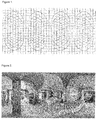
- Figure 1 shows a diagrammatic illustration of the geometry of an equirectangular image.
- the curved lines in figure 1 show the paths that straight lines in an imaged real-world scene will appear to take when they captured in an equirectangular image.
- Figure 2 shows an example of an equirectangular image of a room interior.
- equirectangular images are used to generate synthetic rectilinear images which contain corresponding image content to parts of the equirectangular images, but appear as if they are rectilinear images which have been generated by camera models having selected specific camera parameters, and in particular specific focal lengths. These synthetic rectilinear images and their associated apparent camera parameters, such as focal lengths, can then be used to generate a training set of images for use in machine learning.
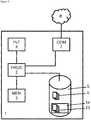
- Figure 3 illustrates a system for producing a training set of images and associated imaging information according to a first embodiment.
- the system is intended to produce a training set of images and associated imaging information suitable for use to train a machine learning system to determine from an image the camera parameters of the camera used to generate the image.
- an image training set generation system 1 is shown.
- the image training set generation system 1 comprises a processor 2 and a memory 3.
- the memory 3 stores instructions, such as programs, providing operating instructions for the processor 2, and also stores other data used or generated during operation of the image training set generation system 1, as will be discussed in more detail below.
- the image training set generation system 1 further comprises a user interface 4.
- the user interface 4 enables instructions to be input to the system 1 by a user, and information to be provided to the user by the image training set generation system 1.
- the image training set generation system 1 further comprises an image store 5 containing a plurality of equirectangular images 6.
- the system 1 further comprises a communications module 7.
- the communications module 7 is connected to a communications network 8.
- the communications network 8 is the Internet.
- the communications module 7 may alternatively or additionally connect the system 1 to other private or public communication networks.
- the communications network 8 is shown schematically in figure 1 . It will be understood that the network 1 may in practice comprise a very large number of components, but these are not described or shown to improve clarity and to avoid obscuring the scope of the present invention. In practice, the communications network 8 may also be connected to other networks. To improve clarity, such other networks are not shown in figure 1 .
- system 1 may comprise a server connected to the communications network 8 and providing services to remote users.
- the system 1 may receive instructions to generate a training set of images made up of a specified number of rectilinear images corresponding to a number of specified camera models.
- Each camera model has a set of defined camera parameters.
- each specified camera model has a set of defined values for the parameters focal length, pixel skew, principal point, and lens distortion. These parameters are generally known as the intrinsic camera parameters of a camera model.
- the specified number of rectilinear images in the training set of images may be large, for example, several tens of thousands of images.
- system 1 may receive the instructions to generate a training set of images from a remote user through the communications network 8, via the communications module 7. In other examples the system 1 may receive the instructions to generate a training set of images through the user interface 4.
- Figure 4 shows a flow chart of a method 400 used by the system 1 of the first embodiment shown in figure 1 to produce a training set of images and associated imaging information.
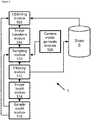
- Figure 5 shows an arrangement of functional modules used by the system 1 of the first embodiment to carry out the method of figure 4 and so produce the training set of images and associated imaging information.
- the functional modules are software modules executed by the processor 2.
- the method 400 begins with an obtain next equirectangular image step 402, in which an equirectangular image obtaining module 502 of the system 1 obtains an equirectangular image 10 from the plurality of equirectangular images 6 stored in the image store 5.
- an image transformation module 504 of the system 1 transforms each pixel of the obtained equirectangular image such that it represents a 3 dimensional (3D) point on the surface of a sphere, and generates a transformed image 11.
- the transformed image 11 may be referred to as a spherical image.
- the skilled person will be aware of a number of known ways of carrying out such a transformation. Accordingly, the transformation does not need to be described in detail herein.
- the obtain next equirectangular image step 402 and the image transformation step 404 collectively obtain an image in which each pixel represents a 3D point on the surface of a sphere.
- These steps are carried out by the equirectangular image obtaining module 502 and the image transformation module 504, which collectively form a first obtaining means which obtains an image in which each pixel represents a 3D point on the surface of a sphere.
- a projective camera model 12 is generated by a camera model generator module 506 of the system 1.
- the projective camera model 12 comprises a projection matrix which defines a projective transformation to map 3D points on the surface of a sphere onto an image plane based on the parameter values of the intrinsic camera parameters of a camera model or camera and lens model, that is the parameter values of the parameters focal length, pixel skew, principal point, and lens distortion.
- the generate projective camera model step 406 generates a projective camera model. This is carried out by the camera model generator module 506, which forms a second obtaining means which obtains the projective camera model
- a sampling module 510 of the system 1 produces a rectilinear image by applying the projection matrix of the projection camera model 12 produced in the generate projective camera model step 406 with a set of intrinsic camera parameters corresponding to a randomly selected one of the specified camera models to the transformed equirectangular image 11 produced in the image transformation step 404, and having a random orientation.
- This application may be referred to as sampling because the applied set of intrinsic camera parameters is one sample of the possible sets of intrinsic camera parameters.
- This application or sampling produces a synthetic rectilinear image 13 corresponding to the scene shown in the equirectangular image as it would be imaged by a camera with intrinsic camera parameters according to the set of intrinsic camera parameters of the randomly selected one of the specified camera models. Accordingly, the sampling produces a synthetic rectilinear image 13.
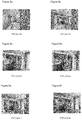
- figures 6a to 6f show respective examples of rectilinear images produced by sampling the equirectangular image of claim 2 using different intrinsic camera parameters. To improve clarity only one intrinsic camera parameter has been varied between the images of figures 6a to 6f . All of figures 6a to 6f have the same principal point, and are shown with the same pixel skew and distortion parameters.
- FIG. 6a corresponds to a camera model having a focal length parameter of 150 pixels
- figure 6b corresponds to a camera model having a focal length parameter of 300 pixels
- figure 6c corresponds to a camera model having a focal length parameter of 450 pixels
- figure 6d corresponds to a camera model having a focal length parameter of 600 pixels
- figure 6e corresponds to a camera model having a focal length parameter of 750 pixels
- figure 6f corresponds to a camera model having a focal length parameter of 900 pixels.
- a filtering module 512 of the system 1 filters the synthetic rectilinear image13 to determine whether to accept it as suitable for use as a training image, or to reject it.
- the filtering module 512 performs line segment extraction on the synthetic rectilinear image 13, and compares the number of identified line segments to a predetermined threshold. If the number of line segments identified in the synthetic rectilinear image 13 exceeds the threshold the synthetic rectilinear image 13 is accepted. Otherwise, if the number of line segments identified in the synthetic rectilinear image 13 does not exceed the threshold the synthetic rectilinear image 13 is rejected.
- the filtering module 512 When a synthetic rectilinear image 13 is accepted by the filtering module 512 in the filtering step 412 the filtering module 512 sends the synthetic rectilinear image 13 to the image store 5 for storage in association with the corresponding set of intrinsic camera parameters.
- the accepted synthetic rectilinear images 13 and associated intrinsic camera parameters are stored in the image store 5 to form a training set 14 of images.
- the method 400 continues to an image count step 414 as discussed below.
- each of the images of the training set 14 of images contains image features useable to determine intrinsic camera parameters.
- the sampling is random, and does not take into account the image content of the equirectangular image, it is possible that some of the synthetic rectilinear images may not be suitable for use as training images.
- some of the synthetic rectilinear images may show only a uniform blank wall or an area of empty sky, and so have no image content suitable for machine learning.
- the inclusion of such images without useful content in a training set 14 of images may reduce the usefulness of the training set 14 of images for training. Accordingly the inclusion of the filtering step 412 may provide an improved training set of images.
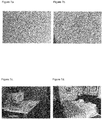
- figures 7a and 7b show examples of rectilinear images produced by sampling an equirectangular image which contain no useful image content for training.
- figures 7c and 7d show examples of rectilinear images produced by sampling an equirectangular image which contain useful image content for training.
- the filtering module 512 will reject the images of figures 7a and 7b as containing fewer identifiable line segments than the predetermined threshold, and accept the images of figures 7c and 7d as containing more identifiable line segments than the predetermined threshold.
- the filtering module 512 sends the synthetic rectilinear image 13 to the image store 5. Further, the method 400 moves to an image count step 414.
- an image count module 514 increments a count of how many synthetic rectilinear images 13 have been accepted and sent to the image store 5, and determines whether the count has reached the specified number of rectilinear images for the instructed training set of images. If the determination is "yes”, the count has reached the specified number, the method 400 stops in a stop step 416. Otherwise, if the determination is "no", the count has not reached the specified number, the method 400 continues to the sample count step 418 as discussed below.
- the method 400 moves to the sample count step 418.
- a sample count module 518 increments a count of how many times a current equirectangular image 10 has been sampled, and determines whether the count is above a predetermined threshold. If the determination is "no", the count is not above the predetermined threshold, the method returns to the sampling step 410 so that another sample is made from the current equirectangular image 10. If the determination is "yes”, the count is above the predetermined threshold, the count is reset to zero, and the method returns to the obtain next equirectangular image step 402 to obtain a new equirectangular image.
- an extremely large number of different samples can be taken from a single equirectangular image.
- the number of possible unique combinations of camera model parameter values and directions is finite, although extremely large, although this number can be regarded as effectively infinite for many practical purposes.
- the resulting training set of images may be lacking in diversity of image content, and this may limit the effectiveness of the training set of images. Accordingly, setting the threshold in the sample count step 414 to limit the maximum number of samples taken from each equirectangular image may provide an improved training set of images.
- the method 400 will generate a training set 14 of images comprising a number of synthetic rectilinear images 13 and associated intrinsic camera parameters, the intrinsic camera parameters associated with each of the synthetic rectilinear images defining the ground truth camera model corresponding to that image.
- the generated training set of images14 can then be sent to the user from the image store 5 through the communications network 8, via the communications module 7.
- the disclosed method of generating a training set of images allows a training set comprising a large number of images each together with corresponding ground truth camera model parameters to be generated without any inaccuracies or errors in the ground truth camera model parameters. Further, the disclosed method allows the training set of images and corresponding ground truth camera model parameters to be generated for any desired camera model. Further, the disclosed method allows the training set of images and corresponding ground truth camera model parameters to be generated quickly, automatically, and cheaply. Further, the disclosed method allows lens distortion to be included in the ground truth camera model parameters of the training set of images.
- a training set of images is generated for use in training a machine learning process to determine from an image the camera parameters of the camera used to capture the image.
- the training set of images may be for use in training a machine learning process to carry out other tasks.
- a single image store 5 is used to store the equirectangular images and the generated training set of images. In other examples these may be stored in different data stores.
- the image store 5 is a part of the system 1. In other examples the image store 5 may be located remotely from the other parts of the system 1.
- the instructions specify a number of camera models to be used to generate the training set of images.
- the instructions may specify values, or ranges of values, of camera model parameters to be used instead of specific camera models.
- sets of randomly selected camera parameters may be used instead of a randomly selected camera model.
- the instructions may specify what number, or proportion, of the training set of images should correspond to each camera model or parameter value.
- the set of intrinsic camera parameters focal length, pixel skew, principal point, and lens distortion are used. In other examples one, some, or all of the parameters may be used. Further, in some other examples additional parameters may be used.
- the camera model or camera parameter values, and facing, used is selected randomly. In other examples these may be selected according to a predetermined sequence. In some examples the predetermined sequence may be a pseudo-random sequence.
- the method obtains an equirectangular image and transforms it into a transformed image.
- the equirectangular images could be stored in the transformed form, and an already transformed image could be used.
- the method is instructed to generate a training set of images made up of a specified number of rectilinear images corresponding to a number of specified camera models.
- the method may be used to generate a training image pool comprising a number of rectilinear images corresponding to a number of camera models, and a desired training set of images may be produced by selecting a suitable set of the rectilinear images from this training image pool. This selection may, for example, be carried out by selecting a specified number of rectilinear images corresponding to a number of specified camera models from the training image pool.
- the random selection may be carried out from among all possible, or all defined, camera models or camera parameter values, rather than being limited to camera models or camera parameter values specified in an instructed training set.
- the specified number of rectilinear images may be the desired number of rectilinear images in the pool, rather than the number of rectilinear images for an instructed training set of images.
- the method uses a sample count step.
- the sample count step may improve the quality of the generated training set of images.
- the use of a sample count step is not essential, and in some examples the sample count step may be omitted.
- the method uses a filtering step.
- the filtering step may improve the quality of the generated training set of images.
- the use of a filtering step is not essential, and in some examples the filtering step may be omitted.
- the communication network is the Internet.
- other networks may be used in addition to, or instead of, the Internet.
- the system may comprise a server.
- the server may comprise a single server or network of servers.
- the functionality of the server may be provided by a network of servers distributed across a geographical area, such as a worldwide distributed network of servers, and a user may be connected to an appropriate one of the network of servers based upon a user location.
- the system may be a stand alone system, or may be incorporated in some other system.
- modules of the system are defined in software. In other examples the modules may be defined wholly or in part in hardware, for example by dedicated electronic circuits.
- system 1 may be implemented as any form of a computing and/or electronic device.
- Such a device may comprise one or more processors which may be microprocessors, controllers or any other suitable type of processors for processing computer executable instructions to control the operation of the device in order to gather and record routing information.
- the processors may include one or more fixed function blocks (also referred to as accelerators) which implement a part of the method in hardware (rather than software or firmware).
- Platform software comprising an operating system or any other suitable platform software may be provided at the computing-based device to enable application software to be executed on the device.
- Computer-readable media may include, for example, computer storage media such as a memory and communications media.
- Computer storage media such as a memory, includes volatile and non-volatile, removable and non-removable media implemented in any method or technology for storage of information such as computer readable instructions, data structures, program modules or other data.
- Computer storage media includes, but is not limited to, RAM, ROM, EPROM, EEPROM, flash memory or other memory technology, CD-ROM, digital versatile disks (DVD) or other optical storage, magnetic cassettes, magnetic tape, magnetic disk storage or other magnetic storage devices, or any other non-transmission medium that can be used to store information for access by a computing device.
- communication media may embody computer readable instructions, data structures, program modules, or other data in a modulated data signal, such as a carrier wave, or other transport mechanism. As defined herein, computer storage media does not include communication media.
- system 1 is shown as a single device it will be appreciated that this system may be distributed or located remotely and accessed via a network or other communication link (e.g. using a communication interface).
- 'computer' is used herein to refer to any device with processing capability such that it can execute instructions. Those skilled in the art will realise that such processing capabilities are incorporated into many different devices and therefore the term 'computer' includes PCs, servers, mobile telephones, personal digital assistants and many other devices.
- a remote computer may store an example of the process described as software.
- a local or terminal computer may access the remote computer and download a part or all of the software to run the program.
- the local computer may download pieces of the software as needed, or execute some software instructions at the local terminal and some at the remote computer (or computer network).
- a dedicated circuit such as a DSP, programmable logic array, or the like.
- any reference to 'an' item refers to one or more of those items.
- the term 'comprising' is used herein to mean including the method steps or elements identified, but that such steps or elements do not comprise an exclusive list and a method or apparatus may contain additional steps or elements.
Landscapes
- Engineering & Computer Science (AREA)
- Physics & Mathematics (AREA)
- General Physics & Mathematics (AREA)
- Theoretical Computer Science (AREA)
- Computer Vision & Pattern Recognition (AREA)
- Mathematical Analysis (AREA)
- Computational Mathematics (AREA)
- Mathematical Optimization (AREA)
- Pure & Applied Mathematics (AREA)
- General Engineering & Computer Science (AREA)
- Studio Devices (AREA)
- Image Processing (AREA)
- Geometry (AREA)
Applications Claiming Priority (1)
| Application Number | Priority Date | Filing Date | Title |
|---|---|---|---|
| GBGB1720250.8A GB201720250D0 (en) | 2017-12-05 | 2017-12-05 | System and method for generating training images |
Publications (1)
| Publication Number | Publication Date |
|---|---|
| EP3496042A1 true EP3496042A1 (fr) | 2019-06-12 |
Family
ID=60950285
Family Applications (1)
| Application Number | Title | Priority Date | Filing Date |
|---|---|---|---|
| EP18210168.3A Withdrawn EP3496042A1 (fr) | 2017-12-05 | 2018-12-04 | Système et procédé de génération d'images de formation |
Country Status (3)
| Country | Link |
|---|---|
| US (1) | US20190172226A1 (fr) |
| EP (1) | EP3496042A1 (fr) |
| GB (1) | GB201720250D0 (fr) |
Cited By (2)
| Publication number | Priority date | Publication date | Assignee | Title |
|---|---|---|---|---|
| GB2586996A (en) * | 2019-09-11 | 2021-03-17 | Canon Kk | A method, apparatus and computer program for acquiring a training set of images |
| WO2022127841A1 (fr) * | 2020-12-18 | 2022-06-23 | 华为技术有限公司 | Procédé de remappage d'image et dispositif de traitement d'image |
Families Citing this family (2)
| Publication number | Priority date | Publication date | Assignee | Title |
|---|---|---|---|---|
| US11763558B1 (en) * | 2019-04-19 | 2023-09-19 | Apple Inc. | Visualization of existing photo or video content |
| WO2022186141A1 (fr) * | 2021-03-04 | 2022-09-09 | パナソニック インテレクチュアル プロパティ コーポレーション オブ アメリカ | Procédé d'apprentissage de paramètre de réseau de réseau neuronal, procédé de calcul de paramètre de caméra et programme |
Citations (1)
| Publication number | Priority date | Publication date | Assignee | Title |
|---|---|---|---|---|
| WO2009068942A1 (fr) * | 2007-11-30 | 2009-06-04 | Dooworks Fz Co | Procédé et système pour le traitement d'images |
-
2017
- 2017-12-05 GB GBGB1720250.8A patent/GB201720250D0/en not_active Ceased
-
2018
- 2018-12-04 EP EP18210168.3A patent/EP3496042A1/fr not_active Withdrawn
- 2018-12-05 US US16/211,062 patent/US20190172226A1/en not_active Abandoned
Patent Citations (1)
| Publication number | Priority date | Publication date | Assignee | Title |
|---|---|---|---|---|
| WO2009068942A1 (fr) * | 2007-11-30 | 2009-06-04 | Dooworks Fz Co | Procédé et système pour le traitement d'images |
Non-Patent Citations (1)
| Title |
|---|
| YANNICK HOLD-GEOFFROY ET AL: "A Perceptual Measure for Deep Single Image Camera Calibration", ARXIV.ORG, CORNELL UNIVERSITY LIBRARY, 201 OLIN LIBRARY CORNELL UNIVERSITY ITHACA, NY 14853, 2 December 2017 (2017-12-02), XP080844533 * |
Cited By (3)
| Publication number | Priority date | Publication date | Assignee | Title |
|---|---|---|---|---|
| GB2586996A (en) * | 2019-09-11 | 2021-03-17 | Canon Kk | A method, apparatus and computer program for acquiring a training set of images |
| GB2586996B (en) * | 2019-09-11 | 2022-03-09 | Canon Kk | A method, apparatus and computer program for acquiring a training set of images |
| WO2022127841A1 (fr) * | 2020-12-18 | 2022-06-23 | 华为技术有限公司 | Procédé de remappage d'image et dispositif de traitement d'image |
Also Published As
| Publication number | Publication date |
|---|---|
| GB201720250D0 (en) | 2018-01-17 |
| US20190172226A1 (en) | 2019-06-06 |
Similar Documents
| Publication | Publication Date | Title |
|---|---|---|
| US9444991B2 (en) | Robust layered light-field rendering | |
| EP3134868B1 (fr) | Génération et utilisation d'une image de radon tridimensionnelle (3d) | |
| US9521391B2 (en) | Settings of a digital camera for depth map refinement | |
| US9979909B2 (en) | Automatic lens flare detection and correction for light-field images | |
| JP6047807B2 (ja) | リフォーカスを実現するための方法および電子装置 | |
| US20170256036A1 (en) | Automatic microlens array artifact correction for light-field images | |
| CN104104869A (zh) | 一种拍照方法、装置及电子设备 | |
| EP3496042A1 (fr) | Système et procédé de génération d'images de formation | |
| CN104867113B (zh) | 图像透视畸变校正的方法及系统 | |
| CN107690673A (zh) | 图像处理方法、装置及服务器 | |
| CN104166972A (zh) | 一种终端及其实现图像处理的方法 | |
| WO2014187265A1 (fr) | Support d'enregistrement informatique, dispositif et procédé de traitement de capture de photo | |
| JP6655379B2 (ja) | 焦点スタックから適応スライス画像を生成する方法および装置 | |
| CN105247567A (zh) | 图像重新聚焦 | |
| US20180114291A1 (en) | Image processing method and device as well as non-transitory computer-readable medium | |
| JP2016509805A (ja) | 画像ストリームの高フレームレート化 | |
| CN114080627A (zh) | 三维模型生成方法及三维模型生成装置 | |
| CN111105351A (zh) | 一种视频序列影像拼接方法及装置 | |
| CN105705979A (zh) | 用于创建相机重聚焦效果的方法和系统 | |
| CN114626992A (zh) | 图像虚化方法及终端设备 | |
| CN112036342A (zh) | 单证抓拍方法、设备及计算机存储介质 | |
| CN112785651A (zh) | 用于确定相对位姿参数的方法和装置 | |
| JP2017103756A (ja) | 画像データ処理装置及び方法 | |
| CN118447172B (zh) | 数字孪生场景构建方法、设备、存储介质和程序产品 | |
| CN111369612B (zh) | 一种三维点云图像生成方法及设备 |
Legal Events
| Date | Code | Title | Description |
|---|---|---|---|
| PUAI | Public reference made under article 153(3) epc to a published international application that has entered the european phase |
Free format text: ORIGINAL CODE: 0009012 |
|
| STAA | Information on the status of an ep patent application or granted ep patent |
Free format text: STATUS: THE APPLICATION HAS BEEN PUBLISHED |
|
| AK | Designated contracting states |
Kind code of ref document: A1 Designated state(s): AL AT BE BG CH CY CZ DE DK EE ES FI FR GB GR HR HU IE IS IT LI LT LU LV MC MK MT NL NO PL PT RO RS SE SI SK SM TR |
|
| AX | Request for extension of the european patent |
Extension state: BA ME |
|
| STAA | Information on the status of an ep patent application or granted ep patent |
Free format text: STATUS: REQUEST FOR EXAMINATION WAS MADE |
|
| 17P | Request for examination filed |
Effective date: 20191128 |
|
| RBV | Designated contracting states (corrected) |
Designated state(s): AL AT BE BG CH CY CZ DE DK EE ES FI FR GB GR HR HU IE IS IT LI LT LU LV MC MK MT NL NO PL PT RO RS SE SI SK SM TR |
|
| STAA | Information on the status of an ep patent application or granted ep patent |
Free format text: STATUS: THE APPLICATION IS DEEMED TO BE WITHDRAWN |
|
| 18D | Application deemed to be withdrawn |
Effective date: 20210701 |