EP3496337B1 - Verfahren und vorrichtung zur rücksetzung einer netzwerkvorrichtung auf werkseinstellungen und netzwerkvorrichtung - Google Patents
Verfahren und vorrichtung zur rücksetzung einer netzwerkvorrichtung auf werkseinstellungen und netzwerkvorrichtung Download PDFInfo
- Publication number
- EP3496337B1 EP3496337B1 EP17842680.5A EP17842680A EP3496337B1 EP 3496337 B1 EP3496337 B1 EP 3496337B1 EP 17842680 A EP17842680 A EP 17842680A EP 3496337 B1 EP3496337 B1 EP 3496337B1
- Authority
- EP
- European Patent Office
- Prior art keywords
- netconf
- factory defaults
- data
- network device
- datastore
- Prior art date
- Legal status (The legal status is an assumption and is not a legal conclusion. Google has not performed a legal analysis and makes no representation as to the accuracy of the status listed.)
- Active
Links
Images




Classifications
-
- H—ELECTRICITY
- H04—ELECTRIC COMMUNICATION TECHNIQUE
- H04L—TRANSMISSION OF DIGITAL INFORMATION, e.g. TELEGRAPHIC COMMUNICATION
- H04L41/00—Arrangements for maintenance, administration or management of data switching networks, e.g. of packet switching networks
- H04L41/08—Configuration management of networks or network elements
- H04L41/0803—Configuration setting
- H04L41/0806—Configuration setting for initial configuration or provisioning, e.g. plug-and-play
-
- H—ELECTRICITY
- H04—ELECTRIC COMMUNICATION TECHNIQUE
- H04L—TRANSMISSION OF DIGITAL INFORMATION, e.g. TELEGRAPHIC COMMUNICATION
- H04L67/00—Network arrangements or protocols for supporting network services or applications
- H04L67/2866—Architectures; Arrangements
- H04L67/30—Profiles
- H04L67/303—Terminal profiles
-
- G—PHYSICS
- G06—COMPUTING OR CALCULATING; COUNTING
- G06F—ELECTRIC DIGITAL DATA PROCESSING
- G06F1/00—Details not covered by groups G06F3/00 - G06F13/00 and G06F21/00
- G06F1/24—Resetting means
-
- H—ELECTRICITY
- H04—ELECTRIC COMMUNICATION TECHNIQUE
- H04L—TRANSMISSION OF DIGITAL INFORMATION, e.g. TELEGRAPHIC COMMUNICATION
- H04L41/00—Arrangements for maintenance, administration or management of data switching networks, e.g. of packet switching networks
- H04L41/08—Configuration management of networks or network elements
- H04L41/0803—Configuration setting
- H04L41/0813—Configuration setting characterised by the conditions triggering a change of settings
- H04L41/0816—Configuration setting characterised by the conditions triggering a change of settings the condition being an adaptation, e.g. in response to network events
-
- H—ELECTRICITY
- H04—ELECTRIC COMMUNICATION TECHNIQUE
- H04L—TRANSMISSION OF DIGITAL INFORMATION, e.g. TELEGRAPHIC COMMUNICATION
- H04L41/00—Arrangements for maintenance, administration or management of data switching networks, e.g. of packet switching networks
- H04L41/08—Configuration management of networks or network elements
- H04L41/0803—Configuration setting
- H04L41/0823—Configuration setting characterised by the purposes of a change of settings, e.g. optimising configuration for enhancing reliability
- H04L41/0826—Configuration setting characterised by the purposes of a change of settings, e.g. optimising configuration for enhancing reliability for reduction of network costs
-
- H—ELECTRICITY
- H04—ELECTRIC COMMUNICATION TECHNIQUE
- H04L—TRANSMISSION OF DIGITAL INFORMATION, e.g. TELEGRAPHIC COMMUNICATION
- H04L67/00—Network arrangements or protocols for supporting network services or applications
- H04L67/2866—Architectures; Arrangements
- H04L67/30—Profiles
-
- H—ELECTRICITY
- H04—ELECTRIC COMMUNICATION TECHNIQUE
- H04L—TRANSMISSION OF DIGITAL INFORMATION, e.g. TELEGRAPHIC COMMUNICATION
- H04L67/00—Network arrangements or protocols for supporting network services or applications
- H04L67/34—Network arrangements or protocols for supporting network services or applications involving the movement of software or configuration parameters
-
- H—ELECTRICITY
- H04—ELECTRIC COMMUNICATION TECHNIQUE
- H04L—TRANSMISSION OF DIGITAL INFORMATION, e.g. TELEGRAPHIC COMMUNICATION
- H04L41/00—Arrangements for maintenance, administration or management of data switching networks, e.g. of packet switching networks
- H04L41/08—Configuration management of networks or network elements
- H04L41/085—Retrieval of network configuration; Tracking network configuration history
- H04L41/0859—Retrieval of network configuration; Tracking network configuration history by keeping history of different configuration generations or by rolling back to previous configuration versions
- H04L41/0863—Retrieval of network configuration; Tracking network configuration history by keeping history of different configuration generations or by rolling back to previous configuration versions by rolling back to previous configuration versions
Definitions
- the present disclosure relates to the field of configuration management technologies, and in particular, to a method and an apparatus for restoring a network device to factory defaults, and a network device.
- each service module in the network device stores its factory defaults data, and a Yang model of each service module defines a remote procedure call (RPC) command for restoring to factory defaults.
- RPC remote procedure call
- each service module replaces data in a startup configuration datastore of a NETCONF server with the factory defaults data of the service module by using a database read/write interface of the NETCONF server in the network device.
- the NETCONF server replaces data in a running configuration datastore with the data in the startup configuration datastore, and then the NETCONF server delivers the data in the running configuration datastore to the corresponding service module.
- each service module makes the factory defaults data be valid, so that the network device has the factory defaults.
- each service module needs to register its factory defaults processing function. This is disadvantageous to third-party extension and increases development difficulty. In addition, this provides poor maintainability because a NETCONF client needs to deliver, to different service modules by using a NETCONF server, different RPC commands for restoring to factory defaults.
- NETCONF Network Configuration Protocol
- rfc6241.txt a method for installing, manipulating, and deleting a configuration of network devices.
- Embodiments of the present disclosure provide a method and an apparatus for restoring a network device to factory defaults, and a network device, to resolve a prior-art problem that a method for restoring a network device to factory defaults is disadvantageous to third-party extension, increases development difficulty, and provides poor maintainability.
- a method for restoring a network device to factory defaults includes: determining, by the NETCONF server, that the network device needs to be restored to the factory defaults; replacing, by the NETCONF server, data in a startup configuration datastore and a running configuration datastore in the NETCONF server with factory defaults data in a factory defaults datastore, where the factory defaults datastore is dedicated to storing the factory defaults data of the network device; delivering, by the NETCONF server, the data in the running configuration datastore after replacement to the plurality of service modules; and performing, by the plurality of service modules, a validation operation based on the data delivered by the NETCONF server.
- the factory defaults datastore is dedicated to storing the factory defaults data of the network device. This avoids that each service module stores its factory defaults data.
- the NETCONF server itself can restore the network device to the factory defaults, and therefore each service module does not need to register its factory defaults processing function. This is beneficial to third-party extension.
- a NETCONF client does not need to deliver a command for restoring to factory defaults to each service module in the network device by using the NETCONF server. This is convenient for maintenance.
- the determining, by the NETCONF server, that the network device needs to be restored to the factory defaults includes: when the NETCONF server determines that the network device starts for the first time or receives a command, for restoring to factory defaults, sent by the NETCONF client, determining, by the NETCONF server, that the network device needs to be restored to the factory defaults.
- the replacing, by the NETCONF server, data in a startup configuration datastore and a running configuration datastore in the NETCONF server with factory defaults data in a factory defaults datastore includes: replacing, by the NETCONF server, the data in the startup configuration datastore with the factory defaults data; and replacing, by the NETCONF server, the data in the running configuration datastore with the data in the startup configuration datastore after replacement.
- the replacing, by the NRTCONF server, data in a startup configuration datastore and a running configuration datastore in the NETCONF server with factory defaults data in a factory defaults datastore includes: replacing, by the NETCONF server, the data in the startup configuration datastore with the factory defaults data; and after the network device restarts, replacing, by the NETCONF server, the data in the running configuration datastore with the data in the startup configuration datastore after replacement.
- the replacing, by the NETCONF server, data in a startup configuration datastore and a running configuration datastore in the NETCONF server with factory defaults data in a factory defaults datastore includes: replacing, by the NETCONF server, the data in both the startup configuration datastore and the running configuration datastore in the NETCONF server with the factory defaults data in the factory defaults datastore; and the delivering, by the NETCONF server, the data in the running configuration datastore after replacement to the plurality of service modules includes: delivering, by the NETCONF server, different data between the running configuration datastore after replacement and the running configuration datastore before the replacement to the plurality of service modules.
- the method before the determining, by the NETCONF server, that the network device needs to be restored to the factory defaults, the method further includes: establishing, by the NETCONF server, a connection-oriented transport protocol session with the NETCONF client; and sending, by the NETCONF server, a capability set of the NETCONF server to the NETCONF client, and receiving a capability set of the NETCONF client sent by the NETCONF client, where the capability set of the NETCONF server includes a factory defaults restoring capability identifier of the NETCONF server, and the factory defaults restoring capability identifier is used to indicate that the NETCONF server has the factory defaults restoring capability.
- the NETCONF client can learn that the NETCONF server has the factory defaults restoring capability.
- the method further includes: receiving, by the NETCONF server, a factory defaults storing command sent by the NETCONF client; and replacing, by the NETCONF server, the data in the factory defaults datastore with target data, where the target data is preset data, data in a preset configuration datastore, or data in a preset file.
- the command for restoring to factory defaults is a remote procedure call RPC command that is added to a Yang model of the NETCONF and that is used to restore the network device to the factory defaults
- the factory defaults storing command is an RPC command that is added to the Yang model of the NETCONF and that is used to store the factory defaults of the network device.
- a method for restoring a network device to factory defaults includes: receiving, by a NETCONF client, an instruction from a user for restoring the network device to the factory defaults; and sending, by the NETCONF client, a command for restoring to factory defaults to a NETCONF server in the network device according to a remote procedure call RPC command added to a Yang model of the NETCONF, so that the NETCONF server replaces data in a startup configuration datastore and a running configuration datastore in the NETCONF server with factory defaults data in a factory defaults datastore, and delivers the data in the running configuration datastore to a plurality of service modules, so that the plurality of service modules perform a validation operation based on the data delivered by the NETCONF server, where the factory defaults datastore is dedicated to storing the factory defaults data of the network device.
- the NETCONF client sends the command for restoring to factory defaults to the NETCONF server, so that the NETCONF server restores the network device to the factory defaults based on a capability of the NETCONF server, and therefore each service module does not need to register its factory defaults processing function.
- the NETCONF client does not need to deliver the command for restoring to factory defaults to each service module in the network device by using the NETCONF server. This is convenient for maintenance.
- the method before the sending, by the NETCONF client, a command for restoring to factory defaults to a NETCONF server in the network device according to an RPC command added to a Yang model of the NETCONF, the method further includes: determining, by the NETCONF client, that the NETCONF server has a factory defaults restoring capability.
- the method further includes: receiving, by the NETCONF client, a capability set of the NETCONF server sent by the NETCONF server, and sending a capability set of the NETCONF client to the NETCONF server, where the capability set of the NETCONF server includes a factory defaults restoring capability identifier of the NETCONF server, and the factory defaults restoring capability identifier is used to indicate that the NETCONF server has the factory defaults restoring capability; and the determining, by the NETCONF client, that the NETCONF server has a factory defaults restoring capability includes: determining, by the NETCONF client based on the factory defaults restoring capability identifier in the capability set of the NETCONF server, that the NETCONF server has the factory defaults restoring capability.
- the method further includes: receiving, by the NETCONF client, an instruction from the user for storing the factory defaults of the network device; and sending, by the NETCONF client, a factory defaults storing command to the NETCONF server in the network device according to an RPC command that is added to the Yang model of the NETCONF and that is used to store the factory defaults of the network device, so that the NETCONF server replaces the data in the factory defaults datastore with target data, where the target data is preset data, data in a preset configuration datastore, or data in a preset file.
- a network device includes: a determining unit, configured to determine that the network device needs to be restored to factory defaults; a replacement unit, configured to replace data in a startup configuration datastore and a running configuration datastore in the network device with factory defaults data in a factory defaults datastore, where the factory defaults datastore is dedicated to storing the factory defaults data of the network device; a delivery unit, configured to deliver the data in the running configuration datastore after replacement to an execution unit; and the execution unit, configured to perform a validation operation based on the data delivered by the delivery unit.
- the units in the network device are configured to implement the method in the first aspect. Therefore, for beneficial effects of the network device, refer to the beneficial effects of the foregoing method. Details are not described herein again.
- an apparatus for restoring a network device to factory defaults includes: a receiving unit, configured to receive an instruction from a user for restoring the network device to the factory defaults; and a sending unit, configured to send a command for restoring to factory defaults to the network device according to a remote procedure call RPC command added to a Yang model of the NETCONF, so that the network device replaces data in a startup configuration datastore and a running configuration datastore in the network device with factory defaults data in a factory defaults datastore, and performs a validation operation based on the data in the running configuration datastore, where the factory defaults datastore is dedicated to storing the factory defaults data of the network device.
- the units in the apparatus are configured to implement the method in the second aspect. Therefore, for beneficial effects of the apparatus, refer to the beneficial effects of the foregoing method. Details are not described herein again.
- a network device includes a memory and a processor, where the memory is configured to store a set of code, and the processor is configured to perform the following actions based on the set of code: determining that the network device needs to be restored to factory defaults; replacing data in a startup configuration datastore and a running configuration datastore in the network device with factory defaults data in a factory defaults datastore, where the factory defaults datastore is dedicated to storing the factory defaults data of the network device; and performing a validation operation based on the data in the running configuration datastore after replacement.
- the components in the network device are configured to implement the method in the first aspect. Therefore, for beneficial effects of the network device, refer to the beneficial effects of the foregoing method. Details are not described herein again.
- an apparatus for restoring a network device to factory defaults includes a transmitter, a receiver, and a processor, where the processor is configured to receive, by using the receiver, an instruction from a user for restoring the network device to the factory defaults; and the processor is configured to send, by using the transmitter, a command for restoring to factory defaults to the network device according to a remote procedure call RPC command added to a Yang model of the NETCONF, so that the network device replaces data in a startup configuration datastore and a running configuration datastore in the network device with factory defaults data in a factory defaults datastore, and performs a validation operation based on the data in the running configuration datastore, where the factory defaults datastore is dedicated to storing the factory defaults data of the network device.
- the components in the apparatus are configured to implement the method in the second aspect. Therefore, for beneficial effects of the apparatus, refer to the beneficial effects of the foregoing method. Details are not described herein again.
- NETCONF is a new network configuration and management protocol.
- SNMP Simple Network Management Protocol
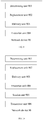
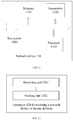
- Message transmission of the NETCONF is divided into four layers, including a transport layer, a message layer, an operation layer, and a content layer, as shown in FIG. 1 .
- the transport layer is mainly used to establish a communication path between a network device and a NETCONF client.
- a transport layer protocol may be specifically the Secure Shell (SSH) protocol, the Transport Layer Security (TLS) protocol, the Simple Object Access Protocol (SOAP), the Blocks Extensible Exchange Protocol (BEEP), or the like.
- the message layer represents an RPC-based communication model. Therefore, the message layer may also be referred to as an RPC layer.
- the message layer encapsulates an operation request message by using an ⁇ rpc> element and sends a request to a network device by using a secure connection-oriented session.
- the network device encapsulates a response message of the operation request by using an ⁇ rpc-reply> element, and sends the response message to a requester.
- the operation layer defines a set of basic operation elements. These operation elements are most basic RPC operation elements, specifically including ⁇ get-config> (query), ⁇ edit-config> (modification), ⁇ copy-config> (overwrite), ⁇ delete-config> (clear), and the like.
- ⁇ edit-config> is limited to operating a running configuration datastore (running configuration datastore) and a candidate (candidate) configuration datastore (candidate configuration datastore).
- ⁇ delete-config> is limited to operating a startup configuration datastore (startup configuration datastore).
- the NETCONF defines three configuration datastores for storing configuration data.
- the three configuration datastores are the startup configuration datastore, the running configuration datastore, and the candidate configuration datastore.
- the startup configuration datastore is used to store startup configuration of a network device.
- the startup configuration is configuration, used when a system of the network device starts next time, of the network device.
- the startup configuration may be different from running configuration.
- the startup configuration datastore is a datastore that takes effect by default when the system of the network device starts, and is loaded by the network device when the system starts.
- the running configuration datastore is used to store running configuration of a network device.
- the running configuration is configuration of the network device running in an active state currently, and the active state is exactly the same as a running state.
- Current configuration can be updated to the startup configuration datastore by copying data in the running configuration datastore to the startup configuration datastore, and the configuration data is used as configuration data to be loaded when the system starts next time.
- the candidate configuration datastore is used to store optional configuration of a network device.
- the optional configuration is candidate configuration that has not taken effect.
- the NRTCONF client can use an RPC command that may be specifically a commit command, to apply the optional configuration to the network device, so that the optional configuration can become current running configuration.
- the content layer describes configuration data used in network management, specifically including configuration data and a configuration object.
- the content layer basically depends on a device vendor.
- the architecture includes a NETCONF client and a network device.
- the network device includes a NETCONF server and a plurality of service modules.
- the service modules may specifically include an interface module, a Dynamic Host Configuration Protocol (DHCP) module, a wireless local area network (WLAN) module, and the like.
- the NETCONF client is connected to the NETCONF server, and the NETCONF server is connected to the plurality of service modules.
- the NETCONF server further includes a configuration database.
- the configuration database includes a startup configuration datastore, a running configuration datastore, and a candidate configuration datastore.
- a session is established between the NETCONF client and the NETCONF server by using a connection-oriented transport protocol (such as the SSH, TLS, SOAP, or BEEP).
- Content communicated between the NETCONF client and the NETCONF server is an RPC message in a bi-directional Extensible Markup Language (XML) format defined by the NETCONF, including a request message sent from the NETCONF client to the NETCONF server, and a response message returned by the NETCONF server to the NETCONF client.
- XML Extensible Markup Language
- a message format of the RPC message is defined by a Yang model, and the Yang model may define the message format and a format of configuration data included in the message.
- the NETCONF is improved in the embodiments of the present disclosure, and the improvement specifically includes: A factory defaults datastore is added to the NETCONF, and the factory defaults datastore is used to store factory defaults data of the network device.
- the datastore may be named factory defaults datastore, and this naming is merely an example.
- a name of the factory defaults datastore may also be another name.
- a factory defaults restoring capability identifier is added to a capability set of the NETCONF server, to indicate that the NETCONF implemented by the NETCONF server supports a factory defaults restoring function.
- the factory defaults restoring capability identifier may be specifically: urn:ietf:params:netconf:capability:factory:1.0.
- An RPC command for restoring to factory defaults and an RPC command for storing factory defaults are added to the Yang model of the NETCONF. Formats of the RPC commands and formats of configuration data included in the RPC commands are all defined by the Yang model. For example, a name of the RPC command for restoring to factory defaults may be ⁇ factory-restore>, and a name of the RPC command for storing factory defaults may be ⁇ factory-store>.
- An embodiment of the present disclosure provides a method for restoring a network device to factory defaults.
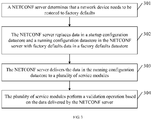
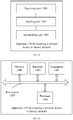
- the network device includes a NETCONF server and a plurality of service modules. As shown in FIG. 3 , the method includes the following steps.
- the NETCONF server determines that the network device needs to be restored to the factory defaults.
- step 301 may be specifically implemented as: When the NETCONF server determines that the network device starts for the first time or receives a command, for restoring to factory defaults, sent by the NETCONF client, the NETCONF server determines that the network device needs to be restored to the factory defaults.
- the NETCONF client may be software running on other computers or server hardware apparatuses outside the network device.
- the NETCONF server may determine, during a startup process of the network device, whether a startup configuration datastore is empty, to determine whether the network device starts for the first time. Specifically, when the startup configuration datastore is empty, the network device starts for the first time. In addition, the NETCONF server may further determine, based on a preset first-time startup identifier, that the network device starts for the first time. This is not specifically limited in this embodiment of the present disclosure.
- the NETCONF server replaces data in a startup configuration datastore and a running configuration datastore in the NETCONF server with factory defaults data in a factory defaults datastore.
- the factory defaults datastore is dedicated to storing the factory defaults data of the network device.
- the factory defaults datastore is a datastore added to the existing NETCONF. Only when the network device starts for the first time or the NETCONF server receives a command for restoring to factory defaults, the NETCONF server replaces the data in the startup configuration datastore and the running configuration datastore with the factory defaults data in the factory defaults datastore.
- the NETCONF server delivers the data in the running configuration datastore to the plurality of service modules.
- the network device includes the plurality of service modules such as an interface module, a DHCP module, and a WLAN module. Different service modules are used for processing different data. Therefore, during data delivery, the NETCONF server delivers, to a different service module, data to be processed by the service module.
- service modules such as an interface module, a DHCP module, and a WLAN module.
- Different service modules are used for processing different data. Therefore, during data delivery, the NETCONF server delivers, to a different service module, data to be processed by the service module.
- the plurality of service modules perform a validation operation based on the data delivered by the NETCONF server.
- step 304 the network device is restored to the factory defaults.
- the factory defaults datastore is dedicated to storing the factory defaults data of the network device. This avoids that each service module stores its factory defaults data.
- the NETCONF server itself can restore the network device to the factory defaults, and therefore each service module does not need to register its factory defaults processing function. This is beneficial to third-party extension.
- the NETCONF client does not need to deliver the command for restoring to factory defaults to each service module in the network device by using the NETCONF server. This is convenient for maintenance.
- FIG. 3 The method shown in FIG. 3 is further described by using different application scenarios.
- FIG. 4 For the following explanations based on embodiments described in FIG. 4 , FIG. 5 , and FIG. 6 and related to the embodiment described in FIG. 3 , refer to the embodiment described in FIG. 3 .
- Scenario 1 The network device starts for the first time.
- the foregoing method includes the following steps.
- the NETCONF server determines that the network device starts for the first time.
- step 401 For a specific implementation of step 401, refer to the foregoing description. Details are not described herein again.
- the NETCONF server replaces the data in the startup configuration datastore with the factory defaults data in the factory defaults datastore.
- the NETCONF server replaces the data in the running configuration datastore with the data in the startup configuration datastore.
- step 404 This step is the same as step 303.
- step 405 This step is the same as step 304.
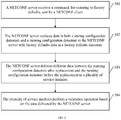
- Scenario 2 The network device receives the command, for restoring to factory defaults, sent by the NETCONF client.
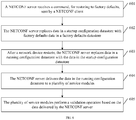
- the foregoing method may be implemented by using a method shown in FIG. 5 or FIG. 6 . Specifically, as shown in FIG. 5 , the foregoing method includes the following steps.
- the NETCONF server receives a command, for restoring to factory defaults, sent by the NETCONF client.
- the NETCONF server replaces the data in both the startup configuration datastore and the running configuration datastore in the NETCONF server with the factory defaults data in the factory defaults datastore.
- the NETCONF server delivers different data between the running configuration datastore after replacement and the running configuration datastore before the replacement to the plurality of service modules.
- step 504 This step is the same as step 304.
- the foregoing method includes the following steps.
- the NETCONF server receives a command, for restoring to factory defaults, sent by the NETCONF client.
- the command for restoring to factory defaults may be an RPC command, for restoring to factory defaults, added to a Yang model of the NETCONF.
- the NETCONF server replaces the data in the startup configuration datastore with the factory defaults data in the factory defaults datastore.
- the NETCONF server replaces the data in the running configuration datastore with the data in the startup configuration datastore.
- step 604 This step is the same as step 303.
- step 605 This step is the same as step 304.
- the NETCONF server may restore the network device to the factory defaults based on settings in the network device by using the method shown in FIG. 5 or FIG. 6 , or may indicate, in the command for restoring to factory defaults, whether the network device needs to restart. If it indicates that the network device needs to restart, the method shown in FIG. 6 is used to restore the network device to the factory defaults. If it indicates that the network device does not need to restart, the method shown in FIG. 5 is used to restore the network device to the factory defaults.
- the NETCONF server may alternatively restore the network device to the factory defaults by using steps 402 to 405.
- An embodiment of the present disclosure further provides a method for restoring a network device to factory defaults, used to illustrate the method shown in FIG. 5 .
- the method specifically includes the following steps.
- a NETCONF server obtains a factory defaults datastore.
- the NETCONF server may obtain the factory defaults datastore during a startup process of the network device, and specifically, may create a factory defaults datastore based on a startup program or directly call a stored created factory defaults datastore.
- the NETCONF server establishes a connection-oriented transport protocol session with a NETCONF client.
- a connection-oriented transport protocol between the NETCONF server and the NETCONF client may be the SSH, the TLS, the SOAP, the BEEP, or the like.
- step 703 may include: sending, by the NETCONF server, the capability set of the NETCONF server to the NETCONF client, and receiving the capability set of the NETCONF client sent by the NETCONF client; and sending, by the NETCONF client, the capability set of the NETCONF client to the NETCONF server, and receiving, the capability set of the NETCONF server sent by the NETCONF server.
- the NETCONF describes, by using a capability, a protocol version and a function that are supported by the NETCONF server or the NETCONF client.
- the NETCONF server and the NETCONF client can exchange each other's capability sets by using Hello messages.
- the capability set of the NETCONF server (or NETCONF client) is used to describe the protocol version and the function that are supported by the NETCONF server (or the NETCONF client), for example, a Yang model version and a NETCONF version that are supported by the NETCONF server (or the NETCONF client).
- the capability set of the NETCONF server includes a factory defaults restoring capability identifier of the NETCONF server, and the factory defaults restoring capability identifier is used to represent that the NETCONF server has a factory defaults restoring capability.
- the factory defaults restoring capability identifier may be specifically: urn:ietf:params:netconf:capability:factory:1.0.
- the NETCONF client determines, based on the capability set of the NETCONF server, that the NETCONF server has a factory defaults restoring capability.
- the NETCONF client determines that the capability set of the NETCONF server includes the factory defaults restoring capability identifier
- the NETCONF client determines that the NETCONF server has the factory defaults restoring capability.
- step 704 if a user instructs to restore the network device to the factory defaults, steps 705 to 708 are performed. If the user instructs to store the factory defaults of the network device, step 709 and step 710 are performed.
- the NETCONF client delivers an RPC command for restoring to factory defaults to the NETCONF server according to an RPC command, for restoring to factory defaults, in a Yang model of the NETCONF.
- the RPC command for restoring to factory defaults is an RPC command added to a Yang model of the existing NETCONF.
- a name of the RPC command for restoring to factory defaults may be ⁇ factory-restore>.
- the RPC command, for restoring to factory defaults, delivered by the NETCONF client to the NETCONF server may be specifically:
- the NETCONF server receives the RPC command, for restoring to factory defaults, sent by the NETCONF client, and replaces data in both a startup configuration datastore and a running configuration datastore with factory defaults data in a factory defaults datastore according to the RPC command.
- the NETCONF server delivers different data between the running configuration datastore after replacement and the running configuration datastore before the replacement to a plurality of service modules.
- the plurality of service modules perform a validation operation based on the data delivered by the NETCONF server.
- the NETCONF client delivers, to the NETCONF server according to an RPC command, for storing factory defaults, in the Yang model of the NETCONF, an RPC command for storing factory defaults.
- the factory defaults storing command is used to update the factory defaults data of the network device.
- the RPC command for storing factory defaults is an RPC command added to the Yang model of the existing NETCONF.
- a name of the RPC command for storing factory defaults may be ⁇ factory-store>.
- the RPC command, for storing factory defaults, delivered by the NETCONF client to the NETCONF server may be specifically:
- the NETCONF server receives the RPC command, for storing factory defaults, sent by the NETCONF client, and replaces the data in the factory defaults datastore with target data.
- the target data may be preset data, data in a preset configuration datastore, or data in a preset file.
- the target data is the data in the running configuration datastore.
- An embodiment of the present disclosure further provides a method for restoring a network device to factory defaults, used to illustrate the method shown in FIG. 6 .
- the method specifically includes the following steps.
- Steps 801 to 804 are the same as step 701 to step 704 in FIG. 7 , respectively.
- Steps 801 to 804 are the same as step 701 to step 704 in FIG. 7 , respectively.
- step 804 if a user instructs to restore the network device to the factory defaults, steps 805 to 809 are performed. If the user instructs to store the factory defaults of the network device, step 810 and step 811 are performed.
- the NETCONF client delivers an RPC command for restoring to factory defaults to the NETCONF server according to an RPC command, for restoring to factory defaults, in a Yang model of the NETCONF.
- the RPC command for restoring to factory defaults is an RPC command added to a Yang model of an existing NETCONF.
- a name of the RPC command for restoring to factory defaults may be ⁇ factory-restore>.
- the RPC command, for restoring to factory defaults, delivered by the NETCONF client to the NETCONF server may be specifically:
- the NETCONF server receives the RPC command, for restoring to factory defaults, sent by the NETCONF client, and replaces data in a startup configuration datastore in the NETCONF server with factory defaults data in a factory defaults datastore according to the RPC command.
- the NETCONF server replaces data in a running configuration datastore in the NETCONF server with the data in the startup configuration datastore.
- the NETCONF server delivers the data in the running configuration datastore to a plurality of service modules.
- the network device includes the plurality of service modules such as an interface module, a DHCP module, and a WLAN module. Different service modules are used for processing different data. Therefore, during data delivery, the NETCONF server delivers, to a different service module, data to be processed by the service module.
- service modules such as an interface module, a DHCP module, and a WLAN module.
- Different service modules are used for processing different data. Therefore, during data delivery, the NETCONF server delivers, to a different service module, data to be processed by the service module.
- the plurality of service modules perform a validation operation based on the data delivered by the NETCONF server.
- Step 810 is the same as step 709, and step 811 is the same as step 710.
- Step 810 is the same as step 709, and step 811 is the same as step 710.
- steps 701 to 704 may also be included before step 401. Details are not described herein again.
- the factory defaults datastore is dedicated to storing the factory defaults data of the network device. This avoids that each service module stores its factory defaults data.
- the NETCONF server itself can restore the network device to the factory defaults, and therefore each service module does not need to register its factory defaults processing function. This is beneficial to third-party extension.
- the NETCONF client does not need to deliver the command for restoring to factory defaults to each service module in the network device by using the NETCONF server. This is convenient for maintenance.
- a command for restoring to factory defaults needs to be delivered to each service module in a network device, and therefore an RPC command for restoring to factory defaults further needs to be added to a Yang model of each service module.
- This is disadvantageous to inheritance and extensibility of the Yang model.
- this embodiment of the present disclosure there is no need to add the command for restoring to factory defaults to each service module in the network device, and therefore there is no need to add the RPC command for restoring to factory defaults to a Yang model of each service module. This is beneficial to inheritance and extensibility of the Yang model.
- An embodiment of the present disclosure further provides a network device 90.
- the network device 90 includes:
- the determining unit 901 is specifically configured to: when the determining unit 901 determines that the network device starts for the first time or determines that a command, for restoring to factory defaults, sent by a NETCONF client is received, determine that the network device needs to be restored to the factory defaults.
- the replacement unit 902 is specifically configured to:
- the replacement unit 902 is specifically configured to:
- the replacement unit 902 is specifically configured to replace the data in both the startup configuration datastore and the running configuration datastore with the factory defaults data in the factory defaults datastore; and the delivery unit 903 is specifically configured to deliver different data between the running configuration datastore after replacement and the running configuration datastore before the replacement to the execution unit 904.
- the network device 90 further includes:
- the transceiver unit 906 is further configured to receive a factory defaults storing command sent by the NETCONF client.
- the replacement unit 902 is further configured to replace the data in the factory defaults datastore with target data, where the target data is preset data, data in a preset configuration datastore, or data in a preset file.
- the command for restoring to factory defaults is a remote procedure call RPC command that is added to a Yang model of theNETCONF and that is used to restore the network device to the factory defaults
- the factory defaults storing command is an RPC command that is added to the Yang model of the NETCONF and that is used to store the factory defaults of the network device.
- the units in the network device 90 provided in this embodiment of the present disclosure are configured to perform the foregoing methods. Therefore, for beneficial effects of the network device 90, refer to the beneficial effects described in the foregoing method sections. Details are not described herein again.
- An embodiment of the present disclosure further provides a network device 110.
- the network device 110 includes a memory 1101, a processor 1102, and a transceiver 1103.
- the memory 1101 is configured to store a set of code.
- the processor 1102 is configured to perform, based on the set of code, any of the methods shown in FIG 3 to FIG. 6 .
- the processor is further configured to perform step 701 and step 702, steps 706 to 708, and step 710 in the method shown in FIG. 7 .
- the processor is further configured to perform step 801 and step 802, steps 806 to 809, and step 811 in the method shown in FIG. 8 .
- the transceiver 1103 is configured to perform step 703, step 706, and step 710 in the method shown in FIG. 7 , and is further configured to perform step 803, step 806, and step 811 in the method shown in FIG. 8 .
- the memory 1101, the processor 1102, and the transceiver 1103 are coupled together by using a bus system 1104.
- the memory 1101 may include a random access memory, or may further include a non-volatile memory such as at least one magnetic disk storage.
- the bus system 1104 may be an Industry Standard Architecture (ISA) bus, a Peripheral Component Interconnect (PCI) bus, an Extended Industry Standard Architecture (EISA) bus, or the like.
- ISA Industry Standard Architecture
- PCI Peripheral Component Interconnect
- EISA Extended Industry Standard Architecture
- the bus system 1104 may be classified into an address bus, a data bus, a control bus, and the like. For ease of representation, the bus is represented by using only one thick line in FIG. 11 , but it does not mean that there is only one bus or one type of bus.
- the transceiver unit 906 may be the transceiver 1103, and the remaining units may be the processor 1102.
- the remaining units may be embedded in or independent of the processor of the network device in a hardware form, or may be stored in the memory of the network device in a software form, to be invoked by the processor for performing the operations corresponding to the foregoing units.
- the processor may be a central processing unit (CPU), or an application-specific integrated circuit (ASIC), or one or more integrated circuits configured to implement this embodiment of the present disclosure.
- the components in the network device 110 provided in this embodiment of the present disclosure are configured to perform the foregoing methods. Therefore, for beneficial effects of the network device 110, refer to the beneficial effects described in the foregoing method sections. Details are not described herein again.
- An embodiment of the present disclosure further provides an apparatus 120 for restoring a network device to factory defaults.
- the apparatus 120 includes:
- the apparatus 120 further includes: a determining unit 1203, configured to determine that the network device has a factory defaults restoring capability.
- the receiving unit 1201 is further configured to receive a capability set of the network device sent by the network device
- the sending unit 1202 is further configured to send a capability set of the apparatus 120 to the network device
- the capability set of the network device includes a factory defaults restoring capability identifier of the network device
- the factory defaults restoring capability identifier is used to indicate that the network device has the factory defaults restoring capability.
- the determining unit 1203 is specifically configured to determine, based on the factory defaults restoring capability identifier in the capability set of the network device, that the network device has the factory defaults restoring capability.
- the receiving unit 1201 is further configured to receive an instruction from the user for storing the factory defaults of the network device.
- the sending unit 1202 is further configured to send a factory defaults storing command to the network device according to an RPC command that is added to the Yang model of the NETCONF and that is used to store the factory defaults of the network device, so that the network device replaces the data in the factory defaults datastore with target data, where the target data is preset data, data in a preset configuration datastore, or data in a preset file.
- the units in the apparatus 120 provided in this embodiment of the present disclosure are configured to perform the foregoing methods. Therefore, for beneficial effects of the apparatus 120, refer to the beneficial effects described in the foregoing method sections. Details are not described herein again.
- An embodiment of the present disclosure further provides an apparatus 140 for restoring a network device to factory defaults.
- the apparatus 140 includes a transmitter 1401, a receiver 1402, a memory 1403, and a processor 1404.
- the processor 1404 is configured to perform corresponding actions based on code stored in the memory 1403.
- the transmitter 1401, the receiver 1402, the memory 1403, and the processor 1404 are coupled together by using a bus system 1405.
- the memory 1403 may include a random access memory, or may further include a non-volatile memory such as at least one magnetic disk storage.
- the bus system 1405 may be an ISA bus, a PCI bus, an EISA bus, or the like.
- the bus system 1405 may be classified into an address bus, a data bus, a control bus, and the like. For ease of representation, the bus is represented by using only one thick line in FIG. 14 , but it does not mean that there is only one bus or one type of bus.
- the processor 1404 is configured to perform, by using the transmitter 1401, step 703, step 705, and step 709 in the method shown in FIG. 7 and step 803, step 805, and step 810 in the method shown in FIG. 8 .
- the processor 1404 is further configured to perform steps 702 to 704 in the method shown in FIG. 7 and steps 802 to 804 in the method shown in FIG. 8 .
- the receiving unit 1201 may be the receiver 1402
- the sending unit 1202 may be the transmitter 1401
- the determining unit 1203 may be the processor 1404.
- the determining unit may be embedded in or independent of the processor of the apparatus for restoring a network device to factory defaults, in a hardware form, or may be stored, in a software form, in the memory of the apparatus for restoring a network device to factory defaults, to be invoked by the processor for performing the operations corresponding to the foregoing units.
- the processor may be a CPU or an ASIC, or may be configured as one or more integrated circuits implementing this embodiment of the present disclosure.
- the components in the apparatus 140 provided in this embodiment of the present disclosure are configured to perform the foregoing methods. Therefore, for beneficial effects of the apparatus 140, refer to the beneficial effects described in the foregoing method sections. Details are not described herein again.
- the disclosed apparatus and method may be implemented in other manners.
- the described apparatus embodiment is merely an example.
- the module division is merely logical function division and may be other division in actual implementation.
- a plurality of modules or components may be combined or integrated into another system, or some features may be ignored or may not be performed.
- modules described as separate parts may or may not be physically separate, and parts displayed as modules may or may not be physical modules, may be located in one position, or may be distributed on a plurality of network units. Some or all of the units may be selected according to actual requirements to achieve the objectives of the solutions of the embodiments.
- modules in the embodiments of the present disclosure may be integrated into one processing module, or two or more modules are integrated into one module.
- the integrated module may be implemented in a form of hardware, or may be implemented in a form of hardware in addition to a software functional module.
- the integrated unit may be stored in a computer-readable storage medium.
- the software functional module is stored in a storage medium and includes several instructions for instructing a computer device (which may be a personal computer, a server, or a network device) to perform some of the steps of the methods described in the embodiments of the present disclosure.
- the foregoing storage medium includes any medium that can store program code, such as a USB flash drive, a removable hard disk, a read-only memory (ROM), a random access memory (RAM), a magnetic disk, or an optical disc.
Landscapes
- Engineering & Computer Science (AREA)
- Computer Networks & Wireless Communication (AREA)
- Signal Processing (AREA)
- Theoretical Computer Science (AREA)
- Physics & Mathematics (AREA)
- General Engineering & Computer Science (AREA)
- General Physics & Mathematics (AREA)
- Computer And Data Communications (AREA)
- Data Exchanges In Wide-Area Networks (AREA)
- Multimedia (AREA)
Claims (9)
- Verfahren zum Wiederherstellen einer Netzvorrichtung auf Werkseinstellungen, wobei die Netzvorrichtung einen Netzkonfigurationsprotokoll(Network Configuration Protocol - NETCONF)-Server und mehrere Dienstmodule umfasst, wobei der NETCONF-Server einen Startkonfigurationsdatenspeicher, einen laufenden Konfigurationsdatenspeicher und einen Datenspeicher für Werkseinstellungen umfasst, und das Verfahren Folgendes umfasst:• Bestimmen, durch den NETCONF-Server, dass die Netzvorrichtung auf die Werkseinstellungen wiederhergestellt werden muss (Schritt 301);• Ersetzen, durch den NETCONF-Server, von Daten in dem Startkonfigurationsdatenspeicher und in dem laufenden Konfigurationsdatenspeicher in dem NETCONF-Server durch Daten der Werkseinstellungen in dem Datenspeicher der Werkseinstellungen, wobei der Datenspeicher der Werkseinstellungen dazu bestimmt ist, die Daten der Werkseinstellungen der Dienstmodule der Netzvorrichtung zu speichern (Schritt 302);• Bereitstellen, durch den NETCONF-Server, der Daten in dem laufenden Konfigurationsdatenspeicher nach der Ersetzung an die mehreren Dienstmodule (Schritt 303); und• Durchführen, durch die mehreren Dienstmodule, eines Überprüfungsablaufs basierend auf den Daten, die durch den NETCONF-Server bereitgestellt werden (Schritt 304).
- Verfahren nach Anspruch 1, wobei das Bestimmen, durch den NETCONF-Server, dass die Netzvorrichtung auf die Werkseinstellungen wiederhergestellt werden muss, Folgendes umfasst:
wenn der NETCONF-Server bestimmt, dass die Netzvorrichtung erstmalig startet oder einen Befehl zum Wiederherstellen der Werkseinstellungen empfängt, der durch einen NETCONF-Client gesendet wird, Bestimmen, durch den NETCONF-Server, dass die Netzvorrichtung auf die Werkseinstellungen wiederhergestellt werden muss. - Verfahren nach Anspruch 2, wobei, wenn die Netzvorrichtung erstmalig startet, das Ersetzen, durch den NETCONF-Server, von Daten in dem Startkonfigurationsdatenspeicher und dem laufenden Konfigurationsdatenspeicher in dem NETCONF-Server mit Daten der Werkseinstellungen in dem Datenspeicher der Werkseinstellungen Folgendes umfasst:Ersetzen, durch den NETCONF-Server, der Daten in dem Startkonfigurationsdatenspeicher mit den Daten der Werkseinstellungen; undErsetzen, durch den NETCONF-Server, der Daten in dem laufenden Konfigurationsdatenspeicher durch die Daten in dem Startkonfigurationsdatenspeicher nach der Ersetzung.
- Verfahren nach Anspruch 2, wobei, wenn der NETCONF-Server den Befehl zum Wiederherstellen der Werkseinstellungen empfängt, der durch den NETCONF-Client gesendet wird, das Ersetzen, durch den NETCONF-Server, der Daten in dem Startkonfigurationsdatenspeicher und in dem laufenden Konfigurationsdatenspeicher in dem NETCONF-Server mit den Daten der Werkseinstellungen in dem Datenspeicher der Werkseinstellungen Folgendes umfasst:Ersetzen, durch den NETCONF-Server, der Daten in dem Startkonfigurationsdatenspeicher mit den Daten der Werkseinstellungen; undnach dem Neustart der Netzvorrichtung, Ersetzen, durch den NETCONF-Server, der Daten in dem laufenden Konfigurationsdatenspeicher mit den Daten in dem Startkonfigurationsdatenspeicher nach der Ersetzung.
- Verfahren nach Anspruch 2, wobei, wenn der NETCONF-Server den Befehl zum Wiederherstellen der Werkseinstellungen empfängt, der durch den NETCONF-Client gesendet wird, das Ersetzen, durch den NETCONF-Server, der Daten in dem Startkonfigurationsdatenspeicher und in dem laufenden Konfigurationsdatenspeicher in dem NETCONF-Server mit den Daten der Werkseinstellungen in dem Datenspeicher der Werkseinstellungen Folgendes umfasst:Ersetzen, durch den NETCONF-Server, der Daten sowohl in dem Startkonfigurationsdatenspeicher als auch in dem laufenden Konfigurationsdatenspeicher in dem NETCONF-Server mit den Daten der Werkseinstellungen in dem Datenspeicher der Werkseinstellungen; undwobei das Bereitstellen, durch den NETCONF-Server, der Daten in dem laufenden Konfigurationsdatenspeicher nach der Ersetzung an die mehreren Dienstmodule Folgendes umfasst: Bereitstellen, durch den NETCONF-Server, verschiedener Daten zwischen dem laufenden Konfigurationsdatenspeicher nach der Ersetzung und dem laufenden Konfigurationsdatenspeicher vor der Ersetzung an die mehreren Dienstmodule.
- Verfahren nach einem der Ansprüche 1 bis 5, wobei vor dem Bestimmen, durch den NETCONF-Server, dass die Netzvorrichtung auf die Werkseinstellungen wiederhergestellt werden muss, das Verfahren ferner Folgendes umfasst:Herstellen, durch den NETCONF-Server, einer verbindungsorientierten Transportprotokollsitzung mit dem NETCONF-Client; undSenden, durch den NETCONF-Server, eines Fähigkeitssatzes des NETCONF-Servers an den NETCONF-Client und Empfangen eines Fähigkeitssatzes des NETCONF-Clients, der durch den NETCONF-Client gesendet wird, wobei der Fähigkeitssatz des NETCONF-Servers eine Kennung für die Wiederherstellungsfähigkeit des NETCONF-Servers in Bezug auf die Werkseinstellungen umfasst und wobei die Kennung für die Wiederherstellungsfähigkeit in Bezug auf die Werkseinstellungen verwendet wird, um anzuzeigen, dass der NETCONF-Server über die Wiederherstellungsfähigkeit in Bezug auf die Werkseinstellungen verfügt.
- Verfahren nach einem der Ansprüche 1 bis 6, wobei das Verfahren ferner Folgendes umfasst:Empfangen, durch den NETCONF-Server, eines Speicherbefehls der Werkeinstellungen, der durch den NETCONF-Client gesendet wird; undErsetzen, durch den NETCONF-Server, der Daten in dem Datenspeicher der Werkseinstellungen durch Zieldaten, wobei die Zieldaten voreingestellte Daten, Daten in einem voreingestellten Konfigurationsdatenspeicher oder Daten in einer voreingestellten Datei sind.
- Verfahren nach Anspruch 7, wobei der Befehl zum Wiederherstellen auf Werkseinstellungen ein Fernaufruf (remote procedure call - RPC)-Befehl ist, der zu einem Yang-Modell des NETCONF hinzugefügt wird und der verwendet wird, um die Netzvorrichtung auf die Werkseinstellungen wiederherzustellen, und wobei der Speicherbefehl der Werkseinstellungen ein RPC-Befehl ist, der zu dem Yang-Modell des NETCONF hinzugefügt wird und der verwendet wird, um die Werkseinstellungen der Netzvorrichtung zu speichern.
- Netzvorrichtung (90), dadurch gekennzeichnet, dass die Netzvorrichtung konfiguriert ist, um das Verfahren nach einem der Ansprüche 1-8 auszuführen.
Priority Applications (1)
| Application Number | Priority Date | Filing Date | Title |
|---|---|---|---|
| EP20208552.8A EP3843335A1 (de) | 2016-08-24 | 2017-06-22 | Verfahren und vorrichtung zur wiederherstellung einer netzwerkvorrichtung auf werkseinstellungen und netzwerkvorrichtung |
Applications Claiming Priority (2)
| Application Number | Priority Date | Filing Date | Title |
|---|---|---|---|
| CN201610716564.4A CN107786350B (zh) | 2016-08-24 | 2016-08-24 | 一种恢复网络设备的出厂配置的方法、装置及网络设备 |
| PCT/CN2017/089468 WO2018036255A1 (zh) | 2016-08-24 | 2017-06-22 | 一种恢复网络设备的出厂配置的方法、装置及网络设备 |
Related Child Applications (2)
| Application Number | Title | Priority Date | Filing Date |
|---|---|---|---|
| EP20208552.8A Division EP3843335A1 (de) | 2016-08-24 | 2017-06-22 | Verfahren und vorrichtung zur wiederherstellung einer netzwerkvorrichtung auf werkseinstellungen und netzwerkvorrichtung |
| EP20208552.8A Division-Into EP3843335A1 (de) | 2016-08-24 | 2017-06-22 | Verfahren und vorrichtung zur wiederherstellung einer netzwerkvorrichtung auf werkseinstellungen und netzwerkvorrichtung |
Publications (3)
| Publication Number | Publication Date |
|---|---|
| EP3496337A1 EP3496337A1 (de) | 2019-06-12 |
| EP3496337A4 EP3496337A4 (de) | 2019-09-18 |
| EP3496337B1 true EP3496337B1 (de) | 2020-12-30 |
Family
ID=61246418
Family Applications (2)
| Application Number | Title | Priority Date | Filing Date |
|---|---|---|---|
| EP20208552.8A Pending EP3843335A1 (de) | 2016-08-24 | 2017-06-22 | Verfahren und vorrichtung zur wiederherstellung einer netzwerkvorrichtung auf werkseinstellungen und netzwerkvorrichtung |
| EP17842680.5A Active EP3496337B1 (de) | 2016-08-24 | 2017-06-22 | Verfahren und vorrichtung zur rücksetzung einer netzwerkvorrichtung auf werkseinstellungen und netzwerkvorrichtung |
Family Applications Before (1)
| Application Number | Title | Priority Date | Filing Date |
|---|---|---|---|
| EP20208552.8A Pending EP3843335A1 (de) | 2016-08-24 | 2017-06-22 | Verfahren und vorrichtung zur wiederherstellung einer netzwerkvorrichtung auf werkseinstellungen und netzwerkvorrichtung |
Country Status (4)
| Country | Link |
|---|---|
| US (2) | US11159372B2 (de) |
| EP (2) | EP3843335A1 (de) |
| CN (2) | CN113726581B (de) |
| WO (1) | WO2018036255A1 (de) |
Families Citing this family (6)
| Publication number | Priority date | Publication date | Assignee | Title |
|---|---|---|---|---|
| CN109547257B (zh) * | 2018-12-05 | 2022-08-12 | 深圳前海微众银行股份有限公司 | 网络流量控制方法、装置、设备、系统及存储介质 |
| CN112688794A (zh) * | 2019-10-18 | 2021-04-20 | 华为技术有限公司 | Yang模型的管理方法、装置、系统、设备及存储介质 |
| CN113064658B (zh) * | 2019-12-31 | 2023-09-08 | 北京华为数字技术有限公司 | 配置数据的拷贝方法、装置、设备及计算机可读存储介质 |
| CN112399174A (zh) * | 2020-11-03 | 2021-02-23 | 珠海格力电器股份有限公司 | 网络摄像头的故障恢复方法和装置、存储介质、电子装置 |
| WO2023157201A1 (ja) * | 2022-02-17 | 2023-08-24 | 日本電信電話株式会社 | 変換装置、変換方法及び変換プログラム |
| EP4627825A4 (de) * | 2023-01-20 | 2026-08-05 | Ericsson Telefon Ab L M | Verfahren und vorrichtung zur netzwerkkonfiguration |
Family Cites Families (21)
| Publication number | Priority date | Publication date | Assignee | Title |
|---|---|---|---|---|
| US6336161B1 (en) * | 1995-12-15 | 2002-01-01 | Texas Instruments Incorporated | Computer configuration system and method with state and restoration from non-volatile semiconductor memory |
| US7577829B2 (en) * | 2006-04-28 | 2009-08-18 | Dell Products L.P. | System and method for maintaining multiple information handling system configuration images |
| US8145894B1 (en) * | 2008-02-25 | 2012-03-27 | Drc Computer Corporation | Reconfiguration of an accelerator module having a programmable logic device |
| US8335171B1 (en) * | 2009-09-29 | 2012-12-18 | Juniper Networks, Inc. | NETCONF-enabled provisioning in rollback agnostic environment |
| US8248958B1 (en) * | 2009-12-09 | 2012-08-21 | Juniper Networks, Inc. | Remote validation of network device configuration using a device management protocol for remote packet injection |
| CN102223291A (zh) * | 2010-04-14 | 2011-10-19 | 华为技术有限公司 | 实现设备访问方法和设备及通信系统 |
| EP2628273B1 (de) * | 2010-10-15 | 2017-04-19 | Deutsche Telekom AG | Verfahren zum betreiben eines ferngesteurten netzelements |
| US8533164B2 (en) * | 2010-12-09 | 2013-09-10 | International Business Machines Corporation | Method and tool to overcome VIOS configuration validation and restoration failure due to DRC name mismatch |
| US9021010B1 (en) * | 2012-06-29 | 2015-04-28 | Juniper Networks, Inc. | Configuration of applications for distributed computing systems |
| US8913519B2 (en) * | 2012-09-20 | 2014-12-16 | Tail-f Systems AB | Method and network management system for reconfiguring a data network node |
| US9179336B2 (en) * | 2013-02-19 | 2015-11-03 | Mimosa Networks, Inc. | WiFi management interface for microwave radio and reset to factory defaults |
| US10184882B2 (en) * | 2013-03-12 | 2019-01-22 | Fedex Supply Chain Logistics & Electroncis, Inc. | System and method for providing user guidance for electronic device processing |
| CN103281197B (zh) * | 2013-04-08 | 2016-03-30 | 浙江工商大学 | 一种基于NETCONF的ForCES配置方法 |
| CN103701653B (zh) * | 2014-01-06 | 2016-09-07 | 迈普通信技术股份有限公司 | 一种接口热插拔配置数据的处理方法及网络配置服务器 |
| US9870490B2 (en) * | 2014-02-25 | 2018-01-16 | Samsung Electronics Co., Ltd. | Apparatus and method for an antitheft secure operating system module |
| CN104883266B (zh) | 2014-02-28 | 2018-10-12 | 新华三技术有限公司 | 网络配置访问方法及装置 |
| CN105515772B (zh) * | 2014-06-09 | 2020-04-03 | 华为技术有限公司 | 信息处理方法、网络节点、验证方法和服务器 |
| US9524173B2 (en) * | 2014-10-09 | 2016-12-20 | Brocade Communications Systems, Inc. | Fast reboot for a switch |
| US20180295019A1 (en) * | 2015-11-06 | 2018-10-11 | Telefonaktiebolaget Lm Ericsson (Publ) | Configuration Technique for a Network Element in a Communication Network |
| CN106896888B (zh) * | 2015-12-21 | 2020-04-21 | 华为技术有限公司 | 一种恢复出厂设置的装置及方法 |
| US10374884B2 (en) * | 2016-07-22 | 2019-08-06 | Cisco Technology, Inc. | Automatically, dynamically generating augmentation extensions for network feature authorization |
-
2016
- 2016-08-24 CN CN202111065094.7A patent/CN113726581B/zh active Active
- 2016-08-24 CN CN201610716564.4A patent/CN107786350B/zh active Active
-
2017
- 2017-06-22 WO PCT/CN2017/089468 patent/WO2018036255A1/zh not_active Ceased
- 2017-06-22 EP EP20208552.8A patent/EP3843335A1/de active Pending
- 2017-06-22 EP EP17842680.5A patent/EP3496337B1/de active Active
-
2019
- 2019-02-22 US US16/283,585 patent/US11159372B2/en active Active
-
2021
- 2021-09-28 US US17/487,512 patent/US11658870B2/en active Active
Non-Patent Citations (1)
| Title |
|---|
| None * |
Also Published As
| Publication number | Publication date |
|---|---|
| US11658870B2 (en) | 2023-05-23 |
| EP3496337A1 (de) | 2019-06-12 |
| EP3496337A4 (de) | 2019-09-18 |
| CN113726581A (zh) | 2021-11-30 |
| US20190190779A1 (en) | 2019-06-20 |
| US11159372B2 (en) | 2021-10-26 |
| CN107786350B (zh) | 2021-10-15 |
| US20220014432A1 (en) | 2022-01-13 |
| EP3843335A1 (de) | 2021-06-30 |
| CN107786350A (zh) | 2018-03-09 |
| CN113726581B (zh) | 2022-09-23 |
| WO2018036255A1 (zh) | 2018-03-01 |
Similar Documents
| Publication | Publication Date | Title |
|---|---|---|
| US11658870B2 (en) | Method and apparatus for restoring network device to factory defaults, and network device | |
| CN107967140B (zh) | 软件修改的发起方法、发布元数据的方法及装置 | |
| JP2020530722A (ja) | Pduタイプ設定方法、ueポリシー設定方法、および関連エンティティ | |
| CN111356149A (zh) | 一种无线网络配置方法及装置 | |
| CN114143905B (zh) | 会话建立方法、通信系统、电子设备和存储介质 | |
| CN111345008B (zh) | 移动边缘主机服务通知方法和装置 | |
| CN115190147B (zh) | 一种智能设备控制方法、装置及系统 | |
| JP2016535895A (ja) | ソフトウェア更新方法、システム及びデバイス | |
| CN110651256B (zh) | 用于在软件更新期间防止服务中断的系统和方法 | |
| WO2015078217A1 (zh) | Ras配置的设置方法及装置 | |
| WO2021129754A1 (zh) | 一种报文处理的方法、设备及存储介质 | |
| CN104683435A (zh) | 网络系统、保持连接方法、电子设备、服务器、程序 | |
| WO2015180251A1 (zh) | 远程唤醒的方法、服务器及客户终端 | |
| EP2693691B1 (de) | Verfahren und vorrichtung zur initialisierung von gateways in einem vorrichtungsverwaltungssystem | |
| US7039682B2 (en) | Extension of the BOOTP protocol towards automatic reconfiguration | |
| CN113746641B (zh) | 一种基于分布式存储的odx协议处理方法 | |
| WO2024046049A1 (zh) | 通信方法、装置、存储介质和终端设备 | |
| WO2024103943A1 (zh) | 一种业务处理方法、装置、存储介质及设备 | |
| US11153268B2 (en) | Cloud-based dynamic host configuration protocol configuration | |
| CN113949712A (zh) | 云主机集群高可用处理方法、系统、电子设备及存储介质 | |
| CN108234215B (zh) | 一种网关的创建方法、装置、计算机设备及存储介质 | |
| CN113965444B (zh) | 一种家庭网关的远程恢复方法和装置 | |
| KR20040109977A (ko) | 무선인터넷에서 다운로드 중단된 데이터를 이어받는 방법 | |
| CN115174556A (zh) | 服务器操作系统的配置方法、系统、存储介质和电子设备 | |
| CN114442765A (zh) | 计算机设备的风扇控制方法、基板管理控制器及存储介质 |
Legal Events
| Date | Code | Title | Description |
|---|---|---|---|
| STAA | Information on the status of an ep patent application or granted ep patent |
Free format text: STATUS: THE INTERNATIONAL PUBLICATION HAS BEEN MADE |
|
| PUAI | Public reference made under article 153(3) epc to a published international application that has entered the european phase |
Free format text: ORIGINAL CODE: 0009012 |
|
| STAA | Information on the status of an ep patent application or granted ep patent |
Free format text: STATUS: REQUEST FOR EXAMINATION WAS MADE |
|
| 17P | Request for examination filed |
Effective date: 20190306 |
|
| AK | Designated contracting states |
Kind code of ref document: A1 Designated state(s): AL AT BE BG CH CY CZ DE DK EE ES FI FR GB GR HR HU IE IS IT LI LT LU LV MC MK MT NL NO PL PT RO RS SE SI SK SM TR |
|
| AX | Request for extension of the european patent |
Extension state: BA ME |
|
| RIC1 | Information provided on ipc code assigned before grant |
Ipc: G06F 1/24 20060101ALI20190510BHEP Ipc: H04L 12/24 20060101AFI20190510BHEP Ipc: H04L 29/08 20060101ALI20190510BHEP |
|
| A4 | Supplementary search report drawn up and despatched |
Effective date: 20190820 |
|
| RIC1 | Information provided on ipc code assigned before grant |
Ipc: G06F 1/24 20060101ALI20190813BHEP Ipc: H04L 29/08 20060101ALI20190813BHEP Ipc: H04L 12/24 20060101AFI20190813BHEP |
|
| DAV | Request for validation of the european patent (deleted) | ||
| DAX | Request for extension of the european patent (deleted) | ||
| GRAP | Despatch of communication of intention to grant a patent |
Free format text: ORIGINAL CODE: EPIDOSNIGR1 |
|
| STAA | Information on the status of an ep patent application or granted ep patent |
Free format text: STATUS: GRANT OF PATENT IS INTENDED |
|
| INTG | Intention to grant announced |
Effective date: 20200813 |
|
| GRAS | Grant fee paid |
Free format text: ORIGINAL CODE: EPIDOSNIGR3 |
|
| GRAA | (expected) grant |
Free format text: ORIGINAL CODE: 0009210 |
|
| STAA | Information on the status of an ep patent application or granted ep patent |
Free format text: STATUS: THE PATENT HAS BEEN GRANTED |
|
| AK | Designated contracting states |
Kind code of ref document: B1 Designated state(s): AL AT BE BG CH CY CZ DE DK EE ES FI FR GB GR HR HU IE IS IT LI LT LU LV MC MK MT NL NO PL PT RO RS SE SI SK SM TR |
|
| REG | Reference to a national code |
Ref country code: GB Ref legal event code: FG4D |
|
| REG | Reference to a national code |
Ref country code: DE Ref legal event code: R096 Ref document number: 602017030687 Country of ref document: DE |
|
| REG | Reference to a national code |
Ref country code: AT Ref legal event code: REF Ref document number: 1351021 Country of ref document: AT Kind code of ref document: T Effective date: 20210115 |
|
| REG | Reference to a national code |
Ref country code: IE Ref legal event code: FG4D |
|
| PG25 | Lapsed in a contracting state [announced via postgrant information from national office to epo] |
Ref country code: RS Free format text: LAPSE BECAUSE OF FAILURE TO SUBMIT A TRANSLATION OF THE DESCRIPTION OR TO PAY THE FEE WITHIN THE PRESCRIBED TIME-LIMIT Effective date: 20201230 Ref country code: FI Free format text: LAPSE BECAUSE OF FAILURE TO SUBMIT A TRANSLATION OF THE DESCRIPTION OR TO PAY THE FEE WITHIN THE PRESCRIBED TIME-LIMIT Effective date: 20201230 Ref country code: GR Free format text: LAPSE BECAUSE OF FAILURE TO SUBMIT A TRANSLATION OF THE DESCRIPTION OR TO PAY THE FEE WITHIN THE PRESCRIBED TIME-LIMIT Effective date: 20210331 Ref country code: NO Free format text: LAPSE BECAUSE OF FAILURE TO SUBMIT A TRANSLATION OF THE DESCRIPTION OR TO PAY THE FEE WITHIN THE PRESCRIBED TIME-LIMIT Effective date: 20210330 |
|
| REG | Reference to a national code |
Ref country code: AT Ref legal event code: MK05 Ref document number: 1351021 Country of ref document: AT Kind code of ref document: T Effective date: 20201230 |
|
| PG25 | Lapsed in a contracting state [announced via postgrant information from national office to epo] |
Ref country code: BG Free format text: LAPSE BECAUSE OF FAILURE TO SUBMIT A TRANSLATION OF THE DESCRIPTION OR TO PAY THE FEE WITHIN THE PRESCRIBED TIME-LIMIT Effective date: 20210330 Ref country code: SE Free format text: LAPSE BECAUSE OF FAILURE TO SUBMIT A TRANSLATION OF THE DESCRIPTION OR TO PAY THE FEE WITHIN THE PRESCRIBED TIME-LIMIT Effective date: 20201230 Ref country code: LV Free format text: LAPSE BECAUSE OF FAILURE TO SUBMIT A TRANSLATION OF THE DESCRIPTION OR TO PAY THE FEE WITHIN THE PRESCRIBED TIME-LIMIT Effective date: 20201230 |
|
| REG | Reference to a national code |
Ref country code: NL Ref legal event code: MP Effective date: 20201230 |
|
| PG25 | Lapsed in a contracting state [announced via postgrant information from national office to epo] |
Ref country code: HR Free format text: LAPSE BECAUSE OF FAILURE TO SUBMIT A TRANSLATION OF THE DESCRIPTION OR TO PAY THE FEE WITHIN THE PRESCRIBED TIME-LIMIT Effective date: 20201230 |
|
| REG | Reference to a national code |
Ref country code: LT Ref legal event code: MG9D |
|
| PG25 | Lapsed in a contracting state [announced via postgrant information from national office to epo] |
Ref country code: RO Free format text: LAPSE BECAUSE OF FAILURE TO SUBMIT A TRANSLATION OF THE DESCRIPTION OR TO PAY THE FEE WITHIN THE PRESCRIBED TIME-LIMIT Effective date: 20201230 Ref country code: PT Free format text: LAPSE BECAUSE OF FAILURE TO SUBMIT A TRANSLATION OF THE DESCRIPTION OR TO PAY THE FEE WITHIN THE PRESCRIBED TIME-LIMIT Effective date: 20210430 Ref country code: SK Free format text: LAPSE BECAUSE OF FAILURE TO SUBMIT A TRANSLATION OF THE DESCRIPTION OR TO PAY THE FEE WITHIN THE PRESCRIBED TIME-LIMIT Effective date: 20201230 Ref country code: LT Free format text: LAPSE BECAUSE OF FAILURE TO SUBMIT A TRANSLATION OF THE DESCRIPTION OR TO PAY THE FEE WITHIN THE PRESCRIBED TIME-LIMIT Effective date: 20201230 Ref country code: EE Free format text: LAPSE BECAUSE OF FAILURE TO SUBMIT A TRANSLATION OF THE DESCRIPTION OR TO PAY THE FEE WITHIN THE PRESCRIBED TIME-LIMIT Effective date: 20201230 Ref country code: CZ Free format text: LAPSE BECAUSE OF FAILURE TO SUBMIT A TRANSLATION OF THE DESCRIPTION OR TO PAY THE FEE WITHIN THE PRESCRIBED TIME-LIMIT Effective date: 20201230 |
|
| PG25 | Lapsed in a contracting state [announced via postgrant information from national office to epo] |
Ref country code: AT Free format text: LAPSE BECAUSE OF FAILURE TO SUBMIT A TRANSLATION OF THE DESCRIPTION OR TO PAY THE FEE WITHIN THE PRESCRIBED TIME-LIMIT Effective date: 20201230 Ref country code: PL Free format text: LAPSE BECAUSE OF FAILURE TO SUBMIT A TRANSLATION OF THE DESCRIPTION OR TO PAY THE FEE WITHIN THE PRESCRIBED TIME-LIMIT Effective date: 20201230 |
|
| PG25 | Lapsed in a contracting state [announced via postgrant information from national office to epo] |
Ref country code: IS Free format text: LAPSE BECAUSE OF FAILURE TO SUBMIT A TRANSLATION OF THE DESCRIPTION OR TO PAY THE FEE WITHIN THE PRESCRIBED TIME-LIMIT Effective date: 20210430 |
|
| REG | Reference to a national code |
Ref country code: DE Ref legal event code: R097 Ref document number: 602017030687 Country of ref document: DE |
|
| PG25 | Lapsed in a contracting state [announced via postgrant information from national office to epo] |
Ref country code: AL Free format text: LAPSE BECAUSE OF FAILURE TO SUBMIT A TRANSLATION OF THE DESCRIPTION OR TO PAY THE FEE WITHIN THE PRESCRIBED TIME-LIMIT Effective date: 20201230 Ref country code: IT Free format text: LAPSE BECAUSE OF FAILURE TO SUBMIT A TRANSLATION OF THE DESCRIPTION OR TO PAY THE FEE WITHIN THE PRESCRIBED TIME-LIMIT Effective date: 20201230 |
|
| PLBE | No opposition filed within time limit |
Free format text: ORIGINAL CODE: 0009261 |
|
| STAA | Information on the status of an ep patent application or granted ep patent |
Free format text: STATUS: NO OPPOSITION FILED WITHIN TIME LIMIT |
|
| REG | Reference to a national code |
Ref country code: DE Ref legal event code: R079 Ref document number: 602017030687 Country of ref document: DE Free format text: PREVIOUS MAIN CLASS: H04L0012240000 Ipc: H04L0041000000 |
|
| PG25 | Lapsed in a contracting state [announced via postgrant information from national office to epo] |
Ref country code: DK Free format text: LAPSE BECAUSE OF FAILURE TO SUBMIT A TRANSLATION OF THE DESCRIPTION OR TO PAY THE FEE WITHIN THE PRESCRIBED TIME-LIMIT Effective date: 20201230 |
|
| 26N | No opposition filed |
Effective date: 20211001 |
|
| PG25 | Lapsed in a contracting state [announced via postgrant information from national office to epo] |
Ref country code: ES Free format text: LAPSE BECAUSE OF FAILURE TO SUBMIT A TRANSLATION OF THE DESCRIPTION OR TO PAY THE FEE WITHIN THE PRESCRIBED TIME-LIMIT Effective date: 20201230 Ref country code: MC Free format text: LAPSE BECAUSE OF FAILURE TO SUBMIT A TRANSLATION OF THE DESCRIPTION OR TO PAY THE FEE WITHIN THE PRESCRIBED TIME-LIMIT Effective date: 20201230 |
|
| REG | Reference to a national code |
Ref country code: CH Ref legal event code: PL |
|
| PG25 | Lapsed in a contracting state [announced via postgrant information from national office to epo] |
Ref country code: SI Free format text: LAPSE BECAUSE OF FAILURE TO SUBMIT A TRANSLATION OF THE DESCRIPTION OR TO PAY THE FEE WITHIN THE PRESCRIBED TIME-LIMIT Effective date: 20201230 |
|
| REG | Reference to a national code |
Ref country code: BE Ref legal event code: MM Effective date: 20210630 |
|
| PG25 | Lapsed in a contracting state [announced via postgrant information from national office to epo] |
Ref country code: LU Free format text: LAPSE BECAUSE OF NON-PAYMENT OF DUE FEES Effective date: 20210622 |
|
| PG25 | Lapsed in a contracting state [announced via postgrant information from national office to epo] |
Ref country code: LI Free format text: LAPSE BECAUSE OF NON-PAYMENT OF DUE FEES Effective date: 20210630 Ref country code: IE Free format text: LAPSE BECAUSE OF NON-PAYMENT OF DUE FEES Effective date: 20210622 Ref country code: CH Free format text: LAPSE BECAUSE OF NON-PAYMENT OF DUE FEES Effective date: 20210630 |
|
| PG25 | Lapsed in a contracting state [announced via postgrant information from national office to epo] |
Ref country code: IS Free format text: LAPSE BECAUSE OF FAILURE TO SUBMIT A TRANSLATION OF THE DESCRIPTION OR TO PAY THE FEE WITHIN THE PRESCRIBED TIME-LIMIT Effective date: 20210430 |
|
| PG25 | Lapsed in a contracting state [announced via postgrant information from national office to epo] |
Ref country code: BE Free format text: LAPSE BECAUSE OF NON-PAYMENT OF DUE FEES Effective date: 20210630 |
|
| PG25 | Lapsed in a contracting state [announced via postgrant information from national office to epo] |
Ref country code: NL Free format text: LAPSE BECAUSE OF NON-PAYMENT OF DUE FEES Effective date: 20201230 Ref country code: CY Free format text: LAPSE BECAUSE OF FAILURE TO SUBMIT A TRANSLATION OF THE DESCRIPTION OR TO PAY THE FEE WITHIN THE PRESCRIBED TIME-LIMIT Effective date: 20201230 |
|
| PG25 | Lapsed in a contracting state [announced via postgrant information from national office to epo] |
Ref country code: SM Free format text: LAPSE BECAUSE OF FAILURE TO SUBMIT A TRANSLATION OF THE DESCRIPTION OR TO PAY THE FEE WITHIN THE PRESCRIBED TIME-LIMIT Effective date: 20201230 Ref country code: HU Free format text: LAPSE BECAUSE OF FAILURE TO SUBMIT A TRANSLATION OF THE DESCRIPTION OR TO PAY THE FEE WITHIN THE PRESCRIBED TIME-LIMIT; INVALID AB INITIO Effective date: 20170622 |
|
| PG25 | Lapsed in a contracting state [announced via postgrant information from national office to epo] |
Ref country code: MK Free format text: LAPSE BECAUSE OF FAILURE TO SUBMIT A TRANSLATION OF THE DESCRIPTION OR TO PAY THE FEE WITHIN THE PRESCRIBED TIME-LIMIT Effective date: 20201230 |
|
| PG25 | Lapsed in a contracting state [announced via postgrant information from national office to epo] |
Ref country code: TR Free format text: LAPSE BECAUSE OF FAILURE TO SUBMIT A TRANSLATION OF THE DESCRIPTION OR TO PAY THE FEE WITHIN THE PRESCRIBED TIME-LIMIT Effective date: 20201230 |
|
| PG25 | Lapsed in a contracting state [announced via postgrant information from national office to epo] |
Ref country code: MT Free format text: LAPSE BECAUSE OF FAILURE TO SUBMIT A TRANSLATION OF THE DESCRIPTION OR TO PAY THE FEE WITHIN THE PRESCRIBED TIME-LIMIT Effective date: 20201230 |
|
| PGFP | Annual fee paid to national office [announced via postgrant information from national office to epo] |
Ref country code: GB Payment date: 20260508 Year of fee payment: 10 |
|
| PGFP | Annual fee paid to national office [announced via postgrant information from national office to epo] |
Ref country code: DE Payment date: 20260506 Year of fee payment: 10 |
|
| PGFP | Annual fee paid to national office [announced via postgrant information from national office to epo] |
Ref country code: FR Payment date: 20260511 Year of fee payment: 10 |