EP3496463B1 - Transfert dans des réseaux de communication hétérogènes - Google Patents
Transfert dans des réseaux de communication hétérogènes Download PDFInfo
- Publication number
- EP3496463B1 EP3496463B1 EP18205443.7A EP18205443A EP3496463B1 EP 3496463 B1 EP3496463 B1 EP 3496463B1 EP 18205443 A EP18205443 A EP 18205443A EP 3496463 B1 EP3496463 B1 EP 3496463B1
- Authority
- EP
- European Patent Office
- Prior art keywords
- base station
- signal
- low
- power base
- uplink signal
- Prior art date
- Legal status (The legal status is an assumption and is not a legal conclusion. Google has not performed a legal analysis and makes no representation as to the accuracy of the status listed.)
- Active
Links
Images



Classifications
-
- H—ELECTRICITY
- H04—ELECTRIC COMMUNICATION TECHNIQUE
- H04W—WIRELESS COMMUNICATION NETWORKS
- H04W36/00—Hand-off or reselection arrangements
- H04W36/0005—Control or signalling for completing the hand-off
- H04W36/0055—Transmission or use of information for re-establishing the radio link
- H04W36/0079—Transmission or use of information for re-establishing the radio link in case of hand-off failure or rejection
-
- H—ELECTRICITY
- H04—ELECTRIC COMMUNICATION TECHNIQUE
- H04W—WIRELESS COMMUNICATION NETWORKS
- H04W36/00—Hand-off or reselection arrangements
- H04W36/24—Reselection being triggered by specific parameters
- H04W36/30—Reselection being triggered by specific parameters by measured or perceived connection quality data
- H04W36/302—Reselection being triggered by specific parameters by measured or perceived connection quality data due to low signal strength
-
- H—ELECTRICITY
- H04—ELECTRIC COMMUNICATION TECHNIQUE
- H04W—WIRELESS COMMUNICATION NETWORKS
- H04W36/00—Hand-off or reselection arrangements
- H04W36/04—Reselecting a cell layer in multi-layered cells
-
- Y—GENERAL TAGGING OF NEW TECHNOLOGICAL DEVELOPMENTS; GENERAL TAGGING OF CROSS-SECTIONAL TECHNOLOGIES SPANNING OVER SEVERAL SECTIONS OF THE IPC; TECHNICAL SUBJECTS COVERED BY FORMER USPC CROSS-REFERENCE ART COLLECTIONS [XRACs] AND DIGESTS
- Y02—TECHNOLOGIES OR APPLICATIONS FOR MITIGATION OR ADAPTATION AGAINST CLIMATE CHANGE
- Y02D—CLIMATE CHANGE MITIGATION TECHNOLOGIES IN INFORMATION AND COMMUNICATION TECHNOLOGIES [ICT], I.E. INFORMATION AND COMMUNICATION TECHNOLOGIES AIMING AT THE REDUCTION OF THEIR OWN ENERGY USE
- Y02D30/00—Reducing energy consumption in communication networks
- Y02D30/70—Reducing energy consumption in communication networks in wireless communication networks
Definitions
- Embodiments of the present invention relate to the field of communication technology, and more particularly to a handover technology in a heterogeneous network.
- HetNet Heterogeneous Network
- the heterogeneous network includes different radio networks
- a typical HetNet scenario is that there are a plurality of femtocell (Femto) base stations or picocell (Pico) base stations within the coverage range of a macro base station to provide a hot spot coverage.
- Femto femtocell
- Pico picocell
- a macro base station has a transmission power of tens of watts and a coverage radius of 500m to 1000m, which can be referred to as a high-power base station; and a base station with a relatively small transmission power and a relatively small coverage range can be referred to as a low-power base station, such as a Femto base station or a Pico base station, and the low-power base station has a relatively small transmission power and a relatively small coverage range, for example, a Femto base station generally has a coverage radius of about 10m.
- Each base station can manage a plurality of cells, a cell managed by a macro base station is called a macro cell (Macro cell), a cell managed by a femto base station is called a femto cell (Femto cell), and a cell managed by a pico base station is called a pico cell (Pico cell).
- a macro cell Macro cell
- a femto base station a cell managed by a pico base station
- a pico cell Pico cell
- Each cell covers a certain range, which can serve a plurality of user equipments (User Equipment, hereinafter referred to as UE).
- UE User Equipment
- a low-power base station (such as a Femto base station or a Pico base station) is often within in the coverage range of a macro base station, and thereby a problem of strong interference at short range between the low-power base station and the macro base station may occur.
- a unidirectional communication link from a base station to a UE is defined as a downlink and a unidirectional communication link from a UE to a base station is defined as an uplink
- the macro cell managed by a macro base station is mainly used to ensure cell coverage, while the low-power base station is mainly used to further improve system capacity.
- the HetNet system when a UE served by a macro base station approaches a low-power base station, because the signal of the macro cell is strong, the condition for UE enabling handover, measurement and reporting is not satisfied, thereby failing to realize the unloading of the UE served by the macro base station to the low-power base station.
- US 2009/028112 A1 describes system(s) and method(s) for handover of a mobile terminal in a wireless communication system.
- Handoff resolution relies on both a downlink channel quality indication between a serving base station and the mobile terminal,, and uplink channel quality indications amongst the terminal and a measurement set of target base stations.
- the mobile station conveys a narrowband or broadband, sounding reference signal, and serving and target base stations measure UL and DL performance metrics (e.g., RSRP, RSSI, or RSOT).
- UL and DL performance metrics e.g., RSRP, RSSI, or RSOT
- backward handover UL channel state information from target cells is received at the serving base station through backhaul communication, and handoff is resolved based on both UL and DL quality reports.
- the set of UL quality reports are conveyed to the mobile station to determine a target cell for handoff.
- US 2010/322227 A1 describes methods and apparatus for coordination of sending reference signals in wireless network.
- a network node may select a cell ID based on a measurement of adjacent cells so as to mitigate interference.
- a network node may communicate information to another network node to control transmitted resources in a protected interval so as to measure channel characteristics.
- the low-power base station Because the user equipment originally served by the macro base station is unloaded to the low-power base station, no interference from the low-power base station exists in terms of the user equipment, and also, the low-power base station will no more suffer from the interference from the user equipment, and thereby the problem occurred in a HetNet network, which is the strong interference at short range on an uplink and a downlink, can be alleviated effectively.
- FIG. 1 is a flow chart of a handover method according to an embodiment of the present invention; as shown in FIG. 1 , the handover method may comprise:
- the serving cell since the serving cell knows the signal characteristics of all the UEs served by the serving cell, it can judge the UE corresponding to the signal according to the signal characteristics.
- the above signal characteristics includes at least one of a Walsh code/scrambling code in a code division multiple access (Code Division Multiple Access, hereinafter referred to as CDMA) system, a time frequency resource position/ reference signal (Reference Signal, hereinafter referred to as RS) pattern in an orthogonal frequency division multiplexing (Orthogonal Frequency Division Multiplexing, hereinafter referred to as OFDM) system, and even a subframe number/timeslot number in a global system for mobile communication (Global System for Mobile Communication, referred to as GSM) system, and etc.
- CDMA code division multiple access
- RS time frequency resource position/ reference signal
- OFDM Orthogonal Frequency Division Multiplexing
- GSM Global System for Mobile Communication
- the UE sends an uplink sounding (Sounding) signal so that the serving cell can perform channel estimation, and etc.
- LTE Long Term Evolution
- the low-power base station can synchronously receive the uplink sounding signal of the UE served by the macro base station, and know all the possible combinations of the characteristic information, such as frequency hopping pattern and cyclic shift, carried by the uplink sounding signal.
- the low-power base station after receiving the uplink sounding signal, the low-power base station, according to all the possible combinations of different characteristic information, can match the received uplink sounding signal and obtain the characteristic information of the uplink sounding signal.
- the low-power base station doesn't know the characteristic information of the uplink signal corresponding to the UE served by the macro base station, thus cannot, according to characteristic information, determine the serving base station of the UE corresponding to the characteristic information, therefore, the low-power base station needs to send the characteristic information of the uplink signal to at least one macro base station which covers the low-power base station, and the macro base station determines, according to the characteristic information, whether the UE corresponding to the characteristic information is the UE served by the macro base station.
- the low-power base station monitors the uplink signal which is sent by a UE served by a neighbor base station, and after obtaining the signal measurement information of the uplink signal and the characteristic information of the uplink signal, the low-power base station sends the signal measurement information of the uplink signal and the characteristic information of the uplink signal to at least one macro base station which covers the low-power base station, so that the macro base station, according to the signal measurement information, determines whether the UE to which the characteristic information corresponds is unloaded to the low-power base station, and thus it can be realized that the macro base station unloads the UE to which the characteristic information corresponds to the low-power base station based on the signal measurement information and the characteristic information sent by the low-power base station.
- the UE originally served by the macro base station is unloaded to the low-power base station, no interference from the low-power base station exists in terms of the UE, and also, the low-power base station will no more suffer from the interference from the UE, and thereby the problem occurred in a HetNet network, which is the strong interference at short range on an uplink and a downlink, can be alleviated effectively.
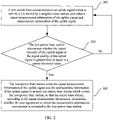
- FIG. 2 is a flow chart of a handover method according to another embodiment of the present invention.
- the handover method may comprise: 201, a low-power base station monitors an uplink signal which is sent by a UE served by a neighbor base station, and obtains signal measurement information of the uplink signal and characteristic information of the uplink signal.
- the signal measurement information of the uplink signal can comprise signal intensity of the uplink signal or signal quality of the uplink signal.
- the low-power base station determines whether the signal intensity of the uplink signal or the signal quality of the uplink signal is greater than or equal to a preset threshold value, if the signal intensity of the uplink signal or the signal quality of the uplink signal is greater than or equal to the preset threshold value, then the method performs 203. Optionally, if the signal intensity of the uplink signal or the signal quality of the uplink signal is less than the preset threshold value, then the method returns to perform 201.
- the low-power base station sends the signal measurement information of the uplink signal and the characteristic information of the uplink signal to at least one macro base station which covers the low-power base station, so that the macro base station, according to the signal measurement information, determines whether the user equipment to which the characteristic information corresponds is unloaded to the low-power base station.
- the low-power base station monitors the uplink signal which is sent by a UE served by a neighbor base station, and after obtaining the signal measurement information of the uplink signal and the characteristic information of the uplink signal, when the signal intensity of the uplink signal or the signal quality of the uplink signal in the signal measurement information is greater than or equal to a preset threshold value, the low-power base station sends the signal measurement information of the uplink signal and the characteristic information of the uplink signal to at least one macro base station which covers the low-power base station, so that the macro base station, according to the signal measurement information, determines whether the UE to which the characteristic information corresponds is unloaded to the low-power base station, and thus it can be realized that the macro base station unloads the UE to which the characteristic information corresponds to the low-power base station based on the signal measurement information and the characteristic information sent by the low-power base station.
- the UE originally served by the macro base station is unloaded to the low-power base station, no interference from the low-power base station exists in terms of the UE, and also, the low-power base station will no more suffer from the interference from the UE, and thereby the problem occurred in a HetNet network, which is the strong interference at short range on an uplink and a downlink, can be alleviated effectively.
- FIG. 3 is a flow chart of a handover method according to still another embodiment of the present invention.
- the handover method may comprise: 301, a macro base station receives signal measurement information of an uplink signal and characteristic information of the uplink signal sent by a low-power base station.
- the uplink signal is an uplink signal which is monitored by the low-power base station and sent by a user equipment served by a neighbor base station.
- the signal measurement information of the uplink signal comprises signal intensity of the uplink signal or signal quality of the uplink signal.
- the macro base station receives signal measurement information of the uplink signal and characteristic information of the uplink signal sent by the low-power base station, which can be: the macro base station receives signal measurement information of the uplink signal and characteristic information of the uplink signal which are sent by the low-power base station when the signal intensity of the uplink signal or the signal quality of the uplink signal is greater than or equal to a preset threshold value.
- the macro base station determines the UE to which the characteristic information corresponds is a UE served by the macro base station.
- the macro base station indicates the UE to perform measurement on the low-power base station.
- the low-power base station may have a plurality of neighbor low-power base stations, and meanwhile the low-power base station may be located within overlapping coverage areas of a plurality of macro base stations, then the uplink signal measured by the low-power base station may belong to the UE served by a certain neighbor low-power base station or a certain neighbor macro base station, and is not necessarily the uplink signal sent by the UE served by the macro base station which covers the low-power base station. Even if the uplink signal is the uplink signal sent by the UE served by the macro base station which covers the low-power base station, because the uplink signal may have other interference from the UE served by other base station, the macro base station, according to the characteristic information, may have a possibility of misjudgement.
- the macro base station judges the UE corresponding to the characteristic information is the UE served by the macro base station, then the macro base station will indicate the UE to perform further measurement on the low-power base station which reports the signal measurement information and the characteristic information identifying the UE.
- the macro base station determines whether the UE is unloaded to the low-power base station.
- the macro base station determines the signal intensity of the uplink signal or the signal quality of the uplink signal in the signal measurement information of the uplink signal is greater than or equal to a first preset threshold value, and in the measurement results of the low-power base station measured by the user equipment, signal intensity of a downlink signal of the low-power base station or signal quality of the downlink signal is greater than or equal to a second preset threshold value, the macro base station determines that the user equipment is unloaded to the low-power base station.
- the macro base station can know in advance the threshold value preset by the low-power base station, for example, the low-power base station can send the threshold value to the macro base station after setting the threshold value; or, the macro base station can negotiate a size of the threshold value with the low-power base station.
- the macro base station when setting the first threshold value, can set according to the above threshold value that, the first threshold value can be equal to the above threshold value, and of course, also cannot be equal to the above threshold value, which is not limited in this embodiment.
- the macro base station can indicate the UE to perform measurement on the at least two low-power base stations.
- the macro base station can select the low-power base station with the highest signal intensity of the uplink signal or the highest signal quality of the uplink signal in the sent signal measurement information, and the highest signal quality of the downlink signal or the highest signal intensity of the downlink signal in the measurement results measured by the UE, and unload the UE to the selected low-power base station.
- the macro base station after the macro base station receives the signal measurement information and the characteristic information sent by the low-power base station, if the macro base station preliminarily judges the UE corresponding to the characteristic information is the UE served by the macro base station, then the macro base station will indicate the UE to perform further measurement on the low-power base station. Then, the macro base station, according to the signal measurement information sent by the low-power base station and measurement results of the low-power base station measured by the UE, can determine whether the UE is unloaded to the low-power base station. As a result, the macro base station, based on the signal measurement information and characteristic information sent by the low-power base station, can realize the unloading of the UE to which the characteristic information corresponds to the low-power base station.
- the macro base station will indicate the UE to perform measurement on the low-power base station, only after determining the UE corresponding to the characteristic information is the UE served by the macro base station, which can reduce neighbor measurement performed by the UE, further save power of the UE, reduce reporting of the UE and thus reduce the uplink load from the UE to the macro base station.
- FIG. 4 is a flow chart of a handover method according to yet another embodiment of the present invention.
- the handover method may comprise: 401, a macro base station receives signal measurement information of an uplink signal and characteristic information of the uplink signal sent by a low-power base station.
- the uplink signal is an uplink signal which is monitored by the low-power base station and sent by a user equipment served by a neighbor base station.
- the signal measurement information of the uplink signal comprises signal intensity of the uplink signal or signal quality of the uplink signal.
- the macro base station receives signal measurement information of the uplink signal and characteristic information of the uplink signal sent by the low-power base station, which can be: the macro base station receives signal measurement information of the uplink signal and characteristic information of the uplink signal which are sent by the low-power base station when the uplink signal intensity or the uplink signal quality is greater than or equal to a preset threshold value.
- the macro base station determines whether the UE to which the characteristic information corresponds is a UE served by the macro base station; if yes, then the method performs 403-405. Optionally, if it determines that the UE to which the characteristic information corresponds is not the UE served by the macro base station, then the method returns to perform 401.
- the macro base station indicates the UE, to which the characteristic information corresponds, to perform measurement on the low-power base station.
- the low-power base station may have a plurality of neighbor low-power base stations, and meanwhile the low-power base station may be located within overlapping coverage areas of a plurality of macro base stations, then the uplink signal measured by the low-power base station may belong to the UE served a certain neighbor low-power base station or a certain neighbor macro base station, and is not necessarily the uplink signal sent by the UE served by the macro base station which covers the low-power base station. Even if the uplink signal is the uplink signal sent by the UE served by the macro base station which covers the low-power base station, because the uplink signal may have other interference from the UE served by other base station, the macro base station, according to the characteristic information, may have a possibility of misjudgement.
- the macro base station preliminarily judges the UE corresponding to the characteristic information is the UE served by the macro base station, then the macro base station will indicate the UE to perform further measurement on the low-power base station which reports the signal measurement information and the characteristic information identifying the UE.
- the macro base station determines whether the UE to which the characteristic information corresponds is the UE served by the macro base station; if yes, then the method performs 405. Optionally, if the macro base station determines the UE to which the characteristic information corresponds is not the UE served by the macro base station, then the method returns to perform 401.
- the macro base station according to the signal measurement information sent by the low-power base station and the measurement results of the low-power base station measured by the UE, determines whether the UE is unloaded to the low-power base station.
- the macro base station determines whether the UE is unloaded to the low-power base station, the embodiment of which can refer to the manner provided in 304 of FIG. 3 according to an embodiment of the present invention, and will not be described in detail here.
- the above embodiment can realize that the macro base station determines whether to unload the UE to which the characteristic information corresponds to the low-power base station based on the signal measurement information and the characteristic information sent by the low-power base station, and because the UE originally served by the macro base station is unloaded to the low-power base station, no interference from the low-power base station exists in terms of the UE, and also, the low-power base station will no more suffer from the interference from the UE, and thereby the problem occurred in a HetNet network, which is the strong interference at short range on an uplink and a downlink, can be alleviated effectively.
- a HetNet network which is the strong interference at short range on an uplink and a downlink
- the macro base station will indicate the UE to perform measurement on the low-power base station, only after determining the UE corresponding to the characteristic information is the UE served by the macro base station, which can reduce neighbor measurement performed by UE, further save power of UE, reduce reporting of UE and thus reduce the uplink load from UE to the macro base station.
- FIG. 5 is a schematic structural diagram of a low-power base station according to an embodiment of the present invention
- the low-power base station in this embodiment can realize the flows of embodiments of the present invention as shown in FIGs. 1 and 2
- the low-power base station can comprise: a monitoring unit 51 and a sending unit 52; wherein the monitoring unit 51 monitors an uplink signal which is sent by a user equipment UE served by a neighbor base station, and obtains signal measurement information of the uplink signal and characteristic information of the uplink signal.
- the sending unit 52 sends the signal measurement information of the uplink signal and the characteristic information of the uplink signal, obtained by the monitoring unit 51, to at least one macro base station which covers the low-power base station, so that the macro base station, according to the signal measurement information, determines whether the UE to which the characteristic information corresponds is unloaded to the low-power base station.
- the sending unit 52 when signal intensity of the uplink signal or signal quality of the uplink signal in the signal measurement information, obtained by the monitoring unit 51, is greater than or equal to a preset threshold value, can send the signal measurement information of the uplink signal and the characteristic information of the uplink signal to at least one macro base station which covers the low-power base station.
- the sending unit 52 if the signal intensity of the uplink signal or the signal quality of the uplink signal in the obtained signal measurement information, is less than the preset threshold value, the sending unit 52 cannot send the signal measurement information of the uplink signal and the characteristic information of the uplink signal to the macro base station, but the monitoring unit 51 continues to monitor the uplink signal which is sent by the UE served by the neighbor base station.
- the low-power base station doesn't know the characteristic information of the uplink signal corresponding to the UE served by the macro base station, thus cannot, and according to the characteristic information, cannot determine the cell to which the UE corresponding to the characteristic information belongs, therefore, the sending unit 52 needs to send the characteristic information of the uplink signal to a macro base station, and the macro base station, according to the characteristic information, determines whether the UE corresponding to the characteristic information is a UE served by the macro base station.
- the monitoring unit 51 monitors the uplink signal which is sent by a UE served by a neighbor base station, and after obtaining the signal measurement information of the uplink signal and the characteristic information of the uplink signal, the sending unit 52 sends the signal measurement information and the characteristic information to at least one macro base station which covers the low-power base station, so that the macro base station, according to the signal measurement information, determines whether the UE to which the characteristic information corresponds is unloaded to the low-power base station, and thus it can be realized that the macro base station unloads the UE to which the characteristic information corresponds to the low-power base station based on the signal measurement information and the characteristic information sent by the low-power base station.
- the UE originally served by the macro base station is unloaded to the low-power base station, no interference from the low-power base station exists in terms of the UE, and also, the low-power base station will no more suffer from the interference from the UE, and thereby the problem occurred in a HetNet network, which is the strong interference at short range on an uplink and a downlink, can be alleviated effectively.
- FIG. 6 is a schematic structural diagram of a macro base station according to an embodiment of the present invention; the macro base station in this embodiment can realize the flows of embodiments of the present invention as shown in FIGs. 3 and 4 , and as shown in FIG. 6 , the macro base station can comprise: a receiving unit 61, a determining unit 62 and an indicating unit 63.
- the receiving unit 61 receives signal measurement information of an uplink signal and characteristic information of the uplink signal sent by a low-power base station; wherein, the uplink signal is an uplink signal which is monitored by the low-power base station and sent by a user equipment served by a neighbor base station; the determining unit 62 determines the UE to which the characteristic information received by the receiving unit 61 corresponds is a UE served by the macro base station; and the indicating unit 63 indicates the UE to perform measurement on the low-power base station, after the determining unit 62 determines the UE corresponding to the characteristic information received by the receiving unit 61 is the UE served by the macro base station.
- the determining unit 62 according to the signal measurement information of the uplink signal sent by the low-power base station and measurement results of the low-power base station measured by the UE, further can determine whether the UE is unloaded to the low-power base station.
- the determining unit 62 with reference to the manner provided in 304 of FIG. 3 according to an embodiment of the present invention, can determine whether the UE is unloaded to the low-power base station, which will not be described in detail here.
- the determining unit 62 prior to the determining whether the UE is unloaded to the low-power base station, according to the measurement results of the low-power base station measured by the UE, further determines the UE to which the characteristic information corresponds is the UE served by the macro base station.
- the receiving unit 61 can receive signal measurement information of the uplink signal and characteristic information of the uplink signal which are sent by the low-power base station when the signal intensity of the uplink signal or the signal quality of the uplink signal is greater than or equal to a preset threshold value.
- the determining unit 62 when the determining unit 62 determines the signal intensity of the uplink signal or the signal quality of the uplink signal in the signal measurement information of the uplink signal is greater than or equal to a first preset threshold value, and signal intensity of a downlink signal of the low-power base station or signal quality of the downlink signal in the measurement results of the low-power base station measured by the user equipment is greater than or equal to a second preset threshold value, can determine the user equipment is unloaded to the low-power base station.
- the determining unit 62 after the receiving unit 61 receives signal measurement information and characteristic information sent by the low-power base station, if the determining unit 62 preliminarily determines the UE corresponding to the characteristic information is the UE served by the macro base station, then the indicating unit 63 will indicate the UE to perform further measurement on the low-power base station; then, the determining unit 62, according to the signal measurement information sent by the low-power base station and measurement results of the low-power base station measured by the UE, can determine whether the UE is unloaded to the low-power base station.
- the macro base station based on the signal measurement information and characteristic information sent by the low-power base station, can realize the unloading of the UE to which the characteristic information corresponds to the low-power base station. Because the UE originally served by the macro base station is unloaded to the low-power base station, no interference from the low-power base station exists in terms of the UE, and also, the low-power base station will no more suffer from the interference from the UE, and thereby the problem occurred in a HetNet network, which is the strong interference at short range on an uplink and a downlink, can be alleviated effectively.
- HetNet network which is the strong interference at short range on an uplink and a downlink
- the macro base station will indicate the UE to perform measurement on the low-power base station, only after determining the UE corresponding to the characteristic information is the UE served by the macro base station, which can reduce neighbor measurement performed by the UE, further save power of the UE, reduce reporting of the UE and thus reduce the uplink load from the UE to the macro base station.
- This embodiment provides a communication system, comprising the low-power base station provided in embodiment of the present invention as shown in FIG. 5 and the macro base station provided in embodiment of the present invention as shown in FIG. 6 .
- the above communication system can realize that the macro base station unloads the UE to which the characteristic information corresponds to the low-power base station based on the signal measurement information and the characteristic information sent by the low-power base station, and because the UE originally served by the macro base station is unloaded to the low-power base station, no interference from the low-power base station exists in terms of the UE, and also, the low-power base station will no more suffer from the interference from the UE, and thereby the problem occurred in a HetNet network, which is the strong interference at short range on an uplink and a downlink, can be alleviated effectively.
- the macro base station will indicate the UE to perform measurement on the low-power base station, only after determining the UE corresponding to the characteristic information is the UE served by the macro base station, which can reduce neighbor measurement performed by the UE, further save power of the UE, reduce reporting of the UE and thus reduce the uplink load from the UE to the macro base station.
- the units in a device provided in one embodiment may be distributed in the device in the embodiment in the way described in the embodiment, or may be located in one or more devices in another embodiment in a different way.
- the units may be combined into one unit, or split into plurality of subunits.
Landscapes
- Engineering & Computer Science (AREA)
- Computer Networks & Wireless Communication (AREA)
- Signal Processing (AREA)
- Mobile Radio Communication Systems (AREA)
Claims (9)
- Procédé de transfert sur une macro station de base, comprenant :la réception (301), par la macro station de base, d'informations de mesure de signal d'un signal en liaison montante et d'informations de caractéristiques du signal en liaison montante depuis une station de base basse puissance ;la détermination (302), par la macro station de base, que l'équipement d'utilisateur auquel les informations de caractéristiques correspondent est desservi par la macro station de base, dans lequel les informations de caractéristiques comprennent au moins l'un d'un code de Walsh ou d'un code de brouillage dans un système d'accès multiple par répartition en code, CDMA, d'un schéma de position de ressource temps-fréquence/signal de référence, RS, dans un système de multiplexage par répartition orthogonale de la fréquence, OFDM, et même d'un nombre de sous-trames/nombre de créneaux temporels dans un système mondial pour un système de communication mobile, GSM ;l'indication (303), par la macro station de base, à l'équipement d'utilisateur d'exécuter la mesure sur la station de base basse puissance ; etla détermination (304), par la macro station de base, conformément aux informations de mesure de signal du signal en liaison montante et au résultat de mesure de la mesure de la station de base basse puissance, du fait de savoir si l'équipement d'utilisateur doit être déchargé et le déchargement de l'équipement d'utilisateur sur la station de base basse puissance.
- Procédé selon la revendication 1, dans lequel les informations de mesure de signal du signal en liaison montante comprennent une intensité de signal du signal en liaison montante ou une qualité de signal du signal en liaison montante ; et
le résultat de mesure comprend l'intensité de signal d'un signal en liaison descendante de la station de base basse puissance ou la qualité de signal d'un signal en liaison descendante de la station de base basse puissance. - Procédé selon la revendication 2, dans lequel la détermination (304) du fait de savoir si l'équipement d'utilisateur est déchargé sur la station de base basse puissance comprend :
lorsque l'intensité de signal du signal en liaison montante ou la qualité de signal du signal en liaison montante est supérieure ou égale à une première valeur seuil prédéfinie, et que l'intensité de signal du signal en liaison descendante ou la qualité de signal du signal en liaison descendante est supérieure ou égale à une seconde valeur seuil prédéfinie, la détermination du fait que l'équipement d'utilisateur est déchargé sur la station de base basse puissance. - Procédé selon l'une quelconque des revendications 1 à 3, comprenant en outre :
la détermination, par la macro station de base et conformément au résultat de mesure, que l'équipement d'utilisateur auquel les informations de caractéristiques correspondent est desservi par la macro station de base. - Macro station de base, comprenant :des moyens de réception d'informations de mesure de signal d'un signal en liaison montante et d'informations de caractéristiques du signal en liaison montante depuis une station de base basse puissance ;des moyens de détermination du fait qu'un équipement d'utilisateur auquel les informations de caractéristiques correspondent est desservi par la macro station de base, dans lequel les informations de caractéristiques comprennent au moins l'un d'un code de Walsh ou d'un code de brouillage dans un système d'accès multiple par répartition en code, CDMA, d'un schéma de position de ressource temps-fréquence/signal de référence, RS, dans un système de multiplexage par répartition orthogonale de la fréquence, OFDM, et même d'un nombre de sous-trames/nombre de créneaux temporels dans un système mondial pour un système de communication mobile, GSM ;des moyens d'indication à l'équipement d'utilisateur d'exécuter la mesure sur la station de base basse puissance ; etdes moyens de détermination du fait de savoir si l'équipement d'utilisateur doit être déchargé conformément aux informations de mesure de signal du signal en liaison montante et à un résultat de mesure de la mesure de la station de base basse puissance, etdes moyens de décharge de l'équipement d'utilisateur sur la station de base basse puissance.
- Macro station de base selon la revendication 5, dans laquelle les informations de mesure de signal du signal en liaison montante comprennent une intensité de signal du signal en liaison montante ou une qualité de signal du signal en liaison montante ; et le résultat de mesure comprend l'intensité de signal d'un signal en liaison descendante de la station de base basse puissance ou la qualité de signal d'un signal en liaison descendante de la station de base basse puissance.
- Macro station de base selon la revendication 5, dans laquelle lorsque l'intensité de signal du signal en liaison montante ou la qualité de signal du signal en liaison montante est supérieure ou égale à une première valeur seuil prédéfinie, et que l'intensité de signal du signal en liaison descendante ou la qualité de signal du signal en liaison descendante est supérieure ou égale à une seconde valeur seuil prédéfinie, l'équipement d'utilisateur est déterminé comme étant déchargé sur la station de base basse puissance.
- Support de stockage lisible par ordinateur, comprenant un programme qui lorsqu'il est exécuté par une macro station de base, exécute les étapes du procédé selon l'une quelconque des revendications 1 à 4.
- Système de communication hétérogène, comprenant une macro station de base selon l'une quelconque des revendications 5 à 7 et une station de base basse puissance, la station de base basse puissance comprenant :des moyens de surveillance d'un signal en liaison montante envoyé par un équipement d'utilisateur desservi par une station de base voisine ;des moyens d'obtention d'informations de mesure de signal du signal en liaison montante et d'informations de caractéristiques du signal en liaison montante, dans lequel les informations de caractéristiques comprennent au moins l'un d'un code de Walsh ou d'un code de brouillage dans un système d'accès multiple par répartition en code, CDMA, d'un schéma de position de ressource temps-fréquence/signal de référence, RS, dans un système de multiplexage par répartition orthogonale de la fréquence, OFDM, et même d'un nombre de sous-trames/nombre de créneaux temporels dans un système mondial pour un système de communication mobile, GSM ; etdes moyens d'envoi des informations de mesure de signal du signal en liaison montante et des informations de caractéristiques du signal en liaison montante à une macro station de base de desserte qui couvre la station de base basse puissance, afin que la macro station de base de desserte puisse déterminer l'UE correspondant aux informations de caractéristiques et décharger l'UE sur la station de base basse puissance sur la base des informations de mesure de signal et des informations de caractéristiques.
Applications Claiming Priority (3)
| Application Number | Priority Date | Filing Date | Title |
|---|---|---|---|
| CN201110031922.5A CN102625388B (zh) | 2011-01-28 | 2011-01-28 | 切换方法、基站和系统 |
| EP12738722.3A EP2670194B1 (fr) | 2011-01-28 | 2012-01-29 | Transfert dans des réseaux de communication hétérogènes |
| PCT/CN2012/070738 WO2012100746A1 (fr) | 2011-01-28 | 2012-01-29 | Procédé de transfert intercellulaire, station de base et système associés |
Related Parent Applications (2)
| Application Number | Title | Priority Date | Filing Date |
|---|---|---|---|
| EP12738722.3A Division EP2670194B1 (fr) | 2011-01-28 | 2012-01-29 | Transfert dans des réseaux de communication hétérogènes |
| EP12738722.3A Division-Into EP2670194B1 (fr) | 2011-01-28 | 2012-01-29 | Transfert dans des réseaux de communication hétérogènes |
Publications (2)
| Publication Number | Publication Date |
|---|---|
| EP3496463A1 EP3496463A1 (fr) | 2019-06-12 |
| EP3496463B1 true EP3496463B1 (fr) | 2022-04-06 |
Family
ID=46565025
Family Applications (2)
| Application Number | Title | Priority Date | Filing Date |
|---|---|---|---|
| EP18205443.7A Active EP3496463B1 (fr) | 2011-01-28 | 2012-01-29 | Transfert dans des réseaux de communication hétérogènes |
| EP12738722.3A Not-in-force EP2670194B1 (fr) | 2011-01-28 | 2012-01-29 | Transfert dans des réseaux de communication hétérogènes |
Family Applications After (1)
| Application Number | Title | Priority Date | Filing Date |
|---|---|---|---|
| EP12738722.3A Not-in-force EP2670194B1 (fr) | 2011-01-28 | 2012-01-29 | Transfert dans des réseaux de communication hétérogènes |
Country Status (5)
| Country | Link |
|---|---|
| US (1) | US8918107B2 (fr) |
| EP (2) | EP3496463B1 (fr) |
| JP (1) | JP5574310B2 (fr) |
| CN (1) | CN102625388B (fr) |
| WO (1) | WO2012100746A1 (fr) |
Families Citing this family (17)
| Publication number | Priority date | Publication date | Assignee | Title |
|---|---|---|---|---|
| TWI458368B (zh) * | 2011-08-10 | 2014-10-21 | Htc Corp | 行動通訊裝置以及在複數異質網路間進行交遞之方法 |
| WO2014023017A1 (fr) * | 2012-08-10 | 2014-02-13 | 华为技术有限公司 | Procédé et station de base permettant une assistance lors d'une transmission en liaison montante |
| CN103907375A (zh) | 2012-09-28 | 2014-07-02 | 华为技术有限公司 | 基于上行检测的处理方法、网络设备和终端 |
| CN104054374A (zh) * | 2012-11-14 | 2014-09-17 | 华为技术有限公司 | 信息发送方法、基站和网络系统 |
| CN103874173B (zh) * | 2012-12-14 | 2017-11-21 | 中国移动通信集团公司 | 信号探测方法、微基站开启方法和相关设备及系统 |
| US9973980B2 (en) * | 2013-03-06 | 2018-05-15 | Qualcomm Incorporated | Communications methods and apparatus that facilitate handover decisions and related measurements |
| JP6057788B2 (ja) * | 2013-03-13 | 2017-01-11 | 三菱電機株式会社 | 無線通信システムのための無線基地局、無線通信システムにおける無線端末接続制御方法 |
| WO2014205677A1 (fr) * | 2013-06-26 | 2014-12-31 | 华为技术有限公司 | Procédé et dispositif de contrôle d'accès |
| CN104683997B (zh) * | 2013-12-02 | 2018-09-21 | 中国电信股份有限公司 | 小基站发现方法、系统与网络控制装置 |
| US9913191B2 (en) * | 2013-12-20 | 2018-03-06 | Intel IP Corporation | Base station and method for early handover using uplink channel characteristics |
| TWI558237B (zh) * | 2014-11-28 | 2016-11-11 | 財團法人工業技術研究院 | 演進節點b及流量調度方法 |
| US9906973B2 (en) | 2014-11-28 | 2018-02-27 | Industrial Technology Research Institute | Evolved NodeB and traffic dispatch method thereof |
| US10212636B2 (en) * | 2014-12-12 | 2019-02-19 | Qualcomm Incorporated | Techniques for managing handovers in an unlicensed radio frequency spectrum band |
| WO2017041211A1 (fr) * | 2015-09-07 | 2017-03-16 | 华为技术有限公司 | Procédé, dispositif et système de transmission de données |
| JP6810008B2 (ja) * | 2017-09-29 | 2021-01-06 | Kddi株式会社 | 無線通信システム及びハンドオーバ方法 |
| EP3483110A1 (fr) | 2017-11-08 | 2019-05-15 | Otis Elevator Company | Systèmes d'accès pour ascenseurs |
| CN110278588A (zh) * | 2018-11-02 | 2019-09-24 | 杭州承联通信技术有限公司 | 一种用于集群系统的多基站协调检测终端越区切换的方法 |
Family Cites Families (14)
| Publication number | Priority date | Publication date | Assignee | Title |
|---|---|---|---|---|
| JP4127686B2 (ja) * | 2004-09-02 | 2008-07-30 | 株式会社東芝 | 無線通信システム、広域無線基地局装置、狭域無線基地局装置 |
| US8891489B2 (en) * | 2007-03-19 | 2014-11-18 | Qualcomm Incorporated | Handover mechanism that exploits uplink channel quality of a target cell |
| US9648523B2 (en) * | 2007-11-21 | 2017-05-09 | Qualcomm Incorporated | Target access point initiated communication handover |
| EP2134117A1 (fr) * | 2008-06-11 | 2009-12-16 | Mitsubishi Electric R&D Centre Europe B.V. | Dispositif et procédure pour la détermination d'au moins un terminal, pour lequel les signaux sont transférés entre le terminal et une station de base d'un réseau de télécommunication cellulaire, et ils doivent être transmis par un rélais |
| CN101610555B (zh) * | 2008-06-16 | 2011-05-11 | 华为技术有限公司 | 一种切换的触发方法、系统和装置 |
| US8229440B2 (en) * | 2008-07-14 | 2012-07-24 | Qualcomm Incorporated | Systems, methods and apparatus to facilitate identification and acquisition of access points |
| US8630649B2 (en) * | 2008-10-31 | 2014-01-14 | Samsung Electronics Co., Ltd. | Terminal, method for handover thereof and supporting method for handover of base station |
| WO2010084937A1 (fr) * | 2009-01-22 | 2010-07-29 | 京セラ株式会社 | Station de base radio, terminal radio et procédé de communication sans fil |
| KR101481021B1 (ko) * | 2009-04-10 | 2015-01-09 | 삼성전자주식회사 | 무선통신 시스템에서 펨토 기지국을 검출하기 위한 장치 및 방법 |
| CN101902788B (zh) * | 2009-05-26 | 2013-09-04 | 鼎桥通信技术有限公司 | 宏基站ue切入家庭基站的方法控制家庭基站干扰的方法 |
| CN101790133A (zh) * | 2009-05-27 | 2010-07-28 | 天津中启创科技有限公司 | 家庭基站的上行干扰消除的方法 |
| US8670432B2 (en) * | 2009-06-22 | 2014-03-11 | Qualcomm Incorporated | Methods and apparatus for coordination of sending reference signals from multiple cells |
| JPWO2011004599A1 (ja) | 2009-07-10 | 2012-12-20 | パナソニック株式会社 | 移動通信システム、端末装置および基地局装置 |
| US8897258B2 (en) * | 2009-07-15 | 2014-11-25 | Electronics And Telecommunications Research Institute | Method of transmitting data for reducing interference in hierarchical cell structure |
-
2011
- 2011-01-28 CN CN201110031922.5A patent/CN102625388B/zh not_active Expired - Fee Related
-
2012
- 2012-01-29 EP EP18205443.7A patent/EP3496463B1/fr active Active
- 2012-01-29 WO PCT/CN2012/070738 patent/WO2012100746A1/fr not_active Ceased
- 2012-01-29 EP EP12738722.3A patent/EP2670194B1/fr not_active Not-in-force
- 2012-01-29 JP JP2013550750A patent/JP5574310B2/ja not_active Expired - Fee Related
-
2013
- 2013-07-26 US US13/952,039 patent/US8918107B2/en active Active
Non-Patent Citations (1)
| Title |
|---|
| None * |
Also Published As
| Publication number | Publication date |
|---|---|
| US20130310041A1 (en) | 2013-11-21 |
| EP2670194A4 (fr) | 2014-02-26 |
| CN102625388A (zh) | 2012-08-01 |
| US8918107B2 (en) | 2014-12-23 |
| WO2012100746A1 (fr) | 2012-08-02 |
| EP2670194B1 (fr) | 2019-01-02 |
| JP5574310B2 (ja) | 2014-08-20 |
| EP3496463A1 (fr) | 2019-06-12 |
| CN102625388B (zh) | 2014-09-03 |
| JP2014507888A (ja) | 2014-03-27 |
| EP2670194A1 (fr) | 2013-12-04 |
Similar Documents
| Publication | Publication Date | Title |
|---|---|---|
| EP3496463B1 (fr) | Transfert dans des réseaux de communication hétérogènes | |
| US9826486B2 (en) | Power setting | |
| EP2959721B1 (fr) | Transfert intercellulaire amélioré sans ping-pong dans un réseau sans fil | |
| US9380481B2 (en) | Configuring unscheduled periods to enable interference reduction in heterogeneous networks | |
| EP2807852B1 (fr) | Système de radiocommunication | |
| US20110300887A1 (en) | Controlling Cell Activation in a Radio Communication Network | |
| US8923331B2 (en) | System and method for measurement bandwidth configuration | |
| KR20130010722A (ko) | Lte 시스템에서의 핸드오버 방법 및 이를 위한 장치 | |
| EP3266245B1 (fr) | Noeud de réseau et procédé dans ce dernier pour déterminer un critère de mobilité | |
| US9544826B2 (en) | Network elements, wireless communication system and methods therefor | |
| US20140213267A1 (en) | Radio connection re-establishment method, user equipment and base station | |
| US20160295472A1 (en) | Optimizing cre configuration | |
| EP3501205B1 (fr) | Gestion de mobilité basée sur une mesure de liaison montante | |
| KR20140090030A (ko) | 기준 신호 크기 변경 시스템 및 방법 | |
| US10382179B2 (en) | Adapting reference signal density | |
| US20220248285A1 (en) | Optimal cell changeover in multicell environment when conditional cell changeover is configured | |
| KR101821701B1 (ko) | 브로드캐스트 통신에 대한 최대 경로손실 측정 | |
| US20170048769A1 (en) | Cell swapping for radio resource management (rrm) further enhanced non ca-based icic for lte method and apparatus | |
| US20160269949A1 (en) | Downlink inter-cell interference determination | |
| EP2731378B1 (fr) | Création d'une liste des cellules voisines dans une réseau hétérogène | |
| US8942129B1 (en) | Method and system for optimizing inter-frequency handoff in wireless coverage areas | |
| Razavi et al. | Neighbour cell list management in wireless heterogeneous networks | |
| WO2013049997A1 (fr) | Système et procédé pour la configuration de bande passante de mesure | |
| US20170041837A1 (en) | Terminal Reporting in Wireless Communication System | |
| JPWO2016021639A1 (ja) | 無線端末 |
Legal Events
| Date | Code | Title | Description |
|---|---|---|---|
| PUAI | Public reference made under article 153(3) epc to a published international application that has entered the european phase |
Free format text: ORIGINAL CODE: 0009012 |
|
| STAA | Information on the status of an ep patent application or granted ep patent |
Free format text: STATUS: THE APPLICATION HAS BEEN PUBLISHED |
|
| AC | Divisional application: reference to earlier application |
Ref document number: 2670194 Country of ref document: EP Kind code of ref document: P |
|
| AK | Designated contracting states |
Kind code of ref document: A1 Designated state(s): AL AT BE BG CH CY CZ DE DK EE ES FI FR GB GR HR HU IE IS IT LI LT LU LV MC MK MT NL NO PL PT RO RS SE SI SK SM TR |
|
| STAA | Information on the status of an ep patent application or granted ep patent |
Free format text: STATUS: REQUEST FOR EXAMINATION WAS MADE |
|
| 17P | Request for examination filed |
Effective date: 20191202 |
|
| RBV | Designated contracting states (corrected) |
Designated state(s): AL AT BE BG CH CY CZ DE DK EE ES FI FR GB GR HR HU IE IS IT LI LT LU LV MC MK MT NL NO PL PT RO RS SE SI SK SM TR |
|
| STAA | Information on the status of an ep patent application or granted ep patent |
Free format text: STATUS: EXAMINATION IS IN PROGRESS |
|
| 17Q | First examination report despatched |
Effective date: 20200323 |
|
| GRAP | Despatch of communication of intention to grant a patent |
Free format text: ORIGINAL CODE: EPIDOSNIGR1 |
|
| STAA | Information on the status of an ep patent application or granted ep patent |
Free format text: STATUS: GRANT OF PATENT IS INTENDED |
|
| RIC1 | Information provided on ipc code assigned before grant |
Ipc: H04W 36/04 20090101ALN20210924BHEP Ipc: H04W 36/00 20090101ALI20210924BHEP Ipc: H04W 36/30 20090101AFI20210924BHEP |
|
| INTG | Intention to grant announced |
Effective date: 20211021 |
|
| GRAS | Grant fee paid |
Free format text: ORIGINAL CODE: EPIDOSNIGR3 |
|
| GRAA | (expected) grant |
Free format text: ORIGINAL CODE: 0009210 |
|
| STAA | Information on the status of an ep patent application or granted ep patent |
Free format text: STATUS: THE PATENT HAS BEEN GRANTED |
|
| AC | Divisional application: reference to earlier application |
Ref document number: 2670194 Country of ref document: EP Kind code of ref document: P |
|
| AK | Designated contracting states |
Kind code of ref document: B1 Designated state(s): AL AT BE BG CH CY CZ DE DK EE ES FI FR GB GR HR HU IE IS IT LI LT LU LV MC MK MT NL NO PL PT RO RS SE SI SK SM TR |
|
| REG | Reference to a national code |
Ref country code: GB Ref legal event code: FG4D |
|
| REG | Reference to a national code |
Ref country code: CH Ref legal event code: EP |
|
| REG | Reference to a national code |
Ref country code: AT Ref legal event code: REF Ref document number: 1482571 Country of ref document: AT Kind code of ref document: T Effective date: 20220415 |
|
| REG | Reference to a national code |
Ref country code: DE Ref legal event code: R096 Ref document number: 602012078014 Country of ref document: DE |
|
| REG | Reference to a national code |
Ref country code: IE Ref legal event code: FG4D |
|
| REG | Reference to a national code |
Ref country code: LT Ref legal event code: MG9D |
|
| REG | Reference to a national code |
Ref country code: NL Ref legal event code: MP Effective date: 20220406 |
|
| REG | Reference to a national code |
Ref country code: AT Ref legal event code: MK05 Ref document number: 1482571 Country of ref document: AT Kind code of ref document: T Effective date: 20220406 |
|
| PG25 | Lapsed in a contracting state [announced via postgrant information from national office to epo] |
Ref country code: NL Free format text: LAPSE BECAUSE OF FAILURE TO SUBMIT A TRANSLATION OF THE DESCRIPTION OR TO PAY THE FEE WITHIN THE PRESCRIBED TIME-LIMIT Effective date: 20220406 |
|
| PG25 | Lapsed in a contracting state [announced via postgrant information from national office to epo] |
Ref country code: SE Free format text: LAPSE BECAUSE OF FAILURE TO SUBMIT A TRANSLATION OF THE DESCRIPTION OR TO PAY THE FEE WITHIN THE PRESCRIBED TIME-LIMIT Effective date: 20220406 Ref country code: PT Free format text: LAPSE BECAUSE OF FAILURE TO SUBMIT A TRANSLATION OF THE DESCRIPTION OR TO PAY THE FEE WITHIN THE PRESCRIBED TIME-LIMIT Effective date: 20220808 Ref country code: NO Free format text: LAPSE BECAUSE OF FAILURE TO SUBMIT A TRANSLATION OF THE DESCRIPTION OR TO PAY THE FEE WITHIN THE PRESCRIBED TIME-LIMIT Effective date: 20220706 Ref country code: LT Free format text: LAPSE BECAUSE OF FAILURE TO SUBMIT A TRANSLATION OF THE DESCRIPTION OR TO PAY THE FEE WITHIN THE PRESCRIBED TIME-LIMIT Effective date: 20220406 Ref country code: HR Free format text: LAPSE BECAUSE OF FAILURE TO SUBMIT A TRANSLATION OF THE DESCRIPTION OR TO PAY THE FEE WITHIN THE PRESCRIBED TIME-LIMIT Effective date: 20220406 Ref country code: GR Free format text: LAPSE BECAUSE OF FAILURE TO SUBMIT A TRANSLATION OF THE DESCRIPTION OR TO PAY THE FEE WITHIN THE PRESCRIBED TIME-LIMIT Effective date: 20220707 Ref country code: FI Free format text: LAPSE BECAUSE OF FAILURE TO SUBMIT A TRANSLATION OF THE DESCRIPTION OR TO PAY THE FEE WITHIN THE PRESCRIBED TIME-LIMIT Effective date: 20220406 Ref country code: ES Free format text: LAPSE BECAUSE OF FAILURE TO SUBMIT A TRANSLATION OF THE DESCRIPTION OR TO PAY THE FEE WITHIN THE PRESCRIBED TIME-LIMIT Effective date: 20220406 Ref country code: BG Free format text: LAPSE BECAUSE OF FAILURE TO SUBMIT A TRANSLATION OF THE DESCRIPTION OR TO PAY THE FEE WITHIN THE PRESCRIBED TIME-LIMIT Effective date: 20220706 Ref country code: AT Free format text: LAPSE BECAUSE OF FAILURE TO SUBMIT A TRANSLATION OF THE DESCRIPTION OR TO PAY THE FEE WITHIN THE PRESCRIBED TIME-LIMIT Effective date: 20220406 |
|
| PG25 | Lapsed in a contracting state [announced via postgrant information from national office to epo] |
Ref country code: RS Free format text: LAPSE BECAUSE OF FAILURE TO SUBMIT A TRANSLATION OF THE DESCRIPTION OR TO PAY THE FEE WITHIN THE PRESCRIBED TIME-LIMIT Effective date: 20220406 Ref country code: PL Free format text: LAPSE BECAUSE OF FAILURE TO SUBMIT A TRANSLATION OF THE DESCRIPTION OR TO PAY THE FEE WITHIN THE PRESCRIBED TIME-LIMIT Effective date: 20220406 Ref country code: LV Free format text: LAPSE BECAUSE OF FAILURE TO SUBMIT A TRANSLATION OF THE DESCRIPTION OR TO PAY THE FEE WITHIN THE PRESCRIBED TIME-LIMIT Effective date: 20220406 Ref country code: IS Free format text: LAPSE BECAUSE OF FAILURE TO SUBMIT A TRANSLATION OF THE DESCRIPTION OR TO PAY THE FEE WITHIN THE PRESCRIBED TIME-LIMIT Effective date: 20220806 |
|
| REG | Reference to a national code |
Ref country code: DE Ref legal event code: R097 Ref document number: 602012078014 Country of ref document: DE |
|
| PG25 | Lapsed in a contracting state [announced via postgrant information from national office to epo] |
Ref country code: SM Free format text: LAPSE BECAUSE OF FAILURE TO SUBMIT A TRANSLATION OF THE DESCRIPTION OR TO PAY THE FEE WITHIN THE PRESCRIBED TIME-LIMIT Effective date: 20220406 Ref country code: SK Free format text: LAPSE BECAUSE OF FAILURE TO SUBMIT A TRANSLATION OF THE DESCRIPTION OR TO PAY THE FEE WITHIN THE PRESCRIBED TIME-LIMIT Effective date: 20220406 Ref country code: RO Free format text: LAPSE BECAUSE OF FAILURE TO SUBMIT A TRANSLATION OF THE DESCRIPTION OR TO PAY THE FEE WITHIN THE PRESCRIBED TIME-LIMIT Effective date: 20220406 Ref country code: EE Free format text: LAPSE BECAUSE OF FAILURE TO SUBMIT A TRANSLATION OF THE DESCRIPTION OR TO PAY THE FEE WITHIN THE PRESCRIBED TIME-LIMIT Effective date: 20220406 Ref country code: DK Free format text: LAPSE BECAUSE OF FAILURE TO SUBMIT A TRANSLATION OF THE DESCRIPTION OR TO PAY THE FEE WITHIN THE PRESCRIBED TIME-LIMIT Effective date: 20220406 Ref country code: CZ Free format text: LAPSE BECAUSE OF FAILURE TO SUBMIT A TRANSLATION OF THE DESCRIPTION OR TO PAY THE FEE WITHIN THE PRESCRIBED TIME-LIMIT Effective date: 20220406 |
|
| PLBE | No opposition filed within time limit |
Free format text: ORIGINAL CODE: 0009261 |
|
| STAA | Information on the status of an ep patent application or granted ep patent |
Free format text: STATUS: NO OPPOSITION FILED WITHIN TIME LIMIT |
|
| 26N | No opposition filed |
Effective date: 20230110 |
|
| PG25 | Lapsed in a contracting state [announced via postgrant information from national office to epo] |
Ref country code: AL Free format text: LAPSE BECAUSE OF FAILURE TO SUBMIT A TRANSLATION OF THE DESCRIPTION OR TO PAY THE FEE WITHIN THE PRESCRIBED TIME-LIMIT Effective date: 20220406 |
|
| PG25 | Lapsed in a contracting state [announced via postgrant information from national office to epo] |
Ref country code: SI Free format text: LAPSE BECAUSE OF FAILURE TO SUBMIT A TRANSLATION OF THE DESCRIPTION OR TO PAY THE FEE WITHIN THE PRESCRIBED TIME-LIMIT Effective date: 20220406 |
|
| REG | Reference to a national code |
Ref country code: DE Ref legal event code: R119 Ref document number: 602012078014 Country of ref document: DE |
|
| REG | Reference to a national code |
Ref country code: CH Ref legal event code: PL |
|
| GBPC | Gb: european patent ceased through non-payment of renewal fee |
Effective date: 20230129 |
|
| PG25 | Lapsed in a contracting state [announced via postgrant information from national office to epo] |
Ref country code: LU Free format text: LAPSE BECAUSE OF NON-PAYMENT OF DUE FEES Effective date: 20230129 |
|
| REG | Reference to a national code |
Ref country code: BE Ref legal event code: MM Effective date: 20230131 |
|
| PG25 | Lapsed in a contracting state [announced via postgrant information from national office to epo] |
Ref country code: LI Free format text: LAPSE BECAUSE OF NON-PAYMENT OF DUE FEES Effective date: 20230131 Ref country code: GB Free format text: LAPSE BECAUSE OF NON-PAYMENT OF DUE FEES Effective date: 20230129 Ref country code: DE Free format text: LAPSE BECAUSE OF NON-PAYMENT OF DUE FEES Effective date: 20230801 Ref country code: CH Free format text: LAPSE BECAUSE OF NON-PAYMENT OF DUE FEES Effective date: 20230131 |
|
| PG25 | Lapsed in a contracting state [announced via postgrant information from national office to epo] |
Ref country code: FR Free format text: LAPSE BECAUSE OF NON-PAYMENT OF DUE FEES Effective date: 20230131 Ref country code: BE Free format text: LAPSE BECAUSE OF NON-PAYMENT OF DUE FEES Effective date: 20230131 |
|
| PG25 | Lapsed in a contracting state [announced via postgrant information from national office to epo] |
Ref country code: IT Free format text: LAPSE BECAUSE OF FAILURE TO SUBMIT A TRANSLATION OF THE DESCRIPTION OR TO PAY THE FEE WITHIN THE PRESCRIBED TIME-LIMIT Effective date: 20220406 Ref country code: IE Free format text: LAPSE BECAUSE OF NON-PAYMENT OF DUE FEES Effective date: 20230129 |
|
| PG25 | Lapsed in a contracting state [announced via postgrant information from national office to epo] |
Ref country code: MC Free format text: LAPSE BECAUSE OF FAILURE TO SUBMIT A TRANSLATION OF THE DESCRIPTION OR TO PAY THE FEE WITHIN THE PRESCRIBED TIME-LIMIT Effective date: 20220406 |
|
| PG25 | Lapsed in a contracting state [announced via postgrant information from national office to epo] |
Ref country code: MC Free format text: LAPSE BECAUSE OF FAILURE TO SUBMIT A TRANSLATION OF THE DESCRIPTION OR TO PAY THE FEE WITHIN THE PRESCRIBED TIME-LIMIT Effective date: 20220406 |
|
| PG25 | Lapsed in a contracting state [announced via postgrant information from national office to epo] |
Ref country code: BG Free format text: LAPSE BECAUSE OF FAILURE TO SUBMIT A TRANSLATION OF THE DESCRIPTION OR TO PAY THE FEE WITHIN THE PRESCRIBED TIME-LIMIT Effective date: 20220406 |
|
| PG25 | Lapsed in a contracting state [announced via postgrant information from national office to epo] |
Ref country code: BG Free format text: LAPSE BECAUSE OF FAILURE TO SUBMIT A TRANSLATION OF THE DESCRIPTION OR TO PAY THE FEE WITHIN THE PRESCRIBED TIME-LIMIT Effective date: 20220406 |
|
| PG25 | Lapsed in a contracting state [announced via postgrant information from national office to epo] |
Ref country code: CY Free format text: LAPSE BECAUSE OF FAILURE TO SUBMIT A TRANSLATION OF THE DESCRIPTION OR TO PAY THE FEE WITHIN THE PRESCRIBED TIME-LIMIT; INVALID AB INITIO Effective date: 20120129 |
|
| PG25 | Lapsed in a contracting state [announced via postgrant information from national office to epo] |
Ref country code: HU Free format text: LAPSE BECAUSE OF FAILURE TO SUBMIT A TRANSLATION OF THE DESCRIPTION OR TO PAY THE FEE WITHIN THE PRESCRIBED TIME-LIMIT; INVALID AB INITIO Effective date: 20120129 |
|
| PG25 | Lapsed in a contracting state [announced via postgrant information from national office to epo] |
Ref country code: TR Free format text: LAPSE BECAUSE OF FAILURE TO SUBMIT A TRANSLATION OF THE DESCRIPTION OR TO PAY THE FEE WITHIN THE PRESCRIBED TIME-LIMIT Effective date: 20220406 |