EP3496737B1 - Apom-fc-fusionsproteine, komplexe davon mit sphingosin-i-phosphat (sip) und verfahren zur behandlung von vaskulären und nicht-vaskulären erkrankungen - Google Patents
Apom-fc-fusionsproteine, komplexe davon mit sphingosin-i-phosphat (sip) und verfahren zur behandlung von vaskulären und nicht-vaskulären erkrankungen Download PDFInfo
- Publication number
- EP3496737B1 EP3496737B1 EP17851271.1A EP17851271A EP3496737B1 EP 3496737 B1 EP3496737 B1 EP 3496737B1 EP 17851271 A EP17851271 A EP 17851271A EP 3496737 B1 EP3496737 B1 EP 3496737B1
- Authority
- EP
- European Patent Office
- Prior art keywords
- apom
- fusion protein
- ischemia
- hypertension
- composition
- Prior art date
- Legal status (The legal status is an assumption and is not a legal conclusion. Google has not performed a legal analysis and makes no representation as to the accuracy of the status listed.)
- Active
Links
Images





Classifications
-
- C—CHEMISTRY; METALLURGY
- C07—ORGANIC CHEMISTRY
- C07K—PEPTIDES
- C07K14/00—Peptides having more than 20 amino acids; Gastrins; Somatostatins; Melanotropins; Derivatives thereof
- C07K14/435—Peptides having more than 20 amino acids; Gastrins; Somatostatins; Melanotropins; Derivatives thereof from animals; from humans
- C07K14/775—Apolipopeptides
-
- A—HUMAN NECESSITIES
- A61—MEDICAL OR VETERINARY SCIENCE; HYGIENE
- A61K—PREPARATIONS FOR MEDICAL, DENTAL OR TOILETRY PURPOSES
- A61K38/00—Medicinal preparations containing peptides
- A61K38/16—Peptides having more than 20 amino acids; Gastrins; Somatostatins; Melanotropins; Derivatives thereof
- A61K38/17—Peptides having more than 20 amino acids; Gastrins; Somatostatins; Melanotropins; Derivatives thereof from animals; from humans
- A61K38/1703—Peptides having more than 20 amino acids; Gastrins; Somatostatins; Melanotropins; Derivatives thereof from animals; from humans from vertebrates
- A61K38/1709—Peptides having more than 20 amino acids; Gastrins; Somatostatins; Melanotropins; Derivatives thereof from animals; from humans from vertebrates from mammals
-
- A—HUMAN NECESSITIES
- A61—MEDICAL OR VETERINARY SCIENCE; HYGIENE
- A61K—PREPARATIONS FOR MEDICAL, DENTAL OR TOILETRY PURPOSES
- A61K47/00—Medicinal preparations characterised by the non-active ingredients used, e.g. carriers or inert additives; Targeting or modifying agents chemically bound to the active ingredient
- A61K47/50—Medicinal preparations characterised by the non-active ingredients used, e.g. carriers or inert additives; Targeting or modifying agents chemically bound to the active ingredient the non-active ingredient being chemically bound to the active ingredient, e.g. polymer-drug conjugates
- A61K47/51—Medicinal preparations characterised by the non-active ingredients used, e.g. carriers or inert additives; Targeting or modifying agents chemically bound to the active ingredient the non-active ingredient being chemically bound to the active ingredient, e.g. polymer-drug conjugates the non-active ingredient being a modifying agent
- A61K47/54—Medicinal preparations characterised by the non-active ingredients used, e.g. carriers or inert additives; Targeting or modifying agents chemically bound to the active ingredient the non-active ingredient being chemically bound to the active ingredient, e.g. polymer-drug conjugates the non-active ingredient being a modifying agent the modifying agent being an organic compound
- A61K47/543—Lipids, e.g. triglycerides; Polyamines, e.g. spermine or spermidine
- A61K47/544—Phospholipids
-
- A—HUMAN NECESSITIES
- A61—MEDICAL OR VETERINARY SCIENCE; HYGIENE
- A61K—PREPARATIONS FOR MEDICAL, DENTAL OR TOILETRY PURPOSES
- A61K8/00—Cosmetics or similar toiletry preparations
- A61K8/18—Cosmetics or similar toiletry preparations characterised by the composition
- A61K8/30—Cosmetics or similar toiletry preparations characterised by the composition containing organic compounds
- A61K8/55—Phosphorus compounds
- A61K8/553—Phospholipids, e.g. lecithin
-
- A—HUMAN NECESSITIES
- A61—MEDICAL OR VETERINARY SCIENCE; HYGIENE
- A61K—PREPARATIONS FOR MEDICAL, DENTAL OR TOILETRY PURPOSES
- A61K9/00—Medicinal preparations characterised by special physical form
- A61K9/0012—Galenical forms characterised by the site of application
- A61K9/0019—Injectable compositions; Intramuscular, intravenous, arterial, subcutaneous administration; Compositions to be administered through the skin in an invasive manner
-
- A—HUMAN NECESSITIES
- A61—MEDICAL OR VETERINARY SCIENCE; HYGIENE
- A61P—SPECIFIC THERAPEUTIC ACTIVITY OF CHEMICAL COMPOUNDS OR MEDICINAL PREPARATIONS
- A61P9/00—Drugs for disorders of the cardiovascular system
- A61P9/02—Non-specific cardiovascular stimulants, e.g. drugs for syncope, antihypotensives
-
- A—HUMAN NECESSITIES
- A61—MEDICAL OR VETERINARY SCIENCE; HYGIENE
- A61P—SPECIFIC THERAPEUTIC ACTIVITY OF CHEMICAL COMPOUNDS OR MEDICINAL PREPARATIONS
- A61P9/00—Drugs for disorders of the cardiovascular system
- A61P9/10—Drugs for disorders of the cardiovascular system for treating ischaemic or atherosclerotic diseases, e.g. antianginal drugs, coronary vasodilators, drugs for myocardial infarction, retinopathy, cerebrovascula insufficiency, renal arteriosclerosis
-
- A—HUMAN NECESSITIES
- A61—MEDICAL OR VETERINARY SCIENCE; HYGIENE
- A61P—SPECIFIC THERAPEUTIC ACTIVITY OF CHEMICAL COMPOUNDS OR MEDICINAL PREPARATIONS
- A61P9/00—Drugs for disorders of the cardiovascular system
- A61P9/12—Antihypertensives
-
- C—CHEMISTRY; METALLURGY
- C07—ORGANIC CHEMISTRY
- C07K—PEPTIDES
- C07K14/00—Peptides having more than 20 amino acids; Gastrins; Somatostatins; Melanotropins; Derivatives thereof
-
- C—CHEMISTRY; METALLURGY
- C07—ORGANIC CHEMISTRY
- C07K—PEPTIDES
- C07K19/00—Hybrid peptides, i.e. peptides covalently bound to nucleic acids, or non-covalently bound protein-protein complexes
-
- A—HUMAN NECESSITIES
- A61—MEDICAL OR VETERINARY SCIENCE; HYGIENE
- A61K—PREPARATIONS FOR MEDICAL, DENTAL OR TOILETRY PURPOSES
- A61K38/00—Medicinal preparations containing peptides
-
- C—CHEMISTRY; METALLURGY
- C07—ORGANIC CHEMISTRY
- C07K—PEPTIDES
- C07K2319/00—Fusion polypeptide
- C07K2319/30—Non-immunoglobulin-derived peptide or protein having an immunoglobulin constant or Fc region, or a fragment thereof, attached thereto
Definitions
- Endothelial cell function is essential for normal cardiovascular homeostasis ( Harrison, D. G., Basic research in Cardiology, 89 Suppl 1, 87-102 (1994 ); Pober, J. S. & Sessa, W. C., Nature Reviews. Immunology, 7, 803-815 (2007 )).
- Many environmental and intrinsic risk factors for cardiovascular and cerebrovascular diseases cause endothelial dysfunction. Indeed, dysfunctional endothelium is thought to initiate the development of vascular diseases ( Girouard, H. & Iadecola, C., J. of App. Physiology, 100, 328-335 (2006 )).
- various endogenous factors promote the well-being of the endothelium and counteract the risk factors ( Libby, P.
- HDL high-density lipoprotein
- Rosenson, R. S. et al., Nature Rev. Cardiology, 13, 48-60 (2016 ) Rosenson, R. S. et al., Nature Rev. Cardiology, 13, 48-60 (2016 )
- HDL particles are heterogeneous, contain numerous bioactive factors and regulate vascular, metabolic and immune functions ( Rye, K. A., Journal of Lipid Research, 50 Suppl, S195-200 (2009 )), suggesting that specific HDL particle subtypes regulate unique functions in the cardiovascular system.
- ApoM + HDL plasma apolipoprotein M-containing HDL
- S1P bioactive lipid sphingosine 1-phosphate
- ApoM + HDL is not required for lymphocyte egress from secondary lymphoid organs, but rather restrains lymphopoiesis in the bone marrow ( Blaho, V. A. et al., Nature, 523, 342-346 (2015 )).
- Mice that lack ApoM have alterations in lipoprotein metabolism and exhibit enhanced atherosclerosis in the LDL receptor null background.
- adenoviral expression of ApoM suppresses atherosclerosis in LDL receptor null mice ( Wolfrum, C. et al., Nature Med., 11, 418-422 (2005 ); Christoffersen, C. et al., J. of Biol.
- Plasma ApoM is positively correlated with HDL, LDL and cholesterol while negatively correlated with acute - myocardial infarction, endotoxemia, diabetes, metabolic syndrome and BMI ( Frej, C. et al., JCMM, 20.6 (2016): 1170-1181 (2016 ); Borup, A. et al., Current Opinion in Lipidology, 26, 48-55 (2015 ); Nielsen, L. B. et al., Trends in Endocrinology and Metabolism, 20, 66-71 (2009 ), Plomgaard, P. et al., Journal of Internal Medicine, 266, 258-267 (2009 )). Together, these observations suggest that ApoM + HDL promotes endothelial function and that this signaling pathway is compromised in cardiovascular, inflammatory and metabolic diseases.
- SIP Sphingosine-1-phosphate
- S1P1-S1P5 G protein-coupled receptors
- the prototypical S1P1 receptor is essential for vascular maturation during development and promotes endothelial cell migration, angiogenesis and barrier functions ( Liu et al., J. Clin.
- HDL high density lipoprotein
- albumin ⁇ 35 %
- HDL-induced vasorelaxation as well as barrier-promoting and pro-survival actions on the endothelium have been attributed to S1P signalling ( Kimura et al., J. Biol Chem., 281:37457-37467 (2006 ); Nofer et al., J. Clin.
- the S1P chaperone Apolipoprotein M (ApoM) is a -22 -kDa HDL-associated apolipoprotein and a member of the lipocalin family of proteins which mainly resides in the plasma HDL fraction ( XU et al., J. Biol Chem., 274:31286-31290 (1999 )).
- Mature ApoM (Human apoM, SEQ ID NO: 9 (GenBank Accession No: NP_061974.2), and murine ApoM, SEQ ID NO: 10 (GenBank Accession No: NP_061286.1)) retains the signal peptide (amino acids 1-21 of SEQ ID No: 9 and SEQ ID NO:10), which serves as a lipid anchor attaching ApoM to the phospholipid layer of the lipoproteins, thereby keeping it in the circulation and preventing filtration of ApoM in the kidney ( Christoffersen et al., J. Biol Chem., 283:18765-18772 (2008 )).
- ApoM contains a lipid-binding pocket that associates with S1P and a tethered signal peptide that allows it to anchor to the HDL particle ( Axler, O. et al., FEBS Letters 582, 826-828 (2008 )). S1P binding affinity to its receptors is higher than to ApoM, which presumably allows S1P release from the chaperone followed by receptor association and activation ( Christoffersen, C. et al., PNAS, 108, 9613-9618 (2011 ); Sevvana, M. et al., Journal of Molecular Biology, 404, 363-371 (2010 ); Lee, M. J.
- HDL-bound S1P acts as a "biased agonist" on endothelial S1P1 receptor, which means that only a subset of downstream responses are activated ( Galvani, S. et al., Science Signaling, 8, ra79 (2015 )).
- HDL-bound S1P is important for endothelial survival, migration, angiogenesis, NO production and inhibition of inflammatory responses ( Galvani, S. et al., Science Signaling, 8, ra79 (2015 ); Nofer, J. R. et al., JCI, 113, 569-581 (2004 ); Nofer, J. R.
- HDL-bound S1P likely engages both HDL receptors (SR-B1, etc.) as well as S1P receptors to evoke specific biological responses such as stimulation of NO synthesis, inhibition of endothelial injury and inflammation ( Sato, K., World Journal of Biological Chemistry, 1, 327-337 (2010 )).
- US2014/303086A1 describes that apolipoprotein M forms a complex with sphingosine-1-phosphate (S1P) and is the carrier of S1P in high density lipoprotein particles and mediates its endothelial protective effect. It further describes that increasing the concentration of the apoM/S1P complex by administering it, either alone or in HDL particles, can prevent or treat diseases caused by endothelial cell injury, including inflammatory diseases, sepsis, atherosclerosis and acute lung injury, ischemic heart disease, stroke, vital organ failure after ischemic stress.
- endothelial cell injury including inflammatory diseases, sepsis, atherosclerosis and acute lung injury, ischemic heart disease, stroke, vital organ failure after ischemic stress.
- this invention provides a fusion protein comprising an Apolipoprotein M (ApoM) polypeptide fused to a fragment crystallizable (Fc) region of an antibody at the carboxyl terminus, wherein the polypeptide lacks an ApoM signal peptide.
- ApoM Apolipoprotein M
- Fc fragment crystallizable
- the ApoM polypeptide comprises amino acids 21-188 of SEQ ID NO: 9 and does not comprise amino acids 1-20 of SEQ ID NO:9.
- the Fc region is an Fc region selected from the group consisting of an IgG antibody, an IgM antibody, an IgA antibody, an IgE antibody, and an IgD antibody. In a specific embodiment, the Fc region is an IgG1-Fc.
- this invention provides a composition comprising an ApoM fusion of the invention in complex with phospholipids or lysophospholipids.
- the phospholipids comprise phosphocholine. In some embodiments, the phospholipids comprise sphingosine 1-phosphate (S1P).
- the composition is formed by mixing the fusion protein with the phospholipids or the lysophospholipids, incubating the mixture to allow the complex for form, and purifying the complex.
- the invention provides a composition of the invention for use in the treatment of a condition selected from the group consisting of hypertension, ischemia of the heart, ischemia of the brain, accelerated atherosclerosis, non-cardiac reperfusion injury and peripheral vascular disease.
- said hypertension comprises conditions selected from the group consisting of primary resistant hypertension, secondary resistant hypertension, neurogenic hypertension, gestational hypertension (pre-eclempsia), diabetic pre-eclempsia, and hypertension of chronic kidney disease.
- said ischemia of the heart comprises diseases selected from the group consisting of cardiac reperfusion injury, myocardial infarction, acute coronary syndrome and angina.
- said non-cardiac reperfusion injury comprises an injury as a result of an ischemia selected from the group consisting of liver ischemia, kidney ischemia, intestinal ischemia, and muscle ischemia.
- the invention provides a composition of the invention for use in a method of reducing a side effect of Fingolimod in a patient being treated with Fingolimod.
- the term "about” refers to an approximately ⁇ 10% variation from a given value.
- Acute coronary syndrome refers to a syndrome due to decreased blood flow in the coronary arteries such that part of the heart muscle is unable to function properly or dies.
- the most common symptom of ACS is chest pain, often radiating to the left shoulder or angle of the jaw, associated with nausea and sweating.
- Acute coronary syndrome is usually caused by one of three problems: ST elevation myocardial infarction (STEMI, 30% of the cases), non ST elevation myocardial infarction (NSTEMI, 25% of the cases), or unstable angina (38% of the cases).
- angina refers to chest pain or discomfort that occurs when an area of the heart muscle does not get enough oxygen.
- the term "atherosclerosis” refers to the pathologic processes that leads to abnormal accumulation of cholesterol and cholesteryl esters and related lipids in macrophages, smooth muscle cell and other types of cells leading to narrowing and/or occlusion of one or several arteries and arterioles of the body and bodily organs, including but not limited to, the coronary arteries, aorta, renal arteries, corotid arteries, and arteries supplying blood to the limbs and central nervous system.
- the ' associated inflammatory reactions and mediators of this pathologic process also are included in this definition.
- CKD chronic kidney disease
- fragment crystallizable region refers to the carboxy-terminal region of a heavy chain of an antibody that can interact with cell surface receptors called Fc receptors and some proteins of the complement system.
- fusion protein or "fusion polypeptide” refers to a protein having at least two heterologous polypeptides covalently linked, either directly or via an amino acid linker.
- the polypeptides forming the fusion protein are typically linked C-terminus to N-terminus, although they can also be linked C-terminus to C-terminus, N-terminus to N-terminus, or N-terminus to C-terminus.
- the polypeptides of the fusion protein can be in any order and may include more than one of either or both of the constituent polypeptides.
- the term "host cell” refers to a cell or cell line into which a recombinant expression vector for production of a polypeptide may be transfected for expression of the polypeptide.
- hypertension refers to a condition where the pressure of blood within the blood vessels is higher than normal as it circulates through the body.
- Normal blood pressure at rest is within the range of 100-140 millimeters mercury (mmHg) systolic and 60-90 mmHg diastolic. High blood pressure is present if the resting blood pressure is persistently at or above 140/90 mmHg for most adults.
- mmHg millimeters mercury
- Hypertension is classified as is classified as “essential” (primary) or “secondary".
- Essential (primary) hypertension does not have an apparent cause. It may be due to such things as family history or lifestyle. Most people with high blood pressure have essential hypertension.
- Secondary hypertension is less common and is the result of another condition, such as: disorders of the adrenal gland including Cushing's syndrome, hyperaldosteronism, and pheochromocytoma; kidney disease, which may include polycystic kidney disease, kidney tumor, kidney failure, or a narrow or blocked main artery supplying the kidney; drugs such as corticosteroids (anti-inflammatory drugs like prednisone), nonsteroidal anti-inflammatory drugs, weight loss drugs (such as phentermine), cold medications that include decongestants such as pseudoephedrine, birth control pills (the estrogen component), and migraine medications; sleep apnea; coarctation of the aorta, a birth defect in which the aorta is narrowed; preeclam
- ischemia refers to an inadequate or stopped flow of blood to a part of the body, caused by constriction or blockage of the blood vessels supplying it.
- ischemia of the brain refers to an absolute or relative shortage of the blood supply to the brain, with resultant damage or dysfunction of cerebral tissue, especially central nerve cells.
- ischemia of the heart refers to the reduction of blood flow to cardiac tissue which can result in dysrhythmic conditions, e.g. ventricular arrhythmia and ventricular fibrillation, and cell death.
- dysrhythmic conditions e.g. ventricular arrhythmia and ventricular fibrillation, and cell death.
- Such dysrhythmic conditions are the result of the asynchronous excitability states created between normal and ischemic-injured cardiac cells which, in turn, caused a disruption of the normal ion transport channels within the cardiac tissue.
- myocardial infarction also known as “heart attack” refers to an acute cardiovascular event that occurs suddenly, when a part of the heart is deprived of blood supply, and is defined by the demonstration of myocardial cell necrosis due to significant and sustained ischemia.
- peripheral vascular disease refers to peripheral atherosclerotic disease or arteriosclerosis obliterans, which involves occlusion of the blood supply to the extremities by atherosclerotic plaques and encompasses intermittent claudication (pain caused by too little blood flow).
- phospholipid refers to compounds derived from fatty acids and a phosphate-containing compound attached to glycerol or the amino alcohol sphingosine, resulting in compounds with fat-soluble and water-soluble regions.
- lysophospholipid refers to a derivative of a phospholipid in which one or both acyl groups have been removed by hydrolysis.
- preeclampsia refers to a condition that occurs during pregnancy, the main symptom of which is various forms of high blood pressure often accompanied by the presence of proteins in the urine and edema (swelling).
- Preeclampsia sometimes called toxemia of pregnancy, is related to a more serious disorder called "eclampsia,” which is preeclampsia together with seizure.
- resistant hypertension refers to blood pressure that remains above normal despite concurrent use of three antihypertensive agents of different classes, one of which is a diuretic.
- recombinant protein refers to a protein produced as the result of the transcription and translation of a gene carried on a recombinant expression vector that has been introduced into a host cell.
- ischemia refers to tissue damage caused when blood flow returns to the tissue after a period of ischemia.
- subject refers to an animal including the human species that is diagnosed with a disease and is treated with the methods of the present invention.
- subject or patient is intended to refer to both the male and female gender unless one gender is specifically indicated.
- S1P Sphingosine-1-phosphate
- S1P refers to a signaling sphingolipid, also known as lysosphingolipid. S1P is also referred to as a bioactive lipid mediator. Sphingolipids at large form a class of lipids characterized by a particular aliphatic aminoalcohol, which is sphingosine. S1P has the following chemical structure: and the chemical name "(2 S ,3 R ,4 E )-2-Amino-4-octadecene-1,3-diol 1-phosphate, D-erythro-Sphingosine 1-phosphate".
- S1P can be extracted and purified from tissue samples, cells or plasma from heparanized blood according to protocols known in the art, e.g. the protocol recited in Reimann, C. and Gräler, M. H. (Bio-protocol, (2016), 6(10): e1817. DOI: 10.21769/BioProtoc.1817 ).
- Purified S1P is also available from various commercial sources, e.g., from Sigma-Aldrich (Catalog #:S9666), from VWR (Catalog #: AAJ66459-LB0) or from Tocris Bioscience (Catalog #: 1370).
- Free ApoM that is not associated with HDL has an extremely short half-life (e.g., an in vivo half-life of less than 15 minutes) ( Faber, K. et al., Molecular Endocrinology, 20, 212-218, (2006 )).
- Apolipoprotein M (ApoM) protein is significantly increased when it is fused with a fusion partner such as the fragment crystallizable (Fc) region of an antibody (e.g., an in vivo half-life of greater than 96 hours).
- Fc fragment crystallizable
- the ApoM-Fc fusion proteins disclosed herein have been shown to be functional and effective to raise plasma levels of bioactive phospholipids in vivo.
- the disclosed ApoM-Fc fusion proteins can be recombinantly produced in a highly purified form, and purified ApoM-Fc fusion proteins can be stored in buffered saline solutions for a longer period than a purified native ApoM protein.
- ApoM fusion proteins can also be used to deliver phospholipids to organs and tissues in need thereof.
- this invention provides an ApoM-Fc fusion protein as defined by claim 1.
- the ApoM-Fc fusion protein is provided as a dimer.
- an ApoM-Fc dimer is formed via disulfide bonding between the Fc regions.
- ApoM in an ApoM-Fc fusion protein refers to any ApoM polypeptide that includes the portion of a native mature ApoM protein that retains the S1P binding ability.
- the ApoM polypeptide in an ApoM-Fc fusion protein is a human ApoM polypeptide.
- the ApoM polypeptide in an ApoM-Fc fusion protein comprises amino acids 21-188 of SEQ ID NO: 9.
- the ApoM polypeptide in an ApoM-Fc fusion protein comprises the full length, mature ApoM protein as in SEQ ID NO: 9.
- the ApoM polypeptide in an ApoM-Fc fusion protein contains deletions, additions, modification or substitutions of one or more amino acid residues as compared to a native ApoM protein or a native ApoM protein fragment, provided that the ApoM polypeptide retains the S1P binding ability.
- the ApoM polypeptide in an ApoM-Fc fusion protein has an amino acid sequence that is at least 85%, 90%, 95%, 98%, or 99% identical with SEQ ID NO: 9, or with amino acids 21-188 of SEQ ID NO: 9.
- an Fc region used herein includes at least CH2 and CH3 of an immunoglobulin.
- an Fc region includes a hinge, a CH2 domain and CH3 domain of an immunoglobulin.
- the hinge can serve as a flexible spacer between the two parts of the Fc-fusion protein, allowing each part of the molecule to function independently.
- the Fc region in an ApoM-Fc fusion protein is an Fc region of an immunoglobulin selected from of IgG, IgM, IgA, IgE and IgD.
- the Fc region is an Fc region of IgG1 (IgG1-Fc).
- an Fc region is fused to the amino terminus of ApoM; whereas in other embodiments, the Fc region is fused to the carboxyl terminus of ApoM. In some embodiments, an Fc region is fused to an ApoM protein directly, i.e., without a linker. In other embodiments, an Fc region is fused to an ApoM protein through a linker. Any type of linker can be used by the skilled person, provided that said linker allows chemical linkage of the ApoM peptide to the Fc region.
- Linkers suitable for this disclosure can be short peptide sequences that occur between protein domains. In some embodiments, linkers are composed of flexible residues like glycine and serine so that the adjacent protein domains are free to move relative to one another.
- an ApoM-Fc fusion protein can be recombinantly produced in a suitable host cell.
- Appropriate host cells include bacteria, archebacteria, fungi, especially yeast, and plant, insect and animal cells, especially mammalian cells.
- Specific examples of host cells include E. coli, B. subtilis, Saccharomyces cerevisiae, Saccharomyces carlsbergensis, Schizosaccharomyces pombe, Pichia pastoris, SF9 cells, C129 cells, 293 cells, Neurospora, and CHO cells, COS cells, HeLa cells, and immortalized mammalian myeloid and lymphoid cell lines.
- an ApoM-Fc fusion protein can be expressed in E. coli, recovered from inclusion bodies, purified (e.g., through chromatography), and refolded, as described by Sevvana et al., (J. Mol. Biol. 393: 920-936 (2009 )).
- an ApoM-Fc fusion protein can be expressed in sf9 insect cells infected with a strain of baculovirus comprising an ApoM-Fc fusion protein-encoding nucleic acid construct.
- an ApoM-Fc fusion protein is produced using an in vitro cell-free translation system, available commercially e.g., through Life Technology or any other appropriate source. Both prokaryotic and eukaryotic cell-free translation systems can be used. Typically, a cell-free translation system utilizes extracts prepared from cells engaged in a high rate of protein synthesis, such as rabbit reticulocytes, wheat germ and E. coli, which contain the macromolecular components (70S or 80S ribosomes, tRNAs, aminoacyl-tRNA synthetases, initiation, elongation and termination factors, for example) required for translation.
- a cell-free translation system utilizes extracts prepared from cells engaged in a high rate of protein synthesis, such as rabbit reticulocytes, wheat germ and E. coli, which contain the macromolecular components (70S or 80S ribosomes, tRNAs, aminoacyl-tRNA synthetases, initiation, elongation and termination factors, for
- the extract is generally supplemented with amino acids, energy sources (ATP, GTP), energy regenerating systems (creatine phosphate and creatine phosphokinase for eukaryotic systems, and phosphoenol pyruvate and pyruvate kinase for the E . coli lysate), and other co-factors (Mg 2+ , K + , etc.).
- energy sources ATP, GTP
- energy regenerating systems creatine phosphate and creatine phosphokinase for eukaryotic systems
- phosphoenol pyruvate and pyruvate kinase for the E . coli lysate
- Mg 2+ , K + , etc. co-factors
- Some translation systems such as reticulocyte lysates and wheat germ extracts, use RNA as a template, whereas other systems start with DNA templates, which are transcribed into RNA then translated. All these systems are suitable for use in synthesis of an Ap
- an ApoM-Fc fusion protein is purified using a suitable protein purification techniques.
- an ApoM-Fc fusion protein is purified using chromatography.
- ApoM-Fc fusion protein purification comprises at least one of ion exchange chromatography, size-exclusion chromatography or expanded bed adsorption chromatic separation methods.
- the chromatography method is lectin affinity chromatography, protein A affinity chromatography, gel filtration chromatography, or a combination thereof.
- an ApoM-Fc fusion protein can be purified through affinity tag purification.
- an ApoM-Fc fusion protein can be tagged with a poly-His tag and be purified by Nickel affinity purification.
- an ApoM-Fc fusion protein can be tagged with a tag selected from a myc-tag, a FLAG tag, an HA tag, a GST tag, an NE tag, a V5 tag, or a VSV tag or any other tag known in the art and subsequently purified using an antibody against the tag
- Purity of an ApoM-Fc fusion protein can be assessed by various methods including, but not limited to, SDS-PAGE followed by silver staining, and chromatography and multiwavelength detection as described in Frank J. et al., Anal Biochem. Apr; 162(1):65-73 (1987 ).
- Purified ApoM-Fc fusion proteins can be maintained in buffered saline for in vitro or in vivo use.
- an ApoM-Fc fusion protein may be covalently linked or attached to a carrier or a vehicle to further improve the desired biological qualities of the protein.
- the desired biological qualities of an ApoM-Fc fusion protein comprise increase of bioavailability, or increase or extension of the plasma half-life of the protein in vivo.
- the carrier comprises Polyethylene Glycol (PEG) or nanoparticles.
- compositions comprising a complex of an ApoM-Fc fusion protein with a phospholipid or a lysophospholipid
- compositions comprising an ApoM-Fc fusion protein in complex with a phospholipid or a lysophospholipid as defined by claim 5.
- a complex forms between the ApoM fusion protein and a phospholipid, wherein the fusion protein binds to (i.e., is bound by) the phospholipid via non-covalent interactions.
- Phospholipids are naturally insoluble in water and form membranes or micelles in solution.
- an ApoM-Fc fusion protein increases the solubility of the phospholipids in solution by binding to and masking the hydrophobic portion of the phospholipids. Therefore, an ApoM-Fc fusion protein allows transport of phospholipids in aqueous mediums, such as the blood, thereby acting as a carrier of phospholipids.
- the phospholipid can be selected from phosphatidylcholine, phosphatidylethanolamine, phosphatidylserine, sphingomyelin, or a combination thereof.
- the lysophospholipid of the composition comprises a naturally occurring lysophospholipid, a synthetic lysophospholipid, or a combination thereof.
- the lysophospholipid comprises a glycerol backbone to which a polar group (e.g. a phosphocholine group) is bound, a free hydroxy group in position 2 of the glycerol backbone and a saturated or unsaturated fatty acid residue attached to the glycerol backbone.
- the fatty acid residue of the lysophospholipid has a C n -alkyl chain or a C n -alkenyl chain, wherein n>4.
- the lysophospholipid comprises an oxidized fatty acid residue.
- a complex between an ApoM-Fc fusion protein with a phospholipid or a lysophospholipid can be formed by mixing the fusion protein with the phospholipids or the lysophospholipids suspended in methanol, beta-cyclodextran or DMSO.
- the fusion protein is mixed with a lipid at a ratio of about 1:2 to 1:50 ( ⁇ mole fusion protein/ ⁇ mole phospholipid or lysophospholipid).
- the ratio of ( ⁇ mole fusion protein/ ⁇ mole phospholipid or lysophospholipid) in methanol beta-cyclodextran or DMSO is about 1:2, 1:3, 1:4, 1:5, 1:6, 1:7, 1:8, 1:9, 1:10, 1:20, 1:30, 1:40 or 1:50. In a specific embodiment, said ratio is 1:8.
- a fusion protein-lipid mixture can be incubated for 24-48 hours at about 4-37°C. In some embodiments, the incubation temperature is at about 2 °C, 4 °C, 10 °C, 15 °C , 20 °C, 25 °C, 30 °C, 35 °C, or 40 °C. In some embodiments, the incubation time is about 24 hours, 30 hours, 36 hours, 42 hours or 48 hours.
- An ApoM-Fc fusion protein/phospholipid or lysophospholipid complex can be purified to remove free/unbound lipids using known techniques, e.g., chromatography.
- the purification of an ApoM-Fc fusion protein - phospholipid complex comprises at least one of ion exchange chromatography, size-exclusion chromatography or expanded bed adsorption chromatic separation methods.
- the complex can be purified using an FPLC (Fast Protein Liquid Chromatography) machine.
- the chromatography method is lectin affinity chromatography, protein A affinity chromatography, protein G affinity charomatography or gel filtration chromatography.
- the purified ApoM-Fc fusion protein-phospholipid or lysophospholipid complexes can be analyzed for lipid content by liquid chromatography/ mass spectroscopy (LC/MS/MS) as described in Sommer, U. et al. (Journal of Lipid Research, 47(4), 804-814 (2006 )) and Christoffersen, C. et al. (PNAS, 108, 9613-9618, (2011 )).
- LC/MS/MS liquid chromatography/ mass spectroscopy
- S1P binding to ApoM-Fc fusion protein can be determined by intrinsic tryptophan fluorescence quenching in a fluorescence spectrophotometer as previously described ( Sevvana, M. et al., Journal of Molecular Biology, 404, 363-371 (2010 )).
- the resulting composition includes ApoM-Fc fusion proteins bound with lipids (i.e., a complex, or "loaded"), as well as ApoM-Fc fusion proteins that are not bound by lipids ("unloaded”).
- ApoM-Fc fusion proteins bound with lipids (i.e., a complex, or "loaded"), as well as ApoM-Fc fusion proteins that are not bound by lipids ("unloaded”).
- at least about 30%, 35%, 40%, 45%, 50%, 55%, 60%, 65%, 70%, 75%, 80%, 85%, 90%, 95%, 99% or more of the ApoM-Fc fusion proteins within a composition are bound by phosholipid or lysophospholipid.
- the percentage of ApoM-Fc fusion proteins within a composition that are bound by phosholipid or lysophospholipid can be determined by mass spectroscopy, e.g. using electrospray ionizing-tandem mass spectrometry (ESI-MS/MS).
- mass spectroscopy e.g. using electrospray ionizing-tandem mass spectrometry (ESI-MS/MS).
- the ratio of a ApoM-Fc fusion protein to phospholipid or lysophospholipid is about 1:0.3, 1:0.4, 1:0.5, 1:0.6, 1:0.7, 1:0.8, 1:0.9 or 1:1.
- the ApoM-Fc fusion protein : phospholipid or lysophospholipid ratio in fusion protein-lipid complexes can be determined by mass spectroscopy, e.g. using electrospray ionizing-tandem mass spectrometry (ESI-MS/MS).
- compositions containing an ApoM-Fc fusion protein, with or without phospholipid bound thereto may be prepared using one or more physiologically acceptable carriers or excipients.
- a pharmaceutically acceptable carrier includes any and all solvents, dispersion media, isotonic agents and the like. Except insofar as any conventional media, agent, diluent or carrier is detrimental to the recipient or to the therapeutic effectiveness of the active ingredients contained therein, its use in practicing the methods of the present invention is appropriate.
- the carrier can be liquid, semi-solid, e.g. pastes, or solid carriers.
- carriers examples include oils, water, saline solutions, alcohol, sugar, gel, lipids, liposomes, resins, porous matrices, binders, fillers, coatings, preservatives and the like, or combinations thereof.
- the carrier is a controlled release matrix, a material which allows the slow release of the active ingredients in ApoM-Fc fusion-containing compositions.
- the active ingredients of the present pharmaceutical compositions can be combined with a carrier in any convenient and practical manner, e.g., by admixture, solution, suspension, emulsification, encapsulation, absorption and the like, and can be made in formulations such as tablets, capsules, powder, syrup, suspensions that are suitable for injections, implantations, inhalations, ingestions or the like.
- a carrier in any convenient and practical manner, e.g., by admixture, solution, suspension, emulsification, encapsulation, absorption and the like, and can be made in formulations such as tablets, capsules, powder, syrup, suspensions that are suitable for injections, implantations, inhalations, ingestions or the like.
- the pharmaceutical compositions of the present invention should be made sterile by well known procedures. For example, solutions can be made sterile by filter sterilization or autoclave. To obtain a sterile powder, sterilized solutions can be vacuum-dried or freeze-dried as necessary.
- This disclosure provides methods of treating a condition in a subject, wherein the condition would benefit from an increase plasma levels of phospholipids, comprising administering the subject a pharmaceutical composition comprising an ApoM-
- Fc fusion protein in complex (or bound) with a phospholipid.
- the Administration of the pharmaceutical composition leads to the delivery of bioactive phospholipids in the complex to endothelial cells and to all tissues of the body.
- the delivered bioactive phospholipids in turn promote endothelial function compromised in disease including, but not limited to, cardiovascular, inflammatory and metabolic diseases
- the phospholipid is a sphingolipid.
- the sphingolipid is sphingosine 1-phosphate (S1P).
- the subject is suffering from a condition that is selected from the group consisting of hypertension, ischemia of the heart, ischemia of the brain, accelerated atherosclerosis, non-cardiac reperfusion injury and peripheral vascular disease, which are among diseases that would benefit from an increase in plasma levels of phospholipids.
- the hypertension comprises conditions selected from the group consisting of primary resistant hypertension, secondary resistant hypertension, neurogenic hypertension, gestational hypertension (pre-eclempsia), diabetic pre-eclempsia, and hypertension of chronic kidney disease.
- the ischemia of the heart comprises diseases selected from the group consisting of cardiac reperfusion injury, myocardial infarction, acute coronary syndrome and angina.
- the non-cardiac reperfusion injury comprises an injury as a result of an ischemia to an organ or tissue other than the cardiac tissue (the heart).
- non-cardiac ischemia include liver ischemia, kidney ischemia, intestinal ischemia, and muscle ischemia.
- the ApoM-Fc fusion protein in a pharmaceutical composition for administration is "unloaded", i.e., not bound by a phospholipid, and recruits and forms complex with circulating S1P in the recipient after administration.
- Plasma S1P is derived from several cellular sources ( Pappu et al., Science 316: 295-298 2007 ).
- S1P is stored in relatively high concentrations in human platelets, which lack the enzymes responsible for its catabolism, and is released into the blood stream upon activation of physiological stimuli, such as growth factors, cytokines, and receptor agonists and antigens.
- an ApoM-Fc fusion protein is given to a patient undergoing a treatment with FTY720/ Fingolimod/ GilenyaTM (IUPAC name: 2-amino-2-[2-(4-octylphenyl)ethyl]propane-1,3-diol) or analogs thereof for an autoimmune disorder.
- FTY720/ Fingolimod/ GilenyaTM is an approved therapeutic for multiple sclerosis and may be useful for treating other autoimmune indications such as psoriasis, rheumatoid arthritis, uveitis and type I diabetes. The most common side effects of fingolimod have been head colds, headache, and fatigue.
- Fingolimod has been associated with potentially fatal infections, bradycardia, skin cancer, and a case of hemorrhaging focal encephalitis, an inflammation of the brain with bleeding.
- Fingolimod and its analogs can be reduced by the administered ApoM-Fc fusion protein, which will sequester the excess circulating S1P molecules.
- compositions of the present invention can be administered to a subject by standard routes, including the oral, nasal, intratracheal, transdermal, parenteral (e.g., intravenous, intraperitoneal, intradermal, subcutaneous or intramuscular) or rectal route.
- parenteral e.g., intravenous, intraperitoneal, intradermal, subcutaneous or intramuscular
- an ApoM-Fc fusion -containing composition can be introduced into the body, by injection or by surgical implantation or attachment, proximate to a preselected tissue or organ site such that a significant amount of the active ingredients is able to enter the site, e.g., in a controlled release fashion, by direct diffusion.
- the dosage depends on the disease state or condition being treated and other clinical factors, such as weight and condition of the subject, the subject's response to the therapy, the type of formulations and the route of administration.
- the precise dosage to be therapeutically effective and non-detrimental can be determined by those skilled in the art.
- a pharmaceutical composition can be administered at about 0.5 ⁇ g to about 2 grams per unit dosage form.
- a unit dosage form refers to physically discrete units suited as unitary dosages for mammalian treatment: each unit containing a pre-determined quantity of the active material calculated to produce the desired therapeutic effect in association with any required pharmaceutical carrier.
- the methods of the present invention contemplate single as well as multiple administrations, given either simultaneously or over an extended period of time.
- the ApoM-IgG1-Fc fusion protein was created by cloning a PCR-derived cDNA corresponding to the ⁇ 1-20 ApoM Open-Reading Frame (ORF) ( Xu, N., JBC, 274, 31286-31290 (1999 )) into the pFUSE-mIgG1-Fc2 vector (InVivogen; Cat.# pfuse-mglfc2), between the IL-2 signal peptide and the IgG1-Fc framework region.
- ORF ApoM Open-Reading Frame
- the forward primer inserts a novel NcoI restriction site (bold and italicized) begins at ApoM codon 21 and eliminates the uncleavable ApoM signal peptide23.
- the reverse primer inserts a novel BamHI restriction site (bold and italicized) and replaced the stop codon (TGA, codon 189) with a glycine codon by an A>G substitution TGA>GGA.
- the resulting PCR-derived DNA was purified and cleaved by double-digestion with NcoI-BamHI (New England Biolabs; Cat#R0193S, R3136S) and ligated (Quick Ligation Kit, New England Biolabs, Cat#M2200) into the open reading frame of the pFUSE-mIgG1-Fc2 vector (InVivogen; Cat.# pfuse-mglfc2) digested with NcoI-BglII (New England Biolabs; Cat# R0193S, R0144S).
- BglII is a compatible sticky end for BamHI and upon ligation eliminates both sites.
- the ligation was transformed into high efficiency transfection competent DH5 ⁇ (ThermoFisher Scientific; Cat#18263012) and selected on Zeocin (25 ⁇ g/ml; ThermoFisher Scientific; Cat#R25005) Miller's broth agar petri plates. Individual colonies were picked and grown in 2ml of Zeocin (25 ⁇ g/ml) Miller's Broth and DNA was isolated using the GeneJET Plasmid Miniprep Kit (ThermoScientific, Cat#K0503). Recombinant vectors were identified using a diagnostic EcoRI (New England Biolabs, R3101S) DNA digest, which releases a 430bp DNA fragment and positive clones were sequenced using the Cornell DNA sequencing Core Facility.
- Mutated plasmids were transformed into bacteria as above and selected on Zeocin agar plates. Clones were isolated and subjected to miniprep as above and sequenced as above. This resulted in the mutant fused gene ApoM-F c -TM (pApoM-F c -TM).
- the Bac-to-Bac Baculovirus Expression System (ThermoFisher/Invitrogen) was employed, which uses recombinant baculovirus to express soluble protein in insect cell supernatant.
- pApoM-Fc pApoM-Fc Triple Mutant or the original pFUSE-IgG1F c 2 (IgG1-F c alone) plasmids as templates
- a further round of PCR was performed using primers reactive to the pFUSE-IgG1F c 2 vector:
- the forward primer creates a restriction site for BamHI (italicized) and the reverse primer creates a restriction site for NheI (italicized).
- the resulting PCR-derived DNA cassettes were purified and cleaved by double digestion with BamHI-NheI (New England Biolabs, Cat#R3136S, R5131S) and ligated into the baculovirus expression vector, pFASTBAC1 (Invitrogen), which was restriction digested with BamHI-XbaI (New England Biolabs, R3136S, R5145S). Recombinant viral DNA was generated using the manufacturer's protocol (Invitrogen; Bac-to-Bac Baculovirus Expression System) using DH10BAC E.
- Recombinant plasmids were isolated by mini-prep as above and positive clones were sequenced at the Cornell University Sequencing Core Facility. The resulting baculovirus plasmids were termed pApoM-F c (Bac), pApoM-F c TM (Bac), or pIgG1-F c (Bac).
- pApoM-F c , pApoM-Fc-TM or the control pFUSE-mIgG1Fc2 vectors were assayed for protein expression by transfection of HEK 293T cells (AATC Cat. #: CRL-1573), using the Lipofectamine2000 reagent (ThermoFisher Scientific, Cat# 11668019). Normal cultures were maintained in at 37°C in DMEM supplemented with 10% Fetal Bovine Serum (FBS). Recombinant pApoM-F c plasmids were transfected into 3 separate cultures of 293T cells using Lipofectamine 2000 for 72 hours. For the final 18 hours, culture media was replaced with serum free OptiMem media (ThermoFisher Scientific Cat# 31985-070). Supernatants were collected, clarified by centrifugation and stored at - 80°C until use.
- Recombinant Baculoviral DNA (1-3 ⁇ g) pApoM-F c (Bac), pApoM-F c -TM (Bac), or pIgG1-F c (Bac) was transfected into individual cultures of the insect cell line Sf9 by the calcium phosphate method provided by the manufacturer. After 5 days, the resulting culture supernatant containing viral particles was passaged onto naive Sf9 cells at 1:50 dilution and incubated for 5 days. This was repeated 3 times to create a high-titer viral stock (>10 9 PFU/ml).
- 3 x 10 7 Sf9 cells into 150mm 3 tissue culture plates in complete culture medium (Sf900-III; ThermoFisher Scientific, Cat.#12658027) were infected with 500 ⁇ l of virus suspension from serial viral amplification steps (passage 5) and incubated for 5 days at 27°C.
- fusion proteins were confirmed using anti-ApoM specific immno blot analysis.
- 10-20 ⁇ l of recombinant cell culture supernatant was heated to 95°C for 10 minutes in 5X Laemmli's sample buffer. Separate samples were prepared either with or without 100 mM Dithiothreitol (Sigma-Aldrich). Samples were separated on a 12% SDS-PAGE gel (BioRad, Acrylamide, Cat# 1610156) and transferred electrophoretically to nitrocellulose membrane (BioRad, Cat#1620115).
- Blots were blocked in 5% milk (Carnation) suspended in TBS-T (50mM Tris base pH 8.0, 150mM NaCl, 0.05% Tween-20) for 1 hour at RT and then incubated with a Rabbit anti-ApoM monoclonal antibody (Genetex GTX62234; Clone EPR2904) overnight (>12 hours) and washed with 5 changes of TBS-T over the course of 30 minutes.
- TBS-T 50mM Tris base pH 8.0, 150mM NaCl, 0.05% Tween-20
- Blots were incubated in the 1% milk-TBS-T supplemented with Goat anti-Rabbit IgG coupled to Horse Radish Peroxidase (HRP) (1:5000 (v/v); Jackson Labs) for 60 minutes and then washed 5 times over the course of 30 minutes in TBS-T at RT with gentle rocking. Blots were incubated with Immobilon Western Chemiluminescent HRP Substrate Millipore, Cat# WBKLS0500) and chemiluminescence was revealed using X-ray film (Denvillie Scientific, HyBlotCL E3018).
- HRP Horse Radish Peroxidase
- ApoM-F c , ApoM-F c -S1P, ApoM-F c -TM or ApoM-F c -TM were analyzed for sphingolipid content by liquid chromatography/mass spectroscopy (LC/MS) using the Stony Brook University Lipidomics Core Facility.
- LC/MS liquid chromatography/mass spectroscopy
- mice were injected IP with 100 ⁇ g (4mg/kg) of Apom-F c -S1P or ApoM-F c -TM and after 24 hours blood was collected in EDTA and centrifuged at 2000xg for 10 minutes to collect plasma. 25 ⁇ l of plasma was analyzed for sphingolipid content and species by LC/MS.
- S1P 1 GFP signaling mouse a mouse embryonic fibroblast (MEF) cell line was established from day 10.5 embryos. Using standard protocols, embryos were dissociated, MEF cells were isolated and transformed with SV40 Large T antigen.
- Resulting transformed cells were selected for low endogenous GFP expression and were maintained in DMEM supplemented with 10% charcoal-stripped Fetal Bovine Serum, which contains very low levels of S1P.
- Fatty Acid Free (FAF) albumin-SIP Alb-SIP
- FACS analysis gating on GFP expression.
- 0.12-1 ⁇ M of ApoM-Fc-S1P or ApoM-Fc-TM was assayed for in S1P 1 activation and GFP expression by FACS analysis. Data were expressed as a %GFP positive/Total live cells analyzed.
- Lysates were clarified by centrifugation for 10 minutes at 4°C at 13,000g and supernatants were mixed with 5X Laemmli's buffer containing 100mM DTT. Samples were separated on a 12% SDS-PAGE gel (BioRad, Acrylamide, Cat.# 1610156) and transferred electrophoretically to nitrocellulose membrane (BioRad, Cat.#1620115).
- Blots were incubated in the 1% milk-TBS-T supplemented with Goat anti-Mouse IgG coupled to Horse Radish Peroxidase (HRP) (1:5000; Jackson Labs) 60 minutes and then washed 5 times over the course of 30 minutes in TBS-T at RT with gentle rocking. Blots were incubated with Immobilon Western chemiluminescent HRP Substrate (Millipore, Cat# WBKLS0500) and chemiluminescence was revealed using X-ray film (Denvillie Scientific, HyBlotCL E3018).
- blots were stripped using glycine pH 2.5 for 10 minutes and re-probed with Rabbit anti-ERK1/2 (Santa Cruz Biotechnology, Cat# sc-292838). Blots were stripped and re-probed for expression of pAkt (S473) (#9271L Cell Signaling) and total Akt (#9272S, Cell Signaling). Blots were incubated, washed and developed as described above.
- HUVEC HUVEC (ATCC Cat. # 100-010) were maintained in supplemented EGM buffer and split prior to assay. Cells were starved in 0.1% FAF-Albumin media for 4 hours and then assayed. For signaling experiments, starved cells were cultured at 5, 15 or 30 minutes with Alb-S1P (100-400 nM S1P), ApoM-F c -S1P (5-20 ⁇ g/ml), or ApoM-F c -TM (5-20 ⁇ g/ml). Cells were lysed, lysates were separated and transferred for Western Blotting as described above. In addition to MapK and Akt, blots were analyzed for activation of p-eNOS (s1177) (#9571S Cell Signaling) and total eNOS expression (cat# 610296, BD Biosciences).
- gRNA Guide RNA targeting the S1PR1 starting codon was designed and cloned into the lentiCRISPRv2 vector (a gift from Dr. Feng Zhang, Addgene plasmid # 529619) using the following oligonucleotides:
- the lentiviral particles were prepared using HEK 293T cells and infected into HUVECs. Forty-eight hours after infection, 2 ⁇ g/ml of puromycin was added for selection, HUVEC were analyzed for the mutation of the S1PR1 locus by DNA sequencing and S1P1 protein expression was determined by immunoblot analysis.
- the human osteosarcoma cell line, U2OS was created to stably express the S1P 1 receptor fused to GFP and selected for high-level expression.
- Cells were plated in a 384 well plate and brought to confluence. Cells were then starved in serum-free media for 2 hours and individual wells were stimulated for 30 minutes with several concentrations of FTY720-P, Albumin-SIP (10-100nM), ApoM-F c -S1P (1-20 ⁇ g/ml) or ApoM-F c -TM (1-20 ⁇ g/ml). Cells were then fixed for 15 minutes with 4% PFA and permeabilized 10 minutes in PBS-0.1% Triton. Nuclei were stained with DAPI for 5 minutes. Cells were maintained in PBS, imaged in 384 well plates by an ArrayScan VTI at 10X using the spot detector software.
- HUVECs Human umbilical vein endothelial cells
- ECIS endothelial cell impedance system
- Confluent cells were starved for 2-6 h in endothelial basal medium (EBM-2; Lonza, Basel, Switzerland) and treated with either Albumin-SIP (50-200 nM; S1P was dissolved in 2% fatty acid-free Albumin; Sigma-Aldrich), ApoM-F c -S1P, or ApoM-F c -TM (both 0.2-0.4 ⁇ M). Resistance was monitored and expressed as fractional resistance, normalizing to the baseline at the initiation of the assay.
- EBM-2 endothelial basal medium
- mice C57B1/6 male mice (6-8 weeks old) were purchased from Jackson Labs. ApoM knockout mice in the C57B1/6 background were maintained as previously reported ( Christoffersen, C. et al., PNAS, 108, 9613-9618 (2011 )). All animal protocols were approved by the Institutional Animal Care and Use Committee (IACUC) of Weill-Cornell Medicine. All cell lines were tested for mycoplasma contamination.
- IACUC Institutional Animal Care and Use Committee
- Systolic, diastolic and mean blood pressure was measured in conscious 12-week-old male mice using the pneumatic tail-cuff method (MRBP System, Life Science, Woodland Hills, California). Briefly, animals were placed in a plastic chamber maintained at 34°C and a cuff with a pneumatic pulse sensor was attached to the tail. After 1 week of training, multiple measurements were performed per mouse, and the values were averaged. Mice were given intraperitoneal injections of PBS (vehicle control), ApoM-F c -S1P or ApoM-F c -TM (4 mg/kg) and blood pressure was monitored at 1, 2, 4, 8, and 24 hours and then every 24 hours until day 7.
- PBS vehicle control
- ApoM-F c -S1P ApoM-F c -TM
- AngII 500 ng/kg/min was infused using an osmotic mini-pump (model ALZET 2004) as described previously ( Cantalupo, A. et al., Nature Medicine, 21, 1028-1037, (2015 )). Briefly, mini-pumps were implanted subcutaneously in C57B1/6 (WT), male mice at 10 weeks of age. Blood pressure was monitored twice per week from day 0 to day 14 of AngII infusion. Systolic Blood Pressure was evaluated as described above. In another set of experiments, C57B1/6 mice were treated by I.P.
- NO levels were measured as nitrite in plasma from AngII-treated WT mice, 24 hours post infusion with ApoM-F c -S1P or ApoM-F c -TM, using a modified Griess reaction as described previously( Cantalupo, A. et al., Nature Medicine, 21, 1028-1037 (2015 )). Briefly, after precipitation of plasma proteins with ZnSO 4 (30% w/v), supernatants were chemically reduced with acid-washed (0.24 M HCl) cadmium powder (Sigma-Aldrich).
- MI / R Myocardial Ischemia / Reperfusion
- mice were anesthetized, thoracic cavity is opened by a small incision between the ribs and the heart is exposed.
- the Left Anterior Descending Artery (LAD) of the heart is identified and compressed by a slipknot suture ligation. After 45 minutes, the slipknot is removed and the incision is closed. After 24 hours, the mice are sacrificed.
- LAD Left Anterior Descending Artery
- AAR area at risk
- the heart was perfused with Alcian blue dye via the aorta and coronary arteries and the extent of infarction is evaluated by microscopic analysis of 1mm transverse sections of the heart.
- the heart was counterstained with 1% triphenyltetrazolium chloride (TTC) solution for 15 minutes. Images were visualized by light microscopy and photographed.
- TTC triphenyltetrazolium chloride
- the infarct area and the AAR (non blue) and the total Left Ventricle (LV) were evaluated after ImageJ analysis and expressed as the percentage of infarcted area (no Alcian blue perfusion)/total cardiac area below the suture ligation ( Shao, D. et al., Nature Communications, 5, 3315 (2014 )).
- WT C57B1/6 mice were dosed with 100 ⁇ l IV by retro-orbital injection with 4 mg/kg of ApoM-F c -S1P or ApoM-F c -TM.
- mice 24 Hours post-Ischemic/reperfusion, mice were sacrificed and hearts were perfused with cold PBS, fixed in 4% PFA for 24 hours and then embedded in the OCT compound (Sakura Finetek, Torrence CA). 10 ⁇ m thick cryosections were cut, stained with primary antibodies against Ly6G (Cat#108401, BioLegend, San Diego, CA) and biotin conjugated Isolectin GS-IB4 (Cat# I21414, Invitrogen). Cy3-conjugated streptavidin (Invitrogen) and fluorescein isothiocyanate (FITC)-conjugated anti-rat antibody were used as secondary reagents. Images were visualized by Confocal microscopy using an Olympus Fluoview FV10i.
- Diastolic measurements were taken at the point of maximum cavity dimension, and systolic measurements were made at the point of minimum cavity dimension, using the leading-edge method of the American Society of Echocardiography ( Zhang, Y. et al., JCI Insight, 1, doi:10.1172/jci.insight.85484 (2016 )).
- tMCAO Transient middle cerebral artery occlusion
- mice Transient focal cerebral ischemia was induced in mice by middle cerebral artery occlusion (tMCAO) as was previously described ( Kim, G. S. et al., Nature Communications, 6, 7893 (2015 )). 33 mice (male, 24-28g, C57BL6) were used in this study. The criterion for exclusion was development of subarachnoid hemorrhage. No animals were excluded from this study. Surgeries, as well as all behavioral and histological assessments were performed by an investigator blinded to the drug treatment. Mice were anesthetized with 3% isoflurane vaporized in O 2 for induction and 1.5% isoflurane for maintenance.
- tMCAO middle cerebral artery occlusion
- Temperature was maintained at 36.5 ⁇ 0.5°C, controlled by a thermostatic blanket (CMA 450 Temp Controller for mice, Harvard Apparatus, Holliston, MA) throughout the procedure.
- CMA 450 Temp Controller for mice Harvard Apparatus, Holliston, MA
- the left common carotid artery was exposed and the occipital artery branches of the external carotid artery (ECA) were isolated and coagulated.
- ECA was dissected distally and coagulated along with the terminal lingual and maxillary artery branches.
- the internal carotid artery (ICA) was isolated and the extracranial branch of the ICA was then dissected.
- a rubber silicone-coated monofilament suture (Filament size 6-0, diameter 0.09-0.11 mm, length 20mm; diameter with coating 0.23 ⁇ 0.02 mm; coating length 5 mm, Doccol Corp., Sharon, MA) was introduced into the ECA lumen through an incision and then gently advanced approximately 9 to 9.5 mm in the ICA lumen to block MCA blood flow. For reperfusion, the suture was withdrawn 60 min after MCAO. 2-D laser speckle flowmetry (PeriCam PSI HR, Perimed, Jarfalla, Sweden) was used to confirm MCA occlusion and reperfusion. Right after removal of the suture, animals randomly received an intraperitoneal injection of PBS, apoM-F c or ApoM-TM-F c .
- Physiological parameters (arterial O 2 saturation, heart rate, pulse distention and respiratory rate) were recorded before, during and after tMCAO using the Mouse Ox Plus (Starr Life Sciences Corp., Oakmon, PA). After the surgery, all animals were maintained in a small animal heated recovery chamber (IMS Vetcare Chamber Recovery Unit, Harvard Apparatus, Holliston, MA). After recovery, animals were returned to their cages with free access to food and water. The mortality rate was 1/11 in PBS-treated mice, 0/11 in apoM WT and 1/11 in apoM-TM-treated mice.
- Neurological function was evaluated at 23 h after reperfusion. Neurological deficit was graded on a score of 0 to 4 as previously described ( Menzies, S. A. et al., Neurosurgery, 31, 100-106 ; discussion 106-107 (1992); Belayev, L. et al., Stroke, 27, 1616-1622 ; discussion 1623 (1996); Mokudai, T. et al., Stroke, 31, 1679-1685 (2000 )): 0, no observable deficit; 1, forelimb flexion; 2, forelimb flexion and decreased resistance to lateral push; 3, forelimb flexion, decreased resistance to lateral push, and unilateral circling; and 4, forelimb flexion and being unable or difficult to ambulate.
- mice were anesthetized and decapitated.
- the brain was quickly removed from cranium, placed in -20 °C freezer for 20 min, and then cut into 1.5 mm coronal slices using a rodent brain matrix. Sections were stained with 2% 2,3,5-triphenyltetrazolium chloride (TTC) (Sigma Co., St. Louis, MO) at 37°C for 10 min and scanned.
- TTC 2,3,5-triphenyltetrazolium chloride
- Infarct area on each slice was determined by using Image analysis software (Image J, the National Institutes of Health, Bethesda, MD) to obtain the infarct ratios, edema ratios and infarct volumes per brain (in millimeters 3 ).
- Free ApoM that is not associated with HDL has an extremely short half-life ( Faber, K. et al., Molecular Endocrinology, 20, 212-218 (2006 )).
- the inventors developed a strategy to stabilize ApoM in plasma by fusing it with the constant domain (F c ) of immunoglobulins.
- the ApoM-F c fusion protein was expressed in both HEK293 and insect Sf9 cells. Robust expression and efficient secretion of ApoM-F c into the conditioned medium was observed.
- An S1P binding mutant (R98A, W100A, and R116A), hereinafter referred to the ApoM-Fc-TM, containing mutations in three amino acid residues that contact the head region of the S1P molecule was also prepared ( Figure 1A ).
- the purified proteins migrated as oligomers in non-reducing gels but was quantitatively reduced to a 50-55 kD monomer ( Figure 1B ).
- Two-step purification procedure, consisting of Concanavalin A-affinity chromatography followed by gel filtration chromatography achieved highly purified ApoM-F c fusion protein at a yield of 7.8+2.7 ⁇ g/ ml conditioned medium.
- ApoM-F c -TM mutant was expressed and purified in a similar manner as the ApoM-F c fusion protein with a yield of 6.4+1.4 ⁇ g/ ml. Both ApoM-F c , ApoM-F c -TM proteins as well as the IgG1-F c domain, were purified to homogeneity ( Figure 1C ).
- Purified ApoM-F c -TM contained only 0.12+0.01 mol% of SIP; moreover S1P content was not increased stoichiometrically after incubation with exogenous S1P in vitro as above, consistent with the fact that the mutant does not bind to the lysophospholipid.
- S1P-enriched ApoM-F c is used for further signaling and biological experiments shown below.
- Example 3 Sustained activation of endothelial cell S1P receptors by S1P-bound ApoM-F c :
- ApoM-F c binds to SIP
- ApoM-F c activates S1P receptors.
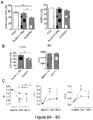
- ApoM-F c activated the ⁇ -arrestin-based S1P1 reporter ( Kono, M. et al., JCI, 124, 2076-2086 (2014 )) in a dose-dependent manner.
- ApoM-F c -TM was not active while albumin-SIP activated the reporter activity with a similar dose-response relationship ( Figure 2A, Figure 2B ).
- endothelial cell S1P 1 and S1P 3 receptors results in the assembly of adherens junctions and the enhancement of barrier function ( McVerry, B. J. et al., J. of Cellular Biochem., 92, 1075-1085 (2004 )), which can be measured by increased trans-endothelial electrical resistance (TEER).
- TEER trans-endothelial electrical resistance
- HDL-bound S1P is more potent in the promotion of vascular barrier compared to albumin-S IP in vitro and in vivo ( Christensen, P. M. et al., FASEB J. (2016 ); Christoffersen, C. et al., PNAS, 108, 9613-9618 (2011 )).
- ApoM-F c administration and resultant elevation of plasma S1P could potentially activate lymphocyte S1P 1 receptor to modulate lymphocyte egress and platelet formation ( Cyster, J. G. & Schwab, S. R., Annual Review of immunology, 30, 69-94 (2012 ); Zhang, L. et al., The Journal of Experimental Medicine, 209, 2165-2181 (2012 )). Therefore, circulating blood cells were quantified after ApoM-F c administration.
- Example 6 Sustained blood pressure reduction in hypertensive mice after ApoM-F c administration
- Endothelial dysfunction contributes to hypertensive pathophysiology. Indeed, plasma S1P levels modulate vascular tone by stimulating eNOS activity ( Nofer, J. R. et al., JCI, 113, 569-581 (2004 ); Cantalupo, A. et al., Nature Medicine, 21, 1028-1037 (2015 )) while endothelial S1P 1 stimulates eNOS activity via the protein kinase Akt ( Christoffersen, C. et al., PNAS, 108, 9613-9618 (2011 ); Igarashi, J. et al., Biochimica et Biophysica Acta, 1781, 489-495 (2008 )).
- Akt protein kinase Akt
- HDL and S1P are known to suppress ischemia/reperfusion (I/R) injury in rodent and porcine models of myocardial infarction ( Morel, S. et al., Cardiovascular Research, 109, 385-396 (2016 ); Sattler, K. et al., Journal of the American College of Cardiology, 66, 1470-1485 (2015 ); Theilmeier, G. et al., Circulation, 114, 1403-1409 (2006 ); Santos-Gallego, C. G. et al., Circulation, 133, 954-966 (2016 )) and in rodent models of stroke ( Lapergue, B.
- mice were treated with PBS, ApoM-F c or ApoM-TM-F c (I.P. injection, 4mg/kg) at the time of reperfusion. Twenty three hours after reperfusion, edema and infarct ratios as well as infarct volumes were calculated as previously described ( Kim, G. S. et al., Nature Communications, 6, 7893 (2015 )).
- ApoM-F c recombinant protein binds to S1P and activates endothelial S1P receptors.
- the ApoM-F c recombinant protein is stable in vivo, therefore, allows sustained activation of S1P receptors in the vasculature.
- the ApoM-F c treatment does not induce lymphopenia, suggesting that it does not access lymphocyte S1P receptors in secondary lymphoid organs. This suggests that ApoM-F c administration selectively targets endothelial S1P receptors and affords a novel strategy to therapeutically modulate S1P-dependent vascular pathology in vivo.
- ApoM-F c recombinant protein achieved sustained reduction in blood pressure in hypertensive mice. This effect is dependent on S1P1 activation and involves NO synthesis. Therapeutic targeting of this pathway may be useful in therapy-resistant hypertensive syndromes.
- ApoM-F c recombinant protein suppresses myocardial I/R injury in a mouse model. Previous work has shown that HDL infusion or S1P 1 agonists protect the myocardium from MI/R injury ( Morel, S. et al., Cardiovascular Research, 109, 385-396 (2016 ); Sattler, K.
Landscapes
- Health & Medical Sciences (AREA)
- Life Sciences & Earth Sciences (AREA)
- Chemical & Material Sciences (AREA)
- General Health & Medical Sciences (AREA)
- Organic Chemistry (AREA)
- Medicinal Chemistry (AREA)
- Bioinformatics & Cheminformatics (AREA)
- Engineering & Computer Science (AREA)
- Veterinary Medicine (AREA)
- Public Health (AREA)
- Animal Behavior & Ethology (AREA)
- Pharmacology & Pharmacy (AREA)
- Molecular Biology (AREA)
- Biophysics (AREA)
- Cardiology (AREA)
- Heart & Thoracic Surgery (AREA)
- Proteomics, Peptides & Aminoacids (AREA)
- Biochemistry (AREA)
- Chemical Kinetics & Catalysis (AREA)
- General Chemical & Material Sciences (AREA)
- Nuclear Medicine, Radiotherapy & Molecular Imaging (AREA)
- Epidemiology (AREA)
- Genetics & Genomics (AREA)
- Gastroenterology & Hepatology (AREA)
- Zoology (AREA)
- Toxicology (AREA)
- Urology & Nephrology (AREA)
- Vascular Medicine (AREA)
- Dermatology (AREA)
- Birds (AREA)
- Marine Sciences & Fisheries (AREA)
- Immunology (AREA)
- Peptides Or Proteins (AREA)
- Medicines That Contain Protein Lipid Enzymes And Other Medicines (AREA)
Claims (12)
- Ein Fusionsprotein, umfassend ein Apolipoprotein M (ApoM) Polypeptid, dem ein ApoM Signalpeptid fehlt, fusioniert mit einer fragmentkristallisierbaren (Fc) Region eines Antikörpers am Carboxyl-Terminus.
- Das Fusionsprotein nach Anspruch 1, wobei das ApoM Polypeptid die Aminosäuren 21-188 der SEQ ID NO: 9 umfasst und nicht die Aminosäuren 1-20 der SEQ ID NO: 9 umfasst.
- Das Fusionsprotein nach Anspruch 1, wobei das Fusionsprotein ferner ein IL-2 Signalpeptid am Amino-Terminus umfasst.
- Das Fusionsprotein nach Anspruch 1, wobei die Fc Region eine Fc Region ist, die ausgewählt ist aus der Gruppe bestehend aus einem IgG Antikörper, einem IgM Antikörper, einem IgA Antikörper, einem IgE Antikörper und einem IgD Antikörper, optional wobei die Fc Region ein IgGl-Fc ist.
- Eine Zusammensetzung, umfassend das Fusionsprotein nach Anspruch 1 in einem Komplex mit Phospholipiden oder Lysophospholipiden.
- Die Zusammensetzung nach Anspruch 5, wobei die Phospholipide Phosphocholin oder Sphingosin-1-Phosphat (S1P) umfassen.
- Die Zusammensetzung nach Anspruch 5 oder 6, wobei die Zusammensetzung durch das Mischen des Fusionsproteins mit den Phospholipiden oder den Lysophospholipiden, das Inkubieren der Mischung, um dem Komplex zu ermöglichen, sich zu bilden und der Aufreinigung des Komplexes gebildet wird.
- Eine Zusammensetzung nach einem der Ansprüche 5-7 zur Verwendung bei der Behandlung eines Zustandes, ausgewählt aus der Gruppe bestehend aus Bluthochdruck, Ischämie des Herzens, Ischämie des Gehirns, beschleunigter Arteriosklerose, nichtkardialer Reperfusionsverletzung und peripherer Gefäßerkrankung.
- Die Zusammensetzung zur Verwendung nach Anspruch 8, wobei jener Bluthochdruck die Zustände umfasst, die ausgewählt sind aus der Gruppe bestehend aus primärem resistenten Bluthochdruck, sekundärem resistenten Bluthochdruck, neurogenem Bluthochdruck, Schwangerschafts-Bluthochdruck (Präeklampsie), diabetischer Präeklampsie und Bluthochdruck infolge von chronischen Nierenerkrankungen.
- Die Zusammensetzung zur Verwendung nach Anspruch 9, wobei jene Ischämie des Herzens die Erkrankungen umfasst, die ausgewählt sind aus der Gruppe bestehend aus kardialer Reperfusionsverletzung, Myokardinfarkt, akutem Koronarsyndrom und Angina.
- Die Zusammensetzung zur Verwendung nach Anspruch 8, wobei jene nicht-kardiale Reperfusionsverletzung eine Verletzung infolge einer Ischämie umfasst, die ausgewählt ist aus der Gruppe bestehend aus einer Leber-Ischämie, einer Nieren-Ischämie, einer Intestinal-Ischämie und einer Muskel-Ischämie.
- Eine Zusammensetzung nach einem der Ansprüche 5-7 zur Verwendung in einem Verfahren zur Reduzierung einer Nebenwirkung von Fingolimod in einem Patienten, der mit Fingolimod behandelt wird.
Applications Claiming Priority (2)
| Application Number | Priority Date | Filing Date | Title |
|---|---|---|---|
| US201662375088P | 2016-08-15 | 2016-08-15 | |
| PCT/US2017/046916 WO2018052615A1 (en) | 2016-08-15 | 2017-08-15 | Apom-fc fusion proteins, complexes thereof with sphingosine l-phosphate (sip), and methods for treating vascular and non-vascular diseases |
Publications (3)
| Publication Number | Publication Date |
|---|---|
| EP3496737A1 EP3496737A1 (de) | 2019-06-19 |
| EP3496737A4 EP3496737A4 (de) | 2020-01-15 |
| EP3496737B1 true EP3496737B1 (de) | 2021-11-03 |
Family
ID=61619659
Family Applications (1)
| Application Number | Title | Priority Date | Filing Date |
|---|---|---|---|
| EP17851271.1A Active EP3496737B1 (de) | 2016-08-15 | 2017-08-15 | Apom-fc-fusionsproteine, komplexe davon mit sphingosin-i-phosphat (sip) und verfahren zur behandlung von vaskulären und nicht-vaskulären erkrankungen |
Country Status (6)
| Country | Link |
|---|---|
| US (1) | US10870689B2 (de) |
| EP (1) | EP3496737B1 (de) |
| JP (1) | JP7048608B2 (de) |
| CN (1) | CN110325201B (de) |
| CA (1) | CA3034243A1 (de) |
| WO (1) | WO2018052615A1 (de) |
Families Citing this family (5)
| Publication number | Priority date | Publication date | Assignee | Title |
|---|---|---|---|---|
| CN110325201B (zh) | 2016-08-15 | 2026-03-27 | 儿童医学中心公司 | ApoM-Fc融合蛋白、其与鞘氨醇1-磷酸(S1P)的复合物以及用于治疗血管和非血管疾病的方法 |
| EP3668551A4 (de) * | 2017-08-15 | 2021-04-14 | Children's Medical Center Corporation | Apom-fc-fusionsproteine und verwendung davon |
| US11344604B2 (en) * | 2018-07-13 | 2022-05-31 | University Of Miami | Method for treating kidney disorders |
| US12415847B2 (en) | 2018-10-12 | 2025-09-16 | Children's Medical Center Corporation | ApoM-Fc fusion proteins for treating lung diseases |
| CN112143752B (zh) * | 2020-10-10 | 2021-12-14 | 华中农业大学 | 真菌细胞核荧光标记的表达载体、试剂、制备方法及应用 |
Family Cites Families (14)
| Publication number | Priority date | Publication date | Assignee | Title |
|---|---|---|---|---|
| US6849718B2 (en) * | 2001-03-20 | 2005-02-01 | Dana Farber Cancer Institute, Inc. | Muteins of hypoxia inducible factor alpha and methods of use thereof |
| CN1556409A (zh) * | 2004-01-02 | 2004-12-22 | 张晓膺 | 载脂蛋白m的测定方法 |
| US7670595B2 (en) * | 2004-06-28 | 2010-03-02 | Merck Patent Gmbh | Fc-interferon-beta fusion proteins |
| EP2083081A1 (de) | 2005-07-22 | 2009-07-29 | Five Prime Therapeutics, Inc. | Zusammensetzungen und Verfahren zur Behandlung von Krankheiten mit FGFR-Fusionsproteinen |
| CN105175553B (zh) * | 2007-05-30 | 2019-11-22 | 浦项工科大学校产学协力团 | 免疫球蛋白融合蛋白 |
| WO2009036460A2 (en) * | 2007-09-14 | 2009-03-19 | Ambrx, Inc. | Modified human apolipoprotein a-i polypeptides and their uses |
| WO2010049103A1 (en) | 2008-10-31 | 2010-05-06 | Eth Zurich | Soluble truncated apom proteins and medical uses thereof |
| US9592268B2 (en) | 2011-05-23 | 2017-03-14 | Cornell University | Endothelium protective materials and methods of use |
| BR112014010580B1 (pt) * | 2011-11-04 | 2021-01-12 | Zymeworks, Inc. | constructo de fc heteromultimérico isolado, composição, uso de um constructo de fc heteromultimérico isolado, composição de ácido nucléico e método para expressar o constructo de fc heteromultimérico isolado |
| EP2970940B1 (de) | 2013-03-14 | 2018-07-25 | Translate Bio, Inc. | Therapeutische mrna-zusammensetzungen und verwendung zur behandlung von krankheiten und störungen |
| US11026918B2 (en) | 2014-11-24 | 2021-06-08 | The Board Of Trustees Of The University Of Illinois | Method of preventing or treating a pulmonary disease or condition |
| JP2018528191A (ja) | 2015-08-19 | 2018-09-27 | ラトガーズ, ザ ステイト ユニバーシティ オブ ニュー ジャージー | 抗体を生成する新規な方法 |
| CN110325201B (zh) | 2016-08-15 | 2026-03-27 | 儿童医学中心公司 | ApoM-Fc融合蛋白、其与鞘氨醇1-磷酸(S1P)的复合物以及用于治疗血管和非血管疾病的方法 |
| EP3668551A4 (de) * | 2017-08-15 | 2021-04-14 | Children's Medical Center Corporation | Apom-fc-fusionsproteine und verwendung davon |
-
2017
- 2017-08-15 CN CN201780056922.6A patent/CN110325201B/zh active Active
- 2017-08-15 EP EP17851271.1A patent/EP3496737B1/de active Active
- 2017-08-15 JP JP2019530362A patent/JP7048608B2/ja active Active
- 2017-08-15 WO PCT/US2017/046916 patent/WO2018052615A1/en not_active Ceased
- 2017-08-15 CA CA3034243A patent/CA3034243A1/en active Pending
- 2017-08-15 US US16/326,089 patent/US10870689B2/en active Active
Non-Patent Citations (1)
| Title |
|---|
| None * |
Also Published As
| Publication number | Publication date |
|---|---|
| EP3496737A4 (de) | 2020-01-15 |
| JP2019531336A (ja) | 2019-10-31 |
| JP7048608B2 (ja) | 2022-04-05 |
| US20190185545A1 (en) | 2019-06-20 |
| US10870689B2 (en) | 2020-12-22 |
| WO2018052615A1 (en) | 2018-03-22 |
| CN110325201B (zh) | 2026-03-27 |
| CA3034243A1 (en) | 2018-03-22 |
| EP3496737A1 (de) | 2019-06-19 |
| CN110325201A (zh) | 2019-10-11 |
Similar Documents
| Publication | Publication Date | Title |
|---|---|---|
| EP3496737B1 (de) | Apom-fc-fusionsproteine, komplexe davon mit sphingosin-i-phosphat (sip) und verfahren zur behandlung von vaskulären und nicht-vaskulären erkrankungen | |
| KR20200081420A (ko) | Vegf-a 폴리펩타이드를 인코딩하는 변형된 rna를 운반하기 위한 지질 나노입자 | |
| US9592268B2 (en) | Endothelium protective materials and methods of use | |
| JP2017082000A (ja) | 持続性ペプチド類似体 | |
| JP2022514778A (ja) | 筋膜損傷の予防および治療におけるアネキシンの使用 | |
| EP3238746A1 (de) | Hochdichtes lipoprotein und verabreichung eines arzneimittels im hinteren augensegment durch okulare instillation dieses zytophilen hochdichten lipoproteins mit kondensiertem peptid | |
| Koren et al. | The cardiac maladaptive ATF3-dependent cross-talk between cardiomyocytes and macrophages is mediated by the IFNγ-CXCL10-CXCR3 axis | |
| ES2552587B1 (es) | Péptido derivado de socs1 para su uso en complicaciones crónicas de la diabetes | |
| US20200046801A1 (en) | Compositions and methods for delivering lypophilic agents to dental pulp and for enhancing dentin production | |
| WO2024246181A1 (en) | Wnt7 molecules with amino acid addition | |
| CN1278184A (zh) | 预防或治疗局部缺血性疾病的药剂 | |
| EP3883591B1 (de) | Relaxinrezeptor 1 zur verwendung in der behandlung und vorbeugung von herzversagen | |
| US20130259851A1 (en) | Use of prokaryotic sphingosine-1-phosphate lyases and of sphingosine-1-phosphate lyases lacking a transmembrane domain for treating hyperproliferative and other diseases | |
| CA3190597A1 (en) | Compositions and methods for the treatment of ocular neuroinflammation | |
| KR101215201B1 (ko) | Xiap 단백질을 포함하는 허혈성 질환을 치료 또는 예방하기 위한 조성물 | |
| WO2020053772A1 (en) | Peptides and medical uses thereof | |
| EP3849583B1 (de) | Peptide zur behandlung neovaskularer augenkrankheiten | |
| WO2025043177A1 (en) | Akt1 fusion proteins and methods of use |
Legal Events
| Date | Code | Title | Description |
|---|---|---|---|
| STAA | Information on the status of an ep patent application or granted ep patent |
Free format text: STATUS: THE INTERNATIONAL PUBLICATION HAS BEEN MADE |
|
| PUAI | Public reference made under article 153(3) epc to a published international application that has entered the european phase |
Free format text: ORIGINAL CODE: 0009012 |
|
| STAA | Information on the status of an ep patent application or granted ep patent |
Free format text: STATUS: REQUEST FOR EXAMINATION WAS MADE |
|
| 17P | Request for examination filed |
Effective date: 20190314 |
|
| AK | Designated contracting states |
Kind code of ref document: A1 Designated state(s): AL AT BE BG CH CY CZ DE DK EE ES FI FR GB GR HR HU IE IS IT LI LT LU LV MC MK MT NL NO PL PT RO RS SE SI SK SM TR |
|
| AX | Request for extension of the european patent |
Extension state: BA ME |
|
| RIN1 | Information on inventor provided before grant (corrected) |
Inventor name: SWENDEMAN, STEVEN L. Inventor name: HLA, TIMOTHY T. Inventor name: DILORENZO, ANNARITA Inventor name: SANCHEZ, THERESA |
|
| DAV | Request for validation of the european patent (deleted) | ||
| DAX | Request for extension of the european patent (deleted) | ||
| A4 | Supplementary search report drawn up and despatched |
Effective date: 20191218 |
|
| RIC1 | Information provided on ipc code assigned before grant |
Ipc: C07K 1/00 20060101ALI20191212BHEP Ipc: C12P 21/08 20060101ALI20191212BHEP Ipc: A61K 38/00 20060101AFI20191212BHEP |
|
| STAA | Information on the status of an ep patent application or granted ep patent |
Free format text: STATUS: EXAMINATION IS IN PROGRESS |
|
| 17Q | First examination report despatched |
Effective date: 20201111 |
|
| GRAP | Despatch of communication of intention to grant a patent |
Free format text: ORIGINAL CODE: EPIDOSNIGR1 |
|
| STAA | Information on the status of an ep patent application or granted ep patent |
Free format text: STATUS: GRANT OF PATENT IS INTENDED |
|
| INTG | Intention to grant announced |
Effective date: 20210528 |
|
| RIN1 | Information on inventor provided before grant (corrected) |
Inventor name: SANCHEZ, THERESA Inventor name: DILORENZO, ANNARITA Inventor name: SWENDEMAN, STEVEN L. Inventor name: HLA, TIMOTHY T. |
|
| GRAS | Grant fee paid |
Free format text: ORIGINAL CODE: EPIDOSNIGR3 |
|
| GRAA | (expected) grant |
Free format text: ORIGINAL CODE: 0009210 |
|
| STAA | Information on the status of an ep patent application or granted ep patent |
Free format text: STATUS: THE PATENT HAS BEEN GRANTED |
|
| AK | Designated contracting states |
Kind code of ref document: B1 Designated state(s): AL AT BE BG CH CY CZ DE DK EE ES FI FR GB GR HR HU IE IS IT LI LT LU LV MC MK MT NL NO PL PT RO RS SE SI SK SM TR |
|
| REG | Reference to a national code |
Ref country code: GB Ref legal event code: FG4D |
|
| RIN1 | Information on inventor provided before grant (corrected) |
Inventor name: SANCHEZ, THERESA Inventor name: DILORENZO, ANNARITA Inventor name: SWENDEMAN, STEVEN L. Inventor name: HLA, TIMOTHY T. |
|
| REG | Reference to a national code |
Ref country code: AT Ref legal event code: REF Ref document number: 1443378 Country of ref document: AT Kind code of ref document: T Effective date: 20211115 Ref country code: CH Ref legal event code: EP |
|
| REG | Reference to a national code |
Ref country code: IE Ref legal event code: FG4D |
|
| REG | Reference to a national code |
Ref country code: DE Ref legal event code: R096 Ref document number: 602017048861 Country of ref document: DE |
|
| REG | Reference to a national code |
Ref country code: LT Ref legal event code: MG9D |
|
| REG | Reference to a national code |
Ref country code: NL Ref legal event code: MP Effective date: 20211103 |
|
| REG | Reference to a national code |
Ref country code: AT Ref legal event code: MK05 Ref document number: 1443378 Country of ref document: AT Kind code of ref document: T Effective date: 20211103 |
|
| PG25 | Lapsed in a contracting state [announced via postgrant information from national office to epo] |
Ref country code: RS Free format text: LAPSE BECAUSE OF FAILURE TO SUBMIT A TRANSLATION OF THE DESCRIPTION OR TO PAY THE FEE WITHIN THE PRESCRIBED TIME-LIMIT Effective date: 20211103 Ref country code: LT Free format text: LAPSE BECAUSE OF FAILURE TO SUBMIT A TRANSLATION OF THE DESCRIPTION OR TO PAY THE FEE WITHIN THE PRESCRIBED TIME-LIMIT Effective date: 20211103 Ref country code: FI Free format text: LAPSE BECAUSE OF FAILURE TO SUBMIT A TRANSLATION OF THE DESCRIPTION OR TO PAY THE FEE WITHIN THE PRESCRIBED TIME-LIMIT Effective date: 20211103 Ref country code: BG Free format text: LAPSE BECAUSE OF FAILURE TO SUBMIT A TRANSLATION OF THE DESCRIPTION OR TO PAY THE FEE WITHIN THE PRESCRIBED TIME-LIMIT Effective date: 20220203 Ref country code: AT Free format text: LAPSE BECAUSE OF FAILURE TO SUBMIT A TRANSLATION OF THE DESCRIPTION OR TO PAY THE FEE WITHIN THE PRESCRIBED TIME-LIMIT Effective date: 20211103 |
|
| PG25 | Lapsed in a contracting state [announced via postgrant information from national office to epo] |
Ref country code: IS Free format text: LAPSE BECAUSE OF FAILURE TO SUBMIT A TRANSLATION OF THE DESCRIPTION OR TO PAY THE FEE WITHIN THE PRESCRIBED TIME-LIMIT Effective date: 20220303 Ref country code: SE Free format text: LAPSE BECAUSE OF FAILURE TO SUBMIT A TRANSLATION OF THE DESCRIPTION OR TO PAY THE FEE WITHIN THE PRESCRIBED TIME-LIMIT Effective date: 20211103 Ref country code: PT Free format text: LAPSE BECAUSE OF FAILURE TO SUBMIT A TRANSLATION OF THE DESCRIPTION OR TO PAY THE FEE WITHIN THE PRESCRIBED TIME-LIMIT Effective date: 20220303 Ref country code: PL Free format text: LAPSE BECAUSE OF FAILURE TO SUBMIT A TRANSLATION OF THE DESCRIPTION OR TO PAY THE FEE WITHIN THE PRESCRIBED TIME-LIMIT Effective date: 20211103 Ref country code: NO Free format text: LAPSE BECAUSE OF FAILURE TO SUBMIT A TRANSLATION OF THE DESCRIPTION OR TO PAY THE FEE WITHIN THE PRESCRIBED TIME-LIMIT Effective date: 20220203 Ref country code: NL Free format text: LAPSE BECAUSE OF FAILURE TO SUBMIT A TRANSLATION OF THE DESCRIPTION OR TO PAY THE FEE WITHIN THE PRESCRIBED TIME-LIMIT Effective date: 20211103 Ref country code: LV Free format text: LAPSE BECAUSE OF FAILURE TO SUBMIT A TRANSLATION OF THE DESCRIPTION OR TO PAY THE FEE WITHIN THE PRESCRIBED TIME-LIMIT Effective date: 20211103 Ref country code: HR Free format text: LAPSE BECAUSE OF FAILURE TO SUBMIT A TRANSLATION OF THE DESCRIPTION OR TO PAY THE FEE WITHIN THE PRESCRIBED TIME-LIMIT Effective date: 20211103 Ref country code: GR Free format text: LAPSE BECAUSE OF FAILURE TO SUBMIT A TRANSLATION OF THE DESCRIPTION OR TO PAY THE FEE WITHIN THE PRESCRIBED TIME-LIMIT Effective date: 20220204 Ref country code: ES Free format text: LAPSE BECAUSE OF FAILURE TO SUBMIT A TRANSLATION OF THE DESCRIPTION OR TO PAY THE FEE WITHIN THE PRESCRIBED TIME-LIMIT Effective date: 20211103 |
|
| PG25 | Lapsed in a contracting state [announced via postgrant information from national office to epo] |
Ref country code: SM Free format text: LAPSE BECAUSE OF FAILURE TO SUBMIT A TRANSLATION OF THE DESCRIPTION OR TO PAY THE FEE WITHIN THE PRESCRIBED TIME-LIMIT Effective date: 20211103 Ref country code: SK Free format text: LAPSE BECAUSE OF FAILURE TO SUBMIT A TRANSLATION OF THE DESCRIPTION OR TO PAY THE FEE WITHIN THE PRESCRIBED TIME-LIMIT Effective date: 20211103 Ref country code: RO Free format text: LAPSE BECAUSE OF FAILURE TO SUBMIT A TRANSLATION OF THE DESCRIPTION OR TO PAY THE FEE WITHIN THE PRESCRIBED TIME-LIMIT Effective date: 20211103 Ref country code: EE Free format text: LAPSE BECAUSE OF FAILURE TO SUBMIT A TRANSLATION OF THE DESCRIPTION OR TO PAY THE FEE WITHIN THE PRESCRIBED TIME-LIMIT Effective date: 20211103 Ref country code: DK Free format text: LAPSE BECAUSE OF FAILURE TO SUBMIT A TRANSLATION OF THE DESCRIPTION OR TO PAY THE FEE WITHIN THE PRESCRIBED TIME-LIMIT Effective date: 20211103 Ref country code: CZ Free format text: LAPSE BECAUSE OF FAILURE TO SUBMIT A TRANSLATION OF THE DESCRIPTION OR TO PAY THE FEE WITHIN THE PRESCRIBED TIME-LIMIT Effective date: 20211103 |
|
| REG | Reference to a national code |
Ref country code: DE Ref legal event code: R097 Ref document number: 602017048861 Country of ref document: DE |
|
| PLBE | No opposition filed within time limit |
Free format text: ORIGINAL CODE: 0009261 |
|
| STAA | Information on the status of an ep patent application or granted ep patent |
Free format text: STATUS: NO OPPOSITION FILED WITHIN TIME LIMIT |
|
| 26N | No opposition filed |
Effective date: 20220804 |
|
| PG25 | Lapsed in a contracting state [announced via postgrant information from national office to epo] |
Ref country code: AL Free format text: LAPSE BECAUSE OF FAILURE TO SUBMIT A TRANSLATION OF THE DESCRIPTION OR TO PAY THE FEE WITHIN THE PRESCRIBED TIME-LIMIT Effective date: 20211103 |
|
| PG25 | Lapsed in a contracting state [announced via postgrant information from national office to epo] |
Ref country code: SI Free format text: LAPSE BECAUSE OF FAILURE TO SUBMIT A TRANSLATION OF THE DESCRIPTION OR TO PAY THE FEE WITHIN THE PRESCRIBED TIME-LIMIT Effective date: 20211103 |
|
| PG25 | Lapsed in a contracting state [announced via postgrant information from national office to epo] |
Ref country code: MC Free format text: LAPSE BECAUSE OF FAILURE TO SUBMIT A TRANSLATION OF THE DESCRIPTION OR TO PAY THE FEE WITHIN THE PRESCRIBED TIME-LIMIT Effective date: 20211103 |
|
| REG | Reference to a national code |
Ref country code: CH Ref legal event code: PL |
|
| PG25 | Lapsed in a contracting state [announced via postgrant information from national office to epo] |
Ref country code: LU Free format text: LAPSE BECAUSE OF NON-PAYMENT OF DUE FEES Effective date: 20220815 Ref country code: LI Free format text: LAPSE BECAUSE OF NON-PAYMENT OF DUE FEES Effective date: 20220831 Ref country code: CH Free format text: LAPSE BECAUSE OF NON-PAYMENT OF DUE FEES Effective date: 20220831 |
|
| REG | Reference to a national code |
Ref country code: BE Ref legal event code: MM Effective date: 20220831 |
|
| PG25 | Lapsed in a contracting state [announced via postgrant information from national office to epo] |
Ref country code: IT Free format text: LAPSE BECAUSE OF FAILURE TO SUBMIT A TRANSLATION OF THE DESCRIPTION OR TO PAY THE FEE WITHIN THE PRESCRIBED TIME-LIMIT Effective date: 20211103 |
|
| P01 | Opt-out of the competence of the unified patent court (upc) registered |
Effective date: 20230526 |
|
| PG25 | Lapsed in a contracting state [announced via postgrant information from national office to epo] |
Ref country code: IE Free format text: LAPSE BECAUSE OF NON-PAYMENT OF DUE FEES Effective date: 20220815 |
|
| PG25 | Lapsed in a contracting state [announced via postgrant information from national office to epo] |
Ref country code: BE Free format text: LAPSE BECAUSE OF NON-PAYMENT OF DUE FEES Effective date: 20220831 |
|
| PG25 | Lapsed in a contracting state [announced via postgrant information from national office to epo] |
Ref country code: HU Free format text: LAPSE BECAUSE OF FAILURE TO SUBMIT A TRANSLATION OF THE DESCRIPTION OR TO PAY THE FEE WITHIN THE PRESCRIBED TIME-LIMIT; INVALID AB INITIO Effective date: 20170815 |
|
| PG25 | Lapsed in a contracting state [announced via postgrant information from national office to epo] |
Ref country code: CY Free format text: LAPSE BECAUSE OF FAILURE TO SUBMIT A TRANSLATION OF THE DESCRIPTION OR TO PAY THE FEE WITHIN THE PRESCRIBED TIME-LIMIT Effective date: 20211103 |
|
| PG25 | Lapsed in a contracting state [announced via postgrant information from national office to epo] |
Ref country code: MK Free format text: LAPSE BECAUSE OF FAILURE TO SUBMIT A TRANSLATION OF THE DESCRIPTION OR TO PAY THE FEE WITHIN THE PRESCRIBED TIME-LIMIT Effective date: 20211103 |
|
| PG25 | Lapsed in a contracting state [announced via postgrant information from national office to epo] |
Ref country code: TR Free format text: LAPSE BECAUSE OF FAILURE TO SUBMIT A TRANSLATION OF THE DESCRIPTION OR TO PAY THE FEE WITHIN THE PRESCRIBED TIME-LIMIT Effective date: 20211103 |
|
| PG25 | Lapsed in a contracting state [announced via postgrant information from national office to epo] |
Ref country code: MT Free format text: LAPSE BECAUSE OF FAILURE TO SUBMIT A TRANSLATION OF THE DESCRIPTION OR TO PAY THE FEE WITHIN THE PRESCRIBED TIME-LIMIT Effective date: 20211103 |
|
| PGFP | Annual fee paid to national office [announced via postgrant information from national office to epo] |
Ref country code: DE Payment date: 20250827 Year of fee payment: 9 |
|
| PGFP | Annual fee paid to national office [announced via postgrant information from national office to epo] |
Ref country code: GB Payment date: 20250827 Year of fee payment: 9 |
|
| PGFP | Annual fee paid to national office [announced via postgrant information from national office to epo] |
Ref country code: FR Payment date: 20250825 Year of fee payment: 9 |