EP3498169B1 - Système et procédé de classification et d'estimation quantitative de contrainte cognitive - Google Patents
Système et procédé de classification et d'estimation quantitative de contrainte cognitive Download PDFInfo
- Publication number
- EP3498169B1 EP3498169B1 EP18158624.9A EP18158624A EP3498169B1 EP 3498169 B1 EP3498169 B1 EP 3498169B1 EP 18158624 A EP18158624 A EP 18158624A EP 3498169 B1 EP3498169 B1 EP 3498169B1
- Authority
- EP
- European Patent Office
- Prior art keywords
- stress
- feature
- user
- physiological signals
- invasive physiological
- Prior art date
- Legal status (The legal status is an assumption and is not a legal conclusion. Google has not performed a legal analysis and makes no representation as to the accuracy of the status listed.)
- Active
Links
Images


Classifications
-
- A—HUMAN NECESSITIES
- A61—MEDICAL OR VETERINARY SCIENCE; HYGIENE
- A61B—DIAGNOSIS; SURGERY; IDENTIFICATION
- A61B5/00—Measuring for diagnostic purposes; Identification of persons
- A61B5/16—Devices for psychotechnics; Testing reaction times ; Devices for evaluating the psychological state
- A61B5/165—Evaluating the state of mind, e.g. depression, anxiety
-
- A—HUMAN NECESSITIES
- A61—MEDICAL OR VETERINARY SCIENCE; HYGIENE
- A61B—DIAGNOSIS; SURGERY; IDENTIFICATION
- A61B5/00—Measuring for diagnostic purposes; Identification of persons
- A61B5/02—Detecting, measuring or recording for evaluating the cardiovascular system, e.g. pulse, heart rate, blood pressure or blood flow
- A61B5/0205—Simultaneously evaluating both cardiovascular conditions and different types of body conditions, e.g. heart and respiratory condition
-
- A—HUMAN NECESSITIES
- A61—MEDICAL OR VETERINARY SCIENCE; HYGIENE
- A61B—DIAGNOSIS; SURGERY; IDENTIFICATION
- A61B5/00—Measuring for diagnostic purposes; Identification of persons
- A61B5/02—Detecting, measuring or recording for evaluating the cardiovascular system, e.g. pulse, heart rate, blood pressure or blood flow
- A61B5/024—Measuring pulse rate or heart rate
- A61B5/02405—Determining heart rate variability
-
- A—HUMAN NECESSITIES
- A61—MEDICAL OR VETERINARY SCIENCE; HYGIENE
- A61B—DIAGNOSIS; SURGERY; IDENTIFICATION
- A61B5/00—Measuring for diagnostic purposes; Identification of persons
- A61B5/02—Detecting, measuring or recording for evaluating the cardiovascular system, e.g. pulse, heart rate, blood pressure or blood flow
- A61B5/024—Measuring pulse rate or heart rate
- A61B5/02416—Measuring pulse rate or heart rate using photoplethysmograph signals, e.g. generated by infrared radiation
-
- A—HUMAN NECESSITIES
- A61—MEDICAL OR VETERINARY SCIENCE; HYGIENE
- A61B—DIAGNOSIS; SURGERY; IDENTIFICATION
- A61B5/00—Measuring for diagnostic purposes; Identification of persons
- A61B5/05—Detecting, measuring or recording for diagnosis by means of electric currents or magnetic fields; Measuring using microwaves or radio waves
- A61B5/053—Measuring electrical impedance or conductance of a portion of the body
- A61B5/0531—Measuring skin impedance
- A61B5/0533—Measuring galvanic skin response
-
- A—HUMAN NECESSITIES
- A61—MEDICAL OR VETERINARY SCIENCE; HYGIENE
- A61B—DIAGNOSIS; SURGERY; IDENTIFICATION
- A61B5/00—Measuring for diagnostic purposes; Identification of persons
- A61B5/103—Measuring devices for testing the shape, pattern, colour, size or movement of the body or parts thereof, for diagnostic purposes
- A61B5/11—Measuring movement of the entire body or parts thereof, e.g. head or hand tremor or mobility of a limb
- A61B5/1123—Discriminating type of movement, e.g. walking or running
-
- A—HUMAN NECESSITIES
- A61—MEDICAL OR VETERINARY SCIENCE; HYGIENE
- A61B—DIAGNOSIS; SURGERY; IDENTIFICATION
- A61B5/00—Measuring for diagnostic purposes; Identification of persons
- A61B5/24—Detecting, measuring or recording bioelectric or biomagnetic signals of the body or parts thereof
- A61B5/316—Modalities, i.e. specific diagnostic methods
- A61B5/369—Electroencephalography [EEG]
- A61B5/372—Analysis of electroencephalograms
- A61B5/374—Detecting the frequency distribution of signals, e.g. detecting delta, theta, alpha, beta or gamma waves
-
- A—HUMAN NECESSITIES
- A61—MEDICAL OR VETERINARY SCIENCE; HYGIENE
- A61B—DIAGNOSIS; SURGERY; IDENTIFICATION
- A61B5/00—Measuring for diagnostic purposes; Identification of persons
- A61B5/72—Signal processing specially adapted for physiological signals or for diagnostic purposes
- A61B5/7203—Signal processing specially adapted for physiological signals or for diagnostic purposes for noise prevention, reduction or removal
-
- A—HUMAN NECESSITIES
- A61—MEDICAL OR VETERINARY SCIENCE; HYGIENE
- A61B—DIAGNOSIS; SURGERY; IDENTIFICATION
- A61B5/00—Measuring for diagnostic purposes; Identification of persons
- A61B5/72—Signal processing specially adapted for physiological signals or for diagnostic purposes
- A61B5/7203—Signal processing specially adapted for physiological signals or for diagnostic purposes for noise prevention, reduction or removal
- A61B5/7207—Signal processing specially adapted for physiological signals or for diagnostic purposes for noise prevention, reduction or removal of noise induced by motion artifacts
-
- A—HUMAN NECESSITIES
- A61—MEDICAL OR VETERINARY SCIENCE; HYGIENE
- A61B—DIAGNOSIS; SURGERY; IDENTIFICATION
- A61B5/00—Measuring for diagnostic purposes; Identification of persons
- A61B5/72—Signal processing specially adapted for physiological signals or for diagnostic purposes
- A61B5/7235—Details of waveform analysis
- A61B5/7264—Classification of physiological signals or data, e.g. using neural networks, statistical classifiers, expert systems or fuzzy systems
- A61B5/7267—Classification of physiological signals or data, e.g. using neural networks, statistical classifiers, expert systems or fuzzy systems involving training the classification device
-
- A—HUMAN NECESSITIES
- A61—MEDICAL OR VETERINARY SCIENCE; HYGIENE
- A61B—DIAGNOSIS; SURGERY; IDENTIFICATION
- A61B5/00—Measuring for diagnostic purposes; Identification of persons
- A61B5/74—Details of notification to user or communication with user or patient; User input means
- A61B5/7475—User input or interface means, e.g. keyboard, pointing device, joystick
-
- G—PHYSICS
- G06—COMPUTING OR CALCULATING; COUNTING
- G06N—COMPUTING ARRANGEMENTS BASED ON SPECIFIC COMPUTATIONAL MODELS
- G06N20/00—Machine learning
-
- G—PHYSICS
- G06—COMPUTING OR CALCULATING; COUNTING
- G06N—COMPUTING ARRANGEMENTS BASED ON SPECIFIC COMPUTATIONAL MODELS
- G06N5/00—Computing arrangements using knowledge-based models
- G06N5/02—Knowledge representation; Symbolic representation
- G06N5/022—Knowledge engineering; Knowledge acquisition
-
- G—PHYSICS
- G16—INFORMATION AND COMMUNICATION TECHNOLOGY [ICT] SPECIALLY ADAPTED FOR SPECIFIC APPLICATION FIELDS
- G16H—HEALTHCARE INFORMATICS, i.e. INFORMATION AND COMMUNICATION TECHNOLOGY [ICT] SPECIALLY ADAPTED FOR THE HANDLING OR PROCESSING OF MEDICAL OR HEALTHCARE DATA
- G16H50/00—ICT specially adapted for medical diagnosis, medical simulation or medical data mining; ICT specially adapted for detecting, monitoring or modelling epidemics or pandemics
- G16H50/20—ICT specially adapted for medical diagnosis, medical simulation or medical data mining; ICT specially adapted for detecting, monitoring or modelling epidemics or pandemics for computer-aided diagnosis, e.g. based on medical expert systems
-
- A—HUMAN NECESSITIES
- A61—MEDICAL OR VETERINARY SCIENCE; HYGIENE
- A61B—DIAGNOSIS; SURGERY; IDENTIFICATION
- A61B2503/00—Evaluating a particular growth phase or type of persons or animals
- A61B2503/12—Healthy persons not otherwise provided for, e.g. subjects of a marketing survey
-
- A—HUMAN NECESSITIES
- A61—MEDICAL OR VETERINARY SCIENCE; HYGIENE
- A61B—DIAGNOSIS; SURGERY; IDENTIFICATION
- A61B5/00—Measuring for diagnostic purposes; Identification of persons
- A61B5/74—Details of notification to user or communication with user or patient; User input means
- A61B5/742—Details of notification to user or communication with user or patient; User input means using visual displays
- A61B5/7435—Displaying user selection data, e.g. icons in a graphical user interface
-
- G—PHYSICS
- G16—INFORMATION AND COMMUNICATION TECHNOLOGY [ICT] SPECIALLY ADAPTED FOR SPECIFIC APPLICATION FIELDS
- G16H—HEALTHCARE INFORMATICS, i.e. INFORMATION AND COMMUNICATION TECHNOLOGY [ICT] SPECIALLY ADAPTED FOR THE HANDLING OR PROCESSING OF MEDICAL OR HEALTHCARE DATA
- G16H50/00—ICT specially adapted for medical diagnosis, medical simulation or medical data mining; ICT specially adapted for detecting, monitoring or modelling epidemics or pandemics
- G16H50/70—ICT specially adapted for medical diagnosis, medical simulation or medical data mining; ICT specially adapted for detecting, monitoring or modelling epidemics or pandemics for mining of medical data, e.g. analysing previous cases of other patients
Definitions
- the present disclosure in general relates to stress classification and quantification, and more particularly to system and method for classification and quantitative estimation of cognitive stress from analysis of keystrokes and signals derived from physiological sensors.
- Stress is the response of the human body subjected to an unfavorable stimulus.
- Acute stress is the effect of short term perturbing situations, often manifested by temporary changes in physiological variables. Acute stress for longer periods of time can lead to episodic stress. Even longer exposure to stress elements or traumatic conditions can lead to chronic stress, anxiety or clinical depression.
- WHO World health organization
- loss of productivity at work as well as treatment of mental health related problems cost large amounts of money worldwide. Hence detection of early symptoms of stress can assist in preserving the mental wellbeing of a large section of the vulnerable population.
- Embodiments of the invention can provide systems and methods for analyzing and assessing a personalized biometric brain health signature by integrating the use of electroencephalography (EEG), somato-sensory, neuropsychological, and/or cognitive stimulation, and novel signal processing and display.
- EEG electroencephalography
- Embodiments of the invention can provide systems and methods for early detection of dementia, including Alzheimer's disease (AD), vascular dementia (VAD), mixed dementia (AD and VAD), MCI, and other dementia-type disorders, as well as brain injury states such as mild Traumatic Brain Injury.
- Embodiments of the invention can provide some or all of the following improvements over conventional systems and methods, including: (1) Increased sensitivity, specificity, and over all accuracy; (2) early detection of disease and injury; and (3) enhanced portability with remote data acquisition capability.
- the present invention permits the overall assessment of health of the brain. Methods to assess the personalized biometric brain health signature are disclosed.
- an embodiment herein provides methods and systems for classification and quantitative estimation of cognitive stress in real-time.
- the method is according to claim
- a system for classification and quantitative estimation of cognitive stress in real-time is according to claim 8.
- Stress is one of a major cause of concern in today's world. Stress is the response of the human body subjected to an unfavorable stimulus. Acute stress is the effect of short term perturbing situations, often manifested by temporary changes in physiological variables of a user under stress. Acute stress for longer periods of time can lead to episodic stress. Even longer exposure to stress elements or traumatic conditions can lead to chronic stress, anxiety or clinical depression.
- physiological signals are considered as a viable choice for analyzing and monitoring the level of stress experienced by an individual.
- three different levels of stress were induced, namely low, medium and high, on a driver, when he took rest and drove through a highway and a city road respectively.
- HRV Heart Rate Variability
- GSR and HRV Heart Rate Variability
- the stress dynamics of an examinee is analyzed during an multiple choice question (MCQ) test by means of Galvanic Skin Response (GSR) and Photoplethysmogram (PPG) signals. They used a scoring mechanism based on fluctuation analysis of GSR to estimate the level of stress perceived. HRV was found to be informative about the guess work done during the test.
- GSR Galvanic Skin Response
- PPG Photoplethysmogram
- HRV was found to be informative about the guess work done during the test.
- Low stress sessions required the participants to key in numbers, displayed on-screen, with encouragement from a friendly instructor.
- the high stress sessions added a memory task along with elements of socio-evaluative threat, by recording the sessions and portraying a neutral instructor.
- Features obtained from HRV and continuous blood pressure were determined to correlate to the self-reported stress levels of individuals.
- the system utilizes multiple physiological signals during a specific task to discriminate between high and low cognitive stress.
- the disclosed system is further capable of determining a stress indicator metric, from a keystroke analysis performed during a specific keyboard based task, to provide a quantitative estimate of cognitive stress perceived by an individual, and train a person-dependent regression model using features derived from physiological signals only to predict the same metric.
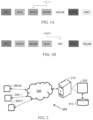
- An example of said specific task is described with reference to FIGS. 1A and 1B .
- the target includes a single target only, however, in alternate embodiments the target may include more than one target so as to induce varying levels of the stress in the player/participant.
- the moving objects may be navigated by using dedicated keys, for example, a right hand key and a left hand key.
- the navigation may be performed by various keys or other means of navigation such as gestures, joystick, and so on. The details of an example scenario pertaining to keyboard based tasks are explained hereinunder by taking reference of a Stroop Tetris game.
- the example Stroop Tetris test may be utilized for inducing varying levels of cognitive stress in participants, and while the participant is engaged in playing the game, the cognitive stress experienced by the user may be recorded (by using various sensors communicably coupled to the participant). Said sensors may output physiological signals that can be analysed for determining the cognitive stress experienced by the user under varying stress conditions.
- the description herein provides method and system for classification and quantitative estimation of cognitive stress from physiological signals and keystrokes.
- the processor 302 may include functionality to execute one or more software programs, which may be stored in the memory 304 or otherwise accessible to the processor 302.
- the hardware processor 302 may be implemented as one or more microprocessors, microcomputers, microcontrollers, digital signal processors, central processing units, state machines, logic circuitries, and/or any devices that manipulate signals based on operational instructions.
- the processor 302 is configured to fetch and execute computer-readable instructions stored in the memory 304.
- the physiological signals obtained from the device(s) 204 may be corrupted due to noise, thereby leading to intra-subject and inter-subject variability and increased computational effort of subsequent processes.
- the system 300 is caused to preprocess the physiological signals individually.
- the system 204 preprocesses the plurality of non-invasive physiological signals in order to reduce corruption of the plurality of non-invasive physiological by noise, reduce intra-user and inter-user variability and decrease computational effort for identifying the plurality of feature steps and predicting the stress indicator metric.
- the EEG signals may be preprocessed by a Muse device that is capable of measuring brain activity via multiple EEG sensors.
- the system 300 identifies a plurality of feature sets from the plurality of non-invasive physiological signals.
- the system 300 identifies the plurality of feature sets by extracting a feature set individually from each non-invasive physiological signal of the plurality of non-invasive signals to obtain the plurality of feature sets. For example, for extraction of a feature set from the EEG signals, raw signals from each of the 4 channels of the Muse device can be analysed separately. STFT, with 256 samples per window and an overlap of 234 samples, may be performed on each channel to obtain time series of power contained in ⁇ , ⁇ , ⁇ , ⁇ , and ⁇ bands.
- EEG EEG asymmetry
- EEG asymmetry is defined as a difference of logarithm of power between left and right channels for each of frontal and parietal locations in each frequency band. Additional features computed extracted from the EEG signal may include three Hjorth parameters.
- ratio of median values during rest state and task state of the user may be considered for both tonic and phasic power.
- An orienting response may be considered as significant if its trough-to-peak height is at least 0.05 ⁇ Siemens.
- Morphological features may include number of orienting responses and median of orienting response height, rise time, AUC under rising part as in, half-recovery time as in as well as the kurtosis of the orienting response. All morphological features may be derived from GSR signal during task only. Other features may include DFA slope, mean power during task and ratio of fluctuation index during task and rest.
- HRV related and other time-domain features obtained from the PPG signal may be considered.
- the NN interval time-series was derived from the PPG signal.
- the mean, standard deviation, mean-absolute-deviation and Shannon entropy of the NN intervals, normalized RMSSD, SDSD, pNN50 and pNN20 may be extracted.
- the median of the heart rate derived from the PPG signal may also be considered as a time-domain feature.
- the frequency-domain PPG features involves the normalized spectral power of the NN interval time-series in the frequency bands of 0-0.04 Hz, 0.04-0.15 Hz, 0.15-0.5 Hz, 0.5-0.75 Hz and 0.75-1 Hz.
- the pairwise ratios of these normalized spectral powers may also be considered.
- the morphological PPG features includes mean, median and standard deviation of each of normalized systolic time, normalized diastolic time, ratio of systolic and diastolic time and cardiac cycle length; median of the pulse height, rising slope, falling slope, ratio of the rising and falling slope, area under the curve for the systolic and diastolic part of the cardiac cycle, ratio of these two areas, ratio of the slopes in systole, ratio of the slopes in diastole, pulse width at 25%, 33%, 50% and 75% of the pulse height as well as the pairwise ratios of these pulse widths.
- the system 300 assesses relative merits of said features sets by applying a feature reduction method.
- the system 300 performs feature reduction on each feature set of the plurality of feature sets to obtain an optimum feature set that minimizes computational demand and maximizes performance.
- the system 300 performs the feature reduction using maximizing relevance minimum redundancy (mRMR).
- the mRMR method performs the feature ranking by maximizing the relevance of a feature with the class labels while minimizing the redundancy among the feature set. Said ranking may be performed individually on the plurality of feature sets obtained from EEG, GSR and PPG
- the plurality of feature sets identified from the physiological signals correlates with the cognitive stress experienced by the user while engaging in the performance of the task.
- the system 300 predicts a stress indicator metric comprising a quantitative estimate of the cognitive stress experienced during the performance of the task.
- the system 300 predicts the stress indicator metric ( S ) using a regression model that is trained using the plurality of feature sets and independently determined quantitative estimates of cognitive stress used as a ground truth to output the value of the stress indicator metric.
- the ground truth is determined from keystroke data associated with performance of keyboard-based tasks.
- the keyboard-based tasks may include navigation of one or more moving objects to exactly one target from a plurality of stationary targets using only left and right hand keys.
- the keyboard-based tasks may be performed by attempting Versions of Stroop Tetris game, as described with reference to FIGS. 1A, 1B .
- the system 300 obtains the keystroke data during performance of at least one keyboard-based task.
- the system determines relative position of the moving object with respect to the ultimate target object during each epoch of the keyboard based task.
- An epoch associated with the moving object includes a duration of time available for directing said moving object to the target object.
- the stress metric indicator S (A - 10B) / T - 0.5, where A represents rewards for persistence and B represents penalties for indecision.
- the factor of 10 is introduced to increase penalty on indecisive movements during keyboard based task.
- S assumes high (usually positive) values when the subject (while performing the keyboard based task) is relaxed and low (usually negative) values when the subject is stressed.
- the lower values of S are clipped at -1.
- -1 ⁇ S ⁇ 0.5.
- the system 300 develops a classification model from the plurality of non-invasive physiological signals to differentiate between high and low cognitive stress experienced by the user.
- the system 300 classifies the level of cognitive stress based on the plurality of feature sets obtained from the plurality of non-invasive physiological signals using a feature level fusion and a decision level fusion.
- the feature level fusion of the plurality of feature sets includes accumulating the feature sets associated with the plurality of non-invasive physiological signals to obtain a composite feature set. Further the system 300 performs feature reduction of the composite feature set. In an embodiment, the feature reduction of the composite feature set is performed using mRMR. The system performs the decision level fusion by training a plurality of RF classification models individually corresponding to each of the plurality of features set from each non-invasive physiological signals as originating from the high stress or low stress task(s). Further, the system 300 applies a logical AND operator to the binary classification outcome of the plurality of non-invasive physiological signals obtained from the individual classifiers.
- the output of the classifier upon applying the logical AND operator provides a classification of cognitive stress experienced by the user as high stress or low stress.
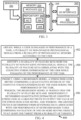
- An example flow-diagram illustrating a processor-implemented method for classification and quantification of cognitive stress is described further with reference to FIG. 4 .
- FIG 4 illustrates a flow diagram of a method 400 for classification and quantification of cognitive stress, according to some embodiments of the present disclosure.
- the method 400 may be described in the general context of computer executable instructions.
- computer executable instructions can include routines, programs, objects, components, data structures, procedures, modules, functions, etc., that perform particular functions or implement particular abstract data types.
- the method 400 may also be practiced in a distributed computing environment where functions are performed by remote processing devices that are linked through a communication network.
- the order in which the method 400 is described is not intended to be construed as a limitation, and any number of the described method blocks can be combined in any order to implement the method 400, or an alternative method.
- the method 400 can be implemented in any suitable hardware, software, firmware, or combination thereof.
- the method 400 depicted in the flow chart may be executed by a system, for example, the system 202 of FIG 2 .
- the system 202 may be embodied in an exemplary computer system.
- the method 400 includes obtaining, while a user is engaged in performance of a task, a plurality of non-invasive physiological signals from a plurality of physiological sensors accessible to the user.
- the method 400 includes identifying a plurality of feature sets from the plurality of non-invasive physiological signals. The plurality of feature sets correlates with the cognitive stress experienced by the user while engaging in the performance of the task, as is explained with reference to FIG 3 .
- the method 400 includes predicting, using a regression model, a stress indicator metric comprising a quantitative estimate of the cognitive stress experienced by the user during the performance of the task.
- the regression model is trained using the plurality of feature sets and independently determined quantitative estimates of cognitive stress used as a ground truth to output the value of the stress indicator metric.
- the ground truth is determined from keystroke data associated with the performance of keyboard-based tasks comprising navigation of one or more moving objects to at least one target from a plurality of targets.
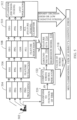
- An example process flow for classification and quantification of cognitive stress with reference to an example scenario is described further in FIG. 5 .
- FIG 5 illustrates an example process flow for classification and quantification of cognitive stress, according to some embodiments of the present disclosure.
- a user 502 may perform a task.
- the task may be keyboard based task.
- the task may refer to any physical and/or mental task.
- the task may act as a stimulus for inducing cognitive stress in the user 502.
- the user may be a player of a key board based task.
- the model Once the model is designed, it can be utilized directly by a user (wearing a wearable device accommodating the disclosed system) for classification and quantification of the cognitive stress experienced by said user.
- the terms 'user', ⁇ player' and 'subject' may be used interchangeably.
- the subject may be induced with two levels of cognitive stress, a high level of stress and a low level of stress.
- a gamified version of the Stroop Colour-Word test was considered a more universal stressor for the subjects who possessed adequate familiarity with English names of colours, adequate proficiency in reading and writing in English and faced no difficulty in colour perception.
- the Stroop test may be gamified using elements of the Tetris game, as is described with reference to FIGS. 1A and 1B .
- the scores may be public, although it may not be the case. All participants may be familiar with each other to some extent. No participant may have ever played or observed the game before this experiment. This may ensure that the subjects may be genuinely interested in the game, perceived socio-evaluative threat and tried to maximize their scores.
- the gameplay may include difficulty levels, along with the correct choice to be made. Participants may be required to direct the text, descending at constant speed, to the correct bin using only left and right arrow keys. All subjects may be considered to have sufficient computer proficiency with a standard QWERTY keyboard. Score may be displayed on-screen.
- the text color matches the text name, the bin color matches the bin name. So the correct choice is obvious and creates low cognitive stress.
- the text color does not match the text name, as is with the bin color and the bin name. The player must match the bin name to the text color. This double occurrence of color-word mismatch may be introduced so that the players would be unable to match word-to-word or color-to-color.
- the disclosed system may be caused to collect various non-invasive physiological signals, such as EEG, PPG and GSR from the subjects while the subjects are engaged in the task, for example the Stroop test.
- GSR may be collected using a single Shimmer 3 GSR+2 unit at 10.2 Hz.
- Gel-based electrodes may be used instead of the dry electrodes supplied with Shimmer. Electrodes may be placed between the middle and proximal digital creases of the second and third digits of the non-dominant hand.
- PPG can be collected using the Contec CMS50D+ digital pulse oximeter at 60 Hz, from the second digit of the same hand.
- EEG can be recorded using the 4-channel Muse 2016 headband at 220 Hz. All devices interfaced with the computer using in-the box software. All devices may be provided with timestamps. Keystroke data including the key strokes during gameplay may be recorded. Subjects' comments regarding difficulty may also be recorded. All data may be anonymized.
- Each subject may play the two difficulty levels of the game only once. Instructions for a level may be provided just before the corresponding session for that difficulty level. All devices (incorporating PPG, EEG and GSR sensors) may then started recording the respective physiological signals.
- the subject may be first instructed to assume a relaxed position in a reclining chair with eyes closed for 60 seconds. After that, the subject may be instructed to sit straight for 10s and stare at a fixation cross on the display. This screen may be replaced by the gameplay screen of the easy version, at which point the subject used only the dominant hand to play using left and right arrow keys.
- the may game last for say 110 seconds.
- the entire protocol for the easy version may provide 180 (60+10+110) seconds of clearly segmented data. Said protocol may again be observed for the difficult version.
- each subject may provide data for 1 easy and 1 difficult session, totaling 360 (2*180) seconds.
- the physiological signals such as the EEG, PPG and GSR may be preprocessed at 504, as is explained previously with reference to FIG 3 .
- feature sets may be extracted individually from the preprocessed physiological signals at 506. Once all the feature sets related to each signal modality are extracted, the relative merits of those features may be assessed by performing feature reduction at 508.
- feature reduction is performed by mRMR technique. The method performs the feature ranking by maximizing the relevance of a feature with the class labels while minimizing the redundancy among the feature set. This ranking is performed individually on the three feature sets obtained from EEG, GSR and PPG
- a classification model is developed from the plurality of non-invasive physiological signals to differentiate between high and low cognitive stress experienced by the user.
- a Random Forest (RF) model is employed for carrying out the classification between the high and low levels of stress.
- RF Random Forest
- ten differently seeded RFs are used and Leave One Out Cross validation (LOOCV) is performed with respect to subjects in each case.
- LOCV Leave One Out Cross validation
- the overall test-set classification accuracies obtained from all these RFs are reported throughout this section.
- High cognitive stress is considered class 1, hence accuracy in detecting high stress is equivalent to Sensitivity ( S e ) .
- detection accuracy of low cognitive stress is equivalent to Specificity ( S p ) .
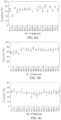
- FIGS. 6A-6C illustrates observed performances corresponding to EEG, GSR and PPG signals.
- the classification accuracy per class
- the features are sequentially added, according to the ranks obtained from mRMR-based feature selection.
- EEG features FIG 6A
- the best performance with high accuracy and low difference between the two classes is obtained for the all the top 10 features together.
- Median and interquartile range of accuracy are respectively 68.2%, [68.2 63.6]% for high-load task while the same are 77.3% and [77.3 72.7]% for low-load task.
- GSR analysis also yielded highest accuracies for the 10 best features (FIG 4B).
- GSR features exhibit a median accuracy of 72.7% and interquartile range of [72.7 68.2]% while low-load task show 65.9% and [68.2 63.6]% instead.
- PPG features the performance is quite low, as is evident from FIG 6C .
- PPG-based classification yields the best results using the top 1 feature only, where median and range for high-load and low-load tasks are respectively 65.9%, [59.1 68.2]%, 63.6% and [59.1 63.6]% classifying the level of cognitive stress based on the plurality of feature sets obtained from the plurality of non-invasive physiological signals using a feature level fusion at 510 and a decision level fusion at 512.
- the classification model classifies level of cognitive stress by combining the information obtained from EEG and GSR.
- the fusion is performed at two different levels as described next.
- the PPG based analysis is precluded from fusion because of unsatisfactory performance at individual level. This might be due to the fact that the HRV based features obtained from PPG analysis were not significantly represented within such a small stimulus duration (around 1 min).
- a composite feature set is formed by accumulating all features from EEG and GSR signals, followed by feature reduction.
- FIG 7 depicts the classification accuracies for the composite feature set using LOOCV method.
- Final median accuracies are 81.8% and 72.7% respectively for low-load and high-load tasks, while the interquartile ranges are, in order, [81.8 77.3]% and [72.7 68.2]%.
- a value of a stress indicator metric is predicted using a regression model.
- the value of a stress indicator metric represents a quantified value or quantitative estimate of the cognitive stress experienced during the performance of the task.
- the regression model is trained using the plurality of feature sets 514 and independently determined quantitative estimates of cognitive stress used as a ground truth 516 to output the value of the stress indicator metric based on the plurality of feature sets.
- the ground truth is determined from key-stroke data associated with the performance of keyboard-based tasks, as will be explained in detail below.
- the key-stroke data is obtained during the performance of keyboard-based tasks by the user/player.
- the keyboard-based tasks includes navigation of one or more moving objects to exactly one target from a plurality of stationary targets using only left and right hand keys.
- the keyboard based tasks may include said navigation to more than one task without restricting to the left/right hand keys, thereby altering the difficulty version of the keyboard based task, and hence altering the level of cognitive stress induced to the player while being engaged in said task.
- an epoch may be defined as the time duration during which a falling text floated down to the bottom of the screen, which is equal to the total time a player had to direct it to the correct bin.
- the players may not always realize whether they were targeting the correct bin or not, until after the epoch when they saw the score being updated. For example, suppose the correct bin was 4 keystrokes to the right, but the player mistakenly believed that the destination was 4 keystrokes to the left (one of the possible errors in the case shown in FIG 1B ). The player played accordingly, never realized the error during that epoch and did not feel stressed. Hence, rather than the position of the correct bin, the intended destination of the player should be used in estimating stress. Moreover, the system must take into account the response time and changes in direction of movement.
- the keystroke data is obtained during performance of the keyboard-based task and said keyboard based task data is transformed to a function of time at 518.
- the relative position of the moving object with respect to the ultimate target object is determined during each epoch of the keyboard based task.
- the intended destination also the correct bin
- x 4.
- A represents rewards for persistence
- B represents penalties for indecision.
- -1 ⁇ S ⁇ 0.5.
- A, B and S are shown in FIG 8A .
- the factor of 10 is introduced to increase penalty on indecisive movements.
- each epoch of gameplay yielded a single value of S , along with a single feature vector derived from the EEG signals of that epoch. All feature vectors from every epoch of every subject (total 443 epochs from 22 subjects) were used to rank features using a wrapper method. The distribution of all values of S is shown in FIG 9 .
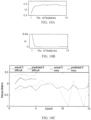
- FIGS. 10A, 10B and 10C show the performance for a single subject, in accordance with an example embodiment of the present disclosure.
- a random forest is trained as a regressor and evaluated on all epochs of a single subject using LOOCV with respect to epochs. Correlation coefficient and p-value between the actual value of S and the predicted value for a single subject are plotted in FIG 9A and 9B for the top 1 to 15 features. It can be observed that for 3 or more features, C > 0.73 and p ⁇ 0.05.
- the subject had 5 epochs in the easy version and 15 in the difficult version of the game.
- the regression model trained on 19 out of 20 epochs and tested on the remaining epoch in turn using the top 15 features.
- Various embodiments disclosed herein provide method and system for classification and quantification of cognitive stress from physiological variables and keystrokes.
- the disclosed system models a robust model with respect to sensors which is readily deployable, without further training, on any new data available from a new subject.
- the main contributions of disclosed embodiments include design of a stimulus to induce acute stress.
- the system identifies features from EEG, GSR and PPG signals that correlate with stress.
- the system incorporating feature level and decision level fusion of information from the sensor signals to improve subject-independent stress detection performance.
- the disclosed system analyses keystroke data collected during the experiments to propose a novel stress indicator metric.
- the system trains a subject-dependent regression model using EEG features to predict said metric.
- the embodiments herein can comprise hardware and software elements.
- the embodiments that are implemented in software include but are not limited to, firmware, resident software, microcode, etc.
- the functions performed by various modules described herein may be implemented in other modules or combinations of other modules.
- a computer-usable or computer readable medium can be any apparatus that can comprise, store, communicate, propagate, or transport the program for use by or in connection with the instruction execution system, apparatus, or device.
- the medium can be an electronic, magnetic, optical, electromagnetic, infrared, or semiconductor system (or apparatus or device) or a propagation medium.
- Examples of a computer-readable medium include a semiconductor or solid state memory, magnetic tape, a removable computer diskette, a random access memory (RAM), a read-only memory (ROM), a rigid magnetic disk and an optical disk.
- Current examples of optical disks include compact disk-read only memory (CD-ROM), compact disk-read/write (CD-R/W) and DVD.
Landscapes
- Health & Medical Sciences (AREA)
- Life Sciences & Earth Sciences (AREA)
- Engineering & Computer Science (AREA)
- Physics & Mathematics (AREA)
- Medical Informatics (AREA)
- Public Health (AREA)
- Biomedical Technology (AREA)
- Pathology (AREA)
- General Health & Medical Sciences (AREA)
- Veterinary Medicine (AREA)
- Biophysics (AREA)
- Heart & Thoracic Surgery (AREA)
- Molecular Biology (AREA)
- Surgery (AREA)
- Animal Behavior & Ethology (AREA)
- Physiology (AREA)
- Cardiology (AREA)
- Artificial Intelligence (AREA)
- Psychiatry (AREA)
- Signal Processing (AREA)
- Computer Vision & Pattern Recognition (AREA)
- Theoretical Computer Science (AREA)
- Evolutionary Computation (AREA)
- Mathematical Physics (AREA)
- Dermatology (AREA)
- Psychology (AREA)
- General Engineering & Computer Science (AREA)
- Data Mining & Analysis (AREA)
- Software Systems (AREA)
- General Physics & Mathematics (AREA)
- Computing Systems (AREA)
- Fuzzy Systems (AREA)
- Radiology & Medical Imaging (AREA)
- Nuclear Medicine, Radiotherapy & Molecular Imaging (AREA)
- Hospice & Palliative Care (AREA)
- Educational Technology (AREA)
- Developmental Disabilities (AREA)
- Social Psychology (AREA)
- Child & Adolescent Psychology (AREA)
- Pulmonology (AREA)
Claims (15)
- Procédé mis en oeuvre par processeur pour la classification et l'estimation quantitative d'un stress cognitif en temps réel, le procédé comprenant :l'obtention, pendant qu'un utilisateur est engagé dans l'exécution d'une tâche, d'une pluralité de signaux physiologiques non invasifs provenant d'une pluralité de capteurs physiologiques accessibles à l'utilisateur, via un ou plusieurs processeurs matériels (402) ;l'identification d'une pluralité d'ensembles de caractéristiques parmi la pluralité de signaux physiologiques non invasifs, via les un ou plusieurs processeurs matériels, la pluralité d'ensembles de caractéristiques étant en corrélation avec le stress cognitif subi par l'utilisateur pendant qu'il est engagé dans l'exécution de la tâche (404) ; etla prédiction, au moyen d'un modèle de régression, d'une métrique d'indicateur de stress comprenant une estimation quantitative du stress cognitif subi par l'utilisateur pendant l'exécution de la tâche, via les un ou plusieurs processeurs matériels (406), une estimation quantitative du stress cognitif subie par l'utilisateur étant effectuée en obtenant les données de frappe au clavier pendant l'exécution d'au moins une tâche à base de clavier impliquant la navigation d'un objet mobile vers un objet cible parmi une pluralité d'objets cibles ; la détermination de la position relative de l'objet mobile par rapport à l'objet cible final pendant chaque époque de la tâche à base de clavier ; la définition pour chacune des époques pendant la tâche à base de clavier du fait qu'une valeur unique de f(t) à chaque horodatage de temps (t = 0 à T, T = durée de l'époque) est enregistrée ; le calcul des valeurs de la métrique d'indicateur de stress sur la base de l'équation S = (A - 10B)/T - 0,5, dans lequel une valeur unique de f(t) à chaque horodatage de temps (t = 0 à T, T = durée de l'époque) est enregistrée de telle sorte que :


 dans lequel le modèle de régression est entraîné au moyen de la pluralité d'ensembles de caractéristiques, et des estimations quantitatives déterminées indépendamment du stress cognitif utilisées comme réalité de terrain pour délivrer la valeur de la métrique d'indicateur de stress, etla réalité de terrain étant déterminée à partir de données de frappe au clavier associées à l'exécution de tâches à base de clavier comprenant la navigation d'un ou plusieurs objets mobiles vers au moins une cible parmi une pluralité de cibles.
 - Procédé selon la revendication 1, dans lequel la pluralité de signaux physiologiques non invasifs comprend un signal d'électroencéphalogramme (EEG) pour estimer les réponses neuronales de l'utilisateur, un photopléthysmogramme (PPG) pour analyser les paramètres cardiaques de l'utilisateur, et une réponse cutanée électrodermique ou galvanique (GSR) pour déterminer les changements dus aux variations de conductance cutanée de l'utilisateur, en temps réel.
- Procédé selon la revendication 1, comprenant en outre le prétraitement de la pluralité de signaux physiologiques non invasifs individuellement afin de réduire la corruption de la pluralité de signaux physiologiques non invasifs par le bruit, réduire la variabilité intra-utilisateur et inter-utilisateur et diminuer l'effort de calcul pour identifier la pluralité d'étapes caractéristiques et la prédiction de la métrique d'indicateur de stress, le prétraitement du signal EEG étant effectué en utilisant un filtre passe-bas elliptique de 6e ordre ayant la fréquence de coupure de 45 Hz, le prétraitement du signal GSR étant effectué en utilisant un filtre équi-ondulation contraint FIR de 32e ordre avec une fréquence de coupure de 0,4 Hz, le prétraitement du signal PPG étant effectué en utilisant un filtre passe-bande dans la plage de fréquence de [0,75 15] Hz.
- Procédé selon la revendication 2, dans lequel l'identification de la pluralité d'ensembles de caractéristiques parmi la pluralité de signaux physiologiques non invasifs comprend :l'extraction d'un ensemble de caractéristiques individuellement à partir de chaque signal physiologique non invasif de la pluralité de signaux non invasifs pour obtenir la pluralité d'ensembles de caractéristiques ; etla conduite d'une réduction de caractéristiques sur chaque ensemble de caractéristiques de la pluralité d'ensembles de caractéristiques pour obtenir un ensemble de caractéristiques optimal.
- Procédé selon la revendication 1, dans lequel l'époque associée à l'objet mobile comprend une durée de temps disponible pour diriger ledit objet mobile vers l'objet cible, la position relative étant déterminée en termes de frappes au clavier (ys ) effectuées lors de l'exécution d'une tâche à base de frappe au clavier dans une direction vers l'objet cible et les frappes au clavier (yo) dans une direction opposée à l'objet cible, de telle sorte que la position relative de l'objet cible est x = ys-yo.
- Procédé selon la revendication 1, dans lequel le modèle de régression est entraîné en utilisant une pluralité d'ensembles de caractéristiques de chaque signal physiologique non invasif individuellement ou en combinaison en tant que prédicteurs et la métrique d'indicateur de stress. S en tant que réalité de terrain.
- Procédé selon la revendication 1, comprenant en outre le développement, à partir de la pluralité de signaux physiologiques non invasifs, d'un modèle de classification pour différencier entre un stress cognitif élevé et faible subi par l'utilisateur, le développement du modèle de classification comprenant :la classification du niveau de stress cognitif sur la base de la pluralité d'ensembles de caractéristiques obtenus à partir de la pluralité de signaux physiologiques non invasifs au moyen d'une fusion au niveau des caractéristiques et d'une fusion au niveau décisionnel,dans lequel la fusion au niveau des caractéristiques de la pluralité d'ensembles de caractéristiques comprend : l'accumulation des ensembles de caractéristiques associés à la pluralité de signaux physiologiques non invasifs pour obtenir un ensemble de caractéristiques composite, etla conduite d'une réduction de caractéristiques de l'ensemble de caractéristiques composite,et dans lequel la fusion au niveau décisionnel comprend :l'entraînement d'une pluralité de modèles correspondant individuellement à chacun de la pluralité d'ensembles de caractéristiques provenant de chaque signal physiologique non invasif pour classer chacun de la pluralité de signaux physiologiques non invasifs en tant que tâche(s) à stress élevé ou à faible stress, etl'application d'un opérateur ET logique au résultat de classification binaire de la pluralité de signaux physiologiques non invasifs obtenus à partir des classificateurs individuels.
- Système (300) pour la classification et l'estimation quantitative d'un stress cognitif en temps réel, le système comprenant :une ou plusieurs mémoires (304) ; etun ou plusieurs processeurs matériels (302), les une ou plusieurs mémoires étant couplées aux un ou plusieurs processeurs matériels, les un ou plusieurs processeurs matériels étant capables d'exécuter des instructions programmées stockées dans les une ou plusieurs mémoires pour :obtenir, pendant qu'un utilisateur est engagé dans l'exécution d'une tâche, une pluralité de signaux physiologiques non invasifs provenant d'une pluralité de capteurs physiologiques accessibles à l'utilisateur ;identifier une pluralité d'ensembles de caractéristiques parmi la pluralité de signaux physiologiques non invasifs, la pluralité d'ensembles de caractéristiques étant en corrélation avec le stress cognitif subi par l'utilisateur pendant qu'il est engagé dans l'exécution de la tâche ; etprédire, au moyen d'un modèle de régression, une métrique d'indicateur de stress comprenant une estimation quantitative du stress cognitif subi par l'utilisateur pendant l'exécution de la tâche, une estimation quantitative du stress cognitif subie par l'utilisateur étant effectuée en obtenant les données de frappe au clavier pendant l'exécution d'au moins une tâche à base de clavier impliquant la navigation d'un objet mobile vers un objet cible parmi une pluralité d'objets cibles ; la détermination de la position relative de l'objet mobile par rapport à l'objet cible final pendant chaque époque de la tâche à base de clavier ; la définition pour chacune des époques pendant la tâche à base de clavier du fait qu'une valeur unique de f(t) à chaque horodatage de temps (t = 0 à T, T = durée de l'époque) est enregistrée ; le calcul des valeurs de la métrique d'indicateur de stress sur la base de l'équation S = (A - 10B)/T - 0,5, dans lequel une valeur unique de f(t) à chaque horodatage de temps (t = 0 à T, T = durée de l'époque) est enregistrée de telle sorte que :




 dans lequel le modèle de régression est entraîné au moyen de la pluralité d'ensembles de caractéristiques, et des estimations quantitatives déterminées indépendamment du stress cognitif utilisées comme réalité de terrain pour délivrer la valeur de la métrique d'indicateur de stress, etla réalité de terrain étant déterminée à partir de données de frappe au clavier associées à l'exécution de tâches à base de clavier comprenant la navigation d'un ou plusieurs objets mobiles vers au moins une cible parmi une pluralité de cibles.
 - Système selon la revendication 8, dans lequel la pluralité de signaux physiologiques non invasifs comprend un signal d'électroencéphalogramme (EEG) pour estimer les réponses neuronales de l'utilisateur, un photopléthysmogramme (PPG) pour analyser les paramètres cardiaques de l'utilisateur, et une réponse cutanée électrodermique ou galvanique (GSR) pour déterminer les changements dus aux variations de conductance cutanée de l'utilisateur, en temps réel.
- Système selon la revendication 8, dans lequel les un ou plusieurs processeurs matériels sont en outre configurés pour prétraiter la pluralité de signaux physiologiques non invasifs individuellement afin de réduire la corruption de la pluralité de signaux physiologiques non invasifs par le bruit, réduire la variabilité intra-utilisateur et inter-utilisateur et diminuer l'effort de calcul pour identifier la pluralité d'étapes caractéristiques et la prédiction de la métrique d'indicateur de stress, le prétraitement du signal EEG étant effectué en utilisant un filtre passe-bas elliptique de 6e ordre ayant la fréquence de coupure de 45 Hz, le prétraitement du signal GSR étant effectué en utilisant un filtre équi-ondulation contraint FIR de 32e ordre avec une fréquence de coupure de 0,4 Hz, le prétraitement du signal PPG étant effectué en utilisant un filtre passe-bande dans la plage de fréquence de [0,75 15] Hz.
- Système selon la revendication 10, dans lequel, pour identifier la pluralité d'ensembles de caractéristiques issus de la pluralité de signaux physiologiques non invasifs, les un ou plusieurs processeurs matériels sont en outre configurés par les instructions pour :extraire un ensemble de caractéristiques individuellement à partir de chaque signal physiologique non invasif de la pluralité de signaux non invasifs pour obtenir la pluralité d'ensembles de caractéristiques ; eteffectuer une réduction de caractéristiques sur chaque ensemble de caractéristiques de la pluralité d'ensembles de caractéristiques pour obtenir un ensemble de caractéristiques optimal.
- Système selon la revendication 11, dans lequel l'époque associée à l'objet mobile comprend une durée de temps disponible pour diriger ledit objet mobile vers l'objet cible, la position relative étant déterminée en termes de frappes au clavier (ys) effectuées lors de l'exécution d'une tâche à base de frappe au clavier dans une direction vers l'objet cible et les frappes au clavier (yo) dans une direction opposée à l'objet cible, de telle sorte que la position relative de l'objet cible est x = ys-yo.
- Système selon la revendication 8, dans lequel les un ou plusieurs processeurs matériels sont en outre configurés par les instructions pour entraîner le modèle de régression en utilisant une pluralité d'ensembles de caractéristiques de chaque signal physiologique non invasif individuellement ou en combinaison en tant que prédicteurs et la métrique d'indicateur de stress. S en tant que réalité de terrain.
- Système selon la revendication 8, dans lequel le ou les processeurs matériels sont en outre configurés par les instructions pour développer, à partir de la pluralité de signaux physiologiques non invasifs, un modèle de classification pour différencier entre un stress cognitif élevé et faible subi par l'utilisateur, et dans lequel, pour développer le modèle de classification, les un ou plusieurs processeurs matériels sont en outre configurés par les instructions pour :classer le niveau de stress cognitif sur la base de la pluralité d'ensembles de caractéristiques obtenus à partir de la pluralité de signaux physiologiques non invasifs au moyen d'une fusion au niveau des caractéristiques et d'une fusion au niveau décisionnel,dans lequel, pour effectuer la fusion au niveau des caractéristiques de la pluralité d'ensembles de caractéristiques, les un ou plusieurs processeurs matériels sont en outre configurés par les instructions pour :accumuler les ensembles de caractéristiques associés à la pluralité de signaux physiologiques non invasifs pour obtenir un ensemble de caractéristiques composite, eteffectuer une réduction des caractéristiques de l'ensemble de caractéristiques composite,et dans lequel la fusion au niveau décisionnel comprend :l'entraînement d'une pluralité de modèles correspondant individuellement à chacun de la pluralité d'ensembles de caractéristiques provenant de chaque signal physiologique non invasif pour classer chacun de la pluralité de signaux physiologiques non invasifs en tant que tâche(s) à stress élevé ou à faible stress, etl'application d'un opérateur ET logique au résultat de classification binaire de la pluralité de signaux physiologiques non invasifs obtenus à partir des classificateurs individuels.
- Support non transitoire lisible par ordinateur sur lequel est incorporé un programme informatique comprenant des instructions qui, lorsqu'elles sont exécutées par les un ou plusieurs processeurs matériels de la revendication 8, amènent les un ou plusieurs processeurs matériels à conduire le procédé de la revendication 1.
Applications Claiming Priority (1)
| Application Number | Priority Date | Filing Date | Title |
|---|---|---|---|
| IN201721044813 | 2017-12-13 |
Publications (3)
| Publication Number | Publication Date |
|---|---|
| EP3498169A1 EP3498169A1 (fr) | 2019-06-19 |
| EP3498169C0 EP3498169C0 (fr) | 2024-06-12 |
| EP3498169B1 true EP3498169B1 (fr) | 2024-06-12 |
Family
ID=61569043
Family Applications (1)
| Application Number | Title | Priority Date | Filing Date |
|---|---|---|---|
| EP18158624.9A Active EP3498169B1 (fr) | 2017-12-13 | 2018-02-26 | Système et procédé de classification et d'estimation quantitative de contrainte cognitive |
Country Status (2)
| Country | Link |
|---|---|
| US (1) | US10716501B2 (fr) |
| EP (1) | EP3498169B1 (fr) |
Families Citing this family (15)
| Publication number | Priority date | Publication date | Assignee | Title |
|---|---|---|---|---|
| US11191466B1 (en) * | 2019-06-28 | 2021-12-07 | Fitbit Inc. | Determining mental health and cognitive state through physiological and other non-invasively obtained data |
| US20210052175A1 (en) * | 2019-08-23 | 2021-02-25 | Verily Life Sciences Llc | Systems and methods for using characteristics of photoplethysmography (ppg) data to detect cardiac conditions |
| CN110751032B (zh) * | 2019-09-20 | 2022-08-02 | 华中科技大学 | 一种无需校准的脑机接口模型的训练方法 |
| CN111544004A (zh) * | 2020-05-15 | 2020-08-18 | 中国科学院自动化研究所 | 脑卒中患者运动功能检测系统、方法、装置 |
| EP3925534B1 (fr) | 2020-06-18 | 2024-10-09 | Tata Consultancy Services Limited | Procédé et système d'évaluation de la charge cognitive de bio-potentiels mesurés en utilisant un dispositif endosomatique portable |
| CN112806994A (zh) * | 2021-01-27 | 2021-05-18 | 首都师范大学 | 一种基于生理信号预测个体压力应对方式的系统和方法 |
| WO2022231589A1 (fr) * | 2021-04-29 | 2022-11-03 | Hewlett-Packard Development Company, L.P. | Prédiction de caractéristiques d'état mental d'utilisateurs de dispositifs vestimentaires |
| US20240212838A1 (en) * | 2021-04-29 | 2024-06-27 | Hewlett-Packard Development Company, L.P. | Predicting mental state characteristics of users of wearable devices |
| EP4109469B1 (fr) * | 2021-06-23 | 2025-10-22 | Tata Consultancy Services Limited | Procédé et système de classification de charge cognitive à l'aide de données obtenues à partir de capteurs portables |
| KR102861536B1 (ko) * | 2021-12-15 | 2025-09-19 | 주식회사 아이메디신 | 생체 데이터 기반의 지표를 이용한 스트레스 정도 추정방법, 장치 및 컴퓨터프로그램 |
| CN114469089B (zh) * | 2021-12-30 | 2024-08-27 | 北京津发科技股份有限公司 | 基于虚拟现实技术的多模态数据抗压能力测评方法及系统 |
| US11559232B1 (en) * | 2022-02-27 | 2023-01-24 | King Abdulaziz University | GRU based real-time mental stress assessment |
| CN115120240B (zh) * | 2022-08-30 | 2022-12-02 | 山东心法科技有限公司 | 特殊行业目标感知技能的敏感性评估方法、设备及介质 |
| CN117725357B (zh) * | 2023-11-30 | 2026-02-27 | 北京津发科技股份有限公司 | 多模态人体生理数据的分类模型、训练与分类方法及设备 |
| WO2025108316A1 (fr) * | 2023-11-23 | 2025-05-30 | 北京津发科技股份有限公司 | Modèle de classification de données physiologiques humaines multimodales et son procédé d'apprentissage, procédé de classification de données physiologiques humaines multimodales et dispositif |
Family Cites Families (6)
| Publication number | Priority date | Publication date | Assignee | Title |
|---|---|---|---|---|
| US7249603B2 (en) * | 2002-04-03 | 2007-07-31 | The Procter & Gamble Company | Method for measuring acute stress in a mammal |
| WO2007123799A2 (fr) * | 2006-04-03 | 2007-11-01 | The Trustees Of The University Of Pennsylvania | Evaluation de la reactivite d'un sujet a un stress psychologique a l'aide d'une irmf |
| WO2009063463A2 (fr) * | 2007-11-14 | 2009-05-22 | Medasense Biometrics Ltd | Surveillance de la douleur par analyse multidimensionnelle de signaux physiologiques |
| EP2682053A1 (fr) * | 2009-06-15 | 2014-01-08 | Brain Computer Interface LLC | Batterie de test d'interface cerveau-ordinateur pour l'évaluation physiologique de la santé du système nerveux |
| CA2749487C (fr) * | 2010-10-21 | 2018-08-21 | Queen's University At Kingston | Procede et appareil pour l'evaluation ou la detection de lesions cerebrales et de troubles neurologiques |
| US9474481B2 (en) * | 2013-10-22 | 2016-10-25 | Mindstrong, LLC | Method and system for assessment of cognitive function based on electronic device usage |
-
2018
- 2018-02-26 EP EP18158624.9A patent/EP3498169B1/fr active Active
- 2018-03-06 US US15/913,731 patent/US10716501B2/en active Active
Also Published As
| Publication number | Publication date |
|---|---|
| EP3498169A1 (fr) | 2019-06-19 |
| US10716501B2 (en) | 2020-07-21 |
| EP3498169C0 (fr) | 2024-06-12 |
| US20190175091A1 (en) | 2019-06-13 |
Similar Documents
| Publication | Publication Date | Title |
|---|---|---|
| US10716501B2 (en) | System and method for classification and quantitative estimation of cognitive stress | |
| Lin et al. | RETRACTED ARTICLE: Advanced artificial intelligence in heart rate and blood pressure monitoring for stress management | |
| Gjoreski et al. | Machine learning and end-to-end deep learning for the detection of chronic heart failure from heart sounds | |
| Han et al. | Objective stress monitoring based on wearable sensors in everyday settings | |
| Guo et al. | A supervised machine learning semantic segmentation approach for detecting artifacts in plethysmography signals from wearables | |
| Lim et al. | Analysis of single-electrode EEG rhythms using MATLAB to elicit correlation with cognitive stress | |
| Betella et al. | Inference of human affective states from psychophysiological measurements extracted under ecologically valid conditions | |
| US11612341B2 (en) | Systems and methods for assessment and measurement of reaction time in virtual/augmented reality | |
| Gunawardhane et al. | Non invasive human stress detection using key stroke dynamics and pattern variations | |
| Chandra et al. | Comparative study of physiological signals from Empatica E4 wristband for stress classification | |
| US20240090807A1 (en) | Wearable device and method for stress detection, emotion recognition and emotion management | |
| US11361669B2 (en) | Method and system for assessing learning experience of a person | |
| Kutt et al. | Towards the development of sensor platform for processing physiological data from wearable sensors | |
| Lei et al. | Training prediction and athlete heart rate measurement based on multi-channel PPG signal and SVM algorithm | |
| Sinha et al. | Dynamic assessment of learners' mental state for an improved learning experience | |
| Liu et al. | Medical intelligence using PPG signals and hybrid learning at the edge to detect fatigue in physical activities | |
| Holmgård et al. | Multimodal ptsd characterization via the startlemart game | |
| Aggarwal et al. | A structured learning approach with neural conditional random fields for sleep staging | |
| Das et al. | Classification and quantitative estimation of cognitive stress from in-game keystroke analysis using EEG and GSR | |
| US20240016436A1 (en) | Brain injury rehabilitation method utilizing brain activity monitoring | |
| Al Fawwaz et al. | Measurement of mental workload using heart rate variability and electrodermal activity | |
| US20200265949A1 (en) | Anxiety detection in different user states | |
| Giovanna et al. | HRV in Stress Monitoring by AI: A Scoping Review | |
| US20230284948A1 (en) | Test protocol for detecting significant psychophysiological response | |
| Chang et al. | Physiological angry emotion detection using support vector regression |
Legal Events
| Date | Code | Title | Description |
|---|---|---|---|
| PUAI | Public reference made under article 153(3) epc to a published international application that has entered the european phase |
Free format text: ORIGINAL CODE: 0009012 |
|
| STAA | Information on the status of an ep patent application or granted ep patent |
Free format text: STATUS: THE APPLICATION HAS BEEN PUBLISHED |
|
| AK | Designated contracting states |
Kind code of ref document: A1 Designated state(s): AL AT BE BG CH CY CZ DE DK EE ES FI FR GB GR HR HU IE IS IT LI LT LU LV MC MK MT NL NO PL PT RO RS SE SI SK SM TR |
|
| AX | Request for extension of the european patent |
Extension state: BA ME |
|
| STAA | Information on the status of an ep patent application or granted ep patent |
Free format text: STATUS: REQUEST FOR EXAMINATION WAS MADE |
|
| 17P | Request for examination filed |
Effective date: 20191219 |
|
| RBV | Designated contracting states (corrected) |
Designated state(s): AL AT BE BG CH CY CZ DE DK EE ES FI FR GB GR HR HU IE IS IT LI LT LU LV MC MK MT NL NO PL PT RO RS SE SI SK SM TR |
|
| STAA | Information on the status of an ep patent application or granted ep patent |
Free format text: STATUS: EXAMINATION IS IN PROGRESS |
|
| 17Q | First examination report despatched |
Effective date: 20210304 |
|
| REG | Reference to a national code |
Ref country code: DE Ref legal event code: R079 Free format text: PREVIOUS MAIN CLASS: A61B0005160000 Ipc: A61B0005053300 Ref country code: DE Ref legal event code: R079 Ref document number: 602018070455 Country of ref document: DE Free format text: PREVIOUS MAIN CLASS: A61B0005160000 Ipc: A61B0005053300 |
|
| RIC1 | Information provided on ipc code assigned before grant |
Ipc: A61B 5/374 20210101ALI20231115BHEP Ipc: A61B 5/0533 20210101AFI20231115BHEP |
|
| GRAP | Despatch of communication of intention to grant a patent |
Free format text: ORIGINAL CODE: EPIDOSNIGR1 |
|
| STAA | Information on the status of an ep patent application or granted ep patent |
Free format text: STATUS: GRANT OF PATENT IS INTENDED |
|
| INTG | Intention to grant announced |
Effective date: 20240102 |
|
| GRAS | Grant fee paid |
Free format text: ORIGINAL CODE: EPIDOSNIGR3 |
|
| GRAA | (expected) grant |
Free format text: ORIGINAL CODE: 0009210 |
|
| STAA | Information on the status of an ep patent application or granted ep patent |
Free format text: STATUS: THE PATENT HAS BEEN GRANTED |
|
| AK | Designated contracting states |
Kind code of ref document: B1 Designated state(s): AL AT BE BG CH CY CZ DE DK EE ES FI FR GB GR HR HU IE IS IT LI LT LU LV MC MK MT NL NO PL PT RO RS SE SI SK SM TR |
|
| REG | Reference to a national code |
Ref country code: GB Ref legal event code: FG4D |
|
| REG | Reference to a national code |
Ref country code: CH Ref legal event code: EP |
|
| REG | Reference to a national code |
Ref country code: IE Ref legal event code: FG4D |
|
| REG | Reference to a national code |
Ref country code: DE Ref legal event code: R096 Ref document number: 602018070455 Country of ref document: DE |
|
| U01 | Request for unitary effect filed |
Effective date: 20240612 |
|
| U07 | Unitary effect registered |
Designated state(s): AT BE BG DE DK EE FI FR IT LT LU LV MT NL PT SE SI Effective date: 20240620 |
|
| PG25 | Lapsed in a contracting state [announced via postgrant information from national office to epo] |
Ref country code: HR Free format text: LAPSE BECAUSE OF FAILURE TO SUBMIT A TRANSLATION OF THE DESCRIPTION OR TO PAY THE FEE WITHIN THE PRESCRIBED TIME-LIMIT Effective date: 20240612 |
|
| PG25 | Lapsed in a contracting state [announced via postgrant information from national office to epo] |
Ref country code: GR Free format text: LAPSE BECAUSE OF FAILURE TO SUBMIT A TRANSLATION OF THE DESCRIPTION OR TO PAY THE FEE WITHIN THE PRESCRIBED TIME-LIMIT Effective date: 20240913 |
|
| PG25 | Lapsed in a contracting state [announced via postgrant information from national office to epo] |
Ref country code: ES Free format text: LAPSE BECAUSE OF FAILURE TO SUBMIT A TRANSLATION OF THE DESCRIPTION OR TO PAY THE FEE WITHIN THE PRESCRIBED TIME-LIMIT Effective date: 20240612 |
|
| PG25 | Lapsed in a contracting state [announced via postgrant information from national office to epo] |
Ref country code: NO Free format text: LAPSE BECAUSE OF FAILURE TO SUBMIT A TRANSLATION OF THE DESCRIPTION OR TO PAY THE FEE WITHIN THE PRESCRIBED TIME-LIMIT Effective date: 20240912 Ref country code: HR Free format text: LAPSE BECAUSE OF FAILURE TO SUBMIT A TRANSLATION OF THE DESCRIPTION OR TO PAY THE FEE WITHIN THE PRESCRIBED TIME-LIMIT Effective date: 20240612 Ref country code: GR Free format text: LAPSE BECAUSE OF FAILURE TO SUBMIT A TRANSLATION OF THE DESCRIPTION OR TO PAY THE FEE WITHIN THE PRESCRIBED TIME-LIMIT Effective date: 20240913 Ref country code: ES Free format text: LAPSE BECAUSE OF FAILURE TO SUBMIT A TRANSLATION OF THE DESCRIPTION OR TO PAY THE FEE WITHIN THE PRESCRIBED TIME-LIMIT Effective date: 20240612 Ref country code: RS Free format text: LAPSE BECAUSE OF FAILURE TO SUBMIT A TRANSLATION OF THE DESCRIPTION OR TO PAY THE FEE WITHIN THE PRESCRIBED TIME-LIMIT Effective date: 20240912 |
|
| PG25 | Lapsed in a contracting state [announced via postgrant information from national office to epo] |
Ref country code: PL Free format text: LAPSE BECAUSE OF FAILURE TO SUBMIT A TRANSLATION OF THE DESCRIPTION OR TO PAY THE FEE WITHIN THE PRESCRIBED TIME-LIMIT Effective date: 20240612 |
|
| PG25 | Lapsed in a contracting state [announced via postgrant information from national office to epo] |
Ref country code: IS Free format text: LAPSE BECAUSE OF FAILURE TO SUBMIT A TRANSLATION OF THE DESCRIPTION OR TO PAY THE FEE WITHIN THE PRESCRIBED TIME-LIMIT Effective date: 20241012 |
|
| PG25 | Lapsed in a contracting state [announced via postgrant information from national office to epo] |
Ref country code: CZ Free format text: LAPSE BECAUSE OF FAILURE TO SUBMIT A TRANSLATION OF THE DESCRIPTION OR TO PAY THE FEE WITHIN THE PRESCRIBED TIME-LIMIT Effective date: 20240612 |
|
| PG25 | Lapsed in a contracting state [announced via postgrant information from national office to epo] |
Ref country code: RO Free format text: LAPSE BECAUSE OF FAILURE TO SUBMIT A TRANSLATION OF THE DESCRIPTION OR TO PAY THE FEE WITHIN THE PRESCRIBED TIME-LIMIT Effective date: 20240612 Ref country code: SK Free format text: LAPSE BECAUSE OF FAILURE TO SUBMIT A TRANSLATION OF THE DESCRIPTION OR TO PAY THE FEE WITHIN THE PRESCRIBED TIME-LIMIT Effective date: 20240612 |
|
| PG25 | Lapsed in a contracting state [announced via postgrant information from national office to epo] |
Ref country code: SM Free format text: LAPSE BECAUSE OF FAILURE TO SUBMIT A TRANSLATION OF THE DESCRIPTION OR TO PAY THE FEE WITHIN THE PRESCRIBED TIME-LIMIT Effective date: 20240612 |
|
| PG25 | Lapsed in a contracting state [announced via postgrant information from national office to epo] |
Ref country code: SM Free format text: LAPSE BECAUSE OF FAILURE TO SUBMIT A TRANSLATION OF THE DESCRIPTION OR TO PAY THE FEE WITHIN THE PRESCRIBED TIME-LIMIT Effective date: 20240612 Ref country code: SK Free format text: LAPSE BECAUSE OF FAILURE TO SUBMIT A TRANSLATION OF THE DESCRIPTION OR TO PAY THE FEE WITHIN THE PRESCRIBED TIME-LIMIT Effective date: 20240612 Ref country code: RO Free format text: LAPSE BECAUSE OF FAILURE TO SUBMIT A TRANSLATION OF THE DESCRIPTION OR TO PAY THE FEE WITHIN THE PRESCRIBED TIME-LIMIT Effective date: 20240612 Ref country code: PL Free format text: LAPSE BECAUSE OF FAILURE TO SUBMIT A TRANSLATION OF THE DESCRIPTION OR TO PAY THE FEE WITHIN THE PRESCRIBED TIME-LIMIT Effective date: 20240612 Ref country code: IS Free format text: LAPSE BECAUSE OF FAILURE TO SUBMIT A TRANSLATION OF THE DESCRIPTION OR TO PAY THE FEE WITHIN THE PRESCRIBED TIME-LIMIT Effective date: 20241012 Ref country code: CZ Free format text: LAPSE BECAUSE OF FAILURE TO SUBMIT A TRANSLATION OF THE DESCRIPTION OR TO PAY THE FEE WITHIN THE PRESCRIBED TIME-LIMIT Effective date: 20240612 |
|
| U20 | Renewal fee for the european patent with unitary effect paid |
Year of fee payment: 8 Effective date: 20250224 |
|
| PLBE | No opposition filed within time limit |
Free format text: ORIGINAL CODE: 0009261 |
|
| STAA | Information on the status of an ep patent application or granted ep patent |
Free format text: STATUS: NO OPPOSITION FILED WITHIN TIME LIMIT |
|
| 26N | No opposition filed |
Effective date: 20250313 |
|
| PG25 | Lapsed in a contracting state [announced via postgrant information from national office to epo] |
Ref country code: MC Free format text: LAPSE BECAUSE OF FAILURE TO SUBMIT A TRANSLATION OF THE DESCRIPTION OR TO PAY THE FEE WITHIN THE PRESCRIBED TIME-LIMIT Effective date: 20240612 |
|
| PG25 | Lapsed in a contracting state [announced via postgrant information from national office to epo] |
Ref country code: IE Free format text: LAPSE BECAUSE OF NON-PAYMENT OF DUE FEES Effective date: 20250226 |
|
| REG | Reference to a national code |
Ref country code: CH Ref legal event code: U11 Free format text: ST27 STATUS EVENT CODE: U-0-0-U10-U11 (AS PROVIDED BY THE NATIONAL OFFICE) Effective date: 20260301 |
|
| U20 | Renewal fee for the european patent with unitary effect paid |
Year of fee payment: 9 Effective date: 20260224 |
|
| PGFP | Annual fee paid to national office [announced via postgrant information from national office to epo] |
Ref country code: GB Payment date: 20260223 Year of fee payment: 9 |
|
| PGFP | Annual fee paid to national office [announced via postgrant information from national office to epo] |
Ref country code: CH Payment date: 20260301 Year of fee payment: 9 |