EP3498277B1 - Composition pharmaceutique pour un traitement de l'accident vasculaire cérébral basé sur l'inhibition de l'ampk - Google Patents
Composition pharmaceutique pour un traitement de l'accident vasculaire cérébral basé sur l'inhibition de l'ampk Download PDFInfo
- Publication number
- EP3498277B1 EP3498277B1 EP17839780.8A EP17839780A EP3498277B1 EP 3498277 B1 EP3498277 B1 EP 3498277B1 EP 17839780 A EP17839780 A EP 17839780A EP 3498277 B1 EP3498277 B1 EP 3498277B1
- Authority
- EP
- European Patent Office
- Prior art keywords
- zinc
- thiazol
- indol
- amino
- ylmethylene
- Prior art date
- Legal status (The legal status is an assumption and is not a legal conclusion. Google has not performed a legal analysis and makes no representation as to the accuracy of the status listed.)
- Active
Links
- 0 *c1c(CC2SC(Nc3c(*)c(*)c(*)c(*)c3*)=NC2=O)c2cc(*)ccc2[n]1 Chemical compound *c1c(CC2SC(Nc3c(*)c(*)c(*)c(*)c3*)=NC2=O)c2cc(*)ccc2[n]1 0.000 description 1
Images







Classifications
-
- A—HUMAN NECESSITIES
- A61—MEDICAL OR VETERINARY SCIENCE; HYGIENE
- A61K—PREPARATIONS FOR MEDICAL, DENTAL OR TOILETRY PURPOSES
- A61K31/00—Medicinal preparations containing organic active ingredients
- A61K31/33—Heterocyclic compounds
- A61K31/395—Heterocyclic compounds having nitrogen as a ring hetero atom, e.g. guanethidine or rifamycins
- A61K31/41—Heterocyclic compounds having nitrogen as a ring hetero atom, e.g. guanethidine or rifamycins having five-membered rings with two or more ring hetero atoms, at least one of which being nitrogen, e.g. tetrazole
- A61K31/425—Thiazoles
- A61K31/427—Thiazoles not condensed and containing further heterocyclic rings
-
- A—HUMAN NECESSITIES
- A61—MEDICAL OR VETERINARY SCIENCE; HYGIENE
- A61K—PREPARATIONS FOR MEDICAL, DENTAL OR TOILETRY PURPOSES
- A61K31/00—Medicinal preparations containing organic active ingredients
- A61K31/33—Heterocyclic compounds
- A61K31/395—Heterocyclic compounds having nitrogen as a ring hetero atom, e.g. guanethidine or rifamycins
- A61K31/40—Heterocyclic compounds having nitrogen as a ring hetero atom, e.g. guanethidine or rifamycins having five-membered rings with one nitrogen as the only ring hetero atom, e.g. sulpiride, succinimide, tolmetin, buflomedil
- A61K31/403—Heterocyclic compounds having nitrogen as a ring hetero atom, e.g. guanethidine or rifamycins having five-membered rings with one nitrogen as the only ring hetero atom, e.g. sulpiride, succinimide, tolmetin, buflomedil condensed with carbocyclic rings, e.g. carbazole
- A61K31/404—Indoles, e.g. pindolol
-
- A—HUMAN NECESSITIES
- A61—MEDICAL OR VETERINARY SCIENCE; HYGIENE
- A61P—SPECIFIC THERAPEUTIC ACTIVITY OF CHEMICAL COMPOUNDS OR MEDICINAL PREPARATIONS
- A61P9/00—Drugs for disorders of the cardiovascular system
- A61P9/10—Drugs for disorders of the cardiovascular system for treating ischaemic or atherosclerotic diseases, e.g. antianginal drugs, coronary vasodilators, drugs for myocardial infarction, retinopathy, cerebrovascula insufficiency, renal arteriosclerosis
Definitions
- the present invention relates to a pharmaceutical composition for use in stroke treatment, and more particularly, to a novel pharmaceutical composition for use in stroke treatment based on AMPK inhibitory function.
- Stroke refers to local neurological symptoms which are caused by a sudden disorder in cerebral blood flow. Brain is accounted only 2% of an entire body weight, but a blood flow rate supplying to the brain is as high as about 15% of cardiac output while oxygen consumption by the brain approaches 20% of whole body oxygen consumption. In addition, since the brain uses only glucose as an energy source, it undergoes necrosis easily even if energy supply is interrupted for a moment. Therefore, the cerebral blood flow closely relates to brain damage. Brain damage caused by stroke involves diverse toxicity mechanisms such as excitotoxicity, oxidative stress, apoptosis and zinc neurotoxicity, therefore, a drug effective for all of various neurotoxic properties is needed to prevent the brain damage.
- Korean Patent Registration No. 1283416 discloses a neuro-protective method that significantly reduces a size of an infracted part by administering AMPK inhibitor compound C or FAS inhibitor C75 to a mouse, so as to retain functions after stroke or ischemic injury.
- WO 2009/078586 A1 discloses a composition for prevention and treatment of cancer containing phenyl-amino-thiazolone derivatives inhibiting activity of protein phosphatases or pharmaceutically acceptable salts thereof as an active ingredient.
- US 2009/088432 A1 discloses thiazolinones and oxazolinones and their use as Ptplb Inhibitors.
- WO 2015/167246 A1 discloses a pharmaceutical composition and a method for treating stroke on basis of AMPK suppression function.
- the present invention serves to solve various problems including the aforementioned one, and it is an object of the present invention to provide a new stroke medicine based on effective AMPK inhibition in stroke by a variety of mechanisms.
- a pharmaceutical composition for use in treatment of stroke including a compound having a structure represented by Formula I below as an active ingredient: wherein R 1 to R 5 are each independently hydrogen, hydroxyl, halogen, substituted or unsubstituted C 1 to C 7 alkyl, substituted or unsubstituted C 1 to C 7 alkoxy, amine or carboxyl group, or otherwise, R 2 and R 3 together form a -O-(CH 2 ) n -O- ring or a substituted or unsubstituted benzene ring, wherein n is an integer from 1 to 3; R 6 is hydrogen or a methyl group; and R 7 is hydrogen or a halogen.
- the substituted alkyl group is a trifluoromethyl group and the halogen includes iodine, bromine or chlorine.
- using a new compound for inhibiting AMPK activity of zinc neurotoxicity as a main cause of stroke may achieve stroke treatment.
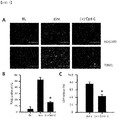
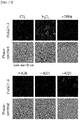
- FIG. 1 is (A) photographs demonstrating an increase in neurotoxicity after zinc treatment of cultured cerebral cortex neurons identified by TUNEL staining; and (B) and (C) graphs showing a degree of cytotoxicity after treatment using compound C (+Cpd C) as an AMPK inhibitor, which were quantified through TUNEL staining as well as LDH assay (B and C).
- FIG. 2 is (A) a Western blot photograph demonstrating an increase in AMPK activity after zinc treatment of cultured cerebral cortex neurons; and (B) an enzymatic activity assay graph.
- FIG. 3 is (A) a Western blot photograph demonstrating observation of increased expression of Bim and activity of caspase-3, both being apoptosis promoting genes, after zinc treatment of the cultured cerebral cortex neurons; and (B) a Western blot photograph demonstrating that increases in Bim expression and caspase-3 activity were all attenuated after treatment using compound C (+Cpd C) as an AMPK inhibitor.
- FIG. 4 is a graph showing that, after measuring enzymatic activity by AMPK activity assay kit (CycLex, Japan) and a recombinant AMPK ( ⁇ 2/ ⁇ 1/ ⁇ 1; CycLex, Japan) purchased in the market, and then, comparing the same with effects of compound C, 40 candidate compounds exhibiting similar or stronger inhibition effects were selected.
- FIG. 5 is graphs showing observed results for inhibition of different neurotoxicity by inducing such neurotoxicity in the cultured cerebral cortex neurons, and then, using the selected 7 compounds for treatment, followed by quantification of degree of cytotoxicity through LDH assay.
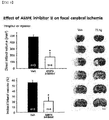
- FIG. 6 is graphs showing observation of brain damage inhibitory effects by administering the finally selected drug #28 to an animal model suffering from stroke, and drawings showing comparison results of a degree of final brain damage in the experimental animals compared to a control group.
- FIG. 7 is graphs showing results of an acute toxicity test that includes administering the finally selected drug #28 to a rat, and then, extracting a spleen (A), liver (B) and kidney (C).
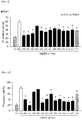
- FIG. 8 is a graph showing observation of neuro-protective effects on zinc neurotoxicity in mouse cortical neuronal cultures by administering 25 similar compounds, which were selected after searching for compounds having a similar structure to the previously selected drug #28.
- FIG. 9 is a graph showing observation of neuro-protective effects by selecting 12 drugs exhibiting significant drug effects on zinc toxicity, and then, using the same to treat the mouse cerebral cortex neurons having neuro-toxicity induced by NMDA.
- FIG. 10 is a graph showing observation of neuro-protective effects by treating the cerebral cortex neurons of a mouse having neuro-toxicity inducted by H 2 O 2 using the selected 12 drugs.
- FIG. 11 is graphs showing analyzed results of free zinc concentration by a pZn meter after treatment of neuronal cells using the drug #28 of the present invention and clioquinol at different concentrations.
- FIG. 14 is (A) a graph showing analyzed results of inhibitory effects of #28 on zinc-mediated neurotoxicity by clioquinol, or pyrithione; and (B) is a graph showing analyzed results of inhibitory effects of #28 or clioquinol as zinc chelator on intracellular zinc-released neurotoxicity by DTDP.
- FIG. 15 is (A) photographs demonstrating observation of neuronal cells by a confocal laser microscopy using FluoZin-3 dye after treatment of the neuronal cells using the drug #28; and (B) a graph showing results of quantitative analysis of FluoZin-3 fluorescence magnitude after treatment of 4C01, 4C07, or the drug #28.
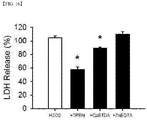
- FIG. 16 is a graph showing analyzed results of whether neurotoxicity by hydrogen peroxide (H 2 O 2 ) is decreased by a zinc chelator such as TPEN or CaEDTA but not by a calcium chelator such as ZnEDTA, respectively.
- FIG. 17 is photographs demonstrating observation of inhibitory effects of TPEN, the drugs #28, 4C01 or 4C07 on hydrogen peroxide (H 2 O 2 )-mediated intracellular zinc increases by staining with FluoZin-3.
- FIG. 18 is a graph showing the protective effect of the drug #28 at different concentrations on neurotoxicity by ionomycin, a calcium ionophore.
- Figure 19 is a graph showing analyzed results of chelation effects to calcium using Fura-2 dye as a fluorescent material after treatment using the drug #28 or EDTA on a test tube.
- FIG. 20 is (A) a graph showing the inhibitory effect of zinc, the drug #28, or clioquinol on TPEN-induced caspase-3 activity in mouse cortical cultures; and (B) a graph showing attenuation of TPEN-induced neurotoxicity (LDH secretion) by zinc, the drug #28, or clioquinol.
- FIG. 21 is a graph showing analyzed results of a change in zinc concentrations within neuronal cells by classifying a neuronal cell culture solution into a plain culture medium, a zinc-supplemented culture medium and a zinc-free culture medium, treating the same with clioquinol and the drug #28 and then applying ZinPyr-1 as a fluorescent material.
- AMP-activated protein kinase is a heterologous trimer protein consisting of a catalytic ⁇ subunit ( ⁇ 1 or ⁇ 2) and two control subunits ( ⁇ and ⁇ ). AMPK is phosphorylated and activated at a low cellular energy level while regulating gene expression over a long period of time by controlling the metabolism of cells, thereby restoring ATP level. It is known that an increase in AMP/ATP ratio, a change in pH of cells and oxidation-reduction state, and an increase in a ratio of creatine/phoscreatine would activate AMPK.
- a pharmaceutical composition for use in treatment of stroke including a compound represented by formula I below as an active ingredient:
- R 1 to R 5 are each independently hydrogen, hydroxyl, halogen, substituted or unsubstituted C 1 to C 7 alkyl, substituted or unsubstituted C 1 to C 7 alkoxy, amine or carboxyl group, or otherwise, R 2 and R 3 together form a -O-(CH 2 ) n -O- ring or a substituted or unsubstituted benzene ring, wherein n is an integer from 1 to 3; R 6 is hydrogen or a methyl group; and R 7 is hydrogen or a halogen.
- the substituted alkyl group is a trifluoromethyl group and the halogen includes iodine, bromine or chlorine.
- the compound may include, for example, (5Z)-5-(1H-Indol-3-ylmethylene)-2- ⁇ [2-(trifluoromethyl)phenyl]amino ⁇ -1,3-thiazol-4(5H)-one, (5Z)-5-(1H-Indol-3-ylmethylene)-2- ⁇ [3-(trifluoromethyl)phenyl]amino ⁇ -1,3-thiazol-4(5H)-one, (5Z)-2-[(3-Bromophenyl)amino]-5-(1H-indol-3-ylmethylene)-1,3-thiazol-4(5H)-one, (5Z)-5-(1H-Indol-3-ylmethylene)-2-[(4-methylphenyl)amino]-1,3-thiazol-4(5H)-one, (5Z)-5-(1H-Indol-3-ylmethylene)-2-[[(4-methylphenyl)a
- the stroke may include, for example, hemorrhagic stroke, ischemic stroke or metal toxicity stroke, wherein the metal may include lead (Pb), mercury, manganese, arsenic, thallium, iron, zinc, cadmium, bismuth or tin.
- the ischemic stroke may be caused by excitatory neuronal death or oxidative neuronal death.
- An effective amount of the compound in the pharmaceutical composition of the present invention may vary depending on types of affected parts of a patient, application site, recovery processing, treatment time, dosage form, patient's conditions, types of adjuvant, etc.
- the dose is not particularly limited but may range from 0.01 ⁇ g/kg/day to 10 mg/kg/day. Dosage per day may include administration once a day, 2 to 3 times a day at an appropriate interval, or intermittent administration at an interval of several days.
- the effective amount of the compound may range from 0.1 to 100% by weight ('wt.%') based on a total weight of the composition.
- the pharmaceutical composition of the present invention may further include suitable carriers, excipients and diluents conventionally used for manufacturing a pharmaceutical composition.
- the manufacture of the pharmaceutical composition may further include adding an additive for solid or liquid formulations. Such additives for formulation may be either organic or inorganic.
- the excipient may include, for example, lactose, sucrose, white soft sugar, glucose, corn starch, starch, talc, sorbit, crystal cellulose, dextrin, kaolin, calcium carbonate, silicon dioxide, etc.
- the binder may include, for example, polyvinyl alcohol, polyvinyl ether, ethyl cellulose, methyl cellulose, Arabic gum, tragacanth, gelatin, shellac, hydroxypropyl cellulose, hydroxypropyl methyl cellulose, citric acid, calcium, dextrin, pectin, etc.
- the lubricant may include, for example, magnesium stearate, talc, polyethylene glycol, silica, hardened vegetable oil, etc.
- the coloring agent may include any one commonly used in the art, provided that it has been permitted as an additive useable for medicines. Tablets or granules thereof may be suitably coated with sugar coating, gelatin coating and other appropriate coatings, as necessary. Further, a preservative, an antioxidant, etc. may also be added, as necessary.
- the pharmaceutical composition of the present invention can be manufactured into any formulation that is conventionally prepared in the art (for example, literature [ Remington's Pharmaceutical Science, latest edition; Mack Publishing Company, Easton PA ]), the type of such preparation is not particularly limited.
- the formulations have been described in the prescription literature generally known in the pharmaceutical and chemical applications, that is, Remington's Pharmaceutical Science, 15th Edition, 1975, Mack Publishing Company, Easton, Pennsylvania 18042 (Chapter 87: Blaug, Seymour ).
- the compound in the pharmaceutical composition of the present invention may be orally or topically administered and, preferably, topical (or parenteral) administration including, for example, intravenous injection, subcutaneous injection, intra-cerebroventricular injection, intra-cerebrospinal fluid (CSF) injection, intramuscular injection and intra-peritoneal injection.
- topical (or parenteral) administration including, for example, intravenous injection, subcutaneous injection, intra-cerebroventricular injection, intra-cerebrospinal fluid (CSF) injection, intramuscular injection and intra-peritoneal injection.
- Cerebral cortex neurons of a mouse used in the present invention were extracted from the mouse embryos brain and cultured, followed by further culturing the same using a Dulbecco's modified Eagle's medium (DMEM, Gibco, Grand Island, NY, US) containing 5% fetal bovine serum (FBS) and 5% horse serum (HS) under conditions of 95% humidity, 5% CO 2 and 37°C temperature.
- DMEM Dulbecco's modified Eagle's medium
- FBS fetal bovine serum
- HS horse serum
- Example 1 Determination of reduction in cell toxicity by AMPK inhibitor
- zinc toxicity is one of representative mechanisms causing stroke, and it was investigated whether zinc-toxicity derived in the cultured cerebral cortex neurons is reduced by AMPK inhibitor treatment or not.
- the cultured cerebral cortex neurons according to the embodiment of the present invention were treated with 300 ⁇ M zinc (ZnCl 2 ) for 10 minutes then removed. 10 hours later, cytotoxicity was observed by TUNEL staining or LDH (Lactate Dehydrogenase). Further, these cells were treated with AMPK inhibitor, that is, 20 ⁇ M compound C (+ Cpd C, Tocris), followed by observation whether neurotoxicity is reduced or not.
- FIGS. 1A and 1C the cerebral cortex neurons after zinc treatment showed an increase in neurotoxicity, which was demonstrated by TUNEL staining.
- a degree of cytotoxicity was quantified through TUNEL staining and LDH assay.
- the AMPK inhibitor that is, compound C (+ Cpd C) demonstrated that the zinc neurotoxicity was significantly reduced ( FIGS. 1B and 1C ).
- the cerebral cortex neurons were treated with zinc, followed by observing AMPK activity through Western blotting and enzymatic activity assays.
- the cultured cerebral cortex neurons were treated with 300 ⁇ M zinc (ZnCl 2 ) for 10 minutes then removed. After 0.5, 1, 2, 4 and 6 hours, the obtained cell sample was loaded on polyacrylamide gel along with a protein ladder, followed by separation based on a protein size. Thereafter, the sample was treated with an antibody, washed and read out.
- the cerebral cortex neurons were treated with zinc, and protein extracts were obtained at 0.5, 1, 2, 4 and 6 hours after the treatment, followed by measurement of enzymatic activity using an AMPK activity assay kit (CycLex, Japan).
- Example 3 Zinc toxicity inhibitory activity through AMPK activity inhibition
- the cerebral cortex neurons were treated with zinc and observed.
- the cerebral cortex neurons were treated with 300 ⁇ M zinc (ZnCl 2 ) for 2, 3, 4, 5 and 6 hours to induce zinc toxicity. From each sample, protein was separated and subjected to Western blot and treatment using 20 ⁇ M compound C (+ Cpd C) as an AMPK inhibitor, so as to identify a relationship between the zinc toxicity and apoptosis.
- target compounds which may act as an AMPK activity inhibitor
- primary screening was carried out according to one embodiment of the present invention.
- AMPK enzyme is an enzyme acting with a complex structure of ⁇ , ⁇ and ⁇ three subunits wherein a double alpha subunit has kinase enzymatic activity. It was reported from results of existing studies that AMPK alpha2 significantly inhibits neurotoxicity caused by ischemia in knock-out mice, contrary to alpha1. Accordingly, the present invention selected candidate chemicals possibly inhibiting AMPK enzymatic activity through structure-based virtual screening with targeting alpha2, resulting in selection of 208 candidate compounds.
- the 208 candidate compounds selected in Example 4-1 were obtained from a library manufacturer (Interbioscreen, Russia) and were subjected to secondary screening based on observation of AMPK enzymatic activity inhibitory effects thereof.
- AMPK enzymatic activity was measured by an AMPK activity assay kit (CycLex, Japan) and recombinant AMPK ( ⁇ 2/ ⁇ 1/ ⁇ 1 CycLex, Japan).
- AMPK activity assay kit CycLex, Japan
- recombinant AMPK ⁇ 2/ ⁇ 1/ ⁇ 1 CycLex, Japan
- 40 types of drugs at 10 ⁇ M exhibited inhibition effects similar to or better than compound C.
- the cultured cerebral cortex neurons of a mouse were briefly exposed to 300 ⁇ M zinc for 10 minutes, and then treated with the selected 40 drugs, respectively, in order to observe neuro-protective effects.
- a degree of neuronal death of these cells was quantified by LDH assay wherein effects of individual drugs were averaged to result in a numerical value, and separate experiments were performed on each of the selected drugs 4 times, respectively ( FIG. 4 ).
- the cultured cerebral cortex neurons of a mouse were treated with 50 ⁇ M NMDA, 50 ⁇ M FeCl 2 , 100 ⁇ M H 2 O 2 , 2 ⁇ M TPEN (N,N,N',N'-tetrakis (2-pyridylmethyl) ethylenediamine, Sigma), 500 nM staurosporine (Abcam) and 10 ⁇ M etoposide (Sigma), respectively, to induce neurotoxicity, followed by treatment using the selected 7 compounds at a concentration of 20 ⁇ M in order to observe neuro-protective effects. A degree of apoptosis of these cells was quantified by LDH assay.
- the neurotoxicity models used above include, for example, excitotoxicity, oxidative damage and apoptosis that are considered as a cause mechanism of stroke, in particular, the excitotoxicity model was NMDA, the oxidative damage model was iron toxicity and H 2 O 2 toxicity models, and the apoptosis model was TPEN, staurosporine and etoposide toxicity models.
- the TPEN is a zinc chelator which is well known to cause typical apoptosis in neuronal cells
- staurosporine is an enzyme inhibitor (kinase inhibitor) which is also well known as one of typical apoptosis inductive materials
- etoposide is a drug known to cause apoptosis due to DNA damage.
- the compound #28 obtained from the library purchaser was identified as (Z)-5-((1H-indol-3-yl)methylene)-2-((3-hydroxyphenyl)amino)thiazol-4(5H)-one having the following structure:
- a permanent middle cerebral artery (MCA) occlusion model was prepared using a male Sprague-Dawley (SD) rat aged 8 to 9 weeks.
- SD Sprague-Dawley
- CBF cerebral blood flow
- the compound #28 which is finally selected as an AMPK inhibitor (75 ng/3 ⁇ l), or a vehicle (10% DMSO) was provided to an area of 0.8 mm on a back and 1.2 mm on a lateral of bregma at a depth of 3.8 mm through intra-cerebroventricular injection.
- the compound #28 which is finally selected as an AMPK inhibitor, or a vehicle (10% DMSO) was provided to male Sprague-Dawley (SD) rats at an amount of 75 ⁇ g/kg per rat through intra-cerebroventricular injection. This procedure was repeated 4 times.
- 12 drugs showed continuously significant drug effects.
- the above 12 drugs were selected and used for the treatment.
- the neurotoxicity model for observation of neurotoxicity inhibitory effects includes excitotoxicity, oxidative damage, etc. which are classified as a cause mechanism of stroke.
- NMDA N-methyl-D-aspartate
- H 2 O 2 hydrogen peroxide
- the stained cells were quantified to determine a degree of cell death.
- the dead cells are stained by PI since they did not have selective permeability in a plasma membrane thereof after the staining, whereas healthy cells are not stained.
- the drug #28 of the present invention was used for treatment in different concentrations (2.5 to 20 ⁇ M) along with ZnAF (2.5 ⁇ M) as a zinc fluorescent material on a test tube.
- a control group uses clioquinol (1 to 5 ⁇ M) well known as a very stronger zinc chelator.
- a free zinc concentration was measured by a pZn meter (NeuroBioTex Inc.).
- the cultured cerebral cortex neurons of a mouse were treated with clioquinol or pyrithione well known as a zinc ion-permeable carrier ('zinc ionophore') which increases intracellular zinc, as well as a drug inducing intracellular zinc secretion, i.e., (2,2'-Dithiodipyridine), followed by observing neuro-protective effects of the drug #28 on cliquinol, pyrithione, or DTDP-induced neurotoxicity.
- clioquinol or pyrithione well known as a zinc ion-permeable carrier ('zinc ionophore') which increases intracellular zinc, as well as a drug inducing intracellular zinc secretion, i.e., (2,2'-Dithiodipyridine)
- the cultured cerebral cortex neurons of a mouse were pre-treated with a FluoZin-3 staining material, exposed to high concentration zinc, and then, treated with 4C01 (20 ⁇ M), 4C07 (20 ⁇ M) and the drug #28 (20, 50 ⁇ M). Thereafter, images of these treated neurons were observed using a confocal laser fluorescence microscope, and a fluorescent size was quantitatively measured using a fluorescence photometer (fluorometer).
- the neuronal cells were treated with hydrogen peroxide (H 2 O 2 ), a zinc chelator such as TPEN or CaEDTA and a calcium chelator such as ZnEDTA, followed by monitoring neurotoxicity (LDH secretion).
- H 2 O 2 hydrogen peroxide
- a zinc chelator such as TPEN or CaEDTA
- a calcium chelator such as ZnEDTA
- TPEN as one of typical zinc chelators reduced neurotoxicity caused by hydrogen peroxide
- another zinc chelator i.e., CaEDTA also significantly reduced toxicity, thereby demonstrating that H 2 O 2 toxicity is associated with zinc.
- EDTA combined with zinc did not inhibit toxicity because EDTA did not further act for chelation of zinc. Consequently, it was found that H 2 O 2 neurotoxicity is reduced by zinc chelation ( FIG. 16 ).
- TPEN as a zinc chelator easily flowing into the cells causes a cell death in the form of typical apoptosis (EDTA is not introduced into the cells).
- EDTA is not introduced into the cells.
- intracellular free zinc ions are retained thus to reduce neuronal death and further reduce caspase-3 protease activity in the apoptosis process.
- the drug #28 and clioquinol may not only serve as a chelator but also play a role of an ion permeable carrier; these drugs flow into cells as combined with zinc; thereafter, the zinc is removed from the drug because a concentration of free zinc in the cytoplasm is too low; therefore, the concentration of free zinc in the cytoplasm is increased thus to reduce neurotoxicity due to TPEN, caspase-3 activity and neurotoxicity (LDH secretion) were under observation after treatment using zinc, the drug #28 and clioquinol.
- ZinPyr-1 is a fluorescent dye which has a lower Kd value than that of FluoZin-3 and is used to measure a change in a zinc concentration even at a lower concentration. Whether the drug #28 of the present invention can act as an ion permeable carrier was under observation using ZinPyr-1. More particularly, the cultured cerebral cortex neurons of a mouse were treated with ZinPyr-1 then treated with the drug #28 (0.05 ⁇ M) and clioquinol (0.5 ⁇ M) in a typically used neuronal cell culture medium, so as to determine a change in zinc ion concentrations in the neurons. Also, a non-treatment group was used as a control group.
- the drug #28 of the present invention may have a role of an ion permeable carrier and, compared to clioquinol, increase the zinc at a low level.
- clioquinol has high ion affinity and the zinc at a high concentration can be chelated.
- the drug #28 of the present invention may serve as an ion permeable carrier, provided that it does not significantly increase the zinc concentration in cytoplasm.
- zinc homeostasis may be controlled to a desired level through chelation.
- AMPK enzyme has an important role on zinc toxicity which is thought as one of possible cause mechanisms for stroke. Therefore, the drug #28 having excellent effects on zinc toxicity was finally selected by screening a new compound candidate group having AMPK activity inhibitory function several times. Further, as a result of treating a stroke animal model with the above drug, it was found that brain damage is significantly reduced. Further, as a result of selecting similar compounds based on a structure of the drug #28, inducing a variety of neurotoxicity and treating the same, these compounds exhibited excellent neuro-protective effects, thereby being applicable as a new stroke treatment agent.
Landscapes
- Health & Medical Sciences (AREA)
- Chemical & Material Sciences (AREA)
- Medicinal Chemistry (AREA)
- Pharmacology & Pharmacy (AREA)
- Life Sciences & Earth Sciences (AREA)
- Animal Behavior & Ethology (AREA)
- General Health & Medical Sciences (AREA)
- Public Health (AREA)
- Veterinary Medicine (AREA)
- Epidemiology (AREA)
- Engineering & Computer Science (AREA)
- Bioinformatics & Cheminformatics (AREA)
- Urology & Nephrology (AREA)
- Vascular Medicine (AREA)
- Cardiology (AREA)
- Heart & Thoracic Surgery (AREA)
- Chemical Kinetics & Catalysis (AREA)
- General Chemical & Material Sciences (AREA)
- Nuclear Medicine, Radiotherapy & Molecular Imaging (AREA)
- Organic Chemistry (AREA)
- Pharmaceuticals Containing Other Organic And Inorganic Compounds (AREA)
Claims (5)
- Composition pharmaceutique utilisable pour le traitement d'un accident vasculaire cérébral, comprenant un composé ayant une structure représentée par la formule 1 suivante en tant que principe actif :
 le groupe alkyle substitué est un groupe trifluorométhyle, etl'halogène comprend l'iode, le brome ou le chlore.
 - Composition utilisable selon la revendication 1, où le composé est (5Z)-5-(1H-3-indolylméthylène)-2-{[2-(trifluorométhyle)phényle]amino}-1,3-4(5H)-thiazolone, (5Z)-5-(1H-3-indolylméthylène)-2-{[3-(trifluorométhyle)phényle]amino}-1,3-4(5H)-thiazolone, (5Z)-2-[(3-bromophényle)amino]-5-(1H-3-indolylméthylène)-1,3-4(5H)-thiazolone, (5Z)-5-(1H-3-indolylméthylène)-2-[(4-méthylephényle)amino]-1,3-4(5H)-thiazolone, (5Z)-5-(1H-3-indolylméthylène)-2-[(3-méthylephényle)amino]-1,3-4(5H)-thiazolone, (5Z)-2-anilino-5-(1H-3-indolylméthylène)-1,3-4(5H)-thiazolone,(5E)-5-[(2-méthyle-1H-3-Indolyl)méthylène]-2-[(4-méthylephényle)amino]-1,3-4(5H)-thiazolone, 3-{[(5Z)-5-(1H-3-indolylméthylène)-4-oxo-4,5-dihydro-1,3-2-thiazolyl]amino} acide benzoïque, 2-{[(5E)-5-(1H-3-indolylméthylène)-4-oxo-4,5-dihydro-1,3-2-thiazolyl]amino} acide benzoïque, (5Z)-2-[(2-chlorophényle)amino]-5-[(2-méthyle-1H-3-indolyl)méthylène]-1,3-4(5H)-thiazolone, ou 2-hydroxy-5-{[(5Z)-5-(1H-3-indolylméthylène)-4-oxo-4,5-dihydro-1,3-2-thiazolyl]amino} acide benzoïque.
- Composition utilisable selon la revendication 1, où l'accident vasculaire cérébral comprend un accident hémorragique, un accident ischémique cérébral ou une intoxication aux métaux lourds.
- Composition utilisable selon la revendication 3, où le métal comprend le plomb, le mercure, le manganèse, l'arsenic, le thallium, le fer, le zinc, le cadmium, le bismuth ou l'étain.
- Composition utilisable selon la revendication 3, où l'accident ischémique cérébral découle d'une mort neuronale excitotoxique ou d'une mort neuronale oxydative.
Applications Claiming Priority (3)
| Application Number | Priority Date | Filing Date | Title |
|---|---|---|---|
| KR20160101093 | 2016-08-09 | ||
| KR1020170098417A KR101911785B1 (ko) | 2016-08-09 | 2017-08-03 | Ampk 억제기능에 기반한 뇌졸중 치료용 약학적 조성물 |
| PCT/KR2017/008569 WO2018030762A1 (fr) | 2016-08-09 | 2017-08-08 | Composition pharmaceutique pour un traitement de l'accident vasculaire cérébral basé sur l'inhibition de l'ampk |
Publications (3)
| Publication Number | Publication Date |
|---|---|
| EP3498277A1 EP3498277A1 (fr) | 2019-06-19 |
| EP3498277A4 EP3498277A4 (fr) | 2020-03-25 |
| EP3498277B1 true EP3498277B1 (fr) | 2021-10-06 |
Family
ID=61525388
Family Applications (1)
| Application Number | Title | Priority Date | Filing Date |
|---|---|---|---|
| EP17839780.8A Active EP3498277B1 (fr) | 2016-08-09 | 2017-08-08 | Composition pharmaceutique pour un traitement de l'accident vasculaire cérébral basé sur l'inhibition de l'ampk |
Country Status (3)
| Country | Link |
|---|---|
| US (1) | US20190167647A1 (fr) |
| EP (1) | EP3498277B1 (fr) |
| KR (1) | KR101911785B1 (fr) |
Families Citing this family (1)
| Publication number | Priority date | Publication date | Assignee | Title |
|---|---|---|---|---|
| EP4066832A4 (fr) * | 2019-11-14 | 2024-01-03 | Zincure Corp. | Composition pharmaceutique pour le traitement de la sclérose en plaques sur la base de la fonction inhibitrice d'ampk et de la fonction de régulation de l'homéostasie du zinc |
Citations (3)
| Publication number | Priority date | Publication date | Assignee | Title |
|---|---|---|---|---|
| US20090088432A1 (en) * | 2005-09-16 | 2009-04-02 | Rakesh Kumar Banerjee | Thiazolinones and Oxazolinones and their Use as Ptp1b Inhibitors |
| WO2009078586A1 (fr) * | 2007-12-14 | 2009-06-25 | Korea Research Institute Of Bioscience And Biotechnology | Composition de prévention et de traitement du cancer contenant des dérivés phényl-amino-thiazolone inhibant l'activité de protéines phosphatases ou des sels pharmaceutiquement acceptables de ceux-ci servant de principe actif |
| WO2015167246A1 (fr) * | 2014-04-30 | 2015-11-05 | 세종대학교 산학협력단 | Composition pharmaceutique et méthode de traitement de l'accident vasculaire cérébral basées sur la suppression de la fonction de l'ampk |
-
2017
- 2017-08-03 KR KR1020170098417A patent/KR101911785B1/ko active Active
- 2017-08-08 EP EP17839780.8A patent/EP3498277B1/fr active Active
- 2017-08-08 US US16/323,963 patent/US20190167647A1/en not_active Abandoned
Patent Citations (3)
| Publication number | Priority date | Publication date | Assignee | Title |
|---|---|---|---|---|
| US20090088432A1 (en) * | 2005-09-16 | 2009-04-02 | Rakesh Kumar Banerjee | Thiazolinones and Oxazolinones and their Use as Ptp1b Inhibitors |
| WO2009078586A1 (fr) * | 2007-12-14 | 2009-06-25 | Korea Research Institute Of Bioscience And Biotechnology | Composition de prévention et de traitement du cancer contenant des dérivés phényl-amino-thiazolone inhibant l'activité de protéines phosphatases ou des sels pharmaceutiquement acceptables de ceux-ci servant de principe actif |
| WO2015167246A1 (fr) * | 2014-04-30 | 2015-11-05 | 세종대학교 산학협력단 | Composition pharmaceutique et méthode de traitement de l'accident vasculaire cérébral basées sur la suppression de la fonction de l'ampk |
Also Published As
| Publication number | Publication date |
|---|---|
| EP3498277A1 (fr) | 2019-06-19 |
| KR101911785B1 (ko) | 2018-10-26 |
| US20190167647A1 (en) | 2019-06-06 |
| EP3498277A4 (fr) | 2020-03-25 |
| KR20180018343A (ko) | 2018-02-21 |
Similar Documents
| Publication | Publication Date | Title |
|---|---|---|
| Sun et al. | Eugenol attenuates cerebral ischemia-reperfusion injury by enhancing autophagy via AMPK-mTOR-P70S6K pathway | |
| EA028414B1 (ru) | Лечение рака ингибиторами tor киназы | |
| US20130266636A1 (en) | Methods for blocking cell proliferation and treating diseases and conditions responsive to cell growth inhibition | |
| US20080027052A1 (en) | Methods for treating cystic kidney disease | |
| Cui et al. | FTY720 inhibits the activation of pancreatic stellate cells by promoting apoptosis and suppressing autophagy via the AMPK/mTOR pathway | |
| EP3498277B1 (fr) | Composition pharmaceutique pour un traitement de l'accident vasculaire cérébral basé sur l'inhibition de l'ampk | |
| US20220226340A1 (en) | Casein kinase 1 inhibitors for use in the treatment of diseases related to dux4 expression such as muscular dystrophy and cancer | |
| US11717513B2 (en) | Mirabegron for the treatment of retinal diseases | |
| KR101532211B1 (ko) | Ampk 억제기능에 기반한 뇌졸중 치료용 약학적 조성물 및 방법 | |
| EP2412705A1 (fr) | Nouvel agent thérapeutique pour le déficit cognitif | |
| JP2012041314A (ja) | 脳腫瘍治療用キット及び脳腫瘍治療方法 | |
| ES2901059T3 (es) | Composición farmacéutica para el tratamiento de apoplejía basado en la inhibición de AMPK | |
| AU2003226209B2 (en) | Inhibition of cell death responses induced by oxidative stress | |
| JP2007529510A (ja) | 細胞接着を抑制するメチマゾール誘導体及び互変異性環状チオン | |
| JP2009013131A (ja) | 細胞増殖抑制剤 | |
| JP2005526821A (ja) | 癌の処置におけるグリベック(sti571)とサイクリン依存性キナーゼインヒビター、とりわけフラボピリドールとの組合せ剤 | |
| JP2022517517A (ja) | 膠芽腫の治療および予防 | |
| JP4522261B2 (ja) | ブドウ膜黒色腫の処置 | |
| US20230062278A1 (en) | Compounds for the treatment of myelofibrosis | |
| WO2025229051A1 (fr) | Utilisation d'inhibiteurs d'atr en combinaison avec un agent anti-androgène | |
| US20080045574A1 (en) | Anti-Trypanosomiasis Agent | |
| JP2008056565A (ja) | 遅発性神経細胞死を防御または救済するための薬剤および方法 | |
| KR20220088750A (ko) | Ampk 억제기능과 아연항상성 조절기능에 기반한 다발성 경화증 치료용 약학적 조성물 | |
| WO2000047209A1 (fr) | Techniques de modulation de niveaux d'acide urique | |
| US20170304223A1 (en) | Method of treating prostate cancer using a pkc inhibitor |
Legal Events
| Date | Code | Title | Description |
|---|---|---|---|
| STAA | Information on the status of an ep patent application or granted ep patent |
Free format text: STATUS: THE INTERNATIONAL PUBLICATION HAS BEEN MADE |
|
| PUAI | Public reference made under article 153(3) epc to a published international application that has entered the european phase |
Free format text: ORIGINAL CODE: 0009012 |
|
| STAA | Information on the status of an ep patent application or granted ep patent |
Free format text: STATUS: REQUEST FOR EXAMINATION WAS MADE |
|
| 17P | Request for examination filed |
Effective date: 20190309 |
|
| AK | Designated contracting states |
Kind code of ref document: A1 Designated state(s): AL AT BE BG CH CY CZ DE DK EE ES FI FR GB GR HR HU IE IS IT LI LT LU LV MC MK MT NL NO PL PT RO RS SE SI SK SM TR |
|
| AX | Request for extension of the european patent |
Extension state: BA ME |
|
| DAV | Request for validation of the european patent (deleted) | ||
| DAX | Request for extension of the european patent (deleted) | ||
| A4 | Supplementary search report drawn up and despatched |
Effective date: 20200221 |
|
| RIC1 | Information provided on ipc code assigned before grant |
Ipc: A61K 31/404 20060101ALI20200217BHEP Ipc: A61P 9/10 20060101ALI20200217BHEP Ipc: A61K 31/427 20060101AFI20200217BHEP |
|
| STAA | Information on the status of an ep patent application or granted ep patent |
Free format text: STATUS: EXAMINATION IS IN PROGRESS |
|
| RAP1 | Party data changed (applicant data changed or rights of an application transferred) |
Owner name: ZINCURE CORP. |
|
| GRAP | Despatch of communication of intention to grant a patent |
Free format text: ORIGINAL CODE: EPIDOSNIGR1 |
|
| STAA | Information on the status of an ep patent application or granted ep patent |
Free format text: STATUS: GRANT OF PATENT IS INTENDED |
|
| INTG | Intention to grant announced |
Effective date: 20210317 |
|
| GRAS | Grant fee paid |
Free format text: ORIGINAL CODE: EPIDOSNIGR3 |
|
| GRAA | (expected) grant |
Free format text: ORIGINAL CODE: 0009210 |
|
| STAA | Information on the status of an ep patent application or granted ep patent |
Free format text: STATUS: THE PATENT HAS BEEN GRANTED |
|
| AK | Designated contracting states |
Kind code of ref document: B1 Designated state(s): AL AT BE BG CH CY CZ DE DK EE ES FI FR GB GR HR HU IE IS IT LI LT LU LV MC MK MT NL NO PL PT RO RS SE SI SK SM TR |
|
| REG | Reference to a national code |
Ref country code: GB Ref legal event code: FG4D |
|
| REG | Reference to a national code |
Ref country code: CH Ref legal event code: EP Ref country code: AT Ref legal event code: REF Ref document number: 1435638 Country of ref document: AT Kind code of ref document: T Effective date: 20211015 |
|
| REG | Reference to a national code |
Ref country code: DE Ref legal event code: R096 Ref document number: 602017047298 Country of ref document: DE |
|
| REG | Reference to a national code |
Ref country code: IE Ref legal event code: FG4D |
|
| REG | Reference to a national code |
Ref country code: LT Ref legal event code: MG9D |
|
| REG | Reference to a national code |
Ref country code: NL Ref legal event code: MP Effective date: 20211006 |
|
| REG | Reference to a national code |
Ref country code: AT Ref legal event code: MK05 Ref document number: 1435638 Country of ref document: AT Kind code of ref document: T Effective date: 20211006 |
|
| REG | Reference to a national code |
Ref country code: ES Ref legal event code: FG2A Ref document number: 2901059 Country of ref document: ES Kind code of ref document: T3 Effective date: 20220321 |
|
| PG25 | Lapsed in a contracting state [announced via postgrant information from national office to epo] |
Ref country code: RS Free format text: LAPSE BECAUSE OF FAILURE TO SUBMIT A TRANSLATION OF THE DESCRIPTION OR TO PAY THE FEE WITHIN THE PRESCRIBED TIME-LIMIT Effective date: 20211006 Ref country code: LT Free format text: LAPSE BECAUSE OF FAILURE TO SUBMIT A TRANSLATION OF THE DESCRIPTION OR TO PAY THE FEE WITHIN THE PRESCRIBED TIME-LIMIT Effective date: 20211006 Ref country code: FI Free format text: LAPSE BECAUSE OF FAILURE TO SUBMIT A TRANSLATION OF THE DESCRIPTION OR TO PAY THE FEE WITHIN THE PRESCRIBED TIME-LIMIT Effective date: 20211006 Ref country code: BG Free format text: LAPSE BECAUSE OF FAILURE TO SUBMIT A TRANSLATION OF THE DESCRIPTION OR TO PAY THE FEE WITHIN THE PRESCRIBED TIME-LIMIT Effective date: 20220106 Ref country code: AT Free format text: LAPSE BECAUSE OF FAILURE TO SUBMIT A TRANSLATION OF THE DESCRIPTION OR TO PAY THE FEE WITHIN THE PRESCRIBED TIME-LIMIT Effective date: 20211006 |
|
| PG25 | Lapsed in a contracting state [announced via postgrant information from national office to epo] |
Ref country code: IS Free format text: LAPSE BECAUSE OF FAILURE TO SUBMIT A TRANSLATION OF THE DESCRIPTION OR TO PAY THE FEE WITHIN THE PRESCRIBED TIME-LIMIT Effective date: 20220206 Ref country code: SE Free format text: LAPSE BECAUSE OF FAILURE TO SUBMIT A TRANSLATION OF THE DESCRIPTION OR TO PAY THE FEE WITHIN THE PRESCRIBED TIME-LIMIT Effective date: 20211006 Ref country code: PT Free format text: LAPSE BECAUSE OF FAILURE TO SUBMIT A TRANSLATION OF THE DESCRIPTION OR TO PAY THE FEE WITHIN THE PRESCRIBED TIME-LIMIT Effective date: 20220207 Ref country code: PL Free format text: LAPSE BECAUSE OF FAILURE TO SUBMIT A TRANSLATION OF THE DESCRIPTION OR TO PAY THE FEE WITHIN THE PRESCRIBED TIME-LIMIT Effective date: 20211006 Ref country code: NO Free format text: LAPSE BECAUSE OF FAILURE TO SUBMIT A TRANSLATION OF THE DESCRIPTION OR TO PAY THE FEE WITHIN THE PRESCRIBED TIME-LIMIT Effective date: 20220106 Ref country code: NL Free format text: LAPSE BECAUSE OF FAILURE TO SUBMIT A TRANSLATION OF THE DESCRIPTION OR TO PAY THE FEE WITHIN THE PRESCRIBED TIME-LIMIT Effective date: 20211006 Ref country code: LV Free format text: LAPSE BECAUSE OF FAILURE TO SUBMIT A TRANSLATION OF THE DESCRIPTION OR TO PAY THE FEE WITHIN THE PRESCRIBED TIME-LIMIT Effective date: 20211006 Ref country code: HR Free format text: LAPSE BECAUSE OF FAILURE TO SUBMIT A TRANSLATION OF THE DESCRIPTION OR TO PAY THE FEE WITHIN THE PRESCRIBED TIME-LIMIT Effective date: 20211006 Ref country code: GR Free format text: LAPSE BECAUSE OF FAILURE TO SUBMIT A TRANSLATION OF THE DESCRIPTION OR TO PAY THE FEE WITHIN THE PRESCRIBED TIME-LIMIT Effective date: 20220107 |
|
| REG | Reference to a national code |
Ref country code: DE Ref legal event code: R097 Ref document number: 602017047298 Country of ref document: DE |
|
| PG25 | Lapsed in a contracting state [announced via postgrant information from national office to epo] |
Ref country code: SM Free format text: LAPSE BECAUSE OF FAILURE TO SUBMIT A TRANSLATION OF THE DESCRIPTION OR TO PAY THE FEE WITHIN THE PRESCRIBED TIME-LIMIT Effective date: 20211006 Ref country code: SK Free format text: LAPSE BECAUSE OF FAILURE TO SUBMIT A TRANSLATION OF THE DESCRIPTION OR TO PAY THE FEE WITHIN THE PRESCRIBED TIME-LIMIT Effective date: 20211006 Ref country code: RO Free format text: LAPSE BECAUSE OF FAILURE TO SUBMIT A TRANSLATION OF THE DESCRIPTION OR TO PAY THE FEE WITHIN THE PRESCRIBED TIME-LIMIT Effective date: 20211006 Ref country code: EE Free format text: LAPSE BECAUSE OF FAILURE TO SUBMIT A TRANSLATION OF THE DESCRIPTION OR TO PAY THE FEE WITHIN THE PRESCRIBED TIME-LIMIT Effective date: 20211006 Ref country code: DK Free format text: LAPSE BECAUSE OF FAILURE TO SUBMIT A TRANSLATION OF THE DESCRIPTION OR TO PAY THE FEE WITHIN THE PRESCRIBED TIME-LIMIT Effective date: 20211006 Ref country code: CZ Free format text: LAPSE BECAUSE OF FAILURE TO SUBMIT A TRANSLATION OF THE DESCRIPTION OR TO PAY THE FEE WITHIN THE PRESCRIBED TIME-LIMIT Effective date: 20211006 |
|
| PLBE | No opposition filed within time limit |
Free format text: ORIGINAL CODE: 0009261 |
|
| STAA | Information on the status of an ep patent application or granted ep patent |
Free format text: STATUS: NO OPPOSITION FILED WITHIN TIME LIMIT |
|
| 26N | No opposition filed |
Effective date: 20220707 |
|
| PGFP | Annual fee paid to national office [announced via postgrant information from national office to epo] |
Ref country code: FR Payment date: 20220623 Year of fee payment: 6 |
|
| PG25 | Lapsed in a contracting state [announced via postgrant information from national office to epo] |
Ref country code: AL Free format text: LAPSE BECAUSE OF FAILURE TO SUBMIT A TRANSLATION OF THE DESCRIPTION OR TO PAY THE FEE WITHIN THE PRESCRIBED TIME-LIMIT Effective date: 20211006 |
|
| PGFP | Annual fee paid to national office [announced via postgrant information from national office to epo] |
Ref country code: IT Payment date: 20220712 Year of fee payment: 6 Ref country code: GB Payment date: 20220706 Year of fee payment: 6 Ref country code: ES Payment date: 20220901 Year of fee payment: 6 Ref country code: DE Payment date: 20220609 Year of fee payment: 6 |
|
| PG25 | Lapsed in a contracting state [announced via postgrant information from national office to epo] |
Ref country code: SI Free format text: LAPSE BECAUSE OF FAILURE TO SUBMIT A TRANSLATION OF THE DESCRIPTION OR TO PAY THE FEE WITHIN THE PRESCRIBED TIME-LIMIT Effective date: 20211006 |
|
| PGFP | Annual fee paid to national office [announced via postgrant information from national office to epo] |
Ref country code: CH Payment date: 20220901 Year of fee payment: 6 |
|
| PG25 | Lapsed in a contracting state [announced via postgrant information from national office to epo] |
Ref country code: MC Free format text: LAPSE BECAUSE OF FAILURE TO SUBMIT A TRANSLATION OF THE DESCRIPTION OR TO PAY THE FEE WITHIN THE PRESCRIBED TIME-LIMIT Effective date: 20211006 |
|
| PG25 | Lapsed in a contracting state [announced via postgrant information from national office to epo] |
Ref country code: LU Free format text: LAPSE BECAUSE OF NON-PAYMENT OF DUE FEES Effective date: 20220808 |
|
| REG | Reference to a national code |
Ref country code: BE Ref legal event code: MM Effective date: 20220831 |
|
| PG25 | Lapsed in a contracting state [announced via postgrant information from national office to epo] |
Ref country code: IE Free format text: LAPSE BECAUSE OF NON-PAYMENT OF DUE FEES Effective date: 20220808 |
|
| PG25 | Lapsed in a contracting state [announced via postgrant information from national office to epo] |
Ref country code: BE Free format text: LAPSE BECAUSE OF NON-PAYMENT OF DUE FEES Effective date: 20220831 |
|
| REG | Reference to a national code |
Ref country code: DE Ref legal event code: R119 Ref document number: 602017047298 Country of ref document: DE |
|
| REG | Reference to a national code |
Ref country code: CH Ref legal event code: PL |
|
| PG25 | Lapsed in a contracting state [announced via postgrant information from national office to epo] |
Ref country code: HU Free format text: LAPSE BECAUSE OF FAILURE TO SUBMIT A TRANSLATION OF THE DESCRIPTION OR TO PAY THE FEE WITHIN THE PRESCRIBED TIME-LIMIT; INVALID AB INITIO Effective date: 20170808 |
|
| GBPC | Gb: european patent ceased through non-payment of renewal fee |
Effective date: 20230808 |
|
| PG25 | Lapsed in a contracting state [announced via postgrant information from national office to epo] |
Ref country code: CY Free format text: LAPSE BECAUSE OF FAILURE TO SUBMIT A TRANSLATION OF THE DESCRIPTION OR TO PAY THE FEE WITHIN THE PRESCRIBED TIME-LIMIT Effective date: 20211006 Ref country code: CH Free format text: LAPSE BECAUSE OF NON-PAYMENT OF DUE FEES Effective date: 20230831 |
|
| PG25 | Lapsed in a contracting state [announced via postgrant information from national office to epo] |
Ref country code: MK Free format text: LAPSE BECAUSE OF FAILURE TO SUBMIT A TRANSLATION OF THE DESCRIPTION OR TO PAY THE FEE WITHIN THE PRESCRIBED TIME-LIMIT Effective date: 20211006 |
|
| PG25 | Lapsed in a contracting state [announced via postgrant information from national office to epo] |
Ref country code: GB Free format text: LAPSE BECAUSE OF NON-PAYMENT OF DUE FEES Effective date: 20230808 |
|
| PG25 | Lapsed in a contracting state [announced via postgrant information from national office to epo] |
Ref country code: IT Free format text: LAPSE BECAUSE OF NON-PAYMENT OF DUE FEES Effective date: 20230808 Ref country code: GB Free format text: LAPSE BECAUSE OF NON-PAYMENT OF DUE FEES Effective date: 20230808 Ref country code: FR Free format text: LAPSE BECAUSE OF NON-PAYMENT OF DUE FEES Effective date: 20230831 Ref country code: DE Free format text: LAPSE BECAUSE OF NON-PAYMENT OF DUE FEES Effective date: 20240301 |
|
| REG | Reference to a national code |
Ref country code: ES Ref legal event code: FD2A Effective date: 20240927 |
|
| PG25 | Lapsed in a contracting state [announced via postgrant information from national office to epo] |
Ref country code: MT Free format text: LAPSE BECAUSE OF FAILURE TO SUBMIT A TRANSLATION OF THE DESCRIPTION OR TO PAY THE FEE WITHIN THE PRESCRIBED TIME-LIMIT Effective date: 20211006 |
|
| PG25 | Lapsed in a contracting state [announced via postgrant information from national office to epo] |
Ref country code: ES Free format text: LAPSE BECAUSE OF NON-PAYMENT OF DUE FEES Effective date: 20230809 |
|
| PG25 | Lapsed in a contracting state [announced via postgrant information from national office to epo] |
Ref country code: ES Free format text: LAPSE BECAUSE OF NON-PAYMENT OF DUE FEES Effective date: 20230809 |
|
| PG25 | Lapsed in a contracting state [announced via postgrant information from national office to epo] |
Ref country code: TR Free format text: LAPSE BECAUSE OF FAILURE TO SUBMIT A TRANSLATION OF THE DESCRIPTION OR TO PAY THE FEE WITHIN THE PRESCRIBED TIME-LIMIT Effective date: 20211006 |