EP3499767A1 - Hybrid-automatic-repeat-request-verfahren und endgerätevorrichtung - Google Patents
Hybrid-automatic-repeat-request-verfahren und endgerätevorrichtung Download PDFInfo
- Publication number
- EP3499767A1 EP3499767A1 EP16912111.8A EP16912111A EP3499767A1 EP 3499767 A1 EP3499767 A1 EP 3499767A1 EP 16912111 A EP16912111 A EP 16912111A EP 3499767 A1 EP3499767 A1 EP 3499767A1
- Authority
- EP
- European Patent Office
- Prior art keywords
- terminal device
- timer
- random access
- base station
- uplink grant
- Prior art date
- Legal status (The legal status is an assumption and is not a legal conclusion. Google has not performed a legal analysis and makes no representation as to the accuracy of the status listed.)
- Ceased
Links
Images



Classifications
-
- H—ELECTRICITY
- H04—ELECTRIC COMMUNICATION TECHNIQUE
- H04L—TRANSMISSION OF DIGITAL INFORMATION, e.g. TELEGRAPHIC COMMUNICATION
- H04L1/00—Arrangements for detecting or preventing errors in the information received
- H04L1/12—Arrangements for detecting or preventing errors in the information received by using return channel
- H04L1/16—Arrangements for detecting or preventing errors in the information received by using return channel in which the return channel carries supervisory signals, e.g. repetition request signals
- H04L1/18—Automatic repetition systems, e.g. Van Duuren systems
- H04L1/1867—Arrangements specially adapted for the transmitter end
- H04L1/188—Time-out mechanisms
- H04L1/1883—Time-out mechanisms using multiple timers
-
- H—ELECTRICITY
- H04—ELECTRIC COMMUNICATION TECHNIQUE
- H04L—TRANSMISSION OF DIGITAL INFORMATION, e.g. TELEGRAPHIC COMMUNICATION
- H04L1/00—Arrangements for detecting or preventing errors in the information received
- H04L1/12—Arrangements for detecting or preventing errors in the information received by using return channel
- H04L1/16—Arrangements for detecting or preventing errors in the information received by using return channel in which the return channel carries supervisory signals, e.g. repetition request signals
- H04L1/18—Automatic repetition systems, e.g. Van Duuren systems
- H04L1/1812—Hybrid protocols; Hybrid automatic repeat request [HARQ]
-
- H—ELECTRICITY
- H04—ELECTRIC COMMUNICATION TECHNIQUE
- H04L—TRANSMISSION OF DIGITAL INFORMATION, e.g. TELEGRAPHIC COMMUNICATION
- H04L1/00—Arrangements for detecting or preventing errors in the information received
- H04L1/08—Arrangements for detecting or preventing errors in the information received by repeating transmission, e.g. Verdan system
-
- H—ELECTRICITY
- H04—ELECTRIC COMMUNICATION TECHNIQUE
- H04L—TRANSMISSION OF DIGITAL INFORMATION, e.g. TELEGRAPHIC COMMUNICATION
- H04L1/00—Arrangements for detecting or preventing errors in the information received
- H04L1/12—Arrangements for detecting or preventing errors in the information received by using return channel
- H04L1/16—Arrangements for detecting or preventing errors in the information received by using return channel in which the return channel carries supervisory signals, e.g. repetition request signals
- H04L1/18—Automatic repetition systems, e.g. Van Duuren systems
- H04L1/1867—Arrangements specially adapted for the transmitter end
- H04L1/189—Transmission or retransmission of more than one copy of a message
-
- H—ELECTRICITY
- H04—ELECTRIC COMMUNICATION TECHNIQUE
- H04L—TRANSMISSION OF DIGITAL INFORMATION, e.g. TELEGRAPHIC COMMUNICATION
- H04L1/00—Arrangements for detecting or preventing errors in the information received
- H04L1/12—Arrangements for detecting or preventing errors in the information received by using return channel
- H04L1/16—Arrangements for detecting or preventing errors in the information received by using return channel in which the return channel carries supervisory signals, e.g. repetition request signals
- H04L1/18—Automatic repetition systems, e.g. Van Duuren systems
- H04L1/1867—Arrangements specially adapted for the transmitter end
- H04L1/1896—ARQ related signaling
-
- H—ELECTRICITY
- H04—ELECTRIC COMMUNICATION TECHNIQUE
- H04W—WIRELESS COMMUNICATION NETWORKS
- H04W72/00—Local resource management
- H04W72/04—Wireless resource allocation
- H04W72/044—Wireless resource allocation based on the type of the allocated resource
- H04W72/0446—Resources in time domain, e.g. slots or frames
-
- H—ELECTRICITY
- H04—ELECTRIC COMMUNICATION TECHNIQUE
- H04W—WIRELESS COMMUNICATION NETWORKS
- H04W72/00—Local resource management
- H04W72/20—Control channels or signalling for resource management
- H04W72/23—Control channels or signalling for resource management in the downlink direction of a wireless link, i.e. towards a terminal
-
- H—ELECTRICITY
- H04—ELECTRIC COMMUNICATION TECHNIQUE
- H04W—WIRELESS COMMUNICATION NETWORKS
- H04W74/00—Wireless channel access
- H04W74/08—Non-scheduled access, e.g. ALOHA
- H04W74/0833—Random access procedures, e.g. with 4-step access
-
- H—ELECTRICITY
- H04—ELECTRIC COMMUNICATION TECHNIQUE
- H04W—WIRELESS COMMUNICATION NETWORKS
- H04W76/00—Connection management
- H04W76/20—Manipulation of established connections
- H04W76/28—Discontinuous transmission [DTX]; Discontinuous reception [DRX]
-
- H—ELECTRICITY
- H04—ELECTRIC COMMUNICATION TECHNIQUE
- H04W—WIRELESS COMMUNICATION NETWORKS
- H04W74/00—Wireless channel access
- H04W74/08—Non-scheduled access, e.g. ALOHA
- H04W74/0833—Random access procedures, e.g. with 4-step access
- H04W74/0838—Random access procedures, e.g. with 4-step access using contention-free random access [CFRA]
Definitions
- the present invention relates to the field of communications technologies, and more specifically, to a hybrid automatic repeat request (Hybrid automatic repeat request, HARQ) method and a terminal device.
- Hybrid automatic repeat request Hybrid automatic repeat request, HARQ
- a hybrid automatic repeat request (Hybrid automatic repeat request, HARQ) is introduced, to improve data transmission reliability.
- a terminal device Before data is transmitted, a terminal device needs to access a network. (To be specific, the terminal device enters a connected mode from an idle mode.)
- a random access process is introduced. There are two types of random access: contention-based random access and non-contention-based random access.
- PDCCH Physical Downlink Control Channel
- the terminal device needs to listen to a physical downlink control channel (Physical Downlink Control Channel, PDCCH) to perform HARQ transmission of the data. In this process, if the terminal device continuously listens to the PDCCH, power consumption is very high. If the terminal device does not listen to the PDCCH in time, the terminal device needs to wait for retransmission of a next period, and consequently, a retransmission delay is increased. Based on this, a method is urgently required to resolve the problem.
- PDCCH Physical Downlink Control Channel
- Embodiments of the present invention provide a hybrid automatic repeat request method and a terminal device, to save electricity and reduce a retransmission delay.
- a hybrid automatic repeat request method including:
- the terminal device does not listen to the PDCCH before the first timer expires or is stopped.
- the terminal device may choose not to listen to a PDCCH of a cell, so that a quantity of electricity of the terminal device can be saved.
- the terminal device transmits the uplink data based on the first uplink grant, and starts the first timer. After the first timer expires, the terminal device starts the second timer. Finally, the terminal device listens to the PDCCH based on the second timer. In this way, electricity can be saved, and a retransmission delay can be reduced.
- the first timer is an uplink hybrid automatic repeat request HARQ round-trip latency (Round Trip Time, RTT) timer (Timer), and the second timer is a discontinuous uplink retransmission timer DRX-UL retransmission timer.
- RTT Random Trip Time
- a time length of the first timer may be specified in a protocol
- a time length of the second timer may be indicated by the base station.
- the terminal device may choose to listen to the PDCCH if necessary.
- the terminal device may access a network in a contention random access manner or a contention-free random access manner.
- the method further includes: before the second timer expires and/or is stopped, if a second uplink grant sent by the base station through the PDCCH is detected through listening, performing hybrid automatic repeat request HARQ retransmission or initial transmission of the uplink data based on an indication of the second uplink grant.
- the terminal device may perform HARQ retransmission or initial transmission of the uplink data based on the second uplink grant.
- the second uplink grant is sent by using the PDCCH, and the second uplink grant is used to indicate retransmission or initial transmission.
- the terminal device transmits the uplink data based on the first uplink grant, and starts the first timer. After the first timer expires, the terminal device starts the second timer. Before the second timer expires and/or is stopped, the terminal device detects, through listening, the second uplink grant sent by the base station through the PDCCH. In this way, electricity can be saved, and the retransmission delay can be reduced. Further, the terminal device can perform HARQ retransmission of the uplink data based on the second uplink grant detected through listening.
- the listening to a physical downlink control channel PDCCH based on the second timer includes: before the second timer expires and/or is stopped, controlling, by a MAC layer of the terminal device, a physical layer of the terminal device to listen to the PDCCH.
- the MAC layer of the terminal device may control the physical (PHY) layer of the terminal device to listen to the PDCCH.
- the method further includes: after the second timer expires and/or is stopped, determining, based on current discontinuous reception DRX status information of the terminal device, whether to continue to listen to the PDCCH.
- the terminal device may select, based on the current discontinuous reception DRX status information, whether to enter a DRX dormant period. If all conditions of the DRX status information required for listening to the PDCCH are met, the terminal device may continue to listen to the PDCCH. If any condition of the DRX status information required for listening to the PDCCH is not met, the terminal device may choose to enter the DRX dormant period and do not listen to the PDCCH.
- the transmitting uplink data based on the first uplink grant and starting a first timer includes:
- the terminal device may transmit the uplink data for a plurality of times based on the first uplink grant (to be specific, repetition is introduced and sending is repeatedly performed). In other words, a bundle (bundle) of uplink data is transmitted. Then, the terminal device may start the first timer and/or the third timer in the subframe of last transmission in the plurality of times of transmission. The third timer is configured to wait for the base station to send the contention resolution message.
- the third timer herein is a MAC-contention resolution timer (MAC-Contention resolution Timer), and the third timer is introduced for a contention random access scenario, and is mainly configured to indicate a time period of waiting for the base station to send the contention resolution message.
- MAC-Contention resolution Timer MAC-Contention resolution Timer
- a quantity of times the uplink data is transmitted may be indicated by using the first uplink grant.
- the terminal device transmits the uplink datatransmits the uplink data for a plurality of times based on the first uplink grant, and starts the first timer and/or the third timer in the subframe of last transmission in the plurality of times of transmission of the uplink data.
- the terminal device starts the second timer, and listens to the PDCCH based on the second timer. In this way, electricity can be saved, and the retransmission delay can be reduced. Further, transmission is performed a plurality of times, so that a success rate of data transmission can be improved, and a coverage range can be increased.
- repetition may also be introduced for performing transmission a plurality of times.
- repetition may also be introduced for performing transmission a plurality of times.
- the method further includes:
- the terminal device may receive the contention resolution message sent by the base station. After receiving the contention resolution message, the terminal device may consider that random access succeeds, so as to stop the second timer that is configured to listen to retransmission.
- the contention resolution message may be scrambled by using a unique cell identifier C-RNTI of the terminal device, or may be scrambled by using a temporary cell identifier TC-RNTI of the terminal device. Specifically, which information is used for scrambling depends on whether the terminal device currently has the C-RNTI.
- the transmitting uplink data based on the first uplink grant and starting a first timer includes: when the first timer is started, if the second timer does not expire and/or is not stopped, stopping the second timer.
- the terminal device starts the first timer, if the terminal device finds that the second timer does not expire and/or is not stopped, the terminal device stops the second timer, so as to start the second timer after the first timer expires.
- the method before the receiving a first uplink grant sent by a base station, the method further includes:
- the MAC layer of the terminal device notifies the PHY layer of the terminal device of the preamble index number, at least one selected random access resource, and a random access radio network temporary identifier (RA-RNTI) corresponding to each random access resource.
- RA-RNTI random access radio network temporary identifier
- the preamble index number is allocated by the base station to the terminal device.
- Each random access resource may be corresponding to one channel (channel), to be specific, a frequency resource of specific bandwidth.
- the PHY layer of the terminal device generates the random access preamble sequence based on the preamble index number; determines the first channel (a channel in an idle mode) based on a result of clear channel assessment (Clear Channel Assessment, CCA) or listen before talk (Listen Before Talk, LBT) performed on each channel; and sends the random access preamble sequence to the base station by using the random access resource corresponding to the first channel.
- CCA Clear Channel Assessment
- LBT listen before talk
- the PHY layer of the terminal device selects one idle channel (the first channel), and sends the random access preamble sequence to the base station on the idle channel by using the random access resource corresponding to the first channel.
- the PHY layer of the terminal device receives a random access response message based on an RA-RNTI corresponding to the random access resource.
- the terminal device does not send the preamble sequence.
- the base station may deliver the corresponding random access response message (the MAC message) based on the successfully received random access preamble sequence sent by the terminal device. For example, in non-contention-based random access, the base station may find the corresponding terminal device based on the preamble index number, and then deliver the MAC message including the first uplink grant to the terminal device.
- the MAC layer of the terminal device needs to consider a channel index corresponding to a random access resource, a time domain location and a frequency domain location in a corresponding channel, and the like.
- the MAC layer of the terminal device notifies the physical layer of the terminal device of a selected random access resource, the preamble index number, and a random access radio network temporary identifier (RA-RNTI). Then, the physical layer of the terminal device generates the random access preamble sequence based on the preamble index number, and sends the random access preamble sequence to the base station that uses the random access resource. Finally, the physical layer of the terminal device receives the random access response message based on the RA-RNTI.
- the random access response message is the MAC message, and any preamble index field in the MAC message matches the preamble index number of the terminal device.
- the preamble index number of the terminal device is allocated by the base station to the terminal device.
- the base station delivers the corresponding random access response message (the MAC message) based on the successfully received random access preamble sequence sent by the terminal device.
- Any preamble index field in the MAC message matches the preamble index number corresponding to the preamble sequence sent by the terminal device.
- a preamble index field included in the MAC message corresponding to the first uplink grant matches the preamble index number of the preamble sequence sent by the terminal device.
- the base station may find the corresponding terminal device based on the preamble index number, and then deliver the MAC message including the first uplink grant to the terminal device.
- a subframe in which the first timer expires or is stopped is the same as or different from a subframe in which the second timer is started.
- the subframe in which the terminal device starts the first timer and the subframe in which the terminal device starts the second timer may be a same subframe or may be different subframes.
- a hybrid automatic repeat request method including:
- the terminal device determines the HARQ process controller, and feeds back, in a same subframe, the feedback information of the plurality of HARQ processes, to better adapt uplink and downlink traffic.
- the terminal device may introduce a periodic timer.
- the terminal device triggers a terminal device to feed back a feedback status of a HARQ process once the periodic timer expires.
- the base station may also trigger, by using an uplink grant, a terminal device to feed back a feedback status of a HARQ process.
- the terminal device may also introduce a prohibit timer. After the prohibit timer expires, the terminal device can trigger the feedback status again.
- the terminal device determines the HARQ process controller, and feeds back, in one subframe, the feedback information of the plurality of HARQ processes, to better adapt uplink and downlink traffic.
- a hybrid automatic repeat request method including:
- the terminal device needs to support simultaneous transmission of a PUCCH of the licensed primary serving cell and a PUSCH of an unlicensed cell.
- configuration of the simultaneous transmission does not depend on configuration of simultaneous transmission of a PUCCH and a PUSCH of a licensed cell.
- a condition of triggering the PHR by the MAC layer of the terminal device includes that a periodic timer is triggered, a path loss variation exceeds a specific threshold, and the like.
- M PUSCH,c ( i ) is bandwidth of a PUSCH and is in a unit of RB.
- P O_PUSCH,c ( j ) is expected power when a single RB is received, and a value of P O_PUSCH,c ( j ) is controlled by an upper-layer parameter based on different values of j ( j ⁇ 0,1,2 ⁇ );
- ⁇ c ( j ) is a path loss compensation factor;
- PL c is downlink path loss estimation and is in a unit of dB;
- ⁇ TF,c ( i ) is transmit power offset, and reflects that different modulation formats require different signal to interference plus noise ratios (Signal to Interference plus Noise ratio, "SINR" for short) in PUSCH transmission; and
- f c ( i ) is a current PUSCH power control adjustment status.
- N RE ( i ) is a quantity of resource elements (Resource element, "RE" for short) in a subframe i .
- RE resource element
- N RE i M PUCCH , c i ⁇ N sc RB ⁇ N symb PUCCH .
- N RE i N sc RB ⁇ N symb PUCCH / 2.
- N sc RB is a quantity of subcarriers included in one RB
- N symb PUCCH is a quantity of symbols included in a PUCCH.
- P O_PUCCH may be considered as power expected by the base station when a single resource block (Resource Block, "RB" for short) is received, and P O_PUCCH is related to intensity of noise and interference of an uplink.
- h ( n CQI ,n HARQ ,n SR ) is related to a PUCCH format, and different PUCCH formats are corresponding to different values.
- a value of ⁇ F_PUCCH ( F ) is controlled by an upper layer, and the value of ⁇ F_PUCCH ( F ) is related to a format used by a PUCCH.
- a PUCCH format 1a is usually used as a reference.
- a parameter ⁇ TxD ( F' ) is related to transmit diversity, and is valid only when a PUCCH is sent on two antenna ports. Otherwise, a value of the parameter is 0.
- g ( i ) is a current PUCCH power control adjustment status.
- the type2 power headroom formula is introduced, so that transmit power headroom existing when the PUCCH and the PUSCH are simultaneously transmitted can be determined by using the type2 power headroom formula.
- a hybrid automatic repeat request method including:
- the PHY layer of the terminal device may generate a plurality of uplink grants based on one received uplink grant, and submit the plurality of uplink grants to the MAC layer of the terminal device in a plurality of subframes or in a same subframe.
- the PHY layer of the terminal device receives one uplink grant sent by the base station.
- the uplink grant is used to schedule uplink transmission in a plurality of subframes.
- the uplink grant includes uplink transmission resources that are of the plurality of uplink subframes and that are allocated by the base station to the terminal device, and the uplink transmission resources may be specifically information such as time-frequency resource information, modulation and coding scheme (Modulation and Coding Scheme, MCS) information, and a HARQ process identifier (ID).
- MCS Modulation and Coding Scheme
- ID HARQ process identifier
- the plurality of uplink subframes may be continuous, or may be discontinuous.
- the PHY layer of the terminal device may submit the plurality of uplink grants to the MAC layer of the terminal device in a plurality of subframes or in a same subframe.
- the PHY layer of the terminal device may indicate HARQ information of each uplink subframe.
- the HARQ information includes at least one of HARQ process ID information, MCS information, transport block size (transport block size, TBS) information, and new data indicator (New Data Indicator, NDI) information that are used.
- One HARQ process is corresponding to one TTI.
- the PHY layer of the terminal further needs to indicate a transmission time interval (Transmission Time Interval, TTI) or a subframe in which uplink transmission of an uplink grant of the MAC layer is performed.
- TTI Transmission Time Interval
- the PHY layer of the terminal may submit one received uplink grant to the MAC layer of the terminal device, and indicate a specific subframe or TTI in which the uplink grant is used for uplink transmission and a HARQ process used for the uplink transmission.
- the MAC layer of the terminal generates a plurality of uplink grants based on an indication of the PHY layer of the terminal, and submits each uplink grant to a corresponding HARQ process, to instruct the PHY layer to perform uplink transmission in one subframe or TTI.
- the MAC layer of the terminal device may generate a plurality of uplink grants based on one received uplink grant, and submit each uplink grant to a corresponding HARQ process, to instruct the PHY layer of the terminal device to perform uplink transmission in one sub frame or TTI.
- a terminal device is provided, and is configured to perform the method in any one of the first aspect or the possible implementations of the first aspect.
- the apparatus includes units configured to perform the method in any one of the first aspect or the possible implementations of the first aspect.
- a terminal device is provided, and is configured to perform the method in any one of the second aspect or the possible implementations of the second aspect.
- the apparatus includes units configured to perform the method in any one of the second aspect or the possible implementations of the second aspect.
- a terminal device is provided, and is configured to perform the method in any one of the third aspect or the possible implementations of the third aspect.
- the apparatus includes units configured to perform the method in any one of the third aspect or the possible implementations of the third aspect.
- a terminal device is provided, and is configured to perform the method in any one of the fourth aspect or the possible implementations of the fourth aspect.
- the apparatus includes units configured to perform the method in any one of the fourth aspect or the possible implementations of the fourth aspect.
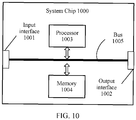
- a terminal device includes a processor, a memory, and a communications interface.
- the processor is connected to the memory and the communications interface.
- the memory is configured to store an instruction
- the processor is configured to execute the instruction
- the communications interface is configured to communicate with another network element under control of the processor.
- the processor executes the instruction stored in the memory, the processor can perform the method in any one of the first aspect or the possible implementations of the first aspect, or the processor can perform the method in any one of the second aspect or the possible implementations of the second aspect, or the processor can perform the method in any one of the third aspect or the possible implementations of the third aspect, or the processor can perform the method in any one of the fourth aspect or the possible implementations of the fourth aspect.
- a computer readable storage medium stores a program, and the program enables a terminal device to perform the hybrid automatic repeat request method in any one of the first aspect or the possible implementations of the first aspect, or the program enables a terminal device to perform the hybrid automatic repeat request method in any one of the second aspect or the possible implementations of the second aspect, or the program enables a terminal device to perform the hybrid automatic repeat request method in any one of the third aspect or the possible implementations of the third aspect, or the program enables a terminal device to perform the hybrid automatic repeat request method in any one of the fourth aspect or the possible implementations of the fourth aspect.
- GSM Global System for Mobile Communications
- CDMA Code Division Multiple Access
- WCDMA Wideband Code Division Multiple Access
- GPRS General Packet Radio Service
- LTE Long Term Evolution
- FDD Frequency Division Duplex
- TDD Time Division Duplex
- Universal Mobile Telecommunications System Universal Mobile Telecommunications System
- a network side device may also be referred to as a network device, a base station, or the like, and the base station may be a base transceiver station (Base Transceiver Station, BTS) in GSM or CDMA, or may be a NodeB (NodeB) in WCDMA, or may be an evolved NodeB (Evolved NodeB, eNB or eNodeB) in LTE, or may be a base station device in a future 5G network, or the like. This is not limited in the present invention.
- BTS Base Transceiver Station
- NodeB NodeB
- Evolved NodeB evolved NodeB
- eNB evolved NodeB
- eNodeB evolved NodeB
- a terminal device may communicate with one or more core networks (Core Network) through a radio access network (Radio Access Network, RAN).
- the terminal device may be referred to as an access terminal, user equipment (User Equipment, UE), a subscriber unit, a subscriber station, a mobile station, a mobile console, a remote station, a remote terminal, a mobile device, a user terminal, a terminal, a wireless communications device, a user agent, or a user apparatus.
- the terminal device may be a cellular phone, a cordless phone, a session initiation protocol (Session Initiation Protocol, SIP) phone, a wireless local loop (Wireless Local Loop, WLL) station, a personal digital assistant (Personal Digital Assistant, PDA), a handheld device having a wireless communication function, a computing device or another processing device connected to a wireless modem, an in-vehicle device, a wearable device, a terminal device in a future 5G network, or the like.
- SIP Session Initiation Protocol
- WLL Wireless Local Loop
- PDA Personal Digital Assistant
- FIG. 1 is a schematic diagram of a scenario. It should be understood that, for ease of understanding, the scenario in FIG. 1 is introduced herein as an example for description, but does not constitute a limitation on the present invention.
- FIG. 1 shows a terminal device 11, a terminal device 12, a terminal device 13, and a base station 21.
- the terminal device 11 may communicate with the base station 21, the terminal device 12 may communicate with the base station 21, and the terminal device 13 communicates with the base station 21.
- the terminal device 12 may communicate with the terminal device 11.
- the terminal device 13 communicates with the terminal device 12. Random access of the terminal device herein may be contention-based random access or non-contention-based random access.
- a terminal device In an existing hybrid automatic repeat request, a terminal device cannot know when a PDCCH may not need to be listened to, and consequently, electricity is wasted. In addition, if the terminal device misses an opportunity to listen to an uplink grant for retransmission, the terminal device needs to wait for a next period, and consequently, a retransmission delay increases.
- a terminal device in this patent tries to enable an uplink hybrid automatic repeat request round-trip latency timer (Uplink Hybrid automatic repeat request Round Trip Time Timer, UL HARQ RTT Timer) in transmission of uplink data, and listen to a PDCCH with reference to a discontinuous reception uplink retransmission timer (Discontinuous Reception Uplink Retransmission Timer, DRX-UL Retransmission Timer), so that electricity can be saved, and a retransmission delay can be reduced.
- Uplink Hybrid automatic repeat request Round Trip Time Timer Uplink Hybrid automatic repeat request Round Trip Time Timer, UL HARQ RTT Timer
- a discontinuous reception uplink retransmission timer Discontinuous Reception Uplink Retransmission Timer, DRX-UL Retransmission Timer
- FIG. 2 is a schematic flowchart of a hybrid automatic repeat request method 200 according to an embodiment of the present invention.
- the method 200 may be performed by a terminal device.
- the terminal device may be the terminal device 11, the terminal device 12, or the terminal device 13 in FIG. 1 .
- the method 200 includes the following steps.
- the terminal device may receive a random access response message (Random Access Response, RAR) sent by the base station.
- the random access response message is a MAC message, and the random access response message includes the first uplink grant (UL grant).
- the first uplink grant indicates an uplink transmission resource that is used by the terminal device to send uplink data.
- the random access response message may further include: timing advance command (Timing advance command) information, where the timing advance command information is used for uplink synchronization with the terminal device, to facilitate subsequent transmission of uplink data; and temporary cell identifier (Temporary C-RNTI, TC-RNTI) information, where the temporary cell identifier information is used to identify a terminal device in a cell, and the TC-RNTI is invalid in non-contention-based random access and may be ignored.
- Timing advance command timing advance command
- Temporal C-RNTI Temporal C-RNTI
- TC-RNTI temporary cell identifier
- S220 Transmit uplink data based on the first uplink grant, and start a first timer.
- the terminal device may choose not to listen to a PDCCH of a cell, so that a quantity of electricity of the terminal device can be saved.
- the terminal device may listen to a PDCCH if necessary.
- the terminal device may generate a data packet of a corresponding size based on the first uplink grant, select a HARQ process, and transmit uplink data in a subframe of the HARQ process.
- the terminal device starts the first timer (an uplink hybrid automatic repeat request round-trip latency timer UL HARQ RTT Timer).
- the terminal device may not listen to a PDCCH, so that electricity can be saved.
- the terminal device when the terminal device starts the first timer, if the terminal device finds that the second timer does not expire and/or is not stopped, the terminal device stops the second timer, so as to start the second timer after the first timer expires. "The timer expires” indicates that the timer automatically stops when the timer reaches a specified time. "The timer is stopped” indicates that the terminal device or the base station forcibly stops the timer without considering whether the terminal device reaches a specified time.
- to-be-transmitted uplink data may specifically include data or Msg3.
- Data is corresponding to to-be-transmitted uplink data in a contention-free random access scenario of the terminal device.
- Msg3 is corresponding to to-be-transmitted uplink data in a contention random access scenario of the terminal device.
- the terminal device scrambles the uplink data by using a unique cell identifier C-RNTI of the terminal.
- the terminal device scrambles the uplink data by using a temporary cell identifier TC-RNTI of the terminal.
- a time length of the first timer (UL HARQ RTT Timer) may be specified in a protocol. This is not limited herein.
- the terminal device starts the second timer, to wait for an uplink grant for possible HARQ retransmission or initial transmission of the uplink data.
- the second timer is a discontinuous reception uplink retransmission timer DRX-UL retransmission timer.
- a time length of the second timer (DRX-UL Retransmission Timer) is set by the base station, and the base station may indicate the time length of the second timer by using an instruction. This is not limited herein.
- time length of the first timer may be no association between the time length of the first timer and the time length of the second timer. This is not specifically limited in the present invention.
- a subframe in which the first timer expires or is stopped may be the same as or different from a subframe in which the second timer is started.
- the subframe in which the first timer of the terminal device is stopped or expires and the subframe in which the second timer is started may be a same subframe or may be different subframes.
- the terminal device listens to the PDCCH based on the second timer, to wait for possible HARQ retransmission or initial transmission of the uplink data.
- the terminal device transmits the uplink data based on the first uplink grant, and starts the first timer. After the first timer expires, the terminal device starts the second timer. Finally, the terminal device listens to the PDCCH based on the second timer. In this way, electricity can be saved, and a retransmission delay can be reduced.
- the method 200 further includes: A MAC layer of the terminal device selects a plurality of random access resources and a plurality of random access radio network temporary identifiers RA-RNTIs, and submits the plurality of random access resources and the plurality of RA-RNTIs to a physical layer of the terminal device.
- the physical layer of the terminal device performs clear channel assessment on at least one channel, to determine a first channel, where the first channel is in an idle mode, the plurality of random access resources include a random access resource corresponding to the first channel, and the plurality of RA-RNTIs include an RA-RNTI corresponding to the first channel; and optionally, the physical layer of the terminal device generates a random access preamble sequence based on a preamble index number of the terminal device.
- the physical layer of the terminal device sends the random access preamble sequence to the base station by using the random access resource corresponding to the first channel, and optionally, the random access preamble sequence is used by the terminal device to send a service request to the base station.
- the obtaining a first uplink grant sent by a base station includes: The physical layer of the terminal device receives, by using the RA-RNTI corresponding to the first channel, the MAC message sent by the base station.
- any preamble index field in the MAC message matches the preamble index number of the terminal device.
- the MAC layer of the terminal device notifies the PHY layer of the terminal device of the preamble index number, at least one selected random access resource, and a random access radio network temporary identifier (Random access Radio Network Temporary Identity, RA-RNTI) corresponding to each random access resource.
- RA-RNTI Random access Radio Network Temporary Identity
- the preamble index number is allocated by the base station to the terminal device.
- Each random access resource may be corresponding to one channel (channel), to be specific, a frequency resource of specific bandwidth.
- the PHY layer of the terminal device generates the random access preamble sequence based on the preamble index number; determines the first channel, to be specific, a channel in an idle mode, based on a result of clear channel assessment (Clear Channel Assessment, CCA) or listen before talk (Listen Before Talk, LBT) performed on each channel; and sends the random access preamble sequence to the base station by using the random access resource corresponding to the first channel.
- CCA Clear Channel Assessment
- LBT listen before talk
- the physical layer of the terminal device receives, by using the RA-RNTI corresponding to the first channel, the MAC message sent by the base station.
- the PHY layer of the terminal device selects one idle channel (the first channel) from the one or more channels, and sends the random access preamble sequence to the base station on the idle channel by using a corresponding random access resource.
- the PHY layer of the terminal device receives the random access response message (the MAC message) based on an RA-RNTI corresponding to the random access resource. For another example, if all the channels are not in an idle mode, the terminal device does not send the random access preamble sequence.
- the base station may deliver the corresponding random access response message (the MAC message) based on the successfully received random access preamble sequence sent by the terminal device. For example, in non-contention-based random access, the base station may find the corresponding terminal device based on the preamble index number, and then deliver the MAC message including the first uplink grant to the terminal device.
- the MAC layer of the terminal device needs to consider information such as a channel index corresponding to a random access resource, and a time domain location and a frequency domain location in a corresponding channel.
- the MAC layer of the terminal device notifies the physical layer of the terminal device of a selected random access resource, the preamble index number, and a random access radio network temporary identifier (RA-RNTI). Then, the physical layer of the terminal device generates the random access preamble sequence based on the preamble index number, and sends the random access preamble sequence to the base station. Finally, the physical layer of the terminal device receives the random access response message based on the RA-RNTI.
- the random access response message is the MAC message, and any preamble index field in the MAC message matches the preamble index number of the terminal device.
- the preamble index number of the terminal device is allocated by the base station to the terminal device.
- the base station delivers the corresponding random access response message (the MAC message) based on the successfully received random access preamble sequence sent by the terminal device.
- Any preamble index field in the MAC message matches the preamble index number corresponding to the preamble sequence sent by the terminal device.
- a preamble index field included in the MAC message corresponding to the first uplink grant matches the preamble index number of the preamble sequence sent by the terminal device.
- the base station may find the corresponding terminal device based on the preamble index number, and then deliver the MAC message including the first uplink grant to the terminal device.
- the terminal device may generate the random access preamble sequence based on the preamble index number, and send the random access preamble sequence to the base station.
- the random access preamble sequence is used by the terminal device to send a service request to the base station.
- the terminal device receives the MAC message sent by the base station, and any preamble index field in the MAC message matches the preamble index number of the terminal device. Therefore, the terminal device may consider that the base station responds to the service request of the terminal device, so that the terminal device can transmit the uplink data (for example, Msg3 or data) based on the first uplink grant.
- the uplink data for example, Msg3 or data
- specific content for example, initial access, re-establishment, or uplink synchronization
- the service request is used to obtain uplink synchronization.
- the preamble index number is allocated by the base station to the terminal device.
- the base station delivers the corresponding random access response message (the MAC message) based on the successfully received random access preamble sequence sent by the terminal device.
- Any preamble index field in the MAC message matches the preamble index number corresponding to the random access preamble sequence sent by the terminal device.
- a preamble index field included in the MAC message corresponding to the first uplink grant matches the preamble index number of the random access preamble sequence sent by the terminal device.
- the base station may find the corresponding terminal device based on the preamble index number, and then deliver the MAC message including the first uplink grant to the terminal device.
- the preamble index number may be selected by the terminal device, or may be specified by the base station for the terminal device.
- S240 may include: before the second timer expires and/or is stopped, the MAC layer of the terminal device controls the physical (PHY) layer of the terminal device to listen to the PDCCH.
- the terminal device transmits the uplink data based on the first uplink grant, and starts the first timer. After the first timer expires, the terminal device starts the second timer. In this way, electricity can be saved, and the retransmission delay can be reduced.
- the method 200 further includes: before the second timer expires or is stopped, if a second uplink grant sent by the base station through the PDCCH is detected through listening, performing hybrid automatic repeat request HARQ retransmission or initial transmission of the uplink data based on an indication of the second uplink grant.
- the MAC layer of the terminal device controls the PHY layer of the terminal device to listen to the PDCCH. If the second uplink grant sent by the base station is detected through listening, where the second uplink grant is sent by using the PDCCH and is used to indicate retransmission or initial transmission, the terminal device may perform HARQ retransmission or initial transmission of the uplink data based on the second uplink grant. Optionally, when performing HARQ retransmission of the uplink data, the terminal device may start the first timer, and repeat the foregoing operations.
- the terminal device transmits the uplink data based on the first uplink grant, and starts the first timer. After the first timer expires, the terminal device starts the second timer. Before the second timer expires and/or is stopped, the terminal device detects, through listening, the second uplink grant sent by the base station through the PDCCH. In this way, electricity can be saved, and the retransmission delay can be reduced. Further, the terminal device can perform HARQ retransmission of the uplink data based on the second uplink grant detected through listening.
- the method 200 further includes: after the second timer expires or is stopped, if a second uplink grant sent by the base station through the PDCCH fails to be detected through listening, determining, based on current discontinuous reception DRX status information of the terminal device, whether to continue to listen to the PDCCH.
- the terminal device may determine, based on the current DRX status information or a parameter, whether to continue to listen to the PDCCH. For example, after the DRX-UL retransmission timer expires and/or is stopped, the terminal device may select, based on the current discontinuous reception DRX status information, whether to enter a DRX dormant period. If all conditions of the DRX status information required for listening to the PDCCH are met, the terminal device may continue to listen to the PDCCH. If any condition of the DRX status information required for listening to the PDCCH is not met, the terminal device may choose to enter the DRX dormant period and do not listen to the PDCCH.
- S220 may include:
- the terminal device may transmit the uplink data for a plurality of times, in other words, transmit a bundle (bundle) of uplink data. Then, the terminal device may start the first timer and/or the third timer in the subframe of last transmission in the plurality of times of transmission. The third timer is configured to wait for the base station to send the contention resolution message.
- the third timer is a MAC-contention resolution timer (MAC-Contention resolution Timer), and the third timer is introduced for the contention random access scenario, and is mainly configured to wait for the base station to send the contention resolution message.
- MAC-Contention resolution Timer MAC-Contention resolution Timer
- a quantity of times the uplink data is transmitted may be indicated by using the first uplink grant.
- the terminal device transmits the uplink datatransmits the uplink data for a plurality of times based on the first uplink grant, and starts the first timer and/or the third timer in the subframe of last transmission in the plurality of times of transmission of the uplink data.
- the terminal device starts the second timer, and listens to the PDCCH based on the second timer. In this way, electricity can be saved, and the retransmission delay can be reduced. Further, transmission is performed a plurality of times, so that a success rate of data transmission can be improved, and a coverage range can be increased.
- repetition may also be introduced for performing transmission a plurality of times.
- repetition may also be introduced for performing transmission a plurality of times.
- the method 200 further includes:
- the terminal device may receive the contention resolution message sent by the base station. After receiving the contention resolution message, the terminal device may consider that random access succeeds, so as to stop the second timer (DRX-UL Retransmission Timer) that is configured to listen to retransmission.
- MAC-Contention resolution Timer MAC-Contention resolution Timer
- the contention resolution message may be scrambled by using the unique cell identifier C-RNTI of the terminal device, or may be scrambled by using the temporary cell identifier TC-RNTI of the terminal device. Specifically, which information is used for scrambling depends on whether the terminal device currently has the C-RNTI.
- the terminal device transmits the uplink data based on the first uplink grant, and starts the first timer. After the first timer expires, the terminal device starts the second timer. In this way, electricity can be saved, and the retransmission delay can be reduced.
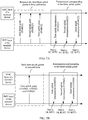
- FIG. 3 is a schematic diagram of an example of a hybrid automatic repeat request method according to an embodiment of the present invention.
- a non-contention-based random access scenario between a terminal device 30 and a base station 31 mainly includes the following steps.
- the base station 31 allocates a random access preamble sequence.
- the base station 31 may allocate a random access preamble sequence (preamble) to the terminal device 30.
- the random access preamble sequence includes a preamble index number allocated by the base station 31 to the terminal device 30.
- the base station 31 may allocate the random access preamble sequence to the terminal device 30 in two manners. In a first manner, the base station 31 allocates the random access preamble sequence to the terminal device 30 by using a PDCCH order (order). In a second manner, the random access preamble sequence is carried in a handover message, and the handover message is an RRC message.
- the first manner is a general case, and the second manner is mainly for a handover scenario.
- the terminal device 30 sends a random access preamble sequence to the base station 31.
- the terminal device 30 may generate the random access preamble sequence based on the preamble index number allocated by the base station 31 to the terminal device 30, and send the random access preamble sequence to the base station 31.
- the base station 31 sends a random access response message to the terminal device 30.
- the base station 31 may generate the random access response message (Random Access Response, RAR) based on the random access preamble sequence sent by the terminal device 30, and send the random access response message to the terminal device 30.
- the random access response message is a MAC message that is transmitted on a physical downlink shared channel (Physical Downlink Shared Channel, PDSCH) and that is scrambled by using the RA-RNTI.
- the random access response message includes a first uplink grant.
- the terminal device 30 transmits data and starts a first timer.
- the terminal device 30 generates a data packet of a corresponding size based on the first uplink grant in the random access response message, selects a HARQ process (process) such as a HARQ process 0, and transmits uplink data (Data) in a subframe indicated by the first uplink grant.
- the terminal device scrambles the uplink data (Data) by using a C-RNTI for transmission.
- the terminal device starts the first timer (UL HARQ RTT Timer). Before the first timer expires, the terminal device may not need to listen to a PDCCH of a cell, so that electricity is saved.
- the terminal device 30 starts a second timer after the first timer expires.
- the terminal device 30 may start the second timer (DRX-UL Retransmission Timer), to detect, through listening, whether there is an uplink grant corresponding to a HARQ of to-be-transmitted data in the PDCCH.
- Each HARQ process includes a first timer and a second timer.
- the base station 31 sends a PDCCH to the terminal device 30.
- the base station 31 Before the second timer expires or is stopped, the base station 31 sends the PDCCH to the terminal device 30.
- the PDCCH includes a second uplink grant used to retransmit the data.
- the terminal device 30 retransmits the data.
- the terminal device 30 Before the second timer expires or is stopped, the terminal device 30 successfully receives the second uplink grant used to retransmit the data, and retransmits the data based on the second uplink grant.
- the terminal device 30 may repeatedly perform "start a first timer” in step S304 and "start a second timer after the first timer expires” in step S305.
- the terminal device 30 starts the first timer, and does not need to listen to the PDCCH within duration of the first timer, so that electricity can be saved. Further, the terminal device 30 starts the second timer after the first timer expires, to wait for the uplink grant for possible retransmission, so that a retransmission delay can be reduced.
- the uplink data when the random access response message is a contention-based random access response message, the uplink data includes a message Msg3, and the Msg3 is scrambled by using a temporary cell identifier TC-RNTI of the terminal.
- the terminal device After receiving the random access response message sent by the base station, the terminal device performs uplink transmission, to be specific, sends the Msg3.
- the Msg3 is scrambled by using the temporary cell identifier TC-RNTI of the terminal.
- the TC-RNTI is delivered by using the random access response message.
- the terminal device starts the first timer.
- the terminal device may choose not to listen to the PDCCH, to save electricity for the terminal device.
- the method further includes:
- the terminal device may further receive the contention resolution message (contention resolution) sent by the base station.
- the contention resolution message indicates that the random access contention of the terminal succeeds.
- the terminal device considers that the random access contention succeeds provided that the contention resolution message is received.
- the terminal device may stop the second timer based on the contention resolution message.
- the contention resolution message may be scrambled by using the TC-RNTI or the C-RNTI.
- FIG. 4 is a schematic diagram of another example of a hybrid automatic repeat request method according to an embodiment of the present invention.
- a contention random access scenario between a terminal device 40 and a base station 41 mainly includes the following steps.
- the terminal device 40 sends a random access preamble sequence to the base station 41.
- the terminal device 40 randomly selects a preamble index number, generates the random access preamble sequence based on the selected preamble index number, and sends the random access preamble sequence to the base station 41.
- the base station 41 sends a random access response message to the terminal device 40.
- the base station 41 generates the random access response message based on the received random access preamble sequence, and then sends the random access response message to the terminal device 41.
- the random access response message may be a MAC message that is transmitted on a PDSCH and that is scrambled by using an RA-RNTI.
- the random access response message includes a first uplink grant.
- the terminal device 40 transmits Msg3 and starts a first timer.
- the terminal device 40 generates a data packet of a corresponding size based on the first uplink grant in the random access response message, selects a HARQ process (process) such as a HARQ process 0, and performs uplink transmission in a subframe indicated by the first uplink grant, to be specific, sends the Msg3.
- the terminal device scrambles the Msg3 by using a TC-RNTI, and the TC-RNTI is delivered by using the random access response message.
- the terminal device starts the first timer (UL HARQ RTT Timer). Before the first timer expires or is stopped, the terminal device may not need to listen to a PDCCH of a cell, so that electricity is saved.
- the terminal device 40 starts a second timer after the first timer expires.
- the terminal device 40 may start the second timer (DRX-UL Retransmission Timer), to detect, through listening, whether there is an uplink grant corresponding to a HARQ of to-be-transmitted data in the PDCCH.
- Each HARQ process includes a first timer and a second timer.
- the base station 41 sends a PDCCH to the terminal device 40.
- the base station 41 sends the PDCCH to the terminal device 40.
- the PDCCH includes a second uplink grant used to retransmit the Msg3.
- the terminal device 40 retransmits the Msg3.
- the terminal device 40 Before the second timer expires, the terminal device 40 successfully receives the second uplink grant used to retransmit the Msg3, and retransmits the Msg3 based on the second uplink grant.
- the terminal device 40 may repeatedly perform "start a first timer” in step S403 and "start a second timer after the first timer expires” in step S404.
- a MAC layer of the terminal device needs to start or restart a third timer (MAC-Contention Resolution Timer) in a subframe in which the Msg3 is transmitted.
- MAC-Contention Resolution Timer MAC-Contention Resolution Timer
- the base station 41 sends a contention resolution message to the terminal device.
- the base station 41 if the base station 41 successfully receives the data, there is no need to send, to the terminal device 40, the uplink grant used to retransmit the Msg3. In this case, the base station 41 sends the contention resolution message (contention resolution) to the terminal device.
- the contention resolution message contention resolution
- the C-RNTI is used to scramble the contention resolution message. If the UE has the TC-RNTI, the TC-RNTI is used to scramble the contention resolution message.
- the terminal device 40 stops the second timer.
- the terminal device 40 may consider that random access succeeds. In this case, the terminal device 40 may stop the second timer and stop the third timer.
- the terminal device 40 starts the first timer, and does not need to listen to the PDCCH within duration of the first timer, so that electricity can be saved. Further, the terminal device 40 starts the second timer after the first timer expires, to wait for the uplink grant for possible retransmission, so that a retransmission delay can be reduced.
- S220 may include:
- repeated sending may be introduced, to be specific, a bundle (bundle) of Msg3 is repeatedly sent, to improve a data transmission success rate and increase a coverage range.
- the terminal device may perform transmission of the Msg3 a plurality of times based on the first uplink grant, and start the first timer and/or the third timer (MAC-Contention Resolution Timer) in the subframe of last transmission in the plurality of times of transmission.
- the first uplink grant for transmission of the bundle of Msg3 may be delivered by using the RAR, or may be delivered by using the PDCCH.
- a HARQ of retransmitting the Msg3 by the terminal device based on the second uplink grant may also be HARQ retransmission of repeatedly sending the Msg3, and the first timer and the third timer are started in the subframe of last retransmission in the plurality of times of retransmission.
- the second uplink grant for retransmission of a bundle of Msg3 can be delivered only by using the PDCCH.
- the procedure of repeated sending includes the following steps.
- a base station 50 sends a first uplink grant to a terminal device 51.
- the base station 50 may send the first uplink grant to the terminal device 51.
- the first uplink grant is used to transmit Msg3.
- the first uplink grant may be delivered by using an RAR, or may be delivered by using a PDCCH.
- the terminal device 51 transmits a bundle of Msg3 (where transmission is performed six times).
- the terminal device 51 repeatedly transmits the Msg3 to the base station six times (number 0 to 5), and the terminal device 51 starts a first timer and starts a MAC layer in a subframe of last transmission (number 5) of the Msg3.
- the base station 50 sends a second uplink grant to the terminal device 51.
- the base station 50 may send the second uplink grant to the terminal device 51.
- the second uplink grant is used to retransmit the Msg3.
- the second uplink grant can be delivered only by using the PDCCH.
- the terminal device 51 retransmits a bundle of Msg3 (where retransmission is performed eight times).
- the terminal device 51 repeatedly retransmits the Msg3 to the base station eight times (number 0 to 7), and the terminal device 51 starts the first timer and/or the third timer in a subframe of last retransmission (number 7) of the Msg3.
- the quantity of transmission times (six times) and the quantity of retransmission times (eight times) of the Msg3 herein may be independent. This is not specifically limited herein.
- a mechanism of repeated sending is introduced, so that a success rate of data transmission can be improved, and a coverage range can be increased.
- the mechanism of repeated sending is particularly applicable to a specific type of UE, for example, UE in a Narrowband Internet of Things (Narrowband Internet of Things, NB-IoT), and UE in machine type communication (Machine Type Communication, MTC).
- Narrowband Internet of Things NB-IoT
- MTC Machine Type Communication
- FIG. 3 to FIG. 5 are merely intended to facilitate understanding of the technical solutions in the present invention, and do not constitute a limitation on the present invention.
- sequence numbers of the foregoing processes do not mean execution sequences in various embodiments of the present invention.
- the execution sequences of the processes should be determined according to functions and internal logic of the processes, and should not be construed as any limitation on the implementation processes of the embodiments of the present invention.
- an embodiment of the present invention provides a solution: The terminal device feeds back feedback information of a plurality of HARQ processes in one subframe. The following provides detailed description.
- the present invention provides a hybrid automatic repeat request method, and the method includes:
- a terminal device may introduce the HARQ process controller at a MAC layer, and then generate, based on the HARQ process controller, the feedback information corresponding to the plurality of HARQ processes. Finally, the terminal device feeds back, in a same subframe to the base station, the Feedback information corresponding to the plurality of HARQ processes.
- the terminal device determines the HARQ process controller, and feeds back, in the same subframe, the feedback information of the plurality of HARQ processes, to better adapt uplink and downlink traffic.
- the feedback information is sent by using a MAC message.
- a sending time of the MAC message depends on an uplink transmission resource allocated by the base station to the terminal device.
- FIG. 6 is a schematic diagram of an example of a hybrid automatic repeat request process controller according to an embodiment of the present invention.
- a terminal device introduces a HARQ process controller at a MAC layer.
- the HARQ process controller is configured to generate feedback information of a HARQ process 1, a HARQ process 2, and a HARQ process 3.
- the HARQ process 1, the HARQ process 2, and the HARQ process 3 are respectively corresponding to a subframe 1, a subframe 2, and a subframe 3 of downlink transmission data.
- the terminal device After receiving downlink data, the terminal device needs to feed back a receiving status of the downlink data.
- the terminal device after receiving a PDCCH, the terminal device triggers Feedback to perform feedback.
- the terminal device may feed back the feedback information of the HARQ process 1, the HARQ process 2, and the HARQ process 3 in a same subframe (a subframe in which the Feedback is located in FIG. 6 ).
- Table 1 shows 16 bits (bit). Each bit represents one HARQ process, and 0 or 1 is used to identify a feedback status on each bit. For example, 0 indicates that receiving fails, and 1 indicates that receiving succeeds. For example, for the feedback information of the HARQ process 1, the HARQ process 2, and the HARQ process 3 corresponding to three pieces of downlink data in FIG. 6 , C 0 to C 3 in Table 1 may be used to respectively represent feedback information of each piece of downlink data.
- the terminal device may generate a HARQ control element (Control Elements, CE) at the MAC layer.
- the HARQ CE is feedback information corresponding to each piece of downlink data.
- the terminal device instructs a multiplexing and assembly module (Multiplexing and assembly) to combine, into one MAC protocol data unit (Protocol Data Unit, PDU), the feedback information corresponding to each piece of downlink data, and submit the MAC protocol data unit to a physical layer for transmission.
- a HARQ control element Control Elements, CE
- PDU Network Data Unit
- the terminal device may introduce a periodic timer.
- the terminal device triggers a terminal device to feed back a feedback status of a HARQ process provided that the periodic timer expires or is stopped.
- a base station may also trigger, by using an uplink grant, a terminal device to feed back a feedback status of a HARQ process.
- the terminal device may also introduce a prohibit timer. After the prohibit timer expires, the terminal device can trigger the feedback status again.
- the terminal device determines the HARQ process controller, and feeds back, in one subframe, feedback information of a plurality of HARQ processes, to better adapt uplink and downlink traffic.
- a cell may be an unlicensed (unlicensed) spectrum cell or a licensed (licensed) spectrum cell.
- this embodiment of the present invention provides a new power headroom formula (type2 power headroom), to apply to power headroom existing when a PUCCH and a PUSCH are simultaneously transmitted.
- a specific method includes:
- the terminal device needs to support simultaneous transmission of a PUCCH of the licensed primary serving cell and a PUSCH of an unlicensed cell, and configuration of the simultaneous transmission does not depend on configuration of simultaneous transmission of a PUCCH and a PUSCH of a licensed cell.
- the MAC layer of the terminal device triggers the power headroom report (Power headroom report, PHR).
- a trigger condition may include that a periodic timer is triggered, a path loss variation exceeds a specific threshold, and the like.
- the PHY layer of the terminal device obtains, through calculation, the type2 power headroom of the licensed primary serving cell based on the received uplink grant. Compared with type1 power headroom (power headroom existing when only a PUSCH is transmitted), the type2 power headroom represents the power headroom existing when the physical uplink control channel (Physical Uplink Control Channel, PUCCH) and the PUSCH are simultaneously transmitted.
- the PHY layer of the terminal device sends the determined type2 power headroom to the MAC layer of the terminal device.
- the MAC layer of the terminal device generates the MAC control element (Medium access control Control Elements, CE) of the PHR based on the type2 power headroom of the licensed primary serving cell.
- the MAC CE includes the type2 power headroom.
- the type2 power headroom formula is introduced, so that transmit power headroom existing when the PUCCH and the PUSCH are simultaneously transmitted can be determined by using the type2 power headroom formula.
- M PUSCH,c ( i ) is bandwidth of a PUSCH and is in a unit of RB.
- P O_PUSCH,c ( j ) is expected power when a single RB is received, and a value of P O_PUSCH,c ( j ) is controlled by an upper-layer parameter based on different values of j ( j ⁇ 0,1,2 ⁇ );
- ⁇ c ( j ) is a path loss compensation factor;
- PL c is downlink path loss estimation and is in a unit of dB;
- ⁇ TF,c ( i ) is transmit power offset, and reflects that different modulation formats require different signal to interference plus noise ratios (Signal to Interference plus Noise ratio, "SINR" for short) in PUSCH transmission; and
- f c ( i ) is a current PUSCH power control adjustment status.
- N RE ( i ) is a quantity of resource elements (Resource element, "RE" for short) in a subframe i .
- RE resource element
- N RE i M PUCCH , c i ⁇ N sc RB ⁇ N symb PUCCH .
- N RE i N sc RB ⁇ N symb PUCCH / 2.
- N sc RB is a quantity of subcarriers included in one RB, and is a quantity of symbols included in a PUCCH channel.
- P O_PUCCH may be considered as power expected by the base station when a single resource block (Resource Block, "RB" for short) is received, and P O_PUCCH is related to intensity of noise and interference of an uplink.
- h ( n CQI ,n HARQ ,n SR ) is related to a PUCCH format, and different PUCCH formats are corresponding to different values.
- a value of ⁇ F_PUCCH ( F ) is controlled by an upper layer, and the value of ⁇ F_PUCCH ( F ) is related to a format used by a PUCCH.
- a PUCCH format 1a is usually used as a reference.
- a parameter ⁇ TxD ( F' ) is related to transmit diversity, and is valid only when a PUCCH is sent on two antenna ports. Otherwise, a value of the parameter is 0.
- g ( i ) is a current PUCCH power control adjustment status.
- the type2 power headroom formula is introduced, so that the transmit power headroom existing when the PUCCH and the PUSCH are simultaneously transmitted can be determined according to the type2 power headroom formula.
- a PHY layer of a terminal device receives an uplink grant sent by a base station, where the uplink grant is used to schedule transmission of uplink data in a plurality of subframes.
- the PHY layer of the terminal device generates a plurality of uplink grants based on the uplink grant, and sends the plurality of uplink grants to a MAC layer of the terminal device by using at least one subframe.
- the PHY layer of the terminal device transmits the uplink datatransmits the uplink data for a plurality of times in the plurality of subframes based on the plurality of uplink grants.
- the PHY layer of the terminal device may divide, into a plurality of uplink grants, one received uplink grant that is used to schedule uplink transmission in a plurality of subframes), and submit the plurality of uplink grants to the MAC layer. Then, the MAC layer of the terminal device instructs, based on the plurality of uplink grants submitted by the PHY layer of the terminal device, the PHY layer of the terminal device to perform uplink transmission a plurality of times in different subframes.
- the PHY layer of the terminal device receives one uplink grant sent by the base station.
- the uplink grant is used to schedule uplink transmission in a plurality of subframes.
- the uplink grant includes uplink transmission resources that are of the plurality of uplink subframes and that are allocated by the base station to the terminal device, and the uplink transmission resources may be specifically information such as time-frequency resource information, modulation and coding scheme (Modulation and Coding Scheme, MCS) information, and a HARQ process identifier (ID).
- MCS Modulation and Coding Scheme
- ID HARQ process identifier
- the plurality of uplink subframes may be continuous, or may be discontinuous.
- the PHY layer of the terminal device may generate a plurality of uplink grants based on one received uplink grant, and submit the plurality of uplink grants to the MAC layer of the terminal device in a plurality of subframes or in a same subframe.
- the physical layer of the terminal device may indicate HARQ information of each uplink subframe.
- the HARQ information includes at least one of HARQ process ID information, MCS information, transport block size (transport block size, TBS) information, and new data indicator (New Data Indicator, NDI) information that are used.
- One HARQ process is corresponding to one transmission time interval (Transmission Time Interval, TTI).
- the PHY layer of the terminal further needs to indicate a TTI or a subframe in which uplink transmission of an uplink grant of the MAC layer is performed.
- the terminal device performs uplink transmission in a HARQ process corresponding to each uplink grant, starts a corresponding timer (UL RTT, UL HARQ RTT Timer), and repeats the foregoing steps. Details are not described herein again.
- the PHY layer of the terminal device may generate a plurality of uplink grants based on one received uplink grant, and submit the plurality of uplink grants to the MAC layer of the terminal device in a plurality of subframes or in a same subframe.
- FIG. 7A is a schematic diagram of an example of a transmission process of a PHY layer and a MAC layer in a terminal device.
- the PHY layer of the terminal device separately sends three uplink grants to the MAC layer in three subframes, and the three uplink grants are respectively a first uplink grant (indicating HARQ information 1) corresponding to a HARQ process 1, a second uplink grant (indicating HARQ information 2) corresponding to a HARQ process 2, and a third uplink grant (indicating HARQ information 3) corresponding to a HARQ process 3.
- the MAC layer performs uplink transmission based on the three uplink grants, and starts corresponding timers (UL RTT).
- the timers are respectively a UL RTT1 corresponding to the HARQ process 1, a UL RTT2 corresponding to the HARQ process 2, and a UL RTT3 corresponding to the HARQ process 3.
- FIG. 7B is a schematic diagram of another example of a transmission process of a PHY layer and a MAC layer in a terminal device.
- the PHY layer of the terminal device sends three uplink grants to the MAC layer in a same subframe, and the three uplink grants are respectively a first uplink grant (indicating HARQ information 1) corresponding to a HARQ process 1, a second uplink grant (indicating HARQ information 2) corresponding to a HARQ process 2, and a third uplink grant (indicating HARQ information 3) corresponding to a HARQ process 3.
- the MAC layer performs uplink transmission based on the three uplink grants, and starts corresponding timers (UL RTT).
- the timers are respectively a UL RTT1 corresponding to the HARQ process 1, a UL RTT2 corresponding to the HARQ process 2, and a UL RTT3 corresponding to the HARQ process 3.
- the PHY layer of the terminal device may generate a plurality of uplink grants based on one received uplink grant, and submit the plurality of uplink grants to the MAC layer of the terminal device in a plurality of subframes or in a same subframe.
- the PHY layer of the terminal may submit one received uplink grant to the MAC layer of the terminal, and indicate a specific subframe or TTI in which the uplink grant is used for uplink transmission and a HARQ process used for the uplink transmission. Then, the MAC layer of the terminal device generates a plurality of uplink grants based on an indication of the PHY layer of the terminal, and submits each uplink grant to a corresponding HARQ process, to instruct the PHY layer of the terminal device to perform uplink transmission in one subframe or TTI. In other words, the MAC layer of the terminal device may also generate a plurality of uplink grants based on one uplink grant.
- the MAC layer of the terminal device may generate a plurality of uplink grants based on one received uplink grant, and submit each uplink grant to a corresponding HARQ process, to instruct the PHY layer of the terminal device to perform uplink transmission in one subframe or TTI.
- FIG. 8 is a schematic block diagram of a terminal device 800 according to an embodiment of the present invention. As shown in FIG. 8 , the terminal device 800 includes:
- the terminal device 800 transmits the uplink data based on the first uplink grant, and starts the first timer. After the first timer expires, the terminal device 800 starts the second timer. In this way, electricity can be saved, and a retransmission delay can be reduced.
- the terminal device 800 does not listen to the PDCCH before the first timer expires.
- the terminal device 800 further includes: a transmission module, configured to: before the second timer expires and/or is stopped, if a second uplink grant sent by the base station through the PDCCH is detected through listening, perform hybrid automatic repeat request HARQ retransmission or initial transmission of the uplink data based on the second uplink grant.
- a transmission module configured to: before the second timer expires and/or is stopped, if a second uplink grant sent by the base station through the PDCCH is detected through listening, perform hybrid automatic repeat request HARQ retransmission or initial transmission of the uplink data based on the second uplink grant.
- the terminal device 800 transmits the uplink data based on the first uplink grant, and starts the first timer. After the first timer expires, the terminal device 800 starts the second timer. Before the second timer expires and/or is stopped, the terminal device 800 detects, through listening, the second uplink grant sent by the base station through the PDCCH. In this way, electricity can be saved, and the retransmission delay can be reduced. Further, the terminal device can perform HARQ retransmission of the uplink data based on the second uplink grant detected through listening.
- the terminal device further includes: a determining module, configured to: after the second timer expires and/or is stopped, determine, based on current discontinuous reception DRX status information of the terminal device, whether to continue to listen to the PDCCH.
- a determining module configured to: after the second timer expires and/or is stopped, determine, based on current discontinuous reception DRX status information of the terminal device, whether to continue to listen to the PDCCH.
- processing module 820 is specifically configured to:
- the terminal device 800 transmits the uplink datatransmits the uplink data for a plurality of times based on the first uplink grant, and starts the first timer and/or the third timer in the subframe of last transmission in the plurality of times of transmission of the uplink data. After the first timer expires, the terminal device 800 starts the second timer, and listens to the PDCCH based on the second timer. In this way, electricity can be saved, and the retransmission delay can be reduced. Further, transmission is performed a plurality of times, so that a success rate of data transmission can be improved, and a coverage range can be increased.
- the terminal device 800 further includes: a receiving module, configured to: before the third timer expires and/or is stopped, receive the contention resolution message sent by the base station, where the contention resolution message indicates that random access contention of the terminal device succeeds.
- the processing module 820 is further configured to stop the second timer based on the contention resolution message.
- the processing module 820 is specifically configured to: when the first timer is started, if the second timer does not expire and/or is not stopped, stop the second timer.
- the terminal device 800 further includes:
- the obtaining module is specifically configured to: receive, by the physical layer of the terminal device by using the RA-RNTI corresponding to the first channel, the MAC message sent by the base station.
- a subframe in which the first timer expires or is stopped is the same as or different from a subframe in which the second timer is started.
- the listening module 830 is specifically configured to: before the second timer expires and/or is stopped, the MAC layer of the terminal device controls the physical layer of the terminal device to listen to the PDCCH.
- the terminal device 800 may perform the hybrid automatic repeat request method 200 according to the embodiments of the present invention, and the foregoing and other operations and/or functions of the modules in the terminal side device 800 are respectively used to implement corresponding procedures of the foregoing methods. For brevity, details are not described herein again.
- the terminal device 800 in this embodiment of the present invention transmits the uplink data based on the first uplink grant, and starts the first timer. After the first timer expires, the terminal device 800 starts the second timer. In this way, electricity can be saved, and the retransmission delay can be reduced.
- the terminal device may include:
- the terminal device may introduce a periodic timer. If the periodic timer expires, the terminal device triggers a terminal device to feed back a feedback status of a HARQ process.
- the base station may also trigger, by using an uplink grant, a terminal device to feed back a feedback status of a HARQ process.
- the terminal device may also introduce a prohibit timer. After the prohibit timer expires, the terminal device can trigger the feedback status again.
- the terminal device determines the HARQ process controller, and feeds back, in one subframe, the feedback information of the plurality of HARQ processes, to better adapt uplink and downlink traffic.
- the terminal device may include:
- the determining module is further configured to generate, by the MAC layer of the terminal device, a MAC control element of the PHR based on the type2 power headroom of the licensed primary serving cell.
- the terminal device needs to support simultaneous transmission of a PUCCH of the licensed primary serving cell and a PUSCH of an unlicensed cell.
- configuration of the simultaneous transmission does not depend on configuration of simultaneous transmission of a PUCCH and a PUSCH of a licensed cell.
- M PUSCH,c ( i ) is bandwidth of a PUSCH and is in a unit of RB.
- P O_PUSCH,c ( j ) is expected power when a single RB is received, and a value of P O_PUSCH,c ( j ) is controlled by an upper-layer parameter based on different values of j ( j ⁇ 0,1,2 ⁇ );
- ⁇ c ( j ) is a path loss compensation factor;
- PL c is downlink path loss estimation and is in a unit of dB;
- ⁇ TF,c ( i ) is transmit power offset, and reflects that different modulation formats require different signal to interference plus noise ratios (Signal to Interference plus Noise ratio, "SINR" for short) in PUSCH transmission; and
- f c ( i ) is a current PUSCH power control adjustment status.
- N RE ( i ) is a quantity of resource elements (Resource element, "RE" for short) in a subframe i .
- RE resource element
- N RE i M PUCCH , c i ⁇ N sc RB ⁇ N symb PUCCH .
- N RE i N sc RB ⁇ N symb PUCCH / 2.
- N sc RB is a quantity of subcarriers included in one RB
- N symb PUCCH is a quantity of symbols included in a PUCCH channel.
- P O_PUCCH may be considered as power expected by the base station when a single resource block (Resource Block, "RB" for short) is received, and P O_UCCH is related to intensity of noise and interference of an uplink.
- h ( n CQI ,n HARQ ,n SR ) is related to a PUCCH format, and different PUCCH formats are corresponding to different values.
- a value of ⁇ F_PUCCH ( F ) is controlled by an upper layer, and the value of ⁇ F_PUCCH ( F ) is related to a format used by a PUCCH.
- a PUCCH format 1a is usually used as a reference.
- a parameter ⁇ TxD ( F' ) is related to transmit diversity, and is valid only when a PUCCH is sent on two antenna ports. Otherwise, a value of the parameter is 0.
- g ( i ) is a current PUCCH power control adjustment status.
- the type2 power headroom formula is introduced, so that transmit power headroom existing when the PUCCH and the PUSCH are simultaneously transmitted can be determined according to the type2 power headroom formula.
- the terminal device may include:
- the PHY layer of the terminal device may submit the plurality of received uplink grants to the MAC layer in a plurality of subframes or in one subframe.
- a terminal device 900 may include a processor 910, a transceiver 920, and a memory 930.
- the transceiver 920 may include a receiver 921 and a transmitter 922.
- the memory 930 may be configured to store a basic parameter set, a DCI format, a correspondence between a basic parameter set and a DCI format, and the like, and may be further configured to store code executed by the processor 910, and the like.
- Components of the terminal device 900 are coupled together by using a bus system 940.
- the bus system 940 includes a power bus, a control bus, a status signal bus, and the like.
- the transceiver 920 is configured to: obtain a first uplink grant sent by a base station, where the first uplink grant is carried in a media access control MAC message.
- the processor 910 is specifically configured to: transmit uplink data based on the first uplink grant, and start a first timer; start a second timer after the first timer expires; and listen to a physical downlink control channel PDCCH based on the second timer.
- the terminal device transmits the uplink data based on the first uplink grant, and starts the first timer. After the first timer expires, the terminal device starts the second timer. Finally, the terminal device listens to the PDCCH based on the second timer. In this way, electricity can be saved, and a retransmission delay can be reduced.
- the terminal device does not listen to the PDCCH before the first timer expires.
- the processor 910 is configured to: before the second timer expires and/or is stopped, if a second uplink grant sent by the base station through the PDCCH is detected through listening, perform hybrid automatic repeat request HARQ retransmission of the uplink data based on the second uplink grant.
- the processor 910 is configured to: after the second timer expires and/or is stopped, determine, based on current discontinuous reception DRX status information of the terminal device, whether to continue to listen to the PDCCH.
- the processor 910 is configured to:
- the processor 910 is configured to:
- the processor 910 is configured to: when the first timer is started, if the second timer does not expire and/or is not stopped, stop the second timer.
- the processor 910 before the first uplink grant sent by the base station is obtained, the processor 910 is configured to:
- the obtaining a first uplink grant sent by a base station includes: receiving, by the physical layer of the terminal device by using the RA-RNTI corresponding to the first channel, the MAC message sent by the base station.
- a subframe in which the first timer expires or is stopped is the same as or different from a subframe in which the second timer is started.
- the processor 910 is configured to: before the second timer expires and/or is stopped, the MAC layer of the terminal device controls the physical layer of the terminal device to listen to the PDCCH.
- the terminal device transmits the uplink data based on the first uplink grant, and starts the first timer. After the first timer expires, the terminal device starts the second timer. Finally, the terminal device listens to the PDCCH based on the second timer. In this way, electricity can be saved, and a retransmission delay can be reduced.
- FIG. 10 is a schematic structural diagram of a system chip according to an embodiment of the present invention.
- a system chip 1000 in FIG. 10 includes an input interface 1001, an output interface 1002, at least one processor 1003, and a memory 1004.
- the input interface 1001, the output interface 1002, the processor 1003, and the memory 1004 are connected by using a bus 1005.
- the processor 1003 is configured to execute code in the memory 1004. When the code is executed, the processor 1003 implements the methods performed by the terminal device in FIG. 2 to FIG. 7B .
- the terminal device 800 shown in FIG. 8 or the terminal device 900 shown in FIG. 9 or the system chip 1000 shown in FIG. 10 can implement processes implemented by the terminal device in the foregoing method embodiments of FIG. 2 to FIG. 7B . To avoid repetition, details are not described herein again.
- the processor in the embodiments of the present invention may be an integrated circuit chip, and has a signal processing capability.
- steps in the foregoing method embodiments can be implemented by using an integrated logic circuit of hardware in the processor or an instruction in a form of software.
- the processor may be a general purpose processor, a digital signal processor (Digital Signal Processor, "DSP” for short), an application-specific integrated circuit (Application-Specific Integrated Circuit, "ASIC” for short), a field programmable gate array (Field Programmable Gate Array, "FPGA” for short) or another programmable logic device, a discrete gate or a transistor logic device, a discrete hardware component, or the like.
- DSP Digital Signal Processor
- ASIC Application-Specific Integrated Circuit
- FPGA Field Programmable Gate Array
- the processor may implement or perform the methods, the steps, and logical block diagrams that are disclosed in the embodiments of the present invention.
- the general purpose processor may be a microprocessor, or the processor may be any conventional processor or the like.
- the steps of the methods disclosed with reference to the embodiments of the present invention may be directly performed and accomplished by using a hardware decoding processor, or may be performed and accomplished by using a combination of hardware and software modules in the decoding processor.
- a software module may be located in a mature storage medium in the art, such as a random access memory, a flash memory, a read-only memory, a programmable read-only memory, an electrically erasable programmable memory, a register, or the like.
- the storage medium is located in the memory, and the processor reads information in the memory and completes the steps in the foregoing methods in combination with hardware of the processor.
- the memory in the embodiments of the present invention may be a volatile memory or a nonvolatile memory, or may include a volatile memory and a nonvolatile memory.
- the nonvolatile memory may be a read-only memory (Read-Only Memory, "ROM” for short), a programmable read-only memory (Programmable ROM, "PROM” for short), an erasable programmable read-only memory (Erasable PROM, "EPROM” for short), an electrically erasable programmable read-only memory (Electrically EPROM, "EEPROM” for short), or a flash memory.
- the volatile memory may be a random access memory (Random Access Memory, "RAM” for short), and is used as an external cache.
- RAMs are available, for example, a static random access memory (Static RAM, "SRAM” for short), a dynamic random access memory (Dynamic RAM, “DRAM” for short), a synchronous dynamic random access memory (Synchronous DRAM, “SDRAM” for short), a double data rate synchronous dynamic random access memory (Double Data Rate SDRAM, "DDR SDRAM” for short), an enhanced synchronous dynamic random access memory (Enhanced SDRAM, "ESDRAM” for short), a synchlink dynamic random access memory (Synchlink DRAM, "SLDRAM” for short), and a direct rambus random access memory (Direct Rambus RAM, "DR RAM” for short).
- SRAM static random access memory
- DRAM dynamic random access memory
- DRAM synchronous dynamic random access memory
- SDRAM synchronous dynamic random access memory
- Enhanced SDRAM Enhanced SDRAM
- Enhanced SDRAM synchlink dynamic random access memory
- Synchlink DRAM synchlink DRAM
- SLDRAM direct rambus random access memory
- system and “network” may be used interchangeably in this specification.
- network may be used interchangeably in this specification.
- the term “and/or” in this specification describes only an association relationship for describing associated objects and represents that three relationships may exist. For example, A and/or B may represent the following three cases: Only A exists, both A and B exist, and only B exists.
- the character “/” in this specification generally indicates an “or” relationship between the associated objects.
- B corresponding to A indicates that B is associated with A, and B may be determined according to A. However, it should further be understood that determining B according to A does not mean that B is determined according to A only. B may also be determined according to A and/or other information.
- sequence numbers of the foregoing processes do not mean execution sequences in various embodiments of the present invention.
- the execution sequences of the processes should be determined according to functions and internal logic of the processes, and should not be construed as any limitation on the implementation processes of the embodiments of the present invention.
- the disclosed system, apparatus, and method may be implemented in other manners.
- the described apparatus embodiment is merely an example.
- the unit division is merely logical function division and may be other division in actual implementation.
- a plurality of units or components may be combined or integrated into another system, or some features may be ignored or not performed.
- the displayed or discussed mutual couplings or direct couplings or communication connections may be implemented by using some interfaces.
- the indirect couplings or communication connections between the apparatuses or units may be implemented in electronic, mechanical, or other forms.
- the units described as separate parts may or may not be physically separate, and parts displayed as units may or may not be physical units, may be located in one position, or may be distributed on a plurality of network units. Some or all of the units may be selected based on actual requirements to achieve the objectives of the solutions of the embodiments.
- functional units in the embodiments of the present invention may be integrated into one processing unit, or each of the units may exist alone physically, or two or more units are integrated into one unit.
- the functions When the functions are implemented in the form of a software functional unit and sold or used as an independent product, the functions may be stored in a computer-readable storage medium. Based on such an understanding, the technical solutions of the present invention essentially, or the part contributing to the prior art, or some of the technical solutions may be implemented in a form of a software product.
- the computer software product is stored in a storage medium, and includes several instructions for instructing a computer device (which may be a personal computer, a server, or a network device) to perform all or some of the steps of the methods described in the embodiments of the present invention.
- the foregoing storage medium includes any medium that can store program code, such as a USB flash drive, a removable hard disk, a read-only memory (Read-Only Memory, ROM), a random access memory (Random Access Memory, RAM), a magnetic disk, or an optical disc.
- program code such as a USB flash drive, a removable hard disk, a read-only memory (Read-Only Memory, ROM), a random access memory (Random Access Memory, RAM), a magnetic disk, or an optical disc.
Landscapes
- Engineering & Computer Science (AREA)
- Computer Networks & Wireless Communication (AREA)
- Signal Processing (AREA)
- Mobile Radio Communication Systems (AREA)
Applications Claiming Priority (1)
| Application Number | Priority Date | Filing Date | Title |
|---|---|---|---|
| PCT/CN2016/094338 WO2018027656A1 (zh) | 2016-08-10 | 2016-08-10 | 混合自动重传请求的方法和终端设备 |
Publications (2)
| Publication Number | Publication Date |
|---|---|
| EP3499767A1 true EP3499767A1 (de) | 2019-06-19 |
| EP3499767A4 EP3499767A4 (de) | 2019-08-28 |
Family
ID=61161204
Family Applications (1)
| Application Number | Title | Priority Date | Filing Date |
|---|---|---|---|
| EP16912111.8A Ceased EP3499767A4 (de) | 2016-08-10 | 2016-08-10 | Hybrid-automatic-repeat-request-verfahren und endgerätevorrichtung |
Country Status (4)
| Country | Link |
|---|---|
| US (1) | US10924220B2 (de) |
| EP (1) | EP3499767A4 (de) |
| CN (1) | CN109644085B (de) |
| WO (1) | WO2018027656A1 (de) |
Cited By (1)
| Publication number | Priority date | Publication date | Assignee | Title |
|---|---|---|---|---|
| CN112204909A (zh) * | 2020-08-27 | 2021-01-08 | 北京小米移动软件有限公司 | 盲重传方法和装置、盲重传指示方法和装置 |
Families Citing this family (39)
| Publication number | Priority date | Publication date | Assignee | Title |
|---|---|---|---|---|
| CN110351878B (zh) | 2018-04-04 | 2023-07-14 | 华为技术有限公司 | 一种随机接入处理方法和相关设备 |
| EP4521675B1 (de) * | 2018-06-20 | 2026-04-15 | Lenovo (Singapore) Pte. Ltd. | Erzeugung von leistungsreserveberichten |
| US12096409B2 (en) * | 2018-07-20 | 2024-09-17 | Beijing Xiaomi Mobile Software Co., Ltd. | Random access processing method and apparatus |
| CN110830173B (zh) * | 2018-08-08 | 2020-09-15 | 展讯通信(上海)有限公司 | Pucch与pdsch之间的时间差的指示方法、基站及可读介质 |
| US10986661B2 (en) | 2018-09-27 | 2021-04-20 | Lenovo (Singapore) Pte. Ltd. | Transmitting a physical downlink shared channel after losing uplink synchronization |
| US11166307B2 (en) * | 2018-09-27 | 2021-11-02 | Lenovo (Singapore) Pte. Ltd. | Transmitting a physical downlink shared channel after losing uplink synchronization |
| TWI704826B (zh) * | 2018-09-28 | 2020-09-11 | 財團法人資訊工業策進會 | 用於行動通訊系統之使用者裝置及基地台 |
| CN111405642B (zh) | 2019-01-03 | 2024-04-16 | 华为技术有限公司 | 一种消息发送方法、接收方法、装置和设备 |
| EP3949649A4 (de) * | 2019-04-04 | 2022-10-26 | Nokia Technologies Oy | Anzeige von direktzugriffsantwortübertragung |
| CN113767677B (zh) * | 2019-04-30 | 2024-03-08 | 上海诺基亚贝尔股份有限公司 | 非许可频带中的随机接入消息重传 |
| KR102814700B1 (ko) * | 2019-04-30 | 2025-05-29 | 삼성전자주식회사 | 무선 통신 시스템에서 데이터를 송수신하는 방법 및 장치 |
| CN112970318B (zh) * | 2019-04-30 | 2023-03-21 | Oppo广东移动通信有限公司 | 一种随机接入方法、设备及存储介质 |
| EP3963786B1 (de) * | 2019-05-02 | 2023-12-27 | LG Electronics Inc. | Verfahren und vorrichtung zum anhalten eines konfigurierten grant-timers vor ablauf in einem drahtloskommunikationssystem |
| US11038628B2 (en) | 2019-05-04 | 2021-06-15 | Qualcomm Incorporated | Procedures for configured grants |
| US11356894B2 (en) * | 2019-05-14 | 2022-06-07 | Qualcomm Incorporated | Method and apparatus for configuring uplink hybrid automatic repeat request (HARQ) retransmission timer for narrowband communications |
| CN113273299B (zh) * | 2019-05-24 | 2023-06-09 | Oppo广东移动通信有限公司 | 用于随机接入的方法及设备 |
| CN111800237B (zh) * | 2019-07-05 | 2021-10-12 | 维沃移动通信有限公司 | 数据发送的方法、数据接收的方法和设备 |
| CN114208079B (zh) * | 2019-08-15 | 2024-05-07 | 富士通株式会社 | 数据传输的方法及其装置、通信系统 |
| CN114762382B (zh) * | 2019-09-30 | 2025-07-18 | 上海诺基亚贝尔股份有限公司 | 用于未决数据单元的发送的资源选择 |
| US11729718B2 (en) * | 2019-09-30 | 2023-08-15 | Qualcomm Incorporated | Triggering power saving modes with scheduling downlink control information |
| CN114258722B (zh) * | 2019-10-12 | 2024-09-24 | Oppo广东移动通信有限公司 | 无线通信方法、终端设备和网络设备 |
| CN112825589B (zh) * | 2019-11-21 | 2022-03-11 | 维沃移动通信有限公司 | 一种进入休眠行为的方法和终端 |
| CN114667789B (zh) * | 2020-02-07 | 2024-03-15 | Oppo广东移动通信有限公司 | 一种定时器控制方法、终端设备、网络设备 |
| US12335892B2 (en) | 2020-04-01 | 2025-06-17 | Qualcomm Incorporated | Data channel timelines in wireless communications systems |
| US11937193B2 (en) * | 2020-04-01 | 2024-03-19 | Qualcomm Incorporated | Timing improvements for wireless communications systems |
| CN115552978B (zh) * | 2020-05-22 | 2024-07-30 | Oppo广东移动通信有限公司 | 监听信道的方法、装置、设备及存储介质 |
| CN113746604A (zh) * | 2020-05-29 | 2021-12-03 | 华为技术有限公司 | 侧行链路的通信方法和通信装置 |
| CN113973285B (zh) * | 2020-07-24 | 2025-05-09 | 夏普株式会社 | 用户设备执行的方法以及用户设备 |
| CN111954261B (zh) * | 2020-08-07 | 2022-09-13 | 展讯通信(上海)有限公司 | 上行harq的发送方法及相关产品 |
| CN114070478B (zh) * | 2020-08-07 | 2023-06-30 | 大唐移动通信设备有限公司 | 一种信息传输方法、终端及网络侧设备 |
| US20230327821A1 (en) * | 2020-10-12 | 2023-10-12 | Qualcomm Incorporated | Harmonization of multiple configured grant uplink with or without retransmission timer |
| WO2022077174A1 (zh) * | 2020-10-12 | 2022-04-21 | Oppo广东移动通信有限公司 | 无线通信方法和设备 |
| CN114501531B (zh) * | 2020-10-23 | 2025-03-18 | 大唐移动通信设备有限公司 | 一种数据传输方法、装置及设备 |
| CN112735113B (zh) * | 2020-12-28 | 2022-01-11 | 天翼物联科技有限公司 | 水气表数据连续传输方法、系统、装置及存储介质 |
| WO2022151015A1 (en) * | 2021-01-13 | 2022-07-21 | Qualcomm Incorporated | Reduced control channel monitoring for random access procedures |
| WO2022160137A1 (zh) * | 2021-01-27 | 2022-08-04 | Oppo广东移动通信有限公司 | 无线通信方法、终端设备和网络设备 |
| CN115707144A (zh) * | 2021-08-06 | 2023-02-17 | 中国电信股份有限公司 | 冲突解决检测方法、装置、终端和存储介质 |
| WO2023060597A1 (en) * | 2021-10-15 | 2023-04-20 | Nec Corporation | Method, device and computer readable medium for communication |
| CN117715159A (zh) * | 2022-08-27 | 2024-03-15 | 华为技术有限公司 | 一种数据传输方法及装置 |
Family Cites Families (15)
| Publication number | Priority date | Publication date | Assignee | Title |
|---|---|---|---|---|
| US8305961B2 (en) * | 2008-01-10 | 2012-11-06 | Innovative Sonic Limited | Method and related communications device for improving discontinuous reception functionality |
| KR100939722B1 (ko) * | 2008-08-11 | 2010-02-01 | 엘지전자 주식회사 | 데이터 전송 방법 및 이를 위한 사용자 기기 |
| WO2010048998A1 (en) * | 2008-10-30 | 2010-05-06 | Nokia Corporation | Retransmissions |
| CN101777972B (zh) * | 2009-01-09 | 2013-10-23 | 电信科学技术研究院 | 重复ack/nack机制下数据接收方法、装置及系统 |
| CN101841823B (zh) * | 2009-03-16 | 2012-06-27 | 电信科学技术研究院 | 多载波系统中非连续监听控制信道的方法及装置 |
| CN102215551B (zh) * | 2010-04-02 | 2015-08-19 | 电信科学技术研究院 | 隐式载波去激活的方法和设备 |
| CN101827425B (zh) * | 2010-04-21 | 2012-09-05 | 新邮通信设备有限公司 | 一种上行发送数据的方法和系统 |
| CN105722195B (zh) * | 2011-01-28 | 2019-12-24 | 华为技术有限公司 | 一种非连续接收的方法和装置 |
| CN102595606B (zh) * | 2012-01-31 | 2015-08-19 | 电信科学技术研究院 | 一种配置和执行非连续接收的方法、系统和设备 |
| ES2720423T3 (es) * | 2012-09-28 | 2019-07-22 | Intel Corp | Mejoras en recepción discontinua (DRX) en sistemas LTE |
| CN104823394B (zh) | 2012-09-28 | 2018-08-10 | 英特尔公司 | 用于增强物理下行链路控制信道(epdcch)的盲解码 |
| WO2014069826A1 (en) * | 2012-11-02 | 2014-05-08 | Lg Electronics Inc. | Pdcch monitoring scheme considering epdcch |
| CN105122858B (zh) * | 2013-04-03 | 2020-05-01 | 安华高科技股份有限公司 | 在无线网络中处理下行链路半持续调度重传 |
| US9699823B2 (en) * | 2013-07-19 | 2017-07-04 | Lg Electronics Inc. | Method and apparatus for performing random access procedure in wireless communication system |
| CN105409317A (zh) * | 2013-08-06 | 2016-03-16 | 联发科技股份有限公司 | 自适应tdd系统中drx以及harq运作 |
-
2016
- 2016-08-10 WO PCT/CN2016/094338 patent/WO2018027656A1/zh not_active Ceased
- 2016-08-10 EP EP16912111.8A patent/EP3499767A4/de not_active Ceased
- 2016-08-10 CN CN201680088092.0A patent/CN109644085B/zh active Active
-
2019
- 2019-02-06 US US16/269,283 patent/US10924220B2/en active Active
Cited By (3)
| Publication number | Priority date | Publication date | Assignee | Title |
|---|---|---|---|---|
| CN112204909A (zh) * | 2020-08-27 | 2021-01-08 | 北京小米移动软件有限公司 | 盲重传方法和装置、盲重传指示方法和装置 |
| CN112204909B (zh) * | 2020-08-27 | 2023-12-29 | 北京小米移动软件有限公司 | 盲重传方法和装置、盲重传指示方法和装置 |
| US12452005B2 (en) | 2020-08-27 | 2025-10-21 | Beijing Xiaomi Mobile Software Co., Ltd. | Blind retransmission method and apparatus, and blind retransmission indication method and apparatus |
Also Published As
| Publication number | Publication date |
|---|---|
| EP3499767A4 (de) | 2019-08-28 |
| CN109644085A (zh) | 2019-04-16 |
| US10924220B2 (en) | 2021-02-16 |
| US20190190661A1 (en) | 2019-06-20 |
| WO2018027656A1 (zh) | 2018-02-15 |
| CN109644085B (zh) | 2021-05-18 |
Similar Documents
| Publication | Publication Date | Title |
|---|---|---|
| US10924220B2 (en) | Hybrid automatic repeat request method and terminal device | |
| US11737110B2 (en) | Method and apparatus for determining channel access scheme, terminal device, and network device | |
| US12041653B2 (en) | Method and device for wireless communication on an unlicensed spectrum | |
| US12041623B2 (en) | Random access method, terminal device and network device | |
| EP3925383B1 (de) | Verfahren und vorrichtung zum empfang eines pdsch in reaktion auf übertragung einer prach-präambel und pusch | |
| US11082164B2 (en) | Data transmission method, terminal device, and network device | |
| US11924768B2 (en) | Data sending method and communication apparatus | |
| EP3745794B1 (de) | Verfahren und vorrichtung zur datenübertragung während eines zufallszugriffs | |
| US12185327B2 (en) | Wireless communication method, terminal device, and network device | |
| US20250185079A1 (en) | Methods and devices for transmitting and receiving random access response and communication system | |
| EP3751914B1 (de) | Kommunikationsverfahren, kommunikationsvorrichtung und lesbares speichermedium | |
| EP3941150B1 (de) | Direktzugriffsverfahren, endgerätevorrichtung und netzwerkvorrichtung | |
| US12022508B2 (en) | Competition window size determination method and related product | |
| US20220141888A1 (en) | Random access method and device, and terminal | |
| WO2020206597A1 (zh) | 功率分配的方法和终端设备 |
Legal Events
| Date | Code | Title | Description |
|---|---|---|---|
| STAA | Information on the status of an ep patent application or granted ep patent |
Free format text: STATUS: THE INTERNATIONAL PUBLICATION HAS BEEN MADE |
|
| PUAI | Public reference made under article 153(3) epc to a published international application that has entered the european phase |
Free format text: ORIGINAL CODE: 0009012 |
|
| STAA | Information on the status of an ep patent application or granted ep patent |
Free format text: STATUS: REQUEST FOR EXAMINATION WAS MADE |
|
| 17P | Request for examination filed |
Effective date: 20190227 |
|
| AK | Designated contracting states |
Kind code of ref document: A1 Designated state(s): AL AT BE BG CH CY CZ DE DK EE ES FI FR GB GR HR HU IE IS IT LI LT LU LV MC MK MT NL NO PL PT RO RS SE SI SK SM TR |
|
| AX | Request for extension of the european patent |
Extension state: BA ME |
|
| A4 | Supplementary search report drawn up and despatched |
Effective date: 20190726 |
|
| RIC1 | Information provided on ipc code assigned before grant |
Ipc: H04L 1/18 20060101AFI20190722BHEP |
|
| DAV | Request for validation of the european patent (deleted) | ||
| DAX | Request for extension of the european patent (deleted) | ||
| STAA | Information on the status of an ep patent application or granted ep patent |
Free format text: STATUS: EXAMINATION IS IN PROGRESS |
|
| 17Q | First examination report despatched |
Effective date: 20200602 |
|
| REG | Reference to a national code |
Ref country code: DE Ref legal event code: R003 |
|
| STAA | Information on the status of an ep patent application or granted ep patent |
Free format text: STATUS: THE APPLICATION HAS BEEN REFUSED |
|
| 18R | Application refused |
Effective date: 20211216 |