EP3506683B1 - Verfahren und benutzervorrichtung zum verbinden mittels einer vielzahl von zugriffen in einem netzwerk der nächsten generation - Google Patents
Verfahren und benutzervorrichtung zum verbinden mittels einer vielzahl von zugriffen in einem netzwerk der nächsten generation Download PDFInfo
- Publication number
- EP3506683B1 EP3506683B1 EP17843832.1A EP17843832A EP3506683B1 EP 3506683 B1 EP3506683 B1 EP 3506683B1 EP 17843832 A EP17843832 A EP 17843832A EP 3506683 B1 EP3506683 B1 EP 3506683B1
- Authority
- EP
- European Patent Office
- Prior art keywords
- access
- connection
- request message
- function node
- network
- Prior art date
- Legal status (The legal status is an assumption and is not a legal conclusion. Google has not performed a legal analysis and makes no representation as to the accuracy of the status listed.)
- Active
Links
Images






Classifications
-
- H—ELECTRICITY
- H04—ELECTRIC COMMUNICATION TECHNIQUE
- H04W—WIRELESS COMMUNICATION NETWORKS
- H04W76/00—Connection management
- H04W76/10—Connection setup
- H04W76/15—Setup of multiple wireless link connections
- H04W76/16—Involving different core network technologies, e.g. a packet-switched [PS] bearer in combination with a circuit-switched [CS] bearer
-
- H—ELECTRICITY
- H04—ELECTRIC COMMUNICATION TECHNIQUE
- H04W—WIRELESS COMMUNICATION NETWORKS
- H04W48/00—Access restriction; Network selection; Access point selection
- H04W48/08—Access restriction or access information delivery, e.g. discovery data delivery
- H04W48/14—Access restriction or access information delivery, e.g. discovery data delivery using user query or user detection
-
- H—ELECTRICITY
- H04—ELECTRIC COMMUNICATION TECHNIQUE
- H04W—WIRELESS COMMUNICATION NETWORKS
- H04W48/00—Access restriction; Network selection; Access point selection
- H04W48/18—Selecting a network or a communication service
-
- H—ELECTRICITY
- H04—ELECTRIC COMMUNICATION TECHNIQUE
- H04W—WIRELESS COMMUNICATION NETWORKS
- H04W60/00—Affiliation to network, e.g. registration; Terminating affiliation with the network, e.g. de-registration
-
- H—ELECTRICITY
- H04—ELECTRIC COMMUNICATION TECHNIQUE
- H04W—WIRELESS COMMUNICATION NETWORKS
- H04W88/00—Devices specially adapted for wireless communication networks, e.g. terminals, base stations or access point devices
- H04W88/02—Terminal devices
- H04W88/06—Terminal devices adapted for operation in multiple networks or having at least two operational modes, e.g. multi-mode terminals
Definitions
- the present invention relates to a next generation mobile communication
- LTE Long Term Evolution
- LTE-A Long Term Evolution-Advanced
- FIG. 1a illustrates an expected structure of the next-generation mobile communication from the viewpoint of a node.
- a UE may access the core network through a next-generation Radio Access Network (RAN).
- the next-generation core network may include a control plane (CP) function node and a user plane (UP) function node.
- the CP function node which is a node for managing UP function nodes and RAN, transmits and receives a control signal.
- the CP function node performs all or part of the functions of a Mobility Management Entity (MME) in the fourth generation mobile communication; and all or part of the control plane functions of a Serving Gateway (S-GW) and a PDN Gateway (P-GW).
- MME Mobility Management Entity
- S-GW Serving Gateway
- P-GW PDN Gateway
- the UP function node is a kind of gateway through which user data are transmitted and received.
- the UP function node may perform all or part of the user plane functions of the S-GW and the P-GW in the fourth generation mobile communication.
- the Policy Control Function (PCF) in the figure is a node for controlling the policies of a service provider.
- the subscriber information server shown stores subscription information of a user.
- FIG. 1b illustrates an expected structure of the next-generation mobile communication from the viewpoint of a session.
- the core network is divided into a control plane (CP) and a user plane (UP).
- the control plane (CP) may include a policy control function (PCF), a subscriber information server, and a CP node which performs session management (SM).
- the user plane (UP) may include a UP function node.
- the nodes within the control plane (CP) are implemented through cloud virtualization. And so are the nodes within the user plane (UP).
- the UE may request creation of a session directed to a data network (DN) through an access network (AN).
- the session may be created and managed by the CP node for session management (SM).
- the session management may be performed according to the information stored in the subscriber information server and the policies (for example, a QoS management policy) of a service provider stored within the policy control function (PCF) entity.
- the CP node for session management (SM) obtains the information through interaction with the subscriber information server and the policy control function (PCF) and creates/modifies/releases the session.
- the CP node for session management selects a UP function node for the session and allocates resources of the core network. Also, the CP node for session management (SM) may allocate an IP address directly to the UE or request the UP function node to allocate an IP address to the UE
- a UE may generate a plurality of sessions over different access networks.
- a UE has a plurality of NG1 connections with a core network
- a detailed scheme regarding how the NG1 connections will be processed has not been proposed by a current technology.
- a detailed scheme for processing the plurality of NG1 connections from the viewpoint of mobility management has not yet been proposed.
- the 3GPP document TR 23.799, V0.7.0 discusses system architectures for the next generation mobile networks.
- the present invention proposes schemes for solving the above-described problems.
- one disclosure of this specification provides a method for performing access to a network, as set forth in the appended claims.
- one disclosure of this specification provides a user equipment (UE) as set forth in the appended claims.
- UE user equipment
- the present invention is described in light of UMTS (Universal Mobile Telecommunication System) and EPC (Evolved Packet Core), but not limited to such communication systems, and may be rather applicable to all communication systems and methods within the scope of the appended claims.
- the technical terms used herein are used to merely describe specific embodiments and should not be construed as limiting the present invention. Further, the technical terms used herein should be, unless defined otherwise, interpreted as having meanings generally understood by those skilled in the art but not too broadly or too narrowly. Further, the technical terms used herein, should be replaced by or understood by such technical terms as being able to be exactly understood by those skilled in the art. Further, the general terms used herein should be interpreted in the context as defined in the dictionary, but not in an excessively narrowed manner.
- the term 'include' or 'have' may represent the existence of a feature, a number, a step, an operation, a component, a part or the combination thereof described in the specification, and may not exclude the existence or addition of another feature, another number, another step, another operation, another component, another part or the combination thereof.
- first' and 'second' are used for the purpose of explanation about various components, and the components are not limited to the terms 'first' and 'second'.
- the terms 'first' and 'second' are only used to distinguish one component from another component.
- a first component may be named as a second component without deviating from the scope of the present invention.
- UEs user equipments
- the UE may also be denoted a terminal or mobile equipment (ME).
- ME mobile equipment
- the UE may be a laptop computer, a mobile phone, a PDA, a smartphone, a multimedia device, or other portable device, or may be a stationary device such as a PC or a car mounted device.
- UE/MS is an abbreviation of User Equipment/Mobile Station, and it refers to a terminal device.
- An EPS is an abbreviation of an Evolved Packet System, and it refers to a core network supporting a Long Term Evolution (LTE) network and to a network evolved from an UMTS.
- LTE Long Term Evolution
- a PDN is an abbreviation of a Public Data Network, and it refers to an independent network where a service for providing service is placed.
- a PDN-GW is an abbreviation of a Packet Data Network Gateway, and it refers to a network node of an EPS network which performs functions, such as the allocation of a UE IP address, packet screening & filtering, and the collection of charging data.
- a Serving gateway is a network node of an EPS network which performs functions, such as mobility anchor, packet routing, idle mode packet buffering, and triggering an MME to page UE.
- An eNodeB is an eNodeB of an Evolved Packet System (EPS) and is installed outdoors.
- the cell coverage of the eNodeB corresponds to a macro cell.
- EPS Evolved Packet System
- An MME is an abbreviation of a Mobility Management Entity, and it functions to control each entity within an EPS in order to provide a session and mobility for UE.
- a session is a passage for data transmission, and a unit thereof may be a PDN, a bearer, or an IP flow unit.
- the units may be classified into a unit of the entire target network (i.e., an APN or PDN unit) as defined in 3GPP, a unit (i.e., a bearer unit) classified based on QoS within the entire target network, and a destination IP address unit.
- An Access Point Name is the name of an access point that is managed in a network and provides to UE. That is, an APN is a character string that denotes or identifies a PDN. Requested service or a network (PDN) is accessed via P-GW.
- An APN is a name (a character string, e.g., 'internet.mnc012.mcc345.gprs') previously defined within a network so that the P-GW can be searched for.
- a PDN connection is a connection from UE to a PDN, that is, an association (or connection) between UE represented by an IP address and a PDN represented by an APN. It means a connection between entities (i.e., UE-PDN GW) within a core network so that a session can be formed.
- entities i.e., UE-PDN GW
- UE context is information about the situation of UE which is used to manage the UE in a network, that is, situation information including an UE ID, mobility (e.g., a current location), and the attributes of a session (e.g., QoS and priority)
- situation information including an UE ID, mobility (e.g., a current location), and the attributes of a session (e.g., QoS and priority)
- NAS Non-Access-Stratum: A higher stratum of a control plane between a UE and an MME.
- the NAS supports mobility management, session management, IP address management, etc., between the UE and the network.
- PLMN as an abbreviation of Public Land Mobile Network, means a network identification number of a mobile communication provider.
- the PLMN is divided into a home PLMN (HPLMN) and a visited PLMN (VPLMN).
- HPLMN home PLMN
- VPLMN visited PLMN
- Next generation (NG) radio access network means a radio access network including a base station in next-generation mobile communication defined by 3GPP.
- Next-generation mobile communication introduces the concept of network slicing in order to provide various services through a single network.
- slicing a network refers to a combination of network nodes with the functions needed to provide a specific service.
- the network node that constitutes the slice instance may be a hardware independent node, or it may be a logically independent node.
- Each slice instance may consist of a combination of all the nodes needed to construct the entire network. In this case, one slice instance alone may provide service to the UE.
- the slice instance may consist of a combination of some of the nodes that make up the network.
- the slice instance may provide service to the UE in association with other existing network nodes without the slice instance alone providing the service to the UE.
- a plurality of slice instances may cooperate with each other to provide the service to the UE.
- the slice instance may differ from a dedicated core network in that all network nodes, including the core network (CN) node and the RAN may be separated from each other. Further, the slice instance differs from the dedicated core network in that the network nodes may be logically separated.
- CN core network
- FIG. 2 illustrates an example of architecture for implementing network slicing.
- the core network may be divided into several slice instances.
- Each slice instance may include one or more of a CP function node and a UP function node.
- Each UE may use a network slice instance relevant to its service through the access network (AN).
- AN access network
- each slice instance may share one or more of the CP function node and the UP function node with other slide instance. This feature will be described with reference to FIG. 3 below.
- FIG. 3 illustrates another example of the architecture for implementing network slicing.
- a plurality of UP function nodes are clustered, and a plurality of CP function nodes are also clustered.
- slice instance#1 within the core network (which is also called instance#1) includes a first cluster of UP function nodes. And the slice instance#1 shares the cluster of CP function nodes with slice#2 (which is also called instance#2).
- the slice instance#2 includes a second cluster of UP function nodes.
- the Core Network Selection Function shown in the figure selects a slice (or instance) capable of accommodating a service of the UE.
- the UE in the figure may use the service#1 through the slice instance#1 selected by the CNSF and also use the service#2 through the slice instance#2 selected by the CNSF.
- a UE may establish one or more protocol data unit (PDU) sessions through several accesses (i.e., several radio access technology (RAT)).
- PDU protocol data unit
- RAT radio access technology
- the UE may generate a plurality of PDU sessions toward several data networks through a plurality of accesses.
- the UE may generate a plurality of PDU sessions toward one identical data network through a plurality of accesses.
- the UE may generate one PDU session toward one identical data network through a plurality of accesses.
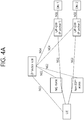
- FIGS. 4a to 4c are exemplary diagrams showing examples of sessions generated through a plurality of accesses.
- a UE may have a plurality of sessions toward several data networks (e.g., shown DN 1 and DN 2) through several accesses (e.g., 3GPP accesses, for example, shown NG RAN and non-3GPP access).
- the non-3GPP access may mean an access not defined by 3GPP, for example, a wireless local area network (WLAN) access point (AP).
- WLAN wireless local area network
- a UE may have a plurality of sessions toward one data network (e.g., shown DN 1) through several accesses (e.g., 3GPP accesses, for example, shown NG RAN and non-3GPP access).
- 3GPP accesses for example, shown NG RAN and non-3GPP access
- a session through a first access is directed toward the data network via an IP anchor 1
- a session through a second access (shown non-3GPP access) is directed toward the same data network via an IP anchor 2.
- both a first session through a first access (shown 3GPP access, for example, shown NG RAN) and a second session through a second access (shown non-3GPP access) have been illustrated as being directed toward the same data network through one identical anchor 1.
- the generation and release of the first session through the first access may be performed through NG1 signaling.
- the generation and release of the second session through the second access may also be performed through the NG1 signaling.
- session management (SM) context must have information on an access network type.
- FIGS. 5a to 5c show architecture for managing sessions generated through a plurality of accesses.
- FIG. 5a shows an example in which only a 3GPP access is used.
- the architecture shown in FIG. 5b is for a case where a non-3GPP access is installed within coverage of a 3GPP access. Furthermore, the architecture shown in FIG. 5c is for a case where a non-3GPP access is solely installed.
- a core network for next-generation mobile communication may be divided into a CP function node and an UP function node.
- the interfaces NG2 and NG3 are connected to the non-3GPP access layer function (N3ASF). Furthermore, in the architecture shown in FIG. 5c , a non-3GPP access stratum (N3-AS) protocol is used between the UE and the N3ASF.
- N3-AS non-3GPP access stratum
- FIG. 6 shows a protocol stack between a UE and an N3ASF and a CP function.
- An N3-AS protocol of protocol stacks shown in FIG. 6 is used between a UE and an N3ASF.
- the N3-AS may be compared with RRC in terms of the location of the protocol stack.
- the N3-AS protocol has a simpler radio resource control function.
- the N3-AS protocol includes security information, and is chiefly used to exchange information on the bearer of a user plane between the UE and the N3ASF and to transparently transmit NAS messages between the UE and a core network (CN).
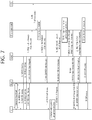
- FIG. 7 an example in which the UE performs an attach procedure through a non-3GPP access the environment shown in FIG. 5c .
- the UE and the N3ASF use an N3-AS protocol for an additional message exchange (e.g., session management or mobility management procedure).
- an additional message exchange e.g., session management or mobility management procedure.
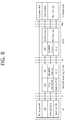
- FIG. 8 shows an example of the stack of an NG1 protocol while a UE performs an attach procedure.
- the shown NG1 protocol is used after the bootstrap of the N3-AS connection shown in FIG. 7 .
- the interface has been named NGx (e.g., NG1, NG2, NG3, ...), ,but the interface may be named Nx (e.g., N1, N1, N3, ).
- FIG. 9 shows a transfer process of IKEv2 between the UE and the N3ASF when the UE performs an attach procedure through a non-3GPP access in the environment shown in FIG. 5c .
- the UE and the N3ASF use the N3-AS protocol for an additional message exchange (e.g., session management or mobility management procedure).
- an additional message exchange e.g., session management or mobility management procedure.
- next-generation mobile communication it is expected that a UE may generate a plurality of sessions over different access networks.
- a UE has a plurality of NG1 connections with a core network
- a detailed scheme regarding how the NG1 connections will be processed has not been proposed by a current technology.
- a detailed scheme for processing the plurality of NG1 connections from the viewpoint of mobility management has not yet been proposed.
- the first disclosure of this specification proposes a method of enabling one CP function node to manage a plurality of sessions generated through a plurality of accesses. Furthermore, the second disclosure of this specification proposes a method for solving a problem from the viewpoint of mobility management when individual CP function nodes control a plurality of sessions generated through a plurality of accesses.
- the first disclosure method of using one CP function node in common
- a UE When a UE connects to a network through a first access, it determines a serving CP function node. In this case, when the UE connects to the network via a second access in the future, one of the following options is performed so that the same CP function node is used.
- the network transmits information on the serving CP function node to the UE.
- the UE may receive a temporary identifier.
- the temporary identifier may be unique identifier information used in common in the first access and the second access.
- the temporary identifier may include the identifier of the serving CP function node and the identifier of the UE. Accordingly, the UE may extract the identifier of the serving CP function node from the received temporary identifier. The UE does not extract the identifier of the serving CP function node, and may use a temporary identifier received from the network without special recognition.
- the information on the serving CP function node is stored in a third network node.
- the UE connects to the network via a second access.
- the UE recognizes that the connection is a connection through the second access different from a currently connected first access, and transmits required information to the network. More specifically, the UE stores information on a current serving CP function node received from the network, and delivers the information when it connects to the network via the second access. Accordingly, a network node that has been connected to the second access selects and determines the same CP function node based on the information received from the UE. For example, when the UE connects to the network via the second access, it delivers the above-received temporary identifier. Accordingly, the network node that has been connected to the second access extracts the identifier of the serving CP function node from the temporary identifier, and selects and determines a corresponding CP function node.
- a network node that has been connected to the second access identifies information stored in a third network node and selects and determines the same CP function node. If a different CP function node has been selected, a CP reallocation process is performed in order to select the same CP function node again.
- one identical CP function node may be divided into a mobility management (MM) function unit and a session management (SM) function unit.
- the MM function unit may be one, but the SM function unit may be present in a plural number.
- the MM function unit may manage/control a plurality of SM function units.
- a message related to session management (SM) like session setup transmitted by a UE may be received in the MM function unit of a serving CP function node and delivered to the SM function unit.
- SM session management
- the termination point of an NG1 is used as the MM function unit of a CP function node as described above, it is effective because procedures related to mobility management, such as location registration, can be performed only once.
- the same or different SM function unit may be allocated depending on a data network connected by a UE and a network load condition.
- context may be present in a plural number due to connections through a plurality of accesses. Accordingly, the UE and the serving CP function node may check the relation between the plurality of pieces of context and perform update and management, if necessary.
- a change in the 3GPP standard contents attributable to the proposal 1 is as follows.
- one MM CP function node may be used in common.
- the plurality of accesses may be managed by one identical CP function node,
- Option 2 When a UE attempts to set up a connection through a first access, information by which a serving CP function unit can be identified is stored in a CP management function unit (e.g., network node playing the role of a home subscriber sever (HSS)).
- a CP management function unit e.g., network node playing the role of a home subscriber sever (HSS)
- HSS home subscriber sever
- the termination point of the NG1 interface becomes the MM function unit of the CP function node determined by an MM attach procedure (or connection procedure).
- the MM function unit of the CP function node may deliver the session setup request of the UE to a proper SM function unit of the CP function node (determined based on a requested DN name).
- a UE can connect to the same 5G core network of a PLMN through a 3GPP access and a non-3GPP access at the same time and if a selected N3IWF is positioned within the same PLMN as the 3GPP access, the UE may be served by one access and mobility function (AMF).
- AMF access and mobility function
- the AMF is a concept similar to that of the above-described MM function unit of the CP function node.
- a 3GPP access and anon-3GPP access are used by a UE within a PLMN at the same time with respect to a given serving PLMN, one registration management (RM) context may be present for each access of the UE.
- RM registration management
- the AMF associates the RM context of each of a plurality of accesses of the UE with the followings.
- the registration area for a 3GPP access and the registration area for a non-3GPP access are independent.
- a UE does not need to perform periodic registration update through a non-3GPP access. Furthermore, a periodic registration timer for a non-3GPP access is not provided to a UE.
- the temporary identifier may be allocated or reallocated through a given 3GPP access and non-3GPP access.
- the AMF allocates only one temporary identifier, which may be used with respect to a 3GPP access and non-3GPP access within the same PLMN, to a UE.
- the temporary identifier is allocated when a UE is first successfully registered.
- the temporary identifier is valid with respect to both the 3GPP access and the non-3GPP access within the PLMN.
- the UE may provide a network with a temporary identifier with which the UE has been successfully registered previously within the same PLMN or an equivalent PLMN.
- an access network AN
- a UE performs registration through any one access, the UE should not additionally perform registration through a different access at the same time until the registration through any one access is completed.
- a temporary identifier allocated during a registration procedure through a 3GPP access is specific to a location, the UE may reuse the same UE temporary identifier through a non-3GPP access only when a selected N3IWF function is present within the same PLMN as that of the 3GPP access. If the temporary identifier has been allocated during a registration procedure for the non-3GPP access and includes a non-geographical group ID, the temporary identifier may not be valid in an NAS procedure through a 3GPP access. Furthermore, the temporary identifier may not be valid if the reallocation of an AMF is necessary during a registration procedure for a 3GPP access.
- a registration release request needs to be used along with an indication indicating whether the registration release request has to be performed on only one access or on all accesses.
- the UE or an AMF may start a registration release procedure through the 3GPP access so that the UE is registered or released only on the non-3GPP.
- FIG. 10 is an illustrative flowchart showing a procedure according to a first disclosure.
- the CP function node may also be called an AMF.
- the CP function node or the AMF may include a transceiver, a processor, and storage means as described later with reference to FIG. 13 . Accordingly, operations performed by the respective units of the CP function node or the AMF are specifically arranged and described below.
- the processor of the CP function node performs an interaction with the different node through the transceiver.
- the processor of the CP function node may determine whether a temporary identifier (including the identifier of the CP function node), allocated to the UE in a previous registration process, and a temporary identifier (including the identifier of the CP function node) included in a connection request message (or registration request message), for example, an attach request message transmitted by the UE are the same.
- the processor of the CP function node considers it as an abnormal error and may transmit a reject message to the UE.
- a value indicating that the UE has not been previously registered may be configured in a cause field within the reject message.
- the processor of the CP function node considers it as an abnormal error, may generate a cause value for registration rejection, and may transmit a reject message to the UE.
- a value indicating that the temporary identifier is erroneous may be configured in a cause field within the reject message.
- the temporary identifier 1 may be included as a correct temporary identifier of the UE within the reject message.
- the second disclosure of this specification proposes a method for solving a problem from the viewpoint of mobility management when a plurality of sessions generated through a plurality of accesses is controlled by individual CP function nodes.
- FIGS. 11a and 11b are exemplary diagrams showing architecture according to a second disclosure.
- FIGS. 11a and 11b The architecture shown in FIGS. 11a and 11b is architecture in which a plurality of the following sessions is taken into consideration.
- the shown architecture is for performing session management under the following assumption.
- FIG. 12 is an illustrative flowchart showing according to a procedure according a second disclosure.
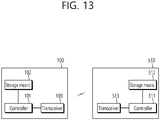
- FIG. 13 is a block diagram of the configuration of a UE 100 and network node according to an embodiment of the present invention.
- the UE 100 includes storage means 101, a controller 102 and a transceiver 103.
- the network node may be an access network (AN), an NG RAN of 3GPP or a CP function node.
- the network node includes storage means 511, a controller 512 and a transceiver 513.
- the storage means store the above-described methods.
- the controllers control the storage means and the transceivers. Specifically, the controllers execute the methods stored in the storage means. Furthermore, the controllers transmit the above-described signals through the transceivers.
Landscapes
- Engineering & Computer Science (AREA)
- Computer Networks & Wireless Communication (AREA)
- Signal Processing (AREA)
- Computer Security & Cryptography (AREA)
- Mobile Radio Communication Systems (AREA)
Claims (12)
- Verfahren zum Durchführen eines Netzwerkzugangs, wobei das Verfahren von einem Benutzergerät, UE (100), durchgeführt wird und aufweist:Bestimmen, ob eine erste Verbindung früher durch einen ersten Zugang durchgeführt wurde, wenn versucht wird, eine zweite Verbindung durch einen zweiten Zugang durchzuführen; undÜbertragen einer Anschlussanforderungsnachricht, die Kennungsinformation eines Steuerebenen-, CP-, Funktionsknotens aufweist, wenn die erste Verbindung durch den ersten Zugang durchgeführt wurde und bestimmt wird, dass die zweite Verbindung durch den zweiten Zugang zusätzlich ist,wobei der erste Zugang ein Zugangsnetzwerk der nächsten Generation ist, das basierend auf einem Partnerschaftsprojekt der 3. Generation, 3GPP, definiert ist,wobei der zweite Zugang ein nicht-3GPP-basiertes Zugangsnetzwerk ist,wobei die Kennungsinformation des CP-Funktionsknotens in einem Verfahren zum Durchführen der ersten Verbindung durch den ersten Zugang gewonnen wurde, undwobei sowohl die erste Verbindung durch den ersten Zugang als auch die zweite Verbindung durch den zweiten Zugang von dem CP-Funktionsknoten verwaltet werden.
- Verfahren nach Anspruch 1, das ferner aufweist:Übertragen einer Verbindungsanforderungsnachricht, um die erste Verbindung durch den ersten Zugang durchzuführen; undEmpfangen einer Annahmenachricht, welche die Kennungsinformation des CP-Funktionsknotens aufweist, als eine Antwort auf die Anforderungsnachricht.
- Verfahren nach Anspruch 1, wobei die Kennungsinformation des CP-Funktionsknotens eine eindeutige Kennungsinformation ist, die in einem Zugangsnetzwerk der nächsten Generation, das basierend auf dem Partnerschaftsprojekt der 3. Generation, 3GPP, definiert ist, und dem nicht-3GPP-basierten Zugangsnetzwerk gemeinsam genutzt wird.
- Verfahren nach Anspruch 1, das ferner das Übertragen einer Verbindungsanforderungsnachricht aufweist, welche die Kennungsinformation nicht aufweist, wenn die erste Verbindung durch den ersten Zugang nicht durchgeführt wurde und die zweite Verbindung durch den zweiten Zugang als die Erste bestimmt wird.
- Verfahren nach Anspruch 2, wobei:die Verbindungsanforderungsnachricht eine Registrierungsanforderungsnachricht oder eine Anschlussanforderungsnachricht aufweist, unddie Annahmenachricht eine Registrierungsannahmenachricht oder eine Anschlussannahmenachricht aufweist.
- Verfahren nach Anspruch 2, das ferner das Empfangen einer Ablehnungsnachricht als eine Antwort auf die Verbindungsanforderungsnachricht aufweist,
wobei die Ablehnungsnachricht ein Ursachenfeld aufweist, in dem ein Wert, der anzeigt, dass das UE (100) vorher nicht registriert wurde, oder ein Wert, der anzeigt, dass die Kennungsinformation fehlerhaft ist, konfiguriert wurde. - Benutzergerät, UE (100), das konfiguriert ist, um eine Verbindung mit einem Netzwerk durchzuführen, das aufweist:einen Transceiver (103); undeinen Prozessor (102), der konfiguriert ist, um den Transceiver zu steuern,wobei der Prozessor (102) ferner konfiguriert ist, um zu bestimmen, ob eine erste Verbindung früher durch einen ersten Zugang durchgeführt wurde, wenn versucht wird, eine zweite Verbindung durch einen zweiten Zugang durchzuführen, und eine Anschlussanforderungsnachricht, die Kennungsinformation eines Steuerebenen-, CP-, Funktionsknotens aufweist, zu übertragen, wenn die erste Verbindung durch den ersten Zugang durchgeführt wurde und bestimmt wird, dass die zweite Verbindung durch den zweiten Zugang zusätzlich ist,wobei der erste Zugang ein Zugangsnetzwerk der nächsten Generation ist, das basierend auf einem Partnerschaftsprojekt der 3. Generation, 3GPP, definiert ist,wobei der zweite Zugang ein nicht-3GPP-basiertes Zugangsnetzwerk ist,wobei die Kennungsinformation des Steuerebenen-, CP-, Funktionsknotens in einem Verfahren zum Durchführen der ersten Verbindung durch den ersten Zugang gewonnen wurde, undwobei sowohl die erste Verbindung durch den ersten Zugang als auch die zweite Verbindung durch den zweiten Zugang von dem CP-Funktionsknoten verwaltet werden.
- UE nach Anspruch 7, wobei der Prozessor (102) ferner konfiguriert ist, um:eine Verbindungsanforderungsnachricht zu übertragen, um die erste Verbindung durch den ersten Zugang durchzuführen; undeine Annahmenachricht, welche die Kennungsinformation des CP-Funktionsknotens aufweist, als eine Antwort auf die Anforderungsnachricht zu empfangen.
- UE (100) nach Anspruch 7, wobei die Kennungsinformation des CP-Funktionsknotens eine eindeutige Kennungsinformation ist, die in einem Zugangsnetzwerk der nächsten Generation, das basierend auf dem Partnerschaftsprojekt der 3. Generation, 3GPP, definiert ist, und dem nicht-3GPP-basierten Zugangsnetzwerk gemeinsam genutzt wird.
- UE (100) nach Anspruch 7, wobei der Prozessor (102) ferner konfiguriert ist, um eine Verbindungsanforderungsnachricht, welche die Kennungsinformation nicht aufweist, zu übertragen, wenn die erste Verbindung durch den ersten Zugang nicht durchgeführt wurde und die zweite Verbindung durch den zweiten Zugang als die Erste bestimmt wird.
- UE (100) nach Anspruch 8, wobei:die Verbindungsanforderungsnachricht eine Registrierungsanforderungsnachricht oder eine Anschlussanforderungsnachricht aufweist, unddie Annahmenachricht eine Registrierungsannahmenachricht oder eine Anschlussannahmenachricht aufweist.
- UE (100) nach Anspruch 8, wobei der Prozessor (102) ferner konfiguriert ist, um eine Ablehnungsnachricht als eine Antwort auf die Verbindungsanforderungsnachricht zu empfangen,
wobei die Ablehnungsnachricht ein Ursachenfeld aufweist, in dem ein Wert, der anzeigt, dass das UE (100) vorher nicht registriert wurde, oder ein Wert, der anzeigt, dass die Kennungsinformation fehlerhaft ist, konfiguriert wurde.
Applications Claiming Priority (2)
| Application Number | Priority Date | Filing Date | Title |
|---|---|---|---|
| US201662378224P | 2016-08-23 | 2016-08-23 | |
| PCT/KR2017/008210 WO2018038412A1 (ko) | 2016-08-23 | 2017-07-31 | 차세대 네트워크에서 복수의 액세스를 통해 접속을 수행하는 방법 및 사용자 장치 |
Publications (3)
| Publication Number | Publication Date |
|---|---|
| EP3506683A1 EP3506683A1 (de) | 2019-07-03 |
| EP3506683A4 EP3506683A4 (de) | 2020-05-06 |
| EP3506683B1 true EP3506683B1 (de) | 2021-04-28 |
Family
ID=61244946
Family Applications (1)
| Application Number | Title | Priority Date | Filing Date |
|---|---|---|---|
| EP17843832.1A Active EP3506683B1 (de) | 2016-08-23 | 2017-07-31 | Verfahren und benutzervorrichtung zum verbinden mittels einer vielzahl von zugriffen in einem netzwerk der nächsten generation |
Country Status (4)
| Country | Link |
|---|---|
| US (1) | US10716159B2 (de) |
| EP (1) | EP3506683B1 (de) |
| CN (1) | CN109644390B (de) |
| WO (1) | WO2018038412A1 (de) |
Families Citing this family (11)
| Publication number | Priority date | Publication date | Assignee | Title |
|---|---|---|---|---|
| CN116567853A (zh) * | 2017-04-11 | 2023-08-08 | IPCom两合公司 | 控制用户设备的网络接入 |
| AU2017427357A1 (en) * | 2017-08-07 | 2020-01-02 | Guangdong Oppo Mobile Telecommunications Corp., Ltd. | Service access method and device |
| US10542513B2 (en) | 2017-11-21 | 2020-01-21 | Electronics And Telecommunications Research Institute | Deregistration method of user equipment in network and user equipment performing the same |
| EP3725037B1 (de) * | 2017-12-15 | 2025-04-02 | Nokia Technologies OY | Unterstützung der funktion eines zustandslosen netzwerks im kernnetzwerk |
| US10945200B2 (en) * | 2018-05-11 | 2021-03-09 | Mediatek Inc. | User equipment and method for handling network feature capabilities |
| JP6954467B2 (ja) * | 2018-05-18 | 2021-10-27 | 日本電気株式会社 | 方法、及びamf |
| EP4708986A2 (de) * | 2020-02-13 | 2026-03-11 | Lenovo (Singapore) Pte. Ltd. | Bestimmung eines zugangsnetz-funkzugangstyps |
| EP4676123A3 (de) | 2021-06-29 | 2026-04-01 | Samsung Electronics Co., Ltd. | Verfahren zur verbindung eines benutzergeräts mit einem dnn in einem öffentlichen netzwerkintegrierten npn und benutzergerät |
| US12513601B2 (en) * | 2022-03-25 | 2025-12-30 | Nokia Technologies Oy | Methods and apparatuses for determination of non-3GPP interworking function (N3IWF) |
| CN117793612A (zh) * | 2022-09-21 | 2024-03-29 | 中国电信股份有限公司 | 终端接入控制方法、amf、通信系统以及存储介质 |
| CN120021293A (zh) * | 2023-11-17 | 2025-05-20 | 华为技术有限公司 | 通信方法及通信装置 |
Family Cites Families (8)
| Publication number | Priority date | Publication date | Assignee | Title |
|---|---|---|---|---|
| US7760704B2 (en) * | 2004-06-29 | 2010-07-20 | Interdigital Technology Corporation | System and method for call routing and paging across different types of networks |
| EP2723134B1 (de) * | 2012-10-18 | 2014-11-26 | Fujitsu Limited | Drahtlose Kommunikation in einem Mehrfachfunkzugangstechnologiesystem |
| CN105027664B (zh) * | 2013-01-03 | 2018-11-02 | 英特尔公司 | 在使用无线局域网的无线通信系统中的分组数据连接 |
| JPWO2014112638A1 (ja) * | 2013-01-21 | 2017-01-19 | シャープ株式会社 | 移動通信システムおよびue |
| WO2015088264A1 (ko) | 2013-12-11 | 2015-06-18 | 엘지전자 주식회사 | 복수의 통신시스템이 연동하는 네트워크에서 단말이 랜덤 액세스 프로시저를 수행하는 방법 및 이를 위한 장치 |
| CN105814922B (zh) * | 2014-03-17 | 2019-08-20 | 华为技术有限公司 | 地址标识分配方法和相关设备及系统 |
| WO2015178747A1 (en) * | 2014-05-23 | 2015-11-26 | Samsung Electronics Co., Ltd. | Method and apparatus for improving quality of service that a user experiences when media is transmitted through wlan |
| US10536917B2 (en) | 2015-02-03 | 2020-01-14 | Nokia Solutions And Networks Oy | Dual connectivity for different access networks |
-
2017
- 2017-07-31 US US16/327,724 patent/US10716159B2/en active Active
- 2017-07-31 CN CN201780051786.1A patent/CN109644390B/zh active Active
- 2017-07-31 WO PCT/KR2017/008210 patent/WO2018038412A1/ko not_active Ceased
- 2017-07-31 EP EP17843832.1A patent/EP3506683B1/de active Active
Also Published As
| Publication number | Publication date |
|---|---|
| CN109644390A (zh) | 2019-04-16 |
| US10716159B2 (en) | 2020-07-14 |
| WO2018038412A1 (ko) | 2018-03-01 |
| EP3506683A4 (de) | 2020-05-06 |
| EP3506683A1 (de) | 2019-07-03 |
| US20190208562A1 (en) | 2019-07-04 |
| CN109644390B (zh) | 2021-06-08 |
Similar Documents
| Publication | Publication Date | Title |
|---|---|---|
| EP3506683B1 (de) | Verfahren und benutzervorrichtung zum verbinden mittels einer vielzahl von zugriffen in einem netzwerk der nächsten generation | |
| US11838858B2 (en) | System and method for UE context and PDU session context management | |
| US11706705B2 (en) | Multimedia priority service | |
| US10856173B2 (en) | Method and SMF for supporting QOS | |
| EP3477993B1 (de) | Verfahren zum verarbeiten eines pdu-sitzungsaufbauverfahrens und eines amf-knotens | |
| US11160015B2 (en) | Isolated network slice selection | |
| EP3641424B1 (de) | Verfahren zur registrierung eines benutzergeräts in einer netzwerkscheibe in einem drahtlosen kommunikationssystem und benutzergerät dafür | |
| EP3432652B1 (de) | Verfahren zur verarbeitung einer zugangsanfrage von einem benutzergerät und netzwerkknoten | |
| EP3541125B1 (de) | Registrierungsverfahren durch netzwerkzugang eines identischen plmn in einem drahtloskommunikationssystem und vorrichtung dafür | |
| EP3544337B1 (de) | Auswahl eines amf, das eine netwerk-scheibe unterstützt, auf der basis der aktualisierten priorität der nssai | |
| US11576043B2 (en) | Session management method and SMF node | |
| EP3755060A1 (de) | Überlast- und überbelegungsregelung einer geschlossenen zugangsgruppe | |
| EP3755116A1 (de) | Verfahren zur verarbeitung der einrichtung einer ma-pdu-sitzung sowie amf-knoten und smf-knoten | |
| US20210120596A1 (en) | Method, user equipment, and network node for performing pdu session establishment procedure for ladn | |
| EP2810461B1 (de) | System und verfahren für partnernetzwerkteilungsarchitektur | |
| EP3419374B1 (de) | Verfahren zur erzeugung, modifizierung, lösung einer sitzung in der mobilkommunikation der nächsten generation | |
| CN117044263A (zh) | 用于航空系统的会话管理 | |
| US12120558B2 (en) | Method for moving PDU session on non-3GPP to 3GPP access | |
| US12363629B2 (en) | Communication related to network slice | |
| US20230189208A1 (en) | Processing method of amf for supporting multiple usims | |
| EP3525499B1 (de) | Verfahren zur verwaltung von sitzungen | |
| US20250168801A1 (en) | Network registration method for traffic transmission and device supporting same |
Legal Events
| Date | Code | Title | Description |
|---|---|---|---|
| STAA | Information on the status of an ep patent application or granted ep patent |
Free format text: STATUS: THE INTERNATIONAL PUBLICATION HAS BEEN MADE |
|
| PUAI | Public reference made under article 153(3) epc to a published international application that has entered the european phase |
Free format text: ORIGINAL CODE: 0009012 |
|
| STAA | Information on the status of an ep patent application or granted ep patent |
Free format text: STATUS: REQUEST FOR EXAMINATION WAS MADE |
|
| 17P | Request for examination filed |
Effective date: 20190321 |
|
| AK | Designated contracting states |
Kind code of ref document: A1 Designated state(s): AL AT BE BG CH CY CZ DE DK EE ES FI FR GB GR HR HU IE IS IT LI LT LU LV MC MK MT NL NO PL PT RO RS SE SI SK SM TR |
|
| AX | Request for extension of the european patent |
Extension state: BA ME |
|
| DAV | Request for validation of the european patent (deleted) | ||
| DAX | Request for extension of the european patent (deleted) | ||
| A4 | Supplementary search report drawn up and despatched |
Effective date: 20200403 |
|
| RIC1 | Information provided on ipc code assigned before grant |
Ipc: H04W 88/06 20090101ALN20200330BHEP Ipc: H04W 48/14 20090101AFI20200330BHEP |
|
| GRAP | Despatch of communication of intention to grant a patent |
Free format text: ORIGINAL CODE: EPIDOSNIGR1 |
|
| STAA | Information on the status of an ep patent application or granted ep patent |
Free format text: STATUS: GRANT OF PATENT IS INTENDED |
|
| RIC1 | Information provided on ipc code assigned before grant |
Ipc: H04W 48/14 20090101AFI20201102BHEP Ipc: H04W 88/06 20090101ALN20201102BHEP |
|
| INTG | Intention to grant announced |
Effective date: 20201130 |
|
| GRAS | Grant fee paid |
Free format text: ORIGINAL CODE: EPIDOSNIGR3 |
|
| GRAA | (expected) grant |
Free format text: ORIGINAL CODE: 0009210 |
|
| STAA | Information on the status of an ep patent application or granted ep patent |
Free format text: STATUS: THE PATENT HAS BEEN GRANTED |
|
| AK | Designated contracting states |
Kind code of ref document: B1 Designated state(s): AL AT BE BG CH CY CZ DE DK EE ES FI FR GB GR HR HU IE IS IT LI LT LU LV MC MK MT NL NO PL PT RO RS SE SI SK SM TR |
|
| REG | Reference to a national code |
Ref country code: GB Ref legal event code: FG4D |
|
| REG | Reference to a national code |
Ref country code: CH Ref legal event code: EP |
|
| REG | Reference to a national code |
Ref country code: AT Ref legal event code: REF Ref document number: 1388544 Country of ref document: AT Kind code of ref document: T Effective date: 20210515 |
|
| REG | Reference to a national code |
Ref country code: DE Ref legal event code: R096 Ref document number: 602017037794 Country of ref document: DE |
|
| REG | Reference to a national code |
Ref country code: IE Ref legal event code: FG4D |
|
| REG | Reference to a national code |
Ref country code: LT Ref legal event code: MG9D |
|
| REG | Reference to a national code |
Ref country code: AT Ref legal event code: MK05 Ref document number: 1388544 Country of ref document: AT Kind code of ref document: T Effective date: 20210428 |
|
| PG25 | Lapsed in a contracting state [announced via postgrant information from national office to epo] |
Ref country code: AT Free format text: LAPSE BECAUSE OF FAILURE TO SUBMIT A TRANSLATION OF THE DESCRIPTION OR TO PAY THE FEE WITHIN THE PRESCRIBED TIME-LIMIT Effective date: 20210428 Ref country code: BG Free format text: LAPSE BECAUSE OF FAILURE TO SUBMIT A TRANSLATION OF THE DESCRIPTION OR TO PAY THE FEE WITHIN THE PRESCRIBED TIME-LIMIT Effective date: 20210728 Ref country code: HR Free format text: LAPSE BECAUSE OF FAILURE TO SUBMIT A TRANSLATION OF THE DESCRIPTION OR TO PAY THE FEE WITHIN THE PRESCRIBED TIME-LIMIT Effective date: 20210428 Ref country code: NL Free format text: LAPSE BECAUSE OF FAILURE TO SUBMIT A TRANSLATION OF THE DESCRIPTION OR TO PAY THE FEE WITHIN THE PRESCRIBED TIME-LIMIT Effective date: 20210428 Ref country code: LT Free format text: LAPSE BECAUSE OF FAILURE TO SUBMIT A TRANSLATION OF THE DESCRIPTION OR TO PAY THE FEE WITHIN THE PRESCRIBED TIME-LIMIT Effective date: 20210428 Ref country code: FI Free format text: LAPSE BECAUSE OF FAILURE TO SUBMIT A TRANSLATION OF THE DESCRIPTION OR TO PAY THE FEE WITHIN THE PRESCRIBED TIME-LIMIT Effective date: 20210428 |
|
| PG25 | Lapsed in a contracting state [announced via postgrant information from national office to epo] |
Ref country code: NO Free format text: LAPSE BECAUSE OF FAILURE TO SUBMIT A TRANSLATION OF THE DESCRIPTION OR TO PAY THE FEE WITHIN THE PRESCRIBED TIME-LIMIT Effective date: 20210728 Ref country code: PT Free format text: LAPSE BECAUSE OF FAILURE TO SUBMIT A TRANSLATION OF THE DESCRIPTION OR TO PAY THE FEE WITHIN THE PRESCRIBED TIME-LIMIT Effective date: 20210830 Ref country code: LV Free format text: LAPSE BECAUSE OF FAILURE TO SUBMIT A TRANSLATION OF THE DESCRIPTION OR TO PAY THE FEE WITHIN THE PRESCRIBED TIME-LIMIT Effective date: 20210428 Ref country code: PL Free format text: LAPSE BECAUSE OF FAILURE TO SUBMIT A TRANSLATION OF THE DESCRIPTION OR TO PAY THE FEE WITHIN THE PRESCRIBED TIME-LIMIT Effective date: 20210428 Ref country code: RS Free format text: LAPSE BECAUSE OF FAILURE TO SUBMIT A TRANSLATION OF THE DESCRIPTION OR TO PAY THE FEE WITHIN THE PRESCRIBED TIME-LIMIT Effective date: 20210428 Ref country code: SE Free format text: LAPSE BECAUSE OF FAILURE TO SUBMIT A TRANSLATION OF THE DESCRIPTION OR TO PAY THE FEE WITHIN THE PRESCRIBED TIME-LIMIT Effective date: 20210428 Ref country code: GR Free format text: LAPSE BECAUSE OF FAILURE TO SUBMIT A TRANSLATION OF THE DESCRIPTION OR TO PAY THE FEE WITHIN THE PRESCRIBED TIME-LIMIT Effective date: 20210729 Ref country code: IS Free format text: LAPSE BECAUSE OF FAILURE TO SUBMIT A TRANSLATION OF THE DESCRIPTION OR TO PAY THE FEE WITHIN THE PRESCRIBED TIME-LIMIT Effective date: 20210828 |
|
| REG | Reference to a national code |
Ref country code: NL Ref legal event code: MP Effective date: 20210428 |
|
| PG25 | Lapsed in a contracting state [announced via postgrant information from national office to epo] |
Ref country code: RO Free format text: LAPSE BECAUSE OF FAILURE TO SUBMIT A TRANSLATION OF THE DESCRIPTION OR TO PAY THE FEE WITHIN THE PRESCRIBED TIME-LIMIT Effective date: 20210428 Ref country code: CZ Free format text: LAPSE BECAUSE OF FAILURE TO SUBMIT A TRANSLATION OF THE DESCRIPTION OR TO PAY THE FEE WITHIN THE PRESCRIBED TIME-LIMIT Effective date: 20210428 Ref country code: DK Free format text: LAPSE BECAUSE OF FAILURE TO SUBMIT A TRANSLATION OF THE DESCRIPTION OR TO PAY THE FEE WITHIN THE PRESCRIBED TIME-LIMIT Effective date: 20210428 Ref country code: SM Free format text: LAPSE BECAUSE OF FAILURE TO SUBMIT A TRANSLATION OF THE DESCRIPTION OR TO PAY THE FEE WITHIN THE PRESCRIBED TIME-LIMIT Effective date: 20210428 Ref country code: SK Free format text: LAPSE BECAUSE OF FAILURE TO SUBMIT A TRANSLATION OF THE DESCRIPTION OR TO PAY THE FEE WITHIN THE PRESCRIBED TIME-LIMIT Effective date: 20210428 Ref country code: ES Free format text: LAPSE BECAUSE OF FAILURE TO SUBMIT A TRANSLATION OF THE DESCRIPTION OR TO PAY THE FEE WITHIN THE PRESCRIBED TIME-LIMIT Effective date: 20210428 Ref country code: EE Free format text: LAPSE BECAUSE OF FAILURE TO SUBMIT A TRANSLATION OF THE DESCRIPTION OR TO PAY THE FEE WITHIN THE PRESCRIBED TIME-LIMIT Effective date: 20210428 |
|
| REG | Reference to a national code |
Ref country code: DE Ref legal event code: R097 Ref document number: 602017037794 Country of ref document: DE |
|
| REG | Reference to a national code |
Ref country code: CH Ref legal event code: PL |
|
| PLBE | No opposition filed within time limit |
Free format text: ORIGINAL CODE: 0009261 |
|
| STAA | Information on the status of an ep patent application or granted ep patent |
Free format text: STATUS: NO OPPOSITION FILED WITHIN TIME LIMIT |
|
| GBPC | Gb: european patent ceased through non-payment of renewal fee |
Effective date: 20210731 |
|
| PG25 | Lapsed in a contracting state [announced via postgrant information from national office to epo] |
Ref country code: MC Free format text: LAPSE BECAUSE OF FAILURE TO SUBMIT A TRANSLATION OF THE DESCRIPTION OR TO PAY THE FEE WITHIN THE PRESCRIBED TIME-LIMIT Effective date: 20210428 |
|
| REG | Reference to a national code |
Ref country code: BE Ref legal event code: MM Effective date: 20210731 |
|
| 26N | No opposition filed |
Effective date: 20220131 |
|
| PG25 | Lapsed in a contracting state [announced via postgrant information from national office to epo] |
Ref country code: LI Free format text: LAPSE BECAUSE OF NON-PAYMENT OF DUE FEES Effective date: 20210731 Ref country code: GB Free format text: LAPSE BECAUSE OF NON-PAYMENT OF DUE FEES Effective date: 20210731 Ref country code: CH Free format text: LAPSE BECAUSE OF NON-PAYMENT OF DUE FEES Effective date: 20210731 |
|
| PG25 | Lapsed in a contracting state [announced via postgrant information from national office to epo] |
Ref country code: IS Free format text: LAPSE BECAUSE OF FAILURE TO SUBMIT A TRANSLATION OF THE DESCRIPTION OR TO PAY THE FEE WITHIN THE PRESCRIBED TIME-LIMIT Effective date: 20210828 Ref country code: LU Free format text: LAPSE BECAUSE OF NON-PAYMENT OF DUE FEES Effective date: 20210731 Ref country code: FR Free format text: LAPSE BECAUSE OF NON-PAYMENT OF DUE FEES Effective date: 20210731 Ref country code: AL Free format text: LAPSE BECAUSE OF FAILURE TO SUBMIT A TRANSLATION OF THE DESCRIPTION OR TO PAY THE FEE WITHIN THE PRESCRIBED TIME-LIMIT Effective date: 20210428 |
|
| PG25 | Lapsed in a contracting state [announced via postgrant information from national office to epo] |
Ref country code: IT Free format text: LAPSE BECAUSE OF FAILURE TO SUBMIT A TRANSLATION OF THE DESCRIPTION OR TO PAY THE FEE WITHIN THE PRESCRIBED TIME-LIMIT Effective date: 20210428 Ref country code: IE Free format text: LAPSE BECAUSE OF NON-PAYMENT OF DUE FEES Effective date: 20210731 Ref country code: BE Free format text: LAPSE BECAUSE OF NON-PAYMENT OF DUE FEES Effective date: 20210731 |
|
| PG25 | Lapsed in a contracting state [announced via postgrant information from national office to epo] |
Ref country code: CY Free format text: LAPSE BECAUSE OF FAILURE TO SUBMIT A TRANSLATION OF THE DESCRIPTION OR TO PAY THE FEE WITHIN THE PRESCRIBED TIME-LIMIT Effective date: 20210428 |
|
| PG25 | Lapsed in a contracting state [announced via postgrant information from national office to epo] |
Ref country code: HU Free format text: LAPSE BECAUSE OF FAILURE TO SUBMIT A TRANSLATION OF THE DESCRIPTION OR TO PAY THE FEE WITHIN THE PRESCRIBED TIME-LIMIT; INVALID AB INITIO Effective date: 20170731 |
|
| PG25 | Lapsed in a contracting state [announced via postgrant information from national office to epo] |
Ref country code: MK Free format text: LAPSE BECAUSE OF FAILURE TO SUBMIT A TRANSLATION OF THE DESCRIPTION OR TO PAY THE FEE WITHIN THE PRESCRIBED TIME-LIMIT Effective date: 20210428 |
|
| PG25 | Lapsed in a contracting state [announced via postgrant information from national office to epo] |
Ref country code: TR Free format text: LAPSE BECAUSE OF FAILURE TO SUBMIT A TRANSLATION OF THE DESCRIPTION OR TO PAY THE FEE WITHIN THE PRESCRIBED TIME-LIMIT Effective date: 20210428 |
|
| PG25 | Lapsed in a contracting state [announced via postgrant information from national office to epo] |
Ref country code: MT Free format text: LAPSE BECAUSE OF FAILURE TO SUBMIT A TRANSLATION OF THE DESCRIPTION OR TO PAY THE FEE WITHIN THE PRESCRIBED TIME-LIMIT Effective date: 20210428 |
|
| PGFP | Annual fee paid to national office [announced via postgrant information from national office to epo] |
Ref country code: DE Payment date: 20250609 Year of fee payment: 9 |