EP3507958B1 - Procédé de diffusion en continu et de reproduction d'applications par le biais d'un système de télécommunication déterminé et utilisation - Google Patents
Procédé de diffusion en continu et de reproduction d'applications par le biais d'un système de télécommunication déterminé et utilisation Download PDFInfo
- Publication number
- EP3507958B1 EP3507958B1 EP16769860.4A EP16769860A EP3507958B1 EP 3507958 B1 EP3507958 B1 EP 3507958B1 EP 16769860 A EP16769860 A EP 16769860A EP 3507958 B1 EP3507958 B1 EP 3507958B1
- Authority
- EP
- European Patent Office
- Prior art keywords
- terminal device
- streaming
- streaming server
- telecommunication terminal
- application
- Prior art date
- Legal status (The legal status is an assumption and is not a legal conclusion. Google has not performed a legal analysis and makes no representation as to the accuracy of the status listed.)
- Active
Links
Images





Classifications
-
- H—ELECTRICITY
- H04—ELECTRIC COMMUNICATION TECHNIQUE
- H04L—TRANSMISSION OF DIGITAL INFORMATION, e.g. TELEGRAPHIC COMMUNICATION
- H04L67/00—Network arrangements or protocols for supporting network services or applications
- H04L67/01—Protocols
- H04L67/10—Protocols in which an application is distributed across nodes in the network
- H04L67/1001—Protocols in which an application is distributed across nodes in the network for accessing one among a plurality of replicated servers
- H04L67/1004—Server selection for load balancing
- H04L67/101—Server selection for load balancing based on network conditions
-
- H—ELECTRICITY
- H04—ELECTRIC COMMUNICATION TECHNIQUE
- H04L—TRANSMISSION OF DIGITAL INFORMATION, e.g. TELEGRAPHIC COMMUNICATION
- H04L65/00—Network arrangements, protocols or services for supporting real-time applications in data packet communication
- H04L65/60—Network streaming of media packets
- H04L65/61—Network streaming of media packets for supporting one-way streaming services, e.g. Internet radio
- H04L65/612—Network streaming of media packets for supporting one-way streaming services, e.g. Internet radio for unicast
-
- H—ELECTRICITY
- H04—ELECTRIC COMMUNICATION TECHNIQUE
- H04L—TRANSMISSION OF DIGITAL INFORMATION, e.g. TELEGRAPHIC COMMUNICATION
- H04L65/00—Network arrangements, protocols or services for supporting real-time applications in data packet communication
- H04L65/60—Network streaming of media packets
- H04L65/61—Network streaming of media packets for supporting one-way streaming services, e.g. Internet radio
- H04L65/613—Network streaming of media packets for supporting one-way streaming services, e.g. Internet radio for the control of the source by the destination
-
- H—ELECTRICITY
- H04—ELECTRIC COMMUNICATION TECHNIQUE
- H04L—TRANSMISSION OF DIGITAL INFORMATION, e.g. TELEGRAPHIC COMMUNICATION
- H04L65/00—Network arrangements, protocols or services for supporting real-time applications in data packet communication
- H04L65/60—Network streaming of media packets
- H04L65/75—Media network packet handling
- H04L65/762—Media network packet handling at the source
-
- H—ELECTRICITY
- H04—ELECTRIC COMMUNICATION TECHNIQUE
- H04L—TRANSMISSION OF DIGITAL INFORMATION, e.g. TELEGRAPHIC COMMUNICATION
- H04L65/00—Network arrangements, protocols or services for supporting real-time applications in data packet communication
- H04L65/80—Responding to QoS
-
- H—ELECTRICITY
- H04—ELECTRIC COMMUNICATION TECHNIQUE
- H04N—PICTORIAL COMMUNICATION, e.g. TELEVISION
- H04N21/00—Selective content distribution, e.g. interactive television or video on demand [VOD]
- H04N21/20—Servers specifically adapted for the distribution of content, e.g. VOD servers; Operations thereof
- H04N21/23—Processing of content or additional data; Elementary server operations; Server middleware
- H04N21/234—Processing of video elementary streams, e.g. splicing of video streams or manipulating encoded video stream scene graphs
- H04N21/23424—Processing of video elementary streams, e.g. splicing of video streams or manipulating encoded video stream scene graphs involving splicing one content stream with another content stream, e.g. for inserting or substituting an advertisement
-
- H—ELECTRICITY
- H04—ELECTRIC COMMUNICATION TECHNIQUE
- H04N—PICTORIAL COMMUNICATION, e.g. TELEVISION
- H04N21/00—Selective content distribution, e.g. interactive television or video on demand [VOD]
- H04N21/20—Servers specifically adapted for the distribution of content, e.g. VOD servers; Operations thereof
- H04N21/23—Processing of content or additional data; Elementary server operations; Server middleware
- H04N21/235—Processing of additional data, e.g. scrambling of additional data or processing content descriptors
- H04N21/2353—Processing of additional data, e.g. scrambling of additional data or processing content descriptors specifically adapted to content descriptors, e.g. coding, compressing or processing of metadata
-
- H—ELECTRICITY
- H04—ELECTRIC COMMUNICATION TECHNIQUE
- H04N—PICTORIAL COMMUNICATION, e.g. TELEVISION
- H04N21/00—Selective content distribution, e.g. interactive television or video on demand [VOD]
- H04N21/20—Servers specifically adapted for the distribution of content, e.g. VOD servers; Operations thereof
- H04N21/23—Processing of content or additional data; Elementary server operations; Server middleware
- H04N21/238—Interfacing the downstream path of the transmission network, e.g. adapting the transmission rate of a video stream to network bandwidth; Processing of multiplex streams
- H04N21/2387—Stream processing in response to a playback request from an end-user, e.g. for trick-play
-
- H—ELECTRICITY
- H04—ELECTRIC COMMUNICATION TECHNIQUE
- H04N—PICTORIAL COMMUNICATION, e.g. TELEVISION
- H04N21/00—Selective content distribution, e.g. interactive television or video on demand [VOD]
- H04N21/40—Client devices specifically adapted for the reception of or interaction with content, e.g. set-top-box [STB]; Operations thereof
- H04N21/43—Processing of content or additional data, e.g. demultiplexing additional data from a digital video stream; Elementary client operations, e.g. monitoring of home network or synchronising decoder's clock; Client middleware
- H04N21/435—Processing of additional data, e.g. decrypting of additional data, reconstructing software from modules extracted from the transport stream
- H04N21/4351—Processing of additional data, e.g. decrypting of additional data, reconstructing software from modules extracted from the transport stream involving reassembling additional data, e.g. rebuilding an executable program from recovered modules
-
- H—ELECTRICITY
- H04—ELECTRIC COMMUNICATION TECHNIQUE
- H04N—PICTORIAL COMMUNICATION, e.g. TELEVISION
- H04N21/00—Selective content distribution, e.g. interactive television or video on demand [VOD]
- H04N21/40—Client devices specifically adapted for the reception of or interaction with content, e.g. set-top-box [STB]; Operations thereof
- H04N21/43—Processing of content or additional data, e.g. demultiplexing additional data from a digital video stream; Elementary client operations, e.g. monitoring of home network or synchronising decoder's clock; Client middleware
- H04N21/438—Interfacing the downstream path of the transmission network originating from a server, e.g. retrieving encoded video stream packets from an IP network
- H04N21/4383—Accessing a communication channel
- H04N21/4384—Accessing a communication channel involving operations to reduce the access time, e.g. fast-tuning for reducing channel switching latency
Definitions
- the invention relates to a method for streaming and playing applications over a particular telecommunications system.
- the invention also relates to the use of such a method with a platform-independent streaming technology that is programmed once and can be ported to any telecommunication terminal, in which the streaming of the individual applications, such as video games, takes place via a WAN.
- Web apps are applications that are developed based on web browsers and can therefore be used on almost all platforms.
- a WCM (web content management) system is often used for this purpose.
- these applications are only to be reached via an appropriate browser, which the platform must provide.
- the disadvantage of this method is that not all applications can be ported with this method.
- a browser must be used that does not always guarantee a native display of the application.
- WO 2009/073830 describes a system that offers the user access to a service on the basis of a subscription fee.
- the customer is assigned a specific streaming server for the period booked.
- our system assigns the user an optimal streaming server without the need for a subscription fee.
- the WO 2010/141522 A1 a game server, via which the streaming communication between client and streaming server takes place. Furthermore, the functionalities of the interactive layer are mapped via the video source, which in this development is handled on a separate server in order to also give third parties access to, for example, advertising space.
- the invention is based on the object of creating a method for streaming and playing applications (APPs) in which waiting times when downloading, installing and updating software programs are to be minimized.
- APPs streaming and playing applications
- the invention is based on the object of providing a use that is suitable for the application of the method.
- the latency between the streaming server and client is reduced to a minimum, so that the greatest possible range is achieved with the greatest possible coverage, while the process conserves resources and only then makes the streaming server available if this is needed.
- an ideal route for communication between client and streaming server can be selected at any time.
- the method according to the invention makes it possible, according to the task, to play non-native programmed applications in non-software environments, without meeting the hardware-specific requirements of the external platforms, for example with regard to computer performance and graphics performance, and without meeting the software-specific requirements of the external platforms, for example Applications that only run on a specific operating system.
- the invention uses a client specially created for this application. This client can be used on any platform to ensure almost latency-free playback of an h.264 compressed stream.
- the h.264 code is used to transfer the frames.
- H.264 / MPEG-4 AVC is an H. standard for highly efficient video compression. The standard was adopted in 2003.
- the ITU designation is H.264.
- MPEG-4 / AVC Advanced Video Coding
- MPEG-4 / Part 10 ISO / IEC 14496-10.
- resource handling is also used, which distributes the load to individual streaming servers in order to save resources on the one hand, but also capacities / investments on the other. This enables the system to be more cost effective to work as comparable systems such as at WO 2012/37170 A1 . This also offers the option of switching off the streaming server during operation, for example to carry out maintenance work.
- the client application basically consists of three parts (decode thread, render thread and the interactive layer) and is recorded in the clientnetwork.so (shared library). These parts are divided into individual modules.
- the client session manager module is responsible for the administration (start / end) of the session and is used for the administration of the session started by the user. Settings relating to latency optimization can also be made via this module.
- the Network Module takes over the network communication and manages the communication with the streaming server.
- the controller module intercepts the application's user input and transmits it to the game streaming server.
- the Decoder-Render Audio Module consists of two parts: The decoder module decodes the h.264 stream. The audio player plays the sound.
- the evaluator module sends a report to the streaming server.
- the recovery module handles the strategies for corrupt frames.
- the client Ul module is integrated into the interactive layer and is responsible for the UI of the application
- the interactive layer makes it possible to visualize an additional visual representation of information on the underlying render thread, for example to display community features / help or advertising. It lies above the render thread and can be customized by the user.
- a predefined user interface is made available for each platform for the interactive layer.
- the user can use so-called layer scripting to access the corresponding user interface, under certain framework conditions, create yourself.
- Layer scripting provides the user with a specially developed scripting environment that enables certain functionalities to be linked to predefined buttons. In this way, the user can adapt his UI individually to their needs.
- the streaming server basically consists of three modules (network thread, GPU thread and session handler) and is recorded in the servernetwork.dll (shared library). Each running application on the streaming server is assigned a GPU and a network thread. This automatic process is managed by the session handler.
- the network thread is responsible for delivering the encoded audio and video files.
- the GPU thread is responsible for the hardware encoding of the audio and video frames of the application, takes over the packet buffering via UDP / TCP and takes over the time stamping and the compression.
- the session handler is responsible for starting / stopping and managing the GPU & network threads. It coordinates available resources on the game streaming server and communicates with the session management server. The idea behind the session handler there is an automatic management of resources in order to save costs.
- the Session Management Server consists of four modules: Authentication Module; Network module; Session Manager Module; Evaluator modules.
- the authentication of the client is done by the access server, on the one hand to store the client specifications for the streaming server in order to check whether the client is authorized to call up the requested application.
- the authentication can also work with a third-party system so that third-party systems can also be connected.
- the network module is responsible for load balancing, quality assurance and administration.
- Load balancing is understood to mean the even distribution of the load within the network.
- quality assurance each individual stream is monitored and optimized based on performance (for example through a certain routing).
- the administration should enable the administrator to view the current load and the routing in order to make certain configurations.
- the Session Manager Module is responsible for load optimization and control of the game streaming server. This unit links incoming client requests with a free space on a game streaming server and then establishes a direct connection between the client and the streaming server. Decisive criteria for a link are: Latency between streaming server and application client and available resources. The aim with this unit is to establish a resource-saving process in order to be able to switch off unused power.
- the content server takes over the display of advertising on the interactive layer of the corresponding client for the appropriate game. Advertisements can be displayed in several forms. Either there is a permanent placement within the application or certain times are predefined which, as soon as they are triggered, set a corresponding trigger to display advertising.
- UDP User Datagram Protocol
- UDP User Datagram Protocol
- the problem with UDP is that there is no mechanism for handling data packets that have been lost in the network. As a result, screen errors, stuttering and flickering occur while the game is being played in the cloud.
- a packet loss situation is corrected intelligently.
- Blocking Strategy on the user side in which a still image is shown while troubleshooting is taking place. This will give the user a better user experience compared to screen glitches, stutters and flickering. Hence, this method will ensure that in case of packet loss, the image will not be corrupted.
- Non-blocking Strategy on the user side in which no still image is generated while the server is requested to transmit the lost packets. This retransmission is not comparable to the TCP transmission as it is in our own control and we only request it efficiently when it is needed.
- Inner update This strategy is implemented on the user side, it speaks to the video encoder (on the server side) in runtime. In the event of a packet being lost, it prompts the encoder to update the picture. Thus, once the image is broken due to loss of image packets, an image update is applied in milliseconds that the naked eye does not even notice.
- Image verification This strategy keeps an eye on the frame rate at which images are sent from the server side. In the event of a fluctuating frame rate, it ensures that the image packets are sent at a constant frame rate. This helps ensure a consistent image experience.
- a particular advantage is that the user / client does not have to wait until the file has been downloaded to his end device. Rather, he can immediately start playing, for example, while the downloading takes place on his end device at the same time.
- Claim 2 describes a method in which the application on the local terminal is fully streamed in parallel and at the same time without loss of time, while the streamed application is downloaded, installed, continuously updated and started locally on the local terminal and the stream is closed as soon as the files for the application on the local terminal have been made available in full, on which the application files are continuously updated.
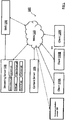
- Fig. 1 shows the individual elements that are required in communication.
- the streaming server 120 thus takes over the initialization of the application and lets it start in a virtual environment.
- the streaming server 120 has a game isolation module 140.
- An application-friendly environment is started in this, which on the one hand ensures that the application can run, but is also responsible for reproducing the control signals of the client 110A.
- the streaming server can start any number of instances of the same or different application.
- the limiting factor in this regard is the computing power of the GPU in graphic applications.
- a game DB 180 is assigned to each started application. This game DB 180 is responsible for storing relevant data for the application. However, in order to start an application, it must first be available to the game package manager 180 as a game package 170.
- the network module 150 of the streaming server 120 then takes over the encoding and packaging of the frames. Another task of the network module 150 is the handling of recovery requests from the client 110A. In order to undertake administrative interventions and evaluations, the evaluator Module 190 developed. This module is responsible for generating statistics.
- the client serves as a thin client for the transmission of audio / video signals and can typically be used on any platform.
- a streaming server 120 can have a one-to-many relationship, but a client can only establish communication with a specific streaming server 120.
- the number of clients per streaming server is typically not limited by the software, but rather by the corresponding hardware capacities of the GPU of the streaming server 120.
- Communication between streaming server 120 and client 110A is always initially established via session management server 130. This takes over the initial request from the client 110A to connect to the streaming server and searches for the optimal streaming server 120 for the client 110A.
- Several streaming servers can be in operation in parallel in a system. These do not always have to be in the same data center or country.
- the streaming server 120 takes over the direct communication with the client 110A.
- the content server 195 represents a further element. This server is responsible for the delivery of certain parts in the interactive layer of the client 110A. Among other things, it controls the display of advertising according to the application that is displayed on the thin client. The necessary information is made available to the content server 195 via the session management server 130.
- the communication takes place primarily via the WAN (Wide Area Network) 115. This includes various types of transmission and is not restricted to specific areas.
- WAN Wide Area Network
- Fig 2 shows the game package module 160, which is part of the streaming server 120.
- the game package module 160 is initially started for each new application and takes over six sub-areas for the application.
- Capture Encode Audio 210 is divided into the areas Capture 210A and Encode 210 B, responsible for tapping the audio signal.
- the capture encode video area 220 is divided into the same areas as the audio module 210.
- the port authentication module 230 takes over the port authentication and corresponds to the provision of the connection between the game stream server 120 and the client 110A.
- the Control Relay 240 is responsible for XXX.
- the task of the Network Relay 250 is to send the corresponding packets and to manage incoming packets.
- the Recovery module 260 is responsible for responding to the corresponding recovery requests from client 110A.
- Fig 3 deals with the session management server 130.
- This has the task of authentication 310 and, with the aid of a downstream DB module 315, its task of storing or storing the data used for authentication.
- this DB module 315 is only optional.
- the possibility of external authentication remains unaffected.
- the Network 320 area is responsible for the communication between the WAN 115, streaming server 120, content server 195 and the corresponding clients.
- the session manager 330 is then largely responsible for managing the individual sessions and takes over the assignment of the clients to a corresponding streaming server.
- the evaluator module has a direct connection to the individual clients and collects relevant data for a later central evaluation.
- Fig. 4 shows the individual elements of the client.
- the entire client 110 was specially developed for the application and does not require any separate software. It consists of eight areas which are to be described as follows.
- Client session manager 410 communicates with streaming server 120 and the session management server and is initially responsible for the authentication and management of the client.
- Network Module 420 is responsible for establishing the connection and maintaining it. This module also takes care of sending and receiving various packets.
- the controller 430 takes over the delivery of the delivered frames and audio packets as a visual image in the client.
- Decode Render Video 440 and Decode Render Audio 450 receive the packets which were previously received by network module 420 and forwarded by controller 430.
- the elevator module 460 is responsible for collecting statistical data and transmits them to the session management server.
- the Session Management Server can also optimize the connection accordingly. This creates a feedback that makes this module very important.
- the recovery module 470 evaluates incoming data packets. If a data packet is faulty, the module selects a recovery strategy and, if necessary, requests a new packet from the streaming server or takes other measures to compensate for the loss without losing latency or quality.
- the client UI contains the interactive layer and content of the content server 195. There, the input of the user is intercepted and sent to the streaming server 120.
- Fig 5 shows the structure of the content server. He is responsible for content administration 510 and content streaming 520.
- the content administration is used to preset the e.g. Advertisement to be displayed within the interactive layer in the client 110. Both the frequency and the content are to be specified via the content administration 510.
- the Content Streaming 520 module takes over the playing of the content and serves as the central interface for all clients.
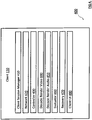
- Fig. 6 represents the Interactive Layer 600 as it is part of the Client UI 480. A basic distinction is made between three different areas.
- the application layer 610 reproduces the received frames and is responsible for the visual representation of the application.
- the UI Layer 620 is located above the Application Layer 610. This layer can be configured individually, but is fundamentally responsible for the user's input in the client.
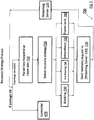
- Fig 7 shows the sequence of the recovery strategy of the client 110 in module 470. As soon as a “package loss” has been determined 710 on the client side, the recovery module will select 720 a corresponding solution based on firmly defined criteria.
- the recovery request 770 is sent to the streaming server 120.
- the streaming server sends a new package accordingly and the task of the recovery module 470 has been fulfilled.
- telecommunications element 800 and its functions are shown schematically. Such a connection element can be assigned to each client, which is not shown in the drawing for reasons of clarity. Each telecommunication element 800 is accordingly able to carry out a streaming process and a gaming install process.
- connection device 900 designed as a connection tester first tests the application software to be loaded for the relevant streaming client, for example 110A, while at the same time, in our case, a game takes place via a gaming install process. It can of course also be a different application.
- a download device designed as a downloader 1000 downloads the software to the terminal, while an installation device 2000 designed as an installer carries out the installation at the same time and an update device designed as an updater 3000 always provides the latest data, i.e. carries out a continuous update process.
- Fig. 8 Apparent device designed as a telecommunication element 800 thus enables applications to be played before the actual downloading of data, their installation and the updating takes place.
- the telecommunication element 800 thus enables, so to speak, a small application (thin client) on the terminal. This starts the appropriate processes and allows the application to be streamed while the application is being installed.
- the telecommunication element 800 thus enables two separate processes, namely the streaming process and the user install process, for example a gaming install process.
- the streaming process in the telecommunications element 800 consists of two modules: Connection Tester: Responsible for testing the connection based on three criteria: latency, bandwidth and network. If the connection does not meet the requirements, the streaming client will not start.
- Connection Tester responsible for testing the connection based on three criteria: latency, bandwidth and network. If the connection does not meet the requirements, the streaming client will not start.
- the threshold values for the three criteria can be set flexibly and adapted to the application.
- Streaming client If the connection tester is successful, the streaming client is started. With the help of streaming technology, this streams the application directly into a local window of the end device, for example into the PC window of a player.
- the user can play the application locally when the telecommunications element 800 is restarted.
Landscapes
- Engineering & Computer Science (AREA)
- Multimedia (AREA)
- Signal Processing (AREA)
- Computer Networks & Wireless Communication (AREA)
- Library & Information Science (AREA)
- Business, Economics & Management (AREA)
- Marketing (AREA)
- Information Transfer Between Computers (AREA)
Claims (3)
- Procédé de streaming et de lecture d'applications via un système de télécommunication précis, au cours duquel un ou plusieurs serveurs de streaming [120], susceptibles d'être combinés entre eux par télécommunication interposée, exécutent l'application concernée et entrent en liaison avec le terminal de télécommunication [110] respectif en tenant compte du nombre de sauts, de la latence, de la largeur de bande et du fournisseur de services Internet (ISP), sachant que le terminal de télécommunication [110] concerné appelle d'un serveur de streaming [120] l'application exigée, lequel serveur fournit la puissance de calcul requise pour générer le flux vidéo et le codage de l'application concernée, pour permettre la lecture des applications dans des environnements système étrangers à l'application, environnements qui se différencient soit par des composantes matérielles ou logicielles différentes, sachant que le serveur de streaming [120] assume la gestion des différentes applications ainsi que le rendu/le codage de l'application, et prend en charge ses signaux audio et vidéo, sachant que les données sont transmises au terminal de télécommunication respectif - appareil de téléphonie mobile, tablette, ordinateur portable, PC, téléviseur - et que la transmission a lieu via un protocole h.264 modifié et que le WAN [115] sert de moyen de transmission des paquets audio-vidéo via UDP/TCP et que l'ensemble de la puissance de calcul est pris en charge par le serveur de streaming [120] concerné, sachant que les données réunies en paquets ne sont décodées que dans le terminal de télécommunication [110], sachant qu'une technologie de streaming non asservie à une plate-forme et qui n'est programmée qu'une fois est portable vers des terminaux de télécommunication quelconques et que le streaming des différentes applications, des jeux vidéo par exemple, a lieu via WAN, de sorte quea) une communication est établie avec le serveur de session [130] au moyen du terminal de télécommunication [110] ;b) une session précise a lieu pour un preneur final précis, pour le serveur de streaming [120] - le plus proche du terminal de télécommunication [110] - de l'application concernée;c) des informations de session sont communiquées par le serveur de session [130] concerné au terminal de télécommunication [110] et au serveur de streaming [120];d) une liaison directe est établie entre le terminal de télécommunication [110] et le serveur de streaming [120] de l'application concernée, un jeu vidéo par exemple;e) lors de l'établissement d'une liaison directe entre le terminal de télécommunication [110] et le serveur de streaming [120] concerné, les étapes suivantes sont entamées:sachant qu'en cas de perte de paquets [700] pendant la transmission de données sur le terminal de télécommunication, d'un serveur de streaming [120] au terminal de télécommunication [110], les étapes suivantes sont exécutées à l'aide de plusieurs procédures de correction d'erreurs :i. Enregistrement des données audio-vidéo de l'application en cours d'exécution, via le serveur de streaming [120] concerné sur lequel le jeu se déroule;ii. Compression des données audio-vidéo par un matériel codeur;iii. Transmission des données audio-vidéo comprimées via un WAN [115];iv. Réception des données audio-vidéo du côté du terminal de télécommunication [110];v. Décompression des données audio-vidéo par un décodeur ;vi. Visualisation des données audio-vidéo sur le terminal de télécommunication [110] ;vii. Enregistrement des saisies de l'utilisateur du terminal de télécommunication [110], d'un joueur par exemple, sur le terminal de télécommunication [110], au moyen d'un Thin-Layer [610] qui se superpose dynamiquement au-dessus du champ d'affichage.viii. Transmission retour des saisies vers le serveur de streaming [120] concerné du jeu, etix. Exécution des saisies transmises sur le serveur de streaming [120],a) Une stratégie de restauration est appelée sur le terminal de télécommunication [100], pour préserver l'expérience de jeu ;b) La stratégie de restauration appropriée est sélectionnée etc) La demande de restauration est renvoyée au serveur concerné de streaming [120] de l'application, un jeu par exemple,sachant que ce processus peut également être initialisé par le serveur de streaming [120], sachant que l'exécution d'applications sur un ou sur plusieurs terminaux locaux a lieu en flux indépendamment du téléchargement sur le terminal local, caractérisé en ce qu'est prévu un élément de télécommunication supplémentaire qui surveille le processus de streaming avec un dispositif testeur de liaison et qui surveille le client de streaming concerné, et en ce que pour le processus d'installation sont prévus un dispositif de téléchargement, un dispositif d'installation et un dispositif d'actualisation, sachant que le dispositif testeur de liaison fonctionne comme suit:
le dispositif testeur de liaison a la responsabilité d'évaluer la liaison entre le client local et le serveur de streaming, sachant que l'évaluation a lieu sur la base de quatre critères : la largeur de bande, la latence, les sauts, la connexion, ces termes ayant respectivement les significations suivantes:Largeur de bande: Un fichier est téléchargé depuis le serveur de streaming, sachant que la largeur de bande est mesurée pendant le chargement des fichiers; Latence: Ce faisant est mesuré le temps que met un signal pour parvenir du serveur de streaming au client;Sauts : Ce faisant est mesuré le nombre de nœuds de liaison, un ou plusieurs, par lequel ou lesquels le signal doit transiter avant de parvenir au client;Connexion : Ce faisant est pertinente la connexion référée à la perte de paquets, sachant que la perte de paquets avec les médias de transport optiques est inférieure à celle des câbles en cuivre;sachant que les valeurs seuils sont configurées individuellement et adaptées aux exigences de l'application, sachant que dans le cas où la liaison n'est pas suffisante, le client du streaming n'est pas démarré et le jeu ou similaire ne fait l'objet que d'un chargement/d'une installation/d'une actualisation;
et en ce que le client du streaming est démarré et que la liaison avec le serveur de streaming est établie et que ce serveur diffuse les autres directement sur le client local, sachant que le client du streaming est actif aussi longtemps que l'application n'est pas installée sur le terminal de manière à pouvoir être exécutée, sachant que le déroulement entre le serveur de streaming et le client se déroule comme suit: lors de l'établissement d'une liaison directe entre le terminal de télécommunication et le serveur de streaming concerné, les étapes suivantes sont entamées:i. Enregistrement des données audio-vidéo de l'application en cours d'exécution, un jeu par exemple, via le serveur de streaming concerné sur lequel le jeu se déroule;ii. Compression des données audio-vidéo par un matériel codeur;iii. Transmission des données audio-vidéo comprimées via un WAN;iv. Réception des données audio-vidéo du côté du terminal de télécommunication;v. Décompression des données audio-vidéo par un décodeur;vi. Visualisation des données audio-vidéo sur le terminal de télécommunication;vii. Enregistrement des saisies de l'utilisateur du terminal de télécommunication, d'un joueur par exemple, sur le terminal de télécommunication;viii. Transmission retour des saisies vers le serveur de streaming concerné du jeu, etix. Exécution des saisies transmises sur le serveur de streaming. - Procédé selon la revendication 1, caractérisé en ce que l'application est diffusée dans son intégralité sur le terminal local, parallèlement sans perte de temps et en même temps, tandis que l'application diffusée est localement téléchargée, installée, continuellement actualisée et démarrée sur le terminal local, et que le flux est coupé dès que les fichiers de l'application ont été placés à disposition dans leur intégralité sur le terminal local sur lequel les fichiers d'application sont continuellement actualisés.
- Utilisation d'un procédé selon la revendication 1 ou 2, comprenant une technologie de streaming non asservie à une plate-forme, qui est programmée une fois et est portable sur des terminaux de télécommunication [110] quelconques, procédé au cours duquel le streaming des différentes applications, des jeux vidéos par exemple, a lieu via un WAN, caractérisée en ce quea) une communication est établie avec le serveur de session [130] au moyen du terminal de télécommunication [110];b) une session précise est exécutée pour un preneur final précis, pour le serveur de streaming [120] - le plus proche du terminal de télécommunication [110] - de l'application concernée, un jeu par exemple;c) des informations de session sont communiquées par le serveur de session concerné [130] au terminal de télécommunication [110] et au serveur de streaming [120];d) une liaison directe est établie entre le terminal de télécommunication [110] et le serveur de streaming [120] de l'application concernée, un jeu vidéo par exemple;e) lors de l'établissement d'une liaison directe entre le terminal de télécommunication [110] et le serveur de streaming [120] concerné, les étapes suivantes sont entamées:sachant qu'en cas de perte de paquets [700] pendant la transmission de données sur le terminal de télécommunication, d'un serveur de streaming [120] au terminal de télécommunication [110], les étapes suivantes sont exécutées à l'aide de plusieurs procédures de correction d'erreurs:i. Enregistrement des données audio-vidéo de l'application en cours d'exécution, un jeu par exemple, via le serveur de streaming [120] concerné sur lequel le jeu se déroule;ii. Compression des données audio-vidéo par un matériel codeur;iii. Transmission des données audio-vidéo comprimées via un WAN [115];iv. Réception des données audio-vidéo du côté du terminal de télécommunication [110];v. Décompression des données audio-vidéo par un décodeur;vi. Visualisation des données audio-vidéo sur le terminal de télécommunication [110];vii. Enregistrement des saisies de l'utilisateur du terminal de télécommunication [110], d'un joueur par exemple, sur le terminal de télécommunication [110], au moyen d'un Thin-Layer [610] qui se superpose dynamiquement au-dessus du champ d'affichage ;.viii. Transmission retour des saisies vers le serveur de streaming [120] concerné du jeu etix. Exécution des saisies transmises sur le serveur de streaming [120],a) Des stratégies de restauration sont appelées pour préserver une expérience des jeux sans accroc;b) La stratégie de restauration est sélectionnée, etc) La demande de restauration est renvoyée au serveur de streaming [120] concerné de l'application, du jeu par exemple,sachant que ce processus peut aussi être initialisé par le serveur de streaming, sachant qu'au réseau de télécommunication est attribué au moins un organe de télécommunication supplémentaire, pour chaque client, organe qui comprend un processus de streaming avec un testeur de liaison et au moins un client de streaming pour l'installation des fichiers, sachant que pour l'application est prévu un élément pour télécharger, installer et actualiser.
Applications Claiming Priority (1)
| Application Number | Priority Date | Filing Date | Title |
|---|---|---|---|
| PCT/EP2016/001491 WO2018041324A1 (fr) | 2016-09-03 | 2016-09-03 | Procédé de diffusion en continu et de reproduction d'applications par le biais d'un système de télécommunication déterminé, réseau de télécommunication permettant de mettre en œuvre ce procédé et utilisation d'un réseau de télécommunication de ce type |
Publications (2)
| Publication Number | Publication Date |
|---|---|
| EP3507958A1 EP3507958A1 (fr) | 2019-07-10 |
| EP3507958B1 true EP3507958B1 (fr) | 2020-08-12 |
Family
ID=56979503
Family Applications (1)
| Application Number | Title | Priority Date | Filing Date |
|---|---|---|---|
| EP16769860.4A Active EP3507958B1 (fr) | 2016-09-03 | 2016-09-03 | Procédé de diffusion en continu et de reproduction d'applications par le biais d'un système de télécommunication déterminé et utilisation |
Country Status (3)
| Country | Link |
|---|---|
| US (1) | US11533532B2 (fr) |
| EP (1) | EP3507958B1 (fr) |
| WO (1) | WO2018041324A1 (fr) |
Family Cites Families (17)
| Publication number | Priority date | Publication date | Assignee | Title |
|---|---|---|---|---|
| US8032886B2 (en) * | 2000-11-22 | 2011-10-04 | Microsoft Corporation | Tracking asynchronous execution of program using hierarchical structure of objects |
| SE0402876D0 (sv) * | 2004-11-25 | 2004-11-25 | Ericsson Telefon Ab L M | TV-like standards-compliant unicast streaming over IP |
| EP2232379A4 (fr) | 2007-12-05 | 2011-05-25 | Onlive Inc | Appareil client pour flux vidéo interactif continus |
| US11065552B2 (en) * | 2007-12-05 | 2021-07-20 | Sony Interactive Entertainment LLC | System for streaming databases serving real-time applications used through streaming interactive video |
| US8613673B2 (en) | 2008-12-15 | 2013-12-24 | Sony Computer Entertainment America Llc | Intelligent game loading |
| US9266017B1 (en) * | 2008-12-03 | 2016-02-23 | Electronic Arts Inc. | Virtual playbook with user controls |
| GB2485687B (en) | 2009-06-01 | 2017-11-01 | Sony Computer Entertainment America Llc | Game execution environments |
| US8407756B2 (en) * | 2009-09-22 | 2013-03-26 | At&T Intellectual Property I, L.P. | Systems and methods for remote web query and image selection exchange to video screen |
| US10264029B2 (en) * | 2009-10-30 | 2019-04-16 | Time Warner Cable Enterprises Llc | Methods and apparatus for packetized content delivery over a content delivery network |
| CN103442774B (zh) | 2010-09-13 | 2016-08-10 | 索尼电脑娱乐美国公司 | 双模式程序执行和加载 |
| US9674249B1 (en) * | 2013-03-11 | 2017-06-06 | DataTorrent, Inc. | Distributed streaming platform for real-time applications |
| JP6196668B2 (ja) | 2013-05-23 | 2017-09-13 | 株式会社スクウェア・エニックス・ホールディングス | クラウド型ゲームシステムにおける描画リソースの動的割り当て |
| JP6244127B2 (ja) | 2013-07-10 | 2017-12-06 | 株式会社ソニー・インタラクティブエンタテインメント | コンテンツ提供方法、コンテンツ提供サーバ、およびコンテンツ提供システム |
| WO2015060835A1 (fr) * | 2013-10-23 | 2015-04-30 | Empire Technology Development Llc | Rendu graphique intermédiaire |
| KR102287510B1 (ko) * | 2014-04-10 | 2021-08-06 | 엘지전자 주식회사 | 서버, 영상제공장치, 및 이를 포함하는 영상 제공 시스템 |
| US9900643B2 (en) * | 2014-10-10 | 2018-02-20 | At&T Intellectual Property I, L.P. | Method and apparatus for transmitting media content |
| CN108136259B (zh) * | 2015-07-24 | 2021-08-20 | 格瑞拉伯克斯有限公司 | 用于流式传输和用于再现应用的方法和电信网络 |
-
2016
- 2016-09-03 EP EP16769860.4A patent/EP3507958B1/fr active Active
- 2016-09-03 WO PCT/EP2016/001491 patent/WO2018041324A1/fr not_active Ceased
- 2016-09-03 US US16/329,927 patent/US11533532B2/en active Active
Non-Patent Citations (1)
| Title |
|---|
| None * |
Also Published As
| Publication number | Publication date |
|---|---|
| WO2018041324A1 (fr) | 2018-03-08 |
| US20190253753A1 (en) | 2019-08-15 |
| US11533532B2 (en) | 2022-12-20 |
| EP3507958A1 (fr) | 2019-07-10 |
Similar Documents
| Publication | Publication Date | Title |
|---|---|---|
| EP3325116A1 (fr) | Procédé et réseau de télécommunication pour la lecture en continu et la restitution d'applications | |
| DE102013114633B4 (de) | Netzwerk-adaptive Latenzzeit-Verringerung durch Framerate-Steuerung | |
| DE60036295T2 (de) | Schnittstelle auf hoher Ebene für dienstqualitätbasierte mobile Multimedia-Anwendungen | |
| DE60202763T2 (de) | Verfahren, Rechnerprogramm, Kundenendgerät und Netzwerk für die effiziente Benutzung von Netzwerkmittel durch die "just-in-time" Anpassung des Dienstqualitätes basiert auf die Benutzung des Dienstes und das Verhalten des Benutzers | |
| DE69520362T2 (de) | System für telekommunikation | |
| DE102012013336B4 (de) | Aushandeln einer kontinuierlichen multi-stream-präsenz | |
| DE112013003289T5 (de) | Gerät, System und Verfahren für client-geregelte Sitzungspersistenz zwischen ein oder mehreren Clients und Servern eines Rechenzentrums | |
| EP1208671B1 (fr) | Systeme et procede destine au testage de la charge d'au moins un dispositif reposant sur un protocole internet (ip) | |
| DE102015103358B4 (de) | Bereitstellen und einsetzen von qualitätsindkatoren in konferenzenfür abschwächungsaktivitäten | |
| WO2013178270A1 (fr) | Accès de clients à un service de serveur par une architecture opc-ua | |
| DE112012002224T5 (de) | Qualität von VOIP-Sitzungen | |
| CN107948684A (zh) | 直播间视频播放控制方法、装置及服务器 | |
| DE102020107609A1 (de) | Virtualisierung von komplexen vernetzten eingebetteten Systemen | |
| EP3186971A1 (fr) | Procédé de commande d'une application multimédia, logiciel et dispositif | |
| CN113797526B (zh) | 一种数据处理方法、装置、设备以及介质 | |
| CN103067415B (zh) | 服务器及其软件升级方法、ip机顶盒及其软件升级方法 | |
| DE112012007196T5 (de) | Parametereinstellungssystem, Programmverwaltungsvorrichtung, und Informationsverarbeitungsvorrichtung | |
| EP2938047A1 (fr) | Procédé, dispositif, programme informatique, produit logiciel et support d'informations numérique de détermination et d'adaptation de données | |
| DE112010000751T5 (de) | Reprogrammierbarer Client, bei dem das Modell eines einheitlichen Bytecodes verwendet wird | |
| CN118337764A (zh) | 视频流处理方法及装置、非易失性存储介质、电子设备 | |
| EP3507958B1 (fr) | Procédé de diffusion en continu et de reproduction d'applications par le biais d'un système de télécommunication déterminé et utilisation | |
| WO2025092375A1 (fr) | Procédé et appareil destinés au traitement de données d'interaction | |
| CN101778140A (zh) | 一种电子广告插播系统与方法及服务器、终端 | |
| WO2017108067A1 (fr) | Procédé pour lire des applications depuis un nuage et réseau de télécommunication pour la lecture en continu et la restitution d'applications (apps) par l'intermédiaire d'un système de télécommunication déterminé et utilisation d'un réseau de télécommunication pour la lecture en continu et la restitution d'application (apps) | |
| DE102014000422B4 (de) | Verfahren zur Übertragung von Inhalten als Datenstrom |
Legal Events
| Date | Code | Title | Description |
|---|---|---|---|
| STAA | Information on the status of an ep patent application or granted ep patent |
Free format text: STATUS: THE INTERNATIONAL PUBLICATION HAS BEEN MADE |
|
| PUAI | Public reference made under article 153(3) epc to a published international application that has entered the european phase |
Free format text: ORIGINAL CODE: 0009012 |
|
| STAA | Information on the status of an ep patent application or granted ep patent |
Free format text: STATUS: REQUEST FOR EXAMINATION WAS MADE |
|
| 17P | Request for examination filed |
Effective date: 20190314 |
|
| AK | Designated contracting states |
Kind code of ref document: A1 Designated state(s): AL AT BE BG CH CY CZ DE DK EE ES FI FR GB GR HR HU IE IS IT LI LT LU LV MC MK MT NL NO PL PT RO RS SE SI SK SM TR |
|
| AX | Request for extension of the european patent |
Extension state: BA ME |
|
| RIN1 | Information on inventor provided before grant (corrected) |
Inventor name: PETER, FREDERIK Inventor name: KHALIL, SHEIKH Inventor name: WESTERMANN, REMCO |
|
| DAV | Request for validation of the european patent (deleted) | ||
| DAX | Request for extension of the european patent (deleted) | ||
| GRAP | Despatch of communication of intention to grant a patent |
Free format text: ORIGINAL CODE: EPIDOSNIGR1 |
|
| STAA | Information on the status of an ep patent application or granted ep patent |
Free format text: STATUS: GRANT OF PATENT IS INTENDED |
|
| INTG | Intention to grant announced |
Effective date: 20200327 |
|
| GRAJ | Information related to disapproval of communication of intention to grant by the applicant or resumption of examination proceedings by the epo deleted |
Free format text: ORIGINAL CODE: EPIDOSDIGR1 |
|
| STAA | Information on the status of an ep patent application or granted ep patent |
Free format text: STATUS: REQUEST FOR EXAMINATION WAS MADE |
|
| STAA | Information on the status of an ep patent application or granted ep patent |
Free format text: STATUS: GRANT OF PATENT IS INTENDED |
|
| GRAS | Grant fee paid |
Free format text: ORIGINAL CODE: EPIDOSNIGR3 |
|
| GRAA | (expected) grant |
Free format text: ORIGINAL CODE: 0009210 |
|
| STAA | Information on the status of an ep patent application or granted ep patent |
Free format text: STATUS: THE PATENT HAS BEEN GRANTED |
|
| INTC | Intention to grant announced (deleted) | ||
| AK | Designated contracting states |
Kind code of ref document: B1 Designated state(s): AL AT BE BG CH CY CZ DE DK EE ES FI FR GB GR HR HU IE IS IT LI LT LU LV MC MK MT NL NO PL PT RO RS SE SI SK SM TR |
|
| REG | Reference to a national code |
Ref country code: CH Ref legal event code: EP |
|
| REG | Reference to a national code |
Ref country code: DE Ref legal event code: R096 Ref document number: 502016010845 Country of ref document: DE |
|
| REG | Reference to a national code |
Ref country code: IE Ref legal event code: FG4D Free format text: LANGUAGE OF EP DOCUMENT: GERMAN |
|
| REG | Reference to a national code |
Ref country code: AT Ref legal event code: REF Ref document number: 1302684 Country of ref document: AT Kind code of ref document: T Effective date: 20200915 |
|
| REG | Reference to a national code |
Ref country code: LT Ref legal event code: MG4D |
|
| REG | Reference to a national code |
Ref country code: NL Ref legal event code: MP Effective date: 20200812 |
|
| PG25 | Lapsed in a contracting state [announced via postgrant information from national office to epo] |
Ref country code: FI Free format text: LAPSE BECAUSE OF FAILURE TO SUBMIT A TRANSLATION OF THE DESCRIPTION OR TO PAY THE FEE WITHIN THE PRESCRIBED TIME-LIMIT Effective date: 20200812 Ref country code: GR Free format text: LAPSE BECAUSE OF FAILURE TO SUBMIT A TRANSLATION OF THE DESCRIPTION OR TO PAY THE FEE WITHIN THE PRESCRIBED TIME-LIMIT Effective date: 20201113 Ref country code: NO Free format text: LAPSE BECAUSE OF FAILURE TO SUBMIT A TRANSLATION OF THE DESCRIPTION OR TO PAY THE FEE WITHIN THE PRESCRIBED TIME-LIMIT Effective date: 20201112 Ref country code: HR Free format text: LAPSE BECAUSE OF FAILURE TO SUBMIT A TRANSLATION OF THE DESCRIPTION OR TO PAY THE FEE WITHIN THE PRESCRIBED TIME-LIMIT Effective date: 20200812 Ref country code: LT Free format text: LAPSE BECAUSE OF FAILURE TO SUBMIT A TRANSLATION OF THE DESCRIPTION OR TO PAY THE FEE WITHIN THE PRESCRIBED TIME-LIMIT Effective date: 20200812 Ref country code: SE Free format text: LAPSE BECAUSE OF FAILURE TO SUBMIT A TRANSLATION OF THE DESCRIPTION OR TO PAY THE FEE WITHIN THE PRESCRIBED TIME-LIMIT Effective date: 20200812 Ref country code: BG Free format text: LAPSE BECAUSE OF FAILURE TO SUBMIT A TRANSLATION OF THE DESCRIPTION OR TO PAY THE FEE WITHIN THE PRESCRIBED TIME-LIMIT Effective date: 20201112 |
|
| PG25 | Lapsed in a contracting state [announced via postgrant information from national office to epo] |
Ref country code: LV Free format text: LAPSE BECAUSE OF FAILURE TO SUBMIT A TRANSLATION OF THE DESCRIPTION OR TO PAY THE FEE WITHIN THE PRESCRIBED TIME-LIMIT Effective date: 20200812 Ref country code: NL Free format text: LAPSE BECAUSE OF FAILURE TO SUBMIT A TRANSLATION OF THE DESCRIPTION OR TO PAY THE FEE WITHIN THE PRESCRIBED TIME-LIMIT Effective date: 20200812 Ref country code: PL Free format text: LAPSE BECAUSE OF FAILURE TO SUBMIT A TRANSLATION OF THE DESCRIPTION OR TO PAY THE FEE WITHIN THE PRESCRIBED TIME-LIMIT Effective date: 20200812 Ref country code: RS Free format text: LAPSE BECAUSE OF FAILURE TO SUBMIT A TRANSLATION OF THE DESCRIPTION OR TO PAY THE FEE WITHIN THE PRESCRIBED TIME-LIMIT Effective date: 20200812 Ref country code: IS Free format text: LAPSE BECAUSE OF FAILURE TO SUBMIT A TRANSLATION OF THE DESCRIPTION OR TO PAY THE FEE WITHIN THE PRESCRIBED TIME-LIMIT Effective date: 20201212 |
|
| PG25 | Lapsed in a contracting state [announced via postgrant information from national office to epo] |
Ref country code: RO Free format text: LAPSE BECAUSE OF FAILURE TO SUBMIT A TRANSLATION OF THE DESCRIPTION OR TO PAY THE FEE WITHIN THE PRESCRIBED TIME-LIMIT Effective date: 20200812 Ref country code: CZ Free format text: LAPSE BECAUSE OF FAILURE TO SUBMIT A TRANSLATION OF THE DESCRIPTION OR TO PAY THE FEE WITHIN THE PRESCRIBED TIME-LIMIT Effective date: 20200812 Ref country code: DK Free format text: LAPSE BECAUSE OF FAILURE TO SUBMIT A TRANSLATION OF THE DESCRIPTION OR TO PAY THE FEE WITHIN THE PRESCRIBED TIME-LIMIT Effective date: 20200812 Ref country code: EE Free format text: LAPSE BECAUSE OF FAILURE TO SUBMIT A TRANSLATION OF THE DESCRIPTION OR TO PAY THE FEE WITHIN THE PRESCRIBED TIME-LIMIT Effective date: 20200812 Ref country code: SM Free format text: LAPSE BECAUSE OF FAILURE TO SUBMIT A TRANSLATION OF THE DESCRIPTION OR TO PAY THE FEE WITHIN THE PRESCRIBED TIME-LIMIT Effective date: 20200812 |
|
| REG | Reference to a national code |
Ref country code: CH Ref legal event code: PL |
|
| REG | Reference to a national code |
Ref country code: DE Ref legal event code: R097 Ref document number: 502016010845 Country of ref document: DE |
|
| PG25 | Lapsed in a contracting state [announced via postgrant information from national office to epo] |
Ref country code: AL Free format text: LAPSE BECAUSE OF FAILURE TO SUBMIT A TRANSLATION OF THE DESCRIPTION OR TO PAY THE FEE WITHIN THE PRESCRIBED TIME-LIMIT Effective date: 20200812 Ref country code: ES Free format text: LAPSE BECAUSE OF FAILURE TO SUBMIT A TRANSLATION OF THE DESCRIPTION OR TO PAY THE FEE WITHIN THE PRESCRIBED TIME-LIMIT Effective date: 20200812 Ref country code: MC Free format text: LAPSE BECAUSE OF FAILURE TO SUBMIT A TRANSLATION OF THE DESCRIPTION OR TO PAY THE FEE WITHIN THE PRESCRIBED TIME-LIMIT Effective date: 20200812 |
|
| PLBE | No opposition filed within time limit |
Free format text: ORIGINAL CODE: 0009261 |
|
| REG | Reference to a national code |
Ref country code: BE Ref legal event code: MM Effective date: 20200930 |
|
| STAA | Information on the status of an ep patent application or granted ep patent |
Free format text: STATUS: NO OPPOSITION FILED WITHIN TIME LIMIT |
|
| PG25 | Lapsed in a contracting state [announced via postgrant information from national office to epo] |
Ref country code: SK Free format text: LAPSE BECAUSE OF FAILURE TO SUBMIT A TRANSLATION OF THE DESCRIPTION OR TO PAY THE FEE WITHIN THE PRESCRIBED TIME-LIMIT Effective date: 20200812 Ref country code: LU Free format text: LAPSE BECAUSE OF NON-PAYMENT OF DUE FEES Effective date: 20200903 |
|
| 26N | No opposition filed |
Effective date: 20210514 |
|
| PG25 | Lapsed in a contracting state [announced via postgrant information from national office to epo] |
Ref country code: IT Free format text: LAPSE BECAUSE OF FAILURE TO SUBMIT A TRANSLATION OF THE DESCRIPTION OR TO PAY THE FEE WITHIN THE PRESCRIBED TIME-LIMIT Effective date: 20200812 |
|
| PG25 | Lapsed in a contracting state [announced via postgrant information from national office to epo] |
Ref country code: BE Free format text: LAPSE BECAUSE OF NON-PAYMENT OF DUE FEES Effective date: 20200930 Ref country code: CH Free format text: LAPSE BECAUSE OF NON-PAYMENT OF DUE FEES Effective date: 20200930 Ref country code: SI Free format text: LAPSE BECAUSE OF FAILURE TO SUBMIT A TRANSLATION OF THE DESCRIPTION OR TO PAY THE FEE WITHIN THE PRESCRIBED TIME-LIMIT Effective date: 20200812 Ref country code: LI Free format text: LAPSE BECAUSE OF NON-PAYMENT OF DUE FEES Effective date: 20200930 Ref country code: IE Free format text: LAPSE BECAUSE OF NON-PAYMENT OF DUE FEES Effective date: 20200903 |
|
| REG | Reference to a national code |
Ref country code: DE Ref legal event code: R079 Ref document number: 502016010845 Country of ref document: DE Free format text: PREVIOUS MAIN CLASS: H04L0029060000 Ipc: H04L0065000000 |
|
| PG25 | Lapsed in a contracting state [announced via postgrant information from national office to epo] |
Ref country code: TR Free format text: LAPSE BECAUSE OF FAILURE TO SUBMIT A TRANSLATION OF THE DESCRIPTION OR TO PAY THE FEE WITHIN THE PRESCRIBED TIME-LIMIT Effective date: 20200812 Ref country code: MT Free format text: LAPSE BECAUSE OF FAILURE TO SUBMIT A TRANSLATION OF THE DESCRIPTION OR TO PAY THE FEE WITHIN THE PRESCRIBED TIME-LIMIT Effective date: 20200812 Ref country code: CY Free format text: LAPSE BECAUSE OF FAILURE TO SUBMIT A TRANSLATION OF THE DESCRIPTION OR TO PAY THE FEE WITHIN THE PRESCRIBED TIME-LIMIT Effective date: 20200812 |
|
| PG25 | Lapsed in a contracting state [announced via postgrant information from national office to epo] |
Ref country code: MK Free format text: LAPSE BECAUSE OF FAILURE TO SUBMIT A TRANSLATION OF THE DESCRIPTION OR TO PAY THE FEE WITHIN THE PRESCRIBED TIME-LIMIT Effective date: 20200812 |
|
| PG25 | Lapsed in a contracting state [announced via postgrant information from national office to epo] |
Ref country code: PT Free format text: LAPSE BECAUSE OF FAILURE TO SUBMIT A TRANSLATION OF THE DESCRIPTION OR TO PAY THE FEE WITHIN THE PRESCRIBED TIME-LIMIT Effective date: 20200812 |
|
| REG | Reference to a national code |
Ref country code: AT Ref legal event code: MM01 Ref document number: 1302684 Country of ref document: AT Kind code of ref document: T Effective date: 20210903 |
|
| PG25 | Lapsed in a contracting state [announced via postgrant information from national office to epo] |
Ref country code: AT Free format text: LAPSE BECAUSE OF NON-PAYMENT OF DUE FEES Effective date: 20210903 |
|
| PGFP | Annual fee paid to national office [announced via postgrant information from national office to epo] |
Ref country code: FR Payment date: 20230911 Year of fee payment: 8 |
|
| REG | Reference to a national code |
Ref country code: DE Ref legal event code: R082 Ref document number: 502016010845 Country of ref document: DE Representative=s name: MAIWALD GMBH, DE |
|
| PG25 | Lapsed in a contracting state [announced via postgrant information from national office to epo] |
Ref country code: FR Free format text: LAPSE BECAUSE OF NON-PAYMENT OF DUE FEES Effective date: 20240930 |
|
| PGFP | Annual fee paid to national office [announced via postgrant information from national office to epo] |
Ref country code: DE Payment date: 20250716 Year of fee payment: 10 |
|
| PGFP | Annual fee paid to national office [announced via postgrant information from national office to epo] |
Ref country code: GB Payment date: 20250710 Year of fee payment: 10 |