EP3510043B1 - Utilisation de mcm7 pour obtenir des souches de levure résistantes à l'acide acétique - Google Patents
Utilisation de mcm7 pour obtenir des souches de levure résistantes à l'acide acétique Download PDFInfo
- Publication number
- EP3510043B1 EP3510043B1 EP17771808.7A EP17771808A EP3510043B1 EP 3510043 B1 EP3510043 B1 EP 3510043B1 EP 17771808 A EP17771808 A EP 17771808A EP 3510043 B1 EP3510043 B1 EP 3510043B1
- Authority
- EP
- European Patent Office
- Prior art keywords
- strain
- acetic acid
- segregants
- seq
- strains
- Prior art date
- Legal status (The legal status is an assumption and is not a legal conclusion. Google has not performed a legal analysis and makes no representation as to the accuracy of the status listed.)
- Active
Links
Images


Classifications
-
- C—CHEMISTRY; METALLURGY
- C12—BIOCHEMISTRY; BEER; SPIRITS; WINE; VINEGAR; MICROBIOLOGY; ENZYMOLOGY; MUTATION OR GENETIC ENGINEERING
- C12N—MICROORGANISMS OR ENZYMES; COMPOSITIONS THEREOF; PROPAGATING, PRESERVING, OR MAINTAINING MICROORGANISMS; MUTATION OR GENETIC ENGINEERING; CULTURE MEDIA
- C12N1/00—Microorganisms; Compositions thereof; Processes of propagating, maintaining or preserving microorganisms or compositions thereof; Processes of preparing or isolating a composition containing a microorganism; Culture media therefor
- C12N1/14—Fungi; Culture media therefor
- C12N1/16—Yeasts; Culture media therefor
- C12N1/18—Baker's yeast; Brewer's yeast
-
- C—CHEMISTRY; METALLURGY
- C12—BIOCHEMISTRY; BEER; SPIRITS; WINE; VINEGAR; MICROBIOLOGY; ENZYMOLOGY; MUTATION OR GENETIC ENGINEERING
- C12P—FERMENTATION OR ENZYME-USING PROCESSES TO SYNTHESISE A DESIRED CHEMICAL COMPOUND OR COMPOSITION OR TO SEPARATE OPTICAL ISOMERS FROM A RACEMIC MIXTURE
- C12P7/00—Preparation of oxygen-containing organic compounds
- C12P7/02—Preparation of oxygen-containing organic compounds containing a hydroxy group
- C12P7/04—Preparation of oxygen-containing organic compounds containing a hydroxy group acyclic
- C12P7/06—Ethanol, i.e. non-beverage
-
- C—CHEMISTRY; METALLURGY
- C07—ORGANIC CHEMISTRY
- C07K—PEPTIDES
- C07K14/00—Peptides having more than 20 amino acids; Gastrins; Somatostatins; Melanotropins; Derivatives thereof
- C07K14/37—Peptides having more than 20 amino acids; Gastrins; Somatostatins; Melanotropins; Derivatives thereof from fungi
- C07K14/39—Peptides having more than 20 amino acids; Gastrins; Somatostatins; Melanotropins; Derivatives thereof from fungi from yeasts
- C07K14/395—Peptides having more than 20 amino acids; Gastrins; Somatostatins; Melanotropins; Derivatives thereof from fungi from yeasts from Saccharomyces
-
- C—CHEMISTRY; METALLURGY
- C12—BIOCHEMISTRY; BEER; SPIRITS; WINE; VINEGAR; MICROBIOLOGY; ENZYMOLOGY; MUTATION OR GENETIC ENGINEERING
- C12N—MICROORGANISMS OR ENZYMES; COMPOSITIONS THEREOF; PROPAGATING, PRESERVING, OR MAINTAINING MICROORGANISMS; MUTATION OR GENETIC ENGINEERING; CULTURE MEDIA
- C12N15/00—Mutation or genetic engineering; DNA or RNA concerning genetic engineering, vectors, e.g. plasmids, or their isolation, preparation or purification; Use of hosts therefor
- C12N15/09—Recombinant DNA-technology
- C12N15/63—Introduction of foreign genetic material using vectors; Vectors; Use of hosts therefor; Regulation of expression
- C12N15/79—Vectors or expression systems specially adapted for eukaryotic hosts
- C12N15/80—Vectors or expression systems specially adapted for eukaryotic hosts for fungi
- C12N15/81—Vectors or expression systems specially adapted for eukaryotic hosts for fungi for yeasts
-
- Y—GENERAL TAGGING OF NEW TECHNOLOGICAL DEVELOPMENTS; GENERAL TAGGING OF CROSS-SECTIONAL TECHNOLOGIES SPANNING OVER SEVERAL SECTIONS OF THE IPC; TECHNICAL SUBJECTS COVERED BY FORMER USPC CROSS-REFERENCE ART COLLECTIONS [XRACs] AND DIGESTS
- Y02—TECHNOLOGIES OR APPLICATIONS FOR MITIGATION OR ADAPTATION AGAINST CLIMATE CHANGE
- Y02E—REDUCTION OF GREENHOUSE GAS [GHG] EMISSIONS, RELATED TO ENERGY GENERATION, TRANSMISSION OR DISTRIBUTION
- Y02E50/00—Technologies for the production of fuel of non-fossil origin
- Y02E50/10—Biofuels, e.g. bio-diesel
Definitions
- the present application relates to the use of the regulation of the expression of the MCM7 gene to confer resistance to an organic acid, advantageously acetic acid, in a strain of Saccharomyces cerevisiae yeast, in particular during its fermentation of glucose.
- an organic acid advantageously acetic acid
- the presence, at least at the level of an allele, of a binding site for the Haalp transcriptional regulator upstream of the MCM7 gene would induce its expression, which results in increased resistance to organic acid.
- the present invention provides a process allowing the genotypic selection of a strain of Saccharomyces cerevisiae yeast resistant to an organic acid, advantageously acetic acid, during the fermentation of glucose.
- the invention makes it possible to greatly optimize the production of Saccharomyces cerevisiae yeast strains resistant to an organic acid, advantageously acetic acid, based on the genotypic selection of the spores.
- yeast Saccharomyces cerevisiae also known under the name “baker's yeast”, remains the microorganism most used for alcoholic fermentation.
- acetic acid is all the more crucial since it is a very powerful inhibitor of alcoholic fermentation by yeasts and is found in high concentrations in certain fermentation media.
- the acclimatization of the yeasts can be achieved by introducing the inhibitor into the culture medium, preferably in increasing doses.
- the adaptation of the yeasts according to this method is only transitory, and disappears rapidly when the latter are again cultivated in a medium devoid of inhibitor. The method therefore proves to be of little interest from an industrial point of view, where it is necessary to have available phenotypically stable strains.
- the method of choice for improving resistance to acetic acid remains obtaining yeasts by crossing.
- yeast strains resistant to acetic acid these are by definition random and without guarantee of success.
- the document WO 2013/178915 describes methods of crossing yeast strains allowing the production of yeasts capable of metabolizing xylose and resistant to acetic acid. This process consists in crossing the yeast strain deposited at the CNCM under the number I-4538 with the yeast strain deposited at the CNCM under the number I-4627, then in selecting a hybrid capable of metabolizing xylose and, independently. , resistant to acetic acid during glucose fermentation.
- This so-called hybridization method is based on the ability of the yeasts to reproduce either asexually or sexually, depending in particular on the culture conditions.
- the yeast S. cerevisiae is an organism with a haplodiplobiontic reproductive cycle, that is to say an organism capable of multiplying actively both in the haploid state and in the polyploid state, for example diploid.
- polyploid yeasts are capable of vegetative propagation by budding giving rise to polyploid yeasts.
- a medium poor in nitrogenous nutrients and containing only a non-fermentable carbon source for example glycerol, acetate .
- the cells heterozygous for the Mat locus enter into meiosis and form yeasts with reduced ploidy (spores or segregants) by a so-called sporulation mechanism.
- the segregants can multiply by budding, giving yeasts with the same genome.
- Two opposite sexual signs are distinguished among haploid yeasts, called MATa and MAT ⁇ .
- Two haploid spores of opposite sex type are capable of fertilization to give diploid yeast.
- the haplodiplobiontic cycle of S. cerevisiae has been widely used to cross sexually compatible segregants (MATa and MAT ⁇ ), in particular in the so-called random recombination method resulting from sporulation and mass hybridization.
- two parental (genomically different) diploid strains are used. Sporulation of the parental diploid strains is typically induced by culturing them under conditions where nitrogen supply is limited and only in the presence of a non-fermentable carbon source. The meiosis operated during this step leads to genetic mixing, creating spores with a varied genotype. The spores (haploids) obtained for each of the parental strains are then brought into contact, to produce diploid (hybrid) strains by fusion. This last step is called the hybridization step.
- This method is interesting in that it makes it possible to create a genetic mix from which phenotypic traits of interest can emerge.
- it requires a step of selecting the hybrids on the basis of the desired phenotypic traits.
- the probability of obtaining the hybrid of interest is estimated at 1 / 2.097.10 6 .
- the final selection step is tedious, long and above all expensive.
- the inventors have identified that S. cerevisiae yeast strains capable of having an expression of MCM7 induced by an organic acid, in particular acetic acid, have a phenotype of resistance to this organic acid. As shown in the experimental part, the growth of these strains and their capacity to ferment glucose in a medium rich in acetic acid are improved.
- MCM7 is not known to be a Haalp regulated gene.
- the work of Mira and collaborators published in 2010 provide a list of genes regulated by Haa1p in strain BY4741, in which MCM7 does not appear.
- the inventors have however established that in strains of S.
- the upstream region of the gene encoding MCM7 comprises a motif known to be a Haa1p binding site. Without being linked to any theory, the presence of this Haalp binding site would be the result of nucleotide polymorphisms (SNPs, for “Single-Nucleotide Polymorphism”).
- yeast strain designate within the meaning of the invention a population of strictly identical yeasts from a genetic point of view. This encompasses both so-called laboratory strains and so-called industrial strains. This term is to be distinguished from the term “yeast”, a yeast being obtained by culturing a strain as defined above.
- yeast is understood to mean a commercial product obtained by implementing a process for producing a strain of yeast. Thus, yeasts exhibiting different characteristics can be obtained from the same strain, these differences being linked to the production process used.
- a “segregant” is the product of the meiosis of a yeast strain, regardless of the level of ploidy of said yeast.
- the terms “segregating” and “spore” can be used interchangeably.
- yeast strain capable of metabolizing glucose designate within the meaning of the invention a yeast strain capable of converting glucose into ethanol, ie capable of fermenting glucose.
- a yeast strain capable of metabolizing glucose within the meaning of the invention is a yeast strain which converts at least 70%, preferably at least 80%, more preferably at least 90% of glucose into ethanol in 60 hours in a medium fermentation comprising 150 g of glucose per kg of fermentation medium, under usual alcoholic fermentation conditions.
- the method used to measure the percentage of glucose converted to ethanol is as follows:
- the yeast strain used is inoculated into synthetic fermentation medium in an amount of 0.25 g of yeast in dry matter / kg of fermentation medium.
- the duration of 60 hours is calculated from the inoculation of the yeast strain in the synthetic fermentation medium.
- a synthetic fermentation medium is a medium whose exact chemical composition is known.
- a synthetic fermentation medium comprises a source of carbon, a source of nitrogen, a source of phosphorus, as well as the vitamins and minerals essential for the growth of a yeast strain.
- the fermentation medium used to measure the percentage of glucose converted into ethanol is the YF medium as defined in the exemplary embodiments (denoted YF Ac due to the presence of acetic acid).
- the fermentation is typically carried out at a temperature between 28 and 37 ° C, or even between 30 and 35 ° C, advantageously equal to 32 ° C, with moderate stirring, for example at 90 or 100 rpm.
- the agitation is moderate so as not to be oxygenating.
- the pH of the medium is preferably controlled, for example by the buffering capacity of an acid / base couple (such as the acetic acid / acetate couple), and acid, advantageously between 3.5 and 6, or even 4 and 5, 5, even more advantageously equal to 4.4 or 5.
- the amount of ethanol present in the fermentation medium is measured by any suitable means known to those skilled in the art. It can be a direct measurement of the ethanol produced or an indirect measurement via a parameter correlated with the production of ethanol, such as the production of CO 2 determined by measuring the loss of mass.
- the production of alcohol can be measured by chromatography, in particular by HPLC (High Performance Liquid Chromatography), an enzymatic kit (for example the ethanol assay kit of Boehringer), or a potassium dichromate assay.
- the quantity of glucose present in the fermentation medium is measured by any suitable means known to those skilled in the art, preferably by chromatography, in particular by HPLC.
- organic acid or “weak organic acid” is understood to mean a carboxylic acid capable of inhibiting the fermentation of a sugar, advantageously glucose. It is advantageously acetic acid, levulinic acid or formic acid, even more advantageously acetic acid.
- the term “non-ionized or non-dissociated form” of a carboxylic acid is understood to mean its protonated form.
- the form of such organic acids depends on the pH of the medium in which they are incorporated. At a pH greater than the pKa of the acid, the latter is found mainly in the dissociated form or of COO - ions. On the contrary and at a lower pH, the predominant form is the undissociated or non-ionized form (COOH).
- the quantities or concentrations mentioned refer to the acetic acid introduced into the medium, including dissociated and non-dissociated forms depending on the pH of said medium.
- resistant to an organic acid or “resistant to acetic acid” denote a strain of yeast capable of fermenting at least one sugar, in particular glucose, with a limited impact of the organic / acetic acid on the curve.
- alcoholic fermentation The alcoholic fermentation curve representing the amount of alcohol produced as a function of time generally has three phases: a lag phase during which there is no production of ethanol, a phase for alcohol production, and a plateau phase, which corresponds to the end of fermentation.
- acetic acid is an inhibitor of the fermentation of glucose, this inhibition resulting in a delay during the initiation of fermentation, the kinetics subsequently remaining unchanged. Note that in the presence of both glucose and xylose in the medium, the yeast strains primarily ferment glucose due to catabolic repression.
- a “strain resistant to acetic acid” advantageously exhibits a delay in the initiation of alcoholic fermentation of less than 30 hours, preferably less than 20 hours, more preferably less than 15 hours or even 10 hours.
- the fermentation medium used to evaluate the resistance to acetic acid is preferably a synthetic medium, more preferably the YFAc medium as illustrated in the exemplary embodiments.
- the composition of the YFAc medium is as follows: 150 g / kg of glucose, 5 g / kg of yeast extract, 4.7 g / kg of DAP (diammonium phosphate), 11.4 g / kg of citric acid, 4 g / kg of acetic acid, 13.5 g / kg of sodium citrate, 1 ml / kg of Tween 80, 2 ml / kg of ZnSO 4 (at 10.6 g / L), 2.5 ml / kg of MgSO 4 7H 2 O (at 400 g / L), 1 ml / kg of thiamine (at 18.24 g / L), 1 ml / kg of pyridoxine (at 5.28 g / L), 1 ml / kg of biotin (at 1.76 g / L),
- the inoculation of the yeast strain used to evaluate the resistance to acetic acid is preferably 0.25 g of dry matter / kg of fermentation medium.
- the alcoholic fermentation is carried out under anaerobic condition, preferably at 32 ° C. and with moderate stirring, for example 90 rpm.
- acetic acid has no inhibitory effect on fermentation.
- acetic acid is added in an amount of 1 to 10 g / kg of fermentation medium, for example 4 g / kg of fermentation medium
- MCM7 denotes the gene encoding the Mcm7p protein also called the Cdc47p protein, as well as the product of the expression of this gene.
- the term “gene encoding Mcm7p” or “ MCM7 gene” means the gene of the yeast Saccharomyces cerevisiae located on chromosome II between positions 625767 and 628304, corresponding to the ORF (Open Reading Frame) encoding Mcm7p. These positions are indicated with reference to the genome of the yeast strain S. cerevisiae S288c, in particular its complete sequence, available in the databases under the GenBank reference GCA_000146045.2. (version of April 18, 2011), and whose NCBI reference is Gene ID: 852501. The sequence of chromosome II, used as a reference sequence for numbering, is that available under the NCBI number NC_001134.7 (23/12/2010 ; SEQ ID NO: 1).
- upstream of the gene should be understood in their sense generally accepted in molecular biology, that is to say as meaning the region located 5 ′ (of the coding strand) of the site of initiation of transcription of the gene.
- this region also called “promoter / regulatory region” is involved in the expression of the MCM7 gene, comprising in particular promoter and regulatory sequences, such as sites. binding of transcriptional regulators.
- this region consists of 1,200 nucleotides 5 ′ from the transcription initiation site of the gene encoding Mcm7p.
- induction of the expression of MCM7 by or in the presence of an organic acid is meant within the meaning of the invention an increase in the level of expression. of the gene encoding Mcm7p in the presence of organic acid, in comparison with the level of expression of this gene in the same strain in the absence of organic acid.
- This increase in expression can be reflected at the nucleotide level (increase in mRNA) or else at the protein level.
- a person skilled in the art will therefore be able to choose the measurement method which appears to him to be the most appropriate and the simplest to implement from among the well-known methods of molecular biology and biochemistry (Northern blot, PCR, Western blot, etc.) .
- the terms “induction of the expression of MCM7 mediated by the transcription factor Haalp” or “overexpression of MCM7 mediated by the transcription factor Haalp” mean that the induction of expression or overexpression of MCM7 referred to in the present application depends on the Haalp transcription factor.
- the yeasts are no longer capable of inducing the expression of MCM7, in particular in the presence of organic acid.
- the present application relates to the use of the MCM7 gene for conferring resistance to an organic acid in or to a strain of yeast.
- the resistance conferred is resistance to acetic acid, the presence of which in high concentrations in the lignocellulosic hydrolysates is intrinsically linked to that of acetyl groups associated covalently with the hemicellulose molecules.
- the resistance to organic acid of the yeast strain is reflected during the fermentation of glucose, for which the delay in the initiation of fermentation is reduced or reduced.
- the use of the MCM7 gene is of interest when the latter is induced, advantageously in the presence of the organic acid in question, in particular acetic acid.
- the sequence upstream of the MCM7 gene comprises a Haa1p binding site.
- the number of the position corresponds to that of the reference strain S288c.
- the term “position” should therefore be understood to mean the position, in the strain studied, corresponding to the given position.
- the yeast strain targeted by the present invention belongs to the group of hemi-ascomycetes, to the genus Saccharomyces. It is S. cerevisiae.
- the organic acid is advantageously acetic acid.
- the resistance to organic acid of the strain thus selected is observed during its fermentation on glucose.
- the present invention provides a method for genotypic screening of strains of interest, in this case resistant to an organic acid. This approach is much more economical, both in terms of time and money, than the phenotypic screens traditionally used.
- the first criterion is based on the presence, 5 ′ of the MCM7 gene, of a Haalp binding site.
- the region located upstream of the MCM7 gene comprises the sequence (G / C) (A / C) GG (G / C) G, or even GNN (G / C) (A / C) (A / G) G (A / G / C) G (with N being a nucleotide selected from A, C, G and T).
- this may concern only one allele of this strain, or even several, or even all of the alleles (two in the case of a diploid yeast).
- the strain has, at least at the level of an allele, a base G at the position corresponding to position 624794 of chromosome II, indicated in bold in the sequence corresponding to the minimum Haalp binding site (GAGGGG) .
- GAGGGG minimum Haalp binding site
- a strain targeted by the invention is selected due to the presence of at least one base G at the position corresponding to the position 624794 of chromosome II, or even at least one C at position 624758, a G at position 624794 and an A at position 624801, or even because of the 10 nucleotides mentioned above in relation to the particular positions mentioned, at least at the level of one of its alleles.
- the interest of a strain identified using this method can of course be confirmed by a phenotypic approach, consisting in evaluating the capacity of the selected strain to ferment glucose in the presence of acetic acid, for example as described below. -above.
- genotypic screening criteria can also be implemented for the production or obtaining of yeast strains resistant to an organic acid, advantageously acetic acid, in particular in the context of the fermentation of glucose.
- mutagenesis directed or random
- yeast strains it is possible to carry out mutagenesis (directed or random) on yeast strains to obtain the desired phenotype.
- this mutagenesis can therefore be carried out on spores (or segregants) which are subsequently hybridized with other spores, possibly resulting from another strain exhibiting another phenotypic trait of interest.
- the invention provides a process for obtaining a yeast strain resistant to an organic acid, based on a genotypic screening carried out at the level of spores or segregants, haploids.
- the method of the invention comprises a step of sporulating the parental strains.
- This technique is well known to those skilled in the art and therefore does not need to be detailed further.
- the sporulation step can be carried out by cultivating the parental strains under suitable culture conditions, such as, for example, in a deficient medium.
- the parental strains At least one of them exhibits the phenotype of interest, in this case resistance to an organic acid, advantageously acetic acid, within the meaning of the invention.
- this exhibits a delay in the initiation of the alcoholic fermentation of less than 30 h, preferably less than 20 hours, more preferably less than 15 hours or even 10 hours in the YFAc fermentation medium with an inoculum of 0.25 g of yeast dry matter / kg of medium.
- Such strains are well known to those skilled in the art. Where appropriate, those skilled in the art can produce the parental yeast strain resistant to organic / acetic acid within the meaning of the invention, for example by the usual techniques using selection pressure.
- a parental strain of interest can also be identified using the selection process, object of the present invention.
- the two parental strains used in the context of the process according to the invention exhibit a phenotype of resistance to an organic acid within the meaning of the invention.
- At least one of the parental yeast strains in particular that resistant to organic / acetic acid, advantageously the two parental strains are capable of fermenting glucose within the meaning of the invention.
- the second parental yeast strain advantageously that not exhibiting resistance to organic / acetic acid, exhibits a second phenotypic trait of interest.
- This is, for example, the ability to metabolize pentoses, in particular xylose present in large quantities in lignocellulosic hydrolysates.
- yeast strains capable of fermenting glucose and capable of also metabolizing pentoses are available:
- the document WO 2010/000464 reports the obtaining of yeast strains capable of fermenting pentoses thanks to a bacterial gene encoding a xylose isomerase (XI) which converts xylose into xylulose which can be metabolized by yeast.
- XI xylose isomerase
- a eukaryotic pathway comprising a xylose reductase (XR or XYL1 ) generating xylitol and a xylitol dehydrogenase (XDH or XYL2) also makes it possible to end up with xylulose.
- the document WO 2012/072793 describes improved yeast strains, combining exogenous genes encoding a xylose isomerase and a xylitol dehydrogenase making it possible to eliminate xylitol which turns out to be an inhibitor of xylose isomerase.
- Such strains in particular the strain deposited at the CNCM on 5.10.2011 under number I-4538, exhibit improved yields and therefore proven industrial utility for the production of ethanol.
- the second parental strain implemented within the framework of the method according to the invention is the strain deposited at the CNCM (National Collection of Cultures of Microorganisms, Institut Pasteur, 25 rue du Dondel Roux, 75724 Paris Cedex 15) under number I-4538 dated October 5, 2011.
- the method of the invention further comprises a step of mass hybridization of the spores or segregants obtained.
- hybridization is carried out by introducing the spores in question into a culture medium suitable for the hybridization step.
- a person skilled in the art can use for this step a complete culture medium of the type YPG (containing yeast extract 10 g / L, Bactopeptone 20 g / L, glucose 20 g / L and deionized water qs 1 L).
- the step of selecting the spores or segregants of interest is carried out as described above on the basis of at least one of the following two criteria:
- the first criterion is based on the presence, 5 'of the MCM7 gene of the spore, of a Haalp binding site.
- the region located upstream of the MCM7 gene comprises the sequence (G / C) (A / C) GG (G / C) G, or even GNN (G / C) (A / C) (A / G) G (A / G / C) G (with N a nucleotide chosen from A, C, G and T).
- the spore has a base G at the position corresponding to position 624794 of chromosome II, indicated in bold in the sequence corresponding to the minimum binding site of Haalp GAGGGG. Note that an A is observed at this position in spores not resistant to acetic acid. Without wishing to be linked to any category, the replacement of a base A by a base G makes it possible to create a functional Haalp binding site, allowing the expression or overexpression of MCM7 in response to acetic acid.
- a segregant targeted by the invention is selected due to the presence of at least one base G at position 624794 of chromosome II, or even at least one C at position 624758, a G at position 624794 and an A at position 624801, or even because of the 10 nucleotides mentioned above in relation to the particular positions mentioned.
- Such a selection can for example be carried out on the basis of total or partial sequencing according to molecular biology techniques well known to those skilled in the art, or else by PCR techniques. Sequencing can thus be carried out by sequencing by hybridization or by high throughput sequencing techniques such as pyrosequencing, sequencing by synthesis or sequencing by ligation. Alternatively, the selection can be carried out on the basis of PCR techniques by looking for the targeted polymorphisms. In this context, we can cite, for example, multiplex PCR techniques, which will make it possible to search for several polymorphisms in a single test, nested PCR, which allows high sensitivity of the result, or even PCR on a colony which does not require extraction. DNA.
- a DNA multiplication step may be necessary, in order to have sufficient biological material. It will then be possible to carry out an amplification by cultivating each strain or spore in a culture medium suitable for its reproduction.
- a step of extracting the DNA from the yeasts may prove to be necessary, which may be carried out according to molecular biology methods well known in the field of the invention.
- the method of the invention can be implemented in various ways, the step of selecting the yeasts being able to be carried out from the parental strains, and / or from the spores which result therefrom, and / or from the strains obtained. after hybridization. As already stated, however, it is particularly advantageous to carry out the selection step from the spores resulting from the parental strains.
- Step a) of the process corresponds to a step of preparing segregants from two different parental strains of yeast, advantageously S. cerevisiae , that is to say a sporulation step.
- yeast advantageously S. cerevisiae
- sporulation step a step of preparing segregants from two different parental strains of yeast.
- this step comprises the culture of the first parental yeast strain on the one hand and of the second parental yeast strain on the other hand, in a medium deficient in nitrogen or in sugar.
- the parental strains used are yeast strains belonging to the species Saccharomyces cerevisiae.
- the first strain is chosen for its capacity of resistance to organic acid, advantageously acetic acid, in particular during fermentation on glucose. It may in particular be the EGAc1 strain deposited at the CNCM under number I-4839 on March 13, 2014. The segregants of this strain will be the subject of selection step b) of the process as a priority.
- the second parental yeast strain is chosen for another phenotypic trait of interest, for example its ability to metabolize xylose. It can for example act of the strain deposited at the CNCM under the number I-4538 dated October 5, 2011.
- the second parental yeast strain can also exhibit a capacity for resistance to organic acid, advantageously acetic acid, in particular during fermentation on glucose.
- the spores of this strain will also be the subject of selection step b) of the process.
- Step b) of the process of the invention is implemented as described above and makes it possible to eliminate the spores not exhibiting the desired phenotypic trait, in this case resistance to an organic acid within the meaning of invention.
- the probability of obtaining at the end of the hybridization a strain exhibiting this phenotypic trait is greatly increased.
- Step c) of the process of the invention is a step of hybridizing the segregants obtained from a first parental yeast strain with the segregants obtained from a second parental strain, at least one of the populations of segregants having been previously selected in step b), advantageously that obtained from the first strain of parental yeast.
- step c) a mass hybridization is carried out.
- step c) preferably corresponds to a step of hybridization of all the spores resulting from step b).
- Step d) of the process optional, consists in selecting from among the hybrids resulting from step c) those capable of alcoholic fermentation and having a phenotype of resistance to organic acid, advantageously acetic acid.
- this step is easily carried out by traditional selection methods, using usual cultivation techniques.
- This step is advantageously carried out on a medium comprising glucose.
- the error bars correspond to the standard deviations calculated on the basis of the measurements made with the 7 strains homozygous for the resistant allele and the 5 strains homozygous for the sensitive allele.
- Example 1 Identification of genetic traits and mutations linked to the phenotype of resistance to weak organic acids such as acetic acid
- the objective is to produce a genetically diverse yeast population (a), in order not only to select strains resistant to weak organic acids but also to be able to analyze the genetic traits involved in this. phenotype (b).
- the yeast population was obtained by random recombination resulting from sporulation and mass hybridization. This strategy is inspired by the work of Leo Parts et al. (2011, Genome Res, 21 (7): 1131 ⁇ 8 ). Briefly, a segregant (also called a spore) of a strain resistant to acetic acid (strain EGAc1 / I-4839) is crossed with another segregant, derived from strain I-4538, thus creating a first hybrid (strain EGAc2 / I-4840), as described in WO2013 / 178915 .
- the genome of the EGAc2 strain (I-4840) was recombined at random to obtain a population of yeasts which are very diverse from a genetic point of view.
- the EGAc2 hybrid (I-4840) was sporulated and then the spores obtained were left free to rehybridize with each other, as described in WO2013 / 178915 .
- the cycle was reproduced 4 times, thus generating a reduction of 24 in the genetic distance in centiMorgan (cM).
- the strains resistant to weak organic acids were selected by following the principles of population genetics, in particular the principle of Hardy and Weinberg which states that in an isolated population of unlimited size, not subject to selection, and in which there are no mutations, allele frequencies and genotypic frequencies remain stable from generation to generation.
- a sample of the population obtained in point a) was subjected to strong selection pressure by adding acetic acid at the start of alcoholic fermentation in the presence of glucose.
- the population thus obtained is called “population B”.
- acetic acid was added to the culture medium so as to obtain a concentration of 4 g / L.
- allelic frequency variations along the genome was carried out as follows: At the end of the fermentations, the genomic DNAs originating from the EGAc1 strain (I-4839), from the EGAc2 strain (I-4840) and originating from populations B and C were extracted and then sequenced by the “Paired End” method via a HiSeq 2000 from Illumina.
- allelic frequency reflects the number of individuals carrying the allele in question.
- the allelic frequency reflects the number of individuals carrying the allele in question.
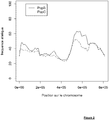
- the figure 2 represents the change in the frequency of alleles from strain EGAc1 (I-4839) along Chromosome II and present in populations B and C.
- the second part of chromosome II shows a dissociation of the curves corresponding to the frequencies of alleles resulting from EGAcl (I-4839) in the two types of populations. This result shows that there is an allele which is more represented in populations subjected to selection pressure than in those which fermented without this pressure. This over-representation suggests that this allele derived from EGAcl (I-4839) would promote cell multiplication in the presence of acetic acid.
- the second part of chromosome II (530 kb to 660 kb) is identified as a quantifiable genetic trait (also called QTL), i.e. a genetic region involved in resistance to l 'acetic acid.
- QTLs are generally large sequences.
- the region of base pairs 624000 to 626000 of chromosome II was therefore analyzed in more detail.
- the values of the likelihood indices of the SNPs that it comprises were analyzed in order to target the region comprising the SNPs most relevant in the phenotype of resistance to weak organic acids (i). Once this region was identified, the SNPs it comprises were further analyzed (ii).
- n1 is the number of reads carrying the SNP from strain EGAc1 (I-4839) in population B and “n2” is the number of reads carrying the other SNP.
- the following equation concerns the same calculation but applied to the results of the unstressed populations.
- Likelihood (L) is defined as a conditional probability function. Thus, it is the probability of having the allele of the EGAc1 strain (I-4839), either in the population which has fermented in the presence of acetic acid, or in the population which has not fermented in the presence of 'acetic acid, calculated using the equations below: L B
- the third step is to calculate the LOD score: From these likelihood determinations for each allele, it is now possible to calculate the LOD for each SNP and to associate it with the allele resulting from the EGAc1 strain.
- the genetic structures present as well as the SNPs most frequently found in the zone considered (between 624500 bp and 625200 bp of chromosome II) of the EGAc2 (I-4840) strain were analyzed.
- the polymorphism (A -> G) at position 624794 which affects 50% of the alleles of the EGAc2 strain (I-4840), reconstitutes a site recognized by the transcription factor Haalp located upstream of the MCM7 gene, the latter encoding a DNA helicase ("DNA helicase").
- DNA helicases allow DNA replication and therefore regulate the progression of the cell cycle and, consequently, the production of biomass.
- the yeasts possessing this SNP have a binding site for the Haalp transcription factor that other yeasts do not have, upstream of a gene known to play an important role in cell division.
- the fact that the presence of a site recognized by Haalp upstream of the MCM7 gene makes the strains more resistant could be due to the fact that in the presence of acetic acid, the yeasts carrying this site would multiply more rapidly.
- the strain EGAc2 (I-4840) is heterozygous for the QTL identified as of interest, namely carrying the SNP (A -> G) in position 624794. In fact, it has an allele denoted “II-624794” of the strain EGAc1 / I-4839 (that is to say exhibiting a G in position 624794) and an “I4538-II-624794” allele of strain I-4538 (that is to say exhibiting an A in position 624794). As a reminder, the EGAc1 strain (I-4839) is resistant to acetic acid while the I-4538 strain is not.
- strains homozygous either for the allele II-624794 of the strain EGAc1 (noted “EGAc1-II-624794”) or for the allele II-624794 of the strain I-4538 (noted “14538-11-624794”) have been prepared.
- a cassette named LOH was used.
- the LOH cassette consists of a gene (KanMX4) conferring resistance to geneticin to the yeasts which express it. Another part of the cassette carries the sequence GIN11m86.
- the strategy used to construct EGAc2 strains homozygous for the II-624794 allele is as follows:
- the LOH cassette was flanked by suitable recombinogenic sequences to delete one of the two alleles.
- the selection of transformants is carried out on a YNB-G418 medium (containing geneticin).
- the locus was amplified by PCR using so-called validation primers outside the LOH cassette.
- the smallest of the PCR fragments thus obtained (650 bp) was cloned into a plasmid pTOPO and then sequenced, which made it possible to determine which of the two alleles was maintained.
- the strains were retransformed with a sequence identical to the conserved allele.
- EGAc2 strains made homozygous for the “EGAc1-II-624794” allele at the II-624794 locus have fermentation kinetics on this medium which is not different from that of the EGAc2 strain (I-4840). This result suggests that homozygosity does not contribute anything to strains in this medium.
Landscapes
- Life Sciences & Earth Sciences (AREA)
- Chemical & Material Sciences (AREA)
- Health & Medical Sciences (AREA)
- Organic Chemistry (AREA)
- Mycology (AREA)
- Genetics & Genomics (AREA)
- Engineering & Computer Science (AREA)
- Zoology (AREA)
- Wood Science & Technology (AREA)
- Bioinformatics & Cheminformatics (AREA)
- Biotechnology (AREA)
- Biochemistry (AREA)
- General Health & Medical Sciences (AREA)
- Microbiology (AREA)
- General Engineering & Computer Science (AREA)
- Biomedical Technology (AREA)
- Medicinal Chemistry (AREA)
- Biophysics (AREA)
- Molecular Biology (AREA)
- Tropical Medicine & Parasitology (AREA)
- Gastroenterology & Hepatology (AREA)
- Botany (AREA)
- Proteomics, Peptides & Aminoacids (AREA)
- Virology (AREA)
- General Chemical & Material Sciences (AREA)
- Chemical Kinetics & Catalysis (AREA)
- Physics & Mathematics (AREA)
- Plant Pathology (AREA)
- Micro-Organisms Or Cultivation Processes Thereof (AREA)
- Preparation Of Compounds By Using Micro-Organisms (AREA)
- Measuring Or Testing Involving Enzymes Or Micro-Organisms (AREA)
Priority Applications (1)
| Application Number | Priority Date | Filing Date | Title |
|---|---|---|---|
| HRP20220006TT HRP20220006T1 (hr) | 2016-09-08 | 2017-08-31 | Uporaba mcm7 za dobivanje soja kvasca otpornog na octenu kiselinu |
Applications Claiming Priority (2)
| Application Number | Priority Date | Filing Date | Title |
|---|---|---|---|
| FR1658370A FR3055634B1 (fr) | 2016-09-08 | 2016-09-08 | Utilisation de mcm7 pour obtenir des souches de levure resistantes a l'acide acetique |
| PCT/FR2017/052316 WO2018046820A1 (fr) | 2016-09-08 | 2017-08-31 | Utilisation de mcm7 pour obtenir des souches de levure résistantes a l'acide acétique |
Publications (2)
| Publication Number | Publication Date |
|---|---|
| EP3510043A1 EP3510043A1 (fr) | 2019-07-17 |
| EP3510043B1 true EP3510043B1 (fr) | 2021-12-15 |
Family
ID=57190172
Family Applications (1)
| Application Number | Title | Priority Date | Filing Date |
|---|---|---|---|
| EP17771808.7A Active EP3510043B1 (fr) | 2016-09-08 | 2017-08-31 | Utilisation de mcm7 pour obtenir des souches de levure résistantes à l'acide acétique |
Country Status (14)
| Country | Link |
|---|---|
| US (1) | US10738329B2 (da) |
| EP (1) | EP3510043B1 (da) |
| JP (1) | JP6990697B2 (da) |
| CN (1) | CN110494444B (da) |
| AU (1) | AU2017322445B2 (da) |
| BR (1) | BR112019004497A2 (da) |
| DK (1) | DK3510043T3 (da) |
| ES (1) | ES2903527T3 (da) |
| FR (1) | FR3055634B1 (da) |
| HR (1) | HRP20220006T1 (da) |
| HU (1) | HUE057173T2 (da) |
| MY (1) | MY198603A (da) |
| WO (1) | WO2018046820A1 (da) |
| ZA (1) | ZA201901281B (da) |
Families Citing this family (1)
| Publication number | Priority date | Publication date | Assignee | Title |
|---|---|---|---|---|
| CN114592000B (zh) * | 2020-12-03 | 2023-07-21 | 上海市农业科学院 | 一种六基因组合在水稻种子中提高vb2含量的应用及方法 |
Family Cites Families (3)
| Publication number | Priority date | Publication date | Assignee | Title |
|---|---|---|---|---|
| DE102008031350B4 (de) | 2008-07-02 | 2011-02-10 | Johann Wolfgang Goethe-Universität Frankfurt am Main | Prokaryotische Xylose-Isomerase zur Konstruktion Xylose-vergärender Hefen |
| FR2968313B1 (fr) | 2010-12-03 | 2014-10-10 | Lesaffre & Cie | Procede de preparation d'une levure industrielle, levure industrielle et application a la production d'ethanol a partir d'au moins un pentose |
| FR2991339B1 (fr) * | 2012-06-01 | 2016-02-19 | Lesaffre & Cie | Souches de levure aptes a metaboliser le xylose et resistantes a au moins un inhibiteur de fermentation, procede d'obtention et utilisation |
-
2016
- 2016-09-08 FR FR1658370A patent/FR3055634B1/fr active Active
-
2017
- 2017-08-31 ES ES17771808T patent/ES2903527T3/es active Active
- 2017-08-31 AU AU2017322445A patent/AU2017322445B2/en active Active
- 2017-08-31 CN CN201780055463.XA patent/CN110494444B/zh active Active
- 2017-08-31 EP EP17771808.7A patent/EP3510043B1/fr active Active
- 2017-08-31 MY MYPI2019001008A patent/MY198603A/en unknown
- 2017-08-31 DK DK17771808.7T patent/DK3510043T3/da active
- 2017-08-31 WO PCT/FR2017/052316 patent/WO2018046820A1/fr not_active Ceased
- 2017-08-31 US US16/331,077 patent/US10738329B2/en active Active
- 2017-08-31 BR BR112019004497-3A patent/BR112019004497A2/pt active Search and Examination
- 2017-08-31 JP JP2019513035A patent/JP6990697B2/ja active Active
- 2017-08-31 HR HRP20220006TT patent/HRP20220006T1/hr unknown
- 2017-08-31 HU HUE17771808A patent/HUE057173T2/hu unknown
-
2019
- 2019-02-28 ZA ZA201901281A patent/ZA201901281B/en unknown
Non-Patent Citations (1)
| Title |
|---|
| None * |
Also Published As
| Publication number | Publication date |
|---|---|
| CN110494444B (zh) | 2024-01-05 |
| AU2017322445B2 (en) | 2022-01-27 |
| JP2019530444A (ja) | 2019-10-24 |
| MY198603A (en) | 2023-09-08 |
| HUE057173T2 (hu) | 2022-04-28 |
| CN110494444A (zh) | 2019-11-22 |
| CA3035619A1 (en) | 2018-03-15 |
| DK3510043T3 (da) | 2022-01-03 |
| HRP20220006T1 (hr) | 2022-04-01 |
| AU2017322445A1 (en) | 2019-03-21 |
| WO2018046820A1 (fr) | 2018-03-15 |
| US20190367951A1 (en) | 2019-12-05 |
| ZA201901281B (en) | 2019-11-27 |
| FR3055634A1 (fr) | 2018-03-09 |
| ES2903527T3 (es) | 2022-04-04 |
| BR112019004497A2 (pt) | 2019-09-03 |
| FR3055634B1 (fr) | 2021-03-05 |
| JP6990697B2 (ja) | 2022-01-12 |
| EP3510043A1 (fr) | 2019-07-17 |
| US10738329B2 (en) | 2020-08-11 |
Similar Documents
| Publication | Publication Date | Title |
|---|---|---|
| CA2891415C (fr) | Procede d'amelioration de souches de levure | |
| Ortiz-Tovar et al. | A comparison of the performance of natural hybrids Saccharomyces cerevisiae× Saccharomyces kudriavzevii at low temperatures reveals the crucial role of their S. kudriavzevii genomic contribution | |
| EP2855660B1 (fr) | Procede d'obtention de souches de levure ameliorees | |
| EP3108016B1 (fr) | Souche fermentant les pentoses a propagation optimisée | |
| EP3510043B1 (fr) | Utilisation de mcm7 pour obtenir des souches de levure résistantes à l'acide acétique | |
| WO2018046821A1 (fr) | Utilisation de qtl pour conférer a des souches de levure une résistance a l'acide acétique | |
| EP2183364B1 (fr) | Procede de selection de levures oenologiques | |
| EP2807247B1 (fr) | Méthode de contrôle de la production de sulfites, d'hydrogène sulfureux et d'acétaldéhyde par des levures | |
| CA3035619C (en) | Use of mcm7 to obtain acetic acid-resistant yeast strains | |
| Legras et al. | Ecology, diversity and applications of saccharomyces yeasts in food and beverages | |
| Peris | Characterization and improvement of non-conventional saccharomyces yeasts to solve new challenges in the wine industry: application of omics technologies | |
| Loza | Utilization of alternative carbon sources by Saccharomyces cerevisiae and Saccharomyces pastorianus | |
| Álvarez-Rafael | Genetic basis of oenological traits in Saccharomyces interspecific hybrids | |
| Álvarez | Genetic basis of oenological traits in Saccharomyces interspecific hybrids | |
| Deed | Effect of low temperature on Sauvignon blanc fermentation by Saccharomyces cerevisiae | |
| EP4045521A2 (fr) | Levures oenologiques permettant le contrôle de la teneur en acide des vins et méthodes de sélection de telles levures | |
| EP0828857A1 (fr) | Sonde, sequence nucleiques et procede notamment, de detection et d'identification de levures, de meme que les outils genetiques correspondants | |
| Martínez | genomics and transcriptomics in | |
| JP2009178064A (ja) | エタノールの製造方法 | |
| WO1995014774A2 (fr) | Gene de resistance a la toxicite de la melasse, produits relies et leur utilisation pour analyser et ameliorer les microorganismes et les melasses |
Legal Events
| Date | Code | Title | Description |
|---|---|---|---|
| REG | Reference to a national code |
Ref country code: HR Ref legal event code: TUEP Ref document number: P20220006 Country of ref document: HR |
|
| STAA | Information on the status of an ep patent application or granted ep patent |
Free format text: STATUS: UNKNOWN |
|
| STAA | Information on the status of an ep patent application or granted ep patent |
Free format text: STATUS: THE INTERNATIONAL PUBLICATION HAS BEEN MADE |
|
| PUAI | Public reference made under article 153(3) epc to a published international application that has entered the european phase |
Free format text: ORIGINAL CODE: 0009012 |
|
| STAA | Information on the status of an ep patent application or granted ep patent |
Free format text: STATUS: REQUEST FOR EXAMINATION WAS MADE |
|
| 17P | Request for examination filed |
Effective date: 20190325 |
|
| AK | Designated contracting states |
Kind code of ref document: A1 Designated state(s): AL AT BE BG CH CY CZ DE DK EE ES FI FR GB GR HR HU IE IS IT LI LT LU LV MC MK MT NL NO PL PT RO RS SE SI SK SM TR |
|
| AX | Request for extension of the european patent |
Extension state: BA ME |
|
| DAV | Request for validation of the european patent (deleted) | ||
| DAX | Request for extension of the european patent (deleted) | ||
| STAA | Information on the status of an ep patent application or granted ep patent |
Free format text: STATUS: EXAMINATION IS IN PROGRESS |
|
| 17Q | First examination report despatched |
Effective date: 20200707 |
|
| GRAP | Despatch of communication of intention to grant a patent |
Free format text: ORIGINAL CODE: EPIDOSNIGR1 |
|
| STAA | Information on the status of an ep patent application or granted ep patent |
Free format text: STATUS: GRANT OF PATENT IS INTENDED |
|
| INTG | Intention to grant announced |
Effective date: 20210610 |
|
| GRAJ | Information related to disapproval of communication of intention to grant by the applicant or resumption of examination proceedings by the epo deleted |
Free format text: ORIGINAL CODE: EPIDOSDIGR1 |
|
| STAA | Information on the status of an ep patent application or granted ep patent |
Free format text: STATUS: EXAMINATION IS IN PROGRESS |
|
| GRAS | Grant fee paid |
Free format text: ORIGINAL CODE: EPIDOSNIGR3 |
|
| STAA | Information on the status of an ep patent application or granted ep patent |
Free format text: STATUS: GRANT OF PATENT IS INTENDED |
|
| GRAP | Despatch of communication of intention to grant a patent |
Free format text: ORIGINAL CODE: EPIDOSNIGR1 |
|
| INTC | Intention to grant announced (deleted) | ||
| GRAA | (expected) grant |
Free format text: ORIGINAL CODE: 0009210 |
|
| STAA | Information on the status of an ep patent application or granted ep patent |
Free format text: STATUS: THE PATENT HAS BEEN GRANTED |
|
| INTG | Intention to grant announced |
Effective date: 20211021 |
|
| AK | Designated contracting states |
Kind code of ref document: B1 Designated state(s): AL AT BE BG CH CY CZ DE DK EE ES FI FR GB GR HR HU IE IS IT LI LT LU LV MC MK MT NL NO PL PT RO RS SE SI SK SM TR |
|
| REG | Reference to a national code |
Ref country code: GB Ref legal event code: FG4D Free format text: NOT ENGLISH Ref country code: CH Ref legal event code: EP |
|
| REG | Reference to a national code |
Ref country code: DE Ref legal event code: R096 Ref document number: 602017050981 Country of ref document: DE |
|
| REG | Reference to a national code |
Ref country code: DK Ref legal event code: T3 Effective date: 20211223 |
|
| REG | Reference to a national code |
Ref country code: IE Ref legal event code: FG4D Free format text: LANGUAGE OF EP DOCUMENT: FRENCH |
|
| REG | Reference to a national code |
Ref country code: AT Ref legal event code: REF Ref document number: 1455460 Country of ref document: AT Kind code of ref document: T Effective date: 20220115 |
|
| REG | Reference to a national code |
Ref country code: HR Ref legal event code: T1PR Ref document number: P20220006 Country of ref document: HR |
|
| REG | Reference to a national code |
Ref country code: ES Ref legal event code: FG2A Ref document number: 2903527 Country of ref document: ES Kind code of ref document: T3 Effective date: 20220404 |
|
| REG | Reference to a national code |
Ref country code: LT Ref legal event code: MG9D |
|
| REG | Reference to a national code |
Ref country code: NL Ref legal event code: MP Effective date: 20211215 |
|
| REG | Reference to a national code |
Ref country code: HU Ref legal event code: AG4A Ref document number: E057173 Country of ref document: HU |
|
| PG25 | Lapsed in a contracting state [announced via postgrant information from national office to epo] |
Ref country code: RS Free format text: LAPSE BECAUSE OF FAILURE TO SUBMIT A TRANSLATION OF THE DESCRIPTION OR TO PAY THE FEE WITHIN THE PRESCRIBED TIME-LIMIT Effective date: 20211215 Ref country code: LT Free format text: LAPSE BECAUSE OF FAILURE TO SUBMIT A TRANSLATION OF THE DESCRIPTION OR TO PAY THE FEE WITHIN THE PRESCRIBED TIME-LIMIT Effective date: 20211215 Ref country code: FI Free format text: LAPSE BECAUSE OF FAILURE TO SUBMIT A TRANSLATION OF THE DESCRIPTION OR TO PAY THE FEE WITHIN THE PRESCRIBED TIME-LIMIT Effective date: 20211215 Ref country code: BG Free format text: LAPSE BECAUSE OF FAILURE TO SUBMIT A TRANSLATION OF THE DESCRIPTION OR TO PAY THE FEE WITHIN THE PRESCRIBED TIME-LIMIT Effective date: 20220315 |
|
| REG | Reference to a national code |
Ref country code: AT Ref legal event code: MK05 Ref document number: 1455460 Country of ref document: AT Kind code of ref document: T Effective date: 20211215 |
|
| PG25 | Lapsed in a contracting state [announced via postgrant information from national office to epo] |
Ref country code: SE Free format text: LAPSE BECAUSE OF FAILURE TO SUBMIT A TRANSLATION OF THE DESCRIPTION OR TO PAY THE FEE WITHIN THE PRESCRIBED TIME-LIMIT Effective date: 20211215 Ref country code: NO Free format text: LAPSE BECAUSE OF FAILURE TO SUBMIT A TRANSLATION OF THE DESCRIPTION OR TO PAY THE FEE WITHIN THE PRESCRIBED TIME-LIMIT Effective date: 20220315 Ref country code: LV Free format text: LAPSE BECAUSE OF FAILURE TO SUBMIT A TRANSLATION OF THE DESCRIPTION OR TO PAY THE FEE WITHIN THE PRESCRIBED TIME-LIMIT Effective date: 20211215 Ref country code: GR Free format text: LAPSE BECAUSE OF FAILURE TO SUBMIT A TRANSLATION OF THE DESCRIPTION OR TO PAY THE FEE WITHIN THE PRESCRIBED TIME-LIMIT Effective date: 20220316 |
|
| PG25 | Lapsed in a contracting state [announced via postgrant information from national office to epo] |
Ref country code: NL Free format text: LAPSE BECAUSE OF FAILURE TO SUBMIT A TRANSLATION OF THE DESCRIPTION OR TO PAY THE FEE WITHIN THE PRESCRIBED TIME-LIMIT Effective date: 20211215 |
|
| PG25 | Lapsed in a contracting state [announced via postgrant information from national office to epo] |
Ref country code: SM Free format text: LAPSE BECAUSE OF FAILURE TO SUBMIT A TRANSLATION OF THE DESCRIPTION OR TO PAY THE FEE WITHIN THE PRESCRIBED TIME-LIMIT Effective date: 20211215 Ref country code: SK Free format text: LAPSE BECAUSE OF FAILURE TO SUBMIT A TRANSLATION OF THE DESCRIPTION OR TO PAY THE FEE WITHIN THE PRESCRIBED TIME-LIMIT Effective date: 20211215 Ref country code: RO Free format text: LAPSE BECAUSE OF FAILURE TO SUBMIT A TRANSLATION OF THE DESCRIPTION OR TO PAY THE FEE WITHIN THE PRESCRIBED TIME-LIMIT Effective date: 20211215 Ref country code: PT Free format text: LAPSE BECAUSE OF FAILURE TO SUBMIT A TRANSLATION OF THE DESCRIPTION OR TO PAY THE FEE WITHIN THE PRESCRIBED TIME-LIMIT Effective date: 20220418 Ref country code: EE Free format text: LAPSE BECAUSE OF FAILURE TO SUBMIT A TRANSLATION OF THE DESCRIPTION OR TO PAY THE FEE WITHIN THE PRESCRIBED TIME-LIMIT Effective date: 20211215 Ref country code: CZ Free format text: LAPSE BECAUSE OF FAILURE TO SUBMIT A TRANSLATION OF THE DESCRIPTION OR TO PAY THE FEE WITHIN THE PRESCRIBED TIME-LIMIT Effective date: 20211215 |
|
| PG25 | Lapsed in a contracting state [announced via postgrant information from national office to epo] |
Ref country code: PL Free format text: LAPSE BECAUSE OF FAILURE TO SUBMIT A TRANSLATION OF THE DESCRIPTION OR TO PAY THE FEE WITHIN THE PRESCRIBED TIME-LIMIT Effective date: 20211215 Ref country code: AT Free format text: LAPSE BECAUSE OF FAILURE TO SUBMIT A TRANSLATION OF THE DESCRIPTION OR TO PAY THE FEE WITHIN THE PRESCRIBED TIME-LIMIT Effective date: 20211215 |
|
| REG | Reference to a national code |
Ref country code: HR Ref legal event code: ODRP Ref document number: P20220006 Country of ref document: HR Payment date: 20220715 Year of fee payment: 6 |
|
| REG | Reference to a national code |
Ref country code: DE Ref legal event code: R097 Ref document number: 602017050981 Country of ref document: DE |
|
| PG25 | Lapsed in a contracting state [announced via postgrant information from national office to epo] |
Ref country code: IS Free format text: LAPSE BECAUSE OF FAILURE TO SUBMIT A TRANSLATION OF THE DESCRIPTION OR TO PAY THE FEE WITHIN THE PRESCRIBED TIME-LIMIT Effective date: 20220415 |
|
| PLBE | No opposition filed within time limit |
Free format text: ORIGINAL CODE: 0009261 |
|
| STAA | Information on the status of an ep patent application or granted ep patent |
Free format text: STATUS: NO OPPOSITION FILED WITHIN TIME LIMIT |
|
| PG25 | Lapsed in a contracting state [announced via postgrant information from national office to epo] |
Ref country code: AL Free format text: LAPSE BECAUSE OF FAILURE TO SUBMIT A TRANSLATION OF THE DESCRIPTION OR TO PAY THE FEE WITHIN THE PRESCRIBED TIME-LIMIT Effective date: 20211215 |
|
| 26N | No opposition filed |
Effective date: 20220916 |
|
| PG25 | Lapsed in a contracting state [announced via postgrant information from national office to epo] |
Ref country code: SI Free format text: LAPSE BECAUSE OF FAILURE TO SUBMIT A TRANSLATION OF THE DESCRIPTION OR TO PAY THE FEE WITHIN THE PRESCRIBED TIME-LIMIT Effective date: 20211215 |
|
| PG25 | Lapsed in a contracting state [announced via postgrant information from national office to epo] |
Ref country code: MC Free format text: LAPSE BECAUSE OF FAILURE TO SUBMIT A TRANSLATION OF THE DESCRIPTION OR TO PAY THE FEE WITHIN THE PRESCRIBED TIME-LIMIT Effective date: 20211215 |
|
| REG | Reference to a national code |
Ref country code: CH Ref legal event code: PL |
|
| PG25 | Lapsed in a contracting state [announced via postgrant information from national office to epo] |
Ref country code: LU Free format text: LAPSE BECAUSE OF NON-PAYMENT OF DUE FEES Effective date: 20220831 Ref country code: LI Free format text: LAPSE BECAUSE OF NON-PAYMENT OF DUE FEES Effective date: 20220831 Ref country code: CH Free format text: LAPSE BECAUSE OF NON-PAYMENT OF DUE FEES Effective date: 20220831 |
|
| PG25 | Lapsed in a contracting state [announced via postgrant information from national office to epo] |
Ref country code: IE Free format text: LAPSE BECAUSE OF NON-PAYMENT OF DUE FEES Effective date: 20220831 |
|
| REG | Reference to a national code |
Ref country code: HR Ref legal event code: ODRP Ref document number: P20220006 Country of ref document: HR Payment date: 20230726 Year of fee payment: 7 |
|
| PG25 | Lapsed in a contracting state [announced via postgrant information from national office to epo] |
Ref country code: CY Free format text: LAPSE BECAUSE OF FAILURE TO SUBMIT A TRANSLATION OF THE DESCRIPTION OR TO PAY THE FEE WITHIN THE PRESCRIBED TIME-LIMIT Effective date: 20211215 |
|
| PG25 | Lapsed in a contracting state [announced via postgrant information from national office to epo] |
Ref country code: MK Free format text: LAPSE BECAUSE OF FAILURE TO SUBMIT A TRANSLATION OF THE DESCRIPTION OR TO PAY THE FEE WITHIN THE PRESCRIBED TIME-LIMIT Effective date: 20211215 |
|
| REG | Reference to a national code |
Ref country code: HR Ref legal event code: ODRP Ref document number: P20220006 Country of ref document: HR Payment date: 20240717 Year of fee payment: 8 |
|
| PG25 | Lapsed in a contracting state [announced via postgrant information from national office to epo] |
Ref country code: MT Free format text: LAPSE BECAUSE OF FAILURE TO SUBMIT A TRANSLATION OF THE DESCRIPTION OR TO PAY THE FEE WITHIN THE PRESCRIBED TIME-LIMIT Effective date: 20211215 |
|
| REG | Reference to a national code |
Ref country code: HR Ref legal event code: ODRP Ref document number: P20220006 Country of ref document: HR Payment date: 20250721 Year of fee payment: 9 |
|
| PGFP | Annual fee paid to national office [announced via postgrant information from national office to epo] |
Ref country code: HU Payment date: 20250725 Year of fee payment: 9 |
|
| PGFP | Annual fee paid to national office [announced via postgrant information from national office to epo] |
Ref country code: ES Payment date: 20250908 Year of fee payment: 9 |
|
| PGFP | Annual fee paid to national office [announced via postgrant information from national office to epo] |
Ref country code: DK Payment date: 20250729 Year of fee payment: 9 Ref country code: DE Payment date: 20250812 Year of fee payment: 9 |
|
| PGFP | Annual fee paid to national office [announced via postgrant information from national office to epo] |
Ref country code: IT Payment date: 20250808 Year of fee payment: 9 |
|
| PGFP | Annual fee paid to national office [announced via postgrant information from national office to epo] |
Ref country code: BE Payment date: 20250826 Year of fee payment: 9 Ref country code: GB Payment date: 20250826 Year of fee payment: 9 |
|
| PGFP | Annual fee paid to national office [announced via postgrant information from national office to epo] |
Ref country code: HR Payment date: 20250721 Year of fee payment: 9 |
|
| PGFP | Annual fee paid to national office [announced via postgrant information from national office to epo] |
Ref country code: FR Payment date: 20250828 Year of fee payment: 9 |
|
| PG25 | Lapsed in a contracting state [announced via postgrant information from national office to epo] |
Ref country code: TR Free format text: LAPSE BECAUSE OF FAILURE TO SUBMIT A TRANSLATION OF THE DESCRIPTION OR TO PAY THE FEE WITHIN THE PRESCRIBED TIME-LIMIT Effective date: 20211215 |
|
| REG | Reference to a national code |
Ref country code: DE Ref legal event code: R082 Ref document number: 602017050981 Country of ref document: DE Representative=s name: VUILLERMOZ, BRUNO, FR |