EP3510521B1 - Agencement et procédé de gestion d'une étiquette de prix électronique, et système d'étiquette de prix électronique - Google Patents
Agencement et procédé de gestion d'une étiquette de prix électronique, et système d'étiquette de prix électronique Download PDFInfo
- Publication number
- EP3510521B1 EP3510521B1 EP17848211.3A EP17848211A EP3510521B1 EP 3510521 B1 EP3510521 B1 EP 3510521B1 EP 17848211 A EP17848211 A EP 17848211A EP 3510521 B1 EP3510521 B1 EP 3510521B1
- Authority
- EP
- European Patent Office
- Prior art keywords
- electronic price
- price label
- command
- identifier
- label
- Prior art date
- Legal status (The legal status is an assumption and is not a legal conclusion. Google has not performed a legal analysis and makes no representation as to the accuracy of the status listed.)
- Active
Links
Images

Classifications
-
- G—PHYSICS
- G09—EDUCATION; CRYPTOGRAPHY; DISPLAY; ADVERTISING; SEALS
- G09F—DISPLAYING; ADVERTISING; SIGNS; LABELS OR NAME-PLATES; SEALS
- G09F3/00—Labels, tag tickets, or similar identification or indication means; Seals; Postage or like stamps
- G09F3/08—Fastening or securing by means not forming part of the material of the label itself
- G09F3/18—Casings, frames or enclosures for labels
- G09F3/20—Casings, frames or enclosures for labels for adjustable, removable, or interchangeable labels
- G09F3/208—Electronic labels, Labels integrating electronic displays
-
- G—PHYSICS
- G06—COMPUTING OR CALCULATING; COUNTING
- G06K—GRAPHICAL DATA READING; PRESENTATION OF DATA; RECORD CARRIERS; HANDLING RECORD CARRIERS
- G06K7/00—Methods or arrangements for sensing record carriers, e.g. for reading patterns
- G06K7/0004—Hybrid readers
-
- G—PHYSICS
- G06—COMPUTING OR CALCULATING; COUNTING
- G06K—GRAPHICAL DATA READING; PRESENTATION OF DATA; RECORD CARRIERS; HANDLING RECORD CARRIERS
- G06K19/00—Record carriers for use with machines and with at least a part designed to carry digital markings
- G06K19/06—Record carriers for use with machines and with at least a part designed to carry digital markings characterised by the kind of the digital marking, e.g. shape, nature, code
- G06K19/06009—Record carriers for use with machines and with at least a part designed to carry digital markings characterised by the kind of the digital marking, e.g. shape, nature, code with optically detectable marking
-
- G—PHYSICS
- G06—COMPUTING OR CALCULATING; COUNTING
- G06K—GRAPHICAL DATA READING; PRESENTATION OF DATA; RECORD CARRIERS; HANDLING RECORD CARRIERS
- G06K19/00—Record carriers for use with machines and with at least a part designed to carry digital markings
- G06K19/06—Record carriers for use with machines and with at least a part designed to carry digital markings characterised by the kind of the digital marking, e.g. shape, nature, code
- G06K19/067—Record carriers with conductive marks, printed circuits or semiconductor circuit elements, e.g. credit or identity cards also with resonating or responding marks without active components
- G06K19/07—Record carriers with conductive marks, printed circuits or semiconductor circuit elements, e.g. credit or identity cards also with resonating or responding marks without active components with integrated circuit chips
-
- G—PHYSICS
- G06—COMPUTING OR CALCULATING; COUNTING
- G06K—GRAPHICAL DATA READING; PRESENTATION OF DATA; RECORD CARRIERS; HANDLING RECORD CARRIERS
- G06K19/00—Record carriers for use with machines and with at least a part designed to carry digital markings
- G06K19/06—Record carriers for use with machines and with at least a part designed to carry digital markings characterised by the kind of the digital marking, e.g. shape, nature, code
- G06K19/067—Record carriers with conductive marks, printed circuits or semiconductor circuit elements, e.g. credit or identity cards also with resonating or responding marks without active components
- G06K19/07—Record carriers with conductive marks, printed circuits or semiconductor circuit elements, e.g. credit or identity cards also with resonating or responding marks without active components with integrated circuit chips
- G06K19/0723—Record carriers with conductive marks, printed circuits or semiconductor circuit elements, e.g. credit or identity cards also with resonating or responding marks without active components with integrated circuit chips the record carrier comprising an arrangement for non-contact communication, e.g. wireless communication circuits on transponder cards, non-contact smart cards or RFIDs
-
- G—PHYSICS
- G06—COMPUTING OR CALCULATING; COUNTING
- G06K—GRAPHICAL DATA READING; PRESENTATION OF DATA; RECORD CARRIERS; HANDLING RECORD CARRIERS
- G06K19/00—Record carriers for use with machines and with at least a part designed to carry digital markings
- G06K19/06—Record carriers for use with machines and with at least a part designed to carry digital markings characterised by the kind of the digital marking, e.g. shape, nature, code
- G06K19/067—Record carriers with conductive marks, printed circuits or semiconductor circuit elements, e.g. credit or identity cards also with resonating or responding marks without active components
- G06K19/07—Record carriers with conductive marks, printed circuits or semiconductor circuit elements, e.g. credit or identity cards also with resonating or responding marks without active components with integrated circuit chips
- G06K19/077—Constructional details, e.g. mounting of circuits in the carrier
- G06K19/07701—Constructional details, e.g. mounting of circuits in the carrier the record carrier comprising an interface suitable for human interaction
- G06K19/07703—Constructional details, e.g. mounting of circuits in the carrier the record carrier comprising an interface suitable for human interaction the interface being visual
- G06K19/07707—Constructional details, e.g. mounting of circuits in the carrier the record carrier comprising an interface suitable for human interaction the interface being visual the visual interface being a display, e.g. LCD or electronic ink
-
- G—PHYSICS
- G06—COMPUTING OR CALCULATING; COUNTING
- G06K—GRAPHICAL DATA READING; PRESENTATION OF DATA; RECORD CARRIERS; HANDLING RECORD CARRIERS
- G06K7/00—Methods or arrangements for sensing record carriers, e.g. for reading patterns
- G06K7/01—Details
- G06K7/015—Aligning or centering of the sensing device with respect to the record carrier
-
- G—PHYSICS
- G06—COMPUTING OR CALCULATING; COUNTING
- G06K—GRAPHICAL DATA READING; PRESENTATION OF DATA; RECORD CARRIERS; HANDLING RECORD CARRIERS
- G06K7/00—Methods or arrangements for sensing record carriers, e.g. for reading patterns
- G06K7/10—Methods or arrangements for sensing record carriers, e.g. for reading patterns by electromagnetic radiation, e.g. optical sensing; by corpuscular radiation
-
- G—PHYSICS
- G06—COMPUTING OR CALCULATING; COUNTING
- G06K—GRAPHICAL DATA READING; PRESENTATION OF DATA; RECORD CARRIERS; HANDLING RECORD CARRIERS
- G06K7/00—Methods or arrangements for sensing record carriers, e.g. for reading patterns
- G06K7/10—Methods or arrangements for sensing record carriers, e.g. for reading patterns by electromagnetic radiation, e.g. optical sensing; by corpuscular radiation
- G06K7/10009—Methods or arrangements for sensing record carriers, e.g. for reading patterns by electromagnetic radiation, e.g. optical sensing; by corpuscular radiation sensing by radiation using wavelengths larger than 0.1 mm, e.g. radio-waves or microwaves
- G06K7/10316—Methods or arrangements for sensing record carriers, e.g. for reading patterns by electromagnetic radiation, e.g. optical sensing; by corpuscular radiation sensing by radiation using wavelengths larger than 0.1 mm, e.g. radio-waves or microwaves using at least one antenna particularly designed for interrogating the wireless record carriers
- G06K7/10336—Methods or arrangements for sensing record carriers, e.g. for reading patterns by electromagnetic radiation, e.g. optical sensing; by corpuscular radiation sensing by radiation using wavelengths larger than 0.1 mm, e.g. radio-waves or microwaves using at least one antenna particularly designed for interrogating the wireless record carriers the antenna being of the near field type, inductive coil
-
- G—PHYSICS
- G06—COMPUTING OR CALCULATING; COUNTING
- G06K—GRAPHICAL DATA READING; PRESENTATION OF DATA; RECORD CARRIERS; HANDLING RECORD CARRIERS
- G06K7/00—Methods or arrangements for sensing record carriers, e.g. for reading patterns
- G06K7/10—Methods or arrangements for sensing record carriers, e.g. for reading patterns by electromagnetic radiation, e.g. optical sensing; by corpuscular radiation
- G06K7/10544—Methods or arrangements for sensing record carriers, e.g. for reading patterns by electromagnetic radiation, e.g. optical sensing; by corpuscular radiation by scanning of the records by radiation in the optical part of the electromagnetic spectrum
-
- G—PHYSICS
- G06—COMPUTING OR CALCULATING; COUNTING
- G06Q—INFORMATION AND COMMUNICATION TECHNOLOGY [ICT] SPECIALLY ADAPTED FOR ADMINISTRATIVE, COMMERCIAL, FINANCIAL, MANAGERIAL OR SUPERVISORY PURPOSES; SYSTEMS OR METHODS SPECIALLY ADAPTED FOR ADMINISTRATIVE, COMMERCIAL, FINANCIAL, MANAGERIAL OR SUPERVISORY PURPOSES, NOT OTHERWISE PROVIDED FOR
- G06Q30/00—Commerce
- G06Q30/06—Buying, selling or leasing transactions
-
- G—PHYSICS
- G09—EDUCATION; CRYPTOGRAPHY; DISPLAY; ADVERTISING; SEALS
- G09F—DISPLAYING; ADVERTISING; SIGNS; LABELS OR NAME-PLATES; SEALS
- G09F3/00—Labels, tag tickets, or similar identification or indication means; Seals; Postage or like stamps
- G09F3/02—Forms or constructions
- G09F3/0297—Forms or constructions including a machine-readable marking, e.g. a bar code
-
- H—ELECTRICITY
- H04—ELECTRIC COMMUNICATION TECHNIQUE
- H04B—TRANSMISSION
- H04B5/00—Near-field transmission systems, e.g. inductive or capacitive transmission systems
- H04B5/20—Near-field transmission systems, e.g. inductive or capacitive transmission systems characterised by the transmission technique; characterised by the transmission medium
-
- H—ELECTRICITY
- H04—ELECTRIC COMMUNICATION TECHNIQUE
- H04B—TRANSMISSION
- H04B5/00—Near-field transmission systems, e.g. inductive or capacitive transmission systems
- H04B5/20—Near-field transmission systems, e.g. inductive or capacitive transmission systems characterised by the transmission technique; characterised by the transmission medium
- H04B5/24—Inductive coupling
- H04B5/26—Inductive coupling using coils
-
- H—ELECTRICITY
- H04—ELECTRIC COMMUNICATION TECHNIQUE
- H04B—TRANSMISSION
- H04B5/00—Near-field transmission systems, e.g. inductive or capacitive transmission systems
- H04B5/70—Near-field transmission systems, e.g. inductive or capacitive transmission systems specially adapted for specific purposes
- H04B5/77—Near-field transmission systems, e.g. inductive or capacitive transmission systems specially adapted for specific purposes for interrogation
-
- H—ELECTRICITY
- H04—ELECTRIC COMMUNICATION TECHNIQUE
- H04W—WIRELESS COMMUNICATION NETWORKS
- H04W4/00—Services specially adapted for wireless communication networks; Facilities therefor
- H04W4/30—Services specially adapted for particular environments, situations or purposes
- H04W4/35—Services specially adapted for particular environments, situations or purposes for the management of goods or merchandise
-
- H—ELECTRICITY
- H04—ELECTRIC COMMUNICATION TECHNIQUE
- H04B—TRANSMISSION
- H04B5/00—Near-field transmission systems, e.g. inductive or capacitive transmission systems
- H04B5/40—Near-field transmission systems, e.g. inductive or capacitive transmission systems characterised by components specially adapted for near-field transmission
- H04B5/43—Antennas
Definitions
- the invention relates to an arrangement and a method for managing an electronic price label, and also to an electronic price label system.
- the price information of price labels in retail stores has conventionally been changed manually always when the price of a product changes. New prices are printed onto paper or onto a corresponding material and these labels, with their new price markings, are manually disposed in a location reserved for price labels on the shelves in sales premises. Thus, an employee must first find the correct location of the price label to be updated, after which the previous price label is taken out and discarded and the new price label is placed into its position.
- a drawback of this solution is inter alia that the solution is very laborious and very prone to error. When an error occurs, a situation can arise e.g. in which there is conflicting price information between the price information of the price labels on the shelves and the price information in the checkout system.
- electronic systems have been developed that comprise electronic display units, with electronic displays, on the front edges of shelves or on the products, and the product price information on the displays of these units can be changed centrally from the control center of the system. This makes the updating of price information much easier and much faster.
- the information on the displays can be updated by wireline or wirelessly.
- a problem in wireline systems is that a conductor connection for data transfer, and possibly also for power supply, must be arranged to each display. Since normal stores selling fast-moving consumer goods have a very large number of displays, there must also be a large number of conductors, which causes problems and places limitations on e.g. the placement of price displays.
- One method in endeavoring to minimize the electricity consumption of the display units, and thus to lengthen the operating time of their batteries/accumulators, is that in the communication between base stations and display units the transmitter-receiver disposed in the display units does not itself implement active radio transmission, whereby the transmission power would be produced on the basis of the display unit's own power source, but instead the display unit only reflects the radio transmission of the base station back at a certain time and in a certain way.
- a display unit can change the reflectance of its own antenna, in which case the display unit can acknowledge or respond to base station messages with simple response messages. The following gives a general overview of this type of messaging method.
- the base stations communicate with the display units by sending signals that all the display units listen to and from which signals an individual display unit identifies a command addressed specifically to it on the basis of the identifier specific to that display unit.
- the individual display unit After receiving a command addressed to itself, the individual display unit responds to the base station by reflecting the base station's own transmission back to the base station modified by the amount of the phase shift caused by a certain time delay and at a certain moment in time.
- a base station starts to send for a certain time e.g. a certain type of carrier wave, which the price display that identified the command reflects back with a certain phase shift.
- a base station is thus able to identify a reflection response as belonging to a certain price display because it is able to wait for a certain period of time after the individualized command it sends to the display in question.
- the base station can distinguish from its own transmission the reflection response of considerably weaker power than the transmission, based on the phase shift produced in it by the display device.
- Modern radio-based wireless electronic price label systems are in power-saving mode for most of the time in order to minimize energy consumption. They switch from power-saving mode to listening mode/receiving mode at certain predefined intervals and only then can a message addressed to an electronic label be received by the electronic price label. That being the case, a problem in modern electronic price label systems is that messages and commands that are intended for an electronic price label do not reach the electronic price label immediately but instead at a predetermined time after the electronic price label has awoken from power-saving mode.
- US8061601B1 relates to a method and apparatus for establishing and maintaining electronic shelf label information and discloses Systems and techniques for linking electronic shelf labels to and unlinking electronic shelf labels from a system.
- RFID radiofrequency identification
- WO2016072703A1 which relates to an electronic shelf label which comprises a base substrate, a first mounting part which is formed on the base substrate and mounted with a first antenna which receives product related information from a server, a second mounting part which is formed on the base substrate and mounted with a first communication module connected to the first antenna, a third mounting part which is formed on the base substrate and mounted with a second antenna which receives a management signal from a management terminal, a fourth mounting part which is formed on the base substrate and optionally mounted with a second communication module connected to the second antenna, and a fifth mounting part which is formed on the base substrate, optionally connected directly to either the second antenna or the second communication module, and mounted with a low frequency (LF) circuit which, according to the management signal, sends an interrupt to the first communication module.
- LF low frequency
- the purpose of the solution according to the invention is to eliminate the problems of prior art.
- the method according to the invention is characterized by what is stated in the characterization part of claim 1.
- the method according to the invention is also characterized by what is stated in claims 2 - 4.
- the apparatus according to the invention is characterized by what is stated in the characterization part of claim 5 regarding the apparatus.
- the method according to the invention is also characterized by what is stated in the characterization part of claims 6 - 13 regarding the method.
- the system according to the invention is characterized by what is stated in claim 14.
- the identifier in an electronic price label is read and, based on the read identifier, a command is sent to the electronic price label by means of a near field.
- the command is an emptying command and/or extinguishing command for an electronic price label or it is a command containing a new state and/or price.
- the visible and/or invisible information, e.g. the pages to be presented or the data of pages, of an electronic price label can e.g. be removed by means of an emptying command.
- data can be added to an electronic price label, e.g. to its memory locations or memory pages, when the electronic price label is paired with a product.
- the identifier of an electronic price label is an optically readable identifier, such as a barcode.
- the identifier of an electronic price label is arranged essentially at the point of the antenna of the electronic price label, e.g. essentially at the point of the center point of the antenna as viewed from the front of the electronic price label, or face-to-face with the center point of the antenna.
- a change event, emptying event and/or extinguishing event of an electronic price label is recorded in a database.
- the apparatus according to the invention is arranged in such a way that reading of the identifier in an electronic price label only succeeds from an area that is also an area in which communication with an electronic price label functions by means of a near field.
- an electronic price label is aligned, e.g. mechanically and/or optically, to an area in which the sending of a command implemented by means of a near field is executed.
- Alignment in the desired location can be ensured e.g. by means of reading a barcode.
- the apparatus is arranged in connection with the checkout register.
- the solution according to the invention now presented has some significant advantages when it is compared to prior-art solutions.
- the solution presented by this invention is faster in transmitting to a price label a message or command intended for it than prior art systems using a radio path because electronic price labels are typically in receiving mode for only a certain period of time in order to minimize power consumption.
- a command transmitted by radio only reaches the electronic price label when the price label switches from power-saving mode to listening/receiving mode, e.g. only after a number of minutes from when the command is registered for transmission. Since a command in the solution of the present invention is sent by means of a near field, a message or command intended for an electronic price label can be transmitted to the price label essentially at the same time as the time of sending the command.
- Another advantage of the invention is that by means of it the alignment time needed for reading the identifier of an electronic price label as well as for aligning the corresponding near field can be reduced.
- the apparatus according to the invention also forces a reader of the identifier of the electronic price label into the correct location.
- successful alignment of an electronic price label is ensured by reading an identifier, e.g. a barcode, on the electronic price label.
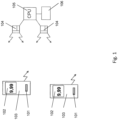
- Fig. 1 presents in a diagrammatic and simplified form the arrangement according to the invention, which arrangement can be used e.g. in a retail store or in corresponding sales premises.
- Electronic price labels 103 can be affixed to products and/or to shelves.
- the display 102 of the electronic price labels is arranged to show information relating to a product, such as e.g. price, product name and possibly some other information relating to the product.
- Electronic price labels can communicate with the rest of the system via base stations 104.
- the display of an electronic price label can be implemented e.g. as an electronic laminated display, which forms a thin price label provided with display segments and similar in appearance to a paper price label, on which the information relating to a product, e.g. the prices of products together with other needed markings, are presented by changing the color of the display segments.
- One layer of the display is e.g. an active ink layer.
- the ink layer are numerous microcapsules filled with liquid, which microcapsules contain e.g.
- the background of the display consists of the same microcapsules, so that e.g. price information can be presented as dark numbers against a light background or, if desired, vice versa.
- the electrophoretic microcapsule laminated display presented in Finnish patent application no. FI 20050192 can be used as this type of display.
- the electronic price label system can comprise, in addition to electronic price labels, at least communication means 106, such as a central unit 105 provided with a radio transmitter, via which e.g. updated price information and other control data can be sent via the base stations 104 of the system to the electronic price labels 103.
- a central unit 105 provided with a radio transmitter
- the central unit 105 can be further connected to other controlling systems or supporting systems.
- the wireless connection between the central unit 105 and the electronic price labels 103 is described with arrows.
- a receiver provided with a display controller connected to a display 102 and with an antenna is affixed to an electronic price label 103, and so also is a power source that is e.g. an ordinary battery.
- the power source is arranged to provide electrical energy to the electronic price label and to its display controller.
- the price information or other information visible on the display 102 can be updated wirelessly from the central unit 105 via the receiver and display controller.
- the update information and control information is transferred by means of radio waves, but other data transfer modes are possible.
- Each electronic price label 103 forms a thin price label, provided with a display, similar in appearance to a paper price label, on which the necessary prices of products, together with other needed markings, are formed by changing the color of the display segments.
- the color of the display segments and also of the background is changed by means of an electrical field formed by an electric current, as is described above.
- the electronic price label 103 has state changing means for changing the state of the antenna of the receiver between at least two states, in which e.g. in the first state the reflectivity of the antenna is good and in the second state the reflectivity is poor.
- the antenna states can be adapted with the state changing means in such a way that in different states the antenna reflects radio waves in different phases.
- the electronic price label is adapted to change the state of the antenna of its receiver in order to produce a coded reflection in a certain manner with a different time delay according to the state of the antenna.
- the communication means 6 connected to a base station 104 interpret different time delays as coded data signals sent by an electronic price label 103, and e.g. the communication means 6 identify each electronic price label based on these data signals.
- an electronic price label 103 reflects back the carrier wave transmitted by the communication means 106, which carrier wave can have a frequency of e.g. 685 MHz, in such a way that the electronic price label 103 earths the receiver antenna by means of the state changing means e.g. at a frequency of 150 kHz, thus forming a certain type of square wave from the reflected signal.
- the electronic price label 103 thus affects the reflected signal by changing the state of the antenna. In this reflection, the phase shift undergone by the signal would most suitably be 180 degrees, at which detection of a low-power reflection with the communication means 106 is at its best.
- Electronic price labels are in power-saving mode for most of the time and at times change their state to receiving mode. In receiving mode, they can detect messages sent to them and execute commands given to them.
- An electronic price label to be used in the solution of the invention has an identifier, such as e.g. an optically readable identifier, e.g. a barcode.
- the identifier of an electronic price label is arranged essentially at the point of the antenna of the electronic price label, e.g. essentially at the point of the center point of the antenna as viewed from the front of the electronic price label, or face-to-face with the center point of the antenna.
- a command can be given by means of a near field to an electronic price label operating on a radio frequency.
- the identifier in an electronic price label is read and, based on the read identifier, a command is sent to the electronic price label by means of a near field. This also succeeds when the electronic price label is in power-saving mode.
- the command is an emptying command and/or extinguishing command for an electronic price label.
- the solution of the invention is faster than sending a command to be executed by radio via base stations, because typically electronic price labels are in receiving mode for only a certain interval of time in order to minimize power consumption.
- a command transmitted by radio only reaches the electronic price label when the price label switches from power-saving mode to listening/receiving mode, e.g. only after a number of minutes from when the command is registered for transmission.
- One idea of the solution of one embodiment of the invention is also that the reading of an identifier and the sending of a command by means of a near field to an electronic price label occur essentially simultaneously, e.g. within an essentially short time, such as e.g. within 0.01 - 2 seconds, so it can be ensured that sending of the command succeeded and that the command was sent before the electronic price label is transferred out of the area operating by means of the near field.
- a command is sent to a price label at the same time as the identifier, e.g. a barcode, arrives in the reading range of the identifier, e.g. into the reading range of an optical beam, and the reading event is executed.
- the device After a successful reading event and sending of a command, the device according to the invention being used to manage an electronic price label gives an indicator signal of the successful reading event, e.g. a sound signal or light signal.
- an electronic price label can also acknowledge it has received a command, e.g. by sending an acknowledgement message or by changing the signs and/or colors of the display of the electronic price label.
- an optical reader can be used in reading the identifier of an electronic price label.
- the examples presented below are described using an optical reader, but in the solutions presented in the application the optical reader can be replaced with also some other type of reader or with a device that can read the identifiers of an electronic price label.
- the location and interpositioning of the antennas transmitting to an electronic label by means of the optical identifier reader and near field must be correctly arranged.
- a transmitting antenna may not be too close to an electronic price label because an excessively strong signal in such a case can damage the electronic price label.
- an antenna may not be too far away from an electronic price label because otherwise the signal is too weak for the electronic price label.
- the power level of a signal received by an electronic price label must therefore be within predetermined minimum and maximum levels.
- the transmission level of the signal must thus be adjusted in such a way that it is at a suitable reading distance or in reading range of the identifier of the electronic price label such that reading of the signal succeeds in the electronic price label from a predetermined range. Neither may the signal be too strong in such a way that it could be received in an electronic price label that is outside the identifier reading range because in such a case a command sent to one electronic price label could also be received by other nearby electronic price labels.
- the antenna to be used in sending a command by means of a near field to an electronic price label and the optical reader can be arranged in many different ways.
- the antenna to be used in sending a command by means of a near field can be toroidal or rim-shaped, e.g. rectangular and/or of square shape.
- the optical reader can be disposed separately from the antenna or in connection with the antenna.
- the antenna to be used in sending a command by means of a near field essentially surrounds the reader of the optical identifier.
- the reader can be e.g. in the center of the antenna and/or on the top edge of the antenna loop or in the center of the antenna loop.
- the beam of the optical reader can be directed in such a way that it passes through the loop of the antenna.
- the antenna to be used in sending a command occurring via a near field and the optical reader can be on the same side of the electronic price label when the electronic price label is in a location and/or in an area from which reading of the identifier will succeed. In one embodiment of the invention the antenna and the optical reader can be on different sides of the electronic price label when the electronic price label is in a location and/or in an area from which reading of the identifier will succeed.
- the reader and the means for sending a command to an electronic price label can be integrated into a single, e.g. portable, device.
- the reader and the means for sending a command to an electronic price label can be rigidly installed e.g. onto a planar surface and/or e.g. onto a table.
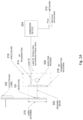
- Fig. 2A presents a schematic side view of the apparatus according one embodiment of the invention.
- the apparatus comprises a reader of the identifier of an electronic price label, which reader is an optical reader 220, e.g. a barcode reader, in the embodiment of Fig. 2A .
- the apparatus comprises means for sending a command to an electronic price label by means of a near field.
- the aforementioned means can comprise an RF transmitter 214 and an RF transmitter antenna 216 suited for transmitting via a near field.
- the aforementioned parts can be fitted into a rigid entity, e.g. into an enclosure 218.
- the electronic price label 102 is first taken into an area from which the identifier, e.g. barcode 101, of the electronic price label can be read.
- this area is the range of the reader beam 222 of the optical reader 220.
- the antenna 210 of the electronic price label is at a suitable distance for transmitting via a near field from a suitable RF antenna 216.
- information about the contents of the optical identifier of the label is sent to the central unit 224 of the apparatus.
- the apparatus sends a command after this to the electronic price label by means of the near field via the RF transmitter 214 and the antenna 216 of the RF transmitter.
- the command can be a label emptying command, a label extinguishing command and/or a command specifying a new price or some other data.
- the central unit of the apparatus can send information about the changes in the state of the electronic price label that occurred and/or were executed onwards via the network 212, e.g. to a POS system.
- the apparatus can also receive information intended to be sent to a certain electronic price label via a network, e.g. from a POS system. This type of information can be e.g. price information to be shown on the display of the electronic price label or extinguishing information.
- Fig. 2B presents a more detailed schematic top view of how the various components of the apparatus can be positioned in relation to each other in one embodiment of the invention.
- the antenna 216 transmitting by the aid of a near field and the optical reader 220 are arranged in such a way that they are on the same side of the electronic price label when the electronic price label is in a location and/or in an area in which reading of the identifier will succeed.
- the measuring beam 222 of the optical reader 220 is arranged in this embodiment to travel through an antenna 216 shaped into a rectangular rim.
- the antenna 216 transmitting by means of a near field and the optical reader 220 are arranged in such a way that a reading event of an optical identifier, e.g.
- a barcode 101, of an optical reader can be performed only from that location from which an antenna 216 transmitting via a near field can successfully send a command via the antenna 210 of an electronic price label to the electronic price label.
- the device according to this embodiment can be used e.g. as a portable device, which is pointed at and/or taken to the point of the optical identifier of an electronic price label, and by means of which a command can then be sent to the electronic price label by means of a near field.
- a location is formed for the electronic price label, into which location the electronic price label is placed for sending a reading event and for the sending of a command taking place by means of a near field.
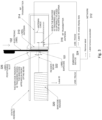
- Fig. 3 presents an example of an apparatus according to this embodiment of the invention, which is rigidly installable e.g. into connection with the checkout register.
- the antenna 316 transmitting by the aid of a near field and the optical reader 320 are arranged in such a way that they are on different sides of the electronic price label 102 when the electronic price label is in an area from which reading of the identifier 101 will succeed.
- This area is formed into a recess 326, onto the base of which the electronic price label is placed when it is desired to send commands to it by means of a near field.
- the top part of the recess can be shaped to taper, in which case the tapering shape of the recess guides an electronic price label being placed onto the base of the recess into the correct position.
- the measuring range of the optical reader is arranged in such a way that when an electronic price label 102 is on the base of the recess, the identifier 101 of the electronic price label is in range of the measuring beam 322 of the optical reader 320.
- the near field antenna 316 is arranged in such a way that when an electronic price label is on the base of the recess, the distance of the antenna 310 of the electronic price label from the antenna 226 transmitting by means of a near field is suitable for the sending of a command occurring via the near field.
- the reading event of the identifier of the electronic price label succeeds, and based on this, a command can be sent to the electronic price label by means of the near field via the RF transmitter 314 and the antenna 316 of the RF transmitter.
- the event can proceed e.g.
- a barcode reader which can be implemented by means of a laser, can be used as a reader of an optical identifier.
- the central unit 324 of the apparatus can send information about the changes in the state of the electronic price label that occurred and/or were executed onwards via the network 312, e.g. to a POS system.
- the apparatus can also receive information intended to be sent to a certain electronic price label via a network, e.g. from a POS system. This type of information can be e.g. price information to be shown on the display of the electronic price label or extinguishing information.
- individualizing identification data of an electronic price label is sent in association with a command, said data specifying for which electronic price label the command is intended.
- an electronic price label executes a command only if its own identification data corresponds to the identification data associated with the command.
- some other command than an emptying command and/or an extinguishing command can be sent to an electronic price label.
- a command can be e.g. a command containing a new state and/or price, and in this case an electronic price label can e.g. be made to change its price and/or its state via a near field.
- an electronic price label can e.g. be made to change its price and/or its state via a near field.
- other commands can be sent to an electronic price label in the examples above.
- a near field refers to data transfer and/or the sending of a command at close range.
- the maximum distance of the near field can be e.g. 20 cm, typically 4 - 5 cm. In the case of one embodiment of the invention, near field refers to a distance of 0 - 5 cm.
Landscapes
- Engineering & Computer Science (AREA)
- Physics & Mathematics (AREA)
- Theoretical Computer Science (AREA)
- General Physics & Mathematics (AREA)
- Computer Networks & Wireless Communication (AREA)
- Business, Economics & Management (AREA)
- Signal Processing (AREA)
- Computer Vision & Pattern Recognition (AREA)
- Artificial Intelligence (AREA)
- Accounting & Taxation (AREA)
- Finance (AREA)
- Microelectronics & Electronic Packaging (AREA)
- Computer Hardware Design (AREA)
- Electromagnetism (AREA)
- Toxicology (AREA)
- Health & Medical Sciences (AREA)
- General Health & Medical Sciences (AREA)
- Development Economics (AREA)
- Economics (AREA)
- Marketing (AREA)
- Strategic Management (AREA)
- General Business, Economics & Management (AREA)
- Cash Registers Or Receiving Machines (AREA)
- Display Racks (AREA)
- Near-Field Transmission Systems (AREA)
Claims (16)
- Procédé de gestion d'une étiquette de prix électronique avec un appareil, laquelle étiquette de prix électronique (103) comprend un identifiant optiquement lisible (101), un affichage (102) et un moyen de communication,dans lequel l'appareil comprend un emplacement pour placer l'étiquette de prix électronique, un moyen de lecture de l'identifiant optiquement lisible de l'étiquette de prix électronique et un moyen d'envoi (214, 216, 314, 316) d'une commande à une étiquette de prix électronique à l'aide d'un champ proche, dans lequel le moyen de lecture de l'identifiant d'une étiquette de prix électronique est un dispositif de lecture optique (220, 320), dans lequel le dispositif de lecture optique et le moyen d'envoi d'une commande sont intégrés dans l'appareil,caractérisé en ce que dans le procédé :- l'identifiant (101) dans l'étiquette de prix électronique est lu par le dispositif de lecture optique (220, 320) dans un emplacement pour l'étiquette de prix électronique,- sur la base de l'identifiant lu, une commande est envoyée par le moyen d'envoi (214, 216, 314, 316) d'une commande à l'étiquette de prix électronique dans l'emplacement, dans lequel la commande est envoyée en même temps que la lecture de l'identifiant de l'étiquette de prix électronique ou dans un délai de 0,01 à 2 secondes à compter de la lecture de l'identifiant (101) de l'étiquette de prix électronique, dans lequel la commande est une commande de vidage et/ou une commande d'extinction pour l'étiquette de prix électronique,- dans lequel le dispositif de lecture optique et le moyen d'envoi de la commande sont agencés de telle manière que la lecture de l'identifiant (101) ne réussit que lorsque l'étiquette de prix électronique est alignée sur une zone qui est l'emplacement pour placer l'étiquette de prix électronique dans laquelle fonctionne l'envoi de la commande.
- Procédé selon l'une quelconque des revendications précédentes, caractérisé en ce qu'un événement de vidage et/ou un événement d'extinction de l'étiquette de prix électronique (103) est enregistré dans une base de données.
- Procédé selon l'une quelconque des revendications précédentes, caractérisé en ce qu'une étiquette de prix électronique communique avec le système d'étiquette de prix électronique au moyen d'une communication radiofréquence.
- Procédé selon l'une quelconque des revendications précédentes, caractérisé en ce qu'une commande de vidage et/ou une commande d'extinction pour une étiquette de prix électronique est exécutée conjointement avec un événement d'achat, par exemple à la caisse enregistreuse.
- Appareil de gestion d'une étiquette de prix électronique, laquelle étiquette de prix électronique (103) comprend un identifiant optiquement lisible (101), un affichage (102) et un moyen de communication,l'appareil comprend un emplacement pour placer l'étiquette de prix électronique, un moyen de lecture de l'identifiant optiquement lisible de l'étiquette de prix électronique et un moyen d'envoi (214, 216, 314, 316) d'une commande à une étiquette de prix électronique à l'aide d'un champ proche, dans lequel le moyen de lecture de l'identifiant d'une étiquette de prix électronique est un dispositif de lecture optique (220, 320), dans lequel le dispositif de lecture optique et le moyen d'envoi d'une commande sont intégrés dans l'appareil,dans lequel le dispositif de lecture optique (220, 320) est conçu pour lire l'identifiant (101) dans l'étiquette de prix électronique lorsque l'étiquette de prix électronique se trouve dans l'emplacement,caractérisé en ce que,le moyen d'envoi (214, 216, 314, 316) d'une commande est conçu pour envoyer une commande, sur la base de l'identifiant lu, à l'étiquette de prix électronique lorsque l'étiquette de prix électronique se trouve dans l'emplacement, dans lequel la commande est envoyée en même temps que la lecture de l'identifiant (101) de l'étiquette de prix électronique ou dans les 0,01 à 2 secondes à compter de la lecture de l'identifiant (101) de l'étiquette de prix électronique, dans lequel la commande étant une commande de vidage et/ou une commande d'extinction pour l'étiquette de prix électronique,dans lequel le dispositif de lecture optique et le moyen d'envoi de la commande sont agencés de telle manière que la lecture de l'identifiant (101) ne réussit que lorsque l'étiquette de prix électronique est alignée sur une zone qui est l'emplacement pour placer l'étiquette de prix électronique dans laquelle fonctionne l'envoi de la commande.
- Appareil selon la revendication 5, caractérisé en ce que l'appareil est conçu pour transmettre des données concernant un événement de vidage et/ou concernant un événement d'extinction d'une étiquette de prix électronique (103) ou pour enregistrer lesdites données dans une base de données.
- Appareil selon la revendication 5 ou 6, caractérisé en ce qu'une étiquette de prix électronique (103) est conçue pour communiquer avec le système d'étiquette de prix électronique au moyen d'une communication radiofréquence.
- Appareil selon l'une quelconque des revendications 5 à 7, caractérisé en ce que les moyens d'envoi d'une commande à une étiquette de prix électronique à l'aide d'un champ proche comprennent une antenne (316) et le lecteur de l'identifiant d'une étiquette de prix électronique est agencé séparément de l'antenne (316).
- Appareil selon l'une quelconque des revendications 5 à 8, caractérisé en ce que les moyens d'envoi d'une commande à une étiquette de prix électronique à l'aide d'un champ proche comprennent une antenne (216) et un lecteur de l'identifiant d'une étiquette de prix électronique est agencé en connexion avec l'antenne (216).
- Appareil selon l'une quelconque des revendications 5 à 9, caractérisé en ce que l'antenne (216, 316) transmettant à l'aide d'un champ proche est en forme de jante, par exemple rectangulaire et/ou carrée ou toroïdale.
- Appareil selon l'une quelconque des revendications 5 à 10, caractérisé en ce que l'antenne (216) transmettant à l'aide d'un champ proche et le lecteur optique (220) sont agencés de telle manière qu'ils se trouvent du même côté de l'étiquette de prix électronique (103) lorsque l'étiquette de prix électronique se trouve dans un emplacement et/ou dans une zone à partir desquels la lecture de l'identifiant réussira.
- Appareil selon l'une quelconque des revendications 5 à 11, caractérisé en ce que l'antenne (316) transmettant au moyen d'un champ proche et le lecteur optique (320) sont agencés de telle manière qu'ils se trouvent sur des côtés différents de l'étiquette de prix électronique (103) lorsque l'étiquette de prix électronique se trouve dans un emplacement et/ou dans une zone à partir desquels la lecture de l'identifiant réussira.
- Appareil selon l'une quelconque des revendications 5 à 12, caractérisé en ce que l'appareil est agencé en connexion avec la caisse enregistreuse.
- Système d'étiquettes de prix électroniques, caractérisé en ce qu'il comprend au moins une station de base (104) et des étiquettes de prix électroniques (103) qui sont conçues pour communiquer avec la station de base (104) en utilisant une communication bidirectionnelle, dans lequel le système comprend en outre un appareil selon l'une quelconque des revendications 5 à 13 pour gérer une étiquette de prix électronique.
- Système d'étiquettes de prix électroniques selon la revendication 14, caractérisé en ce que la communication du système d'étiquettes de prix électroniques entre au moins une station de base (104) et les étiquettes de prix électroniques (103) est conçue pour avoir lieu sous forme de communication radiofréquence.
- Système d'étiquettes de prix électroniques selon la revendication 14 ou 15, caractérisé en ce que le système est conçu pour utiliser un système d'étiquettes de prix électroniques pour envoyer des informations relatives à un produit aux étiquettes de prix électroniques (103) et une étiquette de prix électronique (103) est conçue pour afficher sur son affichage (102) les informations reçues d'une station de base et relatives au produit.
Applications Claiming Priority (2)
| Application Number | Priority Date | Filing Date | Title |
|---|---|---|---|
| FI20165673A FI128567B (fi) | 2016-09-08 | 2016-09-08 | Järjestely ja menetelmä sähköisen hintalapun hallitsemiseksi ja sähköinen hintalappujärjestelmä |
| PCT/FI2017/050627 WO2018046798A1 (fr) | 2016-09-08 | 2017-09-06 | Agencement et procédé de gestion d'une étiquette de prix électronique, et système d'étiquette de prix électronique |
Publications (3)
| Publication Number | Publication Date |
|---|---|
| EP3510521A1 EP3510521A1 (fr) | 2019-07-17 |
| EP3510521A4 EP3510521A4 (fr) | 2020-04-29 |
| EP3510521B1 true EP3510521B1 (fr) | 2025-04-30 |
Family
ID=61562420
Family Applications (1)
| Application Number | Title | Priority Date | Filing Date |
|---|---|---|---|
| EP17848211.3A Active EP3510521B1 (fr) | 2016-09-08 | 2017-09-06 | Agencement et procédé de gestion d'une étiquette de prix électronique, et système d'étiquette de prix électronique |
Country Status (8)
| Country | Link |
|---|---|
| US (1) | US11631346B2 (fr) |
| EP (1) | EP3510521B1 (fr) |
| JP (1) | JP7212941B2 (fr) |
| DK (1) | DK3510521T3 (fr) |
| ES (1) | ES3031466T3 (fr) |
| FI (2) | FI128567B (fr) |
| RU (1) | RU2765347C2 (fr) |
| WO (1) | WO2018046798A1 (fr) |
Families Citing this family (1)
| Publication number | Priority date | Publication date | Assignee | Title |
|---|---|---|---|---|
| CN108924870B (zh) * | 2018-08-06 | 2022-06-24 | 上海保资智能科技有限公司 | 一种电子价签的使用方法及系统 |
Family Cites Families (14)
| Publication number | Priority date | Publication date | Assignee | Title |
|---|---|---|---|---|
| US6764002B1 (en) * | 1998-09-01 | 2004-07-20 | Ncr Corporation | System and method of displaying random weight item information by electronic price labels |
| EP2287817B1 (fr) | 2002-02-01 | 2012-05-23 | Datalogic Adc, Inc. | Systèmes et procédés pour la lecture de données et la détection et la désactivation d'étiquettes de système électronique de surveillance d'articles au niveau du contrôle des magasins |
| US7584888B2 (en) * | 2002-06-04 | 2009-09-08 | Industrial Technology Research Institute | Item tag with liquid crystal display and image |
| US20050173527A1 (en) * | 2004-02-11 | 2005-08-11 | International Business Machines Corporation | Product checkout system with anti-theft device |
| SE0400556D0 (sv) * | 2004-03-05 | 2004-03-05 | Pricer Ab | Electronic shelf labelling system, electronic label, handheld device and method in an electronic labelling system |
| US8061601B1 (en) * | 2006-08-07 | 2011-11-22 | Ncr Corporation | Methods and apparatus for establishing and maintaining electronic shelf label information |
| FI127537B (en) | 2012-04-11 | 2018-08-31 | Marisense Oy | Electronic label and electronic label system |
| JP5953255B2 (ja) * | 2013-03-19 | 2016-07-20 | 株式会社イシダ | 電子棚札システム |
| JP2015106249A (ja) | 2013-11-29 | 2015-06-08 | セイコーエプソン株式会社 | 販売システムおよび販売システムの制御方法 |
| KR20160003998A (ko) * | 2014-07-01 | 2016-01-12 | 주식회사 솔루엠 | 전자 라벨의 정보 갱신 방법 및 그에 따른 시스템 |
| KR102307196B1 (ko) | 2014-11-03 | 2021-09-30 | (주)에이텍아이오티 | 전자 가격 표시기 |
| US10130195B2 (en) * | 2015-11-20 | 2018-11-20 | R.J. Reynolds Tobacco Company | System and method for smart retail display |
| CN105550615B (zh) | 2016-01-20 | 2018-07-10 | 珠海东之旭科技有限公司 | 一种电子价格标签的启停系统及其方法 |
| CN107301358B (zh) * | 2016-04-14 | 2022-06-17 | 中兴通讯股份有限公司 | 无源电子标签、无源电子标签控制方法、装置及系统 |
-
2016
- 2016-09-08 FI FI20165673A patent/FI128567B/fi active IP Right Grant
-
2017
- 2017-09-06 ES ES17848211T patent/ES3031466T3/es active Active
- 2017-09-06 US US16/330,524 patent/US11631346B2/en active Active
- 2017-09-06 FI FIEP17848211.3T patent/FI3510521T3/fi active
- 2017-09-06 RU RU2019108607A patent/RU2765347C2/ru active
- 2017-09-06 WO PCT/FI2017/050627 patent/WO2018046798A1/fr not_active Ceased
- 2017-09-06 EP EP17848211.3A patent/EP3510521B1/fr active Active
- 2017-09-06 JP JP2019512798A patent/JP7212941B2/ja active Active
- 2017-09-06 DK DK17848211.3T patent/DK3510521T3/da active
Also Published As
| Publication number | Publication date |
|---|---|
| US20190228684A1 (en) | 2019-07-25 |
| JP2019535337A (ja) | 2019-12-12 |
| DK3510521T3 (da) | 2025-06-16 |
| US11631346B2 (en) | 2023-04-18 |
| RU2765347C2 (ru) | 2022-01-28 |
| RU2019108607A3 (fr) | 2021-01-18 |
| FI3510521T3 (fi) | 2025-07-11 |
| EP3510521A4 (fr) | 2020-04-29 |
| ES3031466T3 (en) | 2025-07-09 |
| FI128567B (fi) | 2020-08-14 |
| EP3510521A1 (fr) | 2019-07-17 |
| WO2018046798A1 (fr) | 2018-03-15 |
| RU2019108607A (ru) | 2020-10-08 |
| JP7212941B2 (ja) | 2023-01-26 |
| FI20165673A7 (fi) | 2018-03-09 |
Similar Documents
| Publication | Publication Date | Title |
|---|---|---|
| EP2836965B1 (fr) | Etiquette électronique et système d'étiquette électronique | |
| US11386814B2 (en) | Electronic price label and electronic price label system | |
| CA2795228C (fr) | Systeme d'etiquette de prix electronique | |
| US11948040B2 (en) | Electronic price label and electronic price label system | |
| RU2669145C2 (ru) | Компоновка, система и способ для уменьшения эффекта помех на радиочастотах в системе электронного ценника | |
| EP3510521B1 (fr) | Agencement et procédé de gestion d'une étiquette de prix électronique, et système d'étiquette de prix électronique | |
| EP3707664B1 (fr) | Procédé de transfert de données vers une étiquette de prix électronique, étiquette de prix électronique et système d'étiquette de prix électronique | |
| US8855568B2 (en) | Arrangement for reducing the effect of spurious signals in telecommunications at radio frequencies | |
| US20230067937A1 (en) | System and method for monitoring people in the store | |
| US10013698B2 (en) | Electronic price label and electronic price label system | |
| FI127223B (en) | ELECTRONIC PRICE LABEL AND ELECTRONIC PRICE LABEL | |
| EP3327649A1 (fr) | Étiquette de prix électronique et système électronique d'étiquette de prix |
Legal Events
| Date | Code | Title | Description |
|---|---|---|---|
| STAA | Information on the status of an ep patent application or granted ep patent |
Free format text: STATUS: THE INTERNATIONAL PUBLICATION HAS BEEN MADE |
|
| PUAI | Public reference made under article 153(3) epc to a published international application that has entered the european phase |
Free format text: ORIGINAL CODE: 0009012 |
|
| STAA | Information on the status of an ep patent application or granted ep patent |
Free format text: STATUS: REQUEST FOR EXAMINATION WAS MADE |
|
| 17P | Request for examination filed |
Effective date: 20190228 |
|
| AK | Designated contracting states |
Kind code of ref document: A1 Designated state(s): AL AT BE BG CH CY CZ DE DK EE ES FI FR GB GR HR HU IE IS IT LI LT LU LV MC MK MT NL NO PL PT RO RS SE SI SK SM TR |
|
| AX | Request for extension of the european patent |
Extension state: BA ME |
|
| DAV | Request for validation of the european patent (deleted) | ||
| DAX | Request for extension of the european patent (deleted) | ||
| A4 | Supplementary search report drawn up and despatched |
Effective date: 20200326 |
|
| RIC1 | Information provided on ipc code assigned before grant |
Ipc: G06K 7/015 20060101ALI20200321BHEP Ipc: G06Q 30/06 20120101ALI20200321BHEP Ipc: G06K 7/10 20060101AFI20200321BHEP Ipc: G06K 19/07 20060101ALI20200321BHEP Ipc: G09F 3/00 20060101ALI20200321BHEP Ipc: H04B 5/00 20060101ALI20200321BHEP |
|
| STAA | Information on the status of an ep patent application or granted ep patent |
Free format text: STATUS: EXAMINATION IS IN PROGRESS |
|
| 17Q | First examination report despatched |
Effective date: 20210831 |
|
| GRAP | Despatch of communication of intention to grant a patent |
Free format text: ORIGINAL CODE: EPIDOSNIGR1 |
|
| STAA | Information on the status of an ep patent application or granted ep patent |
Free format text: STATUS: GRANT OF PATENT IS INTENDED |
|
| INTG | Intention to grant announced |
Effective date: 20241219 |
|
| GRAS | Grant fee paid |
Free format text: ORIGINAL CODE: EPIDOSNIGR3 |
|
| GRAA | (expected) grant |
Free format text: ORIGINAL CODE: 0009210 |
|
| STAA | Information on the status of an ep patent application or granted ep patent |
Free format text: STATUS: THE PATENT HAS BEEN GRANTED |
|
| AK | Designated contracting states |
Kind code of ref document: B1 Designated state(s): AL AT BE BG CH CY CZ DE DK EE ES FI FR GB GR HR HU IE IS IT LI LT LU LV MC MK MT NL NO PL PT RO RS SE SI SK SM TR |
|
| REG | Reference to a national code |
Ref country code: CH Ref legal event code: EP Ref country code: GB Ref legal event code: FG4D |
|
| REG | Reference to a national code |
Ref country code: DE Ref legal event code: R096 Ref document number: 602017089238 Country of ref document: DE |
|
| REG | Reference to a national code |
Ref country code: IE Ref legal event code: FG4D |
|
| REG | Reference to a national code |
Ref country code: DK Ref legal event code: T3 Effective date: 20250610 |
|
| P01 | Opt-out of the competence of the unified patent court (upc) registered |
Free format text: CASE NUMBER: APP_22968/2025 Effective date: 20250514 |
|
| REG | Reference to a national code |
Ref country code: SE Ref legal event code: TRGR |
|
| REG | Reference to a national code |
Ref country code: ES Ref legal event code: FG2A Ref document number: 3031466 Country of ref document: ES Kind code of ref document: T3 Effective date: 20250709 Ref country code: NL Ref legal event code: FP |
|
| REG | Reference to a national code |
Ref country code: FI Ref legal event code: FGE |
|
| PG25 | Lapsed in a contracting state [announced via postgrant information from national office to epo] |
Ref country code: PT Free format text: LAPSE BECAUSE OF FAILURE TO SUBMIT A TRANSLATION OF THE DESCRIPTION OR TO PAY THE FEE WITHIN THE PRESCRIBED TIME-LIMIT Effective date: 20250901 |
|
| PGFP | Annual fee paid to national office [announced via postgrant information from national office to epo] |
Ref country code: FI Payment date: 20250929 Year of fee payment: 9 |
|
| PGFP | Annual fee paid to national office [announced via postgrant information from national office to epo] |
Ref country code: DK Payment date: 20250923 Year of fee payment: 9 Ref country code: DE Payment date: 20250919 Year of fee payment: 9 |
|
| REG | Reference to a national code |
Ref country code: LT Ref legal event code: MG9D |
|
| PG25 | Lapsed in a contracting state [announced via postgrant information from national office to epo] |
Ref country code: GR Free format text: LAPSE BECAUSE OF FAILURE TO SUBMIT A TRANSLATION OF THE DESCRIPTION OR TO PAY THE FEE WITHIN THE PRESCRIBED TIME-LIMIT Effective date: 20250731 Ref country code: NO Free format text: LAPSE BECAUSE OF FAILURE TO SUBMIT A TRANSLATION OF THE DESCRIPTION OR TO PAY THE FEE WITHIN THE PRESCRIBED TIME-LIMIT Effective date: 20250730 |
|
| PG25 | Lapsed in a contracting state [announced via postgrant information from national office to epo] |
Ref country code: PL Free format text: LAPSE BECAUSE OF FAILURE TO SUBMIT A TRANSLATION OF THE DESCRIPTION OR TO PAY THE FEE WITHIN THE PRESCRIBED TIME-LIMIT Effective date: 20250430 |
|
| PGFP | Annual fee paid to national office [announced via postgrant information from national office to epo] |
Ref country code: NL Payment date: 20250918 Year of fee payment: 9 Ref country code: IT Payment date: 20250923 Year of fee payment: 9 |
|
| PG25 | Lapsed in a contracting state [announced via postgrant information from national office to epo] |
Ref country code: BG Free format text: LAPSE BECAUSE OF FAILURE TO SUBMIT A TRANSLATION OF THE DESCRIPTION OR TO PAY THE FEE WITHIN THE PRESCRIBED TIME-LIMIT Effective date: 20250430 |
|
| PGFP | Annual fee paid to national office [announced via postgrant information from national office to epo] |
Ref country code: BE Payment date: 20250918 Year of fee payment: 9 Ref country code: GB Payment date: 20250919 Year of fee payment: 9 |
|
| PG25 | Lapsed in a contracting state [announced via postgrant information from national office to epo] |
Ref country code: HR Free format text: LAPSE BECAUSE OF FAILURE TO SUBMIT A TRANSLATION OF THE DESCRIPTION OR TO PAY THE FEE WITHIN THE PRESCRIBED TIME-LIMIT Effective date: 20250430 |
|
| PGFP | Annual fee paid to national office [announced via postgrant information from national office to epo] |
Ref country code: FR Payment date: 20250922 Year of fee payment: 9 Ref country code: AT Payment date: 20250919 Year of fee payment: 9 |
|
| PGFP | Annual fee paid to national office [announced via postgrant information from national office to epo] |
Ref country code: SE Payment date: 20250918 Year of fee payment: 9 |
|
| PG25 | Lapsed in a contracting state [announced via postgrant information from national office to epo] |
Ref country code: RS Free format text: LAPSE BECAUSE OF FAILURE TO SUBMIT A TRANSLATION OF THE DESCRIPTION OR TO PAY THE FEE WITHIN THE PRESCRIBED TIME-LIMIT Effective date: 20250731 |
|
| PGFP | Annual fee paid to national office [announced via postgrant information from national office to epo] |
Ref country code: IE Payment date: 20250918 Year of fee payment: 9 |
|
| PG25 | Lapsed in a contracting state [announced via postgrant information from national office to epo] |
Ref country code: IS Free format text: LAPSE BECAUSE OF FAILURE TO SUBMIT A TRANSLATION OF THE DESCRIPTION OR TO PAY THE FEE WITHIN THE PRESCRIBED TIME-LIMIT Effective date: 20250830 |
|
| PG25 | Lapsed in a contracting state [announced via postgrant information from national office to epo] |
Ref country code: LV Free format text: LAPSE BECAUSE OF FAILURE TO SUBMIT A TRANSLATION OF THE DESCRIPTION OR TO PAY THE FEE WITHIN THE PRESCRIBED TIME-LIMIT Effective date: 20250430 |
|
| PG25 | Lapsed in a contracting state [announced via postgrant information from national office to epo] |
Ref country code: SM Free format text: LAPSE BECAUSE OF FAILURE TO SUBMIT A TRANSLATION OF THE DESCRIPTION OR TO PAY THE FEE WITHIN THE PRESCRIBED TIME-LIMIT Effective date: 20250430 |
|
| PG25 | Lapsed in a contracting state [announced via postgrant information from national office to epo] |
Ref country code: CZ Free format text: LAPSE BECAUSE OF FAILURE TO SUBMIT A TRANSLATION OF THE DESCRIPTION OR TO PAY THE FEE WITHIN THE PRESCRIBED TIME-LIMIT Effective date: 20250430 |
|
| PG25 | Lapsed in a contracting state [announced via postgrant information from national office to epo] |
Ref country code: EE Free format text: LAPSE BECAUSE OF FAILURE TO SUBMIT A TRANSLATION OF THE DESCRIPTION OR TO PAY THE FEE WITHIN THE PRESCRIBED TIME-LIMIT Effective date: 20250430 |
|
| PG25 | Lapsed in a contracting state [announced via postgrant information from national office to epo] |
Ref country code: SK Free format text: LAPSE BECAUSE OF FAILURE TO SUBMIT A TRANSLATION OF THE DESCRIPTION OR TO PAY THE FEE WITHIN THE PRESCRIBED TIME-LIMIT Effective date: 20250430 Ref country code: RO Free format text: LAPSE BECAUSE OF FAILURE TO SUBMIT A TRANSLATION OF THE DESCRIPTION OR TO PAY THE FEE WITHIN THE PRESCRIBED TIME-LIMIT Effective date: 20250430 |
|
| PGFP | Annual fee paid to national office [announced via postgrant information from national office to epo] |
Ref country code: ES Payment date: 20251030 Year of fee payment: 9 |
|
| REG | Reference to a national code |
Ref country code: DE Ref legal event code: R097 Ref document number: 602017089238 Country of ref document: DE |
|
| PLBE | No opposition filed within time limit |
Free format text: ORIGINAL CODE: 0009261 |
|
| STAA | Information on the status of an ep patent application or granted ep patent |
Free format text: STATUS: NO OPPOSITION FILED WITHIN TIME LIMIT |
|
| REG | Reference to a national code |
Ref country code: CH Ref legal event code: L10 Free format text: ST27 STATUS EVENT CODE: U-0-0-L10-L00 (AS PROVIDED BY THE NATIONAL OFFICE) Effective date: 20260311 |
|
| 26N | No opposition filed |
Effective date: 20260202 |