EP3512155A1 - Verfahren und system zur bereitstellung des sicheren zugriffs auf artefakte in einer cloud-computing-umgebung - Google Patents
Verfahren und system zur bereitstellung des sicheren zugriffs auf artefakte in einer cloud-computing-umgebung Download PDFInfo
- Publication number
- EP3512155A1 EP3512155A1 EP18158831.0A EP18158831A EP3512155A1 EP 3512155 A1 EP3512155 A1 EP 3512155A1 EP 18158831 A EP18158831 A EP 18158831A EP 3512155 A1 EP3512155 A1 EP 3512155A1
- Authority
- EP
- European Patent Office
- Prior art keywords
- artifact
- tenant
- access token
- tenant device
- access
- Prior art date
- Legal status (The legal status is an assumption and is not a legal conclusion. Google has not performed a legal analysis and makes no representation as to the accuracy of the status listed.)
- Withdrawn
Links
Images


Classifications
-
- H—ELECTRICITY
- H04—ELECTRIC COMMUNICATION TECHNIQUE
- H04L—TRANSMISSION OF DIGITAL INFORMATION, e.g. TELEGRAPHIC COMMUNICATION
- H04L9/00—Cryptographic mechanisms or cryptographic arrangements for secret or secure communications; Network security protocols
- H04L9/32—Cryptographic mechanisms or cryptographic arrangements for secret or secure communications; Network security protocols including means for verifying the identity or authority of a user of the system or for message authentication, e.g. authorization, entity authentication, data integrity or data verification, non-repudiation, key authentication or verification of credentials
- H04L9/3236—Cryptographic mechanisms or cryptographic arrangements for secret or secure communications; Network security protocols including means for verifying the identity or authority of a user of the system or for message authentication, e.g. authorization, entity authentication, data integrity or data verification, non-repudiation, key authentication or verification of credentials using cryptographic hash functions
- H04L9/3239—Cryptographic mechanisms or cryptographic arrangements for secret or secure communications; Network security protocols including means for verifying the identity or authority of a user of the system or for message authentication, e.g. authorization, entity authentication, data integrity or data verification, non-repudiation, key authentication or verification of credentials using cryptographic hash functions involving non-keyed hash functions, e.g. modification detection codes [MDCs], MD5, SHA or RIPEMD
-
- H—ELECTRICITY
- H04—ELECTRIC COMMUNICATION TECHNIQUE
- H04L—TRANSMISSION OF DIGITAL INFORMATION, e.g. TELEGRAPHIC COMMUNICATION
- H04L9/00—Cryptographic mechanisms or cryptographic arrangements for secret or secure communications; Network security protocols
- H04L9/08—Key distribution or management, e.g. generation, sharing or updating, of cryptographic keys or passwords
- H04L9/0894—Escrow, recovery or storing of secret information, e.g. secret key escrow or cryptographic key storage
-
- G—PHYSICS
- G06—COMPUTING OR CALCULATING; COUNTING
- G06F—ELECTRIC DIGITAL DATA PROCESSING
- G06F11/00—Error detection; Error correction; Monitoring
- G06F11/36—Prevention of errors by analysis, debugging or testing of software
- G06F11/3604—Analysis of software for verifying properties of programs
- G06F11/3608—Analysis of software for verifying properties of programs using formal methods, e.g. model checking, abstract interpretation
-
- G—PHYSICS
- G06—COMPUTING OR CALCULATING; COUNTING
- G06F—ELECTRIC DIGITAL DATA PROCESSING
- G06F11/00—Error detection; Error correction; Monitoring
- G06F11/36—Prevention of errors by analysis, debugging or testing of software
- G06F11/3668—Testing of software
- G06F11/3672—Test management
- G06F11/3688—Test management for test execution, e.g. scheduling of test suites
-
- G—PHYSICS
- G06—COMPUTING OR CALCULATING; COUNTING
- G06F—ELECTRIC DIGITAL DATA PROCESSING
- G06F21/00—Security arrangements for protecting computers, components thereof, programs or data against unauthorised activity
- G06F21/30—Authentication, i.e. establishing the identity or authorisation of security principals
- G06F21/44—Program or device authentication
-
- G—PHYSICS
- G06—COMPUTING OR CALCULATING; COUNTING
- G06F—ELECTRIC DIGITAL DATA PROCESSING
- G06F21/00—Security arrangements for protecting computers, components thereof, programs or data against unauthorised activity
- G06F21/60—Protecting data
- G06F21/62—Protecting access to data via a platform, e.g. using keys or access control rules
- G06F21/6218—Protecting access to data via a platform, e.g. using keys or access control rules to a system of files or objects, e.g. local or distributed file system or database
-
- G—PHYSICS
- G06—COMPUTING OR CALCULATING; COUNTING
- G06F—ELECTRIC DIGITAL DATA PROCESSING
- G06F8/00—Arrangements for software engineering
- G06F8/60—Software deployment
-
- G—PHYSICS
- G06—COMPUTING OR CALCULATING; COUNTING
- G06F—ELECTRIC DIGITAL DATA PROCESSING
- G06F8/00—Arrangements for software engineering
- G06F8/70—Software maintenance or management
- G06F8/77—Software metrics
-
- G—PHYSICS
- G06—COMPUTING OR CALCULATING; COUNTING
- G06F—ELECTRIC DIGITAL DATA PROCESSING
- G06F9/00—Arrangements for program control, e.g. control units
- G06F9/06—Arrangements for program control, e.g. control units using stored programs, i.e. using an internal store of processing equipment to receive or retain programs
- G06F9/46—Multiprogramming arrangements
- G06F9/48—Program initiating; Program switching, e.g. by interrupt
- G06F9/4806—Task transfer initiation or dispatching
- G06F9/4843—Task transfer initiation or dispatching by program, e.g. task dispatcher, supervisor, operating system
- G06F9/485—Task life-cycle, e.g. stopping, restarting, resuming execution
-
- G—PHYSICS
- G06—COMPUTING OR CALCULATING; COUNTING
- G06F—ELECTRIC DIGITAL DATA PROCESSING
- G06F9/00—Arrangements for program control, e.g. control units
- G06F9/06—Arrangements for program control, e.g. control units using stored programs, i.e. using an internal store of processing equipment to receive or retain programs
- G06F9/46—Multiprogramming arrangements
- G06F9/50—Allocation of resources, e.g. of the central processing unit [CPU]
- G06F9/5005—Allocation of resources, e.g. of the central processing unit [CPU] to service a request
- G06F9/5027—Allocation of resources, e.g. of the central processing unit [CPU] to service a request the resource being a machine, e.g. CPUs, Servers, Terminals
-
- G—PHYSICS
- G06—COMPUTING OR CALCULATING; COUNTING
- G06F—ELECTRIC DIGITAL DATA PROCESSING
- G06F9/00—Arrangements for program control, e.g. control units
- G06F9/06—Arrangements for program control, e.g. control units using stored programs, i.e. using an internal store of processing equipment to receive or retain programs
- G06F9/46—Multiprogramming arrangements
- G06F9/50—Allocation of resources, e.g. of the central processing unit [CPU]
- G06F9/5061—Partitioning or combining of resources
- G06F9/5072—Grid computing
-
- H—ELECTRICITY
- H04—ELECTRIC COMMUNICATION TECHNIQUE
- H04L—TRANSMISSION OF DIGITAL INFORMATION, e.g. TELEGRAPHIC COMMUNICATION
- H04L41/00—Arrangements for maintenance, administration or management of data switching networks, e.g. of packet switching networks
- H04L41/04—Network management architectures or arrangements
- H04L41/046—Network management architectures or arrangements comprising network management agents or mobile agents therefor
-
- H—ELECTRICITY
- H04—ELECTRIC COMMUNICATION TECHNIQUE
- H04L—TRANSMISSION OF DIGITAL INFORMATION, e.g. TELEGRAPHIC COMMUNICATION
- H04L41/00—Arrangements for maintenance, administration or management of data switching networks, e.g. of packet switching networks
- H04L41/08—Configuration management of networks or network elements
- H04L41/0803—Configuration setting
- H04L41/0806—Configuration setting for initial configuration or provisioning, e.g. plug-and-play
-
- H—ELECTRICITY
- H04—ELECTRIC COMMUNICATION TECHNIQUE
- H04L—TRANSMISSION OF DIGITAL INFORMATION, e.g. TELEGRAPHIC COMMUNICATION
- H04L43/00—Arrangements for monitoring or testing data switching networks
- H04L43/50—Testing arrangements
-
- H—ELECTRICITY
- H04—ELECTRIC COMMUNICATION TECHNIQUE
- H04L—TRANSMISSION OF DIGITAL INFORMATION, e.g. TELEGRAPHIC COMMUNICATION
- H04L61/00—Network arrangements, protocols or services for addressing or naming
- H04L61/09—Mapping addresses
- H04L61/25—Mapping addresses of the same type
- H04L61/2503—Translation of Internet protocol [IP] addresses
- H04L61/2592—Translation of Internet protocol [IP] addresses using tunnelling or encapsulation
-
- H—ELECTRICITY
- H04—ELECTRIC COMMUNICATION TECHNIQUE
- H04L—TRANSMISSION OF DIGITAL INFORMATION, e.g. TELEGRAPHIC COMMUNICATION
- H04L63/00—Network architectures or network communication protocols for network security
- H04L63/08—Network architectures or network communication protocols for network security for authentication of entities
- H04L63/0807—Network architectures or network communication protocols for network security for authentication of entities using tickets, e.g. Kerberos
-
- H—ELECTRICITY
- H04—ELECTRIC COMMUNICATION TECHNIQUE
- H04L—TRANSMISSION OF DIGITAL INFORMATION, e.g. TELEGRAPHIC COMMUNICATION
- H04L63/00—Network architectures or network communication protocols for network security
- H04L63/10—Network architectures or network communication protocols for network security for controlling access to devices or network resources
-
- H—ELECTRICITY
- H04—ELECTRIC COMMUNICATION TECHNIQUE
- H04L—TRANSMISSION OF DIGITAL INFORMATION, e.g. TELEGRAPHIC COMMUNICATION
- H04L63/00—Network architectures or network communication protocols for network security
- H04L63/10—Network architectures or network communication protocols for network security for controlling access to devices or network resources
- H04L63/102—Entity profiles
-
- H—ELECTRICITY
- H04—ELECTRIC COMMUNICATION TECHNIQUE
- H04L—TRANSMISSION OF DIGITAL INFORMATION, e.g. TELEGRAPHIC COMMUNICATION
- H04L63/00—Network architectures or network communication protocols for network security
- H04L63/10—Network architectures or network communication protocols for network security for controlling access to devices or network resources
- H04L63/104—Grouping of entities
-
- H—ELECTRICITY
- H04—ELECTRIC COMMUNICATION TECHNIQUE
- H04L—TRANSMISSION OF DIGITAL INFORMATION, e.g. TELEGRAPHIC COMMUNICATION
- H04L67/00—Network arrangements or protocols for supporting network services or applications
- H04L67/01—Protocols
- H04L67/10—Protocols in which an application is distributed across nodes in the network
- H04L67/1097—Protocols in which an application is distributed across nodes in the network for distributed storage of data in networks, e.g. transport arrangements for network file system [NFS], storage area networks [SAN] or network attached storage [NAS]
-
- H—ELECTRICITY
- H04—ELECTRIC COMMUNICATION TECHNIQUE
- H04L—TRANSMISSION OF DIGITAL INFORMATION, e.g. TELEGRAPHIC COMMUNICATION
- H04L9/00—Cryptographic mechanisms or cryptographic arrangements for secret or secure communications; Network security protocols
- H04L9/08—Key distribution or management, e.g. generation, sharing or updating, of cryptographic keys or passwords
- H04L9/088—Usage controlling of secret information, e.g. techniques for restricting cryptographic keys to pre-authorized uses, different access levels, validity of crypto-period, different key- or password length, or different strong and weak cryptographic algorithms
-
- H—ELECTRICITY
- H04—ELECTRIC COMMUNICATION TECHNIQUE
- H04L—TRANSMISSION OF DIGITAL INFORMATION, e.g. TELEGRAPHIC COMMUNICATION
- H04L9/00—Cryptographic mechanisms or cryptographic arrangements for secret or secure communications; Network security protocols
- H04L9/32—Cryptographic mechanisms or cryptographic arrangements for secret or secure communications; Network security protocols including means for verifying the identity or authority of a user of the system or for message authentication, e.g. authorization, entity authentication, data integrity or data verification, non-repudiation, key authentication or verification of credentials
- H04L9/321—Cryptographic mechanisms or cryptographic arrangements for secret or secure communications; Network security protocols including means for verifying the identity or authority of a user of the system or for message authentication, e.g. authorization, entity authentication, data integrity or data verification, non-repudiation, key authentication or verification of credentials involving a third party or a trusted authority
- H04L9/3213—Cryptographic mechanisms or cryptographic arrangements for secret or secure communications; Network security protocols including means for verifying the identity or authority of a user of the system or for message authentication, e.g. authorization, entity authentication, data integrity or data verification, non-repudiation, key authentication or verification of credentials involving a third party or a trusted authority using tickets or tokens, e.g. Kerberos
-
- H—ELECTRICITY
- H04—ELECTRIC COMMUNICATION TECHNIQUE
- H04L—TRANSMISSION OF DIGITAL INFORMATION, e.g. TELEGRAPHIC COMMUNICATION
- H04L9/00—Cryptographic mechanisms or cryptographic arrangements for secret or secure communications; Network security protocols
- H04L9/32—Cryptographic mechanisms or cryptographic arrangements for secret or secure communications; Network security protocols including means for verifying the identity or authority of a user of the system or for message authentication, e.g. authorization, entity authentication, data integrity or data verification, non-repudiation, key authentication or verification of credentials
- H04L9/3226—Cryptographic mechanisms or cryptographic arrangements for secret or secure communications; Network security protocols including means for verifying the identity or authority of a user of the system or for message authentication, e.g. authorization, entity authentication, data integrity or data verification, non-repudiation, key authentication or verification of credentials using a predetermined code, e.g. password, passphrase or PIN
- H04L9/3228—One-time or temporary data, i.e. information which is sent for every authentication or authorization, e.g. one-time-password, one-time-token or one-time-key
-
- H—ELECTRICITY
- H04—ELECTRIC COMMUNICATION TECHNIQUE
- H04L—TRANSMISSION OF DIGITAL INFORMATION, e.g. TELEGRAPHIC COMMUNICATION
- H04L9/00—Cryptographic mechanisms or cryptographic arrangements for secret or secure communications; Network security protocols
- H04L9/32—Cryptographic mechanisms or cryptographic arrangements for secret or secure communications; Network security protocols including means for verifying the identity or authority of a user of the system or for message authentication, e.g. authorization, entity authentication, data integrity or data verification, non-repudiation, key authentication or verification of credentials
- H04L9/3236—Cryptographic mechanisms or cryptographic arrangements for secret or secure communications; Network security protocols including means for verifying the identity or authority of a user of the system or for message authentication, e.g. authorization, entity authentication, data integrity or data verification, non-repudiation, key authentication or verification of credentials using cryptographic hash functions
- H04L9/3242—Cryptographic mechanisms or cryptographic arrangements for secret or secure communications; Network security protocols including means for verifying the identity or authority of a user of the system or for message authentication, e.g. authorization, entity authentication, data integrity or data verification, non-repudiation, key authentication or verification of credentials using cryptographic hash functions involving keyed hash functions, e.g. message authentication codes [MACs], CBC-MAC or HMAC
-
- H—ELECTRICITY
- H04—ELECTRIC COMMUNICATION TECHNIQUE
- H04L—TRANSMISSION OF DIGITAL INFORMATION, e.g. TELEGRAPHIC COMMUNICATION
- H04L9/00—Cryptographic mechanisms or cryptographic arrangements for secret or secure communications; Network security protocols
- H04L9/32—Cryptographic mechanisms or cryptographic arrangements for secret or secure communications; Network security protocols including means for verifying the identity or authority of a user of the system or for message authentication, e.g. authorization, entity authentication, data integrity or data verification, non-repudiation, key authentication or verification of credentials
- H04L9/3247—Cryptographic mechanisms or cryptographic arrangements for secret or secure communications; Network security protocols including means for verifying the identity or authority of a user of the system or for message authentication, e.g. authorization, entity authentication, data integrity or data verification, non-repudiation, key authentication or verification of credentials involving digital signatures
-
- H—ELECTRICITY
- H04—ELECTRIC COMMUNICATION TECHNIQUE
- H04L—TRANSMISSION OF DIGITAL INFORMATION, e.g. TELEGRAPHIC COMMUNICATION
- H04L9/00—Cryptographic mechanisms or cryptographic arrangements for secret or secure communications; Network security protocols
- H04L9/32—Cryptographic mechanisms or cryptographic arrangements for secret or secure communications; Network security protocols including means for verifying the identity or authority of a user of the system or for message authentication, e.g. authorization, entity authentication, data integrity or data verification, non-repudiation, key authentication or verification of credentials
- H04L9/3271—Cryptographic mechanisms or cryptographic arrangements for secret or secure communications; Network security protocols including means for verifying the identity or authority of a user of the system or for message authentication, e.g. authorization, entity authentication, data integrity or data verification, non-repudiation, key authentication or verification of credentials using challenge-response
-
- G—PHYSICS
- G06—COMPUTING OR CALCULATING; COUNTING
- G06F—ELECTRIC DIGITAL DATA PROCESSING
- G06F21/00—Security arrangements for protecting computers, components thereof, programs or data against unauthorised activity
- G06F21/30—Authentication, i.e. establishing the identity or authorisation of security principals
- G06F21/31—User authentication
- G06F21/33—User authentication using certificates
- G06F21/335—User authentication using certificates for accessing specific resources, e.g. using Kerberos tickets
-
- G—PHYSICS
- G06—COMPUTING OR CALCULATING; COUNTING
- G06F—ELECTRIC DIGITAL DATA PROCESSING
- G06F8/00—Arrangements for software engineering
- G06F8/70—Software maintenance or management
-
- H—ELECTRICITY
- H04—ELECTRIC COMMUNICATION TECHNIQUE
- H04L—TRANSMISSION OF DIGITAL INFORMATION, e.g. TELEGRAPHIC COMMUNICATION
- H04L41/00—Arrangements for maintenance, administration or management of data switching networks, e.g. of packet switching networks
- H04L41/08—Configuration management of networks or network elements
- H04L41/0803—Configuration setting
- H04L41/084—Configuration by using pre-existing information, e.g. using templates or copying from other elements
- H04L41/0843—Configuration by using pre-existing information, e.g. using templates or copying from other elements based on generic templates
-
- H—ELECTRICITY
- H04—ELECTRIC COMMUNICATION TECHNIQUE
- H04L—TRANSMISSION OF DIGITAL INFORMATION, e.g. TELEGRAPHIC COMMUNICATION
- H04L41/00—Arrangements for maintenance, administration or management of data switching networks, e.g. of packet switching networks
- H04L41/50—Network service management, e.g. ensuring proper service fulfilment according to agreements
- H04L41/5041—Network service management, e.g. ensuring proper service fulfilment according to agreements characterised by the time relationship between creation and deployment of a service
- H04L41/5054—Automatic deployment of services triggered by the service manager, e.g. service implementation by automatic configuration of network components
-
- H—ELECTRICITY
- H04—ELECTRIC COMMUNICATION TECHNIQUE
- H04L—TRANSMISSION OF DIGITAL INFORMATION, e.g. TELEGRAPHIC COMMUNICATION
- H04L41/00—Arrangements for maintenance, administration or management of data switching networks, e.g. of packet switching networks
- H04L41/50—Network service management, e.g. ensuring proper service fulfilment according to agreements
- H04L41/5077—Network service management, e.g. ensuring proper service fulfilment according to agreements wherein the managed service relates to simple transport services, i.e. providing only network infrastructure
-
- H—ELECTRICITY
- H04—ELECTRIC COMMUNICATION TECHNIQUE
- H04L—TRANSMISSION OF DIGITAL INFORMATION, e.g. TELEGRAPHIC COMMUNICATION
- H04L63/00—Network architectures or network communication protocols for network security
- H04L63/08—Network architectures or network communication protocols for network security for authentication of entities
-
- H—ELECTRICITY
- H04—ELECTRIC COMMUNICATION TECHNIQUE
- H04L—TRANSMISSION OF DIGITAL INFORMATION, e.g. TELEGRAPHIC COMMUNICATION
- H04L67/00—Network arrangements or protocols for supporting network services or applications
- H04L67/01—Protocols
- H04L67/10—Protocols in which an application is distributed across nodes in the network
- H04L67/1001—Protocols in which an application is distributed across nodes in the network for accessing one among a plurality of replicated servers
Definitions
- the present invention relates to the field of cloud computing systems, and more particularly relates to a method and system for providing secure access to artifacts in a cloud computing environment.
- the devices may be remotely located from the cloud computing system.
- the devices can be equipments, sensors, actuators, robots, machinery in an industrial set-up(s).
- the devices can be medical devices and equipments in a healthcare facility.
- the devices can be home appliances or office appliances in a residential or commercial establishment.
- the cloud computing system may enable remotely configuring, monitoring, controlling, and maintaining connected devices. Also, the cloud computing system may facilitate storing large amounts of data periodically gathered from the devices, analyzing the large amounts of data, and providing insights e.g., Key Performance Indicators, Outliers) and alerts to operators, field engineers or owners of the devices via graphical user interface (e.g., of web applications). The insights and alerts may enable to control and maintain the devices, leading to efficient and fail-safe operation of the devices. The cloud computing system may also enable modifying parameters associated with the devices and issues control commands via the graphical user interface based on the insights and alerts.
- insights and alerts may enable to control and maintain the devices, leading to efficient and fail-safe operation of the devices.
- the cloud computing system may also enable modifying parameters associated with the devices and issues control commands via the graphical user interface based on the insights and alerts.
- the cloud computing system may comprise a plurality of servers or processors (also known as 'cloud infrastructure'), which are geographical distributed, connected with each other via a network.
- a dedicated platform (hereinafter referred to as 'cloud platform') is installed on the servers/processors for providing above functionality as an application (hereinafter referred to as 'cloud application').
- the cloud platform may comprise a plurality of software programs executed on one or more servers or processors of the cloud computing system to enable delivery of the requested applications to the devices and its users (hereinafter referred to as tenants).
- One or more artifacts are deployed in the cloud computing system to provide different applications to the tenants.
- the artifacts may include applications, simulation models, engineering configuration, application programming interfaces (APIs), and so on.
- an application for monitoring operation of robots in a manufacturing facility may be deployed as an artifact.
- the application may be capable of analyzing the data collected from the robots over a period of time.
- the tenant may subscribe to cloud applications which analyzes data associated with robots using the application, and displays the outcome of analysis (e.g., outliers) to the tenant via a web application on the tenant device.
- the cloud platform may enable a plurality of developers to develop the one or more artifacts. Also, the cloud platform may facilitate providers to deploy one or more artifacts developed by the developers in the cloud computing system to deliver cloud applications to one or more tenants of the cloud platform.
- a tenant may get access to artifacts deployed by different providers via the cloud platform by subscribing corresponding cloud applications. In other words, different tenants may have access to different artifacts from different providers. It is possible that one or more unauthorized tenants may get access to artifacts of different providers without subscribing to the corresponding cloud applications.
- the unauthorized tenants may access sensitive information belonging to authorized tenants as well as perform one or more vulnerable operations (such as modifying parameters) using the artifacts. Thus, unauthorized access of the artifacts may lead to higher security risks.
- the object of the present invention is achieved by a method for providing secure access to artifacts deployed in a cloud computing environment.
- the method comprises receiving a request for accessing an artifact from a tenant device via a communication network.
- the request comprises an access token having a unique identifier (ID) associated with the tenant device, and an artifact identifier associated with the artifact.
- the access token comprises one or more token attributes with the unique ID associated with the tenant device and the artifact identifier.
- the one or more token attributes comprises a random key, a current time-stamp, use attribute, permission attribute and the like.
- the artifact may include applications (application for monitoring a robot), simulation models, engineering configuration, digital twin models, code snippets, application programming interfaces (APIs), security applications, firmware and so on.
- the tenant device wants to access the artifact to avail a cloud applications.
- the method further comprises validating the access token with respect to the artifact requested to be accessed using the unique ID associated with the tenant device.
- the access token is unique to the tenant device.
- the access token is valid during an active session between the artifact and the tenant device. Prior to validating the access token, it may be determined whether there exist an active session with the tenant device based on the tenant identifier and the artifact identifier.
- An active session enables communication between the tenant device and one or more artifacts.
- the active session may be specific to each artifact, i.e., the tenant device can access a specific artifact over the active session. Alternatively, the active session may be specific to each tenant device, i.e., the tenant device can access different artifacts over the active session.
- the method comprises providing access to the artifact to the tenant device based on the successful validation of the access token.
- the method further comprises generating the access token for accessing the artifact. Further, the method comprises assigning the access token to the tenant device for accessing the artifact. Moreover, the method comprises storing the access token corresponding to the tenant device in a repository.
- the method in validating the access token with respect to the artifact requested to be accessed using the unique ID associated with the tenant device, comprises determining whether the access token received from the tenant device is valid based on the unique ID associated with the tenant device. If the access token is determined to be valid, then the method comprises determining one or more tenant privileges associated with the access token.
- the one or more tenant privileges comprises read only, write only, read and write, read, write and modify, delete, add, full-text access, access for basic information, options for data analytics on artifacts, option to store, restore or update any information related to the artifacts and the like.
- the one or more tenant privileges may not be limited to those described herein but may comprise any further privileges assigned to the tenant devices.
- the method comprises sending a validation successful message to the tenant device based on the determined one or more tenant privileges and further provides access to the requested artifact.
- the method in validating the access token with respect to the artifact requested to be accessed using the unique ID associated with the tenant device, the method comprises determining whether the access token received from the tenant device is valid based on the artifact identifier. If the access token is determined to be valid, then the method further comprises determining whether the access token is used previously or not. If the access token is not used previously, then the method comprises sending a validation successful message to the tenant device and providing an access to the requested artifact.
- the method comprises sending a validation error message to the tenant device if the access token is invalid.
- the method comprises sending a validation error message to the tenant device if the access token is used previously.
- the object of the present invention is also be achieved by a cloud computing system for providing secure access to artifacts.
- the cloud computing system may comprise one or more processing units and one or more memory units coupled to the one or more processing units.
- the one or more memory units comprise an authentication module stored in the form of machine-readable instructions and executable by the one or more processing units.
- the authentication module is configured for performing the method described above.
- the object of the invention can also be achieved by a cloud computing environment comprising a system and a plurality of tenant devices communicatively coupled to the system via a network to perform the method described above.
- the object of the invention can also be achieved by a computer-program product, having machine-readable instructions stored therein, that when executed by the one or more processing units, causes the one or more processing units to perform method steps as described above.
- the present invention discloses a method and system for providing a secure access to an artifact by validating an access token based on a tenant identifier and an artifact identifier.
- the present invention validates the access token based on the number of times the access token has been used previously. This mechanism ensures data security between tenant devices and a cloud computing system. Further, the present invention improves the performance of the cloud platform by having one time validation of the access token assigned to the tenant devices. Successfully validated tenant devices with detailed information are stored in a repository. When subsequent request(s) or response(s) are received from the tenant devices, the tenant devices are validated against the stored information in the repository using one or more unique identifiers.
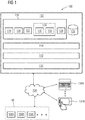
- FIG 1 is a schematic representation of a cloud computing environment 100 capable of providing secure access to artifacts, according to an embodiment of the present invention.
- FIG 1 depicts the cloud computing system 102 which is capable of delivering cloud applications for managing an industrial plant 106 comprising assets 108A-N.
- the cloud computing system 102 is connected to the assets 108A-N in the industrial plant 106 via a network 104 (e.g., Internet).
- the assets 108A-N may include servers, robots, switches, automation devices, motors, valves, pumps, actuators, sensors and other industrial equipments.
- FIG 1 illustrates the cloud computing system 102 connected to one industrial plant 106, one skilled in the art can envision that the cloud computing system 102 can be connected to several industrial plants located at different locations via the network 104.
- the cloud computing system 102 is also connected to tenant device(s) 134A-N via the network 104.
- the term “tenant devices” may alternatively be referred as “user devices” or “client devices” throughout the specification.
- the tenant devices 134A-N can access the cloud computing system 102 for managing and accessing artifacts using an access token.
- the tenant devices 134A-N store the information associated with the access token in a repository, such as repository 128.
- the tenant devices 134A-N of the present invention store the information associated with the access token. This improves the performance of the tenant devices 134A-N.
- the cloud computing system 102 is provided which is capable of providing secure access to artifacts.
- Exemplary artifacts may include applications (application for monitoring plant), simulation models, engineering configuration, digital twin models, code snippets, APIs, security applications, firmware and so on.
- the cloud computing system 102 is also connected to devices 134A-N via the network 104.
- the devices 134A-N can access the cloud computing system 102 for managing and accessing artifacts, and accessing cloud applications.
- the devices 134A-N can be a laptop computer, desktop computer, tablet computer, smartphone and the like.
- the devices 134A-N can access cloud applications (such as providing performance visualization of the assets 108A-N) via a web browser.
- the industrial plants 106 which have subscribed to the cloud applications from the cloud computing system 102 are hereinafter referred to as 'tenants' in the context of subscribing access to one or more artifacts deployed on the cloud computing system 102.
- the industrial plants 106 have subscribed to the cloud applications via the tenant devices 134A-N.
- the cloud computing system 102 comprises a cloud interface 110, cloud hardware and OS 112, cloud platform 114, and repository 128.
- the cloud interface 110 enables communication between the cloud platform 114 and the industrial plant 106. Also, the cloud interface 110 enables communication between the cloud platform 114 and the tenant devices 134A-N.
- the cloud hardware and OS 112 may include one or more servers on which an operating system (OS) is installed.
- the one or more servers comprises one or more processing units, one or more storage devices for storing data, and other peripherals required for providing cloud functionality.
- the cloud platform 114 is a platform which implements functionalities such as data storage, data analysis, data validation, data visualization, data communication on the cloud hardware and OS 112 via APIs and algorithms; and delivers the aforementioned cloud services using artifacts.
- the cloud platform 114 employs an authentication module 116 for providing a secure access to artifacts deployed on the cloud computing system 102.
- the cloud platform 114 may comprise a combination of dedicated hardware and software built on top of the cloud hardware and OS 112.
- the authentication module 116 is stored in the form of machine-readable instructions and executable by the cloud platform 114.
- the authentication module 116 comprises a request handler 118, a validation module 120, a tenant access management module 122, an artifact management module 124 and a token management module 126.
- the artifact management module 124 further comprises an artifact development module 130, and an artifact provisioning and monitoring module 132.
- the request handler 118 is configured to receive a request for accessing an artifact from tenant device (e.g., tenant device 134A) via the network 104.
- the request comprises an access token having a unique identifier (ID) associated with the tenant device(s) 134A-N and an artifact identifier.
- ID unique identifier
- the unique ID associated with the tenant device(s) 134A-N may be a unique sequence of numbers assigned specific to the tenant device(s) 134A-N.
- the unique ID associated with the tenant device(s) 134A-N may be generated using any mechanisms known in the art.
- the artifact identifier may be unique identifier assigned specific to artifacts deployed on the cloud platform 114. The artifact identifier may be generated using any mechanisms known in the art.
- the access token can be used by specific tenant device 134A for securely accessing subscribed artifacts.
- the access token comprises one or more token attributes and the unique ID associated with the tenant device(s) 134A-N and the artifact identifier.
- the one or more token attributes comprises a random key, current time-stamp, use attribute, permission attribute and the like.
- the validation module 120 is configured for validating the access token with respect to the artifact requested to be accessed and the unique ID associated with the tenant device 134A.
- the access token is unique to the tenant device 134A.
- the access token is valid during the active session between the artifact and the tenant device 134A-N. For example, it is first determined whether there exist an active session with the tenant device 134A-N based on the tenant identifier and the artifact identifier.
- An active session enables communication between the tenant device 134A-N and one or more artifacts.
- the active session may be specific to each artifact, i.e., the tenant device 134A-N can access a specific artifact over the active session.
- the active session may be specific to each tenant device 134A-N, i.e., the tenant device 134A-N can access different artifacts over the active session. If there exists an active session with the tenant device 134A-N, then the access token is validated further with respect to the tenant identifier and the artifact identifier. On the other hand, if it is determined that there exists no active session with the tenant device 134A-N, then a new active session is established with the tenant device 134A-N and then the access token is validated with respect to the tenant identifier and the artifact identifier. The process of validation of the access token takes place in two stages.
- the validation module 120 is configured for determining whether the access token received from the tenant device(s) 134A-N is valid based on the unique ID associated with the tenant device(s) 134A-N.
- the unique ID associated with the tenant device(s) 134A-N received in the request is compared with a pre-stored unique ID associated with the tenant device(s) 134A-N in the repository 128. If the unique ID associated with the tenant device(s) 134A-N matches with the pre-stored unique ID associated with the same tenant device(s) 134A-N, then the validation module 120 is configured to determine one or more tenant privileges associated with the access token. The one or more tenant privileges may be unique to the tenant device(s) 134A-N.
- the tenant device 134A may have the tenant privileges such as read and write only.
- the tenant device 134B may have the tenant privileges such as read, write and edit.
- the tenant privileges are dependent on user profile of each tenant devices 134A-N.
- the one or more privileges may be predefined for each user of the tenant device(s) 134A-N when a particular artifact is assigned to the tenant device 134A-N.
- the one or more tenant privileges may be defined during the registration of the tenant device(s) 134A-N based on privileges assigned to the tenant associated with the tenant devices 134A-N.
- the one or more tenant privileges may be modified, added or removed by the tenant administrator.
- the validation module 120 is configured to discard the request from the tenant device(s) 134A-N by sending a validation error message to the tenant device(s) 134A-N.
- the tenant device(s) 134A-N may request for registration with the cloud computing system 102. The process of registration of the tenant device(s) 134A-N is further explained below.
- the validation module 120 is configured for determining whether the access token received from the tenant device(s) 134A-N is valid based on the artifact identifier.
- the artifact identifier received in the request is compared to a pre-stored artifact identifier in the repository 128. If the artifact identifier comprised in the request matches with the pre-stored artifact identifier in the repository 128, then the validation module 120 is configured for determining whether the access token is used previously or not. This determination is made based on the 'use' attribute of the access token. If the 'use' attribute of the access token is marked as false, then the access token has not been used previously.
- the tenant device(s) 134A-N is using the access token for accessing the artifact for the first time.
- the validation module 120 is configured for sending a validation successful message to the tenant device(s) 134A-N.
- the validation module 120 is configured for discarding the request from the tenant device(s) 134A-N by sending a validation error message to the tenant device(s) 134A-N.
- the validation module 120 is configured for discarding the request from the tenant device(s) 134A-N by sending a validation error message to the tenant device(s) 134A-N.
- the tenant access management module 122 is configured for providing access to the artifact to the requested tenant device(s) 134A-N based on the successful validation of the access token.
- providing access to the requested artifact comprises performing at least one operation requested by the tenant device 134A-N by executing the artifact deployed in the cloud computing system 102.
- the at least one operation may include, but not limited to, modifying information associated with the artifact, publishing an artifact based on the one or more tenant privileges associated with the requesting tenant device 134A-N, and the like.
- the tenant access management module 122 is also configured for storing the access token associated with the corresponding tenant device(s) 134A-N in the repository 128 upon successful validation of the access token. If in case the validation of the access token is unsuccessful, then the tenant access management module 122 is configured for updating the corresponding entry of the access token in the repository 128.
- the access to the artifact to the tenant device(s) 134A-N may be for a particular duration of time. The duration of time may be predefined in the one or more tenant privileges. Also, the duration of the time may vary for each of the tenant devices 134A-N based on subscription by the tenant and permissions set by the tenant administrator.
- the artifact management module 124 is configured for managing access to artifacts.
- the artifact management module 124 comprises an artifact development module 130 and artifact provisioning and monitoring module 132.
- the artifact development module 130 is configured for generating a development environment for developing artifacts.
- the development environment is made accessible via a graphical user interface of the tenant device 134A-N.
- the artifact development module 130 is configured for generating an artifact package of the artifact using the development environment. If the artifact is an application, the artifact package may include binary code and a manifest file. Additionally, the artifact development module 130 is configured for testing the artifact package using one or more test scenarios via the development environment.
- the artifact development module 130 is configured to store the artifact in the repository 128 for validation and deployment purposes.
- the artifact development module 130 is configured to receive feedback on the artifact from the validation module 120, the tenant access management module 122 and the tenant devices 134A-N.
- the artifact development module 130 is configured to process the feedback and make necessary changes to the artifact so that the artifact can be deployed and used without any issues.
- the artifact development module 130 is configured for defining and managing one or more artifacts.
- the artifact development module 130 comprises one or more unique IDs assigned to one or more artifacts.
- the artifact development module 130 is capable of generating new artifacts and updating the new artifacts in the repository 128.
- the artifact development module 130 also assigns the respective unique ID for each of the generated artifacts.
- the artifact development module 130 also manages the modification of the artifacts and/or removal of the artifacts from the repository 128.
- the artifact provisioning and monitoring module 132 is configured to provision the deployed artifact to one or more tenant 106 of the cloud platform 114.
- artifact provisioning and monitoring module 132 is configured to assign the artifact to requesting tenant devices 134A-N.
- each tenant is assigned an artifact to its tenant devices 134A-N.
- said each tenant assigns at least one role defined for the artifact assigned to said each tenant. Consequently, the tenant device 134A-N has permissions corresponding to the assigned role to access the artifact.
- the roles and permissions corresponding to the artifact assigned to the tenant devices 134A-N are stored in the lookup table maintained in the repository 128. In an embodiment, the roles and permissions corresponds to the one or more tenant privileges described herein.
- the artifact provisioning and monitoring module 132 is configured to monitor behavior of the artifact deployed in the productive environment during runtime (execution time), and provide continuous feedback to the artifact development module 130, the tenant access management module 122, and the tenants 106 via the tenant devices 134A-N.
- the artifact management module 124 is configured for categorizing the artifacts as public and private. For example, if an artifact is categorized as private and configured as secure, the tenant device(s) 134A-N is allowed to access such artifacts only if tenant device(s) 134A-N has the one or more privileges to access such private artifacts. In an embodiment, such one or more privileges may comprise roles and permissions associated with the tenant device 134A-N. The determination of whether the tenant device(s) 134A-N has such privilege for accessing a private artifact is determined using the access token. In other words, the tenant device(s) 134A-N is allowed to access private artifacts only upon successful validation of the access token. In another exemplary embodiment, if an artifact is categorized as public, then all tenant device(s) 134A-N can access such artifacts categorized as public without having to use the access token.
- the token management module 126 is configured for generating the access token for accessing the artifacts.
- the access token may be generated by any known mechanisms in the art.
- the access tokens are generated randomly for a specific sessions to access a specific artifact.
- the token management module 126 may use SHA-2(256) algorithm for encrypting information associated with the access token and storing the information associated with the access token in the repository 128 in a predefined data format.
- the token management module 126 allows the tenant device(s) 134A-N to use the encrypted access token generated at the cloud platform 114 while requesting access to a specific artifact, the processing speed at the tenant device(s) 134A-N is increased as they need not have to encrypt the data at their end each time the tenant devices 134A-N requests access to the artifact with the cloud platform 114.
- the information associated with the access token may include a token value comprising a string value, a Boolean used, a string clientused, string permission and other attributes.
- the string value is a token value which acts as a token identifier.
- the Boolean used indicates whether the access token is used or not.
- the string clientused indicates a unique ID associated with the tenant device(s) 134A-N which has used the access token.
- the string permission indicates the one or more tenant privileges defined for the tenant device(s) 134A-N, for example, read, write, read or write and so on.
- the access tokens are generated for a specific artifact having specific tenant privileges and at a particular timestamp.
- the access tokens are generated randomly and such access tokens further comprises a randomKey attribute associated with it. Further, the information associated with the access token may further include the randomKey and an artifact identifier. For example, one access token is randomly generated for one tenant device(s) 134A-N and for accessing a particular artifact. The extent of access to such artifact is defined by the one or more privileges. In one embodiment, every token is used by the tenant device(s) 134A-N once. In other embodiments, the access token can be used by the tenant device(s) 134A-N for number of times specified in the access token.
- the validation fails and the tenant device(s) 134A-N is denied access to the artifact.
- the access token generated are unique for each tenant device(s) 134AN. In other words, no two tenant device(s) 134A-N shall have the same access token assigned to it. Moreover, the tenant device(s) 134A-N cannot access the same access token assigned to it more than once. This means that every time the tenant device(s) 134A-N requests to access an artifact, the access token is first validated and based on which the tenant device(s) 134A-N is provided access to the artifact.
- the token management module 126 requests the tenant device 134A-N to register with the cloud platform 114 to get access to the artifact. During the process of registration, a random access token is generated for the new tenant device(s) 134A-N and the random access token is assigned to the tenant device(s) 134A-N for accessing the requested artifact.
- the registration of the tenant device(s) 134A-N may include registering and storing any other information associated with the tenant device(s) 134A-N and creating a user profile for each of the registered tenant device(s) 134A-N.
- Each user profile is unique to each of the tenant device(s) 134A-N registered with the cloud platform 114. Each user profile may have specific permissions and privileges defined for the respective tenant device(s) 134A-N.
- the registration of the tenant device(s) 134A-N may be for specific duration.
- a tenant device(s) 134A-N may be registered for a specific period of time than the other. This is based on the information associated with the tenant device(s) 134A-N.
- the access token is assigned to the tenant device(s) 134A-N
- the access token is shared with the tenant device(s) 134A-N in order to enable the tenant device(s) 134A-N to access the artifact from the next request.
- the tenant device(s) 134A-N may request the cloud platform 114 to provide access to the specific artifact using the assigned access token. Since the tenant device(s) 134A-N is using the access token for the first time and is pre-registered with the cloud platform 114 for accessing the requested artifact, the tenant device(s) 134A-N is validated based on the access token and is provided access for the requested artifact.
- the token management module 126 along with validation module 120 discards such request. This is because any tenant device(s) 134A-N cannot use the same access token more than once for accessing the artifact.
- the tenant device(s) 134A-N uses the same access token for requesting access to another artifact for which the access token was not assigned for, then the tenant device(s) 134A-N shall be denied from accessing any such other artifact for which tenant device(s) 134AN is not registered for.
- the token management module 126 is configured for assigning the access token to the tenant device(s) 134A-N for accessing the artifact. Also, the token management module 126 is configured for storing the access token corresponding to the tenant device(s) 134A-N in the repository 128.
- FIG 2 is a process flowchart illustrating an exemplary method 200 of providing secure access to artifacts in a cloud computing environment 100, according to an embodiment of the present invention.
- an access token for accessing an artifact is generated.
- the access token is generated during the registration of the tenant device 134A-N with the cloud platform 114.
- the cloud platform 114 shall initiate the generation of specific access token unique to the tenant device 134A-N and unique to the specific artifact which is requested to be accessed.
- the access token is assigned to a tenant device(s) 134A-N for accessing the artifact.
- the access token is unique to the tenant device(s) 134A-N.
- the access token is valid during the active session between the artifact and the tenant device.
- the access token corresponding to the tenant device(s) 134A-N is stored in a database, such as repository 128.
- step 208 it is determined whether a request for accessing the artifact is received. If it is determined that the request for accessing the artifact is not received, then at step 210, the determination is further continued till a request for accessing the artifact is received. If it is determined that the request for accessing the artifact is received, the step 212 is performed.
- the request comprises an access token having a unique ID associated with the tenant device(s) 134A-N and an artifact identifier.
- the access token is validated with respect to the artifact requested to be accessed and the unique ID associated with the tenant device(s) 134AN. In an embodiment, the access token is validated in a manner described above.
- step 214 access to the artifact is provided to the requesting tenant device(s) 134A-N.
- step 216 the request is discarded and a validation error message is sent to requesting tenant device(s) 134A-N.
- FIG 3 is a block diagram of a validation module 120 capable of validating an access token with respect to an artifact requested to be accessed, according to an embodiment of the present invention.
- the validation module 120 comprises a tenant validation module 302, a request verification module 304 and a token attribute validation module 306.
- the tenant validation module 302 is configured for determining whether the access token received from the tenant device(s) 134A-N is valid based on the unique ID associated with the tenant device(s) 134A-N.
- the tenant validation module 302 is configured for comparing the unique ID tenant device received in the request with a pre-stored unique ID associated with the tenant device(s) 134A-N in the repository 128.
- the tenant validation module 302 is configured for determining one or more tenant privileges associated with the access token and declares the validation of the access token to be successful. Then, the tenant validation module 302 is configured for feeding the validation result to the request verification module 304. If in case the unique ID tenant device in the request does not match with the pre-stored unique ID associated with the tenant device(s) 134A-N in the repository 128, then the tenant validation module 302 is configured for sending validation error message to the requested tenant device(s) 134A-N and discards the request.
- the request verification module 304 is configured for determining whether the access token received from the tenant device(s) 134A-N is valid based on the artifact identifier (ID).
- ID artifact identifier
- the artifact ID which is present in the request is compared with a pre-stored artifact ID in the repository 128. It is determined whether the artifact ID which is present in the request matches with the pre-stored artifact ID in the repository 128.
- the repository 128 can comprise a lookup table where each tenant device(s) 134A-N is mapped to artifact IDs based on subscription of the artifacts by tenants associated with the tenant devices 134A-N.
- the request verification module 304 declares that the validation is successful. Once the artifact ID, present in the request is validated, the request verification module 304 feeds this validation result to the token attribute validation module 306. In an embodiment, the request verification module 304 sends a validation successful message to the tenant device(s) 134A-N. In an embodiment, the tenant device(s) 134A-N is provided access to the requested artifact based on the successful validation of the unique ID associated with the tenant device(s) 134A-N and the artifact ID.
- the tenant device(s) 134A-N is provided access to the requested artifact based on successful validation of the unique ID associated with the tenant device(s) 134A-N, the artifact ID and if the access token is determined to be used once.
- the token attribute validation module 306 is configured for determining whether the access token is used previously or not.
- the token attribute 'Boolean used' present in the received access token indicates whether the access token is used previously or not. For example, if the 'Boolean used' is marked as false, then the access token is identified to be not used previously.
- the Boolean used attribute is compared with a pre-stored 'use attribute' associated with the same access token in the repository 128. If the pre-stored 'use attribute' is marked as 'false', then the access token is identified to be not used previously.
- the token attribute validation module 306 is configured for informing the tenant access management module 122 on the validation success of the access token so that the tenant device(s) 134A-N is provided access for the requested artifact.
- the access token is identified to be used previously.
- the Boolean used attribute is compared with a pre-stored 'use attribute' associated with the same access token in the repository 128. If the pre-stored 'use attribute' is marked as 'true', then the access token is identified to be used previously.
- the token attribute validation module 306 is configured for discarding the request from the tenant device(s) 134A-N and sends a validation error message to the tenant device(s) 134A-N. Further, the token attribute validation module 306 is configured for informing the tenant access management module 122 on the validation failure of the access token so that the tenant device(s) 134A-N is denied access for the requested artifact. Further, the token attribute validation module 306 is configured for transferring the entry of the access token in the lookup table to a secondary storage (not shown) for future reference. This helps in improving the performance of the cloud platform 114 for maintaining the information of the access token in the repository 128 such that all unused entries are removed.
- a tenant device 134A wishes to access an application-B in the cloud platform 114. Assuming that the tenant device 134A is registered for accessing application-A. In this case, the tenant device 134A requests the cloud platform 114 for accessing the application-B using an access token. According to the embodiments described herein, the tenant device 134A is first authenticated based on the unique ID associated with the tenant device 134A. This indicates whether the tenant device 134A is even allowed to send any requests to the cloud platform 114.
- the process then proceeds further in determining whether the validated tenant device 134A is authorized to access the requested application-B based on the artifact identifier. This process is taken care by the request verification module 304.
- the request verification module 304 checks if the tenant device 134A is allowed to access the application-B using a look-up table in the repository 128. If it is determined that the tenant device 134A is not registered for accessing the application-B, then the request is discarded and the validation error message is sent to the tenant device 134A. In another scenario, assume that the tenant device 134A is registered for accessing application A and application B.
- the request verification module 304 successfully authorizes the tenant device 134A to access the application-B as the tenant device 134A is registered for accessing the application-B.
- the access token is also validated based on whether the access token is used previously or not. If the access token is determined as not used previously, then the tenant device 134A is provided access to application B. On the contrary, if the access token is determined as used previously, then the tenant device 134A is denied access to application B although it is registered to access application-B. This is because any tenant device(s) 134A-N can use the access token only once for accessing artifact.
- FIG 4 is a process flowchart illustrating an exemplary method 400 of validating the access token with respect to the artifact requested to be accessed, according to an embodiment of the present invention.
- step 402 it is determined whether the access token received from the tenant device(s) 134A-N is valid based on the unique ID associated with the tenant device(s) 134A-N. If it is determined that the access token is valid, then at step 404, the one or more tenant privileges associated with the access token is determined. Further, at step 406, a validation successful message is sent to the tenant device(s) 134A-N based on the determined one or more tenant privileges. If it is determined that the access token is not valid, then at step 408, a validation error message is sent to the tenant device(s) 134A-N.
- FIG 5 is a process flowchart illustrating an exemplary method 500 of validating the access token with respect to the artifact requested to be accessed, according to another embodiment of the present invention.
- step 502 it is determined whether the access token received from the tenant device(s) 134A-N is valid based on the artifact identifier. If the access token is determined to be valid, then at step 504, it is further determined whether the access token is used previously or not. If the access token is not used previously, then at step 508, a validation successful message is sent to the tenant device(s) 134A-N. If the access token is used previously, then at step 510, a validation error message is sent to the tenant device(s) 134A-N. On the other hand, if the access token is determined to be invalid, then at step 506, the request is discarded and a validation error message is sent to the tenant device(s) 134A-N.
- FIG 6 is a block diagram of cloud hardware and resources, such as those in shown in FIG 1 , showing various components to implement embodiments of the present invention.
- the cloud computing system 600 may be similar to the cloud computing system 102 as shown in FIG 1 .
- the cloud computing system 600 includes a processor(s) 602, a memory 604, a storage unit 606, an input-output unit 608, a communication interface 610, a display unit 612, and a bus 614.
- the processor(s) 602 may be one or more processing units (e.g., servers) capable of processing requests from the tenant device(s) 134A-N, and also from the plant environment 106.
- the processor(s) 602 may also include embedded controllers, such as generic or programmable logic devices or arrays, application specific integrated circuits, or FPGAs (Field Programmable Gate Arrays) and the like.
- the memory 604 may be volatile memory and non-volatile memory.
- the memory 604 includes an authentication module 116 for providing secure access to an artifact in cloud computing environment 100, according to one or more embodiments described herein.
- Memory elements may include any suitable memory device(s) for storing data and machine-readable instructions.
- the authentication module 116 may be stored in the form of machine-readable instructions on any of the above-mentioned storage media and may be executed by the processor(s) 602.
- a computer program may include machine-readable instructions which when executed by the processor(s) 602, may cause the processor(s) 602 to receive a request for accessing an artifact from the tenant device(s) 134A-N via the communication network 104, validate information associated with the access token with respect to the artifact requested to be accessed and the unique ID associated with the tenant device(s) 134A-N, and provide access to the artifact to the tenant device(s) 134A-N based on the successful validation of the access token, according to the teachings and herein described embodiments of the present subject matter.
- the program may be included on a compact disk-read only memory (CD-ROM) and loaded from the CD-ROM to a hard drive in the non-volatile memory.
- CD-ROM compact disk-read only memory
- the storage unit 606 includes a repository 128 configured for storing information associated with the access token, the unique ID associated with the tenant device(s) 134A-N, the artifact identifier and the information associated with artifact, such as artifacts and application hosted on the cloud platform 114. Further, the repository 128 is further configured for storing information associated with each user profile registered in the cloud platform 114. The user profile may include, such as but not limited to, profile identifier, tenant ID, artifacts subscribed, roles and permissions, and so on. Further, the repository 128 may be divided into three levels for handling traffic levels of data.
- the communication interface 610 is configured for establishing communication sessions between the tenant device(s) 134A-N and the cloud computing system 102.
- the communication interface is configured for establishing secure communication sessions between the industrial assets 108A-N, the tenant device(s) 134A-N and the cloud computing system 102.
- the display unit 612 is configured for displaying the artifact data (e.g., response) to which the access is provided to the tenant device(s) 134A-N via a graphical user interface.
- the bus 614 acts as interconnect between various components of the cloud computing system 600.
- the component such as the input device 608 is well known to the person skilled in the art and hence the explanation is thereof omitted.
- the present invention can take a form of a computer program product comprising program modules accessible from computer-usable or computer-readable medium storing program code for use by or in connection with one or more computers, processors, or instruction execution system.
- a computer-usable or computer-readable medium can be any apparatus that can contain, store, communicate, propagate, or transport the program for use by or in connection with the instruction execution system, apparatus, or device.
- the medium can be electronic, magnetic, optical, electromagnetic, infrared, or semiconductor system (or apparatus or device) or a propagation mediums in and of themselves as signal carriers are not included in the definition of physical computer-readable medium include a semiconductor or solid state memory, magnetic tape, a removable computer diskette, random access memory (RAM), a read only memory (ROM), a rigid magnetic disk and optical disk such as compact disk read-only memory (CD-ROM), compact disk read/write, and DVD.
- RAM random access memory
- ROM read only memory
- CD-ROM compact disk read-only memory
- DVD compact disk read/write
- Both processors and program code for implementing each aspect of the technology can be centralized or distributed (or a combination thereof) as known to those skilled in the art.
Landscapes
- Engineering & Computer Science (AREA)
- Computer Security & Cryptography (AREA)
- Theoretical Computer Science (AREA)
- Computer Networks & Wireless Communication (AREA)
- Signal Processing (AREA)
- General Engineering & Computer Science (AREA)
- Software Systems (AREA)
- Physics & Mathematics (AREA)
- General Physics & Mathematics (AREA)
- Computer Hardware Design (AREA)
- Computing Systems (AREA)
- Quality & Reliability (AREA)
- Power Engineering (AREA)
- Mathematical Physics (AREA)
- General Health & Medical Sciences (AREA)
- Bioethics (AREA)
- Health & Medical Sciences (AREA)
- Databases & Information Systems (AREA)
- Stored Programmes (AREA)
- Management, Administration, Business Operations System, And Electronic Commerce (AREA)
- Storage Device Security (AREA)
- Computer And Data Communications (AREA)
- Debugging And Monitoring (AREA)
Priority Applications (1)
| Application Number | Priority Date | Filing Date | Title |
|---|---|---|---|
| PCT/EP2019/050911 WO2019138128A1 (en) | 2018-01-15 | 2019-01-15 | Method and system for providing secure access to artifacts in a cloud computing environment |
Applications Claiming Priority (1)
| Application Number | Priority Date | Filing Date | Title |
|---|---|---|---|
| EP18151637.8A EP3511820A1 (de) | 2018-01-15 | 2018-01-15 | Cloud-basiertes artefakt-lebenszyklusverwaltungssystem und verfahren dafür |
Publications (1)
| Publication Number | Publication Date |
|---|---|
| EP3512155A1 true EP3512155A1 (de) | 2019-07-17 |
Family
ID=60997327
Family Applications (9)
| Application Number | Title | Priority Date | Filing Date |
|---|---|---|---|
| EP18151637.8A Withdrawn EP3511820A1 (de) | 2018-01-15 | 2018-01-15 | Cloud-basiertes artefakt-lebenszyklusverwaltungssystem und verfahren dafür |
| EP18157410.4A Pending EP3511822A1 (de) | 2018-01-15 | 2018-02-19 | Verfahren und system zur verwaltung des zugriffs auf artefakte in einer cloud-computing-umgebung |
| EP18157408.8A Pending EP3511821A1 (de) | 2018-01-15 | 2018-02-19 | Verfahren und system zur verwaltung des zugriffs auf artefakte in einer cloud-computing-umgebung |
| EP18158831.0A Withdrawn EP3512155A1 (de) | 2018-01-15 | 2018-02-27 | Verfahren und system zur bereitstellung des sicheren zugriffs auf artefakte in einer cloud-computing-umgebung |
| EP18730260.9A Active EP3724755B1 (de) | 2018-01-15 | 2018-05-25 | Artefakt-lebenszyklusverwaltung in einem cloud-computing-system |
| EP18730262.5A Withdrawn EP3740864A1 (de) | 2018-01-15 | 2018-05-25 | Sicherer einsatz von artefakten auf einer cloud-computing-plattform |
| EP19151636.8A Withdrawn EP3511823A1 (de) | 2018-01-15 | 2019-01-14 | Verfahren und system zur verwaltung von artefakten während ihres lebenszyklus auf einem cloud-computersystem |
| EP19151684.8A Withdrawn EP3511824A1 (de) | 2018-01-15 | 2019-01-14 | Verfahren und system zur bereitstellung von artefakten in einer cloud-computing-umgebung |
| EP19702010.0A Withdrawn EP3724756A1 (de) | 2018-01-15 | 2019-01-15 | Verfahren und system zur bereitstellung von artefakten in einer cloud-computing-umgebung |
Family Applications Before (3)
| Application Number | Title | Priority Date | Filing Date |
|---|---|---|---|
| EP18151637.8A Withdrawn EP3511820A1 (de) | 2018-01-15 | 2018-01-15 | Cloud-basiertes artefakt-lebenszyklusverwaltungssystem und verfahren dafür |
| EP18157410.4A Pending EP3511822A1 (de) | 2018-01-15 | 2018-02-19 | Verfahren und system zur verwaltung des zugriffs auf artefakte in einer cloud-computing-umgebung |
| EP18157408.8A Pending EP3511821A1 (de) | 2018-01-15 | 2018-02-19 | Verfahren und system zur verwaltung des zugriffs auf artefakte in einer cloud-computing-umgebung |
Family Applications After (5)
| Application Number | Title | Priority Date | Filing Date |
|---|---|---|---|
| EP18730260.9A Active EP3724755B1 (de) | 2018-01-15 | 2018-05-25 | Artefakt-lebenszyklusverwaltung in einem cloud-computing-system |
| EP18730262.5A Withdrawn EP3740864A1 (de) | 2018-01-15 | 2018-05-25 | Sicherer einsatz von artefakten auf einer cloud-computing-plattform |
| EP19151636.8A Withdrawn EP3511823A1 (de) | 2018-01-15 | 2019-01-14 | Verfahren und system zur verwaltung von artefakten während ihres lebenszyklus auf einem cloud-computersystem |
| EP19151684.8A Withdrawn EP3511824A1 (de) | 2018-01-15 | 2019-01-14 | Verfahren und system zur bereitstellung von artefakten in einer cloud-computing-umgebung |
| EP19702010.0A Withdrawn EP3724756A1 (de) | 2018-01-15 | 2019-01-15 | Verfahren und system zur bereitstellung von artefakten in einer cloud-computing-umgebung |
Country Status (4)
| Country | Link |
|---|---|
| US (3) | US20200358617A1 (de) |
| EP (9) | EP3511820A1 (de) |
| CN (3) | CN111819537A (de) |
| WO (8) | WO2019137637A1 (de) |
Cited By (2)
| Publication number | Priority date | Publication date | Assignee | Title |
|---|---|---|---|---|
| EP4428735A1 (de) * | 2023-03-07 | 2024-09-11 | Siemens Aktiengesellschaft | Verfahren und system zum betrieb eines verteilten simulations- und verarbeitungsrahmens |
| US20260074981A1 (en) * | 2024-09-07 | 2026-03-12 | Aviz Networks, Inc. | System and method of generating multi-vendor network fabric digital twins based on intent |
Families Citing this family (60)
| Publication number | Priority date | Publication date | Assignee | Title |
|---|---|---|---|---|
| EP3435272B1 (de) * | 2017-07-27 | 2020-11-04 | Siemens Aktiengesellschaft | Verfahren und vorrichtung zur identifikation eines additiv gefertigten werkstücks |
| EP3780551A1 (de) * | 2019-08-16 | 2021-02-17 | Siemens Aktiengesellschaft | Verfahren und system zur verwaltung von assets in einer cloud-computing-umgebung |
| EP3786740A1 (de) * | 2019-08-28 | 2021-03-03 | Siemens Aktiengesellschaft | System und verfahren zur verwaltung eines digitalen zwillings eines assets |
| US10942710B1 (en) | 2019-09-24 | 2021-03-09 | Rockwell Automation Technologies, Inc. | Industrial automation domain-specific language programming paradigm |
| US11048483B2 (en) | 2019-09-24 | 2021-06-29 | Rockwell Automation Technologies, Inc. | Industrial programming development with an extensible integrated development environment (IDE) platform |
| US11392112B2 (en) | 2019-09-26 | 2022-07-19 | Rockwell Automation Technologies, Inc. | Virtual design environment |
| US11080176B2 (en) | 2019-09-26 | 2021-08-03 | Rockwell Automation Technologies, Inc. | Testing framework for automation objects |
| US11042362B2 (en) | 2019-09-26 | 2021-06-22 | Rockwell Automation Technologies, Inc. | Industrial programming development with a trained analytic model |
| US11163536B2 (en) | 2019-09-26 | 2021-11-02 | Rockwell Automation Technologies, Inc. | Maintenance and commissioning |
| US11733687B2 (en) | 2019-09-26 | 2023-08-22 | Rockwell Automation Technologies, Inc. | Collaboration tools |
| US11769587B2 (en) * | 2019-10-08 | 2023-09-26 | GE Precision Healthcare LLC | Systems and methods to configure, program, and personalize a medical device using a digital assistant |
| US11748479B2 (en) * | 2019-10-15 | 2023-09-05 | UiPath, Inc. | Centralized platform for validation of machine learning models for robotic process automation before deployment |
| US11738453B2 (en) | 2019-10-15 | 2023-08-29 | UiPath, Inc. | Integration of heterogeneous models into robotic process automation workflows |
| CN110601912A (zh) * | 2019-11-14 | 2019-12-20 | 紫光云(南京)数字技术有限公司 | 一种物联网网关数据仿真设计系统和方法 |
| CN111107099B (zh) * | 2019-12-28 | 2021-12-03 | 北京工业大学 | 一种适用于混合云环境下的自适应访问控制方法 |
| JP7456217B2 (ja) * | 2020-03-18 | 2024-03-27 | 株式会社リコー | 情報処理システム、ユーザー作成方法 |
| US11308447B2 (en) | 2020-04-02 | 2022-04-19 | Rockwell Automation Technologies, Inc. | Cloud-based collaborative industrial automation design environment |
| EP3940564A1 (de) * | 2020-07-14 | 2022-01-19 | Siemens Aktiengesellschaft | Verfahren und computerimplementiertes werkzeug zur validierung von software-artefakten von anwendungen <apps>, die für plattformökosysteme bestimmt sind, und plattformökosystem |
| US11449028B2 (en) | 2020-09-03 | 2022-09-20 | Rockwell Automation Technologies, Inc. | Industrial automation asset and control project analysis |
| US11294360B2 (en) | 2020-09-09 | 2022-04-05 | Rockwell Automation Technologies, Inc. | Industrial automation project code development guidance and analysis |
| US11561517B2 (en) * | 2020-09-09 | 2023-01-24 | Rockwell Automation Technologies, Inc. | Industrial development hub vault and design tools |
| US12327210B2 (en) * | 2020-09-11 | 2025-06-10 | Rockwell Automation Technologies, Inc. | Digital engineering on an industrial development hub |
| CN114189848A (zh) * | 2020-09-14 | 2022-03-15 | 华为技术有限公司 | 通信设备间的关联方法和装置 |
| US11415969B2 (en) | 2020-09-21 | 2022-08-16 | Rockwell Automation Technologies, Inc. | Connectivity to an industrial information hub |
| US11796983B2 (en) | 2020-09-25 | 2023-10-24 | Rockwell Automation Technologies, Inc. | Data modeling and asset management using an industrial information hub |
| CN112394954B (zh) * | 2020-12-03 | 2023-07-04 | 中国人民解放军国防科技大学 | 一种面向高性能计算的随作业自动部署运行环境方法 |
| US11216261B1 (en) | 2020-12-07 | 2022-01-04 | International Business Machines Corporation | Deployment in cloud using digital replicas |
| CN112598374A (zh) * | 2020-12-16 | 2021-04-02 | 炬星科技(深圳)有限公司 | 机器人生命周期管理方法、设备及存储介质 |
| US20220198404A1 (en) * | 2020-12-23 | 2022-06-23 | International Business Machines Corporation | Asset health score based on digital twin resources |
| US12001822B2 (en) * | 2021-02-01 | 2024-06-04 | Capital One Services, Llc | Multi-signature validation of deployment artifacts |
| US12189779B1 (en) * | 2021-02-01 | 2025-01-07 | Wiz, Inc. | Detection of cyber threats embedded in cloud applications |
| US11461091B2 (en) * | 2021-02-03 | 2022-10-04 | Oracle International Corporation | System and method for creating or updating tenant artifacts by a multi-tenant cloud service |
| EP4047476A1 (de) * | 2021-02-18 | 2022-08-24 | Siemens Aktiengesellschaft | Systeme und verfahren zur erleichterung der autorisierung von computerprogramminstallationen in einem offenen industriellen ökosystem |
| US11095756B1 (en) * | 2021-03-26 | 2021-08-17 | Flueid Software Corporation | Multi-tenant computer systems for producing service results in response to service requests from client compute devices, and methods for the same |
| US20220318006A1 (en) * | 2021-03-31 | 2022-10-06 | Mastercard Technologies Canada ULC | Secure data enclave |
| US11550567B2 (en) * | 2021-04-04 | 2023-01-10 | International Business Machines Corporation | User and entity behavior analytics of infrastructure as code in pre deployment of cloud infrastructure |
| US11853100B2 (en) * | 2021-04-12 | 2023-12-26 | EMC IP Holding Company LLC | Automated delivery of cloud native application updates using one or more user-connection gateways |
| US12066922B2 (en) * | 2021-04-19 | 2024-08-20 | Walmart Apollo, Llc | System and methods for deploying a distributed architecture system |
| EP4334817A1 (de) * | 2021-05-04 | 2024-03-13 | Services Pétroliers Schlumberger | Anwendungslebenszyklusverwaltung |
| US11748334B2 (en) * | 2021-06-04 | 2023-09-05 | Oracle International Corporation | Techniques for data asset discovery |
| CN113688039B (zh) * | 2021-08-20 | 2023-10-31 | 成都天奥测控技术有限公司 | 一种基于数字孪生的自动测试系统仿真验证方法 |
| CN113626066A (zh) * | 2021-08-27 | 2021-11-09 | 国家超级计算无锡中心 | 应用于工业仿真平台的方法及系统 |
| CN115776377B (zh) * | 2021-09-03 | 2025-10-31 | 维沃移动通信有限公司 | 数字孪生任务授权方法、装置、通信设备及可读存储介质 |
| US12367320B2 (en) * | 2021-09-22 | 2025-07-22 | Ridgeline, Inc. | Mechanism for real-time identity resolution in a distributed system |
| US11321064B1 (en) * | 2021-10-04 | 2022-05-03 | CTRL IQ, Inc. | Systems and methods for trusted and secure application deployment via collective signature verification of the application artifacts |
| US11797316B2 (en) | 2021-10-08 | 2023-10-24 | Bank Of America Corporation | System and method for automatic generation and management of feature level application directory |
| CN114205276B (zh) * | 2021-12-01 | 2023-07-14 | 北京数码大方科技股份有限公司 | 用于产品管理系统的性能测试方法及装置、电子设备 |
| US12406015B2 (en) * | 2022-02-08 | 2025-09-02 | Black Duck Software, Inc. | Correlating open source component matching results using different scanning techniques |
| US12141562B2 (en) * | 2022-02-17 | 2024-11-12 | Microsoft Technology Licensing, Llc. | Declarative deployment of a software artifact |
| US20250103398A1 (en) * | 2022-09-07 | 2025-03-27 | Wells Fargo Bank, N.A. | Temporary communication systems |
| US11755380B1 (en) | 2023-02-16 | 2023-09-12 | Flueid Software Corporation | Methods and apparatus for a multi-tenant computer system for producing service results by matching and resolving conflicts of service requests from client compute devices |
| US20240362065A1 (en) * | 2023-04-28 | 2024-10-31 | Oracle International Corporation | Deployment Control Over Cloud Resources |
| US12192054B1 (en) | 2023-06-13 | 2025-01-07 | Wells Fargo Bank, N.A. | Automated provisioning of temporary communication systems |
| US12432249B2 (en) | 2023-07-06 | 2025-09-30 | Wells Fargo Bank, N.A. | Automated changing of address for temporary communication systems |
| US20250045123A1 (en) * | 2023-08-03 | 2025-02-06 | Oracle International Corporation | Systems and methods for automated deployment of cloud assets |
| US12418539B2 (en) | 2023-12-14 | 2025-09-16 | Oracle International Corporation | Re-executing an authorization process to determine an updated set of authorized actions that may be initiated by a computing entity during a session |
| US12494901B2 (en) | 2024-01-11 | 2025-12-09 | Oracle International Corporation | Issuing surrogate credentials for accessing target resources |
| US20250231862A1 (en) * | 2024-01-17 | 2025-07-17 | Bank Of America Corporation | System and method for artificial intelligence-based detection and remediation of issues during software onboarding and deployment |
| CN118331764B (zh) * | 2024-06-07 | 2024-08-09 | 北京凌云雀科技有限公司 | 一种基于Kubernetes平台的远程数据处理方法及装置 |
| CN121233155B (zh) * | 2025-12-03 | 2026-04-21 | 成都大成均图科技有限公司 | 基于热更新的模块化开发生命周期管理方法、系统及设备 |
Citations (3)
| Publication number | Priority date | Publication date | Assignee | Title |
|---|---|---|---|---|
| US8417723B1 (en) * | 2008-09-12 | 2013-04-09 | Salesforce.Com, Inc. | System, method and computer program product for enabling access to a resource of a multi-tenant on-demand database service utilizing a token |
| US9774586B1 (en) * | 2015-08-31 | 2017-09-26 | EMC IP Holding Company LLC | Dynamic authorization of users in a multi-tenant environment using tenant authorization profiles |
| US20170331829A1 (en) * | 2016-05-11 | 2017-11-16 | Oracle International Corporation | Security tokens for a multi-tenant identity and data security management cloud service |
Family Cites Families (48)
| Publication number | Priority date | Publication date | Assignee | Title |
|---|---|---|---|---|
| US20030233585A1 (en) * | 2002-06-17 | 2003-12-18 | Microsoft Corporation | System and method for reducing errors during software development |
| US20140201218A1 (en) * | 2008-06-19 | 2014-07-17 | Servicemesh, Inc. | Systems and methods for providing ranked deployment options |
| US10411975B2 (en) * | 2013-03-15 | 2019-09-10 | Csc Agility Platform, Inc. | System and method for a cloud computing abstraction with multi-tier deployment policy |
| US20110126168A1 (en) * | 2009-11-25 | 2011-05-26 | Crowdsource Technologies Ltd. | Cloud plarform for managing software as a service (saas) resources |
| US20110126197A1 (en) * | 2009-11-25 | 2011-05-26 | Novell, Inc. | System and method for controlling cloud and virtualized data centers in an intelligent workload management system |
| US8607054B2 (en) * | 2010-10-15 | 2013-12-10 | Microsoft Corporation | Remote access to hosted virtual machines by enterprise users |
| US9244709B2 (en) * | 2011-06-13 | 2016-01-26 | Microsoft Technology Licensing, Llc | Automatic recognition of web application |
| US9170798B2 (en) * | 2012-03-02 | 2015-10-27 | Vmware, Inc. | System and method for customizing a deployment plan for a multi-tier application in a cloud infrastructure |
| CN102404381A (zh) * | 2011-09-02 | 2012-04-04 | 西安交通大学 | 一种云计算环境下基于工作流的软件部署系统及部署方法 |
| US9544294B2 (en) * | 2011-09-29 | 2017-01-10 | Oracle International Corporation | Pluggable authorization policies |
| US20130219307A1 (en) * | 2012-02-21 | 2013-08-22 | Artisan Mobile, Inc. | System and method for runtime user interface management |
| US9047133B2 (en) * | 2012-03-02 | 2015-06-02 | Vmware, Inc. | Single, logical, multi-tier application blueprint used for deployment and management of multiple physical applications in a cloud environment |
| US9842002B2 (en) * | 2012-05-01 | 2017-12-12 | Red Hat, Inc. | Node selection for a new application in a multi-tenant cloud hosting environment |
| US9378255B2 (en) * | 2012-05-11 | 2016-06-28 | Sap Se | Cloud logistics |
| EP2859460A4 (de) * | 2012-06-08 | 2016-01-06 | Hewlett Packard Development Co | Test und verwaltung für cloud-anwendungen |
| US9063746B2 (en) * | 2012-06-22 | 2015-06-23 | Sap Se | Deployment of software applications on a cloud computing platform |
| US8881244B2 (en) * | 2012-08-13 | 2014-11-04 | International Business Machines Corporation | Authorizing computing resource access based on calendar events in a networked computing environment |
| US10419524B2 (en) * | 2012-09-07 | 2019-09-17 | Oracle International Corporation | System and method for workflow orchestration for use with a cloud computing environment |
| US9369456B2 (en) * | 2012-09-21 | 2016-06-14 | Intuit Inc. | Single sign-on in multi-tenant environments |
| US9009705B2 (en) * | 2012-10-01 | 2015-04-14 | International Business Machines Corporation | Authenticated distribution of virtual machine images |
| KR20150132499A (ko) * | 2013-03-15 | 2015-11-25 | 멘터 그래픽스 코포레이션 | 클라우드 서비스 플랫폼 |
| US9043458B2 (en) * | 2013-03-19 | 2015-05-26 | Cognizant Technology Solutions India Pvt. Ltd. | Framework for facilitating implementation of multi-tenant SaaS architecture |
| WO2015065374A1 (en) * | 2013-10-30 | 2015-05-07 | Hewlett-Packard Development Company, L.P. | Management of the lifecycle of a cloud service modeled as a topology |
| US9760358B2 (en) * | 2013-10-30 | 2017-09-12 | Oracle International Corporation | System and method for test to production support in a cloud platform environment |
| US9584615B2 (en) * | 2013-11-27 | 2017-02-28 | Adobe Systems Incorporated | Redirecting access requests to an authorized server system for a cloud service |
| US9383984B2 (en) * | 2014-01-13 | 2016-07-05 | International Business Machines Corporation | Seal-based regulation for software deployment management |
| WO2015108748A1 (en) * | 2014-01-17 | 2015-07-23 | Fair Isaac Corporation | Cloud-based decision management platform |
| US9639426B2 (en) * | 2014-01-24 | 2017-05-02 | Commvault Systems, Inc. | Single snapshot for multiple applications |
| CN105100127B (zh) * | 2014-04-22 | 2018-06-05 | 国际商业机器公司 | 用于验证在云计算环境中的应用部署拓扑的设备和方法 |
| US10129344B2 (en) * | 2014-06-19 | 2018-11-13 | Microsoft Technology Licensing, Llc | Integrated user interface for consuming services across different distributed networks |
| CN105323282B (zh) * | 2014-07-28 | 2018-12-04 | 神州数码信息系统有限公司 | 一种面向多租户的企业应用部署与管理系统 |
| US9952856B2 (en) * | 2014-08-01 | 2018-04-24 | Sap Se | Deploying mobile applications in a collaborative cloud environment |
| US20160048688A1 (en) * | 2014-08-14 | 2016-02-18 | Google Inc. | Restricting System Calls using Protected Storage |
| US9348571B2 (en) * | 2014-08-25 | 2016-05-24 | General Electric Company | Method, device, and program storage device for autonomous software life cycle management |
| US9391972B2 (en) * | 2014-09-12 | 2016-07-12 | Oracle International Corporation | Multi-tenant application using hierarchical bean factory container |
| US9514031B2 (en) * | 2014-09-22 | 2016-12-06 | International Business Machines Corporation | Auto-deployment and testing of system application test cases in remote server environments |
| US9876822B2 (en) * | 2014-11-28 | 2018-01-23 | International Business Machines Corporation | Administration of a context-based cloud security assurance system |
| US10063537B2 (en) * | 2014-12-19 | 2018-08-28 | Microsoft Technology Licensing, Llc | Permission architecture for remote management and capacity instances |
| US9477454B2 (en) * | 2015-02-12 | 2016-10-25 | Ca, Inc. | Automated software deployment |
| US10353703B1 (en) * | 2016-01-28 | 2019-07-16 | BrainFights, Inc. | Automated evaluation of computer programming |
| US11223536B2 (en) * | 2016-04-04 | 2022-01-11 | At&T Intellectual Property I, L.P. | Model driven process for automated deployment of domain 2.0 virtualized services and applications on cloud infrastructure |
| US10454940B2 (en) * | 2016-05-11 | 2019-10-22 | Oracle International Corporation | Identity cloud service authorization model |
| US10409589B2 (en) * | 2016-07-12 | 2019-09-10 | Accenture Global Solutions Limited | Application centric continuous integration and delivery with automated service assurance |
| US10929573B2 (en) * | 2017-03-21 | 2021-02-23 | The Boeing Company | Systems and methods for designing and modeling products in a cloud environment |
| US10394697B2 (en) * | 2017-05-15 | 2019-08-27 | International Business Machines Corporation | Focus area integration test heuristics |
| US10353798B1 (en) * | 2017-07-05 | 2019-07-16 | Amazon Technologies, Inc. | Rapid development environment |
| EP3602306B1 (de) * | 2017-11-10 | 2022-10-26 | Google LLC | Triagesystem und -techniken für automatisierte vorrichtungstests |
| US10353716B2 (en) * | 2017-11-13 | 2019-07-16 | International Business Machines Corporation | Automated deployment and performance evaluation of a virtualized-computing environment |
-
2018
- 2018-01-15 EP EP18151637.8A patent/EP3511820A1/de not_active Withdrawn
- 2018-02-19 EP EP18157410.4A patent/EP3511822A1/de active Pending
- 2018-02-19 EP EP18157408.8A patent/EP3511821A1/de active Pending
- 2018-02-27 EP EP18158831.0A patent/EP3512155A1/de not_active Withdrawn
- 2018-05-25 CN CN201880091306.9A patent/CN111819537A/zh active Pending
- 2018-05-25 WO PCT/EP2018/063760 patent/WO2019137637A1/en not_active Ceased
- 2018-05-25 US US16/961,341 patent/US20200358617A1/en not_active Abandoned
- 2018-05-25 WO PCT/EP2018/063758 patent/WO2019137635A1/en not_active Ceased
- 2018-05-25 EP EP18730260.9A patent/EP3724755B1/de active Active
- 2018-05-25 WO PCT/EP2018/063759 patent/WO2019137636A1/en not_active Ceased
- 2018-05-25 EP EP18730262.5A patent/EP3740864A1/de not_active Withdrawn
- 2018-05-25 US US16/961,334 patent/US11652641B2/en active Active
- 2018-05-25 CN CN201880091307.3A patent/CN111819538B/zh active Active
-
2019
- 2019-01-14 EP EP19151636.8A patent/EP3511823A1/de not_active Withdrawn
- 2019-01-14 EP EP19151684.8A patent/EP3511824A1/de not_active Withdrawn
- 2019-01-15 WO PCT/EP2019/050895 patent/WO2019138127A1/en not_active Ceased
- 2019-01-15 US US16/961,751 patent/US20210064417A1/en not_active Abandoned
- 2019-01-15 EP EP19702010.0A patent/EP3724756A1/de not_active Withdrawn
- 2019-01-15 WO PCT/EP2019/050947 patent/WO2019138136A1/en not_active Ceased
- 2019-01-15 WO PCT/EP2019/050913 patent/WO2019138129A1/en not_active Ceased
- 2019-01-15 WO PCT/EP2019/050911 patent/WO2019138128A1/en not_active Ceased
- 2019-01-15 CN CN201980019476.0A patent/CN112074807A/zh active Pending
- 2019-01-15 WO PCT/EP2019/050963 patent/WO2019138138A1/en not_active Ceased
Patent Citations (3)
| Publication number | Priority date | Publication date | Assignee | Title |
|---|---|---|---|---|
| US8417723B1 (en) * | 2008-09-12 | 2013-04-09 | Salesforce.Com, Inc. | System, method and computer program product for enabling access to a resource of a multi-tenant on-demand database service utilizing a token |
| US9774586B1 (en) * | 2015-08-31 | 2017-09-26 | EMC IP Holding Company LLC | Dynamic authorization of users in a multi-tenant environment using tenant authorization profiles |
| US20170331829A1 (en) * | 2016-05-11 | 2017-11-16 | Oracle International Corporation | Security tokens for a multi-tenant identity and data security management cloud service |
Cited By (3)
| Publication number | Priority date | Publication date | Assignee | Title |
|---|---|---|---|---|
| EP4428735A1 (de) * | 2023-03-07 | 2024-09-11 | Siemens Aktiengesellschaft | Verfahren und system zum betrieb eines verteilten simulations- und verarbeitungsrahmens |
| WO2024184127A1 (en) * | 2023-03-07 | 2024-09-12 | Siemens Aktiengesellschaft | Method and system for operating a distributed simulation and processing framework |
| US20260074981A1 (en) * | 2024-09-07 | 2026-03-12 | Aviz Networks, Inc. | System and method of generating multi-vendor network fabric digital twins based on intent |
Also Published As
| Publication number | Publication date |
|---|---|
| CN111819538B (zh) | 2025-02-28 |
| US11652641B2 (en) | 2023-05-16 |
| WO2019137636A1 (en) | 2019-07-18 |
| CN111819538A (zh) | 2020-10-23 |
| EP3511824A1 (de) | 2019-07-17 |
| CN112074807A (zh) | 2020-12-11 |
| WO2019137635A1 (en) | 2019-07-18 |
| EP3724755C0 (de) | 2023-09-13 |
| WO2019137637A1 (en) | 2019-07-18 |
| EP3740864A1 (de) | 2020-11-25 |
| EP3511823A1 (de) | 2019-07-17 |
| US20200358617A1 (en) | 2020-11-12 |
| WO2019138138A1 (en) | 2019-07-18 |
| EP3511820A1 (de) | 2019-07-17 |
| CN111819537A (zh) | 2020-10-23 |
| US20210064417A1 (en) | 2021-03-04 |
| EP3724755A1 (de) | 2020-10-21 |
| WO2019138129A1 (en) | 2019-07-18 |
| WO2019138136A1 (en) | 2019-07-18 |
| WO2019138127A1 (en) | 2019-07-18 |
| US20200371782A1 (en) | 2020-11-26 |
| EP3724756A1 (de) | 2020-10-21 |
| EP3724755B1 (de) | 2023-09-13 |
| EP3511821A1 (de) | 2019-07-17 |
| EP3511822A1 (de) | 2019-07-17 |
| WO2019138128A1 (en) | 2019-07-18 |
Similar Documents
| Publication | Publication Date | Title |
|---|---|---|
| EP3512155A1 (de) | Verfahren und system zur bereitstellung des sicheren zugriffs auf artefakte in einer cloud-computing-umgebung | |
| CN112035215B (zh) | 节点集群的节点自治方法、系统、装置及电子设备 | |
| CN111712792B (zh) | 在云计算环境中管理子租户的方法和系统 | |
| US10397213B2 (en) | Systems, methods, and software to provide access control in cloud computing environments | |
| EP3275123B1 (de) | Zielgesteuerte positionierung in iot-systemen | |
| CN110324399B (zh) | 将集群意识纳入设施管理门户 | |
| JP6766895B2 (ja) | セキュアな通信を行う方法および産業コンピューティング装置 | |
| US8321925B1 (en) | Distributed encryption key management | |
| CN113261253B (zh) | 用于控制资源的释放的方法和系统 | |
| JP2019514090A (ja) | ユーザアカウントと企業ワークスペースとの関連付け | |
| JP2023531196A (ja) | ネットワーク管理システム、方法、装置及び電子機器 | |
| CN111737232A (zh) | 数据库管理方法、系统、装置、设备及计算机存储介质 | |
| EP3966722A1 (de) | Systeme und verfahren zur sicherung von offline-daten | |
| US11233787B2 (en) | Automated on call and ad hoc access to restricted resources | |
| US20240330315A1 (en) | Event based source replication architecture | |
| CN111698299B (zh) | Session对象复制方法、装置、分布式微服务架构及介质 | |
| CN110808943B (zh) | 客户端连接应急管理方法、客户端及计算机可读存储介质 | |
| CN116405573B (zh) | 基于面向服务架构的系统、通信方法、计算机程序产品 | |
| US20250307005A1 (en) | Methods and apparatus to access federated resources | |
| JP2025540747A (ja) | コンピューティングプラットフォームへの医療デバイスの統合の管理 | |
| HK40087988A (zh) | 业务处理方法、装置、设备及计算机可读存储介质 | |
| Viñals | Designing Interaction Framework for Multi-Admin Edge Infrastructures |
Legal Events
| Date | Code | Title | Description |
|---|---|---|---|
| PUAI | Public reference made under article 153(3) epc to a published international application that has entered the european phase |
Free format text: ORIGINAL CODE: 0009012 |
|
| STAA | Information on the status of an ep patent application or granted ep patent |
Free format text: STATUS: THE APPLICATION HAS BEEN PUBLISHED |
|
| AK | Designated contracting states |
Kind code of ref document: A1 Designated state(s): AL AT BE BG CH CY CZ DE DK EE ES FI FR GB GR HR HU IE IS IT LI LT LU LV MC MK MT NL NO PL PT RO RS SE SI SK SM TR |
|
| AX | Request for extension of the european patent |
Extension state: BA ME |
|
| STAA | Information on the status of an ep patent application or granted ep patent |
Free format text: STATUS: THE APPLICATION IS DEEMED TO BE WITHDRAWN |
|
| 18D | Application deemed to be withdrawn |
Effective date: 20200118 |