EP3514018A1 - Procédé et système de mise en oeuvre par ordinateur pour régler au moins un siège dans un véhicule - Google Patents
Procédé et système de mise en oeuvre par ordinateur pour régler au moins un siège dans un véhicule Download PDFInfo
- Publication number
- EP3514018A1 EP3514018A1 EP18153015.5A EP18153015A EP3514018A1 EP 3514018 A1 EP3514018 A1 EP 3514018A1 EP 18153015 A EP18153015 A EP 18153015A EP 3514018 A1 EP3514018 A1 EP 3514018A1
- Authority
- EP
- European Patent Office
- Prior art keywords
- vehicle
- user
- data
- parameter
- seat
- Prior art date
- Legal status (The legal status is an assumption and is not a legal conclusion. Google has not performed a legal analysis and makes no representation as to the accuracy of the status listed.)
- Granted
Links
Images

Classifications
-
- B—PERFORMING OPERATIONS; TRANSPORTING
- B60—VEHICLES IN GENERAL
- B60R—VEHICLES, VEHICLE FITTINGS, OR VEHICLE PARTS, NOT OTHERWISE PROVIDED FOR
- B60R16/00—Electric or fluid circuits specially adapted for vehicles and not otherwise provided for; Arrangement of elements of electric or fluid circuits specially adapted for vehicles and not otherwise provided for
- B60R16/02—Electric or fluid circuits specially adapted for vehicles and not otherwise provided for; Arrangement of elements of electric or fluid circuits specially adapted for vehicles and not otherwise provided for electric constitutive elements
- B60R16/037—Electric or fluid circuits specially adapted for vehicles and not otherwise provided for; Arrangement of elements of electric or fluid circuits specially adapted for vehicles and not otherwise provided for electric constitutive elements for occupant comfort, e.g. for automatic adjustment of appliances according to personal settings, e.g. seats, mirrors, steering wheel
-
- B—PERFORMING OPERATIONS; TRANSPORTING
- B60—VEHICLES IN GENERAL
- B60N—SEATS SPECIALLY ADAPTED FOR VEHICLES; VEHICLE PASSENGER ACCOMMODATION NOT OTHERWISE PROVIDED FOR
- B60N2/00—Seats specially adapted for vehicles; Arrangement or mounting of seats in vehicles
- B60N2/02—Seats specially adapted for vehicles; Arrangement or mounting of seats in vehicles the seat or part thereof being movable, e.g. adjustable
- B60N2/0224—Non-manual adjustments, e.g. with electrical operation
- B60N2/0244—Non-manual adjustments, e.g. with electrical operation with logic circuits
- B60N2/0264—Non-manual adjustments, e.g. with electrical operation with logic circuits characterised by the type of electrical connection, e.g. wiring, plugs or USB
Definitions
- the present invention relates to a computer-implemented method and system for adjusting at least one component of at least one seat in a vehicle, to a computer program product capable to perform such method, and to a vehicle configured to communicate with such system.
- Vehicle seat assemblies are commonly used in vehicles, such as commonly known cars, to accommodate one or more occupants of the vehicles.
- a vehicle seat or seat assembly may include a number of adjustable components, such as backrest and the seating area, which are adjustable in various directions and/or dimensions, such as including forward and back position (longitudinal position of seating area), height position, and seat back position (inclination of backrest).
- these adjustable features may be power controlled by the operator, for example, using a switch and appropriate driving motors.
- Such power seat adjusters are useful to accommodate occupants of different size and height as well as to provide a comfortable seating position to suit each occupant's preference.
- JP 2006-213150 A discloses a driving position setting device to automatically adjust an adjusting portion of the device to affect a driving posture as a driver is seated on a driver's seat.
- the driving position setting device is furnished with a plurality of load sensors 2 mounted on a seat surface part 1A of the driver's seat of an automobile to detect a load when the driver is seated on the driver's seat, a database 4 to previously memorize a driving posture data corresponding to a physical data of the driver computed in accordance with an output value of the load sensors 2, a driving posture setting device 3 to compute the physical data by taking up the output value of the load sensor 2 and to acquire the driving posture data corresponding to the physical data from the database 4 and a driving position adjusting device 5 furnished with an adjusting part adjustable in accordance with the driving posture of the driver, to take up the driving posture data from the driving posture setting device 3 and to adjust the adjusting part in accordance with the driving posture data.
- driver and/or passenger seat with memory capability may be useful in an automobile which is used by a particular number of persons who are "memorized" in the system, it may not be as useful in an environment with frequently changing users, such as in the car sharing or car rental field.
- individual automobiles are typically used by different persons only once, so that memory capabilities cannot provide great benefit since the particular user will likely not use this car again after having returned it back.
- every time when renting a car from a car rental provider or car sharing provider the user will have to adjust his or her seat position to the particular type of rented car.
- the invention relates to a computer-implemented method and system for adjusting at least one component of at least one seat in a vehicle according to the appended claims,
- the invention further relates to a computer program product capable to perform such method, and to a vehicle configured to communicate with such system, as specified in the appended claims. Embodiments thereof are disclosed herein below and in the dependent claims.
- a computer-implemented method for adjusting at least one component of at least one seat in a vehicle comprising
- a system for adjusting at least one component of at least one seat in a vehicle comprising a processing device configured to receive, with respect to a first vehicle and a first user using the first vehicle, first vehicle data from the first vehicle which are indicative of the first vehicle, and first user data indicative of the first user.
- the processing device is further configured to receive, with respect to a second vehicle and an associated second user, which are different from the first vehicle and the first user, at least one second parameter indicative of a seat adjustment in the second vehicle, second vehicle data indicative of the second vehicle and second user data indicative of the second user from a database.
- the processing device is further configured to determine, from the first vehicle data, the first user data, the at least one second parameter, the second vehicle data, and the second user data at least one first parameter configured for being used in the first vehicle for adjusting at least one component of at least one seat in the first vehicle, and to transmit the at least one first parameter to the first vehicle for adjusting the at least one component of the at least one seat in the first vehicle.
- a vehicle comprising at least one seat for accommodating a driver or passenger of the vehicle, at least one adjustment means configured for adjusting a position of at least one component of the at least one seat, and a control unit configured to communicate with a system for adjusting at least one component of at least one seat as described herein for receiving the at least one first parameter and transmitting the at least one first parameter to the at least one adjustment means for adjusting the position of the at least one component of the at least one seat.
- the invention provides the advantage that by using the first vehicle data (such as vehicle type), the first user data (such as user identification data of the first user), the at least one second parameter (such as a seat adjustment parameter defining a longitudinal position of the seat in the second vehicle), the second vehicle data (such as a vehicle type), and the second user data (such as user identification data of the second user), the at least one first parameter, e.g. for adjusting a longitudinal position of the seat in the first vehicle, can be determined without the first user being required to adjust it manually.
- the first vehicle data such as vehicle type
- the first user data such as user identification data of the first user
- the at least one second parameter such as a seat adjustment parameter defining a longitudinal position of the seat in the second vehicle
- the second vehicle data such as a vehicle type
- the second user data such as user identification data of the second user
- this position data may be used for adjusting the position of the seat in the first vehicle with respect to the first user by taking into account the data and parameters as set out above.
- first”, “second”, “third”, etc. are not meant to designate any temporal order of actions or occurrences, but are simply used to distinguish different entities, such as the users, vehicles and data from each other.
- the second user has to set his or her seat adjustments in the second vehicle manually (e.g. by using power seat adjusters).
- These seat adjustment settings will be stored in the database and may be compared with the seat adjustment settings of other users in this or other cars.
- the invention makes it thus possible for the first user of the first car to use seat adjustment settings of other users (such as the second user) who used, for example, the same or a similar car type before and had similar seat adjustment settings.
- the first user is thus not required to set his or her seat adjustments in the first vehicle manually. This may facilitate the seat adjustment procedure for the first user of the first vehicle when renting the first vehicle, such as a car, for example from a vehicle rental or car sharing provider.
- this information may also be stored in the database and may be used to provide other users in the future with a more precise seat adjustment setting in the respective vehicle.
- determining the at least one first parameter comprises comparing the first vehicle data and the second vehicle data and determining the at least one first parameter based on a similarity measure between the first and second vehicle data.
- the vehicle data may be indicative of a vehicle type, such as a type number designating a particular vehicle class of the manufacturer (such as VW Golf, or Toyota Prius). This enables the first user of the first car to use seat adjustment settings of the second user, if the second user used, for example, the same or a similar car type (such as VW Golf, or Toyota Prius) before.
- determining the at least one first parameter comprises comparing the first user data and the second user data and determining the at least one first parameter based on a similarity measure between the first and second user data.
- the user data may be indicative of user identification, and/or his/her biometric height, and/or previous seat adjustment settings in previously used vehicles. This enables the first user of the first car to use seat adjustment settings of the second user, if the second user, for example, had similar seat adjustment settings.
- the at least one first parameter may be determined based on a similarity measure between the first and second user data and a similarity measure between the first and second vehicle data.
- the similarity measures may be respectively weighted in such determination of the at least one first parameter.
- the at least one first parameter is configured for being used in the first vehicle for adjusting at least one longitudinal and/or height position of the at least one component of the at least one seat in the first vehicle.
- the database stores data with respect to a plurality of vehicles.
- the database stores, with respect to a plurality of vehicles and a plurality of users associated with one or more of the plurality of vehicles, at least one respective parameter indicative of a seat adjustment in a respective one of the plurality of vehicles, respective vehicle data indicative of a respective one of the vehicles and respective user data indicative of a respective one of the users.
- a suggestion for an appropriate seat adjustment setting for an individual user of a car could be improved.
- determining the at least one first parameter comprises comparing the first vehicle data with a respective one of the stored vehicle data and determining the at least one first parameter based on a similarity measure between the first vehicle data and a respective one of the stored vehicle data.
- determining the at least one first parameter comprises comparing the first user data with a respective one of the stored user data and determining the at least one first parameter based on a similarity measure between the first user data and a respective one of the stored user data.
- the method further comprises storing in the database, during a manual setting operation performed by the first user, at least one parameter indicative of a seat adjustment in a third vehicle used by the first user previously to the first vehicle, and storing the at least one parameter associated with the first user data and third vehicle data indicative of the third vehicle in the database.
- This parameter set by a manual setting operation performed by the first user may be compared with any of the parameters of the database of other users, and one of the parameters may be selected which is close or similar to the manually set parameter depending, for example, on the type of vehicle.
- the method further comprises storing in the database, with respect to the first user, at least one third parameter indicative of a seat adjustment in a third vehicle previously used by the first user and different from the first vehicle, third vehicle data indicative of the third vehicle and the first user data associated with the third vehicle data.
- the step of determining the at least one first parameter comprises comparing the first vehicle data with the third vehicle data and determining the at least one first parameter based on the at least one third parameter and a difference between the first vehicle data and the third vehicle data.
- the method comprises the steps of determining at least one seat adjustment in the third vehicle, determining the at least one third parameter therefrom, and storing the at least one third parameter in the database associated with the first user data.
- a first manual user setting can be stored in the database which can be taken as a reference for any future seat adjustment settings in any other vehicle types.
- At least one parameter indicative of the readjustment is transmitted back to the database, and the at least one parameter is stored in the database associated with the first user data and first vehicle data.
- a computer program product comprising software code sections which are configured to perform a method according to the invention as described herein.
- computer program may be implemented in principle in any processing device which is appropriate to perform the respective function.
- processing device may be, for example, implemented in, or part of, one or more processors, e.g. of one or more server computers, or may be a separate component, or may be a distributed system using one or more processors and/or integrated circuits.
- the computer program may be stored on a computer readable medium.
- At least part of at least one of the processing device and database are respectively implemented in one or more computer system resources accessible through the Internet.
- Such computer system resources may be, for example, implemented in, or part of, one or more processors, e.g. of one or more server computers, or may be a separate component, or may be a distributed system (e.g. connected through the Internet or another network) using one or more processors and/or integrated circuits.
- the processing device is programmed with an algorithm having a deep learning architecture.
- the processing device includes an integrated circuit which is programmed according to a set of parameters provided from a multi layer neural network, and/or the processing device is coupled with a memory which is programmed according to a set of parameters provided from a multi layer neural network.
- a deep learning algorithm can be used to determine an appropriate seat adjustment setting for the first vehicle.
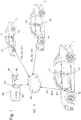
- the system 100 is operated by a vehicle rental operator, such as a car rental, or by a car sharing operator which holds a plurality of cars which may be rented by different persons.
- a vehicle rental operator such as a car rental
- a car sharing operator which holds a plurality of cars which may be rented by different persons.
- an electronic key is commonly known in various implementations used with standard cars and with car rental and car sharing services.
- Particular electronic keys make use of a smartphone and various kinds of bar codes which are read by software for gaining access to the vehicle.
- Such electronic keys are also capable to store various kinds of user data, such as user identification data (e.g., name, address, age, driving licence, phone number, etc.), which may be evaluated and approved by the car rental or car sharing provider (e.g. through communication over the Internet) when the user gains access to the car.
- user identification data e.g., name, address, age, driving licence, phone number, etc.
- a vehicle seat 13 for accommodating a driver or passenger ("user") 11 of a vehicle 1 may include a number of adjustable components, such as a backrest 5 and the seating area 6, which are adjustable in various directions, inclinations, and/or dimensions, such as including forward and back position (longitudinal position of seating area), height position, and seat back position (inclination of backrest).
- these adjustable features may be power controlled by the user, for example, using a switch and appropriate driving motors.
- driving motors including their power electronics
- the motor(s) of the adjustment means 7 may adjust a longitudinal and/or height and/or inclination position of the seating area 6 and/or backrest 5, as is commonly known in standard cars.
- the adjustment means 7 receives one or more parameters which is/are indicative of a seat adjustment of the seat 13.
- the adjustment means 7 receives at least one parameter P1 which is indicative of a longitudinal position of the seating area 6.
- the driving motors of the adjustment means 7 adjust the corresponding longitudinal position of the seating area 6 of the seat 13.
- the at least one parameter P1 may also include further parameters indicative of the inclination of the backrest 5 and/or height of the seating area 6.
- the at least one parameter P1 may be received from a control unit 12, such as an ECU (electronic control unit) or central head unit, of the vehicle 1.
- the control unit 12 as set out in more detail below, may function as a receiver which receives the at least one parameter P1, processes the parameter(s) P1 if necessary, and transmits the at least one parameter P1 to the adjustment means 7 for adjusting the position of the respective seat component 5, 6 of the seat 13.
- the user Once the user has access to the car he or she wants to rent, it will be necessary that the user adjusts the seat (e.g., the driver's seat or the passenger seat) to his or her preferred position.
- the seat e.g., the driver's seat or the passenger seat
- the car rental or car sharing provider holds a database which stores, with respect to a plurality of vehicles and a plurality of users associated with one or more of the plurality of vehicles, at least one respective parameter (such as P1, P2 or P3, explained in more detail below) which is indicative of a seat adjustment in a respective one of the plurality of vehicles.
- the database further stores respective vehicle data indicative of a respective one of the vehicles and respective user data indicative of a respective one of the users.
- such database may be part of, or connected with, one or more computer system resources 40 which is accessible through the Internet 50.
- one or more computer system resources may be formed by one or more server computers 40 which may be located at or remote from the respective vehicle and vehicle rental or car sharing provider.
- the server computer 40 according to Fig. 1 comprises one or more processing devices 41, 42, a memory for storing a database 43 as described above, and various other memories 44 for storing various programs or algorithms used with the present invention.
- the processing device 41 may perform the steps described herein alone or in combination with any other processing device.
- the processing device 41 may be, for example, implemented in, or part of, one or more microprocessors, e.g. of one or more server computers, or may be a separate component, or may be a distributed system (e.g. couple through the Internet) using one or more processors and/or integrated circuits.
- the one or more computer system resources 40 or server computers may be part of or form a so-called cloud computing infrastructure, which is an IT infrastructure typically established through a computer network which does not need to be installed on a local computer system, e.g. of the car rental or car sharing provider, but is accessible, for example, through the Internet.
- cloud computing infrastructure is an IT infrastructure typically established through a computer network which does not need to be installed on a local computer system, e.g. of the car rental or car sharing provider, but is accessible, for example, through the Internet.
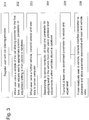
- Fig. 3 shows a flow diagram of a potential adjustment procedure according to an embodiment of the invention.
- potential embodiments of the invention will now be described.
- a user 11 (also designated herein as "first user"), who wants to rent a car, preferably registers his/her profile in advance with the car provider. To this end, the user 11 provides user data D11 to the car sharing provider, for example as set out above. When the user 11 thereafter rents a car, the user 11 will be certified, for example in a procedure as set out above.
- step 202 in this embodiment, preferably when user 11 uses a vehicle of the car sharing provider for the first time, for example vehicle 3 according to Fig. 1 , the user 11 adjusts the vehicle seat 13 (e.g. as shown in Fig. 2 ) of the vehicle 3 to an appropriate position which fits best to his or her needs. At least one parameter P3 indicative of such seat adjustment may then be stored in the database 43 associated with the user data D11 of the user 11 and the vehicle data D3 of vehicle 3, e.g. through a wireless communication via the Internet 50 between the vehicle 3 and the server computer 40. To this end, for example, the control unit 12 of the vehicle 3 may communicate with the processing device 41 which stores the respective data in the database 43.
- the control unit 12 of the vehicle 3 may communicate with the processing device 41 which stores the respective data in the database 43.
- the database 43 stores a plurality of parameters indicative of a seat adjustment in a respective one of a plurality of vehicles (such as parameter P1 for a vehicle 1, P2 for a vehicle 2, P3 for a vehicle 3), respective vehicle data indicative of a respective one of the vehicles (such as vehicle data D1 for vehicle 1, D2 for vehicle 2, D3 for vehicle 3) and respective user data indicative of a respective one of the users 11, 21 (such as user data D11 for user 11, D21 for user 21).
- a plurality of parameters indicative of a seat adjustment in a respective one of a plurality of vehicles such as parameter P1 for a vehicle 1, P2 for a vehicle 2, P3 for a vehicle 3
- respective vehicle data indicative of a respective one of the vehicles such as vehicle data D1 for vehicle 1, D2 for vehicle 2, D3 for vehicle 3
- respective user data indicative of a respective one of the users 11, 21 such as user data D11 for user 11, D21 for user 21.
- the respective parameter P2 indicative of the seat adjustment in vehicle 2 is transmitted to the database 43 associated with the user data D21 and vehicle data D2 and is stored in the database 43.
- This procedure is performed similarly for a plurality of other users who used respective other vehicles, so that the database 43, preferably, is representative of a higher amount of vehicles including various vehicle types, users and respective seat adjustments which may be evaluated in the further process, for example, by a deep learning algorithm.
- step 203 a method according to an embodiment of the invention starts with the step that a user, such as user 11, proceeds to rent a vehicle, such as vehicle 1, from the car sharing provider he or she registered with in step 201. Accordingly, the vehicle data D1 of vehicle 1 and user data D11 of user 11 are transmitted to the server computer 40 and processing device 41, respectively.
- the processing device 41 then processes the vehicle data D1 from the vehicle 1 and the user data D11.
- the processing device 41 further receives from the database 43 the parameter(s) P2 indicative of a seat adjustment in the vehicle 2, the vehicle data D2 and user data D21.
- the database 43 has stored therein further parameters P3, P4, ... PN, etc. indicative of a seat adjustment in a respective one of a plurality of vehicles 3, 4, ... N (with N being an integer number greater than 0)
- the processing device 41 further receives from the database 43 the respective further parameter(s), respective vehicle data from the respective vehicle and associated user data.
- the processing device 41 determines from the vehicle data D1, the user data D11, the parameter(s) P2, the vehicle data D2, and the user data D21 at least one parameter P1 configured for being used in the vehicle 1 for adjusting at least one component (such as backrest 5, and/or seating area 6) of the seat 13 in the vehicle 1. If the database 43 has stored therein further parameters P3, P4, ... PN, etc. indicative of a seat adjustment in a respective one of a plurality of vehicles 3, 4, ... N, the respective parameters P3, P4, ... PN, vehicle data D3, D4, .... DN, and user data associated therewith may also be used.
- the processing device 41 transmits the at least one parameter P1 to the vehicle 1 for adjusting the respective component 5, 6 of the seat 13 in the vehicle 1.
- the control unit 12 of the vehicle 1 may communicate with the processing device 41 through a wireless communication via the Internet 50 between the vehicle 1 and the server computer 40.
- the control unit 12 receives the parameter(s) P1, processes the same (e.g. adapts the parameter to the particular equipment and signal standard in the vehicle) and transmits the same to the adjustment means 7 for adjusting the position of the respective seat component 5, 6 of the seat 13.
- the user 11 is relieved from a cumbersome manual adjustment procedure for adjusting his/her seat 13 in vehicle 1.
- the determination of the at least one parameter P1 in step 204 may comprise comparing the vehicle data D1 with a respective one of the stored vehicle data D1, D2, D3 ... DN and determining the at least one parameter P1 based on a similarity measure between the vehicle data D1 and a respective one of the stored vehicle data D1, D2, D3 ... DN.
- a deep learning algorithm may advantageously be applied as it may consider a plurality of various input parameters in various weightings over a certain period of time.
- the determination of the at least one parameter P1 may comprise comparing the user data D11 with a respective one of the stored user data D11, D21, ... DM (with M being an integer number greater than 0) and determining the at least one parameter P1 based on a similarity measure between the user data D11 and a respective one of the stored user data D11, D21, ... DM.
- respective adjustment settings may be used from a stored vehicle and appropriately adapted for adjusting the seat 13 of vehicle 1.
- a deep learning algorithm may be advantageously applied as it may consider a plurality of various input parameters, also in combination with any other input parameters in various weightings, over a certain period of time.
- the processing device 41 may determine from the received data from the vehicle 1, user data D11 and the database 43, in which of the stored vehicles the user 11 has already been seated, and which other user of the stored users has been seated in a same or similar vehicle and had same or similar seat adjustment settings. These adjustment settings of one or more matching pairs may then be taken as a reference for adjusting the parameter P1. The process may then proceed to derive an appropriate parameter P1 for adjusting the seat 13 of vehicle 1 with respect to user 11. Such determination may be made preferably by a deep learning algorithm as set out above.
- a modified parameter (such as a modified parameter P1, e.g., indicating a modified position coordinate of seat 13) is transmitted back to the database 43 and stored therein associated with user data D11 and vehicle data D1.
- This information may then be used to provide other users in the future with a more precise seat adjustment setting. The more information the system gets from different users, the more precise would be the suggestion for an individual user of a vehicle.
- the processing device may determine the difference between the first car and the second car and will adjust the proposed seat adjustment settings for the second car according to these differences.
- the database 43 stores parameter(s) P3 indicative of a seat adjustment in vehicle 3 previously used by the user 11.
- a determination of the at least one parameter P1 for seat adjustment in vehicle 1 may then be made by the processing device 41 in that it compares the vehicle data D1 of vehicle 1 with the vehicle data D3 of vehicle 3 and determines the parameter(s) P1 based on the parameter(s) P3 and a difference between the vehicle data D1 and the vehicle data D3.
- a benefit of the invention is that, with the method and system as described herein, it will be easier for a user to use an unknown car.
- the method and system do not need any specific measurement features, rather it may be sufficient to determine only the respective seat adjustment settings (e.g., respective position coordinates, which can be stored with common techniques, like in an electronic key as described above).
- respective seat adjustment settings e.g., respective position coordinates, which can be stored with common techniques, like in an electronic key as described above.
- the invention may particularly be useful for car-sharing providers as well as classical rental car providers, and for fleet management operators.
Landscapes
- Engineering & Computer Science (AREA)
- Mechanical Engineering (AREA)
- Aviation & Aerospace Engineering (AREA)
- Transportation (AREA)
- Seats For Vehicles (AREA)
Priority Applications (1)
| Application Number | Priority Date | Filing Date | Title |
|---|---|---|---|
| EP18153015.5A EP3514018B1 (fr) | 2018-01-23 | 2018-01-23 | Procédé et système de mise en oeuvre par ordinateur pour régler au moins un siège dans un véhicule |
Applications Claiming Priority (1)
| Application Number | Priority Date | Filing Date | Title |
|---|---|---|---|
| EP18153015.5A EP3514018B1 (fr) | 2018-01-23 | 2018-01-23 | Procédé et système de mise en oeuvre par ordinateur pour régler au moins un siège dans un véhicule |
Publications (2)
| Publication Number | Publication Date |
|---|---|
| EP3514018A1 true EP3514018A1 (fr) | 2019-07-24 |
| EP3514018B1 EP3514018B1 (fr) | 2025-08-27 |
Family
ID=61022243
Family Applications (1)
| Application Number | Title | Priority Date | Filing Date |
|---|---|---|---|
| EP18153015.5A Active EP3514018B1 (fr) | 2018-01-23 | 2018-01-23 | Procédé et système de mise en oeuvre par ordinateur pour régler au moins un siège dans un véhicule |
Country Status (1)
| Country | Link |
|---|---|
| EP (1) | EP3514018B1 (fr) |
Cited By (4)
| Publication number | Priority date | Publication date | Assignee | Title |
|---|---|---|---|---|
| CN113212257A (zh) * | 2021-05-18 | 2021-08-06 | 中国第一汽车股份有限公司 | 一种基于车联网的驾驶员座椅位置自动调整方法、装置、终端及存储介质 |
| FR3114290A1 (fr) * | 2020-09-23 | 2022-03-25 | Psa Automobiles Sa | Adaptation d’une position de conduite d’un conducteur à un nouveau véhicule |
| CN119099440A (zh) * | 2024-09-29 | 2024-12-10 | 中国第一汽车股份有限公司 | 车辆驾驶位调节方法、系统、电子设备、存储介质及车辆 |
| CN119840490A (zh) * | 2025-01-06 | 2025-04-18 | 广州汽车集团股份有限公司 | 调整方法、装置、车辆及可读存储介质 |
Citations (5)
| Publication number | Priority date | Publication date | Assignee | Title |
|---|---|---|---|---|
| JP2006213150A (ja) | 2005-02-03 | 2006-08-17 | Calsonic Kansei Corp | 運転位置設定装置 |
| US20140052345A1 (en) * | 2012-08-14 | 2014-02-20 | Ebay Inc. | Mobile ergonomic profile |
| US20150206206A1 (en) * | 2014-01-23 | 2015-07-23 | Cox Enterprises, Inc. | Systems and methods for flexible vehicle sharing |
| US9229905B1 (en) * | 2011-04-22 | 2016-01-05 | Angel A. Penilla | Methods and systems for defining vehicle user profiles and managing user profiles via cloud systems and applying learned settings to user profiles |
| US20170305437A1 (en) * | 2016-04-26 | 2017-10-26 | Google Inc. | Crowd-sourced vehicle setting recommendations |
-
2018
- 2018-01-23 EP EP18153015.5A patent/EP3514018B1/fr active Active
Patent Citations (5)
| Publication number | Priority date | Publication date | Assignee | Title |
|---|---|---|---|---|
| JP2006213150A (ja) | 2005-02-03 | 2006-08-17 | Calsonic Kansei Corp | 運転位置設定装置 |
| US9229905B1 (en) * | 2011-04-22 | 2016-01-05 | Angel A. Penilla | Methods and systems for defining vehicle user profiles and managing user profiles via cloud systems and applying learned settings to user profiles |
| US20140052345A1 (en) * | 2012-08-14 | 2014-02-20 | Ebay Inc. | Mobile ergonomic profile |
| US20150206206A1 (en) * | 2014-01-23 | 2015-07-23 | Cox Enterprises, Inc. | Systems and methods for flexible vehicle sharing |
| US20170305437A1 (en) * | 2016-04-26 | 2017-10-26 | Google Inc. | Crowd-sourced vehicle setting recommendations |
Cited By (4)
| Publication number | Priority date | Publication date | Assignee | Title |
|---|---|---|---|---|
| FR3114290A1 (fr) * | 2020-09-23 | 2022-03-25 | Psa Automobiles Sa | Adaptation d’une position de conduite d’un conducteur à un nouveau véhicule |
| CN113212257A (zh) * | 2021-05-18 | 2021-08-06 | 中国第一汽车股份有限公司 | 一种基于车联网的驾驶员座椅位置自动调整方法、装置、终端及存储介质 |
| CN119099440A (zh) * | 2024-09-29 | 2024-12-10 | 中国第一汽车股份有限公司 | 车辆驾驶位调节方法、系统、电子设备、存储介质及车辆 |
| CN119840490A (zh) * | 2025-01-06 | 2025-04-18 | 广州汽车集团股份有限公司 | 调整方法、装置、车辆及可读存储介质 |
Also Published As
| Publication number | Publication date |
|---|---|
| EP3514018B1 (fr) | 2025-08-27 |
Similar Documents
| Publication | Publication Date | Title |
|---|---|---|
| CN111788090B (zh) | 用于依据行驶情况运行机动车的机动车系统的方法、个性化设备和机动车 | |
| US9511683B2 (en) | Occupant recognition and verification system | |
| EP3514018B1 (fr) | Procédé et système de mise en oeuvre par ordinateur pour régler au moins un siège dans un véhicule | |
| CN110268408B (zh) | 用于汽车的双因素生物测定认证 | |
| US11267415B2 (en) | Vehicle recommendation and translation system for setting personalized parameters within vehicles of mobility sharing environments | |
| US9862352B2 (en) | User identification and personalized vehicle settings management system | |
| CN210793099U (zh) | 与车辆控制系统通信的认证系统 | |
| US11386678B2 (en) | Driver authentication for vehicle-sharing fleet | |
| US20050203752A1 (en) | Car electronic key, data processor and car management method | |
| US11524641B2 (en) | System and method for the automatic adjustment of vehicle seats of different types | |
| US10829068B2 (en) | Method and apparatus for globalized portable occupant vehicle settings | |
| US9694770B2 (en) | Mobile ergonomic profile | |
| US12077162B2 (en) | System and method for transferring different settings between vehicles of different types | |
| EP3363706A1 (fr) | Procédé et système pour activer au moins une fonction d'un véhicule | |
| EP3185187A1 (fr) | Réglages personnalisés à base biométrique pour un appareil d'entraînement | |
| CN107380103B (zh) | 基于用户识别和云共享的汽车饰件自动调节方法及系统 | |
| US6993423B2 (en) | Method for adjusting vehicle cockpit devices | |
| US11511703B2 (en) | Driver personalization for vehicle-sharing fleet | |
| KR20210028322A (ko) | 차량 정보 설정 시스템 및 방법 | |
| CN110281728A (zh) | 控制装置以及控制方法 | |
| CN116685502B (zh) | 车载设备控制装置和车载设备控制方法 | |
| KR20230086365A (ko) | 차량 및 차량의 제어 방법. | |
| CN120225896A (zh) | 用于确定车辆中的用户的就坐位置的方法 | |
| JP7687254B2 (ja) | 車両用パーソナライズ設定システム、及び車両用パーソナライズ設定方法 | |
| CN115703383A (zh) | 能够进行与乘员相应的设定的车辆以及车辆设定系统 |
Legal Events
| Date | Code | Title | Description |
|---|---|---|---|
| PUAI | Public reference made under article 153(3) epc to a published international application that has entered the european phase |
Free format text: ORIGINAL CODE: 0009012 |
|
| STAA | Information on the status of an ep patent application or granted ep patent |
Free format text: STATUS: REQUEST FOR EXAMINATION WAS MADE |
|
| 17P | Request for examination filed |
Effective date: 20190606 |
|
| AK | Designated contracting states |
Kind code of ref document: A1 Designated state(s): AL AT BE BG CH CY CZ DE DK EE ES FI FR GB GR HR HU IE IS IT LI LT LU LV MC MK MT NL NO PL PT RO RS SE SI SK SM TR |
|
| AX | Request for extension of the european patent |
Extension state: BA ME |
|
| STAA | Information on the status of an ep patent application or granted ep patent |
Free format text: STATUS: EXAMINATION IS IN PROGRESS |
|
| 17Q | First examination report despatched |
Effective date: 20220204 |
|
| GRAP | Despatch of communication of intention to grant a patent |
Free format text: ORIGINAL CODE: EPIDOSNIGR1 |
|
| STAA | Information on the status of an ep patent application or granted ep patent |
Free format text: STATUS: GRANT OF PATENT IS INTENDED |
|
| INTG | Intention to grant announced |
Effective date: 20250331 |
|
| GRAS | Grant fee paid |
Free format text: ORIGINAL CODE: EPIDOSNIGR3 |
|
| GRAA | (expected) grant |
Free format text: ORIGINAL CODE: 0009210 |
|
| STAA | Information on the status of an ep patent application or granted ep patent |
Free format text: STATUS: THE PATENT HAS BEEN GRANTED |
|
| AK | Designated contracting states |
Kind code of ref document: B1 Designated state(s): AL AT BE BG CH CY CZ DE DK EE ES FI FR GB GR HR HU IE IS IT LI LT LU LV MC MK MT NL NO PL PT RO RS SE SI SK SM TR |
|
| P01 | Opt-out of the competence of the unified patent court (upc) registered |
Free format text: CASE NUMBER: UPC_APP_0494_3514018/2025 Effective date: 20250717 |
|
| REG | Reference to a national code |
Ref country code: GB Ref legal event code: FG4D |
|
| REG | Reference to a national code |
Ref country code: CH Ref legal event code: EP |
|
| REG | Reference to a national code |
Ref country code: DE Ref legal event code: R096 Ref document number: 602018084911 Country of ref document: DE |
|
| REG | Reference to a national code |
Ref country code: IE Ref legal event code: FG4D |
|
| REG | Reference to a national code |
Ref country code: NL Ref legal event code: MP Effective date: 20250827 |
|
| PG25 | Lapsed in a contracting state [announced via postgrant information from national office to epo] |
Ref country code: IS Free format text: LAPSE BECAUSE OF FAILURE TO SUBMIT A TRANSLATION OF THE DESCRIPTION OR TO PAY THE FEE WITHIN THE PRESCRIBED TIME-LIMIT Effective date: 20251227 |
|
| PG25 | Lapsed in a contracting state [announced via postgrant information from national office to epo] |
Ref country code: NO Free format text: LAPSE BECAUSE OF FAILURE TO SUBMIT A TRANSLATION OF THE DESCRIPTION OR TO PAY THE FEE WITHIN THE PRESCRIBED TIME-LIMIT Effective date: 20251127 |
|
| REG | Reference to a national code |
Ref country code: LT Ref legal event code: MG9D |
|
| PG25 | Lapsed in a contracting state [announced via postgrant information from national office to epo] |
Ref country code: PT Free format text: LAPSE BECAUSE OF FAILURE TO SUBMIT A TRANSLATION OF THE DESCRIPTION OR TO PAY THE FEE WITHIN THE PRESCRIBED TIME-LIMIT Effective date: 20251229 |
|
| PG25 | Lapsed in a contracting state [announced via postgrant information from national office to epo] |
Ref country code: FI Free format text: LAPSE BECAUSE OF FAILURE TO SUBMIT A TRANSLATION OF THE DESCRIPTION OR TO PAY THE FEE WITHIN THE PRESCRIBED TIME-LIMIT Effective date: 20250827 |
|
| PG25 | Lapsed in a contracting state [announced via postgrant information from national office to epo] |
Ref country code: HR Free format text: LAPSE BECAUSE OF FAILURE TO SUBMIT A TRANSLATION OF THE DESCRIPTION OR TO PAY THE FEE WITHIN THE PRESCRIBED TIME-LIMIT Effective date: 20250827 Ref country code: NL Free format text: LAPSE BECAUSE OF FAILURE TO SUBMIT A TRANSLATION OF THE DESCRIPTION OR TO PAY THE FEE WITHIN THE PRESCRIBED TIME-LIMIT Effective date: 20250827 |
|
| PG25 | Lapsed in a contracting state [announced via postgrant information from national office to epo] |
Ref country code: GR Free format text: LAPSE BECAUSE OF FAILURE TO SUBMIT A TRANSLATION OF THE DESCRIPTION OR TO PAY THE FEE WITHIN THE PRESCRIBED TIME-LIMIT Effective date: 20251128 |
|
| PG25 | Lapsed in a contracting state [announced via postgrant information from national office to epo] |
Ref country code: SE Free format text: LAPSE BECAUSE OF FAILURE TO SUBMIT A TRANSLATION OF THE DESCRIPTION OR TO PAY THE FEE WITHIN THE PRESCRIBED TIME-LIMIT Effective date: 20250827 |
|
| PG25 | Lapsed in a contracting state [announced via postgrant information from national office to epo] |
Ref country code: LV Free format text: LAPSE BECAUSE OF FAILURE TO SUBMIT A TRANSLATION OF THE DESCRIPTION OR TO PAY THE FEE WITHIN THE PRESCRIBED TIME-LIMIT Effective date: 20250827 |
|
| PG25 | Lapsed in a contracting state [announced via postgrant information from national office to epo] |
Ref country code: PL Free format text: LAPSE BECAUSE OF FAILURE TO SUBMIT A TRANSLATION OF THE DESCRIPTION OR TO PAY THE FEE WITHIN THE PRESCRIBED TIME-LIMIT Effective date: 20250827 Ref country code: BG Free format text: LAPSE BECAUSE OF FAILURE TO SUBMIT A TRANSLATION OF THE DESCRIPTION OR TO PAY THE FEE WITHIN THE PRESCRIBED TIME-LIMIT Effective date: 20250827 |
|
| PG25 | Lapsed in a contracting state [announced via postgrant information from national office to epo] |
Ref country code: RS Free format text: LAPSE BECAUSE OF FAILURE TO SUBMIT A TRANSLATION OF THE DESCRIPTION OR TO PAY THE FEE WITHIN THE PRESCRIBED TIME-LIMIT Effective date: 20251127 |
|
| PG25 | Lapsed in a contracting state [announced via postgrant information from national office to epo] |
Ref country code: ES Free format text: LAPSE BECAUSE OF FAILURE TO SUBMIT A TRANSLATION OF THE DESCRIPTION OR TO PAY THE FEE WITHIN THE PRESCRIBED TIME-LIMIT Effective date: 20250827 |
|
| REG | Reference to a national code |
Ref country code: AT Ref legal event code: MK05 Ref document number: 1829665 Country of ref document: AT Kind code of ref document: T Effective date: 20250827 |
|
| PG25 | Lapsed in a contracting state [announced via postgrant information from national office to epo] |
Ref country code: SM Free format text: LAPSE BECAUSE OF FAILURE TO SUBMIT A TRANSLATION OF THE DESCRIPTION OR TO PAY THE FEE WITHIN THE PRESCRIBED TIME-LIMIT Effective date: 20250827 |
|
| PGFP | Annual fee paid to national office [announced via postgrant information from national office to epo] |
Ref country code: GB Payment date: 20260123 Year of fee payment: 9 |
|
| PG25 | Lapsed in a contracting state [announced via postgrant information from national office to epo] |
Ref country code: DK Free format text: LAPSE BECAUSE OF FAILURE TO SUBMIT A TRANSLATION OF THE DESCRIPTION OR TO PAY THE FEE WITHIN THE PRESCRIBED TIME-LIMIT Effective date: 20250827 |
|
| PGFP | Annual fee paid to national office [announced via postgrant information from national office to epo] |
Ref country code: DE Payment date: 20260121 Year of fee payment: 9 |
|
| PG25 | Lapsed in a contracting state [announced via postgrant information from national office to epo] |
Ref country code: AT Free format text: LAPSE BECAUSE OF FAILURE TO SUBMIT A TRANSLATION OF THE DESCRIPTION OR TO PAY THE FEE WITHIN THE PRESCRIBED TIME-LIMIT Effective date: 20250827 |
|
| PG25 | Lapsed in a contracting state [announced via postgrant information from national office to epo] |
Ref country code: IT Free format text: LAPSE BECAUSE OF FAILURE TO SUBMIT A TRANSLATION OF THE DESCRIPTION OR TO PAY THE FEE WITHIN THE PRESCRIBED TIME-LIMIT Effective date: 20250827 |
|
| PGFP | Annual fee paid to national office [announced via postgrant information from national office to epo] |
Ref country code: FR Payment date: 20260123 Year of fee payment: 9 |
|
| PG25 | Lapsed in a contracting state [announced via postgrant information from national office to epo] |
Ref country code: CZ Free format text: LAPSE BECAUSE OF FAILURE TO SUBMIT A TRANSLATION OF THE DESCRIPTION OR TO PAY THE FEE WITHIN THE PRESCRIBED TIME-LIMIT Effective date: 20250827 |
|
| PG25 | Lapsed in a contracting state [announced via postgrant information from national office to epo] |
Ref country code: EE Free format text: LAPSE BECAUSE OF FAILURE TO SUBMIT A TRANSLATION OF THE DESCRIPTION OR TO PAY THE FEE WITHIN THE PRESCRIBED TIME-LIMIT Effective date: 20250827 Ref country code: SK Free format text: LAPSE BECAUSE OF FAILURE TO SUBMIT A TRANSLATION OF THE DESCRIPTION OR TO PAY THE FEE WITHIN THE PRESCRIBED TIME-LIMIT Effective date: 20250827 |