EP3514253A1 - Acier laminé à chaud et procédé de fabrication d'acier laminé à chaud - Google Patents
Acier laminé à chaud et procédé de fabrication d'acier laminé à chaud Download PDFInfo
- Publication number
- EP3514253A1 EP3514253A1 EP18152884.5A EP18152884A EP3514253A1 EP 3514253 A1 EP3514253 A1 EP 3514253A1 EP 18152884 A EP18152884 A EP 18152884A EP 3514253 A1 EP3514253 A1 EP 3514253A1
- Authority
- EP
- European Patent Office
- Prior art keywords
- mass
- hot
- rolled steel
- mpa
- steel
- Prior art date
- Legal status (The legal status is an assumption and is not a legal conclusion. Google has not performed a legal analysis and makes no representation as to the accuracy of the status listed.)
- Granted
Links
Images

Classifications
-
- C—CHEMISTRY; METALLURGY
- C22—METALLURGY; FERROUS OR NON-FERROUS ALLOYS; TREATMENT OF ALLOYS OR NON-FERROUS METALS
- C22C—ALLOYS
- C22C38/00—Ferrous alloys, e.g. steel alloys
- C22C38/001—Ferrous alloys, e.g. steel alloys containing N
-
- C—CHEMISTRY; METALLURGY
- C22—METALLURGY; FERROUS OR NON-FERROUS ALLOYS; TREATMENT OF ALLOYS OR NON-FERROUS METALS
- C22C—ALLOYS
- C22C38/00—Ferrous alloys, e.g. steel alloys
- C22C38/18—Ferrous alloys, e.g. steel alloys containing chromium
- C22C38/40—Ferrous alloys, e.g. steel alloys containing chromium with nickel
- C22C38/58—Ferrous alloys, e.g. steel alloys containing chromium with nickel with more than 1.5% by weight of manganese
-
- C—CHEMISTRY; METALLURGY
- C21—METALLURGY OF IRON
- C21D—MODIFYING THE PHYSICAL STRUCTURE OF FERROUS METALS; GENERAL DEVICES FOR HEAT TREATMENT OF FERROUS OR NON-FERROUS METALS OR ALLOYS; MAKING METAL MALLEABLE, e.g. BY DECARBURISATION OR TEMPERING
- C21D1/00—General methods or devices for heat treatment, e.g. annealing, hardening, quenching or tempering
- C21D1/18—Hardening; Quenching with or without subsequent tempering
- C21D1/19—Hardening; Quenching with or without subsequent tempering by interrupted quenching
- C21D1/20—Isothermal quenching, e.g. bainitic hardening
-
- C—CHEMISTRY; METALLURGY
- C21—METALLURGY OF IRON
- C21D—MODIFYING THE PHYSICAL STRUCTURE OF FERROUS METALS; GENERAL DEVICES FOR HEAT TREATMENT OF FERROUS OR NON-FERROUS METALS OR ALLOYS; MAKING METAL MALLEABLE, e.g. BY DECARBURISATION OR TEMPERING
- C21D1/00—General methods or devices for heat treatment, e.g. annealing, hardening, quenching or tempering
- C21D1/18—Hardening; Quenching with or without subsequent tempering
- C21D1/25—Hardening, combined with annealing between 300 degrees Celsius and 600 degrees Celsius, i.e. heat refining ("Vergüten")
-
- C—CHEMISTRY; METALLURGY
- C21—METALLURGY OF IRON
- C21D—MODIFYING THE PHYSICAL STRUCTURE OF FERROUS METALS; GENERAL DEVICES FOR HEAT TREATMENT OF FERROUS OR NON-FERROUS METALS OR ALLOYS; MAKING METAL MALLEABLE, e.g. BY DECARBURISATION OR TEMPERING
- C21D6/00—Heat treatment of ferrous alloys
- C21D6/005—Heat treatment of ferrous alloys containing Mn
-
- C—CHEMISTRY; METALLURGY
- C21—METALLURGY OF IRON
- C21D—MODIFYING THE PHYSICAL STRUCTURE OF FERROUS METALS; GENERAL DEVICES FOR HEAT TREATMENT OF FERROUS OR NON-FERROUS METALS OR ALLOYS; MAKING METAL MALLEABLE, e.g. BY DECARBURISATION OR TEMPERING
- C21D8/00—Modifying the physical properties of ferrous metals or ferrous alloys by deformation combined with, or followed by, heat treatment
- C21D8/02—Modifying the physical properties of ferrous metals or ferrous alloys by deformation combined with, or followed by, heat treatment during manufacturing of plates or strips
- C21D8/0221—Modifying the physical properties of ferrous metals or ferrous alloys by deformation combined with, or followed by, heat treatment during manufacturing of plates or strips characterised by the working steps
- C21D8/0226—Hot rolling
-
- C—CHEMISTRY; METALLURGY
- C21—METALLURGY OF IRON
- C21D—MODIFYING THE PHYSICAL STRUCTURE OF FERROUS METALS; GENERAL DEVICES FOR HEAT TREATMENT OF FERROUS OR NON-FERROUS METALS OR ALLOYS; MAKING METAL MALLEABLE, e.g. BY DECARBURISATION OR TEMPERING
- C21D8/00—Modifying the physical properties of ferrous metals or ferrous alloys by deformation combined with, or followed by, heat treatment
- C21D8/02—Modifying the physical properties of ferrous metals or ferrous alloys by deformation combined with, or followed by, heat treatment during manufacturing of plates or strips
- C21D8/0247—Modifying the physical properties of ferrous metals or ferrous alloys by deformation combined with, or followed by, heat treatment during manufacturing of plates or strips characterised by the heat treatment
-
- C—CHEMISTRY; METALLURGY
- C21—METALLURGY OF IRON
- C21D—MODIFYING THE PHYSICAL STRUCTURE OF FERROUS METALS; GENERAL DEVICES FOR HEAT TREATMENT OF FERROUS OR NON-FERROUS METALS OR ALLOYS; MAKING METAL MALLEABLE, e.g. BY DECARBURISATION OR TEMPERING
- C21D8/00—Modifying the physical properties of ferrous metals or ferrous alloys by deformation combined with, or followed by, heat treatment
- C21D8/02—Modifying the physical properties of ferrous metals or ferrous alloys by deformation combined with, or followed by, heat treatment during manufacturing of plates or strips
- C21D8/0247—Modifying the physical properties of ferrous metals or ferrous alloys by deformation combined with, or followed by, heat treatment during manufacturing of plates or strips characterised by the heat treatment
- C21D8/0263—Modifying the physical properties of ferrous metals or ferrous alloys by deformation combined with, or followed by, heat treatment during manufacturing of plates or strips characterised by the heat treatment following hot rolling
-
- C—CHEMISTRY; METALLURGY
- C21—METALLURGY OF IRON
- C21D—MODIFYING THE PHYSICAL STRUCTURE OF FERROUS METALS; GENERAL DEVICES FOR HEAT TREATMENT OF FERROUS OR NON-FERROUS METALS OR ALLOYS; MAKING METAL MALLEABLE, e.g. BY DECARBURISATION OR TEMPERING
- C21D8/00—Modifying the physical properties of ferrous metals or ferrous alloys by deformation combined with, or followed by, heat treatment
- C21D8/02—Modifying the physical properties of ferrous metals or ferrous alloys by deformation combined with, or followed by, heat treatment during manufacturing of plates or strips
- C21D8/0247—Modifying the physical properties of ferrous metals or ferrous alloys by deformation combined with, or followed by, heat treatment during manufacturing of plates or strips characterised by the heat treatment
- C21D8/0273—Final recrystallisation annealing
-
- C—CHEMISTRY; METALLURGY
- C21—METALLURGY OF IRON
- C21D—MODIFYING THE PHYSICAL STRUCTURE OF FERROUS METALS; GENERAL DEVICES FOR HEAT TREATMENT OF FERROUS OR NON-FERROUS METALS OR ALLOYS; MAKING METAL MALLEABLE, e.g. BY DECARBURISATION OR TEMPERING
- C21D8/00—Modifying the physical properties of ferrous metals or ferrous alloys by deformation combined with, or followed by, heat treatment
- C21D8/02—Modifying the physical properties of ferrous metals or ferrous alloys by deformation combined with, or followed by, heat treatment during manufacturing of plates or strips
- C21D8/04—Modifying the physical properties of ferrous metals or ferrous alloys by deformation combined with, or followed by, heat treatment during manufacturing of plates or strips to produce plates or strips for drawing, e.g. for deep-drawing
- C21D8/0447—Modifying the physical properties of ferrous metals or ferrous alloys by deformation combined with, or followed by, heat treatment during manufacturing of plates or strips to produce plates or strips for drawing, e.g. for deep-drawing characterised by the heat treatment
-
- C—CHEMISTRY; METALLURGY
- C21—METALLURGY OF IRON
- C21D—MODIFYING THE PHYSICAL STRUCTURE OF FERROUS METALS; GENERAL DEVICES FOR HEAT TREATMENT OF FERROUS OR NON-FERROUS METALS OR ALLOYS; MAKING METAL MALLEABLE, e.g. BY DECARBURISATION OR TEMPERING
- C21D9/00—Heat treatment, e.g. annealing, hardening, quenching or tempering, adapted for particular articles; Furnaces therefor
- C21D9/46—Heat treatment, e.g. annealing, hardening, quenching or tempering, adapted for particular articles; Furnaces therefor for sheet metals
-
- C—CHEMISTRY; METALLURGY
- C22—METALLURGY; FERROUS OR NON-FERROUS ALLOYS; TREATMENT OF ALLOYS OR NON-FERROUS METALS
- C22C—ALLOYS
- C22C38/00—Ferrous alloys, e.g. steel alloys
- C22C38/002—Ferrous alloys, e.g. steel alloys containing In, Mg, or other elements not provided for in one single group C22C38/001 - C22C38/60
-
- C—CHEMISTRY; METALLURGY
- C22—METALLURGY; FERROUS OR NON-FERROUS ALLOYS; TREATMENT OF ALLOYS OR NON-FERROUS METALS
- C22C—ALLOYS
- C22C38/00—Ferrous alloys, e.g. steel alloys
- C22C38/02—Ferrous alloys, e.g. steel alloys containing silicon
-
- C—CHEMISTRY; METALLURGY
- C22—METALLURGY; FERROUS OR NON-FERROUS ALLOYS; TREATMENT OF ALLOYS OR NON-FERROUS METALS
- C22C—ALLOYS
- C22C38/00—Ferrous alloys, e.g. steel alloys
- C22C38/04—Ferrous alloys, e.g. steel alloys containing manganese
-
- C—CHEMISTRY; METALLURGY
- C22—METALLURGY; FERROUS OR NON-FERROUS ALLOYS; TREATMENT OF ALLOYS OR NON-FERROUS METALS
- C22C—ALLOYS
- C22C38/00—Ferrous alloys, e.g. steel alloys
- C22C38/06—Ferrous alloys, e.g. steel alloys containing aluminium
-
- C—CHEMISTRY; METALLURGY
- C22—METALLURGY; FERROUS OR NON-FERROUS ALLOYS; TREATMENT OF ALLOYS OR NON-FERROUS METALS
- C22C—ALLOYS
- C22C38/00—Ferrous alloys, e.g. steel alloys
- C22C38/18—Ferrous alloys, e.g. steel alloys containing chromium
- C22C38/40—Ferrous alloys, e.g. steel alloys containing chromium with nickel
- C22C38/42—Ferrous alloys, e.g. steel alloys containing chromium with nickel with copper
-
- C—CHEMISTRY; METALLURGY
- C22—METALLURGY; FERROUS OR NON-FERROUS ALLOYS; TREATMENT OF ALLOYS OR NON-FERROUS METALS
- C22C—ALLOYS
- C22C38/00—Ferrous alloys, e.g. steel alloys
- C22C38/18—Ferrous alloys, e.g. steel alloys containing chromium
- C22C38/40—Ferrous alloys, e.g. steel alloys containing chromium with nickel
- C22C38/44—Ferrous alloys, e.g. steel alloys containing chromium with nickel with molybdenum or tungsten
-
- C—CHEMISTRY; METALLURGY
- C22—METALLURGY; FERROUS OR NON-FERROUS ALLOYS; TREATMENT OF ALLOYS OR NON-FERROUS METALS
- C22C—ALLOYS
- C22C38/00—Ferrous alloys, e.g. steel alloys
- C22C38/18—Ferrous alloys, e.g. steel alloys containing chromium
- C22C38/40—Ferrous alloys, e.g. steel alloys containing chromium with nickel
- C22C38/46—Ferrous alloys, e.g. steel alloys containing chromium with nickel with vanadium
-
- C—CHEMISTRY; METALLURGY
- C22—METALLURGY; FERROUS OR NON-FERROUS ALLOYS; TREATMENT OF ALLOYS OR NON-FERROUS METALS
- C22C—ALLOYS
- C22C38/00—Ferrous alloys, e.g. steel alloys
- C22C38/18—Ferrous alloys, e.g. steel alloys containing chromium
- C22C38/40—Ferrous alloys, e.g. steel alloys containing chromium with nickel
- C22C38/48—Ferrous alloys, e.g. steel alloys containing chromium with nickel with niobium or tantalum
-
- C—CHEMISTRY; METALLURGY
- C22—METALLURGY; FERROUS OR NON-FERROUS ALLOYS; TREATMENT OF ALLOYS OR NON-FERROUS METALS
- C22C—ALLOYS
- C22C38/00—Ferrous alloys, e.g. steel alloys
- C22C38/18—Ferrous alloys, e.g. steel alloys containing chromium
- C22C38/40—Ferrous alloys, e.g. steel alloys containing chromium with nickel
- C22C38/50—Ferrous alloys, e.g. steel alloys containing chromium with nickel with titanium or zirconium
-
- C—CHEMISTRY; METALLURGY
- C22—METALLURGY; FERROUS OR NON-FERROUS ALLOYS; TREATMENT OF ALLOYS OR NON-FERROUS METALS
- C22C—ALLOYS
- C22C38/00—Ferrous alloys, e.g. steel alloys
- C22C38/18—Ferrous alloys, e.g. steel alloys containing chromium
- C22C38/40—Ferrous alloys, e.g. steel alloys containing chromium with nickel
- C22C38/54—Ferrous alloys, e.g. steel alloys containing chromium with nickel with boron
-
- C—CHEMISTRY; METALLURGY
- C21—METALLURGY OF IRON
- C21D—MODIFYING THE PHYSICAL STRUCTURE OF FERROUS METALS; GENERAL DEVICES FOR HEAT TREATMENT OF FERROUS OR NON-FERROUS METALS OR ALLOYS; MAKING METAL MALLEABLE, e.g. BY DECARBURISATION OR TEMPERING
- C21D1/00—General methods or devices for heat treatment, e.g. annealing, hardening, quenching or tempering
- C21D1/18—Hardening; Quenching with or without subsequent tempering
-
- C—CHEMISTRY; METALLURGY
- C21—METALLURGY OF IRON
- C21D—MODIFYING THE PHYSICAL STRUCTURE OF FERROUS METALS; GENERAL DEVICES FOR HEAT TREATMENT OF FERROUS OR NON-FERROUS METALS OR ALLOYS; MAKING METAL MALLEABLE, e.g. BY DECARBURISATION OR TEMPERING
- C21D2211/00—Microstructure comprising significant phases
- C21D2211/001—Austenite
-
- C—CHEMISTRY; METALLURGY
- C21—METALLURGY OF IRON
- C21D—MODIFYING THE PHYSICAL STRUCTURE OF FERROUS METALS; GENERAL DEVICES FOR HEAT TREATMENT OF FERROUS OR NON-FERROUS METALS OR ALLOYS; MAKING METAL MALLEABLE, e.g. BY DECARBURISATION OR TEMPERING
- C21D2211/00—Microstructure comprising significant phases
- C21D2211/002—Bainite
-
- C—CHEMISTRY; METALLURGY
- C21—METALLURGY OF IRON
- C21D—MODIFYING THE PHYSICAL STRUCTURE OF FERROUS METALS; GENERAL DEVICES FOR HEAT TREATMENT OF FERROUS OR NON-FERROUS METALS OR ALLOYS; MAKING METAL MALLEABLE, e.g. BY DECARBURISATION OR TEMPERING
- C21D2211/00—Microstructure comprising significant phases
- C21D2211/008—Martensite
-
- C—CHEMISTRY; METALLURGY
- C21—METALLURGY OF IRON
- C21D—MODIFYING THE PHYSICAL STRUCTURE OF FERROUS METALS; GENERAL DEVICES FOR HEAT TREATMENT OF FERROUS OR NON-FERROUS METALS OR ALLOYS; MAKING METAL MALLEABLE, e.g. BY DECARBURISATION OR TEMPERING
- C21D6/00—Heat treatment of ferrous alloys
- C21D6/004—Heat treatment of ferrous alloys containing Cr and Ni
-
- C—CHEMISTRY; METALLURGY
- C21—METALLURGY OF IRON
- C21D—MODIFYING THE PHYSICAL STRUCTURE OF FERROUS METALS; GENERAL DEVICES FOR HEAT TREATMENT OF FERROUS OR NON-FERROUS METALS OR ALLOYS; MAKING METAL MALLEABLE, e.g. BY DECARBURISATION OR TEMPERING
- C21D8/00—Modifying the physical properties of ferrous metals or ferrous alloys by deformation combined with, or followed by, heat treatment
- C21D8/02—Modifying the physical properties of ferrous metals or ferrous alloys by deformation combined with, or followed by, heat treatment during manufacturing of plates or strips
Definitions
- the present invention concerns high strength hot-rolled steel and a method for manufacturing such hot-rolled steel.
- Martensitic flat steel products have for many years been manufactured using a method comprising the steps of heating a steel slab to an austenitizing temperature, hot-rolling, re-heating, quenching and tempering, or alternatively, heating a steel slab to an austenitizing temperature, hot-rolling, direct quenching and tempering.
- European patent no. EP 2,576,848 discloses a method for producing a hot-rolled steel from a steel, whose composition as percentages by weight is C 0.075 - 0.12%, Si 0.1 - 0.8%, Mn 0.8 - 1.7%, Al 0.015 - 0.08%, P less than 0.012%, S less than 0.005%, Cr 0.2 - 1.3%, Mo 0.15 - 0.80%, Ti 0.01 - 0.05%, B 0.0005 - 0.003%, V 0.02 - 0.10%, Nb less than 0.3%, Ni less than 1%, Cu less than 0.5%, the remainder being iron and unavoidable impurities.
- the patent describes direct quenched martensitic sheet-like steels which are temper annealed.
- Such flat steel products may be used for applications, such as wear or structural applications, in which the steel must exhibit high strength in combination with sufficient hardness, bendability and impact toughness both in the as-produced steel products and in the HAZ (heat affected zone) area of welded steel products.
- HAZ heat affected zone
- An object of the invention is to provide improved hot-rolled steel.
- This object is achieved by hot-rolled steel having a yield strength (Rp 0.2 ) of at least 1100 MPa along and/or transverse to the rolling direction and a chemical composition containing (in mass-%):
- Carbon is needed to achieve high base material strength and the other elements listed above promote the strength of the weld so as to avoid softened zones in a welded seam which would "catch" the fracture.
- Manganese, molybdenum and vanadium also promote the strength of quenched and tempered steel.
- each element in the embodiments a) to d) provides a good combination of toughness and high strength.
- Hot-rolled steel having the chemical composition given above and manufactured using the method described herein exhibits high strength (i.e. a yield strength (Rp 0.2 ) of at least 1100 MPa) along and/or transverse to a rolling direction and a tensile strength of at least 1120 MPa along and/or transverse to a rolling direction, good bendability (i.e.
- a minimum bending radius of 5.0 x thickness along and/or transverse to a rolling direction preferably 4.0 x thickness along a rolling direction or more preferably 3.5 x thickness along a rolling direction and an impact toughness of at least 34 J/cm 2 and more preferably an impact toughness of at least 50 J/cm 2 when a Charpy V notched specimen having a thickness of 5-10 mm is measured at -40°C longitudinally to the rolling direction, and good ductility (i.e. an A%-elongation of at least 8% along and/or transverse to the rolling direction, preferably of at least 10% or most preferably at least 12%).
- Mechanical properties are defined according to the testing instructions of standard ISO 10025-6.
- this combination of properties is achieved both in the as-produced hot-rolled quenched and tempered steel products and in the HAZ (heat affected zone) area of welded hot-rolled steel products (which are welded using a filler material that is designed for steels having a yield strength of at least 1100 MPa, preferably of at least 960 MPa, more preferably at least 900 MPa, most preferably of at least 890 MPa, such as X90 or preferably X96).
- the prior art includes hot-rolled steel sheets having a yield strength (Rp 0.2 ) of at least 1100 MPa, although those prior art hot-rolled steel sheets do not have such good weldability or such good mechanical properties when welded.
- hot-rolled steel as used herein means a steel that is hot-rolled to be sheet-like, such as a hot-rolled heavy plate or preferably hot-rolled strip steel.
- the thickness of the hot-rolled strip steel may be 2 - 15 mm, preferably 2.5 - 10 mm.
- the thickness of the hot-rolled heavy plate may be 4 - 50 mm, preferably 5 - 25 mm.
- the hot-rolled steel comprises 0.4-1.7 mass-% Cr, preferably 1.0 -1.7 mass-% Cr.
- the chemical composition contains both Ni and Cu, and the amount of Ni ⁇ 0.33 x the amount of Cu, preferably the amount of Ni ⁇ 0.5 x the amount of Cu so as to maintain high surface quality of the steel in hot-rolling.
- the alloying costs of the hot-rolled steel can be kept as low as possible while achieving the advantageous properties of the hot-rolled steel according to the present invention (since Nickel is an expensive alloying element).
- Nickel prevents Copper from melting under the scale that may be formed on the outer surfaces of the steel when it is annealed before hot-rolling and which comprises iron oxides and thereby prevents Copper from going into the grain boundaries, which can weaken the grain boundaries. Weakened grain boundaries can promote surface cracking and defects during the hot-rolling process.
- the chemical composition contains both Ni and Cu in a total amount of at least 0.5 mass-%, or at least 1.0 mass-%, or at least 1.2 mass-%.
- the hot-rolled steel has a tensile strength of at least 1120 MPa, or at least 1130 MPa, or at least 1200 MPa, and/or maximum 1250 MPa or maximum 1300 MPa, or maximum up to 1450 MPa along and/or transverse to the rolling direction.
- the hot-rolled steel it is metal active gas (MAG) welded with or without reinforcement, preferably with reinforcement, using a V- or Y-groove welding method, whereby a first pass is welded from a bottom or top side, preferably from a bottom side, and other passes from a top side, using welding consumables having a tensile strength of 1100 MPa, preferably 960 MPa, more preferably 900 MPa, most preferably 890 MPa, and a t8/5 time of 8 - 12 seconds, preferably 6 - 18 seconds, more preferably 5-20 seconds.
- Fracture is at least 1 mm from the fusion line, preferably 2 mm, more preferably 3 mm or more.
- a V- or Y-groove welding method whereby a first pass is welded from a bottom or top side, preferably from a bottom side, and other passes from a top side, using welding consumables having a tensile strength of 1100 MPa, preferably 960 MPa, more preferably 900 MPa, most preferably 890 MPa, and a t8/5 time of 8 - 12 seconds, preferably 6 - 18 seconds, more preferably 5-20 seconds.
- the t8/5 time is the time it takes for a weld seam and an adjacent heat-affected zone (HAZ) to cool from 800°C to 500°C.
- welding seam means the total weld area (WM and HAZ).
- a t8/5 time lower than 5 seconds may adversely affect the toughness properties of the steel.
- a t8/5 time greater than 20 seconds may adversely affect the strength of the steel.
- the MAG-welded transversal tensile test specimen's fracture does not occur in the weld metal or fusion line and the fracture is moved ⁇ 1 mm or ⁇ 2 mm or ⁇ 3 mm from the fusion line with or without reinforcement when using welding consumables having a tensile strength of 1100 MPa, preferably 960 MPa, more preferably 900 MPa, most preferably 890 MPa, and a t8/5 time of 8 - 12 seconds, preferably 6 - 18 seconds, more preferably 5-20 seconds.
- the hot-rolled steel has an elongation of at least 7%, preferably at least 8%, more preferably at least 9% when a tensile test is carried out across a weld seam of a welded hot-rolled steel product where the weld is longitudinal to the rolling direction.
- the hot-rolled steel is welded using welding consumables having a tensile strength of 1100 MPa, preferably 960 MPa, more preferably 900 MPa, most preferably 890 MPa, and a t8/5 time of 8 - 12 seconds, preferably 6 - 18 seconds, more preferably 5-20 seconds..
- the present invention also concerns a method for manufacturing hot-rolled steel according to any of the embodiments of the invention and having a chemical composition containing (in mass-%):
- the method comprises the following steps carried out in the following order:
- Quenching results in at least 90% martensite in the microstructure, preferably 95% martensite, and more preferably 99% martensite when the microstructure is examined in 1 ⁇ 4 thickness.
- the quenching step is preferably a direct quenching step, which is for example conducted a maximum of 15 seconds after the last hot-rolling pass.
- the cooling rate during quenching is typically 30 - 150 °C/s.
- the method comprises the step of temper annealing at a temperature of 500 - 650 °C, more preferably 550 - 650 °C, whereby the tempering time is 1 hour or more, or temper annealing at a temperature of 500 - 750 °C, more preferably 550 - 750 °C, if the tempering time is less than 1 hour.
- Tempering time is the holding time after the steel has reached the tempering temperature. The temper annealing, improves the impact toughness and elongation of the hot-rolled steel while maintaining its strength.
- the temper annealing step is carried out at a temperature of 150 - 499°C, more preferably 180 - 250°C with any tempering time used.
- the microstructure of the hot-rolled steel before the temper annealing step contains at least 90% martensite, preferably at least 95% martensite and more preferably at least 99% martensite when said microstructure is examined in 1 ⁇ 4 thickness.
- the temper annealing step may be conducted immediately after the quenching.
- one or more additional method steps may be carried out between the quenching step and the temper annealing step.
- the quenched steel may be subjected to an acid pickling step and/or coiling and/or straightening.
- the mechanical properties of the hot-rolled steel as produced and when welded are good because of the chemical composition of the steel and because the material is tempered at a relatively high temperature of at least 500°C, preferably of at least 550°C and more preferably of at least 580°C. If the tempering time is relatively short, i.e. less than 1 hour, (for example when induction tempering is used), the tempering temperature can be higher, for example 50°C higher or more. The maximum tempering temperature is preferably 750°C.
- the temper annealing is preferably carried out in a furnace other than a bell-type furnace, i.e. the temper annealing step is preferably not carried out in a bell-type furnace but any other suitable type of furnace.
- a bell-type furnace is a batch furnace that consists of an insulated chamber with a steel shell and a heating system. Bell furnaces have removable covers called bells, which are lowered over the load and hearth using a crane. An inner bell is placed over the hearth and sealed to supply a protective atmosphere. An outer bell is lowered to provide the heat supply.
- the steel may typically be subjected to a temperature of 450-600°C for a long period of time since the temperature inside the insulated chamber rises and falls slowly, which may cause brittleness in some steels since atomic segregations may form at grain boundaries, which can weaken the steels and make them very fragile at room temperature.
- the method comprises the step of strip rolling the hot-rolled steel.
- the hot-rolled steel comprises a maximum of 0.005 mass-% Niobium and ⁇ 0.15 mass-% Carbon when the hot-rolled steel is strip rolled.
- the hot-rolled steel comprises a minimum of 0.005 or 0.04 or 0.02 mass-% Niobium when the hot-rolled steel is not strip rolled. More than 0.06 mass-% Niobium has no effect or only a minor effect on the strength properties of the hot-rolled steel.
- the strip rolling as a process produces a more elongated austenite grain structure (flattened) compared to plate rolling, where the time for recrystallization is longer and recrystallization is easier.
- the flattening ratio can be increased.
- the plate steel is often alloyed with Niobium. Flattening of austenite increases the strength and impact toughness of the steel.
- Niobium When steel is reheated and quenched after hot-rolling, Niobium is needed to get high strength and impact strength.
- the minimum amount of Niobium required is then >0.005 mass-%, preferably >0.02 mass-%.
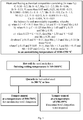
- Figure 1 shows the steps of a method for manufacturing hot-rolled steel according to any of the embodiments of the invention having a chemical composition containing (in mass-%):
- the method comprises the step of heating a steel slab having the chemical composition described above to an austenitizing temperature of 1000-1350 °C.
- the thickness of the steel slab is, for example, 210 mm and it is preferably heated to an austenitizing temperature of 1200 - 1350°C, where it is kept until it is of adequately even warmth and the alloying elements have adequately dissolved into the matrix. Typically, this takes several hours. If the austenitizing temperature is below 1200 °C, there can be a danger that not all of the alloying elements will dissolve into the austenite, i.e. the austenite is not made homogenous and during the tempering, the precipitation hardening may remain at a low level. On the other hand, if the austenitizing temperature is higher than 1350 °C, this will result in an exceptionally large grain size of the austenite and increased oxidation of the slab surface. Annealing time in reheating is typically varied in the range of 2 - 4 hours, but, depending on the selected furnace technology and the thickness of the slab, it can also be longer than 4 hours or shorter than 2 hours.
- hot-rolling is conducted, which may typically comprise a roughing step and a subsequent finish rolling step.
- the temperature of hot-rolling at the last pass is 760 - 1050°C.
- the finishing rolling temperature at the last pass of the hot-rolling is 760 - 960°C.
- the end temperature of hot-rolling is preferably above 830 °C or more preferably at least 850°C so that rolling forces remain reasonable, and at the most 940 °C, and more preferably 920° at the most, wherein i.a. excellent surface quality is assured.
- the steel is quenched, i.e. cooled at an accelerated cooling rate, typically of 30 - 150 °C/s, using one step cooling for example, preferably at a maximum cooling rate of 120°C/s, in a suitable quenching medium, such as water or oil, to a temperature of 300 °C or less, or preferably 150°C or less, i.e. any temperature between room/ambient temperature and 300°C. If it is a strip product it is coiled at that temperature, i.e. at a coiling temperature of 300°C or less.
- the quenching is direct quenching conducted a maximum of 15 seconds after the last hot-rolling pass.
- the end temperature of quenching is a maximum of 150°C, because, in this case, after quenching, a steel product with good flatness is achieved.
- the quenched steel is subsequently subjected to temper annealing at a temperature of 500 - 650 °C if the tempering time is 1 hour or more, or temper annealing at a temperature of 500 - 750 °C if the tempering time is less than 1 hour.
- the tempering temperature is 400 - 750°C then the temper annealing is typically carried out in a furnace other than a bell-type furnace so as to avoid the risk of adversely affecting the strength and toughness properties of the steel.
- the tempering temperature is 150 - 250°C then the tempering annealing may also be carried out in a bell-type furnace without adversely affecting the strength and toughness properties of the steel and to minimize production costs.
- Tempering at annealing temperatures of 250 - 400°C is not recommended due to low temperature tempering embrittlement if good toughness properties are required. Typically, higher temperatures promote good total elongation values, and lower tempering temperatures promote higher strength properties.
- the Larsen Miller parameter, P is between 15 - 19.5, and preferably 16 - 18.
- the temper annealing step may be carried out on quenched steel, such as steel sheet cut from a coil, or on a steel sheet that is continuously unwound from a coil, or a heavy plate.
- the temper annealing step may alternatively be carried out on a whole coil, for example in a bell type furnace.
- the microstructure of the hot-rolled steel before the temper annealing step contains at least 90% martensite, preferably at least 95% martensite and more preferably at least 99% martensite when the microstructure is examined in 1 ⁇ 4 thickness.
- the majority of the microstructure will be martensite although it may contain some bainite.
- the content of ferrite and pearlite before the temper annealing step must be in total less than 10%, preferably less than 5%.
- Manganese content as a percentage by weight is 1.1 - 2.2 mass-% in order to assure good hardenability in the weld metal and HAZ of welded hot-rolled steel. Manganese also promotes hardenability of the base material during the quenching step.
- the expression "weld metal” is intended to mean the part of the weld seam that consists mainly of filler material.
- Molybdenum precipitates in temper annealing, which decreases the lowering of strength caused by tempering treatment and thus helps in achieving high strength. Additionally, Molybdenum is used inter alia to prevent the brittleness of steel by slowing infiltration of inter alia Phosphorus into the grain boundaries during temper annealing. Molybdenum also efficiently increases the hardenability of the base material and ensures good strength properties of welded seams of welded hot-rolled steel.
- Niobium may decrease the bendability of a hot-rolled steel if it is present in a large amount.
- the use of Niobium as an alloying element is however of advantage in achieving adequate strength and impact toughness in hot-rolled steel.
- Niobium promotes smaller grain size in steel, which results in better properties of the steel.
- Niobium may be needed, especially in the case of heavy plate, to enable smaller amounts of other alloying elements that promote good strength and toughness properties to be used.
- the steel can be also made without using Niobium.
- Niobium is therefore an optional alloying element in the hot-rolled steel according to the present invention, the content of which should be limited to 0.06 mass-%, preferably to 0.04 mass-%, and more preferably to 0.005 mass-%, wherein the best possible bendability properties for the hot-rolled steel are assured.
- Titanium is an optional alloying element in the hot-rolled steel according to the present invention, which may be required for binding Nitrogen in the steel, and so that Boron functions efficiently as an improver of hardenability and does not form Boron nitrides. Titanium is used, because it works more reliably with quenched steel than Aluminium.
- the Titanium content is 0 - 0.15 mass-%, preferably 0 - 0.05 mass-% and more preferably 0.005 - 0.02 mass-%. Titanium nitrides exhibit grain growth in the heat affected zone of a weld and improve the toughness properties of a welded seam.
- TiN may increase, which is detrimental in terms of the impact toughness and bending properties of the hot-rolled steel.
- the Ti/N ratio of the hot-rolled steel is preferably in the range 3 - 4.
- larger Titanium contents up to 0.15 mass-% may be used to increase strength in the as-tempered condition.
- Vanadium content in the hot-rolled steel according to the present invention must be more than 0.1 mass-% and ⁇ 0.25 mass-%, preferably more than 0.10 and ⁇ 0.20 mass-%, or at least 0.11 mass-% Vanadium, or at least 0.12 mass-% Vanadium, or at least 0.13 mass-% Vanadium, or at least 0.14 mass-% Vanadium in order to assure high strength. It has however been found that a too high amount of Vanadium is detrimental to the impact toughness of the quenched and tempered steel. The amount of Vanadium should not therefore exceed 0.25 mass-%. Vanadium has a strong precipitation strengthening effect after tempering and is needed to achieve high strength both in base metal and in the HAZ.
- Aluminium is used to condense steel, i.e. to bind oxygen from the steel.
- the Aluminium content is 0.01 - 0.15 mass-%, preferably 0.015 - 0.08 mass-% to prevent excessive formation of aluminium oxides.
- Boron is an effective alloying element that promotes hardenability of the steel in quenching. It is an essential alloying element in this invention since it promotes strength and hardness properties in the weld metal and heat-affected zone (HAZ).
- HZ heat-affected zone
- Boron moves from the base material to the weld metal, thereby increasing the hardness of the weld metal. This ensures that fracture does not occur in the weld metal or fusion line. Fracture can be moved as far as possible away from the fusion line towards the base material in high static loads.
- the Boron content is 0.0005 - 0.010 mass-%, preferably 0.0005 - 0.005 mass-% and more preferably 0.001 - 0.003 mass-%.
- a Boron content of at least 0.0005 mass-% promotes hardenability of the base material and of the HAZ, ensuring good strength properties.
- a Boron content of more than 0.005 mass-% is worthless as regards the hardenability of the base material and the HAZ.
- the Boron content is more than 0.001 mass-%, it ensures matching strength properties of the weld and fracture location as previously described.
- a Boron content of more than 0.010 mass-% can be detrimental for mechanical properties of the steel.
- the Chromium content of hot-rolled steel according to the present invention is 0. 1 - 1.7 mass-%, preferably 0.4 - 1.7 or 0.6 - 1.5 mass-%, or more than 1.0 mass-% in order to achieve high strength and good hardenability both in the hot-rolled steel as produced and in the HAZ of a welded hot-rolled steel product. Chromium also promotes tempering resistance.
- the chemical composition of hot-rolled steel according to the present invention contains both Ni and Cu in a total amount of at least 0.5 mass-%, or at least 1.0 mass-%, or at least 1.2 mass-%.
- Copper is an optional alloying element. It can be used in an amount up to 1.5 mass-%, preferably 0.1-1.0 mass-% in order to increase the strength or improve the weather resistance of the hot-rolled steel.
- the chemical composition contains both Ni and Cu, and the amount of Ni ⁇ 0.33 x the amount of Cu, preferably the amount of Ni ⁇ 0.5 x the amount of Cu.
- Cr+Cu+Ni is between 0.4 - 5.7, preferably between 1.4 - 3.5 and more preferably between 2 - 3.
- Nickel is an essential alloying element in the hot-rolled steel according to the present invention and it improves the toughness of the heat-affected zones and the weld metal of welded seams and it also improves the surface quality of the hot-rolled steel containing Copper but may, under some circumstances, slightly decrease the impact toughness of the tempered steel.
- Phosphorus weakens the impact toughness of quenched and tempered steel and the Phosphorus content should therefore be limited to a maximum of 0.015 mass-%, preferably to a maximum of 0 - 0.009 mass-%.
- Sulphur content is limited to a maximum of 0.008 mass-%, preferably to a maximum of 0.004 mass-%, to assure good impact toughness and formability in the hot-rolled steel according to the present invention.
- Zirconium is an optional alloying element that may replace Niobium if needed.
- the Zirconium content can be between 0 - 0.2 mass-%, preferably 0 - 0.01 mass-%.
- Calcium is an optional alloying element that may be used to modify the morphology of inclusions in the steel.
- the Calcium content can be between 0 - 0.004 mass-%. If the amount of Calcium exceeds 0.004 mass-% the inclusions in the steel may be too large, which may adversely affect the physical properties of the steel.
- the hot-rolled steel has a tensile strength of at least 1120 MPa and up to 1450 MPa.
- the hot-rolled steel has an A%-elongation of at least 8% (i.e. permanent elongation of length , expressed in percent of length) or even of at least 10% or at least 12% along and/or transverse to the rolling direction.
- the hot-rolled steel has such an elongation in its as-produced condition.
- the hot-rolled steel also has an elongation of at least 7%, preferably at least 8%, more preferably at least 9% when a tensile test is carried out across a weld seam of a welded hot-rolled steel product where the weld is longitudinal to the rolling direction.
- the hot-rolled steel an impact toughness of at least 34 J/cm 2 and more preferably an impact toughness of at least 50 J/cm 2 when a Charpy V notched specimen having a thickness of 5-10 mm is measured at -20°C and more preferably at -40°C longitudinally and/or transverse to the rolling direction.
- the hot-rolled steel has such an impact strength in its as-produced condition.
- the hot-rolled steel is metal active gas (MAG) welded with our without reinforcement, using a V- or Y-groove welding method, whereby a first pass is welded from a bottom or top side, preferably from a bottom side, and other passes from a top side, using welding consumables having a tensile strength of 1100 MPa, preferably 960 MPa, more preferably 900 MPa, most preferably 890 MPa, and a t8/5 time of 8 - 12 seconds, preferably 6 - 18 seconds, more preferably 5-20 seconds, which may be determined by welding the hot-rolled steel and measuring the time it takes for the weld seam and the adjacent heat-affected zone (HAZ) to cool from 800°C to 500°C.
- MAG metal active gas
- the hot-rolled steel has a minimum bending radius of 5.0 x thickness or more preferably a minimum bending radius of 4.0 x thickness or more preferably a minimum bending radius of 3.5 x thickness longitudinally and/or transverse to the rolling direction.
- the steel has a minimum bending radius of 5.0 x thickness or preferably a minimum bending radius of 4.0 x thickness or more preferably a minimum bending radius of 3.5 x thickness longitudinally to the rolling direction, and a minimum bending radius of 5.0 x thickness transverse to the rolling direction.
- the hot-rolled steel according to the present invention is suitable for applications, such as wear or structural applications, in which the steel must exhibit high strength in combination with sufficient hardness, bendability and impact toughness both in the as-produced products and in the HAZ (heat affected zone) of welded hot-rolled steel products.
- the hot-rolled steel according to the present invention may be used to produce any component for construction, mining, material-handling, earth-moving, pile driving, snow-plowing, landscaping or rock drilling equipment.
- the hot-rolled steel may for example be used to produce a lifting boom for an excavator or crane.
- compositions labelled “INV” in Table 1 are steels that have the chemical composition and the physical properties of steel according to the present invention and which have been manufactured using a method according to the present invention. Comparative examples that do not have the chemical composition or the physical properties of steel according to the present invention, or which have not been manufactured using a method according to the present invention are labelled “REF” in Table 1.
- Table 1 Chemical compositions Comp.
- Table 2 Process parameters composition process tempering thickness furnT FRT CT T t I NV/REF code code code code mm °C °C °C min A1 R02 S600 8.0 1280 856 50 600 30 INV B R04 S600 8.0 1280 862 50 600 30 REF c R06 S560 8.0 1280 878 50 560 30 INV A2 R12 S600 4.0 1278 924 50 600 15 INV A2 R13 S585 8.0 1267 871 50 585 15 INV A2 R13 S600 8.0 1267 871 50 600 15 INV A3 R14 S585 6.0 1279 897 50 585 15 INV A3 R14 S600 6.0 1279 897 50 600 15 INV A2 R16 S585 4.0 1279 917 50 585 15 INV A2 R16 S600 4.0 1279 917 50 600 15 INV D B05 C420 6.0 1250 919 100 420 720 REF A1 B09 C200 8.0
- Steels according to invention have a yield strength of more than 1100 MPa, a tensile strength of more than 1120 MPa, good impact toughness and, surprisingly, extremely good elongation to fracture compared to known steels. Considering its high strength, steel according to the present invention also exhibits very good bending properties.
- Bending tests were carried out using three-point bending with samples having an area of 300 x 300 mm 2 . Samples were bent to an angle of 90° with one press and all samples were bent into a Z-shape so that both the upper and lower surfaces of the samples were tested. Mechanical properties and bendability of the samples were tested both longitudinally with respect to the rolling direction, and transversely with respect to the rolling direction.
- Welding tests were carried out using a metal active gas (MAG) welding method and V- and Y -grooves.
- the welding consumables used were according to standard ENG 89 5 M21 Mn4Ni2.5CrMo (Commercial grade X96). The first pass was welded from bottom or top side, preferably from the bottom side, and others passes were welded from the top side.
- Welding consumables having a tensile strength of 960 MPa were used and t8/5 was varied between 6 - 18 seconds. Tensile tests across the weld showed that the weld had a yield strength of 1100 MPa (Rp0.2) and the fracture was located at the base metal (BM).
- the target was to achieve a combination of strength and toughness properties which are as good as possible in the weld so that matching tensile properties can be achieved without losing toughness.
- the aim was to obtain a fracture in a static tensile test over the weld that is located as far as possible from the weld metal (WM) and fusion line (FL), which enables extremely good elongation to fracture values for the welded structure.
- the behaviour of a welded structure is predictable and safe when the fracture in static loading takes place as far as possible away from the WM and FL and the elongation to fracture is high.
- the inventors have found that steels according to the present invention can fulfill these requirements even if the yield strength for the base material is more than 1100 MPa.
- known steels with such a high strength have a fracture located over the weld (WM or FL) when a tensile test is performed, especially when un-matching welding consumables are used (the yield strength of un-matching welding consumables is typically less than 1100 MPa).
- Table 4 shows the welding parameters that were used in the tests and the test results obtained.
- Steels according the invention have a fracture that is located at a distance from the weld (WM and/or FL) when a static load in a tensile test is set over the weld. It is surprising compared to known steels that such behaviour can be achieved with or even without reinforcement. Without reinforcement, the achievement of such behaviour is very innovative. Fracture location is labelled “BM” in Table 4 when the fracture is in the base material, "HAZ” when it occurs in the Heat Affected Zone, and "WM” when the fracture occurs in the Weld Metal.
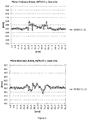
- Figures 2 and 3 shows typical hardness profiles over the welded seam tested near the face side and the root side of the welded samples. It is surprising that steels according to the present invention can have a very smooth hardness profile over the weld and that there are no soft zones that could start to neck during a tensile test and thereby influence the location of the fracture. Normally, steels with a yield strength of 1100 MPa welded with un-matching welding consumables (X90 and/or X96) exhibit some softening in the HAZ and especially in the WM. Steel according to the invention can maintain good hardness in the HAZ but also have good hardness in the WM due to the diffusion of alloying elements promoting hardening (i.e. Boron). Low carbon content in the steels according to the invention (i.e. 0.1 - 0.20 mass-% Carbon) ensures that a weld has high toughness as well as good hardness.
Landscapes
- Chemical & Material Sciences (AREA)
- Engineering & Computer Science (AREA)
- Materials Engineering (AREA)
- Mechanical Engineering (AREA)
- Metallurgy (AREA)
- Organic Chemistry (AREA)
- Physics & Mathematics (AREA)
- Thermal Sciences (AREA)
- Crystallography & Structural Chemistry (AREA)
- Heat Treatment Of Steel (AREA)
- Heat Treatment Of Sheet Steel (AREA)
Priority Applications (9)
| Application Number | Priority Date | Filing Date | Title |
|---|---|---|---|
| ES18152884T ES2835285T3 (es) | 2018-01-23 | 2018-01-23 | Acero laminado en caliente y método para fabricar acero laminado en caliente |
| HUE18152884A HUE052103T2 (hu) | 2018-01-23 | 2018-01-23 | Melegen hengerelt acél és eljárás melegen hengerelt acél elõállítására |
| EP18152884.5A EP3514253B1 (fr) | 2018-01-23 | 2018-01-23 | Acier laminé à chaud et procédé de fabrication d'acier laminé à chaud |
| CN201980009512.5A CN111630200B (zh) | 2018-01-23 | 2019-01-16 | 热轧钢及制造热轧钢的方法 |
| JP2020560553A JP2021511441A (ja) | 2018-01-23 | 2019-01-16 | 熱間圧延鋼および熱間圧延鋼の製造方法 |
| PCT/EP2019/051006 WO2019145196A1 (fr) | 2018-01-23 | 2019-01-16 | Acier laminé à chaud et procédé pour la fabrication d'acier laminé à chaud |
| BR112020014887-3A BR112020014887B1 (pt) | 2018-01-23 | 2019-01-16 | Aço laminado a quente & método para fabricação de aço laminado a quente |
| KR1020207023837A KR20200109361A (ko) | 2018-01-23 | 2019-01-16 | 열간 압연 강 & 열간 압연 강을 제조하기 위한 방법 |
| US16/961,724 US20230203609A1 (en) | 2018-01-23 | 2019-01-16 | Hot-rolled steel & method for manufacturing hot-rolled steel |
Applications Claiming Priority (1)
| Application Number | Priority Date | Filing Date | Title |
|---|---|---|---|
| EP18152884.5A EP3514253B1 (fr) | 2018-01-23 | 2018-01-23 | Acier laminé à chaud et procédé de fabrication d'acier laminé à chaud |
Publications (2)
| Publication Number | Publication Date |
|---|---|
| EP3514253A1 true EP3514253A1 (fr) | 2019-07-24 |
| EP3514253B1 EP3514253B1 (fr) | 2020-10-14 |
Family
ID=61131953
Family Applications (1)
| Application Number | Title | Priority Date | Filing Date |
|---|---|---|---|
| EP18152884.5A Active EP3514253B1 (fr) | 2018-01-23 | 2018-01-23 | Acier laminé à chaud et procédé de fabrication d'acier laminé à chaud |
Country Status (8)
| Country | Link |
|---|---|
| US (1) | US20230203609A1 (fr) |
| EP (1) | EP3514253B1 (fr) |
| JP (1) | JP2021511441A (fr) |
| KR (1) | KR20200109361A (fr) |
| CN (1) | CN111630200B (fr) |
| ES (1) | ES2835285T3 (fr) |
| HU (1) | HUE052103T2 (fr) |
| WO (1) | WO2019145196A1 (fr) |
Cited By (7)
| Publication number | Priority date | Publication date | Assignee | Title |
|---|---|---|---|---|
| CN112233735A (zh) * | 2020-09-07 | 2021-01-15 | 包头钢铁(集团)有限责任公司 | 一种珠光体钢轨钢化学成分的设计方法 |
| CN113528974A (zh) * | 2021-06-18 | 2021-10-22 | 首钢集团有限公司 | 一种防护用钢及其制备方法 |
| US11939646B2 (en) | 2018-10-26 | 2024-03-26 | Oerlikon Metco (Us) Inc. | Corrosion and wear resistant nickel based alloys |
| US12076788B2 (en) | 2019-05-03 | 2024-09-03 | Oerlikon Metco (Us) Inc. | Powder feedstock for wear resistant bulk welding configured to optimize manufacturability |
| US12227853B2 (en) | 2019-03-28 | 2025-02-18 | Oerlikon Metco (Us) Inc. | Thermal spray iron-based alloys for coating engine cylinder bores |
| US12378647B2 (en) | 2018-03-29 | 2025-08-05 | Oerlikon Metco (Us) Inc. | Reduced carbides ferrous alloys |
| US12569942B2 (en) | 2019-07-09 | 2026-03-10 | Oerlikon Metco (Us) Inc. | Iron-based alloys designed for wear and corrosion resistance |
Families Citing this family (3)
| Publication number | Priority date | Publication date | Assignee | Title |
|---|---|---|---|---|
| CN117089760A (zh) * | 2022-05-11 | 2023-11-21 | 宝山钢铁股份有限公司 | 一种高疲劳性能凿岩钎具用钢及其制造方法 |
| CN116219279B (zh) * | 2022-12-23 | 2024-04-16 | 鞍钢股份有限公司 | 一种高强度高韧性核反应堆安全壳用钢及其制造方法 |
| CN118745547A (zh) * | 2024-06-12 | 2024-10-08 | 无锡市华尔泰机械制造有限公司 | 一种高强度耐蚀钢锻制管件的制造方法 |
Citations (7)
| Publication number | Priority date | Publication date | Assignee | Title |
|---|---|---|---|---|
| JP2006206942A (ja) * | 2005-01-26 | 2006-08-10 | Jfe Steel Kk | 耐水素脆性特性に優れた高張力鋼材の製造方法 |
| JP2008208454A (ja) * | 2007-01-31 | 2008-09-11 | Jfe Steel Kk | 耐遅れ破壊特性に優れた高張力鋼材並びにその製造方法 |
| WO2009125820A1 (fr) * | 2008-04-09 | 2009-10-15 | 新日本製鐵株式会社 | PROCÉDÉ DE PRODUCTION DE PLAQUES D'ACIER À HAUTE RÉSISTANCE DE 780MPa PRÉSENTANT UNE EXCELLENTE RÉSILIENCE AUX BASSES TEMPÉRATURES |
| EP2267177A1 (fr) * | 2008-09-17 | 2010-12-29 | Nippon Steel Corporation | Tôle d'acier à haute résistance et son procédé de fabrication |
| JP2011089166A (ja) * | 2009-10-22 | 2011-05-06 | Jfe Steel Corp | 水素侵入抑制特性に優れた高張力厚鋼板およびその製造方法 |
| EP2576848A1 (fr) | 2010-06-07 | 2013-04-10 | Rautaruukki OYJ | Procédé pour la production d'un produit de type acier laminé à chaud et acier laminé à chaud |
| EP2949775A1 (fr) * | 2013-01-22 | 2015-12-02 | Baoshan Iron & Steel Co., Ltd. | Plaque d'acier à résistance et ténacité ultra-élevées possédant un faible coefficient d'élasticité et procédé de fabrication associé |
Family Cites Families (2)
| Publication number | Priority date | Publication date | Assignee | Title |
|---|---|---|---|---|
| KR101664635B1 (ko) * | 2011-12-27 | 2016-10-10 | 제이에프이 스틸 가부시키가이샤 | 고장력 열연 강판 및 그 제조 방법 |
| JP5838796B2 (ja) * | 2011-12-27 | 2016-01-06 | Jfeスチール株式会社 | 伸びフランジ性に優れた高強度熱延鋼板およびその製造方法 |
-
2018
- 2018-01-23 HU HUE18152884A patent/HUE052103T2/hu unknown
- 2018-01-23 ES ES18152884T patent/ES2835285T3/es active Active
- 2018-01-23 EP EP18152884.5A patent/EP3514253B1/fr active Active
-
2019
- 2019-01-16 JP JP2020560553A patent/JP2021511441A/ja not_active Withdrawn
- 2019-01-16 KR KR1020207023837A patent/KR20200109361A/ko not_active Withdrawn
- 2019-01-16 US US16/961,724 patent/US20230203609A1/en not_active Abandoned
- 2019-01-16 CN CN201980009512.5A patent/CN111630200B/zh active Active
- 2019-01-16 WO PCT/EP2019/051006 patent/WO2019145196A1/fr not_active Ceased
Patent Citations (7)
| Publication number | Priority date | Publication date | Assignee | Title |
|---|---|---|---|---|
| JP2006206942A (ja) * | 2005-01-26 | 2006-08-10 | Jfe Steel Kk | 耐水素脆性特性に優れた高張力鋼材の製造方法 |
| JP2008208454A (ja) * | 2007-01-31 | 2008-09-11 | Jfe Steel Kk | 耐遅れ破壊特性に優れた高張力鋼材並びにその製造方法 |
| WO2009125820A1 (fr) * | 2008-04-09 | 2009-10-15 | 新日本製鐵株式会社 | PROCÉDÉ DE PRODUCTION DE PLAQUES D'ACIER À HAUTE RÉSISTANCE DE 780MPa PRÉSENTANT UNE EXCELLENTE RÉSILIENCE AUX BASSES TEMPÉRATURES |
| EP2267177A1 (fr) * | 2008-09-17 | 2010-12-29 | Nippon Steel Corporation | Tôle d'acier à haute résistance et son procédé de fabrication |
| JP2011089166A (ja) * | 2009-10-22 | 2011-05-06 | Jfe Steel Corp | 水素侵入抑制特性に優れた高張力厚鋼板およびその製造方法 |
| EP2576848A1 (fr) | 2010-06-07 | 2013-04-10 | Rautaruukki OYJ | Procédé pour la production d'un produit de type acier laminé à chaud et acier laminé à chaud |
| EP2949775A1 (fr) * | 2013-01-22 | 2015-12-02 | Baoshan Iron & Steel Co., Ltd. | Plaque d'acier à résistance et ténacité ultra-élevées possédant un faible coefficient d'élasticité et procédé de fabrication associé |
Cited By (9)
| Publication number | Priority date | Publication date | Assignee | Title |
|---|---|---|---|---|
| US12378647B2 (en) | 2018-03-29 | 2025-08-05 | Oerlikon Metco (Us) Inc. | Reduced carbides ferrous alloys |
| US11939646B2 (en) | 2018-10-26 | 2024-03-26 | Oerlikon Metco (Us) Inc. | Corrosion and wear resistant nickel based alloys |
| US12227853B2 (en) | 2019-03-28 | 2025-02-18 | Oerlikon Metco (Us) Inc. | Thermal spray iron-based alloys for coating engine cylinder bores |
| US12076788B2 (en) | 2019-05-03 | 2024-09-03 | Oerlikon Metco (Us) Inc. | Powder feedstock for wear resistant bulk welding configured to optimize manufacturability |
| US12569942B2 (en) | 2019-07-09 | 2026-03-10 | Oerlikon Metco (Us) Inc. | Iron-based alloys designed for wear and corrosion resistance |
| CN112233735A (zh) * | 2020-09-07 | 2021-01-15 | 包头钢铁(集团)有限责任公司 | 一种珠光体钢轨钢化学成分的设计方法 |
| CN112233735B (zh) * | 2020-09-07 | 2022-04-19 | 包头钢铁(集团)有限责任公司 | 一种珠光体钢轨钢化学成分的设计方法 |
| CN113528974A (zh) * | 2021-06-18 | 2021-10-22 | 首钢集团有限公司 | 一种防护用钢及其制备方法 |
| CN113528974B (zh) * | 2021-06-18 | 2022-06-21 | 首钢集团有限公司 | 一种防护用钢及其制备方法 |
Also Published As
| Publication number | Publication date |
|---|---|
| CN111630200B (zh) | 2022-07-05 |
| BR112020014887A2 (pt) | 2020-12-08 |
| ES2835285T3 (es) | 2021-06-22 |
| WO2019145196A1 (fr) | 2019-08-01 |
| KR20200109361A (ko) | 2020-09-22 |
| EP3514253B1 (fr) | 2020-10-14 |
| HUE052103T2 (hu) | 2021-04-28 |
| JP2021511441A (ja) | 2021-05-06 |
| CN111630200A (zh) | 2020-09-04 |
| US20230203609A1 (en) | 2023-06-29 |
Similar Documents
| Publication | Publication Date | Title |
|---|---|---|
| EP3514253B1 (fr) | Acier laminé à chaud et procédé de fabrication d'acier laminé à chaud | |
| US12522888B2 (en) | Method of manufacutring a high-strength cold rolled steel sheet having high hole expansion ratio, and highstrength hot-dip galvanized steel sheet | |
| KR102276741B1 (ko) | 구멍확장성이 높은 고강도 냉연강판, 고강도 용융아연도금강판 및 이들의 제조방법 | |
| US10604817B2 (en) | High-strength steel plate for pressure vessel having excellent toughness after post weld heat treatment and manufacturing method thereof | |
| EP2576848B1 (fr) | Procédé pour la production d'un produit de type acier laminé à chaud et acier laminé à chaud | |
| EP3653736A1 (fr) | Bande d'acier laminé à chaud et procédé de fabrication | |
| RU2586953C2 (ru) | Сверхпрочная конструкционная сталь и способ ее изготовления | |
| JP5303856B2 (ja) | 低温靭性に優れ、かつ強度異方性が小さい高張力鋼材の製造方法 | |
| EP2520680B1 (fr) | Feuillard d'acier à résistance mécanique élevée ayant une excellente résistance au traitement thermique post-soudage et son procédé de fabrication | |
| JP5433964B2 (ja) | 曲げ加工性および低温靭性に優れる高張力鋼板の製造方法 | |
| JP5181775B2 (ja) | 曲げ加工性および低温靭性に優れる高張力鋼材ならびにその製造方法 | |
| JP2001164338A (ja) | 耐遅れ破壊特性の優れた自動車用超高強度電縫鋼管およびその製造方法 | |
| KR101736632B1 (ko) | 항복강도 및 연성이 우수한 고강도 냉연강판 및 그 제조방법 | |
| KR101344537B1 (ko) | 고강도 강판 및 그 제조 방법 | |
| JP4207334B2 (ja) | 溶接性と耐応力腐食割れ性に優れた高強度鋼板およびその製造方法 | |
| KR102321268B1 (ko) | 고강도 강판 및 이의 제조방법 | |
| EP2592168A1 (fr) | Tôle en acier résistant à l'abrasion avec excellentes propriétés de résistance aux chocs, et procédé de production de ladite tôle en acier | |
| JP6691967B2 (ja) | 靭性及び耐切断割れ性に優れた高硬度耐摩耗鋼、並びにその製造方法 | |
| CA3094517C (fr) | Composition d'acier selon la specification api 5l psl-2 pour qualite x-65 a resistance amelioree a la fissuration induite par l'hydrogene (hic) et procede de fabrication de son ac ier | |
| KR102321269B1 (ko) | 고강도 강판 및 이의 제조방법 | |
| JP5151693B2 (ja) | 高張力鋼の製造方法 | |
| KR101999000B1 (ko) | 용접강도가 우수한 고망간 강판 및 이의 제조방법 | |
| JP2022510209A (ja) | 高温強度に優れた中高温用鋼板及びその製造方法 | |
| KR20150001469A (ko) | 고강도 냉연강판 및 그 제조 방법 | |
| KR101696051B1 (ko) | 저온인성 및 수소유기균열 저항성이 우수한 후판 강재 및 그 제조방법 |
Legal Events
| Date | Code | Title | Description |
|---|---|---|---|
| PUAI | Public reference made under article 153(3) epc to a published international application that has entered the european phase |
Free format text: ORIGINAL CODE: 0009012 |
|
| STAA | Information on the status of an ep patent application or granted ep patent |
Free format text: STATUS: REQUEST FOR EXAMINATION WAS MADE |
|
| STAA | Information on the status of an ep patent application or granted ep patent |
Free format text: STATUS: EXAMINATION IS IN PROGRESS |
|
| 17P | Request for examination filed |
Effective date: 20190426 |
|
| AK | Designated contracting states |
Kind code of ref document: A1 Designated state(s): AL AT BE BG CH CY CZ DE DK EE ES FI FR GB GR HR HU IE IS IT LI LT LU LV MC MK MT NL NO PL PT RO RS SE SI SK SM TR |
|
| AX | Request for extension of the european patent |
Extension state: BA ME |
|
| 17Q | First examination report despatched |
Effective date: 20190709 |
|
| GRAP | Despatch of communication of intention to grant a patent |
Free format text: ORIGINAL CODE: EPIDOSNIGR1 |
|
| STAA | Information on the status of an ep patent application or granted ep patent |
Free format text: STATUS: GRANT OF PATENT IS INTENDED |
|
| RIC1 | Information provided on ipc code assigned before grant |
Ipc: C22C 38/50 20060101ALI20200316BHEP Ipc: C22C 38/02 20060101ALI20200316BHEP Ipc: C22C 38/48 20060101ALI20200316BHEP Ipc: C22C 38/42 20060101ALI20200316BHEP Ipc: C21D 6/00 20060101ALI20200316BHEP Ipc: C22C 38/44 20060101ALI20200316BHEP Ipc: C22C 38/06 20060101ALI20200316BHEP Ipc: C21D 1/20 20060101ALI20200316BHEP Ipc: C22C 38/54 20060101ALI20200316BHEP Ipc: C22C 38/00 20060101AFI20200316BHEP Ipc: C22C 38/04 20060101ALI20200316BHEP Ipc: C21D 1/25 20060101ALI20200316BHEP Ipc: C22C 38/46 20060101ALI20200316BHEP Ipc: C21D 8/02 20060101ALI20200316BHEP Ipc: C21D 1/18 20060101ALI20200316BHEP Ipc: C21D 8/04 20060101ALI20200316BHEP Ipc: C21D 9/46 20060101ALI20200316BHEP |
|
| INTG | Intention to grant announced |
Effective date: 20200401 |
|
| RIC1 | Information provided on ipc code assigned before grant |
Ipc: C21D 6/00 20060101ALI20200320BHEP Ipc: C21D 1/20 20060101ALI20200320BHEP Ipc: C21D 1/25 20060101ALI20200320BHEP Ipc: C22C 38/44 20060101ALI20200320BHEP Ipc: C22C 38/48 20060101ALI20200320BHEP Ipc: C21D 8/04 20060101ALI20200320BHEP Ipc: C21D 9/46 20060101ALI20200320BHEP Ipc: C21D 8/02 20060101ALI20200320BHEP Ipc: C22C 38/06 20060101ALI20200320BHEP Ipc: C22C 38/42 20060101ALI20200320BHEP Ipc: C22C 38/46 20060101ALI20200320BHEP Ipc: C21D 1/18 20060101ALN20200320BHEP Ipc: C22C 38/50 20060101ALI20200320BHEP Ipc: C22C 38/04 20060101ALI20200320BHEP Ipc: C22C 38/54 20060101ALI20200320BHEP Ipc: C22C 38/02 20060101ALI20200320BHEP Ipc: C22C 38/00 20060101AFI20200320BHEP |
|
| GRAS | Grant fee paid |
Free format text: ORIGINAL CODE: EPIDOSNIGR3 |
|
| GRAJ | Information related to disapproval of communication of intention to grant by the applicant or resumption of examination proceedings by the epo deleted |
Free format text: ORIGINAL CODE: EPIDOSDIGR1 |
|
| GRAL | Information related to payment of fee for publishing/printing deleted |
Free format text: ORIGINAL CODE: EPIDOSDIGR3 |
|
| STAA | Information on the status of an ep patent application or granted ep patent |
Free format text: STATUS: EXAMINATION IS IN PROGRESS |
|
| INTC | Intention to grant announced (deleted) | ||
| GRAR | Information related to intention to grant a patent recorded |
Free format text: ORIGINAL CODE: EPIDOSNIGR71 |
|
| STAA | Information on the status of an ep patent application or granted ep patent |
Free format text: STATUS: GRANT OF PATENT IS INTENDED |
|
| GRAA | (expected) grant |
Free format text: ORIGINAL CODE: 0009210 |
|
| STAA | Information on the status of an ep patent application or granted ep patent |
Free format text: STATUS: THE PATENT HAS BEEN GRANTED |
|
| RIC1 | Information provided on ipc code assigned before grant |
Ipc: C22C 38/48 20060101ALI20200820BHEP Ipc: C21D 9/46 20060101ALI20200820BHEP Ipc: C21D 6/00 20060101ALI20200820BHEP Ipc: C22C 38/02 20060101ALI20200820BHEP Ipc: C22C 38/04 20060101ALI20200820BHEP Ipc: C22C 38/00 20060101AFI20200820BHEP Ipc: C22C 38/54 20060101ALI20200820BHEP Ipc: C22C 38/46 20060101ALI20200820BHEP Ipc: C21D 8/04 20060101ALI20200820BHEP Ipc: C22C 38/50 20060101ALI20200820BHEP Ipc: C21D 8/02 20060101ALI20200820BHEP Ipc: C22C 38/06 20060101ALI20200820BHEP Ipc: C22C 38/42 20060101ALI20200820BHEP Ipc: C22C 38/44 20060101ALI20200820BHEP Ipc: C21D 1/20 20060101ALI20200820BHEP Ipc: C21D 1/25 20060101ALI20200820BHEP Ipc: C21D 1/18 20060101ALN20200820BHEP |
|
| INTG | Intention to grant announced |
Effective date: 20200902 |
|
| AK | Designated contracting states |
Kind code of ref document: B1 Designated state(s): AL AT BE BG CH CY CZ DE DK EE ES FI FR GB GR HR HU IE IS IT LI LT LU LV MC MK MT NL NO PL PT RO RS SE SI SK SM TR |
|
| REG | Reference to a national code |
Ref country code: GB Ref legal event code: FG4D |
|
| REG | Reference to a national code |
Ref country code: AT Ref legal event code: REF Ref document number: 1323635 Country of ref document: AT Kind code of ref document: T Effective date: 20201015 Ref country code: CH Ref legal event code: EP |
|
| REG | Reference to a national code |
Ref country code: DE Ref legal event code: R096 Ref document number: 602018008582 Country of ref document: DE |
|
| REG | Reference to a national code |
Ref country code: IE Ref legal event code: FG4D |
|
| REG | Reference to a national code |
Ref country code: FI Ref legal event code: FGE |
|
| REG | Reference to a national code |
Ref country code: NL Ref legal event code: FP |
|
| REG | Reference to a national code |
Ref country code: SE Ref legal event code: TRGR |
|
| REG | Reference to a national code |
Ref country code: HU Ref legal event code: AG4A Ref document number: E052103 Country of ref document: HU |
|
| PG25 | Lapsed in a contracting state [announced via postgrant information from national office to epo] |
Ref country code: RS Free format text: LAPSE BECAUSE OF FAILURE TO SUBMIT A TRANSLATION OF THE DESCRIPTION OR TO PAY THE FEE WITHIN THE PRESCRIBED TIME-LIMIT Effective date: 20201014 Ref country code: PT Free format text: LAPSE BECAUSE OF FAILURE TO SUBMIT A TRANSLATION OF THE DESCRIPTION OR TO PAY THE FEE WITHIN THE PRESCRIBED TIME-LIMIT Effective date: 20210215 Ref country code: NO Free format text: LAPSE BECAUSE OF FAILURE TO SUBMIT A TRANSLATION OF THE DESCRIPTION OR TO PAY THE FEE WITHIN THE PRESCRIBED TIME-LIMIT Effective date: 20210114 Ref country code: GR Free format text: LAPSE BECAUSE OF FAILURE TO SUBMIT A TRANSLATION OF THE DESCRIPTION OR TO PAY THE FEE WITHIN THE PRESCRIBED TIME-LIMIT Effective date: 20210115 |
|
| REG | Reference to a national code |
Ref country code: LT Ref legal event code: MG4D |
|
| PG25 | Lapsed in a contracting state [announced via postgrant information from national office to epo] |
Ref country code: IS Free format text: LAPSE BECAUSE OF FAILURE TO SUBMIT A TRANSLATION OF THE DESCRIPTION OR TO PAY THE FEE WITHIN THE PRESCRIBED TIME-LIMIT Effective date: 20210214 Ref country code: LV Free format text: LAPSE BECAUSE OF FAILURE TO SUBMIT A TRANSLATION OF THE DESCRIPTION OR TO PAY THE FEE WITHIN THE PRESCRIBED TIME-LIMIT Effective date: 20201014 Ref country code: BG Free format text: LAPSE BECAUSE OF FAILURE TO SUBMIT A TRANSLATION OF THE DESCRIPTION OR TO PAY THE FEE WITHIN THE PRESCRIBED TIME-LIMIT Effective date: 20210114 |
|
| REG | Reference to a national code |
Ref country code: ES Ref legal event code: FG2A Ref document number: 2835285 Country of ref document: ES Kind code of ref document: T3 Effective date: 20210622 |
|
| PG25 | Lapsed in a contracting state [announced via postgrant information from national office to epo] |
Ref country code: HR Free format text: LAPSE BECAUSE OF FAILURE TO SUBMIT A TRANSLATION OF THE DESCRIPTION OR TO PAY THE FEE WITHIN THE PRESCRIBED TIME-LIMIT Effective date: 20201014 |
|
| REG | Reference to a national code |
Ref country code: DE Ref legal event code: R097 Ref document number: 602018008582 Country of ref document: DE |
|
| PG25 | Lapsed in a contracting state [announced via postgrant information from national office to epo] |
Ref country code: RO Free format text: LAPSE BECAUSE OF FAILURE TO SUBMIT A TRANSLATION OF THE DESCRIPTION OR TO PAY THE FEE WITHIN THE PRESCRIBED TIME-LIMIT Effective date: 20201014 Ref country code: SK Free format text: LAPSE BECAUSE OF FAILURE TO SUBMIT A TRANSLATION OF THE DESCRIPTION OR TO PAY THE FEE WITHIN THE PRESCRIBED TIME-LIMIT Effective date: 20201014 Ref country code: LT Free format text: LAPSE BECAUSE OF FAILURE TO SUBMIT A TRANSLATION OF THE DESCRIPTION OR TO PAY THE FEE WITHIN THE PRESCRIBED TIME-LIMIT Effective date: 20201014 Ref country code: CZ Free format text: LAPSE BECAUSE OF FAILURE TO SUBMIT A TRANSLATION OF THE DESCRIPTION OR TO PAY THE FEE WITHIN THE PRESCRIBED TIME-LIMIT Effective date: 20201014 Ref country code: EE Free format text: LAPSE BECAUSE OF FAILURE TO SUBMIT A TRANSLATION OF THE DESCRIPTION OR TO PAY THE FEE WITHIN THE PRESCRIBED TIME-LIMIT Effective date: 20201014 Ref country code: SM Free format text: LAPSE BECAUSE OF FAILURE TO SUBMIT A TRANSLATION OF THE DESCRIPTION OR TO PAY THE FEE WITHIN THE PRESCRIBED TIME-LIMIT Effective date: 20201014 |
|
| PLBE | No opposition filed within time limit |
Free format text: ORIGINAL CODE: 0009261 |
|
| STAA | Information on the status of an ep patent application or granted ep patent |
Free format text: STATUS: NO OPPOSITION FILED WITHIN TIME LIMIT |
|
| PG25 | Lapsed in a contracting state [announced via postgrant information from national office to epo] |
Ref country code: DK Free format text: LAPSE BECAUSE OF FAILURE TO SUBMIT A TRANSLATION OF THE DESCRIPTION OR TO PAY THE FEE WITHIN THE PRESCRIBED TIME-LIMIT Effective date: 20201014 Ref country code: MC Free format text: LAPSE BECAUSE OF FAILURE TO SUBMIT A TRANSLATION OF THE DESCRIPTION OR TO PAY THE FEE WITHIN THE PRESCRIBED TIME-LIMIT Effective date: 20201014 |
|
| REG | Reference to a national code |
Ref country code: CH Ref legal event code: PL |
|
| 26N | No opposition filed |
Effective date: 20210715 |
|
| PG25 | Lapsed in a contracting state [announced via postgrant information from national office to epo] |
Ref country code: LU Free format text: LAPSE BECAUSE OF NON-PAYMENT OF DUE FEES Effective date: 20210123 |
|
| PG25 | Lapsed in a contracting state [announced via postgrant information from national office to epo] |
Ref country code: AL Free format text: LAPSE BECAUSE OF FAILURE TO SUBMIT A TRANSLATION OF THE DESCRIPTION OR TO PAY THE FEE WITHIN THE PRESCRIBED TIME-LIMIT Effective date: 20201014 |
|
| PG25 | Lapsed in a contracting state [announced via postgrant information from national office to epo] |
Ref country code: LI Free format text: LAPSE BECAUSE OF NON-PAYMENT OF DUE FEES Effective date: 20210131 Ref country code: SI Free format text: LAPSE BECAUSE OF FAILURE TO SUBMIT A TRANSLATION OF THE DESCRIPTION OR TO PAY THE FEE WITHIN THE PRESCRIBED TIME-LIMIT Effective date: 20201014 Ref country code: CH Free format text: LAPSE BECAUSE OF NON-PAYMENT OF DUE FEES Effective date: 20210131 |
|
| PG25 | Lapsed in a contracting state [announced via postgrant information from national office to epo] |
Ref country code: IE Free format text: LAPSE BECAUSE OF NON-PAYMENT OF DUE FEES Effective date: 20210123 |
|
| PG25 | Lapsed in a contracting state [announced via postgrant information from national office to epo] |
Ref country code: IS Free format text: LAPSE BECAUSE OF FAILURE TO SUBMIT A TRANSLATION OF THE DESCRIPTION OR TO PAY THE FEE WITHIN THE PRESCRIBED TIME-LIMIT Effective date: 20210214 |
|
| PG25 | Lapsed in a contracting state [announced via postgrant information from national office to epo] |
Ref country code: CY Free format text: LAPSE BECAUSE OF FAILURE TO SUBMIT A TRANSLATION OF THE DESCRIPTION OR TO PAY THE FEE WITHIN THE PRESCRIBED TIME-LIMIT Effective date: 20201014 |
|
| REG | Reference to a national code |
Ref country code: AT Ref legal event code: UEP Ref document number: 1323635 Country of ref document: AT Kind code of ref document: T Effective date: 20201014 |
|
| PG25 | Lapsed in a contracting state [announced via postgrant information from national office to epo] |
Ref country code: MK Free format text: LAPSE BECAUSE OF FAILURE TO SUBMIT A TRANSLATION OF THE DESCRIPTION OR TO PAY THE FEE WITHIN THE PRESCRIBED TIME-LIMIT Effective date: 20201014 |
|
| PG25 | Lapsed in a contracting state [announced via postgrant information from national office to epo] |
Ref country code: MT Free format text: LAPSE BECAUSE OF FAILURE TO SUBMIT A TRANSLATION OF THE DESCRIPTION OR TO PAY THE FEE WITHIN THE PRESCRIBED TIME-LIMIT Effective date: 20201014 |
|
| PGFP | Annual fee paid to national office [announced via postgrant information from national office to epo] |
Ref country code: ES Payment date: 20250416 Year of fee payment: 8 |
|
| PGFP | Annual fee paid to national office [announced via postgrant information from national office to epo] |
Ref country code: GB Payment date: 20251222 Year of fee payment: 9 |
|
| PGFP | Annual fee paid to national office [announced via postgrant information from national office to epo] |
Ref country code: NL Payment date: 20251223 Year of fee payment: 9 Ref country code: FR Payment date: 20251224 Year of fee payment: 9 |
|
| PGFP | Annual fee paid to national office [announced via postgrant information from national office to epo] |
Ref country code: BE Payment date: 20251223 Year of fee payment: 9 |
|
| PGFP | Annual fee paid to national office [announced via postgrant information from national office to epo] |
Ref country code: SE Payment date: 20251222 Year of fee payment: 9 |
|
| PGFP | Annual fee paid to national office [announced via postgrant information from national office to epo] |
Ref country code: PL Payment date: 20251212 Year of fee payment: 9 |
|
| PGFP | Annual fee paid to national office [announced via postgrant information from national office to epo] |
Ref country code: HU Payment date: 20251222 Year of fee payment: 9 |
|
| PGFP | Annual fee paid to national office [announced via postgrant information from national office to epo] |
Ref country code: DE Payment date: 20251211 Year of fee payment: 9 |
|
| PGFP | Annual fee paid to national office [announced via postgrant information from national office to epo] |
Ref country code: AT Payment date: 20260116 Year of fee payment: 9 |
|
| PGFP | Annual fee paid to national office [announced via postgrant information from national office to epo] |
Ref country code: IT Payment date: 20260128 Year of fee payment: 9 Ref country code: FI Payment date: 20260217 Year of fee payment: 9 |
|
| PGFP | Annual fee paid to national office [announced via postgrant information from national office to epo] |
Ref country code: TR Payment date: 20260122 Year of fee payment: 9 |