EP3516064B1 - Nouveaux promoteurs - Google Patents
Nouveaux promoteurs Download PDFInfo
- Publication number
- EP3516064B1 EP3516064B1 EP17771408.6A EP17771408A EP3516064B1 EP 3516064 B1 EP3516064 B1 EP 3516064B1 EP 17771408 A EP17771408 A EP 17771408A EP 3516064 B1 EP3516064 B1 EP 3516064B1
- Authority
- EP
- European Patent Office
- Prior art keywords
- sequence
- seq
- vector
- virus
- ehv
- Prior art date
- Legal status (The legal status is an assumption and is not a legal conclusion. Google has not performed a legal analysis and makes no representation as to the accuracy of the status listed.)
- Active
Links
Images








Classifications
-
- C—CHEMISTRY; METALLURGY
- C12—BIOCHEMISTRY; BEER; SPIRITS; WINE; VINEGAR; MICROBIOLOGY; ENZYMOLOGY; MUTATION OR GENETIC ENGINEERING
- C12N—MICROORGANISMS OR ENZYMES; COMPOSITIONS THEREOF; PROPAGATING, PRESERVING, OR MAINTAINING MICROORGANISMS; MUTATION OR GENETIC ENGINEERING; CULTURE MEDIA
- C12N15/00—Mutation or genetic engineering; DNA or RNA concerning genetic engineering, vectors, e.g. plasmids, or their isolation, preparation or purification; Use of hosts therefor
- C12N15/09—Recombinant DNA-technology
- C12N15/63—Introduction of foreign genetic material using vectors; Vectors; Use of hosts therefor; Regulation of expression
- C12N15/79—Vectors or expression systems specially adapted for eukaryotic hosts
- C12N15/85—Vectors or expression systems specially adapted for eukaryotic hosts for animal cells
- C12N15/86—Viral vectors
- C12N15/861—Adenoviral vectors
- C12N15/8613—Chimaeric vector systems comprising heterologous sequences for production of another viral vector
-
- A—HUMAN NECESSITIES
- A61—MEDICAL OR VETERINARY SCIENCE; HYGIENE
- A61K—PREPARATIONS FOR MEDICAL, DENTAL OR TOILETRY PURPOSES
- A61K39/00—Medicinal preparations containing antigens or antibodies
- A61K39/12—Viral antigens
-
- A—HUMAN NECESSITIES
- A61—MEDICAL OR VETERINARY SCIENCE; HYGIENE
- A61P—SPECIFIC THERAPEUTIC ACTIVITY OF CHEMICAL COMPOUNDS OR MEDICINAL PREPARATIONS
- A61P31/00—Antiinfectives, i.e. antibiotics, antiseptics, chemotherapeutics
-
- A—HUMAN NECESSITIES
- A61—MEDICAL OR VETERINARY SCIENCE; HYGIENE
- A61P—SPECIFIC THERAPEUTIC ACTIVITY OF CHEMICAL COMPOUNDS OR MEDICINAL PREPARATIONS
- A61P31/00—Antiinfectives, i.e. antibiotics, antiseptics, chemotherapeutics
- A61P31/12—Antivirals
- A61P31/20—Antivirals for DNA viruses
- A61P31/22—Antivirals for DNA viruses for herpes viruses
-
- C—CHEMISTRY; METALLURGY
- C07—ORGANIC CHEMISTRY
- C07K—PEPTIDES
- C07K14/00—Peptides having more than 20 amino acids; Gastrins; Somatostatins; Melanotropins; Derivatives thereof
- C07K14/005—Peptides having more than 20 amino acids; Gastrins; Somatostatins; Melanotropins; Derivatives thereof from viruses
-
- C—CHEMISTRY; METALLURGY
- C12—BIOCHEMISTRY; BEER; SPIRITS; WINE; VINEGAR; MICROBIOLOGY; ENZYMOLOGY; MUTATION OR GENETIC ENGINEERING
- C12N—MICROORGANISMS OR ENZYMES; COMPOSITIONS THEREOF; PROPAGATING, PRESERVING, OR MAINTAINING MICROORGANISMS; MUTATION OR GENETIC ENGINEERING; CULTURE MEDIA
- C12N15/00—Mutation or genetic engineering; DNA or RNA concerning genetic engineering, vectors, e.g. plasmids, or their isolation, preparation or purification; Use of hosts therefor
- C12N15/09—Recombinant DNA-technology
- C12N15/63—Introduction of foreign genetic material using vectors; Vectors; Use of hosts therefor; Regulation of expression
- C12N15/79—Vectors or expression systems specially adapted for eukaryotic hosts
- C12N15/85—Vectors or expression systems specially adapted for eukaryotic hosts for animal cells
-
- C—CHEMISTRY; METALLURGY
- C12—BIOCHEMISTRY; BEER; SPIRITS; WINE; VINEGAR; MICROBIOLOGY; ENZYMOLOGY; MUTATION OR GENETIC ENGINEERING
- C12N—MICROORGANISMS OR ENZYMES; COMPOSITIONS THEREOF; PROPAGATING, PRESERVING, OR MAINTAINING MICROORGANISMS; MUTATION OR GENETIC ENGINEERING; CULTURE MEDIA
- C12N15/00—Mutation or genetic engineering; DNA or RNA concerning genetic engineering, vectors, e.g. plasmids, or their isolation, preparation or purification; Use of hosts therefor
- C12N15/09—Recombinant DNA-technology
- C12N15/63—Introduction of foreign genetic material using vectors; Vectors; Use of hosts therefor; Regulation of expression
- C12N15/79—Vectors or expression systems specially adapted for eukaryotic hosts
- C12N15/85—Vectors or expression systems specially adapted for eukaryotic hosts for animal cells
- C12N15/86—Viral vectors
-
- C—CHEMISTRY; METALLURGY
- C12—BIOCHEMISTRY; BEER; SPIRITS; WINE; VINEGAR; MICROBIOLOGY; ENZYMOLOGY; MUTATION OR GENETIC ENGINEERING
- C12N—MICROORGANISMS OR ENZYMES; COMPOSITIONS THEREOF; PROPAGATING, PRESERVING, OR MAINTAINING MICROORGANISMS; MUTATION OR GENETIC ENGINEERING; CULTURE MEDIA
- C12N7/00—Viruses; Bacteriophages; Compositions thereof; Preparation or purification thereof
-
- C—CHEMISTRY; METALLURGY
- C12—BIOCHEMISTRY; BEER; SPIRITS; WINE; VINEGAR; MICROBIOLOGY; ENZYMOLOGY; MUTATION OR GENETIC ENGINEERING
- C12N—MICROORGANISMS OR ENZYMES; COMPOSITIONS THEREOF; PROPAGATING, PRESERVING, OR MAINTAINING MICROORGANISMS; MUTATION OR GENETIC ENGINEERING; CULTURE MEDIA
- C12N7/00—Viruses; Bacteriophages; Compositions thereof; Preparation or purification thereof
- C12N7/04—Inactivation or attenuation; Producing viral sub-units
- C12N7/045—Pseudoviral particles; Non infectious pseudovirions, e.g. genetically engineered
-
- A—HUMAN NECESSITIES
- A61—MEDICAL OR VETERINARY SCIENCE; HYGIENE
- A61K—PREPARATIONS FOR MEDICAL, DENTAL OR TOILETRY PURPOSES
- A61K39/00—Medicinal preparations containing antigens or antibodies
- A61K2039/51—Medicinal preparations containing antigens or antibodies comprising whole cells, viruses or DNA/RNA
-
- A—HUMAN NECESSITIES
- A61—MEDICAL OR VETERINARY SCIENCE; HYGIENE
- A61K—PREPARATIONS FOR MEDICAL, DENTAL OR TOILETRY PURPOSES
- A61K39/00—Medicinal preparations containing antigens or antibodies
- A61K2039/54—Medicinal preparations containing antigens or antibodies characterised by the route of administration
- A61K2039/541—Mucosal route
- A61K2039/543—Mucosal route intranasal
-
- A—HUMAN NECESSITIES
- A61—MEDICAL OR VETERINARY SCIENCE; HYGIENE
- A61K—PREPARATIONS FOR MEDICAL, DENTAL OR TOILETRY PURPOSES
- A61K39/00—Medicinal preparations containing antigens or antibodies
- A61K2039/545—Medicinal preparations containing antigens or antibodies characterised by the dose, timing or administration schedule
-
- A—HUMAN NECESSITIES
- A61—MEDICAL OR VETERINARY SCIENCE; HYGIENE
- A61K—PREPARATIONS FOR MEDICAL, DENTAL OR TOILETRY PURPOSES
- A61K39/00—Medicinal preparations containing antigens or antibodies
- A61K2039/55—Medicinal preparations containing antigens or antibodies characterised by the host/recipient, e.g. newborn with maternal antibodies
- A61K2039/552—Veterinary vaccine
-
- C—CHEMISTRY; METALLURGY
- C12—BIOCHEMISTRY; BEER; SPIRITS; WINE; VINEGAR; MICROBIOLOGY; ENZYMOLOGY; MUTATION OR GENETIC ENGINEERING
- C12N—MICROORGANISMS OR ENZYMES; COMPOSITIONS THEREOF; PROPAGATING, PRESERVING, OR MAINTAINING MICROORGANISMS; MUTATION OR GENETIC ENGINEERING; CULTURE MEDIA
- C12N2710/00—MICROORGANISMS OR ENZYMES; COMPOSITIONS THEREOF; PROPAGATING, PRESERVING, OR MAINTAINING MICROORGANISMS; MUTATION OR GENETIC ENGINEERING; CULTURE MEDIA dsDNA viruses
- C12N2710/00011—Details
- C12N2710/00034—Use of virus or viral component as vaccine, e.g. live-attenuated or inactivated virus, VLP, viral protein
-
- C—CHEMISTRY; METALLURGY
- C12—BIOCHEMISTRY; BEER; SPIRITS; WINE; VINEGAR; MICROBIOLOGY; ENZYMOLOGY; MUTATION OR GENETIC ENGINEERING
- C12N—MICROORGANISMS OR ENZYMES; COMPOSITIONS THEREOF; PROPAGATING, PRESERVING, OR MAINTAINING MICROORGANISMS; MUTATION OR GENETIC ENGINEERING; CULTURE MEDIA
- C12N2710/00—MICROORGANISMS OR ENZYMES; COMPOSITIONS THEREOF; PROPAGATING, PRESERVING, OR MAINTAINING MICROORGANISMS; MUTATION OR GENETIC ENGINEERING; CULTURE MEDIA dsDNA viruses
- C12N2710/00011—Details
- C12N2710/00041—Use of virus, viral particle or viral elements as a vector
- C12N2710/00043—Use of virus, viral particle or viral elements as a vector viral genome or elements thereof as genetic vector
-
- C—CHEMISTRY; METALLURGY
- C12—BIOCHEMISTRY; BEER; SPIRITS; WINE; VINEGAR; MICROBIOLOGY; ENZYMOLOGY; MUTATION OR GENETIC ENGINEERING
- C12N—MICROORGANISMS OR ENZYMES; COMPOSITIONS THEREOF; PROPAGATING, PRESERVING, OR MAINTAINING MICROORGANISMS; MUTATION OR GENETIC ENGINEERING; CULTURE MEDIA
- C12N2710/00—MICROORGANISMS OR ENZYMES; COMPOSITIONS THEREOF; PROPAGATING, PRESERVING, OR MAINTAINING MICROORGANISMS; MUTATION OR GENETIC ENGINEERING; CULTURE MEDIA dsDNA viruses
- C12N2710/00011—Details
- C12N2710/00041—Use of virus, viral particle or viral elements as a vector
- C12N2710/00045—Special targeting system for viral vectors
-
- C—CHEMISTRY; METALLURGY
- C12—BIOCHEMISTRY; BEER; SPIRITS; WINE; VINEGAR; MICROBIOLOGY; ENZYMOLOGY; MUTATION OR GENETIC ENGINEERING
- C12N—MICROORGANISMS OR ENZYMES; COMPOSITIONS THEREOF; PROPAGATING, PRESERVING, OR MAINTAINING MICROORGANISMS; MUTATION OR GENETIC ENGINEERING; CULTURE MEDIA
- C12N2710/00—MICROORGANISMS OR ENZYMES; COMPOSITIONS THEREOF; PROPAGATING, PRESERVING, OR MAINTAINING MICROORGANISMS; MUTATION OR GENETIC ENGINEERING; CULTURE MEDIA dsDNA viruses
- C12N2710/00011—Details
- C12N2710/10011—Adenoviridae
- C12N2710/10041—Use of virus, viral particle or viral elements as a vector
- C12N2710/10044—Chimeric viral vector comprising heterologous viral elements for production of another viral vector
-
- C—CHEMISTRY; METALLURGY
- C12—BIOCHEMISTRY; BEER; SPIRITS; WINE; VINEGAR; MICROBIOLOGY; ENZYMOLOGY; MUTATION OR GENETIC ENGINEERING
- C12N—MICROORGANISMS OR ENZYMES; COMPOSITIONS THEREOF; PROPAGATING, PRESERVING, OR MAINTAINING MICROORGANISMS; MUTATION OR GENETIC ENGINEERING; CULTURE MEDIA
- C12N2710/00—MICROORGANISMS OR ENZYMES; COMPOSITIONS THEREOF; PROPAGATING, PRESERVING, OR MAINTAINING MICROORGANISMS; MUTATION OR GENETIC ENGINEERING; CULTURE MEDIA dsDNA viruses
- C12N2710/00011—Details
- C12N2710/10011—Adenoviridae
- C12N2710/10061—Methods of inactivation or attenuation
- C12N2710/10062—Methods of inactivation or attenuation by genetic engineering
-
- C—CHEMISTRY; METALLURGY
- C12—BIOCHEMISTRY; BEER; SPIRITS; WINE; VINEGAR; MICROBIOLOGY; ENZYMOLOGY; MUTATION OR GENETIC ENGINEERING
- C12N—MICROORGANISMS OR ENZYMES; COMPOSITIONS THEREOF; PROPAGATING, PRESERVING, OR MAINTAINING MICROORGANISMS; MUTATION OR GENETIC ENGINEERING; CULTURE MEDIA
- C12N2710/00—MICROORGANISMS OR ENZYMES; COMPOSITIONS THEREOF; PROPAGATING, PRESERVING, OR MAINTAINING MICROORGANISMS; MUTATION OR GENETIC ENGINEERING; CULTURE MEDIA dsDNA viruses
- C12N2710/00011—Details
- C12N2710/12011—Asfarviridae
- C12N2710/12034—Use of virus or viral component as vaccine, e.g. live-attenuated or inactivated virus, VLP, viral protein
-
- C—CHEMISTRY; METALLURGY
- C12—BIOCHEMISTRY; BEER; SPIRITS; WINE; VINEGAR; MICROBIOLOGY; ENZYMOLOGY; MUTATION OR GENETIC ENGINEERING
- C12N—MICROORGANISMS OR ENZYMES; COMPOSITIONS THEREOF; PROPAGATING, PRESERVING, OR MAINTAINING MICROORGANISMS; MUTATION OR GENETIC ENGINEERING; CULTURE MEDIA
- C12N2710/00—MICROORGANISMS OR ENZYMES; COMPOSITIONS THEREOF; PROPAGATING, PRESERVING, OR MAINTAINING MICROORGANISMS; MUTATION OR GENETIC ENGINEERING; CULTURE MEDIA dsDNA viruses
- C12N2710/00011—Details
- C12N2710/16011—Herpesviridae
- C12N2710/16034—Use of virus or viral component as vaccine, e.g. live-attenuated or inactivated virus, VLP, viral protein
-
- C—CHEMISTRY; METALLURGY
- C12—BIOCHEMISTRY; BEER; SPIRITS; WINE; VINEGAR; MICROBIOLOGY; ENZYMOLOGY; MUTATION OR GENETIC ENGINEERING
- C12N—MICROORGANISMS OR ENZYMES; COMPOSITIONS THEREOF; PROPAGATING, PRESERVING, OR MAINTAINING MICROORGANISMS; MUTATION OR GENETIC ENGINEERING; CULTURE MEDIA
- C12N2710/00—MICROORGANISMS OR ENZYMES; COMPOSITIONS THEREOF; PROPAGATING, PRESERVING, OR MAINTAINING MICROORGANISMS; MUTATION OR GENETIC ENGINEERING; CULTURE MEDIA dsDNA viruses
- C12N2710/00011—Details
- C12N2710/16011—Herpesviridae
- C12N2710/16111—Cytomegalovirus, e.g. human herpesvirus 5
- C12N2710/16134—Use of virus or viral component as vaccine, e.g. live-attenuated or inactivated virus, VLP, viral protein
-
- C—CHEMISTRY; METALLURGY
- C12—BIOCHEMISTRY; BEER; SPIRITS; WINE; VINEGAR; MICROBIOLOGY; ENZYMOLOGY; MUTATION OR GENETIC ENGINEERING
- C12N—MICROORGANISMS OR ENZYMES; COMPOSITIONS THEREOF; PROPAGATING, PRESERVING, OR MAINTAINING MICROORGANISMS; MUTATION OR GENETIC ENGINEERING; CULTURE MEDIA
- C12N2710/00—MICROORGANISMS OR ENZYMES; COMPOSITIONS THEREOF; PROPAGATING, PRESERVING, OR MAINTAINING MICROORGANISMS; MUTATION OR GENETIC ENGINEERING; CULTURE MEDIA dsDNA viruses
- C12N2710/00011—Details
- C12N2710/16011—Herpesviridae
- C12N2710/16711—Varicellovirus, e.g. human herpesvirus 3, Varicella Zoster, pseudorabies
- C12N2710/16734—Use of virus or viral component as vaccine, e.g. live-attenuated or inactivated virus, VLP, viral protein
-
- C—CHEMISTRY; METALLURGY
- C12—BIOCHEMISTRY; BEER; SPIRITS; WINE; VINEGAR; MICROBIOLOGY; ENZYMOLOGY; MUTATION OR GENETIC ENGINEERING
- C12N—MICROORGANISMS OR ENZYMES; COMPOSITIONS THEREOF; PROPAGATING, PRESERVING, OR MAINTAINING MICROORGANISMS; MUTATION OR GENETIC ENGINEERING; CULTURE MEDIA
- C12N2710/00—MICROORGANISMS OR ENZYMES; COMPOSITIONS THEREOF; PROPAGATING, PRESERVING, OR MAINTAINING MICROORGANISMS; MUTATION OR GENETIC ENGINEERING; CULTURE MEDIA dsDNA viruses
- C12N2710/00011—Details
- C12N2710/16011—Herpesviridae
- C12N2710/16711—Varicellovirus, e.g. human herpesvirus 3, Varicella Zoster, pseudorabies
- C12N2710/16741—Use of virus, viral particle or viral elements as a vector
- C12N2710/16744—Chimeric viral vector comprising heterologous viral elements for production of another viral vector
-
- C—CHEMISTRY; METALLURGY
- C12—BIOCHEMISTRY; BEER; SPIRITS; WINE; VINEGAR; MICROBIOLOGY; ENZYMOLOGY; MUTATION OR GENETIC ENGINEERING
- C12N—MICROORGANISMS OR ENZYMES; COMPOSITIONS THEREOF; PROPAGATING, PRESERVING, OR MAINTAINING MICROORGANISMS; MUTATION OR GENETIC ENGINEERING; CULTURE MEDIA
- C12N2760/00—MICROORGANISMS OR ENZYMES; COMPOSITIONS THEREOF; PROPAGATING, PRESERVING, OR MAINTAINING MICROORGANISMS; MUTATION OR GENETIC ENGINEERING; CULTURE MEDIA ssRNA viruses negative-sense
- C12N2760/00011—Details
- C12N2760/12011—Bunyaviridae
- C12N2760/12034—Use of virus or viral component as vaccine, e.g. live-attenuated or inactivated virus, VLP, viral protein
-
- C—CHEMISTRY; METALLURGY
- C12—BIOCHEMISTRY; BEER; SPIRITS; WINE; VINEGAR; MICROBIOLOGY; ENZYMOLOGY; MUTATION OR GENETIC ENGINEERING
- C12N—MICROORGANISMS OR ENZYMES; COMPOSITIONS THEREOF; PROPAGATING, PRESERVING, OR MAINTAINING MICROORGANISMS; MUTATION OR GENETIC ENGINEERING; CULTURE MEDIA
- C12N2760/00—MICROORGANISMS OR ENZYMES; COMPOSITIONS THEREOF; PROPAGATING, PRESERVING, OR MAINTAINING MICROORGANISMS; MUTATION OR GENETIC ENGINEERING; CULTURE MEDIA ssRNA viruses negative-sense
- C12N2760/00011—Details
- C12N2760/16011—Orthomyxoviridae
- C12N2760/16111—Influenzavirus A, i.e. influenza A virus
- C12N2760/16134—Use of virus or viral component as vaccine, e.g. live-attenuated or inactivated virus, VLP, viral protein
Definitions
- vector vaccines and especially novel promoter sequences, expression cassettes and vectors, which are suitable to express genes of interest, especially antigen encoding sequences.
- the viral vectors of the present disclosure are useful for producing an immunogenic composition or vaccine.
- the horse pathogen Equid Alphaherpesvirus 1 (Equine abortion virus, EHV-1) belongs to the genus Varicellovirus in the subfamily Alphaherpesvirinae in the family Herpesviridae in the order Herpesvirales. It is a large, enveloped virus with a double-stranded DNA genome of approximately 150,000 base pairs.
- Varicellovirus Other important members of the subgenus Varicellovirus are the Human Alphaherpesvirus 3 (Varicella Zoster Virus), Suid Alphaherpesvirus 1 (Pseudorabies virus), Bovine Alphaherpesvirus 1 (Infectious Bronchitis Virus), and Equid Alphaherpes Virus 4 (Equine Rhinopneumitis Virus, EHV-4) (http://www.ictvonline.org/virustaxonomy.asp Virus Taxonomy: 2015 Release EC 47, London, UK, July 2015; Email ratification 2016 (MSL #30) EHV-1 and EHV-4 are endemic and affecting horses throughout the world.
- Human Alphaherpesvirus 3 Viricella Zoster Virus
- Suid Alphaherpesvirus 1 Pseudorabies virus
- Bovine Alphaherpesvirus 1 Infectious Bronchitis Virus
- Equid Alphaherpes Virus 4 Equid Alphaherpes Virus 4 (
- EHV-4 causes a mostly mild infection of the upper respiratory tract
- EHV-1 can cause systemic infection with a range of diseases from respiratory symptoms to abortion and lethal myeloencephalopathy depending on the strain and the immunological status of the host.
- MMV modified live vaccines
- Rhinomune Boehringer Ingelheim
- MSD Prevaccinol
- RhH lacks the two genomic copies of orf67 and that restoration of one copy was sufficient to restore virulence.
- RacH carries a 1283 bp deletion removing more than 90% of the coding sequence of orf1 which encodes an immunosuppressive viral protein.
- Other mutations might also influence attenuation, but have not been investigated in detail, so far. All this makes RacH a very safe vaccine strain as a reversion to virulence by passaging in vaccinated animals is highly unlikely, if possible at all.
- EHV-1 RacH-based vector vaccines are able to elicit immunity in several mammalian species including pigs, cattle, and dogs (Rosas et al. 2007, Rosas et al. 2008, Trapp et al. 2005, Said et al. 2013).
- Genes coding for antigenic proteins of pathogens can be expressed by recombinant EHV-1 RacH.
- the immunization of a food producing animal in need with the immunogenic compositions as disclosed herewith results in preventing infection of a food producing animal by virus infection. Even more preferably, immunization results in an effective, long-lasting, immunological-response against said virus infection. It will be understood that the said period of time will last more than 2 months, preferably more than 3 months, more preferably more than 4 months, more preferably more than 5 months, more preferably more than 6 months. It is to be understood that immunization may not be effective in all animals /subjects immunized. However, the term requires that a significant portion of animals /subjects of a herd are effectively immunized.
- a vector may be used for various aspects such as mere transmission of genetic material, for the transfection of host cells or organisms, for use as vaccines, e.g. DNA vaccines or for gene expression purposes.
- Gene expression is a term describing the biosynthesis of a protein in a cell as directed by a specific polynucleotide sequence called gene.
- a vector may be an "expression vector", which is a vector that is capable of directing the expression of a protein encoded by one or more genes carried by the vector when it is present in the appropriate environment.
- Vectors and methods for making and/or using vectors (or recombinants) for expression can be by or analogous to the methods disclosed in: U.S. Pat. Nos. 4,603,112 , 4,769,330 , 5,174,993 , 5,505,941 , 5,338,683 , 5,494,807 , 4,722,848 , 5,942,235 , 5,364,773 , 5,762,938 , 5,770,212 , 5,942,235 , 382,425 , PCT publications WO 94/16716 , WO 96/39491 , WO 95/30018 ; Paoletti, "Applications of pox virus vectors to vaccination: An update, "PNAS USA 93: 11349-11353, October 1996 ; Moss, "Genetically engineered poxviruses for recombinant gene expression, vaccination, and safety," PNAS USA 93: 11341-11348, October 1996 ; Smith et al., U.S.
- viral vector describes a genetically modified virus which was manipulated by recombinant DNA technique in a way so that its entry into a host cell results in a specific biological activity, e.g. the expression of a transgene carried by the vector.
- the transgene is an antigen.
- a viral vector may or may not be replication competent in the target cell, tissue, or organism.
- Generation of a viral vector can be accomplished using any suitable genetic engineering techniques well known in the art, including, without limitation, the standard techniques of restriction endonuclease digestion, ligation, transformation, plasmid purification, DNA sequencing, transfection in cell cultures, for example as described in Sambrook et al. ( Molecular Cloning: A Laboratory Manual. Cold Spring Harbor Laboratory Press, N.Y. (1989 )) or K. Maramorosch and H. Koprowski (Methods in Virology Volume VIII, Academic Press Inc. London, UK (2014 )).
- a viral vector can incorporate sequences from the genome of any known organism.
- the sequences can be incorporated in their native form or can be modified in any way to obtain a desired activity.
- the sequences can comprise insertions, deletions or substitutions.
- a viral vector can include coding regions for two or more proteins of interest.
- the viral vector can include the coding region for a first protein of interest and the coding region for a second protein of interest.
- the first protein of interest and the second protein of interest can be the same or different.
- the viral vector can include the coding region(s) for a third or a fourth protein of interest.
- the third and the fourth protein of interest can be the same or different.
- the total length of the two or more proteins of interest encoded by one viral vector can vary.
- the total length of the two or more proteins can be at least about 200 amino acids.
- Preferred viral vectors include herpes virus vectors such as derived from EHV-1 or EHV-4 or other varicelloviruses like PrV (Pseudorabies virus) or BHV-1 (Bovine Herpesvirus 1).
- viral vector refers to a recombinant viral construct derived from a virus, which is selected from the families of Herpesviridae such as EHV-1, EHV-4 or other Varicelloviruses like Suid Alphaherpesvirus 1 (Pseudorabies virus, PrV) and Bovine Alphaherpesvirus 1 (Bovine Herpesvirus 1, BHV-1), Adenoviridae (AdV) such as CAdV (Canine Adenovirus, van Regenmortel et al.), Parvoviridae like Adeno-associated viruses, Baculoviridae, Retroviridae, or Poxviridae.
- Herpesviridae such as EHV-1, EHV-4 or other Varicelloviruses like Suid Alphaherpesvirus 1 (Pseudorabies virus, PrV) and Bovine Alphaherpesvirus 1 (Bovine Herpesvirus 1, BHV-1), Adenoviridae (
- Preferred viral vectors include Herpes virus vectors such as derived from EHV-1 or EHV-4 or other Varicelloviruses like PrV (Pseudorabies virus) or BHV-1 (Bovine Alphaherpesvirus 1).
- viral vector and “viral construct” can be used interchangeably.
- construct refers to a recombinant nucleic acid such as a plasmid, a BAC, or a recombinant virus that has been artificially generated.
- plasmid refers to cytoplasmic DNA that replicates independently of the bacterial chromosome within a bacterial host cell.
- plasmid and/or "transfer plasmid” refers to an element of recombinant DNA technology useful for construction of e.g. an expression cassette for insertion into a viral vector.
- plasmid may be used to specify a plasmid useful for DNA vaccination purposes.
- promoter refers especially to a functional fragment e.g. a truncation of 4pgG600 (SEQ ID No. 1) or the complementary nucleotide sequence thereof, preferably the sequence identity is (at least) 72% over entire length (or higher). Furthermore, as used herein in the context of the present disclosure the term promoter refers especially to a functional fragment, e.g. a truncation of 4pMCP600 (SEQ ID No. 2) or the complementary nucleotide sequence thereof, preferably the sequence identity is (at least) 78% over entire length (or higher).
- SV40 enhancers CMV enhancers, polyoma enhancers, adenovirus enhancers
- CMV enhancers CMV enhancers
- polyoma enhancers SV40 enhancers
- adenovirus enhancers which are available as independent elements or elements cloned within polynucleotide sequences (e.g. deposited at the ATCC or from commercial and individual sources).
- a number of promoter sequences also contain enhancer sequences such as the frequently used CMV promoter.
- the human CMV enhancer is one of the strongest enhancers identified hitherto.
- an inducible enhancer is the metallothionein enhancer, which can be stimulated by glucocorticoids or heavy metals.
- mRNA transcribed from a selected sequence can be quantitated by Northern blot hybridization, ribonuclease RNA protection, in situ hybridization to cellular RNA or by RTqPCR (reverse transcription followed by quantitative PCR).
- Proteins expressed from a selected sequence can be quantitated by various methods, e.g. by ELISA, by Western blotting, by radioimmunoassays, by immunoprecipitation, by assaying for the biological activity of the protein, or by immunostaining of the protein followed by FACS analysis.
- Each transcription unit will comprise the regulatory elements necessary for the transcription and translation of any of the selected sequences that are contained within the unit. And each transcription unit may contain the same or different regulatory elements. For example, each transcription unit may contain the same terminator, IRES element or introns may be used for the functional linking of the genes within a transcription unit.
- a vector or polynucleotide sequence may contain more than one transcription unit.
- the term “increased expression”, “increased titer or productivity” or “improved expression or productivity” is meant the increase in expression, synthesis or secretion of a heterologous and/or exogenous sequence introduced into a host cell, for example of a gene coding for a therapeutic protein, by comparison with a suitable control, for example a protein encoded by a cDNA versus a protein encoded by an intron-containing gene.
- titer or productivity if a cell according to the disclosure is cultivated according to a method according to the disclosure described here, and if this cell has at least a 1.2-fold, a 1.5-fold, a two-fold, a three-fold, a four-fold or a five-fold increase in specific productivity or titer.
- titer or productivity if a cell according to the disclosure is cultivated according to a method according to the disclosure described here, and if this cell has at least a 1.2-fold or at least a 1.5-fold or at least a two-fold or at least a three-fold increase in specific productivity or titer.
- An increased expression, titer or productivity may be obtained by using a heterologous vector according to the disclosure. This may be combined with other approaches such as a FACS-assisted selection of recombinant host cells which contain, as additional selectable marker, one or more fluorescent proteins (e.g. GFP) or a cell surface marker.
- Other methods of obtaining increased expression, and a combination of different methods may also be used, are based for example on the use of cis-active elements for manipulating the chromatin structure (e.g.
- LCR, UCOE, EASE, isolators, S/MARs, STAR elements on the use of (artificial) transcription factors, treatment of the cells with natural or synthetic agents for up-regulating endogenous or heterologous and/or exogenous gene expression, improving the stability (half-life) of mRNA or the protein, improving the initiation of mRNA translation, increasing the gene dose by the use of episomal plasmids (based on the use of viral sequences as replication origins, e.g. SV40, polyoma, adenovirus, EBV or BPV), the use of amplification-promoting sequences or in vitro amplification systems based on DNA concatemers.
- episomal plasmids based on the use of viral sequences as replication origins, e.g. SV40, polyoma, adenovirus, EBV or BPV
- amplification-promoting sequences or in vitro amplification systems based on DNA concatemers.
- An assay to measure "increased expression” is LC-MS/MS-based protein measurements such as multiple reaction monitoring (MRM); antibody-based detection methods such as Western blot, dot blot, or Immunodiffusion, and flow cytometry; and measures of biological activity by hemagglutination assay.
- MRM multiple reaction monitoring
- antibody-based detection methods such as Western blot, dot blot, or Immunodiffusion, and flow cytometry
- measures of biological activity by hemagglutination assay measures of biological activity by hemagglutination assay.
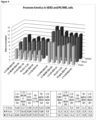
- Promoter activity is measured indirectly by quantification of mRNA transcribed under control of the respective promoter. mRNA is quantified by RTqPCR relative to an endogenous standard.
- viral titre is a measure of infectious units per volume of a virus preparation. Viral titre is an endpoint in a biological procedure and is defined as the dilution at which a certain proportion of tests carried out in parallel show an effect (Reed and Muench, 1938). Specifically the tissue culture infectious dose fifty per milliliter (TCID50/ml) gives the dilution of a virus preparation at which 50% of a number of cell cultures inoculated in parallel with that dilution are infected.
- tissue culture infectious dose fifty per milliliter TCID50/ml
- Transcription-regulatory elements normally comprise a promoter upstream of the gene sequence to be expressed, transcription initiation and termination sites and a polyadenylation signal.
- transcription initiation site refers to a nucleic acid in the construct corresponding to the first nucleic acid incorporated into the primary transcript, i.e. the mRNA precursor.
- the transcription initiation site may overlap with the promoter sequences.
- terminal signal or “terminator” or “polyadenylation signal” or “polyA” or transcription termination site” or “transcription termination element” is a signal sequence which causes cleavage at a specific site at the 3' end of the eukaryotic mRNA and post-transcriptional incorporation of a sequence of about 100 - 200 adenine nucleotides (polyA tail) at the cleaved 3' end, and thus causes RNA polymerase to terminate transcription.
- the polyadenylation signal comprises the sequence AATAAA about 10-30 nucleotides upstream of the cleavage site and a sequence located downstream.
- polyadenylation elements such as tk polyA, SV40 late and early polyA, BGH polyA (described for example in U.S. Pat. No. 5,122,458 ) or hamster growth hormone polyA ( WO2010010107 ).
- Translation regulatory elements comprise a translation initiation site (AUG), a stop codon and a polyA signal for each individual polypeptide to be expressed.
- An internal ribosome entry site (IRES) may be included in some constructs.
- IRES internal ribosome entry site
- Consensus ribosome binding sites can be inserted immediately upstream of the start codon to enhance translation and thus expression. Increased A/U contents around this ribosome binding site further a more efficient ribosome binding.
- EHV-4 based promoters of the present disclosure are exogenous in view of an EHV-1 viral vector or CAdV viral vector.
- exogenous means that said sequence or gene of interest, specifically said antigen is expressed out of its natural species context.
- the H3 antigen from swine IAV is one example (see example 3) of an exogenous antigen in respect to the EHV-1 vector.
- Any non-equid sequence or gene of interest such as a non-equid antigen is therefore an exogenous sequence or gene of interest or antigen according to a specific aspect of the present disclosure.
- heterologous every polynucleotide sequence or every gene inserted in a host cell and the respective protein or RNA encoded thereby is referred to as “heterologous, “heterologous sequence”, “heterologous gene”, “heterologous coding sequence”, “transgene” or “heterologous protein” with respect to the host cell.
- sequence to be introduced or the gene to be introduced is identical to an endogenous sequence or an endogenous gene of the host cell.
- an EHV-4 promoter sequence introduced into an EHV-4 viral vector at a different site or in modified form than in the EHV-4 wild type virus is by definition a heterologous sequence.
- heterologous means that said sequence or gene of interest, specifically said antigen, is expressed out of its natural subspecies context. Accordingly, any non-EHV-1 specific sequence or gene of interest such as an antigen, for example an antigen from any Equid alphaherpesvirus except EHV-1, e.g. EHV-3, EHV-8, is therefore a heterologous sequence or gene of interest or antigen according to a specific aspect of the present disclosure.
- non-naturally occurring means any sequence or gene of interest such as an antigen, which is not occurring in this context naturally, such as a hybrid sequence or a sequence or gene of interest such as an antigen from a different species, or sequence or gene of interest such as an antigen, which is not a product of nature due to artificial mutation, insertion, deletion or the like.
- a “recombinant” protein is a protein expressed from a either a heterologous or an exogenous polynucleotide sequence.
- the term recombinant as used with respect to a virus means a virus produced by artificial manipulation of the viral genome.
- a virus comprising a heterologous or an exogenous sequence such as an exogenous antigen encoding sequence is a recombinant virus.
- the term recombinant virus and the term non-naturally occurring virus are used interchangeably.
- heterologous vector means a vector that comprises a heterologous or an exogenous polynucleotide sequence.
- recombinant vector means a vector that comprises a heterologous or a recombinant polynucleotide sequence.
- operably linked is used to describe the connection between regulatory elements and a gene or its coding region.
- gene expression is placed under the control of one or more regulatory elements, for example, without limitation, constitutive or inducible promoters, tissue-specific regulatory elements, and enhancers.
- a gene or coding region is said to be “operably linked to” or “operatively linked to” or “operably associated with” the regulatory elements, meaning that the gene or coding region is controlled or influenced by the regulatory element.
- a promoter is operably linked to a coding sequence if the promoter effects transcription or expression of the coding sequence.
- a promoter/enhancer or terminator is functionally linked to a coding gene sequence if it is able to control or modulate the transcription of the linked gene sequence in the cis position.
- the DNA sequences that are functionally linked are contiguous and, where necessary to join two polypeptide coding regions or in the case of a secretion signal peptide, contiguous and in reading frame.
- an operably linked promoter is generally located upstream or an operably linked terminator is generally located downstream of the coding sequence, it is not necessarily contiguous with it.
- Enhancers do not have to be contiguous as long as they increase the transcription of the coding sequence. For this they can be located upstream or downstream of the coding sequence and even at some distance.
- a polyadenylation site is operably linked to a coding sequence if it is located at the 3 end of the coding sequence in a way that transcription proceeds through the coding sequence into the polyadenylation signal. Linking is accomplished by recombinant methods known in the art, e.g. by ligation at suitable restriction sites or blunt ends or by using fusion PCR methodology. Synthetic oligonucleotide linkers or adapters can be used in accord with conventional practice if suitable restriction sites are not present.
- the term "functional fragment” or a “functional derivative” of a promoter sequence means that the fragment or derivative still effects promoter activity.
- Functional assays of how to assess promoter activity are well known to one of ordinary skill in the art (Bustin 2000, Nolan et al. 2006).
- An exemplary embodiment of such a functional assay includes e.g. a promoter kinetics experiment. Cells infected with vector viruses carrying expression cassettes where a promoter or fragment thereof directs transcription of a reporter transgene are incubated for different times. Total RNA is prepared from samples collected at different times after infection. After destruction of contaminating DNA by DNAse I digestion, the RNA is reverse transcribed.
- RT reverse transcriptase
- the resulting cDNA is purified and used as template in a conventional PCR. Only the samples processed with the addition of RT shall produce a PCR product.
- These cDNAs can then be used for qPCR with primers for the reporter transgene and in parallel with primers for an essential gene of the viral vector (internal standard gene), the transcription of which provides an internal standard for the efficiency of infection and replication.
- qPCR values of the reporter are normalized between the different constructs and times after infection using the qPCR values of the internal standard gene. This allows an interpretation of promoter activities of different promoters and fragments thereof.
- a number of amino acids or nucleotides up to 15%, preferably up to 10%, 9%, 8%, 7%, 6%, even more preferably up to 5%, 4%, 3%, 2%, 1%, 0.1% of the total amino acid residues or nucleotides, not including conservative substitutions, in the reference sequence may be inserted into the reference sequence.
- the homolog sequence comprises at least a stretch of 50, even more preferred of 100, even more preferred of 250, even more preferred of 500 nucleotides.
- Sequence Identity refers to a relationship between two or more polypeptide sequences or two or more polynucleotide sequences, namely a reference sequence and a given sequence to be compared with the reference sequence. Sequence identity is determined by comparing the given sequence to the reference sequence after the sequences have been optimally aligned to produce the highest degree of sequence similarity, as determined by the match between strings of such sequences. Upon such alignment, sequence identity is ascertained on a position-by-position basis, e.g., the sequences are "identical” at a particular position if at that position, the nucleotides or amino acid residues are identical.
- Sequence identity can be readily calculated by known methods, including but not limited to, those described in Computational Molecular Biology, Lesk, A. N., ed., Oxford University Press, New York (1988 ), Biocomputing: Informatics and Genome Projects, Smith, D.W., ed., Academic Press, New York (1993 ); Computer Analysis of Sequence Data, Part I, Griffin, A.M., and Griffin, H.
- Examples of such programs include, but are not limited to, the GCG program package ( Devereux, J., et al., Nucleic Acids Research, 12(1):387 (1984 )), BLASTP, BLASTN and FASTA ( Altschul, S. F. et al., J. Molec. Biol., 215:403-410 (1990 ).
- the BLASTX program is publicly available from NCBI and other sources (BLAST Manual, Altschul, S. et al., NCVI NLM NIH Bethesda, MD 20894, Altschul, S. F. et al., J. Molec. Biol., 215:403-410 (1990 ).
- sequence identity As an illustration, by a polynucleotide having a nucleotide sequence having at least, for example, 85%, preferably 90%, 91%, 92%, 93%, 94%, even more preferably 95%, 96%, 97%, 98%, 99%, 99.9% "sequence identity" to a reference nucleotide sequence, it is intended that the nucleotide sequence of the given polynucleotide is identical to the reference sequence except that the given polynucleotide sequence may include up to 15, preferably up to 10, even more preferably up to 5 point mutations per each 100 nucleotides of the reference nucleotide sequence.
- mutations of the reference sequence may occur at the 5' or 3' terminal positions of the reference nucleotide sequence or anywhere between those terminal positions, interspersed either individually among nucleotides in the reference sequence or in one or more contiguous groups within the reference sequence.
- a polypeptide having a given amino acid sequence having at least, for example, 85%, preferably 90%, 91%, 92%, 93%, 94%, even more preferably 95%, 96%, 97%, 98%, 99% sequence identity to a reference amino acid sequence
- the given amino acid sequence of the polypeptide is identical to the reference sequence except that the given polypeptide sequence may include up to 15, preferably up to 10, 9, 8, 7, 6, even more preferably up to 5, 4, 3, 2, 1 amino acid alterations per each 100 amino acids of the reference amino acid sequence.
- a given polypeptide sequence having at least 85%, preferably 90%, 91%, 92%, 93%, 94%, even more preferably 95%, 96%, 97%, 98%, 99% sequence identity with a reference amino acid sequence up to 15%, preferably up to 10%, 9%, 8%, 7%, even more preferably up to 5%, 4%, 3%, 2%, 1% of the amino acid residues in the reference sequence may be deleted or substituted with another amino acid, or a number of amino acids up to 15%, preferably up to 10%, 9%, 8%, 7%, even more preferably up to 5%, 4%, 3%, 2%, 1% of the total number of amino acid residues in the reference sequence may be inserted into the reference sequence.
- alterations of the reference sequence may occur at the amino or the carboxy terminal positions of the reference amino acid sequence or anywhere between those terminal positions, interspersed either individually among residues in the reference sequence or in the one or more contiguous groups within the reference sequence.
- residue positions which are not identical differ by conservative amino acid substitutions. However, conservative substitutions are not included as a match when determining sequence identity.
- sequence identity or “percent identity” are used interchangeably herein.
- sequences are aligned for optimal comparison purposes (e.g., gaps can be introduced in the sequence of a first amino acid or nucleic acid for optimal alignment with a second amino or nucleic acid sequence).
- the amino acid or nucleotide residues at corresponding amino acid or nucleotide positions are then compared. When a position in the first sequence is occupied by the same amino acid or nucleotide residue as the corresponding position in the second sequence, then the molecules are identical at that position.
- the two sequences are the same length.
- a sequence comparison may be carried out over the entire lengths of the two sequences being compared or over fragment of the two sequences. Typically, the comparison will be carried out over the full length of the two sequences being compared. However, sequence identity may be carried out over a region of, for example, twenty, fifty, one hundred or more contiguous amino acid residues.
- the skilled person will be aware of the fact that several different computer programs are available to determine the homology between two sequences. For instance, a comparison of sequences and determination of percent identity between two sequences can be accomplished using a mathematical algorithm. In a preferred embodiment, the percent identity between two amino acid or nucleic acid sequences is determined using the Needleman and Wunsch (J. Mol. Biol. (48): 444-453 (1970 )) algorithm which has been incorporated into the GAP program in the Accelrys GCG software package (available at http://www.accelrys.com/products/gcg/), using either a Blosum 62 matrix or a PAM250 matrix, and a gap weight of 16, 14, 12, 10, 8, 6, or 4 and a length weight of 1, 2, 3, 4, 5, or 6. The skilled person will appreciate that all these different parameters will yield slightly different results but that the overall percentage identity of two sequences is not significantly altered when using different algorithms.
- the protein sequences or nucleic acid sequences of the present disclosure can further be used as a "query sequence" to perform a search against public databases to, for example, identify other family members or related sequences.
- Such searches can be performed using the BLASTN and BLASTP programs (version 2.0) of Altschul, et al. (1990) J. Mol. Biol. 215:403-10 .
- Gapped BLAST can be utilized as described in Altschul et al. (1997) Nucleic Acids Res. 25(17): 3389-3402 .
- equivalents means of or belonging to the family Equidae, which includes the horses, asses, and zebras, preferably horses.
- the term “equid” or “equine” or “equin” encompasses also hybrids of members of the family Equidae (e.g. mules, hinnies, etc.).
- Herpes virus or “Herpes virus vector” refers to a species in the family Herpesviridae in the order Herpesvirales.
- Equid herpes virus vector or "Equid herpes virus” or “EHV” means a member of the family Herpesviridae affecting horses.
- EHV-1, EHV-3, EHV-4, EHV-8 und EHV-9 eight different species of equid herpesviruses have been identified, five belonging to the subfamily Alphaherpesvirinae (EHV-1, EHV-3, EHV-4, EHV-8 und EHV-9) and three to the Gammaherpesvirinae. (http://www.ictvonline.org/virustaxonomy.asp Virus Taxonomy: 2015 Release EC 47, London, UK, July 2015; Email ratification 2016 (MSL #30)
- EHV-1 means Equid Alphaherpesvirus 1, a member of the subgenus Varicellovirus in the genus Alphaherpesvirinae in the family Herpesviridae.
- a non-limiting reference sequence for EHV-1 would be for example the wild-type EHV-1 strain ab4 (Genbank accession number AY665713.1) or the RacH (Hübert 1996).
- EHV-4 means Equid Alphaherpesvirus 4, a member of the subgenus Varicellovirus in the genus Alphaherpesvirinae in the family Herpesviridae.
- CAdV canine adenovirus type 2
- Canine adenovirus 1 CAV-1 or CAV1
- canine adenovirus 2 CAV-2 or CAV2
- CAdV canine adenovirus
- inserted into ORF70 means that a DNA fragment was inserted into the genomic DNA at a location encoding the Equid Alphaherpesvirus 1 open reading frame 70.
- the insertion referred to resulted in a deletion of the 801 5' basepairs of ORF70 leaving the remaining 423 bp of the 3'end intact but abolishing expression of the orf70 gene product glycoprotein G.
- the glycoprotein G of several Alphaherpesviruses including EHV-1 was shown to be secreted from infected cells and function as an immunomodulatory protein by binding pro-inflammatory cytokines. Abolishment of its expression in the viral vector should increase the immunogenicity of the viral infection as compared to a wild-type EHV-1 with intact glycoprotein G expression.
- inserted into ORF1/3 means that a DNA fragment was inserted in the viral genome at a position where by accidental deletion over passaging during the attenuation procedure of the vaccine strain EHV-1 RacH a 1283 bp fragment comprising 90% of ORF1 and the entire ORF2 were lost. This insertion site was chosen because the likelyhood that expression of a transgene from this location would interfere with viral replication was expected to be extremely low.
- an “immunogenic or immunological composition” refers to a composition of matter that comprises at least one antigen, or immunogenic portion thereof, that elicits an immunological response in the host of a cellular or antibody-mediated immune response to the composition.
- antigen used herein is well understood in the art and includes substances which are immunogenic, i.e., immunogens, as well as substances which induce immunological unresponsiveness, or anergy, i.e., a lack of reactions by the body's defense mechanisms to foreign substances.
- antiigen is intended to mean full length proteins as well as peptide fragments thereof containing or comprising epitope.
- food producing animal means animals which are used for human consumption such as swine, cattle, poultry, fish and the like, preferably food producing animal means swine and cattle, most preferably swine.
- food producing animal excludes, Equidae such as horses.
- an “immunogenic composition” as used herein can refer to a polypeptide or a protein, such as for example a viral surface protein that elicits an immunological response as described herein.
- the term “immunogenic fragment” or “immunogenic portion” refers to a fragment or truncated and/or substituted form of a protein or polypeptide that includes one or more epitopes and thus elicits the immunological response described herein. In general, such truncated and/or substituted forms, or fragments will comprise at least six contiguous amino acids from a full-length protein. Such fragments can be identified using any number of epitope mapping techniques, well known in the art.
- linear epitopes may be determined by concurrently synthesizing large numbers of peptides on solid supports, the peptides corresponding to portions of the protein molecule, and reacting the peptides with antibodies while the peptides are still attached to the supports.
- Such techniques are known and described in the art, see e.g., U.S. Patent No. 4,708,871 ; Geysen et al. (1984) Proc. Natl. Acad. Sci.
- conformational epitopes are readily identified by determining spatial conformation of amino acids such as by, e.g., x-ray crystallography and two-dimensional nuclear magnetic resonance. See Epitope Mapping Protocols, supra.
- Synthetic antigens are also included within the definition, for example, polyepitopes, flanking epitopes, and other recombinant or synthetically derived antigens. See, e.g., Bergmann et al. (1993) Eur. J. Immunol. 23:2777-2781 ; Bergmann et al. (1996), J.
- vaccine refers to a pharmaceutical composition comprising at least one immunologically active component that induces an immunological response in an animal and possibly but not necessarily one or more additional components that enhance the immunological activity of the active component.
- a vaccine may additionally comprise further components typical to pharmaceutical compositions.
- the immunologically active component of a vaccine may comprise complete virus particles in either their original form or as attenuated particles in a so called modified live vaccine (MLV) or particles inactivated by appropriate methods in a so called killed vaccine (KV).
- MMV modified live vaccine
- KV killed vaccine
- the immunologically active component of a vaccine may comprise appropriate elements of the organisms (subunit vaccines) whereby these elements are generated either by destroying the whole particle or the growth cultures containing such particles and optionally subsequent purification steps yielding the desired structure(s), or by synthetic processes including an appropriate manipulation by use of a suitable system based on, for example, bacteria, insects, mammalian, or other species plus optionally subsequent isolation and purification procedures, or by induction of the synthetic processes in the animal needing a vaccine by direct incorporation of genetic material using suitable pharmaceutical compositions (polynucleotide vaccination).
- a vaccine may comprise one or simultaneously more than one of the elements described above.
- vaccine refers to a live vaccine or live virus, also called recombinant vaccine.
- vaccine refers to an inactivated or killed virus including virus like particles (VLPs).
- VLPs virus like particles
- a vaccine may be a subunit vaccine or a killed (KV) or inactivated vaccine.
- M.O.I. Multiplicity of Infection
- DNA vaccination or "polynucleotide vaccination” means direct inoculation of genetic material using suitable pharmaceutical compositions.
- inactivated refers to a previously virulent or non-virulent virus or bacterium that has been irradiated (ultraviolet (UV), X-ray, electron beam or gamma radiation), heated, or chemically treated to inactivate or kill such virus or bacterium while retaining its immunogenicity.
- Suitable inactivating agents include beta-propiolactone, binary or beta- or acetyl-ethyleneimine, gluteraldehyde, ozone, and formalin (formaldehyde).
- formaldehyde is typically mixed with water and methyl alcohol to create formalin.
- methyl alcohol prevents degradation or cross reaction during the in activation process.
- One embodiment uses about 0.1 to 1% of a 37% solution of formaldehyde to inactivate the virus or bacterium. It is critical to adjust the amount of formalin to ensure that the material is inactivated but not so much that side effects from a high dosage occur.
- the term "inactivated” in the context of a virus means that the virus is incapable of replication in vivo or in vitro and, respectively, the term “inactivated” in the context of a bacterium means that the bacterium is incapable of reproduction in vivo or in vitro.
- the term “inactivated” may refer to a virus that has been propagated in vitro, and has then been inactivated using chemical or physical means so that it is no longer capable of replicating.
- live vaccine refers to a vaccine comprising either a living organism or a replication competent virus or viral vector.
- a "pharmaceutical composition” essentially consists of one or more ingredients capable of modifying physiological, e.g., immunological functions, of the organism it is administered to, or of organisms living in or on the organism.
- the term includes, but is not restricted to, antibiotics or antiparasitics, as well as other constituents commonly used to achieve certain other objectives such as, but not limited to, processing traits, sterility, stability, feasibility to administer the composition via enteral or parenteral routes such as oral, intranasal, intravenous, intramuscular, subcutaneous, intradermal, or other suitable route, tolerance after administration, or controlled release properties.
- a pharmaceutical composition could be prepared as follows: cell culture supernatant of an infected cell culture is mixed with a stabilizer (e.g., spermidine and/or bovine serum albumin (BSA) and the mixture is subsequently lyophilized or dehydrated by other methods. Prior to vaccination, the mixture is then rehydrated in aqueous (e.g., saline, phosphate buffered saline (PBS) or non-aqueous solutions (e.g., oil emulsion, aluminum-based adjuvant).
- a stabilizer e.g., spermidine and/or bovine serum albumin (BSA)
- BSA bovine serum albumin
- PBS phosphate buffered saline
- non-aqueous solutions e.g., oil emulsion, aluminum-based adjuvant
- pharmaceutical- or veterinary-acceptable carrier includes any and all solvents, dispersion media, coatings, adjuvants, stabilizing agents, diluents, preservatives, antibacterial and antifungal agents, isotonic agents, adsorption delaying agents, and the like.
- stabilizing agents for use in the present disclosure include stabilizers for lyophilization or freeze-drying.
- the emulsion can be based in particular on light liquid paraffin oil (European Pharmacopea type); isoprenoid oil such as squalane or squalene; oil resulting from the oligomerization of alkenes, in particular of isobutene or decene; esters of acids or of alcohols containing a linear alkyl group, more particularly plant oils, ethyl oleate, propylene glycol di-(caprylate/caprate), glyceryl tri-(caprylate/caprate) or propylene glycol dioleate; esters of branched fatty acids or alcohols, in particular isostearic acid esters.
- light liquid paraffin oil European Pharmacopea type
- isoprenoid oil such as squalane or squalene
- oil resulting from the oligomerization of alkenes in particular of isobutene or decene
- the oil is used in combination with emulsifiers to form the emulsion.
- the emulsifiers are preferably nonionic surfactants, in particular esters of sorbitan, of mannide (e.g. anhydromannitol oleate), of glycol, of polyglycerol, of propylene glycol and of oleic, isostearic, ricinoleic or hydroxystearic acid, which are optionally ethoxylated, and polyoxypropylene-polyoxyethylene copolymer blocks, in particular the Pluronic products, especially L121.
- mannide e.g. anhydromannitol oleate
- glycol of polyglycerol
- propylene glycol and of oleic isostearic, ricinoleic or hydroxystearic acid, which are optionally ethoxylated, and polyoxypropylene-polyoxyethylene copolymer blocks, in particular the Pluronic products
- Exemplary adjuvants are the SPT emulsion described on page 147 of "Vaccine Design, The Subunit and Adjuvant Approach” edited by M. Powell and M. Newman, Plenum Press, 1995 , and the emulsion MF59 described on page 183 of this same book.
- an adjuvant is a compound chosen from the polymers of acrylic or methacrylic acid and the copolymers of maleic anhydride and alkenyl derivative.
- Advantageous adjuvant compounds are the polymers of acrylic or methacrylic acid which are cross-linked, especially with polyalkenyl ethers of sugars or polyalcohols. These compounds are known by the term carbomer ( Phameuropa Vol. 8, No. 2, June 1996 ). Persons skilled in the art can also refer to U.S. Patent No.
- 2,909,462 which describes such acrylic polymers cross-linked with a polyhydroxylated compound having at least 3 hydroxyl groups, preferably not more than 8, the hydrogen atoms of at least three hydroxyls being replaced by unsaturated aliphatic radicals having at least 2 carbon atoms.
- the preferred radicals are those containing from 2 to 4 carbon atoms, e.g. vinyls, allyls and other ethylenically unsaturated groups.
- the unsaturated radicals may themselves contain other substituents, such as methyl.
- the products sold under the name CARBOPOL ® (BF Goodrich, Ohio, USA) are particularly appropriate. They are cross-linked with an allyl sucrose or with allyl pentaerythritol.
- Carbopol 974P, 934P and 971P there may be mentioned Carbopol 974P, 934P and 971P. Most preferred is the use of CARBOPOL ® 971P.
- copolymers of maleic anhydride and alkenyl derivative are the copolymers EMA (Monsanto), which are copolymers of maleic anhydride and ethylene. The dissolution of these polymers in water leads to an acid solution that will be neutralized, preferably to physiological pH, in order to give the adjuvant solution into which the immunogenic, immunological or vaccine composition itself will be incorporated.
- Suitable adjuvants include, but are not limited to, the RIBI adjuvant system (Ribi Inc.), Block co-polymer (CytRx, Atlanta GA), SAF-M (Chiron, Emeryville CA), monophosphoryl lipid A, Avridine lipid-amine adjuvant, heat-labile enterotoxin from E. coli (recombinant or otherwise), cholera toxin, IMS 1314 or muramyl dipeptide, or naturally occurring or recombinant cytokines or analogs thereof or stimulants of endogenous cytokine release, among many others.
- an adjuvant can be added in an amount of about 100 ⁇ g to about 10 mg per dose, preferably in an amount of about 100 ⁇ g to about 10 mg per dose, more preferably in an amount of about 500 ⁇ g to about 5 mg per dose, even more preferably in an amount of about 750 ⁇ g to about 2.5 mg per dose, and most preferably in an amount of about 1 mg per dose.
- the adjuvant may be at a concentration of about 0.01 to 50%, preferably at a concentration of about 2% to 30%, more preferably at a concentration of about 5% to 25%, still more preferably at a concentration of about 7% to 22%, and most preferably at a concentration of 10% to 20% by volume of the final product.
- Disposents can include water, saline, dextrose, ethanol, glycerol, and the like.
- Isotonic agents can include sodium chloride, dextrose, mannitol, sorbitol, and lactose, among others.
- Stabilizers include albumin and alkali salts of ethylendiamintetracetic acid, among others.
- isolated means altered “by the hand of man” from its natural state, i.e., if it occurs in nature, it has been changed or removed from its original environment, or both.
- a polynucleotide or polypeptide naturally present in a living organism is not “isolated,” but the same polynucleotide or polypeptide separated from the coexisting materials of its natural state is “isolated”, as the term is employed herein.
- Attenuation means reducing the virulence of a pathogen.
- attenuation is synonymous with "avirulent".
- an attenuated virus is one in which the virulence has been reduced so that it does not cause clinical signs of infection but is capable of inducing an immune response in the target animal, but may also mean that the clinical signs are reduced in incidence or severity in animals infected with the attenuated virus, especially the EHV-1 RacH viral vector as claimed, in comparison with a "control group" of animals infected with non-attenuated virus or pathogen and not receiving the attenuated virus.
- an attenuated, avirulent pathogen such as for example an attenuated viral vector, especially the EHV-1 (preferably RacH) viral vector, is suitable for the generation of a modified live vaccine (MLV) or modified live immunogenic composition.
- an attenuated, avirulent pathogen such as for example an attenuated viral vector, especially the EHV-1 (preferably RacH) viral vector, is suitable for the generation of a modified live vaccine (MLV) or modified live immunogenic composition.
- an effective dose means, but is not limited to, an amount of antigen that elicits, or is able to elicit, an immune response that yields a reduction of clinical symptoms in an animal to which the antigen is administered.
- an effective amount means, in the context of a composition, an amount of an immunogenic composition capable of inducing an immune response that reduces the incidence of or lessens the severity of infection or incident of disease in an animal. Particularly, an effective amount refers to colony forming units (CFU) per dose.
- CFU colony forming units
- the term "effective amount” refers to the amount of a therapy which is sufficient to reduce or ameliorate the severity or duration of a disease or disorder, or one or more symptoms thereof, prevent the advancement of a disease or disorder, cause the regression of a disease or disorder, prevent the recurrence, development, onset, or progression of one or more symptoms associated with a disease or disorder, or enhance or improve the prophylaxis or treatment of another therapy or therapeutic agent.
- an “immune response” or “immunological response” means, but is not limited to, the development of a cellular and/or antibody-mediated immune response to the (immunogenic) composition or vaccine of interest.
- an immune or immunological response includes, but is not limited to, one or more of the following effects: the production or activation of antibodies, B cells, helper T cells, suppressor T cells, and/or cytotoxic T cells, directed specifically to an antigen or antigens included in the composition or vaccine of interest.
- the host will display either a therapeutic or a protective immunological (memory) response such that resistance to new infection will be enhanced and/or the clinical severity of the disease reduced.
- Such protection will be demonstrated by either a reduction in number of symptoms, severity of symptoms, or the lack of one or more of the symptoms associated with the infection of the pathogen, a delay in the of onset of viremia, reduced viral persistence, a reduction in the overall viral load and/or a reduction of viral excretion.
- Protection against disease means a partial or complete response against a disease or condition generated by administration of one or more therapeutic compositions of the disclosure, or a combination thereof, that results in fewer deleterious effects than would be expected in a non-immunized subject that has been exposed to disease or infection. That is, the severity of the deleterious effects of the infection are lessened in a vaccinated subject. Infection may be reduced, slowed, or possibly fully prevented, in a vaccinated subject.
- complete prevention of infection is meant, it is specifically stated. If complete prevention is not stated then the term includes partial prevention.
- “reduction of the incidence and/or severity of clinical signs” or “reduction of clinical symptoms” means, but is not limited to, reducing the number of infected subjects in a group, reducing or eliminating the number of subjects exhibiting clinical signs of infection, or reducing the severity of any clinical signs that are present in one or more subjects, in comparison to wild-type infection.
- these clinical signs are reduced in one or more subjects receiving the therapeutic composition of the present disclosure by at least 10% in comparison to subjects not receiving the composition and that become infected. More preferably clinical signs are reduced in subjects receiving a composition of the present disclosure by at least 20%, preferably by at least 30%, more preferably by at least 40%, and even more preferably by at least 50%.
- the term "increased protection” herein means, but is not limited to, a statistically significant reduction of one or more clinical symptoms which are associated with infection by an infectious agent in a vaccinated group of subjects vs. a non-vaccinated control group of subjects.
- the term “statistically significant reduction of clinical symptoms” means, but is not limited to, the frequency in the incidence of at least one clinical symptom in the vaccinated group of subjects is at least 10%, preferably 20%, more preferably 30%, even more preferably 50%, and even more preferably 70% lower than in the non-vaccinated control group after the challenge the infectious agent.
- Long-lasting protection shall refer to "improved efficacy” that persists for at least 3 weeks, but more preferably at least 3 months, still more preferably at least 6 months. In the case of livestock, it is most preferred that the long lasting protection shall persist until the average age at which animals are marketed for meat.
- the term "reduction of viremia" induced by a virus means, but is not limited to, the reduction of virus entering the bloodstream of an animal, wherein the viremia level, i.e. the number of virus DNA or RNA copies per mL of blood serum or the number of plaque forming colonies per deciliter of blood serum, is reduced in the blood serum of animals receiving the composition of the present disclosure by at least 50% in comparison to animals not receiving the composition and may become infected. More preferably, the viremia level is reduced in animals receiving the composition of the present disclosure by at least 90%, preferably by at least 99.9%, more preferably by at least 99.99%, and even more preferably by at least 99.999%.
- virus is particularly understood as a condition in which virus particles reproduce and/or circulate in the bloodstream of an animal, in particular of a mammal, a bird, or of an insect.
- Safety refers to the absence of adverse consequences in a vaccinated animal following vaccination, including but not limited to: potential reversion of a virus-based vaccine to virulence, clinically significant side effects such as persistent, systemic illness or unacceptable inflammation at the site of vaccine administration.
- vaccination or “vaccinating” or variants thereof, as used herein means, but is not limited to, a process which includes the administration of an immunogenic composition of the disclosure that, when administered to an animal, elicits, or is able to elicit-directly or indirectly-, an immune response in said animal.
- “Mortality”, in the context of the present disclosure, refers to death caused by an infection, and includes the situation where the infection is so severe that an animal is euthanized to prevent suffering and provide a humane ending to its life.
- the subject to which the composition is administered is preferably an animal, including but not limited to cattle, horses, sheep, pigs, poultry (e.g. chickens), goats, cats, dogs, hamsters, mice and rats, most preferably the mammal is a swine.
- an animal including but not limited to cattle, horses, sheep, pigs, poultry (e.g. chickens), goats, cats, dogs, hamsters, mice and rats, most preferably the mammal is a swine.
- the formulations of the disclosure comprise an effective immunizing amount of one or more immunogenic compositions and a physiologically acceptable vehicle.
- Vaccines comprise an effective immunizing amount of one or more immunogenic compositions and a physiologically acceptable vehicle.
- the formulation should suit the mode of administration.
- the immunogenic composition can also contain minor amounts of wetting or emulsifying agents, or pH buffering agents.
- the immunogenic composition can be a liquid solution, suspension, emulsion, tablet, pill, capsule, sustained release formulation, or powder.
- Oral formulation can include standard carriers such as pharmaceutical grades of mannitol, lactose, starch, magnesium stearate, sodium saccharine, cellulose, magnesium carbonate, etc.
- compositions of the disclosure may also be administered in one, two or more doses, as well as, by other routes of administration.
- such other routes include subcutaneously, intracutaneously, intraperitnoeally, intracutaneously, and depending on the desired duration and effectiveness of the treatment
- the compositions according to the disclosure may be administered once or several times, also intermittently, for instance on a daily basis for several days, weeks or months and in different dosages such as about 10 3 to 10 8 TCID50 (see viral titre above).
- the dosage is about 10 3 to 10 8 TCID50, especially for live virus / live vaccine.
- compositions may, if desired, be presented in a pack or dispenser device which may contain one or more unit dosage forms containing the active ingredient.
- the pack may for example comprise metal or plastic foil, such as a blister pack.
- the pack or dispenser device may be accompanied by instructions for administration preferably for administration to a mammal, especially a pig.
- Associated with such container(s) can be a notice in the form prescribed by a governmental agency regulating the manufacture, use or sale of pharmaceuticals or biological products, which notice reflects approval by the agency of manufacture, use or sale for human administration.
- SEQ ID NO: 21 Nucleotide sequence of transfer plasmid pU-mC70-BGH SEQ ID NO.: 22 Nucleotide sequence of transfer vector pU70-p455-71K71 SEQ ID NO.: 23 Nucleotide sequence of transfer plasmid pU70-p455-H3-71K71 SEQ ID NO.: 24 Nucleotide sequence of transfer vector pU-1-3-p430-BGHKBGH SEQ ID NO.: 25 Nucleotide sequence of transfer plasmid pU1-3-p430-H1av-BGHKBGH
- SEQ ID NO:30 GS linker sequence
- SEQ ID NO: 31 Synthesized DNA sequence including restriction sites for subcloning SEQ ID NO:32 DNA fragment used for RED recombination to generate pRacH-SE-70-455-SBVGc
- SEQ ID NO:33 up70 F primer
- SEQ ID NO:34 up71 R primer
- SEQ ID NO:35 seq455-F1 primer
- SEQ ID NO:36 SBV Gc F1 primer
- SEQ ID NO:37 SBV Gc R1 primer
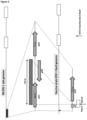
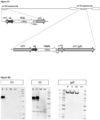
- FIG. 1 Schematic drawing of the orf70 insertion site
- the strategy to identify suitable promoter sequences was as follows: 600 bp fragments of the EHV-4 sequence upstream of two known orfs were analyzed first by aligning them with the respective sequence fragments of the EHV-1 genome.
- the genes chosen were orf42 encoding the major capsid protein (MCP), and orf70 encoding glycoprotein G (gG).
- MCP major capsid protein
- G glycoprotein G
- the major capsid protein is one of the most abundant constituents of the virion and needed for assembly of capsids in the cell nucleus as soon as newly synthesized viral DNA is ready for packaging. Its promoter is therefore expected to be active during early and late times in the viral replication cycle.
- glycoprotein G it is known that its gene (orf70) is active also during early and late times in the replication cycle (Colle et al. 1995, Drummer et al. 1998). Sequence identity was 82.2% for the putative MCP-promoter and 82.3% for the putative gG-promoter. These differences were considered large enough to prevent homologous recombination on the one hand, and small enough to allow for transcriptional activation during EHV-1 replication on the other hand. In order to test for promoter activity, the 600bp DNA fragments 4pgG600
- the CMV promoter was amplified from the commercially available plasmid pcDNA3.1 (Invitrogen) and cloned upstream of the mCherry reporter gene, here also the BGHpA was added at the 3'end of the reporter gene.
- Cell cultures were transfected with the three plasmids (pBlu-4pgGmCherry, pBlu-4pMCPmCherry, and pBlu-CMVmCherry) and inspected by fluorescence microscopy for mCherry fluorescence. Strong activity of the CMV promoter was obvious at different times after transfection.
- the 4pgG600 promoter was also active after transfection, activity of the 4pMCP600 promoter was also detectable, but weak in comparison with the 4pgG600 promoter and even more so when compared with the CMV-promoter even three days after transfection.
- the 600 bp promoters were truncated to 430 bp for 4pgG, new name: p430: and to 449 bp for 4pMCP, new name: p455: mCherry-reporter plasmids containing the shortened promoters were transfected in cell cultures and inspected by fluorescence microscopy. While the p430 activity was comparable to that of the 600 bp version (4pgG600), the activity of the p455 was significantly increased over the activity of the 4pMCP600.
- a new polyA sequence was needed for expression from the new orf70 insertion site.
- the element is called 71pA. Its nucleotide sequence was synthesized and cloned downstream of the mCherry orf in a transfer plasmid containing the p455 targeted for the orf70 insertion site in pRacH-SE.
- VERO or PK/WRL cells were infected with all six mCherry expressing viruses at a m.o.i. of 1. Infected cells were collected at 0, 4, 8, and 12 hours p.i. and total RNA was prepared. Viral and cellular genomic DNA contaminating the RNA preparations was destroyed by DNAse I digestion. Integrity of the RNA and removal of viral DNA was shown by reverse transcription with and without addition of reverse transcriptase followed by PCR with a primer pair specific for orf72 (primers no 1130/1131, (TGTCTACCTTCAAGCTTATG (SEQ ID NO:5)/ CTAGCGCAGTCGCGTTG (SEQ ID NO:6)) encoding the essential structural glycoprotein D of EHV-1.
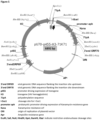
- the p455 promoter For a first animal experiment an Influenza hemagglutinin subtype H3 from a swine origin Influenza A virus (A/swine/ Italy/7680/2001 (H3N2), GenBank accession no.: ABS50302.2) was used. Its coding sequence was synthesized and subcloned generating the transfer vector pU70-p455-H3-71K71, placing H3 under control of the new p455 promoter and the new 71pA polyadenylation signal and framing the cassette with the recombination regions for insertion into orf70 ( Figure 5 ).
- PK/WRL cells were transfected with pRacH-SE70-p455-H3, recombinant virus rEHV-1 RacH-SE70-p455-H3 was rescued and plaque-purified twice. Correct insertion of the expression cassette was verified by sequencing of a high-fidelity PCR product of the insertion region. Expression of the transgene in infected cells was analyzed by indirect immunofluorescence assay (IFA, figure 7 ).
- the two blots shown in figure 8 are replicas that were incubated with either the monoclonal antibody Ai2G7 (left) that specifically detects EHV-1 glycoprotein II (gpII) or with a commercial polyclonal antibody from rabbit (PA5-34930) raised against Influenza hemagglutinin subtype H3 (right).
- gpII was detected in all cell cultures infected with recombinant EHV-1 as expected.
- Full-length H3 was detected in all cells infected with the different passages of rEHV-1 RacH-SE-70-p455-H3 as expected.
- Specificity of the H3-antiserum was shown in the same Western blot, see lane gG430mC. Here only the gpII mab produced a reaction, as expected, while the anti-H3 antibody did not bind in the respective replica lane.
- EHV-1 rEHV-1 RacH-70-p455-H3
- Inact commercially available inactivated vaccine
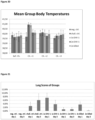
- All piglets were free of maternally derived antibodies in order not to abolish the effect of the inactivated vaccine (Inact).
- Two groups were not vaccinated but received injections with physiological sodium chloride solution (NaCl) to serve as challenge control or strict negative control, respectively.
- the p430 promoter The newly identified p430 promoter was used to drive expression of another Influenza hemagglutinin from an H1N1 virus ((A/swine/Gent/132/2005(H1N1), GenBank accession no.: AFR76623.1). Since the hemagglutinin gene in this virus isolate originated from an avian IAV it will be referred to as H1av. H1av was synthesized and subcloned in a transfer vector for the orf1/3 insertion region to generate pU1/3-p430-H1av-BGH_K_BGH. Expression of H1av was placed under control of the p430 promoter and the bovine growth hormone (BGH) polyA signal ( Figure 10 ).
- BGH bovine growth hormone
- PK/WRL cells were transfected with pRacH-SE1/3-p430-H1av, recombinant virus rEHV-1 RacH-SE1/3-p430-H1av was rescued and plaque-purified twice. Correct insertion of the expression cassette was verified by sequencing of a high-fidelity PCR product of the insertion region. Expression of the transgene in infected cells was analyzed by indirect immunofluorescence assay (IFA) and Western blot using commercially available monoclonal and polyclonal antibodies ( Figure 12 ). Restoration of orf71 encoding EHV-1 gpII was confirmed by IFA and Western blot using a monoclonal antibody Ai2G7 (owned by BI), (not shown).
- IFA indirect immunofluorescence assay
- VERO-cells were infected with rEHV-1 RacH-SE-1/3-p430-H1av, rEHV-1 RacH-SE-70-p455-H3, rEHV-1 RacH-SE (parent) at an m.o.i. of 0.01, or left uninfected.
- 24 h p.i. live infected and uninfected cells were incubated with a suspension of chicken erythrocytes in PBS, washed with PBS and stained with the fluorescent Hoechst 33342 nuclear stain.
- erythrocytes of birds contain cell nuclei they can be stained with Hoechst33342 and appear as tiny blue specks by fluorescence microscopy.
- rEHV-1 RacH-SE that does not express hemagglutinin
- adsorption of chicken erythrocytes was significantly increased on cells infected with either rEHV-1 RacH-SE-1/3-p430-H1av or rEHV-1 RacH-SE-70-p455-H3 (not shown). From this it can be concluded that the hemagglutinins were translated, processed and transported to the plasma membrane of vector virus infected cells in a manner as if they were produced by authentic influenza virus infection.
- the clear phenotype of hemadsorption of infected cells supports the findings of the Western blots and immunofluorescence assays showing efficient expression of the transgenic proteins and suggesting formation of functional HA trimers on the cell surface of EHV-1 vector infected cells.
- PK/WRL cells were transfected with pRacH-SE1/3-p430-H1av-70-p455-H3, and recombinant virus rEHV-1 RacH-SE1/3-p430-H1av-70-p455-H3 was rescued and plaque-purified twice ( Figure 13 ).
- the short designation for this recombinant virus is rEHV-1 RacH-SE_B.
- Correct insertion of the expression cassette was verified by sequencing of high-fidelity PCR products of the insertion regions together with flanking sequences.
- Expression of the transgenes in infected cells was analyzed by indirect immunofluorescence assay (IFA, not shown) and Western blot using commercially available monoclonal and polyclonal antibodies ( Figure 14 ).
- IFA indirect immunofluorescence assay
- Figure 14 Western blot using commercially available monoclonal and polyclonal antibodies
- Restoration of orf71 encoding EHV-1 gpII was confirmed by IFA (not shown) and Western blot using a monoclonal antibody Ai2G7 (owned by BI), ( Figure 14 ).
- transgenes H3 and H1av were expressed in parallel in cell cultures infected with the dual insert recombinant rEHV-1 RacH-SE-1/3-p430-H1av-70-p455-H3 (B). Transgene expression was stable and did not impair viral titres tested until passage 11 in PK/WRL cells (not shown).
- the two new promoters p430 and p455 were shown to be functional in the context of rEHV1-RacH replication in cell cultures. Activity levels during the viral replication cycle appear to be very similar as deduced from in vitro promoter kinetic experiments. These properties allow creation of recombinant vector vaccines based on EHV-1 RacH or other vector platforms expressing two different antigens in parallel with similar efficiency. If a vaccine target consists of two different pathogens application of the two new promoters in two insertion sites combined with two polyadenylation sequences can reduce cost of goods significantly and represents a clear advantage over a vector expressing only one antigenic component.
- AI-ST 2015 cells are fixed with Cytofix/Cytoperm 72h post-infection and stained with anti-CPV VP2-FITC (mAb), anti-RabG-FITC (mAb) and anti-CAV-2-FITC (porcine antisera) (VMRD).
- mAb anti-CPV VP2-FITC
- mAb anti-RabG-FITC
- VMRD anti-CAV-2-FITC
- AI-ST 2015 cells are fixed with Cytofix/Cytoperm 48 & 72h post-infection and cells stained with anti-CAV-2-FITC, anti-CPV VP2-FITC (VMRD), porcine hyperimmune sera against CPV (Benchmark) and anti-RabG-FITC (Novus).
- tissue culture supernatants/lysates (freeze/thaw) from infected E1B MDCK (for rCAV-2) cells are serially diluted with PBS before addition to apparatus and adsorbed to PVDF via aspiration. Subsequent steps are a 30 minute exposure to 5.0% BioRad Blotting Grade Blocker in TBST, 1.0h exposure to 1° antibodies, three TBST washes, and a 1.0h exposure to peroxidase-conjugated 2° antibodies (anti-mouse and anti-swine, Jackson ImmunoResearch) and visualization via TMB.
- the CAV-2 VP2 construct The generation of virus like particles (VLPs) by rCAV-2 vaccine virus infected cells can be a critical factor for canine adenovirus (CAV-2) vaccine efficacy. While rCAV-2 containing a CMVie-driven CPV VP2 expression cassette could be rescued, substantial VP2 expression (for VLP generation) in rCAV-2 CMVie CPV VP2 infected cells could not be achieved using the conventional CMVie promoter. A rCAV-2 VP2 virus containing the CMV5 promoter could not be rescued.
- VLPs virus like particles
- CAV-2 canine adenovirus
- CAV-2 protein expression was probed with anti-CAV-2 FITC-conjugated porcine polyclonal antibodies (VMRD).
- VMRD mouse monoclonal
- Benchmark porcine hyperimmune sera
- CAV-2 and CPV VP2 proteins are readily visualized by IFA and detected by FC in a substantial proportion of AI-ST 2015 cells infected with rCAV-2 carrying two different nucleotide variants of CPV VP2 (Despl and Gen0.95, at 48 and 72h post-infection).
- Substantial CPV VP2 protein was identified in tissue culture supernatants/lysates (after freeze/thaw) by Dot Blot (and very likely reflects the presence of assembled VLPs).
- CPV VP2 expression in infected AI-ST 2015 cells was readily detected by IFA (see Figure 19A ).
- CPV VP2 expression was detected in less than 3% of the cells infected with original rCAV-2 CMVie CPV VP2 (see Figure 15 ). Therefore, rCAV-2 carrying CPV VP2 expression cassettes driven by the new EHV4 derived promoters p430 and p455 were rescued and tested to determine whether they could effectively drive the expression of CPV VP2 in infected cells.
- CPV VP2 expression was detected in 14% to 36% of the infected cells (see Figure 16 ).
- the rescue of recombinant CAV-2 was not achieved when either the CAG or CMV5 promoter sequences were present in the expression cassettes located in the E3 region. This appears to be sequence-specific as the size of the expression cassettes had not exceeded observed experimental genome size limitations.
- the new EHV-4 derived promoter sequences of the present invention such as p430 and p455 not only facilitate transgene expression, but also support the crucial step of viral rescue.
- rCAV-2 RabG (n) construct A second CAV-2 construct was generated using the new EHV-4 derived p455 promoter of the present invention.
- the rCAV-2 RabG(n) was chosen because expression by infected cells was not observed using the conventional CMVie promoter.
- the objective of this experiment was to confirm the activity of the new EHV-4 promoter in the context of rCAV-2 with a second transgene, RabG (a membrane protein)by the measurement of EHV-4 promoter-driven RabG protein expression by rCAV-2 p455 RabG (n)-infected AI-ST 2015 cells.
- RabG a membrane protein
- CAV-2 protein expression was probed with anti-CAV-2 FITC-conjugated porcine polyclonal antibodies (VMRD).
- VMRD porcine polyclonal antibodies
- RabG protein expression was probed with mouse monoclonal antibodies (Novus).
- CAV-2 and RabG proteins are readily visualized by IFA and detected by FC in AI-ST 2015 cells infected with rCAV-2 carrying RabG (n) (at 72h post-infection).
- Swine IAV Influenza virus hemagglutinin of serotype H3 (SEQ ID NO 27) (A/swine/Italy/7680/2001(H3N2), GenBank accession no.: ABS50302.2) was chosen as antigen to be tested for vaccination study in pigs.
- This new vaccine against swine IAV provides a DIVA feature, e.g. by detection of antibodies against Swine IAV proteins NP or NA in animals that were infected by Swine IAV field strains but not in animals only vaccinated with the vaccine described here since it only expresses one Swine IAV HA protein.
- PK/WRL cells were transfected with pRacH-SE70-p455-H3, recombinant virus rEHV-1 RacH-SE70-p455-H3 was rescued and plaque-purified twice. ( Figure 6 ).
- the two blots shown in Figure 8 are replicas that were incubated with either the monoclonal antibody Ai2G7 (left) that specifically detects EHV-1 glycoprotein II (gpII) or with a commercial polyclonal antibody from rabbit (PA5-34930) raised against Influenza hemagglutinin subtype H3 (right).
- gpII was detected in all cell cultures infected with recombinant EHV-1 as expected.
- Full-length H3 was detected in all cells infected with the different passages of rEHV-1 RacH-SE-70-p455-H3 as expected.
- Specificity of the H3-antiserum was also shown by Western blots of cells infected with other recombinant EHV-1 RacH-SE expressing Influenza hemagglutinins from H1 subtype viruses, Figure 14 .
- rEHV-1 RacH-SE-70-p455-H3 was tested in a vaccination-challenge study.
- piglets without maternally derived immunity against Swine IAV no maternal antibodies
- a non-vaccinated group served as negative control and a group of animals that were vaccinated at two and five weeks of age with a commercially available inactivated Swine IAV vaccine according to the manufacturer's instructions (but for the time points of vaccination) served as positive control (killed).
- all animals but the negative control were challenged by an intratracheally applied dosage of 1 ⁇ 10 ⁇ 7 TCID50 of an H3N2 Swine IAV challenge strain (European field virus isolate R452-14 whose H3 is being heterologous to the H3 vaccine antigen used in RacH-SE-70-p455-H3).
- Non-vaccinated and unchallenged animals served as negative control, while non-vaccinated but challenged animals served as challenge control.
- the mean Swine IAV lung titers from animals killed at 1 or 3 days after Swine IAV challenge virus application showed that the negative control showed no Swine IAV in lung samples, whereas the challenge control showed virus titers per g lung tissue in the range of more than 5 (day3) to more than 7 logs (day1).
- the group mean values were strongly reduced to about two logs or less for the group vaccinated once with the RacH-SE-70-p455-H3 vaccine and reduced to undetectable levels for the group vaccinated twice with the RacH-SE-70-p455-H3 vaccine ( Figure 22 ).
- IL-1 ⁇ levels of more than 100 pg/ml up to 900 pg/ml were detectable in three of four animals tested at day 1, whereas these levels were reduced to 100-300 pg/ml IL-1 ⁇ for BALFs from animals vaccinated once with the RacH-SE-70-p455-H3 vaccine and even further reduced to levels of 0 to less than 100 pg/ml IL-1 ⁇ for all animals vaccinated twice with the RacH-SE-70-p455-H3 vaccine ( Figure 23 ). This shows that vaccination with the RacH-SE-70-p455-H3 vaccine had effectively prevented induction of the pro-inflammatory cytokine IL-1 ⁇ after Swine IAV infection.
- PBMCs peripheral blood mononuclear cells
- PBMCs of animals that had received the inactivated vaccine twice (killed) showed about 150/1 ⁇ 10 ⁇ 6 counts when they were restimulated with recombinant Swine IAV nucleoprotein NP and about 3000/1x10 ⁇ 6 counts in IFN ⁇ -ELISpot when they were restimulated with Swine IAV H3N2 challenge strain R452-14, but showed no restimulation of PBMCs (levels of 75/1x10 ⁇ 6 counts or lower) when recombinant Swine IAV HAs or EHV-1 viruses were used ( Figure 24 B) .
- animals vaccinated once or twice with RacH-SE-70-p455-H3 vaccine also showed about 200 (1x EHV-1) to 300 (2x EHV-1)/1x10 ⁇ 6 counts in IFN ⁇ -ELISpot when they were restimulated with Swine IAV H3N2 challenge strain R452-14, but no restimulation of PBMCs (levels of 75/1x10 ⁇ 6 counts or lower) when recombinant Swine IAV NP was used ( Figure 24 C and D ).
- the four Swine IAV hemagglutinin (HA) antigens as described derived from H1N2, H3N2, H1N1 avian, and H1N1 pandemic Swine IAV sub-/serotypes are expressed by two recombinant EHV-1 vector viruses.
- This new tetravalent vaccine against swine IAV provides a DIVA feature, e.g. by detection of antibodies against Swine IAV proteins NP or NA in animals that were infected by Swine IAV field strains but not in animals only vaccinated with the vaccine described here since it only expresses the Swine IAV HA proteins.
- the new tetravalent Swine IAV vaccine was characterized in vitro and is tested in vivo for its efficacy against Swine IAV.
- H1av was synthesized and subcloned in a transfer vector for the orf1/3 insertion region to generate pU1/3-p430-H1av-BGHKBGH. Expression of H1av was placed under control of the p430 promoter and the bovine growth hormone (BGH) polyA signal and framed with the recombination regions for insertion into orf1/3 ( Figure 10 ).
- BGH bovine growth hormone
- the expression cassette p430-H1av-BGH was inserted in orf1/3 of pRacH-SE to generate pRacH-SE1/3-p430-H1av).
- PK/WRL cells were transfected with pRacH-SE1/3-p430-H1av, recombinant virus rEHV-1 RacH-SE1/3-p430-H1av Figure 11 was rescued and plaque-purified twice. Correct insertion of the expression cassette was verified by sequencing of a high-fidelity PCR product of the insertion region.
- VERO-cells were infected with rEHV-1 RacH-SE-1/3-p430-H1av, rEHV-1 RacH-SE-70-p455-H3, rEHV-1 RacH-SE (parent) at an m.o.i. of 0.01, or left uninfected.
- 24 h p.i. live infected and uninfected cells were incubated with a suspension of chicken erythrocytes in PBS, washed with PBS and stained with the fluorescent Hoechst 33342 nuclear stain.
- erythrocytes of birds contain cell nuclei they can be stained with Hoechst33342 and appear as tiny blue specks by fluorescence microscopy, compared with cells that were infected with rEHV-1 RacH-SE that does not express hemagglutinin, adsorption of chicken erythrocytes was significantly increased on cells infected with either rEHV-1 RacH-SE-1/3-p430-H1av or rEHV-1 RacH-SE-70-p455-H3 (not shown). From this it can be concluded that the hemagglutinins were translated, processed and transported to the plasma membrane of vector virus infected cells in a manner as if they were produced by authentic influenza virus replication.
- the phenotype of hemadsorption of infected cells supports the findings of the Western blots and immunofluorescence assays (for H1av, Figure 12 ) showing efficient expression of the transgenic proteins and suggesting formation of functional HA trimers on the cell surface of EHV-1 vector infected cells.
- PK/WRL cells were transfected with pRacH-SE1/3-p430-H1av-70-p455-H3, and recombinant virus rEHV-1 RacH-SE1/3-p430-H1av-70-p455-H3 was rescued and plaque-purified twice.
- the short designation for this recombinant virus is rEHV-1 RacH-SE_B ( Figure 13 ). Correct insertion of the expression cassette was verified by sequencing of high-fidelity PCR products of the insertion regions together with flanking sequences.
- transgenes H3 and H1av were expressed in parallel in cell cultures infected with the dual insert recombinant rEHV-1 RacH-SE_B. Transgene expression was stable and did not impair viral titres tested until passage 11 in PK/WRL cells.
- the enhanced EHV-1 vector with two insertion sites and two new promoters was shown to express two Influenza virus hemagglutinins in parallel.
- Subcellular localization as determined by IFA and mobility in SDS-PAGE as determined by Western blot corresponded to authentic hemagglutinins expressed in Influenza A virus infected cells known from the literature.
- H1hu The coding sequence of H1hu was synthesized and subcloned in a transfer vector for the orf1/3 insertion region to generate pU1/3-p430-H1hu-BGHKBGH. Expression of H1hu was placed under control of the p430 promoter and the bovine growth hormone (BGH) polyA signal and framed with the recombination regions for insertion into orf1/3 ( Figure 25 ).
- BGH bovine growth hormone
- H1pdm The coding sequence of H1pdm was synthesized and subcloned generating the transfer vector pU70-p455-H1pdm-71K71, placing H1pdm under control of the new p455 promoter and the new 71pA polyadenylation signal and framing the cassette with the recombination regions for insertion into orf70 ( Figure 26 ).
- the expression cassettes p430-H1av-BGH and p455-H1pdm-71 were inserted into pRacH-SE by en-passant mutagenesis using the RED recombination system, generating pRacH-SE-1/3-p430-H1hu first.
- p455-H1pdm-71 was inserted by en-passant mutagenesis using the RED recombination system, generating pRacH-SE-1/3-p430-H1hu-70-p455-H1pdm.
- pRacH-SE-1/3-p430-H1hu-70-p455-H1pdm was transfected in PK/WRL cells and rEHV-1 RacH-SE-1/3-p430-H1hu-70-p455-H1pdm was rescued and plaque purified three times.
- the short designation of the new recombinant vector virus is rEHV-1 RacH-SE_D ( Figure 27 ).
- the tetravalent Swine IAV vaccine consisting of rEHV-1 RacH-SE_B and rEHV-1 RacH-SE_D is tested in a vaccination-challenge study.
- piglets with maternally derived immunity against Swine IAV positive for maternal antibodies
- rEHV-1 RacH-SE_B and rEHV-1 RacH-SE_D are vaccinated twice with rEHV-1 RacH-SE_B and rEHV-1 RacH-SE_D at a dose of 1 ⁇ 10 ⁇ 7 TCID50 per vaccine strain intramuscularly at an age of one and four weeks (two-shot vaccination, 2x EHV-1) or at an age of four weeks only (one-shot vaccination, 1x EHV-1).
- a non-vaccinated group serves as negative control.
- all animals but the negative control are challenged by an intratracheally applied dosage of 1 ⁇ 10 ⁇ 6 TCID50 of an H3N2 Swine IAV challenge strain (European field virus isolate R452-14 whose H3 is being heterologous to the H3 vaccine antigen used in rEHV-1 RacH-SE_B).
- Non-vaccinated and unchallenged animals serve as negative control, while non-vaccinated but challenged animals serve as challenge control.
- body temperatures are measured and blood samples are taken at different time points.
- bronchioalveolar lavage fluid (BALF) is sampled. The same procedure is performed with the remaining half on animals per group three days after challenge.
- Sample material and collected data is analyzed to determine, among others, body temperature changes after challenge, clinical signs after Swine IAV infection, lung scores, Swine IAV lung titers, histological changes in lung tissue, Swine IAV serum neutralization titers, cytokine levels in BALF, restimulation of PBMCS as measured by IFN ⁇ -ELISpot, and B-cell activation.
- the rEHV-1 RacH SE B (rEHV-1 RacH-SE-1/3-p430-H1av-7-p455-H3 see Figure 13 ) was used for immunization of Balb/c mice in order to demonstrate that the expressed transgenes are immunogenic in another species than swine and that neutralizing antibodies are induced against either one of the two antigens by intranasal application.
- mice were intranasally inoculated on study days 0 and 21 either with 40 ⁇ l of rEHV-1 RacH SE B (rEHV-1 RacH-SE-1/3-430-H1av-7-455-H3, group 1), or 40 ⁇ l of empty vector (rEHV-1 RacH-SE, group 2, vector control), or 40 ⁇ l of tissue culture medium (group 3 negative control), respectively.
- infectious recombinant EHV-1 dosages were 1 ⁇ 10 ⁇ 5 TCID50/40 ⁇ l, respectively.
- Mice were bled on study days 0 (before 1 st inoculation), 7, 14, 21 (before 2 nd inoculation), 28, and 35. Serum was prepared from the blood samples and stored frozen at -80°C.
- AI-ST cells were infected at a multiplicity of infection (MOI) of 0.001 with rEHV-1 RacH-SE1212, a virus rescued from the empty vector BAC pRacH-SE1.2. 24 hours p.i. distinctive plaques were observed and cells were processed for indirect immunofluorescence assay (IFA). Sera of all three groups of the final bleeds (obtained 14 days after the second vaccination) diluted 1:50 in PBS were tested. As positive control serum from an EHV-1 vaccinated horse was used in a dilution of 1:500.
- MOI multiplicity of infection
- IFA indirect immunofluorescence assay
- mice sera were commercially available FITC-conjugated rabbit anti-mouse IgG for the mice sera and Cy5-conjugated goat-anti horse IgG for the horse serum and used at 1:200 dilution. Antibody binding was evaluated by fluorescence microscopy. All vaccinated mice had developed antibodies reactive in IFA with rEHV-1 RacH-SE-infected cells. Uninfected cells were not bound by any of the tested sera. Sera from the negative control group of mice did not show any specific binding neither to infected nor to uninfected cells. Data are summarized in the table below.
- VNT Virus neutralization tests
- mice sera were tested for neutralizing activity against the respective viruses (Allwinn et al. 2010; Trombetta et al. 2014).
- IAV used for neutralization tests were isolates from pigs in Germany from 2014, specifically A/swine/Germany/AR452/2014 (H3N2) and A/swine/Germany/AR1181/2014 (H1N1).
- any neutralization of these viruses by the mouse sera will be indicative of broad and efficient induction of protective immunity by the rEHV-1 vaccination.
- a negative control serum a serum from a pig which had been shown to be negative for Influenza virus antibodies was used.
- MDCK cells for virus neutralization as well as back-titration in 96-well plates were incubated for two days at 37°C/5%CO 2 prior to use.
- the respective IAV stocks H3N2 and H1avN1 were thawed on ice and diluted in MEM containing Gentamycin and the double concentration of trypsin (MEM/Genta/2x trypsin).
- Sera tested were from the final bleeds of group 1 (rEHV-1 RacH SE B), group 2 (empty vector), a positive control (serum from a pig vaccinated with inactivated multivalent IAV vaccine , and a negative control.
- Sera were heat inactivated and in two and three independent tests, respectively, serially 1:2 diluted starting at 1:16 up to 1:4096.
- IAV was diluted to approximately 100 TCID50/neutralization reaction. Neutralization reactions were incubated for 2 hours at 37°C, 5% CO 2 .
- Back-titration of used virus was done in quadruplicate. Growth medium was removed and MDCK-cells were washed with medium containing Gentamycin and trypsin before adding the neutralization reactions or the virus dilutions of the back-titrations.
- VNT and titration plates were incubated at 37°C /5% CO2 for 1 h after addition of neutralization reaction or virus dilutions to the MOCK-cells, respectively.
- mice vaccinated with rEHV-1 RacH SE B had developed neutralizing antibodies against the respective IAV, heterologous strains of subtypes H3N2 and H1avN1.
- rEHV-1 RacH-SE expressing hemagglutinins of IAV from the orf70 insertion site under control of the p455 promoter (H3) and in parallel from the orf1/3 insertion site under control of the p430 promoter (H1av), , successfully stimulated protective immune response in BALB/c mice.
- the vector rEHV-1 RacH-SE can be used for parallel expression of two different transgenes to stimulate immune response after intranasal vaccination.
- SBV Schmallenberg virus
- Simbu serogroup virus gene Orthobunyavirus
- AKAV Akabane virus
- Aino virus inactivated whole-virus vaccines are available and live attenuated vaccines against SBV have been developed (Anonymous, 2013, 2015; Kraatz et al., 2015; Wernike et al., 2013b), however, none of these vaccines allows differentiation between field-infected and vaccinated animals (DIVA principle).
- DIVA-compatible subunit vaccines based on 234 amino acids (aa) from the amino-terminus of SBV glycoprotein Gc, were tested in a lethal small animal challenge model and in cattle (Wernike et al., 2017).
- a 234 amino acid portion of the coding region of Schmallenberg virus (SBV) glycoprotein c (Gc) was codon-usage optimized for expression in EHV-1 and additionally modified to achieve efficient transport to and insertion in the plasma membranes of infected cells.
- SBV Schmallenberg virus glycoprotein c glycoprotein c
- IAV Influenza A virus
- HA hemagglutinin subtype H1N2
- TM transmembrane anchor
- TM transmembrane anchor
- GS linker HMGGSGGGGSGGGGSGGGT (SEQ ID NO:30) was inserted between the Gc portion and the HA-TM-domain.
- the DNA (SEQ ID NO:31) was synthesized and subcloned into the NotI/KpnI sites of pU70-455-71K71, a transfer vector for insertion of transgene expression cassettes into orf70 (US4) of EHV-1 by RED-mediated recombination of the BAC pRacH-SE.
- the resulting plasmid pU70-455-SBVGc_71K71 ( Figure 30 ) was cut with XbaI to release a 3056 bp DNA fragment (SEQ ID NO:32), which was transformed into E.coli K12 GS1783 carrying pRacH-SE.
- SEQ ID NO:31 Synthesized DNA sequence including restriction sites for subcloning
- SEQ ID NO:32 DNA fragment used for RED recombination to generate pRacH-SE-70-455-SBVGc Restriction enzyme cleavage positions indicated by asterisks (*)
- Recombinant pRacH-SE-70-455-SBVGc DNA was prepared and correct insertion of the expression cassette and sequence identity was confirmed by high fidelity PCR using Herculase TM and Sanger sequencing of the PCR products. Used primers see table 6, SEQ ID NO: 33 to SEQ ID NO:37.
- BAC DNA was prepared from four different clones of pRacH-SE-70-455-SBVGc.
- AI-ST cells Boehringer-Ingelheim proprietary swine testicular cell line
- 6-well plates Cornning Incorporated - Life Sciences, One Becton Circle, Durham, NC 27712, USA; REF 353046) at a density of 10 5 cells/well in MEM (Sigma-Aldrich Chemie GmbH, Kunststoff, Germany, SAFC62892-1000M3056) containing 10% FBS (Sigma-Aldrich Chemie GmbH, Kunststoff, Germany, SAFC, Cat 12003C-1000ml).
- the cells were 60-70% confluent, usually the next day, they were transfected with 2 ⁇ g of BAC DNA using the Mirus TM mRNA transfection kit (Mirus Bio LLC, 545 Science Drive, Madison, WI 53711 USA) according to the instructions by the supplier. Briefly, 200 ⁇ l Optimem TM (Thermo Fisher Scientific) medium were added to 5 ml polystyrene tubes. DNA was added and mixed. Next 3 ⁇ l of Boost reagent were added and mixed by swirling followed by addition of the same volume of Transfection reagent and again mixing by swirling. Mixtures were incubated for 3 minutes at room temperature and then added drop-wise directly into the cell cultures. Cells were incubated at 37°C/5%CO 2 for five days.
- Mirus TM mRNA transfection kit (Mirus Bio LLC, 545 Science Drive, Madison, WI 53711 USA) according to the instructions by the supplier. Briefly, 200 ⁇ l Optimem TM (Thermo Fisher Scientific) medium were added to
- Viral DNA prepared from infected cells was used as template for high fidelity PCR using Herculase TM . Obtained PCR-products were analyzed by Sanger sequencing and identity of the insertion region with the theoretical sequence and the sequence of the corresponding PCR-product of the BAC were confirmed.
- AI-ST cells in 24-well plates were infected with three times plaque purified virus serially diluted in MEM. Growth medium was aspirated off the cells and cells were overlaid with 250 ⁇ L of diluted virus (dilutions 10 -2 to 10 -7 ). Cells were incubated for 1 h at 37°C/5%CO 2 for adsorption of virus, then the inocula were removed and cells were overlaid with 1000 ⁇ L MEM-Methocel/well and incubated at 37°C/5%CO 2 for two days. When plaque formation was observed microscopically, cells were processed for IFA.
- AI-ST cells were seeded in 96-well plates (Corning Incorporated - Life Sciences, One Becton Circle, Durham, NC 27712, USA; REF 353072) at 2 ⁇ 10 4 cells/well in MEM supplemented with 10% FBS one day before infection. Virus stocks were quickly thawed and placed on ice. Ten serial 1:10 dilutions were prepared in MEM in 1.2 ml volume per dilution. 100 ⁇ l/well of the virus dilutions were added to the cells, 8 wells in one vertical row per dilution. Vertical rows 11 and 12 of each plate served as medium control by addition of 100 ⁇ l/well MEM.
- Titrations were done in triplicate and cells were incubated for 5 days at 37°C/5%CO 2 . Cell cultures were inspected microscopically and wells where EHV-1 RacH typical CPE was observed were recorded. Titres were calculated as TCID50/ml according to the method by Reed and Muench (1938).
- DIFA Western blot and double immunofluorescence assay
- EHV-1 antigen-positive cells that were stained with a horse anti-EHV antiserum (purple) also bound a monoclonal antibody to SBV Gc.
- Western blots run under non-reducing conditions confirmed expression of the modified SBVGc234 in cells infected with recombinant EHV-1 RacH-SE-70-455-SBVGc.
- Western blots of lysates of infected or uninfected cells probed with a monoclonal antibody to SBV Gc or a monoclonal antibody to EHV-1 gpII were performed.
- EHV-1 gpII was expressed in all infected cells
- SBV Gc was only expressed in the cells infected with rEHV-1RacH-SE-70-455-SBVGc, not in those infected with the empty vector rEHV-1 RacH-SE1212.
- Neither viral protein was detected in lysates of mock-infected cells.
- Incubation of parallel blots with a monoclonal antibody against gpII of EHV-1 confirmed restoration of orf71 (US5) by the self-excision procedure during rescue of recombinant virus after transfection.
- An average of six titrations of rEHV-1RacH-SE-70-455-SBVGc_121.232 as TCID50/ml resulted in 1.85 ⁇ 10 9 TCID50/ml with a standard deviation of 1.28 ⁇ 10 9 TCID50/ml.
- Sera were taken at weekly intervals and analyzed by a commercially available N-based ELISA (ID Screen ® Schmallenberg virus Competition, ID vet, France) and by a microneutralization test against SBV isolate BH80/11 as described previously (Wernike et al., 2013a). Evaluation was done by assessment of the cytopathic effect after 3 days; all samples were tested in quadruplicate and the antibody titers were calculated as ND 50 according to Behrens and Kaerber. Sera taken at the days of immunization, challenge infection, and at the end of the study, respectively, were additionally analyzed by microneutralization tests against EHV strain RacH (group rEHV-SBV-Gc and unvaccinated control animals).
- SBV-specific neutralizing antibodies were detectable at the day of challenge infection in two out of four cattle immunized with rEHV-SBV-Gc. In the remaining two animals of this group, no SBV-specific neutralizing antibodies were detected before challenge infection, but from two weeks after infection, neutralizing antibodies were present ( figure 31B ). Titres of SBV-specific neutralizing antibodies in all four vaccinated animals were lower than in the challenge control, indicating less efficient viral replication of the challenge virus, and thus supporting the quantitative RT-PCR data.
- the tetravalent Swine IAV vaccine consisting of rEHV-1 RacH-SE_B (rEHV-1 RacH-SE-1/3-p430-H1av-70-p455-H3 see Figure 13 ) and rEHV-1 RacH-SE_D (rEHV-1 RacH-SE-1/3-p430-H1hu-70-p455-H1pdm see Figure 27 ) was tested in a second vaccination-challenge study.
- Animals were vaccinated the first time in their first week of life (study day 0, SD0) and the second time in their fourth week of life (study day 21, SD21), respectively, either intramuscularly and then intramuscularly (2X IM), or first intranasally and then intramuscularly (IN+IM), or twice intranasally (2X IN), at a dose of 1 ⁇ 10 ⁇ 7 TCID50 in a 2 ml dose per vaccine strain, animal, and vaccination, respectively.
- 2X IM intramuscularly and then intramuscularly
- I+IM intramuscularly
- 2X IN twice intranasally
- a non-vaccinated group served as negative control and another non-vaccinated group served as challenge controleventh week of life (study days 69 or 70, SD42/43), all animals but the negative control were challenged by an intratracheally applied dosage of 2x10 ⁇ 7 TCID50 of an H3N2 Swine IAV challenge strain (European field virus isolate R452-14 whose H3 is being heterologous to the H3 vaccine antigen used in rEHV-1 RacH-SE_B).
- Non-vaccinated and unchallenged animals served as negative control (neg. ctrl.), while non-vaccinated but challenged animals served as challenge control (chall. ctrl.).
- blood samples were taken at different time points.
- the medians of titers of infectious swine IAV obtained from individual animals in the group were statistically significantly reduced for samples taken at day one after challenge (CH+1) when compared to the challenge control group, while all animals from the negative control group showed no infectious swine IAV virus titers in their lung homogenates ( Figure 33 ).
- the medians of titers of infectious swine IAV obtained from individual animals in the group were statistically significantly reduced for samples taken at day 3 after challenge (CH+3) when compared to the challenge control group, while all animals from the negative control group showed no infectious swine IAV virus titers in their lung homogenates ( Figure 34 ).
- tetravalent swine IAV vaccine consisting of rEHV-1 RacH-SE_B and rEHV-1 RacH-SE_D statistically significantly reduced the swine IAV lung loads at one and three days after challenge with a heterologous swine IAV H3N2 strain in piglets, respectively. Consequently, the vaccine described here is efficacious against swine IAV in pigs.
- serum taken from study animals at study day 0 (SD0, before first vaccination), at study day 21 (SD21, before second vaccination), and at study days 42 or 43 (SD42/43, before application of challenge material) was analyzed by an enzyme-linked immunosorbent assay (ELISA) specific for swine immunoglobulin G (IgG) directed against a recombinantly expressed swine IAV H3 antigen being homologous to the H3 expressed by vaccine strain rEHV-1 RacH-SE_B.
- ELISA enzyme-linked immunosorbent assay
- peripheral blood mononuclear cells were purified from blood taken from study animals at study day 28 (SD28).
- the PBMCs then were restimulated either with H3N2 swine IAV challenge strain R452-14 at a multiplicity on infection of 1 (H3N2 MOI 1) or with recombinantly expressed swine IAV H3 antigen being homologous to the H3 expressed by vaccine strain rEHV-1 RacH-SE_B at a concentration of 1 ⁇ g/ml (rH3 1 ⁇ g/ml).
- an interferon gamma-specific enzyme-linked immunosorbent spot assay (IFN ⁇ ELISpot) was perfomed, and the obtained values normalized to 10 ⁇ 6 cells and calculated as means per group, respectively ( Figure 38 ).
- restimulated PBMCs from the challenge control group (served as negative control for this test, animals were not vaccinated) showed mean spots per group of below 45 after either of the restimulations
- restimulated PBMCs from vaccinated animals showed mean spots per group of above 85 after two intramuscular applications, of more than 100 spots after first intranasal and then intramuscular application (IN+IM), and of more than 150 spots after two intranasal applications (2X IN), after either of the restimulations, respectively ( Figure 38 ).
- tetravalent swine IAV vaccine consisting of rEHV-1 RacH-SE_B and rEHV-1 RacH-SE_D elicited a cellular immune response in piglets both against the swine IAV hemagglutinin H3 expressed by vaccine strain rEHV-1 RacH-SE_B and against the swine IAV H3N2 R452-14 used for heterologous challenge virus infection, respectively.
- the tetravalent Swine IAV vaccine consisting of rEHV-1 RacH-SE_B and rEHV-1 RacH-SE_D was tested in a third vaccination-challenge study.
- Animals were vaccinated the first time in their first week of life (study day 0, SD0) and the second time in their fourth week of life (study day 21, SD21), respectively, either intramuscularly and then intramuscularly (2X IM), or first intranasally and then intramuscularly (IN+IM), or twice intranasally (2X IN), at a dose of 1x10 ⁇ 7 TCID50 in a 2 ml dose per vaccine strain, animal, and vaccination, respectively.
- a non-vaccinated group served as negative control and another non-vaccinated group served as challenge control.
- infectious swine IAV titers per gram lung homogenate were determined for each animal as an average of the left and right lungs per animal that each were obtained from homogenates of the pooled three samples per left or right lung and that were normalized to the total weight of the three samples of the left or the right lung, respectively.
- serum taken from study animals at study day 0 (SD0, before first vaccination), at study day 21 (SD21, before second vaccination), and at study day 35 (SD35, two weeks after second vaccination) was analyzed by an enzyme-linked immunosorbent assay (ELISA) specific for swine immunoglobulin G (IgG) directed against a recombinantly expressed swine IAV H3 antigen being homologous to the H3 expressed by vaccine strain rEHV-1 RacH-SE_B.
- ELISA enzyme-linked immunosorbent assay
- peripheral blood mononuclear cells were purified from blood taken from study animals at study day 28 (SD28).
- the PBMCs then were restimulated either with H3N2 swine IAV challenge strain R452-14 at a multiplicity on infection of 1 (H3N2 MOI 1) or with recombinantly expressed swine IAV H3 antigen being homologous to the H3 expressed by vaccine strain rEHV-1 RacH-SE_B at a concentration of 1 ⁇ g/ml (rH3 1 ⁇ g/ml).
- an interferon gamma-specific enzyme-linked immunosorbent spot assay (IFN ⁇ ELISpot) was perfomed, and the obtained values normalized to 10 ⁇ 6 cells and calculated as means per group, respectively ( Figure 39 ).
- restimulated PBMCs from the challenge control group (served as negative control for this test, animals were not vaccinated) showed mean spots per group of below 15 after either of the restimulations
- restimulated PBMCs from vaccinated animals showed mean spots per group of above 30 after two intramuscular applications, of more than 55 spots after first intranasal and then intramuscular application (IN+IM), and of more than 65 spots after two intranasal applications (2X IN), after either of the restimulations, respectively ( Figure 39 ).
- tetravalent swine IAV vaccine consisting of rEHV-1 RacH-SE_B and rEHV-1 RacH-SE_D elicited a cellular immune response in piglets both against the swine IAV hemagglutinin H3 expressed by vaccine strain rEHV-1 RacH-SE_B and against the swine IAV H3N2 R452-14 used for heterologous challenge virus infection, respectively.
- compositions and methods disclosed and claimed herein can be made and executed without undue experimentation in light of the present disclosure. While the compositions and methods of this invention have been described in terms of preferred embodiments, it will be apparent to those of skill in the art that variations may be applied to the compositions and methods and in the steps or in the sequence of steps of the method described herein without departing from the concept, spirit and scope of the invention. More specifically, it will be apparent that certain agents which are both chemically and physiologically related may be substituted for the agents described herein while the same or similar results would be achieved. All such similar substitutes and modifications apparent to those skilled in the art are deemed to be within the spirit, scope and concept of the invention as defined by the following claims.
Landscapes
- Health & Medical Sciences (AREA)
- Life Sciences & Earth Sciences (AREA)
- Genetics & Genomics (AREA)
- Chemical & Material Sciences (AREA)
- Engineering & Computer Science (AREA)
- Organic Chemistry (AREA)
- Zoology (AREA)
- Wood Science & Technology (AREA)
- Bioinformatics & Cheminformatics (AREA)
- Biotechnology (AREA)
- General Engineering & Computer Science (AREA)
- General Health & Medical Sciences (AREA)
- Biomedical Technology (AREA)
- Virology (AREA)
- Microbiology (AREA)
- Biochemistry (AREA)
- Molecular Biology (AREA)
- Biophysics (AREA)
- Medicinal Chemistry (AREA)
- Physics & Mathematics (AREA)
- Plant Pathology (AREA)
- Immunology (AREA)
- Veterinary Medicine (AREA)
- Public Health (AREA)
- Animal Behavior & Ethology (AREA)
- Pharmacology & Pharmacy (AREA)
- Mycology (AREA)
- Epidemiology (AREA)
- Proteomics, Peptides & Aminoacids (AREA)
- Gastroenterology & Hepatology (AREA)
- Oncology (AREA)
- Communicable Diseases (AREA)
- Chemical Kinetics & Catalysis (AREA)
- General Chemical & Material Sciences (AREA)
- Nuclear Medicine, Radiotherapy & Molecular Imaging (AREA)
- Medicines Containing Antibodies Or Antigens For Use As Internal Diagnostic Agents (AREA)
- Micro-Organisms Or Cultivation Processes Thereof (AREA)
- Medicines Containing Material From Animals Or Micro-Organisms (AREA)
- Peptides Or Proteins (AREA)
- Transition And Organic Metals Composition Catalysts For Addition Polymerization (AREA)
Claims (16)
- Utilisation d'une séquence nucléotidique comprenant 4pgG600 (SEQ ID NO. 1) ou 4pMCP600 (SEQ ID NO. 2) ou les séquences nucléotidiques complémentaires correspondantes ou un fragment fonctionnel correspondant ou les séquences nucléotidiques complémentaires correspondantes en tant que promoteur, le fragment fonctionnel de la séquence de promoteur ayant une identité et/ou une homologie de séquence d'au moins 70 % avec SEQ ID NO. 1 ou SEQ ID NO. 2, dans laquelle la séquence de promoteur est liée de manière fonctionnelle à une séquence nucléotidique hétérologue et/ou exogène d'intérêt, un gène d'intérêt ou une séquence d'intérêt codant pour un antigène, dans laquelle ladite séquence de promoteur conduit à l'expression de ladite séquence nucléotidique d'intérêt, préférablement d'un gène d'intérêt, plus préférablement de la séquence codant pour un antigène.
- Cassette d'expression comprenant une séquence de promoteur choisie dans le groupe constitué par 4pgG600 (SEQ ID NO. 1) et 4pMCP600 (SEQ ID NO. 2) et les séquences nucléotidiques complémentaires correspondantes et un fragment fonctionnel et les séquences nucléotidiques complémentaires correspondantes,le fragment fonctionnel de la séquence de promoteur ayant une identité et/ou une homologie de séquence d'au moins 70 % avec SEQ ID NO. 1 ou SEQ ID NO. 2,dans laquelle la séquence de promoteur est liée de manière fonctionnelle à une séquence nucléotidique hétérologue et/ou exogène d'intérêt, préférablement un gène d'intérêt, plus préférablement une séquence codant pour un antigène,dans laquelle ladite séquence de promoteur conduit à l'expression de ladite séquence nucléotidique d'intérêt, préférablement d'un gène d'intérêt, plus préférablement d'une séquence codant pour un antigène.
- Vecteur tel qu'un vecteur viral comprenant la cassette d'expression selon la revendication 2.
- Utilisation de la séquence selon la revendication 1 et/ou de la cassette d'expression selon la revendication 2 et/ou du vecteur selon la revendication 3, dans laquelle le fragment fonctionnel de la séquence de promoteur présente une identité et/ou une homologie de séquence d'au moins 80 %, 85 %, préférablement 90 %, 91 %, 92 %, 93 %, 94 %, plus préférablement 95 %, 96 %, 97 %, 98 %, 99 %, 99,9 % avec la SEQ ID NO. 1 ou SEQ ID NO. 2.
- Utilisation de la séquence selon la revendication 1 ou 4 et/ou de la cassette d'expression selon la revendication 2 ou 4 et/ou du vecteur selon la revendication 3 ou 4, dans laquelle le fragment fonctionnel de la séquence de promoteur a une longueur de 550 nucléotides, préférablement 500, 490, 480, 470, 460, 455, 450, 445, 440, 435, 434, 433, 432, 431, 430 nucléotides, le plus préférablement 455 ou 430 nucléotides, ou dans laquelle le fragment fonctionnel de la séquence de promoteur a une longueur comprise entre 430 et 550 nucléotides, 430 à 500 nucléotides, ou 430 à 480 nucléotides.
- Utilisation de la séquence selon les revendications 1 ou 4 à 5 et/ou de la cassette d'expression selon les revendications 2 ou 4 à 5 et/ou du vecteur selon les revendications 3 à 5, dans laquelle le fragment fonctionnel de la séquence de promoteur est une troncature de 4pgG600 (SEQ ID NO. 1) ou la séquence nucléotidique complémentaire correspondante, préférablement l'identité de séquence est d'au moins 72 % de SEQ ID NO. 1 sur toute la longueur.
- Utilisation de la séquence selon les revendications 1 ou 4 à 6 et/ou de la cassette d'expression selon les revendications 2 ou 4 à 6 et/ou du vecteur selon les revendications 3 à 6, dans laquelle le fragment fonctionnel de 4pgG600 (SEQ ID NO. 1) est le fragment désigné p430 (SEQ ID NO. 3).
- Utilisation de la séquence selon les revendications 1 ou 4 à 7 et/ou de la cassette d'expression selon les revendications 2 ou 4 à 7 et/ou du vecteur selon les revendications 3 à 7, dans laquelle le fragment fonctionnel de la séquence de promoteur est une troncature de 4pMCP600 (SEQ ID NO. 2) ou la séquence nucléotidique complémentaire correspondante, préférablement l'identité de séquence est d'au moins 78 % de SEQ ID NO. 2 sur toute la longueur.
- Utilisation de la séquence selon les revendications 1 ou 4 à 8 et/ou de la cassette d'expression selon les revendications 2 ou 4 à 8 et/ou du vecteur selon les revendications 3 à 8, dans laquelle le fragment fonctionnel de 4pMCP600 (SEQ ID NO. 2) est le fragment désigné p455 (SEQ ID NO: 4).
- Cassette d'expression selon les revendications 2 et 4 à 9 et/ou vecteur selon les revendications 3 à 9, ladite cassette d'expression et/ou ledit vecteur comprenant une ou plusieurs séquences régulatrices supplémentaires telles qu'un signal de terminaison, un signal de polyadénylation ou un élément régulateur tel que IRES et/ou un peptide 2a.
- Vecteur selon les revendications 3 à 10, dans lequel ledit vecteur est un vecteur recombinant et/ou un vecteur hétérologue et/ou un vecteur exogène.
- Vecteur selon les revendications 3 à 11, dans lequel ledit vecteur est un vecteur viral, préférablement choisi dans le groupe constitué par les herpès viridae tels que l'Equid Alphaherpesvirus 1 (EHV-1), l'Equid Alphaherpesvirus 4 (EHV-4) et d'autres varicellovirus tels que le PrV (virus de la pseudorage) et le BHV-1 (herpèsvirus bovin 1), les Adenoviridae (AdV) tels que le CAdV (adénovirus canin), les viridae adéno-associés, les Baculoviridae, les Lentiviridae tels que les rétrovirus et les Poxviridae.
- Vecteur selon la revendication 12, dans lequel ledit vecteur viral est un membre de la famille des Herpesviridae, préférablement du genre Alphaherpesvirinae, plus préférablement du sous-genre Varicellovirus, le plus préférablement ledit vecteur est l'Equid Alphaherpesvirus 1 (EHV-1).
- Kit constitué d'un vecteur selon les revendications 3 à 13 et d'une notice d'instructions.
- Composition immunogène comprenanta. la cassette d'expression selon les revendications 2 ou 4 à 10 et/ou
le vecteur selon les revendications 3 à 13, etb. éventuellement, un support ou un excipient acceptable sur le plan pharmaceutique ou vétérinaire, préférablement ledit support convient pour une application orale, intradermique, intramusculaire ou intranasalepréférablement, ladite composition immunogène comprenant un virus. - Vaccin ou composition pharmaceutique comprenanta. la cassette d'expression selon les revendications 2 ou 4 à 10 et/ou
le vecteur selon les revendications 3 à 13, etb. un support ou un excipient acceptable sur le plan pharmaceutique ou vétérinaire, préférablement ledit support convient pour une application orale, intradermique, intramusculaire ou intranasale,c. éventuellement, ledit vaccin comprenant en outre un adjuvant.
Priority Applications (1)
| Application Number | Priority Date | Filing Date | Title |
|---|---|---|---|
| EP25168096.3A EP4599846A3 (fr) | 2016-09-20 | 2017-09-18 | Nouveaux promoteurs |
Applications Claiming Priority (2)
| Application Number | Priority Date | Filing Date | Title |
|---|---|---|---|
| EP16189780 | 2016-09-20 | ||
| PCT/EP2017/073481 WO2018054840A1 (fr) | 2016-09-20 | 2017-09-18 | Nouveaux promoteurs |
Related Child Applications (1)
| Application Number | Title | Priority Date | Filing Date |
|---|---|---|---|
| EP25168096.3A Division EP4599846A3 (fr) | 2016-09-20 | 2017-09-18 | Nouveaux promoteurs |
Publications (2)
| Publication Number | Publication Date |
|---|---|
| EP3516064A1 EP3516064A1 (fr) | 2019-07-31 |
| EP3516064B1 true EP3516064B1 (fr) | 2025-04-16 |
Family
ID=57046981
Family Applications (2)
| Application Number | Title | Priority Date | Filing Date |
|---|---|---|---|
| EP25168096.3A Pending EP4599846A3 (fr) | 2016-09-20 | 2017-09-18 | Nouveaux promoteurs |
| EP17771408.6A Active EP3516064B1 (fr) | 2016-09-20 | 2017-09-18 | Nouveaux promoteurs |
Family Applications Before (1)
| Application Number | Title | Priority Date | Filing Date |
|---|---|---|---|
| EP25168096.3A Pending EP4599846A3 (fr) | 2016-09-20 | 2017-09-18 | Nouveaux promoteurs |
Country Status (22)
| Country | Link |
|---|---|
| US (1) | US11261464B2 (fr) |
| EP (2) | EP4599846A3 (fr) |
| JP (1) | JP7187448B2 (fr) |
| KR (1) | KR102543774B1 (fr) |
| CN (1) | CN109790550B (fr) |
| AR (1) | AR109540A1 (fr) |
| AU (1) | AU2017329672B2 (fr) |
| BR (1) | BR112019005418A2 (fr) |
| CA (1) | CA3036293A1 (fr) |
| CL (1) | CL2019000705A1 (fr) |
| DK (1) | DK3516064T3 (fr) |
| EA (1) | EA201990719A1 (fr) |
| ES (1) | ES3034684T3 (fr) |
| HU (1) | HUE072083T2 (fr) |
| MX (1) | MX391049B (fr) |
| MY (1) | MY199909A (fr) |
| NZ (1) | NZ751966A (fr) |
| PH (1) | PH12019500578A1 (fr) |
| SA (1) | SA519401361B1 (fr) |
| TW (1) | TWI780070B (fr) |
| UY (1) | UY37407A (fr) |
| WO (1) | WO2018054840A1 (fr) |
Families Citing this family (4)
| Publication number | Priority date | Publication date | Assignee | Title |
|---|---|---|---|---|
| NZ751966A (en) | 2016-09-20 | 2023-03-31 | Boehringer Ingelheim Vetmedica Gmbh | New promoters |
| MX2019003161A (es) | 2016-09-20 | 2019-05-27 | Boehringer Ingelheim Vetmedica Gmbh | Nuevo sitio de insercion orf70 de ehv. |
| CA3036310A1 (fr) | 2016-09-20 | 2018-03-29 | Boehringer Ingelheim Vetmedica Gmbh | Nouveau vaccin contre la grippe porcine |
| WO2018057441A1 (fr) | 2016-09-20 | 2018-03-29 | Boehringer Ingelheim Vetmedica Gmbh | Vecteurs d'adénovirus canin |
Family Cites Families (73)
| Publication number | Priority date | Publication date | Assignee | Title |
|---|---|---|---|---|
| US382425A (en) | 1888-05-08 | Brandt | ||
| US2909462A (en) | 1955-12-08 | 1959-10-20 | Bristol Myers Co | Acrylic acid polymer laxative compositions |
| US3857423A (en) * | 1971-12-27 | 1974-12-31 | W Ronca | Topical medicament kit with interlocking components |
| US4394448A (en) | 1978-02-24 | 1983-07-19 | Szoka Jr Francis C | Method of inserting DNA into living cells |
| US4769331A (en) | 1981-09-16 | 1988-09-06 | University Patents, Inc. | Recombinant methods and materials |
| US4769330A (en) | 1981-12-24 | 1988-09-06 | Health Research, Incorporated | Modified vaccinia virus and methods for making and using the same |
| US5833975A (en) | 1989-03-08 | 1998-11-10 | Virogenetics Corporation | Canarypox virus expressing cytokine and/or tumor-associated antigen DNA sequence |
| US4722848A (en) | 1982-12-08 | 1988-02-02 | Health Research, Incorporated | Method for immunizing animals with synthetically modified vaccinia virus |
| US5364773A (en) | 1991-03-07 | 1994-11-15 | Virogenetics Corporation | Genetically engineered vaccine strain |
| US5505941A (en) | 1981-12-24 | 1996-04-09 | Health Research, Inc. | Recombinant avipox virus and method to induce an immune response |
| US5174993A (en) | 1981-12-24 | 1992-12-29 | Health Research Inc. | Recombinant avipox virus and immunological use thereof |
| US4603112A (en) | 1981-12-24 | 1986-07-29 | Health Research, Incorporated | Modified vaccinia virus |
| US5338683A (en) | 1981-12-24 | 1994-08-16 | Health Research Incorporated | Vaccinia virus containing DNA sequences encoding herpesvirus glycoproteins |
| CA1247080A (fr) | 1983-03-08 | 1988-12-20 | Commonwealth Serum Laboratories Commission | Sequences d'acides amines ayant une activite antigenique |
| US4745051A (en) | 1983-05-27 | 1988-05-17 | The Texas A&M University System | Method for producing a recombinant baculovirus expression vector |
| EP0173552B1 (fr) | 1984-08-24 | 1991-10-09 | The Upjohn Company | Composés recombinants d'ADN et l'expression de polypeptides comme le tPA |
| US4945050A (en) | 1984-11-13 | 1990-07-31 | Cornell Research Foundation, Inc. | Method for transporting substances into living cells and tissues and apparatus therefor |
| IE872748L (en) | 1986-10-16 | 1988-04-16 | Arjomari Europ | Polypeptides derived from the evvelope gene of human¹immunodeficiency virus in recombinant baculovirus infected¹insect cells |
| GB8717430D0 (en) | 1987-07-23 | 1987-08-26 | Celltech Ltd | Recombinant dna product |
| EP0386185A1 (fr) | 1988-07-29 | 1990-09-12 | IntraCel Corporation | Procede d'expression genetique de proteines heterologues par des cellules transfectees in vivo |
| CA2003300A1 (fr) | 1988-11-21 | 1990-05-21 | Franklin Volvovitz | Cutireaction et trousse pour le depistage du sida |
| CA2489769A1 (fr) | 1989-03-21 | 1990-10-04 | Philip L. Felgner | Expression des sequences polynocleotides exogenes chez un vertebre |
| US5703055A (en) | 1989-03-21 | 1997-12-30 | Wisconsin Alumni Research Foundation | Generation of antibodies through lipid mediated DNA delivery |
| US5552143A (en) | 1989-03-24 | 1996-09-03 | The Wistar Institute Of Anatomy & Biology | Recombinant cytomegalovirus vaccine |
| US5591439A (en) | 1989-03-24 | 1997-01-07 | The Wistar Institute Of Anatomy And Biology | Recombinant cytomegalovirus vaccine |
| GB9001766D0 (en) | 1990-01-25 | 1990-03-28 | Univ Court Of The University O | Vaccines |
| US5616326A (en) | 1990-01-25 | 1997-04-01 | The University Court Of The University Of Glasgow | Recombinant canine adenovirus 2 (CAV-2) |
| EP0560776B1 (fr) * | 1990-08-01 | 2000-02-09 | Research Corporation Technologies, Inc. | Gene codant pour la glycoproteine d du virus de l'herpes equin type 1, son produit genetique, anticorps et leurs emplois |
| US5997878A (en) | 1991-03-07 | 1999-12-07 | Connaught Laboratories | Recombinant poxvirus-cytomegalovirus, compositions and uses |
| DE69233158T2 (de) | 1991-03-07 | 2004-05-13 | Connaught Technology Corp., Greenville | Gentechnologisch hergestellter stamm für impfstoffe |
| DE4110962A1 (de) * | 1991-04-05 | 1992-10-08 | Bayer Ag | Equine herpesviren (ehv), die fremd-dna enthalten, verfahren zu ihrer herstellung und ihre verwendung in impfstoffen |
| US5643578A (en) | 1992-03-23 | 1997-07-01 | University Of Massachusetts Medical Center | Immunization by inoculation of DNA transcription unit |
| US6193983B1 (en) | 1992-06-01 | 2001-02-27 | The University Of Melbourne | Equine herpesvirus glycoproteins |
| US5741696A (en) | 1992-08-07 | 1998-04-21 | Syntro Corporation | Recombinant equine herpesviruses |
| US5801029A (en) | 1993-02-16 | 1998-09-01 | Onyx Pharmaceuticals, Inc. | Cytopathic viruses for therapy and prophylaxis of neoplasia |
| EP0620277A1 (fr) | 1993-03-18 | 1994-10-19 | Merck & Co. Inc. | Acides nucléiques comme produits pharmaceutiques |
| FR2705361B1 (fr) | 1993-05-18 | 1995-08-04 | Centre Nat Rech Scient | Vecteurs viraux et utilisation en thérapie génique. |
| SK282843B6 (sk) | 1993-07-13 | 2002-12-03 | Rhone-Poulenc Rorer S. A. | Defektný rekombinantný adenovírus a farmaceutický prostriedok s jeho obsahom |
| FR2711670B1 (fr) | 1993-10-22 | 1996-01-12 | Pasteur Institut | Vecteur nucléotidique, composition le contenant et vaccin pour l'immunisation à l'encontre d'une hépatite. |
| US5820868A (en) | 1993-12-09 | 1998-10-13 | Veterinary Infectious Disease Organization | Recombinant protein production in bovine adenovirus expression vector system |
| ATE475668T1 (de) | 1994-01-27 | 2010-08-15 | Univ Massachusetts Medical | Immunisierung durch impfung von dns transkriptionseinheit |
| ATE298370T1 (de) | 1994-04-29 | 2005-07-15 | Baxter Healthcare Sa | Rekombinante poxviren mit fremdenpolynukleotiden in wichtigen regionen |
| FR2725726B1 (fr) | 1994-10-17 | 1997-01-03 | Centre Nat Rech Scient | Vecteurs viraux et utilisation en therapie genique |
| FR2727689A1 (fr) | 1994-12-01 | 1996-06-07 | Transgene Sa | Nouveau procede de preparation d'un vecteur viral |
| IL116816A (en) | 1995-01-20 | 2003-05-29 | Rhone Poulenc Rorer Sa | Cell for the production of a defective recombinant adenovirus or an adeno-associated virus and the various uses thereof |
| FR2730504B1 (fr) | 1995-02-13 | 1997-03-28 | Rhone Poulenc Rorer Sa | Procede de preparation de genomes d'adenovirus recombinants |
| FR2731710B1 (fr) | 1995-03-14 | 1997-04-30 | Rhone Poulenc Rorer Sa | Virus recombinants exprimant la lecithine cholesterol acyltransferase et utilisations en therapie genique |
| EP0871755A1 (fr) | 1995-03-23 | 1998-10-21 | Cantab Pharmaceuticals Research Limited | Vecteurs d'apport de genes |
| FR2732357B1 (fr) | 1995-03-31 | 1997-04-30 | Rhone Poulenc Rorer Sa | Vecteurs viraux et utilisation pour le traitement des desordres hyperproliferatifs, notamment de la restenose |
| FR2735789B1 (fr) | 1995-06-23 | 1997-07-25 | Centre Nat Rech Scient | Adenovirus recombinants, leur utilisation pour preparer des aav, lignee cellulaire complementaire et compositions pharmaceutiques les contenant |
| EP0979101B1 (fr) | 1996-07-03 | 2010-10-27 | Merial, Inc. | ADENOVIRUS CANIN 2 RECOMBINANT (ACR2) CONTENANT DE l'ADN EXOGENE |
| US6090393A (en) | 1996-07-03 | 2000-07-18 | Merial | Recombinant canine adenoviruses, method for making and uses thereof |
| US6156567A (en) | 1996-07-03 | 2000-12-05 | Merial | Truncated transcriptionally active cytomegalovirus promoters |
| US6183752B1 (en) | 1997-02-05 | 2001-02-06 | Pasteur Merieux Serums Et Vaccins | Restenosis/atherosclerosis diagnosis, prophylaxis and therapy |
| DE19830141A1 (de) | 1998-07-06 | 2000-01-13 | Regine Heilbronn | Rekombinante Herpesviren für die Erzeugung rekombinanter Adeno-Assoziierter-Viren |
| ATE316139T1 (de) | 1998-07-31 | 2006-02-15 | Akzo Nobel Nv | Attenuierte pferdeherpesvirus |
| DE60038011T2 (de) | 1999-04-08 | 2009-02-12 | Novartis Vaccines and Diagnostics, Inc., Emeryville | Verbesserung der immunantwort als anwendung in impfstoff und gentherapie |
| EP1118670A1 (fr) | 1999-12-07 | 2001-07-25 | Genethon III | Vecteur d'adénovirus canin pour le transfert de genes dans des cellules cibles |
| CA2394099A1 (fr) | 1999-12-07 | 2001-06-14 | Genethon Iii | Vecteurs d'adenovirus canin destines au transfert de genes dans des cellules ciblees |
| DE10233064A1 (de) | 2002-07-19 | 2004-02-05 | Boehringer Ingelheim Vetmedica Gmbh | gM-negative EHV-Mutanten ohne heterologe Elemente |
| AR040601A1 (es) | 2002-07-19 | 2005-04-13 | Boehringer Ingelheim Vetmed | Mutantes ehv negativos de gm sin elementos heterologos |
| FR2845395B1 (fr) | 2002-10-08 | 2008-05-30 | Agronomique Inst Nat Rech | Vecteurs adenoviraux recombinants et leurs applications |
| WO2007081336A1 (fr) | 2006-01-13 | 2007-07-19 | Five Prime Therapeutics, Inc. | Vecteurs de mammiferes d'expression a haut niveau de proteines de recombinaison |
| WO2007115059A2 (fr) | 2006-03-29 | 2007-10-11 | Merial Limited | Vaccin anti-streptocoques |
| JPWO2008032796A1 (ja) | 2006-09-13 | 2010-01-28 | 日本全薬工業株式会社 | 新規イヌ用ワクチン |
| JP5177451B2 (ja) | 2006-11-30 | 2013-04-03 | ヴァリエーション バイオテクノロジーズ インコーポレイテッド | インフルエンザワクチン製剤 |
| WO2009120339A2 (fr) | 2008-03-24 | 2009-10-01 | President And Fellows Of Harvard College | Vecteurs pour délivrer des agents neutralisant une maladie |
| EA201100225A1 (ru) | 2008-07-23 | 2011-08-30 | Бёрингер Ингельхайм Фарма Гмбх Унд Ко. Кг | Новые регуляторные элементы |
| US20130197612A1 (en) | 2010-02-26 | 2013-08-01 | Jack W. Lasersohn | Electromagnetic Radiation Therapy |
| NZ751966A (en) | 2016-09-20 | 2023-03-31 | Boehringer Ingelheim Vetmedica Gmbh | New promoters |
| MX2019003161A (es) | 2016-09-20 | 2019-05-27 | Boehringer Ingelheim Vetmedica Gmbh | Nuevo sitio de insercion orf70 de ehv. |
| WO2018057441A1 (fr) | 2016-09-20 | 2018-03-29 | Boehringer Ingelheim Vetmedica Gmbh | Vecteurs d'adénovirus canin |
| CA3036310A1 (fr) | 2016-09-20 | 2018-03-29 | Boehringer Ingelheim Vetmedica Gmbh | Nouveau vaccin contre la grippe porcine |
-
2017
- 2017-09-18 NZ NZ751966A patent/NZ751966A/en unknown
- 2017-09-18 CN CN201780055546.9A patent/CN109790550B/zh active Active
- 2017-09-18 KR KR1020197011461A patent/KR102543774B1/ko active Active
- 2017-09-18 BR BR112019005418-9A patent/BR112019005418A2/pt not_active Application Discontinuation
- 2017-09-18 MY MYPI2019001199A patent/MY199909A/en unknown
- 2017-09-18 MX MX2019003160A patent/MX391049B/es unknown
- 2017-09-18 DK DK17771408.6T patent/DK3516064T3/da active
- 2017-09-18 TW TW106131994A patent/TWI780070B/zh active
- 2017-09-18 EP EP25168096.3A patent/EP4599846A3/fr active Pending
- 2017-09-18 JP JP2019515526A patent/JP7187448B2/ja active Active
- 2017-09-18 EP EP17771408.6A patent/EP3516064B1/fr active Active
- 2017-09-18 AU AU2017329672A patent/AU2017329672B2/en active Active
- 2017-09-18 EA EA201990719A patent/EA201990719A1/ru unknown
- 2017-09-18 US US15/706,892 patent/US11261464B2/en active Active
- 2017-09-18 ES ES17771408T patent/ES3034684T3/es active Active
- 2017-09-18 CA CA3036293A patent/CA3036293A1/fr active Pending
- 2017-09-18 UY UY0001037407A patent/UY37407A/es active IP Right Grant
- 2017-09-18 AR ARP170102577A patent/AR109540A1/es unknown
- 2017-09-18 WO PCT/EP2017/073481 patent/WO2018054840A1/fr not_active Ceased
- 2017-09-18 HU HUE17771408A patent/HUE072083T2/hu unknown
-
2019
- 2019-03-18 PH PH12019500578A patent/PH12019500578A1/en unknown
- 2019-03-19 CL CL2019000705A patent/CL2019000705A1/es unknown
- 2019-03-20 SA SA519401361A patent/SA519401361B1/ar unknown
Also Published As
| Publication number | Publication date |
|---|---|
| JP7187448B2 (ja) | 2022-12-12 |
| WO2018054840A1 (fr) | 2018-03-29 |
| NZ751966A (en) | 2023-03-31 |
| AU2017329672B2 (en) | 2023-07-27 |
| PH12019500578A1 (en) | 2020-01-20 |
| MX391049B (es) | 2025-03-21 |
| EP3516064A1 (fr) | 2019-07-31 |
| MY199909A (en) | 2023-11-29 |
| CN109790550B (zh) | 2024-02-09 |
| HUE072083T2 (hu) | 2025-10-28 |
| CL2019000705A1 (es) | 2019-06-21 |
| JP2019533438A (ja) | 2019-11-21 |
| KR102543774B1 (ko) | 2023-06-19 |
| UY37407A (es) | 2018-03-23 |
| SA519401361B1 (ar) | 2022-11-03 |
| EA201990719A1 (ru) | 2019-10-31 |
| ES3034684T3 (en) | 2025-08-21 |
| CA3036293A1 (fr) | 2018-03-29 |
| KR20190052705A (ko) | 2019-05-16 |
| TWI780070B (zh) | 2022-10-11 |
| TW201823466A (zh) | 2018-07-01 |
| CN109790550A (zh) | 2019-05-21 |
| MX2019003160A (es) | 2019-05-27 |
| EP4599846A3 (fr) | 2025-11-05 |
| AU2017329672A1 (en) | 2019-04-18 |
| AR109540A1 (es) | 2018-12-19 |
| BR112019005418A2 (pt) | 2019-10-01 |
| EP4599846A2 (fr) | 2025-08-13 |
| DK3516064T3 (da) | 2025-07-14 |
| US20180080047A1 (en) | 2018-03-22 |
| US11261464B2 (en) | 2022-03-01 |
Similar Documents
| Publication | Publication Date | Title |
|---|---|---|
| US10626414B2 (en) | Swine influenza vaccine | |
| US10619169B2 (en) | EHV insertion site ORF70 | |
| EP3516064B1 (fr) | Nouveaux promoteurs | |
| US11596681B2 (en) | EHV insertion site UL43 | |
| TWI852923B (zh) | 具不活化ul18及/或ul8之新穎馬阿爾發疱疹病毒(ehv) | |
| EA048192B1 (ru) | Новые промоторы | |
| EA046215B1 (ru) | Новый ehv сайт инсерции orf70 | |
| EA046680B1 (ru) | Новый ehv с инактивированным ul18 и/или ul8 | |
| EA044935B1 (ru) | Новая вакцина против гриппа свиней |
Legal Events
| Date | Code | Title | Description |
|---|---|---|---|
| STAA | Information on the status of an ep patent application or granted ep patent |
Free format text: STATUS: UNKNOWN |
|
| STAA | Information on the status of an ep patent application or granted ep patent |
Free format text: STATUS: THE INTERNATIONAL PUBLICATION HAS BEEN MADE |
|
| PUAI | Public reference made under article 153(3) epc to a published international application that has entered the european phase |
Free format text: ORIGINAL CODE: 0009012 |
|
| STAA | Information on the status of an ep patent application or granted ep patent |
Free format text: STATUS: REQUEST FOR EXAMINATION WAS MADE |
|
| 17P | Request for examination filed |
Effective date: 20190423 |
|
| AK | Designated contracting states |
Kind code of ref document: A1 Designated state(s): AL AT BE BG CH CY CZ DE DK EE ES FI FR GB GR HR HU IE IS IT LI LT LU LV MC MK MT NL NO PL PT RO RS SE SI SK SM TR |
|
| AX | Request for extension of the european patent |
Extension state: BA ME |
|
| DAV | Request for validation of the european patent (deleted) | ||
| DAX | Request for extension of the european patent (deleted) | ||
| STAA | Information on the status of an ep patent application or granted ep patent |
Free format text: STATUS: EXAMINATION IS IN PROGRESS |
|
| 17Q | First examination report despatched |
Effective date: 20210203 |
|
| REG | Reference to a national code |
Ref country code: DE Ref legal event code: R079 Ref country code: DE Ref legal event code: R079 Ref document number: 602017088945 Country of ref document: DE Free format text: PREVIOUS MAIN CLASS: C12N0015869000 Ipc: A61K0039000000 |
|
| GRAP | Despatch of communication of intention to grant a patent |
Free format text: ORIGINAL CODE: EPIDOSNIGR1 |
|
| STAA | Information on the status of an ep patent application or granted ep patent |
Free format text: STATUS: GRANT OF PATENT IS INTENDED |
|
| RIC1 | Information provided on ipc code assigned before grant |
Ipc: A61K 39/12 20060101ALI20241018BHEP Ipc: C12N 15/86 20060101ALI20241018BHEP Ipc: C12N 15/85 20060101ALI20241018BHEP Ipc: A61P 31/22 20060101ALI20241018BHEP Ipc: A61P 31/00 20060101ALI20241018BHEP Ipc: A61K 39/00 20060101AFI20241018BHEP |
|
| INTG | Intention to grant announced |
Effective date: 20241115 |
|
| GRAS | Grant fee paid |
Free format text: ORIGINAL CODE: EPIDOSNIGR3 |
|
| GRAA | (expected) grant |
Free format text: ORIGINAL CODE: 0009210 |
|
| STAA | Information on the status of an ep patent application or granted ep patent |
Free format text: STATUS: THE PATENT HAS BEEN GRANTED |
|
| AK | Designated contracting states |
Kind code of ref document: B1 Designated state(s): AL AT BE BG CH CY CZ DE DK EE ES FI FR GB GR HR HU IE IS IT LI LT LU LV MC MK MT NL NO PL PT RO RS SE SI SK SM TR |
|
| REG | Reference to a national code |
Ref country code: GB Ref legal event code: FG4D |
|
| P01 | Opt-out of the competence of the unified patent court (upc) registered |
Free format text: CASE NUMBER: APP_12513/2025 Effective date: 20250313 |
|
| REG | Reference to a national code |
Ref country code: CH Ref legal event code: EP Ref country code: DE Ref legal event code: R096 Ref document number: 602017088945 Country of ref document: DE |
|
| REG | Reference to a national code |
Ref country code: IE Ref legal event code: FG4D |
|
| REG | Reference to a national code |
Ref country code: DK Ref legal event code: T3 Effective date: 20250703 |
|
| REG | Reference to a national code |
Ref country code: NL Ref legal event code: FP |
|
| REG | Reference to a national code |
Ref country code: ES Ref legal event code: FG2A Ref document number: 3034684 Country of ref document: ES Kind code of ref document: T3 Effective date: 20250821 |
|
| REG | Reference to a national code |
Ref country code: AT Ref legal event code: MK05 Ref document number: 1785105 Country of ref document: AT Kind code of ref document: T Effective date: 20250416 |
|
| PG25 | Lapsed in a contracting state [announced via postgrant information from national office to epo] |
Ref country code: PT Free format text: LAPSE BECAUSE OF FAILURE TO SUBMIT A TRANSLATION OF THE DESCRIPTION OR TO PAY THE FEE WITHIN THE PRESCRIBED TIME-LIMIT Effective date: 20250818 Ref country code: FI Free format text: LAPSE BECAUSE OF FAILURE TO SUBMIT A TRANSLATION OF THE DESCRIPTION OR TO PAY THE FEE WITHIN THE PRESCRIBED TIME-LIMIT Effective date: 20250416 |
|
| PGFP | Annual fee paid to national office [announced via postgrant information from national office to epo] |
Ref country code: DK Payment date: 20250923 Year of fee payment: 9 Ref country code: DE Payment date: 20250919 Year of fee payment: 9 |
|
| REG | Reference to a national code |
Ref country code: LT Ref legal event code: MG9D |
|
| PG25 | Lapsed in a contracting state [announced via postgrant information from national office to epo] |
Ref country code: NO Free format text: LAPSE BECAUSE OF FAILURE TO SUBMIT A TRANSLATION OF THE DESCRIPTION OR TO PAY THE FEE WITHIN THE PRESCRIBED TIME-LIMIT Effective date: 20250716 Ref country code: GR Free format text: LAPSE BECAUSE OF FAILURE TO SUBMIT A TRANSLATION OF THE DESCRIPTION OR TO PAY THE FEE WITHIN THE PRESCRIBED TIME-LIMIT Effective date: 20250717 |
|
| PG25 | Lapsed in a contracting state [announced via postgrant information from national office to epo] |
Ref country code: PL Free format text: LAPSE BECAUSE OF FAILURE TO SUBMIT A TRANSLATION OF THE DESCRIPTION OR TO PAY THE FEE WITHIN THE PRESCRIBED TIME-LIMIT Effective date: 20250416 |
|
| PGFP | Annual fee paid to national office [announced via postgrant information from national office to epo] |
Ref country code: NL Payment date: 20250918 Year of fee payment: 9 |
|
| PG25 | Lapsed in a contracting state [announced via postgrant information from national office to epo] |
Ref country code: BG Free format text: LAPSE BECAUSE OF FAILURE TO SUBMIT A TRANSLATION OF THE DESCRIPTION OR TO PAY THE FEE WITHIN THE PRESCRIBED TIME-LIMIT Effective date: 20250416 |
|
| PGFP | Annual fee paid to national office [announced via postgrant information from national office to epo] |
Ref country code: HU Payment date: 20250923 Year of fee payment: 9 Ref country code: GB Payment date: 20250919 Year of fee payment: 9 |
|
| PG25 | Lapsed in a contracting state [announced via postgrant information from national office to epo] |
Ref country code: HR Free format text: LAPSE BECAUSE OF FAILURE TO SUBMIT A TRANSLATION OF THE DESCRIPTION OR TO PAY THE FEE WITHIN THE PRESCRIBED TIME-LIMIT Effective date: 20250416 |
|
| PG25 | Lapsed in a contracting state [announced via postgrant information from national office to epo] |
Ref country code: AT Free format text: LAPSE BECAUSE OF FAILURE TO SUBMIT A TRANSLATION OF THE DESCRIPTION OR TO PAY THE FEE WITHIN THE PRESCRIBED TIME-LIMIT Effective date: 20250416 |
|
| PGFP | Annual fee paid to national office [announced via postgrant information from national office to epo] |
Ref country code: FR Payment date: 20250922 Year of fee payment: 9 |
|
| PG25 | Lapsed in a contracting state [announced via postgrant information from national office to epo] |
Ref country code: RS Free format text: LAPSE BECAUSE OF FAILURE TO SUBMIT A TRANSLATION OF THE DESCRIPTION OR TO PAY THE FEE WITHIN THE PRESCRIBED TIME-LIMIT Effective date: 20250716 |
|
| PG25 | Lapsed in a contracting state [announced via postgrant information from national office to epo] |
Ref country code: IS Free format text: LAPSE BECAUSE OF FAILURE TO SUBMIT A TRANSLATION OF THE DESCRIPTION OR TO PAY THE FEE WITHIN THE PRESCRIBED TIME-LIMIT Effective date: 20250816 |
|
| REG | Reference to a national code |
Ref country code: HU Ref legal event code: AG4A Ref document number: E072083 Country of ref document: HU |
|
| PG25 | Lapsed in a contracting state [announced via postgrant information from national office to epo] |
Ref country code: LV Free format text: LAPSE BECAUSE OF FAILURE TO SUBMIT A TRANSLATION OF THE DESCRIPTION OR TO PAY THE FEE WITHIN THE PRESCRIBED TIME-LIMIT Effective date: 20250416 |
|
| PG25 | Lapsed in a contracting state [announced via postgrant information from national office to epo] |
Ref country code: SM Free format text: LAPSE BECAUSE OF FAILURE TO SUBMIT A TRANSLATION OF THE DESCRIPTION OR TO PAY THE FEE WITHIN THE PRESCRIBED TIME-LIMIT Effective date: 20250416 |
|
| REG | Reference to a national code |
Ref country code: DE Ref legal event code: R097 Ref document number: 602017088945 Country of ref document: DE |
|
| PG25 | Lapsed in a contracting state [announced via postgrant information from national office to epo] |
Ref country code: CZ Free format text: LAPSE BECAUSE OF FAILURE TO SUBMIT A TRANSLATION OF THE DESCRIPTION OR TO PAY THE FEE WITHIN THE PRESCRIBED TIME-LIMIT Effective date: 20250416 |
|
| PG25 | Lapsed in a contracting state [announced via postgrant information from national office to epo] |
Ref country code: EE Free format text: LAPSE BECAUSE OF FAILURE TO SUBMIT A TRANSLATION OF THE DESCRIPTION OR TO PAY THE FEE WITHIN THE PRESCRIBED TIME-LIMIT Effective date: 20250416 |
|
| PG25 | Lapsed in a contracting state [announced via postgrant information from national office to epo] |
Ref country code: SK Free format text: LAPSE BECAUSE OF FAILURE TO SUBMIT A TRANSLATION OF THE DESCRIPTION OR TO PAY THE FEE WITHIN THE PRESCRIBED TIME-LIMIT Effective date: 20250416 Ref country code: RO Free format text: LAPSE BECAUSE OF FAILURE TO SUBMIT A TRANSLATION OF THE DESCRIPTION OR TO PAY THE FEE WITHIN THE PRESCRIBED TIME-LIMIT Effective date: 20250416 |
|
| PG25 | Lapsed in a contracting state [announced via postgrant information from national office to epo] |
Ref country code: IT Free format text: LAPSE BECAUSE OF FAILURE TO SUBMIT A TRANSLATION OF THE DESCRIPTION OR TO PAY THE FEE WITHIN THE PRESCRIBED TIME-LIMIT Effective date: 20250416 |
|
| PGFP | Annual fee paid to national office [announced via postgrant information from national office to epo] |
Ref country code: ES Payment date: 20251030 Year of fee payment: 9 |
|
| PLBE | No opposition filed within time limit |
Free format text: ORIGINAL CODE: 0009261 |
|
| STAA | Information on the status of an ep patent application or granted ep patent |
Free format text: STATUS: NO OPPOSITION FILED WITHIN TIME LIMIT |
|
| REG | Reference to a national code |
Ref country code: CH Ref legal event code: L10 Free format text: ST27 STATUS EVENT CODE: U-0-0-L10-L00 (AS PROVIDED BY THE NATIONAL OFFICE) Effective date: 20260225 |
|
| 26N | No opposition filed |
Effective date: 20260119 |
|
| REG | Reference to a national code |
Ref country code: CH Ref legal event code: H13 Free format text: ST27 STATUS EVENT CODE: U-0-0-H10-H13 (AS PROVIDED BY THE NATIONAL OFFICE) Effective date: 20260425 |