EP3516513B1 - Anwendungstoken durch zugehörigen container - Google Patents
Anwendungstoken durch zugehörigen container Download PDFInfo
- Publication number
- EP3516513B1 EP3516513B1 EP17788295.8A EP17788295A EP3516513B1 EP 3516513 B1 EP3516513 B1 EP 3516513B1 EP 17788295 A EP17788295 A EP 17788295A EP 3516513 B1 EP3516513 B1 EP 3516513B1
- Authority
- EP
- European Patent Office
- Prior art keywords
- application
- token
- container
- helper
- primary
- Prior art date
- Legal status (The legal status is an assumption and is not a legal conclusion. Google has not performed a legal analysis and makes no representation as to the accuracy of the status listed.)
- Active
Links
Images


Classifications
-
- G—PHYSICS
- G06—COMPUTING OR CALCULATING; COUNTING
- G06F—ELECTRIC DIGITAL DATA PROCESSING
- G06F9/00—Arrangements for program control, e.g. control units
- G06F9/06—Arrangements for program control, e.g. control units using stored programs, i.e. using an internal store of processing equipment to receive or retain programs
- G06F9/44—Arrangements for executing specific programs
- G06F9/455—Emulation; Interpretation; Software simulation, e.g. virtualisation or emulation of application or operating system execution engines
- G06F9/45533—Hypervisors; Virtual machine monitors
- G06F9/45558—Hypervisor-specific management and integration aspects
-
- G—PHYSICS
- G06—COMPUTING OR CALCULATING; COUNTING
- G06F—ELECTRIC DIGITAL DATA PROCESSING
- G06F21/00—Security arrangements for protecting computers, components thereof, programs or data against unauthorised activity
- G06F21/30—Authentication, i.e. establishing the identity or authorisation of security principals
- G06F21/44—Program or device authentication
-
- G—PHYSICS
- G06—COMPUTING OR CALCULATING; COUNTING
- G06F—ELECTRIC DIGITAL DATA PROCESSING
- G06F21/00—Security arrangements for protecting computers, components thereof, programs or data against unauthorised activity
- G06F21/50—Monitoring users, programs or devices to maintain the integrity of platforms, e.g. of processors, firmware or operating systems
- G06F21/52—Monitoring users, programs or devices to maintain the integrity of platforms, e.g. of processors, firmware or operating systems during program execution, e.g. stack integrity ; Preventing unwanted data erasure; Buffer overflow
- G06F21/53—Monitoring users, programs or devices to maintain the integrity of platforms, e.g. of processors, firmware or operating systems during program execution, e.g. stack integrity ; Preventing unwanted data erasure; Buffer overflow by executing in a restricted environment, e.g. sandbox or secure virtual machine
-
- G—PHYSICS
- G06—COMPUTING OR CALCULATING; COUNTING
- G06F—ELECTRIC DIGITAL DATA PROCESSING
- G06F21/00—Security arrangements for protecting computers, components thereof, programs or data against unauthorised activity
- G06F21/50—Monitoring users, programs or devices to maintain the integrity of platforms, e.g. of processors, firmware or operating systems
- G06F21/57—Certifying or maintaining trusted computer platforms, e.g. secure boots or power-downs, version controls, system software checks, secure updates or assessing vulnerabilities
-
- G—PHYSICS
- G06—COMPUTING OR CALCULATING; COUNTING
- G06F—ELECTRIC DIGITAL DATA PROCESSING
- G06F21/00—Security arrangements for protecting computers, components thereof, programs or data against unauthorised activity
- G06F21/60—Protecting data
- G06F21/62—Protecting access to data via a platform, e.g. using keys or access control rules
- G06F21/6218—Protecting access to data via a platform, e.g. using keys or access control rules to a system of files or objects, e.g. local or distributed file system or database
- G06F21/6281—Protecting access to data via a platform, e.g. using keys or access control rules to a system of files or objects, e.g. local or distributed file system or database at program execution time, where the protection is within the operating system
-
- G—PHYSICS
- G06—COMPUTING OR CALCULATING; COUNTING
- G06F—ELECTRIC DIGITAL DATA PROCESSING
- G06F21/00—Security arrangements for protecting computers, components thereof, programs or data against unauthorised activity
- G06F21/60—Protecting data
- G06F21/62—Protecting access to data via a platform, e.g. using keys or access control rules
- G06F21/629—Protecting access to data via a platform, e.g. using keys or access control rules to features or functions of an application
-
- G—PHYSICS
- G06—COMPUTING OR CALCULATING; COUNTING
- G06F—ELECTRIC DIGITAL DATA PROCESSING
- G06F9/00—Arrangements for program control, e.g. control units
- G06F9/06—Arrangements for program control, e.g. control units using stored programs, i.e. using an internal store of processing equipment to receive or retain programs
- G06F9/44—Arrangements for executing specific programs
- G06F9/455—Emulation; Interpretation; Software simulation, e.g. virtualisation or emulation of application or operating system execution engines
- G06F9/45533—Hypervisors; Virtual machine monitors
- G06F9/45558—Hypervisor-specific management and integration aspects
- G06F2009/45587—Isolation or security of virtual machine instances
-
- G—PHYSICS
- G06—COMPUTING OR CALCULATING; COUNTING
- G06F—ELECTRIC DIGITAL DATA PROCESSING
- G06F2221/00—Indexing scheme relating to security arrangements for protecting computers, components thereof, programs or data against unauthorised activity
- G06F2221/21—Indexing scheme relating to G06F21/00 and subgroups addressing additional information or applications relating to security arrangements for protecting computers, components thereof, programs or data against unauthorised activity
- G06F2221/2129—Authenticate client device independently of the user
Definitions
- Embodiments of the invention relate to the field of secured execution of applications in virtualized execution environments; and more specifically, to the authorization of an application to securely access an application programming interface with a token issued specifically to the application.
- Virtualization in the area of computing systems is the creation of a virtual (rather than physical) representation of some aspect of the computing system.
- Operating system level virtualization is an example of virtualization where a server is virtualized often to provide more secure hosting environments in server farm, datacenter, cloud computing or similar distributed computing systems.
- Operating system level virtualization can securely manage fixed physical computing system resources amongst a set of users. These users may be from competing entities and thus need to have secured execution environments to prevent the other users from gaining access to our interfering with their programs.
- the virtualization may be structured as a platform that manages a set of separate operating environments as containers, virtualization engines or similar instances. The platform manages the physical computing system resources amongst the set of operating environments. Each of these instances may access or request resources via a set of interfaces including a secure Application Programming Interface (API).
- API Application Programming Interface
- the secure API requires that a user making a request, or call, to the platform perform an authentication process prior to the platform allowing the calling request to proceed.
- This authentication process is often accomplished through the use of a session token, used in the context of single-user sign-on. A user will authenticate himself/herself and receive a session token as a result of successful authentication. The session token can then be used to make calls to the secure API as an indication that the user has permission to proceed.
- This system for authentication works well in the case when a user is manually interacting with the API requiring authentication, but represents a problem in the context of an automated entity, such as an application or similar program, attempting to perform a similar call to the secure API.
- an automated entity such as an application or similar program
- the application relying on the authentication of the user will be required to internally store the credentials of the user or obtain them through another automated means, neither of which is considered safe handling of user credentials.
- a user token to the application requires that the application be configured or programmed to specifically handle the user token to make requests to the secured platform interfaces and to perform similar operations using the user token.
- the handling of the user token is not transparent to the application requiring an investment to configure each application to be compatible.
- Each application may handle the tokens differently and this can increase the complexity and cost in the operation of the platform.
- US 2015310188 discloses capabilities for managing digital rights management (DRM) protected content sharing in a networked secure collaborative computer data exchange environment through a secure exchange facility managed by an intermediate organizational entity amongst users of a plurality of other organizational entities, wherein computer data content and access rights for the computer data content is shared between a first and second user, the computer data content and access rights for the computer data content are transformed into a DRM protected computer data content through communications with a DRM engine, wherein the DRM engine is selected based on a content type of the computer data content, and the DRM engine is provided by an entity other than the intermediate organizational entity and other than any of the plurality of other organizational entities.
- DRM digital rights management
- US 8533796 B1 discloses a token providing system that stores a primary authentication token that is used to obtain temporary authentication tokens.
- the token providing system provides, to application programs that are unable to access the primary authentication token, the temporary authentication tokens.
- the token providing system Upon receiving, from a first application program of the application programs, a first request to obtain a first temporary authentication token, the token providing system transmits a second request including the primary authentication token to obtain the first temporary authentication token.
- the token providing system then receives the first temporary authentication token and provides the first temporary authentication token for use by the first application program.
- an application token replaces the need for an application to utilize the credentials of a user or for the user to provide a caller token to the application.
- the embodiments avoid the need to share the user credentials with an application by issuing a token specific to the application.
- the token contains information that uniquely identifies the application.
- An authorization set of the application can then be determined specific to the application and can be based on the authorization set of the user and/or platform policies.
- An application token is issued where the requesting entity has the necessary authorization.
- the requesting entity can be a user or another application.
- the application token can then be utilized by the application in place of user credentials.
- Further embodiments provide a process and system for managing the application token. In many cases it is desirable to make the application token usage as transparent as possible to the application to which it is issued. This enables the use of existing applications without modification for the use and management of the application token. Further, the process and system standardize the handling of the application tokens across applications, such that the platform does not have to support a varied array of differing application token handling methods and systems.
- the embodiments provide an application helper that receives the application token, intercepts requests from the associated application for secured platform interfaces, and provides the application token with the request to the platform. Further, the application helper can manage the renewal of the application token on behalf of the application.
- references in the specification to "one embodiment,” “an embodiment,” “an example embodiment,” etc., indicate that the embodiment described may include a particular feature, structure, or characteristic, but every embodiment may not necessarily include the particular feature, structure, or characteristic. Moreover, such phrases are not necessarily referring to the same embodiment. Further, when a particular feature, structure, or characteristic is described in connection with an embodiment, it is submitted that it is within the knowledge of one skilled in the art to affect such feature, structure, or characteristic in connection with other embodiments whether or not explicitly described.
- Bracketed text and blocks with dashed borders may be used herein to illustrate optional operations that add additional features to embodiments of the invention. However, such notation should not be taken to mean that these are the only options or optional operations, and/or that blocks with solid borders are not optional in certain embodiments of the invention.
- Coupled is used to indicate that two or more elements, which may or may not be in direct physical or electrical contact with each other, co-operate or interact with each other.
- Connected is used to indicate the establishment of communication between two or more elements that are coupled with each other.
- An electronic device stores and transmits (internally and/or with other electronic devices over a network) code (which is composed of software instructions and which is sometimes referred to as computer program code or a computer program) and/or data using machine-readable media (also called computer-readable media), such as machine-readable storage media (e.g., magnetic disks, optical disks, read only memory (ROM), flash memory devices, phase change memory) and machine-readable transmission media (also called a carrier) (e.g., electrical, optical, radio, acoustical or other form of propagated signals - such as carrier waves, infrared signals).
- machine-readable media also called computer-readable media
- machine-readable storage media e.g., magnetic disks, optical disks, read only memory (ROM), flash memory devices, phase change memory
- machine-readable transmission media also called a carrier
- carrier e.g., electrical, optical, radio, acoustical or other form of propagated signals - such as carrier waves, infrared signals.
- an electronic device e.g., a computer
- includes hardware and software such as a set of one or more processors coupled to one or more machine-readable storage media to store code for execution on the set of processors and/or to store data.
- an electronic device may include non-volatile memory containing the code since the non-volatile memory can persist code/data even when the electronic device is turned off (when power is removed), and while the electronic device is turned on that part of the code that is to be executed by the processor(s) of that electronic device is typically copied from the slower non-volatile memory into volatile memory (e.g., dynamic random access memory (DRAM), static random access memory (SRAM)) of that electronic device.
- volatile memory e.g., dynamic random access memory (DRAM), static random access memory (SRAM)
- Typical electronic devices also include a set or one or more physical network interface(s) to establish network connections (to transmit and/or receive code and/or data using propagating signals) with other electronic devices.
- network connections to transmit and/or receive code and/or data using propagating signals.
- One or more parts of an embodiment of the invention may be implemented using different combinations of software, firmware, and/or hardware.
- a network device is an electronic device that communicatively interconnects other electronic devices on the network (e.g., other network devices, end- user devices).
- Some network devices are "multiple services network devices" that provide support for multiple networking functions (e.g., routing, bridging, switching, Layer 2 aggregation, session border control, Quality of Service, and/or subscriber management), and/or provide support for multiple application services (e.g., data, voice, and video).
- a token is a security credential that is compact and a self-contained way for securely proving one's identity electronically.
- the payload can contain information about the authenticated user, an expiration and additional claims.
- a user token is a token issued to a user, and contains information identifying the respective user.
- An application token is a token issued to an application. It has information that identifies the application for which it is issued.
- a platform is an abstraction of technologies that consists of resources that can be utilized as necessary for the purpose of providing a base for services and applications.
- a container is a virtualization of an operating environment that allow you to run applications and their dependencies in resource-isolated processes.
- a secured interface is a boundary that separates components of a computer system, which allows information exchange after authentication and validation of the requester. Authorization may occur at or after the secured interface, for example as part of a called function.
- Tokens may not, and typically don't, contain enough information for the receiver of a request including a token, such as an application programming interface (API) call to validate that the token actually comes from the entity that the token represents.
- API application programming interface
- simple possession of the token is considered insufficient to authenticate the sender of the request or the API caller.
- Any possessor of the token will be able to make authenticated requests such as API calls including API calls to a secure interface, such as a secure API interface of a virtualization platform.
- Allowing an application to possess the user token creates a situation in which the user loses exclusive control of their authenticated token. The user no longer has sole possession of their token and cannot control if/when the token, held by the application, will be used or shared. The token can be compromised if the application were to present the token to the wrong party, output a readable core dump or allow read permission for another user.
- an application having the user token has the same authorization set as the user. In other words, the application has all the rights and permissions that the user does. This may not be ideal where a user would prefer to give an application a lesser authorization set.
- the application that receives a user token has to be designed and implemented to take explicit actions to handle, manage and use the user token. This requires specific code to be implemented that will be aware of and secure the user token and be knowledgeable about how and when to use the user token.
- the embodiments overcome the problems of the prior art by the generation and management of an application token. Since it is disadvantageous to share the user token or user credentials (e.g., username/password) with the application, the embodiment issues a separate token to the application itself.
- the token is not created for the user but, instead, is specifically created for the application.
- the application token contains information that uniquely identifies the application. Including applications running in a container.
- the authorization set of the application token is determine based on the authorization set of a caller or user that generated the application token.
- the embodiments determine if sufficient permission exists to start an application, including in a virtualization platform in a container application and then generate an application token for the container application. In other words, an application token will only be issued for the container application if the entity requesting the application token has sufficient permission.
- the container application's token identifies the application such that the authorization set for the application can be determined for secured API requests and similar requests coming from the container application.
- the application token allows for the defining of a separate authorization set that determines the extent to which the container application is permitted to perform actions.
- the authorization set for the application can be different from the authorization set allowable for the user, caller or entity that created the application. As a whole, this improves the security of the system.
- the embodiments overcome the limitations of the prior art by providing a process and system for managing the application token.
- the application token is issued to an application helper in a container, rather than the primary application itself.
- the application token is not generated for the user or requester, instead it is specifically created for the primary application, but given to an application helper that is specific to the primary application.
- the token still contains unique identification information for the primary application, but to avoid having the primary application needing token management modification, the application helper maintains the application token on behalf of the primary application.
- the primary application requires no handling of or knowledge of the application token.
- the application helper intercepts requests from the primary application that require the application token, and inserts the application token in those requests. Further, the application helper can handle the renewal of the application token as needed.
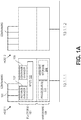
- Figures 1A and 1B are diagrams of one embodiment of a network of computing devices functioning as a set of server hosts for virtualized execution environments.
- the Figures 1A and 1B provide one example of a set of computing devices that implement a virtualization platform.
- the platform may be implemented by a single computing device with any configuration of hardware, while in further embodiments, the components of the virtualization platform may be distributed in other combinations and permutations as would be understood by one of skill in the art.
- the computing devices (Host(s) 1-N) are connected with one another over a local area network in this example an L3 network. In other embodiments, the computing devices can be connected over any type of network, interconnect or communication system.
- the computing devices can have similar or varied computing resources, including differing processing capabilities, storage capabilities and similar physical hardware differences. While the examples are primarily discussed in terms of physical computing devices serving as hosts, one skilled in the art would understand that additional levels of virtualization are possible such that the platform may execute on a set of virtual hosts. For sake of clarity, the hosts are discussed as physical computing devices.
- Each of the computing devices includes hardware 105 comprising a set of one or more processor(s) 111 (which can be any type of general purpose of application specific processors), network interface controller(s) (NICs; also known as network interface cards) (which include physical and virtual interfaces), non-transitory machine readable storage media 113 having stored therein software including the software that implements the embodiments described herein, and similar components.
- processor(s) 111 execute the software to instantiate the platform 103 including any number of constituent components such as an instance manager 107, container manager 109, application programming interfaces (APIs) 121 and similar components, as well as one or more sets of one or more applications.
- the embodiments may use different forms of virtualization.
- the virtualization platform may encompass the kernel of an operating system (or a shim executing on a base operating system) that allows for the creation of multiple instances called software containers or simply 'containers' 101 as used herein that may each be used to execute one (or more) of the sets of applications supported by the platform, where the multiple containers 101 (also called virtualization engines, virtual private servers, or jails) are user spaces (typically a virtual memory space) that are separate from each other and separate from the kernel space in which the operating system is run, and where the set of applications running in a given container or user space, unless explicitly allowed, cannot access the memory of the other containers or processes.
- the multiple containers 101 also called virtualization engines, virtual private servers, or jails
- user spaces typically a virtual memory space
- the virtualization platform encompasses a hypervisor (sometimes referred to as a virtual machine monitor (VMM)) or a hypervisor executing on top of a host operating system, and each of the sets of applications is run on top of a guest operating system within an instance called a virtual machine (which may in some cases be considered a tightly isolated form of software container) that is run on top of the hypervisor - the guest operating system and application may not know they are running on a virtual machine as opposed to running on a "bare metal" host electronic device, or through para-virtualization the operating system and/or application may be aware of the presence of virtualization for optimization purposes.
- a hypervisor sometimes referred to as a virtual machine monitor (VMM)
- VMM virtual machine monitor
- a hypervisor executing on top of a host operating system
- each of the sets of applications is run on top of a guest operating system within an instance called a virtual machine (which may in some cases be considered a tightly isolated form of software container) that is run on top of the hypervisor - the
- one, some or all of the applications are implemented as unikernel(s), which can be generated by compiling directly with an application only a limited set of libraries (e.g., from a library operating system (LibOS) including drivers/libraries of OS services) that provide the particular OS services needed by the application.
- libraries e.g., from a library operating system (LibOS) including drivers/libraries of OS services
- unikernel can be implemented to run directly on hardware 105, directly on a hypervisor (in which case the unikernel is sometimes described as running within a LibOS virtual machine), or in a software container
- embodiments can be implemented fully with unikernels running directly on a hypervisor represented by virtualization platform 103, unikernels running within software containers represented by instances 101, or as a combination of unikernels and the above-described techniques (e.g., unikernels and virtual machines both run directly on a hypervisor, unikernels and sets of applications that are run in different software containers).
- While embodiments of the invention are illustrated with reference to containers 101 corresponding to one VNE 'A60A-R, alternative embodiments may implement this correspondence at a finer level granularity (e.g., line card virtual machines virtualize line cards, control card virtual machine virtualize control cards, etc.); it should be understood that the techniques described herein with reference to a correspondence of instances 'A62A-R to VNEs also apply to embodiments where such a finer level of granularity and/or unikernels are used.
- a finer level granularity e.g., line card virtual machines virtualize line cards, control card virtual machine virtualize control cards, etc.
- the virtualization platform includes a virtual switch that provides similar forwarding services as a physical Ethernet switch. Specifically, this virtual switch forwards traffic between containers 101 or instances and the NIC(s), as well as optionally between the containers 101 or instances; in addition, this virtual switch may enforce network isolation between the various components of the platform that by policy are not permitted to communicate with each other (e.g., by honoring virtual local area networks (VLANs)).
- VLANs virtual local area networks
- hosts 1-N may communicate via a virtual network, which is a logical abstraction of a physical network that provides network services (e.g., L2 and/or L3 services).
- a virtual network can be implemented as an overlay network (sometimes referred to as a network virtualization overlay) that provides network services (e.g., layer 2 (L2, data link layer) and/or layer 3 (L3, network layer) services) over an underlay network (e.g., an L3 network, such as an Internet Protocol (IP) network that uses tunnels (e.g., generic routing encapsulation (GRE), layer 2 tunneling protocol (L2TP), IPSec) to create the overlay network).
- IP Internet Protocol
- the virtualization platform 103 can include various components including an instance manager 107, container manager 109, various APIs 121, a central control node 115, an application authentication server 117 and similar components. This listing is not intended to be exhaustive, rather it sets forward those components most directly affected by the processes and embodiments described herein. These components can be spread across any combination of the hosts 1-N in any combination and permutation. Some components, such as the instance manager 107 may have instances on each host, while others such as the application authentication server 117 may be present in only a subset of the hosts.
- the instance manager 107 may be responsible for generating processes and jobs in the platform.
- the instance manager 107 can facilitate the instantiation of applications and containers.
- the container manager 109 manages the generation of tokens for the applications in the platform and can also facilitate the generation of the containers and applications.
- APIs 121 are sets of functions that applications, user (e.g., via a command line interface, terminal or similar interface) and similar entities utilize to request resources of the platform including hardware 105. These functions, when invoked, are often referred to as 'calls' to the API. Some or all of these APIs can be considered secure APIs that require authentication of the requester before the requests are processed.
- the authentication is generally tied to a set of permissions or an authorization set of a user who has a set of user credentials that in turn can form or generate a user token.
- the user credentials or user token can be processed by an authentication server such as the application authentication server 117 to verify that the user credential or the user token are valid or authorized.
- a central control node 115 can manage the intercommunication and coordination of the various hosts 1-N to implement the functions of the platform.
- the platform when distributed can have a centralized or distributed control organization. Where centralized, the central control node 115 can manage the components and communication between the components of the platform.
- the central control node 115 can be implemented on a host for containers 101. However, in other embodiments, the central control node 115 is executed on a separate node or remote from hosts of containers 101.
- the platform can support any number of containers 101 distributed across any number of the hosts 1-N and in any distribution or organization of the containers 101.
- the containers can be fixed to a particular host or can be configured by the platform to be capable of being moved, for example for load balancing, across the set of hosts 1-N.
- the containers can have varying user space sizes, accessible resources and similar variations in characteristics.
- An embodiment of the invention may be an article of manufacture in which a non-transitory machine-readable medium (such as microelectronic memory) has stored thereon instructions which program one or more data processing components (generically referred to here as a "processor") to perform the operations described above.
- a non-transitory machine-readable medium such as microelectronic memory
- a processor program one or more data processing components (generically referred to here as a "processor") to perform the operations described above.
- some of these operations might be performed by specific hardware components that contain hardwired logic (e.g., dedicated digital filter blocks and state machines). Those operations might alternatively be performed by any combination of programmed data processing components and fixed hardwired circuit components.
- FIG. 2 is a diagram of one embodiment of a process for application token generation and installation.
- the diagram illustrates a basic embodiment where a user or similar entity is a caller 201 that requests the start of an application 213 and, as a part of this process, the creation of a container 211 hosting the application.
- the caller 201 a user using a command line interface, console, or a container application, has previously been authenticated and holds a valid authentication token which, in conjunction with proper authorization, permits the caller to request the start of the application 213.
- the application 213 is to run in the created container 211 and is issued an application token 215 that can be used by the application 213 to make requests through the secure API 207.
- the application token 215 may be issued only after authentication of the caller token or similar authorization is obtained.
- the caller token 205 such as a user token or where the caller is an application the authenticated application token of the caller, is not passed on to the child container 211 or the application 213. Instead a new application token 215 is issued specifically for the child container application 213 and is used only by the child container application 213.
- the new application token 215 contains information that identifies the container application 213 for which it is created.
- the new application token 215 may be secured by the signature of a trusted parent entity, or similar mechanism and can therefore be validated that it is issued from a trusted source. Because the new application token 215 identifies the application 213 and can be validated, it can be used for authorization of the application 213.
- the new application token 215 can allow the application 213 to read from a database of the platform or access similar resources as may be consistent with an authorization set for the new application token 215. This is significant because authorization is determined for the specific application token recipient. Therefore, each application can have its own authorization set.
- the container application 213 can be authorized to perform actions that are less than, equal to, or greater than the authorization set of the caller 201.
- the application token 215 may also contain an expiration value that dictates the usability (lifetime) of the application token 215. Once the application token 215 has expired, either a new token will need to be issued for the container application 213, the container application 213 will need to "refresh" its existing token, or the container application 213 will no longer be permitted to make secure API 207 requests. Since the parent entity 209 can identify the container 211 it created, and its running application 213, a application token 215 can be reissued without the need for re-authentication.
- the diagram illustrates a basic scenario indicative of the process.
- the caller 201 via an application, command line interface (CLI), console or similar mechanism requests or makes a call to a secure API implemented by the API server 207 of the virtualization platform.
- the call or request can include the user or application token 205 of the caller 201.
- the API server 207 may validate the received token 205.
- the API server 207 can coordinate with other components of the platform to instantiate a container 211 in which an application 213 is to be instantiated. This may be in coordination with an instance manager or similar components of the platform.
- the API server 207 can further coordinate with a container manager 209 to generate a new application token 215 for the application 213.
- the container manager 209 determines the authorization set for the application token 215, which may be based on the authorization set of the token 205 of the caller, platform policies or any combination thereof. For example, in some cases the container manager 209 can manage an authorization set for the new application token 215 that is a subset of the authorization set of the caller. More specifically, the container manager 209 manages authorization sets as defined by a platform administrator for each user and/or application. The container manager 209 acts upon the permissions from these authorization sets. However, in other cases, the policies of the platform may enable an authorization set that is at least in some manner broader than the authorization set of the caller, i.e., granting the application 213 authorizations not available to the caller 201. As discussed further herein below with regard to Figure 4 , the container manager 209 also may play a role in instantiating the child container 211 and a container for an application helper.
- the embodiments of the process create a token on behalf of an application 213 running in a container; because the platform controls the container 211 and starts the application 213 running in that container, the identity of the application 213 is known and, as a result, the platform can determine the appropriate authorization set associated with the application 213.
- the signed application token 215 contains the information that an API service 207 can use to ascertain the identity of the application 213 and, hence, determine authorization for the application 213.
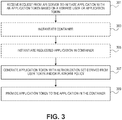
- Figure 3 is a flowchart of one embodiment of a process of a container manager to generate an application token.
- the container manager participates in the generation and distribution of the application token in coordination with the API server and similar components of the platform.
- the container manager receives a request from the API server to initiate an application with an application token based on a verified caller token such as a user token (Block 301).
- the API server may have already validated the caller token, such as a user token or of the token of the entity that called the API server to request a function of the API that involves an instantiation of an application or similar scenario where an API server sends the authenticated caller token (e.g., user token or calling application token) to the container manager with the request to instantiate the application.
- the authenticated caller token e.g., user token or calling application token
- the container manager instantiates a container (Block 303) into which the application will be instantiated.
- the requested application is then instantiated in the container (Block 305).
- the container manager can directly instantiate the application or can work in coordination with other components of the platform to instantiate the application and container.
- the container manager can coordinate the generation of the application token (Block 307).
- the application token can be generated to include any identification information unique to the application along with a digital signature or similar information for authentication.
- the application token can include or be tied to an authorization set.
- the container manager can enforce policies of the virtualization platform as they pertain to the creation of application tokens.
- the policies can define the type and scope of authorization sets to be given to the application tokens.
- the policies can restrict the authorization set to a subset of the authorization set of the caller.
- the policies may include permissions in the authorization set that are not permitted to the caller. For example, an application may be authorized to access a local database that a caller is not authorized to directly access.
- the application token can be provided to the application in the container (Block 309).
- the application token may be issued to the specific application, however, in other cases, the application may not directly manage the application token itself.
- the application is specifically coded to receive the application token and utilize the application token when making API calls or requests or performing other functions where the application token is utilized to authenticate that the application is authorized to invoke a function or call within the virtualization platform.
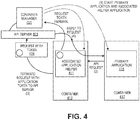
- Figure 4 is a diagram of one embodiment of a process for application token management by an application helper.
- the diagram illustrates one example embodiment for handling the management of the application token where the application is not specifically modified or coded to handle the application token.
- the application need not be designed to work with application tokens and the embodiments provide a solution that is transparent to the application. This makes the solution highly compatible with a wide array of application.
- an application token is generated in response to a call or request via a secure API (i.e., the API server) of the virtualization platform.
- a secure API i.e., the API server
- the embodiments provide a mechanism to handle the application token.
- the application token is unique to a given application 415.
- the application token is utilized to authenticate the application 415 and to identify the applicable authorization set.
- the authorization set is the set of permissions or the set of commands that the application is allowed to invoke in the virtualization platform.
- an application helper 411 is created before or in parallel to the application token.
- the application helper 411 is instantiated in a separate container 413 and there is a unique 1:1 relationship between the application 415 and the application helper 411.
- the container manager 401 can be solely or partially responsible for starting the application 415, container 417 for the primary application 415, the application helper 411 and the container 413 for the application helper 411.
- the application helper 411 is configured to intercept or receive these requests to the secured API at the time it is set up and established. The application helper 411 can then insert the application token for the application into the request, before forwarding the updated request 409 to the secured API server 403.
- the secured API server 403 then services the request and returns a reply message or similar data to the application helper 411 who can then pass on the requested information from the API server 403 to the primary application 415.
- the form and amount of any given reply can vary significantly dependent on the call or function that is invoked.
- the application helper 411 can be responsible for handling the renewal of the application token.
- Each application token may contain an expiration value that identifies when the lifetime of the application token expires. Any system of timing or dating can be used to identify the expiration time.
- the application helper 411 may determine a timing for renewal when a failed authentication message is returned by the API server 403 or the container manager 401 may check the expiration value and renew the application token when it expires or nears expiration.
- a separate container 413 and application helper 411 is generated for each primary application 415.
- the 1:1 relationship is advantageous at the cost of added resources devoted to the overhead of the containers and application helpers.
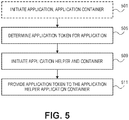
- Figure 5 is a flowchart of one embodiment of a process by a container manager to establish a container, application helper and application token.
- the container manager is in some embodiments for establishing the set of applications and containers for managing the application token.
- the container manager has the primary responsibility of enforcing the policies and securities for the application token methods and system.
- the container manager Upon notification from the API server of a request that has been received from an authenticated entity, the container manager begins the instantiation of the requested application and a container into which the application is placed for execution (Block 501).
- the code for the application and container can be stored in any location in communication with the container manager and the container manager is responsible for loading, reserving resources and starting the execution of the application and the container.
- the container manager also generates an application token for the primary application (Block 505).
- the application token can contain any uniquely identifying information for the application, is associated with an authorization set that can be specified by the requester and/or policies of the virtualization platform.
- a container for the application helper can then be instantiated (Block 509).
- the application helper container can be instantiated at any point in parallel or serial with the container of the primary application.
- the application helper can be instantiated in the new container at any point with relation to the primary application and its container (Block 509).
- the application token, once generated can then be provided to the application helper (Block 511) to handle and manage as discussed below.
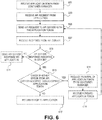
- Figure 6 is a flowchart of one embodiment of a process by an application helper to process requests for a secured platform interface from the associated application.
- the process monitors for or awaits the receipt of a secured API call or request from the primary application (Block 603).
- the application helper and its container may be configured to stand between the primary application and the API server, such that all requests from the primary application must traverse the application helper and its container.
- the received requests are then modified to insert the application token for the requesting application (Block 605).
- the API requests may include space for the application token or the API requests may be altered to enable the application token to be included.
- the API requests are sent on to the API server.
- the API server then processes the API request and send a response to the application helper (Block 607).
- the process may shift to a renewal process to obtain a renewed application token.
- a check is made whether the error reported by the API server indicates that the application token is invalid or expired (Block 613). If the expiration is not the source of the error, then the reply data including the error data may be passed to the application for handling (Block 617).
- the application helper requests renewal of the application token from the container manager (Block 615). Any validating information can be sent to accompany the request, however, the container manager will decide the renewal based on the policies of the virtualization platform.
- the process may be restarted to request the API server process the initial API request where the renewed token is inserted into the API request in place of the expired or invalid token.
Landscapes
- Engineering & Computer Science (AREA)
- Theoretical Computer Science (AREA)
- Software Systems (AREA)
- Computer Security & Cryptography (AREA)
- General Engineering & Computer Science (AREA)
- Physics & Mathematics (AREA)
- General Physics & Mathematics (AREA)
- Computer Hardware Design (AREA)
- Health & Medical Sciences (AREA)
- Bioethics (AREA)
- General Health & Medical Sciences (AREA)
- Databases & Information Systems (AREA)
- Stored Programmes (AREA)
Claims (18)
- Verfahren in einem Container-Verwalter (401) zum Verwalten von Zugriff auf Ressourcen innerhalb einer Virtualisierungsplattform mit der Verwendung von Anwendungstoken, wobei ein Anwendungstoken Informationen umfasst, die eine Primäranwendung (415) identifizieren und die zum Verwalten von Zugriff auf die Ressourcen für die Primäranwendung (415) verwendet werden können, wobei das Verfahren umfasst:Erzeugen (307) eines Anwendungstokens für die Primäranwendung (415), wobei die Primäranwendung (415) in einem ersten Container (417) ausgeführt wird;Instanziieren (303) eines zweiten Containers (413) und eines darin auszuführenden Anwendungsassistenten (411), wobei der zweite Container (413) vom ersten Container (417) getrennt ist, wobei der Anwendungsassistent (411) spezifisch für die Primäranwendung (415) ist, derart dass eine 1:1-Beziehung zwischen der Primäranwendung (415) und dem Anwendungsassistenten (411) besteht; undBereitstellen (309) des Anwendungstokens für den Anwendungsassistenten (411), wobei der Anwendungsassistent (411) API-Anforderungen unter Verwendung des Anwendungstokens im Namen der Primäranwendung (415) verwaltet.
- Verfahren nach Anspruch 1, ferner umfassend:
Instanziieren (501) der Primäranwendung (415) und des ersten Containers (417). - Verfahren nach Anspruch 1, ferner umfassend:
Empfangen (619) einer Erneuerungsanforderung für den Anwendungstoken vom Anwendungsassistenten (411). - Verfahren nach Anspruch 3, ferner umfassend:
Senden (605) eines erneuerten Anwendungstokens an den Anwendungsassistenten (411) in Reaktion auf die Erneuerungsanforderung. - Computersystem, das so konfiguriert ist, dass es ein Verfahren in einem Container-Verwalter (401) zum Verwalten von Zugriff auf Ressourcen innerhalb einer Virtualisierungsplattform mit der Verwendung von Anwendungstoken implementiert, wobei ein Anwendungstoken Informationen umfasst, die eine Primäranwendung (415) identifizieren und die zum Verwalten von Zugriff auf die Ressourcen für die Primäranwendung (415) verwendet werden können, wobei das Computersystem umfasst:ein nicht-transitorisches maschinenlesbares Medium (113), das einen Container-Verwalter (401) darauf gespeichert aufweist; undeinen Prozessor (111), der mit dem nicht-transitorischen maschinenlesbaren Medium (113) gekoppelt ist, wobei der Prozessor (111) so konfiguriert ist, dass er das Verfahren im Container-Verwalter (401) ausführt zum: Erzeugen eines ersten Anwendungstokens für die Primäranwendung (415), wobei die Primäranwendung (415) in einem ersten Container (417) ausgeführt wird; Instanziieren eines zweiten Containers (413) und eines darin auszuführenden Anwendungsassistenten (411), wobei der zweite Container (413) vom ersten Container (417) getrennt ist, wobei der Anwendungsassistent (411) spezifisch für die Primäranwendung (415) ist, derart dass eine 1:1-Beziehung zwischen der Primäranwendung (415) und dem Anwendungsassistenten (411) besteht; und Bereitstellen des Anwendungstokens für den Anwendungsassistenten (411), wobei der Anwendungsassistent (411) API-Anforderungen unter Verwendung des Anwendungstokens im Namen der Primäranwendung (415) verwaltet.
- Computersystem nach Anspruch 5, wobei der Container-Verwalter (401) ferner zum Initiieren der Primäranwendung (415) und dem ersten Container (417) konfiguriert ist.
- Computersystem nach Anspruch 5, wobei der Container-Verwalter (401) ferner zum Empfangen einer Erneuerungsanforderung für den Anwendungstoken vom Anwendungsassistenten (411) konfiguriert ist.
- Computersystem nach Anspruch 7, wobei der Container-Verwalter (401) ferner zum Senden eines erneuerten Anwendungstokens an den Anwendungsassistenten (411) in Reaktion auf die Erneuerungsanforderung konfiguriert ist.
- Verfahren in einem Anwendungsassistenten (411), der in einem zweiten Container (413) ausgeführt wird, um eine Primäranwendung (415) zu unterstützen, die in einem ersten Container (417) getrennt vom zweiten Container (413) ausgeführt wird, um auf Ressourcen innerhalb einer Virtualisierungsplattform mit der Verwendung von Anwendungstoken zuzugreifen, wobei ein Anwendungstoken Informationen umfasst, die eine Primäranwendung (415) identifizieren und die zum Verwalten von Zugriff auf die Ressourcen für die Primäranwendung (415) verwendet werden können, wobei der Anwendungsassistent (411) spezifisch für die Primäranwendung (415) ist, derart dass eine 1:1-Beziehung zwischen der Primäranwendung (415) und dem Anwendungsassistenten (411) besteht, wobei das Verfahren umfasst:Empfangen (601) einer Anwendungsprogrammierschnittstellen-,API-,Anforderung von der Primäranwendung (415);Einfügen (603) eines Anwendungstokens der Primäranwendung (415) in die API-Anforderung; undSenden (605) der API-Anforderung mit dem Anwendungstoken an einen API-Server (403).
- Verfahren nach Anspruch 9, ferner umfassend:Empfangen (607) einer Antwort vom API-Server (403); undBestimmen (609), ob die empfangene Antwort einen Fehler anzeigt.
- Verfahren nach Anspruch 10, ferner umfassend:Prüfen (613), ob der Fehler anzeigt, dass der Anwendungstoken ungültig oder abgelaufen ist; undZurücksenden (611) des Fehlers an die Primäranwendung (415) in Reaktion darauf, dass der Fehler keinen ungültigen oder abgelaufenen Anwendungstoken anzeigt.
- Verfahren nach Anspruch 9, ferner umfassend:Anfordern (615) einer Erneuerung des Anwendungstokens von einem Container-Verwalter (401); undEmpfangen (619) eines erneuerten Anwendungstoken vom Container-Verwalter (401).
- Verfahren nach Anspruch 9, ferner umfassend:
Senden (611, 617) einer Antwort vom API-Server (403) an die Primäranwendung (415). - Computersystem, das so konfiguriert ist, dass es ein Verfahren in einem Anwendungsassistenten (411) implementiert, der in einem zweiten Container (413) ausgeführt wird, um eine Primäranwendung (415) zu unterstützen, die in einem ersten Container (417) getrennt vom zweiten Container (413) ausgeführt wird, um auf Ressourcen innerhalb einer Virtualisierungsplattform mit der Verwendung von Anwendungstoken zuzugreifen, wobei ein Anwendungstoken Informationen umfasst, die eine Primäranwendung (415) identifizieren und die zum Verwalten von Zugriff auf die Ressourcen für die Primäranwendung (415) verwendet werden können, wobei der Anwendungsassistent (411) spezifisch für die Primäranwendung (415) ist, derart dass eine 1:l-Beziehung zwischen der Primäranwendung (415) und dem Anwendungsassistenten (411) besteht, wobei das Computersystem umfasst:ein nicht-transitorisches maschinenlesbares Medium (113), das den Anwendungsassistenten (411) darauf gespeichert aufweist; undeinen Prozessor (111), der mit dem nicht-transitorischen maschinenlesbaren Speichermedium (113) gekoppelt ist, wobei der Prozessor (111) so konfiguriert ist, dass er das Verfahren im Anwendungsassistenten (411) ausführt zum: Empfangen einer Anwendungsprogrammierschnittstellen-,API-,Anforderung von der Primäranwendung (415); Einfügen eines Anwendungstokens der Primäranwendung (415) in die API-Anforderung und Senden der API-Anforderung mit dem Anwendungstoken an einen API-Server (403).
- Computersystem nach Anspruch 14, wobei der Anwendungsassistent (411) ferner so konfiguriert ist, dass er eine Antwort vom API-Server (403) empfängt und bestimmt, ob die empfangene Antwort einen Fehler anzeigt.
- Computersystem nach Anspruch 14, wobei der Anwendungsassistent (411) ferner so konfiguriert ist, dass er prüft, ob der Fehler anzeigt, dass der Anwendungstoken ungültig oder abgelaufen ist, und den Fehler in Reaktion darauf, dass der Fehler keinen ungültigen oder abgelaufenen Anwendungstoken anzeigt, an die Primäranwendung (415) zurücksendet.
- Computersystem nach Anspruch 14, wobei der Anwendungsassistent (411) ferner so konfiguriert ist, dass er eine Erneuerung des Anwendungstokens von einem Container-Verwalter (401) anfordert und einen erneuerten Anwendungstoken vom Container-Verwalter (401) empfängt.
- Computersystem nach Anspruch 14, wobei der Anwendungsassistent (411) ferner so konfiguriert ist, dass er eine Antwort vom API-Server (403) an die Primäranwendung (415) sendet.
Applications Claiming Priority (3)
| Application Number | Priority Date | Filing Date | Title |
|---|---|---|---|
| US201662397846P | 2016-09-21 | 2016-09-21 | |
| US15/595,824 US20180082053A1 (en) | 2016-09-21 | 2017-05-15 | Application token through associated container |
| PCT/IB2017/055709 WO2018055532A1 (en) | 2016-09-21 | 2017-09-20 | Application token through associated container |
Publications (2)
| Publication Number | Publication Date |
|---|---|
| EP3516513A1 EP3516513A1 (de) | 2019-07-31 |
| EP3516513B1 true EP3516513B1 (de) | 2021-03-17 |
Family
ID=61620577
Family Applications (1)
| Application Number | Title | Priority Date | Filing Date |
|---|---|---|---|
| EP17788295.8A Active EP3516513B1 (de) | 2016-09-21 | 2017-09-20 | Anwendungstoken durch zugehörigen container |
Country Status (4)
| Country | Link |
|---|---|
| US (1) | US20180082053A1 (de) |
| EP (1) | EP3516513B1 (de) |
| CN (1) | CN109716296B (de) |
| WO (1) | WO2018055532A1 (de) |
Families Citing this family (73)
| Publication number | Priority date | Publication date | Assignee | Title |
|---|---|---|---|---|
| US20180004931A1 (en) * | 2016-07-02 | 2018-01-04 | Intel Corporation | Process management |
| US20180083971A1 (en) * | 2016-09-21 | 2018-03-22 | Telefonaktiebolaget Lm Ericsson (Publ) | Authorization with container application issued token |
| US11496517B1 (en) | 2017-08-02 | 2022-11-08 | Styra, Inc. | Local API authorization method and apparatus |
| US11681568B1 (en) | 2017-08-02 | 2023-06-20 | Styra, Inc. | Method and apparatus to reduce the window for policy violations with minimal consistency assumptions |
| US11947489B2 (en) | 2017-09-05 | 2024-04-02 | Robin Systems, Inc. | Creating snapshots of a storage volume in a distributed storage system |
| US10579276B2 (en) | 2017-09-13 | 2020-03-03 | Robin Systems, Inc. | Storage scheme for a distributed storage system |
| US10534549B2 (en) | 2017-09-19 | 2020-01-14 | Robin Systems, Inc. | Maintaining consistency among copies of a logical storage volume in a distributed storage system |
| US10782887B2 (en) | 2017-11-08 | 2020-09-22 | Robin Systems, Inc. | Window-based prority tagging of IOPs in a distributed storage system |
| US10846001B2 (en) | 2017-11-08 | 2020-11-24 | Robin Systems, Inc. | Allocating storage requirements in a distributed storage system |
| US11748203B2 (en) | 2018-01-11 | 2023-09-05 | Robin Systems, Inc. | Multi-role application orchestration in a distributed storage system |
| US10628235B2 (en) | 2018-01-11 | 2020-04-21 | Robin Systems, Inc. | Accessing log files of a distributed computing system using a simulated file system |
| US11099937B2 (en) | 2018-01-11 | 2021-08-24 | Robin Systems, Inc. | Implementing clone snapshots in a distributed storage system |
| US10642697B2 (en) | 2018-01-11 | 2020-05-05 | Robin Systems, Inc. | Implementing containers for a stateful application in a distributed computing system |
| US11392363B2 (en) | 2018-01-11 | 2022-07-19 | Robin Systems, Inc. | Implementing application entrypoints with containers of a bundled application |
| US11582168B2 (en) | 2018-01-11 | 2023-02-14 | Robin Systems, Inc. | Fenced clone applications |
| US10896102B2 (en) * | 2018-01-11 | 2021-01-19 | Robin Systems, Inc. | Implementing secure communication in a distributed computing system |
| US10579364B2 (en) | 2018-01-12 | 2020-03-03 | Robin Systems, Inc. | Upgrading bundled applications in a distributed computing system |
| US10642694B2 (en) | 2018-01-12 | 2020-05-05 | Robin Systems, Inc. | Monitoring containers in a distributed computing system |
| US10845997B2 (en) | 2018-01-12 | 2020-11-24 | Robin Systems, Inc. | Job manager for deploying a bundled application |
| US10846137B2 (en) | 2018-01-12 | 2020-11-24 | Robin Systems, Inc. | Dynamic adjustment of application resources in a distributed computing system |
| US10976938B2 (en) | 2018-07-30 | 2021-04-13 | Robin Systems, Inc. | Block map cache |
| US11023328B2 (en) | 2018-07-30 | 2021-06-01 | Robin Systems, Inc. | Redo log for append only storage scheme |
| US10817380B2 (en) | 2018-07-31 | 2020-10-27 | Robin Systems, Inc. | Implementing affinity and anti-affinity constraints in a bundled application |
| US10599622B2 (en) | 2018-07-31 | 2020-03-24 | Robin Systems, Inc. | Implementing storage volumes over multiple tiers |
| US10719373B1 (en) | 2018-08-23 | 2020-07-21 | Styra, Inc. | Validating policies and data in API authorization system |
| US11853463B1 (en) | 2018-08-23 | 2023-12-26 | Styra, Inc. | Leveraging standard protocols to interface unmodified applications and services |
| US11080410B1 (en) | 2018-08-24 | 2021-08-03 | Styra, Inc. | Partial policy evaluation |
| US11245728B1 (en) | 2018-10-16 | 2022-02-08 | Styra, Inc. | Filtering policies for authorizing an API |
| US10908848B2 (en) | 2018-10-22 | 2021-02-02 | Robin Systems, Inc. | Automated management of bundled applications |
| US11036439B2 (en) | 2018-10-22 | 2021-06-15 | Robin Systems, Inc. | Automated management of bundled applications |
| US10620871B1 (en) | 2018-11-15 | 2020-04-14 | Robin Systems, Inc. | Storage scheme for a distributed storage system |
| US11044257B1 (en) * | 2018-11-26 | 2021-06-22 | Amazon Technologies, Inc. | One-time access to protected resources |
| US11226838B2 (en) * | 2018-12-26 | 2022-01-18 | Korea Electronics Technology Institute | Container-based management method by changing intelligent container component execution priority using remote calls via remote access unit and remote network functon module |
| US11086725B2 (en) | 2019-03-25 | 2021-08-10 | Robin Systems, Inc. | Orchestration of heterogeneous multi-role applications |
| US11256434B2 (en) | 2019-04-17 | 2022-02-22 | Robin Systems, Inc. | Data de-duplication |
| US11190512B2 (en) | 2019-04-17 | 2021-11-30 | Microsoft Technology Licensing, Llc | Integrity attestation of attestation component |
| US11392467B2 (en) | 2019-04-17 | 2022-07-19 | Microsoft Technology Licensing, Llc | Failover between decentralized identity stores |
| US11381567B2 (en) | 2019-04-29 | 2022-07-05 | Microsoft Technology Licensing, Llc | Execution of an application within a scope of user-granted permission |
| US11429743B2 (en) | 2019-04-29 | 2022-08-30 | Microsoft Technology Licensing, Llc | Localization of DID-related claims and data |
| US10831387B1 (en) | 2019-05-02 | 2020-11-10 | Robin Systems, Inc. | Snapshot reservations in a distributed storage system |
| US11411959B2 (en) * | 2019-05-03 | 2022-08-09 | Microsoft Technology Licensing, Llc | Execution of application in a container within a scope of user-granted permission |
| US11222137B2 (en) | 2019-05-03 | 2022-01-11 | Microsoft Technology Licensing, Llc | Storing and executing an application in a user's personal storage with user granted permission |
| US11003771B2 (en) | 2019-05-03 | 2021-05-11 | Microsoft Technology Licensing, Llc | Self-help for DID claims |
| US11593525B1 (en) | 2019-05-10 | 2023-02-28 | Styra, Inc. | Portable policy execution using embedded machines |
| DE102019112485A1 (de) * | 2019-05-13 | 2020-11-19 | Eberhard-Karls-Universität Tübingen | Verfahren zum selektiven Ausführen eines Containers |
| US10877684B2 (en) | 2019-05-15 | 2020-12-29 | Robin Systems, Inc. | Changing a distributed storage volume from non-replicated to replicated |
| US20200364354A1 (en) * | 2019-05-17 | 2020-11-19 | Microsoft Technology Licensing, Llc | Mitigation of ransomware in integrated, isolated applications |
| CN110286999B (zh) * | 2019-05-28 | 2023-08-29 | 平安科技(深圳)有限公司 | 访问程序关联性隔离器的方法、装置及计算机可读存储介质 |
| US11226847B2 (en) | 2019-08-29 | 2022-01-18 | Robin Systems, Inc. | Implementing an application manifest in a node-specific manner using an intent-based orchestrator |
| US11249851B2 (en) | 2019-09-05 | 2022-02-15 | Robin Systems, Inc. | Creating snapshots of a storage volume in a distributed storage system |
| US11520650B2 (en) | 2019-09-05 | 2022-12-06 | Robin Systems, Inc. | Performing root cause analysis in a multi-role application |
| US11113158B2 (en) | 2019-10-04 | 2021-09-07 | Robin Systems, Inc. | Rolling back kubernetes applications |
| US11347684B2 (en) | 2019-10-04 | 2022-05-31 | Robin Systems, Inc. | Rolling back KUBERNETES applications including custom resources |
| US11403188B2 (en) | 2019-12-04 | 2022-08-02 | Robin Systems, Inc. | Operation-level consistency points and rollback |
| US11502992B1 (en) | 2020-01-27 | 2022-11-15 | Styra, Inc. | Local controller and local agent for local API authorization |
| US12498998B1 (en) | 2020-03-02 | 2025-12-16 | Apple Inc. | Method and apparatus for enforcing policies for authorizing APIs |
| US11108638B1 (en) | 2020-06-08 | 2021-08-31 | Robin Systems, Inc. | Health monitoring of automatically deployed and managed network pipelines |
| US11528186B2 (en) | 2020-06-16 | 2022-12-13 | Robin Systems, Inc. | Automated initialization of bare metal servers |
| US12003543B1 (en) | 2020-07-24 | 2024-06-04 | Styra, Inc. | Method and system for modifying and validating API requests |
| US11513778B1 (en) | 2020-08-14 | 2022-11-29 | Styra, Inc. | Graphical user interface and system for defining and maintaining code-based policies |
| CN112187753B (zh) * | 2020-09-18 | 2023-07-14 | 北京浪潮数据技术有限公司 | 一种数据更新方法、装置、设备及可读存储介质 |
| US11740980B2 (en) | 2020-09-22 | 2023-08-29 | Robin Systems, Inc. | Managing snapshot metadata following backup |
| US11593363B1 (en) | 2020-09-23 | 2023-02-28 | Styra, Inc. | Comprehension indexing feature |
| US11743188B2 (en) | 2020-10-01 | 2023-08-29 | Robin Systems, Inc. | Check-in monitoring for workflows |
| US11271895B1 (en) | 2020-10-07 | 2022-03-08 | Robin Systems, Inc. | Implementing advanced networking capabilities using helm charts |
| US11456914B2 (en) | 2020-10-07 | 2022-09-27 | Robin Systems, Inc. | Implementing affinity and anti-affinity with KUBERNETES |
| US11750451B2 (en) | 2020-11-04 | 2023-09-05 | Robin Systems, Inc. | Batch manager for complex workflows |
| US11520579B1 (en) | 2020-11-30 | 2022-12-06 | Styra, Inc. | Automated asymptotic analysis |
| US11556361B2 (en) | 2020-12-09 | 2023-01-17 | Robin Systems, Inc. | Monitoring and managing of complex multi-role applications |
| CN112613083B (zh) * | 2021-01-04 | 2024-08-13 | 北京数字认证股份有限公司 | 一种基于应用容器引擎的应用授权验证方法和装置 |
| US12135974B1 (en) | 2021-09-29 | 2024-11-05 | Styra, Inc. | Using custom templates to define new system types for instantiation |
| CN116127418B (zh) * | 2023-04-14 | 2023-06-27 | 深圳竹云科技股份有限公司 | 容器应用授权方法、装置及计算机设备 |
| CN117060976B (zh) * | 2023-08-22 | 2024-04-12 | 元心信息科技集团有限公司 | 卫星通信方法、系统、电子设备、存储介质及程序产品 |
Citations (1)
| Publication number | Priority date | Publication date | Assignee | Title |
|---|---|---|---|---|
| US8533796B1 (en) * | 2011-03-16 | 2013-09-10 | Google Inc. | Providing application programs with access to secured resources |
Family Cites Families (28)
| Publication number | Priority date | Publication date | Assignee | Title |
|---|---|---|---|---|
| KR101470712B1 (ko) * | 2004-07-20 | 2014-12-08 | 마이크로소프트 코포레이션 | 컴퓨터 애플리케이션에서의 데이터 손실을 최소화하기 위한 방법 및 시스템 |
| US7845009B2 (en) * | 2006-05-16 | 2010-11-30 | Intel Corporation | Method and apparatus to detect kernel mode rootkit events through virtualization traps |
| WO2008099392A1 (en) * | 2007-02-13 | 2008-08-21 | Cyber-Ark Software Ltd. | Methods and systems for solving problems with hard-coded credentials |
| US8468356B2 (en) * | 2008-06-30 | 2013-06-18 | Intel Corporation | Software copy protection via protected execution of applications |
| US9559842B2 (en) * | 2008-09-30 | 2017-01-31 | Hewlett Packard Enterprise Development Lp | Trusted key management for virtualized platforms |
| US8826269B2 (en) * | 2009-06-15 | 2014-09-02 | Microsoft Corporation | Annotating virtual application processes |
| US8971535B2 (en) * | 2010-05-27 | 2015-03-03 | Bladelogic, Inc. | Multi-level key management |
| US9298910B2 (en) * | 2011-06-08 | 2016-03-29 | Mcafee, Inc. | System and method for virtual partition monitoring |
| US9519777B2 (en) * | 2011-10-31 | 2016-12-13 | Novell, Inc. | Techniques for controlling authentication |
| JP6006533B2 (ja) * | 2012-05-25 | 2016-10-12 | キヤノン株式会社 | 認可サーバー及びクライアント装置、サーバー連携システム、トークン管理方法 |
| US9256722B2 (en) * | 2012-07-20 | 2016-02-09 | Google Inc. | Systems and methods of using a temporary private key between two devices |
| US8832782B2 (en) * | 2012-08-31 | 2014-09-09 | Avaya Inc. | Single sign-on system and method |
| US20140108793A1 (en) * | 2012-10-16 | 2014-04-17 | Citrix Systems, Inc. | Controlling mobile device access to secure data |
| US9049013B2 (en) * | 2013-03-14 | 2015-06-02 | Sprint Communications Company L.P. | Trusted security zone containers for the protection and confidentiality of trusted service manager data |
| JP6482526B2 (ja) * | 2013-03-15 | 2019-03-13 | オラクル・インターナショナル・コーポレイション | コンピュータアプリケーションのオブジェクトコードを変更することによるコンピュータアプリケーションのためのセキュリティサービス管理 |
| GB2516939A (en) * | 2013-08-07 | 2015-02-11 | Eus Associates Ltd | Access authorisation system and secure data communications system |
| US9825933B2 (en) * | 2013-09-12 | 2017-11-21 | Data Accelerator Ltd. | Single sign on for applications |
| US10237252B2 (en) * | 2013-09-20 | 2019-03-19 | Oracle International Corporation | Automatic creation and management of credentials in a distributed environment |
| US9613190B2 (en) * | 2014-04-23 | 2017-04-04 | Intralinks, Inc. | Systems and methods of secure data exchange |
| US10193879B1 (en) * | 2014-05-07 | 2019-01-29 | Cisco Technology, Inc. | Method and system for software application deployment |
| US9825934B1 (en) * | 2014-09-26 | 2017-11-21 | Google Inc. | Operating system interface for credential management |
| US9985953B2 (en) * | 2014-11-10 | 2018-05-29 | Amazon Technologies, Inc. | Desktop application fulfillment platform with multiple authentication mechanisms |
| US11068136B1 (en) * | 2014-11-11 | 2021-07-20 | Amazon Technologies, Inc. | Application fulfillment platform with automated license management mechanisms |
| SG10201500698YA (en) * | 2015-01-29 | 2016-08-30 | Huawei Internat Pte Ltd | Method for data protection using isolated environment in mobile device |
| US10326744B1 (en) * | 2016-03-21 | 2019-06-18 | EMC IP Holding Company LLC | Security layer for containers in multi-tenant environments |
| US10055578B1 (en) * | 2016-05-17 | 2018-08-21 | Sprint Communications Company L.P. | Secure software containers |
| US10855725B2 (en) * | 2016-06-02 | 2020-12-01 | Microsoft Technology Licensing, Llc | Hardware-based virtualized security isolation |
| US10693989B2 (en) * | 2017-04-28 | 2020-06-23 | Sap Se | Brokering services from partner cloud platforms |
-
2017
- 2017-05-15 US US15/595,824 patent/US20180082053A1/en not_active Abandoned
- 2017-09-20 EP EP17788295.8A patent/EP3516513B1/de active Active
- 2017-09-20 WO PCT/IB2017/055709 patent/WO2018055532A1/en not_active Ceased
- 2017-09-20 CN CN201780057776.9A patent/CN109716296B/zh active Active
Patent Citations (1)
| Publication number | Priority date | Publication date | Assignee | Title |
|---|---|---|---|---|
| US8533796B1 (en) * | 2011-03-16 | 2013-09-10 | Google Inc. | Providing application programs with access to secured resources |
Non-Patent Citations (1)
| Title |
|---|
| ANONYMOUS: "Using Instance Profiles - AWS Identity and Access Management", 23 August 2016 (2016-08-23), XP055718819, Retrieved from the Internet <URL:https://web.archive.org/web/20160823002420/https://docs.aws.amazon.com/IAM/latest/UserGuide/id_roles_use_switch-role-ec2_instance-profiles.html> [retrieved on 20200729] * |
Also Published As
| Publication number | Publication date |
|---|---|
| CN109716296B (zh) | 2023-08-25 |
| CN109716296A (zh) | 2019-05-03 |
| WO2018055532A1 (en) | 2018-03-29 |
| EP3516513A1 (de) | 2019-07-31 |
| US20180082053A1 (en) | 2018-03-22 |
Similar Documents
| Publication | Publication Date | Title |
|---|---|---|
| EP3516513B1 (de) | Anwendungstoken durch zugehörigen container | |
| US20180083971A1 (en) | Authorization with container application issued token | |
| US11641361B2 (en) | Dynamic access control to network resources using federated full domain logon | |
| US10999328B2 (en) | Tag-based policy architecture | |
| RU2679188C2 (ru) | Многофункциональная идентификация виртуального вычислительного узла | |
| JP6957764B2 (ja) | 高速スマートカードログオン | |
| US10761871B2 (en) | Method and apparratus for secrets injection into containers | |
| US9509692B2 (en) | Secured access to resources using a proxy | |
| US10331882B2 (en) | Tracking and managing virtual desktops using signed tokens | |
| KR20170062529A (ko) | 빠른 스마트 카드 로그온 및 연합된 풀 도메인 로그온 | |
| US11595379B2 (en) | Mechanism of common authentication for both supervisor and guest clusters | |
| US9363270B2 (en) | Personas in application lifecycle management | |
| US12413579B2 (en) | Securing connections between a networking and security controller and distributed agents in a container-based cluster | |
| WO2022006472A1 (en) | A system and method for configuring and deploying software infrastructure | |
| US20240007465A1 (en) | Controlling access to components of a software-defined data center in a hybrid environment | |
| US11366883B2 (en) | Reflection based endpoint security test framework | |
| US20250211582A1 (en) | Method for carrying out an authorization process for a client application | |
| US12166753B2 (en) | Connecting a software-defined data center to cloud services through an agent platform appliance |
Legal Events
| Date | Code | Title | Description |
|---|---|---|---|
| STAA | Information on the status of an ep patent application or granted ep patent |
Free format text: STATUS: UNKNOWN |
|
| STAA | Information on the status of an ep patent application or granted ep patent |
Free format text: STATUS: THE INTERNATIONAL PUBLICATION HAS BEEN MADE |
|
| PUAI | Public reference made under article 153(3) epc to a published international application that has entered the european phase |
Free format text: ORIGINAL CODE: 0009012 |
|
| STAA | Information on the status of an ep patent application or granted ep patent |
Free format text: STATUS: REQUEST FOR EXAMINATION WAS MADE |
|
| 17P | Request for examination filed |
Effective date: 20190325 |
|
| AK | Designated contracting states |
Kind code of ref document: A1 Designated state(s): AL AT BE BG CH CY CZ DE DK EE ES FI FR GB GR HR HU IE IS IT LI LT LU LV MC MK MT NL NO PL PT RO RS SE SI SK SM TR |
|
| AX | Request for extension of the european patent |
Extension state: BA ME |
|
| DAV | Request for validation of the european patent (deleted) | ||
| DAX | Request for extension of the european patent (deleted) | ||
| STAA | Information on the status of an ep patent application or granted ep patent |
Free format text: STATUS: EXAMINATION IS IN PROGRESS |
|
| 17Q | First examination report despatched |
Effective date: 20200805 |
|
| GRAP | Despatch of communication of intention to grant a patent |
Free format text: ORIGINAL CODE: EPIDOSNIGR1 |
|
| STAA | Information on the status of an ep patent application or granted ep patent |
Free format text: STATUS: GRANT OF PATENT IS INTENDED |
|
| RIC1 | Information provided on ipc code assigned before grant |
Ipc: G06F 9/455 20180101AFI20201118BHEP Ipc: G06F 21/57 20130101ALI20201118BHEP |
|
| INTG | Intention to grant announced |
Effective date: 20201215 |
|
| GRAS | Grant fee paid |
Free format text: ORIGINAL CODE: EPIDOSNIGR3 |
|
| GRAA | (expected) grant |
Free format text: ORIGINAL CODE: 0009210 |
|
| STAA | Information on the status of an ep patent application or granted ep patent |
Free format text: STATUS: THE PATENT HAS BEEN GRANTED |
|
| AK | Designated contracting states |
Kind code of ref document: B1 Designated state(s): AL AT BE BG CH CY CZ DE DK EE ES FI FR GB GR HR HU IE IS IT LI LT LU LV MC MK MT NL NO PL PT RO RS SE SI SK SM TR |
|
| REG | Reference to a national code |
Ref country code: GB Ref legal event code: FG4D |
|
| REG | Reference to a national code |
Ref country code: CH Ref legal event code: EP |
|
| REG | Reference to a national code |
Ref country code: DE Ref legal event code: R096 Ref document number: 602017034853 Country of ref document: DE |
|
| REG | Reference to a national code |
Ref country code: IE Ref legal event code: FG4D |
|
| REG | Reference to a national code |
Ref country code: AT Ref legal event code: REF Ref document number: 1372878 Country of ref document: AT Kind code of ref document: T Effective date: 20210415 |
|
| REG | Reference to a national code |
Ref country code: LT Ref legal event code: MG9D |
|
| PG25 | Lapsed in a contracting state [announced via postgrant information from national office to epo] |
Ref country code: BG Free format text: LAPSE BECAUSE OF FAILURE TO SUBMIT A TRANSLATION OF THE DESCRIPTION OR TO PAY THE FEE WITHIN THE PRESCRIBED TIME-LIMIT Effective date: 20210617 Ref country code: FI Free format text: LAPSE BECAUSE OF FAILURE TO SUBMIT A TRANSLATION OF THE DESCRIPTION OR TO PAY THE FEE WITHIN THE PRESCRIBED TIME-LIMIT Effective date: 20210317 Ref country code: GR Free format text: LAPSE BECAUSE OF FAILURE TO SUBMIT A TRANSLATION OF THE DESCRIPTION OR TO PAY THE FEE WITHIN THE PRESCRIBED TIME-LIMIT Effective date: 20210618 Ref country code: HR Free format text: LAPSE BECAUSE OF FAILURE TO SUBMIT A TRANSLATION OF THE DESCRIPTION OR TO PAY THE FEE WITHIN THE PRESCRIBED TIME-LIMIT Effective date: 20210317 Ref country code: NO Free format text: LAPSE BECAUSE OF FAILURE TO SUBMIT A TRANSLATION OF THE DESCRIPTION OR TO PAY THE FEE WITHIN THE PRESCRIBED TIME-LIMIT Effective date: 20210617 |
|
| REG | Reference to a national code |
Ref country code: AT Ref legal event code: MK05 Ref document number: 1372878 Country of ref document: AT Kind code of ref document: T Effective date: 20210317 |
|
| REG | Reference to a national code |
Ref country code: NL Ref legal event code: MP Effective date: 20210317 |
|
| PG25 | Lapsed in a contracting state [announced via postgrant information from national office to epo] |
Ref country code: SE Free format text: LAPSE BECAUSE OF FAILURE TO SUBMIT A TRANSLATION OF THE DESCRIPTION OR TO PAY THE FEE WITHIN THE PRESCRIBED TIME-LIMIT Effective date: 20210317 Ref country code: LV Free format text: LAPSE BECAUSE OF FAILURE TO SUBMIT A TRANSLATION OF THE DESCRIPTION OR TO PAY THE FEE WITHIN THE PRESCRIBED TIME-LIMIT Effective date: 20210317 Ref country code: RS Free format text: LAPSE BECAUSE OF FAILURE TO SUBMIT A TRANSLATION OF THE DESCRIPTION OR TO PAY THE FEE WITHIN THE PRESCRIBED TIME-LIMIT Effective date: 20210317 |
|
| PG25 | Lapsed in a contracting state [announced via postgrant information from national office to epo] |
Ref country code: NL Free format text: LAPSE BECAUSE OF FAILURE TO SUBMIT A TRANSLATION OF THE DESCRIPTION OR TO PAY THE FEE WITHIN THE PRESCRIBED TIME-LIMIT Effective date: 20210317 |
|
| PG25 | Lapsed in a contracting state [announced via postgrant information from national office to epo] |
Ref country code: AT Free format text: LAPSE BECAUSE OF FAILURE TO SUBMIT A TRANSLATION OF THE DESCRIPTION OR TO PAY THE FEE WITHIN THE PRESCRIBED TIME-LIMIT Effective date: 20210317 Ref country code: SM Free format text: LAPSE BECAUSE OF FAILURE TO SUBMIT A TRANSLATION OF THE DESCRIPTION OR TO PAY THE FEE WITHIN THE PRESCRIBED TIME-LIMIT Effective date: 20210317 Ref country code: CZ Free format text: LAPSE BECAUSE OF FAILURE TO SUBMIT A TRANSLATION OF THE DESCRIPTION OR TO PAY THE FEE WITHIN THE PRESCRIBED TIME-LIMIT Effective date: 20210317 Ref country code: EE Free format text: LAPSE BECAUSE OF FAILURE TO SUBMIT A TRANSLATION OF THE DESCRIPTION OR TO PAY THE FEE WITHIN THE PRESCRIBED TIME-LIMIT Effective date: 20210317 Ref country code: LT Free format text: LAPSE BECAUSE OF FAILURE TO SUBMIT A TRANSLATION OF THE DESCRIPTION OR TO PAY THE FEE WITHIN THE PRESCRIBED TIME-LIMIT Effective date: 20210317 |
|
| PG25 | Lapsed in a contracting state [announced via postgrant information from national office to epo] |
Ref country code: RO Free format text: LAPSE BECAUSE OF FAILURE TO SUBMIT A TRANSLATION OF THE DESCRIPTION OR TO PAY THE FEE WITHIN THE PRESCRIBED TIME-LIMIT Effective date: 20210317 Ref country code: SK Free format text: LAPSE BECAUSE OF FAILURE TO SUBMIT A TRANSLATION OF THE DESCRIPTION OR TO PAY THE FEE WITHIN THE PRESCRIBED TIME-LIMIT Effective date: 20210317 Ref country code: PL Free format text: LAPSE BECAUSE OF FAILURE TO SUBMIT A TRANSLATION OF THE DESCRIPTION OR TO PAY THE FEE WITHIN THE PRESCRIBED TIME-LIMIT Effective date: 20210317 Ref country code: PT Free format text: LAPSE BECAUSE OF FAILURE TO SUBMIT A TRANSLATION OF THE DESCRIPTION OR TO PAY THE FEE WITHIN THE PRESCRIBED TIME-LIMIT Effective date: 20210719 Ref country code: IS Free format text: LAPSE BECAUSE OF FAILURE TO SUBMIT A TRANSLATION OF THE DESCRIPTION OR TO PAY THE FEE WITHIN THE PRESCRIBED TIME-LIMIT Effective date: 20210717 |
|
| REG | Reference to a national code |
Ref country code: DE Ref legal event code: R097 Ref document number: 602017034853 Country of ref document: DE |
|
| PLBE | No opposition filed within time limit |
Free format text: ORIGINAL CODE: 0009261 |
|
| STAA | Information on the status of an ep patent application or granted ep patent |
Free format text: STATUS: NO OPPOSITION FILED WITHIN TIME LIMIT |
|
| PG25 | Lapsed in a contracting state [announced via postgrant information from national office to epo] |
Ref country code: ES Free format text: LAPSE BECAUSE OF FAILURE TO SUBMIT A TRANSLATION OF THE DESCRIPTION OR TO PAY THE FEE WITHIN THE PRESCRIBED TIME-LIMIT Effective date: 20210317 Ref country code: AL Free format text: LAPSE BECAUSE OF FAILURE TO SUBMIT A TRANSLATION OF THE DESCRIPTION OR TO PAY THE FEE WITHIN THE PRESCRIBED TIME-LIMIT Effective date: 20210317 Ref country code: DK Free format text: LAPSE BECAUSE OF FAILURE TO SUBMIT A TRANSLATION OF THE DESCRIPTION OR TO PAY THE FEE WITHIN THE PRESCRIBED TIME-LIMIT Effective date: 20210317 |
|
| 26N | No opposition filed |
Effective date: 20211220 |
|
| PG25 | Lapsed in a contracting state [announced via postgrant information from national office to epo] |
Ref country code: SI Free format text: LAPSE BECAUSE OF FAILURE TO SUBMIT A TRANSLATION OF THE DESCRIPTION OR TO PAY THE FEE WITHIN THE PRESCRIBED TIME-LIMIT Effective date: 20210317 |
|
| PG25 | Lapsed in a contracting state [announced via postgrant information from national office to epo] |
Ref country code: IT Free format text: LAPSE BECAUSE OF FAILURE TO SUBMIT A TRANSLATION OF THE DESCRIPTION OR TO PAY THE FEE WITHIN THE PRESCRIBED TIME-LIMIT Effective date: 20210317 |
|
| REG | Reference to a national code |
Ref country code: CH Ref legal event code: PL |
|
| REG | Reference to a national code |
Ref country code: BE Ref legal event code: MM Effective date: 20210930 |
|
| PG25 | Lapsed in a contracting state [announced via postgrant information from national office to epo] |
Ref country code: IS Free format text: LAPSE BECAUSE OF FAILURE TO SUBMIT A TRANSLATION OF THE DESCRIPTION OR TO PAY THE FEE WITHIN THE PRESCRIBED TIME-LIMIT Effective date: 20210717 Ref country code: MC Free format text: LAPSE BECAUSE OF FAILURE TO SUBMIT A TRANSLATION OF THE DESCRIPTION OR TO PAY THE FEE WITHIN THE PRESCRIBED TIME-LIMIT Effective date: 20210317 |
|
| PG25 | Lapsed in a contracting state [announced via postgrant information from national office to epo] |
Ref country code: LU Free format text: LAPSE BECAUSE OF NON-PAYMENT OF DUE FEES Effective date: 20210920 Ref country code: IE Free format text: LAPSE BECAUSE OF NON-PAYMENT OF DUE FEES Effective date: 20210920 Ref country code: FR Free format text: LAPSE BECAUSE OF NON-PAYMENT OF DUE FEES Effective date: 20210930 Ref country code: BE Free format text: LAPSE BECAUSE OF NON-PAYMENT OF DUE FEES Effective date: 20210930 |
|
| PG25 | Lapsed in a contracting state [announced via postgrant information from national office to epo] |
Ref country code: LI Free format text: LAPSE BECAUSE OF NON-PAYMENT OF DUE FEES Effective date: 20210930 Ref country code: CH Free format text: LAPSE BECAUSE OF NON-PAYMENT OF DUE FEES Effective date: 20210930 |
|
| PG25 | Lapsed in a contracting state [announced via postgrant information from national office to epo] |
Ref country code: CY Free format text: LAPSE BECAUSE OF FAILURE TO SUBMIT A TRANSLATION OF THE DESCRIPTION OR TO PAY THE FEE WITHIN THE PRESCRIBED TIME-LIMIT Effective date: 20210317 |
|
| PG25 | Lapsed in a contracting state [announced via postgrant information from national office to epo] |
Ref country code: HU Free format text: LAPSE BECAUSE OF FAILURE TO SUBMIT A TRANSLATION OF THE DESCRIPTION OR TO PAY THE FEE WITHIN THE PRESCRIBED TIME-LIMIT; INVALID AB INITIO Effective date: 20170920 |
|
| PG25 | Lapsed in a contracting state [announced via postgrant information from national office to epo] |
Ref country code: MK Free format text: LAPSE BECAUSE OF FAILURE TO SUBMIT A TRANSLATION OF THE DESCRIPTION OR TO PAY THE FEE WITHIN THE PRESCRIBED TIME-LIMIT Effective date: 20210317 |
|
| PG25 | Lapsed in a contracting state [announced via postgrant information from national office to epo] |
Ref country code: TR Free format text: LAPSE BECAUSE OF FAILURE TO SUBMIT A TRANSLATION OF THE DESCRIPTION OR TO PAY THE FEE WITHIN THE PRESCRIBED TIME-LIMIT Effective date: 20210317 |
|
| PG25 | Lapsed in a contracting state [announced via postgrant information from national office to epo] |
Ref country code: MT Free format text: LAPSE BECAUSE OF FAILURE TO SUBMIT A TRANSLATION OF THE DESCRIPTION OR TO PAY THE FEE WITHIN THE PRESCRIBED TIME-LIMIT Effective date: 20210317 |
|
| PGFP | Annual fee paid to national office [announced via postgrant information from national office to epo] |
Ref country code: DE Payment date: 20250929 Year of fee payment: 9 |
|
| PGFP | Annual fee paid to national office [announced via postgrant information from national office to epo] |
Ref country code: GB Payment date: 20250929 Year of fee payment: 9 |