EP3516574B1 - Unternehmensgraphverfahren zur bedrohungsdetektion - Google Patents
Unternehmensgraphverfahren zur bedrohungsdetektion Download PDFInfo
- Publication number
- EP3516574B1 EP3516574B1 EP17772814.4A EP17772814A EP3516574B1 EP 3516574 B1 EP3516574 B1 EP 3516574B1 EP 17772814 A EP17772814 A EP 17772814A EP 3516574 B1 EP3516574 B1 EP 3516574B1
- Authority
- EP
- European Patent Office
- Prior art keywords
- enterprise
- security
- alerts
- computers
- network
- Prior art date
- Legal status (The legal status is an assumption and is not a legal conclusion. Google has not performed a legal analysis and makes no representation as to the accuracy of the status listed.)
- Active
Links
Images



Classifications
-
- H—ELECTRICITY
- H04—ELECTRIC COMMUNICATION TECHNIQUE
- H04L—TRANSMISSION OF DIGITAL INFORMATION, e.g. TELEGRAPHIC COMMUNICATION
- H04L63/00—Network architectures or network communication protocols for network security
- H04L63/14—Network architectures or network communication protocols for network security for detecting or protecting against malicious traffic
- H04L63/1433—Vulnerability analysis
-
- G—PHYSICS
- G06—COMPUTING OR CALCULATING; COUNTING
- G06F—ELECTRIC DIGITAL DATA PROCESSING
- G06F21/00—Security arrangements for protecting computers, components thereof, programs or data against unauthorised activity
- G06F21/50—Monitoring users, programs or devices to maintain the integrity of platforms, e.g. of processors, firmware or operating systems
- G06F21/57—Certifying or maintaining trusted computer platforms, e.g. secure boots or power-downs, version controls, system software checks, secure updates or assessing vulnerabilities
- G06F21/577—Assessing vulnerabilities and evaluating computer system security
-
- G—PHYSICS
- G06—COMPUTING OR CALCULATING; COUNTING
- G06F—ELECTRIC DIGITAL DATA PROCESSING
- G06F16/00—Information retrieval; Database structures therefor; File system structures therefor
- G06F16/90—Details of database functions independent of the retrieved data types
- G06F16/901—Indexing; Data structures therefor; Storage structures
- G06F16/9024—Graphs; Linked lists
-
- H—ELECTRICITY
- H04—ELECTRIC COMMUNICATION TECHNIQUE
- H04L—TRANSMISSION OF DIGITAL INFORMATION, e.g. TELEGRAPHIC COMMUNICATION
- H04L63/00—Network architectures or network communication protocols for network security
- H04L63/14—Network architectures or network communication protocols for network security for detecting or protecting against malicious traffic
-
- H—ELECTRICITY
- H04—ELECTRIC COMMUNICATION TECHNIQUE
- H04L—TRANSMISSION OF DIGITAL INFORMATION, e.g. TELEGRAPHIC COMMUNICATION
- H04L63/00—Network architectures or network communication protocols for network security
- H04L63/14—Network architectures or network communication protocols for network security for detecting or protecting against malicious traffic
- H04L63/1408—Network architectures or network communication protocols for network security for detecting or protecting against malicious traffic by monitoring network traffic
Definitions
- Cloud computing and storage solutions provide enterprises with various capabilities to store and process data.
- cloud computing and enterprise networks The infrastructure must be properly configured, managed and secured, and the data and applications must also be protected.
- An efficient security architecture should recognize and address issues that arise but that is not always the case.
- SIEM security information and event management
- the security logs, alerts and other virtual machine (VM) and network data logged for security purposes via SIEM often lose their functional context as to what machines or appliances produced them which further obscures the significance of many of the attacks.
- US 7,352,280 B1 refers to a method for correlating event information, which comprises receiving event information for a plurality of detected events, wherein the event information for a particular detected event comprises a plurality of attributes associated with that detected event. The method continues by assigning a plurality of attribute values to each detected event, the attribute values of each detected event defining a point in n-dimensional space. The method continues by storing the event information for each detected event in accordance with the attribute values assigned to that detected event. The method continues by receiving a target event comprising a plurality of attributes wherein the attributes of the target event are associated with attribute values and the attribute values of the target event define a target point in n-dimensional space.
- the method continues by receiving a plurality of proximity limits that define a portion of n-dimensional space surrounding the target point.
- the method concludes by identifying a plurality of detected events wherein the points defined by the attribute values of the identified detected events are within the portion of n-dimensional space defined by the proximity limits.
- AU 2016202184 B1 refers to methods, systems, and apparatus, including computer programs encoded on computer storage media, for correlating domain activity data.
- First domain activity data from a first network domain and second domain activity data from a second network domain is received.
- the first domain activity data and the second domain activity data is filtered to remove irrelevant activity data, based on a first set of profile data for devices in the first network domain and a second set of profile data for devices in the second network domain.
- Unfiltered first and second domain activity data is aggregated.
- Aggregated unfiltered first and second domain activity data is correlated to determine an attack path for an attack that occurs across the first network domain and the second network domain, based on attack signatures and profiles associated with previously identified attacks.
- a visualization of the attack path is generated.
- US 2015/0074806 A1 refers to a computer-implemented method for using event-correlation graphs to detect attacks on computing systems may include (1) detecting a suspicious event involving a first actor within a computing system, (2) constructing an event-correlation graph that includes a first node that represents the first actor, a second node that represents a second actor, and an edge that interconnects the first node and the second node and represents a suspicious event involving the first actor and the second actor, (3) calculating, based at least in part on the additional suspicious event, an attack score for the event-correlation graph, (4) determining that the attack score is greater than a predetermined threshold, and (5) determining, based at least in part on the attack score being greater than the predetermined threshold, that the suspicious event may be part of an attack on the computing system.
- a method for analyzing security alerts.
- the method disclosed herein includes generating an enterprise graph based on information associated with an enterprise.
- the enterprise graph is utilized to identify relationships between computers of the enterprise.
- at least one significant relationship is identified between two or more of the security alerts based on a strength of a relationship identified in the enterprise graph.
- the method then includes identifying at least one potential security incident based on the at least one significant relationship between the two or more of the plurality of security alerts.
- the method may also include examining the security alerts associated with the at least one potential security incident to identify at least one known part of an attack.
- a system for analyzing security alerts.
- the system disclosed herein includes an enterprise graph service for generating an enterprise graph based on information associated with an enterprise for identifying relationships between computers of the enterprise.
- a plurality of security components generate a plurality of security alerts regarding the enterprise and then a fusion service identifies significant relationships between security alerts, wherein each significant relationship is identified in the enterprise graph and corresponds with at least two or more security alerts.
- the system also includes a kill chain interpreter for identifying potential security incidents based on significant relationships between two or more of the security alerts.
- the system may also include a list prioritizing the security alerts corresponding with the potential security incidents identified by the kill chain interpreter and a recommendation that the security alerts of one or more of the potential security incidents be given priority over other security alerts not associated with any other identified potential security incident.
- a computer-readable storage medium including instructions for analyzing security alerts.
- the instructions executed by a processor include generating an enterprise graph based on information associated with an enterprise, utilizing the enterprise graph to identify relationships between computers of the enterprise, and receiving a plurality of security alerts produced by a plurality of security components of the enterprise.
- the instructions also include identifying at least one significant relationship between two or more of the security alerts based on a strength of a relationship identified in the enterprise graph and identifying a potential security incident involving two or more entities of the enterprise based on the at least one significant relationship between the two or more of the security alerts, wherein the potential security incident corresponds with at least part of a known piece of malicious executable code.
- the instructions then also include indicating the plurality of security alerts of the potential security incident have priority over other security alerts not associated with the identified potential security incident and concluding that the potential security incident is an actual attack.
- Examples are implemented as a computer process, a computing system, or as an computer program product for one or more computers.
- the computer program product is a server of a computer system having a computer program comprising instructions for executing a computer process.
- FIG. 1 illustrates an example computing environment 100 in which the present disclosure may be practiced.
- an enterprise such as enterprise network 110 is divided into multiple sites 120.
- a given site 120 may be accessed remotely by a remote device 130, which is located externally to the enterprise network 110 or remotely from the sites 120, or may be accessed locally by a local device 140, which is located internally to the enterprise network 110 or locally to the sites 120.
- the enterprise network 110 is in communication with a geolocation service 150 to provide locational data for the remote devices 130.
- two sites 120, one remote device 130, and one local device 140 are illustrated, the number of sites 120, remote devices 130, and local devices 140 may be greater than or less than what is illustrated in the example environment 100.
- the enterprise network 110 provides a single operating environment over which computing devices may interact despite being spread across multiple sites 120 and domains (e.g., for a company, a governmental agency, an educational institution spread over a large geographical area).
- Each site 120 of the enterprise network 110 includes: a gateway 122, operable to accept communications from devices connecting to the site 120; a domain controller 124, which is in communication with the gateway 122 and operable to authenticate entities seeking to access the enterprise network 110; and a monitor 126, in communication with the domain controller 124, and operable to aggregate connection information from the remote devices 130 to manage entity location data.
- Gateways 122 and domain controllers 124 will be understood by one of skill in the art to include hardware devices and software running on those devices to provide the functionalities thereof.
- the monitor 126 may be run on dedicated hardware or may be provided via software on a computing device used for several purposes, such as, for example, on the same hardware as the domain controller 124.
- the enterprise network 110 may make use of fewer monitors 126 than sites 120; some or all of the sites 120 may share a monitor 126.
- the remote device 130 and local device 140 are illustrative of a multitude of computing systems including, without limitation, desktop computer systems, wired and wireless computing systems, mobile computing systems (e.g., mobile telephones, netbooks, tablet or slate type computers, notebook computers, and laptop computers), hand-held devices, multiprocessor systems, microprocessor-based or programmable consumer electronics, minicomputers, printers, and mainframe computers.
- mobile computing systems e.g., mobile telephones, netbooks, tablet or slate type computers, notebook computers, and laptop computers
- hand-held devices e.g., multiprocessor systems, microprocessor-based or programmable consumer electronics, minicomputers, printers, and mainframe computers.
- Remote devices 130 and local device 140 are operated by users, who may be humans or automated systems (e.g., "bots") that request connections to one or more sites 120 of the enterprise network 110.
- users who may be humans or automated systems (e.g., "bots" that request connections to one or more sites 120 of the enterprise network 110.
- an instance of the SIRI®, GOOGLE NOWTM or CORTANA® electronic assistant may request a connection in response to or in anticipation of queries from a human user.
- the remote device 130 and local devices 140 access the enterprise network 110 by being authenticated by a domain controller 124 of a site 120.
- Remote devices 130 may connect to a given site 120 via a Virtual Private Network (VPN) connection or other tunnel to initiate a session, whereas local devices 140 connect to the site 120 at which they are located.
- VPN Virtual Private Network
- Whether a given device is a remote device 130 or a local device 140 depends on how it connects to the enterprise network 110, and a given device may be both a remote device 130 and a local device 140. For example, a user may use a local device 140 while in the office to connect locally to the enterprise network 110 and take that device home and log into the enterprise network 110, making the device a remote device 130 for the remote session.
- Entities connect to a given site 120 which is then noted and mapped by either the domain controller 124 or the monitor 126 as using the given site 120.
- Local devices 140 may also have their connection attempts to the domain controller 124 and activity session logged by the monitor 126 for security purposes.
- FIG. 2 illustrates another example computing environment 200 in which the present disclosure may be practiced.
- an enterprise such as cloud network 202 with cloud 202 accessing the internet 204.
- the cloud 202 having shared processing resources and data provided by server and computer resources 210 and cloud storage 212 for providing users within the enterprise with various capabilities.
- the enterprise within the environment 200 is divided up amongst the cloud 202, enterprise legacy systems 220, enterprise suppliers 222, enterprise customers 224 and various enterprise locations such as locations A-C having reference numbers 230, 232, and 234, respectively.
- the enterprise may include fewer or more locations such as locations A-C.
- a location maybe the headquarters of the enterprise company and other locations may be branch offices.
- one or more locations may be remote users of the enterprise accessing the cloud 202.
- the cloud 202 may be referred to as a virtual device/machine cloud made up of one or more virtual device/machines.
- the virtual machines are software representations of hardware devices such as computers as understood by those skilled in the art.
- each of the locations A-C, the legacy systems 220, suppliers 222 and customers 224 of the enterprise may have one or more entities referred to as machines such as an actual computer or server.
- the machines also may instead be virtual computers.
- each of the remote and local devices 130, 140, the machines at sites 120 within the network 110, as well as the server/computer resources of the cloud 160, may be referred to as an entity or machine and be an actual hardware computing device such as a computer or server or may instead be a virtual device/machine.
- FIG. 3 illustrates an exemplary system 300 for analyzing security alerts within various enterprise computing environments.
- the system 300 includes a service for generating and maintaining an enterprise graph 310.
- the enterprise graph 310 is generated based on information such as operational intelligence 320 associated with or derived from the architecture and the functions performed within the enterprise network.
- operational intelligence 320 associated with or derived from the architecture and the functions performed within the enterprise network.
- the enterprise graph 310 is a compilation of all the relationships between machines within the corporate enterprise and is utilized to identify relationships between machines of the enterprise.
- the system for analyzing alerts also includes a fusion service 340 for fusing related security alerts 330 together.
- Security alerts 330 produced by security components/solutions within the network 110 of the enterprise are received and stored by the fusion service 340.
- the fusion service 340 analyzes the security alerts 330 and performs statistical calculations to identify significant relationships between two or more of the security alerts 330 based on the strength of particular relationships between machines within the network 110 of the enterprise. Relationships may be determined to be significant relationships based on the type of machines or where machines are located within the enterprise. For example, a significant relationship may be based on the physical distance or network connectivity between particular machines. Also, a significant relationship may exist between machines running the same application or performing the same functions.
- a potential security incident 360 based on one or more significant relationships between two or more security alerts 330 may involve two or more machines of the network of the enterprise.
- the security alerts 330 of a particular potential security incident 360 could be from two computing devices within the same premises or running the same application.
- a piece of known malicious executable code could be detected at one or more machines resulting in a security alert 330.
- a single security alert 330 occurring as a result of detecting malicious executable code could result in a potential security incident 360.
- a security alert 330 could also occur as a result of one or more machines receiving the known piece of malicious executable code such as from another machine within the network or from outside the network.
- a security alert 330 occurring as a result of detecting a known piece of malicious executable code and another security alert 330 occurring as a result of receiving that known piece of malicious executable code together could result in a potential security incident 360.
- each may be ranked or prioritized relative one another based on how significant each relationship is or based on how many significant relationships are associated with a particular potential security incident 360.
- a list of potential security incidents 360 can be generated.
- the security alerts 330 of any potential security incident 360 would have priority over other security alerts 330 that are not associated with any identified potential security incident 360.
- a priority list of the security alerts 330 that are associated with or are based on potential security incidents 360 can be generated.
- the security alerts 330 of the potential security incidents 360 can be recommended to be given investigative priority via a priority list so that the IT specialists know where to focus their work.
- the system 300 also includes a kill chain interpreter 350 as shown in FIG. 3 for identifying potential security incidents 360.
- the kill chain interpreter 350 identifies potential security incidents 360 based on significant relationships that are found to exist between two or more security alerts 330. It is understood by those skilled in the art of analyzing security alerts 330, that attacks typically include known stages. Thus, stages of attacks may come at different times and occur at different locations or machines. Then in accordance with one or more embodiments, the security alerts 330 may be arranged or presented to correspond with likely stages of an attack and therefore define a chain of events that meets the criteria for an actual attack that should be investigated.
- examining the security alerts 330 associated with one or more potential security incidents 360 could lead to identifying at least one or more known parts of, or all of, an attack.
- Examining several security alerts 330 associated with one or more potential security incidents 360 could identify at least one know part or all of an attack by comparing the chain of events, defined by the several security alerts 330, with the criteria for an attack. If the chain of events of several security alerts 330 of a potential security incident 360 correspond with the criteria for an attack then it may be concluded that the potential security incident 360 is an actual attack.
- the steps include process block 410 for generating the enterprise graph 310 based on the information such as operation intelligence 320 derived from the architecture of the network and/or the operations performed over the network.
- the enterprise graph is used to identify relationship within the network of the enterprise based on the architecture and functions performed over the network.
- Security alerts 330 produced by security components/solutions within the network are received at a fusion service 340.
- the fusion service 340 fuses related security alerts together in order to identify significant relationships based on strengths of relationships identified in the enterprise graph 310 as shown in process block 430. Potential security incidents could be based on a significant relationship between two or more security alerts.
- the method 400 also includes process block 440 for examining the security alerts 330 associated with a potential security incident 360. For example, examination of the security alerts 330 may lead to identification of a known part of, or all of, a security attack. It is to be understood that additional operations may be performed between the process steps mentioned here or in addition to those steps.
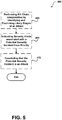
- the method 400 may also include one or more of the steps shown in FIG. 5 .
- the method 400 may also include process block 450 for performing kill chain interpretation.
- security alerts may correspond with likely states of an attack that should be examined in order to identify all or part of an actual attack.
- the method 400 may also include process block 460 for indicating security alerts 330 associated with a potential security incident 360 have priority, for example, over other security alerts 330 that are not associated with a potential security incident 360.
- the method 400 may also include process block 470 for concluding that the potential security incident 360 is a real attack.
- Embodiments for example, are described above with reference to block diagrams and/or operational illustrations of methods, systems, and computer program products according to embodiments.
- the functions/acts noted in the blocks may occur out of the order as shown in any flowchart or described herein with reference to the Figures.
- two steps or processes shown or described in succession may in fact be executed substantially concurrently or the blocks may sometimes be executed in the reverse order, depending upon the functionality/acts involved.
- FIG. 6 and the corresponding discussion are intended to provide a brief, general description of a suitable computing environment in which embodiments may be implemented.
- program modules include routines, programs, components, data structures, and other types of structures that perform particular tasks or implement particular abstract data types.
- Other computer system configurations may also be used, including hand-held devices, multiprocessor systems, microprocessor-based or programmable consumer electronics, minicomputers, mainframe computers, and the like.
- Distributed computing environments may also be used where tasks are performed by remote processing devices that are linked through a communications network.
- program modules may be located in both local and remote memory storage devices.
- the computer environment shown in FIG. 6 includes computing devices that each may be configured as a mobile computing device (e.g. phone, tablet, net book, laptop), server, a desktop, or some other type of computing device and include a central processing unit 510 ("CPU"), a system memory 512, including a random access memory 514 (“RAM”) and a read-only memory (“ROM”) 516, and a system bus 518 that couples the memory to the CPU 510.
- CPU central processing unit
- RAM random access memory
- ROM read-only memory
- the computer 520 further includes a mass storage device 522 for storing an operating system 524, attachment manager 526, messaging application 528 and web browser 530.
- the mass storage device 522 is connected to the CPU 10 through a mass storage controller (not shown) connected to the bus 518.
- the mass storage device 522 and its associated computer-readable media provide non-volatile storage for the computer 520.
- computer-readable media can be any available media that can be accessed by the computer 520.
- Computer-readable media may comprise computer storage media and communication media.
- Computer storage media includes volatile and non-volatile, removable and non-removable media implemented in any method or technology for storage of information such as computer-readable instructions, data structures, program modules or other data.
- Computer storage media includes, but is not limited to, RAM, ROM, Erasable Programmable Read Only Memory (“EPROM”), Electrically Erasable Programmable Read Only Memory (“EEPROM”), flash memory or other solid state memory technology, CD-ROM, digital versatile disks (“DVD”), or other optical storage, magnetic cassettes, magnetic tape, magnetic disk storage or other magnetic storage devices, or any other medium which can be used to store the desired information and which can be accessed by the computer 520.
- Computer 520 operates in a networked environment using logical connections to remote computers through a network 532, such as the Internet.
- the computer 520 may connect to the network 532 through a network interface unit 534 connected to the bus 518.
- the network connection may be wireless and/or wired.
- the network interface unit 534 may also be utilized to connect to other types of networks and remote computer systems.
- the computer 520 may also include an input/output controller 536 for receiving and processing input from a number of other devices, including a keyboard, mouse, or electronic stylus (not shown).
- the input/output controller 536 may provide input/output to a scanner, a camera, a display screen 538, a printer, or other type of input and/or output device.
- Display 538 is configured to display representations of the messages received via the messaging application 528.
- a number of program modules and data files may be stored in the mass storage device 522 and RAM 514 of the computer 520, including an operating system 524 suitable for controlling the operation of a computer, such as the WINDOWS 10®, WINDOWS 10 Mobile®, or WINDOWS SERVER® operating system from MICROSOFT CORPORATION of Redmond, Washington.
- the mass storage device 522 and RAM 514 may also store one or more program modules.
- the mass storage device 522 and the RAM 514 may store one or more application programs, including one or messaging applications 528 and Web browser 530.
- Messaging application 528 may be one or more different messaging applications.
- the computing device may include an email application, an Instant Messaging (IM) application, an SMS, MMS application, a real-time information network (e.g. Twitter® interface), a social networking application, and the like.
- messaging application 528 is an email application, such as MICROSOFT OUTLOOK®.
- the messaging application(s) may be client based and/or web based.
- a network based message service 540 may be used, such as: MICROSOFT WINDOWS LIVE or some other network based email and messaging service.
- Network share 544 is configured to store content (e.g. documents, spreadsheet, images, video, Web content, and the like) that are accessible to one or more users through IP network 518.
- content e.g. documents, spreadsheet, images, video, Web content, and the like
- network share 544 may store content that is accessible by users located at one or more locations.
Landscapes
- Engineering & Computer Science (AREA)
- Computer Security & Cryptography (AREA)
- General Engineering & Computer Science (AREA)
- Computer Hardware Design (AREA)
- Theoretical Computer Science (AREA)
- Computing Systems (AREA)
- Software Systems (AREA)
- Computer Networks & Wireless Communication (AREA)
- Signal Processing (AREA)
- General Physics & Mathematics (AREA)
- Physics & Mathematics (AREA)
- Databases & Information Systems (AREA)
- Data Mining & Analysis (AREA)
- Data Exchanges In Wide-Area Networks (AREA)
- Management, Administration, Business Operations System, And Electronic Commerce (AREA)
Claims (15)
- Computerimplementiertes Verfahren zur Analyse von Sicherheitswarnungen (330), wobei das Verfahren Folgendes umfasst:Erzeugen (410) eines Unternehmensgraphen (310) basierend auf Information die mit einem Unternehmen verbunden ist, wobei der Unternehmensgraph eine Zusammenstellung von Beziehungen zwischen Computern innerhalb des Unternehmens ist und erzeugt wird basierend auf einer Architektur eines Netzwerks (110) des Unternehmens und von Operationen, die über das Netzwerk des Unternehmens durchgeführt werden;Verwenden des Unternehmensgraphen zum Identifizieren von (420) Beziehungen zwischen den Computern des Unternehmens;Empfangen einer Vielzahl von Sicherheitswarnungen, die von einer Vielzahl von Sicherheitskomponenten des Unternehmens erzeugt werden;Identifizieren (430) mindestens einer signifikanten Beziehung zwischen zwei oder mehr der Vielzahl von Sicherheitswarnungen, basierend auf der Stärke einer Beziehung zwischen Computern innerhalb des Netzwerks es Unternehmens, wobei die Stärke der Beziehung im Unternehmensgraphen identifiziert wird, wobei die mindestens eine signifikante Beziehung basierend auf darauf bestimmt wird, wo Computer sich innerhalb des Unternehmens befinden; undIdentifizieren mindestens eines potentiellen Sicherheitsvorfalls (360), basierend auf der mindestens einen signifikanten Beziehung zwischen den zwei oder mehr der Vielzahl von Sicherheitswarnungen.
- Verfahren nach Anspruch 1, wobei das Verfahren ferner umfasst: Prüfen der Sicherheitswarnungen, die mit dem mindestens einen potentiellen Sicherheitsvorfall verbunden sind, um wenigstens einen bekannten Teil des Angriffs zu identifizieren.
- Verfahren nach Anspruch 2, wobei das Prüfen der Sicherheitswarnungen, die mit dem wenigstens einen potentiellen Sicherheitsvorfall verbunden sind, um wenigstens einen bekannten Teil eines Angriffs zu identifizieren, einen Vergleich einer Kette von Ereignissen mit einem Angriffskriterium umfasst.
- Verfahren nach Anspruch 1, wobei das Verfahren ferner umfasst: Anzeigen, dass die Vielzahl von Sicherheitswarnungen eines potentiellen Sicherheitsvorfalls Priorität hat über andere Sicherheitswarnungen, die nicht mit einem anderen identifizierten potentiellen Sicherheitsvorfall verbunden sind.
- Verfahren nach Anspruch 1, wobei das Verfahren ferner umfasst: Empfehlen, der Vielzahl von Sicherheitswarnungen eines potentiellen Sicherheitsvorfalls Untersuchungspriorität einzuräumen.
- Verfahren nach Anspruch 1, wobei das Verfahren ferner umfasst: Erzeugen einer Prioritätsliste von Sicherheitswarnungen basierend auf einem oder mehreren potentiellen Sicherheitsvorfällen.
- Verfahren nach Anspruch 1, wobei das Verfahren ferner umfasst: Schlussfolgern, dass es sich bei einem potentiellen Sicherheitsvorfall um einen tatsächlichen Angriff handelt.
- System zur Analyse von Sicherheitswarnungen (330), wobei das System Folgendes umfasst:einen Unternehmensgraphen-Dienst zur Erzeugung eines Unternehmensgraphen (310) basierend auf Information die mit einem Unternehmen verbunden sind, zum Identifizieren von Beziehungen zwischen Computern des Unternehmens, wobei es sich bei dem Unternehmensgraphen um eine Zusammenstellung von Beziehungen zwischen Computern innerhalb des Unternehmens handelt und er erzeugt wird basierend auf einer Architektur eines Netzwerks (110) des Unternehmens und von Operationen, die über das Netzwerk des Unternehmens durchgeführt werden;eine Vielzahl von Sicherheitskomponenten, die eine Vielzahl von Sicherheitswarnungen erzeugen, die das Unternehmen betreffen;ein Fusionsdienst (340) zum Identifizieren signifikanter Beziehungen zwischen Sicherheitswarnungen basierend auf der Stärke einer Beziehung zwischen Computern innerhalb des Netzwerks des Unternehmens, wobei die Stärke der Beziehung im Unternehmensgraphen identifiziert wird, wobei jede signifikante Beziehung basierend auf dem Standort von Computern innerhalb des Unternehmens bestimmt wird; undein Kill-Chain-Interpreter (350) zum identifizieren potentieller Sicherheitsvorfälle (360) basierend auf signifikanten Beziehungen zwischen zwei oder mehr der Vielzahl von Sicherheitswarnungen.
- System nach Anspruch 8, wobei das System ferner eine Liste umfasst, die die Sicherheitswarnungen priorisiert, die den vom Kill-Chain Interpreter identifizierten potentiellen Sicherheitsvorfällen entsprechen.
- System nach Anspruch 8, wobei das System ferner eine Empfehlung umfasst, dass die Sicherheitswarnungen einer oder mehrerer der potentiellen Sicherheitsvorfälle Priorität über andere Sicherheitswarnungen eigeräumt werden soll, die nicht anderen identifizierten potentiellen Sicherheitsvorfällen entsprechen.
- System nach Anspruch 8, wobei das System ferner eine Schlussfolgerung umfasst, dass es sich bei der einen oder den mehreren potentiellen Sicherheitsvorfällen um eine tatsächliche Attacke handelt.
- System nach Anspruch 8, wobei das System ferner eine Liste von priorisierten potentiellen Sicherheitsvorfällen umfasst.
- System nach Anspruch 8, wobei wenigsten ein potentieller Sicherheitsvorfall basierend auf der wenigstens einen signifikanten Beziehung zwischen den zwei oder mehr der Vielzahl von Sicherheitswarnungen, zwei oder mehr Computer des Unternehmens betrifft.
- System nach Anspruch 8, wobei eine der Sicherheitswarnung, die als Ergebnis einer Detektion eines bekannten Stücks bösartigen, ausführbaren Codes in einer Entität auftritt und eine andere Sicherheitswarnung, die als Ergebnis des Empfangs eines bekannten Stücks bösartigen, ausführbaren Codes von einer anderen Entität auftritt, zusammen in einem potentiellen Sicherheitsvorfall resultieren.
- Computerlesbares Speichermedium (512, 522), welches Befehle zur Analyse von Sicherheitswarnungen (330) enthält, wobei die Befehle, wenn sie von einem Prozessor (510) ausgeführt werden betreibbar sind, um die folgenden Schritte auszuführen:Erzeugen (410) eines Unternehmensgraphen (310) basierend auf Information die mit einem Unternehmen verbunden ist, wobei es sich bei dem Unternehmensgraphen um eine Zusammenstellung von Beziehungen zwischen Computern innerhalb des Unternehmens handelt und er erzeugt wird basierend auf einer Architektur eines Netzwerks (110) des Unternehmens und von Operationen, die über das Netzwerk des Unternehmens durchgeführt werden;Verwenden (420) des Unternehmensgraphen zum Identifizieren von Beziehungen zwischen den Computern des Unternehmens;Empfangen einer Vielzahl von Sicherheitswarnungen, die von einer Vielzahl von Sicherheitskomponenten des Unternehmens erzeugt werden;Identifizieren (430) mindestens einer signifikanten Beziehung zwischen zwei oder mehr der Vielzahl von Sicherheitswarnungen, basierend auf der Stärke einer Beziehung zwischen Computern innerhalb des Netzwerks des Unternehmens, wobei die Stärke der Beziehung im Unternehmensgraphen identifiziert wird, wobei die mindestens eine signifikante Beziehung auf der Grundlage des Standorts von Computern innerhalb des Unternehmens bestimmt wird;Identifizieren eines potentiellen Sicherheitsvorfalls (360), der zwei oder mehr Entitäten des Unternehmens beinhaltet basierend auf wenigstens einer signifikanten Beziehung zwischen den zwei oder mehr der Vielzahl von Sicherheitswarnungen, und wobei der potentielle Sicherheitsvorfall wenigstens einem Teil eines bekannten Stücks bösartigen, ausführbaren Codes entspricht;Anzeigen, dass die Vielzahl von Sicherheitswarnungen des potentiellen Sicherheitsvorfalls Priorität hat über andere Sicherheitswarnungen, die nicht einem anderen identifizierten potentiellen Sicherheitsvorfall entsprechen;Schlussfolgern, das es sich bei dem potentiellen Sicherheitsvorfall um einen tatsächlichen Angriff handelt.
Applications Claiming Priority (2)
| Application Number | Priority Date | Filing Date | Title |
|---|---|---|---|
| US15/273,604 US10771492B2 (en) | 2016-09-22 | 2016-09-22 | Enterprise graph method of threat detection |
| PCT/US2017/051436 WO2018057374A1 (en) | 2016-09-22 | 2017-09-14 | Enterprise graph method of threat detection |
Publications (2)
| Publication Number | Publication Date |
|---|---|
| EP3516574A1 EP3516574A1 (de) | 2019-07-31 |
| EP3516574B1 true EP3516574B1 (de) | 2020-09-16 |
Family
ID=59969242
Family Applications (1)
| Application Number | Title | Priority Date | Filing Date |
|---|---|---|---|
| EP17772814.4A Active EP3516574B1 (de) | 2016-09-22 | 2017-09-14 | Unternehmensgraphverfahren zur bedrohungsdetektion |
Country Status (4)
| Country | Link |
|---|---|
| US (1) | US10771492B2 (de) |
| EP (1) | EP3516574B1 (de) |
| CN (1) | CN109716343B (de) |
| WO (1) | WO2018057374A1 (de) |
Families Citing this family (37)
| Publication number | Priority date | Publication date | Assignee | Title |
|---|---|---|---|---|
| US12580934B1 (en) * | 2017-11-27 | 2026-03-17 | Fortinet, Inc. | Machine learning model for managing security threat alerts for a compute environment |
| US10568874B2 (en) | 2018-02-22 | 2020-02-25 | Chemocentryx, Inc. | Indane-amines as PD-L1 antagonists |
| US11184385B2 (en) | 2018-12-03 | 2021-11-23 | Accenture Global Solutions Limited | Generating attack graphs in agile security platforms |
| US11159555B2 (en) | 2018-12-03 | 2021-10-26 | Accenture Global Solutions Limited | Generating attack graphs in agile security platforms |
| US11283825B2 (en) | 2018-12-03 | 2022-03-22 | Accenture Global Solutions Limited | Leveraging attack graphs of agile security platform |
| US11281806B2 (en) | 2018-12-03 | 2022-03-22 | Accenture Global Solutions Limited | Generating attack graphs in agile security platforms |
| US11277432B2 (en) | 2018-12-03 | 2022-03-15 | Accenture Global Solutions Limited | Generating attack graphs in agile security platforms |
| US11050773B2 (en) | 2019-01-03 | 2021-06-29 | International Business Machines Corporation | Selecting security incidents for advanced automatic analysis |
| CN109800335A (zh) * | 2019-01-23 | 2019-05-24 | 平安科技(深圳)有限公司 | 企业图谱的生成方法、装置、计算机设备和存储介质 |
| US11334666B2 (en) | 2019-04-15 | 2022-05-17 | Qualys Inc. | Attack kill chain generation and utilization for threat analysis |
| EP3764263B1 (de) | 2019-07-12 | 2024-09-11 | Accenture Global Solutions Limited | Bewertung der wirksamkeit von sicherheitskontrollen in unternehmensnetzwerken unter verwendung von graphenwerten |
| EP3872665B1 (de) | 2020-02-28 | 2025-11-26 | Accenture Global Solutions Limited | Digitaler cyber-zwilling-simulator für sicherheitssteuerungsanforderungen |
| US20210326744A1 (en) * | 2020-04-17 | 2021-10-21 | Microsoft Technology Licensing, Llc | Security alert-incident grouping based on investigation history |
| US20210352099A1 (en) * | 2020-05-06 | 2021-11-11 | Samos Cyber Inc. | System for automatically discovering, enriching and remediating entities interacting in a computer network |
| US11876824B2 (en) | 2020-06-25 | 2024-01-16 | Accenture Global Solutions Limited | Extracting process aware analytical attack graphs through logical network analysis |
| US11411976B2 (en) | 2020-07-09 | 2022-08-09 | Accenture Global Solutions Limited | Resource-efficient generation of analytical attack graphs |
| US11483213B2 (en) | 2020-07-09 | 2022-10-25 | Accenture Global Solutions Limited | Enterprise process discovery through network traffic patterns |
| US12034756B2 (en) | 2020-08-28 | 2024-07-09 | Accenture Global Solutions Limited | Analytical attack graph differencing |
| US11831675B2 (en) | 2020-10-26 | 2023-11-28 | Accenture Global Solutions Limited | Process risk calculation based on hardness of attack paths |
| EP3989091B1 (de) * | 2020-10-26 | 2025-05-07 | Tata Consultancy Services Limited | System und verfahren zur bewertung des einflusses von insidern auf unternehmensanlagen |
| US11973790B2 (en) | 2020-11-10 | 2024-04-30 | Accenture Global Solutions Limited | Cyber digital twin simulator for automotive security assessment based on attack graphs |
| EP4047870B1 (de) | 2021-02-18 | 2024-11-13 | Accenture Global Solutions Limited | Automatisierte priorisierung von prozessbewusster minderung von cyberrisiken |
| US11880250B2 (en) | 2021-07-21 | 2024-01-23 | Accenture Global Solutions Limited | Optimizing energy consumption of production lines using intelligent digital twins |
| US11895150B2 (en) | 2021-07-28 | 2024-02-06 | Accenture Global Solutions Limited | Discovering cyber-attack process model based on analytical attack graphs |
| US12231461B2 (en) | 2021-08-12 | 2025-02-18 | Accenture Global Solutions Limited | Prioritizing security controls using a cyber digital twin simulator |
| US12355798B2 (en) | 2021-08-25 | 2025-07-08 | Accenture Global Solutions Limited | Automated prioritization of cyber risk mitigation by simulating exploits |
| US11888870B2 (en) | 2021-10-04 | 2024-01-30 | Microsoft Technology Licensing, Llc | Multitenant sharing anomaly cyberattack campaign detection |
| US12231447B2 (en) | 2021-10-07 | 2025-02-18 | The Mitre Corporation | Graph analytics and visualization for cyber situational understanding |
| US11874933B2 (en) | 2021-12-29 | 2024-01-16 | Qualys, Inc. | Security event modeling and threat detection using behavioral, analytical, and threat intelligence attributes |
| US12615267B2 (en) | 2022-02-28 | 2026-04-28 | Microsoft Technology Licensing, Llc | Thumbprinting security incidents via graph embeddings |
| US12289336B2 (en) | 2022-04-08 | 2025-04-29 | Accenture Global Solutions Limited | Ontology-based risk propagation over digital twins |
| US12470591B2 (en) | 2022-05-18 | 2025-11-11 | Accenture Global Solutions Limited | Analytical attack graph abstraction for resource-efficiencies |
| US12348552B2 (en) | 2022-06-15 | 2025-07-01 | Accenture Global Solutions Limited | Automated prediction of cyber-security attack techniques using knowledge mesh |
| US12500900B1 (en) * | 2022-06-28 | 2025-12-16 | Amazon Technologies, Inc. | Security alert meta-analysis for identifying causally related evidence of cyberattacks |
| US12339961B2 (en) * | 2022-10-27 | 2025-06-24 | Arctic Wolf Networks, Inc. | Apparatus and method for monitoring of data for attack detection and prevention |
| US11734423B1 (en) * | 2022-10-27 | 2023-08-22 | Arctic Wolf Networks, Inc. | Apparatus and method for monitoring of data for attack detection and prevention |
| US12476994B2 (en) | 2023-01-19 | 2025-11-18 | Accenture Global Solutions Limited | Automated cybersecurity vulnerability prioritization |
Family Cites Families (37)
| Publication number | Priority date | Publication date | Assignee | Title |
|---|---|---|---|---|
| US20030154269A1 (en) * | 2002-02-14 | 2003-08-14 | Nyanchama Matunda G. | Method and system for quantitatively assessing computer network vulnerability |
| US10986403B2 (en) * | 2002-06-27 | 2021-04-20 | Piranha Media Distribution, Inc. | Interactive digital media and advertising presentation platform |
| US7712074B2 (en) * | 2002-11-21 | 2010-05-04 | Bing Ren | Automating interactions with software user interfaces |
| US7644365B2 (en) | 2003-09-12 | 2010-01-05 | Cisco Technology, Inc. | Method and system for displaying network security incidents |
| US7950058B1 (en) | 2005-09-01 | 2011-05-24 | Raytheon Company | System and method for collaborative information security correlation in low bandwidth environments |
| US7352280B1 (en) | 2005-09-01 | 2008-04-01 | Raytheon Company | System and method for intruder tracking using advanced correlation in a network security system |
| IL173472A (en) * | 2006-01-31 | 2010-11-30 | Deutsche Telekom Ag | Architecture for identifying electronic threat patterns |
| US7873595B2 (en) * | 2006-02-24 | 2011-01-18 | Google Inc. | Computing a group of related companies for financial information systems |
| US7624448B2 (en) | 2006-03-04 | 2009-11-24 | 21St Century Technologies, Inc. | Intelligent intrusion detection system utilizing enhanced graph-matching of network activity with context data |
| US7530105B2 (en) | 2006-03-21 | 2009-05-05 | 21St Century Technologies, Inc. | Tactical and strategic attack detection and prediction |
| US20070294292A1 (en) * | 2006-06-14 | 2007-12-20 | Microsoft Corporation | Advertising transfer and playback on portable devices |
| US8424094B2 (en) * | 2007-04-02 | 2013-04-16 | Microsoft Corporation | Automated collection of forensic evidence associated with a network security incident |
| US8504504B2 (en) | 2008-09-26 | 2013-08-06 | Oracle America, Inc. | System and method for distributed denial of service identification and prevention |
| US20100125663A1 (en) * | 2008-11-17 | 2010-05-20 | Donovan John J | Systems, methods, and devices for detecting security vulnerabilities in ip networks |
| US8881272B2 (en) * | 2009-03-20 | 2014-11-04 | Achilles Guard, Inc. | System and method for selecting and applying filters for intrusion protection system within a vulnerability management system |
| US20120137367A1 (en) * | 2009-11-06 | 2012-05-31 | Cataphora, Inc. | Continuous anomaly detection based on behavior modeling and heterogeneous information analysis |
| WO2011162848A2 (en) * | 2010-04-01 | 2011-12-29 | 21Ct, Inc. | System and method for providing impact modeling and prediction of attacks on cyber targets |
| US9106689B2 (en) | 2011-05-06 | 2015-08-11 | Lockheed Martin Corporation | Intrusion detection using MDL clustering |
| US9043905B1 (en) | 2012-01-23 | 2015-05-26 | Hrl Laboratories, Llc | System and method for insider threat detection |
| US8813228B2 (en) | 2012-06-29 | 2014-08-19 | Deloitte Development Llc | Collective threat intelligence gathering system |
| US9124621B2 (en) | 2012-09-27 | 2015-09-01 | Hewlett-Packard Development Company, L.P. | Security alert prioritization |
| US10425429B2 (en) * | 2013-04-10 | 2019-09-24 | Gabriel Bassett | System and method for cyber security analysis and human behavior prediction |
| EP3044718A4 (de) * | 2013-09-10 | 2017-05-17 | Symantec Corporation | Systeme und verfahren zur verwendung von ereigniskorrelationsgraphen zur erkennung von angriffen auf computersysteme |
| US9166997B1 (en) | 2013-09-19 | 2015-10-20 | Symantec Corporation | Systems and methods for reducing false positives when using event-correlation graphs to detect attacks on computing systems |
| CN106471534A (zh) * | 2014-02-04 | 2017-03-01 | 德克·海尔宾 | 交互支持处理器 |
| US9886581B2 (en) * | 2014-02-25 | 2018-02-06 | Accenture Global Solutions Limited | Automated intelligence graph construction and countermeasure deployment |
| US9225730B1 (en) * | 2014-03-19 | 2015-12-29 | Amazon Technologies, Inc. | Graph based detection of anomalous activity |
| US10657469B2 (en) * | 2014-04-11 | 2020-05-19 | International Business Machines Corporation | Automated security incident handling in a dynamic environment |
| US9679125B2 (en) | 2014-04-29 | 2017-06-13 | PEGRight, Inc. | Characterizing user behavior via intelligent identity analytics |
| US9967259B2 (en) * | 2014-07-18 | 2018-05-08 | Facebook, Inc. | Controlling devices by social networking |
| US20160191549A1 (en) * | 2014-10-09 | 2016-06-30 | Glimmerglass Networks, Inc. | Rich metadata-based network security monitoring and analysis |
| US10216938B2 (en) * | 2014-12-05 | 2019-02-26 | T-Mobile Usa, Inc. | Recombinant threat modeling |
| US9742788B2 (en) | 2015-04-09 | 2017-08-22 | Accenture Global Services Limited | Event correlation across heterogeneous operations |
| US9350757B1 (en) * | 2015-05-27 | 2016-05-24 | Area 1 Security, Inc. | Detecting computer security threats in electronic documents based on structure |
| US10289966B2 (en) * | 2016-03-01 | 2019-05-14 | Fmr Llc | Dynamic seating and workspace planning |
| US10313382B2 (en) * | 2016-03-29 | 2019-06-04 | The Mitre Corporation | System and method for visualizing and analyzing cyber-attacks using a graph model |
| US10108803B2 (en) * | 2016-03-31 | 2018-10-23 | International Business Machines Corporation | Automatic generation of data-centric attack graphs |
-
2016
- 2016-09-22 US US15/273,604 patent/US10771492B2/en active Active
-
2017
- 2017-09-14 EP EP17772814.4A patent/EP3516574B1/de active Active
- 2017-09-14 CN CN201780057427.7A patent/CN109716343B/zh not_active Expired - Fee Related
- 2017-09-14 WO PCT/US2017/051436 patent/WO2018057374A1/en not_active Ceased
Also Published As
| Publication number | Publication date |
|---|---|
| EP3516574A1 (de) | 2019-07-31 |
| CN109716343A (zh) | 2019-05-03 |
| US10771492B2 (en) | 2020-09-08 |
| CN109716343B (zh) | 2023-04-04 |
| WO2018057374A1 (en) | 2018-03-29 |
| US20180084001A1 (en) | 2018-03-22 |
Similar Documents
| Publication | Publication Date | Title |
|---|---|---|
| EP3516574B1 (de) | Unternehmensgraphverfahren zur bedrohungsdetektion | |
| US12301627B2 (en) | Correlating network event anomalies using active and passive external reconnaissance to identify attack information | |
| US20250047717A1 (en) | Cybersecurity risk analysis and anomaly detection using active and passive external reconnaissance | |
| US12041091B2 (en) | System and methods for automated internet- scale web application vulnerability scanning and enhanced security profiling | |
| US12267347B2 (en) | System and method for comprehensive data loss prevention and compliance management | |
| US12500938B2 (en) | Dynamic cybersecurity scoring and operational risk reduction assessment | |
| US11025674B2 (en) | Cybersecurity profiling and rating using active and passive external reconnaissance | |
| US11882146B2 (en) | Information technology security assessment system | |
| US20220377093A1 (en) | System and method for data compliance and prevention with threat detection and response | |
| US11190539B2 (en) | Modifying incident response time periods based on containment action effectiveness | |
| US11012466B2 (en) | Computerized system and method for providing cybersecurity detection and response functionality | |
| US9516041B2 (en) | Cyber security analytics architecture | |
| KR20180095798A (ko) | 애플리케이션들의 보안 및 위험 평가 및 테스팅을 위한 시스템들 및 방법들 | |
| US12088609B1 (en) | Investigative playbooks for cloud security events | |
| CN117461288A (zh) | 使用云资源管理日志的威胁检测 | |
| US20190087206A1 (en) | Contextual security training |
Legal Events
| Date | Code | Title | Description |
|---|---|---|---|
| STAA | Information on the status of an ep patent application or granted ep patent |
Free format text: STATUS: UNKNOWN |
|
| STAA | Information on the status of an ep patent application or granted ep patent |
Free format text: STATUS: THE INTERNATIONAL PUBLICATION HAS BEEN MADE |
|
| PUAI | Public reference made under article 153(3) epc to a published international application that has entered the european phase |
Free format text: ORIGINAL CODE: 0009012 |
|
| STAA | Information on the status of an ep patent application or granted ep patent |
Free format text: STATUS: REQUEST FOR EXAMINATION WAS MADE |
|
| 17P | Request for examination filed |
Effective date: 20190319 |
|
| AK | Designated contracting states |
Kind code of ref document: A1 Designated state(s): AL AT BE BG CH CY CZ DE DK EE ES FI FR GB GR HR HU IE IS IT LI LT LU LV MC MK MT NL NO PL PT RO RS SE SI SK SM TR |
|
| AX | Request for extension of the european patent |
Extension state: BA ME |
|
| DAV | Request for validation of the european patent (deleted) | ||
| DAX | Request for extension of the european patent (deleted) | ||
| GRAP | Despatch of communication of intention to grant a patent |
Free format text: ORIGINAL CODE: EPIDOSNIGR1 |
|
| STAA | Information on the status of an ep patent application or granted ep patent |
Free format text: STATUS: GRANT OF PATENT IS INTENDED |
|
| RIC1 | Information provided on ipc code assigned before grant |
Ipc: H04L 29/06 20060101ALI20200331BHEP Ipc: G06F 16/901 20190101ALI20200331BHEP Ipc: G06F 21/57 20130101AFI20200331BHEP |
|
| INTG | Intention to grant announced |
Effective date: 20200420 |
|
| GRAS | Grant fee paid |
Free format text: ORIGINAL CODE: EPIDOSNIGR3 |
|
| GRAA | (expected) grant |
Free format text: ORIGINAL CODE: 0009210 |
|
| STAA | Information on the status of an ep patent application or granted ep patent |
Free format text: STATUS: THE PATENT HAS BEEN GRANTED |
|
| AK | Designated contracting states |
Kind code of ref document: B1 Designated state(s): AL AT BE BG CH CY CZ DE DK EE ES FI FR GB GR HR HU IE IS IT LI LT LU LV MC MK MT NL NO PL PT RO RS SE SI SK SM TR |
|
| REG | Reference to a national code |
Ref country code: GB Ref legal event code: FG4D |
|
| REG | Reference to a national code |
Ref country code: CH Ref legal event code: EP |
|
| REG | Reference to a national code |
Ref country code: DE Ref legal event code: R096 Ref document number: 602017023817 Country of ref document: DE |
|
| REG | Reference to a national code |
Ref country code: IE Ref legal event code: FG4D |
|
| REG | Reference to a national code |
Ref country code: AT Ref legal event code: REF Ref document number: 1314791 Country of ref document: AT Kind code of ref document: T Effective date: 20201015 |
|
| PG25 | Lapsed in a contracting state [announced via postgrant information from national office to epo] |
Ref country code: GR Free format text: LAPSE BECAUSE OF FAILURE TO SUBMIT A TRANSLATION OF THE DESCRIPTION OR TO PAY THE FEE WITHIN THE PRESCRIBED TIME-LIMIT Effective date: 20201217 Ref country code: SE Free format text: LAPSE BECAUSE OF FAILURE TO SUBMIT A TRANSLATION OF THE DESCRIPTION OR TO PAY THE FEE WITHIN THE PRESCRIBED TIME-LIMIT Effective date: 20200916 Ref country code: HR Free format text: LAPSE BECAUSE OF FAILURE TO SUBMIT A TRANSLATION OF THE DESCRIPTION OR TO PAY THE FEE WITHIN THE PRESCRIBED TIME-LIMIT Effective date: 20200916 Ref country code: FI Free format text: LAPSE BECAUSE OF FAILURE TO SUBMIT A TRANSLATION OF THE DESCRIPTION OR TO PAY THE FEE WITHIN THE PRESCRIBED TIME-LIMIT Effective date: 20200916 Ref country code: NO Free format text: LAPSE BECAUSE OF FAILURE TO SUBMIT A TRANSLATION OF THE DESCRIPTION OR TO PAY THE FEE WITHIN THE PRESCRIBED TIME-LIMIT Effective date: 20201216 Ref country code: BG Free format text: LAPSE BECAUSE OF FAILURE TO SUBMIT A TRANSLATION OF THE DESCRIPTION OR TO PAY THE FEE WITHIN THE PRESCRIBED TIME-LIMIT Effective date: 20201216 |
|
| REG | Reference to a national code |
Ref country code: AT Ref legal event code: MK05 Ref document number: 1314791 Country of ref document: AT Kind code of ref document: T Effective date: 20200916 |
|
| REG | Reference to a national code |
Ref country code: NL Ref legal event code: MP Effective date: 20200916 |
|
| PG25 | Lapsed in a contracting state [announced via postgrant information from national office to epo] |
Ref country code: RS Free format text: LAPSE BECAUSE OF FAILURE TO SUBMIT A TRANSLATION OF THE DESCRIPTION OR TO PAY THE FEE WITHIN THE PRESCRIBED TIME-LIMIT Effective date: 20200916 Ref country code: LV Free format text: LAPSE BECAUSE OF FAILURE TO SUBMIT A TRANSLATION OF THE DESCRIPTION OR TO PAY THE FEE WITHIN THE PRESCRIBED TIME-LIMIT Effective date: 20200916 |
|
| REG | Reference to a national code |
Ref country code: LT Ref legal event code: MG4D |
|
| PG25 | Lapsed in a contracting state [announced via postgrant information from national office to epo] |
Ref country code: LT Free format text: LAPSE BECAUSE OF FAILURE TO SUBMIT A TRANSLATION OF THE DESCRIPTION OR TO PAY THE FEE WITHIN THE PRESCRIBED TIME-LIMIT Effective date: 20200916 Ref country code: SM Free format text: LAPSE BECAUSE OF FAILURE TO SUBMIT A TRANSLATION OF THE DESCRIPTION OR TO PAY THE FEE WITHIN THE PRESCRIBED TIME-LIMIT Effective date: 20200916 Ref country code: EE Free format text: LAPSE BECAUSE OF FAILURE TO SUBMIT A TRANSLATION OF THE DESCRIPTION OR TO PAY THE FEE WITHIN THE PRESCRIBED TIME-LIMIT Effective date: 20200916 Ref country code: RO Free format text: LAPSE BECAUSE OF FAILURE TO SUBMIT A TRANSLATION OF THE DESCRIPTION OR TO PAY THE FEE WITHIN THE PRESCRIBED TIME-LIMIT Effective date: 20200916 Ref country code: PT Free format text: LAPSE BECAUSE OF FAILURE TO SUBMIT A TRANSLATION OF THE DESCRIPTION OR TO PAY THE FEE WITHIN THE PRESCRIBED TIME-LIMIT Effective date: 20210118 Ref country code: CZ Free format text: LAPSE BECAUSE OF FAILURE TO SUBMIT A TRANSLATION OF THE DESCRIPTION OR TO PAY THE FEE WITHIN THE PRESCRIBED TIME-LIMIT Effective date: 20200916 |
|
| PG25 | Lapsed in a contracting state [announced via postgrant information from national office to epo] |
Ref country code: IS Free format text: LAPSE BECAUSE OF FAILURE TO SUBMIT A TRANSLATION OF THE DESCRIPTION OR TO PAY THE FEE WITHIN THE PRESCRIBED TIME-LIMIT Effective date: 20210116 Ref country code: PL Free format text: LAPSE BECAUSE OF FAILURE TO SUBMIT A TRANSLATION OF THE DESCRIPTION OR TO PAY THE FEE WITHIN THE PRESCRIBED TIME-LIMIT Effective date: 20200916 Ref country code: AL Free format text: LAPSE BECAUSE OF FAILURE TO SUBMIT A TRANSLATION OF THE DESCRIPTION OR TO PAY THE FEE WITHIN THE PRESCRIBED TIME-LIMIT Effective date: 20200916 Ref country code: AT Free format text: LAPSE BECAUSE OF FAILURE TO SUBMIT A TRANSLATION OF THE DESCRIPTION OR TO PAY THE FEE WITHIN THE PRESCRIBED TIME-LIMIT Effective date: 20200916 Ref country code: ES Free format text: LAPSE BECAUSE OF FAILURE TO SUBMIT A TRANSLATION OF THE DESCRIPTION OR TO PAY THE FEE WITHIN THE PRESCRIBED TIME-LIMIT Effective date: 20200916 |
|
| REG | Reference to a national code |
Ref country code: DE Ref legal event code: R097 Ref document number: 602017023817 Country of ref document: DE |
|
| PG25 | Lapsed in a contracting state [announced via postgrant information from national office to epo] |
Ref country code: SK Free format text: LAPSE BECAUSE OF FAILURE TO SUBMIT A TRANSLATION OF THE DESCRIPTION OR TO PAY THE FEE WITHIN THE PRESCRIBED TIME-LIMIT Effective date: 20200916 |
|
| PLBE | No opposition filed within time limit |
Free format text: ORIGINAL CODE: 0009261 |
|
| STAA | Information on the status of an ep patent application or granted ep patent |
Free format text: STATUS: NO OPPOSITION FILED WITHIN TIME LIMIT |
|
| 26N | No opposition filed |
Effective date: 20210617 |
|
| PG25 | Lapsed in a contracting state [announced via postgrant information from national office to epo] |
Ref country code: SI Free format text: LAPSE BECAUSE OF FAILURE TO SUBMIT A TRANSLATION OF THE DESCRIPTION OR TO PAY THE FEE WITHIN THE PRESCRIBED TIME-LIMIT Effective date: 20200916 Ref country code: DK Free format text: LAPSE BECAUSE OF FAILURE TO SUBMIT A TRANSLATION OF THE DESCRIPTION OR TO PAY THE FEE WITHIN THE PRESCRIBED TIME-LIMIT Effective date: 20200916 |
|
| PG25 | Lapsed in a contracting state [announced via postgrant information from national office to epo] |
Ref country code: IT Free format text: LAPSE BECAUSE OF FAILURE TO SUBMIT A TRANSLATION OF THE DESCRIPTION OR TO PAY THE FEE WITHIN THE PRESCRIBED TIME-LIMIT Effective date: 20200916 |
|
| REG | Reference to a national code |
Ref country code: CH Ref legal event code: PL |
|
| REG | Reference to a national code |
Ref country code: BE Ref legal event code: MM Effective date: 20210930 |
|
| PG25 | Lapsed in a contracting state [announced via postgrant information from national office to epo] |
Ref country code: MC Free format text: LAPSE BECAUSE OF FAILURE TO SUBMIT A TRANSLATION OF THE DESCRIPTION OR TO PAY THE FEE WITHIN THE PRESCRIBED TIME-LIMIT Effective date: 20200916 |
|
| PG25 | Lapsed in a contracting state [announced via postgrant information from national office to epo] |
Ref country code: LU Free format text: LAPSE BECAUSE OF NON-PAYMENT OF DUE FEES Effective date: 20210914 Ref country code: IE Free format text: LAPSE BECAUSE OF NON-PAYMENT OF DUE FEES Effective date: 20210914 Ref country code: BE Free format text: LAPSE BECAUSE OF NON-PAYMENT OF DUE FEES Effective date: 20210930 |
|
| PG25 | Lapsed in a contracting state [announced via postgrant information from national office to epo] |
Ref country code: LI Free format text: LAPSE BECAUSE OF NON-PAYMENT OF DUE FEES Effective date: 20210930 Ref country code: CH Free format text: LAPSE BECAUSE OF NON-PAYMENT OF DUE FEES Effective date: 20210930 |
|
| P01 | Opt-out of the competence of the unified patent court (upc) registered |
Effective date: 20230523 |
|
| PG25 | Lapsed in a contracting state [announced via postgrant information from national office to epo] |
Ref country code: NL Free format text: LAPSE BECAUSE OF NON-PAYMENT OF DUE FEES Effective date: 20200923 Ref country code: CY Free format text: LAPSE BECAUSE OF FAILURE TO SUBMIT A TRANSLATION OF THE DESCRIPTION OR TO PAY THE FEE WITHIN THE PRESCRIBED TIME-LIMIT Effective date: 20200916 |
|
| PG25 | Lapsed in a contracting state [announced via postgrant information from national office to epo] |
Ref country code: HU Free format text: LAPSE BECAUSE OF FAILURE TO SUBMIT A TRANSLATION OF THE DESCRIPTION OR TO PAY THE FEE WITHIN THE PRESCRIBED TIME-LIMIT; INVALID AB INITIO Effective date: 20170914 |
|
| PGFP | Annual fee paid to national office [announced via postgrant information from national office to epo] |
Ref country code: FR Payment date: 20230822 Year of fee payment: 7 |
|
| PG25 | Lapsed in a contracting state [announced via postgrant information from national office to epo] |
Ref country code: MK Free format text: LAPSE BECAUSE OF FAILURE TO SUBMIT A TRANSLATION OF THE DESCRIPTION OR TO PAY THE FEE WITHIN THE PRESCRIBED TIME-LIMIT Effective date: 20200916 |
|
| PG25 | Lapsed in a contracting state [announced via postgrant information from national office to epo] |
Ref country code: TR Free format text: LAPSE BECAUSE OF FAILURE TO SUBMIT A TRANSLATION OF THE DESCRIPTION OR TO PAY THE FEE WITHIN THE PRESCRIBED TIME-LIMIT Effective date: 20200916 |
|
| PG25 | Lapsed in a contracting state [announced via postgrant information from national office to epo] |
Ref country code: MT Free format text: LAPSE BECAUSE OF FAILURE TO SUBMIT A TRANSLATION OF THE DESCRIPTION OR TO PAY THE FEE WITHIN THE PRESCRIBED TIME-LIMIT Effective date: 20200916 |
|
| PG25 | Lapsed in a contracting state [announced via postgrant information from national office to epo] |
Ref country code: FR Free format text: LAPSE BECAUSE OF NON-PAYMENT OF DUE FEES Effective date: 20240930 |
|
| PGFP | Annual fee paid to national office [announced via postgrant information from national office to epo] |
Ref country code: DE Payment date: 20250820 Year of fee payment: 9 |
|
| PGFP | Annual fee paid to national office [announced via postgrant information from national office to epo] |
Ref country code: GB Payment date: 20250820 Year of fee payment: 9 |