EP3517624B1 - Système de prédiction de pronostic post-chirurgie ou de compatibilité vis-à-vis de médicaments anticancéreux de patients atteints d'un cancer gastrique avancé - Google Patents
Système de prédiction de pronostic post-chirurgie ou de compatibilité vis-à-vis de médicaments anticancéreux de patients atteints d'un cancer gastrique avancé Download PDFInfo
- Publication number
- EP3517624B1 EP3517624B1 EP17901292.7A EP17901292A EP3517624B1 EP 3517624 B1 EP3517624 B1 EP 3517624B1 EP 17901292 A EP17901292 A EP 17901292A EP 3517624 B1 EP3517624 B1 EP 3517624B1
- Authority
- EP
- European Patent Office
- Prior art keywords
- chemotherapy
- group
- value
- prognosis
- prognostic
- Prior art date
- Legal status (The legal status is an assumption and is not a legal conclusion. Google has not performed a legal analysis and makes no representation as to the accuracy of the status listed.)
- Active
Links
Images





Classifications
-
- C—CHEMISTRY; METALLURGY
- C12—BIOCHEMISTRY; BEER; SPIRITS; WINE; VINEGAR; MICROBIOLOGY; ENZYMOLOGY; MUTATION OR GENETIC ENGINEERING
- C12Q—MEASURING OR TESTING PROCESSES INVOLVING ENZYMES, NUCLEIC ACIDS OR MICROORGANISMS; COMPOSITIONS OR TEST PAPERS THEREFOR; PROCESSES OF PREPARING SUCH COMPOSITIONS; CONDITION-RESPONSIVE CONTROL IN MICROBIOLOGICAL OR ENZYMOLOGICAL PROCESSES
- C12Q1/00—Measuring or testing processes involving enzymes, nucleic acids or microorganisms; Compositions therefor; Processes of preparing such compositions
- C12Q1/68—Measuring or testing processes involving enzymes, nucleic acids or microorganisms; Compositions therefor; Processes of preparing such compositions involving nucleic acids
- C12Q1/6806—Preparing nucleic acids for analysis, e.g. for polymerase chain reaction [PCR] assay
-
- C—CHEMISTRY; METALLURGY
- C12—BIOCHEMISTRY; BEER; SPIRITS; WINE; VINEGAR; MICROBIOLOGY; ENZYMOLOGY; MUTATION OR GENETIC ENGINEERING
- C12Q—MEASURING OR TESTING PROCESSES INVOLVING ENZYMES, NUCLEIC ACIDS OR MICROORGANISMS; COMPOSITIONS OR TEST PAPERS THEREFOR; PROCESSES OF PREPARING SUCH COMPOSITIONS; CONDITION-RESPONSIVE CONTROL IN MICROBIOLOGICAL OR ENZYMOLOGICAL PROCESSES
- C12Q1/00—Measuring or testing processes involving enzymes, nucleic acids or microorganisms; Compositions therefor; Processes of preparing such compositions
- C12Q1/68—Measuring or testing processes involving enzymes, nucleic acids or microorganisms; Compositions therefor; Processes of preparing such compositions involving nucleic acids
-
- C—CHEMISTRY; METALLURGY
- C12—BIOCHEMISTRY; BEER; SPIRITS; WINE; VINEGAR; MICROBIOLOGY; ENZYMOLOGY; MUTATION OR GENETIC ENGINEERING
- C12Q—MEASURING OR TESTING PROCESSES INVOLVING ENZYMES, NUCLEIC ACIDS OR MICROORGANISMS; COMPOSITIONS OR TEST PAPERS THEREFOR; PROCESSES OF PREPARING SUCH COMPOSITIONS; CONDITION-RESPONSIVE CONTROL IN MICROBIOLOGICAL OR ENZYMOLOGICAL PROCESSES
- C12Q1/00—Measuring or testing processes involving enzymes, nucleic acids or microorganisms; Compositions therefor; Processes of preparing such compositions
- C12Q1/68—Measuring or testing processes involving enzymes, nucleic acids or microorganisms; Compositions therefor; Processes of preparing such compositions involving nucleic acids
- C12Q1/6876—Nucleic acid products used in the analysis of nucleic acids, e.g. primers or probes
- C12Q1/6883—Nucleic acid products used in the analysis of nucleic acids, e.g. primers or probes for diseases caused by alterations of genetic material
- C12Q1/6886—Nucleic acid products used in the analysis of nucleic acids, e.g. primers or probes for diseases caused by alterations of genetic material for cancer
-
- C—CHEMISTRY; METALLURGY
- C12—BIOCHEMISTRY; BEER; SPIRITS; WINE; VINEGAR; MICROBIOLOGY; ENZYMOLOGY; MUTATION OR GENETIC ENGINEERING
- C12Q—MEASURING OR TESTING PROCESSES INVOLVING ENZYMES, NUCLEIC ACIDS OR MICROORGANISMS; COMPOSITIONS OR TEST PAPERS THEREFOR; PROCESSES OF PREPARING SUCH COMPOSITIONS; CONDITION-RESPONSIVE CONTROL IN MICROBIOLOGICAL OR ENZYMOLOGICAL PROCESSES
- C12Q2600/00—Oligonucleotides characterized by their use
- C12Q2600/106—Pharmacogenomics, i.e. genetic variability in individual responses to drugs and drug metabolism
-
- C—CHEMISTRY; METALLURGY
- C12—BIOCHEMISTRY; BEER; SPIRITS; WINE; VINEGAR; MICROBIOLOGY; ENZYMOLOGY; MUTATION OR GENETIC ENGINEERING
- C12Q—MEASURING OR TESTING PROCESSES INVOLVING ENZYMES, NUCLEIC ACIDS OR MICROORGANISMS; COMPOSITIONS OR TEST PAPERS THEREFOR; PROCESSES OF PREPARING SUCH COMPOSITIONS; CONDITION-RESPONSIVE CONTROL IN MICROBIOLOGICAL OR ENZYMOLOGICAL PROCESSES
- C12Q2600/00—Oligonucleotides characterized by their use
- C12Q2600/118—Prognosis of disease development
-
- C—CHEMISTRY; METALLURGY
- C12—BIOCHEMISTRY; BEER; SPIRITS; WINE; VINEGAR; MICROBIOLOGY; ENZYMOLOGY; MUTATION OR GENETIC ENGINEERING
- C12Q—MEASURING OR TESTING PROCESSES INVOLVING ENZYMES, NUCLEIC ACIDS OR MICROORGANISMS; COMPOSITIONS OR TEST PAPERS THEREFOR; PROCESSES OF PREPARING SUCH COMPOSITIONS; CONDITION-RESPONSIVE CONTROL IN MICROBIOLOGICAL OR ENZYMOLOGICAL PROCESSES
- C12Q2600/00—Oligonucleotides characterized by their use
- C12Q2600/158—Expression markers
Definitions
- the present invention relates to a composition for use in predicting prognosis or chemotherapy responsiveness for patients with advanced gastric cancer using quantitative analysis values of mRNA expression of a prognosis or chemotherapy responsiveness-related marker gene group and a reference gene group in patients with advanced gastric cancer.
- gastric cancer is the third highest fatal cancer among all types of cancer, and particularly, the most common cancer except thyroid cancer, which has a relatively good prognosis in Korea.
- the survival rate of patients with gastric cancer has been significantly improved due to early detection by national medical checkups, surgical standardization and development of chemotherapy, but despite currently-standardized treatment, at least a half of patients with stage II and III advanced gastric cancer still experience recurrence.
- Cancer has been recognized as a genetic disease, and there has been an effort to classify cancer according to its molecular and biological characteristics, rather than according to existing anatomical and pathological phenotypes, according to the development of genetic testing techniques such as Next Generation Sequencing (NGS). It has been recently reported that gastric cancer is broadly classified into four types according to various molecular characteristics in the Cancer Genome Atlas (TCGA) project. This means that, although cancer is anatomically at the same stage, prognosis and a degree of chemotherapy response may vary depending on its molecular and biological characteristics.
- NGS Next Generation Sequencing
- gastric cancer is divided into four types including 1 Epstein-Barr virus (EBV)-positive gastric cancer, 2 microsatellite instability-high (MSI-H) gastric cancer, 3 chromosomal instability (CIN) gastric cancer, and 4 genomically-stable (GS) gastric cancer.
- EBV Epstein-Barr virus
- MSI-H microsatellite instability-high
- CIN chromosomal instability
- GS genomically-stable
- the patient's prognosis can be predicted after chemotherapy following a gastric cancer surgery, it will be the evidentiary materials for establishing a suitable therapeutic strategy according to each prognosis.
- adjuvant chemotherapy treatment after surgery has been used for all patients with stage II and III advanced gastric cancer.
- This therapy may be undertreatment in groups having a bad prognosis. That is, this may have a clinical meaning that can develop a strategy for additional therapeutic methods, other than the current standard treatment, with respect to patients having a bad prognosis.
- stage II and III advanced gastric cancer adjuvant chemotherapy following standardized D2 gastrectomy increases the survival rate of a gastric cancer patient, and it is currently a standard therapy.
- gastric cancer is classified according to anatomical and pathological phenotypes, and when the gastric cancer is determined as stage 2 or higher according to TNM classification, chemotherapy treatment is used, but other than the TNM stage, there is no method for predicting prognosis according to chemotherapy treatment.
- An object of the present invention is to provide a composition for use in predicting prognosis of advanced gastric cancer or chemotherapy responsiveness using analysis values for a marker gene group, which is able to predict postoperative prognosis or chemotherapy responsiveness in patients with advanced gastric cancer (stage II-stage III: based on AJCC 6 th ed.) and a reference gene group.
- the invention is set out in the appended set of claims.
- a composition for use in predicting prognosis or chemotherapy responsiveness of stage II and III gastric cancer the use of a kit comprising the composition and methods for providing information to predict or prognose stage II and III gastric cancer, have been described in the appended claims.
- composition for predicting prognosis or chemotherapy responsiveness of stage II and III gastric cancer which includes:
- kits for predicting prognosis or chemotherapy responsiveness of stage II and III gastric cancer the kit including the composition for predicting prognosis or chemotherapy responsiveness of stage II and III gastric cancer.
- the present invention provides a method for providing information to predict prognosis of stage II and III gastric cancer, the method comprising:
- the present invention also provides a method for providing information for predicting chemotherapy responsiveness of stage II and III gastric cancer, the method comprising:
- an algorithm that can predict prognosis and chemotherapy responsiveness using quantitative analysis results of mRNA expression levels of a prognosis or chemotherapy responsiveness-related marker gene group and a reference gene group in advanced gastric cancer in terms of survival rates such as an overall survival rate and a disease-free survival rate is developed, and can be used as supplementary information to determine a method for treating a gastric cancer patient.
- compositions for use in predicting prognosis or chemotherapy responsiveness of stage II and III gastric cancer, hA been described in the appended claims. Further described herein is a composition for predicting prognosis or chemotherapy responsiveness of stage II and III gastric cancer, the composition including:
- composition for predicting prognosis or chemotherapy responsiveness of stage II and III gastric cancer may be used to predict prognosis and chemotherapy responsiveness in patients with advanced gastric cancer in terms of a survival rate.
- advanced gastric cancer refers to stage II or III gastric cancer based on AJCC 6 th ed.
- prognosis or chemotherapy responsiveness-related marker gene refers to a marker that can distinguish between normal and pathological conditions, predict a 5-year survival rate after treatment, or objectively measure the prediction of treatment response.
- the marker gene is a gene that can be used to predict prognosis and chemotherapy responsiveness of advanced gastric cancer, and a gene that has a differential mRNA expression level which is increased or decreased according to prognosis or chemotherapy responsiveness.
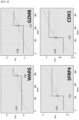
- a total of four marker genes for gastric cancer having heterogeneity are selected, wherein the marker genes are marker genes (WARS and GZMB) that can represent an immune module and marker genes (SFRP4 and CDX1) that can represent a stem-like module & an epithelial module, which are stably measured by ensuring statistical significance in microarray data and RT-qPCR data of fresh frozen tissue, and RT-qPCR data of a paraffin-embedded sample specimen.
- the marker genes are marker genes (WARS and GZMB) that can represent an immune module and marker genes (SFRP4 and CDX1) that can represent a stem-like module & an epithelial module, which are stably measured by ensuring statistical significance in microarray data and RT-qPCR data of fresh frozen tissue, and RT-qPCR data of a paraffin-embedded sample specimen.
- reference gene refers to a gene, which is always stably expressed. That is, as a gene regularly expressed in any tissue, the reference gene is used to examine an expression level of a marker gene in comparison with its expression level. That is, since there is a qualitative difference between samples and a variation depending on a storage organization, even if a gene expression level is measured, it is difficult to determine that the measured value is a biological variation. Therefore, a gene expression level ( ⁇ Cq) between samples is determined by normalization. As conventional normalization methods, a method using a quantile, a global normalization method, and a method using a reference gene may be used, but in the present invention, normalization using a reference gene is used.
- the method using a single gene as a reference gene may be decreased in precision, and thus various genes may be selected and a variation degree may be investigated so as to select a reference gene suitable for the characteristics of tissue.
- a gene that is disclosed in literature associated with gastric cancer or utilized in a conventional commercialized product is selected, and the selected gene is proved whether or not to be suitable as an object, and then is used as a reference gene.
- the 21 reference genes disclosed in the literature are compared to tissue of esophageal, pancreatic, gastric or colon cancer and normal tissue, and among them, a gene with the smallest variation is selected as a reference gene by qPCR.
- ACTB, ATP5E, HPRT1, PGK1, GPX1, RPL29, UBB and VDAC2 are selected and subjected to qPCR, and finally, as reference genes used to predict the probability of prognosis or chemotherapy response of the advanced gastric cancer of the present invention, a group of genes ACTB, ATP5E, GPX1, UBB and HPRT1 is used.
- mRNA expression level refers to measurement of an mRNA level by a process of confirming mRNA expression of prognosis or chemotherapy responsiveness-related marker genes or reference genes in a biological sample to predict the probability of prognosis or chemotherapy response of advanced gastric cancer.
- Methods for analyzing the mRNA expression include reverse transcription polymerase chain reaction (RT-PCR), competitive RT-PCR, real-time RT-PCR, RNase protection assay (RPA), Northern blotting, and a DNA chip.
- the agent for measuring mRNA expression levels of prognosis or chemotherapy responsiveness-related markers genes and the reference genes includes a primer, probe or antisense nucleotide specifically binding to mRNA of the prognosis or chemotherapy responsiveness-related marker genes and the reference genes. Since information on the prognosis or chemotherapy responsiveness-related marker genes and the reference genes is known to GenBank, UniProt, etc., based on this information, a primer, probe or antisense nucleotide specifically binding to mRNA of a gene can be easily designed by one of ordinary skill in the art.
- primer used herein is a fragment that recognizes a target gene sequence, and a primer pair that includes a pair of forward and reverse primers, specifically is a primer pair that provides an analysis result having specificity and sensitivity. Since the nucleic acid sequence of a primer is a sequence that is inconsistent with a non-target sequence present in a sample, when the primer is one that only amplifies a target gene sequence containing a complementary primer binding site and does not cause non-specific amplification, high specificity may be imparted.
- the agent for measuring an mRNA expression level of the prognosis or chemotherapy responsiveness-related marker gene group or the reference gene group includes a set of primers set forth in SEQ ID NOs: 1 to 18, or probes set forth in SEQ ID NOs: 19 to 27.
- SFRP4 may be detected using a set of primers set forth in SEQ ID NOs: 1 and 2 with reference to NM_003014.2 1298-1361
- GZMB may be detected using a set of primers set forth in SEQ ID NOs: 3 and 4 with reference to NM_004131.3 213-277
- WARS may be detected using a set of primers set forth in SEQ ID NOs: 5 and 6 with reference to NM_173701.1 408-480
- CDX1 may be detected using a set of primers set forth in SEQ ID NOs: 7 and 8 with reference to NM_001804.2 1319-1385
- ACTB may be detected using a set of primers set forth in SEQ ID NOs: 9 and 10 with reference to NM_001101 278-349
- ATP5E may be detected using a set of primers set forth in SEQ ID NOs: 11 and 12 with reference to NM_006886 117-189
- HPRT1 may be detected using a set of primers set
- probe refers to a material that can specifically bind to a target material to be detected in a sample to specifically identify the presence of a target material in a sample by the binding.
- the type of probe is one that is conventionally used in the art and may be a peptide nucleic acid (PNA), a locked nucleic acid (LNA), a peptide, a polypeptide, a protein, RNA or DNA.
- the probe is a biomaterial, which may be derived from an organism, similar thereto or manufactured in vitro, for example, an enzyme, a protein, an antibody, a microorganism, animal or plant cells or organs (organelles), neurons, DNA, and RNA
- DNA may include cDNA, genomic DNA, an oligonucleotide
- RNA includes genomic RNA, mRNA, and an oligonucleotide
- a protein may include an antibody, an antigen, an enzyme, and a peptide.
- the agent for measuring an mRNA expression level of the prognosis or chemotherapy responsiveness-related marker gene group or the reference gene group includes a set of primers set forth in SEQ ID NOs: 1 to 18, or probes set forth in SEQ ID NOs: 19 to 27.
- the probes may be fluorescentlabeled.
- antisense refers to an oligomer having a nucleotide base sequence and a backbone between subunits, the oligomer hybridized with a target sequence in RNA by forming Watson-Crick base pairs to typically allow formation of an RNA:oligomer heterodimer with mRNA in the target sequence.
- the oligomer may have exact sequence complementarity or approximate complementarity to a target sequence.
- prediction of prognosis or chemotherapy responsiveness includes determination of susceptibility of a subject to a specific disease or illness, prognosis of a subject with a specific disease or illness (e.g., identification of the condition of pre-metastatic or metastatic cancer, determination of the stage of cancer or responsiveness of cancer to treatment), or therametrics (e.g., monitoring of the condition of a subject to impart information on therapeutic efficacy).
- the object of the present invention is to predict prognosis and chemotherapy responsiveness in patients with gastric cancer after surgery in terms of survival rates such as an overall survival rate and a disease-free survivalrate.
- composition for use in predicting prognosis or chemotherapy responsiveness of stage II and III gastric cancer according to the present invention may further include a pharmaceutically acceptable carrier.
- the pharmaceutically acceptable carrier includes carriers and vehicles generally used in the pharmaceutical field, and specifically includes ion exchange resins, alumina, aluminum stearate, lecithin, serum proteins (e.g., human serum albumin), buffer materials (e.g., all types of phosphates, glycine, sorbic acid, potassium sorbate, and a partial glyceride mixture of saturated vegetable fatty acids), water, salts or electrolytes (e.g., protamine sulfate, disodium hydrogen phosphate, calcium hydrogen phosphate, sodium chloride and zinc salt), colloidal silica, magnesium trisilicate, polyvinyl pyrrolidone, a cellulose-based substrate, polyethylene glycol, sodium carboxymethyl cellulose, polyarylate, wax, polyethylene glycol or lanolin.
- composition for use of the present invention may further include a lubricant, a wetting agent, an emulsion, a suspending agent or a preservative as well as the above-mentioned components.
- kits for predicting prognosis or chemotherapy responsiveness of stage II and III gastric cancer comprising the composition for use in predicting prognosis or chemotherapy responsiveness of stage II and III gastric cancer. It is described herein for the use of the kit that the kit further comprises essential elements for performing a reverse transcription polymerase chain reaction (RT-PCR) or a DNA chip.
- RT-PCR reverse transcription polymerase chain reaction
- the kit may be an RT-PCR kit or a DNA chip kit.
- the kit for predicting prognosis or chemotherapy responsiveness of stage II and III gastric cancer may further include a composition, solution or device including one or more types of components, which is suitable for an analysis method.
- the diagnosis kit may further include essential elements to perform RT-PCR.
- An RT-PCR kit includes primer pair specific to genes encoding marker proteins.
- a primer is a nucleotide having a sequence specific to the nucleic acid sequence of a gene, and may have a length of approximately 7 to 50 bp, and specifically a length of approximately 10 to 30 bp.
- the RT-PCR kit may also include a primer specific to the nucleic acid sequence of a control gene.
- the RT-PCR kit may include a test tube or another suitable container, reaction buffer solutions (various pH and magnesium concentrations), deoxynucleotides (dNTPs), enzymes such as a Taq-polymerase and a reverse transcriptase, DNase and RNase inhibitors, DEPC-water, and sterilized water.
- reaction buffer solutions variable pH and magnesium concentrations
- dNTPs deoxynucleotides
- enzymes such as a Taq-polymerase and a reverse transcriptase
- DNase and RNase inhibitors DNase and RNase inhibitors
- DEPC-water DEPC-water
- sterilized water sterilized water.
- kits for predicting prognosis or chemotherapy responsiveness of stage II and III gastric cancer may include essential elements to perform a DNA chip method.
- a DNA chip kit may include a substrate to which cDNA or oligonucleotide, which corresponds to a gene or fragments thereof, is attached, and reagents, agents, and enzymes for preparing fluorescence-labeled probes.
- the substrate may include cDNA or an oligonucleotide, which corresponds to a control gene or fragments thereof.
- the present invention also provides a method for providing information for predicting chemotherapy responsiveness of stage II and III gastric cancer, the method comprising:
- the first step includes a step of measuring mRNA expression levels of a prognosis or chemotherapy responsiveness-related marker gene group and a reference gene group in a biological sample obtained from a tumor of stage II and III gastric cancer, and calculating a ⁇ Cq value of each prognosis or chemotherapy responsiveness-related marker gene.
- the mRNA expression levels of the prognosis or chemotherapy responsiveness-related marker gene group and the reference gene group may be measured by RT-PCR, competitive RT-PCR, real time RT-PCR, RNase protection analysis, Northern blotting or a DNA chip. More preferably, the mRNA expression level is measured by real time RT-PCR, or may be obtained as a cycle quantitation (Cq) value.
- Cq cycle quantitation
- a ⁇ Cq value is calculated according to the following Equation 1 using the Cq values of the prognosis or chemotherapy responsiveness-related marker gene group obtained above and the reference gene group.
- ⁇ Cq (Cq value of reference gene group) - (Cq value of prognosis or chemotherapy responsiveness-related marker gene),
- the Cq value of the reference gene group refers to an average Cq value of reference genes including ACTB, ATP5E, GPX1, UBB and HPRT1.
- the ⁇ Cq value refers to a value obtained by normalizing an expression level of a marker gene, and as the ⁇ Cq value is higher, the expression level is higher.
- the second step is a step of classifying prognostic groups of a biological sample in comparison with the final threshold values of predetermined reference prognosis or chemotherapy responsiveness-related marker genes.
- a final threshold value which becomes the standard of the prognosis or chemotherapy responsiveness-related marker genes, is predetermined.
- Cq values according to mRNA expression levels of the prognosis or chemotherapy responsiveness-related marker genes including WARS, GZMB, CDX1 and SFRP4 are obtained, a ⁇ Cq value is calculated according to Equation 1, and an adaptive regression value (A.R.V.) is calculated by applying the ⁇ Cq value to an adaptive regression technique.
- an adaptive regression value (A.R.V.) is calculated by applying the ⁇ Cq value to an adaptive regression technique.
- a point having the largest variance of separated average interval values obtained when an arbitrary point of the total data is determined as a reference point is determined as an adaptive regression value (or a threshold value). That is, the threshold value is a reference point that distinguishes high expression and low expression of a corresponding gene, which are biologically significant, in normal and cancer tissue.
- the adaptive regression value is calculated as follows.
- a p-value corresponding to the tail-probability of F-distribution is as follows.
- F 12 represents a relatively better fitting function between one step and two step.
- Correction values of the marker genes may be obtained based on clinical usefulness and safety. That is, the correction values are determined by obtaining an A.R.V. value, which is analytic performance, for a ⁇ Cq value, and selecting a combination constituting the optimal hazard ratio in terms of prognosis and a combination constituting interactions between chemotherapy and predictive clusters in terms of chemotherapy responsiveness by screening a combination of 0.4 to 0.5 for WARS and GZMB, 0.8 to 0.9 for SFRP4 and 0.8 to 0.9 for CDX1 based on ⁇ Cq for WARS, GZMB and SFRP4 constituting a prognosis axis and WARS, GZMB and CDX1 constituting a predictive axis.
- A.R.V. value which is analytic performance
- the adaptive regression values of WARS, GZMB, CDX1 and SFRP4 are - 2.54, -5.58, -3.59 and -4.53, respectively, and the correction values thereof may be +0.4, +0.4, +0.9 and +0.9, respectively.
- the marker genes that is, the final threshold values of WARS, GZMB, CDX1 and SFRP4, which are obtained by adding correction values to the adaptive regression values, are -2.14, -5.18, -2.69 and -3.63, respectively.
- classification into prognostic groups and chemotherapy-responder groups is performed by a binary signal-based two-tier system.
- group classification according to an algorithm for predicting the probability of prognosis or chemotherapy response of the advanced gastric cancer of the present invention is specifically illustrated in FIG.
- the group when the ⁇ Cq values of GZMB and WARS in a biological sample are higher than the final threshold values of predetermined reference GZMB and WARS, the group is classified as a good prognostic group (Prognostic Cluster I), and provided that at least one ⁇ Cq value of GZMB and WARS in the biological sample is lower than the final threshold value of predetermined reference GZMB or WARS, when the ⁇ Cq value of SFRP4 in the biological sample is lower than the final threshold value of predetermined reference SFRP4, a group may be classified as an intermediate prognostic group (Prognostic Cluster II), and when the ⁇ Cq value of SFRP4 in the biological sample is higher than the final threshold value of predetermined reference SFRP4, a group may be classified as a bad prognostic group (Prognostic Cluster III).
- a group is classified as a non-chemotherapy-responder group (Predictive Cluster R), and provided that at least one ⁇ Cq value of GZMB and WARS in the biological sample is lower than the final threshold value of predetermined reference GZMB or WARS, when the ⁇ Cq value of CDX1 in the biological sample is lower than the final threshold value of predetermined reference CDX1, a group is classified as a non-chemotherapy-responder group (Predictive Cluster R), and when the ⁇ Cq value of CDX1 in the biological sample is higher than the final threshold value of predetermined reference CDX1, a group may be classified as a chemotherapy-responder group (Predictive Cluster S).
- the biological sample may be fresh tumor tissue, fresh frozen tumor tissue, paraffin-embedded tumor tissue, a fine needle aspiration fluid, ascites, a tube washing solution, or a pleural fluid, and preferably, is paraffin-embedded tumor tissue.
- the measurement of mRNA expression levels of the prognosis or chemotherapy responsiveness-related marker gene group and the reference gene group may be performed by RT-PCR, competitive RT-PCR, real time RT-PCR, RNase protection analysis, Northern blotting or a DNA chip.
- the measurement is performed by real time RT-PCR.
- a 3-mm pore including a 50% or more of a tumor was made in paraffin embedded tissue of advanced gastric cancer, and RNA was extracted from the perforated tissue according to a protocol. At least 400 ng of total RNA was obtained.
- RNA sample 400 ng/18 ⁇ l of a patient was used, and a gene specific primer (GSP) mix (3 ⁇ l) was dispersed in a sample.
- GSP gene specific primer
- a temperature of a 2720 thermal cycler (Applied Biosystems) was increased to 50 °C, and then a sample was put into the cycler.
- the RNA sample was denatured at 65 °C for 5 minutes, and the thermal cycler was stopped.
- RT 6 ⁇ l of RT buffer and 2 ⁇ l of an RT mix were added, DNA synthesis was performed at 37 °C for 60 minutes, and the DNA was maintained at 70 °C for 15 minutes.
- a cDNA mix (3 ⁇ l) and each of nine primer-probe mixes (2 ⁇ l, Gene-1 to Gene-9 from the kit) were mixed.
- the sample was subjected to one cycle of enzyme activation at 95 °C for 120 seconds, 40 cycles of denaturation at 95 °C for 10 seconds and detection at 60 °C for 30 seconds.
- the extracted data was analyzed using an nDxI program (Novomics Co., Ltd.).
- nProfiler I The RT and qPCR processes were prepared by nProfiler I, and the nProfiler I is an mRNA-based qPCR kit consisting of 9 genes for gastric cancer. Reagents used herein are shown in Table 1.
- Table 1 qPCR composition of nProfiler I kit KIT Label Purpose KIT A GSP MIX RT-PCR RT buffer RT-PCR RT MIX RT-PCR qPCR MIC qPCR Negative Control I qPCR GENE-1 (SFRP4) Primer-Probe MIX qPCR GENE-2 (GZMB) Primer-Probe MIX qPCR GENE-3 (WARS) Primer-Probe MIX qPCR GENE-4 (CDX1) Primer-Probe MIX qPCR GENE-5 (ACTB) Primer-Probe MIX qPCR GENE-6 (ATP5E) Primer-Probe MIX qPCR GENE-7 (HPRT1) Primer-Probe MIX qPCR GENE-8 (GP
- the above-mentioned 9 genes are four marker genes having statistical significance in microarray data and RT-qPCR data of fresh frozen tissue, and RT-qPCR data of a paraffin-embedded sample specimen and five reference genes.
- An nProfiler I stomach cancer assay which is a diagnosis kit, which can classify prognosis according to expression levels of the finally-selected genes, was developed.
- a process of selecting reference genes is as follows.
- Reference genes specifically applied to gastric cancer were subjected to a literature investigation through the following papers: Identification of reference genes suitable for gene expression research in gastric cancer by RT-qPCR ( Identification of valid reference genes for gene expression studies of human stomach cancer by reverse transcription-qPCR. Rho et al. BMC Cancer 2010, 10:240 ); change in reference gene in colorectal, esophageal and gastric cancer tissues ( Housekeeping gene variability in normal and cancerous colorectal, pancreatic, esophageal, gastric and hepatic tissues.
- RT-qPCR Identification of valid reference genes for gene expression studies of human stomach cancer by reverse transcription-qPCR. Rho et al. BMC Cancer 2010, 10:240 ); change in reference gene in colorectal, esophageal and gastric cancer tissues ( Housekeeping gene variability in normal and cancerous colorectal, pancreatic, esophageal, gastric and hepatic tissues.
- Claudia Rubie et al. Mol Cell Probes Alfa Rubie et al
- breast cancer reference genes A Multigene Assay to Predict Recurrence of Tamoxifen-Treated, Node-Negative Breast Cancer. Paik S et al. N Engl J Med. 2004 Dec ); colorectal cancer reference genes ( Interaction Between Tumor Gene Expression and Recurrence in Four Independent Studies of Patients With Stage II/III Colon Cancer Treated With Surgery Alone or Surgery Plus Adjuvant Fluorouracil Plus Leucovorin. O'Connell et al. J Clin Oncol. 2010 ).
- reference genes which are used in currently commercialized solid cancer-related products, were examined. A gene selected based on these genes was verified using preceding research whether the gene is suitable as a reference gene of a clinical sample, and finally selected.
- Marker genes are genes which can distinguish the heterogeneity of gastric cancer and can be stably detected in cancer tissue, and there are four marker genes, such as marker genes (WARS, GZMB), which can represent an immune axis, a marker gene (SFRP4), which can represent a stem-like axis, and a marker gene (CDX1), which can represent an epithelial axis.
- WARS marker genes
- GZMB marker gene
- SFRP4 marker gene
- CDX1 marker gene which can represent an epithelial axis.
- threshold values per gene in the prognosis or chemotherapy responsiveness-related marker gene groups and reference gene groups were determined so as to establish a standard for classifying prognosis-associated groups (Prognostic Cluster I: good prognostic group, Prognostic Cluster II: intermediate prognostic group and Prognostic Cluster III: bad prognostic group) and chemotherapy responsiveness-associated groups (Predictive Cluster S: chemotherapy-responder group and Predictive Cluster R: non-chemotherapy-responder group).
- prognostic Clusters prognostic Clusters
- chemotherapy-responder groups Predictive Clusters
- ⁇ Cq Cq value of reference gene group ⁇ Cq value of marker gene
- the Cq value of the reference gene group refers to an average Cq value of reference genes including ACTB, ATP5E, GPX1, UBB and HPRT1.
- An adaptive regression value was calculated by applying the ⁇ Cq value to an adaptive regression technique.
- a point having the largest variance of separated average interval values obtained when an arbitrary point of the total data was determined as a reference point was determined as an adaptive regression value (or a threshold value). That is, the threshold value was a reference point that distinguishes high expression and low expression of a corresponding gene, which are biologically significant, in normal and cancer tissue.
- the adaptive regression value was calculated as follows.
- a p-value corresponding to the tail-probability of F-distribution is as follows.
- F 12 represents a relatively better fitting function between one step and two step.
- the binary signal-based two-tier system was classified using four marker genes as follows.
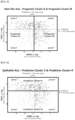
- prognostic Cluster I the region enclosed by a bold line in FIG. 3
- Predictive Cluster R the region enclosed by a bold line in FIG. 4
- the other gastric cancer patient groups which were not classified in the first tier step were classified in the second tier step, and here, the other two marker genes CDX1 and SFRP4 were used for classification.
- a marker gene representing a stem-like axis
- SFRP4 marker gene representing a stem-like axis
- a low expression group was classified as an intermediate prognostic group (Prognostic Cluster II, the left region enclosed by a bold line in FIG. 5 )
- a high expression group was named a bad prognostic group (Prognostic Cluster III, the right region enclosed by a bold line in FIG. 5 ).
- a high expression group was classified as a chemotherapy-responder group (Predictive Cluster S, the upper region enclosed by a bold line in FIG. 6 ), and a low expression group as well as the groups classified in the first tier step (the region enclosed in a bold line in FIG. 4 ) were classified as a non-chemotherapy-responder group (Predictive Cluster R, the lower region enclosed by a bold line in FIG. 6 ).
- Such a classification algorithm is illustrated in FIG. 7 .
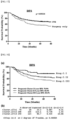
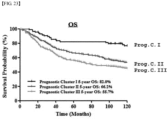
- Prognostic Clusters the classification of the prognostic groups (Prognostic Clusters) was not only effective in classification of prognosis of the COX univariate/multivariate analysis performed on the prognostic groups of the present invention, but also each prognostic group served as an independent prognosis predictive factor. Particularly, there was a prognostic difference between Prognostic Cluster I and Prognostic Cluster III, and Prognostic Cluster II was determined as a buffer zone.
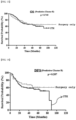
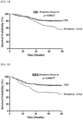
- the prognosis result was verified in terms of a disease-free survival rate. As shown in the Kaplan-Meir curve of FIG. 9 , it can be seen that there was a difference in the disease-free survival rate between the three groups (Prognostic Cluster I, Prognostic Cluster II, Prognostic Cluster III), similar to the result of the overall survival rate.
- the 5-year disease-free survival rates of the three groups were 75.8 %, 66.9 % and 48.2%, respectively, indicating that Prognostic Cluster I had the best prognosis among the three groups, and Prognostic Cluster III had the worst prognosis.
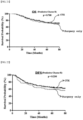
- the disease-free survival rate was additionally verified in Example 4 (refer to Table 7 and FIG. 12 ).
- Example 3 Verification of interaction between classification of chemotherapy-responder groups (Predictive Cluster S & R) and chemotherapy
- a CLASSIC (capecitabine and oxaliplatin adjuvant study in stomach cancer) clinical trial is a random Phase 3 international clinical trial performed for each of 37 hospitals in Korea, Japan and China to verify Xeloda + oxaliplatin (XELOX) chemotherapy after surgery (D2 dissection) for stage II and III patients based on AJCC 6th ed.
- XELOX Xeloda + oxaliplatin
- XELOX Xeloda + oxaliplatin
- XELOX Xeloda and oxaliplatin
- T1T2 1.78 (1.32-2.40) 0.0001 2.01 (1.47-2.74) 1.25e-05 N status N1N2 vs. N0 1.16 (0.66-2.05) 0.60 1.75 (0.97-3.15) 0.06 Prognostic Cluster II vs. I 1.60 (0.91-2.83) 0.105 1.92 (1.08-3.41) 0.03 III vs. I 2.16 (1.22-3.80) 0.0078 2.36 (1.33-4.18) 0.003 Chemotherapy Yes vs. No 0.69 (0.51-0.93) 0.014 0.66 (0.49-0.89) 0.0067
- Example 1 medical device for nProfiler I stomach cancer assay
- a ⁇ Cq value of a gene was measured through real time PCR performed on rest FFPE specimens after surgery for patients with stage II and III (based on AJCC 6 th ed.) gastric cancer, and clinical performance of the algorithm that predicts patient prognosis was tested with a new subject group.
- the prediction performance of the algorithm was evaluated by identifying 5-year survival rates of the two prognostic groups (Prognostic Cluster I, Prognostic Cluster III) deduced from the verification set from Kaplan-Meier curves; 2) the stability of the prognostic difference between groups was evaluated through a comparative test for a prognostic difference between prognostic groups with statistical significance using a log rank test so as to identify that, among the three groups, Prognostic Cluster I is the best prognostic group, and Prognostic Cluster III is the worst prognostic group; and 3) a hazard ratio in a prognostic group was analyzed using a multivariate Cox proportional hazard model so as to identify that the prognostic group is an independent prognostic factor.
- a total of 684 specimens were used, and in a specimen screening step, 18 specimens were rejected due to insufficient quantity and quality of RNA. Except the screening-rejected 18 specimens, 666 specimens were accepted as specimens for the clinical trial.
- 666 specimens were accepted as specimens for the clinical trial.
- 126 specimens out of the total of 666 specimens corresponded to QC failure criteria such that a single time of retesting was performed, resulting in the elimination of 12 specimens among the total of 126 specimens due to the QC failure criteria.
- 654 specimens among the 684 target specimens were selected as an effectiveness evaluation analysis group.
- prognostic groups I, II and III were subjected to a log rank test to identify a statistically significant difference, and for statistical calculation, a p value was calculated by calculating a chi square with 2 degrees of freedom. If there was no difference in the effect of comparing prognostic groups, the occurrence of an event (death) in all sections has to happen in a frequency proportional to the number of subjects to be observed (O) in the three prognostic groups in each section. In the log rank test, the entire cluster that summarizes the three prognostic groups was arranged in order of observation time, and from this, the censored entry was eliminated to leave only a section in which the event (death) occurred.
- the expected frequency (E) of death for each prognostic group was calculated. Since the interaction between the total observation frequency (O) and expected frequency (E) with respect to death for each prognostic group showed a chi-squared distribution with two degrees of freedom, if the value (X 2 ) was larger than 5.99 ( p value ⁇ 0.05), it was considered that the three prognostic groups show a significant difference.
- the null hypothesis in the log rank test was as follows: H 0 : no difference between Prognostic Cluster I, II and III
- E 1 j Oj ⁇ N 1 j Nj ( E 1j : Expected mortality of j th variable in Group 1; O j: Observed mortality of j lh variables in all groups; N 1j : Number of observation subjects of j lh variable in Group 1; N j : Number of observation subjects of j th variables in all groups)
- Prognostic Cluster which is an evaluation variable for the clinical trial
- the prognosis prediction algorithm for a gastric cancer patient which was obtained from Example 1, and clinical performance of a medical device for an nProfiler I stomach cancer assay were considered to be successfully evaluated.
Landscapes
- Chemical & Material Sciences (AREA)
- Life Sciences & Earth Sciences (AREA)
- Health & Medical Sciences (AREA)
- Organic Chemistry (AREA)
- Proteomics, Peptides & Aminoacids (AREA)
- Engineering & Computer Science (AREA)
- Zoology (AREA)
- Wood Science & Technology (AREA)
- Analytical Chemistry (AREA)
- Immunology (AREA)
- Genetics & Genomics (AREA)
- Pathology (AREA)
- General Engineering & Computer Science (AREA)
- General Health & Medical Sciences (AREA)
- Microbiology (AREA)
- Molecular Biology (AREA)
- Biotechnology (AREA)
- Biophysics (AREA)
- Physics & Mathematics (AREA)
- Biochemistry (AREA)
- Bioinformatics & Cheminformatics (AREA)
- Oncology (AREA)
- Hospice & Palliative Care (AREA)
- Chemical Kinetics & Catalysis (AREA)
- Measuring Or Testing Involving Enzymes Or Micro-Organisms (AREA)
- Investigating Or Analysing Biological Materials (AREA)
- Medicines That Contain Protein Lipid Enzymes And Other Medicines (AREA)
Claims (10)
- Composition utilisée pour prédire le pronostic ou la réactivité à la chimiothérapie du cancer gastrique de stade II et III, la composition comprenant:un agent permettant de mesurer le niveau d'expression de l'ARNm dans un groupe de gènes marqueurs liés au pronostic ou à la réactivité à la chimiothérapie, notamment WARS, GZMB, CDX1 et SFRP4; etun agent permettant de mesurer le niveau d'expression de l'ARNm dans un groupe de gènes de référence comprenant ACTB, ATP5E, GPX1, UBB et HPRT1,dans lequel l'agent permettant de mesurer le niveau d'expression de l'ARNm du groupe de gènes marqueurs liés au pronostic ou à la réactivité à la chimiothérapie ou du groupe de gènes de référence est un ensemble d'amorces décrites dans les numéros SEQ ID NO: 1 à 18; ou des sondes décrites dans les numéros SEQ ID NO: 19 à 27,dans lequel le niveau d'expression de l'ARNm d'un groupe de gènes marqueurs liés au pronostic comprenant WARS, GZMB et SFRP4 est utilisé pour prédire le pronostic d'un cancer gastrique de stade II et III, etle niveau d'expression de l'ARNm d'un groupe de gènes marqueurs liés à la réactivité à la chimiothérapie, composé de WARS, GZMB et CDX1, est utilisé pour prédire la réactivité à la chimiothérapie du cancer gastrique de stade II et III.
- Composition selon la revendication 1, utilisée pour prédire la probabilité d'un pronostic ou d'une réponse à la chimiothérapie chez les patients atteints d'un cancer gastrique de stade II et III en termes de taux de survie globale ou de taux de survie sans maladie.
- Utilisation d'un kit pour prédire le pronostic ou la réponse à la chimiothérapie d'un cancer gastrique de stade II et III, comprenant la composition de la revendication 1.
- Utilisation du kit selon la revendication 3, dans lequel le kit comprend en outre des éléments essentiels pour effectuer une réaction en chaîne de la polymérase par transcription inverse (RT-PCR) ou une méthode de puce à ADN.
- Méthode pour fournir des informations permettant de prédire le pronostic d'un cancer gastrique de stade II et III, la méthode comprenant:mesurer les niveaux d'expression de l'ARNm d'un groupe de gènes marqueurs de pronostic comprenant WARS, GZMB et SFRP4, et d'un groupe de gènes de référence comprenant ACTB, ATP5E, GPX1, UBB et HPRT1 à partir d'un échantillon biologique obtenu à partir d'une tumeur d'un cancer gastrique de stade II et III, et calculer les valeurs ΔCq des gènes marqueurs de pronostic conformément à l'équation 1 ci-dessous; etpar comparaison avec les valeurs seuils finales des gènes marqueurs de pronostic de référence prédéterminés,classer un groupe comme groupe de bon pronostic (groupe de pronostic I) lorsque les valeurs ΔCq de GZMB et WARS dans l'échantillon biologique sont supérieures aux valeurs seuils finales de GZMB et WARS de référence prédéterminés, età condition que, lorsqu'au moins une valeur ΔCq de GZMB et de WARS dans l'échantillon biologique est inférieure à la valeur seuil finale de GZMB ou de WARS de référence prédéterminée, classer un groupe comme groupe de pronostic intermédiaire (groupe de pronostic II) lorsque la valeur ΔCq de SFRP4 dans l'échantillon biologique est inférieure à la valeur seuil finale de SFRP4 de référence prédéterminée, et un groupe de mauvais pronostic (groupe de pronostic III) lorsque la valeur ΔCq de SFRP4 est supérieure à la valeur seuil finale de SFRP4 de référence prédéterminée,les valeurs seuils finales des gènes marqueurs de pronostic de référence prédéterminés sont respectivement de -2,14, -5,18 et -3,63 par rapport à WARS, GZMB et SFRP4, etla valeur seuil finale est calculée en obtenant les valeurs ΔCq des gènes marqueurs de pronostic, y compris WARS, GZMB et SFRP4, à partir d'échantillons de tissus tumoraux de cancer gastrique de stade II et III, en calculant une valeur de régression adaptative par gène à l'aide des valeurs ΔCq, et en ajoutant une valeur de correction par gène à la valeur de régression adaptative, les valeurs de régression adaptative de WARS, GZMB et SFRP4 étant de -2. 54, -5,58 et -4,53, respectivement, et leurs valeurs de correction sont de +0,4, +0,4 et +0,9, respectivement,
ΔCq = (valeur Cq du groupe de gènes de référence) - (valeur Cq du gène marqueur de pronostic), où la valeur Cq du groupe de gènes de référence se réfère à une valeur Cq moyenne de gènes de référence comprenant ACTB, ATP5E, GPX1, UBB et HPRT1. - Méthode selon la revendication 5, dans laquelle l'échantillon biologique est choisi dans le groupe constitué de tissu tumoral frais, de tissu tumoral frais congelé, de tissu tumoral inclus en paraffine, d'un liquide d'aspiration à l'aiguille fine, d'ascites, d'une solution de lavage de tube ou d'un liquide pleural.
- Méthode selon la revendication 5, dans laquelle la mesure des niveaux d'expression de l'ARNm du groupe de gènes marqueurs de pronostic et du groupe de gènes de référence est effectuée par RT-PCR, RT-PCR compétitive, RT-PCR en temps réel, analyse de protection par la RNase, Northern blotting ou une puce à ADN.
- Méthode permettant de fournir des informations pour prédire la réactivité à la chimiothérapie d'un cancer gastrique de stade II et III, la méthode comprenant:mesurer les niveaux d'expression de l'ARNm d'un groupe de gènes marqueurs liés à la réactivité à la chimiothérapie, notamment WARS, GZMB et CDX1, et d'un groupe de gènes de référence, notamment ACTB, ATP5E, GPX1, UBB et HPRT1, dans un échantillon biologique obtenu à partir d'une tumeur d'un cancer gastrique de stade II et III, et calculer les valeurs ΔCq des gènes marqueurs liés à la réactivité à la chimiothérapie, conformément à l'équation 1 ci-dessous; etpar comparaison avec les valeurs seuils finales des gènes marqueurs de référence prédéterminés liés à la réactivité à la chimiothérapie,classification d'un groupe en tant que groupe ne répondant pas à la chimiothérapie (groupe prédictif R) lorsque les valeurs ΔCq de GZMB et de WARS dans l'échantillon biologique sont supérieures aux valeurs seuils finales de GZMB et de WARS de référence prédéterminés, età condition qu'au moins une valeur ΔCq de GZMB et de WARS dans l'échantillon biologique soit inférieure à la valeur seuil finale de GZMB ou de WARS de référence prédéterminée, classification d'un groupe en tant que groupe ne répondant pas à la chimiothérapie (groupe prédictif R) lorsque la valeur ΔCq de CDX1 dans l'échantillon biologique est inférieure à la valeur seuil finale de CDX1 de référence prédéterminée, et un groupe de répondeurs à la chimiothérapie (groupe prédictif S) lorsque la valeur ΔCq de CDX1 dans l'échantillon biologique est supérieure à la valeur seuil finale de CDX1 de référence prédéterminée,dans lequel les valeurs seuils finales des gènes marqueurs de référence prédéterminés liés à la réactivité à la chimiothérapie sont de -2,14, -5,18 et -2,69 par rapport à WARS, GZMB et CDX1, respectivement, etla valeur seuil finale est calculée en obtenant les valeurs ΔCq des gènes marqueurs liés à la réactivité à la chimiothérapie, y compris WARS, GZMB et CDX1, à partir d'échantillons de tissus tumoraux de cancer gastrique de stade II et III, en calculant une valeur de régression adaptative par gène à l'aide des valeurs ΔCq et en ajoutant une valeur de correction par gène à la valeur de régression adaptative, les valeurs de régression adaptative de WARS, GZMB et CDX1 étant respectivement de -2,54, -5,58 et -3,59, respectivement, et leurs valeurs de correction sont de +0,4, +0,4 et +0,9, respectivement,
ΔCq = (valeur Cq du groupe de gènes de référence) - (valeur Cq du gène marqueur lié à la réactivité à la chimiothérapie), dans laquelle la valeur Cq du groupe de gènes de référence se réfère à une valeur Cq moyenne de gènes de référence comprenant ACTB, ATP5E, GPX1, UBB et HPRT1. - Méthode selon la revendication 8, dans laquelle l'échantillon biologique est choisi dans le groupe constitué de tissu tumoral frais, de tissu tumoral frais congelé, de tissu tumoral inclus en paraffine, de liquide d'aspiration à l'aiguille fine, d'ascite, de solution de lavage de tube ou de liquide pleural.
- Méthode selon la revendication 8, dans laquelle la mesure des niveaux d'expression de l'ARNm du groupe de gènes marqueurs liés à la réactivité à la chimiothérapie et du groupe de gènes de référence est effectuée par RT-PCR, RT-PCR compétitive, RT-PCR en temps réel, analyse de protection par la RNase, Northern blotting ou une puce à ADN.
Applications Claiming Priority (2)
| Application Number | Priority Date | Filing Date | Title |
|---|---|---|---|
| KR20170032027 | 2017-03-14 | ||
| PCT/KR2017/008781 WO2018169145A1 (fr) | 2017-03-14 | 2017-08-11 | Système de prédiction de pronostic post-chirurgie ou de compatibilité vis-à-vis de médicaments anticancéreux de patients atteints d'un cancer gastrique avancé |
Publications (4)
| Publication Number | Publication Date |
|---|---|
| EP3517624A1 EP3517624A1 (fr) | 2019-07-31 |
| EP3517624A4 EP3517624A4 (fr) | 2020-04-29 |
| EP3517624C0 EP3517624C0 (fr) | 2024-10-02 |
| EP3517624B1 true EP3517624B1 (fr) | 2024-10-02 |
Family
ID=63523198
Family Applications (1)
| Application Number | Title | Priority Date | Filing Date |
|---|---|---|---|
| EP17901292.7A Active EP3517624B1 (fr) | 2017-03-14 | 2017-08-11 | Système de prédiction de pronostic post-chirurgie ou de compatibilité vis-à-vis de médicaments anticancéreux de patients atteints d'un cancer gastrique avancé |
Country Status (17)
| Country | Link |
|---|---|
| US (1) | US11732304B2 (fr) |
| EP (1) | EP3517624B1 (fr) |
| JP (1) | JP6864089B2 (fr) |
| KR (2) | KR101966642B1 (fr) |
| CN (1) | CN110168106B (fr) |
| AU (1) | AU2017403899B2 (fr) |
| BR (1) | BR112019019022A2 (fr) |
| CA (1) | CA3055735C (fr) |
| CL (1) | CL2019002633A1 (fr) |
| CO (1) | CO2019011359A2 (fr) |
| IL (1) | IL269256A (fr) |
| MX (1) | MX2019011017A (fr) |
| NZ (1) | NZ756580A (fr) |
| PE (1) | PE20191482A1 (fr) |
| RU (1) | RU2737449C1 (fr) |
| UA (1) | UA125590C2 (fr) |
| WO (1) | WO2018169145A1 (fr) |
Families Citing this family (10)
| Publication number | Priority date | Publication date | Assignee | Title |
|---|---|---|---|---|
| EP3517624B1 (fr) | 2017-03-14 | 2024-10-02 | Novomics Co., Ltd. | Système de prédiction de pronostic post-chirurgie ou de compatibilité vis-à-vis de médicaments anticancéreux de patients atteints d'un cancer gastrique avancé |
| KR101940657B1 (ko) * | 2017-04-24 | 2019-01-21 | (주) 노보믹스 | 위암의 생물학적 특성에 기반한 군 구분 및 예후 예측 시스템 |
| WO2020226333A1 (fr) * | 2019-05-03 | 2020-11-12 | 주식회사 디시젠 | Méthode de prédiction et de pronostic du cancer et composition à cet effet |
| KR102324294B1 (ko) * | 2019-11-19 | 2021-11-11 | 서울대학교산학협력단 | 상피성 난소암 예후 예측 방법 및 장치 |
| KR102811608B1 (ko) | 2020-11-20 | 2025-05-21 | 주식회사 레피다인 | 간암의 예후 예측을 위한 정보 제공 방법 |
| KR102462097B1 (ko) * | 2020-12-30 | 2022-11-02 | 국립암센터 | 삼중사중극자 다중반응 모니터링 기반 암 표적치료제 효능 예측 |
| CN113462773A (zh) * | 2021-05-19 | 2021-10-01 | 山东大学 | 一种预测胃癌患者生存风险、免疫治疗响应和细胞焦亡诱导剂适用性的标志物及其应用 |
| CN114720687A (zh) * | 2022-06-01 | 2022-07-08 | 浙江省肿瘤医院 | Sfrp4作为胃癌预后标志物的应用 |
| KR102865138B1 (ko) * | 2022-06-14 | 2025-09-29 | 연세대학교 산학협력단 | 높은 sfrp4의 발현을 보이는 암의 치료방법 |
| WO2025127193A1 (fr) * | 2023-12-13 | 2025-06-19 | 연세대학교 산학협력단 | Procédé de traitement du cancer présentant une expression élevée de sfrp4 |
Family Cites Families (11)
| Publication number | Priority date | Publication date | Assignee | Title |
|---|---|---|---|---|
| CA2404431C (fr) * | 2000-03-27 | 2011-06-07 | Thomas Jefferson University | Guanylyl cyclase c servant a deceler les cancers de l'estomac et de l'oesophage |
| JPWO2005007846A1 (ja) | 2003-04-25 | 2006-08-31 | 財団法人癌研究会 | 腫瘍細胞の抗癌剤に対する感受性を判定する方法 |
| KR20080006315A (ko) * | 2006-07-12 | 2008-01-16 | 삼성전자주식회사 | 전기 영동 장치 및 그의 제조 방법 |
| WO2008078969A1 (fr) | 2006-12-27 | 2008-07-03 | Snu R&Db Foundation | Traitement de données, et méthode d'analyse de données d'expression de gènes pour identifier les gènes de référence endogènes |
| NZ562237A (en) | 2007-10-05 | 2011-02-25 | Pacific Edge Biotechnology Ltd | Proliferation signature and prognosis for gastrointestinal cancer |
| PL2653546T3 (pl) | 2010-12-13 | 2019-06-28 | Samsung Life Public Welfare Foundation | Marker do ustalenia rokowania raka żołądka i sposób ustalenia rokowania raka żołądka |
| KR101416147B1 (ko) * | 2012-07-18 | 2014-07-09 | 국립암센터 | 위암 진단 및 치료를 위한 adcy3의 용도 |
| KR101504817B1 (ko) | 2013-04-05 | 2015-03-24 | 연세대학교 산학협력단 | 국소 진행형 위암에 대한 예후 예측 시스템 |
| WO2015172201A1 (fr) * | 2014-05-16 | 2015-11-19 | Peter Maccallum Cancer Institute | Biomarqueur du cancer gastrique |
| WO2016073380A1 (fr) * | 2014-11-03 | 2016-05-12 | Genentech, Inc. | Procédé et biomarqueurs permettant de prédire l'efficacité et d'évaluer un traitement par l'agoniste ox40 |
| EP3517624B1 (fr) | 2017-03-14 | 2024-10-02 | Novomics Co., Ltd. | Système de prédiction de pronostic post-chirurgie ou de compatibilité vis-à-vis de médicaments anticancéreux de patients atteints d'un cancer gastrique avancé |
-
2017
- 2017-08-11 EP EP17901292.7A patent/EP3517624B1/fr active Active
- 2017-08-11 JP JP2019521424A patent/JP6864089B2/ja active Active
- 2017-08-11 KR KR1020170102285A patent/KR101966642B1/ko active Active
- 2017-08-11 UA UAA201909694A patent/UA125590C2/uk unknown
- 2017-08-11 BR BR112019019022A patent/BR112019019022A2/pt not_active Application Discontinuation
- 2017-08-11 PE PE2019001866A patent/PE20191482A1/es unknown
- 2017-08-11 US US16/345,710 patent/US11732304B2/en active Active
- 2017-08-11 AU AU2017403899A patent/AU2017403899B2/en not_active Ceased
- 2017-08-11 MX MX2019011017A patent/MX2019011017A/es unknown
- 2017-08-11 NZ NZ756580A patent/NZ756580A/en not_active IP Right Cessation
- 2017-08-11 CA CA3055735A patent/CA3055735C/fr active Active
- 2017-08-11 RU RU2019126375A patent/RU2737449C1/ru active
- 2017-08-11 CN CN201780069923.4A patent/CN110168106B/zh active Active
- 2017-08-11 WO PCT/KR2017/008781 patent/WO2018169145A1/fr not_active Ceased
-
2019
- 2019-02-19 KR KR1020190019399A patent/KR102069043B1/ko active Active
- 2019-09-10 IL IL26925619A patent/IL269256A/en unknown
- 2019-09-13 CL CL2019002633A patent/CL2019002633A1/es unknown
- 2019-10-15 CO CO2019011359A patent/CO2019011359A2/es unknown
Also Published As
| Publication number | Publication date |
|---|---|
| EP3517624C0 (fr) | 2024-10-02 |
| KR102069043B1 (ko) | 2020-01-22 |
| CN110168106A (zh) | 2019-08-23 |
| NZ756580A (en) | 2022-01-28 |
| CA3055735A1 (fr) | 2018-09-20 |
| KR20190024923A (ko) | 2019-03-08 |
| US11732304B2 (en) | 2023-08-22 |
| JP2019537436A (ja) | 2019-12-26 |
| KR20180105036A (ko) | 2018-09-27 |
| EP3517624A4 (fr) | 2020-04-29 |
| CO2019011359A2 (es) | 2019-10-31 |
| CN110168106B (zh) | 2024-02-20 |
| CL2019002633A1 (es) | 2020-04-03 |
| RU2737449C1 (ru) | 2020-11-30 |
| AU2017403899A1 (en) | 2019-09-19 |
| AU2017403899B2 (en) | 2021-12-09 |
| JP6864089B2 (ja) | 2021-04-21 |
| BR112019019022A2 (pt) | 2020-04-22 |
| IL269256A (en) | 2019-11-28 |
| KR101966642B1 (ko) | 2019-04-09 |
| UA125590C2 (uk) | 2022-04-27 |
| US20190284637A1 (en) | 2019-09-19 |
| WO2018169145A1 (fr) | 2018-09-20 |
| MX2019011017A (es) | 2020-01-20 |
| CA3055735C (fr) | 2021-12-14 |
| EP3517624A1 (fr) | 2019-07-31 |
| PE20191482A1 (es) | 2019-10-18 |
Similar Documents
| Publication | Publication Date | Title |
|---|---|---|
| EP3517624B1 (fr) | Système de prédiction de pronostic post-chirurgie ou de compatibilité vis-à-vis de médicaments anticancéreux de patients atteints d'un cancer gastrique avancé | |
| EP2715348B1 (fr) | Test de diagnostic moléculaire pour un cancer | |
| US20250376730A1 (en) | Dna methylation and genotype specific biomarker for predicting post-traumatic stress disorder | |
| WO2018001295A1 (fr) | Marqueur moléculaire, gène de référence, son application et son kit de test, et procédé de construction du modèle de test | |
| WO2012015765A2 (fr) | Procédé d'utilisation de l'expression génique pour déterminer le pronostic du cancer de la prostate | |
| CN109837340B (zh) | 用于肺癌无创诊断的外周血基因标记物 | |
| AU2013277971A1 (en) | Molecular malignancy in melanocytic lesions | |
| US20180142303A1 (en) | Methods and compositions for diagnosing or detecting lung cancers | |
| WO2014165753A1 (fr) | Méthodes et compositions de diagnostic d'un glioblastome ou d'un sous-type de glioblastome | |
| EP3019630B1 (fr) | Biomarqueurs de type méthylation de l'adn et génotype spécifiques des tentatives de suicide et/ou des idées suicidaires | |
| EP3464640B1 (fr) | Méthodes de pronostic de tumeur à mastocytes et leurs utilisations | |
| EP2657348B1 (fr) | Profils d'ARNmi de diagnostic de la sclérose en plaques | |
| WO2017120285A1 (fr) | Procédés d'utilisation de micro-arn provenant de liquides organiques pour le diagnostic et la surveillance de troubles neurodéveloppementaux | |
| US20240068044A1 (en) | Marker composition for predicting prognosis of cancer, method for prognosis of cancer and method for providing information for determining strategy of cancer treatment | |
| US20130274127A1 (en) | Gene expression markers for prediction of response to phosphoinositide 3-kinase inhibitors | |
| CN114032308A (zh) | Fam83a、kpna2、krt6a和ldha联合作为肺腺癌生物标志物的用途 | |
| US8071307B2 (en) | Method of detecting relative risk for the onset of atopic dermatitis by gene single nucleotide polymorphism analysis | |
| WO2007137366A1 (fr) | Indicateurs de diagnostic et de pronostic du cancer | |
| HK40013495A (en) | System for predicting post-surgery prognosis or anticancer drug compatibility of advanced gastric cancer patients | |
| HK40013495B (zh) | 预测进展期胃癌患者的术後预後或抗癌药物适合性的系统 | |
| Dongre et al. | Detection of 3243 A/G and 3316 G/A mitochondrial DNA mutations in Nagpur population | |
| EP3818180B1 (fr) | Utilisation prédictive et pronostique d'un arnmi pour les soins thérapeutiques d'un carcinome ovarien séreux de grade élevé | |
| CA3025776C (fr) | Methodes de pronostic de tumeur a mastocytes et leurs utilisations | |
| WO2019122415A1 (fr) | Signature génique pour le pronostic du cancer de la prostate de gleason 7 |
Legal Events
| Date | Code | Title | Description |
|---|---|---|---|
| STAA | Information on the status of an ep patent application or granted ep patent |
Free format text: STATUS: THE INTERNATIONAL PUBLICATION HAS BEEN MADE |
|
| PUAI | Public reference made under article 153(3) epc to a published international application that has entered the european phase |
Free format text: ORIGINAL CODE: 0009012 |
|
| STAA | Information on the status of an ep patent application or granted ep patent |
Free format text: STATUS: REQUEST FOR EXAMINATION WAS MADE |
|
| 17P | Request for examination filed |
Effective date: 20190424 |
|
| AK | Designated contracting states |
Kind code of ref document: A1 Designated state(s): AL AT BE BG CH CY CZ DE DK EE ES FI FR GB GR HR HU IE IS IT LI LT LU LV MC MK MT NL NO PL PT RO RS SE SI SK SM TR |
|
| AX | Request for extension of the european patent |
Extension state: BA ME |
|
| A4 | Supplementary search report drawn up and despatched |
Effective date: 20200327 |
|
| RIC1 | Information provided on ipc code assigned before grant |
Ipc: C12Q 1/68 20180101AFI20200324BHEP Ipc: C12Q 1/6886 20180101ALI20200324BHEP |
|
| DAV | Request for validation of the european patent (deleted) | ||
| DAX | Request for extension of the european patent (deleted) | ||
| STAA | Information on the status of an ep patent application or granted ep patent |
Free format text: STATUS: EXAMINATION IS IN PROGRESS |
|
| 17Q | First examination report despatched |
Effective date: 20201123 |
|
| GRAP | Despatch of communication of intention to grant a patent |
Free format text: ORIGINAL CODE: EPIDOSNIGR1 |
|
| STAA | Information on the status of an ep patent application or granted ep patent |
Free format text: STATUS: GRANT OF PATENT IS INTENDED |
|
| INTG | Intention to grant announced |
Effective date: 20240409 |
|
| GRAS | Grant fee paid |
Free format text: ORIGINAL CODE: EPIDOSNIGR3 |
|
| GRAA | (expected) grant |
Free format text: ORIGINAL CODE: 0009210 |
|
| STAA | Information on the status of an ep patent application or granted ep patent |
Free format text: STATUS: THE PATENT HAS BEEN GRANTED |
|
| AK | Designated contracting states |
Kind code of ref document: B1 Designated state(s): AL AT BE BG CH CY CZ DE DK EE ES FI FR GB GR HR HU IE IS IT LI LT LU LV MC MK MT NL NO PL PT RO RS SE SI SK SM TR |
|
| REG | Reference to a national code |
Ref country code: GB Ref legal event code: FG4D |
|
| REG | Reference to a national code |
Ref country code: CH Ref legal event code: EP |
|
| REG | Reference to a national code |
Ref country code: DE Ref legal event code: R096 Ref document number: 602017085275 Country of ref document: DE |
|
| REG | Reference to a national code |
Ref country code: IE Ref legal event code: FG4D |
|
| U01 | Request for unitary effect filed |
Effective date: 20241008 |
|
| U07 | Unitary effect registered |
Designated state(s): AT BE BG DE DK EE FI FR IT LT LU LV MT NL PT RO SE SI Effective date: 20241028 |
|
| PG25 | Lapsed in a contracting state [announced via postgrant information from national office to epo] |
Ref country code: HR Free format text: LAPSE BECAUSE OF FAILURE TO SUBMIT A TRANSLATION OF THE DESCRIPTION OR TO PAY THE FEE WITHIN THE PRESCRIBED TIME-LIMIT Effective date: 20241002 Ref country code: IS Free format text: LAPSE BECAUSE OF FAILURE TO SUBMIT A TRANSLATION OF THE DESCRIPTION OR TO PAY THE FEE WITHIN THE PRESCRIBED TIME-LIMIT Effective date: 20250202 |
|
| PG25 | Lapsed in a contracting state [announced via postgrant information from national office to epo] |
Ref country code: ES Free format text: LAPSE BECAUSE OF FAILURE TO SUBMIT A TRANSLATION OF THE DESCRIPTION OR TO PAY THE FEE WITHIN THE PRESCRIBED TIME-LIMIT Effective date: 20241002 |
|
| PG25 | Lapsed in a contracting state [announced via postgrant information from national office to epo] |
Ref country code: NO Free format text: LAPSE BECAUSE OF FAILURE TO SUBMIT A TRANSLATION OF THE DESCRIPTION OR TO PAY THE FEE WITHIN THE PRESCRIBED TIME-LIMIT Effective date: 20250102 |
|
| PG25 | Lapsed in a contracting state [announced via postgrant information from national office to epo] |
Ref country code: GR Free format text: LAPSE BECAUSE OF FAILURE TO SUBMIT A TRANSLATION OF THE DESCRIPTION OR TO PAY THE FEE WITHIN THE PRESCRIBED TIME-LIMIT Effective date: 20250103 |
|
| PG25 | Lapsed in a contracting state [announced via postgrant information from national office to epo] |
Ref country code: CZ Free format text: LAPSE BECAUSE OF FAILURE TO SUBMIT A TRANSLATION OF THE DESCRIPTION OR TO PAY THE FEE WITHIN THE PRESCRIBED TIME-LIMIT Effective date: 20241002 Ref country code: PL Free format text: LAPSE BECAUSE OF FAILURE TO SUBMIT A TRANSLATION OF THE DESCRIPTION OR TO PAY THE FEE WITHIN THE PRESCRIBED TIME-LIMIT Effective date: 20241002 |
|
| PG25 | Lapsed in a contracting state [announced via postgrant information from national office to epo] |
Ref country code: RS Free format text: LAPSE BECAUSE OF FAILURE TO SUBMIT A TRANSLATION OF THE DESCRIPTION OR TO PAY THE FEE WITHIN THE PRESCRIBED TIME-LIMIT Effective date: 20250102 |
|
| PG25 | Lapsed in a contracting state [announced via postgrant information from national office to epo] |
Ref country code: SM Free format text: LAPSE BECAUSE OF FAILURE TO SUBMIT A TRANSLATION OF THE DESCRIPTION OR TO PAY THE FEE WITHIN THE PRESCRIBED TIME-LIMIT Effective date: 20241002 |
|
| PG25 | Lapsed in a contracting state [announced via postgrant information from national office to epo] |
Ref country code: SK Free format text: LAPSE BECAUSE OF FAILURE TO SUBMIT A TRANSLATION OF THE DESCRIPTION OR TO PAY THE FEE WITHIN THE PRESCRIBED TIME-LIMIT Effective date: 20241002 |
|
| PLBE | No opposition filed within time limit |
Free format text: ORIGINAL CODE: 0009261 |
|
| STAA | Information on the status of an ep patent application or granted ep patent |
Free format text: STATUS: NO OPPOSITION FILED WITHIN TIME LIMIT |
|
| 26N | No opposition filed |
Effective date: 20250703 |
|
| U20 | Renewal fee for the european patent with unitary effect paid |
Year of fee payment: 9 Effective date: 20250827 |
|
| REG | Reference to a national code |
Ref country code: CH Ref legal event code: H13 Free format text: ST27 STATUS EVENT CODE: U-0-0-H10-H13 (AS PROVIDED BY THE NATIONAL OFFICE) Effective date: 20260324 |
|
| PG25 | Lapsed in a contracting state [announced via postgrant information from national office to epo] |
Ref country code: MC Free format text: LAPSE BECAUSE OF FAILURE TO SUBMIT A TRANSLATION OF THE DESCRIPTION OR TO PAY THE FEE WITHIN THE PRESCRIBED TIME-LIMIT Effective date: 20241002 |
|
| PG25 | Lapsed in a contracting state [announced via postgrant information from national office to epo] |
Ref country code: CH Free format text: LAPSE BECAUSE OF NON-PAYMENT OF DUE FEES Effective date: 20250831 |