EP3517636B1 - Tôle d'acier laminée à froid pour un formage à chaud, présentant d'excellentes propriétés de résistance à la corrosion et de soudabilité par points, élément formé à chaud, et son procédé de fabrication - Google Patents
Tôle d'acier laminée à froid pour un formage à chaud, présentant d'excellentes propriétés de résistance à la corrosion et de soudabilité par points, élément formé à chaud, et son procédé de fabrication Download PDFInfo
- Publication number
- EP3517636B1 EP3517636B1 EP17853506.8A EP17853506A EP3517636B1 EP 3517636 B1 EP3517636 B1 EP 3517636B1 EP 17853506 A EP17853506 A EP 17853506A EP 3517636 B1 EP3517636 B1 EP 3517636B1
- Authority
- EP
- European Patent Office
- Prior art keywords
- hot
- steel plate
- rolled steel
- cold
- equation
- Prior art date
- Legal status (The legal status is an assumption and is not a legal conclusion. Google has not performed a legal analysis and makes no representation as to the accuracy of the status listed.)
- Active
Links
Images



Classifications
-
- C—CHEMISTRY; METALLURGY
- C21—METALLURGY OF IRON
- C21D—MODIFYING THE PHYSICAL STRUCTURE OF FERROUS METALS; GENERAL DEVICES FOR HEAT TREATMENT OF FERROUS OR NON-FERROUS METALS OR ALLOYS; MAKING METAL MALLEABLE, e.g. BY DECARBURISATION OR TEMPERING
- C21D9/00—Heat treatment, e.g. annealing, hardening, quenching or tempering, adapted for particular articles; Furnaces therefor
- C21D9/46—Heat treatment, e.g. annealing, hardening, quenching or tempering, adapted for particular articles; Furnaces therefor for sheet metals
-
- C—CHEMISTRY; METALLURGY
- C21—METALLURGY OF IRON
- C21D—MODIFYING THE PHYSICAL STRUCTURE OF FERROUS METALS; GENERAL DEVICES FOR HEAT TREATMENT OF FERROUS OR NON-FERROUS METALS OR ALLOYS; MAKING METAL MALLEABLE, e.g. BY DECARBURISATION OR TEMPERING
- C21D9/00—Heat treatment, e.g. annealing, hardening, quenching or tempering, adapted for particular articles; Furnaces therefor
- C21D9/52—Heat treatment, e.g. annealing, hardening, quenching or tempering, adapted for particular articles; Furnaces therefor for wires; for strips ; for rods of unlimited length
- C21D9/54—Furnaces for treating strips or wire
- C21D9/56—Continuous furnaces for strip or wire
-
- B—PERFORMING OPERATIONS; TRANSPORTING
- B21—MECHANICAL METAL-WORKING WITHOUT ESSENTIALLY REMOVING MATERIAL; PUNCHING METAL
- B21B—ROLLING OF METAL
- B21B3/00—Rolling materials of special alloys so far as the composition of the alloy requires or permits special rolling methods or sequences ; Rolling of aluminium, copper, zinc or other non-ferrous metals
- B21B3/02—Rolling special iron alloys, e.g. stainless steel
-
- B—PERFORMING OPERATIONS; TRANSPORTING
- B21—MECHANICAL METAL-WORKING WITHOUT ESSENTIALLY REMOVING MATERIAL; PUNCHING METAL
- B21D—WORKING OR PROCESSING OF SHEET METAL OR METAL TUBES, RODS OR PROFILES WITHOUT ESSENTIALLY REMOVING MATERIAL; PUNCHING METAL
- B21D22/00—Shaping without cutting, by stamping, spinning, or deep-drawing
- B21D22/02—Stamping using rigid devices or tools
- B21D22/022—Stamping using rigid devices or tools by heating the blank or stamping associated with heat treatment
-
- C—CHEMISTRY; METALLURGY
- C21—METALLURGY OF IRON
- C21D—MODIFYING THE PHYSICAL STRUCTURE OF FERROUS METALS; GENERAL DEVICES FOR HEAT TREATMENT OF FERROUS OR NON-FERROUS METALS OR ALLOYS; MAKING METAL MALLEABLE, e.g. BY DECARBURISATION OR TEMPERING
- C21D6/00—Heat treatment of ferrous alloys
- C21D6/004—Heat treatment of ferrous alloys containing Cr and Ni
-
- C—CHEMISTRY; METALLURGY
- C21—METALLURGY OF IRON
- C21D—MODIFYING THE PHYSICAL STRUCTURE OF FERROUS METALS; GENERAL DEVICES FOR HEAT TREATMENT OF FERROUS OR NON-FERROUS METALS OR ALLOYS; MAKING METAL MALLEABLE, e.g. BY DECARBURISATION OR TEMPERING
- C21D6/00—Heat treatment of ferrous alloys
- C21D6/005—Heat treatment of ferrous alloys containing Mn
-
- C—CHEMISTRY; METALLURGY
- C21—METALLURGY OF IRON
- C21D—MODIFYING THE PHYSICAL STRUCTURE OF FERROUS METALS; GENERAL DEVICES FOR HEAT TREATMENT OF FERROUS OR NON-FERROUS METALS OR ALLOYS; MAKING METAL MALLEABLE, e.g. BY DECARBURISATION OR TEMPERING
- C21D6/00—Heat treatment of ferrous alloys
- C21D6/008—Heat treatment of ferrous alloys containing Si
-
- C—CHEMISTRY; METALLURGY
- C21—METALLURGY OF IRON
- C21D—MODIFYING THE PHYSICAL STRUCTURE OF FERROUS METALS; GENERAL DEVICES FOR HEAT TREATMENT OF FERROUS OR NON-FERROUS METALS OR ALLOYS; MAKING METAL MALLEABLE, e.g. BY DECARBURISATION OR TEMPERING
- C21D8/00—Modifying the physical properties of ferrous metals or ferrous alloys by deformation combined with, or followed by, heat treatment
- C21D8/02—Modifying the physical properties of ferrous metals or ferrous alloys by deformation combined with, or followed by, heat treatment during manufacturing of plates or strips
-
- C—CHEMISTRY; METALLURGY
- C21—METALLURGY OF IRON
- C21D—MODIFYING THE PHYSICAL STRUCTURE OF FERROUS METALS; GENERAL DEVICES FOR HEAT TREATMENT OF FERROUS OR NON-FERROUS METALS OR ALLOYS; MAKING METAL MALLEABLE, e.g. BY DECARBURISATION OR TEMPERING
- C21D8/00—Modifying the physical properties of ferrous metals or ferrous alloys by deformation combined with, or followed by, heat treatment
- C21D8/02—Modifying the physical properties of ferrous metals or ferrous alloys by deformation combined with, or followed by, heat treatment during manufacturing of plates or strips
- C21D8/0221—Modifying the physical properties of ferrous metals or ferrous alloys by deformation combined with, or followed by, heat treatment during manufacturing of plates or strips characterised by the working steps
- C21D8/0226—Hot rolling
-
- C—CHEMISTRY; METALLURGY
- C21—METALLURGY OF IRON
- C21D—MODIFYING THE PHYSICAL STRUCTURE OF FERROUS METALS; GENERAL DEVICES FOR HEAT TREATMENT OF FERROUS OR NON-FERROUS METALS OR ALLOYS; MAKING METAL MALLEABLE, e.g. BY DECARBURISATION OR TEMPERING
- C21D8/00—Modifying the physical properties of ferrous metals or ferrous alloys by deformation combined with, or followed by, heat treatment
- C21D8/02—Modifying the physical properties of ferrous metals or ferrous alloys by deformation combined with, or followed by, heat treatment during manufacturing of plates or strips
- C21D8/0221—Modifying the physical properties of ferrous metals or ferrous alloys by deformation combined with, or followed by, heat treatment during manufacturing of plates or strips characterised by the working steps
- C21D8/0231—Warm rolling
-
- C—CHEMISTRY; METALLURGY
- C21—METALLURGY OF IRON
- C21D—MODIFYING THE PHYSICAL STRUCTURE OF FERROUS METALS; GENERAL DEVICES FOR HEAT TREATMENT OF FERROUS OR NON-FERROUS METALS OR ALLOYS; MAKING METAL MALLEABLE, e.g. BY DECARBURISATION OR TEMPERING
- C21D8/00—Modifying the physical properties of ferrous metals or ferrous alloys by deformation combined with, or followed by, heat treatment
- C21D8/02—Modifying the physical properties of ferrous metals or ferrous alloys by deformation combined with, or followed by, heat treatment during manufacturing of plates or strips
- C21D8/0221—Modifying the physical properties of ferrous metals or ferrous alloys by deformation combined with, or followed by, heat treatment during manufacturing of plates or strips characterised by the working steps
- C21D8/0236—Cold rolling
-
- C—CHEMISTRY; METALLURGY
- C21—METALLURGY OF IRON
- C21D—MODIFYING THE PHYSICAL STRUCTURE OF FERROUS METALS; GENERAL DEVICES FOR HEAT TREATMENT OF FERROUS OR NON-FERROUS METALS OR ALLOYS; MAKING METAL MALLEABLE, e.g. BY DECARBURISATION OR TEMPERING
- C21D8/00—Modifying the physical properties of ferrous metals or ferrous alloys by deformation combined with, or followed by, heat treatment
- C21D8/02—Modifying the physical properties of ferrous metals or ferrous alloys by deformation combined with, or followed by, heat treatment during manufacturing of plates or strips
- C21D8/0247—Modifying the physical properties of ferrous metals or ferrous alloys by deformation combined with, or followed by, heat treatment during manufacturing of plates or strips characterised by the heat treatment
-
- C—CHEMISTRY; METALLURGY
- C21—METALLURGY OF IRON
- C21D—MODIFYING THE PHYSICAL STRUCTURE OF FERROUS METALS; GENERAL DEVICES FOR HEAT TREATMENT OF FERROUS OR NON-FERROUS METALS OR ALLOYS; MAKING METAL MALLEABLE, e.g. BY DECARBURISATION OR TEMPERING
- C21D8/00—Modifying the physical properties of ferrous metals or ferrous alloys by deformation combined with, or followed by, heat treatment
- C21D8/02—Modifying the physical properties of ferrous metals or ferrous alloys by deformation combined with, or followed by, heat treatment during manufacturing of plates or strips
- C21D8/0247—Modifying the physical properties of ferrous metals or ferrous alloys by deformation combined with, or followed by, heat treatment during manufacturing of plates or strips characterised by the heat treatment
- C21D8/0263—Modifying the physical properties of ferrous metals or ferrous alloys by deformation combined with, or followed by, heat treatment during manufacturing of plates or strips characterised by the heat treatment following hot rolling
-
- C—CHEMISTRY; METALLURGY
- C21—METALLURGY OF IRON
- C21D—MODIFYING THE PHYSICAL STRUCTURE OF FERROUS METALS; GENERAL DEVICES FOR HEAT TREATMENT OF FERROUS OR NON-FERROUS METALS OR ALLOYS; MAKING METAL MALLEABLE, e.g. BY DECARBURISATION OR TEMPERING
- C21D8/00—Modifying the physical properties of ferrous metals or ferrous alloys by deformation combined with, or followed by, heat treatment
- C21D8/02—Modifying the physical properties of ferrous metals or ferrous alloys by deformation combined with, or followed by, heat treatment during manufacturing of plates or strips
- C21D8/0247—Modifying the physical properties of ferrous metals or ferrous alloys by deformation combined with, or followed by, heat treatment during manufacturing of plates or strips characterised by the heat treatment
- C21D8/0273—Final recrystallisation annealing
-
- C—CHEMISTRY; METALLURGY
- C22—METALLURGY; FERROUS OR NON-FERROUS ALLOYS; TREATMENT OF ALLOYS OR NON-FERROUS METALS
- C22C—ALLOYS
- C22C38/00—Ferrous alloys, e.g. steel alloys
-
- C—CHEMISTRY; METALLURGY
- C22—METALLURGY; FERROUS OR NON-FERROUS ALLOYS; TREATMENT OF ALLOYS OR NON-FERROUS METALS
- C22C—ALLOYS
- C22C38/00—Ferrous alloys, e.g. steel alloys
- C22C38/002—Ferrous alloys, e.g. steel alloys containing In, Mg, or other elements not provided for in one single group C22C38/001 - C22C38/60
-
- C—CHEMISTRY; METALLURGY
- C22—METALLURGY; FERROUS OR NON-FERROUS ALLOYS; TREATMENT OF ALLOYS OR NON-FERROUS METALS
- C22C—ALLOYS
- C22C38/00—Ferrous alloys, e.g. steel alloys
- C22C38/008—Ferrous alloys, e.g. steel alloys containing tin
-
- C—CHEMISTRY; METALLURGY
- C22—METALLURGY; FERROUS OR NON-FERROUS ALLOYS; TREATMENT OF ALLOYS OR NON-FERROUS METALS
- C22C—ALLOYS
- C22C38/00—Ferrous alloys, e.g. steel alloys
- C22C38/02—Ferrous alloys, e.g. steel alloys containing silicon
-
- C—CHEMISTRY; METALLURGY
- C22—METALLURGY; FERROUS OR NON-FERROUS ALLOYS; TREATMENT OF ALLOYS OR NON-FERROUS METALS
- C22C—ALLOYS
- C22C38/00—Ferrous alloys, e.g. steel alloys
- C22C38/04—Ferrous alloys, e.g. steel alloys containing manganese
-
- C—CHEMISTRY; METALLURGY
- C22—METALLURGY; FERROUS OR NON-FERROUS ALLOYS; TREATMENT OF ALLOYS OR NON-FERROUS METALS
- C22C—ALLOYS
- C22C38/00—Ferrous alloys, e.g. steel alloys
- C22C38/06—Ferrous alloys, e.g. steel alloys containing aluminium
-
- C—CHEMISTRY; METALLURGY
- C22—METALLURGY; FERROUS OR NON-FERROUS ALLOYS; TREATMENT OF ALLOYS OR NON-FERROUS METALS
- C22C—ALLOYS
- C22C38/00—Ferrous alloys, e.g. steel alloys
- C22C38/18—Ferrous alloys, e.g. steel alloys containing chromium
- C22C38/20—Ferrous alloys, e.g. steel alloys containing chromium with copper
-
- C—CHEMISTRY; METALLURGY
- C22—METALLURGY; FERROUS OR NON-FERROUS ALLOYS; TREATMENT OF ALLOYS OR NON-FERROUS METALS
- C22C—ALLOYS
- C22C38/00—Ferrous alloys, e.g. steel alloys
- C22C38/18—Ferrous alloys, e.g. steel alloys containing chromium
- C22C38/22—Ferrous alloys, e.g. steel alloys containing chromium with molybdenum or tungsten
-
- C—CHEMISTRY; METALLURGY
- C22—METALLURGY; FERROUS OR NON-FERROUS ALLOYS; TREATMENT OF ALLOYS OR NON-FERROUS METALS
- C22C—ALLOYS
- C22C38/00—Ferrous alloys, e.g. steel alloys
- C22C38/18—Ferrous alloys, e.g. steel alloys containing chromium
- C22C38/24—Ferrous alloys, e.g. steel alloys containing chromium with vanadium
-
- C—CHEMISTRY; METALLURGY
- C22—METALLURGY; FERROUS OR NON-FERROUS ALLOYS; TREATMENT OF ALLOYS OR NON-FERROUS METALS
- C22C—ALLOYS
- C22C38/00—Ferrous alloys, e.g. steel alloys
- C22C38/18—Ferrous alloys, e.g. steel alloys containing chromium
- C22C38/26—Ferrous alloys, e.g. steel alloys containing chromium with niobium or tantalum
-
- C—CHEMISTRY; METALLURGY
- C22—METALLURGY; FERROUS OR NON-FERROUS ALLOYS; TREATMENT OF ALLOYS OR NON-FERROUS METALS
- C22C—ALLOYS
- C22C38/00—Ferrous alloys, e.g. steel alloys
- C22C38/18—Ferrous alloys, e.g. steel alloys containing chromium
- C22C38/38—Ferrous alloys, e.g. steel alloys containing chromium with more than 1.5% by weight of manganese
-
- C—CHEMISTRY; METALLURGY
- C22—METALLURGY; FERROUS OR NON-FERROUS ALLOYS; TREATMENT OF ALLOYS OR NON-FERROUS METALS
- C22C—ALLOYS
- C22C38/00—Ferrous alloys, e.g. steel alloys
- C22C38/18—Ferrous alloys, e.g. steel alloys containing chromium
- C22C38/40—Ferrous alloys, e.g. steel alloys containing chromium with nickel
- C22C38/50—Ferrous alloys, e.g. steel alloys containing chromium with nickel with titanium or zirconium
-
- C—CHEMISTRY; METALLURGY
- C22—METALLURGY; FERROUS OR NON-FERROUS ALLOYS; TREATMENT OF ALLOYS OR NON-FERROUS METALS
- C22C—ALLOYS
- C22C38/00—Ferrous alloys, e.g. steel alloys
- C22C38/18—Ferrous alloys, e.g. steel alloys containing chromium
- C22C38/40—Ferrous alloys, e.g. steel alloys containing chromium with nickel
- C22C38/54—Ferrous alloys, e.g. steel alloys containing chromium with nickel with boron
-
- C—CHEMISTRY; METALLURGY
- C21—METALLURGY OF IRON
- C21D—MODIFYING THE PHYSICAL STRUCTURE OF FERROUS METALS; GENERAL DEVICES FOR HEAT TREATMENT OF FERROUS OR NON-FERROUS METALS OR ALLOYS; MAKING METAL MALLEABLE, e.g. BY DECARBURISATION OR TEMPERING
- C21D2211/00—Microstructure comprising significant phases
- C21D2211/003—Cementite
-
- C—CHEMISTRY; METALLURGY
- C21—METALLURGY OF IRON
- C21D—MODIFYING THE PHYSICAL STRUCTURE OF FERROUS METALS; GENERAL DEVICES FOR HEAT TREATMENT OF FERROUS OR NON-FERROUS METALS OR ALLOYS; MAKING METAL MALLEABLE, e.g. BY DECARBURISATION OR TEMPERING
- C21D2211/00—Microstructure comprising significant phases
- C21D2211/005—Ferrite
-
- C—CHEMISTRY; METALLURGY
- C22—METALLURGY; FERROUS OR NON-FERROUS ALLOYS; TREATMENT OF ALLOYS OR NON-FERROUS METALS
- C22C—ALLOYS
- C22C38/00—Ferrous alloys, e.g. steel alloys
- C22C38/001—Ferrous alloys, e.g. steel alloys containing N
-
- C—CHEMISTRY; METALLURGY
- C22—METALLURGY; FERROUS OR NON-FERROUS ALLOYS; TREATMENT OF ALLOYS OR NON-FERROUS METALS
- C22C—ALLOYS
- C22C38/00—Ferrous alloys, e.g. steel alloys
- C22C38/18—Ferrous alloys, e.g. steel alloys containing chromium
- C22C38/34—Ferrous alloys, e.g. steel alloys containing chromium with more than 1.5% by weight of silicon
Definitions
- the present disclosure relates to a cold-rolled steel plate for hot forming, having excellent corrosion-resistance and spot-weldability, a hot-formed member, and a method for manufacturing the same.
- Reference 1 discloses that, by heating an Al-Si plated steel plate at 850°C or more and forming a structure of a member with martensite through a hot-forming process and rapid cooling using a press, ultra-high strength with tensile strength of higher than 1600MPa may be secured. Also, due to an alloying layer and a diffusion layer formed by diffusing Fe from a base material to a plating layer during heat treatment, corrosion-resistance and spot-weldability may be secured without a shot blasting process.
- Reference 2 relates to a high strength steel sheet having a tensile strength before hot press forming of 800 MPa or less.
- the member has a martensite single phase (100% martensite) or at least 95% of the martensite structure, and the member can be coated to secure a yield strength change rate ( ⁇ YS) of 100 MPa or more.
- ⁇ YS yield strength change rate
- the steel sheet has a yield strength increased to 100 MPa or higher after coating.
- Reference 3 relates to a steel sheet having a C content of 0.15% or less, in which an area ratio of ferrite is 10% or less, an area ratio of bainitic ferrite is 2% or more and 30% or less, an area ratio of martensite is 60% or more and 98% or less, an area ratio of retained austenite is less than 2%, an average grain diameter of martensite adjacent to bainite is 15 ⁇ m or less, a proportion of massive martensite adjacent only to bainite to the whole metallographic structure is 10% or less, and a value ( ⁇ Hv) calculated by subtracting the Vickers hardness at a position located at 20 ⁇ m from the surface of the steel sheet from the Vickers hardness at a position located at 100 ⁇ m from the surface of the steel sheet is 30 or more.
- An aspect of the present disclosure is to provide a cold-rolled steel plate for hot forming, having excellent corrosion-resistance and spot-weldability without a plating process and a shot blasting process, a hot-formed member, and a method for manufacturing the same, which may be preferably applied to structural members, reinforcements, and the like, of vehicles in which crashworthiness is required.
- an aspect of the present disclosure relates to a cold-rolled steel plate for hot forming, which is excellent in corrosion-resistance and spot-weldability, contains, by weight %, C: 0.1-0.4%, Si: 0.5-2.0%, Mn: 0.01-4.0%, Al: 0.001-0.4%, P: 0.001-0.05%, S: 0.0001-0.02%, Cr: 0.5% or higher and less than 3.0%, N: 0.001-0.02%, and a balance of Fe and inevitable impurities, satisfying formula (1) below, and includes an Si amorphous oxidation layer continuously or discontinuously formed to a thickness of 1nm-100nm on the surface thereof, wherein a Fe, Mn, and Cr oxide layer is formed to a thickness of 2.5 ⁇ m or less on the Si-based amorphous oxide layer.
- Formula (1): 1.4 ⁇ 0.4*Cr + Si ⁇ 3.2 (wherein element symbols denote measurements of respective element contents by weight %.). Another aspect of the present disclosure relates to a method of manufacturing a cold-rolled steel plate for hot-forming, having excellent corrosion-resistance and spot-weldability, the method including, heating a slab to 1000 ⁇ 1300°C, the slab including C: 0.1 to 0.4%, Si: 0.5 to 2.0%, Mn: 0.01 to 4.0%, Al: 0.001 to 0.4%, P: 0.001 to 0.05%, S: 0.0001 to 0.02%, Cr: 0.5% or higher and less than 3.0%, N: 0.001 to 0.02%, and a balance of Fe and inevitable impurities by weight % and satisfying equation (1) below: equation (1): 1.4 ⁇ 0.4*Cr + Si ⁇ 3.2, where each element symbol is a value of a content of each element measured by weight %; obtaining a hot-rolled steel plate by hot-rolling the heated slab at finishing rolling temperature
- Another aspect of the present disclosure relates to a hot-formed member manufactured using a cold-rolled steel plate, and a method of manufacturing the same.
- a cold-rolled steel plate for hot forming having excellent corrosion-resistance and spot-weldability without a shot blasting process for removing oxide formed on a surface when a plating process is performed and a hot-formed member is manufactured, a hot-formed member, and a method of manufacturing the same may be provided. Also, 1000 MPa or higher tensile strength may be secured.
- an Si-based amorphous oxide layer may be formed with a desired thickness such that, without a plating process and a shot blasting process, excellent corrosion-resistance and spot-weldability may be secured.
- a cold-rolled steel plate for hot forming, having excellent corrosion-resistance and spot-weldability includes C: 0.1 to 0.4%, Si: 0.5 to 2.0%, Mn: 0.01 to 4.0%, Al: 0.001 to 0.4%, P: 0.001 to 0.05%, S: 0.0001 to 0.02%, Cr: 0.5% or higher and less than 3.0%, N: 0.001 to 0.02%, and a balance of Fe and inevitable impurities by weight %, and satisfies equation (1) below.
- a Si-based amorphous oxide layer having a thickness of 1nm to 100nm is continuously or discontinuously formed on a surface of the cold-rolled steel plate. 1.4 ⁇ 0.4 * Cr + Si ⁇ 3.2 (where each element symbol is a value of a content of each element measured by weight %)
- a unit of a content of each element is weight %.
- An appropriate content of C is added as an essential element to improve strength of a heat treatment member.
- a content of C When a content of C is less than 0.1%, it may be difficult to secure sufficient strength. Thus, a content of C is 0.1% or higher. When a content of C exceeds 0.4%, strength of a hot-rolled material may be excessively high when the hot-rolled material is cold-rolled, such that cold-rolling properties may be significantly deteriorated, and spot-weldability may also significantly degrade. Thus, a content of C is 0.4% or less. A preferable upper limit may be 0.35%, and an even more preferable upper limit of may be 0.3%.
- Si is important in that Si is concentrated on a surface of the cold-rolled steel plate and forms a Si-based amorphous oxide layer when the cold-rolled steel plate is annealed on a continuous annealing line. Si may also prevent the formation of a Fe, Mn, and Cr oxide layer in a hot-forming process such that Si may secure spot-weldability of a member.
- a content of Si is less than 0.5%, the above-described effect may not be sufficient.
- a lower limit of a content of Si is 0.5%.
- a preferable lower limit may be 0.8%.
- a content of Si exceeds 2.0%, a thickness of a Si-based amorphous oxide layer may excessively increase such that spot-weldability may degrade.
- Cr may improve hardenability of a steel plate, and may help a Si-based amorphous oxide layer to be stably formed on a surface layer by appropriate reacting with Si.
- Equation (1) 1.4 ⁇ 0.4*Cr + Si ⁇ 3.2.
- a preferable upper limit of a value of equation (1) may be 3.0, and a more preferable upper limit may be 2.5.
- Mn is added to secure a solid solution strengthening effect and to reduce a critical cooling speed for securing martensite in relation to a hot-formed member.
- a preferable upper limit may be 3.0%, and a more preferable upper limit may be 2.0%.
- Al may perform deoxidization in steelmaking along with Si, and may increase cleanness of steel accordingly.
- a preferable upper limit may be 0.2%, and a more preferable upper limit may be 0.1%.
- P may be impurities. To control a content of P to be less than 0.001%, relatively high manufacturing costs may be required. When a content of P exceeds 0.05%, weldability of a hot-formed member may significantly degrade. A preferable upper limit may be 0.03%.
- S may be impurities. To control a content of S to be less than 0.0001%, relatively high manufacturing costs may be required. When a content of S exceeds 0.02%, ductility of a member, impact toughness, and weldability may degrade. A preferable upper limit may be 0.01%.
- N may be impurities. To control a content of N to be less than 0.001%, relatively high manufacturing costs may be required. When a content of N exceeds 0.02%, a slab may become vulnerable to cracks when the slab is continuously casted, and impact toughness may be deteriorated. A preferable upper limit may be 0.01%.
- a remaining element of the exemplary embodiment is iron (Fe).
- Fe iron
- one or more elements selected from between a) and b) may further be included.
- Ti, Nb, Zr, and V may form fine precipitations, which may be effective to improve strength of a heat treatment member, and may also be effective to stabilize residual austenite and to improve impact toughness due to grain refinement.
- a content a sum of contents of Ti, Nb, Zr, and V when two or more elements are added
- Ti, Nb, Zr, and V is 0.001% or lower
- the above-described effect may not be sufficient.
- a content of Ti, Nb, Zr, and V exceeds 0.4%, the effect may be saturated, and due to excessive addition of ferro-alloy, costs of raw materials may also increase.
- B may improve hardenability. Also, B may be segregated into grain boundaries of prior austenite such that B may prevent brittleness of the hot-formed member by grain boundary segregation of P and/or S.
- a content B is less than 0.0001%, the above-described effect may not be sufficient.
- a content of B exceeds 0.01%, the effect may be saturated, and hot brittleness may occur when a hot-rolling process is performed.
- a preferable upper limit may be 0.005%.
- one or more elements selected from among c) to e) may further be included.
- Mo and W may be added to improve hardenability, and to improve strength through a precipitation reinforcement effect and to obtain grain refinement.
- a content (a sum of contents of Mo and W when both of Mo and W are added) of Mo and W is less than 0.001%, the above-described effect may not be sufficient.
- a content of Mo and W exceeds 1.0%, the effect may be saturated, and costs may rise.
- Cu may be added as an element which improves strength by forming fine precipitations. When Cu is added alone, it may cause hot brittleness, and thus, Ni may be added if necessary.
- Sb and Sn may be effective to prevent the formation of oxide which may be formed on grain boundaries on a surface layer of a hot-rolled material of steel to which Si is added, such that Sb and Sn may prevent dent defects caused by separation of grain boundaries on a surface layer when a cold rolled material is annealed.
- a content of Sb and Sn may be 0.001% or higher.
- Sb and Sn When a content (a sum of contents of Sb and Sn when both of Sb and Sn are added) of Sb and Sn exceeds 1.0%, costs may rise excessively. Further, Sb and Sn may be solidified to grain boundaries of a slab, which may cause cracks on coil edges when a hot-rolling process is performed.
- the cold-rolled steel plate for hot-forming having excellent corrosion-resistance and spot-weldability, satisfies the above-described alloy composition, and a Si-based amorphous oxide layer having a thickness of 1 to 100nm is formed continuously or discontinuously on a surface of the steel plate.
- the Si-based amorphous oxide layer is oxide created when Si is combined with oxygen, and refers to a layer formed of oxide having an amorphous structure, which is created when Si added to steel is concentrated onto a surface layer and is combined with oxygen in a furnace during an annealing process.
- the Si-based amorphous oxide layer may be strong against corrosion, and may be effective to improve corrosion-resistance and to prevent the formation of a Fe, Mn, and Cr oxide layer.
- a thickness of the Si-based amorphous oxide layer is less than 1nm, it may be difficult to form a sufficient Si-based amorphous oxide layer after a hot-forming process. Accordingly, the effect of improvement in corrosion-resistance may be insignificant, and the formation of a Fe, Mn, and Cr oxide layer may be facilitated such that it may be difficult to secure sufficient corrosion-resistance and good spot-weldability.
- an upper limit of a thickness of the Si-based amorphous oxide layer is 100nm, a preferable upper limit may be 70nm, and a more preferable upper limit may be 50nm.
- the Fe, Mn, and Cr oxide layer may be formed to a thickness of 2.5 ⁇ m or less on the Si-based amorphous oxide layer.
- a shot blasting process may be required to remove the Fe, Mn, and Cr oxide layer so as to secure spot-weldability, and it may be difficult to secure corrosion-resistance.
- a microstructure of the cold-rolled steel plate in the exemplary embodiment may include ferrite and cementite.
- it may not be necessary to limit an area fraction of the microstructure.
- an area fraction of ferrite and cementite may be 50 area% or more.
- a method of manufacturing a cold-rolled steel plate for hot-forming includes heating a slab satisfying the above-described alloy composition to 1000 to 1300°C; obtaining a hot-rolled steel plate by hot-rolling the heated slab at finishing rolling temperature of Ar3 to 1000°C; coiling the hot-rolled steel plate at a temperature range of higher than Ms to 750°C or less; obtaining a cold-rolled steel plate by cold-rolling the coiled hot-rolled steel plate; and continuously annealing the cold-rolled steel plate to satisfy equation (2) and equation (3) below: 1.4 ⁇ 0.4 * Cr + Si ⁇ 3.2 1 ⁇ exp 0.07 * DP I + 0.6 * Cr + 3 * Si ⁇ 100 50 * exp 0.05 * DP I ⁇ 1.2 * Cr + 6 * Si ⁇ 2.5 (in equation (1) to equation (3), each element symbol is a value of a content of each element measured by weight %, and in equation (2) and equation (3), DP(I) is a dew point temperature when the continuous annealing is performed).
- a slab satisfying the above-described alloy composition is heated to 1000 to 1300°C.
- the heating temperature is less than 1000°C, it may be difficult to homogenize a structure of the slab.
- the heating temperature exceeds 1300°C, oxide may be excessively formed, and manufacturing costs may rise.
- a hot-rolled steel plate is obtained by hot-rolling the heated slab at finishing rolling temperature of Ar3 to 1000°C.
- the rolling may be performed at two phase regions such that duplex grain structures may be created on a surface layer, and it may be difficult to control a shape of the hot-rolled steel plate.
- the finishing rolling temperature exceeds 1000°C, grains of the hot-rolled steel plate may easily be coarsened.
- the hot-rolled steel plate is coiled at a temperature range of higher than Ms to 750°C or less.
- the coiling temperature is Ms (a martensite transformation initiating temperature) or lower, strength of the hot-rolled steel plate may be excessively high such that cold-rolling properties may degrade.
- Ms a martensite transformation initiating temperature
- strength of the hot-rolled steel plate may be excessively high such that cold-rolling properties may degrade.
- the coiling temperature exceeds 750°C, a thickness of an oxide layer may increase, and grain boundary oxidation may occur on a surface layer such that pickling properties may degrade, and separation of grain boundaries on a surface layer may occur during an annealing process in a continuous annealing furnace.
- a cold-rolled steel plate is obtained by cold-rolling the coiled hot-rolled steel plate. This process may be performed to more accurately control a thickness of the steel plate, and a pickling process may be performed before the cold-rolling.
- a reduction ratio is 30 to 80%.
- each element symbol is a value of a content of each element measured by weight %
- DP(I) is a dew point temperature when the continuous annealing is performed. 1 ⁇ exp 0.07 * DP I + 0.6 * Cr + 3 * Si ⁇ 100
- Equation (2) is to control a thickness of the Si-based amorphous oxide layer of the cold-rolled steel plate in consideration of correlation among a content of Si, a content of Cr, and a dew point (DP(I)) of when the continuous annealing is performed.
- a thickness of the Si-based amorphous oxide layer may be controlled in accordance with a value of equation (2).
- a sufficient thickness of the Si-based amorphous oxide layer may not be secured on a surface such that it may be difficult to prevent the formation of an Fe, Mn, and Cr oxide layer, and without an additional plating process or a shot blasting process, excellent spot-weldability and corrosion-resistance may not be secured.
- a thickness of the Si-based amorphous oxide layer may excessively increase such that it may be difficult to secure sufficient spot-weldability.
- Equation (3) is to control a thickness of the Fe, Mn, and Cr oxide layer of the cold-rolled steel plate in consideration of correlation among a content of Si, a content of Cr, and a dew point (DP(I)) of when the continuous annealing is performed.
- DP(I) dew point
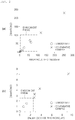
- FIG. 2(b) graphs illustrating changes in thickness of the Si-based amorphous oxide layer of the cold-rolled steel plate in accordance with a value of equation (3), a thickness of the Fe, Mn, and Cr oxide layer may be controlled in accordance with a value of equation (3).
- a thickness of the Fe, Mn, and Cr oxide layer may increase such that an exterior of a surface of the steel plate may be deteriorated, and spot-weldability may also be deteriorated after a hot-forming process.
- the continuous annealing is performed within a temperature range of 700 to 900°C.
- an annealing temperature is less than 700°C, it may be difficult to restore and recrystallize a rolled structure created by the cold-rolling.
- an annealing temperature exceeds 900°C, an annealing facility may be deteriorated, and excessive oxide may be formed on a surface layer of the steel plate, which may significantly degrade spot-weldability after the hot-forming.
- An annealing time is 1 to 1000 seconds.
- an annealing process is continuously performed, it may be difficult to accurately control the annealing time, and thus, a dew point is controlled.
- the annealing time is less than 1 second, it may be difficult to obtain an annealing effect, and when the annealing time exceeds 1000 seconds, productivity may degrade.
- a method of manufacturing a hot-formed member having excellent corrosion-resistance and spot-weldability in the exemplary embodiment includes performing heat treatment in which a cold-rolled steel plate manufactured by the method of manufacturing the cold-rolled steel plate described in the aforementioned exemplary embodiment is heated to a temperature range of Ac3 to Ac3+150°C at a temperature rising speed of 1 to 1000°C/sec while satisfying equation (4) and equation(5) below, and the heated cold-rolled steel plate is maintained for 1 to 1000 seconds; and hot-forming the heated cold-rolled steel plate and cooling the steel plate at a cooling speed of 10 to 1000°C/sec.
- the cold-rolled steel plate manufactured by the method of manufacturing the cold-rolled steel plate in the aforementioned exemplary embodiment is heated to a temperature range of Ac3 to Ac3+150°C at a temperature rising speed of 1 to 1000°C/sec while satisfying equation (4) and equation (5) below, and the heated cold-rolled steel plate is maintained for 1 to 1000 seconds.
- the heating temperature is less than Ac3, or the maintaining time is less than 1 second, ferrite which has not been completely transformed to austenite may remain, and ferrite may be formed again while a blank is transferred to a mold from a heating furnace such that it may be difficult to secure a certain strength.
- the heating temperature exceeds Ac3+150°C, or the maintaining time exceeds 1000 seconds, oxide may be excessively formed on a surface of the member such that it may be difficult to secure spot-weldability.
- each element symbol is a value of a content of each element measured by weight %
- DP(II) is a dew point temperature of the heat treatment. 2 ⁇ equation 2 * exp 0.07 * DP II + 0.6 * Cr + 1.5 * Si ⁇ 2000
- Equation (4) is to control a thickness of the Si-based amorphous oxide layer of the hot-formed member in consideration of correlation among a content of Si, a content of Cr, a dew point (DP(I)) of when the continuous annealing is performed, and a dew point (DP(II)) of when the heat treatment is performed.
- a thickness of the Si-based amorphous oxide layer of the hot-formed member is controlled in accordance with a value of equation (4).
- a value of equation (4) is less than 2, it may be difficult to secure a sufficient thickness of the Si-based amorphous oxide layer on a surface such that sufficient corrosion-resistance may not be secured.
- a lower limit of a value of equation (4) is 2, a preferable value may be 3, and a more preferable value may be 4.
- Equation (5) is to control a thickness of the Fe, Mn, and Cr oxide layer of the hot-formed member in consideration of correlation among a content of Si, a content of Cr, and a dew point (DP(I)) of when the continuous annealing is performed, and a dew point (DP(II)) of when the heat treatment is performed.
- a thickness of the Fe, Mn, and Cr oxide layer of the hot-formed member may be controlled in accordance with a value of equation (5).
- a thickness of the Fe, Mn, and Cr oxide layer may increase such that an exterior of a surface of the steel plate may be deteriorated, and spot-weldability may degrade.
- the steel plate After hot-forming the heated cold-rolled steel plate, the steel plate is cooled at a cooling speed of 10 to 1000°C/sec.
- cooling speed is less than 10°C/sec
- unwanted ferrite may be formed such that it may be difficult to secure 1000MPa or higher tensile strength, whereas, to control the cooling speed to exceed 1000°C/sec, an extensive and special cooling facility may be required.
- a cooling stop temperature of the cooling is Mf (a martensite transformation terminating temperature) or less.
- the cooling may stop between Mf (a martensite transformation terminating temperature) and Ms (a martensite transformation initiating temperature), and the steel plate may be heated again at temperature of Ac1 or lower such that martensite may be tempered and residual austenite may be stabilized.
- the hot-formed member having excellent corrosion-resistance and spot-weldability satisfies the above-described alloy composition, and an Si-based amorphous oxide layer having a thickness of 2nm to 2000nm is continuously or discontinuously formed on a surface of the hot-formed member.
- a thickness of the Si-based amorphous oxide layer is less than 2nm, it may be difficult to secure sufficient corrosion-resistance.
- a lower limit of the thickness is 2nm, a preferable lower limit may be 3nm, and a more preferable lower limit may be 3.5nm.
- an upper limit of the thickness is 2000nm, a preferable upper limit may be 1000nm, and a more preferable upper limit may be 500nm.
- a Fe, Mn, and Cr oxide layer may be formed to a thickness of 3 ⁇ m or less on the Si-based amorphous oxide layer.
- a thickness of the Fe, Mn, and Cr oxide layer exceeds 3 ⁇ m, an exterior of a surface of the steel plate may be deteriorated, and a shot blasting process for removing the Fe, Mn, and Cr oxide layer may be required to secure spot-weldability, and it may be difficult to secure corrosion-resistance.
- the hot-formed member may include martensite or bainite as a main phase.
- the main phase refers to a phase having the largest area fraction among numerous phases forming a microstructure.
- the area fraction may not be limited to a particular value.
- the area fraction may be 50 area% or higher.
- the hot-formed member may have 1000MPa or higher tensile strength. By securing 1000MPa or higher tensile strength, the hot-formed member may be applied to structural members or reinforcements of vehicles in which crashworthiness is required.
- the hot-formed member may have a spot welding current range of 1.0kA or higher.
- spot welding current range is 1.0kA
- spot-weldability may be deteriorated, and generally, most of customer companies require a spot welding current range of 1.0kA or higher.
- a slab having element composition indicated in table 1 and having a thickness of 40mm was melted in vacuum, heated at 1200°C for 1 hour in a heating furnace, hot-rolled at a finishing rolling temperature of 900°C, and a hot-rolled steel plate having a final thickness of 3mm was manufactured.
- the hot-rolled steel plate was coiled at 600°C. Thereafter, the hot-rolled steel plate was pickled, and the hot-rolled steel plate was cold-rolled at a cold reduction ratio of 50%.
- a continuous annealing process was performed while varying a dew point condition (DP(I)) at an annealing temperature of 780°C as in table 2.
- DP(I) dew point condition
- a thickness of a Si-based amorphous oxide layer and a thickness of an Fe, Mn, and Cr oxide layer formed on a surface of the cold-rolled steel plate were measured and listed in table 2 below. Also, values of equation (1) to equation (3) were calculated and listed in table 3.
- each element symbol is a value of a content of each element measured by weight %
- DP(I) is a dew point temperature when the continuous annealing is performed
- FIGS. 4 and 5 are images showing a representative surface layer structure and a composition distribution of embodiment A2.
- Embodiments A1 to A4 satisfy equation (2) and equation (3), whereas embodiments A5 and A6 and B1 to B5 do not satisfy equation (2) or equation (3).
- a hot-forming process was performed, and as heat treatment conditions, a temperature of the heat treatment was controlled to be the dew point temperature (DP(II)) indicated in table 3 below, and after the steel plate was charged into a heating furnace which was heated to be 900°C in advance, the steel plate was maintained for 6 minutes. Thereafter, the steel plate was air-cooled for 12 seconds, hot-formed in a mold, and rapidly cooled to room temperature at a cooling speed of 10°C/sec or higher, thereby obtaining a hot-formed member.
- DP(II) dew point temperature
- each element symbol is a value of a content of each element measured by weight %
- DP(II) is a dew point temperature (°C) of the heat treatment
- the tensile strength was measured from an ASTM E8 tensile sample obtained from the hot-formed member, and a thickness of the Si-based amorphous oxide layer and a thickness of the Fe, Mn, and Cr oxide layer were indicated by result values obtained by averaging thicknesses of three regions measured using a transmission electron microscope (TEM) and an EPMA device.
- TEM transmission electron microscope
- EPMA EPMA device
- a surface grade was assessed by observing a surface onto which a shot blasting process was not performed by the naked eye.
- an area rate of the case in which a color of a surface looked dark grey as the surface of the member is formed of a thick oxide layer, and an area rate of the case in which a color of a surface appeared yellow or gold as the surface was formed of a thin oxide layer were calculated and assessed as below.
- Corrosion-resistance was assessed by averaging values of corroded depths at three regions with 2mm of intervals after performing a cyclic corrosion test (CCT) to the hot-formed member sixty three times using salt spray.
- CCT cyclic corrosion test
- the embodiment was determined as defect (X), and when the corroded depth was 1mm or less, the embodiment was determined as good (O).
- Spot-weldability was assessed by calculating a spot welding current range using an ISO 18278-2 method. When the current range was 1.0kA or higher, the embodiment was determined as good, and the current range was less than 1.0kA, the embodiment was determined as a defect.
- a grade of embodiment steel A satisfying a value of equation (1) was less than grade 4 under overall heat treatment conditions in the hot-forming process.
- a surface grade of comparative steel B which does not satisfy values of Si, Cr, and equation (1) was grade 5 under heat treatment conditions in the hot-forming process, which indicates that surface properties were deteriorated.
- Comparitive examples A5 and A6 which satisfy the alloy composition of the exemplary embodiment but which do not satisfy the conditions of a cold-rolled steel plate of the exemplary embodiment were able to secure corrosion-resistance, but were not able to secure spot-weldability.
- Comparitive example A1-2 satisfied the conditions of a cold-rolled steel plate of the exemplary embodiment, but a value of equation (4) was less than 2, and accordingly, corrosion-resistance of the hot-formed member was deteriorated.
- Comparitive example A1-3 satisfied the conditions of a cold-rolled steel plate of the exemplary embodiment, but a value of equation (5) exceeded 3, and accordingly, spot-weldability of the hot-formed member was deteriorated.
- a cold-rolled steel plate and a hot-formed member were manufactured under conditions of a dew point temperature of when a continuous annealing process was performed in table 5 below, a dew point temperature of heat treatment in table 6 below, and other manufacturing conditions as in embodiment 1 above.
- a thickness of a Si-based amorphous oxide layer and a thickness of a Fe, Mn, and Cr oxide layer formed on a surface of the cold-rolled steel plate were measured and listed in table 5 below.
- Tensile strength, a surface grade, a thickness of the Si-based amorphous oxide layer, a thickness of the Fe, Mn, and Cr oxide layer, corrosion-resistance, and spot-weldability of the hot-formed member were measured or assessed, and listed in table 6 below.
- the measuring method and the assessment method were the same as in embodiment 1 above.
- embodiments D1-1 to K1-1 satisfied the alloy composition and the manufacturing conditions of the exemplary embodiment, and accordingly, excellent corrosion-resistance and spot-weldability were secured.
Landscapes
- Chemical & Material Sciences (AREA)
- Engineering & Computer Science (AREA)
- Mechanical Engineering (AREA)
- Materials Engineering (AREA)
- Metallurgy (AREA)
- Organic Chemistry (AREA)
- Physics & Mathematics (AREA)
- Thermal Sciences (AREA)
- Crystallography & Structural Chemistry (AREA)
- Heat Treatment Of Sheet Steel (AREA)
- Heat Treatment Of Articles (AREA)
Claims (8)
- Tôle d'acier laminée à froid pour formage à chaud, présentant une excellente résistance à la corrosion et une excellente soudabilité par points, comprenant :C : 0,1 à 0,4 %, Si : 0,5 à 2,0 %, Mn : 0,01 à 4,0 %, Al : 0,001 à 0,4 %, P : 0,001 à 0,05 %, S : 0,0001 à 0,02 %, Cr : 0,5 % ou plus et moins de 3,0 %, N : 0,001 à 0,02 %, et un solde de Fe et d'impuretés inévitables en % en poids,sachant que la tôle d'acier laminée à froid inclut en outre facultativement un ou plusieurs éléments sélectionnés parmi a) à e) ci-dessous en % en poids :a) un ou plusieurs éléments sélectionnés parmi Ti, Nb, Zr, et V, avec un total de 0,001 à 0,4 %b) B : 0,0001 à 0,01 %c) un ou plusieurs éléments sélectionnés parmi Mo et W, avec un total de 0,001 à 1,0 %d) un total de teneurs en Cu et Ni : 0,005 à 2,0 %e) un ou plusieurs éléments sélectionnés parmi Sb et Sn, avec un total de 0,001 à 1,0 %,sachant que la tôle d'acier laminée à froid satisfait à l'équation (1) ci-dessous :
 où chaque symbole d'élément est une valeur d'une teneur en chaque élément mesurée en % en poids ; etsachant qu'une couche d'oxyde amorphe à base de Si ayant une épaisseur de 1 nm à 100 nm est formée continuellement ou discontinuellement sur une surface de la tôle d'acier laminée à froid,sachant qu'une couche d'oxyde de Fe, Mn, et Cr est formée à une épaisseur de 2,5 µm ou moins sur la couche d'oxyde amorphe à base de Si.
 - La tôle d'acier laminée à froid de la revendication 1, sachant qu'une microstructure de la tôle d'acier laminée à froid inclut de la ferrite et de la cémentite.
- Procédé de fabrication d'une tôle d'acier laminée à froid pour formage à chaud, présentant une excellente résistance à la corrosion et une excellente soudabilité par points, comprenant :le chauffage d'une brame à 1000-1300 °C, la brame incluant : C : 0,1 à 0,4 %, Si : 0,5 à 2,0 %, Mn : 0,01 à 4,0 %, Al : 0,001 à 0,4 %, P : 0,001 à 0,05 %, S : 0,0001 à 0,02 %, Cr : 0,5 % ou plus et moins de 3,0 %, N : 0,001 à 0,02 %, et un solde de Fe et d'impuretés inévitables en % en poids,sachant que la brame inclut en outre facultativement un ou plusieurs éléments sélectionnés parmi a) à e) ci-dessous en % en poids :a) un ou plusieurs éléments sélectionnés parmi Ti, Nb, Zr, et V, avec un total de 0,001 à 0,4 %b) B : 0,0001 à 0,01 %c) un ou plusieurs éléments sélectionnés parmi Mo et W, avec un total de 0,001 à 1,0 %d) un total de teneurs en Cu et Ni : 0,005 à 2,0 %e) un ou plusieurs éléments sélectionnés parmi Sb et Sn, avec un total de 0,001 à 1,0 %, etsatisfaisant à l'équation (1) ci-dessous :
 où chaque symbole d'élément est une valeur d'une teneur en chaque élément mesurée en % en poids ;l'obtention d'une tôle d'acier laminée à chaud par laminage à chaud de la brame chauffée à une température de laminage de finition de Ar3 à 1000 °C ;le bobinage de la tôle d'acier laminée à chaud dans une plage de température de plus de à Ms à 750 °C ou moins ;l'obtention d'une tôle d'acier laminée à froid par laminage à froid à un taux de réduction de 30 à 80 % de la tôle d'acier laminée à chaud bobinée ; etle recuit continu de la tôle d'acier laminée à froid pour satisfaire à l'équation (2) et l'équation (3) ci-dessous dans une plage de température de 700 à 900 °C :
 où chaque symbole d'élément est une valeur d'une teneur en chaque élément mesurée en % en poids, et DP(I) est une température de point de rosée (°C) lorsque le recuit continu est effectué.
 - Élément formé à chaud présentant une excellente résistance à la corrosion et une excellente soudabilité par points, comprenant :C : 0,1 à 0,4 %, Si : 0,5 à 2,0 %, Mn : 0,01 à 4,0 %, Al : 0,001 à 0,4 %, P : 0,001 à 0,05 %, S : 0,0001 à 0,02 %, Cr : 0,5 % ou plus et moins de 3,0 %, N : 0,001 à 0,02 %, et un solde de Fe et d'impuretés inévitables en % en poids,sachant que l'élément formé à chaud inclut en outre facultativement un ou plusieurs éléments sélectionnés parmi a) à e) ci-dessous en % en poids :a) un ou plusieurs éléments sélectionnés parmi Ti, Nb, Zr, et V, avec un total de 0,001 à 0,4 %b) B : 0,0001 à 0,01 %c) un ou plusieurs éléments sélectionnés parmi Mo et W, avec un total de 0,001 à 1,0 %d) un total de teneurs en Cu et Ni : 0,005 à 2,0 %e) un ou plusieurs éléments sélectionnés parmi Sb et Sn, avec un total de 0,001 à 1,0 %,sachant que l'élément formé à chaud satisfait à l'équation (1) ci-dessous :
 où chaque symbole d'élément est une valeur d'une teneur en chaque élément mesurée en % en poids ; etsachant qu'une couche d'oxyde amorphe à base de Si ayant une épaisseur de 2 nm à 2000 nm est formée continuellement ou discontinuellement sur une surface de l'élément formé à chaud.
 - L'élément formé à chaud de la revendication 4, sachant qu'une couche d'oxyde de Fe, Mn, et Cr est formée à une épaisseur de 3 µm ou moins sur la couche d'oxyde amorphe à base de Si.
- L'élément formé à chaud de la revendication 4, sachant que l'élément formé à chaud inclut de la martensite ou de la bainite comme phase principale.
- Procédé de fabrication d'un élément formé à chaud présentant une excellente résistance à la corrosion et une excellente soudabilité par points, comprenant :l'exécution d'un traitement thermique dans lequel une tôle d'acier laminée à froid fabriquée par le procédé de la revendication 3 est chauffée à une plage de température de Ac3 à Ac3+150°C à une vitesse de montée en température de 1 à 1000 °C/s tout en satisfaisant à l'équation (4) et l'équation (5) ci-dessous, et la tôle d'acier laminée à froid chauffée est maintenue pendant 1 à 1000 secondes, où les équations (4) et (5) sont :

 où chaque symbole d'élément est une valeur d'une teneur en chaque élément mesurée en % en poids, et DP(II) est une température de point de rosée (°C) lorsque le traitement thermique est effectué ; etle formage à chaud de la tôle d'acier laminée à froid chauffée et le refroidissement de la tôle d'acier à une vitesse de refroidissement de 10 à 1000 °C/s,sachant qu'une température d'arrêt de refroidissement du refroidissement est Mf, une température d'achèvement de transformation de martensite, ou inférieure.
 - Le procédé de la revendication 7,
sachant que le procédé inclut en outre le chauffage de la tôle d'acier à une température de Ac1 ou inférieure et le revenu de la tôle d'acier après le refroidissement.
Applications Claiming Priority (2)
| Application Number | Priority Date | Filing Date | Title |
|---|---|---|---|
| KR1020160123273A KR101830527B1 (ko) | 2016-09-26 | 2016-09-26 | 내식성 및 점용접성이 우수한 열간성형용 냉연강판, 열간성형부재 및 그들의 제조방법 |
| PCT/KR2017/010639 WO2018056792A1 (fr) | 2016-09-26 | 2017-09-26 | Tôle d'acier laminée à froid pour un formage à chaud, présentant d'excellentes propriétés de résistance à la corrosion et de soudabilité par points, élément formé à chaud, et son procédé de fabrication |
Publications (3)
| Publication Number | Publication Date |
|---|---|
| EP3517636A1 EP3517636A1 (fr) | 2019-07-31 |
| EP3517636A4 EP3517636A4 (fr) | 2019-09-04 |
| EP3517636B1 true EP3517636B1 (fr) | 2021-07-14 |
Family
ID=61524750
Family Applications (1)
| Application Number | Title | Priority Date | Filing Date |
|---|---|---|---|
| EP17853506.8A Active EP3517636B1 (fr) | 2016-09-26 | 2017-09-26 | Tôle d'acier laminée à froid pour un formage à chaud, présentant d'excellentes propriétés de résistance à la corrosion et de soudabilité par points, élément formé à chaud, et son procédé de fabrication |
Country Status (7)
| Country | Link |
|---|---|
| US (6) | US11441205B2 (fr) |
| EP (1) | EP3517636B1 (fr) |
| JP (1) | JP6872009B2 (fr) |
| KR (1) | KR101830527B1 (fr) |
| CN (1) | CN109844142B (fr) |
| ES (1) | ES2892278T3 (fr) |
| WO (1) | WO2018056792A1 (fr) |
Families Citing this family (12)
| Publication number | Priority date | Publication date | Assignee | Title |
|---|---|---|---|---|
| KR101830527B1 (ko) | 2016-09-26 | 2018-02-21 | 주식회사 포스코 | 내식성 및 점용접성이 우수한 열간성형용 냉연강판, 열간성형부재 및 그들의 제조방법 |
| CN110863138B (zh) * | 2019-06-24 | 2021-07-06 | 鞍钢股份有限公司 | 一种1800MPa级热成形钢及其制造方法 |
| KR102279900B1 (ko) * | 2019-09-03 | 2021-07-22 | 주식회사 포스코 | 열간 성형용 강판, 열간 성형 부재 및 그 제조방법 |
| CN111575581B (zh) * | 2020-05-09 | 2021-09-24 | 湖南华菱涟源钢铁有限公司 | 一种耐酸腐蚀的马氏体耐磨钢板及其制造方法 |
| CN112962021B (zh) * | 2021-01-25 | 2022-06-10 | 唐山钢铁集团有限责任公司 | 激光拼焊后用于整体热冲压成形的强塑钢板及生产方法 |
| KR20240027174A (ko) * | 2022-08-22 | 2024-03-04 | 주식회사 포스코 | 표면품질이 우수한 열간 성형용 냉연강판, 열간 성형 부재 및 그들의 제조방법 |
| KR20240098869A (ko) * | 2022-12-21 | 2024-06-28 | 주식회사 포스코 | 굽힘성이 우수한 열간성형용 냉연강판, 열간성형부재 및 그들의 제조방법 |
| CN121941562A (zh) * | 2023-09-18 | 2026-04-28 | 浦项股份有限公司 | 热成型用钢材、热(冲压)成型构件(部件)及其制造方法以及成型装置、成型方法、电池壳体用支架和电池组模块 |
| CN117265225B (zh) * | 2023-09-19 | 2024-06-14 | 北京理工大学重庆创新中心 | 一种具有超强抗氧化的热成形钢及其制备方法 |
| WO2025116479A1 (fr) * | 2023-11-28 | 2025-06-05 | 주식회사 포스코 | Tôle d'acier pour formage à chaud, élément formé à chaud, pièce formée à chaud (presse), et procédés de fabrication associés, et dispositif de formation, procédé de formation, support pour boîtier de batterie et module de bloc-batterie |
| KR20250093759A (ko) * | 2023-12-15 | 2025-06-25 | 주식회사 포스코 | 냉연강판, 도금강판 및 이들의 제조방법 |
| CN118086791B (zh) * | 2023-12-26 | 2024-08-27 | 北京理工大学重庆创新中心 | 抗高温氧化热成形钢及其制备方法与应用 |
Family Cites Families (23)
| Publication number | Priority date | Publication date | Assignee | Title |
|---|---|---|---|---|
| JPS61110757A (ja) | 1984-11-02 | 1986-05-29 | Kawasaki Steel Corp | 薄鋼板及びその製造方法 |
| FR2780984B1 (fr) | 1998-07-09 | 2001-06-22 | Lorraine Laminage | Tole d'acier laminee a chaud et a froid revetue et comportant une tres haute resistance apres traitement thermique |
| JP4306411B2 (ja) | 2003-10-31 | 2009-08-05 | 住友金属工業株式会社 | 熱処理用鋼板とその製造方法 |
| FR2876708B1 (fr) * | 2004-10-20 | 2006-12-08 | Usinor Sa | Procede de fabrication de toles d'acier austenitique fer-carbone-manganese laminees a froid a hautes caracteristiques mecaniques, resistantes a la corrosion et toles ainsi produites |
| JP5114850B2 (ja) * | 2005-09-21 | 2013-01-09 | Jfeスチール株式会社 | 冷延鋼板およびその製造方法 |
| KR101027285B1 (ko) * | 2008-05-29 | 2011-04-06 | 주식회사 포스코 | 열처리성이 우수한 초고강도 열간성형 가공용 강판, 열처리경화형 부재 및 이들의 제조방법 |
| KR101289124B1 (ko) | 2009-12-10 | 2013-07-23 | 주식회사 포스코 | 해수 내식성이 우수한 선박용 강재 |
| JP5614035B2 (ja) | 2009-12-25 | 2014-10-29 | Jfeスチール株式会社 | 高強度冷延鋼板の製造方法 |
| KR101253885B1 (ko) * | 2010-12-27 | 2013-04-16 | 주식회사 포스코 | 연성이 우수한 성형 부재용 강판, 성형 부재 및 그 제조방법 |
| JP4927236B1 (ja) | 2011-03-09 | 2012-05-09 | 新日本製鐵株式会社 | ホットスタンプ用鋼板及びその製造方法と高強度部品の製造方法 |
| ES2712809T3 (es) | 2011-09-30 | 2019-05-14 | Nippon Steel & Sumitomo Metal Corp | Chapa de acero galvanizada y su método de fabricación |
| KR101377489B1 (ko) * | 2011-12-29 | 2014-03-26 | 현대제철 주식회사 | 도금성이 우수한 인장강도 980MPa급 초고강도 강판 제조 방법 |
| DE102013004905A1 (de) | 2012-03-23 | 2013-09-26 | Salzgitter Flachstahl Gmbh | Zunderarmer Vergütungsstahl und Verfahren zur Herstellung eines zunderarmen Bauteils aus diesem Stahl |
| KR20140002272A (ko) | 2012-06-28 | 2014-01-08 | 현대제철 주식회사 | 열처리 경화형 아연도금강판 및 이를 이용한 강 제품 제조 방법 |
| WO2014166630A1 (fr) | 2013-04-10 | 2014-10-16 | Tata Steel Ijmuiden Bv | Produit mis en forme par formage à chaud d'une tôle d'acier métallisée, procédé de mise en forme du produit et bande d'acier |
| JP2015034334A (ja) | 2013-07-12 | 2015-02-19 | 株式会社神戸製鋼所 | めっき性、加工性、および耐遅れ破壊特性に優れた高強度めっき鋼板、並びにその製造方法 |
| KR101568477B1 (ko) | 2013-11-08 | 2015-11-11 | 주식회사 포스코 | 고 Si 함유 페라이트 스테인리스강의 소둔·산세 방법 |
| MX380449B (es) | 2013-12-18 | 2025-03-12 | Jfe Steel Corp | Lámina de acero galvanizada de alta resistencia y método para la fabricación de la misma. |
| JP2015193907A (ja) * | 2014-03-28 | 2015-11-05 | 株式会社神戸製鋼所 | 加工性、および耐遅れ破壊特性に優れた高強度合金化溶融亜鉛めっき鋼板、並びにその製造方法 |
| KR101630976B1 (ko) | 2014-12-08 | 2016-06-16 | 주식회사 포스코 | 표면품질 및 도금 밀착성이 우수한 초고강도 용융아연도금강판 및 그 제조방법 |
| KR101665804B1 (ko) | 2014-12-23 | 2016-10-13 | 주식회사 포스코 | 열간 프레스 성형용 강판, 열간 프레스 성형품의 제조방법 및 이에 의해 제조된 열간 프레스 성형품 |
| KR101696052B1 (ko) * | 2014-12-24 | 2017-01-13 | 주식회사 포스코 | 내식성이 우수한 열간성형 부재 및 그 제조방법 |
| KR101830527B1 (ko) * | 2016-09-26 | 2018-02-21 | 주식회사 포스코 | 내식성 및 점용접성이 우수한 열간성형용 냉연강판, 열간성형부재 및 그들의 제조방법 |
-
2016
- 2016-09-26 KR KR1020160123273A patent/KR101830527B1/ko active Active
-
2017
- 2017-09-26 ES ES17853506T patent/ES2892278T3/es active Active
- 2017-09-26 JP JP2019515875A patent/JP6872009B2/ja active Active
- 2017-09-26 EP EP17853506.8A patent/EP3517636B1/fr active Active
- 2017-09-26 WO PCT/KR2017/010639 patent/WO2018056792A1/fr not_active Ceased
- 2017-09-26 US US16/336,645 patent/US11441205B2/en active Active
- 2017-09-26 CN CN201780059276.9A patent/CN109844142B/zh active Active
-
2022
- 2022-08-11 US US17/885,860 patent/US11624100B2/en active Active
-
2023
- 2023-02-27 US US18/114,387 patent/US11788166B2/en active Active
- 2023-09-05 US US18/242,140 patent/US12049679B2/en active Active
-
2024
- 2024-05-16 US US18/666,200 patent/US12467111B2/en active Active
-
2025
- 2025-10-17 US US19/361,637 patent/US20260043104A1/en active Pending
Non-Patent Citations (1)
| Title |
|---|
| None * |
Also Published As
| Publication number | Publication date |
|---|---|
| US20240301527A1 (en) | 2024-09-12 |
| WO2018056792A1 (fr) | 2018-03-29 |
| ES2892278T3 (es) | 2022-02-03 |
| EP3517636A4 (fr) | 2019-09-04 |
| KR101830527B1 (ko) | 2018-02-21 |
| US11441205B2 (en) | 2022-09-13 |
| US11788166B2 (en) | 2023-10-17 |
| US20200385833A1 (en) | 2020-12-10 |
| US20220389533A1 (en) | 2022-12-08 |
| CN109844142A (zh) | 2019-06-04 |
| EP3517636A1 (fr) | 2019-07-31 |
| US12049679B2 (en) | 2024-07-30 |
| US11624100B2 (en) | 2023-04-11 |
| CN109844142B (zh) | 2021-09-03 |
| JP6872009B2 (ja) | 2021-05-19 |
| JP2019533083A (ja) | 2019-11-14 |
| US20260043104A1 (en) | 2026-02-12 |
| US12467111B2 (en) | 2025-11-11 |
| US20230416863A1 (en) | 2023-12-28 |
| US20230235423A1 (en) | 2023-07-27 |
Similar Documents
| Publication | Publication Date | Title |
|---|---|---|
| US11624100B2 (en) | Cold-rolled steel plate for hot forming, having excellent corrosion-resistance and spot-weldability, hot-formed member, and method for manufacturing same | |
| US11377708B2 (en) | High-strength galvanized steel sheet and method for producing the same | |
| TWI524953B (zh) | 冷軋鋼板及冷軋鋼板之製造方法 | |
| KR101852277B1 (ko) | 냉간 압연 강판, 제조 방법 및 차량 | |
| US10570475B2 (en) | High-strength steel sheet and production method for same, and production method for high-strength galvanized steel sheet | |
| TWI441928B (zh) | 均勻伸長和鍍覆性優異之高強度熔融鍍鋅鋼板及其製造方法 | |
| EP2500445A1 (fr) | Feuille d'acier de haute résistance ayant une excellente aptitude au traitement et une excellente aptitude au durcissement de cuisson d'une peinture et son procédé de fabrication | |
| KR102170060B1 (ko) | 고항복비형 고강도 아연 도금 강판 및 그의 제조 방법 | |
| WO2013105633A1 (fr) | Article moulé par estampage à chaud et procédé de production d'un article moulé par estampage à chaud | |
| JP6136476B2 (ja) | 冷延鋼板及び冷延鋼板の製造方法 | |
| WO2014162984A1 (fr) | Article moulé estampé à chaud, tôle d'acier laminée à froid, et procédé de fabrication d'article moulé estampé à chaud | |
| US20170218472A1 (en) | High-strength steel sheet and production method for same, and production method for high-strength galvanized steel sheet | |
| KR101622499B1 (ko) | 냉연 강판, 도금 강판 및 그들의 제조 방법 | |
| EP3572543B1 (fr) | Tôle en acier pour estampage à chaud | |
| US20170204490A1 (en) | High-strength steel sheet and production method for same, and production method for high-strength galvanized steel sheet | |
| US12071682B2 (en) | Steel sheet, member, and methods for producing them | |
| EP3896186A1 (fr) | Tôle d'acier galvanisée par immersion à chaud à résistance élevée et procédé de fabrication de ladite tôle | |
| CN115087751A (zh) | 高可卷边的超高强度延展热轧钢,制造所述热轧钢的方法及其用途 | |
| TWI464279B (zh) | 高強度鋼板及其製造方法 |
Legal Events
| Date | Code | Title | Description |
|---|---|---|---|
| STAA | Information on the status of an ep patent application or granted ep patent |
Free format text: STATUS: THE INTERNATIONAL PUBLICATION HAS BEEN MADE |
|
| PUAI | Public reference made under article 153(3) epc to a published international application that has entered the european phase |
Free format text: ORIGINAL CODE: 0009012 |
|
| STAA | Information on the status of an ep patent application or granted ep patent |
Free format text: STATUS: REQUEST FOR EXAMINATION WAS MADE |
|
| 17P | Request for examination filed |
Effective date: 20190424 |
|
| AK | Designated contracting states |
Kind code of ref document: A1 Designated state(s): AL AT BE BG CH CY CZ DE DK EE ES FI FR GB GR HR HU IE IS IT LI LT LU LV MC MK MT NL NO PL PT RO RS SE SI SK SM TR |
|
| AX | Request for extension of the european patent |
Extension state: BA ME |
|
| A4 | Supplementary search report drawn up and despatched |
Effective date: 20190802 |
|
| RIC1 | Information provided on ipc code assigned before grant |
Ipc: C22C 38/06 20060101ALI20190729BHEP Ipc: C22C 38/02 20060101ALI20190729BHEP Ipc: C21D 8/02 20060101AFI20190729BHEP Ipc: C22C 38/38 20060101ALI20190729BHEP Ipc: C22C 38/04 20060101ALI20190729BHEP Ipc: C22C 38/00 20060101ALI20190729BHEP Ipc: C21D 9/56 20060101ALI20190729BHEP Ipc: C22C 38/34 20060101ALI20190729BHEP |
|
| RIN1 | Information on inventor provided before grant (corrected) |
Inventor name: HEO, SI-MYOUNG Inventor name: CHA, JIN-HO Inventor name: SEO, JEONG-WON Inventor name: OH, JIN-KEUN Inventor name: CHO, YEOL-RAE Inventor name: KIM, SEONG-WOO Inventor name: CHO, A-RA |
|
| DAV | Request for validation of the european patent (deleted) | ||
| DAX | Request for extension of the european patent (deleted) | ||
| STAA | Information on the status of an ep patent application or granted ep patent |
Free format text: STATUS: EXAMINATION IS IN PROGRESS |
|
| 17Q | First examination report despatched |
Effective date: 20200327 |
|
| RIC1 | Information provided on ipc code assigned before grant |
Ipc: C21D 9/56 20060101ALI20200812BHEP Ipc: C22C 38/38 20060101ALN20200812BHEP Ipc: C22C 38/34 20060101ALN20200812BHEP Ipc: C22C 38/00 20060101ALI20200812BHEP Ipc: C22C 38/06 20060101ALI20200812BHEP Ipc: C21D 8/02 20060101AFI20200812BHEP Ipc: C22C 38/02 20060101ALI20200812BHEP Ipc: C22C 38/04 20060101ALI20200812BHEP |
|
| RIC1 | Information provided on ipc code assigned before grant |
Ipc: C22C 38/38 20060101ALN20201216BHEP Ipc: C22C 38/02 20060101ALI20201216BHEP Ipc: C22C 38/00 20060101ALI20201216BHEP Ipc: C22C 38/06 20060101ALI20201216BHEP Ipc: C21D 8/02 20060101AFI20201216BHEP Ipc: C22C 38/34 20060101ALN20201216BHEP Ipc: C21D 9/56 20060101ALI20201216BHEP Ipc: C22C 38/04 20060101ALI20201216BHEP |
|
| RIC1 | Information provided on ipc code assigned before grant |
Ipc: C21D 8/02 20060101AFI20201223BHEP Ipc: C22C 38/06 20060101ALI20201223BHEP Ipc: C22C 38/34 20060101ALN20201223BHEP Ipc: C21D 9/56 20060101ALI20201223BHEP Ipc: C22C 38/04 20060101ALI20201223BHEP Ipc: C22C 38/00 20060101ALI20201223BHEP Ipc: C22C 38/02 20060101ALI20201223BHEP Ipc: C22C 38/38 20060101ALN20201223BHEP |
|
| GRAP | Despatch of communication of intention to grant a patent |
Free format text: ORIGINAL CODE: EPIDOSNIGR1 |
|
| STAA | Information on the status of an ep patent application or granted ep patent |
Free format text: STATUS: GRANT OF PATENT IS INTENDED |
|
| INTG | Intention to grant announced |
Effective date: 20210202 |
|
| GRAS | Grant fee paid |
Free format text: ORIGINAL CODE: EPIDOSNIGR3 |
|
| GRAA | (expected) grant |
Free format text: ORIGINAL CODE: 0009210 |
|
| STAA | Information on the status of an ep patent application or granted ep patent |
Free format text: STATUS: THE PATENT HAS BEEN GRANTED |
|
| AK | Designated contracting states |
Kind code of ref document: B1 Designated state(s): AL AT BE BG CH CY CZ DE DK EE ES FI FR GB GR HR HU IE IS IT LI LT LU LV MC MK MT NL NO PL PT RO RS SE SI SK SM TR |
|
| REG | Reference to a national code |
Ref country code: GB Ref legal event code: FG4D |
|
| REG | Reference to a national code |
Ref country code: IE Ref legal event code: FG4D |
|
| REG | Reference to a national code |
Ref country code: DE Ref legal event code: R096 Ref document number: 602017042274 Country of ref document: DE |
|
| REG | Reference to a national code |
Ref country code: AT Ref legal event code: REF Ref document number: 1410709 Country of ref document: AT Kind code of ref document: T Effective date: 20210815 |
|
| REG | Reference to a national code |
Ref country code: LT Ref legal event code: MG9D |
|
| REG | Reference to a national code |
Ref country code: NL Ref legal event code: MP Effective date: 20210714 |
|
| REG | Reference to a national code |
Ref country code: AT Ref legal event code: MK05 Ref document number: 1410709 Country of ref document: AT Kind code of ref document: T Effective date: 20210714 |
|
| PG25 | Lapsed in a contracting state [announced via postgrant information from national office to epo] |
Ref country code: LT Free format text: LAPSE BECAUSE OF FAILURE TO SUBMIT A TRANSLATION OF THE DESCRIPTION OR TO PAY THE FEE WITHIN THE PRESCRIBED TIME-LIMIT Effective date: 20210714 Ref country code: BG Free format text: LAPSE BECAUSE OF FAILURE TO SUBMIT A TRANSLATION OF THE DESCRIPTION OR TO PAY THE FEE WITHIN THE PRESCRIBED TIME-LIMIT Effective date: 20211014 Ref country code: AT Free format text: LAPSE BECAUSE OF FAILURE TO SUBMIT A TRANSLATION OF THE DESCRIPTION OR TO PAY THE FEE WITHIN THE PRESCRIBED TIME-LIMIT Effective date: 20210714 Ref country code: NO Free format text: LAPSE BECAUSE OF FAILURE TO SUBMIT A TRANSLATION OF THE DESCRIPTION OR TO PAY THE FEE WITHIN THE PRESCRIBED TIME-LIMIT Effective date: 20211014 Ref country code: PT Free format text: LAPSE BECAUSE OF FAILURE TO SUBMIT A TRANSLATION OF THE DESCRIPTION OR TO PAY THE FEE WITHIN THE PRESCRIBED TIME-LIMIT Effective date: 20211115 Ref country code: NL Free format text: LAPSE BECAUSE OF FAILURE TO SUBMIT A TRANSLATION OF THE DESCRIPTION OR TO PAY THE FEE WITHIN THE PRESCRIBED TIME-LIMIT Effective date: 20210714 Ref country code: SE Free format text: LAPSE BECAUSE OF FAILURE TO SUBMIT A TRANSLATION OF THE DESCRIPTION OR TO PAY THE FEE WITHIN THE PRESCRIBED TIME-LIMIT Effective date: 20210714 Ref country code: RS Free format text: LAPSE BECAUSE OF FAILURE TO SUBMIT A TRANSLATION OF THE DESCRIPTION OR TO PAY THE FEE WITHIN THE PRESCRIBED TIME-LIMIT Effective date: 20210714 Ref country code: HR Free format text: LAPSE BECAUSE OF FAILURE TO SUBMIT A TRANSLATION OF THE DESCRIPTION OR TO PAY THE FEE WITHIN THE PRESCRIBED TIME-LIMIT Effective date: 20210714 Ref country code: FI Free format text: LAPSE BECAUSE OF FAILURE TO SUBMIT A TRANSLATION OF THE DESCRIPTION OR TO PAY THE FEE WITHIN THE PRESCRIBED TIME-LIMIT Effective date: 20210714 |
|
| REG | Reference to a national code |
Ref country code: ES Ref legal event code: FG2A Ref document number: 2892278 Country of ref document: ES Kind code of ref document: T3 Effective date: 20220203 |
|
| PG25 | Lapsed in a contracting state [announced via postgrant information from national office to epo] |
Ref country code: PL Free format text: LAPSE BECAUSE OF FAILURE TO SUBMIT A TRANSLATION OF THE DESCRIPTION OR TO PAY THE FEE WITHIN THE PRESCRIBED TIME-LIMIT Effective date: 20210714 Ref country code: LV Free format text: LAPSE BECAUSE OF FAILURE TO SUBMIT A TRANSLATION OF THE DESCRIPTION OR TO PAY THE FEE WITHIN THE PRESCRIBED TIME-LIMIT Effective date: 20210714 Ref country code: GR Free format text: LAPSE BECAUSE OF FAILURE TO SUBMIT A TRANSLATION OF THE DESCRIPTION OR TO PAY THE FEE WITHIN THE PRESCRIBED TIME-LIMIT Effective date: 20211015 |
|
| REG | Reference to a national code |
Ref country code: DE Ref legal event code: R097 Ref document number: 602017042274 Country of ref document: DE |
|
| PG25 | Lapsed in a contracting state [announced via postgrant information from national office to epo] |
Ref country code: DK Free format text: LAPSE BECAUSE OF FAILURE TO SUBMIT A TRANSLATION OF THE DESCRIPTION OR TO PAY THE FEE WITHIN THE PRESCRIBED TIME-LIMIT Effective date: 20210714 |
|
| REG | Reference to a national code |
Ref country code: CH Ref legal event code: PL |
|
| PLBE | No opposition filed within time limit |
Free format text: ORIGINAL CODE: 0009261 |
|
| REG | Reference to a national code |
Ref country code: BE Ref legal event code: MM Effective date: 20210930 |
|
| STAA | Information on the status of an ep patent application or granted ep patent |
Free format text: STATUS: NO OPPOSITION FILED WITHIN TIME LIMIT |
|
| PG25 | Lapsed in a contracting state [announced via postgrant information from national office to epo] |
Ref country code: SM Free format text: LAPSE BECAUSE OF FAILURE TO SUBMIT A TRANSLATION OF THE DESCRIPTION OR TO PAY THE FEE WITHIN THE PRESCRIBED TIME-LIMIT Effective date: 20210714 Ref country code: SK Free format text: LAPSE BECAUSE OF FAILURE TO SUBMIT A TRANSLATION OF THE DESCRIPTION OR TO PAY THE FEE WITHIN THE PRESCRIBED TIME-LIMIT Effective date: 20210714 Ref country code: RO Free format text: LAPSE BECAUSE OF FAILURE TO SUBMIT A TRANSLATION OF THE DESCRIPTION OR TO PAY THE FEE WITHIN THE PRESCRIBED TIME-LIMIT Effective date: 20210714 Ref country code: MC Free format text: LAPSE BECAUSE OF FAILURE TO SUBMIT A TRANSLATION OF THE DESCRIPTION OR TO PAY THE FEE WITHIN THE PRESCRIBED TIME-LIMIT Effective date: 20210714 Ref country code: EE Free format text: LAPSE BECAUSE OF FAILURE TO SUBMIT A TRANSLATION OF THE DESCRIPTION OR TO PAY THE FEE WITHIN THE PRESCRIBED TIME-LIMIT Effective date: 20210714 Ref country code: CZ Free format text: LAPSE BECAUSE OF FAILURE TO SUBMIT A TRANSLATION OF THE DESCRIPTION OR TO PAY THE FEE WITHIN THE PRESCRIBED TIME-LIMIT Effective date: 20210714 Ref country code: AL Free format text: LAPSE BECAUSE OF FAILURE TO SUBMIT A TRANSLATION OF THE DESCRIPTION OR TO PAY THE FEE WITHIN THE PRESCRIBED TIME-LIMIT Effective date: 20210714 |
|
| 26N | No opposition filed |
Effective date: 20220419 |
|
| GBPC | Gb: european patent ceased through non-payment of renewal fee |
Effective date: 20211014 |
|
| PG25 | Lapsed in a contracting state [announced via postgrant information from national office to epo] |
Ref country code: LU Free format text: LAPSE BECAUSE OF NON-PAYMENT OF DUE FEES Effective date: 20210926 Ref country code: IE Free format text: LAPSE BECAUSE OF NON-PAYMENT OF DUE FEES Effective date: 20210926 Ref country code: GB Free format text: LAPSE BECAUSE OF NON-PAYMENT OF DUE FEES Effective date: 20211014 Ref country code: BE Free format text: LAPSE BECAUSE OF NON-PAYMENT OF DUE FEES Effective date: 20210930 |
|
| PG25 | Lapsed in a contracting state [announced via postgrant information from national office to epo] |
Ref country code: LI Free format text: LAPSE BECAUSE OF NON-PAYMENT OF DUE FEES Effective date: 20210930 Ref country code: CH Free format text: LAPSE BECAUSE OF NON-PAYMENT OF DUE FEES Effective date: 20210930 |
|
| REG | Reference to a national code |
Ref country code: DE Ref legal event code: R081 Ref document number: 602017042274 Country of ref document: DE Owner name: POSCO CO., LTD, POHANG-SI, KR Free format text: FORMER OWNER: POSCO, POHANG-SI, GYEONGSANGBUK-DO, KR Ref country code: DE Ref legal event code: R081 Ref document number: 602017042274 Country of ref document: DE Owner name: POSCO CO., LTD, POHANG- SI, KR Free format text: FORMER OWNER: POSCO, POHANG-SI, GYEONGSANGBUK-DO, KR Ref country code: DE Ref legal event code: R081 Ref document number: 602017042274 Country of ref document: DE Owner name: POSCO HOLDINGS INC., KR Free format text: FORMER OWNER: POSCO, POHANG-SI, GYEONGSANGBUK-DO, KR |
|
| REG | Reference to a national code |
Ref country code: ES Ref legal event code: PC2A Owner name: POSCO HOLDINGS INC. Effective date: 20230303 |
|
| REG | Reference to a national code |
Ref country code: DE Ref legal event code: R081 Ref document number: 602017042274 Country of ref document: DE Owner name: POSCO CO., LTD, POHANG-SI, KR Free format text: FORMER OWNER: POSCO HOLDINGS INC., SEOUL, KR Ref country code: DE Ref legal event code: R081 Ref document number: 602017042274 Country of ref document: DE Owner name: POSCO CO., LTD, POHANG- SI, KR Free format text: FORMER OWNER: POSCO HOLDINGS INC., SEOUL, KR |
|
| PG25 | Lapsed in a contracting state [announced via postgrant information from national office to epo] |
Ref country code: CY Free format text: LAPSE BECAUSE OF FAILURE TO SUBMIT A TRANSLATION OF THE DESCRIPTION OR TO PAY THE FEE WITHIN THE PRESCRIBED TIME-LIMIT Effective date: 20210714 |
|
| PG25 | Lapsed in a contracting state [announced via postgrant information from national office to epo] |
Ref country code: HU Free format text: LAPSE BECAUSE OF FAILURE TO SUBMIT A TRANSLATION OF THE DESCRIPTION OR TO PAY THE FEE WITHIN THE PRESCRIBED TIME-LIMIT; INVALID AB INITIO Effective date: 20170926 |
|
| PG25 | Lapsed in a contracting state [announced via postgrant information from national office to epo] |
Ref country code: MK Free format text: LAPSE BECAUSE OF FAILURE TO SUBMIT A TRANSLATION OF THE DESCRIPTION OR TO PAY THE FEE WITHIN THE PRESCRIBED TIME-LIMIT Effective date: 20210714 |
|
| PG25 | Lapsed in a contracting state [announced via postgrant information from national office to epo] |
Ref country code: TR Free format text: LAPSE BECAUSE OF FAILURE TO SUBMIT A TRANSLATION OF THE DESCRIPTION OR TO PAY THE FEE WITHIN THE PRESCRIBED TIME-LIMIT Effective date: 20210714 |
|
| PG25 | Lapsed in a contracting state [announced via postgrant information from national office to epo] |
Ref country code: MT Free format text: LAPSE BECAUSE OF FAILURE TO SUBMIT A TRANSLATION OF THE DESCRIPTION OR TO PAY THE FEE WITHIN THE PRESCRIBED TIME-LIMIT Effective date: 20210714 |
|
| PGFP | Annual fee paid to national office [announced via postgrant information from national office to epo] |
Ref country code: FR Payment date: 20250624 Year of fee payment: 9 |
|
| PGFP | Annual fee paid to national office [announced via postgrant information from national office to epo] |
Ref country code: DE Payment date: 20250624 Year of fee payment: 9 |
|
| PGFP | Annual fee paid to national office [announced via postgrant information from national office to epo] |
Ref country code: IT Payment date: 20250624 Year of fee payment: 9 |
|
| PGFP | Annual fee paid to national office [announced via postgrant information from national office to epo] |
Ref country code: ES Payment date: 20251008 Year of fee payment: 9 |