EP3518207A2 - Procédé de fourniture des informations vérifiées sur un panneau de signalisation routière, installation de panneaux de signalisation routière ainsi que procédé pour un système de navigation permettant de vérifier un panneau de signalisation routière - Google Patents
Procédé de fourniture des informations vérifiées sur un panneau de signalisation routière, installation de panneaux de signalisation routière ainsi que procédé pour un système de navigation permettant de vérifier un panneau de signalisation routière Download PDFInfo
- Publication number
- EP3518207A2 EP3518207A2 EP19152688.8A EP19152688A EP3518207A2 EP 3518207 A2 EP3518207 A2 EP 3518207A2 EP 19152688 A EP19152688 A EP 19152688A EP 3518207 A2 EP3518207 A2 EP 3518207A2
- Authority
- EP
- European Patent Office
- Prior art keywords
- information
- traffic sign
- traffic
- authorized
- source
- Prior art date
- Legal status (The legal status is an assumption and is not a legal conclusion. Google has not performed a legal analysis and makes no representation as to the accuracy of the status listed.)
- Granted
Links
Images
Classifications
-
- G—PHYSICS
- G08—SIGNALLING
- G08G—TRAFFIC CONTROL SYSTEMS
- G08G1/00—Traffic control systems for road vehicles
- G08G1/09—Arrangements for giving variable traffic instructions
- G08G1/095—Traffic lights
-
- G—PHYSICS
- G01—MEASURING; TESTING
- G01C—MEASURING DISTANCES, LEVELS OR BEARINGS; SURVEYING; NAVIGATION; GYROSCOPIC INSTRUMENTS; PHOTOGRAMMETRY OR VIDEOGRAMMETRY
- G01C21/00—Navigation; Navigational instruments not provided for in groups G01C1/00 - G01C19/00
- G01C21/26—Navigation; Navigational instruments not provided for in groups G01C1/00 - G01C19/00 specially adapted for navigation in a road network
- G01C21/34—Route searching; Route guidance
- G01C21/36—Input/output arrangements for on-board computers
- G01C21/3697—Output of additional, non-guidance related information, e.g. low fuel level
-
- G—PHYSICS
- G06—COMPUTING OR CALCULATING; COUNTING
- G06F—ELECTRIC DIGITAL DATA PROCESSING
- G06F21/00—Security arrangements for protecting computers, components thereof, programs or data against unauthorised activity
- G06F21/60—Protecting data
- G06F21/64—Protecting data integrity, e.g. using checksums, certificates or signatures
-
- G—PHYSICS
- G08—SIGNALLING
- G08G—TRAFFIC CONTROL SYSTEMS
- G08G1/00—Traffic control systems for road vehicles
- G08G1/09—Arrangements for giving variable traffic instructions
- G08G1/0962—Arrangements for giving variable traffic instructions having an indicator mounted inside the vehicle, e.g. giving voice messages
- G08G1/0967—Systems involving transmission of highway information, e.g. weather, speed limits
- G08G1/096766—Systems involving transmission of highway information, e.g. weather, speed limits where the system is characterised by the origin of the information transmission
- G08G1/096775—Systems involving transmission of highway information, e.g. weather, speed limits where the system is characterised by the origin of the information transmission where the origin of the information is a central station
-
- G—PHYSICS
- G08—SIGNALLING
- G08G—TRAFFIC CONTROL SYSTEMS
- G08G1/00—Traffic control systems for road vehicles
- G08G1/09—Arrangements for giving variable traffic instructions
- G08G1/0962—Arrangements for giving variable traffic instructions having an indicator mounted inside the vehicle, e.g. giving voice messages
- G08G1/0967—Systems involving transmission of highway information, e.g. weather, speed limits
- G08G1/096766—Systems involving transmission of highway information, e.g. weather, speed limits where the system is characterised by the origin of the information transmission
- G08G1/096783—Systems involving transmission of highway information, e.g. weather, speed limits where the system is characterised by the origin of the information transmission where the origin of the information is a roadside individual element
-
- H—ELECTRICITY
- H04—ELECTRIC COMMUNICATION TECHNIQUE
- H04L—TRANSMISSION OF DIGITAL INFORMATION, e.g. TELEGRAPHIC COMMUNICATION
- H04L9/00—Cryptographic mechanisms or cryptographic arrangements for secret or secure communications; Network security protocols
- H04L9/32—Cryptographic mechanisms or cryptographic arrangements for secret or secure communications; Network security protocols including means for verifying the identity or authority of a user of the system or for message authentication, e.g. authorization, entity authentication, data integrity or data verification, non-repudiation, key authentication or verification of credentials
- H04L9/3236—Cryptographic mechanisms or cryptographic arrangements for secret or secure communications; Network security protocols including means for verifying the identity or authority of a user of the system or for message authentication, e.g. authorization, entity authentication, data integrity or data verification, non-repudiation, key authentication or verification of credentials using cryptographic hash functions
- H04L9/3239—Cryptographic mechanisms or cryptographic arrangements for secret or secure communications; Network security protocols including means for verifying the identity or authority of a user of the system or for message authentication, e.g. authorization, entity authentication, data integrity or data verification, non-repudiation, key authentication or verification of credentials using cryptographic hash functions involving non-keyed hash functions, e.g. modification detection codes [MDCs], MD5, SHA or RIPEMD
-
- H—ELECTRICITY
- H04—ELECTRIC COMMUNICATION TECHNIQUE
- H04L—TRANSMISSION OF DIGITAL INFORMATION, e.g. TELEGRAPHIC COMMUNICATION
- H04L9/00—Cryptographic mechanisms or cryptographic arrangements for secret or secure communications; Network security protocols
- H04L9/50—Cryptographic mechanisms or cryptographic arrangements for secret or secure communications; Network security protocols using hash chains, e.g. blockchains or hash trees
Definitions
- the present invention relates to providing verified traffic sign information. More particularly, the present invention relates to a method for providing verified information about a traffic sign, a traffic sign system, and a method for a navigation system for verifying a traffic sign.
- a vehicle is a mobile means of transport for the transport of people or goods.
- a vehicle can therefore be both a passenger and a commercial vehicle.
- a vehicle may be a passenger car, a truck, a motorcycle or a tractor.
- a vehicle may be understood as a device that includes engine driven wheels (and, optionally, a powertrain system).
- a traffic sign can be optically manipulated in such a way that it can no longer be recognized correctly by optical traffic signal recognition systems in the vehicle. This can be used for a targeted attack on the vehicle.
- pamphlet WO 2017/180382 A1 further proposes to use a decentralized network in which several vehicles each attempt to verify each other's traffic infrastructure information by multiple sensing of the environment by multiple vehicles. If a targeted manipulated vehicle now feeds targeted misinformation into the decentralized network and confirms it with another manipulated vehicle, this misinformation is considered correct on the basis of the validation by the second manipulated vehicle.
- any desired misinformation relating to traffic infrastructure can thus continue to be disseminated in this approach as well. In other words, the traffic information transmitted by the vehicles can not be reliably verified.
- a traffic sign is a sign for regulating or influencing road traffic.
- a traffic sign can be a physical traffic sign on a roadway, for example in the form of a symbol, lettering or line displayed on a sign (or an electronic display device) or on the roadway itself.
- the traffic sign can also be a digital one Road map be listed traffic sign.
- the traffic sign is usually built by an authorized body (eg, a public corporation), but attackers can also manipulate existing traffic signs or construct unauthorized traffic signs.
- the method includes receiving information about the traffic sign from an information source.
- the information about the traffic sign is information that characterizes or describes the traffic sign.
- the source of information can basically be any source that provides the information about the traffic sign.
- the method includes checking whether the information source is an authorized information source. Only when the information source is an authorized information source does the method further include storing the information about the traffic sign in a blockchain database.
- a blockchain database is a continuously expandable list of records, called blocks, which are concatenated using cryptographic techniques. Blockchain databases are tamper-proof with regard to the data already stored therein.
- the information about the traffic sign is stored only in the blockchain databases if the information source is an authorized information source, i. is a trusted or known preselected source of information. Only authorized sources of information are authorized to change or update the blockchain database (i.e., only authorized information sources have write access to the blockchain database).
- the blockchain database only authenticated information about authorized traffic signs, which originate from a trusted, secured or authorized source, is stored. If the information source is not an authorized information source, the information about the traffic sign provided by the information source is not stored in the blockchain database. Thus, the correctness of the information stored in the blockchain database can be verified. Once stored in the Blockchain database, information can no longer be manipulated by blockchain databases due to the structure indicated above. The blockchain database thus provides verified information about the traffic sign in terms of accuracy.
- the method further includes allowing read access to the blockchain database so as to enable third parties to access the database stored in the blockchain database to be able to access verified information about the traffic sign.
- Autonomous (automatic) vehicles or navigation systems can check the accuracy of information received about the traffic sign by means of read access to the blockchain database via other channels (eg radio transmission or optical recognition).
- the possibility of manipulating autonomous vehicles by manipulating physical traffic signs on roads or manipulating traffic signs recorded in digital road maps can thus be effectively prevented.
- the read access can be granted to anyone or any electronic data processing system as well as only selected persons or selected electronic data processing systems (eg only those who subscribe to a corresponding service).
- a major advantage of blockchain databases over eg server-based standard databases is that no permanent connection to the database is necessary.
- a vehicle can not reach a central server coupled with the blockchain database in order to verify the validity of a traffic sign
- the decentralized distribution of the blockchain database information eg in its own vehicle, at the traffic sign, in neighboring vehicles, other locally accessible computers, eg free WLAN
- the sign can still be verified and, for example, also interim updated elements of the blockchain database can be obtained.
- checking whether the information source is an authorized information source includes checking whether an identifier of the information source corresponds to a single predetermined identifier or any of a plurality of predetermined identifiers.
- Each authorized source of information may e.g. as part of a registration, a known (predetermined) identifier is assigned (e.g., a MAC address, a user name, etc.). Accordingly, the check of the information source with respect to its authorization to change the blockchain database can be made simply by comparing its identifier with the at least one predetermined identifier.
- the predetermined identifier may e.g. be an authority in charge of road construction, the police, the fire department, a public order office, a road construction company, a removal company, a waste management company, a road maintenance company, a car park manager or a toll operator.
- the aforementioned institutions can be examples of authorized sources of information. Restricting authorized sources of information to specific, trusted institutions can prevent manipulated data from being dumped into the blockchain database.
- Checking whether the information source is an authorized information source may optionally include one or more further testing steps. Below are three optional further testing steps: For example, if the information about the traffic sign includes information about a position of the traffic sign, checking whether the information source is an authorized information source, according to embodiments, may include checking whether the predetermined identifier is authorized for the position of the traffic sign. For example, a particular authorized source of information or trusted institutions may only be entitled to set up or change road signs in a particular area. Accordingly, it can be checked whether this is within the scope of their locally restricted authorization. For example, a removal company may only be authorized be in a certain street a temporary stop sign due to a move made set up. The above check can ensure that the move company can only change the blockchain database within the scope of its authorization.
- checking whether the information source is an authorized information source may include checking whether the predetermined identifier is authorized for the type of traffic sign.
- a particular authorized source of information or trusted institutions may only be entitled to set up or modify road signs of a particular type (e.g., only no-hold signs). Accordingly, it can be checked whether this is within the scope of their objectively limited authorization.
- a removal company may e.g. only be entitled to set up a temporary no-show sign due to a move carried out. The above check can ensure that the move company can only change the blockchain database within the scope of its authorization.
- checking whether the information source is an authorized information source may include, for example, checking whether the predetermined identifier is authorized for the time validity period of the traffic sign. For example, a particular authorized source of information or trustworthy institutions may only be entitled to set up or change road signs for a specific period of time. Accordingly, it can be checked whether this is within the scope of their time-limited authorization.
- a removal company may e.g. only be entitled to set up a temporary no-show sign on a specific day due to a move carried out. The above check can ensure that the move company can only change the blockchain database within the scope of its authorization.
- the information about the traffic sign may be based on user input of a person associated with the information source.
- the traffic sign information may be entered by an authorized authority or authorized company employee using an associated identifier.
- the information about the traffic sign may also be provided by an electronic traffic sign - e.g. as a result of a change of the traffic sign indicated by the electronic traffic sign - are received.
- Electronic traffic signs may represent a plurality of traffic signs by correspondingly driving their display.
- the blockchain database can be updated to provide third parties current and verified information about the currently displayed by the electronic road sign traffic signs. In order to authorize the electronic traffic sign, this may e.g. be assigned a separate identifier or an identifier of an operator or responsible for the electronic traffic sign.
- the blockchain database can also be used to verify the authorized setting of a traffic sign exclusively in digital road maps by an authorized authority, regardless of the physical construction of the traffic sign.
- the information source is then an authorized information source, and the method further includes updating a digital road map with the information about the traffic sign and verifying the updating of the digital road map using the blockchain database. Accordingly, an update of digital road maps with verified information about traffic signs can take place.
- the present invention relates in a further aspect to a traffic sign system.
- the traffic sign system includes a memory that is configured to store information about the traffic sign.
- the information about the traffic sign corresponds to database information stored by an authorized information source in a publicly accessible blockchain database (eg according to the method described above).
- the traffic sign system includes an output device configured to output the information about the traffic sign.
- the traffic sign system may thus provide verified information about itself to road users, such as autonomous vehicles. Due to the correspondence between the information sent by the traffic sign system and the information in the blockchain database, road users can also check the information sent by the traffic sign system for accuracy.
- the traffic sign system can output the information about the traffic sign in a variety of ways.
- the output device can be configured, for example, the information about the traffic sign by means of a radio signal (eg according to a wireless standard such as UTMS, LTE, 5G, WLAN according to IEEE 802.11, Bluetooth, VHF, etc.), by means of an optical signal (eg infrared communication) or by means of an optical display (eg as a QR code, bar code or other machine-readable optical code).
- a radio signal eg according to a wireless standard such as UTMS, LTE, 5G, WLAN according to IEEE 802.11, Bluetooth, VHF, etc.
- an optical signal eg infrared communication
- an optical display eg as a QR code, bar code or other machine-readable optical code
- the traffic sign system can be designed in a variety of ways to receive the information about the traffic sign. Three possible embodiments are described below by way of example.
- the traffic sign system may be e.g. comprise a receiver configured to receive the information about the traffic sign wirelessly from a server coupled to the blockchain database.
- the receiver may be configured to receive the information about the traffic sign over a cellular network.
- the server coupled to the blockchain database may store a copy of the blockchain database or at least have read access to the blockchain database.
- the traffic sign system may be e.g. comprise a receiver configured to receive the information about the traffic sign wirelessly from a vehicle coupled to the blockchain database.
- the receiver may be configured to receive the information about the traffic sign via WLAN, Bluetooth or Car-to-Infrastructure communication from the vehicle. This can be used, for example, to inform the traffic sign system of its occupancy or an update of its occupancy with traffic signs if the traffic sign system has no online functionality or the cellular communication is disturbed.
- the vehicle is accordingly used as a courier for the transport of information about the traffic sign to the traffic sign system.
- the traffic sign system may include a wired interface configured to receive the information about the traffic sign in a wired manner from an operator panel coupled to the blockchain database. Accordingly, the traffic sign system on site over their Occupancy or an update of their occupancy with traffic signs to inform.
- the HMI device can be eg a laptop, a tablet or a special handheld terminal.
- the HMI device may be configured to accept user input regarding the update of the blockchain database.
- an aspect of the present invention relates to a method for a navigation system for verifying a traffic sign.
- the method includes receiving first information about the traffic sign.
- the first information about the traffic sign can come from any unknown source, so it may be unclear if the first information is correct. Therefore, the method further comprises comparing the first information with second information about the traffic sign stored in a blockchain database.
- the second information from an authorized information source is stored in the blockchain database. Since the second information about the traffic sign stored in the blockchain database has been stored by the authorized information source in the blockchain database, these are correct or not manipulated.
- the navigation system can thus verify the correctness of the first information.
- the possibility of manipulating navigation systems or vehicles that use the navigation system, by manipulating traffic signs on roads can thus be effectively prevented.
- the first information may be received, for example, from a sender-associated sender, a digital road map, or an optical recognition system of a vehicle.
- Other sources for the first information are alternatively possible.
- the method comprises using the first information by the navigation system.
- the navigation system uses the first information only if it has been verified as correct using the blockchain database.
- the blockchain database may be stored in a memory of the navigation system or in a memory accessible to the navigation system.
- the navigation system can use a local copy of the blockchain database.
- the method may also include retrieving the second information from a server (remote and authorized) coupled to the blockchain database.
- the navigation system can retrieve information from the blockchain database when needed.
- the present invention further relates to a program having program code for performing one of the methods described herein when the program code is executed on a computer, a processor, or a programmable hardware component.
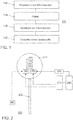
- a method 100 for providing verified information about a traffic sign includes receiving 102 information about the traffic sign from an information source and checking 104 if the information source is an authorized information source. Only when the information source is an authorized information source does method 100 further include storing 106 the information about the traffic sign in a blockchain database. If the information source is not an authorized information source, the traffic sign information is not stored in the blockchain database. The method 100 further includes allowing 108 a read access to the blockchain database.
- the method 100 may give third parties the ability to access the verified information stored in the blockchain database about the traffic sign.
- the safety advantages of blockchain technology against Manipulation in combination with the many possibilities to carry out legalized transactions are not achieved by any other cryptographic solution.
- the method 100 may thus enable the use of the blockchain database technology for securing the traffic sign infrastructure for eg autonomous vehicle.
- the method 100 may include one or more optional features according to one or more of the further embodiments.
- Fig. 2 1 further shows a traffic sign system 200 which includes a traffic sign 210 mounted on a traffic sign support 260 in the form of a sign.
- the traffic sign support 260 is in Fig. 2 exemplified as a support mast.
- the traffic sign support 260 for example, as a support bridge, which spans one or more lanes of a lane, be formed.
- the traffic sign system 200 may also include one or more other traffic signs (not shown).
- the traffic sign 210 may be formed instead of in the form of a sign as an electronic traffic sign.
- the traffic sign system 200 further includes a memory 220 configured to store information about the traffic sign 210.
- the information about the traffic sign 210 corresponds to database information stored by an authorized information source in a publicly accessible block chain database 280.
- the blockchain database 280 is shown as a single entity, the blockchain database 280 may also be a distributed blockchain database in some embodiments.
- the memory 220 of the traffic sign system 200 can thus be understood as an electronic wallet in which the information about the traffic sign 210 is stored. In the electronic exchange, for example, its position on the roadway edge or above the roadway may be stored in addition to the location coordinate of the traffic sign 210. If the traffic sign system 200 comprises several traffic signs, then the different traffic signs may be temporarily (ie with limited validity) or permanently booked in the electronic stock exchange. For each traffic sign, in addition to its validity period, a direction vector indicating a direction-dependent validity or information about an order of the plurality of characters on the same carrier mast or the same carrier bridge may be stored in the exchange.
- the traffic sign system 200 includes an output device 230 configured to output the information about the traffic sign (e.g., by means of an appropriate transmitting device and antenna).
- the traffic sign system 200 is thus capable of displaying its current population of traffic signs, e.g. permanently or on request.
- the transmission of the information can take place in different ways (for example optical, WLAN, Bluetooth, UMTS, LTE, VHF or any other radio signals, etc.).
- any vehicle involved in the block chain may verify the validity of the information received from the traffic sign system 200 for its current position and / or time. Safety-relevant driving maneuvers can thus be protected against manipulation by unauthorized or manipulated traffic signs.
- Logging traffic signs into the memory 220 into the blockchain database 280 can be done from different authorized locations (i.e., authorized information sources), since they can be managed and verified via the distributed blockchain database. As already indicated above, the rights control can be limited in terms of location, time and content.
- bookings may e.g. be made remotely when the traffic sign system 200 is available online.
- the traffic sign system 200 may optionally include a receiver 240 configured to receive the information about the traffic sign 210 wirelessly from a server 270 coupled to the blockchain database 280.
- the traffic sign system 200 may comprise a wired interface 250, which is set up, the information about the traffic sign 210 wired from a coupled to the blockchain database 280 operating device (eg laptop, tablet computer or special handheld terminal) or wired from the with the Blockchain database 280 coupled server 270 to receive.
- the blockchain database 280 operating device eg laptop, tablet computer or special handheld terminal
- a traffic sign system 200 that can not be reached online, for example, can be notified of its new verified occupancy via a passing vehicle.
- This can be the Receiver 240 may alternatively or additionally be configured to receive the information about the traffic sign 210 wirelessly from a vehicle 295 coupled to the blockchain database 280.
- any vehicle integrated in the block chain can be used as a courier for an encrypted delivery of information to the electronic exchange of an on-the-way traffic sign system.
- This approach can be used, for example, for remote locations or as a fallback solution in case of disturbed or limited accessibility via cellular networks.
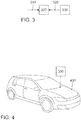
- Fig. 3 also shows a navigation system 300, which according to a block chain database for verification of received first information 310 uses a traffic sign.
- the first information 310 about the traffic sign may come from any source or even unknown source, so it may be unclear whether the first information is correct.
- the first information 310 may be received, for example, from a sender-associated transmitter, a digital roadmap, or a visual recognition system of a vehicle.
- the navigation system 300 therefore matches the first information 310 with the second information 320 stored in a blockchain database 330 about the traffic sign.
- the second information 320 is stored by an authorized information source in the blockchain database 330 and thus correct or not manipulated.
- the navigation system 300 uses the first information 310.
- the navigation system 300 may thus verify the correctness of the first information 310. The possibility of manipulating the navigation system 300 by manipulating traffic signs can thus be avoided.
- the navigation system 300 may be, for example, a navigation system implemented in a mobile terminal (e.g., cellular phone, tablet computer or laptop) or a navigation system installed in a vehicle.
- a mobile terminal e.g., cellular phone, tablet computer or laptop
- a navigation system installed in a vehicle e.g., a vehicle.
- Fig. 4 finally shows a vehicle 400, which includes the navigation system 300.
- vehicle 400 may be an autonomous vehicle that is autonomous using navigation system 300 (and optionally other vehicle sensors) moved in traffic. Accordingly, the manipulation of the vehicle 400 can be avoided by manipulating traffic signs. In particular, security-relevant driving maneuvers of the vehicle 400 can thus be protected against manipulation by unauthorized traffic signs. The vehicle 400 can thus be immune to eg provoked accidents or traffic violations or disadvantageous route guidance, which are to be triggered by manipulated traffic signs.
- the verification of traffic signs described in connection with the navigation system 300 may also be performed by any other electronics or processors or programmable hardware components of the vehicle 400.
- a copy of the blockchain database may e.g. may also be stored in a memory of the vehicle 400 or the vehicle 400 may wirelessly receive via a receiver the information stored in the blockchain database via a traffic sign from a server coupled to the blockchain database.
- the vehicle 400 may receive one or more elements of the blockchain database from another (eg, passing) vehicle and update the local copy of the blockchain database in the vehicle 400 based on the received elements of the blockchain database.
- a vehicle that is offline may adopt new database building blocks from oncoming vehicles that are currently offline themselves but have previously received updated data.
Landscapes
- Engineering & Computer Science (AREA)
- Computer Security & Cryptography (AREA)
- Physics & Mathematics (AREA)
- General Physics & Mathematics (AREA)
- Radar, Positioning & Navigation (AREA)
- Remote Sensing (AREA)
- Theoretical Computer Science (AREA)
- Computer Networks & Wireless Communication (AREA)
- Signal Processing (AREA)
- Life Sciences & Earth Sciences (AREA)
- Atmospheric Sciences (AREA)
- Automation & Control Theory (AREA)
- Bioethics (AREA)
- General Health & Medical Sciences (AREA)
- Computer Hardware Design (AREA)
- Software Systems (AREA)
- General Engineering & Computer Science (AREA)
- Health & Medical Sciences (AREA)
- Traffic Control Systems (AREA)
- Navigation (AREA)
Applications Claiming Priority (1)
| Application Number | Priority Date | Filing Date | Title |
|---|---|---|---|
| DE102018201417.5A DE102018201417A1 (de) | 2018-01-30 | 2018-01-30 | Verfahren zum Bereitstellen verifizierter Informationen über ein Verkehrszeichen, Verkehrszeichenanlage sowie Verfahren für ein Navigationssystem zur Verifikation eines Verkehrszeichens |
Publications (3)
| Publication Number | Publication Date |
|---|---|
| EP3518207A2 true EP3518207A2 (fr) | 2019-07-31 |
| EP3518207A3 EP3518207A3 (fr) | 2019-08-07 |
| EP3518207B1 EP3518207B1 (fr) | 2025-06-25 |
Family
ID=65200598
Family Applications (1)
| Application Number | Title | Priority Date | Filing Date |
|---|---|---|---|
| EP19152688.8A Active EP3518207B1 (fr) | 2018-01-30 | 2019-01-21 | Procédé de fourniture des informations vérifiées sur un panneau de signalisation routière, installation de panneaux de signalisation routière ainsi que procédé pour un système de navigation permettant de vérifier un panneau de signalisation routière |
Country Status (2)
| Country | Link |
|---|---|
| EP (1) | EP3518207B1 (fr) |
| DE (1) | DE102018201417A1 (fr) |
Cited By (3)
| Publication number | Priority date | Publication date | Assignee | Title |
|---|---|---|---|---|
| CN115803796A (zh) * | 2020-07-10 | 2023-03-14 | 哈曼国际工业有限公司 | 用于为车辆检测交通杆攻击的系统和方法 |
| WO2025106180A1 (fr) * | 2023-11-13 | 2025-05-22 | Qualcomm Incorporated | Améliorations apportées à la fiabilité de cartes à système c-v2x |
| US20260022946A1 (en) * | 2021-03-05 | 2026-01-22 | Environmental Systems Research Institute (ESRI) | Geoblockchain authentication of map related data |
Families Citing this family (2)
| Publication number | Priority date | Publication date | Assignee | Title |
|---|---|---|---|---|
| DE102020205727A1 (de) | 2020-05-06 | 2021-11-11 | Volkswagen Aktiengesellschaft | Verfahren, Computerprogramm, Fahrzeug, Netzwerkkomponente und Vorrichtung zum Erzeugen oder Speichern einer Information über ein Einhalten von aktuellen Verkehrsregeln |
| DE102024133975A1 (de) | 2024-11-20 | 2026-05-21 | Audi Aktiengesellschaft | Fahrzeug mit einem Verkehrszeichenerkennungssystem |
Citations (1)
| Publication number | Priority date | Publication date | Assignee | Title |
|---|---|---|---|---|
| CN107045650A (zh) * | 2016-10-25 | 2017-08-15 | 罗轶 | 基于区块链的网约车 |
Family Cites Families (8)
| Publication number | Priority date | Publication date | Assignee | Title |
|---|---|---|---|---|
| JP2884831B2 (ja) | 1991-07-03 | 1999-04-19 | 株式会社日立製作所 | 処理装置 |
| GB2440958A (en) * | 2006-08-15 | 2008-02-20 | Tomtom Bv | Method of correcting map data for use in navigation systems |
| EP2469230A1 (fr) * | 2010-12-23 | 2012-06-27 | Research In Motion Limited | Actualisation de données cartographiques à partir d'images de caméra |
| US20130282154A1 (en) * | 2012-04-18 | 2013-10-24 | Vere Chappell | Remote dynamic message sign systems and methods of control |
| WO2017180382A1 (fr) | 2016-04-12 | 2017-10-19 | Pcms Holdings, Inc. | Système et procédé de validation de données dans un réseau de capteurs décentralisé |
| EP3453005A1 (fr) | 2016-05-06 | 2019-03-13 | Innogy Innovation GmbH | Système de circulation |
| DE102016208621A1 (de) * | 2016-05-19 | 2017-11-23 | Continental Automotive Gmbh | Verfahren zur Verifizierung von Inhalt und Aufstellort von Verkehrszeichen |
| US10097344B2 (en) * | 2016-07-15 | 2018-10-09 | Mastercard International Incorporated | Method and system for partitioned blockchains and enhanced privacy for permissioned blockchains |
-
2018
- 2018-01-30 DE DE102018201417.5A patent/DE102018201417A1/de not_active Ceased
-
2019
- 2019-01-21 EP EP19152688.8A patent/EP3518207B1/fr active Active
Patent Citations (1)
| Publication number | Priority date | Publication date | Assignee | Title |
|---|---|---|---|---|
| CN107045650A (zh) * | 2016-10-25 | 2017-08-15 | 罗轶 | 基于区块链的网约车 |
Non-Patent Citations (1)
| Title |
|---|
| YUAN YONG ET AL: "Towards blockchain-based intelligent transportation systems", 2016 IEEE 19TH INTERNATIONAL CONFERENCE ON INTELLIGENT TRANSPORTATION SYSTEMS (ITSC), IEEE, 1 November 2016 (2016-11-01), pages 2663 - 2668, XP033028713, DOI: 10.1109/ITSC.2016.7795984 * |
Cited By (3)
| Publication number | Priority date | Publication date | Assignee | Title |
|---|---|---|---|---|
| CN115803796A (zh) * | 2020-07-10 | 2023-03-14 | 哈曼国际工业有限公司 | 用于为车辆检测交通杆攻击的系统和方法 |
| US20260022946A1 (en) * | 2021-03-05 | 2026-01-22 | Environmental Systems Research Institute (ESRI) | Geoblockchain authentication of map related data |
| WO2025106180A1 (fr) * | 2023-11-13 | 2025-05-22 | Qualcomm Incorporated | Améliorations apportées à la fiabilité de cartes à système c-v2x |
Also Published As
| Publication number | Publication date |
|---|---|
| DE102018201417A1 (de) | 2019-08-01 |
| EP3518207B1 (fr) | 2025-06-25 |
| EP3518207A3 (fr) | 2019-08-07 |
Similar Documents
| Publication | Publication Date | Title |
|---|---|---|
| EP3518207B1 (fr) | Procédé de fourniture des informations vérifiées sur un panneau de signalisation routière, installation de panneaux de signalisation routière ainsi que procédé pour un système de navigation permettant de vérifier un panneau de signalisation routière | |
| DE102018221740B4 (de) | Verfahren, Vorrichtung und Computerprogramm für ein Fahrzeug | |
| EP2795948B1 (fr) | Procédé pour acheminer des envois postaux dans un véhicule | |
| EP3459006A1 (fr) | Procédé de vérification du contenu et de l'emplacement de panneaux de signalisation | |
| DE102018112118A1 (de) | Verfahren und systeme zum verwenden einer blockchain-datenbank zum austausch von daten zwischen fahrzeugen und entitäten | |
| DE102009008745B4 (de) | Verfahren und System zur automatischen Verkehrsführung | |
| EP1358634A1 (fr) | Procede de controle pour la collecte de droits de peage | |
| EP1979886B1 (fr) | Procédé et dispositif de détection du trafic traversant une zone | |
| EP2932448A1 (fr) | Système pour acheminer des envois | |
| DE102013223680A1 (de) | Kraftfahrzeug | |
| DE102019115367A1 (de) | Dezentralisierte verteilte karte unter verwendung von blockchain | |
| DE102018212238A1 (de) | Kontosystem, anbieter-endgerät, benutzer-endgerät, und knoten | |
| EP2994890B1 (fr) | Procédé et dispositif de fourniture de données pour la perception de péage et système de péage | |
| EP3618311B1 (fr) | Procédé d'échange de données entre un véhicule et une infrastructure ou un autre véhicule | |
| DE102012017620A1 (de) | Vorrichtung zur Kontrolle von Verkehrsteilnehmern anhand von Kraftfahrzeugkennzeichentafeln | |
| DE102014002132A1 (de) | Konzept zur positionsabhängigen Bewertung einer Steuerinformation, Verfahren zum Steuern eines bewegten Objekts und Informationssystem | |
| EP4099182B1 (fr) | Procédé de création et de mise à jour d'une banque de données pour dispositif de charge et véhicule automobile | |
| EP2503518A1 (fr) | Procédé de validation d'une transaction de péage | |
| DE102005058033A1 (de) | Verfahren zur Überprüfung einer Benutzungsberechtigung | |
| DE112019007424T5 (de) | Autonomes Fahrsystem | |
| DE102016004802A1 (de) | Verfahren zum Auswählen und zur verkehrsorientierten Steuerung eines Fahrzeugs und Informationssystem für ein Fahrzeug | |
| EP4375145B1 (fr) | Plaque d'immatriculation numérique, système et procédé de fonctionnement de celle-ci | |
| DE102016009547A1 (de) | Kraftfahrzeug mit gesicherter Tür | |
| DE102019002780A1 (de) | Verfahren zur Generierung einer dynamischen digitalen Karte | |
| DE10207303A1 (de) | Elektronische Fahrzeug-Identifikationseinrichtung und ein System zur Schaffung von wenigstens einem Telematikdienst, verbunden mit der Fahrzeugidentifikation |
Legal Events
| Date | Code | Title | Description |
|---|---|---|---|
| PUAI | Public reference made under article 153(3) epc to a published international application that has entered the european phase |
Free format text: ORIGINAL CODE: 0009012 |
|
| STAA | Information on the status of an ep patent application or granted ep patent |
Free format text: STATUS: THE APPLICATION HAS BEEN PUBLISHED |
|
| PUAL | Search report despatched |
Free format text: ORIGINAL CODE: 0009013 |
|
| AK | Designated contracting states |
Kind code of ref document: A2 Designated state(s): AL AT BE BG CH CY CZ DE DK EE ES FI FR GB GR HR HU IE IS IT LI LT LU LV MC MK MT NL NO PL PT RO RS SE SI SK SM TR |
|
| AX | Request for extension of the european patent |
Extension state: BA ME |
|
| AK | Designated contracting states |
Kind code of ref document: A3 Designated state(s): AL AT BE BG CH CY CZ DE DK EE ES FI FR GB GR HR HU IE IS IT LI LT LU LV MC MK MT NL NO PL PT RO RS SE SI SK SM TR |
|
| AX | Request for extension of the european patent |
Extension state: BA ME |
|
| RIC1 | Information provided on ipc code assigned before grant |
Ipc: G06F 21/64 20130101ALI20190702BHEP Ipc: G01C 21/32 20060101ALI20190702BHEP Ipc: G08G 1/095 20060101AFI20190702BHEP Ipc: H04L 9/32 20060101ALI20190702BHEP |
|
| STAA | Information on the status of an ep patent application or granted ep patent |
Free format text: STATUS: REQUEST FOR EXAMINATION WAS MADE |
|
| 17P | Request for examination filed |
Effective date: 20200207 |
|
| RBV | Designated contracting states (corrected) |
Designated state(s): AL AT BE BG CH CY CZ DE DK EE ES FI FR GB GR HR HU IE IS IT LI LT LU LV MC MK MT NL NO PL PT RO RS SE SI SK SM TR |
|
| STAA | Information on the status of an ep patent application or granted ep patent |
Free format text: STATUS: EXAMINATION IS IN PROGRESS |
|
| 17Q | First examination report despatched |
Effective date: 20211103 |
|
| GRAP | Despatch of communication of intention to grant a patent |
Free format text: ORIGINAL CODE: EPIDOSNIGR1 |
|
| STAA | Information on the status of an ep patent application or granted ep patent |
Free format text: STATUS: GRANT OF PATENT IS INTENDED |
|
| RIC1 | Information provided on ipc code assigned before grant |
Ipc: H04L 9/00 20060101ALI20250128BHEP Ipc: G08G 1/0967 20060101ALI20250128BHEP Ipc: G01C 21/36 20060101ALI20250128BHEP Ipc: G06F 21/64 20130101ALI20250128BHEP Ipc: H04L 9/32 20060101ALI20250128BHEP Ipc: G01C 21/32 20060101ALI20250128BHEP Ipc: G08G 1/095 20060101AFI20250128BHEP |
|
| INTG | Intention to grant announced |
Effective date: 20250211 |
|
| GRAS | Grant fee paid |
Free format text: ORIGINAL CODE: EPIDOSNIGR3 |
|
| GRAA | (expected) grant |
Free format text: ORIGINAL CODE: 0009210 |
|
| STAA | Information on the status of an ep patent application or granted ep patent |
Free format text: STATUS: THE PATENT HAS BEEN GRANTED |
|
| AK | Designated contracting states |
Kind code of ref document: B1 Designated state(s): AL AT BE BG CH CY CZ DE DK EE ES FI FR GB GR HR HU IE IS IT LI LT LU LV MC MK MT NL NO PL PT RO RS SE SI SK SM TR |
|
| REG | Reference to a national code |
Ref country code: GB Ref legal event code: FG4D Free format text: NOT ENGLISH |
|
| REG | Reference to a national code |
Ref country code: CH Ref legal event code: EP |
|
| REG | Reference to a national code |
Ref country code: CH Ref legal event code: EP |
|
| REG | Reference to a national code |
Ref country code: IE Ref legal event code: FG4D Free format text: LANGUAGE OF EP DOCUMENT: GERMAN |
|
| REG | Reference to a national code |
Ref country code: DE Ref legal event code: R096 Ref document number: 502019013489 Country of ref document: DE |
|
| PG25 | Lapsed in a contracting state [announced via postgrant information from national office to epo] |
Ref country code: FI Free format text: LAPSE BECAUSE OF FAILURE TO SUBMIT A TRANSLATION OF THE DESCRIPTION OR TO PAY THE FEE WITHIN THE PRESCRIBED TIME-LIMIT Effective date: 20250625 |
|
| REG | Reference to a national code |
Ref country code: LT Ref legal event code: MG9D |
|
| PG25 | Lapsed in a contracting state [announced via postgrant information from national office to epo] |
Ref country code: GR Free format text: LAPSE BECAUSE OF FAILURE TO SUBMIT A TRANSLATION OF THE DESCRIPTION OR TO PAY THE FEE WITHIN THE PRESCRIBED TIME-LIMIT Effective date: 20250926 Ref country code: NO Free format text: LAPSE BECAUSE OF FAILURE TO SUBMIT A TRANSLATION OF THE DESCRIPTION OR TO PAY THE FEE WITHIN THE PRESCRIBED TIME-LIMIT Effective date: 20250925 |
|
| PG25 | Lapsed in a contracting state [announced via postgrant information from national office to epo] |
Ref country code: BG Free format text: LAPSE BECAUSE OF FAILURE TO SUBMIT A TRANSLATION OF THE DESCRIPTION OR TO PAY THE FEE WITHIN THE PRESCRIBED TIME-LIMIT Effective date: 20250625 |
|
| PG25 | Lapsed in a contracting state [announced via postgrant information from national office to epo] |
Ref country code: HR Free format text: LAPSE BECAUSE OF FAILURE TO SUBMIT A TRANSLATION OF THE DESCRIPTION OR TO PAY THE FEE WITHIN THE PRESCRIBED TIME-LIMIT Effective date: 20250625 |
|
| PG25 | Lapsed in a contracting state [announced via postgrant information from national office to epo] |
Ref country code: RS Free format text: LAPSE BECAUSE OF FAILURE TO SUBMIT A TRANSLATION OF THE DESCRIPTION OR TO PAY THE FEE WITHIN THE PRESCRIBED TIME-LIMIT Effective date: 20250925 |
|
| PG25 | Lapsed in a contracting state [announced via postgrant information from national office to epo] |
Ref country code: LV Free format text: LAPSE BECAUSE OF FAILURE TO SUBMIT A TRANSLATION OF THE DESCRIPTION OR TO PAY THE FEE WITHIN THE PRESCRIBED TIME-LIMIT Effective date: 20250625 |
|
| REG | Reference to a national code |
Ref country code: NL Ref legal event code: MP Effective date: 20250625 |
|
| PG25 | Lapsed in a contracting state [announced via postgrant information from national office to epo] |
Ref country code: NL Free format text: LAPSE BECAUSE OF FAILURE TO SUBMIT A TRANSLATION OF THE DESCRIPTION OR TO PAY THE FEE WITHIN THE PRESCRIBED TIME-LIMIT Effective date: 20250625 |
|
| PG25 | Lapsed in a contracting state [announced via postgrant information from national office to epo] |
Ref country code: PT Free format text: LAPSE BECAUSE OF FAILURE TO SUBMIT A TRANSLATION OF THE DESCRIPTION OR TO PAY THE FEE WITHIN THE PRESCRIBED TIME-LIMIT Effective date: 20251027 |
|
| PG25 | Lapsed in a contracting state [announced via postgrant information from national office to epo] |
Ref country code: IS Free format text: LAPSE BECAUSE OF FAILURE TO SUBMIT A TRANSLATION OF THE DESCRIPTION OR TO PAY THE FEE WITHIN THE PRESCRIBED TIME-LIMIT Effective date: 20251025 |
|
| PG25 | Lapsed in a contracting state [announced via postgrant information from national office to epo] |
Ref country code: SM Free format text: LAPSE BECAUSE OF FAILURE TO SUBMIT A TRANSLATION OF THE DESCRIPTION OR TO PAY THE FEE WITHIN THE PRESCRIBED TIME-LIMIT Effective date: 20250625 |
|
| P01 | Opt-out of the competence of the unified patent court (upc) registered |
Free format text: CASE NUMBER: UPC_APP_0014665_3518207/2025 Effective date: 20251125 |
|
| PG25 | Lapsed in a contracting state [announced via postgrant information from national office to epo] |
Ref country code: CZ Free format text: LAPSE BECAUSE OF FAILURE TO SUBMIT A TRANSLATION OF THE DESCRIPTION OR TO PAY THE FEE WITHIN THE PRESCRIBED TIME-LIMIT Effective date: 20250625 |
|
| PG25 | Lapsed in a contracting state [announced via postgrant information from national office to epo] |
Ref country code: PL Free format text: LAPSE BECAUSE OF FAILURE TO SUBMIT A TRANSLATION OF THE DESCRIPTION OR TO PAY THE FEE WITHIN THE PRESCRIBED TIME-LIMIT Effective date: 20250625 |
|
| PG25 | Lapsed in a contracting state [announced via postgrant information from national office to epo] |
Ref country code: EE Free format text: LAPSE BECAUSE OF FAILURE TO SUBMIT A TRANSLATION OF THE DESCRIPTION OR TO PAY THE FEE WITHIN THE PRESCRIBED TIME-LIMIT Effective date: 20250625 |
|
| PG25 | Lapsed in a contracting state [announced via postgrant information from national office to epo] |
Ref country code: SK Free format text: LAPSE BECAUSE OF FAILURE TO SUBMIT A TRANSLATION OF THE DESCRIPTION OR TO PAY THE FEE WITHIN THE PRESCRIBED TIME-LIMIT Effective date: 20250625 |
|
| PG25 | Lapsed in a contracting state [announced via postgrant information from national office to epo] |
Ref country code: ES Free format text: LAPSE BECAUSE OF FAILURE TO SUBMIT A TRANSLATION OF THE DESCRIPTION OR TO PAY THE FEE WITHIN THE PRESCRIBED TIME-LIMIT Effective date: 20250625 |
|
| REG | Reference to a national code |
Ref country code: DE Ref legal event code: R097 Ref document number: 502019013489 Country of ref document: DE |
|
| PGFP | Annual fee paid to national office [announced via postgrant information from national office to epo] |
Ref country code: GB Payment date: 20260126 Year of fee payment: 8 |
|
| PG25 | Lapsed in a contracting state [announced via postgrant information from national office to epo] |
Ref country code: DK Free format text: LAPSE BECAUSE OF FAILURE TO SUBMIT A TRANSLATION OF THE DESCRIPTION OR TO PAY THE FEE WITHIN THE PRESCRIBED TIME-LIMIT Effective date: 20250625 |
|
| PGFP | Annual fee paid to national office [announced via postgrant information from national office to epo] |
Ref country code: DE Payment date: 20260131 Year of fee payment: 8 |
|
| PG25 | Lapsed in a contracting state [announced via postgrant information from national office to epo] |
Ref country code: IT Free format text: LAPSE BECAUSE OF FAILURE TO SUBMIT A TRANSLATION OF THE DESCRIPTION OR TO PAY THE FEE WITHIN THE PRESCRIBED TIME-LIMIT Effective date: 20250625 |
|
| PGFP | Annual fee paid to national office [announced via postgrant information from national office to epo] |
Ref country code: FR Payment date: 20260126 Year of fee payment: 8 |
|
| PLBE | No opposition filed within time limit |
Free format text: ORIGINAL CODE: 0009261 |
|
| STAA | Information on the status of an ep patent application or granted ep patent |
Free format text: STATUS: NO OPPOSITION FILED WITHIN TIME LIMIT |
|
| REG | Reference to a national code |
Ref country code: CH Ref legal event code: L10 Free format text: ST27 STATUS EVENT CODE: U-0-0-L10-L00 (AS PROVIDED BY THE NATIONAL OFFICE) Effective date: 20260507 |
|
| 26N | No opposition filed |
Effective date: 20260326 |
|
| PG25 | Lapsed in a contracting state [announced via postgrant information from national office to epo] |
Ref country code: LT Free format text: LAPSE BECAUSE OF FAILURE TO SUBMIT A TRANSLATION OF THE DESCRIPTION OR TO PAY THE FEE WITHIN THE PRESCRIBED TIME-LIMIT Effective date: 20250625 |
|
| PG25 | Lapsed in a contracting state [announced via postgrant information from national office to epo] |
Ref country code: SE Free format text: LAPSE BECAUSE OF FAILURE TO SUBMIT A TRANSLATION OF THE DESCRIPTION OR TO PAY THE FEE WITHIN THE PRESCRIBED TIME-LIMIT Effective date: 20250625 |