EP3518442A1 - Procédé de transmission et de réception d'un service multimédia - Google Patents
Procédé de transmission et de réception d'un service multimédia Download PDFInfo
- Publication number
- EP3518442A1 EP3518442A1 EP19161146.6A EP19161146A EP3518442A1 EP 3518442 A1 EP3518442 A1 EP 3518442A1 EP 19161146 A EP19161146 A EP 19161146A EP 3518442 A1 EP3518442 A1 EP 3518442A1
- Authority
- EP
- European Patent Office
- Prior art keywords
- package
- uimsbf
- asset
- information
- flag
- Prior art date
- Legal status (The legal status is an assumption and is not a legal conclusion. Google has not performed a legal analysis and makes no representation as to the accuracy of the status listed.)
- Granted
Links
Images



Classifications
-
- H—ELECTRICITY
- H04—ELECTRIC COMMUNICATION TECHNIQUE
- H04N—PICTORIAL COMMUNICATION, e.g. TELEVISION
- H04N21/00—Selective content distribution, e.g. interactive television or video on demand [VOD]
- H04N21/20—Servers specifically adapted for the distribution of content, e.g. VOD servers; Operations thereof
- H04N21/23—Processing of content or additional data; Elementary server operations; Server middleware
- H04N21/236—Assembling of a multiplex stream, e.g. transport stream, by combining a video stream with other content or additional data, e.g. inserting a URL [Uniform Resource Locator] into a video stream, multiplexing software data into a video stream; Remultiplexing of multiplex streams; Insertion of stuffing bits into the multiplex stream, e.g. to obtain a constant bit-rate; Assembling of a packetised elementary stream
- H04N21/23605—Creation or processing of packetized elementary streams [PES]
-
- H—ELECTRICITY
- H04—ELECTRIC COMMUNICATION TECHNIQUE
- H04H—BROADCAST COMMUNICATION
- H04H60/00—Arrangements for broadcast applications with a direct linking to broadcast information or broadcast space-time; Broadcast-related systems
- H04H60/68—Systems specially adapted for using specific information, e.g. geographical or meteorological information
- H04H60/73—Systems specially adapted for using specific information, e.g. geographical or meteorological information using meta-information
-
- H—ELECTRICITY
- H04—ELECTRIC COMMUNICATION TECHNIQUE
- H04H—BROADCAST COMMUNICATION
- H04H60/00—Arrangements for broadcast applications with a direct linking to broadcast information or broadcast space-time; Broadcast-related systems
- H04H60/76—Arrangements characterised by transmission systems other than for broadcast, e.g. the Internet
- H04H60/81—Arrangements characterised by transmission systems other than for broadcast, e.g. the Internet characterised by the transmission system itself
-
- H—ELECTRICITY
- H04—ELECTRIC COMMUNICATION TECHNIQUE
- H04N—PICTORIAL COMMUNICATION, e.g. TELEVISION
- H04N21/00—Selective content distribution, e.g. interactive television or video on demand [VOD]
- H04N21/20—Servers specifically adapted for the distribution of content, e.g. VOD servers; Operations thereof
- H04N21/23—Processing of content or additional data; Elementary server operations; Server middleware
- H04N21/236—Assembling of a multiplex stream, e.g. transport stream, by combining a video stream with other content or additional data, e.g. inserting a URL [Uniform Resource Locator] into a video stream, multiplexing software data into a video stream; Remultiplexing of multiplex streams; Insertion of stuffing bits into the multiplex stream, e.g. to obtain a constant bit-rate; Assembling of a packetised elementary stream
- H04N21/2362—Generation or processing of Service Information [SI]
-
- H—ELECTRICITY
- H04—ELECTRIC COMMUNICATION TECHNIQUE
- H04N—PICTORIAL COMMUNICATION, e.g. TELEVISION
- H04N21/00—Selective content distribution, e.g. interactive television or video on demand [VOD]
- H04N21/20—Servers specifically adapted for the distribution of content, e.g. VOD servers; Operations thereof
- H04N21/23—Processing of content or additional data; Elementary server operations; Server middleware
- H04N21/238—Interfacing the downstream path of the transmission network, e.g. adapting the transmission rate of a video stream to network bandwidth; Processing of multiplex streams
- H04N21/2381—Adapting the multiplex stream to a specific network, e.g. an Internet Protocol [IP] network
-
- H—ELECTRICITY
- H04—ELECTRIC COMMUNICATION TECHNIQUE
- H04N—PICTORIAL COMMUNICATION, e.g. TELEVISION
- H04N21/00—Selective content distribution, e.g. interactive television or video on demand [VOD]
- H04N21/60—Network structure or processes for video distribution between server and client or between remote clients; Control signalling between clients, server and network components; Transmission of management data between server and client, e.g. sending from server to client commands for recording incoming content stream; Communication details between server and client
- H04N21/61—Network physical structure; Signal processing
- H04N21/6106—Network physical structure; Signal processing specially adapted to the downstream path of the transmission network
-
- H—ELECTRICITY
- H04—ELECTRIC COMMUNICATION TECHNIQUE
- H04H—BROADCAST COMMUNICATION
- H04H2201/00—Aspects of broadcast communication
- H04H2201/40—Aspects of broadcast communication characterised in that additional data relating to the broadcast data are available via a different channel than the broadcast channel
Definitions
- the present invention relates to a method for providing multimedia services. More particularly, the present invention relates to a method in which a service provider, which provides broadcasting-communication convergence services in a heterogeneous network environment, may deliver specific information about a service that the service provider itself provides.
- the evolution of the Internet into the broadband Internet has enabled not only the existing broadcasting that uses dedicated channels such as terrestrial channels, satellite channels and cables, but also the Internet broadcasting that provides scheduled multimedia services using the public Internet.
- broadcasting-communication convergence services have emerged that can provide a variety of services by organically combining the existing broadcasting with the Internet broadcasting.
- Broadcast service providers can deliver content not only over the dedicated channels, but also over the Internet. Even a broadcast service provider has emerged that can deliver content only over the Internet without its dedicated broadcast channels. Therefore, regardless of whether a broadcaster uses both the dedicated channels and the Internet, or only uses the Internet, the broadcaster needs to deliver its program schedule (or organization) information to viewers along with program content, promoting their program content to the viewers, thus allowing the viewers to watch the programs according to the viewers' respective schedules.
- the broadcasters may provide a 'Re-view' service over the Internet, thereby allowing the viewers to watch the content later if the viewers did not watch during the content during its broadcast. In the existing broadcasting, this type of information is called an Electronic Program Guide (EPG).
- EPG Electronic Program Guide
- PSIP Program and System Information Protocol
- SI Service Information
- MPEG-2 Moving Picture Experts Group-2
- the Internet broadcasting is globally provided, so viewers may access the Internet broadcasting over the Internet anywhere in the world as long as the viewers have a receiver capable of receiving the Internet broadcasting, thereby overcoming the limitations of the regional property of the existing broadcasting. Therefore, in order to overcome the limitations of the regional property of the existing broadcasting standards, which are roughly classified into the North American standard, the European standard, and the Japanese standard, the Internet broadcasting should be provided by a single standard unique in the world to prevent the unnecessary increase in complexity of the receivers. In this regard, SSI also requires a single standard.
- the future broadcasting-communication convergence system is expected to be restructured based on the Internet.
- even guide information not only about the program content over the existing broadcast channels but also about the program content over the Internet will be delivered in SSI in the machine-readable form in which the receivers may read the program content.
- the receivers may acquire the SSI over broadcast channels or the Internet, utilize it in controlling broadcast reception, and if necessary, show it in the form in which the viewers can read the SSI.
- the Internet broadcasters which use no dedicated broadcast channels, may deliver the SSI over the Internet.
- an aspect of the present invention is to provide a format by which a service provider, which provides broadcasting-communication convergence services in a heterogeneous network environment including the Internet, may deliver specific information about a service that the service provider itself provides.
- a method for receiving a multimedia service includes receiving service specific information for at least one multimedia service provided from different networks, selecting one service based on the service specific information, and receiving the selected service.
- the service specific information may include one of a first service map table including information about at least one service which is transmitted over a plurality of logical channels, and a second service map table including information about at least one service which is transmitted over a single logical channel.
- Each of the first and second service map tables may include asset-related information.
- a method for transmitting a multimedia service includes transmitting service specific information for at least one multimedia service to be provided from different networks, and transmitting a service requested by a receiver, to the receiver based on the service specific information.
- the service specific information may include one of a first service map table including information about at least one service which is transmitted over a plurality of logical channels, and a second service map table including information about at least one service which is transmitted over a single logical channel.
- Each of the first and second service map tables may include asset-related information.
- an apparatus for receiving a multimedia service includes a receiver for receiving service specific information for at least one multimedia service provided from different networks, and a controller for selecting one service based on the service specific information.
- the receiver may receive a service selected by the controller.
- the service specific information may include one of a first service map table including information about at least one service which is transmitted over a plurality of logical channels, and a second service map table including information about at least one service which is transmitted over a single logical channel.
- Each of the first and second service map tables may include asset-related information.
- an apparatus for transmitting a multimedia service includes a transmitter for transmitting service specific information for at least one multimedia service to be provided from different networks, and a controller for selecting a service requested by a receiver based on the service specific information.
- the transmitter may transmit a service selected by the controller, to the receiver based on the service specific information.
- the service specific information may include one of a first service map table including information about at least one service which is transmitted over a plurality of logical channels, and a second service map table including information about at least one service which is transmitted over a single logical channel.
- Each of the first and second service map tables may include asset-related information.
- a method for receiving a multimedia service includes receiving a control message, and decoding the control message.
- the control message may include at least one table.
- the at least one table may include a table for at least one MPEG Media Transport (MMT) Package Table (MPT) corresponding to a package.
- MMT MPEG Media Transport
- MPT Package Table
- the table for an MPT may include an asset list belonging to the package.
- an apparatus for receiving a multimedia service includes a receiver for receiving a control message, and a decoder for decoding the control message.
- the control message may include at least one table.
- the at least one table may include a table for at least one MPT corresponding to a package.
- the table for the MPT may include an asset list belonging to the package.
- a method for transmitting a multimedia service includes generating a control message, and transmitting the generated control message.
- the control message may include at least one table.
- the at least one table may include a table for at least one MPT corresponding to a package.
- the table for the MPT may include an asset list belonging to the package.
- an apparatus for transmitting a multimedia service includes a controller for generating a control message, and a transmitter for transmitting the generated control message.
- the control message may include at least one table.
- the at least one table may include a table for at least one MPT corresponding to a package.
- the table for the MPT may include an asset list belonging to the package.
- Media Service A service which delivers information by using one or more of various media, such as, for example, audio, video, images, texts, graphics, interactive applications, and the like.
- Foreground Media Service A free or charged media product directly exposed to a viewer to allow the viewer to select and enjoy at a time point, such as a video service, an audio service, an Electronic Program Guide (EPG) service, a push Video on Demand (VoD) service, a portable service, and the like.
- EPG Electronic Program Guide
- VoD Video on Demand
- Background Broadcast Service A media delivery service which assists the foreground media service, but is not directly exposed to a viewer, such as, for example, a carousel for file download, pre-download over the Internet, and the like.
- Video Service A service in which video is the primary, and its associated audio is provided together, and audio, a subtitle, an interactive application, other additional data, and the like, in another language may also be provided together with the video.
- Audio Service A service in which audio is the primary, and video or image, an interactive application, and other additional data associated with the audio may be provided together with the audio.
- Interactive Application Software which is evoked if necessary during consumption of a video or audio service, provides information to a viewer, and receives a viewer's reaction to control a media service or deliver information to a server of a media operator, and collectively refers to software in a declarative and procedural language.
- This application may be evoked by a media operator in association with a currently consumed video or audio service or may be evoked by a media operator regardless of a currently consumed media service.
- An interactive application already stored in a receiver's cache and recognized by a viewer may be evoked at the request of the viewer.
- Regular Media Media which needs to be provided due to requirements of a media service. For example, audio of an audio service, or video and audio of its associated video service.
- Adjunct Media Media which does not need to be provided due to requirements of a media service, but may be provided when needed.
- such media may include web documents, widgets, interactive applications, audio clips, video clips, graphics, texts, images, an auxiliary media component, or the like.
- the adjunct media is consumed together with regular media at all times, and cannot be consumed alone.
- Media Component A component which constitutes media.
- a left-eye view image and a right-eye view image may be media components.
- each channel audio may be a media component.
- a left-eye view image is provided as a 2-Dimensional (2D) image at all times among left-eye and right-eye view images in a 2D/3-Dimensonal (3D) time combined service
- the right-eye view image provided only in a stereoscopic video period is an auxiliary media component.
- Asset Encoding data regarding a media component.
- encoding refers to compression encoding, encoding for a standard format, and the like.
- Regular Asset Encoding data regarding a media component of regular media.
- encoding refers to compression encoding, encoding for a standard format, and the like.
- Adjunct Asset Encoding data regarding a media component or auxiliary media component of adjunct media.
- encoding refers to compression encoding, encoding for a standard format, and the like.
- Program An instance of a media service (e.g., the entire content of one broadcast channel (logical channel)).
- Program Item The content of a time period of a program.
- the program item is the content of a time period of the movie including the advertisement.
- each advertisement is an individual program item, but it is an embedded program item included in another program item.
- the program is a result of concatenation of program items except for the embedded program item on a timeline.
- Encoding data for a program item This includes assets and control information associated with transmission, decoding, playback, and the like, of the assets.
- a regular asset which can include synchronization information regarding an adjunct asset among regular assets.
- the primary asset may include synchronization and control information of an adjunct asset, as attached information of an M-unit of a video stream.
- Attached Information Additional information regarding an asset, such as control information, description information, and the like.
- the attached information is a logical term, and may be included in a header of multiple layers in a transport hierarchy, and in this case, it is called header information.
- Stream Asset An asset in the form of a media compression data, which can be temporally-infinitely generated like a video stream and an audio stream.
- Non-Stream Asset An asset which does not correspond to a stream asset.
- M-Unit A sub sub-component of an asset.
- An M-unit of a stream asset is a minimum data unit which can be input to a media decoder at a time, and a decoding result thereof may be presented at a time point or in a time period according to media.
- a result of compression of a frame may be one M-unit
- an audio stream a result of compression of an audio sample for 24 ms may be one M-unit.
- Logical Channel A path that delivers one encoded program.
- the logical channel corresponds to a data delivery path designated by a Program Map Table (PMT) in the existing MPEG-2 Transport Stream (TS)-based digital TV system, or a data delivery path designated by a source address, a destination address And A Port Number In The Internet.
- PMT Program Map Table
- TS MPEG-2 Transport Stream
- Physical Channel A path that delivers one or more logical channels.
- the physical channel corresponds to a terrestrial TV channel, a cable TV channel, a satellite broadcast channel, the Internet, and the like, having a bandwidth of 6 MHz.
- IP Internet Protocol
- IP Application Data Flow One IP application data flow is designated by a source address and a destination address on the Internet, and by a port number in a destination designating an application that will process content of an IP packet.
- Asset Path IDentifier An identifier of an asset path (e.g., an information path carrying an asset).
- An IP application data flow is composed of several asset paths, and each asset path is uniquely identified within one IP application data flow by an APID.
- Asset Module IDentifier When an asset is transmitted through several asset modules by being divided, the AMID is an identifier for identifying these asset modules in one asset path. For example, assuming that there is a large-sized table and this table is divided into several sub-tables, if the entire table is designated as one asset, each sub-table is an asset module.
- SSI Service Specific Information
- a broadcaster or a group of broadcasters needs to deliver, to receivers, specific information for a broadcast service provided over all media such as wire/wireless Internets, terrestrial channels, satellite channels and cables, which are operated in common.
- SSI needs to have a machine-readable format that a receiver may efficiently read and decrypt.
- the SSI needs to use a format in which the same SSI may be represented with as small amount of data as possible.
- Target Period of Guide Information SSI needs to guide service specification (or service history) of the past and present over a predetermined period, and of the future for a period of a predetermined time (e.g., during a half month). However, the service specification that was already broadcasted in the past may not be directly included in SSI, and in this case, a receiver may maintain the already stored past service specification without deletion for a predetermined period of time (e.g., a half month).
- Valid Period of Guide Information A specific version of SSI is valid only for a predetermined period of time, and needs to be updated automatically by a receiver upon a lapse of the predetermined period of time.
- SSI Delivery Means for Guide Information: When necessary, all or some of SSI needs to be delivered over one or more of the media such as wire/wireless Internets, terrestrial channels, satellite channels, and cables.
- SSI needs to have a structure in which of the SSI content, the information necessary for operations of the broadcasting system is mandatorily delivered, but the other information may be optionally delivered.
- position information of program content is the information necessary for a receiver to read a program stream
- plot of the program content is the information that can help the viewer to determine whether to view the program, but is not necessary for operations of the receiver.
- SSI needs to have a structure capable of minimizing a channel acquisition time.
- the term 'channel acquisition time' as used herein may refer to a time in which video and audio are played after power-up or channel change.
- SSI Forward Compatibility with Existing Broadcasting: SSI needs to guide service specification of even the existing MPEG-2 TS based broadcasting.
- the existing MPEG-2 TS based broadcasting also needs to use SSI.
- the provided SSI will not be used in the existing receiver that does not support it, but it should not cause undue impact on the operation of the receiver.
- SSI may be utilized in a new version of the receiver that supports SSI.
- SSI needs to support several small screens in one screen. It includes a function of designating spatio-temporal positions of small screens. For example, during the live broadcast of a baseball game, the SSI needs to include in the entire screen, all of the small screens showing the pitcher, the hitter, a specific infielder, the entire stadium, and the like.
- SSI needs to support content guide for a receiver with various capabilities such as mobile devices, Standard Definition Television (SDTV), High Definition TV (HDTV), Ultra-High Definition (UHDTV), and the like.
- SDTV Standard Definition Television
- HDTV High Definition TV
- UHDTV Ultra-High Definition
- SSI Guidance of Content Restriction
- the restrictions may include content ratings (e.g., those below a certain age are prohibited to watch the content), recordability, accessibility, fast forward play/reverse play, pay-per-view, monthly billing, and the like.
- SSI needs to guide a position of content data.
- the SSI needs to efficiently guide both the same position of the entire content and the different positions of individual contempt components.
- the SSI needs to guide delivery of content over some or all of one or more dedicated broadcast physical channels and the Internet.
- SSI needs to guide a position of alternative content data.
- the term 'position of alternative content data' as used herein may refer to another position where the content, which is the same as or similar to the original content data, may be read instead of the intended original content data for the content that the viewer selected.
- SSI needs to guide not only the main video and audio, but also its associated auxiliary data, such as web documents, widgets, interactive applications, audio clips, video clips, graphics, texts, images, and partial media streams (e.g., additional finite-length streams for demonstrating binocular 3D video for a predetermined period).
- auxiliary data such as web documents, widgets, interactive applications, audio clips, video clips, graphics, texts, images, and partial media streams (e.g., additional finite-length streams for demonstrating binocular 3D video for a predetermined period).
- SSI is provided per broadcaster, or group of broadcasters.
- Terrestrial broadcasters, cable broadcasters, satellite broadcasters, Internet broadcasters, and the like cannot but independently deliver their own service specification unless they make an agreement on sharing and integrated delivery of service specifications, because they conduct their business independently.
- the service specifications may be guided in an integrated manner to a broadcaster group, which is a group of broadcasters participating in the agreement. If the amount of information for a service specification guide is large, it takes a longer time to download it with a receiver, thereby causing an increase in the delay time in which the viewer reads the service specification guide, and increasing the receiver's burden when downloading the changed service specification guide. Therefore, a method for overcoming these disadvantages is required.
- PSI Program Specific Information
- ISO/IEC 13818-1 Advanced Television Systems Committee
- PSIP Program and System Information Protocol
- DVB SI DVB SI
- PAT Program Association Table
- PMT Program Map Table
- FIG. 1 shows a structure of Service Specific Information (SSI) in an existing broadcasting that uses dedicated physical channels according to another exemplary embodiment of the present invention.
- SSI Service Specific Information
- a receiver checks specification of physical channels from an ATSC PSIP or a DVB SI. If the receiver tunes a specific physical channel, it checks a program specification in the physical channel from a PAT in an MPEG-2 PSI. If a specific program is selected, the receiver may identify program components from a PMT in the MPEG-2 PSI. In the ATSC system, the receiver may directly identify components of a specific program from PSIP information.
- FIG. 2 shows a structure of SSI in an Internet broadcasting according to another exemplary embodiment of the present invention.
- a receiver may play a program by checking a path identifier of a program component from service specific information that is delivered through a specific path in the same IP application data flow.
- the service specific information needs to be periodically delivered, because it is not possible to know in advance when the receiver will be powered up, and when the receiver will access the Internet broadcasting.
- a shorter period may be preferred. Commonly, however, it is preferable to maintain the period within 500 ms. If the amount of service specific information is large, a large number of packets should be delivered within the same time period in order to transmit the service specific information in a short period, causing inefficiencies. Therefore, information that is transmitted in a short period needs to be designed to be small in amount, if possible. It is preferable that additional guide information is set to be transmitted in a longer period, or to be delivered upon request of a receiver.
- FIG. 3 shows a logical structure of SSI according to an exemplary embodiment of the present invention.
- FIG. 3 shows a logical structure of SSI for a broadcasting-communication convergence service that uses both dedicated physical channels and the Internet, according to an exemplary embodiment of the present invention.
- a Service Map Table for Multiple packages (SMT-M) 301 is used when multiple logical channels are broadcasted over a dedicated broadcast physical channel
- a Service Map Table for a Single package (SMT-S) 309 is used when a single logical channel is broadcasted over a dedicated broadcast physical channel, when only the Internet is used, or when the Internet is mainly used for the broadcasting.
- An example, in which the Internet is mainly used for broadcasting may include a case in which when a broadcaster that uses both the dedicated physical channels and the Internet performs the Internet broadcasting, the data transmitted over the dedicated physical channels may be utilized in the Internet broadcasting, if necessary.
- auxiliary data to be additionally used for this content may jointly use the content transmitted over the dedicated channels.
- a receiver capable of only the Internet access may not utilize auxiliary data, but a smart TV receiver, which has both a tuner for dedicated channels and an Internet access device, may receive the main content over the Internet, receive the auxiliary data over the dedicated channels, and comprehensively provide them to the viewer.
- the SMT-M includes simple guide content concerning all programs in the physical channel carrying the SMT-M information, and location reference information of a Package Packing Table (PPT) 307-1 to 307-n including information about each program item which is presently being broadcasted, and also includes location reference information and version information for a Package Guide Table (PGT) 305 including guide information about all programs provided by the broadcaster.
- PPT Package Packing Table
- PTT Package Guide Table
- an SMT is periodically transmitted in a very short period (e.g., 500 ms) to minimize a channel acquisition time, the amount of included information is also minimized, if possible.
- a PGT includes guide information corresponding to an amount of a predetermined period (e.g., the past and future half months from the present) among all program items which are serviced over all the physical channels and the Internet that one broadcaster is operating.
- the amount of information for the PGT is much larger than that of the SMT, and its transmission period is also much longer (e.g., 1 minute) than that of the SMT.
- a receiver may be allowed to download the PGT over the Internet.
- the PGT guides program items depending on the broadcast schedule, and needs to have a structure that can be efficiently updated, because even the pre-announced broadcast schedule is subject to change. Therefore, information included in the PGT is configured on a module basis for each type, and a receiver is allowed to download only the updated modules. Of course, the receiver may be allowed to gather only the updated modules and download them at a time. This is called an integrated delta module.
- the download burden of the receiver may be significantly reduced. If a version of a PGT included in the SMT is different from a version of a PGT presently stored in the receiver, indicating that one or more modules in the PGT are added/updated/deleted, the receiver is allowed to download the added or updated modules, and delete the content to be deleted. If the version of the PGT is the same, the receiver does not need to newly download or decrypt the PGT.
- Each module of a PGT includes one or more program items or guide information about a package corresponding thereto, or includes an additional associated table (e.g., a rating table) needed for decryption of the PGT.
- Location reference information for a PPT is included in guide information about a package included in the PGT, allowing a viewer to select a program using the PGT and watch or scheduled-record it.
- a PPT is information similar to a MPEG-2 Program Map Table (PMT).
- PMT MPEG-2 Program Map Table
- the PPT guides program items individually.
- the PPT may guide only one package corresponding to one program item.
- the PPT includes information not only about all program item components constituting a program item, but also about auxiliary data components.
- the PPT may include information not only about a regular asset such as video and its associated audio, but also about an adjunct asset which is provided together when necessary, such as web documents, widgets, interactive applications, audio clips, video clips, graphics, texts, images, and auxiliary media components, and may also include location reference information for the resources.
- Adjunct assets which are used in common in several packages, provide information about and resources for the adjunct assets in the form that several packages may share.
- an SMT-S is similar to a PPT in terms of structure and function.
- the SMT-S reduces the channel acquisition time by combining functions of SMT and PPT into one.
- the SMT-S are included a simple guide for the Internet broadcast channels or logical channels, a simple guide for the program item corresponding to location reference information of the PGT, a version of the PGT, and the package presently being broadcasted, and various information about assets 311-1 to 311-K constituting a package. Therefore, the SMT-S collectively delivers the logical channel guide, the program item guide, and the program item component information.
- a PGT used in the Internet broadcasting may include a guide for all Internet broadcast channels that an Internet broadcaster or a group of broadcasters is operating, i.e., for all programs included in several IP application data flows. Using the PGT, viewers may navigate and select a program from an Internet broadcaster or a group of broadcasters.
- an SMT-S may not individually guide program items included in the Internet broadcasting. For example, this corresponds to live streaming in which a length of program items (the actual content is a program in which several program items are continued) is not designated. However, in this case, a PGT needs to guide program items individually.
- a location of a PGT provided by an SMT-M may be any one of a stream in a physical channel carrying the SMT-M, a stream in another physical channel, a stream in an IP application data flow, and an Internet URL.
- a location of an asset corresponding to each program item component provided by a PPT may be any one of a stream in a physical channel carrying the PPT, a stream in another physical channel, a stream in an IP application data flow, and an Internet URL (including MPEG-DASH URL).
- a program item transmitted over a broadcast-only physical channel broadcasts live only some of the event the viewer wants to watch, for various reasons, then it may include information about alternative program items by which the viewer may watch the entire event. For example, if a live HDTV baseball broadcast is interrupted due to the regular broadcast schedule, it is possible to guide MPEG-DASH based alternative program items which are low-resolution video but allow the viewer to continuously watch the broadcast.
- a location of a PGT provided in an SMT-S and a location of a program item component may be any one of a stream in a broadcast-only physical channel carrying the SMT-S (or a stream in an IP application data flow), a stream in another broadcast-only physical channel (or a stream in another separate IP application data flow), and an Internet URL. If a broadcaster that uses both the dedicated channel and the Internet performs the Internet broadcasting, a location of some program item components for the Internet broadcasting may be a stream in a broadcast-only physical channel.
- a receiver accesses the URL to download the entire PGT or updated or added some modules in the PGT, whenever necessary, or at state periods.
- an SMT-M and an SMT-S are included at one point in one physical channel.
- the physical channel, which included only the SMT-M may include only the SMT-S. In this case, because the SMT-M and the SMT-S are different in a value of table_id, the receiver may easily distinguish them.
- One of the major functions of the SMT-M and the SMT-S is to deliver the latest version information of the PGT and the location reference information of the PGT.
- the receiver is allowed to download the latest PGT based on the latest version information of the PGT and the location reference information of the PGT, which are included in the SMT-M and the SMT-S. If the latest version of the PGT included in the SMT-M and the SMT-S is the same version as that of the PGT that the receiver has already stored, then the receiver allows the viewer to select a program item based on the stored PGT content.
- the viewer is not allowed to select a program item based on the PGT, until the updated PGT is downloaded and completely stored in the receiver.
- no PGT may be transmitted.
- the viewer may select program items mainly based on the SMT-M or the SMT-S.
- a broadcast-only physical channel and logical channels included therein are searched for one by one by automatic channel search, because there is no downloaded PGT. If the broadcasting system provides a PGT, the PGT is downloaded based on PGT location reference information of the first identified SMT-M or SMT-S, and the viewer is allowed to select a program item based on the PGT. If the broadcasting system provides no PGT, the receiver checks all logical channels provided by the broadcasting system, by continuously performing automatic channel search, and then allows the viewer to navigate channels in order of the logical channel.
- the receiver If the receiver, which was continuously used, is powered up again while it was turned off, the receiver first plays the program item of a logical channel, which was previously watched by the viewer, and in this process, the receiver updates the PGT by checking PGT information of the SMT-M or the SMT-S. The viewer may navigate channels in order of the logical channel, or read PGT information to select his/her desired program item from among the program items presently being broadcasted.
- a broadcast server address already stored in a receiver during its manufacturing, a broadcast server address that a viewer inputted later to the receiver, and a broadcast server address acquired by a PGT are stored in the receiver in advance, and they may be selected by user's channel navigation, or based on a program item guide of the PGT.
- the receiver accesses a logical channel over which the program item is actually delivered, and shows the program item that is presently being broadcasted over the logical channel.
- content of a PGT may be updated, which is from the point where the viewer selected a certain program item based on the program item guide of the PGT, until just before the receiver actually decrypts the SMT-M or the SMT-S of the program time.
- the receiver updates the PGT based on the PGT information included in the SMT-M or the SMT-S.
- the receiver may display an appropriate guide on its screen, allowing the viewer to recognize the program item that he/she is presently watching.
- an asset which is referenced by the SMT-S or the PPT, may be actually a media asset or another PPT.
- double recursive reference is not allowed, which means that a PPT, which is referenced by an SMT-S or a PPT, references again another PPT.
- MPEG Media Transport (MMT) composition information needs to be transmitted for a screen layout. If the screen layout is fixed without being changed over the time in one program item, and its amount is not large, MMT composition information may be transmitted by being included in a descriptor in a PPT. If the screen layout is changed over the time in one program item, MMT composition information is transmitted as a timed asset. On the other hand, if the screen layout is not changed over the time in one program item but the amount of MMT composition information is large, MMT composition information may be transmitted as an untimed asset.
- MMT MPEG Media Transport
- the SSI proposed by exemplary embodiments of the present invention may be used in a compatible way with the existing MPEG-2 system standard based broadcasting system.
- FIG. 4 shows an example of SSI in an MPEG-2 Transport Stream (TS) based broadcasting according to an exemplary embodiment of the present invention.
- FIG. 4 shows an example of an MPEG-2 TS that may be analyzed by both the existing broadcast receiver and a receiver supporting MMT.
- one TS has two programs.
- the existing broadcast receiver receives programs by decrypting MPEG-2 PAT, MPEG-2 PMT 1, and MPEG-2 PMT 2.
- the receiver supporting MMT receives programs by decrypting MMT SMT-M, MMT PPT 1, and MMT PPT 2.
- a PID of a TS packet carrying an MMT SMT-M needs to be assigned in advance as a fixed value, and an SMT-M and a PPT need to be transmitted after being encapsulated in a structure of an MPEG-2 session.
- a Service Map Table for Multiple packages is used when multiple logical channels are broadcasted over a dedicated broadcast physical channel, and is used to deliver a location of a PPT corresponding to all program items presently being broadcasted over the broadcast-only physical channel, and a version and a location for a program guide.
- the SMT-M is transmitted in a period of 500 ms or less.
- the SMT-M allows the receiver to rapidly find a package corresponding to a program item.
- An APID of an SMT-M is fixed to a specific value (e.g., 0x0000) at all times. If an SMT-M is delivered using an MPEG-2 TS, a PID of a TS packet carrying the SMT-M needs to be designated as a fixed value.
- SMT-M The syntax of an SMT-M is as defined in Table 1.
- a definition of content listed in a 'Format' column in Table 1 is the same as that in the MPEG-2 system standard.
- a loop count which is not shown in a 'Value' column in Table 1, is a value derived from the values indicating a length.
- a Service Map Table for a Single package is used when one logical channel is broadcasted over a dedicated broadcast physical channel, or when only the Internet is used or it is mainly used, and is used to deliver simple guide information for a program item and its associated package, location reference information for more detailed program guide information, a structure of a program item, and location reference information of its component.
- the SMT-S needs to be transmitted in a period of 500 ms or less, and an APID of an SMT-S is fixed as a specific value (e.g., 0x0000) at all times. Therefore, an SMT-M and an SMT-S are identified by table_id, though they are transmitted through the path having the same APID.
- SMT-S The syntax of an SMT-S is as shown in Table 2.
- Table 2 Syntax Value No. of Bits Format SMT-S() ⁇ table_id 8 uimsbf version_id 8 uimsbf table_length 16 uimsbf service_id 16 uimsbf SMT_update_version 8 uimsbf PPT_body() CRC_32 32 rpchof ⁇
- PPT_asset() is a syntax element group used to include another package in a certain package. Its syntax is as shown in Table 4, and the meaning of each syntax element is as defined in Table 3.
- semantics of each syntax element are as follows: location_type: This field indicates the type of the location reference information as defined in Table 6.
- This data block is specified using a byte offset and a length (the number of bytes) from the first byte of a data structure or the first byte of a file 0x0B A URL 0x0C A byte range in the file addressed by a URL 0x0D A value used in alternate_package_descriptor or alternate_program_ descriptor.
- Location reference information is used, which is stored in a receiver in the previous period and corresponds to a live broadcast program channel used just before alternative program is watched by a viewer (this information is used for channel switching from an alternative program to a live broadcast program). 0x0E ⁇ 0xFF reserved for future use
- a Package Packing Table in the case of broadcasting using a broadcast-only physical channel, is used to deliver simple guide information for a program item and its associated package, location reference information for more detailed program guide information, a structure of a program item, and location reference information of its component.
- a PPT is transmitted in a period of 500 ms or less.
- the syntax of a PPT is almost the same as the syntax of an SMT-S except that in the syntax of the SMT-S, a service_id syntax element is replaced with a package_path_number syntax element.
- the syntax of a PPT is as shown in Table 7. Because most syntax elements of the PPT are the same as those of the SMT-S in terms of semantics, only the syntax elements having different meanings are defined. Table 7 Syntax Value No.
- a Package Guide Table is program guide information, and may guide programs scheduled (or organized) for all broadcasts that a broadcaster or a group of broadcasters are operating. Preferably, a PGT is transmitted in a period of 1 minute or less.
- a PGT basically provides guide information on a program item basis.
- a receiver may provide the guide information by sorting it for individual physical channels or logical channels.
- a PGT includes information that makes the sorting possible.
- a transmitter may deliver program item guide information by arranging it according to certain rules.
- a program item is identified by an identifier package_id of a package, which is an encoded form of the program item.
- the package_id makes it possible to uniquely identify a program item provided by a broadcaster or a group of broadcasters.
- a broadcaster or a group of broadcasters is uniquely identified by PGT_provider_id.
- the PGT_provider_id needs to be assigned by specifying a registration authority and upon request of a broadcaster or a group of broadcasters.
- the package_id a broadcaster or a group of broadcasters uniquely assigns it to its program item by itself.
- the package_id which has a 16-bit value, makes it possible to identify a finite number of program items, so it needs to be reused after a predetermined period of time.
- package_id_recycle_number (which is one of the syntax elements included in PGT_package_info() and includes 8 bits) is increased by one.
- a 3-information pair which includes PGT_provider_id, package_id recycle_number, and package_id, is a globally unique identifier for a certain program item or its associated package until the package_id_recycle number is exhausted. For example, if it takes one year until the package_id is exhausted, its uniqueness is guaranteed for about 256 years because package_id_recycle_number includes 8 bits.
- a PGT includes an identifier of a broadcaster or a group of broadcasters that provides the PGT, an update version, a URL of a homepage of a broadcaster or a group of broadcasters that provides the PGT, update module information, logical channel information, package information, associated table information, etc.
- the update module information is in the form of delta information, and includes only the different parts of the previous PGT version distinguishable from the current PGT version. If update module information corresponding to one or two days is included in a PGT, a PGT update process in a receiver may be performed very efficiently.
- Table 8 The syntax of a PGT is as shown in Table 8.
- the PGT_delta_update_info_module() is a syntax element group including only the updated information in the content of the PGT.
- the PGT_delta_update_info_module() may optionally include updated logical channel information, updated individual package information, and each updated associated sub-table.
- a receiver parses a PGT_descriptor() loop as well in the content of the PGT, if the PGT_update_version is different from a PGT version it stores in its memory.
- the receiver determines if there is a PGT_update_delta, which is a difference obtained by subtracting the PGT version it stores in its memory, from the PGT_update_version. If the PGT_update_delta exists, the receiver may complete PGT update by parsing the PGT_delta_update_info_module().
- PGT_delta_update_info_module The syntax of the PGT_delta_update_info_module() is as shown in Table 9.
- the PGT_logical_channel_info() is a syntax element group included in the PGT and corresponding to metadata for all logical channels that a PGT provider provides.
- the PGT_package_info() is a syntax element group corresponding to metadata for one package, in the content of a PGT.
- the syntax of the PGT_package_info() is as shown in Table 11.
- PGT_associated_sub_table() follows the syntax of the general MMT table as shown in Table 12. Semantics of each syntax element are defined in the following. Table 12 Syntax Value No. of Bits Format PGT_associated_table() ⁇ table_id 8 uimsbf version_id 8 uimsbf table_sub_id 16 uimsbf update_version 8 uimsbf table_length 16 uimsbf sub_table_contents() CRC_32 32 rpchof ⁇
- the PGT_package_info_module() is a data structure that includes a guide for one or more packages when a PGT indirectly includes package guide information by referencing an external path or a file having the package guide information, without directly including the package guide information.
- PGT_package_info_module The syntax of the PGT_package_info_module() as shown in Table 13, and semantics of each syntax element are as defined thereunder.
- Adjunct Asset Table (AAT) carries information about adjunct assets.
- An AAT is periodically delivered as a separate asset that constitutes a package belonging to a primary asset corresponding to the target to which adjunct assets included in an AAT are to be synchronized.
- a synchronization method between the primary asset and the adjunct assets, and a definition of the AAT are disclosed in Korean Patent Application No. P2011-0095458 .
- the syntax of the AAT and the semantics of each field are included in the following.
- Table 14 The syntax of the AAT is as shown in Table 14, and the semantics of each field are as defined thereunder.
- adjunct_asset_locator indicates a location from which the adjunct asset is to be read.
- the adjunct asset is delivered through a carousel of a broadcast network or is downloaded over the Internet.
- the AAT needs to include one or more adjunct_asset_locators for each adjunct asset.
- the receiver reads the adjunct asset from a location designated by the first appearing adjunct_asset_locator, and if an error occurs, the receiver reads the adjunct asset from a location designated by the next adjunct_asset_locator.
- adjunct_asset_locator The syntax of the adjunct_asset_locator is as shown in Table 17 below.
- Table 17 includes only the Internet case, and for the carousel case, the syntax may vary according to the carousel defined in ISO/IEC 13818-6:1998. Therefore, for the purpose of the present specification, details are not included in Table 17.
- PGT_reference_descriptor The syntax of the PGT_reference_descriptor is as shown in Table 18, and semantics of each field are as defined thereunder.
- MMT_general_location_info() is a general pointer to a location and its syntax and semantics are defined in Table 5. If there are more than one MMT_general_location_info() in this descriptor, a receiver make access to the location in the order of the list of MMT_general_location_info()s.
- An MMT_composition_descriptor provides spatial screen layout information of assets (including PPT assets) belonging to a certain package based on SMIL. If the screen layout is not changed during a playback period of a certain package, screen layout information may be provided using this descriptor.
- This descriptor may be included in a SMT_S_descriptor syntax loop or a PPT_descriptor syntax loop (The name, PPT_descriptor, is used for a descriptor in the PPT_body() syntax element group included in a PPT).
- MMT_composition descriptor The syntax of the MMT_composition descriptor is as shown in Table 19, and semantics of each field are as defined thereunder.
- An alternate_package_descriptor is a descriptor that allows a viewer to watch an event from the beginning using an alternative package, when the viewer continuously watches the live broadcast that was interrupted due to the regular broadcast schedule, using an alternative package, or when a broadcaster live broadcasts only the second half of the entire event (e.g., golf broadcast).
- This alternate_package_descriptor may also be used to an alternative package for the whole (i.e., from the begging to the end) of a certain package regardless of whether it is live broadcasted or not.
- An MMT_package_descriptor may be included in a SMT_S_descriptor syntax loop or a PPT _descriptor syntax loop. If there are several locations for alternative packages, several alternate_package_descriptors may be included in the MMT_package_descriptor.
- An alternate_program_descriptor is the same in content as the 16-bit alternate_package_descriptor except that descriptor_tag and descriptor length have a size of 8 bytes and a value of the descriptor tag is allocated as an MPEG-2 descriptor tag value.
- alternate_program_descriptor is obtained by modifying alternate_package_descriptor as an MPEG-2 descriptor.
- the alternate_program_descriptor is used for the similar purpose as the alternate_package_descriptor, but it is included in the descriptor syntax loop following the program_info_length of the MPEG-2 PMT. In the case of MPEG-2 TS based MPEG-DASH, this descriptor may be directly included in a PMT.
- a language_descriptor is used to specify the language, for an asset, a language used for which needs to be specified. For example, for an asset corresponding to audios, subtitles, commentary channels, and the like, the language used to create them needs to be specified.
- the language_descriptor may be included in a PPT_descriptor syntax loop or an asset_descriptor syntax loop of a PPT, and in a SMT_S_descriptor syntax loop or an asset_descriptor syntax loop within an SMT-S. If this descriptor is included in a PPT _descriptor or SMT_S_descriptor syntax loop, a language of all assets of the package is specified by this descriptor.
- a clock_reference_descriptor is used to inform a receiver of a relationship between an encoder clock and an MMT system clock for media synchronization.
- MMT UTC in the form of a Network Time Protocol (NTP) is used as a system clock, and an asset encoder clock allows assets to use different clocks.
- NTP Network Time Protocol
- the clock used by an asset encoder is identified by clock_reference_id.
- the clock_reference_descriptor needs to be periodically delivered in a period of 100 ms or less, and is delivered in a separate asset.
- the syntax of the clock_reference_descriptor is shown in Table 22, and semantics of each field are included in the following.
- Table 22 Syntax Value No. of Bits Format clock_reference_descriptor() ⁇ descriptor_tag 16 uimsbf descriptor_length 16 uimsbf clock_reference_id 8 uimsbf encoder_clock_sample 42 uimsbf system_clock_time 64 uimsbf ⁇
- FIG. 5 shows a structure of S1 signaling according to an exemplary embodiment of the present invention.
- This message carries the ITN table (505).
- the role of ITN is similar to MPEG-2 PAT but has other MMT specific functionalities.
- the ITN table includes the full information on all other S1 tables.
- ITN has the information about the notice reception.
- the typical example of Notices is emergency warning, urgent notification, and the like.
- the ITN message may optionally include one or more MMT Package Tables (MPTs) that corresponds to an MMT package.
- MPT MMT Package Tables
- a MPT includes a globally unique identifier of the package, the location of the MMT Composition Information (MCI) and a complete or partial (possibly if layered MPTs are used) list of the MMT assets that belong to the MMT package.
- MCI MMT Composition Information
- a MPT includes package type, package name, short description of the package, parental rating, the language of audio, the language of text, target user profile, required device capability, package policy such as recording permission and fast play permission, and the like.
- an ITN message includes only one MPT
- the media delivery service provides the users only one package at any fixed time instance. If an ITN table includes multiple MPTs that have any overlaps in timeline, then the media delivery service provides the users multiple packages at any fixed time instance. If an ITN table includes multiple MPTs that have no time-overlap and the corresponding packages are associated with the same logical channel, then the media delivery service provides the users multiple packages in a sequential time order.
- the ITN message is normally being periodically transmitted with a very short period (e.g., 500 ms in a broadcast environment) in order to guarantee short power-up delay or low zapping time.
- a very short period e.g. 500 ms in a broadcast environment
- the syntax of the ITN message is defined in Table 23 and the semantics of its syntax elements are provided below Table 23.
- the method of syntax definition is based on that of MPEG-2 Systems standard (ISO/IEC 13818-1).
- the loop count not indication in the "value” column can be deduced from the length of the table. The same rule applies to other tables in this specification.
- Table 23 Syntax Value No.
- ITN table The syntax of the ITN table is defined in Table 24 and the semantics of its syntax elements are provided below Table 24.
- MMT_general_location_info() syntax element group is used to provide location information.
- the syntax of the MMT_general_location_info() is defined in Table 25 and the semantics of its syntax elements are provided below Table 25.
- Table 26 Value Meaning 0x00 Reserved 0x01 An asset path in the same IP application data flow as the one that carries the data structure to which this MMT_ general location_info() belongs 0x02 Reserved 0x03 An asset path in an IP version 4 application data flow 0x04 Reserved 0x05 An asset path in an IP version 6 application data flow 0x06 Reserved 0x07 An elementary stream (ES) in the same MPEG-2 TS as the one that carries the data structure to which this MMT_general_location_info() belongs 0x08 An elementary stream (ES) in a MPEG-2 TS in the same broadcast network as the one that carries the data structure to which this MMT general location_ info() belongs 0x09 An elementary stream (ES) in a MPEG-2 TS in a broadcast network 0x0A A data block specified by a byte rage in the same data structure or the same file as the one to which this MMT_general_location_info() belongs.
- a byte range is composed of the byte offset of the first byte of the data block from the first byte of a data structure or a file and the length of the data block in bytes.
- 0x0B A URL with prefix 0x0C
- 0x0D A byte range in the file addressed by a URL 0x0D
- 0x0E A URL 0x0F
- the same S layer message that includes the MMT_general_location_ info() 0x10 An S layer message delivered in the same asset path as the one that carries the data structure to which this MMT_general_location_info() belongs.
- 0x11 An S layer message delivered in an asset path in the same IP application data flow as the one that carries the data structure to which this MMT_ general_ location _info() belongs.
- 0x12 An S layer message delivered in an asset path in an IP version 4 application data flow 0x13
- An IP version 4 application data flow 0x15 An IP version 6 application data flow 0x16 ⁇ 0xFF reserved for future use
- MMT Composition Information is delivered by a CI message for the out of band signaling.
- a CI message can deliver either a complete CI or a Layered CIs.
- Layer-0 CI When a layered CI is delivered, it is highly recommended to carry a Layer-0 CI by the ITN message to reduce the required time for package consumption in broadcast scenario.
- Layer-0 CI When Layer-0 CI is carried within the ITN message as reference number 510, the CI shall be encapsulated in an MCI (MMT Composition Information) table before included in the ITN message.
- Layer-N CIs where N is not 0, are usually carried in the CI messages with varied repetition period and with different message identifiers.
- Table 27 The syntax of the CI message is defined in Table 27 and the semantics of its syntax elements are provided below Table 27.
- the syntax of the MCI table is defined in Table 28 and the semantics of its syntax elements are provided below Table 28.
- the MCI table shall be used only for a complete CI or a Layer-0 CI.
- Clock reference descriptors defined in section 1.7.2 are delivered within a CRD message.
- One CRD message may include multiple clock reference descriptors.
- clock reference descriptors When clock reference descriptors are carried within the ITN message, the clock reference descriptors shall be encapsulated with a table structure called CRD table 520.
- the syntax of the CRD table is defined in Table 30 and the semantics of its syntax elements are provided below Table 30.
- the MCI table shall be used only for a complete CI or a Layer-0 CI.
- Security information is delivered within a Security message or an ITN message.
- security information is carried within an ITN message as reference number 525, it shall be encapsulated in a security table before included in the ITN message.
- Table 32 The syntax of the Security table is defined in Table 32 and the semantics of its syntax elements are provided below Table 32.
- MMT Package Table delivers all the information on a single package.
- the S layer message that carries an MPT is called "an MPT message”.
- MPT may be included in the ITN message with other tables as reference number 515 or carried in a separate MPT message.
- an MPT can be partitioned into multiple layered MPTs.
- the Layer-0 MPT is the base MPT and if layered delivery is not used, only Layer-0 MPT is delivered. In the latter case, the Layer-0 MPT is a complete MPT.
- MPTs at different layers shall have different table identifiers (table_ids). In this standard, we assigned 8 different values for MPT table_id so that we can have upto 8 layers of MPT. The smaller value of MPT table_id, the nearer the MPT layer to the base MPT.
- the DCIT provides the device capability information.
- the DCIT 530 may be included in the ITN message.
- the syntax and semantics of the DCIT is defined in Table 37.
- Table 37 Name Description Data Type Level DCIT Device Capability Information Table Includes the following elements: 0 Video Audio DownloadFile Rich Media List of Package or Asset List of Package or Asseclientt that recommend the capabilities in DCIT 0 Video Video codec capability related requirements 1 Includes the following elements: MIMEType, CODEC and Complexity Complexity MIMEType MIME Media type of the video. If the complexities that can be derived from the MIMEType element and the codec parameters below differ from the parameters defined under the 'Complexity' element below, then the parameters defined under the 'Complexity' element SHALL take priority. 2 Includes the following attribute: Codec codec The codec parameters for the associated MIME Media type.
- MIME type definition specifies mandatory parameters, these MUST be included in this string.
- Optional parameters including information that can be used to determine as to whether the client can make use of the media SHOULD be included in the string.
- 3 Complexity The complexity the video decoder has to deal with. 2 It is RECOMMENDED that this element is included if the complexity indicated by the MIME type and codec parameters differs from the actual complexity. Includes the following elements: Bitrate Resolution MinimumBufferSize Bitrate The total bit-rate of the video stream. 2 Includes the following attributes: average maximum average The average bit-rate in kbit/s 3 maximum The maximum bit-rate in kbit/s 3 Resolution The resolution of the video. 2 Includes the following attributes: horizontal vertical temporal horizontal The horizontal resolution of the video in pixels.
- 3 vertical The vertical resolution of the video in pixels. 3 temporal The maximum temporal resolution in frames per second. 3 MinimumBuffe rSize The minimum decoder buffer size needed to process the video content in kbytes.
- 3 Audio The audio codec capability. 1 Includes the following elements: MIMEType Complexity MIMEType MIME Media type of the audio. If the complexities that can be derived from the MIMEType element and the codec parameters below differ from the parameters defined under the 'Complexity' element below, then the parameters defined under the 'Complexity' element SHALL take priority. 2 includes the following attribute: codec codec The codec parameters for the associated MIME Media type. If the MIME type definition specifies mandatory parameters, these MUST be included in this string.
- Optional parameters including information that can be used to determine as to whether the client can make use of the media SHOULD be included in the string.
- 3 Complexity The complexity the audio decoder has to deal with. 2 It is RECOMMENDED that this element is included if the complexity indicated by the MIME type and codec parameters differs from the actual complexity. Includes the following elements: Bitrate MinimumBufferSize Bitrate The total bit-rate of the audio stream. Includes the following attributes: 3 average maximum average The average bit-rate in kbit/s 3 maximum The maximum bit-rate in kbit/s 3 MinimumBuffe rSize The minimum decoder buffer size needed to process the audio content in kbytes. 3 DownloadFile The required capability for the download files.
- MIMEType MIMEType Assuming a download service includes a set of files with different MIME types which together make up the service, the client must support all of these MIME types in order to be able to present the service to the user.
- codec codec The codec parameters for the associated MIME Media type. 3 If the file's MIME type definition specifies mandatory parameters, these MUST be included in this string. Optional parameters including information that can be used to determine as to whether the client can make use of the file SHOULD be included in the string.
- a language descriptor is used to specify a language for a media asset such as an audio, a commentary channel, a subtitle, etc.
- a language descriptor can be included in the MPT_descriptors syntax loop or in the asset_descriptors syntax loop in an MPT. If a language descriptor is included in the MPT descriptors syntax loop, it specifies the language of all the assets in the package. If a language descriptor is included in the asset descriptors syntax loop in an MPT, it specifies the language of the asset.
- the language descriptor included in the asset descriptors syntax loop in an MPT takes precedence over the language descriptor included in the MPT_descriptors syntax loop in an MPT.
- language_descriptor() is defined in Table 38 and the semantics of its syntax elements are provided below Table 38.
- Table 38 Syntax Value No. of bits Format language_descriptor() ⁇ descriptor_tag 16 uimsbf descriptor_length 16 uimsbf ISO_639_language_code 8*3 uimsbf ⁇
- ISO_639_language_code A 3-byte ISO 639 language identifier.
- a clock reference descriptor is used to specify the relationship between the encoder clock for media synchronization and the MMT system clock.
- the UTC in Network Time Protocol (NTP) format is used as the MMT system clock time. MMT allows that different clocks are used for different assets.
- NTP Network Time Protocol
- a clock used in an asset encoder is specified by clock_reference_id.
- Clock _reference_descriptors shall be periodically carried in the clock reference message with a short period (e.g.,100 ms).
- clock_reference_descriptor() The syntax of clock_reference_descriptor() is defined in Table 39 and the semantics of its syntax elements are provided below Table 39.
- Table 39 Syntax Value No. of bits Format clock_reference_descriptor() ⁇ descriptor_tag 16 uimsbf descriptor_length 16 uimsbf clock_reference_id 8 uimsbf encoder_clock_sample 42 uimsbf MMT_system_clock_time 64 uimsbf ⁇
- a Security descriptor is used to specify a security system that can be used to protect MMT Asset or Package.
- Securtiy_descriptor shall be periodically carried in the Security message or in the ITN message.
- security_descriptor() is defined in Table 40 and the semantics of its syntax elements are provided below Table 40.
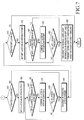
- FIGs. 6 and 7 show an operation of receiving multimedia in a receiver according to an exemplary embodiment of the present invention.
- a receiver receives an S1 message transmitted on the current channel in step 615.
- the S1 message is a message for managing all functions required for consumption of MMT assets and MMT items.
- step 617 the receiver determines based on a message ID whether the message is an ITN message included in the found S1 message. If the message is other message rather than the ITN message, the receiver determines in step 627 whether the other message is updated. If the message is an updated other message, the receiver stores the updated other message and version information of the updated other message in its memory in step 629. In contrast, if the message is not an updated other message, then the receiver proceeds to step 631.
- the receiver determines in step 619 whether the ITN message included in the found S1 message is updated, based on version information. If the ITN message is updated, the receiver determines in step 621 whether at least one table #i in the ITM message is updated. If so, the receiver stores the updated at least one table #i and its version information in its memory in step 623 and proceeds to step 625. If at least one table #i in the ITM message is not updated, then the receiver proceeds to step 625. Similarly, if the ITN message is determined to not be updated in step 619, then the receiver proceeds to step 625.
- step 625 the receiver checks all tables. The receiver then proceeds to step 631.
- step 631 the receiver determines in step 631 whether a CI layer #0 is updated.
- the receiver sets the CI layer #0 as an integrated CI in step 633. Thereafter, the receiver proceeds to step 635. If the CI layer #0 is not updated, then the receiver proceeds to step 643.
- step 635 the receiver determines whether a CI layer #i is the same in version as the CI layer #0. If they are not the same, then the receiver proceeds to step 641. In contrast, if they are the same, the receiver combines the CI layer #i with the integrated CI in step 637. Thereafter, the receiver proceeds to step 639.
- step 639 the receiver determines whether it has checked all CI layers. After completion of the check, the receiver transmits the integrated CI to a CI parser in step 641. For example, if the receiver determines that it has checked all CI layers in step 639, then the receiver proceeds to step 641. In contrast, if the receiver determines that it has not checked all CI layers in step 639, then the receiver returns to step 635.
- step 643 the receiver determines whether an MPT layer #0 is updated. If the MPT layer #0 is not updated, then the receiver ends the process. In contrast, if the MPT layer #0 is updated, the receiver sets the MPT layer #0 as an integrated MPT in step 645. Thereafter, the receiver proceeds to step 647.
- step 647 the receiver determines whether an MPT layer #i is the same in version as the MPT layer #0. If the layers are not the same, then the receiver proceeds to step 653. In contrast, if they are the same, the receiver combines the MPT layer #i with the integrated MPT in step 649. Thereafter, the receiver proceeds to step 651. In step 651, the receiver determines whether it has checked all MPT layers. After completion of the check, the receiver finds an asset in a package using asset references in the integrated MPT and transmits the found asset to associated asset decoder or asset handlers, in step 653. For example, if the receiver determines that it has checked all MPT layers in step 651, then the receiver proceeds to step 653. In contrast, if the receiver determines that it has not checked all MPTS layers in step 651, then the receiver proceeds to step 647.
- FIG. 8 shows a structure of a transmission apparatus according to an exemplary embodiment of the present invention.
- a service server 800 as an example of a transmission apparatus, includes a service data provider 801, a package generator 803, and a transmitter 805.
- the transmission apparatus or the service server includes a controller for controlling its components to perform an operation of exemplary embodiments of the present invention.
- the service data provider 801 has all service services.
- the package generator 803 generates packages using the tables described with reference to FIGs. 3 and 5 .
- the transmitter 805 transmits the generated packages to a terminal.
- the transmitter 805 may transmit the generated packages to the terminal over the networks having two different types of physical characteristics: the broadcast network and the broadband network.
- FIG. 9 shows a structure of a reception apparatus according to an exemplary embodiment of the present invention.
- the reception apparatus may be, for example, a terminal. However, the reception apparatus is not limited thereto.
- the reception apparatus 900 include a receiver 901, a package parser 903, and a decoder/player 905. Although not shown in the drawing, it will be apparent to those of ordinary skill in the art that the reception apparatus or the terminal includes a controller for controlling its components to perform an operation of exemplary embodiments of the present invention.
- the receiver 901 receives packages which are generated using the tables described with reference to FIGs. 3 and 5 according to an exemplary embodiment of the present invention.
- the package parser 903 parses components of the received packages.
- the decoder/player 905 decodes and plays content based on the parsed package components.
- data may be recorded, stored and played based on the packages which are generated according to an exemplary embodiment of the present invention.
- Each package is stored in storage media (e.g., Compact Disk (CD), Digital Versatile Disc (DVD), Database DB, Universal Serial Bus (USB), etc.) to include MMT assets, Configuration information, Composition information, Transport Characteristics, Package Identification Information, Asset list Information, Rights Management Information, Transport Timeline Information, and the like.
- storage media e.g., Compact Disk (CD), Digital Versatile Disc (DVD), Database DB, Universal Serial Bus (USB), etc.
- a service provider may provide specification information for a service that the service provider itself provides, so a receiver may allow a viewer to easily select his/her desired broadcast content using the service specific information.
Landscapes
- Engineering & Computer Science (AREA)
- Signal Processing (AREA)
- Multimedia (AREA)
- Two-Way Televisions, Distribution Of Moving Picture Or The Like (AREA)
- Circuits Of Receivers In General (AREA)
Priority Applications (1)
| Application Number | Priority Date | Filing Date | Title |
|---|---|---|---|
| EP21185149.8A EP3913822B1 (fr) | 2011-10-13 | 2012-10-15 | Procédé de transmission et de réception d'un service multimédia |
Applications Claiming Priority (5)
| Application Number | Priority Date | Filing Date | Title |
|---|---|---|---|
| KR20110404619 | 2011-10-13 | ||
| KR20110104619 | 2011-10-13 | ||
| US201261671923P | 2012-07-16 | 2012-07-16 | |
| PCT/KR2012/008383 WO2013055179A1 (fr) | 2011-10-13 | 2012-10-15 | Procédé et appareil pour l'émission et la réception d'un service multimédia |
| EP12839272.7A EP2767014A4 (fr) | 2011-10-13 | 2012-10-15 | Procédé et appareil pour l'émission et la réception d'un service multimédia |
Related Parent Applications (1)
| Application Number | Title | Priority Date | Filing Date |
|---|---|---|---|
| EP12839272.7A Division EP2767014A4 (fr) | 2011-10-13 | 2012-10-15 | Procédé et appareil pour l'émission et la réception d'un service multimédia |
Related Child Applications (1)
| Application Number | Title | Priority Date | Filing Date |
|---|---|---|---|
| EP21185149.8A Division EP3913822B1 (fr) | 2011-10-13 | 2012-10-15 | Procédé de transmission et de réception d'un service multimédia |
Publications (2)
| Publication Number | Publication Date |
|---|---|
| EP3518442A1 true EP3518442A1 (fr) | 2019-07-31 |
| EP3518442B1 EP3518442B1 (fr) | 2021-08-04 |
Family
ID=48082118
Family Applications (3)
| Application Number | Title | Priority Date | Filing Date |
|---|---|---|---|
| EP19161146.6A Active EP3518442B1 (fr) | 2011-10-13 | 2012-10-15 | Procédé de transmission et de réception d'un service multimédia |
| EP21185149.8A Active EP3913822B1 (fr) | 2011-10-13 | 2012-10-15 | Procédé de transmission et de réception d'un service multimédia |
| EP12839272.7A Withdrawn EP2767014A4 (fr) | 2011-10-13 | 2012-10-15 | Procédé et appareil pour l'émission et la réception d'un service multimédia |
Family Applications After (2)
| Application Number | Title | Priority Date | Filing Date |
|---|---|---|---|
| EP21185149.8A Active EP3913822B1 (fr) | 2011-10-13 | 2012-10-15 | Procédé de transmission et de réception d'un service multimédia |
| EP12839272.7A Withdrawn EP2767014A4 (fr) | 2011-10-13 | 2012-10-15 | Procédé et appareil pour l'émission et la réception d'un service multimédia |
Country Status (7)
| Country | Link |
|---|---|
| US (3) | US10498473B2 (fr) |
| EP (3) | EP3518442B1 (fr) |
| JP (1) | JP6339501B2 (fr) |
| KR (2) | KR101991321B1 (fr) |
| CN (3) | CN104025479B (fr) |
| ES (1) | ES2924232T3 (fr) |
| WO (1) | WO2013055179A1 (fr) |
Families Citing this family (52)
| Publication number | Priority date | Publication date | Assignee | Title |
|---|---|---|---|---|
| US9032462B2 (en) * | 2010-04-19 | 2015-05-12 | Lg Electronics Inc. | Method for transmitting/receiving internet-based content and transmitter/receiver using same |
| US9699188B2 (en) * | 2012-05-02 | 2017-07-04 | Samsung Electronics Co., Ltd. | Method and apparatus for transmitting and receiving message for downloadable CAS or DRM in MMT |
| US9137476B2 (en) * | 2013-02-14 | 2015-09-15 | Sony Corporation | User-defined home screen for ultra high definition (UHD) TV |
| KR101995314B1 (ko) * | 2013-04-22 | 2019-07-02 | 삼성전자주식회사 | Dvb 지상파 방송 시스템에서 mpeg mmt를 위한 시그널링 정보를 송수신하는 장치 및 방법 |
| KR20140126827A (ko) * | 2013-04-22 | 2014-11-03 | 삼성전자주식회사 | Dvb 시스템에서 mmt를 이용하여 방송 서비스를 송수신하는 방법 및 장치 |
| JP6571314B2 (ja) * | 2013-06-18 | 2019-09-04 | パナソニック インテレクチュアル プロパティ コーポレーション オブ アメリカPanasonic Intellectual Property Corporation of America | 送信方法 |
| JP6399683B2 (ja) * | 2013-09-13 | 2018-10-03 | 日本放送協会 | 配信システム、配信装置、受信装置およびそれらのプログラム |
| WO2015040817A1 (fr) * | 2013-09-20 | 2015-03-26 | パナソニック インテレクチュアル プロパティ コーポレーション オブ アメリカ | Procédé d'émission, procédé de réception, appareil émetteur et appareil récepteur |
| JP6382029B2 (ja) * | 2013-09-20 | 2018-08-29 | パナソニック インテレクチュアル プロパティ コーポレーション オブ アメリカPanasonic Intellectual Property Corporation of America | 送信方法、受信方法、送信装置、及び受信装置 |
| JP6382664B2 (ja) * | 2013-09-27 | 2018-08-29 | 日本放送協会 | 制御メッセージ生成装置、配信システム、受信装置およびそれらのプログラム |
| JP6505413B2 (ja) * | 2013-11-08 | 2019-04-24 | パナソニック インテレクチュアル プロパティ コーポレーション オブ アメリカPanasonic Intellectual Property Corporation of America | 送信方法、受信方法、送信装置、及び受信装置 |
| WO2015068352A1 (fr) | 2013-11-08 | 2015-05-14 | パナソニック インテレクチュアル プロパティ コーポレーション オブ アメリカ | Procédé d'émission, procédé de réception, appareil d'émission et appareil de réception |
| JP6506009B2 (ja) * | 2013-11-22 | 2019-04-24 | パナソニック インテレクチュアル プロパティ コーポレーション オブ アメリカPanasonic Intellectual Property Corporation of America | 送信方法、受信方法、送信装置、及び受信装置 |
| EP3097696A4 (fr) * | 2014-01-21 | 2017-09-20 | Lg Electronics Inc. | Dispositif de transmission de signaux de radiodiffusion et procédé permettant de faire fonctionner ledit dispositif, et dispositif de réception de signaux de radiodiffusion et procédé permettant de faire fonctionner ledit dispositif |
| US9560421B2 (en) * | 2014-03-27 | 2017-01-31 | Samsung Electronics Co., Ltd. | Broadcast and broadband hybrid service with MMT and DASH |
| EP3073730A4 (fr) | 2014-04-27 | 2017-08-16 | LG Electronics Inc. | Appareil d'émission de signal de diffusion, appareil de réception de signal de diffusion, procédé pour émettre un signal de diffusion et procédé pour recevoir un signal de diffusion |
| EP2963892A1 (fr) * | 2014-06-30 | 2016-01-06 | Thomson Licensing | Procédé et appareil de transmission et de réception de données multimédia |
| KR102220942B1 (ko) * | 2014-07-04 | 2021-02-26 | 삼성전자 주식회사 | 콘텐츠 제공 방법 및 장치 |
| JP5860518B1 (ja) * | 2014-08-27 | 2016-02-16 | シャープ株式会社 | 送信装置および受信装置 |
| WO2016031173A1 (fr) * | 2014-08-28 | 2016-03-03 | パナソニックIpマネジメント株式会社 | Procédé de transmission, procédé de réception, dispositif de transmission et dispositif de réception |
| JP6397923B2 (ja) * | 2014-08-29 | 2018-09-26 | シャープ株式会社 | 制御情報生成装置、送信装置、受信装置、テレビジョン受像機、映像信号伝送システム、制御プログラム、および記録媒体 |
| JP6465476B2 (ja) * | 2014-10-22 | 2019-02-06 | 日本放送協会 | 受信機および放送局設備 |
| JP6696430B2 (ja) * | 2014-11-05 | 2020-05-20 | ソニー株式会社 | 送信装置、送信方法、受信装置および受信方法 |
| JP6327711B2 (ja) * | 2014-11-07 | 2018-05-23 | シャープ株式会社 | 受信装置、放送システム、受信方法及びプログラム |
| CN107005734A (zh) * | 2014-12-10 | 2017-08-01 | 索尼公司 | 发送装置和发送方法以及接收装置和接收方法 |
| US10085051B2 (en) * | 2015-02-13 | 2018-09-25 | Samsung Electronics Co., Ltd. | Method and apparatus for converting MMTP stream to MPEG-2TS |
| JP6478357B2 (ja) * | 2015-02-15 | 2019-03-06 | ホアウェイ・テクノロジーズ・カンパニー・リミテッド | メディアストリーミング・オーバー・ハイパーテキストトランスファープロトコルにおけるメディアプレゼンテーションガイドを提供するための方法及び関連する装置 |
| US20160292445A1 (en) | 2015-03-31 | 2016-10-06 | Secude Ag | Context-based data classification |
| US20180352295A1 (en) * | 2015-05-07 | 2018-12-06 | Sharp Kabushiki Kaisha | System for targeting and demographics |
| WO2016195420A1 (fr) * | 2015-06-04 | 2016-12-08 | 엘지전자(주) | Dispositif et procédé d'émission/de réception d'un signal de diffusion |
| WO2016204502A1 (fr) * | 2015-06-17 | 2016-12-22 | 한국전자통신연구원 | Appareil mmt et procédé mmt pour le traitement de données vidéo stéréoscopiques |
| KR102519209B1 (ko) * | 2015-06-17 | 2023-04-07 | 한국전자통신연구원 | 스테레오스코픽 비디오 데이터를 처리하기 위한 mmt 장치 및 방법 |
| CN112019883B (zh) | 2015-07-06 | 2022-04-22 | Lg电子株式会社 | 发送广播信号的方法和设备及接收广播信号的方法和设备 |
| US20170092274A1 (en) * | 2015-09-24 | 2017-03-30 | Otojoy LLC | Captioning system and/or method |
| CN107026887B (zh) * | 2016-02-02 | 2019-12-06 | 上海交通大学 | 一种多媒体系统中快速信息交互方法及网络传输方法 |
| KR102468763B1 (ko) * | 2016-02-05 | 2022-11-18 | 삼성전자 주식회사 | 영상처리장치 및 그 제어방법 |
| KR102613231B1 (ko) * | 2016-05-26 | 2023-12-14 | 삼성전자주식회사 | 방송 시스템에서 방송 서비스 정보 제공 방법 및 장치 |
| WO2017209490A1 (fr) | 2016-05-30 | 2017-12-07 | 삼성전자 주식회사 | Appareil et procédé destinés à transmettre/recevoir des informations concernant un contenu multimédia dans un système multimédia |
| JP6359134B2 (ja) * | 2017-02-09 | 2018-07-18 | シャープ株式会社 | 受信装置、受信方法、プログラム、及び記憶媒体 |
| WO2018221292A1 (fr) * | 2017-05-31 | 2018-12-06 | ソニー株式会社 | Dispositif de traitement d'informations, support d'enregistrement d'informations, procédé de traitement d'informations et programme |
| JP6399714B2 (ja) * | 2017-09-04 | 2018-10-03 | 日本放送協会 | 配信システム |
| JP6275316B2 (ja) * | 2017-09-04 | 2018-02-07 | 日本放送協会 | 配信装置、受信装置、およびそれらのプログラム |
| KR101898822B1 (ko) * | 2017-12-12 | 2018-09-13 | 가천대학교 산학협력단 | 뷰포트 정보 시그널링을 이용한 가상 현실 비디오 스트리밍 |
| CN108170660B (zh) * | 2018-01-22 | 2021-08-06 | 北京百度网讯科技有限公司 | 多语言排版的显示方法、装置、浏览器、终端及介质 |
| JP6465533B1 (ja) * | 2018-10-29 | 2019-02-06 | 日本放送協会 | 受信機および放送局設備 |
| JP6465532B1 (ja) * | 2018-10-29 | 2019-02-06 | 日本放送協会 | 受信機および放送局設備 |
| JP7243799B2 (ja) * | 2019-07-01 | 2023-03-22 | ソニーグループ株式会社 | 受信方法及び受信装置 |
| JP6988974B2 (ja) * | 2019-07-01 | 2022-01-05 | ソニーグループ株式会社 | 送信方法及び送信装置 |
| JP6790218B2 (ja) * | 2019-11-20 | 2020-11-25 | マクセル株式会社 | データ出力方法 |
| JP7150950B2 (ja) * | 2020-01-17 | 2022-10-11 | マクセル株式会社 | 放送番組のコンテンツのコピー制御方法 |
| US11838566B2 (en) * | 2021-11-17 | 2023-12-05 | Inntot Technologies Private Limited | System and method for alternate program experience in digital broadcasting |
| CN115437560B (zh) * | 2022-07-18 | 2026-04-14 | 北京空间飞行器总体设计部 | 一种支持包存储与控制的星上存储和获取方法 |
Citations (4)
| Publication number | Priority date | Publication date | Assignee | Title |
|---|---|---|---|---|
| US20090055867A1 (en) * | 2007-08-24 | 2009-02-26 | Lg Electronics Inc. | Digital broadcasting system and method of processing data in digital broadcasting system |
| EP2251995A1 (fr) * | 2008-02-08 | 2010-11-17 | Fujitsu Limited | Dispositif de réception, procédé de réception et programme de réception |
| KR20110095458A (ko) | 2010-02-19 | 2011-08-25 | 네오세미테크 주식회사 | 4인치 웨이퍼의 양면 가공 중 발생하는 백래쉬 제거 방법 |
| KR20110095665A (ko) | 2010-02-19 | 2011-08-25 | (주) 마이트로 | 양방향 역경매에 의한 운전중개 서비스 시스템 및 방법 |
Family Cites Families (70)
| Publication number | Priority date | Publication date | Assignee | Title |
|---|---|---|---|---|
| US6181867B1 (en) * | 1995-06-07 | 2001-01-30 | Intervu, Inc. | Video storage and retrieval system |
| US6751221B1 (en) * | 1996-10-04 | 2004-06-15 | Kabushiki Kaisha Toshiba | Data transmitting node and network inter-connection node suitable for home network environment |
| US6111611A (en) * | 1997-07-10 | 2000-08-29 | Thomson Consumer Electronics | System for forming and processing program specific information suitable for terrestrial, cable or satellite broadcast |
| US6029045A (en) * | 1997-12-09 | 2000-02-22 | Cogent Technology, Inc. | System and method for inserting local content into programming content |
| US7091968B1 (en) | 1998-07-23 | 2006-08-15 | Sedna Patent Services, Llc | Method and apparatus for encoding a user interface |
| GB0000584D0 (en) | 2000-01-13 | 2000-03-01 | Pace Micro Tech Ltd | Broadcast data system and apparatus |
| WO2001058163A2 (fr) * | 2000-02-04 | 2001-08-09 | Tune To Com Inc. | Systeme destine a un reseau media distribue et a un serveur de metadonnees |
| IL151636A0 (en) * | 2000-03-15 | 2003-04-10 | Infosim Informationstechnik Gm | Method and system for communication of data via an optimum data path in a network |
| JP2002203070A (ja) * | 2000-10-17 | 2002-07-19 | Hitachi Ltd | メタデータ配信方法 |
| US7987491B2 (en) * | 2002-05-10 | 2011-07-26 | Richard Reisman | Method and apparatus for browsing using alternative linkbases |
| US6728101B2 (en) * | 2002-08-29 | 2004-04-27 | Hewlett-Packard Development Company, L.P. | Card support assembly |
| US7454467B2 (en) * | 2003-05-22 | 2008-11-18 | International Business Machines Corporation | Method for managing email messages |
| KR100566269B1 (ko) * | 2003-09-25 | 2006-03-29 | 삼성전자주식회사 | 디지털 멀티미디어 방송시스템에서 광역방송과 지역방송을 동시에 서비스하는 장치 및 방법과 그 방송 수신 단말기 |
| KR20050036526A (ko) * | 2003-10-16 | 2005-04-20 | 삼성전자주식회사 | 채널 전환 대기 시간을 이용한 디지털 멀티미디어방송시스템의 부가서비스 제공을 위한 전송스트림, 장치,방법 및 그 방송 수신 단말기 |
| CN1918835B (zh) * | 2004-02-10 | 2011-08-24 | 索尼株式会社 | 广播频率检测系统 |
| US20050273833A1 (en) * | 2004-05-14 | 2005-12-08 | Nokia Corporation | Customized virtual broadcast services |
| JP4820754B2 (ja) * | 2004-07-22 | 2011-11-24 | パナソニック株式会社 | 再生装置および再生方法 |
| BRPI0614926A2 (pt) * | 2005-08-22 | 2011-04-19 | Korea Electronics Telecomm | metadado de extensão de pmcp, dispositivo de geração de fluxo de dados, sistema de emissão de difusão de dados digitais e método de emissão de difusão de dados digitais do mesmo |
| KR100739108B1 (ko) | 2005-11-14 | 2007-07-13 | 삼성전자주식회사 | 고속채널전환 디지털방송수신장치 및 그 방법 |
| KR101340720B1 (ko) * | 2006-03-24 | 2013-12-12 | 삼성전자주식회사 | 휴대형 디지털 비디오 방송 방통융합 서비스 시스템에서서비스 송수신 방법 및 장치 |
| US20080040743A1 (en) * | 2006-07-29 | 2008-02-14 | Srinivasa Dharmaji | Micro-splicer for inserting alternate content to a content stream on a handheld device |
| US8677395B2 (en) * | 2006-07-29 | 2014-03-18 | Goldspot Media, Inc. | Method and apparatus for operating a micro-splicer to insert alternate content while viewing multimedia content on a handheld device |
| KR100800856B1 (ko) | 2006-08-08 | 2008-02-04 | 삼성전자주식회사 | Dvb-h 시스템에서 esg 업데이트 정보 송수신 방법및 시스템 |
| KR100956825B1 (ko) * | 2007-01-04 | 2010-05-11 | 엘지전자 주식회사 | 프리뷰 컨텐츠 수신방법 및 iptv 수신기 |
| KR101306715B1 (ko) * | 2007-02-09 | 2013-09-11 | 엘지전자 주식회사 | 방송 신호 수신 장치 및 방송 신호 송수신 방법 |
| US8272008B2 (en) * | 2007-02-28 | 2012-09-18 | At&T Intellectual Property I, L.P. | Methods, systems, and products for retrieving audio signals |
| US20080288375A1 (en) * | 2007-04-21 | 2008-11-20 | Carpe Media | Media Distribution Reporting System, Apparatus, Method and Software |
| US20080270913A1 (en) * | 2007-04-26 | 2008-10-30 | Howard Singer | Methods, Media, and Devices for Providing a Package of Assets |
| CA2667571C (fr) * | 2007-05-14 | 2015-09-15 | Samsung Electronics Co., Ltd. | Procede et appareil pour emettre de la diffusion, procede et appareil pour recevoir de la diffusion |
| KR101405965B1 (ko) * | 2007-06-25 | 2014-06-12 | 엘지전자 주식회사 | 디지털 방송 시스템 및 데이터 처리 방법 |
| US8185925B2 (en) * | 2007-08-24 | 2012-05-22 | Lg Electronics Inc. | Digital broadcasting system and method of processing data in the digital broadcasting system |
| US8045628B2 (en) | 2007-10-18 | 2011-10-25 | Nokia Corporation | Digital video broadcast service discovery |
| US8869219B2 (en) * | 2007-12-05 | 2014-10-21 | Lg Electronics Inc. | Method for controlling a channel and an IPTV receiver |
| US8112775B2 (en) * | 2007-12-05 | 2012-02-07 | Lg Electronics Inc. | IPTV receiver and method of providing channel details information |
| KR20090060928A (ko) | 2007-12-10 | 2009-06-15 | 삼성전자주식회사 | 광대역 무선통신 시스템에서 멀티캐스트 및 브로드캐스트서비스를 위한 장치 및 방법 |
| KR100918002B1 (ko) | 2007-12-10 | 2009-09-18 | 한국전자통신연구원 | 다운로딩 기반 수신제한시스템에서 복수 개의 수신제어소프트웨어 객체들의 실행 관리가 가능한 수신기 및 실행관리방법 |
| WO2009089489A1 (fr) * | 2008-01-09 | 2009-07-16 | Harmonic Inc. | Parcours et visualisation de ressources vidéo à l'aide d'un décodeur tv |
| WO2012047672A1 (fr) * | 2010-09-27 | 2012-04-12 | Hulu Llc | Procédé et appareil destinés à permettre à un utilisateur de commander les coupures publicitaires associées à un programme multimédia |
| US8359614B2 (en) * | 2008-05-16 | 2013-01-22 | Sony Computer Entertainment America Llc | Channel hopping scheme for update of data for multiple services across multiple digital broadcast channels |
| EP2439904B1 (fr) * | 2008-06-07 | 2014-01-15 | Coherent Logix Incorporated | Transmission et réception d'informations de contrôle à utiliser avec des flux multimédia |
| WO2009151267A2 (fr) * | 2008-06-09 | 2009-12-17 | 엘지전자(주) | Procédé de prestation de service et récepteur de diffusion |
| US8392942B2 (en) * | 2008-10-02 | 2013-03-05 | Sony Corporation | Multi-coded content substitution |
| US8792899B2 (en) | 2008-11-07 | 2014-07-29 | Qualcomm Incorporated | Regionalized delivery of hybrid mobile broadcast services or channels in a mobile broadcast network |
| US8099752B2 (en) * | 2008-12-03 | 2012-01-17 | Sony Corporation | Non-real time services |
| WO2010068033A2 (fr) * | 2008-12-09 | 2010-06-17 | 엘지전자 주식회사 | Procédé de traitement de service en temps différé et récepteur de diffusion |
| KR101635894B1 (ko) * | 2008-12-09 | 2016-07-04 | 엘지전자 주식회사 | 비실시간 서비스 처리 방법 및 방송 수신기 |
| US8387286B2 (en) * | 2008-12-19 | 2013-03-05 | Sport Maska Inc. | Skate |
| KR101689610B1 (ko) * | 2009-01-15 | 2016-12-26 | 엘지전자 주식회사 | 비실시간 서비스 처리 방법 및 방송 수신기 |
| KR20100089337A (ko) | 2009-02-03 | 2010-08-12 | 삼성전자주식회사 | Iptv 서비스 정보 제공 방법, 하이브리드 iptv 및 저장 매체 |
| US8904450B2 (en) * | 2009-10-13 | 2014-12-02 | Sony Corporation | Individual internet video link channel |
| EP2320650B1 (fr) | 2009-10-20 | 2014-06-04 | Lg Electronics Inc. | Procédé de traitement d'application dans un récepteur de diffusion numérique connecté à un réseau interactif et récepteur de diffusion numérique |
| EP2460347A4 (fr) * | 2009-10-25 | 2014-03-12 | Lg Electronics Inc | Procédé pour traiter des informations de programme de diffusion et récepteur de diffusion |
| EP2503779A4 (fr) * | 2009-11-18 | 2013-04-17 | Lg Electronics Inc | Procédé pour transmettre et recevoir un signal de diffusion et récepteur de diffusion utilisant le procédé |
| KR20110066826A (ko) | 2009-12-11 | 2011-06-17 | 한국전자통신연구원 | 신뢰 플랫폼 모듈 기능을 이용한 cas/drm 소프트웨어의 다운로드 방법 |
| KR101777348B1 (ko) | 2010-02-23 | 2017-09-11 | 삼성전자주식회사 | 데이터 전송 방법 및 장치와 데이터 수신 방법 및 장치 |
| EP2550783B1 (fr) * | 2010-03-23 | 2016-05-25 | Telefonaktiebolaget LM Ericsson (publ) | Procédé et agencement permettant un accès multimédia |
| US20110238520A1 (en) * | 2010-03-26 | 2011-09-29 | Selley Jonathan W | Wireless jukebox ordering and administration application with restaurant and administrative support |
| WO2011132882A2 (fr) * | 2010-04-19 | 2011-10-27 | 엘지전자 주식회사 | Procédé d'émission / réception de contenus basés sur internet, et émetteur / récepteur l'utilisant |
| KR101789633B1 (ko) * | 2010-04-19 | 2017-10-25 | 엘지전자 주식회사 | 인터넷 기반 컨텐츠 송수신 방법 및 그를 이용한 송수신장치 |
| CN102860021B (zh) | 2010-04-20 | 2017-06-20 | 三星电子株式会社 | 用于传送和接收媒体数据的接口装置和方法 |
| WO2011136574A2 (fr) * | 2010-04-28 | 2011-11-03 | 엘지전자 주식회사 | Émetteur de signaux diffusés, récepteur de signaux diffusés et procédé d'émission et de réception de signaux diffusés entre l'émetteur de signaux diffusés et le récepteur de signaux diffusés |
| US20120026409A1 (en) * | 2010-07-27 | 2012-02-02 | Yasukazu Higuchi | Electronic Device and Remote-Control Method |
| US8296810B1 (en) * | 2010-08-30 | 2012-10-23 | Sprint Communications Company L.P. | Wireless video uplink system that includes a reservation system |
| US9348691B2 (en) * | 2010-09-14 | 2016-05-24 | Lg Electronics Inc. | Apparatus for transmitting broadcast signal, apparatus for receiving broadcast signal, and method for transmitting/receiving broadcast signal through apparatus for transmitting/receiving broadcasting signal |
| US9301020B2 (en) * | 2010-11-30 | 2016-03-29 | Google Technology Holdings LLC | Method of targeted ad insertion using HTTP live streaming protocol |
| KR101887506B1 (ko) | 2011-09-22 | 2018-08-13 | 삼성전자주식회사 | 방송 시스템에서 방송 콘텐츠 재생 방법 및 장치 |
| CN109068154B (zh) | 2011-09-23 | 2021-01-26 | 韩国电子通信研究院 | 传送媒体数据的方法以及接收媒体数据的方法 |
| KR20130040090A (ko) * | 2011-10-13 | 2013-04-23 | 삼성전자주식회사 | 복합 네트워크에서 멀티미디어 데이터를 전송하기 위한 장치 및 그 방법 |
| JP2013229689A (ja) | 2012-04-24 | 2013-11-07 | Sharp Corp | 再生装置、配信装置、データ構造、再生方法、配信方法、制御プログラム、および記録媒体 |
| JP2016030586A (ja) * | 2014-07-30 | 2016-03-07 | トヨタ自動車株式会社 | 車両用樹脂バックドア構造 |
-
2012
- 2012-10-15 EP EP19161146.6A patent/EP3518442B1/fr active Active
- 2012-10-15 ES ES21185149T patent/ES2924232T3/es active Active
- 2012-10-15 CN CN201280061942.XA patent/CN104025479B/zh active Active
- 2012-10-15 CN CN201811094043.5A patent/CN109600632B/zh active Active
- 2012-10-15 CN CN201811093505.1A patent/CN109756287B/zh active Active
- 2012-10-15 WO PCT/KR2012/008383 patent/WO2013055179A1/fr not_active Ceased
- 2012-10-15 US US13/651,716 patent/US10498473B2/en active Active
- 2012-10-15 EP EP21185149.8A patent/EP3913822B1/fr active Active
- 2012-10-15 JP JP2014535654A patent/JP6339501B2/ja active Active
- 2012-10-15 KR KR1020147012751A patent/KR101991321B1/ko active Active
- 2012-10-15 EP EP12839272.7A patent/EP2767014A4/fr not_active Withdrawn
- 2012-10-15 KR KR1020217014045A patent/KR102331705B1/ko active Active
-
2019
- 2019-12-02 US US16/700,352 patent/US10951337B2/en active Active
-
2021
- 2021-02-08 US US17/169,795 patent/US11528082B2/en active Active
Patent Citations (4)
| Publication number | Priority date | Publication date | Assignee | Title |
|---|---|---|---|---|
| US20090055867A1 (en) * | 2007-08-24 | 2009-02-26 | Lg Electronics Inc. | Digital broadcasting system and method of processing data in digital broadcasting system |
| EP2251995A1 (fr) * | 2008-02-08 | 2010-11-17 | Fujitsu Limited | Dispositif de réception, procédé de réception et programme de réception |
| KR20110095458A (ko) | 2010-02-19 | 2011-08-25 | 네오세미테크 주식회사 | 4인치 웨이퍼의 양면 가공 중 발생하는 백래쉬 제거 방법 |
| KR20110095665A (ko) | 2010-02-19 | 2011-08-25 | (주) 마이트로 | 양방향 역경매에 의한 운전중개 서비스 시스템 및 방법 |
Also Published As
| Publication number | Publication date |
|---|---|
| KR20210056457A (ko) | 2021-05-18 |
| CN104025479A (zh) | 2014-09-03 |
| EP2767014A1 (fr) | 2014-08-20 |
| US20210167880A1 (en) | 2021-06-03 |
| JP2014534696A (ja) | 2014-12-18 |
| CN109756287A (zh) | 2019-05-14 |
| CN109600632A (zh) | 2019-04-09 |
| US20130097627A1 (en) | 2013-04-18 |
| KR101991321B1 (ko) | 2019-06-21 |
| JP6339501B2 (ja) | 2018-06-06 |
| US11528082B2 (en) | 2022-12-13 |
| EP3518442B1 (fr) | 2021-08-04 |
| US10951337B2 (en) | 2021-03-16 |
| ES2924232T3 (es) | 2022-10-05 |
| US10498473B2 (en) | 2019-12-03 |
| CN109756287B (zh) | 2020-12-29 |
| WO2013055179A1 (fr) | 2013-04-18 |
| CN104025479B (zh) | 2018-10-19 |
| KR102331705B1 (ko) | 2021-12-01 |
| KR20140090202A (ko) | 2014-07-16 |
| EP3913822B1 (fr) | 2022-06-22 |
| EP3913822A1 (fr) | 2021-11-24 |
| CN109600632B (zh) | 2020-12-25 |
| US20200106540A1 (en) | 2020-04-02 |
| EP2767014A4 (fr) | 2015-07-29 |
Similar Documents
| Publication | Publication Date | Title |
|---|---|---|
| US11528082B2 (en) | Method and apparatus for transmitting and receiving multimedia service | |
| US10595065B2 (en) | Method and apparatus for transmitting and receiving multi-media services | |
| US9596510B2 (en) | Method for transmitting broadcast service, method for receiving broadcast service, and apparatus for receiving broadcast service | |
| US20150350719A1 (en) | Method for transmitting a broadcast service, method for receiving a broadcast service, and apparatus for receiving a broadcast service | |
| US20140201797A1 (en) | Method for transmitting and receiving broadcast service and receiving device thereof | |
| JP6632749B2 (ja) | マルチメディアサービス送信装置 | |
| US20140380356A1 (en) | Device and method for processing bi-directional service related to broadcast program |
Legal Events
| Date | Code | Title | Description |
|---|---|---|---|
| PUAI | Public reference made under article 153(3) epc to a published international application that has entered the european phase |
Free format text: ORIGINAL CODE: 0009012 |
|
| STAA | Information on the status of an ep patent application or granted ep patent |
Free format text: STATUS: REQUEST FOR EXAMINATION WAS MADE |
|
| 17P | Request for examination filed |
Effective date: 20190306 |
|
| AC | Divisional application: reference to earlier application |
Ref document number: 2767014 Country of ref document: EP Kind code of ref document: P |
|
| AK | Designated contracting states |
Kind code of ref document: A1 Designated state(s): AL AT BE BG CH CY CZ DE DK EE ES FI FR GB GR HR HU IE IS IT LI LT LU LV MC MK MT NL NO PL PT RO RS SE SI SK SM TR |
|
| REG | Reference to a national code |
Ref country code: DE Ref legal event code: R079 Ref document number: 602012076342 Country of ref document: DE Free format text: PREVIOUS MAIN CLASS: H04H0020650000 Ipc: H04H0060730000 |
|
| GRAP | Despatch of communication of intention to grant a patent |
Free format text: ORIGINAL CODE: EPIDOSNIGR1 |
|
| STAA | Information on the status of an ep patent application or granted ep patent |
Free format text: STATUS: GRANT OF PATENT IS INTENDED |
|
| RIC1 | Information provided on ipc code assigned before grant |
Ipc: H04H 60/73 20080101AFI20210129BHEP Ipc: H04H 20/65 20080101ALI20210129BHEP |
|
| INTG | Intention to grant announced |
Effective date: 20210219 |
|
| RAP1 | Party data changed (applicant data changed or rights of an application transferred) |
Owner name: UNIVERSITY OF SEOUL INDUSTRY COOPERATION FOUNDATION Owner name: SAMSUNG ELECTRONICS CO., LTD. |
|
| RIN1 | Information on inventor provided before grant (corrected) |
Inventor name: PARK, KYUNG-MO Inventor name: RHYU, SUNG-RYEUL Inventor name: KIM, YONG-HAN Inventor name: HWANG, SUNG-OH |
|
| GRAS | Grant fee paid |
Free format text: ORIGINAL CODE: EPIDOSNIGR3 |
|
| GRAA | (expected) grant |
Free format text: ORIGINAL CODE: 0009210 |
|
| STAA | Information on the status of an ep patent application or granted ep patent |
Free format text: STATUS: THE PATENT HAS BEEN GRANTED |
|
| AC | Divisional application: reference to earlier application |
Ref document number: 2767014 Country of ref document: EP Kind code of ref document: P |
|
| AK | Designated contracting states |
Kind code of ref document: B1 Designated state(s): AL AT BE BG CH CY CZ DE DK EE ES FI FR GB GR HR HU IE IS IT LI LT LU LV MC MK MT NL NO PL PT RO RS SE SI SK SM TR |
|
| REG | Reference to a national code |
Ref country code: GB Ref legal event code: FG4D |
|
| REG | Reference to a national code |
Ref country code: AT Ref legal event code: REF Ref document number: 1418074 Country of ref document: AT Kind code of ref document: T Effective date: 20210815 |
|
| REG | Reference to a national code |
Ref country code: CH Ref legal event code: EP |
|
| REG | Reference to a national code |
Ref country code: DE Ref legal event code: R096 Ref document number: 602012076342 Country of ref document: DE |
|
| REG | Reference to a national code |
Ref country code: IE Ref legal event code: FG4D |
|
| REG | Reference to a national code |
Ref country code: NL Ref legal event code: FP |
|
| REG | Reference to a national code |
Ref country code: LT Ref legal event code: MG9D |
|
| REG | Reference to a national code |
Ref country code: AT Ref legal event code: MK05 Ref document number: 1418074 Country of ref document: AT Kind code of ref document: T Effective date: 20210804 |
|
| PG25 | Lapsed in a contracting state [announced via postgrant information from national office to epo] |
Ref country code: LT Free format text: LAPSE BECAUSE OF FAILURE TO SUBMIT A TRANSLATION OF THE DESCRIPTION OR TO PAY THE FEE WITHIN THE PRESCRIBED TIME-LIMIT Effective date: 20210804 Ref country code: AT Free format text: LAPSE BECAUSE OF FAILURE TO SUBMIT A TRANSLATION OF THE DESCRIPTION OR TO PAY THE FEE WITHIN THE PRESCRIBED TIME-LIMIT Effective date: 20210804 Ref country code: BG Free format text: LAPSE BECAUSE OF FAILURE TO SUBMIT A TRANSLATION OF THE DESCRIPTION OR TO PAY THE FEE WITHIN THE PRESCRIBED TIME-LIMIT Effective date: 20211104 Ref country code: HR Free format text: LAPSE BECAUSE OF FAILURE TO SUBMIT A TRANSLATION OF THE DESCRIPTION OR TO PAY THE FEE WITHIN THE PRESCRIBED TIME-LIMIT Effective date: 20210804 Ref country code: NO Free format text: LAPSE BECAUSE OF FAILURE TO SUBMIT A TRANSLATION OF THE DESCRIPTION OR TO PAY THE FEE WITHIN THE PRESCRIBED TIME-LIMIT Effective date: 20211104 Ref country code: PT Free format text: LAPSE BECAUSE OF FAILURE TO SUBMIT A TRANSLATION OF THE DESCRIPTION OR TO PAY THE FEE WITHIN THE PRESCRIBED TIME-LIMIT Effective date: 20211206 Ref country code: ES Free format text: LAPSE BECAUSE OF FAILURE TO SUBMIT A TRANSLATION OF THE DESCRIPTION OR TO PAY THE FEE WITHIN THE PRESCRIBED TIME-LIMIT Effective date: 20210804 Ref country code: FI Free format text: LAPSE BECAUSE OF FAILURE TO SUBMIT A TRANSLATION OF THE DESCRIPTION OR TO PAY THE FEE WITHIN THE PRESCRIBED TIME-LIMIT Effective date: 20210804 Ref country code: RS Free format text: LAPSE BECAUSE OF FAILURE TO SUBMIT A TRANSLATION OF THE DESCRIPTION OR TO PAY THE FEE WITHIN THE PRESCRIBED TIME-LIMIT Effective date: 20210804 Ref country code: SE Free format text: LAPSE BECAUSE OF FAILURE TO SUBMIT A TRANSLATION OF THE DESCRIPTION OR TO PAY THE FEE WITHIN THE PRESCRIBED TIME-LIMIT Effective date: 20210804 |
|
| PG25 | Lapsed in a contracting state [announced via postgrant information from national office to epo] |
Ref country code: PL Free format text: LAPSE BECAUSE OF FAILURE TO SUBMIT A TRANSLATION OF THE DESCRIPTION OR TO PAY THE FEE WITHIN THE PRESCRIBED TIME-LIMIT Effective date: 20210804 Ref country code: LV Free format text: LAPSE BECAUSE OF FAILURE TO SUBMIT A TRANSLATION OF THE DESCRIPTION OR TO PAY THE FEE WITHIN THE PRESCRIBED TIME-LIMIT Effective date: 20210804 Ref country code: GR Free format text: LAPSE BECAUSE OF FAILURE TO SUBMIT A TRANSLATION OF THE DESCRIPTION OR TO PAY THE FEE WITHIN THE PRESCRIBED TIME-LIMIT Effective date: 20211105 |
|
| PG25 | Lapsed in a contracting state [announced via postgrant information from national office to epo] |
Ref country code: DK Free format text: LAPSE BECAUSE OF FAILURE TO SUBMIT A TRANSLATION OF THE DESCRIPTION OR TO PAY THE FEE WITHIN THE PRESCRIBED TIME-LIMIT Effective date: 20210804 |
|
| REG | Reference to a national code |
Ref country code: DE Ref legal event code: R097 Ref document number: 602012076342 Country of ref document: DE |
|
| REG | Reference to a national code |
Ref country code: CH Ref legal event code: PL |
|
| PG25 | Lapsed in a contracting state [announced via postgrant information from national office to epo] |
Ref country code: SM Free format text: LAPSE BECAUSE OF FAILURE TO SUBMIT A TRANSLATION OF THE DESCRIPTION OR TO PAY THE FEE WITHIN THE PRESCRIBED TIME-LIMIT Effective date: 20210804 Ref country code: SK Free format text: LAPSE BECAUSE OF FAILURE TO SUBMIT A TRANSLATION OF THE DESCRIPTION OR TO PAY THE FEE WITHIN THE PRESCRIBED TIME-LIMIT Effective date: 20210804 Ref country code: RO Free format text: LAPSE BECAUSE OF FAILURE TO SUBMIT A TRANSLATION OF THE DESCRIPTION OR TO PAY THE FEE WITHIN THE PRESCRIBED TIME-LIMIT Effective date: 20210804 Ref country code: EE Free format text: LAPSE BECAUSE OF FAILURE TO SUBMIT A TRANSLATION OF THE DESCRIPTION OR TO PAY THE FEE WITHIN THE PRESCRIBED TIME-LIMIT Effective date: 20210804 Ref country code: CZ Free format text: LAPSE BECAUSE OF FAILURE TO SUBMIT A TRANSLATION OF THE DESCRIPTION OR TO PAY THE FEE WITHIN THE PRESCRIBED TIME-LIMIT Effective date: 20210804 Ref country code: AL Free format text: LAPSE BECAUSE OF FAILURE TO SUBMIT A TRANSLATION OF THE DESCRIPTION OR TO PAY THE FEE WITHIN THE PRESCRIBED TIME-LIMIT Effective date: 20210804 |
|
| PLBE | No opposition filed within time limit |
Free format text: ORIGINAL CODE: 0009261 |
|
| STAA | Information on the status of an ep patent application or granted ep patent |
Free format text: STATUS: NO OPPOSITION FILED WITHIN TIME LIMIT |
|
| REG | Reference to a national code |
Ref country code: BE Ref legal event code: MM Effective date: 20211031 |
|
| PG25 | Lapsed in a contracting state [announced via postgrant information from national office to epo] |
Ref country code: MC Free format text: LAPSE BECAUSE OF FAILURE TO SUBMIT A TRANSLATION OF THE DESCRIPTION OR TO PAY THE FEE WITHIN THE PRESCRIBED TIME-LIMIT Effective date: 20210804 |
|
| 26N | No opposition filed |
Effective date: 20220506 |
|
| PG25 | Lapsed in a contracting state [announced via postgrant information from national office to epo] |
Ref country code: LU Free format text: LAPSE BECAUSE OF NON-PAYMENT OF DUE FEES Effective date: 20211015 Ref country code: BE Free format text: LAPSE BECAUSE OF NON-PAYMENT OF DUE FEES Effective date: 20211031 |
|
| PG25 | Lapsed in a contracting state [announced via postgrant information from national office to epo] |
Ref country code: SI Free format text: LAPSE BECAUSE OF FAILURE TO SUBMIT A TRANSLATION OF THE DESCRIPTION OR TO PAY THE FEE WITHIN THE PRESCRIBED TIME-LIMIT Effective date: 20210804 Ref country code: LI Free format text: LAPSE BECAUSE OF NON-PAYMENT OF DUE FEES Effective date: 20211031 Ref country code: CH Free format text: LAPSE BECAUSE OF NON-PAYMENT OF DUE FEES Effective date: 20211031 |
|
| PG25 | Lapsed in a contracting state [announced via postgrant information from national office to epo] |
Ref country code: IE Free format text: LAPSE BECAUSE OF NON-PAYMENT OF DUE FEES Effective date: 20211015 |
|
| PG25 | Lapsed in a contracting state [announced via postgrant information from national office to epo] |
Ref country code: CY Free format text: LAPSE BECAUSE OF FAILURE TO SUBMIT A TRANSLATION OF THE DESCRIPTION OR TO PAY THE FEE WITHIN THE PRESCRIBED TIME-LIMIT Effective date: 20210804 |
|
| PG25 | Lapsed in a contracting state [announced via postgrant information from national office to epo] |
Ref country code: HU Free format text: LAPSE BECAUSE OF FAILURE TO SUBMIT A TRANSLATION OF THE DESCRIPTION OR TO PAY THE FEE WITHIN THE PRESCRIBED TIME-LIMIT; INVALID AB INITIO Effective date: 20121015 |
|
| PG25 | Lapsed in a contracting state [announced via postgrant information from national office to epo] |
Ref country code: MK Free format text: LAPSE BECAUSE OF FAILURE TO SUBMIT A TRANSLATION OF THE DESCRIPTION OR TO PAY THE FEE WITHIN THE PRESCRIBED TIME-LIMIT Effective date: 20210804 |
|
| PG25 | Lapsed in a contracting state [announced via postgrant information from national office to epo] |
Ref country code: TR Free format text: LAPSE BECAUSE OF FAILURE TO SUBMIT A TRANSLATION OF THE DESCRIPTION OR TO PAY THE FEE WITHIN THE PRESCRIBED TIME-LIMIT Effective date: 20210804 |
|
| PG25 | Lapsed in a contracting state [announced via postgrant information from national office to epo] |
Ref country code: MT Free format text: LAPSE BECAUSE OF FAILURE TO SUBMIT A TRANSLATION OF THE DESCRIPTION OR TO PAY THE FEE WITHIN THE PRESCRIBED TIME-LIMIT Effective date: 20210804 |
|
| PGFP | Annual fee paid to national office [announced via postgrant information from national office to epo] |
Ref country code: NL Payment date: 20250922 Year of fee payment: 14 Ref country code: IT Payment date: 20250924 Year of fee payment: 14 |
|
| PGFP | Annual fee paid to national office [announced via postgrant information from national office to epo] |
Ref country code: GB Payment date: 20250922 Year of fee payment: 14 |
|
| PGFP | Annual fee paid to national office [announced via postgrant information from national office to epo] |
Ref country code: FR Payment date: 20250925 Year of fee payment: 14 |
|
| PGFP | Annual fee paid to national office [announced via postgrant information from national office to epo] |
Ref country code: DE Payment date: 20250922 Year of fee payment: 14 |